Next Article in Journal
Unexpected Clinical Case of Pasteurella multocida Infectious Endocarditis in a Patient with IV Drug Abuse: Why Epidemiological History Matters
Previous Article in Journal
Double Atypical Co-Infection in Ecthyma Gangrenosum: A Peculiar Case Report
 
 
Germs is published by MDPI from Volume 15 Issue 4 (2025). Previous articles were published by another publisher in Open Access under a CC-BY (or CC-BY-NC-ND) licence, and they are hosted by MDPI on mdpi.com as a courtesy and upon agreement with the former publisher Infection Science Forum.
Case Report

Fatal Septic Shock Caused by Capnocytophaga canimorsus Diagnosed by 16S rRNA Gene Sequencing

by
Ludovic Bergon
1,*,
Maud Foissac
2,
Brigitte Rivière
1,
Marie Isabelle Steinbach
3,
Bob Catala
3,
Sarah Khatibi
2,
Aubin Souche
4,
Laure Pirovano
1,
Pauline Condom
1,
Gilles Salama
1 and
Jacques Gilquin
5
1
Service de Biologie Médicale, Centre Hospitalier Castres-Mazamet, 6 Avenue de la Montagne Noire, 81100 Castres, France
2
Service de Maladies Infectieuses, Centre Hospitalier Castres-Mazamet, 6 Avenue de la Montagne Noire, 81100 Castres, France
3
Service de Réanimation, Centre Hospitalier Castres-Mazamet, 6 Avenue de la Montagne Noire, 81100 Castres, France
4
Service de Bactériologie—Hôpital de la Croix Rousse—HCL, 103 Grande Rue Croix Rousse, 69004 Lyon, France
5
Service d’Hygiène Hospitalière, Centre Hospitalier Castres-Mazamet, 6 Avenue de la Montagne Noire, 81100 Castres, France
*
Author to whom correspondence should be addressed.
Germs 2022, 12(1), 124-129; https://doi.org/10.18683/germs.2022.1315
Submission received: 22 October 2021 / Revised: 31 January 2022 / Accepted: 20 February 2022 / Published: 31 March 2022

Abstract

Introduction: Capnocytophaga canimorsus is a commensal bacterium found in the saliva of dogs and cats. In most cases C. canimorsus causes local infection resulting from bite-wounds, scratches or licks but severe forms can occur. The following case describes a severe and rapidly fatal sepsis and disseminated intravascular coagulation with no evidence of bite in a patient without obvious cause of immunosuppression, diagnosed by polymerase chain reaction and 16S rRNA gene sequencing. Case report: Herein we present a rare case of a 39-year-old man who was taken care of by the emergency medical service for faintness, fever and chills associated with generalized mottling. Despite critical care management and broad-spectrum antibiotherapy, the patient presented an irrepressible shock with disseminated intravascular coagulation and multiple organ failure. He died during the night. The initial etiological assessment was negative but rod-shaped inclusions could be observed in his blood. A pan-bacterial polymerase chain reaction targeting part of the gene encoding 16S ribosomal ribonucleic acid (rRNA) was carried out directly on blood cultures; the sequencing identified Capnocytophaga canimorsus. Conclusions: This observation illustrates the potential severity of C. canimorsus infection even in a patient without neither obvious causes of immunosuppression nor evidence of bite. The presence of intracellular bacillary forms on the blood smear is an important information which should lead to performing a polymerase chain reaction and 16S rRNA gene sequencing.

Introduction

Capnocytophaga canimorsus is a Gram-negative commensal bacterium found in the saliva of dogs and cats. It can be responsible for various types of human infection resulting from bite-wounds, scratches or licks. In most cases, C. canimorsus causes local infection such as cellulitis or arthritis but severe forms can occur, including sepsis, meningitis or endocarditis, especially in people with immunosuppression, splenectomy or heavy alcohol use. The following case describes a severe and rapidly fatal sepsis and disseminated intravascular coagulation with no evidence of bite in a patient without obvious cause of immunosuppression. Identification of C. canimorsus by conventional microbiological techniques is difficult because if its fastidious growth. Diagnosis was established by blood sample pan-bacterial polymerase chain reaction and 16S ribosomal ribonucleic acid (rRNA) gene sequencing.

Case report

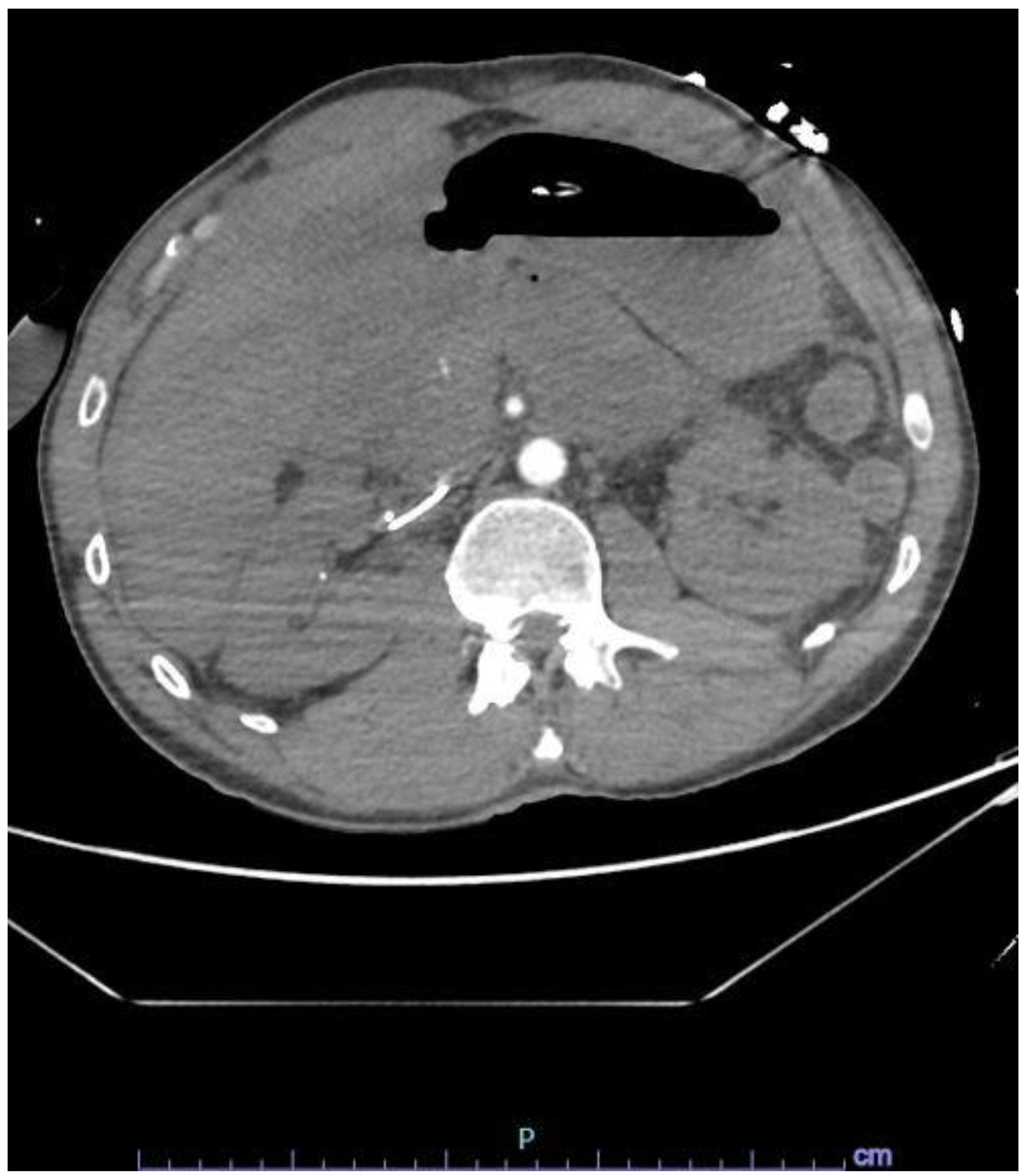
A 39-year-old farmer man was taken care of in the morning by the emergency medical service (EMS) for faintness, fever and chills associated with mottling all over the body. His medical history was limited to an ulcerative colitis treated for several years with mesalazine (Pentaza®), which had been stopped by the patient himself for several month. His BMI was 22.4 kg/m2, he exhibited active smoking as well as regular cannabis use but no chronic alcohol use. He was HIV seronegative. Fifteen days before his admission, the patient had presented spontaneously resolving abdominal pain and diarrhea. A few days before these symptoms, the notion of a wood splinter in the finger was mentioned. Amoxicillin + clavulanic acid treatment was initiated by his physician for five days. The eve of his admission the patient described an increase in fever and chills. When the EMS arrived, they noticed the patient was in a stupor state, comatose (Glasgow score 8), in shock state and presenting cyanosis with generalized mottling, low blood pressure and a 140 beats/min heart rate. The following observations revealed only a few crusty wounds on the lower limbs without secondary infection signs and no evidence of bite. Faced with this presentation of septic shock and generalized mottling without obvious etiology, 2 g of ceftriaxone were injected in the event of a possible meningococcemia. The patient then had two successive brief cardiac arrests recovered before his arrival in the intensive care unit. Critical care management combined vascular filling, norepinephrine administration and tracheal intubation. The antibiotic therapy was ascended by piperacillin/tazobactam then meropenem, amikacin and vancomycin. Initial laboratory tests showed a major disseminated intravascular coagulation (DIC) (platelet count 12,000/µL, prothrombin rate <10%, coagulation factor V 2%, D-Dimers >20 mg/L and fibrinogen <0.6 g/L), leukopenia (WBC count 2,300/µL), renal failure (glomerular filtration rate less than 30 mL/min calculated by CKD-EPI equation), hepatic failure (transaminases more than twenty times the upper limit of normal, prothrombin rate <10%) and an inflammatory syndrome (C-reactive protein 167 mg/L). Blood gas analysis revealed a severe metabolic acidosis (pH of 6.82, lactatemia of 14.8 mmol/L). Atypically, in his blood smear could be observed rod-shaped inclusions in about a quarter of the neutrophils (Figure 1). The shape of these inclusions was reminiscent of bacilli, but the Gram stain performed directly on a blood sample was not informative. The computed tomography (CT scan) highlighted a significant dilation of the small intestine with intra-abdominal effusion (Figure 2). There were no abnormalities in the brain nor in the chest.
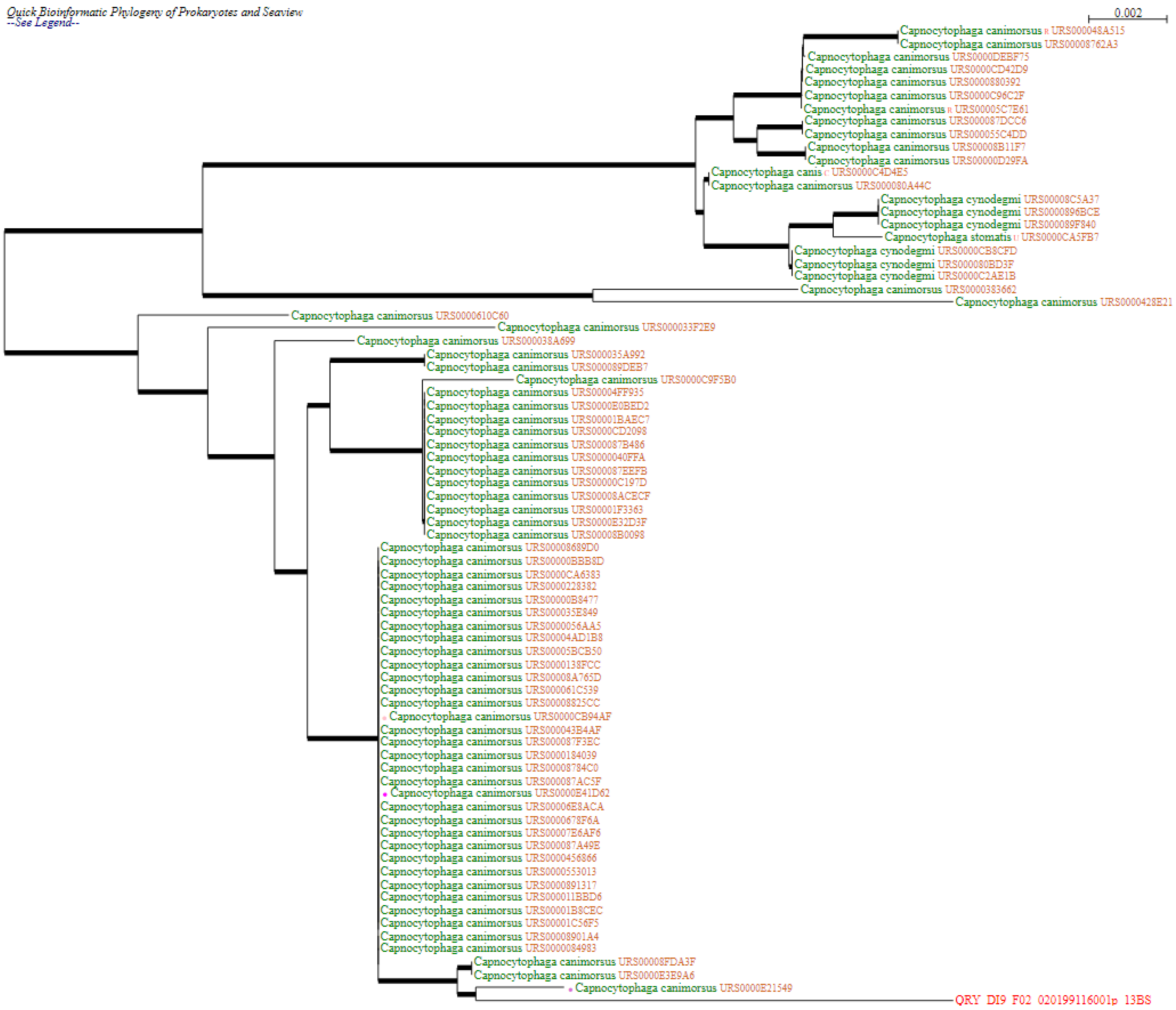
Despite the intensification of resuscitation measures, the patient died during the night with an irrepressible shock and multiple organ failure. There was no autopsy. The initial etiological assessment was negative: blood cultures had remained negative after 10 days incubation and subculture. Faced with the suggestive appearance of an infectious origin, a pan-bacterial polymerase chain reaction (PCR) targeting part of the gene encoding 16S ribosomal ribonucleic acid (rRNA) was carried out on blood cultures (91E/13BS primers, Thermocycleur Biometra®, Analytik Jena, Germany). Then, the 16S rRNA gene sequencing was performed (Sanger sequencing, ABI 3730XL automatic sequencer, ThermoFisher, USA). The sequence alignment was carried out via the leBIBI database (16S rDNA prokaryotes database: https://umr5558-bibiserv.univ-lyon1.fr/lebibi/lebibi.cgi, to 9 December 2020) allowing the identification of Capnocytophaga canimorsus (99% similarity) (Figure 3).

Discussion

Capnocytophaga genus includes species of human commensal origin from saliva and oral cavity (C. gingivalis, C. ochracea, C. sputigena) and other species of animal origin (C. cynodegmi, C. canimorsus) [1]. Serious C. canimorsus infections are rare and most often related to dog or cat bites in 60% of cases, lickings of a skin lesion in 30% of cases and of unknown origin in 10% of cases [2]. When describing the case, no bites nor lickings of the wounds were highlighted, but two entry points can possibly be retained: the notion of wood splinter the previous days and the presence of crusty wounds on the lower limbs. The patient was a farmer and was therefore in contact with other animals than cat or dog that might also have been carriers of C. canimorsus including cattle and goats [3].
The clinical presentation of serious C. canimorsus infections varies, ranging from cellulitis, arthritis, meningitis, endocarditis, to severe sepsis with DIC [4,5,6]. Thus, the initial presentation might mimic toxic shock as seen here. The combination of purpura and DIC is typical of severe forms. We note that the preexisting digestive symptoms reported by this patient have also already been described in the literature [2,5]. The overall mortality of systemic infections is about 25–30% in case of sepsis or even 60% in case of septic shock [4]. Most severe cases occur in patients with risk factors such as splenectomy (10–30%), chronic alcoholism, cirrhosis, or other immunosuppressive factors. Nevertheless, in 30% of cases no risk factor was noted [7]. Our patient had been treated with a salicylate derivative (mesalazine, Pentaza®) which had been discontinued by the patient himself. No other potential cause of immunosuppression was identified.
The pathogenicity mechanisms of C. canimorsus are still not fully understood. In vitro this bacillus induces a low level of cytokine production compared to other pathogens such as N. meningitidis. The absence of inflammatory response can be explained by the fact that there is no interaction between C. canimorsus and human Toll-like receptor 4 (TLR4). The bacteria are able to downregulate TLR4 and pro-inflammatory signaling cascade [8]. Then, C. canimorsus appears to be resistant to the phagocytosis effect [9]. In addition, it has been experimentally demonstrated that a pathogen strain of C. canimorsus could aggravate DIC-induced bleeding by the inactivation of factor X by a DPP7-type protease [10]. The ability of C. canimorsus to produce one or more toxin(s) is still debated: some authors describe an absence of production, [4] others relate the cytotoxic effect to immunocompetent cells with the production of toxin. Furthermore, the LPS-lipopolysaccharide contained in the membrane of Gram-negative bacteria such as C. canimorsus is considered to be an endotoxin and therefore an intrinsic virulence factor. Nevertheless, not all bacteremia progress to severe forms: even bacteremia with clinical skin rash can be mild [11] and it is likely that mild cases are underrepresented in the literature.
In our case, none of the two blood cultures performed were positive, probably due to the injection of ceftriaxone or amoxicillin + clavulanic acid before the sampling. We were therefore unable to perform antibiotic susceptibility testing. Indeed C. canimorsus is sensitive to β-lactams (except for aztreonam), and also usually sensitive to tetracycline, fluoroquinolones, erythromycin, clindamycin and rifampicin although antibiotic susceptibility testing must be systematically performed to seek the acquisition of resistance. The production of β-lactamase has not been described for C. canimorsus, although it is common for strains of Capnocytophaga spp.of human origin. In contrast, this germ is resistant to metronidazole, trimethoprim and sensitive at increased exposure to aminoglycosides [2].
Blood smear stain revealed purple-mauve colored rods inside the cytoplasm of neutrophils (Figure 1). These observations could not be interpreted as a staining artefact or intracellular component because they were too many to be ignored. Moreover, this intracellular observation which evokes phagocytosed bacteria has already been mentioned in the scientific literature [2,6]. We continued the etiological investigations by performing an RNA16S PCR. This allowed us to specify the infectious origin of the shock and to identify the pathogen involved, but unfortunately not to modify the outcome.

Conclusions

This observation illustrates the potential severity of C. canimorsus infection even in a patient without neither obvious causes of immunosuppression nor evidence of bite. The few initial clinical signs contrast with the very rapidly unfavorable development of septic shock and DIC. The presence of intracellular bacillary forms on the blood smear is an important information which should lead to performing a polymerase chain reaction and 16S rRNA gene sequencing.

Funding

None to declare.

Author contribution

LB was responsible for microbiology analyses performed and wrote the manuscript. MF and SK gave advice for the medical management and antibiotic therapy of the patient and the proofreading of the manuscript. MIS and BC took part in the medical care of the patient in the intensive care unit. BR, LP, PC and GS took part in laboratory tests results. AS was responsible for the 16S rRNA gene sequencing. JG participated to the proofreading of the manuscript. All authors read and approved the final version of the manuscript.

Informed Consent Statement

Written informed consent was obtained from the next-of-kin for publication of this case report and images.

Acknowledgments

All technicians and health manager from the Medical Biology Department of the Castres-Mazamet hospital and J. Chavouet for English proofreading.

Conflicts of interest

All authors—none to declare.

References

  1. Gaastra, W.; Lipman, L.J. Capnocytophaga canimorsus. Vet Microbiol. 2010, 140, 339–346. [Google Scholar] [CrossRef] [PubMed]
  2. Vignon, G.; Combeau, P.; Violette, J.; et al. [A fatal septic shock due to Capnocytophaga canimorsus and review of literature]. Rev Med Interne. 2018, 39, 820–823. [Google Scholar] [CrossRef] [PubMed]
  3. Westwell, A.J.; Kerr, K.; Spencer, M.B.; Hutchinson, D.N. DF-2 infection. BMJ. 1989, 298, 116–117. [Google Scholar] [CrossRef]
  4. Oelher, R.L.; Velez, A.P.; Mizrachi, M.; Lamarche, J.; GompfS. Bite related and septic syndromes caused by cats and dogs. Lancet Infect Dis. 2009, 9, 439–447. [Google Scholar] [CrossRef]
  5. Gouin, P.; Veber, B.; Collange, A.; Frebourg, N.; Dureuil, B. [An unusual aetiology for septic shock: Capnocytophaga canimorsus. Is always dog man’s best friend?]. Ann Fr Anesth Reanim. 2004, 23, 1185–1188. [Google Scholar] [CrossRef]
  6. Taquin, H.; Roussel, C.; Roudière, L.; et al. Fatal infection caused by Capnocytophaga canimorsus. Lancet Infect Dis. 2017, 17, 236. [Google Scholar] [CrossRef]
  7. Lion, C.; Escande, F.; Burdin, J.C. Capnocytophaga canimorsus infections in human: Review of the literature and cases report. Eur J Epidemiol. 1996, 12, 521–533. [Google Scholar] [CrossRef] [PubMed]
  8. Shin, H.; Mally, M.; Kuhn, M.; Paroz, C.; Cornelis, G.R. Escape from immune surveillance by Capnocytophaga canimorsus. J Infect Dis. 2007, 195, 375–386. [Google Scholar] [CrossRef] [PubMed]
  9. Mally, M.; Shin, H.; Paroz, C.; Landmann, R.; Cornelis, G.R. Capnocytophaga canimorsus: A human pathogen feeding at the surface of epithelial cells and phagocytes. PLoS Pathog. 2008, 4, e1000164. [Google Scholar] [CrossRef]
  10. Hack, K.; Renzi, F.; Hess, E.e.t. al. Inactivation of human coagulation factor X by a protease of the pathogen Capnocytophaga canimorsus. J Thromb Haemost. 2016, 15, 487–499. [Google Scholar] [CrossRef] [PubMed]
  11. Uçkay, I.; Stirnemann, J. Exanthema associated with Capnocytophaga canimorsus bacteremia. Int J Infect Dis. 2019, 82, 104–105. [Google Scholar] [CrossRef] [PubMed]
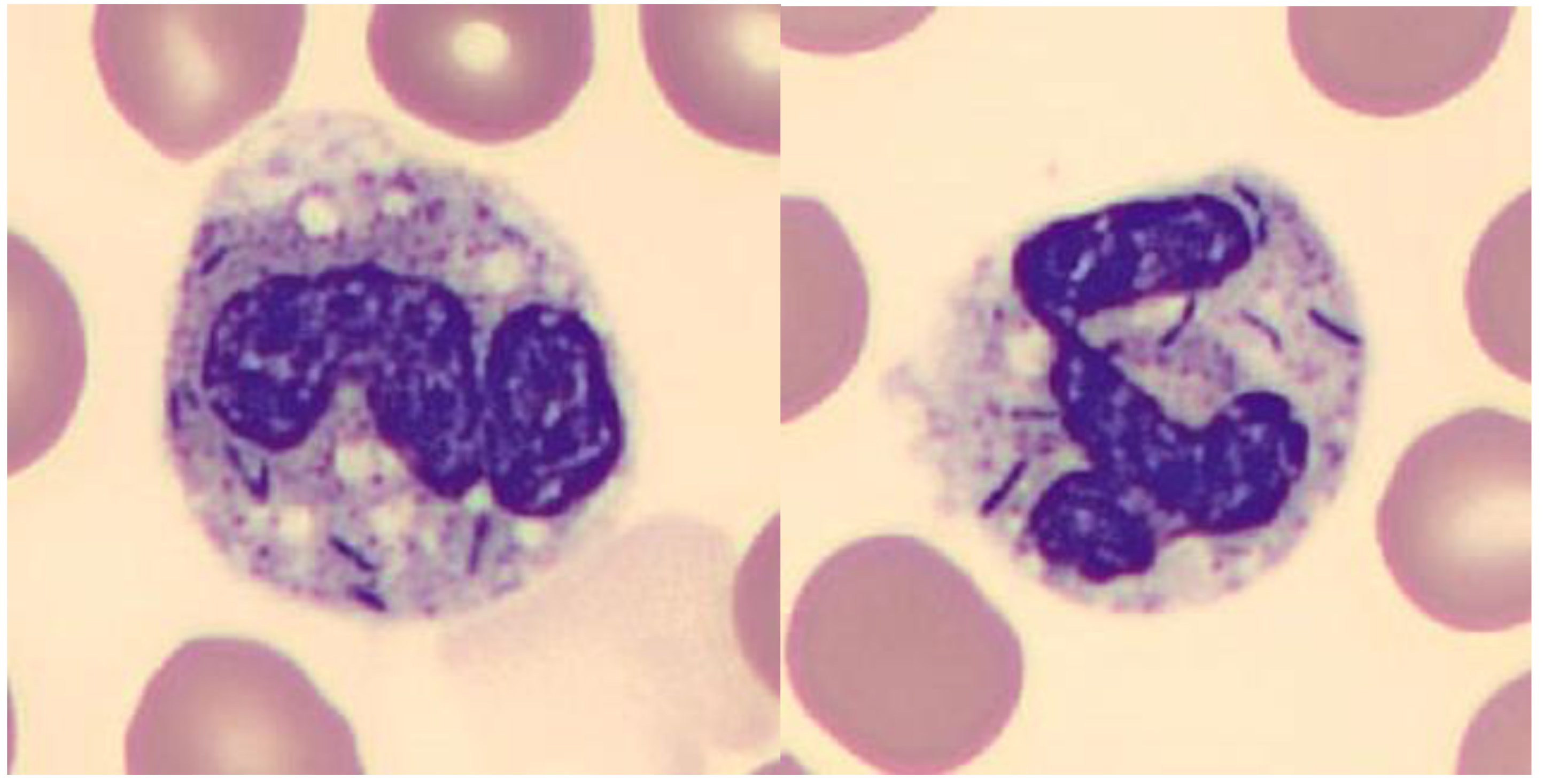
Figure 1. Blood smear cytology, bacillary-shaped inclusions in neutrophils (magnification x 1000, May-Grünwald Giemsa stain).
Germs 12 00124 g001
Figure 2. CT scan: significant dilation of the small intestine and intra-abdominal effusion.
Germs 12 00124 g002
Figure 3. Phylogenic tree of C. canimorsus carried out via the leBIBI database.
Germs 12 00124 g003