Review

c-Met and Other Cell Surface Molecules: Interaction, Activation and Functional Consequences
by
Giuditta Viticchiè
and
Patricia A. J. Muller
*
MRC (Medical Research Council) Toxicology Unit, Lancaster Road, Leicester LE1 9HN, UK
*
Author to whom correspondence should be addressed.
Biomedicines 2015, 3(1), 46-70; https://doi.org/10.3390/biomedicines3010046

Submission received: 29 September 2014 / Accepted: 8 January 2015 / Published: 15 January 2015
(This article belongs to the Special Issue New aspects of the Hepatocyte Growth Factor/c-Met System)

Abstract

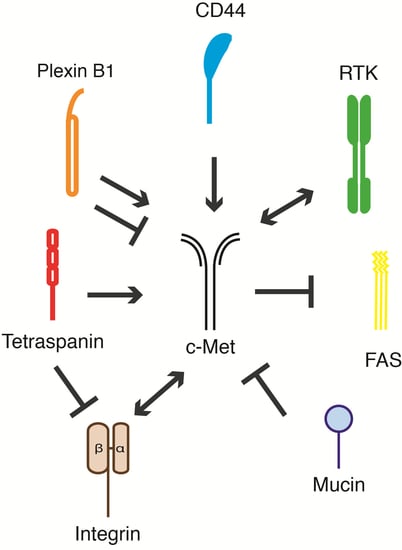
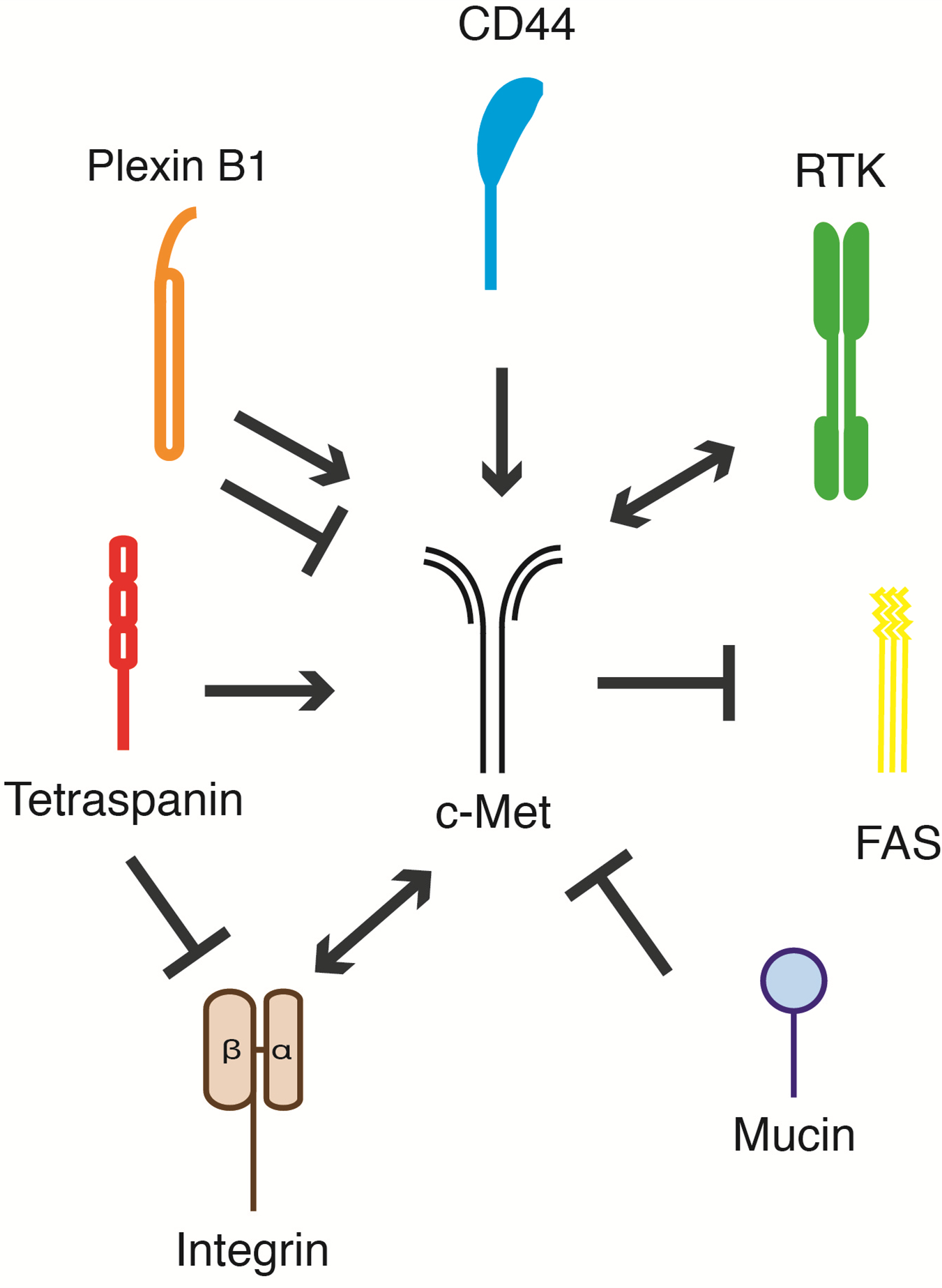
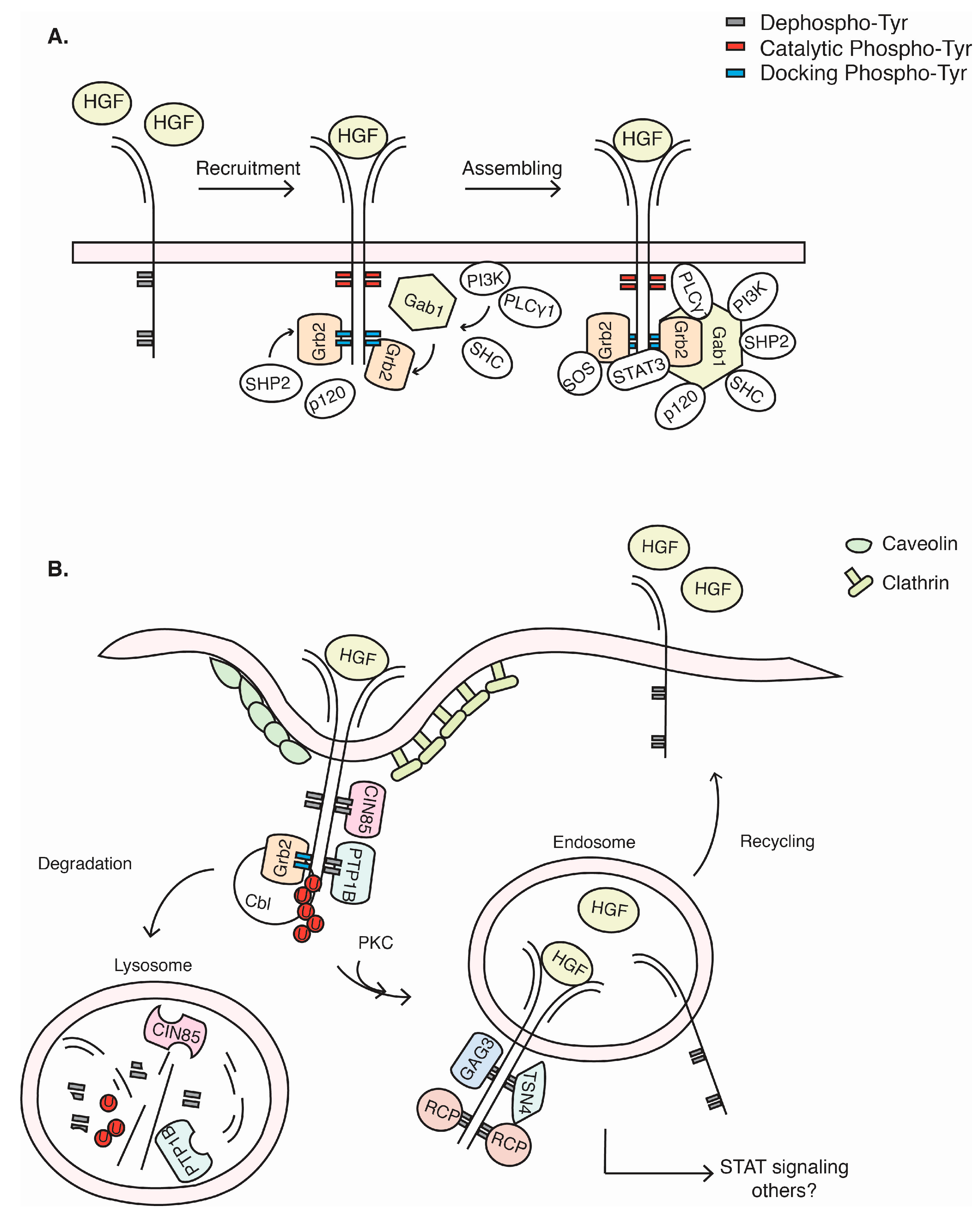
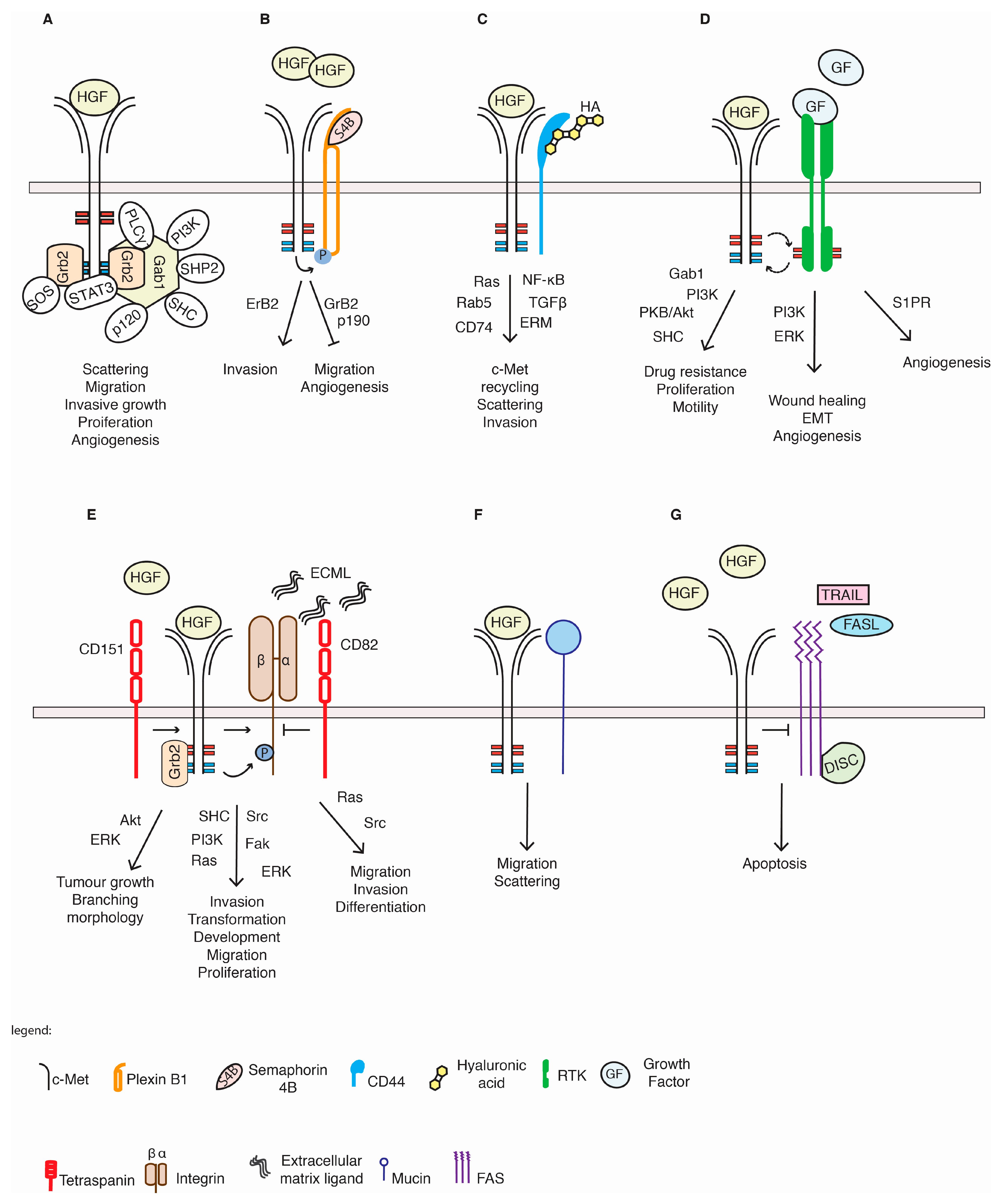
The c-Met receptor, also known as the HGF receptor, is one of the most studied tyrosine kinase receptors, yet its biological functions and activation mechanisms are still not fully understood. c-Met has been implicated in embryonic development and organogenesis, in tissue remodelling homeostasis and repair and in cancer metastasis. These functions are indicative of the many cellular processes in which the receptor plays a role, including cell motility, scattering, survival and proliferation. In the context of malignancy, sustained activation of c-Met leads to a signalling cascade involving a multitude of kinases that initiate an invasive and metastatic program. Many proteins can affect the activation of c-Met, including a variety of other cell surface and membrane-spanning molecules or receptors. Some cell surface molecules share structural homology with the c-Met extracellular domain and can activate c-Met via clustering through this domain (e.g., plexins), whereas other receptor tyrosine kinases can enhance c-Met activation and signalling through intracellular signalling cascades (e.g., EGFR). In this review, we provide an overview of c-Met interactions and crosstalk with partner molecules and the functional consequences of these interactions on c-Met activation and downstream signalling, c-Met intracellular localization/recycling and c-Met degradation.
Keywords: c-Met; HGF receptor; RTK; recycling; crosstalk c-Met; HGF receptor; RTK; recycling; crosstalk
Graphical Abstract