Type 2 Diabetes Mellitus as a Multisystem Disease: From Insulin Resistance to Organ Crosstalk—A Narrative Review

 , , , and
Abstract
1. Introduction
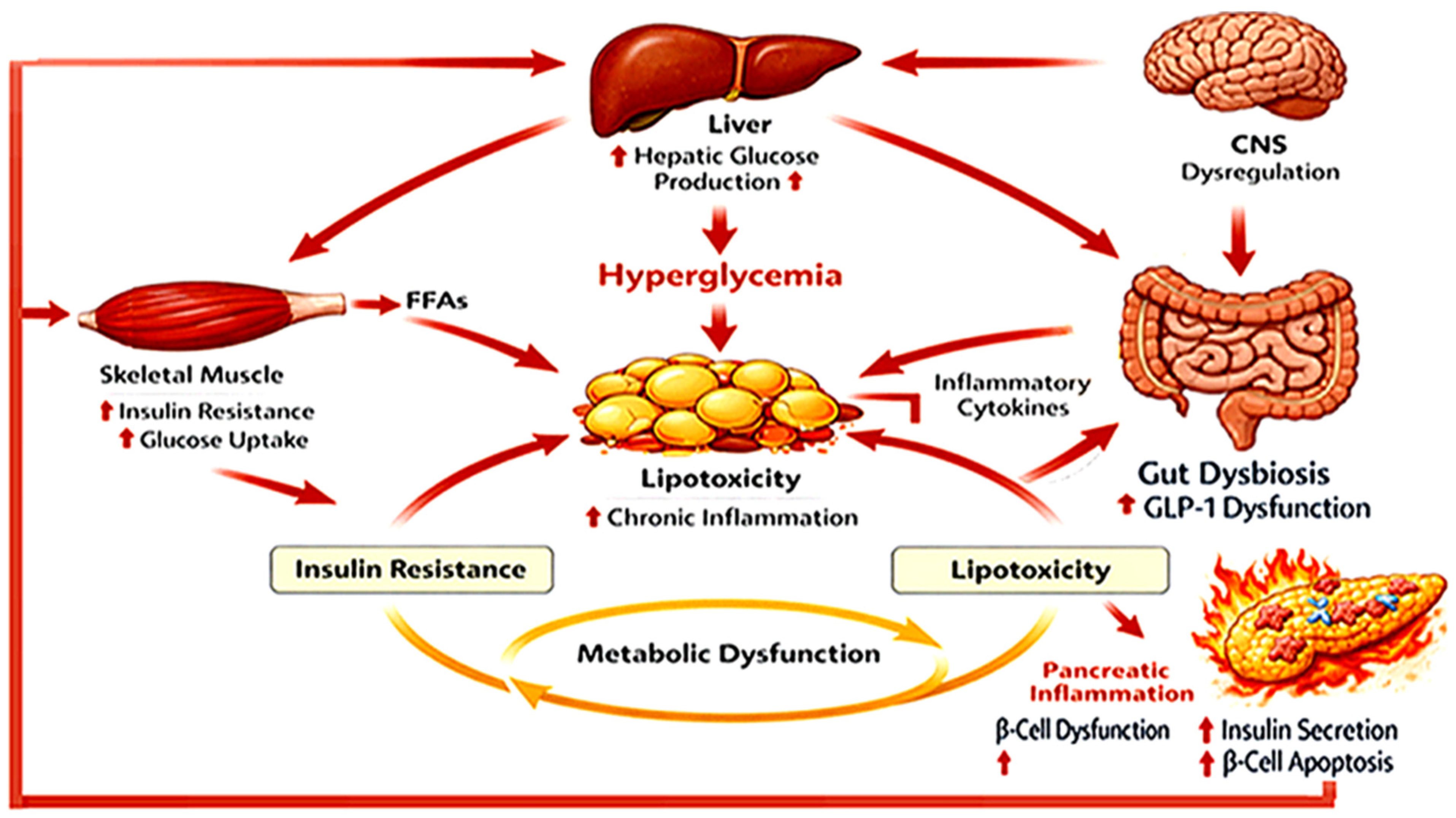
2. Pathophysiology of Type 2 Diabetes Mellitus as a Multisystem Disease
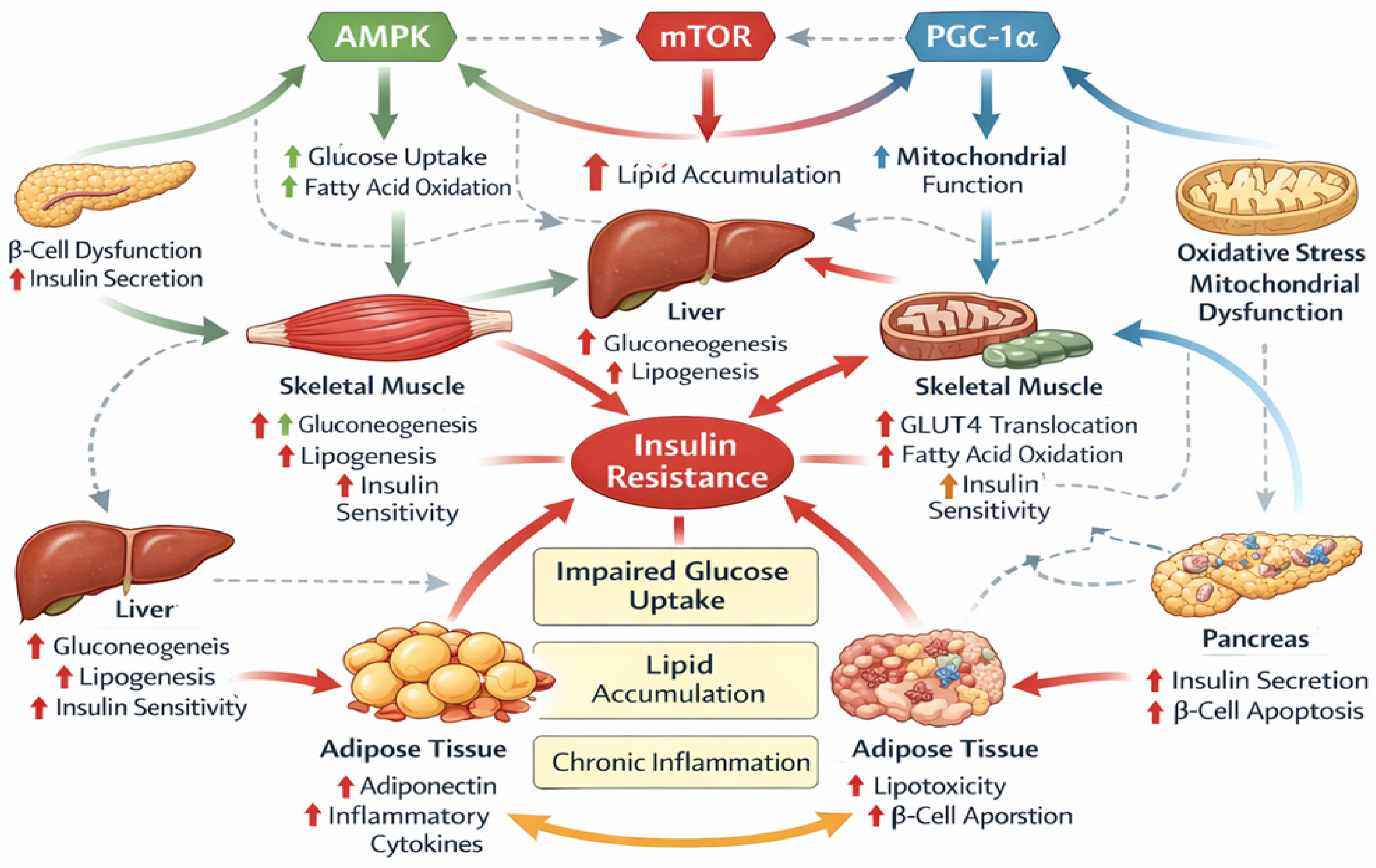
3. Molecular Signaling Pathways in Type 2 Diabetes Mellitus
3.1. AMPK Signaling
3.2. mTOR Signaling Pathway
3.3. Oxidative Stress and Mitochondrial Dysfunction
3.4. Molecular Regulators of Adipogenesis
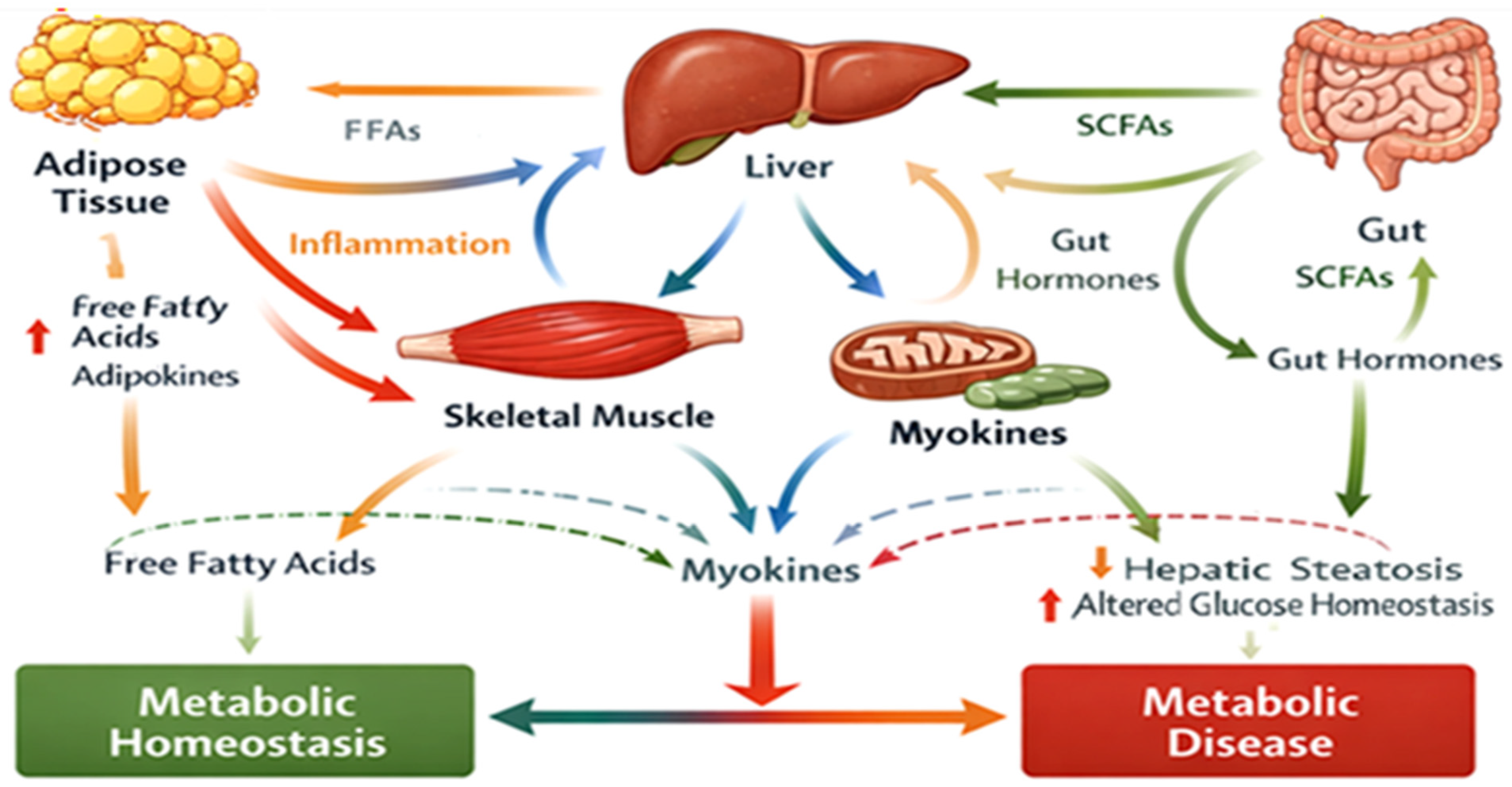
4. Organ Crosstalk in Metabolic Regulation
4.1. Adipose Tissue–Liver Axis
4.2. Muscle–Liver Interaction
4.3. Gut–Metabolism Axis
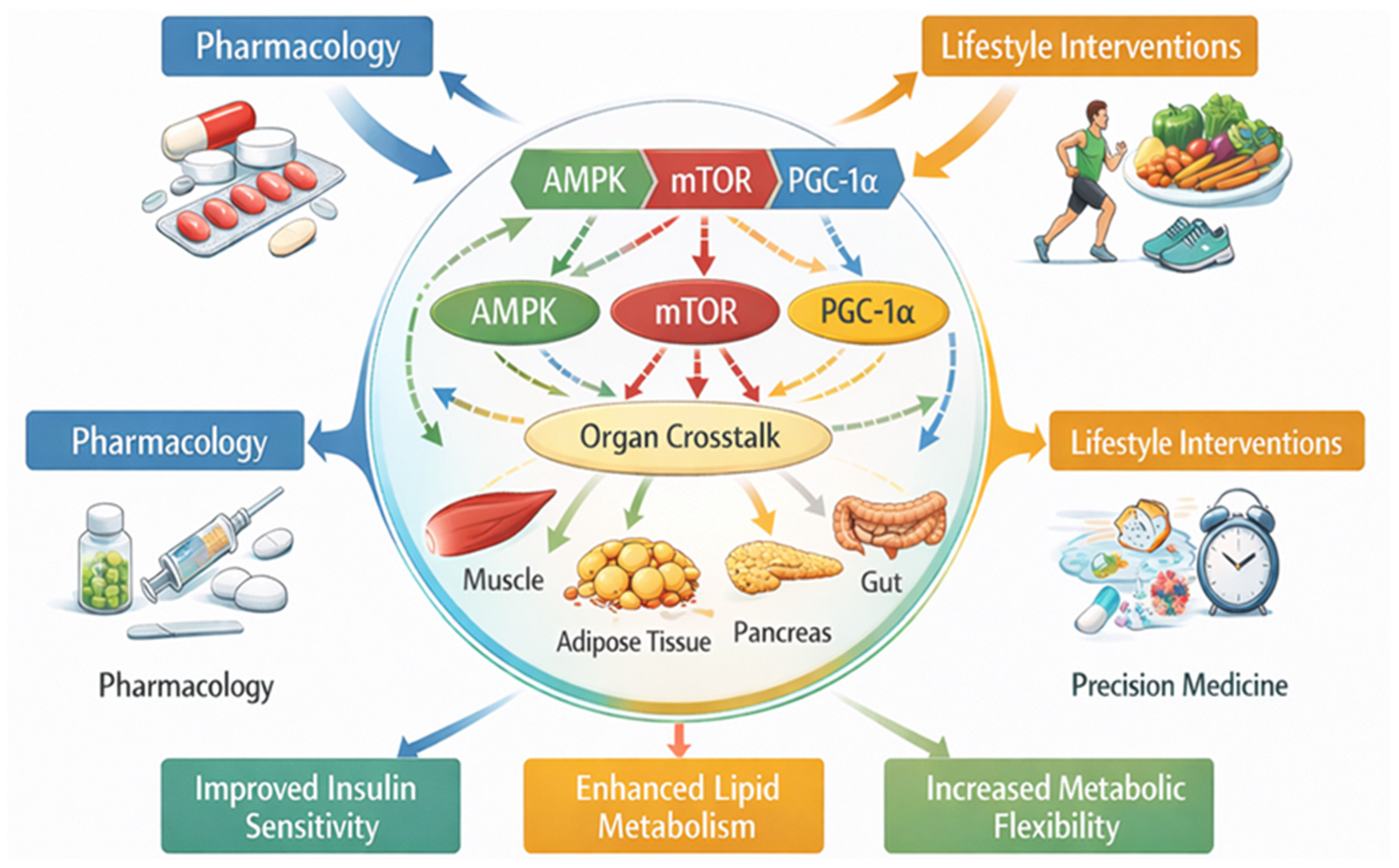
5. Lifestyle and Therapeutic Modulation of Molecular Signaling and Metabolic Crosstalk
5.1. Exercise-Induced Molecular and Metabolic Adaptations
5.2. Nutritional Regulation of Metabolic Signaling
5.3. Targeting Molecular Pathways in Metabolic Disease
5.4. Modulation of Inter-Organ Communication
5.5. Toward Precision and Integrative Metabolic Medicine
6. Clinical Implications and Future Research Directions
7. Conclusions
Author Contributions
Funding
Data Availability Statement
Acknowledgments
Conflicts of Interest
Abbreviations
| AKT2 | Serine/threonine kinase 2. |
| AMPK | AMP-activated protein kinase. |
| ATP | Adenosine triphosphate. |
| BMP4 | Bone morphogenetic protein 4. |
| C/EBPα | CCAAT/enhancer-binding protein alpha. |
| FABP4 | Fatty acid-binding protein 4 |
| FGF21 | Fibroblast growth factor 21. |
| FFAs | Free fatty acids. |
| FOXO1 | Forkhead box O1. |
| FXR | Farnesoid X receptor. |
| GLP-1 | Glucagon-like peptide-1 |
| GLUT4 | Glucose transporter type 4. |
| HbA1c | Glycated hemoglobin. |
| IL-1β | Interleukin-1β |
| IL-6 | Interleukin-6. |
| IRS-1 | Insulin receptor substrate 1. |
| JNK | c-Jun N-terminal kinase. |
| KLF5 | Krüppel-like factor 5. |
| LPS | Lipopolysaccharide. |
| MASLD | Metabolic dysfunction-associated steatotic liver disease. |
| m6A | N6-methyladenosine. |
| mRNA | Messenger ribonucleic acid. |
| mTOR | Mechanistic target of rapamycin. |
| mTORC1 | mTOR complex 1. |
| mTORC2 | mTOR complex 2. |
| NF-κB | Nuclear factor kappa B. |
| PDGFRβ | Platelet-derived growth factor receptor beta. |
| PPARγ | Peroxisome proliferator-activated receptor gamma. |
| RNA | Ribonucleic acid. |
| ROS | Reactive Oxygen Species. |
| SCFAs | Short-chain fatty acids. |
| SREBP1 | Sterol regulatory element-binding protein 1. |
| T2DM | Type 2 diabetes mellitus. |
| TGR5 | Takeda G-protein receptor 5. |
| TNF-α | Tumor necrosis factor alpha. |
| VDR | Vitamin D receptor. |
| YTHDF2 | YTH N6-methyladenosine RNA binding protein 2. |
References
- Chen, L.; Magliano, D.J.; Zimmet, P.Z. The worldwide epidemiology of type 2 diabetes mellitus--present and future perspectives. Nat. Rev. Endocrinol. 2011, 8, 228–236. [Google Scholar] [CrossRef] [PubMed]
- Genitsaridi, I.; Salpea, P.; Salim, A.; Sajjadi, S.F.; Tomic, D.; James, S.; Thirunavukkarasu, S.; Issaka, A.; Chen, L.; Basit, A.; et al. 11th edition of the IDF Diabetes Atlas: Global, regional, and national diabetes prevalence estimates for 2024 and projections for 2050. Lancet Diabetes Endocrinol. 2026, 14, 149–156. [Google Scholar] [CrossRef] [PubMed]
- Accili, D.; Deng, Z.; Liu, Q. Insulin resistance in type 2 diabetes mellitus. Nat. Rev. Endocrinol. 2025, 21, 413–426. [Google Scholar] [CrossRef]
- Gao, Y.; Chen, Q.; Wu, Z.; Yuan, L. Regulation of pancreatic β cells by exosomes from different sources. Diabetes Res. Clin. Pract. 2025, 224, 112222. [Google Scholar] [CrossRef] [PubMed]
- Harreiter, J.; Roden, M. Diabetes Mellitus: Definition, Classification, Diagnosis, Screening, and Prevention (Update 2023). Wien. Klin. Wochenschr. 2023, 135, 7–17. [Google Scholar] [CrossRef]
- Schleicher, E.; Gerdes, C.; Petersmann, A.; Müller-Wieland, D.; Müller, U.A.; Freckmann, G.; Heinemann, L.; Nauck, M.; Landgraf, R. Definition, Classification, and Diagnosis of Diabetes Mellitus. Exp. Clin. Endocrinol. Diabetes 2022, 130, S1–S8. [Google Scholar] [CrossRef]
- Antar, S.A.; Ashour, N.A.; Sharaky, M.; Khattab, M.; Ashour, N.A.; Zaid, R.T.; Roh, E.J.; Elkamhawy, A.; Al-Karmalawy, A.A. Diabetes Mellitus: Classification, Mediators, and Complications; A Gate to Identify Potential Targets for the Development of New Effective Treatments. Biomed. Pharmacother. 2023, 168, 115734. [Google Scholar] [CrossRef]
- American Diabetes Association Professional Practice Committee. 2. Diagnosis and Classification of Diabetes: Standards of Care in Diabetes—2024. Diabetes Care 2024, 47, 20–42. [Google Scholar] [CrossRef]
- Tian, X.; Wang, L.; Zhong, L.; Zhang, K.; Ge, X.; Luo, Z.; Zhai, X.; Liu, S. The research progress and future directions in the pathophysiological mechanisms of type 2 diabetes mellitus from the perspective of precision medicine. Front. Med. 2025, 12, 1555077. [Google Scholar] [CrossRef]
- Xourafa, G.; Korbmacher, M.; Roden, M. Inter-organ crosstalk during development and progression of type 2 diabetes mellitus. Nat. Rev. Endocrinol. 2024, 20, 27–49. [Google Scholar] [CrossRef]
- Yao, W.; Huo, J.; Ji, J.; Liu, K.; Tao, P. Elucidating the role of gut microbiota metabolites in diabetes by employing network pharmacology. Mol. Med. 2024, 30, 263. [Google Scholar] [CrossRef]
- Rehman, K.; Akash, M.S.H.; Liaqat, A.; Kamal, S.; Qadir, M.I.; Rasul, A. Role of Interleukin-6 in Development of Insulin Resistance and Type 2 Diabetes Mellitus. Crit. Rev. Eukaryot. Gene Expr. 2017, 27, 229–236. [Google Scholar] [CrossRef] [PubMed]
- Chávez-Talavera, O.; Tailleux, A.; Lefebvre, P.; Staels, B. Bile Acid Control of Metabolism and Inflammation in Obesity, Type 2 Diabetes, Dyslipidemia, and Nonalcoholic Fatty Liver Disease. Gastroenterology 2017, 152, 1679–1694.e3. [Google Scholar] [CrossRef]
- Guo, W.; Song, Y.; Sun, Y.; Du, H.; Cai, Y.; You, Q.; Fu, H.; Shao, L. Systemic immune-inflammation index is associated with diabetic kidney disease in Type 2 diabetes mellitus patients: Evidence from NHANES 2011-2018. Front. Endocrinol. 2022, 13, 1071465. [Google Scholar] [CrossRef]
- Pinti, M.V.; Fink, G.K.; Hathaway, Q.A.; Durr, A.J.; Kunovac, A.; Hollander, J.M. Mitochondrial dysfunction in type 2 diabetes mellitus: An organ-based analysis. Am. J. Physiol. Endocrinol. Metab. 2019, 316, E268–E285. [Google Scholar] [CrossRef]
- Murakami, T.; Inagaki, N.; Kondoh, H. Cellular Senescence in Diabetes Mellitus: Distinct Senotherapeutic Strategies for Adipose Tissue and Pancreatic β Cells. Front. Endocrinol. 2022, 13, 869414. [Google Scholar] [CrossRef]
- Ferdous, S.E.; Ferrell, J.M. Pathophysiological Relationship between Type 2 Diabetes Mellitus and Metabolic Dysfunction-Associated Steatotic Liver Disease: Novel Therapeutic Approaches. Int. J. Mol. Sci. 2024, 25, 8731. [Google Scholar] [CrossRef] [PubMed]
- Lopez-Pedrosa, J.M.; Camprubi-Robles, M.; Guzman-Rolo, G.; Lopez-Gonzalez, A.; Garcia-Almeida, J.M.; Sanz-Paris, A.; Rueda, R. The Vicious Cycle of Type 2 Diabetes Mellitus and Skeletal Muscle Atrophy: Clinical, Biochemical, and Nutritional Bases. Nutrients 2024, 16, 172. [Google Scholar] [CrossRef] [PubMed]
- Davies, M.J.; Aroda, V.R.; Collins, B.S.; Gabbay, R.A.; Green, J.; Maruthur, N.M.; Rosas, S.E.; Del Prato, S.; Mathieu, C.; Mingrone, G.; et al. Management of hyperglycaemia in type 2 diabetes, 2022. A consensus report by the American Diabetes Association (ADA) and the European Association for the Study of Diabetes (EASD). Diabetologia 2022, 65, 1925–1966. [Google Scholar] [CrossRef]
- Hara, K.; Sakai, Y.; Tajiri, Y.; Nomura, M. Beneficial effects of SGLT2 inhibitor on metabolic inflexibility and visceral fat amount in animal model of obese type 2 diabetes. Heliyon 2022, 8, e11012. [Google Scholar] [CrossRef]
- Andreasen, A.S.; Kelly, M.; Berg, R.M.; Møller, K.; Pedersen, B.K. Type 2 diabetes is associated with altered NF-κB DNA binding activity, JNK phosphorylation, and AMPK phosphorylation in skeletal muscle after LPS. PLoS ONE 2011, 6, e23999. [Google Scholar] [CrossRef] [PubMed]
- Yang, W.; Jiang, W.; Guo, S. Regulation of Macronutrients in Insulin Resistance and Glucose Homeostasis during Type 2 Diabetes Mellitus. Nutrients 2023, 15, 4671. [Google Scholar] [CrossRef]
- Kanaley, J.A.; Colberg, S.R.; Corcoran, M.H.; Malin, S.K.; Rodriguez, N.R.; Crespo, C.J.; Kirwan, J.P.; Zierath, J.R. Exercise/Physical Activity in Individuals with Type 2 Diabetes: A Consensus Statement from the American College of Sports Medicine. Med. Sci. Sports Exerc. 2022, 54, 353–368. [Google Scholar] [CrossRef]
- Zhou, Z.; Sun, B.; Yu, D.; Zhu, C. Gut Microbiota: An Important Player in Type 2 Diabetes Mellitus. Front. Cell. Infect. Microbiol. 2022, 12, 834485. [Google Scholar] [CrossRef]
- Fuentes-Barría, H.; Aguilera-Eguía, R.; Flores-Fernández, C.; Angarita-Davila, L.; Rojas-Gómez, D.; Alarcón-Rivera, M.; López-Soto, O.; Maureira-Sánchez, J. Vitamin D and Type 2 Diabetes Mellitus: Molecular Mechanisms and Clinical Implications—A Narrative Review. Int. J. Mol. Sci. 2025, 26, 2153. [Google Scholar] [CrossRef] [PubMed]
- Zhang, Y.; Tan, H.; Tang, J.; Li, J.; Chong, W.; Hai, Y.; Feng, Y.; Lunsford, L.D.; Xu, P.; Jia, D.; et al. Effects of Vitamin D Supplementation on Prevention of Type 2 Diabetes in Patients With Prediabetes: A Systematic Review and Meta-analysis. Diabetes Care 2020, 43, 1650–1658. [Google Scholar] [CrossRef]
- Raza, G.S.; Herzig, K.H. Hepatic glucose production and storage as a potential strategy for type 2 diabetes treatment—The effect of catestatin—“just another new kid in town?”. Acta Physiol. 2022, 235, e13808. [Google Scholar] [CrossRef]
- Foretz, M.; Guigas, B.; Viollet, B. Understanding the glucoregulatory mechanisms of metformin in type 2 diabetes mellitus. Nat. Rev. Endocrinol. 2019, 15, 569–589. [Google Scholar] [CrossRef]
- Poitout, V.; Robertson, R.P. Glucolipotoxicity: Fuel excess and beta-cell dysfunction. Endocr. Rev. 2008, 29, 351–366. [Google Scholar] [CrossRef] [PubMed]
- Wysham, C.; Shubrook, J. Beta-cell failure in type 2 diabetes: Mechanisms, markers, and clinical implications. Postgrad. Med. 2020, 132, 676–686. [Google Scholar] [CrossRef]
- Veerabathiran, R.; P, A.; BK, I.; D, R.; RS, A.H. Genetic predisposition of LEPR (rs1137101) gene polymorphism related to type 2 diabetes mellitus—A meta-analysis. Ann. Med. 2023, 55, 2302520. [Google Scholar] [CrossRef]
- Xu, Z.; Lin, R.; Ji, X.; Huang, C.; Wang, C.; Yu, Y.; Bao, Z. Physical frailty, genetic predisposition, and type 2 diabetes mellitus. Diabetes Metab. 2025, 51, 101618. [Google Scholar] [CrossRef]
- Khalafi, M.; Fatolahi, S.; Symonds, M.E.; Dinizadeh, F.; Rosenkranz, S.K.; Batrakoulis, A. Comparative Efficacy of Exercise Type on Visceral Adipose Tissue in Patients with Prediabetes and Type 2 Diabetes Mellitus: A Systematic Review With Pairwise and Network Meta-Analyses. Obes. Rev. 2026, 27, e70031. [Google Scholar] [CrossRef]
- Forouhi, N.G. Embracing complexity: Making sense of diet, nutrition, obesity and type 2 diabetes. Diabetologia 2023, 66, 786–799. [Google Scholar] [CrossRef]
- Ren, X.; Yang, X.; Jiang, H.; Han, T.; Sun, C. The association of energy and macronutrient intake at dinner vs breakfast with the incidence of type 2 diabetes mellitus in a cohort study: The China Health and Nutrition Survey, 1997–2011. J. Diabetes 2021, 13, 882–892. [Google Scholar] [CrossRef] [PubMed]
- Blüher, M. Understanding Adipose Tissue Dysfunction. J. Obes. Metab. Syndr. 2024, 33, 275–288. [Google Scholar] [CrossRef] [PubMed]
- He, F.; Huang, Y.; Song, Z.; Zhou, H.J.; Zhang, H.; Perry, R.J.; Shulman, G.I.; Min, W. Mitophagy-mediated adipose inflammation contributes to type 2 diabetes with hepatic insulin resistance. J. Exp. Med. 2021, 218, e20201416. [Google Scholar] [CrossRef]
- Guo, H.; Pan, L.; Wu, Q.; Wang, L.; Huang, Z.; Wang, J.; Wang, L.; Fang, X.; Dong, S.; Zhu, Y.; et al. Type 2 Diabetes and the Multifaceted Gut-X Axes. Nutrients 2025, 17, 2708. [Google Scholar] [CrossRef]
- Liu, L.; Ke, W.; Li, H.; Li, F.; Fan, G.; Kuang, J.; Ma, J.; Zhang, X.; Ji, B.; Li, S.; et al. Intense simplified strategy for newly diagnosed type 2 diabetes in patients with severe hyperglycaemia: Multicentre, open label, randomised trial. BMJ 2024, 387, e080122. [Google Scholar] [CrossRef] [PubMed]
- Cao, B.; Guo, Z.; Li, D.T.; Zhao, L.Y.; Wang, Z.; Gao, Y.B.; Wang, Y.X. The association between stress-induced hyperglycemia ratio and cardiovascular events as well as all-cause mortality in patients with chronic kidney disease and diabetic nephropathy. Cardiovasc. Diabetol. 2025, 24, 55. [Google Scholar] [CrossRef]
- Grisold, A.; Callaghan, B.C.; Feldman, E.L. Mediators of diabetic neuropathy: Is hyperglycemia the only culprit? Curr. Opin. Endocrinol. Diabetes Obes. 2017, 24, 103–111. [Google Scholar] [CrossRef]
- Kaur, G.; Harris, N.R. Endothelial glycocalyx in retina, hyperglycemia, and diabetic retinopathy. Am. J. Physiol. Cell Physiol. 2023, 324, C1061–C1077. [Google Scholar] [CrossRef]
- Pasquel, F.J.; Lansang, M.C.; Dhatariya, K.; Umpierrez, G.E. Management of diabetes and hyperglycaemia in the hospital. Lancet Diabetes Endocrinol. 2021, 9, 174–188. [Google Scholar] [CrossRef]
- Hu, S.; Ji, W.; Zhang, Y.; Zhu, W.; Sun, H.; Sun, Y. Risk factors for progression to type 2 diabetes in prediabetes: A systematic review and meta-analysis. BMC Public Health 2025, 25, 1220. [Google Scholar] [CrossRef]
- Purnell, J.Q. What Is Obesity? Definition as a Disease, With Implications for Care. Gastroenterol. Clin. N. Am. 2023, 52, 261–275. [Google Scholar] [CrossRef] [PubMed]
- Chung, J.; Miller, B.J. Meta-Analysis of Comorbid Diabetes and Family History of Diabetes in Non-Affective Psychosis. Schizophr. Res. 2020, 216, 41–47. [Google Scholar] [CrossRef]
- Kautzky-Willer, A.; Leutner, M.; Harreiter, J. Sex Differences in Type 2 Diabetes. Diabetologia 2023, 66, 986–1002. [Google Scholar] [CrossRef]
- Ma, X.; Nan, F.; Liang, H.; Shu, P.; Fan, X.; Song, X.; Hou, Y.; Zhang, D. Excessive Intake of Sugar: An Accomplice of Inflammation. Front. Immunol. 2022, 13, 988481. [Google Scholar] [CrossRef] [PubMed]
- Vargas-Uricoechea, H.; Cáceres-Acosta, M.F. Blood Pressure Control and Impact on Cardiovascular Events in Patients with Type 2 Diabetes Mellitus: A Critical Analysis of the Literature. Clin. Investig. Arterioscler. 2019, 31, 31–47. [Google Scholar] [CrossRef]
- Perego, C.; Da Dalt, L.; Pirillo, A.; Galli, A.; Catapano, A.L.; Norata, G.D. Cholesterol Metabolism, Pancreatic β-Cell Function and Diabetes. Biochim. Biophys. Acta Mol. Basis Dis. 2019, 1865, 2149–2156. [Google Scholar] [CrossRef] [PubMed]
- Hunie Tesfa, K.; Desalegn Gebeyehu, C.; Tadele Ewunetie, A.; Gugsa, E.; Nigatu Zewdie, A.; Dessie, G.; Tezera Endale, H. The role of AMPK signaling pathway in the pathogenesis of type 2 diabetes mellitus with its complications and related metabolic disorders. Metabol. Open 2025, 28, 100397. [Google Scholar] [CrossRef]
- Petersen, M.C.; Shulman, G.I. Mechanisms of Insulin Action and Insulin Resistance. Physiol. Rev. 2018, 98, 2133–2223. [Google Scholar] [CrossRef]
- Gilardi, F.; Winkler, C.; Quignodon, L.; Diserens, J.G.; Toffoli, B.; Schiffrin, M.; Sardella, C.; Preitner, F.; Desvergne, B. Systemic PPARγ deletion in mice provokes lipoatrophy, organomegaly, severe type 2 diabetes and metabolic inflexibility. Metabolism 2019, 95, 8–20. [Google Scholar] [CrossRef]
- Chen, Y.L.; Qiao, Y.C.; Xu, Y.; Ling, W.; Pan, Y.H.; Huang, Y.C.; Geng, L.J.; Zhao, H.L.; Zhang, X.X. Serum TNF-α concentrations in type 2 diabetes mellitus patients and diabetic nephropathy patients: A systematic review and meta-analysis. Immunol. Lett. 2017, 186, 52–58. [Google Scholar] [CrossRef] [PubMed]
- Swaroop, J.J.; Rajarajeswari, D.; Naidu, J.N. Association of TNF-α with insulin resistance in type 2 diabetes mellitus. Indian J. Med. Res. 2012, 135, 127–130. [Google Scholar] [CrossRef] [PubMed]
- Madhavi, Y.V.; Gaikwad, N.; Yerra, V.G.; Kalvala, A.K.; Nanduri, S.; Kumar, A. Targeting AMPK in Diabetes and Diabetic Complications: Energy Homeostasis, Autophagy and Mitochondrial Health. Curr. Med. Chem. 2019, 26, 5207–5229. [Google Scholar] [CrossRef]
- Yang, L.; Zhang, Z.; Wang, D.; Jiang, Y.; Liu, Y. Targeting mTOR Signaling in Type 2 Diabetes Mellitus and Diabetes Complications. Curr. Drug Targets 2022, 23, 692–710. [Google Scholar] [CrossRef]
- Rovira-Llopis, S.; Bañuls, C.; Diaz-Morales, N.; Hernandez-Mijares, A.; Rocha, M.; Victor, V.M. Mitochondrial dynamics in type 2 diabetes: Pathophysiological implications. Redox Biol. 2017, 11, 637–645. [Google Scholar] [CrossRef]
- Su, J.; Luo, Y.; Hu, S.; Tang, L.; Ouyang, S. Advances in Research on Type 2 Diabetes Mellitus Targets and Therapeutic Agents. Int. J. Mol. Sci. 2023, 24, 13381. [Google Scholar] [CrossRef]
- Suaifan, G.A.R.Y.; Alkhawaja, B.; Shehadeh, M.B.; Sharmaa, M.; Hor Kuan, C.; Okechukwu, P.N. Glucosamine substituted sulfonylureas: IRS-PI3K-PKC-AKT-GLUT4 insulin signalling pathway intriguing agent. RSC Med. Chem. 2024, 15, 695–703. [Google Scholar] [CrossRef] [PubMed]
- Adhikary, P.; Banerjee, S.; Dey, B.K.; Gargari, P.; Chatterjee, S.; Chakraborty, D.; Chowdhury, S. Association of adipocyte size and SREBP-1c in visceral and subcutaneous adipose tissue in non-obese type 2 diabetes mellitus. Endocrine 2024, 83, 615–623. [Google Scholar] [CrossRef]
- Ge, W.; Zhao, Y.; Yang, Y.; Ding, Z.; Xu, X.; Weng, D.; Wang, S.; Cheng, R.; Zhang, J. An insulin-independent mechanism for transcriptional regulation of Foxo1 in type 2 diabetic mice. J. Biol. Chem. 2021, 297, 100846. [Google Scholar] [CrossRef]
- Lavecchia, A.; Cerchia, C. Selective PPARγ modulators for Type 2 diabetes treatment: How far have we come and what does the future hold? Future Med. Chem. 2018, 10, 703–705. [Google Scholar] [CrossRef] [PubMed]
- Zhu, G.; Zhang, J.; Yue, L.; Xiang, G. Preventive effect of salicin ether against type-2 diabetes mellitus through targeting PPARγ-regulated gene expression. Acta Biochim. Pol. 2022, 69, 619–623. [Google Scholar] [CrossRef] [PubMed]
- Furuhashi, M.; Sakuma, I.; Morimoto, T.; Higashiura, Y.; Sakai, A.; Matsumoto, M.; Sakuma, M.; Shimabukuro, M.; Nomiyama, T.; Arasaki, O.; et al. Independent and Distinct Associations of FABP4 and FABP5 With Metabolic Parameters in Type 2 Diabetes Mellitus. Front. Endocrinol. 2020, 11, 575557. [Google Scholar] [CrossRef] [PubMed]
- Tang, S.; Zhang, R.; Yu, W.; Jiang, F.; Wang, J.; Chen, M.; Peng, D.; Yan, J.; Bao, Y.; Jia, W. Association of genetic variants of BMP4 with type 2 diabetes mellitus and clinical traits in a Chinese Han population. Biomed Res. Int. 2013, 2013, 238150. [Google Scholar] [CrossRef]
- Wang, X.H.; Yan, C.Y.; Liu, J.R. Hyperinsulinemia-induced KLF5 mediates endothelial angiogenic dysfunction in diabetic endothelial cells. J. Mol. Histol. 2019, 50, 239–251. [Google Scholar] [CrossRef]
- Wang, H.; Chen, J.; Bai, G.; Han, W.; Guo, R.; Cui, N. mTOR Modulates the Endoplasmic Reticulum Stress-Induced CD4+ T Cell Apoptosis Mediated by ROS in Septic Immunosuppression. Mediat. Inflamm. 2022, 2022, 6077570. [Google Scholar] [CrossRef]
- Amine Ikhanjal, M.; Ali Elouarid, M.; Zouine, C.; El Alami, H.; Errafii, K.; Ghazal, H.; Alidrissi, N.; Bakkali, F.; Benmoussa, A.; Hamdi, S. FTO gene variants (rs9939609, rs8050136 and rs17817449) and type 2 diabetes mellitus risk: A Meta-Analysis. Gene 2023, 887, 147791. [Google Scholar] [CrossRef]
- Zheng, J.; Chen, X.; Wu, L.; Zhou, Y.; Wang, Z.; Li, J.; Liu, Y.; Peng, G.; Berggren, P.O.; Zheng, X.; et al. Identification of MDM2, YTHDF2 and DDX21 as potential biomarkers and targets for treatment of type 2 diabetes. Biochem. Biophys. Res. Commun. 2021, 581, 110–117. [Google Scholar] [CrossRef]
- Onogi, Y.; Wada, T.; Kamiya, C.; Inata, K.; Matsuzawa, T.; Inaba, Y.; Kimura, K.; Inoue, H.; Yamamoto, S.; Ishii, Y.; et al. PDGFRβ Regulates Adipose Tissue Expansion and Glucose Metabolism via Vascular Remodeling in Diet-Induced Obesity. Diabetes 2017, 66, 1008–1021. [Google Scholar] [CrossRef]
- Wang, B.; Cheng, K.K. Hypothalamic AMPK as a Mediator of Hormonal Regulation of Energy Balance. Int. J. Mol. Sci. 2018, 19, 3552. [Google Scholar] [CrossRef] [PubMed]
- López, M. Hypothalamic AMPK as a possible target for energy balance-related diseases. Trends Pharmacol. Sci. 2022, 43, 546–556. [Google Scholar] [CrossRef]
- Ke, R.; Xu, Q.; Li, C.; Luo, L.; Huang, D. Mechanisms of AMPK in the maintenance of ATP balance during energy metabolism. Cell Biol. Int. 2018, 42, 384–392. [Google Scholar] [CrossRef] [PubMed]
- Herzig, S.; Shaw, R.J. AMPK: Guardian of metabolism and mitochondrial homeostasis. Nat. Rev. Mol. Cell Biol. 2018, 19, 121–135. [Google Scholar] [CrossRef] [PubMed]
- Malik, N.; Ferreira, B.I.; Hollstein, P.E.; Curtis, S.D.; Trefts, E.; Weiser Novak, S.; Yu, J.; Gilson, R.; Hellberg, K.; Fang, L.; et al. Induction of lysosomal and mitochondrial biogenesis by AMPK phosphorylation of FNIP1. Science 2023, 380, eabj5559. [Google Scholar] [CrossRef]
- Zhang, C.; Jiang, Y.; Liu, J.; Jin, M.; Qin, N.; Chen, Y.; Niu, W.; Duan, H. AMPK/AS160 mediates tiliroside derivatives-stimulated GLUT4 translocation in muscle cells. Drug Des. Dev. Ther. 2018, 12, 1581–1587. [Google Scholar] [CrossRef]
- Johanns, M.; Hue, L.; Rider, M.H. AMPK inhibits liver gluconeogenesis: Fact or fiction? Biochem. J. 2023, 480, 105–125. [Google Scholar] [CrossRef]
- Wang, D.; Yang, L.; Liu, Y. Targeting AMPK Signaling in the Liver: Implications for Obesity and Type 2 Diabetes Mellitus. Curr. Drug Targets 2022, 23, 1057–1071. [Google Scholar] [CrossRef]
- Li, H.; Min, Q.; Ouyang, C.; Lee, J.; He, C.; Zou, M.H.; Xie, Z. AMPK activation prevents excess nutrient-induced hepatic lipid accumulation by inhibiting mTORC1 signaling and endoplasmic reticulum stress response. Biochim. Biophys. Acta 2014, 1842, 1844–1854. [Google Scholar] [CrossRef]
- Li, X.; Zhang, X.; Shen, Z.; Chen, Z.; Wang, H.; Zhang, X. GnRH receptor mediates lipid storage in female adipocytes via AMPK pathway. Int. J. Med. Sci. 2022, 19, 1442–1450. [Google Scholar] [CrossRef]
- Lee, H.; Zandkarimi, F.; Zhang, Y.; Meena, J.K.; Kim, J.; Zhuang, L.; Tyagi, S.; Ma, L.; Westbrook, T.F.; Steinberg, G.R.; et al. Energy-stress-mediated AMPK activation inhibits ferroptosis. Nat. Cell Biol. 2020, 22, 225–234. [Google Scholar] [CrossRef]
- Guo, T.; Yan, W.; Cui, X.; Liu, N.; Wei, X.; Sun, Y.; Fan, K.; Liu, J.; Zhu, Y.; Wang, Z.; et al. Liraglutide attenuates type 2 diabetes mellitus-associated non-alcoholic fatty liver disease by activating AMPK/ACC signaling and inhibiting ferroptosis. Mol. Med. 2023, 29, 132. [Google Scholar] [CrossRef]
- González, A.; Hall, M.N.; Lin, S.C.; Hardie, D.G. AMPK and TOR: The Yin and Yang of Cellular Nutrient Sensing and Growth Control. Cell Metab. 2020, 31, 472–492. [Google Scholar] [CrossRef] [PubMed]
- Liu, G.Y.; Sabatini, D.M. mTOR at the nexus of nutrition, growth, ageing and disease. Nat. Rev. Mol. Cell Biol. 2020, 21, 183–203. [Google Scholar] [CrossRef]
- Szwed, A.; Kim, E.; Jacinto, E. Regulation and metabolic functions of mTORC1 and mTORC2. Physiol. Rev. 2021, 101, 1371–1426. [Google Scholar] [CrossRef]
- Goul, C.; Peruzzo, R.; Zoncu, R. The molecular basis of nutrient sensing and signalling by mTORC1 in metabolism regulation and disease. Nat. Rev. Mol. Cell Biol. 2023, 24, 857–875. [Google Scholar] [CrossRef]
- Tsuji-Tamura, K.; Ogawa, M. Dual inhibition of mTORC1 and mTORC2 perturbs cytoskeletal organization and impairs endothelial cell elongation. Biochem. Biophys. Res. Commun. 2018, 497, 326–331. [Google Scholar] [CrossRef] [PubMed]
- Martinez Calejman, C.; Trefely, S.; Entwisle, S.W.; Luciano, A.; Jung, S.M.; Hsiao, W.; Torres, A.; Hung, C.M.; Li, H.; Snyder, N.W.; et al. mTORC2-AKT signaling to ATP-citrate lyase drives brown adipogenesis and de novo lipogenesis. Nat. Commun. 2020, 11, 575. [Google Scholar] [CrossRef]
- Sukumaran, A.; Choi, K.; Dasgupta, B. Insight on Transcriptional Regulation of the Energy Sensing AMPK and Biosynthetic mTOR Pathway Genes. Front. Cell Dev. Biol. 2020, 8, 671. [Google Scholar] [CrossRef]
- De Vita, V.; Melnik, B.C. Activation of mechanistic target of rapamycin complex 1: The common link between rheumatoid arthritis and diabetes mellitus. Rheumatology 2019, 58, 377–379. [Google Scholar] [CrossRef]
- Wang, J.; Yang, X.; Zhang, J. Bridges between mitochondrial oxidative stress, ER stress and mTOR signaling in pancreatic β cells. Cell. Signal. 2016, 28, 1099–1104. [Google Scholar] [CrossRef]
- Garde, A.; Kenny, I.W.; Kelley, L.C.; Chi, Q.; Mutlu, A.S.; Wang, M.C.; Sherwood, D.R. Localized glucose import, glycolytic processing, and mitochondria generate a focused ATP burst to power basement-membrane invasion. Dev. Cell 2022, 57, 732–749.e7. [Google Scholar] [CrossRef]
- Palma, F.R.; Gantner, B.N.; Sakiyama, M.J.; Kayzuka, C.; Shukla, S.; Lacchini, R.; Cunniff, B.; Bonini, M.G. ROS production by mitochondria: Function or dysfunction? Oncogene 2024, 43, 295–303. [Google Scholar] [CrossRef]
- Court, A.C.; Vega-Letter, A.M.; Parra-Crisóstomo, E.; Velarde, F.; García, C.; Ortloff, A.; Vernal, R.; Pradenas, C.; Luz-Crawford, P.; Khoury, M.; et al. Mitochondrial transfer balances cell redox, energy and metabolic homeostasis in the osteoarthritic chondrocyte preserving cartilage integrity. Theranostics 2024, 14, 6471–6486. [Google Scholar] [CrossRef]
- Rendra, E.; Riabov, V.; Mossel, D.M.; Sevastyanova, T.; Harmsen, M.C.; Kzhyshkowska, J. Reactive oxygen species (ROS) in macrophage activation and function in diabetes. Immunobiology 2019, 224, 242–253. [Google Scholar] [CrossRef]
- Azzouz, D.; Palaniyar, N. How Do ROS Induce NETosis? Oxidative DNA Damage, DNA Repair, and Chromatin Decondensation. Biomolecules 2024, 14, 1307. [Google Scholar] [CrossRef]
- Russell-Guzmán, J.; Américo-Da Silva, L.; Cadagan, C.; Maturana, M.; Palomero, J.; Estrada, M.; Barrientos, G.; Buvinic, S.; Hidalgo, C.; Llanos, P. Activation of the ROS/TXNIP/NLRP3 pathway disrupts insulin-dependent glucose uptake in skeletal muscle of insulin-resistant obese mice. Free Radic. Biol. Med. 2024, 222, 187–198. [Google Scholar] [CrossRef]
- Lima, J.E.B.F.; Moreira, N.C.S.; Sakamoto-Hojo, E.T. Mechanisms underlying the pathophysiology of type 2 diabetes: From risk factors to oxidative stress, metabolic dysfunction, and hyperglycemia. Mutat. Res. Genet. Toxicol. Environ. Mutagen. 2022, 874–875, 503437. [Google Scholar] [CrossRef]
- Lin, S.; Wu, B.; Hu, X.; Lu, H. Sirtuin 4 (Sirt4) downregulation contributes to chondrocyte senescence and osteoarthritis via mediating mitochondrial dysfunction. Int. J. Biol. Sci. 2024, 20, 1256–1278. [Google Scholar] [CrossRef]
- Wang, X.; Menezes, C.J.; Jia, Y.; Xiao, Y.; Venigalla, S.S.K.; Cai, F.; Hsieh, M.H.; Gu, W.; Du, L.; Sudderth, J.; et al. Metabolic inflexibility promotes mitochondrial health during liver regeneration. Science 2024, 384, eadj4301. [Google Scholar] [CrossRef]
- Shao, L.; Kong, X.; Lv, S.; Shu, X.; Ma, X.; Ai, X.; Yan, D.; Ying, Y. FXR-regulated COX6A2 triggers mitochondrial apoptosis of pancreatic β-cell in type 2 diabetes. Cell Death Dis. 2024, 15, 920. [Google Scholar] [CrossRef]
- Fromenty, B.; Roden, M. Mitochondrial alterations in fatty liver diseases. J. Hepatol. 2023, 78, 415–429. [Google Scholar] [CrossRef]
- Cheng, L.; Wang, J.; Dai, H.; Duan, Y.; An, Y.; Shi, L.; Lv, Y.; Li, H.; Wang, C.; Ma, Q.; et al. Brown and beige adipose tissue: A novel therapeutic strategy for obesity and type 2 diabetes mellitus. Adipocyte 2021, 10, 48–65. [Google Scholar] [CrossRef]
- Francisco, V.; Pino, J.; Gonzalez-Gay, M.A.; Mera, A.; Lago, F.; Gómez, R.; Mobasheri, A.; Gualillo, O. Adipokines and inflammation: Is it a question of weight? Br. J. Pharmacol. 2018, 175, 1569–1579. [Google Scholar] [CrossRef]
- Vishvanath, L.; Gupta, R.K. Contribution of adipogenesis to healthy adipose tissue expansion in obesity. J. Clin. Investig. 2019, 129, 4022–4031. [Google Scholar] [CrossRef]
- Hade, M.D.; Butsch, B.L.; Loreto Palacio, P.; Nguyen, K.T.; Shantaram, D.; Noria, S.F.; Brethauer, S.A.; Needleman, B.J.; Hsueh, W.; Reátegui, E.; et al. Human Differentiated Adipocytes as Surrogate Mature Adipocytes for Adipocyte-Derived Extracellular Vesicle Analysis. Cells 2025, 14, 757. [Google Scholar] [CrossRef]
- Engin, A.B. MicroRNA and Adipogenesis. Adv. Exp. Med. Biol. 2017, 960, 489–509. [Google Scholar]
- Lin, W.; Chen, L.; Meng, W.; Yang, K.; Wei, S.; Wei, W.; Chen, J.; Zhang, L. C/EBPα promotes porcine pre-adipocyte proliferation and differentiation via mediating MSTRG.12568.2/FOXO3 trans-activation for STYX. Biochim. Biophys. Acta Mol. Cell Biol. Lipids 2022, 1867, 159206. [Google Scholar] [CrossRef]
- Shen, S.M.; Yu, Y.; Wu, Z.X.; Zheng, Y.; Chen, G.Q.; Wang, L.S. Apoptosis-inducing factor is a target gene of C/EBPα and participates in adipocyte differentiation. FEBS Lett. 2011, 585, 2307–2312. [Google Scholar] [CrossRef]
- Xu, D.; Zhuang, S.; Chen, H.; Jiang, M.; Jiang, P.; Wang, Q.; Wang, X.; Chen, R.; Tang, H.; Tang, L. IL-33 regulates adipogenesis via Wnt/β-catenin/PPAR-γ signaling pathway in preadipocytes. J. Transl. Med. 2024, 22, 363. [Google Scholar] [CrossRef]
- Zhao, Y.; Yao, H.; Liao, Y.; Jiang, B.; Li, T.; Chen, J.; Sheng, Y.; Yin, M.; Ye, W.; Yan, Q.; et al. Selective PPARγ modulator alpinetin restores insulin sensitivity and protects from bone loss in type 2 diabetes. Phytomedicine 2025, 145, 157003. [Google Scholar] [CrossRef]
- Li, T.; Li, X.; Meng, H.; Chen, L.; Meng, F. ACSL1 affects Triglyceride Levels through the PPARγ Pathway. Int. J. Med. Sci. 2020, 17, 720–727. [Google Scholar] [CrossRef]
- Kim, J.B.; Spiegelman, B.M. ADD1/SREBP1 promotes adipocyte differentiation and gene expression linked to fatty acid metabolism. Genes Dev. 1996, 10, 1096–1107. [Google Scholar] [CrossRef]
- Sha, X.; Lin, J.; Wu, K.; Lu, J.; Yu, Z. The TRPV1-PKM2-SREBP1 axis maintains microglial lipid homeostasis in Alzheimer’s disease. Cell Death Dis. 2025, 16, 14. [Google Scholar] [CrossRef]
- He, Y.; Zhang, Y.; Zhu, S.; Liu, Y.F.; Liu, S.; Xu, Y.J. Monomethyl Branched-Chain Fatty Acids Suppress M1 Macrophage Polarization via FABP4/PPAR-γ Signaling Pathway. Mol. Nutr. Food Res. 2024, 68, e2400310. [Google Scholar] [CrossRef]
- Tanaka, M.; Gohda, T.; Kamei, N.; Murakoshi, M.; Sato, T.; Kubota, M.; Sanuki, M.; Ishiwata, E.; Endo, K.; Suzuki, Y.; et al. Associations between circulating levels of FABP4 and TNF receptors are more evident in patients with type 2 diabetes mellitus than in patients with type 1 diabetes mellitus. Endocr. Connect. 2024, 13, e240343. [Google Scholar] [CrossRef]
- Rajan, P.; Panchision, D.M.; Newell, L.F.; McKay, R.D. BMPs signal alternately through a SMAD or FRAP-STAT pathway to regulate fate choice in CNS stem cells. J. Cell Biol. 2003, 161, 911–921. [Google Scholar] [CrossRef]
- Liu, Y.; Sun, Y.; Lin, X.; Zhang, D.; Hu, C.; Liu, J.; Zhu, Y.; Gao, A.; Han, H.; Chai, M.; et al. Perivascular adipose-derived exosomes reduce macrophage foam cell formation through miR-382-5p and the BMP4-PPARγ-ABCA1/ABCG1 pathways. Vasc. Pharmacol. 2022, 143, 106968. [Google Scholar] [CrossRef]
- Tang, Y.; Qian, S.W.; Wu, M.Y.; Wang, J.; Lu, P.; Li, X.; Huang, H.Y.; Guo, L.; Sun, X.; Xu, C.J.; et al. BMP4 mediates the interplay between adipogenesis and angiogenesis during expansion of subcutaneous white adipose tissue. J. Mol. Cell Biol. 2016, 8, 302–312. [Google Scholar] [CrossRef]
- Claussnitzer, M.; Dankel, S.N.; Kim, K.H.; Quon, G.; Meuleman, W.; Haugen, C.; Glunk, V.; Sousa, I.S.; Beaudry, J.L.; Puviindran, V.; et al. FTO Obesity Variant Circuitry and Adipocyte Browning in Humans. N. Engl. J. Med. 2015, 373, 895–907. [Google Scholar] [CrossRef]
- Jia, G.; Fu, Y.; Zhao, X.; Dai, Q.; Zheng, G.; Yang, Y.; Yi, C.; Lindahl, T.; Pan, T.; Yang, Y.G.; et al. N6-methyladenosine in nuclear RNA is a major substrate of the obesity-associated FTO. Nat. Chem. Biol. 2011, 7, 885–887. [Google Scholar] [CrossRef]
- Luo, G.; Ai, Y.; Zhu, T.; Li, J.; Ren, Z. FTO promoted adipocyte differentiation by regulating ADRB1 gene through m6A modification in Hycole rabbits. Anim. Biotechnol. 2023, 34, 2565–2570. [Google Scholar] [CrossRef]
- Xu, A.; Zhang, J.; Zuo, L.; Yan, H.; Chen, L.; Zhao, F.; Fan, F.; Xu, J.; Zhang, B.; Zhang, Y.; et al. FTO promotes multiple myeloma progression by posttranscriptional activation of HSF1 in an m6A-YTHDF2-dependent manner. Mol. Ther. 2022, 30, 1104–1118. [Google Scholar] [CrossRef]
- Wu, R.; Liu, Y.; Yao, Y.; Zhao, Y.; Bi, Z.; Jiang, Q.; Liu, Q.; Cai, M.; Wang, F.; Wang, Y.; et al. FTO regulates adipogenesis by controlling cell cycle progression via m6A-YTHDF2 dependent mechanism. Biochim. Biophys. Acta Mol. Cell Biol. Lipids 2018, 1863, 1323–1330. [Google Scholar] [CrossRef]
- Yang, Z.; Ma, X.; Zhang, D.; Li, B.; Gao, N.; Li, X.; Mei, C.; Zan, L. Bta-miR-330 promotes bovine intramuscular pre-adipocytes adipogenesis via targeting SESN3 to activate the Akt-mTOR signaling pathway. Int. J. Biol. Macromol. 2024, 275, 133650. [Google Scholar] [CrossRef]
- Guri, Y.; Colombi, M.; Dazert, E.; Hindupur, S.K.; Roszik, J.; Moes, S.; Jenoe, P.; Heim, M.H.; Riezman, I.; Riezman, H.; et al. mTORC2 Promotes Tumorigenesis via Lipid Synthesis. Cancer Cell 2017, 32, 807–823.e12. [Google Scholar] [CrossRef] [PubMed]
- Liu, X.; Guo, B.; Li, Q.; Nie, J. mTOR in metabolic homeostasis and disease. Exp. Cell Res. 2024, 441, 114173. [Google Scholar] [CrossRef] [PubMed]
- Oishi, Y.; Manabe, I.; Tobe, K.; Tsushima, K.; Shindo, T.; Fujiu, K.; Nishimura, G.; Maemura, K.; Yamauchi, T.; Kubota, N.; et al. Krüppel-like transcription factor KLF5 is a key regulator of adipocyte differentiation. Cell Metab. 2005, 1, 27–39. [Google Scholar] [CrossRef]
- Xu, Q.; Lin, Y.; Wang, Y.; Bai, W.; Zhu, J. Knockdown of KLF9 promotes the differentiation of both intramuscular and subcutaneous preadipocytes in goat. Biosci. Biotechnol. Biochem. 2020, 84, 1594–1602. [Google Scholar] [CrossRef] [PubMed]
- Gulyaeva, O.; Dempersmier, J.; Sul, H.S. Genetic and epigenetic control of adipose development. Biochim. Biophys. Acta Mol. Cell Biol. Lipids 2019, 1864, 3–12. [Google Scholar] [CrossRef]
- Ibrahim, H.I.M. Epigenetic Regulation of Obesity-Associated Type 2 Diabetes. Medicina 2022, 58, 1366. [Google Scholar] [CrossRef]
- Lefterova, M.I.; Haakonsson, A.K.; Lazar, M.A.; Mandrup, S. PPARγ and the Global Map of Adipogenesis and Beyond. Trends Endocrinol. Metab. 2014, 25, 293–302. [Google Scholar] [CrossRef] [PubMed]
- Furuhashi, M. Fatty Acid-Binding Protein 4 in Cardiovascular and Metabolic Diseases. J. Atheroscler. Thromb. 2019, 26, 216–232. [Google Scholar] [CrossRef]
- Baboota, R.K.; Blüher, M.; Smith, U. Emerging Role of Bone Morphogenetic Protein 4 in Metabolic Disorders. Diabetes 2021, 70, 303–312. [Google Scholar] [CrossRef] [PubMed]
- Shan, Z.; Fa, W.H.; Tian, C.R.; Yuan, C.S.; Jie, N. Mitophagy and Mitochondrial Dynamics in Type 2 Diabetes Mellitus Treatment. Aging 2022, 14, 2902–2919. [Google Scholar] [CrossRef] [PubMed]
- Yang, Z.; Yu, G.L.; Zhu, X.; Peng, T.H.; Lv, Y.C. Critical Roles of FTO-Mediated mRNA m6A Demethylation in Regulating Adipogenesis and Lipid Metabolism: Implications in Lipid Metabolic Disorders. Genes Dis. 2021, 9, 51–61. [Google Scholar] [CrossRef]
- Liu, Q.; Zhao, Y.; Wu, R.; Jiang, Q.; Cai, M.; Bi, Z.; Liu, Y.; Yao, Y.; Feng, J.; Wang, Y.; et al. ZFP217 Regulates Adipogenesis by Controlling Mitotic Clonal Expansion in a METTL3-m6A-Dependent Manner. RNA Biol. 2019, 16, 1785–1793. [Google Scholar] [CrossRef]
- Cai, M.; Liu, Q.; Jiang, Q.; Wu, R.; Wang, X.; Wang, Y. Loss of m6A on FAM134B Promotes Adipogenesis in Porcine Adipocytes Through m^6A-YTHDF2-Dependent Way. IUBMB Life 2019, 71, 580–586. [Google Scholar] [CrossRef]
- Bertolio, R.; Napoletano, F.; Mano, M.; Maurer-Stroh, S.; Fantuz, M.; Zannini, A.; Bicciato, S.; Sorrentino, G.; Del Sal, G. Sterol Regulatory Element Binding Protein 1 Couples Mechanical Cues and Lipid Metabolism. Nat. Commun. 2019, 10, 1326. [Google Scholar] [CrossRef]
- Katagiri, H. Inter-organ communication involved in metabolic regulation at the whole-body level. Inflamm. Regen. 2023, 43, 60. [Google Scholar] [CrossRef] [PubMed]
- Gancheva, S.; Jelenik, T.; Álvarez-Hernández, E.; Roden, M. Interorgan Metabolic Crosstalk in Human Insulin Resistance. Physiol. Rev. 2018, 98, 1371–1415. [Google Scholar] [CrossRef] [PubMed]
- Sanches, J.M.; Zhao, L.N.; Salehi, A.; Wollheim, C.B.; Kaldis, P. Pathophysiology of type 2 diabetes and the impact of altered metabolic interorgan crosstalk. FEBS J. 2023, 290, 620–648. [Google Scholar] [CrossRef] [PubMed]
- Priest, C.; Tontonoz, P. Inter-organ cross-talk in metabolic syndrome. Nat. Metab. 2019, 1, 1177–1188. [Google Scholar] [CrossRef]
- Marra, F.; Bertolani, C. Adipokines in liver diseases. Hepatology 2009, 50, 957–969. [Google Scholar] [CrossRef]
- Al-Mansoori, L.; Al-Jaber, H.; Prince, M.S.; Elrayess, M.A. Role of Inflammatory Cytokines, Growth Factors and Adipokines in Adipogenesis and Insulin Resistance. Inflammation 2022, 45, 31–44. [Google Scholar] [CrossRef]
- Tilg, H.; Ianiro, G.; Gasbarrini, A.; Adolph, T.E. Adipokines: Masterminds of metabolic inflammation. Nat. Rev. Immunol. 2025, 25, 250–265. [Google Scholar] [CrossRef]
- Tsatsoulis, A.; Paschou, S.A. Metabolically Healthy Obesity: Criteria, Epidemiology, Controversies, and Consequences. Curr. Obes. Rep. 2020, 9, 109–120. [Google Scholar] [CrossRef]
- Fu, J.; Sun, L.; Mu, Z.; Xiu, S. Free fatty acids are associated with muscle dysfunction in Chinese adults with type 2 diabetes. Endocrine 2022, 77, 41–47. [Google Scholar] [CrossRef]
- De Nardo, W.; Bayliss, J.; Elahee Doomun, S.N.; Lee, O.; Miotto, P.M.; Suriani, N.D.; Nie, S.; Leeming, M.; Miranda, D.A.; De Souza, D.P.; et al. Effect of free fatty acids on TGF-β1 mediated fibrogenesis in hepatic stellate cells. Mol. Metab. 2026, 104, 102309. [Google Scholar] [CrossRef]
- Lee, M.R.; Yang, H.J.; Park, K.I.; Ma, J.Y. Lycopus lucidus Turcz. ex Benth. Attenuates free fatty acid-induced steatosis in HepG2 cells and non-alcoholic fatty liver disease in high-fat diet-induced obese mice. Phytomedicine 2019, 55, 14–22. [Google Scholar] [CrossRef] [PubMed]
- Meex, R.C.R.; Blaak, E.E.; van Loon, L.J.C. Lipotoxicity plays a key role in the development of both insulin resistance and muscle atrophy in patients with type 2 diabetes. Obes. Rev. 2019, 20, 1205–1217. [Google Scholar] [CrossRef]
- An, S.M.; Cho, S.H.; Yoon, J.C. Adipose Tissue and Metabolic Health. Diabetes Metab. J. 2023, 47, 595–611. [Google Scholar] [CrossRef]
- Samuel, V.T.; Shulman, G.I. Mechanisms for insulin resistance: Common threads and missing links. Cell 2012, 148, 852–871. [Google Scholar] [CrossRef]
- Havers, T.; Held, S.; Schönfelder, M.; Geisler, S.; Wackerhage, H. Effects of Skeletal Muscle Hypertrophy on Fat Mass and Glucose Homeostasis in Humans and Animals: A Narrative Review with Systematic Literature Search. Sports Med. 2025, 55, 1867–1885. [Google Scholar] [CrossRef]
- Paquin, J.; Tremblay, R.; Islam, H.; Riesco, E.; Marcotte-Chénard, A.; Dionne, I.J. Resistance training, skeletal muscle hypertrophy, and glucose homeostasis: How related are they? A Systematic review and Meta-analysis. Appl. Physiol. Nutr. Metab. 2024, 49, 1622–1635. [Google Scholar] [CrossRef]
- Merz, K.E.; Thurmond, D.C. Role of Skeletal Muscle in Insulin Resistance and Glucose Uptake. Compr. Physiol. 2020, 10, 785–809. [Google Scholar] [CrossRef]
- Severinsen, M.C.K.; Pedersen, B.K. Muscle-Organ Crosstalk: The Emerging Roles of Myokines. Endocr. Rev. 2020, 41, 594–609. [Google Scholar] [CrossRef]
- Bonaldo, P.; Sandri, M. Cellular and molecular mechanisms of muscle atrophy. Dis. Model. Mech. 2013, 6, 25–39. [Google Scholar] [CrossRef] [PubMed]
- da Silva Rosa, S.C.; Nayak, N.; Caymo, A.M.; Gordon, J.W. Mechanisms of muscle insulin resistance and the cross-talk with liver and adipose tissue. Physiol. Rep. 2020, 8, e14607. [Google Scholar] [CrossRef] [PubMed]
- Fisher, F.M.; Maratos-Flier, E. Understanding the Physiology of FGF21. Annu. Rev. Physiol. 2016, 78, 223–241. [Google Scholar] [CrossRef] [PubMed]
- Dong, H.N.; Park, S.Y.; Le, C.T.; Choi, D.H.; Cho, E.H. Irisin Regulates the Functions of Hepatic Stellate Cells. Endocrinol. Metab. 2020, 35, 647–655. [Google Scholar] [CrossRef] [PubMed]
- Rossi, J.F.; Lu, Z.Y.; Jourdan, M.; Klein, B. Interleukin-6 as a therapeutic target. Clin. Cancer Res. 2015, 21, 1248–1257. [Google Scholar] [CrossRef]
- Dumond Bourie, A.; Potier, J.B.; Pinget, M.; Bouzakri, K. Myokines: Crosstalk and Consequences on Liver Physiopathology. Nutrients 2023, 15, 1729. [Google Scholar] [CrossRef]
- Krause, M.; De Vito, G. Type 1 and Type 2 Diabetes Mellitus: Commonalities, Differences and the Importance of Exercise and Nutrition. Nutrients 2023, 15, 4279. [Google Scholar] [CrossRef]
- Wang, S.T.; Zheng, J.; Peng, H.W.; Cai, X.L.; Pan, X.T.; Li, H.Q.; Hong, Q.Z.; Peng, X.E. Physical activity intervention for non-diabetic patients with non-alcoholic fatty liver disease: A meta-analysis of randomized controlled trials. BMC Gastroenterol. 2020, 20, 66. [Google Scholar] [CrossRef]
- Esteves, J.V.; Stanford, K.I. Exercise as a tool to mitigate metabolic disease. Am. J. Physiol. Cell Physiol. 2024, 327, C587–C598. [Google Scholar] [CrossRef]
- Mancin, L.; Wu, G.D.; Paoli, A. Gut microbiota-bile acid-skeletal muscle axis. Trends Microbiol. 2023, 31, 254–269. [Google Scholar] [CrossRef]
- Fusco, W.; Lorenzo, M.B.; Cintoni, M.; Porcari, S.; Rinninella, E.; Kaitsas, F.; Lener, E.; Mele, M.C.; Gasbarrini, A.; Collado, M.C.; et al. Short-Chain Fatty-Acid-Producing Bacteria: Key Components of the Human Gut Microbiota. Nutrients 2023, 15, 2211. [Google Scholar]
- Yang, W.; Cong, Y. Gut microbiota-derived metabolites in the regulation of host immune responses and immune-related inflammatory diseases. Cell. Mol. Immunol. 2021, 18, 866–877. [Google Scholar] [CrossRef] [PubMed]
- Tang, H.; Li, K.; Shi, Z.; Wu, J. G-Protein-Coupled Receptors in Chronic Kidney Disease Induced by Hypertension and Diabetes. Cells 2025, 14, 729. [Google Scholar] [CrossRef]
- Han, B.; Lv, X.; Liu, G.; Li, S.; Fan, J.; Chen, L.; Huang, Z.; Lin, G.; Xu, X.; Huang, Z.; et al. Gut microbiota-related bile acid metabolism-FXR/TGR5 axis impacts the response to anti-α4β7-integrin therapy in humanized mice with colitis. Gut Microbes 2023, 15, 2232143. [Google Scholar] [CrossRef] [PubMed]
- Wang, Q.; Lin, H.; Shen, C.; Zhang, M.; Wang, X.; Yuan, M.; Yuan, M.; Jia, S.; Cao, Z.; Wu, C.; et al. Gut microbiota regulates postprandial GLP-1 response via ileal bile acid-TGR5 signaling. Gut Microbes 2023, 15, 2274124. [Google Scholar] [CrossRef]
- Anhê, F.F.; Barra, N.G.; Cavallari, J.F.; Henriksbo, B.D.; Schertzer, J.D. Metabolic endotoxemia is dictated by the type of lipopolysaccharide. Cell Rep. 2021, 36, 109691. [Google Scholar] [CrossRef]
- Candelli, M.; Franza, L.; Pignataro, G.; Ojetti, V.; Covino, M.; Piccioni, A.; Gasbarrini, A.; Franceschi, F. Interaction between Lipopolysaccharide and Gut Microbiota in Inflammatory Bowel Diseases. Int. J. Mol. Sci. 2021, 22, 6242. [Google Scholar] [CrossRef] [PubMed]
- Miyachi, Y.; Tsuchiya, K.; Ogawa, Y. Lifestyle-related diseases and an inter-organ metabolic network. Clin. Calcium 2016, 26, 392–398. [Google Scholar] [PubMed]
- Santos, L. The impact of nutrition and lifestyle modification on health. Eur. J. Intern. Med. 2022, 97, 18–25. [Google Scholar] [CrossRef]
- Yang, J.; Zhang, Q.; Zhao, W.; Ye, B.; Li, S.; Zhang, Z.; Ju, J.; He, J.; Xia, M.; Xiong, T.; et al. Associations of traditional healthy lifestyle and sleep quality with metabolic dysfunction-associated fatty liver disease: Two population-based studies. Nutr. Diabetes 2024, 14, 79. [Google Scholar] [CrossRef]
- Jiao, H.; Kalsbeek, A.; Yi, C.X. Microglia, circadian rhythm and lifestyle factors. Neuropharmacology 2024, 257, 110029. [Google Scholar] [CrossRef]
- Henson, J.; De Craemer, M.; Yates, T. Sedentary behaviour and disease risk. BMC Public Health 2023, 23, 2048. [Google Scholar] [CrossRef]
- Liang, Y.Y.; He, Y.; Huang, P.; Feng, H.; Li, H.; Ai, S.; Du, J.; Xue, H.; Liu, Y.; Zhang, J.; et al. Accelerometer-measured physical activity, sedentary behavior, and incidence of macrovascular and microvascular events in individuals with type 2 diabetes mellitus and prediabetes. J. Sport Health Sci. 2025, 14, 100973. [Google Scholar] [CrossRef] [PubMed]
- Strasser, B.; Wolters, M.; Weyh, C.; Krüger, K.; Ticinesi, A. The Effects of Lifestyle and Diet on Gut Microbiota Composition, Inflammation and Muscle Performance in Our Aging Society. Nutrients 2021, 13, 2045. [Google Scholar] [CrossRef]
- Thyfault, J.P.; Bergouignan, A. Exercise and metabolic health: Beyond skeletal muscle. Diabetologia 2020, 63, 1464–1474. [Google Scholar] [CrossRef]
- Hawley, J.A.; Forster, S.C.; Giles, E.M. Exercise, the Gut Microbiome and Gastrointestinal Diseases: Therapeutic Impact and Molecular Mechanisms. Gastroenterology 2025, 169, 48–62. [Google Scholar] [CrossRef] [PubMed]
- Karolkiewicz, J.; Krzywicka, M.; Szulińska, M.; Musialik, K.; Musiałowska, D.; Zieliński, J.; Bilska, A.; Ratajczak, M. Effects of a Circuit Training Program on Myokine Levels in Insulin-Resistant Women: A Randomised Controlled Trial. J. Diabetes Res. 2024, 2024, 6624919. [Google Scholar] [CrossRef]
- Bagheri, R.; Ashtary-Larky, D.; Elliott, B.T.; Willoughby, D.S.; Kargarfard, M.; Alipour, M.; Lamuchi-Deli, N.; Kooti, W.; Asbaghi, O.; Wong, A. The effects of gradual vs. rapid weight loss on serum concentrations of myokines and body composition in overweight and obese females. Arch. Physiol. Biochem. 2023, 129, 821–828. [Google Scholar] [CrossRef]
- Calçada, D.; Vianello, D.; Giampieri, E.; Sala, C.; Castellani, G.; de Graaf, A.; Kremer, B.; van Ommen, B.; Feskens, E.; Santoro, A.; et al. The role of low-grade inflammation and metabolic flexibility in aging and nutritional modulation thereof: A systems biology approach. Mech. Ageing Dev. 2014, 136, 138–147. [Google Scholar] [CrossRef]
- Smith, R.L.; Soeters, M.R.; Wüst, R.C.I.; Houtkooper, R.H. Metabolic Flexibility as an Adaptation to Energy Resources and Requirements in Health and Disease. Endocr. Rev. 2018, 39, 489–517. [Google Scholar] [CrossRef]
- Tian, H.; Li, H.; Zhang, X.; Liu, H.; Huang, L.; Yu, H.; Wu, J.; Cao, Y.; Peng, L.; García-Ramos, A. Non-pharmacological treatment strategies for anthropometric, physical capacity and physiological indicators among sarcopenic obesity patients: A systematic review of rigorous randomized controlled trials. Age Ageing 2024, 53, afae278. [Google Scholar] [CrossRef]
- Sylow, L.; Kleinert, M.; Richter, E.A.; Jensen, T.E. Exercise-stimulated glucose uptake—Regulation and implications for glycaemic control. Nat. Rev. Endocrinol. 2017, 13, 133–148. [Google Scholar] [CrossRef] [PubMed]
- Da Rosa, P.C.; Bertomeu, J.B.; Royes, L.F.F.; Osiecki, R. The physical exercise-induced oxidative/inflammatory response in peripheral blood mononuclear cells: Signaling cellular energetic stress situations. Life Sci. 2023, 321, 121440. [Google Scholar] [CrossRef] [PubMed]
- Egan, B.; Sharples, A.-P. Molecular responses to acute exercise and their relevance for adaptations in skeletal muscle to exercise training. Physiol. Rev. 2023, 103, 2057–2170. [Google Scholar] [CrossRef] [PubMed]
- Koh, H.J.; Hirshman, M.F.; He, H.; Li, Y.; Manabe, Y.; Balschi, J.A.; Goodyear, L.J. Adrenaline is a critical mediator of acute exercise-induced AMP-activated protein kinase activation in adipocytes. Biochem. J. 2007, 403, 473–481. [Google Scholar] [CrossRef]
- Yue, Y.; Zhang, C.; Zhang, X.; Zhang, S.; Liu, Q.; Hu, F.; Lv, X.; Li, H.; Yang, J.; Wang, X.; et al. An AMPK/Axin1-Rac1 signaling pathway mediates contraction-regulated glucose uptake in skeletal muscle cells. Am. J. Physiol. Endocrinol. Metab. 2020, 318, E330–E342. [Google Scholar] [CrossRef]
- Flores-Opazo, M.; McGee, S.L.; Hargreaves, M. Exercise and GLUT4. Exerc. Sport. Sci. Rev. 2020, 48, 110–118. [Google Scholar] [CrossRef]
- Mingzheng, X.; You, W. AMPK/mTOR balance during exercise: Implications for insulin resistance in aging muscle. Mol. Cell. Biochem. 2025, 480, 5941–5953. [Google Scholar]
- Yao, Z.; Jiang, Z.; Liu, X.; Zhang, L.; Guo, S.; Chen, Y.; Luo, L.; Ma, S.; Wang, P.; Shyh-Chang, N. Muscle Organoids Reveal Exercise-Like Contractions Rapidly Promote Muscle Health Via Lamtor1’s Signaling to Both AMPK and mTOR. Adv. Sci. 2025, 12, e05989. [Google Scholar]
- Wrann, C.D.; White, J.P.; Salogiannnis, J.; Laznik-Bogoslavski, D.; Wu, J.; Ma, D.; Lin, J.D.; Greenberg, M.E.; Spiegelman, B.M. Exercise induces hippocampal BDNF through a PGC-1α/FNDC5 pathway. Cell Metab. 2013, 18, 649–659. [Google Scholar] [CrossRef]
- Zheng, L.; Rao, Z.; Wu, J.; Ma, X.; Jiang, Z.; Xiao, W. Resistance Exercise Improves Glycolipid Metabolism and Mitochondrial Biogenesis in Skeletal Muscle of T2DM Mice via miR-30d-5p/SIRT1/PGC-1α Axis. Int. J. Mol. Sci. 2024, 25, 12416. [Google Scholar]
- Pérez-López, A.; Gonzalo-Encabo, P.; Pérez-Köhler, B.; García-Honduvilla, N.; Valadés, D. Circulating myokines IL-6, IL-15 and FGF21 response to training is altered by exercise type but not by menopause in women with obesity. Eur. J. Sport. Sci. 2022, 22, 1426–1435. [Google Scholar] [PubMed]
- Pan, Y.; Mary Peter, R.; Chou, P.; Dave, P.D.; Xu, J.; Shanner, A.; Sarwar, M.S.; Kong, A.N. Cancer-specific Regulation of Metabolic and Epigenetic Pathways by Dietary Phytochemicals. Pharm. Res. 2025, 42, 1443–1457. [Google Scholar] [CrossRef] [PubMed]
- Pesta, D.; Jordan, J. Macronutrient composition and metabolic regulation: Do our islets care what we eat? Acta Physiol. 2022, 236, e13895. [Google Scholar] [CrossRef] [PubMed]
- Li, Y.; Cheng, Y.; Zhou, Y.; Du, H.; Zhang, C.; Zhao, Z.; Chen, Y.; Zhou, Z.; Mei, J.; Wu, W.; et al. High fat diet-induced obesity leads to depressive and anxiety-like behaviors in mice via AMPK/mTOR-mediated autophagy. Exp. Neurol. 2022, 348, 113949. [Google Scholar] [CrossRef]
- Poznyak, A.; Grechko, A.V.; Poggio, P.; Myasoedova, V.A.; Alfieri, V.; Orekhov, A.N. The Diabetes Mellitus-Atherosclerosis Connection: The Role of Lipid and Glucose Metabolism and Chronic Inflammation. Int. J. Mol. Sci. 2020, 21, 1835. [Google Scholar] [CrossRef]
- Esch, N.; Jo, S.; Moore, M.; Alejandro, E.U. Nutrient Sensor mTOR and OGT: Orchestrators of Organelle Homeostasis in Pancreatic β-Cells. J. Diabetes Res. 2020, 2020, 8872639. [Google Scholar] [CrossRef]
- Arrieta-Cruz, I.; Torres-Ávila, B.S.; Martínez-Coria, H.; López-Valdés, H.E.; Gutiérrez-Juárez, R. Diet-Induced Metabolic Dysfunction of Hypothalamic Nutrient Sensing in Rodents. Int. J. Mol. Sci. 2022, 23, 3958. [Google Scholar] [CrossRef]
- Barber, T.M.; Kabisch, S.; Pfeiffer, A.F.H.; Weickert, M.O. The Health Benefits of Dietary Fibre. Nutrients 2020, 12, 3209. [Google Scholar] [CrossRef]
- Mantle, D.; Hargreaves, I.P. Mitochondrial Dysfunction and Neurodegenerative Disorders: Role of Nutritional Supplementation. Int. J. Mol. Sci. 2022, 23, 12603. [Google Scholar] [CrossRef]
- Lin, C.C.; Tsweng, G.J.; Lee, C.F.; Chen, B.H.; Huang, Y.L. Magnesium, zinc, and chromium levels in children, adolescents, and young adults with type 1 diabetes. Clin. Nutr. 2016, 35, 880–884. [Google Scholar] [CrossRef] [PubMed]
- Koekkoek, K.W.A.; Berger, M.M. An update on essential micronutrients in critical illness. Curr. Opin. Crit. Care 2023, 29, 315–329. [Google Scholar] [CrossRef]
- Islam, M.N.; Nabekura, H.; Ueno, H.; Nishida, T.; Nanashima, A.; Sakoda, H.; Zhang, W.; Nakazato, M. Liver-expressed antimicrobial peptide 2 is a hepatokine regulated by ghrelin, nutrients, and body weight. Sci. Rep. 2024, 14, 24782. [Google Scholar] [CrossRef] [PubMed]
- Smith, H.A.; Betts, J.A. Nutrient timing and metabolic regulation. J. Physiol. 2022, 600, 1299–1312. [Google Scholar] [CrossRef] [PubMed]
- Palabiyik, A.A.; Palabiyik, E. Pharmacological approaches to enhance mitochondrial biogenesis: Focus on PGC-1A, AMPK, and SIRT1 in cellular health. Mol. Biol. Rep. 2025, 52, 270. [Google Scholar] [CrossRef]
- González-Casanova, J.E.; Navarro-Márquez, M.; Sáez-Tamayo, T.; Angarita, L.; Durán-Agüero, S.; Fuentes-Barría, H.; Bermúdez, V.; Rojas-Gómez, D.M. New Perspectives on the Molecular Action of Metformin in the Context of Cellular Transduction and Adipogenesis. Int. J. Mol. Sci. 2025, 26, 3690. [Google Scholar] [CrossRef]
- Ahn, C.; Hevener, A.L.; Goodyear, L.J.; Bodine, S.C.; Esser, K.A.; Seldin, M.M.; Sparks, L.M. Exercise training remodels inter-organ endocrine networks. Mol. Metab. 2025, 99, 102219. [Google Scholar] [CrossRef]
- Verboven, K.; Vechetti, I.J. Editorial: Inter-organ crosstalk during exercise in health and disease: Extracellular vesicles as new kids on the block. Front. Physiol. 2023, 14, 1180972. [Google Scholar] [CrossRef]
- Garruti, G.; Baj, J.; Cignarelli, A.; Perrini, S.; Giorgino, F. Hepatokines, bile acids and ketone bodies are novel Hormones regulating energy homeostasis. Front. Endocrinol. 2023, 14, 1154561. [Google Scholar] [CrossRef]
- Giovanini, L.; Wanionok, N.; Perello, M.; Cornejo, M.P. Brain-acting hepatokines: Its impact on energy balance and metabolism. Front. Neurosci. 2025, 19, 1589110. [Google Scholar] [CrossRef]
- He, M.; Wei, W.; Zhang, Y.; Xiang, Z.; Peng, D.; Kasimumali, A.; Rong, S. Gut microbial metabolites SCFAs and chronic kidney disease. J. Transl. Med. 2024, 22, 172. [Google Scholar] [CrossRef] [PubMed]
- Mukhopadhya, I.; Louis, P. Gut microbiota-derived short-chain fatty acids and their role in human health and disease. Nat. Rev. Microbiol. 2025, 23, 635–651. [Google Scholar] [CrossRef]
- Angione, C. Human Systems Biology and Metabolic Modelling: A Review-From Disease Metabolism to Precision Medicine. Biomed Res. Int. 2019, 2019, 8304260. [Google Scholar] [PubMed]
- Mardinoglu, A.; Nielsen, J. Systems medicine and metabolic modelling. J. Intern. Med. 2012, 271, 142–154. [Google Scholar] [CrossRef]
- Agrawal, P.; Kaur, J.; Singh, J.; Rasane, P.; Sharma, K.; Bhadariya, V.; Kaur, S.; Kumar, V. Genetics, Nutrition, and Health: A New Frontier in Disease Prevention. J. Am. Nutr. Assoc. 2024, 43, 326–338. [Google Scholar]
- Bowman, M.A.; Seehusen, D.A.; Neale, A.V. Implementing Practice Changes in Family Medicine to Enhance Care and Prevent Disease Progression. J. Am. Board Fam. Med. 2019, 32, 451–453. [Google Scholar] [CrossRef]
- Yip, H.F.; Li, Z.; Zhang, L.; Lyu, A. Large Language Models in Integrative Medicine: Progress, Challenges, and Opportunities. J. Evid. Based Med. 2025, 18, e70031. [Google Scholar] [CrossRef]
- Kolb, H.; Martin, S. Environmental/lifestyle factors in the pathogenesis and prevention of type 2 diabetes. BMC Med. 2017, 15, 131. [Google Scholar] [CrossRef]
- Balducci, S.; Haxhi, J.; Sacchetti, M.; Orlando, G.; Cardelli, P.; Vitale, M.; Mattia, L.; Iacobini, C.; Bollanti, L.; Conti, F.; et al. Italian Diabetes and Exercise Study 2 (IDES_2) Investigators. Relationships of Changes in Physical Activity and Sedentary Behavior With Changes in Physical Fitness and Cardiometabolic Risk Profile in Individuals With Type 2 Diabetes: The Italian Diabetes and Exercise Study 2 (IDES_2). Diabetes Care 2022, 45, 213–221. [Google Scholar]
- Gram-Kampmann, E.M.; Olsen, M.H.; Beck-Nielsen, H. Low-carbohydrate diet for patients with Type 2 diabetes. Ugeskr. Laeger 2016, 178, V08150695. [Google Scholar]
- Park, J.S.; Holloszy, J.O.; Kim, K.; Koh, J.H. Exercise Training-Induced PPARβ Increases PGC-1α Protein Stability and Improves Insulin-Induced Glucose Uptake in Rodent Muscles. Nutrients 2020, 12, 652. [Google Scholar] [PubMed]
- Olayaki, L.A.; Okesina, K.B.; Jesubowale, J.D.; Ajibare, A.J.; Odetayo, A.F. Orange Peel Extract and Physical Exercise Synergistically Ameliorate Type 2 Diabetes Mellitus-Induced Dysmetabolism by Upregulating GLUT4 Concentration in Male Wistar Rats. J. Med. Food 2023, 26, 470–479. [Google Scholar] [CrossRef] [PubMed]
- Petroni, M.L.; Brodosi, L.; Marchignoli, F.; Sasdelli, A.S.; Caraceni, P.; Marchesini, G.; Ravaioli, F. Nutrition in Patients with Type 2 Diabetes: Present Knowledge and Remaining Challenges. Nutrients 2021, 13, 2748. [Google Scholar] [CrossRef] [PubMed]
- Bruner, K.R.; Byington, I.R.; Marx, T.J.; Vasileva, A.; Fletcher, T.; Ghimire, S.; Zappia, I.J.; Shaju, Y.; Zeng, J.; Wachsmuth, H.R.; et al. Glucagon receptor signaling is indispensable for the healthspan effects of caloric restriction in aging male mice. GeroScience 2025, 48, 31–53. [Google Scholar] [CrossRef] [PubMed]
- Weickert, M.O.; Pfeiffer, A.F.H. Impact of Dietary Fiber Consumption on Insulin Resistance and the Prevention of Type 2 Diabetes. J. Nutr. 2018, 148, 7–12. [Google Scholar] [CrossRef] [PubMed]
- Chen, L.; Liu, B.; Ren, L.; Du, H.; Fei, C.; Qian, C.; Li, B.; Zhang, R.; Liu, H.; Li, Z.; et al. High-fiber diet ameliorates gut microbiota, serum metabolism and emotional mood in type 2 diabetes patients. Front. Cell. Infect. Microbiol. 2023, 13, 1069954. [Google Scholar] [CrossRef]
- Delrue, C.; Speeckaert, R.; Speeckaert, M.M. The role of intermittent fasting and ketogenic diet in metabolic syndrome and type 2 diabetes. Acta Clin. Belg. 2025, 80, 100–114. [Google Scholar] [CrossRef]



| Category | Factor | Criteria | Reference |
|---|---|---|---|
| Diagnostic Criteria | Fasting plasma glucose | ≥126 mg/dL after at least 8 h fasting. | [5,6,8,44] |
| Oral glucose tolerance test | 2 h plasma glucose ≥200 mg/dL after 75 g glucose load. | [5,6,8] | |
| HbA1c | ≥6.5%, reflecting chronic hyperglycemia. | [5,6,8] | |
| Random plasma glucose | ≥200 mg/dL in presence of classic hyperglycemia symptoms | [5,6,8] | |
| C-peptide | Relatively preserved. | [5,6,8] | |
| Ketoacidosis | Less frequent. | [5,6,8] | |
| Major Risk Factors | Obesity | Excess adiposity, particularly visceral fat accumulation. | [44,45] |
| Sedentary lifestyle | Low levels of physical activity associated with metabolic dysfunction. | [23,44] | |
| Family history | Genetic predisposition to T2DM among first-degree relatives. | [44,46] | |
| Age | Higher prevalence in adults and older populations. | [44,47] | |
| Sex | Higher prevalence in male sex | [44] | |
| Unhealthy diet | High intake of refined carbohydrates, fats, and processed foods. | [48] | |
| Hypertension | Frequently coexists with insulin resistance and metabolic syndrome. | [44,49] | |
| Dyslipidemia | Elevated LDL cholesterol and triglycerides. | [44,50] | |
| Cardiovascular disease | Increased risk of atherosclerosis and coronary heart disease. | [40] | |
| Anxiety | Psychological stress and anxiety disorders associated with poorer glycemic control and increased risk of T2DM. | [44] | |
| Depression | Depressive symptoms linked to metabolic dysregulation, reduced treatment adherence, and increased T2DM risk. | [44] |
| Pathways | Gene/Protein | Function | References |
|---|---|---|---|
| Adipogenesis | PPARγ | Regulates adipocyte differentiation and insulin sensitivity | [133] |
| FABP4 | Modulates adipogenesis and lipid trafficking | [134] | |
| BMP4 | Regulates commitment of precursor cells to the adipogenic lineage. | [135] | |
| Epigenetic regulation | C/EBPα | Induces PPARγ expression, crucial for early adipocyte differentiation. | [136] |
| FTO | Regulates RNA demethylation and metabolic gene expression. | [137] | |
| YTHDF2 | Controls mRNA stability of N6-methyladenosine (m6A)-modified transcripts. | [138,139] | |
| Insulin signaling | IRS-1 | Key mediator of insulin signaling. | [60] |
| AKT2 | Central kinase in the insulin signaling pathway. | [60] | |
| GLUT4 | Major insulin-dependent glucose transporter in muscle and adipose tissue. | [60,77] | |
| Energy sensing | AMPK | Cellular energy sensor regulating glucose and lipid metabolism. | [21,51,56,72,73,74,75,76,77,78,79,80,81,82,83,84,90] |
| mTOR | Central regulator of cell growth and nutrient sensing. | [57,80,85,86,87,88,89,90,126,127,128] | |
| Metabolic regulation | SREBP-1c | Regulates genes involved in lipogenesis. | [61,140] |
| FOXO1 | Regulates gluconeogenesis and glucose metabolism. | [62] | |
| Inflammation | TNF-α | Pro-inflammatory cytokine associated with insulin resistance. | [54,55] |
| Intervention | Molecular Pathways Affected | Metabolic Effects | References |
|---|---|---|---|
| Physical exercise | AMPK ↑ PGC-1α ↑ GLUT4 ↑ translocation | Increased glucose uptake, improved mitochondrial function, enhanced insulin sensitivity | [229,230] |
| Caloric restriction | AMPK activation, mTOR inhibition | Improved metabolic flexibility and reduced adiposity | [231,232] |
| High-fiber diet | SCFA production, gut microbiota modulation | Improved glucose homeostasis and reduced inflammation | [233,234] |
| Vitamin D status | VDR signaling, immune modulation | Improved insulin sensitivity and inflammatory regulation | [25] |
| Intermittent fasting | AMPK activation, autophagy stimulation | Improved metabolic efficiency and reduced oxidative stress | [235] |
Disclaimer/Publisher’s Note: The statements, opinions and data contained in all publications are solely those of the individual author(s) and contributor(s) and not of MDPI and/or the editor(s). MDPI and/or the editor(s) disclaim responsibility for any injury to people or property resulting from any ideas, methods, instructions or products referred to in the content. |
© 2026 by the authors. Licensee MDPI, Basel, Switzerland. This article is an open access article distributed under the terms and conditions of the Creative Commons Attribution (CC BY) license.
Share and Cite
Fuentes-Barría, H.; Aguilera-Eguía, R.; Flores-Fernández, C.; Angarita-Davila, L.; Alarcón-Rivera, M. Type 2 Diabetes Mellitus as a Multisystem Disease: From Insulin Resistance to Organ Crosstalk—A Narrative Review. Biomedicines 2026, 14, 752. https://doi.org/10.3390/biomedicines14040752
Fuentes-Barría H, Aguilera-Eguía R, Flores-Fernández C, Angarita-Davila L, Alarcón-Rivera M. Type 2 Diabetes Mellitus as a Multisystem Disease: From Insulin Resistance to Organ Crosstalk—A Narrative Review. Biomedicines. 2026; 14(4):752. https://doi.org/10.3390/biomedicines14040752
Chicago/Turabian StyleFuentes-Barría, Héctor, Raúl Aguilera-Eguía, Cherie Flores-Fernández, Lissé Angarita-Davila, and Miguel Alarcón-Rivera. 2026. "Type 2 Diabetes Mellitus as a Multisystem Disease: From Insulin Resistance to Organ Crosstalk—A Narrative Review" Biomedicines 14, no. 4: 752. https://doi.org/10.3390/biomedicines14040752
APA StyleFuentes-Barría, H., Aguilera-Eguía, R., Flores-Fernández, C., Angarita-Davila, L., & Alarcón-Rivera, M. (2026). Type 2 Diabetes Mellitus as a Multisystem Disease: From Insulin Resistance to Organ Crosstalk—A Narrative Review. Biomedicines, 14(4), 752. https://doi.org/10.3390/biomedicines14040752