


Special Issue "Ionic Liquids"

Quicklinks

A special issue of Molecules (ISSN 1420-3049).

Deadline for manuscript submissions: 29 February 2012

Special Issue Editor

Guest Editor
Dr. Werner Bonrath
DSM Nutritional Products, Research and Development, CH-4002 Basel, Switzerland
E-Mail:
Phone: +41 61 815 87 15
Fax: +41 61 687 21 17
Interests: catalysis (general); vitamins (general); chemistry under non-classical conditions (ionic liquids; supercritical fluids; ultrasound and microwaves)

Published Papers

Special Issue Information

Submission

Manuscripts should be submitted online at www.mdpi.com by registering and logging in to this website. Once you are registered, click here to go to the submission form. Manuscripts can be submitted until the deadline. Papers will be published continuously (as soon as accepted) and will be listed together on the special issue website. Research articles, review articles as well as communications are invited. For planned papers, a title and short abstract (about 100 words) can be sent to the Editorial Office for announcement on this website.

Submitted manuscripts should not have been published previously, nor be under consideration for publication elsewhere (except conference proceedings papers). All manuscripts are refereed through a peer-review process. A guide for authors and other relevant information for submission of manuscripts is available on the Instructions for Authors page. Molecules is an international peer-reviewed Open Access monthly journal published by MDPI.

Please visit the Instructions for Authors page before submitting a manuscript. The Article Processing Charge (APC) for publication in this open access journal is 1400 CHF (Swiss Francs).


Keywords

  • ionic liquids, molten salts
  • room temperature ionic liquids
  • low temperature ionic liquids
  • 1. -3. generation of ionic liquids
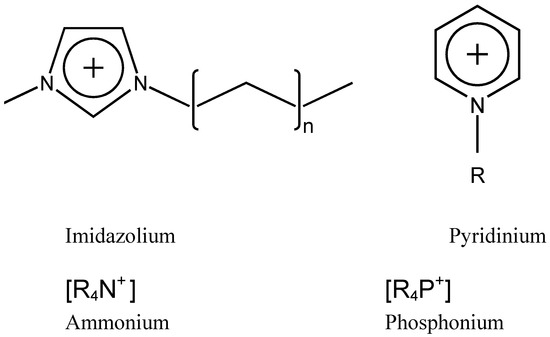
  • immidazolium salts
  • pyridinuim salts
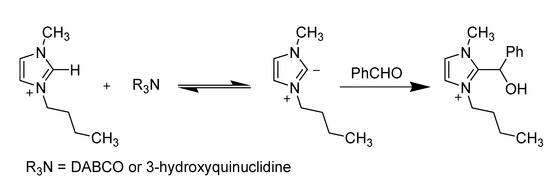
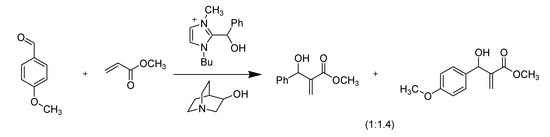
  • Baylis-Hillmann reaction
  • Diels–Alder reactions.

Planned Papers

Type of Paper: Review
Title: Transformations of Bio- and Bio-sourced Molecules in Ionic Liquids
Author: Ajda Podgoršek
Affiliation: Centre of excellence for integrated approaches in chemistry and biology of proteins, Jamova cesta 39, SI-1000 Ljubljana, Slovenia and Acies Bio d.o.o., Tehnološki park 21, SI-1000 Ljubljna, Slovenia; E-Mail: ajda.podgorsek@aciesbio.com
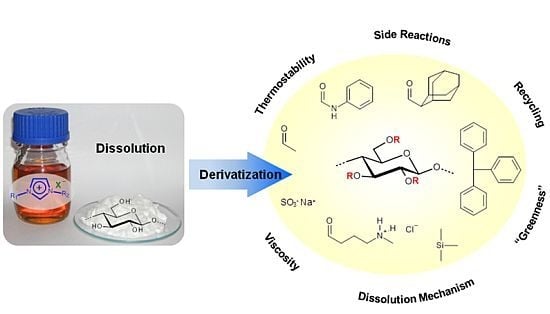
Abstract: Ionic liquids (ILs), a class of solvents with lower environmental impact constituted solely of ions, have remarkable properties that can be advantageous in application in various areas of science and technology, including organic synthesis and biocatalysis. Moreover, ILs have been shown to dissolve large quantities of natural polymers, such as polysaccharides (cellulose, lignocellulosic materials, starch) and polypeptides (elastin, collagen, keratin), the structural units of these biopolymers and other smaller molecules (terpenes, alkaloids). The increased solubility of biomolecules in ILs and the ILs’ recyclability are only two of several justifications for promising application of ionic liquids in biomass processing and in further conversion of biomolecules into valuable chemicals. In this work, non-catalytic and catalytic transformations of bio- and bio-sourced molecules in ionic liquid media are reviewed and also discussed in the light of solvent effect on the selectivity and the reactivity.

Type of Paper: Article
Title: Synthesis of Cationic Bile Acids Derivatives and Their Application as Ionic Liquids
Authors: Luisa Boffa and Giancarlo Cravotto
Affiliation: Dipartimento di Scienza e Tecnologia del Farmaco, University of Turin, Via Pietro Giuria 9, 10125 Torino, Italy; E-Mail: giancarlo.cravotto@unito.it
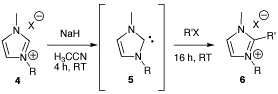
Abstract: Positively charged cholesterol derivatives (tetra-alkylammonium and N-alkyl-heterocycles salts) have been widely studied as non-viral gene delivery systems in particular for eukaryotic cells.  Bile acids moiety like the ammonium and pyridinium derivatives of deoxycholic acid has been exploited as a cationic amphiphile structure.  Cholesterol imidazolium salts have been investigated as room temperature ionic liquids,  used as ionic liquid crystals with enantiotropic phase transition properties. In this work, with the aim to design a new family of chiral ionic liquids, we describe the preparation of a series of cationic bile acids derivatives, coupled with different N-alkyl-heterocycles in one or more positions (-OH 3, 7 and/or 12, see figure). Critical synthetic steps have been optimized under microwave or combined ultrasound/microwave irradiation . We present the chemico-physical properties of these compounds focusing our attention on their potential application as chiral ionic liquids in enantioselective organic synthesis. Moreover we will investigate their ability to form cationic solid lipid nanoparticles (SLN).

Last update: 22 September 2011

Molecules EISSN 1420-3049 Published by MDPI Publishing, Basel, Switzerland RSS E-Mail Table of Contents Alert