


Journal Description
Electricity
Electricity
is an international, peer-reviewed, open access journal on electrical engineering published quarterly online by MDPI.
- Open Access—free for readers, with article processing charges (APC) paid by authors or their institutions.
- High Visibility: indexed within ESCI (Web of Science), Scopus, EBSCO and other databases.
- Rapid Publication: manuscripts are peer-reviewed and a first decision is provided to authors approximately 25.8 days after submission; acceptance to publication is undertaken in 6.6 days (median values for papers published in this journal in the first half of 2026).
- Journal Rank: CiteScore - Q2 (Electrical and Electronic Engineering)
- Recognition of Reviewers: APC discount vouchers, optional signed peer review, and reviewer names published annually.
- Extra Benefits: no space constraints, no color charges.
- Journal Cluster of Energy and Fuels: Energies, Batteries, Hydrogen, Biomass, Electricity, Wind, Fuels, Gases, Solar, ESA, Bioresources and Bioproducts and Methane.
Impact Factor:
2.7 (2025);
5-Year Impact Factor:
2.6 (2025)
Latest Articles
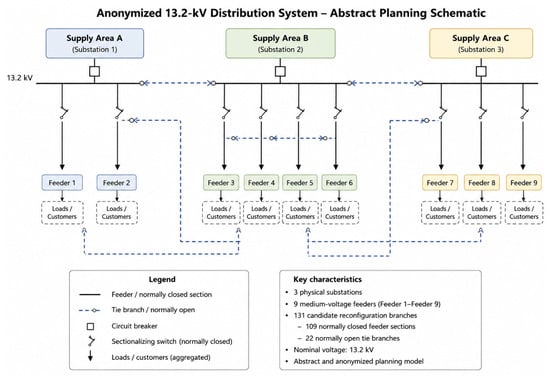
Pareto-Based Multi-Objective Distribution Network Reconfiguration for Active Power Loss Reduction and Reliability Improvement Using OpenDSS
Electricity 2026, 7(3), 92; https://doi.org/10.3390/electricity7030092 (registering DOI) - 28 Aug 2026
Abstract
►
Show Figures
Optimal distribution network reconfiguration modifies feeder topology through switching actions to improve electrical performance and service continuity. However, integrated and reproducible approaches that explicitly combine Pareto-based loss–reliability trade-off analysis, AC electrical evaluation, and clearly defined feasibility criteria remain comparatively limited, particularly in studies
[...] Read more.
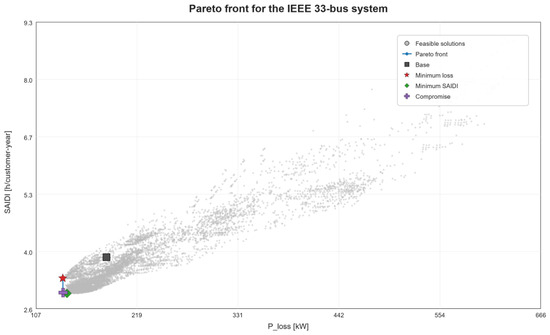
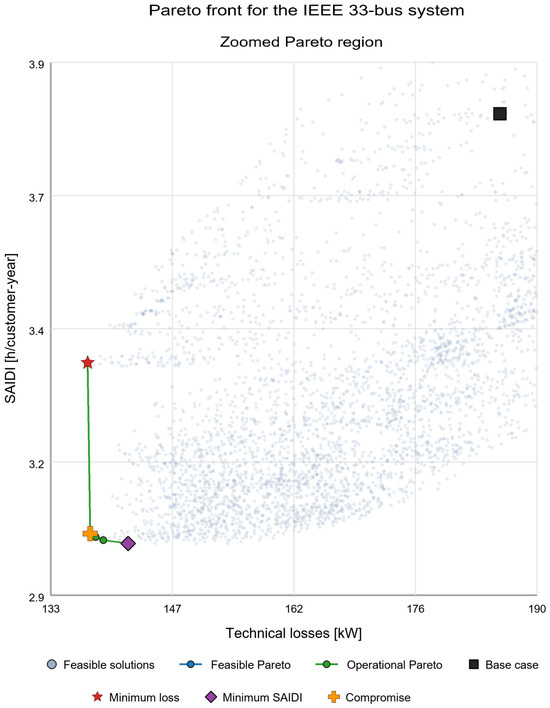
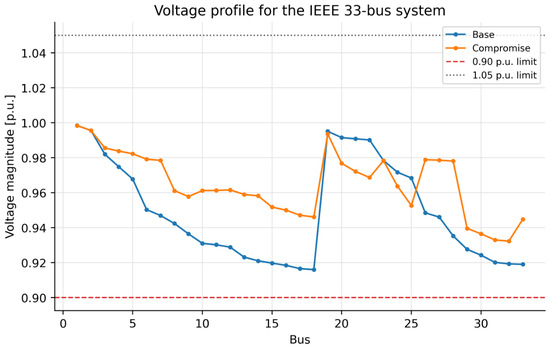
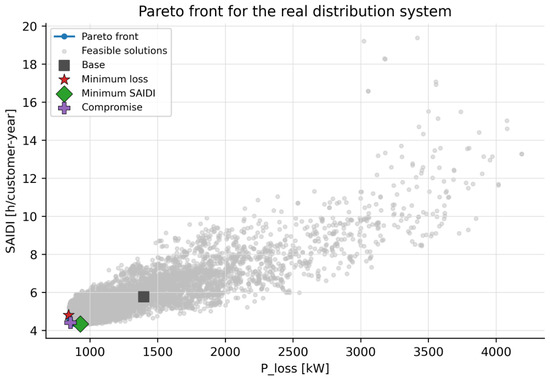
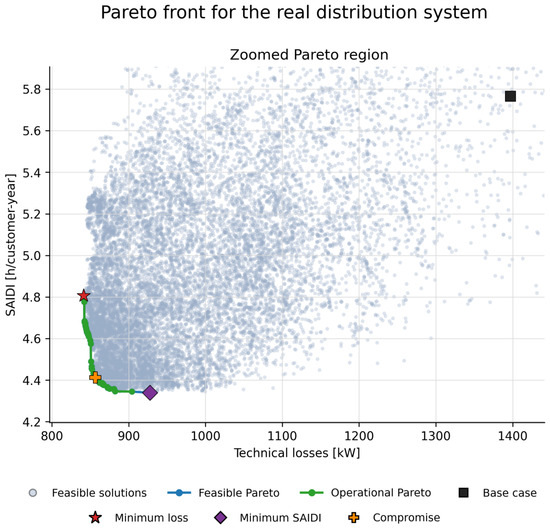
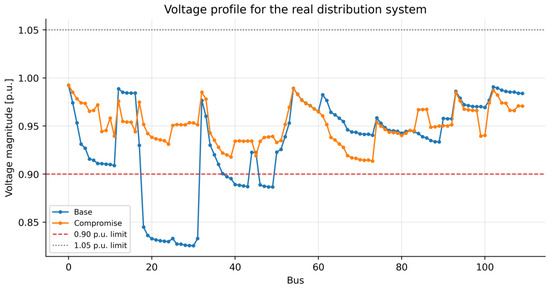
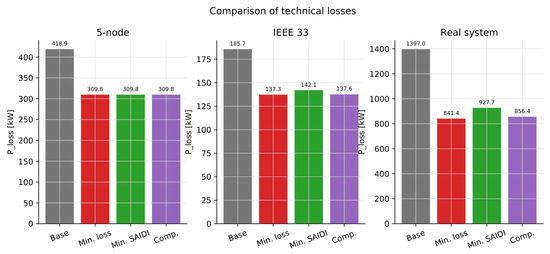
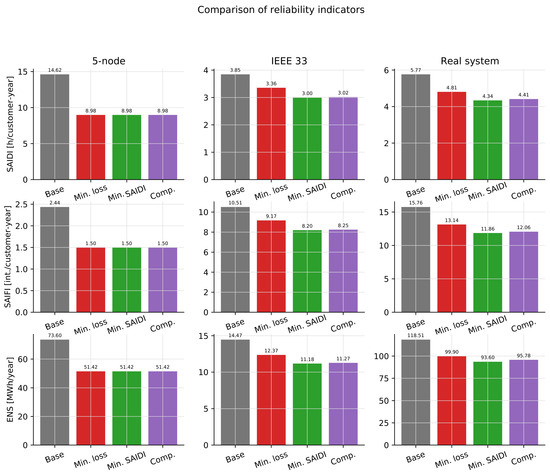
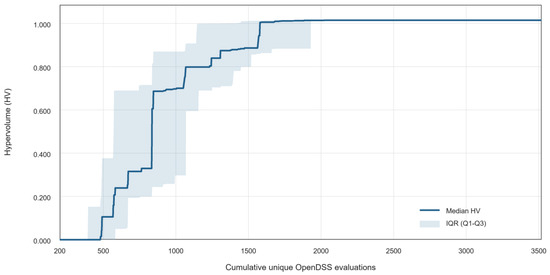
Optimal distribution network reconfiguration modifies feeder topology through switching actions to improve electrical performance and service continuity. However, integrated and reproducible approaches that explicitly combine Pareto-based loss–reliability trade-off analysis, AC electrical evaluation, and clearly defined feasibility criteria remain comparatively limited, particularly in studies extending beyond standard benchmark systems. This paper presents a Pareto-based computational framework for radial distribution network reconfiguration that combines an NSGA-II-type evolutionary search with AC power-flow evaluation in OpenDSS®. The search retains non-dominated sorting, crowding-distance-based diversity preservation, and elitist environmental selection, while offspring are generated through a graph-aware close–open branch-exchange mutation adapted to radial DNR. Accordingly, the evolutionary component is used as a problem-oriented search strategy rather than as a new canonical NSGA-II variant. Active power losses and SAIDI are minimized simultaneously, while SAIFI is reported as a derived reliability indicator and ENS as a complementary metric. Connectivity, radiality, and power-flow convergence define feasibility, while voltage compliance and load supply are subsequently assessed to characterize the operational status of each configuration. The framework is evaluated on a synthetic 5-node system, the IEEE 33-node benchmark, and an anonymized planning-oriented model of a real 13.2 kV Colombian distribution network. For the IEEE 33-node system, the minimum-loss configuration reduces losses by 26.03%, whereas the compromise solution achieves a 25.88% loss reduction and a 21.52% improvement in SAIDI. Across 20 paired runs, both the graph-aware strategy and a canonical NSGA-II baseline with topology repair recovered the same five-point empirical non-dominated set, including the classical minimum-loss topology without explicit seeding. For the real system, the operational compromise reduces active power losses by 38.88%, improves SAIDI by 23.11%, and increases the minimum voltage from 0.826 to 0.915 p.u. These results show that minimum-loss operation does not necessarily provide the most balanced trade-off between electrical efficiency and expected service continuity, supporting the use of explicit Pareto analysis for planning-oriented distribution network reconfiguration.
Full article
Open AccessArticle
Smart Electric Vehicle Charging for Enhancing Renewable Energy Utilization and Mitigating Net Metering Export in Palestinian Distribution Networks: A Real Case Study
by
Ahmad N. Jallad
Electricity 2026, 7(3), 91; https://doi.org/10.3390/electricity7030091 - 26 Aug 2026
Abstract
►▼
Show Figures
The rapid deployment of distributed photovoltaic (PV) systems has increased renewable energy generation while introducing operational challenges for distribution networks, particularly surplus PV export during periods of high solar production. This study proposes a measurement-driven, rule-based smart electric vehicle (EV) charging framework to
[...] Read more.
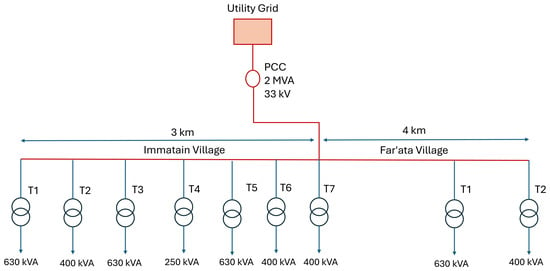
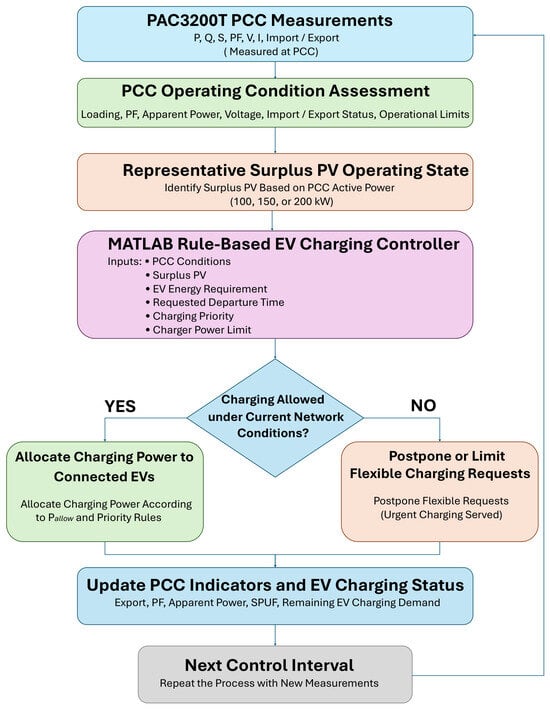
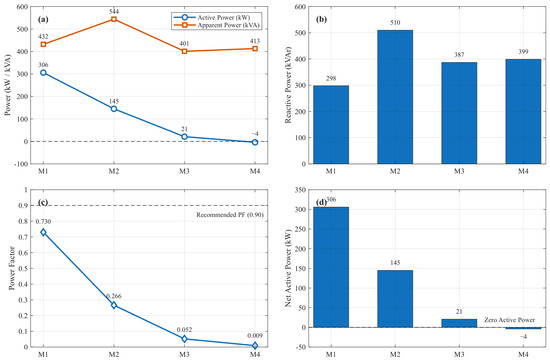
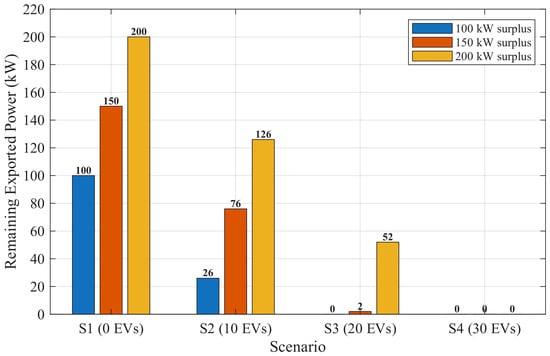
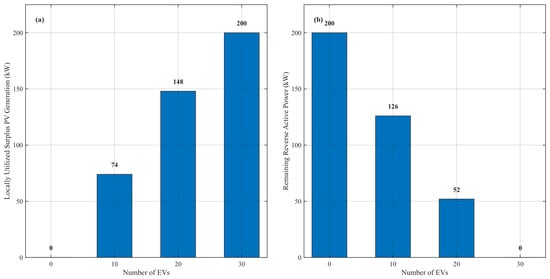
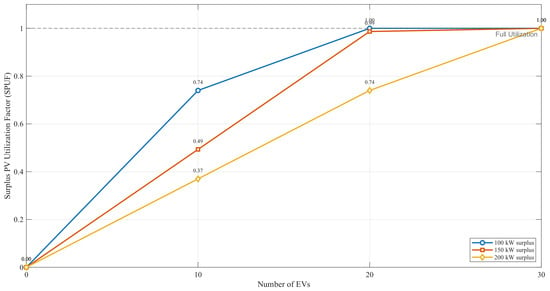
The rapid deployment of distributed photovoltaic (PV) systems has increased renewable energy generation while introducing operational challenges for distribution networks, particularly surplus PV export during periods of high solar production. This study proposes a measurement-driven, rule-based smart electric vehicle (EV) charging framework to enhance the local utilization of surplus PV generation using real operational measurements acquired from a Siemens PAC3200T power quality analyzer installed at the point of common coupling (PCC) of the Far’ata–Immatain distribution feeder in Palestine. The proposed framework coordinates EV charging based on representative surplus PV operating states and PCC operating conditions while considering user charging requirements and network operational limits. Four MATLAB-based simulation scenarios representing increasing EV penetration were evaluated. The results demonstrate progressive reductions in reverse active power export together with corresponding improvements in local PV utilization as EV penetration increases. Under the highest investigated charging scenario, up to 200 kW of the investigated surplus PV generation was locally utilized, and reverse active power export was eliminated under the investigated operating conditions. Overall, the proposed framework provides a practical and scalable approach for improving renewable energy utilization in data-limited distribution networks without requiring comprehensive feeder models or immediate network reinforcement.
Full article

Figure 1
Open AccessArticle
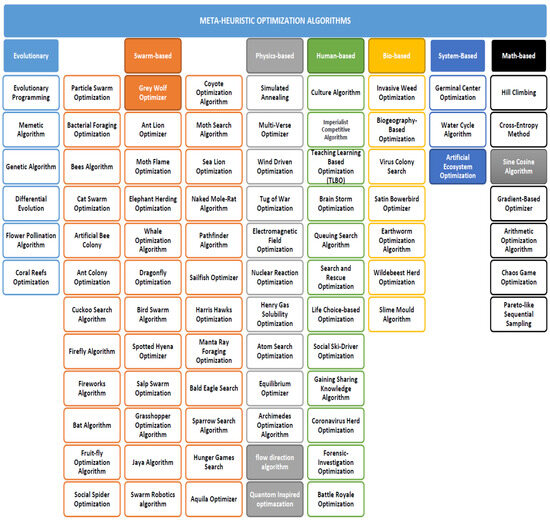
Economic Emission Dispatch of Power Systems Using an Improved Multi-Objective Grey Wolf Optimizer
by
Weichao Huang and Ruyin Wu
Electricity 2026, 7(3), 90; https://doi.org/10.3390/electricity7030090 - 23 Aug 2026
Abstract
►▼
Show Figures
With the increasing conflict between economic and environmental objectives in power systems, the economic emission dispatch (EED) problem has become a highly constrained, nonlinear, and strongly non-convex multi-objective optimization problem due to valve-point effects and nonlinear constraints such as network losses. To address
[...] Read more.
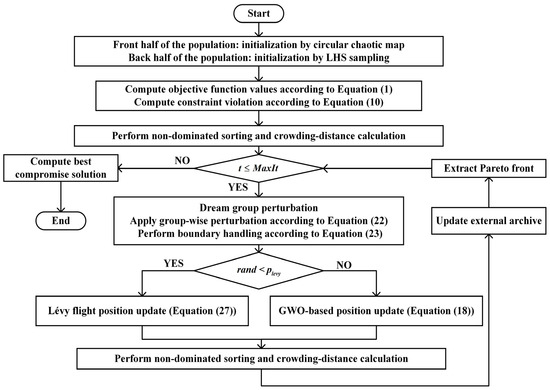
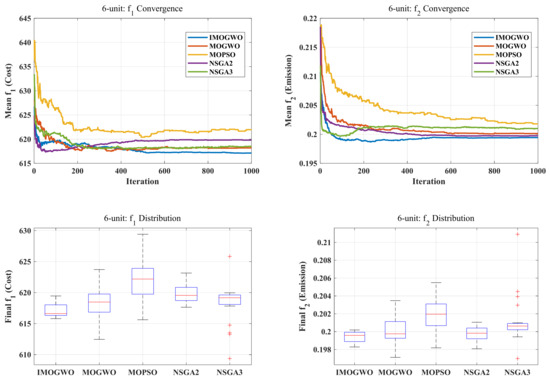
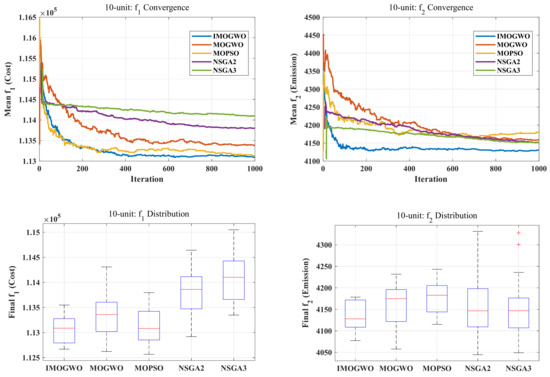
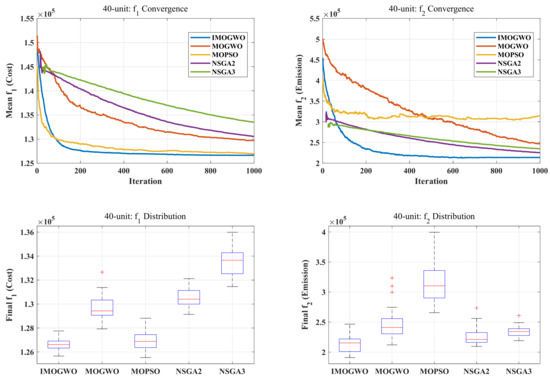
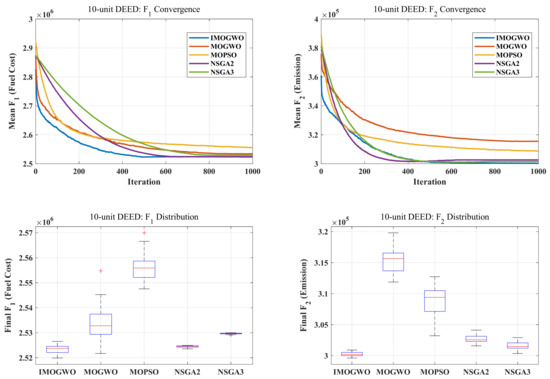
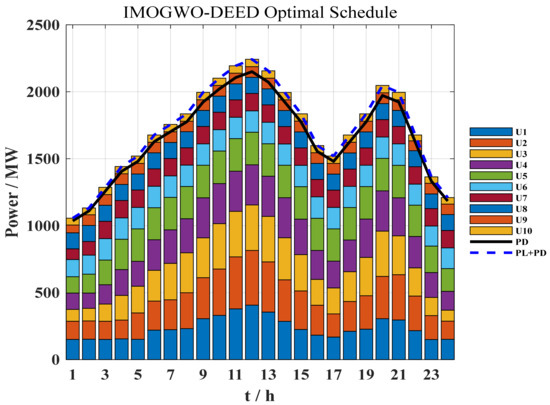
With the increasing conflict between economic and environmental objectives in power systems, the economic emission dispatch (EED) problem has become a highly constrained, nonlinear, and strongly non-convex multi-objective optimization problem due to valve-point effects and nonlinear constraints such as network losses. To address this challenge, this paper proposes an improved multi-objective Grey Wolf Optimizer (IMOGWO). The proposed method enhances search performance through four strategies: a hybrid initialization scheme combining circle chaotic mapping and Latin hypercube sampling to improve population diversity, a dream-inspired group perturbation mechanism to strengthen global exploration, a nonlinearly decreasing convergence factor to dynamically balance exploration and exploitation, and a hybrid update strategy incorporating Lévy flight to avoid local optima. Experimental results demonstrate that IMOGWO can effectively balance the trade-off between generation cost and pollutant emissions while exhibiting competitive performance in terms of convergence behavior, solution quality, and stability.
Full article

Figure 1
Open AccessArticle
Physics-Guided Data Fusion-Based Cyberattack Detection for Distributed Energy Resource Aggregators with Limited Observability
by
Celina Wilkerson, Qiuhua Huang, Burhan Hyder and Rohit Jinsiwale
Electricity 2026, 7(3), 89; https://doi.org/10.3390/electricity7030089 - 21 Aug 2026
Abstract
►▼
Show Figures
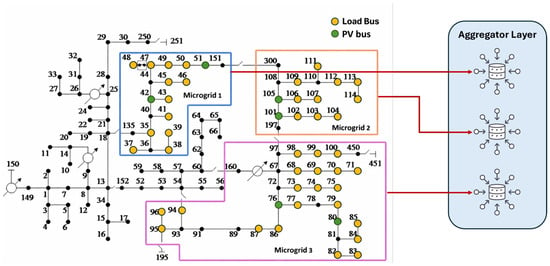
False data injection attacks (FDIAs) pose a growing threat to distributed energy resource (DER) aggregators because a compromised aggregator can expose and affect a number of enrolled DERs. However, DER aggregators only have access to limited measurements from DERs and the systems. This
[...] Read more.
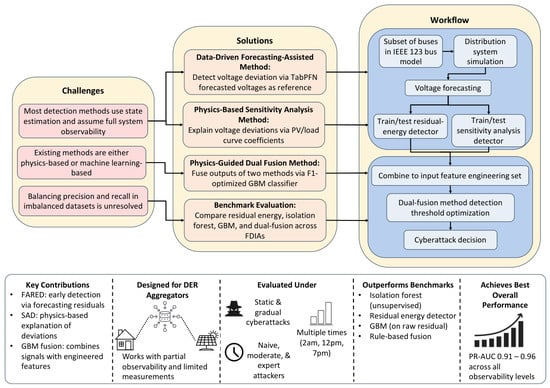
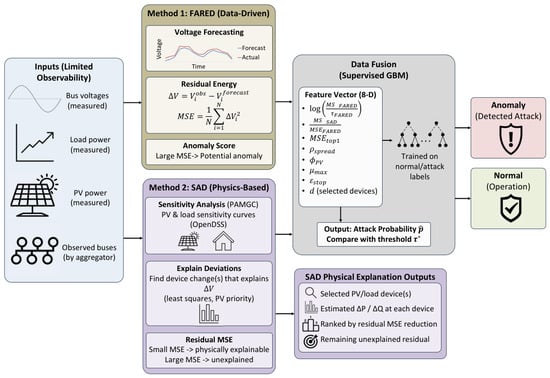
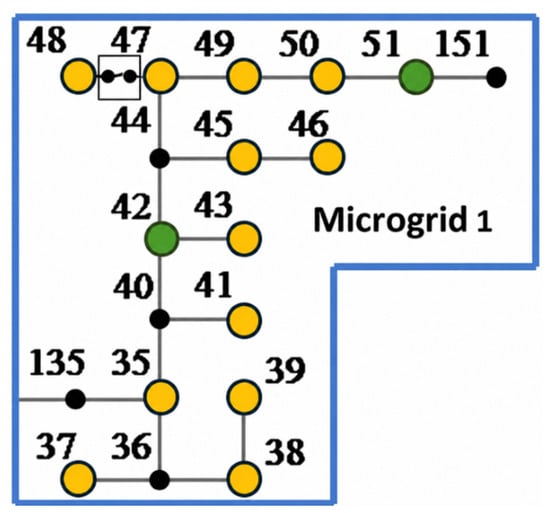
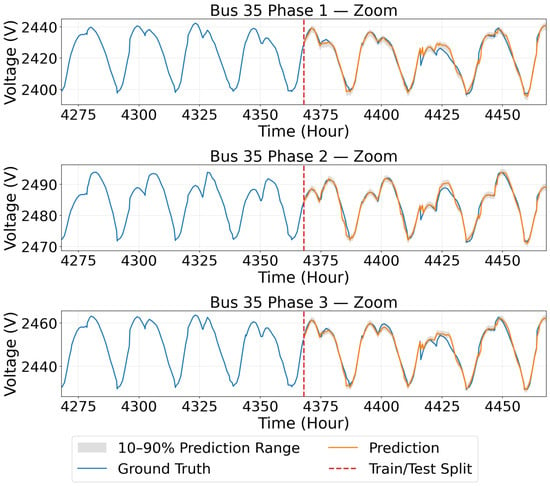
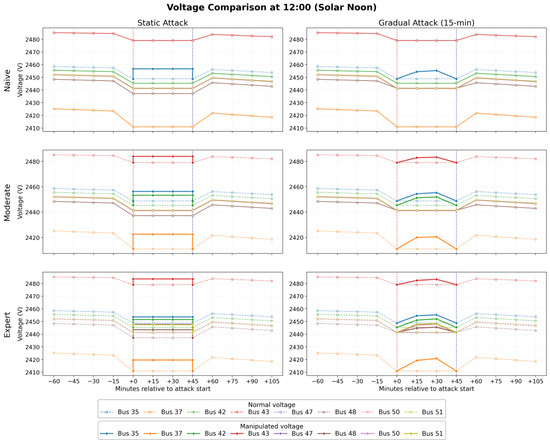
False data injection attacks (FDIAs) pose a growing threat to distributed energy resource (DER) aggregators because a compromised aggregator can expose and affect a number of enrolled DERs. However, DER aggregators only have access to limited measurements from DERs and the systems. This makes existing FDIA detection methods ineffective in this setting due to two main limitations: (1) they are grounded in full observability of a microgrid or distribution system and therefore are incompatible with the limited observability of a DER aggregator; (2) they can only either detect anomalies or explain why a deviation occurs, but not both simultaneously. To address these limitations, we propose a physics-guided fusion-based cyberattack detection method specifically designed for DER aggregators. This approach integrates two complementary modules: a forecasting-assisted residual method for rapidly anomaly detection, and a PV-aware sensitivity-based method to diagnose and explain their underlying physical causes. A gradient boosting machine (GBM) is then leveraged to fuse these outputs, optimizing the precision–recall tradeoff. The proposed method is tested on one microgrid test system with different bus observability levels across static and gradual attack scenarios with multiple levels of attack sophistication. Across the scenarios, the proposed method achieves a 0.91–0.93 precision–recall area under the curve score (PR-AUC), demonstrating the method’s effectiveness in securing DER aggregators with partial system visibility.
Full article

Figure 1
Open AccessArticle
Techno-Economic and Reliability Assessment of Grid-Connected PV/Wind/Battery Hybrid Configurations for a Domestic District Under Unreliable Grid Conditions
by
Suzan Abdelhady, Ahmed Shaban and Nasr Al-Hinai
Electricity 2026, 7(3), 88; https://doi.org/10.3390/electricity7030088 - 20 Aug 2026
Abstract
►▼
Show Figures
Grid unreliability can compromise electricity supply in developing regions, yet comparative evidence on residential-district hybrid systems under consistent outage assumptions remains limited. This study compares four grid-connected architectures for a residential district in Egypt: wind/battery/grid, PV/wind/battery/grid, PV/battery/grid, and PV/wind/grid, using a simulation–optimization framework
[...] Read more.
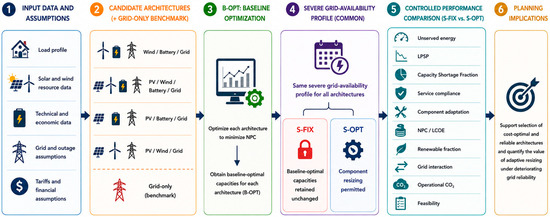
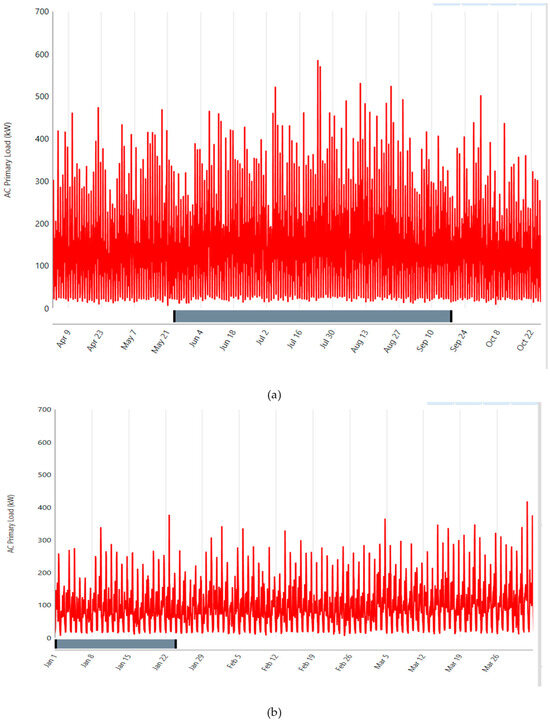
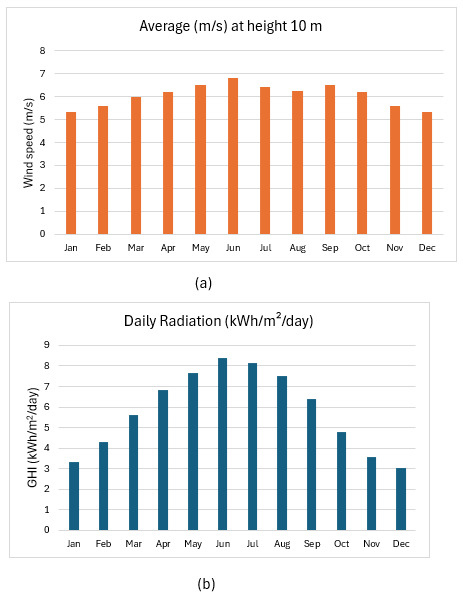
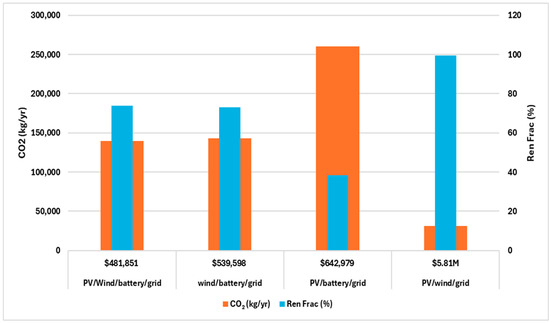
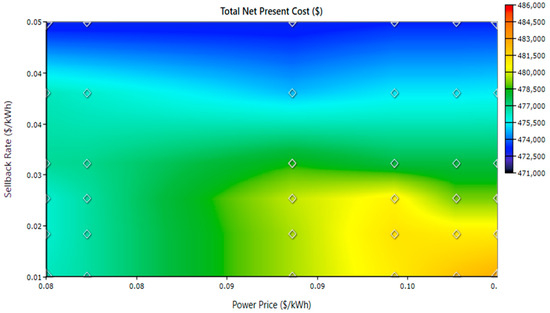
Grid unreliability can compromise electricity supply in developing regions, yet comparative evidence on residential-district hybrid systems under consistent outage assumptions remains limited. This study compares four grid-connected architectures for a residential district in Egypt: wind/battery/grid, PV/wind/battery/grid, PV/battery/grid, and PV/wind/grid, using a simulation–optimization framework with net present cost (NPC) as the sole optimization objective. Supply adequacy, renewable fraction, grid interaction, and grid-related operational CO2 emissions were then assessed. Under baseline conditions, PV/wind/battery/grid was the minimum-NPC hybrid configuration, with an NPC of USD 481,851, LCOE of USD 0.0711/kWh, renewable fraction of 73.8%, unserved energy of 0.306 MWh/yr, and operational CO2 emissions of 139,533 kg/yr. Relative to grid-only supply, it reduced unserved energy by 98.5% and emissions by 65.0%, although grid-only had the lower NPC of USD 369,414. To distinguish fixed-design deterioration from adaptive redesign, baseline-optimal capacities were evaluated unchanged under a common severe grid-availability profile and compared with re-optimized counterparts. For the three battery-containing architectures with complete adaptive results, re-optimization reduced unserved energy by 73.2–97.2%, while resizing differed markedly. Among these architectures, wind/battery/grid had the lowest severe-condition NPC, only 0.63% below PV/wind/battery/grid. Deterministic ±10% sensitivity analysis retained PV/wind/battery/grid as the minimum-NPC architecture. Overall, baseline cost optimality, fixed-design transferability, and adaptation requirements are distinct, architecture-dependent planning considerations.
Full article

Figure 1
Open AccessReview
Deep Reinforcement Learning for DC–DC Boost Converter Control: Classical Foundations, Design Taxonomy, and Hardware-Oriented Validation
by
Wei Wang, Imen Bahri and Demba Diallo
Electricity 2026, 7(3), 87; https://doi.org/10.3390/electricity7030087 - 19 Aug 2026
Abstract
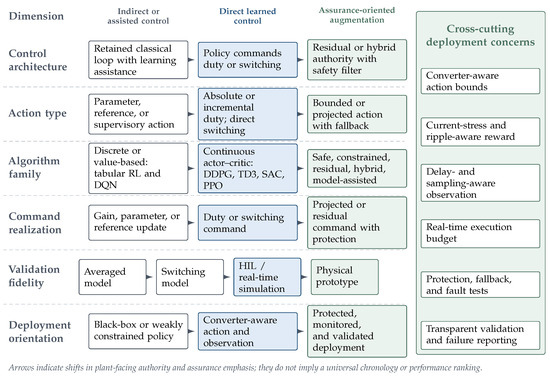
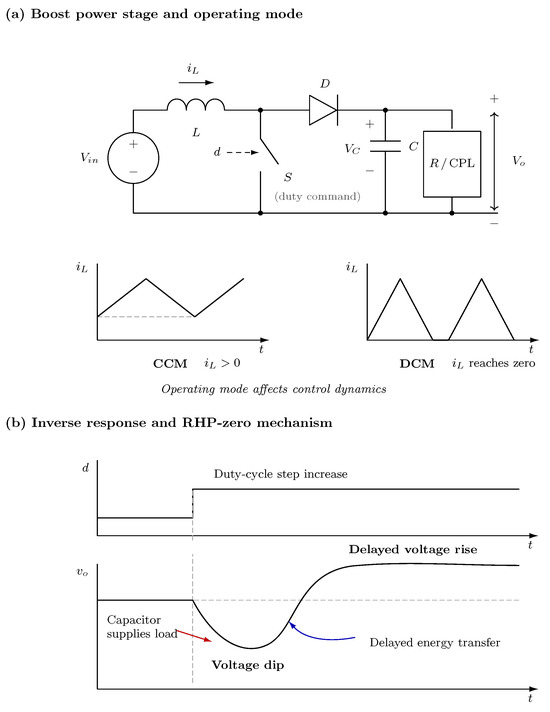
The DC–DC boost converter is a challenging control target because of its nonlinear dynamics, wide operating range, and non-minimum-phase behavior under continuous conduction mode. These control challenges are particularly pronounced under large-signal transients, parameter variations, constant-power-load effects, and hardware constraints. This review examines
[...] Read more.
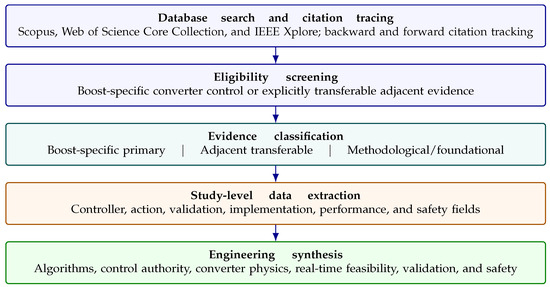
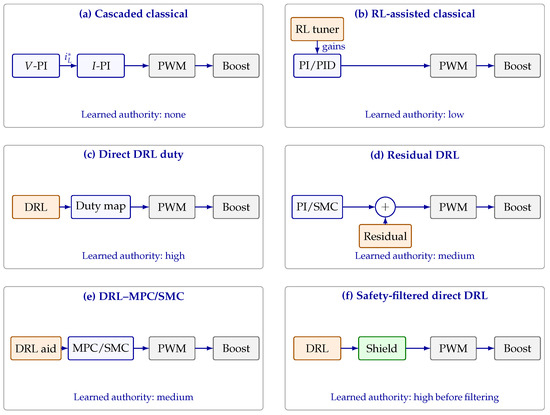
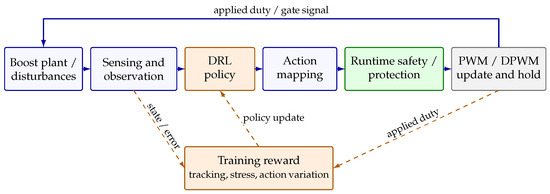
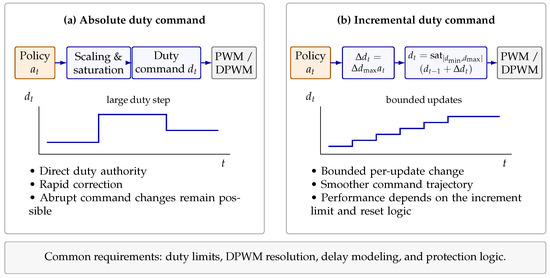
The DC–DC boost converter is a challenging control target because of its nonlinear dynamics, wide operating range, and non-minimum-phase behavior under continuous conduction mode. These control challenges are particularly pronounced under large-signal transients, parameter variations, constant-power-load effects, and hardware constraints. This review examines deep reinforcement learning-based control of DC–DC boost converters from an engineering-oriented perspective. It covers learning-assisted classical control, direct duty-cycle control, and hybrid architectures, with attention to action design, reward formulation, observation timing, safety constraints, and validation fidelity. A structured search of Scopus, Web of Science Core Collection, and IEEE Xplore was used to identify boost-specific studies and transferable adjacent-converter evidence. Rather than ranking algorithms alone, the review organizes the literature around converter-aware and hardware-oriented learning control. The review argues that recent progress should not be interpreted as a simple replacement of classical control by deep reinforcement learning. Accordingly, algorithm choice, physical knowledge, action and reward design, observation timing, safety constraints, and validation fidelity are treated jointly. The available evidence suggests that progress toward credible practical deployment requires integrating converter physics, bounded or hybrid control authority, explicit safety constraints, and hardware-oriented validation.
Full article
(This article belongs to the Special Issue Stability, Operation, and Control in Power Systems)
►▼
Show Figures

Figure 1
Open AccessArticle
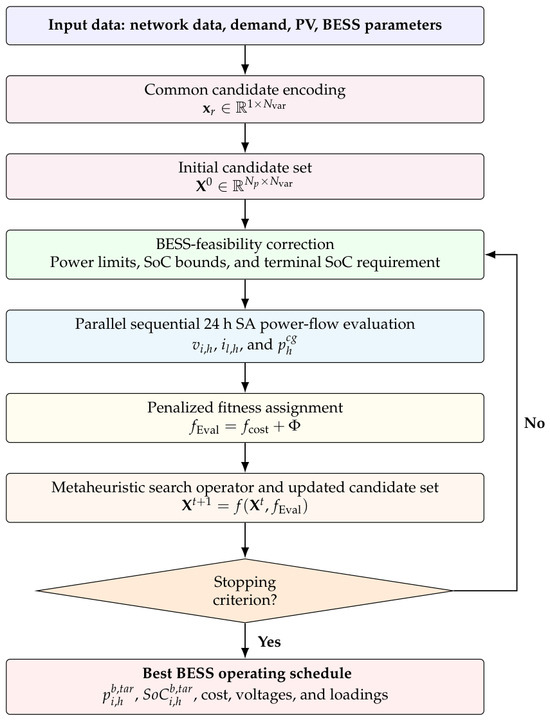
A Parallel Adapted AJAYA-Based BESS Energy Management System Under Energy Uncertainty for Reducing Operating, Maintenance, and Degradation Costs in ADNs
by
Luis Fernando Grisales-Noreña, Oscar Danilo Montoya and Víctor Manuel Garrido-Arévalo
Electricity 2026, 7(3), 86; https://doi.org/10.3390/electricity7030086 - 18 Aug 2026
Abstract
Active distribution networks (ADNs) require battery energy storage system (BESS) scheduling strategies that reduce operating costs while preserving electrical feasibility and battery lifetime. This paper proposes a parallel adapted JAYA-based methodology for the day-ahead coordinated active and reactive power dispatch of BESS units
[...] Read more.
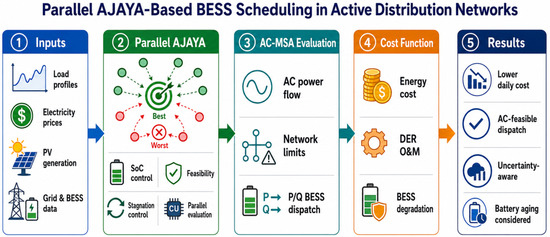
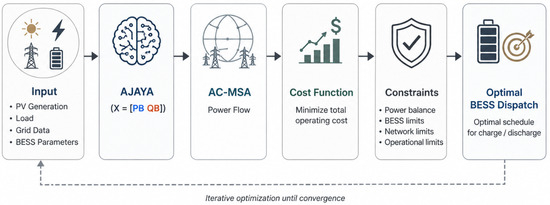
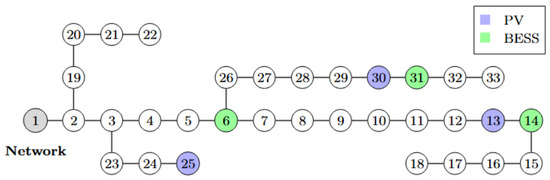
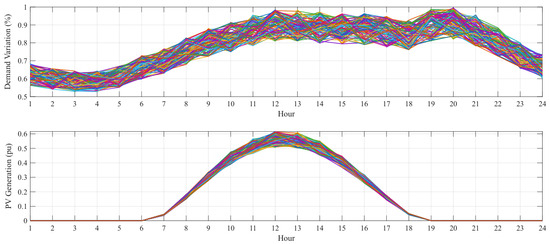
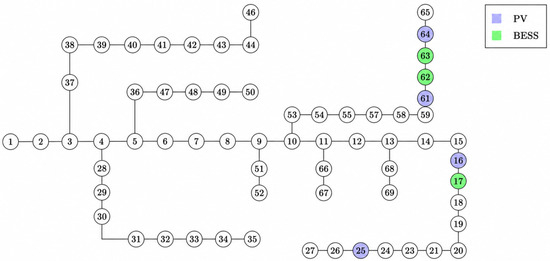
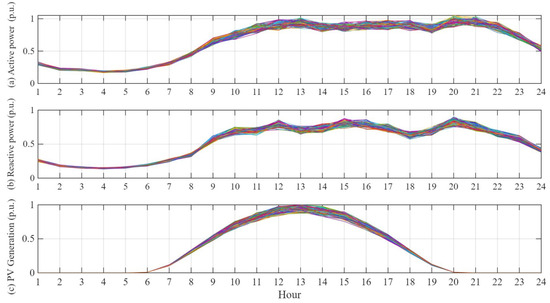
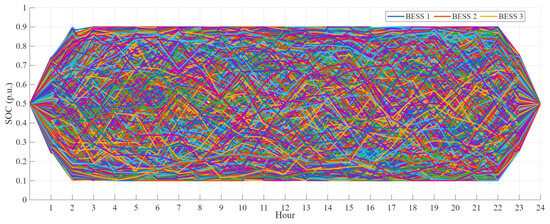
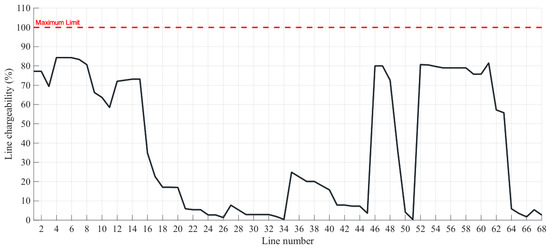
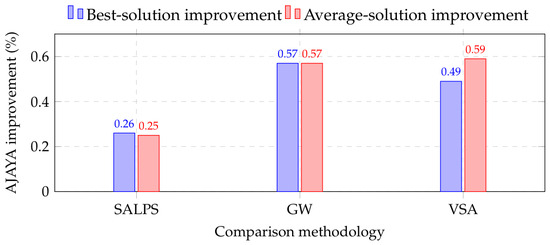
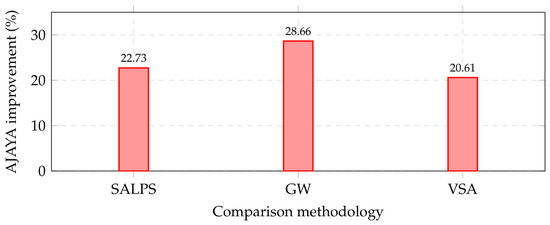
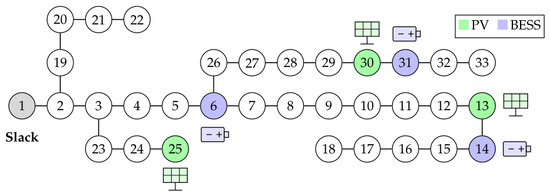
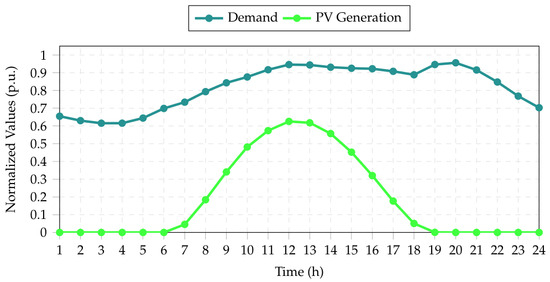
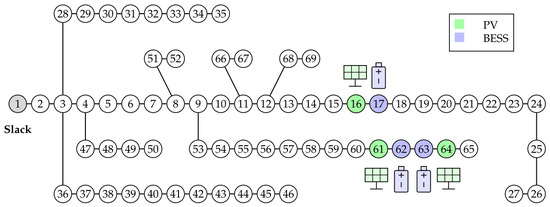
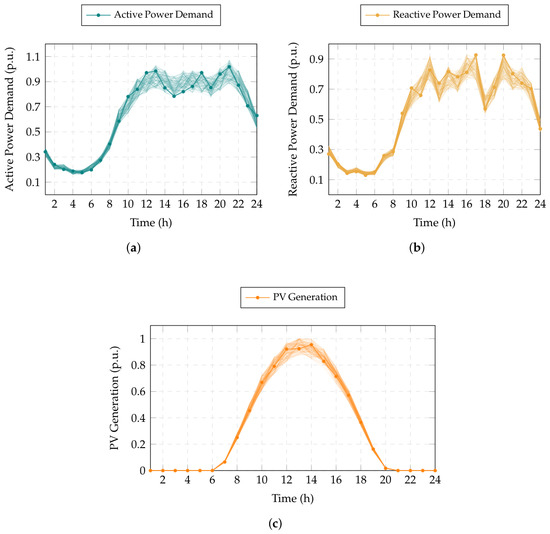
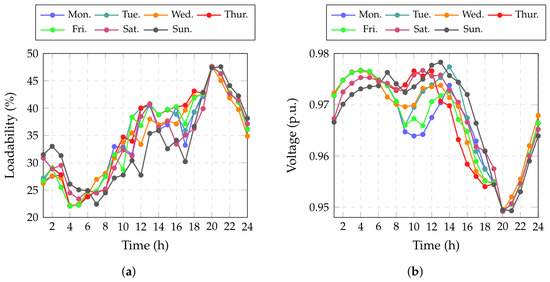
Active distribution networks (ADNs) require battery energy storage system (BESS) scheduling strategies that reduce operating costs while preserving electrical feasibility and battery lifetime. This paper proposes a parallel adapted JAYA-based methodology for the day-ahead coordinated active and reactive power dispatch of BESS units in this type of grid. The novelty of this research lies in four key contributions: (i) the coordinated optimization of active and reactive power from BESS converters, exploiting their full capabilities for both energy management and voltage support; (ii) the integration of battery degradation costs within the optimization framework, preventing short-term economic strategies that accelerate aging; (iii) the implementation of a parallel adapted JAYA algorithm (AJAYA) with stagnation control and population reactivation mechanisms to enhance solution quality and convergence; and (iv) a comprehensive assessment under both deterministic and uncertainty-based operating conditions, providing a realistic validation of the proposed approach. Our model minimizes conventional generation, DER operation and maintenance, and BESS degradation costs while subject to power balance, distributed energy resource limits, voltage and current constraints, converter capacity, and state of charge (SoC) requirements. Each solution is encoded as BESS active/reactive power setpoints and evaluated through a multi-period AC power flow based on the successive approximations method, including SoC verification and a penalized fitness function. The methodology was validated in modified 33- and 69-node ADNs under deterministic and uncertainty scenarios (based on the conditions observed in Colombia), and it was benchmarked against the population-based genetic algorithm (PGA), the multiverse optimizer (MVO), the salp swarm algorithm (SALPS), the grey wolf optimizer (GWO), and the vortex search algorithm (VSA). According to the results, AJAYA outperformed the comparison methods, providing the best economic performance and exhibiting a robust behavior, with standard deviations below 0.06% and processing times below 0.05 h within a 24-h scheduling horizon. These findings demonstrate that the proposed framework constitutes an AC-feasible and degradation-aware academic contribution and a practical decision-support tool for operators and BESS owners, enabling a cost-effective and reliable BESS scheduling that preserves battery lifetime while improving network operation. Therefore, this research addresses the critical need for advanced energy management strategies that balance short-term economic benefits, technical feasibility, and long-term asset sustainability in modern distribution networks.
Full article
(This article belongs to the Special Issue Advancing Energy Systems for a Decarbonized Future: Renewable Integration, Smart Grids, and Optimization Strategies)
►▼
Show Figures

Figure 1
Open AccessArticle
From Physical Grids to Cyber-Energy Digital Twins: Modeling Power System Components for Cyberattack Assessment
by
Roberto Ciavarella and Maria Valenti
Electricity 2026, 7(3), 85; https://doi.org/10.3390/electricity7030085 - 14 Aug 2026
Abstract
Traditional Digital Twins (DTs) in energy sectors lack cyber-threat awareness, while cybersecurity DTs overlook downstream physical impacts. Loosely coupled co-simulations attempt to bridge this gap but introduce computational lags that mask critical cross-domain vulnerabilities. To address these limitations, this paper proposes a unified,
[...] Read more.
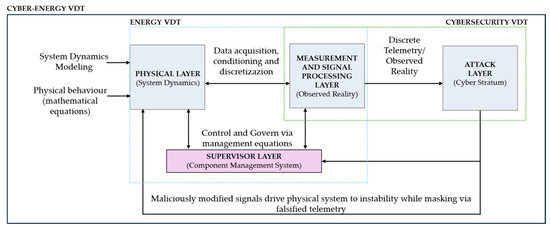
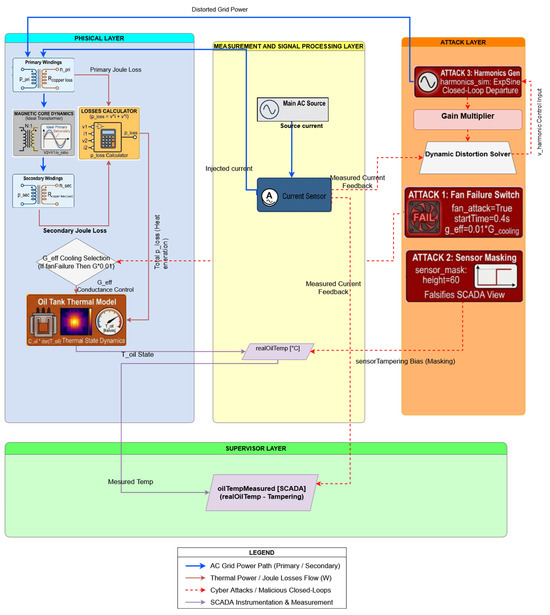
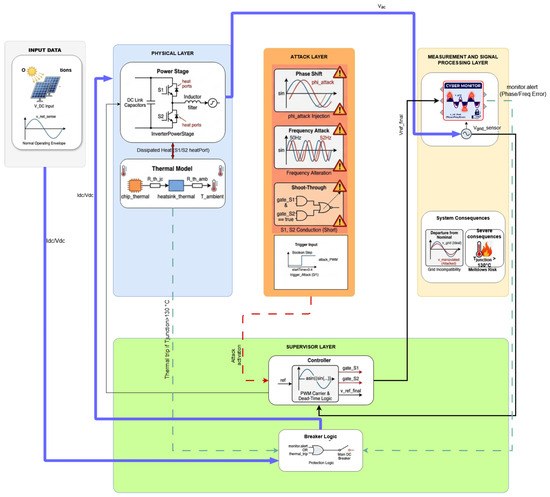
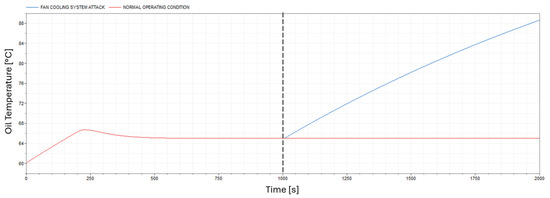
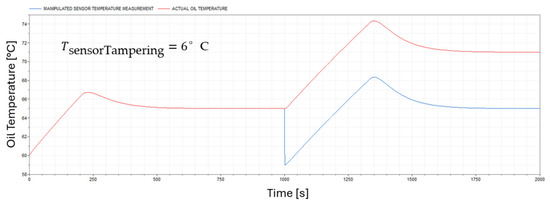
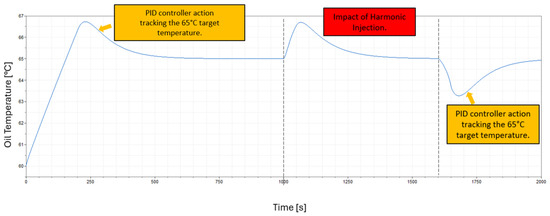
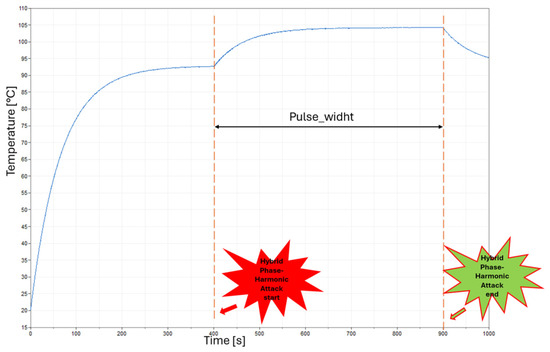
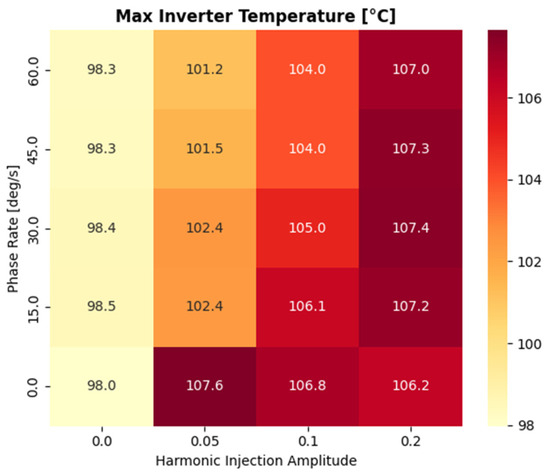
Traditional Digital Twins (DTs) in energy sectors lack cyber-threat awareness, while cybersecurity DTs overlook downstream physical impacts. Loosely coupled co-simulations attempt to bridge this gap but introduce computational lags that mask critical cross-domain vulnerabilities. To address these limitations, this paper proposes a unified, tightly coupled Virtual Digital Twin (VDT) framework that integrates energy systems and cybersecurity domains into a single environment. The methodology models the precise mathematical, thermal, and electrical constraints of key assets to capture cross-domain feedback loops. Specifically, a power transformer and a microgrid-connected inverter serve as case studies to map cyberattack vectors directly onto physical definitions. Numerical simulation evaluates multiple threat scenarios, including supervisory, measurement, and physical-level (harmonic) attacks on the transformer, alongside short-circuit and hybrid phase-harmonic attacks on the inverter. Results show how subtle digital disruptions propagate past communication layers to induce physical degradation and operational stress. By explicitly detailing the governing equations and providing sensitivity analyses, this work delivers a transparent, high-fidelity methodology for protecting critical cyber–physical infrastructures from asset-destructive manipulations.
Full article
(This article belongs to the Special Issue Stability, Operation, and Control in Power Systems)
►▼
Show Figures

Figure 1
Open AccessArticle
Three-Phase Photovoltaic System with Battery Energy Storage and Volt–VAR Reactive Power Support: Architecture Assessment and Integrated Control Proposal
by
Maxwell de Souza Damasceno, Waner W. A. G. Silva and Aurélio L. M. Coelho
Electricity 2026, 7(3), 84; https://doi.org/10.3390/electricity7030084 - 13 Aug 2026
Abstract
►▼
Show Figures
The growing share of photovoltaic generation in power grids intensifies the need for converter architectures capable of combining efficient energy conversion, DC-bus stability, and ancillary service provision at the grid coupling point. This paper presents the modeling, implementation, and simulation-based evaluation of a
[...] Read more.
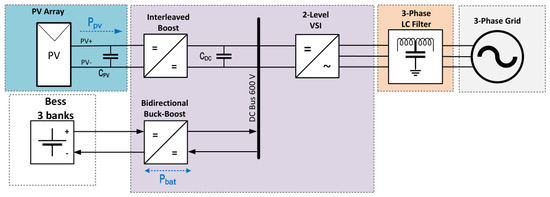
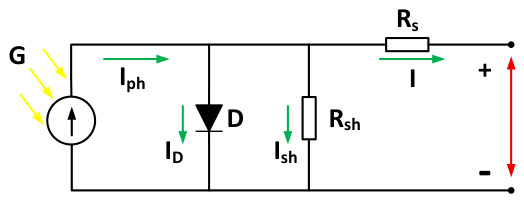
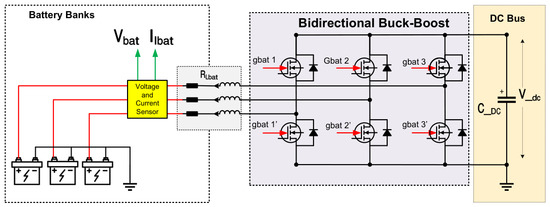
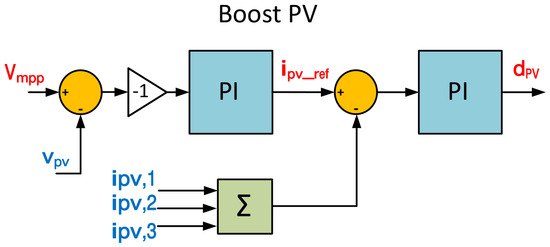
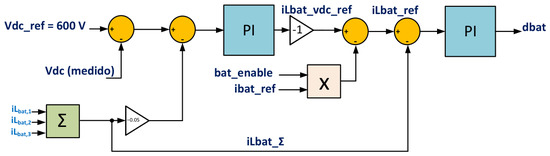
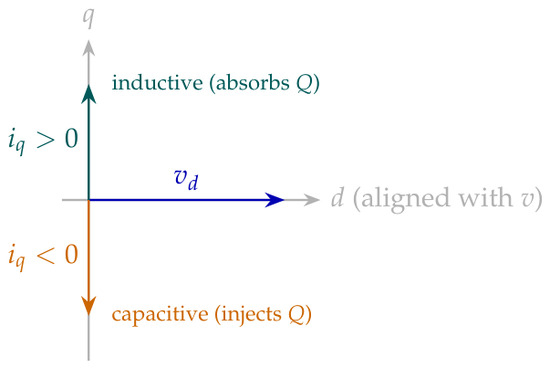
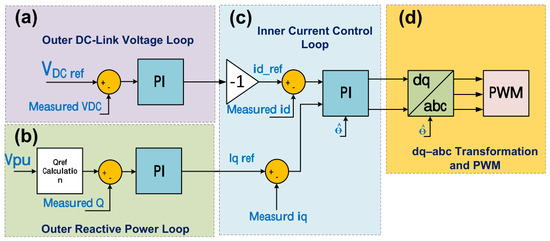
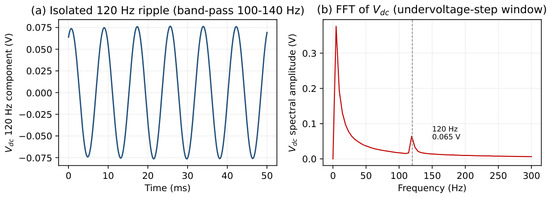
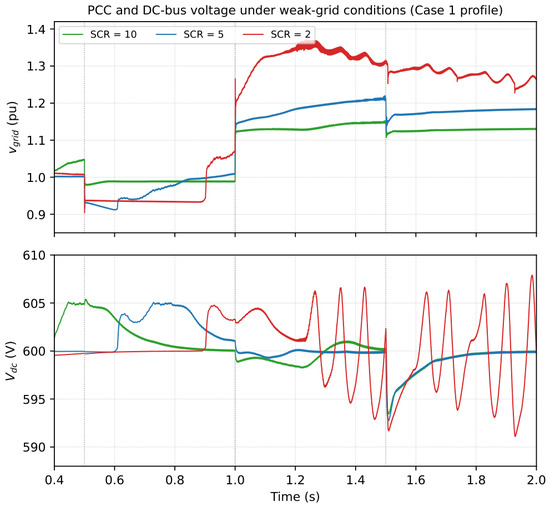
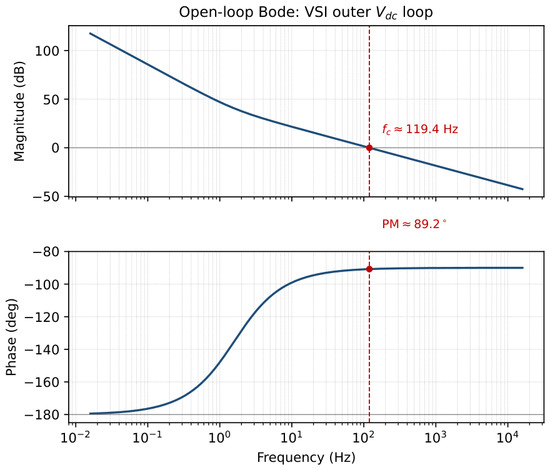
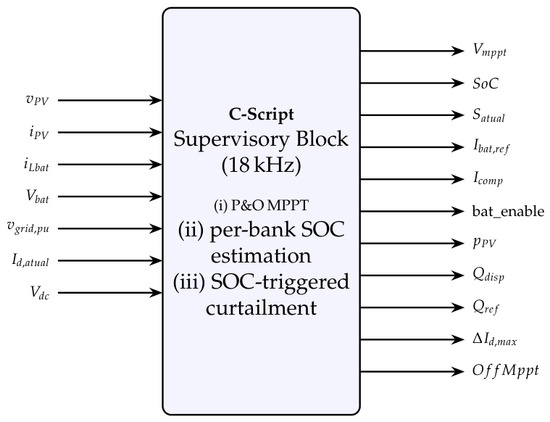
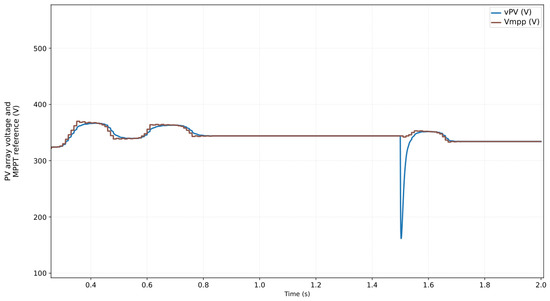
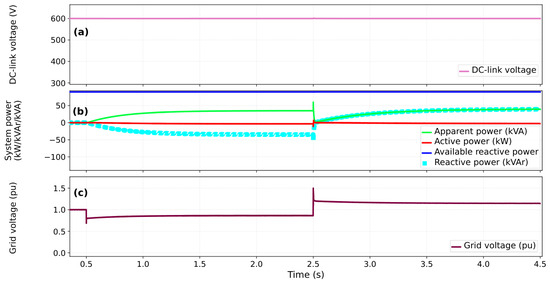
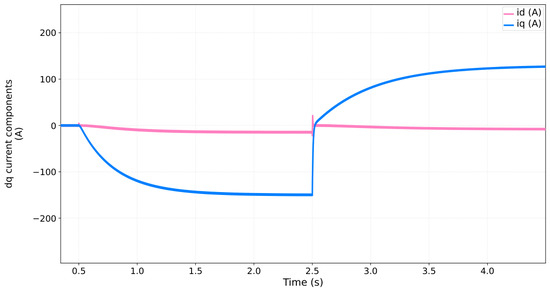
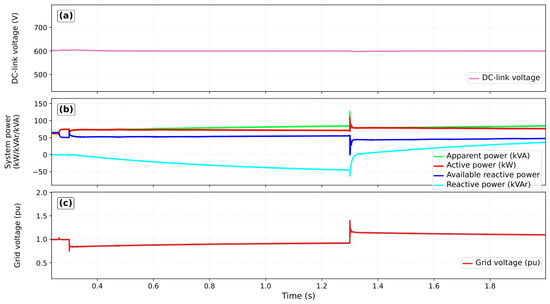
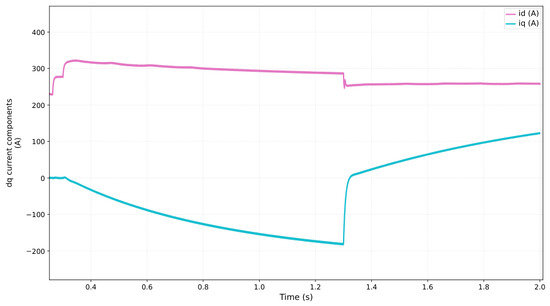
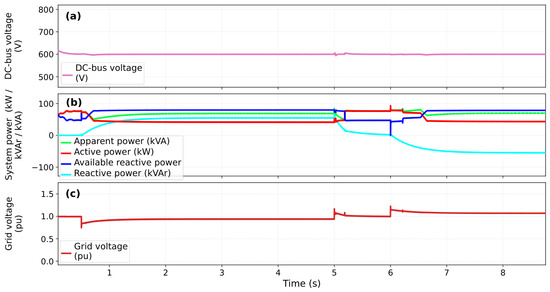
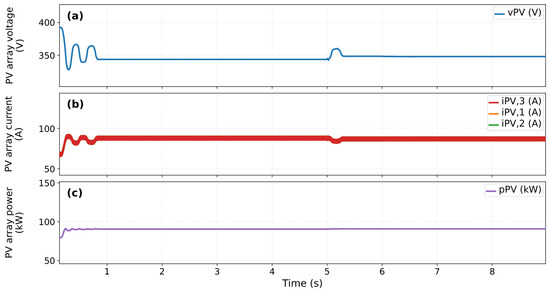
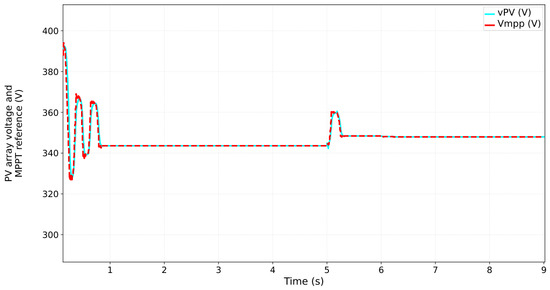
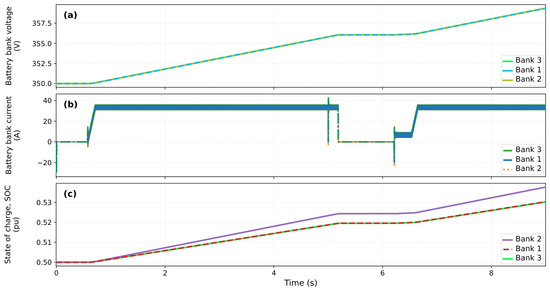
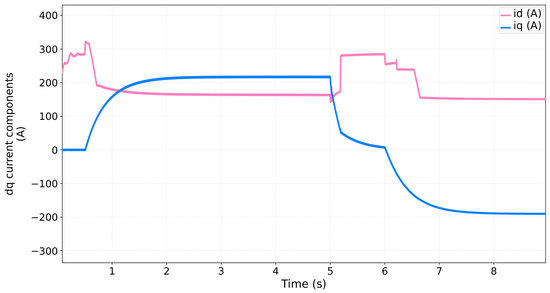
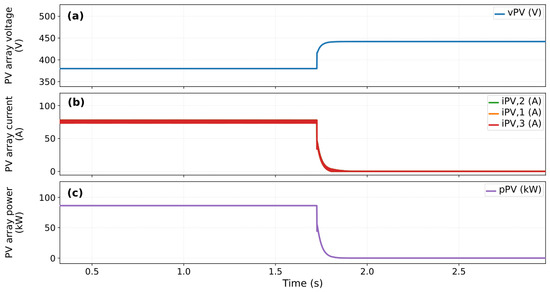
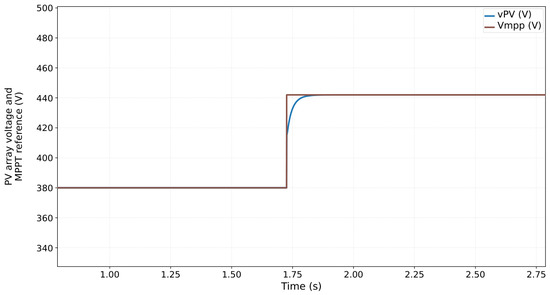
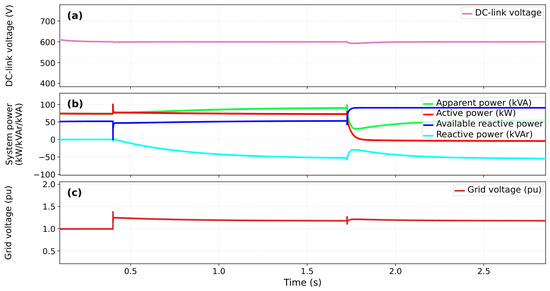
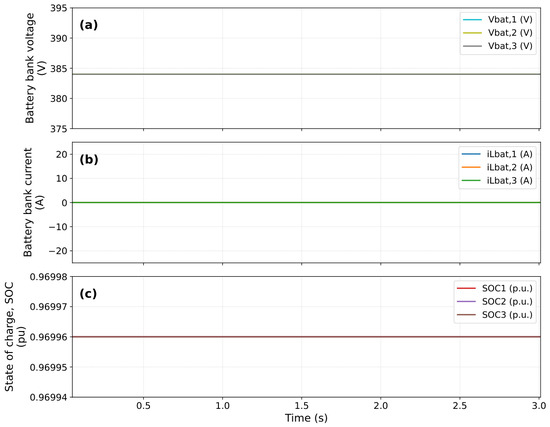
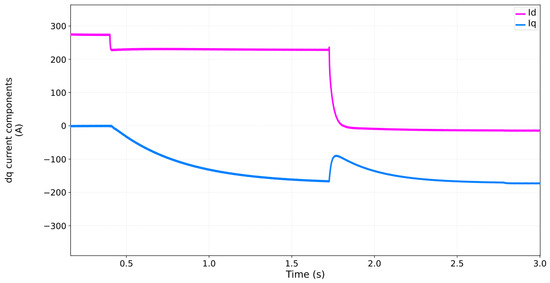
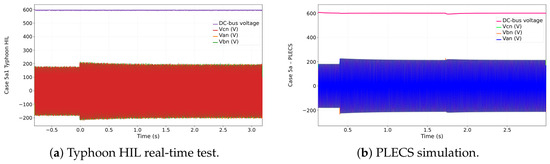
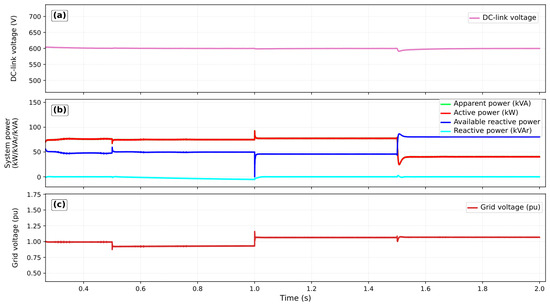
The growing share of photovoltaic generation in power grids intensifies the need for converter architectures capable of combining efficient energy conversion, DC-bus stability, and ancillary service provision at the grid coupling point. This paper presents the modeling, implementation, and simulation-based evaluation of a 91 kWp three-phase photovoltaic (PV) system integrated with a battery energy storage system (BESS), developed in the PLECS environment. The proposed architecture comprises three interleaved Boost stages for maximum power point tracking (MPPT), a DC bus regulated at 600 V, three independent bidirectional buck–boost converters for LiFePO4 bank management, and a two-level three-phase voltage source inverter (VSI) with an LC output filter. The control is organized in cascade voltage–current loops for the DC–DC stages and in vector control within the synchronous reference frame (SRF) for the inverter, with synchronization via SRF-PLL. A C-Script supervisory block integrates the Perturb and Observe (P&O) MPPT algorithm, independent state of charge (SOC) estimation per bank via coulomb counting, and Volt–VAR reactive power reference generation with a dead band of 0.90–1.10 pu. Five scenarios are analyzed for validation: DC-bus regulation under irradiance transients; reactive power support during undervoltage and overvoltage events (0.80–0.85 pu and 1.15–1.20 pu); BESS operation as an active DC-link support element; and PV curtailment with fully charged banks. All five scenarios were additionally corroborated on a Typhoon HIL402 Pro 2 hardware-in-the-loop platform, reproducing the PLECS waveforms within the amplitude and timing resolution of the oscilloscope captures. Across all scenarios, the DC bus is held within V (2.5%) of the 600 V reference, with the worst-case transient recovering in 80–100 ms; under a sustained 9 s bidirectional disturbance, redirecting PV surplus to BESS charging in both the undervoltage and overvoltage segments—with no externally imposed active-current limit—keeps the current-vector magnitude below the 335 A rating throughout (≈271 A and ≈242 A, respectively), while the available reactive margin reaches ≈78–80 kVAr in both segments and the bank SOC advances by ≈ pu; and supervisory curtailment under a sustained overvoltage ride-through with a saturated bank keeps the per-bank SOC dispersion within pu while expanding the available reactive margin from ≈50 to ≈90 kVAr.
Full article

Figure 1

Open AccessArticle
Operational-Cost-Oriented Day-Ahead BESS Scheduling in Active Distribution Networks: An AC-Feasible Framework with Post-Dispatch Battery-Aging Assessment
by
Kevin Alexander Leyton-Valencia, Luis Fernando Grisales-Noreña and Fiderman Machuca-Martínez
Electricity 2026, 7(3), 83; https://doi.org/10.3390/electricity7030083 - 12 Aug 2026
Abstract
This paper presents an integrated day-ahead battery energy storage system (BESS) scheduling framework for radial active distribution networks with photovoltaic generation. Its main contribution is a reproducible evaluation chain combining non-ideal state-of-charge (SoC) feasibility correction, sequential AC power-flow verification, consistent metaheuristic benchmarking, and
[...] Read more.
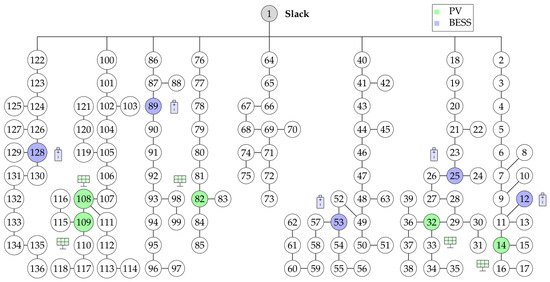
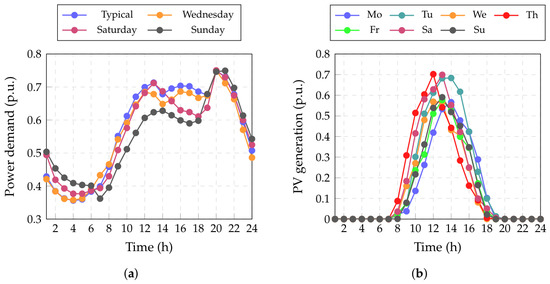
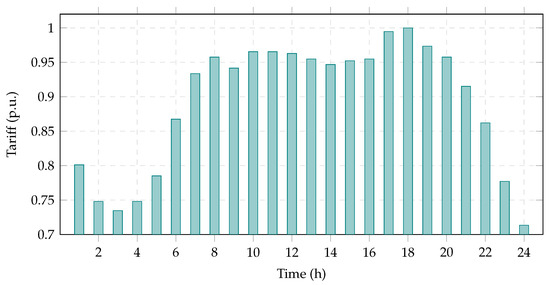
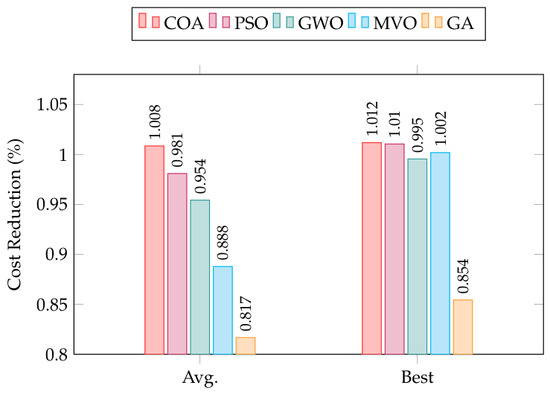
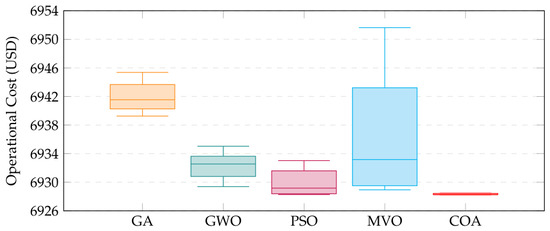
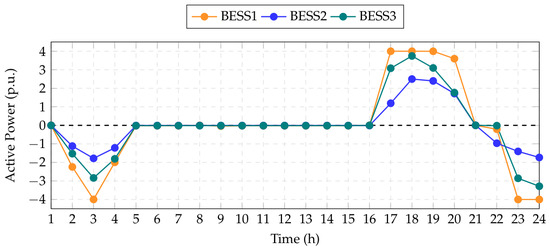
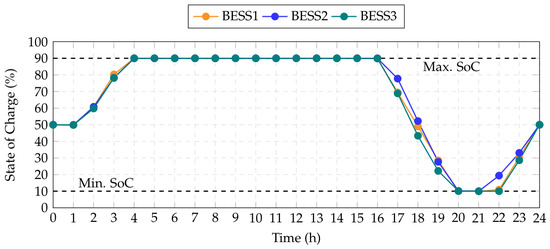
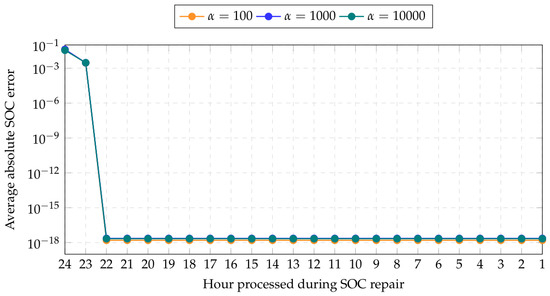
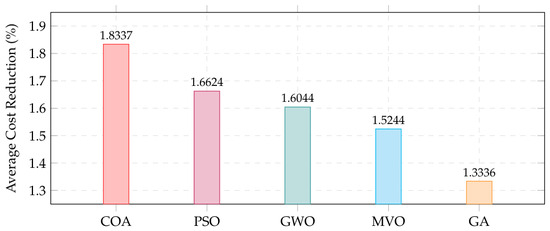
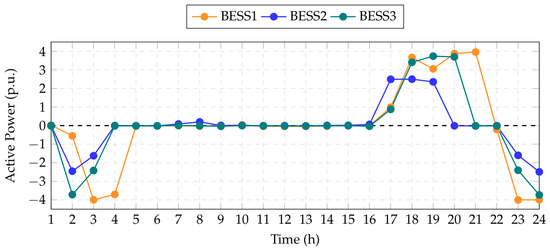
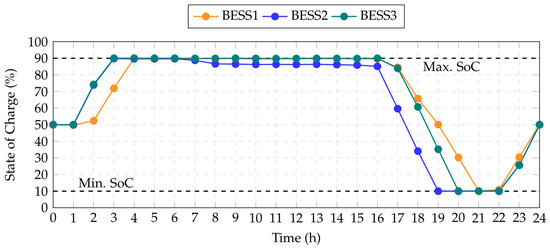
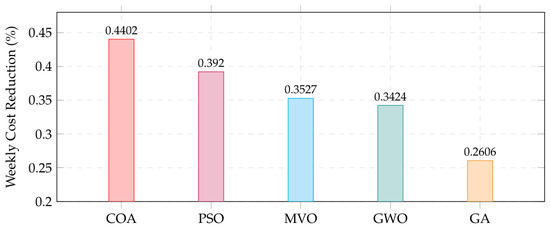
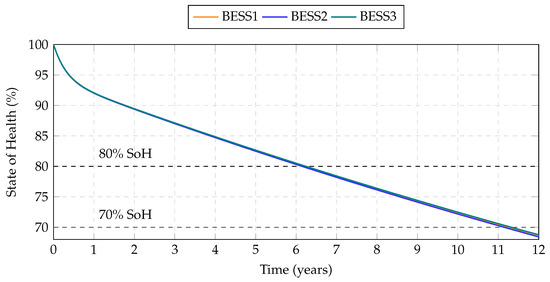
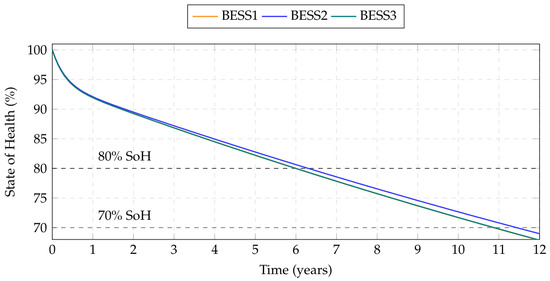
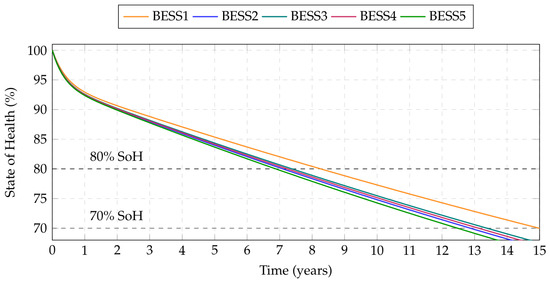
This paper presents an integrated day-ahead battery energy storage system (BESS) scheduling framework for radial active distribution networks with photovoltaic generation. Its main contribution is a reproducible evaluation chain combining non-ideal state-of-charge (SoC) feasibility correction, sequential AC power-flow verification, consistent metaheuristic benchmarking, and post-dispatch battery-aging analysis. The operating-cost objective coordinates hourly BESS active-power exchanges while enforcing storage and AC-network constraints. A parallel Coyote Optimization Algorithm (COA) is compared with parallel GWO, GA, PSO, and MVO implementations under a common formulation, correction procedure, evaluator, and computational environment. Validation uses modified 33-, 69-, and 136-bus radial feeders: 100 independent runs for the deterministic 33-bus benchmark, 100 independently optimized Monte Carlo scenarios for the 69-bus assessment, and seven representative daily profiles for the 136-bus weekly case. COA achieved an average cost reduction of 1.0084%, with the lowest dispersion of , in the 33-bus system; a mean scenario-wise reduction of 1.8337% in the 69-bus system; and a weekly reduction of 0.4402% in the 136-bus system. It obtained the lowest operating costs among the evaluated calibrated configurations, and all pairwise comparisons remained significant after Holm’s step-down adjustment applied separately within each system, although COA required greater computational effort than PSO. The reported schedules satisfied the imposed BESS and AC-network limits. Battery aging was evaluated only after scheduling and was not included in the optimization objective. The resulting cost-oriented schedules produced equivalent full-cycle values near 0.8 day−1 and projected 80% SoH lifetimes of approximately 6–8 years. These results provide an AC-feasible basis for comparing economic performance and post-dispatch battery-health implications under the evaluated conditions.
Full article
(This article belongs to the Special Issue Digital Twins for Smart Grids: From Experimental Validation to Real-World Deployment)
►▼
Show Figures

Figure 1
Open AccessArticle
Quantum-Enhanced DDQN for Hybrid Energy Storage Decision Optimization in Islanded Microgrids
by
Gwo-Ching Liao, Bo-Tong Liao and Rong-Ching Wu
Electricity 2026, 7(3), 82; https://doi.org/10.3390/electricity7030082 - 12 Aug 2026
Abstract
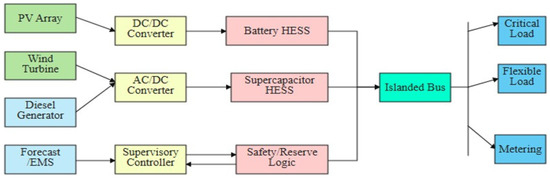
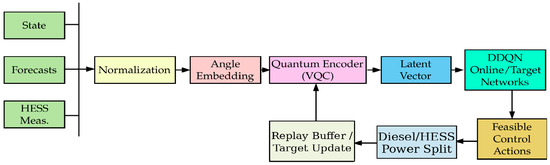
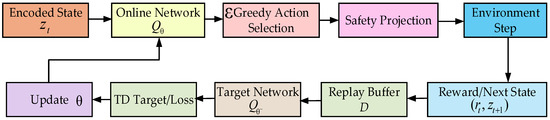
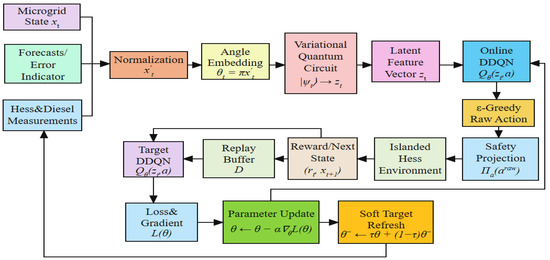
This paper proposes a Quantum-Machine-Learning-enhanced Double Deep Q-Network (QML-DDQN) for the supervisory control of battery–supercapacitor hybrid energy storage systems in islanded microgrids. This method combines a variational quantum circuit as a nonlinear state encoder with a DDQN decision layer for safe discrete dispatch.
[...] Read more.
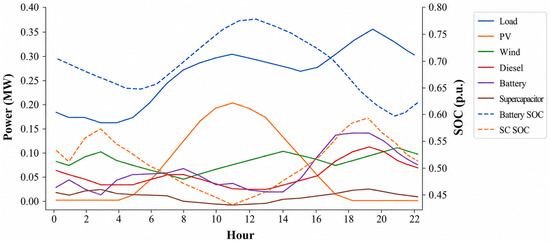
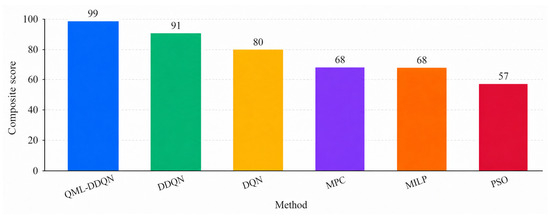
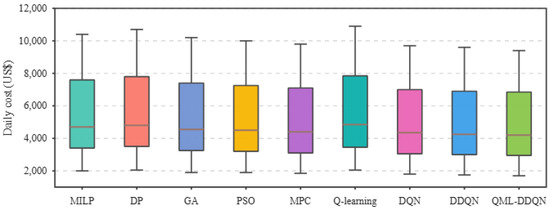
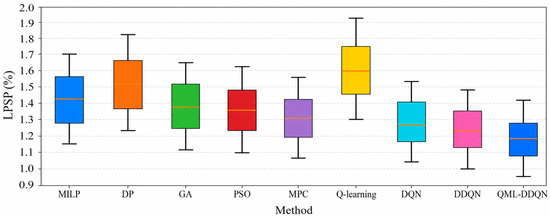
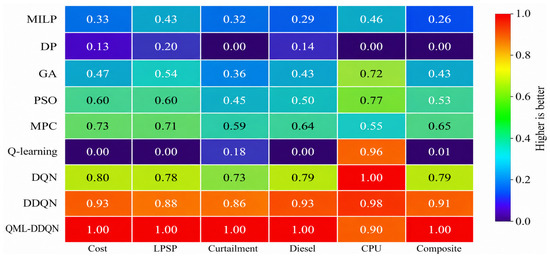
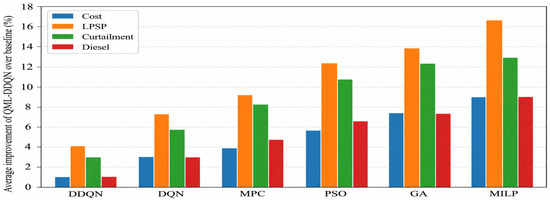
This paper proposes a Quantum-Machine-Learning-enhanced Double Deep Q-Network (QML-DDQN) for the supervisory control of battery–supercapacitor hybrid energy storage systems in islanded microgrids. This method combines a variational quantum circuit as a nonlinear state encoder with a DDQN decision layer for safe discrete dispatch. Three representative islanded cases, Island 1, Island 2, and Island 3, were used to evaluate the robustness under different scales, renewable profiles, and reliability requirements. Compared with deterministic optimization, predictive control, metaheuristics, and classical reinforcement-learning baselines, the proposed controller delivers the best overall trade-off among operating cost, renewable utilization, diesel reduction, and loss-of-power-supply risk. On the three-case averages, QML-DDQN reduces daily cost and LPSP by 0.99% and 4.04% relative to DDQN, by 2.91% and 7.32% relative to DQN, and by 9.09% and 16.63% relative to MILP; it also lowers curtailment and diesel share by up to 13.02% and 9.09%, respectively, across the same benchmark sets. The largest gains appear under volatility-dominated and stress-scenario conditions, where the quantum encoder strengthens the state representation, and the DDQN backbone mitigates value overestimation. These results highlight the practical advantages of the QML-DDQN as a resilient and high-value supervisory strategy for islanded hybrid energy storage operations.
Full article
(This article belongs to the Special Issue Integration of Distributed Energy Resources and Microgrids for Resilient and Intelligent Power Systems)
►▼
Show Figures

Figure 1
Open AccessArticle
An IEC 61850 GOOSE-Based Methodology for Arc Flash Incident Energy Reduction in Industrial Substations
by
Gilcimar Estevam Jacome, Aurélio Luiz Magalhães Coelho, Paulo Henrique Vieira Soares and Anselmo Elias Alvarenga
Electricity 2026, 7(3), 81; https://doi.org/10.3390/electricity7030081 - 6 Aug 2026
Abstract
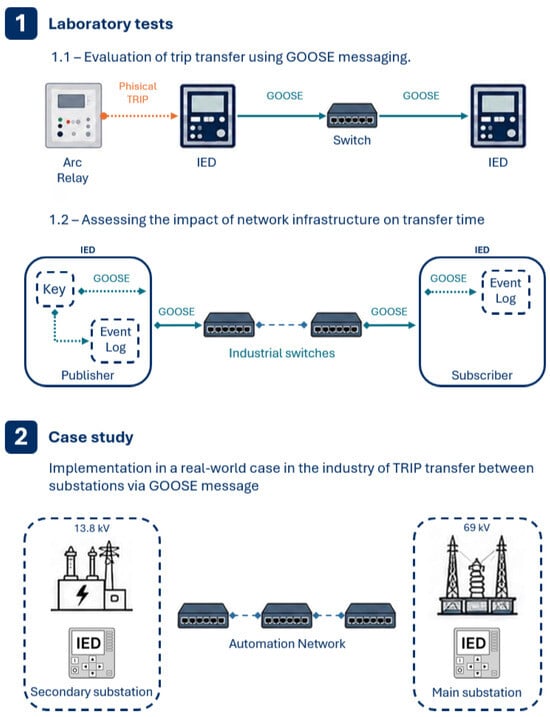
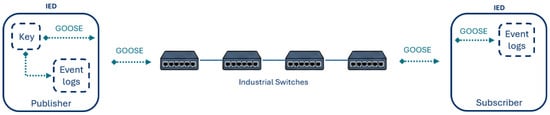
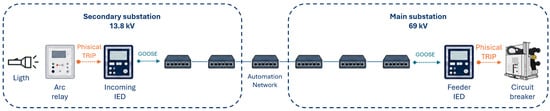
Arc flash faults in industrial substations can release high levels of incident energy, particularly on the line side of incoming circuit breakers, where opening the local breaker alone does not eliminate the source contribution. This paper proposes and experimentally evaluates an IEC 61850-based
[...] Read more.
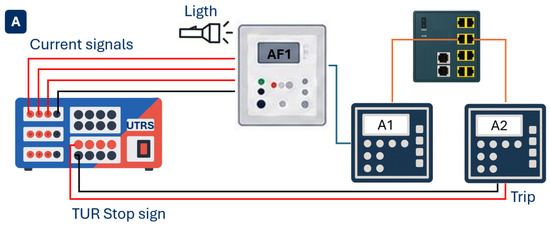
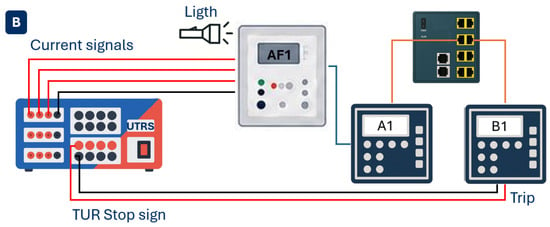
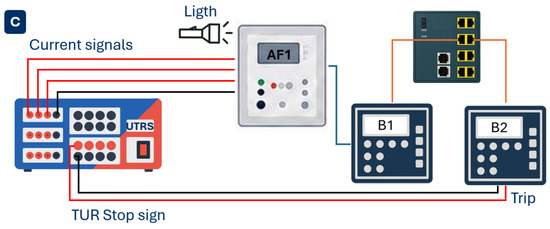
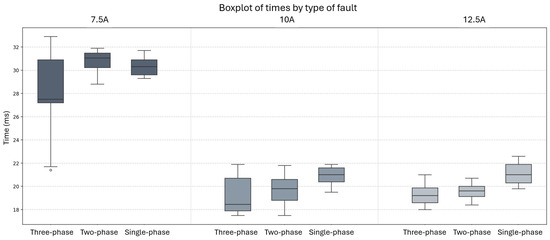
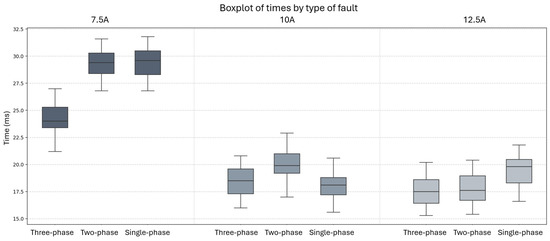
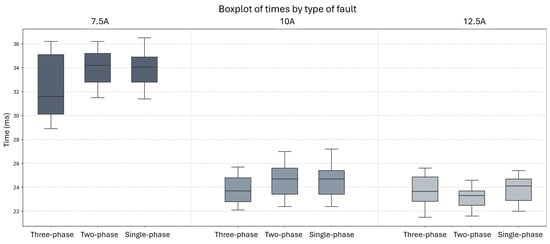
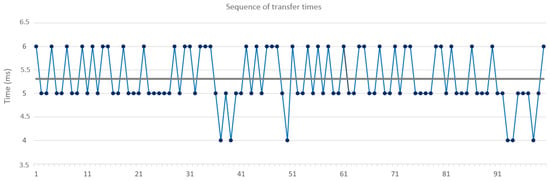
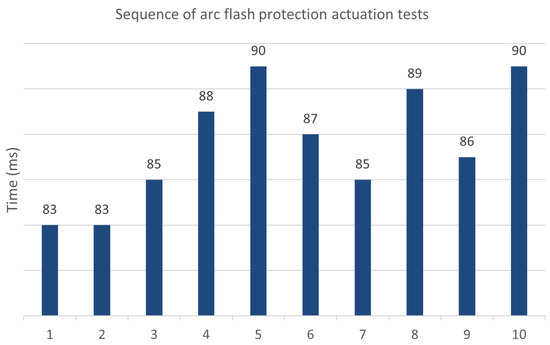
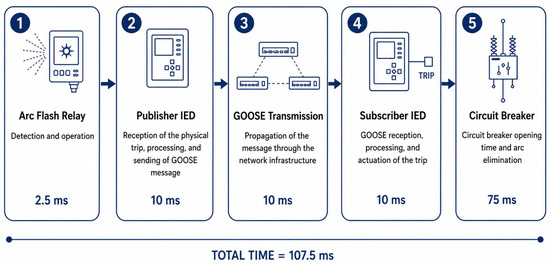
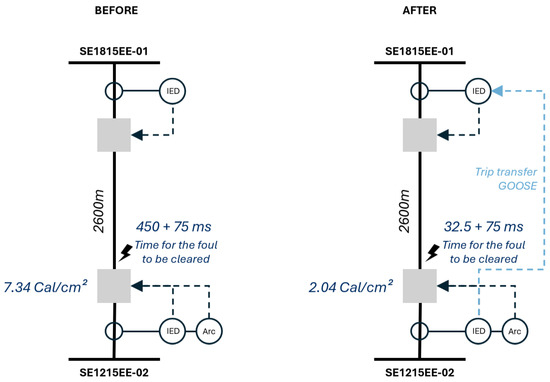
Arc flash faults in industrial substations can release high levels of incident energy, particularly on the line side of incoming circuit breakers, where opening the local breaker alone does not eliminate the source contribution. This paper proposes and experimentally evaluates an IEC 61850-based methodology to mitigate this protection gap by transferring arc flash trip signals between substations using GOOSE messages. The methodology comprises laboratory validation of the complete GOOSE-based protection chain and communication network, followed by validation in an operating industrial substation. Laboratory tests demonstrated satisfactory performance for both homogeneous and multivendor IED configurations, although longer operating times were observed when the test current approached the overcurrent pickup setting. The communication network achieved a mean transfer time of 5.31 ms and a maximum of 6.00 ms. In the industrial case study, the maximum protection operating time was 90 ms. Considering a conservative total fault-clearing time of 107.5 ms, the incident energy was reduced from 7.34 cal/cm2 to 2.04 cal/cm2, corresponding to a reduction of approximately 72%. These results demonstrate the feasibility of IEC 61850 GOOSE communication for high-speed trip transfer, reducing fault-clearing time and mitigating incident energy under critical line-side fault conditions.
Full article
(This article belongs to the Special Issue Recent Advances in Power System and Smart Grid Technologies)
►▼
Show Figures

Figure 1
Open AccessArticle
Stability Enhancement of a Multi-Source Interconnected Power System Using a Dung Beetle Optimizer-Tuned PIλDμ Controller
by
Boopathi Dhanasekaran, Jagatheesan Kaliannan, Sathish Kumar Marappan, Sourav Samanta and Anand Baskaran
Electricity 2026, 7(3), 80; https://doi.org/10.3390/electricity7030080 - 5 Aug 2026
Abstract
►▼
Show Figures
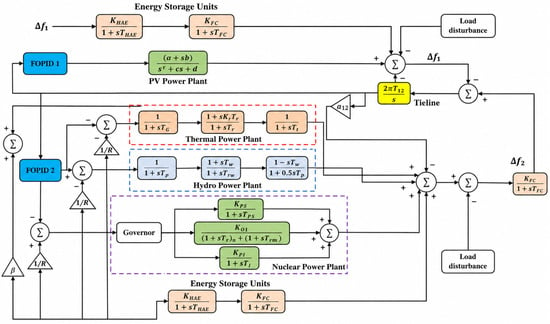
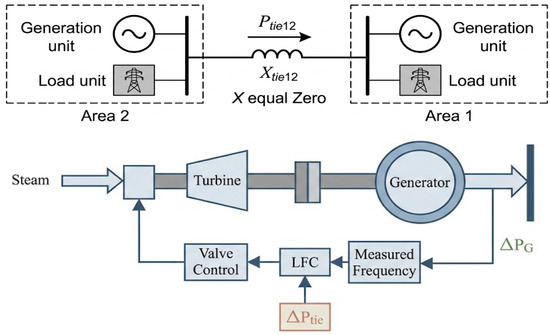
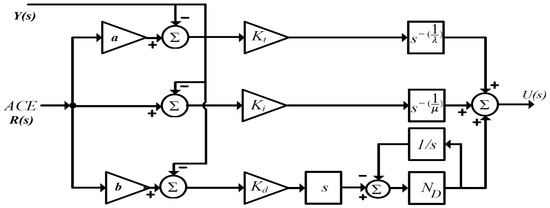
Maintaining frequency stability in modern interconnected power systems (PSs) has become increasingly challenging due to the high penetration of renewable energy sources (RESs) and the dynamic nature of generation and demand. To address these issues, this paper proposes a novel load frequency control
[...] Read more.
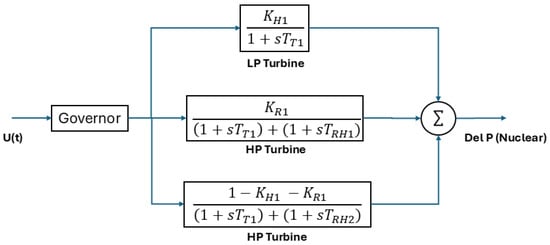
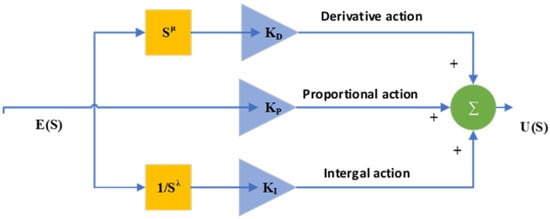
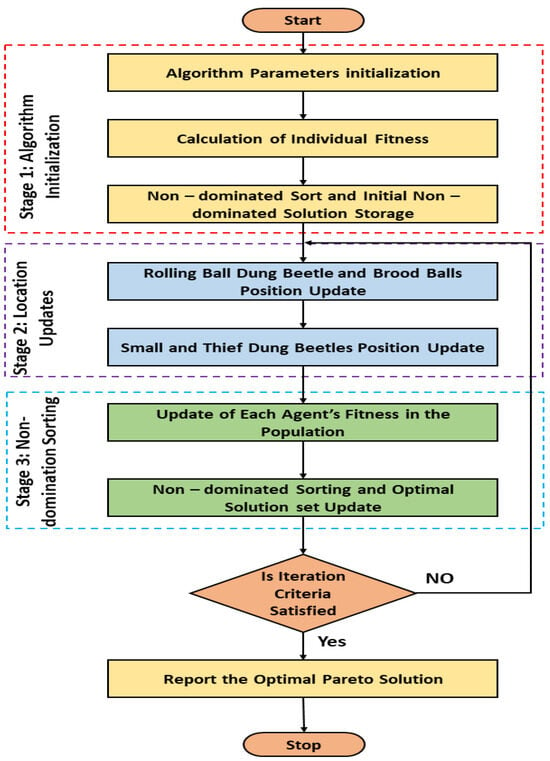
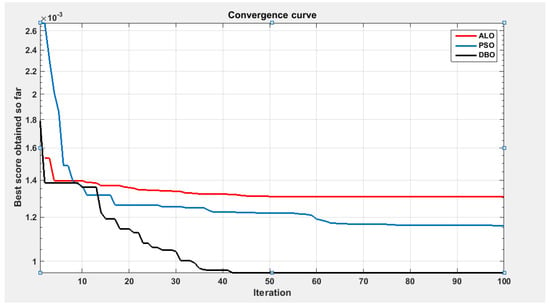
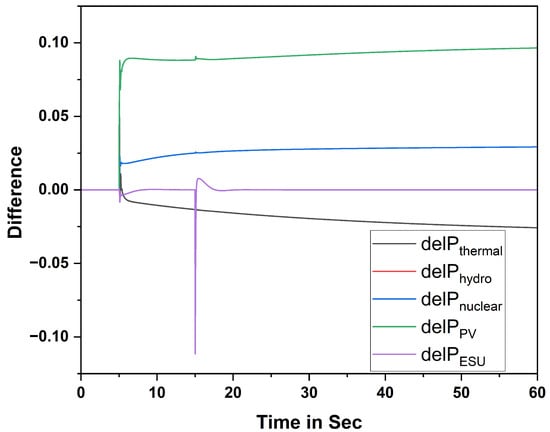
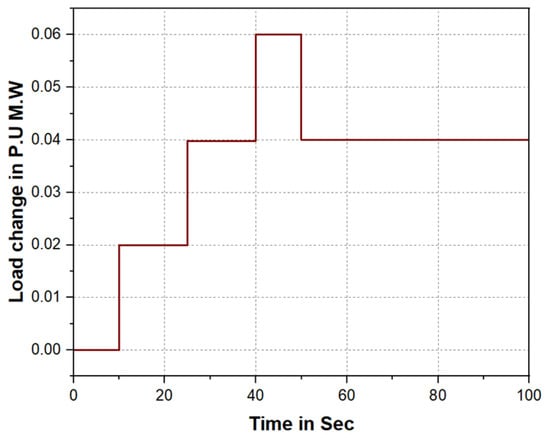
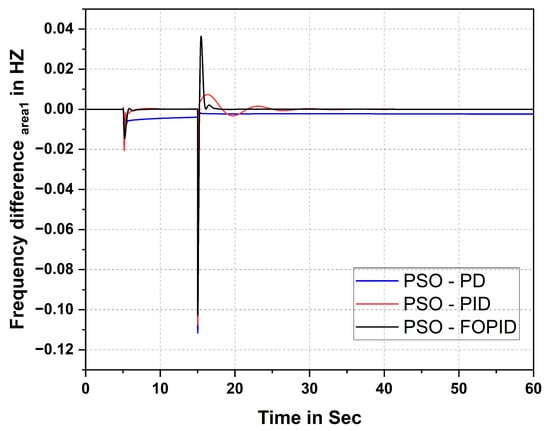
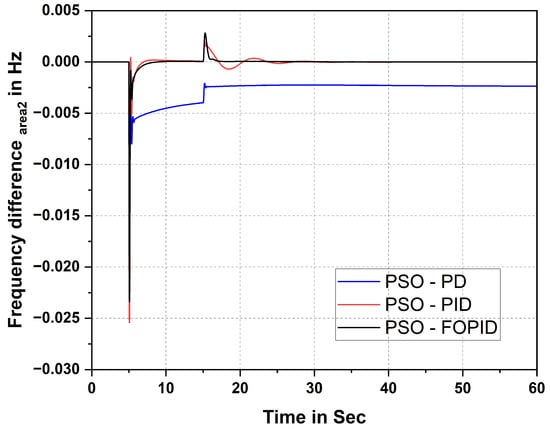
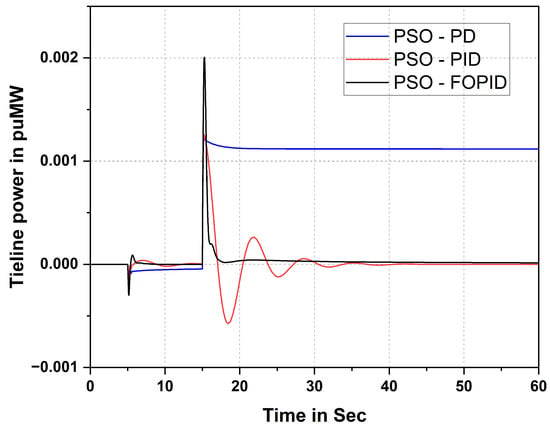
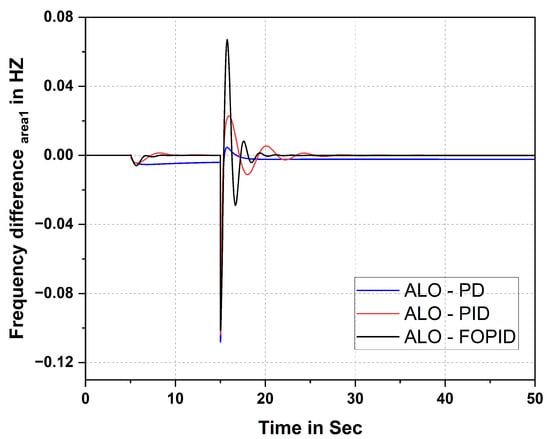
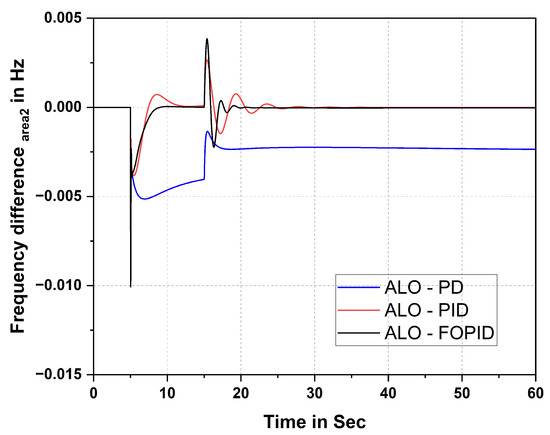
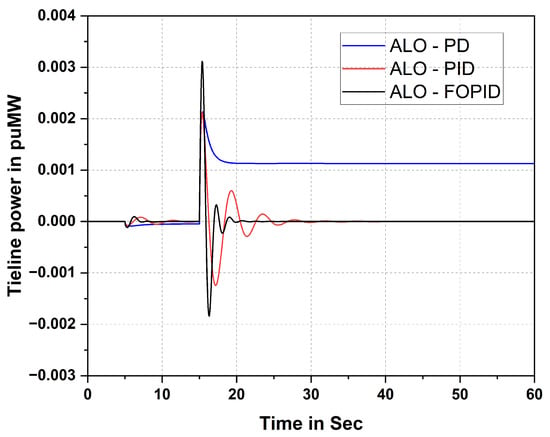
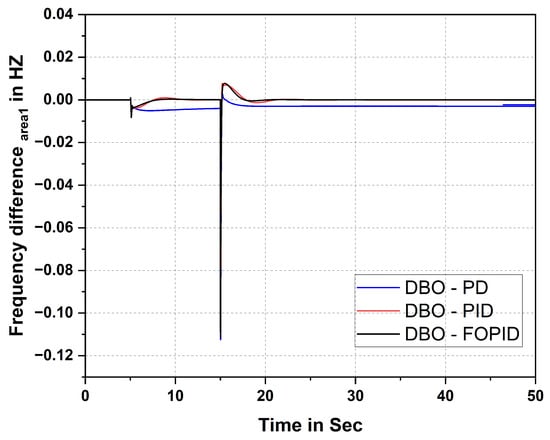
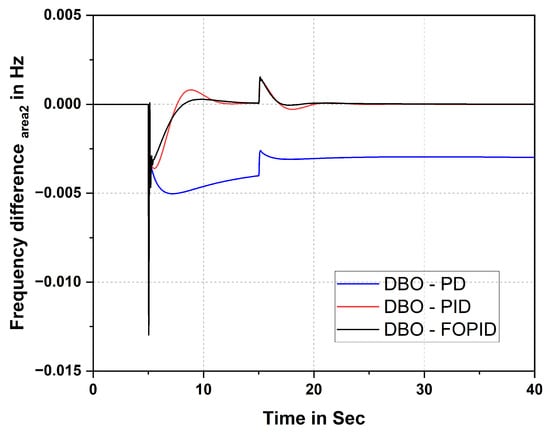
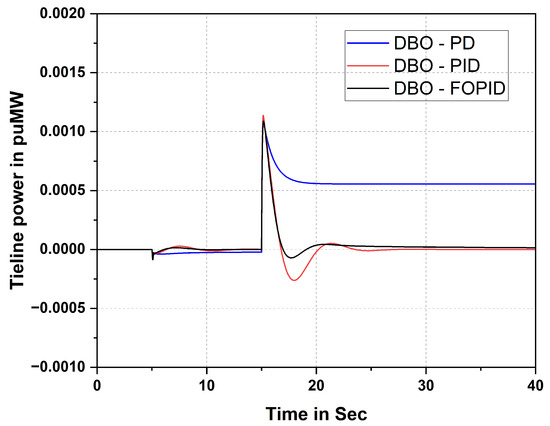
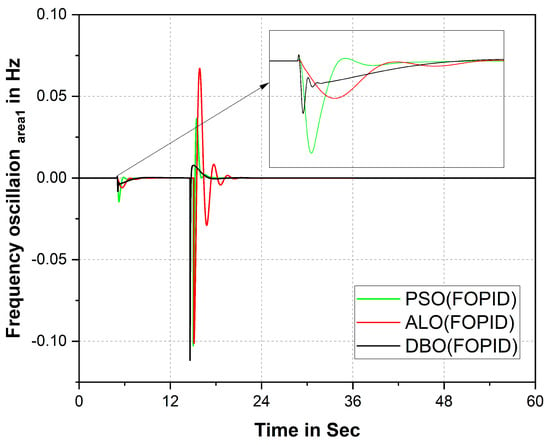
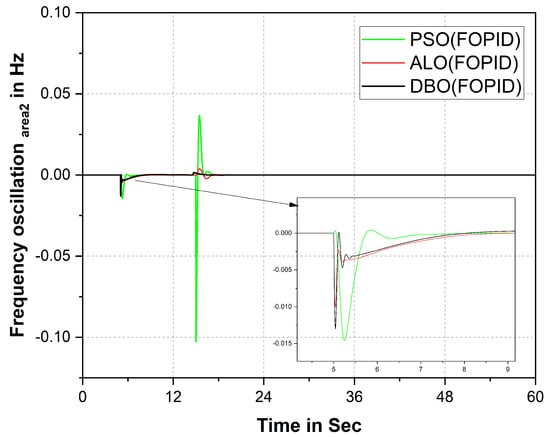
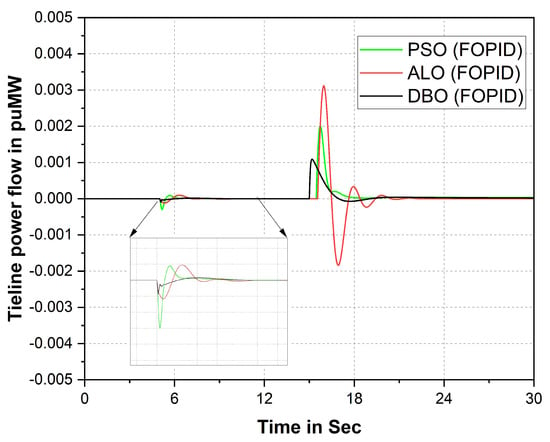
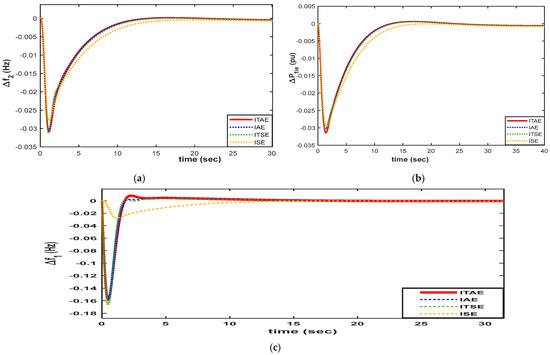
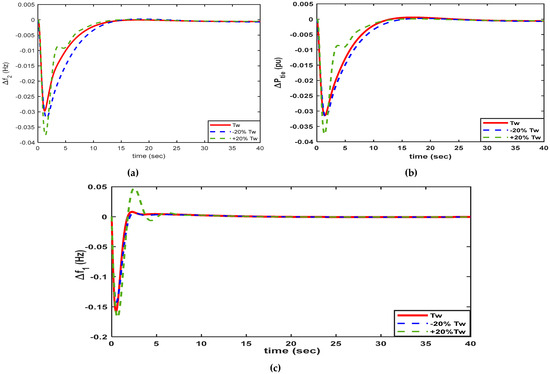
Maintaining frequency stability in modern interconnected power systems (PSs) has become increasingly challenging due to the high penetration of renewable energy sources (RESs) and the dynamic nature of generation and demand. To address these issues, this paper proposes a novel load frequency control strategy that integrates a Dung Beetle Optimizer (DBO)-tuned fractional-order Proportional–Integral–Derivative (FOPID) controller with a newly developed multi-source interconnected power system. This model combines PV, thermal, hydro, nuclear, and advanced storage (HAE and fuel cells). Unlike existing methods, the proposed approach simultaneously leverages DBO’s balanced search mechanism and FOPID’s fractional dynamics to enhance frequency stability under high renewable penetration. The performance of the proposed controller is validated through a comparative analysis with Ant Lion Optimizer (ALO) and Particle Swarm Optimization (PSO) methods. Simulation results show that the DBO-based controller significantly improves dynamic response, achieving reductions in settling time of 9.5% and 4.7% compared to PSO and ALO, respectively. Furthermore, the proposed approach enhances frequency regulation and tie-line power stability over other optimization methods and controllers, demonstrating strong robustness and adaptability for future high-RES power systems.
Full article

Figure 1
Open AccessArticle
Exploratory Analysis of the Interactions Between Territorial Development Patterns and Electricity Demand in Ecuador’s Coastal Region
by
Diego Peña, Jorge Murillo, Fernando Ortega, Yadyra Ortiz, Cristian Laverde-Albarracín and Francisco Jurado
Electricity 2026, 7(3), 79; https://doi.org/10.3390/electricity7030079 - 1 Aug 2026
Abstract
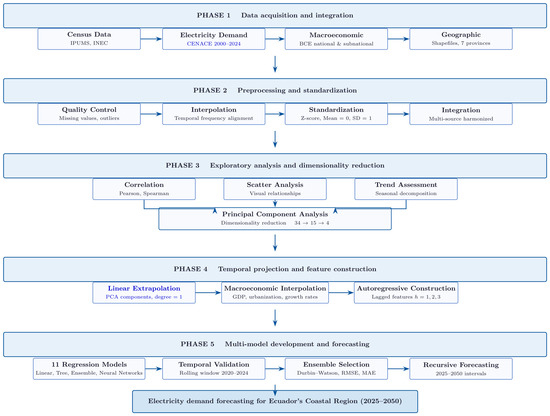
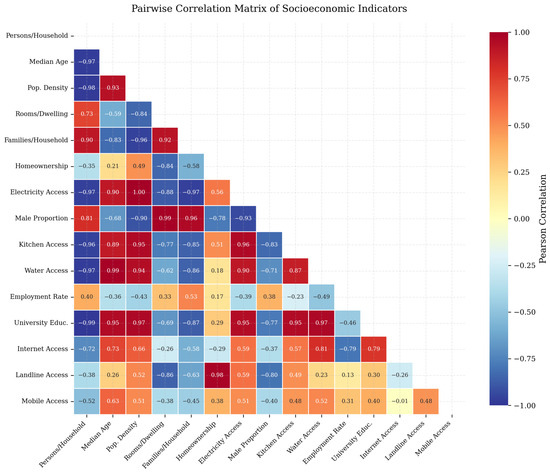
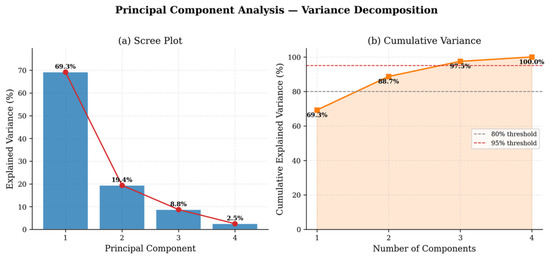
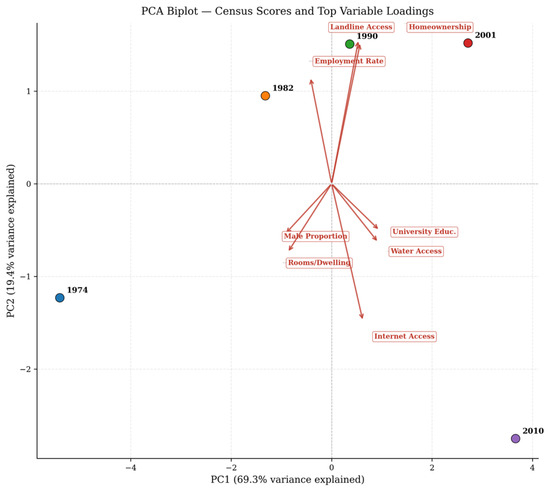
This study proposes a reproducible exploratory framework to link long-term territorial development with electricity demand in data-scarce contexts, and applies it to Ecuador’s Costa region. The pipeline combines three commonly available input streams: periodic census microdata, an official demand series, and macroeconomic aggregates.
[...] Read more.
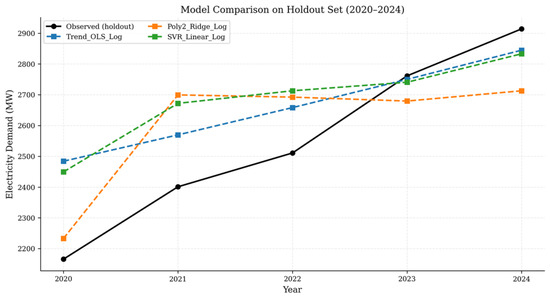
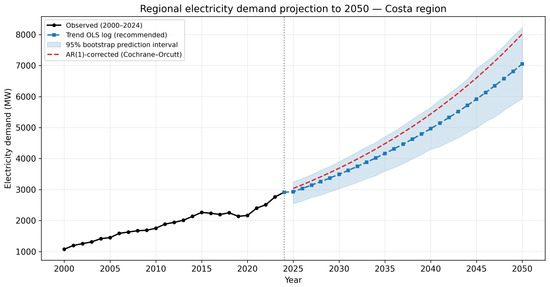
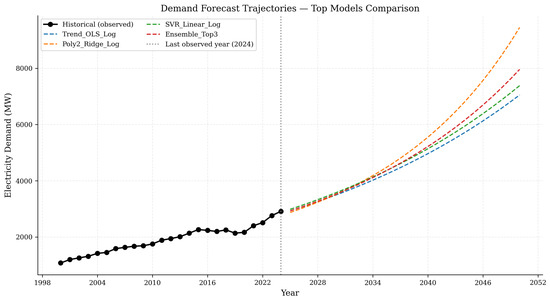
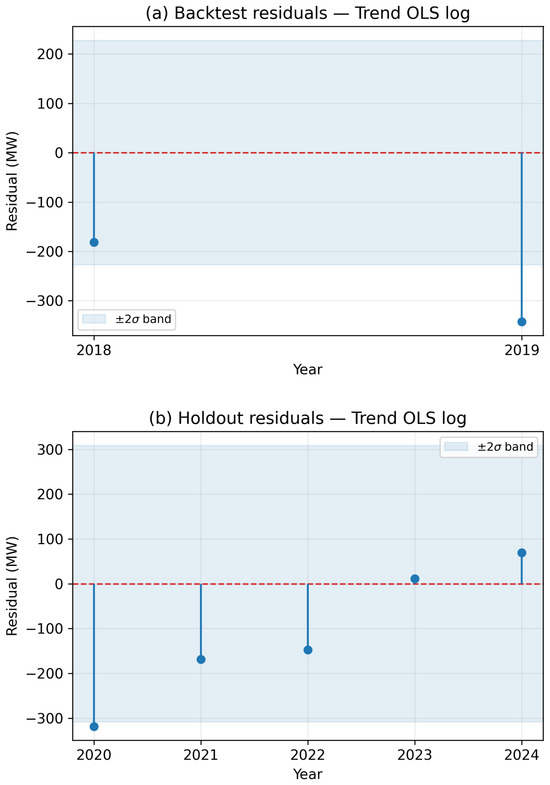
This study proposes a reproducible exploratory framework to link long-term territorial development with electricity demand in data-scarce contexts, and applies it to Ecuador’s Costa region. The pipeline combines three commonly available input streams: periodic census microdata, an official demand series, and macroeconomic aggregates. Socioeconomic heterogeneity across five non-uniform census rounds (1974, 1982, 1990, 2001, 2010) is summarized through Principal Component Analysis (PCA), and territorial indicators are projected to the demand horizon using a univariate linear trend. Eleven regression specifications are compared on a log-transformed demand variable, and a rolling-origin backtesting scheme plus a 2020–2024 holdout are used for validation. The selected Trend OLS log model attains and MAPE = 6.08%, and projects a regional demand of approximately 7055 MW by 2050, equivalent to a compound annual growth rate of 3.46%. Beyond the Ecuadorian case, the results show that transparent, low-data pipelines based on harmonized census information, macroeconomic drivers and simple regression models can provide defensible medium- and long-term demand signals for planners in other emerging economies with limited high-frequency data.
Full article
(This article belongs to the Special Issue Feature Papers to Celebrate the First Impact Factor of Electricity)
►▼
Show Figures

Figure 1
Open AccessArticle
Topology-Aware Assessment of Voltage Regulation and Continuous Photovoltaic Hosting Capacity in PV-Rich Distribution Feeders with Smart-Inverter Controls
by
Ayrton Lucas L. do Nascimento, Bruno Santana de Albuquerque, Hertz Freitas da S. Junior, Carlos Eduardo M. Rodrigues, Carminda Célia Moura de Moura Carvalho, Ubiratan H. Bezerra, Jonathan Muñoz Tabora and Maria Emília de Lima Tostes
Electricity 2026, 7(3), 78; https://doi.org/10.3390/electricity7030078 - 29 Jul 2026
Abstract
►▼
Show Figures
The increasing penetration of distributed photovoltaic generation is changing voltage behavior in distribution feeders and creating operational challenges related to voltage violations, losses, curtailment, and hosting capacity. This paper proposes a topology-aware analytical and computational framework for assessing voltage regulation and continuous photovoltaic
[...] Read more.
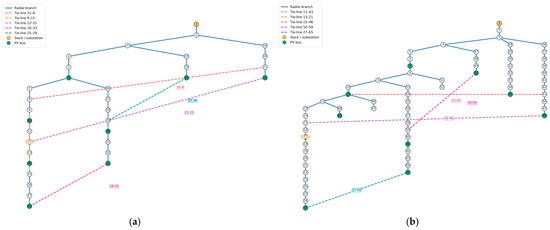
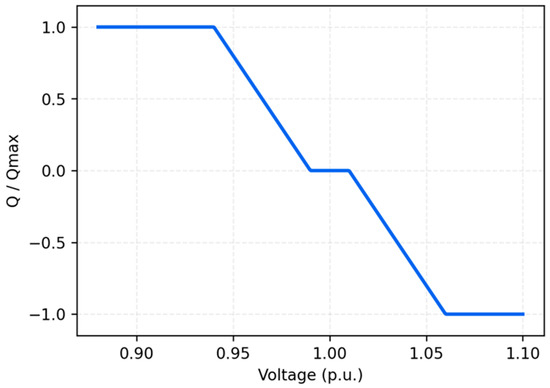
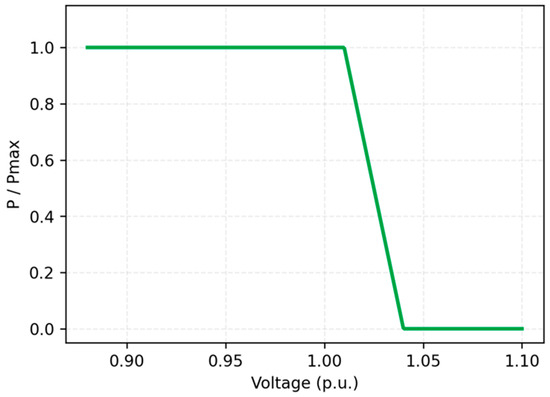
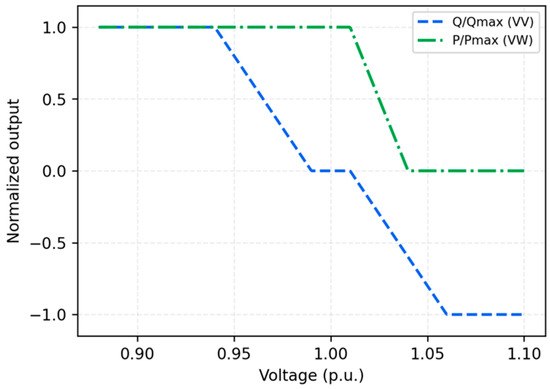
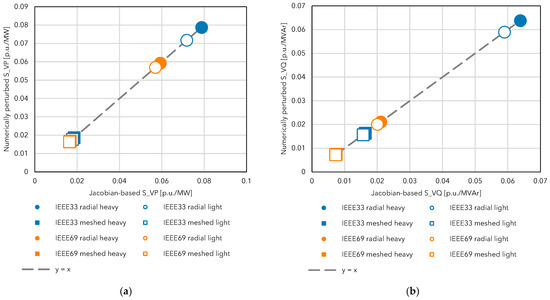
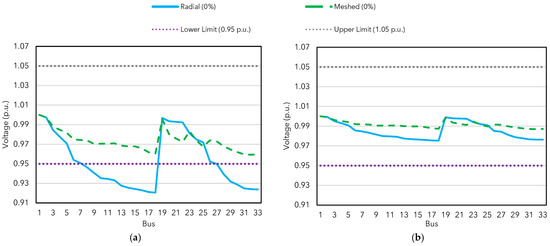
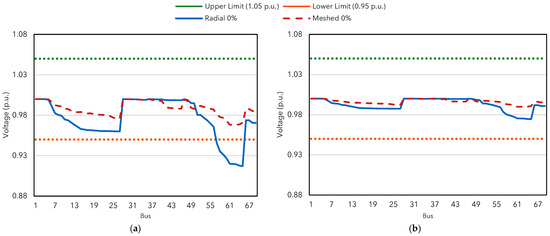
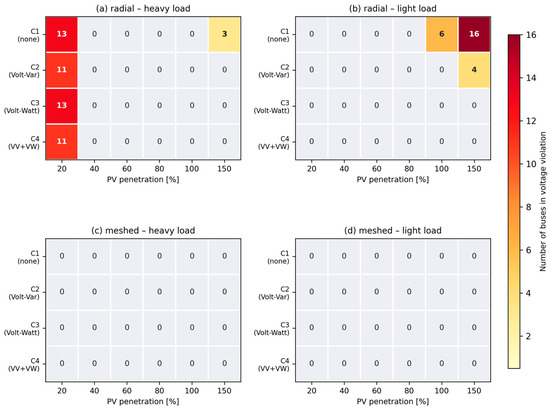
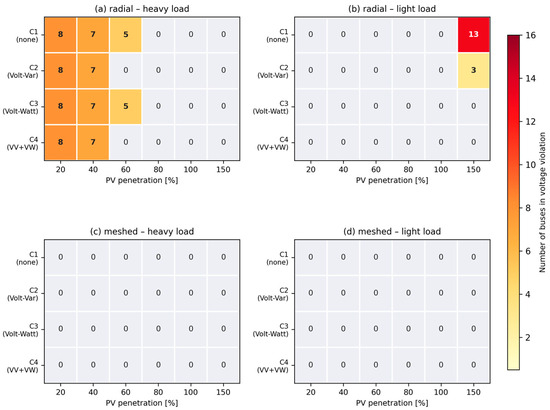
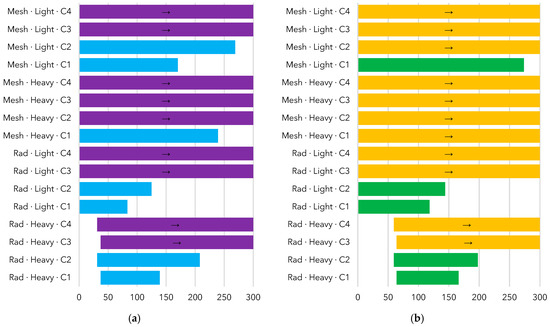
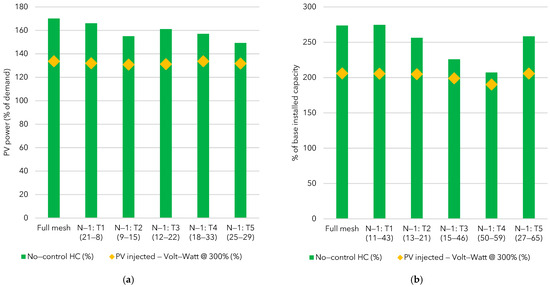
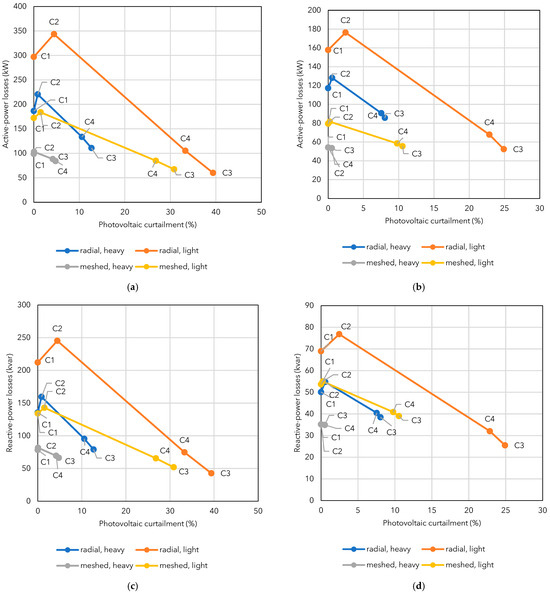
The increasing penetration of distributed photovoltaic generation is changing voltage behavior in distribution feeders and creating operational challenges related to voltage violations, losses, curtailment, and hosting capacity. This paper proposes a topology-aware analytical and computational framework for assessing voltage regulation and continuous photovoltaic hosting capacity in distribution feeders with smart-inverter controls. The framework combines topology-dependent voltage sensitivities, balanced steady-state power-flow simulations, explicit inverter apparent-power constraints, and gain indices that quantify the contributions of feeder topology, inverter controls, and their interaction. The IEEE 33-bus and IEEE 69-bus feeders are evaluated under radial and meshed configurations, heavy- and light-load conditions, and four photovoltaic operation modes: no control, Volt–Var, Volt–Watt, and combined Volt–Var/Volt–Watt control. A discrete sweep from 20% to 150% PV penetration is used to characterize voltage, active and reactive losses, and curtailment trends. Hosting-capacity boundaries are subsequently determined through an interval-aware procedure consisting of a one-percentage-point scan followed by bisection refinement to 0.1 percentage point, without assuming a globally monotonic feasibility transition. The results show that the feeder topology strongly affects voltage sensitivity and photovoltaic hosting capacity. The meshed operation generally increases voltage margins, while the interval-aware assessment identifies nonzero feasible penetration ranges, even when the zero-PV operating point is constrained by undervoltage. Volt–Watt achieves the largest hosting-capacity gains at the expense of curtailment, whereas Volt–Var preserves photovoltaic injection but may increase feeder losses. Therefore, hosting capacity should be interpreted jointly with topology, inverter controls, injected power, curtailment, and losses.
Full article

Figure 1
Open AccessArticle
Experimental Validation of a Low-Cost IoT-Based Voltage and Current Measurement System Using RMS Benchmarking with a Reference Power Quality Analyzer
by
George-Andrei Marin, Marian Gaiceanu, Adriana Burlibasa, Silviu Epure, Ciprian Vlad, Cristinel Dache and George Petrea
Electricity 2026, 7(3), 77; https://doi.org/10.3390/electricity7030077 - 29 Jul 2026
Abstract
►▼
Show Figures
This paper presents a low-cost embedded monitoring system for real-time RMS voltage and RMS current acquisition in three-phase electrical networks. The proposed architecture is based on distributed Arduino Nano acquisition nodes equipped with ACS712 Hall-effect current sensors and isolated voltage transformers, while a
[...] Read more.
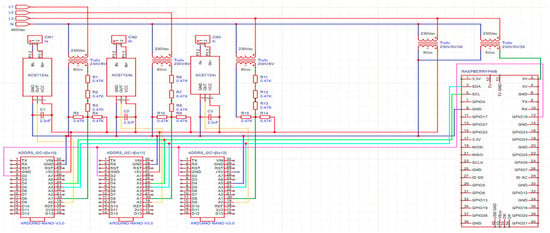
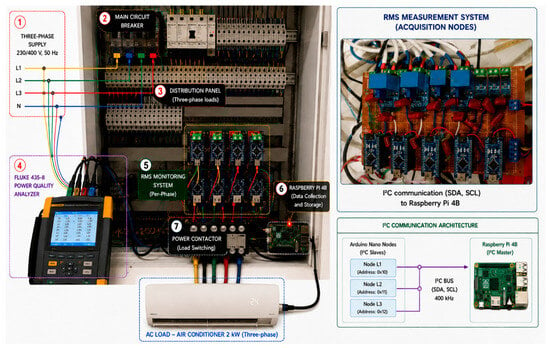
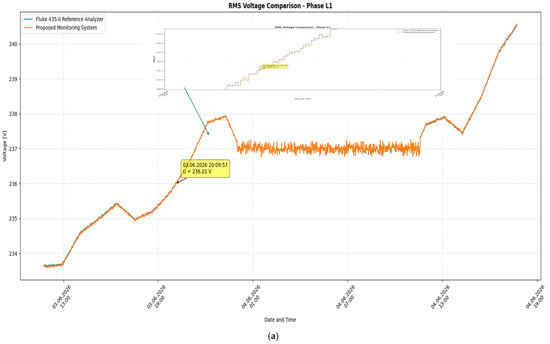
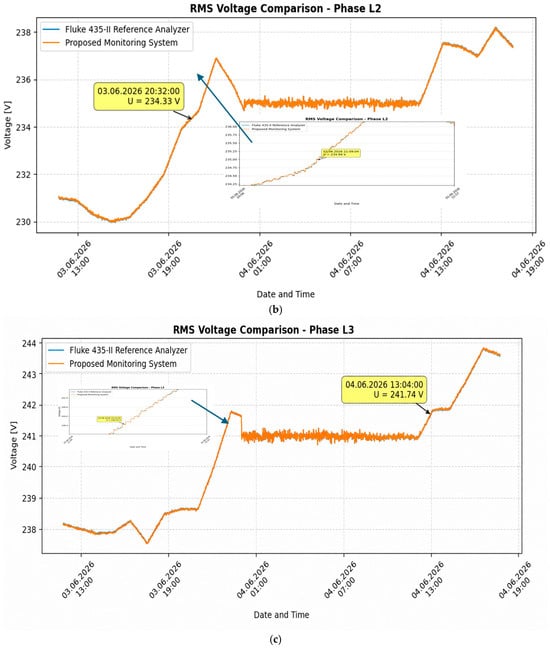
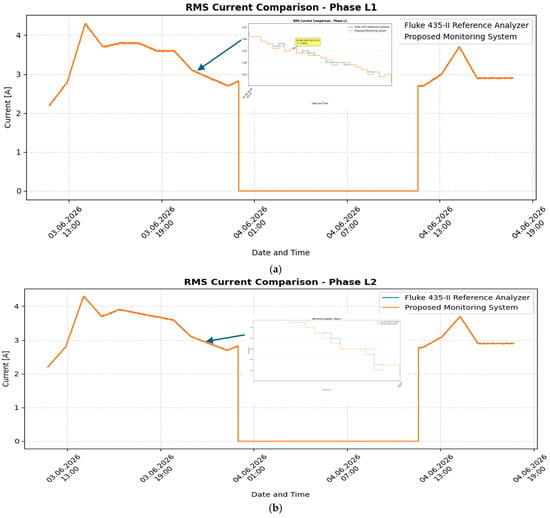
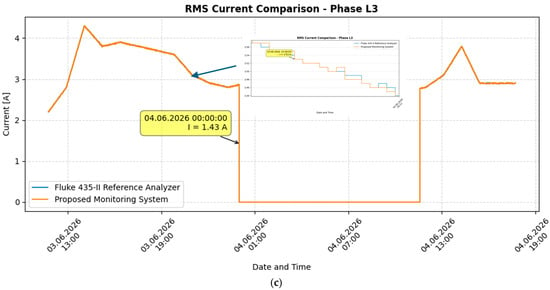
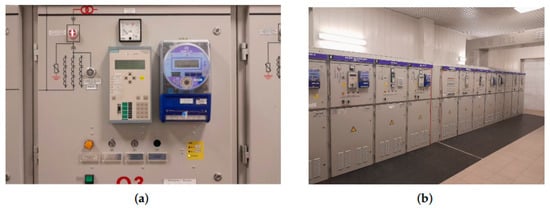
This paper presents a low-cost embedded monitoring system for real-time RMS voltage and RMS current acquisition in three-phase electrical networks. The proposed architecture is based on distributed Arduino Nano acquisition nodes equipped with ACS712 Hall-effect current sensors and isolated voltage transformers, while a Raspberry Pi 4 Model B is used as a centralized data acquisition and processing unit through the I2C communication protocol. The embedded acquisition nodes implement timer-controlled analog signal sampling using the internal 10-bit ADC of the ATmega328P microcontroller, allowing real-time acquisition of electrical waveforms for RMS computation. Unlike conventional low-cost IoT electrical monitoring systems focused mainly on basic parameter visualization and wireless communication, the proposed platform emphasizes synchronized three-phase RMS monitoring and experimental validation accuracy under real operating conditions. The proposed monitoring architecture is experimentally benchmarked against a FLUKE 435 professional power quality analyser used as a high-accuracy reference instrument. Experimental results demonstrate that the proposed low-cost embedded architecture can provide RMS voltage and RMS current measurements with acceptable accuracy for educational applications, experimental electrical platforms, and distributed IoT-based monitoring systems. The presented system does not aim to implement a fully IEC 61000-4-30-compliant power quality analyser but rather to validate the feasibility of low-cost embedded RMS monitoring architectures for real-time electrical applications.
Full article

Figure 1

Open AccessArticle
Study on a Novel Energy-Dissipation Branch for 600 kV DC Circuit Breakers Based on Ga–In–Sn Liquid Metal
by
Yaguang Ma, Zhitan Liu, Zongbao Gao, Sheng Yang, Ke Zhuang, Zheng Li, Guangning Wu, Aozheng Wang, Yanyu Chen, Yuehong Dong, Guoqiang Gao and Lei Qiao
Electricity 2026, 7(3), 76; https://doi.org/10.3390/electricity7030076 - 26 Jul 2026
Abstract
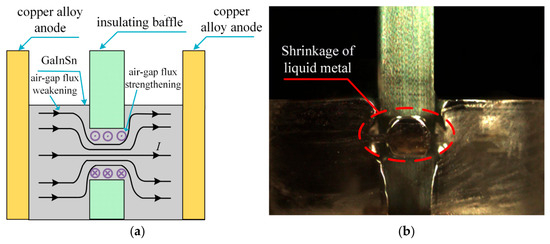
With the increase in voltage levels, higher requirements are imposed on the energy-dissipation capability of high-voltage direct current (HVDC) networks. Existing energy-dissipation schemes cannot satisfy the demands of future HVDC systems. In this paper, a composite energy-dissipation branch circuit based on liquid metal,
[...] Read more.
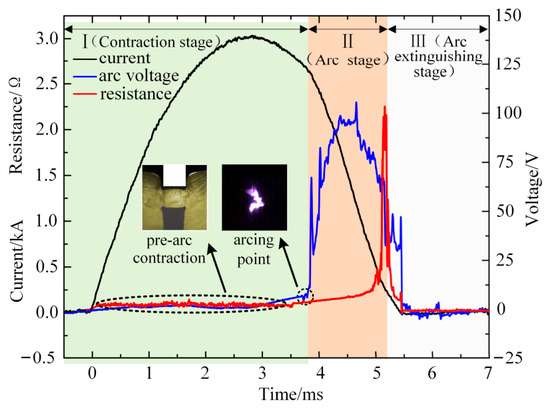
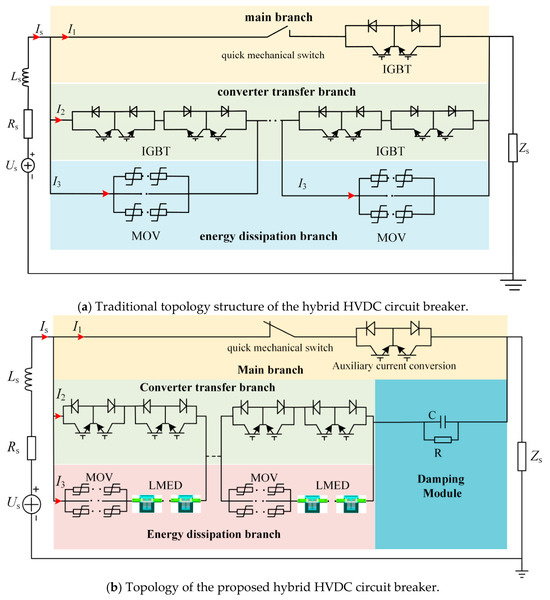
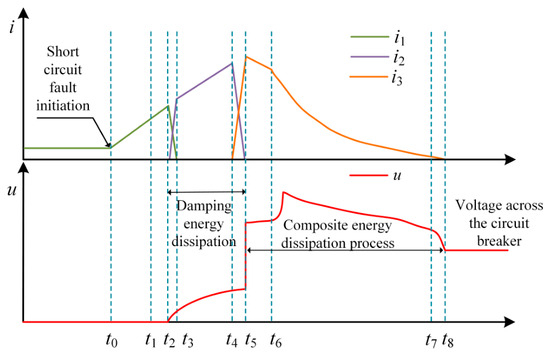
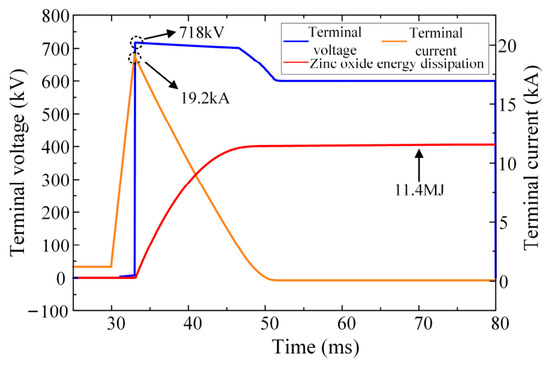
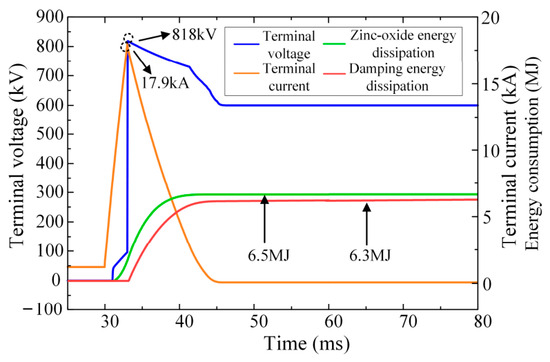
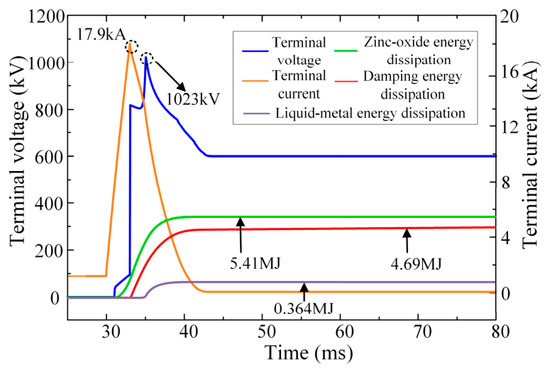
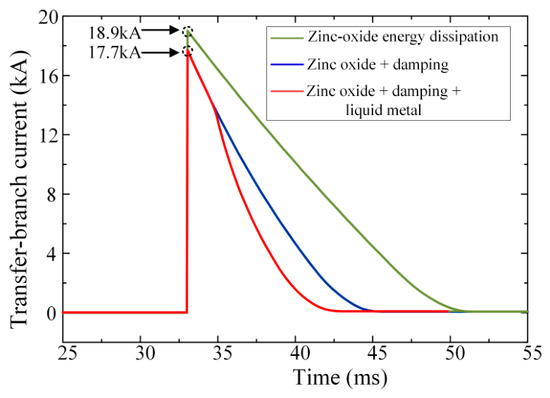
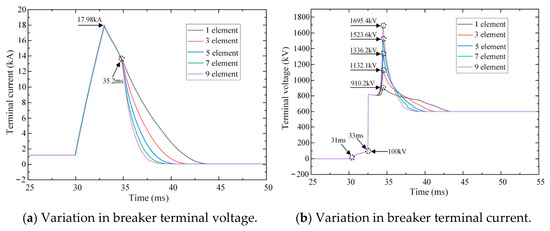
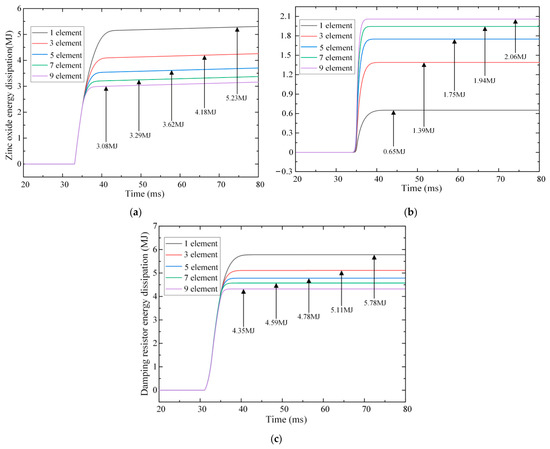
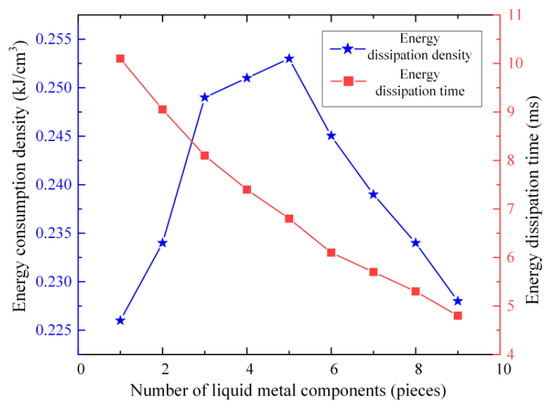
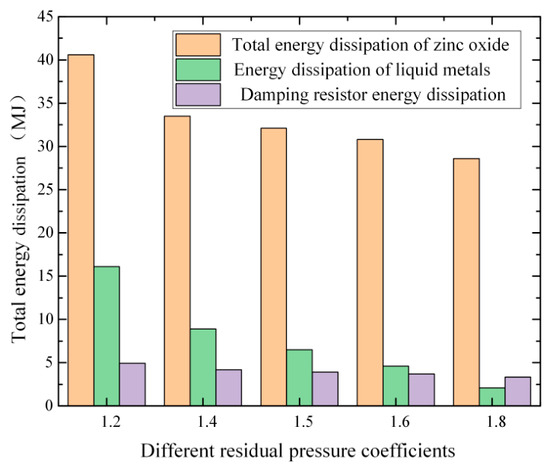
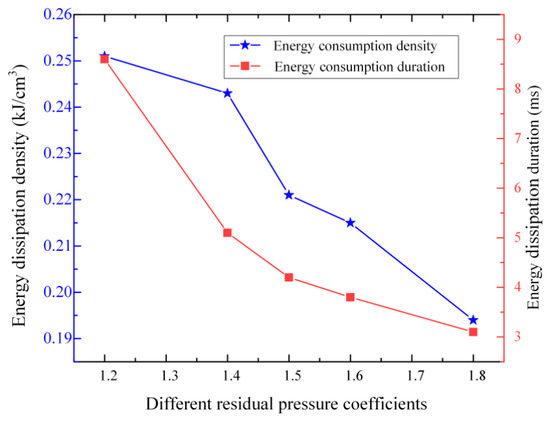
With the increase in voltage levels, higher requirements are imposed on the energy-dissipation capability of high-voltage direct current (HVDC) networks. Existing energy-dissipation schemes cannot satisfy the demands of future HVDC systems. In this paper, a composite energy-dissipation branch circuit based on liquid metal, zinc oxide varistors, and damping resistors is proposed for HVDC circuit breakers. First, the self-constricting arc initiation mechanism and energy-dissipation characteristics of gallium–indium–tin liquid metal are studied. The results show that the energy-dissipation process exhibits an obvious stage-wise characteristic. Subsequently, an energy-dissipation topology incorporating liquid metal elements is established. A simulation model for the liquid-metal module is developed using the Mayr arc theory, and the conductance evolution during arc initiation is simulated. The model is combined with a hybrid HVDC circuit breaker model for analysis. Finally, a composite energy-dissipation branch circuit is constructed. The energy allocation among different components and the corresponding power density are evaluated. In the case of connecting three liquid-metal components in series, the energy density reached 0.248 kJ/cm3, representing a 22.2% increase compared to the original. The results support the coordinated application of liquid-metal modules and conventional absorption units in HVDC circuit breakers.
Full article
(This article belongs to the Special Issue Innovations in Smart Grid Technologies and Sustainable Energy Solutions)
►▼
Show Figures

Figure 1
Open AccessArticle
Preselective Ground Fault Detection Using Vector Reactive Asymmetry in Hierarchical Relay Protection Automation Environments
by
Zhanat Issabekov, Vladyslav Romashchenko, Dmitry Kachan, Batyrbek Ordabayev, Bibigul Issabekova, Olzhas Talipov and Didar Bayev
Electricity 2026, 7(3), 75; https://doi.org/10.3390/electricity7030075 - 24 Jul 2026
Abstract
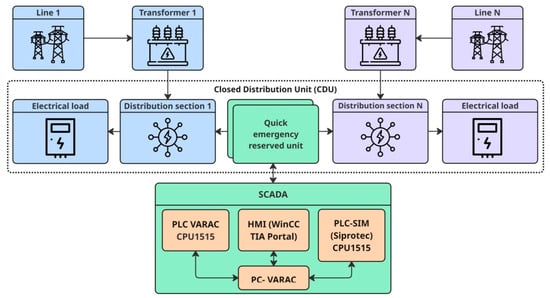
While multi-phase short circuits are reliably cleared by conventional overcurrent relays, single-phase-to-ground faults (SPGFs) in isolated, compensated, or resistance-grounded 6–10 kV distribution networks produce extremely low, highly distorted currents that frequently cause traditional zero-sequence protections to misoperate. Because SPGFs constitute the vast majority
[...] Read more.
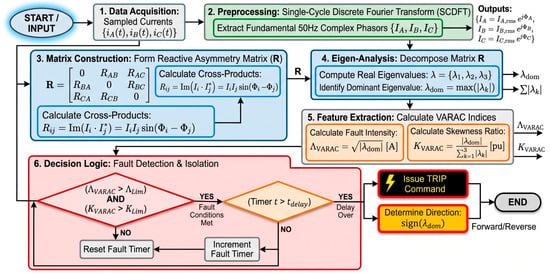
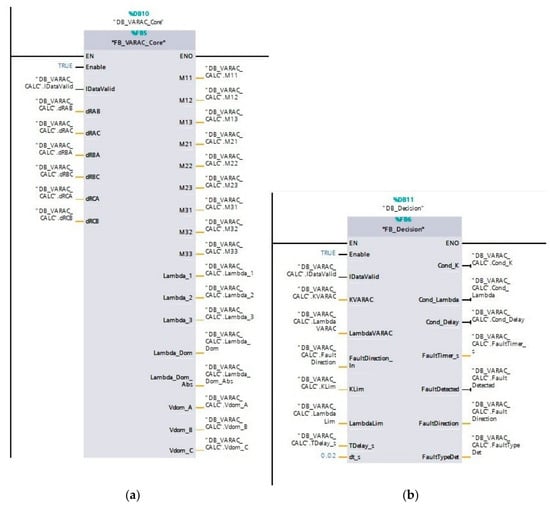
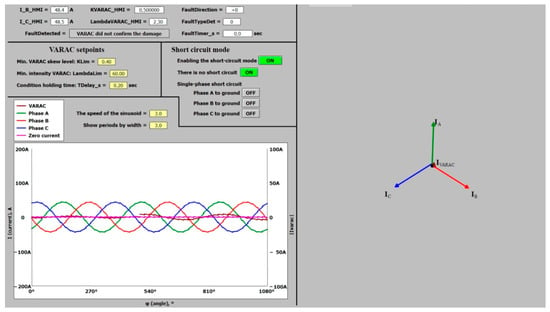
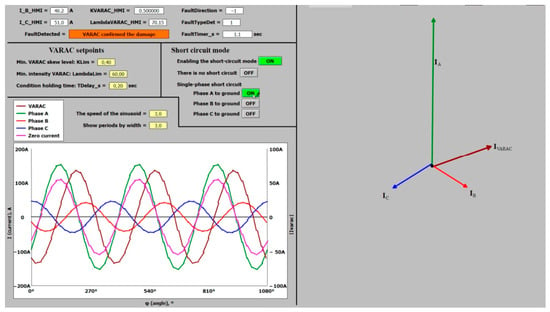
While multi-phase short circuits are reliably cleared by conventional overcurrent relays, single-phase-to-ground faults (SPGFs) in isolated, compensated, or resistance-grounded 6–10 kV distribution networks produce extremely low, highly distorted currents that frequently cause traditional zero-sequence protections to misoperate. Because SPGFs constitute the vast majority of network disturbances, resolving this specific low-current detection challenge remains a critical priority for grid resilience. This paper presents a preselective protection approach based on Vector Analysis of Reactive Asymmetry Current (VARAC), designed for implementation in digital relay protection and automation terminals. Instead of relying primarily on vulnerable zero-sequence quantities, the method derives diagnostic features from the reactive asymmetry structure of three-phase current phasors. A reactive asymmetry matrix is formed from pairwise imaginary cross-products, symmetrized to preserve real eigenvalues and stable modal interpretation. The dominant eigenvalue and eigenvector are then used to quantify fault intensity and directional skew through two decision features: a magnitude-based index and a normalized asymmetry ratio. This enables robust discrimination between normal and faulted operation, including low-current and compensated-fault conditions where conventional criteria lose sensitivity. Simulation and oscillographic evaluations show a clear separation between pre-fault and SPGF regimes, fast onset detection, and improved structural selectivity versus traditional zero-sequence indicators. The proposed algorithm is computationally lightweight and compatible with hierarchical distributed SCADA architectures, supporting coordinated monitoring, diagnostics, and adaptive protection functions in modern medium-voltage networks.
Full article
(This article belongs to the Topic Advances in Power Science and Technology, 2nd Edition)
►▼
Show Figures

Figure 1
Open AccessFeature PaperArticle
Advanced Metering Infrastructure in Microgrids: Architecture, Challenges, and Future Directions
by
Juan Camilo Riaño-Rueda, Melisa de Jesús Barrera-Durango, Nicolás Muñoz-Galeano and Jesús M. López-Lezama
Electricity 2026, 7(3), 74; https://doi.org/10.3390/electricity7030074 - 24 Jul 2026
Abstract
►▼
Show Figures
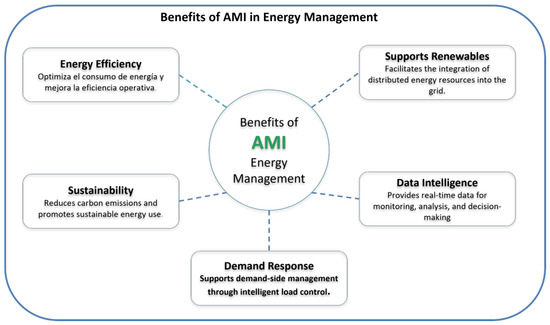
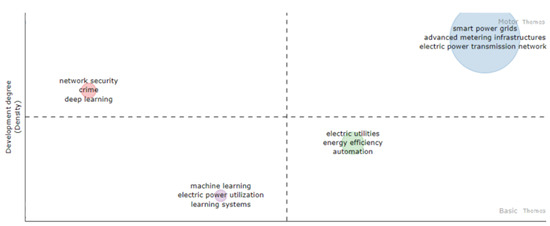
Advanced Metering Infrastructure (AMI) is a key enabler of digital and intelligent power systems, particularly in microgrid environments. However, existing research often addresses AMI from fragmented perspectives, limiting a comprehensive understanding of its role within integrated and data-driven energy systems. This paper presents
[...] Read more.
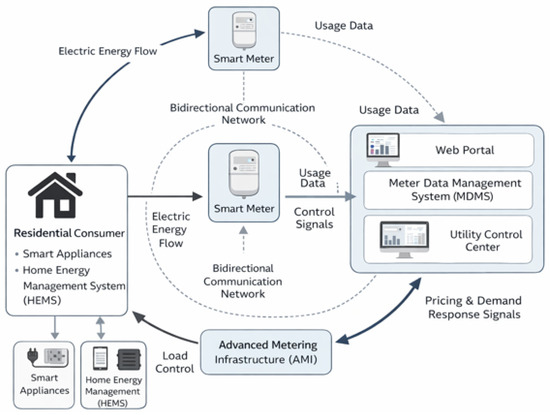
Advanced Metering Infrastructure (AMI) is a key enabler of digital and intelligent power systems, particularly in microgrid environments. However, existing research often addresses AMI from fragmented perspectives, limiting a comprehensive understanding of its role within integrated and data-driven energy systems. This paper presents a structured analysis of AMI based on a bibliometric and thematic review of recent literature, identifying the main research trends, technological drivers, and emerging directions in the field. The results reveal a transition of AMI toward a data-centric platform that supports real-time monitoring, bidirectional energy management, and intelligent decision-making. Key domains include cybersecurity, data analytics, communication systems, and distributed energy integration, while emerging technologies such as artificial intelligence and the Internet of Energy play a critical role in future developments. Finally, the paper outlines key challenges and provides strategic recommendations to support the effective deployment of AMI in microgrids, contributing to the development of resilient and sustainable energy systems.
Full article

Figure 1

Open AccessArticle
Enhanced Load Frequency Control in Multi-Area Hybrid Power Systems Using a 2-DOF Fractional-Order TID Controller with Artificial Ecosystem Optimization
by
Anas F. Abufedda, Momen Alattar, Khalid Masoud and Audih Alfaoury
Electricity 2026, 7(3), 73; https://doi.org/10.3390/electricity7030073 - 23 Jul 2026
Abstract
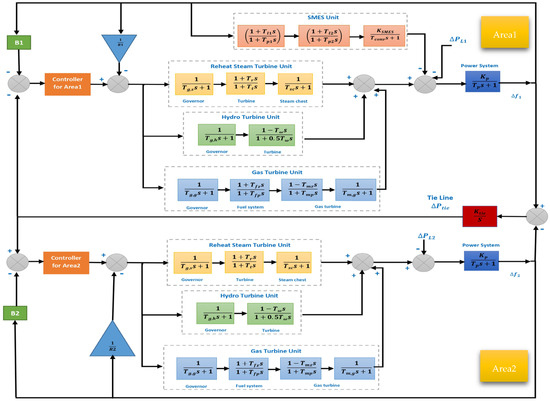
Load frequency control (LFC) plays a critical role in maintaining frequency stability and regulating power transfer between interconnected areas subjected to continuous load variations. In multi-area systems, disturbances tend to propagate through interconnected tie-lines rather than remaining restricted locally, often leading to slower
[...] Read more.
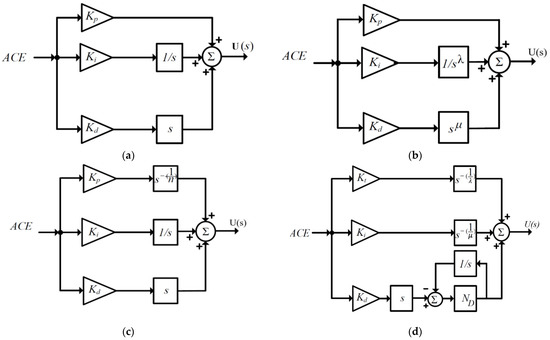
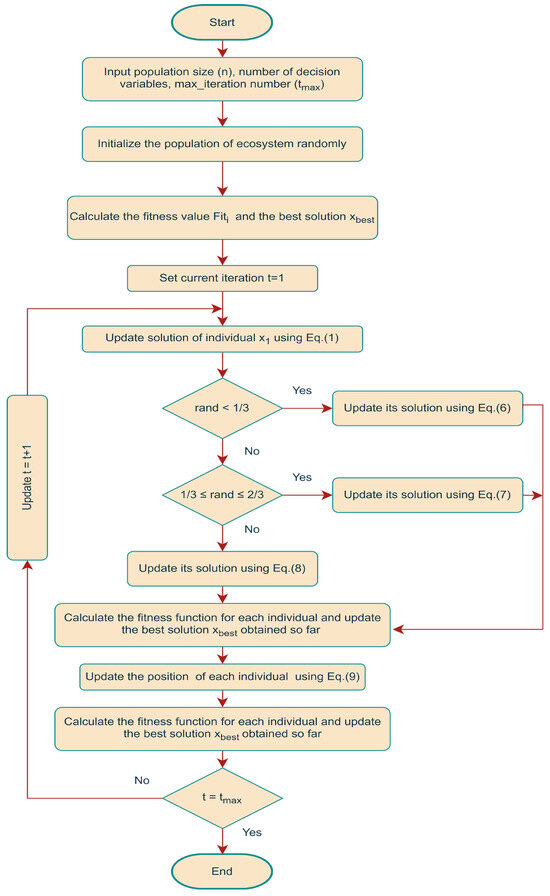
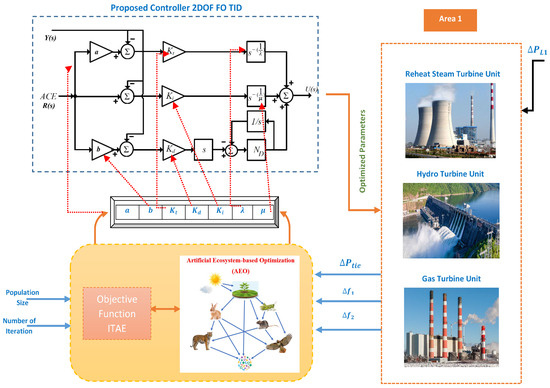
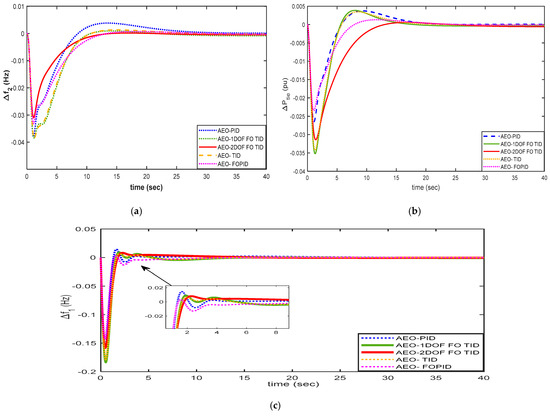
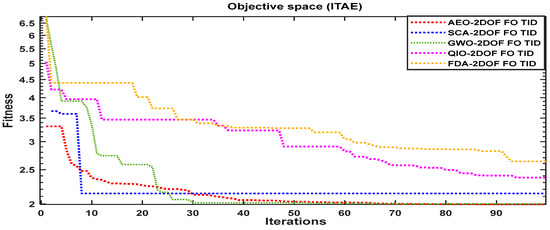
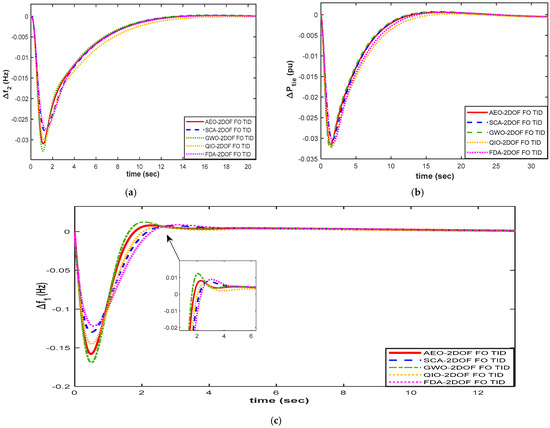
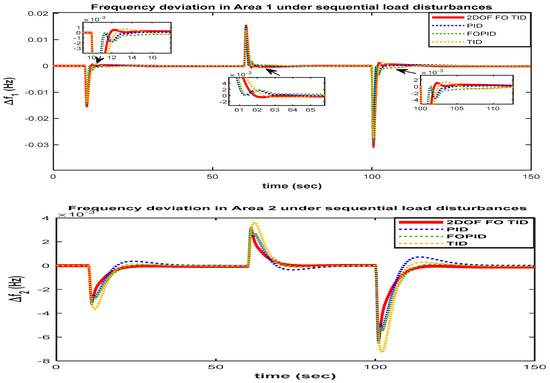
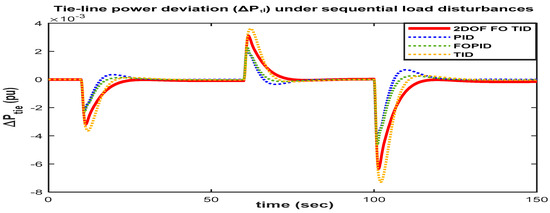
Load frequency control (LFC) plays a critical role in maintaining frequency stability and regulating power transfer between interconnected areas subjected to continuous load variations. In multi-area systems, disturbances tend to propagate through interconnected tie-lines rather than remaining restricted locally, often leading to slower responses and weak coordination when conventional controllers are employed. In this paper, a two-degrees-of-freedom fractional-order differential integration (2DOF FO-TID) controller is proposed to improve both frequency regulation and dynamic interaction. The structure enables independent tuning of tracking and disturbance rejection, allowing greater flexibility in shaping system response. The controller parameters are optimally tuned by the Artificial Ecosystem Optimization (AEO) algorithm. The proposed approach is evaluated on a two-area hybrid thermal power system incorporating an SMES unit within the MATLAB/Simulink (R2022b) environment and compared with PID, FOPID, and TID controllers under identical conditions. The results indicate that, although some conventional controllers provide faster stabilization in one area, their performance in the interconnected area remains slower. In contrast, the proposed controller achieves more robust behavior across both areas, with the settling time of the second area reduced from about 25 s to nearly 11 s without degrading the response of the first area. These results highlight the importance of coordination in multi-area systems and demonstrate that the proposed approach enhances overall system performance and damping compared to conventional methods.
Full article
(This article belongs to the Topic Power System Dynamics and Stability, 2nd Edition)
►▼
Show Figures

Figure 1
Highly Accessed Articles
Latest Books
E-Mail Alert
News
18 August 2026
Meet Us at the 2026 6th Power System and Green Energy Conference (PSGEC 2026), 21–23 August 2026, Shanghai, China
5 August 2026
MDPI INSIGHTS: The CEO’s Letter #37 – Canada Summit, Sciforum Relaunch, 30 Years of Impactful Research & ISPRS 2026
Topics
Topic in
Electricity, Energies, Resources, Vehicles
Transforming Integrated Energy Systems: Modeling, Simulation and Optimal Operation with Digital Twin
Topic Editors: Yang Gao, Shi Chen, Zhiyuan Tang, Xiaolong Jin, Licheng Wang, Yiwei Qiu, Jinrui TangDeadline: 30 September 2026
Topic in
Electricity, Electronics, Energies, Sensors, Sustainability
Optimal Planning, Integration and Control of Smart Grids and Microgrids Systems, 2nd Edition
Topic Editors: Jun Zeng, Qian Xiao, Fei Gao, Yiqi LiuDeadline: 31 October 2026
Topic in
Electricity, Electronics, Energies, Future Internet, IoT, Sensors
Advancing the Energy Internet: Innovations and Solutions for a Sustainable Energy Future
Topic Editors: Leijiao Ge, Dou AnDeadline: 31 December 2026
Topic in
Electronics, Energies, Processes, Smart Cities, Sustainability, Electricity, Inventions, Batteries
Recent Advances in Smart Grid and Energy Storage Applications
Topic Editors: Alfredo Alcayde, John Alexander Taborda-GiraldoDeadline: 31 January 2027
Special Issues
Special Issue in
Electricity
Advances in Operation, Optimization and Control of Smart Grids: 2nd Edition
Guest Editors: Murilo Bento, Hugo MoraisDeadline: 30 September 2026
Special Issue in
Electricity
Grid-Forming Inverter-Based Resources in Electricity Systems Integration
Guest Editors: Nicola Sorrentino, Daniele Menniti, Giovanni Brusco, Giuseppe BaroneDeadline: 31 October 2026
Special Issue in
Electricity
Recent Advances in Power System and Smart Grid Technologies
Guest Editors: Bo Jie, Sidun Fang, Tao Niu, Yu Wang, Hamid GualousDeadline: 10 November 2026
Special Issue in
Electricity
Micro Gas Turbines for Advanced Applications in Polygeneration Grids
Guest Editors: Mario Luigi Ferrari, Carlo Alberto Niccolini Marmont Du Haut ChampDeadline: 20 November 2026
Topical Collections
Topical Collection in
Electricity
Optimal Operation and Planning of Smart Power Distribution Networks
Collection Editor: Pavlos S. Georgilakis