


Journal Description
Insects
Insects
is an international, peer-reviewed, open access journal on entomology, published monthly online by MDPI.
- Open Access— free for readers, with article processing charges (APC) paid by authors or their institutions.
- High Visibility: indexed within Scopus, SCIE (Web of Science), PubMed, PMC, GEOBASE, PubAg, and other databases.
- Journal Rank: JCR - Q1 (Entomology) / CiteScore - Q1 (Insect Science)
- Rapid Publication: manuscripts are peer-reviewed and a first decision is provided to authors approximately 19.7 days after submission; acceptance to publication is undertaken in 2.8 days (median values for papers published in this journal in the first half of 2026).
- Recognition of Reviewers: reviewers who provide timely, thorough peer-review reports receive vouchers entitling them to a discount on the APC of their next publication in any MDPI journal, in appreciation of the work done.
- Journal Cluster of Animal Science: Animals, Arthropoda, Birds, Dairy, Insects, Journal of Zoological and Botanical Gardens, Pets, Poultry, Ruminants and Veterinary Sciences.
Impact Factor:
3.0 (2025);
5-Year Impact Factor:
3.5 (2025)
Latest Articles
Farmers’ Perceptions of the Agricultural, Economic, and Health Impacts of Fire Ants in the Brazilian Atlantic Forest
Insects 2026, 17(7), 698; https://doi.org/10.3390/insects17070698 (registering DOI) - 4 Jul 2026
Abstract
Fire ants are known for their aggressive behavior, omnivorous diet, and construction of mounds on the soil surface. Their dispersal is facilitated by trade and habitat fragmentation, which have led to negative impacts on biodiversity, public health, and agriculture in many countries. In
[...] Read more.
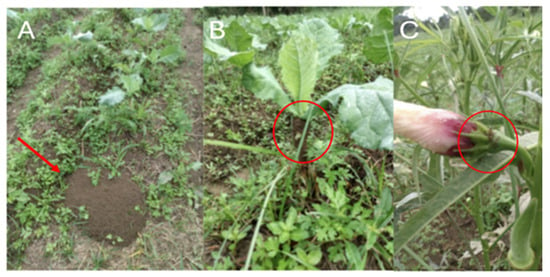
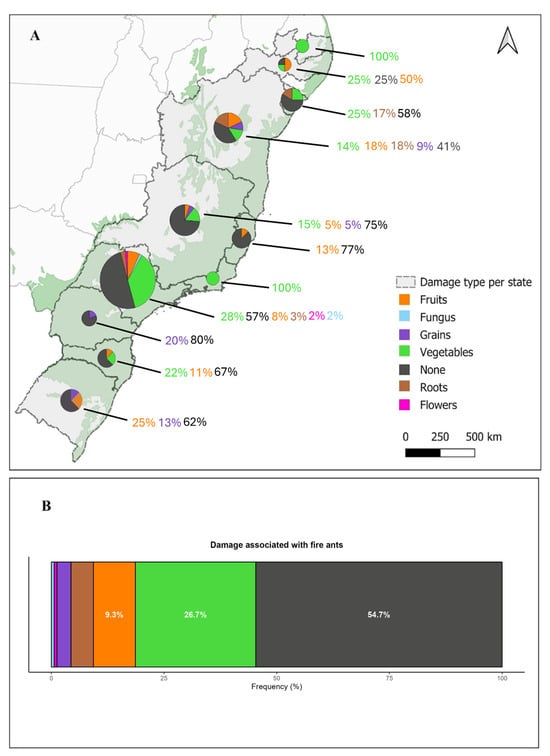
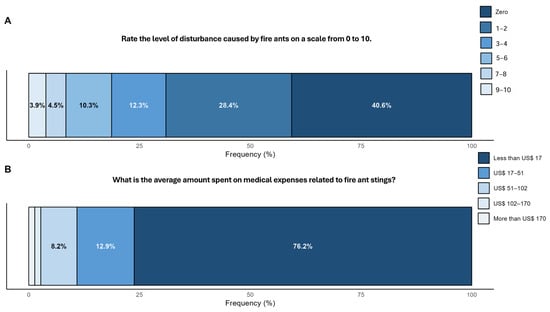
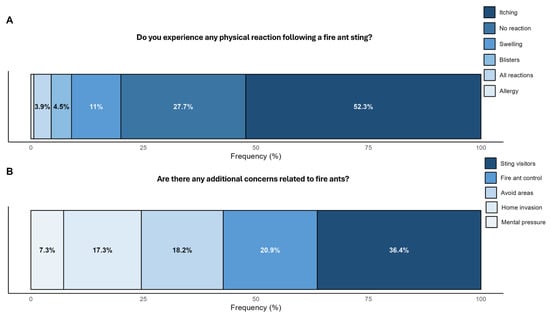
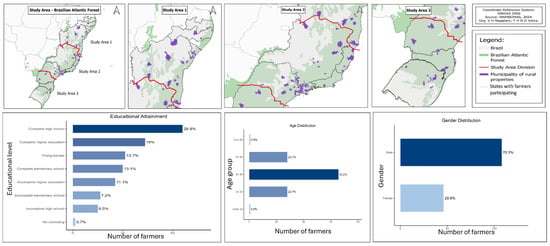
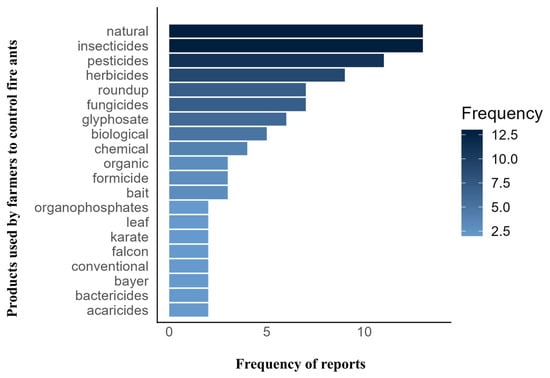
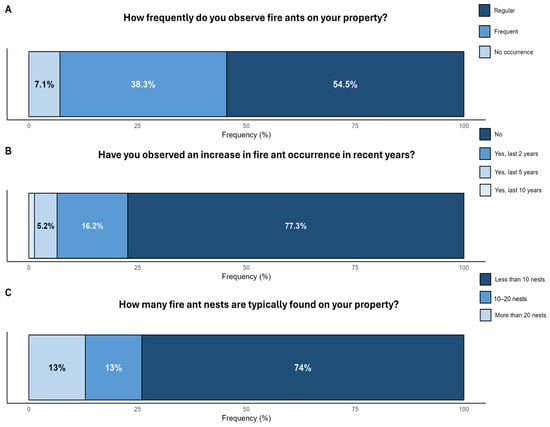
Fire ants are known for their aggressive behavior, omnivorous diet, and construction of mounds on the soil surface. Their dispersal is facilitated by trade and habitat fragmentation, which have led to negative impacts on biodiversity, public health, and agriculture in many countries. In Brazil, information about their impacts is scarce and mostly limited to reports from the North Region. In the Atlantic Forest, a biome where most of Brazil’s population resides, there are no records of impacts associated with fire ants. This study examined farmers’ perceptions of the impacts of fire ants in the Atlantic Forest. A questionnaire was administered to collect information on respondents’ profiles, property characteristics, perceived impacts of fire ants, management practices, and health-related issues. Most respondents reported the regular presence of fire ants on their properties, although the perceived impacts on agricultural productivity were generally low to moderate, and control costs were typically less than $17. Widespread use of pesticides for fire ant control is reported by most farmers. Regarding stings, 85.1% of farmers reported having been stung, but only 0.6% required hospitalization. The most common reaction was itching. This pioneering study revealed that, although fire ants are present on many properties within the Atlantic Forest, the reported economic and health impacts are lower than expected, with most farmers experiencing minimal losses. Overall, the results for our sample suggest that the presence of fire ants does not result in significant economic losses for farmers. Nevertheless, fire ants are not overlooked, as non-conservationist control methods are employed. Such practices may lead to colony fragmentation, increasing their abundance and potentially negatively affecting local biodiversity.
Full article
(This article belongs to the Special Issue Biodiversity-Driven Pest Management: Conserving Natural Enemies for Sustainable Agriculture)
►
Show Figures
Open AccessReview
Sustainable Mite Management in Apple Orchards Under Climatic Stress: Ecological Trade-Offs and System Challenges
by
Assel A. Karabayeva, Bakyt K. Kopzhassarov, Gulzhan B. Sarseyeva, Gulnar K. Ziyayeva, Assem D. Nogerbek and Aizhan K. Baubekova
Insects 2026, 17(7), 697; https://doi.org/10.3390/insects17070697 (registering DOI) - 4 Jul 2026
Abstract
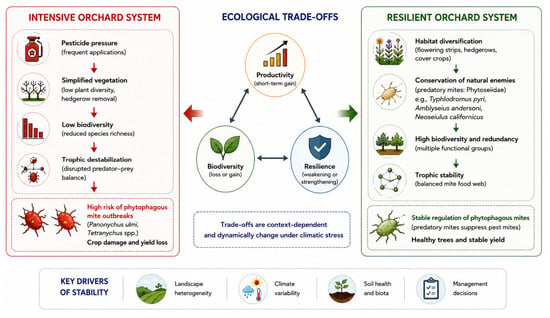
Climate change is increasingly altering the ecological dynamics of apple orchard ecosystems, creating new challenges for sustainable management of phytophagous mites. Rising temperatures, prolonged drought periods, and increasing climatic variability influence mite population dynamics, destabilize predator–prey interactions, and reduce the effectiveness of traditional
[...] Read more.
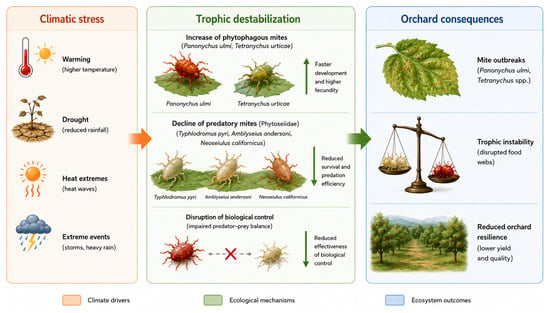
Climate change is increasingly altering the ecological dynamics of apple orchard ecosystems, creating new challenges for sustainable management of phytophagous mites. Rising temperatures, prolonged drought periods, and increasing climatic variability influence mite population dynamics, destabilize predator–prey interactions, and reduce the effectiveness of traditional pest management approaches. This review examines sustainable mite management in apple orchards through the interconnected perspectives of ecological stability, climatic stress, and resilience-oriented agroecosystem management. Particular attention is given to the ecological mechanisms underlying mite outbreaks, including climate-driven acceleration of reproduction, trophic destabilization, biodiversity loss, and disruption of biological regulation processes. The ecological limitations of both conventional chemical control and biological control strategies are critically analyzed, highlighting issues related to pesticide-induced ecological disturbance, resistance development, climatic sensitivity of natural enemies, and operational constraints. The review further explores resilience-oriented management frameworks based on ecological intensification, habitat diversification, conservation biological control, adaptive management, and system-oriented regulation. Current research gaps are identified, including the lack of long-term ecological studies, insufficient integration of climatic and ecological datasets, limited development of resilience indicators, and underrepresentation of continental and semi-arid orchard systems. The findings suggest that future sustainable mite management should move beyond reactive pest suppression toward ecosystem-based approaches that strengthen ecological resilience and adaptive capacity under increasing climatic uncertainty.
Full article
(This article belongs to the Section Other Arthropods and General Topics)
►▼
Show Figures

Figure 1

Open AccessArticle
Evaluation of Insecticide Resistance in Aedes albopictus Population from Algiers, Algeria
by
Rym Bouledroua, Amira Nebbak, Nicolas Gomez, Zakaria Abdellahoum, Mustapha Mounir Bouhenna, Slimane Boukraa, Khaldoun Bachari, Philippe Parola, Sébastien Briolant and Lionel Almeras
Insects 2026, 17(7), 696; https://doi.org/10.3390/insects17070696 (registering DOI) - 4 Jul 2026
Abstract
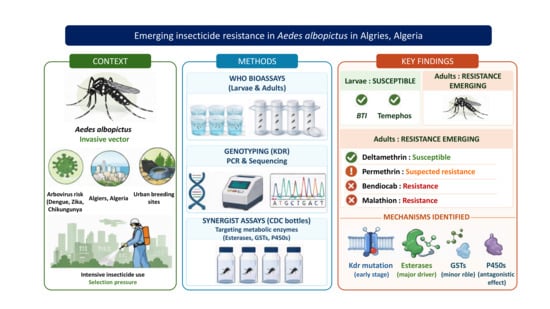
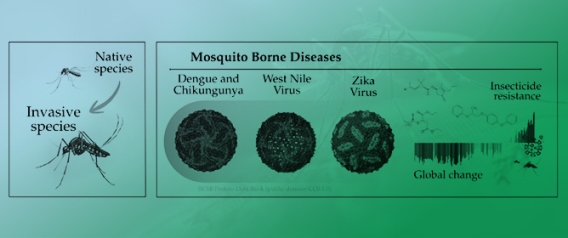
Since its first detection in 2010, Aedes albopictus has spread across northern Algeria, where vector control relies on the use of chemical insecticides. This study aimed to evaluate the susceptibility of Ae. albopictus populations from Algiers to commonly used larvicides and adulticides, as
[...] Read more.
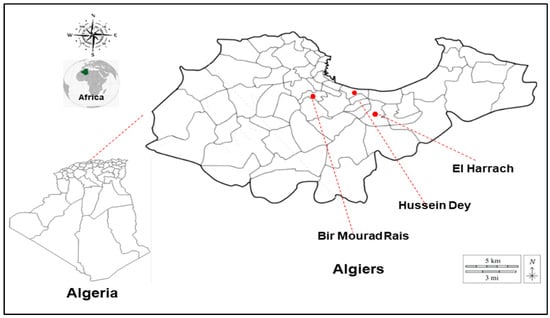
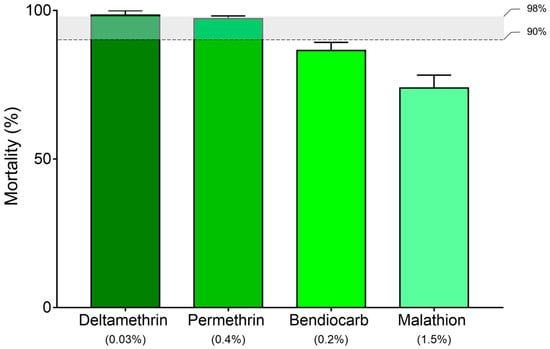
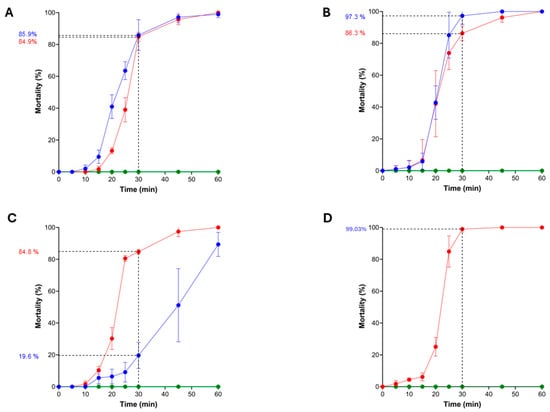
Since its first detection in 2010, Aedes albopictus has spread across northern Algeria, where vector control relies on the use of chemical insecticides. This study aimed to evaluate the susceptibility of Ae. albopictus populations from Algiers to commonly used larvicides and adulticides, as well as to characterize the underlying resistance mechanisms. Eggs were collected from three sites in Algiers. The susceptibility of larvae to temephos and Bacillus thuringiensis israelensis (Bti), as well as that of adults to permethrin, deltamethrin, malathion, and bendiocarb was evaluated using WHO bioassays. Genotyping of knockdown resistance (kdr) mutations was performed via PCR and sequencing. Metabolic resistance mechanisms were investigated using CDC bottle bioassays. The larvae were found to be susceptible to temephos and Bti. Bioassays on adults demonstrated susceptibility to deltamethrin, suspected resistance to permethrin, and resistance to malathion and bendiocarb. Genotyping revealed low frequencies of heterozygous kdr mutations (V1016G, I1532T, F1534C/S). Synergist assays highlighted the key role of esterases in malathion resistance, a minimal involvement of glutathione S-transferases and an unexpected antagonistic effect of cytochrome P450 monooxygenases. Although larvicides remain effective, resistance to organophosphates, carbamates, as well as suspected resistance to permethrin, has been detected. Esterase-mediated metabolic resistance and kdr mutations may contribute to this profile. These findings highlight the need for resistance monitoring and integrated vector control to ensure sustainable control of Ae. albopictus.
Full article
(This article belongs to the Special Issue Insecticide Resistance in Disease Vectors: Mechanisms, Surveillance, and Control Perspectives)
►▼
Show Figures

Graphical abstract
Open AccessArticle
Morphological Features of the Pygidial Glands and Chemical Composition of Their Secretions in Three Ground Beetle Taxa of the Tribe Chlaeniini (Coleoptera: Carabidae)
by
Marija Vasović, Sofija Vranić, Marina Todosijević, Danica Pavlović, Nikola Vesović, Stefan Ivanović, Nina Ćurčić, Milan Radovanović, Ljubodrag Vujisić and Srećko Ćurčić
Insects 2026, 17(7), 695; https://doi.org/10.3390/insects17070695 - 3 Jul 2026
Abstract
The relationship between the morphology of pygidial glands and the chemical nature of their secretions in the tribe Chlaeniini (family Carabidae) has long been recognised. We analysed the morphological features of the pygidial glands and the chemical composition of their secretions in three
[...] Read more.
The relationship between the morphology of pygidial glands and the chemical nature of their secretions in the tribe Chlaeniini (family Carabidae) has long been recognised. We analysed the morphological features of the pygidial glands and the chemical composition of their secretions in three taxa: Chlaenius (Chlaeniellus) tristis (Schaller, 1783), C. (Chlaenites) spoliatus spoliatus (Rossi, 1792), and C. (Chlaenius) festivus festivus (Panzer, 1796). We examined the morphology of the pygidial glands in all three taxa using bright-field microscopy (BFM) and nonlinear microscopy (NLM). We used gas chromatography–mass spectrometry (GC–MS) and nuclear magnetic resonance (NMR) to analyse the chemical composition of the secretions. We measured and photographed the glands and conducted comparative morphological analyses. We detected a total of 21 chemicals in the pygidial gland secretions of the studied Chlaeniini. We found the highest number of compounds in C. tristis (17), slightly fewer in C. festivus festivus (13), and the lowest number in C. spoliatus spoliatus (seven). Thirteen compounds were new to the tribe Chlaeniini, eight of which were also new to the entire family Carabidae. The most dominant compound in the secretions of all three taxa was 3-methylphenol. We also discussed the taxonomic value of the chemical composition of the pygidial gland secretions.
Full article
(This article belongs to the Section Insect Physiology, Reproduction and Development)
Open AccessReview
Beyond Antimicrobial Defense: Insect Antimicrobial Peptides as Neuroimmune Effectors and Insect-Derived Peptide Resources
by
Jie He, Xinyu Li, Hongli Ji, Xi Chen and Yunjia Xiang
Insects 2026, 17(7), 694; https://doi.org/10.3390/insects17070694 - 3 Jul 2026
Abstract
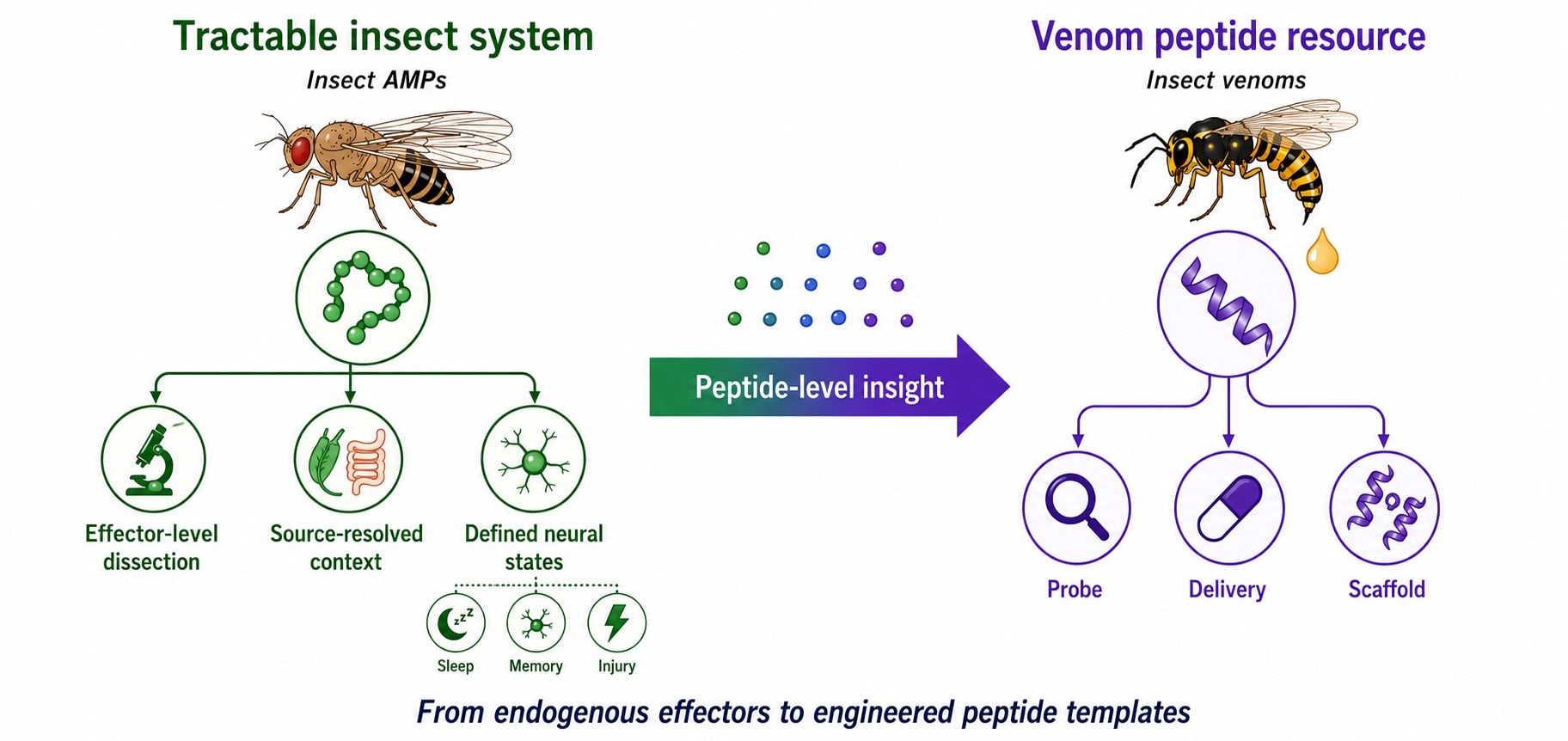
Insect antimicrobial peptides (AMPs) are classically viewed as terminal effectors of innate immunity, but emerging evidence suggests that some can also shape defined neural states. In this Review, we argue that insect systems provide a powerful framework for resolving immune–brain communication at the
[...] Read more.
Insect antimicrobial peptides (AMPs) are classically viewed as terminal effectors of innate immunity, but emerging evidence suggests that some can also shape defined neural states. In this Review, we argue that insect systems provide a powerful framework for resolving immune–brain communication at the level of individual peptide effectors, because genetically tractable innate-immune pathways allow pathway activation to be distinguished from peptide-specific effector function. Rather than surveying AMP families exhaustively, we focus on representative cases in which peptide identity, source, and timing can be linked to sleep, memory-related plasticity, and responses to acute injury. These studies show that the neural consequences of AMP induction cannot be inferred from pathway activation alone, but require peptide-level analysis of effector identity, cellular context, and exposure logic. This perspective also raises the question of translational potential. At present, direct biomedical development of endogenous insect AMPs in neural contexts remains limited, whereas more tangible applied interest has centered on insect venom peptides that share AMP-like physicochemical features. We therefore discuss insect venoms separately from endogenous AMP physiology. Venom peptides are not physiological equivalents of endogenous insect AMPs, but represent evolutionarily diversified AMP-like templates for scaffold discovery, mechanistic probing, and therapeutic engineering. Together, this review develops a peptide-level perspective on insect neuroimmune biology while highlighting insect venoms as a valuable, but highly constrained, source of templates for biomedical discovery.
Full article
(This article belongs to the Special Issue Recent Studies on Resource Insects)
►▼
Show Figures

Graphical abstract
Open AccessArticle
Impact of Non-Floral Sugar Sources and Feeding Protocols on the Longevity, Reproduction, and Parasitism of Mastrus ridens (Hymenoptera: Ichneumonidae)
by
Macarena M. Galdames and Tania Zaviezo
Insects 2026, 17(7), 693; https://doi.org/10.3390/insects17070693 - 3 Jul 2026
Abstract
Successful conservation biological control programs require a good understanding the nutritional ecology of natural enemies to maximize their field efficacy. This study evaluated the effects of non-floral sugar sources on fitness parameters of Mastrus ridens, a specialized parasitoid of the codling moth.
[...] Read more.
Successful conservation biological control programs require a good understanding the nutritional ecology of natural enemies to maximize their field efficacy. This study evaluated the effects of non-floral sugar sources on fitness parameters of Mastrus ridens, a specialized parasitoid of the codling moth. In the laboratory, we compared the longevity, parasitism, and reproduction of adult parasitoids exposed to different sugar sources, including Vicia faba extrafloral nectar, honeydew from several hemipteran species, diluted honey (positive control), and no-sugar controls. We also tested the effects of exposing parasitoids to honey for only 24 h. The results showed that sugar availability and source type significantly affected parasitoid performance. Extrafloral nectar was better than mealybug honeydew, with female offspring numbers similar to those exposed to honey, and increased the number of parasitized host larvae by up to 3.5-fold compared to no-sugar conditions. The effects of honeydew effects on male longevity were variable, possibly explained by its composition, and the mode of presentation. Parasitoids with a short exposure to high-quality sugar performed poorly. Our findings indicate that successful conservation and augmentative biological control programs using this species require field provision of high-quality, accessible sugar resources.
Full article
(This article belongs to the Section Insect Pest and Vector Management)
Open AccessArticle
Substrate Composition Modulates Agri-Food Waste Bioconversion by Yellow Mealworm (Tenebrio molitor) Larvae Under Dynamic Feeding
by
Jingtao Liu, Chenyang Li, Peng Wang, Hongyue Wang, Chuxuan Nie, Rongrong Zhao and Jiaoxin Xie
Insects 2026, 17(7), 692; https://doi.org/10.3390/insects17070692 - 3 Jul 2026
Abstract
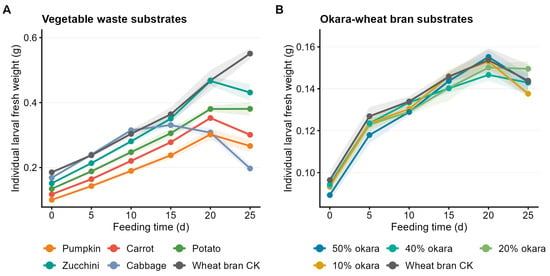
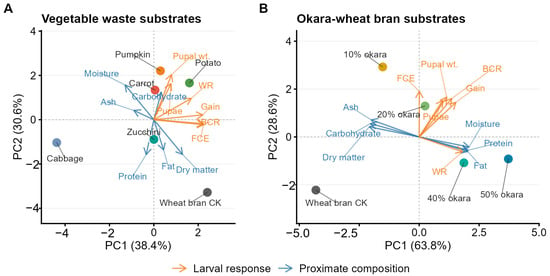
Yellow mealworm (Tenebrio molitor) larvae can convert low-value organic residues into insect biomass, but their performance depends on substrate composition and feeding strategy. We evaluated vegetable wastes, okara–wheat–bran diets and kitchen waste–wheat–bran mixtures under a dynamic feeding regime. Ingredient and proximate
[...] Read more.
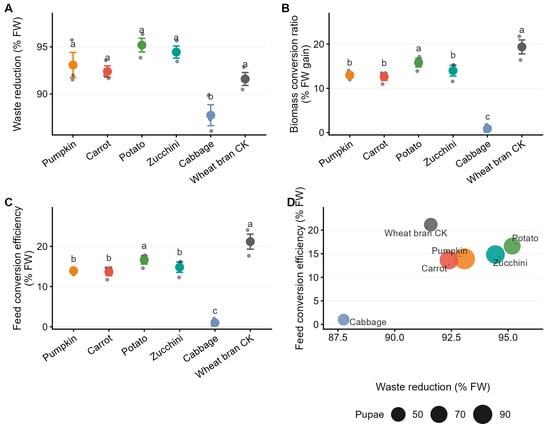
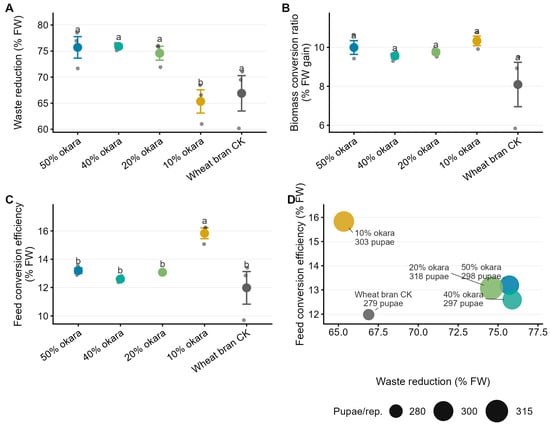
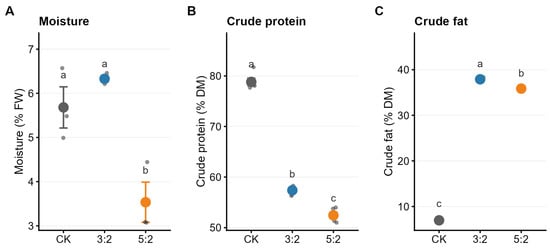
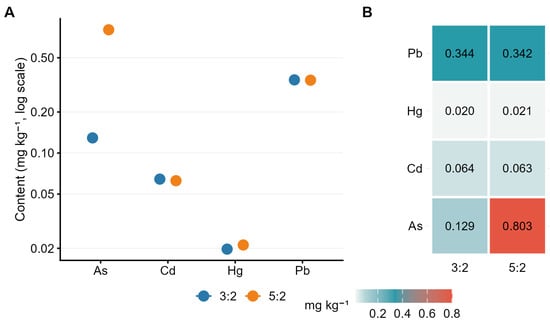
Yellow mealworm (Tenebrio molitor) larvae can convert low-value organic residues into insect biomass, but their performance depends on substrate composition and feeding strategy. We evaluated vegetable wastes, okara–wheat–bran diets and kitchen waste–wheat–bran mixtures under a dynamic feeding regime. Ingredient and proximate compositions were determined, and larval growth, fresh-weight-based waste reduction (WR), bioconversion rate (BCR) and feed conversion efficiency (FCE), pupal output, nutritional composition and heavy metal contents were assessed. Among vegetable wastes, potato showed the highest numerical WR (95.18 ± 0.73%) and relatively high BCR and FCE, whereas pumpkin produced the most pupae (109.00 ± 8.62 per replicate). Cabbage showed reduced biomass conversion and pupal output. In the okara trial, 40% okara showed the highest numerical WR (75.88 ± 0.39%), 10% okara maximized FCE (15.83 ± 0.38%) and 20% okara produced the greatest pupal output. Principal component analysis (PCA) indicated treatment-specific conversion and developmental patterns, but was interpreted as an exploratory association analysis rather than a causal model. Kitchen waste mixtures increased the relative fat proportion and reduced the relative protein proportion of larvae; the 3:2 mixture increased crude fat to 37.90 ± 0.22% while retaining 57.39 ± 0.40% crude protein. Higher kitchen waste inclusion was associated with greater larval arsenic (As) content, reaching 0.803 ± 0.001 mg/kg in the 5:2 treatment. Substrate composition should therefore be optimized together with conversion efficiency, product quality and safety screening.
Full article
(This article belongs to the Section Role of Insects in Human Society)
►▼
Show Figures

Figure 1

Open AccessArticle
Five New Species of Orthosinus Motschulsky, 1863 from China—Molecular Evidence for Two Species (Coleoptera, Curculionidae, Dryophthorinae)
by
Heyu Lü and Runzhi Zhang
Insects 2026, 17(7), 691; https://doi.org/10.3390/insects17070691 - 2 Jul 2026
Abstract
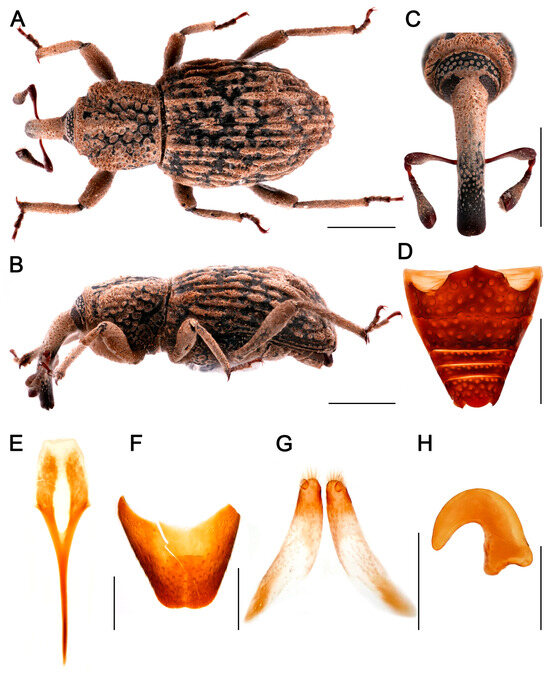
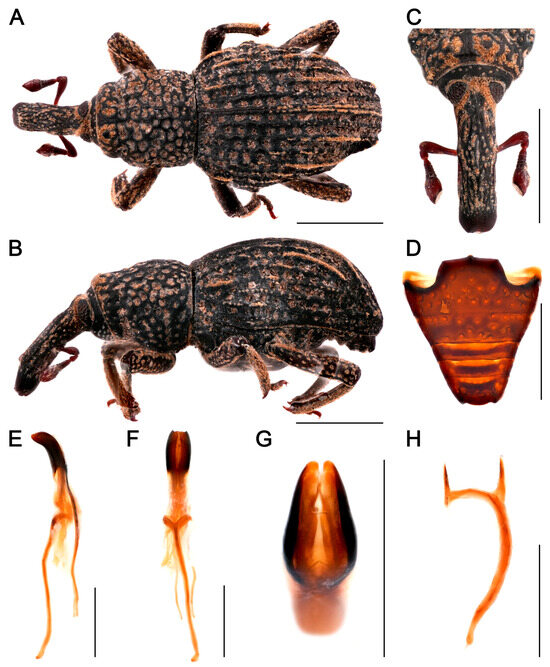
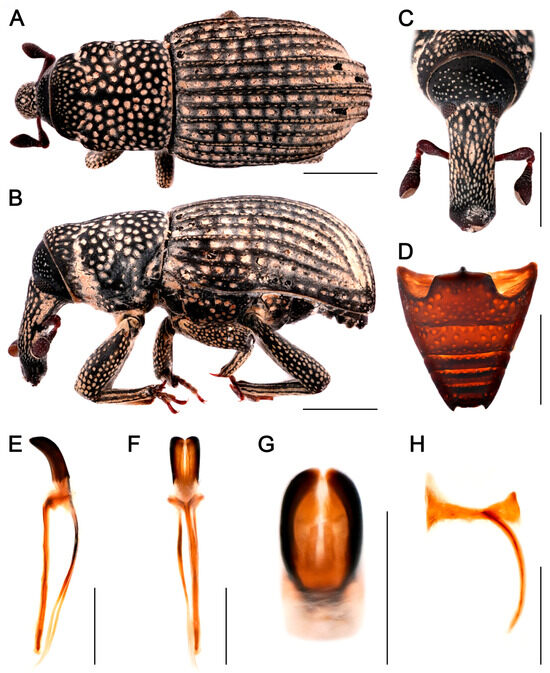
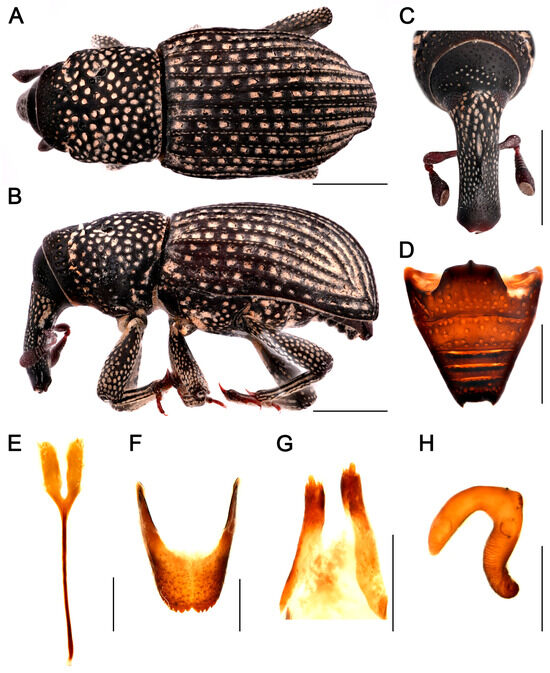
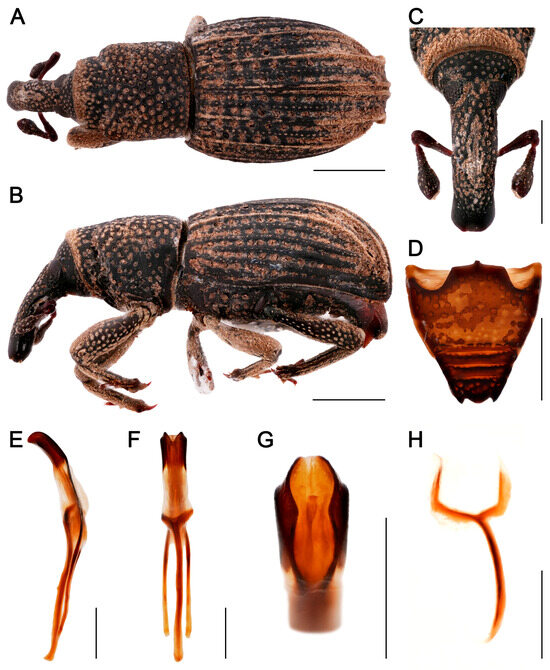
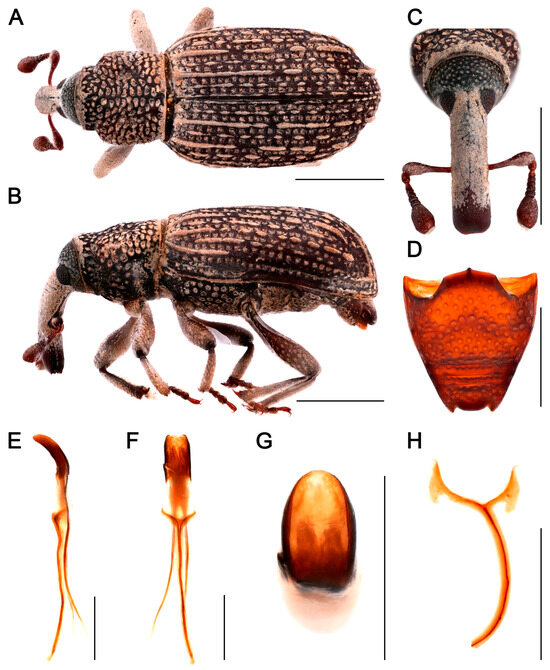
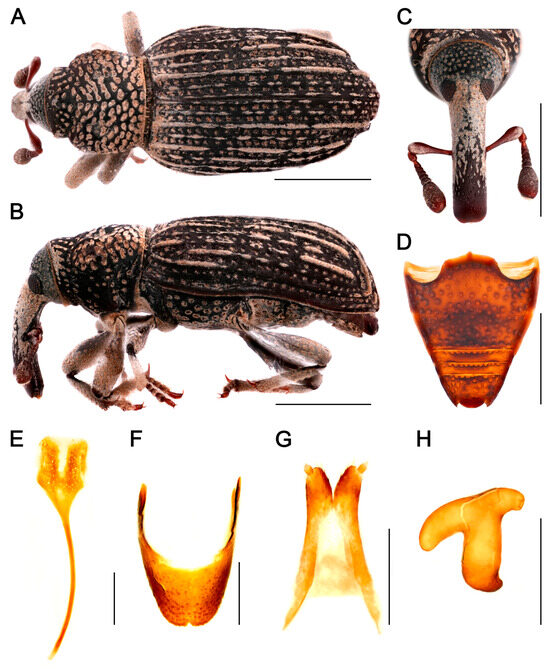
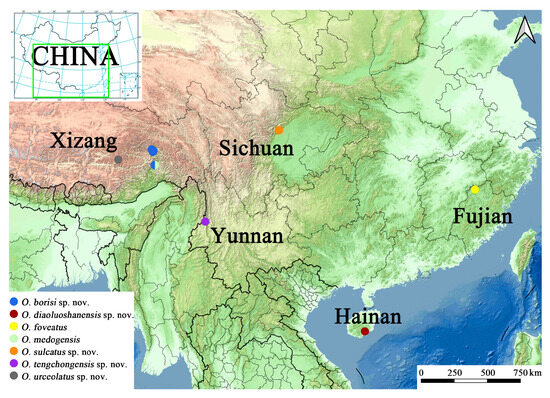
Five new species of Orthosinus Motschulsky, 1863 from China are described: O. borisi sp. nov. (♂♀) and O. urceolatus sp. nov. (♂♀) from Xizang Autonomous Region, O. diaoluoshanensis sp. nov. (♂) from Hainan Province, O. sulcatus sp. nov. (♂♀) from Sichuan Province and
[...] Read more.
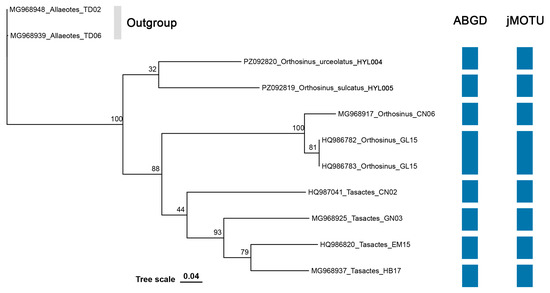
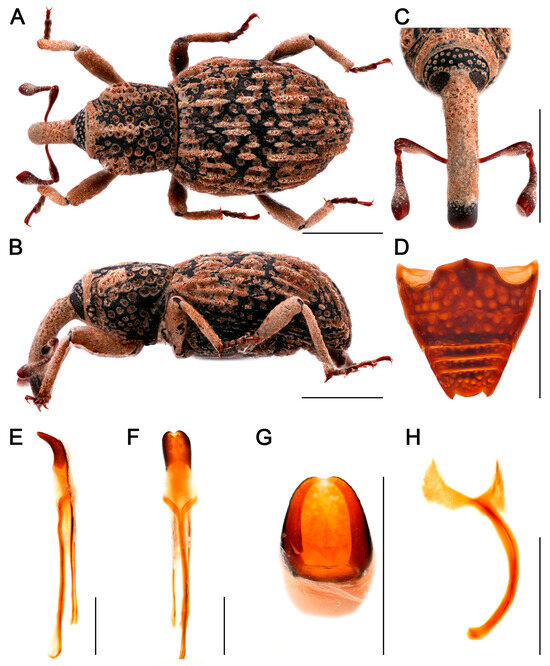
Five new species of Orthosinus Motschulsky, 1863 from China are described: O. borisi sp. nov. (♂♀) and O. urceolatus sp. nov. (♂♀) from Xizang Autonomous Region, O. diaoluoshanensis sp. nov. (♂) from Hainan Province, O. sulcatus sp. nov. (♂♀) from Sichuan Province and O. tengchongensis sp. nov. (♂) from Yunnan Province. Detailed morphological descriptions, diagnostic illustrations, and habitus photographs are provided for each species. An identification key and a distribution map for all known Chinese species of Orthosinus are also provided. With these additions, the number of known Chinese species of Orthosinus is increased from two to seven. Molecular phylogenetic and species delimitation analyses of the COI gene were additionally performed for two of the newly described species, O. urceolatus sp. nov. and O. sulcatus sp. nov., along with other congeneric and outgroup specimens.
Full article
(This article belongs to the Section Insect Systematics, Phylogeny and Evolution)
►▼
Show Figures

Figure 1

Open AccessArticle
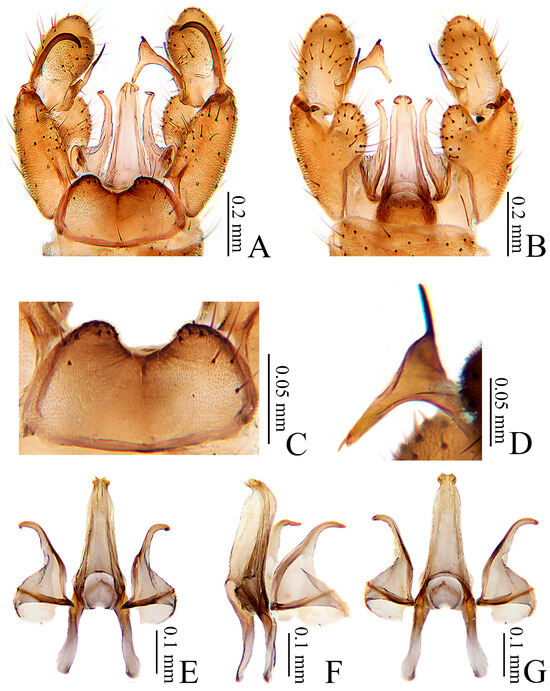
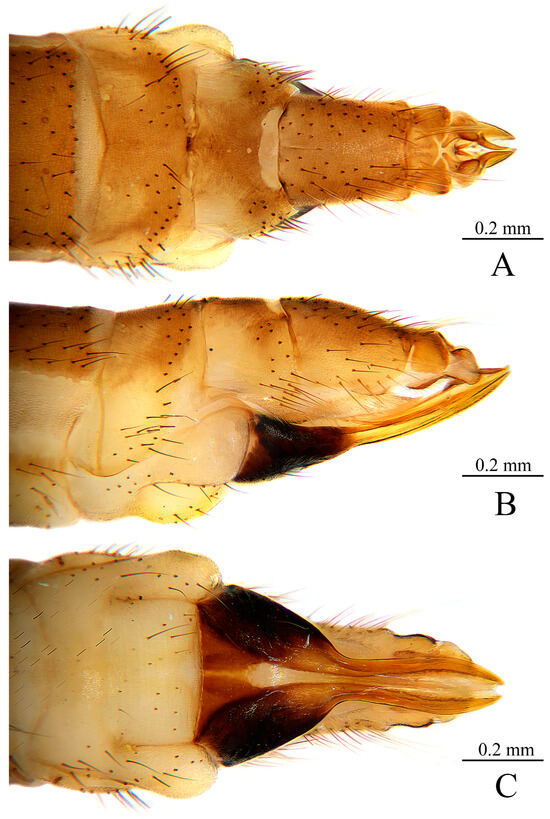
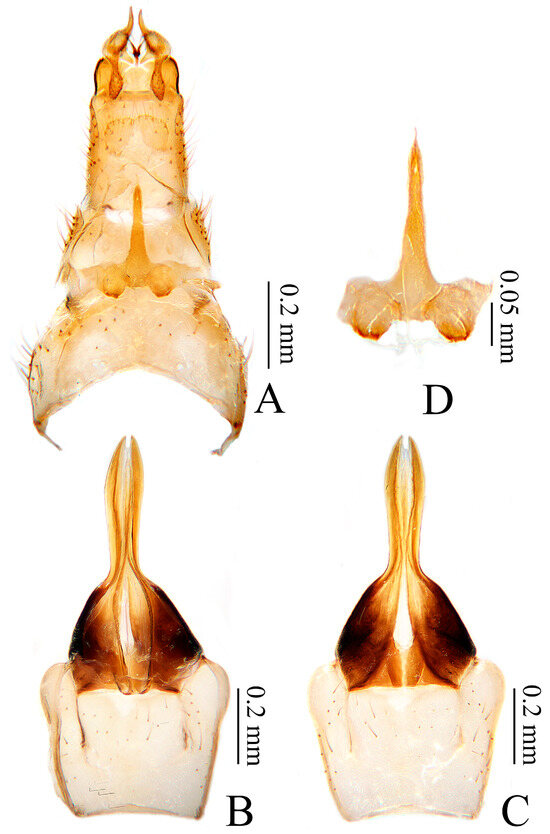
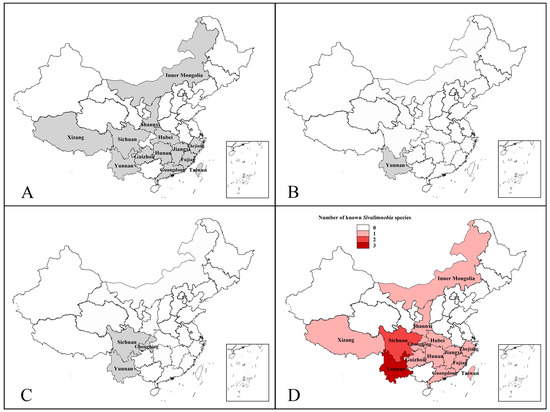
Integrative Taxonomy Reshapes Palaearctic–Oriental Biogeography: First Discovery of Dicranomyia (Sivalimnobia) (Diptera, Limoniidae) in Mainland China with Two New Species
by
Liying Dai, Pengxuan Guo and Xiao Zhang
Insects 2026, 17(7), 690; https://doi.org/10.3390/insects17070690 - 2 Jul 2026
Abstract
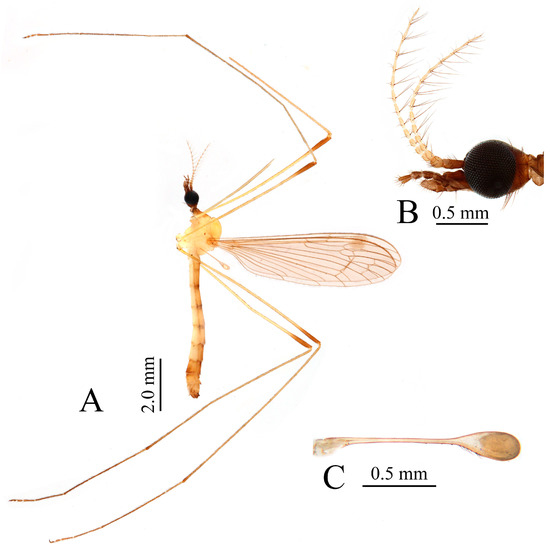
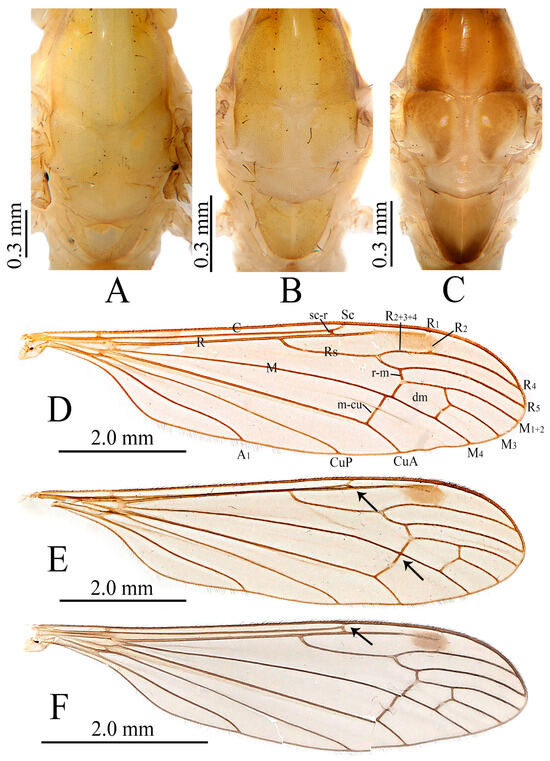
The crane fly subgenus Sivalimnobia has been taxonomically stagnant for over half a century, with its apparent absence from mainland China representing a major biogeographic anomaly. We address this by integrating detailed morphology and COI DNA barcoding of specimens collected across 14 Chinese
[...] Read more.
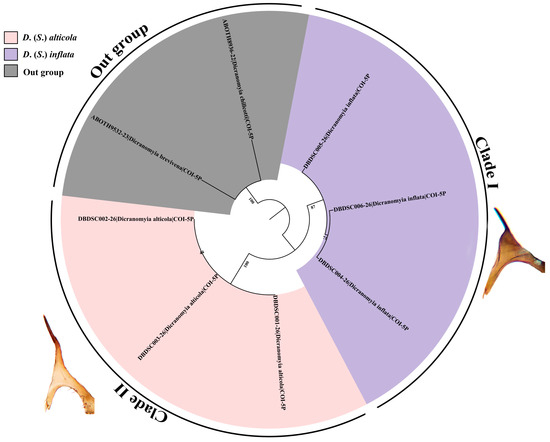
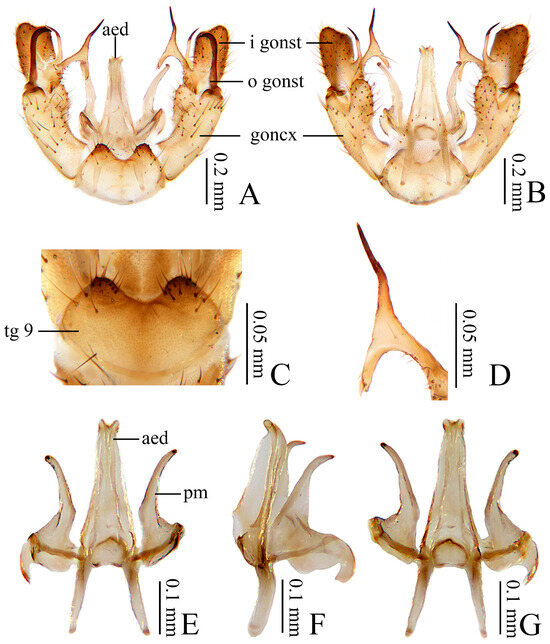
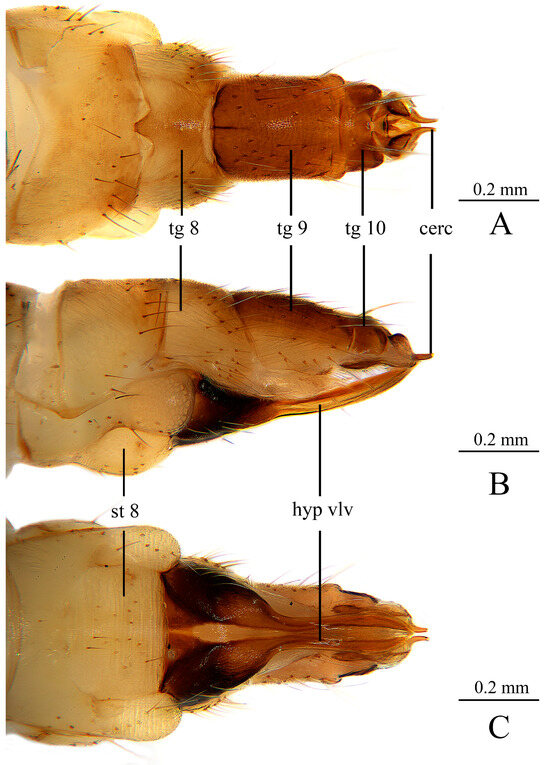
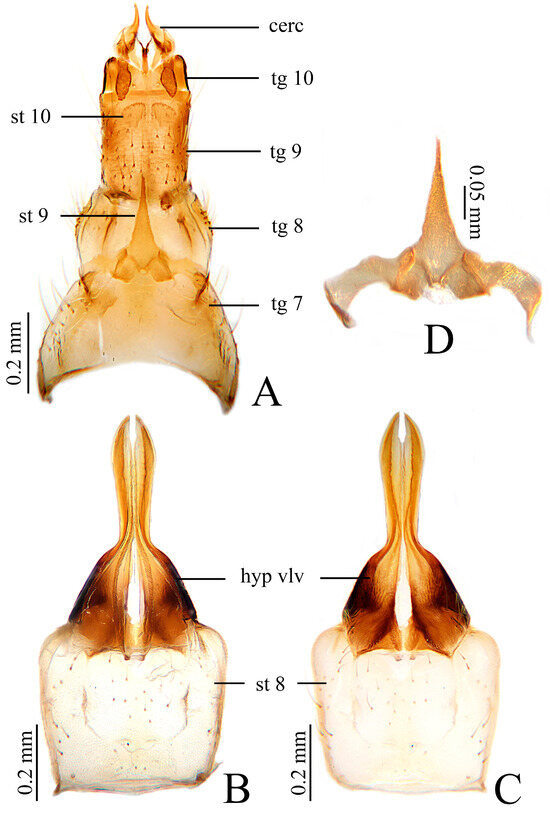
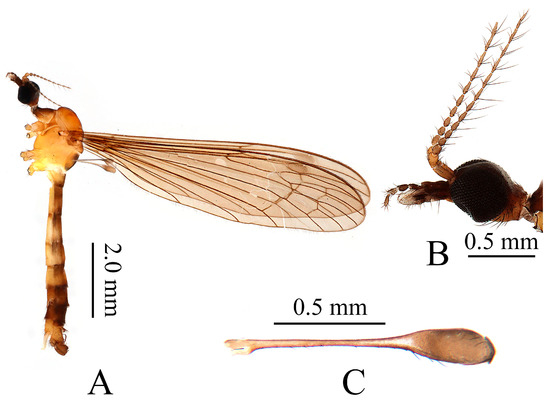
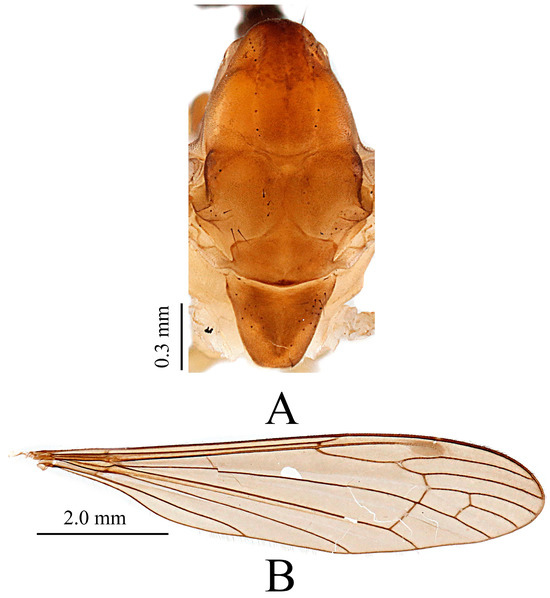
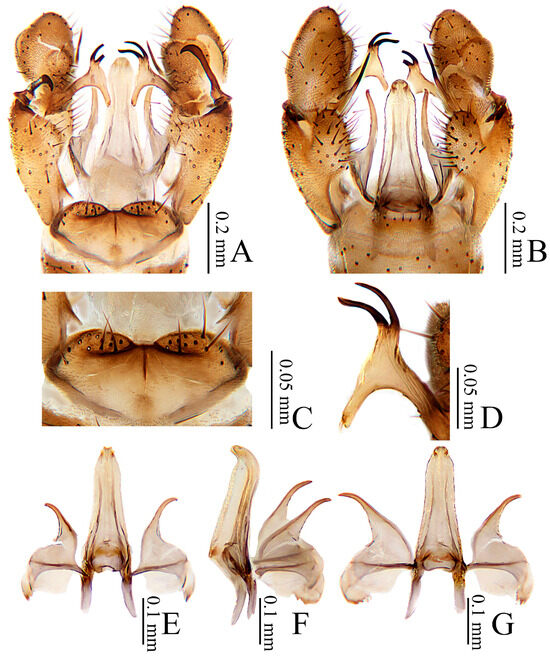
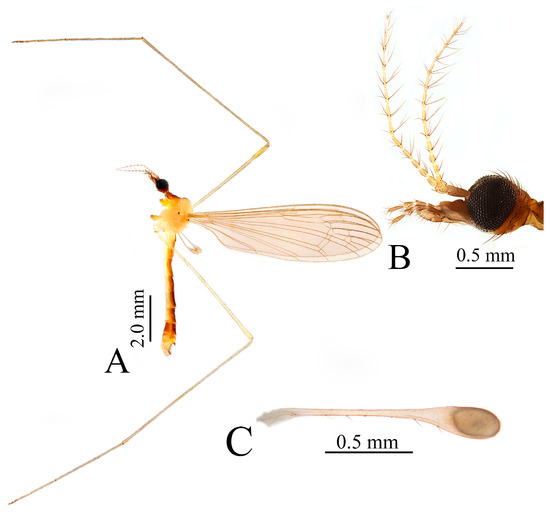
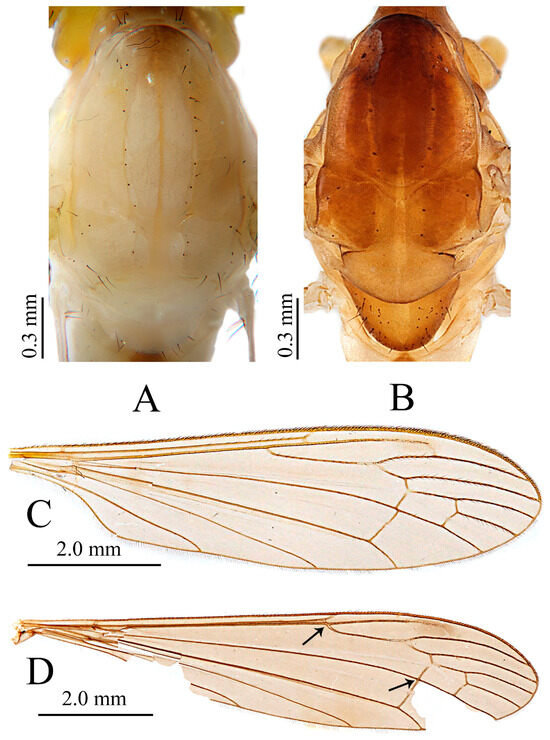
The crane fly subgenus Sivalimnobia has been taxonomically stagnant for over half a century, with its apparent absence from mainland China representing a major biogeographic anomaly. We address this by integrating detailed morphology and COI DNA barcoding of specimens collected across 14 Chinese provinces. Our study conclusively establishes the presence of Sivalimnobia in mainland China, resolving three species: the newly recorded and continentally widespread Dicranomyia (Sivalimnobia) alticola Edwards, 1916, and two new endemic species—D. (S.) bispinosa sp. nov. (restricted to Yunnan) and D. (S.) inflata sp. nov. (a cryptic lineage within the D. (S.) alticola complex distributed across Chongqing, Sichuan and Yunnan). The discovery of D. (S.) inflata sp. nov. was validated by a discrete male genitalic autapomorphy and a pronounced COI barcode gap (8.7–9.6% divergence). These findings update the global biogeography of the subgenus, identifying India as the primary diversity center and southwestern China as a significant secondary center. The overall pattern suggests a “stepping-stone dispersal and multi-center diversification” model. This work transforms Sivalimnobia from a taxonomic relic into a model for studying Eurasian insect biogeography and highlights the conservation importance of East Asian montane stream habitats.
Full article
(This article belongs to the Section Insect Systematics, Phylogeny and Evolution)
►▼
Show Figures

Figure 1
Open AccessArticle
Reconsidering the Selection Strategy in a Flemish Honey Bee Breeding Program: Towards Selection by Exclusion
by
Emma Bossuyt, Ellen Danneels and Dirk C. de Graaf
Insects 2026, 17(7), 689; https://doi.org/10.3390/insects17070689 - 2 Jul 2026
Abstract
Selective breeding is widely used to improve honey bee health and colony performance, commonly applying selection based on colony traits. Since 2017, a mass selection program in Flanders, Belgium, has ranked queens according to resilience, productivity and behavior traits. Using longitudinal data (2017–2024),
[...] Read more.
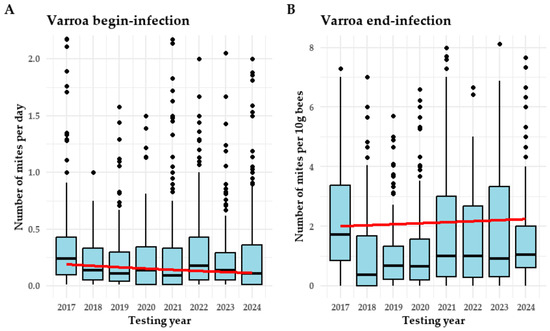
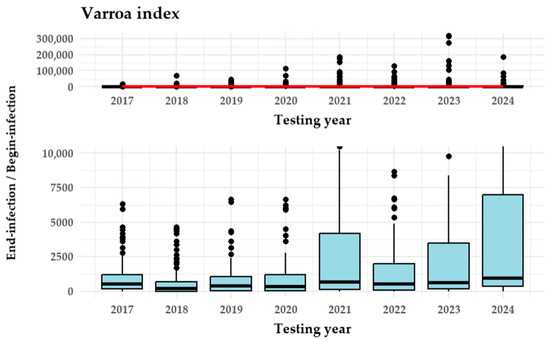
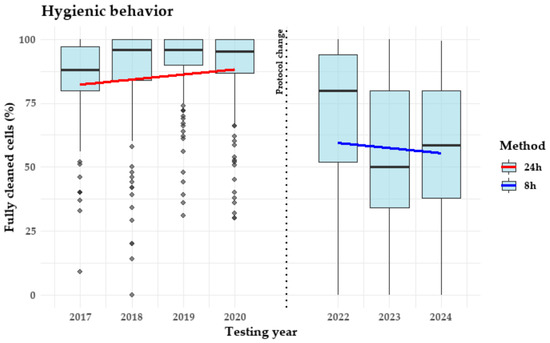
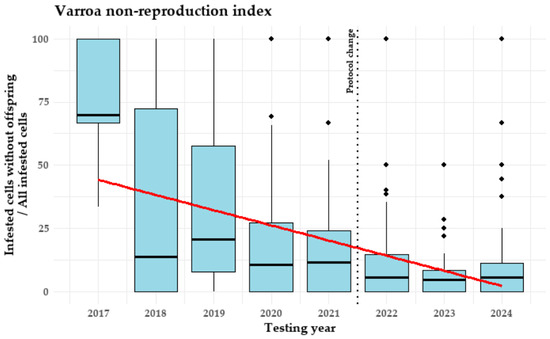
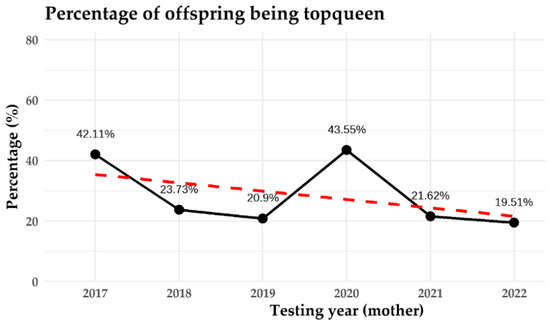
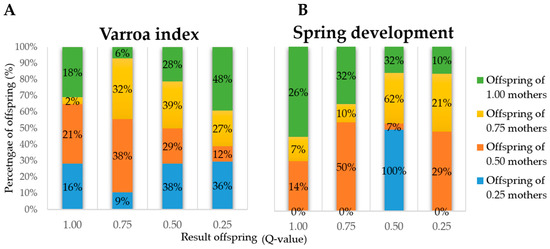
Selective breeding is widely used to improve honey bee health and colony performance, commonly applying selection based on colony traits. Since 2017, a mass selection program in Flanders, Belgium, has ranked queens according to resilience, productivity and behavior traits. Using longitudinal data (2017–2024), we evaluated the effectiveness of this strategy by assessing colony performance across years and generations. Behavioral traits showed the clearest improvement over time, whereas progress in productivity and especially resilience-related traits remained limited. Offspring of top-ranking queens frequently failed to achieve overall ranking values comparable to those of their mothers; rather, they scored lower. For the traits Varroa index and spring development, offspring from lower-scoring queens often performed better, while offspring from higher-scoring queens tended to perform worse. These findings indicate that the current mass selection approach did not consistently result in cumulative genetic improvement. Factors such as open participation, limited breeding standardization, and insufficient paternal genetic control may have reduced selection efficiency. These results highlight the opportunities and challenges of implementing an accessible honey bee breeding program. Refinement of the current selection framework and evaluation of alternative strategies, such as selection by exclusion, may therefore be necessary to achieve more robust and resilient honey bee populations.
Full article
(This article belongs to the Special Issue Losses, Health and Wellbeing of Honey Bees Across the World)
►▼
Show Figures

Figure 1

Open AccessArticle
Consumer Segmentation and Gender-Specific Adoption Pathways for Edible Insects: Evidence from Saudi Arabia
by
Hala Hazam Al-Otaibi and Samar Refat Alabdulmohsen
Insects 2026, 17(7), 688; https://doi.org/10.3390/insects17070688 - 2 Jul 2026
Abstract
Saudi Arabia relies heavily on food imports, making sustainable protein integration a national priority under Vision 2030. However, large-scale adoption of edible insects remains limited by psychological, cultural, and religious barriers that vary across consumer groups. This study develops a behavioral segmentation framework
[...] Read more.
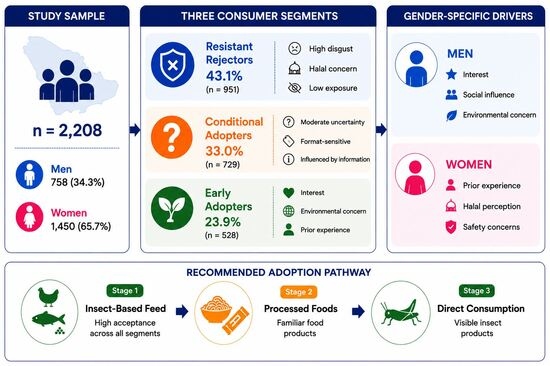
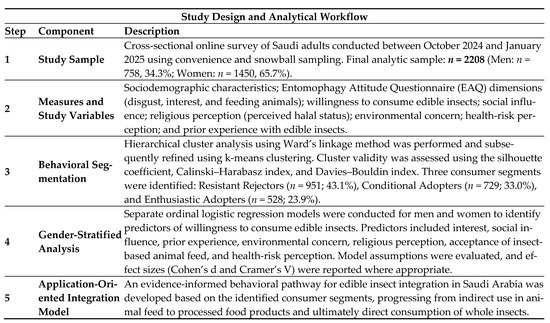
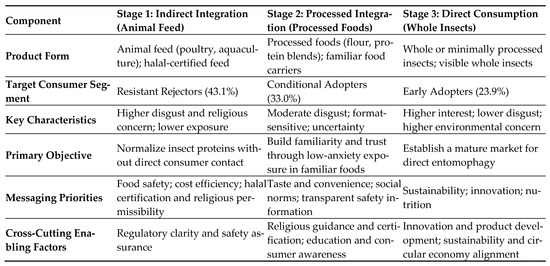
Saudi Arabia relies heavily on food imports, making sustainable protein integration a national priority under Vision 2030. However, large-scale adoption of edible insects remains limited by psychological, cultural, and religious barriers that vary across consumer groups. This study develops a behavioral segmentation framework using a cross-sectional survey of 2208 Saudi adults, representing one of the largest behavioral studies of edible insect adoption in the Saudi context. Three distinct segments emerged from hierarchical cluster analysis: Resistant Rejectors (43.1%), Conditional Adopters (33.0%), and Early Adopters (23.9%). Gender-stratified ordinal logistic regression revealed distinct adoption pathways: among men, willingness was primarily associated with interest in entomophagy (OR = 3.46) and social influence (OR = 2.51); among women, prior consumption experience was the strongest facilitator (OR = 3.07), while religious concern represented the most substantial barrier (OR = 0.15). Acceptance of insects as animal feed was consistently higher than direct consumption across all segments, supporting a three-stage integration model (feed → processed foods → direct consumption) as a culturally pragmatic transition pathway. These findings provide actionable, segment-specific insights for policymakers, industry stakeholders, and food system innovators.
Full article
(This article belongs to the Special Issue Insects as Food: Advances in Edible Insect Research and Applications)
►▼
Show Figures

Graphical abstract
Open AccessArticle
The JAK/STAT Signaling Pathway Mediates Antibacterial Immunity in the Soybean Aphid Aphis glycines
by
Zhengbing Wang, Xin Miao, Zhen Li, Jiahui Zhang, Manman Zheng, Wenkai Bu, Lei Yang, Kedong Xu, Xiaoyue Sang, Keshi Ma and Mingsheng Yang
Insects 2026, 17(7), 687; https://doi.org/10.3390/insects17070687 - 1 Jul 2026
Abstract
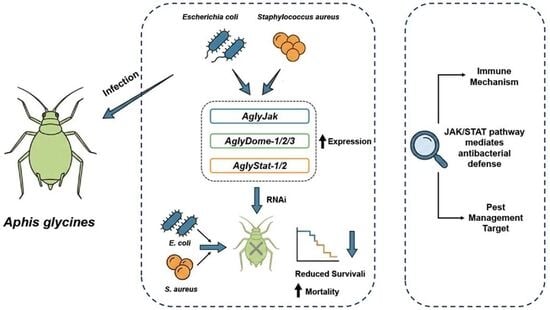
The JAK/STAT pathway is a conserved signaling pathway involved in insect immune regulation. Although its antibacterial role has been investigated in some aphids, evidence is lacking for Aphis glycines. In this study, we identified JAK/STAT pathway-related genes in A. glycines and examined
[...] Read more.
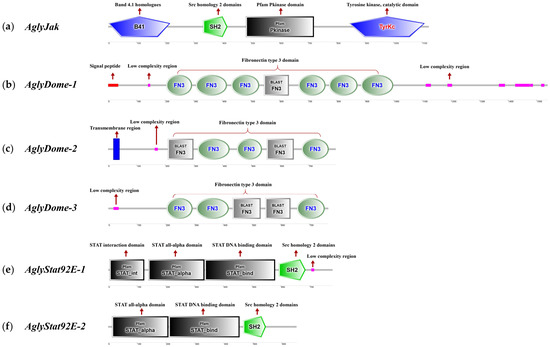
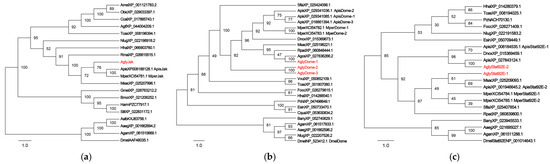
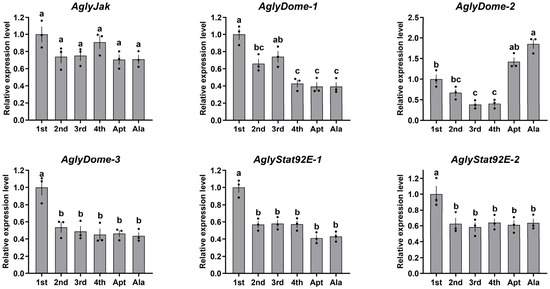
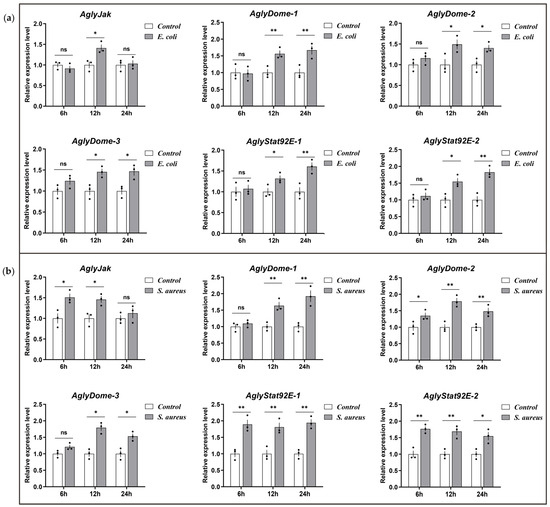
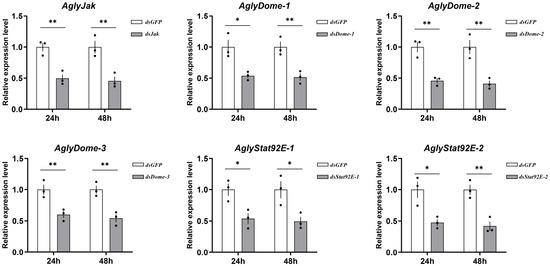
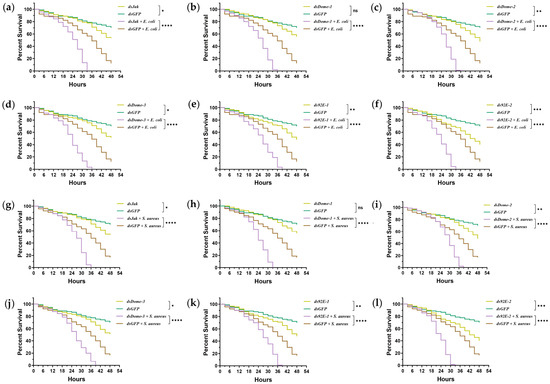
The JAK/STAT pathway is a conserved signaling pathway involved in insect immune regulation. Although its antibacterial role has been investigated in some aphids, evidence is lacking for Aphis glycines. In this study, we identified JAK/STAT pathway-related genes in A. glycines and examined their roles in antibacterial defense. Candidate genes were identified and characterized through sequence, domain, and phylogenetic analyses. Developmental expression and transcriptional responses to bacterial infection were determined by qRT-PCR, and gene function was evaluated by RNA interference followed by bacterial challenge. Six putative JAK/STAT pathway-related genes were identified, including AglyJak, AglyDome-1, AglyDome-2, AglyDome-3, AglyStat92E-1, and AglyStat92E-2. Conserved domain architecture and phylogenetic analysis confirmed these genes as A. glycines JAK/STAT orthologs. Expression profiling showed that, except for AglyJak and AglyDome-2, most genes were most highly expressed in early nymphal stages, particularly in first-instar nymphs. After injection with Escherichia coli or Staphylococcus aureus, the transcript levels of AglyJak, AglyDome, and AglyStat genes increased significantly. Gene silencing significantly reduced aphid survival following bacterial infection. These results indicate that JAK/STAT pathway-related genes participate in the antibacterial defense of A. glycines and provide candidate targets for further studies on immune regulation and biologically based management of this pest.
Full article
(This article belongs to the Special Issue Insect Microbiome and Immunity—2nd Edition)
►▼
Show Figures

Graphical abstract
Open AccessArticle
Prediction of Climate Change Impacts on the Suitable Habitat of Hyphantria cunea in China Based on Biomod2 Ensemble Models
by
Youning Wang, Jiaxu Li and Wang Han
Insects 2026, 17(7), 686; https://doi.org/10.3390/insects17070686 - 1 Jul 2026
Abstract
Global climate warming has intensified in recent years, with extreme weather events occurring more frequently and severely impacting ecosystems and social production. According to the “China Climate Change Blue Book (2023),” China’s temperature rise rate exceeds the global average, with increasingly significant impacts
[...] Read more.
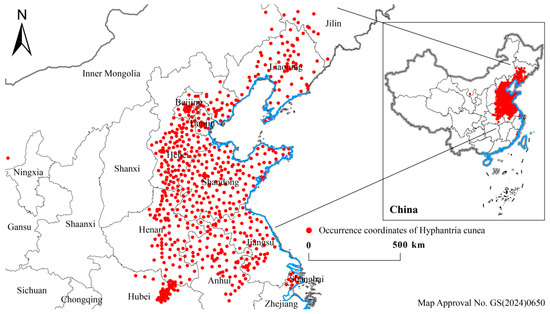
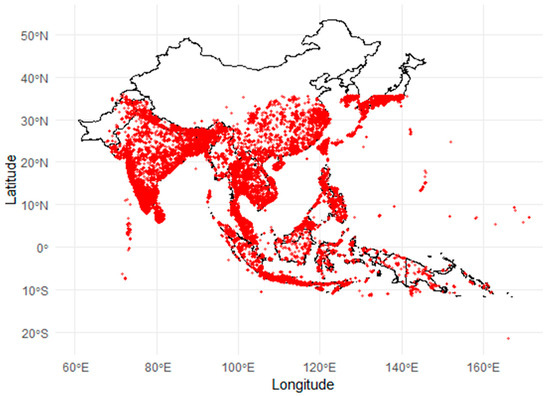
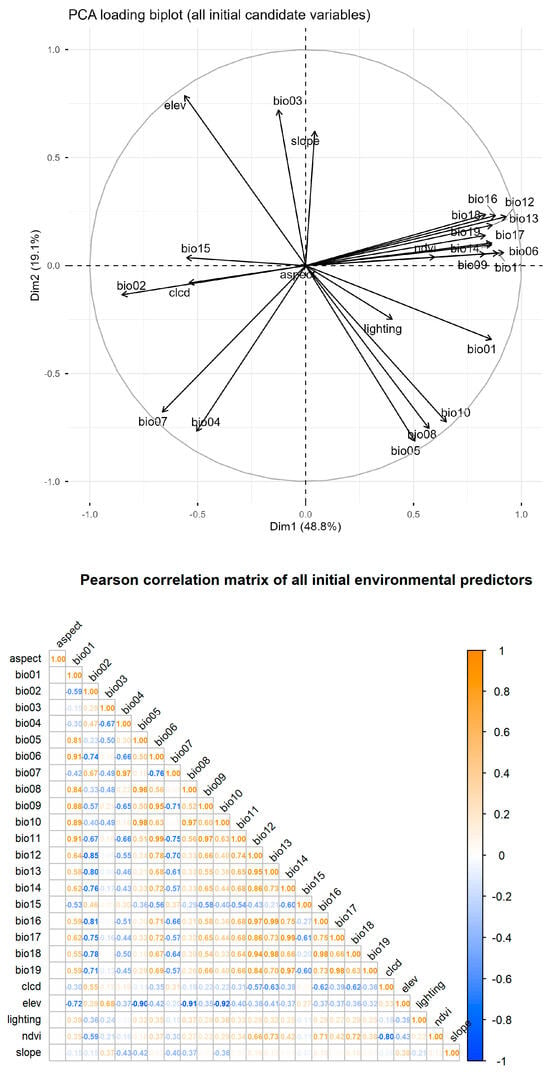
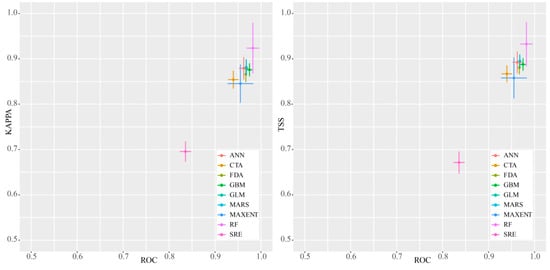
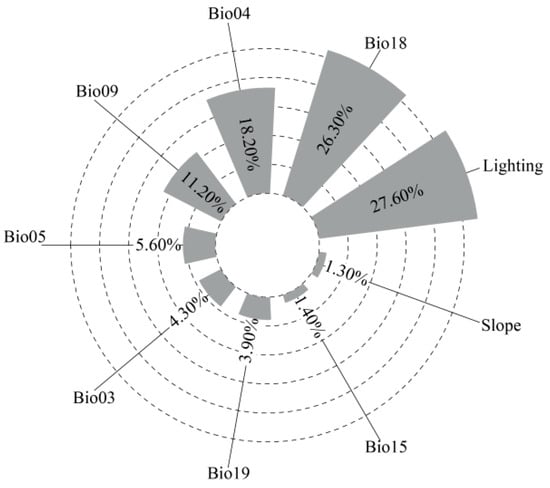
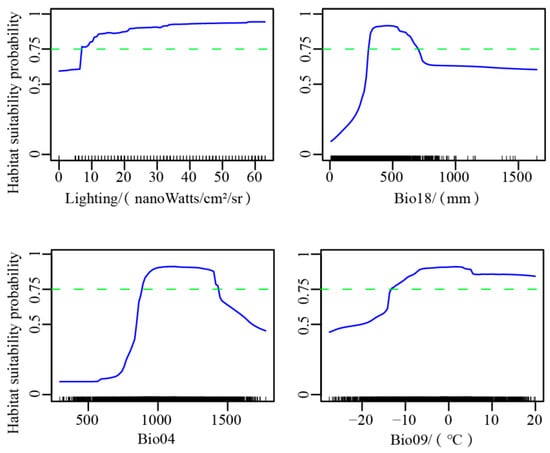
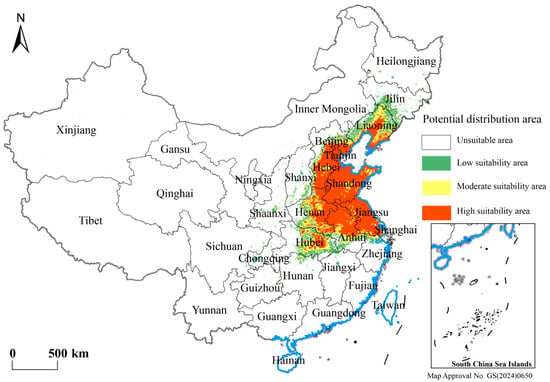
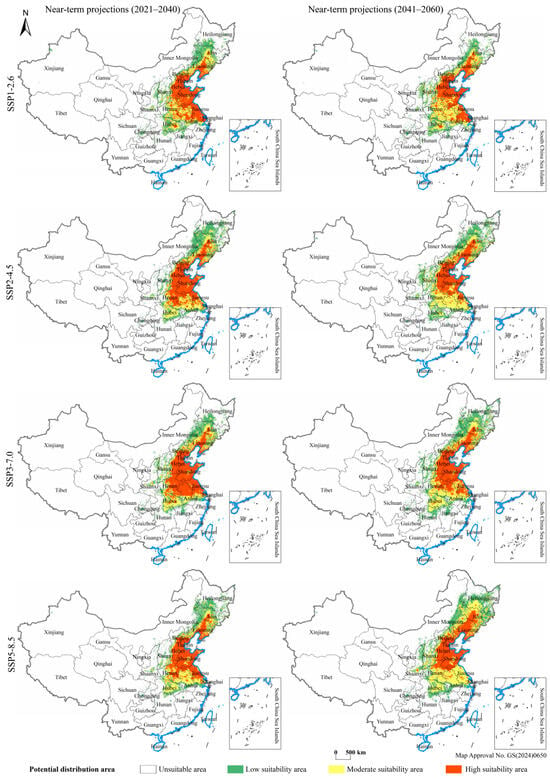
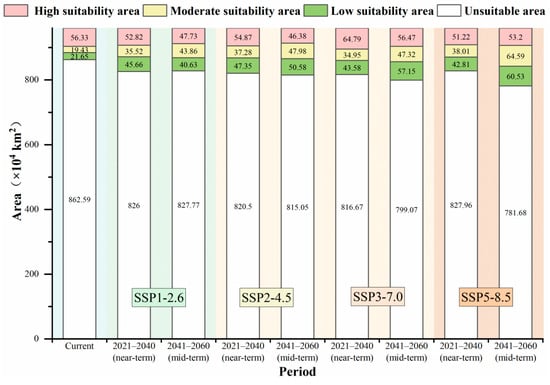
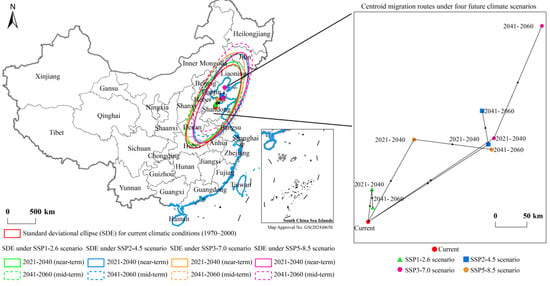
Global climate warming has intensified in recent years, with extreme weather events occurring more frequently and severely impacting ecosystems and social production. According to the “China Climate Change Blue Book (2023),” China’s temperature rise rate exceeds the global average, with increasingly significant impacts on ecosystems. Hyphantria cunea, an invasive forest pest first discovered in China in 1979, has spread widely, causing serious damage to forestry and agriculture and posing a significant threat to China’s ecological security. To address this threat, this study employed seven modeling algorithms (GLM, GBM, CTA, ANN, SRE, FDA, MARS, RF, and MaxEnt) from the R Biomod2 package to develop an ensemble model. The core research objective of this work is to quantify climate-driven range shifts of H. cunea under ongoing global climate change. Previous nationwide SDM studies on invasive forest pests have consistently demonstrated that climatic variables dominate broad-scale nationwide suitable habitat patterns at the macro-regional level. Supplementary topographic, vegetation cover, and human land-use disturbance layers were incorporated to capture fine-scale habitat filtering effects and long-distance pest dispersal facilitated by human activities, which together fully characterize the suitable regional environments of this pest. By integrating climate, topography, vegetation, and human disturbance data, we predicted the potential geographical distribution of H. cunea in China under four future climate scenarios (SSP1-2.6, SSP2-4.5, SSP3-7.0, and SSP5-8.5). The ensemble model achieved excellent performance with TSS and ROC values of 0.901 and 0.984, respectively. Currently, highly suitable areas for H. cunea are concentrated in 12 provinces, including Shandong, Jiangsu, Hebei, Henan, and Anhui, covering 56.33 × 10⁴ km2, with Shandong showing the highest proportion (25.48%). The suitable habitat range is projected to expand northeastward, with significant increases under high emission scenarios (SSP5-8.5). Analysis of environmental variables reveals that nighttime light brightness, precipitation in the warmest season, the seasonal temperature variation coefficient, and average temperature in the driest season are key factors influencing H. cunea distribution. Nighttime light brightness shows the highest contribution (27.7%), indicating significant human impact on species spread. Response curves suggest that H. cunea favors warm, humid areas with pronounced seasonal changes. This study demonstrates that climate change will increase H. cunea expansion risk, necessitating strengthened cross-regional monitoring and biological control techniques. These findings provide a scientific foundation for understanding H. cunea spatiotemporal distribution patterns under future climate scenarios and for developing effective prevention and control strategies.
Full article
(This article belongs to the Section Insect Pest and Vector Management)
►▼
Show Figures

Figure 1

Open AccessArticle
Enhanced dsRNA Production via a Three-Terminator Vector and Transcriptomic Correlates of RNAi Exposure in Thrips
by
Lin Tian, Guangtao Xu, Jianyu Li, Yixuan Zhang, Wei Shang, Junhua Xie, Yucheng Gu, Yanna Huang and Xueming Tang
Insects 2026, 17(7), 685; https://doi.org/10.3390/insects17070685 - 1 Jul 2026
Abstract
RNA interference (RNAi) represents a promising alternative to chemical insecticides, but its efficacy depends on efficient double-stranded RNA (dsRNA) uptake, a process poorly characterized in thrips. To enable sufficient dsRNA production for functional studies, we first optimized an E. coli expression system by
[...] Read more.
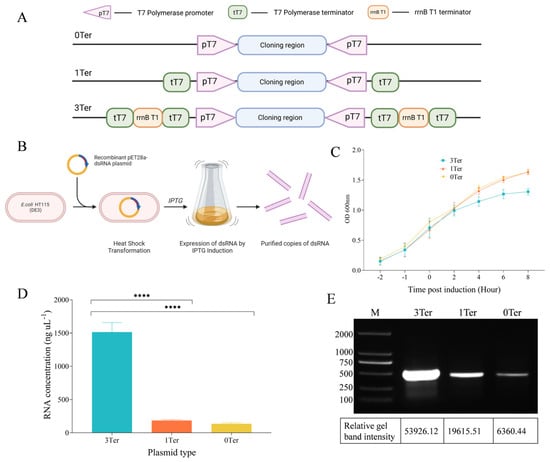
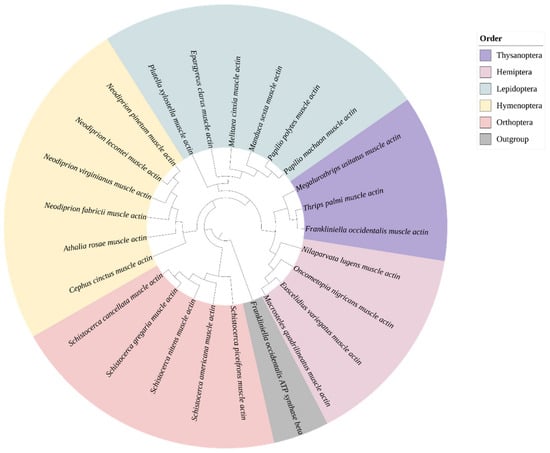
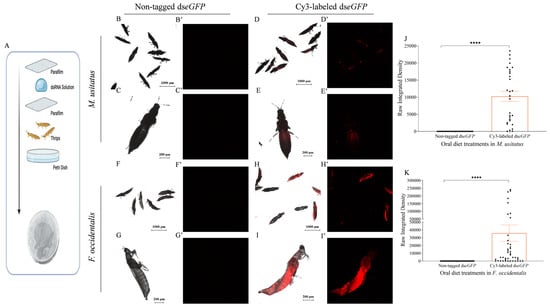
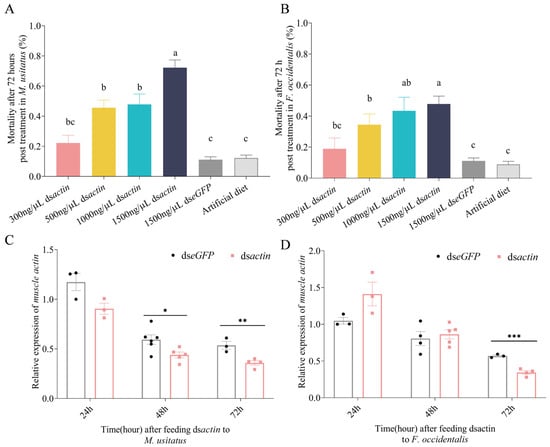
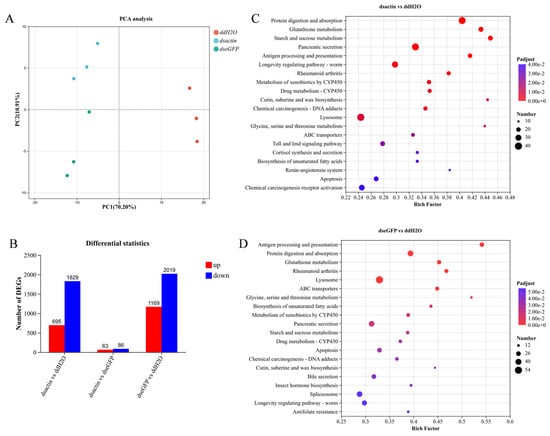
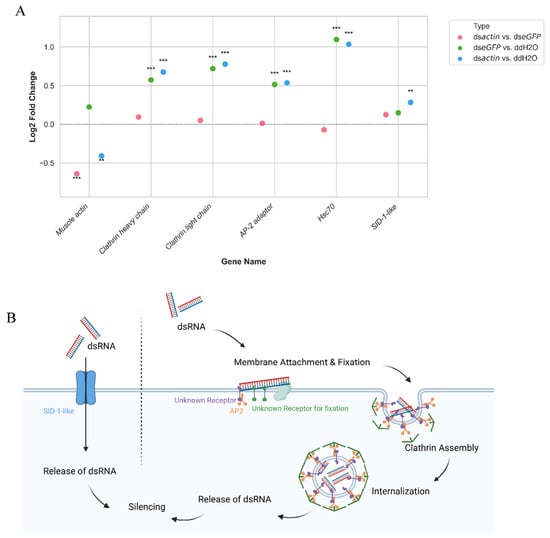
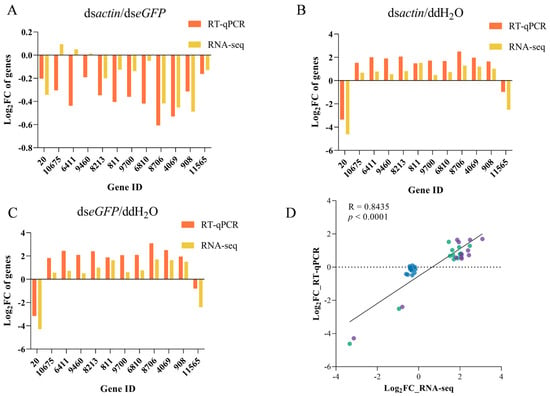
RNA interference (RNAi) represents a promising alternative to chemical insecticides, but its efficacy depends on efficient double-stranded RNA (dsRNA) uptake, a process poorly characterized in thrips. To enable sufficient dsRNA production for functional studies, we first optimized an E. coli expression system by constructing a vector containing three tandem terminators, which substantially enhanced dsRNA yield by approximately 11-fold. Using this optimized production system, this study identified a conserved muscle actin fragment for dsRNA synthesis and evaluated RNAi responses in Megalurothrips usitatus and Frankliniella occidentalis. Insect mortality, target-gene suppression, and transcriptomic responses were evaluated via RT-qPCR and RNA-seq analyses using artificial diets supplemented with muscle actin dsRNA. The designed dsactin shared > 97% sequence identity between the two species. Oral ingestion of 1500 ng µL−1 dsRNA caused concentration-dependent mortality (72% in M. usitatus, 48% in F. occidentalis) and significant down-regulation of muscle actin mRNA within 72 h. Transcriptomic analysis in M. usitatus revealed upregulation of genes associated with clathrin-mediated endocytosis and SID-1-like transmembrane transport, suggesting a potential dual-pathway model for dsRNA uptake. These findings provide correlative insights into RNAi efficiency in thrips.
Full article
(This article belongs to the Special Issue RNAi in Insect Physiology—2nd Edition)
►▼
Show Figures

Figure 1
Open AccessArticle
A FoxO–Autophagy–Lipid Mobilization Axis Regulates Fat Body Remodeling During Honeybee Metamorphosis
by
Jing Yu, Hongfang Wang, Zhenguo Liu, Ying Wang and Baohua Xu
Insects 2026, 17(7), 684; https://doi.org/10.3390/insects17070684 - 1 Jul 2026
Abstract
Forkhead box O (FoxO) transcription factors act downstream of insulin signaling and play conserved roles in development and metabolic homeostasis in insects. However, whether FoxO participates in 20-hydroxyecdysone (20E)-mediated pupation and fat body remodeling in honeybee larvae remains unclear. Here, we show that
[...] Read more.
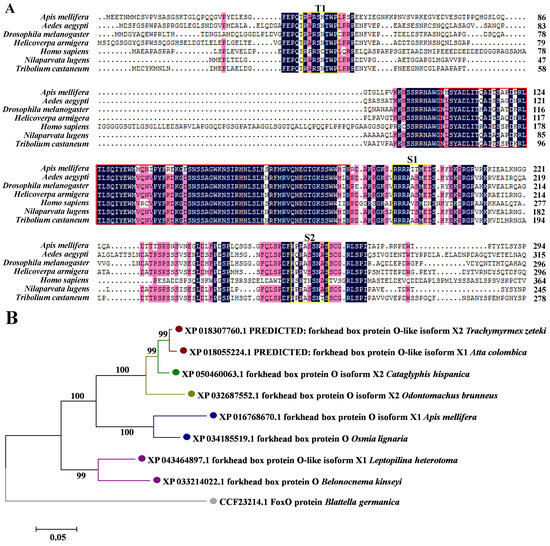
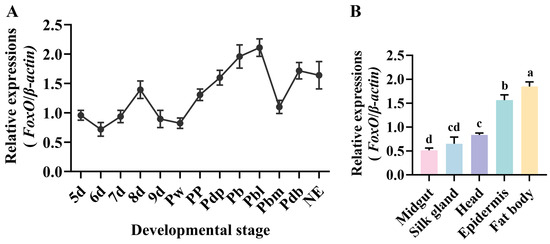
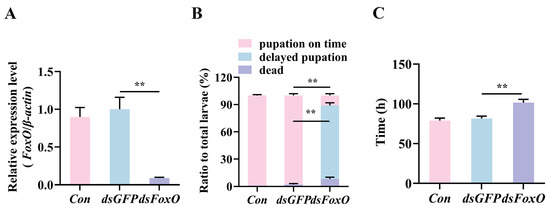
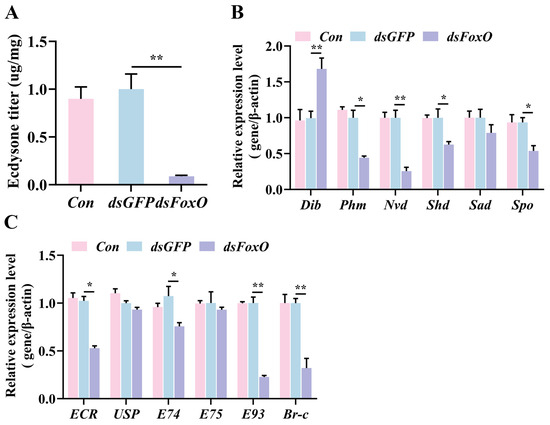
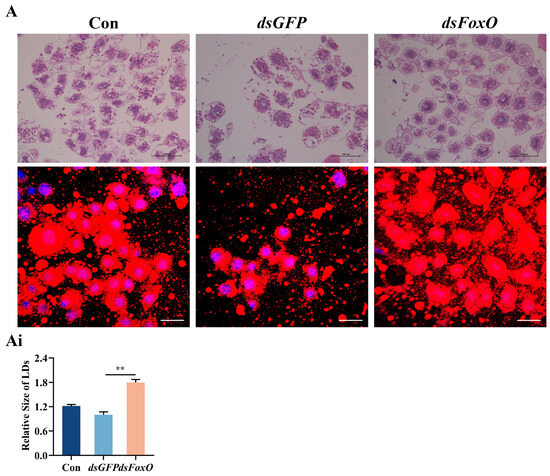
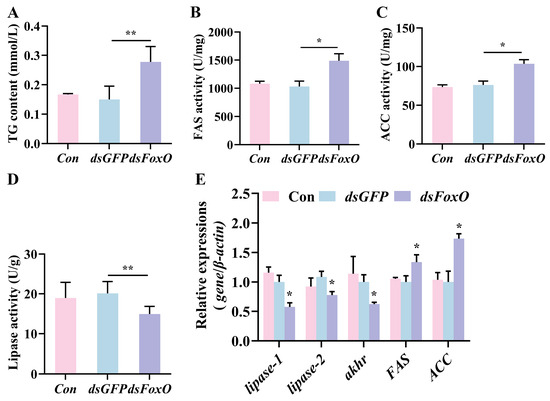
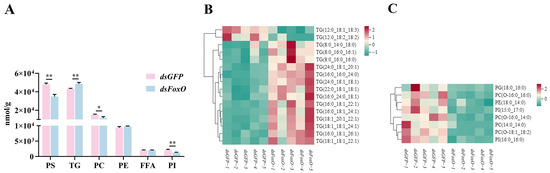
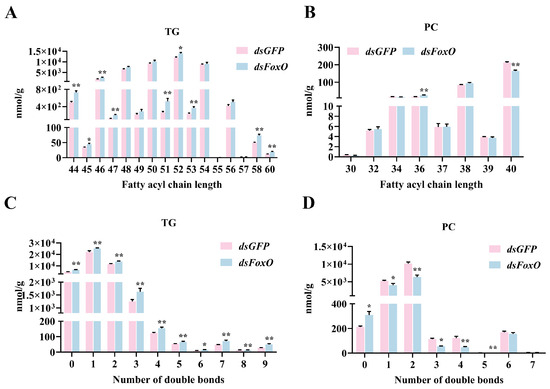
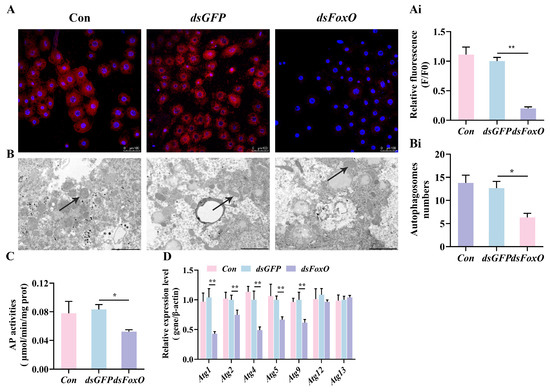
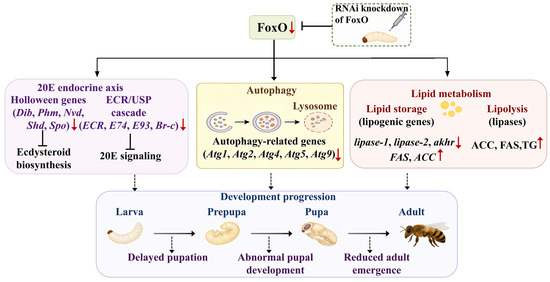
Forkhead box O (FoxO) transcription factors act downstream of insulin signaling and play conserved roles in development and metabolic homeostasis in insects. However, whether FoxO participates in 20-hydroxyecdysone (20E)-mediated pupation and fat body remodeling in honeybee larvae remains unclear. Here, we show that FoxO is highly expressed during the prepupal and pupal stages of honeybee development. RNA interference (RNAi)-mediated silencing of FoxO delayed pupation, inhibited ecdysteroid biosynthesis and 20E signaling, and ultimately led to pupal lethality. Knockdown of FoxO also suppressed the expression of lipolytic genes, reduced lipase activity, and increased triglyceride (TG) accumulation in the fat body. Furthermore, FoxO deficiency impaired autophagy, as evidenced by reduced LysoTracker staining, decreased autophagosome formation, and downregulation of Atg genes. These findings demonstrate that FoxO participates in 20E-induced pupation of honeybee by regulating the expression of key genes involved in 20E biosynthesis and the 20E signaling pathway. FoxO coordinates autophagy and lipid mobilization in the fat body to provide energy for pupal development. Collectively, our results establish FoxO as a central regulator linking endocrine signaling, energy metabolism, and tissue remodeling during honeybee metamorphosis.
Full article
(This article belongs to the Section Insect Molecular Biology and Genomics)
►▼
Show Figures

Figure 1
Open AccessArticle
Climate Change May Expand Geographic Distribution of Asian Butterflies Despite Climatic Niche Contraction
by
Ehsan Rahimi and Chuleui Jung
Insects 2026, 17(7), 683; https://doi.org/10.3390/insects17070683 - 1 Jul 2026
Abstract
This study presents a nuanced understanding of how butterflies may respond to climate change, suggesting that although many species could experience noticeable contractions in their climatic niches, a substantial number may still have the potential to considerably expand their geographic ranges. We modeled
[...] Read more.
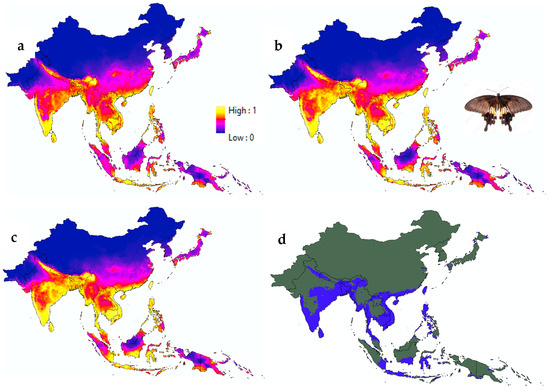
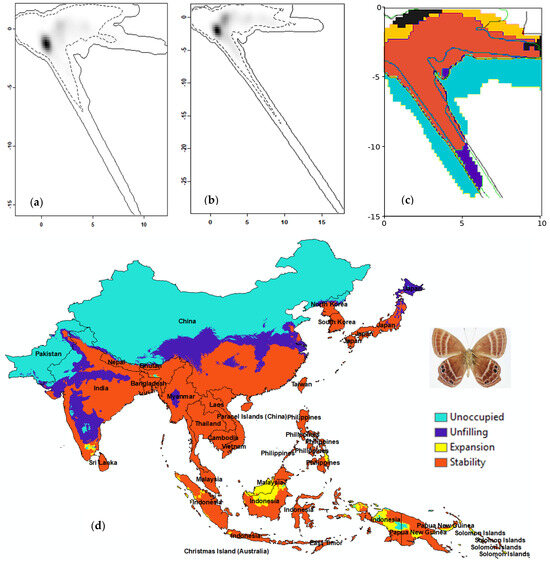
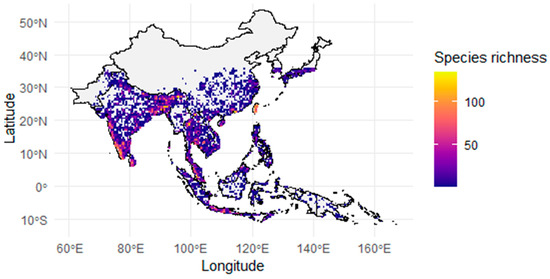
This study presents a nuanced understanding of how butterflies may respond to climate change, suggesting that although many species could experience noticeable contractions in their climatic niches, a substantial number may still have the potential to considerably expand their geographic ranges. We modeled the distributions of 200 butterfly species across Asia using the MaxEnt algorithm. Habitat suitability maps were produced for both current conditions and future scenarios under moderate (SSP245) and high (SSP585) greenhouse gas emissions. To analyze niche dynamics, we projected the realized niches of species onto principal component environmental spaces, which allowed us to quantify key processes including niche stability, expansion, unfilling, abandonment, and pioneering. These indices were then mapped spatially to identify potential changes in climatic niche configurations and geographic distributions in response to climate change. Our findings indicate that by 2070, under the moderate-emissions scenario (SSP245), 185 species are projected to show expansion in suitable habitat by an average of 38%, while 15 species may face an average decline of 11%. Under the high-emissions scenario (SSP585), 184 species are projected to show increases in suitable habitat by 55% on average, with 16 species showing an average decrease of 13%. Additionally, species are predicted to maintain approximately 63% of their current climatic niche stability under SSP585. Niche expansion averages 12%, reflecting potential range growth, whereas unfilling accounts for around 16%, indicating possible loss of some currently suitable areas. Niche abandonment or niche contraction, representing climatic spaces no longer projected to be occupied, comprises about 8%, and pioneering into entirely new climatic conditions remains limited at roughly 1%. The modeled presence of niche unfilling and abandonment suggests that butterflies may retain considerable ecological flexibility, potentially allowing them to shift into new environments under changing climate conditions. This projected adaptability may enhance their resilience by facilitating potential movement into novel or previously unoccupied habitats, though actual range shifts will depend on factors beyond climatic suitability alone.
Full article
(This article belongs to the Special Issue Pollinator Diversity, Ecosystem Services, and Conservation in a Changing World)
►▼
Show Figures

Figure 1
Open AccessArticle
Structure of the Gut and Ovary, with Associated Microbiota Across Life Stages in the Striped Stem Borer Chilo suppressalis (Lepidoptera: Crambidae)
by
Haiying Zhong, Fang Li, Kaili Yu and Juefeng Zhang
Insects 2026, 17(7), 682; https://doi.org/10.3390/insects17070682 - 30 Jun 2026
Abstract
The striped stem borer Chilo suppressalis (Lepidoptera: Crambidae) is one of the most serious pests of water bamboo Zizania latifolia. Microbiota dynamics across the life cycle of C. suppressalis are a prerequisite for comprehending the symbiotic relationship between C. suppressalis and its
[...] Read more.
The striped stem borer Chilo suppressalis (Lepidoptera: Crambidae) is one of the most serious pests of water bamboo Zizania latifolia. Microbiota dynamics across the life cycle of C. suppressalis are a prerequisite for comprehending the symbiotic relationship between C. suppressalis and its microbiota. In this study, we characterized the structural features of the gut and ovary, as well as the associated microbiota of C. suppressalis. The gut is anatomically divided into the foregut, midgut and hindgut. Notable structural and ultrastructural differences were observed between adults and larvae, the details of which have not been previously documented. Microbial sequencing of gut, ovary, and egg samples revealed variations in relative sequence abundances among these tissues. At the phylum level, Proteobacteria and Firmicutes were the predominant groups. At the family level, Bacillaceae, Enterobacteriaceae, Enterococcaceae, Halomonadaceae, Moraxellaceae, and Streptococcaceae were detected in the gut, ovary, and egg, albeit with different relative sequence abundances. The larval midgut exhibited the highest bacteria diversity among all samples examined. The compositional distribution of bacterial genera varied considerably across developmental stages, diet, and gut compartment, and some genera were identified as core microbial taxa. These findings provide a descriptive account of the microbial community structure associated with different tissues and life stages of C. suppressalis. They also provided important insights into the investigation of insect–bacteria symbioses, thereby facilitating effective biocontrol of this species.
Full article
(This article belongs to the Special Issue Insect Microbiome and Immunity—2nd Edition)
Open AccessReview
Credit to the Fruit Fly: How the Tiny Insect Lights Up Our Understanding of Human Disease
by
Yansong Zhang, Yao Wang, Yizhi Li, Alan Jian Zhu and Min Liu
Insects 2026, 17(7), 681; https://doi.org/10.3390/insects17070681 - 30 Jun 2026
Abstract
Drosophila melanogaster, widely known as the fruit fly, has emerged as a pivotal model organism for studying development and signaling transduction. Its fully sequenced genome, short generation time, and powerful genetic toolkit—including the Gal4/UAS system, RNA interference, and CRISPR-Cas9—enable precise, tissue-specific manipulation
[...] Read more.
Drosophila melanogaster, widely known as the fruit fly, has emerged as a pivotal model organism for studying development and signaling transduction. Its fully sequenced genome, short generation time, and powerful genetic toolkit—including the Gal4/UAS system, RNA interference, and CRISPR-Cas9—enable precise, tissue-specific manipulation and high-throughput functional analyses. Despite differences in anatomy, the internal organ systems of Drosophila melanogaster, including the nervous system, heart, fat body, oenocytes, and nephrocytes, exhibit conserved molecular pathways and physiological functions comparable to those of humans. The morphological differences between invertebrates and vertebrates have long led researchers to undervalue the studies of insects in underlying the pathogenesis of human diseases. Over the past decades, the fruit fly has been widely validated for modeling the pathogenesis of neurodegenerative, cardiovascular, metabolic, renal, and muscular disorders. In this review, we systematically summarize the conserved molecular pathways and organ functions between the fruit fly and human, and provide examples of recent studies that use the fruit fly as a model system to answer questions associated with human diseases. We also discuss how Drosophila help researchers to fulfill the gap from mechanistic study toward translational research, and provide methodological considerations regarding the utility of Drosophila models in drug screening.
Full article
(This article belongs to the Special Issue Insect Models in Medicine: Mechanisms and Applications)
Open AccessArticle
Native Entomopathogenic Fungi Against Whitefly (Bemisia tabaci) in Serrano Chili (Capsicum annuum L.)
by
Magali Jiménez-Jiménez, Héctor Cabrera-Mireles, Alejandra Soto-Estrada, Lorena Jacqueline Gómez-Godínez, Felipe Gallardo-López and Jorge Jiménez-Zilli
Insects 2026, 17(7), 680; https://doi.org/10.3390/insects17070680 - 30 Jun 2026
Abstract
The whitefly (Bemisia tabaci) is a significant pest of chili crops, and the continuous use of insecticides to control it has led to insecticide resistance. This study aimed to characterize and evaluate the pathogenicity and virulence of native entomopathogenic fungus (EPF)
[...] Read more.
The whitefly (Bemisia tabaci) is a significant pest of chili crops, and the continuous use of insecticides to control it has led to insecticide resistance. This study aimed to characterize and evaluate the pathogenicity and virulence of native entomopathogenic fungus (EPF) strains from the Sotavento region against whiteflies in the laboratory. Fungi were isolated from whiteflies collected from chili plants in different habitats and identified through morphological and molecular characterization. The pathogenicity of nine EPF strains was assessed at 1 × 10⁹ spores mL−1, while the virulence of the most pathogenic strains was evaluated from 1 × 10⁴ to 1 × 10⁹ spores mL−1. The lethal concentration (LC50) and lethal time (LT50) were also determined. Two native genera of EPF were identified: Beauveria and Cordyceps. The strains JV01 and PV02 (Cordyceps javanica), SV01 (Cordyceps fumosorosea), and MV03 (Beauveria bassiana) demonstrated high pathogenicity, causing mortality rates ranging from 94% to 100% at a concentration of 1 × 10⁶ spores mL−1, five days after application. The strains JV01 and SV01 showed LC50 values of 1.65 × 10⁵ and 5.53 × 10⁵ spores mL−1, respectively, with an LT50 of 2 days for both. In conclusion, highly pathogenic and virulent native EPF strains were identified against adult whiteflies on serrano chili.
Full article
(This article belongs to the Special Issue Sustainable Pest Management in Agricultural Systems)
Open AccessArticle
Metabolomics-Based Analysis Reveals Flavonoid-Mediated Defence in Alfalfa (Medicago sativa ‘Gannong No. 5’) Against Pea Aphid (Acyrthosiphon pisum) Infestation
by
Huan Liu, Zhan-Zi Yu, Qin-Zhe Sun, Lei Liu, Xing Xiang, Li-Wen Song, Sen-Shan Wang and Wan-Bin Chen
Insects 2026, 17(7), 679; https://doi.org/10.3390/insects17070679 - 30 Jun 2026
Abstract
The pea aphid (Acyrthosiphon pisum) is a destructive phloem-feeding pest of alfalfa. Its overreliance on chemical insecticides necessitates the development of sustainable, plant-based resistance strategies. Plant flavonoids are important in induced defense, but their dynamic responses to aphid feeding and subsequent
[...] Read more.
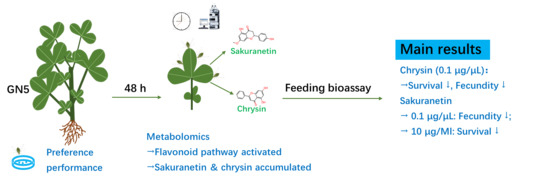
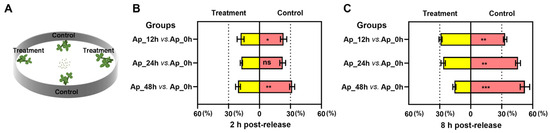
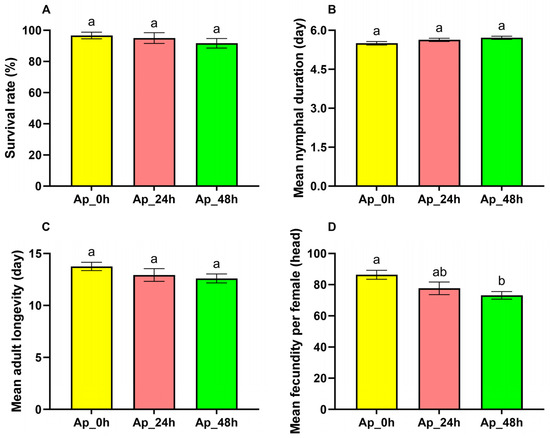
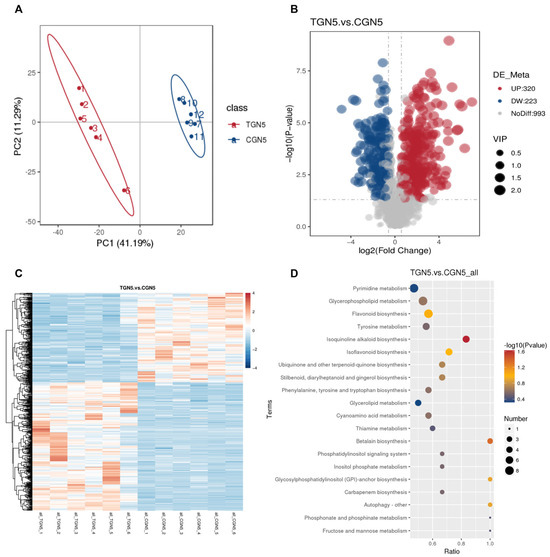
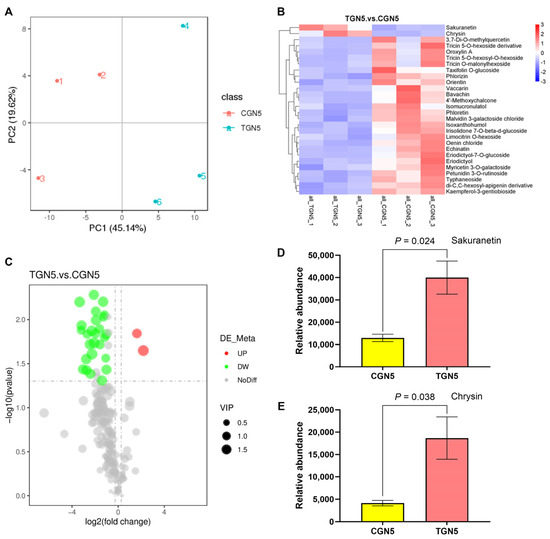
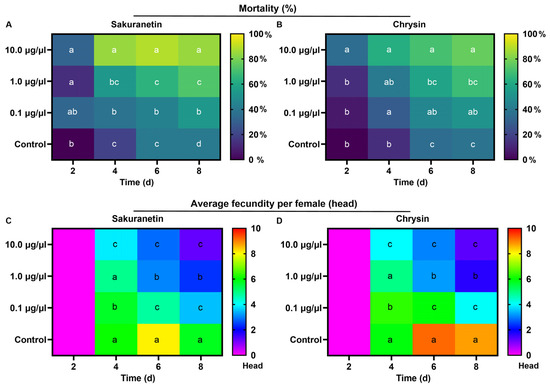
The pea aphid (Acyrthosiphon pisum) is a destructive phloem-feeding pest of alfalfa. Its overreliance on chemical insecticides necessitates the development of sustainable, plant-based resistance strategies. Plant flavonoids are important in induced defense, but their dynamic responses to aphid feeding and subsequent insecticidal effects remain unclear. Using the highly resistant alfalfa variety ‘Gannong No. 5’ (GN5), this study integrated behavioral assays, performance bioassays, untargeted and targeted metabolomics, and exogenous flavonoid feeding assays to investigate how pea aphid infestation alters flavonoid metabolism and thereby affects aphid performance. Bioassays confirmed strong antibiosis of GN5 against A. pisum. Behavioral choice assays showed that, at 2 h post-release, aphids significantly avoided plants pre-infested for 12 h and 48 h, but not those pre-infested for 24 h; by 8 h post-release, they significantly avoided all pre-infested plants regardless of infestation duration. Prolonged pre-infestation (48 h) also reduced average fecundity per female. Non-targeted metabolomics revealed substantial metabolic reprogramming after 48 h of aphid feeding, with most flavonoids and isoflavonoids significantly upregulated. Targeted metabolomics identified 28 flavonoids, among which only sakuranetin and chrysin were significantly upregulated after 48 h, indicating their specific induction. Finally, performance bioassays confirmed insecticidal effects in a concentration-dependent manner: sakuranetin at 0.1 μg/μL reduced reproduction, and at 10.0 μg/μL reduced survival; chrysin at 0.1 μg/μL reduced both survival and reproduction. Collectively, these results demonstrate that pea aphid feeding triggers the induction of specific defensive flavonoids in GN5, which may contribute to antibiosis. This study provides a theoretical basis for exploring flavonoid-based approaches in sustainable aphid management.
Full article
(This article belongs to the Special Issue An Eco-Friendly Approach for Pest Management)
►▼
Show Figures

Graphical abstract
Journal Menu
► ▼ Journal Menu-
- Insects Home
- Aims & Scope
- Editorial Board
- Reviewer Board
- Topical Advisory Panel
- Instructions for Authors
- Special Issues
- Topics
- Sections & Collections
- Article Processing Charge
- Indexing & Archiving
- Editor’s Choice Articles
- Most Cited & Viewed
- Journal Statistics
- Journal History
- Journal Awards
- Conferences
- Editorial Office
Journal Browser
► ▼ Journal BrowserHighly Accessed Articles
Latest Books
E-Mail Alert
News
Topics
Topic in
Infectious Disease Reports, Insects, IJERPH, Pathogens, TropicalMed, Zoonotic Diseases
Vector-Borne Disease Spatial Epidemiology, Disease Ecology, and Zoonoses
Topic Editors: Chad L. Cross, Louisa Alexandra MessengerDeadline: 31 December 2026
Topic in
Agriculture, Agronomy, Crops, Insects, Plants, Agrochemicals, IJPB
Exploring Plant-Derived Compounds for Effective Insect Pest Management in Agriculture
Topic Editors: Ian Scott, Roselyne M. LabbéDeadline: 31 January 2027
Topic in
Agriculture, CIMB, IJMS, Insects, Plants, Stresses
Smart and Green Strategies for Insect Pest Management
Topic Editors: Farman Ullah, Yaobin Lu, Shuo YanDeadline: 28 February 2027
Topic in
Animals, Arthropoda, Insects, Vaccines, Veterinary Sciences, Pathogens
Ticks and Tick-Borne Pathogens: 2nd Edition
Topic Editors: Alina Rodriguez-Mallon, Alejandro Cabezas-CruzDeadline: 31 March 2027
Conferences
Special Issues
Special Issue in
Insects
Recent Advances in Bee Parasite, Pathogen, and Predator Interactions
Guest Editor: Angélique VétillardDeadline: 10 July 2026
Special Issue in
Insects
Insects: A Unique Bioresource for Agriculture and Humanity
Guest Editor: Klaus H. HoffmannDeadline: 15 July 2026
Special Issue in
Insects
Advances in the Bio-Ecology and Control of Plant-Damaging Acari
Guest Editors: Enrico De Lillo, Haralabos Tsolakis, Sauro SimoniDeadline: 15 July 2026
Special Issue in
Insects
Global and Regional Patterns of Insect Biodiversity
Guest Editors: Katarina M. Mikac, Darija Lemić, Ivana Pajač ŽivkovićDeadline: 30 July 2026
Topical Collections
Topical Collection in
Insects
Butterfly Diversity and Conservation
Collection Editors: David G. James, Kathleen L. Prudic
Topical Collection in
Insects
Cultural Entomology: Our Love-hate Relationship with Insects
Collection Editor: Joseph R. Coelho
Topical Collection in
Insects
Integrated Management and Impact of Stored-Product Pests
Collection Editors: Georgina V. Bingham, James Campbell