


Journal Menu
► ▼ Journal Menu-
- Bioengineering Home
- Aims & Scope
- Editorial Board
- Reviewer Board
- Topical Advisory Panel
- Early Career Editorial Board
- Instructions for Authors
- Special Issues
- Topics
- Sections & Collections
- Article Processing Charge
- Indexing & Archiving
- Editor’s Choice Articles
- Most Cited & Viewed
- Journal Statistics
- Journal History
- Journal Awards
- Conferences
- Editorial Office
Journal Browser
► ▼ Journal BrowserNeed Help?
Announcements
4 August 2026
The 3rd International Online Conference on Biomimetics—Submission Deadline Extended
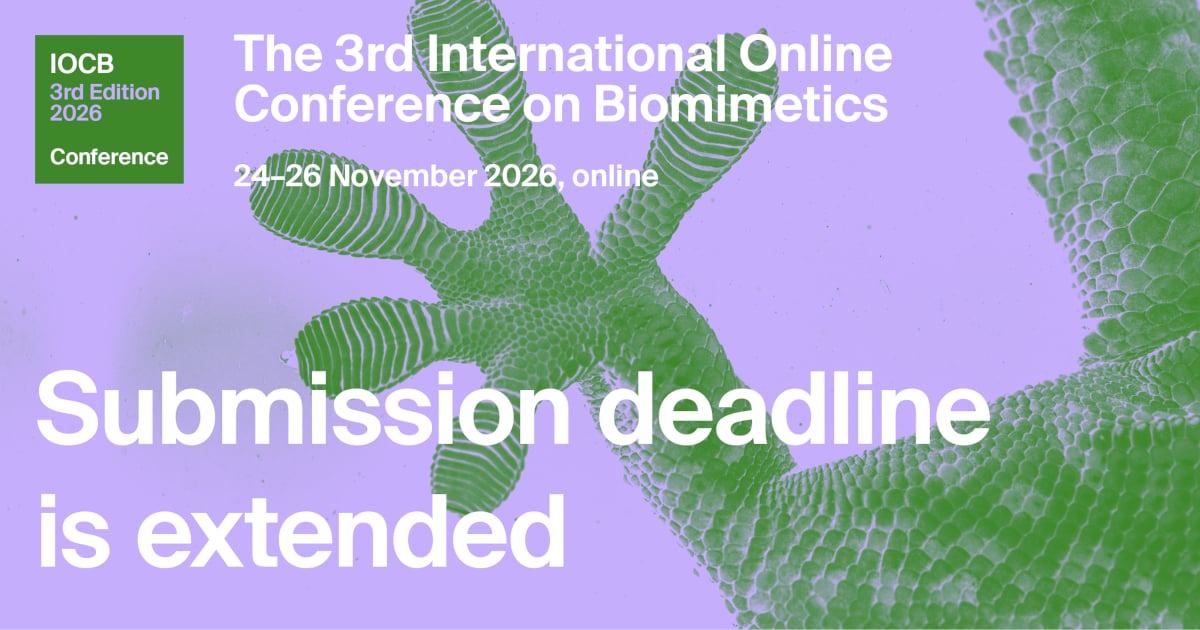
Conference: The 3rd International Online Conference on Biomimetics
Date: 24-26 November 2026, CET, online
Conference webpage: https://sciforum.net/event/IOCB2026/home
We are delighted to share that the abstract submission deadline has been extended to 6 September 2026, giving you more time to finalize and share your valuable work! You are warmly invited to submit your abstract and join us for this exciting virtual event, hosted by MDPI’s Biomimetics (ISSN 2313-7673, Impact Factor: 4.2). The conference will take place online from 24 to 26 November 2026 (CET), offering a vibrant platform for connection, inspiration, and scientific exchange.
Conference Chair:
- Prof. Dr. Stanislav N. Gorb, Department of the Functional Morphology and Biomechanics, Zoological Institute of the University of Kiel, Kiel, Germany.
Topics of interest:
S1. Biomimetic Design, Constructions and Devices;
S2. Biomimetic Materials—Structures, Surfaces and Interfaces;
S3. Bioinspired Robotics and Locomotion;
S4. Bioinspired Sensorics, Information Processing and Control;
S5. Biologically Inspired Optimisation and Management.
Important dates:
Abstract submission deadline: 6 September 2026;
Abstract acceptance notification: 20 September 2026;
Registration deadline: 18 November 2026.
Guide for authors:
To submit your abstract, please click on the following link: https://sciforum.net/submissions/IOCB2026/1.
To register for the event, please click on the following link: https://sciforum.net/registration/IOCB2026/tickets.
For details regarding abstract submission, poster and slide submission, and publication opportunities, you may refer to the “Instructions for Authors” section: https://sciforum.net/event/IOCB2026/instructions-for-authors.
For any enquiries regarding the event, please contact iocb2026@mdpi.com.
We look forward to seeing you at The 3rd International Online Conference on Biomimetics.
Prof. Dr. Stanislav N. Gorb (Conference Chair)
IOCB2026 Organizing Team (iocb2026@mdpi.com)
10 August 2026
Advancing Academic Publishing with MDPI: Gold-Tier Sponsorship of the University of Alberta’s Faculty of Engineering Graduate Research Symposium (FEGRS) and Academic Publishing Workshop, 18 August 2026
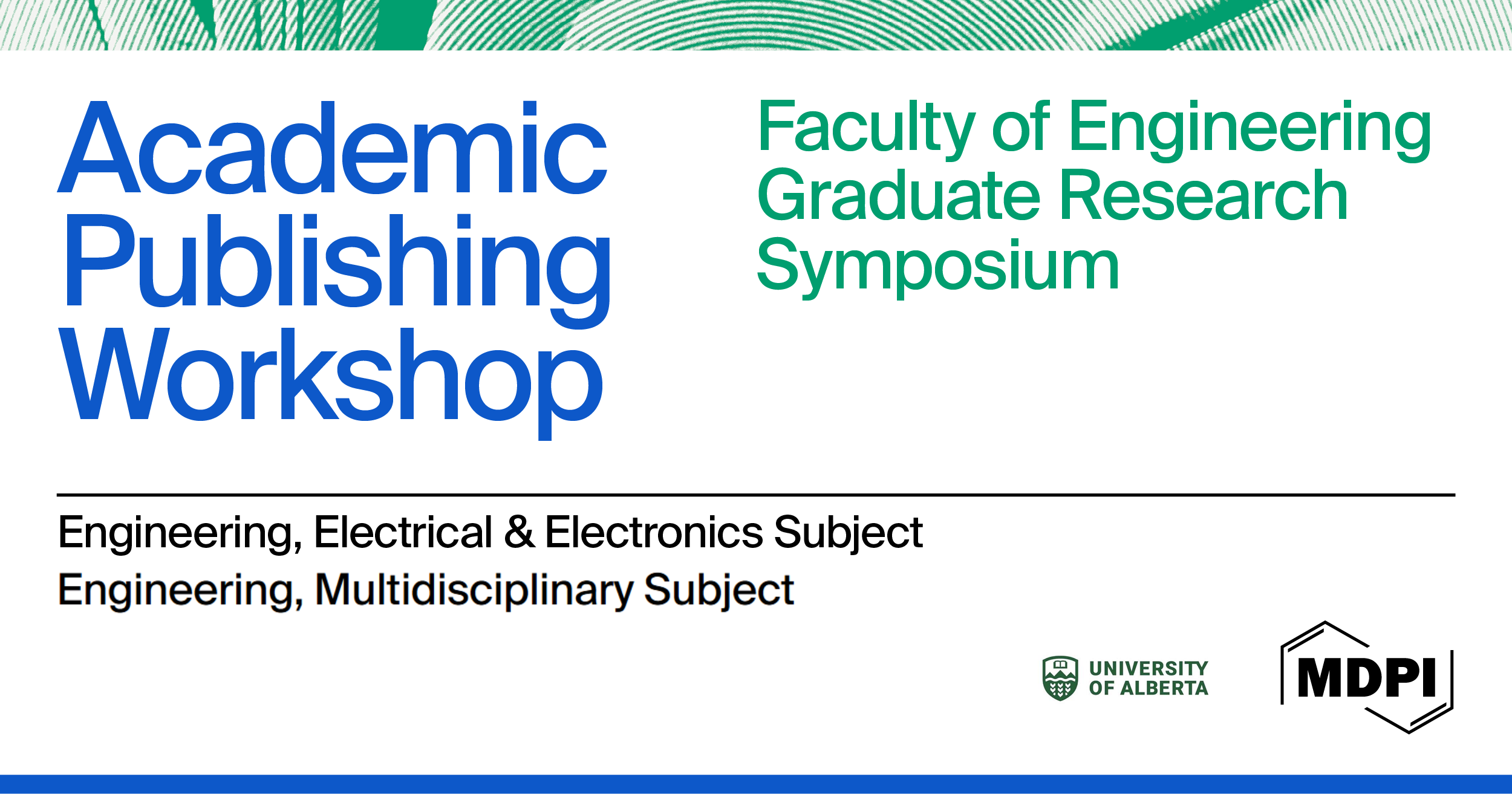
MDPI is pleased to participate in the Faculty of Engineering Graduate Research Symposium (FEGRS) 2026 at the University of Alberta as a gold-tier sponsor by hosting an Academic Publishing Workshop for graduate students and early career researchers. As a premier platform for showcasing research and fostering academic collaboration, FEGRS brings together emerging scholars from across engineering disciplines to exchange ideas, advance innovation, and to network within professional and academic spaces.
The interactive workshop will provide a practical introduction to scientific publishing and the skills needed for publication success. Participants will begin with an overview of the evolution of scholarly publishing before exploring today's publishing landscape. The second part of the workshop will focus on the peer review process, offering a step-by-step guide to navigating manuscript review and best practices for conducting peer reviews. Each session will conclude with a dedicated Q and A segment, allowing attendees to discuss publishing questions and challenges with experienced publishing professionals. In addition, MDPI representatives will be present at the Industry Mixer on August 18, engaging with participants to share insights into MDPI and opportunities to contribute as authors, reviewers, and editors.
By supporting educational initiatives such as FEGRS, MDPI remains committed to promoting transparency, accessibility, and excellence in scholarly communication while empowering the next generation of researchers to maximize the impact of their work.
For additional information on the event and our sponsorship, please see the event website here.
Date: 18 August 2026
Time: 14:30–15:30 (ET)
Venue: University of Alberta, Faculty of Engineering, DICE 8-207
Schedule:
|
Program |
Time |
|
Scientific Publishing: An Introduction |
14:30–15:00 |
|
Responding to Peer Reviewers |
15:00–15:30 |
MDPI Speakers:
Moderator and Panelist: Dr. Barnaby Crook, Regional Engagement Editor, MDPI
|
Dr. Barnaby Crook completed an MA in philosophy and neuroscience at the Humboldt University of Berlin in 2021 and a PhD in the philosophy of artificial intelligence at the University of Bayreuth in 2025. After moving from Germany to Toronto, Dr. Crook began working for MDPI as an Assistant Editor with the journal IJERPH. He now works as a Regional Engagement Editor for North America. In this role, Dr. Crook builds and maintains relationships with academic stakeholders, fostering collaboration and developing partnerships. He is passionate about scientific communication and research integrity. |

Panelist: Ms. Diana Tosato, Deputy Managing Editor, MDPI
|
Ms. Diana Tosato holds an MSc in development and environmental sciences and a second MSc in biology from Brock University. After completing her studies, she joined MDPI as an Assistant Editor for the journals Remote Sensing and Heritage. She currently serves as Deputy Managing Editor for journals across North and South America. In addition, Diana serves as External Affairs Coordinator for MDPI, with a focus on Brazil, where she develops and maintains relationships with academic stakeholders, fosters collaboration, and supports strategic partnerships within the research community. |

Organizers:
|
|
The University of Alberta’s Faculty of Engineering Graduate Research Symposium (FEGRS) is an annual event where graduate students can present their research to their colleagues and professors across all disciplines. This event gives many early-career researchers a place to present their ideas to an interdisciplinary audience without the pressures of larger conferences. Additionally, multiple career development workshops are organized with industry partners and professional organizations, and the event ends with an Industry–Student Mixer. The whole event is organized and planned by graduate student volunteers. |

|
|
A pioneer in scholarly open access publishing, MDPI has supported academic communities since 1996. Based in Basel, Switzerland, MDPI’s mission is to foster open scientific exchange in all forms and across all disciplines. |

5 August 2026
MDPI INSIGHTS: The CEO’s Letter #37 – Canada Summit, Sciforum Relaunch, 30 Years of Impactful Research & ISPRS 2026

Welcome to the MDPI Insights: The CEO's Letter.
In these monthly letters, I will showcase two key aspects of our work at MDPI: our commitment to empowering researchers and our determination to facilitating open scientific exchange.
Opening Thoughts

Reflections from the MDPI Canada Summit 2026 in Toronto (9–10 July)
As part of this year’s MDPI Summit events, we were delighted to host Editors-in-Chief (EiCs) and Editorial Board Members (EBMs) in Toronto for the MDPI Canada Summit 2026 this July.
Across the two days, we presented on topics including research integrity, editorial leadership, artificial intelligence, peer review, and the evolving role of the EiC. More importantly, the Summit created space for feedback and conversations with the academic community: these engagements continue play and important role in shaping how MDPI develops its journals and services.
Why Canada?
Canada has become one of the world’s leading Open Access (OA) nations. In 2025, 68% of Canadian research publications were published OA, with more than 73,000 OA articles produced during the year. Over the past five years alone, Canadian researchers have published more than 526,000 scholarly articles, showing both the scale and quality of Canadian research.
MDPI Toronto Office

“Canada has become one of the world’s leading Open Access nations”
Since opening in 2019, our Toronto office has grown to more than 85 colleagues supporting editorial operations, research integrity, marketing, societies, conferences, indexing, author services, and many other functions across North America. It was great to spend time with the team, see first-hand the energy and enthusiasm they bring to their work, and recognize the significant role they play in building relationships with the Canadian research community and delivering events such as this Summit.
MDPI and Canada
Today, Canada is an important part of the MDPI community:
- More than 53,800 articles from Canadian institutions published with MDPI since 1996
- More than 5,800 MDPI publications from Canadian researchers in 2025
- Nearly 1,900 Canadian Editorial Board Members, including 24 Editors-in-Chief; 49 Section Editors-in-Chief
- More than 30 Institutional Open Access Partnerships (IOAP) with universities across Canada

“The academic community is at the center of everything we do”
These numbers reflect the long-term partnerships with researchers, reviewers, editors, and institutions who continue to place their trust in MDPI.
Summit Program
Throughout the Summit, we presented and discussed topics against the following agenda:
- MDPI at 30: Introduction, Reflections and the Road Ahead – Stefan Tochev (CEO)
- Engagement with Academic Community and Society Partnerships – Karen Irwin (Associate Editorial Engagement Manager) and Carla Aloè (Head of Societies and Acquisition)
- Latest Developments in the Editorial Process – Summer Huggard (Operations Manager)
- Research Integrity and Publication Ethics – Renato Merki (Research Integrity Specialist)
- AI and Technology in Publishing – Dr. Barnaby Crook (Regional Engagement Editor)
- Panel Discussion – Bob Vrooman (Head of Business Development / Operations Manager, USA), Summer Huggard, Renato Merki, and myself

These presentations reinforce something we often say at MDPI: The academic community is at the center of everything we do. Each session concluded with a Q&A, allowing for discussions throughout the Summit to engage directly with our EiCs and EBMs.
Further Reading
I also had the opportunity to be interviewed by University Affairs about the evolving landscape of scholarly publishing, Open Access, and the importance of engaging with the research community. If you’re interested, you can read the interview in:
- English: University Affairs – MDPI Toronto Summit 2026: Bringing Together Leaders to Shape the Future of Scholarly Publishing
- Français: Affaires universitaires – Sommet MDPI de Toronto 2026
Thank You
As OA continues to grow around the world, events such as the MDPI Canada Summit remind us of the importance of meeting with our academic community in person. Listening to feedback, exchanging ideas, and building relationships are essential to ensuring that MDPI continues to evolve alongside the researchers, editors, reviewers, and institutions we serve.

Impactful Research

Five Journals, Five Different Stories of Success
Each year, the release of the Journal Citation Reports (JCR) provides an opportunity to look at the progress of our journal portfolio and, more importantly, the achievements of the research communities behind it.
A recent MDPI Blog article from Tommy Lax (Content Specialist, MDPI) highlights five journals whose 2025 Journal Impact Factor results show that success can take many forms – from achieving a first Impact Factor, to steady long-term growth, to leadership within highly competitive disciplines.
The featured journals include:
- Machine Learning & Knowledge Extraction (MAKE) – Among the 330 MDPI journals which received an Impact Factor in 2025, MAKE (ISSN 2504-4990) holds the accolade of having the highest rating of 8.4. The journal, which provides an advanced forum for the study of machine learning and its applications, is placed in Q1 for three subject categories: Computer science, artificial intelligence; Computer science, interdisciplinary applications; and Engineering, electrical & electronic.
- Antioxidants – Continuing its strong position across multiple scientific disciplines, Antioxidants (ISSN 2076-3921) was awarded an exceptional Impact Factor of 8.2. In addition, the journal was placed in Q1 in three subject categories: Biochemistry & molecular biology; Chemistry, medicinal; and Food science & technology.
- Biomass – This year, Biomass (ISSN 2673-8783) was recognized in the JCR for the first time, with a strong debut Impact Factor of 6.7. What makes this achievement even more impressive is the journal’s placement in Q1 of the category Engineering, chemical.
- Analytica – Remaining with the theme of growth, Analytica (ISSN 2673-4532), which provides an advanced forum for all aspects of fundamental and applied analytical chemistry, recorded one of the largest year-on-year increases in Journal Impact Factor, with a 7.4 – an astounding 3.8-point increase from its 2024 rating of 3.6.
- Batteries – Indexed in SCIE, Batteries (ISSN 2313-0105) received an updated Impact Factor of 6.3 this year, representing an increase of 1.5 versus last year, demonstrating consistent growth and increasing visibility over several years.
While citation metrics provide one perspective on journal performance, they tell only part of the story. Every milestone reflects the dedication of Editors-in-Chief, Editorial Board Members, reviewers, authors, and colleagues across MDPI who work together to uphold rigorous editorial standards and support high-quality research.
As a signatory of the Declaration on Research Assessment (DORA), MDPI supports a balanced approach to research evaluation. Journal-level metrics should be viewed alongside article-level indicators and the broader scientific and societal impact of published research.
Thank you to everyone whose commitment continues to strengthen our journals and advance Open Access across the global research community.
Inside MDPI

Building Better Tools for the Research Community: The Relaunch of Sciforum
Innovation at MDPI extends beyond journals. Over the past decade, we have continued to invest in products that support researchers, conference organizers, editors, reviewers, and institutions throughout the research lifecycle. As part of this ongoing investment, our Product and Engineering teams have been modernizing several of MDPI’s digital platforms. One important milestone in that journey is the relaunch of Sciforum, our conference management platform.
Read More: Sciforum Relaunch: Empowering Science through Seamless Event Management
Rather than simply updating an existing system, our product and engineering teams have rebuilt Sciforum, using a modern architecture designed to improve the user experience, support future growth, and continue to strengthen our position in the conference management market.
“Scalable technology is essential to delivering a high-quality experience”
Why We Rebuilt Sciforum
Technology must continue evolving alongside the needs of our users. The previous platform had served MDPI well for many years but had become difficult to extend and maintain. The new platform introduces a modular architecture that enables faster development, more flexibility, and a scalable foundation for future work.
Major improvements include:
- Simplified submission workflows
- Role-based dashboards
- A modern website builder
- Flexible pricing options
- Permanent data hosting
- A scalable architecture for future development

Supporting Our Conference Community
Sciforum is more than a software platform: it supports researchers, conference organizers, reviewers, speakers, and attendees by helping them organize, participate in, and share scientific meetings more efficiently. As MDPI continues to expand its conference activities worldwide, investing in modern, scalable technology is essential to delivering a high-quality experience for both our external partners and our internal teams.
Looking Ahead
The relaunch represents the beginning Sciforum’s next chapter. Planned improvements include: the Program Builder, Communication Hub, expanded payment options, Zoom integration, and a mobile application. These will continue to enhance the platform over the coming months.
Coming Together for Science

Highlights from ISPRS Congress 2026 – Toronto, Canada
In early July, I had the pleasure of attending the XXV ISPRS Congress in Toronto, one of the world’s leading gatherings for the geospatial and remote sensing research community. It was a great opportunity to meet researchers, editors, society leaders, and collaborators, while gaining insights into some of the latest developments in geospatial science and technology.
Over several days, I had the privilege of presenting the Jack Dangermond Award; speaking about MDPI’s approach to AI in publishing and our 30-year journey in Open Access publishing; participating in Editorial Board meetings; and engaging with members of the ISPRS community.
Below is a summary of these activities:
Celebrating excellence in research
One of the highlights of the week was presenting the Jack Dangermond Award for the best paper published in the ISPRS International Journal of Geo-Information (IJGI). Sponsored by MDPI and ESRI, the award recognizes an outstanding paper published over a four-year period and includes an ISPRS certificate together with a USD 10,000 prize.

Awards such as these remind us that journals are much more than publication platforms: they celebrate research that advances knowledge, inspires future work, and delivers meaningful impact for both science and society.
Presentations at ISPRS
I also had the pleasure to give two presentations during the congress:

1. The AI Revolution in Publishing: Challenges, Innovations, and MDPI’s Vision
The development of AI continues to transform scholarly publishing. During this session, I shared how MDPI is integrating AI responsibly, not to replace editorial judgement or peer review, but to support our staff by improving efficiency while maintaining scientific quality and research integrity.
2. MDPI: 30 Years of Open Access Publishing
I also had the opportunity to share MDP’s 30-year journey from a small publishing initiative to becoming a global Open Access publisher serving millions of researchers worldwide. As part of this session, my colleague Carla Aloè (Head of Societies and Acquisitions) introduced the ISPRS International Journal of Geo-Information (IJGI), sharing its development and contribution to the geospatial research community.

Meeting with Our Editorial Boards
Another rewarding aspect of the congress was meeting with the Editorial Boards of two of our journals:
- Remote Sensing
- ISPRS International Journal of Geo-Information
These discussions went beyond journal metrics. We heard ideas about editorial quality and emerging research areas, and we discussed reviewer engagement, diversity within editorial boards, and how journals can continue serving their communities for the future. These conversations are a great way to connect directly to the scientists who help shape our journals.


“One of our core missions has always been to make high-quality research openly accessible”
Partnerships matter
Scientific publishing is built on collaboration. Throughout the congress, our team welcomed researchers to the MDPI booth, met with authors and editors, and discussed opportunities for collaboration across our journals and society partnerships.
Special thanks to our MDPI colleagues who were present throughout the ISPRS congress supporting our Editorial Board meetings and the MDPI booth: Andy Tran, Carla Aloè, Carlo Cunanan, Diana Ribeiro Tosato, and Elena Duan.

Thank you to ISPRS for organizing this congress, to the researchers who shared their work, to our Editorial Board members, and to MDPI colleagues whose dedication continues to shape the journals and communities we support.
Closing Thoughts

Insights Into 30 Years of Impactful MDPI Research
As we celebrate 30 years of MDPI, it’s worth reflecting on the impact that the research we publish has on society. One of our core missions has always been to make high-quality research openly accessible so that it can inform new discoveries, public policy, education and innovation around the world.
A recent article on the MDPI Blog highlights several examples of MDPI publications that have gone beyond academic citations to help inform governments, international organizations and public policy discussions.
Research Creating Real-World Impact
The MDPI blog article features research that has contributed to topics including:
- protecting the Amazon rainforest through satellite mapping
- understanding climate change and urban heat inequality
- encouraging more young women to pursue STEM careers
- tackling obesity through healthier food environments
- shaping sustainable urban planning through the “15-minute city” concept
These examples remind us that publishing research is not only about producing articles: it is about helping knowledge reach the people who can use it to improve lives and address global challenges.
Thirty Years of Open Access
MDPI’s 30th Anniversary is also an opportunity to recognize the collective contribution of everyone across MDPI. Every manuscript processed, every review coordinated, every system developed, every conference organized, every partnership established and every article published contributes to a much larger purpose: helping scientific knowledge move further and faster.
You can explore the full article here: 30 Years of Impactful MDPI Research
You can also visit our 30th Anniversary page to learn more about MDPI’s journey over the past three decades.
Chief Executive Officer
MDPI AG
23 July 2026
Bioengineering Outstanding Special Issue Award—Winners Announced

We are pleased to announce the winners of the Bioengineering (ISSN 2306-5354) Outstanding Special Issue Award.
The award has been granted to the following Special Issues:
“Machine-Learning-Driven Medical Image Analysis”
Guest Editors: Dr. Xiangxue Wang, Dr. Cheng Lu and Prof. Dr. Jun Xu
“Feature Papers in Biomedical Engineering and Biomaterials”
Guest Editors: Dr. Andrea Cataldo, Dr. Christian Demitri and Dr. Emanuele Piuzzi
We extend our heartfelt congratulations to the award-winning Special Issues and their Guest Editors.
We also wish to express our sincere gratitude to all our Guest Editors for their long-standing dedication to the development of Special Issues. Your unwavering commitment and outstanding contributions have been instrumental in enriching our journal’s academic coverage and broadening its international scholarly reach.
Bioengineering Editorial Office
23 July 2026
Bioengineering Editor of Distinction Award—Winners Announced

The editorial team of Bioengineering (ISSN 2306-5354) extends its warmest congratulations to the recipients of the Bioengineering 2025 Editor of Distinction Award. Chosen by a selection committee chaired by the journal’s Editor-in-Chief, Prof. Dr. Anthony Guiseppi-Elie, the winners were identified following a formal review process by the Award Evaluation Committee. We are honored to recognize two Editorial Board Members whose outstanding contributions have greatly advanced the journal’s academic mission. The distinguished recipients are as follows:
Name: Dr. Yunfeng Wu
Affiliation: School of Informatics, Xiamen University, Xiamen 361005, China
Interests: gait analysis; biosignal processing; machine learning; biomedical data mining
Name: Dr. Fabiano Bini
Affiliation: Department of Mechanical and Aerospace Engineering, Sapienza University of Rome, Eudossiana 18, 00184 Rome, Italy
Interests: biomedical engineering; technological innovations of CT and MRI; ultrasound-based imaging techniques; mechanical behavior of materials; radiomics; medical imaging physics; medical image analysis
The Editorial Office extends its heartfelt congratulations to the award-winning Editorial Board Members. We also express our sincere gratitude to all Editorial Board Members for their long-standing dedication to the journal’s development. Your sustained efforts and outstanding contributions have been instrumental in elevating our academic standards and advancing the journal’s international scholarly reach.
Bioengineering Editorial Office
20 July 2026
Bioengineering Webinar | Bioengineering Born from Medical–Engineering Collaboration, 29 July 2026

Message from the webinar Chair:
Bioengineering plays a central role in promoting collaboration between medicine and engineering by integrating life sciences, materials science, and digital technologies to address complex clinical challenges. In the field of dentistry, bioengineering-based approaches have significantly advanced dental materials science and enabled the development of biomimetic and patient-specific solutions. Furthermore, tissue engineering strategies incorporating stem cells and bioactive scaffolds are expanding the scope of regenerative therapies for periodontal and pulp tissues.
Image analysis and material optimization utilizing artificial intelligence (AI) are further facilitating accurate diagnosis and the formulation of evidence-based treatment plans. Despite these achievements, challenges remain in obtaining regulatory approval, conducting long-term biological validation, and fostering interdisciplinary talent development.
To accelerate clinical application and achieve sustainable innovation, it is essential to strengthen the framework for translational research and promote collaboration among clinicians, engineers, and industry partners. We are honored that professors who have made significant contributions to the field—and who have been of great assistance to me throughout my research career—have agreed to deliver presentations at this event.
Date: 29 July at 8:00 a.m. CEST | 3:00 JST | 2:00 p.m. CST (Asia)
Webinar ID: 840 9819 9888
Webinar webpage: https://sciforum.net/event/Bioengineering-7
Register now for free!

Program:
| Speaker | Presentation Title | Time in CEST | Time in JST | Time in CST (Asia) |
| Dr. Satoshi Komasa (Chair) |
Chair Introduction | 8:00–8:15 a.m. | 3:00–3:15 p.m. | 2:00–2:15 p.m. |
| Dr. Yoshiro Tahara | Collaboration of Chemical Engineering and Dental Medicine Based on New-type Gels | 8:15–8:35 a.m. | 3:15–3:35 p.m. | 2:15–2:35 p.m. |
| Dr. Tetsuya Adachi | Novel Bioceramics for Bone Repair and Regeneration Medicine | 8:35–8:55 a.m. | 3:35–3:55 p.m. | 2:35–2:55 p.m. |
| Dr. Hideaki Sato | Collaborative Research Between Mechanical Engineering and Dentistry in the Field of Bioengineering | 8:55–9:15 a.m. | 3:55–4:15p.m. | 2:55–3:15p.m. |
| Q&A Session | 9:15–9:30 a.m. | 4:15–4:30 p.m. | 3:15–3:30 p.m. | |
| Dr. Satoshi Komasa | Closing of Webinar | 9:30–9:35 a.m. | 4:30–4:35 p.m. | 3:30–3:35 p.m. |
After registering, you will receive a confirmation email containing information on how to join the webinar. Registrations with academic and institutional email addresses will be prioritized.
Unable to attend? Register anyway, and we will let you know when the recording is available to watch.
Webinar Chair and Keynote Speakers:
- Dr. Satoshi Komasa, Osaka Dental University, Japan;
- Dr. Yoshiro Tahara, Graduate School of Science and Engineering, Japan;
- Dr. Tetsuya Adachi, Graduate School of Medical Science, Japan;
- Dr. Hideaki Sato, Tokyo City University, Japan.
Relevant Special Issue:
“Bioengineering Born from Medical-Engineering Collaboration”
Guest Editor: Dr. Satoshi Komasa
Deadline for manuscript submissions: 31 October 2026
17 July 2026
Meet Us at BioMedEng26, 3–4 September 2026, Liverpool, UK

Conference: BioMedEng26
Date: 3–4 September 2026
Location: Liverpool, UK
The University of Liverpool is excited to host BioMedEng26, the UK’s largest annual gathering of biomedical engineers, from 3 to 4 September 2026.
BioMedEng is the UK’s principal community for biomedical engineering, bringing together researchers, clinicians, industry partners and students to advance innovation in healthcare technologies. Originating from a collaborative effort to unify the country’s growing biomedical engineering research base, the annual BioMedEng conference has become the largest gathering of its kind in the UK. Each year, it provides a national platform to share cutting-edge scientific developments, discuss translational challenges, showcase emerging technologies, and foster new partnerships. The conference continues to grow in scale and impact, reflecting the vital role of biomedical engineering in improving patient care and shaping the future of medicine.
The following open access journals will be represented:
If you plan on attending this conference, please feel free to stop by our booth. Our delegates look forward to meeting you in person.
For more information about the conference, please visit the following link: https://www.biomedeng.org/conference/biomedeng26/.
10 July 2026
Bioengineering | Prof. Dr. Anthony Guiseppi‑Elie Receives the Decade of Editorial Leadership Award

We are proud to announce that our Editor‑in‑Chief, Prof. Dr. Anthony Guiseppi‑Elie, has received the Decade of Editorial Leadership Award at the MDPI 30th Anniversary Summit, held on 3 and 4 June in Basel, Switzerland. This prestigious honor recognizes Prof. Dr. Guiseppi‑Elie’s outstanding dedication, strategic guidance, and unwavering support for Bioengineering (ISSN 2306-5354) for more than ten years.
We truly appreciate Prof. Dr. Guiseppi‑Elie’s guidance and leadership in supporting Bioengineering, and look forward to our continued cooperation in driving the journal’s success.

8 July 2026
MDPI’s Newly Launched Journals in June 2026
Our portfolio of journals available for publishing up-to-date research in immediate open access format has been further expanded. In June 2026, eleven new journals released their inaugural issues and two transferred journals released their first issue as part of MDPI, covering the subjects of environmental & earth sciences, chemistry & materials science, public health & healthcare, engineering, medicine & pharmacology, and biology & life sciences.
We extend our gratitude to the Editors-in-Chief, Associate Editors, and Editorial Board Members who will shape the future course of these new journals. Each journal is dedicated to upholding strong editorial standards through a thorough peer review process, enabling impactful open access scholarship.
Please feel free to browse and discover more about the new journals below.
|
New Journals |
Founding Editor(s)-in-Chief |
Journal Topics (Selected) |
|
|
Prof. Dr. Xiaochuan Pan, Peking University, China |
public health research, practice, policy, and education; eco-health equity | |
|
|
Prof. Dr. Xin-Gao Gong Fudan University, China; Prof. Dr. Zhimei Sun Beihang University, China |
AI-enhanced theory & simulation; generative design & discovery; autonomous experimentation; AI for characterization; large language models and agents | |
|
|
Prof. Dr. Yong Liu, Wuhan University, China |
hydropower technology; renewable energy; water resources; optimization; rock and soil mechanics; power system stability | |
|
|
Prof. Dr. Giovanni Rezza, University Vita-Salute San Raffaele, Italy |
pandemic preparedness; public health; global outbreak dynamics and epidemiology; outbreak prediction and risk forecasting; one health approach; zoonotic and pre-pandemic vaccines | |
|
|
Prof. Dr. Brian Horton, University of Texas at Austin, USA |
stratigraphy; sedimentology; earth surface processes; basin evolution and tectonics; climate and paleoclimate | |
|
|
Prof. Dr. Yike Guo, Hong Kong University of Science and Technology, China |
artificial intelligence (AI); application of AI to engineering; Explainable AI (XAI); AI-driven design and optimization; AI for manufacturing and automation | view journal scope | submit an article |
|
|
Prof. Dr. Hei Wong, City University of Hong Kong, China |
novel semiconductor materials; advanced heterogeneous integration technologies; advanced characterization and testing techniques; heterogeneously integrated systems and applications; modeling and design automation| |
|
|
Prof. Dr. Michail Panagiotidis, Mississippi State University, USA |
plant-based medicines; natural products-based drug discovery; plant-based bioactive compounds; pharmacognosy; phytochemicals; pharmacokinetics | |
|
|
Prof. Dr. Khalid Meksem, Southern Illinois University, USA |
genome biotechnology; applied genomics; genetic engineering; agricultural biotechnology; medical biotechnology; data science and AI| |
|
|
Dr. Chenxi Wu, Chinese Academy of Sciences, China |
environmental cleanup; ecological restoration; environmental management and governance; environmental modeling and monitoring | |
|
|
Prof. Dr. Janusz Kozinski, Lakehead University, Canada |
renewable energy; sustainable agriculture; green innovation; climate change; artificial intelligence and environmental sustainability | |


|
Transferred Journals |
Editor(s)-in-Chief |
Journal Topics (Selected) |
|
|
Prof. Dr. Thomas Frese, Martin-Universität Halle-Wittenberg, Germany |
health services in primary care; integrated care models; quality and safety of care; coordination across primary and secondary care services; patient management; primary care clinical practice and interventions; clinical interventions delivered in primary care settings; |
|
|
Prof. Dr. Paul Gerson Unschuld, Geneva University Hospitals (HUG), Switzerland |
neurology, psychiatry, psychotherapy, and the neurosciences | |


We would like to thank everyone who has supported the development of open access publishing. If you would like to create a new journal, you are welcome to send an application here or contact the New Journal Committee (newjournal-committee@mdpi.com).
8 July 2026
Interview with Prof. Dr. Gladius Lewis—Winner of the Bioengineering Outstanding Reviewer Award

Prof. Dr. Gladius Lewis, PhD, is Professor of Mechanical Engineering at The University of Memphis, Memphis, Tennessee, USA, where he has been a faculty member for nearly 39 years. His current research focuses on orthopedic biomaterials and biomechanics, with particular emphasis on PMMA bone cement, ultra-high-molecular-weight polyethylene, and the mechanical behavior of the hip, knee, and spine—both before and after implant placement. By integrating experimental studies with element analysis, Lewis’s work bridges the gap between fundamental materials science and clinical performance, advancing the design, longevity, and success of orthopedic devices.
- Could you briefly introduce yourself and your research interests?
I am Gladius Lewis, Professor of mechanical engineering at The University of Memphis, Memphis, Tennessee, USA, where I have been a faculty member for nearly 39 years.
My academic journey began in Freetown, Sierra Leone, where I completed my primary and secondary school education. I went to the United Kingdom to pursue higher education. There, I earned a bachelor’s degree in mechanical engineering from the University of London, followed by a master’s degree in corrosion science and engineering from Sir John Cass College, London, and PhD in metallurgy and materials science at the University of Nottingham.
After finishing my doctoral studies, I wanted to broaden my experience by working in different parts of the world. My first academic appointment was at the University of Zambia in Lusaka, where I spent three years before moving to the University of Zimbabwe in Harare for another three years. I then relocated to the United States and joined the faculty in the Department of Mechanical Engineering at the University of Alabama in Huntsville. At that time, Huntsville was at the center of the Space Shuttle Program, and my research focused primarily on aerospace materials.
A few years later, I joined The University of Memphis. Soon after arriving, I realized that opportunities in aerospace materials research in Memphis were limited. However, the city is home to several leading orthopedic medical device companies, including Smith & Nephew, Medtronic, MicroPort, and Stryker. Through interactions with researchers and industry professionals, I developed a strong interest in biomaterials and biomechanics, which ultimately shaped the direction of my research career.
For the past 38 years, my research has focused on orthopedic biomaterials, particularly PMMA bone cement and ultra-high-molecular-weight polyethylene, as well as the biomechanics of the hip, knee, and spine. I am interested in understanding the mechanical behavior of the musculoskeletal system both before and after orthopedic implants are introduced. To address these questions, my research combines experimental studies with finite element analysis to improve the design, performance, and long-term success of orthopedic devices.
- What motivated you to become a reviewer?
I have always had broad scientific interests, and peer review provides an excellent opportunity to stay current with developments across materials science and engineering—and not only within my own specialty. Every manuscript I review teaches me something new, making the review process a valuable learning experience as well as a service to the scientific community.
- How do you approach the peer-review process to ensure fairness and provide constructive feedback?
I approach every manuscript with the same care that I hope reviewers would devote to my work. To fully understand the purposes and potential contributions of a manuscript, I typically read it three times before writing any comments.
The first question I ask is: What are the study purposes? Throughout the review, I evaluate whether the introduction, methods, results, discussion, and conclusions sections of the manuscript are consistent with the stated purposes. Too often, manuscripts lose focus and drift away from the stated purposes.
I also pay close attention to the study’s limitations, encouraging authors to discuss the assumptions and constraints of their work rather than simply proposing future research. I invest a significant amount of time on every review report—often one and a half days reading and taking notes, followed by six to eight hours writing detailed comments. My goal is to provide authors with clear, constructive feedback that genuinely improves their manuscript.
- What are the biggest challenges you face as a reviewer?
The greatest challenge is that many manuscripts are not written clearly. In my view, this often reflects a lack of formal training in scientific and technical writing rather than a lack of scientific ability.
A strong introduction section should provide the necessary background, summarize the existing literature, identify current knowledge gaps, and clearly explain how the present study addresses those gaps. When this logical progression is missing, it becomes difficult for readers to appreciate the significance of the work.
I believe graduate programs would greatly benefit from offering formal courses in technical writing, helping researchers communicate their findings more effectively.
- How has your experience been reviewing for Bioengineering?
My experience has been very positive. The manuscripts assigned to me have been both interesting and relevant to my expertise. I also appreciate the journal’s efficient review process and timely communication, which keeps reviewers informed about editorial decisions and manuscript progress.
- What advice would you give to early career researchers who hope to make a meaningful impact?
Success requires dedication and continuous learning. One piece of advice I often share is that good writers are good readers. Researchers who read widely and consistently tend to become effective scientific communicators.
Science evolves rapidly, so it is essential to stay current with the latest literature rather than relying solely on past knowledge. Keeping abreast of new developments is fundamental to producing impactful research.
- As an open access journal, how do you think Bioengineering benefits authors and the broader research community?
Open access plays a vital role in making scientific knowledge available to everyone, regardless of institutional resources. Researchers at well-funded institutions often have access to subscription journals, while those at less well-funded organizations may not. Open access helps bridge this gap by ensuring that high-quality research is freely available to the global scientific community.
This accessibility benefits not only researchers but also students. As a research advisor, I regularly share newly published articles with my students, allowing us to stay informed and advance our work together.
- Do you have any suggestions for how Bioengineering could further support researchers and the academic community?
Overall, I believe Bioengineering is already serving the community very well. Its commitment to open access addresses many of the barriers that researchers face when accessing scientific literature, and I have no additional suggestions at this time.
