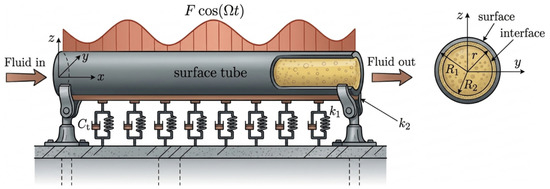
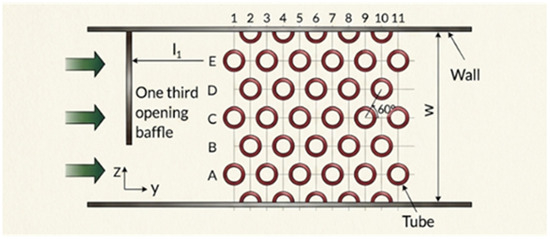
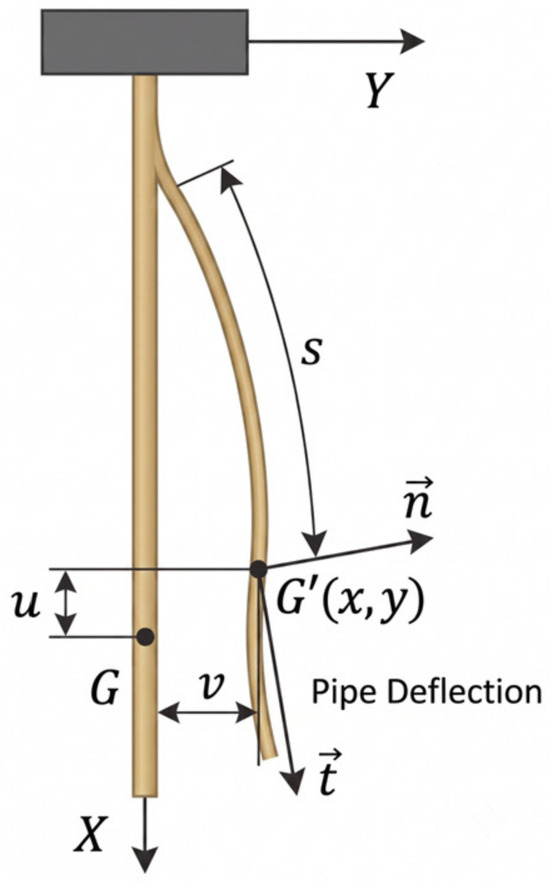
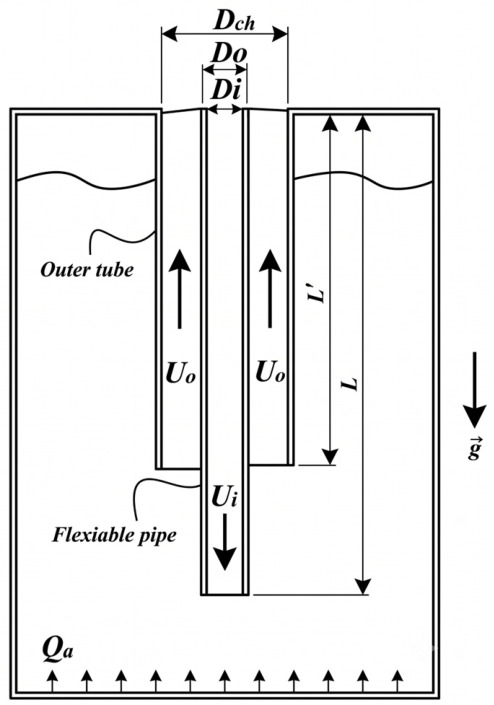
Journal Description
Vibration
Vibration
is a peer-reviewed, open access journal of vibration science and engineering, published quarterly online by MDPI.
- Open Access— free for readers, with article processing charges (APC) paid by authors or their institutions.
- High Visibility: indexed within Scopus, ESCI (Web of Science), and other databases.
- Journal Rank: CiteScore - Q2 (Engineering (miscellaneous))
- Rapid Publication: manuscripts are peer-reviewed and a first decision is provided to authors approximately 17.2 days after submission; acceptance to publication is undertaken in 4.5 days (median values for papers published in this journal in the first half of 2026).
- Recognition of Reviewers: reviewers who provide timely, thorough peer-review reports receive vouchers entitling them to a discount on the APC of their next publication in any MDPI journal, in appreciation of the work done.
- Journal Cluster of Civil Engineering and Built Environment: Acoustics, Architecture, Buildings, CivilEng, Construction Materials, Infrastructures, Intelligent Infrastructure and Construction, NDT and Vibration.
Impact Factor:
2.2 (2025);
5-Year Impact Factor:
2.2 (2025)
Latest Articles
Vibration—Aims and Scope Update
Vibration 2026, 9(3), 49; https://doi.org/10.3390/vibration9030049 - 4 Aug 2026
Abstract
When Vibration was launched in 2018, its Aims and Scope reflected the journal we wanted to build from scratch [...]
Full article
Open AccessArticle
Forced Vibrations of Rotating Annular Discs Under Space-Fixed Point-Force Excitation
by
Hilal Koç, Mertol Tüfekci and Ekrem Tüfekci
Vibration 2026, 9(3), 48; https://doi.org/10.3390/vibration9030048 - 31 Jul 2026
Abstract
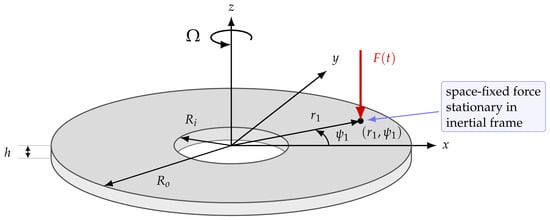
This study investigates the forced transverse vibration of a thin rotating annular disc subjected to time-varying point forces that are fixed in space and act perpendicular to the disc surface. Earlier analytical treatments of this problem have almost always been restricted to a
[...] Read more.
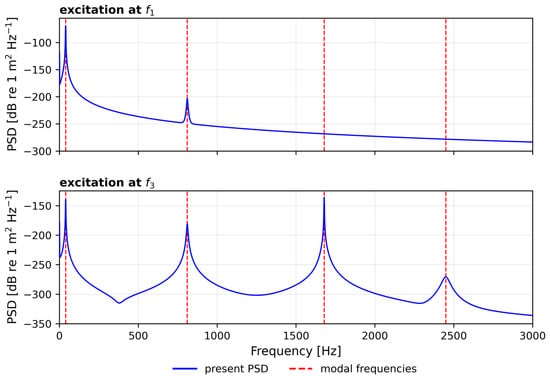
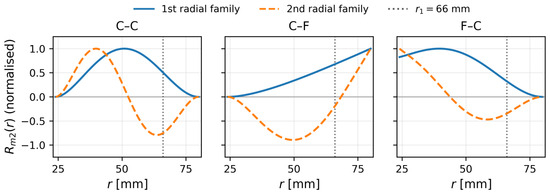
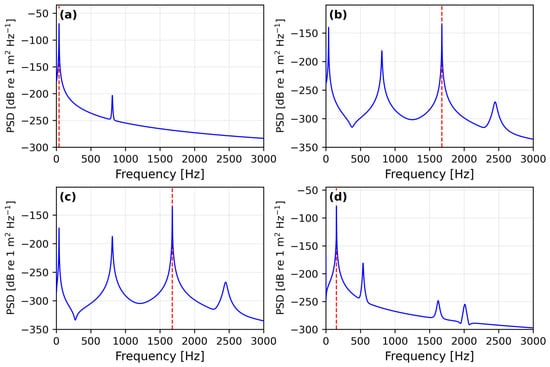
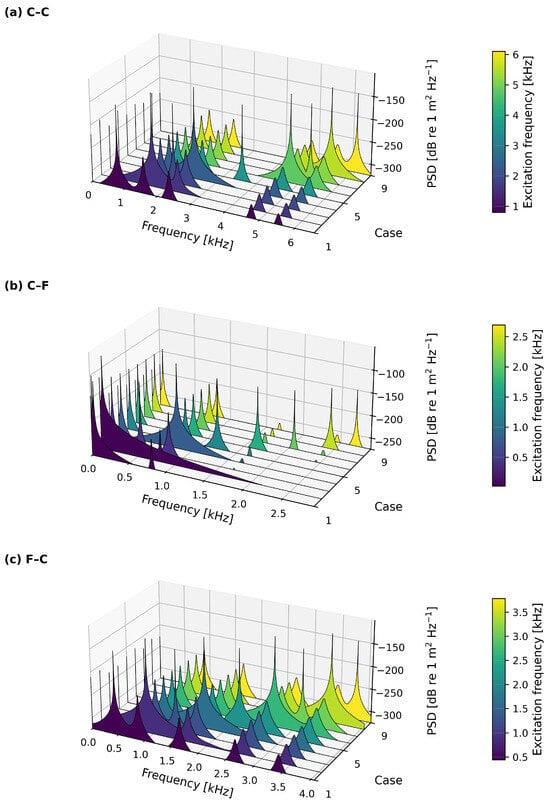
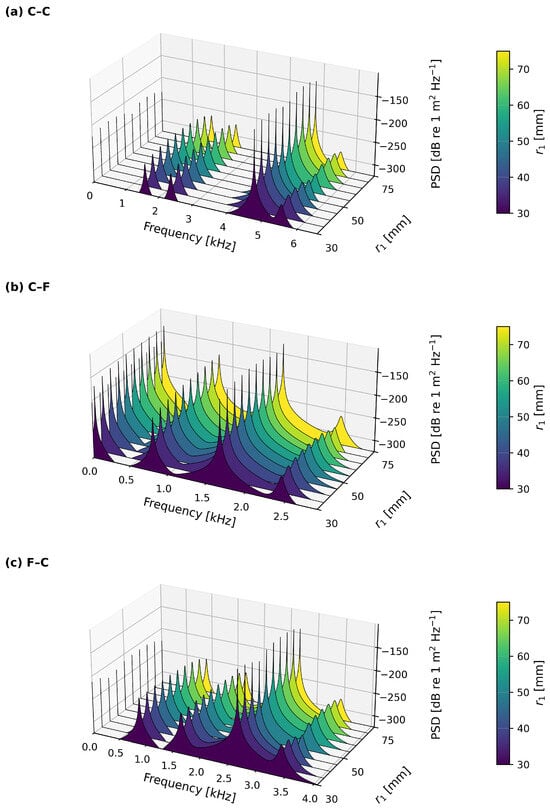
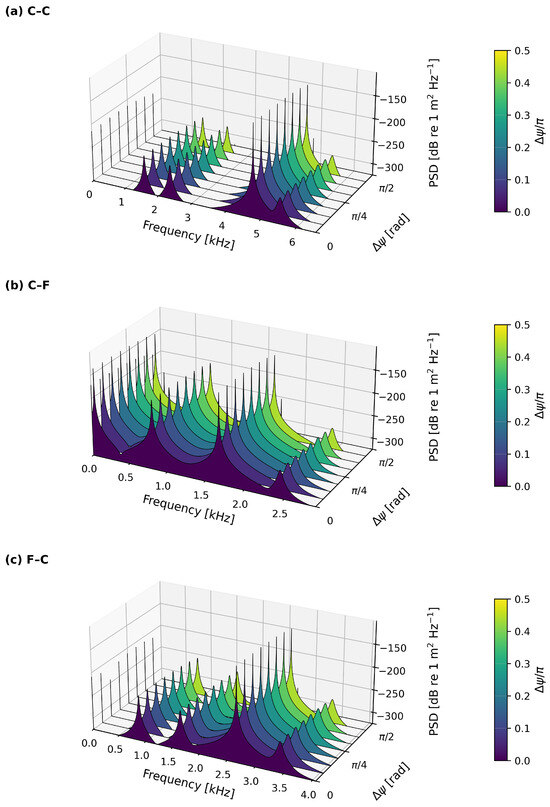
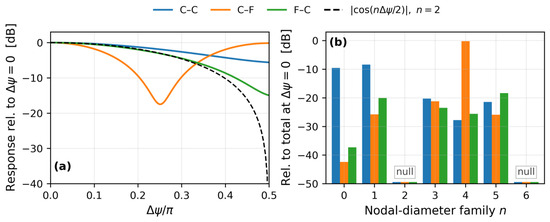
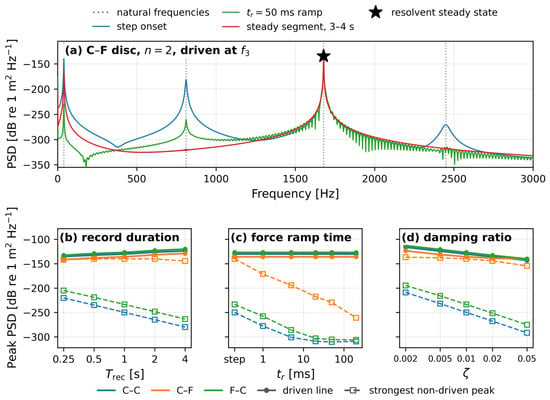
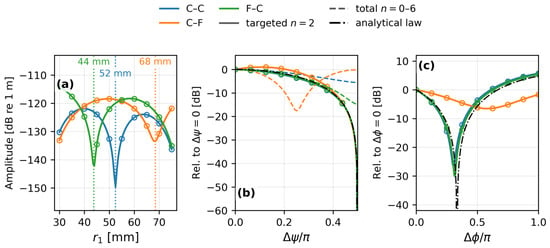
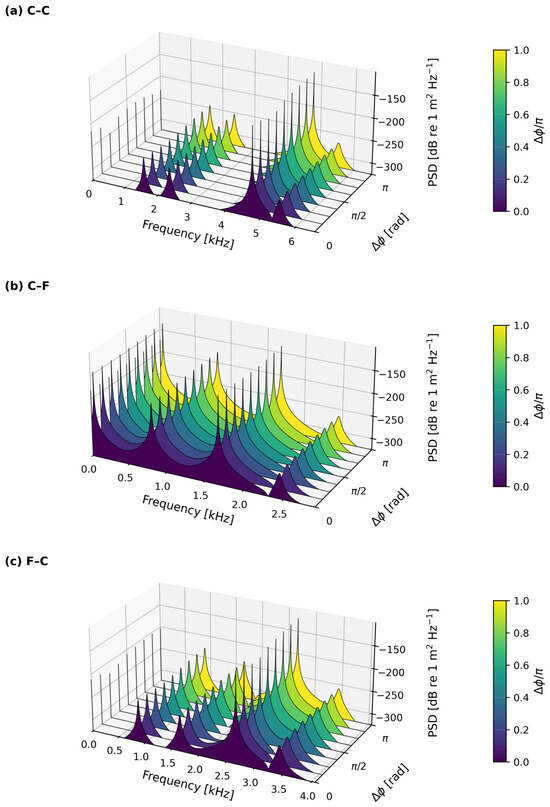
This study investigates the forced transverse vibration of a thin rotating annular disc subjected to time-varying point forces that are fixed in space and act perpendicular to the disc surface. Earlier analytical treatments of this problem have almost always been restricted to a single support condition, most often the clamped–free disc of a hard-disk drive. The boundary conditions of the disc have not been treated as a design variable of the forced response. The contribution of this work is to remove that restriction: the same generalised Galerkin formulation is applied to clamped–clamped, clamped–free and free–clamped rotating annular discs, and the sensitivity of the forced response to the excitation parameters is compared across all three. The governing differential equation, which includes gyroscopic coupling and the membrane stresses induced by rotation, is nondimensionalised and solved by the Galerkin method with polynomial radial trial functions. The modal equations are then integrated in state-space form with light modal damping. The physical transverse response at a fixed observation point is characterised by power spectral density diagrams assembled into waterfall plots, and the corresponding steady-state harmonic responses are obtained in closed form from the frequency-domain resolvent of the same state-space model. The formulation is verified against an independent radial finite-element model for all three boundary conditions and against published rotating clamped–free natural frequencies. The central finding concerns how the excitation parameters act on the response. The excitation frequency, the radial position of a force, and the angular separation and phase of a pair of forces act as largely independent levers. The quantitative sensitivity to each lever, however, is set by the boundary conditions, as is the force placement that minimises a chosen travelling-wave family. The radial position that minimises the excitation of a chosen radial family is governed by the interior node of that mode, which lies at , 68 and 44 mm for the clamped–clamped, clamped–free and free–clamped discs, respectively, and does not in general coincide with a free edge. Angular separation, by contrast, suppresses a nodal-diameter family in a manner that is essentially boundary-condition independent. The parameter dependences are shown to be steady-state properties: the driven spectral line of the finite-duration records reproduces the resolvent solution to within dB.
Full article
(This article belongs to the Special Issue Experimental Measurement and Modeling Techniques of Mechanical Systems)
►▼
Show Figures

Figure 1
Open AccessFeature PaperArticle
Energy Harvesting Based on Piezoelectric Patched Beams Under Moving-Mass Excitation
by
El Mahdi Rhiate, Khawla Gaouzi, Farah Abdoun and Lahcen Azrar
Vibration 2026, 9(3), 47; https://doi.org/10.3390/vibration9030047 - 31 Jul 2026
Abstract
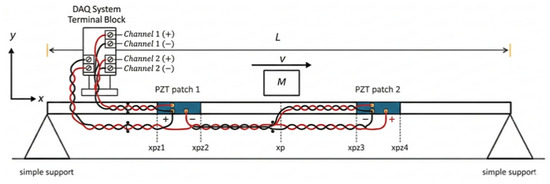
This paper develops a reduced-order electromechanical model for piezoelectric energy harvesting from a beam traversed by a moving mass. The beam is described by the Euler–Bernoulli theory, and the coupled equations of motion are derived through modal expansion combined with the linear piezoelectric
[...] Read more.
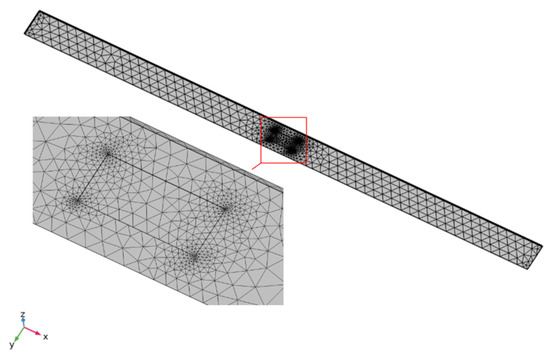
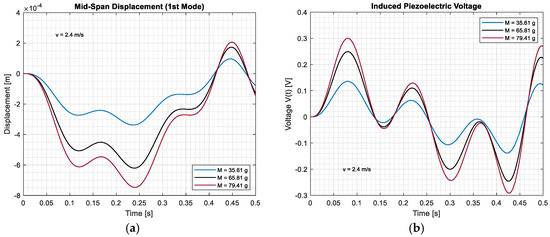
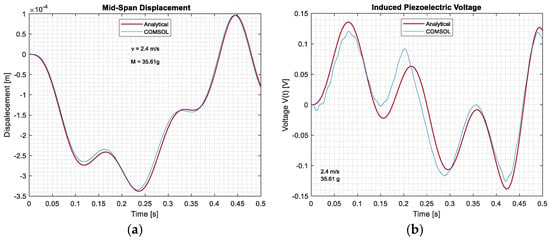
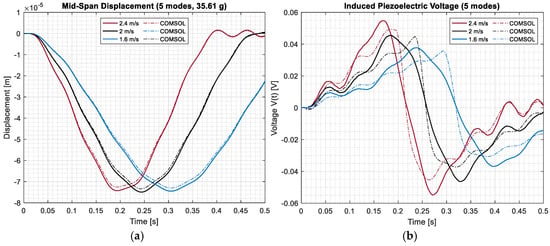
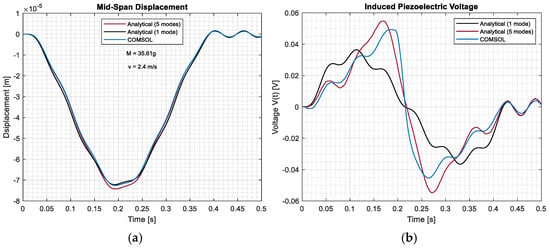
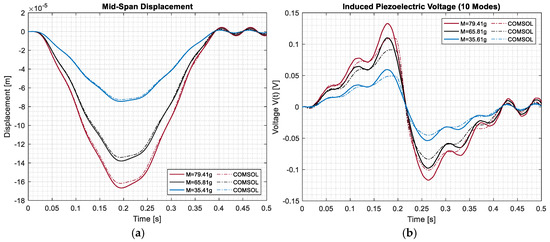
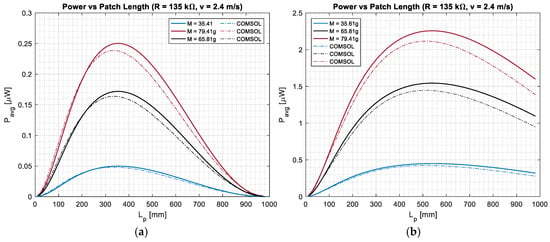
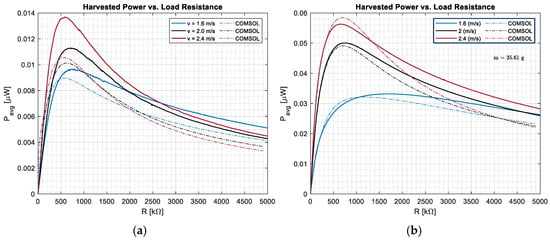
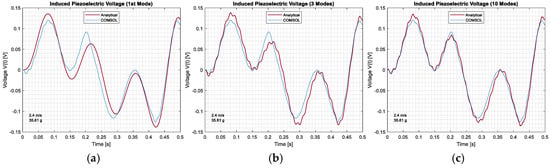
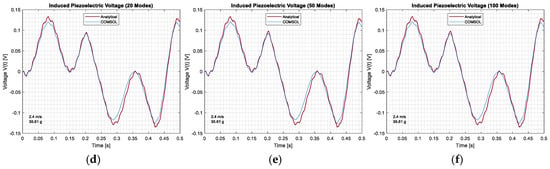
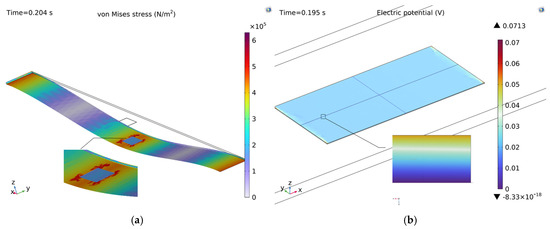
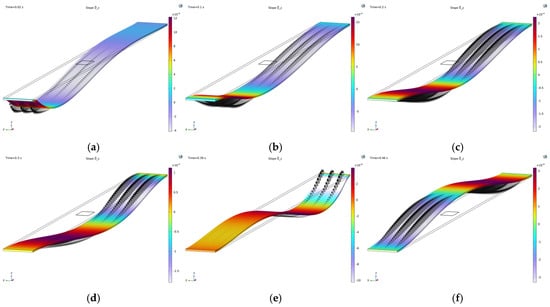
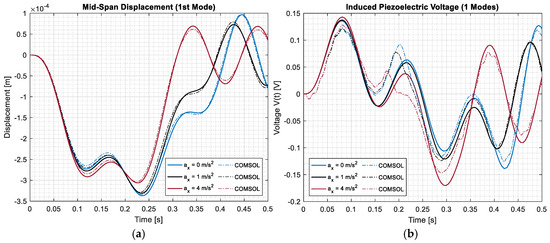
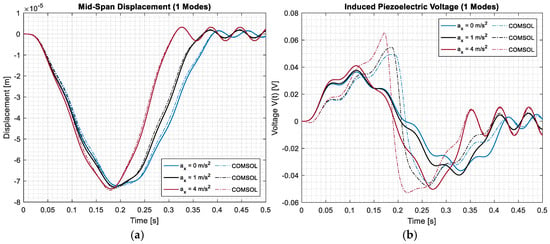
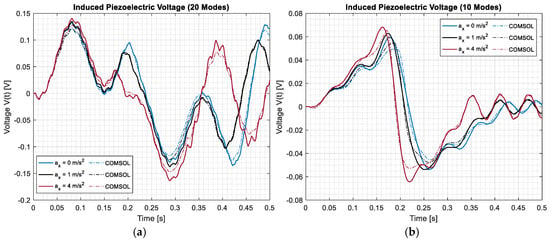
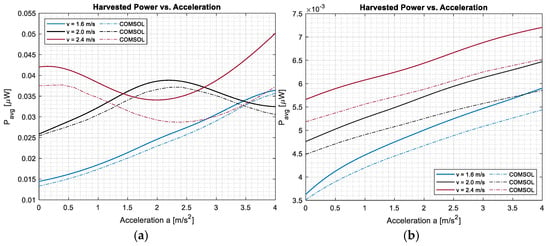
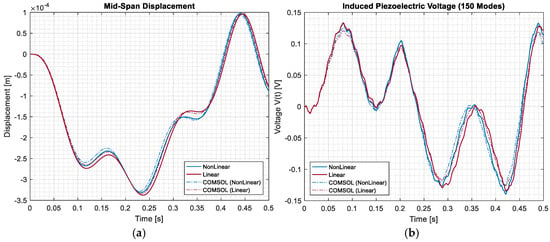
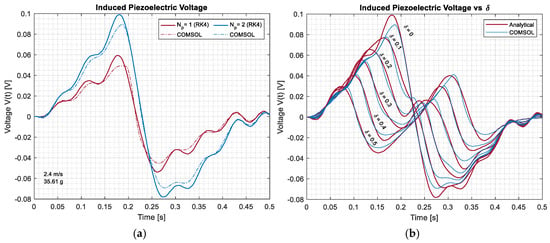
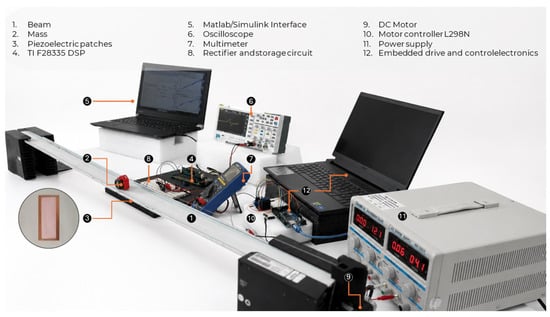
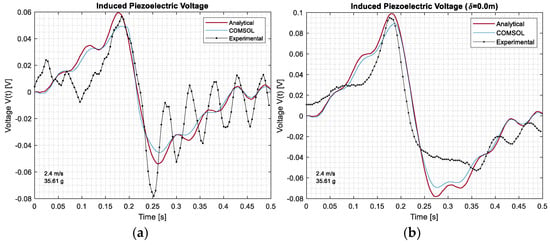
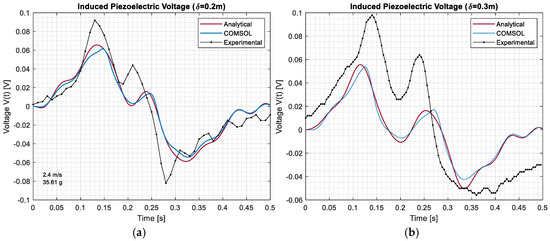
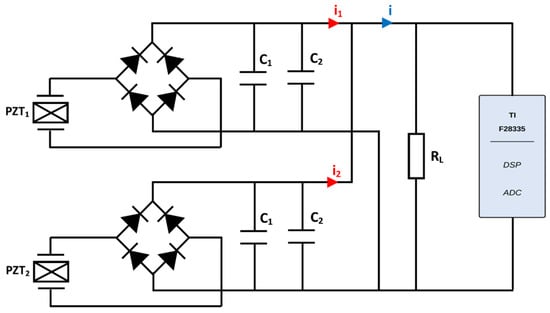
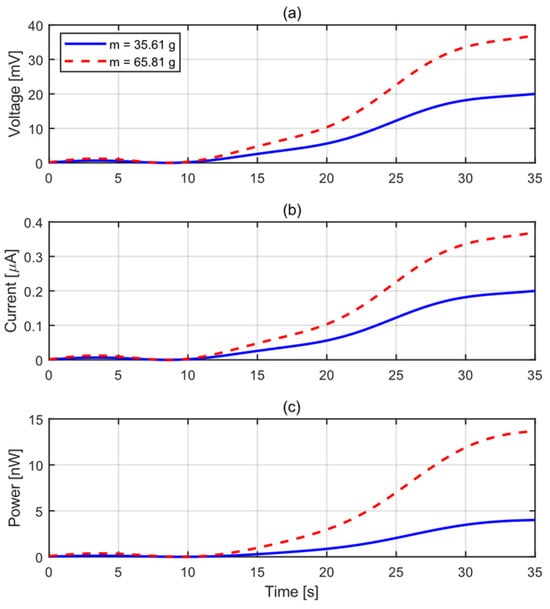
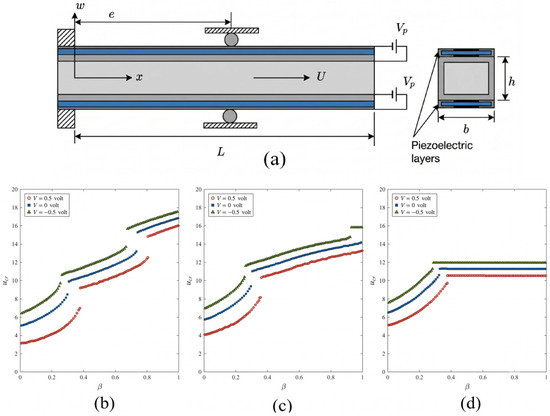
This paper develops a reduced-order electromechanical model for piezoelectric energy harvesting from a beam traversed by a moving mass. The beam is described by the Euler–Bernoulli theory, and the coupled equations of motion are derived through modal expansion combined with the linear piezoelectric constitutive relations. Unlike most existing formulations, the model accounts for non-uniform transit by including moving-mass acceleration, accommodates an arbitrary number of piezoelectric patches distributed along the span, and incorporates von Kármán strain–displacement relations. So, moderately large deflections and mid-plane stretching as well as various boundary conditions may be investigated within the same framework. The resulting coupled nonlinear ordinary differential equations are integrated in time using a numerical solver. On the other hand, predictions of midpoint deflection, output voltage, and harvested power are validated against the COMSOL Multiphysics Finite element model. The experimental setup has been established, and a dedicated laboratory experiment provides additional verification under controlled conditions. Parametric analyses investigating the individual and combined effects of the mass ratio, velocity ratio, acceleration profile, patch length, patch position, number of patches, and external load resistance are elaborated. Distributed multi-patch configurations are shown to recover more energy than a single-centered patch once higher modes contribute appreciably to the response. Design charts relating the governing parameters to the harvested power are constructed for each set of support conditions. These results are intended to assist the preliminary sizing and placement of piezoelectric transducers on some practical energy harvesting applications.
Full article
(This article belongs to the Special Issue Vibration Control and Energy Harvesting Towards Autonomous Structural Systems)
►▼
Show Figures

Figure 1
Open AccessArticle
Modeling Bass Guitar String Vibration with Frequency- and Fret-Dependent Damping for Real-Time Sound Generation
by
Oleksii Vodka, Mariia Shapovalova, Vitalii Ovcharenko and Olena Avdieieva
Vibration 2026, 9(3), 46; https://doi.org/10.3390/vibration9030046 - 29 Jul 2026
Abstract
►▼
Show Figures
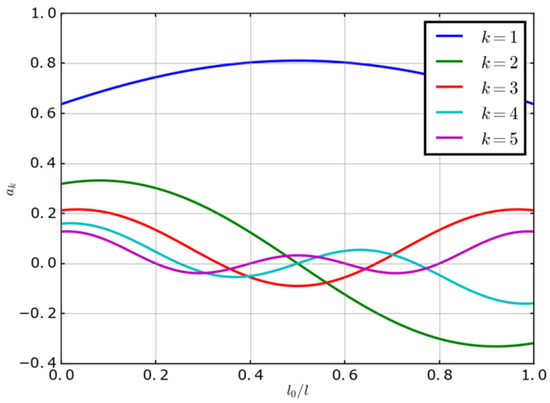
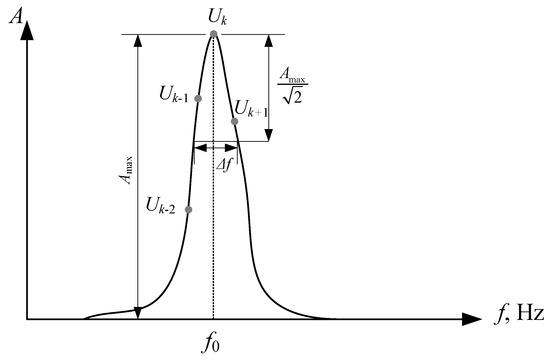
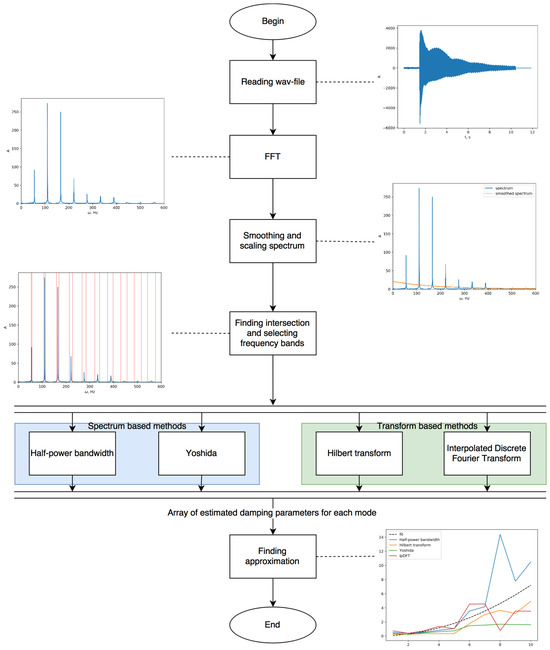
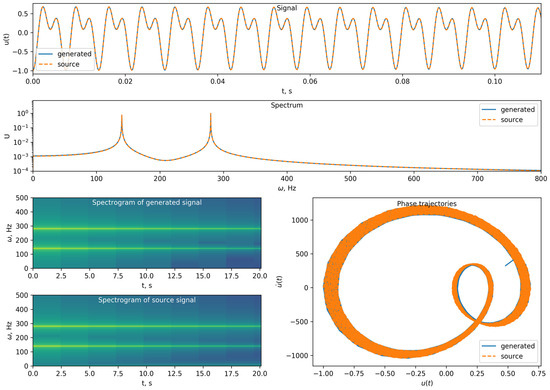
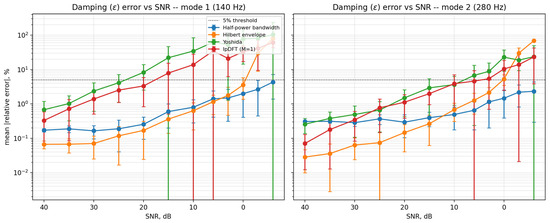
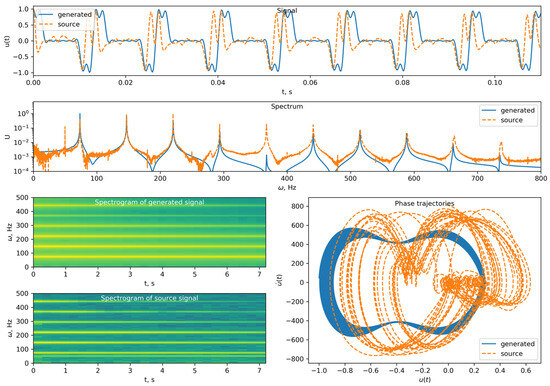
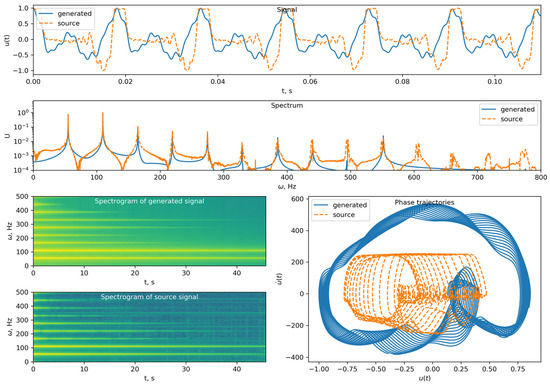
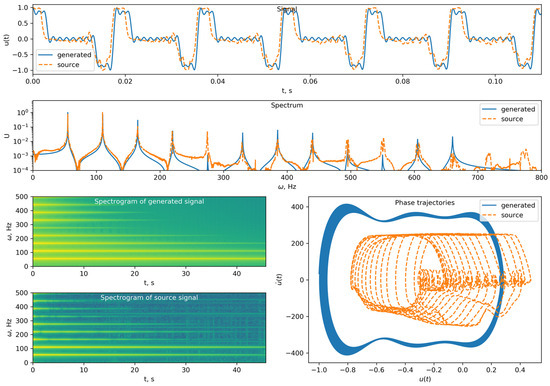
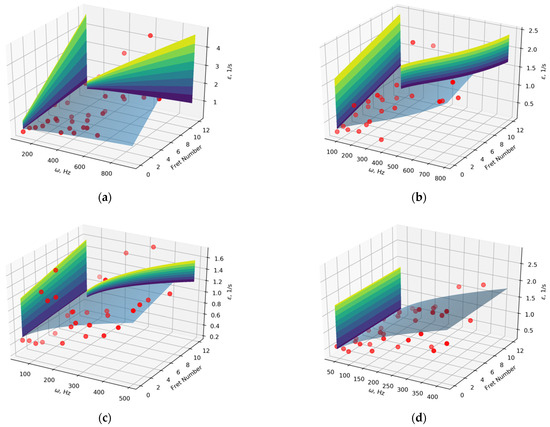
This paper presents a linear mathematical model of bass guitar string vibration with experimentally identified, frequency- and fret-dependent modal damping, aimed at high-fidelity generative sound synthesis. To identify the string damping parameters across various frets and configurations, an experimental framework was developed to
[...] Read more.
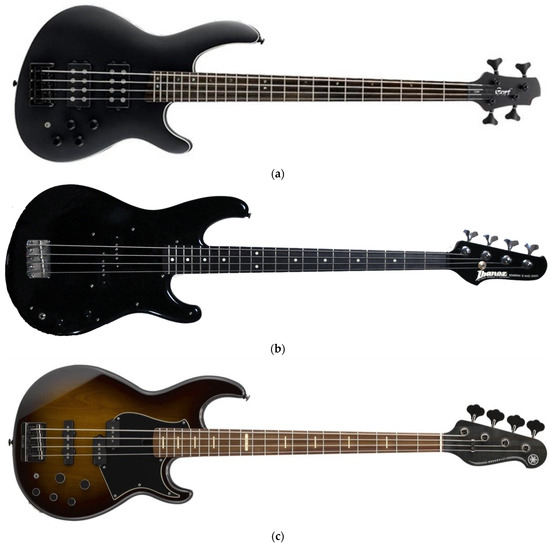
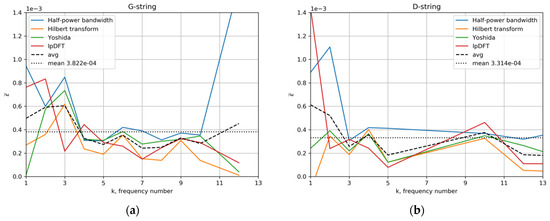
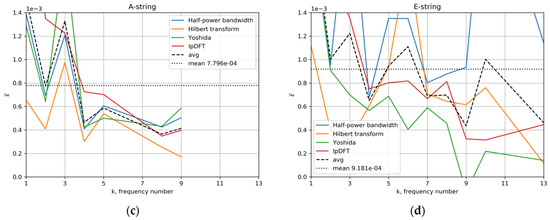
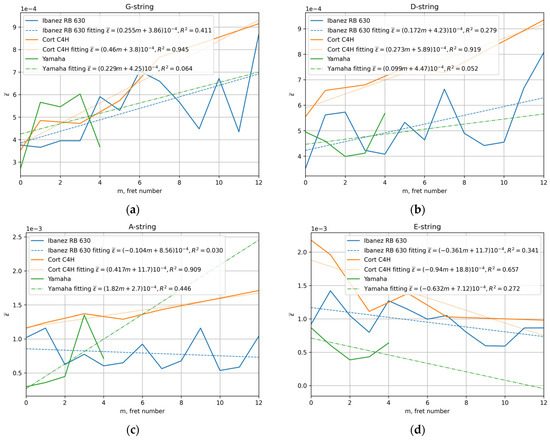
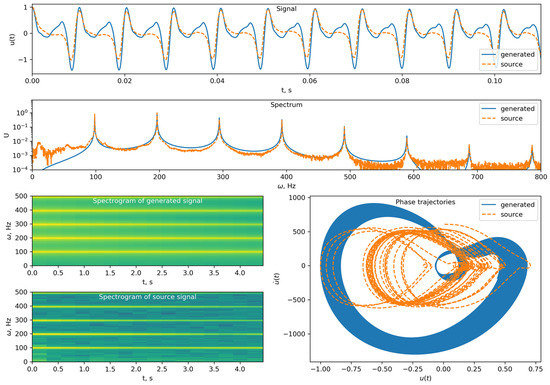
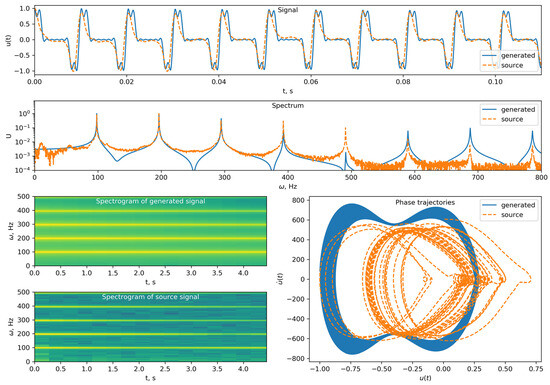
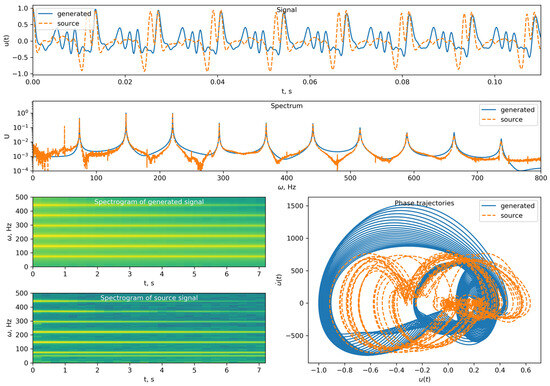
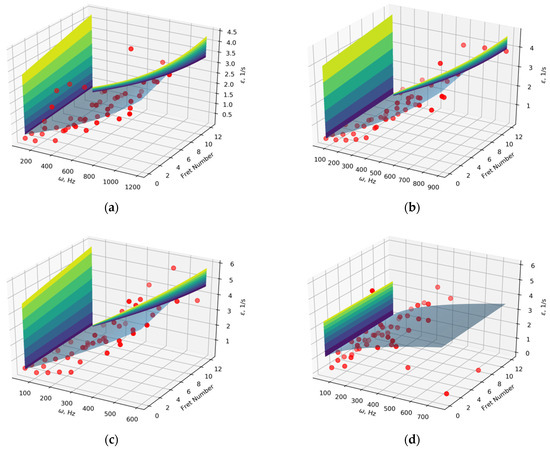
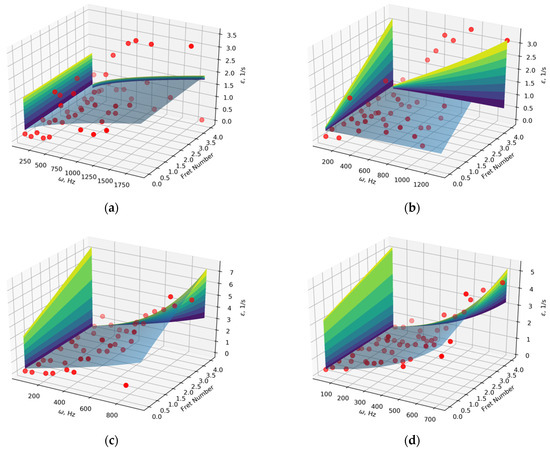
This paper presents a linear mathematical model of bass guitar string vibration with experimentally identified, frequency- and fret-dependent modal damping, aimed at high-fidelity generative sound synthesis. To identify the string damping parameters across various frets and configurations, an experimental framework was developed to benchmark four structural identification methods: half-power bandwidth, I. Yoshida’s method, Discrete Fourier Transform Interpolation, and Hilbert-transform envelope approximation. Experiments were systematically conducted on Cort C4H, Ibanez RB 630, and Yamaha bass guitars. Based on the extracted parameter space, two audio generation strategies are formulated: a spectrum-driven harmonic reconstruction method (Method 1) and a physical modeling approach utilizing spatial wave equations (Method 2). The proposed linear approximation framework effectively captures the inverse relationship between the damping factor and fret numbers specifically on the E-string, while mapping linear increases on the G and D-strings. Quantitative verification using Sobolev norm differences demonstrates good agreement between the synthesized and original signals for the spectrum-driven method (Q = 0.031–0.057) and moderate agreement for the physics-based wave equation method (Q = 0.058–0.153). This reflects a trade-off in which the former achieves tighter spectral convergence, while the latter better preserves the physical, time-domain waveform structure. As both synthesis strategies are closed-form and computationally lightweight, the model is suitable for real-time implementation and the dynamic control of playing techniques (e.g., plucking location and, in principle, slap-type excitation), without relying on heavy, multi-gigabyte audio sample libraries.
Full article

Figure 1
Open AccessArticle
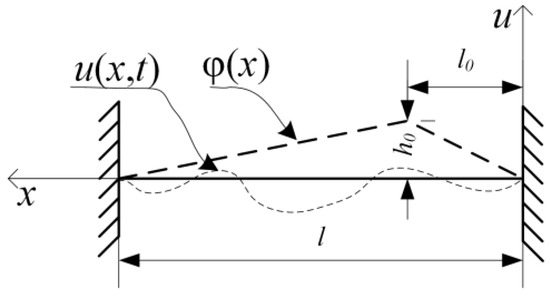
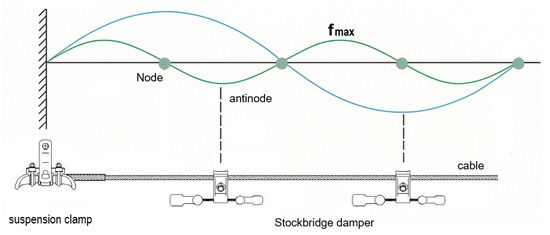
Experimental Study on Factors Affecting the Slippage of Vibration Dampers on Power Transmission Lines Under Aeolian Vibration
by
Longjie Wu, Tianhang Jiang, Hanjie Yuan, Yuxiang Zhu, Jie Yang, Yana Wang, Zhen Li, Yisheng Zhang and Yilin Wang
Vibration 2026, 9(3), 45; https://doi.org/10.3390/vibration9030045 - 22 Jul 2026
Abstract
►▼
Show Figures
The micro-vibration of overhead transmission lines often leads to conductor fatigue and damage to hardware, and the reliability of the connection of vibration dampers is of vital importance. To prevent loosening and detachment during operation, this study investigated the slippage mechanism of vibration
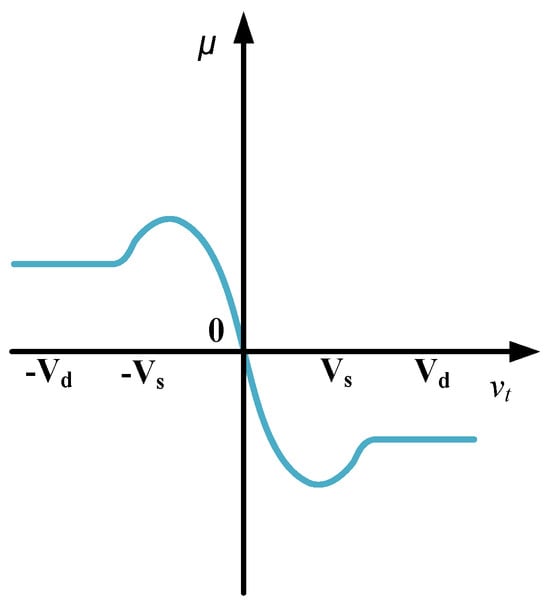
[...] Read more.
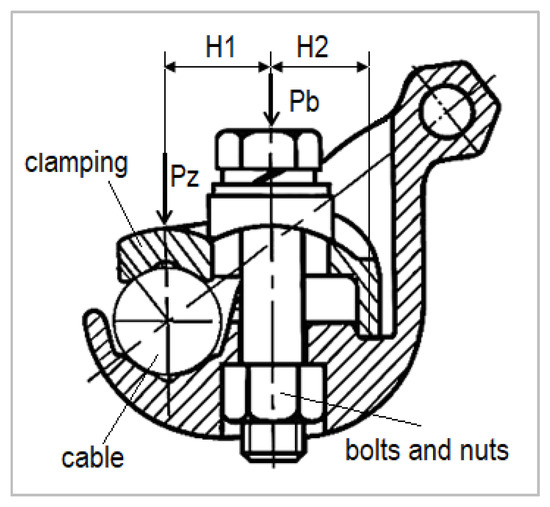
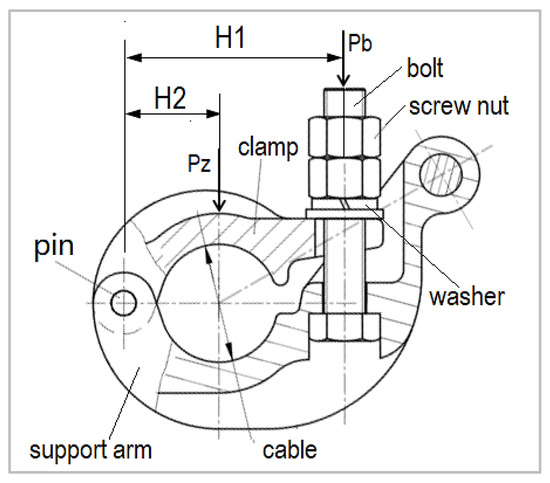
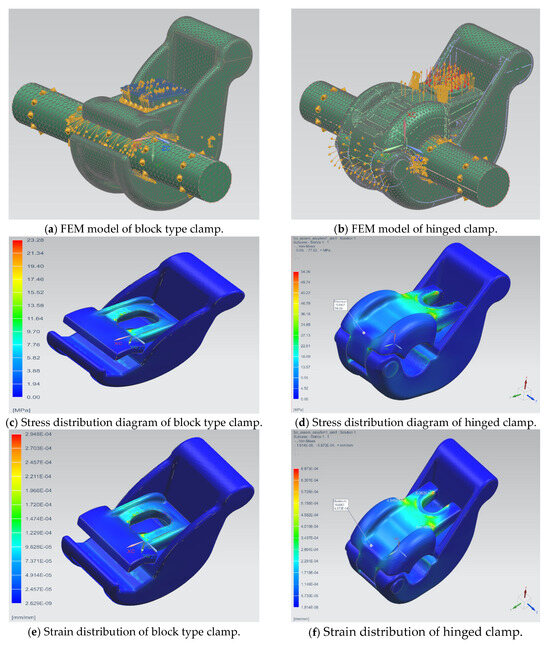
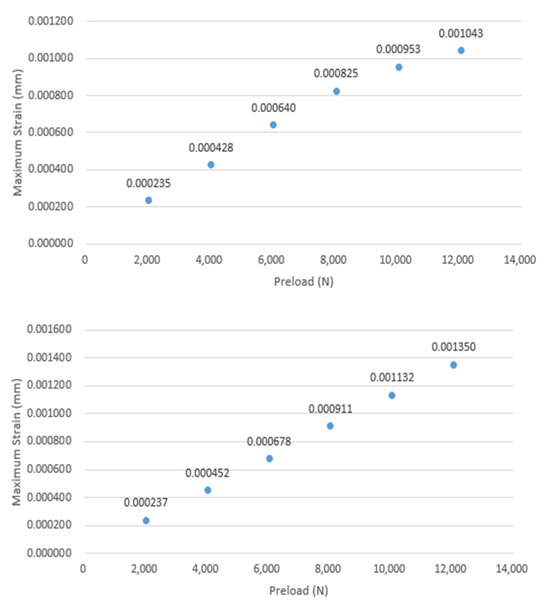
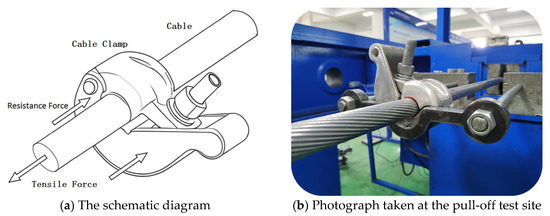
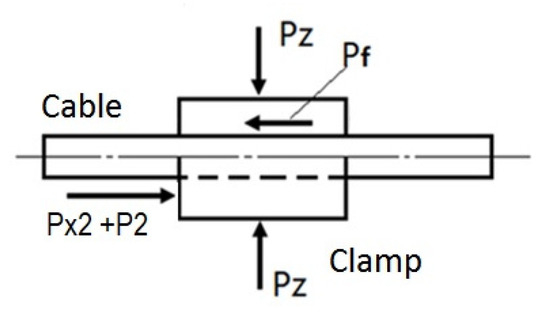
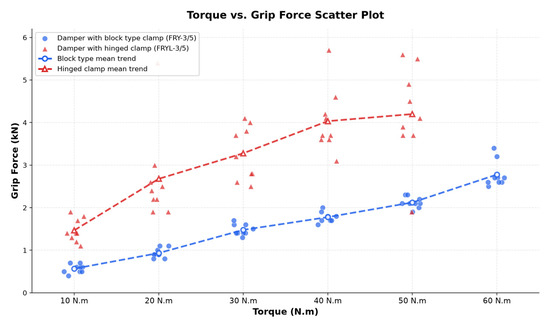
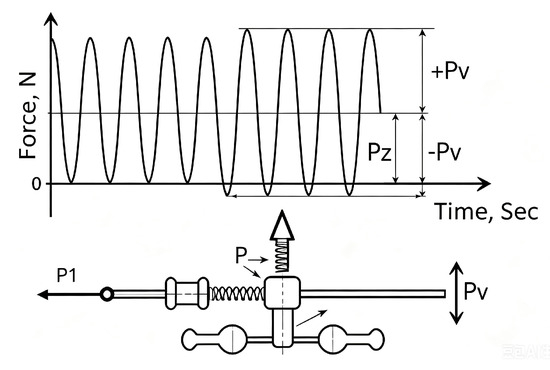
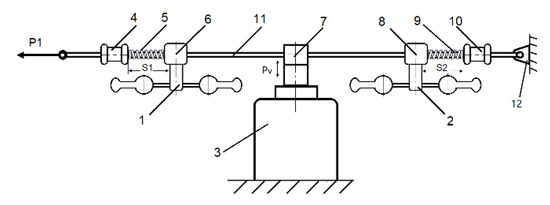
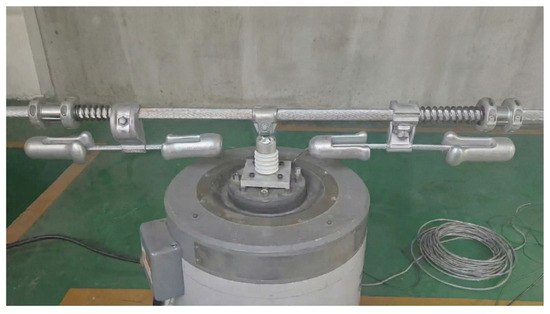
The micro-vibration of overhead transmission lines often leads to conductor fatigue and damage to hardware, and the reliability of the connection of vibration dampers is of vital importance. To prevent loosening and detachment during operation, this study investigated the slippage mechanism of vibration dampers’ wire clamps under dynamic loads. The static friction coefficient was measured through the pull-off force experiment, and the dynamic sliding characteristics of the two types of clamp covers (pressure block type and hinge type) under different vibration conditions were systematically tested. The experiments showed that vibration significantly reduces the dynamic friction force, resulting in a “friction reduction effect”. The pressure block type structure is prone to slip under low tightening torque, while the hinge type structure has excellent anti-loosening performance due to its lever amplification design. The study clarified that the tightening torque, vibration parameters, and structural form are the key influencing factors, providing a basis for the optimization design and installation of anti-vibration dampers.
Full article

Figure 1
Open AccessEditorial
Editorial for the Special Issue of Vibration: Railway Dynamics and Ground-Borne Vibrations
by
Aires Colaço, Hassan Liravi and Pedro Alves Costa
Vibration 2026, 9(3), 44; https://doi.org/10.3390/vibration9030044 - 15 Jul 2026
Abstract
Rapid urbanisation, the demand for efficient mobility, and the need to mitigate climate change are among the major societal challenges of our time [...]
Full article
(This article belongs to the Special Issue Railway Dynamics and Ground-Borne Vibrations)
Open AccessReview
Review on Dynamic Instability and Vibration Mitigation Mechanisms in Metastable Structures
by
Ruixia Ma, Chenchen Xie, Chong Xu, Kai Wu, Wei Wang and Xiwei Xu
Vibration 2026, 9(3), 43; https://doi.org/10.3390/vibration9030043 - 30 Jun 2026
Abstract
►▼
Show Figures
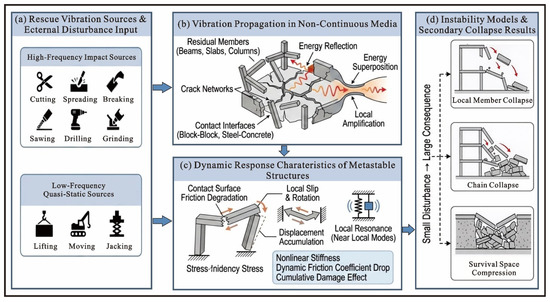
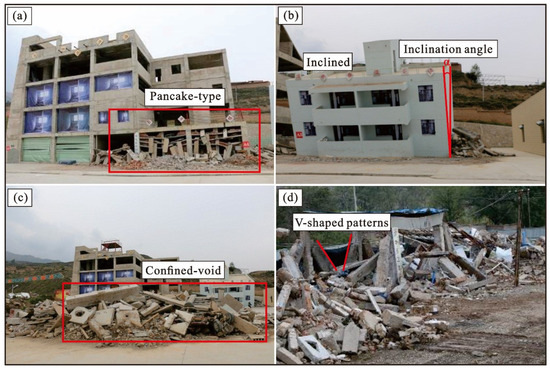
Rescue-induced vibrations easily trigger dynamic instability and secondary collapse of post-disaster metastable structures, threatening rescue safety and efficiency. This paper comprehensively reviews research on vibration-induced instability and dynamic responses and mitigation strategies of these discontinuous structural systems. We analyze vibration propagation, energy concentration
[...] Read more.
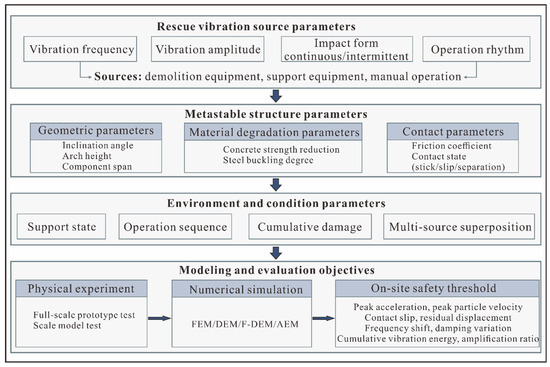
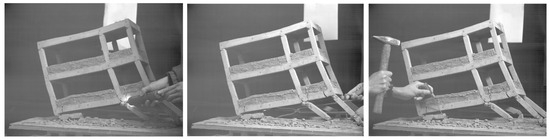
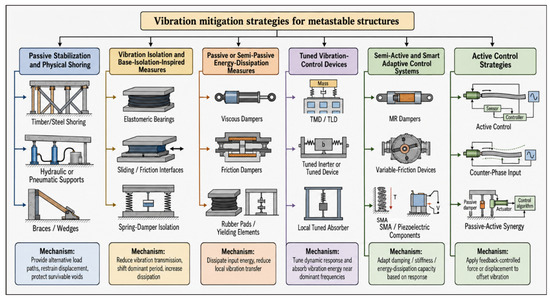
Rescue-induced vibrations easily trigger dynamic instability and secondary collapse of post-disaster metastable structures, threatening rescue safety and efficiency. This paper comprehensively reviews research on vibration-induced instability and dynamic responses and mitigation strategies of these discontinuous structural systems. We analyze vibration propagation, energy concentration and progressive collapse mechanisms, and summarize parameterized modeling, physical tests and mainstream numerical methods including FEM, DEM and F-DEM, with their pros and cons compared. Typical vibration-mitigation technologies such as passive support, damping reinforcement, and semi-active and active control are classified and discussed, and nonlinear energy sinks as well as anti-phase control are elaborated on. Validation studies in rescue-training bases are also presented. Finally, the study is synthesized to clarify the interconnections among dynamic monitoring, structural modeling, and vibration mitigation. This review-derived synthesis identifies current knowledge gaps and outlines future research directions for rescue-oriented dynamic safety assessment. This review provides theoretical and engineering references for safe disaster rescue.
Full article

Figure 1
Open AccessArticle
Ground-Borne Vibration Prediction in a Metro Depot Using Hybrid Train-Soil-Pile-Structure Interactions
by
Ziyu Tao, James A. Moore, Masoud Sanayei and Said Bolourchi
Vibration 2026, 9(2), 42; https://doi.org/10.3390/vibration9020042 - 17 Jun 2026
Abstract
Train-induced ground vibrations can propagate into pile foundations, potentially causing undesirable vibration in nearby buildings, laboratories housing vibration-sensitive equipment, and manufacturing facilities for high-precision processes. This paper presents an innovative method for predicting building vibration from free-field ground vibration measurements at locations away
[...] Read more.
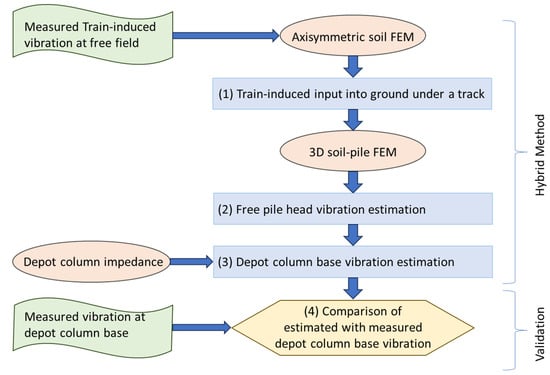
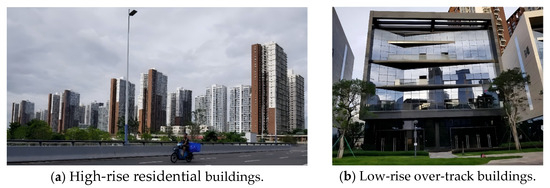
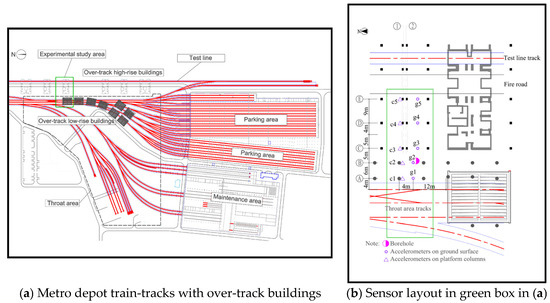
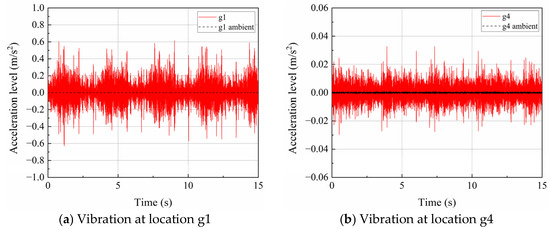
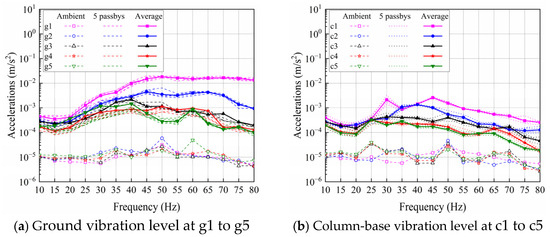
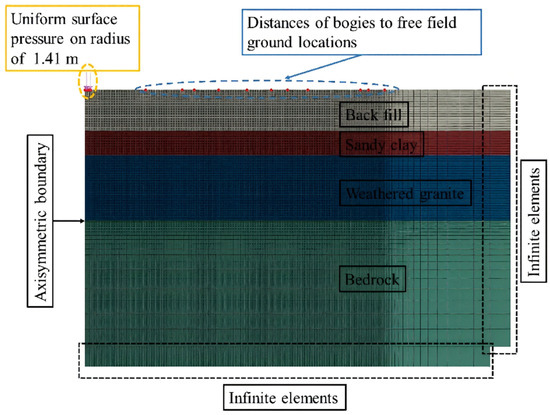
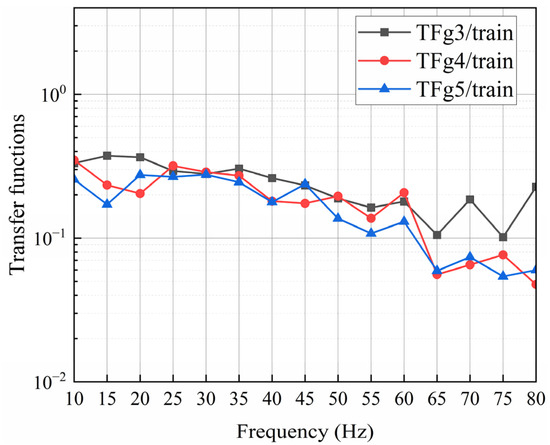
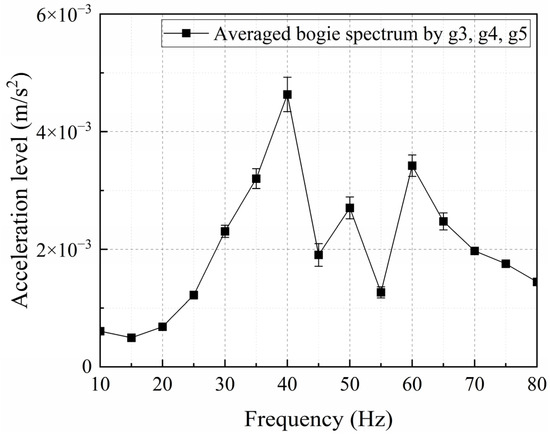
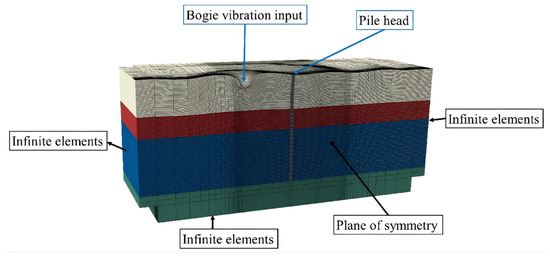
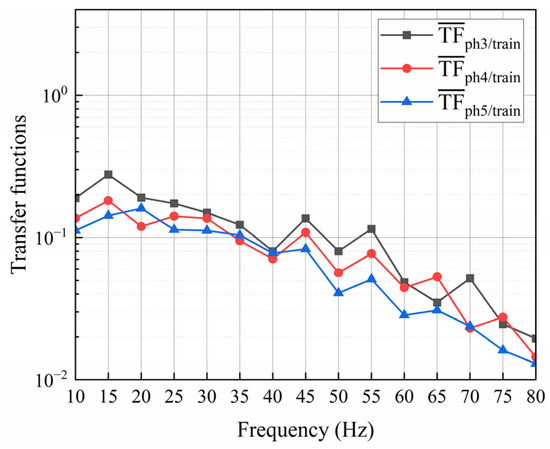
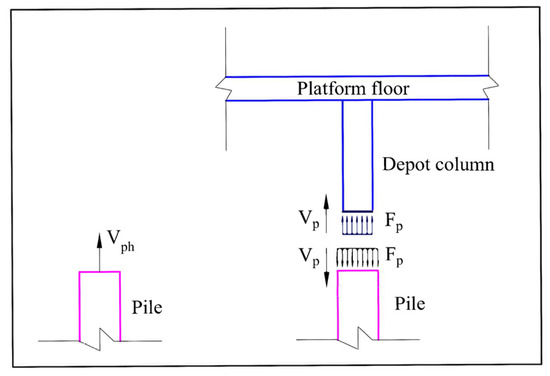
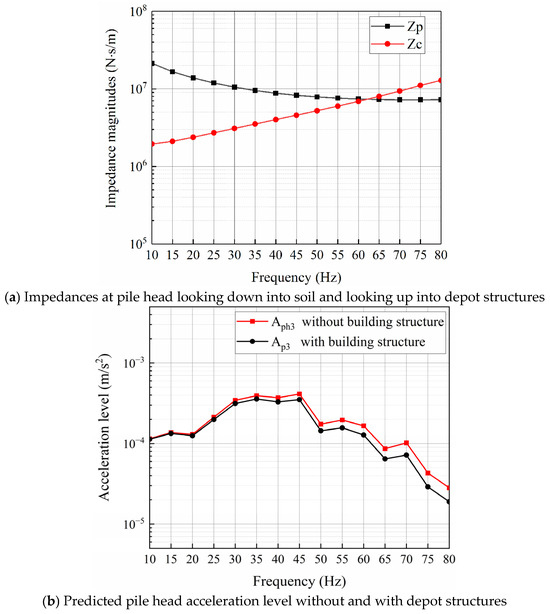
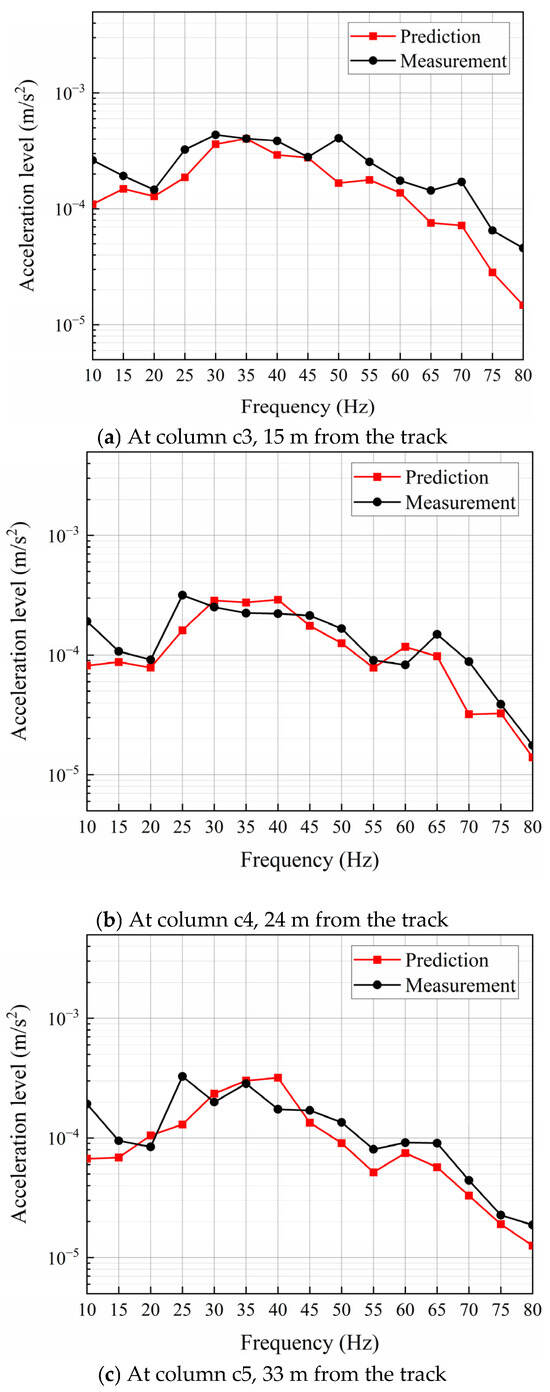
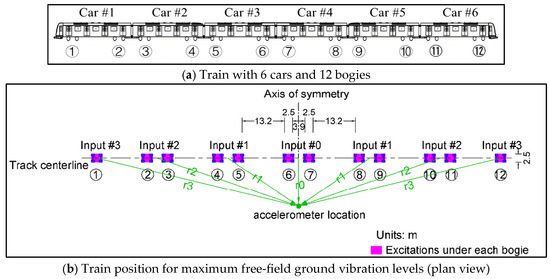
Train-induced ground vibrations can propagate into pile foundations, potentially causing undesirable vibration in nearby buildings, laboratories housing vibration-sensitive equipment, and manufacturing facilities for high-precision processes. This paper presents an innovative method for predicting building vibration from free-field ground vibration measurements at locations away from the tracks during train pass-bys. The proposed method accounts for site-specific soil profiles and train-soil-pile-structure interactions and is implemented in four steps. In Step 1, train-induced vibration transmission into the ground is estimated using an axisymmetric finite element model that simulates wave propagation through layered soils from the tracks to free-field ground locations. Step 2 estimates free pile head vibration using a three-dimensional finite-element model that captures the ground-borne transmission of track inputs through soil layers to the pile. Step 3 estimates vibration at the junction of the pile head and depot column base using a finite-element model to estimate the pile head impedance and an analytical impedance model for the depot structures supported by the pile. In Step 4, estimates of column-base vibration that transmits into over-track buildings are compared to measured column-base vibration levels obtained during train pass-bys. The method was applied at a metro depot in China, where tracks were in close proximity to columns supporting over-track buildings. Ground and column base vibration levels were measured during multiple train pass-bys. The estimated vibration levels at the base of depot columns closely agreed with the measured vibration levels at the columns during six-car train pass-bys. It demonstrated the potential effectiveness of this hybrid method for assessing vibration transmission into structures atop existing railway tracks. By integrating field measurements, finite element simulations, and analytical impedance models, the proposed hybrid method provides a framework for evaluating the transmission of the train-induced vibration to nearby building structures.
Full article
(This article belongs to the Special Issue Railway Dynamics and Ground-Borne Vibrations)
►▼
Show Figures

Figure 1
Open AccessArticle
Research on the Influence of Gravity Environment on Thermally Induced Vibration of Large-Scale Space Structures
by
Qiang Wei, Heng Zhong, Chao Fan, Yanqiang Bi and Hongye Zhang
Vibration 2026, 9(2), 41; https://doi.org/10.3390/vibration9020041 - 15 Jun 2026
Abstract
►▼
Show Figures
Spacecraft are evolving toward larger scales and higher performance, enabling widespread application of sophisticated space structures such as space antennas and flexible solar arrays. Such structures may experience thermally induced vibration (TIV) due to the influence of sudden solar radiation heat flows when
[...] Read more.
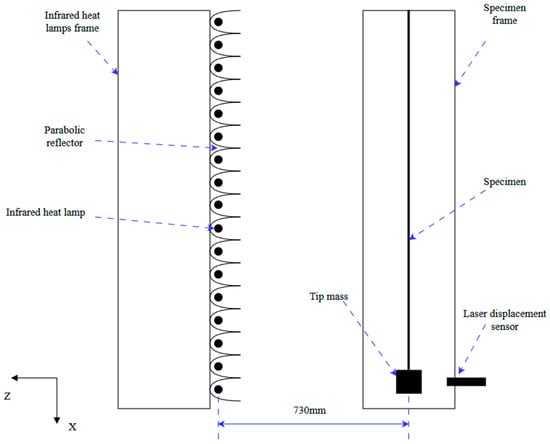
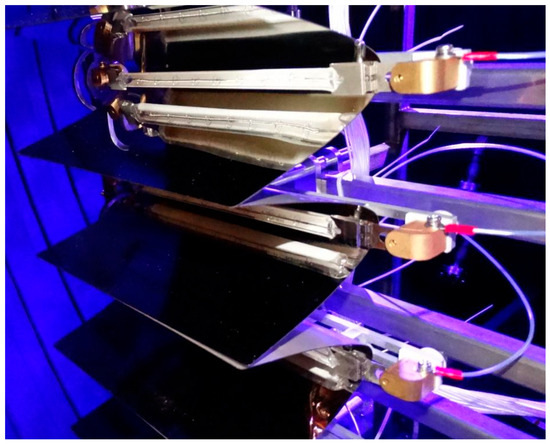
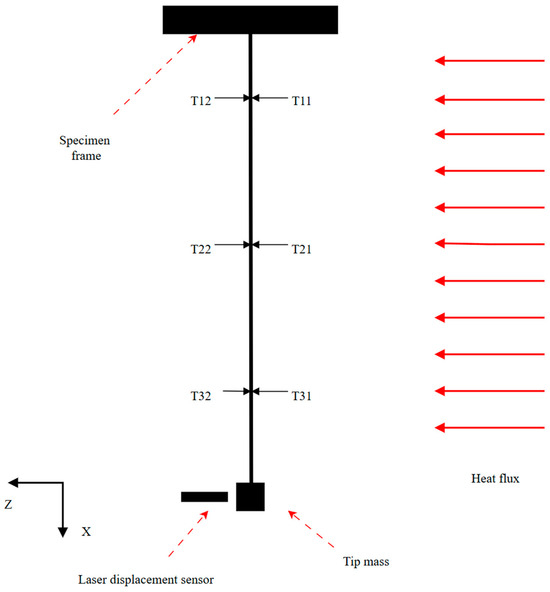
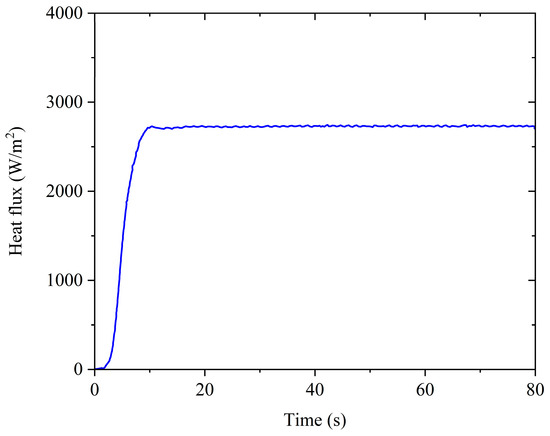
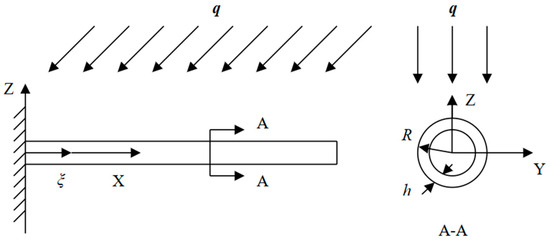
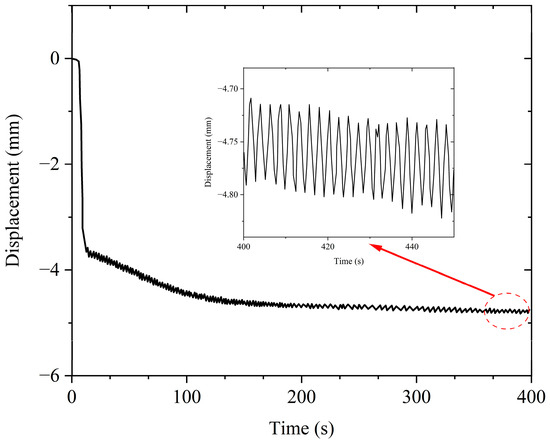
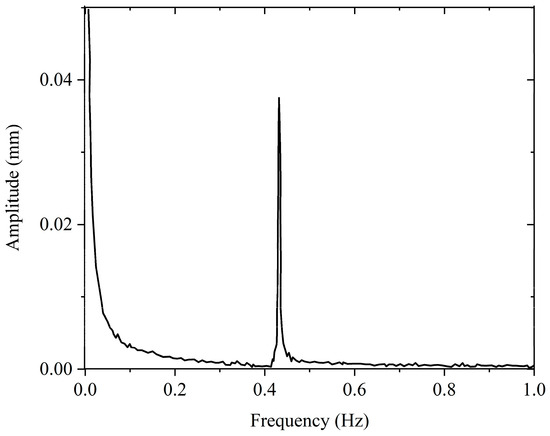
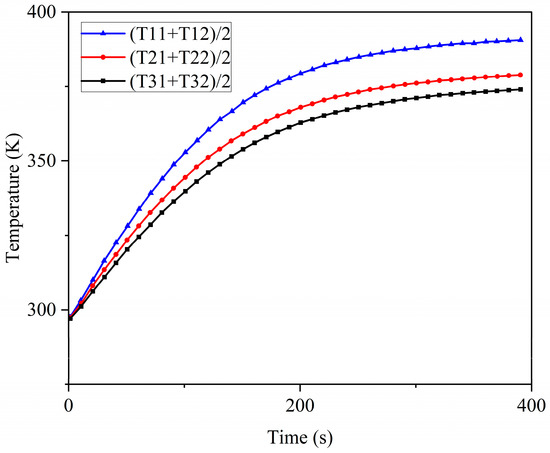
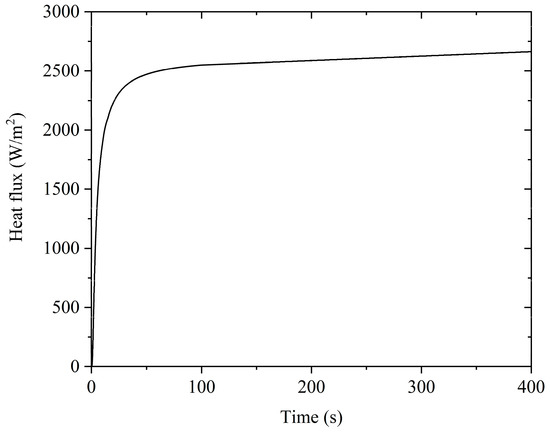
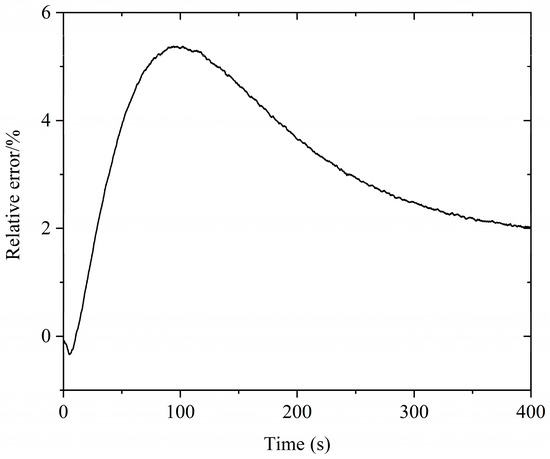
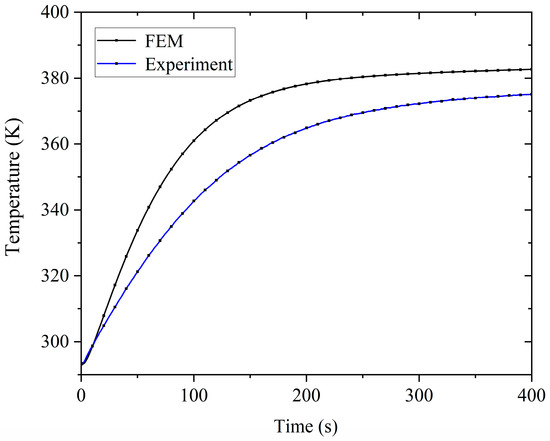
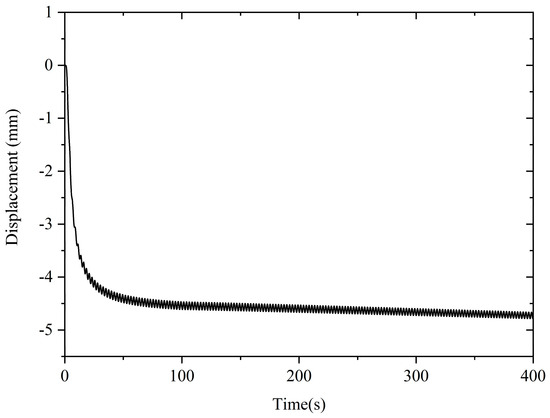
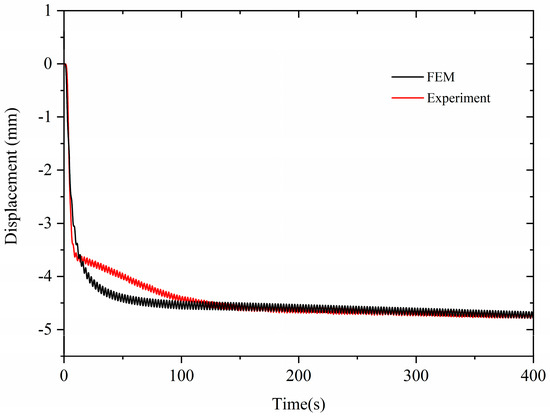
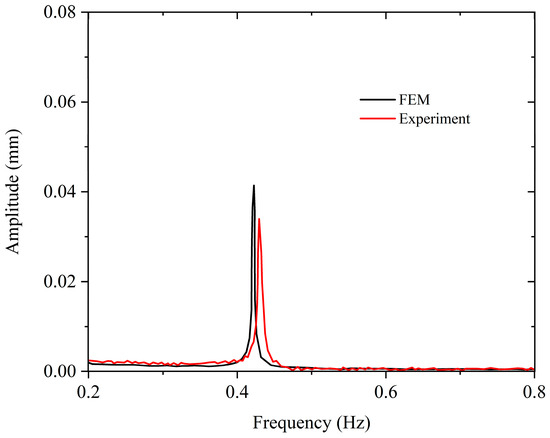
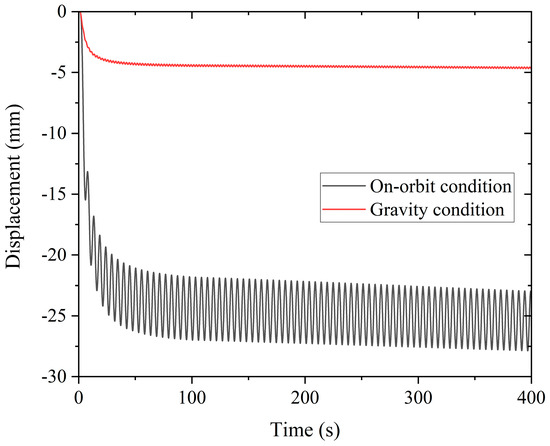
Spacecraft are evolving toward larger scales and higher performance, enabling widespread application of sophisticated space structures such as space antennas and flexible solar arrays. Such structures may experience thermally induced vibration (TIV) due to the influence of sudden solar radiation heat flows when it enters and leaves the Earth’s shadow in orbit. This paper focuses on a space thin-walled tube structure as the test specimen, and conducts ground-based TIV experiments in a vacuum environment, comparing the results with numerical simulations. The numerical simulation results for various key parameters show good agreement with the experimental data. The relative errors of average temperature, quasi-static displacement, and vibration frequency are approximately 5%, while the relative error of vibration amplitude is around 10%. Leveraging the validated numerical model, this study further investigates the influence of gravity on the TIV of large space structures. The results indicate that the TIV response amplitude under orbital conditions is significantly larger than that obtained from ground-based experiments.
Full article

Figure 1
Open AccessReview
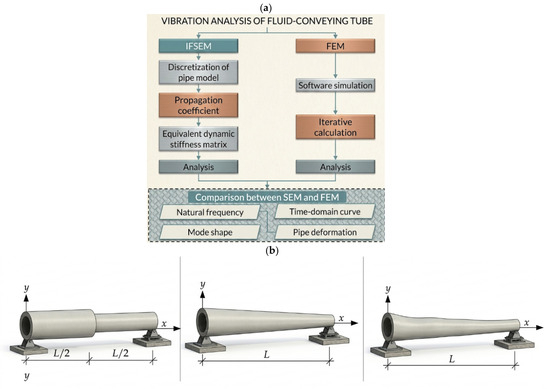
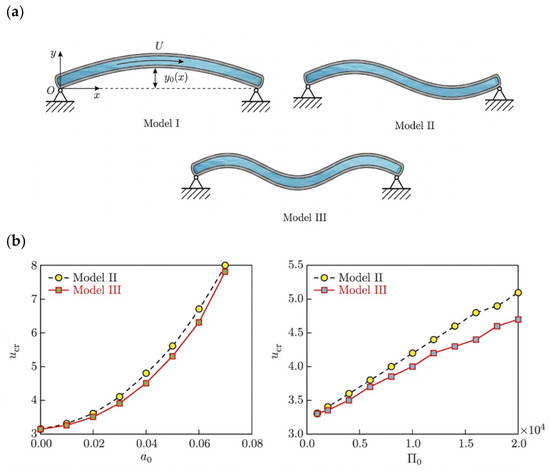
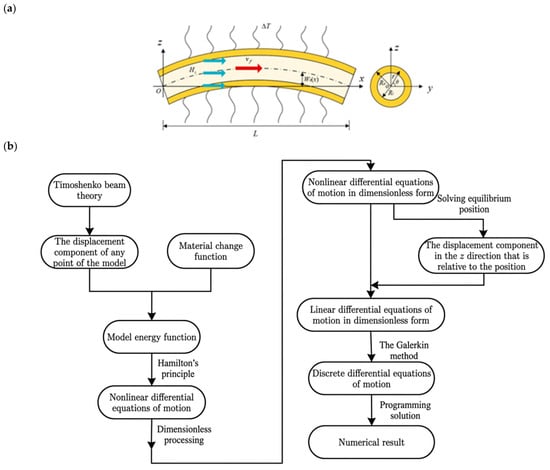
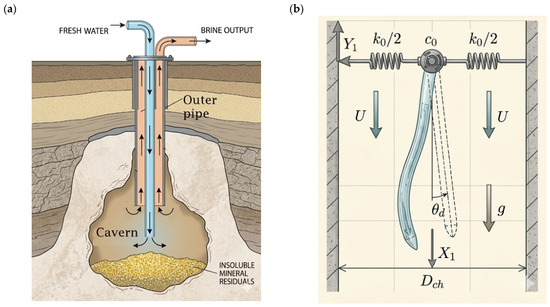
Advances in the Dynamics of Pipes Conveying Fluids: A Review
by
Tamer A. El-Sayed, Moustafa S. Taima, Fady E. Shoukry and Mohamed M. Z. Ahmed
Vibration 2026, 9(2), 40; https://doi.org/10.3390/vibration9020040 - 8 Jun 2026
Abstract
►▼
Show Figures
Pipes conveying fluids are important fluid–structure interaction systems encountered in aerospace, energy, marine, and industrial applications. Their dynamic behavior is strongly influenced by the interaction between structural motion and internal or external flow, leading to complex phenomena such as divergence, flutter, and flow-induced
[...] Read more.
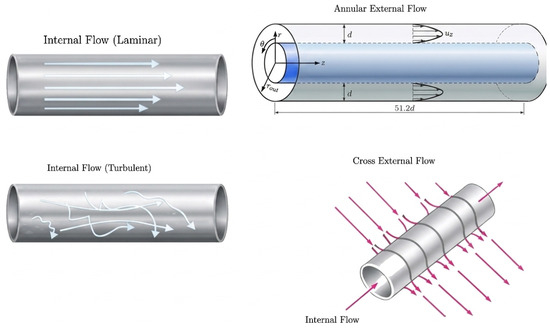
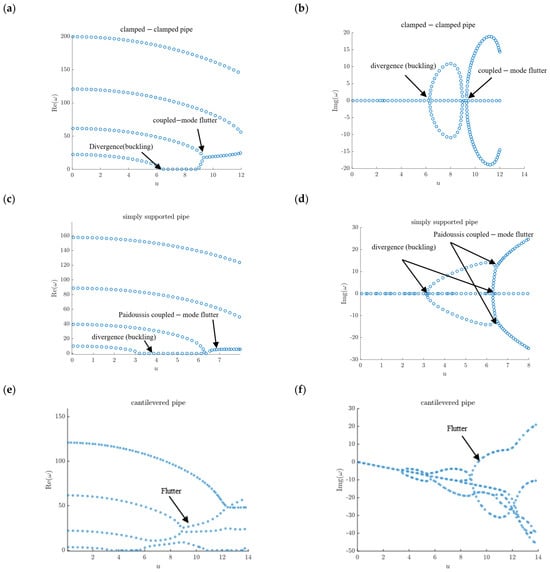
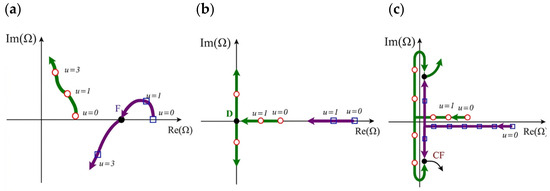
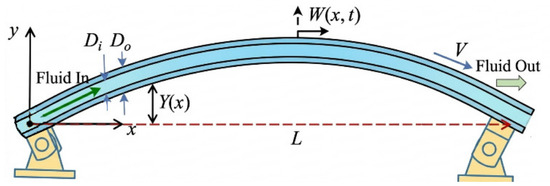
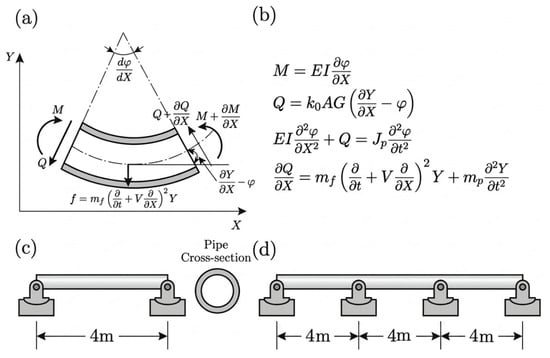
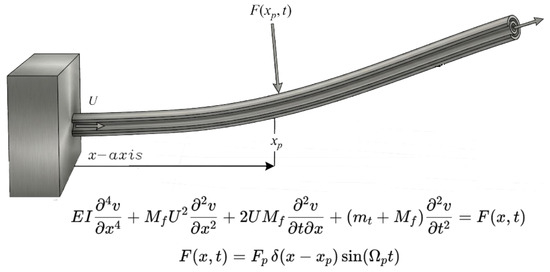
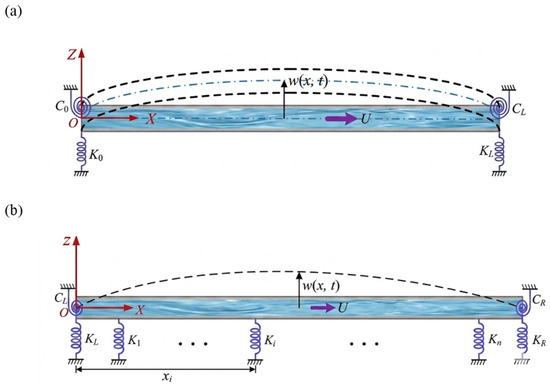
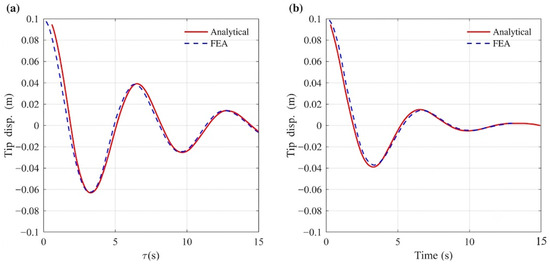
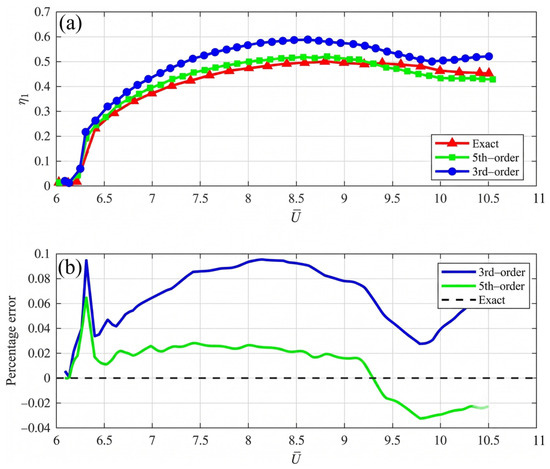
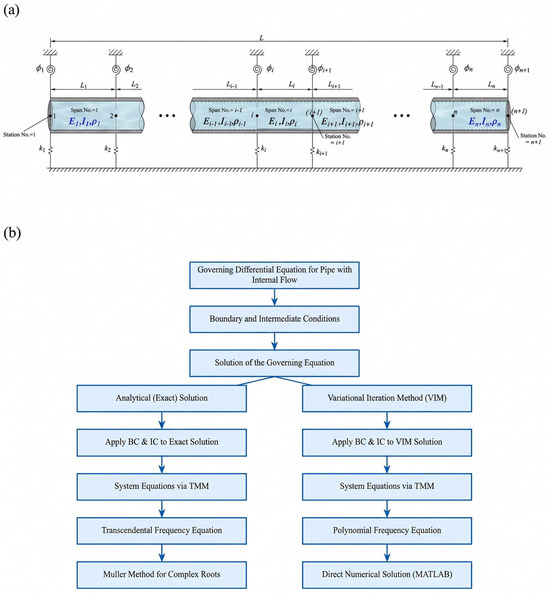
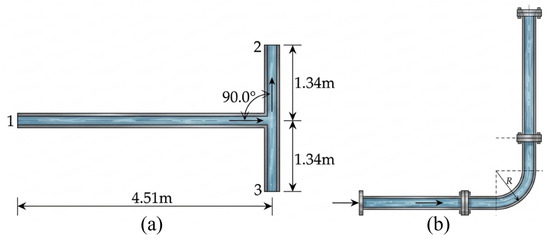
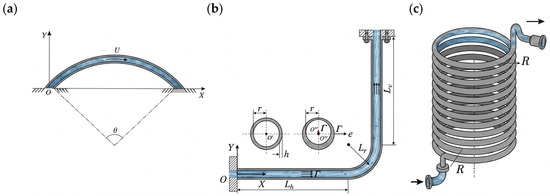
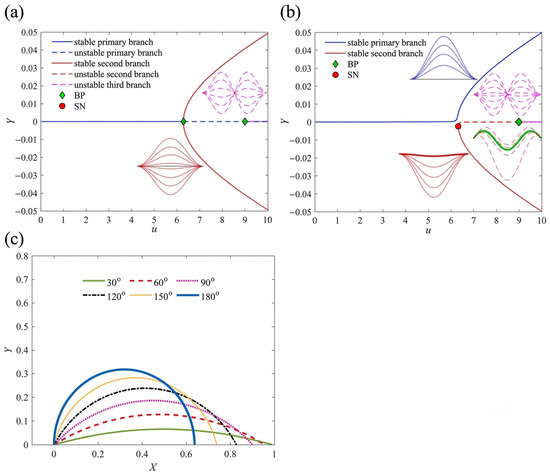
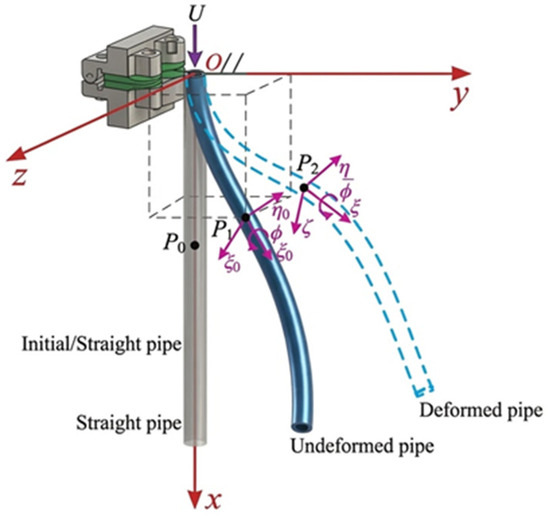
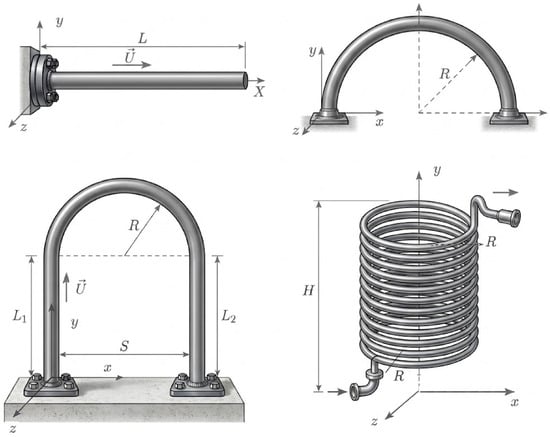
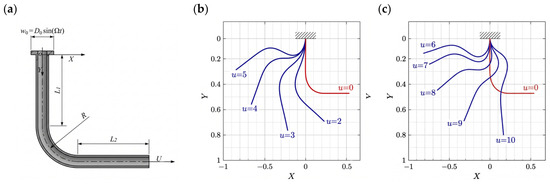
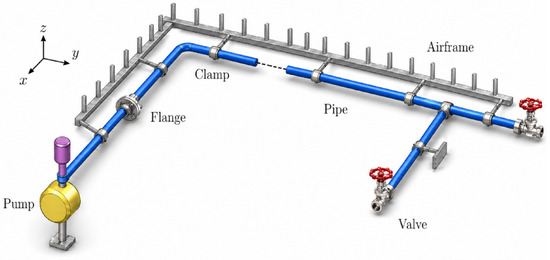
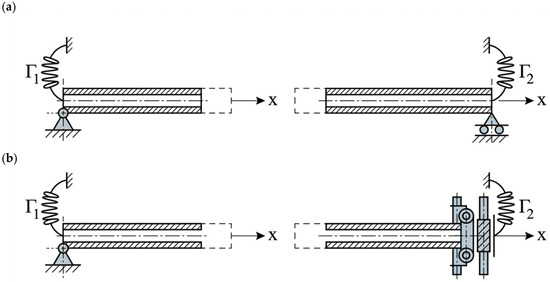
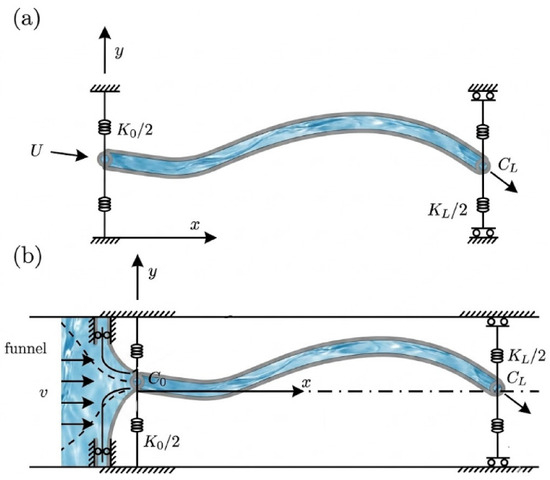
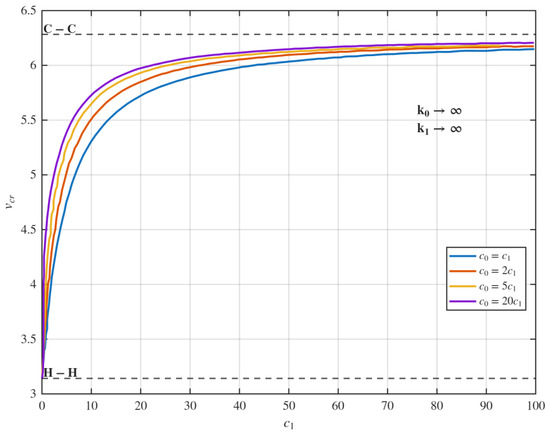
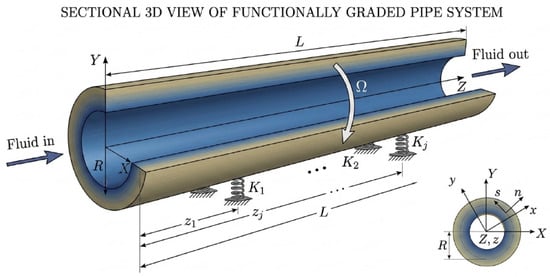
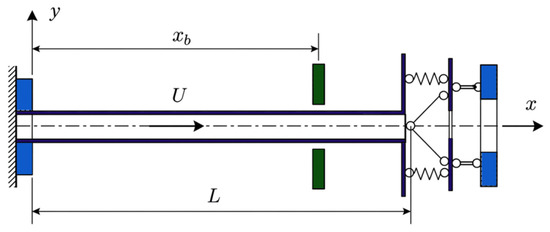
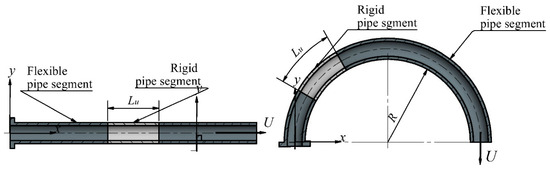
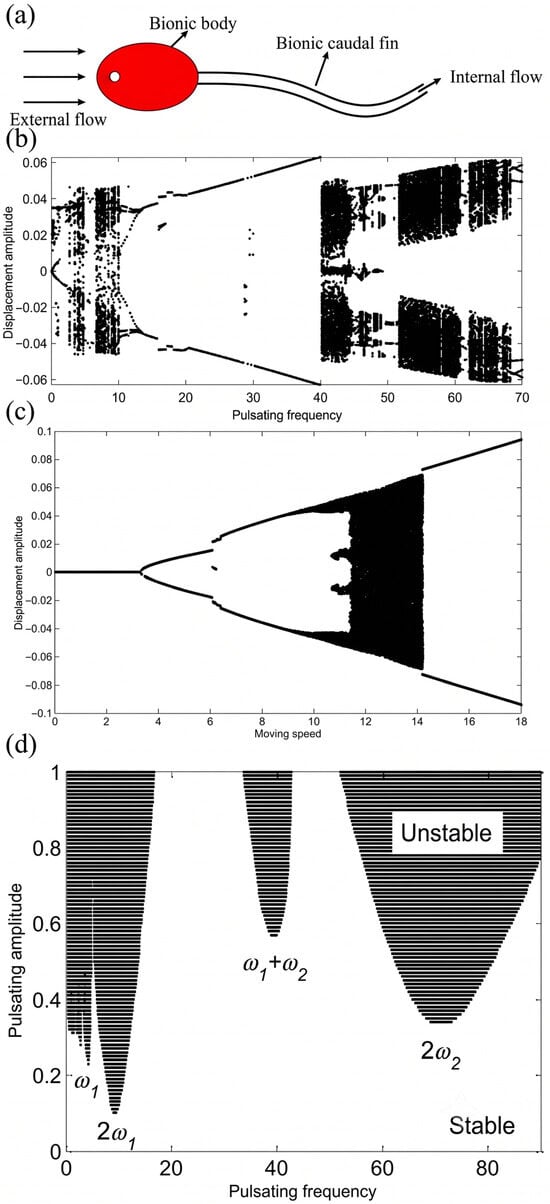
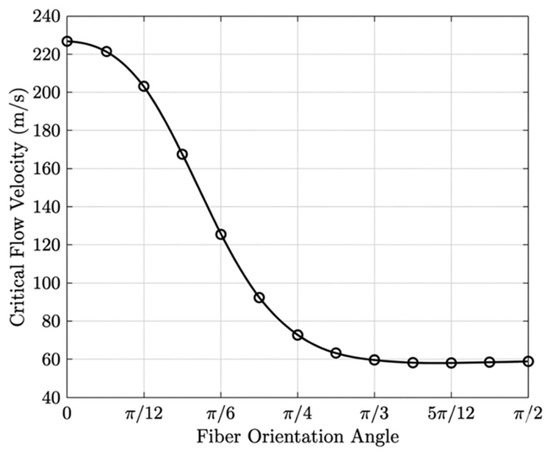
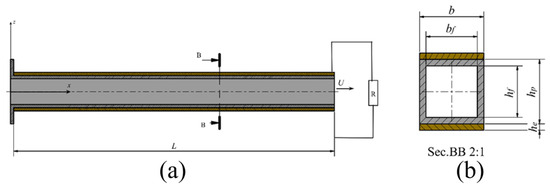
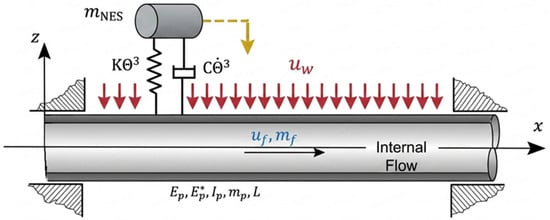
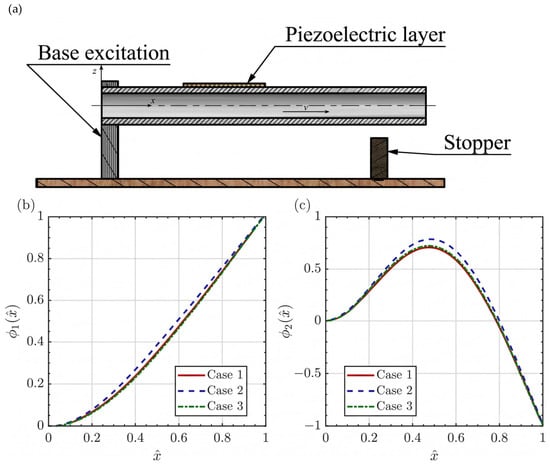
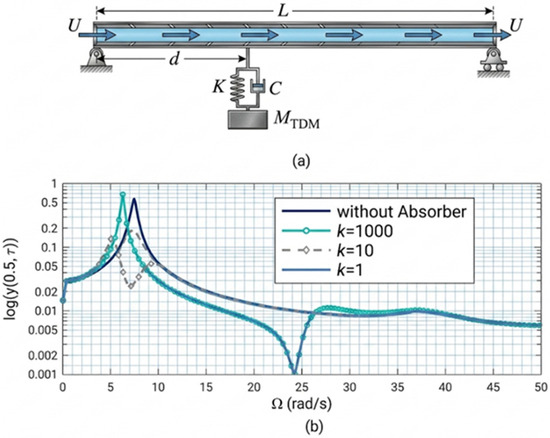
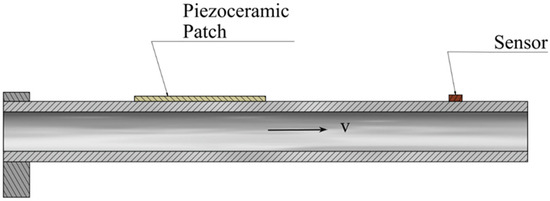
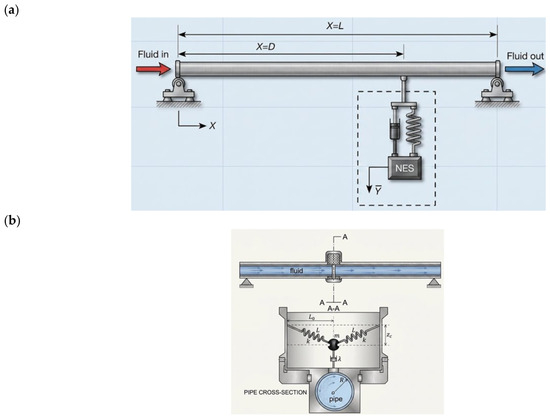
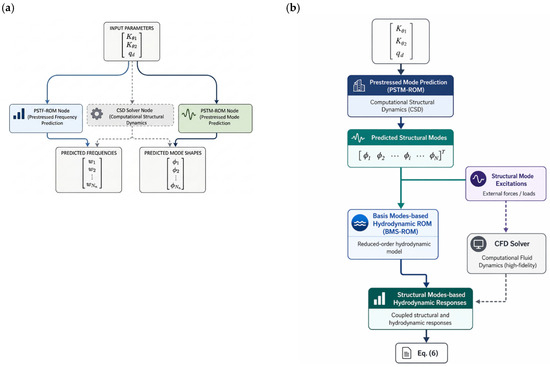
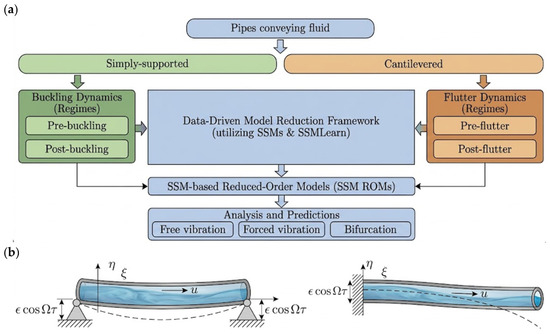
Pipes conveying fluids are important fluid–structure interaction systems encountered in aerospace, energy, marine, and industrial applications. Their dynamic behavior is strongly influenced by the interaction between structural motion and internal or external flow, leading to complex phenomena such as divergence, flutter, and flow-induced vibration. This review presents a comprehensive assessment of the dynamics and stability of pipes conveying fluids by integrating classical theories with recent developments in modeling, computation, materials, and control. The review covers mathematical formulations based on Euler–Bernoulli, Rayleigh, Timoshenko, and shell theories, together with analytical and numerical solution methods used for stability and vibration analysis. The effects of geometry, boundary conditions, flow configuration, damping, and material properties on dynamic response and instability thresholds are discussed. Special attention is given to composite, viscoelastic, functionally graded, and smart materials, as well as micro- and nanoscale pipe systems. Recent advances in vibration suppression, reduced-order modeling, machine learning, and physics-informed computational approaches are also reviewed. Finally, the paper identifies current challenges and future research directions, including multiphysics coupling, experimental validation, digital twins, and AI-assisted predictive modeling for fluid-conveying pipe systems.
Full article

Figure 1
Open AccessArticle
Global Nonlinear Dynamics of a Calibrated Pseudoelastic SMA-Wire Oscillator: Multistability, Basin Structure and Routes to Chaos
by
Shivan Ramnarace, Jacqueline Bridge and Kefu Liu
Vibration 2026, 9(2), 39; https://doi.org/10.3390/vibration9020039 - 7 Jun 2026
Abstract
►▼
Show Figures
Hysteretic nonlinear vibration systems can exhibit jumps, coexisting attractors, and strong dependence on the initial state, particularly when material hysteresis is coupled with geometric nonlinearity. This paper investigates the global nonlinear dynamics of a harmonically forced single-degree-of-freedom oscillator incorporating pseudoelastic shape memory alloy
[...] Read more.
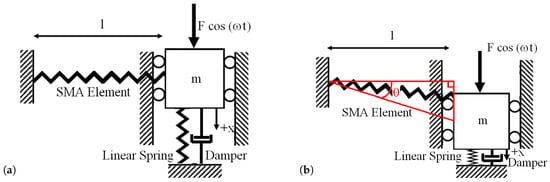
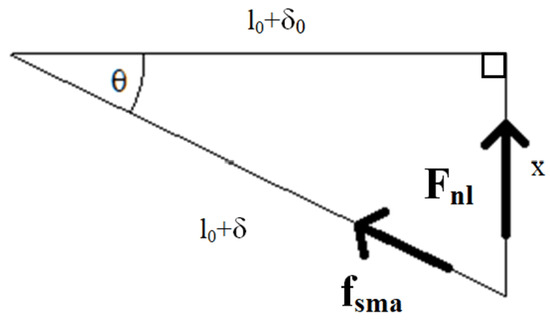
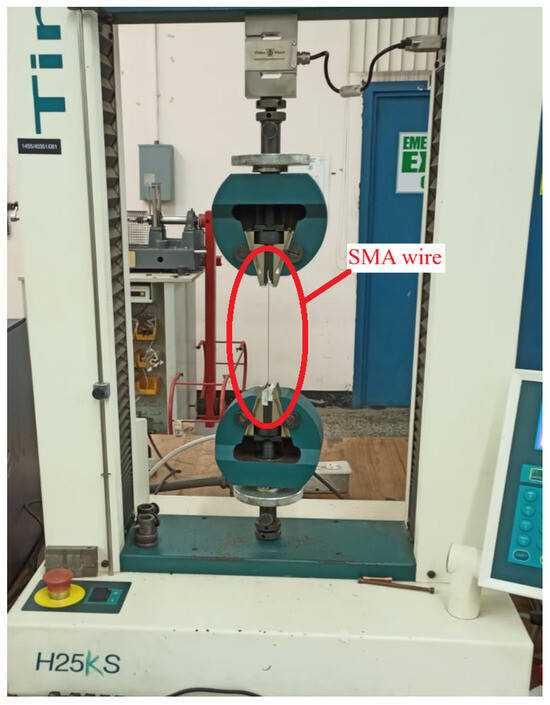
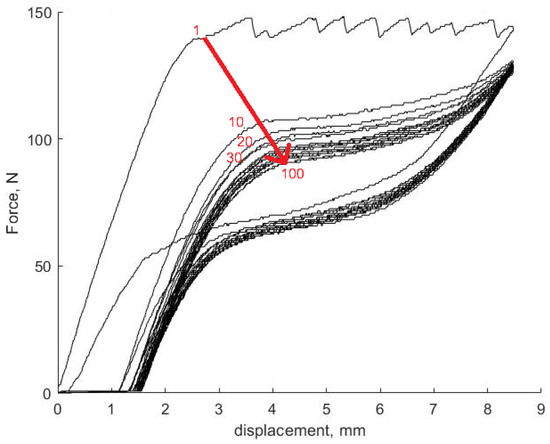
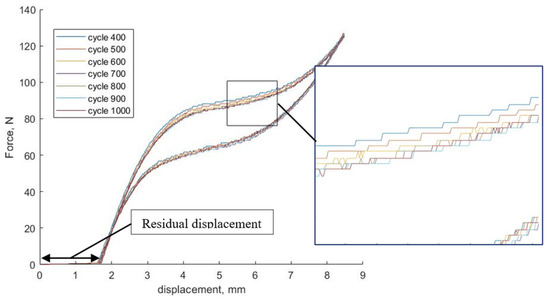
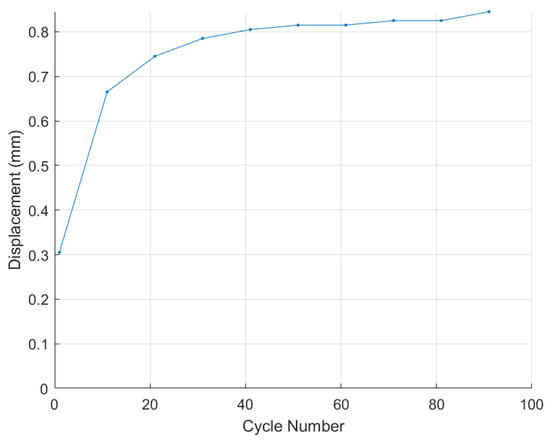
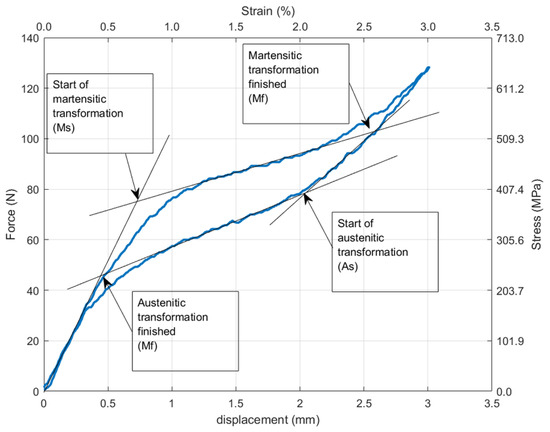
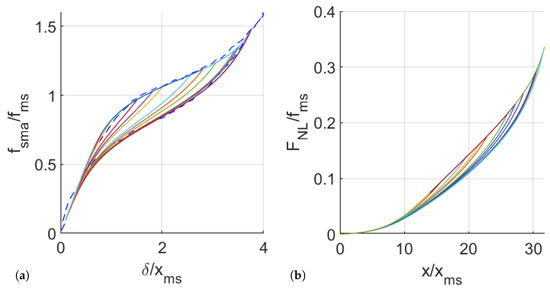
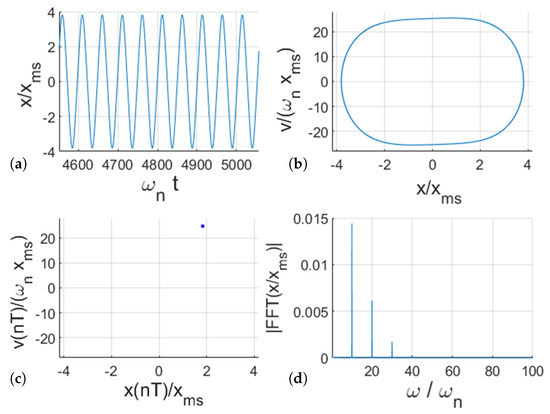
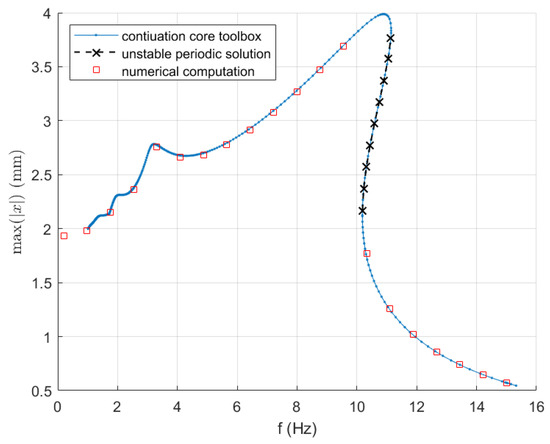
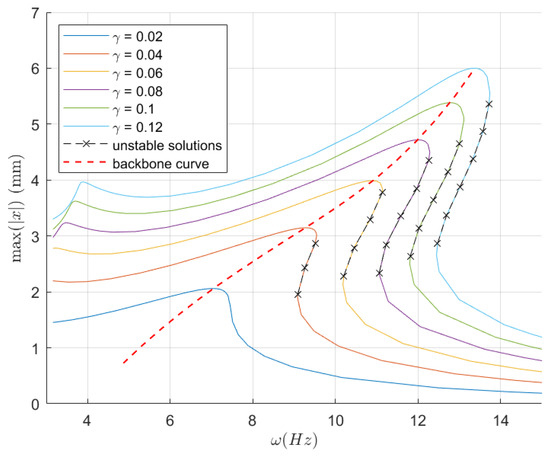
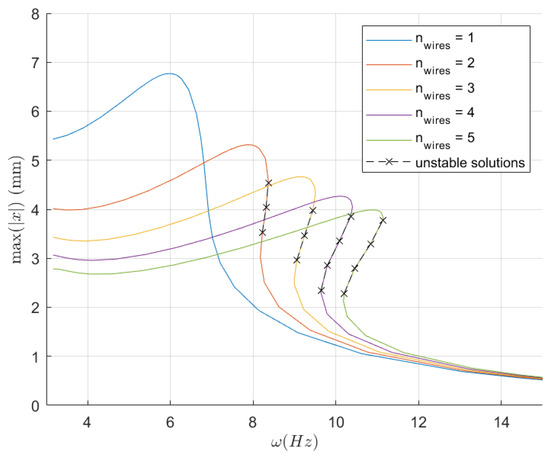
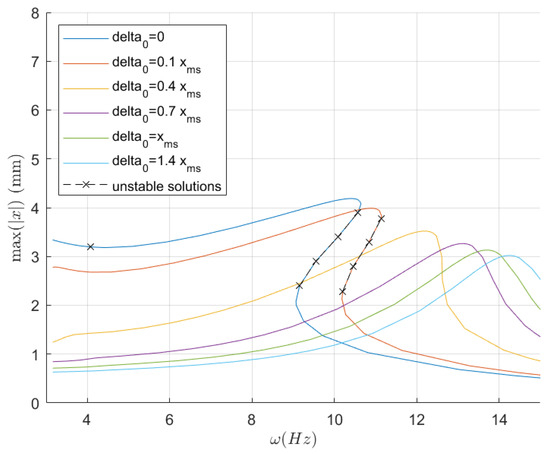
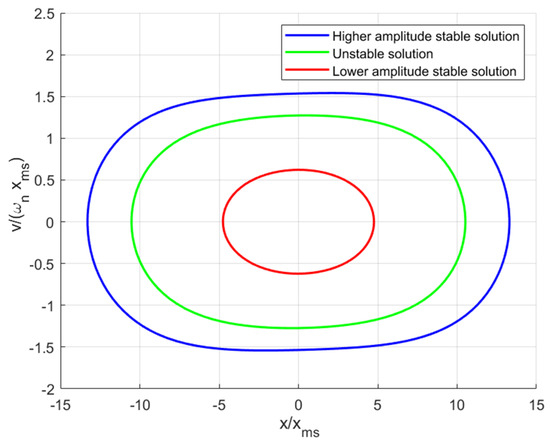
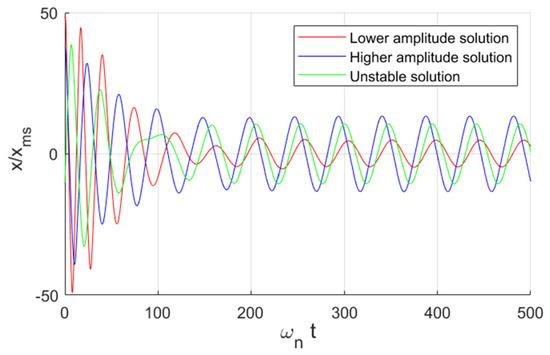
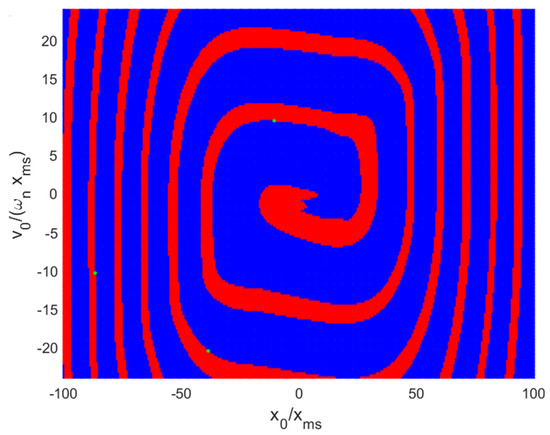
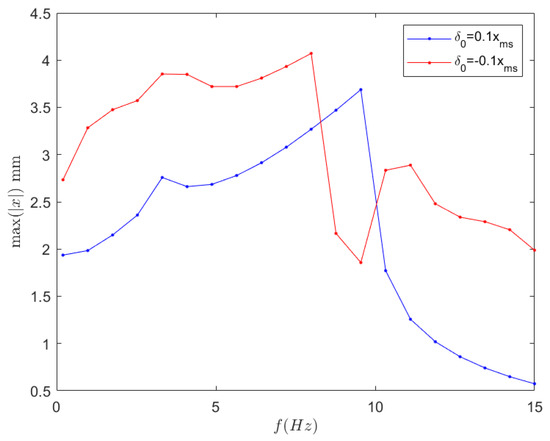
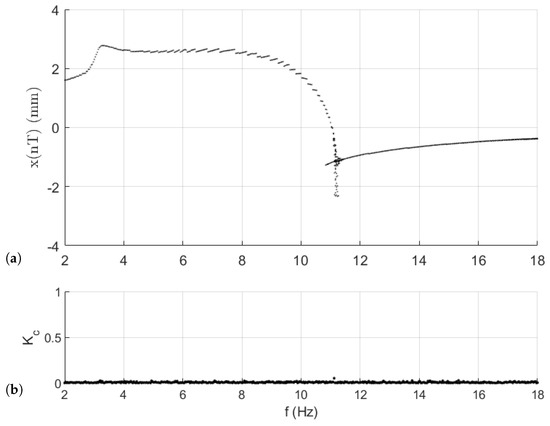
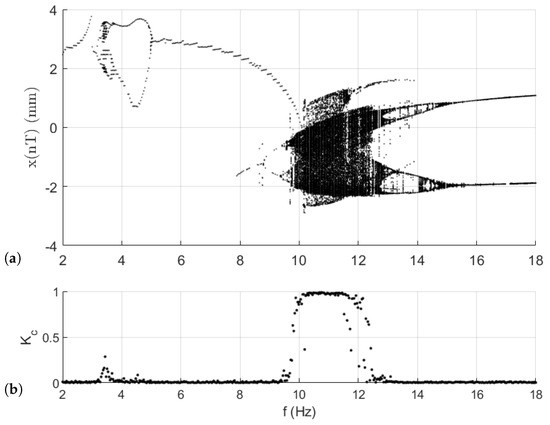
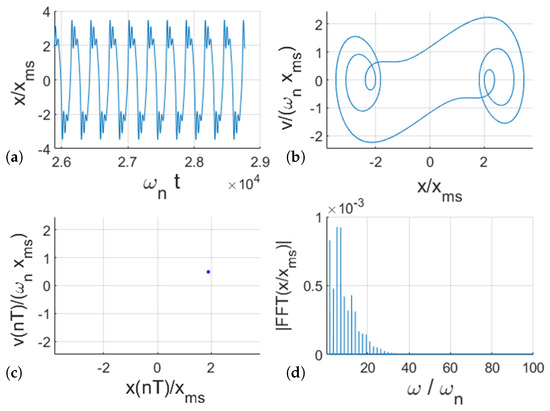
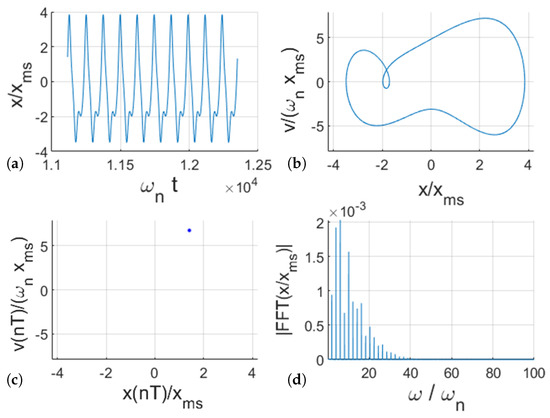
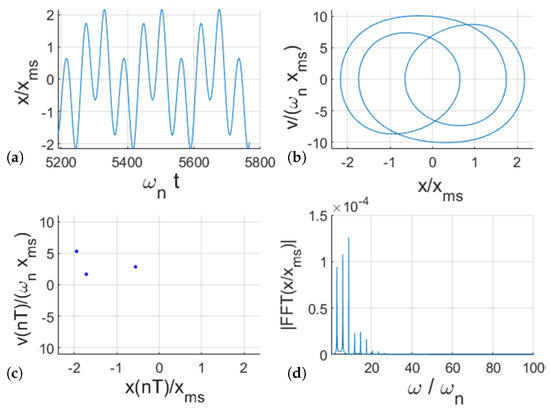
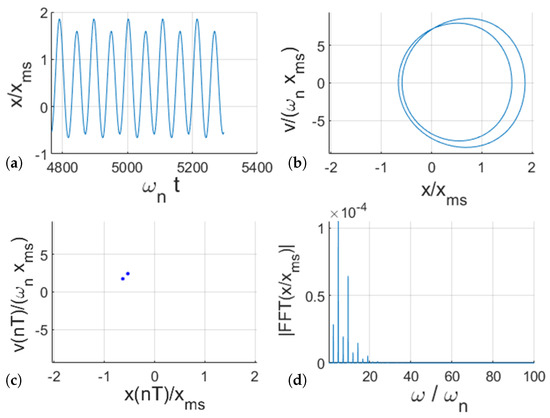
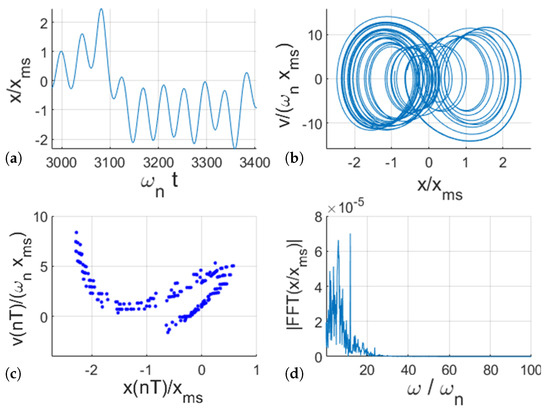
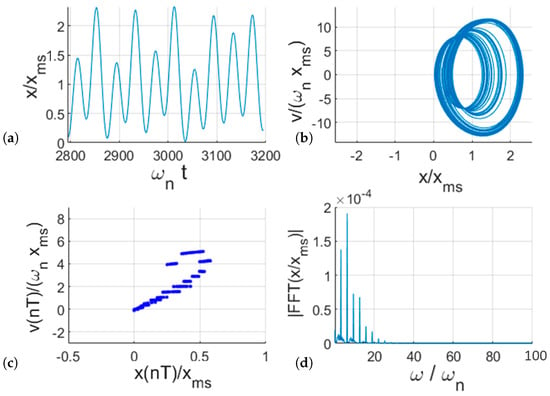
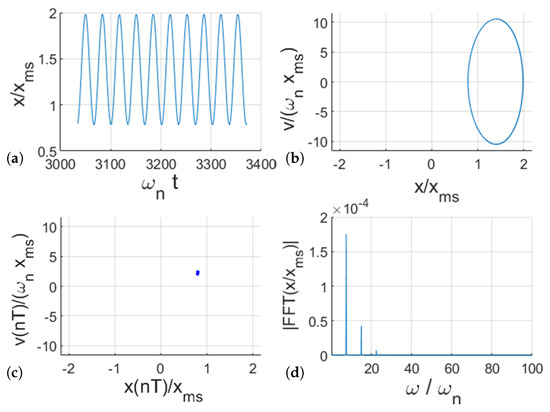
Hysteretic nonlinear vibration systems can exhibit jumps, coexisting attractors, and strong dependence on the initial state, particularly when material hysteresis is coupled with geometric nonlinearity. This paper investigates the global nonlinear dynamics of a harmonically forced single-degree-of-freedom oscillator incorporating pseudoelastic shape memory alloy (SMA) wires in a perpendicular geometric configuration. Cyclic force–displacement tests on pseudoelastic SMA wires are used to calibrate the constitutive response, after which steady-state dynamics are analyzed using time integration, numerical continuation (COCO), and basin-of-attraction computations over representative excitation frequencies, pre-tension levels, and the number of wires. The calibrated model predicts rich response regimes including jump phenomena, coexisting stable solutions, multistability, asymmetric periodic responses, and the pronounced dependence of the achieved steady response on initial conditions and internal state. Basin computations reveal sensitive partitioning of the state space between competing attractors, highlighting the influence of the initial and internal state in oscillators that combine pseudoelastic hysteresis with geometric stiffening. Additional numerical exploration of a negative pre-tension extension indicates transitions to more complex responses, including quasi-periodic and chaotic behaviour, but these are presented as secondary results outside the directly validated tension-wire regime. The results clarify how calibrated SMA hysteresis and geometric nonlinearity jointly shape multistability and basin structure in pseudoelastic oscillators.
Full article

Figure 1
Open AccessArticle
Genetic Algorithm Optimized Sliding Mode Control for 6-DOF Commercial Vehicle Piezoelectric Active Suspension with RBF Neural Network Compensation
by
Junbiao Xie, Yuying Jiang, Chen Wang, Jingcheng Dai, Yiming Yu and Chenglong Pan
Vibration 2026, 9(2), 38; https://doi.org/10.3390/vibration9020038 - 26 May 2026
Abstract
►▼
Show Figures
To address the vibration reduction problem of the six-degrees of freedom(6-DOF) half-vehicle model and to improve ride comfort and handling stability, a piezoelectric stack actuator based on the inverse piezoelectric effect was introduced. A 6-DOF half-vehicle dynamic model coupling the cab, body, and
[...] Read more.
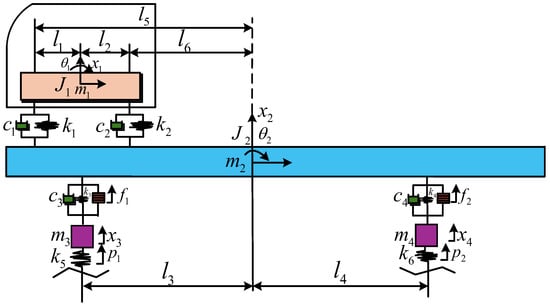
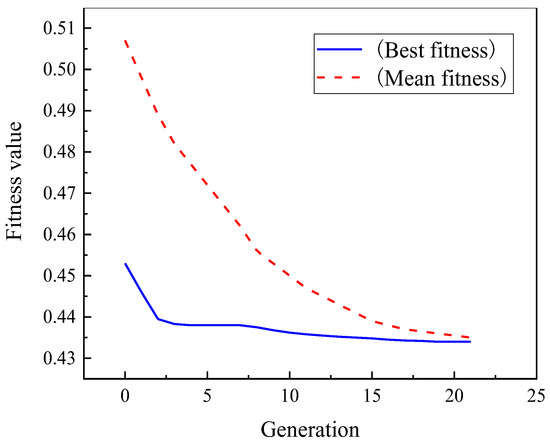
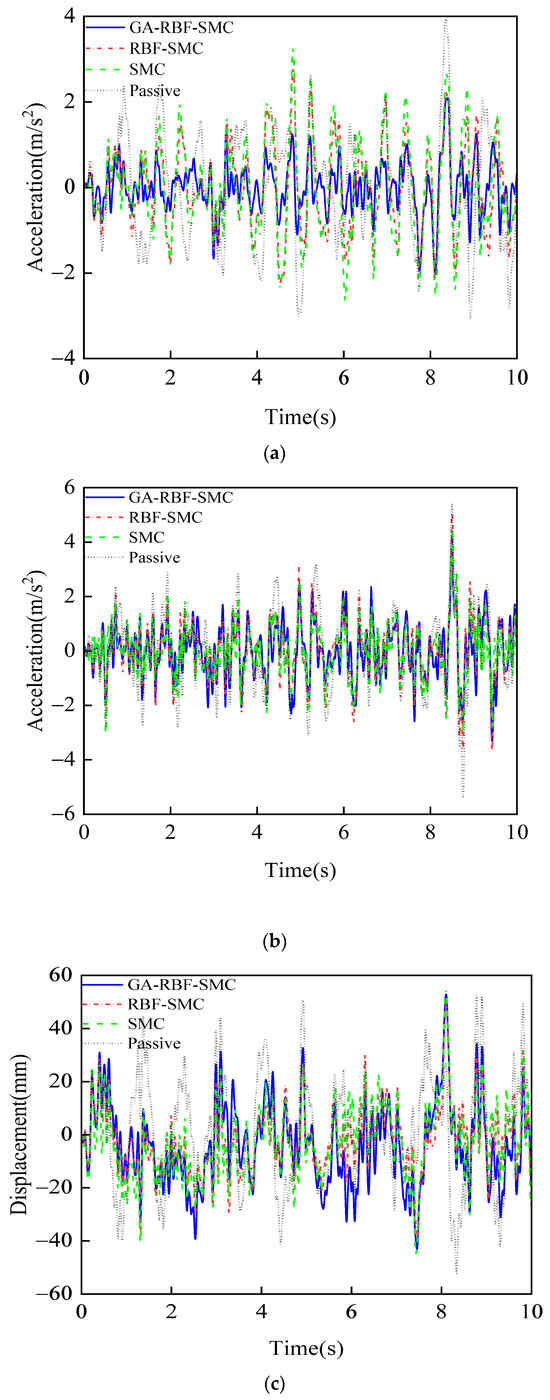
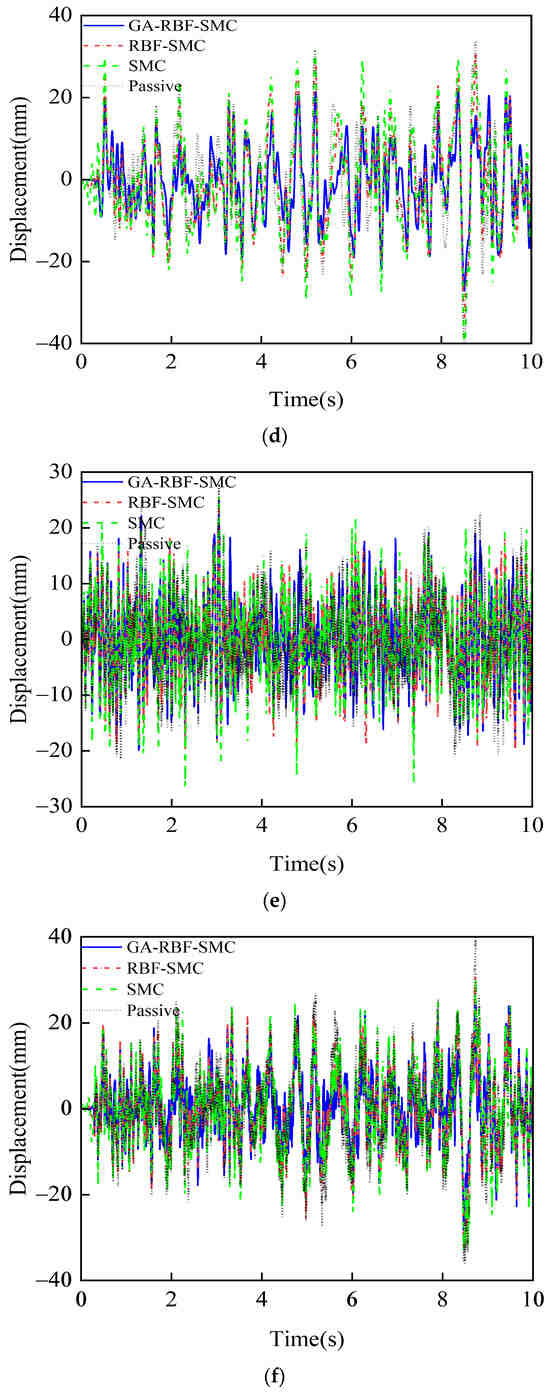
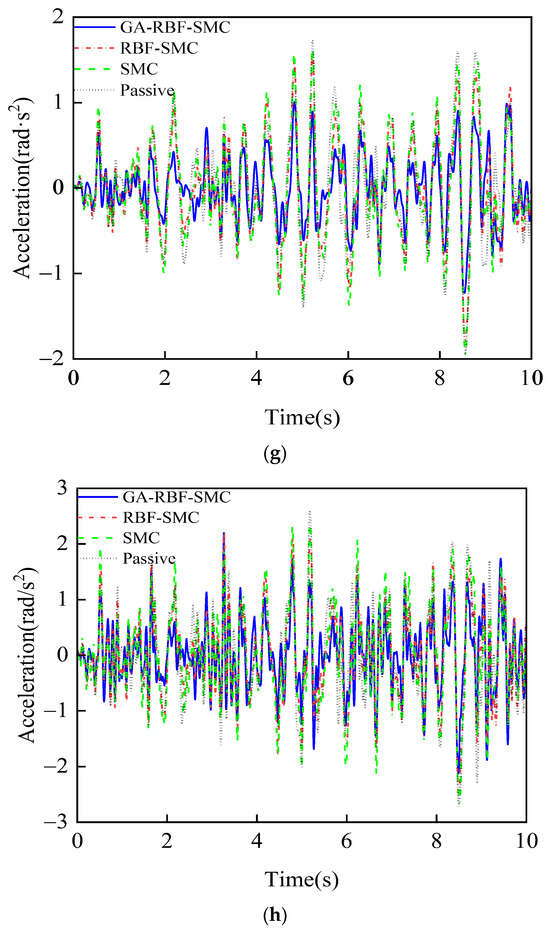
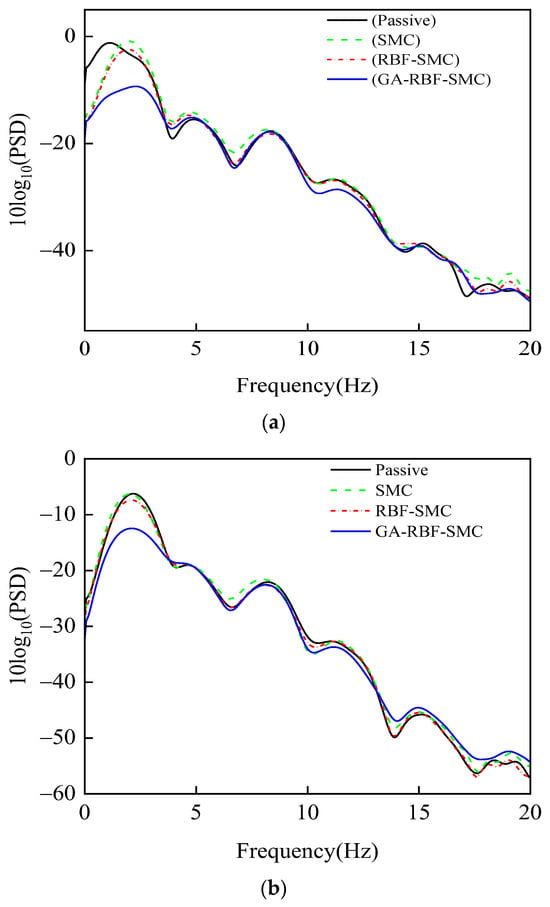
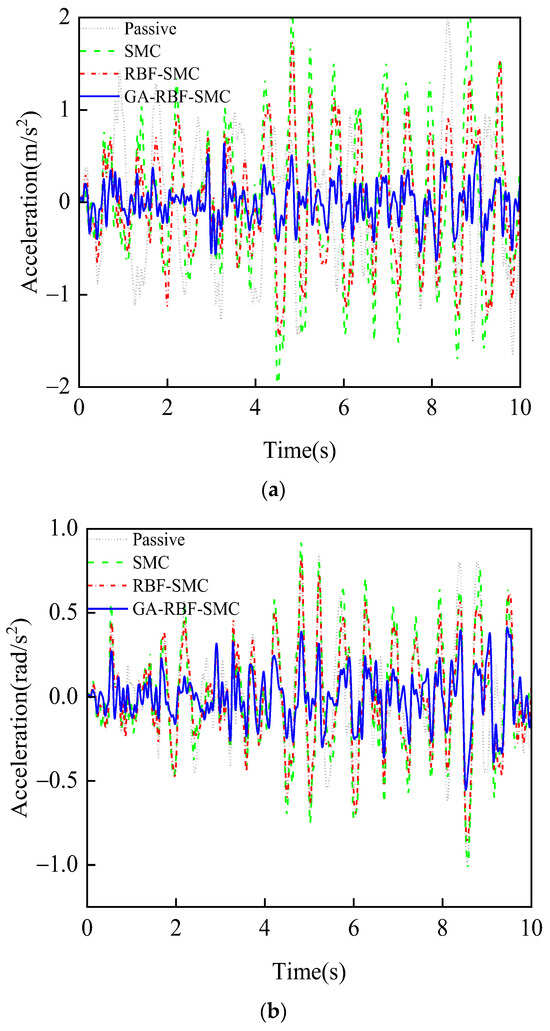
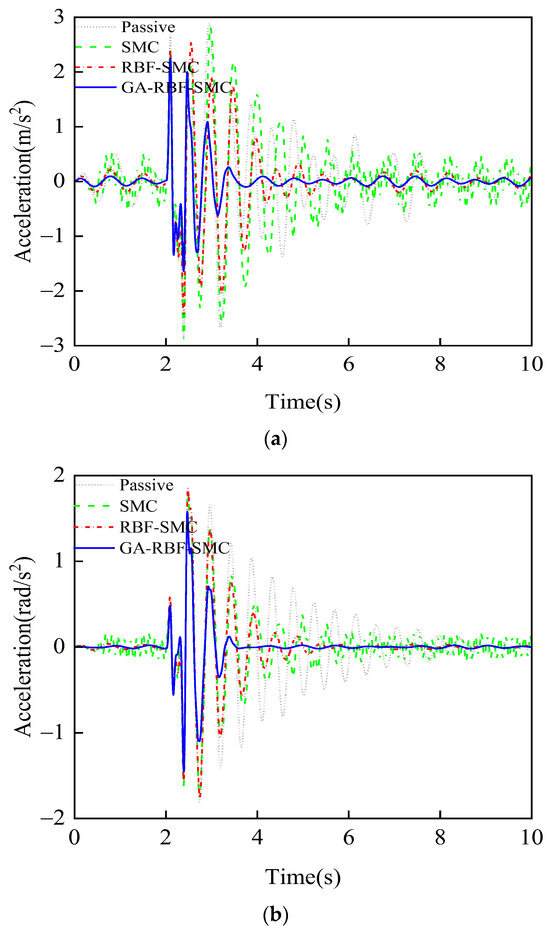
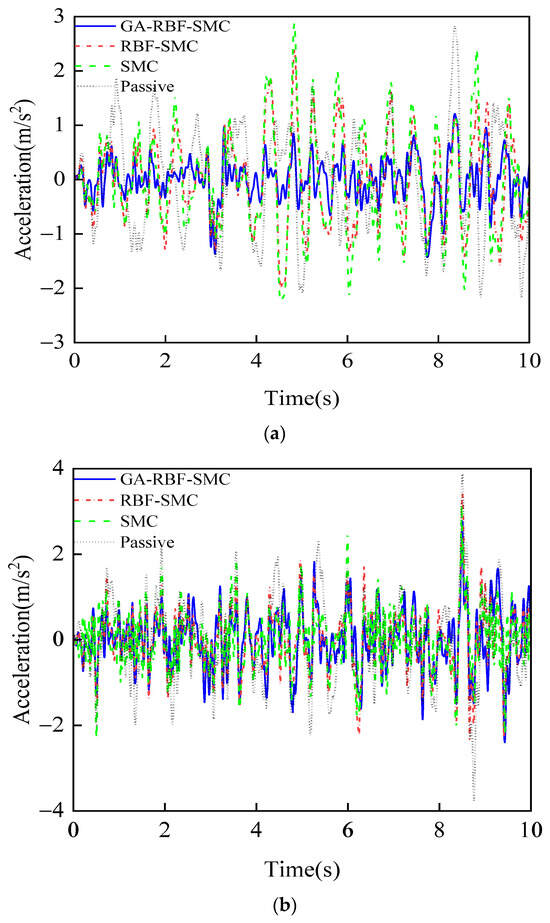
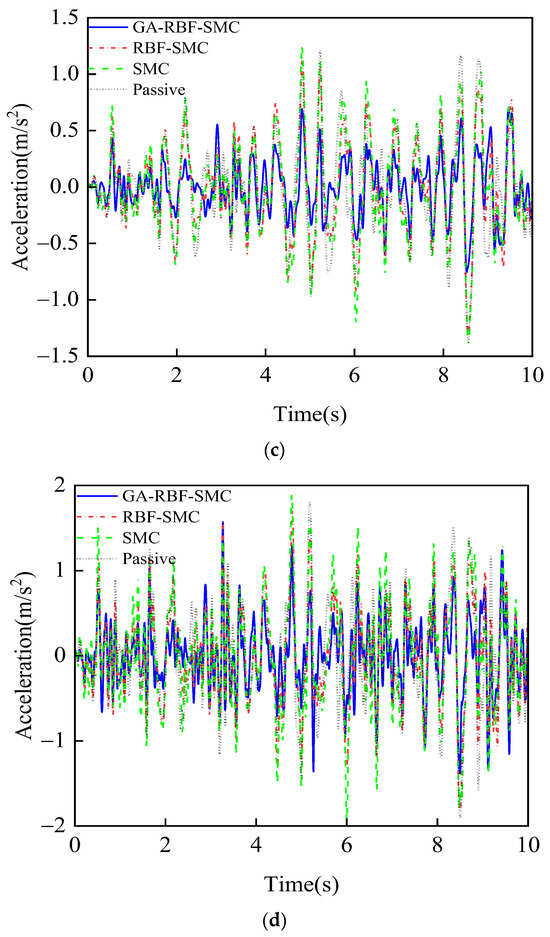
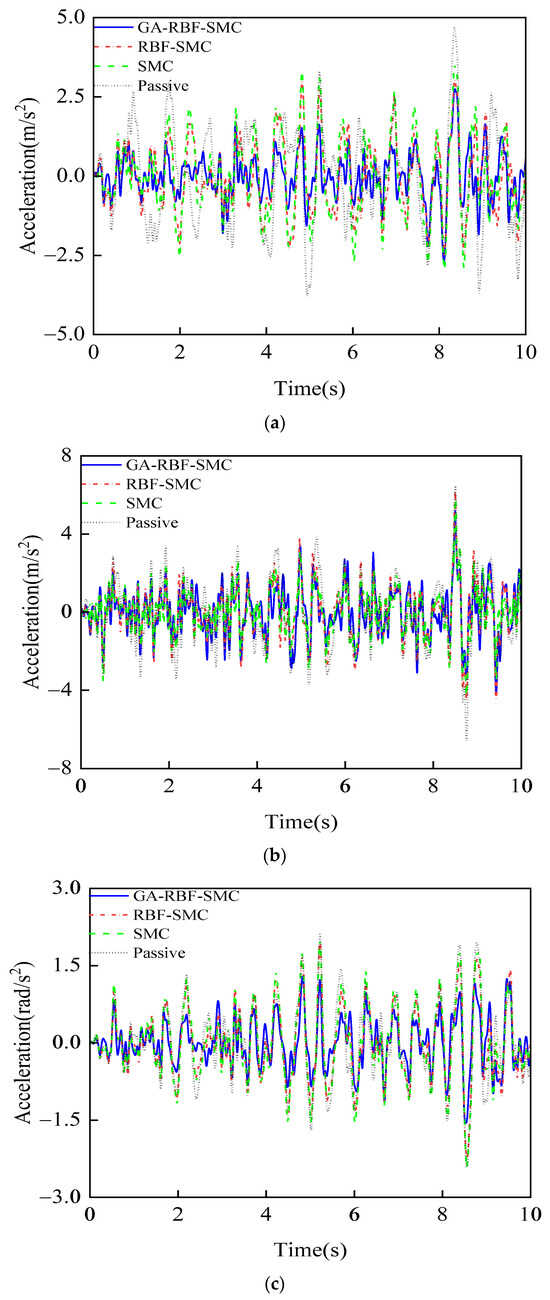
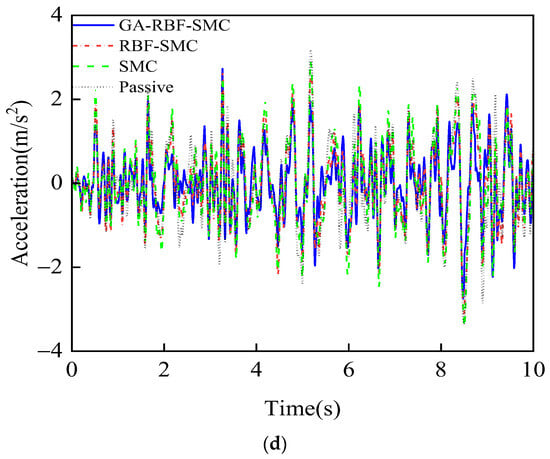
To address the vibration reduction problem of the six-degrees of freedom(6-DOF) half-vehicle model and to improve ride comfort and handling stability, a piezoelectric stack actuator based on the inverse piezoelectric effect was introduced. A 6-DOF half-vehicle dynamic model coupling the cab, body, and wheels was established based on the Lagrange equation. Based on this model, a vertical-pitch dual sliding surface RBF neural network sliding mode control strategy was proposed, with two independent RBF neural networks designed to separately approximate, online, the comprehensive uncertainties in the vertical and pitch channels associated with unmodeled dynamics, external disturbances, and modeling simplifications. The variable-speed reaching law (dsat) function was used to design the sliding mode reaching law, balancing sliding surface convergence speed and vibration suppression. Six indicators, including vertical acceleration of the cab and vertical acceleration of the vehicle body, were selected as performance evaluation metrics to establish the fitness function. Combined with a genetic algorithm, the dual sliding surface coefficients, RBF network parameters, adaptive update rates, and variable-speed reaching law parameters were globally optimized. The vibration reduction effects of four schemes—passive control, traditional sliding mode control, RBF sliding mode control, and genetic algorithm optimized RBF dual-sliding-mode control—were compared and analyzed. Simulation results show that the genetic algorithm optimized RBF dual-sliding-mode control achieves improved vibration suppression in several key ride-comfort-related indices and provides better overall coordination among ride comfort, suspension working space, and tire dynamic deflection. The research results validate the effectiveness of this method and provide a new solution for addressing vehicle vibration reduction problems.
Full article

Figure 1
Open AccessArticle
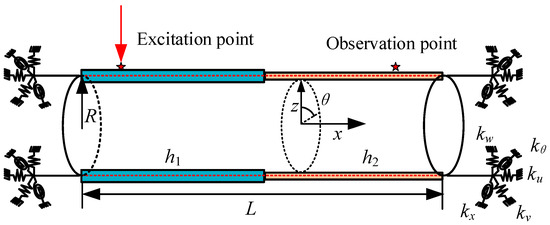
A Semi-Analytical Legendre–Ritz Method to Dynamically Analyze a Stepped Functionally Graded Cylindrical Shell
by
Yanbin Shen, Lijia Yang, Diming Guo and Luyue Xi
Vibration 2026, 9(2), 37; https://doi.org/10.3390/vibration9020037 - 22 May 2026
Abstract
This study introduces the dynamic characteristics of stepped functionally graded (FG) cylindrical shells under general boundary conditions using the Legendre–Ritz method. The calculated model is established based on the first-order shear deformation theory and the domain decomposition method, and the artificial spring is
[...] Read more.
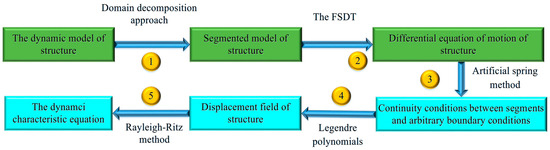
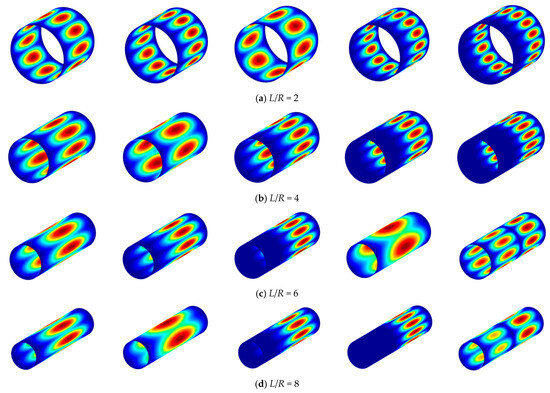
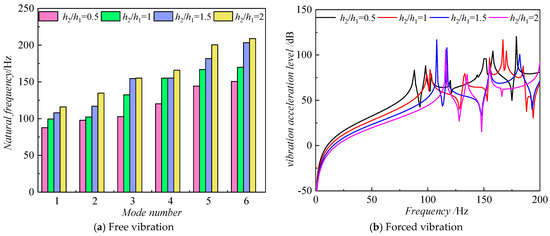
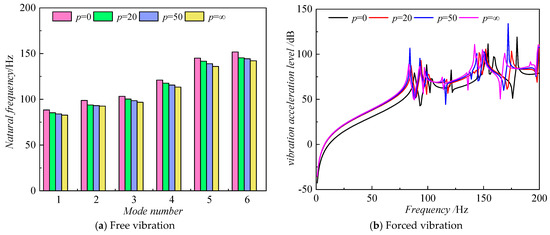
This study introduces the dynamic characteristics of stepped functionally graded (FG) cylindrical shells under general boundary conditions using the Legendre–Ritz method. The calculated model is established based on the first-order shear deformation theory and the domain decomposition method, and the artificial spring is introduced to simulate the boundary conditions and ensure segment continuity. The Legendre polynomials and the Fourier series are used to form the admissible displacement function. The Rayleigh–Ritz method is employed to determine the free and forced vibration characteristics of stepped FG cylindrical shells. Results are presented for various boundary conditions, material parameters and geometric dimensions, and comparisons with published studies are performed. The method demonstrates good accuracy, providing a basis for analyzing the vibration behavior of stepped FG cylindrical shells.
Full article
(This article belongs to the Special Issue Structural Vibration: Modeling, Analysis, Optimization and Engineering Applications)
►▼
Show Figures

Figure 1
Open AccessArticle
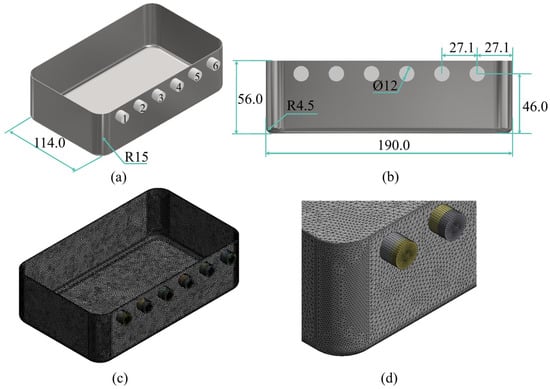
Vibration-Based Condition Monitoring of Ground Engaging Tools Using Finite Element-Derived Modal Features
by
Shasha Chen, Bernard F. Rolfe, James Griffin, Arnaldo Delli Carri and Michael P. Pereira
Vibration 2026, 9(2), 36; https://doi.org/10.3390/vibration9020036 - 19 May 2026
Abstract
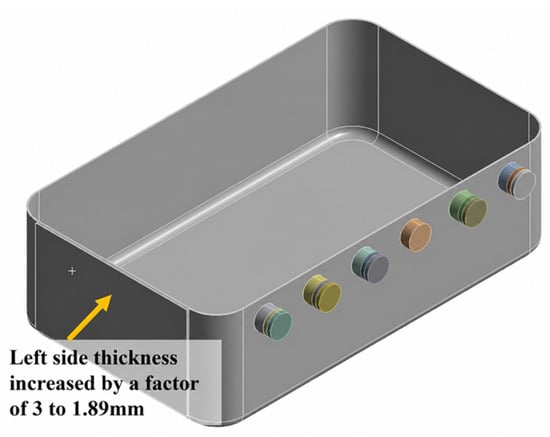
Ground engaging tool (GET) wear monitoring is important for mining excavator maintenance, but progressive multi-tooth wear estimation remains insufficiently explored. This study presents a vibration-based framework for GET wear estimation during operations using modal analysis, finite element (FE) modelling, and machine learning as
[...] Read more.
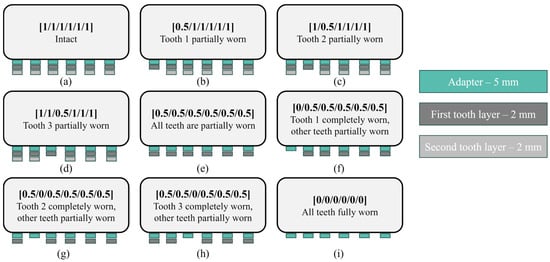
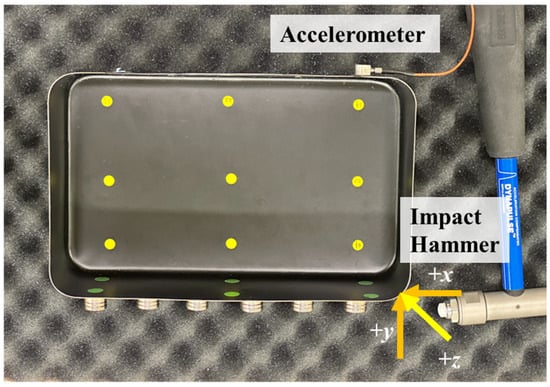
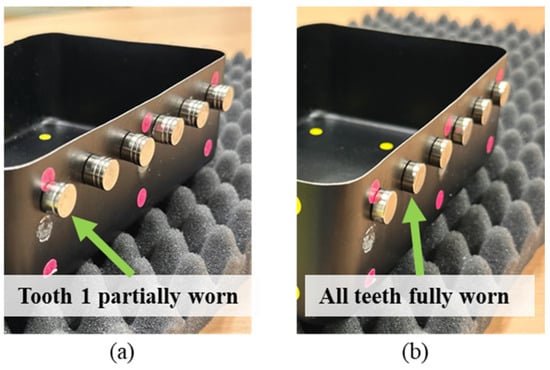
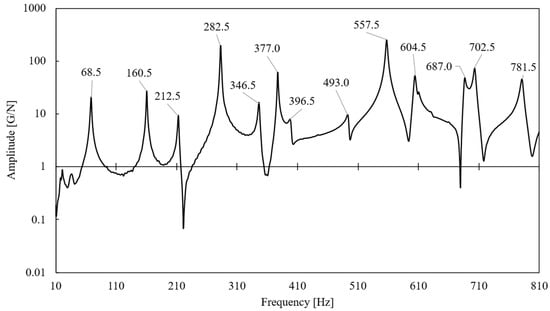
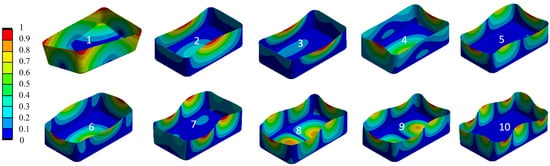
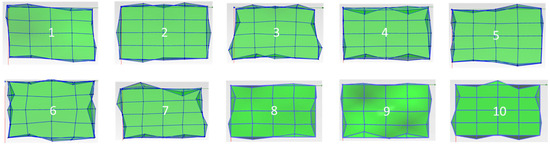
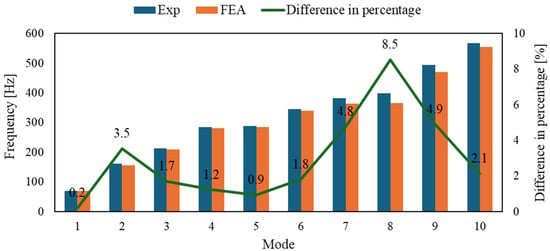
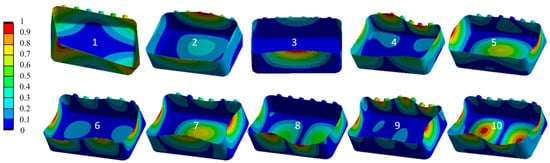
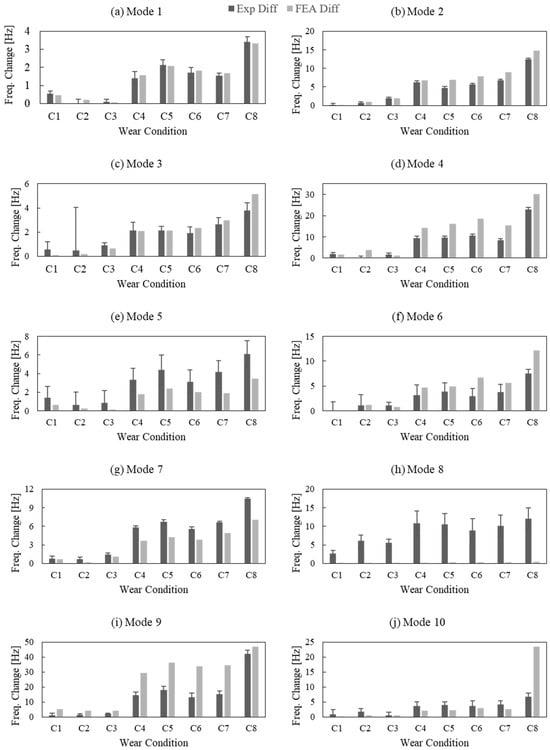
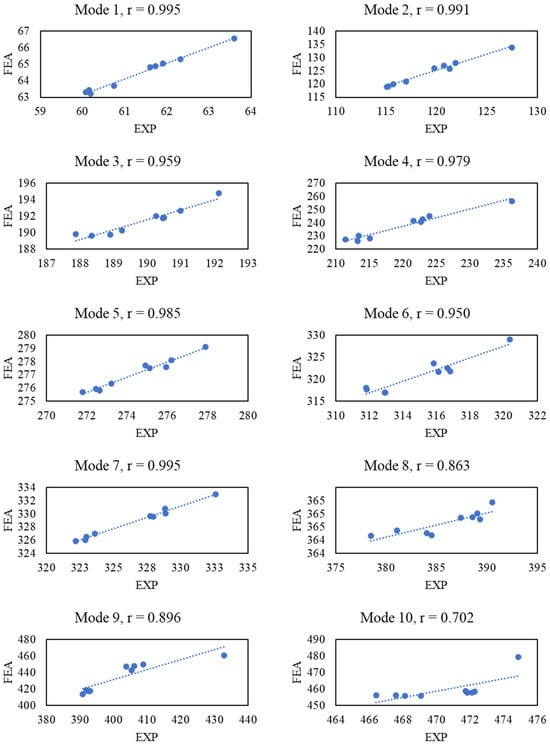
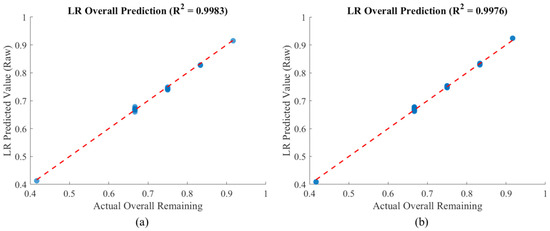
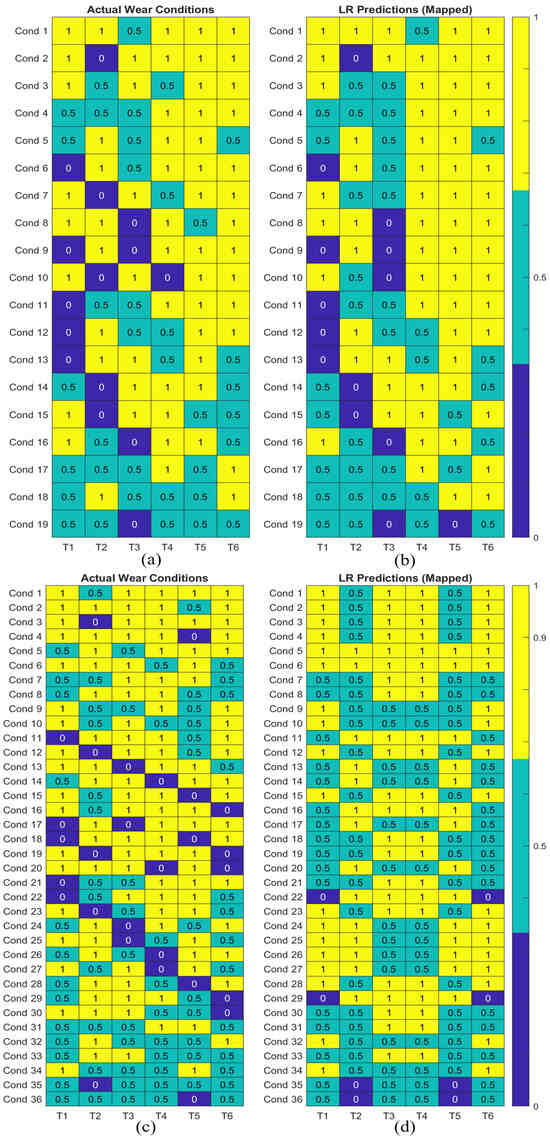
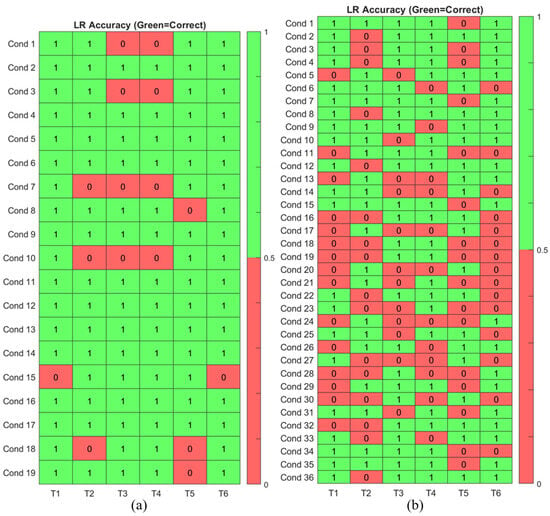
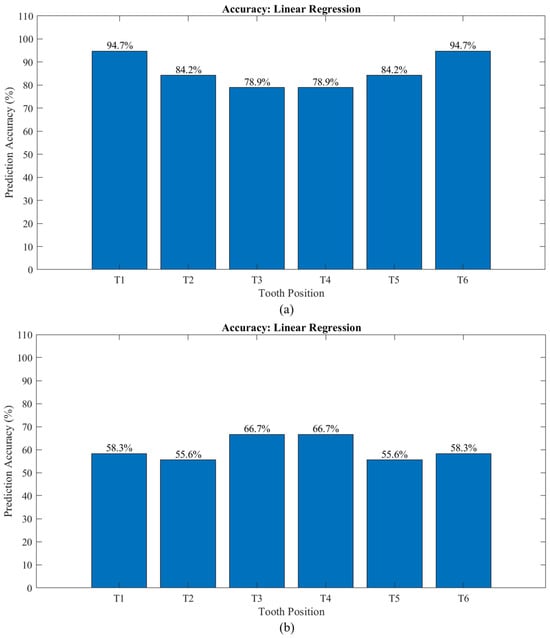
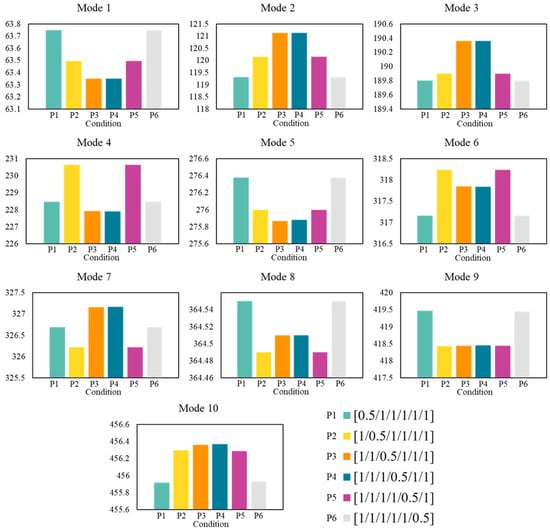
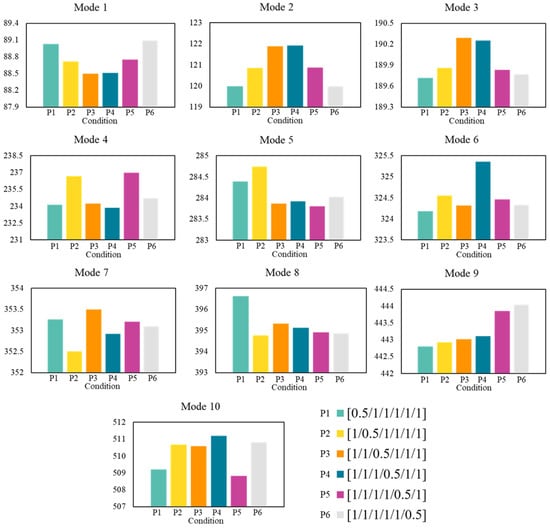
Ground engaging tool (GET) wear monitoring is important for mining excavator maintenance, but progressive multi-tooth wear estimation remains insufficiently explored. This study presents a vibration-based framework for GET wear estimation during operations using modal analysis, finite element (FE) modelling, and machine learning as a supporting evaluation tool. A laboratory-scale mining bucket surrogate with detachable attached masses was used to represent progressive tooth wear through controlled mass-loss conditions. Experimental impact hammer tests under approximately free-free boundary conditions were conducted to validate the FE modal model through natural-frequency comparison and qualitative mode correspondence. The validated FE model was then used to generate a broader dataset of multi-tooth wear scenarios, from which the first ten natural frequencies were extracted as modal features. Linear Regression (LR) was adopted as a simple and interpretable baseline to evaluate both overall wear estimation and individual tooth wear estimation. High accuracy was obtained for overall wear estimation for both the non-symmetric and symmetry-augmented datasets, with R2 values of 0.9983 and 0.9976, respectively. In contrast, individual tooth prediction was more challenging, and the symmetry-augmented results showed that mirrored tooth locations can produce non-unique frequency-based signatures. An additional asymmetric FE sensitivity study further confirmed that structural symmetry can limit local wear identifiability when only global natural frequencies are used. These findings demonstrate the potential of FE-derived modal frequency features for laboratory-scale GET wear assessment, while also highlighting the limitations of frequency-only features for unique local wear localisation in symmetric structures. This is a promising approach for wear estimation during mining operations.
Full article
(This article belongs to the Special Issue New Trends in Experimental and Numerical Vibroacoustic Techniques—Physics Guided and Datas Guided Approaches)
►▼
Show Figures

Figure 1
Open AccessArticle
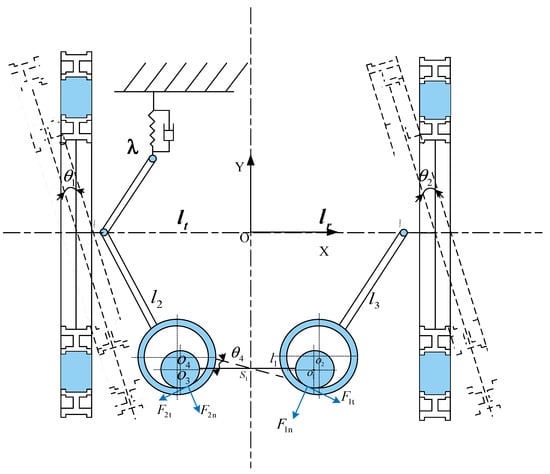
Nonlinear Dynamics of Automotive Brake-Induced Shimmy Under the Coupling Effect of the Steering Mechanism Clearance Joints
by
Guo Li, Qingyun Ye, Xuze Wu, Muyang Wu, Wen Liu and Hang Wang
Vibration 2026, 9(2), 35; https://doi.org/10.3390/vibration9020035 - 19 May 2026
Abstract
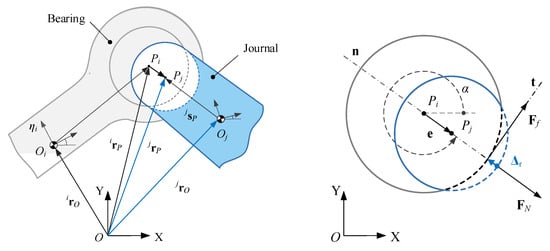
Brake-induced steering wheel shimmy is a critical nonlinear dynamic phenomenon that severely compromises vehicle handling stability and driving safety. While clearances in steering mechanism kinematic pairs are widely recognized as a primary cause of shimmy instability, the coupling effect of multiple concurrent clearances
[...] Read more.
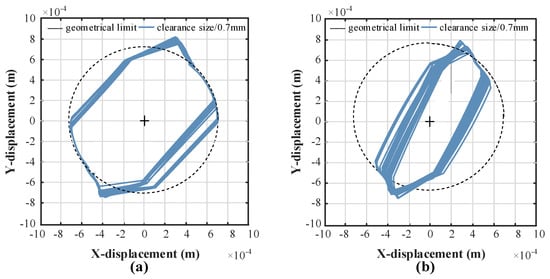
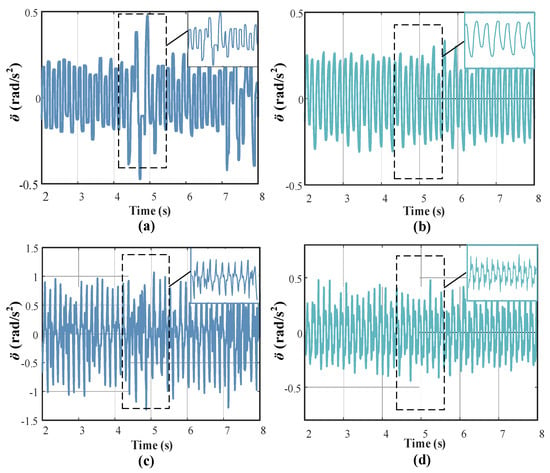
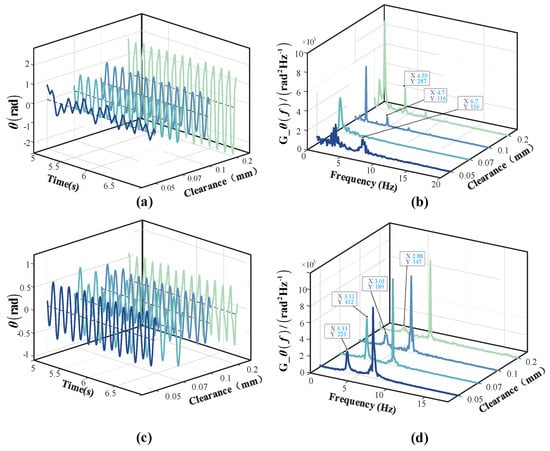
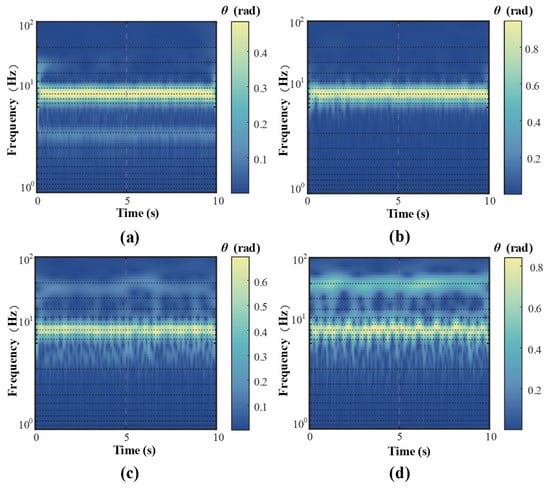
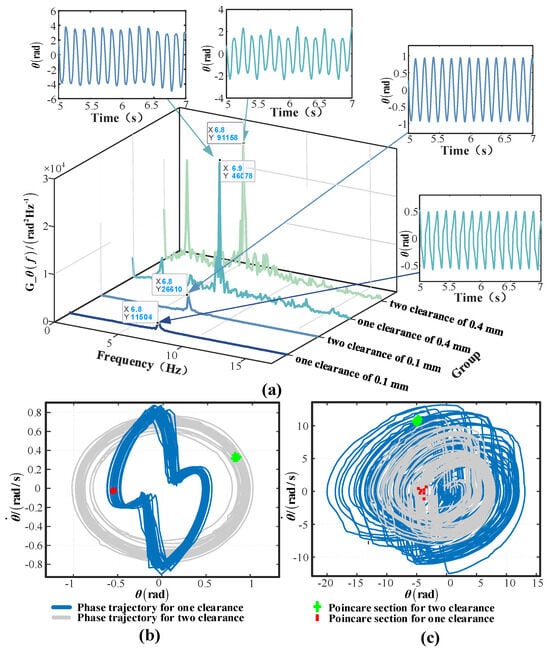
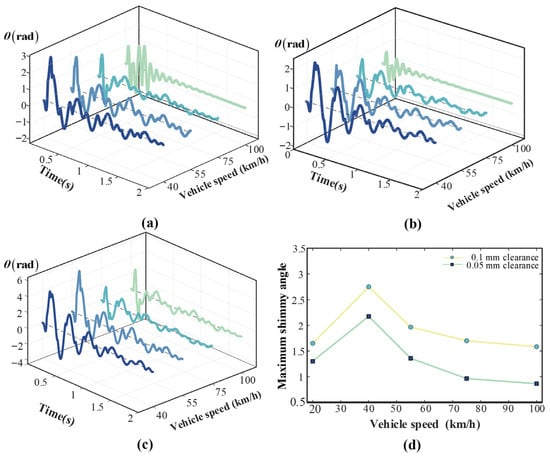
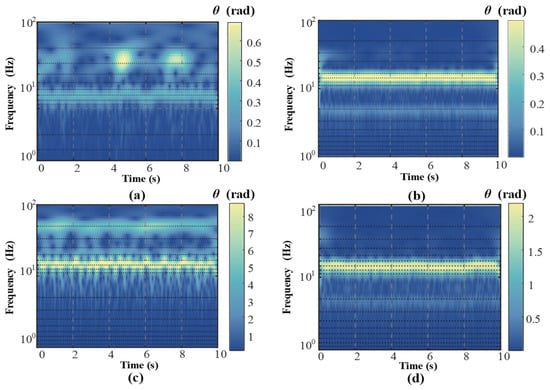
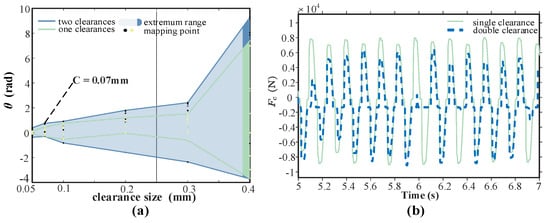
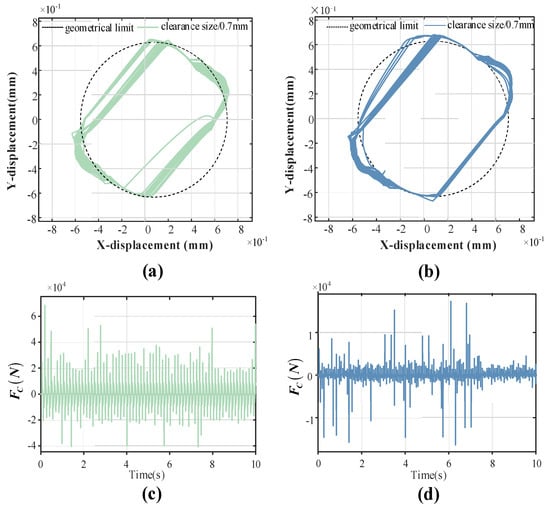
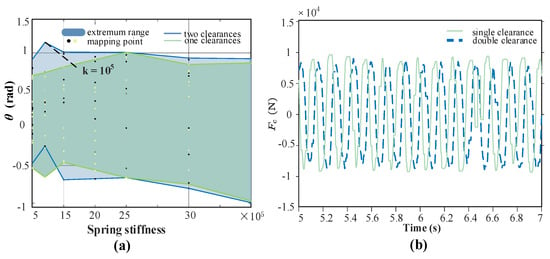
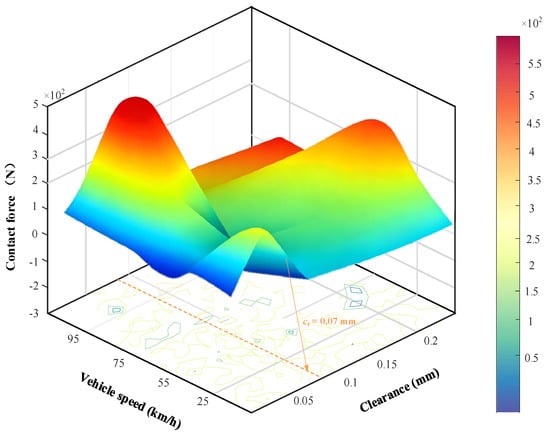
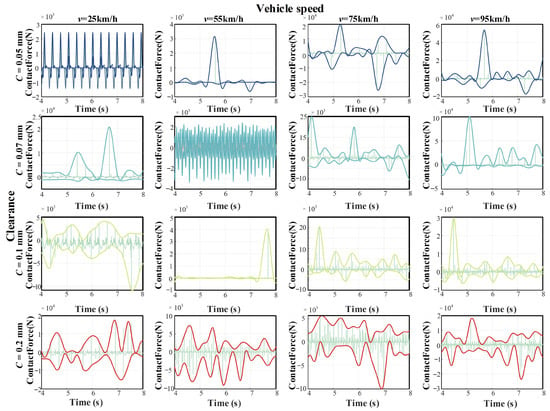
Brake-induced steering wheel shimmy is a critical nonlinear dynamic phenomenon that severely compromises vehicle handling stability and driving safety. While clearances in steering mechanism kinematic pairs are widely recognized as a primary cause of shimmy instability, the coupling effect of multiple concurrent clearances remains poorly characterized, particularly under transient braking conditions. In this work, a 5-degree-of-freedom non-autonomous dynamic model of brake-induced shimmy is developed using Lagrange’s equations. The model comprehensively incorporates the non-smooth contact behavior of multiple clearance joints, transient braking axle load transfer, and the longitudinal–lateral coupling nonlinearity of tires. The nonlinear dynamic evolution of the system is investigated through phase portraits, Poincaré sections, and continuous wavelet transform analysis. Numerical results demonstrate that multi-clearance coupling increases the peak shimmy angle by more than 40% compared to the single-clearance case. As the clearance magnitude increases from 0.05 mm to 0.40 mm, the system undergoes a transition from stable periodic motion to high-dimensional chaos, accompanied by a 67% reduction in vibration energy concentration at the 0.4 mm clearance level. This study elucidates the nonlinear mechanism underlying clearance-induced brake shimmy, providing a robust theoretical foundation for steering system parameter optimization and shimmy mitigation strategies.
Full article
(This article belongs to the Special Issue Structural Vibration: Modeling, Analysis, Optimization and Engineering Applications)
►▼
Show Figures

Figure 1
Open AccessArticle
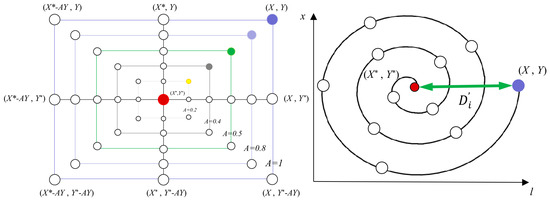
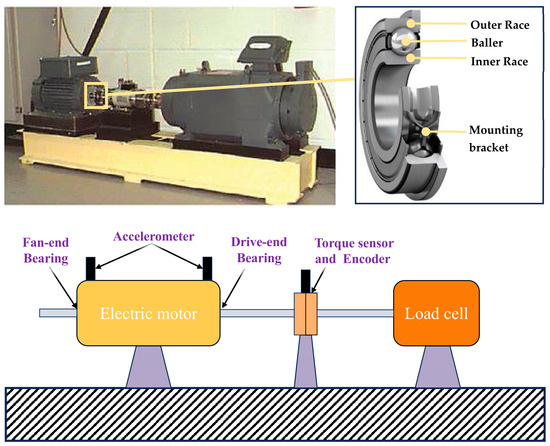
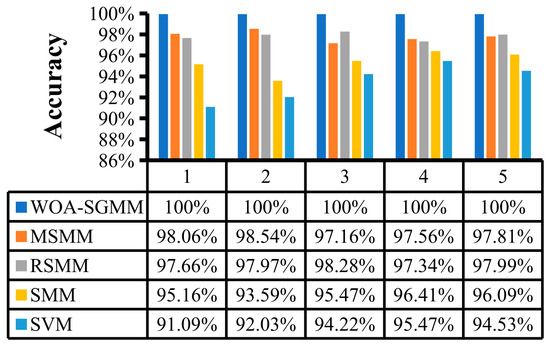
Symplectic Geometry Matrix Machine Controlled by the Whale Optimization Algorithm and Its Application in Bearing Fault Diagnosis
by
Yonghua Jiang, Zhiqiang He, Zhilin Dong, Jianjie Zhang, Hongkui Jiang, Chao Tang, Jianfeng Sun, Xiaohao Chen and Weidong Jiao
Vibration 2026, 9(2), 34; https://doi.org/10.3390/vibration9020034 - 13 May 2026
Abstract
►▼
Show Figures
In the field of industrial equipment condition monitoring, accurate rolling bearing fault diagnosis is critical yet challenging due to high-dimensional vibration signals and complex operating conditions. Traditional machine learning methods often struggle with insufficient feature separability and sensitivity to model parameters, leading to
[...] Read more.
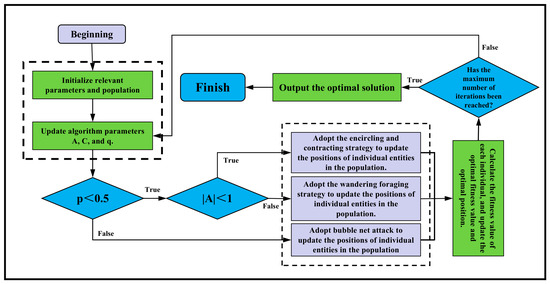
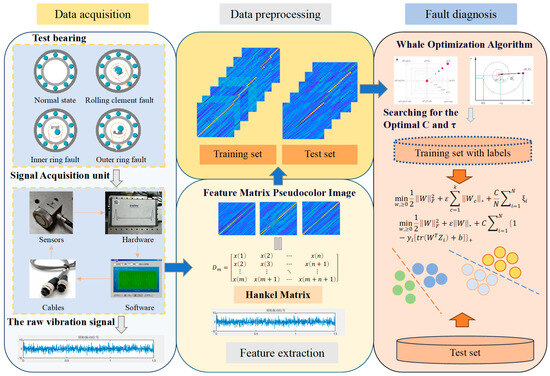
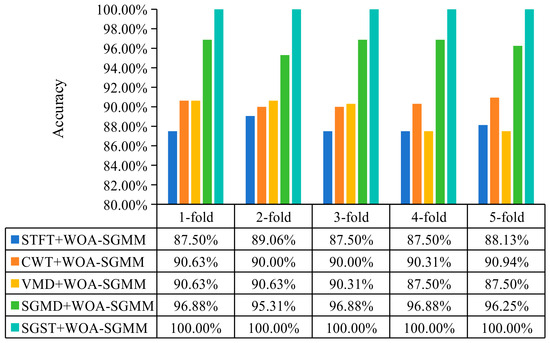
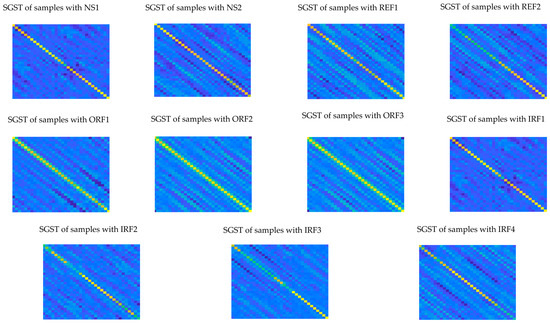
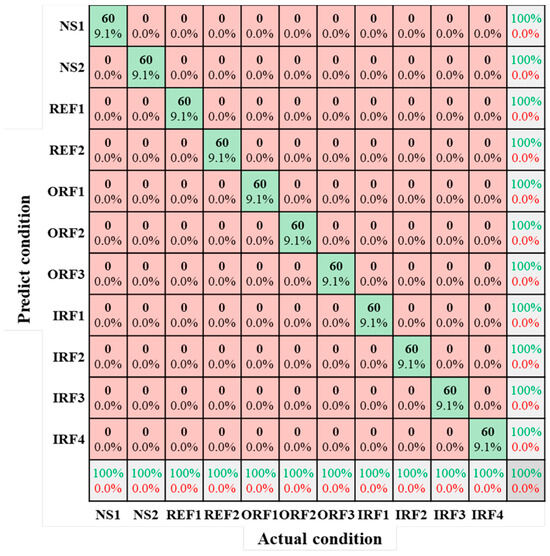
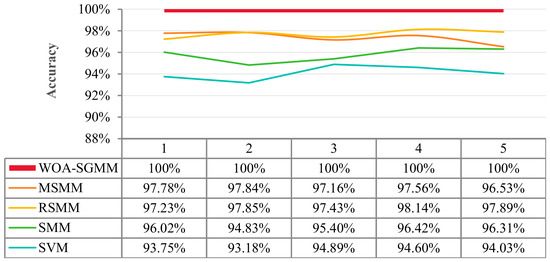
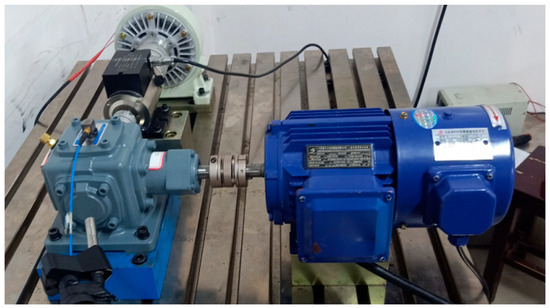
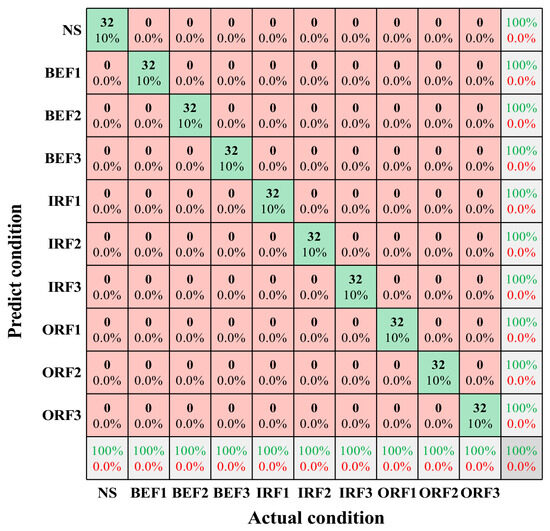
In the field of industrial equipment condition monitoring, accurate rolling bearing fault diagnosis is critical yet challenging due to high-dimensional vibration signals and complex operating conditions. Traditional machine learning methods often struggle with insufficient feature separability and sensitivity to model parameters, leading to fluctuating diagnostic accuracy. To address these challenges, this study introduces the whale optimization algorithm-guided symplectic geometry matrix machine (WOA-SGMM) and proposes the application of the whale optimization algorithm (WOA) to optimize the symplectic geometry matrix machine (SGMM), forming a WOA-SGMM diagnostic framework. (1) The symplectic geometry spectral transformation (SGST) effectively converts high-dimensional vibration signals into low-dimensional feature matrices while preserving intrinsic geometric and topological structures, enhancing noise robustness. (2) Leveraging WOA, we adaptively search for the optimal hyperparameters of the proposed SGMM, specifically addressing the limitations of traditional SMM, to mitigate the risk of overfitting. (3) Experimental validation on three benchmark datasets demonstrates that WOA-SGMM achieves superior multi-class fault diagnosis accuracy (up to 100%) under varying operating conditions. Compared to traditional methods, the proposed WOA-SGMM demonstrates improved classification accuracy and enhanced robustness against noise interference in the tested experimental scenarios, highlighting its potential for real-world industrial applications.
Full article

Figure 1
Open AccessArticle
Effects of Mixed Air on the Performance and Stiffness of a Viscous Fluid Damper
by
Junwen Wei, Yurong Wang, Yi Wang and Qiangsheng Luo
Vibration 2026, 9(2), 33; https://doi.org/10.3390/vibration9020033 - 8 May 2026
Abstract
►▼
Show Figures
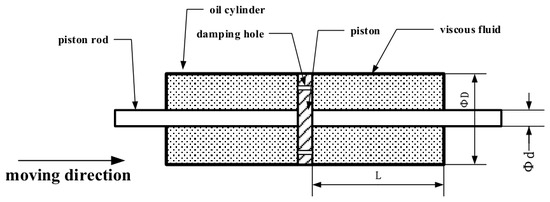
Viscous fluid dampers are widely used for mechanical vibration reduction to ensure the stability and safety of structures and systems. However, when a small amount of air (less than 10%) is mixed into the fluid, the compressibility of the fluid increases, leading to
[...] Read more.
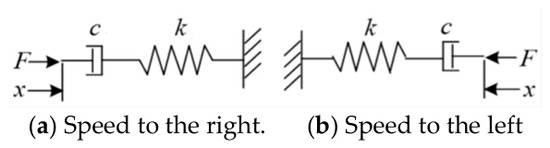
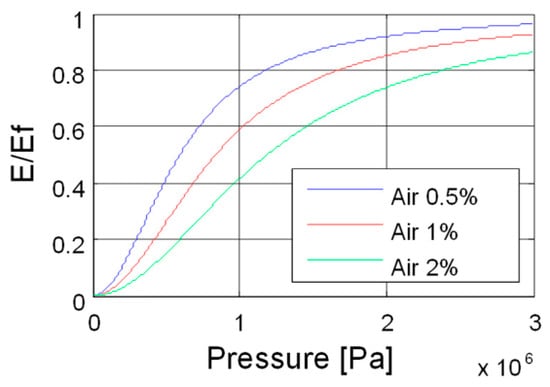
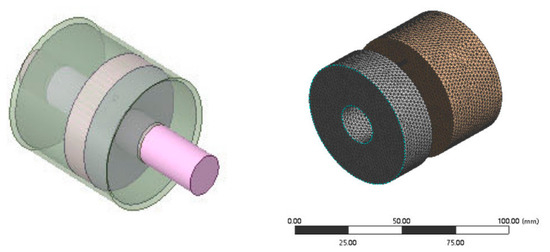
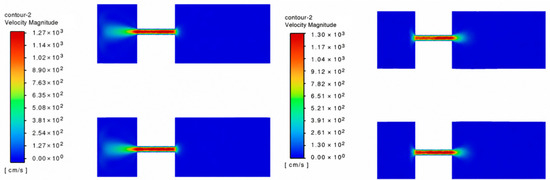
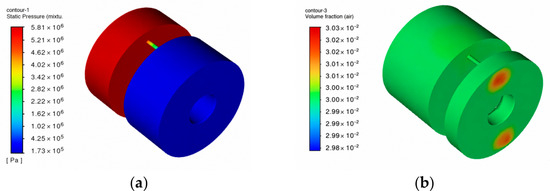
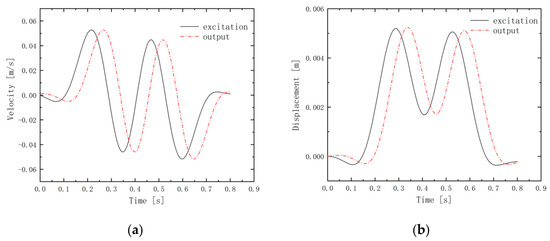
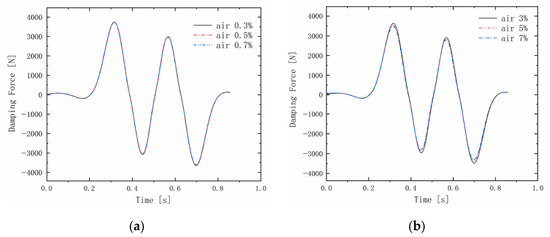
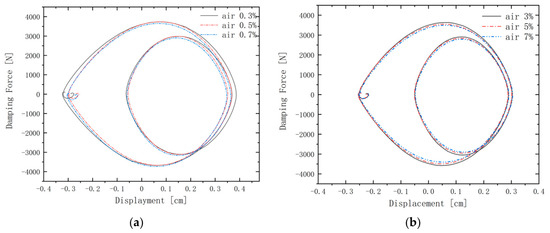
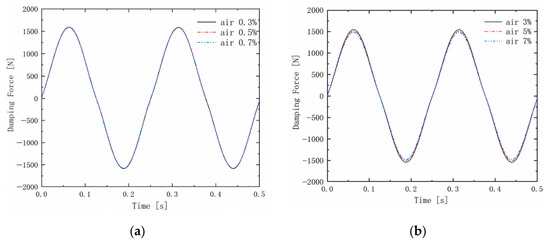
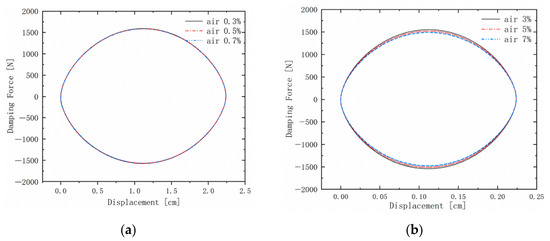
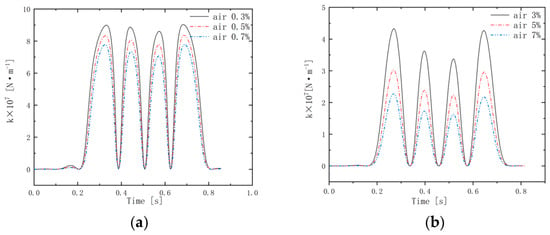
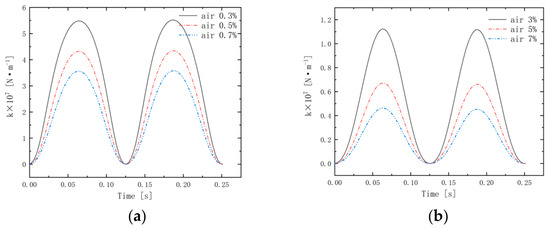
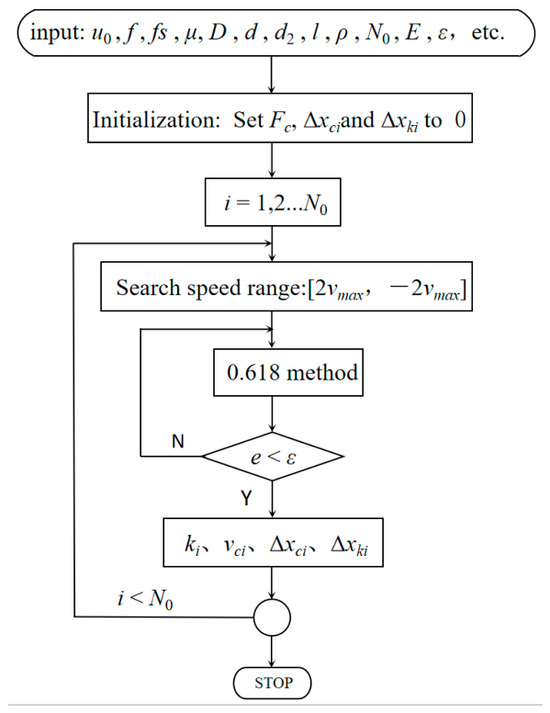
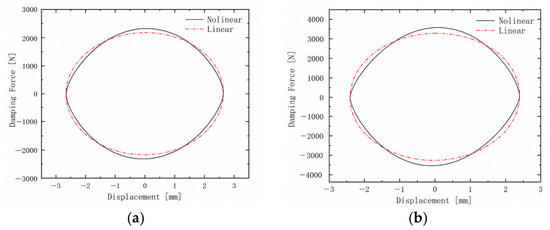
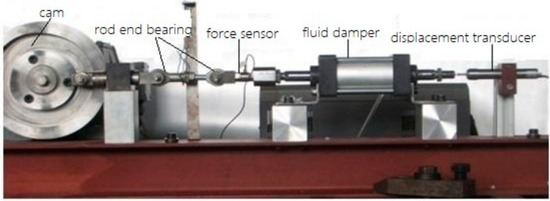
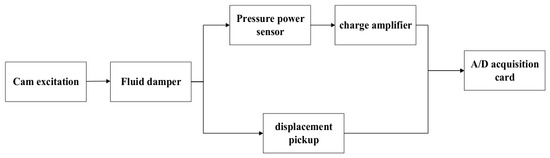
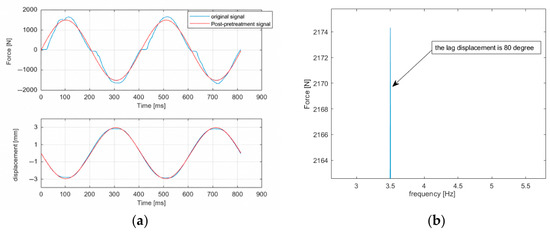
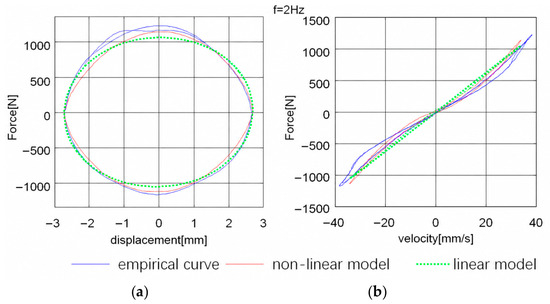
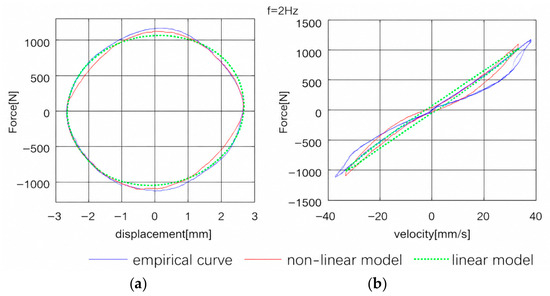
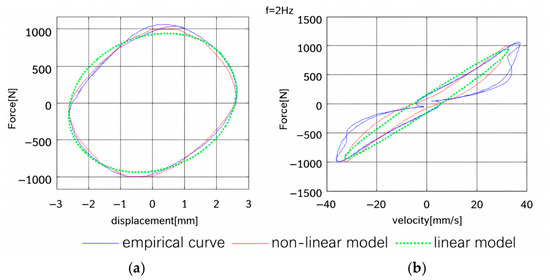
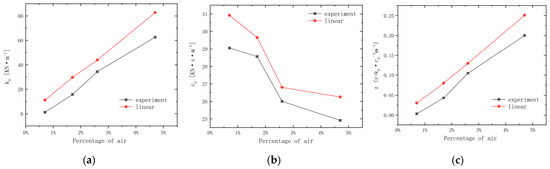
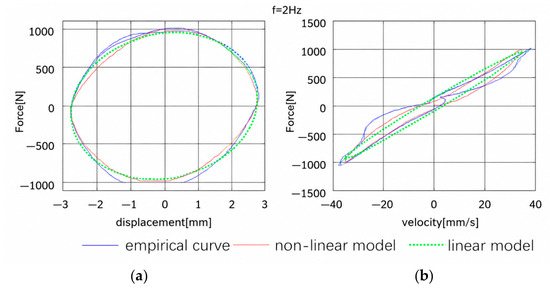
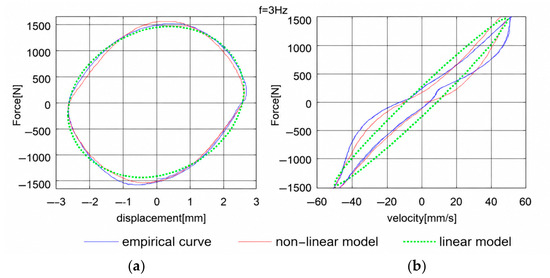
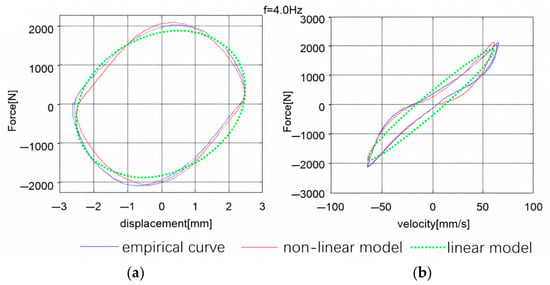
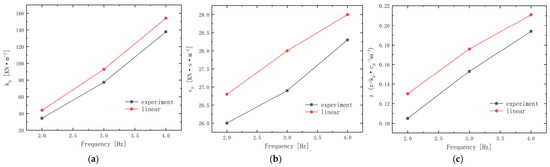
Viscous fluid dampers are widely used for mechanical vibration reduction to ensure the stability and safety of structures and systems. However, when a small amount of air (less than 10%) is mixed into the fluid, the compressibility of the fluid increases, leading to a decrease in the physical series stiffness of the damper. Consequently, under dynamic excitation, the proportion of elastic force in the total output force rises, resulting in an increase in the equivalent parallel additional stiffness—a concept often conflated with the series stiffness in the literature. This paper aims to demonstrate these two aspects of stiffness change by investigating the dynamic characteristics of air-mixed viscous fluid dampers through nonlinear modeling, finite element simulation, and experimental validation. Starting from a nonlinear series model comprising nonlinear damping and a nonlinear fluid spring (series stiffness), the energy dissipation and physical series stiffness under different air mixtures are simulated using a finite element model. To further explore the influence of air, an equivalent linear parallel model is established based on the equal energy principle, yielding an equivalent parallel additional stiffness. The results reveal that the energy dissipation effectiveness and the dynamic stiffness of viscous fluid dampers decrease as the air mixture increases. Nevertheless, the additional stiffness is increased with the air content. When the amount of air mixing is the same, the energy dissipation characteristics of the viscous fluid damper under different excitation frequencies vary. Both the damper efficiency and the additional stiffness are increased with the increase of the excitation frequency. The proposed equivalent linear model effectively captures the coupled effects of air mixture and excitation conditions on damper performance.
Full article

Figure 1
Open AccessArticle
Comparative Study on the Interaction Between Underwater Explosion Bubbles and Elastic Plates with Vertical and Horizontal Orientations
by
Kexin Chen, Lin Lu, Changan Xu, Luyue Xi and Xianghong Huang
Vibration 2026, 9(2), 32; https://doi.org/10.3390/vibration9020032 - 8 May 2026
Abstract
Underwater explosion bubbles generate intense pressure pulses and high-speed re-entrant jets during their expansion and collapse processes, posing significant threats to ships and submerged structures. In practical engineering, plate-like structures with different orientations are widely encountered; therefore, investigating the influence of boundary orientation
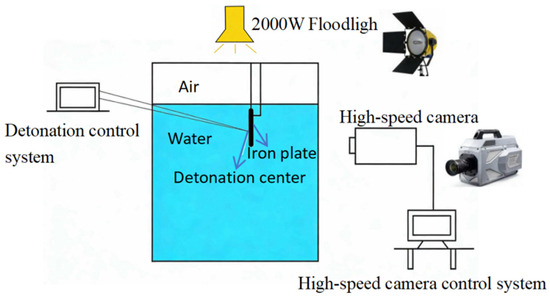
[...] Read more.
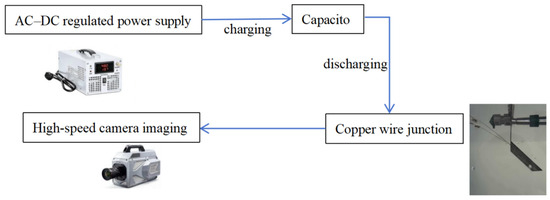
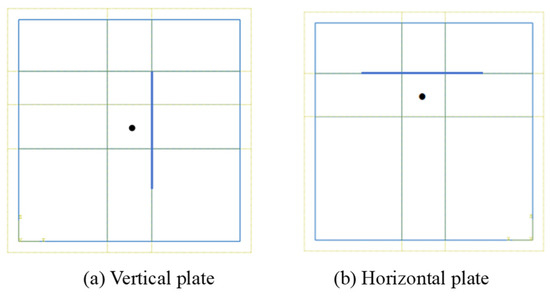
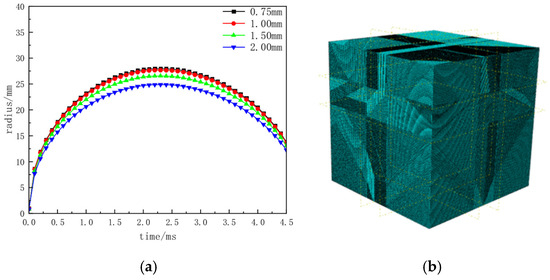
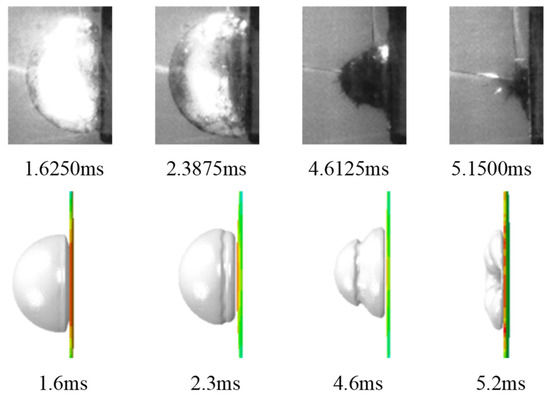
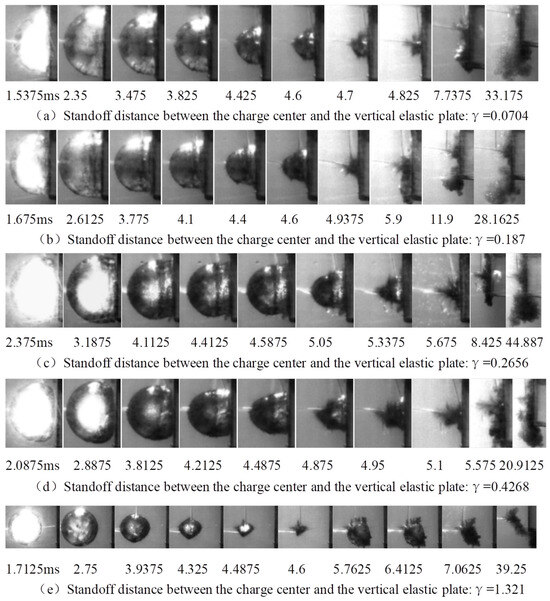
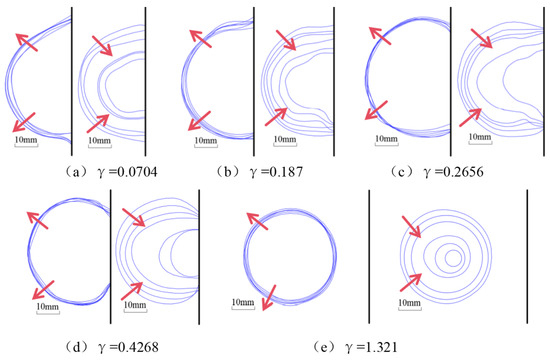
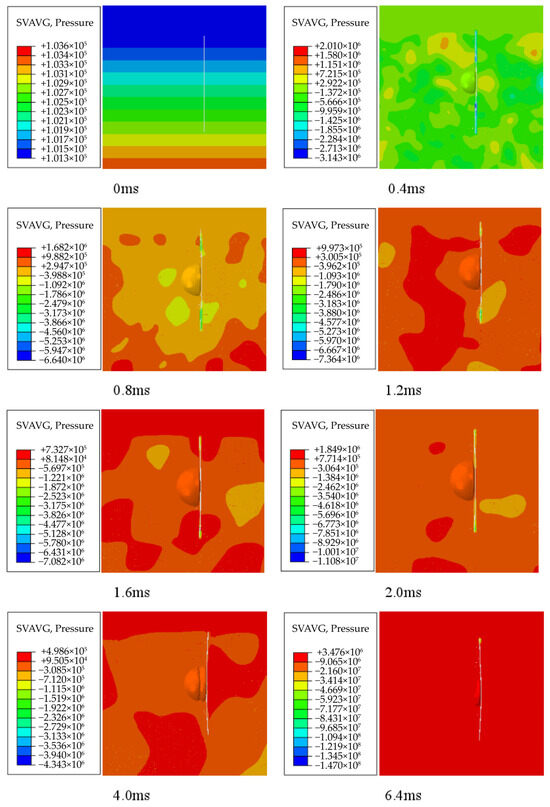
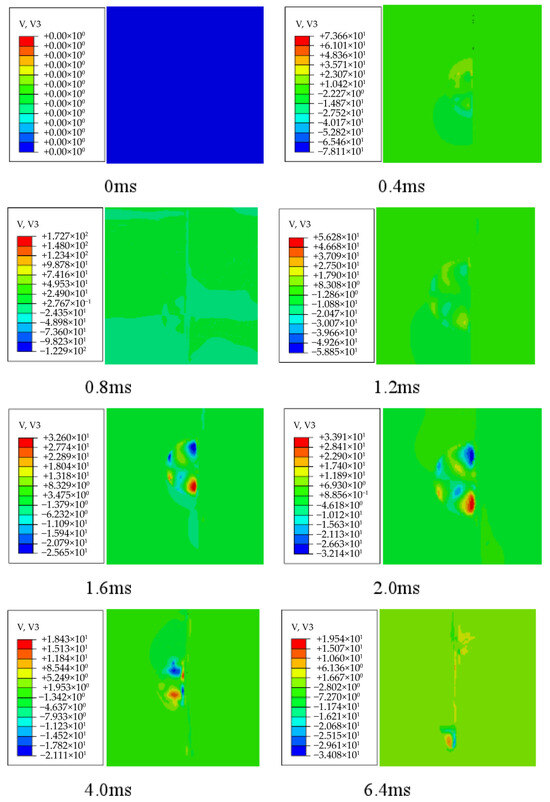
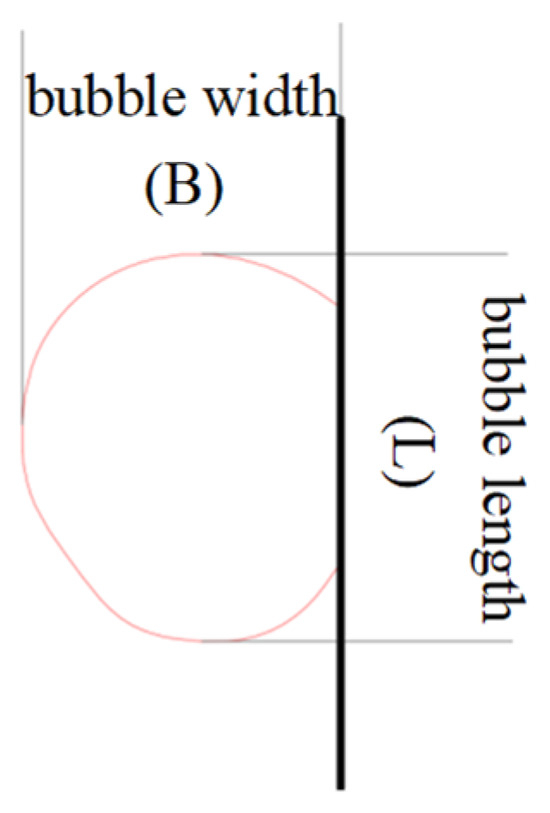
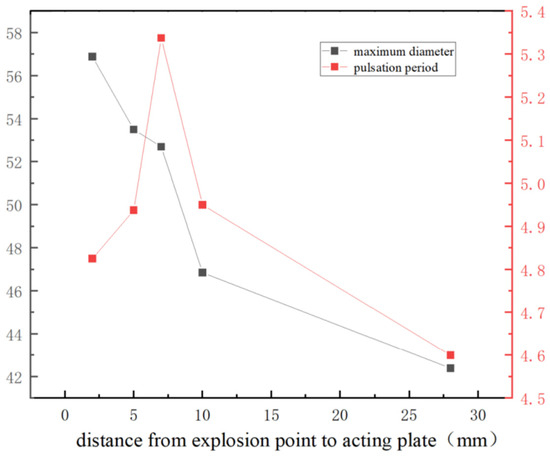
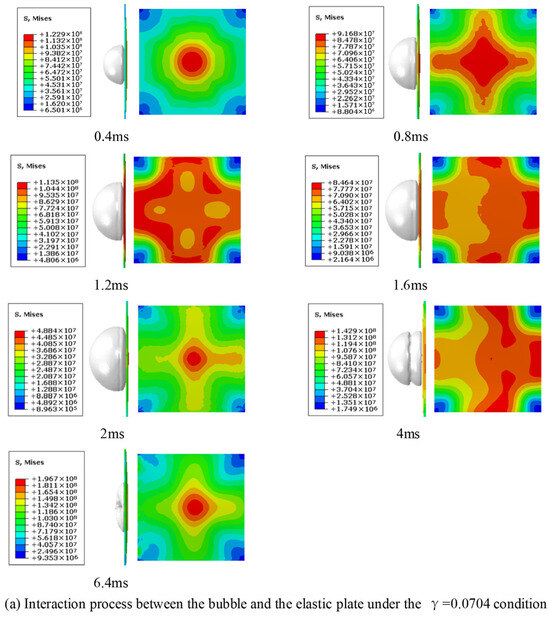
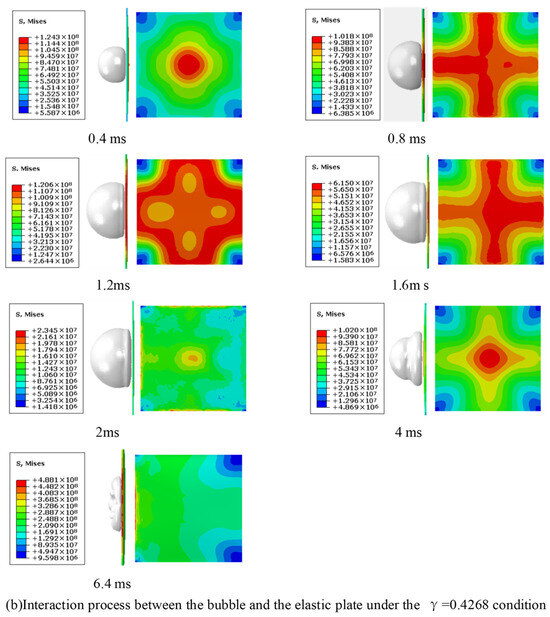
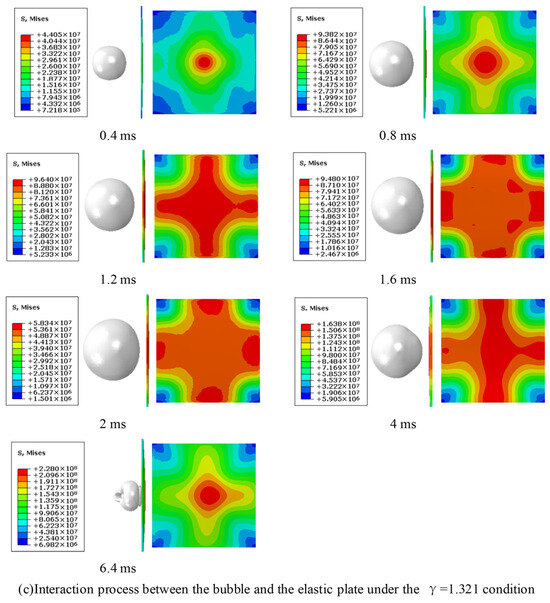
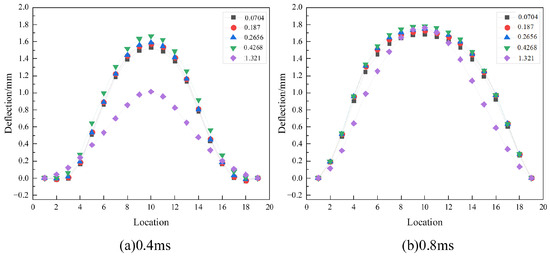
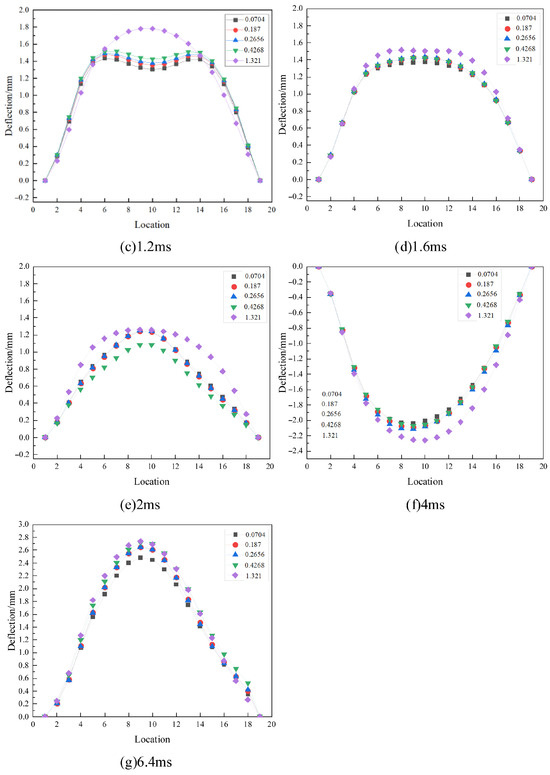
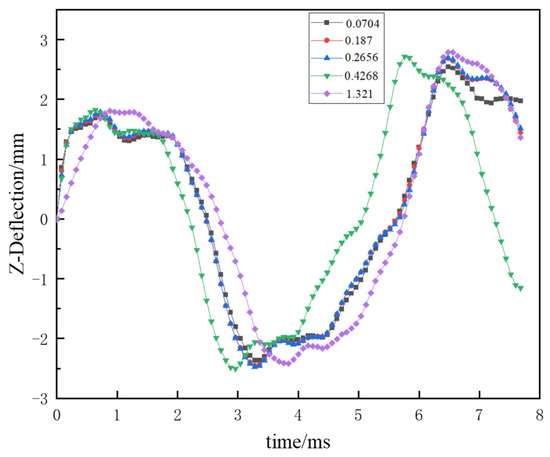
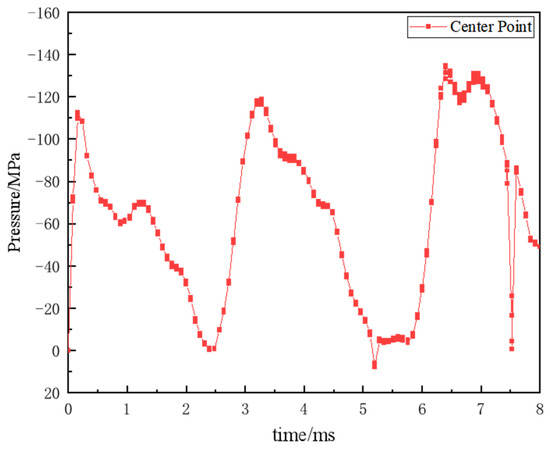
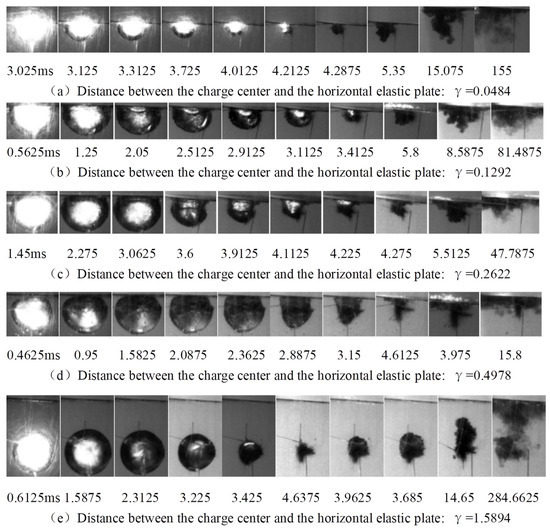
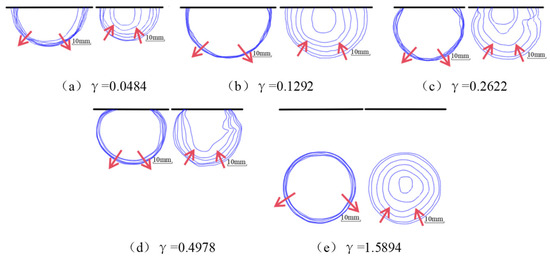
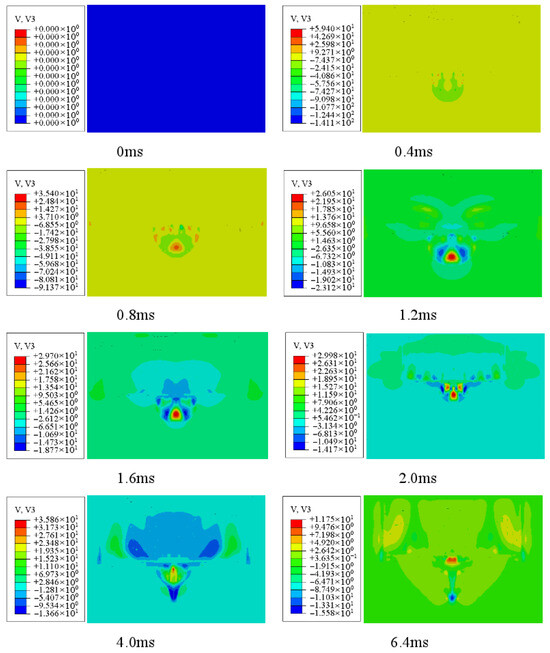
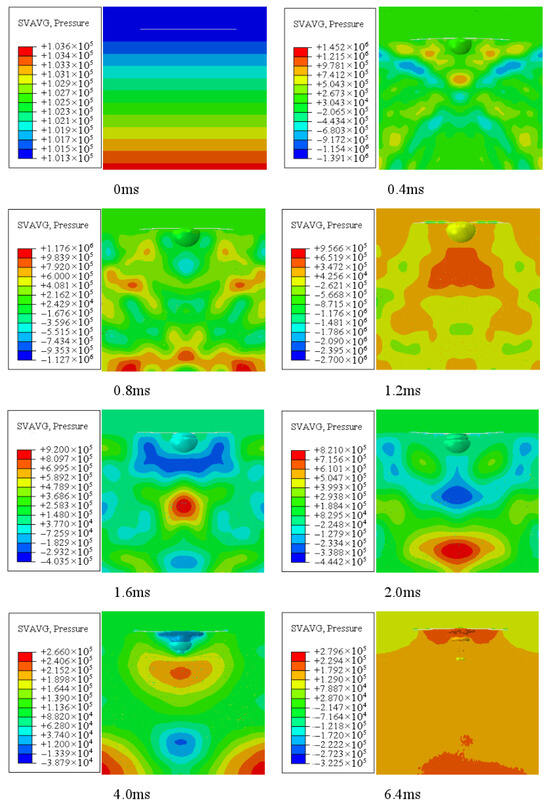
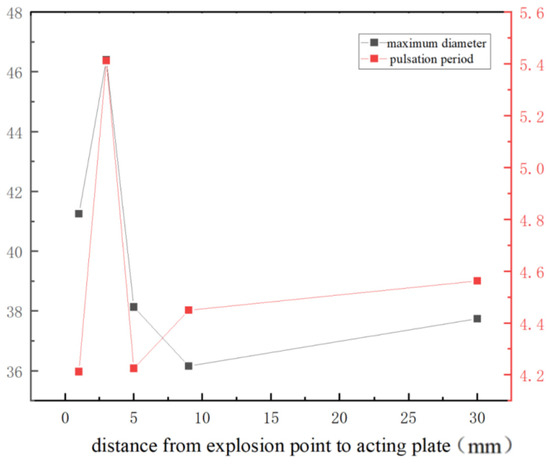
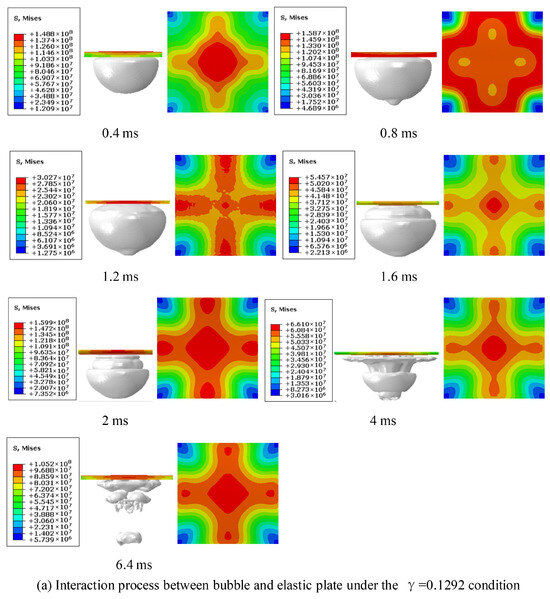
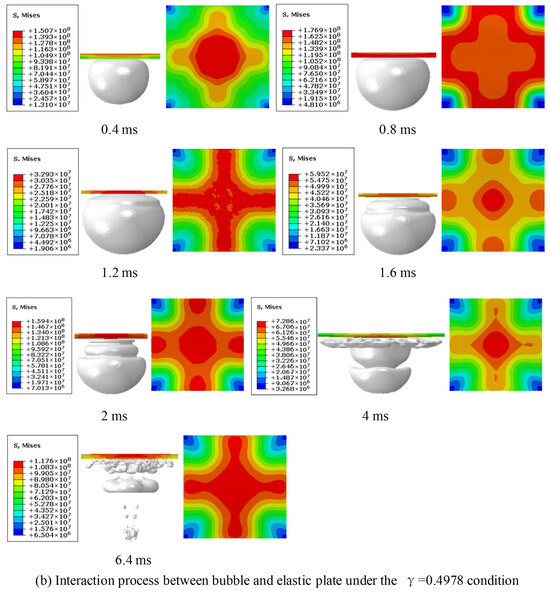
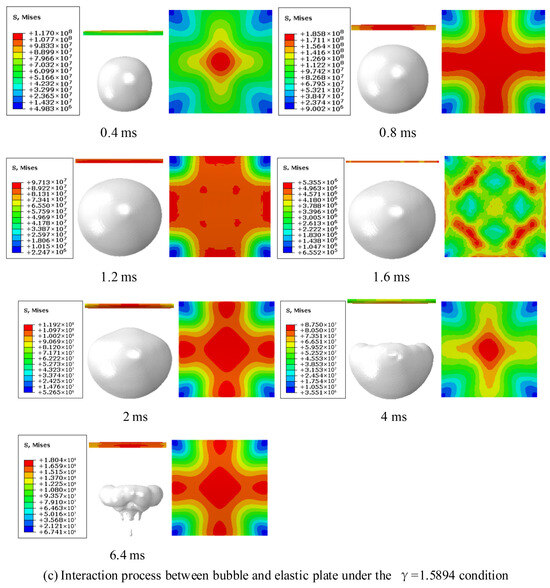
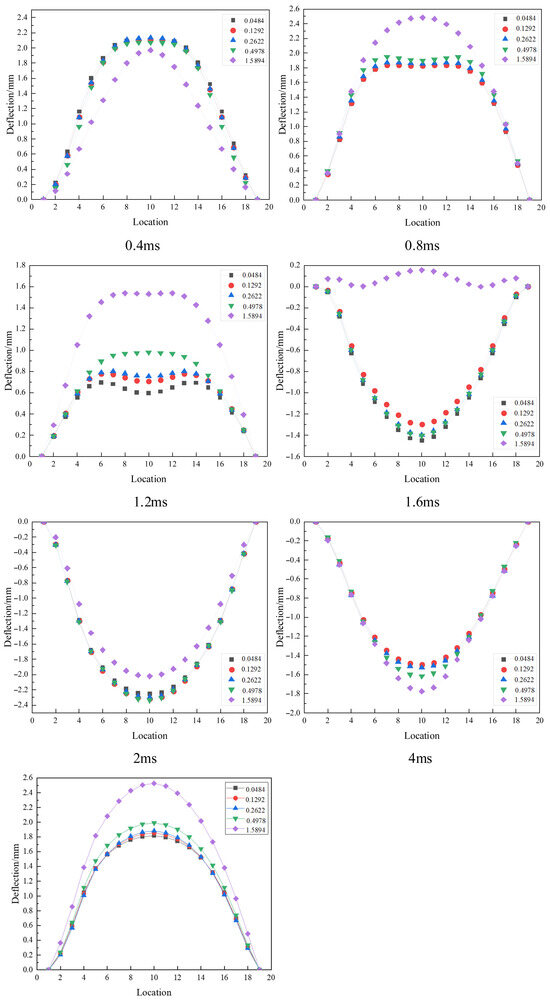
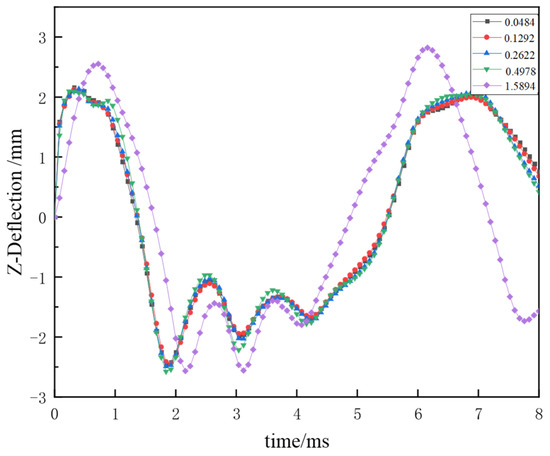
Underwater explosion bubbles generate intense pressure pulses and high-speed re-entrant jets during their expansion and collapse processes, posing significant threats to ships and submerged structures. In practical engineering, plate-like structures with different orientations are widely encountered; therefore, investigating the influence of boundary orientation on bubble dynamics is of great importance. In this study, underwater electrical explosion experiments were conducted using a capacitor discharge voltage of 300 V, with stand-off distances ranging from 1 mm to 30 mm. Two typical boundary configurations were established, namely a vertical plate and a horizontal plate. High-speed imaging was employed to capture the complete bubble evolution process, while coupled Eulerian–Lagrangian (CEL) simulations were performed to analyze bubble dynamics and structural response. The results indicate that, under the vertical plate condition, the maximum bubble diameter decreases monotonically with increasing stand-off distance, whereas the oscillation period exhibits a non-monotonic variation. At a stand-off distance of 5 mm, the maximum bubble diameter in the vertical plate configuration is 40.3% larger than that in the horizontal plate configuration. The reflected shock wave from the elastic boundary modifies the surrounding pressure field, thereby influencing the evolution of the bubble interface. In the presence of a vertical elastic plate, the bubble exhibits a centroid displacement during the expansion phase, and a re-entrant jet directed toward the boundary forms during collapse. In contrast, under the horizontal elastic plate condition, the bubble maintains a nearly axisymmetric evolution, and the re-entrant jet develops along the vertical direction. As the standoff distance between the plate and the charge center increases, the boundary effect gradually weakens, and the bubble morphology approaches that under free-field conditions. This study provides experimental evidence for understanding bubble–structure interaction (BSI) between underwater explosion bubbles and ship plate structures, and offers valuable insights for blast-resistant design of naval structures and the evaluation of underwater explosion loads.
Full article
(This article belongs to the Special Issue Free Vibration and Dynamic Characteristics of Microheterogeneous Materials and Structures)
►▼
Show Figures

Figure 1
Open AccessArticle
Experimental and Numerical Investigation of Stiffness-Optimized Vibration Isolators on Vibration Transmission in Cylindrical Shell Structures: A Comparative Land-Based and Underwater Study
by
Quansheng Hu, Sheng Liu, Kun Zhang, Chaoying Wang, Qichao Xue, Guangping Zou, Yonghui Wang, Mingtao Chen and Deshui Xu
Vibration 2026, 9(2), 31; https://doi.org/10.3390/vibration9020031 - 29 Apr 2026
Cited by 1
Abstract
►▼
Show Figures
Optimizing isolator stiffness is essential for controlling vibration transmission in cylindrical shell structures operating in cross-environment conditions. This study investigates the influence of isolator stiffness on vibration transmission and fluid-coupled response through coordinated land-based experiments, water-immersed experiments, and ABAQUS simulations. Two damped spring
[...] Read more.
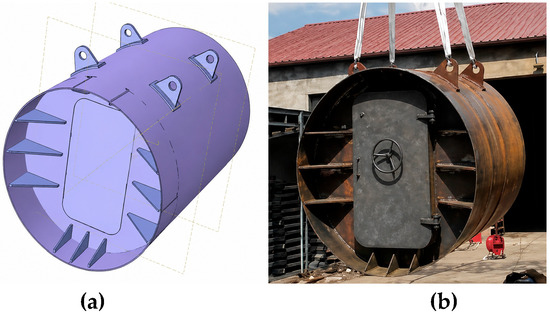
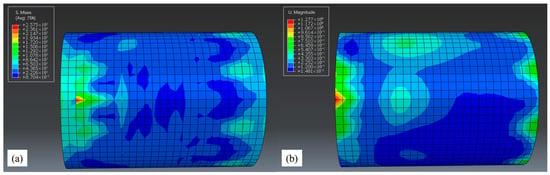
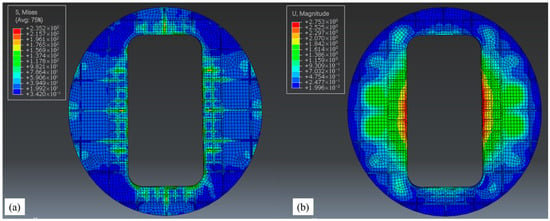
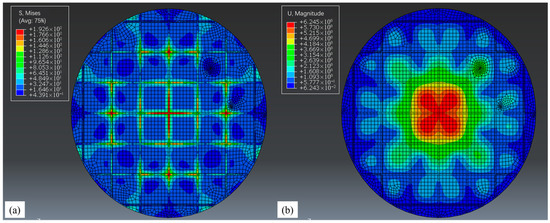
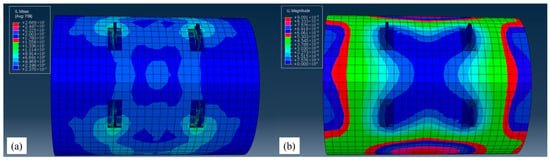
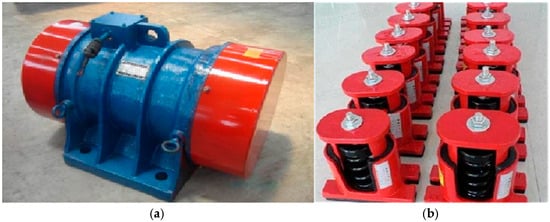
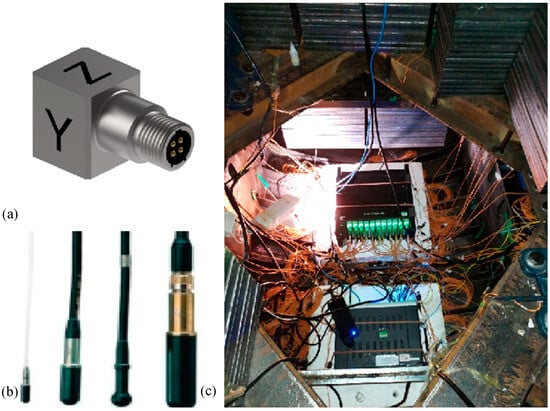
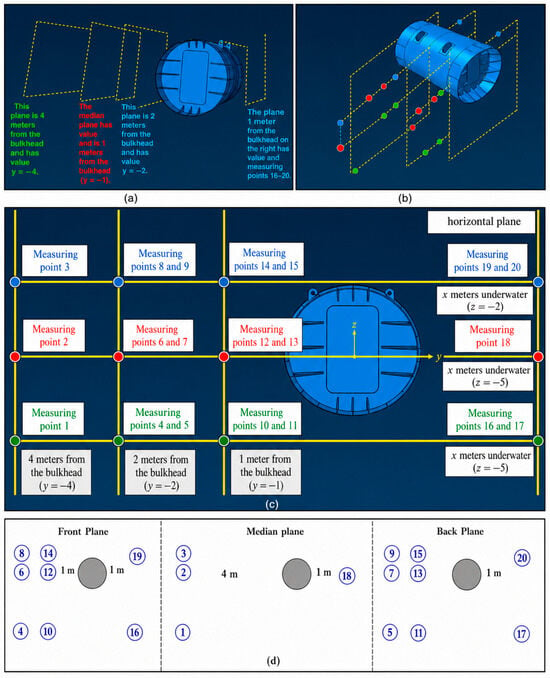
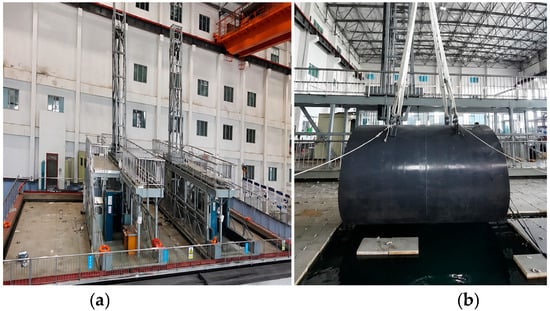
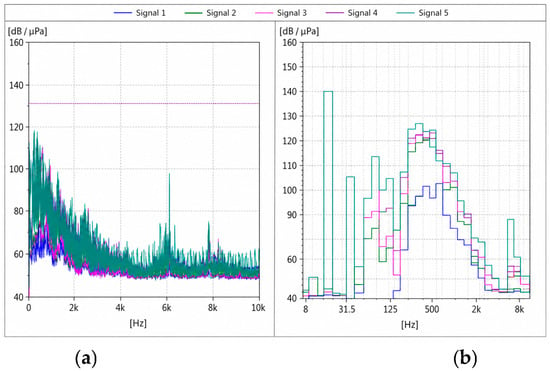
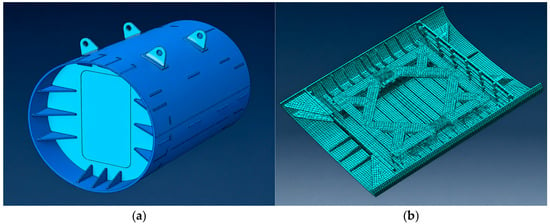
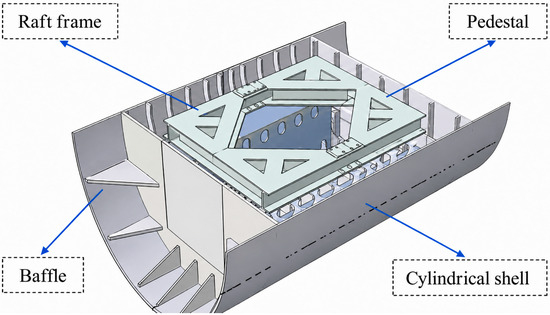
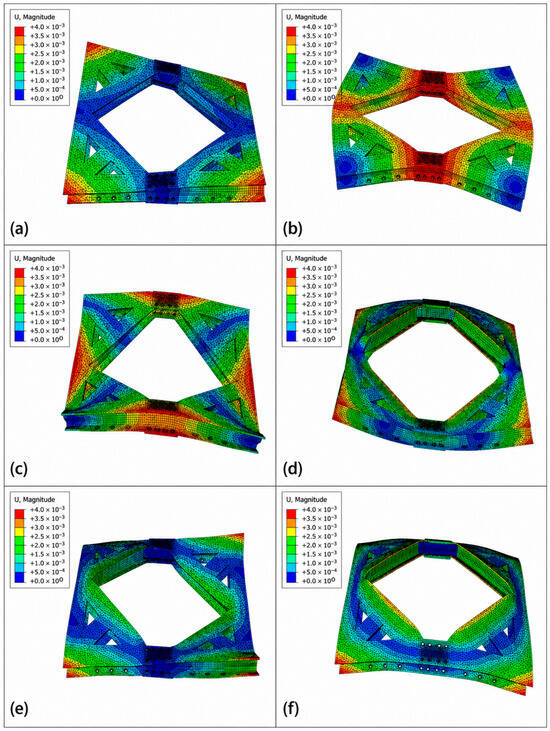
Optimizing isolator stiffness is essential for controlling vibration transmission in cylindrical shell structures operating in cross-environment conditions. This study investigates the influence of isolator stiffness on vibration transmission and fluid-coupled response through coordinated land-based experiments, water-immersed experiments, and ABAQUS simulations. Two damped spring isolators with stiffness values of 290 N/mm and 970 N/mm were tested under representative excitations of 25 Hz and 40 Hz. The results show that the lower-stiffness isolator provides consistently stronger vibration attenuation and produces higher vibration level differences than the higher-stiffness isolator. The measured vibration level differences between land-based and water-immersed conditions remain generally within 3 dB, indicating good cross-environment consistency. The numerical results agree well with the experimental trends, with deviations generally below 5 dB in the main low-frequency range. Mechanism analysis indicates that reducing isolator stiffness weakens the transmission of excitation energy from the raft frame to the base and shell, thereby reducing near-field fluid-coupled response around the excitation region. These findings support the use of lower-stiffness isolators and provide a practical framework for vibration assessment and parameter selection in cylindrical shell structures working under coupled air–water conditions.
Full article

Figure 1
Open AccessArticle
MDCAD-Net: A Multi-Dilated Convolution Attention Denoising Network for Bearing Fault Diagnosis
by
Ran Duan, Ruopeng Yan and Guangyin Jin
Vibration 2026, 9(2), 30; https://doi.org/10.3390/vibration9020030 - 24 Apr 2026
Abstract
►▼
Show Figures
Bearing fault diagnosis is an important task for condition monitoring and predictive maintenance of rotating machinery. Nevertheless, many existing deep learning-based methods have difficulty in jointly modeling multi-scale fault characteristics, adaptively highlighting informative features, and maintaining robustness under noisy measurement conditions. To address
[...] Read more.
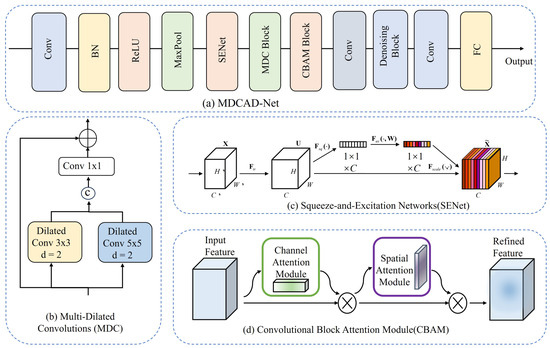
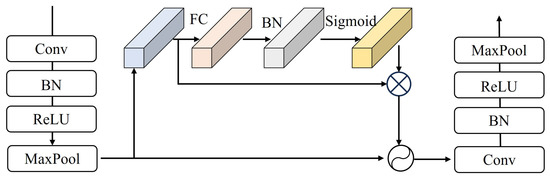
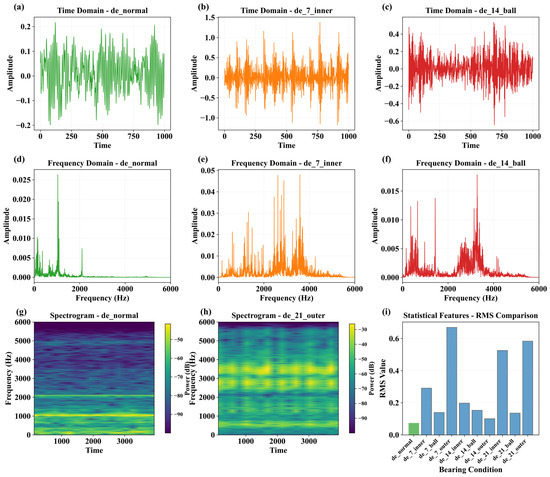
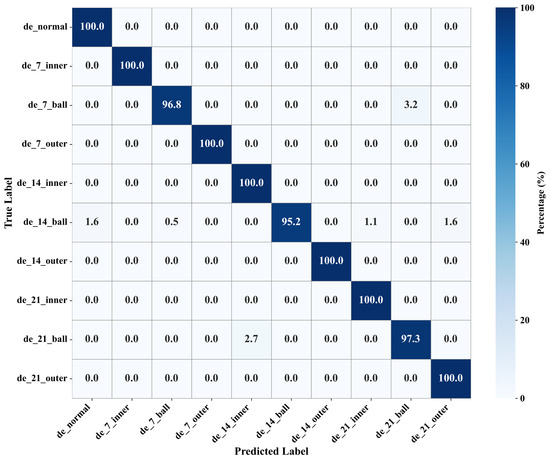
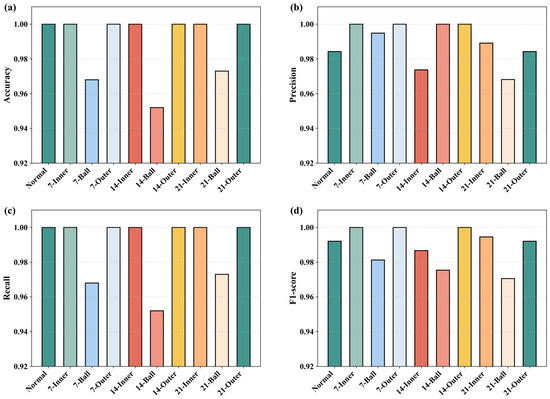
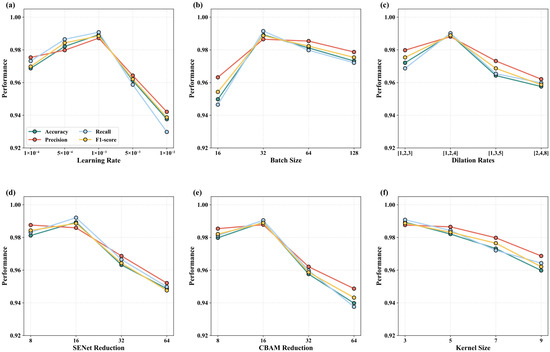
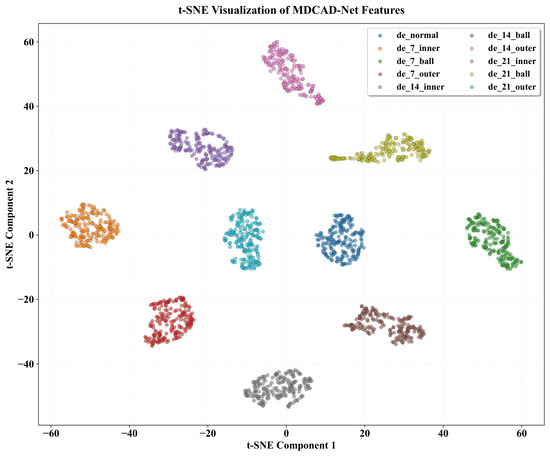
Bearing fault diagnosis is an important task for condition monitoring and predictive maintenance of rotating machinery. Nevertheless, many existing deep learning-based methods have difficulty in jointly modeling multi-scale fault characteristics, adaptively highlighting informative features, and maintaining robustness under noisy measurement conditions. To address these issues, this study presents MDCAD-Net, a multi-dilated convolution attention denoising network that integrates multi-scale temporal feature extraction, attention-based feature refinement, and explicit noise suppression within an end-to-end learning framework. Parallel dilated convolutions with different dilation rates are employed to capture short-duration transient impulses as well as long-range periodic patterns in vibration signals. Channel-wise feature recalibration using squeeze-and-excitation networks and spatial-temporal attention via a convolutional block attention module are combined to enhance informative representations. In addition, a denoising block with gated attention and residual connections is introduced to reduce noise interference while retaining fault-related signal components. Experiments conducted on the Case Western Reserve University bearing dataset show that the proposed method achieves a classification accuracy of 98.93% and yields competitive performance compared with several commonly used deep learning models. Ablation studies and feature visualization results further illustrate the contributions of the individual components and the separability of the learned feature representations under noisy conditions. The results indicate the potential of the proposed framework for practical bearing fault diagnosis under noisy operating conditions.
Full article

Figure 1
Highly Accessed Articles
Latest Books
E-Mail Alert
News
Topics
Topic in
Eng, Micromachines, Vibration
Vibration and Energy Harvesting: Theory, Technologies, and Applications
Topic Editors: Yunlong Zi, Guobiao Hu, Junrui Liang, Junlei WangDeadline: 30 June 2027
Special Issues
Special Issue in
Vibration
New Trends in Experimental and Numerical Vibroacoustic Techniques—Physics Guided and Datas Guided Approaches
Guest Editors: Mohamed Ichchou, Noureddine BouhaddiDeadline: 25 August 2026
Special Issue in
Vibration
Free Vibration and Dynamic Characteristics of Microheterogeneous Materials and Structures
Guest Editors: Jarosław Jędrysiak, Piotr Ostrowski, Jakub MarczakDeadline: 20 September 2026
Special Issue in
Vibration
Structural Vibration: Modeling, Analysis, Optimization and Engineering Applications
Guest Editors: Cong Gao, Haichao Li, Xianghong HuangDeadline: 30 October 2026
Special Issue in
Vibration
Experimental Measurement and Modeling Techniques of Mechanical Systems
Guest Editor: Jonathan BlotterDeadline: 30 October 2026