
Journal Menu
► ▼ Journal MenuE-Mail Alert
Separations — Open Access Separation Science Journal
Separations (ISSN 2297-8739; CODEN: SEPAF2)
, formerly Chromatography (ISSN 2227-9075, CODEN: CHROBV), is an international, scientific, open access journal published quarterly online by MDPI:
- Open Access - free for readers, with publishing fees paid by authors or their institutions.
- High visibility: Indexed in the Emerging Sources Citation Index (ESCI - Web of Science).
- Rapid publication: manuscripts are peer-reviewed and a first decision provided to authors approximately 31 days after submission; acceptance to publication is undertaken in 8 days (median values for papers published in this journal in 2015).
Latest Articles
Open AccessArticle
Development of an Automated Method for Selected Aromas of Red Wines from Cold-Hardy Grapes Using Solid-Phase Microextraction and Gas Chromatography-Mass Spectrometry-Olfactometry
►▼
Figures
Separations 2017, 4(3), 24; doi:10.3390/separations4030024 - 5 July 2017
Abstract
The aroma profile of red wine is complex and research focusing on aroma compounds and their links to viticultural and enological practices is needed. Current research is limited to wines made from cold-hardy cultivars (interspecific hybrids of vinifera and native N. American grapes).
[...] Read more.
The aroma profile of red wine is complex and research focusing on aroma compounds and their links to viticultural and enological practices is needed. Current research is limited to wines made from cold-hardy cultivars (interspecific hybrids of vinifera and native N. American grapes). The objective of this research was to develop a fully automated solid phase microextraction (SPME) method, using tandem gas chromatography-mass spectrometry (GC-MS)-olfactometry for the simultaneous chemical and sensory analysis of volatile/semi-volatile compounds and aroma in cold-hardy red wines. Specifically, the effects of SPME coating selection, extraction time, extraction temperature, incubation time, sample volume, desorption time, and salt addition were studied. The developed method was used to determine the aroma profiles of seven selected red wines originating from four different cold-hardy grape cultivars. Thirty-six aroma compounds were identified from Maréchal Foch, St. Croix, Frontenac, Vincent, and a Maréchal Foch/Frontenac blend. Among these 36 aroma compounds, isoamyl alcohol, ethyl caproate, benzeneethanol, ethyl decanoate, and ethyl caproate are the top five most abundant aroma compounds. Olfactometry helps to identify compounds not identified by MS. The presented method can be useful for grape growers and wine makers for the screening of aroma compounds in a wide variety of wines and can be used to balance desired wine aroma characteristics.
Full article

Open AccessFeature PaperReview
Trends in Microextraction-Based Methods for the Determination of Sulfonamides in Milk
►▼
Figures
by Maria Kechagia and Victoria Samanidou
Separations 2017, 4(3), 23; doi:10.3390/separations4030023 - 23 June 2017
Abstract
Sulfonamides (SAs) represent a significant category of pharmaceutical compounds due to their effective antimicrobial characteristics. SAs were the first antibiotics to be used in clinical medicine to treat a majority of diseases, since the 1900s. In the dairy farming industry, sulfa drugs are
[...] Read more.
Sulfonamides (SAs) represent a significant category of pharmaceutical compounds due to their effective antimicrobial characteristics. SAs were the first antibiotics to be used in clinical medicine to treat a majority of diseases, since the 1900s. In the dairy farming industry, sulfa drugs are administered to prevent infection, in several countries. This increases the possibility that residual drugs could pass through milk consumption even at low levels. These traces of SAs will be detected and quantified in milk. Therefore, microextraction techniques must be developed to quantify antibiotic residues, taking into consideration the terms of Green Analytical Chemistry as well.
Full article

Figure 1
Open AccessFeature PaperArticle
A Novel Protocol to Monitor Trace Levels of Selected Polycyclic Aromatic Hydrocarbons in Environmental Water Using Fabric Phase Sorptive Extraction Followed by High Performance Liquid Chromatography-Fluorescence Detection
►▼
Figures
by Shivender Singh Saini, Abuzar Kabir, Avasarala Lakshmi Jagannadha Rao, Ashok Kumar Malik and Kenneth G. Furton
Separations 2017, 4(2), 22; doi:10.3390/separations4020022 - 8 June 2017
Abstract
Fabric phase sorptive extraction (FPSE) combines the advanced material properties of sol–gel derived microextraction sorbents and the flexibility and permeability of fabric to create a robust, simple and green sample preparation device. It simultaneously improves the extraction sensitivity and the speed of the
[...] Read more.
Fabric phase sorptive extraction (FPSE) combines the advanced material properties of sol–gel derived microextraction sorbents and the flexibility and permeability of fabric to create a robust, simple and green sample preparation device. It simultaneously improves the extraction sensitivity and the speed of the extraction by incorporating high volumes of sponge-like, porous sol–gel hybrid inorganic–organic sorbents into permeable fabric substrates that are capable of extracting target analytes directly from both simple and complex aqueous sample matrices. For the first time, this technique was applied to the trace-level determination of selected polycyclic aromatic hydrocarbons (PAHs) in environmental water samples using a non-polar sol–gel C18 coated FPSE media. Several extraction parameters were optimized to improve the extraction efficiency and to achieve a high detection sensitivity. Validation tests of spiked samples showed good linearity for four selected PAHs (R2 = 0.9983–0.9997) over a wide range of concentrations (0.010–10 ng/mL). Limits of detection (LODs) and quantification (LOQs) were measured at pg/mL levels; 0.1–1 pg/mL and 0.3–3 pg/mL, respectively. Inter- and intra-day precision tests showed variations of 1.1%–4.1% for four selected PAHs. Average absolute recovery values were in the range of 88.1%–90.5% with relative standard deviations below 5%, surpassing the values predicted by the recovery prediction model. Finally, the developed FPSE-HPLC-FLD protocol was applied to analyze 8 environmental water samples. Out of four selected PAHs, fluoranthene (Flu) and phenanthrene (Phen) were the most frequently detected in four samples, at concentrations of 5.6–7.7 ng/mL and 4.1–11 ng/mL, respectively, followed by anthracene (Anth) and pyrene (Pyr) in two samples. The newly developed FPSE-HPLC-FLD protocol is simple, green, fast and economical, with adequate sensitivity for trace levels of four selected PAHs and seems to be promising for routine monitoring of water quality and safety.
Full article

Figure 1
Open AccessArticle
Fabric Phase Sorptive Extraction Explained
►▼
Figures
Separations 2017, 4(2), 21; doi:10.3390/separations4020021 - 2 June 2017
Abstract
The theory and working principle of fabric phase sorptive extraction (FPSE) is presented. FPSE innovatively integrates the benefits of sol–gel coating technology and the rich surface chemistry of cellulose/polyester/fiberglass fabrics, resulting in a microextraction device with very high sorbent loading in the form
[...] Read more.
The theory and working principle of fabric phase sorptive extraction (FPSE) is presented. FPSE innovatively integrates the benefits of sol–gel coating technology and the rich surface chemistry of cellulose/polyester/fiberglass fabrics, resulting in a microextraction device with very high sorbent loading in the form of an ultra-thin coating. This porous sorbent coating and the permeable substrate synergistically facilitate fast extraction equilibrium. The flexibility of the FPSE device allows its direct insertion into original, unmodified samples of different origin. Strong chemical bonding between the sol–gel sorbent and the fabric substrate permits the exposure of FPSE devices to any organic solvent for analyte back-extraction/elution. As a representative sorbent, sol–gel poly(ethylene glycol) coating was generated on cellulose substrates. Five (cm2) segments of these coated fabrics were used as the FPSE devices for sample preparation using direct immersion mode. An important class of environmental pollutants—substituted phenols—was used as model compounds to evaluate the extraction performance of FPSE. The high primary contact surface area (PCSA) of the FPSE device and porous structure of the sol–gel coatings resulted in very high sample capacities and incredible extraction sensitivities in a relatively short period of time. Different extraction parameters were evaluated and optimized. The new extraction devices demonstrated part per trillion level detection limits for substitute phenols, a wide range of detection linearity, and good performance reproducibility.
Full article

Open AccessFeature PaperReview
Fabric Sol–gel Phase Sorptive Extraction Technique: A Review
►▼
Figures
Separations 2017, 4(2), 20; doi:10.3390/separations4020020 - 24 May 2017
Abstract
Since the introduction in 2014 of fabric phase sorptive extraction (FPSE) as a sample preparation technique, it has attracted the attention of many scientists working in the field of separation science. This novel sorbent extraction technique has successfully utilized the benefits of sol–gel
[...] Read more.
Since the introduction in 2014 of fabric phase sorptive extraction (FPSE) as a sample preparation technique, it has attracted the attention of many scientists working in the field of separation science. This novel sorbent extraction technique has successfully utilized the benefits of sol–gel derived hybrid sorbents and a plethora of fabric substrates, resulting in a highly efficient, sensitive and green sample pretreatment methodology. The proposed procedure is an easy and efficient pathway to extract target analytes from different matrices providing inherent advantages such as high sample loading capacity and short pretreatment time. The present review mainly focuses on the background and sol–gel chemistry for the preparation of new fabric sorbents as well as on the applications of FPSE for extracting target analytes, from the time that it was first introduced. New modes of FPSE including stir FPSE, stir-bar FPSE, dynamic FPSE, and automated on-line FPSE are also highlighted and commented upon in detail. FPSE has been effectively applied for the determination of various organic and inorganic analytes in different types of environmental and biological samples in high throughput analytical, environmental, and toxicological laboratories.
Full article

Figure 1
Open AccessArticle
Determination of Carotenoids in Human Serum and Breast Milk Using High Performance Liquid Chromatography Coupled with a Diode Array Detector (HPLC-DAD)
►▼
Figures
Separations 2017, 4(2), 19; doi:10.3390/separations4020019 - 17 May 2017
Abstract
High performance liquid chromatography (HPLC) coupled with a diode array detector (HPLC-DAD) for the identification and quantification of carotenoids, namely all-trans lutein, zeaxanthin, β-cryptoxanthin, α-carotene, and β-carotene, in biological samples such as human serum and breast milk, has been developed and validated.
[...] Read more.
High performance liquid chromatography (HPLC) coupled with a diode array detector (HPLC-DAD) for the identification and quantification of carotenoids, namely all-trans lutein, zeaxanthin, β-cryptoxanthin, α-carotene, and β-carotene, in biological samples such as human serum and breast milk, has been developed and validated. Good chromatography separation was achieved using a binary mobile phase system on a YMC C30 column (150 × 2.1 mm, 3 µm) at 30 °C. Owing to the smaller column particle size and diameter of the column, the separation was achieved in 18 min, which is significantly reduced from the typical 30–40 min of other methods. The diode array detector (DAD) acquisition was set at a wavelength of 445 nm; 3D spectra ranging from wavelengths of 240–600 nm were also recorded. Peaks were identified by matching their retention time and spectra with those of standards. Quantification was achieved by internal standard calibration using echinenone as the internal standard. Good linearity was obtained for each compound (R2 > 0.9999). The method quantification limits (MQLs) for serum and breast milk were 10 ng/mL and 5 ng/mL, in matrix, respectively. A spike recovery study and standard reference material (SRM) from the National Institute of Standards and Technology (NIST) 968e analysis has proven that the method has a high degree of accuracy, precision, and robustness. The stability study showed that the carotenoid standard and sample extracts could be stored in a chilled autosampler at 8 °C up to 48 h without being comprised, which provides guidance on re-test time frames. The freeze/thaw process was found to be detrimental to carotenoids, and should always be avoided. Most importantly, UV standardization of the stock standard is to be performed prior to each assay, and simply taking the values on Certificate of Analysis (CoA) for calculation of the standard concentration is not recommended.
Full article

Figure 1
Open AccessFeature PaperReview
Recent Advances in Microextraction Techniques of Antipsychotics in Biological Fluids Prior to Liquid Chromatography Analysis
►▼
Figures
Separations 2017, 4(2), 18; doi:10.3390/separations4020018 - 12 May 2017
Abstract
Antipsychotic drugs are a class of psychiatric medication worldwide used to treat psychotic symptoms principally in bipolar disorder, schizophrenia and other psycho-organic disorders. The traditional sample preparation techniques such as liquid-liquid extraction (LLE) or solid phase extraction (SPE), which were widely used, tend
[...] Read more.
Antipsychotic drugs are a class of psychiatric medication worldwide used to treat psychotic symptoms principally in bipolar disorder, schizophrenia and other psycho-organic disorders. The traditional sample preparation techniques such as liquid-liquid extraction (LLE) or solid phase extraction (SPE), which were widely used, tend to have many drawbacks because they include complicated, time-consuming steps and they require large sample size as well large amounts of organic solvent. Therefore, due to the modern analytical requirements, such as miniaturization, automation and reduction of solvent volume and time, many microextraction procedures have been developed. In this review we aim to present an overview of those techniques which are used prior to liquid chromatography analyses both for forensic toxicology in different biological matrices as well as for therapeutic drug monitoring.
Full article

Figure 1a
Open AccessArticle
LC-MS as a Tool to Overcome the Limitations of Self-Reported Dietary Assessments in the Determination of Wine Intake
►▼
Figures
by Patricia Regal, José J. Porto-Arias, Alexandre Lamas, Lucía Paz, Francisco Barreiro and Alberto Cepeda
Separations 2017, 4(2), 17; doi:10.3390/separations4020017 - 10 May 2017
Abstract
The nutritional assessment of individuals is usually performed using highly subjective data collecting tools such as food frequency questionnaires, dietary recalls and food records. However, people are not always capable of recalling all foods (and ingredients) consumed, and in some cases, the intake
[...] Read more.
The nutritional assessment of individuals is usually performed using highly subjective data collecting tools such as food frequency questionnaires, dietary recalls and food records. However, people are not always capable of recalling all foods (and ingredients) consumed, and in some cases, the intake of specific foods is intentionally omitted. Even though wine is considered positive for cardiovascular status, and is an essential part of Mediterranean culture, individuals may not always report its consumption accurately due to the existence of social preconceptions about alcoholic beverages. In this study, the presence of free resveratrol has been determined in human plasma from 25 Spanish volunteers using liquid chromatography coupled to mass spectrometry (LC-MS). This phenolic compound proved to be useful as a dietary biomarker for wine intake in a known population, and the results were compared with those obtained by self-reported dietary assessments. However, certain limitations must also be taken into account such as inter-individual variations and the type of wine consumed. The LC-MS method was validated for trans-resveratrol determination in human plasma, with an LOD (limit of detection) of 50 ng·mL−1 and an LOQ (limit of quantification) of 150 ng·mL−1, respectively.
Full article

Figure 1
Open AccessArticle
Determination of Posaconazole in Plasma/Serum by High-Performance Liquid Chromatography with Fluorescence Detection
►▼
Figures
Separations 2017, 4(2), 16; doi:10.3390/separations4020016 - 8 May 2017
Abstract
A sensitive high-performance liquid chromatographic (HPLC) method is described for the determination of posaconazole in human plasma/serum. The method is based on a single dilution step by treating the sample with methanol, and followed by the direct injection of the sample into the
[...] Read more.
A sensitive high-performance liquid chromatographic (HPLC) method is described for the determination of posaconazole in human plasma/serum. The method is based on a single dilution step by treating the sample with methanol, and followed by the direct injection of the sample into the HPLC system. Posaconazole and internal standard ketoconazole in the methanol extract are subsequently analyzed by using a fluorescence (FL) detector at optimized wavelengths (excitation 245 nm and emission 380 nm). The method achieves a linear detector response for peak height measurements over the concentration range of 0.1–10 µg/mL which adequately covers the therapeutic range for appropriate patient monitoring. The chromatographic time is less than 8 min per injection, an improvement over most published HPLC/FL or HPLC/UV methods. The method’s limit of quantitation, linearity, imprecision, and accuracy met all criteria required by the Guidance for Industry Bioanalytical Method Validation. In comparison to other published methods, the current method would be of interest to analytical and clinical laboratories because it employs simple, rapid, and cost-effective procedures.
Full article

Figure 1
Open AccessArticle
Liquid Chromatography Tandem Mass Spectrometry Analysis of Synthetic Coccidiostats in Eggs
►▼
Figures
by Francesca Buiarelli, Patrizia Di Filippo, Carmela Riccardi, Donatella Pomata, Luigi Giannetti, Bruno Neri and Daniela Rago
Separations 2017, 4(2), 15; doi:10.3390/separations4020015 - 17 April 2017
Abstract
Coccidiostats are synthetic drugs administered to animals, especially to poultry, to cure coccidiosis. In this paper, we present a selective liquid chromatography-tandem mass spectrometry (LC-MS/MS) method to analyze residues of five synthetic coccidiostats in eggs: clazuril, diclazuril, robenidine, nicarbazin, toltrazuril and its two
[...] Read more.
Coccidiostats are synthetic drugs administered to animals, especially to poultry, to cure coccidiosis. In this paper, we present a selective liquid chromatography-tandem mass spectrometry (LC-MS/MS) method to analyze residues of five synthetic coccidiostats in eggs: clazuril, diclazuril, robenidine, nicarbazin, toltrazuril and its two metabolites. The extraction efficiency was evaluated by testing several solvents, pH, different volumes and time of extraction. The clean-up procedures were optimized using different solid phase extraction cartridges and different eluants. The chromatographic separation was achieved in reversed phase using a gradient of 0.1% formic acid in water and acetonitrile, whereas the MS detection was performed in negative electrospray ionization (ESI) for all the analytes, except for the robenidine. The developed method has been validated according to Commission Decision 2002/657/CE. The validation parameters, as linearity, precision, recovery, specificity, decision limit (CCα), detection capability (CCβ), and robustness have been determined. The proposed method resulted simple, fast, and suitable for screening and confirmation purposes.
Full article

Figure 1
Open AccessReview
Carbon-Based Nanomaterials Functionalized with Ionic Liquids for Microextraction in Sample Preparation
►▼
Figures
Separations 2017, 4(2), 14; doi:10.3390/separations4020014 - 10 April 2017
Abstract
A large number of carbon-based nanomaterials has been investigated as sorbents in sample preparation, including fullerenes, carbon nanotubes, nanofibers, nanohorns and graphene, as well as their functionalized forms. Taking into account their properties, carbon-based nanomaterials have found a wide range of applications in
[...] Read more.
A large number of carbon-based nanomaterials has been investigated as sorbents in sample preparation, including fullerenes, carbon nanotubes, nanofibers, nanohorns and graphene, as well as their functionalized forms. Taking into account their properties, carbon-based nanomaterials have found a wide range of applications in different sample preparation techniques. Ionic liquids, as an alternative to environmentally-harmful ordinary organic solvents, have attracted extensive attention and gained popularity in analytical chemistry covering different fields like chromatography, electrochemistry and (micro)extraction. Some of the properties of ionic liquids, including polarity, hydrophobicity and viscosity, can be tuned by the proper selection of the building cations and anions. Their tunable nature allows the synthesis of tailor-made solvents for different applications. This review provides a snapshot of the most important features and applications of different carbon-based nanomaterials functionalized with ionic liquids for sample preparation. Emphasis is placed on the description of the different works that have provided interesting results for the use of graphene and carbon nanotubes, in this analytical field.
Full article

Figure 1
Open AccessComment
Comments on: Uncertainty of Blood Alcohol Concentration (BAC) Results as Related to Instrumental Conditions: Optimization and Robustness of BAC Analysis Headspace Parameters. Chromatography 2015, 2, 691–708
Separations 2017, 4(2), 12; doi:10.3390/separations4020012 - 5 April 2017
Abstract
n/a
Full article
Open AccessReply
Reply to Comment on “Uncertainty of Blood Alcohol Concentration (BAC) Results as Related to Instrumental Conditions: Optimization and Robustness of BAC Analysis Headspace Parameters”. Chromatography 2015, 2, 691–708
by Frank L. Dorman and Haleigh Boswell
Separations 2017, 4(2), 13; doi:10.3390/separations4020013 - 5 April 2017
Abstract
n/a
Full article
Open AccessCommunication
Design of a Molecularly Imprinted Stir-Bar for Isolation of Patulin in Apple and LC-MS/MS Detection
►▼
Figures
Separations 2017, 4(2), 11; doi:10.3390/separations4020011 - 24 March 2017
Abstract
Mycotoxins are a very diverse group of natural products produced as secondary metabolites by fungi. Patulin is produced by mold species normally related to vegetable-based products and fruit, mainly apple. Its ingestion may result in agitation, convulsions, edema, intestinal ulceration, inflammation, vomiting, and
[...] Read more.
Mycotoxins are a very diverse group of natural products produced as secondary metabolites by fungi. Patulin is produced by mold species normally related to vegetable-based products and fruit, mainly apple. Its ingestion may result in agitation, convulsions, edema, intestinal ulceration, inflammation, vomiting, and even immune, neurological or gastrointestinal disorders. For this reason, the European Commission Regulation (EC) 1881/2006 established a maximum content for patulin of 10 ppb in infant fruit juice, 50 ppb for fruit juice for adults and 25 ppb in fruit-derived products. In this work, a rapid and selective method based on magnetic molecularly imprinted stir-bar (MMISB) extraction has been developed for the isolation of patulin, using 2-oxindole as a dummy template. The final extraction protocol consisted of simply pouring in, stirring and pouring out samples and solvents from a beaker with the MMISB acting inside. The magnetic device provided satisfactory recoveries of patulin (60%–70%) in apple samples. The successful MMISB approach has been combined with high performance liquid chromatography coupled to tandem mass spectrometry (HPLC-MS/MS) to determine patulin.
Full article

Figure 1
Open AccessArticle
Optimization of Lactoperoxidase and Lactoferrin Separation on an Ion-Exchange Chromatography Step
►▼
Figures
Separations 2017, 4(2), 10; doi:10.3390/separations4020010 - 23 March 2017
Abstract
Lactoperoxidase (LP), which is a high-value minor whey protein, has recently drawn extensive attention from research scientists and industry due to its multiplicity of function and potential therapeutic applications. In this study, the separation and optimization of two similar-sized proteins, LP and lactoferrin
[...] Read more.
Lactoperoxidase (LP), which is a high-value minor whey protein, has recently drawn extensive attention from research scientists and industry due to its multiplicity of function and potential therapeutic applications. In this study, the separation and optimization of two similar-sized proteins, LP and lactoferrin (LF) were investigated using strong cation exchange column chromatography. A two-step optimization strategy was developed for the separation of LP and LF. Optimization was started with central composite design-based experiments to characterize the influences of different decision variables, namely, flow rate, length of gradient, and final salt concentration in the linear elution gradient step on the yield of LP. This was followed by a more accurate optimization of ion-exchange chromatography (IEC) separation of LP and LF based on an experimentally verified chromatographic model. The optimal operating points were found and the results were compared with validation experiments. Predictions respecting yield confirmed a very good agreement with experimental results with improved product purity.
Full article

Figure 1
Open AccessArticle
Comparison of Miniaturized and Conventional Asymmetrical Flow Field-Flow Fractionation (AF4) Channels for Nanoparticle Separations
►▼
Figures
Separations 2017, 4(1), 8; doi:10.3390/separations4010008 - 18 March 2017
Abstract
The performance of a miniaturized channel for the separation of polymer and metal nanoparticles (NP) using Asymmetrical Flow Field-Flow Fractionation (AF4) was investigated and compared with a conventional AF4 system. To develop standard separation methods, experimental parameters like cross flow, gradient profile and
[...] Read more.
The performance of a miniaturized channel for the separation of polymer and metal nanoparticles (NP) using Asymmetrical Flow Field-Flow Fractionation (AF4) was investigated and compared with a conventional AF4 system. To develop standard separation methods, experimental parameters like cross flow, gradient profile and injection time were varied and optimized. Corresponding chromatographic parameters were calculated and compared. Our results indicate that the chromatographic resolution in the miniaturized channel is lower, whereas significantly shorter analyses time and less solvent consumption were obtained. Moreover, the limit of detection (LOD) and limit of quantification (LOQ) obtained from hyphenation with a UV-detector are obviously lower than in a conventional channel, which makes the miniaturized channel interesting for trace analysis.
Full article

Open AccessArticle
Evaluation of Ion Exchange and Sorbing Materials for Their Adsorption/Desorption Performane towards Anthocyanins, Total Phenolics, and Sugars from a Grape Pomace Extract
►▼
Figures
Separations 2017, 4(1), 9; doi:10.3390/separations4010009 - 18 March 2017
Abstract
Byproducts of winery industries are treated, in many cases, as useless wastes constituting not only a major disposal problem but also not providing any additional profit to the industries. However, these byproducts could be utilized as a source of various phenolic compounds, such
[...] Read more.
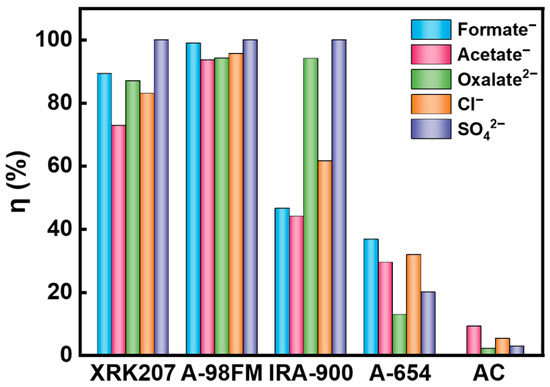
Byproducts of winery industries are treated, in many cases, as useless wastes constituting not only a major disposal problem but also not providing any additional profit to the industries. However, these byproducts could be utilized as a source of various phenolic compounds, such as anthocyanins, that could be used as nutraceuticals or natural colorants. Nine materials were tested and evaluated for their ability to retain and elute anthocyanins, total phenolics, and sugars from a grape pomace extract. The materials tested were the ion exchange Amberlite IRA 400 Cl−, Lewatit TP 208 and Lewatit TP 260, and the sorbing Chromosorb G-HP, Amberite XAD 2, Zeocros CA 150, Chemviron Carbon, Oasis HLB (hydrophilic-lipophilic balance) and Isolute C8 end-capped (EC). The two materials with the higher anthocyanins recovery rate, Oasis HLB and Isolute C8 (EC), were further examined for their anthocyanin capacities which were calculated as 5.76 mg·cm−3 and 3.06 mg·cm−3 respectively. Furthermore, their behavior pattern towards anthocyanins of various molecular weights was investigated using a liquid chromatography coupled with mass spectrometry (LC-PDA-MS) system.
Full article
Open AccessArticle
Analyses of Indole Compounds in Sugar Cane (Saccharum officinarum L.) Juice by High Performance Liquid Chromatography and Liquid Chromatography-Mass Spectrometry after Solid-Phase Extraction
►▼
Figures
Separations 2017, 4(1), 7; doi:10.3390/separations4010007 - 15 March 2017
Abstract
Simultaneous quantitative analysis of 10 indole compounds, including indole-3-acetic acid (IAA, one of the most important naturally occurring auxins) and some of its metabolites, by high performance liquid chromatography (HPLC) and liquid chromatography-mass spectrometry (LC-MS) after solid-phase extraction (SPE) was reported for the
[...] Read more.
Simultaneous quantitative analysis of 10 indole compounds, including indole-3-acetic acid (IAA, one of the most important naturally occurring auxins) and some of its metabolites, by high performance liquid chromatography (HPLC) and liquid chromatography-mass spectrometry (LC-MS) after solid-phase extraction (SPE) was reported for the first time. The analysis was carried out using a reverse phase HPLC gradient elution, with an aqueous mobile phase (containing 0.1% formic acid) modified by methanol. Furthermore, a novel SPE procedure was developed for the pre-concentration and purification of indole compounds using C18 SPE cartridges. The combination of SPE, HPLC, and LC-MS was applied to screen for the indole compounds present in sugar cane (Saccharum officinarum L.) juice, a refreshing beverage with various health benefits. Finally, four indole compounds were successfully detected and quantified in sugar cane juice by HPLC, which were further unequivocally confirmed by LC-MS/MS experiments operating in the multiple reaction monitoring (MRM) mode.
Full article
Open AccessFeature PaperReview
Recent Advances in Extraction and Stirring Integrated Techniques
►▼
Figures
by Soledad Cárdenas and Rafael Lucena
Separations 2017, 4(1), 6; doi:10.3390/separations4010006 - 15 March 2017
Abstract
The extraction yield of a microextraction technique depends on thermodynamic and kinetics factors. Both of these factors have been the focus of intensive research in the last few years. The extraction yield can be increased by synthesizing and using novel materials with favorable
[...] Read more.
The extraction yield of a microextraction technique depends on thermodynamic and kinetics factors. Both of these factors have been the focus of intensive research in the last few years. The extraction yield can be increased by synthesizing and using novel materials with favorable distribution constants (one of the thermodynamic factors) for target analytes. The extraction yield can also be increased by improving kinetic factors, for example, by developing new extraction modes. Microextraction techniques are usually non-exhaustive processes that work under the kinetic range. In such conditions, the improvement of the extraction kinetics necessarily improves the performance. Since the extraction yield and efficiency is related to how fast the analytes diffuse in samples, it is crucial to stir the sample during extraction. The stirring can be done with an external element or can be integrated with the extraction element in the same device. This article reviews the main recent advances in the so-called extraction/stirring integrated techniques with emphasis on their potential and promising approaches rather than in their applications.
Full article
Open AccessArticle
Graphene Oxide Nanoparticles and Their Influence on Chromatographic Separation Using Polymeric High Internal Phase Emulsions
►▼
Figures
Separations 2017, 4(1), 5; doi:10.3390/separations4010005 - 11 February 2017
Abstract
This work presents the first instance of reversed-phase liquid chromatographic separation of small molecules using graphene oxide nanoparticle-modified polystyrene-divinylbenzene polymeric high internal phase emulsion (GONP PS-co-DVB polyHIPE) materials housed within a 200-µm internal diameter (i.d.) fused silica capillary. The graphene oxide
[...] Read more.
This work presents the first instance of reversed-phase liquid chromatographic separation of small molecules using graphene oxide nanoparticle-modified polystyrene-divinylbenzene polymeric high internal phase emulsion (GONP PS-co-DVB polyHIPE) materials housed within a 200-µm internal diameter (i.d.) fused silica capillary. The graphene oxide nanoparticle (GONP)-modified materials were produced as a potential strategy to increase both the surface area limitations and the reproducibility issues observed in monolithic stationary phase materials. GONP PS-co-DVB polyHIPEs were found to have a surface area up to 40% lower than unmodified polymeric high internal phase emulsion (polyHIPE) stationary phases. However, despite having a surface area significantly lower than that of the unmodified material, the GONP-modified polyHIPEs demonstrated superior analyte adsorption properties. Reducing the GONP material did not have any significant impact on elution order or retention factor of the analytes, which was most likely due to low GONP loading attributed to the 250-nm GONPs utilised. The lower surface area of GONP-modified polyHIPEs provided similar separation efficiency and increased repeatability from injection to injection resulting in % relative standard deviations (%RSDs) of less than 0.6%, indicating the potential offered by graphene oxide (GO)-modified polyHIPES in flow through applications such as adsorption or separation processes.
Full article
Journal Contact
MDPI AG
Separations Editorial Office
St. Alban-Anlage 66, 4052 Basel, Switzerland
E-Mail: Tel. +41 61 683 77 34
Fax: +41 61 302 89 18
Editorial Board
Contact Details Submit to Separations Edit a special issue Review for Separations
Separations Editorial Office
St. Alban-Anlage 66, 4052 Basel, Switzerland
E-Mail: Tel. +41 61 683 77 34
Fax: +41 61 302 89 18
Editorial Board
Contact Details Submit to Separations Edit a special issue Review for Separations
News
Conferences
Special Issues
Special Issue in
Separations
Countercurrent Chromatography
Guest Editor: Alain BerthodDeadline: 20 August 2017
Special Issue in
Separations
Trends in Microextraction Techniques for Sample Preparation
Guest Editor: Victoria F. SamanidouDeadline: 20 September 2017
Special Issue in
Separations
Size Separation Techniques
Guest Editor: Albena LedererDeadline: 31 October 2017
Special Issue in
Separations
Analytical Tools to Study Biomarkers
Guest Editor: Sandrine ParrotDeadline: 30 November 2017