

Special Issue "Religions and Psychotherapies"
Quicklinks
A special issue of Religions (ISSN 2077-1444).
Deadline for manuscript submissions: closed (31 July 2011)
Special Issue Editors
Guest Editor
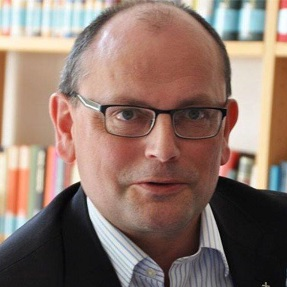
Prof. Dr. Klaus Baumann
Caritaswissenschaft und Christliche Sozialarbeit, Theologische Fakultät, Albert-Ludwigs-Universität Freiburg, Platz der Universität 3, D-79098 Freiburg, Germany
Website: http://www.caritaswissenschaft.uni-freiburg.de/persons/prof-dr-klaus-baumann-director
E-Mail: klaus.baumann@theol.uni-freiburg.de
Phone: +49 761 203 2110 (secretariat), -2111 (direct)
Fax: +49 761 203 2119
Interests: interdisciplinary dialogue between theology and human sciences, esp. psychology, psychotherapy and psychoanalysis; interdisciplinary anthropology and ethics; religions and their social welfare as well as (social) ethics; theology, history, and spirituality of Caritas; Caritas and christian social work in its ecclesiological, civil and international contexts

Guest Editor
Prof. Dr. Frank-Gerald B. Pajonk
Medical Director, Center for Psychiatric and Psychotherapeutic Care and Rehabilitation, Dr. K. Fontheim's Hospital for Mental Health, Lindenstraße 15, 38704 Liebenburg, Germany
Website: http://www.klinik-dr-fontheim.de
E-Mail: pajonk@klinik-dr-fontheim.de
Phone: +49 (0)5346 81 1150
Fax: +49 (0)5346 81 1152
Interests: spirituality and psychotherapy; religious beliefs in the context of psychiatric disorders; exercise and its influence on the neurobiology of the brain; emergency psychiatry; crisis intervention; schizophrenia; dementia
Special Issue Information
Dear Colleagues,
This issue is dedicated to reviews, theoretical and clinical original studies on questions regarding the relationship between religions and psychotherapies. It invites scholars, researchers and practitioners to contribute to interdisciplinary dialogues regarding the role of (various) religious attitudes of clients/ patients/ therapists in (various) psychotherapeutic treatments, religious doctrines and interpretations with regard to psychic disorders, psychotherapeutic metapsychologies regarding religions and religious attitudes, religious practices and coping with psychic stress and disorders. It thus includes both general and basic principles/ issues as well as specific questions regarding treatments and methods.
Prof. Dr. Klaus Baumann
Prof. Dr. Frank-Gerald B. Pajonk
Guest Editors
Submission
Manuscripts should be submitted online at www.mdpi.com by registering and logging in to this website. Once you are registered, click here to go to the submission form. Manuscripts can be submitted until the deadline. Papers will be published continuously (as soon as accepted) and will be listed together on the special issue website. Research articles, review articles as well as communications are invited. For planned papers, a title and short abstract (about 100 words) can be sent to the Editorial Office for announcement on this website.
Submitted manuscripts should not have been published previously, nor be under consideration for publication elsewhere (except conference proceedings papers). All manuscripts are refereed through a peer-review process. A guide for authors and other relevant information for submission of manuscripts is available on the Instructions for Authors page. Religions is an international peer-reviewed Open Access quarterly journal published by MDPI.
Please visit the Instructions for Authors page before submitting a manuscript. The Article Processing Charge (APC) for publication in this open access journal is 300 CHF (Swiss Francs).
English correction and/or formatting fees of 250 CHF (Swiss Francs) will be charged in certain cases for those articles accepted for publication that require extensive additional formatting and/or English corrections.
Keywords
- religiosity of patients and clinicians
- religious values and psychotherapies
- metapsychologies and religions
- abstinence and neutrality in treatment
- religious interpretations of psychic disorders
- religious coping
- psychotherapeutic schools and techniques
Published Papers (12 papers)
|
Received: 1 April 2011; in revised form: 4 July 2011 / Accepted: 20 July 2011 / Published: 28 July 2011
Show/Hide Abstract
| Download PDF Full-text (295 KB) | Download XML Full-text
Abstract: Psychological trauma and post-traumatic stress disorder (PTSD) may have an intensive negative impact on a patient’s spiritual beliefs or his/her belief in God; this effect may diminish the social and professional skills of many survivors. In the same time researches showed that religion plays a coping role among patients with medical and mental health illnesses. During the war in Bosnia-Herzegovina (1992-1995) the whole population, regardless of age, gender, nationality or profession, suffered severely. During the pre-war period in communistic Yugoslavia religious believes altered with atheistic public life styles. Additionally, war traumatization had a negative impact on spirituality and religious beliefs. In the series of case reports we intended to describe and assess the impact of a session of group psychotherapy, with spiritual topics and content, which was offered to patients who needed to reestablish religious beliefs. The patients who come to the Psychiatry Clinic because of trauma-induced mental health problems and who we are interested in strengthening their spirituality met each other in the group regardless of their religious or spiritual conviction. We described the conceptualization and development of such a group and present some self-reported views of clients who took part in these groups. The supportive and empathetic presence of such group in the community helps to prevent withdrawal and isolation, alienation and deviation of traumatized persons. The presence of such group facilitates the rehabilitation process of the victims, allowing them to understand that people are available to them in certain critical moments, to help, to offer protection or to console. Groups like this one, offer long term social and spiritual support to extremely severely traumatized victims.
|
|
Received: 1 August 2011; in revised form: 7 September 2011 / Accepted: 23 September 2011 / Published: 28 September 2011
Show/Hide Abstract
| Download PDF Full-text (319 KB) | Download XML Full-text
Abstract: This study examined: (1) the spirituality of staff; (2) its relationship with staff’s attitudes towards religiosity/spirituality of patients; and (3) with staff’s integration of religious and spiritual contents in the patient’s therapy. Method: An anonymous survey distributed to the staff in the department of psychiatry and psychotherapy at the Freiburg University Hospital. The main predictor variable was the spirituality of staff using DRI (Duke Religion Index). The main criterion variables were the relevance of religiosity/spirituality of patients and staff’s attitude towards religious/spiritual contents during their therapy using the questionnaire of Curlin et al. Results: The spirituality of staff was 6.91 on a scale of 12.0. There was no significant relationship between variables. Staff regarded the influence of religious/spiritual contents generally positive to patients. However, the staff did not use religious/spiritual elements in their therapy methods. Frequent reasons were insufficient time/occasion and insufficient knowledge. Conclusions: Religious/spiritual contents have not been integrated yet in therapy methods, although they are regarded as important for patients. Further studies and discussion about religious/spiritual matters are essential for their integration into psychiatric therapies in order to overcome these inconsistencies.
|
|
Received: 12 July 2011; in revised form: 13 September 2011 / Accepted: 29 September 2011 / Published: 11 October 2011
Show/Hide Abstract
| Download PDF Full-text (291 KB) | Download XML Full-text
Abstract: Spirituality and religiousness (S/R) are resources for finding meaning and hope in suffering and have been identified as key components in the process of psychological recovery. However, religion may also be associated with psycho-pathology, suffering and non-adherence with psychiatric treatment. Based on a literature review, this paper examines how S/R can be integrated in the treatment of patients with serious mental illness. We implemented a pilot “Spirituality and Recovery Group” designed to (1) help patients to resort to S/R as a means of recovery; (2) work on resolving conflicts between S/R and life issues and treatment; and (3) provide information on S/R in the context of psychosis. Preliminary results are presented.
|
|
Received: 26 July 2011; in revised form: 6 September 2011 / Accepted: 8 October 2011 / Published: 11 October 2011
Show/Hide Abstract
| Download PDF Full-text (449 KB) | Download XML Full-text
Abstract: Like other European countries, contemporary Finland has witnessed an explosion of healing modalities designatable as “New Age” (though not without profound controversy, [1]). This paper focuses on Finnish courses in lament (wept song, tuneful weeping with words) that combine healing conceived along psychotherapeutic lines and lessons from the lament tradition of rural Karelia, a region some Finns regard as their cultural heartland. A primary goal of the paper is to explicate a concept of “authenticity” emerging in lament courses, in which disclosing the depths of one’s feelings is supported not only by invoking “psy-“ discourses of self-help, but also by construing the genuine emotional self-disclosure that characterizes neolamentation as a sacred activity and a vital contribution to the welfare of the Finnish people.
|
|
Received: 9 August 2011; in revised form: 10 October 2011 / Accepted: 17 October 2011 / Published: 2 November 2011
Show/Hide Abstract
| Download PDF Full-text (393 KB) | Download XML Full-text
Abstract: Integrating spirituality into mental health care, psychiatry and psychotherapy is still controversial, albeit a growing body of evidence is showing beneficial effects and a real need for such integration. In this review, past and recent research as well as evidence from the integrative concept of a Swiss clinic is summarized. Religious coping is highly prevalent among patients with psychiatric disorders. Surveys indicate that 70–80% use religious or spiritual beliefs and activities to cope with daily difficulties and frustrations. Religion may help patients to enhance emotional adjustment and to maintain hope, purpose and meaning. Patients emphasize that serving a purpose beyond one’s self can make it possible to live with what might otherwise be unbearable. Programs successfully incorporating spirituality into clinical practice are described and discussed. Studies indicate that the outcome of psychotherapy in religious patients can be enhanced by integrating religious elements into the therapy protocol and that this can be successfully done by religious and non-religious therapists alike.
|
|
Received: 1 October 2011 / Accepted: 16 November 2011 / Published: 22 November 2011
Show/Hide Abstract
| Download PDF Full-text (171 KB) | Download XML Full-text
Abstract: The first Journal of Transpersonal Psychology was published in 1969. Since this signal event, transpersonal psychology has emerged as a field of theory and application. A way has been made in Western psychology for the appreciation and study of interior subjective awareness, the domain of spiritual experience. One of the most recent contributions, the Wilber-Combs Lattice, offers a typology to account for both developmental processes throughout the human life span, as well as different qualities of spiritual experience.
|
|
Received: 1 September 2011; in revised form: 23 November 2011 / Accepted: 24 November 2011 / Published: 25 November 2011
Show/Hide Abstract
| Download PDF Full-text (322 KB) | Download XML Full-text
Abstract: Since Freud’s “Mourning and Melancholia”, bereavement encompasses the dilemma between continuing versus relinquishing bonds to deceased persons. Mourning is the process of symbolizing the loss, of making sense by facing the conflict between the absence of the lost object and the continuing presence of an emotional relationship to that which is lost. Furthermore, mourning is not limited to bereaved persons but also concerns dying persons and, in a broader sense, our whole symbolic life which is playful coping with a rhythm of absence and presence. True consolation connects the individual and the archetypical mourning. Spiritually integrated psychotherapy may accompany this process by amplification. Christian mysticism takes its starting point from the experience of Jesus Christ’s lost body, and this may be understood as a model of spiritual transformation.
|
|
Received: 13 September 2011; in revised form: 8 December 2011 / Accepted: 28 December 2011 / Published: 4 January 2012
Show/Hide Abstract
| Download PDF Full-text (254 KB) | Download XML Full-text
Abstract: This article systematically reviews the evidence for Mindfulness-Based Stress Reduction (MBSR) and Mindfulness-Based Cognitive Therapy (MBCT) and analyses the conditions around their rising popularity. MBSR, MBCT and Mindfulness Meditation were used as key words. The inclusion criteria were randomized controlled trials using the standard MBSR/MBCT program with a minimum of 33 participants. Twenty four studies were included. MBSR improved mental health in ten studies compared to waitlist control or treatment as usual. Moreover, MBSR was as efficacious as active control group in four studies, and showed a tendency over active control in one study. MBCT reduced the risk of depressive relapse in all five included studies. Evidence supports that MBSR improves mental health and MBCT prevents depressive relapse. It is interesting to observe that meditation based therapy programs are rapidly enjoying popularity. We discuss the cultural and theoretical implications.
|
|
Received: 17 December 2011; in revised form: 10 January 2012 / Accepted: 10 January 2012 / Published: 18 January 2012
Show/Hide Abstract
| Download PDF Full-text (446 KB) | Download XML Full-text
Abstract: A growing body of research focusing on African Americans’ mental health is showing that this group relies heavily on their religious/spiritual beliefs and practices to cope with mental health issues including depression. Unfortunately, the psychotherapy literature provides little guidance on how to incorporate religion/spirituality into psychotherapy with African American women. With the growing cultural diversity of the U.S. population, there has been more emphasis on providing patient-centered culturally sensitive care, which involves providing care that is respectful of, and responsive to, individual patient preferences, needs, and values. This paper provides a synthesis of literature that psychotherapists could use to become more culturally sensitive and patient-centered in their clinical practices; that is, to recognize and integrate religion/spirituality into their work with African American women experiencing depression, and possibly other groups with similar needs.
|
|
Received: 3 February 2012; in revised form: 11 February 2012 / Accepted: 21 February 2012 / Published: 23 February 2012
Show/Hide Abstract
| Download PDF Full-text (499 KB) | Download XML Full-text
Abstract: Mind-Body practices have become increasingly popular as components of psychotherapeutic and behavior medicine interventions. They comprise an array of different methods and techniques that use some sort of mental-behavioral training and involve the modulation of states of consciousness in order to influence bodily processes towards greater health, well-being and better functioning. Mind-body practices may thus be interpreted as the salutogenetic mirror image of psychosomatic medicine, where psychophysiological and health consequences of specific psychological states are studied, such as stress arousal, psychological trauma or depression. This contribution examines the empirical evidence of the most common mind-body techniques with regard to their salutogenetic potential. We concisely discuss some aspects of the mind-body problem, before we consider some historical aspects and achievements of psychosomatic medicine. We then turn to some prominent mind-body practices and their application, as well as the empirical database for them.
|
|
Received: 18 February 2012; in revised form: 6 March 2012 / Accepted: 6 March 2012 / Published: 12 March 2012
Show/Hide Abstract
| Download PDF Full-text (171 KB) | Download XML Full-text
Abstract: The topics of spirituality and psychotherapy have often been controversial in the literature on schizophrenia treatment. However, current research indicates many potential benefits of integrating issues of religion and spirituality into psychotherapy for individuals with schizophrenia. In this paper, implications are presented for incorporating spiritual and religious issues in psychotherapy for individuals with schizophrenia. A background on the integration of spirituality into the practice of psychotherapy is discussed. The literature on spiritually-oriented psychotherapy for schizophrenia is provided. Clinical implications are offered with specific attention to issues of religious delusions and cultural considerations. Lastly, steps for implementing spiritually-oriented psychotherapy for individuals with schizophrenia are delineated to assist providers in carrying out spiritually sensitive care.
|
|
Received: 29 June 2012; in revised form: 28 July 2012 / Accepted: 2 August 2012 / Published: 21 August 2012
Show/Hide Abstract
| Download PDF Full-text (315 KB)
Abstract: Judaism considers the duty of preserving life as a paramount injunction. Specific injunctions against suicide appear in the Bible, Talmud, and thereafter. Nevertheless, Jewish tradition emphasizes that one should let himself be killed rather than violate cardinal rules of Jewish law. Mitigating circumstances are found for the six deaths by suicide mentioned in the Bible, for example to account for one's sins, or avoid shameful death. Heroic suicide is praised throughout the Jewish history, from the suicide of Samson and the collective suicide in Masada, to the collective readiness of Jews in Medieval times and during the Holocaust to kill themselves rather than succumb to their enemies. Suicide rates for Jews are lower than those of Protestants and Catholics. Similarly, suicide rates in Israel are lower in comparison to Europe and North America, although being higher than those in most Moslem Asian and North African countries. This low rate of suicide is found in Jewish Israelis of all ages, including in adolescents. Elevated suicidal risk may be found in specific sub-populations, including male Israeli soldiers, immigrants from the former USSR and Ethiopia, in particular adolescent immigrants from the former USSR, elderly Holocaust survivors, and young Israel-Arab women. The meaning of these findings is discussed according to different socio-cultural perspectives.
|
Last update: 12 October 2012