

Journal Description
Religions
Religions
is an international, interdisciplinary, peer-reviewed, open access journal on religions and theology, published monthly online by MDPI.
- Open Access— free for readers, with article processing charges (APC) paid by authors or their institutions.
- High Visibility: indexed within Scopus, AHCI (Web of Science), ATLA Religion Database, Religious and Theological Abstracts, and other databases.
- Journal Rank: CiteScore - Q1 (Religious Studies)
- Rapid Publication: manuscripts are peer-reviewed and a first decision is provided to authors approximately 26.7 days after submission; acceptance to publication is undertaken in 4.8 days (median values for papers published in this journal in the first half of 2026).
- Recognition of Reviewers: reviewers who provide timely, thorough peer-review reports receive vouchers entitling them to a discount on the APC of their next publication in any MDPI journal, in appreciation of the work done.
- Journal Cluster of Human Thought and Cultural Expression: Culture, Histories, Humanities, Languages, Literature and Religions.
Impact Factor:
0.6 (2025)
Latest Articles
Battlefields as Sacred Landscapes: Mass Warfare, Collective Memory, and Civil Religion in Modern Societies
Religions 2026, 17(9), 1001; https://doi.org/10.3390/rel17091001 - 24 Aug 2026
Abstract
Battlefield preservation is commonly understood as a matter of heritage management, historical education, or cultural tourism. This article argues that its origins and enduring significance lie elsewhere. Modern battlefield preservation emerged as a direct consequence of the transformation of warfare between the late
[...] Read more.
Battlefield preservation is commonly understood as a matter of heritage management, historical education, or cultural tourism. This article argues that its origins and enduring significance lie elsewhere. Modern battlefield preservation emerged as a direct consequence of the transformation of warfare between the late eighteenth and twentieth centuries. Beginning with the French Revolution and the levée en masse, military service became increasingly associated with citizenship, national identity, and mass participation, while industrialization provided the logistical and technological foundations necessary for warfare on an unprecedented scale. As warfare expanded, so too did its human consequences, transforming military death from the experience of a relatively small warrior elite into a shared social reality affecting entire populations. Drawing upon military history, memory studies, sociology, religious studies, and heritage scholarship, this article examines how mass warfare generated new forms of collective bereavement, ritual commemoration, battlefield pilgrimage, and historical preservation. Through case studies ranging from the French Revolutionary and Napoleonic Wars to the Crimean War, Gettysburg, the World Wars, and the conflicts in Korea and Vietnam, it demonstrates how expanding mobilization, industrialized conflict, and rising casualty rates produced enduring landscapes of memory. The article argues that battlefield preservation developed through a cumulative historical process linking mass warfare, mass casualties, collective trauma, commemorative practices, and the creation of commemorative landscapes. Preserved battlefields are not merely remnants of past conflicts; they are cultural institutions through which societies negotiate memory, identity, and meaning. As traditional sources of collective authority weakened in modern societies, battlefields increasingly acquired functions associated with ritual, pilgrimage, and civil religion. The expansion of warfare produced an expansion of remembrance, and the preserved battlefield emerged as one of the most enduring cultural responses to the human consequences of modern conflict.
Full article
(This article belongs to the Special Issue Studies on Religious Rituals and Practices)
Open AccessArticle
Reimagining Ministry Formation and Leadership in the Evangelical Lutheran Church of Finland
by
Tomi Karttunen
Religions 2026, 17(9), 1000; https://doi.org/10.3390/rel17091000 - 24 Aug 2026
Abstract
This article examines how ministry formation and ecclesial leadership in the Evangelical Lutheran Church of Finland (ELCF) are being reshaped by 21st-century dynamics such as secularization, pluralism, and post-Christendom cultural change. As increasing numbers of theology students enter formation with limited prior church
[...] Read more.
This article examines how ministry formation and ecclesial leadership in the Evangelical Lutheran Church of Finland (ELCF) are being reshaped by 21st-century dynamics such as secularization, pluralism, and post-Christendom cultural change. As increasing numbers of theology students enter formation with limited prior church experience, the gap between academic theological education and pastoral vocation is widening. The article treats formation and leadership as an integrated analytical lens, showing how ministerial identity, vocational resilience, and leadership capacity emerge from shared theological and pedagogical processes. Comparative insights from Sweden, the Church of England, and Roman Catholic formation models sharpen this analysis. The study proposes a theologically grounded, contextually realistic model that links formation, leadership, and innovation in a mutually reinforcing way. Innovation is conceptualized as targeted, incremental development—deepened theological reflection, collaborative learning, and adaptive practices—rather than large-scale structural reform. This approach aims to be realistic and to increase the capacity of future clergy to lead mission-oriented ministry in complex contemporary conditions.
Full article
(This article belongs to the Special Issue Reimagining Ministry: Formation, Leadership, and Innovation for the 21st Century)
Open AccessArticle
Tracing the Religious Life Course in an American Baby-Boom Cohort: Parental Influence and Temporal Dynamics
by
Merril Silverstein, Woosang Hwang, Narges Hadi, Seonhwa Lee and Maria Teresa Brown
Religions 2026, 17(9), 999; https://doi.org/10.3390/rel17090999 - 24 Aug 2026
Abstract
The development of religiosity originates in earlier phases of the family and individual life course, yet few studies have investigated how early exposure to parental religiosity persists into mid- and later life. This investigation uses multigenerational data from 385 baby boom children, ages
[...] Read more.
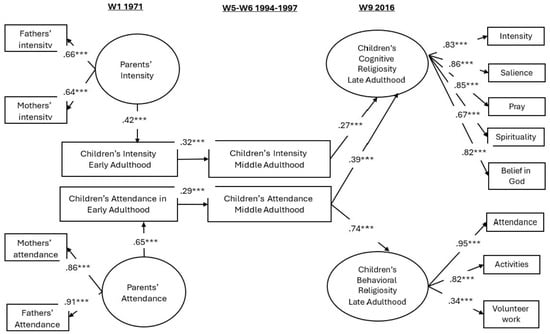
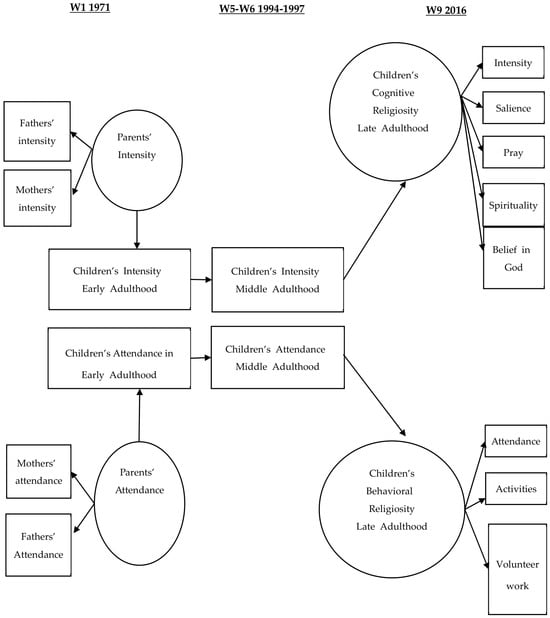
The development of religiosity originates in earlier phases of the family and individual life course, yet few studies have investigated how early exposure to parental religiosity persists into mid- and later life. This investigation uses multigenerational data from 385 baby boom children, ages 16–26, and their parents in 1971, following children’s religious orientations into midlife and old age. Guided by intergenerational transmission and path dependency perspectives, we find that parents’ religious intensity in 1971 strengthened their children’s cognitive and behavioral religiosity in later life, mediated by children’s early and midlife religiosity. Results demonstrate intergenerational transmission followed by durability in religious beliefs and practices across decades of temporal stability. These findings suggest that parental influence creates cumulative religious momentum that carries from young adulthood through old age.
Full article
(This article belongs to the Special Issue Religious Transmission Across Generations: Challenges, Continuities, and Changes)
►▼
Show Figures

Figure 1
Open AccessArticle
Measure for Measure in the Aqhat Epic: Retribution as a Poetic and Narrative Principle
by
Shirly Natan-Yulzary
Religions 2026, 17(9), 998; https://doi.org/10.3390/rel17090998 - 24 Aug 2026
Abstract
This study explores the poetic formulation of justice and retribution in the Aqhat Epic. ˀIlu, the supreme god of Ugarit, designates the goddess ˁAnatu “impious in heart,” yet he neither prevents her murder of ˀAqhatu nor punishes her overtly. The narrative contains
[...] Read more.
This study explores the poetic formulation of justice and retribution in the Aqhat Epic. ˀIlu, the supreme god of Ugarit, designates the goddess ˁAnatu “impious in heart,” yet he neither prevents her murder of ˀAqhatu nor punishes her overtly. The narrative contains no judicial scene and no central governing deity who assumes the role of explicit divine adjudicator. Nevertheless, one may ask whether the story is shaped by a guiding mechanism of justice, comparable to certain biblical models of retribution, and what conception of retribution emerges from it, illuminating the relationship between gods and humans. The article highlights multiple instances showing that the narrative weaves a complex web linking transgression and consequence, in which acts of violence, desire, and rebellion give rise to corresponding consequences. These consequences manifest not only as visible punishments—such as the loss of the bow, the breaking of wings, and the curses upon implicated agents—but also in subtle reversals and ironic patterns accessible primarily to the audience. The moral order is neither absent nor declarative; rather, it is mediated through poetic formulations. Retribution unfolds on two interrelated levels: through overt narrative events and through a covert rhetorical structure that forges connections by means of repetition, key words, wordplay, and thematic symmetry. The study employs contextual close reading, supplemented by comments on the character roles. The conclusion reached is that the mechanism of measure-for-measure functions in the Aqhat Epic as a structuring narrative device, and that a sense of justice emerges through the convergence of human and divine agency.
Full article
(This article belongs to the Special Issue Texts, Language, and Style in Biblical Literature, the Semitic Literatures of the Ancient Near East, and Post-Biblical Literature)
Open AccessArticle
The Cultural and Theological Context of Marriage and Family Values in Turkish Proverbs
by
Atila Kartal
Religions 2026, 17(9), 997; https://doi.org/10.3390/rel17090997 - 23 Aug 2026
Abstract
This study employs a qualitative research design to examine cultural values concerning marriage and family through Turkish proverbs and to analyze how these values intersect with theological meanings. Situated at the intersection of folklore and Islamic ethics, it explores how oral tradition articulates,
[...] Read more.
This study employs a qualitative research design to examine cultural values concerning marriage and family through Turkish proverbs and to analyze how these values intersect with theological meanings. Situated at the intersection of folklore and Islamic ethics, it explores how oral tradition articulates, transmits, and regulates the values, norms, and moral boundaries associated with marriage and family life. According to the findings, proverbs portray the family as a foundational institution imbued with sacred significance, while marriage is construed as a normative form of life that protects the individual from moral, social, and emotional fragmentation. This discourse accords with Qur’anic and Prophetic principles that encourage marriage and associate family life with a consciousness of servitude to God. The study further indicates that, in Turkish proverbs, women are imagined as central figures who sustain domestic harmony, contribute to family well-being, and shape the moral fabric of the household. One of the study’s most significant findings is that polygyny, although recognized in Islamic law as a conditional legal dispensation, is treated in Turkish proverbs through a reserved and often critical cultural discourse. Recent empirical findings indicate that traditional attitudes retain a notable degree of continuity under modern social conditions. Within this framework, the study examines cultural understandings of marriage and family reflected in Turkish proverbs in relation to religious norms and Islamic family ethics, with particular attention to the relationship between oral culture and religious and moral frameworks of meaning.
Full article
(This article belongs to the Special Issue Family Health and Its Threats in the Physical, Mental, Religious–Moral, and Social Dimensions)
Open AccessArticle
The Psychometric Properties of the Hungarian Version of the Santa Clara Strength of Religious Faith Questionnaire (SCSORF-H)
by
Róbert Paic, Gusztáv József Tornóczky, Thomas G. Plante and Attila Szabo
Religions 2026, 17(9), 996; https://doi.org/10.3390/rel17090996 - 22 Aug 2026
Abstract
Background: Census data in Hungary indicate a substantial decline in declared religious affiliation, with Christian identification falling from 74.4% in 2001 to 42.5% in 2022, underscoring the need for culturally validated measures of religious faith. Methods: This study examined the psychometric properties of
[...] Read more.
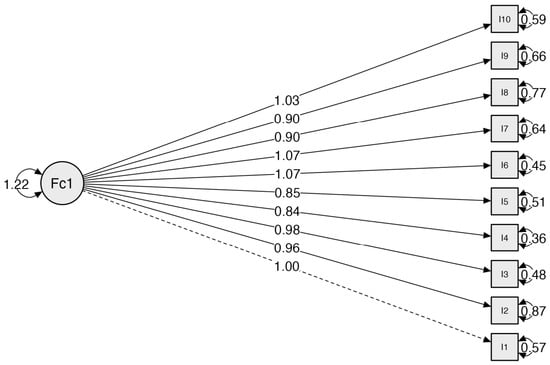
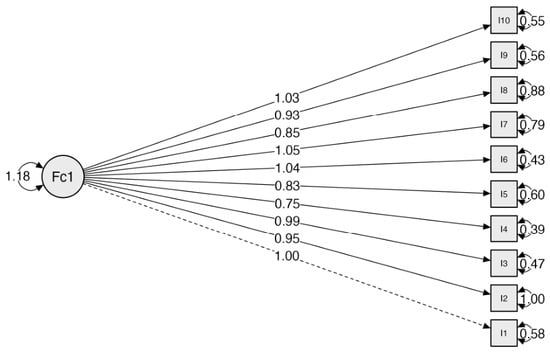
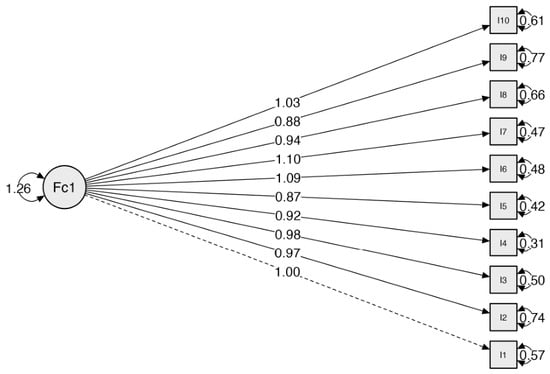
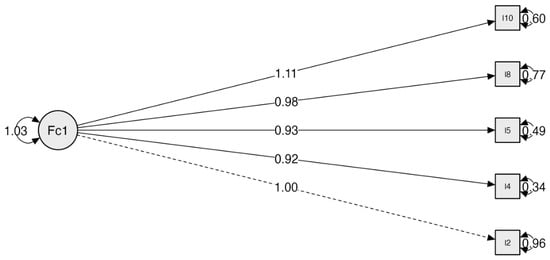
Background: Census data in Hungary indicate a substantial decline in declared religious affiliation, with Christian identification falling from 74.4% in 2001 to 42.5% in 2022, underscoring the need for culturally validated measures of religious faith. Methods: This study examined the psychometric properties of the Hungarian versions of the Santa Clara Strength of Religious Faith Questionnaire (SCSORF-10) and its 5-item short form (SCSORF-5) in a cross-sectional online sample of 430 participants (Mage = 22.28, SD = 9.23). Results: Confirmatory factor analysis supported a unidimensional structure for both scales, with acceptable support when considering the full pattern of indices, but with elevated RMSEA as a limitation. All models were estimated with the mean- and variance-adjusted weighted least squares estimator (WLSMV) on polychoric correlations, under which fit improved markedly for the SCSORF-10 (CFI = 0.992, TLI = 0.989, SRMR = 0.040, RMSEA = 0.080). Modification indices identified a single interpretable residual covariance between the two explicitly devotional items, which did not alter the solution and was not retained. Measurement invariance across gender was tested with the sequence appropriate to ordered categorical indicators, and configural, threshold, threshold-and-loading, and strict invariance were all supported. Internal consistency was high (SCSORF-10: α = 0.95, ω = 0.95; SCSORF-5: α = 0.89, ω = 0.89). Convergent validity was demonstrated by strong associations with spiritual well-being, while correlations with self-esteem were weak, providing limited discriminant evidence against a conceptually distant construct. Conclusion: The short form showed psychometric properties closely comparable to the full scale; because its items are a subset of the full version, this correspondence is partly expected. Both instruments appear to be reliable and valid for assessing religious faith in Hungary. Known-group evidence was strong: scores separated self-described religious respondents from atheists (d = 1.37) and from believing-but-not-religious respondents (d = 1.17), and the religiosity category accounted for 27.5% of score variance, whereas scores were unrelated to gender and age.
Full article
(This article belongs to the Section Religions and Health/Psychology/Social Sciences)
►▼
Show Figures

Figure 1
Open AccessArticle
Social Contexts and Practical Ethics of the Buddhist Precept Against Intoxicants: Gandhāran Wine Culture and the Debate on the Partial Undertaking of the Five Precepts
by
Minji Jeon
Religions 2026, 17(9), 995; https://doi.org/10.3390/rel17090995 - 22 Aug 2026
Abstract
Recent archaeological evidence indicates that Gandhāran wine culture and Buddhist communities shared the same social and material environment. However, surviving evidence does not permit direct reconstruction of lay Buddhists’ drinking practices. Grounded in source criticism, this study combines contextual historical interpretation with comparative
[...] Read more.
Recent archaeological evidence indicates that Gandhāran wine culture and Buddhist communities shared the same social and material environment. However, surviving evidence does not permit direct reconstruction of lay Buddhists’ drinking practices. Grounded in source criticism, this study combines contextual historical interpretation with comparative textual analysis to examine Gandhāran wine culture, the application of the precept against intoxicants, and the Sarvāstivāda theory of partial undertaking of the five precepts at distinct evidentiary levels. Archaeological evidence situates Buddhist communities within Gandhāra’s wine-producing environment. Vinaya materials clarify criteria of fermentation, intoxicating properties, and intended use. The Abhidharmamahāvibhāṣāśāstra and Abhidharmakośabhāṣya illuminate Gandhāran views on lay status and selective undertaking of individual precepts. The analysis identifies concern with intoxication (mada) and heedlessness (pamāda) as the normative basis for applying the precept and examines how Buddhist affiliation and wine culture could coexist within the same society. It posits no direct causal relationship between wine culture and either relaxation of the precept or debates over partial undertaking, synthesizing independently derived findings only where they are mutually compatible.
Full article
(This article belongs to the Section Religions and Humanities/Philosophies)
Open AccessArticle
Governed by Time, Governing Time: Temporal Order and Theurgical Reciprocity in Bnei Yissachar
by
Ariel Gross and Leore Sachs-Shmueli
Religions 2026, 17(9), 994; https://doi.org/10.3390/rel17090994 - 22 Aug 2026
Abstract
Time governs human experience, yet human beings continually seek to govern time. Within Jewish mysticism, time functions as a foundational and elusive dimension of human experience, serving as a dynamic arena for theosophical speculation, theurgical action, and spiritual transformation. In this context, the
[...] Read more.
Time governs human experience, yet human beings continually seek to govern time. Within Jewish mysticism, time functions as a foundational and elusive dimension of human experience, serving as a dynamic arena for theosophical speculation, theurgical action, and spiritual transformation. In this context, the influential nineteenth-century Hasidic work Bnei Yissachar by Rabbi Tzvi Elimelech Shapira of Dinov (1783–1841) occupies a unique position, offering a systematic and nuanced theology of sacred time. While previous scholarship has recognized the importance of sacred time in his thought, this study uncovers a complex reciprocal temporal mechanism that balances two dialectical poles: cosmic subordination and human mastery. Through a close reading of Shapira’s homilies, this article demonstrates how he navigates the tension between fixed, pre-ordained divine temporal matrices, typified by the linguistic and numerical hidden structure of the Sabbath, and active human agency capable of reshaping the qualitative influx of time, illustrated by the sanctification of the New Moon and the Passover Seder night. By integrating Lurianic kabbalistic frameworks, gematria, and linguistic ontology with embodied ritual practices, Shapira reframes the Jewish calendar as an interactive, experience-oriented relationship between the human and the divine.
Full article
(This article belongs to the Special Issue Modern Jewish Thought and Philosophy)
Open AccessArticle
“I Knew in My Soul It Was the Mood Stabilizer That Messed It Up!”: A Qualitative Study of Lived Experiences of Psychotropic Medication Tapering and Spirituality
by
Stine Madsen Kvaløy, Oddgeir Synnes and Anne Austad
Religions 2026, 17(9), 993; https://doi.org/10.3390/rel17090993 - 22 Aug 2026
Abstract
Psychotropic medication is widely used in the treatment of severe mental illness, yet its impact on spirituality—understood as relating to the transcendent—remains underexplored. This qualitative study examines how individuals who have reduced or discontinued medication experience and navigate spirituality. In-depth, semi-structured interviews were
[...] Read more.
Psychotropic medication is widely used in the treatment of severe mental illness, yet its impact on spirituality—understood as relating to the transcendent—remains underexplored. This qualitative study examines how individuals who have reduced or discontinued medication experience and navigate spirituality. In-depth, semi-structured interviews were conducted with seven former inpatients, and data were analyzed thematically within an existential–phenomenological framework. Participants described diverse spiritual and extraordinary experiences intertwined with symptoms and medication use. They navigated these by managing medication as a double-edged sword that both protected and numbed spirituality; by attempting, with varying degrees of success, to make sense of their experiences within “illness” or “spirituality” frameworks; and by seeking relational support. The findings suggest that tapering psychotropic medication may be not only a pharmaceutical process but also an existential and spiritual one. Mental health services may enhance recovery by acknowledging spirituality, engaging with patients’ meaning-making around extraordinary experiences, and recognizing the complex role of medication while making room for ambiguity, uncertainty, and mystery as sources of existential hope.
Full article
(This article belongs to the Section Religions and Health/Psychology/Social Sciences)
Open AccessArticle
God as Change: Toward a Poetic Ecotheology Through Minjung and New Materialism
by
Clayton Crockett
Religions 2026, 17(9), 992; https://doi.org/10.3390/rel17090992 - 22 Aug 2026
Abstract
This article reconstructs ecological theology in terms of energy transformation and proposes a theological ontology in which God is redefined as Change. Here the conception of energy is influenced by New Materialist philosophies of dynamic matter, including newer understandings of physics, thermodynamics and
[...] Read more.
This article reconstructs ecological theology in terms of energy transformation and proposes a theological ontology in which God is redefined as Change. Here the conception of energy is influenced by New Materialist philosophies of dynamic matter, including newer understandings of physics, thermodynamics and biology. This eco-theology is linked to Korean Minjung theology, where the idea of Minjung as a crowd or mass of people is extended beyond human beings. The article advocates an ontological eco-poetic theology informed by the tradition of American Radical Theology that risks our inherited conceptions of God and works to transform and reconstruct them both poetically and ontologically.
Full article
(This article belongs to the Special Issue Liberation of All Things: New Materialism, Theology and Nonhuman Salvation)
Open AccessReview
Artificial Intelligence in Christian Religious Education: A Scoping Review
by
Mariusz Chrostowski
Religions 2026, 17(8), 991; https://doi.org/10.3390/rel17080991 - 21 Aug 2026
Abstract
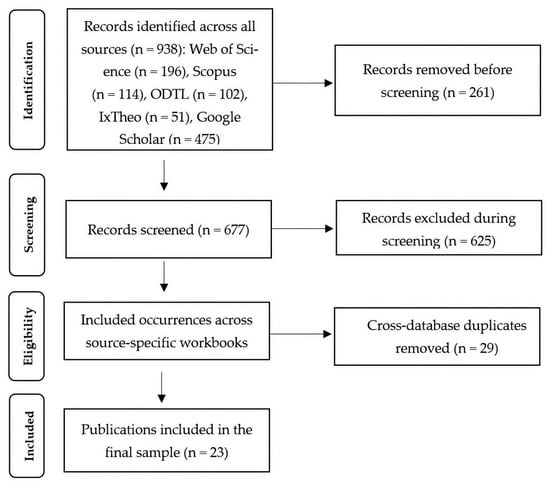
This article maps research on artificial intelligence (AI) in Christian Religious Education (CRE) during the first phase of rapid development following the widespread adoption of generative AI. A scoping review was conducted in Scopus, Web of Science, the Open Digital Theological Library, and
[...] Read more.
This article maps research on artificial intelligence (AI) in Christian Religious Education (CRE) during the first phase of rapid development following the widespread adoption of generative AI. A scoping review was conducted in Scopus, Web of Science, the Open Digital Theological Library, and IxTheo, supplemented by Google Scholar. Included were full-text English-language publications from 1 January 2023 to 31 March 2026 that addressed AI in Christian educational, catechetical, theological–educational, or formative contexts. The final corpus comprised 23 publications. Data were charted by publication type, geographical and educational context, main topic, and key claims or findings. The results show that the field is recent, methodologically heterogeneous, and not yet well consolidated, but that the emerging debate is organised around four inter-related strands: didactic potential and personalisation, ethical–technical limitations, anthropological–theological reflection, and systemic, institutional, and cultural–geographical conditions. The literature is marked by a tension between AI’s didactic potential and concerns regarding its ethical, theological, anthropological, and institutional implications. The review contributes a thematic synthesis that clarifies why AI integration in CRE requires not only educational innovation but also theologically informed, pedagogically mediated, and context-sensitive frameworks for religious formation. Significant gaps remain, including limited empirical and longitudinal research, insufficient attention to students’ and parents’ perspectives, cultural and linguistic contexts, and a lack of religion-specific, empirically tested didactic models. The review concludes that future research should move toward longitudinal, practice-based, and theologically grounded models for AI use in CRE.
Full article
(This article belongs to the Section Religions and Theologies)
►▼
Show Figures

Figure 1
Open AccessEssay
The Paradox of the Cross: Catholic Theological Perspectives on Human Suffering
by
Hilary Ndu Okeke
Religions 2026, 17(8), 990; https://doi.org/10.3390/rel17080990 - 21 Aug 2026
Abstract
The Catholic view of suffering is fundamentally optimistic, rooted in the belief that God uses pain for a purposeful end. In this context, suffering refines character, builds endurance, and fosters hope. Rather than being meaningless, suffering is seen as both an ethical and
[...] Read more.
The Catholic view of suffering is fundamentally optimistic, rooted in the belief that God uses pain for a purposeful end. In this context, suffering refines character, builds endurance, and fosters hope. Rather than being meaningless, suffering is seen as both an ethical and metaphysical reality. The theology of the Cross provides the foundation for understanding suffering within Christian doctrine and practice. It shows that religious history centres on Christ, even when human expectations differ from the divine will. The Cross is viewed as the ultimate revelation of a God present in suffering, not in worldly power. This perspective challenges efforts to understand God solely through reason or merit and demonstrates that true wisdom may appear as folly to the world. The paradox of the Cross gains existential meaning by transforming an instrument of shame and death into a symbol of divine strength and victory in Christ. This paper argues that suffering serves a redemptive purpose, encourages spiritual growth, and reveals the divine will amid human experience, offering the promise of eternal victory. It also affirms the patristic tradition that suffering is inseparable from humanity’s fallen nature in Adam and from the redemption achieved through the Cross of Christ. Thus, the Cross represents the self-emptying of Christ, or kenosis, and stands as the purest expression of theology, which must remain undiluted.
Full article
(This article belongs to the Special Issue Christian Spirituality: Ancient Foundations, Modern Expressions)
Open AccessArticle
Mourning Being(s); Approaches Toward an Ontology of Ecological Grief
by
Merlijn Verduin
Religions 2026, 17(8), 989; https://doi.org/10.3390/rel17080989 - 21 Aug 2026
Abstract
As ecological crises intensify—characterized by the collapse of familiar ecosystems and vanishing of ancestral landscapes—growing numbers of people report experiences of ecological grief: mournful responses to loss of cherished more-than-human lives and environments. This paper examines how eco-grief unsettles existing ontological narratives and
[...] Read more.
As ecological crises intensify—characterized by the collapse of familiar ecosystems and vanishing of ancestral landscapes—growing numbers of people report experiences of ecological grief: mournful responses to loss of cherished more-than-human lives and environments. This paper examines how eco-grief unsettles existing ontological narratives and creates space for renewed ways of thinking, feeling, and relating. In doing so, it reframes ecological disorientation as a liminal state which facilitates spiritual reimagining and renewal. Drawing on a comparative analysis of Heideggerian phenomenology with Dagara and Ubuntu philosophy, the essay conceptualizes ecological grief not as a retreat into despair, but as an invitation to reorient within the more-than-human world, thereby scrutinizing existing and persisting habits of separation and linear progress. It subsequently examines how spiritual and symbolic expressions of eco-grief can help to articulate notions such as affect, reciprocity, and care in an eco-centric manner. By explicitly incorporating underrepresented perspectives and aligning contributions across cultural and spiritual spheres, the paper explores how moments of spatial and existential rupture may be approached in a novel manner, thereby bridging existing eco-grief research gaps and framing spiritual notions as a generative force within the realm of ecological engagement.
Full article
(This article belongs to the Special Issue Healing the Earth: Spirituality and Planetary Health)
Open AccessArticle
Care for the Work of Creation in the Rule of Saint Benedict and in the Documents of the Cistercian Order: A Historical-Systematic Overview
by
Grzegorz Chojnacki
Religions 2026, 17(8), 988; https://doi.org/10.3390/rel17080988 - 21 Aug 2026
Abstract
The article reflects on the care for the work of creation within Benedictine spirituality and within the broader tradition of the Cistercian Order. It seeks to demonstrate that monastic spirituality, though developed in a pre-modern context, contains enduring theological and ethical intuitions that
[...] Read more.
The article reflects on the care for the work of creation within Benedictine spirituality and within the broader tradition of the Cistercian Order. It seeks to demonstrate that monastic spirituality, though developed in a pre-modern context, contains enduring theological and ethical intuitions that remain relevant for contemporary ecological reflection. The starting point of the analysis is the Rule of Saint Benedict written by Benedict of Nursia, which, although it does not employ the modern vocabulary of ecology or environmental ethics, nevertheless articulates a coherent vision of human life characterized by reverence, moderation, and responsibility toward the created world. Particular attention is given to key spiritual and anthropological dimensions of the Benedictine tradition, such as attentive listening (obsculta), humility, moderation, stability, and responsible work, expressed synthetically in the principle ora et labora. These elements are interpreted not only as monastic disciplines shaping individual and communal life, but also as forming a relational anthropology in which the human person is understood as fundamentally embedded within a network of relationships with God, other people, and creation. In this sense, Benedictine spirituality already implies a non-exploitative attitude toward the natural world. The article then examines how concern for creation has been deepened and concretized in the spirituality, institutional practice, and historical development of the Cistercian Order. Drawing on selected Cistercian documents as well as contemporary monastic reflections, the study shows that care for the natural environment is inseparably linked with spiritual attentiveness to God, interior silence, openness of heart, and readiness to serve. The Cistercian tradition, with its emphasis on simplicity of life, manual labor, and harmonious integration with the surrounding environment, develops these Benedictine intuitions in a particularly concrete and historically embodied form. From this perspective, a pro-ecological attitude is not interpreted merely as a reactive response to contemporary environmental crises, but rather as a structural consequence of a theologically grounded vision of reality. It emerges from a deep relationship with God as Creator and from a sense of entrusted responsibility for creation understood as a gift rather than as an object of domination. Ecological sensitivity is thus presented as an intrinsic dimension of monastic spirituality rather than an external adaptation to modern concerns. The main research question of the article is: to what extent and in what way do Benedictine and Cistercian spiritual traditions provide theological, anthropological, and ethical foundations for an ecological attitude toward creation within the framework of contemporary integral ecology. To address this problem, the study employs qualitative research methods grounded in theological inquiry. The primary method is textual analysis of the Rule of Saint Benedict and selected Cistercian documents, complemented by theological–hermeneutical interpretation aimed at identifying key spiritual principles and their implicit ecological implications. In addition, the study applies a historical–critical perspective in order to situate monastic sources within their original cultural and theological context, as well as a comparative theological approach, which enables a dialogue between classical monastic spirituality and contemporary ecological theology. These methods are used not only to reconstruct historical meanings, but also to interpret monastic texts in light of contemporary debates on integral ecology, sustainability, and the ethics of responsibility for our common home. In this way, the article highlights a significant continuity between monastic wisdom and modern ecological reflection, showing their mutual capacity for enrichment.
Full article
(This article belongs to the Special Issue Religion and Eco-Anxiety: Pastoral and Ethical Perspectives)
Open AccessArticle
Religious Exempla and Moral Judgement in Valerius Maximus’ Facta et Dicta Memorabilia, Book 1
by
Yaoping Zhang
Religions 2026, 17(8), 987; https://doi.org/10.3390/rel17080987 - 21 Aug 2026
Abstract
Book 1 of Valerius Maximus’ Facta et Dicta Memorabilia places cult, ritual failure, religious performance, and divine signs at the opening of the collection. This article examines how the book’s received organization guides the evaluation of human action. It argues that Book 1
[...] Read more.
Book 1 of Valerius Maximus’ Facta et Dicta Memorabilia places cult, ritual failure, religious performance, and divine signs at the opening of the collection. This article examines how the book’s received organization guides the evaluation of human action. It argues that Book 1 presents a graded field of religious judgement. Religio and neglecta religio provide the clearest opposition; simulata religio and superstitio are more ambiguous; and auspices, omens, prodigies, dreams, and miracles acquire force through human response, narrative outcome, and public confirmation. The analysis combines structural reading with close examination of key cases. Because 1.2–1.4 survive only in late epitomes, it distinguishes between the explicit evaluation of 1.1, the less secure boundary cases of 1.2–1.4, and the fuller sign narratives of 1.5–1.8. Book 1 thus provides an opening framework in which ritual practice and responses to divine signs become objects of ethical and historical interpretation.
Full article
(This article belongs to the Section Religions and Humanities/Philosophies)
Open AccessArticle
Communicating Faith Across Divides: The Role of Theological Language in Ecumenical Dialogue
by
Rajmund Porada
Religions 2026, 17(8), 986; https://doi.org/10.3390/rel17080986 - 21 Aug 2026
Abstract
This article examines the role of theological language in ecumenical dialogue, arguing that Christian division is not only a doctrinal or institutional problem but also a problem of mutual intelligibility. Theological language functions both as a bearer of revelation and as a marker
[...] Read more.
This article examines the role of theological language in ecumenical dialogue, arguing that Christian division is not only a doctrinal or institutional problem but also a problem of mutual intelligibility. Theological language functions both as a bearer of revelation and as a marker of confessional identity; therefore, concepts such as “justification”, “Church”, “tradition”, “sacrament”, and “communion” often carry historically shaped meanings that may sustain misunderstanding between Christian traditions. Drawing on the hermeneutics of Hans-Georg Gadamer and Paul Ricoeur, the article presents theological language as a dynamic space of interpretation, encounter, and transformation rather than as a fixed system of definitions. It then analyses selected conciliar, bilateral, and study documents, including Unitatis redintegratio, the Joint Declaration on the Doctrine of Justification, and Synodality and Primacy in the Second Millennium and Today, as differently situated instances in which inherited confessional languages are clarified, recontextualized, or rendered mutually intelligible. Against this background, the article proposes the category of communio linguarum, understood as a communion of theological languages capable of mutually recognizing the same faith without reducing legitimate diversity. The model is tested through differentiated consensus, a shared rereading of contested sources, and the renewed reception of inherited formulations. Its implementation requires hermeneutical humility, semantic discernment, reciprocal translation, and ecclesial reception.
Full article
(This article belongs to the Special Issue Faith, Communication, and Culture: Ecumenism in Religion and Theology)
Open AccessArticle
Synodality as Baptismal Vocation and Ecclesial Care: Toward a Theology of Participation and Accompaniment
by
Mark Joseph Zammit
Religions 2026, 17(8), 985; https://doi.org/10.3390/rel17080985 - 20 Aug 2026
Abstract
This article proposes that synodality is grounded in two inseparable theological realities: baptism and ecclesial care. While contemporary studies frequently interpret synodality through the categories of participation and communion, this study argues that care should be recognised as one of its constitutive foundations
[...] Read more.
This article proposes that synodality is grounded in two inseparable theological realities: baptism and ecclesial care. While contemporary studies frequently interpret synodality through the categories of participation and communion, this study argues that care should be recognised as one of its constitutive foundations rather than merely its pastoral expression. Baptism incorporates believers into Christ, establishes the dignity of the People of God, and calls every Christian to participate actively in the Church’s mission through shared discernment and co-responsibility. Care, rooted in God’s saving relationship with humanity and embodied in the ministry of Jesus, gives historical and relational expression to this baptismal identity by shaping communities marked by listening, accompaniment, mercy, and service. Through engagement with the ecclesiology of the Second Vatican Council, the teaching of Pope Francis, and the Augustinian perspective of Pope Leo XIV, the article presents synodality as the Church’s enduring way of living, discerning, and witnessing together in service of the Gospel and the world.
Full article
(This article belongs to the Special Issue Synodality, Sacramental Renewal, and Mission: Interdisciplinary Perspectives on Ecclesial Transformation)
Open AccessArticle
Defining the Beginning of Human Life: Embryo Status and Abortion in Islamic and Jewish Legal Traditions
by
Merve Yiğitoğlu and Mustafa Yiğitoğlu
Religions 2026, 17(8), 984; https://doi.org/10.3390/rel17080984 - 20 Aug 2026
Abstract
The question of when human life begins is one of the fundamental issues at the intersection of religious ethics, law, and bioethics. This article examines the legal status of the embryo and abortion in Islamic and Jewish legal traditions through a comparative approach.
[...] Read more.
The question of when human life begins is one of the fundamental issues at the intersection of religious ethics, law, and bioethics. This article examines the legal status of the embryo and abortion in Islamic and Jewish legal traditions through a comparative approach. The study analyzes primary religious sources, including the Qur’an and Hadith in Islam and the Torah and Talmud in Judaism, together with classical legal interpretations and contemporary scholarly debates. Using a comparative legal and textual methodology, it explores key concepts such as the gradual status of the fetus and ensoulment in Islamic law, as well as the position and legal status of the fetus in Jewish law. The findings indicate that both traditions regard the embryo as a developing form of human life worthy of protection, yet they differ regarding the stage at which full legal and moral status is attained. In Islamic law, fetal protection acquires greater significance following ensoulment, while contemporary discussions increasingly emphasize the importance of fertilization. In Jewish law, full legal personhood is generally associated with birth, and the fetus is understood primarily in relation to the mother. These differing approaches lead to distinct legal outcomes in matters such as maternal health and fetal abnormalities. The study concludes that, despite their differences, both traditions seek to balance the protection of fetal life with the preservation of the mother’s life and well-being.
Full article
(This article belongs to the Special Issue Family Health and Its Threats in the Physical, Mental, Religious–Moral, and Social Dimensions)
Open AccessArticle
The Lord’s Prayer: A Rethinking of the Theological and Social Dynamics of Mtt. 6:9–13 and Jn. 17:1–26
by
Chinedu Nwadike
Religions 2026, 17(8), 983; https://doi.org/10.3390/rel17080983 - 20 Aug 2026
Abstract
The “Lord’s Prayer” is a popular Christian prayer. Notwithstanding variations between Mtt. 6:9–13 and Lk. 11:2–4, it has traditionally guided and inspired a range of religious and social activities. Its exceptional status is because it was formulated and taught by Jesus Christ. Using
[...] Read more.
The “Lord’s Prayer” is a popular Christian prayer. Notwithstanding variations between Mtt. 6:9–13 and Lk. 11:2–4, it has traditionally guided and inspired a range of religious and social activities. Its exceptional status is because it was formulated and taught by Jesus Christ. Using a critical textual and non–exegetical approach and by applying theological and sociological analysis in the Catholic/Orthodox tradition between the prayers in Mtt. 6:9–13 (Lk. 11:2–4) and Jn. 17:1–26 (traditionally named the “High Priestly Prayer”), this research shows that the early editor or redactor who titled Mtt. 6:9–13/Lk. 11:2–4 the “Lord’s Prayer” inadvertently bequeathed a misnomer. In contradistinction, the prayer (if that title must go to just one of Jesus’ prayers) that deserves that title is Jn. 17:1–26 because its rich contents encapsulate what Jesus Christ is all about: soteriology, eschatology, and evangelical sociology. Furthermore, the radical social implications of this prayer due to its pragmatic and paradigmatic emphasis on love, unity, collaboration, and mutual acceptance inevitably resonates with the crisis–ridden modern world. It is recommended that Mtt. 6:9–13/Lk. 11:2–4 be re–titled, while Jn. 17:1–26 is rightly crowned the “Lord’s Prayer.” The Lord’s Prayer should also receive more attention in Christian faith–praxis and the Holy Mass.
Full article
(This article belongs to the Special Issue Religious Ethics and Theology in Contemporary Human Life)
Open AccessArticle
In the Beginning Was Laughter: Human and Divine Laughter in U. Eco’s The Name of the Rose
by
Mikael Stæhr Brorson
Religions 2026, 17(8), 982; https://doi.org/10.3390/rel17080982 - 20 Aug 2026
Abstract
Does God laugh? This article is a systematic theological discussion of divine laughter and its implications for human laughter. Firstly, I define laughter in contrast to humour and the comical, and I present the most common theories of laughter. Secondly, I use Umberto
[...] Read more.
Does God laugh? This article is a systematic theological discussion of divine laughter and its implications for human laughter. Firstly, I define laughter in contrast to humour and the comical, and I present the most common theories of laughter. Secondly, I use Umberto Eco’s The Name of the Rose to discuss laughter in relation to Christianity, and I hint at a possible concept of divine laughter. Thirdly, I unfold this idea of divine laughter, not least by drawing on the phenomenon of Easter laughter (risus paschalis), and I outline its implications for human laughter and mockery.
Full article
(This article belongs to the Section Religions and Theologies)
Highly Accessed Articles
Latest Books
E-Mail Alert
News
Topics
Topic in
Arts, Genealogy, Histories, Philosophies, Religions
Reimagining Totemism: Mystical Experience, Life Values, and Contemporary Art Practices
Topic Editors: Zhilong Yan, Lidija Stojanović, Aixin ZhangDeadline: 31 October 2026
Topic in
Societies, Social Sciences, Religions
Migration and Transnational Religions: Identities and Networks
Topic Editors: Nanlai Cao, Francis Khek Gee Lim, Giuseppe GiordanDeadline: 31 January 2027
Topic in
Histories, Humanities, Humans, Religions, Genealogy
Mysticism and Spiritual Syncretism in Ancestral Andean Cultures
Topic Editors: Edgar Gutiérrez-Gómez, Aldo Bazán-RamírezDeadline: 1 June 2027
Special Issues
Special Issue in
Religions
The Spirit of Space Exploration in China
Guest Editors: James Miller, Ben Van OvermeireDeadline: 25 August 2026
Special Issue in
Religions
Divine Algorithms: Religion and Faith in the Era of Artificial Intelligence
Guest Editors: Xiaojun Ding, Young E. Rhee, Peter Harteloh, Balaganapathi DevarakondaDeadline: 31 August 2026
Special Issue in
Religions
Dialogues Between East and West: Catholic and Orthodox Churches in Past and Present
Guest Editor: András ForgóDeadline: 31 August 2026
Special Issue in
Religions
Youth Ministry, Youth Work, and the Role Religion Plays in the Lives of Today’s Youth
Guest Editors: Patrik C. Höring, Fahimah Ulfat, Sandra Anusiewicz-BaerDeadline: 31 August 2026