
Journal Description
Merits — Journal of Human Resources
Merits
— Journal of Human Resources is an international, peer-reviewed, open access journal on virtues, talents and human resources published quarterly online by MDPI.
- Open Access— free for readers, with article processing charges (APC) paid by authors or their institutions.
- Rapid Publication: manuscripts are peer-reviewed and a first decision is provided to authors approximately 30.5 days after submission; acceptance to publication is undertaken in 8.5 days (median values for papers published in this journal in the first half of 2026).
- Recognition of Reviewers: APC discount vouchers, optional signed peer review, and reviewer names published annually in the journal.
- Merits — Journal of Human Resources is a companion journal of Sustainability.
- Journal Cluster of Business, Management & Digital Commerce: Administrative Sciences, Businesses, Journal of Innovation, Journal of Theoretical and Applied Electronic Commerce Research, Knowledge, Logistics, and Merits — Journal of Human Resources.
Latest Articles
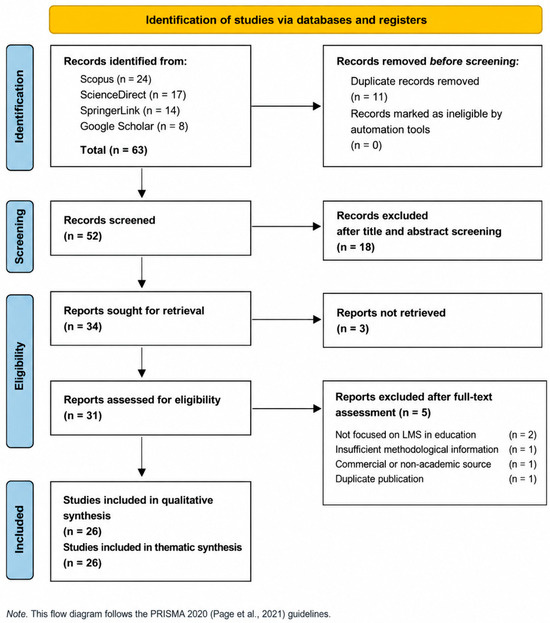
Emerging Technological Innovations in Learning Management Systems for Distance Education: A Systematic Literature Review of Their Impact on Learning Outcomes
Merits 2026, 6(3), 24; https://doi.org/10.3390/merits6030024 - 31 Aug 2026
Abstract
The rapid expansion of distance and hybrid education has significantly increased the strategic role of Learning Management Systems (LMS) in supporting teaching, learning, and institutional digital transformation. This study presents a systematic literature review that examines recent technological innovations in LMS and their
[...] Read more.
The rapid expansion of distance and hybrid education has significantly increased the strategic role of Learning Management Systems (LMS) in supporting teaching, learning, and institutional digital transformation. This study presents a systematic literature review that examines recent technological innovations in LMS and their impact on learning outcomes, user adoption, and organizational readiness. The research addresses a timely question: how do emerging technologies and organizational factors impact LMS adoption and educational effectiveness? The review followed a structured literature review methodology based on predefined search criteria, inclusion and exclusion criteria, and thematic synthesis of studies published between 2020 and 2025. Publications were identified through major academic databases and analyzed to identify technological trends, organizational factors, and their influence on LMS adoption and educational effectiveness. Additionally, factors like institutional support, perceived usefulness, and user training were examined through the lens of the Extended Technology Acceptance Model (ETAM). The findings show that while new technologies enhance personalization and student engagement, their success depends heavily on organizational readiness and user perception. Perceived usefulness, quality of training, and strategic implementation emerged as critical drivers of LMS adoption. The study also identifies current gaps in empirical research and offers recommendations for future investigation. These insights can benefit educational researchers, policymakers, and technology developers alike. By aligning technological innovation with pedagogical and organizational strategies, LMS platforms can become more effective tools for supporting quality distance education.
Full article
(This article belongs to the Special Issue Resilience by Design: Digital Skills, Soft Skills and Leadership for the Next Generation of Organizations)
►
Show Figures
Open AccessArticle
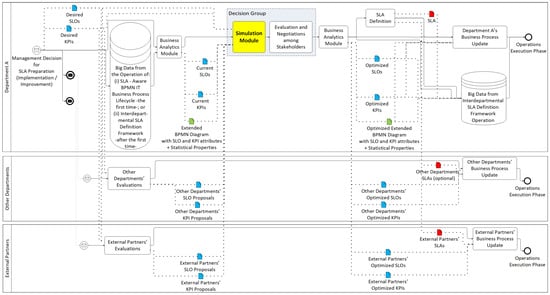
Sustainable Leadership and Corporate AI Transformation in SLA-Aware BPMN IT Business Processes: A Simulation-Based Workforce Role Configuration Analysis with ESG-Oriented Performance Trade-Offs
by
Athanasios G. Lazaropoulos
Merits 2026, 6(3), 23; https://doi.org/10.3390/merits6030023 - 25 Aug 2026
Abstract
►▼
Show Figures
In contemporary Information Technology (IT) enterprises, workforce role configuration decisions sit at the intersection of leadership strategy, corporate Artificial Intelligence (AI) transformation and sustainable operational governance. This study investigates how heterogeneous workforce role configurations affect Service Level Agreement (SLA) compliance in SLA-aware Business
[...] Read more.
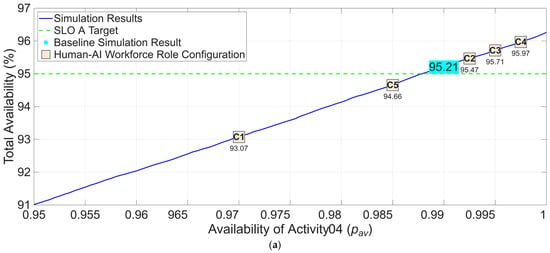
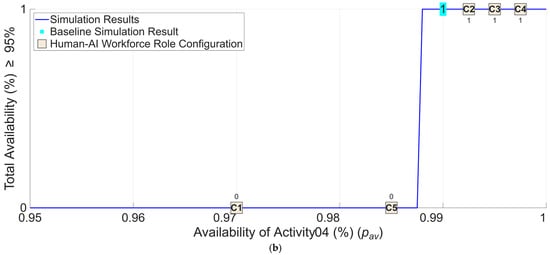
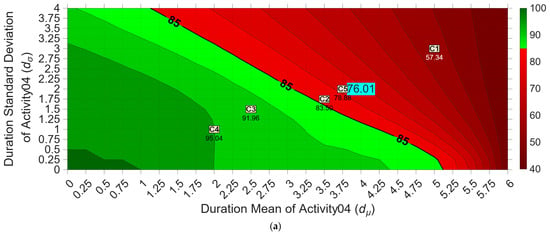
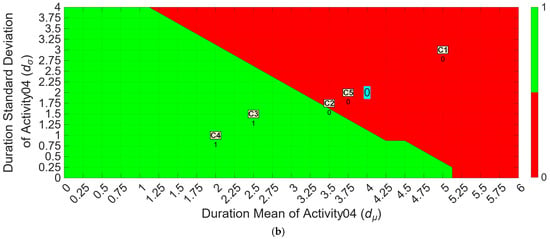
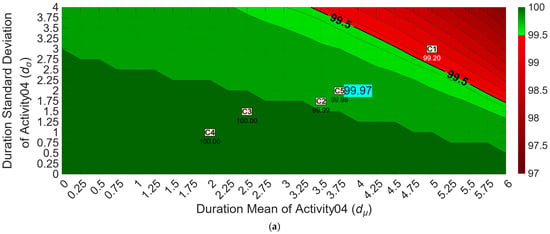
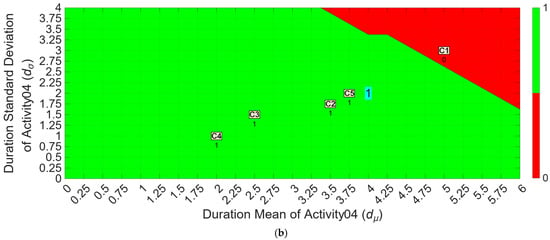
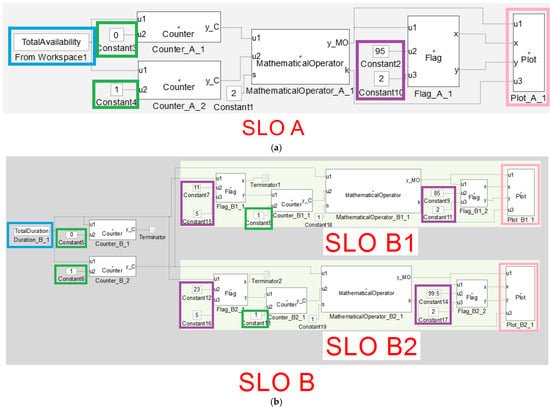
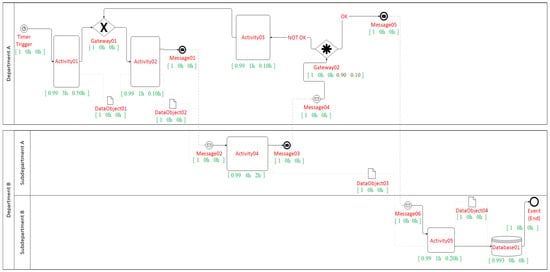
In contemporary Information Technology (IT) enterprises, workforce role configuration decisions sit at the intersection of leadership strategy, corporate Artificial Intelligence (AI) transformation and sustainable operational governance. This study investigates how heterogeneous workforce role configurations affect Service Level Agreement (SLA) compliance in SLA-aware Business Process Model and Notation (BPMN) IT business processes, framing this as a people management and leadership decision problem with explicit Environmental, Social and Governance (ESG)-oriented trade-offs. A validated MATLAB Simulink simulation tool is employed to conduct structured scenario testing across combinations of human role configurations and AI maturity levels, measuring their impact on key Service Level Objectives (SLOs) and Key Performance Indicators (KPIs). To support leadership decision making, a Workforce Sustainability Index (WSI) is introduced that integrates SLA compliance with workforce cost and AI dependency risk, where AI dependency risk captures the social dimension of ESG by emphasizing workforce skill development, upskilling and reskilling pathways, human oversight and responsible AI adoption. The simulation results reveal that no universally optimal configuration exists; the best-performing workforce design depends on organizational context and leadership priorities, as captured through scenario-based weight configurations representing performance-driven, cost-driven, human-centric and balanced governance orientations. These findings provide IT leaders and organizational decision-makers with actionable, evidence-based guidance for sustainable workforce design in the context of corporate AI transformation, contributing to the broader discourse on people management, merit-based organizational performance, responsible AI governance and sustainable digital operations management.
Full article

Figure 1
Open AccessReview
School Leaders’ Emotional Intelligence and School Culture: A Scoping Review Mapping Current Research
by
Catherine Daly, Niamh Lafferty and Dan O’Sullivan
Merits 2026, 6(3), 22; https://doi.org/10.3390/merits6030022 - 13 Aug 2026
Abstract
►▼
Show Figures
School culture is widely recognised as a key element of educational organisations, shaping relationships, behaviours, and shared norms within schools. Emotional intelligence (EI) has been identified as a leadership capability that may contribute to the development of positive school cultures; however, the nature
[...] Read more.
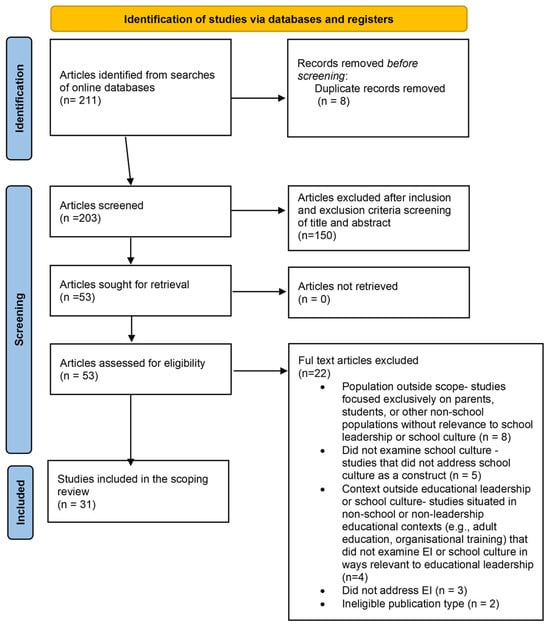
School culture is widely recognised as a key element of educational organisations, shaping relationships, behaviours, and shared norms within schools. Emotional intelligence (EI) has been identified as a leadership capability that may contribute to the development of positive school cultures; however, the nature of this relationship remains fragmented across the literature. This scoping review synthesised evidence from 31 studies examining the relationship between school leaders’ EI and school culture and considers implications for Irish post-primary education. The review included empirical, theoretical, conceptual, and review-based literature from a range of international contexts. Findings revealed considerable variation in the conceptualisation and measurement of both EI and school culture. Across the literature, emotionally intelligent leadership is commonly associated with positive school culture outcomes. These findings highlight the potential importance of EI in shaping school culture while underscoring the need for greater conceptual clarity and methodological rigour in future research. The review provides an evidence-informed foundation for future research on emotionally intelligent leadership and school culture, including context-specific work within Irish post-primary education.
Full article

Figure 1
Open AccessArticle
Applied Ergonomics in Telework: A Sociotechnical and Organizational Psychology Analysis of Workplace Digital Surveillance and Worker Wellbeing Job Satisfaction
by
Darrell Norman Burrell
Merits 2026, 6(3), 21; https://doi.org/10.3390/merits6030021 - 31 Jul 2026
Abstract
This qualitative phenomenological study examines how digital workplace surveillance embedded within remote and hybrid work systems shapes employee morale, organizational trust, and job satisfaction. Grounded in a socio-technical ergonomics framework, the research conceptualizes monitoring technologies not as neutral administrative tools but as structural
[...] Read more.
This qualitative phenomenological study examines how digital workplace surveillance embedded within remote and hybrid work systems shapes employee morale, organizational trust, and job satisfaction. Grounded in a socio-technical ergonomics framework, the research conceptualizes monitoring technologies not as neutral administrative tools but as structural design elements that recalibrate autonomy, accountability, and relational dynamics. The rapid normalization of telework during the COVID-19 pandemic accelerated the adoption of algorithmic oversight systems, transforming managerial visibility and redefining performance metrics. Yet, limited empirical attention has been devoted to how these systems are subjectively experienced, particularly among younger workforce cohorts. Drawing on in-depth, semi-structured interviews with Generation Y and Generation Z employees working under digitally monitored telework conditions, the study explores how surveillance practices influence perceptions of autonomy, fairness, psychological safety, and engagement. The analysis identifies core themes reflecting tensions between efficiency and trust, transparency and intrusion, and compliance and intrinsic motivation. The findings contribute to socio-technical ergonomics scholarship by illuminating how oversight infrastructures can either support or destabilize sustainable and adaptive work environments.
Full article
Open AccessArticle
Assessing the Effectiveness of Government Support in Venture Capital Ecosystems: Insights from Kazakhstan
by
Marcus V. Goncalves and Gulnur Smagulova
Merits 2026, 6(3), 20; https://doi.org/10.3390/merits6030020 - 16 Jul 2026
Abstract
►▼
Show Figures
This study examines the effectiveness of government support mechanisms in fostering venture capital (VC) ecosystems in emerging economies, with a particular focus on Kazakhstan. While venture capital is widely recognized as a key driver of innovation, entrepreneurship, and economic diversification, many developing countries
[...] Read more.
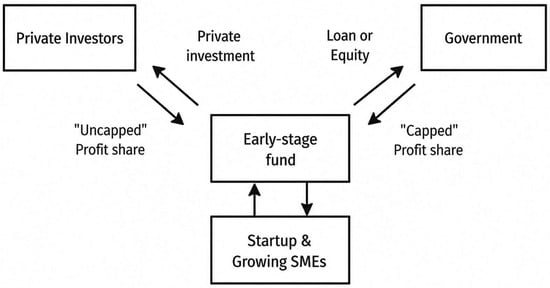
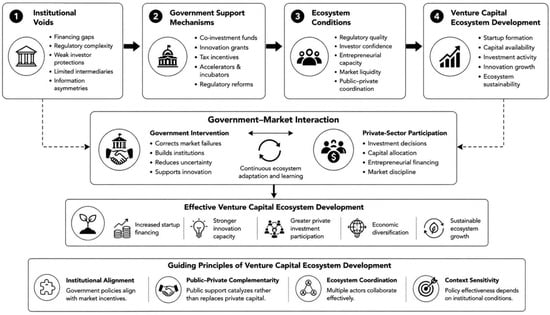
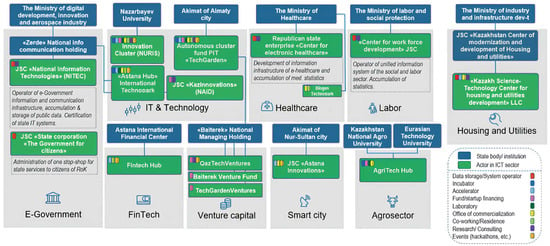
This study examines the effectiveness of government support mechanisms in fostering venture capital (VC) ecosystems in emerging economies, with a particular focus on Kazakhstan. While venture capital is widely recognized as a key driver of innovation, entrepreneurship, and economic diversification, many developing countries face persistent structural barriers, including underdeveloped financial markets, limited private investment, and regulatory inefficiencies. To address these challenges, this research adopts a multi-source qualitative design, combining a systematic literature review with semi-structured interviews conducted with venture capital experts and practitioners. The analysis evaluates key policy instruments—such as co-investment schemes, tax incentives, startup accelerators, and regulatory reforms—and assesses their role in shaping VC activity. The findings indicate that although Kazakhstan has made significant progress in establishing institutional support for venture capital, critical constraints remain, including bureaucratic complexity, investor risk aversion, and limited exit opportunities. The study contributes to the literature by integrating global best practices with context-specific evidence, offering policy-relevant insights into how governments can more effectively design and implement interventions to strengthen venture capital ecosystems in developing economies.
Full article

Figure 1
Open AccessArticle
Venture Capital Decision-Making in Frontier-Emerging Markets: Evaluative Logics and Women-Led Ventures in Kazakhstan
by
Marcus V. Goncalves, Gulnur Smagulova and Ayazhan Nurzhan
Merits 2026, 6(3), 19; https://doi.org/10.3390/merits6030019 - 3 Jul 2026
Abstract
This study examines how venture capital investors in Kazakhstan evaluate women-led enterprises within a frontier-emerging market context characterized by institutional transition and evolving entrepreneurial ecosystems. Addressing a gap in the literature on gendered investment behavior beyond mature markets, the research adopts an exploratory
[...] Read more.
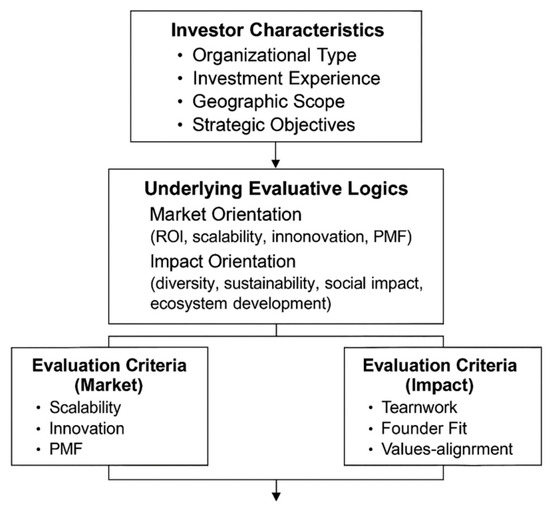
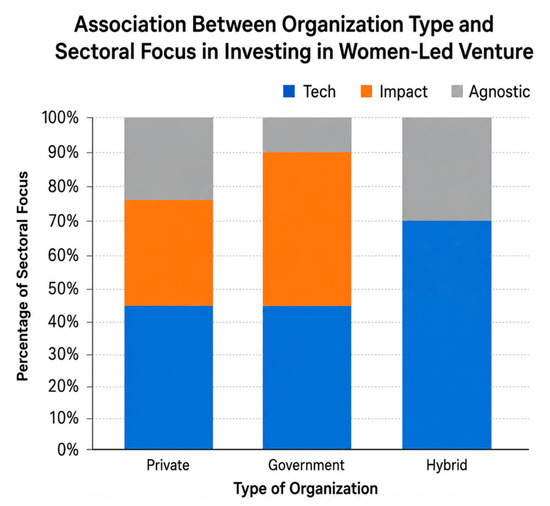
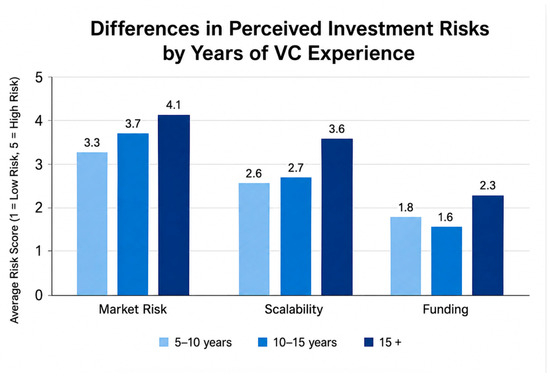
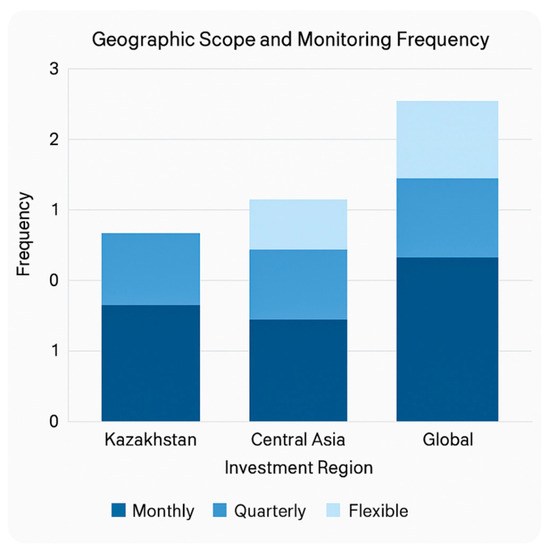
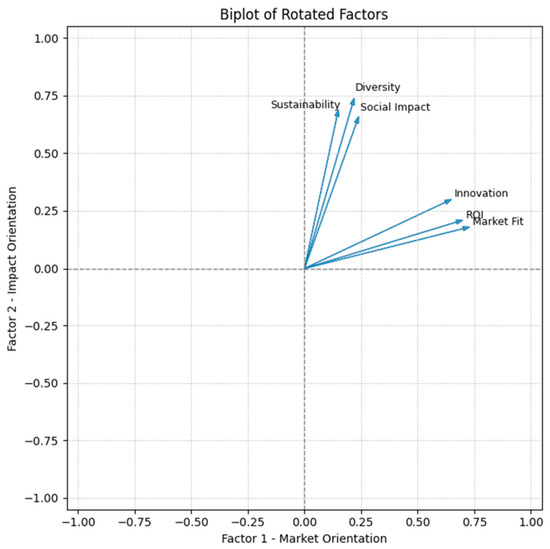
This study examines how venture capital investors in Kazakhstan evaluate women-led enterprises within a frontier-emerging market context characterized by institutional transition and evolving entrepreneurial ecosystems. Addressing a gap in the literature on gendered investment behavior beyond mature markets, the research adopts an exploratory mixed-methods design combining survey data (n = 21) with open-ended qualitative responses from VC professionals. Descriptive and bivariate analyses are used to examine associations between investor characteristics and evaluation criteria, while exploratory factor analysis is employed as a heuristic tool to assess whether survey items cluster around broadly interpretable evaluative orientations shaping investment judgments. The findings suggest the presence of two indicative evaluative orientations—market orientation and impact orientation—that appear to structure how respondents in this sample prioritize dimensions such as scalability, innovation, teamwork, and social value. These orientations are interpreted as context-specific and exploratory rather than statistically generalizable. The study contributes to entrepreneurial finance and institutional theory by developing an exploratory evaluative framework that captures the coexistence of commercial and developmental considerations in venture investment decision-making within a transitional economy. The findings further highlight how gendered investment dynamics are shaped by both market criteria and institutional environments, offering implications for policymakers, investors, and scholars seeking to understand capital allocation processes in underexplored venture ecosystems.
Full article
(This article belongs to the Special Issue Global Advances on Women in Leadership)
►▼
Show Figures

Figure 1

Open AccessSystematic Review
Sustaining Employee Engagement and Wellbeing in Hybrid Work: Strategic Perspectives for HRM Professionals
by
Roopa Nagori and Natalia Rocha Lawton
Merits 2026, 6(3), 18; https://doi.org/10.3390/merits6030018 - 25 Jun 2026
Abstract
As hybrid work arrangements become more established in organisations, the need for effective design and implementation strategies has grown significantly. Evidence indicates that employee wellbeing and engagement in hybrid work environments are declining and this presents a critical challenge for human resource management
[...] Read more.
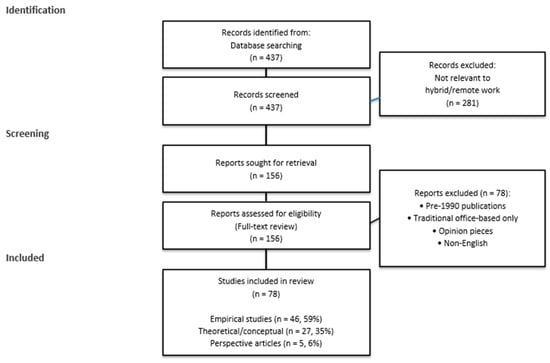
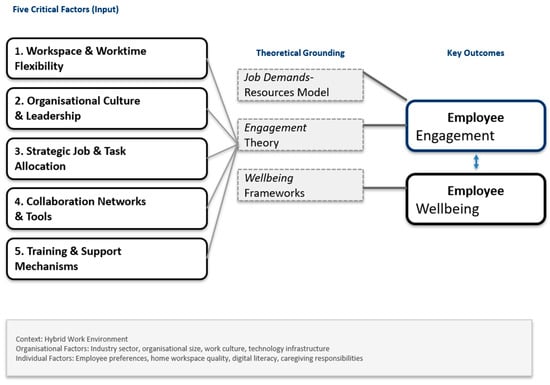
As hybrid work arrangements become more established in organisations, the need for effective design and implementation strategies has grown significantly. Evidence indicates that employee wellbeing and engagement in hybrid work environments are declining and this presents a critical challenge for human resource management (HRM) professionals. This presents HRM professionals with a critical imperative of improving wellbeing, while maintaining engagement and productivity at work. This aligns closely with the United Nations’ 17 Sustainable Development Goals, particularly those that promote wellbeing and decent work. Through a systematic synthesis of 78 studies, this research investigates the key determinants of employee engagement and wellbeing in hybrid work contexts. The conceptual framework for this study is grounded in existing theoretical perspectives from the Job Demands–Resources model, Saks Frameworks and wellbeing perspective presented by Guest. The analysis identifies five critical factors that influence engagement and wellbeing outcomes in hybrid work, accompanied by evidence-based propositions for practice. These recommendations encompass: establishing well-equipped workspaces with appropriate flexibility in both location and time; developing organisational culture and leadership through enhanced communication and collaboration mechanisms; strategically allocating jobs and tasks whilst fostering effective networks and collaboration tools and implementing targeted training interventions to mitigate technostress and burnout associated with digital workloads. We advocate for future research to develop comprehensive models, frameworks and wellbeing interventions to guide HRM professionals in addressing these challenges at both the local and global levels.
Full article
(This article belongs to the Special Issue Strategic Human Resource Management: Transforming Organizations for Competitive Advantage)
►▼
Show Figures

Figure 1
Open AccessEssay
I Want an Assistant: Generative AI, Women’s Leadership, and the Redistribution of Invisible Labor
by
Marcela Kostihova and Irina Makarevitch
Merits 2026, 6(2), 17; https://doi.org/10.3390/merits6020017 - 17 Jun 2026
Abstract
This essay examines generative AI (GenAI) through the lens of invisible labor, arguing that its significance for women’s leadership lies in its potential to recognize and redistribute routine forms of support work that have historically remained feminized, undervalued, and unseen. Referencing Judy Brady’s
[...] Read more.
This essay examines generative AI (GenAI) through the lens of invisible labor, arguing that its significance for women’s leadership lies in its potential to recognize and redistribute routine forms of support work that have historically remained feminized, undervalued, and unseen. Referencing Judy Brady’s I Want a Wife and Ira Levin’s The Stepford Wives, the paper situates contemporary GenAI assistants within a longer history of gendered service, showing how professional success has long depended on hidden infrastructures of care, coordination, and administrative maintenance. The essay argues that GenAI might offer valuable assistance to women leaders when used deliberately as a bounded, supervised, and accountable collaborator rather than a frictionless servant. Ultimately, the paper contends that GenAI becomes most valuable when it makes support more visible, legitimate, and more equitably distributed.
Full article
(This article belongs to the Special Issue Women Leaders in AI: Insights, Challenges, and Transformative Practices)
Open AccessArticle
Authenticity at Work, Stress, and Performance in Remote and Conventional Office Settings
by
Andreea Fortuna Schiopu, Iulia Daus (Ogoreanu), Alina Maria Vieriu and Ana Mihaela Padurean
Merits 2026, 6(2), 16; https://doi.org/10.3390/merits6020016 - 4 Jun 2026
Abstract
Accelerated by the COVID-19 pandemic, organizations have shifted to remote work to transform traditional office conditions and take advantage of the new arrangements. Studies confirm working remotely sustains and boosts performance and satisfaction compared to conventional office states. However, work stress remains a
[...] Read more.
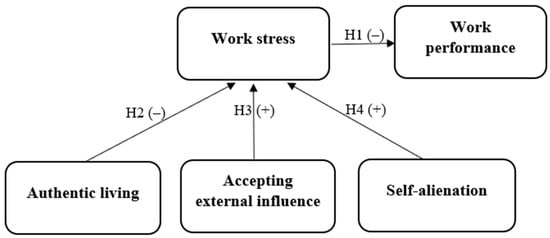
Accelerated by the COVID-19 pandemic, organizations have shifted to remote work to transform traditional office conditions and take advantage of the new arrangements. Studies confirm working remotely sustains and boosts performance and satisfaction compared to conventional office states. However, work stress remains a constant concern negatively impacting well-being, engagement, and productivity across both settings. Less explored is how workplace authenticity, shaped by authentic living, accepting external influence, and self-alienation, impacts work stress and performance. We address this research gap by studying how these authenticity dimensions predict work stress across both working-from-home and office work environments and its effect on performance. We used extensive survey data to test the hypothesis implied by these relationships. The findings indicate that work stress is negatively associated with work in both settings. Additionally, accepting external influence and self-alienation may seem to increase work stress, while authentic living reduces it across both contexts. The results of this study provide a cross-context validation rather than strong differentiation between working from home and in office. Organizations should promote authentic living and target self-alienation to attenuate work stress. This is the first study to provide empirical evidence that these dynamics hold in both remote and office work contexts.
Full article
(This article belongs to the Special Issue Strategic Human Resource Management: Transforming Organizations for Competitive Advantage)
►▼
Show Figures

Figure 1
Open AccessArticle
Latent Profiles of Human Capital Sustainability Leadership: Examining Relationship Capital and Personal Adaptation Among Japanese Managers
by
Kanae Tani, Akira Tsuda, Yoshiyuki Tanaka, Katsuyo Ishibashi, Emi Nagano, Koki Sasame, Sora Hashimoto and Yasuto Shirataki
Merits 2026, 6(2), 15; https://doi.org/10.3390/merits6020015 - 1 Jun 2026
Abstract
Sustainable human resource management requires leadership that generates mutual gains by building relational resources while maintaining leaders’ own adaptation. We examined how human capital sustainability leadership (HCSL) is configured in practice by applying latent profile analysis to the four HCSL dimensions (ethical, sustainable,
[...] Read more.
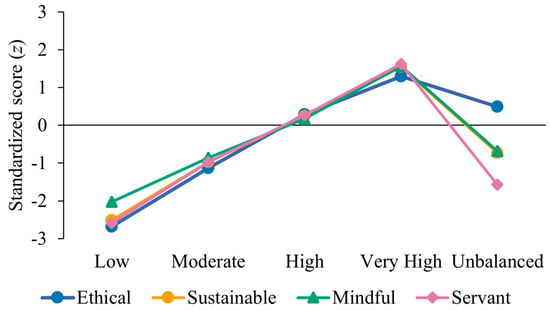
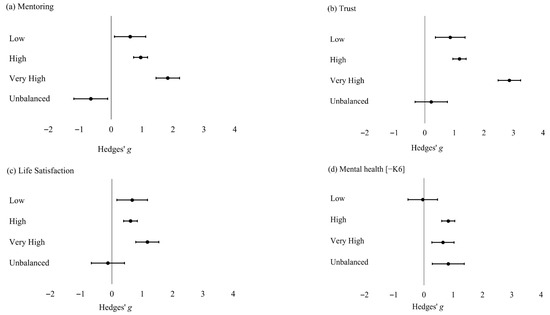
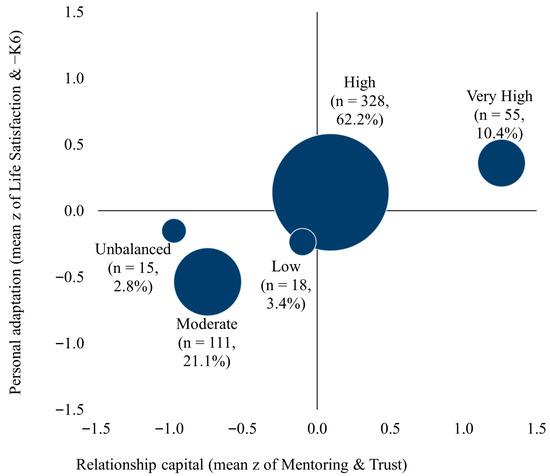
Sustainable human resource management requires leadership that generates mutual gains by building relational resources while maintaining leaders’ own adaptation. We examined how human capital sustainability leadership (HCSL) is configured in practice by applying latent profile analysis to the four HCSL dimensions (ethical, sustainable, mindful, servant leadership) measured using the Japanese version of the HCSL scale among 527 Japanese managers. Fit indices supported a five-profile solution (Very High, High, Moderate, Low, and Unbalanced). The profiles showed distinct patterns of relationship capital (mentoring and supervisor–subordinate trust) and personal adaptation (life satisfaction and mental health). Multivariate tests indicated clear between-profile differences across all outcomes, with the Very High and High profiles consistently showing stronger relationship capital and better adaptation than the Moderate profile. The Unbalanced profile combined high ethical leadership with low levels of the other HCSL dimensions and displayed lower relationship capital but preserved adaptation. Mapping profiles on a two-axis space of relationship capital and personal adaptation offers a parsimonious framework for visualizing sustainability-relevant risks and for tailoring leadership development interventions.
Full article
(This article belongs to the Special Issue Decent Work for All: Interdisciplinary Perspectives and Global Challenges)
►▼
Show Figures

Figure 1
Open AccessArticle
Voice and Decent Work in the Gig Economy: A Moderated Mediation Analysis of Worker Outcomes Across Platform Types
by
Amelia López-Pelaez, Sarah Furlani, Julia Kovacz and Hadi Chahaputra
Merits 2026, 6(2), 14; https://doi.org/10.3390/merits6020014 - 22 May 2026
Abstract
Purpose: Drawing on the Psychology of Working Theory and the organizational voice literature, this study examines how platform worker voice relates to key work outcomes through perceptions of decent work and whether these relationships vary across types of digital labor platforms. Specifically, the
[...] Read more.
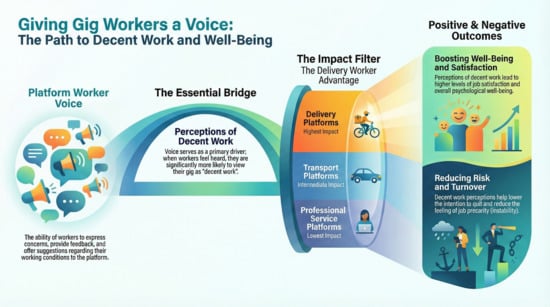
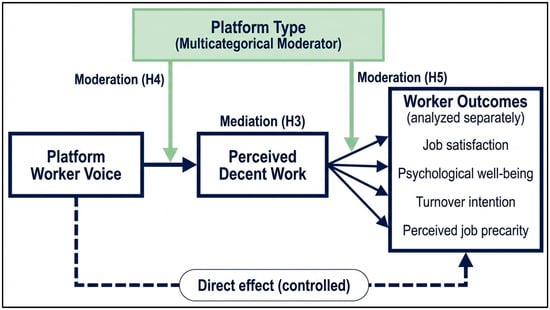
Purpose: Drawing on the Psychology of Working Theory and the organizational voice literature, this study examines how platform worker voice relates to key work outcomes through perceptions of decent work and whether these relationships vary across types of digital labor platforms. Specifically, the study tests a mediation model in which decent work perceptions link voice to worker outcomes and a moderated mediation model in which platform type conditions these processes. Design/methodology/approach: Survey data were collected from 856 platform workers in Hungary engaged in delivery, transport, and professional service platforms. Platform worker voice was specified as the independent variable, perceptions of decent work as the mediator, and job satisfaction, psychological well-being, turnover intention, and perceived job precarity as outcomes. Conditional process analyses were conducted to test mediation and moderated mediation effects across platform types. Findings: Platform worker voice was positively associated with perceptions of decent work, which in turn were positively related to job satisfaction and psychological well-being and negatively related to turnover intention and perceived job precarity. Perceptions of decent work mediated the relationships between voice and all outcomes. Platform type did not moderate the association between voice and decent work, but it did moderate several associations between decent work and worker outcomes, with generally stronger effects observed among delivery workers compared to transport and professional service workers. Conditional indirect effects varied across platform types, indicating partial support for moderated mediation. Originality/value: This study advances research on decent work in the gig economy by identifying platform worker voice as a key antecedent of decent work perceptions and by showing that the consequences of decent work vary across platform contexts. By integrating mediation and moderation within a single analytical framework, the findings highlight the importance of considering structural heterogeneity when examining psychological processes linking voice to worker outcomes in platform-based employment.
Full article
(This article belongs to the Special Issue Decent Work for All: Interdisciplinary Perspectives and Global Challenges)
►▼
Show Figures

Graphical abstract
Open AccessSystematic Review
Tourism and Hospitality Students’ Perceptions of Their Employment Prospects and Future Career Paths: A Systematic Literature Review
by
Georgios Giotis
Merits 2026, 6(2), 13; https://doi.org/10.3390/merits6020013 - 14 May 2026
Cited by 1
Abstract
►▼
Show Figures
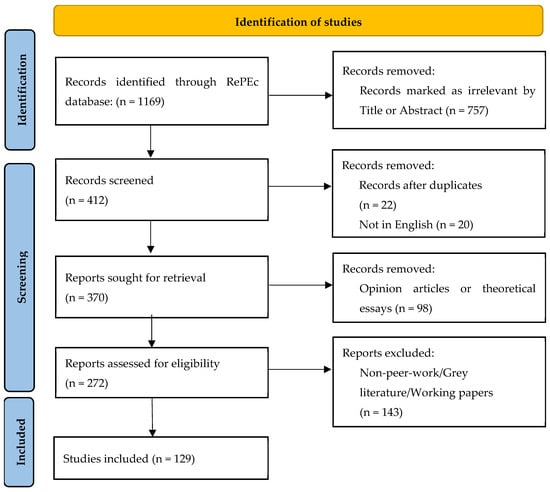
This study systematically reviews 129 peer-reviewed empirical studies examining tourism and hospitality (T&H) students’ perceptions of their employment prospects and future career paths. A systematic review was conducted using the RePEc database, which provides comprehensive coverage of economics, tourism, and hospitality research, ensuring
[...] Read more.
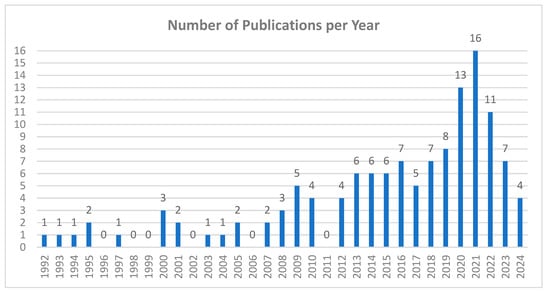
This study systematically reviews 129 peer-reviewed empirical studies examining tourism and hospitality (T&H) students’ perceptions of their employment prospects and future career paths. A systematic review was conducted using the RePEc database, which provides comprehensive coverage of economics, tourism, and hospitality research, ensuring broad and interdisciplinary representation of relevant studies. By synthesizing evidence across three decades, the review identifies persistent and emerging themes shaping students’ career outlooks. Negative perceptions, particularly regarding pay, working hours, job security, and career progression, remain the most frequently reported concerns and are strongly associated with employment anxiety. At the same time, the analysis highlights a significant rise in entrepreneurial intentions after 2015, reflecting students’ growing preference for autonomy and innovation. Internships and real-world experiences consistently emerge as pivotal in shaping perceptions, either reinforcing commitment to the sector or exposing mismatches between expectations and workplace realities. The review further underscores the influence of cultural, social, and personal factors, including family background, gender norms, and self-efficacy, in shaping career decisions. This study contributes by offering a comprehensive thematic synthesis, identifying patterns and transitions over time, and outlining research gaps. The findings provide actionable insights for educators, industry practitioners, and policymakers seeking to strengthen career pathways and ensure the long-term sustainability of the T&H workforce.
Full article

Figure 1
Open AccessReview
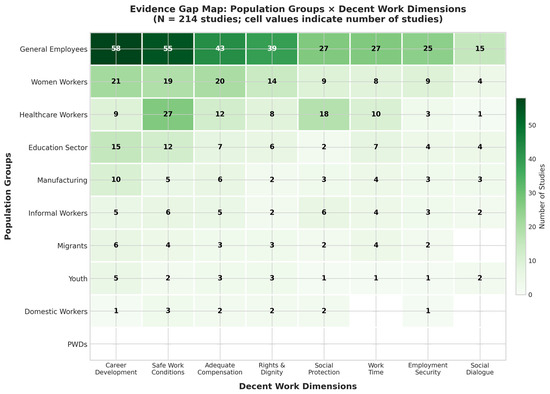
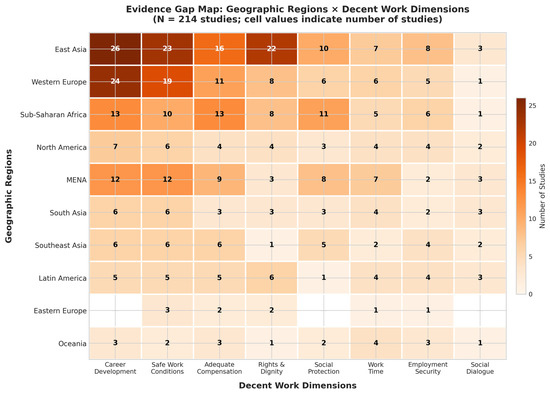
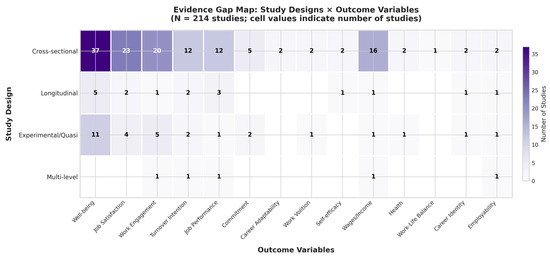
Mapping the Evidence on Decent Work (2022–2025): An Evidence Gap Map of Recent Empirical Research
by
Theodoro Batsios, Sumanjeet Rajak, Elisabetta Rubiolo and Abel Perez-Gonzalez
Merits 2026, 6(2), 12; https://doi.org/10.3390/merits6020012 - 12 May 2026
Abstract
Purpose: This study presents an evidence gap map (EGM) of recent empirical survey-based research on decent work published between 2022 and 2025. The aim is to systematically visualize where empirical evidence has accumulated and to identify persistent knowledge gaps across key dimensions, populations,
[...] Read more.
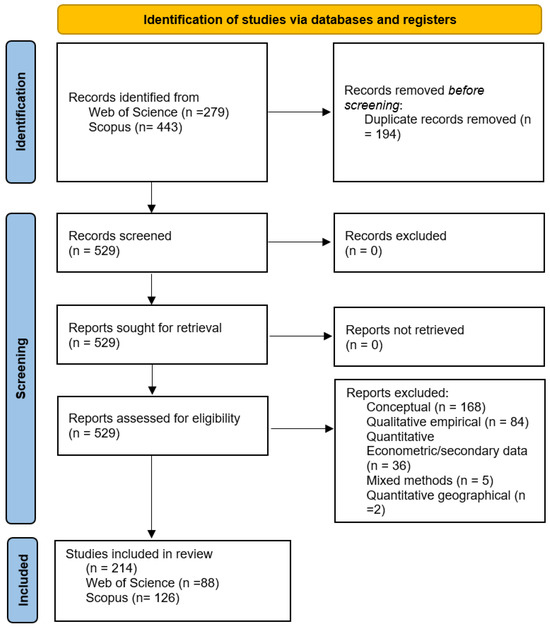
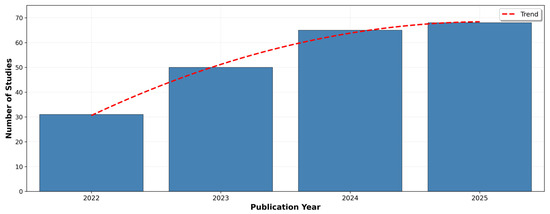
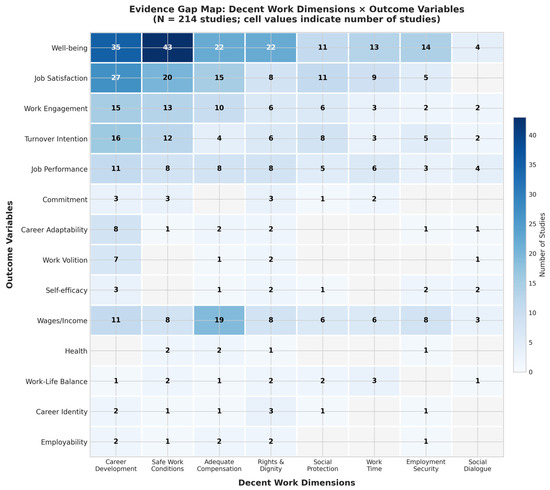
Purpose: This study presents an evidence gap map (EGM) of recent empirical survey-based research on decent work published between 2022 and 2025. The aim is to systematically visualize where empirical evidence has accumulated and to identify persistent knowledge gaps across key dimensions, populations, regions, outcomes, and methodological approaches, thereby informing future research agendas and evidence-informed policy development. Design/methodology/approach: A systematic mapping review was conducted following established guidance for evidence gap maps. Searches were performed in major bibliographic databases using a focused strategy to identify studies explicitly engaging with the decent work construct. Empirical quantitative studies based on survey methods were screened against predefined eligibility criteria. A total of 214 studies published between January 2022 and 2025 were included and coded using a structured framework covering decent work dimensions, population characteristics, geographic context, methodological design, and outcome variables. Evidence gap maps were constructed using matrix-based visualizations to display evidence density and gaps. Findings: Despite a substantial increase in publication volume since 2022, the evidence base remains unevenly distributed. Empirical research continues to concentrate on a limited subset of decent work dimensions and individual-level outcomes, while dimensions related to social dialogue and employment security receive comparatively little attention. Vulnerable worker populations—including persons with disabilities, domestic workers, and gig economy workers—remain critically underrepresented. Methodologically, cross-sectional designs predominate, with longitudinal and multilevel approaches still relatively scarce. Geographic coverage is similarly uneven, with research activity concentrated in a limited number of regions. Research limitations/implications: By systematically mapping recent empirical survey-based evidence, this study highlights persistent misalignments between theoretical ambitions, policy priorities, and empirical practice. The findings provide a structured basis for prioritizing future research and for aligning psychological research on decent work more closely with equity-oriented policy objectives. Originality/value: This study is the first evidence gap map focusing specifically on recent empirical survey-based research on decent work. By applying a rigorous EGM approach to post-2021 literature, it offers a structured overview of this segment of the evidence base and identifies priority areas where empirical knowledge remains limited.
Full article
(This article belongs to the Special Issue Decent Work for All: Interdisciplinary Perspectives and Global Challenges)
►▼
Show Figures

Figure 1
Open AccessArticle
Firm Type and Women’s Leadership Aspirations Across Career Stages: Evidence from Post-Socialist Mongolia
by
Enkhzul Galsanjigmed
Merits 2026, 6(2), 11; https://doi.org/10.3390/merits6020011 - 1 May 2026
Abstract
Women’s advancement into leadership roles remains uneven in many post-socialist labor markets despite high levels of female education and workforce participation. While prior research has emphasized structural barriers and national institutional conditions, less is known about how firm-level organizational environments shape women’s evaluations
[...] Read more.
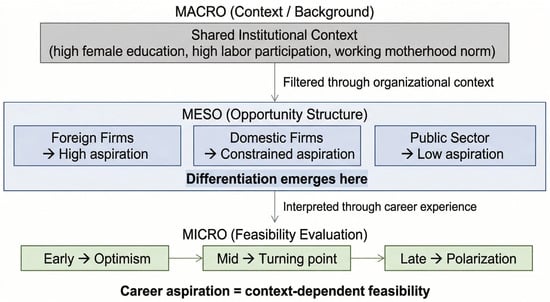
Women’s advancement into leadership roles remains uneven in many post-socialist labor markets despite high levels of female education and workforce participation. While prior research has emphasized structural barriers and national institutional conditions, less is known about how firm-level organizational environments shape women’s evaluations of leadership as a viable career pathway. This study aims to examine how firm type shapes women’s managerial aspirations across career stages in post-socialist Mongolia. Using cross-sectional survey data from 191 employed women in Ulaanbaatar, aspiration patterns were compared across three organizational contexts: foreign-owned firms, domestic private firms, and public-sector organizations. Career aspirations were operationalized as three states—high aspiration, constrained aspiration, and low aspiration—to capture differences between leadership motivation and perceived feasibility. Pearson’s chi-square tests and Cramér’s V were used to assess associations between firm type, career stage, and aspiration categories. The results show that women in foreign-owned firms are more likely to sustain leadership aspirations, whereas constrained and low aspirations are more prevalent in domestic private firms and the public sector, particularly at mid-career stages. These findings suggest that leadership aspirations reflect organizationally shaped feasibility assessments rather than individual motivation alone, and that firm type operates as a critical meso-level opportunity structure within shared post-socialist institutional conditions.
Full article
(This article belongs to the Special Issue Global Advances on Women in Leadership)
►▼
Show Figures

Figure 1
Open AccessArticle
Organizational Career System Expectations and Personal Value Orientations: Evidence from Canadian and German Millennial Business Students
by
Hermann Lassleben and Stefan Litz
Merits 2026, 6(2), 10; https://doi.org/10.3390/merits6020010 - 7 Apr 2026
Abstract
This study examines Millennial business students’ expectations of organizational career systems (OCS) to inform the design of work environments that attract and retain Millennial employees. It explores preferred OCS features, the role of personal value orientations (PVO), and potential cross-national differences. Data were
[...] Read more.
This study examines Millennial business students’ expectations of organizational career systems (OCS) to inform the design of work environments that attract and retain Millennial employees. It explores preferred OCS features, the role of personal value orientations (PVO), and potential cross-national differences. Data were collected through a cross-national survey of 284 business students in Canada and Germany. Variance analyses and group comparisons were used to assess differences in OCS expectations, and ordinary least squares regression examined the influence of PVO on preferences for four OCS features: internal recruitment, recognition of group contributions, formal promotion processes, and tenure-based advancement. The results show that Millennial business students favor OCS that emphasize recognition of group contributions and transparent, formal procedures, while placing less importance on internal recruitment and tenure-based advancement. PVO significantly predict these preferences: self-transcendence values are positively associated with preferences for formal procedures, whereas conservation values relate positively to tenure-based advancement. Canadian respondents exhibit slightly stronger preferences for formal procedures, group recognition, and tenure than German respondents, although overall cross-national differences remain modest. The study’s reliance on a convenience sample and self-reported data limits generalizability, highlighting the need for more diverse samples and qualitative approaches. By linking career system expectations to underlying personal values rather than generational labels, this study provides theoretical insight and practical guidance for designing fair and transparent OCS aligned with the career expectations of Millennial respondents.
Full article
Open AccessArticle
Managing Human Resources Strategically in Romania: An Exploratory Qualitative Study of Digital Transformation, Sustainability and Cultural Influences
by
Olimpia State, Diana-Maria Preda (Naum), Daniela-Elena Mocanu and Vlad Diaconescu
Merits 2026, 6(2), 9; https://doi.org/10.3390/merits6020009 - 1 Apr 2026
Abstract
Digital transformation and sustainability have become key priorities in strategic HR management; however, their implementation and integration remain inconsistent and are strongly influenced by organizational context. This study examines strategic HR management at the intersection of digital transformation, sustainability, and organizational culture. The
[...] Read more.
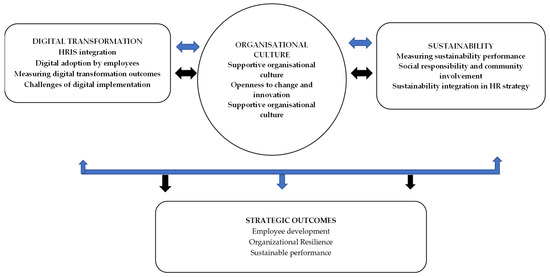
Digital transformation and sustainability have become key priorities in strategic HR management; however, their implementation and integration remain inconsistent and are strongly influenced by organizational context. This study examines strategic HR management at the intersection of digital transformation, sustainability, and organizational culture. The objective is to explore how Romanian organizations align these dimensions within strategic human resource management. The research employed a qualitative approach, consisting of nine semi-structured interviews with HR professionals and managers from diverse organizational settings. Interview data were analyzed using thematic analysis to identify recurring patterns across the three dimensions. Although limited to the characteristics of the qualitative sample and not intended to generate findings applicable to the entire Romanian HR practice, the findings suggest that digital transformation in HR is primarily experienced as a capability development process, supported by integrated digital systems that enhance employee efficiency and autonomy, while also presenting challenges related to resistance to change and skills shortages. Sustainability emerges as a developing component of HR strategy, often limited by inadequate measurement mechanisms and competing organizational priorities. Organizational culture serves a mediating role by shaping how digital and sustainability initiatives are interpreted, adopted, and evaluated. The study highlights the need to align technological, sustainability, and cultural dimensions to support coherent and future-oriented HR strategies.
Full article
(This article belongs to the Special Issue Strategic Human Resource Management: Transforming Organizations for Competitive Advantage)
►▼
Show Figures

Figure 1

Open AccessArticle
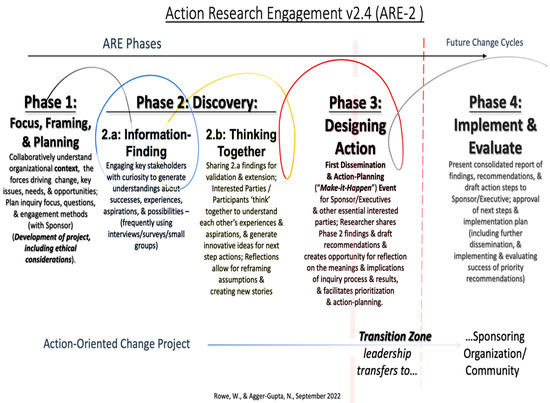
Using an Action Research Engagement Framework to Increase Readiness for Organizational Change
by
Wendy E. Rowe and Niels Agger-Gupta
Merits 2026, 6(1), 8; https://doi.org/10.3390/merits6010008 - 19 Mar 2026
Abstract
►▼
Show Figures
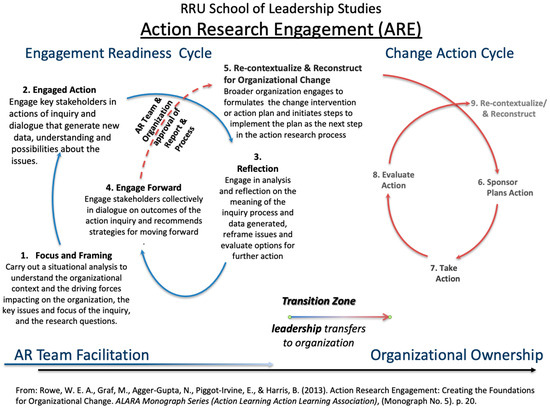
The Action Research Engagement (ARE) framework was developed in 2012 to assist graduate students in facilitating organizational leadership or change projects. Ten years later, the authors implemented a qualitative meta-evaluative study to examine the strengths and weaknesses of the framework based on a
[...] Read more.
The Action Research Engagement (ARE) framework was developed in 2012 to assist graduate students in facilitating organizational leadership or change projects. Ten years later, the authors implemented a qualitative meta-evaluative study to examine the strengths and weaknesses of the framework based on a document review of 49 organizational change research studies that had purported to use the ARE framework. In-depth interviews were conducted with 12 student researchers leading the studies. The results revealed that the framework was mostly or fully followed in all projects guiding organizations on how to initiate a change initiative, but that many projects suffered from weaknesses in stakeholder communication, engaging everyone in change goals, and maintaining sponsor active involvement through all phases of the project. All projects engaged stakeholders in inquiry activities but not necessarily using sequenced action research cycles. Follow-through to decisions and action by leaders was lacking in many projects. Student researchers identified two weaknesses in the original ARE framework: there was no clarity on how inquiry processes might engage larger numbers of stakeholders in the change goals, nor did the framework address how to facilitate decision-making or taking action toward future changes. Based on the study’s findings, an enhanced framework (ARE-2) is offered that makes greater deliberative use of action research principles and cycles of inquiry and reflection to deepen the inquiry process and consequently to strengthen stakeholder engagement, leadership commitment, and readiness for organizational change. The ARE-2 framework has practical application for guiding leaders on how to implement sustainable change in their organization.
Full article

Figure 1
Open AccessArticle
Generation Z Employees’ Acceptance and AI Use Intensity: A Moderated Mediation Model of Psychological Safety, Technostress, and Trust
by
Claudia-Elena Țuclea and Luciana-Floriana Poenaru
Merits 2026, 6(1), 7; https://doi.org/10.3390/merits6010007 - 4 Mar 2026
Cited by 2
Abstract
This study investigates the factors influencing employee acceptance and actual AI use intensity (frequency and routinization) by integrating the Technology Acceptance Model with organizational and psychosocial variables. Data were collected via an online survey of Romanian Generation Z participants with work experience (
[...] Read more.
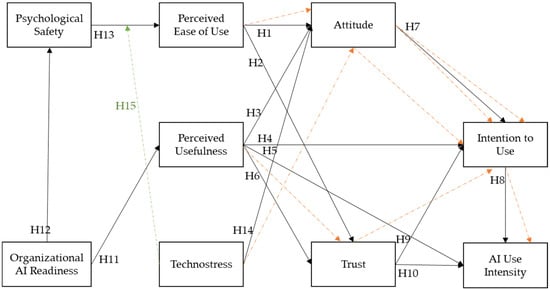
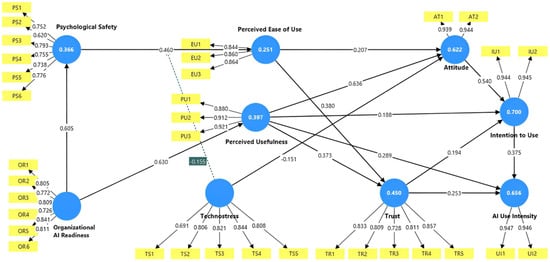
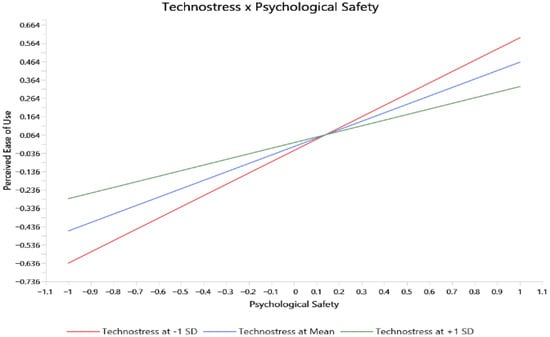
This study investigates the factors influencing employee acceptance and actual AI use intensity (frequency and routinization) by integrating the Technology Acceptance Model with organizational and psychosocial variables. Data were collected via an online survey of Romanian Generation Z participants with work experience (N = 272) between 10 May and 25 May 2025, and analyzed using PLS-SEM with a moderated mediation model. Perceived usefulness emerged as the strongest driver of attitude, intention, and AI use intensity. Organizational AI readiness increased perceived usefulness and was positively associated with psychological safety. Trust influenced both intention and AI use intensity and partially mediated the relationship between perceived usefulness and intention. Technostress was negatively associated with attitudes and weakened the positive relationship between psychological safety and perceived ease of use. By shifting the focus from intention to AI use intensity, the study refines acceptance theory for AI-enabled work and clarifies how organizational context, trust, and digital strain shape sustained and routinized AI use in daily work. Practically, the findings suggest that organizations should communicate AI value and task fit, foster psychologically safe learning climates, build trust through transparency and guidance, and actively mitigate technostress through training, workload design, and clear expectations.
Full article
(This article belongs to the Special Issue Strategic Human Resource Management: Transforming Organizations for Competitive Advantage)
►▼
Show Figures

Figure 1
Open AccessSystematic Review
Gender Diversity and Psychosocial Work Risks from a Non-Binary Perspective: A Systematic Review
by
Abel Perez-Gonzalez, Ferdinando Tuscani, Raul Pelagaggi and Mohamed Nasser
Merits 2026, 6(1), 6; https://doi.org/10.3390/merits6010006 - 27 Feb 2026
Cited by 1
Abstract
►▼
Show Figures
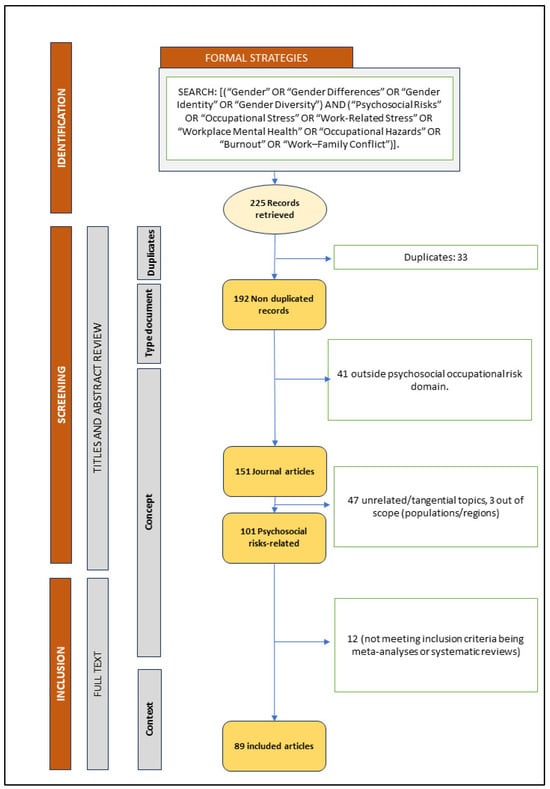
This systematic review examines how gender shapes exposure to and experiences of psychosocial risks in the workplace. Drawing on 89 empirical studies published between 2010 and 2024, the review synthesizes evidence from occupational health psychology, gender studies, and organizational research. Searches were conducted
[...] Read more.
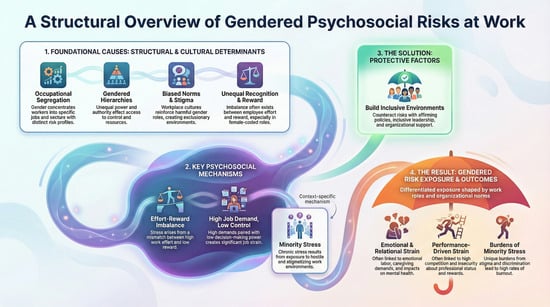
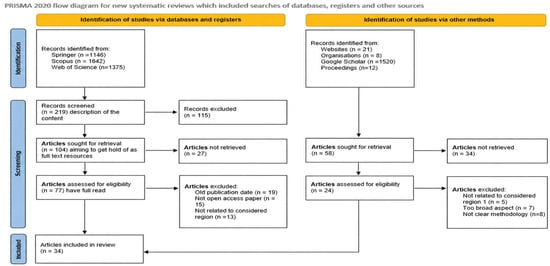
This systematic review examines how gender shapes exposure to and experiences of psychosocial risks in the workplace. Drawing on 89 empirical studies published between 2010 and 2024, the review synthesizes evidence from occupational health psychology, gender studies, and organizational research. Searches were conducted in PubMed, Web of Science, Scopus, CINAHL, and PsycINFO, and included empirical studies published in English and Spanish. Following PRISMA guidelines, a qualitative thematic synthesis was conducted to integrate findings across diverse sectors, populations, and methodological approaches. The evidence reveals persistent gendered patterns in psychosocial risk exposure and outcomes: women are more frequently exposed to emotionally demanding and relational forms of work and report poorer mental health outcomes; men experience performance-driven strain linked to workload, competition, and reward insecurity more often; and transgender and non-binary workers face additional psychosocial burdens associated with stigma, discrimination, and minority stress. Across the literature, structural and cultural determinants—such as occupational segregation, unequal recognition, and gendered organizational norms—emerge as central mechanisms underlying these disparities. Theoretical frameworks including effort–reward imbalance, demand–control, work–family conflict, organizational climate, and minority stress collectively contribute to explaining how gendered psychosocial risks are produced and sustained. Overall, the review underscores the need to move beyond individualistic and binary models of psychosocial risk toward gender-responsive approaches that account for structural, relational, and identity-based dimensions of work, thereby informing research and organizational strategies aimed at promoting equitable and sustainable well-being at work.
Full article

Graphical abstract
Open AccessArticle
The Empowerment Spiral: From Constraint to Transformation in Rural Indonesian Women’s Entrepreneurship
by
Yosefiani Tamatur, Marcus Goncalves and Elizabeth Rhyne
Merits 2026, 6(1), 5; https://doi.org/10.3390/merits6010005 - 14 Feb 2026
Cited by 2
Abstract
This study examines how rural Indonesian women entrepreneurs navigate the gendered structures and institutional barriers that shape their entrepreneurial experiences. Grounded in the Gender and Development (GAD) framework, the research employs a qualitative, interpretive design and draws on 22 semi-structured interviews with women
[...] Read more.
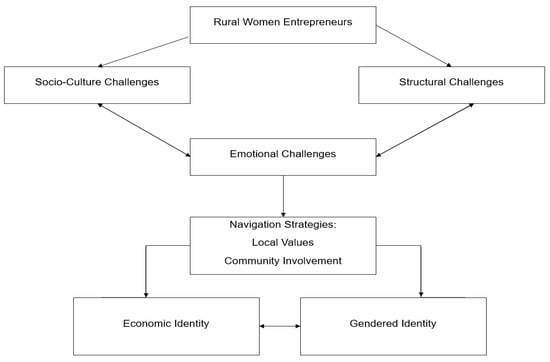
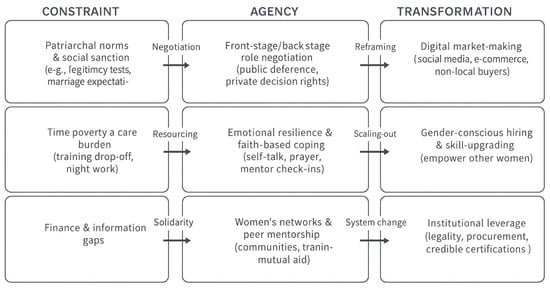
This study examines how rural Indonesian women entrepreneurs navigate the gendered structures and institutional barriers that shape their entrepreneurial experiences. Grounded in the Gender and Development (GAD) framework, the research employs a qualitative, interpretive design and draws on 22 semi-structured interviews with women entrepreneurs from diverse regions and sectors. Data were analyzed using reflexive thematic analysis to identify recurring patterns of constraint, agency, and transformation within women’s narratives. Findings reveal that patriarchal norms and time poverty continue to restrict women’s visibility and resource access. Nevertheless, they exercise negotiated agency through adaptive strategies such as front-stage/back-stage role division, emotional resilience, and collective peer support. Over time, these adaptive behaviors evolve into transformative practices, such as digital market-making, gender-conscious leadership, and intergenerational empowerment, that challenge structural inequalities from within. The study refines GAD theory by conceptualizing empowerment as cyclical and context-embedded, rather than linear or absolute. Policy implications emphasize reforms linking inclusion to transformation through childcare-linked training, collateral access, digital literacy, and institutional support for women’s networks. Overall, entrepreneurship emerges as both a livelihood strategy and a transformative social practice redefining gender relations in Indonesia.
Full article
(This article belongs to the Special Issue Sustainable Entrepreneurship in the Digital Age)
►▼
Show Figures

Figure 1
Highly Accessed Articles
Latest Books
E-Mail Alert
News
Topics
Topic in
Healthcare, Social Sciences, Societies, Merits, Genealogy
Community-Driven Health: Advancing Indigenous Well-Being and Workforce
Topic Editors: Donna-Marie Palakiko, Morgan A. Torris-HedlundDeadline: 31 December 2027
Conferences
Special Issues
Special Issue in
Merits
Digital Entrepreneurs in Tourism and Hospitality: Human Resources Challenges and Opportunities in the Tech Era
Guest Editors: Christos Kakarougkas, Theodoros Stavrinoudis, Iason KoufodontisDeadline: 30 September 2026
Special Issue in
Merits
Global Advances on Women in Leadership
Guest Editors: Jennifer Walinga, Angela SchneiderDeadline: 30 September 2026
Special Issue in
Merits
Digital Era Challenges: Emerging Challenges and Transformations in Human Resource Employment and Management
Guest Editor: Margareta IlieDeadline: 1 October 2026
Special Issue in
Merits
Sustainable Entrepreneurship in the Digital Age
Guest Editors: Marcus Goncalves, João Alexandre Lobo MarquesDeadline: 30 October 2026