



-
When AI Gets It Wrong: Hallucinations and Trust Recalibration in E-Commerce Using a Sequential Mixed-Methods Approach -
The Emotional Costs of Algorithmic Management: How AI-Driven Goal Setting Influences Livestream E-Commerce Streamers’ Unethical Selling Behavior -
Dynamic Capabilities for AI-Enabled Exploration: Antecedents, Mechanisms, and Innovation Outcomes
Journal Description
Journal of Theoretical and Applied Electronic Commerce Research
(JTAER) is an international, peer-reviewed, open access journal of electronic commerce, published online quarterly by MDPI since Volume 16, Issue 3, 2021, and online monthly since 2026.
- Open Access— free for readers, with article processing charges (APC) paid by authors or their institutions.
- High Visibility: indexed within Scopus, SSCI (Web of Science), dblp, and other databases.
- Journal Rank: JCR - Q2 (Business) / CiteScore - Q1 (General Business, Management and Accounting )
- Rapid Publication: manuscripts are peer-reviewed and a first decision is provided to authors approximately 20.9 days after submission; acceptance to publication is undertaken in 4.6 days (median values for papers published in this journal in the first half of 2026).
- Recognition of Reviewers: APC discount vouchers, optional signed peer review, and reviewer names published annually in the journal.
- Journal Cluster of Business, Management & Digital Commerce: Administrative Sciences, Businesses, Journal of Innovation, Journal of Theoretical and Applied Electronic Commerce Research, Knowledge, Logistics, and Merits — Journal of Human Resources.
Impact Factor:
4.5 (2025);
5-Year Impact Factor:
5.1 (2025)
Latest Articles
Evaluative Feedback and Social Visibility in Digital Green Evaluation: Emotional Responses and Green Purchase Intention
J. Theor. Appl. Electron. Commer. Res. 2026, 21(9), 309; https://doi.org/10.3390/jtaer21090309 (registering DOI) - 5 Sep 2026
Abstract
►
Show Figures
Within digital green evaluation environments, both social visibility (SV) and experimentally constructed evaluative-feedback conditions (EFCs) may shape green purchase intention (GPI). Prior research has emphasized observability and social signaling, while paying less attention to how the evaluative direction of feedback is translated into
[...] Read more.
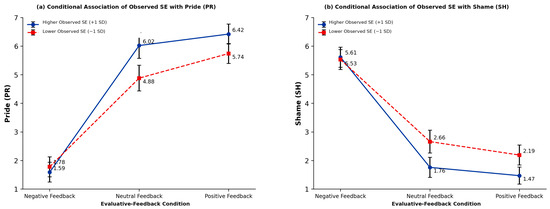
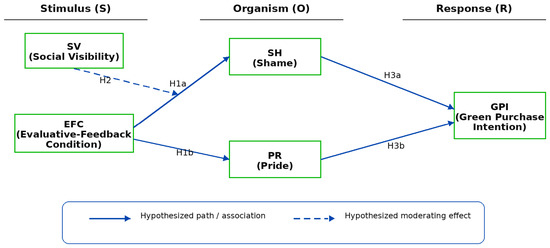
Within digital green evaluation environments, both social visibility (SV) and experimentally constructed evaluative-feedback conditions (EFCs) may shape green purchase intention (GPI). Prior research has emphasized observability and social signaling, while paying less attention to how the evaluative direction of feedback is translated into self-conscious emotions. Drawing on the stimulus–organism–response framework, this study examines how EFCs and SV relate to GPI in association with shame (SH) and pride (PR). A 2 × 3 between-subjects experiment (N = 270) manipulated SV (public versus private) and EFC (negative, neutral, positive). EFC showed significant differences in SH, PR, and GPI, whereas SV showed no significant main effects and operated conditionally. Multicategorical relative indirect-effect analyses, using neutral feedback as the reference condition and controlling for SV, showed significant PR-related relative indirect effects for both the negative versus neutral and positive versus neutral contrasts; the corresponding SH-related relative indirect effects were not significant. Exploratory EFC × SE interactions were significant for both emotional responses, but SE was measured post-stimulus and differed across EFCs; these results are therefore treated as post-stimulus conditional associations. Under the present experimental operationalization, differences across the bundled EFCs were more consistent than SV effects. Because the EFCs jointly varied product choice, score, evaluative message, and interface cues, the findings do not isolate pure valence effects; the relative indirect effects are interpreted as statistical patterns consistent with possible emotional pathways rather than as a complete causal mechanism.
Full article
Open AccessArticle
What Moderates Generative AI Acceptance and Use? Disentangling Subscription Tier from Prior Usage Experience
by
Antun Biloš and Bruno Budimir
J. Theor. Appl. Electron. Commer. Res. 2026, 21(9), 308; https://doi.org/10.3390/jtaer21090308 - 4 Sep 2026
Abstract
Research on generative AI acceptance increasingly identifies new moderators, notably subscription tier, alongside the classic moderators of gender, age, and prior usage experience. Prior studies rarely ask whether these factors condition acceptance once their mutual confounding is addressed, and comparisons of paid and
[...] Read more.
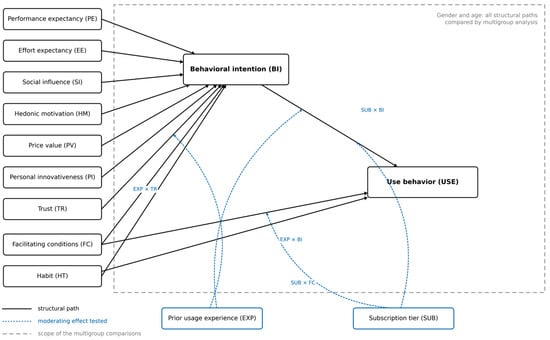
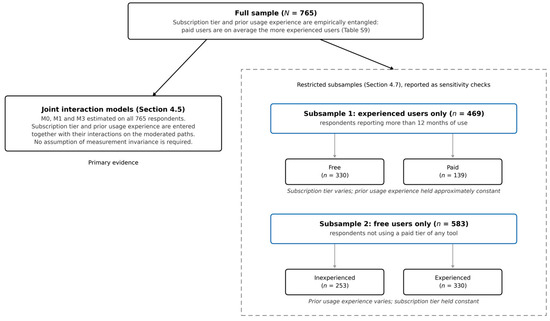
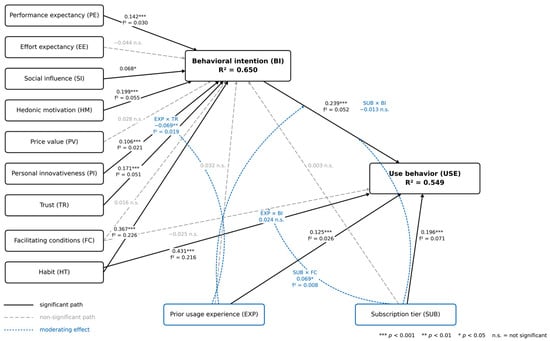
Research on generative AI acceptance increasingly identifies new moderators, notably subscription tier, alongside the classic moderators of gender, age, and prior usage experience. Prior studies rarely ask whether these factors condition acceptance once their mutual confounding is addressed, and comparisons of paid and free users routinely contrast groups that also differ in prior usage experience. This study examines which factors moderate users’ acceptance and use of generative AI. Drawing on an extended UTAUT2 model with personal innovativeness and trust, and a use construct capturing reported duration, frequency, and intensity of use, survey data from 765 Croatian users were analyzed using PLS-SEM. Subscription tier, gender, age, and prior usage experience were examined as candidate moderators, with subscription tier and prior usage experience entered jointly as interaction terms on the full sample. Habit showed the strongest association with both behavioral intention and use behavior. The subscription tier initially appeared to moderate the effect of behavioral intention on use behavior, but that difference did not persist once prior usage experience was modeled alongside it. Gender and age produced no robust differences. Prior usage experience was the only candidate whose moderation survived joint estimation, control variables, and adjustment for multiple testing: trust was strongly associated with behavioral intention among newer users and much less so among experienced ones. Trustworthiness signals therefore serve newer users, while sustained use among experienced users rests on habit.
Full article
(This article belongs to the Section Data Science, AI, and e-Commerce Analytics)
►▼
Show Figures

Figure 1
Open AccessArticle
Beyond Visual Realism: How the Reality–Virtuality Paradox Drives Haptic Compensatory Behaviors in AR Marketing
by
Yuqi Du, Taiyang Zhao, Yong Wang and Zixuan Li
J. Theor. Appl. Electron. Commer. Res. 2026, 21(9), 307; https://doi.org/10.3390/jtaer21090307 - 4 Sep 2026
Abstract
While Augmented Reality (AR) places a product visually and spatially inside the consumer’s own environment, it cannot deliver touch. The more faithfully AR renders an object, the more conspicuous its missing tactile channel becomes. We term this the reality–virtuality paradox, and it sits
[...] Read more.
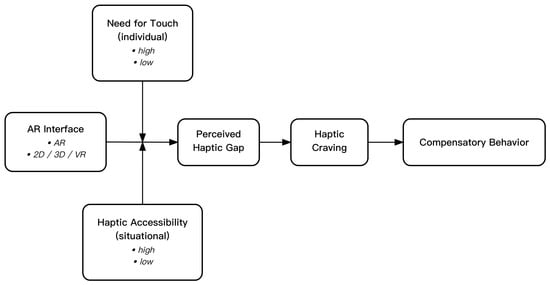
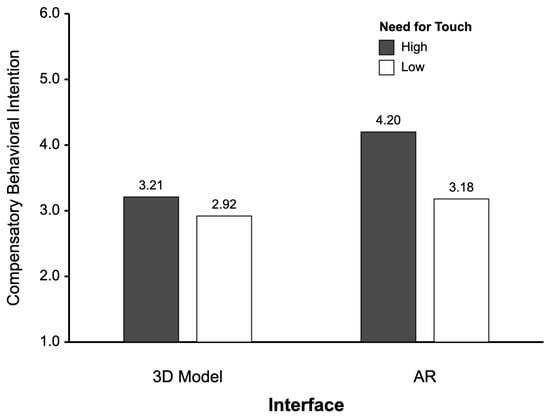
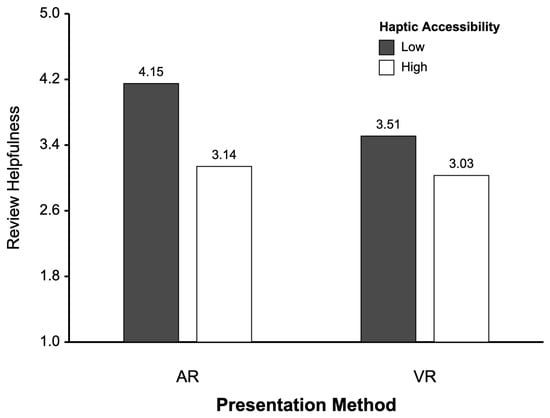
While Augmented Reality (AR) places a product visually and spatially inside the consumer’s own environment, it cannot deliver touch. The more faithfully AR renders an object, the more conspicuous its missing tactile channel becomes. We term this the reality–virtuality paradox, and it sits outside the prevailing account in interactive marketing, which has largely equated richer immersion with more favorable consumer response. In this study, we develop and test a chain mediation model explaining how AR, relative to 2D, 3D, or VR interfaces, elicits compensatory behaviors sequentially through perceived haptic gap and haptic craving. Study 1 (N = 80, AR vs. 2D), together with a same-device replication (Study 1b, N = 60), confirms the main effect of AR on compensatory behaviors. Study 2 (N = 228, AR vs. 3D) documents the chain mediation and the moderating effect of need for touch (NFT). Study 3 (N = 160, AR vs. VR × low vs. high haptic accessibility) establishes the moderating effect of haptic accessibility and extends the effect to a cross-context tactile-relevant choice. AR elicits stronger compensatory behaviors than 2D, 3D, and VR; the effect is sequentially mediated by perceived haptic gap and haptic craving; and it is stronger for high-NFT consumers and under low-haptic-accessibility conditions. We identify a perceptual cost that rises with visual fidelity, extend compensatory consumption from resource scarcity to sensory scarcity, and specify the individual and situational conditions under which the paradox binds most tightly.
Full article
(This article belongs to the Topic Innovations in New Media: Shaping the Future of Interactive Marketing)
►▼
Show Figures

Figure 1
Open AccessArticle
Perceived Price Advantage, Recommendation Quality, and Digital Risk in Temu Purchase Intention: A SEM–fsQCA Study of Korean Generation Z Consumers
by
Xiaoyu Zhang, Luning Tong and Maowei Chen
J. Theor. Appl. Electron. Commer. Res. 2026, 21(9), 306; https://doi.org/10.3390/jtaer21090306 (registering DOI) - 3 Sep 2026
Abstract
Temu has become a prominent cross-border e-commerce platform combining low-price positioning, personalized recommendations, and mobile-based shopping, but its platform features may create both perceived value and digital risk concerns. This study examines how perceived price advantage, personalized recommendation quality, and platform usability are
[...] Read more.
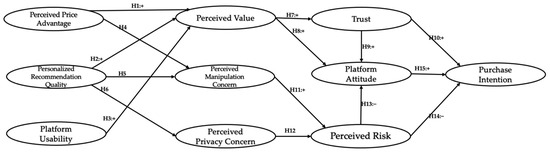
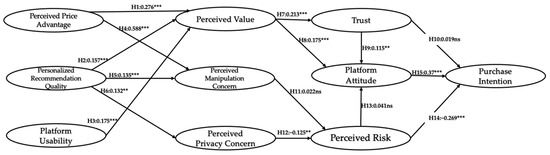
Temu has become a prominent cross-border e-commerce platform combining low-price positioning, personalized recommendations, and mobile-based shopping, but its platform features may create both perceived value and digital risk concerns. This study examines how perceived price advantage, personalized recommendation quality, and platform usability are associated with Korean Generation Z consumers’ purchase intentions toward Temu through perceived value, trust, platform attitude, perceived manipulation concern, privacy concern, and perceived risk. Survey data were collected from 676 Korean Generation Z consumers between December 2025 and February 2026 and were analyzed using structural equation modeling (SEM) and fuzzy-set qualitative comparative analysis (fsQCA). The SEM results show that perceived price advantage, personalized recommendation quality, and platform usability were positively associated with perceived value. Perceived value was positively associated with trust and platform attitude, and platform attitude was positively associated with purchase intention, whereas perceived risk was negatively associated with purchase intention. However, trust was not directly associated with purchase intention, perceived manipulation concern was not significantly associated with perceived risk, and perceived risk was not significantly associated with platform attitude. The fsQCA identified four configurations for high purchase intention, with overall solution consistency of 0.892 and coverage of 0.642. These configurations particularly involved perceived value, favorable platform attitude, low perceived risk, and recommendation quality. The findings indicate that perceived risk was directly associated with lower purchase intention, whereas manipulation and privacy concerns did not operate through uniformly expected risk mechanisms.
Full article
(This article belongs to the Special Issue Consumer Behavior and Operational Excellence in Modern Online Retail)
►▼
Show Figures

Figure 1
Open AccessSystematic Review
Digital Transformation and Circular Economy Adoption in Digital Business: A Systematic Review of Enabling Mechanisms, Boundary Conditions, and Value Outcomes
by
Wenbin Su and Woojin Yoon
J. Theor. Appl. Electron. Commer. Res. 2026, 21(9), 305; https://doi.org/10.3390/jtaer21090305 (registering DOI) - 3 Sep 2026
Abstract
Digital transformation can help firms put circular-economy practices into operation. Existing studies often discuss technical tools and implementation practices separately. Few studies explain the organizational logic that connects the two. This systematic review identifies 146 peer-reviewed English-language journal articles published from January 2015
[...] Read more.
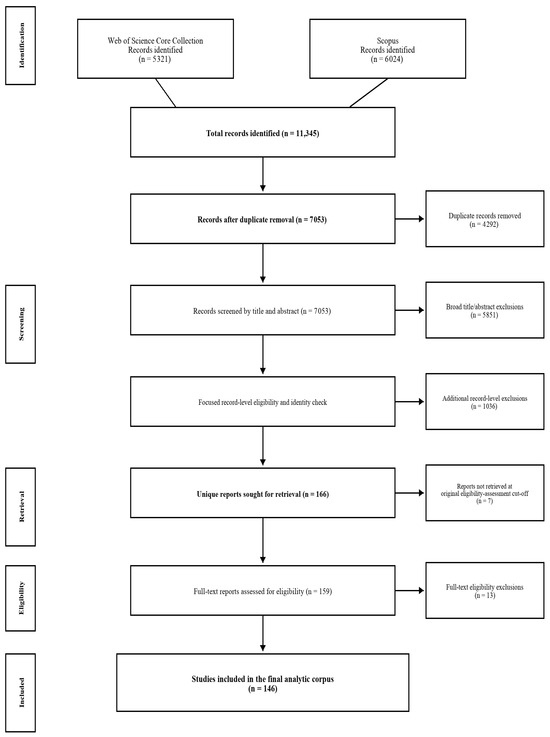
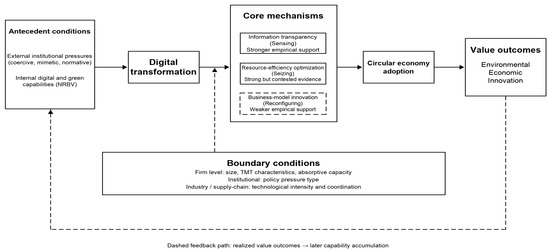
Digital transformation can help firms put circular-economy practices into operation. Existing studies often discuss technical tools and implementation practices separately. Few studies explain the organizational logic that connects the two. This systematic review identifies 146 peer-reviewed English-language journal articles published from January 2015 to June 2026. The review follows PRISMA 2020. It examines how digital technologies support circular-economy adoption at the firm and organizational levels. Industry and supply-chain levels are also included. The evidence points to three core mechanisms. The first is information transparency. The second is resource-efficiency optimization. The third is circular business-model innovation. Their effects depend on internal green and digital capabilities. Supply-chain coordination and external institutional pressures also change how these mechanisms work. Environmental outcomes receive the most consistent empirical support. Operational and social outcomes depend more strongly on context and innovation and economic outcomes are also context-dependent. This review integrates dynamic capabilities theory with the natural-resource-based view and institutional theory to distinguish internal capability development from external constraints. The resulting framework links mechanisms with boundary conditions and outcomes while identifying priorities for longitudinal research, comparative research and improved outcome measurement.
Full article
(This article belongs to the Special Issue Digital Transformation and Innovation in Digital Business: Navigating Sustainable Transitions, Emerging Technologies, and Public Value)
►▼
Show Figures

Figure 1
Open AccessArticle
Does the National E-Commerce Demonstration City Program Enhance Urban Green Total Factor Productivity? Evidence from a Quasi-Natural Experiment in China
by
Lili Yang, Xiaowen Qi, Li Wang and Chen Li
J. Theor. Appl. Electron. Commer. Res. 2026, 21(9), 304; https://doi.org/10.3390/jtaer21090304 (registering DOI) - 3 Sep 2026
Abstract
The National E-Commerce Demonstration City (NEDC) program provides a quasi-natural experiment for assessing whether e-commerce-oriented place-based policies improve urban green productivity. Using a balanced panel of 298 Chinese cities from 2007 to 2023, this study measures green total factor productivity (GTFP) with a
[...] Read more.
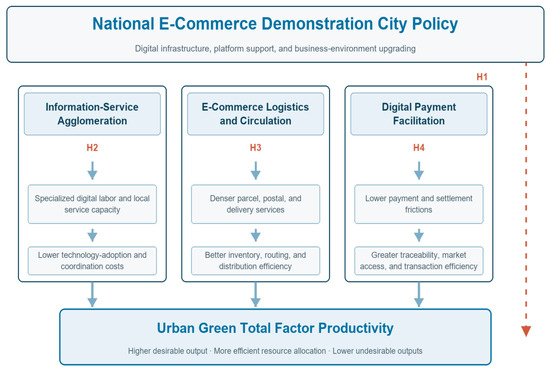
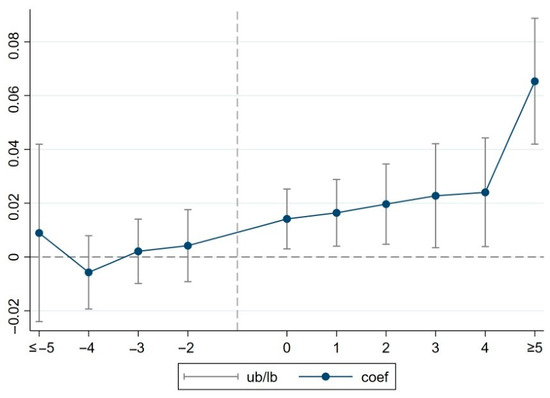
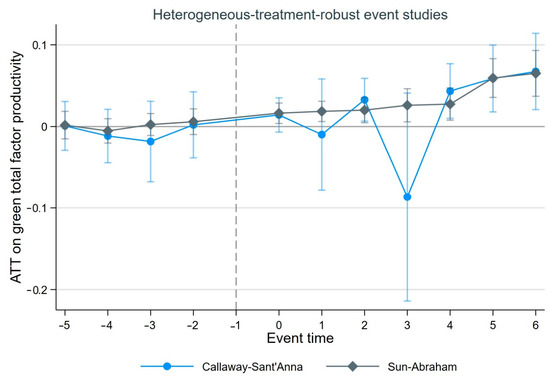
The National E-Commerce Demonstration City (NEDC) program provides a quasi-natural experiment for assessing whether e-commerce-oriented place-based policies improve urban green productivity. Using a balanced panel of 298 Chinese cities from 2007 to 2023, this study measures green total factor productivity (GTFP) with a global frontier SBM-EFF-ML index and exploits the program’s staggered rollout in a difference-in-differences framework. NEDC designation increases GTFP by 0.0293 index units, equivalent to approximately 12.2% of the sample mean. The result is robust to event-study and placebo tests, an alternative GTFP measure, controls for concurrent national pilot policies, entropy balancing, and estimators that accommodate heterogeneous treatment effects. Channel tests provide evidence consistent with information service agglomeration and improved e-commerce logistics; the evidence for digital-payment facilitation is positive but weaker. Pooled interaction models further identify significant differences across comprehensive economic regions and city administrative levels, although the latter result is exploratory. These findings suggest that e-commerce demonstration policies can support greener urban growth when accompanied by specialized digital services, efficient circulation systems, and adequate local administrative capacity.
Full article
(This article belongs to the Special Issue Digital Intelligence Empowering the Dual Carbon Strategy and E-Commerce)
►▼
Show Figures

Figure 1
Open AccessArticle
From “Consumer” to “Producer”: The Mechanism of User Participation in Value Co-Creation with Virtual Idols Based on Push–Pull–Mooring Theory
by
Rui Chen, Xi He and Mei Huang
J. Theor. Appl. Electron. Commer. Res. 2026, 21(9), 303; https://doi.org/10.3390/jtaer21090303 (registering DOI) - 3 Sep 2026
Abstract
The open architecture of virtual idols allows users to deeply engage in the design and creation of the idols’ works and even their character profiles, achieving a production-oriented value co-creation that goes beyond mere consumption. However, existing literature has not paid sufficient attention
[...] Read more.
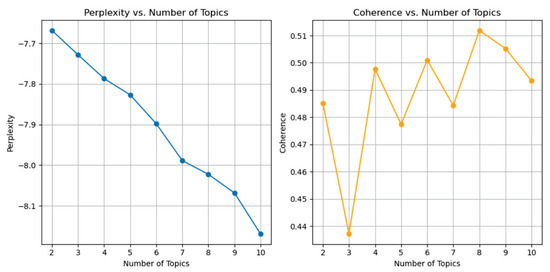
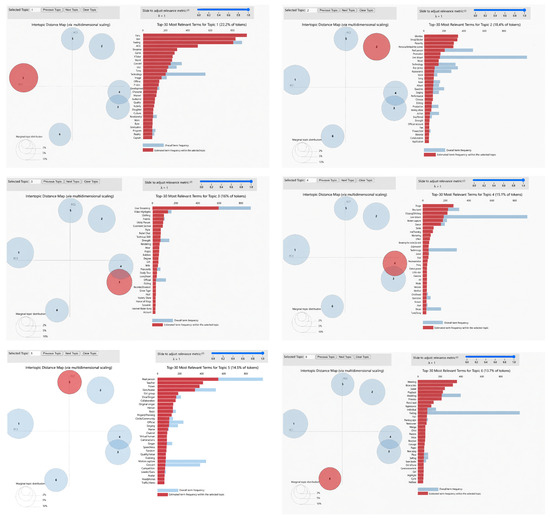
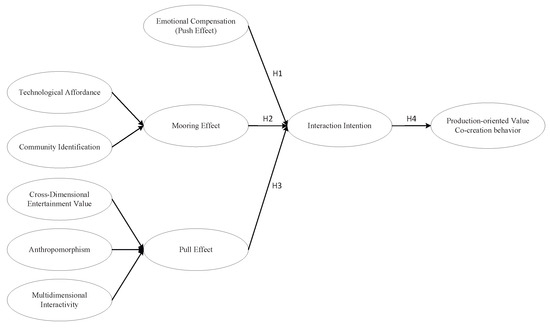
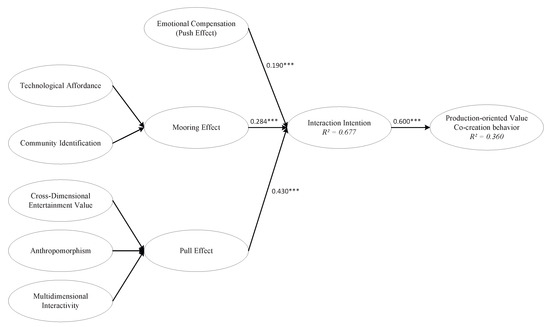
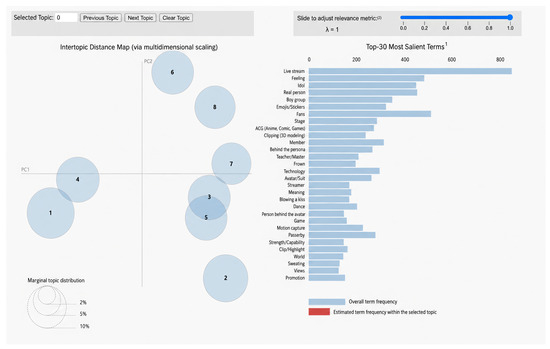
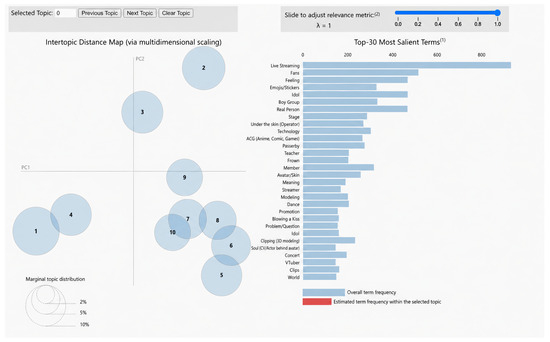
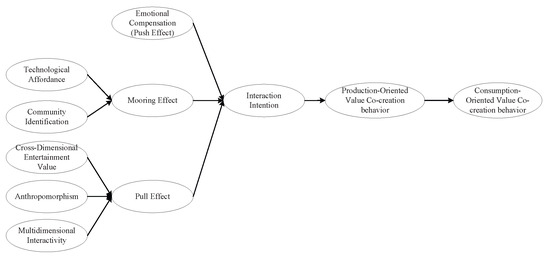
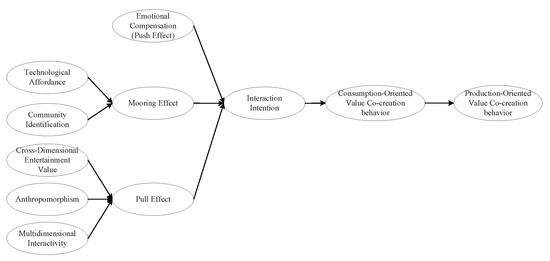
The open architecture of virtual idols allows users to deeply engage in the design and creation of the idols’ works and even their character profiles, achieving a production-oriented value co-creation that goes beyond mere consumption. However, existing literature has not paid sufficient attention to this context-specific, deep-level value co-creation behavior. Based on the Push–Pull–Mooring theory, this study explores the leading factors that drive production-oriented value co-creation in the context of virtual idols. In Study 1, we conducted exploratory text mining on 14,991 user comments regarding four well-known virtual idols using the latent Dirichlet allocation method, identifying six key themes. By combining machine-based text mining results with manual coding, we constructed a preliminary theoretical framework for user value co-creation. In Study 2, drawing on the Push–Pull–Mooring theory, we analyze the mechanisms linking various themes and construct a structural equation model to test the driving pathways of production-oriented value co-creation behavior. The results indicate that emotional compensation acts as a push factor; cross-dimensional entertainment value, anthropomorphism, and multidimensional interactivity act as pull factors; while technological affordance and community identification act as mooring factors. Additionally, the competitive model indicates that the trends observed in the configuration of prerequisites for production-oriented and consumption-oriented value co-creation are consistent with the progressive interpretation, with the former being associated with a stronger set of motivations. The findings of this study regarding the mechanisms that facilitate production value co-creation provide actionable recommendations for virtual idol marketing.
Full article
(This article belongs to the Special Issue Interactive Marketing in Digital Commerce: Consumer Behavior, Engagement and Decision-Making)
►▼
Show Figures

Figure 1
Open AccessArticle
How Does Visual Modification of Destination Photos on Social Media Influence Revisit Intention? A Double-Edged Mechanism of Trust Gain and Value Co-Destruction
by
Hongcai Song, Gao Xiang, Yuxuan Tang and Jie Wei
J. Theor. Appl. Electron. Commer. Res. 2026, 21(9), 302; https://doi.org/10.3390/jtaer21090302 (registering DOI) - 3 Sep 2026
Abstract
Digital visual marketing increasingly relies on aesthetically modified social media content to attract consumers, yet such practices may also create authenticity risks when online representations are compared with actual experiences. This study examines how four visual modification cues in destination photos—light–shadow atmosphere, tone
[...] Read more.
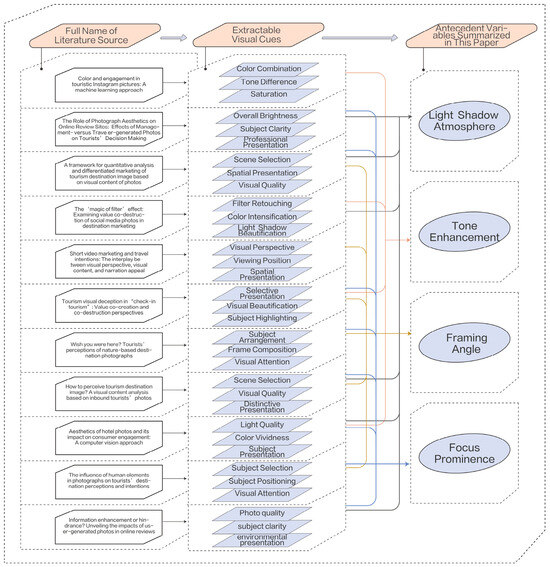
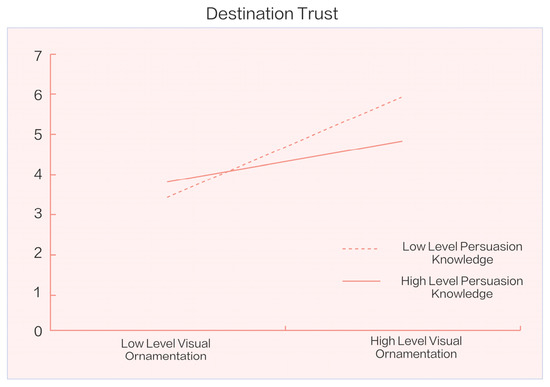
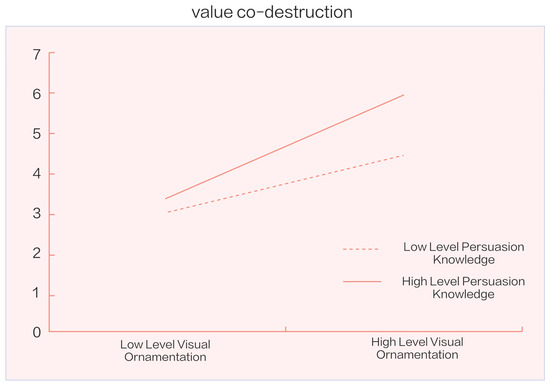
Digital visual marketing increasingly relies on aesthetically modified social media content to attract consumers, yet such practices may also create authenticity risks when online representations are compared with actual experiences. This study examines how four visual modification cues in destination photos—light–shadow atmosphere, tone enhancement, framing angle, and focus prominence—shape post-visit destination trust, value co-destruction, and revisit intention, and whether persuasion knowledge moderates these effects. Survey data from 572 tourists who viewed Chongqing-related social media photos before visiting the city were analyzed using structural equation modeling, bootstrap mediation analysis, and hierarchical regression. Tone enhancement, framing angle, and focus prominence increased destination trust, whereas light–shadow atmosphere did not. Light–shadow atmosphere, tone enhancement, and framing angle increased value co-destruction, whereas focus prominence did not. Destination trust positively affected revisit intention, while value co-destruction had a negative effect. The two mediators operated as largely independent evaluative paths, with the trust pathway exerting the stronger effect. Persuasion knowledge weakened trust gains and amplified value co-destruction. These findings show that digital visual marketing produces asymmetric post-experience outcomes and highlight the need to balance aesthetic optimization with authentic representation when designing social media marketing content.
Full article
(This article belongs to the Special Issue Innovation in Digital Marketing to Enhance Consumer Experience)
►▼
Show Figures

Figure 1
Open AccessArticle
From AI-CRM to Firm Resilience: The Role of AI-Driven Decision Making (AIDDM) and Digital Platform Capabilities
by
Thamir Hamad Alaskar
J. Theor. Appl. Electron. Commer. Res. 2026, 21(9), 301; https://doi.org/10.3390/jtaer21090301 (registering DOI) - 3 Sep 2026
Abstract
The AI-customer relationship management (AI-CRM) presents opportunities to reshape how firms engage, enhance their analysis of large volumes of customer data, and develop processes that improve their resilience. To bridge this gap, the present study investigates the relationship between AI-CRM and Artificial Intelligence-Driven
[...] Read more.
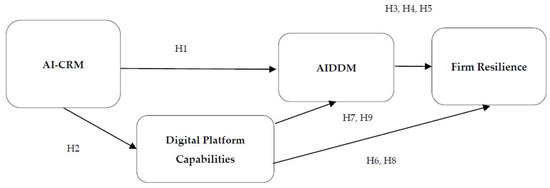
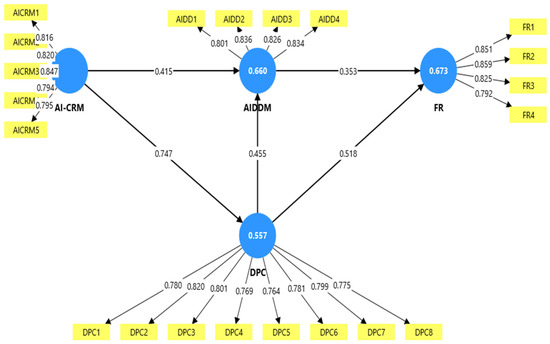
The AI-customer relationship management (AI-CRM) presents opportunities to reshape how firms engage, enhance their analysis of large volumes of customer data, and develop processes that improve their resilience. To bridge this gap, the present study investigates the relationship between AI-CRM and Artificial Intelligence-Driven Decision Making (AIDDM), with digital platform capabilities as a mediating factor. Furthermore, it examines whether AIDDM contributes to transformative resilience within firms by mediating the association between AI-CRM and firm resilience. A conceptual model was developed and empirically tested using survey data collected from 262 experts working in Saudi Arabian enterprises. The Partial Least Squares Structural Equation Modeling (PLS-SEM) was used to assess the hypothesized relationships and mediation effects. The results confirmed the influence of AI-CRM on AIDDM and digital platform capabilities, which significantly enhance firm resilience. Furthermore, the analysis demonstrates that AIDDM and digital platform capabilities mediate the effects of AI-CRM on resilience. This underscores the potential of AI-CRM adoption to support adaptive capabilities within organizational systems. This research advances the theories of RBV and DCV by highlighting how AI-CRM advances capabilities that support resilience in dynamic environments. It positions AI-CRM and AIDDM as capabilities associated with organizational adaptation and innovation in dynamic environments. Additionally, it offers managers theoretically grounded guidance on aligning their AI-CRM and AIDDM to enhance overall firm resilience and support socio-economic objectives, thereby enabling firms to make meaningful contributions to digital innovation.
Full article
(This article belongs to the Special Issue Digital Transformation and Innovation in Digital Business: Navigating Sustainable Transitions, Emerging Technologies, and Public Value)
►▼
Show Figures

Figure 1
Open AccessArticle
How Virtual Influencers Shape Consumers’ Green Purchase Intention Among Chinese Consumers: Evidence from PLS-SEM and fsQCA
by
Xin Ma, Min Xu, LuYun Huang and Khalil Md Nor
J. Theor. Appl. Electron. Commer. Res. 2026, 21(9), 300; https://doi.org/10.3390/jtaer21090300 - 2 Sep 2026
Abstract
►▼
Show Figures
Virtual influencers have emerged as an important marketing tool in social commerce and digital consumer engagement. However, limited research has examined how virtual influencer characteristics shape consumers’ green purchase intention through underlying emotional and relational mechanisms. Drawing upon Parasocial Interaction Theory and Affect-as-Information
[...] Read more.
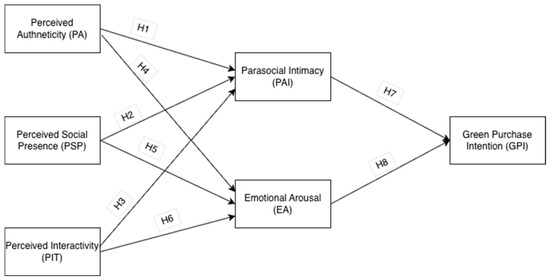
Virtual influencers have emerged as an important marketing tool in social commerce and digital consumer engagement. However, limited research has examined how virtual influencer characteristics shape consumers’ green purchase intention through underlying emotional and relational mechanisms. Drawing upon Parasocial Interaction Theory and Affect-as-Information Theory, this study investigates the effects of perceived authenticity, social presence, and interactivity on consumers’ green purchase intention, with parasocial intimacy and emotional arousal serving as mediating variables. A mixed-method approach integrating Partial Least Squares Structural Equation Modeling (PLS-SEM) and fuzzy-set Qualitative Comparative Analysis (fsQCA) was employed. Data were collected from 346 consumers who had prior experience interacting with virtual influencers and purchasing green products. The PLS-SEM results indicate that perceived authenticity, social presence, and interactivity significantly enhance parasocial intimacy and emotional arousal, which subsequently increase green purchase intention. Furthermore, the fsQCA findings reveal multiple configurational pathways leading to high green purchase intention, suggesting that different combinations of virtual influencer characteristics can generate similar consumer outcomes. This study contributes to the electronic commerce and influencer marketing literature by extending the understanding of virtual influencer effectiveness in sustainable consumption contexts. Methodologically, the integration of symmetrical and asymmetrical analytical approaches provides a more comprehensive explanation of consumer decision-making in virtual influencer marketing environments. The findings also offer practical implications for marketers seeking to leverage virtual influencers to promote green consumption in digital commerce settings.
Full article

Figure 1
Open AccessArticle
How ESG Information Shapes Consumer Awareness and Behavioral Intentions: Evidence from Sustainable Digital Commerce
by
Hyeon Jo and Hyunchul Ahn
J. Theor. Appl. Electron. Commer. Res. 2026, 21(9), 299; https://doi.org/10.3390/jtaer21090299 - 2 Sep 2026
Abstract
The growing importance of sustainable digital commerce has increased the need to understand how Environmental, Social, and Governance (ESG)-related information communicated through digitally mediated environments influences consumer decision-making and value creation. This study investigates the effects of corporate ESG information and public ESG
[...] Read more.
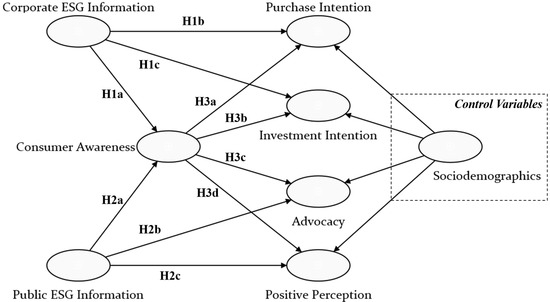
The growing importance of sustainable digital commerce has increased the need to understand how Environmental, Social, and Governance (ESG)-related information communicated through digitally mediated environments influences consumer decision-making and value creation. This study investigates the effects of corporate ESG information and public ESG information on consumer awareness and subsequent behavioral responses, including purchase intention, investment intention, advocacy, and positive perceptions toward ESG-oriented companies. Drawing on Stakeholder Theory and the theory of planned behavior, the study examines how different sources of ESG information shape consumer evaluations and intentions in an increasingly information-driven marketplace. Using partial least squares structural equation modeling (PLS-SEM), data from 1836 respondents obtained from the Korea Consumer Agency’s national consumer survey were analyzed. The results indicate that corporate ESG information significantly enhanced consumer awareness, whereas public ESG information did not have a significant effect on consumer awareness. Public ESG information significantly strengthened positive perceptions but did not significantly influence advocacy. Consumer awareness emerged as the strongest predictor of purchase intention, investment intention, advocacy, and positive perception. It significantly mediated the relationships between corporate ESG information and consumer responses, whereas no significant indirect effects were observed for public ESG information. However, corporate ESG information did not directly increase purchase intention or investment intention, suggesting that awareness represents the primary mechanism through which ESG communication influences consumer responses. These findings contribute to the literature on sustainable digital commerce by demonstrating that ESG information functions as a strategic market signal that promotes consumer engagement and sustainable value creation through awareness. The study further provides practical implications for firms and policymakers seeking to develop credible ESG communication strategies that support the green transition and foster sustainable consumer decision-making.
Full article
(This article belongs to the Special Issue Sustainable Digital Commerce, Consumer Behavior, and Value Creation for the Green Transition)
►▼
Show Figures

Figure 1
Open AccessArticle
Algorithmic Personalization Does Not Earn the Renewal: Value, Satisfaction, and Continuance Intention in Albanian Subscription Video-on-Demand
by
Irisi Kasapi, Eriona Shtembari and Enida Bogdani
J. Theor. Appl. Electron. Commer. Res. 2026, 21(9), 298; https://doi.org/10.3390/jtaer21090298 - 2 Sep 2026
Abstract
Algorithmic personalization is the flagship mechanism of interactive marketing: platforms learn from user behavior and respond with individually curated value propositions, and industry practice treats the quality of that loop as a lever for customer retention. Whether personalization actually converts into consumer commitment—operationalized
[...] Read more.
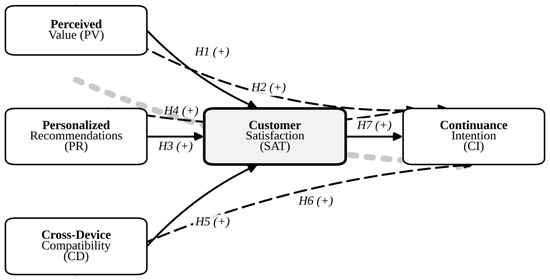
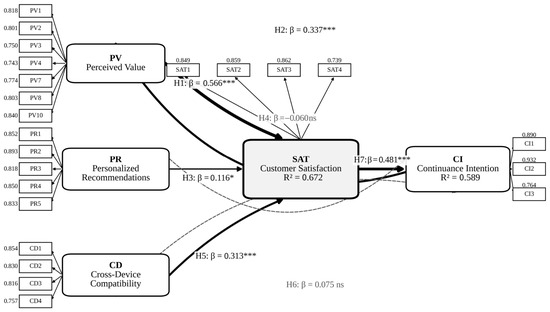
Algorithmic personalization is the flagship mechanism of interactive marketing: platforms learn from user behavior and respond with individually curated value propositions, and industry practice treats the quality of that loop as a lever for customer retention. Whether personalization actually converts into consumer commitment—operationalized here as continuance intention—has been tested almost exclusively in affluent, algorithm-saturated markets. This study tests the conversion where the assumption should be most fragile: subscription video-on-demand in Albania, a price-sensitive transitional European market. Drawing on an extended value-based expectation-confirmation model within a stimulus–organism–response structure, algorithmic personalization, perceived value, and cross-device compatibility are modeled as antecedents of customer satisfaction and continuance intention—the attitudinal antecedent of subscription renewal—among 284 Albanian subscribers, using partial least squares structural equation modeling with 5000 bias-corrected bootstrap resamples. Personalization did not predict continuance intention directly (β = −0.060, ns), and its total effect was effectively zero (−0.004): the significant but weak indirect pathway through satisfaction was offset by the small negative direct path. Perceived value dominated—associated with continuance intention directly (β = 0.337) and through satisfaction (total effect = 0.609)—and emerged in an importance–performance map analysis as the highest-importance, lowest-performing construct. Robustness analyses show the null is not a measurement artifact and sharpens among personal payers; within the sample, it decomposes into a modestly positive personalization effect among lower-income subscribers and a negative effect among higher-income respondents (difference p = 0.003), contradicting a simple income-constraint account and leaving the moderating mechanism open. The findings provide evidence for the market contingency of personalization’s retention promise: in this market, the algorithm does not earn the renewal; the value proposition does.
Full article
(This article belongs to the Special Issue Interactive Marketing in Digital Commerce: Consumer Behavior, Engagement and Decision-Making)
►▼
Show Figures

Figure 1
Open AccessArticle
The Persuasive Effects of AI and Human Streamers in Live Commerce for Green Products: Dual Pathways of Perceived Authenticity and Personal Selling Motive Inference, and the Moderating Role of Product Positioning
by
Yang Zhao and Byoungsoo Kim
J. Theor. Appl. Electron. Commer. Res. 2026, 21(9), 297; https://doi.org/10.3390/jtaer21090297 - 2 Sep 2026
Abstract
Although AI streamers are increasingly used in live commerce, it remains unclear when they are more persuasive than human streamers for green products and through which psychological mechanisms their influence operates. Using a fictitious plant-based hand wash, we conducted a 2 × 2
[...] Read more.
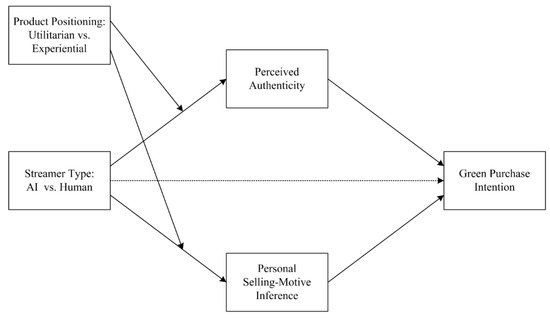
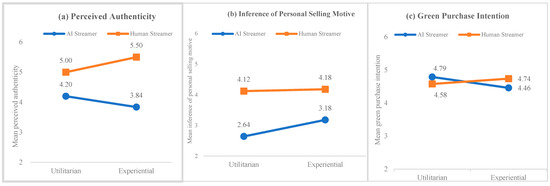
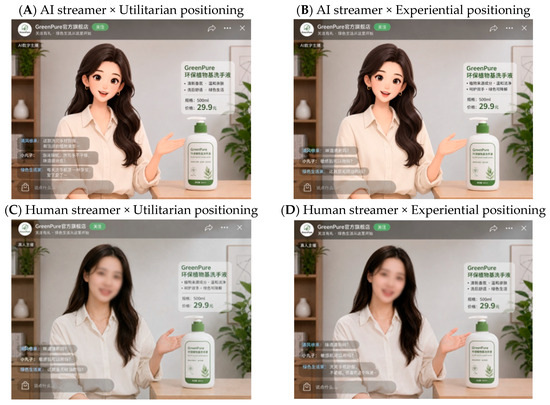
Although AI streamers are increasingly used in live commerce, it remains unclear when they are more persuasive than human streamers for green products and through which psychological mechanisms their influence operates. Using a fictitious plant-based hand wash, we conducted a 2 × 2 between-subjects experiment with 408 Chinese consumers; confirmatory factor analysis was performed using IBM SPSS Amos 26.0, whereas two-way ANOVA and moderated parallel mediation analysis were conducted using IBM SPSS Statistics 26.0. Human streamers increased green purchase intention through greater perceived authenticity, whereas AI streamers did so through weaker inferences of personal selling motive. The authenticity pathway was stronger under experiential positioning, whereas the selling-motive pathway was stronger under utilitarian positioning; these opposing indirect effects partially offset one another, resulting in a nonsignificant total effect of streamer type. By identifying these competitive dual pathways and their positioning-dependent boundary condition, this study extends research on AI-mediated persuasion and provides e-commerce platforms and green-product brands with guidance for aligning streamer type with product-positioning strategy.
Full article
(This article belongs to the Topic Livestreaming and Influencer Marketing)
►▼
Show Figures

Figure 1
Open AccessArticle
Blockchain Technology Adoption and Firm Performance in Chinese Cross-Border Digital Trade: Ecosystem Pressure and Governance Risk
by
Qian Yang and Marisa Laokulrach
J. Theor. Appl. Electron. Commer. Res. 2026, 21(9), 296; https://doi.org/10.3390/jtaer21090296 - 1 Sep 2026
Abstract
International trade has become increasingly digital, yet cross-border transactions remain document-heavy and fragmented across organizations. Blockchain offers a possible response, but firm-level implementation in Chinese cross-border digital trade remains uneven. Prior research often treats blockchain adoption as a binary decision, leaving limited understanding
[...] Read more.
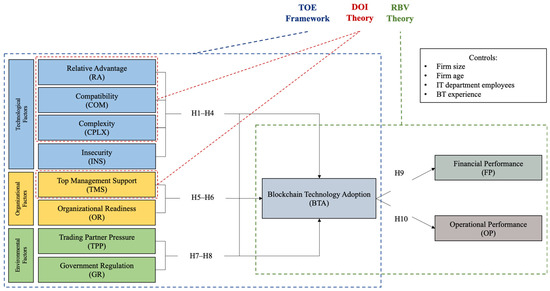
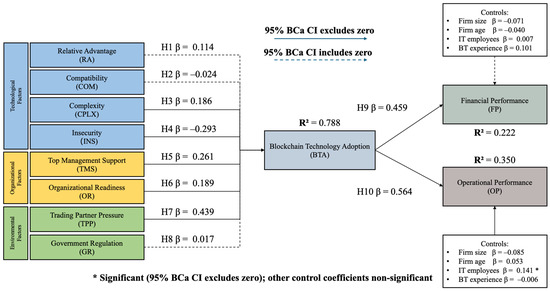
International trade has become increasingly digital, yet cross-border transactions remain document-heavy and fragmented across organizations. Blockchain offers a possible response, but firm-level implementation in Chinese cross-border digital trade remains uneven. Prior research often treats blockchain adoption as a binary decision, leaving limited understanding of how implementation varies among adopters and relates to performance. This study examines the extent of blockchain technology adoption (BTA) among adopting firms, jointly analyzing its antecedents and performance outcomes. Adoption extent refers to the degree to which a firm commits resources, integrates blockchain into operations, and applies it across key cross-border trade functions. Drawing on the Technology–Organization–Environment framework, Diffusion of Innovation theory and the Resource-Based View, the study links eight antecedents to adoption extent and adoption extent to firm performance. Survey data from 438 blockchain-adopting import and export firms across nine Chinese provincial-level regions were analyzed using partial least squares structural equation modeling. Trading partner pressure shows the strongest positive association with BTA, whereas insecurity shows the strongest negative association. Indirect associations run through BTA between five antecedents and both performance dimensions, with a stronger association for operational than financial performance. The study shows how ecosystem pressure and governance risk relate to blockchain implementation and performance among adopters.
Full article
(This article belongs to the Section Digital Business, Governance, and Sustainability)
►▼
Show Figures

Figure 1
Open AccessArticle
Authenticity, Trust, and AI Skepticism in Green Advertising: How AI and Human Endorsers Influence Purchase Intention in E-Commerce
by
Song Yi Suh
J. Theor. Appl. Electron. Commer. Res. 2026, 21(9), 295; https://doi.org/10.3390/jtaer21090295 - 1 Sep 2026
Abstract
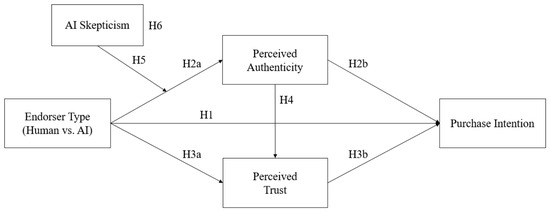
Despite the growing use of artificial intelligence (AI) endorsers in advertising, evidence of their effectiveness remains mixed. This study examines how AI and human endorsers influence purchase intention in green e-commerce advertising through the parallel and sequential roles of perceived authenticity and perceived
[...] Read more.
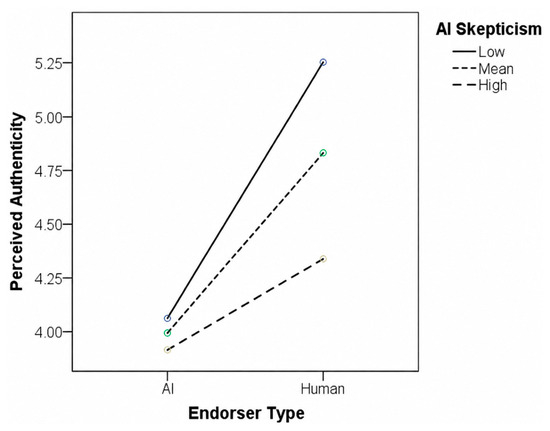
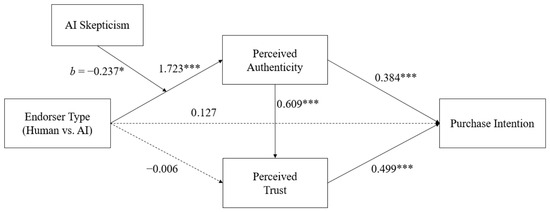
Despite the growing use of artificial intelligence (AI) endorsers in advertising, evidence of their effectiveness remains mixed. This study examines how AI and human endorsers influence purchase intention in green e-commerce advertising through the parallel and sequential roles of perceived authenticity and perceived trust. It also investigates whether AI skepticism moderates the relationship between endorser type and perceived authenticity. In a between-subjects experiment, 521 South Korean adults were randomly assigned to view a green advertisement featuring either a human or an AI endorser. The results indicate that endorser type did not directly affect purchase intention. Instead, its influence began with authenticity, which mediated the effect independently and also initiated a sequential pathway through trust. Trust therefore functioned only downstream of authenticity and did not independently mediate the relationship. AI skepticism moderated the effect of endorser type on authenticity, with the human endorser’s authenticity advantage narrowing as skepticism increased. The sequential indirect effect also weakened at higher levels of AI skepticism. These findings position endorser type as a source cue whose influence begins with authenticity judgments and may subsequently extend through trust. The study advances research on AI endorsers and green advertising by identifying the mechanisms and boundary conditions that underlie the effects of endorser type. For practitioners, the findings highlight the importance of substantiating environmental claims and testing AI and human endorsement strategies across relevant audience segments.
Full article
(This article belongs to the Special Issue Digital Marketing in Practice: Platforms, AI, Trust and Market Solutions)
►▼
Show Figures

Figure 1
Open AccessArticle
The Role of Streamer Type in Consumer Trust Formation and Repurchase Intention in Live-Streaming Shopping
by
Junxiu Dong, Jinliang Wang and KyungMin Kim
J. Theor. Appl. Electron. Commer. Res. 2026, 21(9), 294; https://doi.org/10.3390/jtaer21090294 - 1 Sep 2026
Abstract
With the gradual maturation of live-streaming e-commerce, some merchants invest substantial resources in hiring celebrity streamers, attempting to leverage their influence and credibility to enhance consumer trust and achieve long-term growth. However, against the backdrop of high return rates and low repurchase rates,
[...] Read more.
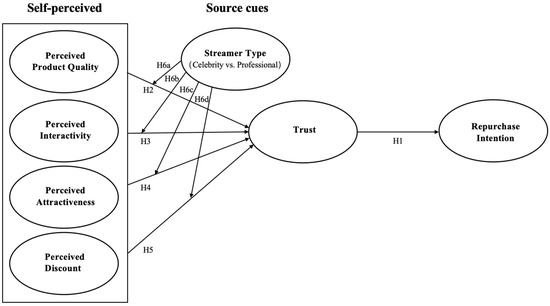
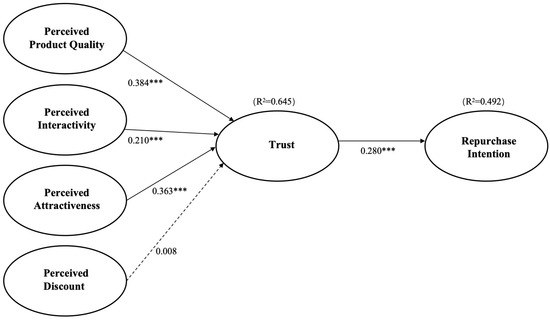
With the gradual maturation of live-streaming e-commerce, some merchants invest substantial resources in hiring celebrity streamers, attempting to leverage their influence and credibility to enhance consumer trust and achieve long-term growth. However, against the backdrop of high return rates and low repurchase rates, whether this celebrity-driven operational model can truly achieve sustainable development remains questionable, and relevant research on this issue remains limited. Therefore, guided by Source Credibility Theory and informed by the post-consumption perspective of Expectation–Confirmation Theory, this study employs partial least squares structural equation modeling (PLS-SEM) to examine consumer trust formation and repurchase intention. The results indicate that perceived product quality, perceived interactivity, and perceived attractiveness significantly enhance consumer trust, which in turn positively influences repurchase intention. However, perceived discount has no significant effect on trust, suggesting that relying solely on low-price strategies may be insufficient to support trust-based repurchase intention. Furthermore, the MGA results show that streamer type does not significantly moderate the relationship between perceived characteristics and consumer trust. These findings suggest that celebrity identity alone may not be sufficient to reshape the trust-formation mechanism in live-streaming e-commerce. This study provides theoretical and practical insights for understanding consumer trust formation and promoting the sustainable development of live-streaming e-commerce.
Full article
(This article belongs to the Topic Livestreaming and Influencer Marketing)
►▼
Show Figures

Figure 1
Open AccessArticle
Shared Responsibility for Sustainable Consumption in E-Commerce? Spirituality and Digital Sustainability Efficacy in the Value–Belief–Norm Chain
by
Georgios Tsimonis
J. Theor. Appl. Electron. Commer. Res. 2026, 21(9), 293; https://doi.org/10.3390/jtaer21090293 - 1 Sep 2026
Abstract
Whether people buy sustainably may depend not only on their values, but on what they believe the retail platform makes possible. This study develops that argument by extending Value–Belief–Norm theory among UK online shoppers. It introduces beliefs about digital sustainability efficacy, a channel-level
[...] Read more.
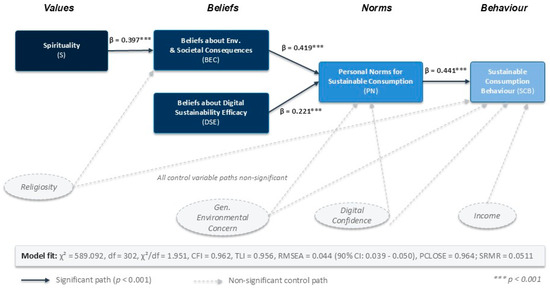
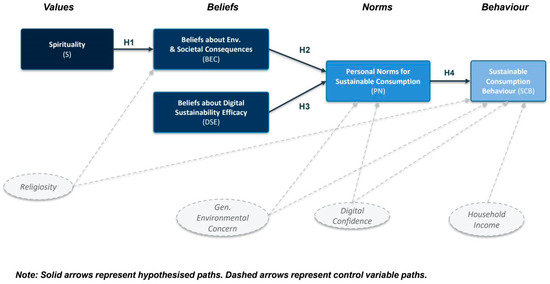
Whether people buy sustainably may depend not only on their values, but on what they believe the retail platform makes possible. This study develops that argument by extending Value–Belief–Norm theory among UK online shoppers. It introduces beliefs about digital sustainability efficacy, a channel-level belief about whether online platforms support sustainable choices, and places spirituality at the value stage of the chain. A quota sample of 487 UK online shoppers, matched to ONS benchmarks for age, gender, and region, was surveyed through Prolific, and the model was estimated using structural equation modeling with bootstrap mediation analysis. Channel-level efficacy beliefs predicted moral obligation and reached behavior only through personal norms, independently of beliefs about environmental consequences. Spirituality predicted the chain through the belief stage, while religiosity, a single-item control, showed no effect. Personal norms were the strongest proximal predictor of behavior. What online shoppers believe about their platforms thus feeds the moral basis of sustainable consumption in general, which speaks to the argument that responsibility for sustainable consumption is shared between consumers and the channels through which they shop. Spirituality, an experiential rather than doctrinal orientation, emerges as a value antecedent for the chain in a secularized market.
Full article
(This article belongs to the Special Issue Sustainable Digital Commerce, Consumer Behavior, and Value Creation for the Green Transition)
►▼
Show Figures

Figure 1
Open AccessArticle
The Intertemporal Spillover of House Rules: How Governance Disclosures Shape Booking Decisions in Peer-to-Peer Accommodation
by
Jialei Wang, Dogan Gursoy, Mengying Zhang, Xiaorong Fu, Lifei Bai and Xi Huang
J. Theor. Appl. Electron. Commer. Res. 2026, 21(9), 292; https://doi.org/10.3390/jtaer21090292 - 1 Sep 2026
Abstract
House rules are a central governance mechanism in peer-to-peer accommodation, yet prior research reports mixed effects on guests’ booking behaviors. We propose that these inconsistencies arise from overlooking the intertemporal spillover of rules, the extent to which the consequences of violation extend beyond
[...] Read more.
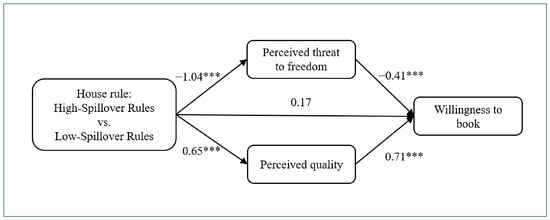
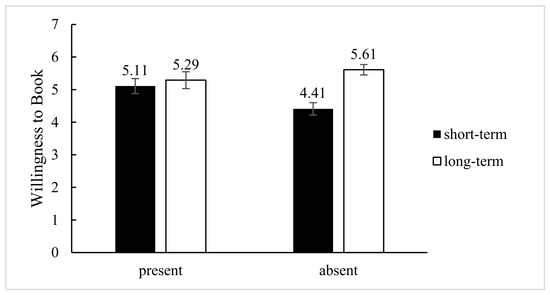
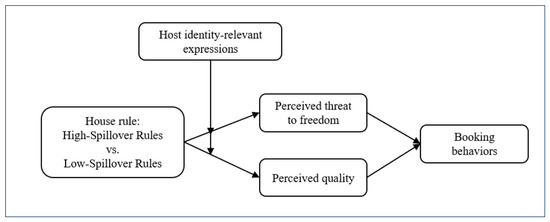
House rules are a central governance mechanism in peer-to-peer accommodation, yet prior research reports mixed effects on guests’ booking behaviors. We propose that these inconsistencies arise from overlooking the intertemporal spillover of rules, the extent to which the consequences of violation extend beyond the focal stay. Drawing on construal level theory, we distinguish between High-Spillover Rules, which protect long-term property quality and future guest experience, and Low-Spillover Rules, which regulate encounter-bounded behaviors and operational procedures. Using natural language processing and hierarchical regression, we analyzed 883 P2P accommodation listings from a Chinese context. The results show that High-Spillover Rules increase booking volume, whereas Low-Spillover Rules decrease it only when host identity-relevant expressions are absent. The second experiment, with 138 samples, provides causal evidence that these effects are mediated by perceived quality and perceived threats to freedom, respectively. A third experiment, with 183 samples, further demonstrates that host identity-relevant expressions attenuate both effects by weakening the quality-signaling advantage of High-Spillover Rules and reducing autonomy-related resistance to Low-Spillover Rules. This research advances understanding of governance disclosures in P2P markets and offers actionable guidance for rule design and platform communication strategies.
Full article
(This article belongs to the Topic Innovations in New Media: Shaping the Future of Interactive Marketing)
►▼
Show Figures

Figure 1
Open AccessArticle
When AI Says It Is Not Sure: AI Uncertainty Expression, Trust, and Purchase Hesitation in Online Health Product Recommendation
by
Dandan Liu and Xiongying Niu
J. Theor. Appl. Electron. Commer. Res. 2026, 21(9), 291; https://doi.org/10.3390/jtaer21090291 - 31 Aug 2026
Abstract
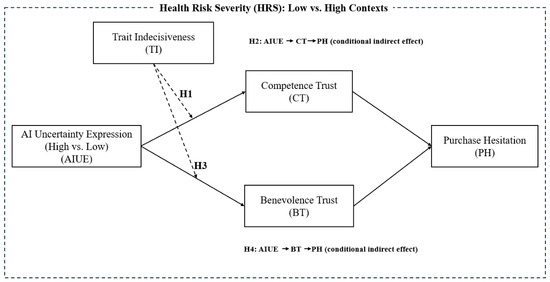
AI recommendation assistants increasingly provide quasi-advisory support in online health-product shopping, yet little is known about how their expressions of uncertainty shape consumer decisions. Drawing on the stimulus–organism–response framework, signaling theory, and computer-mediated communication/Computers Are Social Actors logic, this study conceptualizes AI uncertainty
[...] Read more.
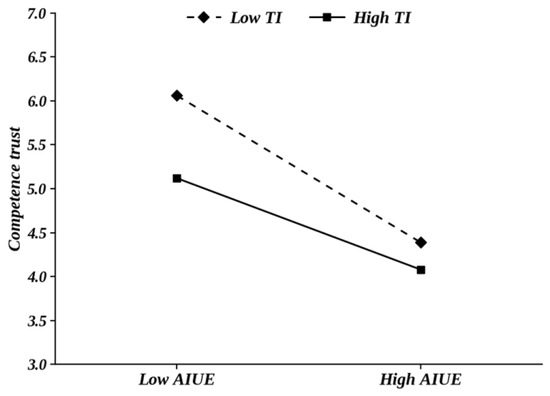
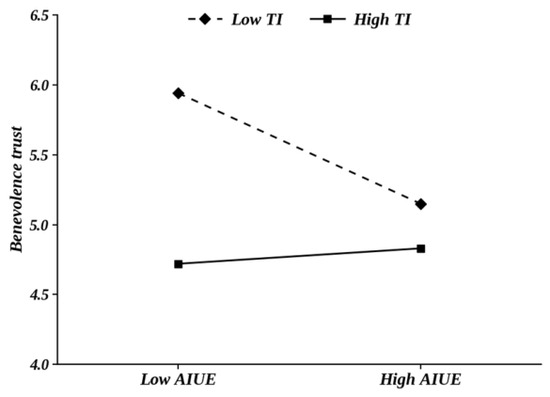
AI recommendation assistants increasingly provide quasi-advisory support in online health-product shopping, yet little is known about how their expressions of uncertainty shape consumer decisions. Drawing on the stimulus–organism–response framework, signaling theory, and computer-mediated communication/Computers Are Social Actors logic, this study conceptualizes AI uncertainty expression (AIUE) as a message-level cue of epistemic certainty. A 2 (AIUE: high vs. low) × 2 (health risk severity: high vs. low) between-subjects experiment with 599 online consumers showed that AIUE reduced competence trust and benevolence trust and increased purchase hesitation. Trait indecisiveness moderated both trust-formation paths: the negative effects of AIUE were stronger among consumers low in indecisiveness. Conditional indirect-effect analyses showed that competence trust transmitted the effect at both low and high indecisiveness, whereas benevolence trust did so only at low indecisiveness. The focal model was estimated in a design containing both mild and more serious HRS contexts. Because the manipulation also shifted perceived recommendation strength, helpfulness, and informativeness, the downstream effects should be interpreted as responses to naturally expressed uncertainty rather than to an isolated certainty cue. These findings extend research on AI-mediated communication by showing how uncertainty wording shapes distinct trust judgments and purchase hesitation and by identifying trait indecisiveness as a boundary condition.
Full article
(This article belongs to the Special Issue Emerging Technologies on Digital Platforms)
►▼
Show Figures

Figure 1
Open AccessArticle
Thinking or Feeling? How AI Recommender Types and Algorithmic Matching Frames Shape Consumers’ Online Green Purchasing Intentions
by
Sinan Li and Kai Chen
J. Theor. Appl. Electron. Commer. Res. 2026, 21(9), 290; https://doi.org/10.3390/jtaer21090290 - 31 Aug 2026
Abstract
►▼
Show Figures
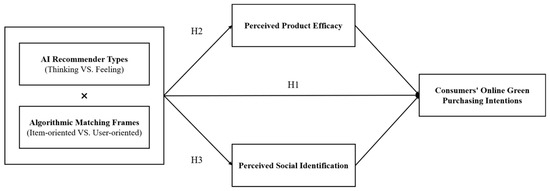
Promoting consumers’ green consumption is an important way to drive the low-carbon transition on the demand side and achieve sustainable development. Existing research mainly compares the persuasive effects of AI and human recommenders, with limited attention to how different types of AI recommenders
[...] Read more.
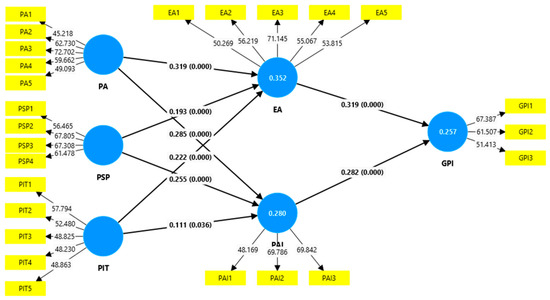
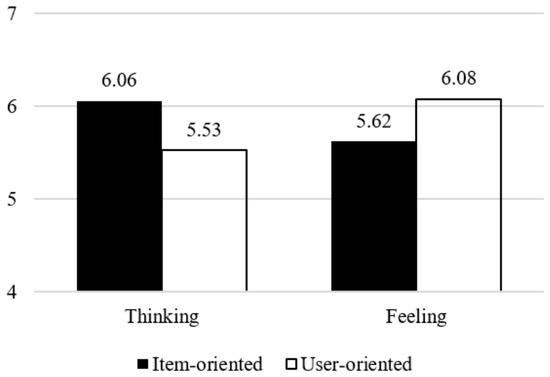
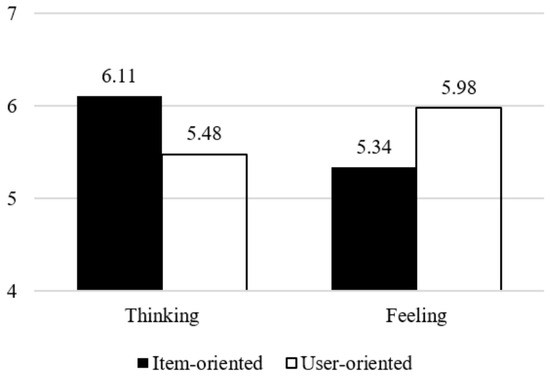
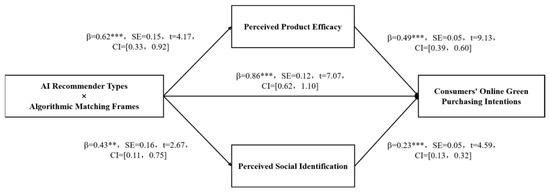
Promoting consumers’ green consumption is an important way to drive the low-carbon transition on the demand side and achieve sustainable development. Existing research mainly compares the persuasive effects of AI and human recommenders, with limited attention to how different types of AI recommenders and algorithmic matching frames can collaboratively promote online green purchasing. Through two studies, this work examines the impact of AI recommender types (thinking vs. feeling) and algorithmic matching frames (item-oriented vs. user-oriented) on online green purchasing intentions and their psychological mechanisms. The results indicate that there is a significant interaction effect; combining thinking AI with an item-oriented frame is more effective in enhancing purchasing intentions, while combining feeling AI with a user-oriented frame is even more effective. Furthermore, in the thinking AI context, the item-oriented frame enhances purchasing intentions by increasing perceived product efficacy; in the feeling AI context, the user-oriented frame functions by enhancing perceived social identification. This work reveals the interaction between AI recommender types and algorithmic matching frames, as well as their differentiated psychological mechanisms. It expands the application of Schema Congruity Theory in AI-driven green consumption contexts and provides practical insights for digital platforms to develop AI recommendation and information intervention strategies.
Full article

Figure 1
Journal Menu
► ▼ Journal MenuJournal Browser
► ▼ Journal Browser-
arrow_forward_ios
Forthcoming issue
arrow_forward_ios Current issue - Volumes not published by MDPI
Highly Accessed Articles
Latest Books
E-Mail Alert
News
Topics
Topic in
Administrative Sciences, Businesses, Informatics, JTAER
Innovations in New Media: Shaping the Future of Interactive Marketing
Topic Editors: Chenglu Wang, Hongfei Liu, Morgan Yang, Qing Ye, Yunjia ChiDeadline: 30 September 2026
Topic in
Businesses, Economies, Foods, Nutrients, Sustainability, JTAER, Platforms
Consumer Behaviour and Healthy Food Consumption, 2nd Edition
Topic Editors: Manuel Escobar-Farfán, Elizabeth Emperatriz García-Salirrosas, Ivan Veas-GonzalezDeadline: 15 November 2026
Topic in
Businesses, JTAER, Societies, Administrative Sciences
Livestreaming and Influencer Marketing
Topic Editors: Xianghui (Richard) Peng, Chao Wen, Jiaming FangDeadline: 31 December 2026
Topic in
AI, BDCC, FinTech, IJFS, JTAER, Risks
Artificial Intelligence Applications in Financial Technology, 2nd Edition
Topic Editors: Albert Y.S. Lam, Andy ChunDeadline: 28 February 2027
Special Issues
Special Issue in
JTAER
Artificial Intelligence-Generated Content (AIGC) in Electronic Commerce: Innovations, Applications and Implications
Guest Editors: Chih-Hung Wu, Yen-Chun Jim WuDeadline: 30 September 2026
Special Issue in
JTAER
Electronic Commerce and Information Management Towards the Digital Era
Guest Editors: Jolanta Kowal, Paweł WeichbrothDeadline: 30 September 2026
Special Issue in
JTAER
Human–Technology Synergies in AI-Driven E-Commerce Environments
Guest Editors: Chienliang Lin, Wuke Zhang, Sung-Wen Yu, Hanqing XuDeadline: 30 September 2026
Special Issue in
JTAER
Emerging Technologies and Innovations in Electronic Commerce
Guest Editors: Ruiliang Yan, Zhi PeiDeadline: 30 September 2026
Topical Collections
Topical Collection in
JTAER
Enhancing Consumer Experience Through Mobile Commerce: Challenges and Opportunities
Collection Editors: Dan-Cristian Dabija, Cristinel Vasiliu, Rebeka-Anna Pop
Topical Collection in
JTAER
Emerging Topics in Omni-Channel Operations
Collection Editors: Gang Li, T.C. Edwin Cheng, Tao Zhang
Topical Collection in
JTAER
Advances in Supply Chain Management in the Era of Electronic Commerce
Collection Editors: Hua Ke, Zhiguo Li, Zhang Zhao
Topical Collection in
JTAER
Exploring the Future of Creative Economy: Transforming Creative Industries through Innovation, Technology and Enhanced Consumer Engagement
Collection Editors: Chuanlan Liu, Sibei Xia