




Energy Technology for the 21st Century - Materials and Devices
A special issue of International Journal of Molecular Sciences (ISSN 1422-0067). This special issue belongs to the section "Materials Science".
Deadline for manuscript submissions: closed (31 August 2009) | Viewed by 71329
Special Issue Editor

Interests: inorganic materials synthesis in ionic liquids; functional ionic liquids-hybrid materials; ionogels; biomimetic materials; hybrid materials; calcium phosphate; silica; water treatment; energy materials
Special Issues, Collections and Topics in MDPI journals
Special Issue Information
Dear Colleagues,
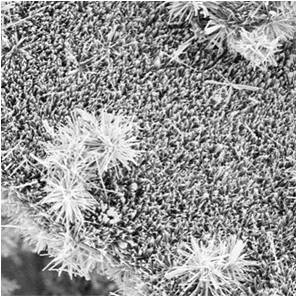 The generation, storage, and transport of energy are among the greatest challenges, if not the most formidable challenge at all, for years to come. Although there have been exciting new developments in these fields, many open questions remain. Many of these are closely connected to materials science, physics, and chemistry. As a result, International Journal of Molecular Sciences will publish a special issue on energy technology for the 21st century. The special issue will showcase the latest and most promising developments for the next centuries. Contributions (reviews and original papers) from all branches of energy technology are welcome and will be considered for publication.
Prof. Dr. Andreas Taubert
Guest Editor
Metal Organic Frameworks
- Georgiev, I.G.; MacGillivray, L.R. Metal-mediated reactivity in the organic solid state: From self-assembled complexes to metal-organic frameworks. Chem. Soc. Rev. 2007, 36, 1239-1248.
- Yaghi, O.M. Metal-organic Frameworks: A tale of two entanglements. Nature Mat. 2007, 6, 92-93.
- Mueller, U.; Schubert, M.; Teich, F.; Puetter, H.; Schierle-Arndt, K.; Pastre, J. Metal-organic frameworks-prospective industrial applications. J. Mat. Chem. 2006, 16, 626-636
Photovoltaics
- Barnham, K.W. J.; Mazzer, M.; Clive, B. Resolving the energy crisis: nuclear or photovoltaics? Nature Mat. 2006, 5, 161-164.
- Peter, Laurence M. Dye-sensitized nanocrystalline solar cells. Phys. Chem. Chem. Phy. 2007, 9, 2630-2642.
- Guenes, Serap; Neugebauer, Helmut; Sariciftci, Niyazi Serdar. Conjugated Polymer-Based Organic Solar Cells. Chem. Rev. 2007, 107, 1324-1338.
- Grimes, C.A. Synthesis and application of highly ordered arrays of TiO2 nanotubes. J. Mat. Chem. 2007, 17, 1451-1457.
- Peter, L.M. Characterization and Modeling of Dye-Sensitized Solar Cells. J. Phys. Chem. C 2007, 111, 6601-6612.
- Walzer, K.; Maennig, B.; Pfeiffer, M.; Leo, K. Highly Efficient Organic Devices Based on Electrically Doped Transport Layers. Chem. Rev. 2007, 107, 1233-1271.
Fuel Cells
- Bock, T.; Moehwald, H.; Muelhaupt, R. Arylphosphonic acid-functionalized polyelectrolytes as fuel cell membrane material. Macromol. Chem. Phys. 2007, 208, 1324-1340.
- Feldheim, D.L. The New Face of Catalysis. Science 2007, 316, 699-700.
- Gottesfeld, S. Polymer electrolyte and direct methanol fuel cells. Encyclopedia of Electrochemistry 2007, 5, 544-661.
- Satyapal, S.; Petrovic, J.; Thomas, G. Gassing up with hydrogen. Scientific American 2007, 296, 80-87.
- Steininger, H.; Schuster, M.; Kreuer, K. D.; Kaltbeitzel, A.; Bingoel, B.; Meyer, W. H.; Schauff, S.; Brunklaus, G.; Maier, J.; Spiess, H.W. Intermediate temperature proton conductors for PEM fuel cells based on phosphonic acid as protogenic group: A progress report. Physical Chemistry Chemical Physics 2007, I, 1764-1773.
Hydrogen Storage
- Felderhoff, M.;.Weidenthaler, C.; von Helmolt, R.; Eberle, U. Hydrogen storage: the remaining scientific and technological challenges. Physical Chemistry Chemical Physics 2007, 9, 2643-2653.
Biofuels
- Himmel, M.E.; Ding, S.Y.; Johnson, D.K.; Adney, W.S.; Nimlos, M.R.; Brady, J.W.; Foust, T.D. Biomass Recalcitrance: Engineering Plants and Enzymes for Biofuels Production. Science 2007, 315, 804-807.
- Stephanopoulos, G. Challenges in Engineering Microbes for Biofuels Production. Science 2007, 315, 801-804.
- Hahn-Haegerdal, B.; Galbe, M.; Gorwa-Grauslund, M. F.; Liden, G.; Zacchi,G. Bio-ethanol - the fuel of tomorrow from the residues of today. Trends Biotechn. 2006, 24, 549-556.
- Petrus, L.; Noordermeer, M.A. Biomass to biofuels, a chemical perspective. Green Chemistry 2006, 8, 861-867.
- Clark, J.H.; Budarin, V.; Deswarte, F.E.I.; Hardy, J. J.E.; Kerton, F.M.; Hunt, A.J.; Luque, R.; Macquarrie, D.J.; Milkowski, K.; Rodriguez, A.; Samuel, O.; Tavener, S.J.; White, R.J.; Wilson, A.J. Green chemistry and the biorefinery: a partnership for a sustainable future. Green Chemistry 2006, 8, 853-860.
- Sticklen, M. Plant genetic engineering to improve biomass characteristics for biofuels. Curr. Opin. Biotechn. 2006, 17, 315-319.
Keywords
- Biofuels
- Metal Organic Frameworks
- Photovoltaics
- Bio-inspired power generation
- Energetic Ionic Liquids
- Fuel Cells/Hydrogen Storage
- Energy Storage
- "Green" Energy Technologies
Benefits of Publishing in a Special Issue
- Ease of navigation: Grouping papers by topic helps scholars navigate broad scope journals more efficiently.
- Greater discoverability: Special Issues support the reach and impact of scientific research. Articles in Special Issues are more discoverable and cited more frequently.
- Expansion of research network: Special Issues facilitate connections among authors, fostering scientific collaborations.
- External promotion: Articles in Special Issues are often promoted through the journal's social media, increasing their visibility.
- e-Book format: Special Issues with more than 10 articles can be published as dedicated e-books, ensuring wide and rapid dissemination.
Further information on MDPI's Special Issue polices can be found here.