Journal Description
Computers
Computers
is an international, scientific, peer-reviewed, open access journal of computer science, including computer and network architecture and computer–human interaction as its main foci, published monthly online by MDPI.
- Open Access— free for readers, with article processing charges (APC) paid by authors or their institutions.
- High Visibility: indexed within Scopus, ESCI (Web of Science), dblp, Inspec, Ei Compendex, and other databases.
- Journal Rank: JCR - Q2 (Computer Science, Interdisciplinary Applications) / CiteScore - Q1 (Computer Science (miscellaneous))
- Rapid Publication: manuscripts are peer-reviewed and a first decision is provided to authors approximately 17.5 days after submission; acceptance to publication is undertaken in 3.9 days (median values for papers published in this journal in the second half of 2025).
- Recognition of Reviewers: reviewers who provide timely, thorough peer-review reports receive vouchers entitling them to a discount on the APC of their next publication in any MDPI journal, in appreciation of the work done.
- Journal Cluster of Artificial Intelligence: AI, AI in Medicine, Algorithms, BDCC, MAKE, MTI, Stats, Virtual Worlds and Computers.
Impact Factor:
4.2 (2024);
5-Year Impact Factor:
3.5 (2024)
Latest Articles
Detection and Mitigation of Mythos-Class Frontier Model Capabilities: A Layered Reference Architecture
Computers 2026, 15(6), 331; https://doi.org/10.3390/computers15060331 (registering DOI) - 22 May 2026
Abstract
Anthropic’s April 2026 Claude Mythos Preview release established a new operational threat category: frontier AI systems whose extended-context reasoning, recursive self-correction, native system-tool integration, and agentic scaffolding render dominant AI safety paradigms—RLHF, output filtering, contractual access vetting, human-in-the-loop supervision—insufficient as sole controls. This
[...] Read more.
Anthropic’s April 2026 Claude Mythos Preview release established a new operational threat category: frontier AI systems whose extended-context reasoning, recursive self-correction, native system-tool integration, and agentic scaffolding render dominant AI safety paradigms—RLHF, output filtering, contractual access vetting, human-in-the-loop supervision—insufficient as sole controls. This paper develops a defense-in-depth reference architecture against that category, structured around four named contributions: a five-indicator operational definition of the Mythos-class (capability conjoined with scaffold, access pattern, autonomy depth, and persistence); the Mythos-Class Posture Rubric (MCPR), a three-tier detection framework spanning evaluation, deployment, and runtime with explicit routing to mitigation layers; a four-layer mitigation stack comprising the Vetted-Access Operational Pattern (VAOP), Authority-Bound Output Release (ABOR) cryptographically grounded in FIPS 203/204/205 post-quantum primitives, and the Compute-Plane Isolation Profile (CPIP); and an integrated architecture that crosswalks to the NIST AI Risk Management Framework, NIST Cybersecurity Framework 2.0, and CISA Zero Trust Maturity Model 2.0. The architecture is applied to three deployment surfaces—post-quantum cryptography migration, federal AI supply-chain assurance, and critical-infrastructure operational technology defense—demonstrating that the four contributions generalize across heterogeneous operational contexts. The contribution is a reference design rather than a deployed system; limitations, falsifiability criteria, and a research agenda for empirical refinement are developed.
Full article
Open AccessReview
Serious Games in Science Education: A Systematic Bibliometric and Content Analysis
by
Deniz Poyraz Gök and Nuri Kara
Computers 2026, 15(6), 330; https://doi.org/10.3390/computers15060330 - 22 May 2026
Abstract
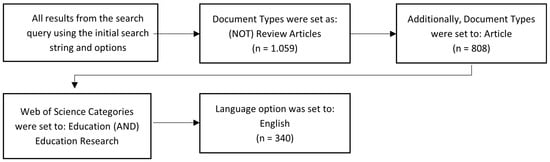
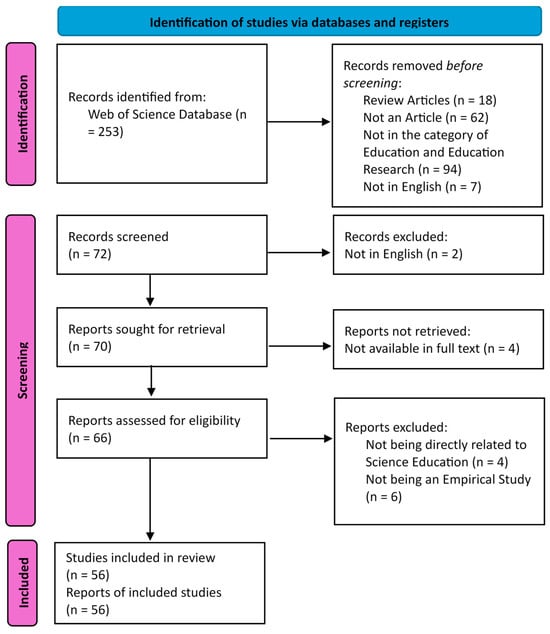
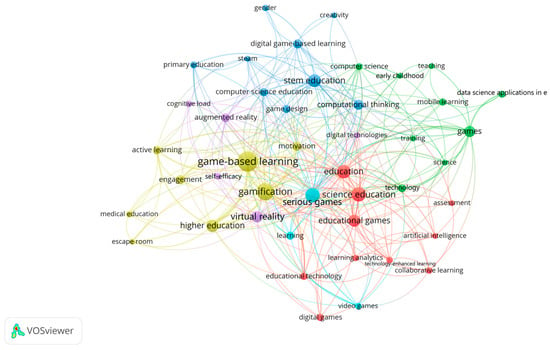
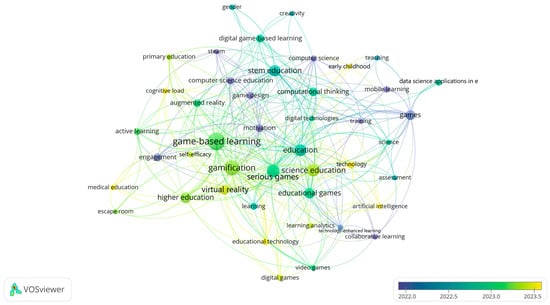
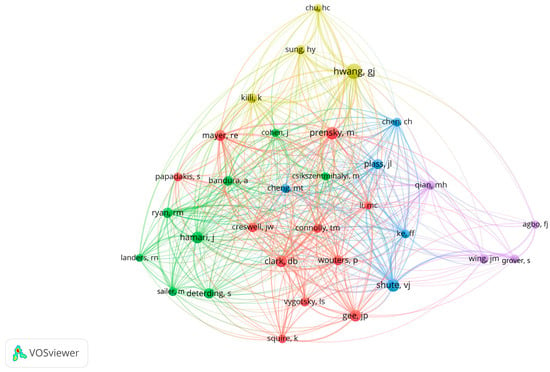
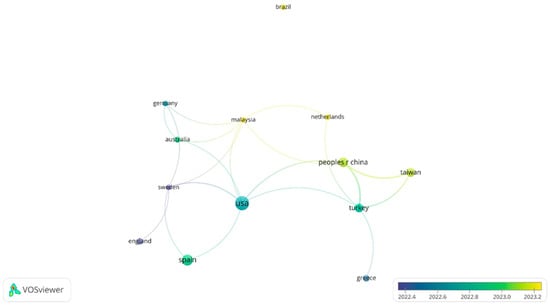
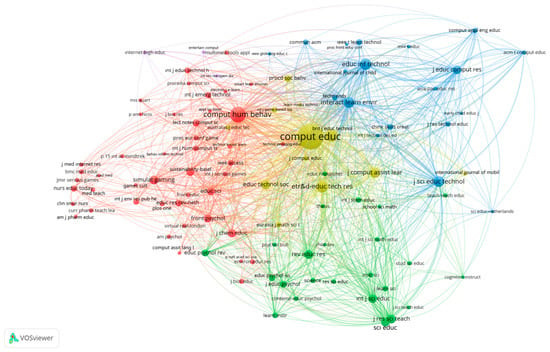
This study examines recent research trends in the use of serious games for science education through a bibliometric analysis of 340 articles and a qualitative content analysis of 56 studies published between 2020 and 2025 in the Web of Science Core Collection. By
[...] Read more.
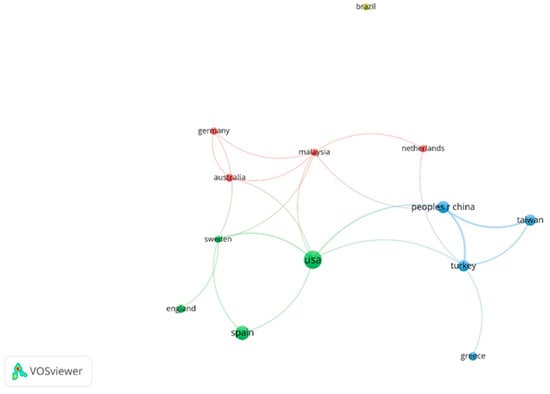
This study examines recent research trends in the use of serious games for science education through a bibliometric analysis of 340 articles and a qualitative content analysis of 56 studies published between 2020 and 2025 in the Web of Science Core Collection. By combining these approaches, the study provides a comprehensive view of both research patterns and how serious games are designed and used in science education. The findings indicate that the field is maturing, with research moving beyond general effectiveness toward understanding how serious games support learning in different contexts. Most studies report positive effects compared to traditional instructional methods. However, results vary across contexts and depend on factors such as design, implementation, and learner characteristics. Research is mainly focused on higher education and is largely driven by leading countries such as the USA and China, although participation from developing countries is increasing. The growing use of immersive technologies, such as augmented and virtual reality, offers new opportunities for interactive and multimodal learning but may also increase cognitive load in certain contexts. There is also growing interest in non-digital games, which have received limited attention despite their effectiveness. Overall, the findings show that more systematic research and clearer design frameworks are needed to better understand how serious games can be used in science education.
Full article
(This article belongs to the Special Issue STEAM Literacy and Computational Thinking in the Digital Era)
►▼
Show Figures

Figure 1
Open AccessArticle
LLM-SGCF: A Robust Malware Detection Framework with Spatially Guided Convolution
by
Lina Zhao, Hua Huang, Ning Li, Yunxiao Wang and Ming Li
Computers 2026, 15(6), 329; https://doi.org/10.3390/computers15060329 - 22 May 2026
Abstract
With the rapid evolution of cyberattack techniques, identifying dynamic behavioral intents from Application Programming Interface call sequences has become a fundamental modality for ensuring reliable malware detection and information security. However, existing detection methods face the dual challenges of semantic sparsity and inadequate
[...] Read more.
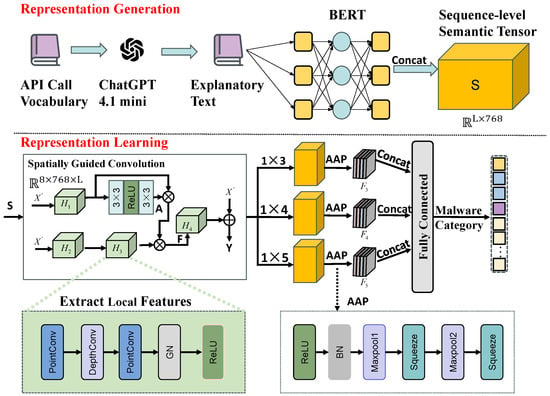
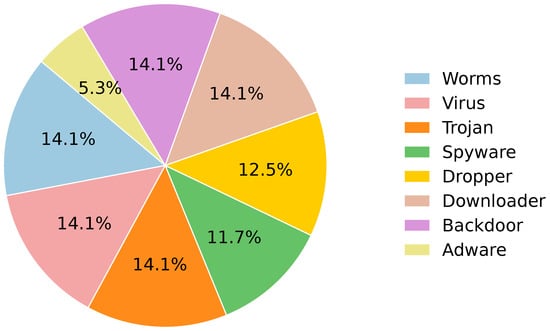
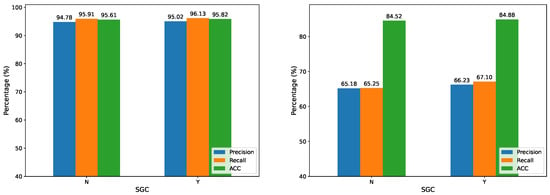
With the rapid evolution of cyberattack techniques, identifying dynamic behavioral intents from Application Programming Interface call sequences has become a fundamental modality for ensuring reliable malware detection and information security. However, existing detection methods face the dual challenges of semantic sparsity and inadequate spatial dependency modeling when processing these sequences, which fundamentally undermines their stability against complex structural variations and in-the-wild evasive patterns. To address these critical vulnerabilities, we propose LLM-SGCF, a highly effective malware detection framework that jointly models deep behavioral semantics and spatial structures. Specifically, our framework leverages generative Large Language Models, which are subsequently encoded by BERT, to transform sparse API calls into rich and contextualized descriptions. Concurrently, it employs a novel Spatially Guided Convolution (SGC) module to localize critical malicious segments and extract cross-position dependencies in a two-dimensional semantic space. Extensive experiments on the public Aliyun and Catak datasets demonstrate that LLM-SGCF exhibits exceptional resilience to real-world structural complexity and significantly outperforms state-of-the-art baselines, achieving a peak binary-classification accuracy of 95.82%. Further ablation analyses confirm that the synergistic fusion of semantic enhancement driven by Large Language Models and spatial structural modeling dramatically improves the resilience of the framework against complex attack chains, providing a highly reliable paradigm for next-generation malware recognition systems.
Full article
(This article belongs to the Special Issue AI-Powered IoT (AIoT) Systems: Advancements in Security, Sustainability, and Intelligence)
►▼
Show Figures

Figure 1
Open AccessArticle
A Lightweight Double-Ring Hybrid Sparse NTRU (DRH-SNTRU) Scheme for Secure and Real-Time Communication in the Internet of Vehicles (IoV)
by
Weiqi Wang, Gwo-Chin Ching and Soo Fun Tan
Computers 2026, 15(5), 328; https://doi.org/10.3390/computers15050328 - 21 May 2026
Abstract
The Internet of Vehicles (IoV) is rapidly emerging as a core component of intelligent transportation systems, enabling real-time communication among vehicles, infrastructure, and cloud platforms. However, the increasing interconnectivity of vehicular systems and the advancement of quantum computing introduce significant security challenges to
[...] Read more.
The Internet of Vehicles (IoV) is rapidly emerging as a core component of intelligent transportation systems, enabling real-time communication among vehicles, infrastructure, and cloud platforms. However, the increasing interconnectivity of vehicular systems and the advancement of quantum computing introduce significant security challenges to existing cryptographic mechanisms. Conventional schemes such as RSA and Elliptic Curve Cryptography (ECC) are vulnerable to quantum attacks and are computationally inefficient for resource-constrained vehicular environments. To address these limitations, this paper proposes a Double-Ring Hybrid Sparse NTRU (DRH-SNTRU) framework, a lightweight and quantum-resistant cryptographic scheme for secure IoV communication. The proposed framework introduces three key enhancements: (i) controlled-support sparse polynomial structures to reduce polynomial multiplication complexity while improving entropy distribution; (ii) a double-ring algebraic architecture that separates key operations from message processing to enhance structural security and minimize coefficient leakage; and (iii) hybrid ephemeral keys derived from contextual entropy to strengthen forward secrecy and adaptive security. An optional ciphertext evaluation mechanism is further incorporated to detect malformed and replayed ciphertexts prior to decryption. Security analysis demonstrates that the proposed framework achieves IND-CPA security under the hardness assumption of the NTRU lattice problem and can be extended to resist chosen-ciphertext attacks through the integrated validation mechanism. Experimental benchmarking across polynomial dimensions N = 512 to 8192 demonstrates that DRH-SNTRU achieves low setup overhead below 3 μs, efficient decryption latency of approximately 305.64 μs at N = 8192, and compact sparse private key representation of only 117 bytes at higher dimensions. Compared with Standard NTRUEncrypt, NTRU-HRSS, and Ring-LWE Encryption, the proposed framework demonstrates improved decryption efficiency, lightweight storage overhead, and enhanced ciphertext integrity protection while maintaining practical scalability for resource-constrained post-quantum IoV environments.
Full article
(This article belongs to the Special Issue Redesigning Computer Hardware Software Interfaces for IoT Security)
Open AccessArticle
Explainable and Computationally Efficient NLP Framework for Detecting Psycho-Emotional Risk Signals in Social Media
by
Orazmukhamed Bekmurat, Darkhan Akpanbetov, Ainur Tursynkhan, Laura Demeubayeva, Zhansaya Duisenbekkyzy, Kanibek Sansyzbay, Shingis Kadirkulov and Yelena Bakhtiyarova
Computers 2026, 15(5), 327; https://doi.org/10.3390/computers15050327 - 21 May 2026
Abstract
The timely detection of psycho-emotional risks has become increasingly important due to the rapid growth of social media platforms. This study examines user-generated text as a potential source of early indicators of psychological vulnerability. The proposed NLP-based framework incorporates behavioral features to improve
[...] Read more.
The timely detection of psycho-emotional risks has become increasingly important due to the rapid growth of social media platforms. This study examines user-generated text as a potential source of early indicators of psychological vulnerability. The proposed NLP-based framework incorporates behavioral features to improve the interpretation of users’ psycho-emotional states. In addition to text classification, the study considers structured behavioral indicators to support psycho-emotional risk analysis. Particular attention is given to interpretability. SHAP-based techniques are applied to reveal the contribution of individual features and to provide a clearer explanation of model predictions. The evaluation was conducted on publicly available datasets containing textual data and aggregated behavioral/physiological indicators. No raw physiological streams, wearable sensor data, or biometric recordings were used. The two datasets were employed in complementary experimental settings and were not aligned at the individual-sample level; accordingly, the broader analytical perspective explored in this study should not be interpreted as a single end-to-end or fully aligned multimodal learning framework. The proposed BERT-based model with SHAP interpretability achieved an accuracy of 96.3%, an F1-score of 0.96, and a ROC–AUC score of 0.98, showing consistent improvement over baseline models, including Random Forests and Support Vector Machines.
Full article
(This article belongs to the Section Human–Computer Interactions)
Open AccessArticle
Least-Privilege Role-Based Access Control Improvement for Cloud Container Security
by
Waleed K. Abdulraheem, Emad Mohammed Ibbini, Hasan Kanaker, Sami Smadi, Nader Abdel Karim, Hussam N. Fakhouri, Layla Albdour and Sandi Fakhouri
Computers 2026, 15(5), 326; https://doi.org/10.3390/computers15050326 - 21 May 2026
Abstract
Role-Based Access Control (RBAC) is the de-facto mechanism for preserving Kubernetes and other cloud-native container platforms, however real deployments occasionally drift away from the principle of least privilege as clusters, teams, and services improve. This paper introduces an automated RBAC hardening framework that
[...] Read more.
Role-Based Access Control (RBAC) is the de-facto mechanism for preserving Kubernetes and other cloud-native container platforms, however real deployments occasionally drift away from the principle of least privilege as clusters, teams, and services improve. This paper introduces an automated RBAC hardening framework that formulates least-privilege policy design as a limited optimization problem over RoleBindings and ClusterRoleBindings. The objective combines (i) a permission-risk score for namespaced and cluster-scoped actions with (ii) an operational complexity term that discourages overly large binding sets. Solid limitations encode functional requirements as well as practical security policies, which includes namespace allowlists, role scoping rules, administrative restrictions on cluster-wide bindings, binding budgets, and separation-of-duty requirements expressed by utilizing capability classes. To allow optimizer-agnostic search while protecting Kubernetes RBAC semantics, we analyze candidate policies by utilizing a unified penalty-based fitness function that compines risk, complexity, and constraint violations into a single scalar value. We utilized ten metaheuristic as a benchmark including baseline search paths on a Kubernetes-inspired instance and report feasibility and least-privilege quality metrics (precision, recall, F1, and over-privilege ratio) parallel to RB/CRB counts and excess risk as a structural indicators. Outcomes present that feasibility is the prime challenge, and is restricted to a subset of optimizers reliably arrives to entirely feasible and compact arrangements within the exact budget, indicating the practicality of metaheuristic enhancement for systematic RBAC reduction in containerized cloud computing environments.
Full article
(This article belongs to the Special Issue Using New Technologies in Cyber Security Solutions (2nd Edition))
Open AccessArticle
XCrime-LLM: An Explainable Spatio-Temporal Crime Prediction Framework
by
Bayan Baz, Afraa Attiah, Abeer Hakeem and Nada M. Almani
Computers 2026, 15(5), 325; https://doi.org/10.3390/computers15050325 - 21 May 2026
Abstract
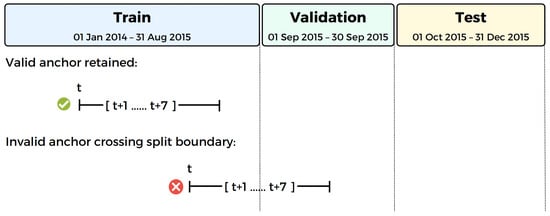
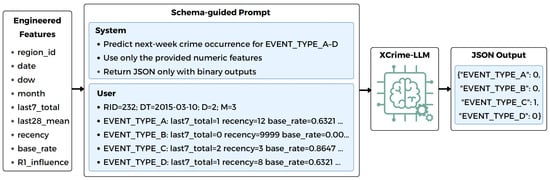
Crime prediction can support proactive public-safety planning, but practical deployment also requires outputs that are reliable and explainable. This study proposes XCrime-LLM for next-week crime occurrence prediction, in which engineered spatio-temporal features are serialized into a fixed prompt format and used to fine-tune
[...] Read more.
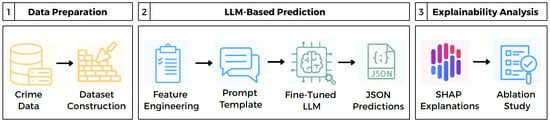
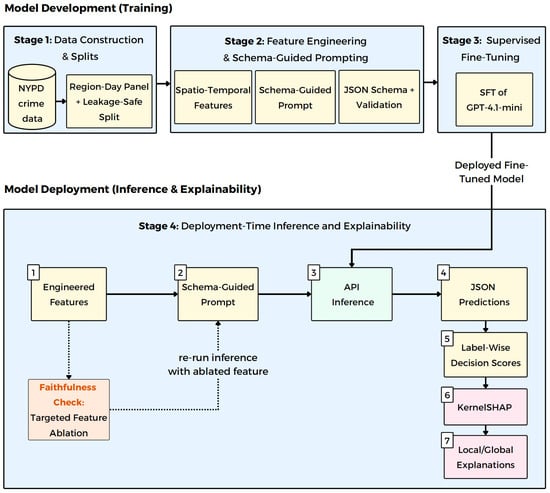
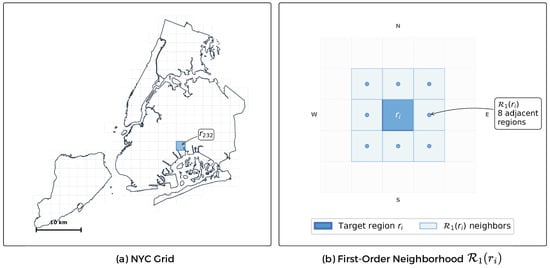
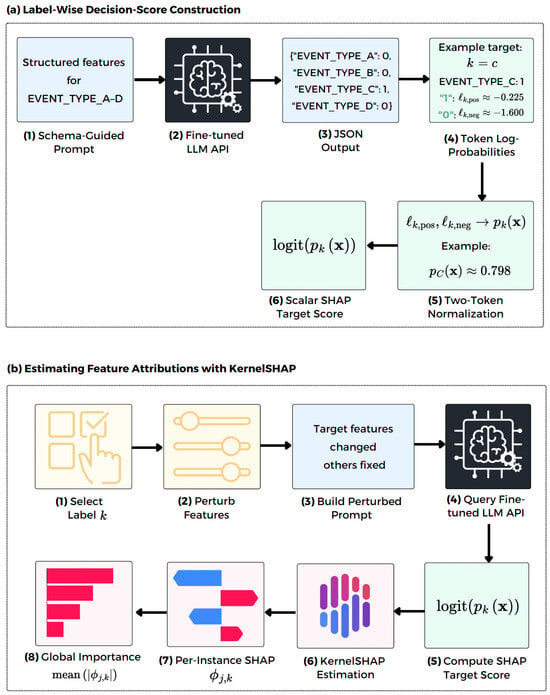
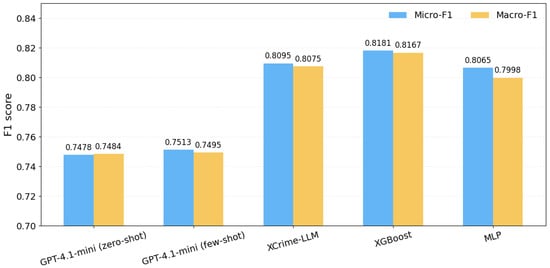
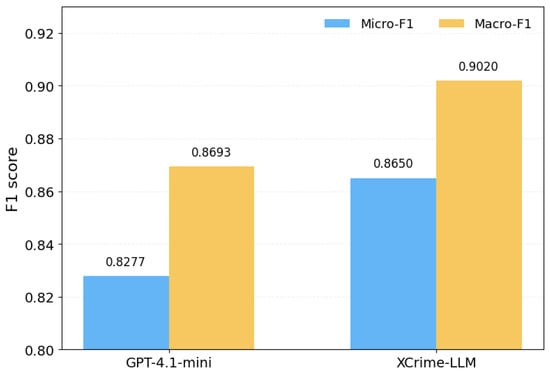
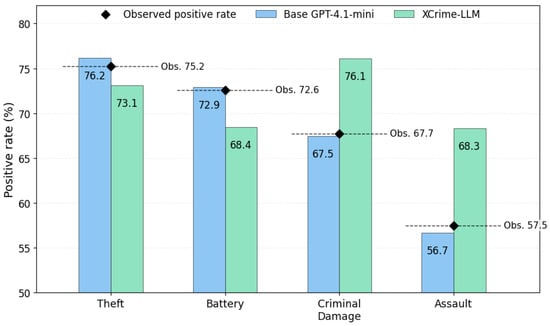
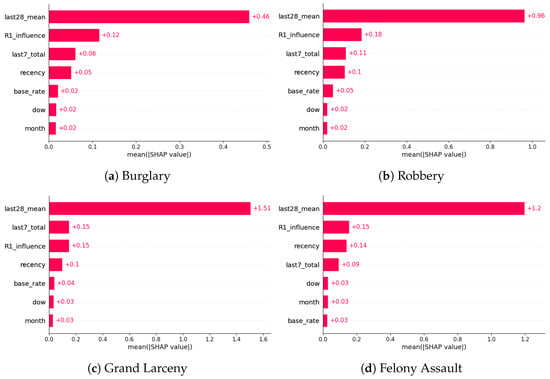
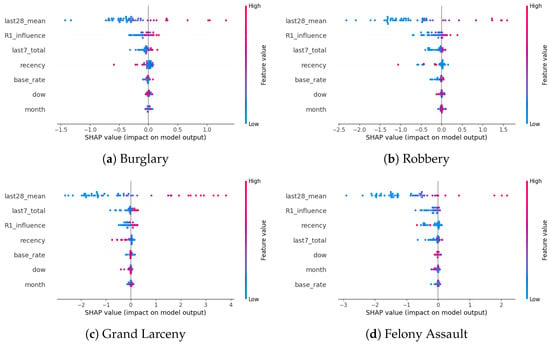
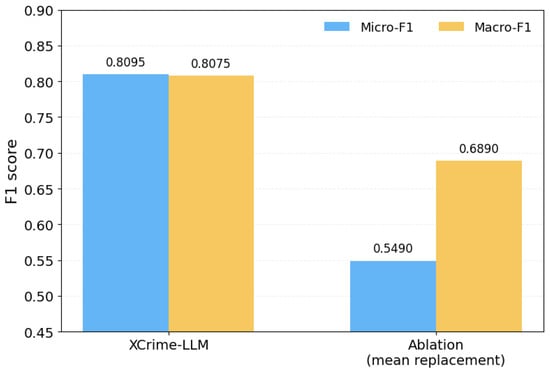
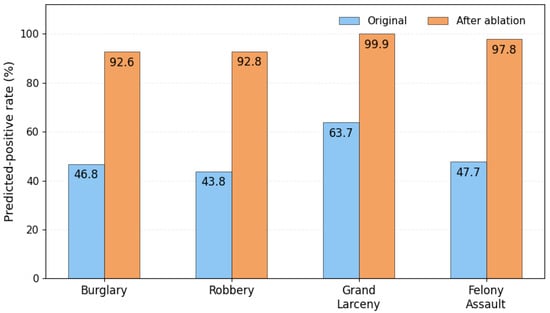
Crime prediction can support proactive public-safety planning, but practical deployment also requires outputs that are reliable and explainable. This study proposes XCrime-LLM for next-week crime occurrence prediction, in which engineered spatio-temporal features are serialized into a fixed prompt format and used to fine-tune GPT-4.1-mini to produce schema-guided JSON outputs from New York City Police Department (NYPD) incident records. The proposed XCrime-LLM framework is evaluated against prompting and trained baselines in New York City and further examined for cross-city transfer in Chicago. Supervised fine-tuning improved GPT-4.1-mini compared with the prompting baselines, increasing Micro-F1 from 0.7478 to 0.8095 and Macro-F1 from 0.7485 to 0.8075, while remaining competitive with the trained baselines. In the cross-city evaluation on Chicago, the fine-tuned GPT-4.1-mini outperformed the base GPT-4.1-mini without further fine-tuning or city-specific adaptation, raising Micro-F1 from 0.8277 to 0.8650 and Macro-F1 from 0.8693 to 0.9020. For explainability under black-box access, KernelSHAP identified last28_mean as the most influential feature across all crime types, while targeted ablation provided additional evidence of the model’s reliance on this feature. These findings suggest that the framework supports competitive next-week crime occurrence prediction while remaining explainable under black-box deployment constraints.
Full article
(This article belongs to the Special Issue Using New Technologies in Cyber Security Solutions (3rd Edition))
►▼
Show Figures

Figure 1
Open AccessArticle
A Novel Meta-Heuristic Edge Server Placement Algorithm for Improving Service Quality
by
Xiaodong Xing, Zhifeng Zhang and Bo Wang
Computers 2026, 15(5), 324; https://doi.org/10.3390/computers15050324 - 20 May 2026
Abstract
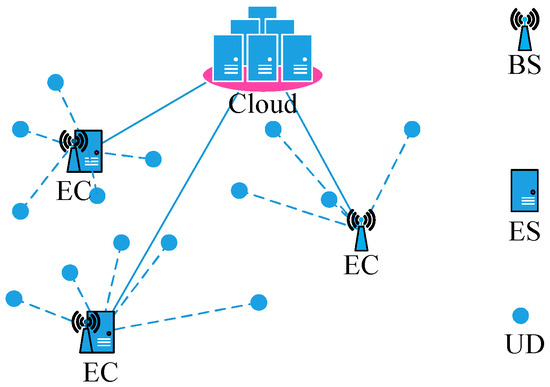
Edge server placement (ESP) is a critical determinant of service quality in edge–cloud computing systems, yet existing solutions often neglect the inherent collaboration between edge and cloud, leading to suboptimal performance under dynamic workloads. To address this gap, this paper proposes a novel
[...] Read more.
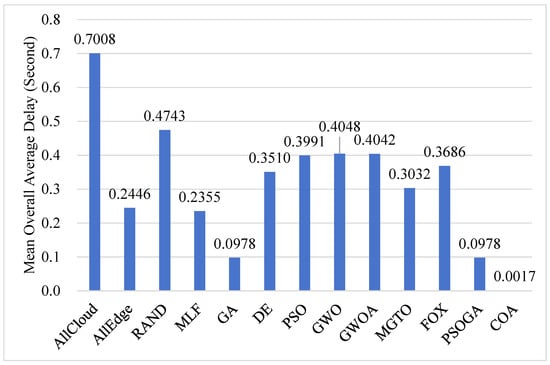
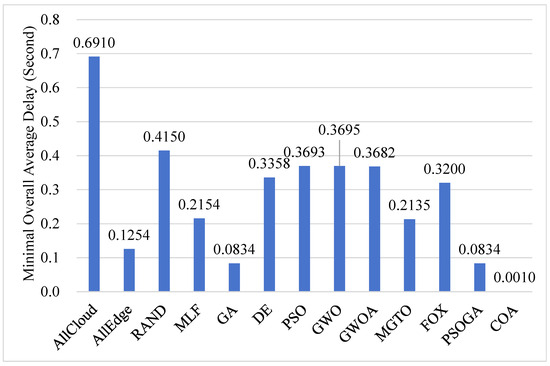
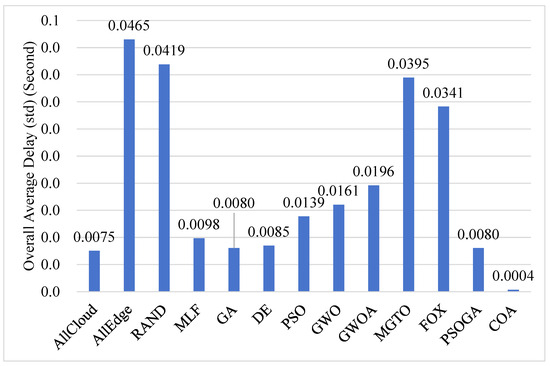
Edge server placement (ESP) is a critical determinant of service quality in edge–cloud computing systems, yet existing solutions often neglect the inherent collaboration between edge and cloud, leading to suboptimal performance under dynamic workloads. To address this gap, this paper proposes a novel meta-heuristic edge server placement algorithm based on the Coati Optimization Algorithm (COA). We first formulate the ESP problem as a constrained binary nonlinear programming model that explicitly incorporates edge–cloud collaboration, aiming to minimize the average request processing delay. The proposed COA-based solver features a compact one-dimensional encoding scheme that simultaneously represents server placement and request offloading decisions, a tailored boundary correction mechanism to enforce coverage and atomicity constraints, and a balanced exploration–exploitation strategy inspired by coatis’ natural hunting and escape behaviors. Extensive simulations are conducted, comparing the proposed algorithm against ten representative heuristic and meta-heuristic algorithms, including GA, PSO, DE, GWO, and their variants. The experimental results demonstrate that our algorithm significantly outperforms all compared methods in terms of the mean, minimum, and standard deviation of the overall average processing delay. Specifically, it achieves a 98.2% reduction in the mean delay relative to suboptimal algorithms while maintaining near-zero variance, confirming its effectiveness, efficiency, and robustness. The proposed algorithm provides a promising solution for service providers to enhance quality of service through optimal edge server deployment and request offloading under edge–cloud collaboration.
Full article
(This article belongs to the Special Issue Edge and Fog Computing for Internet of Things Systems (3rd Edition))
►▼
Show Figures

Figure 1
Open AccessArticle
EHNet: Super-Resolution via Enhanced Dual Convolution and Hybrid-Channel Fusion
by
Shen Shi, Weiji Yu, Ruifeng Yu and Yizhuo Zhang
Computers 2026, 15(5), 323; https://doi.org/10.3390/computers15050323 - 20 May 2026
Abstract
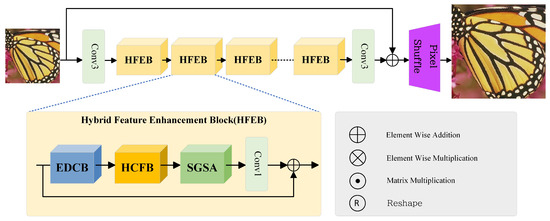
Single image super-resolution (SR) is an important part of image processing, which aims to improve the spatial resolution of images. This is a typical ill-posed inverse problem. The main difficulty is that a low-resolution image block usually corresponds to multiple high-resolution image blocks.
[...] Read more.
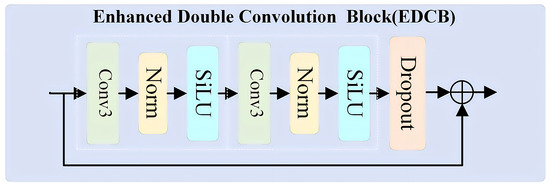
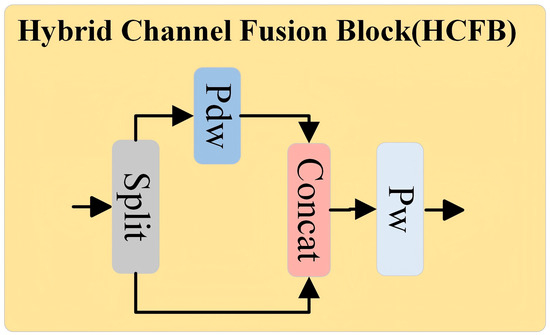
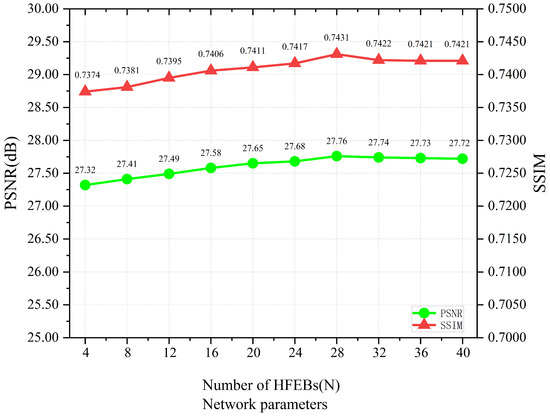
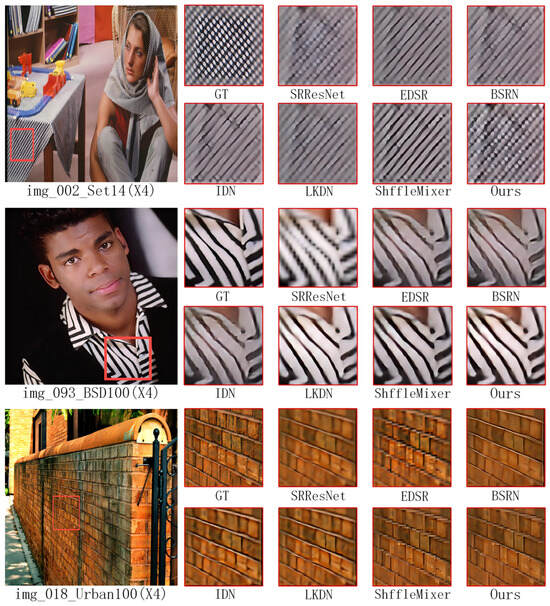
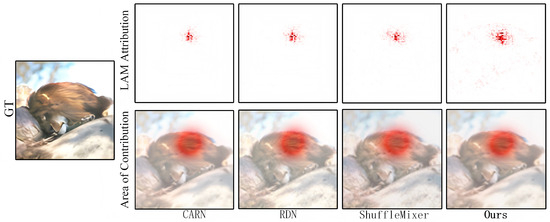
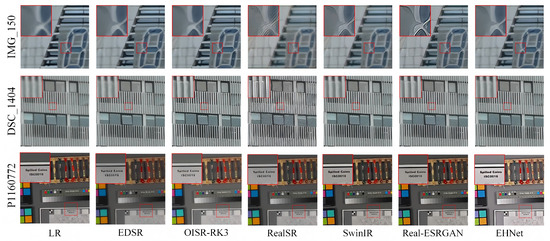
Single image super-resolution (SR) is an important part of image processing, which aims to improve the spatial resolution of images. This is a typical ill-posed inverse problem. The main difficulty is that a low-resolution image block usually corresponds to multiple high-resolution image blocks. The existing methods cannot provide enough correlation to determine the unique high-resolution image block, which leads to artifacts and image distortion in the reconstructed image. To address this problem, a method (EHNet) is proposed to achieve super-resolution by using a Hybrid-Channel Fusion Block (HCFB) and an Enhanced Dual-Convolution Block (EDCB). The EDCB effectively enhances the network’s ability to capture image details and textures by combining local and global feature processing. The HCFB strengthens the information interaction between channels by combining channel segmentation with large-kernel convolution, fully explores feature dependencies, and thus optimizes the feature extraction effect. Experimental results show that the super-resolution reconstructed image of EHNet achieves 32.59 dB PSNR and 0.9006 SSIM on the Set5 ×4 SR benchmark, outperforming several state-of-the-art SR methods. In addition, the model exhibits notable improvements in artifact suppression, and the reconstructed image’s subjective visual impact surpasses that of other current techniques.
Full article
(This article belongs to the Section AI-Driven Innovations)
►▼
Show Figures

Figure 1
Open AccessArticle
A Framework for Implementing AI in KM
by
Murray Eugene Jennex, Abraham Abby Sen and Jeen Mariam Joy
Computers 2026, 15(5), 322; https://doi.org/10.3390/computers15050322 - 20 May 2026
Abstract
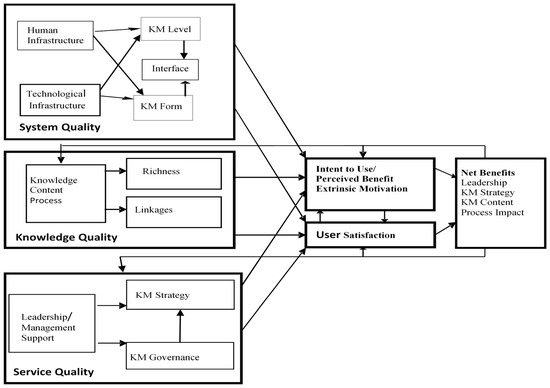
This paper presents a framework for integrating Artificial Intelligence (AI) into Knowledge Management (KM), using the Jennex–Olfman KM Success Model as a foundation. Through a literature review and a thematic analysis of 400 practitioner comments from the global SIKM Leaders community, the study
[...] Read more.
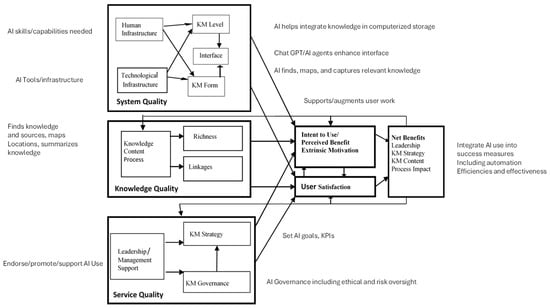
This paper presents a framework for integrating Artificial Intelligence (AI) into Knowledge Management (KM), using the Jennex–Olfman KM Success Model as a foundation. Through a literature review and a thematic analysis of 400 practitioner comments from the global SIKM Leaders community, the study examines how AI is being applied in KM and the implications for practice. Findings highlight that AI expands KM across diverse sectors, enhances efficiency through automation and workflow integration, and supports human judgment in knowledge tasks. At the same time, risks concerning bias, accuracy, transparency, governance, and infrastructure remain central challenges. Mapping these insights to the KM Success Model shows that AI strengthens system and knowledge quality while requiring leadership and governance to safeguard service quality. The analysis extends the model by extending construct definitions with AI and moderating all constructs with AI. Overall, the study concludes that AI can and should be integrated into KM. Successful AI integration is best understood not as isolated technical interventions, but as extensions of KM success theory.
Full article
(This article belongs to the Special Issue AI in Knowledge Management)
►▼
Show Figures

Figure 1
Open AccessArticle
A Real-Time DBH Ground-Truth Quadruped-Based Methodology for Precise Forest Management
by
Theocharis Tsenis, Vasileios Barmpagiannos, Evangelos D. Spyrou and Vassilios Kappatos
Computers 2026, 15(5), 321; https://doi.org/10.3390/computers15050321 - 19 May 2026
Abstract
The integration of quadruped robotics with advanced sensing technologies offers a transformative approach to forest management, particularly for real-time measurement of tree Diameter at Breast Height (DBH). This paper introduces a novel methodology by deploying a quadruped robot equipped with GPS, LiDAR, and
[...] Read more.
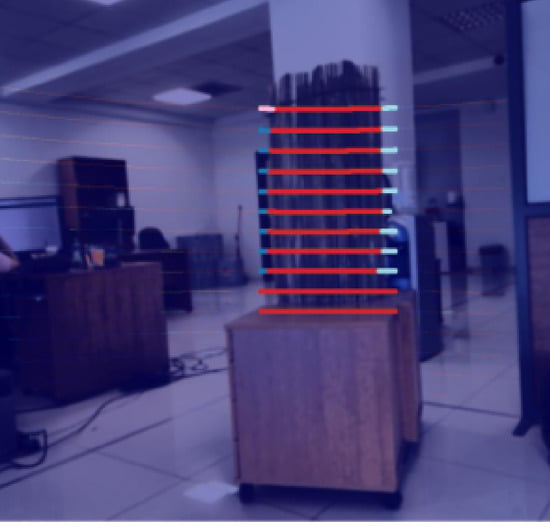
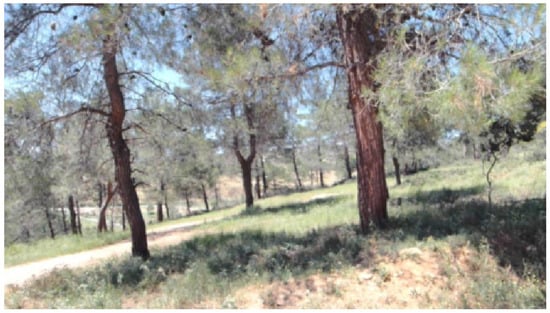
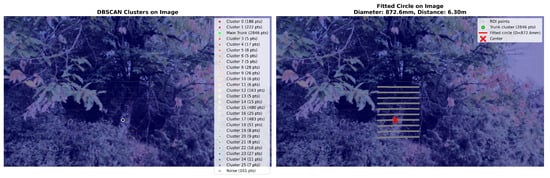
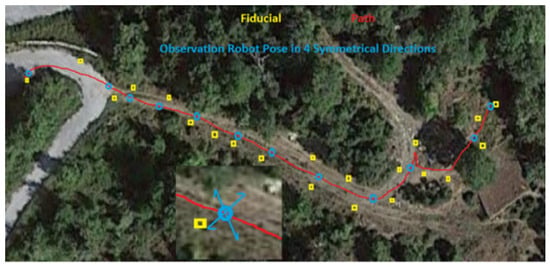
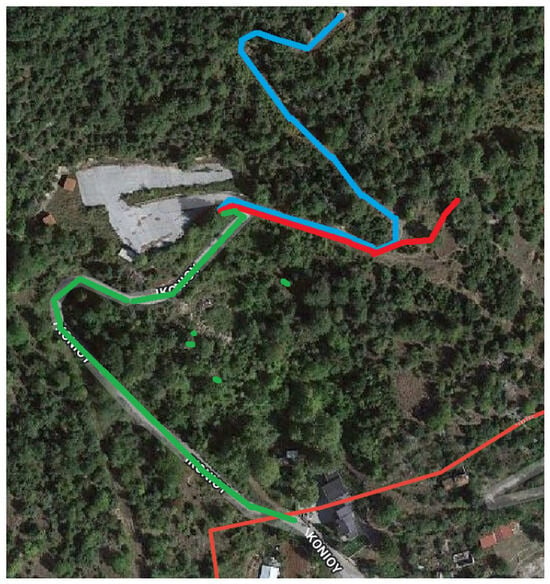
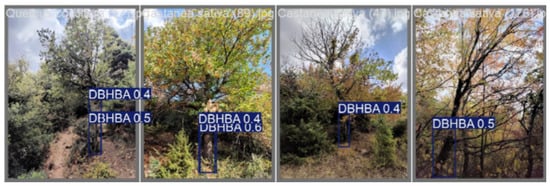
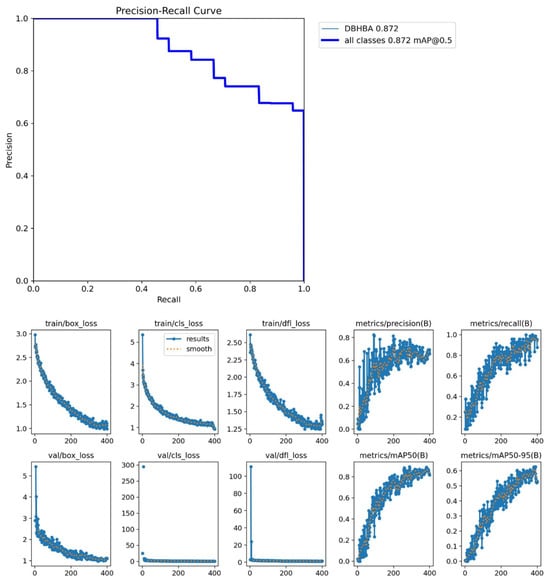
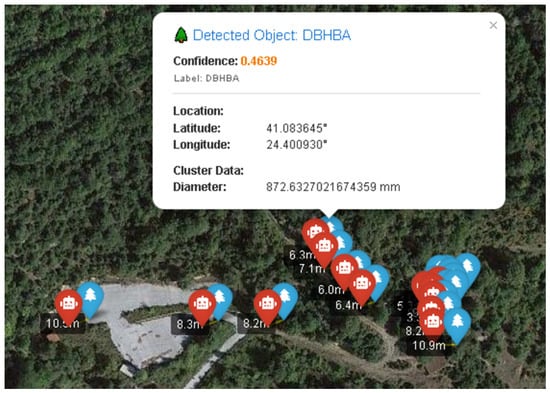
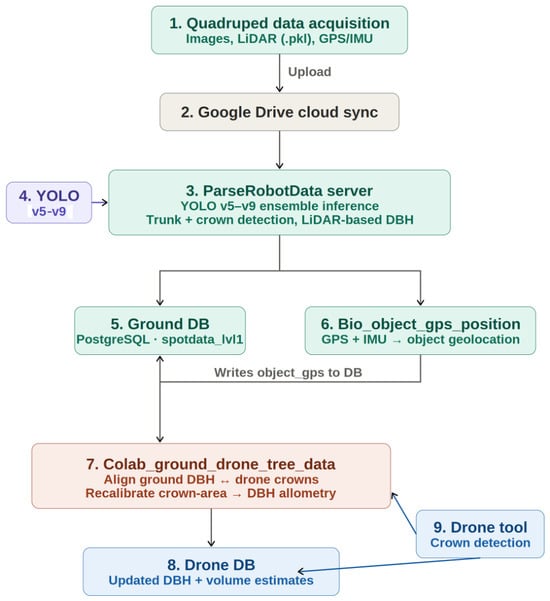
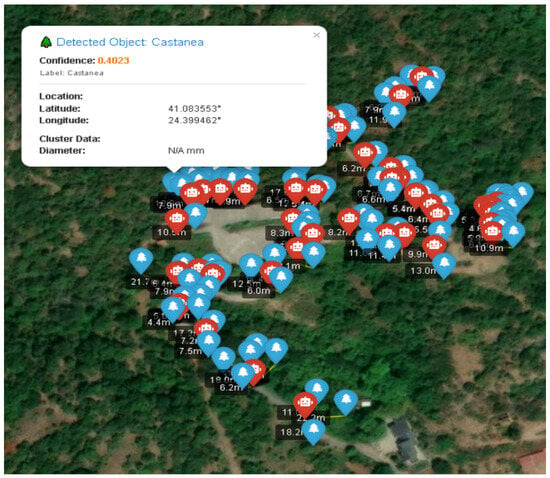
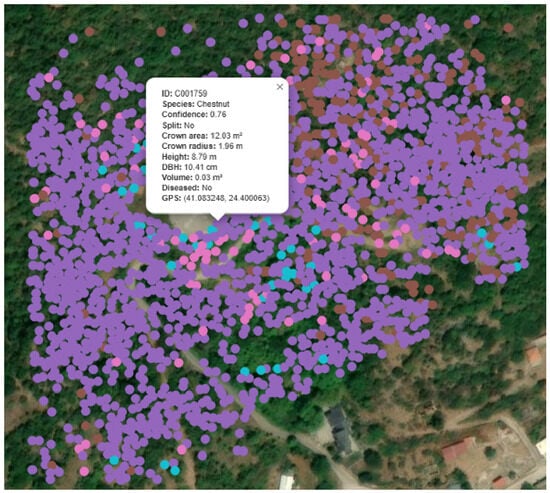
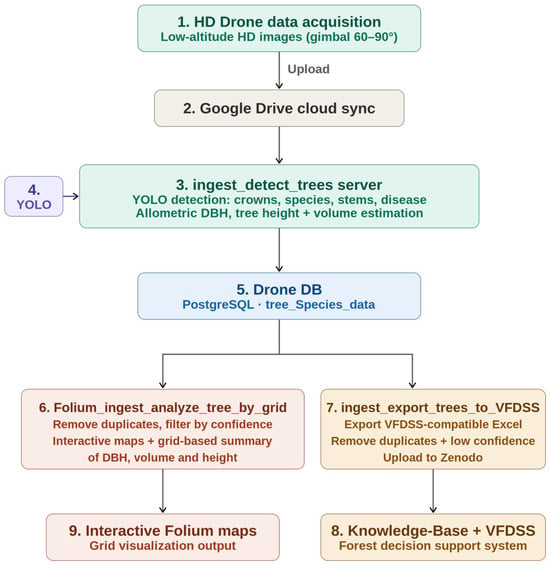
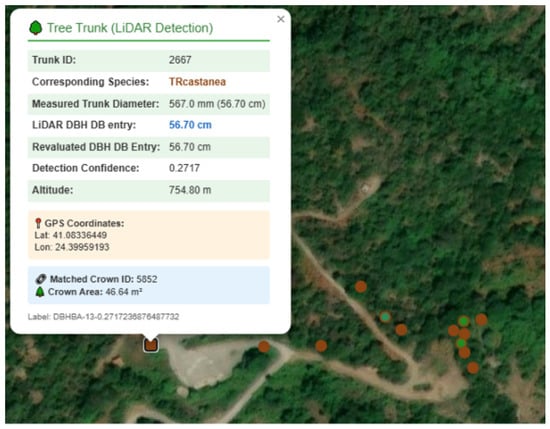
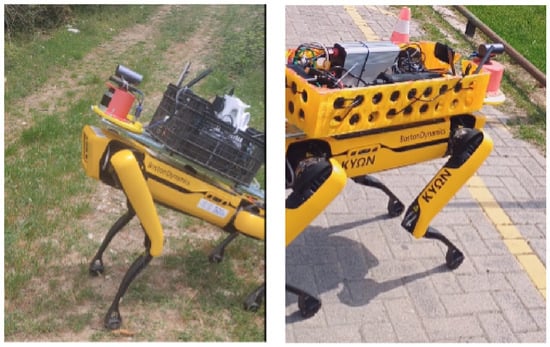
The integration of quadruped robotics with advanced sensing technologies offers a transformative approach to forest management, particularly for real-time measurement of tree Diameter at Breast Height (DBH). This paper introduces a novel methodology by deploying a quadruped robot equipped with GPS, LiDAR, and an aligned high-definition camera to patrol forest paths via a developed dynamic autonomous mission. Utilizing a YOLO-based model for trunk detection, the methodology retrieves precise DBH measurements and corresponding geotags, constructing a spatial database of DBH ground-truth data. This database serves as a real-time ground-truth lookup table to calibrate allometric equations used in drone-based crown detection missions, enhancing the accuracy of forest biophysical attribute estimations such as tree height, volume, and biomass. Experimental validation demonstrates high precision in DBH estimation (error < 5% in controlled tests), supporting automated, around-the-clock data collection for sustainable forest management in Mediterranean ecosystems.
Full article
(This article belongs to the Section AI-Driven Innovations)
►▼
Show Figures

Figure 1
Open AccessArticle
An Interpretable and Reproducibility-Focused Evaluation Pipeline for Automatic Short-Answer Grading in Low-Resource Mathematics and Science Educational Datasets
by
Miguel Ángel González Maestre, Javier Cubero Juánez, Alejandro de la Hoz Serrano and Lina Melo
Computers 2026, 15(5), 320; https://doi.org/10.3390/computers15050320 - 18 May 2026
Abstract
Automated short-answer grading (ASAG) in educational contexts faces a fundamental trade-off between predictive performance, interpretability, and methodological transparency, particularly under data-constrained educational settings. While recent approaches rely on deep learning architectures, these models require large annotated datasets and offer limited transparency, restricting their
[...] Read more.
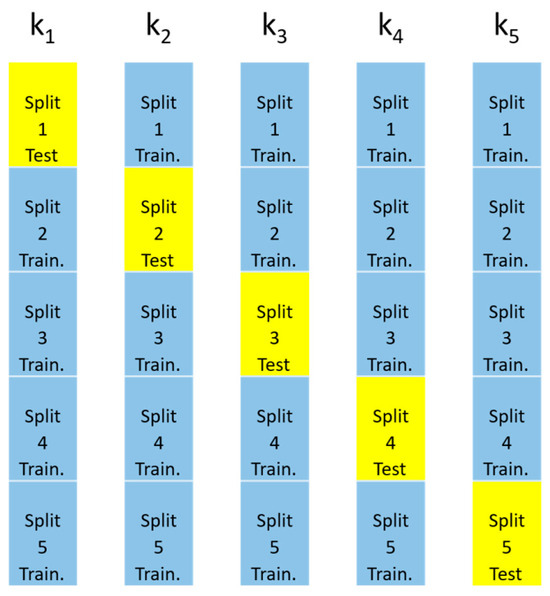
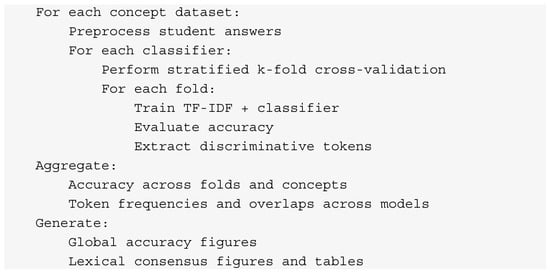
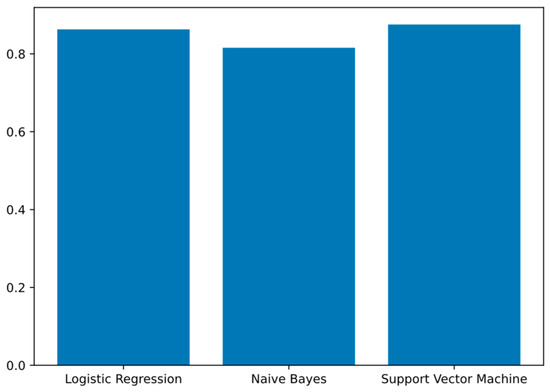
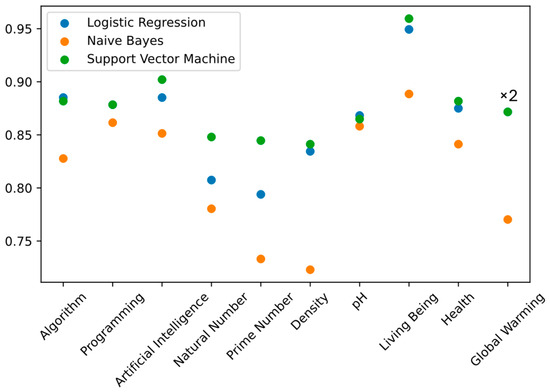
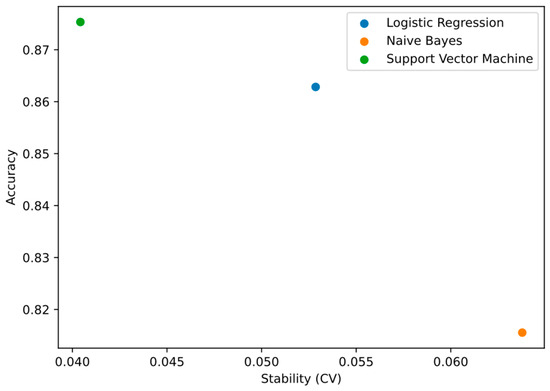
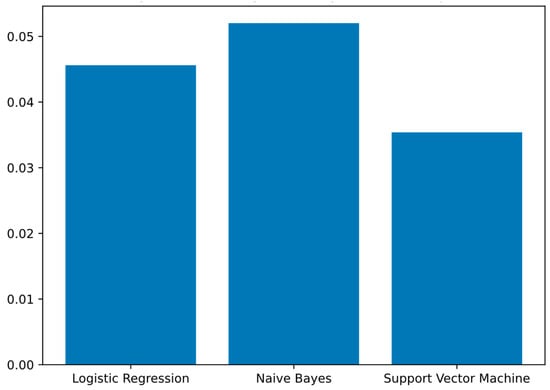
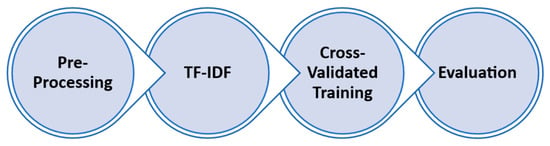
Automated short-answer grading (ASAG) in educational contexts faces a fundamental trade-off between predictive performance, interpretability, and methodological transparency, particularly under data-constrained educational settings. While recent approaches rely on deep learning architectures, these models require large annotated datasets and offer limited transparency, restricting their applicability in authentic classroom environments. This study proposes a fully specified and interpretable machine learning pipeline for ASAG across multiple educational concepts. The approach is based on a shared TF–IDF representation and evaluates three linear classifiers—Logistic Regression, Multinomial Naïve Bayes, and Linear Support Vector Machines—under a stratified cross-validation framework adapted to small datasets. Model performance is assessed using accuracy, precision, recall, and F1-score. Statistical comparisons using the Wilcoxon signed-rank test indicate exploratory evidence of statistically significant differences between classifiers, although the observed differences remain small in practical magnitude. Additionally, the methodology incorporates token-level analysis to identify discriminative lexical patterns and examine consensus across classifiers. To enhance interpretability, tokens are presented using a bilingual Spanish/English representation while preserving the original feature space. The results across ten concept-specific datasets show consistent performance across models (accuracy ≈ 0.82–0.88) and reveal stable lexical patterns consistently associated with model predictions of correctness. The findings highlight that lightweight, interpretable models can provide consistent and reliable performance under resource-constrained educational conditions. The proposed framework contributes a stability-oriented and interpretable evaluation paradigm for ASAG, offering a practical alternative to data-intensive approaches in educational assessment. It is intended as a methodological reference protocol rather than a performance benchmark. The findings should be interpreted as evidence of within-context consistency instead of broad external generalization.
Full article
(This article belongs to the Special Issue Transformative Approaches in Education: Harnessing AI, Augmented Reality, and Virtual Reality for Innovative Teaching and Learning (2nd Edition))
►▼
Show Figures

Figure 1
Open AccessSystematic Review
A Systematic Literature Review on Data-Efficient and Adaptive Learning Techniques for Encrypted Traffic Classification Under Modern Protocols
by
Muntakimur Rahaman, Azwan Mahmud, Azlan Abd Aziz, Osama M. S. Abujawa and Ji-Jian Chin
Computers 2026, 15(5), 319; https://doi.org/10.3390/computers15050319 - 18 May 2026
Abstract
►▼
Show Figures
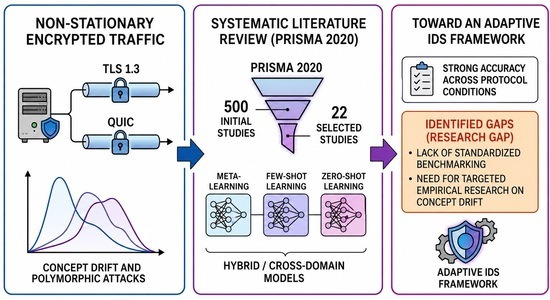
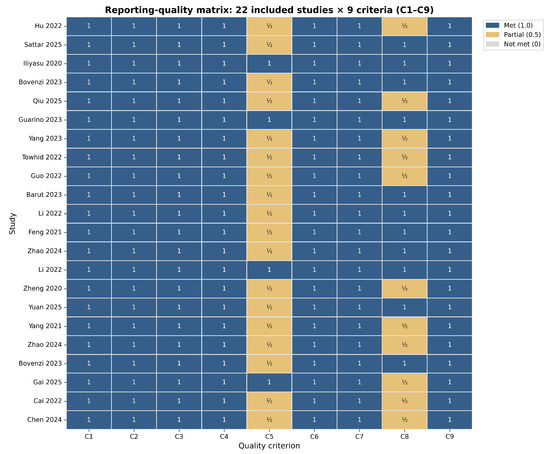
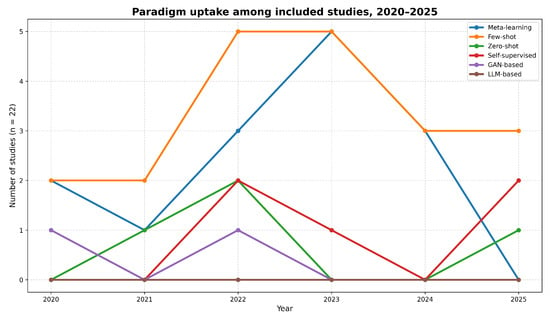
Recent studies suggest that few-shot and zero-shot learning methods, drawing on meta-learning, self-supervised approaches and metric-learning ideas, can classify encrypted traffic (TLS 1.3 and QUIC) with competitive accuracy across different protocol conditions. This systematic literature review (SLR) investigates 22 studies selected from an
[...] Read more.
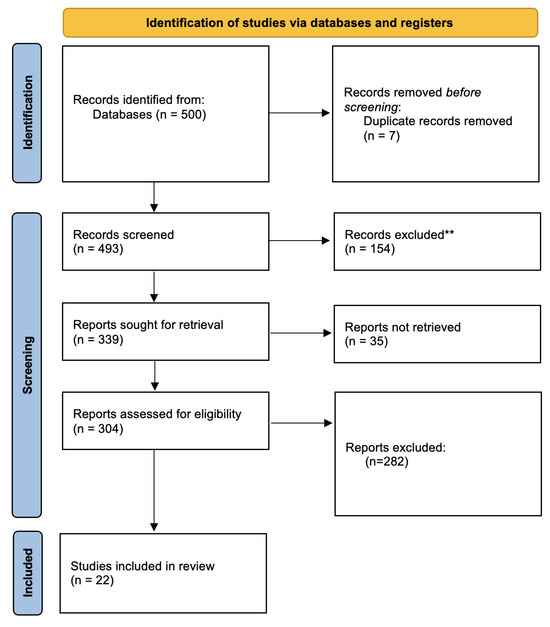
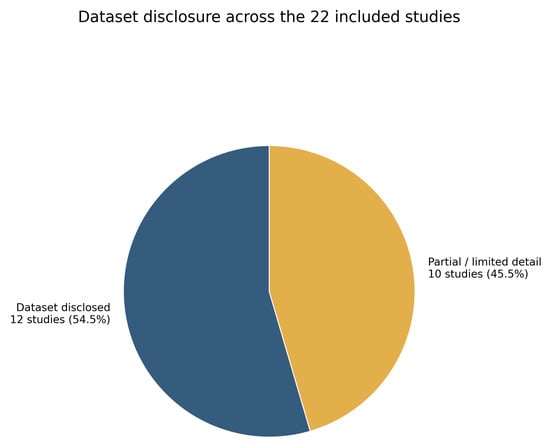
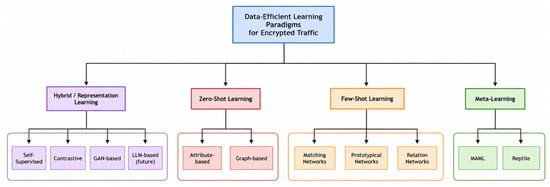
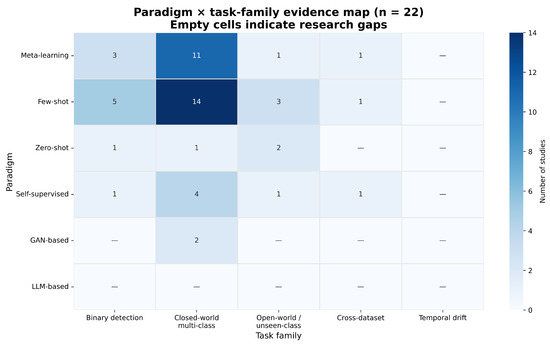
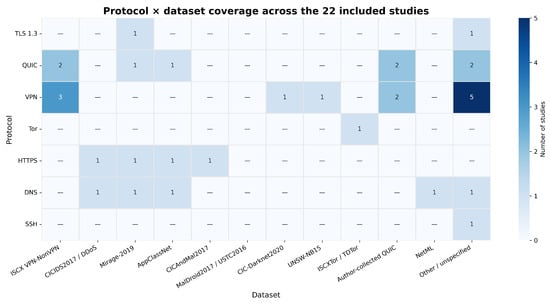
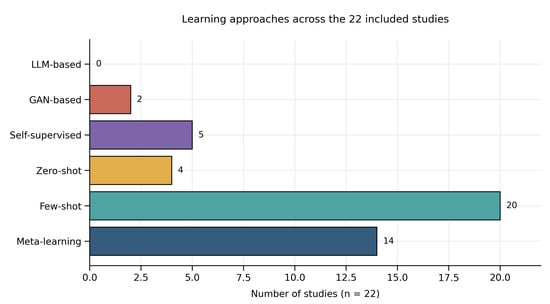
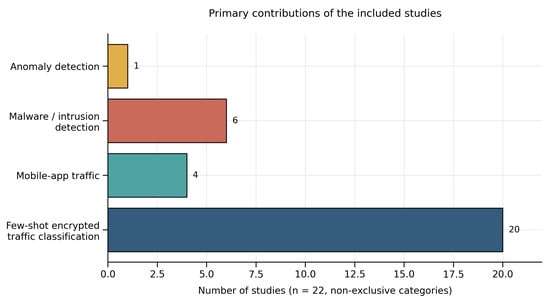
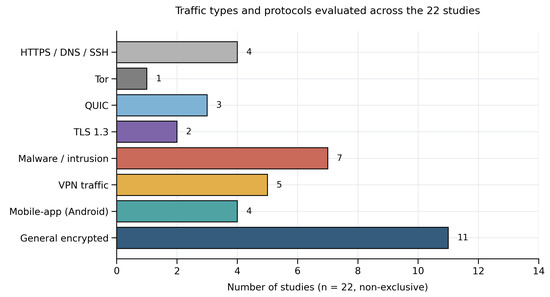
Recent studies suggest that few-shot and zero-shot learning methods, drawing on meta-learning, self-supervised approaches and metric-learning ideas, can classify encrypted traffic (TLS 1.3 and QUIC) with competitive accuracy across different protocol conditions. This systematic literature review (SLR) investigates 22 studies selected from an initial pool of 500 papers using PRISMA 2020, focusing on current methodologies for non-stationary network traffic classification, with particular attention to few-shot, zero-shot, and meta-learning approaches. The research addresses four questions: (1) Which approaches have been employed for non-stationary network traffic classification and threat detection? (2) How do hybrid or cross-domain models improve adaptation, detection and overall efficiency? (3) What benchmarking standards exist for the datasets and evaluation metrics in use? (4) How do these methods address concept drift? This review identifies a range of approaches for capturing and analysing non-stationary network traffic but also reveals a significant gap in the empirical evidence addressing the last two questions. This points to a need for targeted experiments on continuously evolving network traffic and zero-day polymorphic attacks, both of which are central to the development of the next-generation adaptive intrusion-detection framework.
Full article

Graphical abstract
Open AccessArticle
CLIP-HBD: Hierarchical Boundary-Constrained Decoding for Open-Vocabulary Semantic Segmentation
by
Jing Wang, Quan Zhou, Anyi Yang and Junyu Lin
Computers 2026, 15(5), 318; https://doi.org/10.3390/computers15050318 - 15 May 2026
Abstract
Open-vocabulary semantic segmentation (OVSS) aims to achieve pixel-level object segmentation guided by arbitrary natural language descriptions. Although pre-trained vision–language models (VLMs) have significantly advanced the development of OVSS, their reliance on the Vision Transformer (ViT) architecture imposes a fundamental constraint on dense prediction.
[...] Read more.
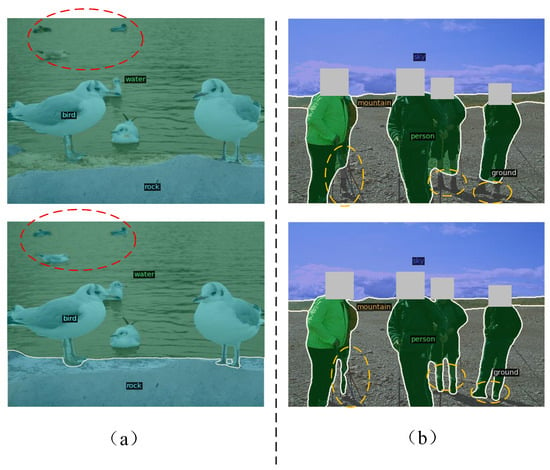
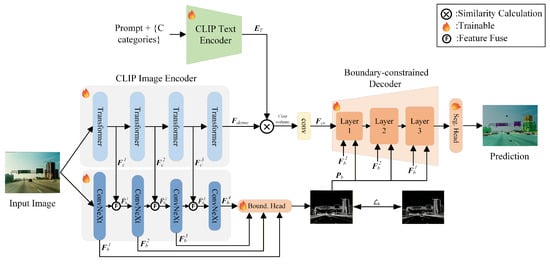
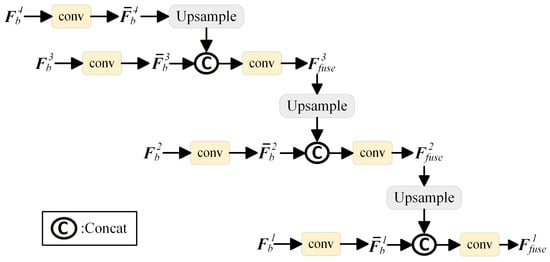
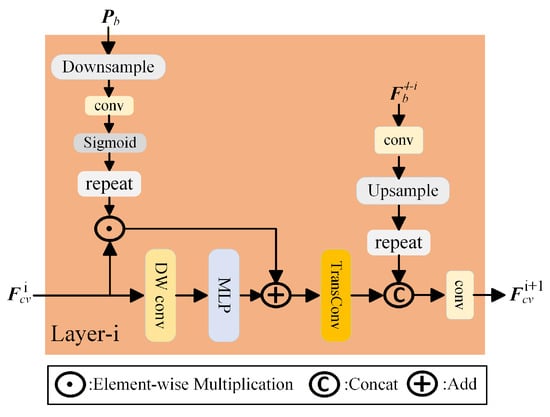
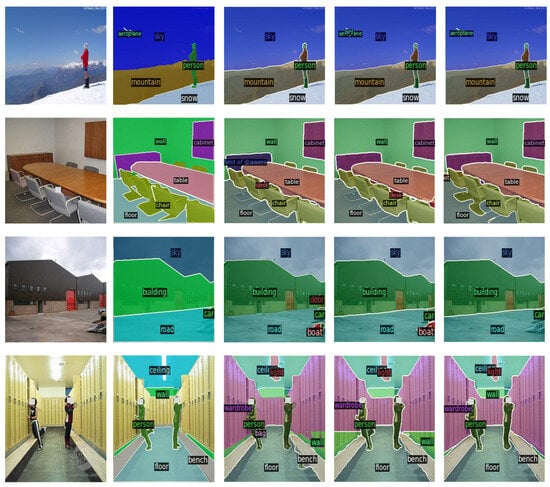
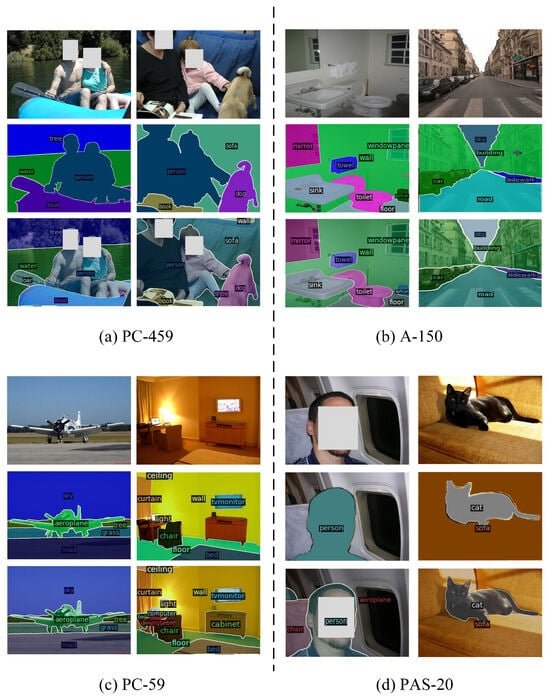
Open-vocabulary semantic segmentation (OVSS) aims to achieve pixel-level object segmentation guided by arbitrary natural language descriptions. Although pre-trained vision–language models (VLMs) have significantly advanced the development of OVSS, their reliance on the Vision Transformer (ViT) architecture imposes a fundamental constraint on dense prediction. Specifically, the absence of hierarchical downsampling in ViT-based VLM results in single-scale representations that trade spatial localization for global semantics. To address these issues, this paper proposes a hierarchical boundary-constrained decoding network for OVSS, called CLIP-HBD. Our approach leverages VLM semantic priors to reconstruct multi-scale features and introduces a boundary-constrained decoding strategy to refine edge details. Specifically, CLIP-HBD leverages a ConvNeXt-based backbone alongside a hierarchical adaptation mechanism to fuse multi-layer VLM features, generating a comprehensive multi-scale representation. To address the issue of boundary inaccuracy, we perform explicit boundary prediction based on multi-scale representations, where the resulting boundary maps are subsequently transformed into structural constraints to steer the decoder’s focus toward boundary regions. By integrating structural constraints with hierarchical features, the decoding process effectively maintains semantic consistency and restores precise object boundaries. Extensive experiments demonstrate that CLIP-HBD achieves superior performance in both segmentation precision and boundary quality across multiple benchmarks.
Full article
(This article belongs to the Special Issue Advanced Image Processing and Computer Vision (3rd Edition))
►▼
Show Figures

Figure 1
Open AccessArticle
Comparative Performance of Three GPT Models on Japanese Dental Board-Style Multiple-Choice Questions
by
Hikaru Fukuda, Masaki Morishita, Kosuke Muraoka, Shino Maeda, Taiji Nakamura, Manabu Habu, Shuji Awano and Kentaro Ono
Computers 2026, 15(5), 317; https://doi.org/10.3390/computers15050317 - 15 May 2026
Abstract
Large language models (LLMs) are increasingly used in professional examinations, but their relative performance on dental board-style questions remains unclear. This study compared two reasoning-optimized models, GPT-o3 and GPT-5T, with a general-purpose multimodal model, GPT-4o, using 399 Japanese dental board-style multiple-choice questions from
[...] Read more.
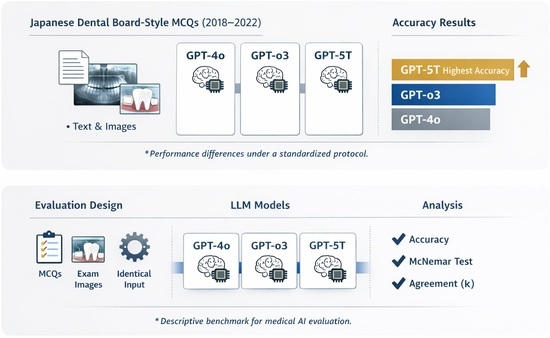
Large language models (LLMs) are increasingly used in professional examinations, but their relative performance on dental board-style questions remains unclear. This study compared two reasoning-optimized models, GPT-o3 and GPT-5T, with a general-purpose multimodal model, GPT-4o, using 399 Japanese dental board-style multiple-choice questions from 2018 to 2022. All questions were presented in Japanese, and items originally accompanied by charts, photographs, or other figures were analyzed separately from items without visual materials. Accuracy and item-level agreement were assessed using pairwise McNemar tests, stratified analyses according to the original presence of visual materials, the Breslow–Day test for homogeneity of odds ratios, and two-proportion z-tests. GPT-5T achieved the highest overall accuracy (294/399, 73.7%), followed by GPT-o3 (257/399, 64.4%) and GPT-4o (255/399, 63.9%). Pairwise McNemar tests showed that GPT-5T outperformed both GPT-4o (Holm-adjusted p = 0.00098) and GPT-o3 (Holm-adjusted p = 0.00072), whereas GPT-o3 and GPT-4o did not differ significantly (Holm-adjusted p = 0.920). Accuracy was lower for questions originally containing visual materials than for questions without such materials across all three models (GPT-4o: 49.7% vs. 72.2%; GPT-o3: 55.1% vs. 69.8%; GPT-5T: 59.9% vs. 81.8%). The advantage of GPT-5T was more evident in questions without visual materials, and heterogeneity across question formats was observed for GPT-5T versus GPT-o3. GPT-5T showed the strongest performance in this dataset. Questions originally containing visual materials were associated with lower accuracy across all models. Because the comparison was based on distinct item groups rather than experimentally manipulated visual conditions, this result should be interpreted as a difference across question formats and may also reflect differences in item composition and difficulty between the two groups.
Full article
(This article belongs to the Topic AI Trends in Teacher and Student Training)
►▼
Show Figures

Graphical abstract
Open AccessArticle
Fault-Tolerant QCA-Based Parity Pre-Filtering Circuits for Lightweight Edge-IoT Transaction Screening
by
Osman Selvi, Seyed-Sajad Ahmadpour, Muhammad Zohaib and Naim Ajlouni
Computers 2026, 15(5), 316; https://doi.org/10.3390/computers15050316 - 14 May 2026
Abstract
Edge Internet of Things (IoT) blockchain deployments increasingly rely on continuous transaction ingestion from resource-constrained IoT devices to nearby edge gateways over heterogeneous wireless links. In this setting, transient channel noise and packet corruption can inject invalid payloads into the edge processing pipeline
[...] Read more.
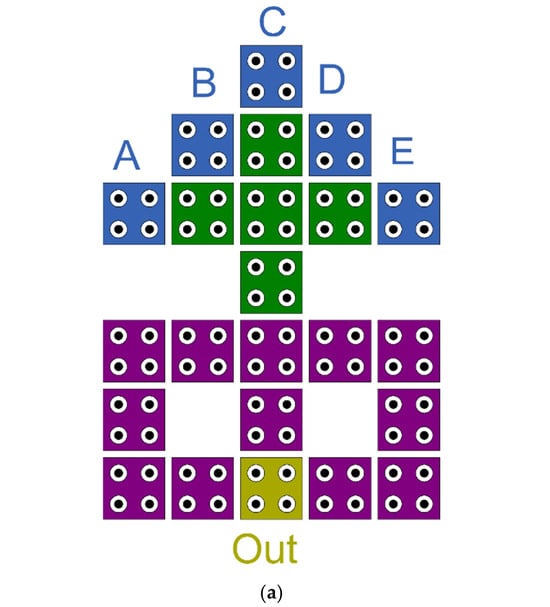
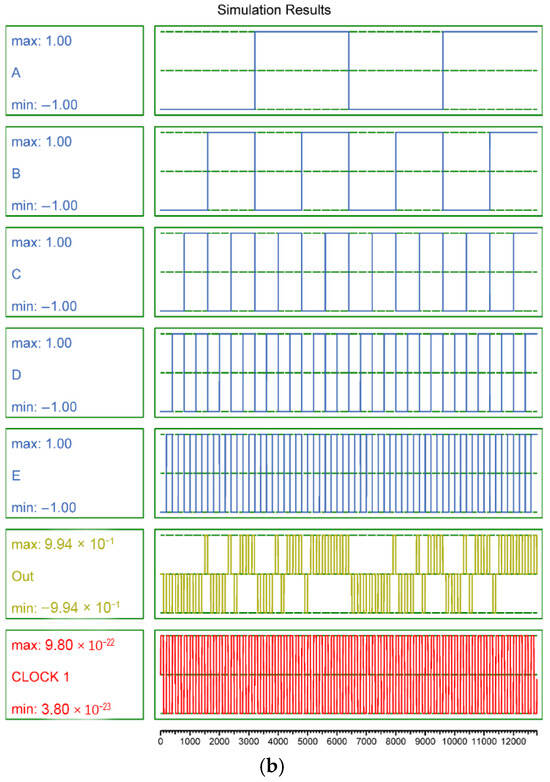
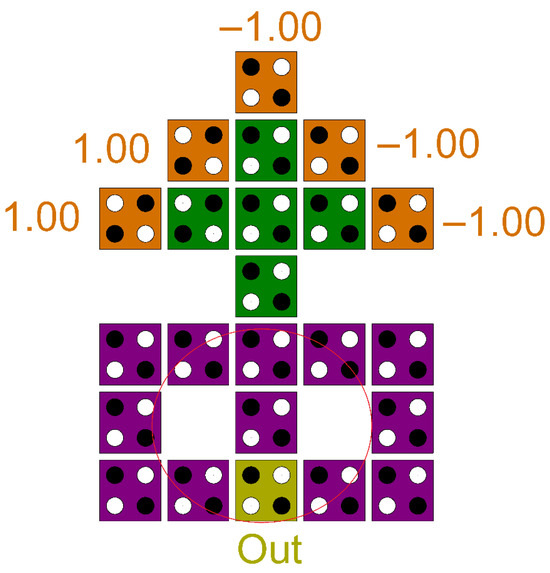
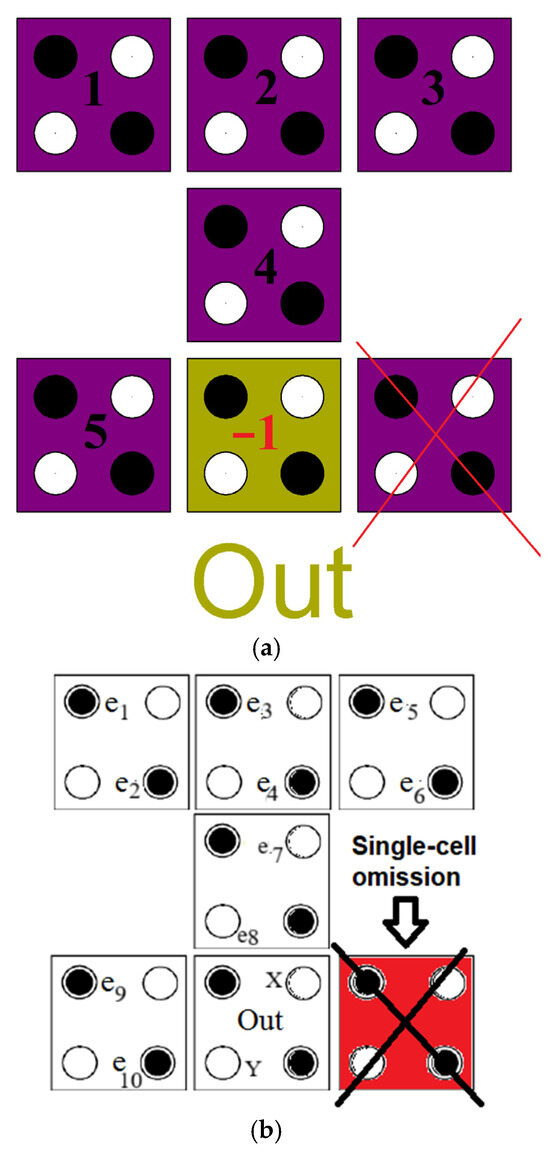
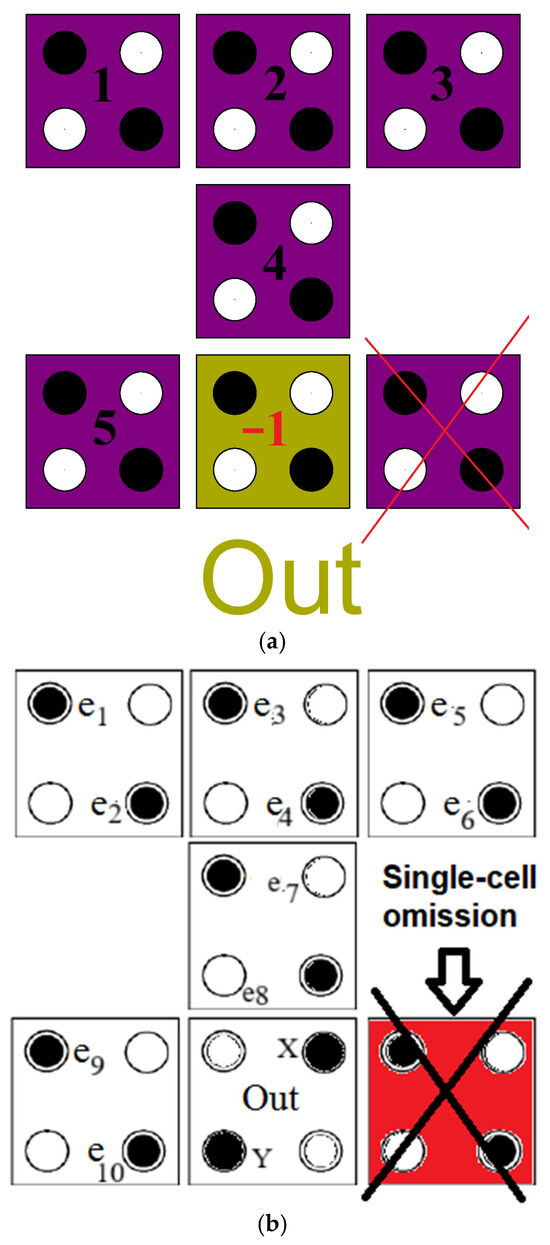
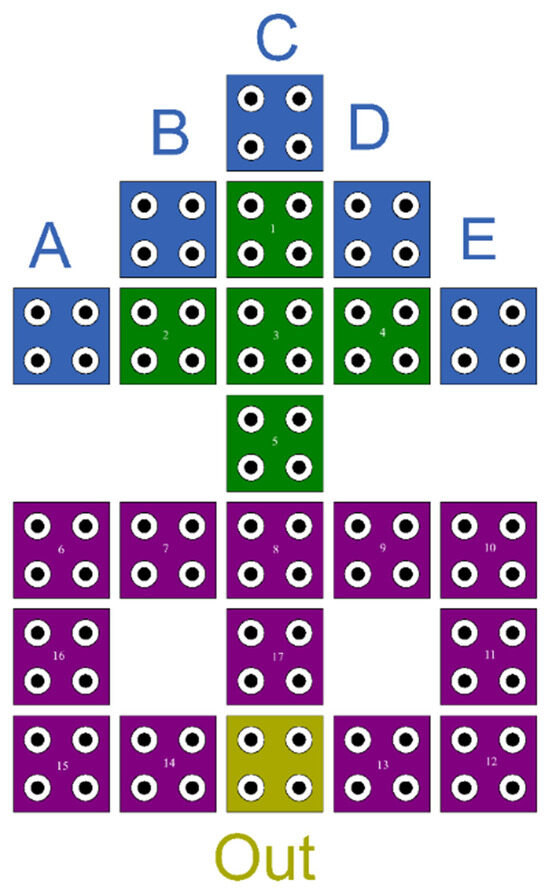
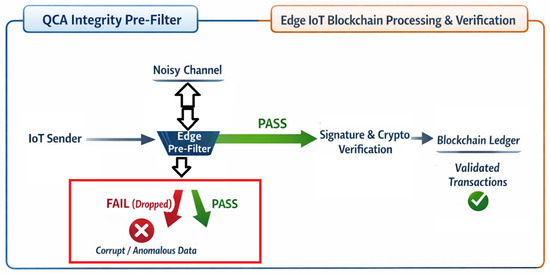
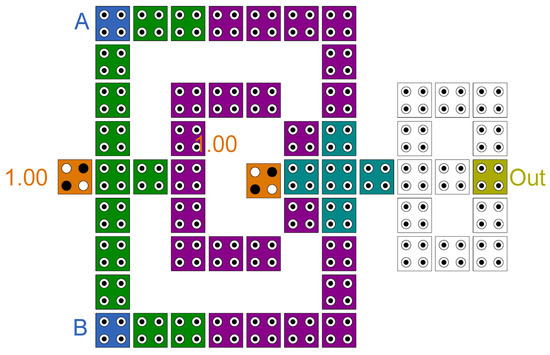
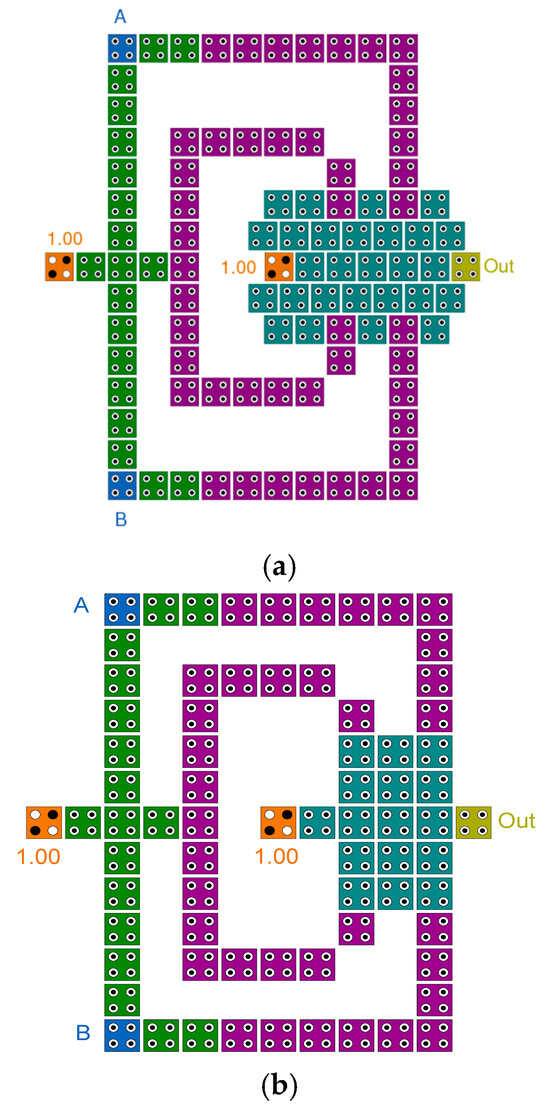
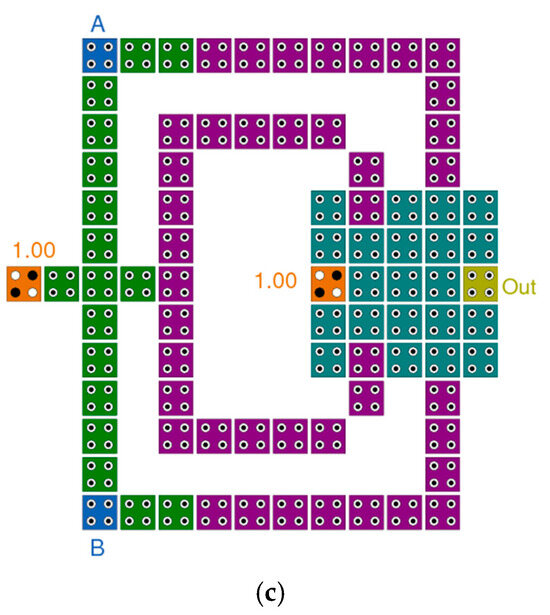
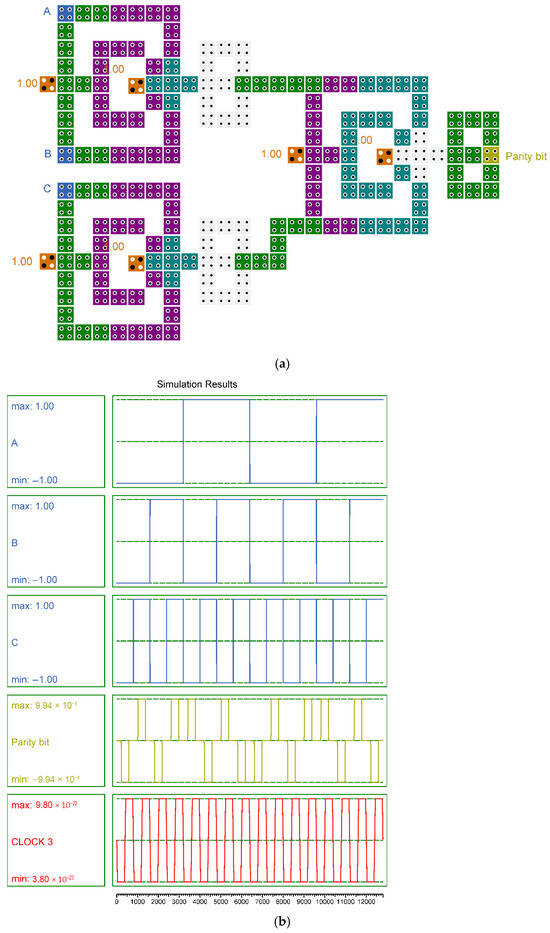
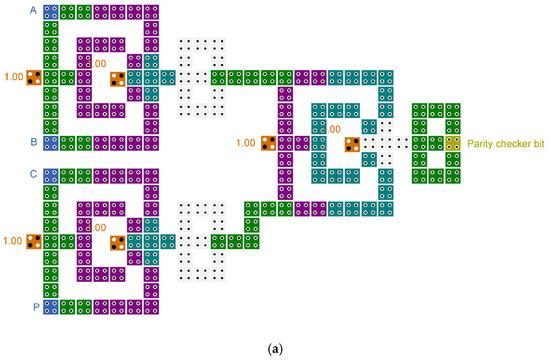
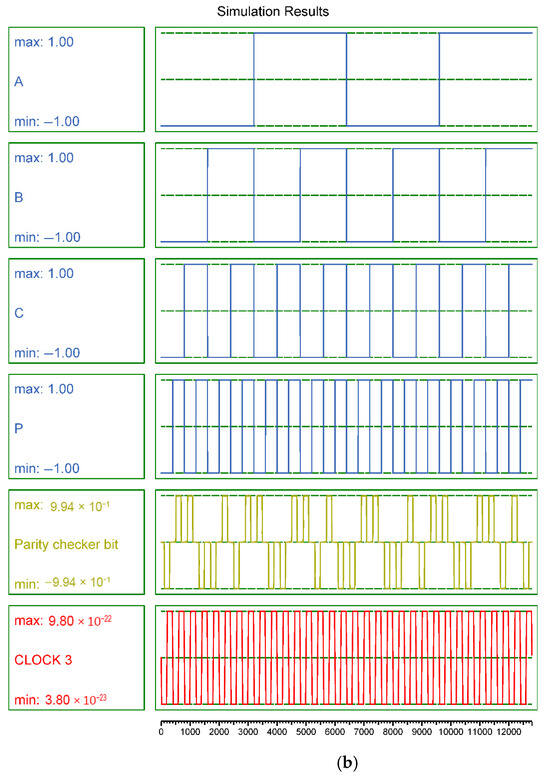
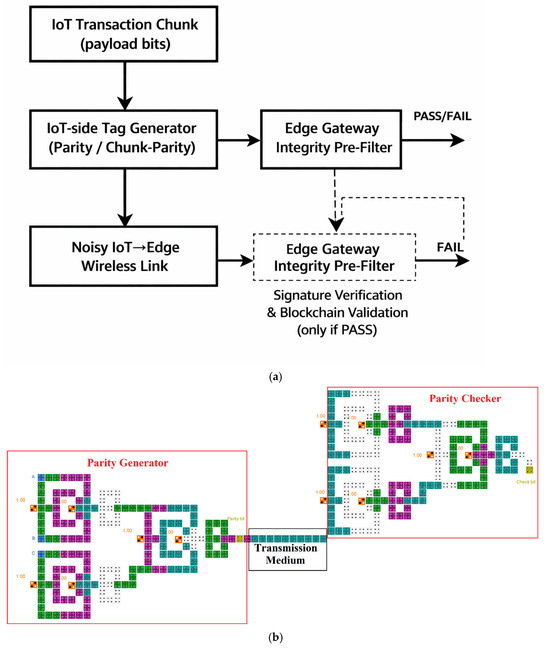
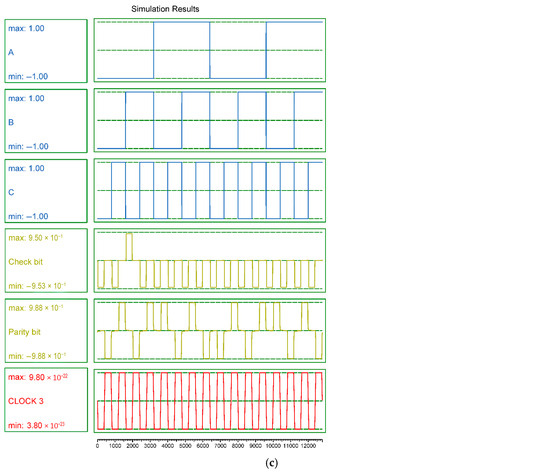
Edge Internet of Things (IoT) blockchain deployments increasingly rely on continuous transaction ingestion from resource-constrained IoT devices to nearby edge gateways over heterogeneous wireless links. In this setting, transient channel noise and packet corruption can inject invalid payloads into the edge processing pipeline and trigger unnecessary buffering, parsing, and, most critically, computationally expensive cryptographic operations such as digital signature verification. This leads to wasted computation, increased latency, and reduced energy efficiency at the edge, particularly under dense IoT traffic. This paper presents an energy-aware and fault-tolerant Quantum-Dot Cellular Automata (QCA)-based integrity pre-filter for IoT-to-edge blockchain transaction ingestion. At the circuit level, we adapt and modify a previously reported fault-tolerant five-input majority gate (MV5) structure and use it as a robust primitive for nanoscale integrity-screening circuits. Building on this modified MV5, we design a set of QCA integrity blocks, including a parity checker, a compact XNOR gate circuit, a parity-bit generation circuit, and a sender-to-channel/receiver nano-communication integrity workflow suitable for early screening of corrupted payloads. Compared with the best previously reported baseline considered in this study, the modified MV5 achieves 76.47% tolerance to single-cell omission defects, corresponding to a 17.47 percentage-point increase and an approximately 29.61% relative improvement over the prior 59% omission-tolerance result, while preserving 100% tolerance against extra-cell deposition defects. At the system level, the proposed circuit is discussed as a potential early screening stage for edge-IoT blockchain transaction ingestion. A bounded analytical model is used to estimate the possible reduction in unnecessary signature-verification workload under assumed corruption and detection conditions. This analysis is not intended as a deployment-level validation; full edge-node implementation, throughput measurement, queueing-delay evaluation, real traffic traces, retransmission behavior, and empirical signature-verification profiling remain future work. The proposed parity/chunk-parity pre-filter is designed for low-cost detection of random transmission-induced corruption and does not replace cryptographic authentication, hashing, digital signatures, CRC-based detection, or blockchain validation. All proposed designs are validated using QCADesigner tools.
Full article
(This article belongs to the Special Issue IoT: Security, Privacy and Best Practices (3rd Edition))
►▼
Show Figures

Figure 1
Open AccessArticle
Cross-Linguistic Complexity and Language-Specific Sentiment: Multifractal Structure and Emotional Valence in Popular Music Lyrics Across Three Languages
by
Fateme Khanipour, Zeinab Shahbazi, Sara Behnamian, Fatemeh Fogh and Nathan Blood
Computers 2026, 15(5), 315; https://doi.org/10.3390/computers15050315 - 14 May 2026
Abstract
We investigate the linguistic complexity and emotional valence of popular song lyrics across English ( ), Spanish ( ), and German ( ), using an analytical corpus of 2023 tracks drawn from 2113 deduplicated
[...] Read more.
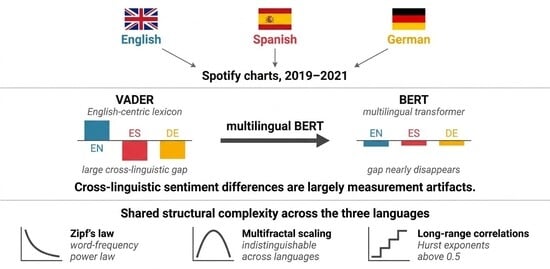
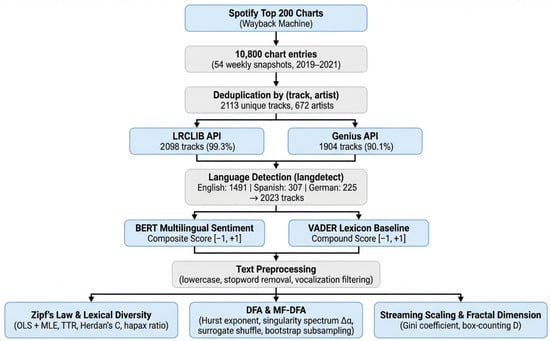
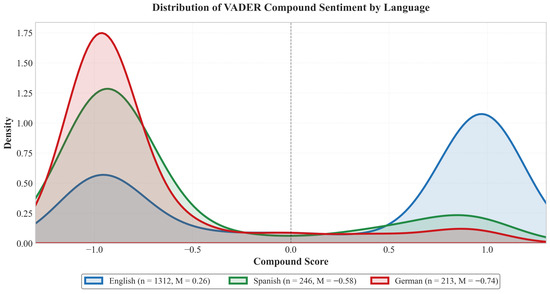
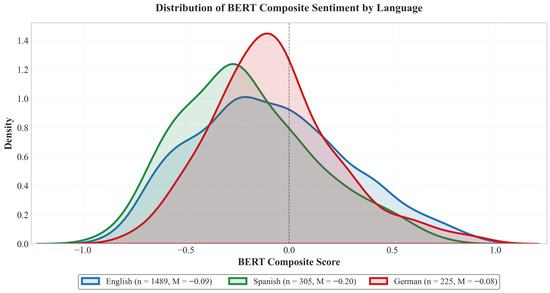
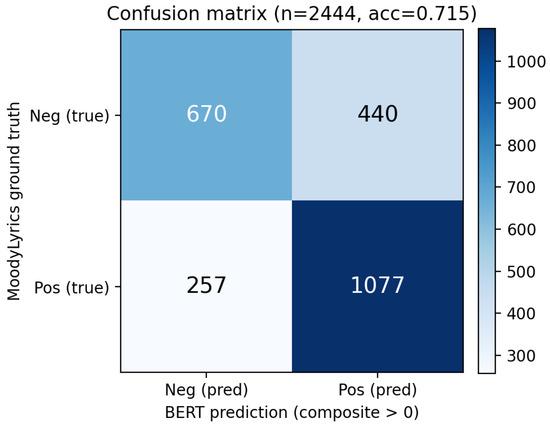
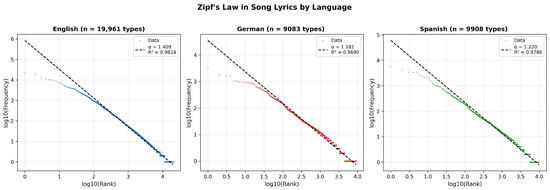
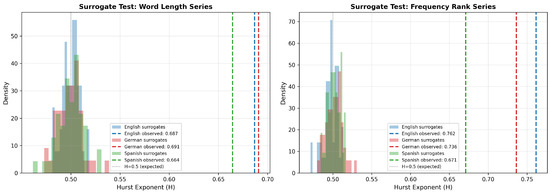
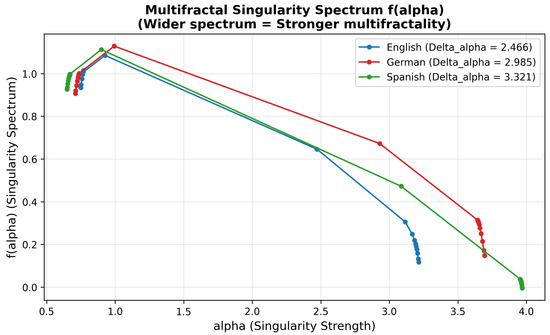
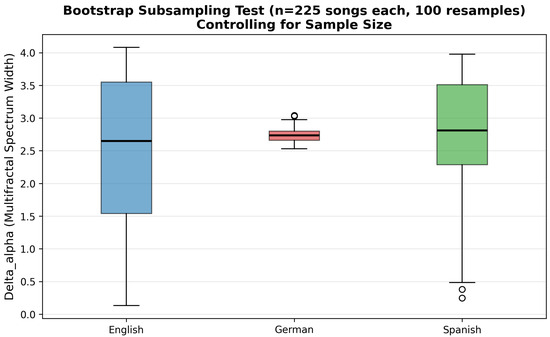
We investigate the linguistic complexity and emotional valence of popular song lyrics across English ( ), Spanish ( ), and German ( ), using an analytical corpus of 2023 tracks drawn from 2113 deduplicated tracks on Spotify’s weekly Top 200 charts (2019–2021). Transformer-based sentiment analysis is combined with complexity-science tools to characterize both the affective content and the structural organization of commercially successful lyrics. A multilingual BERT model reveals a mild negative skew across all three languages (63.7% negative overall); the 1.003-point English–German gap observed under the English-centric VADER lexicon collapses to 0.127 points under BERT, indicating that earlier cross-linguistic sentiment differences are largely measurement artifacts. Word frequency distributions follow Zipf’s law in all three languages ( ), with English steepest ( ) and German shallowest ( ). Detrended fluctuation analysis indicates persistent long-range correlations ( – ; none of the 50 shuffled surrogates exceeded the observed values), and multifractal singularity spectra are statistically indistinguishable across languages once corpus size is controlled (all pairwise Mann–Whitney ). Streaming counts within the Top 200 are concentrated (German Gini ) but, given the truncated single-snapshot sample, are reported as within-chart descriptors rather than population-level scaling.
Full article
(This article belongs to the Special Issue Next-Generation Semantic Multimedia: Generative AI, Human-Centric Personalization, and Digital Sustainability)
►▼
Show Figures

Graphical abstract
Open AccessArticle
A Policy-Based Rough Optimization with Large Neighborhood Search for Carbon-Aware Flexible Job Shop Scheduling with Tardiness Penalty
by
Saurabh Sanjay Singh and Deepak Gupta
Computers 2026, 15(5), 314; https://doi.org/10.3390/computers15050314 - 14 May 2026
Abstract
Sustainable manufacturing requires schedules that balance environmental responsibility with delivery reliability. This paper studies the Carbon-Aware Flexible Job Shop Scheduling Problem with Tardiness Penalty (CAFJSP-T), where total carbon emissions and total tardiness penalty are the primary objectives. We propose a Policy-based Rough Optimization
[...] Read more.
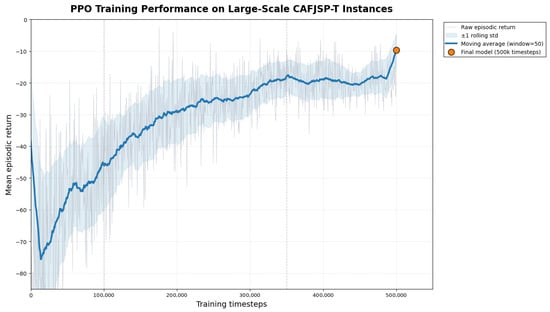
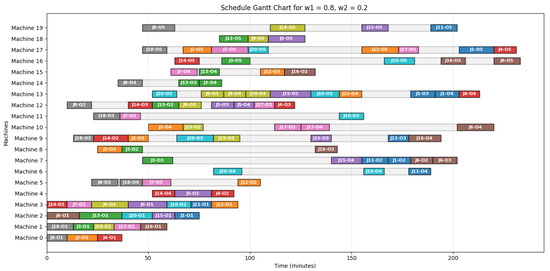
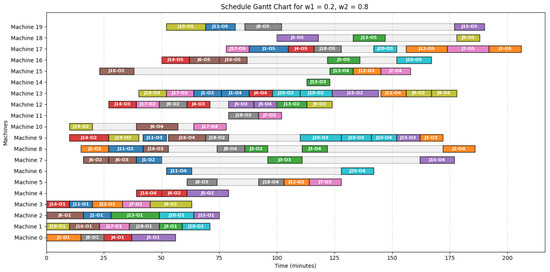
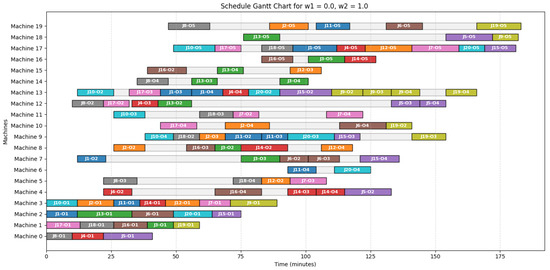
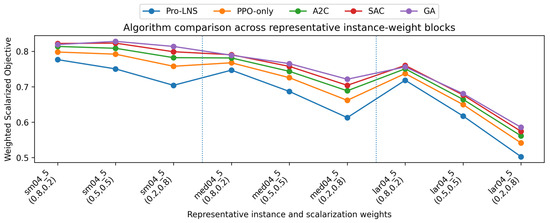
Sustainable manufacturing requires schedules that balance environmental responsibility with delivery reliability. This paper studies the Carbon-Aware Flexible Job Shop Scheduling Problem with Tardiness Penalty (CAFJSP-T), where total carbon emissions and total tardiness penalty are the primary objectives. We propose a Policy-based Rough Optimization with a Large Neighborhood Search (Pro-LNS) framework integrating Proximal Policy Optimization (PPO) and adaptive Large Neighborhood Search (LNS). PPO constructs a feasible schedule by selecting operation-machine assignments from job-readiness, machine-availability, earliest-completion, and critical-path features. This policy-generated schedule provides a structurally informed incumbent, enabling LNS to avoid unguided search and focus destroy-and-repair refinement on high-impact operations. Both phases use the same normalized scalarized carbon-tardiness objective, which guides PPO rewards and LNS removal, reinsertion, and acceptance while preserving precedence, eligibility, and capacity constraints. Experiments on small, medium, and large workcenter benchmarks show strong due-date performance and controlled carbon emissions. Under equal objective weighting, Pro-LNS achieves a median optimality gap of 6.12% relative to the exact formulation, with all instances within 14%, while requiring 4.08 s on average and at most 10.51 s. Comparisons with PPO-only, Advantage Actor-Critic (A2C), Soft Actor-Critic (SAC), and Genetic Algorithm (GA) schedulers show that Pro-LNS attains the best weighted scalarized objective across representative instance-weight settings. Friedman and Holm-corrected Wilcoxon tests confirm significant improvements over all competitors, with average weighted-objective gains of 4.90%, 7.25%, 8.81%, and 9.51% over PPO-only, A2C, SAC, and GA, respectively. These results demonstrate that Pro-LNS is an effective and computationally practical hybrid approach for carbon-aware, tardiness-sensitive flexible job shop scheduling.
Full article
(This article belongs to the Special Issue Operations Research: Trends and Applications)
►▼
Show Figures

Figure 1
Open AccessArticle
LoRA-Based Deep Learning for High-Fidelity Satellite Image Super-Resolution in Big Data Remote Sensing
by
Noha Rashad Mahmoud, Hussam Elbehiery, Basheer Abdel Fattah Youssef and Hanaa Bayomi Ali Mobarz
Computers 2026, 15(5), 313; https://doi.org/10.3390/computers15050313 - 14 May 2026
Abstract
High-resolution satellite imagery is pivotal for accurate analysis in remote sensing applications, including land-use monitoring, urban planning, and environmental assessment. However, obtaining such data is often costly and limited. Consequently, super-resolution techniques, such as deep learning models and fine-tuning strategies like LoRA, offer
[...] Read more.
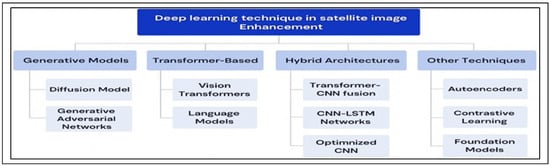
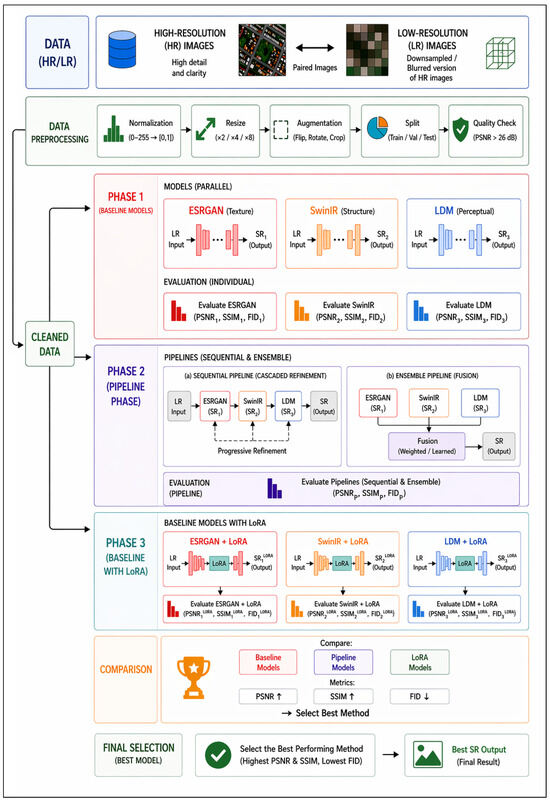
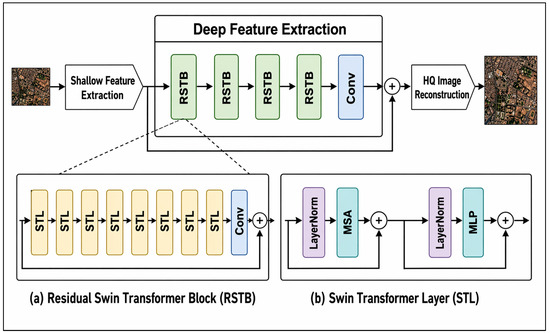
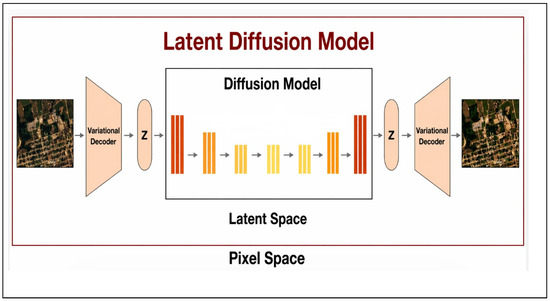
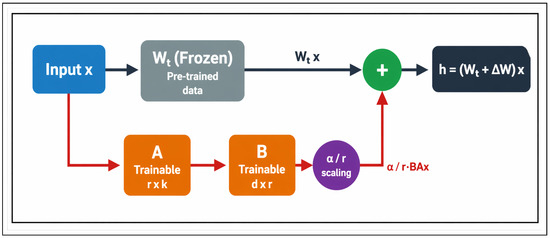
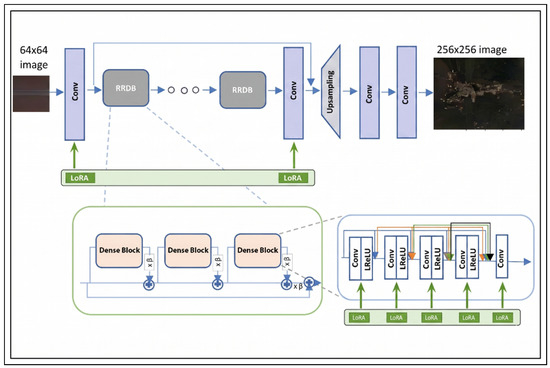
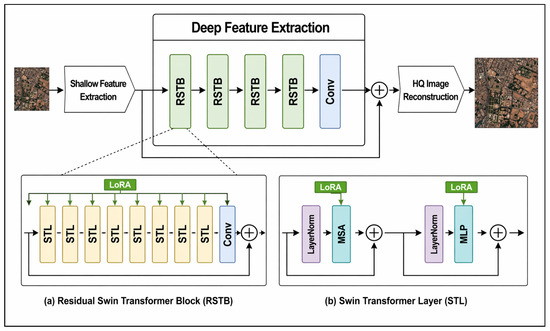
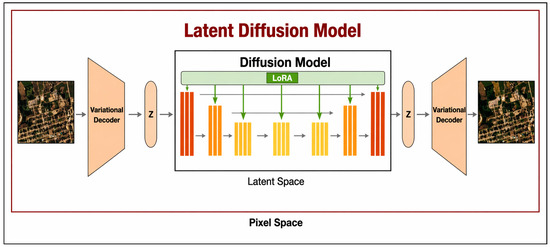
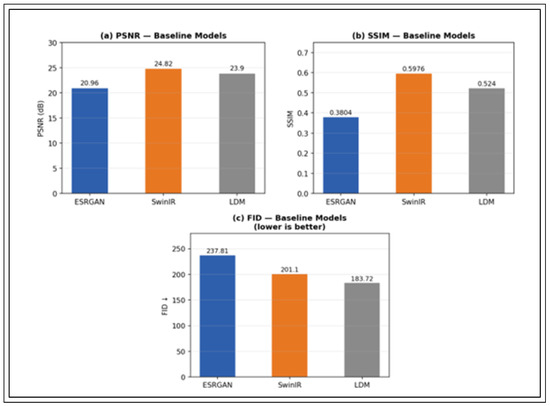
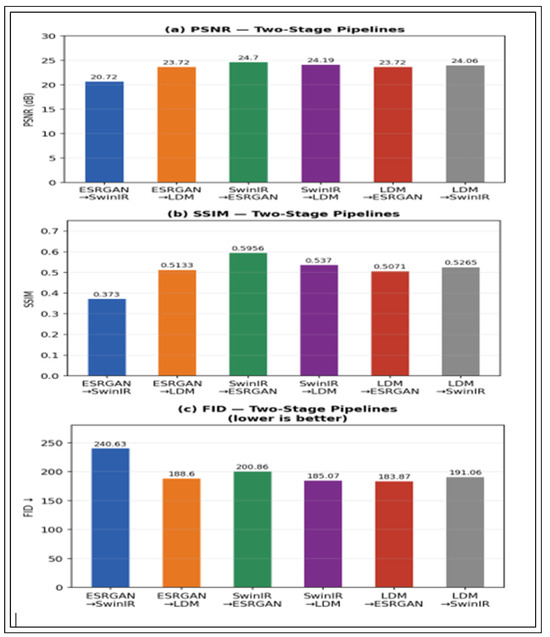
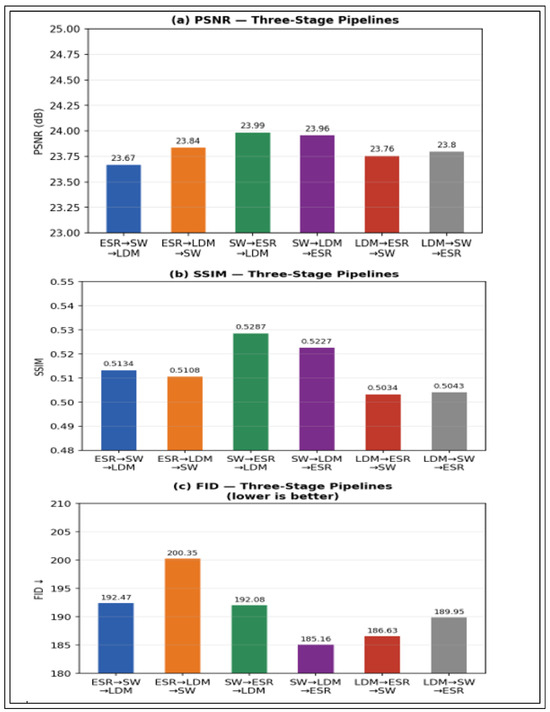
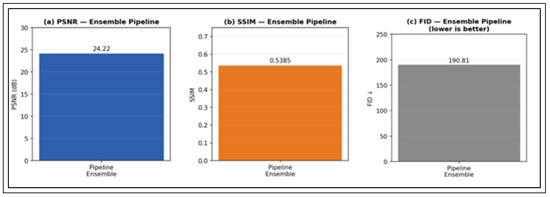
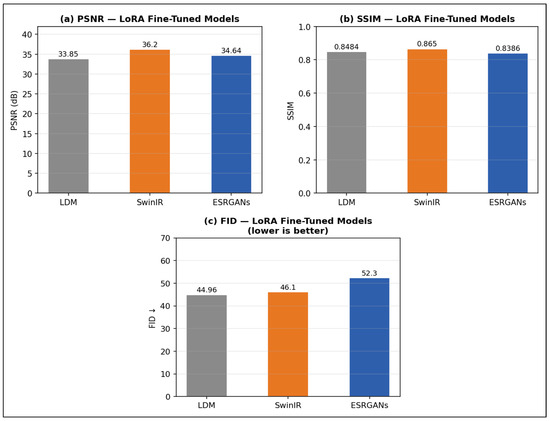
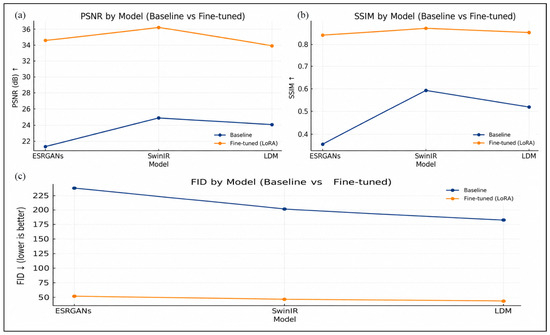
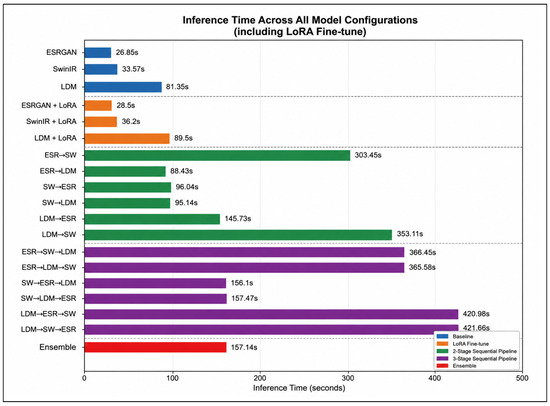
High-resolution satellite imagery is pivotal for accurate analysis in remote sensing applications, including land-use monitoring, urban planning, and environmental assessment. However, obtaining such data is often costly and limited. Consequently, super-resolution techniques, such as deep learning models and fine-tuning strategies like LoRA, offer a promising alternative to the critical research challenge, especially given the diversity and large scale of satellite datasets. While deep learning-based super-resolution models have been very promising recently, their effectiveness, efficiency, and scalability across heterogeneous satellite scenes are not well studied. This work studies the performance of representative deep learning Super-Resolution frameworks, including the Enhanced Super-Resolution Generative Adversarial Network. (ESRGAN), Swin Transformer for Image Restoration (SwinIR), and latent diffusion models (LDM), under unified experimental conditions using the WorldStrat dataset. The main goal is to establish whether adaptation strategies for parameter efficiency can boost reconstruction quality while reducing computational and training costs. Toward this goal, we investigate hybrid sequential pipelines, ensemble averaging, and Low-Rank Adaptation (LoRA)–based fine-tuning. The experiments indicate that these pipelines, which use multi-model methods, achieve only marginal performance gains while incurring substantial increases in computational complexity. LoRA-Based Fine-Tuning, by contrast, has demonstrated superiority in enhancing reconstruction accuracy and quality across all model families, despite using only a small percentage of trainable parameters. LoRA-based models demonstrate superiority over multi-model methods in both efficiency and performance. The presented results confirm that LoRA is an effective and accessible technique for high-fidelity satellite-based super-resolution image synthesis. The manuscript identifies LoRA as one of the enabling technologies advancing the state of the art in Deep Learning-based Super Resolution for large-scale satellite-based image synthesis.
Full article
(This article belongs to the Special Issue Machine Learning: Techniques, Industry Applications, Code Sharing, and Future Trends)
►▼
Show Figures

Figure 1
Open AccessArticle
Global Descriptors Features for Improved Detection of Textured Contact Lenses in Iris Images
by
Roqia Sailh Mahmood, Ismail Taha Ahmed and Mohamed A. Hafez
Computers 2026, 15(5), 312; https://doi.org/10.3390/computers15050312 - 14 May 2026
Abstract
Because textured contact lenses obscure the iris’s natural texture, they pose a serious threat to the accuracy of iris recognition systems and may make identity theft possible. Therefore, this work proposes a reliable method for textured contact lens detection that uses efficient global
[...] Read more.
Because textured contact lenses obscure the iris’s natural texture, they pose a serious threat to the accuracy of iris recognition systems and may make identity theft possible. Therefore, this work proposes a reliable method for textured contact lens detection that uses efficient global texture descriptors and effective feature selection with classification techniques. Run-Length and Zernike Moments are effective global texture descriptors that have been extracted from preprocessed iris images that were acquired from the IIIT-D CLI dataset. To improve classification performance, Ant Colony Optimization (ACO) was used to decrease the dimensionality of the feature vectors. Support Vector Machine (SVM) and Logistic Regression (LOG), two classifiers, have been evaluated with different descriptor pairings. According to findings from experiments, Zernike features optimized by ACO and paired with LOG produced the greatest accuracy of 98.04%, greatly surpassing previous methods. The efficacy of the presented approach for safe and dependable iris-based biometric systems is demonstrated by its exceptional results with regard to accuracy, recall, precision, and F1-score.
Full article
(This article belongs to the Special Issue AI in Bioinformatics)
►▼
Show Figures

Figure 1
Highly Accessed Articles
Latest Books
E-Mail Alert
News
Topics
Topic in
Applied Sciences, ASI, Blockchains, Computers, MAKE, Software
Recent Advances in AI-Enhanced Software Engineering and Web Services
Topic Editors: Hai Wang, Zhe HouDeadline: 31 May 2026
Topic in
Computers, Informatics, Information, Logistics, Mathematics, Algorithms
Decision Science Applications and Models (DSAM)
Topic Editors: Daniel Riera Terrén, Angel A. Juan, Majsa Ammuriova, Laura CalvetDeadline: 30 June 2026
Topic in
AI, Computers, Education Sciences, Societies, Future Internet, Technologies
AI Trends in Teacher and Student Training
Topic Editors: José Fernández-Cerero, Marta Montenegro-RuedaDeadline: 11 July 2026
Topic in
Applied Sciences, Automation, Computers, Electronics, Sensors, JCP, Mathematics
Intelligent Optimization, Decision-Making and Privacy Preservation in Cyber–Physical Systems
Topic Editors: Lijuan Zha, Jinliang Liu, Jian LiuDeadline: 31 August 2026
Conferences
Special Issues
Special Issue in
Computers
Advances in Failure Detection and Diagnostic Strategies: Enhancing Reliability and Safety
Guest Editor: Rafael PalaciosDeadline: 31 May 2026
Special Issue in
Computers
Wearable Computing and Activity Recognition
Guest Editors: Yang Gao, Yincheng JinDeadline: 31 May 2026
Special Issue in
Computers
High-Performance Computing (HPC) and Computer Architecture
Guest Editors: Taskin Kocak, Ron (Rongyu) LinDeadline: 31 May 2026
Special Issue in
Computers
Edge and Fog Computing for Internet of Things Systems (3rd Edition)
Guest Editors: Luís Nogueira, Jorge CoelhoDeadline: 20 June 2026