


-
A Unified Morphosyntactic Analysis of Reduplication as Inclusion -
Investigating Grammatical Aspect Choices in Oral Narratives of Greek Heritage Speakers: A Corpus-Based Study -
Majority Language Influence and Heritage Language Maintenance in a Small Transnational Community: Hungarian-Hebrew Families in Israel -
Grammatical Gender Retrieval: The Influence of L2 Dutch on L1 German
Journal Description
Languages
Languages
is an international, multidisciplinary, peer-reviewed, open access journal on interdisciplinary studies of languages published monthly online by MDPI. The European Society for Transcultural and Interdisciplinary Dialogue (ESTIDIA) is affiliated with Languages and its members receive discounts on the article processing charges.
- Open Access— free for readers, with article processing charges (APC) paid by authors or their institutions.
- High Visibility: indexed within Scopus, ESCI (Web of Science), ERIH Plus, and other databases.
- Journal Rank: JCR - Q2 (Linguistics) / CiteScore - Q1 (Language and Linguistics)
- Rapid Publication: manuscripts are peer-reviewed and a first decision is provided to authors approximately 55.2 days after submission; acceptance to publication is undertaken in 9.6 days (median values for papers published in this journal in the second half of 2025).
- Recognition of Reviewers: reviewers who provide timely, thorough peer-review reports receive vouchers entitling them to a discount on the APC of their next publication in any MDPI journal, in appreciation of the work done.
- Journal Cluster of Human Thought and Cultural Expression: Culture, Histories, Humanities, Languages, Literature and Religions.
Impact Factor:
1.2 (2024);
5-Year Impact Factor:
1.2 (2024)
Latest Articles
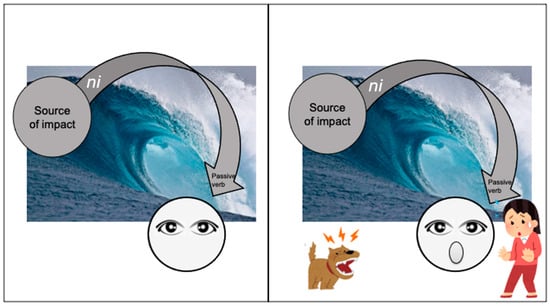
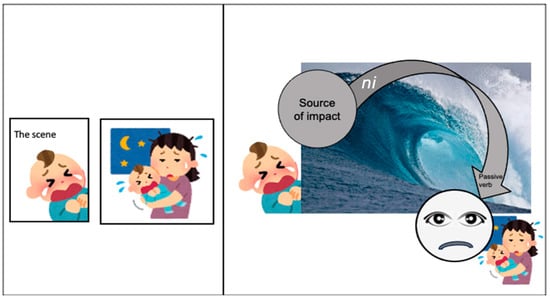
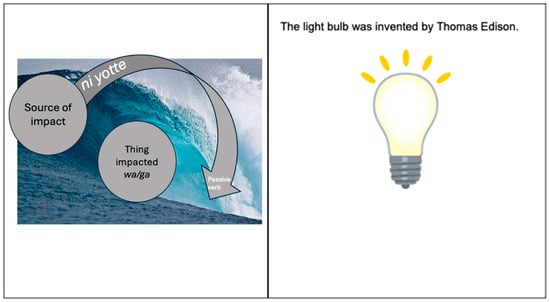
How a Usage-Based Approach Promotes Conceptual Development and Natural Use of Japanese Passives: Evidence from Concept-Based Language Instruction
Languages 2026, 11(6), 108; https://doi.org/10.3390/languages11060108 - 25 May 2026
Abstract
L1 transfer is well-attested in SLA; negative transfer is common when learners encounter a typologically distinct language. English-speaking learners often struggle with Japanese passives, which differ significantly from English passives both conceptually and grammatically. While English passives primarily defocus the agent, Japanese passives
[...] Read more.
L1 transfer is well-attested in SLA; negative transfer is common when learners encounter a typologically distinct language. English-speaking learners often struggle with Japanese passives, which differ significantly from English passives both conceptually and grammatically. While English passives primarily defocus the agent, Japanese passives serve multiple semantic and discourse functions, often maintaining a focus on (and empathy toward) the experiencer. This small study examines how conceptual understandings drawn from usage-based (UB) analyses influence the acquisition of Japanese passives. Using corpus studies and acquisition research as a foundation, we developed concept-based language instruction (C-BLI) integrating UB-focused concepts. Our analysis of students’ oral languaging, gesture, and story-writing data from an immediate post-test and two delayed (3 weeks and 6 months post-instruction) post-tests show individual differences and demonstrate how a UB-based C-BLI approach facilitated developmental processes in Japanese over time; students improved their grasp of concepts taught via multi-modal materials, including visual materializations of concepts and ocean wave gestures. Conceptual and linguistic development were evidenced via oral languaging and story-writing. The most frequently used passive verb was iu ‘say,’ which has been found to be often passivized in L1 speakers’ production and previous SLA research. Findings contribute to broader discussions of how conceptual restructuring may affect L2 acquisition of complex grammatical constructions.
Full article
(This article belongs to the Special Issue Usage-Based Approaches to Second Language Acquisition: Crosslinguistic Perspectives)
►
Show Figures
Open AccessReview
Pragmatic Theorizing in, and Through, Modern Greek: A Roadmap of Past and Ongoing Research
by
Stavros Assimakopoulos and Anna Piata
Languages 2026, 11(5), 107; https://doi.org/10.3390/languages11050107 - 20 May 2026
Abstract
This paper aims to offer a state-of-the-art overview of the ways in which research on Modern Greek has informed—and been informed by—theorizing in the field of pragmatics. In charting this (rather uncharted) territory, our aim is to demonstrate that Modern Greek pragmatics does
[...] Read more.
This paper aims to offer a state-of-the-art overview of the ways in which research on Modern Greek has informed—and been informed by—theorizing in the field of pragmatics. In charting this (rather uncharted) territory, our aim is to demonstrate that Modern Greek pragmatics does not only reflect the evolution of pragmatic enquiry from a narrow conceptualization to a much broader one that encompasses interactional, social and cultural specifications, but has also contributed new insights into pragmatic theory that surpass the purview of Modern Greek linguistics. While acknowledging that delimiting the remit of pragmatics is far from evident or even unanimously agreed, our overview envisages to provide the reader with a roadmap of past and ongoing research with a view to highlighting how general pragmatic principles interact with the language- and culture-specific parameters that are available to speakers of Modern Greek.
Full article
(This article belongs to the Special Issue Greek Speakers and Pragmatics)
Open AccessArticle
The Acquisition of Syntactic Structures in Typical and Atypical Language Development: Insights from Growing Trees and Syntactic Cartography in a New Sentence Repetition Task
by
Elena Casadei and Adriana Belletti
Languages 2026, 11(5), 106; https://doi.org/10.3390/languages11050106 - 19 May 2026
Abstract
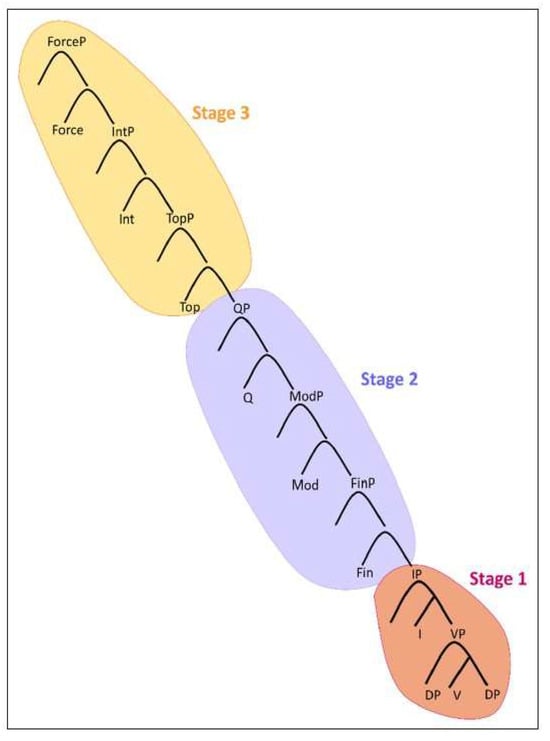
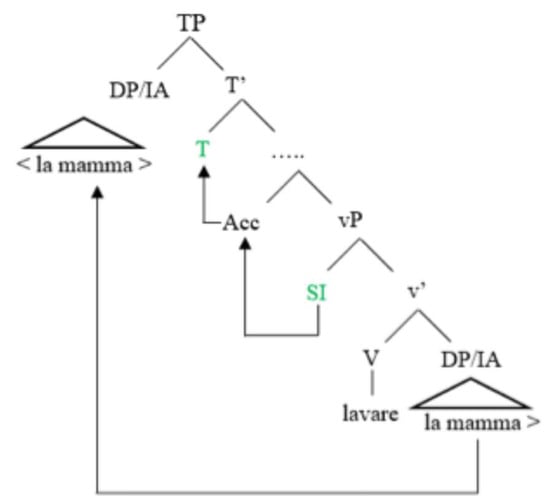
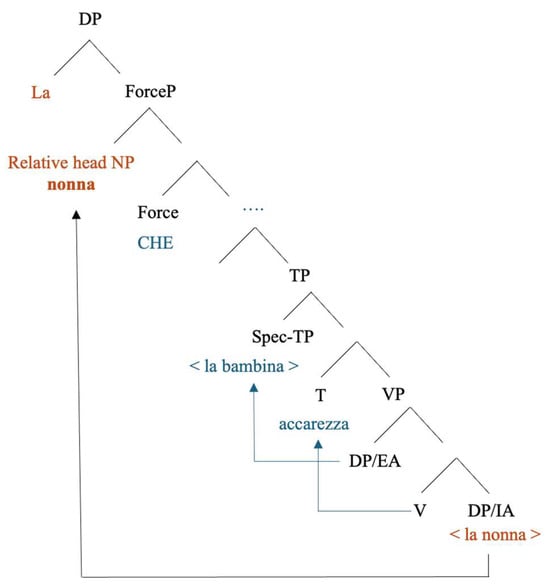
This study presents a newly developed Sentence Repetition Task/SRT as a tool designed to investigate the acquisition of different syntactic structures in children with typical development (TD) and Developmental Language Disorder (DLD). The tool is grounded in the Growing Trees (GT, henceforth) approach,
[...] Read more.
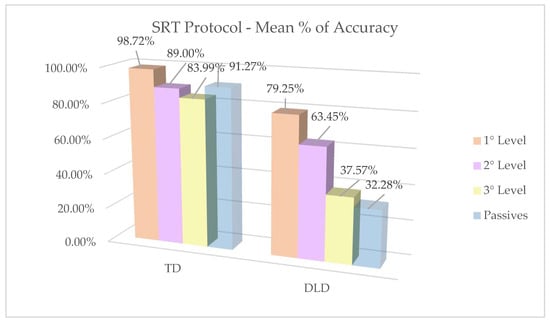
This study presents a newly developed Sentence Repetition Task/SRT as a tool designed to investigate the acquisition of different syntactic structures in children with typical development (TD) and Developmental Language Disorder (DLD). The tool is grounded in the Growing Trees (GT, henceforth) approach, which assumes that developmental progression reflects the hierarchical growth of the syntactic tree, as described in cartographic analyses of clause structure. The SRT Protocol was constructed following the three developmental stages identified by GT: VP/TP, lower zone of the Left Periphery (LP henceforth), and higher LP zone. A preliminary pilot version was administered to 27 TD and 28 DLD children, followed by a revised second version with improved item design and broader syntactic coverage, administered to 28 TD and 21 DLD children. Descriptive and inferential analyses demonstrate a clear hierarchy in the acquisition of Italian morphosyntax, fully consistent with the three-stage developmental progression predicted by the model. Children with DLD follow the same path but with delayed acquisition and slower consolidation of certain structures. These findings provide developmentally grounded benchmarks for identifying morphosyntactic delays and show that the SRT Protocol is a reliable tool for profiling early syntactic development. Crucially, the protocol supports diagnosis and clinical practice by helping clinicians ensuring interventions that are both theoretically informed and aligned with syntactic growth.
Full article
(This article belongs to the Special Issue Morpho(phono)logy/Syntax Interface)
►▼
Show Figures

Figure 1

Open AccessArticle
Analyzability and Multiverbal Constructions in Diachrony: The Case of Latin i nunc et Vimp
by
Laura Cabré Lunas and Esther Artigas Álvarez
Languages 2026, 11(5), 105; https://doi.org/10.3390/languages11050105 - 19 May 2026
Abstract
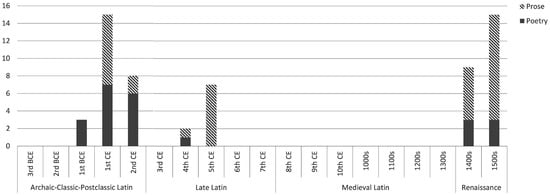
This article examines the Latin construction i nunc et Vimp from the perspective of diachronic analyzability. The expression consists of two imperative forms with identical morphological marking—the first a motion verb (V1), the second a lexical verb—linked by the conjunction et.
[...] Read more.
This article examines the Latin construction i nunc et Vimp from the perspective of diachronic analyzability. The expression consists of two imperative forms with identical morphological marking—the first a motion verb (V1), the second a lexical verb—linked by the conjunction et. Rather than encoding a literal directive sequence, the construction conveys a rhetorical exhortative value that systematically guides discourse interpretation in a direction different from that suggested by its surface form. Although attested from the Imperial period onward, the construction is analyzed against the background of serial imperatives with a motion verb in initial position and verbal pseudocoordination, patterns documented not only in Archaic Latin but also in other historical Indo-European languages. On the basis of an exhaustive corpus, the study assesses the contribution of each constituent in order to account for the construction’s global value. The analysis shows that i nunc et Vimp displays an uneven degree of analyzability: while its components remain formally and syntactically transparent, its semantic and pragmatic analyzability is reduced, as the elements do not contribute compositionally to propositional content but function as a pragmatically unitized block. Overall, the article highlights the central role of analyzability in diachronic change, including processes of unitization and constructional de/recategorization.
Full article
(This article belongs to the Special Issue Romance Historical Syntax: Special Issue on Syntactic Analyzability in Diachrony)
►▼
Show Figures

Figure 1
Open AccessArticle
Tone in Mabia Languages: Structure and Processes
by
Alexander Angsongna, Samuel Alhassan Issah, Hasiyatu Abubakari, Darius Adjong, Abraham Kwesi Bisilki, Samuel Awinkene Atintono and Adams Bodomo
Languages 2026, 11(5), 104; https://doi.org/10.3390/languages11050104 - 14 May 2026
Abstract
►▼
Show Figures
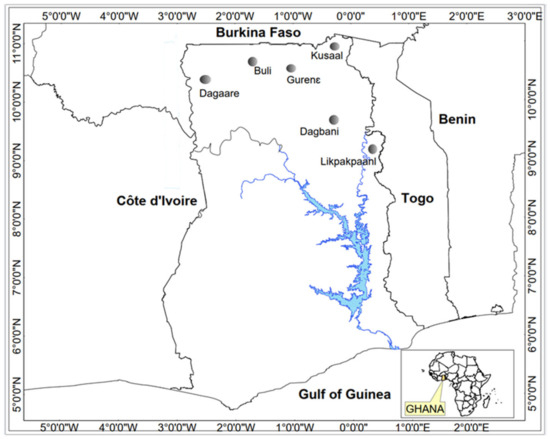
The Mabia languages belong to the Niger–Congo family and are spoken primarily across the savannah and Sahelian regions of West Africa, including northern Ghana, Ivory Coast, Togo, Benin, Nigeria, Burkina Faso, Niger, and Mali. Tone plays a crucial role in these languages, shaping
[...] Read more.
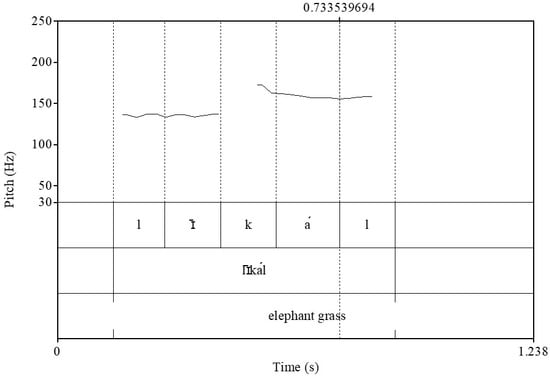
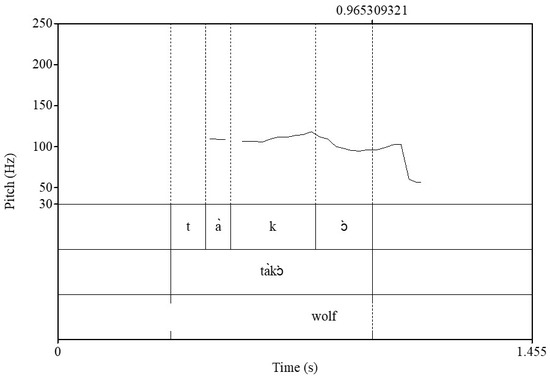
The Mabia languages belong to the Niger–Congo family and are spoken primarily across the savannah and Sahelian regions of West Africa, including northern Ghana, Ivory Coast, Togo, Benin, Nigeria, Burkina Faso, Niger, and Mali. Tone plays a crucial role in these languages, shaping both lexical meaning and grammatical structure. This study is a synthesis or an overview of previously described facts about the tonal phenomena in six Mabia languages, Dagaare, Dagbani, Gurenɛ, Kusaal, Likpakpaln, and Buli—highlighting their tonal inventories, structures, and distinctive tonal processes. Dagaare and Dagbani exhibit a two-tone system (high and low), with an additional down-stepped high tone. Kusaal, Likpakpaln, and Buli employ a three-tone system (high, mid, and low), while the tonal status of Gurenɛ remains contested: some scholars describe it as a two-tone language, whereas others provide evidence for a three-tone system. The mid tone, though relatively less productive, appears to represent a later innovation within the group. The mid tone performs both lexical and grammatical functions. Notable tonal phenomena across these languages include tonal polarity, low tone spreading, and restrictions on contour tones, with Buli exhibiting particularly productive low tone spread. In all six languages, tone plays both lexical and grammatical functions. This paper explores these features and offers basic theoretical explanations for their occurrence. Overall, tone is a defining characteristic of the Mabia languages, intricately shaping their phonological and morphological structures.
Full article

Figure 1
Open AccessArticle
General Extenders and Syntactic Analyzability: Sp. y todo eso vs. y todo
by
Margarita N. Borreguero Zuloaga
Languages 2026, 11(5), 103; https://doi.org/10.3390/languages11050103 - 14 May 2026
Abstract
This study examines the historical and functional divergence between two Spanish general extenders, y todo eso and y todo, in order to determine whether the loss of syntactic analyzability can serve as a criterion for distinguishing stages of grammaticalization and identifying pragmatic
[...] Read more.
This study examines the historical and functional divergence between two Spanish general extenders, y todo eso and y todo, in order to determine whether the loss of syntactic analyzability can serve as a criterion for distinguishing stages of grammaticalization and identifying pragmatic shifts. Drawing on extensive diachronic and synchronic corpus data, the analysis compares the formal evolution, semantic properties and pragmatic functions of both constructions. The results show that y todo eso follows a prototypical grammaticalization path marked by a progressive reduction in its internal structure, the weakening of referential meaning, and increasing freedom from syntactic constraints, while preserving analyzability through alternation with the simpler form y eso. In contrast, y todo displays an earlier and more advanced process of grammaticalization, dating back to medieval Spanish, in which the construction undergoes semantic bleaching, loss of additive value, and reanalysis as a scalar focus marker. These findings support the view that y todo no longer functions as a general extender in contemporary Spanish, whereas y todo eso retains this status, illustrating how syntactic analyzability correlates with shifts between pragmatic categories.
Full article
(This article belongs to the Special Issue Romance Historical Syntax: Special Issue on Syntactic Analyzability in Diachrony)
Open AccessArticle
Austriacisms and Their Co-Variants—Short-Term Diachrony in the 21st Century
by
Alexandra N. Lenz, Andreas Baumann, Wolfgang Koppensteiner, Claudia Mattes, Theresa Ziegler and Amelie Dorn
Languages 2026, 11(5), 102; https://doi.org/10.3390/languages11050102 - 13 May 2026
Abstract
The focus of our contribution is on lexical Austriacisms, i.e., lexical features of the Austrian standard language. Whereas in previous studies, only a small set of Austriacisms has been examined, with food terms being particularly popular, this contribution considers 76 lexical variables with
[...] Read more.
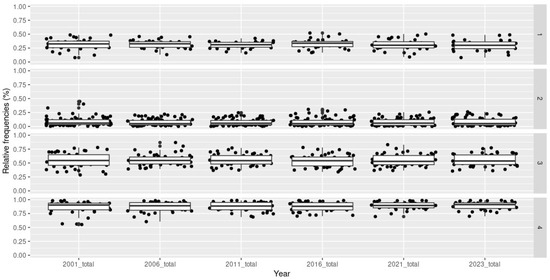
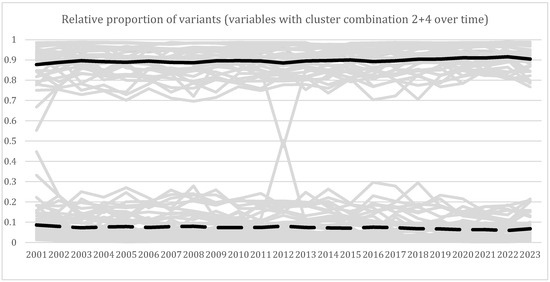
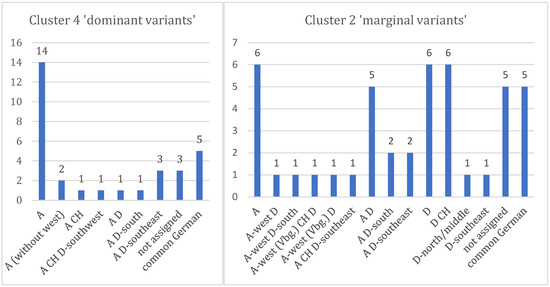
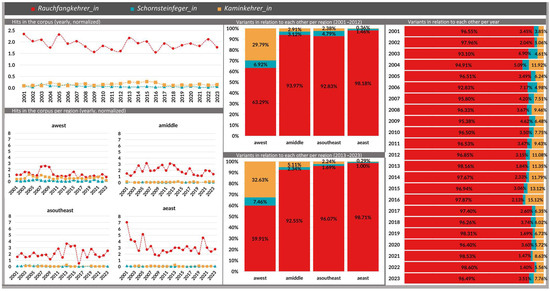
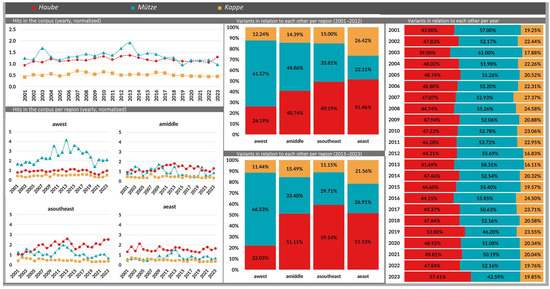
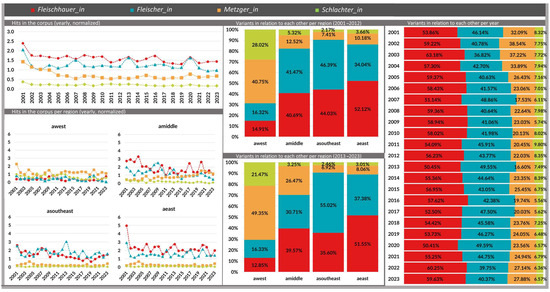
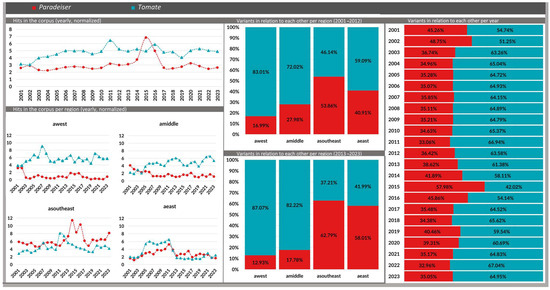
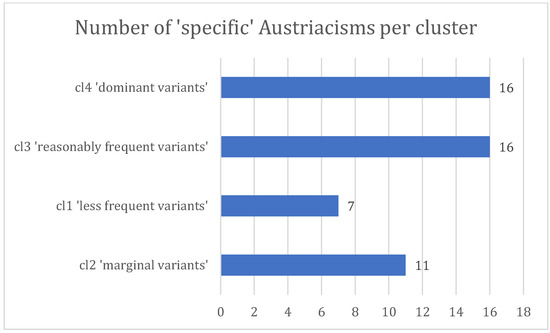
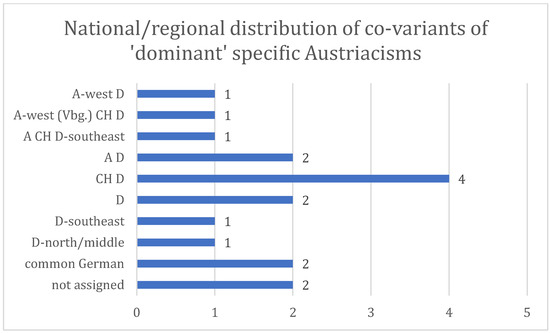
The focus of our contribution is on lexical Austriacisms, i.e., lexical features of the Austrian standard language. Whereas in previous studies, only a small set of Austriacisms has been examined, with food terms being particularly popular, this contribution considers 76 lexical variables with 205 variants (Austriacisms and their co-variants), which are examined through complex variationist corpus analyses. The data is provided by the Austrian Media Corpus (amc), which represents the language use of the Austrian print media landscape in the 21st century. The analyses are both (short-term) diachronic and synchronic, taking into account the variation in vivo. Irrespective of the frequency-based “starting point” of a variant at the beginning of the 21st century, its relative frequency remains at comparable levels in the course of the observation period. Contrary to the threat scenarios of previous studies, our corpus analyses indicate the relative stability of the majority of Austriacisms over the 23 years studied (2001–2023).
Full article
(This article belongs to the Special Issue Advances in Variationist Linguistics on German—Focus on Lexis and Pragmatics)
►▼
Show Figures

Figure 1

Open AccessArticle
L1 Attrition in Instructed Settings: Evidence from L1 Spanish–L2 English Bilinguals
by
Elena García-Guerrero and Cristóbal Lozano
Languages 2026, 11(5), 101; https://doi.org/10.3390/languages11050101 - 13 May 2026
Abstract
This study investigates first language attrition in the interpretation and processing of relative clause attachment ambiguities among instructed late sequential L1 Spanish–L2 English bilinguals. Traditionally, L1 attrition has been associated with limited L1 use and exposure, along with extensive naturalistic immersion. This study
[...] Read more.
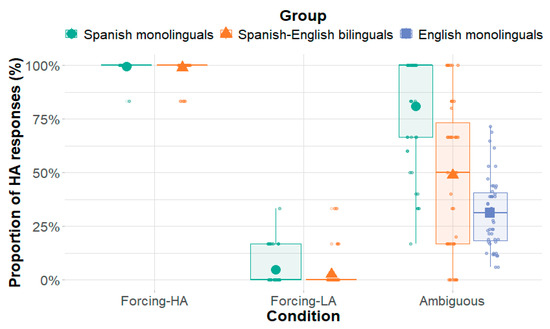
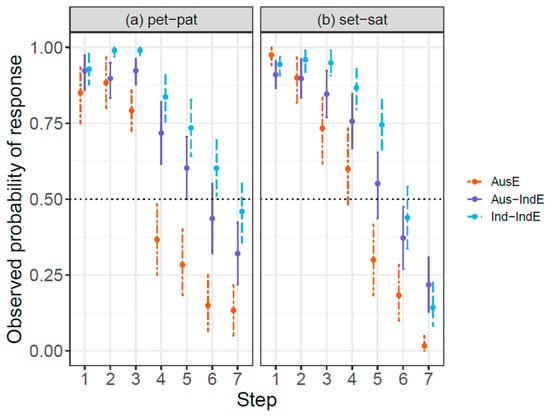
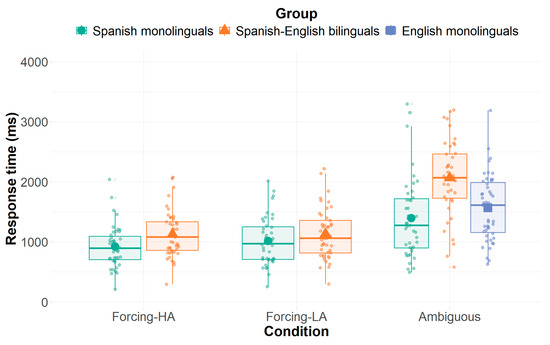
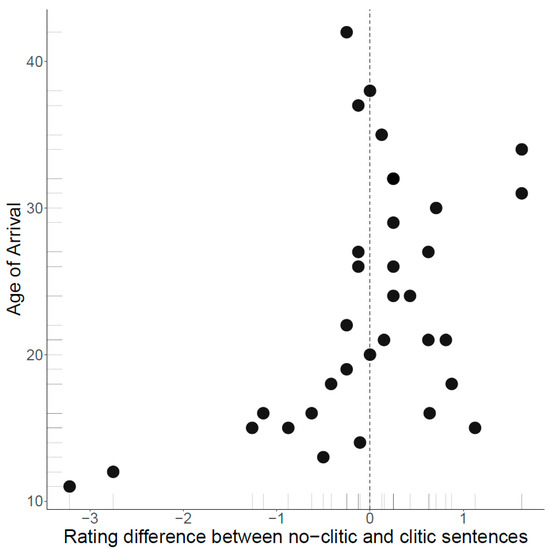
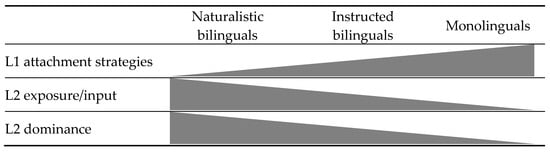
This study investigates first language attrition in the interpretation and processing of relative clause attachment ambiguities among instructed late sequential L1 Spanish–L2 English bilinguals. Traditionally, L1 attrition has been associated with limited L1 use and exposure, along with extensive naturalistic immersion. This study questions these conditions as prerequisites of attrition, examining bilinguals who live in an L1 environment but are extensively exposed to their second language in an instructed, classroom-based university setting. Bilinguals were compared with two native control groups of Spanish and English monolinguals. Results from a picture selection task reveal L1 attrition effects in instructed bilinguals, as they rely less frequently on their L1-preferred disambiguation strategy, i.e., high attachment, when resolving ambiguous relative clauses, particularly in comparison to Spanish monolinguals. Instructed bilinguals also exhibit higher processing when processing ambiguous sentences. Additionally, the study explores whether language dominance modulates attrition effects. We consider the implications of these findings for our understanding of grammatical attrition across different input contexts.
Full article
(This article belongs to the Special Issue Determining the Scope, Nature and Causes of Attrition in Adult L1 Grammars)
►▼
Show Figures

Figure 1
Open AccessArticle
Insights on the Realization of Nominal Evaluative Morphology in the Modern Greek Dialect of Lesbos
by
Dimitra Melissaropoulou
Languages 2026, 11(5), 100; https://doi.org/10.3390/languages11050100 - 13 May 2026
Abstract
This paper investigates evaluative morphology in the modern dialect of Lesbos, focusing on the morphological strategies used for nominal evaluation, the range of meanings they express, and the characteristics that distinguish Modern Lesbian from other varieties. Special attention is given to borrowing and
[...] Read more.
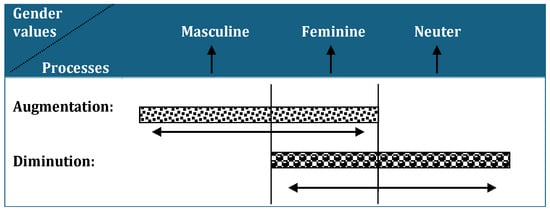
This paper investigates evaluative morphology in the modern dialect of Lesbos, focusing on the morphological strategies used for nominal evaluation, the range of meanings they express, and the characteristics that distinguish Modern Lesbian from other varieties. Special attention is given to borrowing and the integration of markers serving evaluative functions in the dialect. Dialectal data are drawn from available primary and secondary written sources. The analysis shows that Modern Greek dialects, Lesbian in particular, which have largely escaped the effects of diglossia and standardization, constitute an especially valuable resource for linguistic research, as they reveal prototypical tendencies of linguistic systems. These tendencies include the preference for specific gender values as defaults in the expression of diminution and augmentation, the overwhelming productivity of specific markers, closely linked to the local dialectal identity, the symmetrical distribution of suffixes and prefixoids in the realization of positive and negative evaluative meanings, and the creative adaptation of borrowed evaluative elements.
Full article
(This article belongs to the Special Issue The Modern Dialect of Lesbos: Selected Topics)
►▼
Show Figures

Figure 1
Open AccessArticle
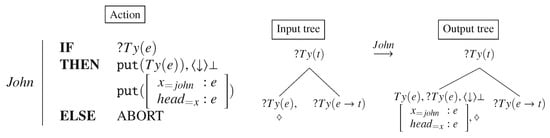
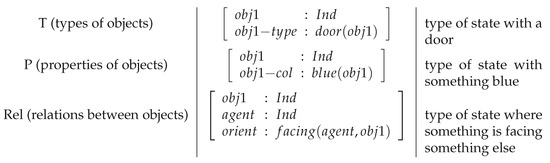
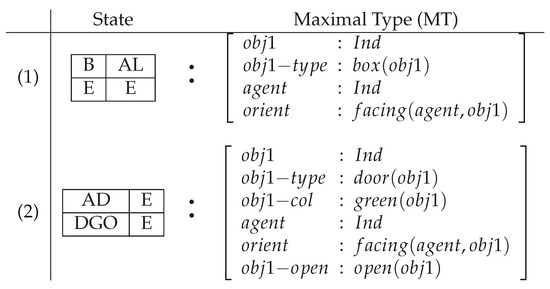
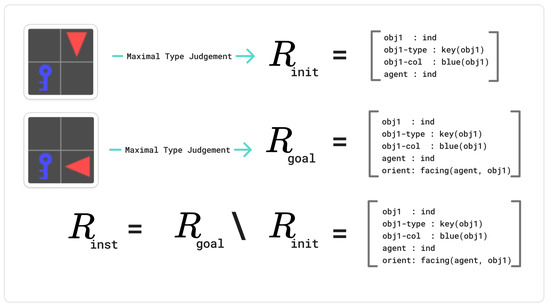
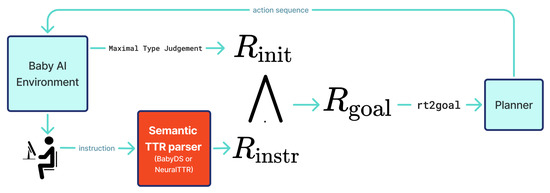
BabyDS: Visually Grounded Grammar Induction with Online Curriculum Learning
by
Arash Ashrafzadeh, Julian Hough and Arash Eshghi
Languages 2026, 11(5), 99; https://doi.org/10.3390/languages11050099 (registering DOI) - 12 May 2026
Abstract
Recent research in grounded language learning has seen remarkable success due to advances in large vision and language models (VLMs). However, these models (i) are extremely costly to train and update; (ii) struggle with generalisation; and (iii) do not support continual learning.
[...] Read more.
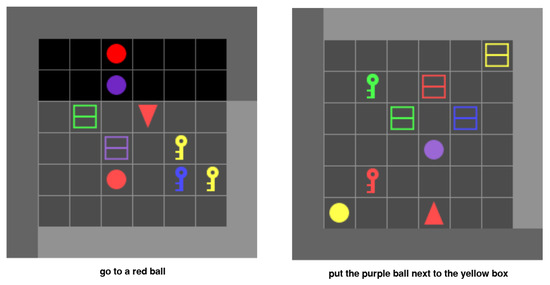
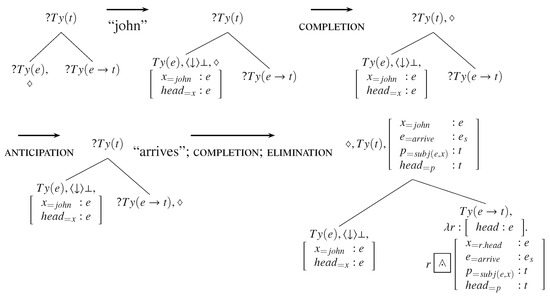
Recent research in grounded language learning has seen remarkable success due to advances in large vision and language models (VLMs). However, these models (i) are extremely costly to train and update; (ii) struggle with generalisation; and (iii) do not support continual learning. In this paper, we introduce baby-ds integrating the Dynamic Syntax (DS) framework with automated planning within the multimodal BabyAI platform as a testbed. We provide methods whereby DS lexicons are induced continually from teacher demonstrations within BabyAI. We study (i–iii) by experimenting with the compositional complexity of natural language instructions in the data to compare data efficiency, generalisation, and continual learning properties of baby-ds with a simple neural model. The results show that the baby-ds model: (i) needs much less data than the neural model to reach threshold performance; (ii) generalises much faster to more complex instructions; and (iii) is a more effective continual learner. We argue that it is the attendant linguistic bias within DS and the rich inferential power of TTR that enables (i–iii), highlighting the importance of further research on hybrid grammar–neural approaches. Finally, we discuss several important limitations of baby-ds and sketch a path forward for further DS research.
Full article
(This article belongs to the Special Issue The Development of Dynamic Syntax)
►▼
Show Figures

Figure 1

Open AccessArticle
Australian Indian English: Contact-Induced Adaptation in the Perception of Vowel Categories
by
Olga Maxwell, Elinor Payne, Debbie Loakes and Mitko Sabev
Languages 2026, 11(5), 98; https://doi.org/10.3390/languages11050098 (registering DOI) - 11 May 2026
Abstract
Increased global mobility has intensified contact between regional English varieties, creating new opportunities for large-scale second dialect acquisition. Australia, with its rapidly growing population due to migration, offers a particularly dynamic context for exploring such contact. This study investigates how first-generation Indian migrants
[...] Read more.
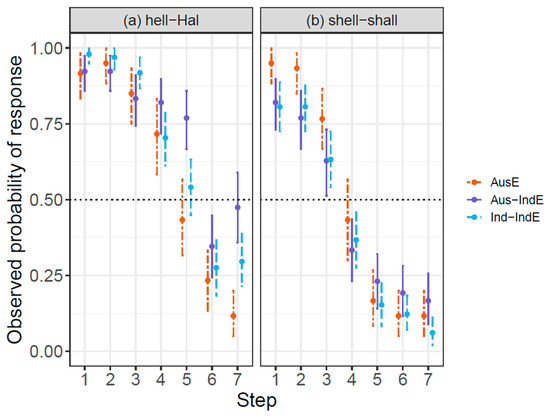
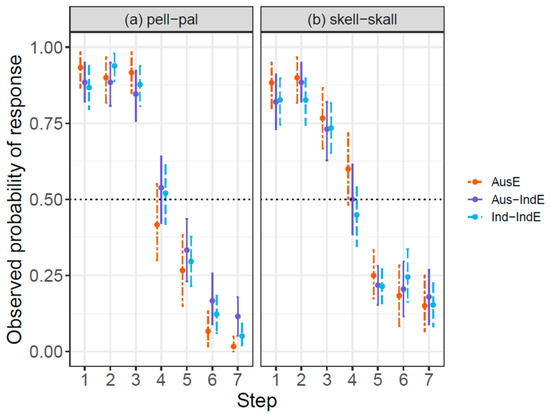
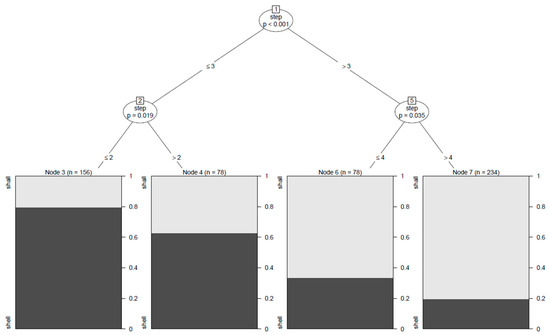
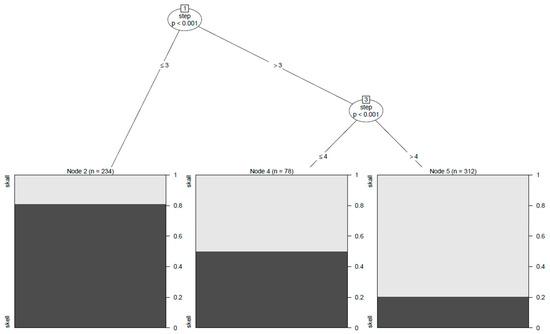
Increased global mobility has intensified contact between regional English varieties, creating new opportunities for large-scale second dialect acquisition. Australia, with its rapidly growing population due to migration, offers a particularly dynamic context for exploring such contact. This study investigates how first-generation Indian migrants in the Australian city of Melbourne perceive Australian English vowels in the lexical items dress and trap, a contrast chosen because of sound changes that are well-documented for this location. Listeners completed a vowel categorization task involving target words in non-lateral and lateral contexts. To assess contact-induced adaptation, their responses were compared with those of Australian English speakers in Australia and those of Indian English speakers in India. The results reveal that perceptual adaptation among first-generation Indian migrants in Australia is context-dependent. In the non‑lateral coda context, migrant Indian English listeners (in Australia) showed intermediate responses, between those of Australian English listeners (in Australia) and Indian English listeners (in India), indicative of a relatively ‘linear’ adaptation towards Australian English. Responses to stimuli in the lateral coda context, however, revealed a more complex picture. Australian English listeners (in Australia) and Indian English listeners (in India) responded more closely to one another than migrant Indian English listeners (in Australia), with the latter instead exhibiting a substantial degree of perceptual confusion toward the endpoint of the continuum for hell–Hal and, to a lesser extent, for shell–shall and pell–pal. These findings suggest that in the perceptual adaptation to a second dialect, the acquisition of a wider pool of phonetic variants is mediated by the acquisition of structural knowledge.
Full article
(This article belongs to the Special Issue Advances in Australian English)
►▼
Show Figures

Figure 1
Open AccessArticle
Vocabulary, Morpho-Syntactic Skills, and Home Literacy Activities as Predictors of Reading Comprehension in Greek–English Bilingual Children: A Semi-Longitudinal Study
by
Theodora Papastefanou and Theodoros Marinis
Languages 2026, 11(5), 97; https://doi.org/10.3390/languages11050097 (registering DOI) - 11 May 2026
Abstract
The present study aimed to investigate the performance of bilingual/biliterate children on expressive vocabulary and morpho-syntactic skills and the extent to which home literacy activities (HLA) contribute to primary school Greek–English bilingual children’s performance on reading comprehension. Forty children attending Years 1 and
[...] Read more.
The present study aimed to investigate the performance of bilingual/biliterate children on expressive vocabulary and morpho-syntactic skills and the extent to which home literacy activities (HLA) contribute to primary school Greek–English bilingual children’s performance on reading comprehension. Forty children attending Years 1 and 3 at an English primary school in the UK were assessed in language and decoding skills. After one school year, they were assessed in oral language skills, decoding, and reading comprehension in Years 2 and 4. The children performed better on all tasks at Time 2 than at Time 1, and the older children performed better than the younger ones. Their performance was better in the English tasks than in the Greek tasks. Greek morpho-syntactic skills and HLA were significant predictors of Greek reading comprehension, suggesting that children may use their morpho-syntactic knowledge to support their reading comprehension in their heritage language. Moreover, heritage language exposure through HLA can benefit literacy of the heritage language.
Full article
Open AccessReview
Using L2 Properties in Native Grammars: What Constitutes Evidence for Representational Change?
by
Liz Smeets
Languages 2026, 11(5), 96; https://doi.org/10.3390/languages11050096 - 9 May 2026
Abstract
A major question in L1 attrition research is whether cross-linguistic influence from a speaker’s second language onto their first constitutes only a temporary, superficial effect or whether it can also lead to a structural change, often discussed as a distinction between effects on
[...] Read more.
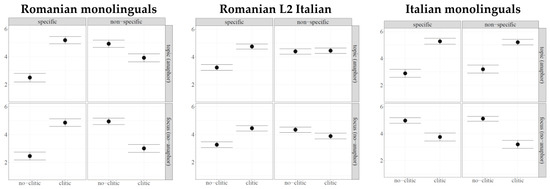
A major question in L1 attrition research is whether cross-linguistic influence from a speaker’s second language onto their first constitutes only a temporary, superficial effect or whether it can also lead to a structural change, often discussed as a distinction between effects on language processing as opposed to changes to the mental representation of grammatical properties. Some have argued that L1 grammars of adult L2 speakers are entirely impervious to change, while others stated that some of the available findings can be interpreted as grammatical representations themselves being vulnerable. This paper contributes to the question of how we can distinguish between these two types of attrition. I argue that it is challenging to use behavioral differences across tasks as well as experimental results showing optionality between L1 and L2 options to distinguish between a superficial and a structural change. Instead, situations where properties of an attriter’s L1 grammar converge on the L2 constitute the clearest case of structural change as these cannot be explained as temporary effects of L2 influence. Using data from an earlier study on attrition found in Romanian native speakers living in Italy, I furthermore challenge the claim that L2 convergence only occurs in rare situations where attriters lose contact with the L1. To better understand the contexts in which attrition at the level of representation may be possible, I suggest that future studies focus on (1) a variety of linguistic properties where the L1 allows a grammatical construction or interpretation also in situations where it is not used in the L2, (2) properties where options from both the L1 and the L2 are less likely to co-exist in an attritred grammar and (3) consistently include analyses of individual response patterns.
Full article
(This article belongs to the Special Issue Determining the Scope, Nature and Causes of Attrition in Adult L1 Grammars)
►▼
Show Figures

Figure 1
Open AccessArticle
The Suffixes -ˈaδa and -iˈa in Modern Lesbian: Aspects of Polysemy and Morphological Competition
by
Angeliki Efthymiou
Languages 2026, 11(5), 95; https://doi.org/10.3390/languages11050095 - 8 May 2026
Abstract
This paper investigates two derivational suffixes of the Lesbian dialect -ˈaδa and -iˈa, focusing on their shared characteristics, historical development, and semantic range. Both suffixes display dual etymological origins, form feminine nouns, and exhibit notable polysemy. The study focuses on assessing the degree
[...] Read more.
This paper investigates two derivational suffixes of the Lesbian dialect -ˈaδa and -iˈa, focusing on their shared characteristics, historical development, and semantic range. Both suffixes display dual etymological origins, form feminine nouns, and exhibit notable polysemy. The study focuses on assessing the degree and patterns of polysemy associated with these suffixes in the Modern Lesbian dialect, with particular emphasis on their comparison to Standard Modern Greek and on cases of morphological competition. It is argued that both suffixes are closely linked to a subjectively delimited reality, as shaped by direct perception and observation in everyday life, and at the same time they function within a complex morphological ecosystem, where they display areas of both competition and functional differentiation. The suffix -ˈaδa typically refers to a property or state directly observable by the speaker, and thus to an entity defined by a dominantly noticeable characteristic. In contrast, the suffix -iˈa is considerably more polysemous than ˈaδa, conveying individualization, and forming nouns that reflect the speaker’s viewpoint while denoting entities perceived as bounded.
Full article
(This article belongs to the Special Issue The Modern Dialect of Lesbos: Selected Topics)
Open AccessArticle
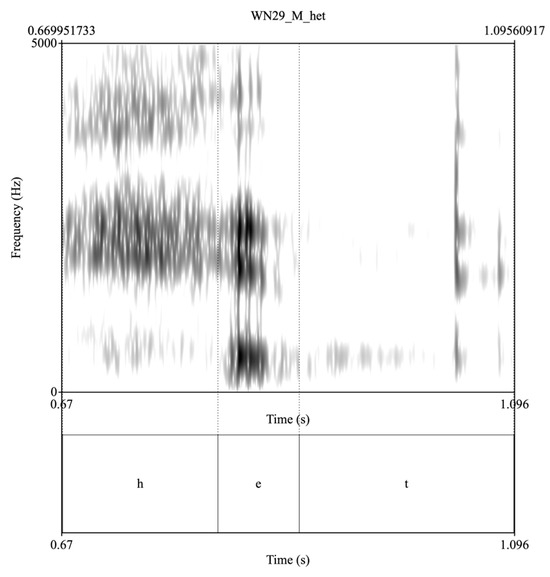
/t/ Production in Mainstream and Aboriginal Australian Englishes in Warrnambool and Mildura: A Sociophonetic Acoustic Study
by
Debbie Loakes, Kirsty McDougall and Adele Gregory
Languages 2026, 11(5), 94; https://doi.org/10.3390/languages11050094 - 7 May 2026
Abstract
A sociophonetic study of coda /t/ in Australian Englishes spoken in Warrnambool and Mildura, Victoria, Australia, is described. A total of 2112 coda /t/ tokens produced by 61 adult L1 speakers was analyzed using auditory and acoustic profiling, focusing on four social factors
[...] Read more.
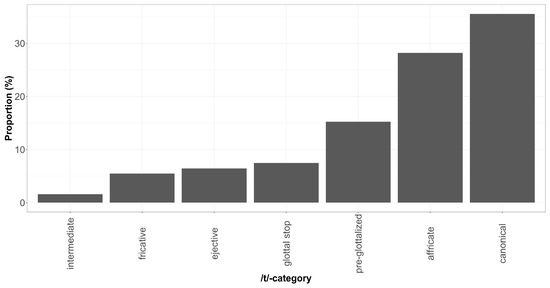
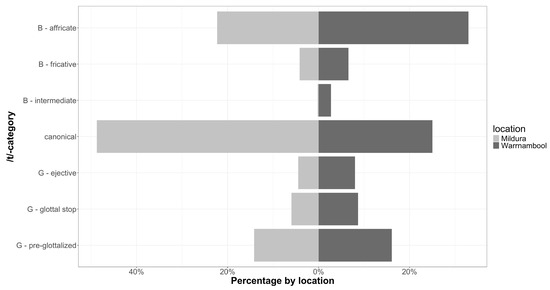
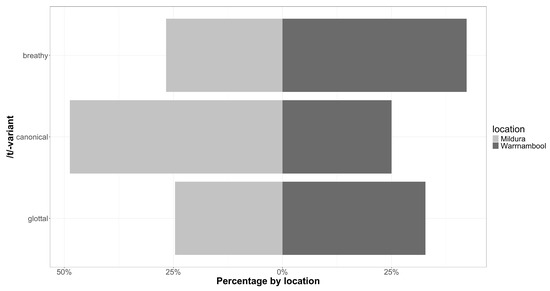
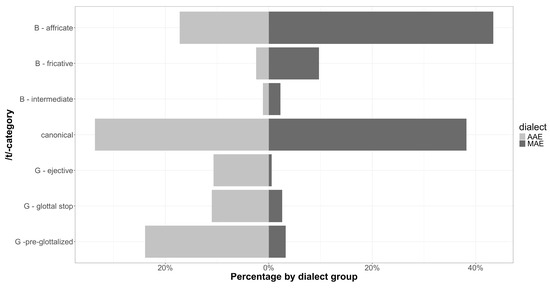
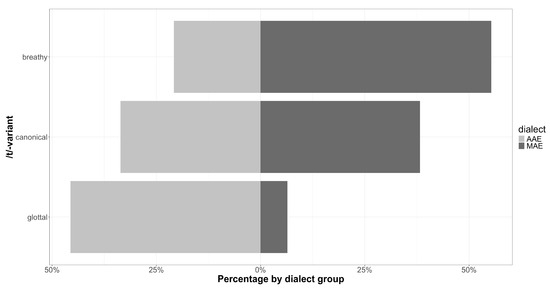
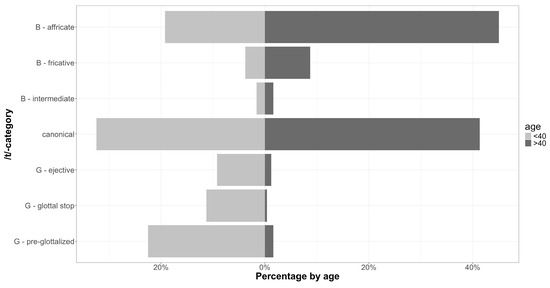
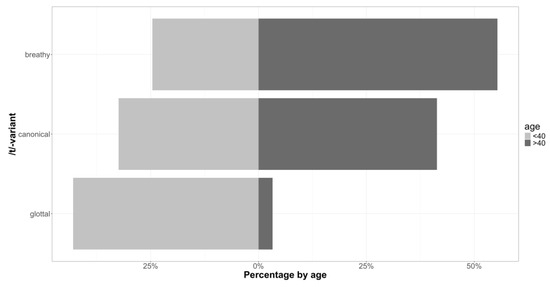
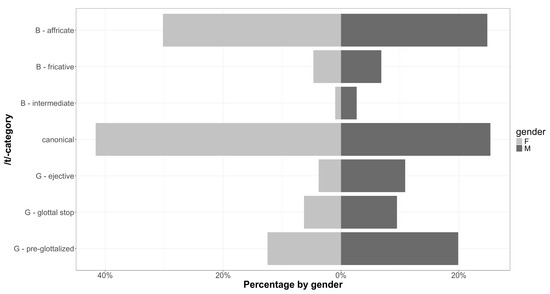
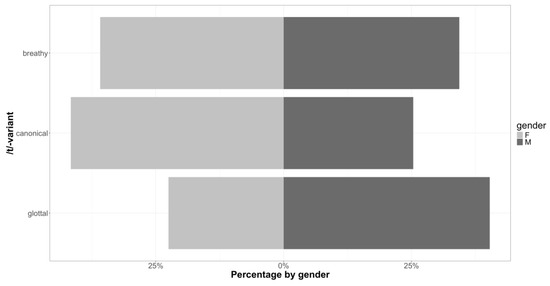
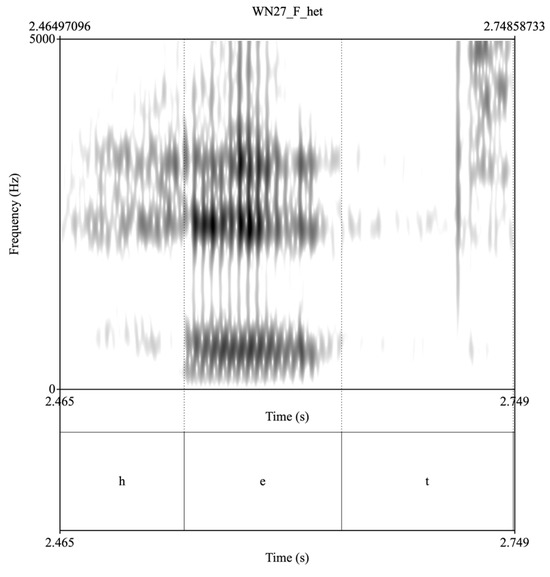
A sociophonetic study of coda /t/ in Australian Englishes spoken in Warrnambool and Mildura, Victoria, Australia, is described. A total of 2112 coda /t/ tokens produced by 61 adult L1 speakers was analyzed using auditory and acoustic profiling, focusing on four social factors (location, dialect, age and gender). The corpus included 33 Aboriginal English and 28 Mainstream Australian English speakers (24 male, 37 female) who fell into roughly equal age groups of <40 and >40 years. Overall, the “canonical” (aspirated) variant [th] was most frequently observed, followed by affricate [ts] and pre-glottalized [ˀt]; these variants accounted for 79% of all tokens. As for sociophonetic patterning, the best-fitting model included all four predictors (location, dialect, age and gender), with random intercepts for speaker and word. Dialect (Aboriginal or Mainstream Australian English) and age showed the strongest sociophonetic patterning, followed by limited effects for location. Variants were subsequently grouped into three superordinate categories—“breathy”, “canonical” (aspirated) and “glottal”—and a model was created including all four predictors and all two-way interactions between them, with random intercepts for speaker and word. This model showed that linking variants with broad voice qualities highlights even stronger sociophonetic patterning in some cases and is a promising direction for future research. The study contributes findings to three under-explored areas: consonant variability in Australian Englishes, fine-grained phonetic variation in Australian Aboriginal English, and analysis of speech from non-urban locations.
Full article
(This article belongs to the Special Issue Advances in Australian English)
►▼
Show Figures

Figure 1
Open AccessReview
Narrative Skills in Autistic and Non-Autistic Preschool Children: A Scoping Review
by
Sofia Kouvava, Katerina Antonopoulou, Aglaia Stampoltzis, Sofia Mavropoulou, Eirini Patroumpa, Aggelos Tzoumailis and Eleni Peristeri
Languages 2026, 11(5), 93; https://doi.org/10.3390/languages11050093 - 7 May 2026
Abstract
Background/Objectives: Narrative skills play an important role in children’s overall development from a very young age, and they are linked to social behavior, as well as several emotional and cognitive outcomes. Young autistic children often experience difficulties in their narrative skills and
[...] Read more.
Background/Objectives: Narrative skills play an important role in children’s overall development from a very young age, and they are linked to social behavior, as well as several emotional and cognitive outcomes. Young autistic children often experience difficulties in their narrative skills and these difficulties may impact their social interactions. The present study reviews recent findings to detect factors influencing narrative development in autistic and non-autistic preschool children, and to identify trends or gaps in the existing literature. Following screening and eligibility assessment, 39 studies met the inclusion criteria and were included in the review. Methods: The Preferred Reporting Items for Systematic reviews and Meta-Analyses extension for Scoping Reviews (PRISMA-ScR) guidelines were followed. Results: Non-autistic children show a clear, age-related progression in narrative skill development, moving from simple to complex structures at the level of microstructure and advanced inferential abilities at the level of macrostructure, which are strongly linked to core language and cognitive development. Conversely, autistic children primarily face challenges in narrative macrostructure and coherence, demonstrating deficits in integrating information and making inferences, which is consistent with weak central coherence in autism. Conclusions: The evidence suggests that narrative development in autism reflects qualitative differences rather than mere delay, particularly in the organization and integration of macrostructural story elements. These findings underscore the importance of interventions that move beyond surface-level linguistic skills to explicitly target global coherence, causal structuring, and inferential reasoning. Future research should further clarify developmental trajectories and the mechanisms linking narrative competence with broader social and cognitive outcomes.
Full article
(This article belongs to the Topic Language Disorders in Autism Spectrum Disorders (ASDs))
►▼
Show Figures

Figure 1
Open AccessArticle
Morphosyntactic Marking of Focus: Subject–Object Asymmetries in Bantu
by
Paul Roger Bassong, Edmond Ossoko and Luigi Rizzi
Languages 2026, 11(5), 92; https://doi.org/10.3390/languages11050092 - 6 May 2026
Abstract
In many African languages, there exists a type of subject–object asymmetry by which subject focus must be expressed by A-bar movement to a morphologically marked left peripheral position whereas object focalisation can be expressed by movement and morphological marking in the left periphery,
[...] Read more.
In many African languages, there exists a type of subject–object asymmetry by which subject focus must be expressed by A-bar movement to a morphologically marked left peripheral position whereas object focalisation can be expressed by movement and morphological marking in the left periphery, or in situ. In this article, we discuss and analyse this structural asymmetry in the Bantu languages Basaá and Mmaala. We argue that overt and covert movement of the focused object to Spec-FocP in the left periphery is allowed while covert movement of the subject is blocked, so that overt movement is the only possible option. Contrary to previous analyses, which attribute the obligatoriness of subject focus movement and marking to an interpretive conflict, we propose a formal characterisation of this phenomenon by which the blocking of subject focalisation in situ is deduced from criterial freezing, so that overt movement to the left periphery is the only option, through a familiar strategy of overt subject extraction.
Full article
(This article belongs to the Special Issue Morpho(phono)logy/Syntax Interface)
Open AccessArticle
Etymological Principles and Dialectological Lexicography: Revised Etymologies in the Vocabulary of the Dialect of Lesbos
by
Georgia Katsouda
Languages 2026, 11(5), 91; https://doi.org/10.3390/languages11050091 - 6 May 2026
Abstract
Scientific etymological analysis, applicable to both standard and dialectal vocabulary/lexicon, is predicated on core methodological principles that necessitate a word’s cross-regional and diachronic examination. A fundamental principle of etymological research is that successfully identifying a word’s origin requires systematic examination and comparison of
[...] Read more.
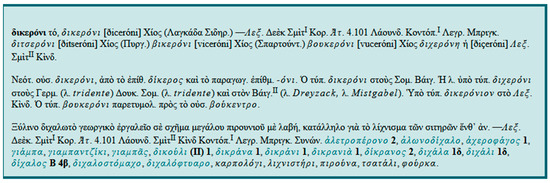
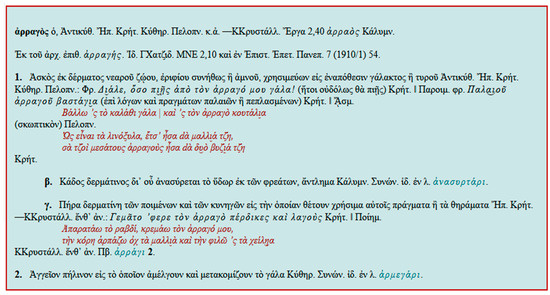
Scientific etymological analysis, applicable to both standard and dialectal vocabulary/lexicon, is predicated on core methodological principles that necessitate a word’s cross-regional and diachronic examination. A fundamental principle of etymological research is that successfully identifying a word’s origin requires systematic examination and comparison of all available sources and dialectal data. The aim of this article is to address lacunae in the etymological record of the Lesbian dialect by presenting new data that either resolves longstanding uncertainties or necessitates a scholarly revision of specific word origins. The dialectal words of Lesbos and the etymologies under examination were extracted from dictionaries of the dialect of Lesbos. More specifically, fresh etymological data and new etymological proposals are presented for words from the dialectal vocabulary of Lesbos, such as ɣraɣúða ‘a kind of pot’, karnokáftis ‘stingy’, kumsú/kumpsú ‘gossiper, mocker’, lulúða ‘silly woman’, malastúfa ‘oakum’, tsiróɲ ‘fork’, fáirop ‘order to do something immediately’, psirúts ‘a traditional crème’, xaxóʎs ‘rowdy, noisy person’, and xʎimídza ‘purslane’.
Full article
(This article belongs to the Special Issue The Modern Dialect of Lesbos: Selected Topics)
►▼
Show Figures

Figure 1
Open AccessArticle
Again on the Existence of Causative Periphrases in Spanish: The Case of “enviar/mandar a + Infinitive”
by
Carlos I. Echeverría
Languages 2026, 11(5), 90; https://doi.org/10.3390/languages11050090 - 6 May 2026
Abstract
The concept of verbal periphrasis has historically been a controversial one in Romance linguistics, especially in the Hispanic context, where there has been disagreement as to what multiverbal constructions should be considered periphrastic. One of the points of contention has been the class
[...] Read more.
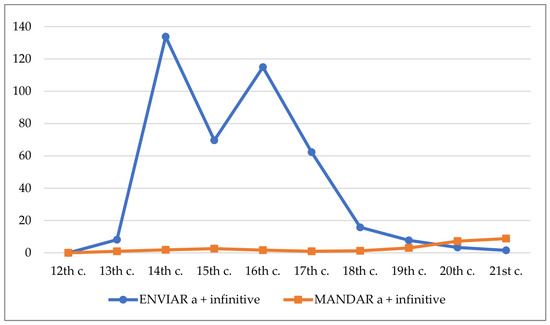
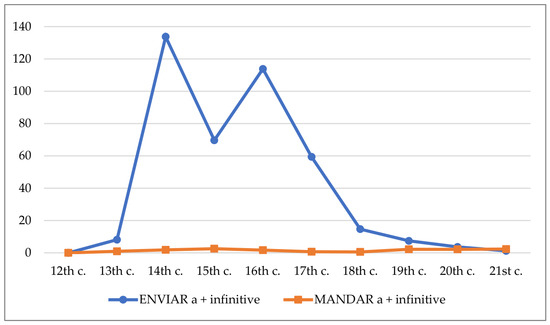
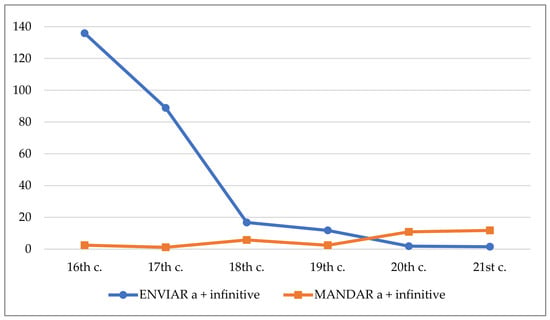
The concept of verbal periphrasis has historically been a controversial one in Romance linguistics, especially in the Hispanic context, where there has been disagreement as to what multiverbal constructions should be considered periphrastic. One of the points of contention has been the class of infinitive causatives. This article revisits the controversy by focusing on Spanish “enviar/mandar a + infinitive” structures and drawing on historical corpus data. The analysis of various examples leads to the conclusion that strictly periphrastic instances of this constructional class are present across all main stages of the history of Spanish. Additionally, a series of quantitative analyses reveals what appear to be two distinct grammaticalization processes and a degrammaticalization process. These findings are discussed in connection with broader themes in the field, such as syntactic ambiguity and the concept of analyzability.
Full article
(This article belongs to the Special Issue Romance Historical Syntax: Special Issue on Syntactic Analyzability in Diachrony)
►▼
Show Figures

Figure 1
Open AccessArticle
Morphosyntactic Integration of Single-Word Anglicisms in Border Mexican Spanish
by
Ruben Roberto Peralta-Rivera and Rafael Saldívar-Arreola
Languages 2026, 11(5), 89; https://doi.org/10.3390/languages11050089 - 5 May 2026
Abstract
Loanword Research on Anglicisms has largely centered on lexical borrowing and phonological adaptation with comparatively limited attention to morphosyntactic integration in recipient grammars. This study examines the morphosyntactic behavior of 74 single-word Anglicisms—monosyllabic structures with monophthongal vowels—drawn from phonetically classified corpora of spontaneous
[...] Read more.
Loanword Research on Anglicisms has largely centered on lexical borrowing and phonological adaptation with comparatively limited attention to morphosyntactic integration in recipient grammars. This study examines the morphosyntactic behavior of 74 single-word Anglicisms—monosyllabic structures with monophthongal vowels—drawn from phonetically classified corpora of spontaneous Mexican Spanish produced by Spanish–English bilinguals in the Tijuana–San Diego border region. Building on prior acoustic analyses based on F1 and F2 vowel measurements, the study investigates the relationship between phonological adaptation and morphosyntactic integration. Results reveal a gradient pattern of incorporation. Anglicisms exhibiting Spanish-like phonetic properties tend to occupy canonical syntactic positions and show greater compatibility with Spanish functional morphology, whereas phonetically non-adapted forms more frequently resist morphological marking and display island-like behavior within otherwise Spanish clauses. The analysis examines distribution across nominal, adjectival, and prepositional domains and object positions to assess morphosyntactic integration degrees. The former is illustrated as follows: (1) guardo cash ([kaʃ]) por si acaso; (2) si hacen match ([mæʧ]), puede funcionar. Adopting a usage-based and contact-oriented perspective for syntactic borrowing, the study is situated within the Matrix Language Frame model and recent approaches to insertional borrowing. A central contribution lies in establishing a principled link between morphosyntactic behavior and an independently motivated phonetic classification, offering convergent evidence for the systematic integration of Anglicisms into Spanish grammar. At a broader analytical level, the study advances debates on syntactic borrowing and contact-induced change by demonstrating that Anglicisms are subject to Spanish morphosyntactic constraints rather than functioning as unconstrained lexical insertions, and by developing an interface-based account of borrowing that captures the gradient nature of grammatical incorporation in contact settings and contributes a corpus-based, empirically grounded perspective to typologies of borrowing in Spanish contact linguistics.
Full article
(This article belongs to the Special Issue Shifting Borders: Spanish Morphosyntax in Contact Zones)
Journal Menu
► ▼ Journal Menu-
- Languages Home
- Aims & Scope
- Editorial Board
- Topical Advisory Panel
- Instructions for Authors
- Special Issues
- Topics
- Article Processing Charge
- Indexing & Archiving
- Editor’s Choice Articles
- Most Cited & Viewed
- Journal Statistics
- Journal History
- Journal Awards
- Society Collaborations
- Editorial Office
- 10th Anniversary
Journal Browser
► ▼ Journal BrowserHighly Accessed Articles
Latest Books
E-Mail Alert
News
Topics
Topic in
Behavioral Sciences, Languages, Neurology International
Language Disorders in Autism Spectrum Disorders (ASDs)
Topic Editors: Vasiliki Zarokanellou, Maria Andreou, Katerina PapanikolaouDeadline: 30 June 2026
Special Issues
Special Issue in
Languages
Advances in Syllabic Structure: Where Are the Syllables in the World’s Languages?
Guest Editor: João VelosoDeadline: 1 June 2026
Special Issue in
Languages
Social Communication Disorders in Childhood: Interdisciplinary Approaches to Assessment and Intervention
Guest Editors: Weifeng Han, Tianchong WangDeadline: 15 June 2026
Special Issue in
Languages
Dialectal Diversity in Estonia: Structure, Change, and Contact
Guest Editors: Karl Pajusalu, Uldis BalodisDeadline: 30 June 2026
Special Issue in
Languages
The Phonological Foundations of Language Acquisition: Variations in Babbling and Early Lexical Productions in Children Learning One or More Languages
Guest Editors: Susan Rvachew, Margaret KehoeDeadline: 31 July 2026