Skip to Content

Coatings

Coatings is an international, peer-reviewed, open access journal on coatings and surface engineering, published monthly online by MDPI. The Korean Tribology Society (KTS) and Chinese Society of Micro-Nano Technology (CSMNT) are affiliated with Coatings and their members receive discounts on the article processing charges.

Get Alerted

Add your email address to receive forthcoming issues of this journal.

All Articles (13,029)

  • Article
  • Open Access

The work focused on evaluating the tribological, corrosion, and fatigue properties of a Diamond like Carbon (DLC) coating and a duplex CrN/DLC coating in a 3.5% NaCl solution simulating the aggressive environment of seawater. C55 steel was selected as the substrate material due to its widespread industrial application in the production of highly stressed machine components and its relatively low resistance to corrosion damage. The experimental results demonstrated that the application of DLC and CrN/DLC coatings significantly improved the tribological and corrosion properties of the investigated material in a chloride corrosive environment. At the same time, it was shown that the duplex CrN/DLC coating not only eliminated the negative effect of the corrosive environment on the fatigue properties of C55 steel but even led to their improvement. The fatigue limit of C55 steel with the CrN/DLC coating reached 717 MPa, representing an increase of 3.3% compared with the base material and 29.2% compared with uncoated C55 steel after 72 h of corrosion exposure in a 3.5% NaCl solution. The superior fatigue performance of the CrN/DLC system was associated with its improved adhesion and barrier properties provided by the duplex coating architecture and the CrN interlayer.

Coatings

6 October 2026
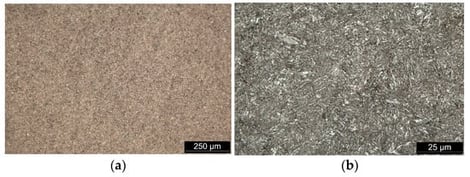
Microstructure of the C55 steel after heat treatment, etched with 1% Nital: (a) overview, (b) detail.
  • Article
  • Open Access

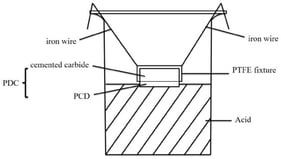
During the preparation of polycrystalline diamond compact (PDC), Co is often added as a binder, which reduces the material’s heat resistance and catalyzes the transformation of diamond to graphite at high temperatures, thereby reducing the material’s mechanical properties. After the removal of Co, the exposure of holes beside the diamond grains could also affect the wear resistance of PDC. This article provides a new approach for the surface enhancement of PDC, which involves depositing a layer of diamond coating using the hot filament chemical vapor deposition (HFCVD) method after the removal of Co and investigating the effect of the pretreatment time of PDC on the deposition of diamond. The optimal pretreatment was obtained using the surface morphology, composition, and content of Co for a cross-section of the diamond coatings. A H2SO4-H2O2 solution was mixed in a ratio of 1:10 as the acid corrosion reagent, and the best etching time was 5 h. When the time was short, the residual amount of Co was high, which affected the quality of the diamond coatings. When the time was long, the area fraction of the substrate was high, and the deposited diamond was not able to easily fill the holes caused by corrosion.

Coatings

6 October 2026

Acid-etching device.
  • Article
  • Open Access

Preparation and Characterization of Al–Al2O3 Composite Coatings by Cold Spray

  • Bauyrzhan Rakhadilov,
  • Aibol Mural and
  • Abai Alimov
  • + 1 author

This study investigates the effect of the mass ratio of aluminum to aluminum oxide on the structure and properties of Al–Al2O3 composite coatings deposited by cold spray deposition onto AISI 316L stainless steel substrates. Powder mixtures containing 70, 35, 30, and 20 wt.% Al2O3 were used to form the coatings, and the phase composition, microstructure, porosity, hardness, surface roughness, and tribological characteristics were studied using XRD, SEM/EDS, instrumental indentation, profilometry, and ball-on-disk testing. X-ray phase analysis confirmed the presence of metallic Al and α-Al2O3 without the formation of additional phases, while SEM analysis revealed continuous coatings with mean thicknesses ranging from 68.08 ± 1.16 to 103.39 ± 5.64 μm and an apparent porosity not exceeding 2%. The best structural and mechanical properties were observed for coating B3, prepared from a mixture of 30 wt.% Al2O3 and 70 wt.% Al: the porosity was 0.48%, the Martens hardness (HM) was 1757.6±155.8 N/mm2, and the Vickers hardness was 211.8 ± 20.7 HV. Coating B3 was also characterized by a minimum surface roughness of Ra = 0.955 μm and a relatively stable coefficient of friction in the range of 0.55–0.60. The results obtained show that the composition of 30 wt.% Al2O3-70 wt.% Al provides the favorable combination of low apparent porosity, high mean hardness, and relatively stable friction behaviour among the specimens tested.

Coatings

5 October 2026

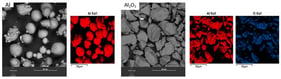
SEM images and EDS elemental maps of the starting Al and Al2O3 powders.
  • Article
  • Open Access

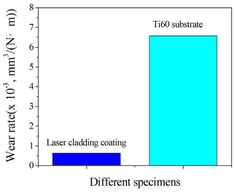
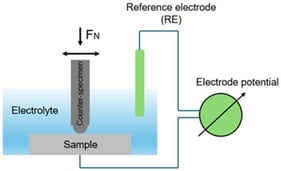
Ti60 is a type of high-temperature titanium alloy that not only withstands high temperatures during long-term service, but also has excellent wear resistance and corrosion resistance. To enhance the wear and corrosion resistance of a Ti60 substrate, a Ti-Hf-Mo-Ta-Nb-B coating was fabricated onto a Ti60 substrate by the laser-cladding method. Based on the principle of the pin-on-disk friction-wear test and using an electrochemical workstation platform, the wear resistance and corrosion resistance of both the laser-clad coating and the Ti60 substrate were tested, respectively. The results show that the wear resistance of the coating is significantly improved compared to the Ti60 substrate, with the wear rate being only one-tenth of that of the substrate. Among them, the wear rate of the former is 6.28 × 10⁻⁴ mm3/(N·m), while that of the latter is 6.57 × 10⁻³ mm3/(N·m). Additionally, the corrosion resistance of the coating in 3.5 wt.% NaCl solution is superior to that of the as-received Ti60 substrate, exhibiting a higher corrosion potential (Ecorr) of −0.3275 V and a lower corrosion current density (icorr) of 4.1801 × 10⁻⁶ A·cm−2, compared to the substrate’s values of −0.4516 V and 7.4039 × 10⁻⁶ A·cm−2, respectively. The enhanced wear and corrosion resistance of the coating is primarily attributed to the formation of a hard and corrosion-resistant high-entropy diboride phase (Ti0.2Hf0.2Mo0.2Ta0.2Nb0.2)B2.

Coatings

5 October 2026

Comparison of wear rates of different specimens.

Highly Accessed Articles

News & Conferences

Latest Issues

Open for Submission

Journal Sections

XFacebookLinkedIn
Coatings - ISSN 2079-6412