



-
A Hybrid Gripper with Passive Jamming Fingers and Cable-Driven Joints for Enhanced Payload Capacity and Misalignment Tolerance -
Design and Modeling of a Robot for Rehabilitation of the Sit-to-Stand Movement and Walking -
Pneumatics in Service Robotics: A Review Across Application Domains and the Impact of Soft Robotics
Journal Description
Actuators
Actuators
is an international, peer-reviewed, open access journal on the science and technology of actuators and control systems, published monthly online by MDPI.
- Open Access— free for readers, with article processing charges (APC) paid by authors or their institutions.
- High Visibility: indexed within SCIE (Web of Science), Scopus, Inspec, and other databases.
- Journal Rank: JCR - Q2 (Engineering, Mechanical) / CiteScore - Q1 (Control and Optimization)
- Rapid Publication: manuscripts are peer-reviewed and a first decision is provided to authors approximately 16.6 days after submission; acceptance to publication is undertaken in 3.7 days (median values for papers published in this journal in the first half of 2026).
- Recognition of Reviewers: reviewers who provide timely, thorough peer-review reports receive vouchers entitling them to a discount on the APC of their next publication in any MDPI journal, in appreciation of the work done.
- Journal Cluster of Instruments and Instrumentation: Actuators, AI Sensors, Instruments, Metrology, Micromachines and Sensors.
Impact Factor:
2.4 (2025);
5-Year Impact Factor:
2.5 (2025)
Latest Articles
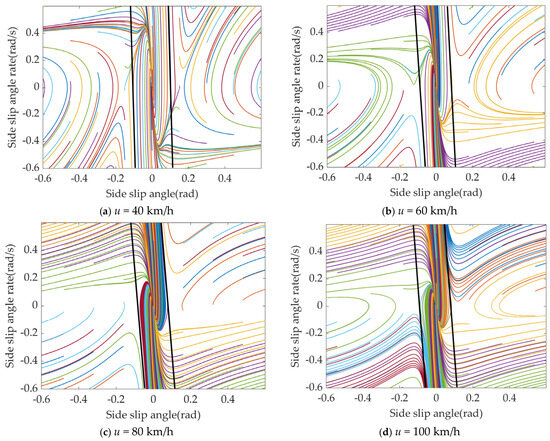
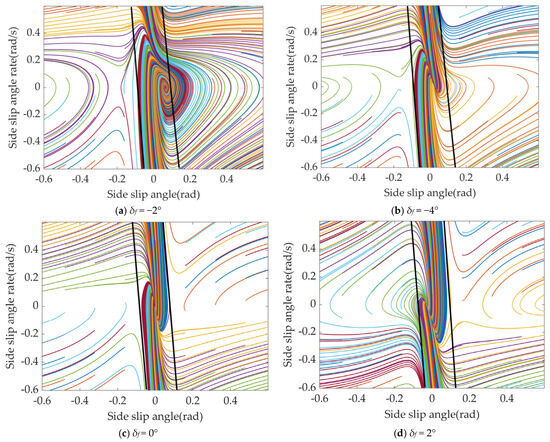
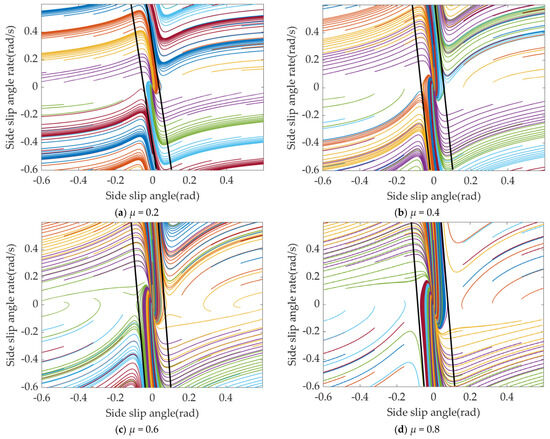
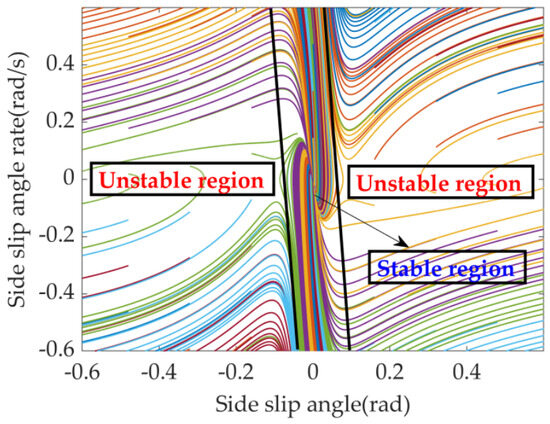
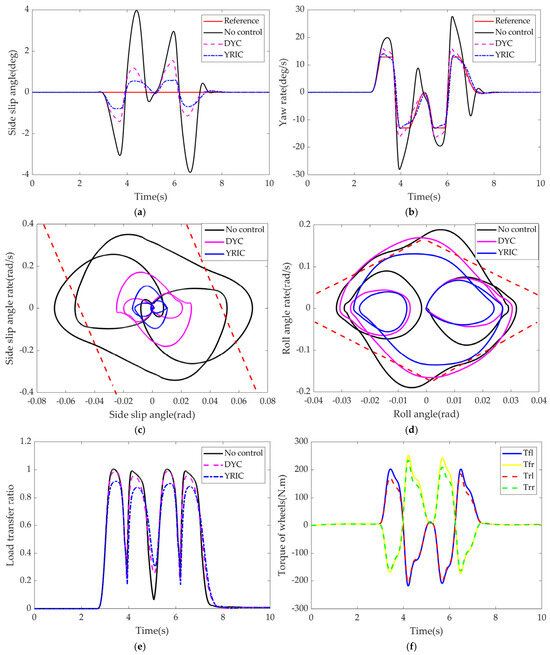
Integrated Yaw and Roll Stability Control of Distributed-Drive Electric Vehicles Based on the Phase Plane Method
Actuators 2026, 15(9), 472; https://doi.org/10.3390/act15090472 - 2 Sep 2026
Abstract
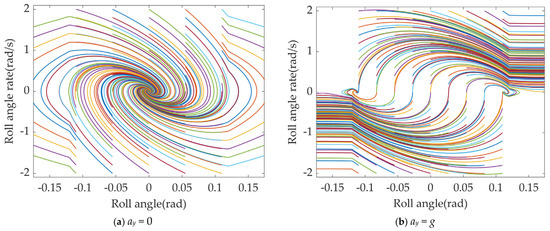
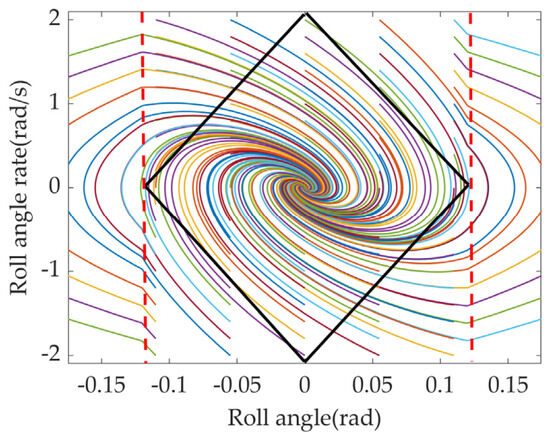
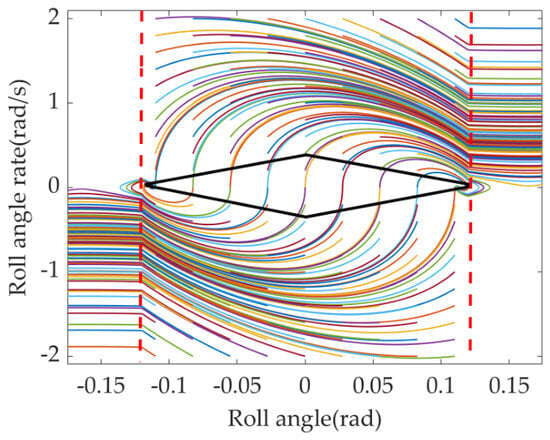
Aiming at the potential simultaneous occurrence of spin-out and rollover during high-speed cornering on road surfaces, this paper takes distributed-drive electric vehicles as the research object and designs a yaw and roll integrated control (YRIC) strategy based on the vehicle’s stability state. Firstly,
[...] Read more.
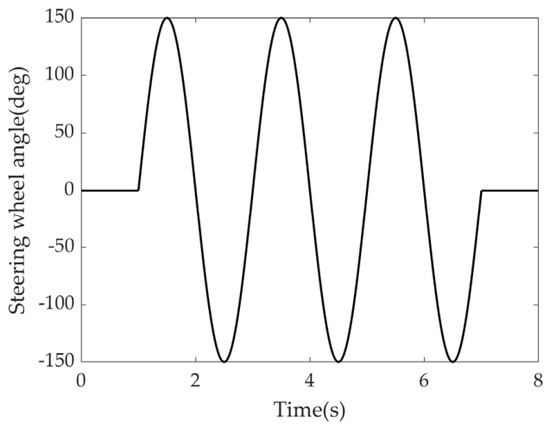
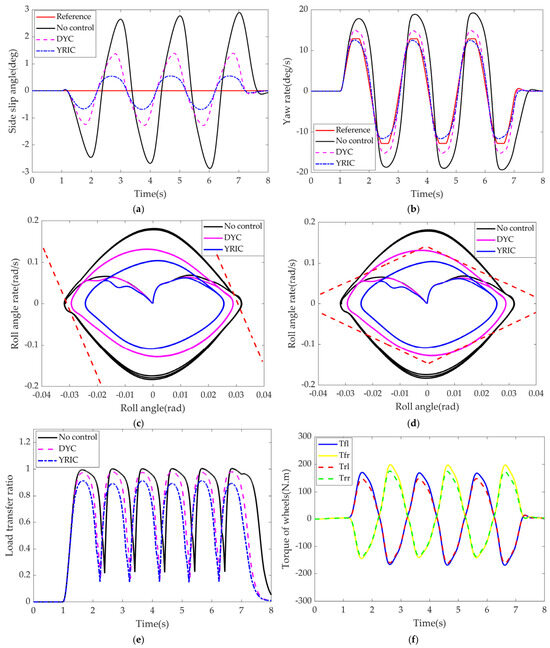
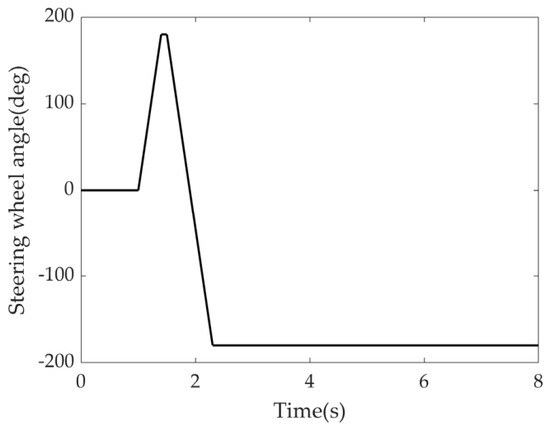
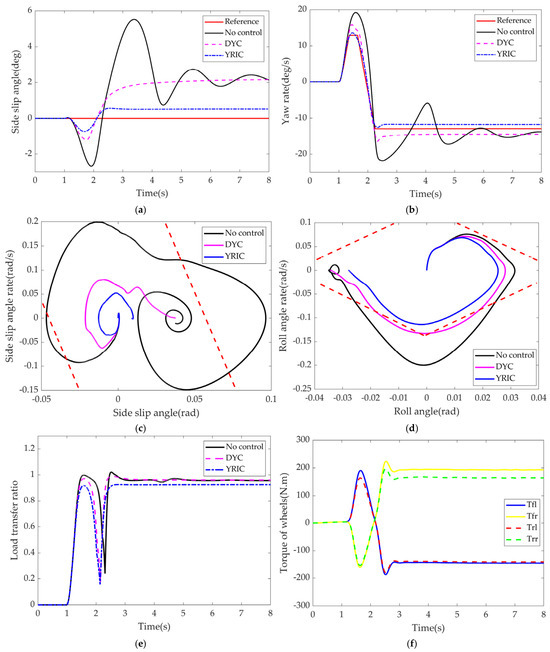
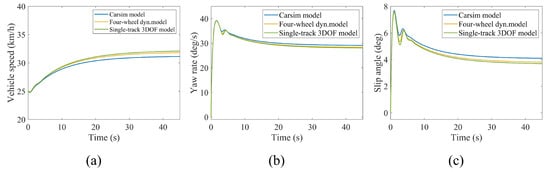
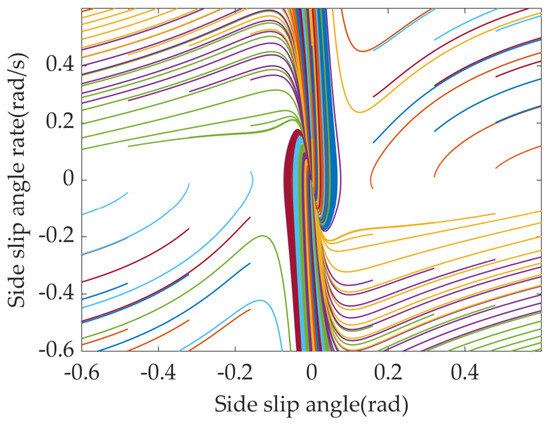
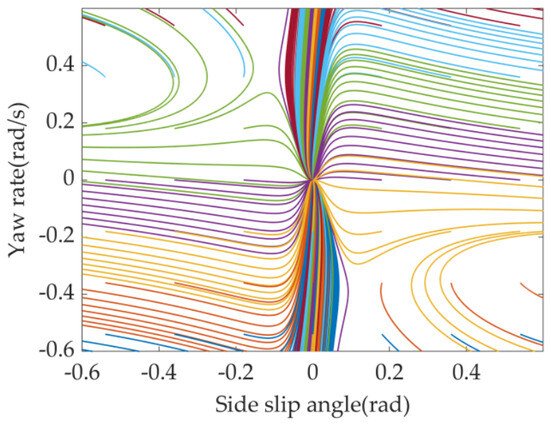
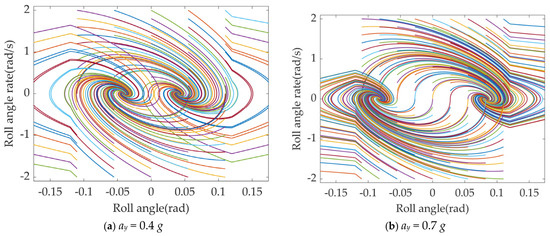
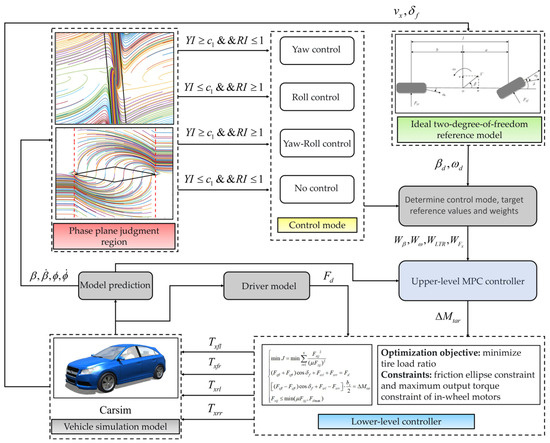
Aiming at the potential simultaneous occurrence of spin-out and rollover during high-speed cornering on road surfaces, this paper takes distributed-drive electric vehicles as the research object and designs a yaw and roll integrated control (YRIC) strategy based on the vehicle’s stability state. Firstly, the phase plane and phase plane are respectively employed to define the stability control regions and serve as the stability criteria for the vehicle. Secondly, according to the vehicle states within the prediction horizon, the corresponding control mode is selected and the control weighting factors are provided to the upper-level controller. The upper-level controller, based on Model Predictive Control (MPC) theory, computes the optimal control outputs. From the derived desired tire longitudinal forces, the desired additional yaw moment is calculated. The lower-level controller allocates this desired additional yaw moment to the optimal driving torque for each wheel. Finally, co-simulation results using MATLAB/Simulink2021b and Carsim2020 demonstrate that the proposed integrated control strategy possesses strong body attitude correction capability under high-speed cornering conditions and can significantly improve vehicle stability.
Full article
(This article belongs to the Section Actuators for Surface Vehicles)
►
Show Figures
Open AccessArticle
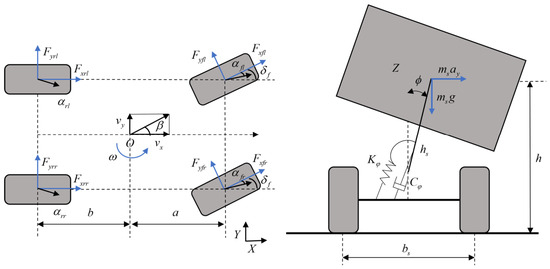
Four-Wheel Independent Steering Stability Control Based on VSR-ANMPC
by
Yuxing Bai, Weixin Zhang, Weiyi Kong, Song Cui and Liguo Zang
Actuators 2026, 15(9), 471; https://doi.org/10.3390/act15090471 - 2 Sep 2026
Abstract
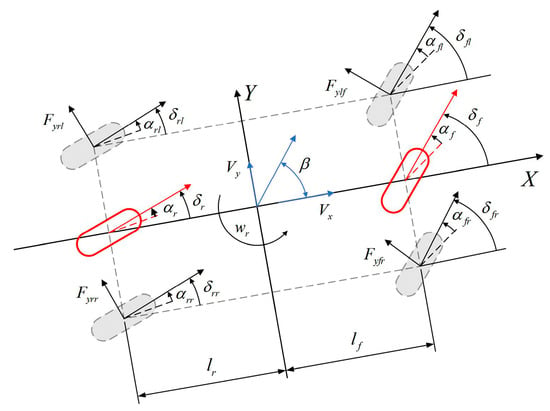
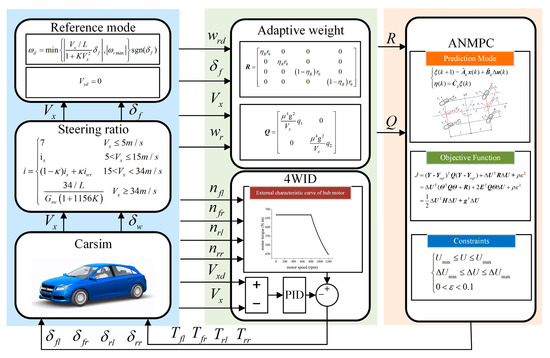
To address the problems of poor steering smoothness and handling stability for four-wheel independent steering (4WIS) vehicles, this paper presents an adaptive nonlinear model predictive control (ANMPC) strategy based on variable steering ratio (VSR). First, a two-degree-of-freedom (2-DOF) vehicle and reference model are
[...] Read more.
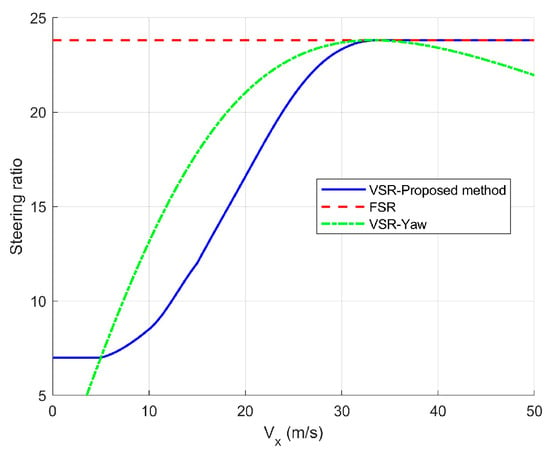
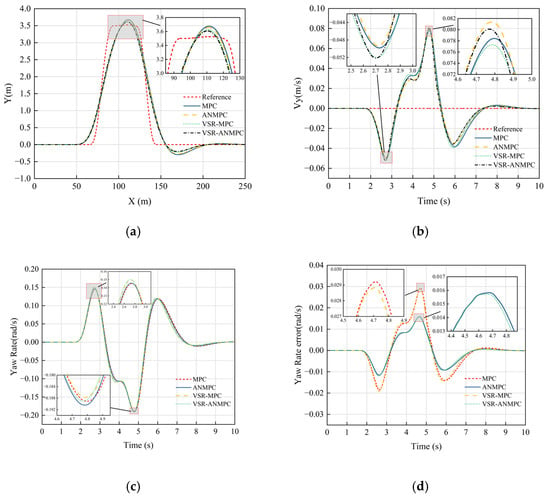
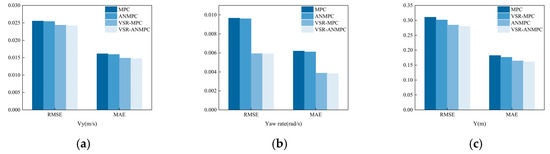
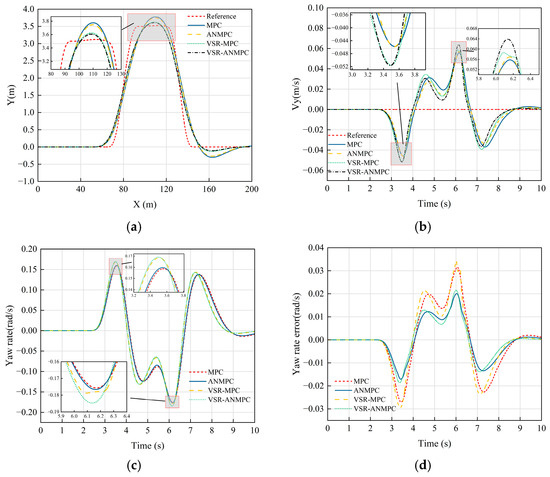
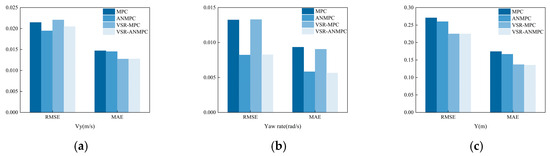
To address the problems of poor steering smoothness and handling stability for four-wheel independent steering (4WIS) vehicles, this paper presents an adaptive nonlinear model predictive control (ANMPC) strategy based on variable steering ratio (VSR). First, a two-degree-of-freedom (2-DOF) vehicle and reference model are established to provide a theoretical basis for controller design. Second, the Hermite interpolation polynomial is used to achieve a smooth transition design of the four-stage VSR. By optimizing the steering ratio curve, the steering smoothness and flexibility across the entire speed range are significantly improved. Furthermore, innovatively, the hyperbolic tangent function (tanh) is employed in combination with the μ-V adaptive weight optimization method to construct an adaptive weight adjustment mechanism for the ANMPC controller. To assess the efficacy of the control strategy, co-simulation experiments are performed using CarSim/Simulink. Simulation results demonstrate that versus conventional MPC, the developed algorithm achieves a 37.75% reduction in yaw rate dynamic response RMSE and a 4.61% decrease in lateral velocity RMSE during low-adhesion double lane-change maneuvers, significantly boosting handling stability and steering smoothness in 4WIS vehicles. The VSR-ANMPC control strategy enhances steering performance substantially while demonstrating exceptional handling stability control across diverse speed and adhesion conditions.
Full article
(This article belongs to the Special Issue Integrated Intelligent Vehicle Dynamics and Control—2nd Edition)
►▼
Show Figures

Figure 1
Open AccessArticle
Ultra-Local Model-Based Finite-Time Sliding Mode Control Using Neural Network Observer for Quadrotor Position and Attitude
by
Chengcheng Song, Xingyu Ma, Yuang Luo, Chongsheng Yuan, Fangzheng Gao and Jiacai Huang
Actuators 2026, 15(9), 470; https://doi.org/10.3390/act15090470 - 2 Sep 2026
Abstract
In this paper, an ultra-local model-based finite-time sliding mode control (ULM-FTSMC) method is developed for tracking quadrotor position and attitude in the presence of uncertainties and external disturbances. Based on an ultra-local model technique, the proposed ULM-FTSMC scheme consists of an adaptive neural
[...] Read more.
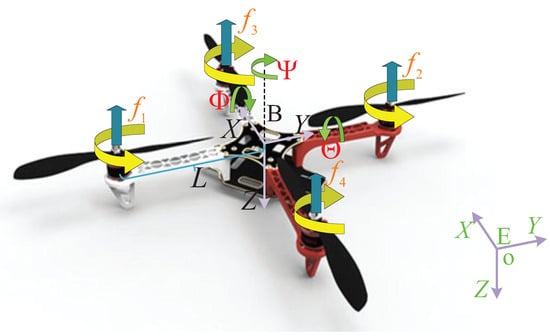
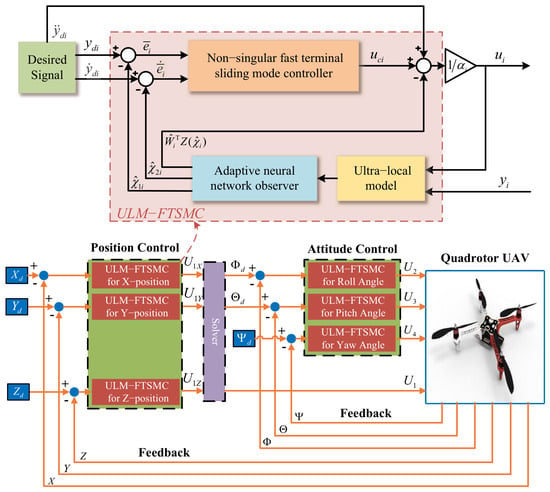
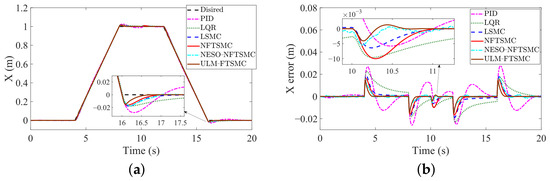
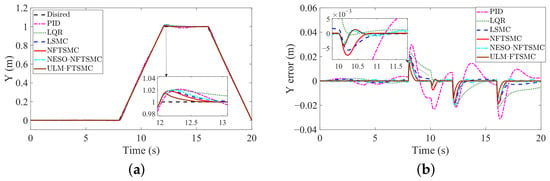
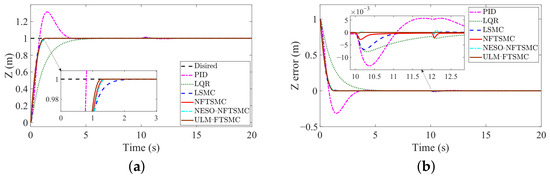
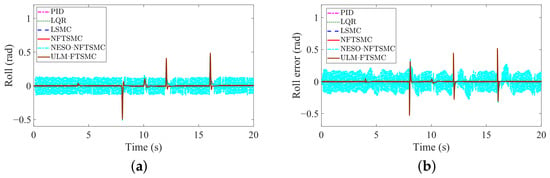
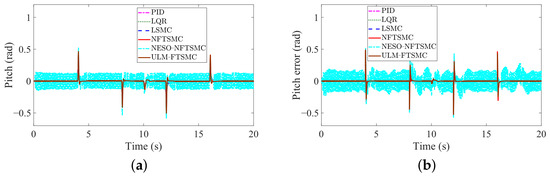
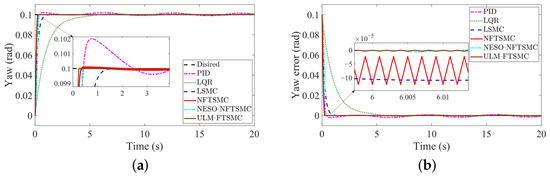
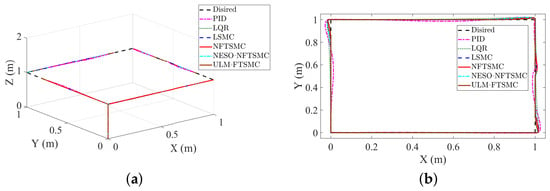
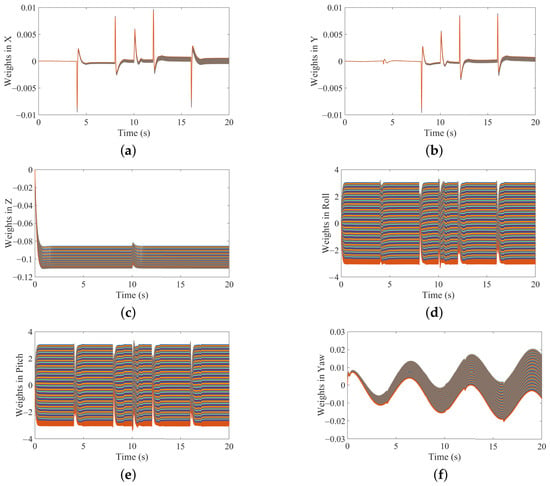
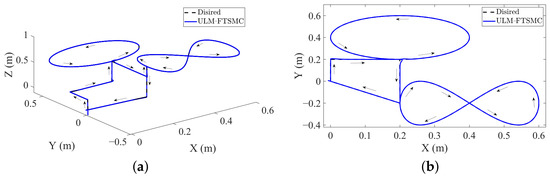
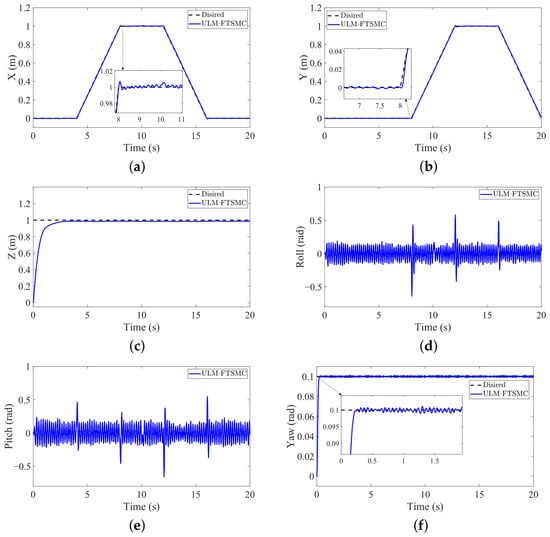
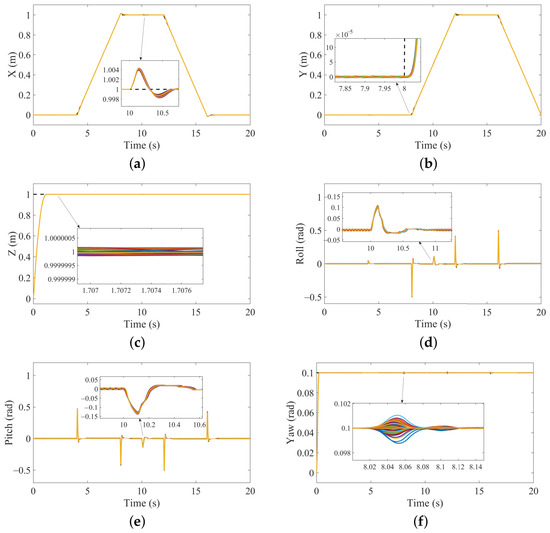
In this paper, an ultra-local model-based finite-time sliding mode control (ULM-FTSMC) method is developed for tracking quadrotor position and attitude in the presence of uncertainties and external disturbances. Based on an ultra-local model technique, the proposed ULM-FTSMC scheme consists of an adaptive neural network observer (ANNO) and a non-singular fast terminal sliding mode controller (NFTSMC). The ultra-local model is employed to approximate complex quadrotor dynamics, thereby reducing the complexity of controller design. The ANNO is designed to estimate the state variables required for subsequent control design and compensate for the lumped disturbances. Furthermore, an improved reaching law incorporating a variable exponent and multiple power terms is developed for the nonsingular fast terminal sliding surface, based on which an NFTSMC is constructed to achieve accurate trajectory tracking within finite time. The stability of the closed-loop system and the finite-time convergence of the tracking errors are rigorously established using Lyapunov theory. Finally, comparative numerical simulations with several existing controllers are conducted to demonstrate the effectiveness and superiority of the proposed method.
Full article
(This article belongs to the Section Aerospace Actuators)
►▼
Show Figures

Figure 1
Open AccessArticle
A 3D-Printed Stretchable Planar Mesh Shape Memory Alloy Actuator with Tailorable Load-Stroke Behavior
by
Dongsu Shin, Young Jin Gong, Youchan Choi and Hyouk Ryeol Choi
Actuators 2026, 15(9), 469; https://doi.org/10.3390/act15090469 - 2 Sep 2026
Abstract
Soft robotic and wearable systems increasingly require actuators that conform to curved surfaces and stretch with the structures they are mounted on, yet conventional shape memory alloy (SMA) form factors—wires, springs, and sheets—remain limited to one-dimensional contraction or out-of-plane bending. This paper presents
[...] Read more.
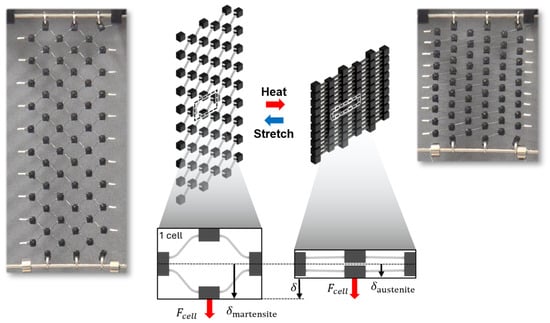
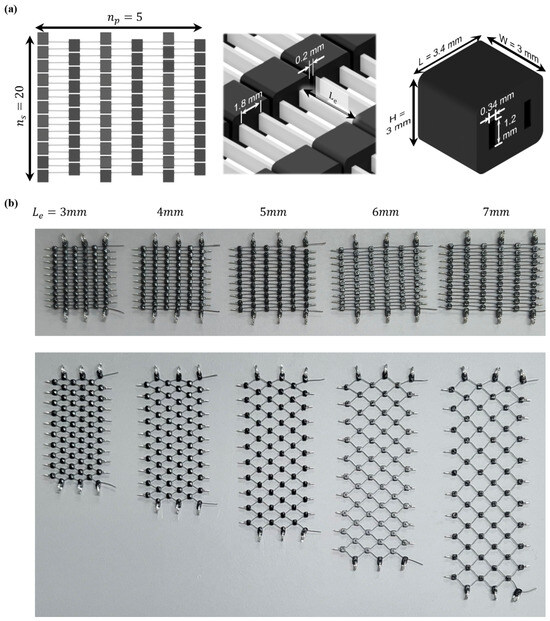
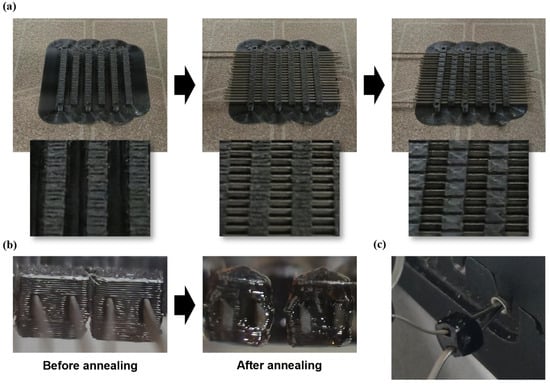
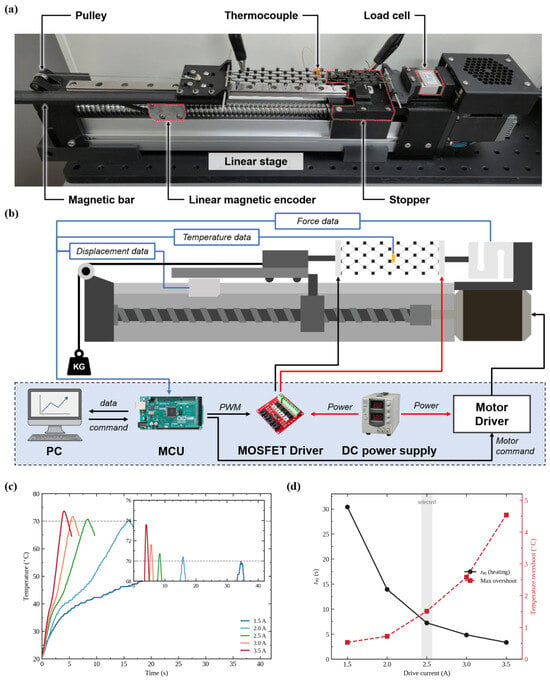
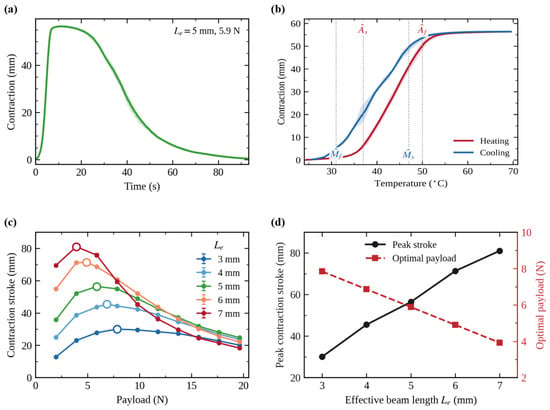
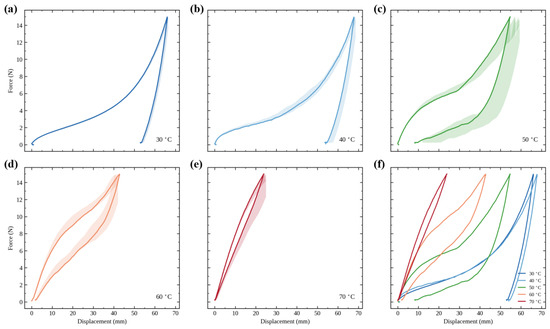
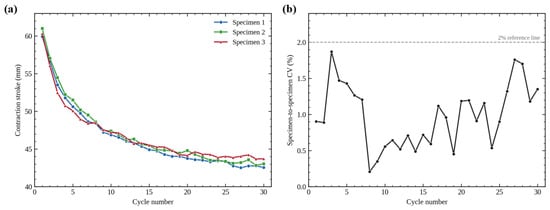
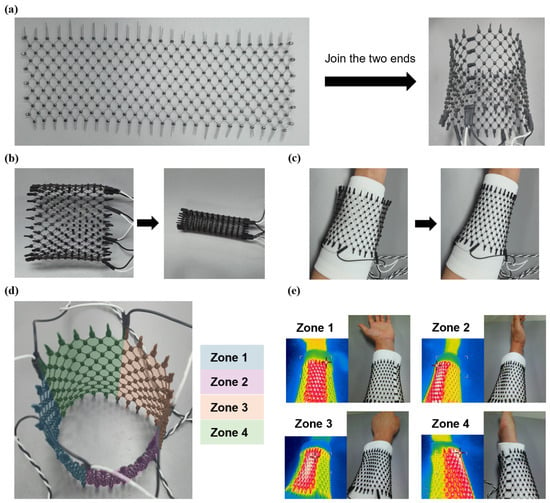
Soft robotic and wearable systems increasingly require actuators that conform to curved surfaces and stretch with the structures they are mounted on, yet conventional shape memory alloy (SMA) form factors—wires, springs, and sheets—remain limited to one-dimensional contraction or out-of-plane bending. This paper presents the Mesh-Structured Shape Memory Alloy (MeSMA) actuator, a thin, planar, and stretchable actuator in which flat SMA wire spans form a periodic mesh clamped by 3D-printed insulating beads; the beads are fabricated by a print–pause–insert process and define the effective beam length ( ) of each span. Isotonic characterization over = 3–7 mm shows that the peak contraction stroke (30–81 mm) and the corresponding optimal payload (7.8–3.9 N) are well approximated by linear functions of over the tested range, consistent with a constant critical bending moment at the span level, establishing a single-parameter design rule for tailoring the actuator operating point. Isothermal tests show that temperature tunes the passive secant stiffness approximately threefold. Separately fabricated specimens exhibit a stroke coefficient of variation of about 1% over 30 thermal cycles with matching degradation trajectories. A tubular compression sleeve demonstrates conformal donning and spatially selective compression enabled by the planar, stretchable form factor.
Full article
(This article belongs to the Section Actuators for Robotics)
►▼
Show Figures

Figure 1
Open AccessSystematic Review
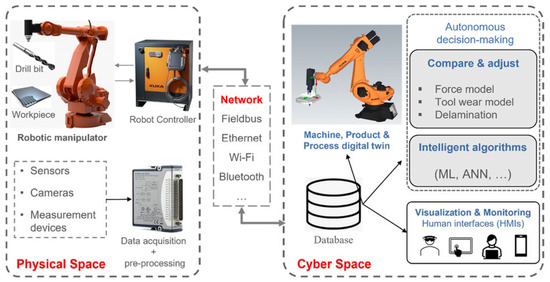
Digital Twins for Metal-Cutting Machine Tools: A Systematic Review
by
Oleksandr Sokolov, Vitalii Ivanov, Serhii Sokolov and Andrii Panych
Actuators 2026, 15(9), 468; https://doi.org/10.3390/act15090468 - 1 Sep 2026
Abstract
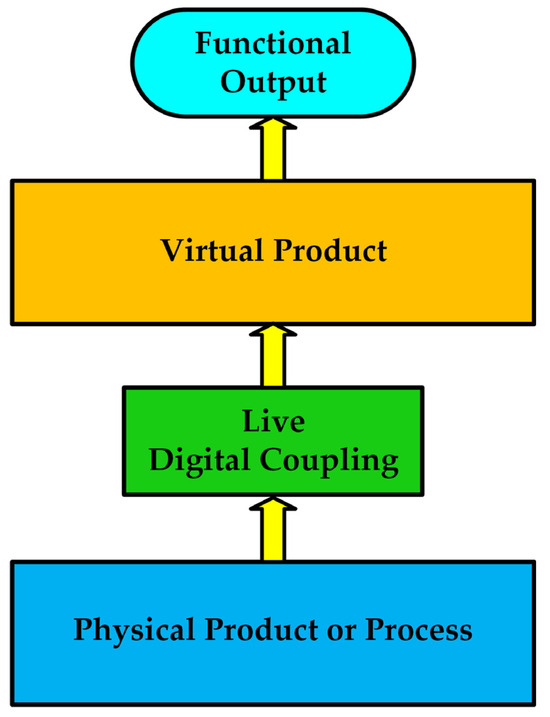
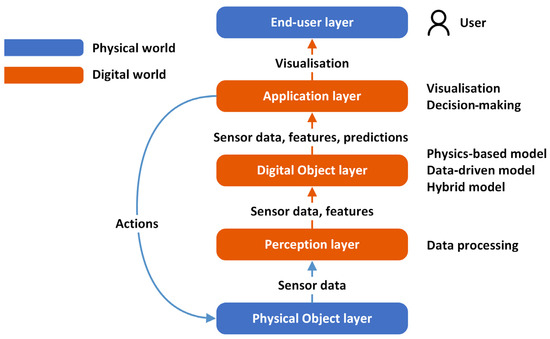
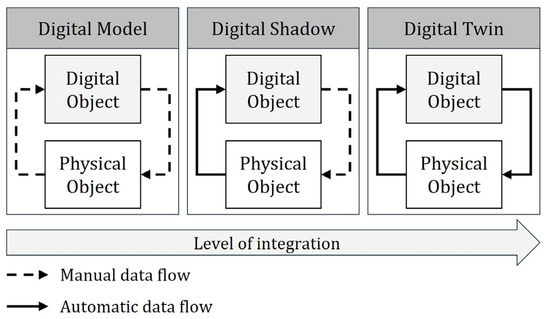
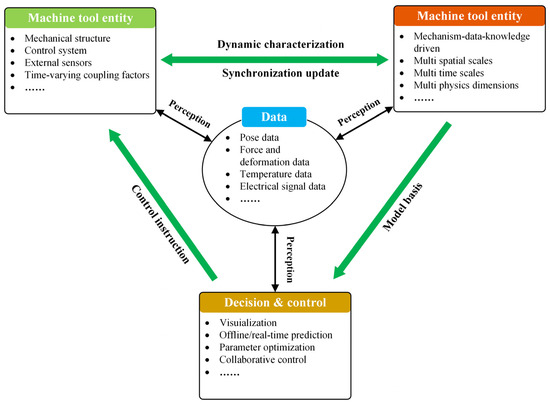
Digital twin (DT) technology has become a transformative engineering paradigm for metal-cutting machine tool systems and materials-processing equipment, enabling real-time synchronisation, predictive analytics, and intelligent decision-making throughout the entire production cycle. This systematic review summarises the latest advances in the engineering-oriented implementation of
[...] Read more.
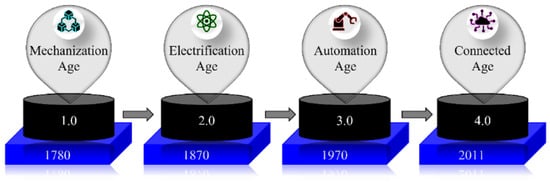
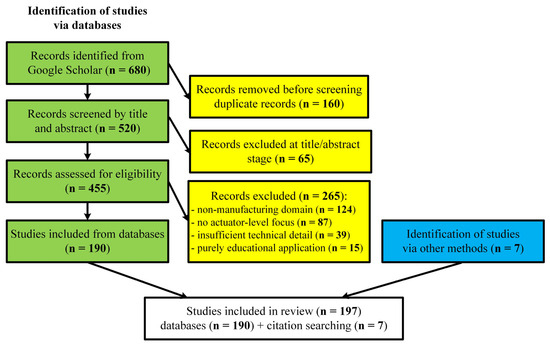
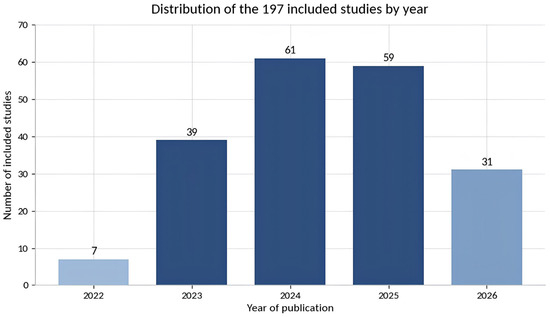
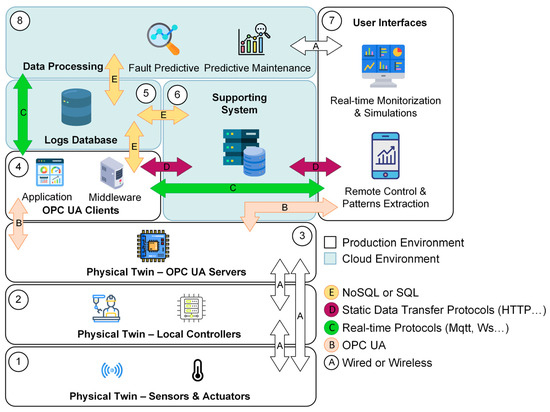
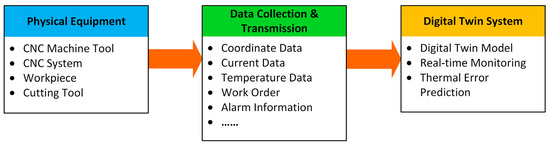
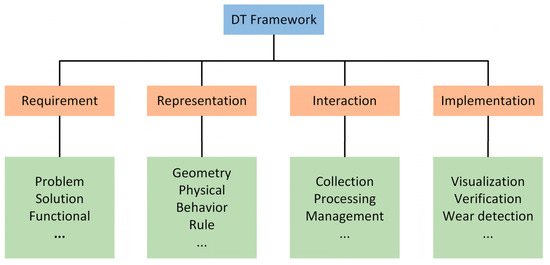
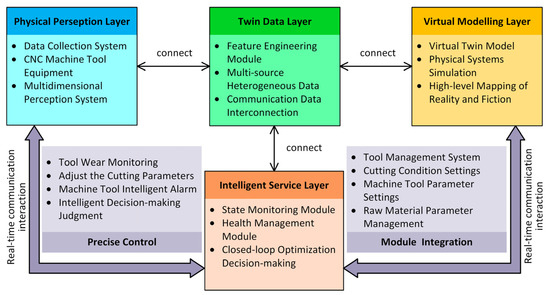
Digital twin (DT) technology has become a transformative engineering paradigm for metal-cutting machine tool systems and materials-processing equipment, enabling real-time synchronisation, predictive analytics, and intelligent decision-making throughout the entire production cycle. This systematic review summarises the latest advances in the engineering-oriented implementation of digital twins, with a focus on their modelling frameworks, tool condition monitoring, compensation for geometric, kinematic, thermal and dynamic errors, fault diagnosis and adaptive control, and on the application of this technology to lathes, milling machines and grinding machines. The search for and selection of literature were carried out in accordance with the PRISMA 2020 guidelines. In total, 680 records were identified in Google Scholar in May 2026, of which 197 studies met the inclusion criteria and were synthesised narratively within six thematic sections. The analysis demonstrates that modern digital twin architectures integrate multiphysics modelling, multi-sensor data fusion, and machine learning to create high-precision virtual replicas of physical assets. Predictive maintenance and fault diagnosis systems use machine learning and deep learning to detect incipient faults in feed systems, spindles, and other critical components before failure. The review also analyses existing challenges and outlines future research directions for reliable industrial digital twins.
Full article
(This article belongs to the Special Issue AI, Designing, Sensing, Instrumentation, Diagnosis, Controlling, and Integration of Actuators in Digital Manufacturing—3rd Edition)
►▼
Show Figures

Figure 1

Open AccessArticle
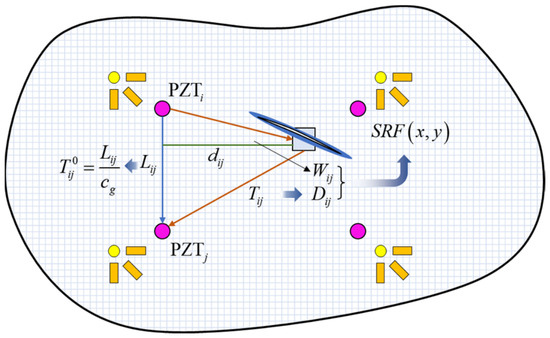
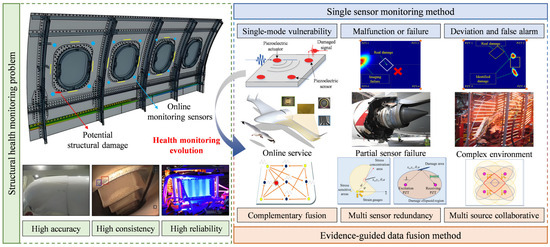
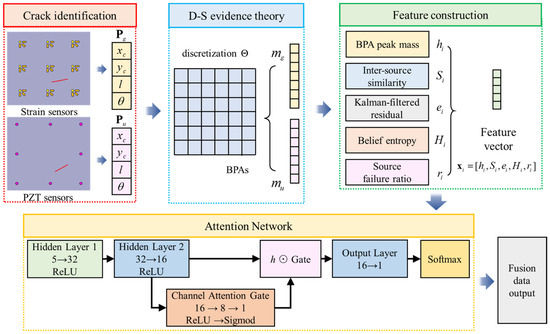
Evidence-Guided Attention Neural Network for Structural Crack Identification with Multi-Source Sensors
by
Yifei Wang and Xiaojun Wang
Actuators 2026, 15(9), 467; https://doi.org/10.3390/act15090467 - 1 Sep 2026
Abstract
The integration of complementary sensing modalities provides a basis for accurate crack identification in advanced aircraft structures. In this context, PZT transducers are sensitive to incipient damage through guided-wave interrogation, whereas strain gauges capture quasi-static deformation. Prevailing fusion paradigms, however, encounter an interpretability–adaptability
[...] Read more.
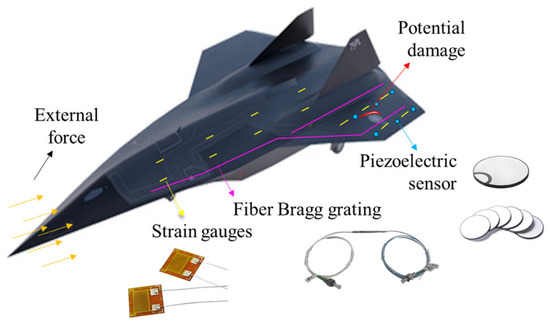
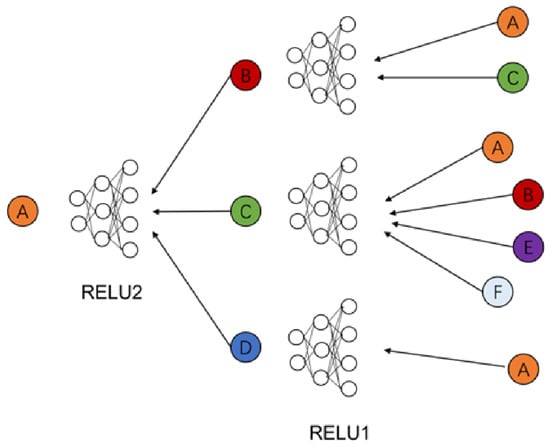
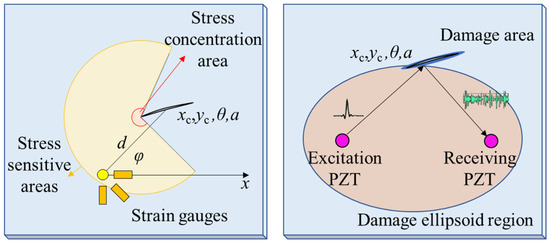
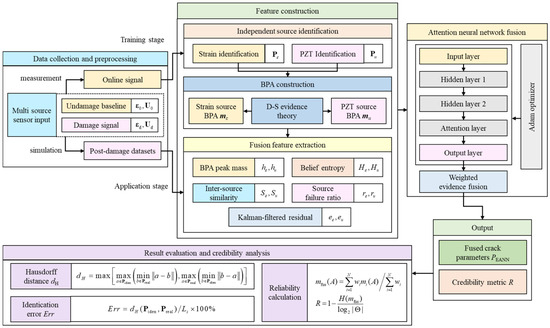
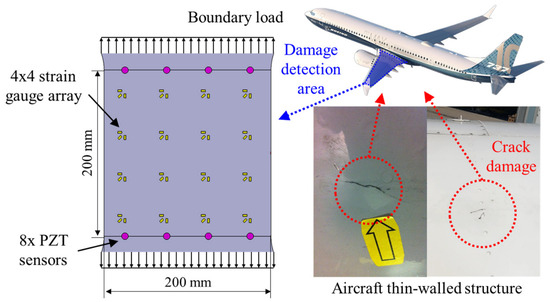
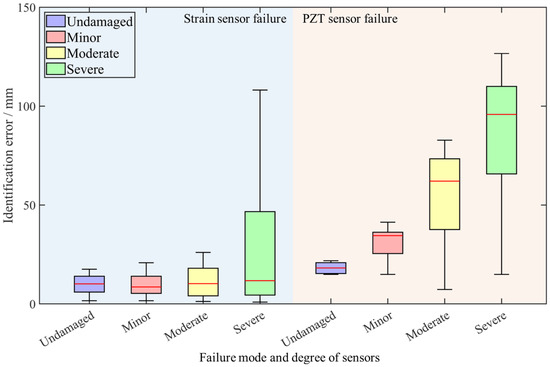
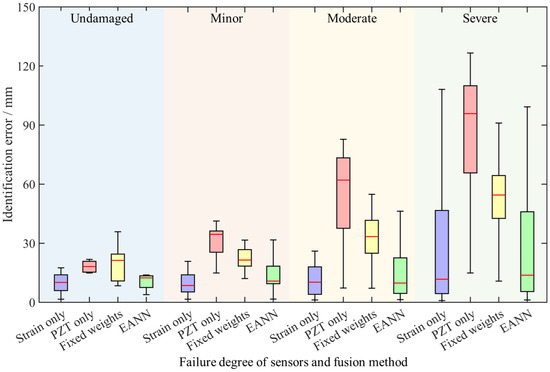
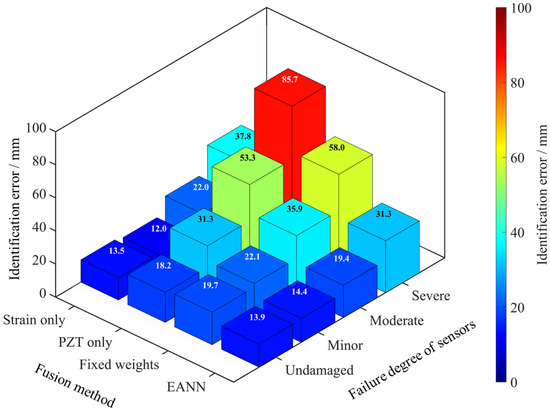
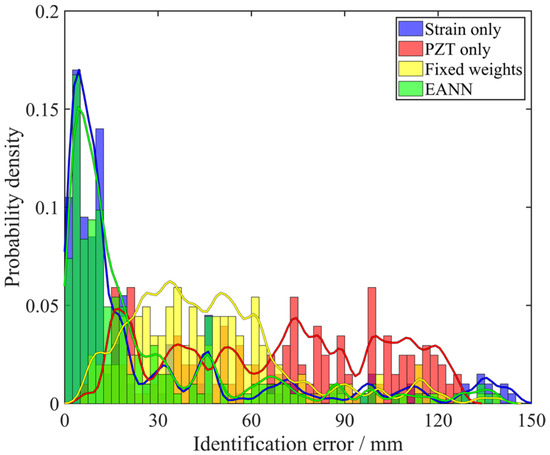
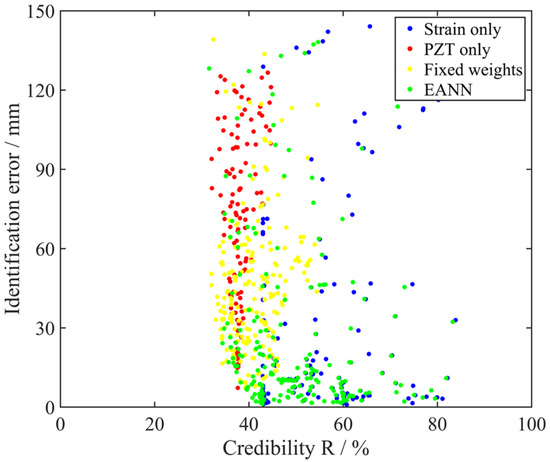
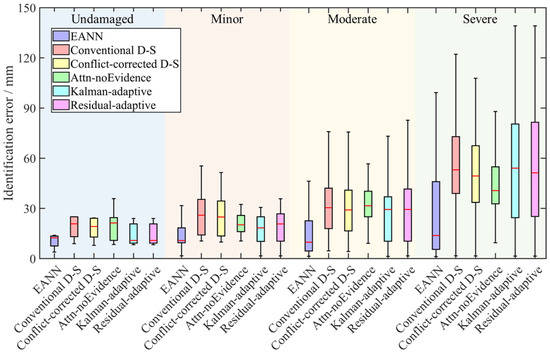
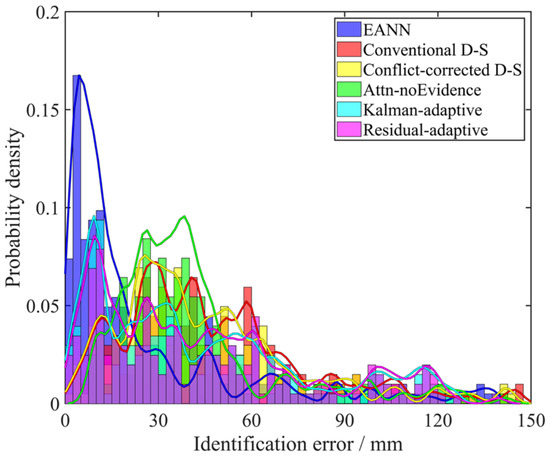
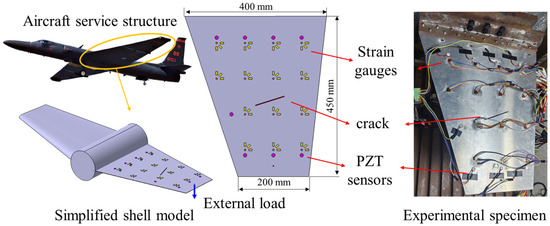
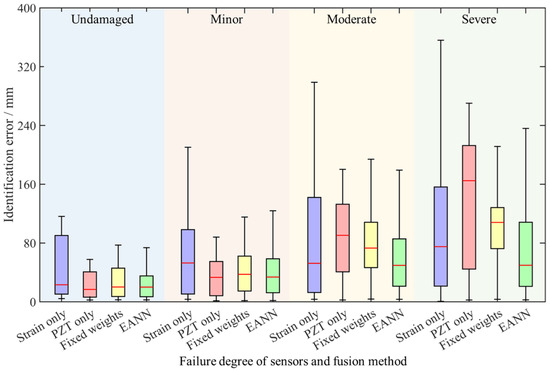
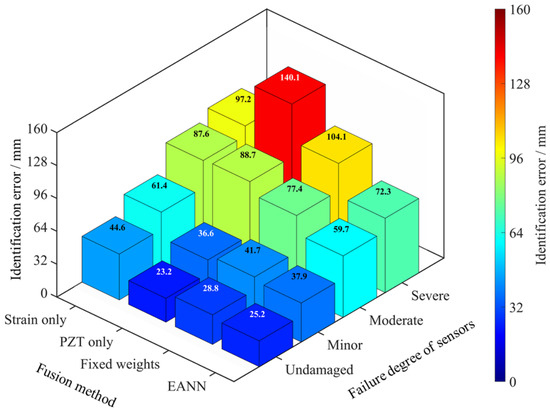
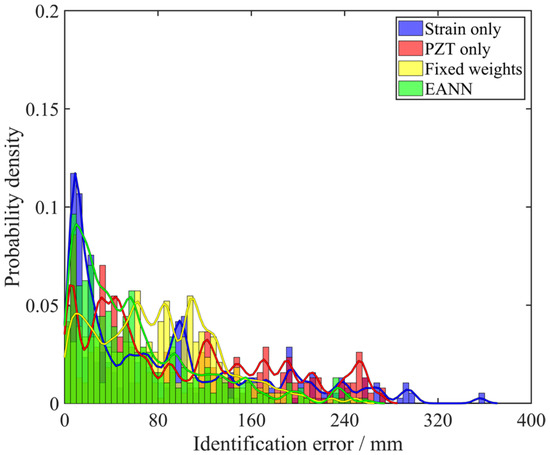
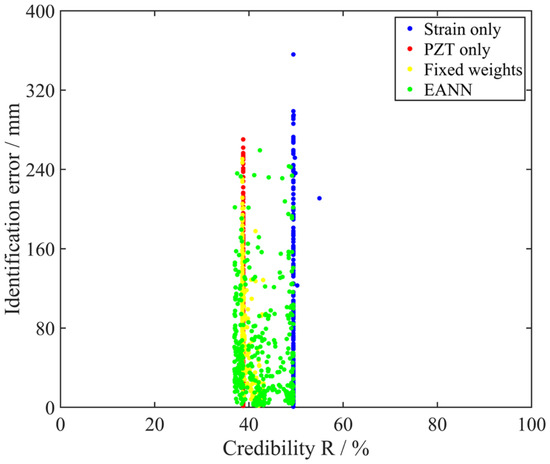
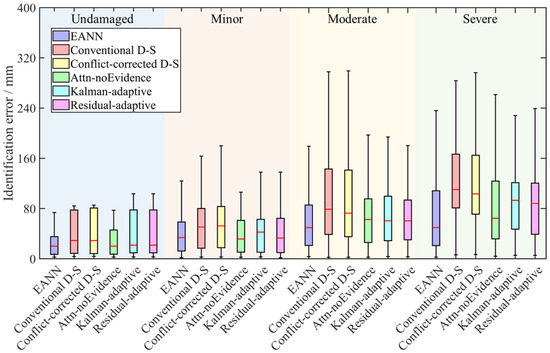
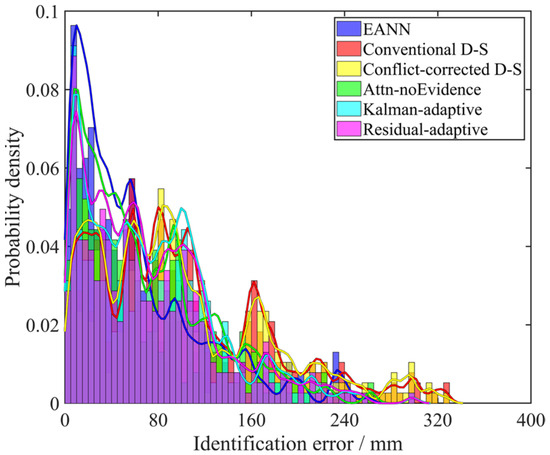
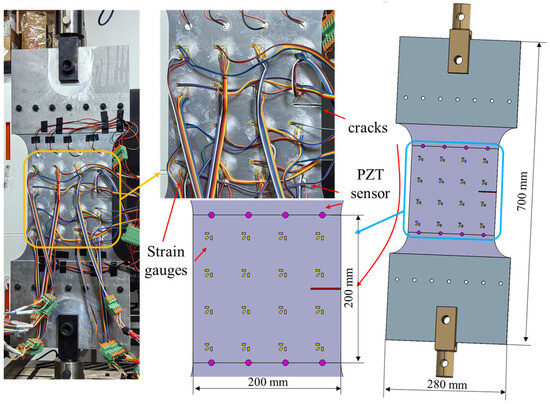
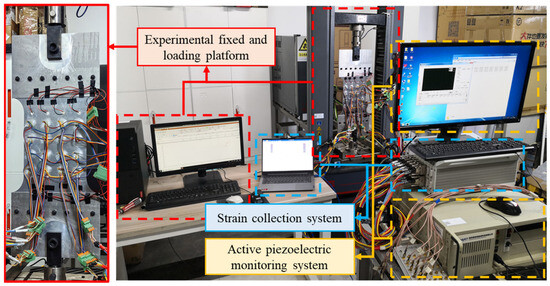
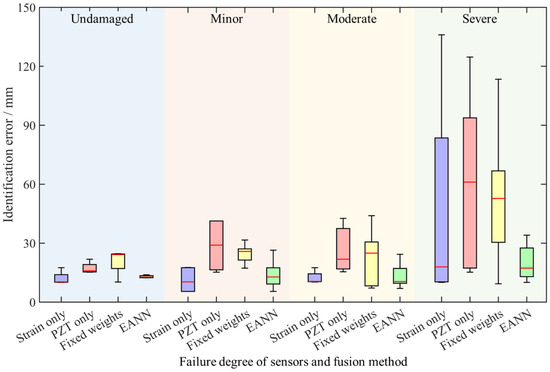
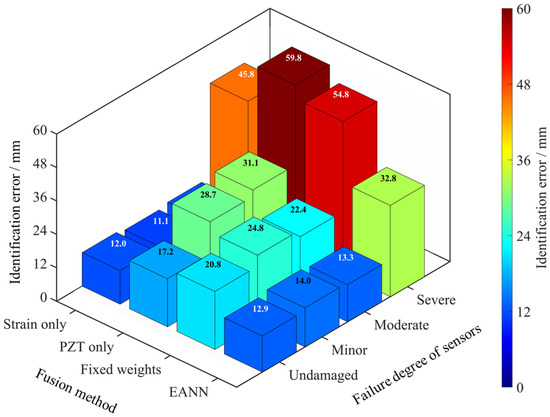
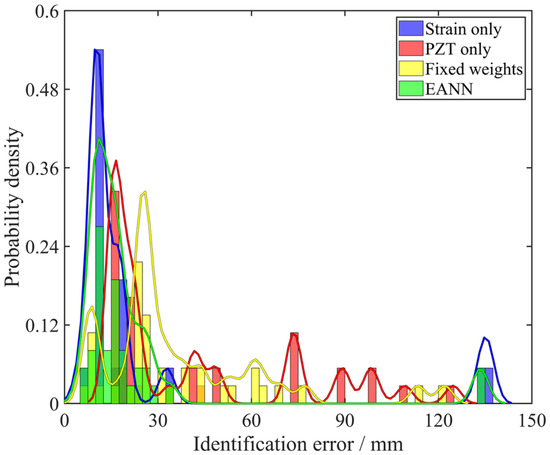
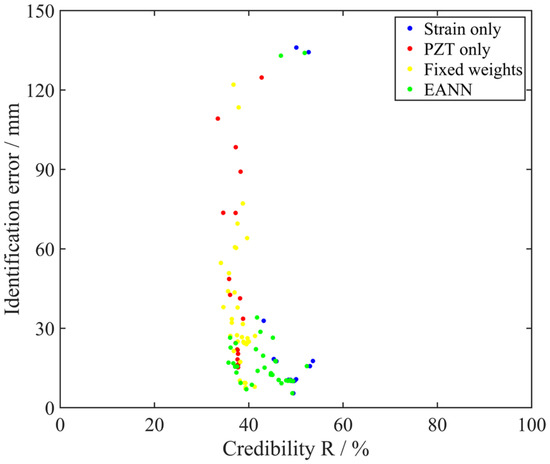
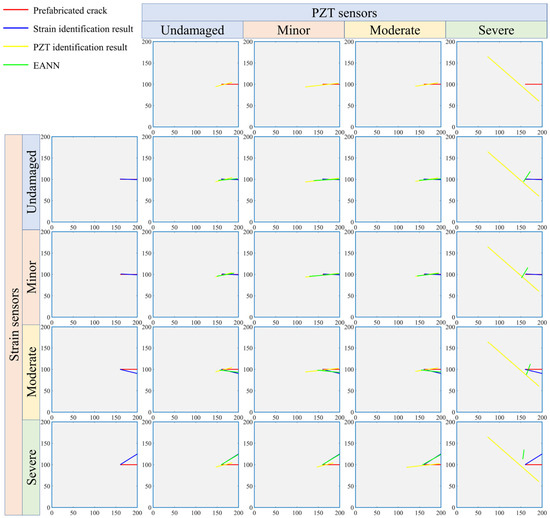
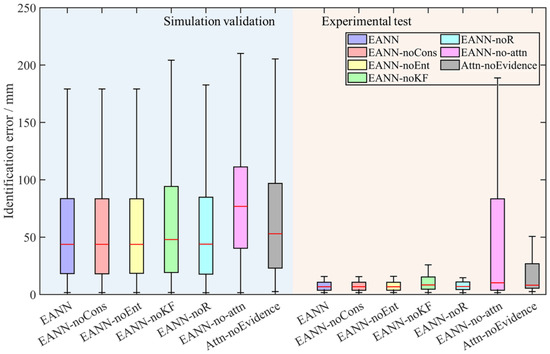
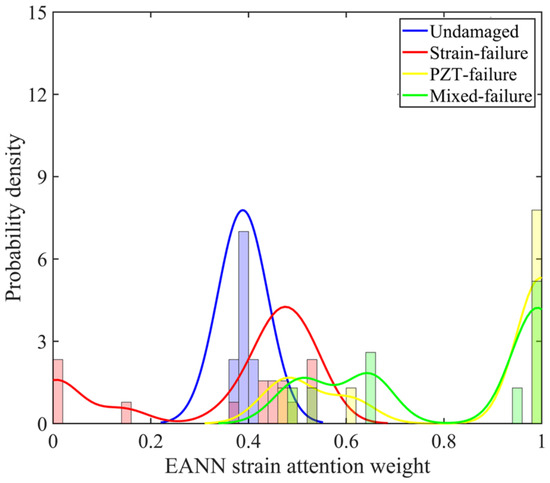
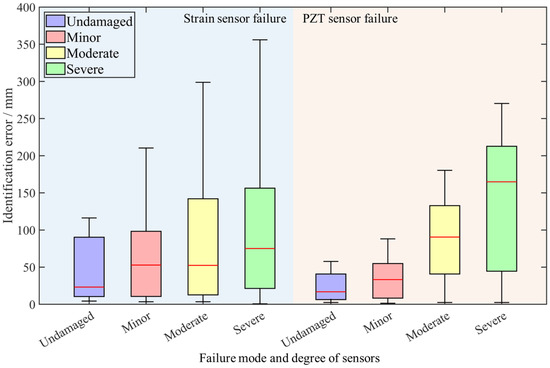
The integration of complementary sensing modalities provides a basis for accurate crack identification in advanced aircraft structures. In this context, PZT transducers are sensitive to incipient damage through guided-wave interrogation, whereas strain gauges capture quasi-static deformation. Prevailing fusion paradigms, however, encounter an interpretability–adaptability dilemma. Model-based approaches lack robustness to sensor degradation, while data-driven attention methods sacrifice transparency. To resolve this trade-off, an Evidence-guided Attention Neural Network (EANN) is proposed. Its central methodological contribution lies in repositioning Dempster–Shafer (D-S) evidence theory from a terminal fusion operator to an upstream credibility feature extraction module. Evidence-derived credibility features, comprising belief entropy, inter-source similarity, and Kalman-filtered residuals, drive the attention weight optimization and endow the learned channel weights with physically interpretable evidential meaning. Ablation experiments confirm that the observed improvement arises from the interaction between the evidence-guided credibility representation and adaptive attention weighting, with neither component sufficient on its own. The framework fuses quasi-static strain measurements with active piezoelectric guided-wave interrogation, which offers high sensitivity to incipient damage but remains vulnerable to channel degradation. Experiments on aluminum tensile plates and trapezoidal wing skin specimens show that EANN maintains identification accuracy under simulated sensor anomalies and partial failures by attenuating compromised channels without explicit fault detection, providing an uncertainty-aware fusion framework for online structural health monitoring of aerospace structures.
Full article
(This article belongs to the Section Aerospace Actuators)
►▼
Show Figures

Figure 1
Open AccessArticle
Graph-Enhanced Proximal Policy Optimization for Simulation-Based Point Cloud Coverage Planning on Curved Surfaces
by
Zhongxiang Chen, Zeng Feng, Zewu Li, Xingni Jiang and Biju Yin
Actuators 2026, 15(9), 466; https://doi.org/10.3390/act15090466 - 1 Sep 2026
Abstract
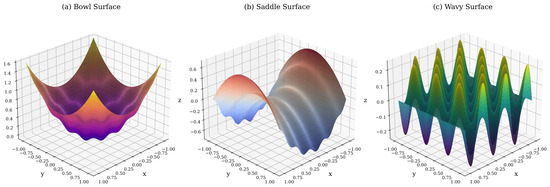
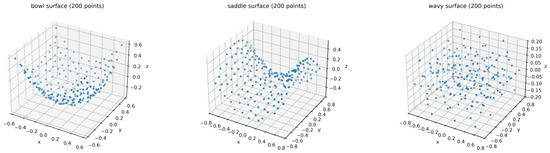
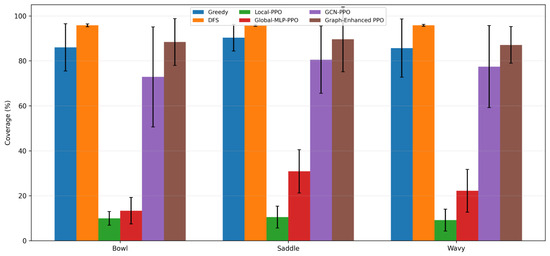
This study examines the effects of graph aggregation and candidate-level scoring on PPO-based coverage planning for simulated curved point clouds. In a static uniform-coverage benchmark, a parameter-matched global MLP reaches 22.13% overall coverage, GCN-PPO reaches 76.97%, and Graph-Enhanced PPO reaches 88.37%; DFS remains
[...] Read more.
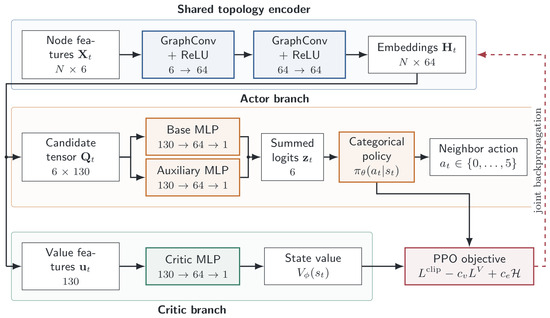
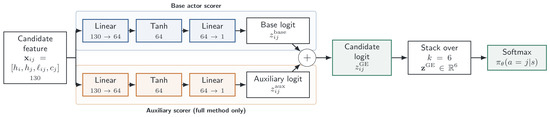
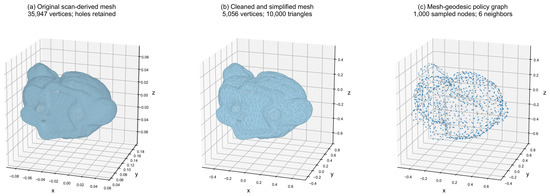
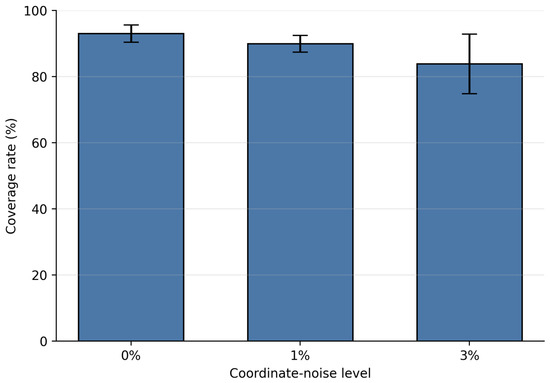
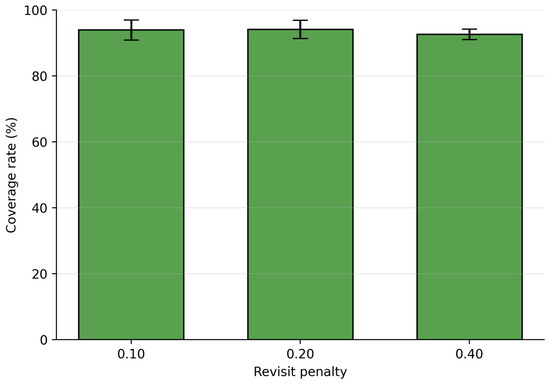
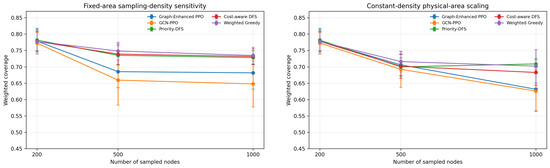
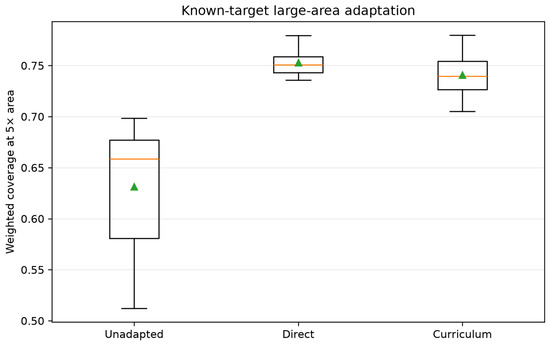
This study examines the effects of graph aggregation and candidate-level scoring on PPO-based coverage planning for simulated curved point clouds. In a static uniform-coverage benchmark, a parameter-matched global MLP reaches 22.13% overall coverage, GCN-PPO reaches 76.97%, and Graph-Enhanced PPO reaches 88.37%; DFS remains the strongest at 95.80%. A separate 50-decision task introduces nonuniform priorities and motion costs. In that setting, GCN-PPO and Graph-Enhanced PPO obtain nearly identical weighted coverage (0.812 and 0.811, respectively), and no statistically reliable difference is detected. On a separate 1000-node scan-derived Stanford Bunny surface with retained holes and mesh-geodesic connectivity, GCN-PPO and Graph-Enhanced PPO again show comparable weighted coverage (0.450 and 0.445, respectively) and task utility (0.321 and 0.315, respectively), with no statistically reliable difference. Across the physically normalized zero-shot density and area tests, the direction of the small mean differences varies by condition, and none remain significant after multiplicity correction; both policies lose performance as the sampling density or workspace size changes. Direct adaptation on the known fivefold-area target graphs raises Graph-Enhanced PPO coverage from 0.631 to 0.753 for held-out starts. Because adaptation and evaluation use the same target graph instances, unseen large-graph generalization is not tested. Across the experiments, graph aggregation provides the clearest learned improvement. The auxiliary scorer improves the static benchmark result, but the added parameters prevent assigning that gain solely to a separate scoring mechanism; no consistent benefit appears in the other tests. Systematic traversal remains preferable when exhaustive uniform coverage is feasible. The study remains simulation-based: scan-derived geometry is evaluated, but validation on physical hardware is still required.
Full article
(This article belongs to the Section Actuators for Robotics)
►▼
Show Figures

Figure 1

Open AccessArticle
A Fault Diagnosis Method for Roadheader Cutting Head Based on GADF and Attention-Enhanced Transfer Learning AlexNet
by
Changpeng Li and Zhenyu Dai
Actuators 2026, 15(9), 465; https://doi.org/10.3390/act15090465 - 1 Sep 2026
Abstract
The cutting head is the primary cutting load device of the roadheader. The harsh, complex excavation environment often leads to a scarcity of labelled fault samples, significantly hindering the development of accurate fault diagnosis models. This paper proposes a novel fault diagnosis method
[...] Read more.
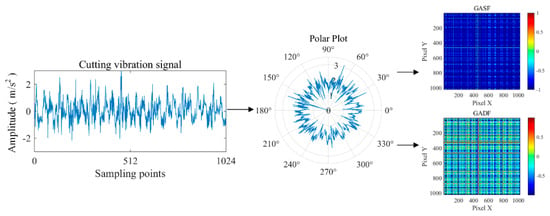
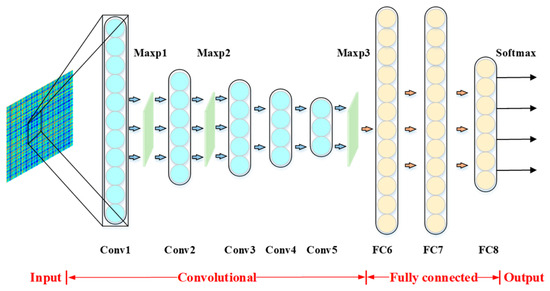
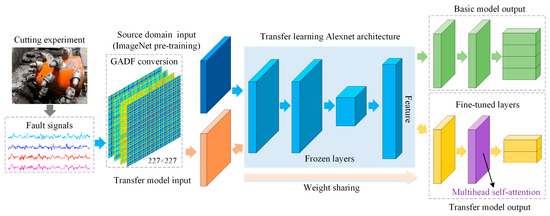
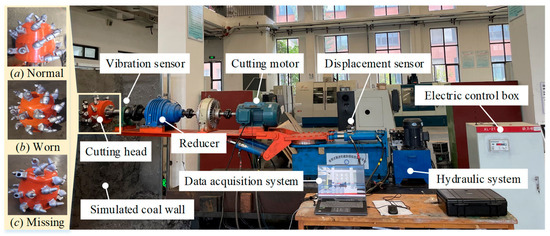
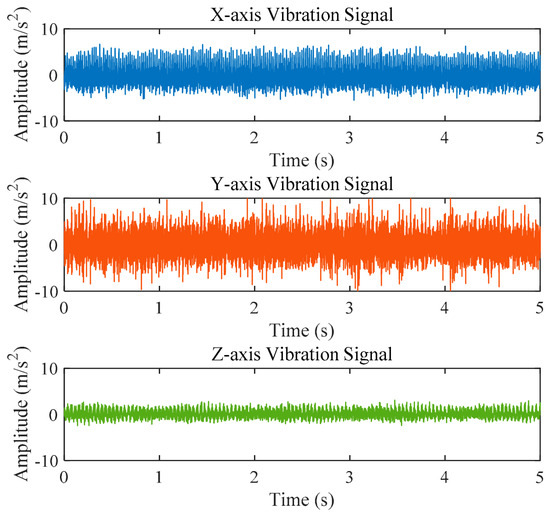
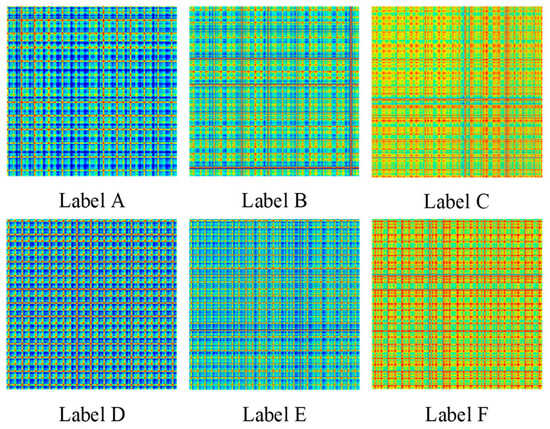
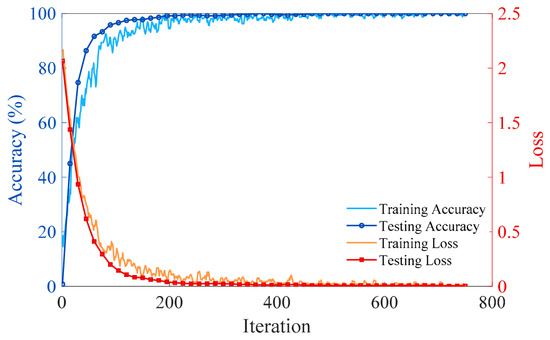
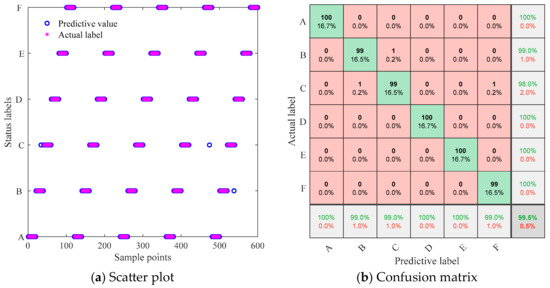
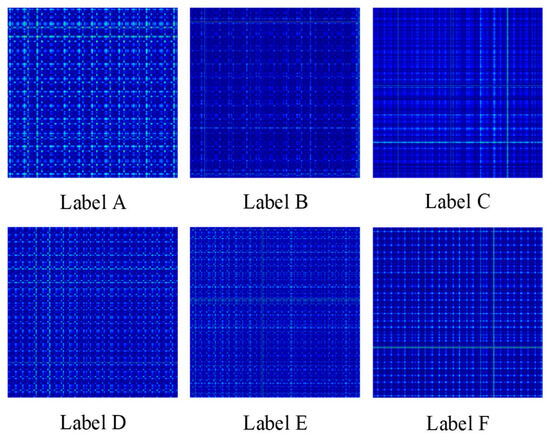
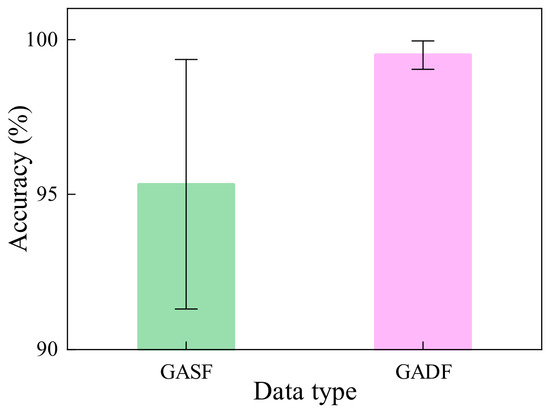
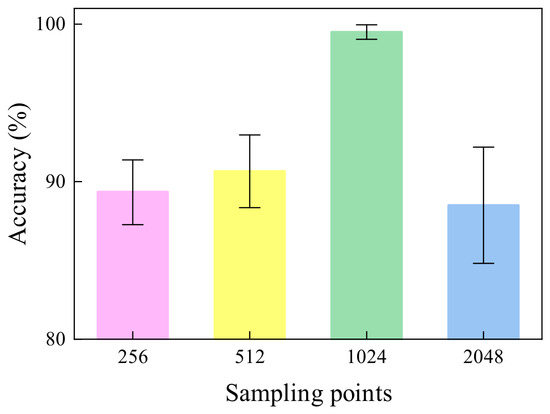
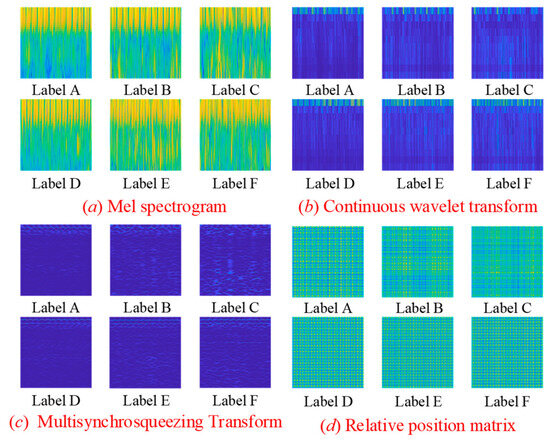
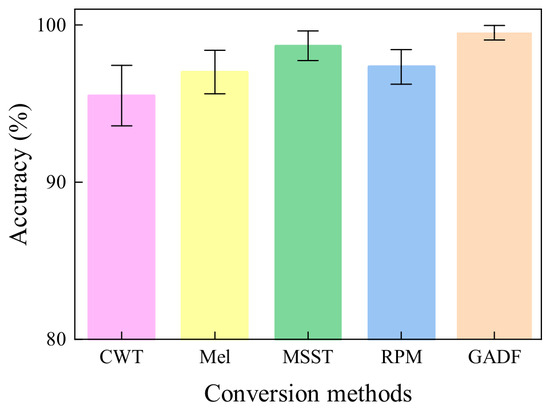
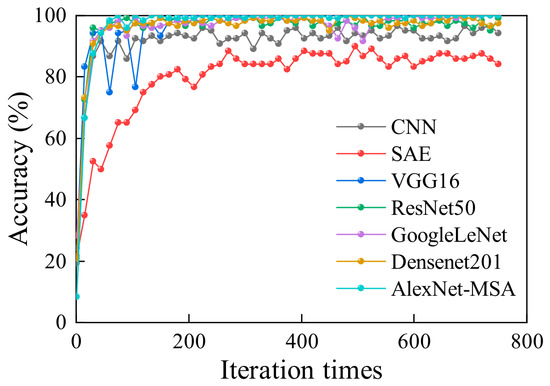
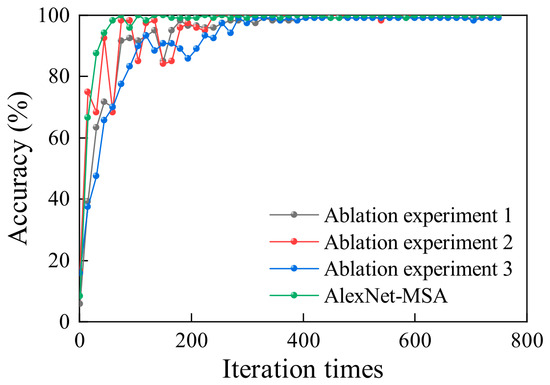
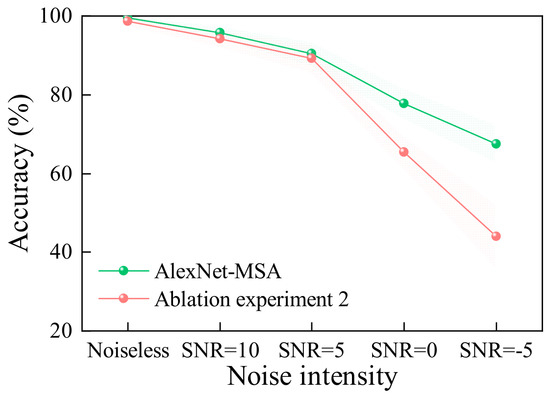
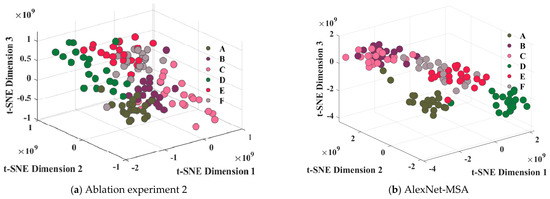
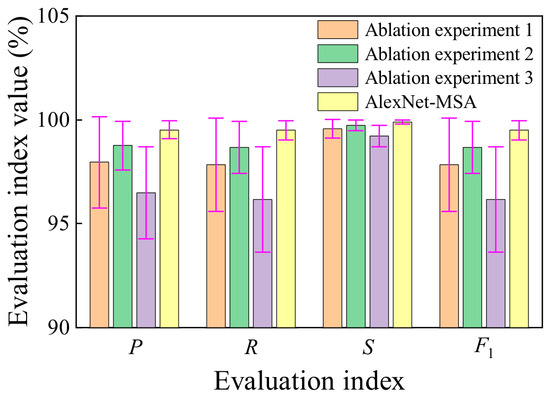
The cutting head is the primary cutting load device of the roadheader. The harsh, complex excavation environment often leads to a scarcity of labelled fault samples, significantly hindering the development of accurate fault diagnosis models. This paper proposes a novel fault diagnosis method based on the Gramian angular difference field (GADF) and an attention-enhanced transfer-learning AlexNet. The collected one-dimensional vibration signals are transformed into two-dimensional image data using GADF to capture transient impact gradients and preserve absolute temporal correlations. To overcome data limitations, the method retains the base convolutional feature extractor of an AlexNet model pre-trained on ImageNet, whilst discarding the original fully connected and classification layers. A novel classification head incorporating a multihead self-attention (MSA) mechanism is constructed to fine-tune the network specifically for the fault diagnosis task. This structural modification adaptively assigns higher weights to fault-sensitive spatial regions, significantly enhancing the model’s feature extraction focus and generalisation capability even under intense background noise. Experimental validation was conducted on a scaled cutting head fault diagnosis test bench. The results demonstrate that the proposed method outperforms other baselines across evaluation metrics, exhibiting robust recognition accuracy and stability. This effectively identifies the cutting head’s operating condition, offering a novel and practical approach for future underground fault diagnosis in coal mines.
Full article
(This article belongs to the Special Issue Fault Diagnosis and Prognosis in Actuators)
►▼
Show Figures

Figure 1

Open AccessArticle
Analysis and Experimental Determination of Fluid Dynamics Within a Sphere for the Development of Multi Degree of Freedom Attitude Control Actuator
by
Huu Quan Vu and Enrico Stoll
Actuators 2026, 15(9), 464; https://doi.org/10.3390/act15090464 - 31 Aug 2026
Abstract
In the contemporary landscape of spacecraft engineering, reaction wheels, control moment gyros, and momentum wheels are standard tools for precise attitude control, functioning by exchanging angular momentum through the rotation of a solid mass around its major axis. The VEKTOR-FDA (Vector Fluid Dynamic
[...] Read more.
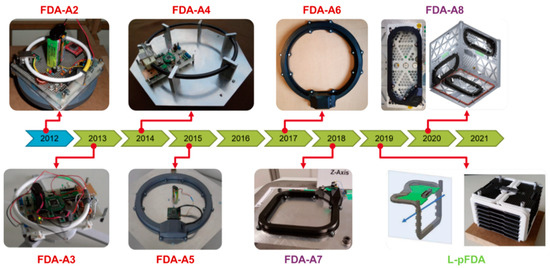
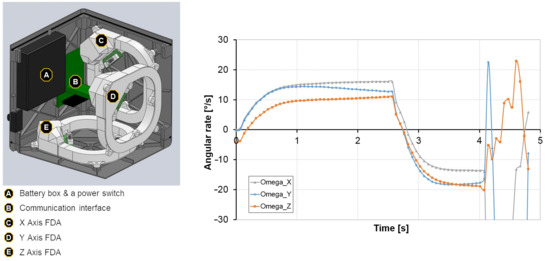
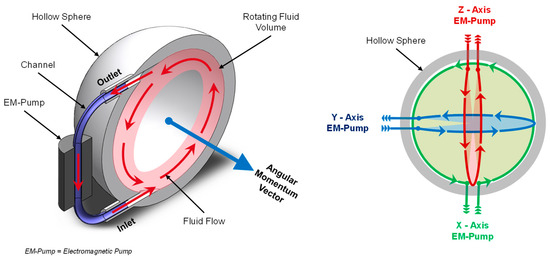
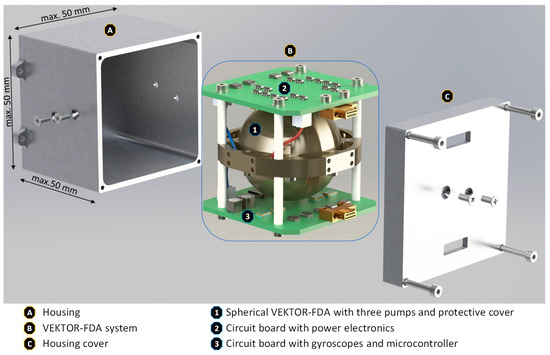
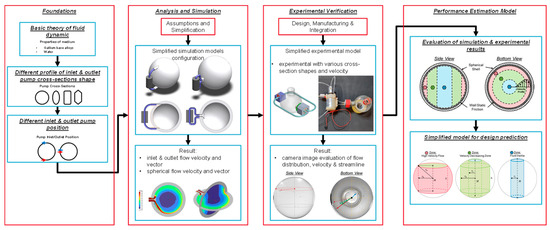
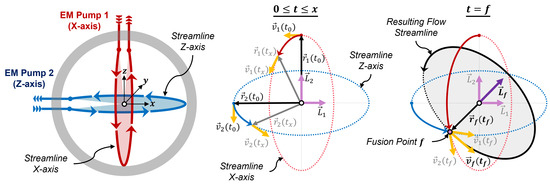
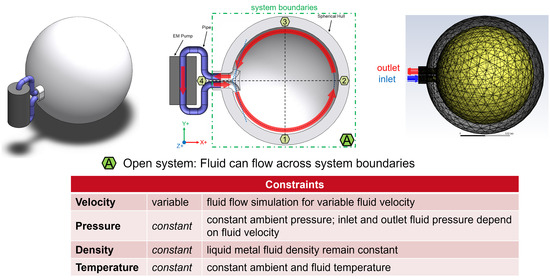
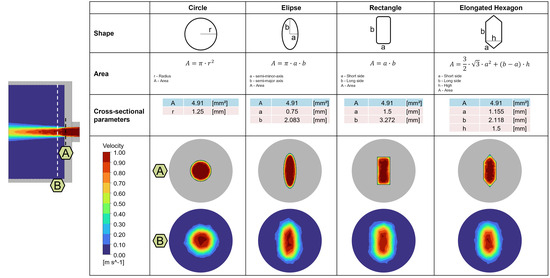
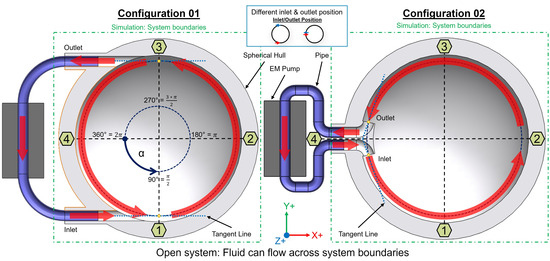
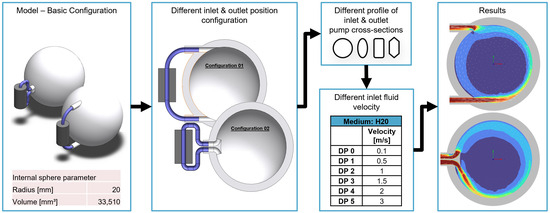
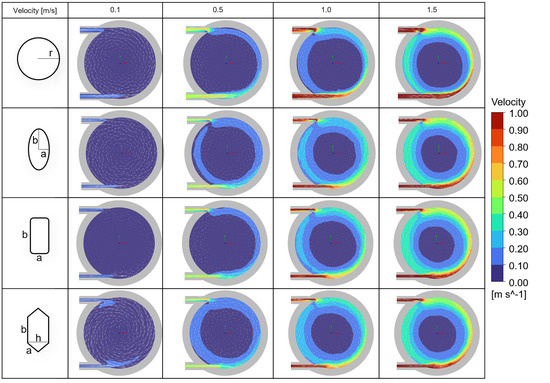
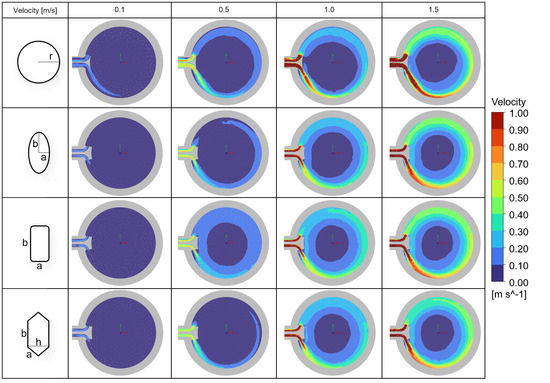
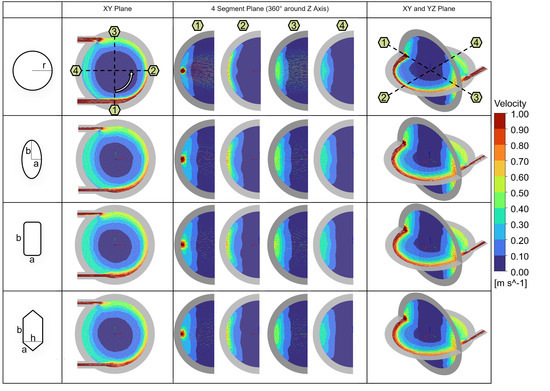
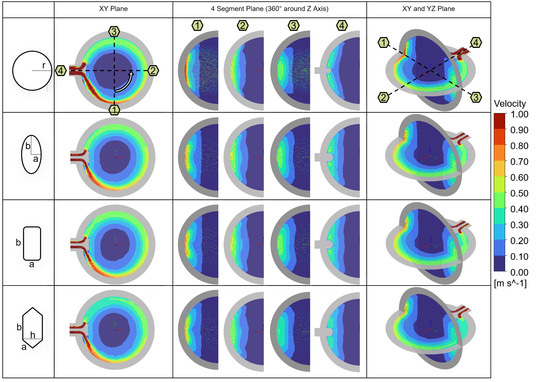
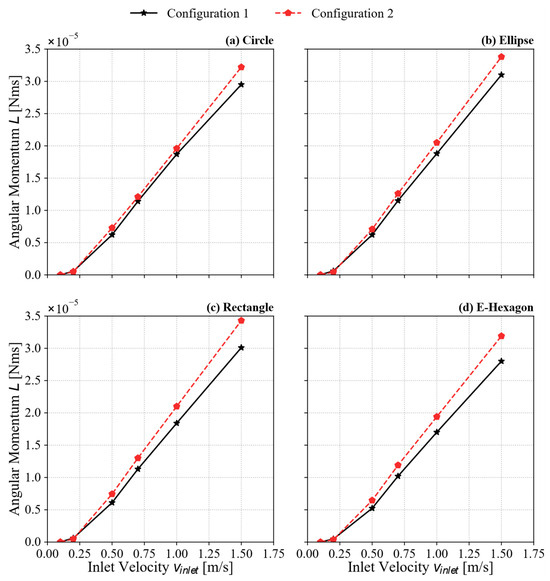
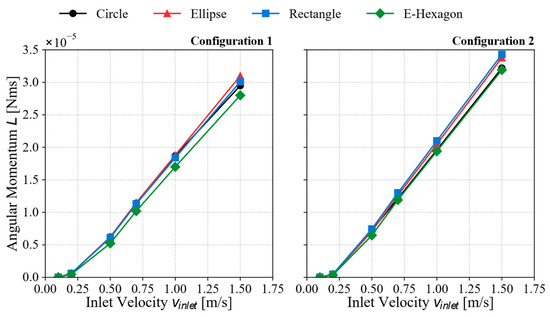
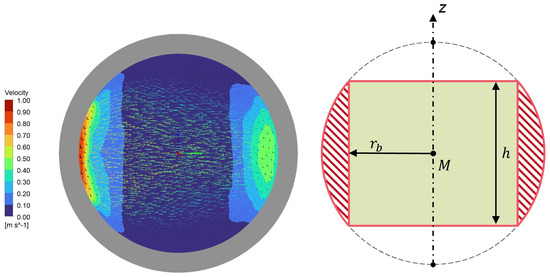
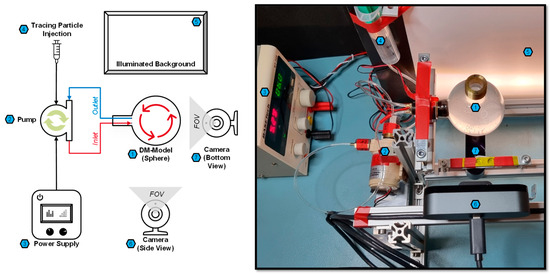
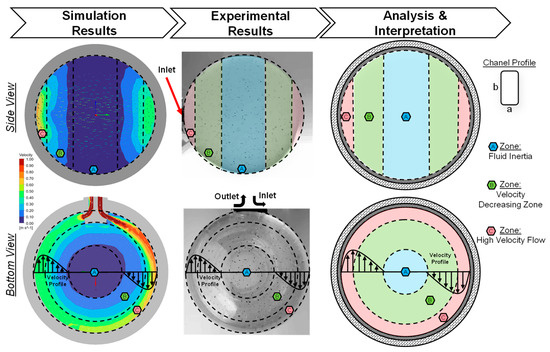
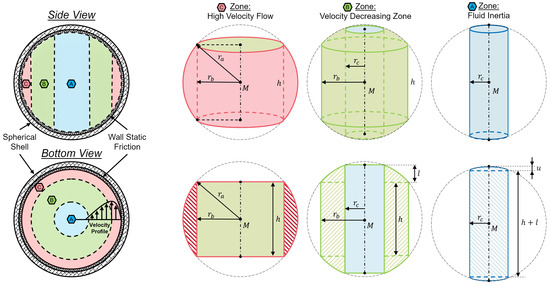
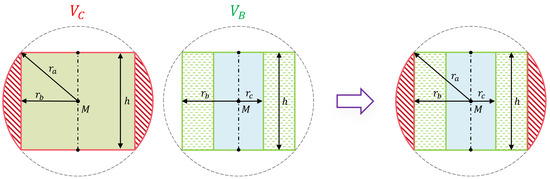
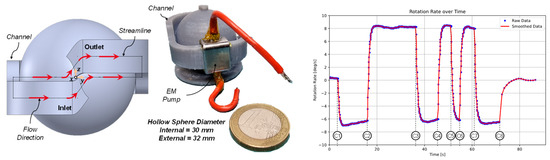
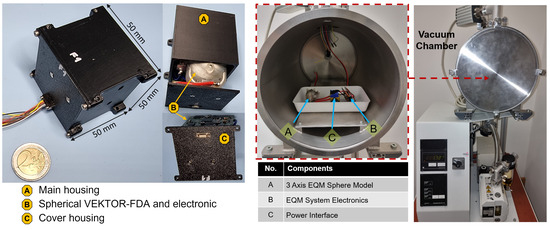
In the contemporary landscape of spacecraft engineering, reaction wheels, control moment gyros, and momentum wheels are standard tools for precise attitude control, functioning by exchanging angular momentum through the rotation of a solid mass around its major axis. The VEKTOR-FDA (Vector Fluid Dynamic Actuator) proposed in this paper offers an alternative by utilizing the principle of rotating liquid to generate angular momentum instead of relying on a solid body. Electromagnetic pumps drive and circulate the fluid, connecting to a hollow sphere via inlet and outlet channels. The fluid within the sphere is drawn into the pump through the outlet channel and reintroduced through the inlet channel. This circulation, combined with the spherical shape, generates a rotational fluid flow inside the hollow sphere, creating a rotating fluid volume and an angular momentum vector aligned with the rotation axis. By utilizing at least three pumps arranged orthogonally, simultaneous operation allows flow mixing, which can be precisely controlled by adjusting the individual flow velocities of each pump. This setup enables the rotation axis of the fluid flow to be directed in any desired orientation, allowing the rotating fluid volume and its angular momentum vector to be spatially aligned as needed. As a result, a single VEKTOR-FDA can manage attitude control across all three axes of the spacecraft, effectively functioning as a multiple-degree-of-freedom (MDOF) actuator. The electromagnetic pump drive in the VEKTOR-FDA actuator provides self-lubrication and eliminates the need for moving mechanical parts, minimizing potential damage from mechanical loads like shocks during launch. Its simple design also enables the use of commercial off-the-shelf components, ensuring cost-effective implementation. This paper provides a comprehensive overview of the motivation and concept behind the VEKTOR-FDA actuator. Additionally, this paper presents analyses and experimental results that investigate how rotating fluid flow can be generated within the sphere and examines its behavior. The study evaluates various factors influencing fluid flow inside the sphere, including configurations with variable cross-sectional shapes of the inlet and outlet channels. Furthermore, it determines the optimal positioning and arrangement of these channels to achieve efficient fluid flow volume, which is essential for maximizing angular momentum output.
Full article
(This article belongs to the Special Issue Flow Control and Beyond: Enhancing Performance and Energy Efficiency in Complex Fluid Systems—2nd Edition)
►▼
Show Figures

Figure 1
Open AccessArticle
Adaptive Front and Rear Braking Force Distribution Strategy for Electric Commercial Vehicles: Modeling, Control, and Experimental Validation
by
Abdallah Yousef Aldaher, Ebaa Khaled Mohammed Matar, Jamshid Valiev Fayzullayevich, Yuxiao Zhang, Mohammed A. Hassan and Gangfeng Tan
Actuators 2026, 15(9), 463; https://doi.org/10.3390/act15090463 - 28 Aug 2026
Abstract
The dynamic distribution of braking forces between front and rear axles in electric commercial vehicles represents a critical multi-objective optimization challenge requiring simultaneous satisfaction of regulatory safety compliance, regenerative energy recovery, thermal stability, and actuator coordination under varying load and road conditions. This
[...] Read more.
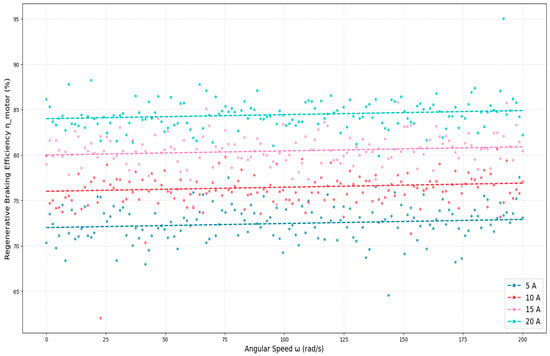
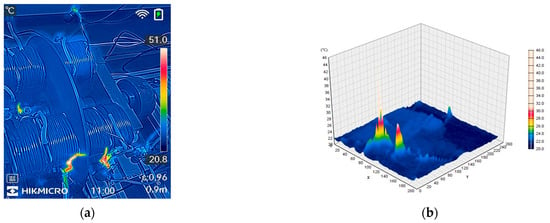
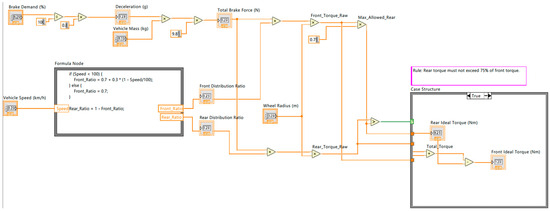
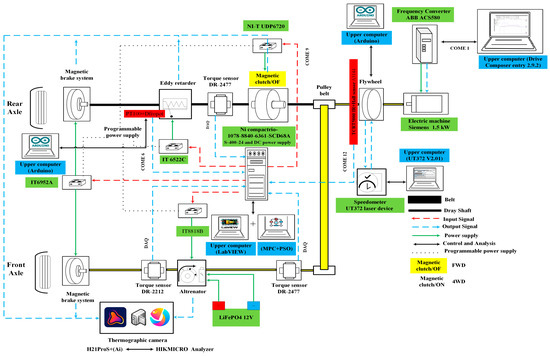
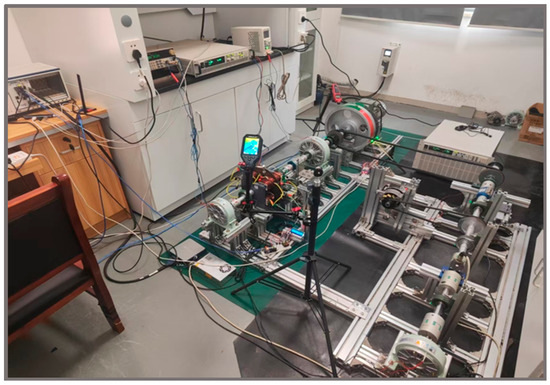
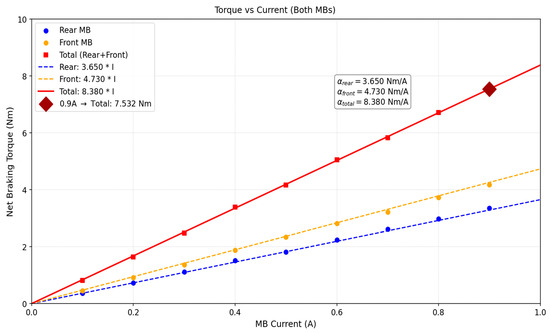
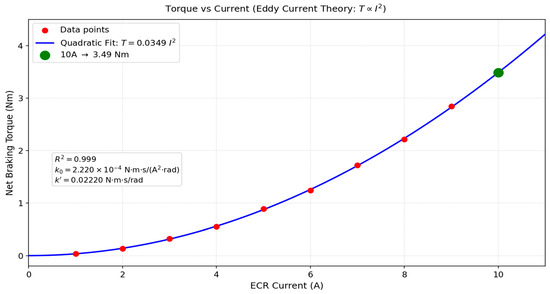
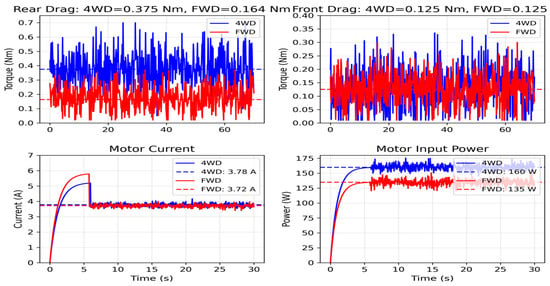
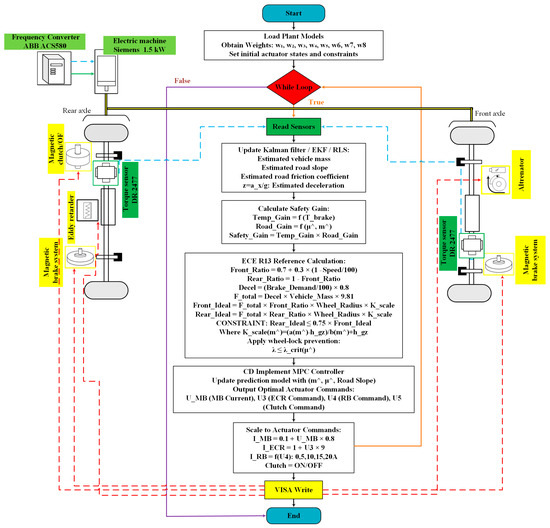
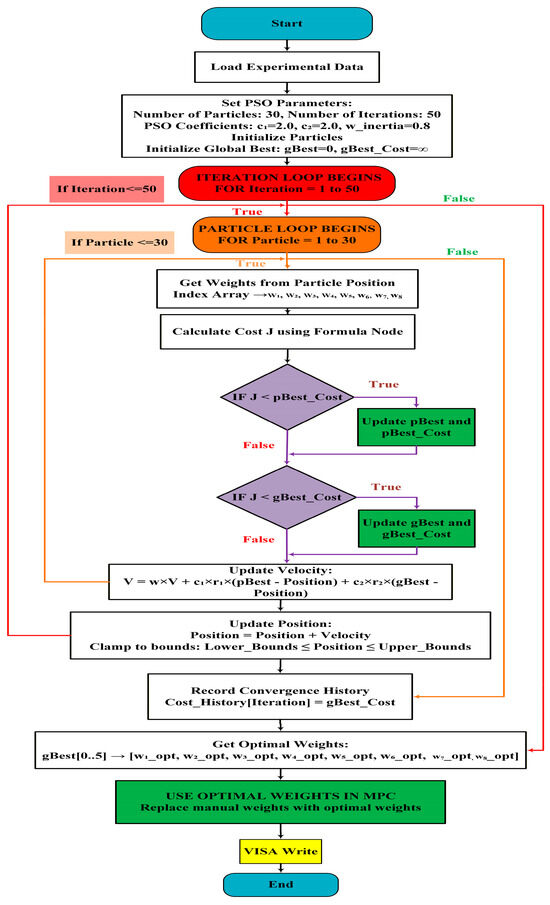
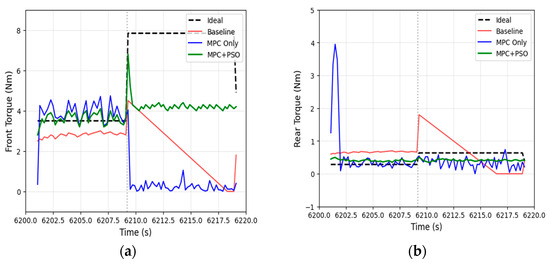
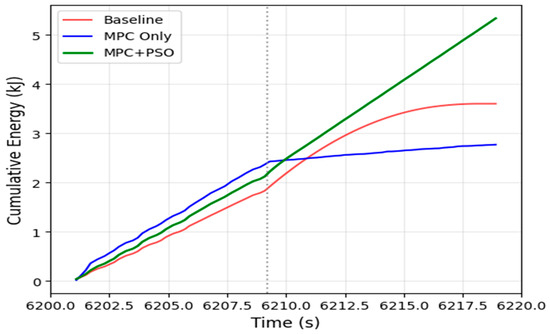
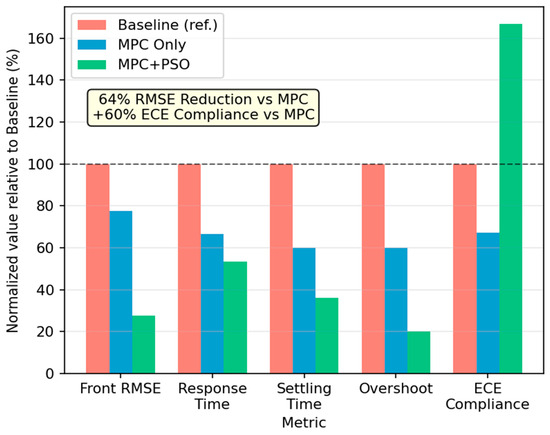
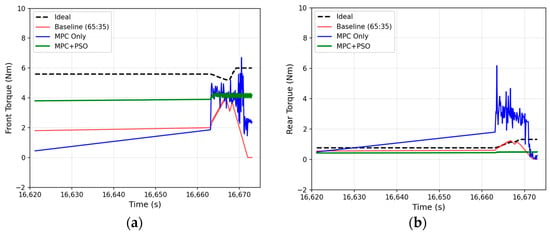
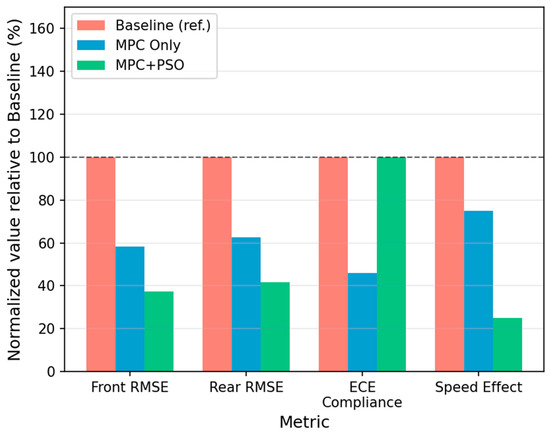
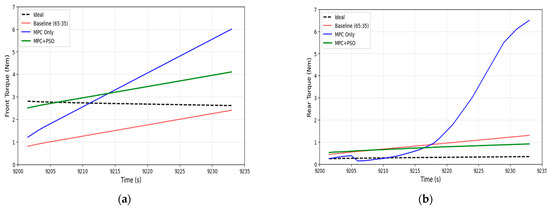
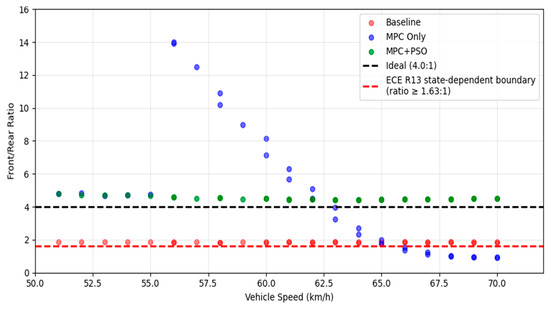
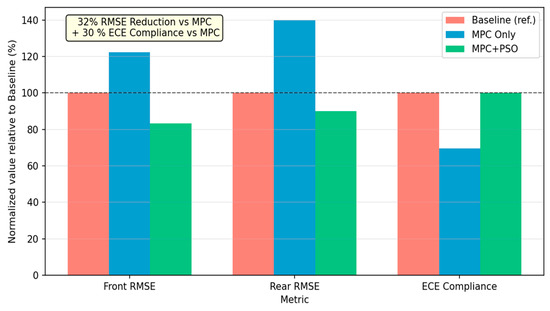
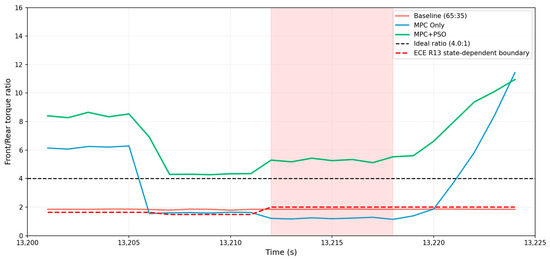
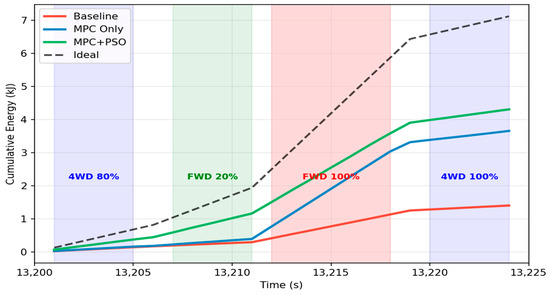
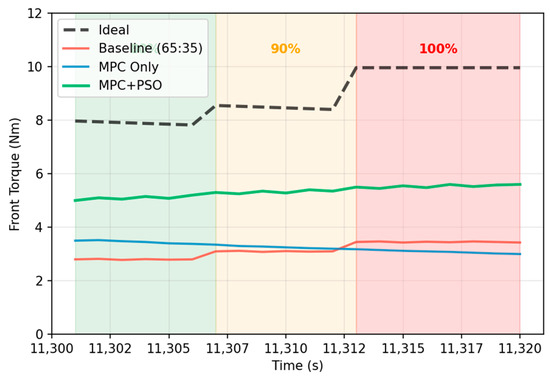
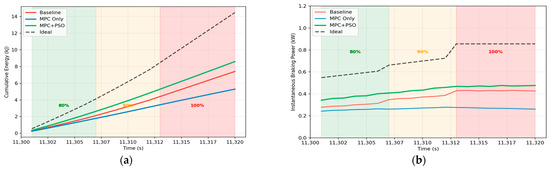
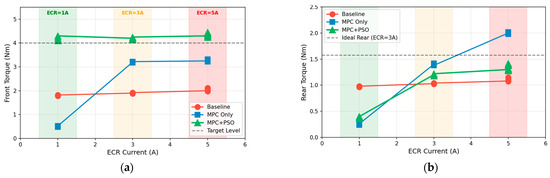
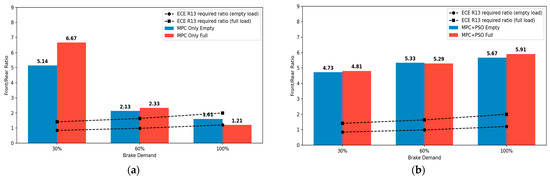
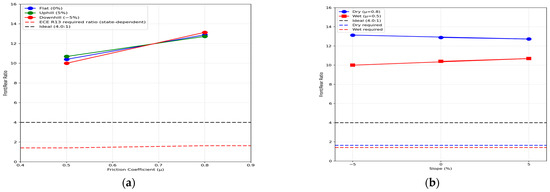
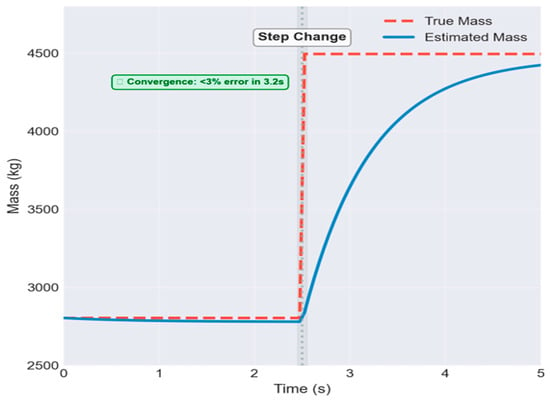
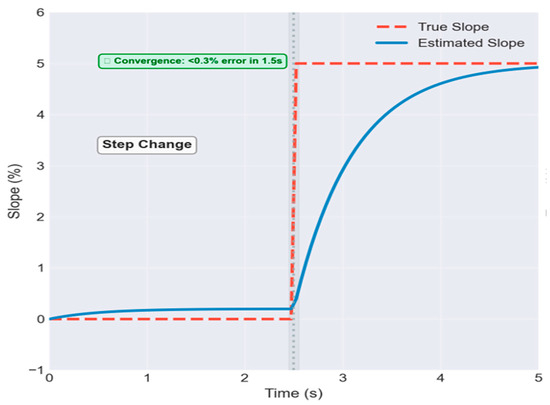
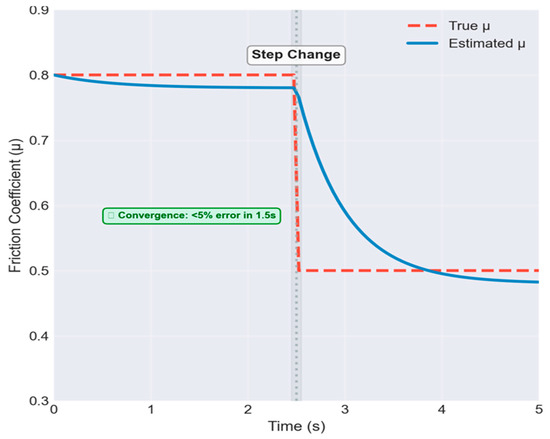
The dynamic distribution of braking forces between front and rear axles in electric commercial vehicles represents a critical multi-objective optimization challenge requiring simultaneous satisfaction of regulatory safety compliance, regenerative energy recovery, thermal stability, and actuator coordination under varying load and road conditions. This paper addresses this challenge through the development and experimental validation of an integrated adaptive brake force distribution strategy combining model predictive control (MPC) with Particle Swarm Optimization (PSO) within a unified framework that ensures compliance with ECE Regulation No. 13. A comprehensive experimental test bench was designed and instrumented, integrating three independent braking mechanisms: magnetic brakes with front and rear torque coefficients of 4.73 N·m/A and 3.65 N·m/A, respectively; an eddy current retarder with coefficient 2.220 × 10⁻⁴ N·m·s/(A2·rad), producing braking torque that is quadratic in excitation current and linear in rotor speed; a regenerative braking system with 82–90% efficiency; and a switchable magnetic clutch for FWD/4WD operation. The MPC controller was formulated with a prediction horizon = 20, control horizon = 5, and sampling time = 20 ms. PSO was employed for systematic tuning of MPC weights using 30 particles over 50 iterations with cognitive and social coefficients = = 2.0 and linearly decreasing inertia from 0.8 to 0.4. A vehicle state estimation module using Kalman Filtering was developed for real-time estimation of vehicle mass (<3% error), road slope (<0.3% error), and road friction coefficient (<5% error). Experimental validation across eight comprehensive test scenarios demonstrates that the PSO-optimized MPC controller achieves 43% reduction in front RMSE (from 2.65 Nm to 1.52 Nm), 44% reduction in rear RMSE (from 0.78 Nm to 0.44 Nm), 100% ECE R13 compliance (improved from 67.5%), 57% settling time improvement (from 4.2 s to 1.8 s), 92% overshoot reduction (from 67% to 5%), and average recovered energy improvement from 3.51 kJ to 4.04 kJ. The proposed framework provides a comprehensive solution for next-generation electric commercial vehicle brake management systems.
Full article
(This article belongs to the Section Actuators for Surface Vehicles)
►▼
Show Figures

Figure 1

Open AccessArticle
Comparative Analysis of Y- and Delta-Connected Windings in Line-Start Permanent Magnet Motors with Different Rotor Configurations
by
Seung-Heon Lee, In-Jun Yang and Si-Woo Song
Actuators 2026, 15(9), 462; https://doi.org/10.3390/act15090462 - 28 Aug 2026
Abstract
A line-start permanent-magnet motor (LSPM) combines the direct-on-line starting capability of a squirrel-cage induction motor (IM) with permanent-magnet-assisted synchronous operation. Previous studies on LSPM winding connections have mainly focused on load-dependent efficiency and the power factor, while their effects on harmonics, torque ripple,
[...] Read more.
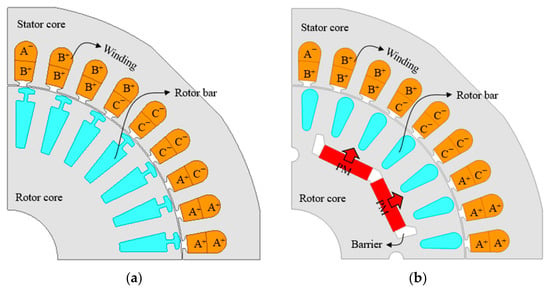
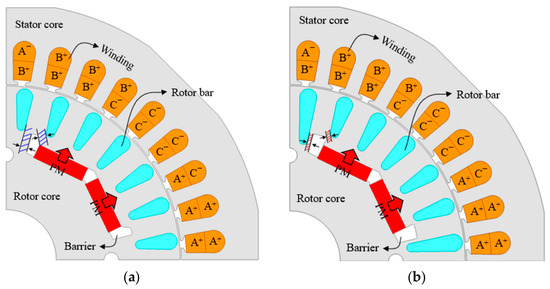
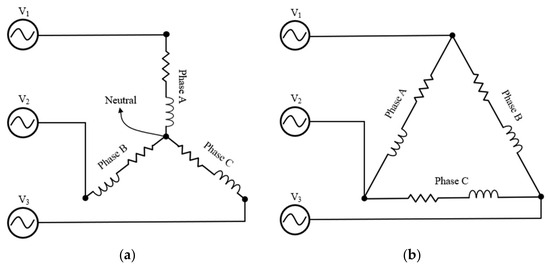
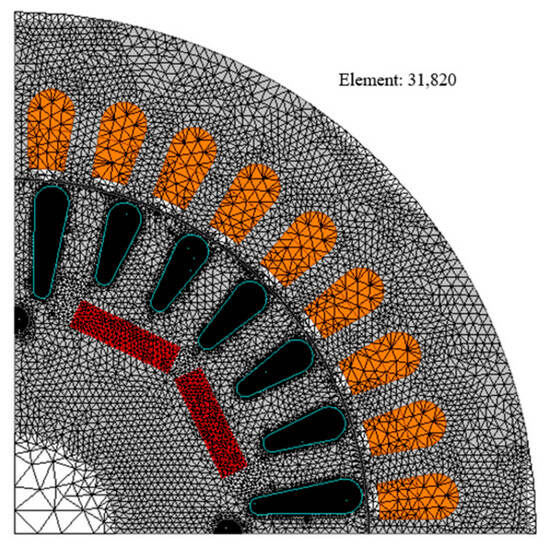
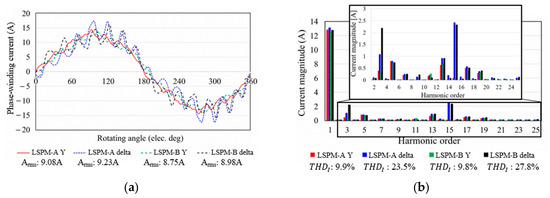
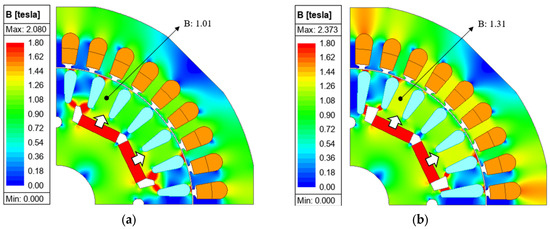
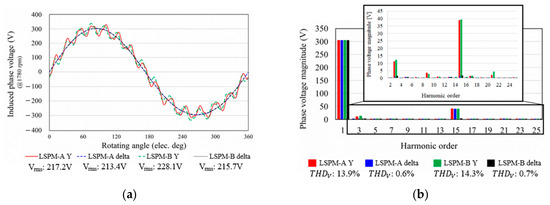
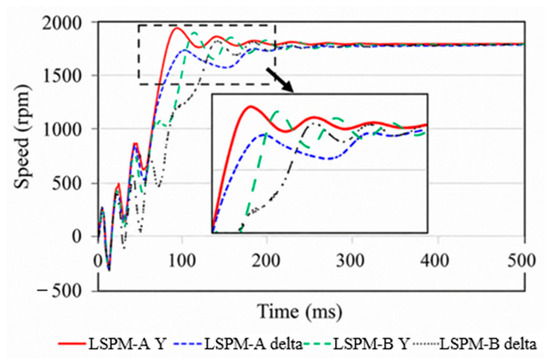
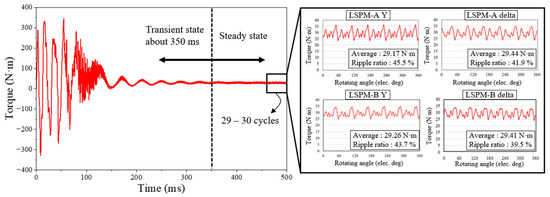
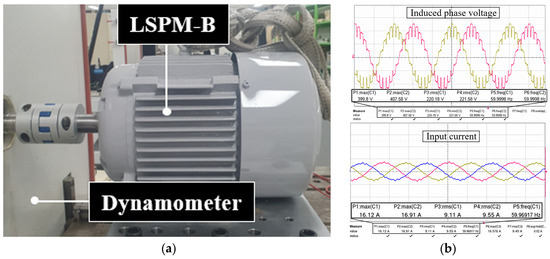
A line-start permanent-magnet motor (LSPM) combines the direct-on-line starting capability of a squirrel-cage induction motor (IM) with permanent-magnet-assisted synchronous operation. Previous studies on LSPM winding connections have mainly focused on load-dependent efficiency and the power factor, while their effects on harmonics, torque ripple, and synchronization across different rotor configurations remain unclear. This study compares Y- and delta-connected windings in two 5.5 kW, four-pole LSPM models using transient finite-element analysis. Current and voltage harmonics, losses, efficiency, torque ripple, and synchronization response were evaluated. The Y-connected cases exhibited lower current harmonic distortion and stator copper loss, whereas the delta-connected cases reduced torque ripple and maximum speed overshoot but required slightly longer settling times. For LSPM-B, the Y connection achieved the highest efficiency of 92.92% with a stator copper loss of 137.81 W, while the delta connection reduced the torque ripple ratio from 43.8% to 39.5%. These results demonstrate that winding-connection effects depend on the rotor magnetic circuit and cage-assisted starting characteristics, requiring a trade-off among efficiency, harmonic loss, torque ripple, and synchronization response.
Full article
(This article belongs to the Special Issue Advanced Design and Control of Electrical Machines)
►▼
Show Figures

Figure 1

Open AccessArticle
A Novel Split-Tooth Bidirectional Field Modulation Permanent Magnet Motor for Low-Speed High-Torque Direct-Drive Systems
by
Jiahan Cao and Shuhua Fang
Actuators 2026, 15(9), 461; https://doi.org/10.3390/act15090461 - 27 Aug 2026
Abstract
This paper proposes a split-tooth bidirectional field modulation permanent magnet (PM) motor (ST-BFMPMM) for low-speed, high-torque, direct-drive applications. Featuring a compact single-stator, single-rotor configuration with a tangentially magnetized split-tooth stator and a consequent-pole rotor incorporating radially magnetized PMs, the proposed topology realizes bidirectional
[...] Read more.
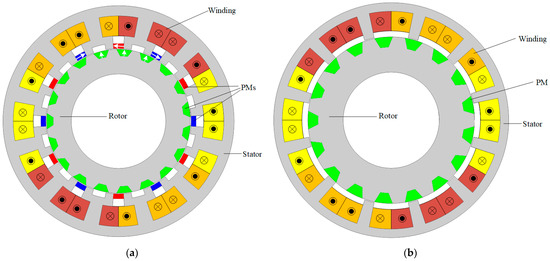
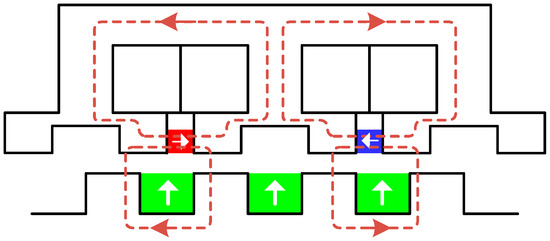
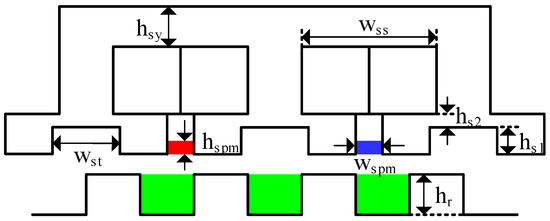
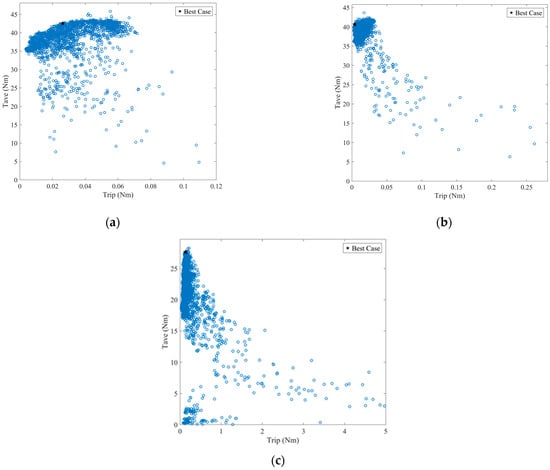
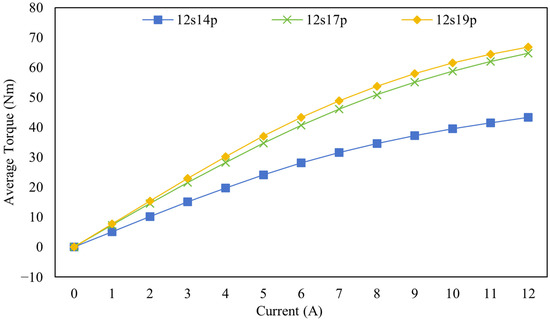
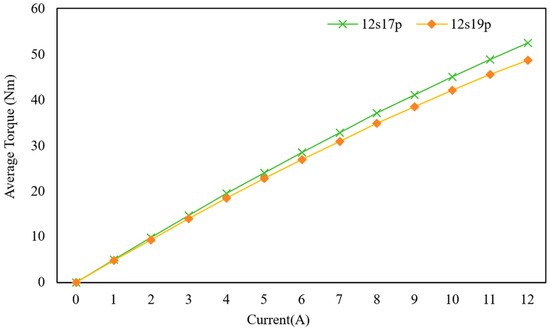
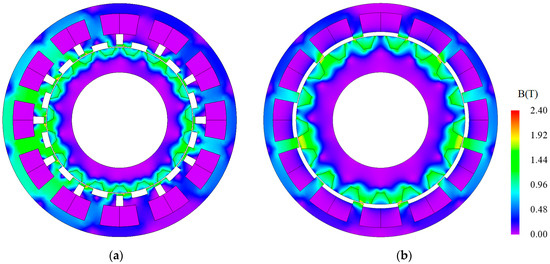
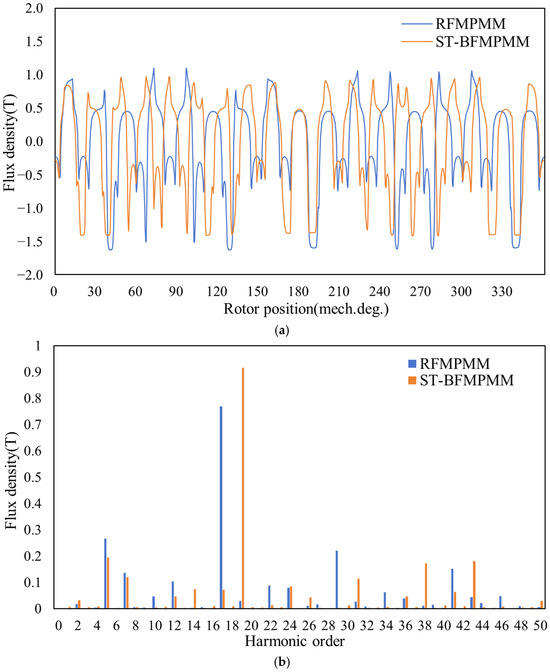
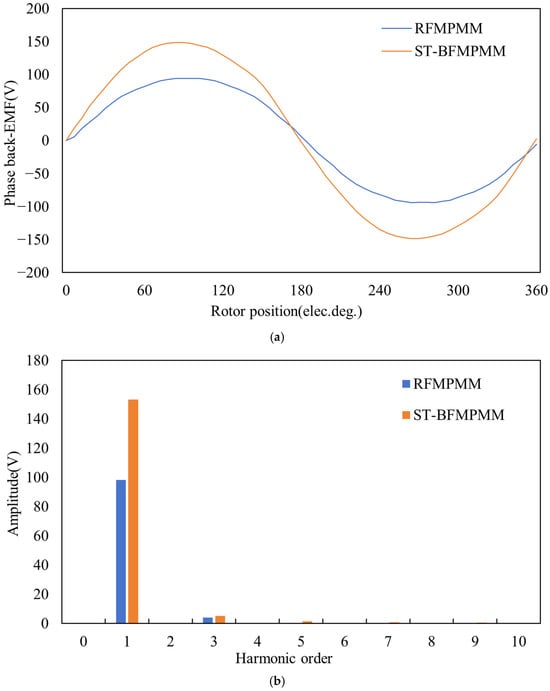
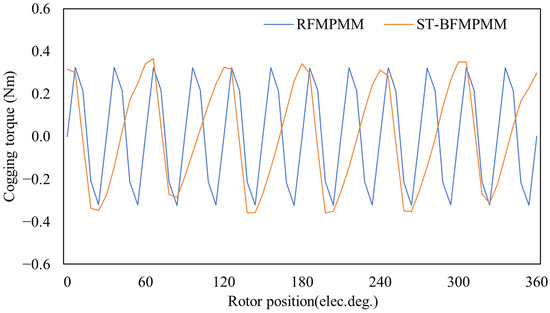
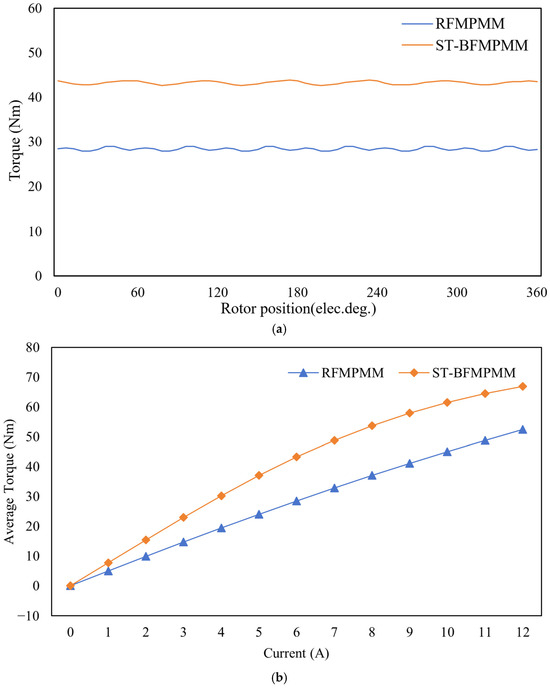
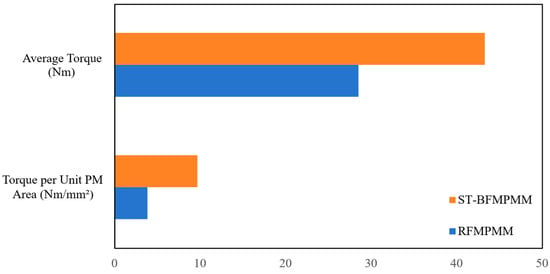
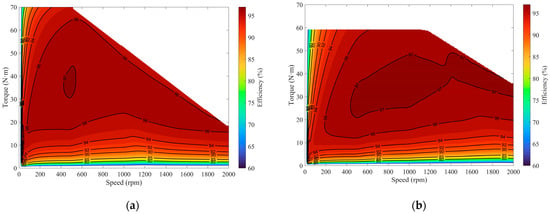
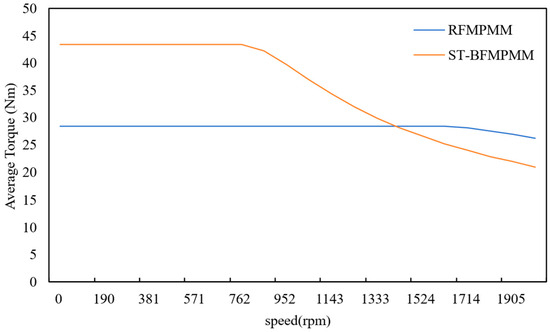
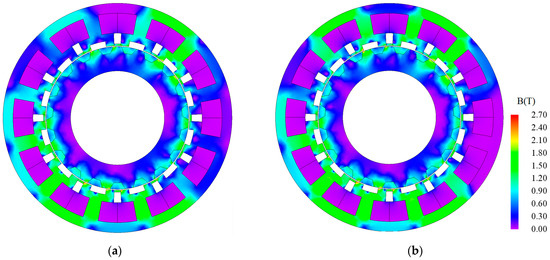
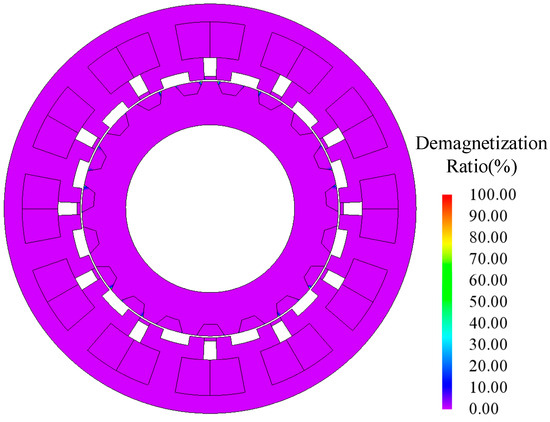
This paper proposes a split-tooth bidirectional field modulation permanent magnet (PM) motor (ST-BFMPMM) for low-speed, high-torque, direct-drive applications. Featuring a compact single-stator, single-rotor configuration with a tangentially magnetized split-tooth stator and a consequent-pole rotor incorporating radially magnetized PMs, the proposed topology realizes bidirectional field modulation to enhance the utilization of torque-producing harmonics while reducing the total PM requirement. Three pole–slot configurations (12s14p, 12s17p, and 12s19p) are optimized using finite element analysis (FEA), and the 12s19p design exhibits the best overall performance. Compared with the conventional 12s17p benchmark, its rated torque increases by 51.93%, PM consumption decreases by 39.4%, and torque ripple is reduced to 2.57%. It also achieves a 55.9% higher fundamental back-EMF and 2.51 times the torque output per unit PM area, while maintaining nearly the same calculated rated efficiency (96.88% versus 96.87%). Although the higher fundamental back-EMF causes the proposed motor to enter voltage-limited operation at a lower speed, thereby limiting its high-speed torque capability, the proposed motor provides high torque output and improved PM utilization in the targeted low-speed range, making it a promising candidate for gearless direct-drive wind turbines and heavy agricultural machinery.
Full article
(This article belongs to the Special Issue Advanced Design and Control of Electrical Machines)
►▼
Show Figures

Figure 1
Open AccessCorrection
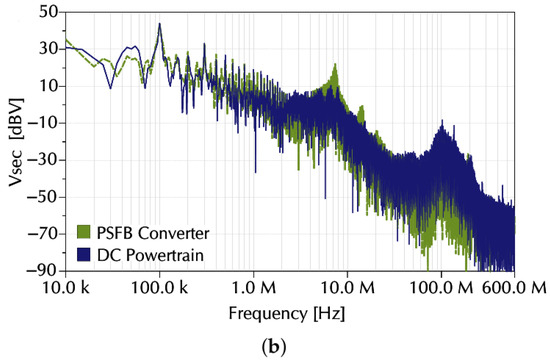
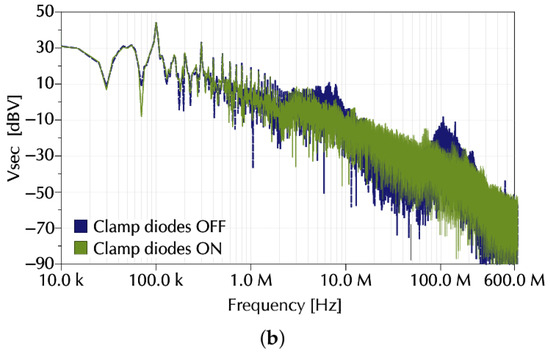
Correction: Khelladi et al. Broadband Simulation-Based EMC Modeling and EMI Assessment of a GaN-Based Phase-Shift Full-Bridge Converter for EV DC Powertrains. Actuators 2026, 15, 340
by
Sofiane Khelladi, Nassim Rizoug, Cristina Morel and Abdelchafik Hadjadj
Actuators 2026, 15(9), 460; https://doi.org/10.3390/act15090460 - 26 Aug 2026
Abstract
►▼
Show Figures
In the original publication [...]
Full article

Figure 21 Cont.
Open AccessArticle
A Unified Invariant-Set-Based Reliable Control Framework for T-S Fuzzy Systems with Actuator Saturation and Faults
by
Du Hee Jung and Sung Hyun Kim
Actuators 2026, 15(9), 459; https://doi.org/10.3390/act15090459 - 24 Aug 2026
Abstract
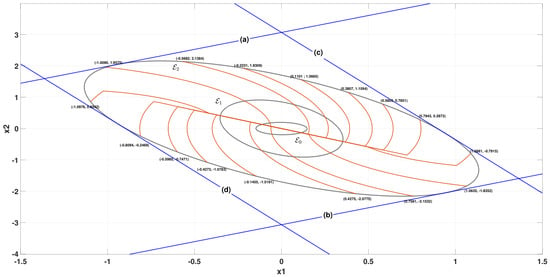
This paper proposes a unified invariant-set-based reliable control framework for Takagi–Sugeno (T–S) fuzzy systems subject to actuator saturation and faults. The considered model incorporates both matched actuator faults and mismatched external disturbances, which provides a more realistic control setting. To address these challenges,
[...] Read more.
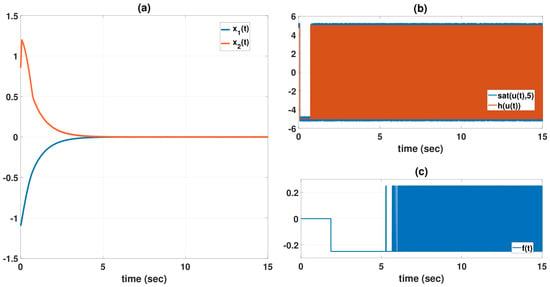
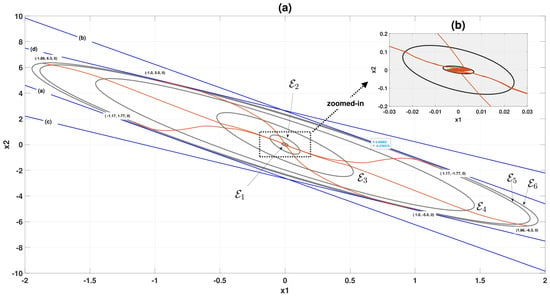
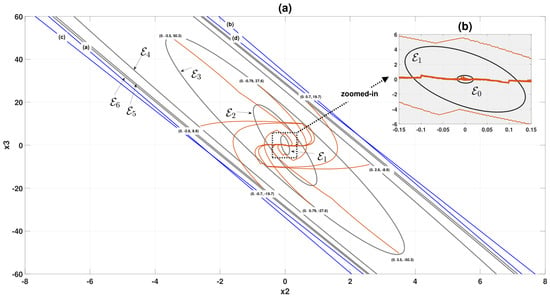
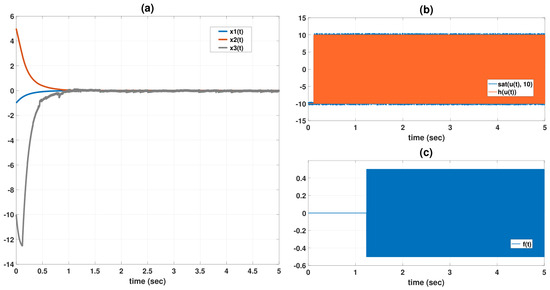
This paper proposes a unified invariant-set-based reliable control framework for Takagi–Sugeno (T–S) fuzzy systems subject to actuator saturation and faults. The considered model incorporates both matched actuator faults and mismatched external disturbances, which provides a more realistic control setting. To address these challenges, a unified control framework is developed to systematically account for input constraints and actuator fault effects. A sequence of nested invariant ellipsoidal sets, together with corresponding set-dependent control gains, are constructed to guarantee that state trajectories starting within the designed outer invariant sets progressively converge toward a minimized target set. Based on this structure, relaxed LMI-based conditions are derived to compute both the invariant sets and the associated control laws via convex optimization. Finally, numerical examples demonstrate the effectiveness of the proposed method.
Full article
(This article belongs to the Section Control Systems)
►▼
Show Figures

Figure 1
Open AccessArticle
Run-Disjoint Few-Shot XGBoost Framework for Compound Fault Diagnosis of Induction Motors
by
Runsheng Diao, Mingzhe Zhou and Yuanxiu Ma
Actuators 2026, 15(9), 458; https://doi.org/10.3390/act15090458 - 24 Aug 2026
Abstract
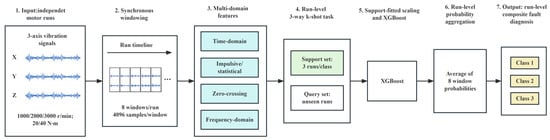
Few-shot compound fault diagnosis of induction motors can be overestimated when correlated windows from the same continuous run are split across support and query sets. This study develops a run-disjoint few-shot framework in which each complete experimental run is treated as one shot
[...] Read more.
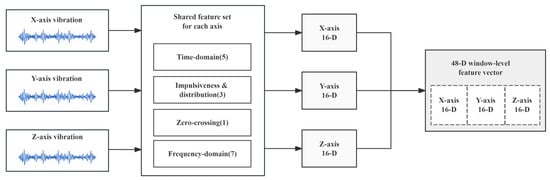
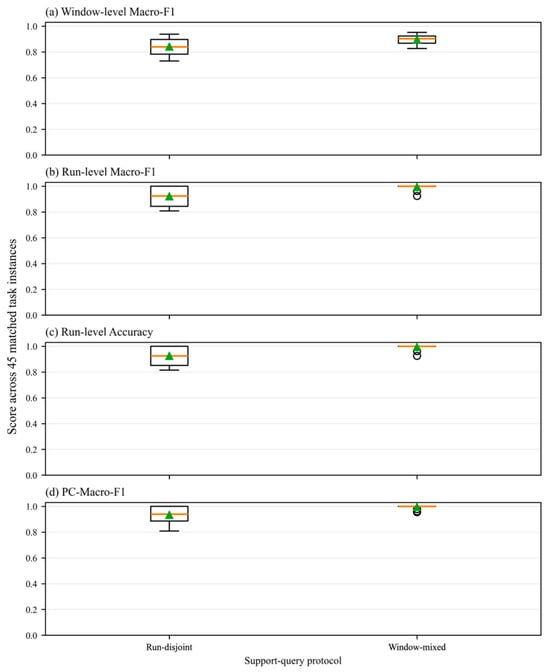
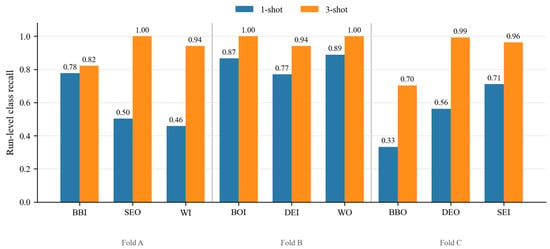
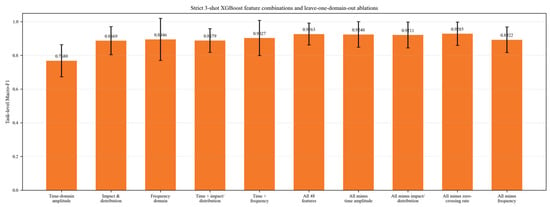
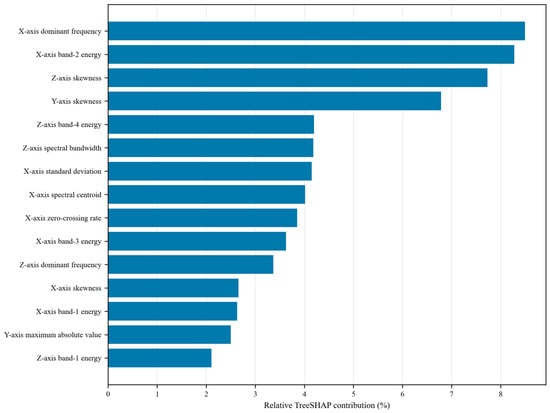
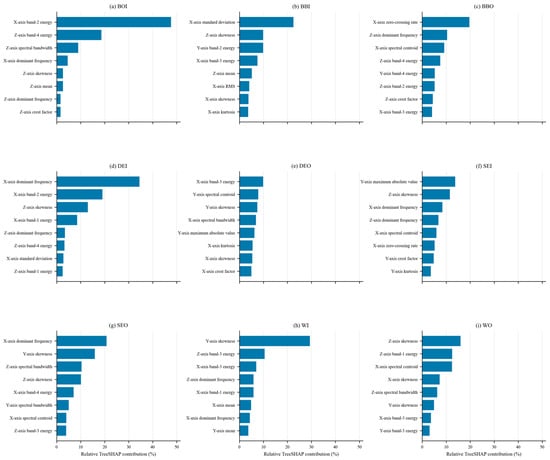
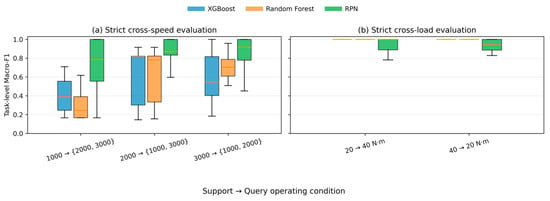
Few-shot compound fault diagnosis of induction motors can be overestimated when correlated windows from the same continuous run are split across support and query sets. This study develops a run-disjoint few-shot framework in which each complete experimental run is treated as one shot and support and query sets are separated by run ID. Forty-eight multidomain features are extracted from synchronized triaxial vibration windows, classified using task-specific XGBoost, and aggregated to obtain run-level predictions; TreeSHAP provides post hoc feature attribution. In a matched comparison with identical query runs and windows, window-mixed partitioning increased the task-level mean run-level Macro-F1 from 0.9212 to 0.9934. After repeated predictions were aggregated over 108 unique query runs, the corresponding difference was 0.0093 with a 95% paired-bootstrap confidence interval of [0.0000, 0.0282], showing that the estimated magnitude depends on the statistical unit. Under the predefined strict 3-shot protocol, XGBoost achieved a Macro-F1 of 0.9263 and run-level accuracy of 0.9292. Additional sensitivity and controlled comparisons showed that performance depends on within-run sampling, representation, and classifier design, while strict cross-speed tests revealed the limitation of fixed-frequency features under rotational-speed shifts. The framework provides a leakage-aware evaluation procedure for few-shot compound-fault diagnosis using independently labeled runs.
Full article
(This article belongs to the Section High Torque/Power Density Actuators)
►▼
Show Figures

Figure 1
Open AccessArticle
Feedback-Linearization-Assisted Observer-Based Interconnection and Damping Assignment Passivity Control for Electromechanical Actuators
by
Xi Xiao, Xuming Cheng, Bohao Li, Quan Ouyang and Ziyang Zhen
Actuators 2026, 15(9), 457; https://doi.org/10.3390/act15090457 - 24 Aug 2026
Abstract
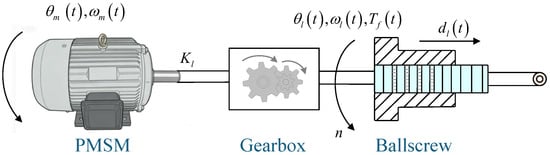
Electromechanical actuators (EMAs) are increasingly used in aerospace servo actuation because of their compact structure, high power density, and convenient integration with electric flight-control systems. However, load-side aerodynamic torque, friction, parameter perturbations, and unmodeled transmission effects enter the EMA dynamics through a channel
[...] Read more.
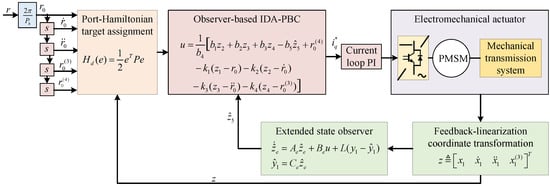
Electromechanical actuators (EMAs) are increasingly used in aerospace servo actuation because of their compact structure, high power density, and convenient integration with electric flight-control systems. However, load-side aerodynamic torque, friction, parameter perturbations, and unmodeled transmission effects enter the EMA dynamics through a channel different from the motor-current input, which leads to a mismatched disturbance rejection problem. This paper develops a feedback-linearization-assisted observer-based interconnection and damping assignment passivity-based control (IDA-PBC) method for EMA trajectory tracking. A fourth-order input–output feedback-linearized normal-coordinate model is first derived, through which the original load-side mismatched disturbance is transformed into a matched term acting on the highest-order channel. An extended state observer is then constructed to estimate the transformed disturbance. Based on the observer output, a desired Hamiltonian function is generated from a Lyapunov equation, and the interconnection and damping matrices are explicitly assigned so that the closed-loop tracking-error dynamics admit a dissipative port-Hamiltonian representation. A composite Lyapunov analysis proves closed-loop exponential stability under the assumption of slowly varying disturbance. The resulting framework combines the disturbance-channel-reshaping capability of feedback linearization with the energy-shaping interpretation of IDA-PBC, providing a systematic controller design for high-precision EMA servo systems subject to load-side disturbances.
Full article
(This article belongs to the Section Control Systems)
►▼
Show Figures

Figure 1
Open AccessArticle
Coordinated Steering and Driving Actuation for Autonomous Vehicle Drifting Using Physics-Guided SCvx NMPC
by
Yurun Gan, Jianuo Zhang, Jianwei Zhang and Haitao Ding
Actuators 2026, 15(9), 456; https://doi.org/10.3390/act15090456 - 24 Aug 2026
Abstract
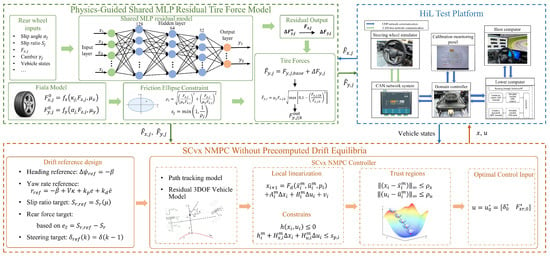
Autonomous drifting requires coordinated steering and driving actuation near the tire friction limit, where strong tire nonlinearity and rapidly changing constraints challenge control accuracy and real-time solvability. This article proposes an equilibrium-free successive convexification (SCvx) nonlinear model predictive control framework for drift tracking
[...] Read more.
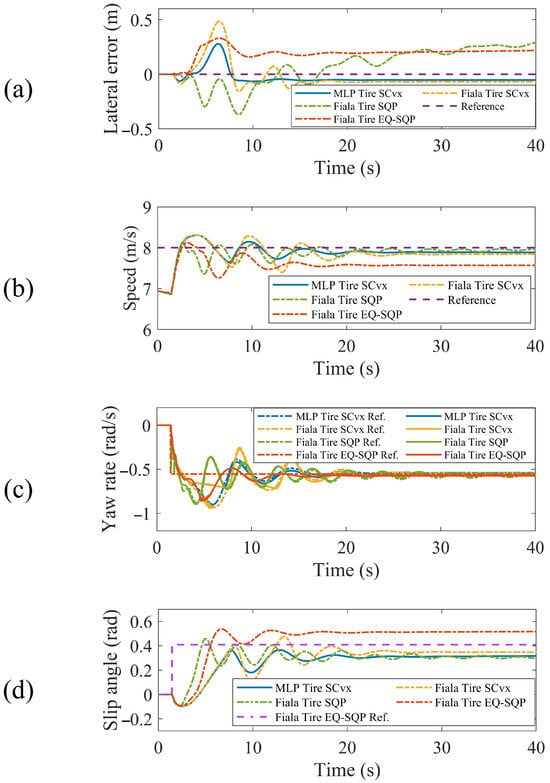
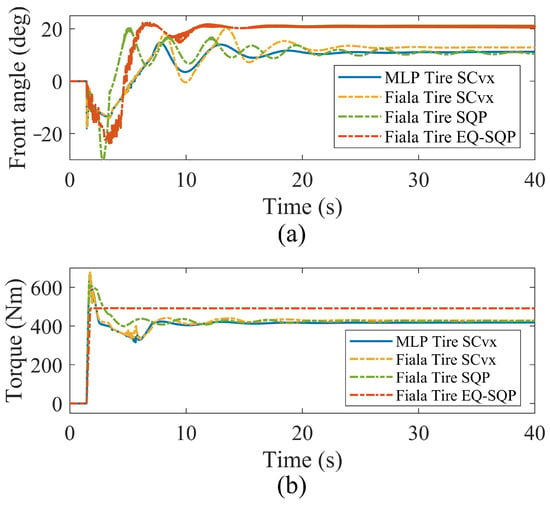
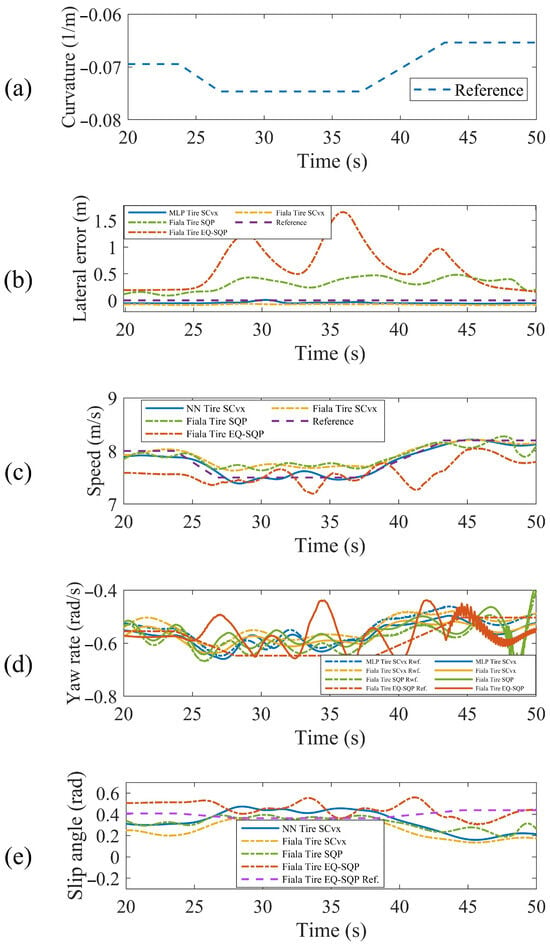
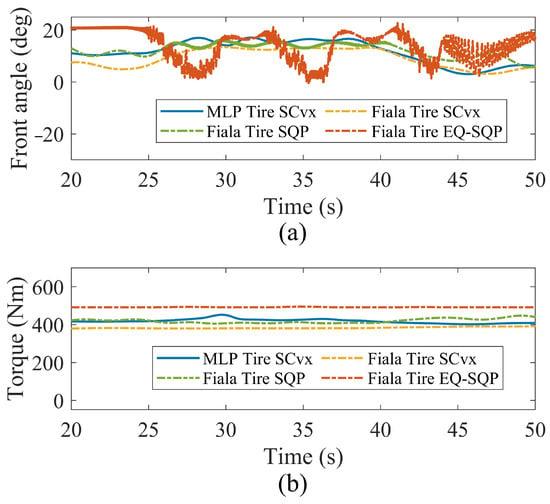
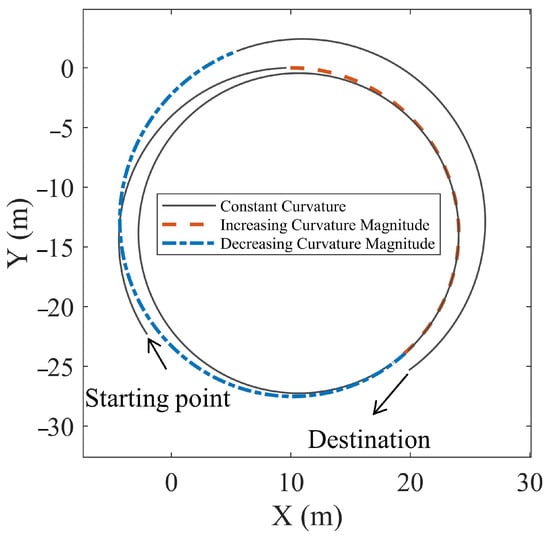
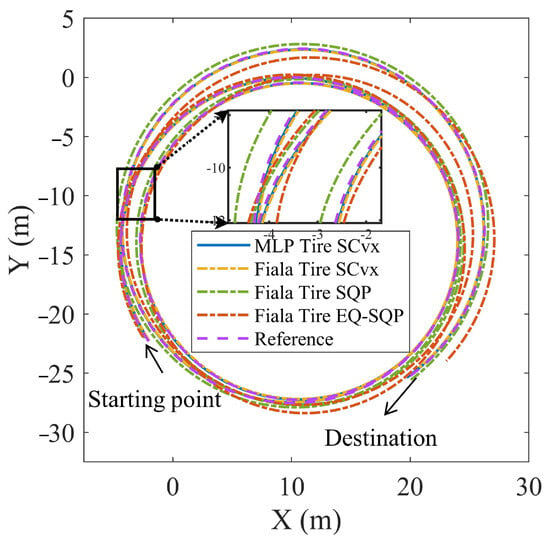
Autonomous drifting requires coordinated steering and driving actuation near the tire friction limit, where strong tire nonlinearity and rapidly changing constraints challenge control accuracy and real-time solvability. This article proposes an equilibrium-free successive convexification (SCvx) nonlinear model predictive control framework for drift tracking under constant and varying curvature conditions. The front steering angle and rear-axle longitudinal force are optimized jointly subject to actuator, state, and tire-force constraints. A physics-guided MLP residual tire model is introduced to improve rear-tire-force prediction. Online reference generation determines the heading error, yaw rate, and rear longitudinal force targets from path curvature, lateral error, sideslip variation, and rear slip ratio error, eliminating the need for precomputed drift equilibria. SCvx converts the nonlinear predictive control problem into convex subproblems using virtual control, slack variables, and trust regions. Hardware-in-the-loop experiments confirm stable actuator coordination under both test conditions. Under varying curvature drifting, the proposed method reduces lateral error, velocity error, and yaw rate error by 39.2%, 53.7%, and 24.9%, respectively, compared with the Fiala tire model using the same solver. The results demonstrate improved tracking accuracy and numerical robustness for constrained autonomous drift control.
Full article
(This article belongs to the Section Actuators for Surface Vehicles)
►▼
Show Figures

Figure 1
Open AccessArticle
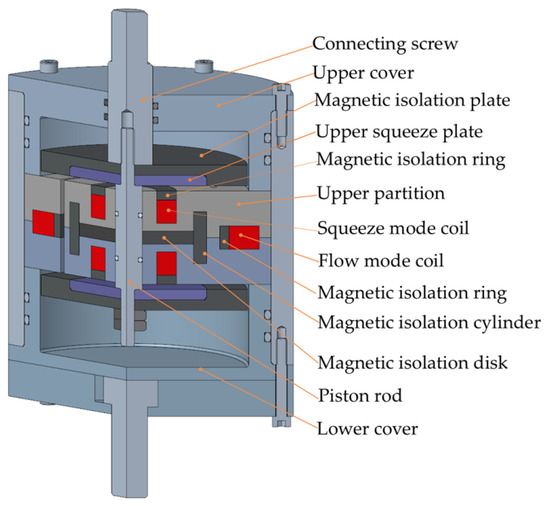
Numerical Simulation and Experiment of a New Magnetorheological Mount Featuring Two Squeeze Gaps and Four Flow Channels
by
Shuangyi Liang, Chen Chen, Xiaolong Yang, Yibu Zhao and Kwanchai Kraitong
Actuators 2026, 15(9), 455; https://doi.org/10.3390/act15090455 - 23 Aug 2026
Abstract
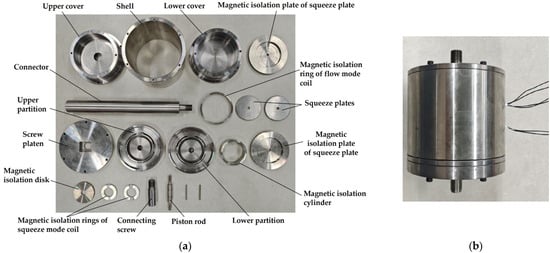
This study investigates the hybrid squeeze–flow damping characteristics of a previously developed magnetorheological (MR) mount, which integrates two vertically symmetric squeeze gaps and four flow channels. Based on the magnetic-circuit configuration, a damping-force prediction model was established specifically for the proposed hybrid structure.
[...] Read more.
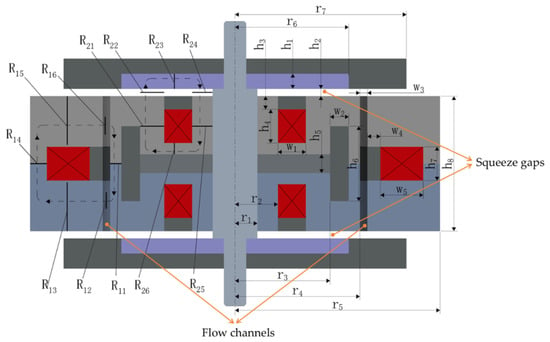
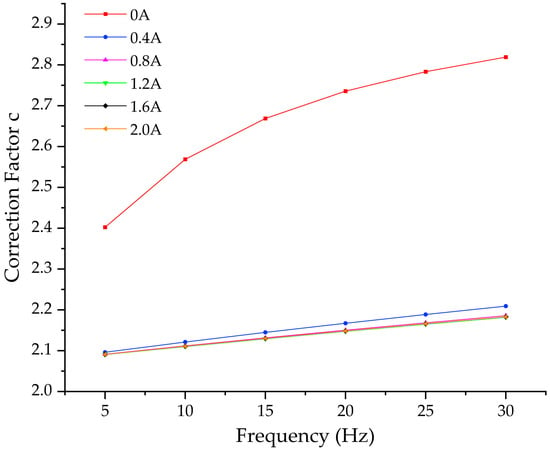
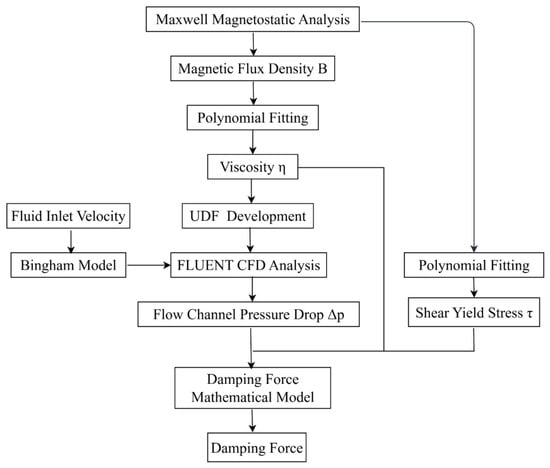
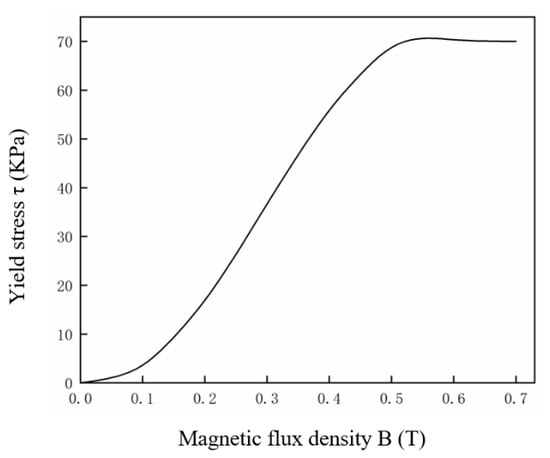
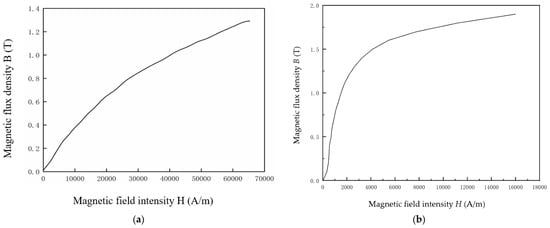
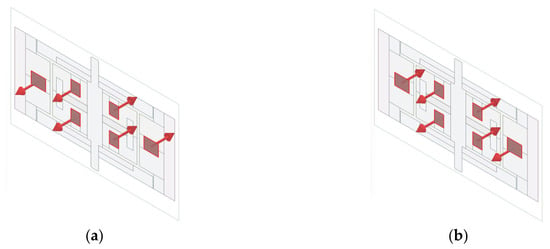
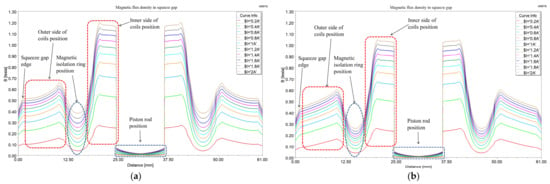
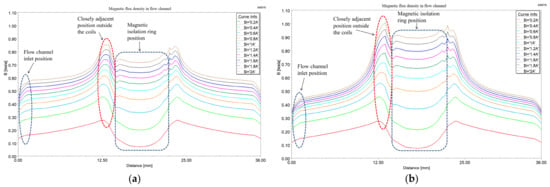
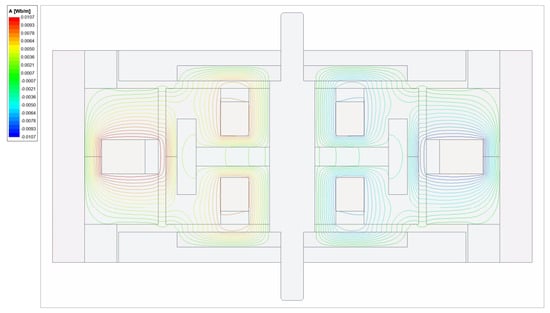
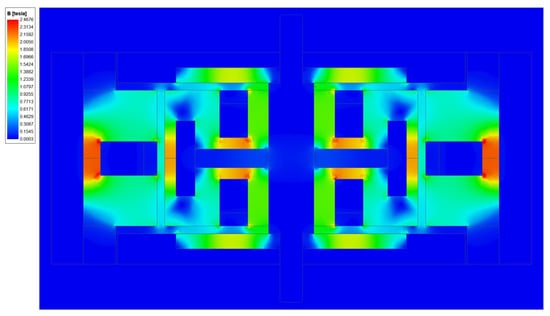
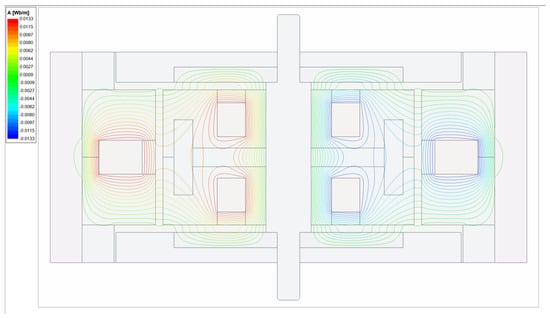
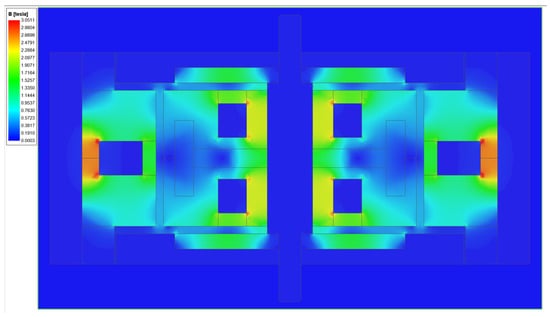
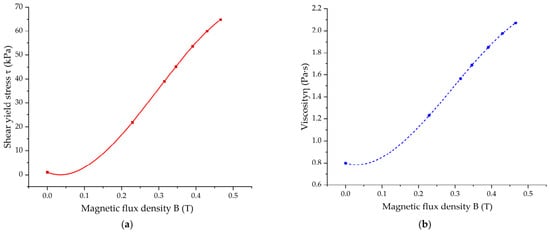
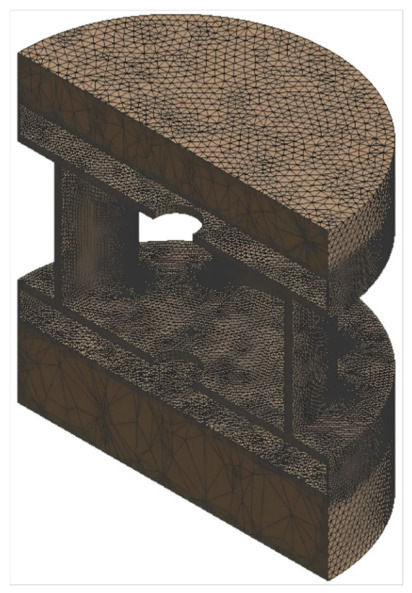
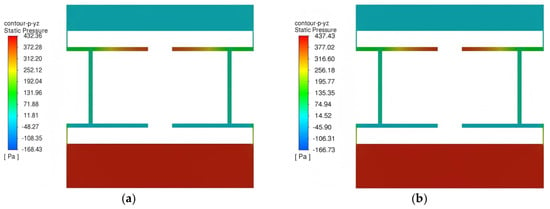
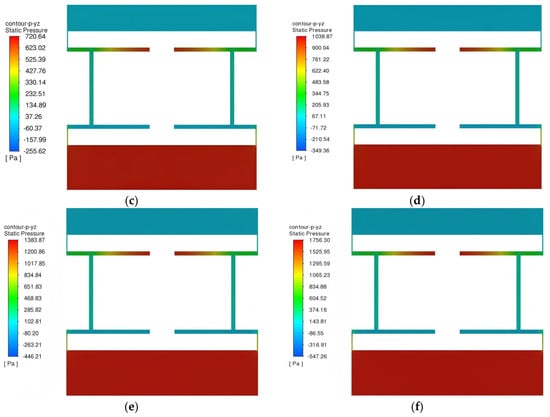
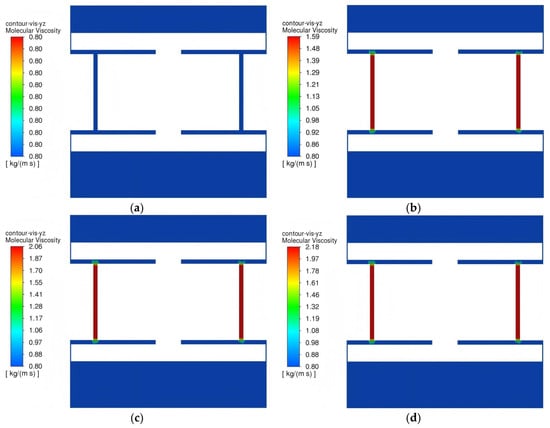
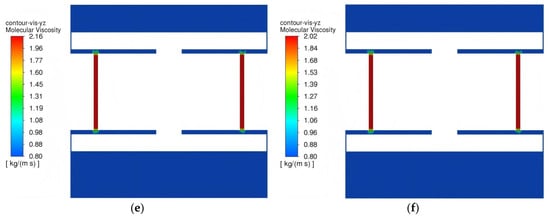
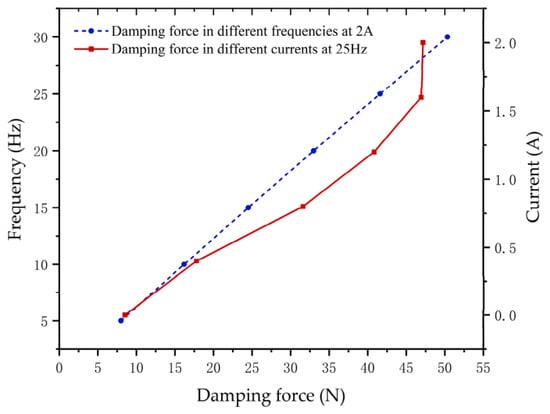
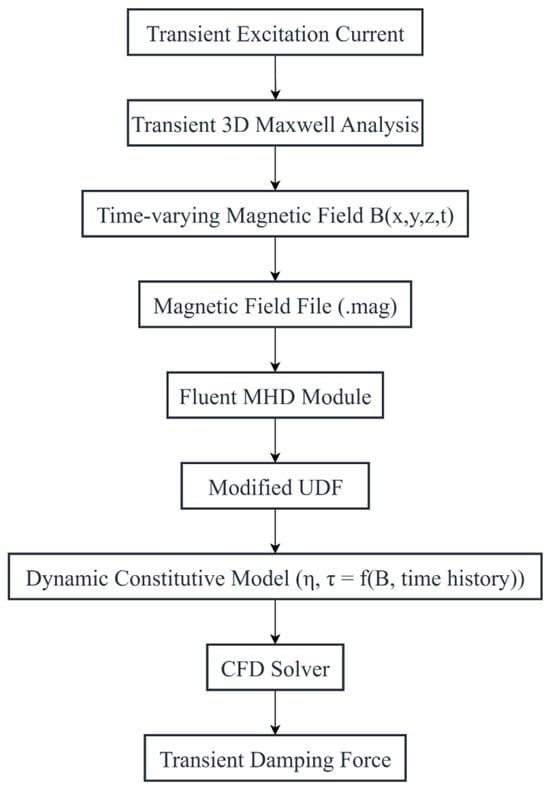
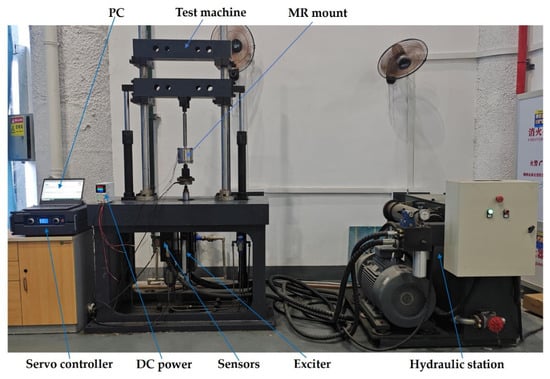
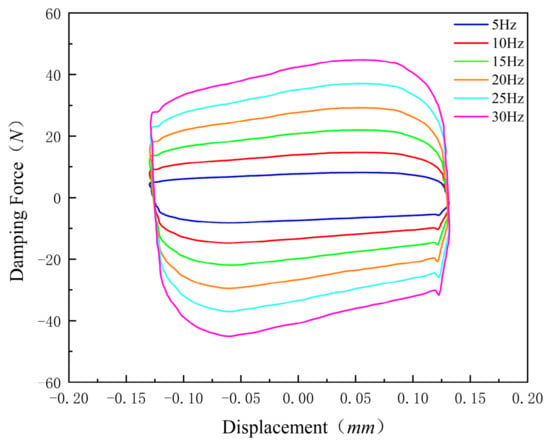
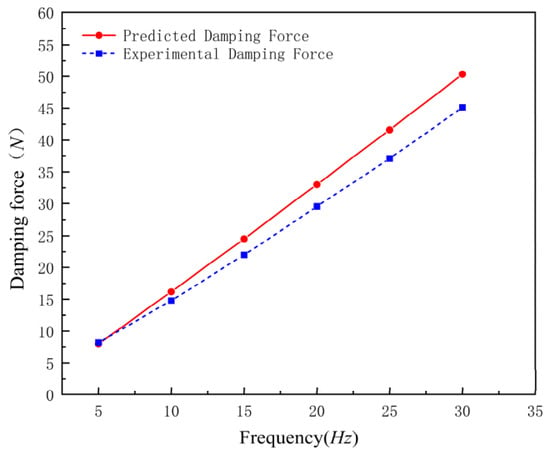
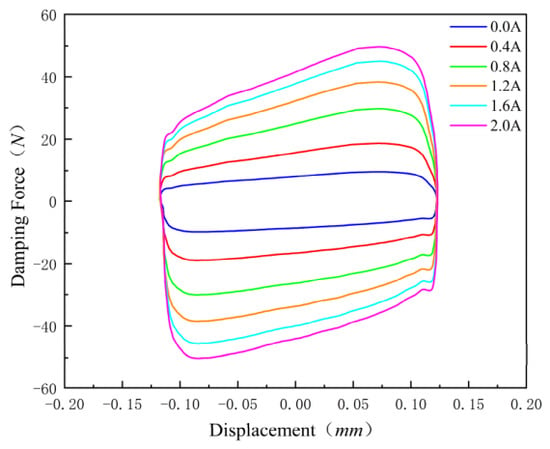
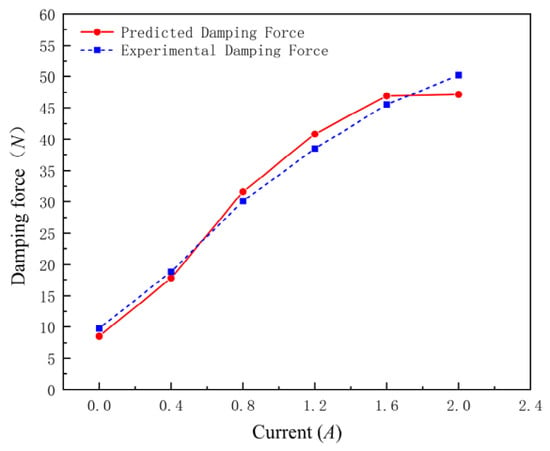
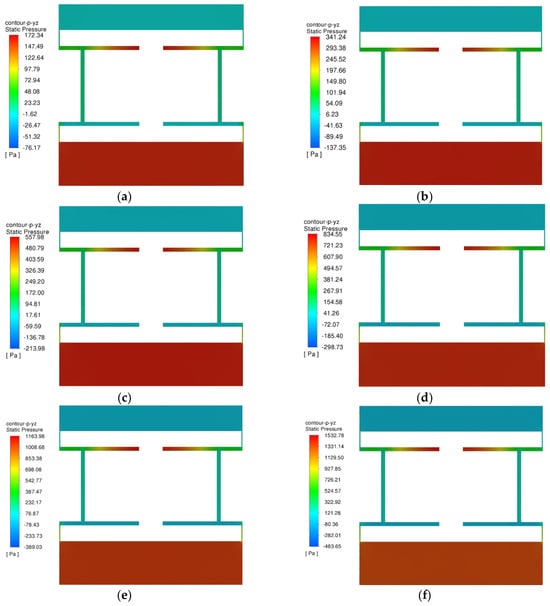
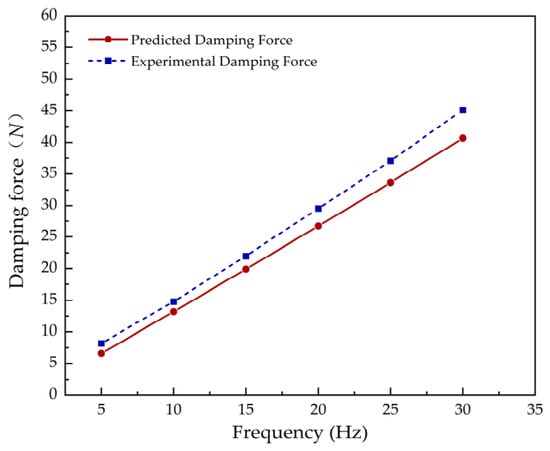
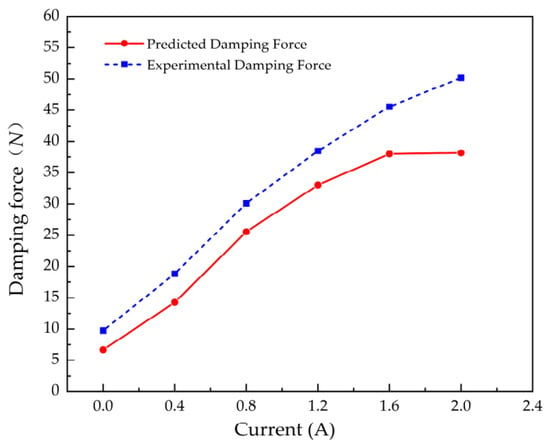
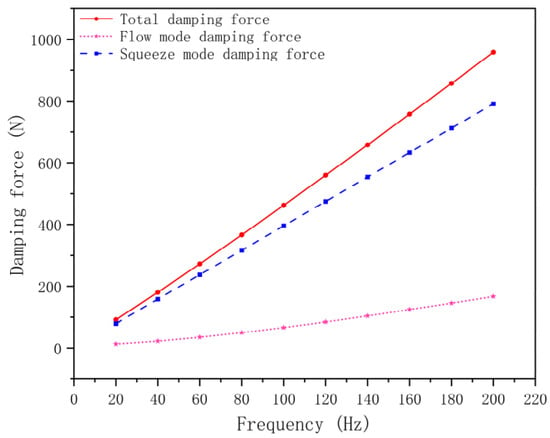
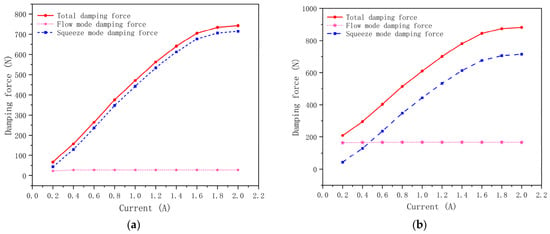
This study investigates the hybrid squeeze–flow damping characteristics of a previously developed magnetorheological (MR) mount, which integrates two vertically symmetric squeeze gaps and four flow channels. Based on the magnetic-circuit configuration, a damping-force prediction model was established specifically for the proposed hybrid structure. Magnetostatic finite element analysis (FEA) was conducted to compare the magnetic field characteristics under co-directional and opposite-direction coil excitation, and the influence of magnetic isolation components on the magnetic field distribution was additionally investigated. The results indicate that co-directional current excitation generates higher magnetic flux density in both the squeeze gaps and flow channels, enabling the magnetorheological fluid (MRF) to approach magnetic saturation at an excitation current of 2 A. The magnetic isolation components further improve the magnetic flux distribution and enhance the magnetic flux density in the squeeze gaps and flow channels. A one-way coupled numerical method combining magnetostatic FEA and computational fluid dynamics (CFD) was employed. The rheological properties of the MRF were derived from the magnetic flux density and incorporated into the CFD model via a user-defined function (UDF) to calculate the pressure losses and predict the damping force of the MR mount. The proposed model was experimentally validated over an excitation frequency range of 5–30 Hz at an amplitude of 0.15 mm, showing good agreement with the experimental results under most operating conditions. Beyond the experimentally validated range, the model was further employed to investigate the predicted damping characteristics under extended excitation conditions. The extrapolated numerical results indicate that the total damping force can reach 958.2512 N at an excitation amplitude of 0.3 mm and a frequency of 200 Hz. This result should be regarded as a model-based prediction rather than experimentally validated high-frequency performance. The squeeze mode provides the dominant damping contribution, while the contribution of the flow mode becomes increasingly significant with increasing excitation frequency. The results provide a basis for evaluating the potential of the hybrid squeeze–flow MR mount for vehicle engine vibration isolation.
Full article
(This article belongs to the Section Actuators for Surface Vehicles)
►▼
Show Figures

Figure 1
Open AccessArticle
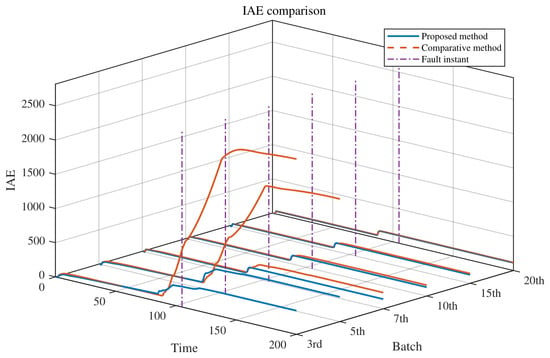
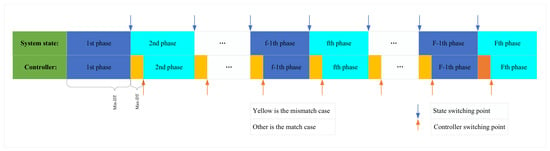
RPI-Based Robust Fault-Tolerant Predictive Asynchronous Switching Control with Disturbance Input for Multi-Phase Batch Processes
by
Wei Xiang, Anfan Zuo, Chunwei Shi, Huiyuan Shi, Wei Gao, Hanwen Ye, Yuting Li and Tze Jin Wong
Actuators 2026, 15(9), 454; https://doi.org/10.3390/act15090454 - 23 Aug 2026
Abstract
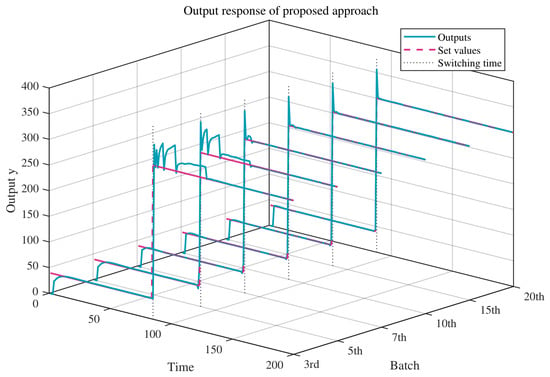
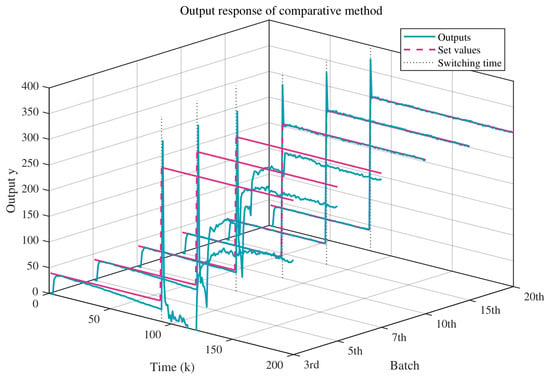
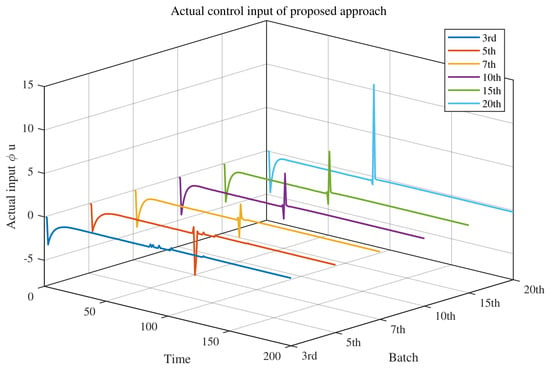
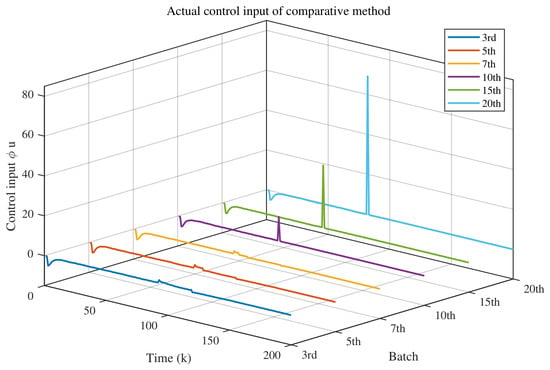
A robust fault-tolerant predictive asynchronous switching control method based on robust positively invariant sets is proposed for multi-phase batch processes subject to actuator faults, unknown disturbances, and asynchronous switching. To attenuate the effect of unknown disturbances, a min–max performance index is constructed, by
[...] Read more.
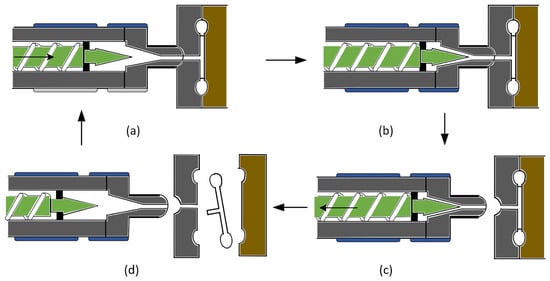
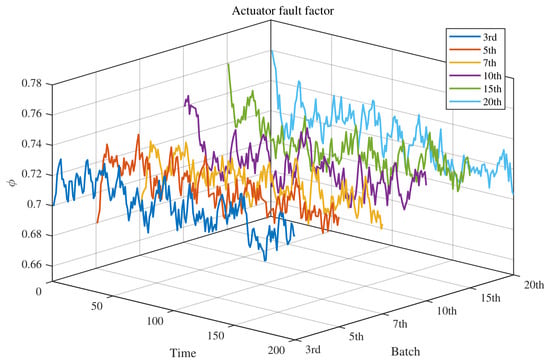
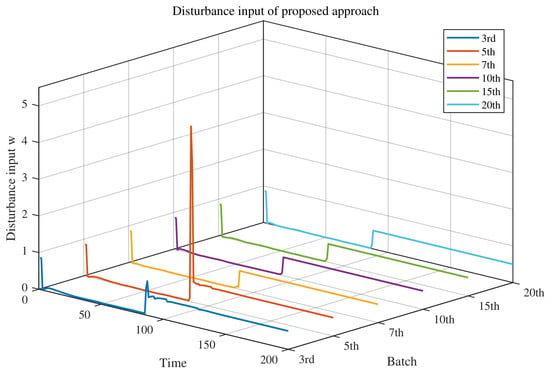
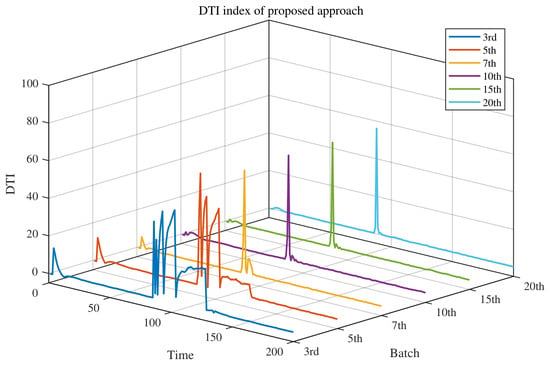
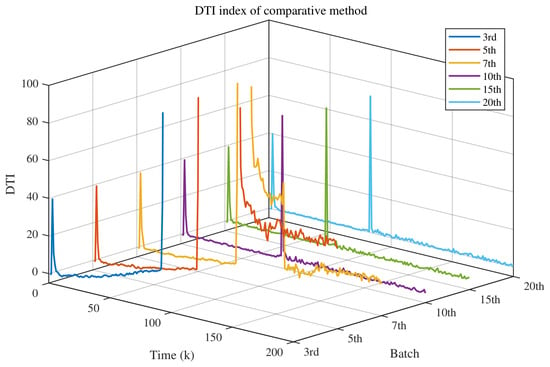
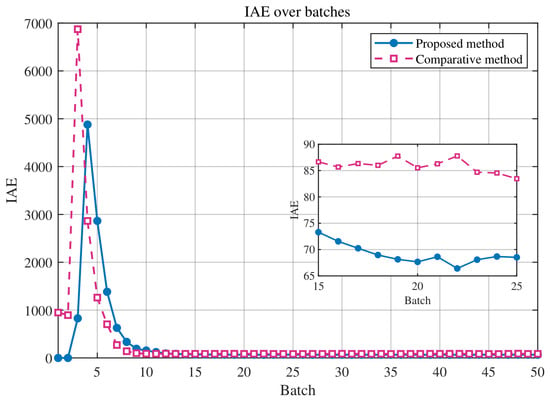
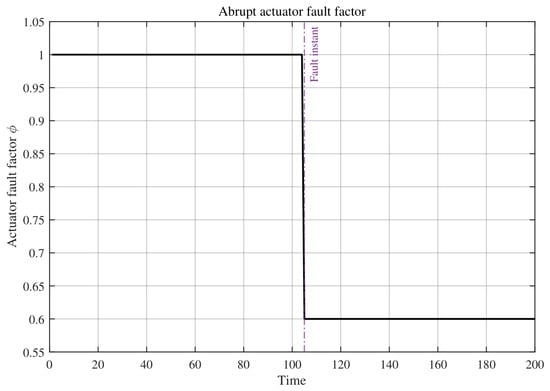
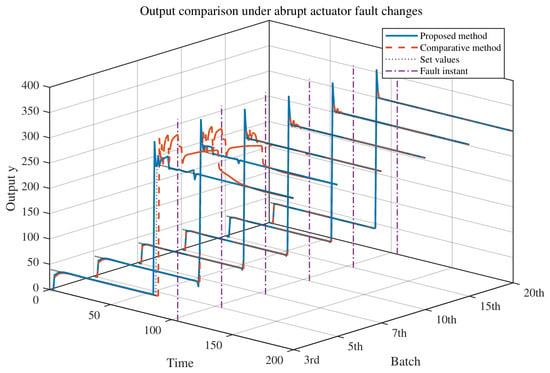
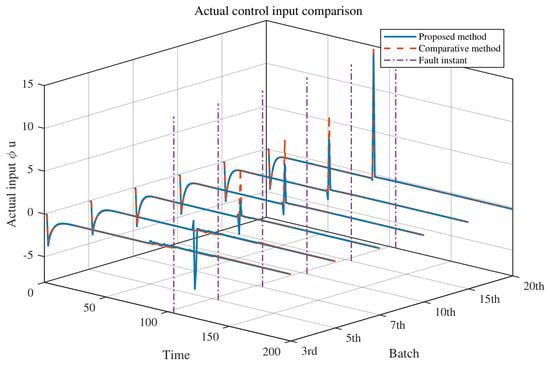
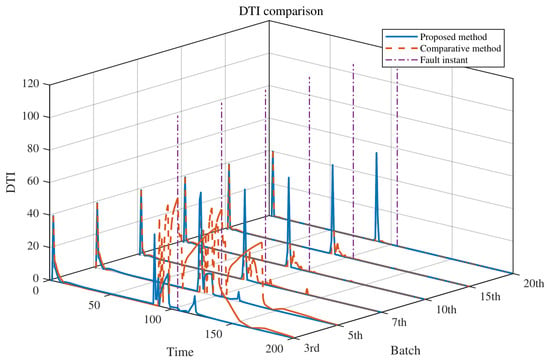
A robust fault-tolerant predictive asynchronous switching control method based on robust positively invariant sets is proposed for multi-phase batch processes subject to actuator faults, unknown disturbances, and asynchronous switching. To attenuate the effect of unknown disturbances, a min–max performance index is constructed, by which the robust control problem is formulated as a min–max optimization problem under worst-case disturbance conditions. To improve fault tolerance, robust positively invariant sets are introduced into the controller design so that the system states can remain within a constraint-satisfying feasible region under admissible actuator faults. Moreover, an online pre-switching mechanism is developed to address the phase mismatch between the system phase and controller. By updating the switching timing according to the real-time operating state, the controller can be adjusted to the corresponding control law before the system enters the next phase, thereby reducing the mismatched interval and suppressing state deviation. A case study on the injection and holding phases of the injection molding process shows that the proposed method improves tracking accuracy and operational smoothness under actuator faults, unknown disturbances, and asynchronous switching, demonstrating its effectiveness and applicability.
Full article
(This article belongs to the Section Control Systems)
►▼
Show Figures

Figure 1
Open AccessArticle
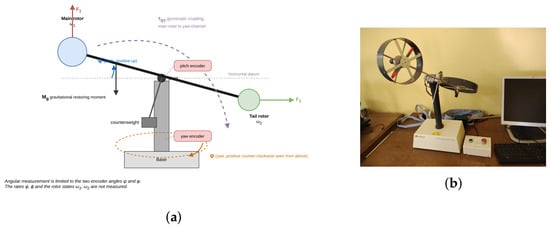
Observer-Based Hybrid Backstepping–Super-Twisting Control of a Twin Rotor MIMO System with Windowed Metaheuristic Gain Scheduling: Real-Time Tracking Experiments and Numerical Disturbance Analysis
by
Azeddine Beloufa, Abderrahmane Kacimi, Souaad Tahraoui, Abderrahmane Senoussaoui, Abdelbasset Azzouz, Mehdi Houari Zaid and Jun-Jiat Tiang
Actuators 2026, 15(8), 453; https://doi.org/10.3390/act15080453 - 20 Aug 2026
Abstract
Twin Rotor Multi-Input Multi-Output (TRMS) platforms combine strong aerodynamic cross-coupling, gravitational loading on the vertical axis, friction-dominated horizontal dynamics, and systematic mismatch between idealised models and laboratory hardware. The platform provides only two optical encoders, so the angular rates and the rotor states
[...] Read more.
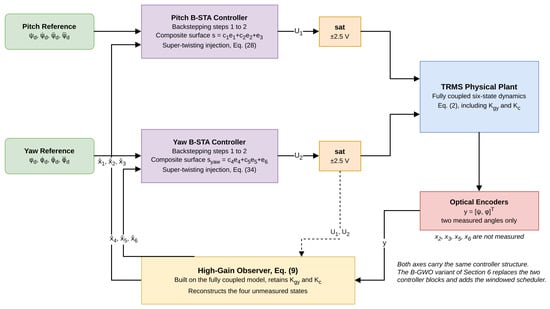
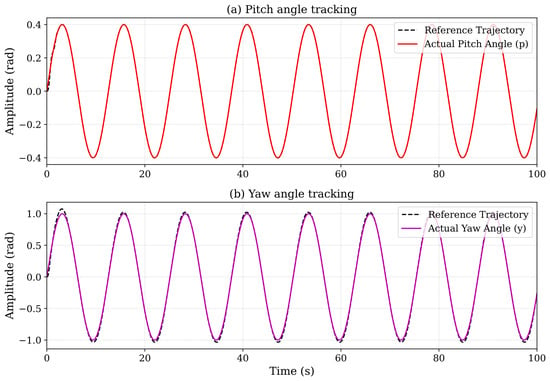
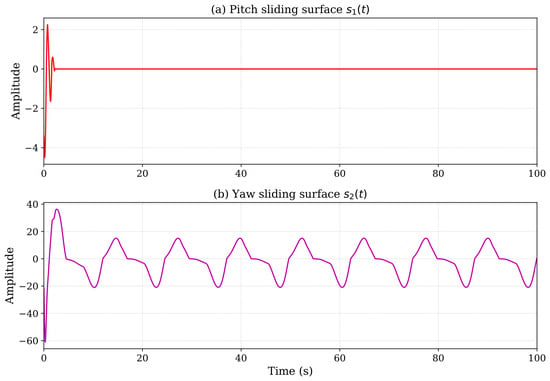
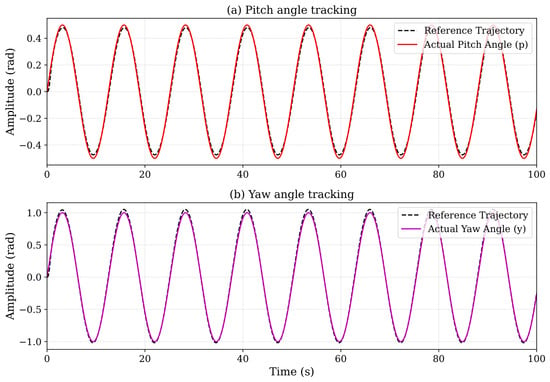
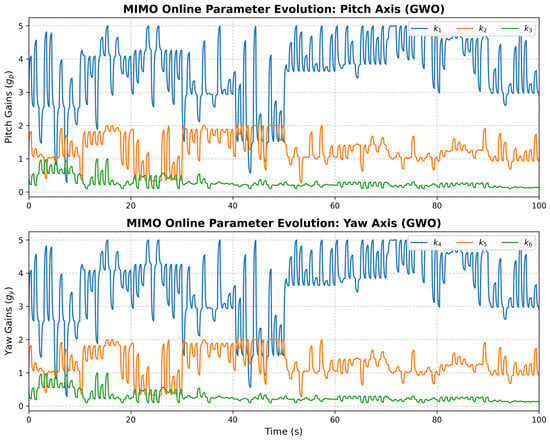
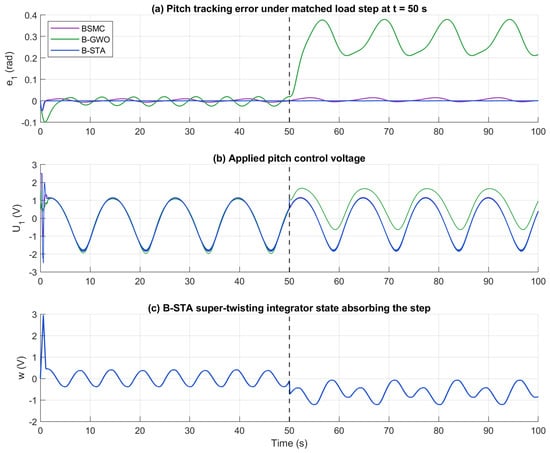
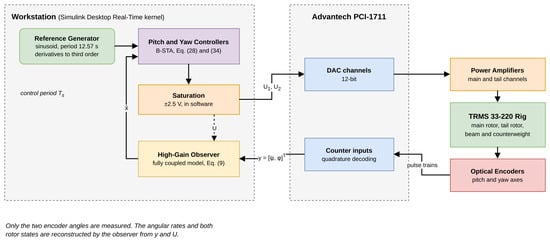
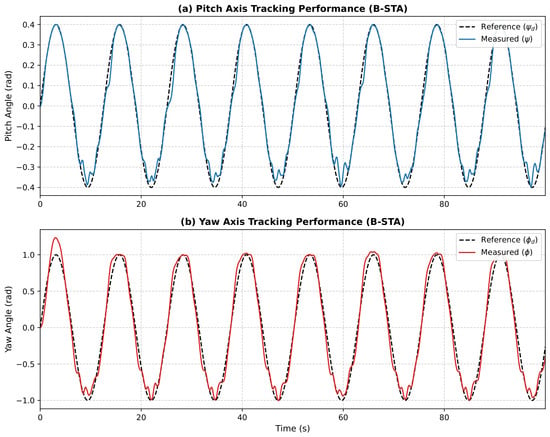
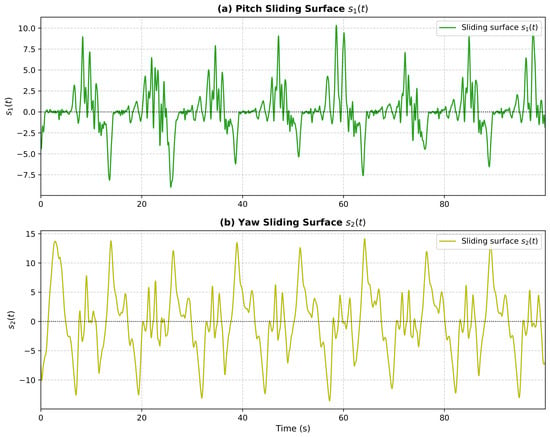
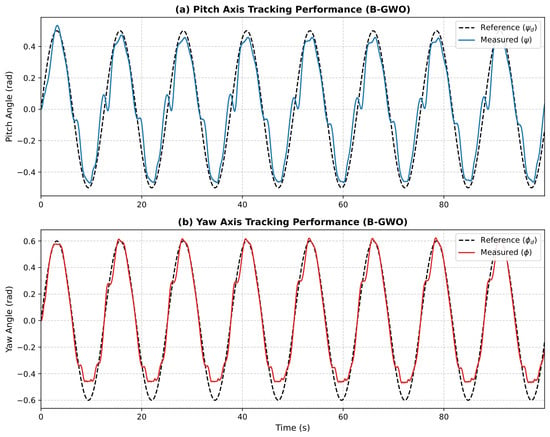
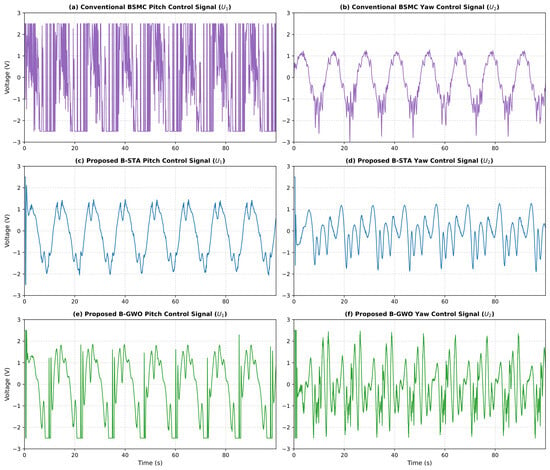
Twin Rotor Multi-Input Multi-Output (TRMS) platforms combine strong aerodynamic cross-coupling, gravitational loading on the vertical axis, friction-dominated horizontal dynamics, and systematic mismatch between idealised models and laboratory hardware. The platform provides only two optical encoders, so the angular rates and the rotor states are unavailable for feedback. This paper presents an observer-based output-feedback architecture that addresses both difficulties. A high-gain observer built on the fully coupled six-state model, including the gyroscopic terms that the control design cannot retain, reconstructs the four unmeasured states from the two encoder angles. The reconstructed states drive a Hybrid Backstepping–Super-Twisting (B-STA) controller in which a second-order continuous sliding mode is embedded at the final recursive step through a composite surface. Because backstepping requires strict-feedback structure, which the centralised coupled model does not possess, the controller is synthesised on a decentralised design model and the residual coupling is rejected as a matched perturbation of the sliding variable. Closed-loop behaviour is analysed as a three-stage cascade covering observer error, sliding variable, and tracking error, yielding practical stability under bounded residuals with an explicit input-to-state gain. The residual bounds are evaluated numerically from the actuator saturation limit and the identified coefficients rather than assumed, and the resulting figures are shown to predict the marked difference in sliding-variable behaviour observed between the two axes. A second architecture applies a windowed Grey Wolf Optimiser (B-GWO) to the backstepping gains, in which each candidate is applied to the plant for a fixed test window, scored on its own accumulated integral of time-weighted absolute error, and followed by a settle window at the incumbent best. We prove that this windowing is a requirement rather than a convenience: a fitness evaluated at a single sample is common to all candidates, cancels from the population ranking, and reduces the search to the minimiser of its own regularisation term. Both schemes are implemented on a physical TRMS through a Simulink Desktop Real-Time interface at a control period of . On a experimental run, B-STA attains a pitch tracking error of RMS, of the reference amplitude, and the lowest control energy on both axes among the strategies compared, reducing pitch control energy by relative to a first-order Backstepping–Sliding Mode baseline recorded on the same interface. Numerical disturbance rejection tests on the fully coupled model confirm the mechanism: under a matched actuator step the super-twisting integrator state migrates to a new steady level that cancels the disturbance, driving the residual pitch error to , whereas the same recursive law without the second-order injection retains a permanent offset of .
Full article
(This article belongs to the Section Control Systems)
►▼
Show Figures

Figure 1
Journal Menu
► ▼ Journal Menu-
- Actuators Home
- Aims & Scope
- Editorial Board
- Reviewer Board
- Topical Advisory Panel
- Instructions for Authors
- Special Issues
- Topics
- Sections
- Article Processing Charge
- Indexing & Archiving
- Editor’s Choice Articles
- Most Cited & Viewed
- Journal Statistics
- Journal History
- Journal Awards
- Conferences
- Editorial Office
Journal Browser
► ▼ Journal BrowserHighly Accessed Articles
Latest Books
E-Mail Alert
News
Topics
Topic in
Actuators, Gels, JFB, Polymers, MCA, Materials
Recent Advances in Smart Soft Materials: From Theory to Practice
Topic Editors: Lorenzo Bonetti, Giulia Scalet, Silvia Farè, Nicola FerroDeadline: 31 December 2026
Topic in
Actuators, Automation, Electronics, Machines, Robotics, Eng, Technologies
New Trends in Robotics: Automation and Autonomous Systems
Topic Editors: Maki Habib, Fusaomi NagataDeadline: 31 January 2027
Topic in
Machines, Actuators, Applied Sciences
Intelligent Mechatronics System Modeling, Control and Evaluation
Topic Editors: Hongyu Zheng, Yong LiDeadline: 31 May 2027
Topic in
Actuators, Applied Sciences, Bioengineering, Electronics, Signals, Diagnostics, Symmetry
Signal and Image Processing in the Intelligent Era: Theories, Methodologies, and Applications
Topic Editors: Bo Yang, Chao LiuDeadline: 30 June 2027
Conferences
Special Issues
Special Issue in
Actuators
Recent Advances in MEMS/NEMS Actuators and Sensors: From Theory to Application
Guest Editors: Jian Lu, Ryutaro Maeda, Chen WuDeadline: 15 September 2026
Special Issue in
Actuators
Cutting-Edge Advancements in Robotics and Control Systems
Guest Editors: Nabih Pico, Babar JamilDeadline: 15 September 2026
Special Issue in
Actuators
Control System of Autonomous Surface Vehicles
Guest Editors: Jun Ning, Xin Hu, Zhouhua Peng, Jian-Chuan YinDeadline: 15 September 2026
Special Issue in
Actuators
Soft Robotics: Actuation, Control, and Application—2nd Edition
Guest Editor: Han YuanDeadline: 15 September 2026