14 pages, 4282 KB  
Article
Automatic Control of Hot Metal Temperature
by Yoshinari Hashimoto 1,*, Ryosuke Masuda 1, Max Mulder 2 and Marinus M. (René) van Paassen 2

1 Cyber-Physical System Research and Development Department, JFE Steel Corp, Tokyo 100-0011, Japan
2 Faculty of Aerospace Engineering, Delft University of Technology, 2629 Delft, The Netherlands
Metals 2022, 12(10), 1624; https://doi.org/10.3390/met12101624 - 28 Sep 2022
Cited by 5 | Viewed by 3399
Abstract
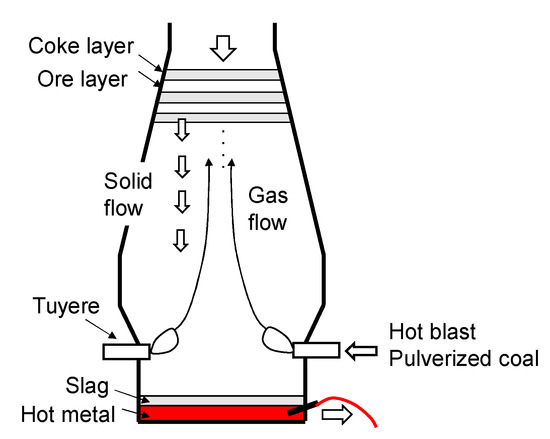
To achieve the automation of blast furnace operation, an automatic control system for hot metal temperature (HMT) was developed. Nonlinear model predictive control (NMPC) which predicts up to ten-hour-ahead HMT and calculates appropriate control actions of pulverized coal rate (PCR) was constructed. Simulation [...] Read more.
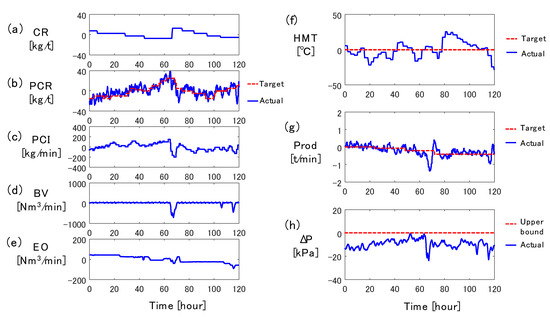
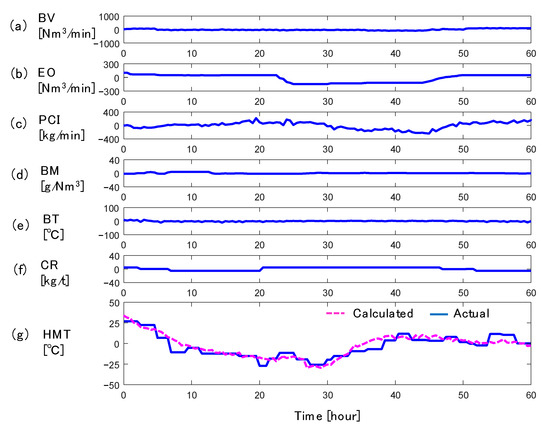
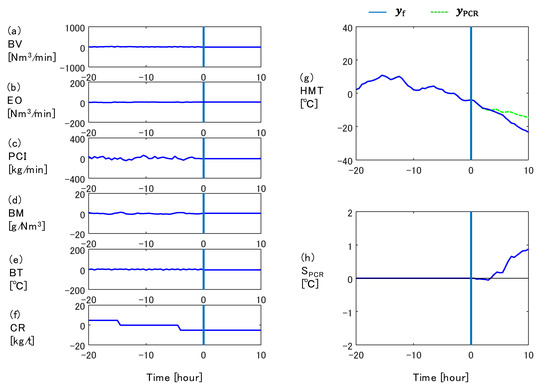
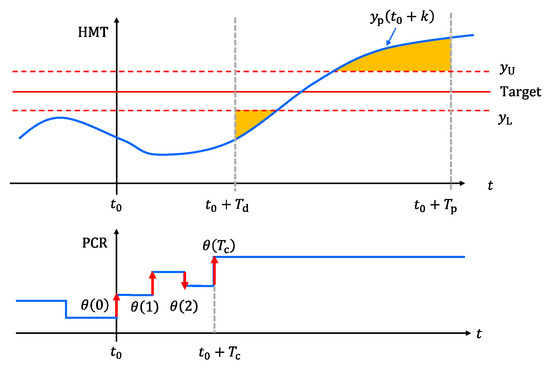
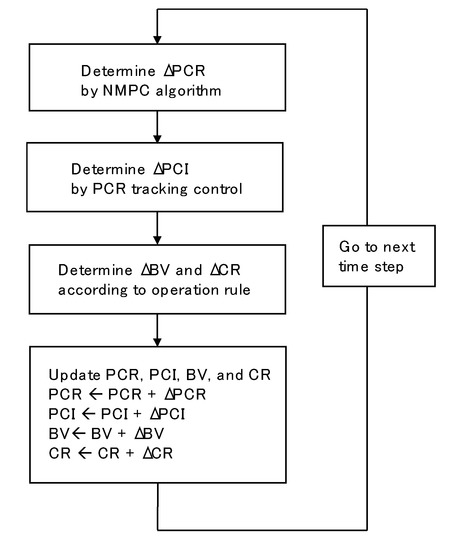
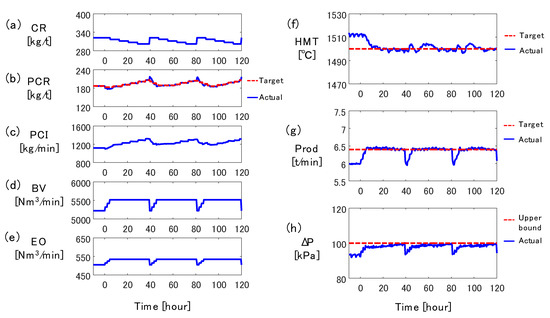
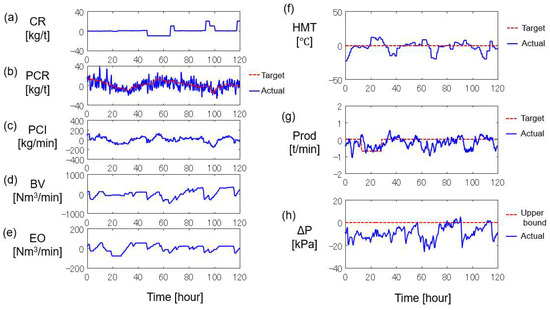
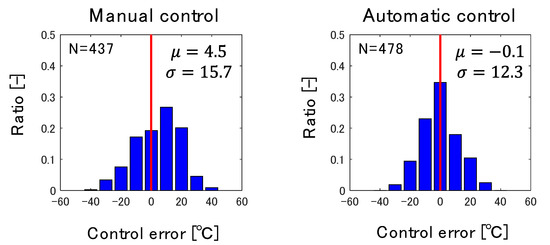
To achieve the automation of blast furnace operation, an automatic control system for hot metal temperature (HMT) was developed. Nonlinear model predictive control (NMPC) which predicts up to ten-hour-ahead HMT and calculates appropriate control actions of pulverized coal rate (PCR) was constructed. Simulation validation showed that the NMPC algorithm generates control actions similar to those by the operators and that HMT can be maintained within ±10 °C of the set point. The automatic control system using NMPC was then implemented in an actual plant. As a result, the developed control system suppressed the effects of disturbances, such as the changes in the coke ratio and blast volume, and successfully reduced the average control error of HMT by 4.6 °C compared to the conventional manual operation. The developed control system has contributed to the reduction of reducing agent rate (RAR) and CO2 emissions. Full article
(This article belongs to the Special Issue Mathematical Modelling of the Ironmaking Blast Furnace)
Show Figures

Figure 1
10 pages, 9649 KB  
Article
Direct Observation of the Deformation Mechanism of Twin-Structured Ni NWs under Bending Strain
by Zihao Zhang 1, Chengpeng Yang 1, Yizhong Guo 1, Xueqiao Li 1, Deli Kong 1, Yan Lu 1, Changjiang Nie 2,* and Lihua Wang 1,*
1 Beijing Key Laboratory of Microstructure and Property of Advanced Material, Department of Beijing University of Technology Materials and Manufacturing, Institute of Microstructure and Properties of Advanced Materials, Beijing 100124, China
2 School of Physics and Electronic Information Engineering, Hubei Engineering University, Xiaogan 432000, China
Metals 2022, 12(10), 1623; https://doi.org/10.3390/met12101623 - 28 Sep 2022
Cited by 2 | Viewed by 2471
Abstract
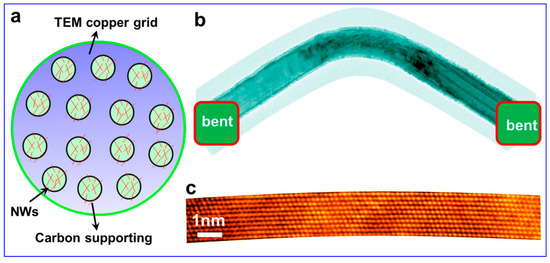
In situ atomic-scale bending tests of twin-structured Ni nanowires were realised using a homemade deformation device. The results showed that the plastic deformation mechanism in twin-structured Ni nanowires depended on the deformation stage. At the early stages of bending deformation, the plasticity of [...] Read more.
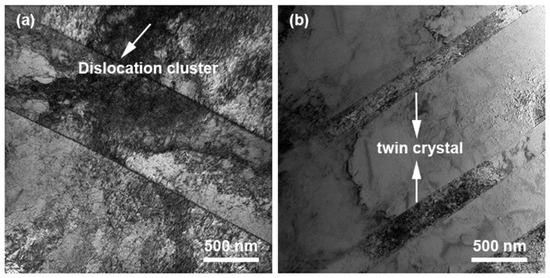
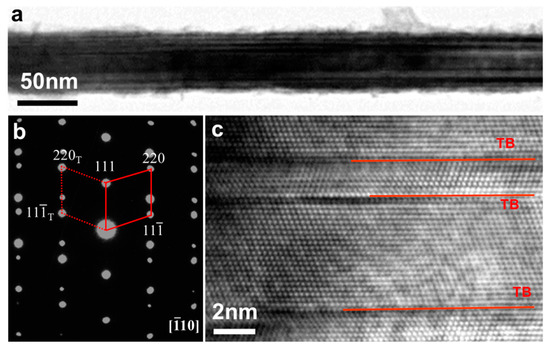
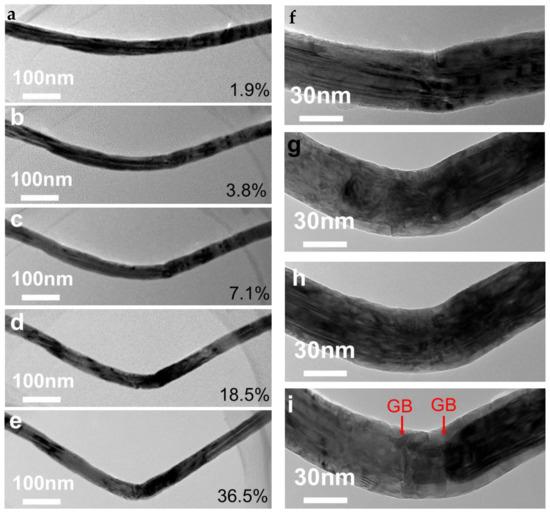
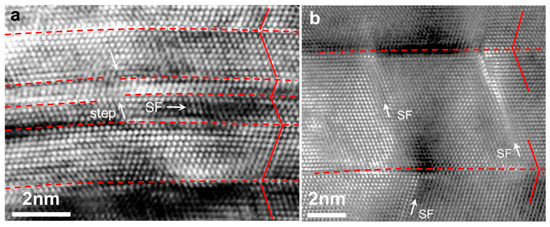
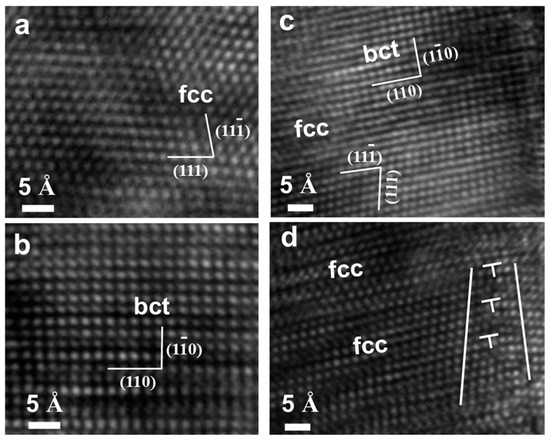
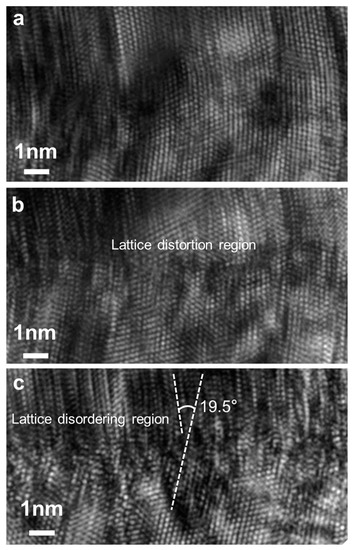
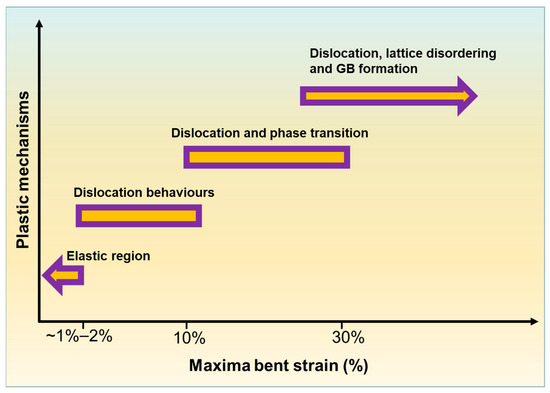
In situ atomic-scale bending tests of twin-structured Ni nanowires were realised using a homemade deformation device. The results showed that the plastic deformation mechanism in twin-structured Ni nanowires depended on the deformation stage. At the early stages of bending deformation, the plasticity of twin-structured Ni nanowires was controlled by dislocations interacting with the twin boundaries or parallel to them. With increasing bending strain, both dislocation and face-centred cubic–body-centred tetragonal phase transition occurred. At very high bending strain, grain boundaries resulting from the lattice distortion/collapse were formed. This study details the deformation mechanisms of the twin-structured Ni nanowires under bending deformation, which advances the basic understanding of the plasticity mechanisms in metals. Full article
Show Figures

Figure 1
12 pages, 5847 KB  
Article
Influence of P Content on Microstructure and Texture Evolution of the Oxygen-Free Copper
by Xiaowen Peng 1,*, Kexing Song 2,3,4,*, Yanjun Zhou 1,3,4, Tao Huang 1, Haitao Liu 1,3,4, Yunxiao Hua 1, Jingzhao Yang 5 and Guojie Wang 1
1 School of Materials Science and Engineering, Henan University of Science and Technology, Luoyang 471000, China
2 Henan Academy of Sciences, Zhengzhou 450002, China
3 Henan Key Laboratory of Non-Ferrous Materials Science & Processing Technology, Luoyang 471000, China
4 Provincial and Ministerial Co-Construction of Collaborative Innovation Center for Non-Ferrous Metal New Materials and Advanced Processing Technology, Luoyang 471000, China
5 School of Mechanical Engineering, Northwestern Polytechnical University, Xi’an 710072, China
Metals 2022, 12(10), 1622; https://doi.org/10.3390/met12101622 - 28 Sep 2022
Cited by 13 | Viewed by 2924
Abstract
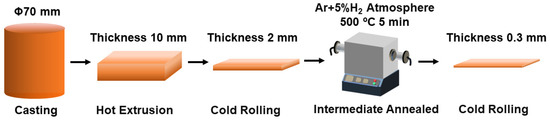
The present work aims to systematically investigate the influence of P content on the microstructure and texture evolution of oxygen-free copper during intermediate annealing and final cold rolling. The microstructure and texture evolution were studied by electron backscattered diffraction and transmission electron microscopy. [...] Read more.
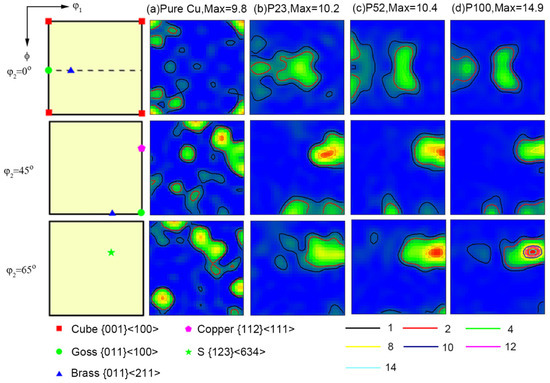
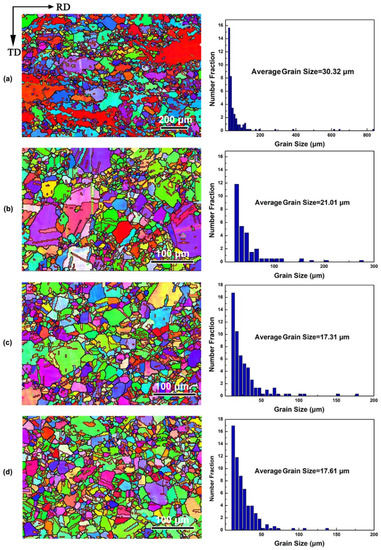
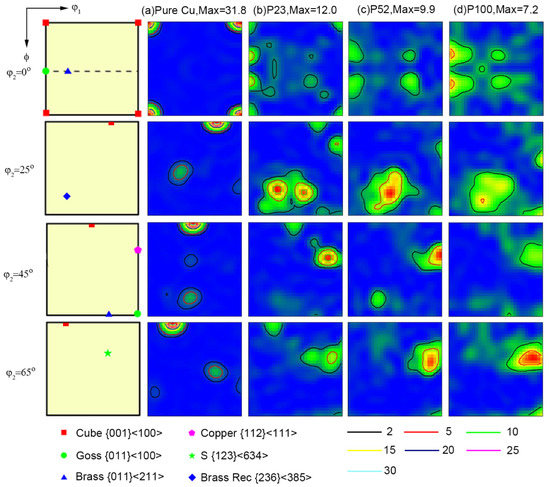
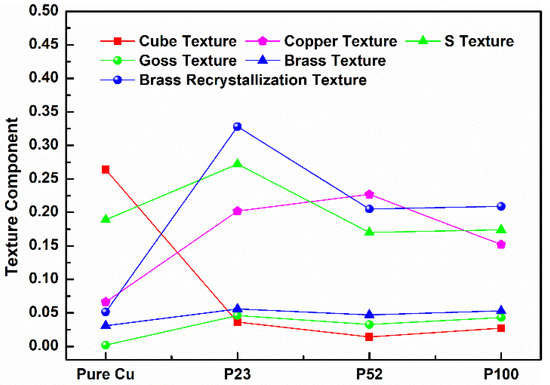
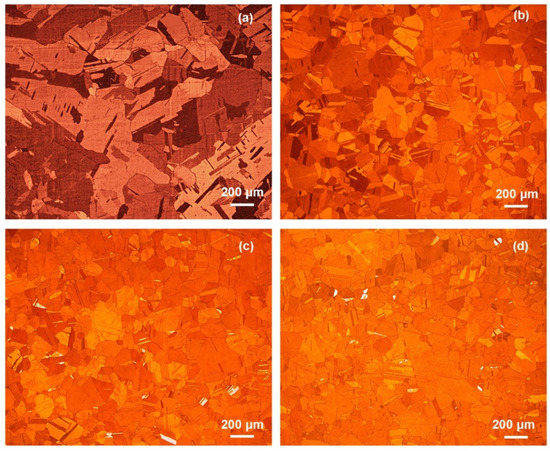
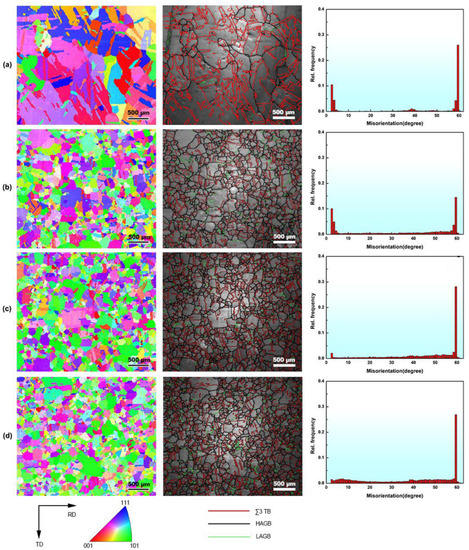
The present work aims to systematically investigate the influence of P content on the microstructure and texture evolution of oxygen-free copper during intermediate annealing and final cold rolling. The microstructure and texture evolution were studied by electron backscattered diffraction and transmission electron microscopy. With the addition of P, the grains refined and a large fraction of low angle grain boundaries (LAGBs) emerged after intermediate annealing. The texture transformed from pure metal type for pure Cu to the α-fiber texture which included brass and Goss texture as P was added. The recrystallization temperature increased with the addition of P, and refined grains after the final cold rolling process. The addition of elemental P would reduce the stacking fault energy, and then influence the transformation of the deformation and recrystallization texture of the copper. Accompanied by the evolution of the deformation texture, the recrystallization cubic texture {001}<100> was suppressed and a strong {236}<385> brass recrystallization texture emerged with the addition of elemental P after the intermediate annealing and subsequent final cold rolling process. Full article
Show Figures

Figure 1
18 pages, 12871 KB  
Article
Effect of Active Deflection on the Forming of Tubes Manufactured by 3D Free Bending Technology
by Hao Zhang 1, Ali Abd El-Aty 2,3, Jie Tao 1, Xunzhong Guo 1, Shuo Zheng 1 and Cheng Cheng 1,*
1 College of Material Science and Technology, Nanjing University of Aeronautics and Astronautics, Nanjing 211100, China
2 Department of Materials Science and Engineering & RIAM, Seoul National University, 1-Gwanak-ro, Gwanak-gu, Seoul 08826, Korea
3 Mechanical Engineering Department, Faculty of Engineering-Helwan, Helwan University, Cairo 11795, Egypt
Metals 2022, 12(10), 1621; https://doi.org/10.3390/met12101621 - 27 Sep 2022
Cited by 2 | Viewed by 2844
Abstract
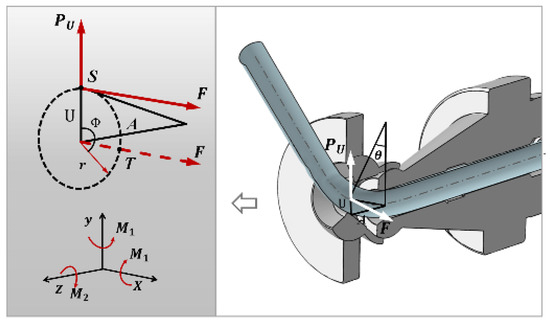
The formed parts of tubes easily interfere with the equipment when forming complex tubes in 3D free bending forming technology. Consequently, to solve the interferential phenomenon, an active deflection method (ADM) to avoid interference was proposed to drive the deformed tube around its [...] Read more.
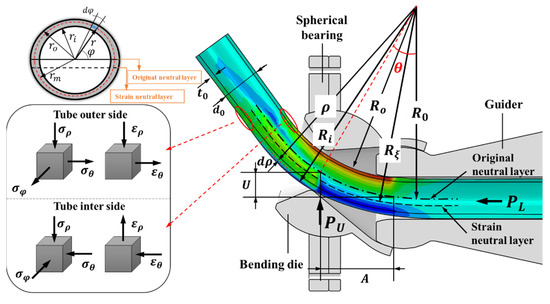
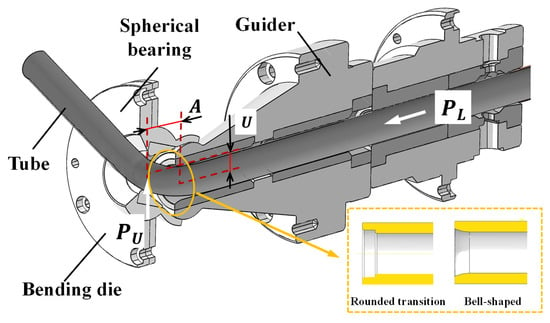
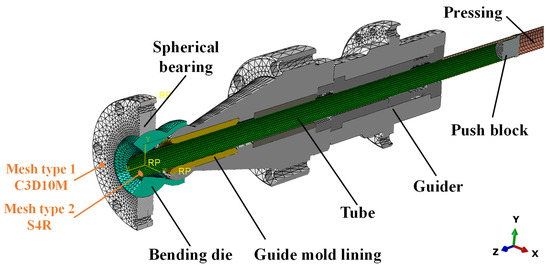
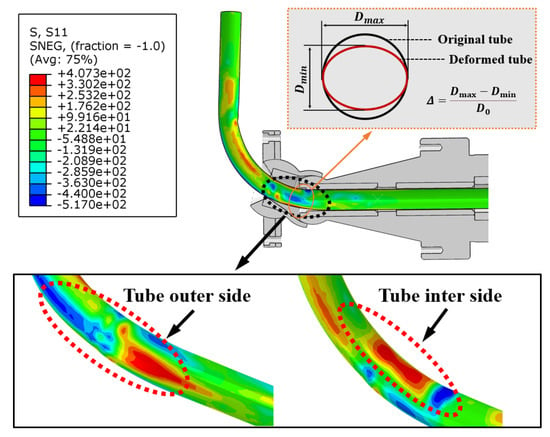
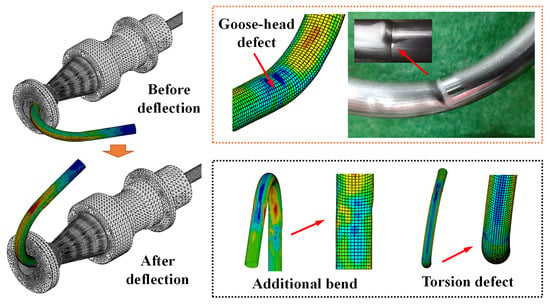
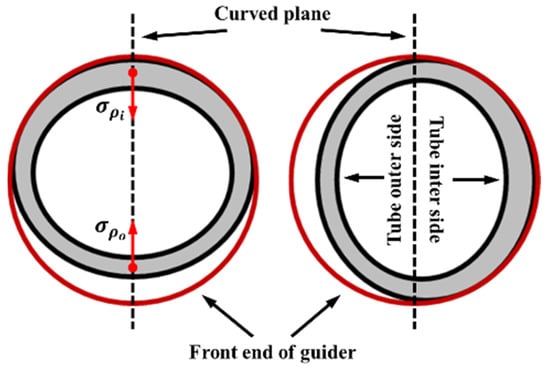
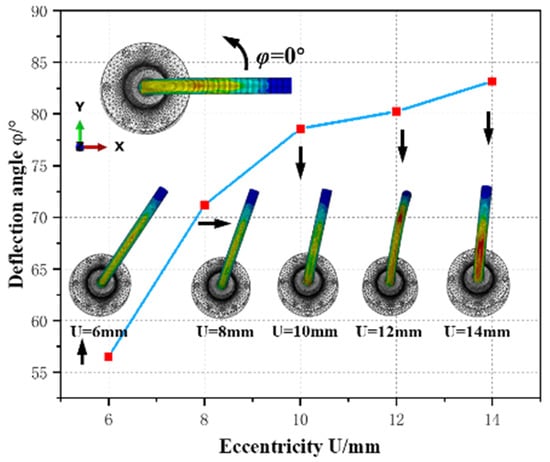
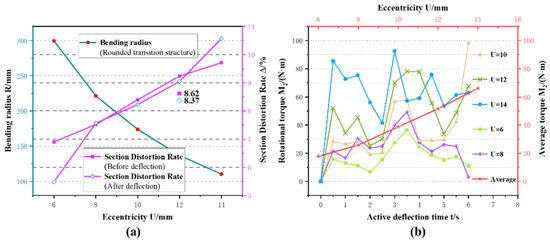
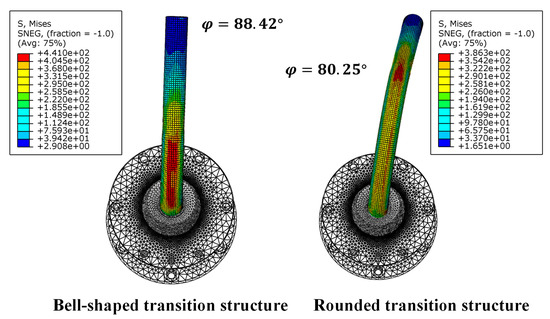
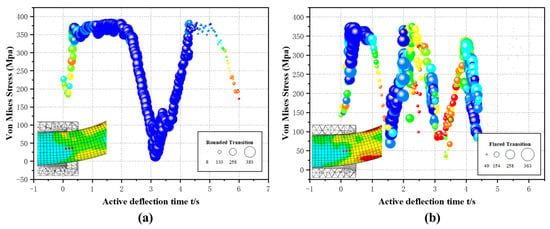
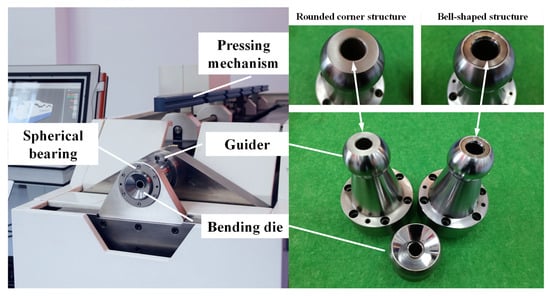
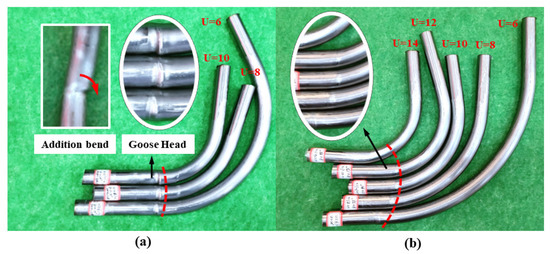
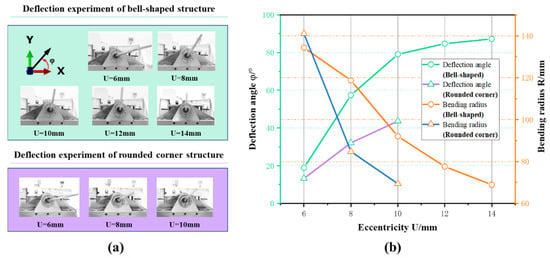
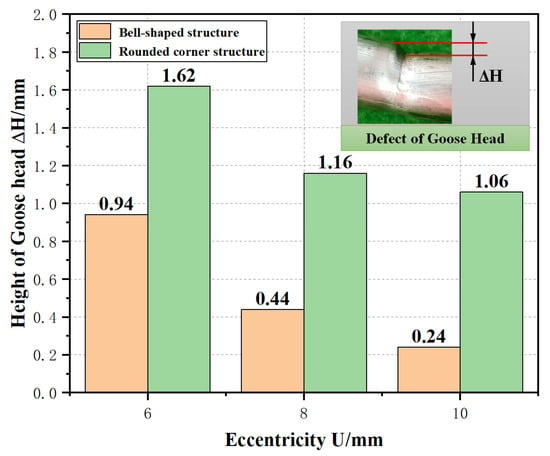
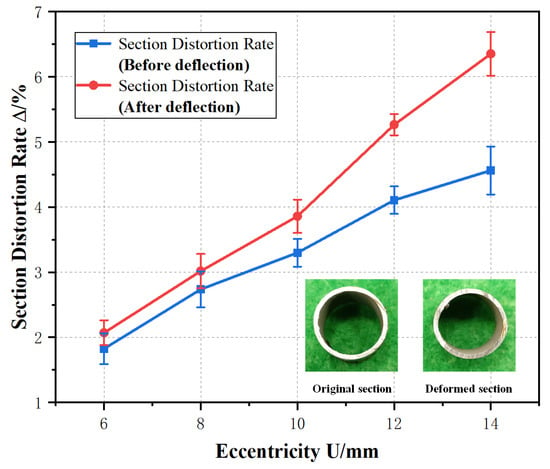
The formed parts of tubes easily interfere with the equipment when forming complex tubes in 3D free bending forming technology. Consequently, to solve the interferential phenomenon, an active deflection method (ADM) to avoid interference was proposed to drive the deformed tube around its axis by controlling the bending die. The method extended the activity freedom of the equipment without installing the additional motion shafting. However, severe section distortion, surface scratches and other forming defects frequently occurred during the implementation of ADM, which reduced the structural strength and pressure resistance of the tubes. A mechanical model was developed to analyze the force state of the tube, and the results showed that the driving force of active deflection was mainly determined by the trajectory radius. The curve of the adopted bell-shaped transition structure was closer to the bending curvature of the tube than the rounded structure, which transformed the guider and the tube from linear contact to surface contact. The simulation and experiment results indicated that adding the trajectory radius could strengthen the rotation torque. The stress concentration in the tube was alleviated after applying the bell-shaped transition structure. Full article
(This article belongs to the Special Issue Innovative and Flexible Sheet Forming Technologies)
Show Figures

Figure 1
15 pages, 3901 KB  
Article
Structure, Microstructure, Hyperfine, Mechanical and Magnetic Behavior of Selective Laser Melted Fe92.4Si3.1B4.5 Alloy
by Rima Drablia 1,2, Safia Alleg 1, Nour-Eddine Fenineche 3,4, Lluisa Escoda 2, Joan-Josep Suñol 2,* and Jean-Marc Greneche 5
1 Laboratoire de Magnétisme et Spectroscopie des Solides (LM2S), Badji Mokhtar Annaba University, BP 12, Annaba 23000, Algeria
2 Department of Physics, Universitat of Girona, Campus Montilivi, 17004 Girona, Spain
3 Laboratoire Interdisciplinaire Carnot de Bourgogne, Procédés Métallurgiques, Durabilité, Matériaux, Université Bourgogne Franche-Comté, 90400 Sevenans, France
4 Laboratoire Interdisciplinaire Carnot de Bourgogne, Procédés Métallurgiques, Durabilité, Matériaux, Université de Technologie Belfort-Montbéliard, 90400 Sevenans, France
5 Institut des Molécules et Matériaux du Mans, IMMM UMR CNRS 6283, Le Mans Université, CEDEX 9, 72085 Le Mans, France
Metals 2022, 12(10), 1620; https://doi.org/10.3390/met12101620 - 27 Sep 2022
Cited by 3 | Viewed by 2080
Abstract
A disordered ε-FeSi crystalline structure was produced by selective laser melting in Fe92.4Si3.1B4.5 powder alloys fabricated with different laser powers at a laser scanning speed of 0.4 m/s. The phase formation, microstructure, roughness, microhardness, and hyperfine and magnetic [...] Read more.
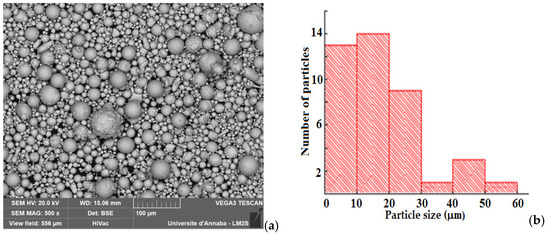
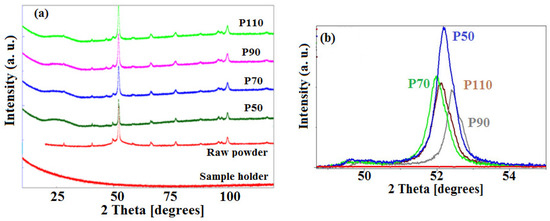
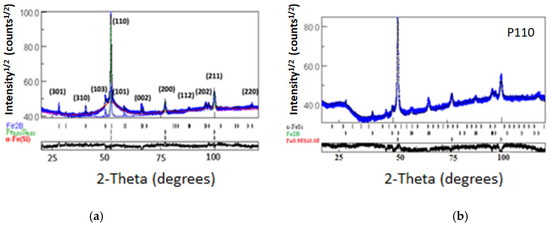
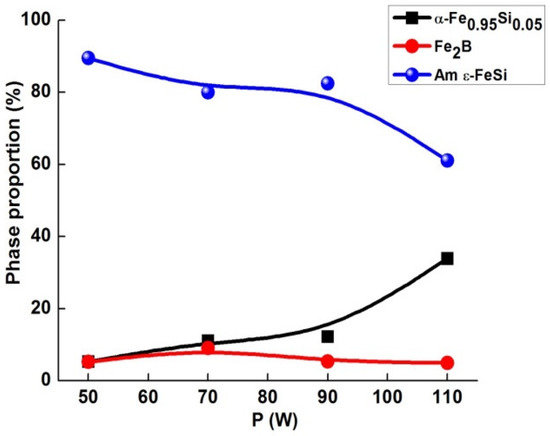
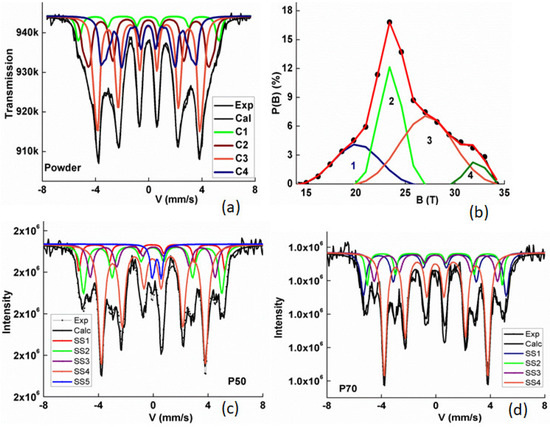
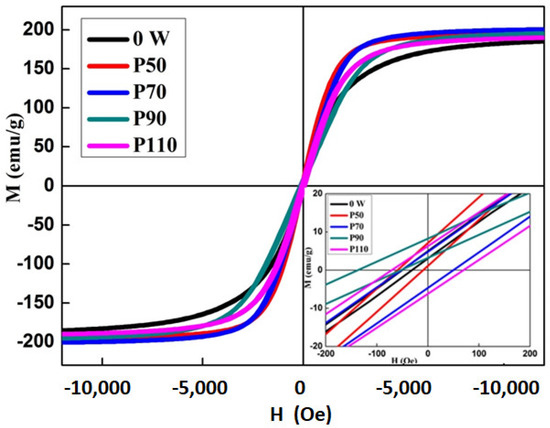
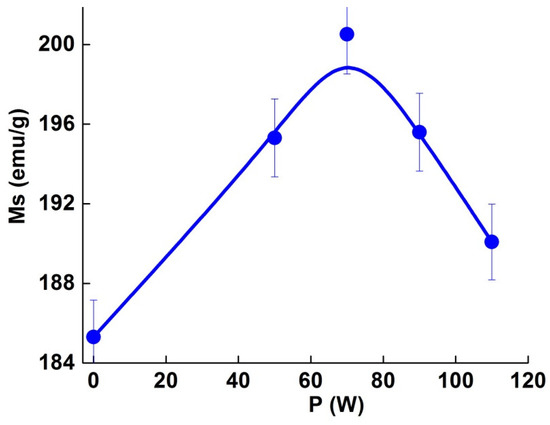
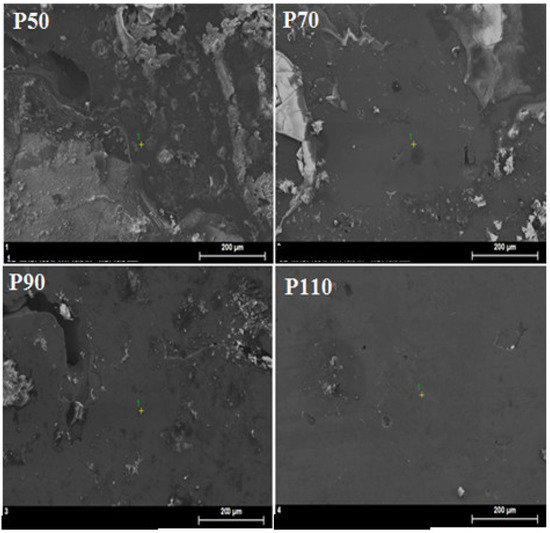
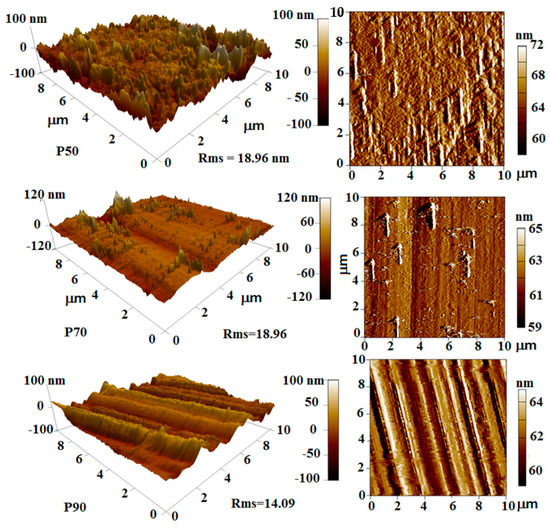
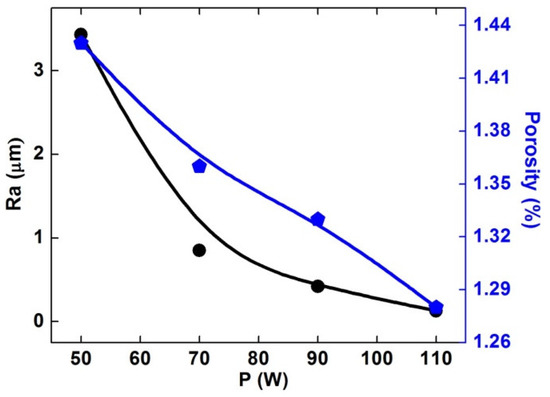
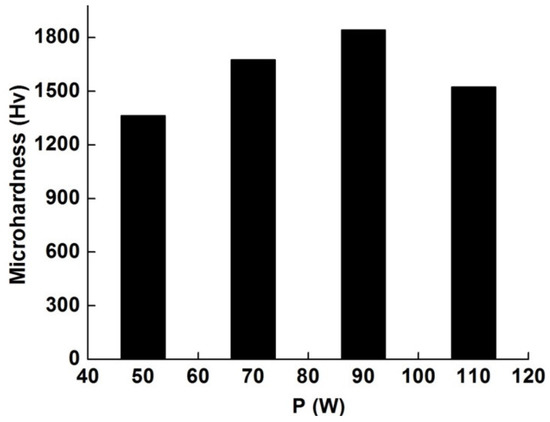
A disordered ε-FeSi crystalline structure was produced by selective laser melting in Fe92.4Si3.1B4.5 powder alloys fabricated with different laser powers at a laser scanning speed of 0.4 m/s. The phase formation, microstructure, roughness, microhardness, and hyperfine and magnetic properties were studied using X-ray diffraction, scanning electron microscopy, atomic force microscopy, a profilometer, a microdurometer, transmission 57Fe Mössbauer spectrometry and vibrating sample magnetometry. The aim of this work was therefore to study the effect of laser power on the phase formation, microstructure, morphology, and mechanical, hyperfine and magnetic properties. The XRD patterns revealed the coexistence of a bcc α-Fe0.95Si0.05, a tetragonal Fe2B boride phase and a disordered ε-FeSi type structure. The existence of the disorder was confirmed by the presence of different FeSi environments observed in the Mössbauer spectra. The Fe2B boride contained about 51–54% of Fe atoms. The porosity and roughness decreased whereas laser power increased. The sample produced with a laser power of 90 W had a smooth and dense surface, high microhardness (~1843 Hv) and soft magnetic properties (saturation magnetization Ms = 200 emu/g and coercivity Hc = 79 Oe). Full article
(This article belongs to the Section Powder Metallurgy)
Show Figures

Figure 1
13 pages, 3343 KB  
Article
Investigation of Strain-Induced Precipitation of Niobium Carbide in Niobium Micro-Alloyed Steels at Elevated Temperatures
by Tzu-Ching Tsao 1, Po-Han Chiu 1,*, Chien-Yu Tseng 1, Cheng-Lin Tai 1, Hsueh-Ren Chen 1, Tsai-Fu Chung 2, Chih-Yuan Chen 3, Shing-Hoa Wang 4, Yu-Ting Tsai 5 and Jer-Ren Yang 1,*
1 Department of Materials Science and Engineering, National Taiwan University, Taipei 10617, Taiwan
2 Department of Materials Science and Engineering, National Yang Ming Chiao Tung University, Hsinchu 30010, Taiwan
3 Graduate Institute of Intellectual Property, National Taipei University of Technology, Taipei 10608, Taiwan
4 Department of Mechanical Engineering, National Taiwan Ocean University, Keelung 20224, Taiwan
5 Department of Research and Development, China Steel Corporation, Kaohsiung 81233, Taiwan
Metals 2022, 12(10), 1619; https://doi.org/10.3390/met12101619 - 27 Sep 2022
Viewed by 3229
Abstract
Two steels with a base composition of Fe-0.2C-0.8Mn-1.2Cr (wt%) but with different niobium (Nb) contents (0.02 and 0.03 wt%) were employed to study the effect of precipitate evolution on the softening resistance in the austenite region under elevated temperature deformation. The thermomechanical procedure [...] Read more.
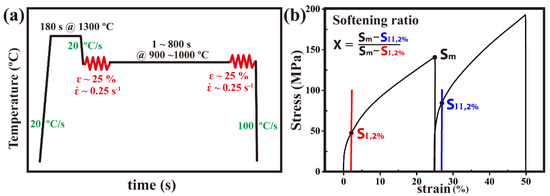
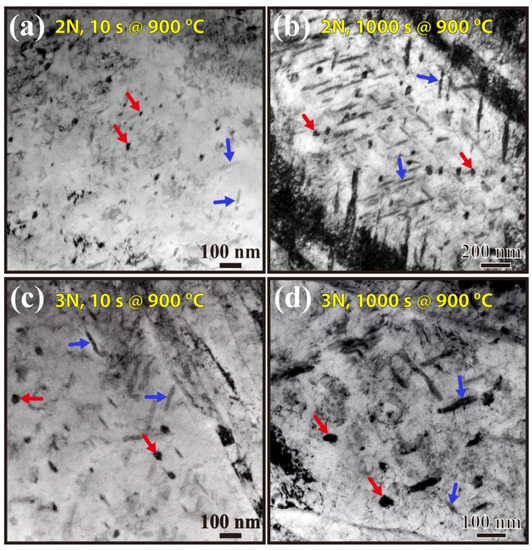
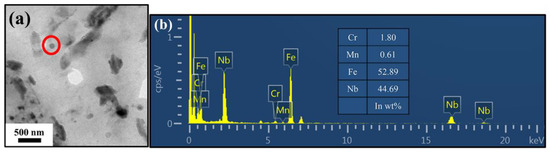
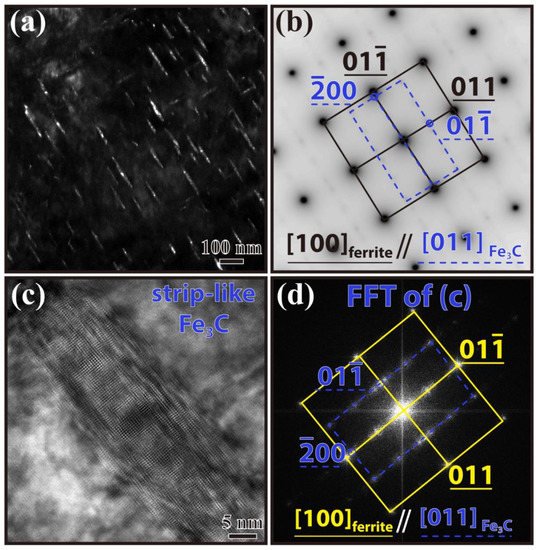
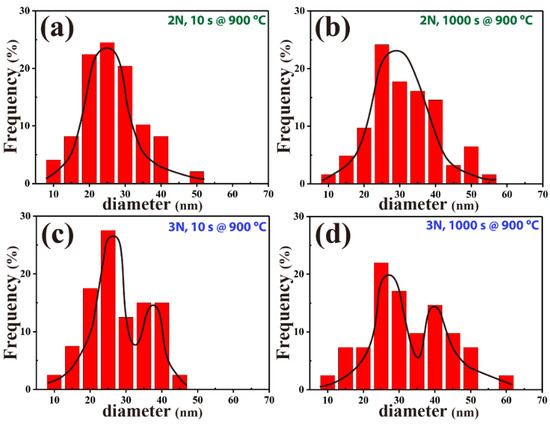
Two steels with a base composition of Fe-0.2C-0.8Mn-1.2Cr (wt%) but with different niobium (Nb) contents (0.02 and 0.03 wt%) were employed to study the effect of precipitate evolution on the softening resistance in the austenite region under elevated temperature deformation. The thermomechanical procedure was executed by a deformation-dilatometer and involved double deformation processes with 25% strain at a 0.25 s−1 strain rate at 900, 925, 950, and 1000 °C. The softening ratios, reflecting the competition between recrystallization and precipitation, were evaluated. The results indicated that both steels showed better softening resistance at 900 °C than at other temperatures. However, the softening ratio of 0.03 wt% Nb-containing steel (Steel 3N) rose after 100 s at 900 °C, while 0.02 wt% Nb-containing steel (Steel 2N) maintained a low softening ratio within 300 s at 900 °C, indicating that Steel 3N was relatively non-durable. A microstructural characterization showed that in the Steel 3N sample deformed at 900 °C, recrystallization occurred more strongly than for Steel 2N after a 1000 s holding time. A follow-up analysis then showed that Steel 3N treated at 900 °C revealed a faster coarsening of the carbides than Steel 2N even in the early stage of precipitation, evidencing that Steel 2N exhibited a lower softening resistance at 900 °C. Full article
(This article belongs to the Special Issue Microstructural Characterization of Metallic Materials)
Show Figures

Figure 1
20 pages, 5808 KB  
Review
Ab Initio Molecular Dynamics Investigation of Prenucleation at Liquid–Metal/Oxide Interfaces: An Overview
by Changming Fang and Zhongyun Fan *
Brunel Centre for Advanced Solidification Technology (BCAST), Brunel University London, Uxbridge UB8 3PH, UK
Metals 2022, 12(10), 1618; https://doi.org/10.3390/met12101618 - 27 Sep 2022
Cited by 11 | Viewed by 3489
Abstract
Prenucleation refers to the phenomenon of atomic ordering in the liquid adjacent to a liquid/solid interface at temperatures above its nucleation temperature. It produces a precursor for heterogeneous nucleation in the liquid and thus has a strong influence on the nucleation process. Oxide [...] Read more.
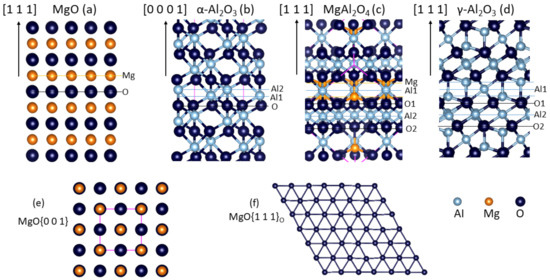
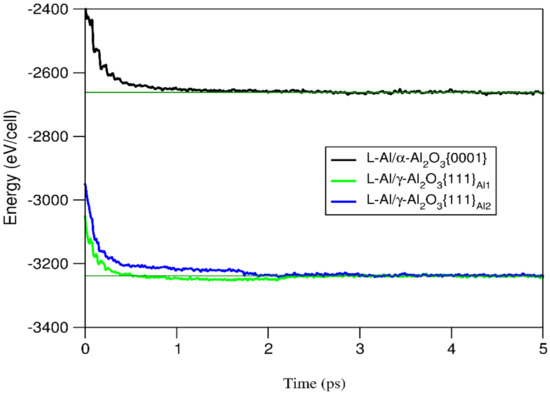
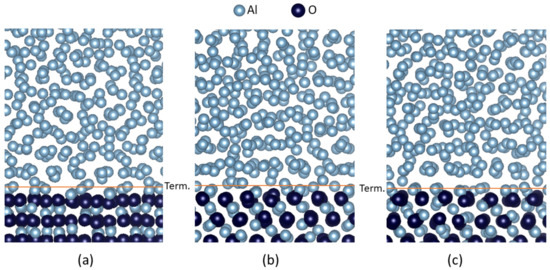
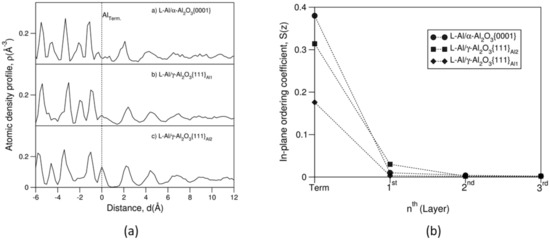
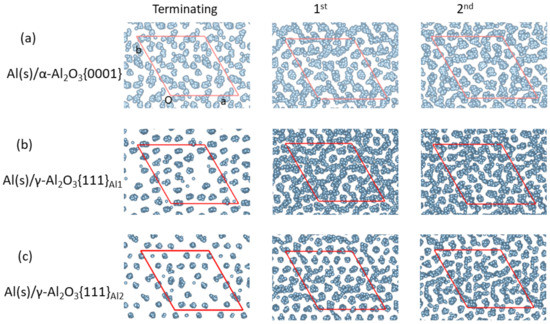
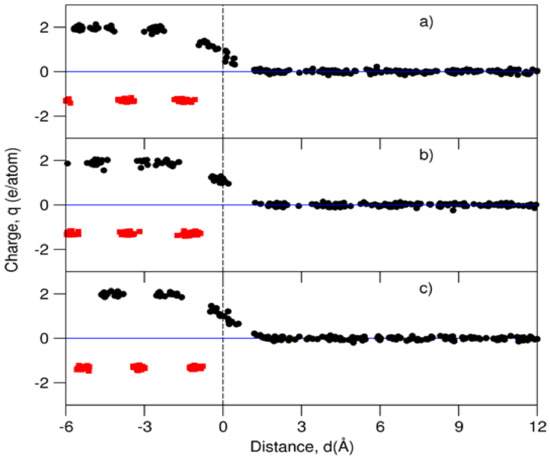
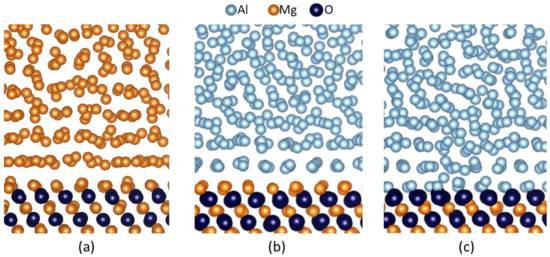
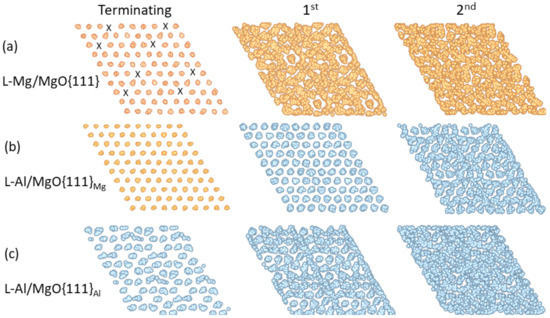
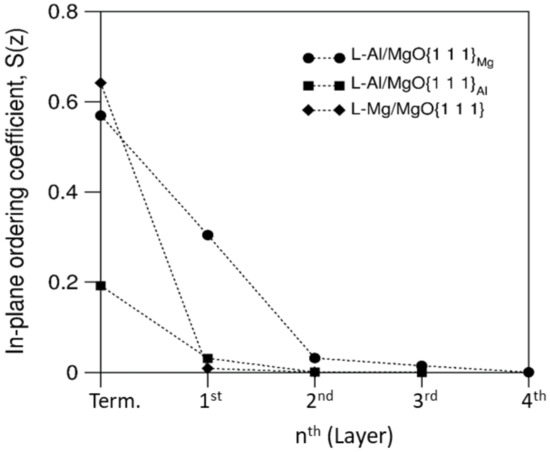
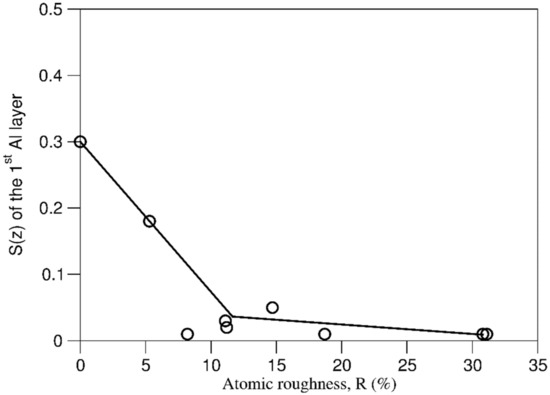
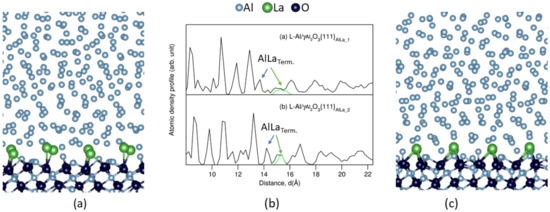
Prenucleation refers to the phenomenon of atomic ordering in the liquid adjacent to a liquid/solid interface at temperatures above its nucleation temperature. It produces a precursor for heterogeneous nucleation in the liquid and thus has a strong influence on the nucleation process. Oxide particles, including magnesia, spinel, and alumina, are inevitably formed in the liquid during liquid–metal handling and casting. They may act as nucleation sites for potential grain refinement. Knowledge about prenucleation at liquid–metal/oxide (M(l)/oxide) interfaces is important for an understanding of heterogeneous nucleation during casting. Here, we present an overview of the recent studies on the prenucleation at the M(l)/oxide interfaces using ab initio molecular dynamics simulation techniques. We observed a wide variety of interfacial chemistry and identified the formation of an ordered metal layer terminating the oxide substrates, such as MgO{1 1 1} (denoting MgO with {1 1 1} surface termination), α-Al2O3{0 0 0 1}, MgAl2O4{1 1 1} and γ-Al2O3{1 1 1} in liquid light metals. The terminating metal atoms are positively charged and form topologically rough layers, which strongly impact the prenucleation at the interfaces. We suggest modification of nucleation potency of the substrate surfaces via elemental segregation to manipulate the solidification processes. This is demonstrated by the segregation of La atoms at the Al(l)/γ-Al2O3 interfaces. Full article
Show Figures

Figure 1
12 pages, 4355 KB  
Article
Research on Magnesium Reduction Slag for Dephosphorization of Low-Silicon Hot Metal in Steelmaking Process
by Ming Lv, Kun Xie, Kui Xue and Zhaohui Zhang *
School of Metallurgical Engineering, Xi’an University of Architecture and Technology, Xi’an 710055, China
Metals 2022, 12(10), 1617; https://doi.org/10.3390/met12101617 - 27 Sep 2022
Cited by 2 | Viewed by 2567
Abstract
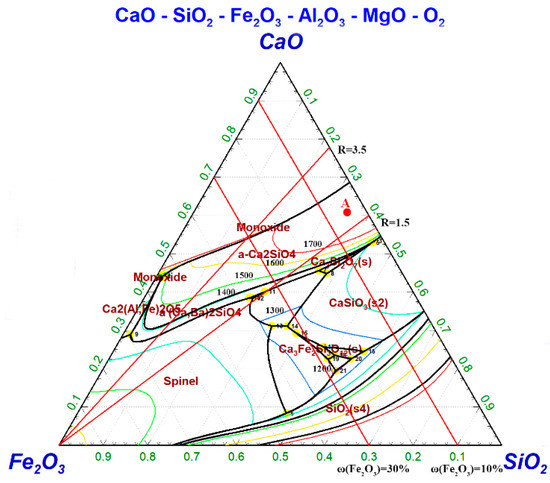
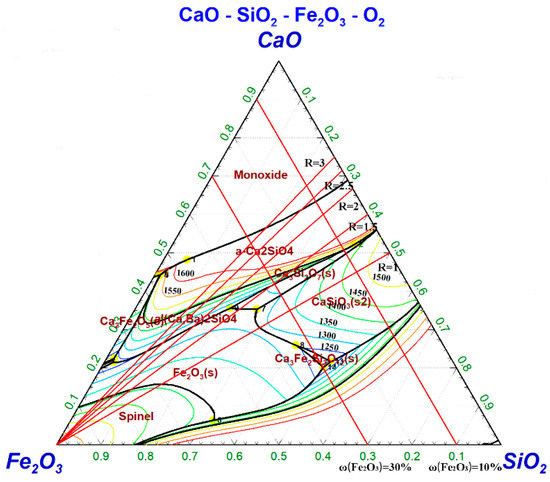
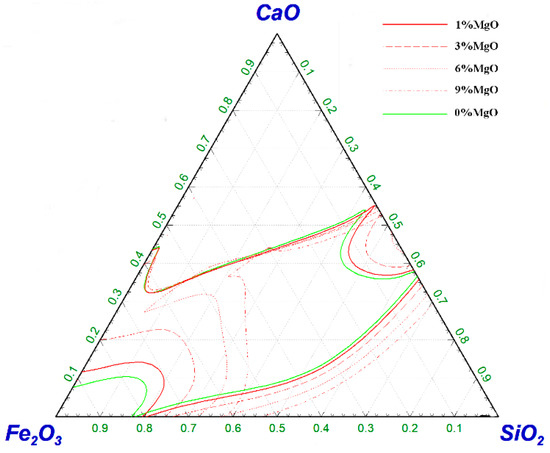
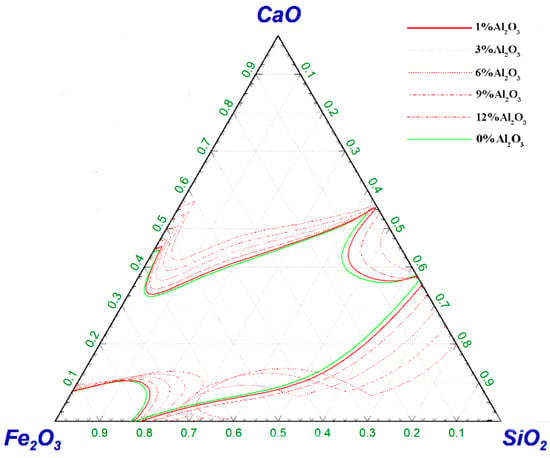
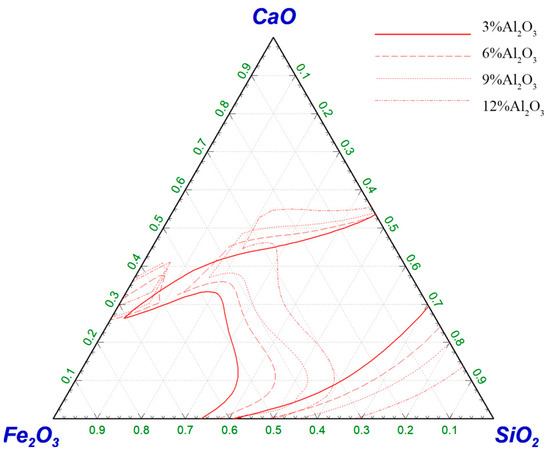
The melting temperature and viscosity of magnesium reduction slag were calculated by using Factsage thermodynamic software. The composition range of the magnesium-slag-based dephosphorizing agent was analyzed by drawing a multiphase diagram of the slag system. The Box–Behnken high-temperature dephosphorization experiment was designed to [...] Read more.
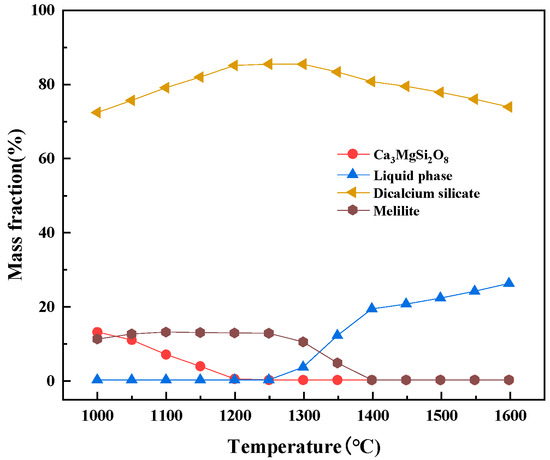
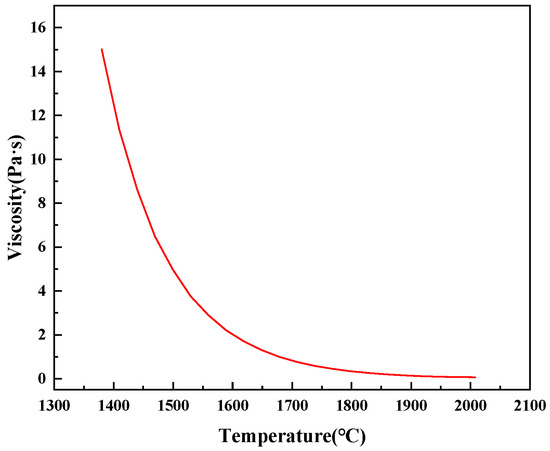
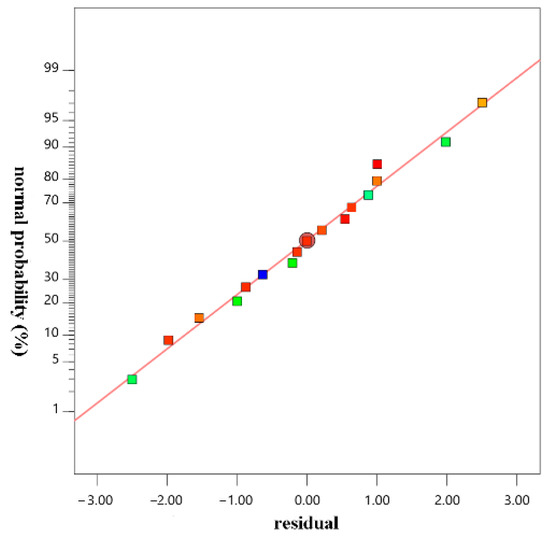
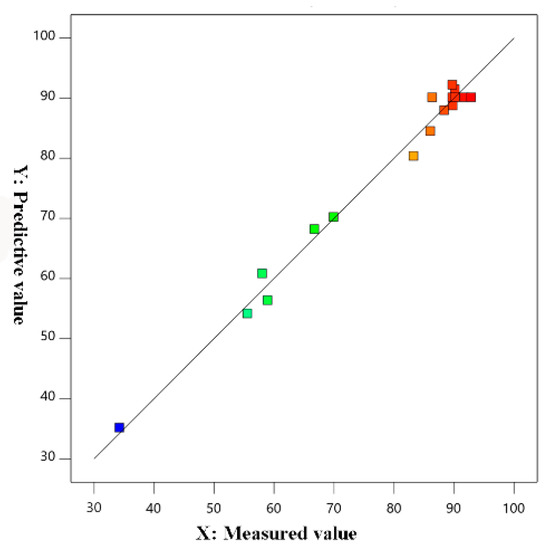
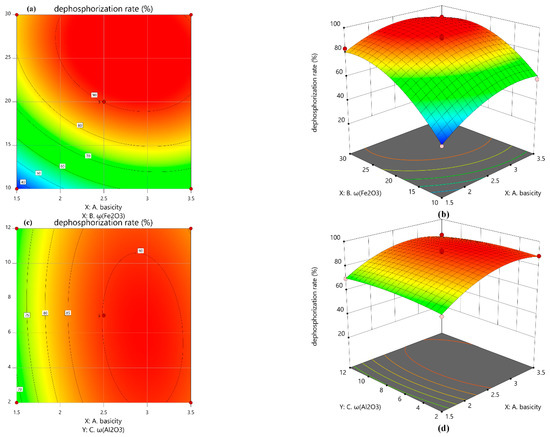
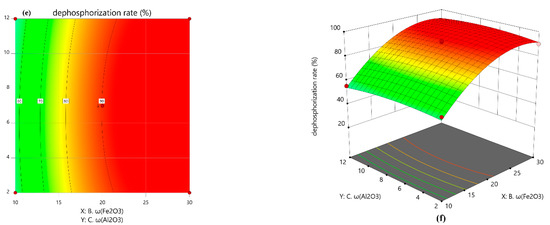
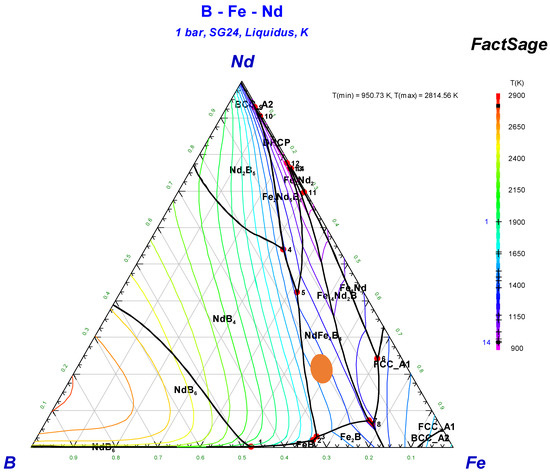
The melting temperature and viscosity of magnesium reduction slag were calculated by using Factsage thermodynamic software. The composition range of the magnesium-slag-based dephosphorizing agent was analyzed by drawing a multiphase diagram of the slag system. The Box–Behnken high-temperature dephosphorization experiment was designed to study the effect of different composition of magnesium-slag-based dephosphorizers on the dephosphorization rate of the steelmaking process. The results show that magnesium slag can be used as a slag-forming agent for smelting low-silicon hot metal to promote slagging, and the effect of each factor on the phosphorus removal rate is ranked, and the results are ω(Fe2O3) > basicity > ω(Al2O3): ω(Al2O3) has no significant effect on the rate of phosphorus removal. When the basicity was 2.8, ω(Fe2O3) was 25.94%, ω(Al2O3) was 6.73%, and ω(MgO) was 6%, the dephosphorization rate reached a maximum of 96.7%, and the error was experimentally verified to be 2.6% from the predicted value, indicating that the model can be optimized to determine the best magnesium-slag-based dephosphorization agent and has a good prediction of dephosphorization effect. Full article
Show Figures

Figure 1
14 pages, 7858 KB  
Article
Evaluation of Mechanical Properties and Microstructure of X70 Pipeline Steel with Strain-Based Design
by Denghui Liu 1,2,3, Yifan Dong 1, Rutao Li 1, Jinxing Jiang 4, Xiaoyuan Li 2,*, Zhenlong Wang 3,* and Xiurong Zuo 1,*
1 Key Laboratory of Material Physics, Ministry of Education, School of Physics and Microelectronics, Zhengzhou University, Zhengzhou 450001, China
2 School of Electrical and Information Engineering, Zhengzhou University, Zhengzhou 450001, China
3 School of Life Sciences, Zhengzhou University, Zhengzhou 450001, China
4 Nanjing Iron & Steel Co., Ltd., Nanjing 210035, China
Metals 2022, 12(10), 1616; https://doi.org/10.3390/met12101616 - 27 Sep 2022
Cited by 14 | Viewed by 5502
Abstract
The microstructure and mechanical properties of X70 pipeline steel with a ferrite/martensite dual-phase microstructure produced by thermo-mechanical controlled processing were investigated by tensile tests, Charpy V-notched (CVN) impact tests, drop-weight tear tests, guided-bend tests, scanning electron microscopy and transmission electron microscopy combined with [...] Read more.
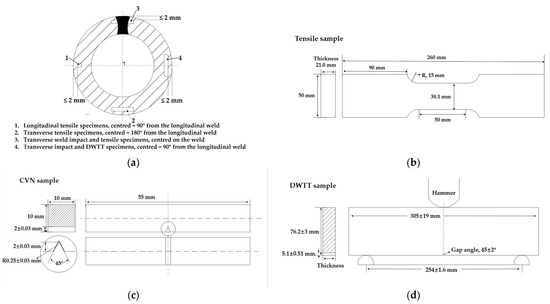
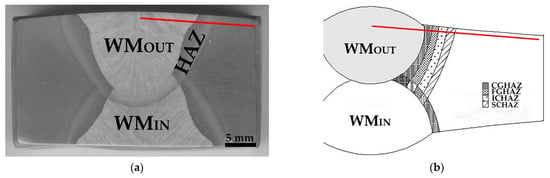
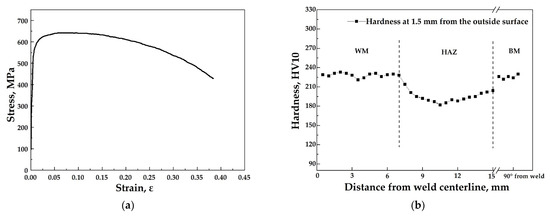
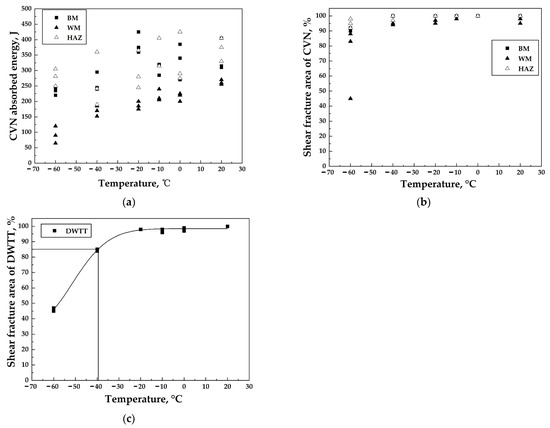
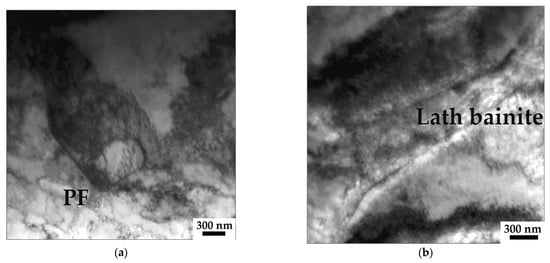
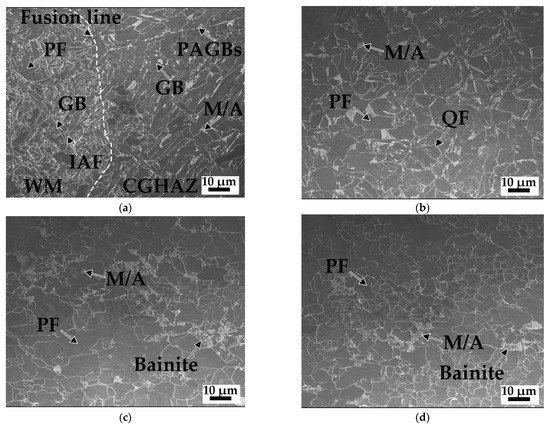
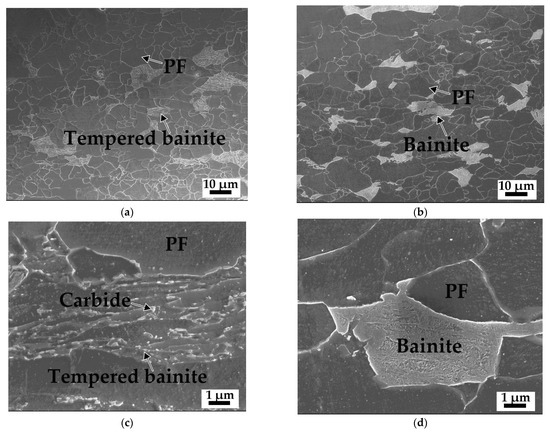
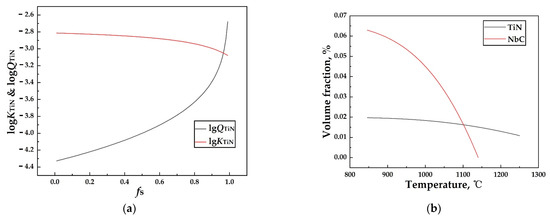
The microstructure and mechanical properties of X70 pipeline steel with a ferrite/martensite dual-phase microstructure produced by thermo-mechanical controlled processing were investigated by tensile tests, Charpy V-notched (CVN) impact tests, drop-weight tear tests, guided-bend tests, scanning electron microscopy and transmission electron microscopy combined with thermodynamic simulation analysis. All the mechanical properties met the strength, ductility, toughness and deformability properties requirements of X70 grade pipeline steel with strain-based design. The shear fracture area and absorbed energy of CVN at −10 °C were >97% and >205 J in base metal (BM), weld metal (WM) and heat affected zone (HAZ) with low transition temperature, indicating adequate resistance to propagating fracture. The microstructure of WM was mainly intragranular acicular ferrite that can guarantee high strength, toughness and over matching requirements of the welded joint. Because of being exposed to successive heat inputs, the ferrite plus martensite/bainite microstructure of BM was heated between Ac1 and Ts forming the HAZ. However, a high CVN impact toughness of 345 J at −10 °C in HAZ was obtained, which indicated that the excellent mechanical properties of BM would not be seriously deteriorated during the welding thermal cycles with the reasonable addition of Ti and Nb. Full article
(This article belongs to the Special Issue Advanced Technology in Microalloyed Steels)
Show Figures

Figure 1
13 pages, 5327 KB  
Article
Recovery of Rare Earth Elements from Spent NdFeB-Magnets: Separation of Iron through Reductive Smelting of the Oxidized Material (Second Part)
by Hanwen Chung 1, Srecko Stopic 1,*, Elif Emil-Kaya 1,2,3, Sebahattin Gürmen 2 and Bernd Friedrich 1
1 IME Process Metallurgy and Metal Recycling, RWTH Aachen University, 52056 Aachen, Germany
2 Department of Metallurgical & Materials Engineering, Istanbul Technical University, 34469 Istanbul, Turkey
3 Department of Materials Science and Technology, Turkish-German University, 34820 Istanbul, Turkey
Metals 2022, 12(10), 1615; https://doi.org/10.3390/met12101615 - 27 Sep 2022
Cited by 23 | Viewed by 5818
Abstract
This paper proposes a pyrometallurgical recycling method for end-of-life NdFeB magnets by oxidizing them in air and subsequently smelting them. The smelting process enabled the recovery of rare earth elements (REEs), producing a new reach concentrate separating the iron as a metallic phase. [...] Read more.
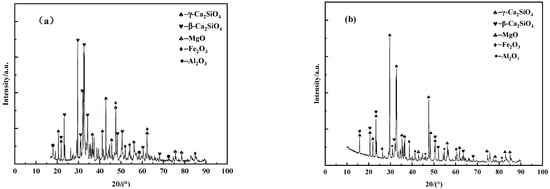
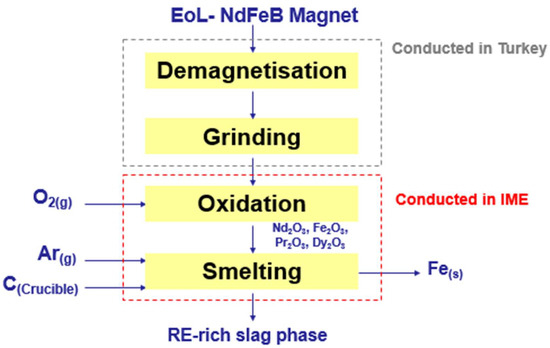
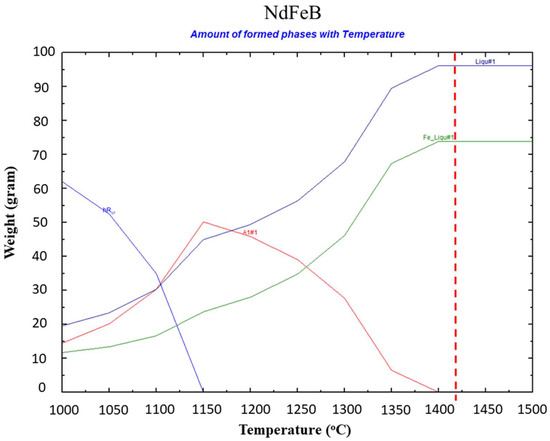
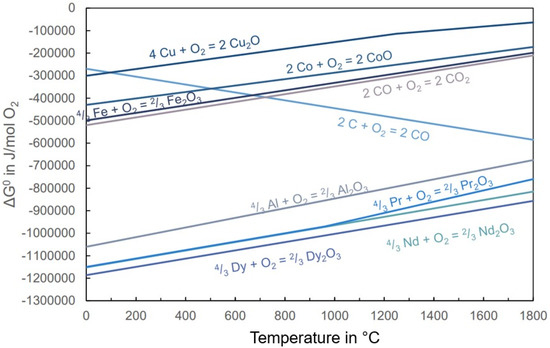
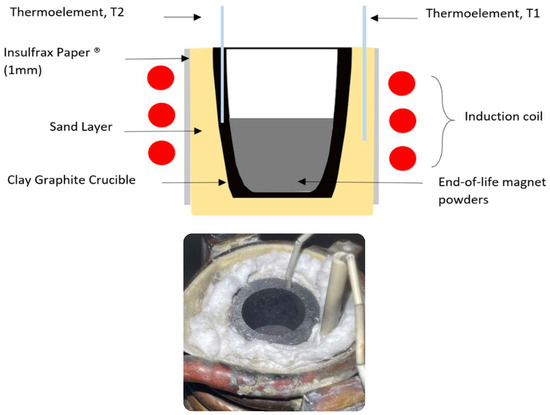
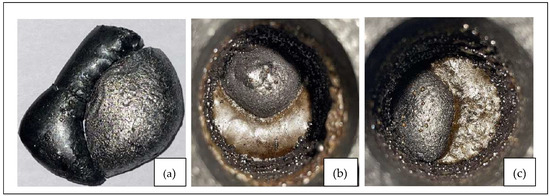
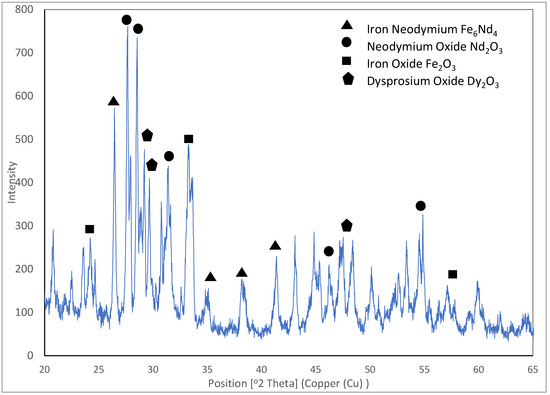
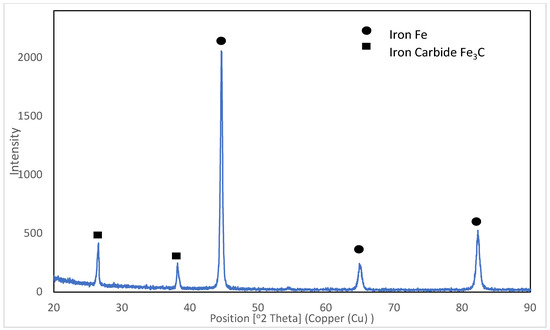
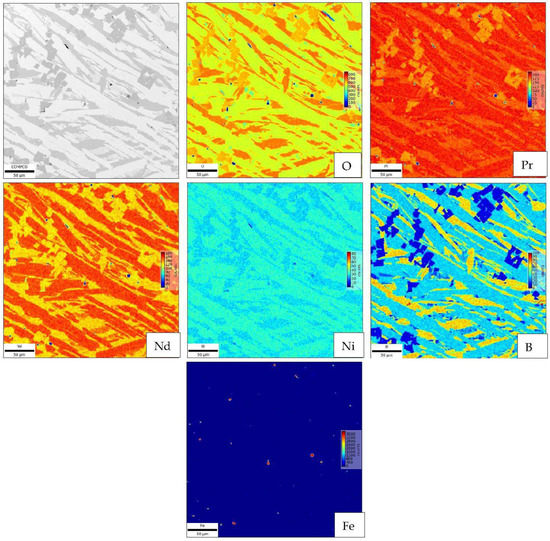
This paper proposes a pyrometallurgical recycling method for end-of-life NdFeB magnets by oxidizing them in air and subsequently smelting them. The smelting process enabled the recovery of rare earth elements (REEs), producing a new reach concentrate separating the iron as a metallic phase. From the products of smelting, the metallic phase showed a maximum Fe content of 92.3 wt.%, while the slag phase showed a maximum total REE (Nd, Pr, and Dy) content of 47.47 wt.%, both at a smelting temperature of 1500 °C. ICE-OES and XRD analysis were conducted on both phases, and results showed that the metal phase consists mainly of Fe and Fe3C while the slag phase consists of the RE-oxides, leftover Fe2O3, and a mixture of Fe6Nd4. The obtained slag concentrate based on the oxides of rare earth elements is suitable for further pyrometallurgical or hydrometallurgical treatment in order to obtain rare earth elements. Full article
Show Figures

Figure 1
11 pages, 3803 KB  
Article
Effect of Applied Tensile Stress on Hydrogen-Induced Delayed Fracture Mode of Fe-Ni-Cr Austenitic Alloy Weldment
by Yingjie Yan 1,2,*, Yukun Zhang 1,2, Lixian Zhao 1,2, Yongqing Chen 1,2, Rui Cao 1,2, Honghui Wu 3,*, Yang He 3,*, Yu Yan 4 and Lijie Qiao 3,4,*
1 State Key Laboratory of Advanced Processing and Recycling of Nonferrous Metals, Lanzhou University of Technology, Lanzhou 730050, China
2 School of Materials Science and Engineering, Lanzhou University of Technology, Lanzhou 730050, China
3 Beijing Advanced Innovation Center for Materials Genome Engineering, University of Science and Technology Beijing, Beijing 100083, China
4 Corrosion and Protection Center, Key Laboratory for Environmental Fracture (MOE), University of Science and Technology Beijing, Beijing 100083, China
Metals 2022, 12(10), 1614; https://doi.org/10.3390/met12101614 - 27 Sep 2022
Cited by 5 | Viewed by 2893
Abstract
Fe-Ni-Cr austenitic alloys are widely used in hydrogen environments as structural materials. Their weld normally shows higher hydrogen-embrittlement sensitivity than the base metal, endangering large-scale applications. Herein, by using electron microscopy and numerical calculations, the influence of applied load on the fracture mode [...] Read more.
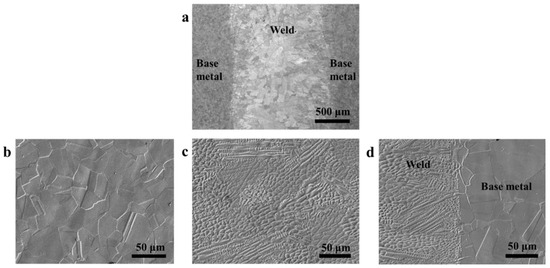
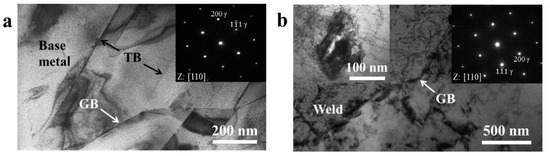
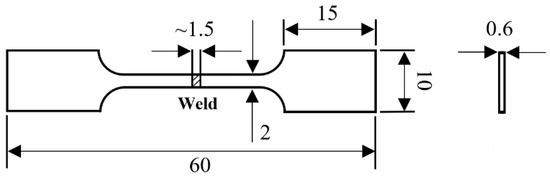
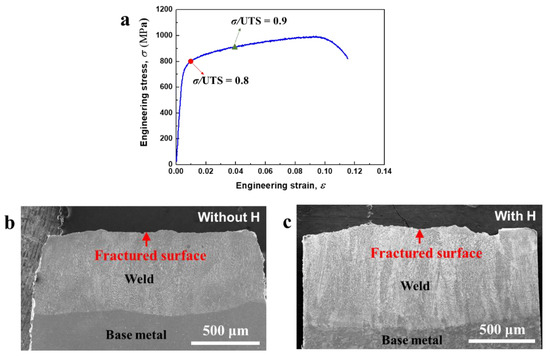
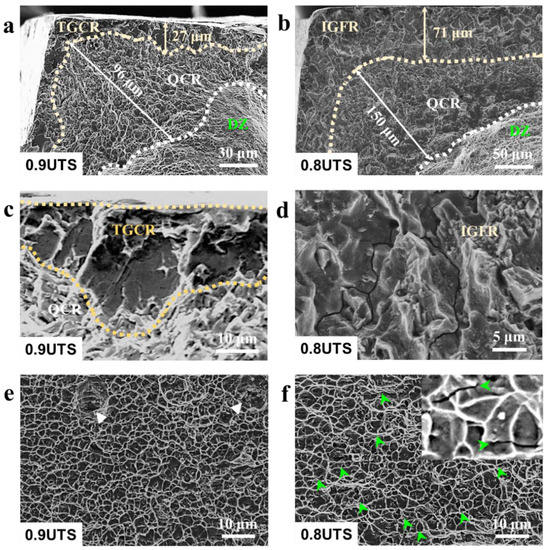
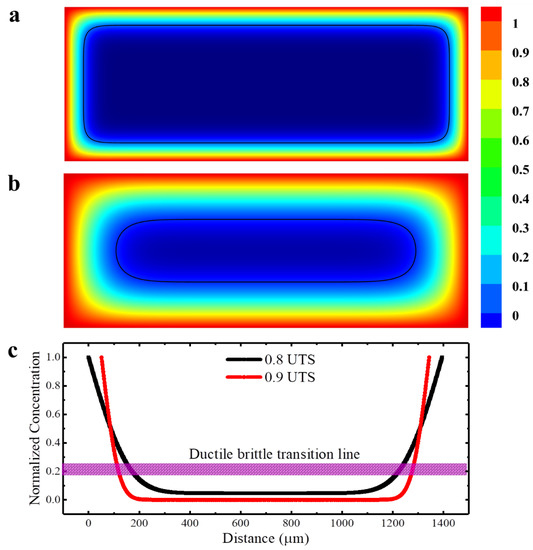
Fe-Ni-Cr austenitic alloys are widely used in hydrogen environments as structural materials. Their weld normally shows higher hydrogen-embrittlement sensitivity than the base metal, endangering large-scale applications. Herein, by using electron microscopy and numerical calculations, the influence of applied load on the fracture mode of hydrogen-embrittled JBK-75 alloy weldment is revealed and correlated with a competition between hydrogen-prompted intergranular decohesion (HPID) and hydrogen-enhanced localized plasticity (HELP). Therefore, independent of the load levels, the weld featuring a lower strength and smaller grain sizes is always more vulnerable to hydrogen embrittlement than the base metal. Full article
(This article belongs to the Section Metal Failure Analysis)
Show Figures

Figure 1
14 pages, 8371 KB  
Article
Effect of Microstructure Morphology of Q&P Steel on Carbon and Manganese Partitioning and Stability of Retained Austenite
by Huan Xiao, Gang Zhao, Deming Xu *, Yuanyao Cheng and Siqian Bao
The State Key Laboratory of Refractories and Metallurgy, Wuhan University of Science and Technology, Wuhan 430081, China
Metals 2022, 12(10), 1613; https://doi.org/10.3390/met12101613 - 27 Sep 2022
Cited by 9 | Viewed by 2703
Abstract
In this study, we used 0.2C-1.7Si-1.9Mn wt% cold-rolled sheet as the experimental material to prepare the Q&P sample with blocky microstructures and the QQ&P sample with lath-shaped microstructures through the Q&P and QQ&P processes, respectively. The partitioning behavior of carbon and manganese in [...] Read more.
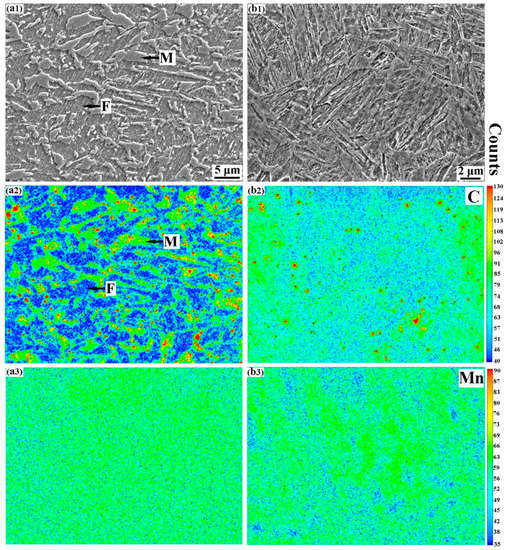
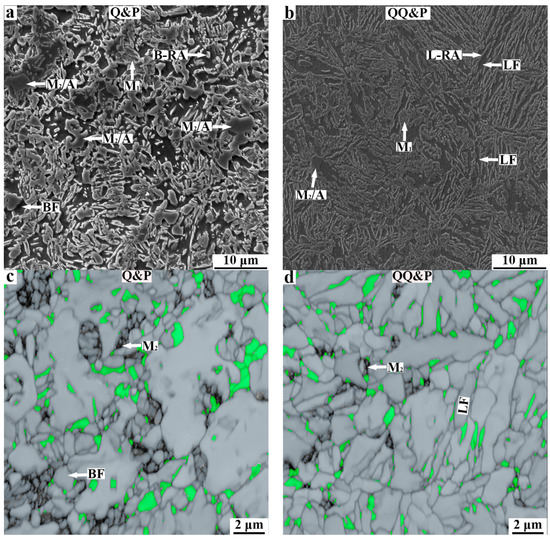
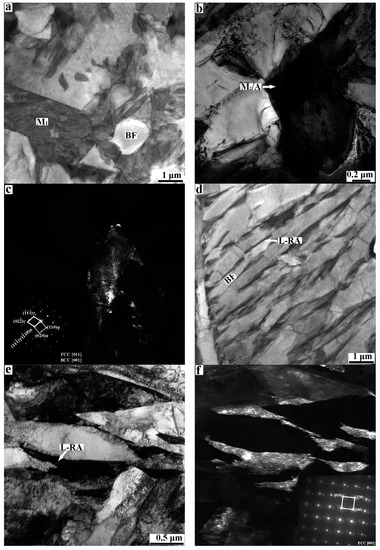
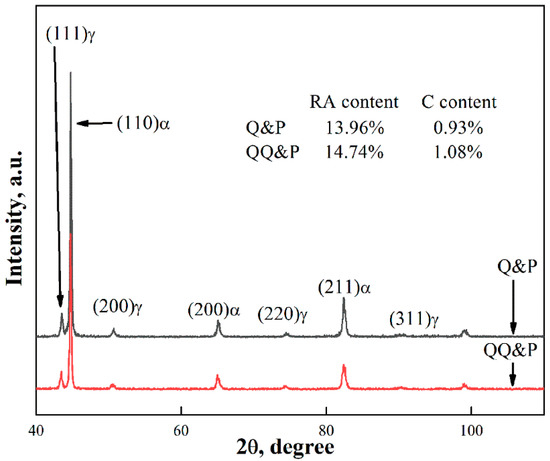
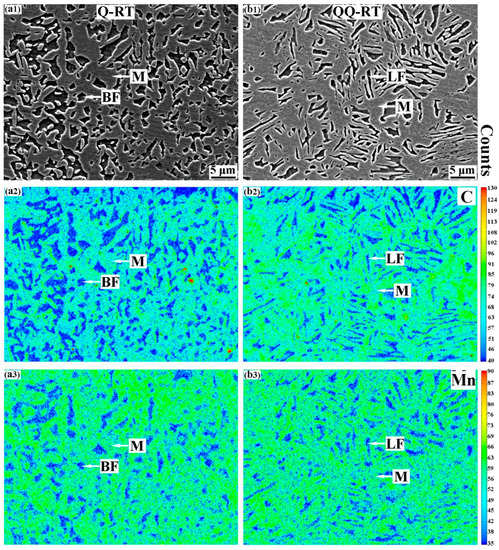
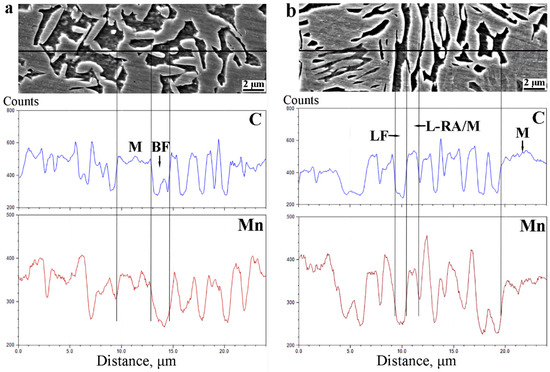
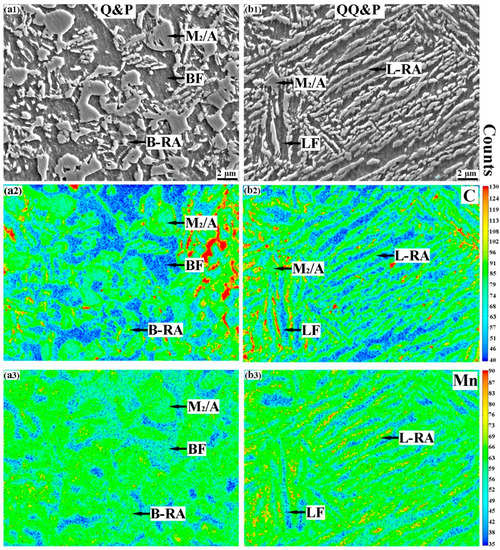
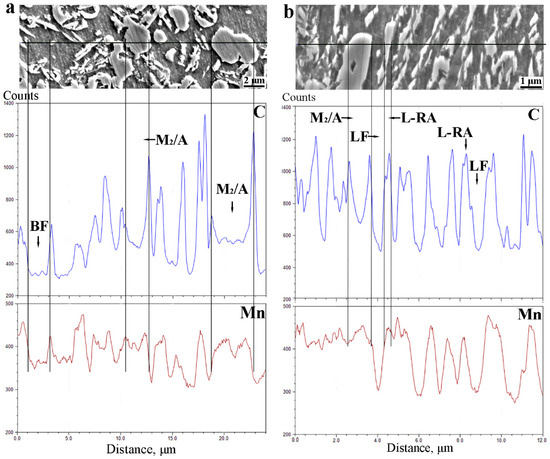
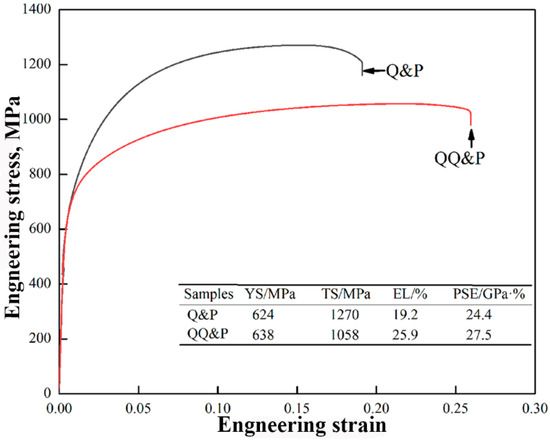
In this study, we used 0.2C-1.7Si-1.9Mn wt% cold-rolled sheet as the experimental material to prepare the Q&P sample with blocky microstructures and the QQ&P sample with lath-shaped microstructures through the Q&P and QQ&P processes, respectively. The partitioning behavior of carbon and manganese in the two samples after intercritical annealing and partitioning were studied. During the intercritical annealing, the partitioning of carbon and manganese in the Q&P and the QQ&P samples occurred, resulting in the contents of carbon and manganese being significantly higher than those in the ferrite. Meanwhile, due to the migration of the ferrite–austenite interface during the formation of the austenite, the distributions of carbon and manganese in the lath-shaped and blocky austenite were both homogenous. The morphology of the microstructures had little influence on the distribution of carbon and manganese in metastable austenite during intercritical annealing. In the partitioning, the migration of the ferrite–austenite interface and diffusion of manganese can be ignored. Carbon first diffuses from the ferrite grains to the ferrite–austenite interface and then diffuses in the austenite grains. The morphology of the microstructures has a great effect on the homogenization of carbon in austenite grains. Compared with coarse blocky austenite, lath-shaped austenite can shorten the diffusion path of carbon in austenite grains and increase the homogeneity of carbon in austenite grains, thereby improving the thermal stability of lath-shaped austenite. Compared with the Q&P sample, the QQ&P sample has higher content of retained austenite (14.74% vs. 13.96%), better elongation (25.9% vs. 19.2%), and higher product of strength and elongation (27.5 GPa% vs. 24.4 GPa%). Full article
Show Figures

Figure 1
11 pages, 5307 KB  
Article
Characterization of Al-Co-Cr-Fe-Mn-Ni High-Entropy Alloy Coating Fabricated onto AA5083 Using Wire-Arc Additive Manufacturing
by Kirill Osintsev 1,2, Sergey Konovalov 1,2,*, Yurii Ivanov 3, Victor Gromov 1, Sergey Vorobyev 1 and Irina Panchenko 1
1 Department of Natural Sciences, Siberian State Industrial University, Novokuznetsk 654007, Russia
2 Department of Metals Technology and Aviation Materials, Samara National Research University, Samara 443086, Russia
3 Institute of High Current Electronics of the Siberian Branch of the RAS, Tomsk 634055, Russia
Metals 2022, 12(10), 1612; https://doi.org/10.3390/met12101612 - 27 Sep 2022
Cited by 6 | Viewed by 4349
Abstract
Fabrication of thick (more than 3 mm) hard coatings on Al-Mg alloys might provide better performance in terms of increased durability, wear resistance and hardness compared with the unmodified material. In this study we fabricated Al-Co-Cr-Fe-Mn-Ni high-entropy alloy coating by wire-arc additive manufacturing [...] Read more.
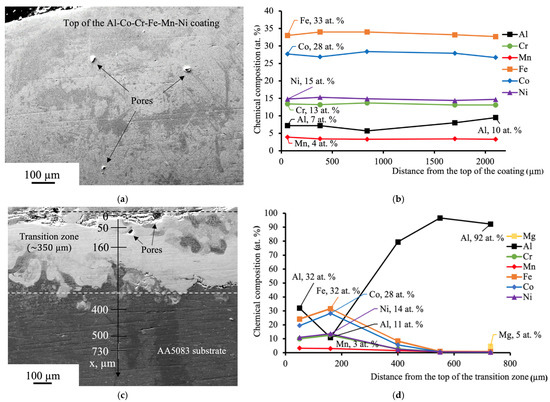
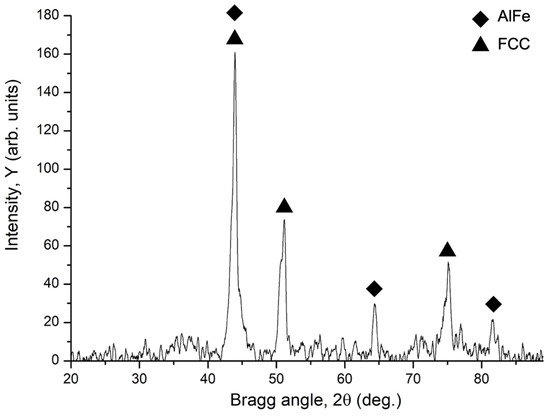
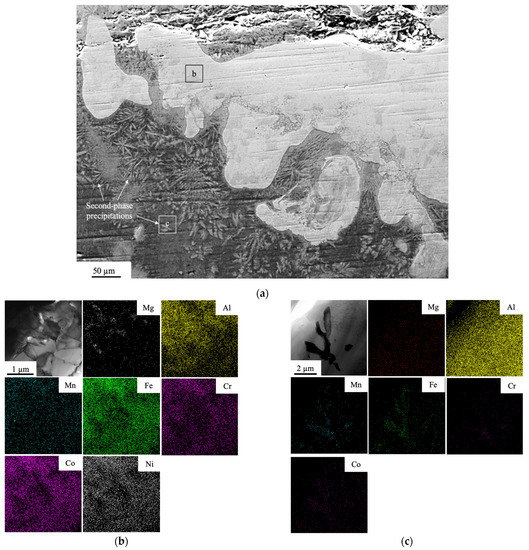
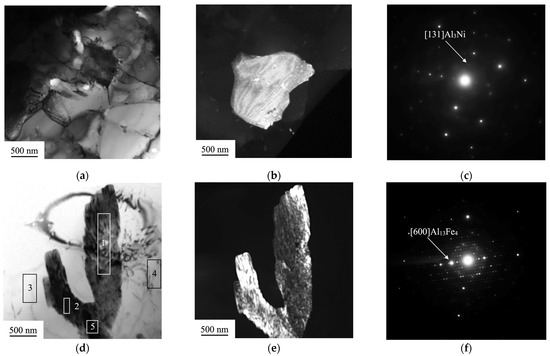
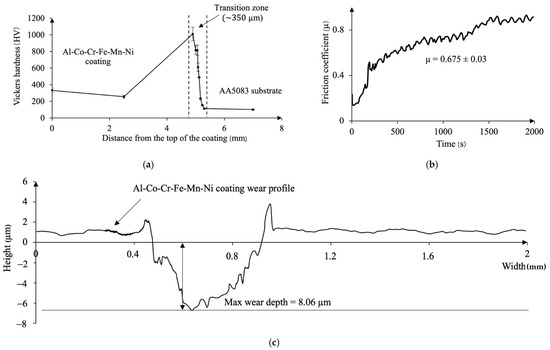
Fabrication of thick (more than 3 mm) hard coatings on Al-Mg alloys might provide better performance in terms of increased durability, wear resistance and hardness compared with the unmodified material. In this study we fabricated Al-Co-Cr-Fe-Mn-Ni high-entropy alloy coating by wire-arc additive manufacturing onto AA5083 substrate. The aim of this study is to investigate the microstructure and mechanical properties of the coating and its influence on the substrate. Scanning electron microscopy and transmission electron microscopy were used to characterize the microstructure and elemental composition of the obtained coating. Microhardness and tribological tests were implemented to evaluate the mechanical properties. The results showed homogeneous distribution of the elements alongside the transversal direction in the coating which has the following average chemical composition: Al 8 at. %, Co 28 at. %, Cr 13 at. %, Fe 33 at. %, Mn 3 at. %, Ni 15 at. %. The wear rate of the coating decreased by ~five times comparing with the substrate, while the Vickers hardness improved by ~three times. The highest level of hardness accounting for 1010 ± 80 HV was observed in the transition zone between the coating and the substrate which might be attributed to high micro- and macrostress levels appeared in this zone. The study showed the practical applicability of wire-arc additive manufacturing method to fabricate a high-entropy alloy on Al-Mg substrate. Full article
Show Figures

Figure 1
12 pages, 2641 KB  
Article
Effect of Titanium Based Alloys on Thermo-Mechanical Behavior in 3D Forging Simulation
by Mohan Kumar Anand Raj 1,*, Balaji Madheswaran 1, Ali Jawad Alrubaie 2, Hitesh Panchal 3, Suresh Muthusamy 4, Mustafa Musa Jaber 5, Chander Prakash 6,*, Joao Paulo Davim 7, Kuldeep Kumar Saxena 8 and Dharam Buddhi 9
1 Department of Mechanical Engineering, Kongu Engineering College (Autonomous), Perundurai 638060, India
2 Department of Medical Instrumentation Techniques Engineering, Al-Mustaqbal University College, Hilla 51001, Iraq
3 Department of Mechanical Engineering, Government Engineering College, Patan 384265, India
4 Department of Electronics and Communication Engineering, Kongu Engineering College (Autonomous), Perundurai 638060, India
5 Department of Medical Instruments Engineering Techniques, Dijlah University College, Baghdad 10021, Iraq
6 School of Mechanical Engineering, Lovely Professional University, Phagwara 144001, India
7 Department of Mechanical Engineering, University of Aveiro, Campus Santiago, 3810-193 Aveiro, Portugal
8 Department of Mechanical Engineering, GLA University, Mathura 281406, India
9 Division of Research & Innovation, Uttaranchal University, Dehradun 248007, India
Metals 2022, 12(10), 1611; https://doi.org/10.3390/met12101611 - 26 Sep 2022
Cited by 9 | Viewed by 3119
Abstract
Titanium has been one of the traditional metals used in the medical industry since 1940. This work modeled and simulated a hip-joint replacement implant using Creo 5.0 and DEFORM 3D (v11.0), respectively. Four titanium-based billets were modeled; out of four billets, three billets [...] Read more.
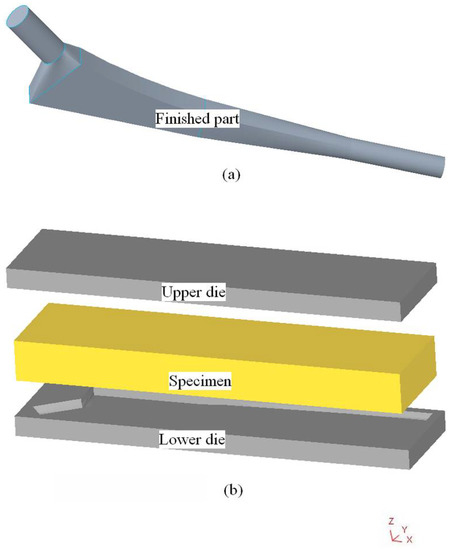
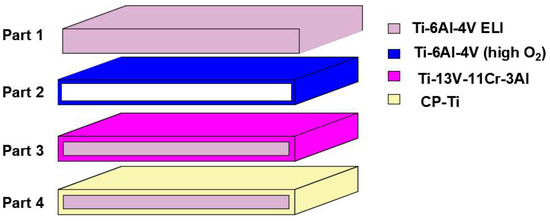
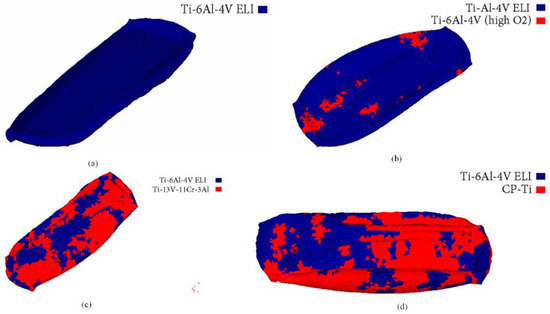
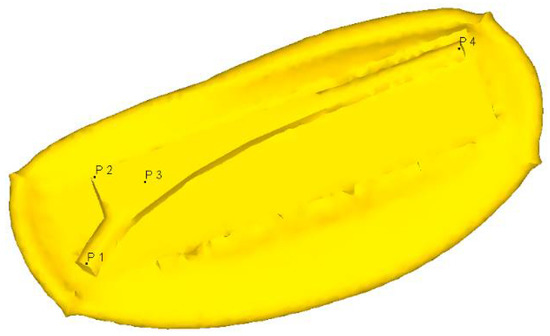
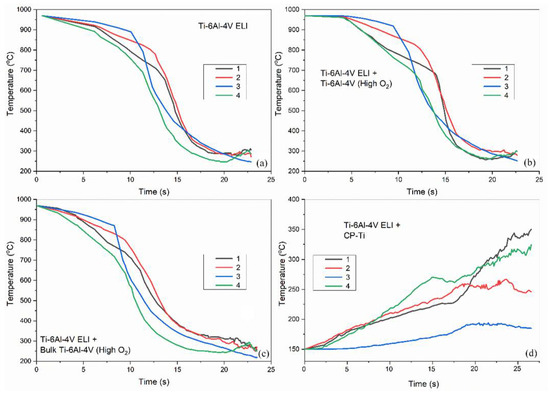
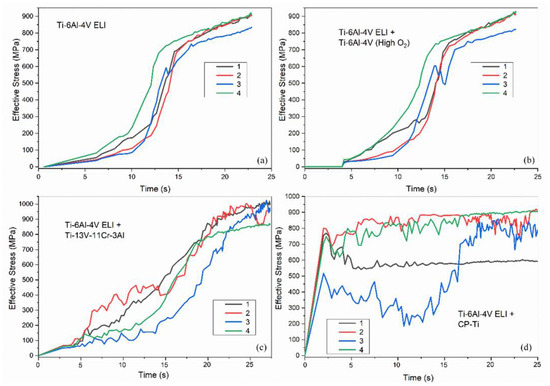
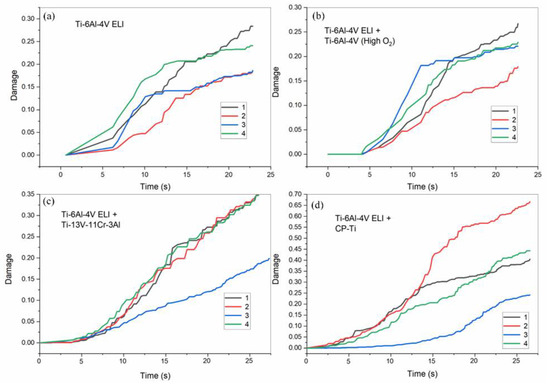
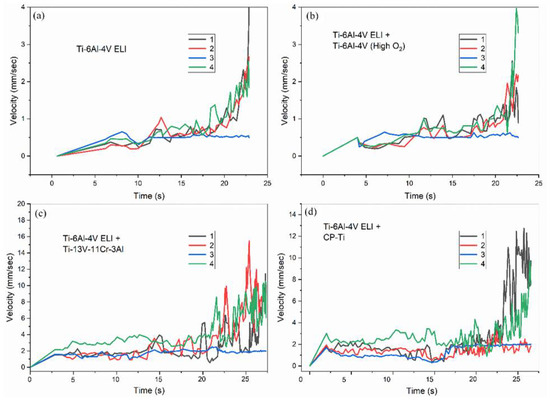
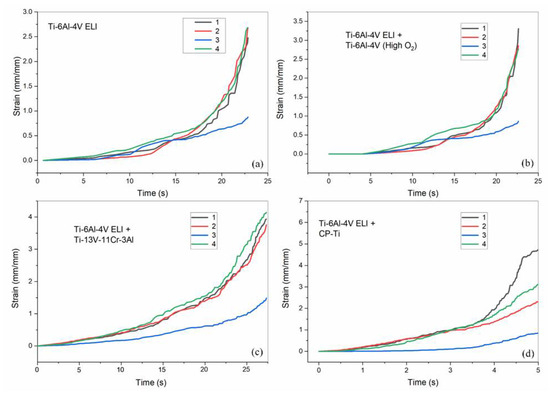
Titanium has been one of the traditional metals used in the medical industry since 1940. This work modeled and simulated a hip-joint replacement implant using Creo 5.0 and DEFORM 3D (v11.0), respectively. Four titanium-based billets were modeled; out of four billets, three billets were coated with a specified thickness, and one was uncoated. Among the three coated billets, one billet was coated with a 500-micron and two billets coated with a 1000-micron thickness. At the end of the simulation, the coating materials formed patches on the surface of the forged parts. The coating material Ti-6Al-4V (high O2) produced excellent mechanical properties in contrast to the CP-Ti material, which displayed low mechanical properties and did not match the core property. Hence, it was suggested to provide a bulk coating of Ti-6Al-4V (high O2) on the billet to improve the physio-mechanical properties and biocompatibility. Four points were selected on the surface of the forged parts at different locations for identifying the property variations concerning forging time. Results found that coating thickness required more on the side surface of the billet material than on the upper and lower surfaces to enhance its properties. Full article
(This article belongs to the Special Issue Advancements in Machining Technologies of Titanium-Based Alloys)
Show Figures

Figure 1
15 pages, 3698 KB  
Article
Study of the Precipitation Kinetics, Microstructures, and Mechanical Properties of Al-Zn-Mg-xCu Alloys
by Aiqin Tian 1,2, Lin Sun 2, Yunlai Deng 1 and Manfa Yuan 3,*
1 School of Materials Science and Engineering, Central South University, Changsha 410083, China
2 National Engineering Research Center for High-Speed EMU, CRRC Qingdao Sifang Co., Ltd., Qingdao 266111, China
3 Light Alloy Research Institute, Central South University, Changsha 410083, China
Metals 2022, 12(10), 1610; https://doi.org/10.3390/met12101610 - 26 Sep 2022
Cited by 6 | Viewed by 3294
Abstract
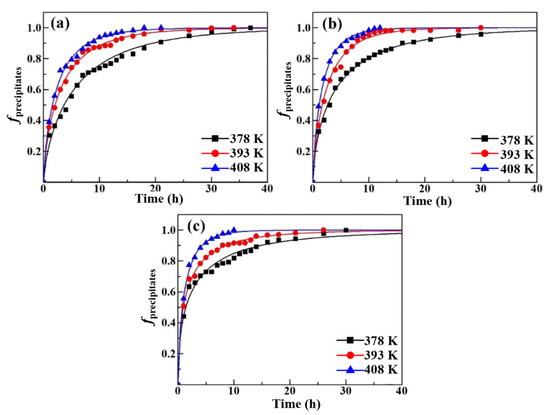
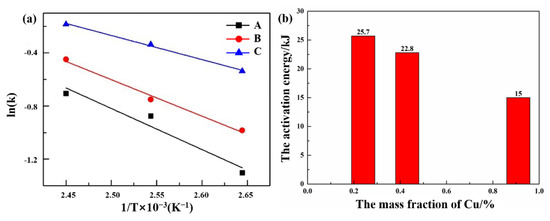
Microstructures and mechanical properties of Al-5Zn-2.6Mg alloys with 0.24, 0.43, and 0.91 wt.% Cu were studied and the precipitation rate and activation energy at 378, 393, and 408 K were calculated using the Arrhenius equation in this work. The aging reaction rate k [...] Read more.
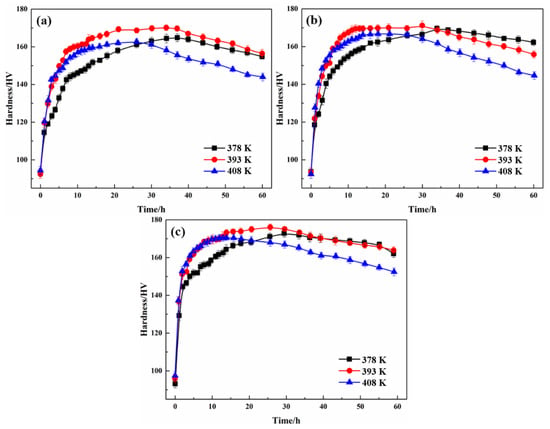
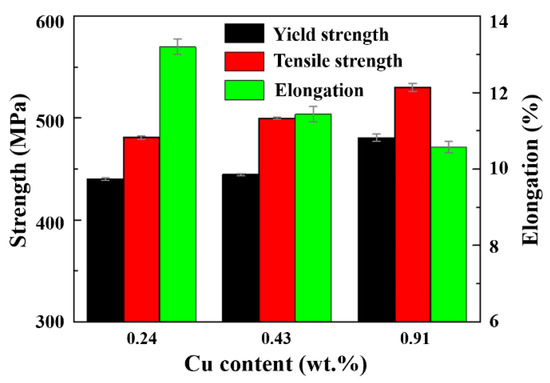
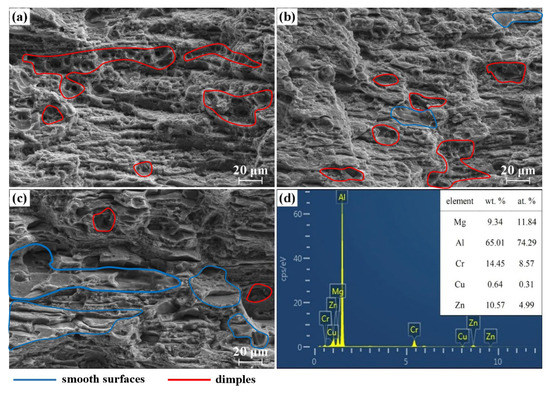
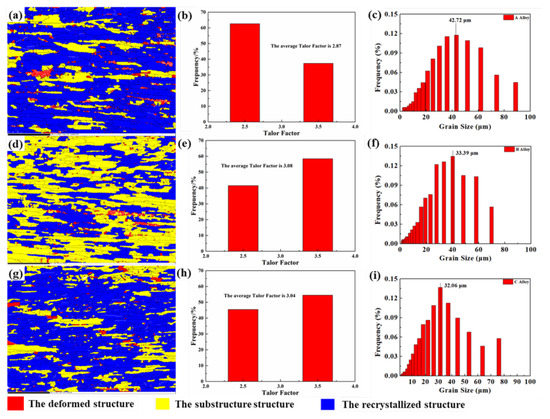
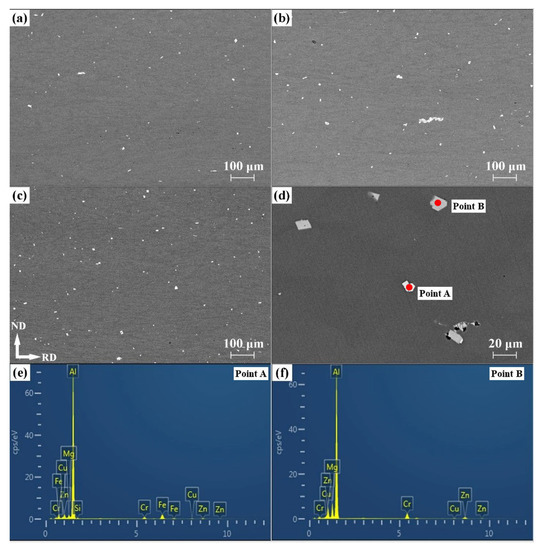
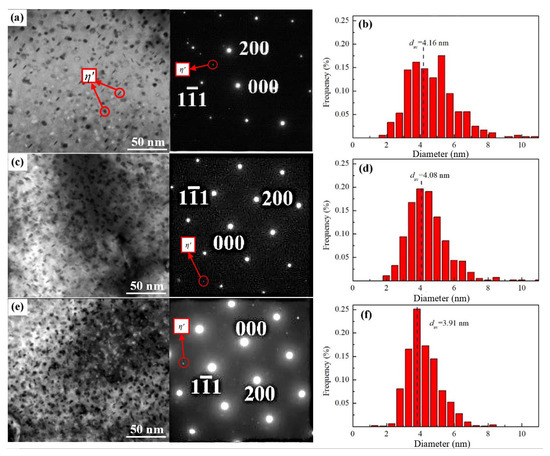
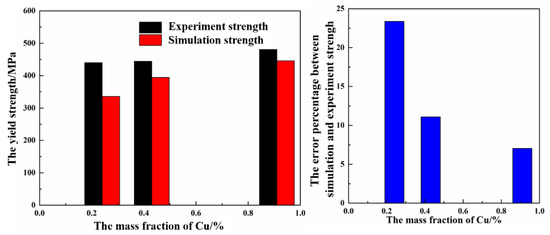
Microstructures and mechanical properties of Al-5Zn-2.6Mg alloys with 0.24, 0.43, and 0.91 wt.% Cu were studied and the precipitation rate and activation energy at 378, 393, and 408 K were calculated using the Arrhenius equation in this work. The aging reaction rate k increased and the precipitation activation energy Ea decreased from 25.7 to 15.0 kJ/mol. The η’ distribution density of the precipitates clearly increased with increasing Cu content. However, the size and number of coarse second phase with Fe and Mn impurities also increased, which increased the tendency for crack initiation and propagation at the grain boundary, resulting in a decrease in dimple area. The fracture morphology transformed from plastic transgranular fracture to brittle intergranular fracture and the elongation of the alloys decreased by 3.8%. The contribution of Cu content to yield strength was predominantly due to precipitation strengthening rather than grain boundary strengthening and solid solution strengthening. The tensile strength of the Al-5Zn-2.6Mg alloys with 0.91 wt.% Cu subject to peak aging at 393 K increased by 10.2%. Full article
Show Figures

Figure 1