


Journal Description
Laws
Laws
is an international, peer-reviewed, open access journal on legal systems, theory, and institutions, published bimonthly online by MDPI.
- Open Access— free for readers, with article processing charges (APC) paid by authors or their institutions.
- High Visibility: indexed within Scopus, ESCI (Web of Science), RePEc, vLex Justis, CanLII, Law Journal Library, and other databases.
- Journal Rank: JCR - Q2 (Law) / CiteScore - Q1 (Law)
- Rapid Publication: manuscripts are peer-reviewed and a first decision is provided to authors approximately 41.6 days after submission; acceptance to publication is undertaken in 6.7 days (median values for papers published in this journal in the first half of 2026).
- Recognition of Reviewers: Reviewers whose reports are timely and of high quality receive an APC discount voucher for a future publication in an MDPI journal. Become a reviewer.
- MDPI’s Journal Cluster of Social Studies: Challenges-Journal of Planetary Health, Disabilities, Genealogy, Laws, Sexes, Social Sciences, Societies and Systems.
Impact Factor:
1.1 (2025);
5-Year Impact Factor:
1.4 (2025)
Latest Articles
The Asylum Seeker as a Jurisdictional Anomaly: Jurisdictional Filtering and the Reconfiguration of Protection in European Union Asylum Law
Laws 2026, 15(5), 116; https://doi.org/10.3390/laws15050116 - 17 Sep 2026
Abstract
European Union asylum law increasingly relies on preliminary procedural mechanisms that may affect whether, where, and through which procedure a protection claim is examined on its merits. This article examines the cumulative significance of responsibility allocation, inadmissibility, border procedures, screening, and third-country mechanisms
[...] Read more.
European Union asylum law increasingly relies on preliminary procedural mechanisms that may affect whether, where, and through which procedure a protection claim is examined on its merits. This article examines the cumulative significance of responsibility allocation, inadmissibility, border procedures, screening, and third-country mechanisms through doctrinal and conceptual analysis, using developments in UK asylum law as a secondary contrastive point of reference. It uses the concept of jurisdictional filtering to describe the operation of preliminary mechanisms that may redirect, defer, or condition the route to substantive examination and jurisdictional engineering to identify their systemic organization and interaction without assuming a single legislative strategy. Its principal conceptual contribution is the notion of jurisdictional anomaly, which describes the legal position of a person who remains subject to state immigration authority and applicable protection safeguards while preliminary determinations may still affect whether, where, and through which procedure the protection claim will be substantively examined. The article argues that the analytical significance of these mechanisms lies in their cumulative procedural and institutional effects rather than in any suspension of protection obligations. Non-refoulement and other applicable safeguards remain operative, while the route to merits determination may be procedurally differentiated.
Full article
(This article belongs to the Special Issue Repelling Asylum-Seekers in Europe? Asylum-Seekers as an “Anomaly” in EU and UK Migration Laws and Policies)
Open AccessPerspective
Japan’s Perspective on the Future of the World Trading System
by
Junji Nakagawa
Laws 2026, 15(5), 115; https://doi.org/10.3390/laws15050115 - 15 Sep 2026
Abstract
This paper examines the implications of the Trump administration’s trade policies for the future of the world trading system and the role Japan should play in response. It argues that, behind the discourse of “national security” and “economic security,” recent U.S. trade policies
[...] Read more.
This paper examines the implications of the Trump administration’s trade policies for the future of the world trading system and the role Japan should play in response. It argues that, behind the discourse of “national security” and “economic security,” recent U.S. trade policies primarily seek to rebuild and protect domestic industrial capacity and address the distributional consequences of globalization and industrial hollowing-out. This signals an emerging era of intensified international competition in industrial policy, in which governments increasingly pursue national interests through tariffs, subsidies, and other interventionist measures. This transformation is weakening the liberal foundations of the multilateral trading system. The principle of non-discrimination, particularly most-favoured-nation treatment, may give way to bilateral strategies and plurilateral arrangements among like-minded countries. Yet the United States is unlikely to abandon the WTO; rather, it appears to seek to reshape international rules through their revision, reinterpretation, or selective application. Against this background, de facto plurilateral arrangements, both within and outside the WTO, are becoming increasingly important. The WTO Agreement on Electronic Commerce and the CPTPP illustrate alternative pathways for developing new trade rules. Japan has responded by strengthening economic security while supporting the multilateral system through WTO reform, the MPIA, and the CPTPP. The paper concludes that Japan must move beyond adaptation and articulate an independent vision for the future institutional and normative development of the world trading system.
Full article
(This article belongs to the Special Issue The World Trading System in Dire Straits: Legal Challenges, Tariff Disputes, and the Future of the World Trade Organization)
Open AccessArticle
Moral Rights and AI: Bridging the Regulatory Gap in European Copyright Law
by
Maria-Daphne Papadopoulou
Laws 2026, 15(5), 114; https://doi.org/10.3390/laws15050114 - 8 Sep 2026
Abstract
The regulation of artificial intelligence (AI) and copyright in the European Union has proceeded almost entirely within the domain of economic rights, systematically overlooking the moral rights of authors whose works are ingested into AI training datasets and reproduced in AI-generated outputs. This
[...] Read more.
The regulation of artificial intelligence (AI) and copyright in the European Union has proceeded almost entirely within the domain of economic rights, systematically overlooking the moral rights of authors whose works are ingested into AI training datasets and reproduced in AI-generated outputs. This article examines why this omission constitutes not merely a regulatory gap but a normative failure and proposes a framework for addressing it. Through doctrinal analysis of the DSM Directive’s text and data mining exceptions, the AI Act’s general-purpose AI obligations, and the AI Code of Practice, the article identifies a four-dimensional regulatory gap—substantive, jurisdictional, structural, and institutional—and situates it within the broader architecture of EU fundamental rights law. Drawing on the personhood theory of authorship, international human rights instruments, and the first European judicial engagement with AI-related moral and personality rights claims in GEMA v OpenAI (Regional Court of Munich I, November 2025), the article develops a rebuttable presumption model as the organising principle for author-centred AI regulation. Two complementary regulatory pathways are proposed: EU harmonisation of moral rights with AI-specific provisions, and the integration of moral rights obligations into existing AI compliance frameworks. The article concludes that in the algorithmic age, human creativity must be valued—not merely accommodated—by the legal systems that claim to protect it.
Full article
(This article belongs to the Special Issue Contemporary Developments in International Copyright Law: Navigating Challenges in the Digital Era)
Open AccessArticle
The Phantom Agent: Artificial Intentionality and Legal Responsibility
by
Daniel J. Gervais and John J. Nay
Laws 2026, 15(5), 113; https://doi.org/10.3390/laws15050113 - 8 Sep 2026
Abstract
Artificial intelligence systems increasingly generate conduct that appears intentional. They negotiate, advise, adapt to obstacles, and shape human decision-making. Yet they are not legal persons and lack minds in any conventional sense. We argue that the apparent impasse dissolves once legal intent is
[...] Read more.
Artificial intelligence systems increasingly generate conduct that appears intentional. They negotiate, advise, adapt to obstacles, and shape human decision-making. Yet they are not legal persons and lack minds in any conventional sense. We argue that the apparent impasse dissolves once legal intent is understood functionally rather than metaphysically. Across contract, tort, corporate, and criminal law, intent has never been a simple report on inner mental states. It is a normative tool used to gate legal effect, allocate blame, and manage risk, one that is routinely inferred, imputed, and even fictionalized in service of institutional goals. We reframe the AI question accordingly. Instead of treating AI systems as candidate legal subjects, we see them as non-personal agents whose conduct is attributable to identifiable human principals through doctrines of agency, respondeat superior, electronic-agent contracting, and corporate attribution that already do this work. Drawing on experimental evidence of goal persistence and emergent strategy formation in autonomous AI agents, we propose a three-layer framework distinguishing questions of legal status from questions of attribution and governance, and develop a factor-based approach for determining when AI-generated conduct should be treated as intentional for specific doctrinal purposes. We apply this framework to recent litigation, including wrongful death claims against an AI chatbot provider, and contrast U.S. and EU regulatory trajectories. Engaging with the substantial AI personhood literature, we conclude that the agency-attribution route does the practical work that personhood proposals are designed to do without importing their normative freight. Law can treat artificial agency as legally consequential without granting AI systems personhood, consciousness, or moral standing, preserving human responsibility while acknowledging that intention may no longer be exclusively human as a matter of law.
Full article
(This article belongs to the Special Issue Rethinking Law for Nonhuman Minds: AI Agents and the Transformation of Legal Fundamentals)
Open AccessArticle
From Legal Mandate to Verifiable Implementation: An Empirical Legal Study of Gender-Responsive Public Procurement in Brazil
by
Silvana Weinhardt de Oliveira, Luiz Alberto Pilatti and Silvana Souza Netto Mandalozzo
Laws 2026, 15(5), 112; https://doi.org/10.3390/laws15050112 - 7 Sep 2026
Abstract
►▼
Show Figures
This article examines when a gender-responsive public procurement obligation becomes institutionally verifiable. It analyzes Brazil’s federal policy reserving jobs for women experiencing domestic and family violence, established by Law No. 14.133/2021 and regulated by Decree No. 11.430/2023 and No. 12.516/2025. The study uses
[...] Read more.
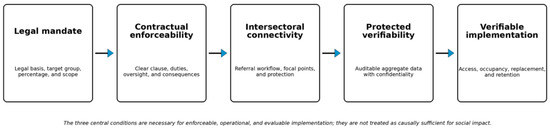
This article examines when a gender-responsive public procurement obligation becomes institutionally verifiable. It analyzes Brazil’s federal policy reserving jobs for women experiencing domestic and family violence, established by Law No. 14.133/2021 and regulated by Decree No. 11.430/2023 and No. 12.516/2025. The study uses the empirical legal design documented in the underlying doctoral thesis and preserves four non-interchangeable evidentiary layers: an audit of 163 records; a retained corpus of 74 documentary units; a comparative matrix of 67 cases and 335 evidence records; and aggregate official and administrative information. The expanded matrix identified 16 cases with high density across all four dimensions, five with partial intersectoral integration, and 51 that were not verifiable through the documentary proxy. These figures describe the expanded corpus and are not used as a federal compliance denominator. Official aggregate data documented localized implementation involving 20 women; a later administrative update reported 143 women hired across five federative units, without contract-level granularity. The findings indicate that contractual enforceability, intersectoral connectivity, and protected verifiability are necessary institutional conditions—although not sufficient evidence of social impact—for converting the mandate into a monitorable practice. The article distinguishes direct federal evidence, normative diffusion, documentary absence, and non-verifiability without inferring a national effectiveness rate.
Full article

Figure 1
Open AccessArticle
Reordering Labour Rights Under Compound Pressure: Algorithmic Management, Mediated Autonomy, and Legal Innovation in China
by
Yuqiao Wang and Naixin Hu
Laws 2026, 15(5), 111; https://doi.org/10.3390/laws15050111 - 7 Sep 2026
Abstract
The Future of Jobs Report 2025 identifies technological change, geoeconomic fragmentation, demographic shifts, and the green transition as compounding forces restructuring global labour markets. Rather than merely adding new risks, these pressures erode the foundational assumptions upon which labour rights rest, widening the
[...] Read more.
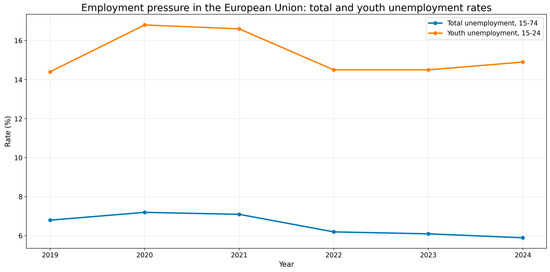
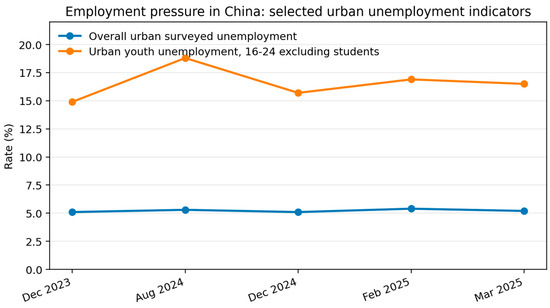
The Future of Jobs Report 2025 identifies technological change, geoeconomic fragmentation, demographic shifts, and the green transition as compounding forces restructuring global labour markets. Rather than merely adding new risks, these pressures erode the foundational assumptions upon which labour rights rest, widening the gap between workers’ lived conditions and the reach of existing legal frameworks across international, regional, national, and platform levels. Algorithmic management serves as the focal case through which these pressures converge. In platform and conventional workplaces alike, technical systems now allocate tasks, price labour, rank workers, enforce sanctions, and determine classification, cutting across traditional boundaries separating labour law, private law, data protection, and AI regulation. Two analytical concepts organise the argument. Mediated autonomy denotes a condition in which workers retain nominal choice, yet that choice is structured in advance by systems governing incentives, visibility, risk, and legal categorisation. Algorithmic subordination captures the resulting form of control: indirect, informationally asymmetric, and legally dispersed dependence on data flows, automated rankings, and code-driven decisions. Drawing on the philosophy of technology and classificatory looping theory, the article demonstrates that legal and technical categories do not merely describe workers; they actively constitute the field within which workers bear risk and assert entitlements. Biometric monitoring and affective computing intensify this dynamic by extending managerial authority to bodily signals and inferred emotional states. China’s regulatory approach to non-standard employment is examined as a case study and compared with the EU’s status-and-algorithm model, situating both within broader patterns of global regulatory divergence. The article concludes that effective labour protection must move beyond employment-status classification toward control-sensitive and technology-sensitive frameworks, encompassing transparency obligations, contestation rights, human review mechanisms, fair remuneration, data minimisation for biometric and affective information, and meaningful worker participation in platform governance.
Full article
(This article belongs to the Special Issue The Future of Labor Rights: Global Perspectives and Emerging Challenges)
►▼
Show Figures

Figure 1
Open AccessArticle
Access to Compensation for Sexual Violence: A Comparative Analysis of Iran’s Islamic Penal Code and International Law
by
Fatemeh Hamedanian
Laws 2026, 15(5), 110; https://doi.org/10.3390/laws15050110 - 7 Sep 2026
Abstract
Sexual violence produces enduring and multidimensional harm, yet how legal systems compensate it varies in ways a comparison of remedies alone cannot capture. This article examines compensation for sexual violence under the Iranian Islamic Penal Code, structured around the classical categories of diyya,
[...] Read more.
Sexual violence produces enduring and multidimensional harm, yet how legal systems compensate it varies in ways a comparison of remedies alone cannot capture. This article examines compensation for sexual violence under the Iranian Islamic Penal Code, structured around the classical categories of diyya, qisas, arsh, and taʿzir, alongside the reparation frameworks of international human rights, humanitarian, and criminal law. Adopting a doctrinal and comparative method, it treats compensation not as a remedy following a given injury but as a process through which a legal order constitutes the injury as an object it can recognize and value. The comparison is organized around five questions: what each system recognizes as injury, who holds the claim, how it is valued, what its categories exclude, and what separates promised from delivered redress. The two frameworks diverge not incidentally but in their underlying conceptions of harm. Yet neither provides a straightforward measure of the other: the international order is internally plural and marked by its own gap between promise and delivery, while Iran’s gendered valuations are contested within juristic reasoning and their distributive effects are mitigated, if incompletely, through state-funded supplementation. The article relocates access from delivery to the point at which a system defines what the injury of sexual violence is and what it is worth.
Full article
Open AccessArticle
China’s Scientific Data-Sharing Framework and International Investment Agreements: Tensions, Risks and Normative Responses
by
Yu Liu, Yimin Zheng, Xiaohan Zhang and Liang Yu
Laws 2026, 15(5), 109; https://doi.org/10.3390/laws15050109 - 4 Sep 2026
Abstract
The booming development of open science and the digital economy has rendered scientific data a core productive factor and a legally protected investment asset under international investment agreements (IIAs). While China has established a nationwide scientific data-sharing system to advance data circulation and
[...] Read more.
The booming development of open science and the digital economy has rendered scientific data a core productive factor and a legally protected investment asset under international investment agreements (IIAs). While China has established a nationwide scientific data-sharing system to advance data circulation and technological innovation, the mandatory data disclosure mechanisms, frequent policy adjustments, and imperfect data quality control embedded in this framework generate inherent tensions with IIA investment protection obligations. This paper defines its core research focus on normative conflicts between China’s scientific data-sharing framework and IIAs, relevant investment arbitration risks, and balanced solutions that reconcile international treaty compliance with China’s legitimate data regulatory authority. Drawing on doctrinal legal analysis, normative comparison, and arbitral case review, it systematically examines legal frictions between domestic data-sharing rules and IIA provisions. It first clarifies scientific data’s dual attributes as valuable economic assets and protected investments, then identifies three key dispute risks: data IP infringement and asset depreciation from mandatory sharing, rising compliance costs and frustrated investor expectations due to abrupt regulatory changes, and investment losses caused by uncorrected erroneous shared data. Further, it analyzes legal restrictions imposed by core IIA clauses that substantially curtail China’s domestic data governance autonomy. To balance regulatory sovereignty and international treaty compliance, this study proposes targeted optimization paths: clarifying the boundary of mandatory data sharing to protect data intellectual property rights, standardizing framework adjustment procedures to stabilize investor expectations, and constructing a full-process data quality control system.
Full article
Open AccessArticle
Extinctive Prescription Between Substance and Procedure: Toward a Functional Choice-of-Law Approach in French and American Private International Law
by
Ghada Karam and Samantha Abou Harb
Laws 2026, 15(5), 108; https://doi.org/10.3390/laws15050108 - 28 Aug 2026
Abstract
The legal nature of extinctive prescription, whether it operates on the substantive right or merely on the faculty to bring suit, remains contested in civil law and acquires heightened stakes in private international law, where its characterization determines the applicable law. Within the
[...] Read more.
The legal nature of extinctive prescription, whether it operates on the substantive right or merely on the faculty to bring suit, remains contested in civil law and acquires heightened stakes in private international law, where its characterization determines the applicable law. Within the contractual sphere examined here, French private international law attaches extinctive prescription to the lex causae, whereas American conflict of laws has traditionally treated statutes of limitation as procedural and governed by the lex fori. Drawing on a functional comparison of French and American law, this article argues that neither model adequately captures the institution’s dual character. It shows that the French substantialist characterization rests on a fragile domestic foundation still traversed by the right/action dichotomy and that exclusive attachment to the lex causae neglects legitimate forum interests. Conversely, the American procedural qualification has required corrective devices—borrowing statutes, governmental-interest analysis, and the Restatement (Second) § 142—that reintroduce substantive considerations. Examining the 1974 New York Convention, the article further demonstrates that substantive harmonization does not eliminate the need for characterization. It concludes that prescription is a sui generis institution calling for a functional apportionment between lex causae and lex fori rather than a single connecting factor; the construction of a complete operational model for such apportionment is reserved for further research.
Full article
Open AccessArticle
Certifiable Integrity, Verifiable Limits: Anti-Bribery Certification and Public Procurement Reform in Peru
by
Carlos Alberto Pajuelo Beltrán, Mauricio Julio MacLean Cuadros, Alfonso Renato Vargas-Murillo, Ilda Nadia Monica de la Asuncion Pari-Bedoya and Guido Benedicto Palumbo Pinto
Laws 2026, 15(5), 107; https://doi.org/10.3390/laws15050107 - 27 Aug 2026
Abstract
This article examines the legal significance of using ISO 37001 anti-bribery certification as an integrity-related factor in Peruvian public procurement. Its claim is doctrinal and comparative rather than causal: ISO 37001 can operate as a useful risk-management heuristic, but it should not be
[...] Read more.
This article examines the legal significance of using ISO 37001 anti-bribery certification as an integrity-related factor in Peruvian public procurement. Its claim is doctrinal and comparative rather than causal: ISO 37001 can operate as a useful risk-management heuristic, but it should not be treated as proof of integrity or as a substitute for public verification. The article strengthens the comparison with EU procurement law by distinguishing the assessment of the economic operator from the evaluation of the tender. In EU law, certificates and self-declarations such as the European Single Procurement Document (ESPD) are often used to reduce administrative burden at the selection or qualification stage, while award criteria under the most economically advantageous tender (MEAT) logic must remain connected to the contract and to the comparative evaluation of offers. Peru’s distinctive issue is that ISO 37001 is used as a scored award-stage signal under the rubric of integrity in public procurement. Drawing on Peruvian law, EU procurement-law literature, ISO 37001 materials, and regulatory-intermediary theory, the article proposes a staged integrity-screening model: admission through self-declarations and integrity pacts; qualification through operator-suitability checks and equivalent evidence; limited award-stage scoring only when justified by procurement risk; and execution-stage corroboration through contract controls and corporate-liability enforcement.
Full article
(This article belongs to the Special Issue Fostering Integrity or Falling Short: The Role of Anti-Corruption Laws in Diverse Global Contexts)
Open AccessArticle
Good Faith at Sea: Non-Refoulement, Maritime Interdiction and Malaysian Practice Under International Law
by
Mohamad Syafiq Bin Sulaiman and Jeong Chun Phuoc
Laws 2026, 15(5), 106; https://doi.org/10.3390/laws15050106 - 26 Aug 2026
Abstract
Malaysia intercepts and turns back Rohingya vessels in the Andaman Sea while party to neither the 1951 Refugee Convention, its 1967 Protocol, the Convention against Torture, nor the International Covenant on Civil and Political Rights, and the doctrinal literature on non-refoulement at sea,
[...] Read more.
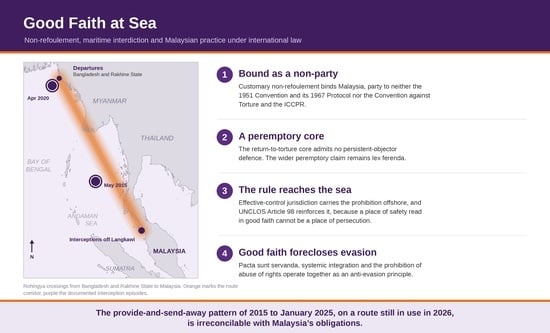
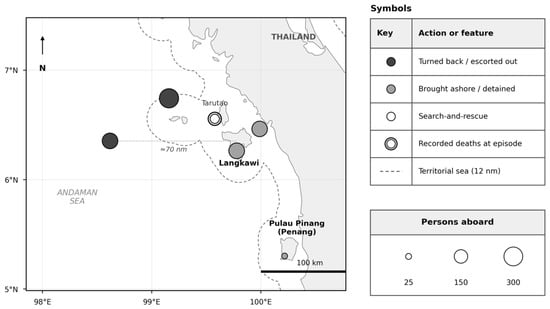
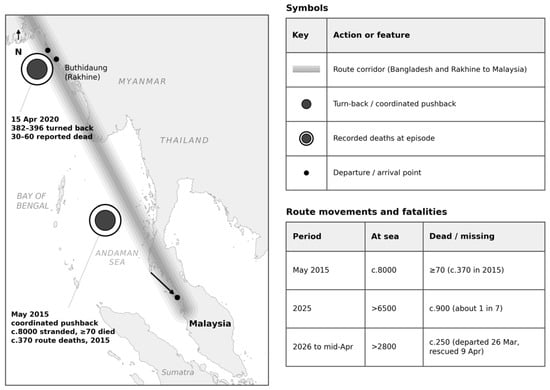
Malaysia intercepts and turns back Rohingya vessels in the Andaman Sea while party to neither the 1951 Refugee Convention, its 1967 Protocol, the Convention against Torture, nor the International Covenant on Civil and Political Rights, and the doctrinal literature on non-refoulement at sea, being largely European and Australasian, leaves this non-party setting under-examined. The article makes three contributions. First, through doctrinal analysis ordered under Article 38(1) of the Statute of the International Court of Justice, it establishes that the customary prohibition of refoulement binds Malaysia and that its return-to-torture core is best treated as peremptory, admitting no persistent-objector defence. Second, it shows that the prohibition reaches conduct at sea through effective-control jurisdiction and that the rescue duty under Article 98 of the United Nations Convention on the Law of the Sea reinforces rather than displaces it, because a place of safety read in good faith cannot be a place of persecution. Third, it develops good faith, through pacta sunt servanda, systemic integration, and the prohibition of abuse of rights, as an anti-evasion principle. Assessed against these standards, the provide-and-send-away pattern documented from 2015 to January 2025, on a route that remained in use into 2026, is irreconcilable with Malaysia’s obligations.
Full article
(This article belongs to the Section Human Rights Issues)
►▼
Show Figures

Graphical abstract
Open AccessArticle
‘Manufacturing Vulnerability’ in UK Asylum: Shifting Standards of Proof and Sexual Diversity
by
Raawiyah Rifath
Laws 2026, 15(5), 105; https://doi.org/10.3390/laws15050105 - 26 Aug 2026
Abstract
The Nationality and Borders Act (NABA) 2022 changed the application of the standard of proof in asylum claims. Previously, the standard of proof applied to the whole claim was ‘to a reasonable degree of likelihood’. Following NABA for claims lodged on or after
[...] Read more.
The Nationality and Borders Act (NABA) 2022 changed the application of the standard of proof in asylum claims. Previously, the standard of proof applied to the whole claim was ‘to a reasonable degree of likelihood’. Following NABA for claims lodged on or after June 28 2022, the new standard applied utilises a two-pronged approach: The decision-maker must first decide on a ‘balance of probabilities’ whether the asylum seeker has a characteristic which could cause them to fear persecution for reasons of race, religion, nationality, membership of a particular social group or political opinion. Next, the decision-maker must determine whether ‘to a reasonable degree of likelihood’ that the claimant would be persecuted if returned to their country of nationality. The shift in the standard of proof reverts back to pre-Karanakaran where it had been decided that one standard should be used holistically. The two-pronged approach will inevitably cause the same confusions it did prior to Karanakaran as well as have a particularly disproportionate impact on people who are basing their asylum claims on their sexual orientation. This article investigates this disproportionate impact and argues that the shift in the standard of proof manufactures vulnerability and is a missed opportunity to rectify issues already existing with the standard of proof.
Full article
(This article belongs to the Special Issue The Shifting Sands of Refugee Protection: Normativity, Crisis, and Contemporary UK Asylum)
Open AccessArticle
Corporate Tax Loss Carryforward and Company Regulation Under UAE Law: Rethinking the Tax Accounting Treatment of VirtualAssets—A Comparative Study
by
Tarek Abdelsalam, Ahmed Moustafa Aldabousi, Haytham Mohamed Sherif, Mohammad Hamdy Alawady, Doaa Mohammad Sayed El Khosht and Abdelrehim Awad
Laws 2026, 15(5), 104; https://doi.org/10.3390/laws15050104 - 25 Aug 2026
Abstract
►▼
Show Figures
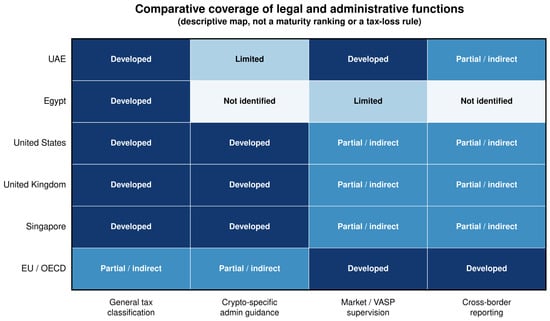
This article re-examines corporate tax loss carryforward and company regulation under United Arab Emirates law as applied to virtual assets. It uses Egypt as one functional benchmark among several, alongside the United States, the United Kingdom, Singapore, the European Union, and OECD reporting
[...] Read more.
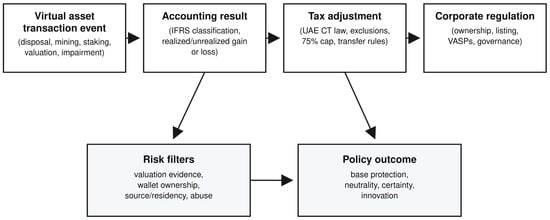
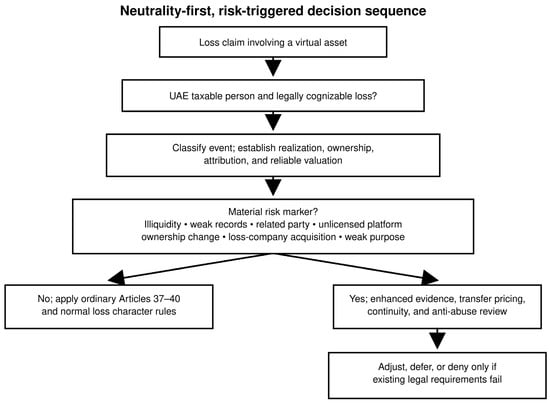
This article re-examines corporate tax loss carryforward and company regulation under United Arab Emirates law as applied to virtual assets. It uses Egypt as one functional benchmark among several, alongside the United States, the United Kingdom, Singapore, the European Union, and OECD reporting standards. The study asks whether the UAE’s general loss architecture—especially Articles 37–40 of Federal Decree-Law No. 47 of 2022—can address transaction-level problems involving classification, realization, valuation, beneficial ownership, custody, related parties, and evidentiary traceability without departing unnecessarily from tax neutrality. Using a doctrinal, comparative, and policy-oriented method, the article finds that the comparators generally apply ordinary tax categories while supplementing them with crypto-specific guidance, market supervision, and information reporting; they do not establish a general virtual-asset loss ring-fence. The UAE framework already contains substantial safeguards, including a 75% utilization cap, ownership and continuity conditions, transfer-pricing and anti-abuse rules, and the exclusion of exempt persons and Qualifying Free Zone Persons from Article 38 loss transfers. The identified concern is therefore a prospective institutional vulnerability rather than a demonstrated pattern of UAE abuse. The article’s original contribution lies in its UAE-focused synthesis and implementation architecture, not in originating the case for restricting crypto-losses. It proposes a neutrality-first, risk-triggered model: genuine losses remain subject to ordinary law, while enhanced proof and scrutiny apply where identifiable markers arise, including self-custody without reliable records, non-independent valuation, illiquid tokens, related-party crystallization, unlicensed platforms, abrupt ownership changes, acquisition of loss companies, or transactions lacking commercial purpose. Asset-class ring-fencing or special continuity rules should be considered only if future UAE evidence demonstrates that these technologically neutral safeguards are inadequate. This calibrated approach protects the tax base while preserving legal certainty, proportionality, and the UAE’s attractiveness as a digital-finance hub.
Full article

Figure 1
Open AccessArticle
Carbon Border Adjustment Mechanism as a Challenge for Global Trade
by
Peter Kuko and Karin Cakoci
Laws 2026, 15(5), 103; https://doi.org/10.3390/laws15050103 - 24 Aug 2026
Abstract
►▼
Show Figures
This article examines the Carbon Border Adjustment Mechanism (CBAM) as a regulatory instrument of the European Union, situated at the intersection of international trade law, customs law and environmental protection. The primary objective of the study is to assess the legal nature of
[...] Read more.
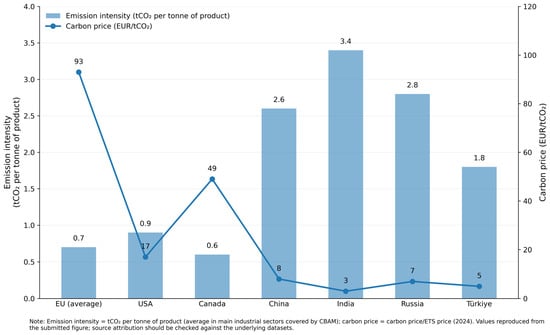
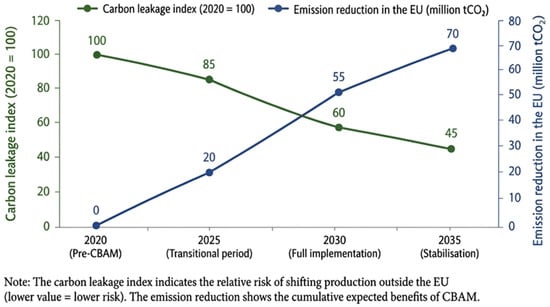
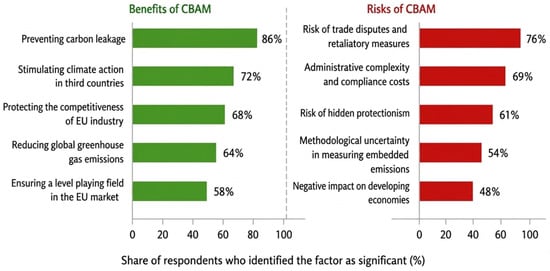
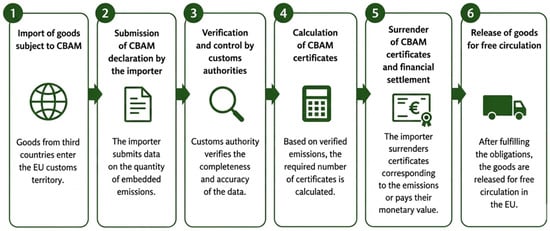
This article examines the Carbon Border Adjustment Mechanism (CBAM) as a regulatory instrument of the European Union, situated at the intersection of international trade law, customs law and environmental protection. The primary objective of the study is to assess the legal nature of the CBAM, evaluate its compatibility with World Trade Organisation (WTO) law and analyse its implications for sustainable global trade governance and climate policy. Particular attention is paid to Articles I, III and XX of the GATT, as well as relevant WTO case law, including the cases of United States—Gasoline, United States—Shrimp, European Communities—Asbestos and Brazil—Retreaded Tyres. The study further examines the procedural transformation of customs authorities, particularly in relation to the verification of emissions, the burden of proof and administrative enforcement. The article also assesses the environmental effectiveness of the CBAM in preventing carbon leakage and in enforcing higher environmental standards in third countries, addressing the legal and economic issues of discrimination, proportionality, administrative complexity and potential impact on developing economies. The research is based on doctrinal legal analysis, comparative legal methodology and a review of relevant international and European legal sources, including WTO case law and Regulation (EU) 2023/956. The authors demonstrate that the CBAM represents a hybrid regulatory mechanism combining elements of environmental taxation, regulatory charges and trade policy instruments implemented through customs procedures. The originality of the article lies in its integrated and comprehensive analysis of the CBAM from the perspective of customs law, international trade law and environmental regulation with a focus on sustainability. In contrast to existing studies focusing primarily on trade or climate aspects, the article highlights the evolving regulatory role of customs authorities in the framework of European Union climate governance. The findings suggest that the CBAM is generally compatible with WTO law, provided that it is implemented in a transparent, proportionate, flexible and non-discriminatory manner. The authors conclude that the CBAM can become an important model for the future development of sustainable international economic regulation and climate-related trade governance.
Full article

Figure 1
Open AccessArticle
Gender Equality and Women’s Rights Protection: International Practice and National Legal Reforms in Uzbekistan
by
Shakhzod Saydullaev, Makhmut Utemuratov, Khayitjon Turdiev, Allayar Sultamuratov and Shakhnoza Gaffarova
Laws 2026, 15(5), 102; https://doi.org/10.3390/laws15050102 - 23 Aug 2026
Abstract
Gender equality has become a fundamental indicator of constitutional democracy, effective governance, and the protection of human rights. This study examines the effectiveness of legal and institutional mechanisms for promoting gender equality through a comparative analysis of selected European jurisdictions and recent legal
[...] Read more.
Gender equality has become a fundamental indicator of constitutional democracy, effective governance, and the protection of human rights. This study examines the effectiveness of legal and institutional mechanisms for promoting gender equality through a comparative analysis of selected European jurisdictions and recent legal reforms in Uzbekistan. Comparative legal, doctrinal, systemic, statistical, and socio-legal methods were employed, complemented by original empirical evidence from an anonymous sociological survey. The findings demonstrate that the effectiveness of gender-equality reforms depends on the interaction between the scope and enforceability of legal guarantees, institutional capacity and accountability, socio-economic conditions affecting equality of opportunity and outcomes, and the accessibility and effectiveness of protection against discrimination, harassment, and gender-based violence. Although Uzbekistan has introduced significant legislative reforms, substantive gender equality remains constrained by persistent gender stereotypes, unequal career opportunities, and limited public awareness of available legal protections. The study proposes an integrated legal-institutional framework that combines comparative legal analysis with empirical socio-legal evidence to assess the implementation of gender equality reforms in transitional legal systems. It concludes that strengthening institutional accountability, introducing systematic gender monitoring and audits, enhancing transparency in labor relations, and ensuring effective enforcement of existing legal guarantees are essential for translating formal legal equality into substantive equality in accordance with international human rights standards.
Full article
(This article belongs to the Section Law and Gender Issues)
Open AccessArticle
From Sandbox to Scale: Implementation Gaps in Saudi Arabia’s FinTech Legal Framework
by
Mohsin Dhali and Shafiqul Hassan
Laws 2026, 15(4), 101; https://doi.org/10.3390/laws15040101 - 21 Aug 2026
Abstract
Much of the discourse around FinTech regulation focuses on whether legal frameworks adequately facilitate private-sector innovation. This article argues that the more consequential and underexamined question is whether enacted frameworks are operationally adequate, sufficiently coherent, specific, and institutionally supported to govern the commercial
[...] Read more.
Much of the discourse around FinTech regulation focuses on whether legal frameworks adequately facilitate private-sector innovation. This article argues that the more consequential and underexamined question is whether enacted frameworks are operationally adequate, sufficiently coherent, specific, and institutionally supported to govern the commercial realities of a mature FinTech sector. Using Saudi Arabia as its primary case, this study applies doctrinal legal analysis and thematic document analysis across six regulatory domains: licensing and sandbox governance, data protection, cybersecurity, consumer protection, Shariah compliance, and cross-border regulatory alignment, benchmarked against standards from the United Kingdom, United States, European Union, and United Arab Emirates. These jurisdictions are treated as sources of regulatory technique rather than as demonstrations of regulatory success. The analysis finds significant implementation gaps across all six domains: formal instruments have been enacted, but the transition pathways, proportionate calibrations, inter-agency coordination, and technology-specific rules necessary for operational adequacy remain underdeveloped. Drawing on Amstad’s regulatory objectives-principles-practices taxonomy, regulatory lifecycle theory, and institutional isomorphism, this study advances six targeted reform recommendations. The study concludes that regulatory maturation in emerging FinTech markets requires a deliberate transition from instrument adoption to implementation depth, from duck typing inherited frameworks to selectively coding the genuinely new governance that algorithmic finance demands.
Full article
Open AccessArticle
Risk Society Theory and Plaintiff Standing in Environmental Civil Public Interest Litigation: Examination and Framework in the Context of China’s Codification
by
Hongxia Fan
Laws 2026, 15(4), 100; https://doi.org/10.3390/laws15040100 - 21 Aug 2026
Abstract
The adoption of the Ecological and Environmental Code of the People’s Republic of China (March 2026) marks the arrival of the codification era. Building upon existing provisions in the Civil Procedure Law, the Code empowers procuratorial organs and qualified social organizations to initiate
[...] Read more.
The adoption of the Ecological and Environmental Code of the People’s Republic of China (March 2026) marks the arrival of the codification era. Building upon existing provisions in the Civil Procedure Law, the Code empowers procuratorial organs and qualified social organizations to initiate environmental civil public interest litigation against acts that harm the public ecological interests. Nevertheless, amid growing demands for preventive governance, room remains for systematic adjustment of the supporting rules governing plaintiff standing. From the perspective of risk-society theory, the preventive function of environmental law requires the scope of protected interest-in-litigation to be moderately extended from traditional actual harm to significant environmental risks. This expansion provokes reflections on the representative qualification within risk-sharing communities and the scope of actionable claims, and constitutes the internal driving force for optimising the plaintiff-standing system. Within China’s current normative system, several issues related to plaintiff standing still deserve attention. Rules on preventive public-interest litigation concerning significant risks are stipulated only in judicial interpretations and have not yet been confirmed by higher-rank legislation. Supplementary restrictions on procuratorial organs’ litigation status set out in judicial interpretations are inconsistent with provisions of the Code. Thresholds for social-organisation plaintiffs remain open to improvement. In addition, existing legislation excludes citizens from public-interest-litigation plaintiffs, leaving theoretical room for exploring limited plaintiff standing for citizens. Adopting normative analysis and case-study methods, this paper draws on risk-society theory, domestic legal norms and judicial practice to examine the legal logic and practical dilemmas of plaintiff standing in environmental civil public-interest litigation in the codification era. It develops differentiated institutional arrangements for three categories of litigants. The findings provide ideas for the implementation of supporting rules under the Code and offer theoretical references for institutional evolution oriented toward preventive governance demands in the future.
Full article
(This article belongs to the Section Environmental Law Issues)
Open AccessArticle
Tension at Heart: Human Dignity, Rule of Law, Universities, and Free and Fair Democracy
by
Eric Hartman
Laws 2026, 15(4), 99; https://doi.org/10.3390/laws15040099 - 21 Aug 2026
Abstract
American universities have always reached beyond knowledge development. They are constituted through and often defenders of rights central to free and fair democracy. This article makes a novel case for reinvigorated commitments to democratic civic education, including a normative commitment to the dignity
[...] Read more.
American universities have always reached beyond knowledge development. They are constituted through and often defenders of rights central to free and fair democracy. This article makes a novel case for reinvigorated commitments to democratic civic education, including a normative commitment to the dignity of all persons that is institutionalized through equality before the law. The analysis cuts through contemporary pieties of the left and right. The focus is US higher education, including relationships with governments, law, policy, and civil society, proceeding in six significant sections. After defining key terms and the plan of this paper, I clarify the relatively recent innovation of rights and their absence around the world. Rights are foundational for free and fair democracy. I then review critical moments among state, civil society, the rule of law, and higher education across US history, demonstrating that values commitments are essential to establishing basic freedoms for a functioning democracy. The legal and cultural architecture of the rights tradition also undergirds sacred ideals in higher education, including academic freedom and institutional autonomy. That analysis leads to two highly contested issues—national security and policing—to suggest how contemporary institutional patterns undermine progress on critical university goals: deepened insight and/or principled disagreement. Evidence indicates courses related to policing and its critiques are siloed within curricula, student self-selection and institutional socioeconomic sorting undermine potentially related democratic dialogue, and both connect to position campus discourse out of step with marginalized communities. These issues intersect with a key point of this article: individual rights and the formal, legal embrace of shared dignity require government entities. In the final sections, I focus on institutional-level recommendations for civic education that expands commitments to human dignity and the rule of law within a free and fair democracy.
Full article
(This article belongs to the Special Issue Vol. II of Civic Engagement, Justice, and the Law in a National and International Context)
Open AccessArticle
Employment Issues for Third-Country Nationals in Hungary and the EU, with Particular Regard to Collective Labour Law and Wage Policy
by
Hilda Tóth and Gábor Mélypataki
Laws 2026, 15(4), 98; https://doi.org/10.3390/laws15040098 - 19 Aug 2026
Abstract
This study examines how migration influences key issues in the economy and the labour market, and whether the latest EU-level policy initiatives—including the EU Talent Pool initiative—may affect the balance between labour supply and demand. The analysis is based on a structured review
[...] Read more.
This study examines how migration influences key issues in the economy and the labour market, and whether the latest EU-level policy initiatives—including the EU Talent Pool initiative—may affect the balance between labour supply and demand. The analysis is based on a structured review of legislation and theoretical literature, with particular attention paid to comparative studies of the EU labour market and international policy assessments produced by organisations such as the OECD and the European Commission. The research also found that migration can contribute positively to economic performance by alleviating labour shortages and improving the match between skills and jobs. Some of the literature analysed in the research also points out that migration may have a negative impact on wages, tending to push them downwards, and that collective labour institutions also face challenges in relation to migration. New platforms such as the EU Talent Pool could be a suitable tool for improving coordination between labour supply and demand. Overall, the study concludes that the economic effects of migration are not uniform; its impact on wages may be negative in certain sectors, but this can be offset and influenced by Member States’ regulatory practices and collective labour law institutions.
Full article
Open AccessArticle
The New Way of Working at the WTO: Looking at ECA
by
Gabrielle Marceau and Antoine Comont
Laws 2026, 15(4), 97; https://doi.org/10.3390/laws15040097 - 18 Aug 2026
Abstract
The growing inability of the World Trade Organization (WTO) to conclude new multilateral agreements has prompted groups of like-minded Members to experiment with alternative forms of trade cooperation. The Agreement on Electronic Commerce (ECA), concluded in 2024 but not incorporated into Annex 4
[...] Read more.
The growing inability of the World Trade Organization (WTO) to conclude new multilateral agreements has prompted groups of like-minded Members to experiment with alternative forms of trade cooperation. The Agreement on Electronic Commerce (ECA), concluded in 2024 but not incorporated into Annex 4 of the Marrakesh Agreement, exemplifies this evolution. Negotiated by WTO Members, within the WTO, and with the stated objective of eventual integration into the multilateral framework, the ECA nevertheless currently operates as an autonomous treaty governed by public international law. This article argues that it represents a new way of working within the WTO and illustrates the emergence of what the authors describe as an “imperfect agreement”: a legally binding instrument that remains institutionally connected to the WTO while operating outside its formal legal architecture. The article first examines the legal status of the ECA and the institutional consequences of its implementation outside the WTO framework, including its interim governance arrangements and autonomous dispute settlement mechanism. It then analyses how the agreement manages its interaction with WTO law by preserving the rights of non-participating Members, limiting potential conflicts with existing WTO obligations, and maintaining a credible pathway towards future incorporation into the WTO legal system.
Full article
(This article belongs to the Special Issue The World Trading System in Dire Straits: Legal Challenges, Tariff Disputes, and the Future of the World Trade Organization)
Highly Accessed Articles
Latest Books
E-Mail Alert
News
Topics
Topic in
Social Sciences, Societies, Laws, World, Psychology International, IJCS
Motivated Social Cognition in Individuals, Organizations, and Societies
Topic Editors: Andrew S. Franks, Hajime OtaniDeadline: 31 October 2027
Special Issues
Special Issue in
Laws
Repelling Asylum-Seekers in Europe? Asylum-Seekers as an “Anomaly” in EU and UK Migration Laws and Policies
Guest Editor: Sylvie Da LombaDeadline: 30 September 2026
Special Issue in
Laws
Just Benefits? Intersections in Health Law and Social Welfare Law
Guest Editor: Christopher RudgeDeadline: 30 September 2026
Special Issue in
Laws
Insolvency Law and Rescue Mechanisms: Evaluating Frameworks for Individuals, MSMEs and Corporations
Guest Editors: Catherine Brown, Amanda BullDeadline: 15 October 2026
Special Issue in
Laws
Corporate Governance and Financial Regulation in Times of Transformation: Accountability, Sustainability, and Risk
Guest Editor: Stelios AndreadakisDeadline: 30 November 2026