Toxin Detection by Surface Plasmon Resonance

Abstract
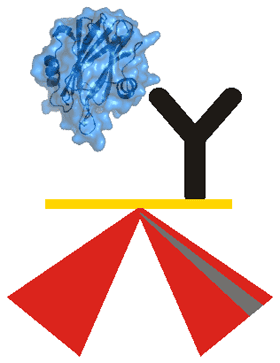
:
1. Introduction
2. Methods for Toxin Detection
2.1. Physical and Biophysical Methods
3. Surface Plasmon Resonance
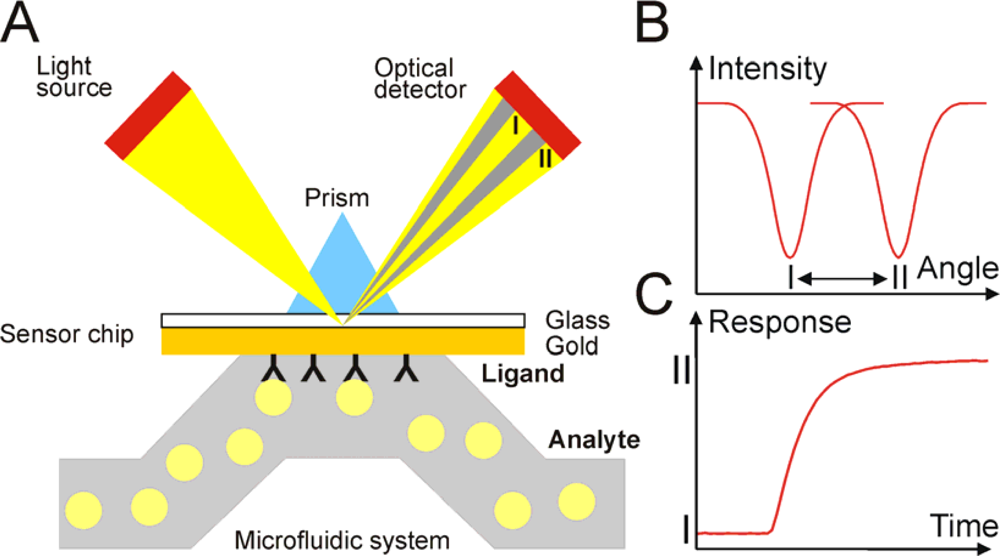
3.1. Detection Principle
3.2. Instrumentation
3.3. Choice of Ligands
3.4. Assay Formats
4. Examples of Toxin Detection by SPR
4.1. Detection of Mycotoxins
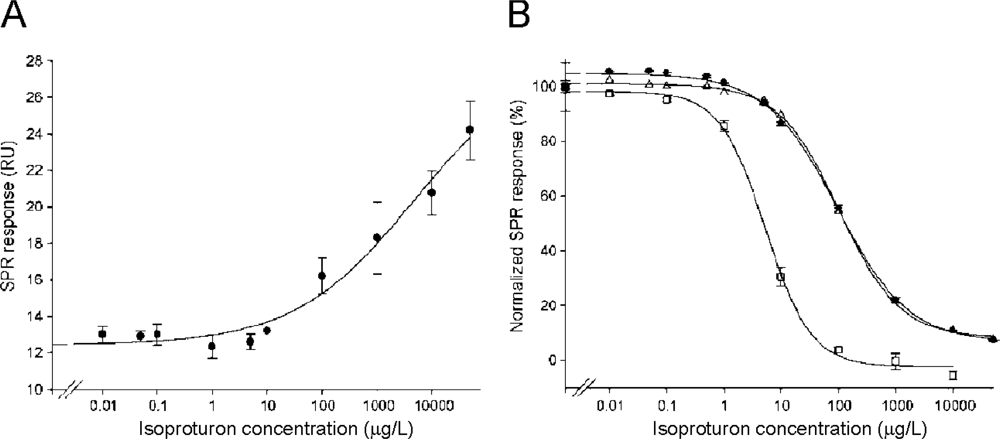
4.2. Detection of Toxins and Toxic Substances of Anthropogenic Source
4.3. Detection of Dinoflagellate Toxins
4.4. Detection of Bacterial Toxins
4.5. Detection of Plant Toxins
5. Conclusions
Acknowledgments
References and Notes
- Schneider, E.; Curtui, V.; Seidler, C.; Dietrich, R.; Usleber, E.; Mertlbauer, E. Rapid methods for deoxynivalenol and other trichothecenes. Toxicol. Lett 2004, 153, 113–121. [Google Scholar]
- Goryacheva, I.Y.; De Saeger, S.; Eremin, S.A.; Van Peteghem, C. Immunochemical methods for rapid mycotoxin detection: Evolution from single to multiple analyte screening: A review. Food Add. Contam. : Part A 2007, 24, 1169–1183. [Google Scholar]
- Phillips, R.W.; Abbott, D. High-throughput enzyme-linked immunoabsorbant assay (ELISA) electrochemiluminescent detection of botulinum toxins in foods for food safety and defence purposes. Food Add. Contam. : Part A 2008, 9, 1084–1088. [Google Scholar]
- Micheli, L.; Grecco, R.; Badea, M.; Moscone, D.; Palleschi, G. An electrochemical immunosensor for aflatoxin M1 determination in milk using screen-printed electrodes. Biosens. Bioelectron 2005, 21, 588–596. [Google Scholar]
- Ciumasu, I.M.; Kremmer, P.M.; Weber, C.M.; Kolb, G.; Tiemann, D.; Windisch, S.; Frese, I.; Kettrup, A.A. A new, versatile field immunosensor for environmental pollutants: Development and proof of principle with TNT, diuron, and atrazine. Biosens. Bioelectron 2005, 21, 354–364. [Google Scholar]
- Sirenko, L.A.; Parshykova, T.V. NATO Science for Peace and Security Series A: Chemistry and Biology; Evangelista, V., Barsanti, L., Frassanito, A.M., Passarelli, V., Gualtieri, P., Eds.; Springer: Amsterdam, The Netherlands, 2008; pp. 235–245. [Google Scholar]
- Ho, J.; Wu, L.C.; Huang, M.R.; Lin, Y.J.; Baeumner, A.J.; Durst, R.A. Application of ganglioside-sensitized liposomes in a flow injection immunoanalytical system for the determination of cholera toxin. Anal. Chem 2007, 79, 246–250. [Google Scholar]
- Krska, R.; Schubert-Ullrich, P.; Molinelli, A.; Sulyok, M.; Macdonald, S.; Crews, C. Mycotoxin analysis: An update. Food Add. Contam. : Part A 2008, 25, 152–163. [Google Scholar]
- Hamada-Sato, N.; Minamitani, N.; Inaba, Y.; Nagashima, Y.; Kobayashi, T.; Imada, C.; Watanabe, E. Development of amperometric sensor system for measurement of diarrheic shellfish poisoning (DSP) toxin, okadaic acid (OA). Sens. Mater 2004, 16, 99–107. [Google Scholar]
- Stine, R.; Pishko, M.V.; Schengrund, C.L. Comparison of glycosphingolipids and antibodies as receptor molecules for ricin detection. Anal. Chem 2005, 77, 2882–2888. [Google Scholar]
- Nakamura, C.; Song, S.H.; Chang, S.M.; Sugimoto, N.; Miyake, J. Quartz crystal microbalance sensor targeting low molecular weight compounds using oligopeptide binder and peptide-immobilized latex beads. Anal. Chim. Acta 2002, 469, 183–188. [Google Scholar]
- Tang, A.X.J.; Pravda, M.; Guilbault, G.G.; Piletsky, S.; Turner, A.P.F. Immunosensor for okadaic acid using quartz crystal microbalance. Anal. Chim. Acta 2002, 471, 33–40. [Google Scholar]
- Kreuzer, M.P.; Pravda, M.; O'Sullivan, C.K.; Guilbault, G.G. Novel electrochemical immunosensors for seafood toxin analysis. Toxicon 2002, 40, 1267–1274. [Google Scholar]
- Cooper, M.A. Advances in membrane receptor screening and analysis. J. Mol. Recognit 2004, 17, 286–315. [Google Scholar]
- Rich, R.L.; Myszka, D.G. Survey of the year 2006 commercial optical biosensor literature. J. Mol. Recognit 2007, 20, 300–366. [Google Scholar]
- Rich, R.L.; Myszka, D.G. Higher-throughput, label-free, real-time molecular interaction analysis. Anal. Biochem 2007, 361, 1–6. [Google Scholar]
- Naimushin, A.N.; Soelberg, S.D.; Nguyen, D.K.; Dunlap, L.; Bartholomew, D.; Elkind, J.; Melendez, J.; Furlong, C.E. Detection of Staphylococcus aureus enterotoxin B at femtomolar levels with a miniature integrated two-channel surface plasmon resonance (SPR) sensor. Biosens. Bioelectron 2002, 17, 573–584. [Google Scholar]
- Naimushin, A.N.; Soelberg, S.D.; Bartholomew, D.U.; Elkind, J.L.; Furlong, C.E. A portable surface plasmon resonance (SPR) sensor system with temperature regulation. Sens. Actuat. B-Chem 2003, 96, 253–260. [Google Scholar]
- Soelberg, S.; Chinowsky, T.; Geiss, G.; Spinelli, C.; Stevens, R.; Near, S.; Kauffman, P.; Yee, S.; Furlong, C. A portable surface plasmon resonance sensor system for real-time monitoring of small to large analytes. J. Ind. Microbiol. Biotechnol 2005, 32, 669–674. [Google Scholar]
- Stevens, R.C.; Soelberg, S.D.; Near, S.; Furlong, C.E. Detection of cortisol in saliva with a flow-filtered, portable surface plasmon resonance biosensor system. Anal. Chem 2008, 80, 6747–6751. [Google Scholar]
- Feltis, B.N.; Sexton, B.A.; Glenn, F.L.; Best, M.J.; Wilkins, M.; Davis, T.J. A hand-held surface plasmon resonance biosensor for the detection of ricin and other biological agents. Biosens. Bioelectron 2008, 23, 1131–1136. [Google Scholar]
- Chinowsky, T.M.; Soelberg, S.D.; Baker, P.; Swanson, N.R.; Kauffman, P.; Mactutis, A.; Grow, M.S.; Atmar, R.; Yee, S.S.; Furlong, C.E. Portable 24-analyte surface plasmon resonance instruments for rapid, versatile biodetection. Biosens. Bioelectron 2007, 22, 2268–2275. [Google Scholar]
- Kim, S.J.; Gobi, K.V.; Iwasaka, H.; Tanaka, H.; Miura, N. Novel miniature SPR immunosensor equipped with all-in-one multi-microchannel sensor chip for detecting low-molecular-weight analytes. Biosens. Bioelectron 2007, 23, 701–707. [Google Scholar]
- Farre, M.; Martinez, E.; Ramon, J.; Navarro, A.; Radjenovic, J.; Mauriz, E.; Lechuga, L.; Marco, M.; Barcelo, D. Part per trillion determination of atrazine in natural water samples by a surface plasmon resonance immunosensor. Anal. Bioanal. Chem 2007, 388, 207–214. [Google Scholar]
- Stenberg, E.; Persson, B.; Roos, H.; Urbaniczky, C. Quantitative determination of surface concentration of protein with surface plasmon resonance using radiolabeled proteins. J. Collid Interface Sci 1991, 143, 513–526. [Google Scholar]
- Zhao, J.; Zhang, X.; Yonzon, C.R.; Haes, A.J.; Van Duyne, R.P. Localized surface plasmon resonance biosensors. Nanomedicine 2006, 1, 219–228. [Google Scholar]
- Matsui, J.; Akamatsu, K.; Hara, N.; Miyoshi, D.; Nawafune, H.; Tamaki, K.; Sugimoto, N. SPR sensor chip for detection of small molecules using molecularly imprinted polymer with embedded gold nanoparticles. Anal. Chem 2005, 77, 4282–4285. [Google Scholar]
- Matsui, J.; Takayose, M.; Akamatsu, K.; Nawafune, H.; Tamaki, K.; Sugimoto, N. Molecularly imprinted nanocomposites for highly sensitive SPR detection of a non-aqueous atrazine sample. Analyst 2008, 134, 80–86. [Google Scholar]
- Rich, R.L.; Myszka, D.G. Survey of the year 2005 commercial optical biosensor literature. J. Mol. Recognit 2006, 19, 478–534. [Google Scholar]
- Schasfoort, R.B.M.; McWhirter, A. Handbook of Surface Plasmon Resonance; Schasfoort, R.B.M., Tudos, A.J., Eds.; Royal Society of Chemistry: Cambridge, U.K., 2008; Chapter 3,; pp. 35–80. [Google Scholar]
- Beseničar, M.; Maček, P.; Lakey, J.H.; Anderluh, G. Surface plasmon resonance in protein-membrane interactions. Chem. Phys. Lipids 2006, 141, 169–178. [Google Scholar]
- Gouzy, M.-F.; Keß, M.; Kremer, P.M. A SPR-based immunosensor for the detection of isoproturon. Biosens. Bioelectron 2008. [Google Scholar] [CrossRef]
- Nakamura, C.; Hasegawa, M.; Nakamura, N.; Miyake, J. Rapid and specific detection of herbicides using a self-assembled photosynthetic reaction center from purple bacterium on an SPR chip. Biosens. Bioelectron 2003, 18, 599–603. [Google Scholar]
- Fonfria, E.S.; Vilarino, N.; Vieytes, M.R.; Yasumoto, T.; Botana, L.M. Feasibility of using a surface plasmon resonance-based biosensor to detect and quantify yessotoxin. Anal. Chim. Acta 2008, 617, 167–170. [Google Scholar]
- Uzawa, H.; Ohga, K.; Shinozaki, Y.; Ohsawa, I.; Nagatsuka, T.; Seto, Y.; Nishida, Y. A novel sugar-probe biosensor for the deadly plant proteinous toxin, ricin. Biosens. Bioelectron. 2008. [Google Scholar] [CrossRef]
- van der Gaag, B.; Spath, S.; Dietrich, H.; Stigter, E.; Boonzaaijer, G.; van Osenbruggen, T.; Koopal, K. Biosensors and multiple mycotoxin analysis. Food Control 2003, 14, 251–254. [Google Scholar]
- Daly, S.J.; Keating, G.J.; Dillon, P.P.; Manning, B.M.; O'Kennedy, R.; Lee, H.A.; Morgan, M.R.A. Development of surface plasmon resonance-based immunoassay for aflatoxin B1. J. Agric. Food Chem 2000, 48, 5097–5104. [Google Scholar]
- Mullett, W.; Lai, E.P.C.; Yeung, J.M. Immunoassay of fumonisins by a surface plasmon resonance biosensor. Anal. Biochem 1998, 258, 161–167. [Google Scholar]
- Tudos, A.J.; Lucas-van den Bos, E.R.; Stigter, E.C.A. Rapid surface plasmon resonance-based inhibition assay of deoxynivalenol. J. Agric. Food Chem 2003, 51, 5843–5848. [Google Scholar]
- Draber, W.K.; Tietjen, J.E.; Kluth, J.E.; Trebst, A. Herbicides in photosynthesis research. Angew. Chem 1991, 3, 1621–1633. [Google Scholar]
- Samsonova, J.V.; Baxter, G.A.; Crooks, S.R.H.; Small, A.E.; Elliott, C.T. Determination of ivermectin in bovine liver by optical immunobiosensor. Biosens. Bioelectron 2002, 17, 523–529. [Google Scholar]
- Ferguson, J.P.; Baxter, G.A.; Mcevoy, J.D.G.; Stead, S.; Rawlings, E.; Sharman, M. Detection of streptomycin and dihydrostreptomycin residues in milk, honey and meat samples using an optical biosensor. Analyst 2002, 127, 951–956. [Google Scholar]
- Caldow, M.; Stead, S.L.; Day, J.; Sharman, M.; Situ, C.; Elliott, C. Development and validation of an optical SPR biosensor assay for tylosin residues in honey. J. Agric. Food Chem 2005, 53, 7367–7370. [Google Scholar]
- Choi, J.W.; Park, K.W.; Lee, D.B.; Lee, W.; Lee, W.H. Cell immobilization using self-assembled synthetic oligopeptide and its application to biological toxicity detection using surface plasmon resonance. Biosens. Bioelectron 2005, 20, 2300–2305. [Google Scholar]
- Llamas, N.; Stewart, L.; Fodey, T.; Higgins, H.; Velasco, M.; Botana, L.; Elliott, C. Development of a novel immunobiosensor method for the rapid detection of okadaic acid contamination in shellfish extracts. Anal. Bioanal. Chem 2007, 389, 581–587. [Google Scholar]
- Fonfria, E.S.; Vilarino, N.; Campbell, K.; Elliott, C.; Haughey, S.A.; Ben Gigirey, B.; Vieites, J.M.; Kawatsu, K.; Botana, L.M. Paralytic Shellfish poisoning detection by surface plasmon resonance-based biosensors in shellfish matrixes. Anal. Chem 2007, 79, 6303–6311. [Google Scholar]
- Hsieh, H.V.; Stewart, B.; Hauer, P.; Haaland, P.; Campbell, R. Measurement of Clostridium perfringens [beta]-toxin production by surface plasmon resonance immunoassay. Vaccine 1998, 16, 997–1003. [Google Scholar]
- Liu, X.; Song, D.; Zhang, Q.; Tian, Y.; Zhang, H. An optical surface plasmon resonance biosensor for determination of tetanus toxin. Talanta 2004, 62, 773–779. [Google Scholar]
- Tran, H.; Leong, C.; Loke, W.K.; Dogovski, C.; Liu, C.Q. Surface plasmon resonance detection of ricin and horticultural ricin variants in environmental samples. Toxicon 2008. [Google Scholar] [CrossRef]
- Zhou, H.; Zhou, B.; Ma, H.; Carney, C.; Janda, K.D. Selection and characterization of human monoclonal antibodies against abrin by phage display. Bioorg. Med. Chem. Lett 2007, 17, 5690–5692. [Google Scholar]
- Yu, J.C.C.; Lai, E.P.C. Polypyrrole film on miniaturized surface plasmon resonance sensor for ochratoxin A detection. Syn. Met 2004, 143, 253–258. [Google Scholar]
- Harris, R.D.; Luff, B.J.; Wilkinson, J.S.; Piehler, J.; Brecht, A.; Gauglitz, G.; Abuknesha, R.A. Integrated optical surface plasmon resonance immunoprobe for simazine detection. Biosens. Bioelectron 1999, 14, 377–386. [Google Scholar]
- Mauriz, E.; Calle, A.; Manclus, J.; Montoya, A.; Lechuga, L. Multi-analyte SPR immunoassays for environmental biosensing of pesticides. Anal. Bioanal. Chem 2007, 387, 1449–1458. [Google Scholar]
- Gobi, K.V.; Miura, N. Highly sensitive and interference-free simultaneous detection of two polycyclic aromatic hydrocarbons at parts-per-trillion levels using a surface plasmon resonance immunosensor. Sens. Actuat. B-Chem 2004, 103, 265–271. [Google Scholar]
- Miura, N.; Sasaki, M.; Gobi, K.V.; Kataoka, C.; Shoyama, Y. Highly sensitive and selective surface plasmon resonance sensor for detection of sub-ppb levels of benzo[a]pyrene by indirect competitive immunoreaction method. Biosens. Bioelectron 2003, 18, 953–959. [Google Scholar]
- Sternesjo, A.; Mellgren, C.; Bjorck, L. Determination of sulfamethazine residues in milk by a surface plasmon resonance-based biosensor assay. Anal. Biochem 1995, 226, 175–181. [Google Scholar]
- Yu, Q.; Chen, S.; Taylor, A.D.; Homola, J.; Hock, B.; Jiang, S. Detection of low-molecular-weight domoic acid using surface plasmon resonance sensor. Sens. Actuat. B-Chem 2005, 107, 193–201. [Google Scholar]
- Slavik, R.; Homola, J.; Brynda, E. A miniature fiber optic surface plasmon resonance sensor for fast detection of staphylococcal enterotoxin B. Biosens. Bioelectron 2002, 17, 591–595. [Google Scholar]
- Rasooly, A. Surface plasmon resonance analysis of staphylococcal enterotoxin B in food. J. Food Protect 2001, 64, 37–43. [Google Scholar]

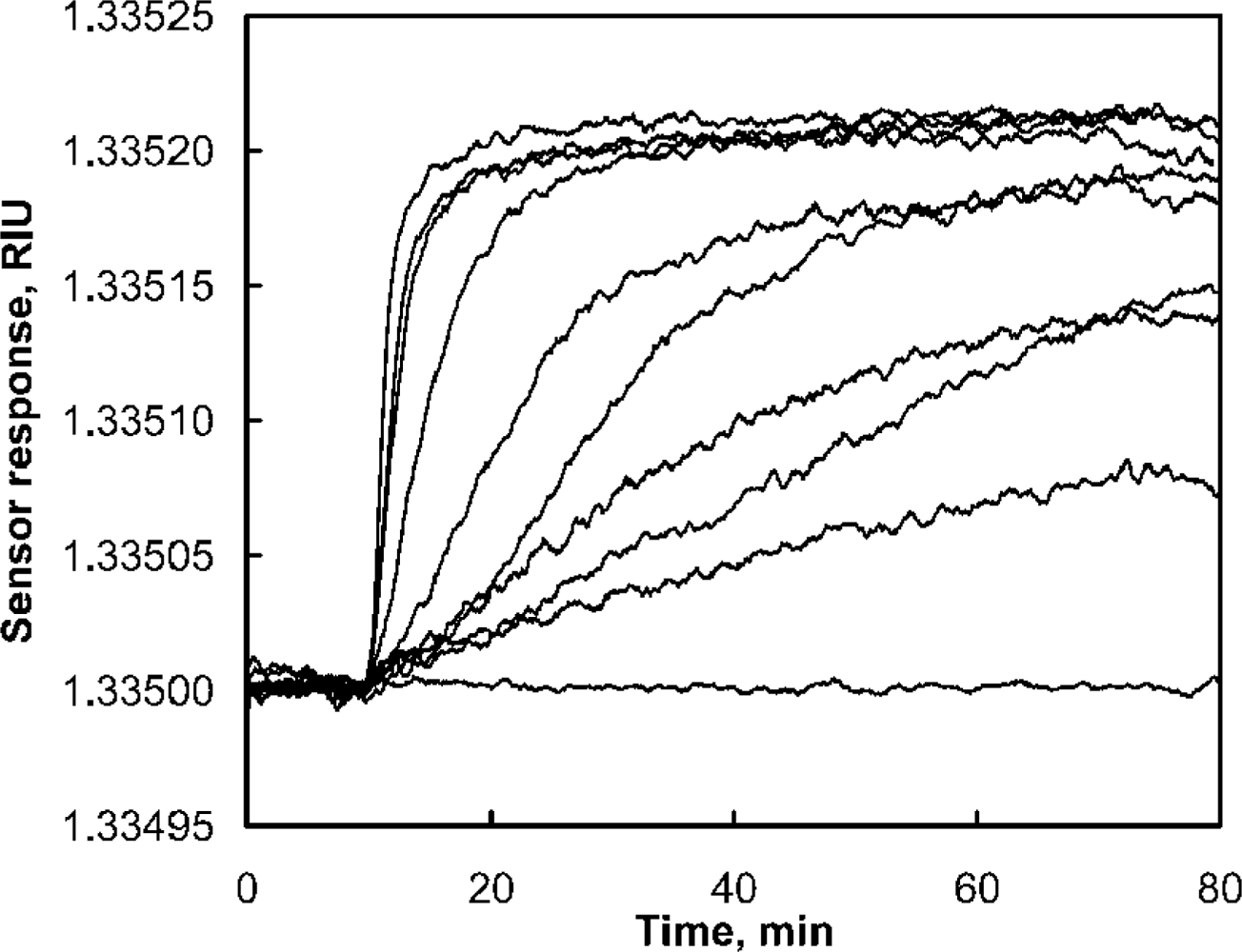
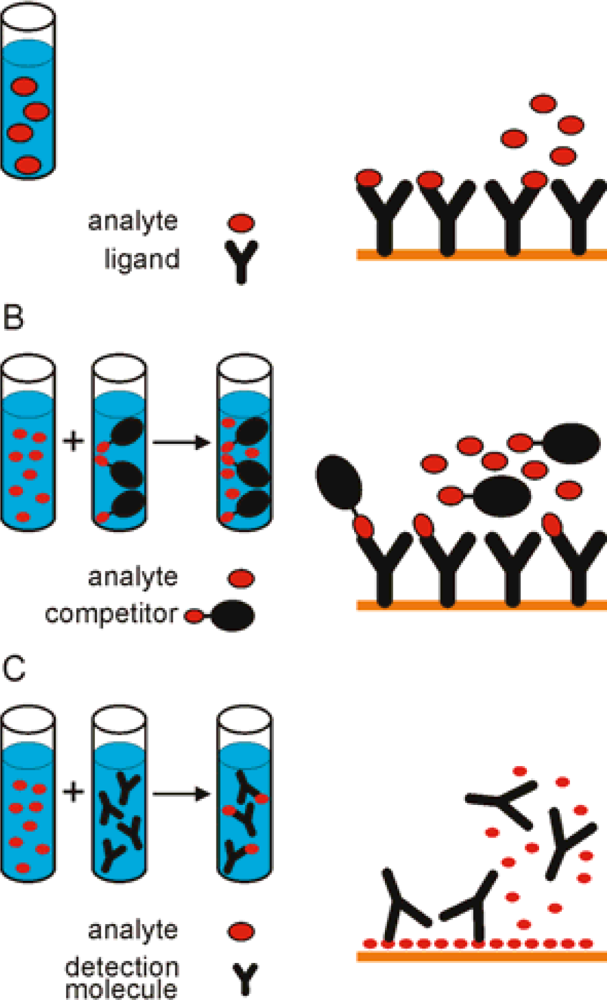


| Toxin | MW (Da) | Type of detection | Detection limit | Reference |
|---|---|---|---|---|
| Deoxynivalenol | 296.3 | indirect | 0.5 ng/g | [36] |
| Deoxynivalenol | 296.3 | indirect | 2.5 ng/mL | [39] |
| Aflatoxin B1 | 312.3 | indirect | 0.2 ng/g | [36] |
| Aflatoxin B1 | 312.3 | indirect | 3 ng/mL | [37] |
| Zearalenone | 318.4 | indirect | 0.01 ng/g | [36] |
| Ochratoxin A | 403.8 | indirect | 0.1 ng/g | [36] |
| Ochratoxin A | 403.8 | direct | 0.1 μg/mL | [51] |
| Fumonisin B1 | 721.8 | indirect | 50 ng/g | [36] |
| Fumonisin B1 | 721.8 | direct | 50 ng/mL | [38] |
| Toxin / toxic molecule | MW (Da) | Type of detection | Detection limit | Reference |
|---|---|---|---|---|
| Phenol | 94.1 | direct | 5 ppm | [44] |
| Simazine | 201.7 | indirect | 0.11 μg/L | [52] |
| Carbaryl | 201.2 | indirect | 1.38 μg/L | [53] |
| Isoproturon | 206.3 | indirect | 0.1 μg/L | [32] |
| Atrazine | 215.7 | indirect | 20 ng/L | [23] |
| Atrazine | 215.7 | direct | 1 μg/mL | [33] |
| 2, 4-Dichlorophenoxyacetic acid | 221 | indirect | 0.1 ng/mL | [23] |
| 2, 4-Dichlorophenoxyacetic acid | 221 | indirect | 0.5 ng/mL | [54] |
| Benzo[a]pyrene | 252.3 | indirect | 0.01 ppb | [55] |
| Sulfamethazine | 279.3 | indirect | 1 ppb | [56] |
| Chlorpyrifos | 350.6 | indirect | 0.05 μg/L | [53] |
| DDT | 354.5 | indirect | 15 ng/L | [53] |
| Streptomycin | 581.6 | indirect | 15 μg/kg | [42] |
| Dihydrostreptomycin | 583.6 | indirect | n.d. * | [42] |
| Ivermectin | 875.1 | indirect | 19.1 ng/mL | [41] |
| Toxin | MW (Da) | Type of detection | Detection limit | Reference |
|---|---|---|---|---|
| Saxitoxin | 299.3 | indirect | 2 ng/mL | [46] |
| Domoic acid | 310 | indirect | 0.1 ng/mL | [57] |
| Okadaic acid | 805 | indirect | 126 ng/g | [45] |
| Yessotoxin | 1,134 | direct | 1mg/kg | [34] |
| Toxin | MW (Da) | Type of detection | Detection limit | Reference |
|---|---|---|---|---|
| Enterotoxin B | 28,400 | direct | 1.96 ng/mL | [17] |
| 0.14 ng/mL (one amplification step) | ||||
| 0.0028 ng/mL (two amplification steps) | ||||
| Enterotoxin B | 28,400 | direct | n.d. * | [22] |
| Enterotoxin B | 28,400 | direct | 10 ng/mL | [58] |
| Enterotoxin B | 28,400 | direct | 10 ng/mL | [59] |
| β-toxin | 35,000 | direct | n.d. | [47] |
| Tetanus toxin | 150,000 | direct | 0.028 Lf/mL | [48] |
© 2009 by the authors; licensee MDPI, Basel, Switzerland This article is an open-access article distributed under the terms and conditions of the Creative Commons Attribution license (http://creativecommons.org/licenses/by/3.0/).
Share and Cite
Hodnik, V.; Anderluh, G. Toxin Detection by Surface Plasmon Resonance. Sensors 2009, 9, 1339-1354. https://doi.org/10.3390/s9031339
Hodnik V, Anderluh G. Toxin Detection by Surface Plasmon Resonance. Sensors. 2009; 9(3):1339-1354. https://doi.org/10.3390/s9031339
Chicago/Turabian StyleHodnik, Vesna, and Gregor Anderluh. 2009. "Toxin Detection by Surface Plasmon Resonance" Sensors 9, no. 3: 1339-1354. https://doi.org/10.3390/s9031339
APA StyleHodnik, V., & Anderluh, G. (2009). Toxin Detection by Surface Plasmon Resonance. Sensors, 9(3), 1339-1354. https://doi.org/10.3390/s9031339