Plants 2026, 15(7), 1091; https://doi.org/10.3390/plants15071091 - 2 Apr 2026
Viewed by 394
Abstract
To analyze the effects of in situ vegetable residue return on soil properties and microorganisms, this study conducted a continuous three-season in situ residue return experiment with four treatments: no return (CK), residue return (HTJ), residue return + compound microbial inoculant (HTJS), and
[...] Read more.
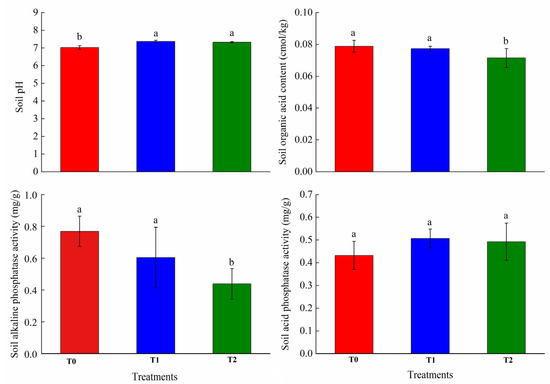
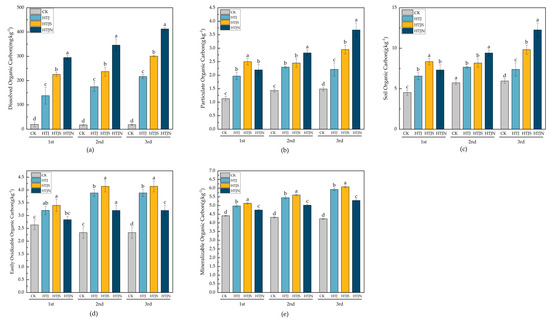
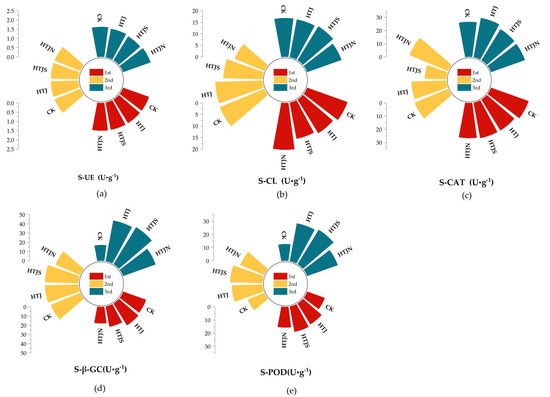
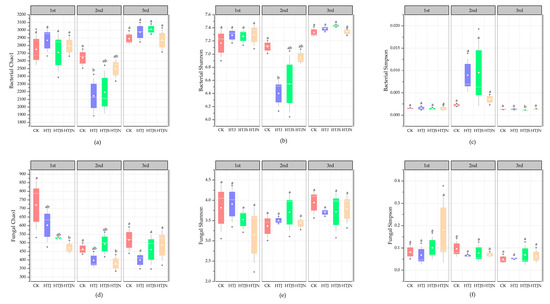
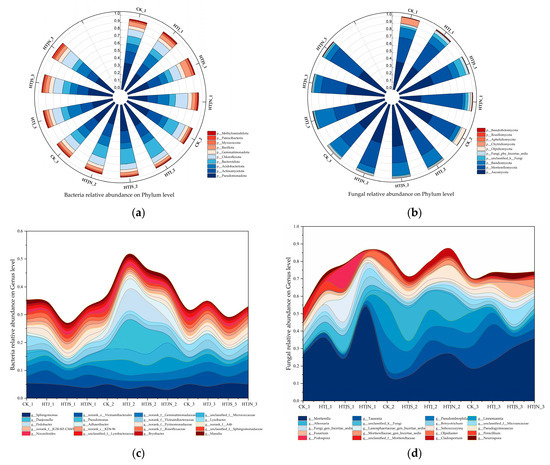
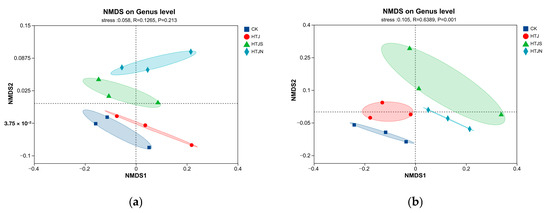
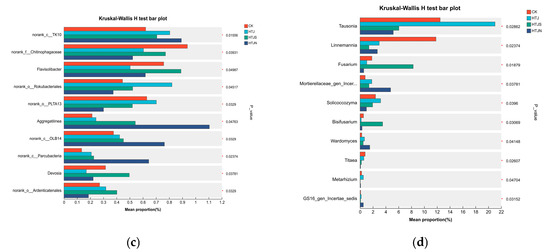
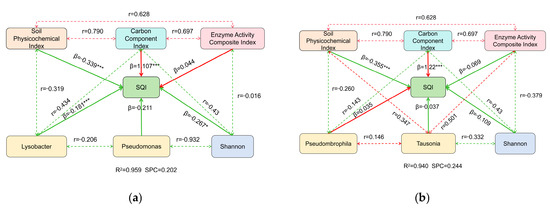
To analyze the effects of in situ vegetable residue return on soil properties and microorganisms, this study conducted a continuous three-season in situ residue return experiment with four treatments: no return (CK), residue return (HTJ), residue return + compound microbial inoculant (HTJS), and residue return + ammonia water (HTJN). This study compared the treatment effects on soil quality. The results showed that, after the third tillage, the HTJS treatment increased soil organic carbon, total nitrogen, and mineralizable organic carbon content, and significantly enhanced the activity of soil β-glucosidase and soil peroxidase, which are related to carbon cycling enzymes compared to other treatments. There were no significant differences in bacterial or fungal α-diversity among treatments. Differences in fungal community soil β-diversity among treatments were significant. The HTJS treatment enriched organic matter-degrading bacteria Flavisolibacter and Devosia. Although HTJS increased the relative abundance of Fusarium, the field disease incidence index did not increase. The soil quality index (SQI), based on the minimum dataset (MDS), showed that HTJS had the highest SQI after the third tillage. Further path model analysis revealed that soil carbon components index and soil physicochemical index were the main controlling factors influencing the SQI. In conclusion, in situ residue return with a compound microbial inoculant (HTJS) is an effective strategy to simultaneously enhance soil fertility and biological activity by regulating the microbial community structure and associated enzyme activities.
Full article
(This article belongs to the Section Plant–Soil Interactions)
►
Show Figures
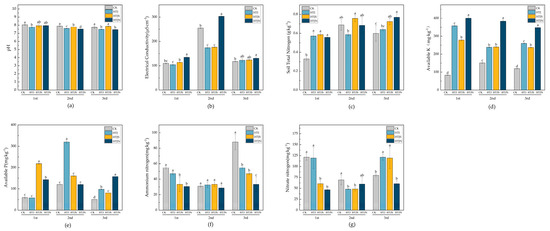
Figure 1