
 Open Access
 - Review

23 Pages
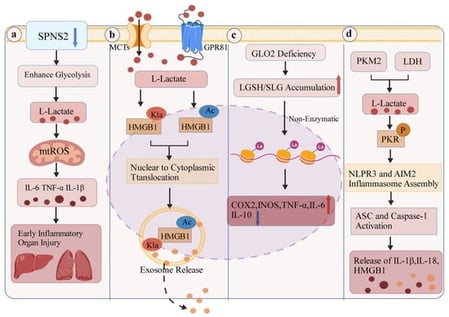
Lactate is a metabolic substrate, an extracellular signaling molecule, and a precursor for protein lactylation, with diverse effects on macrophage immunity. Evidence from infection, tissue injury, efferocytosis, and cancer indicates that lactate-associated pathways can amplify inflammation, support resolution and tissue repair, or sustain immune suppression. These outcomes depend on the timing, cellular source and compartment, chemical formulation and pH, transport and receptor engagement, and the chemistry and targets of lactylation. In this narrative review, we critically synthesize the biochemical foundations of lactate metabolism and lactyl-group donation and examine the mechanisms underlying these distinct macrophage responses. We distinguish model-specific biphasic responses from a universal sequence of early inflammation followed by resolution, and separate reparative programs from impaired antimicrobial or antitumor immunity. We also evaluate evidence for histone and non-histone lactylation, emphasizing the limits of metabolic perturbations and chromatin associations for establishing site-specific causality. This framework identifies experimental variables that should be controlled and supports context-selective investigation of lactate-related therapeutic targets in inflammatory diseases and cancer.
Metabolites
16 October 2026