Journal Description
Galaxies
Galaxies
is an international, peer-reviewed, open access journal on astronomy, astrophysics, and cosmology published bimonthly online by MDPI.
- Open Access— free for readers, with article processing charges (APC) paid by authors or their institutions.
- High Visibility: indexed within Scopus, ESCI (Web of Science), Astrophysics Data System, INSPIRE, Inspec, and other databases.
- Journal Rank: JCR - Q2 (Astronomy and Astrophysics) / CiteScore - Q1 (Astronomy and Astrophysics)
- Rapid Publication: manuscripts are peer-reviewed and a first decision is provided to authors approximately 23.8 days after submission; acceptance to publication is undertaken in 4.9 days (median values for papers published in this journal in the first half of 2026).
- Recognition of Reviewers: reviewers who provide timely, thorough peer-review reports receive vouchers entitling them to a discount on the APC of their next publication in any MDPI journal, in appreciation of the work done.
- Journal Cluster of Gravitation, Cosmology and Astrophysics: Universe, Galaxies, Particles and Astronomy.
Impact Factor:
4.0 (2025);
5-Year Impact Factor:
3.7 (2025)
Latest Articles
Radio Properties of Narrow-Line and Broad-Line Seyfert 1 Galaxies
Galaxies 2026, 14(4), 78; https://doi.org/10.3390/galaxies14040078 - 12 Aug 2026
Abstract
►
Show Figures
Narrow-line Seyfert 1 (NLS1) galaxies host active galactic nuclei (AGN) with narrow optical emission lines of the broad-line region. This is often explained with a relatively lower mass of the central supermassive black hole and super-Eddington accretion. We compared the radio properties of
[...] Read more.
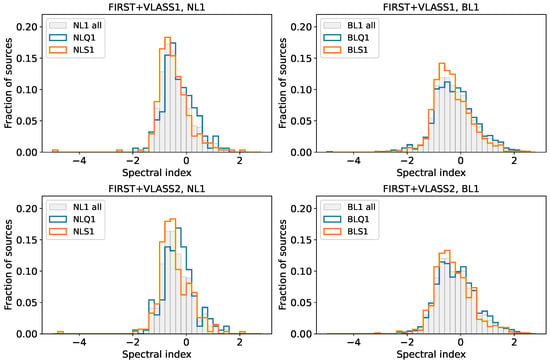
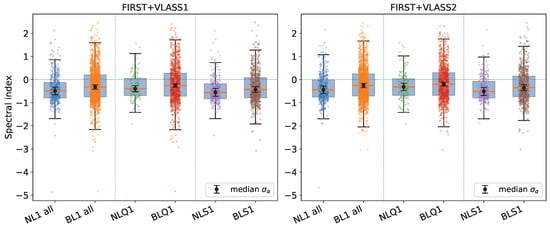
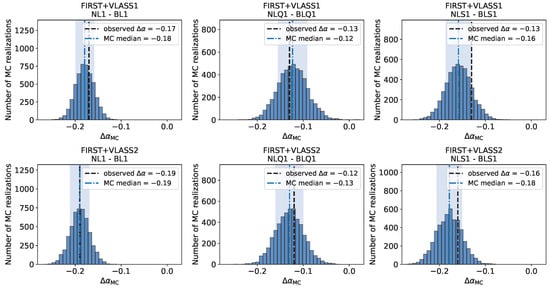
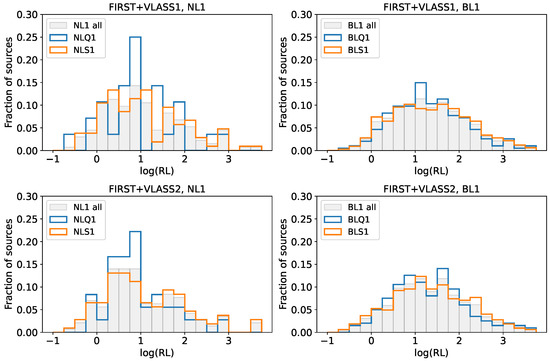
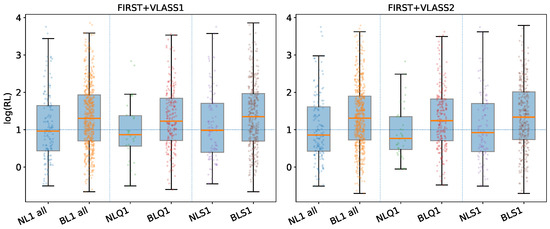
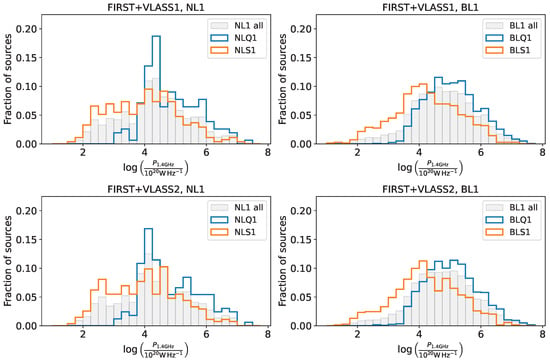
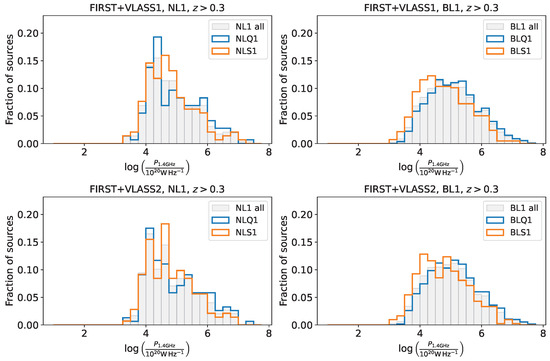
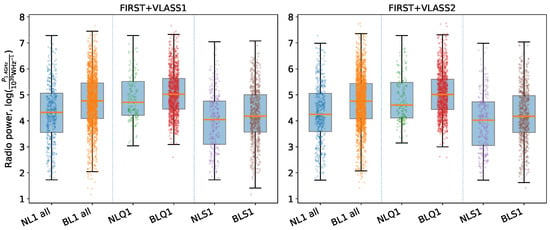
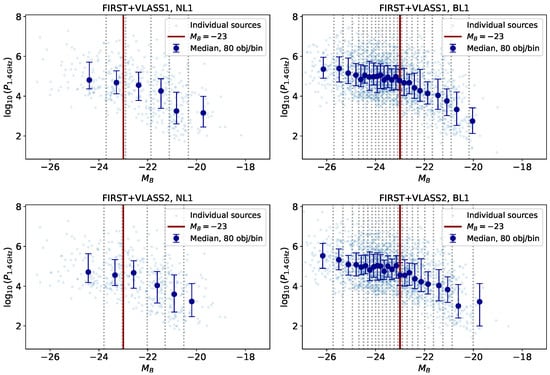
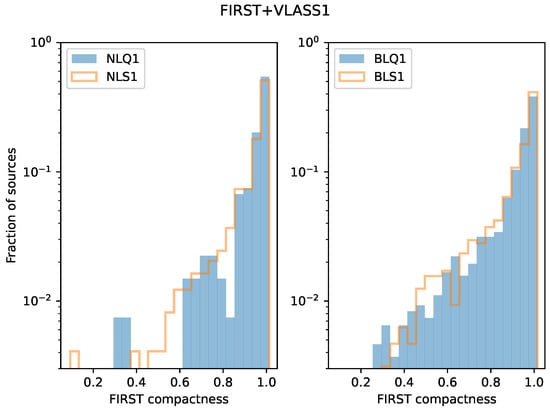
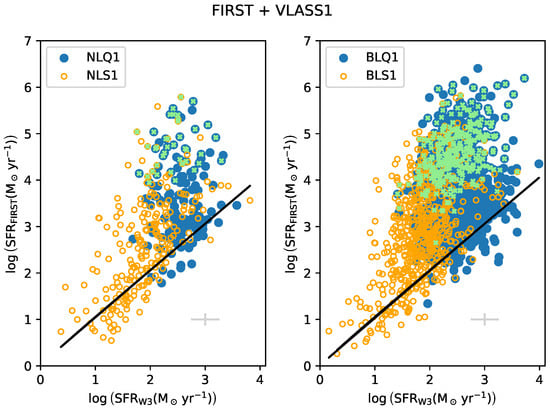
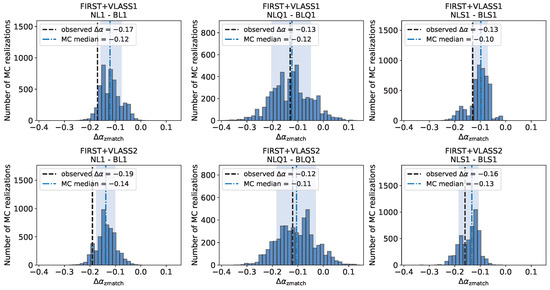
Narrow-line Seyfert 1 (NLS1) galaxies host active galactic nuclei (AGN) with narrow optical emission lines of the broad-line region. This is often explained with a relatively lower mass of the central supermassive black hole and super-Eddington accretion. We compared the radio properties of large samples of NLS1 and broad-line Seyfert 1 (BLS1) galaxies compiled from the Sloan Digital Sky Survey. We cross-matched the NLS1 and BLS1 samples with the Faint Images of the Radio Sky at Twenty-Centimeters (FIRST) sky survey at GHz and the first and second epoch data of the Very Large Array Sky Survey (VLASS) at 3 GHz. We calculated the radio spectral indices, the -GHz radio power, and the radio loudness. We found lower -GHz radio detection rates for the NLS1 galaxies. The median radio loudness values, the fraction of radio-loud AGN, and the median -GHz radio power are also lower for the NLS1 sample. The median spectral indices imply a slightly steeper radio spectrum for the NLS1 sample than for the BLS1 sample. Comparison of the star formation rates estimated from the radio data and the infrared measurements of the Wide-field Infrared Survey Explorer satellite indicated that more than half of the FIRST- and VLASS-detected NLS1 and BLS1 galaxies contain radio-emitting AGN.
Full article
Open AccessReview
The First Decade of Gravitational-Wave Measurements of Black Hole Spins
by
Sylvia Biscoveanu
Galaxies 2026, 14(4), 77; https://doi.org/10.3390/galaxies14040077 - 30 Jul 2026
Abstract
A decade after the first direct detection of gravitational waves, the growing catalog of hundreds of confirmed events is revealing new insights into the spins of stellar-mass black holes. Spin measurements have long been heralded as a promising tracer of compact-object binary formation
[...] Read more.
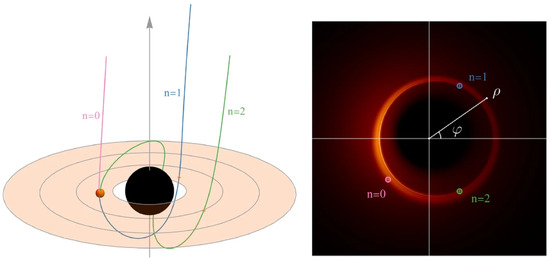
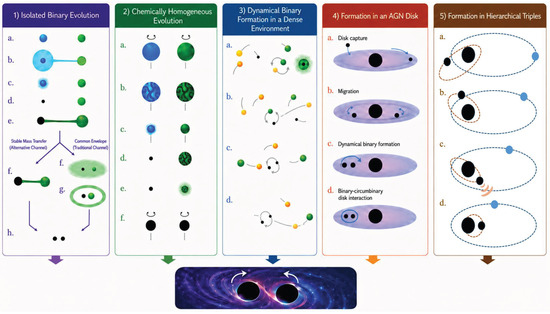
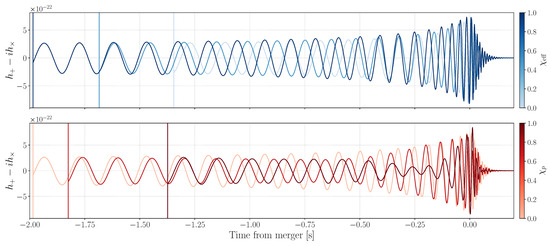
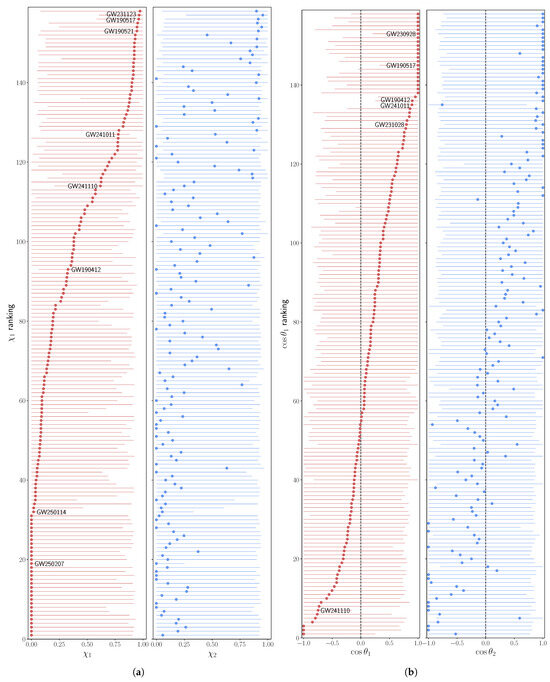
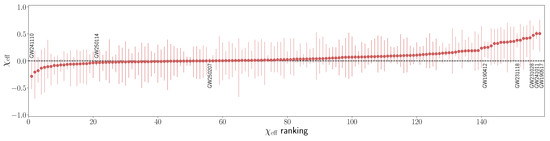
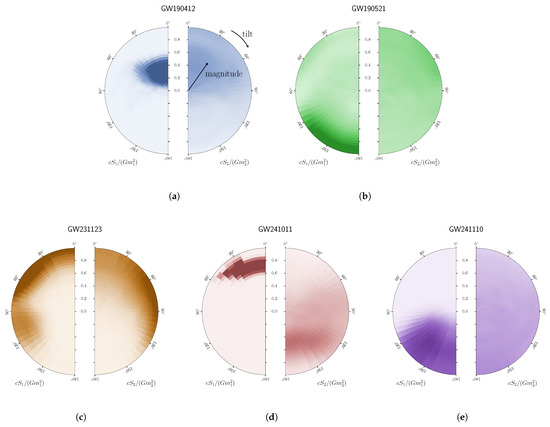
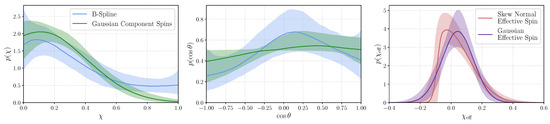
A decade after the first direct detection of gravitational waves, the growing catalog of hundreds of confirmed events is revealing new insights into the spins of stellar-mass black holes. Spin measurements have long been heralded as a promising tracer of compact-object binary formation and evolution, as different formation channels predict distinct spin signatures on a population level. In this review, we summarize the astrophysics, phenomenology, and current measurements of black hole spins. We begin with an overview of the predictions for black hole spin magnitudes and orientations from leading formation channels—isolated binary evolution, dynamical formation in clusters, formation in AGN disks, and hierarchical triples. We then describe the imprint of spin effects on the gravitational waveform and the measurability of spin in individual events. Finally, we review current population-level constraints on spin magnitudes, orientations, and effective spin parameters, including correlations with mass and redshift, and discuss their astrophysical implications. We conclude by highlighting open questions and future prospects, emphasizing how improved detector sensitivity will enable increasingly precise spin measurements for both individual events and the binary black hole population as a whole.
Full article
(This article belongs to the Special Issue Black Hole Spin Measurements)
►▼
Show Figures

Figure 1
Open AccessArticle
Timing and Spectral Analysis of the 2024 Outburst of 2S 1553-542 with NuSTAR and NICER
by
Haifan Zhu, Wei Wang, Wen Yang, Mariano Méndez, Chenxu Gao, Ziyi Xu and Pengfu Tian
Galaxies 2026, 14(4), 76; https://doi.org/10.3390/galaxies14040076 - 29 Jul 2026
Abstract
►▼
Show Figures
We report a timing and spectral study of the 2024 outburst of the Be/X-ray binary pulsar 2S 1553-542 using NuSTAR and NICER observations. From the NuSTAR light curve, we measure a pulse period of s. The energy-resolved pulse profiles are
[...] Read more.
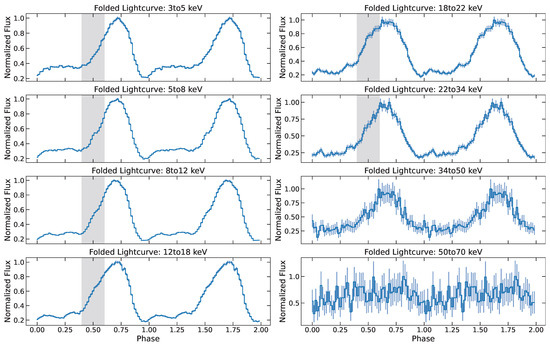
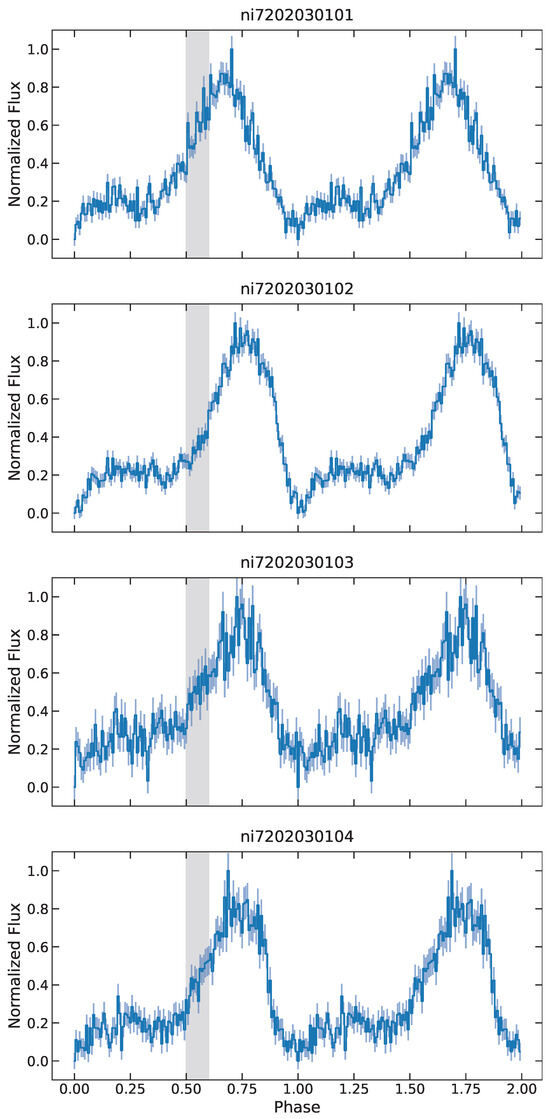
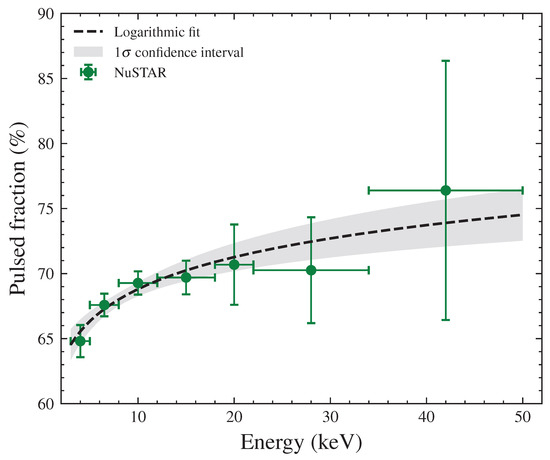
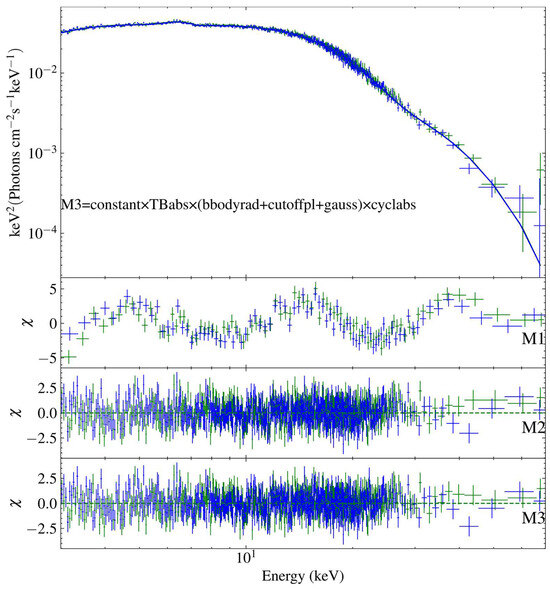
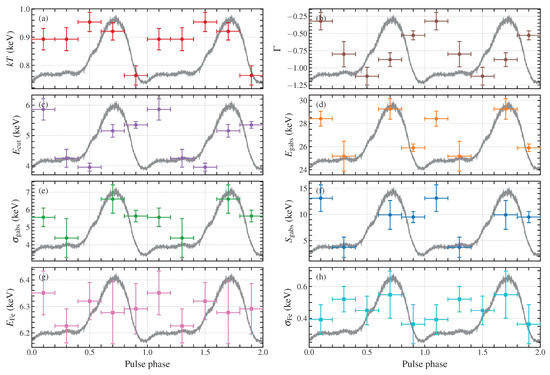
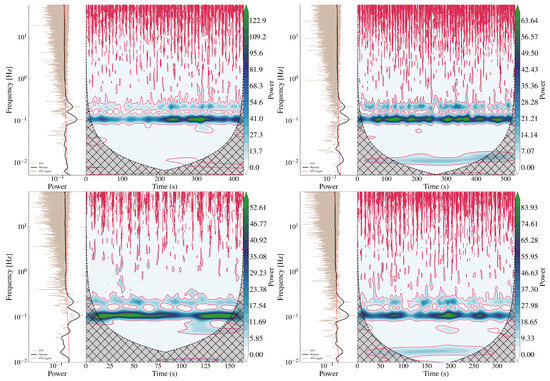
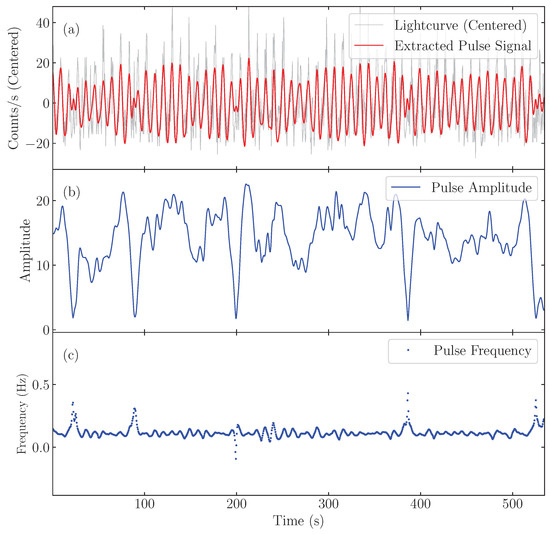
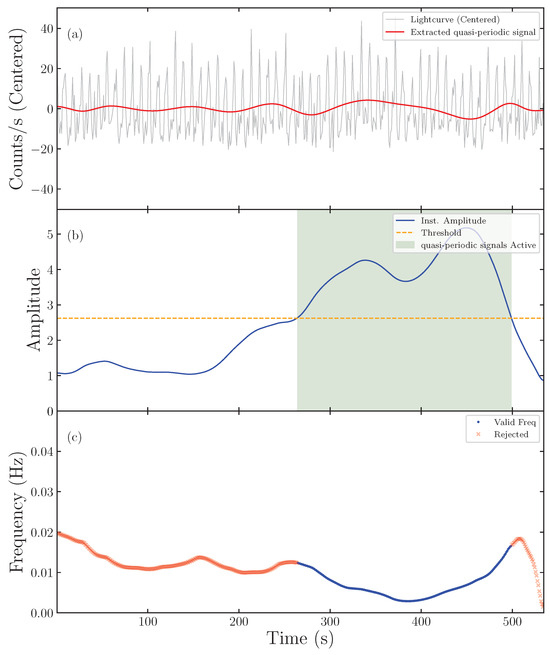
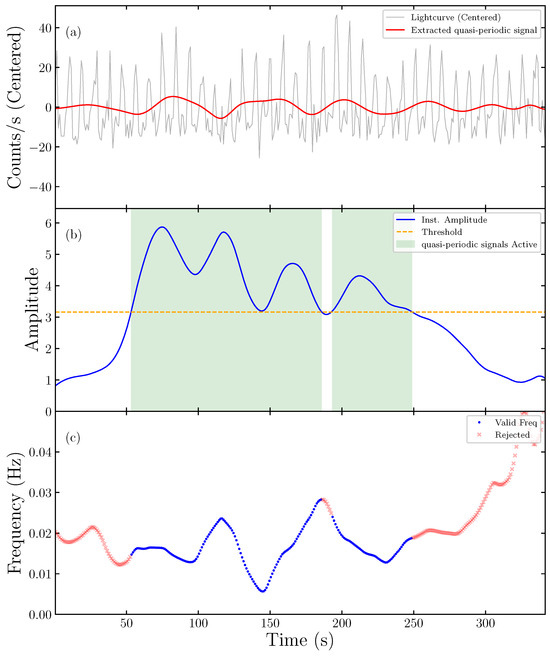
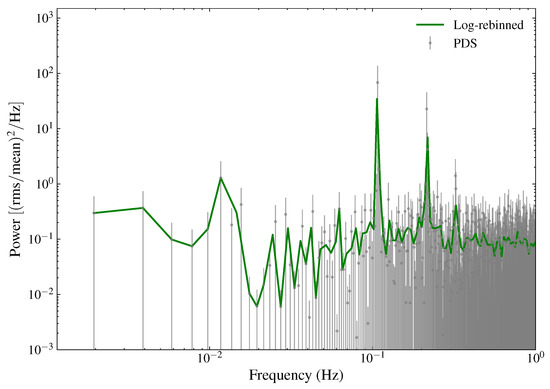
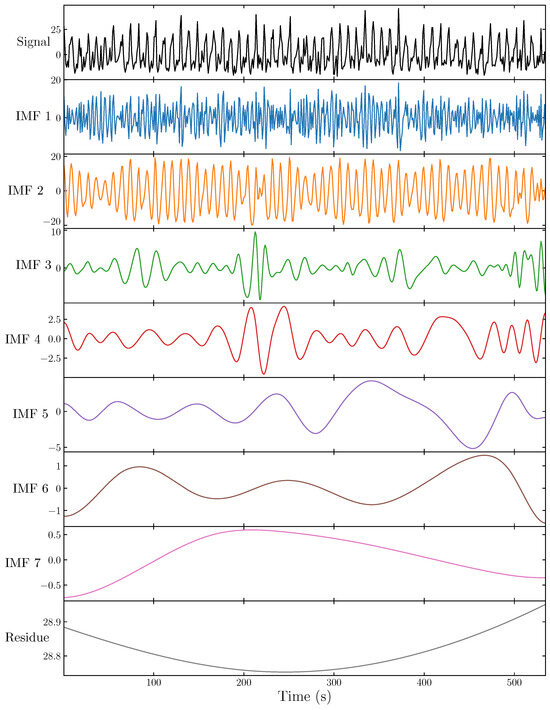
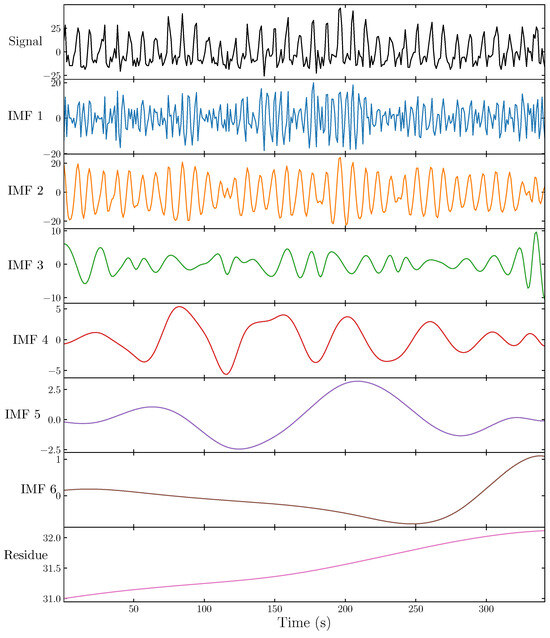
We report a timing and spectral study of the 2024 outburst of the Be/X-ray binary pulsar 2S 1553-542 using NuSTAR and NICER observations. From the NuSTAR light curve, we measure a pulse period of s. The energy-resolved pulse profiles are dominated by a single peak and show a wing-like structure most clearly in the 12–22 keV band. The pulsed fraction remains above 60% and increases with energy. The phase-averaged NuSTAR spectrum is described by an absorbed blackbody plus cutoff power-law continuum, together with an iron emission line and a cyclotron absorption feature. Using the cyclabs model, we obtain a cyclotron energy of keV, corresponding to a magnetic field strength of G. Phase-resolved spectroscopy shows that the continuum and cyclotron-line parameters vary with pulse phase, and that the line becomes poorly constrained around the pulse-wing phase. We also searched the short NICER GTIs for transient mHz variability using wavelet analysis and a CEEMDAN-based Hilbert–Huang transform. Localized excesses near ∼10 mHz and ∼20 mHz are found, but the short exposures, COI effects, red-noise fluctuations, and the lack of a well-constrained Fourier peak limit their significance. We therefore treat them as candidate mHz variability rather than firm mHz QPO detections.
Full article

Figure 1
Open AccessArticle
MARS Theory: A Mineral–Organic–Aqueous Reactor–Filter Architecture for Partially Decoupled Astrobiological Windows on Mars
by
Sebastiano Ettore Spoto
Galaxies 2026, 14(4), 75; https://doi.org/10.3390/galaxies14040075 - 28 Jul 2026
Cited by 1
Abstract
►▼
Show Figures
MARS (mineral–organic–aqueous reactor systems) theory is presented as a formal theory for planetary astrobiology, with Martian environments represented as coupled reactor–filter systems. Its central proposition holds that prebiotic synthesis, metabolic plausibility, and biosignature preservation are physically coupled, although their maxima may occur in
[...] Read more.
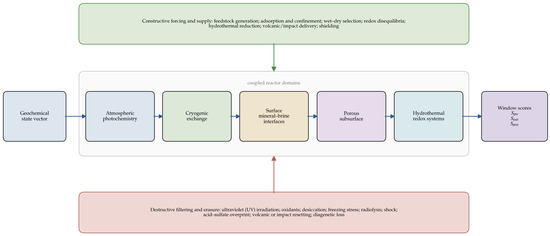
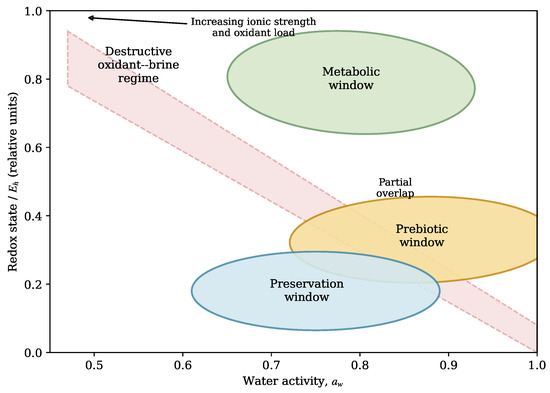
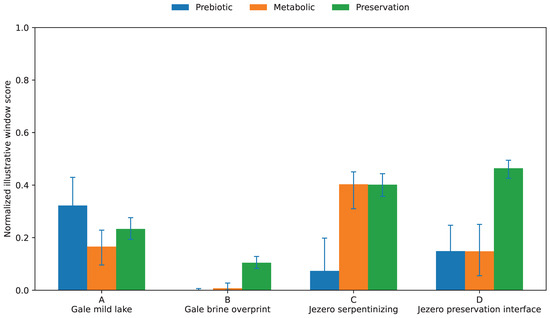
MARS (mineral–organic–aqueous reactor systems) theory is presented as a formal theory for planetary astrobiology, with Martian environments represented as coupled reactor–filter systems. Its central proposition holds that prebiotic synthesis, metabolic plausibility, and biosignature preservation are physically coupled, although their maxima may occur in different places, times, or mineral assemblages. Partial overlap is both allowed and expected; complete co-location is regarded as a restrictive scenario. Admissible states satisfy elemental and charge conservation, non-ideal activity relations, mineral-saturation constraints, reaction-affinity conditions, and cross-domain transport compatibility. Brines, reactive minerals, redox gradients, irradiation, burial, diagenetic overprint, impacts, volcanism, and hydrothermal alteration can therefore enhance one function while suppressing another. Time-dependent atmospheric and redox boundary conditions, cryo-thermal cycling, exogenous catalytic minerals, shock mineralogy, and post-impact hydrothermal circulation are incorporated as sign-variable controls. An illustrative reduced-state ensemble shows the internal logic of window displacement; it does not constitute a calibrated uncertainty analysis or a planet-wide simulation. The theory yields operational thresholds, observable tests, and falsifying outcomes for rover and returned-sample investigations without constituting evidence that life existed on Mars.
Full article

Figure 1
Open AccessReview
Composite Universal Constants Combining 2–5 Known Constants Reveal Latent Connections Between Disparate Physical Regimes and the Role of Dimensionless Constants in Systems of Units
by
Dimitris M. Christodoulou, Demosthenes Kazanas and Silas G. T. Laycock
Galaxies 2026, 14(4), 74; https://doi.org/10.3390/galaxies14040074 - 24 Jul 2026
Abstract
We introduce a new method of dimensional analysis based on complete systems of units, such as the metric and Planck systems, in which fundamental dimensionless constants arise naturally. In fact, it is the reformulated Planck system that communicates its dimensionless constants to the
[...] Read more.
We introduce a new method of dimensional analysis based on complete systems of units, such as the metric and Planck systems, in which fundamental dimensionless constants arise naturally. In fact, it is the reformulated Planck system that communicates its dimensionless constants to the metric or any other system. The method reveals additional complex dynamical scales and physical effects beyond those amenable to conventional dimensional analysis. We formulate our strategy in simple settings involving pairs of seemingly unrelated constants, and then we extend the analysis to more complicated cases involving combinations of three to five well-known universal constants. In constructions involving several unrelated constants, the method captures increasingly complex effects and places two or more disparate physics areas into a single framework connecting them by never-before-seen combinations of fundamental dimensionless constants, such as the fine-structure constant and the gravitational coupling constant. Thus, this method provides a pathway to blending descriptions of two or more fundamental interactions that have so far eluded a consistent theoretical formulation.
Full article
(This article belongs to the Collection A Trip across the Universe: Our Present Knowledge and Future Perspectives)
Open AccessReview
Interstellar Dust Production, Destruction and Effects of Dust Depletion in Galaxies
by
Francesco Calura
Galaxies 2026, 14(4), 73; https://doi.org/10.3390/galaxies14040073 - 24 Jul 2026
Abstract
►▼
Show Figures
Despite the small mass fraction typically observed for the interstellar medium, dust plays a significant role as a key component of galaxies, affecting a wide range of properties. This review focuses specifically on how dust grains influence interstellar chemical abundances and on the
[...] Read more.
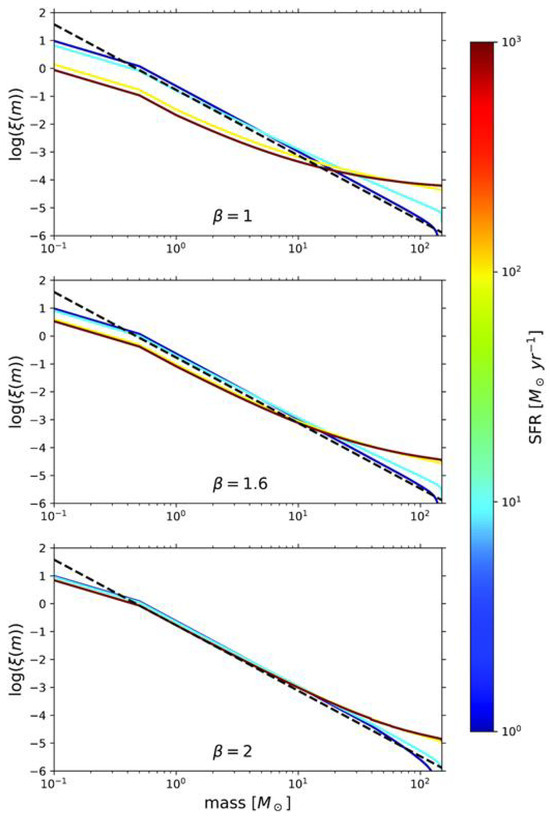
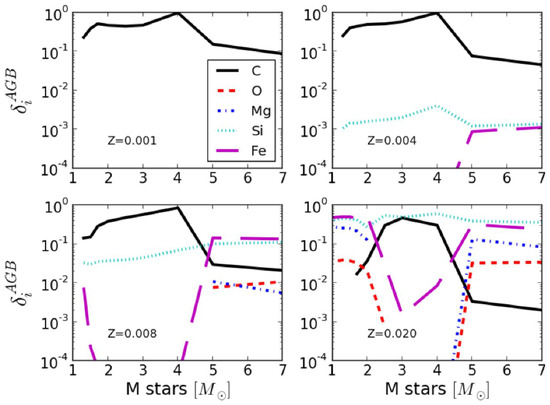
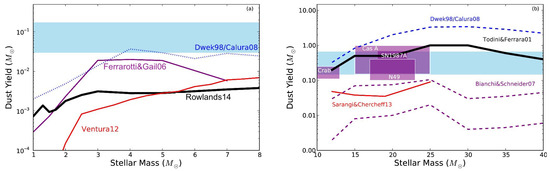
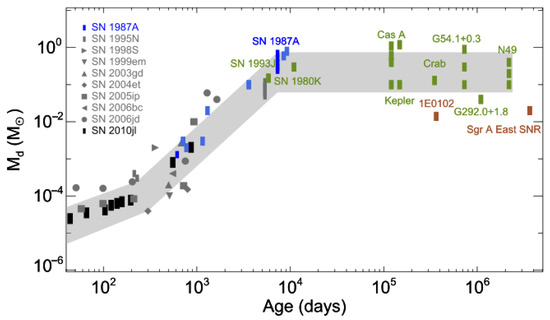
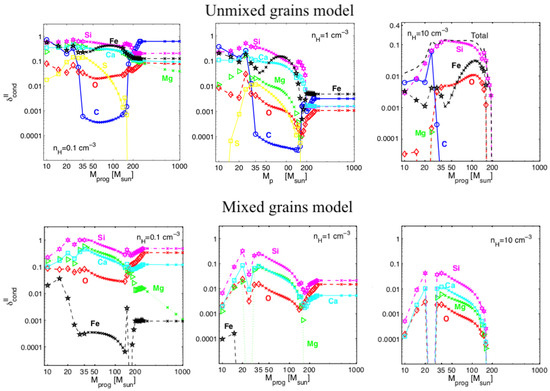
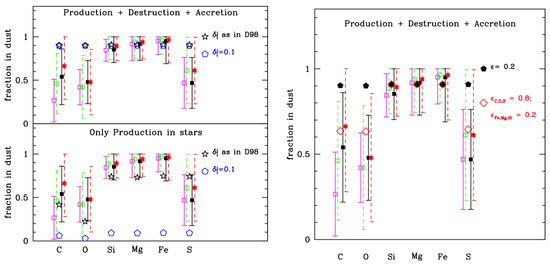
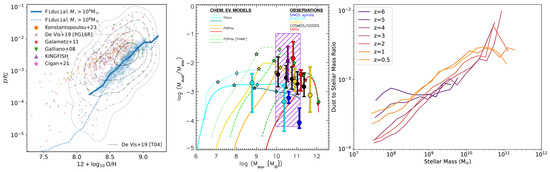
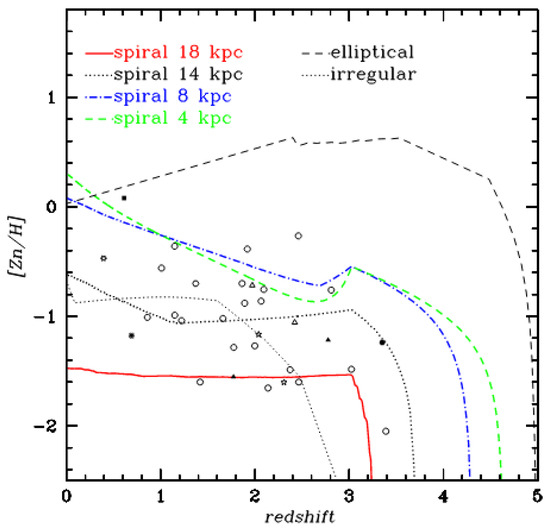
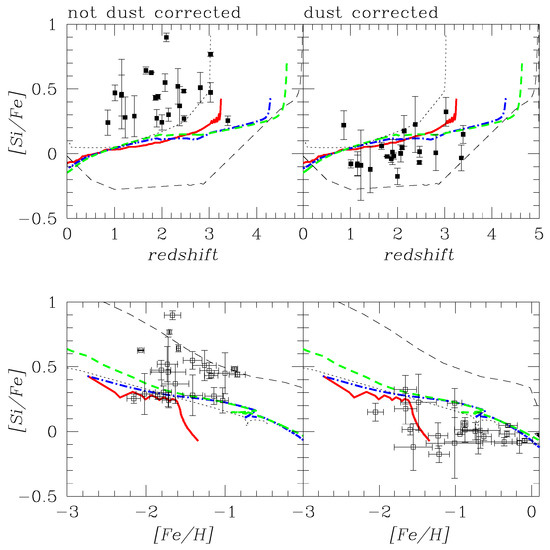
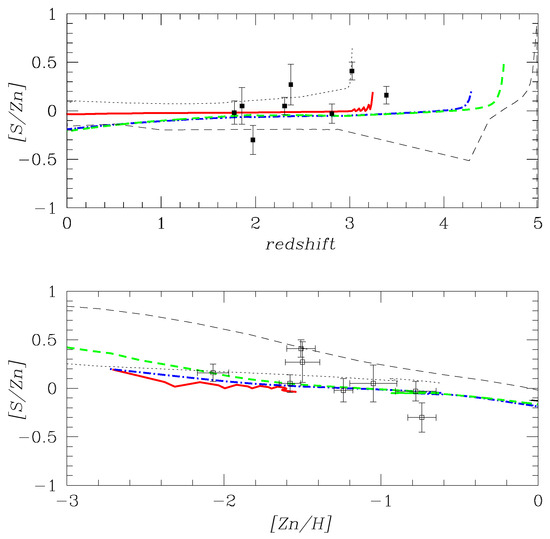
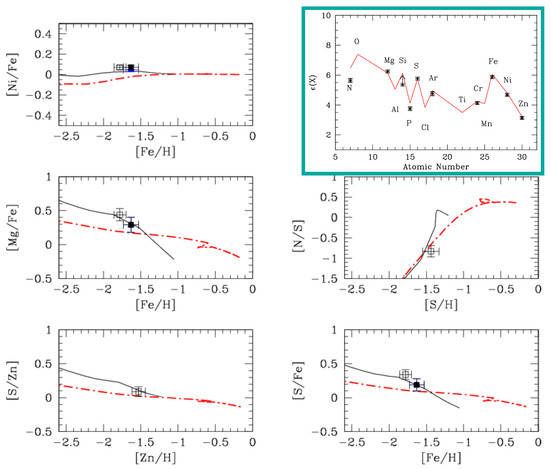
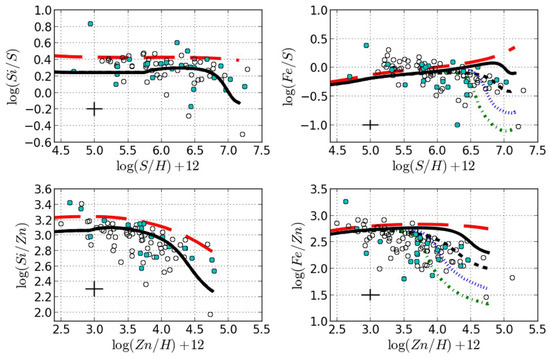
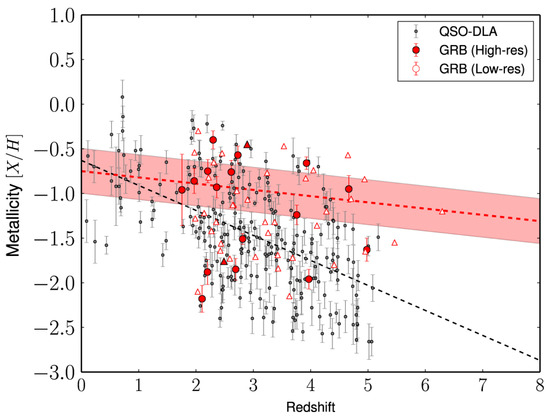
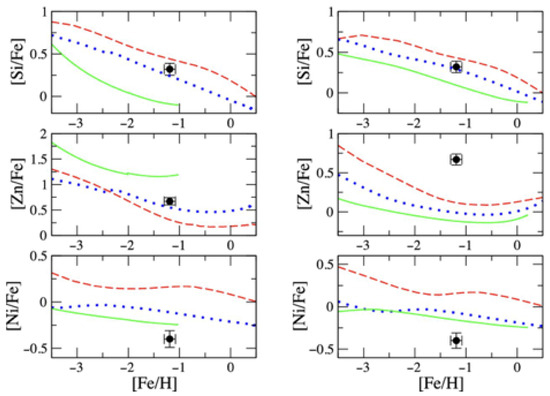
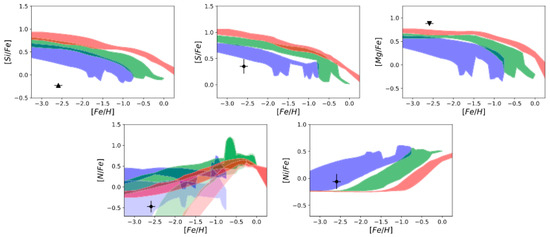
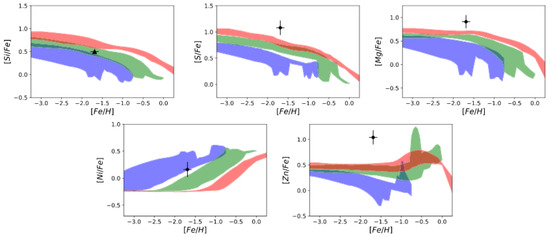
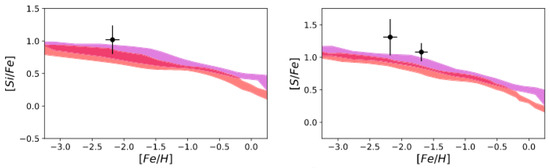
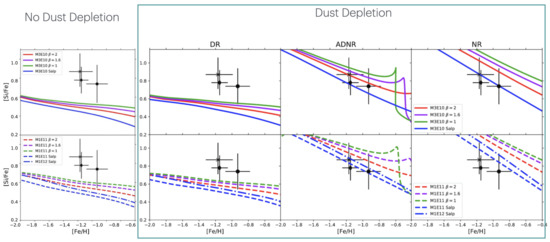
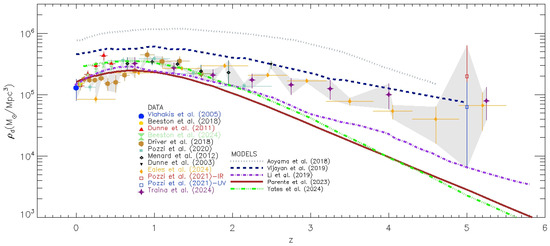
Despite the small mass fraction typically observed for the interstellar medium, dust plays a significant role as a key component of galaxies, affecting a wide range of properties. This review focuses specifically on how dust grains influence interstellar chemical abundances and on the processes that regulate the evolution of the galactic dust budget. I describe the main physical processes regulating dust evolution, including production by stars and other sources, destruction in supernova shocks and interstellar growth, and the ways in which they are included in galactic chemical evolution models. I discuss the main effects of interstellar dust on the abundances measured in various high-redshift systems that include Damped Lyman absorbers, detected along the lines of sight of distant quasars and in the absorption spectra of Gamma Ray Burst afterglows. I discuss the measure of dust masses in galaxies and review its global budget, evaluated through the study of the evolution of the comoving dust mass density, for which I present an up-to-date compilation of data chosen from the literature. Interstellar dust growth plays a critical role in regulating the dust budget, for which I present a list of evidence both in favour of it and against. The dust budget at high redshift is one aspect that requires attention to drive significant progress in the future, along with the investigation of the properties of dust in local, low-metallicity systems. Our poor theoretical knowledge of basic aspects related to dust evolution evidences the need for a new high-sensitivity space telescope operating in the far-infrared regime, still awaited by the community since the demise of Herschel.
Full article

Figure 1
Open AccessArticle
Winds Versus Jets in Active Galactic Nuclei
by
David Garofalo, Chandra B. Singh, Atticus Magerko, Marco Botello, Sophia Soto and Max North
Galaxies 2026, 14(4), 72; https://doi.org/10.3390/galaxies14040072 - 24 Jul 2026
Abstract
►▼
Show Figures
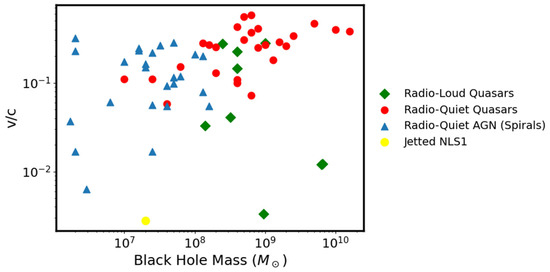
The well-established anti-correlation between disk winds and relativistic jets in X-ray binaries is often interpreted in a scale-invariant black hole accretion context. If so, active galactic nuclei (AGN) should exhibit a direct mass-scaled analog. We test this prediction across FRII radio quasars, radio-quiet
[...] Read more.
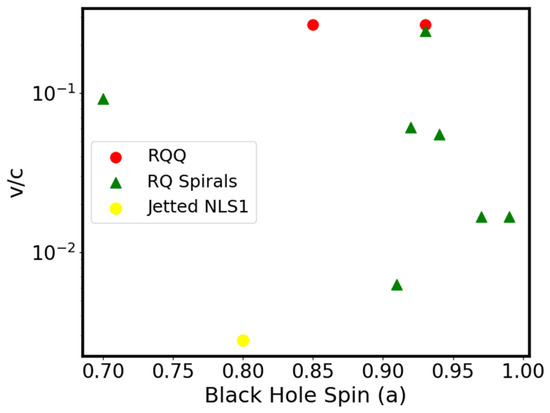
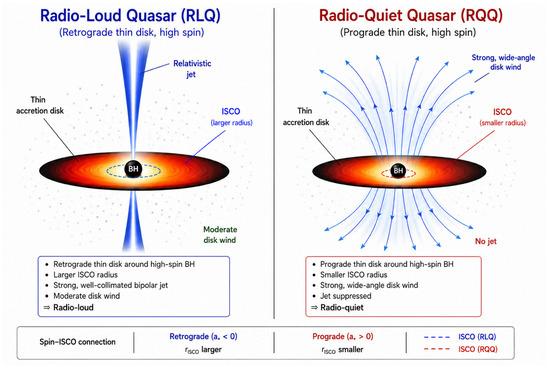
The well-established anti-correlation between disk winds and relativistic jets in X-ray binaries is often interpreted in a scale-invariant black hole accretion context. If so, active galactic nuclei (AGN) should exhibit a direct mass-scaled analog. We test this prediction across FRII radio quasars, radio-quiet quasars, and jetted and non-jetted Narrow Line Seyfert 1 galaxies (NLS1) in spirals, among others. They exclude simple scale invariance. The highest-velocity winds occur exclusively in radio-quiet quasars, while powerful FRII quasars host systematically weaker winds despite equally large black hole masses. Jetted NLS1s show strong wind suppression consistent with X-ray binary behavior, whereas FRII quasars occupy a distinct regime in which jets and winds coexist. Black hole mass and spin magnitude alone cannot account for this dichotomy. We argue that the angular momentum direction of the disk relative to that of the black hole (aligned versus anti-aligned or co-rotation versus counter-rotation) is the critical parameter: secularly fueled spiral systems and most post-merger systems favor co-rotation, which is associated with compact ISCO radii, high radiative efficiency, strong winds, and jet suppression, while the counter-rotating subset of merger-influenced ellipticals can sustain powerful jets alongside moderate winds. Moreover, while spiral AGN and merger-driven radio-quiet quasars experience similar strong jet/wind anti-correlation, they cannot be treated as strict scaled analogs of X-ray binaries, which undergo rapid state transitions involving magnetic flux redistribution absent in AGN. At least two distinct wind–jet regimes therefore operate across the mass scale. We identify the details of this behavior across AGN subclasses.
Full article

Figure 1
Open AccessArticle
Black Hole Spin Measurements from X-Ray Reflection Spectroscopy: Quality Criteria and Community Recommendations
by
Javier A. García, Riley Connors, Laura W. Brenneman and James F. Steiner
Galaxies 2026, 14(4), 71; https://doi.org/10.3390/galaxies14040071 - 21 Jul 2026
Abstract
X-ray reflection spectroscopy provides one of the most effective electromagnetic routes to measuring the dimensionless spin parameter of accreting black holes. The method has produced spin constraints for both stellar-mass black holes in X-ray binaries and supermassive black holes in active galactic nuclei,
[...] Read more.
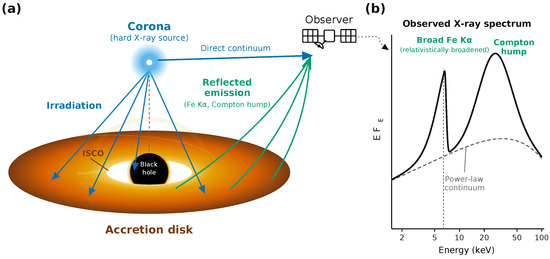
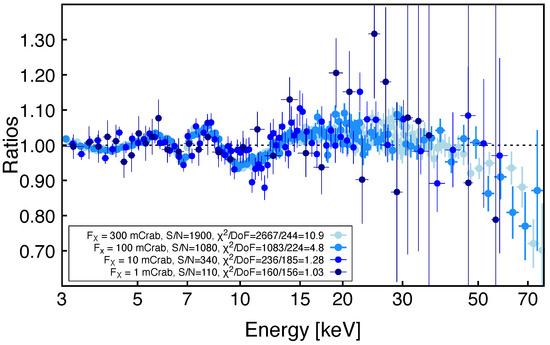
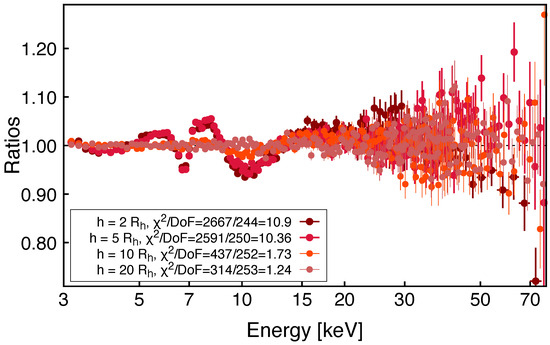
X-ray reflection spectroscopy provides one of the most effective electromagnetic routes to measuring the dimensionless spin parameter of accreting black holes. The method has produced spin constraints for both stellar-mass black holes in X-ray binaries and supermassive black holes in active galactic nuclei, and it is central to the science objectives of present and future X-ray telescopes. At the same time, this method is vulnerable to a set of coupled observational and modeling systematics: continuum-reflection degeneracy, insufficient passband, unresolved distant reflection or absorption, detector effects, source variability, accretion-state dependence, and assumptions built into the reflection model itself. This article synthesizes the talks and discussions held at the 2025 Wake Forest workshop Recent Progress on Black Hole Spin Measurements Across the Electromagnetic and Gravitational Spectra; motivated by them, we propose a practical quality-control framework for assessing whether a published reflection-based spin measurement should be treated as robust, provisional, or not assessable from the published information alone. We organize the problem around three pillars: detectability, meaning that the relativistic reflection signal is unambiguously present in the data; uniqueness, meaning that the relativistic component can be separated from the continuum, from distant reflection, absorption, and instrumental effects; and robustness, meaning that the inferred spin is stable against plausible changes in model assumptions, data selection, and accretion-state treatment. We then translate these principles into applicable criteria, a tiered quality-classification scheme, and a reporting checklist for future analyses. The quantitative calibration of each criterion requires a dedicated campaign of simulations over realistic scenarios, which we outline here and defer to a future publication. We aim to define a reproducible path toward a curated, community-maintained compilation of reliable spin constraints and to guide the implementation of reflection spectroscopy in the high-throughput, high-resolution era.
Full article
(This article belongs to the Special Issue Black Hole Spin Measurements)
►▼
Show Figures

Figure 1

Open AccessArticle
Tidal Structures Around Edge-On Galaxies in Deep Imaging Surveys
by
Kyle R. Adams, Aleksandr Mosenkov, Jonah Seguine, Lydia Stacey, Thea Spigarelli and Jonah George
Galaxies 2026, 14(4), 70; https://doi.org/10.3390/galaxies14040070 - 14 Jul 2026
Abstract
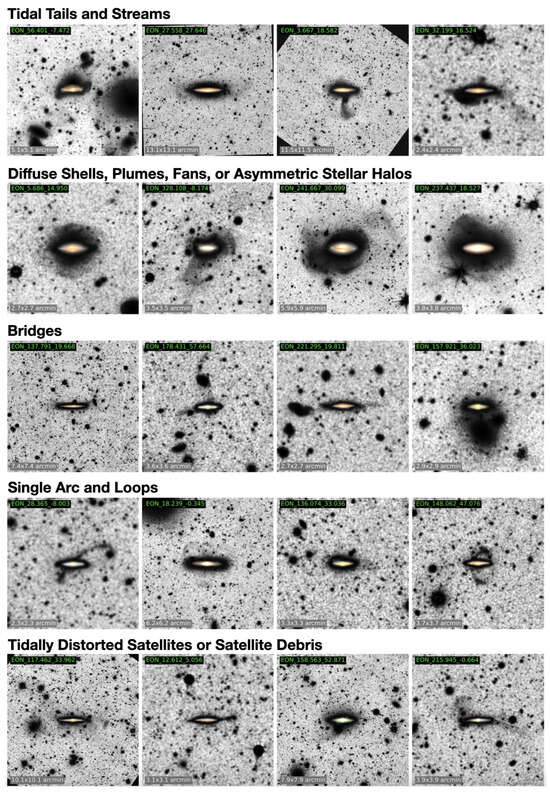
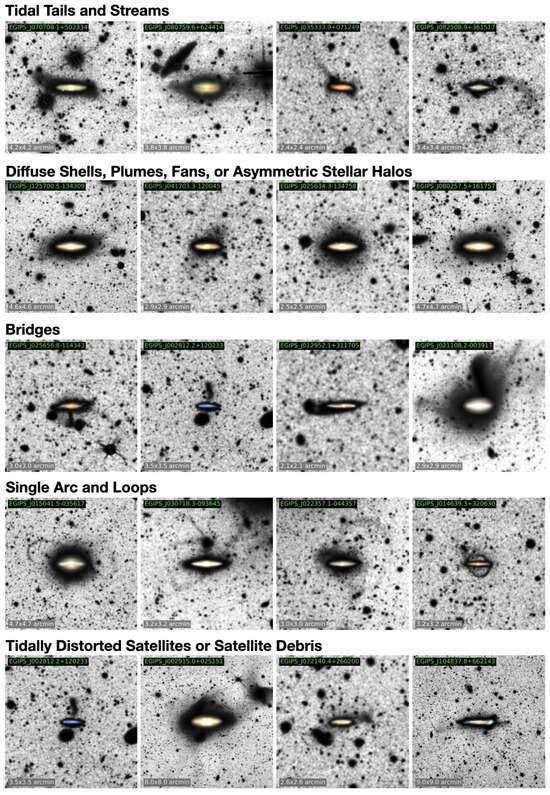
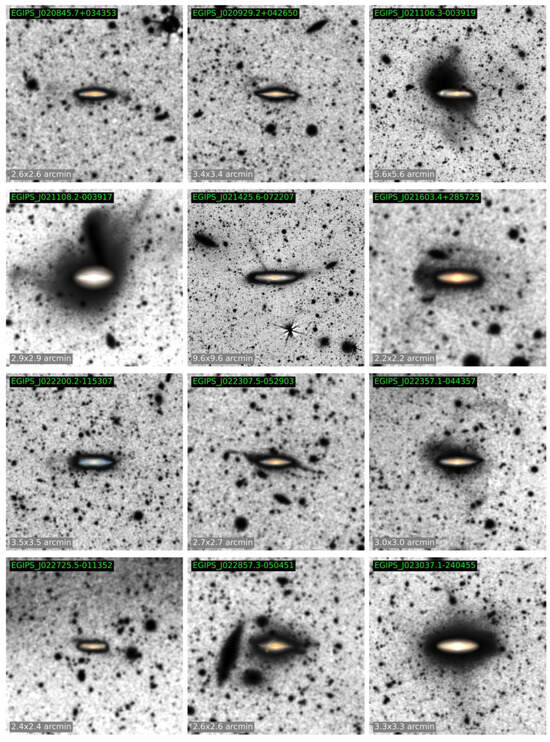
We present a statistical study of low-surface-brightness (LSB) tidal structures in two large samples of edge-on disk galaxies. Our primary sample comprises 5606 galaxies from the Edge-on Galaxies In SDSS (EGIS) catalog, analyzed using imaging from the DESI Legacy Imaging Surveys, supplemented by
[...] Read more.
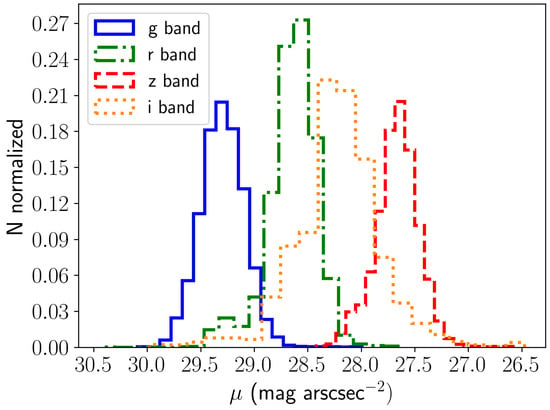
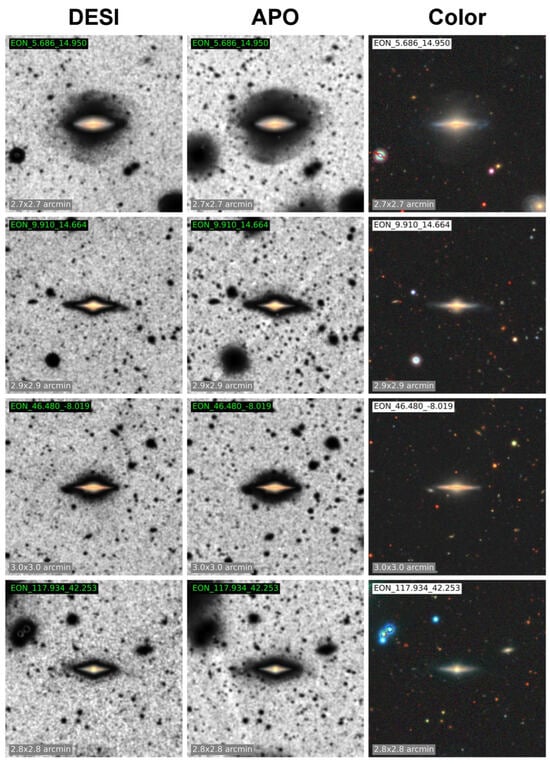
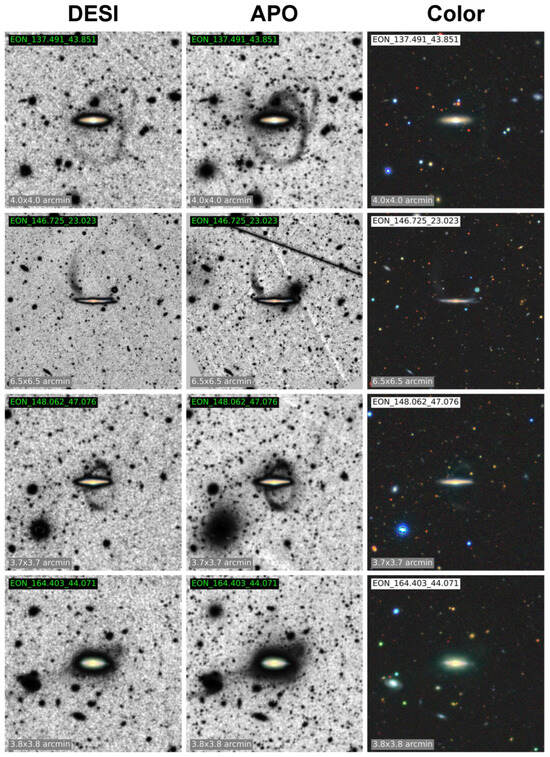
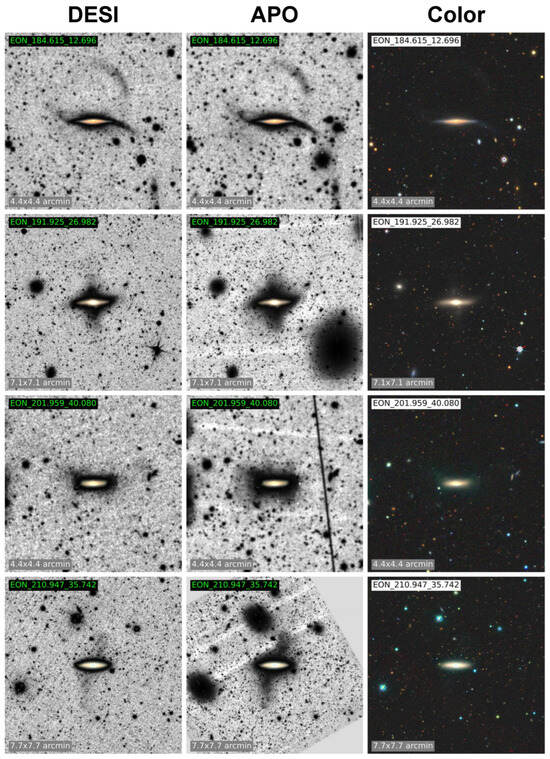
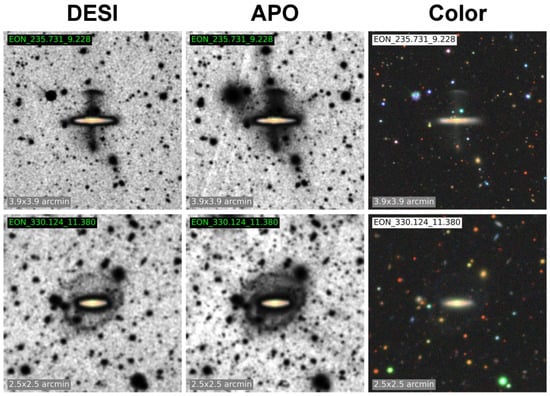
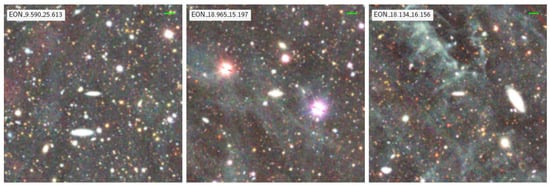
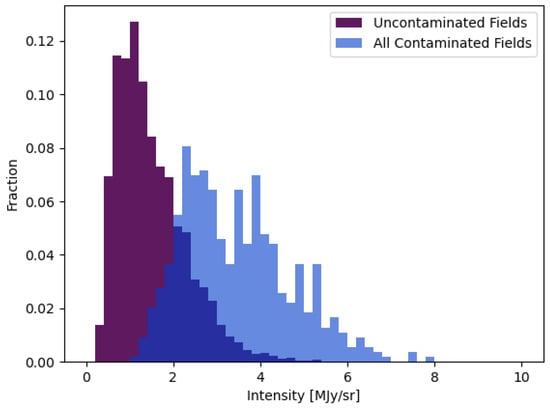
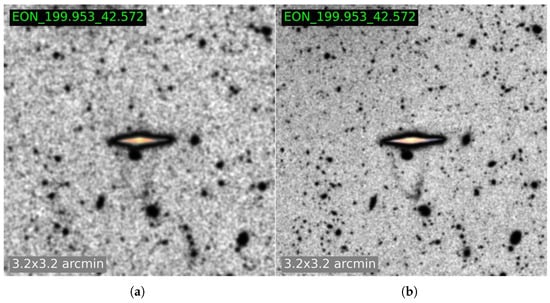
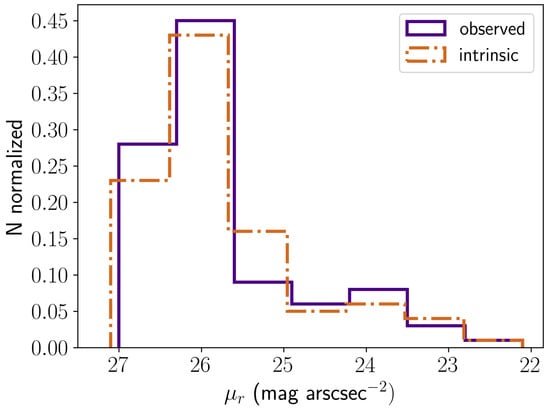
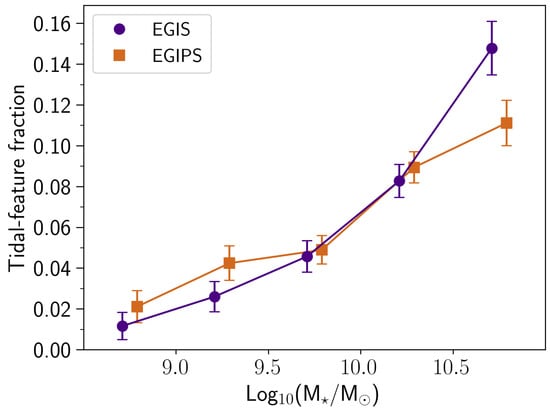
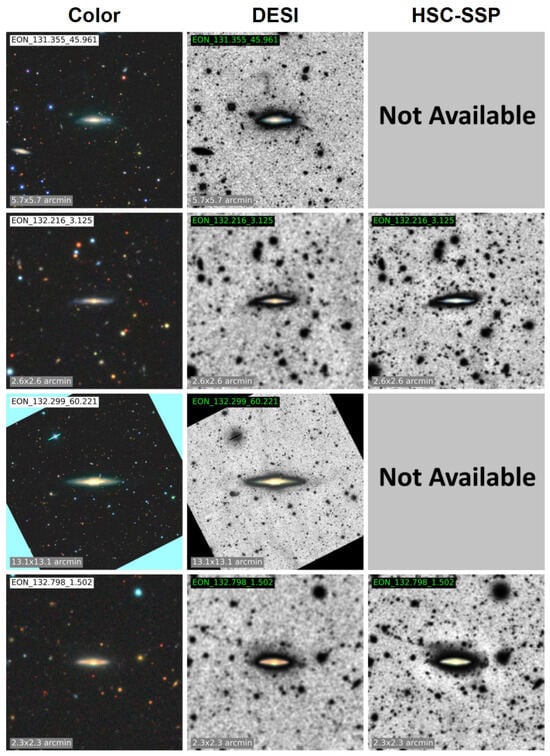
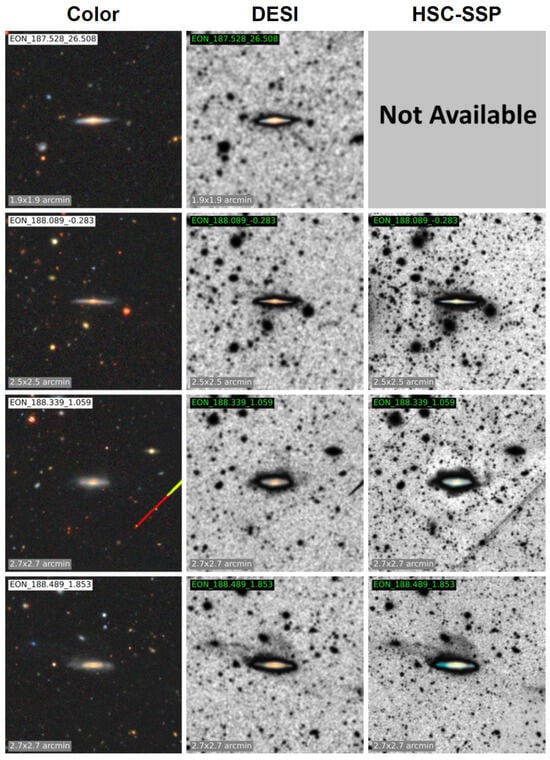
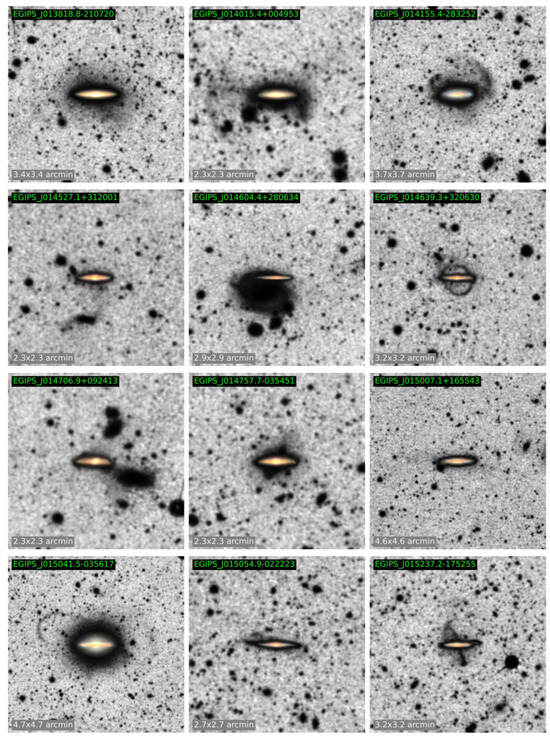
We present a statistical study of low-surface-brightness (LSB) tidal structures in two large samples of edge-on disk galaxies. Our primary sample comprises 5606 galaxies from the Edge-on Galaxies In SDSS (EGIS) catalog, analyzed using imaging from the DESI Legacy Imaging Surveys, supplemented by Hyper Suprime-Cam Subaru Strategic Program (HSCSSP) data and deep Apache Point Observatory (APO) follow-up observations for selected objects. To assess the robustness of our results, we also examine an independent sample of 14,237 galaxies from the Edge-on Galaxies in the Pan-STARRS survey (EGIPS) catalog. All images were processed using a homogeneous procedure optimized for the detection of faint diffuse emission. Tidal structures were identified through visual inspection and classified into established morphological categories, with careful treatment of imaging artifacts and galactic cirrus contamination. We detected tidal features in 324 EGIS galaxies and 690 EGIPS galaxies, corresponding to incidence rates of 5.8% and 4.8%, respectively. Restricting the analysis to completeness-limited subsamples yields consistent fractions of 6.4% and 6.2%. At a typical DESI r-band surface-brightness depth of 28.6 mag arcsec−2, these values are consistent with previous observational studies but lower than predictions from many cosmological simulations. Recent high-resolution simulations, however, produce incidence rates much closer to those measured here, suggesting that numerical resolution, realistic modeling of observational and instrumental effects, and galaxy formation physics are all critical for accurately predicting the abundance of LSB tidal structures.
Full article
(This article belongs to the Special Issue Unveiling the Structural Properties of Galaxies Using Contemporary Wide-Field Surveys)
►▼
Show Figures

Figure 1
Open AccessArticle
Distribution of Stars by Rotational Velocities from Spectroscopic Data
by
Nikolai Kondratev, Ekaterina Malik, Arseniy Sachkov and Oleg Malkov
Galaxies 2026, 14(4), 69; https://doi.org/10.3390/galaxies14040069 - 13 Jul 2026
Abstract
►▼
Show Figures
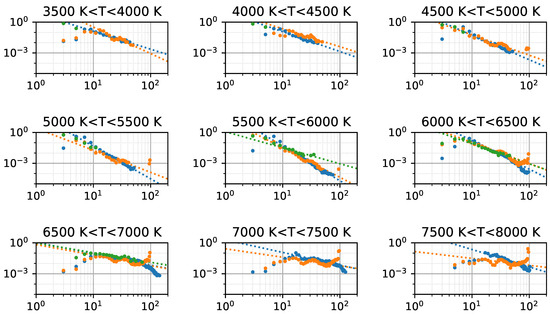
In this paper, we study the distribution of main-sequence stars over rotational velocities as a function of effective temperature. Using spectroscopic surveys, and after selecting main-sequence stars and retaining only high-quality data, we obtain a sample of 73,340 GALAH objects, 21,654 APOGEE objects,
[...] Read more.
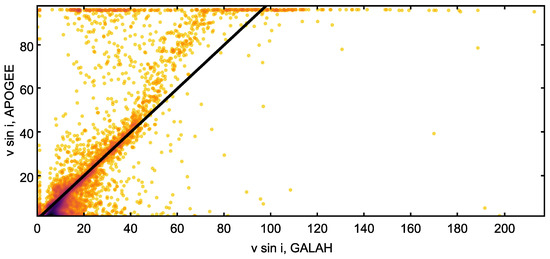
In this paper, we study the distribution of main-sequence stars over rotational velocities as a function of effective temperature. Using spectroscopic surveys, and after selecting main-sequence stars and retaining only high-quality data, we obtain a sample of 73,340 GALAH objects, 21,654 APOGEE objects, and 2262 Glebocki objects. For stars in the broad temperature range of 3500–8000 K, we analyse the distributions in narrow 500 K bins, and find that in each bin the distribution follows a power law with the exponent varying systematically with temperature. For solar-type stars, the obtained magnetic braking index q is consistent with the Skumanich law.
Full article

Figure 1
Open AccessCorrection
Correction: Morley, P.D. Renormalizable Gravitational Action That Reduces to General Relativity on the Mass-Shell. Galaxies 2018, 6, 81
by
Peter D. Morley
Galaxies 2026, 14(4), 68; https://doi.org/10.3390/galaxies14040068 - 6 Jul 2026
Abstract
The author wishes to make the following correction to his paper [...]
Full article
Open AccessArticle
Projection-Enhanced Disk Breaks: Evidence from Deep Photometric Decomposition
by
Sergey S. Savchenko, Ilia V. Chugunov, Alexander A. Marchuk, Vladimir P. Reshetnikov, Matvey D. Kozlov, Dmitry I. Makarov, Aleksandra V. Antipova and Anastasia M. Sypkova
Galaxies 2026, 14(4), 67; https://doi.org/10.3390/galaxies14040067 - 2 Jul 2026
Abstract
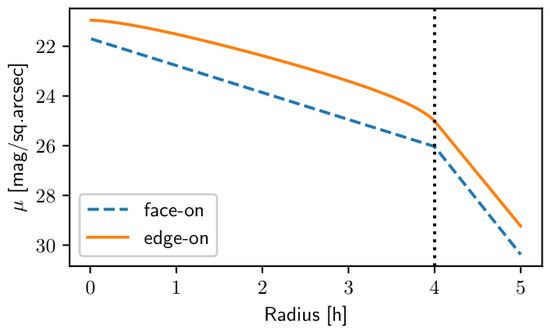
Radial brightness profiles of disk galaxies often exhibit so-called breaks—locations where their exponential-scale length abruptly changes. Some galaxies have downbending (Type II) breaks, where their brightness decays faster in outer regions, while other have upbending (Type III) breaks, resulting in more extended outer
[...] Read more.
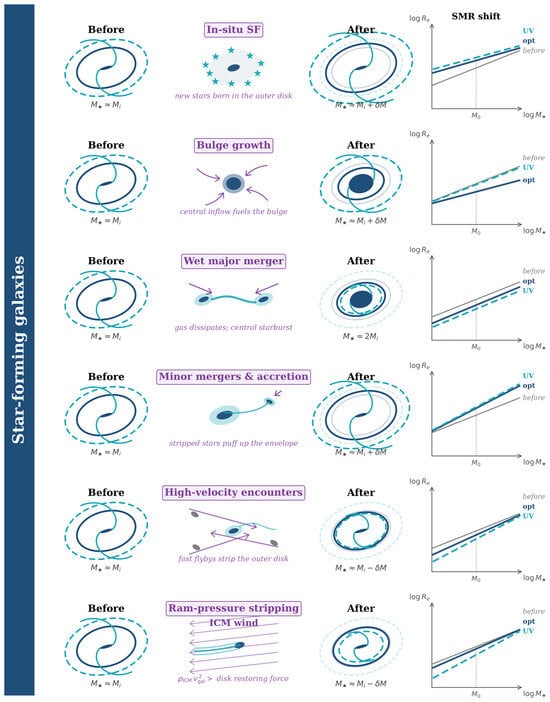
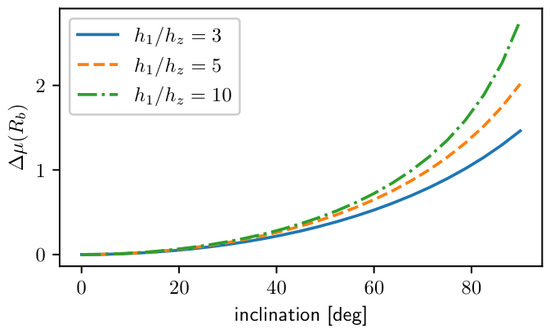
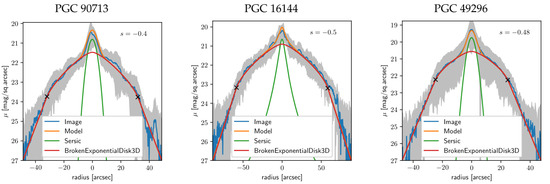
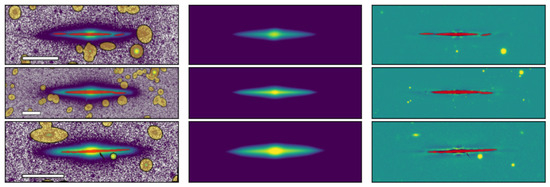
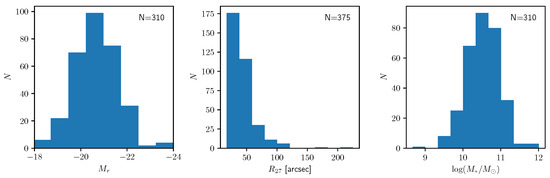
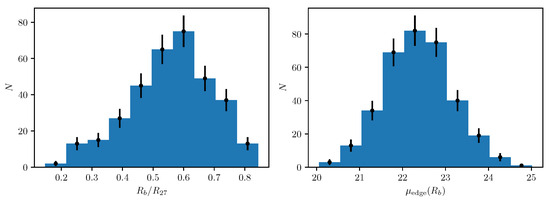
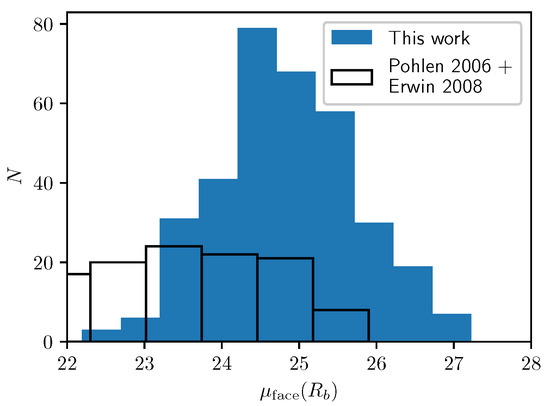
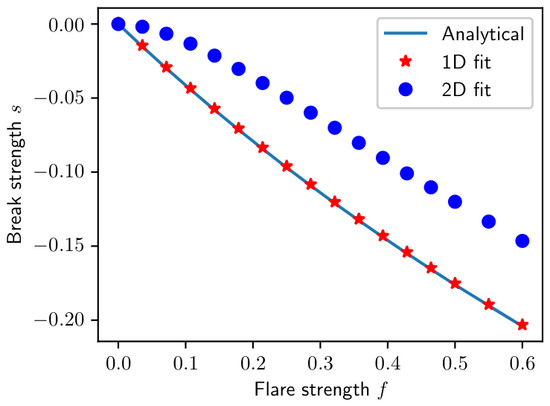
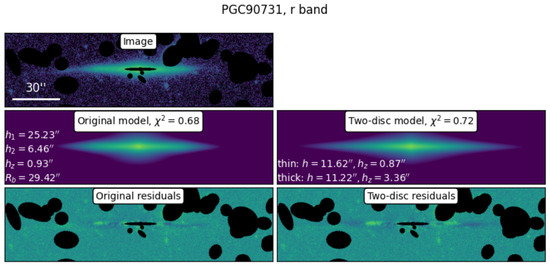
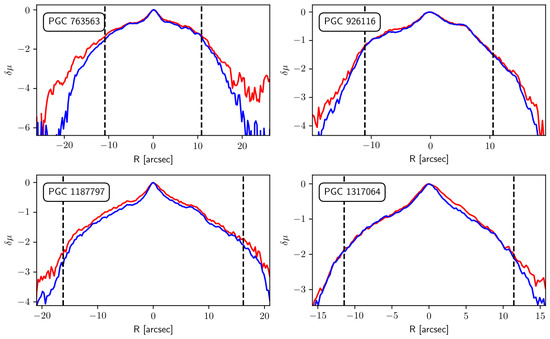
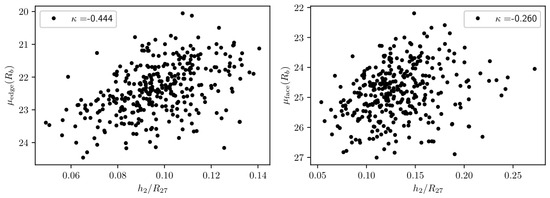
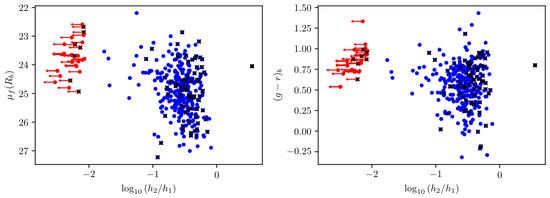
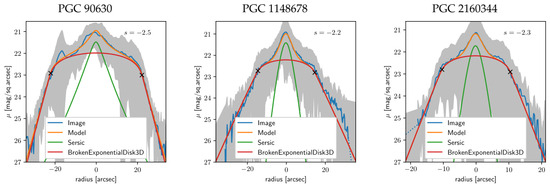
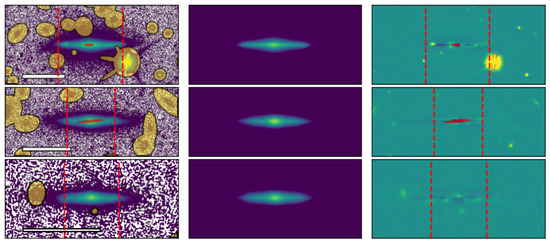
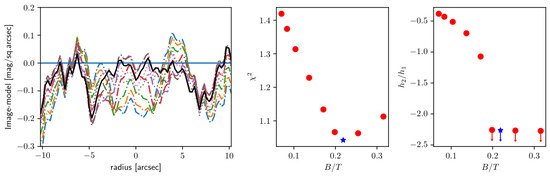
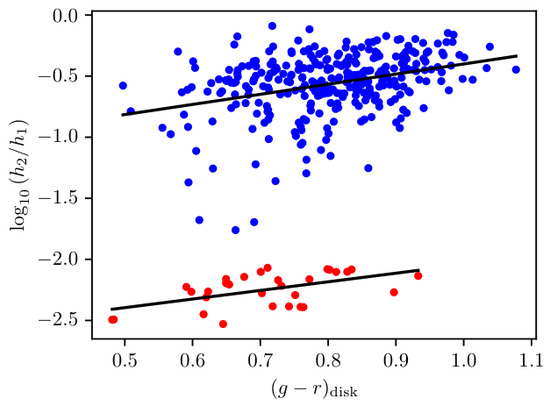
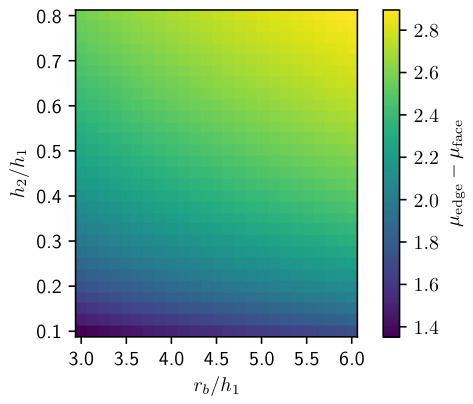
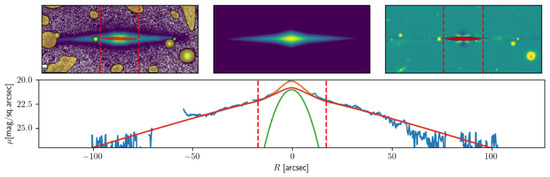
Radial brightness profiles of disk galaxies often exhibit so-called breaks—locations where their exponential-scale length abruptly changes. Some galaxies have downbending (Type II) breaks, where their brightness decays faster in outer regions, while other have upbending (Type III) breaks, resulting in more extended outer disks or envelopes. Disk radial profiles without any breaks (Type I) appear to constitute a minority. The exact fractions of different break types depend on many galactic parameters—such as Hubble type, stellar mass, spatial environment, and bar presence—and vary significantly across different studies. Another source of discrepancy is the orientation of galaxies: projection effects may play an important role in break detectability. In this work, we utilize DESI Legacy DR10 imaging to perform photometric decomposition of a sample of 375 edge-on galaxies and investigate their radial breaks. We find that the vast majority (≈90%) of disks in our sample have Type II breaks, which is a considerably higher fraction than in many previous works (∼50%). We carefully tested our results to check if observed breaks can be a result of flaring or two-disk composition. We showed that a high fraction of Type II breaks can be attributed to projection effects, which enhance the observed surface brightness of breaks in edge-on galaxies.
Full article
(This article belongs to the Special Issue Unveiling the Structural Properties of Galaxies Using Contemporary Wide-Field Surveys)
►▼
Show Figures

Figure 1

Open AccessArticle
Effects of Multiple Spiral Arm Patterns on the Abundance Gradients of Heavy Elements
by
Emanuele Spitoni, Gabriele Cescutti, Ivan Minchev and Francesca Matteucci
Galaxies 2026, 14(4), 66; https://doi.org/10.3390/galaxies14040066 - 2 Jul 2026
Abstract
Understanding how spiral structures influence the chemical evolution of the Galactic disc remains a key issue in Galactic archaeology. Recent advances in two-dimensional chemical evolution modeling allow us to account for the impact of multiple spiral arm patterns, each characterized by different pattern
[...] Read more.
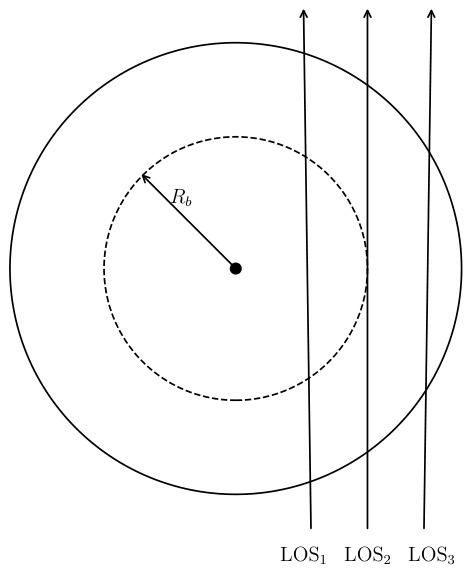
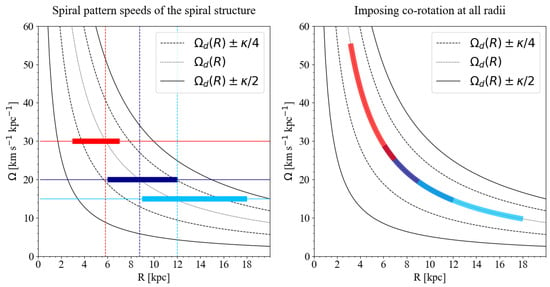
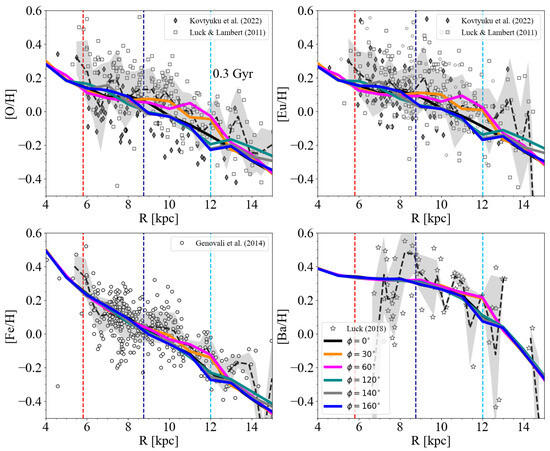
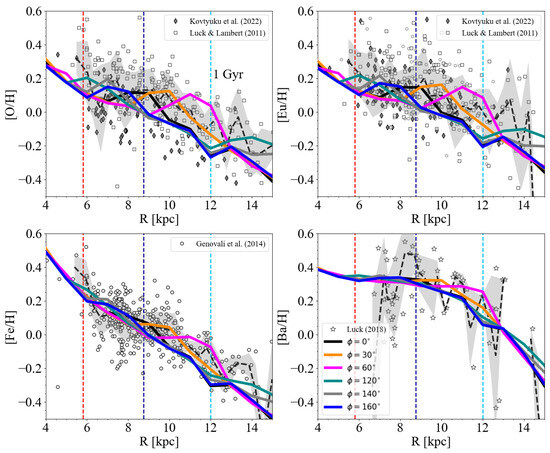
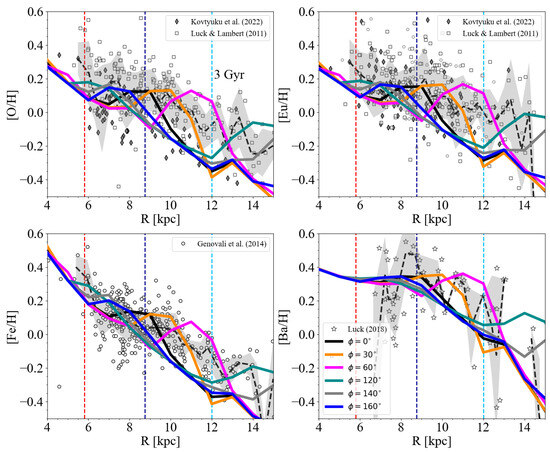
Understanding how spiral structures influence the chemical evolution of the Galactic disc remains a key issue in Galactic archaeology. Recent advances in two-dimensional chemical evolution modeling allow us to account for the impact of multiple spiral arm patterns, each characterized by different pattern speeds, on the redistribution of elements throughout the Galaxy. In this work, we explore the influence of multi-pattern spiral arms on the radial abundance gradients of heavy elements in the Galactic disc. We focus on a scenario in which, during the most recent stage of evolution, corotation spans the entire disc. Our results indicate that the observed dispersion in the abundance gradients of O, Fe, Eu, and Ba, as traced by Cepheids, can be successfully reproduced if all galactocentric radii have effectively acted as corotation regions over the past 1–3 Gyr. We also note that such an extended phase has previously been identified as necessary to explain the azimuthal abundance variations reported in Gaia DR3 and Gaia-ESO survey data along local and inner spiral arms.
Full article
(This article belongs to the Special Issue Neutron Capture Processes in the Universe)
►▼
Show Figures

Figure 1

Open AccessArticle
A 3D Geometrical Model of Molecular Line Emission from Planetary Nebulae: Formulation and Applications
by
Diana Ryder, Joel Kastner and Paula Moraga Baez
Galaxies 2026, 14(4), 65; https://doi.org/10.3390/galaxies14040065 - 1 Jul 2026
Abstract
Morpho-kinematic modeling of planetary nebulae (PNe) is important in reconstructing the three-dimensional structure and dynamics of PNe in an effort to understand their formation histories. Here, we present a flexible, modular method for 3D morpho-kinematic modeling of spatial–spectral mapping observations of PN molecular
[...] Read more.
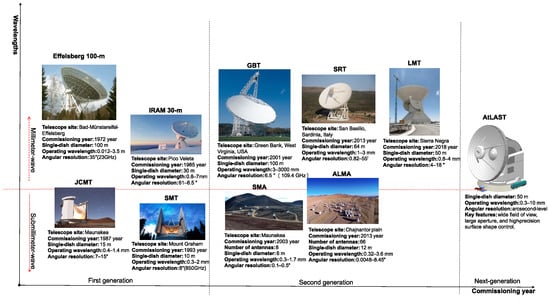
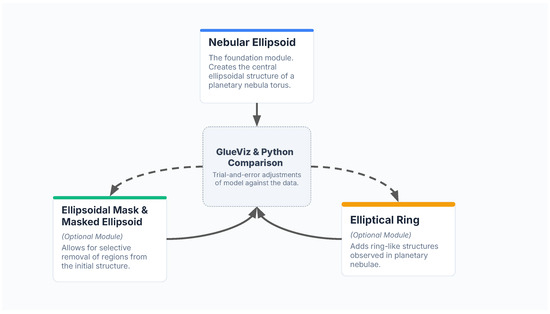
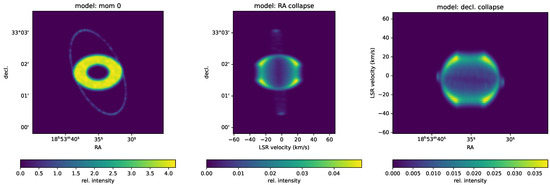
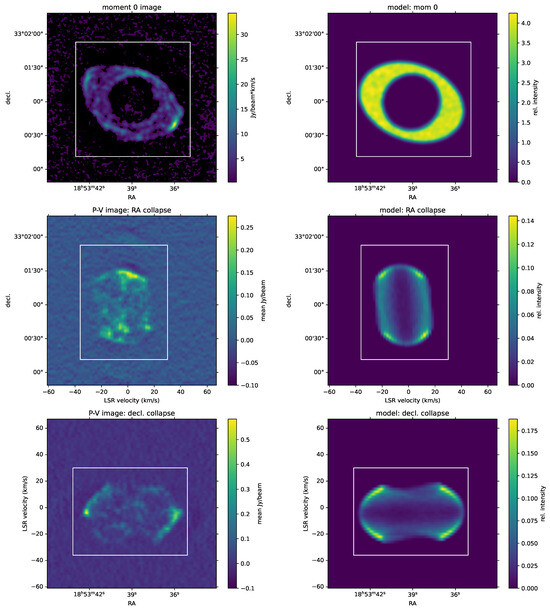
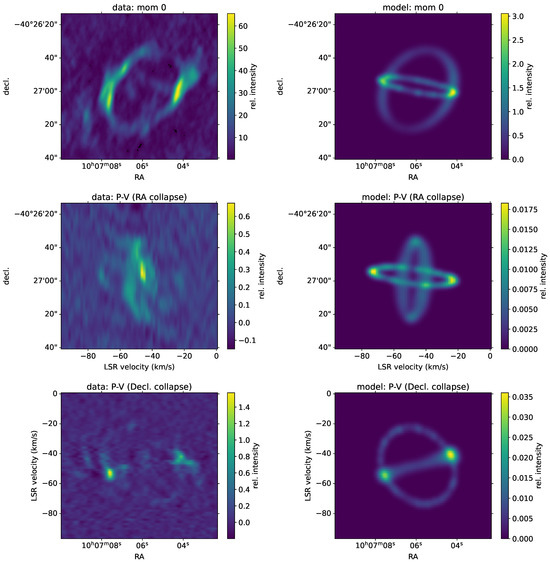
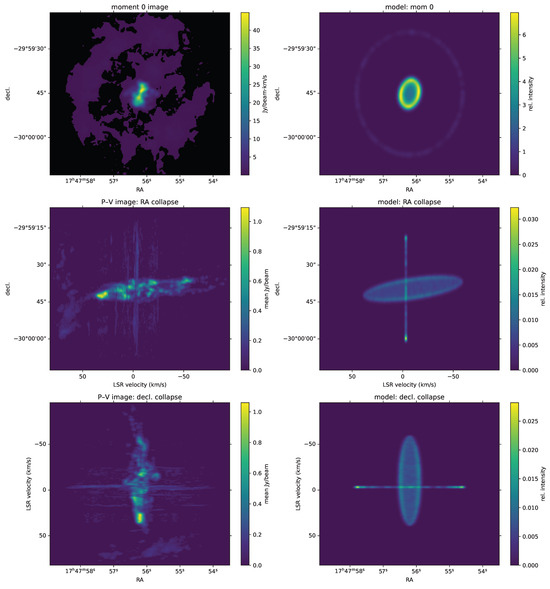
Morpho-kinematic modeling of planetary nebulae (PNe) is important in reconstructing the three-dimensional structure and dynamics of PNe in an effort to understand their formation histories. Here, we present a flexible, modular method for 3D morpho-kinematic modeling of spatial–spectral mapping observations of PN molecular line emission. We show how a combination of basic geometric elements (an ellipsoid for the main nebula, an ellipsoidal mask for a lack of emission or cavity, and an elliptical ring for extended emission) can effectively reproduce the basic geometries and kinematics of the molecular emission regions of PNe, thereby providing constraints on key PNe parameters, including expansion velocity, physical size, and (hence) dynamical age. We apply PyPVNe to SMA and ALMA CO data cubes obtained for the PNe NGC 6720, NGC 3132, and Hubble 5. The results demonstrate the potential of our simple morpho-kinematic modeling methodology to investigate the origins and structural evolution of these and other molecule-rich PNe.
Full article
(This article belongs to the Special Issue Origins and Models of Planetary Nebulae, 2nd Edition)
►▼
Show Figures

Figure 1

Open AccessArticle
Generative Domain Adaptation for Pixel-Level RFI Segmentation in Ku-Band Satellite Spectrograms
by
Siwagorn Pavitpok, Montree Kumngern and Pattarapong Phasukkit
Galaxies 2026, 14(4), 64; https://doi.org/10.3390/galaxies14040064 - 29 Jun 2026
Abstract
►▼
Show Figures
Radio frequency interference (RFI) segmentation in Ku-band satellite communications remains challenging because of weak, non-stationary interference characteristics and the scarcity of pixel-level annotated empirical data. To address this limitation, this study proposes a synthetic-to-real deep learning framework in which four parameterized RFI morphologies—narrowband,
[...] Read more.
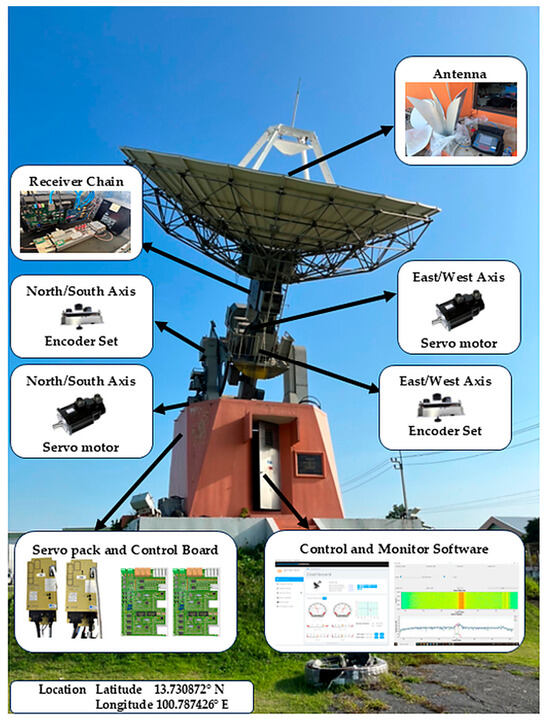
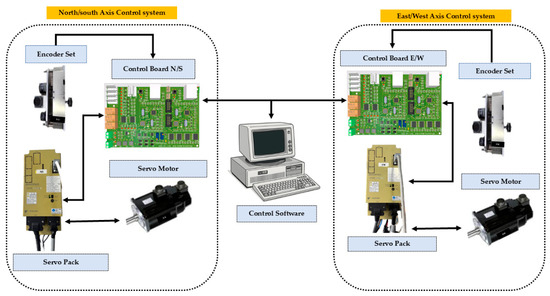
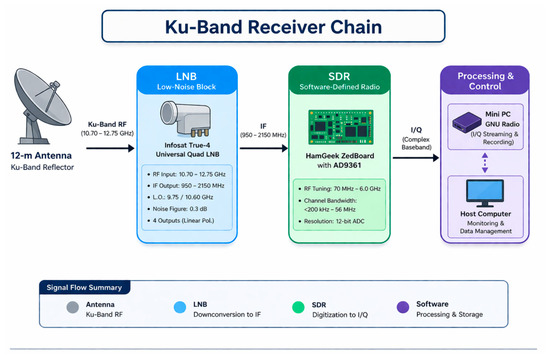
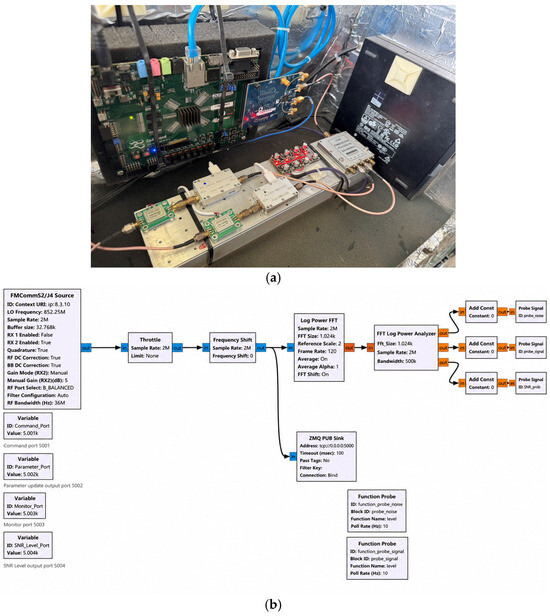
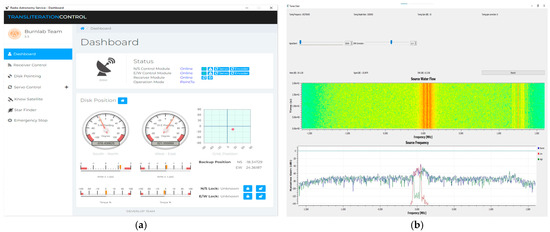
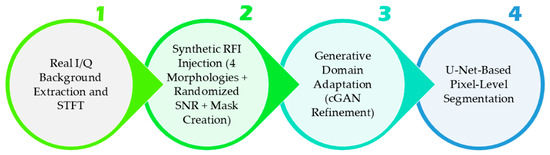
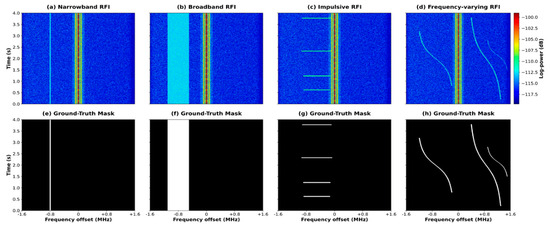
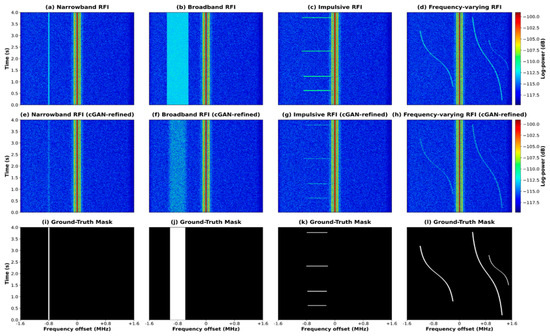
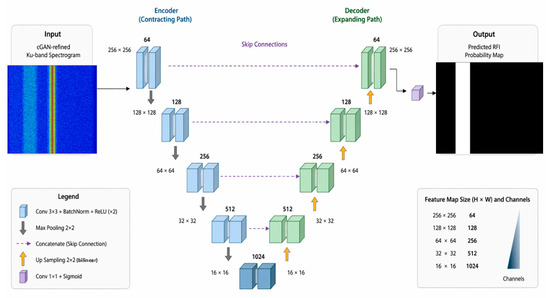
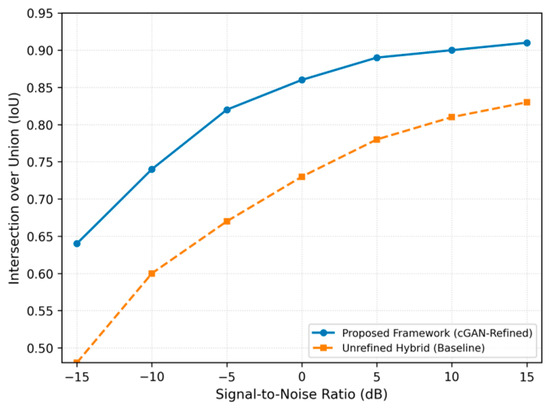
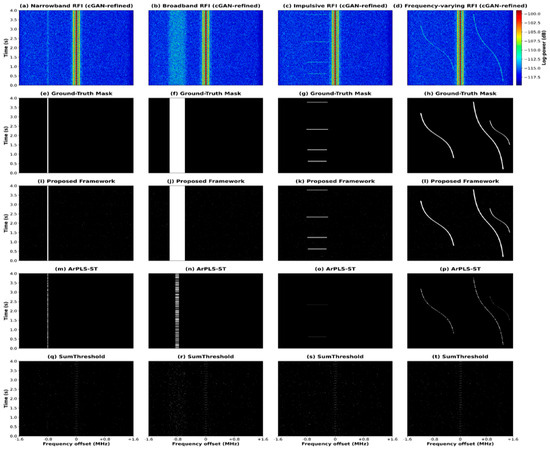
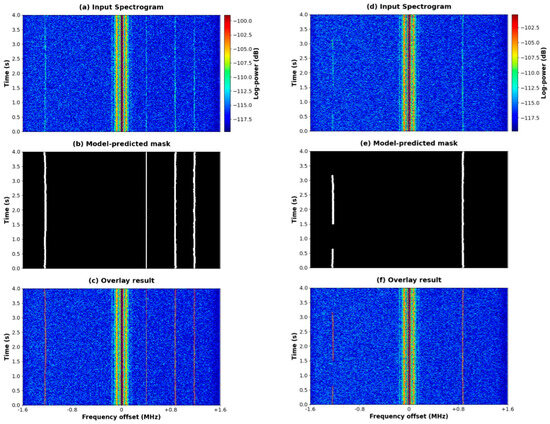
Radio frequency interference (RFI) segmentation in Ku-band satellite communications remains challenging because of weak, non-stationary interference characteristics and the scarcity of pixel-level annotated empirical data. To address this limitation, this study proposes a synthetic-to-real deep learning framework in which four parameterized RFI morphologies—narrowband, broadband, impulsive, and frequency-varying—are superimposed onto empirical Ku-band spectrogram backgrounds acquired from a 12-m ground-station platform. A conditional Generative Adversarial Network (cGAN) is then employed for domain adaptation to reduce the synthetic-to-real gap by harmonizing the hybrid spectrograms with empirical thermal noise characteristics. The refined spectrograms and their exact binary masks are subsequently used to train a U-Net model for pixel-level segmentation. Quantitative evaluation on held-out empirical-background hybrid test data shows that the proposed framework achieves an Intersection over Union (IoU) of 0.849 and an F1-score of 0.918, outperforming traditional threshold-based methods and unrefined learning baselines. Additional qualitative validation on naturally observed empirical Ku-band RFI recordings further supports the practical applicability of the proposed framework beyond controlled hybrid test data. These results indicate that generative domain adaptation provides a practical and scalable alternative to manual labeling for automated RFI monitoring in operational Ku-band environments.
Full article

Figure 1
Open AccessArticle
Turning Galaxy Rotation Curves into Radial Cosmic Chronometers: A Nexus Paradigm Approach
by
Stuart Marongwe and Stuart Allan Kauffman
Galaxies 2026, 14(4), 63; https://doi.org/10.3390/galaxies14040063 - 25 Jun 2026
Abstract
►▼
Show Figures
We present a novel method for deriving radially resolved dynamical chronometers from galaxy rotation curves, allowing galaxy assembly histories to be reconstructed directly from kinematic data. In the Nexus Paradigm, the baryonic Tully–Fisher relation is used to estimate the dynamical mass profile. We
[...] Read more.
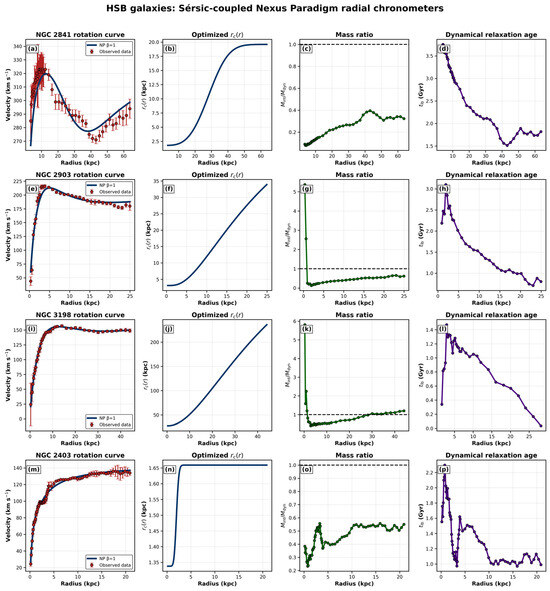
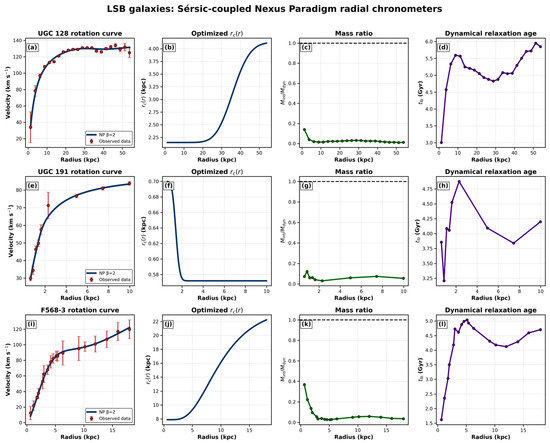
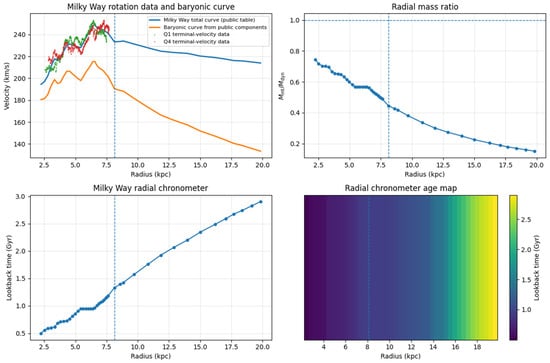
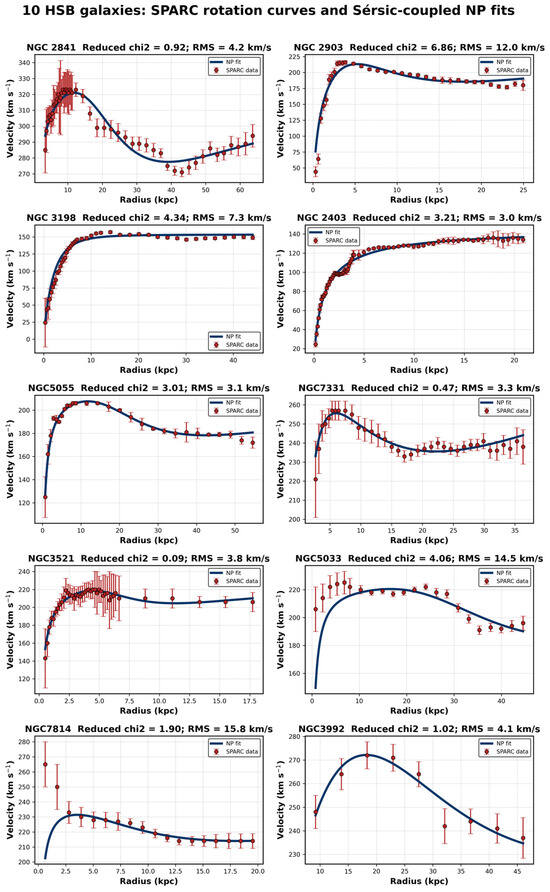
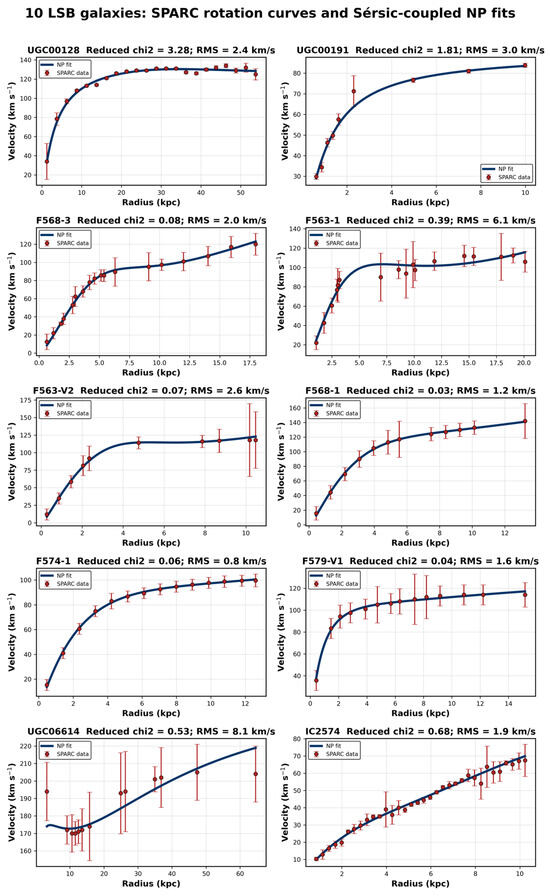
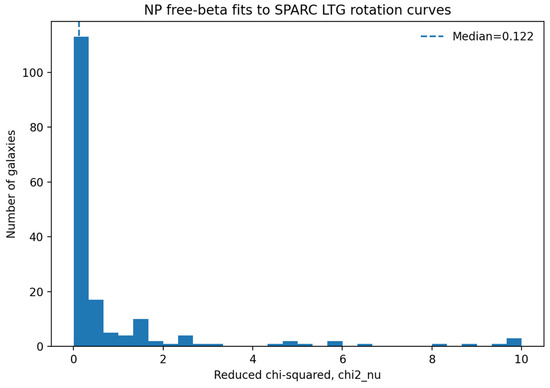
We present a novel method for deriving radially resolved dynamical chronometers from galaxy rotation curves, allowing galaxy assembly histories to be reconstructed directly from kinematic data. In the Nexus Paradigm, the baryonic Tully–Fisher relation is used to estimate the dynamical mass profile. We compare this profile with independently derived intrinsic baryonic mass distributions obtained from stellar Sérsic fits and gas surface-density measurement yields. This yields a radial ratio that maps to formation redshift with radial resolution. Inverting this ratio within a standard cosmological framework produces a radial lookback-time profile, representing the time since each radial shell last experienced dynamical reconfiguration. Applying the method to a pilot sample of seven SPARC galaxies, including both high- and low-surface-brightness systems as well as the Milky Way, reveals diverse age structures: stratified profiles associated with inside-out growth and flatter profiles consistent with coherent disk assembly. The method requires no dark-matter halo fitting and offers a kinematic chronometer that complements stellar population and chemical evolution approaches. The NP rotation-curve parameters were determined by minimizing the chi-squared statistic between the observed and predicted velocities using a two-stage optimization consisting of a global differential-evolution search followed by nonlinear least-squares refinement. Observational uncertainties were taken from the published rotation-curve data, supplemented by a 5 km s−1 systematic error floor added in quadrature to account for non-circular motions and other unresolved systematics. We also show that the governing dynamical equation admits a gravitoelectromagnetic interpretation, in which a velocity-dependent term generates disk-wide torques that regulate angular momentum transport. This leads to a unified stability framework in which galaxy morphology emerges from a single parameter regime: balanced conditions favor a coherent spiral structure, whereas dynamically hot regimes naturally produce diffuse and ultra-faint systems. The cosmological scaling of the effective gravitomagnetic field further suggests that the spiral structure is partly regulated by cosmic time. Although the inferred ages depend on the accuracy of the baryonic mass reconstruction and on the local validity of the evolving baryonic Tully–Fisher relation, our results show that rotation curves encode time-resolved dynamical information. This establishes the radial dynamical chronometer as a new observable for studying galaxy evolution and testing gravitational frameworks.
Full article

Figure 1
Open AccessArticle
Atomic Structure Calculations of Zr I–IV for Kilonova Modelling
by
Matteo Bezmalinovich
Galaxies 2026, 14(4), 62; https://doi.org/10.3390/galaxies14040062 - 25 Jun 2026
Abstract
The optical counterpart of the gravitational wave event GW170817, known as kilonova, has provided strong evidence that binary neutron star mergers are favourable sites to host the r-process nucleosynthesis. Kilonova is a quasi-thermal electromagnetic emission powered by the radioactive decay of heavy neutron-rich
[...] Read more.
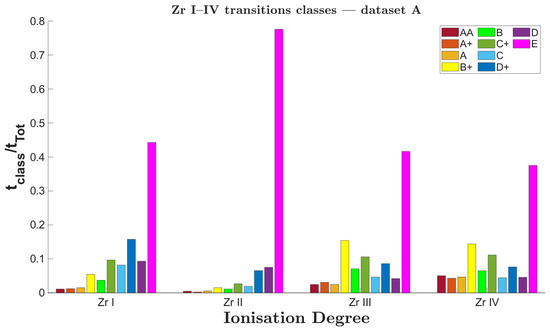
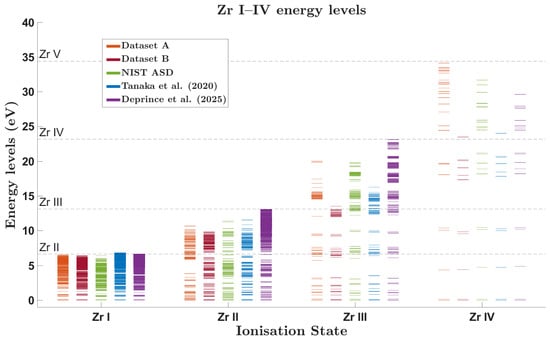
The optical counterpart of the gravitational wave event GW170817, known as kilonova, has provided strong evidence that binary neutron star mergers are favourable sites to host the r-process nucleosynthesis. Kilonova is a quasi-thermal electromagnetic emission powered by the radioactive decay of heavy neutron-rich nuclei produced by the r-process. Considering the variety of elements contributing to kilonova ejecta, essential information about its composition can be achieved through spectral characterisation, radiative transfer simulations, and opacities. The latter represents one of the most challenging aspects of the modelling, as it relies on accurate atomic structure calculations of energy levels and transitions. Since light r-process elements are major opacity contributors in early (<2 days) scenario, this work focuses on atomic calculations for Zr I–IV. Energy levels and bound-bound transitions are determined using the GRASP2018 code, assuming two different datasets for each ionisation stage: one including, and one excluding core-core and core-valence correlations. Results demonstrate that the inclusion of f shell and core correlations impacts on both energy levels and transitions. A systematic assessment of the accuracy is performed through detailed comparisons with the NIST ASD and literature references. Finally, these Zr data are integrated on the open access MARTINI platform.
Full article
(This article belongs to the Special Issue Neutron Capture Processes in the Universe)
►▼
Show Figures

Figure 1
Open AccessArticle
The Edge-On Galaxies in the DESI Survey (EGIDE): Sample Building and Photometry
by
Alexander A. Marchuk, Sergey S. Savchenko, Dmitry I. Makarov, Vladimir P. Reshetnikov, Ilia V. Chugunov, Matvey D. Kozlov, Aleksandra V. Antipova, Anastasia M. Sypkova, Evgenii V. Rubtsov and Dmitry V. Bizyaev
Galaxies 2026, 14(3), 61; https://doi.org/10.3390/galaxies14030061 - 18 Jun 2026
Abstract
We present the EGIDE (Edge-on Galaxies in the DESI survey) project—a catalog of 149,215 edge-on galaxy candidates created using the data of the DESI Legacy Imaging Survey DR10 images. The catalog size is ten times greater than its predecessor and covers more than
[...] Read more.
We present the EGIDE (Edge-on Galaxies in the DESI survey) project—a catalog of 149,215 edge-on galaxy candidates created using the data of the DESI Legacy Imaging Survey DR10 images. The catalog size is ten times greater than its predecessor and covers more than half of the sky. It is constructed in an automatic way, utilizing the full power of manual annotations from the GalaxyZoo volunteers, implemented in the Zoobot neural model, which was fine-tuned to search for edge-on galaxies specifically. To ensure the credibility of the dataset, subsequent manual supervision was performed. The EGIDE catalog provides homogeneous SExtractor photometry in the bands, total stellar mass estimates, redshifts for 98% of the sample, star formation rates, and other information. All of this is publicly available at The Edge-on Galaxy Database site. The preliminary analysis focused on differences between edge-on galaxies in the so-called blue sequence and red cloud populations. These galaxies demonstrate distinct properties: the number of redder galaxies decreases with increasing ratio faster than that of the bluer galaxies; galaxy thickness varies with galaxy color: red sequence galaxies are thicker than blue cloud galaxies; the flattening ratio increases significantly with total stellar mass only among redder cloud galaxies. It is an intriguing result that the same trend of q increasing at the high-mass end is detected by both the statistical models of figures of revolution and direct observations of edge-on galaxies in EGIDE independently. The full extent of this relationship’s validity can only be determined after properly accounting for the contributions of the bulge and the PSF.
Full article
(This article belongs to the Special Issue Unveiling the Structural Properties of Galaxies Using Contemporary Wide-Field Surveys)
►▼
Show Figures

Figure 1
Open AccessArticle
Morphokinematic Structure of the Planetary Nebula NGC 6563
by
Zahra Al, Federico Soto-Badilla, Yüksel Karataş, Gerardo Ramos-Larios and Roberto Vázquez
Galaxies 2026, 14(3), 60; https://doi.org/10.3390/galaxies14030060 - 15 Jun 2026
Abstract
We present a morphokinematic analysis based on high-resolution long-slit echelle spectroscopy of the [N ii] line and narrowband imaging. Position–velocity diagrams reveal asymmetric expansion and localized kinematic features. We derive a systemic velocity of
[...] Read more.
We present a morphokinematic analysis based on high-resolution long-slit echelle spectroscopy of the [N ii] line and narrowband imaging. Position–velocity diagrams reveal asymmetric expansion and localized kinematic features. We derive a systemic velocity of km s−1 ( km s−1) and a main shell expansion velocity of km s−1. Three-dimensional modeling indicates an ellipsoidal main body surrounded by a thin shell, two ear-like protrusions, and additional small-scale structures. The corresponding kinematic ages are yr for the ellipsoid and ring, and yr and yr for the two opposite ear-like protrusions, respectively, indicating that these outer structures predate the main nebular envelope. The kinematic asymmetry and enhanced emission regions suggest evolution within a non-uniform ambient medium. At the same time, the presence of collimated ear-like structures is consistent with shaping influenced by binary interaction, where earlier outflows preceded the ejection of the dense shell. NGC 6563 therefore appears to be a dynamically evolved system shaped by the combined effects of episodic mass ejection and environmental interaction.
Full article
(This article belongs to the Special Issue Origins and Models of Planetary Nebulae, 2nd Edition)
►▼
Show Figures

Figure 1

Open AccessReview
Direct Experiments of Neutron Capture on Stable and Unstable Isotopes for Stellar Nucleosynthesis Studies
by
Jorge Lerendegui-Marco, Javier Balibrea-Correa, Victor Babiano-Suarez, César Domingo-Pardo, Gabriel de la Fuente-Rosales, Bernardo Gameiro, Ion Ladarescu, Ariel Tarifeño-Saldivia, Pablo Torres-Sánchez, Oliver Aberle, Victor Alcayne, Simone Amaducci, Michael Bacak, Jesús Bartolomé, Aparna Basavaraja-Allannavar, Ana-Paula Bernardes, Eric Berthoumieux, Roland Beyer, Matthew Birch, Selin Birincioglu, Marian Boromiza, Damir Bosnar, Benedetta Brusasco, Manuel Caamaño, Aline Cahuzac, Francisco Calviño, Marco Calviani, Daniel Cano-Ott, Adrià Casanovas, Donato Castelluccio, Francesco Cerutti, Gabriele Cescutti, Enrico Chiaveri, Gerardo Claps, Paolo Colombetti, Nicola Colonna, Patrizio Console Camprini, Guillem Cortés, Miguel Cortés-Giraldo, Luigi Cosentino, Sergio Cristallo, Angelica D’Ottavi, Maria Diakaki, Mario Di Castro, Augusto Di Chicco, Mirco Dietz, Emmeric Dupont, Ignacio Durán, Zinovia Eleme, Sylvain Fargier, Martin Farkas, Beatriz Fernández-Domínguez, Paolo Finocchiaro, Will Flanagan, Varvara Foteinou, Valter Furman, Aman Gandhi, Francisco García-Infantes, Aleksandra Gawlik-Ramięga, Gianpiero Gervino, Simone Gilardoni, Enrique González-Romero, Styliani Goula, Erich Griesmayer, Carlos Guerrero, Frank Gunsing, Carlo Gustavino, Jan Heyse, William Hillman, Elizabeth Jacoby, David Jenkins, Erwin Jericha, Arnd Junghans, Ulli Köster, Yacine Kadi, Nasser Kalantar-Nayestanaki, Kalliopi Kaperoni, Myroslav Kavatsyuk, Michael Kokkoris, Sotirios Kopanos, Yury Kopatch, Milan Krtička, Nikolaos Kyritsis, Claudia Lederer-Woods, Giuseppe Lorusso, Alice Manna, Trinitario Martínez, Marco Martínez-Cañada, Alessandro Masi, Cristian Massimi, Pierfrancesco Mastinu, Mario Mastromarco, Emilio-Andrea Maugeri, Annamaria Mazzone, Emilio Mendoza, Alberto Mengoni, Veatriki Michalopoulou, Paolo Milazzo, Jacob Moldenhauer, Riccardo Mucciola, Elizabeth Musacchio González, Agatino Musumarra, Alexandru Negret, Emmanuel Odusina, Dimitrios Papanikolaou, Carlos Paradela, Albert Parmenter, Nikolas Patronis, José Antonio Pavón, Maria Pellegriti, Pablo Pérez-Maroto, Alberto Pérez de Rada Fiol, Giulio Perfetto, Jarosław Perkowski, Cristina Petrone, Nicholas Pieretti, Luciano Piersanti, Elisa Pirovano, Ignacio Porras, Javier Praena, José-Manuel Quesada, René Reifarth, Alejandro Reina, Dimitri Rochman, Yuriy Romanets, Annie Rooney, Gerard Rovira, Carlo Rubbia, Adrián Sánchez-Caballero, Nicolás Sánchez-Vázquez, Rudra N. Sahoo, Daniele Scarpa, Gavin Smith, Nikolay Sosnin, Michele Spelta, Krzysztof Stasiak, Giuseppe Tagliente, Antonella Tamburrino, Diego Tarrío, Giorgios Tsiledakis, Stanislav Valenta, Pedro Vaz, Gianfranco Vecchio, Diego Vescovi, Vasilis Vlachoudis, Rosa Vlastou, Anton Wallner, Christina Weiss, Tobias Wright, Renjie Wu, Roberto Zarrella and Petar Žugecadd
Show full author list
remove
Hide full author list
Galaxies 2026, 14(3), 59; https://doi.org/10.3390/galaxies14030059 - 9 Jun 2026
Abstract
Neutron capture reactions provide essential nuclear physics input for modeling the synthesis of heavy elements in stars. The growing precision of stellar spectroscopy and isotopic measurements in presolar SiC grains now demands cross sections with improved accuracy over the full energy range, and
[...] Read more.
Neutron capture reactions provide essential nuclear physics input for modeling the synthesis of heavy elements in stars. The growing precision of stellar spectroscopy and isotopic measurements in presolar SiC grains now demands cross sections with improved accuracy over the full energy range, and access to unstable nuclei relevant to slow (s-) process branchings and the intermediate (i-) process. This article reviews recent progress in direct neutron capture measurements, focusing on time-of-flight (TOF) experiments at CERN n_TOF and complementary activation techniques. Substantial advances have been achieved for stable s-only and bottleneck isotopes, significantly improving constraints on s-process models. In parallel, the combination of high instantaneous neutron fluxes and advanced detector systems has facilitated first-time neutron capture measurements on several radioactive branching-point nuclei. Feasibility studies, however, reveal current limitations related to sample availability, background conditions, and restricted energy coverage. In this context, the complementarity between TOF and activation emerges as a central strategy. Future developments, including high-flux facilities and novel inverse kinematics experiments in ion storage rings, are expected to extend the boundaries of neutron capture measurements, overcoming current limitations and helping unlock new frontiers in our understanding of stellar nucleosynthesis.
Full article
(This article belongs to the Special Issue Neutron Capture Processes in the Universe)
►▼
Show Figures

Figure 1
Journal Menu
► ▼ Journal Menu-
- Galaxies Home
- Aims & Scope
- Editorial Board
- Reviewer Board
- Topical Advisory Panel
- Instructions for Authors
- Special Issues
- Topics
- Topical Collections
- Article Processing Charge
- Indexing & Archiving
- Editor’s Choice Articles
- Most Cited & Viewed
- Journal Statistics
- Journal History
- Journal Awards
- Conferences
- Editorial Office
Journal Browser
► ▼ Journal BrowserHighly Accessed Articles
Latest Books
E-Mail Alert
News
Topics
Topic in
Symmetry, Galaxies, Universe, Particles, Astronomy
Dark Matter, Dark Energy and Cosmological Anisotropy
Topic Editors: Kazuharu Bamba, Panayiotis Stavrinos, Ivan De MartinoDeadline: 31 December 2026
Conferences
Special Issues
Special Issue in
Galaxies
Study on Contact Binary Stars
Guest Editors: Kai Li, Atila PoroDeadline: 14 August 2026
Special Issue in
Galaxies
Undifferentiated Asteroids and Meteorites as Rosetta Stones to Study Protoplanetary Disks and Planetary Formation
Guest Editors: Josep Maria Trigo-Rodríguez, Lysa J. Chizmadia, Diego Turrini, Danai PolychroniDeadline: 15 September 2026
Special Issue in
Galaxies
Strong Gravitational Lens Modeling
Guest Editor: Stefan SchuldtDeadline: 15 September 2026
Special Issue in
Galaxies
Theoretical and Observational Approaches to the Hubble Tension in Cosmology
Guest Editors: Indranil Banik, Harry DesmondDeadline: 30 September 2026
Topical Collections
Topical Collection in
Galaxies
A Trip across the Universe: Our Present Knowledge and Future Perspectives
Collection Editor: Emilio Elizalde