Consensus Ecological Risk Assessment of Potential Transportation-related Bakken and Dilbit Crude Oil Spills in the Delaware Bay Watershed, USA
 ,
,
Abstract
:1. Introduction
2. Methods
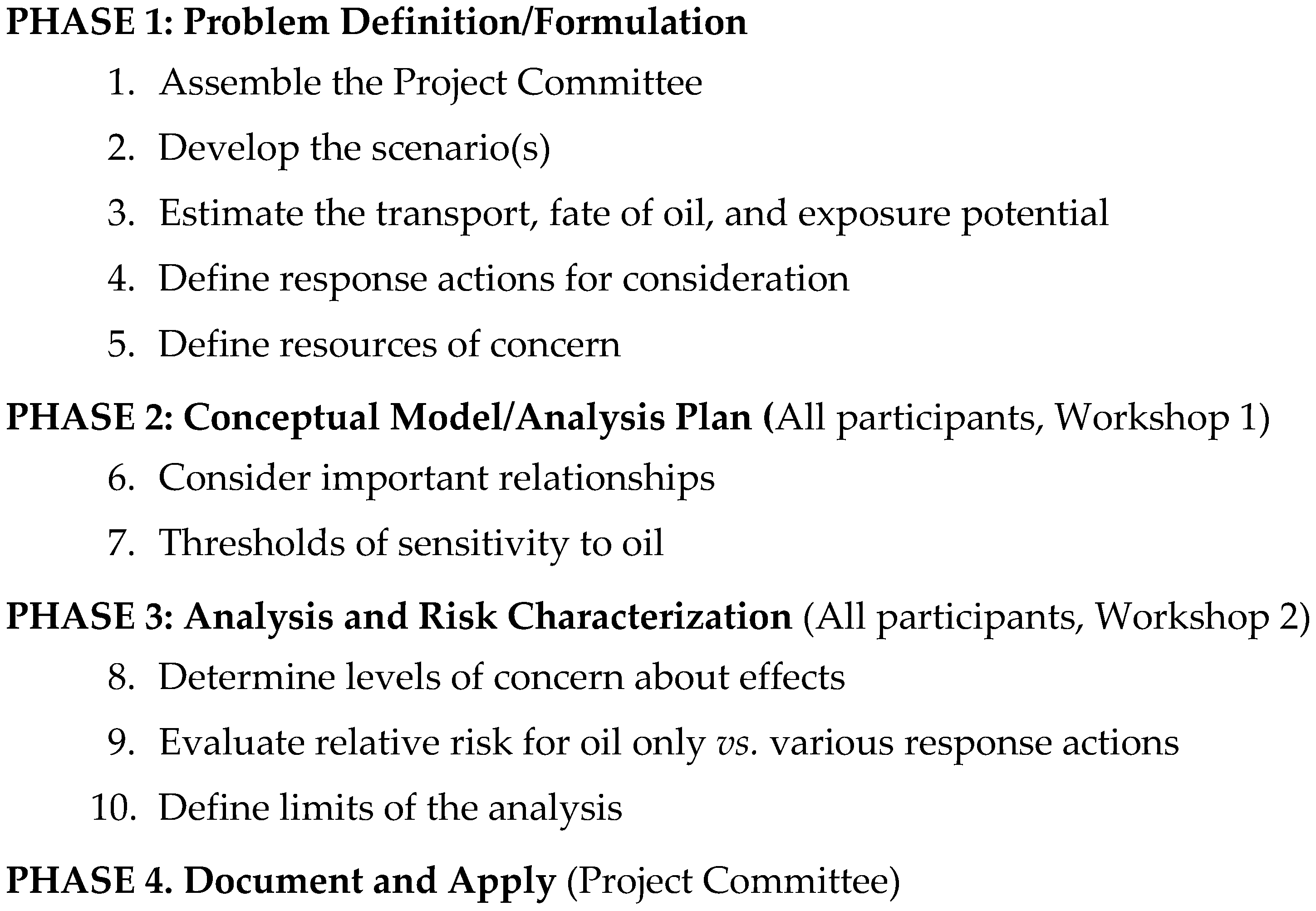
2.1. Risk Analysis and Characterization
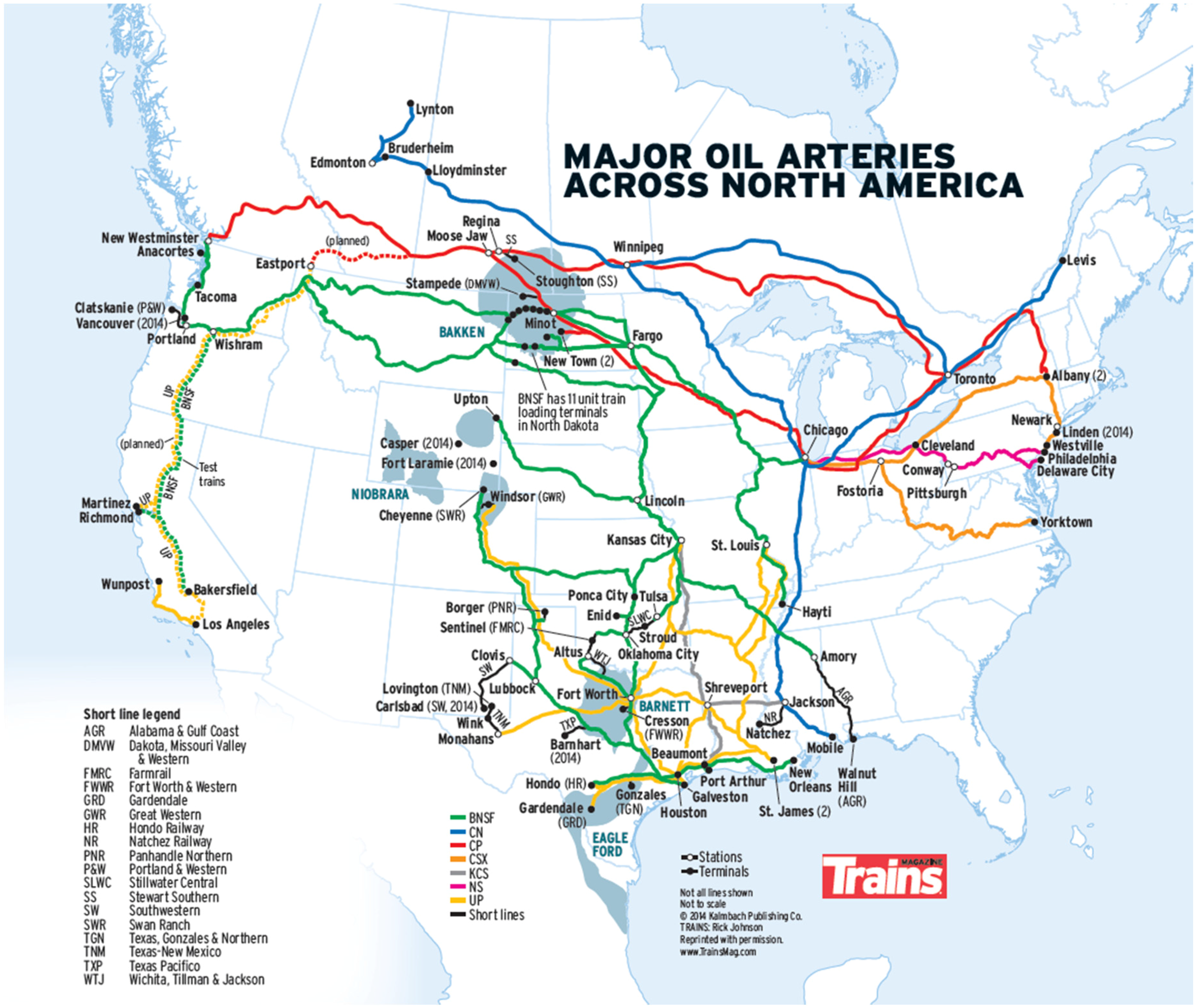
2.2. Study Area
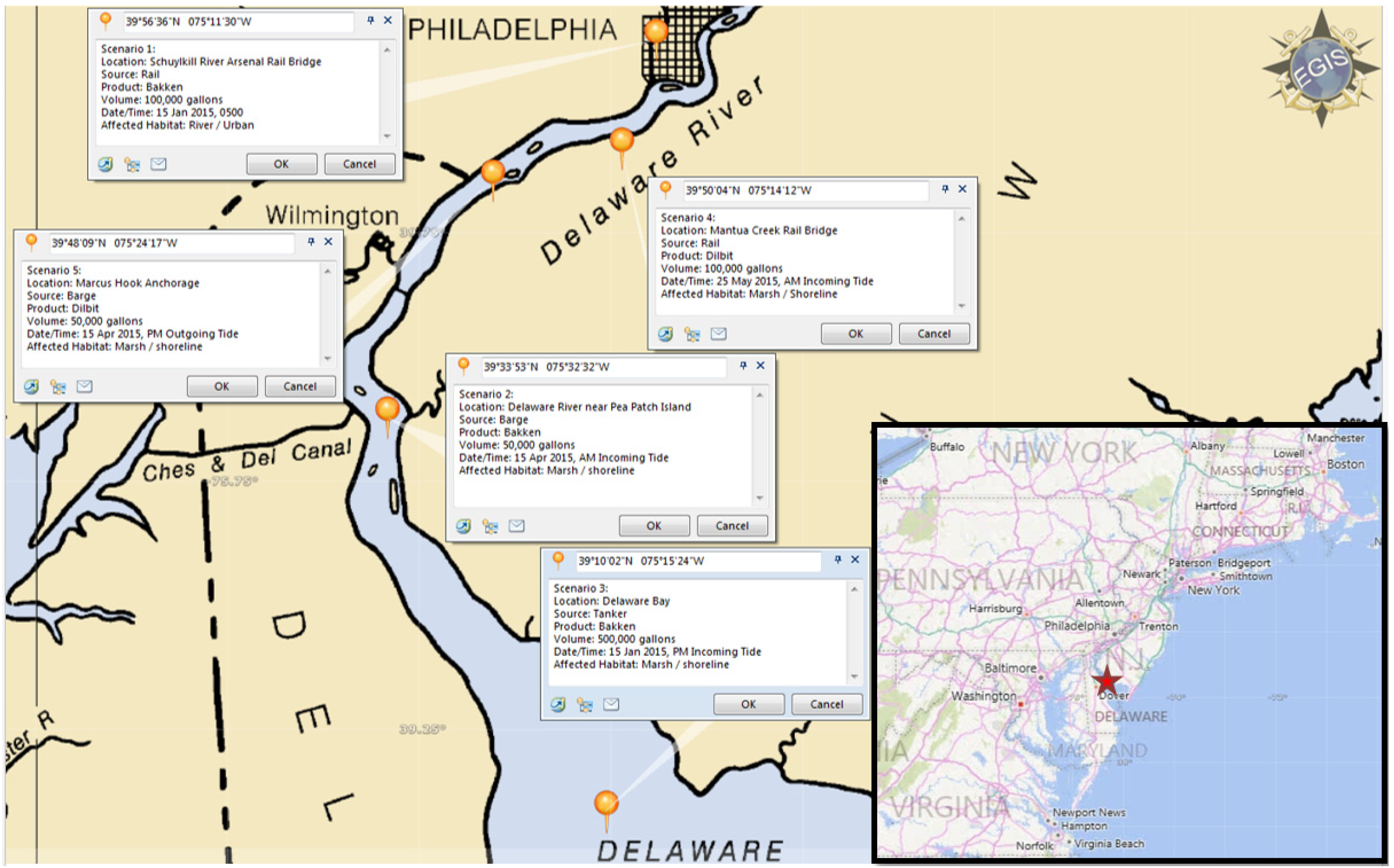
2.3. Transportation Scenarios
2.4. Threatened and Endangered Species
- Mammals—northern long-eared bat,
- Birds—red knot and least bittern (shorebirds),
- Amphibians—southern leopard frog,
- Fish—Atlantic sturgeon, short-nose sturgeon, hickory shad, banded sunfish,
- Reptiles—eastern redbelly turtle, and
- Plants—long-lobed arrowhead, wild rice, and seabeach amaranth.
3. Results
4. Discussion
4.1. Resources of Concern
4.2. Response Actions
- Natural attenuation with monitoring (NAM)
- Fire—Let burn and controlled burn (both in-situ)
- Fire—Extinguishing agent and methods
- No Fire—Vapor suppression
- No Fire—Oil spread control (on-land, on-water, and underwater)
- No Fire—On-water recovery and underwater recovery
- No Fire—Resource protection (on-water and on-land)
- No Fire—Shoreline clean-up
- No Fire—Oil detection/mapping (physical-contact methods)
- No Fire—Oil detection/mapping (remotely-observed methods)
4.2.1. Natural Attenuation and Monitoring (NAM)
4.2.2. Fire—Let Burn and Controlled Burn (both In-situ)
- How and where to obtain and apply water-cooling streams?
- Are current fireboats sufficient and able to respond?
- Can first responder and public safety air monitoring be deployed?
- Can adequate protection of exposed structures be attained?
4.2.3. Fire—Extinguishing Agent and Methods
- The ability to access, in a timely manner,
- Sufficient quantity of foam and water,
- Dry chemical agents,
- Fire boom, and
- Fire boats with the necessary high-volume fire pumps and nozzles.
4.2.4. No Fire—Vapor Suppression
4.2.5. No Fire—Oil Spread Control (On-Land, On-Water, Underwater)
4.2.6. No Fire—On-Water Recovery and Underwater Recovery
4.2.7. No Fire—Resource Protection (On-Water and On-Land)
4.2.8. No Fire—Shoreline Clean-up
4.2.9. No Fire—Oil Detection/Mapping (Physical-Contact Methods)
4.2.10. No Fire—Oil Detection/Mapping (Remotely-Observed Methods)
4.3. Conceptual Model
- Air pollution—vapors, direct effects from respiratory issues for air breathers. Therefore, air pollution is not a stressor for mid-water, benthos.
- Aqueous exposure—direct effects from aquatic respiration and dermal exposure to oil and oil components dissolved within the water column; may be short-lived exposure with the potential for high consequence for impacted species. Excludes submerged oil globules.
- Physical trauma (mechanical impact from equipment, aircraft, people, boats, etc.)—direct effects from physical impact on individual species, including disturbance.
- Oiling/smothering—direct effects from dermal contact with oil; skin (hypothermia), mucosal membranes (eyes, nares, etc.); indirect effects or secondary impacts could include ingestion (preening). This may include contact with submerged oil globules or mats.
- Thermal (heat exposure from fire)—direct effects from oil burning; impacts from exposure to a fire/burn (not dermal exposure to the oil).
- Waste—direct effects prior to being removed (pre-cleaning) from the system. Excludes equipment intended for re-use, e.g., non-sorbent boom.
- Ingestion (food web, etc.)—resources indirectly exposed to oil or its constituents via ingestion of oil or contaminated/affected prey.
- Advisory/Closure—prohibited action of use (e.g., commercial or recreational fishery, water intake); protection from possible exposure.
- B1: Bakken on the water/soil surface (initially, as it begins to weather)
- B2: Bakken within water column due to natural dispersion (later)
- D1: Dilbit before weathering (initially, from loss of lighter fractions through evaporation)
- D2: Dilbit after weathering (later)
4.4. Risk Ranking Matrix
- Discountable: Impacts are considered negligible, trivial, or a minor inconvenience.
- Impaired: Short-lived modestly adverse impacts that alter habitats or life cycles.
- Significant: Sustained and substantive adverse impacts that potentially lethal or highly damaging to a natural resource(s).
- Dysfunctional: Long term damage that prohibits a natural resource from living, reproducing, or providing an ecological service(s).
4.5. Risk Characterization
- If using a response action is likely to improve the outcome, the score is a lower alphanumerical value than the spilled oil (NAM).
- If using a response action is likely to worsen the outcome, the score is a higher alphanumerical value than the spilled oil (NAM).
4.5.1. Bakken Oil Spill Risks
4.5.2. Dilbit Oil Spill Risks
- Scenario 4—controlled in-situ burning in natural terrestrial shorelines, intertidal shorelines, and the water’s edge of the mid-water column.
- Scenario 4—oil spread control, on-water recovery, resource protection, shoreline cleanup in natural terrestrial shorelines
- Scenario 5—resource protection in intertidal shorelines.
- Scenario 5—oil spread control, on-water recovery the water’s edge of the mid-water column.
- Scenario 5—shoreline cleanup in artificial shorelines (increased risk to reptiles, amphibians, and macro-invertebrates).
Acknowledgments
Author Contributions
Conflicts of Interest
Abbreviations
| BPD | Barrels per day |
| bbls | Barrels |
| CERA | Consensus Ecological Risk Assessment |
| DE | Delaware |
| DIP | Dynamic Inclined Plane |
| EPA | US Environmental Protection Agency |
| ERA | Ecological Risk Assessment |
| Gals | Gallons |
| NAM | Natural Attenuation and Monitoring |
| NCP | US National Oil and Hazardous Substances Pollution Contingency Plan |
| NGO | Non-governmental organization |
| NJ | New Jersey |
| NOAA | National Oceanic and Atmospheric Administration |
| PA | Pennsylvania |
| PPE | Personal Protective Equipment |
| T/E | Threatened and endangered species |
| EIA | US Energy Information Administration |
| USCG | US Coast Guard |
| USFWS | US Fish and Wildlife Service |
References
- National Academies of Science, Engineering, and Medicine. Spills of Diluted Bitumen from Pipelines: A Comparative Study of Environmental Fate, Effects, and Response; The National Academies Press: Washington, DC, USA, 2016. [Google Scholar]
- American Petroleum Institute. Oil Sands. Available online: http://www.api.org/~/media/Files/Oil-and-Natural-Gas/Oil_Shale/Oil_Shale_Factsheet_1.pdf (accessed on 14 January 2016).
- U.S. Energy Information Administration. U.S. Crude Oil and Natural Gas Proved Reserves, 2014; U.S. Department of Energy: Washington, DC, USA, 2015; pp. 1–20.
- Frailey, F.W. All Oiled Up. How Railroads Got Back in the Oil Business and Why They Aren’t Going—Ever. Trains 2014, 74, 28–37. [Google Scholar]
- Fingas, M. Diluted Bitumen (Dilbit): A Future High Risk Spilled Material. Available online: http://interspill.org/previous-events/2015/WhitePapers/Interspill2015ConferenceProceedings/25%20MARCH%202015/Future%20Risk%20-%20HNS%20-%20Bitumen/Diluted%20-Bitumen%20-Dilbit-A-Future-High-Risk-Spilled-Material.pdf (accessed on 28 February 2016).
- Mitchell, J.H.; Child, N.J. Bakken Crude Oil Spills-Response Options and Environmental Impacts; MassDEP: Canton, MA, USA, 2015; pp. 1–100. [Google Scholar]
- United States Environmental Protection Agency. ExxonMobil Mayflower Clean Water Settlement. Available online: http://www.epa.gov/enforcement/exxonmobil-mayflower-clean-water-settlement (accessed on 14 January 2016).
- Brescia, N.; Dodson, A. ExxonMobil Mayflower Oil Spill. Available online: http://rrt6.org/Uploads/Files/05-29%201430%20ExxonMobil%20Pipeline%20Mayflower%20Oil%20Spill.pdf (accessed on 14 January 2016).
- Pipeline and Hazardous Materials Safety Administration. ExxonMobil Pipeline Incident-Mayflower, Ark. Available online: http://www.phmsa.dot.gov/portal/site/PHMSA/menuitem.6f23687cf7b00b0f22e4c6962d9c8789/?vgnextoid=1a9ab5676d5cd310VgnVCM100000d2c97898RCRD&vgnextchannel=d248724dd7d6c010VgnVCM10000080e8a8c0RCRD&vgnextfmt=print (accessed on 14 January 2016).
- Wikipedia. 2013 Mayflower Oil Spill. Available online: https://en.wikipedia.org/wiki/2013_Mayflower_oil_spill (accessed on 14 January 2016).
- NOAA’s Response and Restoration Blog. Five Years After Deepwater Horizon, How Is NOAA Preparing for Future Oil Spills? Available online: https://usresponserestoration.wordpress.com/tag/tar-sands/ (accessed on 14 January 2016).
- Doelling, P.; Davis, A.; Jellison, L.T.K.; Miles, S. Bakken Crude Oil Spill Barge E2MS 303 Lower Mississippi River February 2014. Available online: http://www.nrt.org/production/NRT/RRT3.nsf/Resources/May2014_pdf/$File/Bakken_Crude_Spill_E2MS303_Revised.pdf (accessed on 14 January 2016).
- NOAA. Barge E2MS 303: IncidentNews. Available online: http://incidentnews.noaa.gov/incident/8729 (accessed on 14 January 2016).
- Karlamanga, S. Train in Alabama Oil Spill Was Carrying 2.7 million Gallons of Crude. Available online: http://articles.latimes.com/2013/nov/09/nation/la-na-nn-train-crash-alabama-oil-20131109 (accessed on 13 January 2016).
- Environment Canada; Fisheries and Oceans Canada; Natural Resources Canada. Properties, Composition and Marine Spill Behaviour, Fate and Transport of Two Diluted Bitumen Products from the Canadian Oil Sands; Government of Canada: Quebec, Canada, 2013; pp. 5–80.
- Polaris Applied Sciences, Inc. A Comparison of the Properties of Diluted Bitumen Crudes with Other Oils. Available online: http://crrc.unh.edu/sites/crrc.unh.edu/files/comparison_bitumen_other_oils_polaris_2014.pdf (accessed on 14 January 2016).
- Fitzpatrick, M.; Tebeau, P.; Hansen, K.A. Development of Bottom Oil Recovery Systems-Final Project Report; USCG: Acquisition Directorate Research & Development Center: New London, CT, USA, 2013; pp. 1–35. [Google Scholar]
- Witt O’Brien’s; Polaris Applied Sciences; Western Canada Marine Response Corporation. A Study of Fate and Behavior of Diluted Bitumen Oils on Marine Waters; Dilbit Experiments: Gainford, AB, Canada, 2013; pp. 1–66. [Google Scholar]
- Auers, J.R.; Couture, R.M.; Sutton, D.L. The North Dakota Petroleum Council Study on Bakken Crude Properties; Prepared for the North Dakota Petroleum Council. Dallas, TX, USA, 2014; pp. 1–78. Available online: http://www.ndoil.org/image/cache/Bakken_Quality_Report.pdf (accessed on 28 February 2016).
- Transportation Safety Board of Canada. Laboratory Report LP148/2013. Available online: http://www.tsb.gc.ca/eng/enquetes-investigations/rail/2013/R13D0054/lab/20140306/LP1482013.asp (accessed on 1 January 2016).
- U.S. Environmental Protection Agency, Emergency Response Team. Bakken Shale Crude Oil Spill Evaluation Pilot Study. Available online: http://rrt5.org/Portals/0/docs/BakkenCrudePilotStudy-PrelimRpt_Final_4-1-15.pdf (accessed on 14 January 2016).
- New York State Departments of Environmental Conservation, Health, & Transportation; Division of Homeland Security and Emergency Services; New York State Energy Research and Development Authority. Transporting Crude Oil in New York State: A Review of Incident Prevention and Response Capacity; State of New York: Albany, NY, USA, 2014; pp. 8–110.
- State of Oregon. Preliminary Statewide Rail Safety Review; Oregon State Legislature: Salem, OR, USA, 2014; pp. 1–78. [Google Scholar]
- Margolis, J. Runaway Risks, Oil Trains and Government’s Failure to Protect People, Wildlife and the Environment; Center for Biological Diversity: Portland, OR, USA, 2015; pp. 1–15. [Google Scholar]
- Etkin, D.E.; Joeckel, J.; Walker, A.H.; Scholz, D.; Moore, C.; Baker, C.; Hatzenbuhler, D.; Patton, R.G.; Lyman, E. Washington State 2014 Marine & Rail Oil Transportation Study: Appendix C: In Depth: Crude by Rail Emergency & Spill Response; Spill Prevention, Preparedness & Response Program, Washington State Department of Ecology: Olympia, WA, USA, 2014; pp. 1–570.
- Liu, X.; Rapik Saat, M.; Barkan, C.P.L. Analysis of Causes of Major Train Derailment and Their Effect on Accident on Accident Rates. Transp. Res. Rec. 2012, 2289, 154–163. [Google Scholar] [CrossRef]
- Liu, X.; Rapik Saat, M.; Barkan, C.P.L. Safety Effectiveness of Integrated Risk Reduction Strategies for Rail Transport of Hazardous Materials. Transp. Res. Rec. 2013, 2374, 102–110. [Google Scholar] [CrossRef]
- Alves, T.M.; Kokinou, E.; Zodiatis, G.; Lardner, R.; Panagiotakis, C.; Radhakrishnan, H. Modelling of oil spills in confined maritime basins: The case for early response in the Eastern Mediterranean Sea. Environ. Pollut. 2015, 206, 390–399. [Google Scholar] [CrossRef] [PubMed]
- Alves, T.M.; Kokinou, E.; Zodiatis, G. A three-step model to assess shoreline and offshore susceptibility to oil spills: The South Aegean (Crete) as an analogue for confined marine basins. Mar. Pollut. Bull. 2014, 86, 443–457. [Google Scholar] [CrossRef] [PubMed]
- National Oil and Hazardous Substance Pollution Contingency Plan. In Code of Federal Regulations; Part 300, Title 40; STATUTE: Washington, DC, USA, 1994.
- Bigbie, J. Energy Renaissance Waterway Impact. J. Saf. Secur. Sea 2015, 72, 18–20. [Google Scholar]
- NEREIDS. Scenario of the Crete Table Top exercise (July 2013). Available online: http://www.nereids.eu/site/en/index.php?file=scenarios (accessed on 10 February 2016).
- Adler, E.; Inbar, M. Shoreline sensitivity to oil spills, the Mediterranean coast of Israel: Assessment and analysis. Ocean Coast. Manag. 2007, 50, 24–34. [Google Scholar] [CrossRef]
- Aurand, D. The Application of Ecological Risk Assessment Principles to Dispersant Use Planning. Spill Sci. Tech. Bull. 1995, 2, 241–247. [Google Scholar] [CrossRef]
- U.S. Environmental Protection Agency. Guidelines for Ecological Risk Assessment; Federal Register: Washington, DC, USA, 1998; pp. 26846–26924.
- Walker, A.H.; Scholz, D.; Pond, R.G.; Aurand, D.V.; Clark, J.R. Lessons Learned in Ecological Risk Assessment Planning Efforts, Proceedings of the International Oil Spill Conference, Tampa, FL, USA, 26–29 March 2001; pp. 185–190.
- Aurand, D.; Walko, L.; Pond, R. Developing Consensus Ecological Risk Assessments: Environmental Protection In Oil Spill Response Planning A Guidebook; United States Coast Guard: Washington, DC, USA, 2000; pp. 1–133. [Google Scholar]
- Walker, A.H.; Scholz, D.; McPeek, M. Consensus Ecological Risk Assessment of Potential Transportation-related Bakken and Dilbit Crude Oil Spills in the Delaware Bay Area: Comparative Evaluation of Response Actions; United States Coast Guard: Washington, DC, USA, 2016. [Google Scholar]
- Kraly, J.; Pond, R.; Walker, A.H.; Caplis, J.; Aurand, D.V.; Coelho, G.M.; Martin, B.; Sowby, M. Ecological Risk Assessment Principles Applied to Oil Spill Response Planning, Proceedings of the International Oil Spill Conference, Tampa, FL, USA, 26–29 March 2001; pp. 177–184.
- Aurand, D.; Coelho, G.M.; Pond, R.G.; Martin, B.; Caplis, LCDR J.; Kraly, J.; Sowby, M.; Walker, A.H. Results from Cooperative Ecological Risk Assessments for Oil Spill Response Planning in Galveston Bay, Texas and the San Francisco Bay Area, California, Proceedings of International Oil Spill Conference, Sacramento, CA, USA, 26–29 March 2001; pp. 167–175.
- Aurand, D.; Pond, R.; Coelho, G.; Cunningham, LCDR M.; Cocanaur, LCDR A.; Stevens, L. The Use Consensus Ecological Risk Assessments to Evaluate Oil Spill Response Options: Lessons Learned From Workshops in Nine Different Locations, Proceedings of International Oil Spill Conference, Miami Beach, FL, USA, 15–19 May 2005; pp. 379–386.
- Gelzer, C.C. MER Policy Letter 01–14; Endangered Species Act (ESA) and Essential Fish Habitat (ESF) Consultation Process Guidance; United States Coast Guard: Washington, DC, USA, 2013; pp. 1–6. [Google Scholar]
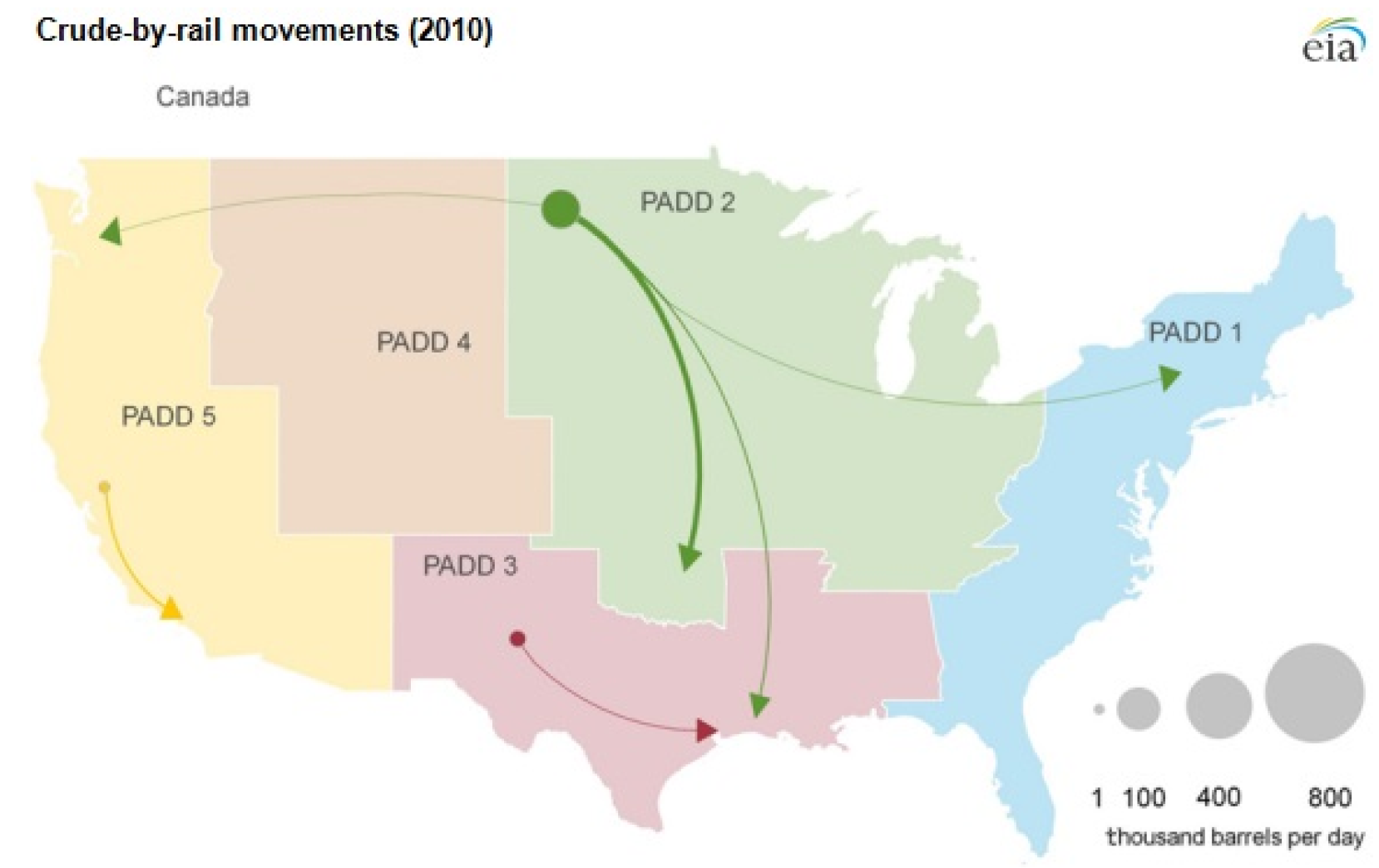
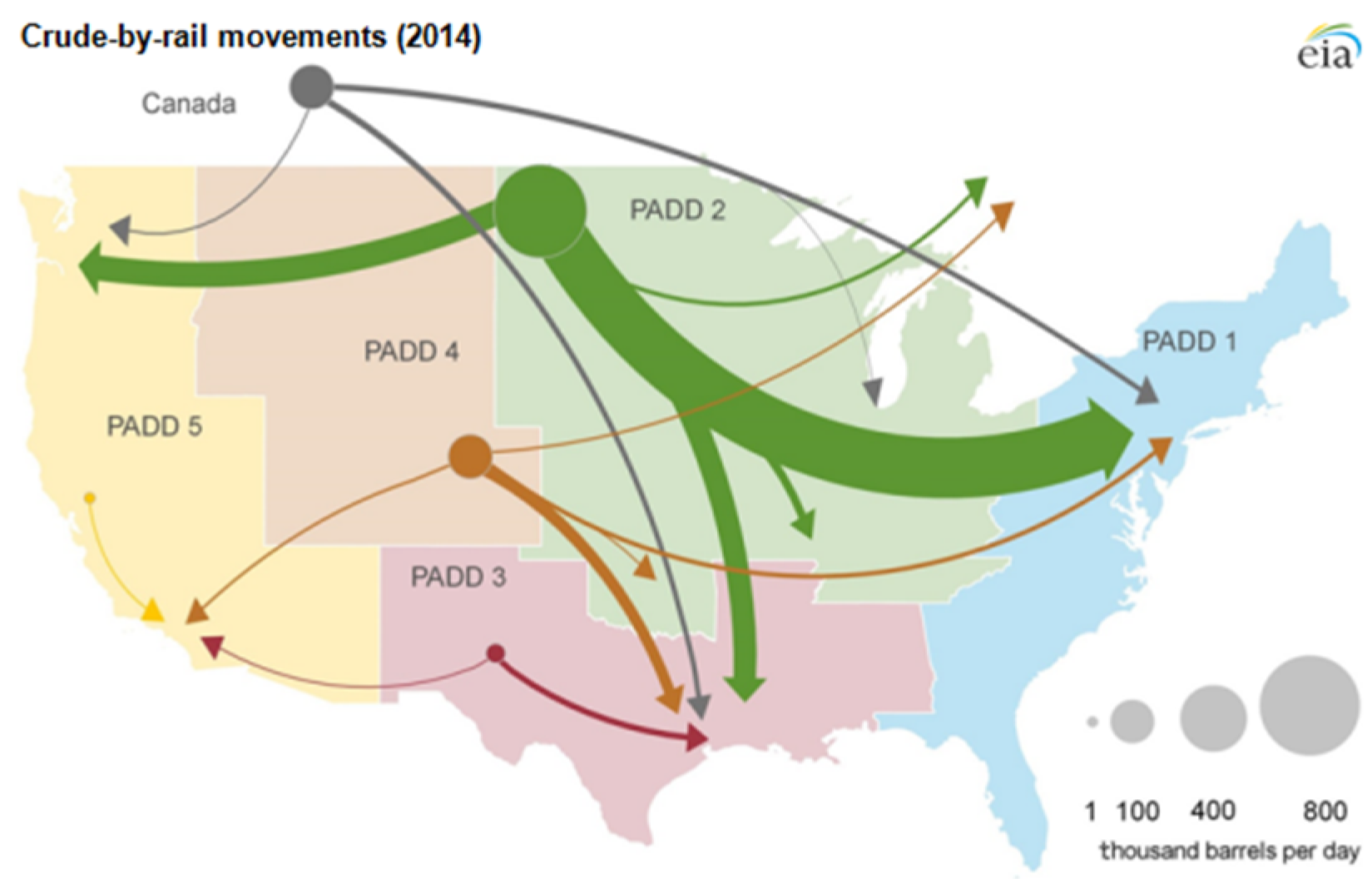
- U.S. Energy Information Administration. New EIA monthly data track crude oil movements by rail. Available online: https://www.eia.gov/todayinenergy/detail.cfm?id=20592#tabs_Slider-1 (accessed on 14 January 2016).
- U.S. Energy Information Administration. New EIA monthly data track crude oil movements by rail. Available online: https://www.eia.gov/todayinenergy/detail.cfm?id=20592#tabs_Slider-5 (accessed on 14 January 2016).
- Clark, K.E.; Niles, L.J.; Burger, J. Abundance and distribution of migrant shorebirds in Delaware Bay. Condor 1993, 95, 694–705. [Google Scholar] [CrossRef]
- Kauffman, G.J. Socioeconomic Value of the Delaware River Basin in Delaware, New Jersey, New York, and Pennsylvania; Delaware River Basin Commission: West Trenton, NJ, USA, 2011.
- Sayer, J.; Sunderland, T.; Ghazoul, J.; Pfund, J.-L.; Sheil, D.; Meijaard, E.; Venter, M.; Boedhihartono, A.K.; Day, M.; Garcia, C.; et al. Ten Principles for a Landscape Approach to Reconciling Agriculture, Conservation, and Other Competing Land Uses. Proc. Natl. Acad. Sci. USA 2013, 110, 8349–8356. [Google Scholar] [CrossRef] [PubMed]
- U.S. Environmental Protection Agency. Emerging Contaminants—Perfluorooctane Sulfonate (PFOS) and Perfluorooctanoic Acid (PFOA); EPA 505-F-14-001; United States Environmental Agency: Washington, DC, USA, 2014.

 Limited Level of Concern;
  Moderate Level of Concern;
  High Level of Concern.
Limited Level of Concern; Moderate Level of Concern; High Level of Concern.
High Level of Concern.
Limited Level of Concern; Moderate Level of Concern; High Level of Concern.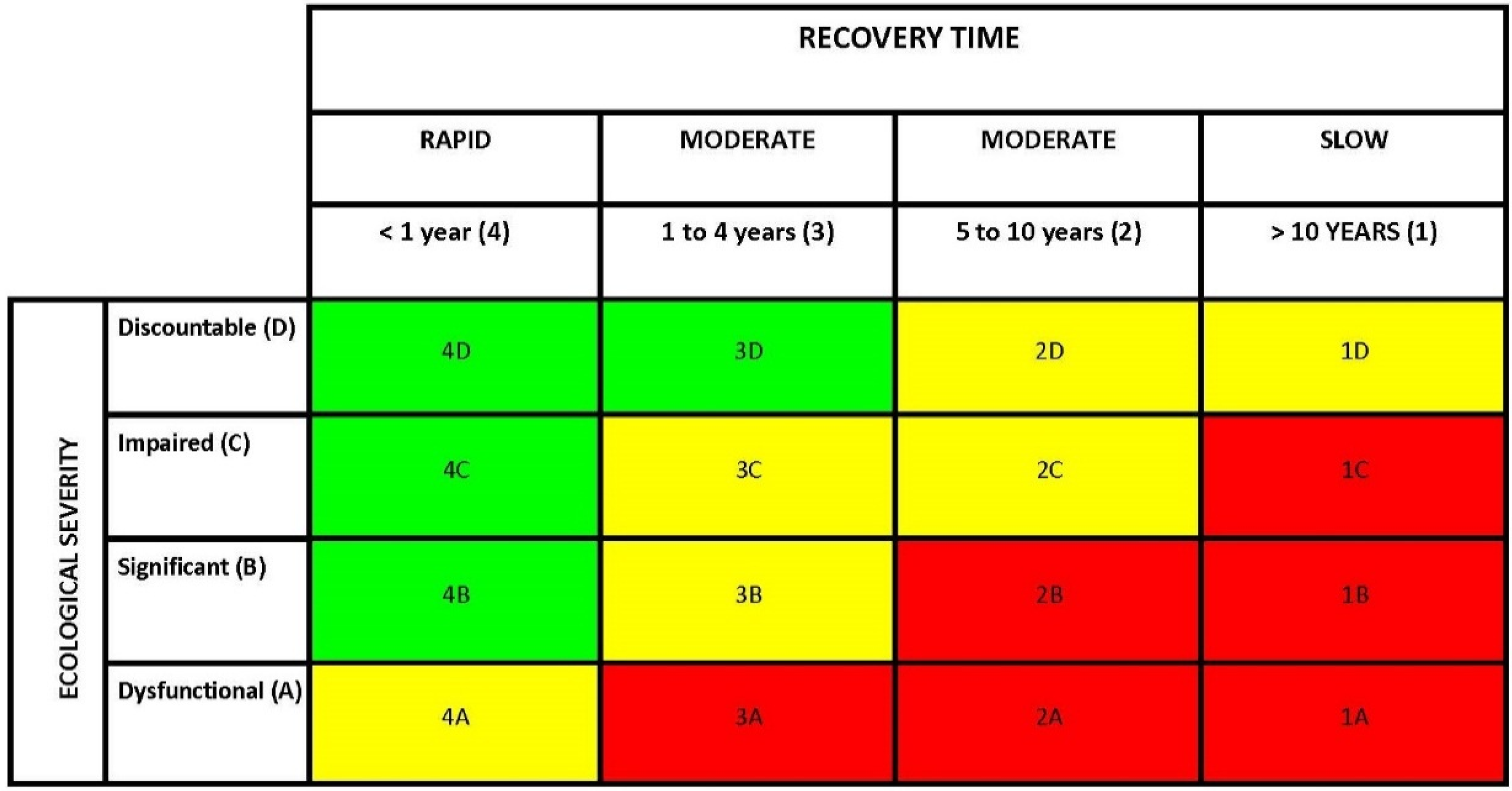
 Limited Level of Concern;
  Moderate Level of Concern;
  High Level of Concern;
  Not Applicable.
Limited Level of Concern; Moderate Level of Concern; High Level of Concern; Not Applicable.
Not Applicable.
Limited Level of Concern; Moderate Level of Concern; High Level of Concern; Not Applicable.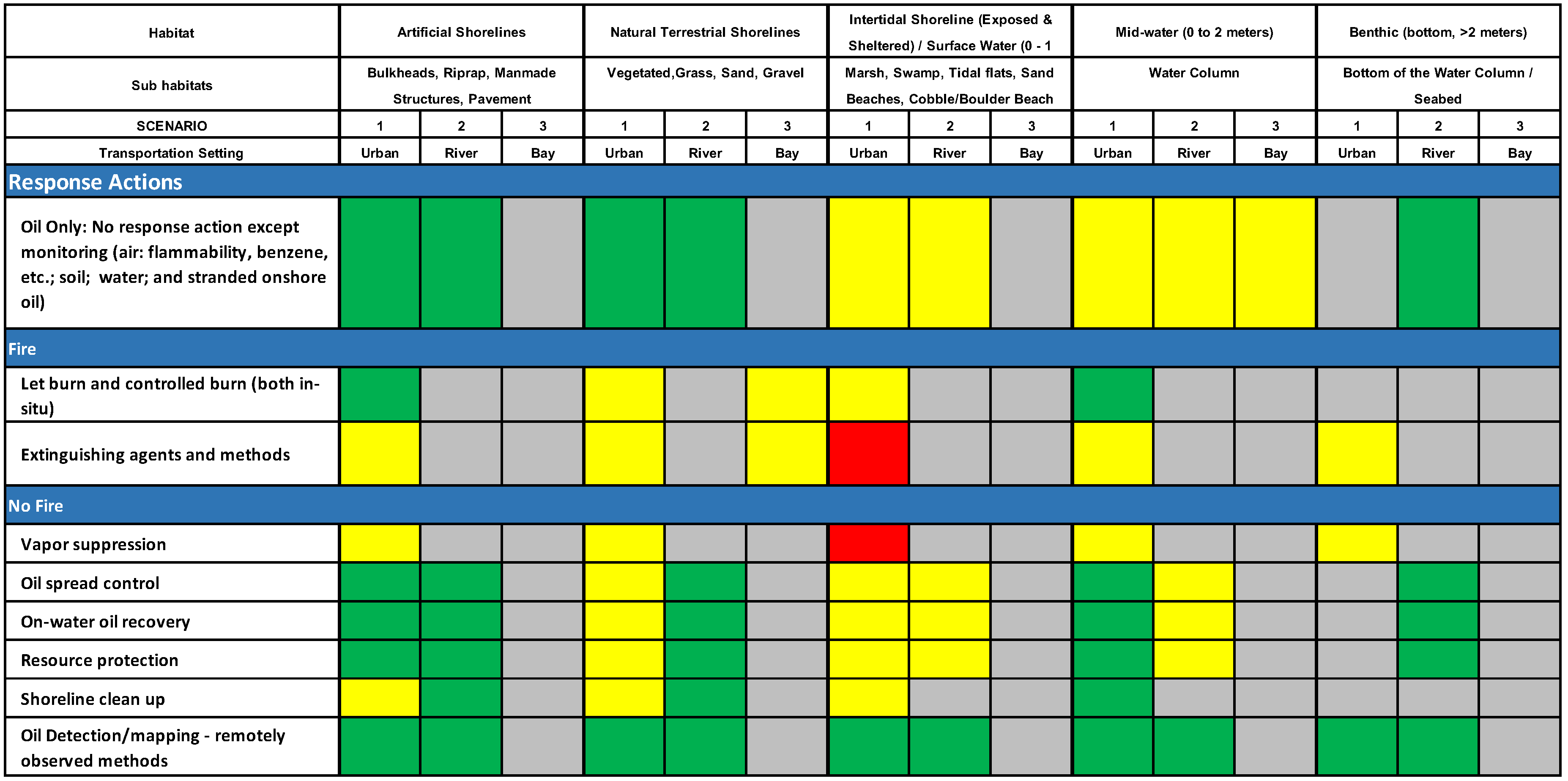 Limited Level of Concern; Moderate Level of Concern; High Level of Concern; Not Applicable.
Limited Level of Concern; Moderate Level of Concern; High Level of Concern; Not Applicable.
Limited Level of Concern; Moderate Level of Concern; High Level of Concern; Not Applicable.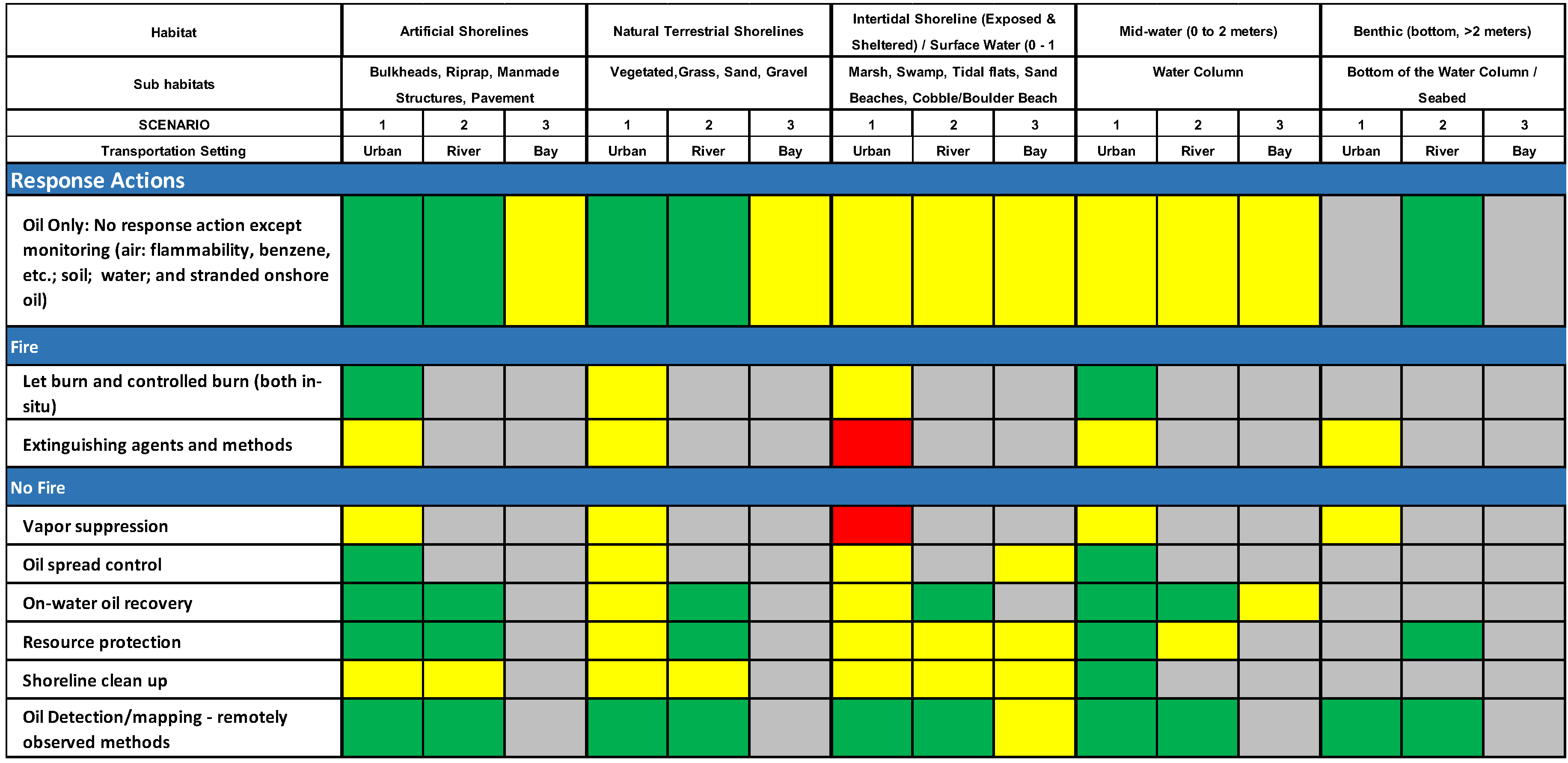 Limited Level of Concern; Moderate Level of Concern; High Level of Concern; Not Applicable.
Limited Level of Concern; Moderate Level of Concern; High Level of Concern; Not Applicable.
Limited Level of Concern; Moderate Level of Concern; High Level of Concern; Not Applicable.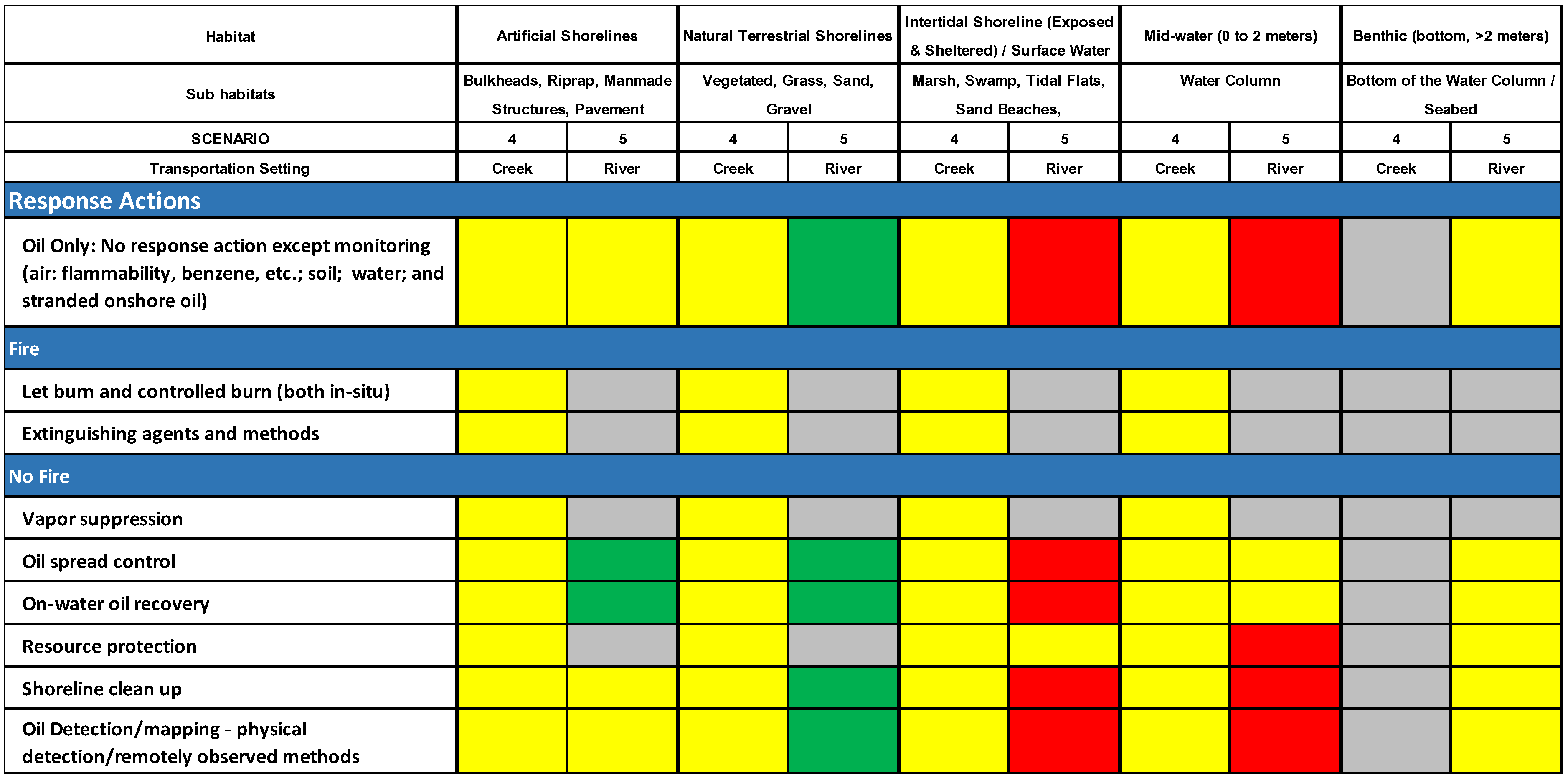 Limited Level of Concern; Moderate Level of Concern; High Level of Concern; Not Applicable;
  Unable to Determine Due to Insufficient Information.
Limited Level of Concern; Moderate Level of Concern; High Level of Concern; Not Applicable; Unable to Determine Due to Insufficient Information.
Unable to Determine Due to Insufficient Information.
Limited Level of Concern; Moderate Level of Concern; High Level of Concern; Not Applicable; Unable to Determine Due to Insufficient Information.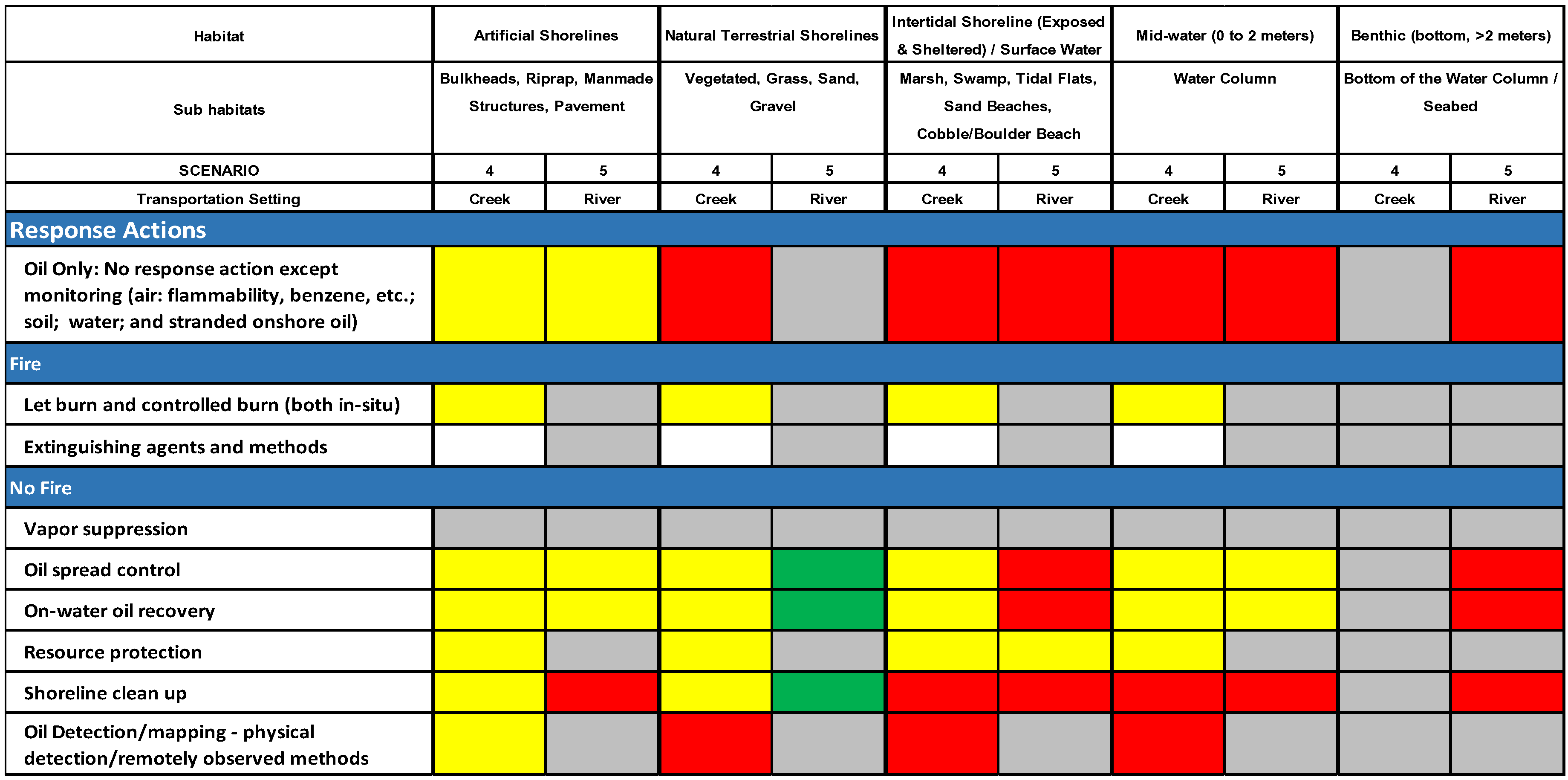

| Description | Volume | Comments |
|---|---|---|
| Dilbit Oil | ||
| June 2010—Marshall, Michigan, USA | Enbridge Energy Partners Limited Liability Partnership‘s (Enbridge) 30-inch pipeline ruptured releasing its contents, i.e., dilbit (report to the National Response Center was 19,500 bbls) into a culvert leading to the Tallmadge Creek, a tributary of the Kalamazoo River. The oil sank to the river's bottom and collateral damage resulted from recovery tactics. |
|
| March 2013—Mayflower, Arkansas, USA | ExxonMobil’s 20-inch “Pegasus Pipeline” ruptured near Mayflower, Arkansas. Approximately 5000 bbls of dilbit (Canadian Wabasca heavy crude oil from the Athabasca oil sands) spilled into the surrounding area and flowed into Lake Conway. |
|
| Bakken Oil | ||
| April 2014—Lynchburg, Virginia, USA | A CSX train carrying Bakken crude oil in a 105-car train, jumped the rails causing 13-unit cars to derail and some were damaged. The derailment sparked a large fire that forced the evacuation of six city blocks; 3 cars submerged in the James River, and 30,000 gals of oil were released. |
|
| February 2014—Mississippi River, Louisiana, USA | The Tank Barge E2MS 303 collided with the towboat Lindsay Ann Erickson on the Lower Mississippi River (between Baton Rouge and New Orleans), causing a spill of approximately 750 bbls (31,500 gals) of Bakken oil. |
|
| November 2013—Aliceville, Alabama, USA | 90-car train was crossing a timber trestle above a wetland near Aliceville late Thursday night when approximately 25 rail cars and two locomotives derailed, spilling Bakken crude oil into the surrounding wetlands and igniting a fire that was still burning Saturday. Each of the 90 cars was carrying 30,000 gals of oil; 630,000 gals were either spilled or burned. |
|
| July 2013—Lac-Megantic, Quebec, Canada | Runaway train derailed (insufficient hand breaks) with 63 rail cars (30,000 gals each). Approximately 1.7 million gals of Bakken oil either burned or was released, with an estimated 26,000 gals into the Chaudière River. |
|
| Habitats: |
|
| Sub-habitats: |
|
| Categories of Ecological Resources of Concern: |
|
| Categories of Socio-economic Resources of Concern: |
|
© 2016 by the authors; licensee MDPI, Basel, Switzerland. This article is an open access article distributed under the terms and conditions of the Creative Commons Attribution license ( http://creativecommons.org/licenses/by/4.0/).
Share and Cite
Walker, A.H.; Stern, C.; Scholz, D.; Nielsen, E.; Csulak, F.; Gaudiosi, R. Consensus Ecological Risk Assessment of Potential Transportation-related Bakken and Dilbit Crude Oil Spills in the Delaware Bay Watershed, USA. J. Mar. Sci. Eng. 2016, 4, 23. https://doi.org/10.3390/jmse4010023
Walker AH, Stern C, Scholz D, Nielsen E, Csulak F, Gaudiosi R. Consensus Ecological Risk Assessment of Potential Transportation-related Bakken and Dilbit Crude Oil Spills in the Delaware Bay Watershed, USA. Journal of Marine Science and Engineering. 2016; 4(1):23. https://doi.org/10.3390/jmse4010023
Chicago/Turabian StyleWalker, Ann Hayward, Clay Stern, Debra Scholz, Eric Nielsen, Frank Csulak, and Rich Gaudiosi. 2016. "Consensus Ecological Risk Assessment of Potential Transportation-related Bakken and Dilbit Crude Oil Spills in the Delaware Bay Watershed, USA" Journal of Marine Science and Engineering 4, no. 1: 23. https://doi.org/10.3390/jmse4010023
APA StyleWalker, A. H., Stern, C., Scholz, D., Nielsen, E., Csulak, F., & Gaudiosi, R. (2016). Consensus Ecological Risk Assessment of Potential Transportation-related Bakken and Dilbit Crude Oil Spills in the Delaware Bay Watershed, USA. Journal of Marine Science and Engineering, 4(1), 23. https://doi.org/10.3390/jmse4010023