

cells-logo

Journal Browser

Journal Browser

Allergy, Asthma and Clinical Immunology

A Topical Collection in Cells (ISSN 2073-4409) belonging to the section "Cellular Immunology".

Viewed by 26303

Editors


E-Mail Website
Collection Editor
1. Center for Advanced Studies and Technology (CAST), G. d’Annunzio University, 66100 Chieti, Italy
2. Department of Medicine and Aging Sciences, G. d’Annunzio University, 66100 Chieti, Italy
Interests: immunotherapy; regulatory T cells; autophagy; cytokines; biologic drugs; metal allergy; nanotoxicology; immunotoxicology; respiratory and food allergy
Special Issues, Collections and Topics in MDPI journals

E-Mail Website
Collection Editor
Department of Clinical and Experimental Medicine, School and Operative Unit of Allergy and Clinical Immunology, University of Messina, 98125 Messina, Italy
Interests: mediators of inflammation; cytokines; biomarkers of oxidative stress; immunosenescence; immunogenetics; epigenetics; application of machine learning; deep learning in various fields of medicine
Special Issues, Collections and Topics in MDPI journals

E-Mail Website
Collection Editor
Allergy and Clinical Immunology, Medicine and Surgery Department, University of Parma, Parma, Italy
Interests: eosinophil gastrointestinal diseases (EoE); food allergy; immunotherapy; asthma; allergic respiratory diseases

E-Mail Website
Collection Editor
1. Department of Biomedical Sciences, Humanitas University, 20090 Milan, Italy
2. IRCCS Humanitas Research Hospital, 20089 Rozzano, Italy
Interests: allergology and clinical immunology; asthma; chronic rhinosinusitis with nasal polyps
Special Issues, Collections and Topics in MDPI journals

E-Mail Website
Collection Editor
Unit of Internal Medicine “Guido Baccelli”, Department of Precision and Regenerative Medicine and Ionian Area (DiMePRe-J), University of Bari Aldo Moro, 70124 Bari, Italy
Interests: multiple myeloma; microenvironment; oncology; angiogenesis; hematology
Special Issues, Collections and Topics in MDPI journals

Topical Collection Information

Dear Colleagues,

Immunology has seen tremendous scientific advancements in recent decades. The definition of the cellular and molecular mechanisms of innate and adaptive immunity has led to better comprehension of health status and illness. There is a synergy between the adaptive immune system and its innate counterpart, and their defects can provoke inappropriate inflammation, autoimmunity, immunodeficiency, and hypersensitivity reactions. The identification of the cellular and molecular mechanisms at the base of their immune mechanism allowed a precise endotyping of many diseases, with the development of specific immunotherapy.

This Topical Collection is a cooperation between the Italian Society of Allergy, Asthma and Clinical Immunology (SIAAIC) and Cells, dedicated to research that can enhance our understanding of the molecular and cellular aspects of allergic and immune diseases. It encompasses all of the cellular and molecular aspects of the genetics, pathogenesis, clinical, pathology, diagnosis, and treatment of allergic as well as immunologic disease.

It is especially dedicated to the following areas and other related topics: T cell and B cell functions, regulatory T cells, natural killer cells, antigen-presenting cells, mast cells and eosinophils, and complement abnormalities. Particular emphasis will be devoted to asthma, rhinoconjunctivitis and rhinosinusitis, atopic dermatitis, urticaria and angioedema, venom hypersensitivity, anaphylaxis and food allergy, immune deficiency, autoimmunity, and immunosenescence. Contributions on the mechanisms of the basis of the effectiveness of immunotherapy, immune modulators, and biologics will be particularly appreciated.

Prof. Dr. Mario Di Gioacchino
Prof. Dr. Sebastiano Gangemi
Prof. Dr. Erminia Ridolo
Dr. Giovanni Paoletti
Dr. Antonio G. Solimando
Collection Editors

Manuscript Submission Information

Manuscripts should be submitted online at www.mdpi.com by registering and logging in to this website. Once you are registered, click here to go to the submission form. All submissions that pass pre-check are peer-reviewed. Accepted papers will be published continuously in the journal (as soon as accepted) and will be listed together on the collection website. Research articles, review articles as well as communications are invited. For planned papers, a title and short abstract (about 250 words) can be sent to the Editorial Office for assessment.

Submitted manuscripts should not have been published previously, nor be under consideration for publication elsewhere (except conference proceedings papers). All manuscripts are thoroughly refereed through a single-anonymized peer-review process. A guide for authors and other relevant information for submission of manuscripts is available on the Instructions for Authors page. Cells is an international peer-reviewed open access semimonthly journal published by MDPI.

Please visit the Instructions for Authors page before submitting a manuscript. The Article Processing Charge (APC) for publication in this open access journal is 2700 CHF (Swiss Francs). Submitted papers should be well formatted and use good English. Authors may use MDPI's English editing service prior to publication or during author revisions.

Keywords

  • T cells and B cells
  • regulatory T cells
  • NK cells
  • antigen-presenting cells
  • mast cells
  • eosinophils
  • complement
  • inflammation
  • cytokines
  • immunosenescence
  • immuno-oncology

Diseases:

  • anaphylaxis
    hypereosinophilic syndrome
  • asthma
  • rhinoconjunctivitis
  • rhinosinusitis
  • atopic dermatitis
  • urticaria
  • angioedema
  • food allergy
  • innate and acquired immunedeficiency
  • systemic and organ-specific autoimmune diseases
Treatments:
  • immunotherapy
  • biologics

Published Papers (3 papers)

2026

Jump to: 2024

15 pages, 934 KB  
Review
Asthma: Is It Time for Monocytes to Share the Spotlight?
by Harissios Vliagoftis and Nami Shrestha Palikhe
Cells 2026, 15(14), 1233; https://doi.org/10.3390/cells15141233 - 8 Jul 2026
Viewed by 626
Abstract
The evolving understanding of the regulation of allergic airway inflammation has offered new approaches for asthma therapy. For example, our understanding of the role of alarmins, Th2 cytokines and eosinophils has allowed the development of biologics that have revolutionized therapy for severe asthma. [...] Read more.
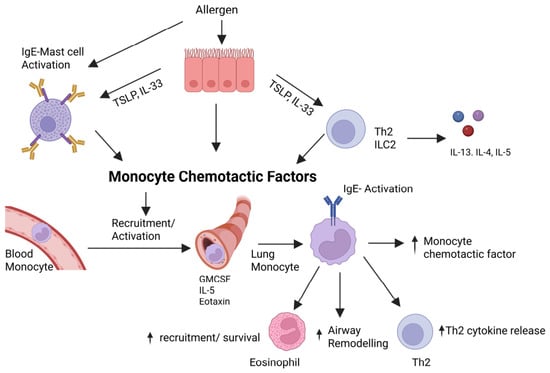
The evolving understanding of the regulation of allergic airway inflammation has offered new approaches for asthma therapy. For example, our understanding of the role of alarmins, Th2 cytokines and eosinophils has allowed the development of biologics that have revolutionized therapy for severe asthma. However, many questions remain and several of our patients are still not controlled with the current available therapies. Many immune cells have been implicated in asthma pathophysiology, but one cell that is missing from these studies is the monocyte. Monocytes (Mos) are bone marrow-derived cells that circulate in the blood and develop into macrophages and/or dendritic cells following migration to peripheral tissues. Macrophages (Møs) and dendritic cells have been implicated in the development and progression, of allergic airway inflammation, but also in tissue repair after inflammation. Recent studies in animal models suggest a major role for Mos in allergic airway inflammation, primarily through their ability to mediate recruitment of eosinophils and/or neutrophils to the airways. However, there is little information regarding the role of monocytes in human asthma. Here we review the literature regarding the presence and functions of peripheral blood and airway Mos in human asthma and suggest further work that needs to be done to consolidate the information on Mo functions. Studies show changes in Mo numbers and activation status in the peripheral blood of patients with asthma, changes that in many cases correlate with disease severity and/or activity. Studies also show altered phenotype of Mos present in the airways of patients with asthma. Detailed human studies need to be performed, if possible, studies that include therapeutic interventions, to allow for a full understanding of the role of Mos in asthma. Full article
Show Figures

Figure 1

2024

Jump to: 2026

20 pages, 1966 KB  
Review
Effect of Small-Molecule Natural Compounds on Pathologic Mast Cell/Basophil Activation in Allergic Diseases
by Robert Werner, Michelle Carnazza, Xiu-Min Li and Nan Yang
Cells 2024, 13(23), 1994; https://doi.org/10.3390/cells13231994 - 3 Dec 2024
Cited by 9 | Viewed by 5287
Abstract
Pathologic mast cells and basophils, key effector cells in allergic reactions, play pivotal roles in initiating and perpetuating IgE-mediated allergic responses. Conventional therapies for allergies have limitations, prompting exploration into alternative approaches such as small-molecule natural compounds derived from botanical sources. This review [...] Read more.
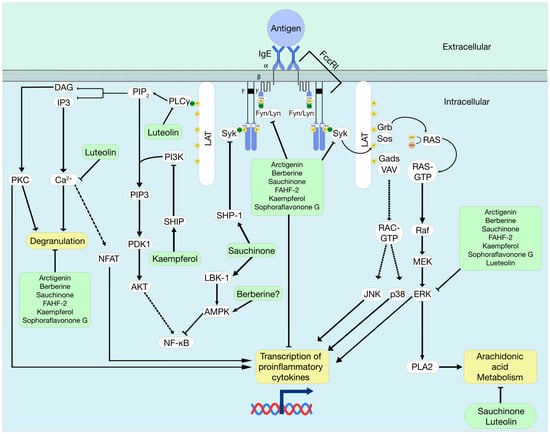
Pathologic mast cells and basophils, key effector cells in allergic reactions, play pivotal roles in initiating and perpetuating IgE-mediated allergic responses. Conventional therapies for allergies have limitations, prompting exploration into alternative approaches such as small-molecule natural compounds derived from botanical sources. This review synthesizes the existing literature on the effects of these compounds on pathologic mast cells and basophils, highlighting their potential in allergy management, and utilizes the PubMed database for literature acquisition, employing keyword-based searches to identify relevant peer-reviewed sources. Additionally, mechanistic insights were evaluated to contextualize how small-molecule natural compounds can inhibit mast cell/basophil activation, degranulation, and signaling pathways crucial for IgE-mediated allergic reactions. Small-molecule natural compounds exhibit promising anti-allergic effects, yet despite these findings, challenges persist in the development and translation of natural compound-based therapies, including bioavailability and standardization issues. Future research directions include optimizing dosing regimens, exploring synergistic effects with existing therapies, and employing systems pharmacology approaches for a holistic understanding of their mechanisms of action. By harnessing the therapeutic potential of small-molecule natural compounds, effective treatments for allergic diseases may be realized, offering hope for individuals with allergies. Full article
Show Figures

Figure 1

28 pages, 2757 KB  
Review
Managing Patients with Hypereosinophilic Syndrome: A Statement from the Italian Society of Allergy, Asthma, and Clinical Immunology (SIAAIC)
by Marco Caminati, Luisa Brussino, Matilde Carlucci, Palma Carlucci, Lucia Federica Carpagnano, Cristiano Caruso, Lorenzo Cosmi, Simona D’Amore, Stefano Del Giacco, Aikaterini Detoraki, Mario Di Gioacchino, Andrea Matucci, Ilaria Mormile, Francescopaolo Granata, Gabriella Guarnieri, Mauro Krampera, Matteo Maule, Eustachio Nettis, Stefania Nicola, Silvia Noviello, Fabrizio Pane, Cristina Papayannidis, Paola Parronchi, Girolamo Pelaia, Erminia Ridolo, Francesca Wanda Rossi, Gianenrico Senna, Massimo Triggiani, Angelo Vacca, Emanuele Vivarelli, Alessandra Vultaggio and Amato de Paulisadd Show full author list remove Hide full author list
Cells 2024, 13(14), 1180; https://doi.org/10.3390/cells13141180 - 11 Jul 2024
Cited by 20 | Viewed by 18496
Abstract
Hypereosinophilic syndrome (HES) encompasses a heterogeneous and complex group of different subtypes within the wider group of hypereosinophilic disorders. Despite increasing research interest, several unmet needs in terms of disease identification, pathobiology, phenotyping, and personalized treatment remain to be addressed. Also, the prospective [...] Read more.
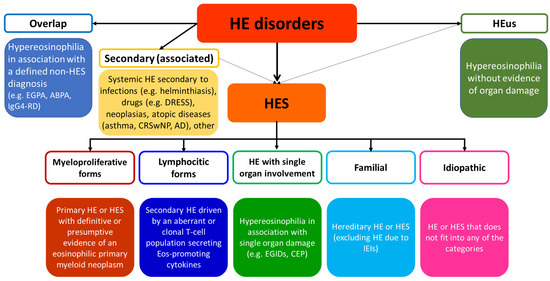
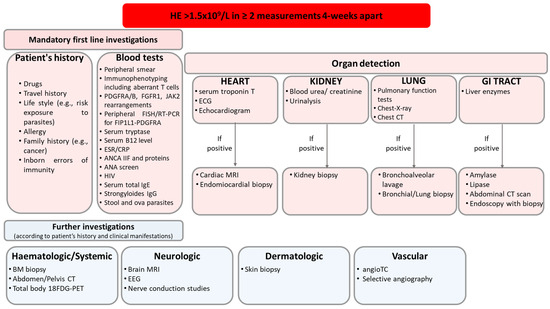
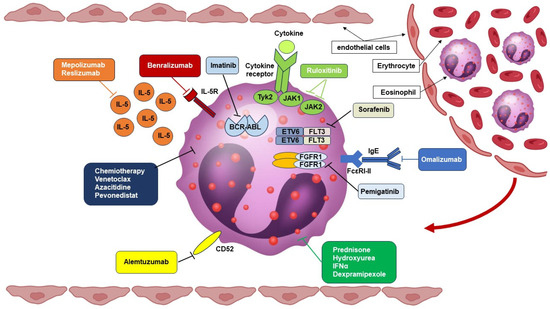
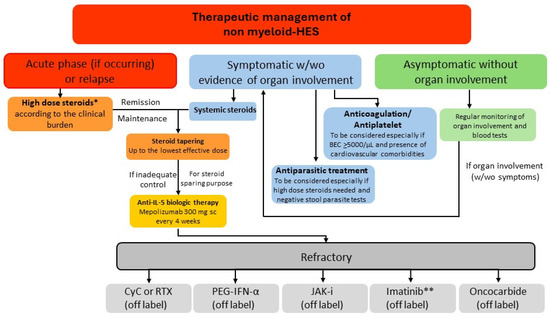
Hypereosinophilic syndrome (HES) encompasses a heterogeneous and complex group of different subtypes within the wider group of hypereosinophilic disorders. Despite increasing research interest, several unmet needs in terms of disease identification, pathobiology, phenotyping, and personalized treatment remain to be addressed. Also, the prospective burden of non-malignant HES and, more in general, HE disorders is currently unknown. On a practical note, shortening the diagnostic delay and the time to an appropriate treatment approach probably represents the most urgent issue, even in light of the great impact of HES on the quality of life of affected patients. The present document represents the first action that the Italian Society of Allergy, Asthma, and Clinical Immunology (SIAAIC) has finalized within a wider project aiming to establish a collaborative national network on HES (InHES—Italian Network on HES) for patients and physicians. The first step of the project could not but focus on defining a common language as well as sharing with all of the medical community an update on the most recent advances in the field. In fact, the existing literature has been carefully reviewed in order to critically integrate the different views on the topic and derive practical recommendations on disease identification and treatment approaches. Full article
Show Figures

Figure 1

Back to TopTop