



-
Context-Awareness and Biologically Inspired Behaviour Based on Attention Mechanisms for Natural Human-Robot Interaction -
Strategic Management of Design and Conceptualization Factors for Wearable Postural Rehabilitation Devices: A Causal Interdependency Analysis -
A Modular Vision System for Practical Object Detection on Resource-Constrained Humanoid Robots -
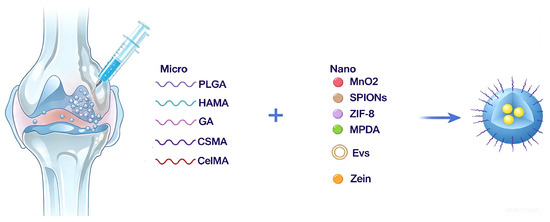
Advances in Biomaterials for Tissue Regeneration: From Scaffold Design to CAP-Enabled Interfaces and AI-Driven Optimization
Journal Description
Biomimetics
Biomimetics
is an international, peer-reviewed, open access journal on biomimicry and bionics, published monthly online by MDPI.
- Open Access— free for readers, with article processing charges (APC) paid by authors or their institutions.
- High Visibility: indexed within Scopus, SCIE (Web of Science), PubMed, PMC, Ei Compendex, CAPlus / SciFinder, and other databases.
- Journal Rank: JCR - Q1 (Engineering, Multidisciplinary) / CiteScore - Q2 (Biomedical Engineering)
- Rapid Publication: manuscripts are peer-reviewed and a first decision is provided to authors approximately 13.5 days after submission; acceptance to publication is undertaken in 3.5 days (median values for papers published in this journal in the first half of 2026).
- Recognition of Reviewers: reviewers who provide timely, thorough peer-review reports receive vouchers entitling them to a discount on the APC of their next publication in any MDPI journal, in appreciation of the work done.
Impact Factor:
4.2 (2025);
5-Year Impact Factor:
4.3 (2025)
Latest Articles
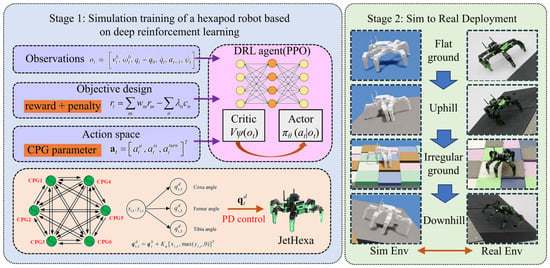
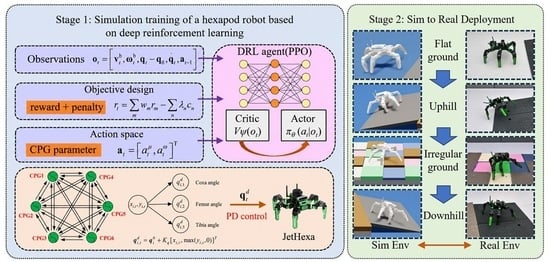
Bio-Inspired CPG Modulation via Proprioceptive Deep Reinforcement Learning for Adaptive Hexapod Locomotion Across Terrain Transitions
Biomimetics 2026, 11(8), 570; https://doi.org/10.3390/biomimetics11080570 (registering DOI) - 9 Aug 2026
Abstract
Adaptive locomotion across continuous terrain transitions remains difficult for hexapod robots because contact timing, body attitude, support height, and load distribution change simultaneously along a route. This paper presents a unified proprioception-driven deep reinforcement learning and central pattern generator (DRL-CPG) framework for terrain-transition
[...] Read more.
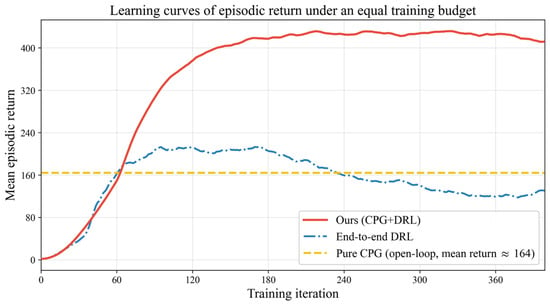
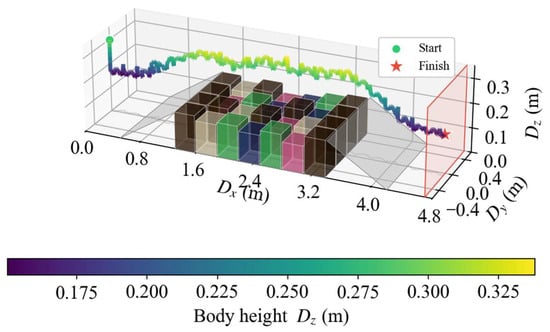
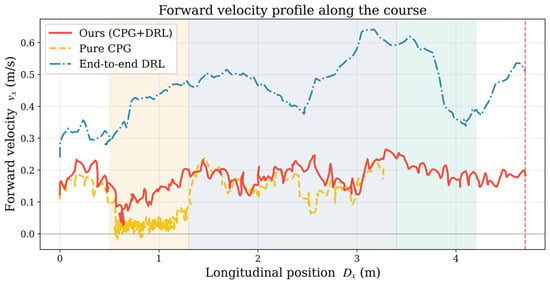
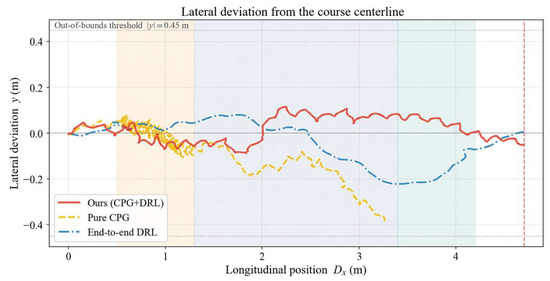
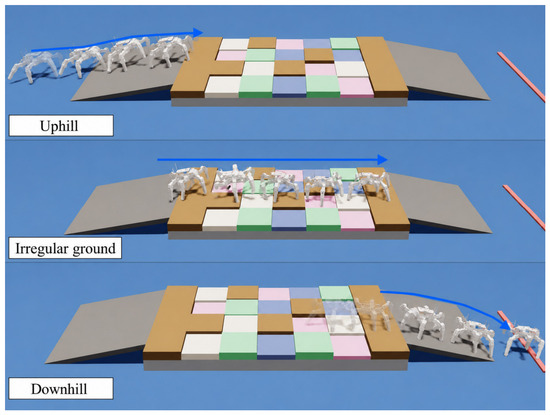
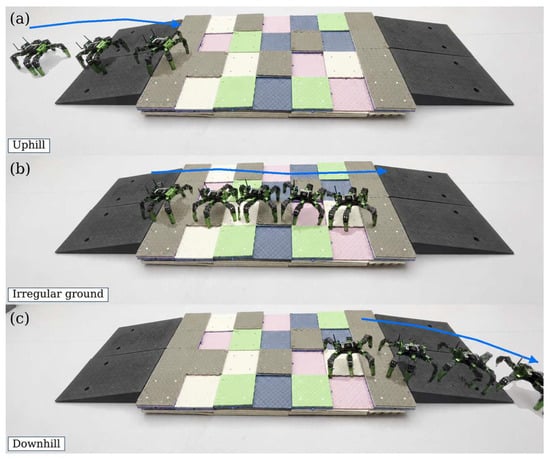
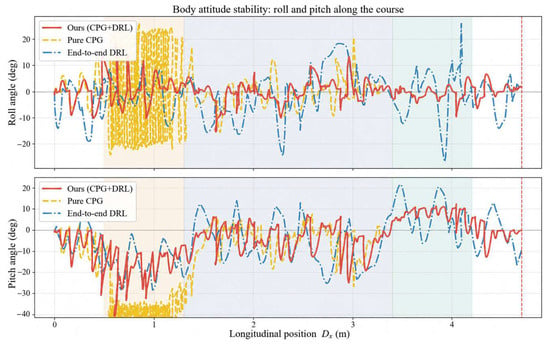
Adaptive locomotion across continuous terrain transitions remains difficult for hexapod robots because contact timing, body attitude, support height, and load distribution change simultaneously along a route. This paper presents a unified proprioception-driven deep reinforcement learning and central pattern generator (DRL-CPG) framework for terrain-transition locomotion without visual terrain classification, explicit terrain labels, or terrain-specific controller switching. A high-level proximal policy optimization policy maps a 46-dimensional proprioceptive observation to a three-dimensional CPG modulation action comprising oscillation amplitude, swing-phase frequency, and turn modulation. A coupled six-node Hopf oscillator network then expands these modulated parameters into phase-coordinated rhythmic commands, which are mapped to the 18 joint targets of a JetHexa hexapod and executed by a low-level proportional-derivative controller. The observation space contains body linear velocity, body angular velocity, relative joint positions, relative joint velocities, the previous three-dimensional policy action, and inertial measurement unit (IMU)yaw/heading relative to the initial track direction. A continuous route consisting of flat ground, uphill stairs, irregular terrain, downhill stairs, and a recovery segment is defined to evaluate transition-aware locomotion using route completion, velocity-tracking error, lateral deviation, and roll/pitch fluctuation. Compared with the fixed-parameter CPG and end-to-end DRL baselines, the proposed method increased the full-distance success rate at 4.7 m from 9% and 20%, respectively, to 88%, while maintaining smoother velocity, lateral deviation, and roll/pitch responses. The framework preserves the rhythmic prior of CPG control while reducing the exploration burden of reinforcement learning, providing a compact formulation for adaptive hexapod locomotion across terrain transitions.
Full article
(This article belongs to the Section Locomotion and Bioinspired Robotics)
►
Show Figures
Open AccessArticle
Pretraining of Embodied Recurrent Networks Bridges the Gap Between Artificial and Cortical Neural Activities
by
Xiangdong Bu, Hongru Jiang, Tianruo Guo, Heng Li and Yao Chen
Biomimetics 2026, 11(8), 569; https://doi.org/10.3390/biomimetics11080569 (registering DOI) - 9 Aug 2026
Abstract
Task-driven recurrent neural networks (RNNs) have been widely employed as tools for investigating neural dynamics in neural motor control research by modeling the motor cortex. RNNs are often implicitly assumed to learn the underlying computational mechanisms in accordance with biological neural circuits. However,
[...] Read more.
Task-driven recurrent neural networks (RNNs) have been widely employed as tools for investigating neural dynamics in neural motor control research by modeling the motor cortex. RNNs are often implicitly assumed to learn the underlying computational mechanisms in accordance with biological neural circuits. However, the brain network has a highly structured and specific network connectivity and during individual development the motor cortex has acquired a rich repertoire of behavioral primitives via continuous learning of body control. Considering that the task-driven RNNs are often initialized randomly and trained directly on the specific task, how much these models can truly reveal about the motor cortex is still a crucial question awaiting further research. In this study, we propose a method for modeling the motor cortex pretrained on single reaching skills. Specifically, we use an RNN, receiving sensory feedback and task inputs, as the controller to produce motor commands that drive a musculoskeletal arm model. This model can perform reaching movements along a mini-jerk trajectory between arbitrary points in the workspace, prior to training on specific tasks. The model pretrained on single-reach task has more similarity with real neural data both on a neural geometry and neural dynamics level in center-out (CO) and random target touch (RTT) tasks than models directly trained on these tasks. Surprisingly, we observed the opposite pattern in a double-reach (DR) task, in which two targets appeared simultaneously, rather than presenting the next target after the completion of the prior movement as in the RTT task. This suggests that sequential movements are planned as an integrated unit, and this capability may be implemented at the level of motor cortical circuits. In summary, our results suggest that endowing the network with capabilities beyond the immediate task demands—through more systematic training or other methods—can help better understand the dynamics of biological neural circuits.
Full article
(This article belongs to the Special Issue 10th Anniversary of Biomimetics: Bioinspired Sensing, Information Processing and Intelligent Control)
Open AccessArticle
Bio-Inspired Metaheuristic Optimization of a DWT–BiLSTM Architecture for Wind Speed Forecasting: A Statistical Benchmark with Component Ablation
by
Emre Bendeş
Biomimetics 2026, 11(8), 568; https://doi.org/10.3390/biomimetics11080568 (registering DOI) - 8 Aug 2026
Abstract
Population-based bio-inspired metaheuristics are the dominant tools for tuning hybrid decomposition–deep-learning forecasters, yet their relative behavior on a common problem is rarely assessed with a leakage-free, physically meaningful protocol. We benchmark eight metaheuristics on the joint nine-dimensional hyperparameter optimization of a discrete-wavelet-transform bidirectional-LSTM
[...] Read more.
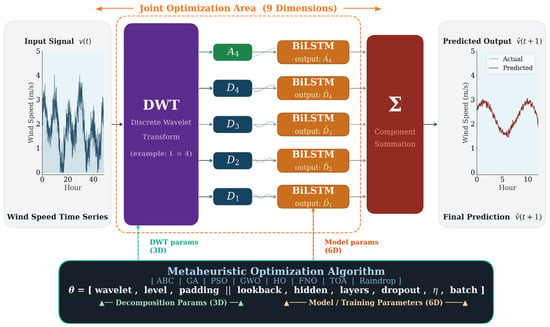
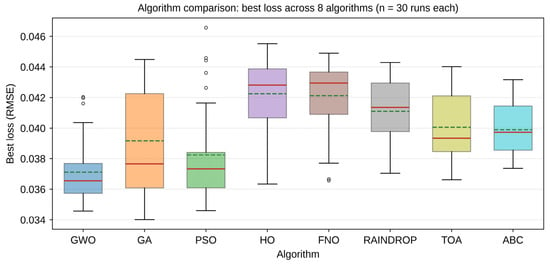
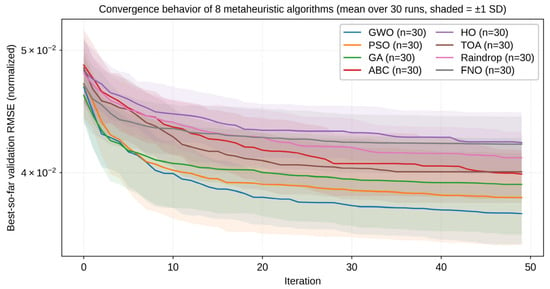
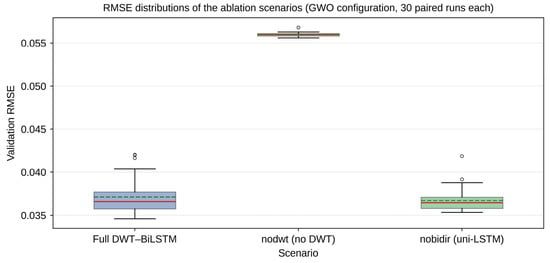
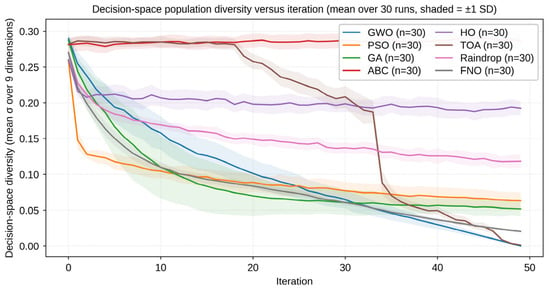
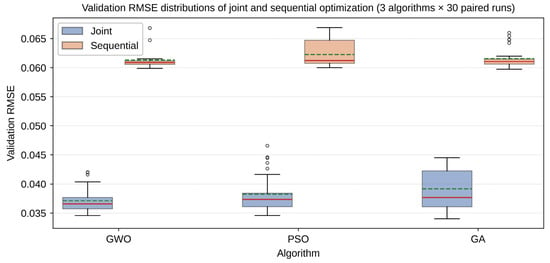
Population-based bio-inspired metaheuristics are the dominant tools for tuning hybrid decomposition–deep-learning forecasters, yet their relative behavior on a common problem is rarely assessed with a leakage-free, physically meaningful protocol. We benchmark eight metaheuristics on the joint nine-dimensional hyperparameter optimization of a discrete-wavelet-transform bidirectional-LSTM (DWT–BiLSTM) architecture for short-term wind speed forecasting, using 409,152 hourly observations from eight meteorological stations. The set comprises six nature-inspired methods (Artificial Bee Colony, ABC; genetic algorithm, GA; Particle Swarm Optimization, PSO; Grey Wolf Optimizer, GWO; Hippopotamus Optimization, HO; and the Raindrop Optimizer) together with two recent metaphor-free or social variants (the Farthest-better Nearest-worse Optimizer, FNO; and the Tuckman Optimization Algorithm, TOA). A multi-stage protocol covers 30 independent runs per algorithm, a joint-versus-sequential comparison, a genuine rolling-origin out-of-sample evaluation, and component ablation. Friedman testing reveals significant differences (χ2 = 49.76; p < 10−8), with the Grey Wolf Optimizer attaining the best mean rank (2.27) and Pareto-dominant run-time; ablation shows the DWT front-end is essential (Cohen’s d = 13.09) and bidirectionality negligible at the one-hour horizon (p = 0.674). Critically, evaluating forecasts in reconstructed physical units reveals that the per-component advantage does not persist: at the one-hour horizon the reconstructed forecast does not exceed a naive persistence baseline (skill ≈ −0.5 in m/s versus +0.44 in normalized component space), a discrepancy independent of decomposition leakage that we report transparently. This work thus contributes a rigorous, leakage-controlled bio-inspired benchmark and a cautionary evaluation methodology.
Full article
(This article belongs to the Section Biological Optimisation and Management)
►▼
Show Figures

Figure 1
Open AccessArticle
Prey-Impatience-Driven Sand Cat Swarm Optimization with Perturbation Learning for Global Optimization and Engineering Applications
by
Jiawen Wang, Jiayue Cai, Xuefei Xie, Yang Shen, Fanxing Meng, Yanxiu Yu and Dongman Cao
Biomimetics 2026, 11(8), 567; https://doi.org/10.3390/biomimetics11080567 (registering DOI) - 8 Aug 2026
Abstract
Sand Cat Swarm Optimization (SCSO) is a swarm intelligence algorithm characterized by a simple structure and a small number of control parameters. However, when solving complex optimization problems, SCSO suffers from several limitations, including an uneven initial population distribution, excessive dependence on the
[...] Read more.
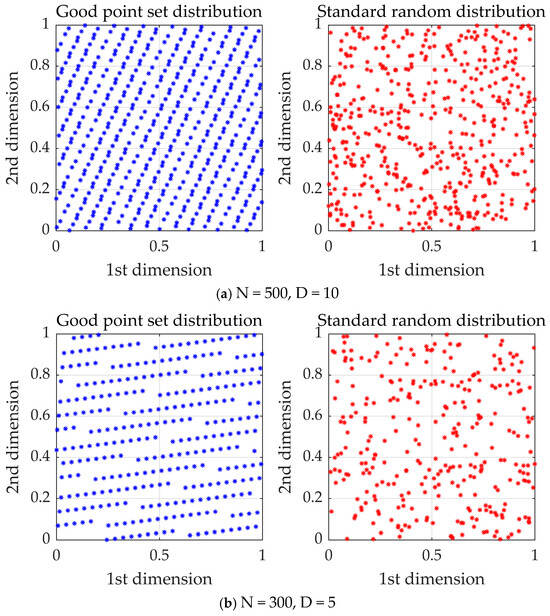
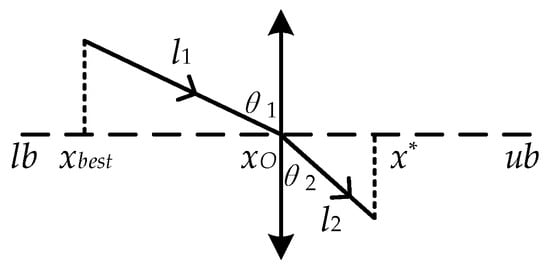
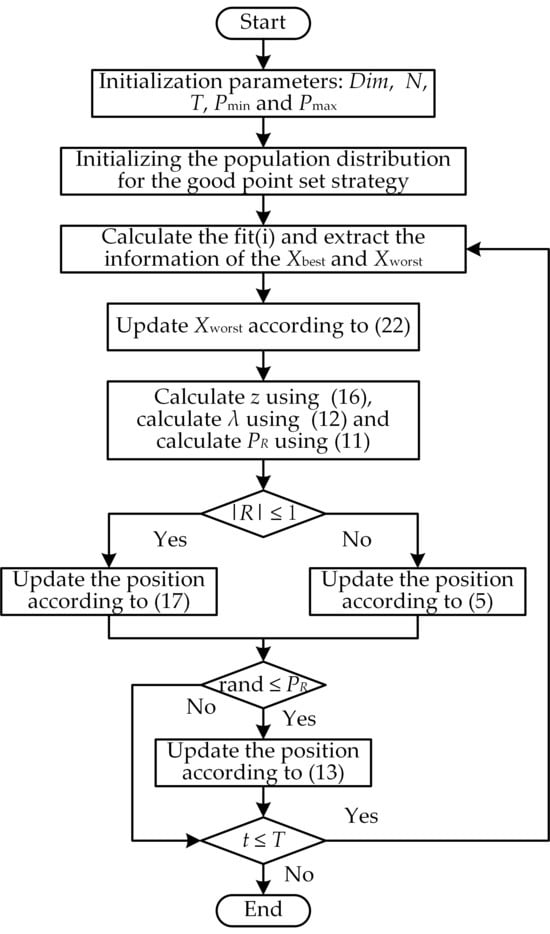
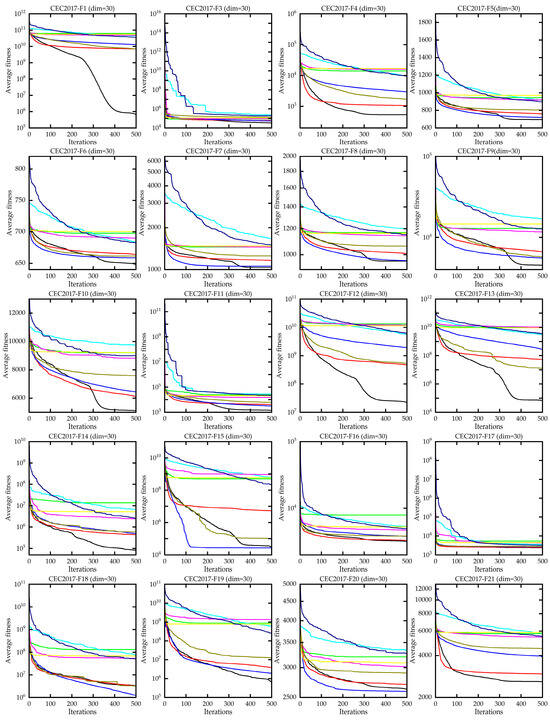
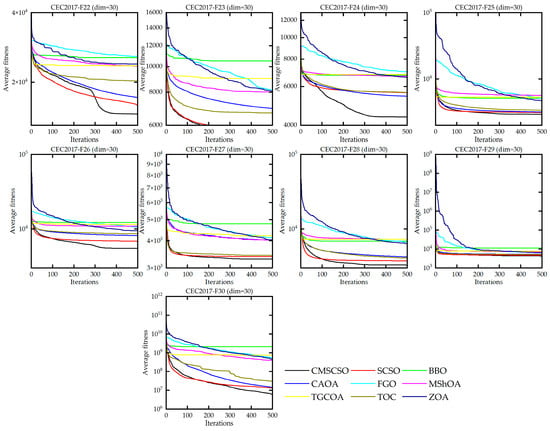
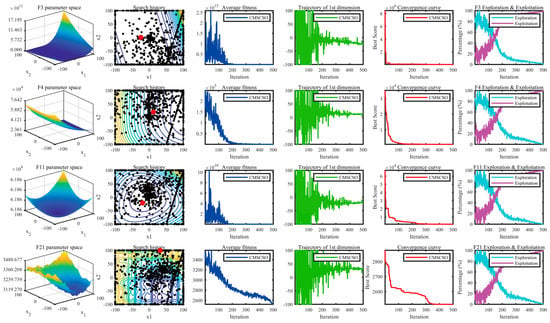
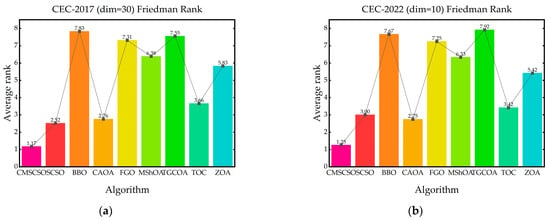
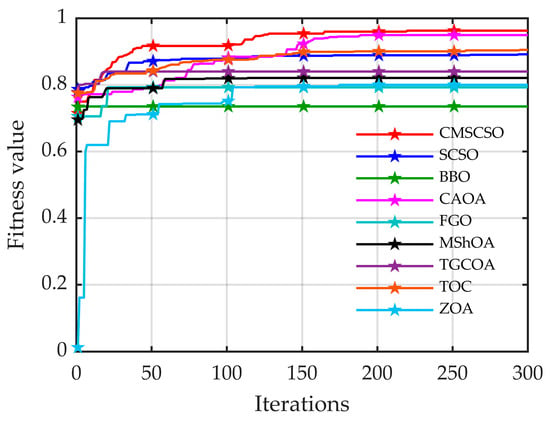
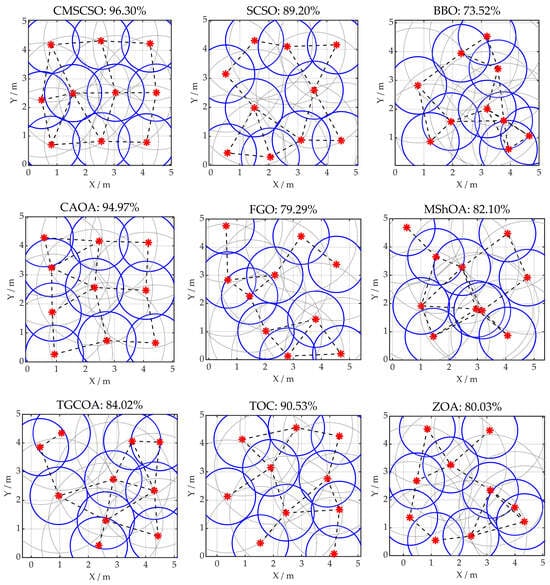
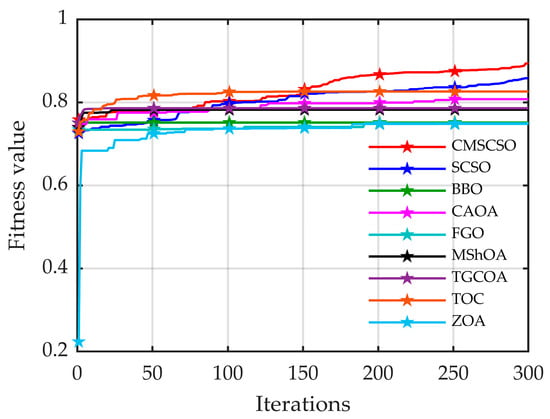
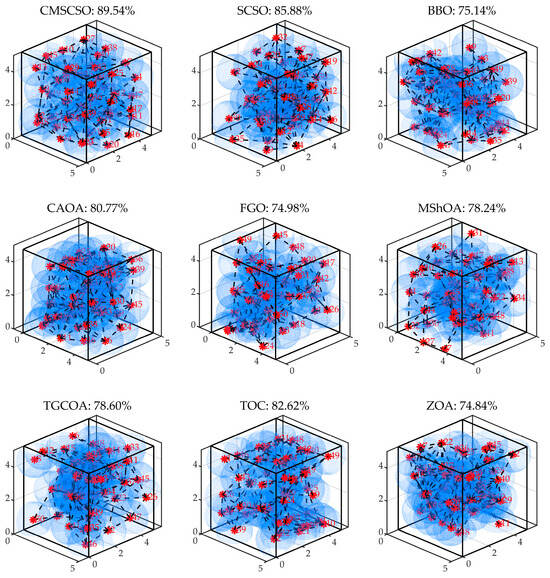
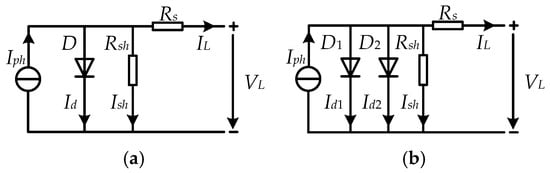
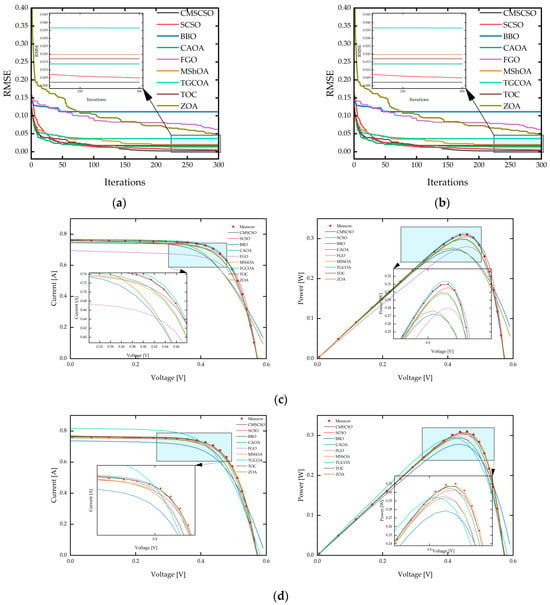
Sand Cat Swarm Optimization (SCSO) is a swarm intelligence algorithm characterized by a simple structure and a small number of control parameters. However, when solving complex optimization problems, SCSO suffers from several limitations, including an uneven initial population distribution, excessive dependence on the current best individual during the search process, insufficient local exploitation accuracy, and susceptibility to local optima. To address these limitations, a Collaborative Multi-Strategy Sand Cat Swarm Optimization algorithm (CMSCSO) is proposed. The good point set method is adopted to generate a uniformly distributed initial population. An adaptive random reuse strategy is designed to selectively inherit dimensional information from the best individual according to differences in individual fitness. A prey impatience coefficient is introduced to dynamically adjust the local search intensity according to the distance between the population and the current best solution. In addition, a refractive-mechanism-based opposition-based learning strategy for the worst individuals is incorporated to update low-quality individuals and improve the ability of the algorithm to escape from local optima. CMSCSO was evaluated using the 30-dimensional CEC2017 and 10-dimensional CEC2022 benchmark suites. Its performance was compared with that of SCSO and several recently developed metaheuristic algorithms. The experimental results show that CMSCSO achieved the best mean values on 24 of the 29 CEC2017 benchmark functions and on 10 of the 12 CEC2022 benchmark functions. In the Wilcoxon tests conducted on CEC2017 and CEC2022, CMSCSO achieved 220 and 90 statistically significant wins, respectively. It also ranked first in the Friedman tests for both benchmark suites. For engineering optimization problems, the results obtained from six types of engineering design problems demonstrate that CMSCSO can consistently obtain high-quality feasible solutions that satisfy the specified constraints. In two-dimensional and three-dimensional wireless sensor network coverage optimization problems, coverage rates of 96.30% and 89.54% were achieved. For photovoltaic model parameter identification, CMSCSO achieved the highest identification accuracy. The numerical and engineering test results demonstrate that CMSCSO provides high optimization accuracy, strong stability, and good adaptability to complex engineering problems. It can therefore serve as an effective solution method for optimization tasks in structural design, mechanical engineering, and other related fields.
Full article
(This article belongs to the Section Biological Optimisation and Management)
►▼
Show Figures

Figure 1
Open AccessArticle
High-Performance Regenerated Silk Fibers as Building Blocks of Tissue Scaffolds: The European THOR Project
by
José Pérez-Rigueiro, Atocha Guedán-Durán, Fivos Panetsos, Gianna Arencibia, Gustavo V. Guinea, Luis Colchero, Miriam Quero, Jaime Espinosa, Alessandro Rizzi, Tando Maduna, Anna Pancho, Marsela Hakani, Andreas Vlachos, Julia Sepúlveda-Díaz, Alan Morin, Michele Papa, Giovanni Cirillo, Assunta Virtuoso and Ciro De Luca
Biomimetics 2026, 11(8), 566; https://doi.org/10.3390/biomimetics11080566 (registering DOI) - 8 Aug 2026
Abstract
The European Pathfinder THOR project envisages the creation of a vascularized fragment of tissue that can be implanted in a patient using regenerated silk fibers as its building blocks. The selection of regenerated silk as the main building block of the scaffold relies
[...] Read more.
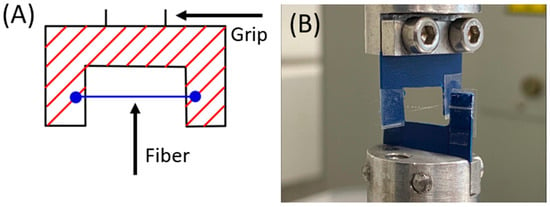
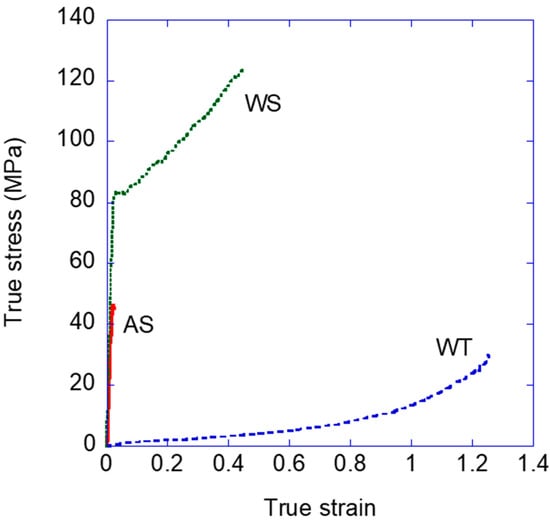
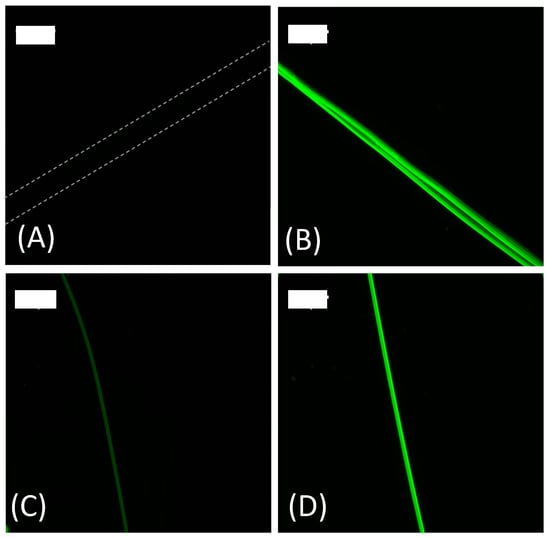
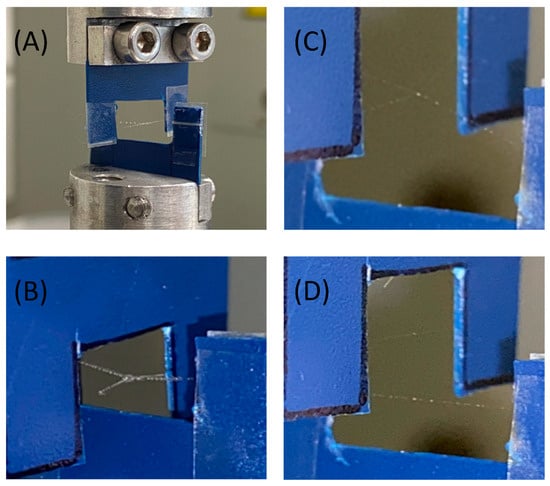
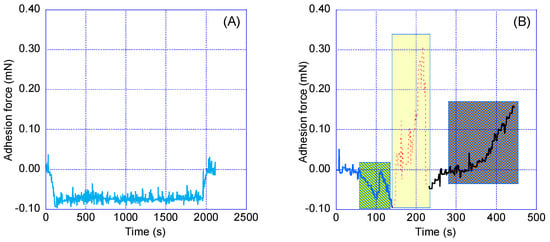
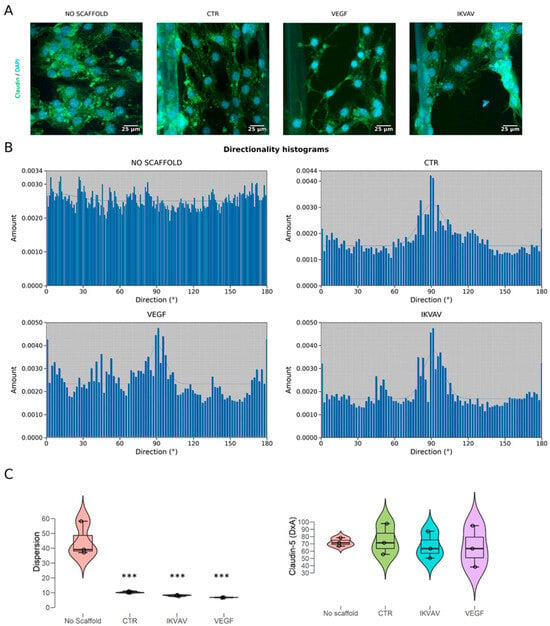
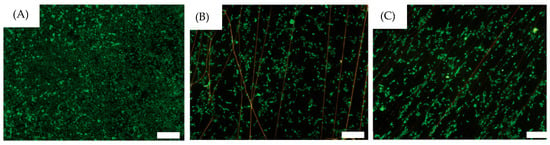
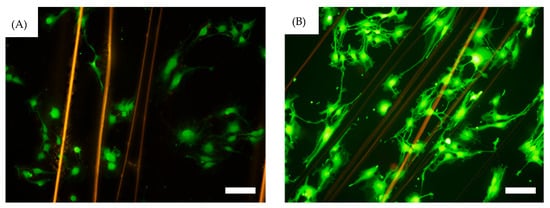
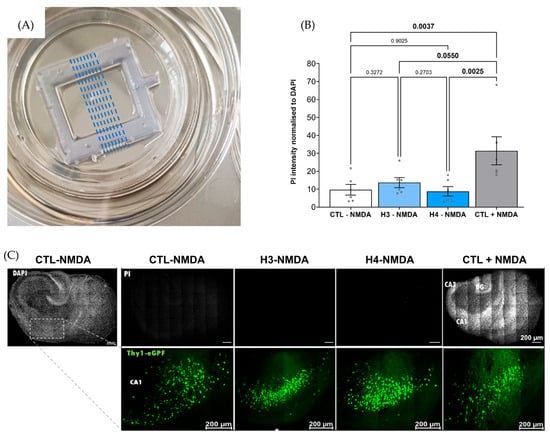
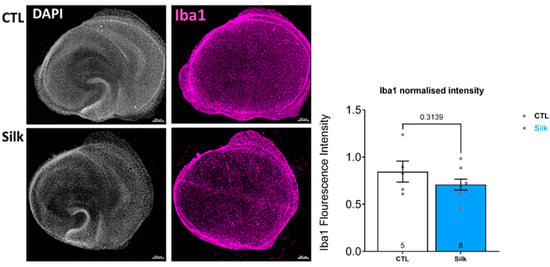
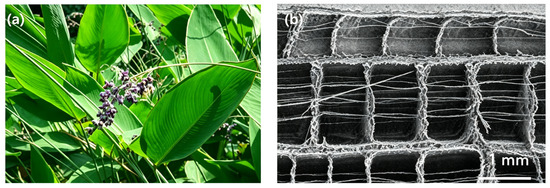
The European Pathfinder THOR project envisages the creation of a vascularized fragment of tissue that can be implanted in a patient using regenerated silk fibers as its building blocks. The selection of regenerated silk as the main building block of the scaffold relies heavily on its outstanding biocompatibility in comparison with either other artificial polymeric fibers or even natural silk fibers. Additionally, regenerated fibers produced through the Dynamic Dope Destabilization Spinning (D3STM) process are shown to exhibit high mechanical performance as reflected in values of strain at breaking and work to fracture comparable to those of the natural material. It is further shown that these fibers are endowed with the unique property of self-adhesion whereby hydrated fibers attach to one another and may sustain detachment forces of up to a few tens of MPa, a property that facilitates the generation of the scaffold with the fibers as its basic building block. Lastly, regenerated silk fibers are shown to be efficiently decorated with either peptides or small proteins, such as the vascular endothelial growth factor (VEGF), or with antibodies. The performance of both non-functionalized and decorated silk fibers is assessed in two different in vitro biological systems: (1) endothelial cell cultures, and (2) organotypic brain slice cultures. Together, these results support the use of regenerated silk fibers as versatile building blocks for biofunctional tissue scaffolds and provide experimental validation of the tissue engineering strategy established by the THOR project.
Full article
(This article belongs to the Special Issue Silk-Based Bioinspired Materials: Design and Application 2026)
►▼
Show Figures

Figure 1
Open AccessArticle
Influence of Longitudinal Center of Mass Position on Load Distribution in High-Speed Quadrupedal Locomotion
by
Kaixin Lan, Lei Jiang, Yucheng Tao, Chaojie Fu, Yongbin Jin and Hongtao Wang
Biomimetics 2026, 11(8), 565; https://doi.org/10.3390/biomimetics11080565 - 7 Aug 2026
Abstract
Existing quadruped robots typically place their center of mass (CoM) near the geometric center of the body to achieve structural symmetry and simplify control design. In contrast, many quadrupedal animals capable of agile running exhibit a pronounced anteriorly biased mass distribution, with the
[...] Read more.
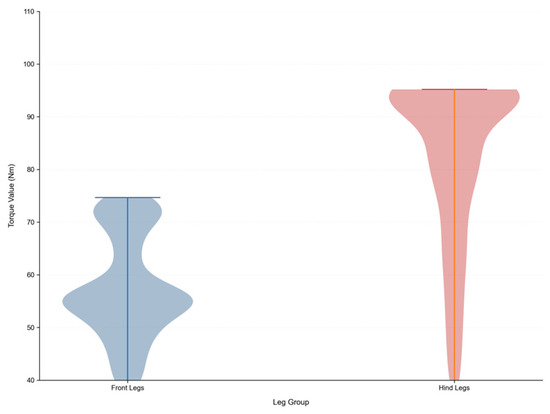
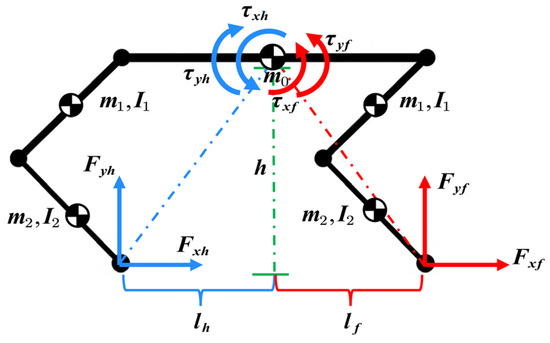
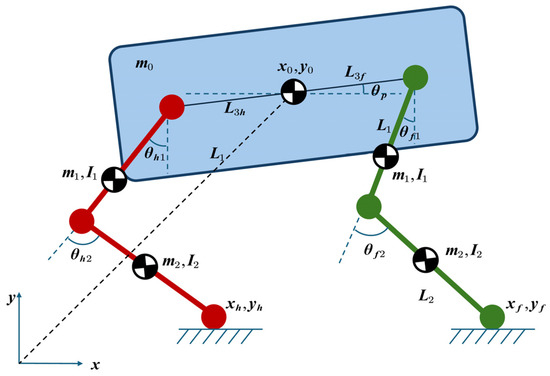
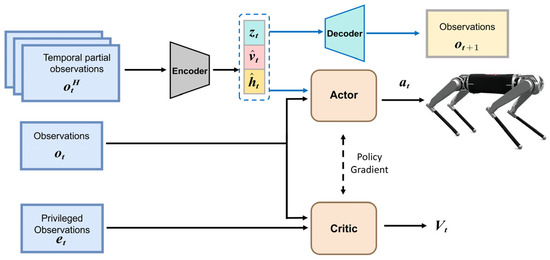
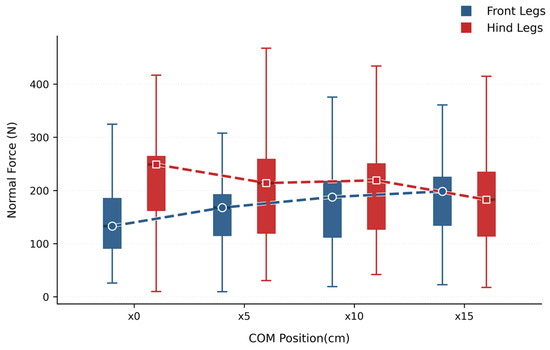
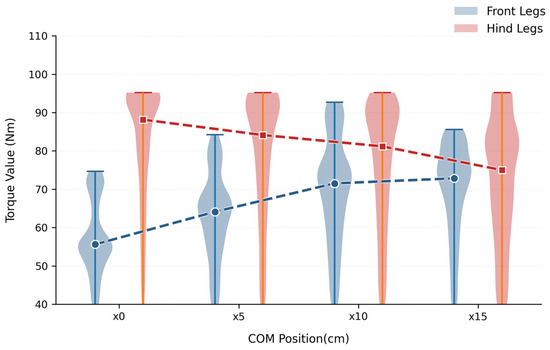
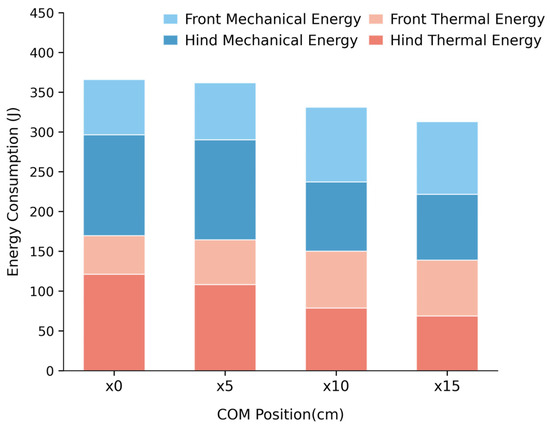
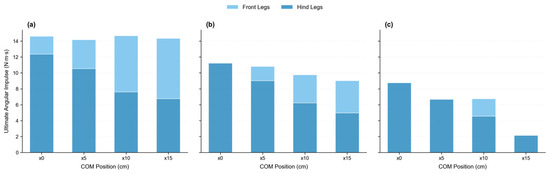
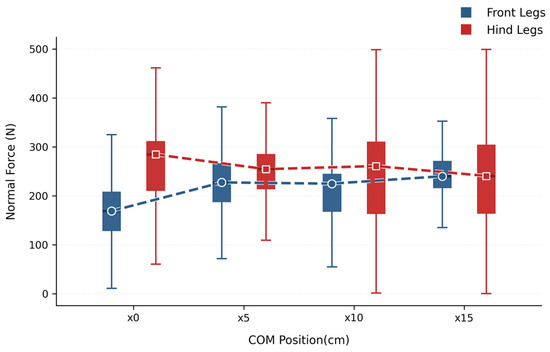
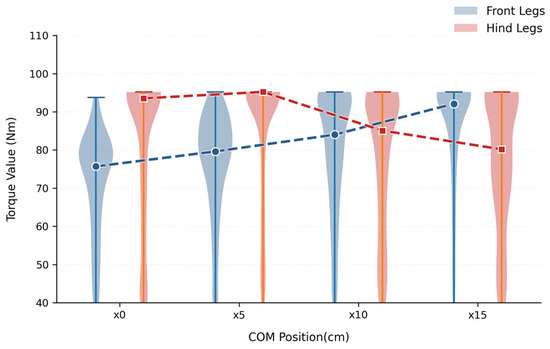
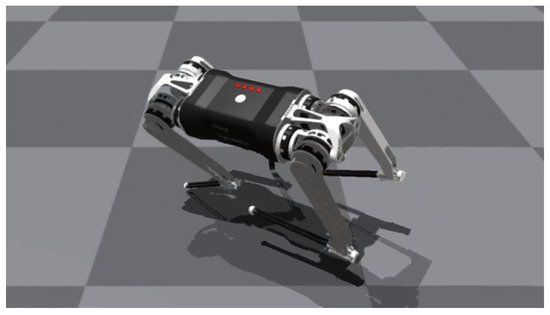
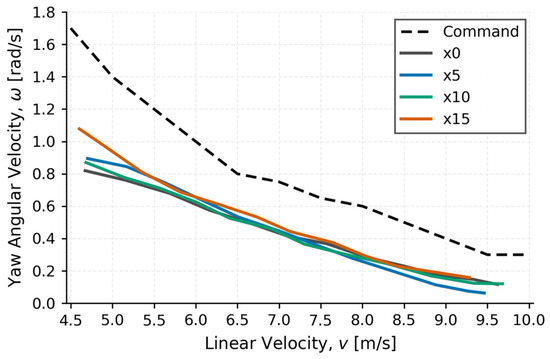
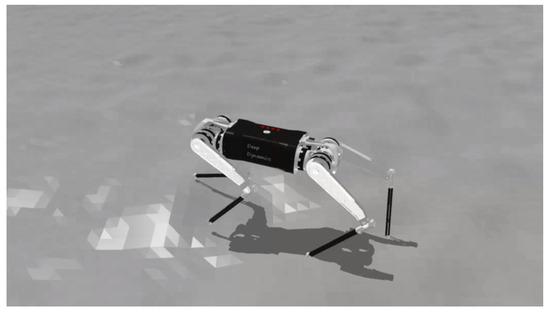
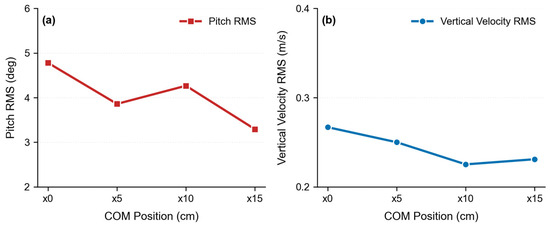
Existing quadruped robots typically place their center of mass (CoM) near the geometric center of the body to achieve structural symmetry and simplify control design. In contrast, many quadrupedal animals capable of agile running exhibit a pronounced anteriorly biased mass distribution, with the CoM located closer to the front of the body. This biological characteristic motivates a re-examination of whether a geometrically centered CoM necessarily corresponds to dynamically balanced loading between the fore- and hindlimbs during high-speed locomotion. To address this question, this study investigates the influence of longitudinal CoM position on load distribution during high-speed straight-line locomotion of quadruped robots. A unified analytical framework is established by combining whole-body force and pitch moment equilibrium, sagittal-plane kinematics, and Jacobian-based force-to-torque mapping, thereby linking longitudinal CoM position, foot-end support forces, and joint loads. Simulation validation is conducted on the Black Panther 2 quadruped robot using four central-body CoM configurations, denoted as ×0, ×5, ×10, and ×15. In the primary evaluation at 5 m/s, shifting the CoM forward from ×0 to ×15 reduces the absolute median fore–hindlimb differences in support force and joint torque by approximately 86.6% and 93.4%, respectively, indicating a transition from hindlimb-dominated loading toward cooperative load sharing between the fore and hindlimbs. Independent training runs with multiple random seeds further confirm the robustness of this load-redistribution trend to reinforcement learning variability. Consistent behavior is also observed at 8 m/s, while no evident degradation in turning response or locomotion stability is found under the tested turning and randomly generated rough-terrain conditions. These results demonstrate that a moderate forward shift of the longitudinal CoM can alleviate hindlimb load concentration and promote a more balanced fore–hindlimb load distribution, providing a theoretical basis for the morphological design and control optimization of high-speed quadruped robots.
Full article
(This article belongs to the Special Issue Bioinspired Locomotion Control: From Biomechanics to Robotics)
►▼
Show Figures

Figure 1
Open AccessArticle
Borate-Based Bioactive Glass Powders for 3D Printing of Biomimetic Resorbable Bone Implants
by
Yoann Matagne, Guillaume Marchal, Damien Coibion, Sébastien Blasutig, Fanny Lambert, Frederic Boschini, Rudi Cloots and Nicolas Somers
Biomimetics 2026, 11(8), 564; https://doi.org/10.3390/biomimetics11080564 - 7 Aug 2026
Abstract
As the population ages, the demand for customizable, resorbable bone implants in tissue engineering has intensified, outstripping the limitations of traditional autografts and allografts. While silicate-based bioactive glasses dominate bioactive glass research, borate-based bioactive glasses (BBGs) present distinct biomimetic advantages due to their
[...] Read more.
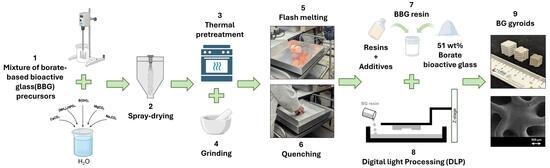
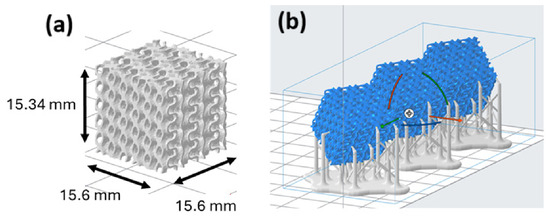
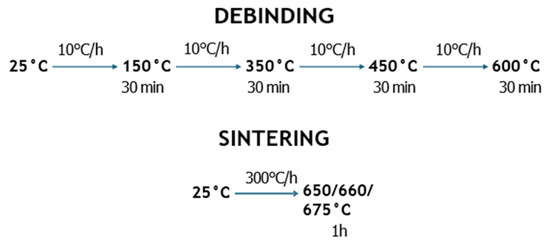
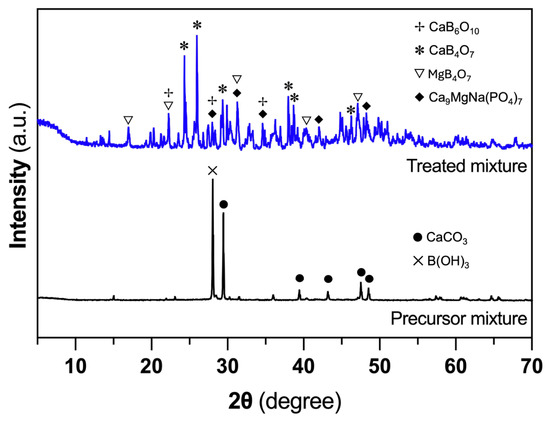
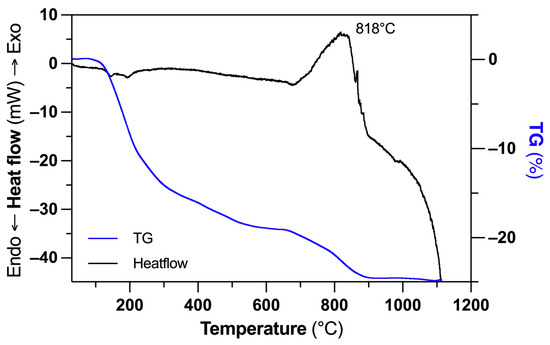
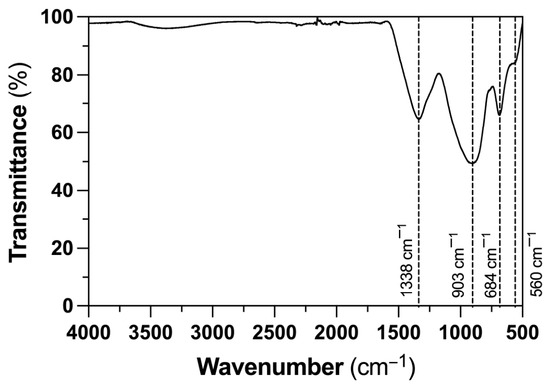
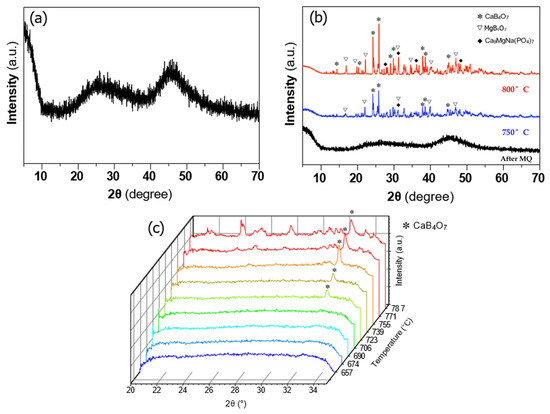
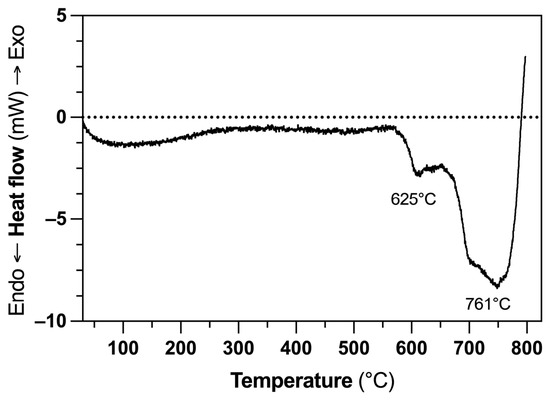
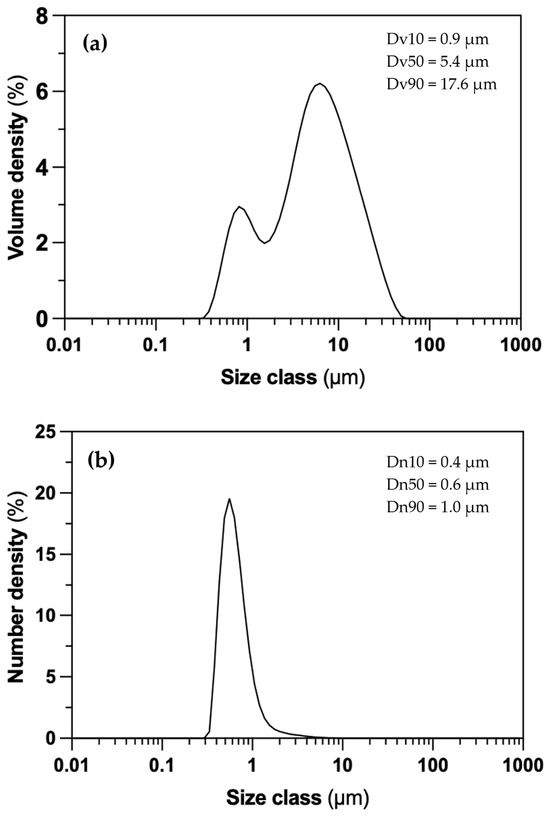
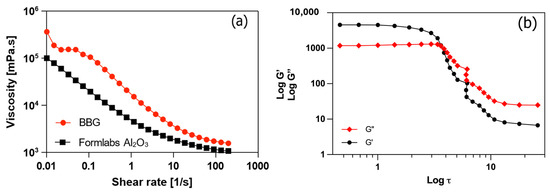
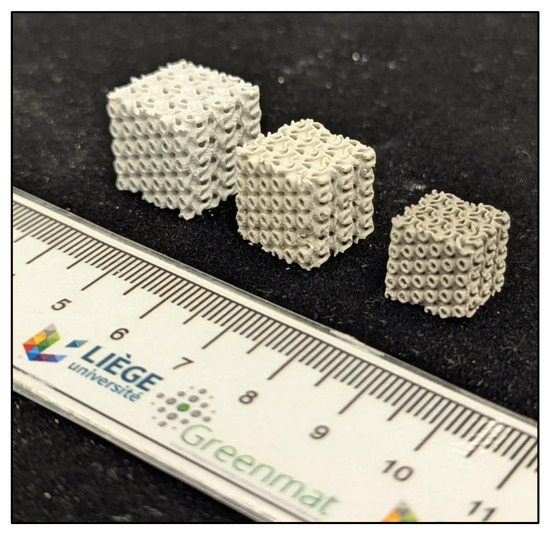
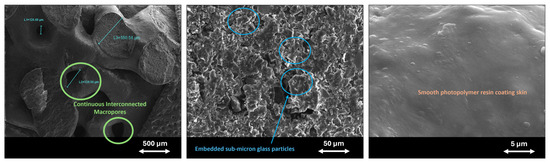
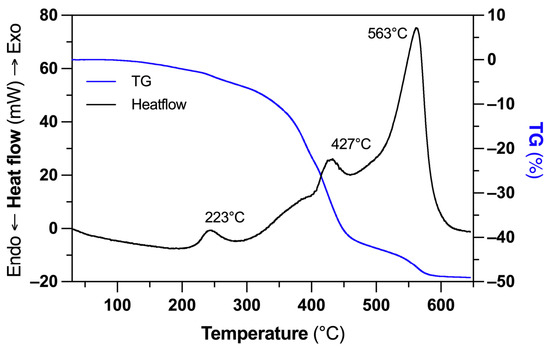
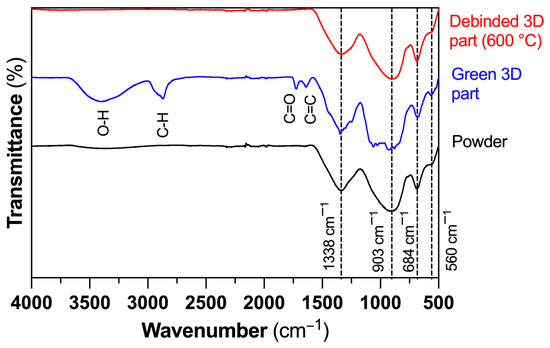
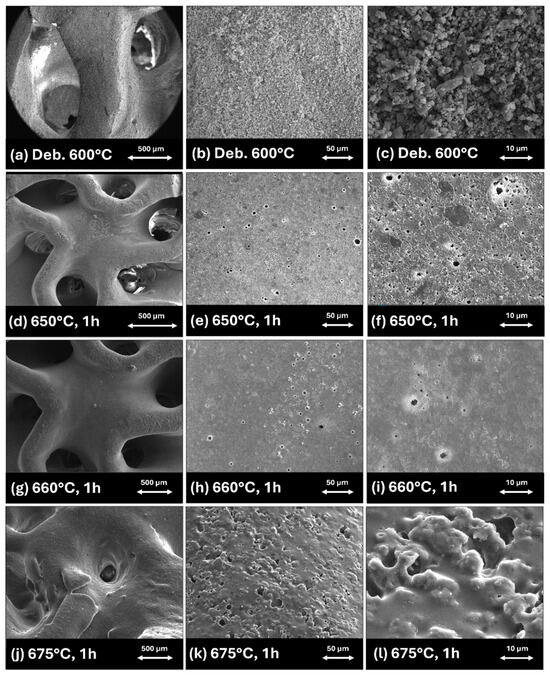
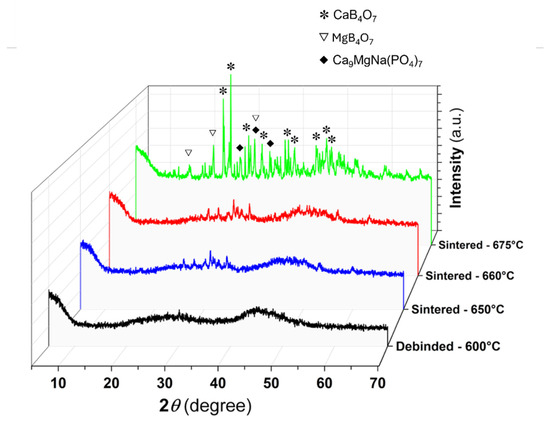
As the population ages, the demand for customizable, resorbable bone implants in tissue engineering has intensified, outstripping the limitations of traditional autografts and allografts. While silicate-based bioactive glasses dominate bioactive glass research, borate-based bioactive glasses (BBGs) present distinct biomimetic advantages due to their accelerated degradation kinetics and superior ion-release profiles. However, producing highly pure, homogeneous BBG powders tailored for additive manufacturing remains a severe bottleneck. This study reports the development of a highly efficient synthesis protocol and subsequent Digital Light Processing (DLP) 3D printing of BBG scaffolds. An aqueous-based precursor mixture was processed via spray drying and a customized multi-stage thermal pretreatment sequence up to 800 °C to mitigate material loss, minimize oxide evaporation, and completely eliminate carbonates. Subsequent “flash melting” at 1150 °C for 20 min yielded an amorphous, high-purity borate–phosphate glass network (68.1B2O3-3.8Na2O-18.9CaO-4.9MgO-4.3P2O5, in wt%). Differential scanning calorimetry (DSC) revealed a glass transition temperature ( ) of 625 °C, while in situ X-ray diffraction localized the onset of crystal nucleation between 706 °C and 723 °C. Following fine planetary milling to achieve a highly dense particle packing distribution (Dv50 = 5.4 µm, Dn50 = 0.6 µm), the optimized BBG powder was successfully loaded into an acrylate-based photosensitive slurry (51.2 wt% solid loading) to manufacture complex 3D biomimetic gyroid scaffolds via DLP. While the structural feasibility of printing high-resolution gyroid porous architectures is validated, post-printing evaluation highlighted a narrow thermal processing window; sintering at 660 °C optimized particle coalescence while minimizing microstructural de-densification caused by closed porosity expansion (which reaches 48.4% at 675 °C). This scalable synthesis-to-printing workflow offers a crucial steppingstone toward next-generation fully resorbable bone tissue scaffolds.
Full article
(This article belongs to the Special Issue Biomimetic Materials for Bone Tissue Engineering)
►▼
Show Figures

Graphical abstract
Open AccessArticle
Regenerative Performance and Structural Persistence of Silk Fibroin Matrices in Human Infected and Non-Infected Ex Vivo Wounds
by
Sophie C. Liegenfeld, Niklas P. Straub, Nicolas Krueger, Mandy Dittmer, Arianna Delle Coste, Jan T. Strenge, Markus Geissen, Sophie C. Rhode, Wolfgang R. Streit, Ralf Smeets and Ewa K. Stuermer
Biomimetics 2026, 11(8), 563; https://doi.org/10.3390/biomimetics11080563 - 6 Aug 2026
Abstract
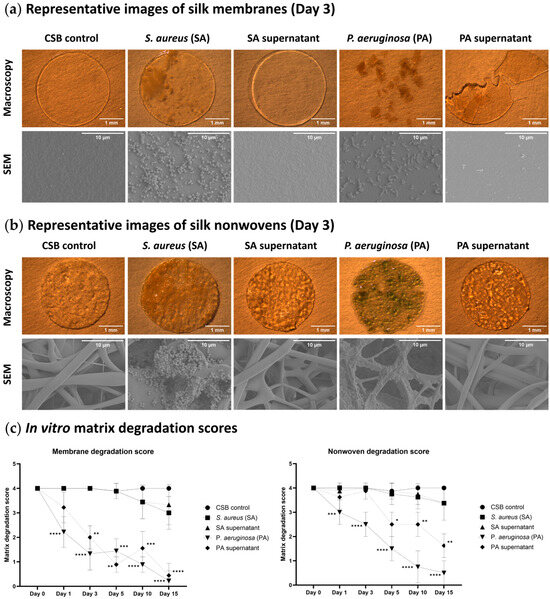
Biodegradable biomaterials are promising candidates for regenerative wound care, yet their performance under infection-driven conditions remains poorly understood. This study evaluated the regenerative efficacy and structural persistence of a silk fibroin membrane and electrospun nonwoven matrix using a human ex vivo full-thickness skin
[...] Read more.
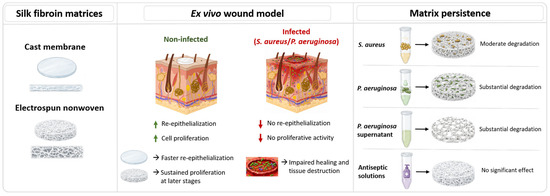
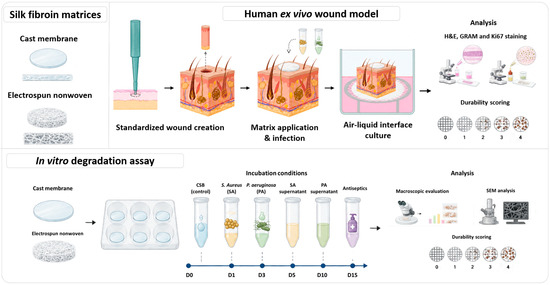
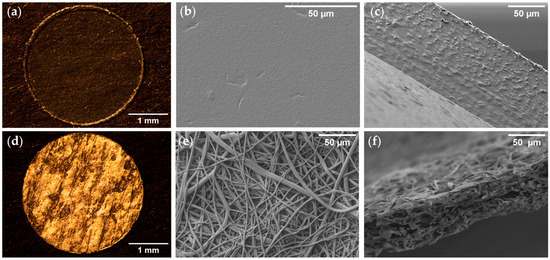
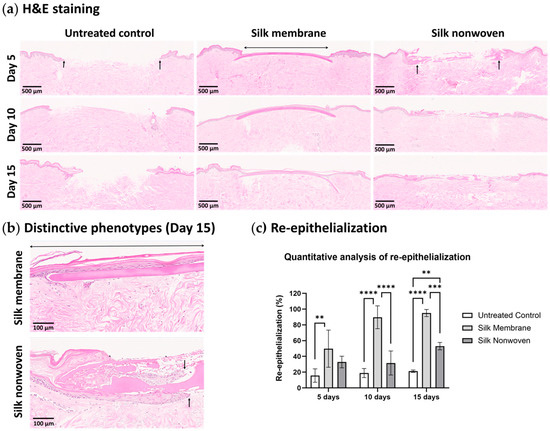
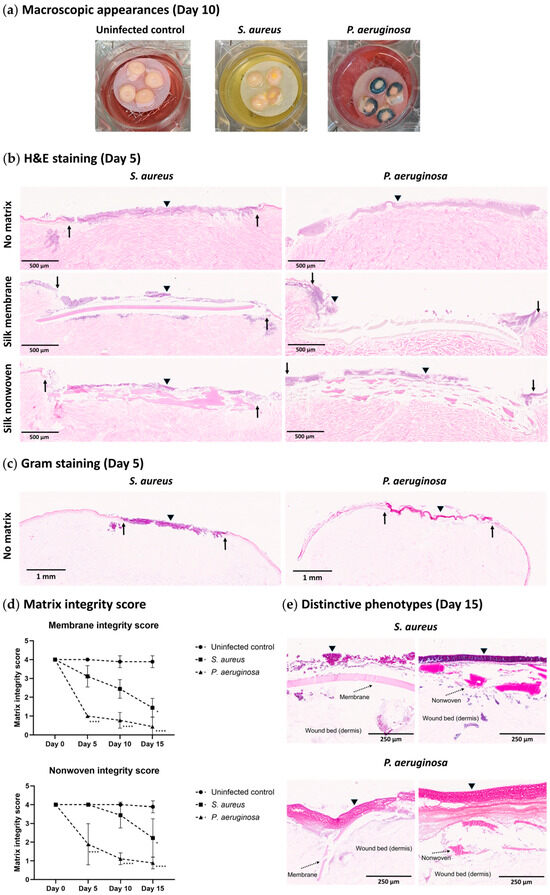
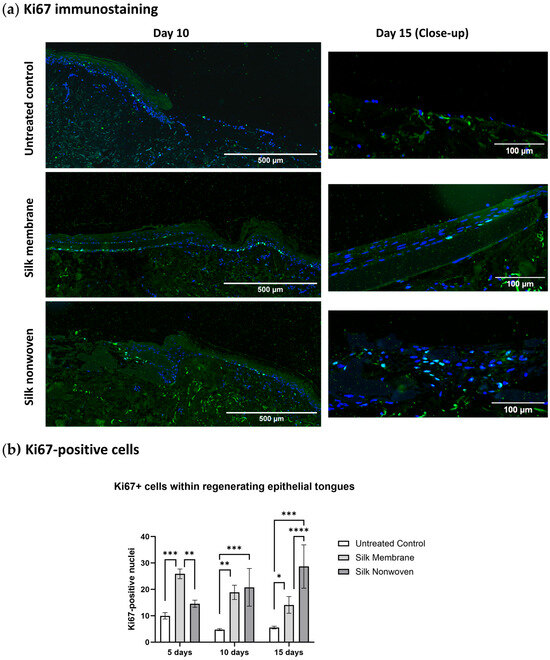
Biodegradable biomaterials are promising candidates for regenerative wound care, yet their performance under infection-driven conditions remains poorly understood. This study evaluated the regenerative efficacy and structural persistence of a silk fibroin membrane and electrospun nonwoven matrix using a human ex vivo full-thickness skin wound model under non-infected and bacterially infected conditions. Complementary in vitro degradation assays assessed matrix durability following exposure to Staphylococcus aureus, Pseudomonas aeruginosa, bacterial culture supernatants and clinically relevant antiseptic solutions. In non-infected wound conditions, both matrices enhanced wound regeneration, resulting in increased re-epithelialization and proliferative activity compared with untreated controls; membrane-treated wounds achieved approximately 95% re-epithelialization after 15 days compared with approximately 20% in untreated controls, indicating accelerated wound closure, whereas nonwoven matrices supported sustained cellular proliferation over time. In contrast, bacterial infection was associated with almost complete absence of re-epithelialization and proliferative activity irrespective of matrix architecture. Matrix persistence was pathogen-dependent. While S. aureus induced moderate degradation, P. aeruginosa caused pronounced structural deterioration in ex vivo and in vitro models. Exposure to P. aeruginosa culture supernatants produced similar effects. These findings demonstrate that regenerative efficacy and material persistence are distinct biomaterial properties that are strongly influenced by the wound microbiological environment and are profoundly compromised under conditions of high bacterial burden.
Full article
(This article belongs to the Special Issue Silk-Based Bioinspired Materials: Design and Application 2026)
►▼
Show Figures

Graphical abstract
Open AccessReview
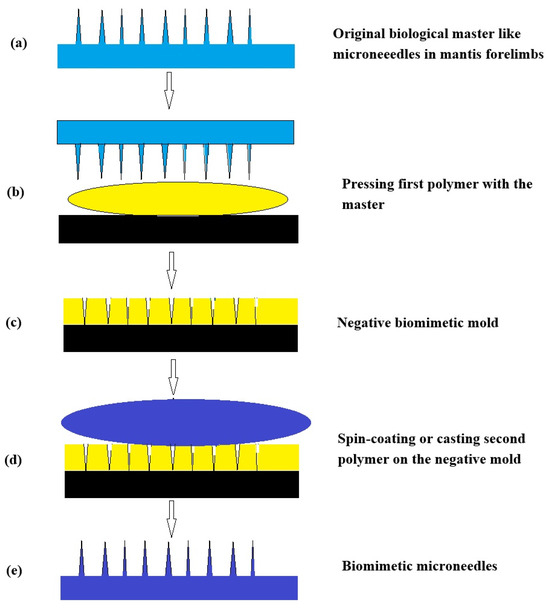
Applications of Nanofabrication Technologies in the Preparation of Biomimetic Structures
by
Hongwen Sun, Baohua Yang, Xiaomin Xie, Lei Li, Hengmei Li and Jie Shen
Biomimetics 2026, 11(8), 562; https://doi.org/10.3390/biomimetics11080562 - 6 Aug 2026
Abstract
Biomimetic structures are now a major topic of research, as natural systems achieve high performance through hierarchical organization, multifunctional interfaces, and scale-bridging design principles. Nanofabrication provides a powerful approach to recapitulate biological architectures from the nanoscale to the macroscale, allowing accurate control of
[...] Read more.
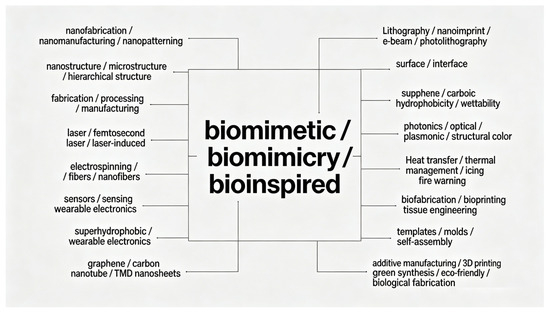
Biomimetic structures are now a major topic of research, as natural systems achieve high performance through hierarchical organization, multifunctional interfaces, and scale-bridging design principles. Nanofabrication provides a powerful approach to recapitulate biological architectures from the nanoscale to the macroscale, allowing accurate control of the surface chemistry, geometry, transport, mechanics and function. Recent work demonstrates that this approach is especially critical for bionic devices and systems, including biosensors, drug delivery platforms, tissue-engineered constructs, organ-on-chip systems, soft robots, and biohybrid devices. The aim of this review is to provide a systematic overview on how nanofabrication allows the construction of biomimetic structures, with emphasis on bio-templating and replication of natural structures, applications of nanofabrication in bionic devices and systems, and cross-scale biomimetics.
Full article
(This article belongs to the Section Biomimetics of Materials and Structures)
►▼
Show Figures

Graphical abstract
Open AccessArticle
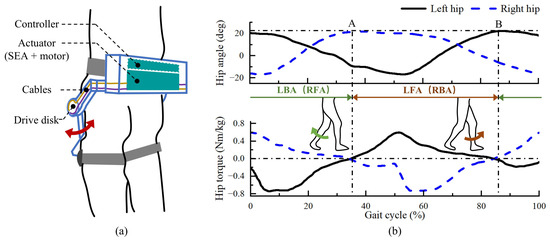
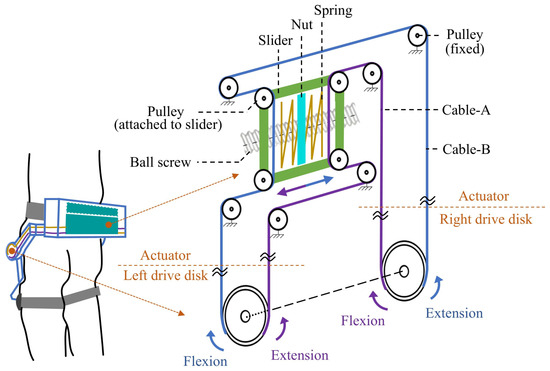
An Underactuated Hip Exoskeleton to Assist Hip Joints Driven by a Single-Series Elastic Actuator
by
Yangshuo Yue, Weijie Zhao, Jiaxu Wang, Zelin Yu, Zhiheng Zha, Bai Chen, Shengli Chen and Xiaoang Xu
Biomimetics 2026, 11(8), 561; https://doi.org/10.3390/biomimetics11080561 - 6 Aug 2026
Abstract
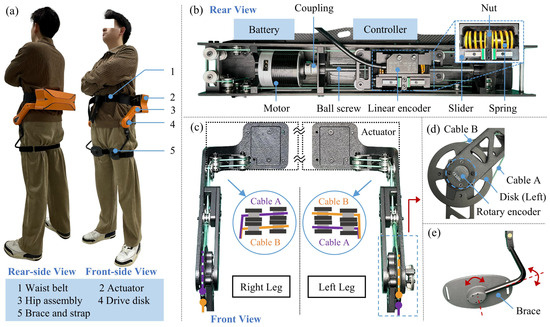
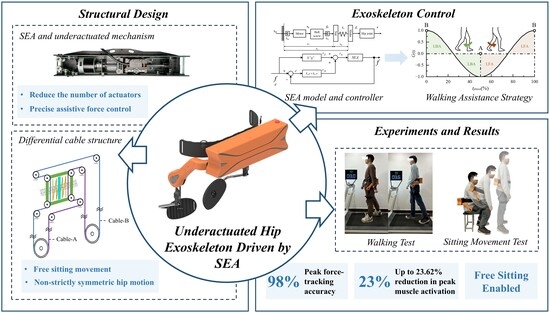
Conventional hip exoskeletons typically employ multiple actuators to provide effective assistance to the corresponding joint, leading to an increase in the weight of the exoskeleton. Underactuated designs reduce the number of actuators, thereby lowering system weight and cost. However, existing single-motor underactuated hip
[...] Read more.
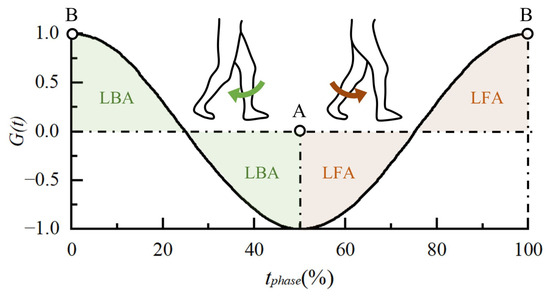
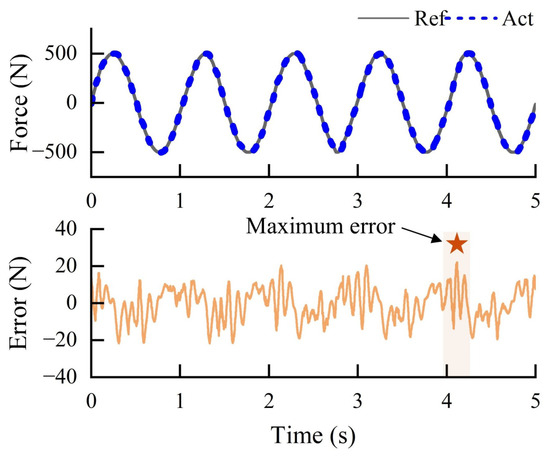
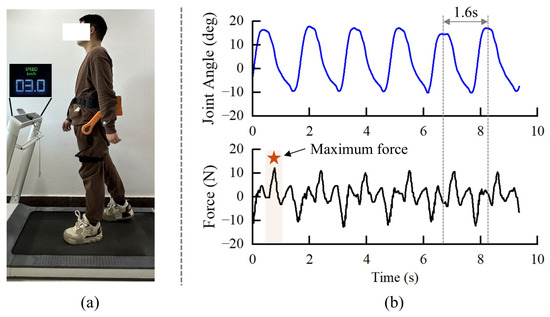
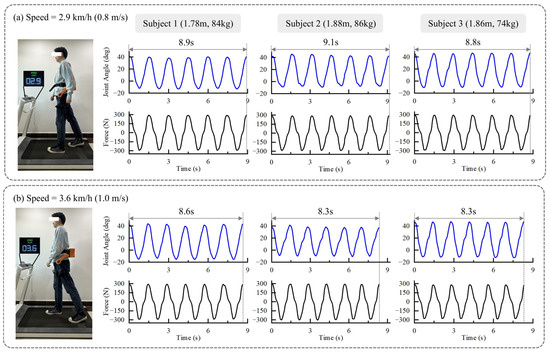
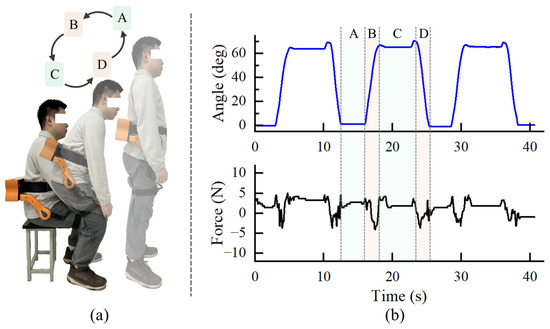
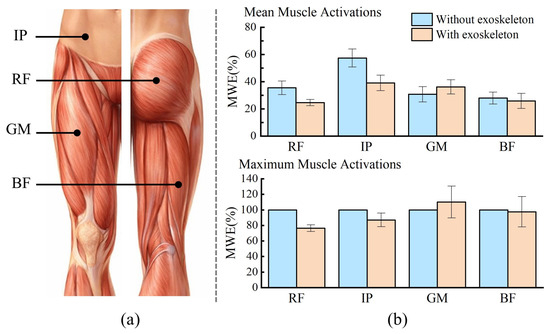
Conventional hip exoskeletons typically employ multiple actuators to provide effective assistance to the corresponding joint, leading to an increase in the weight of the exoskeleton. Underactuated designs reduce the number of actuators, thereby lowering system weight and cost. However, existing single-motor underactuated hip exoskeletons still face challenges in achieving precise assistance and accommodating non-walking movements such as free sitting. In this work, we propose an underactuated hip exoskeleton with a series elastic actuator (SEA) and two independent cables for walking assistance. The incorporation of the SEA contributes to system safety and precise assistive force control. Furthermore, the proposed differential cable structure enables free sitting movement and allows for non-strictly symmetric hip motion. In experiments, with a target assistive force of 300 N, the proposed actuator achieves a peak force-tracking accuracy of 98.01% in walking tests, and the hip exoskeleton reduces peak muscle activation by up to 23.62% during walking.
Full article
(This article belongs to the Special Issue Bioinspired Sensors and Actuators: Advanced Strategies and Applications in Mechanical and Agricultural Engineering)
►▼
Show Figures

Graphical abstract
Open AccessArticle
Optimizing the Cascade Deep Neural Network Parameters Using an Egret Swarm Optimisation Algorithm: An Application to PID Tuning for the AVR with Shallow Controller
by
Masoud Elhawat and Hüseyin Altınkaya
Biomimetics 2026, 11(8), 560; https://doi.org/10.3390/biomimetics11080560 - 6 Aug 2026
Abstract
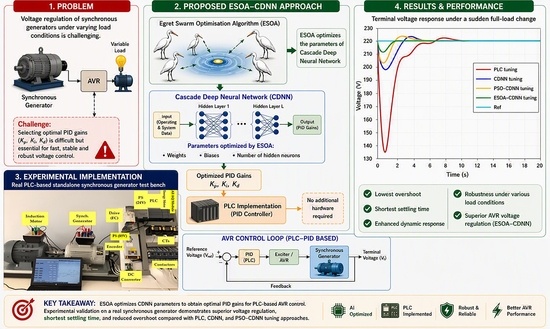
Voltage regulation of synchronous generators remains a significant and complex challenge in the field of engineering, particularly under varying load conditions. Although various control strategies have been applied to Automatic Voltage Regulator (AVR) systems for managing the terminal voltage of synchronous generators, Proportional–Integral–Derivative
[...] Read more.
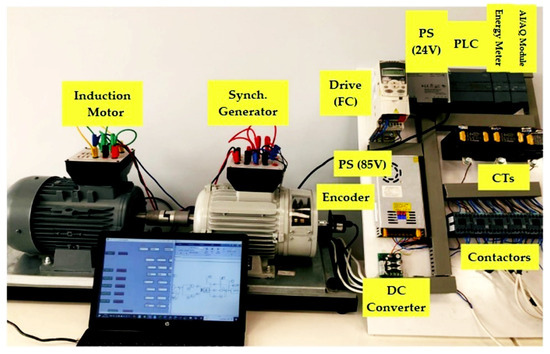
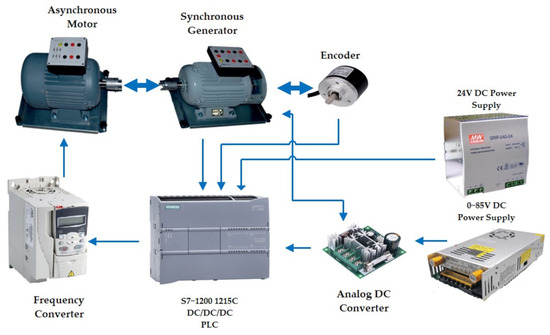
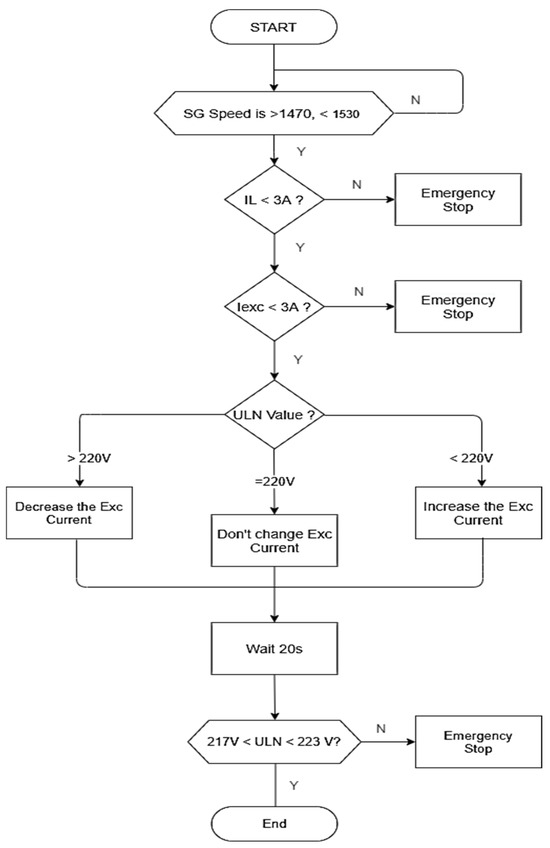
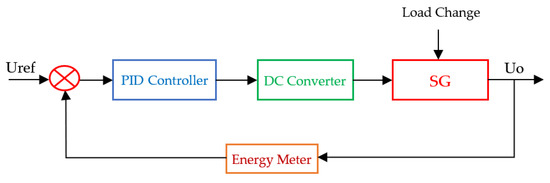
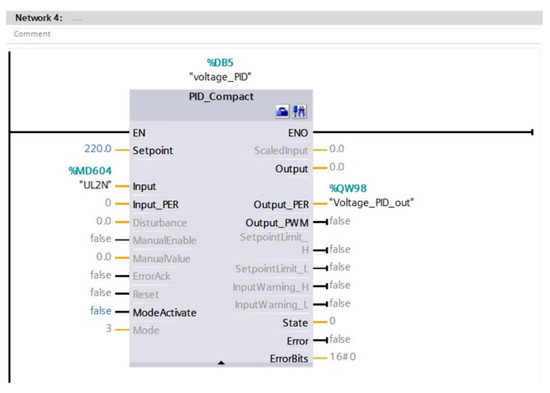
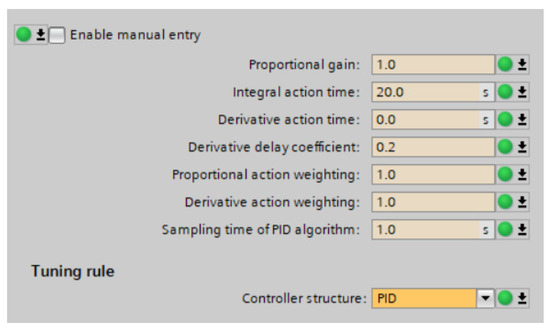
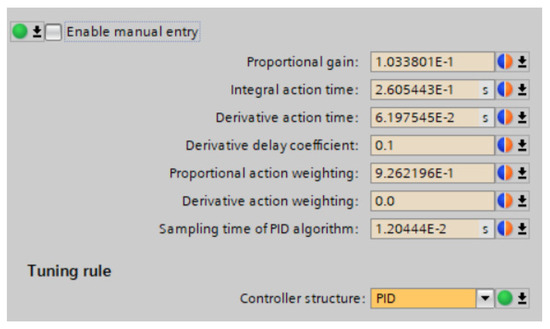
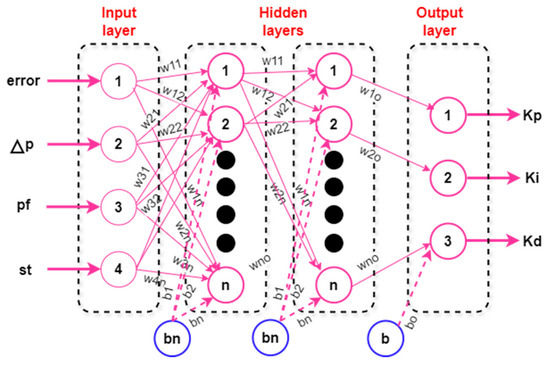
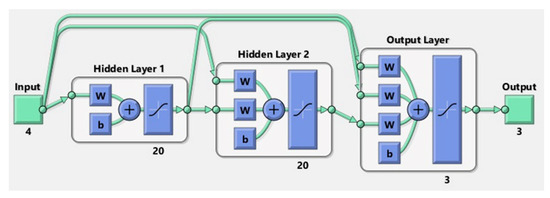
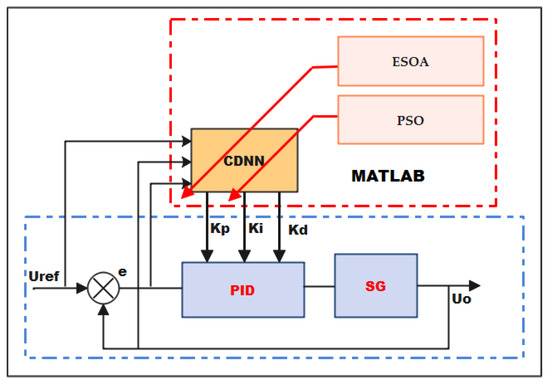
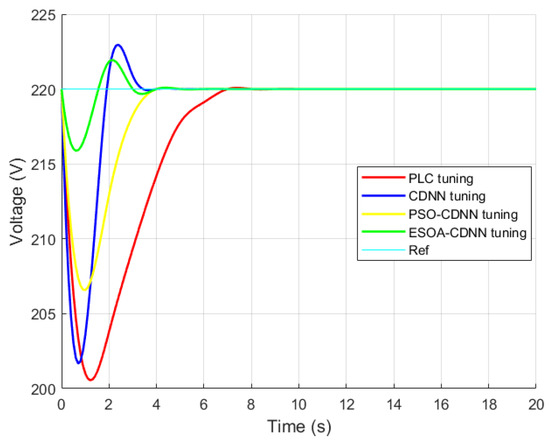
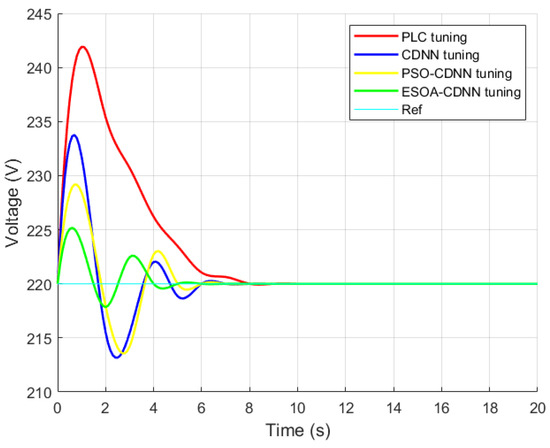
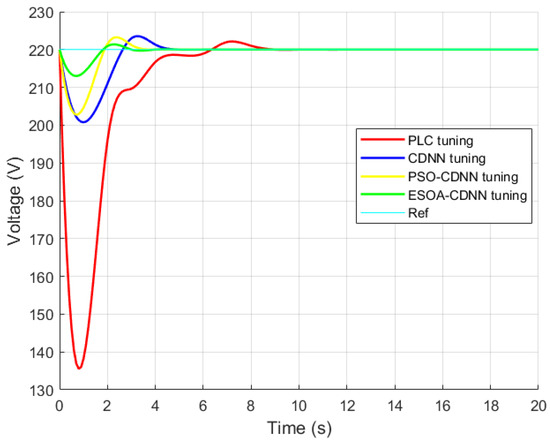
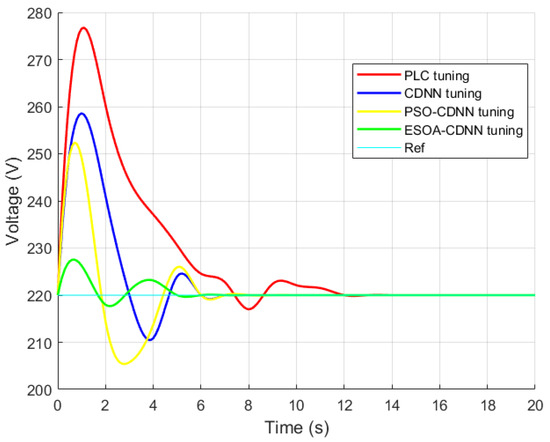
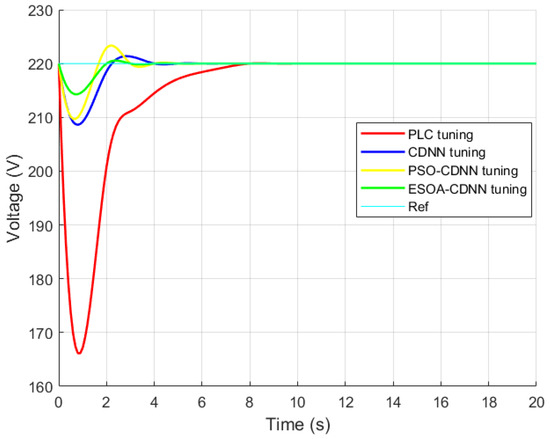
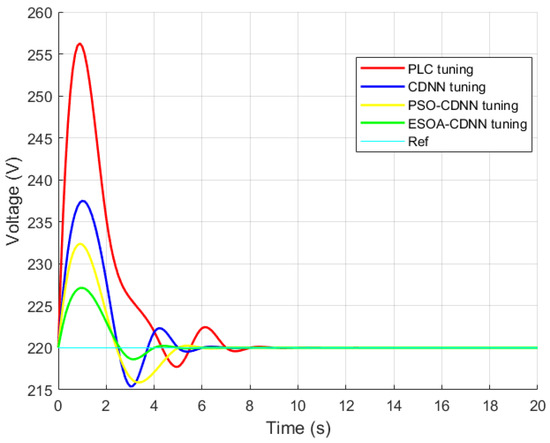
Voltage regulation of synchronous generators remains a significant and complex challenge in the field of engineering, particularly under varying load conditions. Although various control strategies have been applied to Automatic Voltage Regulator (AVR) systems for managing the terminal voltage of synchronous generators, Proportional–Integral–Derivative (PID) controllers continue to be one of the most fundamental and widely used approaches due to their simplicity, reliability, and robust structure. The tuning process, which involves determining the optimal values of the three fundamental parameters of a PID controller—namely the coefficients for the proportional, integral, and derivative terms (KP, KI, and KD)—is essential to achieving the desired controller performance. While tuning can be performed through simple trial-and-error methods, such approaches often fail to yield satisfactory results. In this study, the tuning of a PID controller, which provides automatic voltage regulation for 1 kW stand-alone synchronous generator constructed as a real physical experimental setup, was performed using a novel hybrid method named ESOA-CDNN, which combines the Egret Swarm Optimization Algorithm (ESOA) and a Cascade Deep Neural Network (CDNN). The ESOA is utilized to optimize the number of hidden layer neurons, the weights, and the biases of the CDNN. Furthermore, since the PID controller can be readily implemented through a standard Programmable Logic Controller (PLC) within the proposed approach, there is no need for additional hardware in the control system. The PID controller tuning was conducted using four different methods: tuning via PLC, tuning using CDNN, tuning using CDNN optimized with Particle Swarm Optimization (PSO-CDNN), and the proposed ESOA-CDNN approach. Experimental results demonstrate that the PID controller tuned with the ESOA-DNN method significantly outperformed the others in terms of settling time and overshoot reduction. The experimental results under sudden load application (0–500 W, 0–1000 W, and 0–550 VA) and sudden load rejection (500–0 W, 1000–0 W, and 550–0 VA) demonstrate that the PID controller tuned using the ESOA-DNN method significantly outperformed the others in terms of settling time and overshoot reduction.
Full article
(This article belongs to the Section Bioinspired Sensorics, Information Processing and Control)
►▼
Show Figures

Graphical abstract
Open AccessArticle
Developing a Morphing Taxidermy of a Red-Tailed Hawk
by
Peter L. Bishay, Estefany Ortega, Leo Haroutoonian, Victoria Bures, Johnathon Moore, James Hogue and Fritz Hertel
Biomimetics 2026, 11(8), 559; https://doi.org/10.3390/biomimetics11080559 - 5 Aug 2026
Abstract
Studying the flight of birds can provide a lot of inspiration for the design of future drones and airplanes and deepen our understanding of bird ecology. Fixed taxidermies have been used in ecological studies and aerodynamic investigations of avian flight. Building morphing bird
[...] Read more.
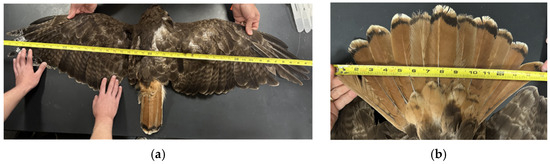
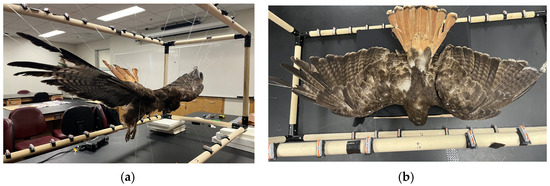
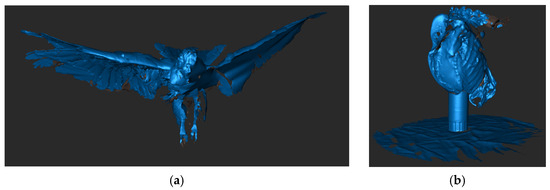
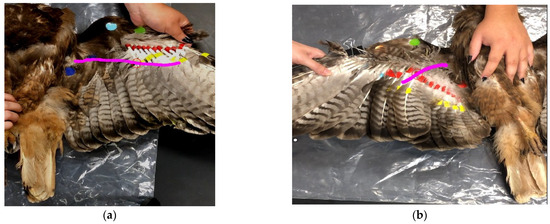
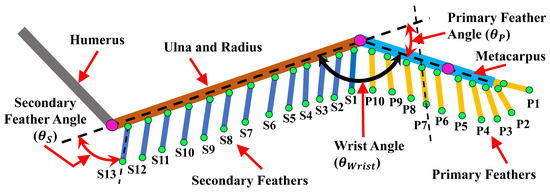
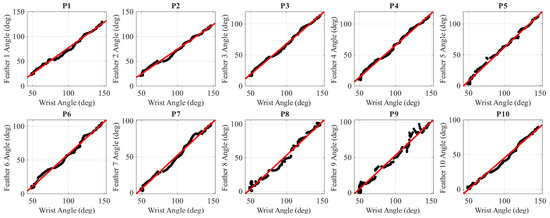
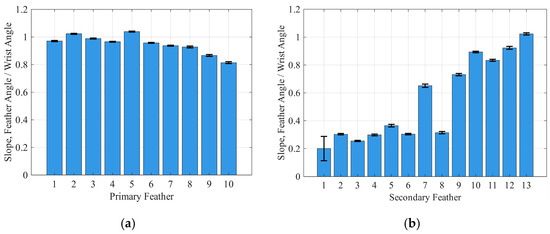
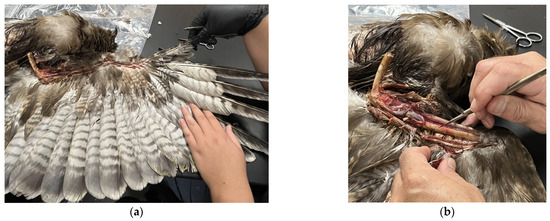
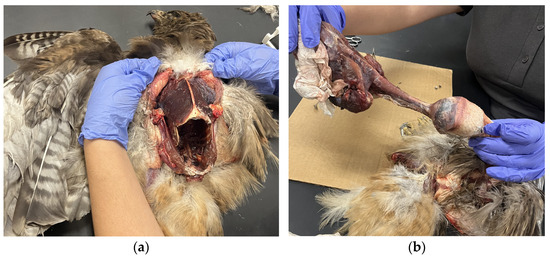
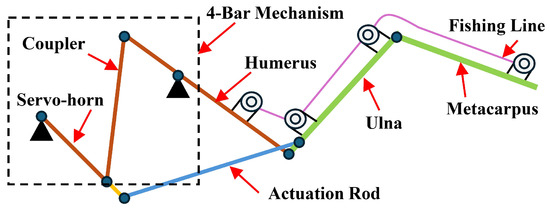
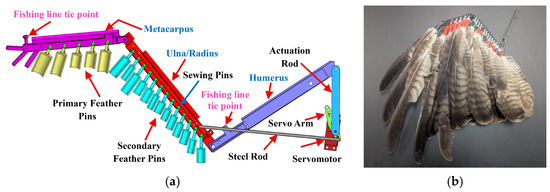
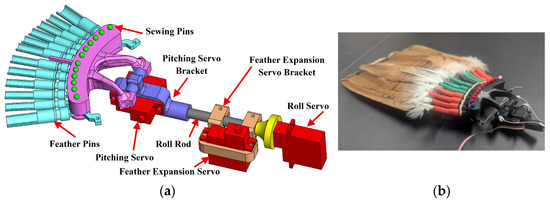
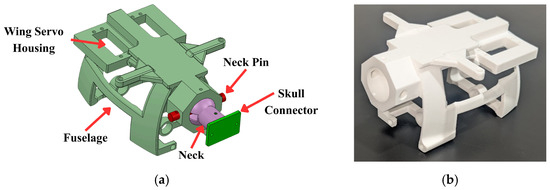
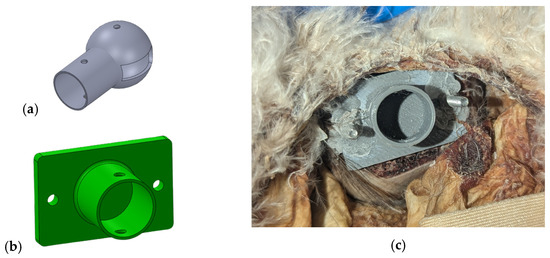
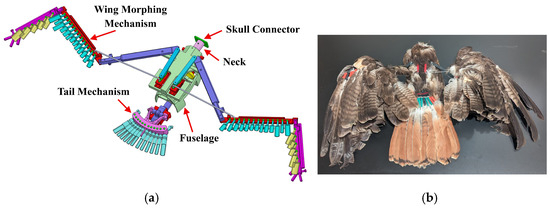
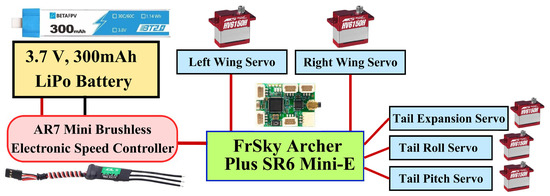
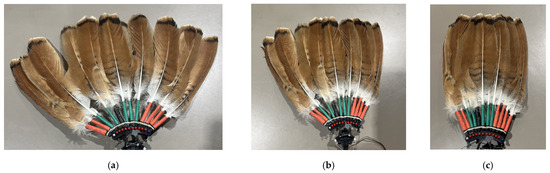
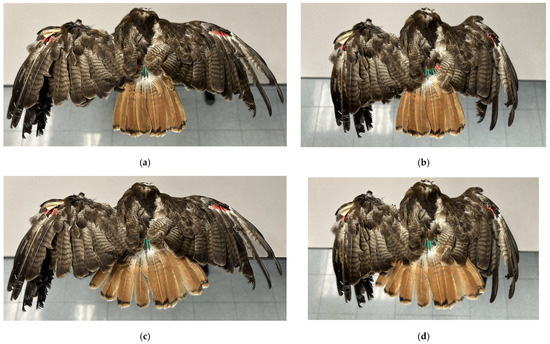
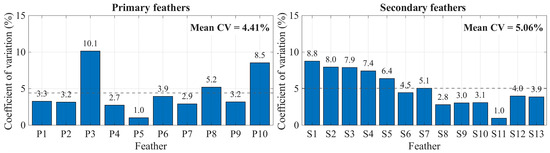
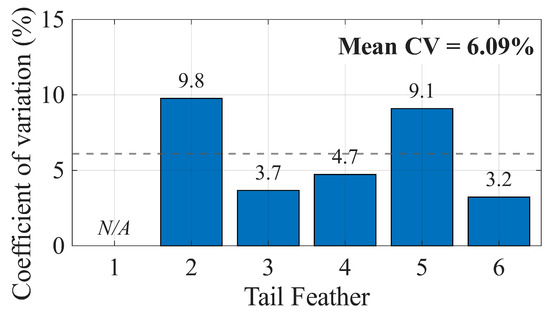
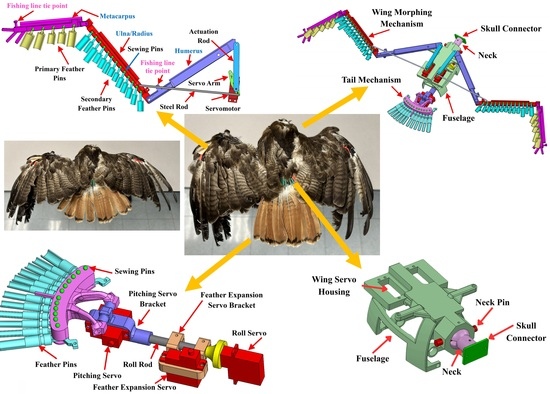
Studying the flight of birds can provide a lot of inspiration for the design of future drones and airplanes and deepen our understanding of bird ecology. Fixed taxidermies have been used in ecological studies and aerodynamic investigations of avian flight. Building morphing bird taxidermies has the potential to extend future studies incorporating aspects of bird flight while avoiding the challenges of live bird testing. However, creating such morphing taxidermies imposes serious challenges, such as the limited space inside the bird’s dead body for electronic components and the rapid desiccation of the integument. This work presents a first successful attempt to build a morphing taxidermy of a red-tailed hawk. Novel mechanisms were developed to morph the wings and tail of the prototype, which includes real feathers and is covered by the bird’s real skin. The completed morphing taxidermy features wings that morph independently, a tail with pitch, roll, and feather-spread capabilities, along with a fuselage that interconnects all systems with the bird’s carcass. Actuation tests demonstrated the effectiveness of the proposed design and validated the design choices. Multi-cycle actuation tests on the proof-of-concept model demonstrated morphing consistency. The paper is method-focused, and application studies are forthcoming.
Full article
(This article belongs to the Special Issue Advances in Biomimetics: 10th Anniversary)
►▼
Show Figures

Graphical abstract
Open AccessArticle
Octopus-Inspired Modular Two-Segment Pneumatic Soft Manipulator with Passive Suction Cups
by
Siyu Mei, Tongtong Ma, Rensong Yin, Chong Liu and Hui Chen
Biomimetics 2026, 11(8), 558; https://doi.org/10.3390/biomimetics11080558 - 5 Aug 2026
Abstract
Octopus arms combine a compliant continuum body with distributed suckers, providing a biological reference for soft manipulators that require large deformation and stable local contact. Inspired by this functional organization, this study presents an octopus-inspired two-segment pneumatic soft manipulator with passive suction cups
[...] Read more.
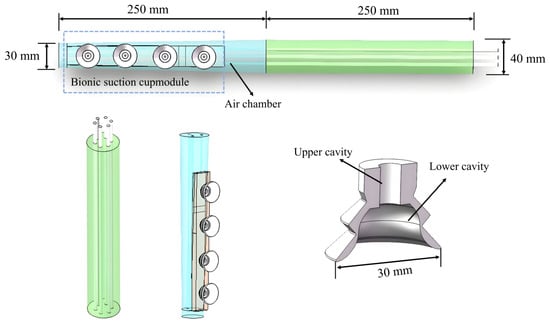
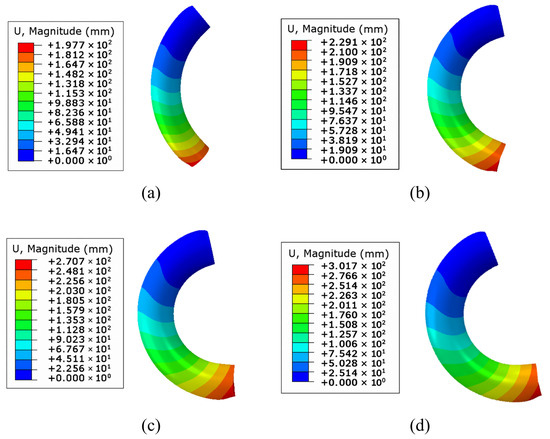
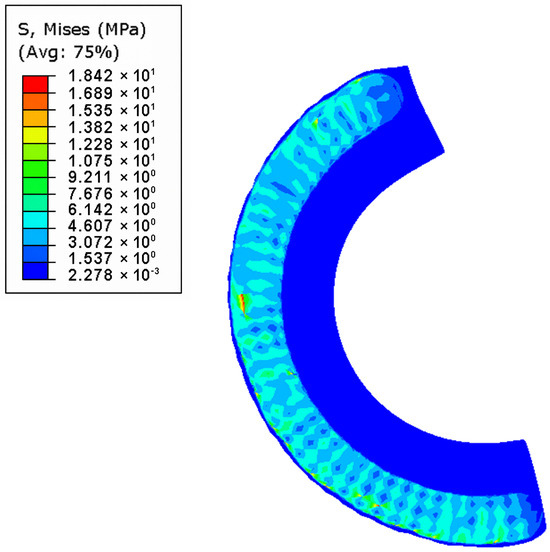
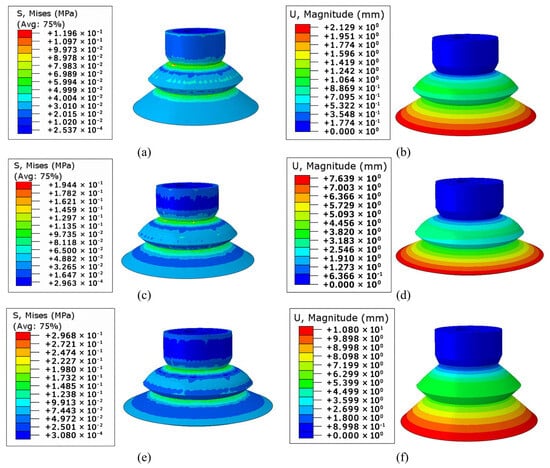
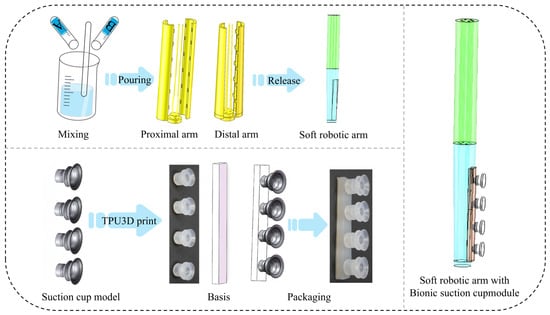
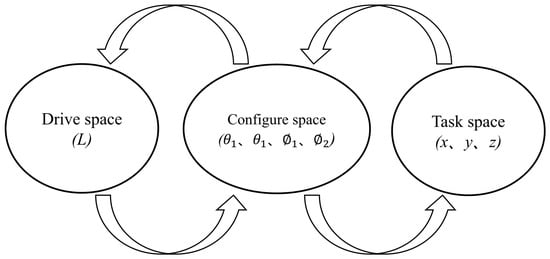
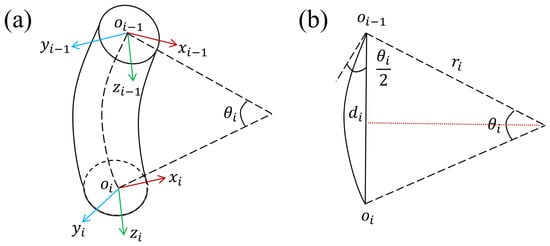
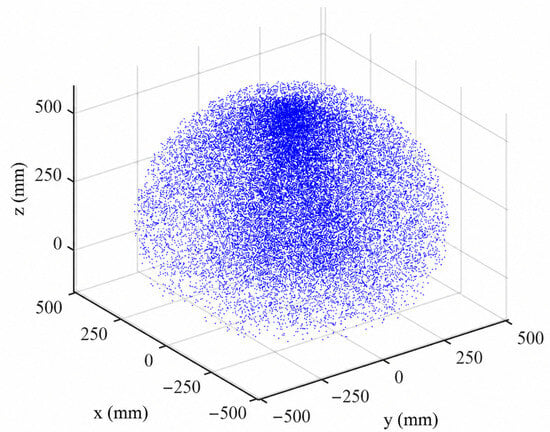
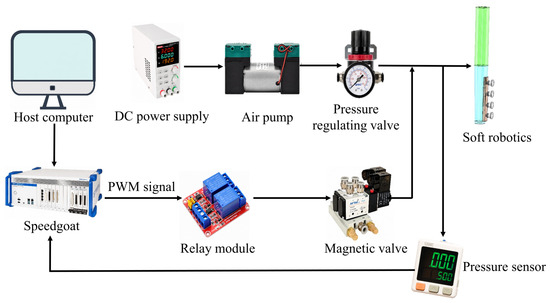
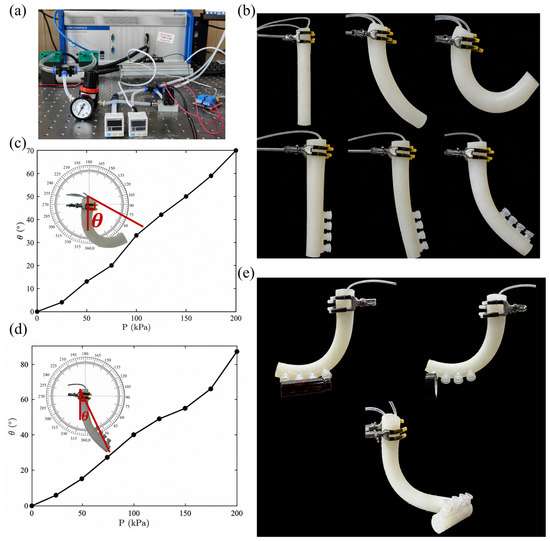
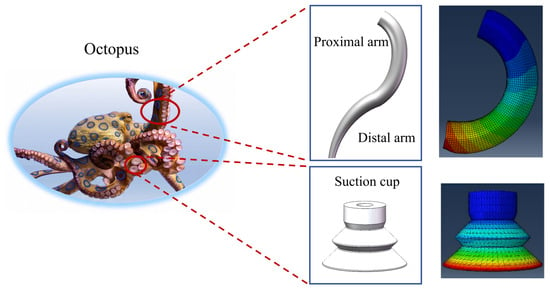
Octopus arms combine a compliant continuum body with distributed suckers, providing a biological reference for soft manipulators that require large deformation and stable local contact. Inspired by this functional organization, this study presents an octopus-inspired two-segment pneumatic soft manipulator with passive suction cups at the distal end. The manipulator consists of a cylindrical proximal segment, a tapered distal segment, and a thermoplastic polyurethane (TPU) suction-cup array. The proximal segment provides structural support and global bending, whereas the tapered distal segment improves local compliance and contact posture adjustment near the target surface. Each segment contains three independently driven pneumatic chambers arranged at 120° intervals, enabling spatial bending through differential pressurization. The distal suction cups are not connected to an active vacuum source; instead, attachment is assisted by mechanical pressing, partial air expulsion from the cup cavity, and elastic recovery of the cup lip. Finite element simulations were conducted to examine pressure-driven bending of the soft arm and deformation of the suction cups under equivalent sealing loads. A piecewise constant curvature model was established to estimate the posture and reachable workspace of the two-segment manipulator. A prototype was fabricated and tested on a pneumatic control platform. Within the pressure range of 50–200 kPa, both segments exhibited increasing bending angles with increasing input pressure; at 200 kPa, the maximum observed bending angles were approximately 70° for the proximal segment and 87° for the distal segment. Distal-segment tests demonstrated passive contact holding on a brown glass bottle and a black roll of electrical tape. Coordinated actuation further produced compound bending and twisting postures. These results show that the proposed design translates the functional division of octopus arms into a modular pneumatic soft manipulator with controllable spatial deformation and passive distal contact support.
Full article
(This article belongs to the Section Locomotion and Bioinspired Robotics)
►▼
Show Figures

Figure 1
Open AccessArticle
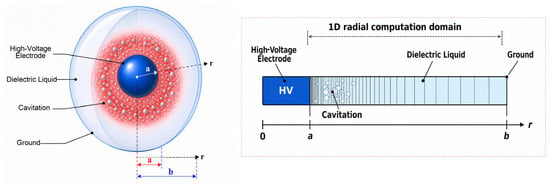
Cavitating Electrohydrodynamic Flow in the Vicinity of a Bio-Inspired Electrode Surface
by
Jing Li, Alexander Hernandez, Beatrice Boatemaa and Xuewei Zhang
Biomimetics 2026, 11(8), 557; https://doi.org/10.3390/biomimetics11080557 - 5 Aug 2026
Abstract
Electrostrictive cavitation is a mechanism of the electrical breakdown of dielectric liquids under nanosecond pulsed high voltages and a promising way of controlled nanoscale cavity generation. To better understand electrostrictive cavitation in water, this work develops a cavitating electrohydrodynamic model to simulate the
[...] Read more.
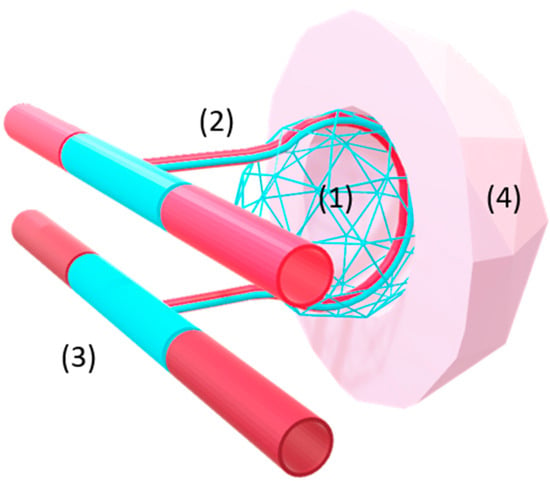
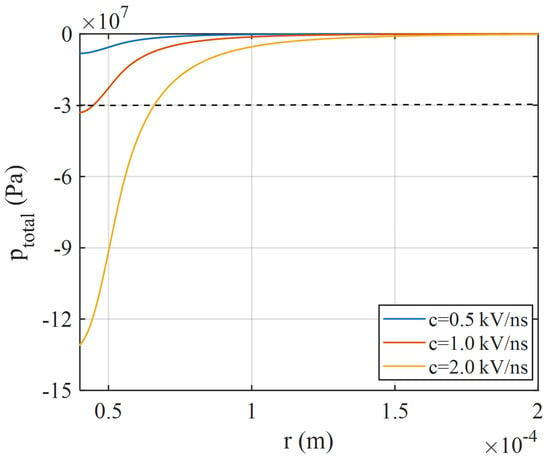
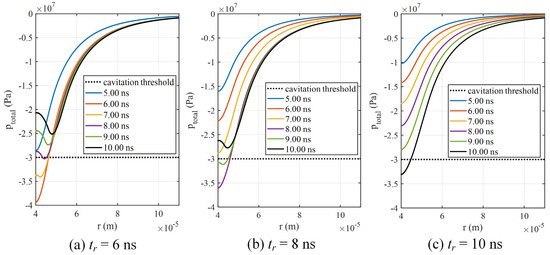
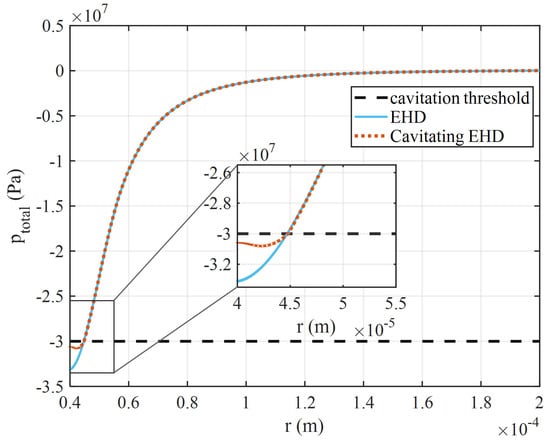
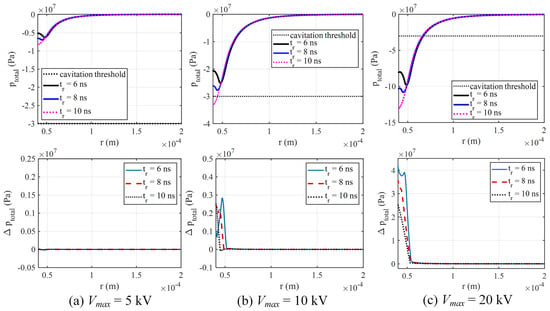
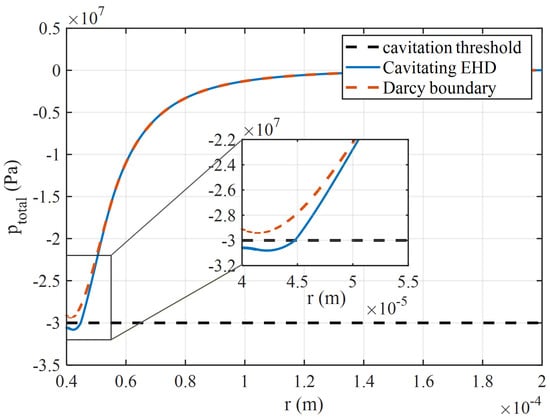
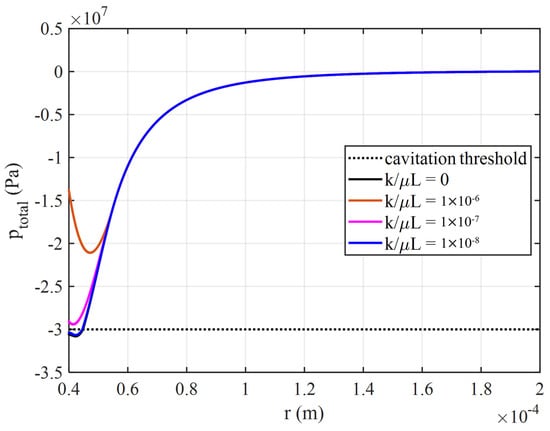
Electrostrictive cavitation is a mechanism of the electrical breakdown of dielectric liquids under nanosecond pulsed high voltages and a promising way of controlled nanoscale cavity generation. To better understand electrostrictive cavitation in water, this work develops a cavitating electrohydrodynamic model to simulate the distribution of tensile stress. Compared with the continuum electrohydrodynamic model, the tensile stress from the new model is reduced wherever cavitation has initiated. Further, an innovative electrode design concept inspired by the cell membrane is proposed, in which the electrode is hollow with a permeable enclosure, allowing liquid flow in response to a pressure difference between the interior and the outside. The simulations based on the cavitating electrohydrodynamic model suggest that this electrode design results in even lower tensile stress near the high-voltage electrode surface and holds potential to suppress cavitation and subsequent electrical breakdown.
Full article
(This article belongs to the Section Biomimetic Surfaces and Interfaces)
►▼
Show Figures

Figure 1
Open AccessArticle
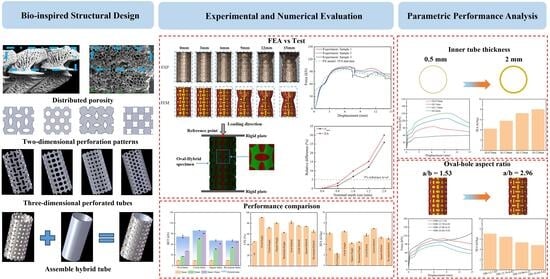
Mechanical Response and Energy Absorption of Bio-Inspired Auxetic Hybrid Tubular Metamaterials
by
Sheng Huo, Fukun Xia, Shanqing Xu, Zhanyuan Gao and Dong Ruan
Biomimetics 2026, 11(8), 556; https://doi.org/10.3390/biomimetics11080556 - 5 Aug 2026
Abstract
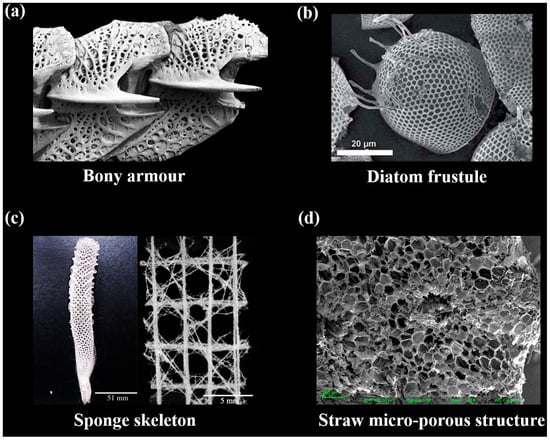
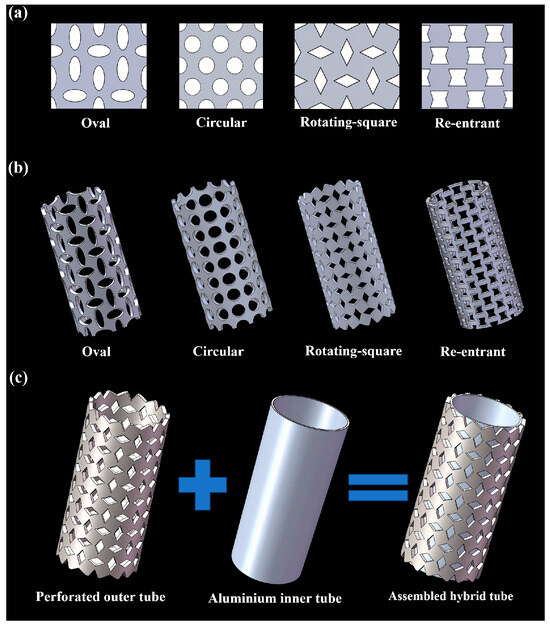
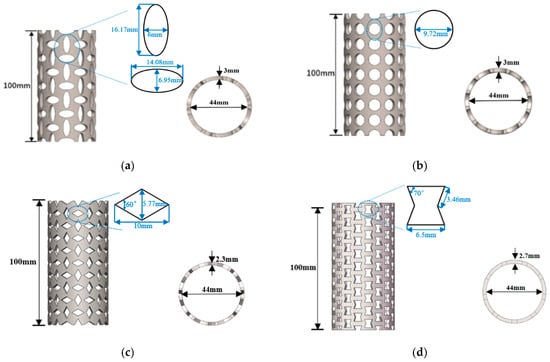
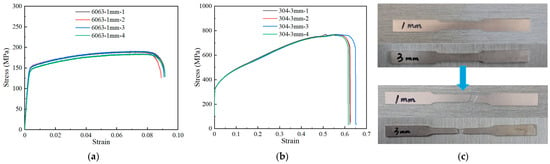
Bio-inspired auxetic–conventional hybrid tubular metamaterials were investigated for lightweight energy absorption. The tubes combined 6063 aluminium alloy inner tubes with 304 stainless-steel outer tubes containing oval, circular, rotating-square, or re-entrant perforations. Experiments showed that the outer tube altered the collapse mode of the
[...] Read more.
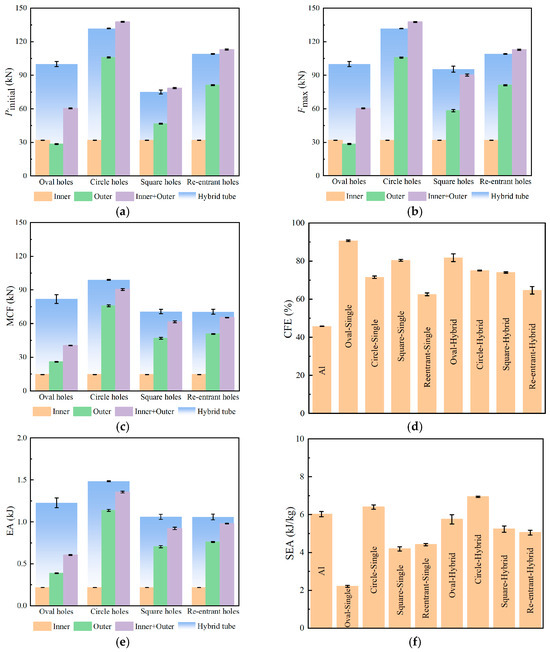
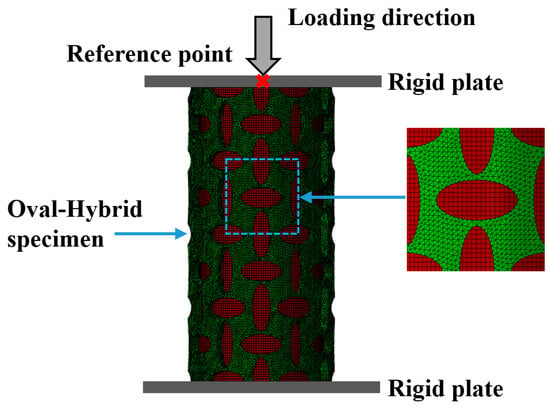
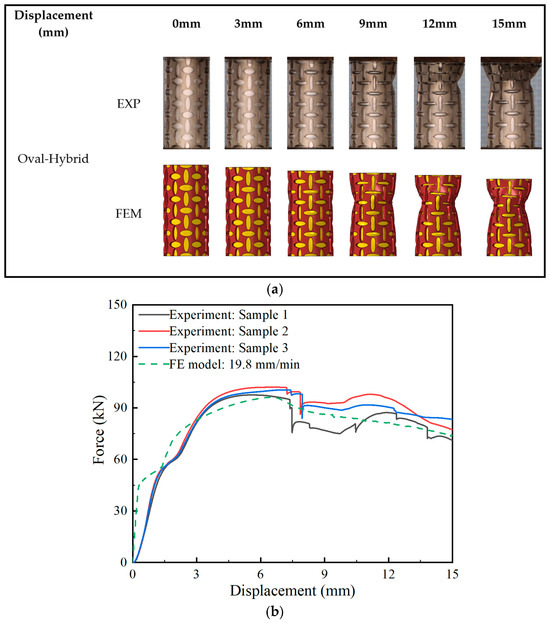
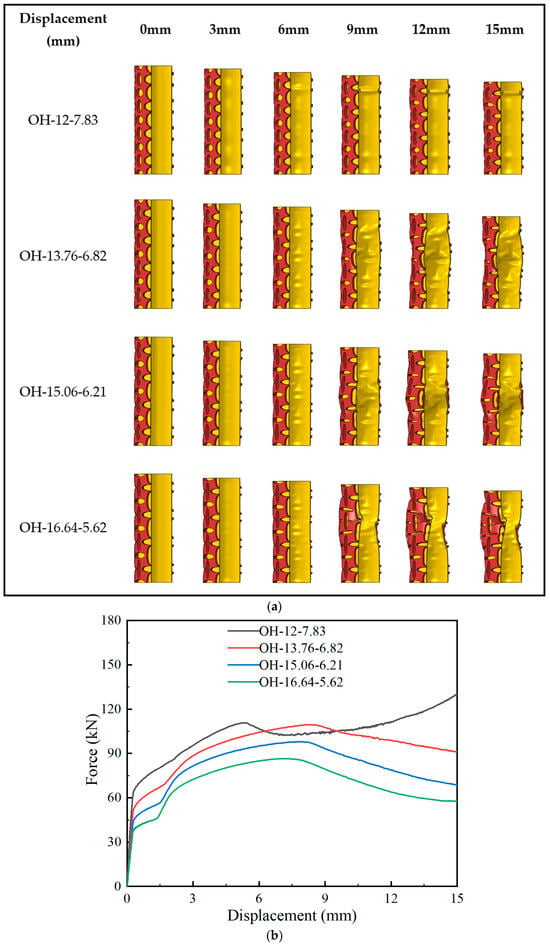
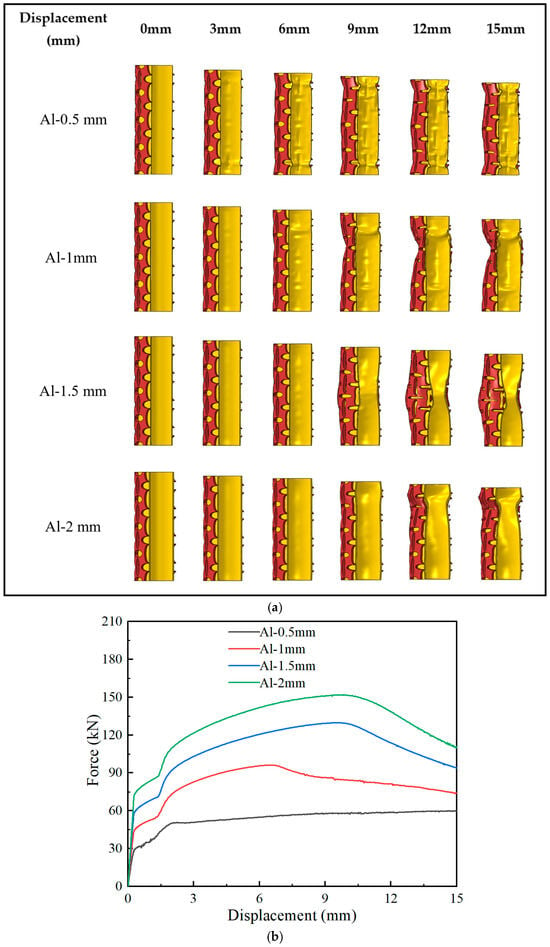
Bio-inspired auxetic–conventional hybrid tubular metamaterials were investigated for lightweight energy absorption. The tubes combined 6063 aluminium alloy inner tubes with 304 stainless-steel outer tubes containing oval, circular, rotating-square, or re-entrant perforations. Experiments showed that the outer tube altered the collapse mode of the inner tube and produced topology-dependent responses. The Circle-Hybrid tube achieved the highest mean specific energy absorption (SEA) of 6.95 ± 0.04 kJ/kg; the Oval-Hybrid tube was 17.1% lower at 5.76 ± 0.25 kJ/kg but had a 24.1% lower maximum force and a CFE 6.68 percentage points higher. Its SEA was approximately 159.5% higher than that of the Oval-Single tube. A validated finite element model was used to examine oval-hole aspect ratio and inner-tube wall thickness. At fixed porosity, decreasing the aspect ratio promoted progressive folding and increased load-bearing capacity and energy absorption, while an intermediate ratio maximised CFE. Increasing the inner-tube wall thickness enhanced load-bearing capacity and energy absorption but produced more localised or asymmetric buckling. These findings demonstrate that perforation topology can tailor collapse mode, peak-force demand, crushing efficiency, and energy absorption in hybrid tubes.
Full article
(This article belongs to the Special Issue Advancements in Nature-Inspired Engineering: Integrating Biomimicry into Modern Design Practices)
►▼
Show Figures

Graphical abstract
Open AccessReview
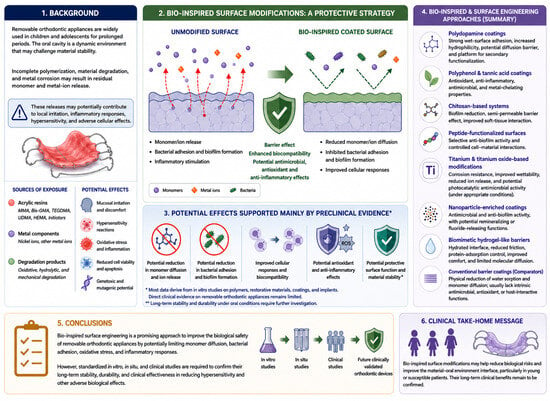
Mitigating Monomer Leaching and Resin-Related Hypersensitivity in Removable Orthodontics Through Bio-Inspired Surface Modifications: A Narrative Review
by
Lucia Giannini, Marco Farronato, Antonino Manti and Cinzia Maspero
Biomimetics 2026, 11(8), 555; https://doi.org/10.3390/biomimetics11080555 - 5 Aug 2026
Abstract
Background: During clinical service, removable orthodontic appliances are continuously exposed to environmental challenges that may compromise material stability and contribute to potentially increasing the risk of local inflammatory responses and hypersensitivity reactions. Method: A literature search was conducted using PubMed/MEDLINE, Scopus, and Web
[...] Read more.
Background: During clinical service, removable orthodontic appliances are continuously exposed to environmental challenges that may compromise material stability and contribute to potentially increasing the risk of local inflammatory responses and hypersensitivity reactions. Method: A literature search was conducted using PubMed/MEDLINE, Scopus, and Web of Science databases. Studies investigating bio-inspired and surface-engineering approaches applicable to orthodontic polymers, acrylic resins, aligner materials, and related dental biomaterials were considered. Evidence from orthodontic adhesives and non-bio-inspired barrier coatings was included when relevant as comparative or translational support. Particular attention was given to polydopamine coatings, polyphenol- and tannic acid-based coatings, chitosan systems, peptide-functionalized surfaces, titanium and titanium oxide-based modifications, nanoparticle-enriched coatings, biomimetic hydrogel-like barriers, and conventional barrier coatings used as comparators. Results: Available evidence suggests that surface modifications reduce monomer diffusion, bacterial adhesion, biofilm formation, and improve cellular responses. Bio-inspired and titanium-based coatings show particular promise by enhancing biocompatibility while providing antimicrobial, antioxidant, anti-inflammatory, and protective barrier properties. Conclusions Bio-inspired surface engineering is a promising approach to improve the biological safety of removable orthodontic appliances. However, further standardized in vitro, in situ, and clinical studies are needed to confirm their long-term stability, durability, and clinical effectiveness in reducing hypersensitivity and other adverse biological effects.
Full article
(This article belongs to the Special Issue Bio-Inspired Adhesive Interfaces for Next-Generation Biomedical and Wearable Technologies)
►▼
Show Figures

Graphical abstract
Open AccessArticle
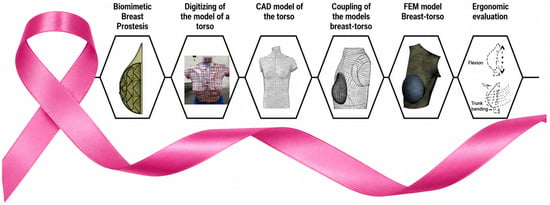
Beyond Design: Ergonomic Numerical Evaluation of a Biomimetic Breast Prosthesis for Daily Use
by
Francisco Josué Hernández Rangel, Martha Angélica Cano Figueroa, Jorge Corona Castuera, José Eduardo Monsiváis Rocha, María Cruz Del Rocío Terrones Gurrola and Pedro Cruz Alcantar
Biomimetics 2026, 11(8), 554; https://doi.org/10.3390/biomimetics11080554 - 4 Aug 2026
Abstract
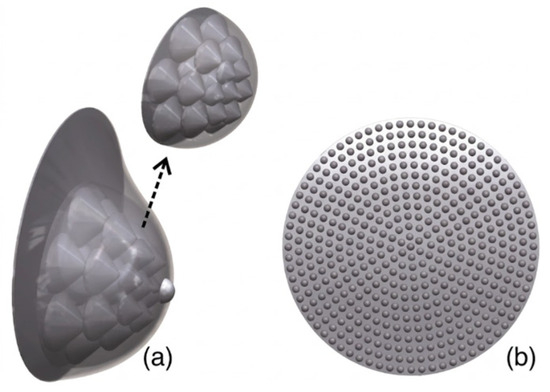
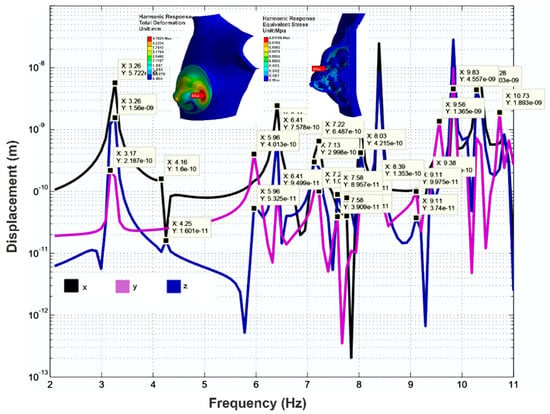
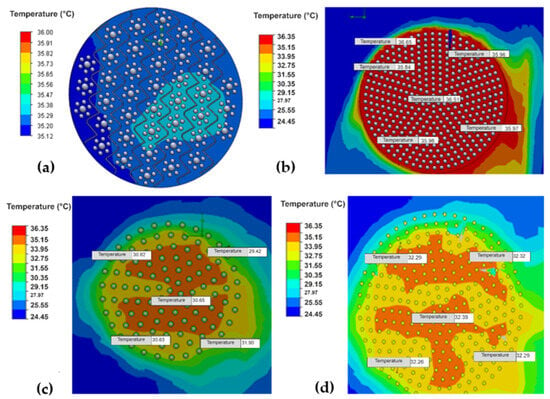
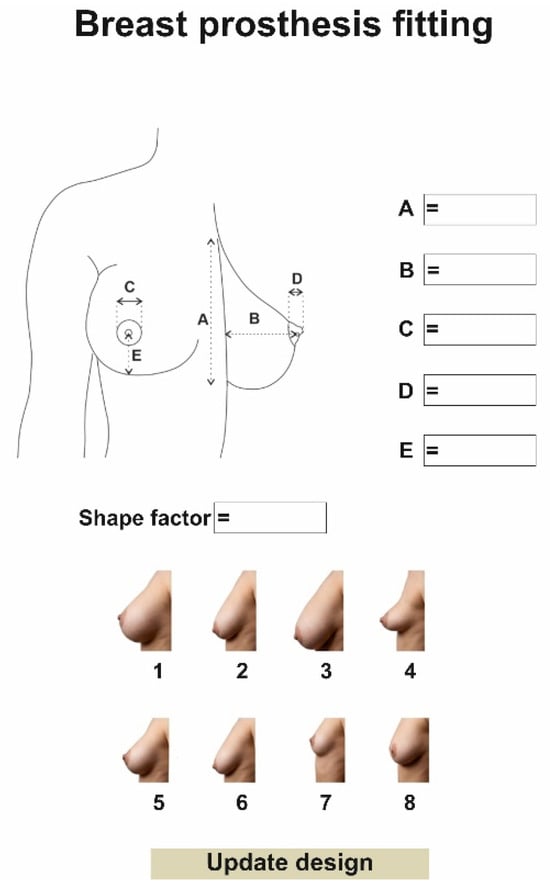
External breast prostheses remain the primary noninvasive alternative after mastectomy; however, most commercial designs do not adequately reproduce natural breast biomechanics, heat dissipation, and ventilation behavior during daily activities. This study presents an integrated numerical framework for the ergonomic evaluation of a biomimetic
[...] Read more.
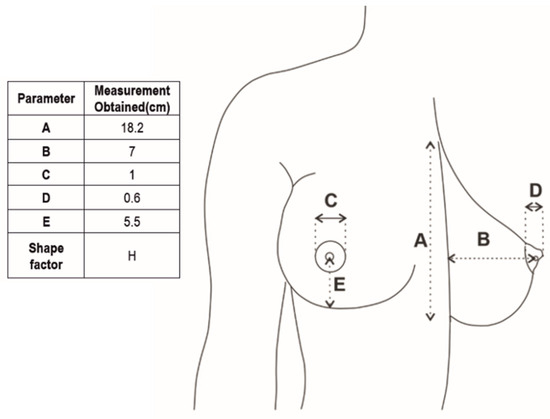
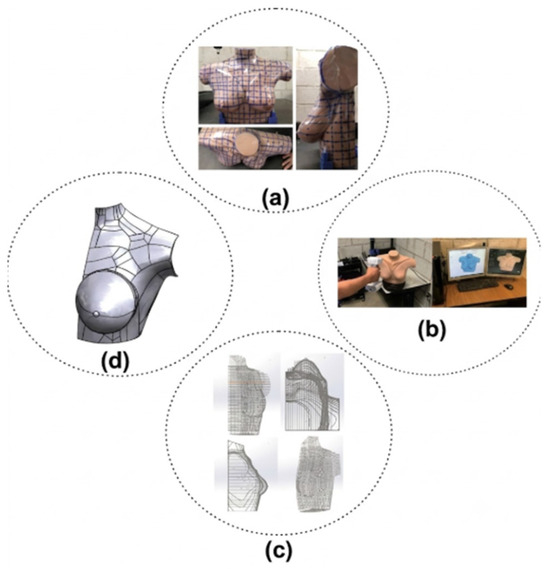
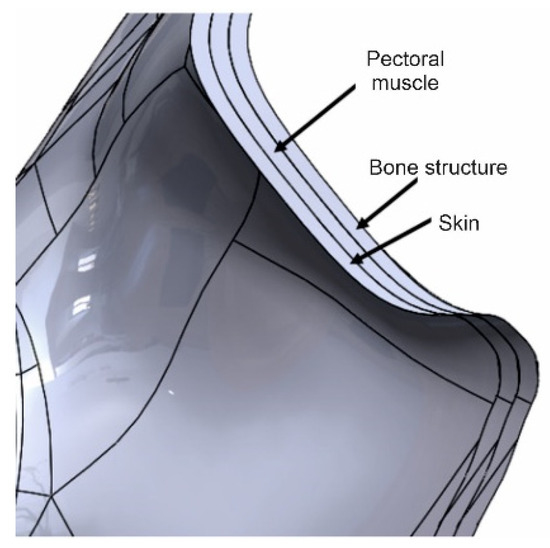
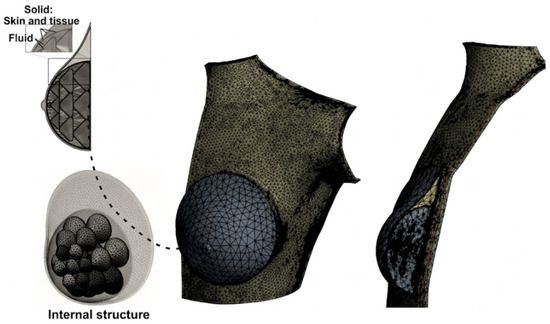
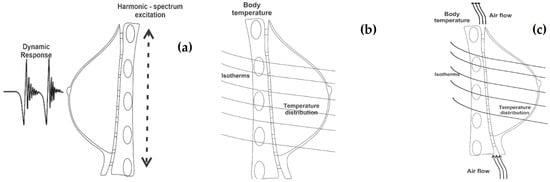
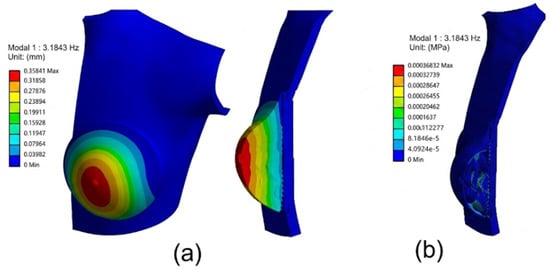
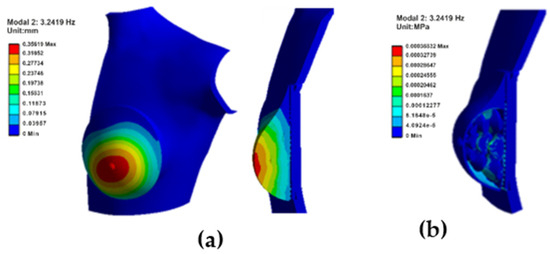
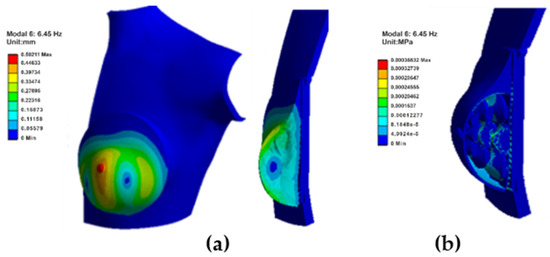
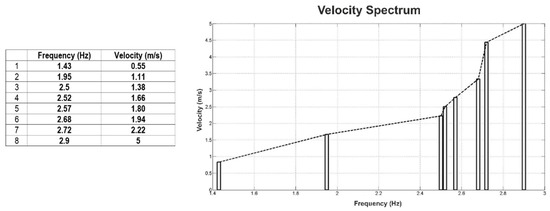
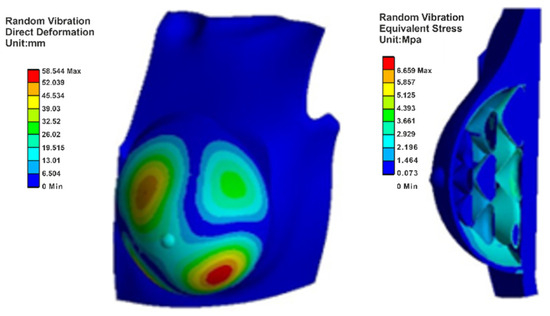
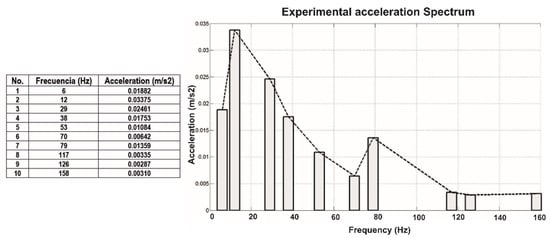
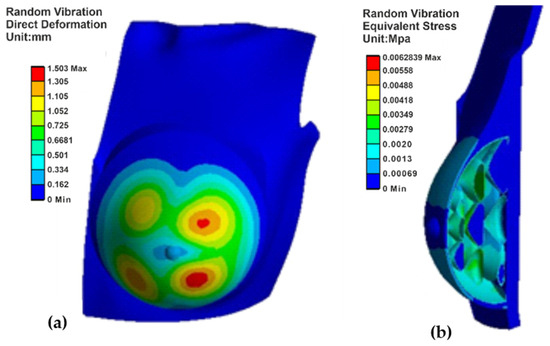
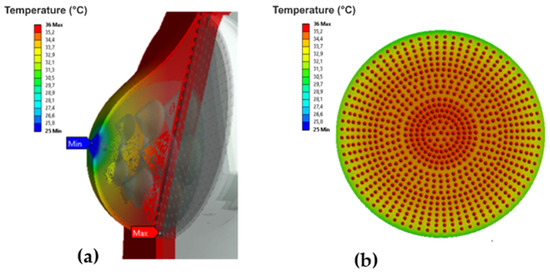
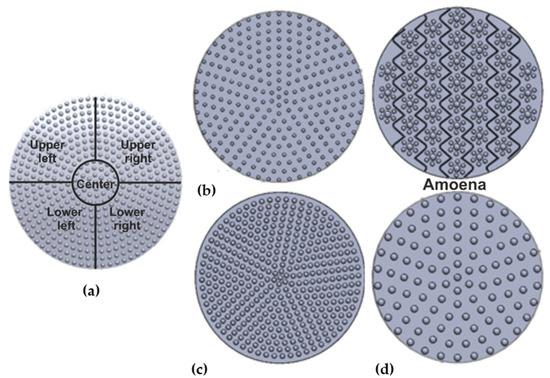
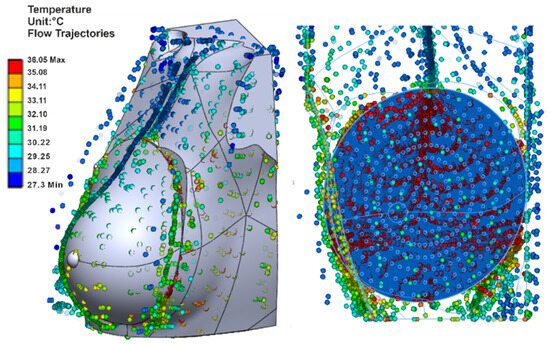
External breast prostheses remain the primary noninvasive alternative after mastectomy; however, most commercial designs do not adequately reproduce natural breast biomechanics, heat dissipation, and ventilation behavior during daily activities. This study presents an integrated numerical framework for the ergonomic evaluation of a biomimetic external breast prosthesis under realistic use conditions. A multilayer prosthesis–torso assembly was generated through 3D digitization and modeled using nonlinear hyperelastic finite element formulations. The proposed design incorporated biomimetic lobular internal architecture and microsphere-based posterior ventilation configurations to improve load distribution and heat dissipation. Dynamic behavior was evaluated through modal, harmonic, and spectral analyses, while thermal and airflow simulations were used to assess interface temperature reduction and ventilation efficiency. The results showed physiologically acceptable dynamic displacements, without critical stress concentrations and natural frequencies outside dominant gait excitation ranges. Additionally, biomimetic ventilation configurations reduced contact temperatures by up to 6.58 °C compared with conventional commercial geometries. Overall, the proposed architecture demonstrated mechanical stability, improved thermal performance, ergonomic compatibility, and potential for personalized prosthesis design.
Full article
(This article belongs to the Special Issue Biologically-Inspired Product Development)
►▼
Show Figures

Figure 1
Open AccessArticle
Epilepsy Detected Using a New Method Based on Volumetric Analysis Results from Brain MR Images
by
Orhan Bölükbaş and Harun Uğuz
Biomimetics 2026, 11(8), 553; https://doi.org/10.3390/biomimetics11080553 - 4 Aug 2026
Abstract
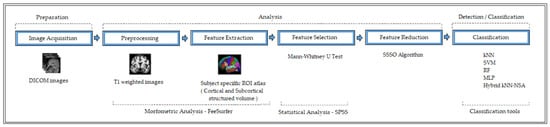
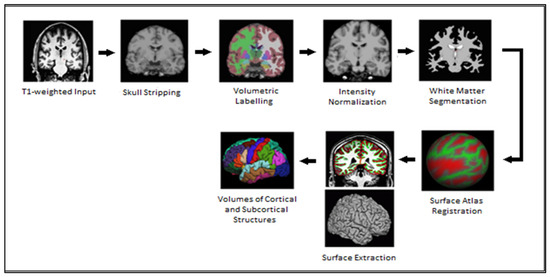
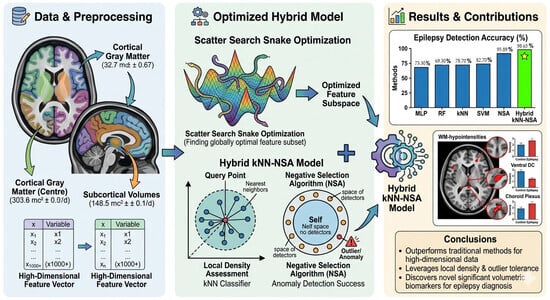
Epilepsy is a challenging brain disease that requires significant clinical findings. (1) Background: The aim of this study is to improve the success rate of epilepsy detection using a newly developed method by optimizing the high-dimensional dataset obtained from brain MRI images. Standard
[...] Read more.
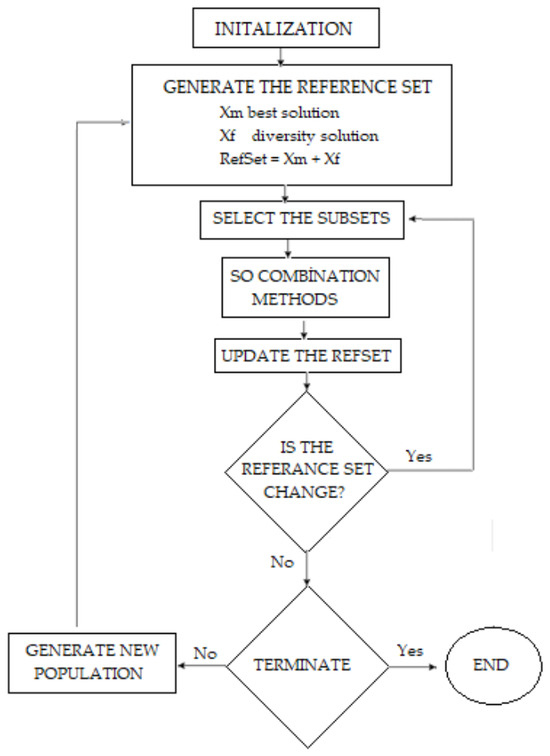
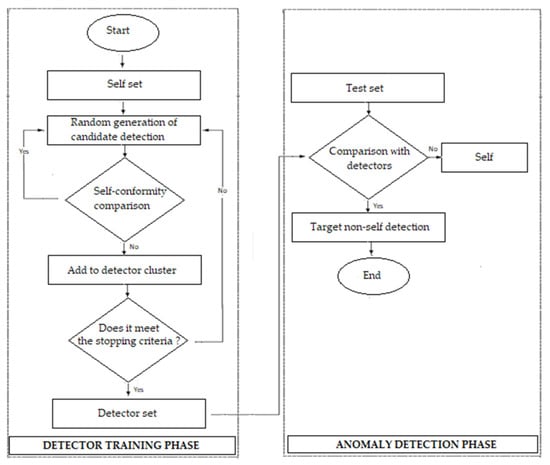
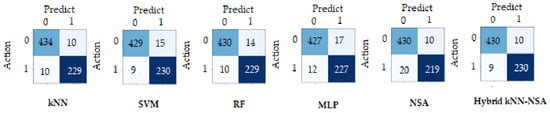
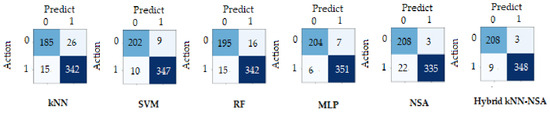
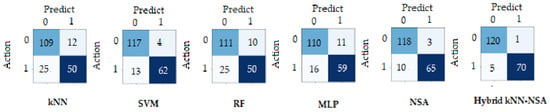
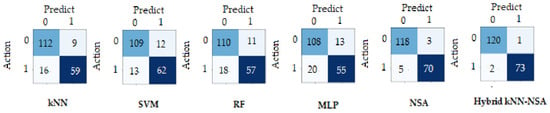
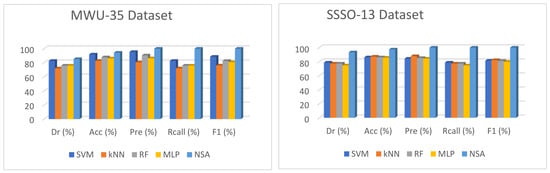
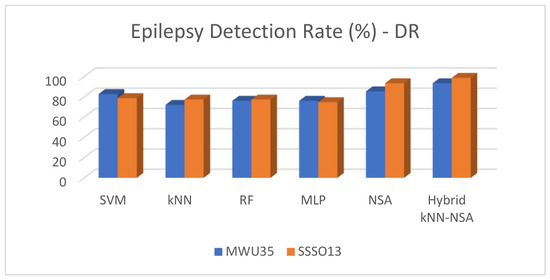
Epilepsy is a challenging brain disease that requires significant clinical findings. (1) Background: The aim of this study is to improve the success rate of epilepsy detection using a newly developed method by optimizing the high-dimensional dataset obtained from brain MRI images. Standard machine learning models fall short of achieving the desired success in high-dimensional datasets. To achieve this, we aimed to develop an optimized hybrid model by combining the local classification power of the k-Nearest Neighbor classifier and the anomaly detection success of the negative selection algorithm. (2) Methods: Cortical and subcortical brain regions were analyzed to examine volumetric differences. A dataset was created by identifying regions statistically significant for epilepsy. This dataset was then optimized using the Scatter Search Snake Optimization algorithm. The performances of six different machine learning models trained on this optimized dataset were compared. (3) Results: The standard and popular models, SVM (82.70%), kNN (78.70%), RF (69.30%), MLP (73.30%), and NSA (95.89%), demonstrated a detection success rate. In contrast, the proposed hybrid model, kNN-NSA (98.65%), demonstrated a detection success rate. (4) Conclusions: The optimized hybrid kNN-NSA approach, which considers local density in such high-dimensional datasets and tolerates outliers within the self-data, appears to outperform traditional methods. Furthermore, this study has demonstrated that volumetric differences in regions not previously reported in the literature, such as WM-hypointensities, ventral DC, and choroid plexus, may be effective in the decision-making process for diagnosing epilepsy, as they are also found to be significant.
Full article
(This article belongs to the Special Issue 10th Anniversary of Biomimetics: Bioinspired Sensing, Information Processing and Intelligent Control)
►▼
Show Figures

Graphical abstract
Open AccessArticle
Volumetric Thermal Characterisation of a Controlled Bioprinting Chamber Using Multi-Point Temperature Sensing
by
Alfonso C. Marcos-Romero, Manuel Matamoros-Pacheco, Laura Mendoza-Cerezo, Silvia M. Díaz-Prado and Jesús M. Rodríguez-Rego
Biomimetics 2026, 11(8), 552; https://doi.org/10.3390/biomimetics11080552 - 4 Aug 2026
Abstract
3D bioprinting requires control of environmental conditions within the printing chamber, as temperature affects bioink rheology, printability and cell viability. However, the spatial temperature distribution inside bioprinting enclosures remains poorly characterised, limiting the understanding of thermal gradients that may affect process stability. In
[...] Read more.
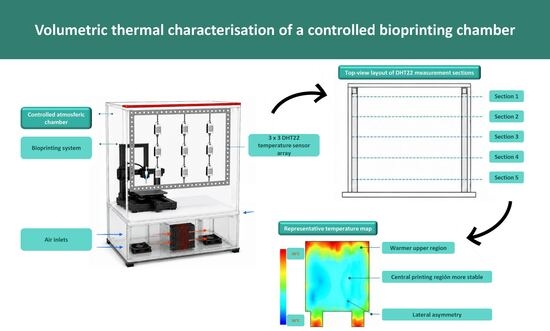
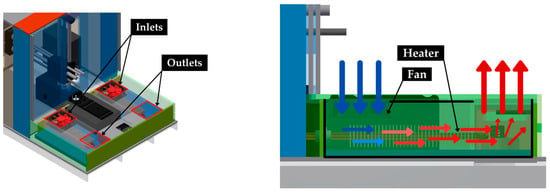
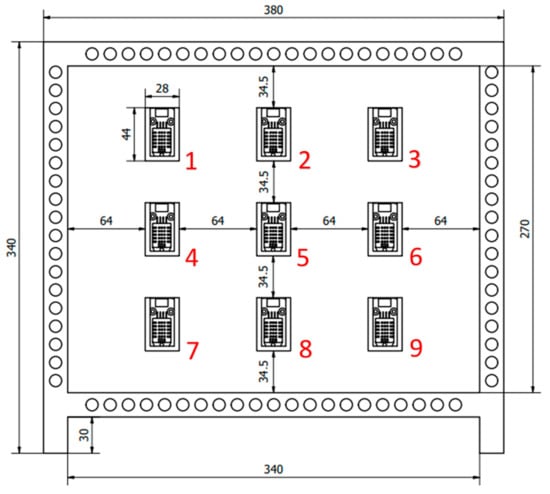
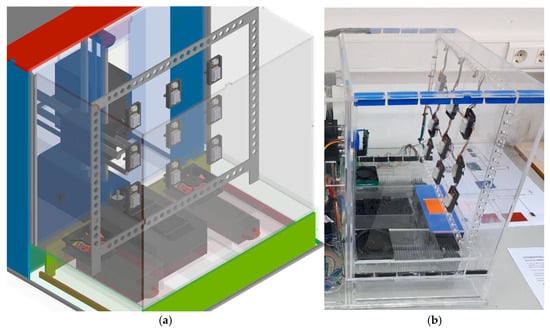
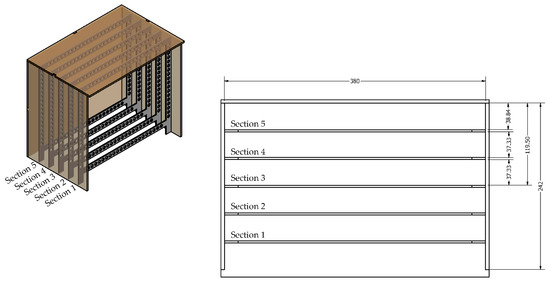
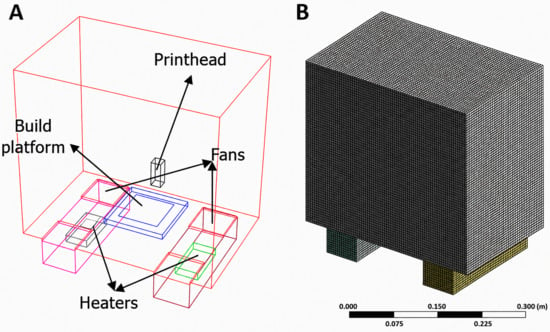
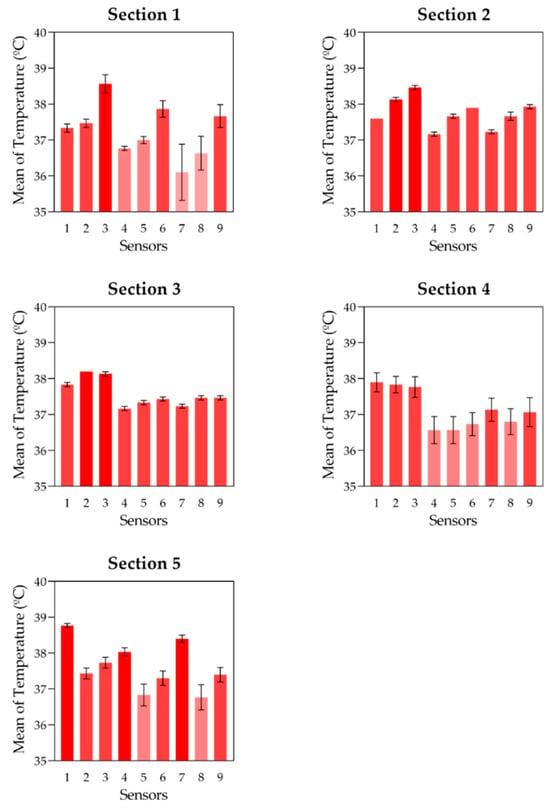
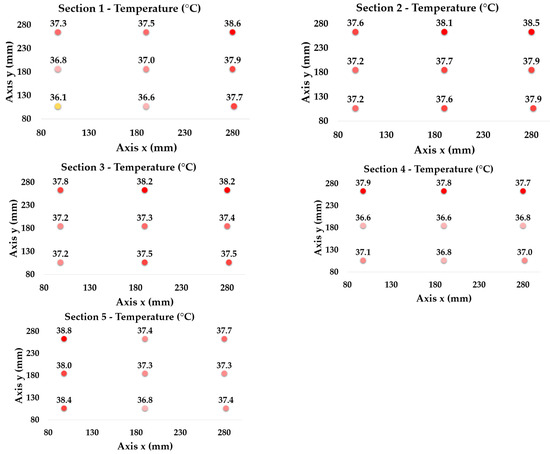
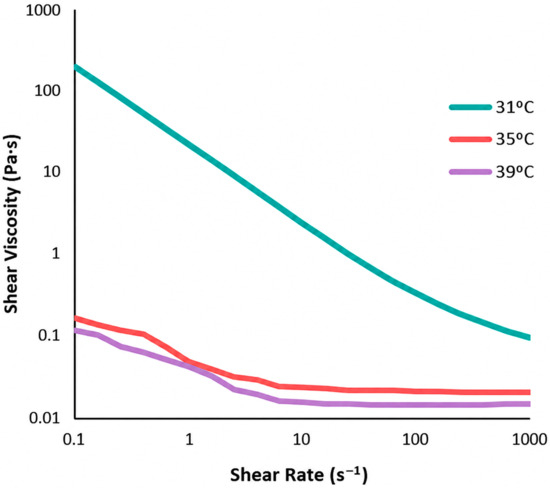
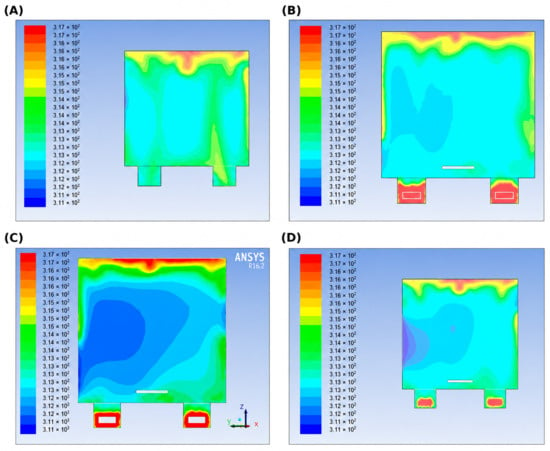
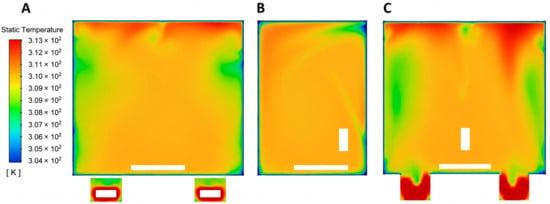
3D bioprinting requires control of environmental conditions within the printing chamber, as temperature affects bioink rheology, printability and cell viability. However, the spatial temperature distribution inside bioprinting enclosures remains poorly characterised, limiting the understanding of thermal gradients that may affect process stability. In this work, the spatial thermal behaviour of a previously developed controlled chamber was evaluated using a multi-point temperature acquisition system. Temperature was monitored at 45 locations distributed throughout the chamber volume under controlled conditions at 37 °C after thermal stabilisation. The results revealed vertical and lateral thermal gradients associated with natural convection and forced air recirculation, together with local non-uniformities influenced by fan operation. Nevertheless, comparatively homogeneous temperature regions were identified within the printing zone, indicating suitable areas for more stable and reproducible biofabrication processes. Additionally, a three-dimensional CFD model incorporating the internal air volume, two 200 W electrical heaters, two axial recirculation fans, and simplified representations of the printhead and build platform was developed to represent an operational chamber configuration. The model was used to visualise the spatial temperature distribution within the enclosure, including the thermal field around the internal printer components. The proposed approach provides a practical experimental framework for the volumetric characterisation of thermal conditions in bioprinting environments, contributing to the design and optimisation of controlled chambers and improving the reliability of biofabrication processes.
Full article
(This article belongs to the Special Issue Next-Generation 3D Bioprinting and Additive Manufacturing: From Digital Design to Functional Biomimetic Systems)
►▼
Show Figures

Graphical abstract
Open AccessArticle
Development and Characterization of Water-Based Porous Calcium Phosphate Bone Cements for Peri-Implant Regeneration: An In Situ Study
by
Qiuju Wei, Nima Farshidfar, Anton Sculean and Mia Rakic
Biomimetics 2026, 11(8), 551; https://doi.org/10.3390/biomimetics11080551 - 3 Aug 2026
Abstract
Background: Calcium phosphate cements (CPCs) are excellent biomaterials for peri-implant bone regeneration but suffer from slow resorption. This study evaluated whether adding carbonate salts improves the in situ porosity and resorption rate of customized CPCs. Methods: The control group comprised α-tricalcium phosphate (α-TCP)
[...] Read more.
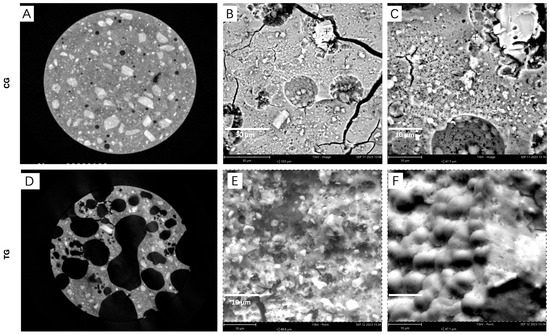
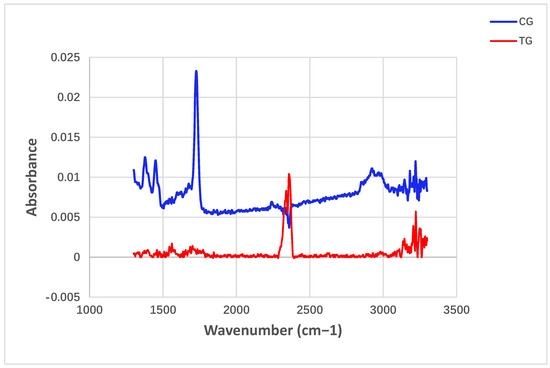
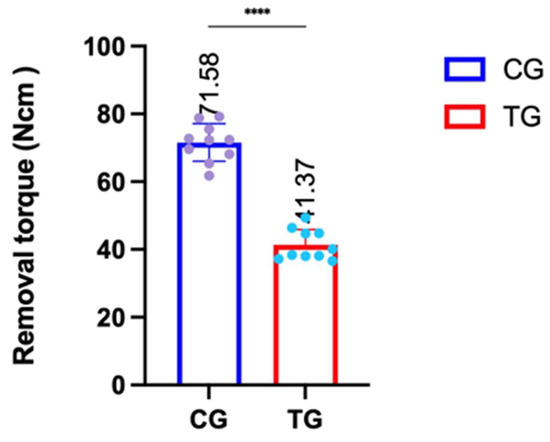
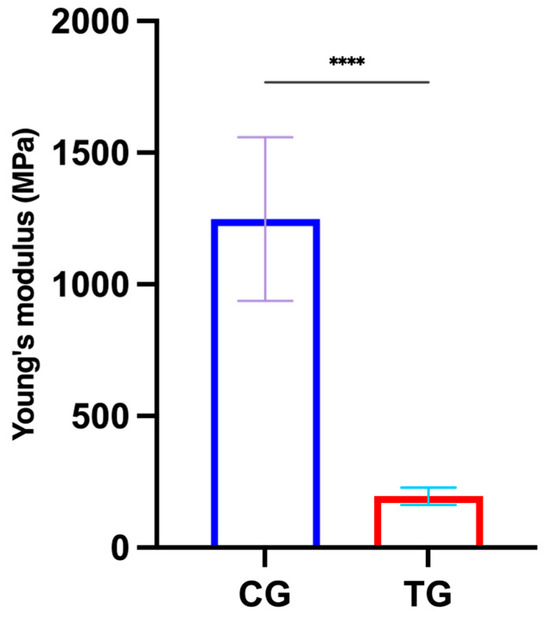
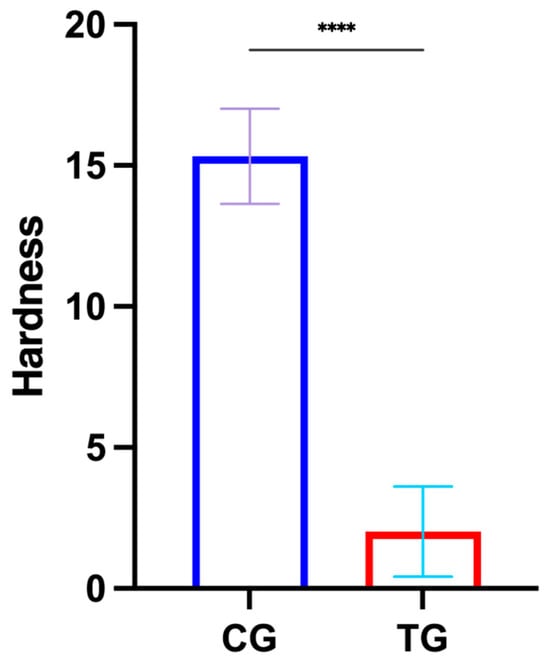
Background: Calcium phosphate cements (CPCs) are excellent biomaterials for peri-implant bone regeneration but suffer from slow resorption. This study evaluated whether adding carbonate salts improves the in situ porosity and resorption rate of customized CPCs. Methods: The control group comprised α-tricalcium phosphate (α-TCP) and phosphoserine (3:1 weight-to-weight ratio). The test group incorporated 3 wt.% anhydrous sodium carbonate (Na2CO3) into the powder. Both were hydrated with water at a liquid-to-powder ratio of 300 μL:1 g. Characterization included micro-computed tomography (μCT), scanning electron microscopy (SEM), Fourier Transform Infrared Spectroscopy with Attenuated Total Reflection (FTIR-ATR), removal torque tests, compression modulus tests, and hardness tests. Results: μCT and SEM confirmed higher porosity and uniform crystal plates in the test group compared to the dense control group. FTIR-ATR spectra showed a distinct CO2 peak at 2349 cm−1 for the test group, confirming gas entrapment. Mechanically, the control group significantly outperformed the test group in removal torque (71.58 ± 5.56 N/cm vs. 41.37 ± 4.54 N/cm) and compression modulus (1248.01 ± 278.21 MPa vs. 195.42 ± 29.55 MPa). Hardness tests showed increased brittleness in the test group (15.31 ± 1.63 vs. 2.01 ± 1.58). Conclusions: Incorporating Na2CO3 successfully induced in situ porosity via gas release but significantly compromised mechanical strength. Further optimization is required to balance porosity and mechanical integrity.
Full article
(This article belongs to the Special Issue Next-Generation Biomaterials and Bio-Inspired Strategies for Oral and Maxillofacial Regeneration)
►▼
Show Figures

Figure 1
Journal Menu
► ▼ Journal Menu-
- Biomimetics Home
- Aims & Scope
- Editorial Board
- Topical Advisory Panel
- Instructions for Authors
- Special Issues
- Topics
- Sections
- Article Processing Charge
- Indexing & Archiving
- Editor’s Choice Articles
- Most Cited & Viewed
- Journal Statistics
- Journal History
- Journal Awards
- Society Collaborations
- Conferences
- Editorial Office
- 10th Anniversary
Journal Browser
► ▼ Journal BrowserHighly Accessed Articles
Latest Books
E-Mail Alert
News
16 July 2026
The 3rd International Online Conference on Biomimetics (IOCB 2026)—Submissions Closing on 27 July 2026
Topics
Topic in
Molecules, Biomimetics, Chemosensors, Life, AI, Sci
Recent Advances in Chemical Artificial Intelligence
Topic Editors: Pier Luigi Gentili, Jerzy Górecki, David C Magri, Pasquale StanoDeadline: 15 October 2026
Topic in
Biophysica, Cells, IJMS, Materials, Micro, Biomimetics, Biomolecules
Biofabrication Technologies for Tissue Repair and Regeneration
Topic Editors: Lorenzo Vannozzi, Eugenio Redolfi RivaDeadline: 20 February 2027
Topic in
ASI, Bioengineering, C, Healthcare, Biomimetics, Processes
Biomedical Engineering, Healthcare and Sustainability, 2nd Edition
Topic Editors: Teen-Hang Meen, Chun-Yen Chang, Charles Tijus, Po-Lei Lee, Yi-Chun DuDeadline: 30 April 2027
Topic in
Animals, Biomechanics, Biomimetics
Animal Biomechanics
Topic Editors: Stanislav N. Gorb, Wencke KringsDeadline: 31 July 2027
Conferences
Special Issues
Special Issue in
Biomimetics
Advances in Bio-Inspired Functional Surfaces
Guest Editor: Hisham A. Abdel-AalDeadline: 20 August 2026
Special Issue in
Biomimetics
Learning From Nature: Biomimetic Materials and Devices
Guest Editors: Zhengxing Li, Shichao DingDeadline: 25 August 2026
Special Issue in
Biomimetics
Exploration of Bioinspired Computer Vision and Pattern Recognition: 2nd Edition
Guest Editor: Qian JiangDeadline: 25 August 2026
Special Issue in
Biomimetics
Advances in Biogenic and Biomimetic Materials: From Bionanomedicine to Environmental Applications and Beyond: 2nd Edition
Guest Editors: Marcela-Elisabeta Barbinta-Patrascu, Irina Negut, Bogdan BițăDeadline: 30 August 2026