
<?xml version="1.0" encoding="UTF-8"?>
<!DOCTYPE article PUBLIC "-//NLM//DTD Journal Publishing DTD v2.3 20070202//EN" "journalpublishing.dtd">
<article xmlns:xlink="http://www.w3.org/1999/xlink" xml:lang="en" article-type="review-article">
<front>
<journal-meta>
<journal-id journal-id-type="publisher-id">Cancers</journal-id>
<journal-title>Cancers</journal-title>
<issn pub-type="epub">2072-6694</issn>
<publisher>
<publisher-name>Molecular Diversity Preservation International (MDPI)</publisher-name></publisher></journal-meta>
<article-meta>
<article-id pub-id-type="doi">10.3390/cancers3032904</article-id>
<article-id pub-id-type="publisher-id">cancers-03-02904</article-id>
<article-categories>
<subj-group>
<subject>Review</subject></subj-group></article-categories>
<title-group>
<article-title>Immune Suppression in Tumors as a Surmountable Obstacle to Clinical Efficacy of Cancer Vaccines</article-title></title-group>
<contrib-group>
<contrib contrib-type="author">
<name><surname>Wieërs</surname><given-names>Grégoire</given-names></name></contrib>
<contrib contrib-type="author">
<name><surname>Demotte</surname><given-names>Nathalie</given-names></name></contrib>
<contrib contrib-type="author">
<name><surname>Godelaine</surname><given-names>Danièle</given-names></name></contrib>
<contrib contrib-type="author">
<name><surname>van der Bruggen</surname><given-names>Pierre</given-names></name><xref ref-type="corresp" rid="c1-cancers-03-02904"><sup>*</sup></xref></contrib>
<aff id="af1-cancers-03-02904">Ludwig Institute for Cancer Research and Université catholique de Louvain, de Duve Institute, 74 av. Hippocrate, P.O. Box B1-7403, B-1200 Brussels, Belgium; E-Mails: <email>gregoire.wieers@bru.licr.org</email> (G.W.); <email>nathalie.demotte@bru.licr.org</email> (N.D.); <email>daniele.godelaine@bru.licr.org</email> (D.G.)</aff></contrib-group>
<author-notes>
<corresp id="c1-cancers-03-02904">
<label>*</label> Author to whom correspondence should be addressed; E-Mail: <email>pierre.vanderbruggen@bru.licr.org</email>; Tel.: +32-2-764-7431; Fax: +32-2-762-9405.</corresp></author-notes>
<pub-date pub-type="collection">
<year>2011</year></pub-date>
<pub-date pub-type="epub">
<day>18</day>
<month>07</month>
<year>2011</year></pub-date>
<volume>3</volume>
<issue>3</issue>
<fpage>2904</fpage>
<lpage>2954</lpage>
<history>
<date date-type="received">
<day>26</day>
<month>05</month>
<year>2011</year></date>
<date date-type="rev-recd">
<day>01</day>
<month>07</month>
<year>2011</year></date>
<date date-type="accepted">
<day>07</day>
<month>07</month>
<year>2011</year></date></history>
<permissions>
<copyright-statement>© 2011 by the authors; licensee MDPI, Basel, Switzerland.</copyright-statement>
<copyright-year>2011</copyright-year>
<license>
<p>This article is an open-access article distributed under the terms and conditions of the Creative Commons Attribution license (http://creativecommons.org/licenses/by/3.0/).</p></license></permissions>
<abstract>
<p>Human tumors are usually not spontaneously eliminated by the immune system and therapeutic vaccination of cancer patients with defined antigens is followed by tumor regressions only in a small minority of the patients. The poor vaccination effectiveness could be explained by an immunosuppressive tumor microenvironment. Because T cells that infiltrate tumor metastases have an impaired ability to lyse target cells or to secrete cytokine, many researchers are trying to decipher the underlying immunosuppressive mechanisms. We will review these here, in particular those considered as potential therapeutic targets. A special attention will be given to galectins, a family of carbohydrate binding proteins. These lectins have often been implicated in inflammation and cancer and may be useful targets for the development of new anti-cancer therapies.</p></abstract>
<kwd-group>
<kwd>anergy</kwd>
<kwd>immunosuppression</kwd>
<kwd>cancer vaccines</kwd>
<kwd>galectin</kwd>
<kwd>tumor-infiltrating lymphocytes</kwd></kwd-group></article-meta></front>
<body>
<sec sec-type="intro">
<label>1.</label>
<title>Introduction</title>
<p>Before the molecular identification of human tumor antigens, the existence of a spontaneous anti-tumor T cell response in melanoma patients was strongly suggested by the fact that CD8 cytolytic T cells (CTL), isolated from tumors and expanded for several weeks <italic>in vitro</italic>, lysed autologous melanoma cells. Moreover, some of these expanded tumor-infiltrating lymphocyte (TIL) populations were re-injected in patients together with IL-2 and produced objective tumor responses [<xref ref-type="bibr" rid="b1-cancers-03-02904">1</xref>]. More recently, B. Dréno and coworkers have shown in a randomized trial that relapse-free survival of patients with only one invaded lymph node was extended if they received, in an adjuvant setting, adoptive transfer of autologous TIL previously expanded <italic>in vitro</italic> [<xref ref-type="bibr" rid="b2-cancers-03-02904">2</xref>]. In the blood, the frequencies of CTL precursors that lyse autologous melanoma cell lines (anti-tumor) were evaluated by limiting dilution analysis and ranged from 1/1,000 to 1/100,000 of CD8 blood cells [<xref ref-type="bibr" rid="b3-cancers-03-02904">3</xref>-<xref ref-type="bibr" rid="b5-cancers-03-02904">5</xref>]. Frequencies of anti-tumor T lymphocytes isolated from subcutaneous melanoma metastases were ten times higher.</p>
<p>The molecular proof of the existence of human tumor-specific antigens came with the cloning of the first gene encoding a human melanoma antigen recognized by CTL: MAGE-1 [<xref ref-type="bibr" rid="b6-cancers-03-02904">6</xref>]. The still ongoing search for additional antigens has yielded a long list of well-defined tumor antigens, many of which have been tested as targets for immunotherapy [<xref ref-type="bibr" rid="b7-cancers-03-02904">7</xref>-<xref ref-type="bibr" rid="b9-cancers-03-02904">9</xref>]. Various therapeutic vaccines have been injected in melanoma patients: peptides and proteins with or without adjuvants, viruses containing antigen-coding sequences, antigen-presenting cells loaded with antigens [<xref ref-type="bibr" rid="b10-cancers-03-02904">10</xref>-<xref ref-type="bibr" rid="b18-cancers-03-02904">18</xref>].</p>
<p>Most of these vaccines induced anti-vaccine T cells. The proportions of patients with detectable anti-vaccine T cells in their blood were highly variable. At first, no correlation was evidenced between immune T cell response to the vaccine and objective clinical response or tumor regressions [<xref ref-type="bibr" rid="b19-cancers-03-02904">19</xref>-<xref ref-type="bibr" rid="b21-cancers-03-02904">21</xref>]. Because CTL response to vaccinations was not readily detectable <italic>ex vivo</italic> in the blood, even in those patients who showed tumor regressions, sensitive and quantitative approaches were set up allowing the detection of frequencies of CTL precursors specific for a MAGE-3 peptide presented by HLA-A1 (anti-MAGE-3.A1) as low as one precursor per million CD8 blood T cells [<xref ref-type="bibr" rid="b22-cancers-03-02904">22</xref>,<xref ref-type="bibr" rid="b23-cancers-03-02904">23</xref>]. Notwithstanding their weakness, the observed anti-vaccine CTL responses were correlated with clinical evidence of tumor regression [<xref ref-type="bibr" rid="b15-cancers-03-02904">15</xref>,<xref ref-type="bibr" rid="b18-cancers-03-02904">18</xref>,<xref ref-type="bibr" rid="b23-cancers-03-02904">23</xref>]: Among 20 melanoma patients, who received a vaccine aimed at inducing anti-MAGE-3.A1 CTL response and experienced tumor regression, 10 showed an anti-vaccine T cell response. This is in contrast with only one T cell responder among 30 vaccinated patients with progressive tumors.</p>
<p>In addition to T cell frequencies in the blood, other parameters can be informative to evaluate the response to the vaccine. In patients vaccinated with mature dendritic cells, pulsed with gp100 and tyrosinase peptides, delayed-type hypersensitivity (DTH) was observed in all the patients after a subcutaneous challenge. Anti-gp-100 or anti-tyrosinase CTL were derived only from DTH sites of those patients who experienced tumor regression [<xref ref-type="bibr" rid="b24-cancers-03-02904">24</xref>]. Taken together, these observations suggest that vaccination can result in anti-vaccine T cell responses and that the induced T cells can both reach the tumor sites and trigger tumor destruction.</p>
<p>Nevertheless therapeutic vaccination of metastatic melanoma patients with these antigens is followed by tumor regressions of clinical significance in less than 10% of the patients. Even considering the absence of toxicity, the current vaccines are not effective enough to become generally applicable, as reviewed by different authors [<xref ref-type="bibr" rid="b18-cancers-03-02904">18</xref>,<xref ref-type="bibr" rid="b19-cancers-03-02904">19</xref>,<xref ref-type="bibr" rid="b25-cancers-03-02904">25</xref>,<xref ref-type="bibr" rid="b26-cancers-03-02904">26</xref>]. Our favorite hypothesis, which is shared by many tumor immunologists, to explain the lack of effectiveness of therapeutic vaccines observed in most patients is a local immunosuppression at the tumor sites. This hypothesis would also explain why melanoma patients usually mount a spontaneous T cell response against their tumor without being able to eradicate their tumor.</p>
<p>In this review, we will focus on the T lymphocytes that infiltrate tumors. Can we consider T cell infiltration as a clinical prognostic factor? Are these TIL functional or anergic? What are the mechanisms orchestrated by the tumor that would result in T cell dysfunction? We do believe that the tumor micro-environment inhibits by the same mechanisms both the spontaneously generated anti-tumor T cells and the anti-vaccine T cells. Our hope is to better understand the immune suppression mechanisms orchestrated by the tumor so as to be able to improve the clinical efficacy of cancer vaccines.</p></sec>
<sec>
<label>2.</label>
<title>Does the Presence of TIL Correlate with Patient Survival?</title>
<sec>
<label>2.1.</label>
<title>In Melanoma</title>
<p>The correlation between patient survival and T cell-infiltrate in primary melanoma has been examined in about 20 papers published since the late seventies [<xref ref-type="bibr" rid="b27-cancers-03-02904">27</xref>-<xref ref-type="bibr" rid="b47-cancers-03-02904">47</xref>]. In <xref ref-type="table" rid="t1-cancers-03-02904">Table 1</xref>, we have summarized the eight studies that included more than 180 patients.</p>
<p>In the first study, Larsen and Grude reported in 1978 a better overall survival of the patients with an intense lymphocytic infiltration “<italic>completely surrounding the part of the melanoma that invaded the normal tissues</italic>” [<xref ref-type="bibr" rid="b27-cancers-03-02904">27</xref>]. Ten years later, Clark introduced his melanoma classification based on thickness and invasion that became a widely accepted prognostic model [<xref ref-type="bibr" rid="b31-cancers-03-02904">31</xref>]. Clark also introduced the notion of brisk T cell infiltrate: “<italic>TIL were present throughout the substance of the vertical growth phase or present and infiltrating across the entire base of the vertical growth phase</italic>”. Since then, the general view was that a brisk T cell infiltration was a good clinical prognostic factor in melanoma.</p>
<p>In the nineties, the systematic biopsy of the sentinel lymph node (SLN) was introduced, which is the hypothetical first lymph node or group of nodes reached by metastasizing cancer cells from a primary melanoma [<xref ref-type="bibr" rid="b48-cancers-03-02904">48</xref>]. Absence of TIL in the primary melanoma is predictive of the presence of metastatic tumor cells in the SLN [<xref ref-type="bibr" rid="b43-cancers-03-02904">43</xref>,<xref ref-type="bibr" rid="b49-cancers-03-02904">49</xref>]. The detection of metastasis in the SLN is a bad prognosis factor, decreasing 5-year survival from 89% (negative SLN) to 43% (positive SLN). In the latest multivariate analyses, which now include the SLN status, the presence of TIL in the primary melanoma is not an independent predictive factor for survival [<xref ref-type="bibr" rid="b43-cancers-03-02904">43</xref>,<xref ref-type="bibr" rid="b45-cancers-03-02904">45</xref>].</p>
<p>In melanoma metastases, higher numbers of TIL have been associated with a better survival [<xref ref-type="bibr" rid="b34-cancers-03-02904">34</xref>,<xref ref-type="bibr" rid="b36-cancers-03-02904">36</xref>,<xref ref-type="bibr" rid="b46-cancers-03-02904">46</xref>]. Considering that most of the data were obtained with lymph node metastases, where it is difficult to distinguish between tumor-infiltrating lymphocytes and lymph node lymphocytes invaded by tumor cells, interpretation of these results requires caution.</p></sec>
<sec>
<label>2.2.</label>
<title>In other Histological Types of Tumors</title>
<p>Beyond melanoma, there is growing evidence that dense TIL infiltrate is associated with a longer survival (<xref ref-type="table" rid="t2-cancers-03-02904">Table 2</xref>).</p>
<p>In various histological types of tumors, the presence of TIL is unanimously considered as a good clinical prognostic factor: colon adenocarcinoma [<xref ref-type="bibr" rid="b50-cancers-03-02904">50</xref>-<xref ref-type="bibr" rid="b59-cancers-03-02904">59</xref>], ovarian carcinoma [<xref ref-type="bibr" rid="b60-cancers-03-02904">60</xref>-<xref ref-type="bibr" rid="b63-cancers-03-02904">63</xref>], endometrial carcinoma [<xref ref-type="bibr" rid="b64-cancers-03-02904">64</xref>], non-small-cell lung carcinoma [<xref ref-type="bibr" rid="b65-cancers-03-02904">65</xref>-<xref ref-type="bibr" rid="b67-cancers-03-02904">67</xref>], lymphoma [<xref ref-type="bibr" rid="b68-cancers-03-02904">68</xref>-<xref ref-type="bibr" rid="b71-cancers-03-02904">71</xref>], urothelial carcinoma [<xref ref-type="bibr" rid="b72-cancers-03-02904">72</xref>-<xref ref-type="bibr" rid="b74-cancers-03-02904">74</xref>], esophageal carcinoma [<xref ref-type="bibr" rid="b75-cancers-03-02904">75</xref>,<xref ref-type="bibr" rid="b76-cancers-03-02904">76</xref>], hepatocellular carcinoma [<xref ref-type="bibr" rid="b77-cancers-03-02904">77</xref>,<xref ref-type="bibr" rid="b78-cancers-03-02904">78</xref>], oral squamous cell carcinoma [<xref ref-type="bibr" rid="b79-cancers-03-02904">79</xref>-<xref ref-type="bibr" rid="b81-cancers-03-02904">81</xref>], nasopharyngeal carcinoma [<xref ref-type="bibr" rid="b82-cancers-03-02904">82</xref>-<xref ref-type="bibr" rid="b84-cancers-03-02904">84</xref>], glioblastoma [<xref ref-type="bibr" rid="b85-cancers-03-02904">85</xref>-<xref ref-type="bibr" rid="b87-cancers-03-02904">87</xref>], breast carcinoma [<xref ref-type="bibr" rid="b88-cancers-03-02904">88</xref>,<xref ref-type="bibr" rid="b89-cancers-03-02904">89</xref>], and prostate carcinoma [<xref ref-type="bibr" rid="b90-cancers-03-02904">90</xref>].</p>
<p>Colon adenocarcinomas without any sign of metastasis had more T cell infiltrates than tumors with pathological signs of early metastatic invasion such as vascular emboli, lymphatic invasion or perineural invasion [<xref ref-type="bibr" rid="b53-cancers-03-02904">53</xref>].</p>
<p>Presence of TIL is not always of good prognosis, e.g., in squamous cell carcinoma [<xref ref-type="bibr" rid="b91-cancers-03-02904">91</xref>] and renal cell carcinoma [<xref ref-type="bibr" rid="b92-cancers-03-02904">92</xref>,<xref ref-type="bibr" rid="b93-cancers-03-02904">93</xref>]. Considering that renal cell carcinoma patients were often treated by immunotherapy, <italic>i.e.</italic>, injections of IL-2 and IFN-α, the fact that tumor infiltration by T cells is of bad prognosis seems contra-intuitive, but considering that TIL numbers usually increase with the tumor grade, the simplest explanation for this correlation is that the grade of the tumors were not taken into account. However, the positive impact of immune cells on tumor growth cannot be excluded.</p>
<p>Noteworthy, TIL populations contain not only CD8 T cells able to kill tumor cells and CD4 T helper cells that secrete cytokines supporting proliferation of other T cells, but also regulatory T cells (Treg) able to inhibit function and proliferation of other T cells, and T cells that secrete, e.g., chemokines attracting macrophages and vasoendothelial growth factor (VEGF) promoting neoangiogenesis. In other words, TIL could also indirectly promote tumor progression [<xref ref-type="bibr" rid="b94-cancers-03-02904">94</xref>].</p></sec></sec>
<sec>
<label>3.</label>
<title>What Is the Antigen Specificity of TIL?</title>
<p>It is tempting to think that the survival advantage conferred by the presence of TIL is due to the presence of tumor-antigen specific T cells in the tumor. However, T cell trafficking to the tumor site is not antigen-specific, as it is due to the recruitment of blood circulating T cells that express the appropriate adhesion molecules and chemokine receptors. What are therefore the evidences for anti-tumor T cell accumulation in the tumor mass?</p>
<sec sec-type="methods">
<label>3.1.</label>
<title>Analysis of the TCR Diversity at the Tumor Site</title>
<p>T cell receptor (TCR) genomic loci undergo somatic recombination, plus the addition and removal of bases at recombination junctions, in order to generate the repertoire of structurally diverse TCR necessary for antigen recognition. The different TCR-β subunit chains, which have been estimated at 1 million per individual [<xref ref-type="bibr" rid="b95-cancers-03-02904">95</xref>], can be unambiguously identified by their hypervariable “Complement Determining Region 3” sequence, which is the principal site of antigen contact. Upon antigen recognition, a T cell can proliferate and thus, by clonal amplification, the TCR-β transcript expressed by this T cell is multiplied. Evidence of focal TCR-β enrichment has been interpreted as the result of accumulation of T cells recognizing tumor antigens, within the tumor, despite the canonical view that tumor-specific T cells, which have encountered their cognate antigen, proliferate in a secondary lymphoid organ, and are subsequently recruited at the tumor site. Such enrichment was reported for melanoma [<xref ref-type="bibr" rid="b96-cancers-03-02904">96</xref>-<xref ref-type="bibr" rid="b102-cancers-03-02904">102</xref>], and for other tumors such as non-small-cell lung carcinomas, hepatocellular carcinomas, renal cell carcinomas, gliomas and oral squamous cell carcinomas [<xref ref-type="bibr" rid="b103-cancers-03-02904">103</xref>-<xref ref-type="bibr" rid="b107-cancers-03-02904">107</xref>]. Analysis of the TCR-γ transcripts was also used as an approach to evidence focal T cell enrichment [<xref ref-type="bibr" rid="b101-cancers-03-02904">101</xref>].</p>
<p>Evidence for enrichment in one TCR transcript was followed for a few patients by molecular identification of the antigen recognized by the corresponding CTL, which was isolated either from the tumor or from the blood. This led to the identification of four MAGE-C2 peptides, one MAGE-6 peptide, one gp100 peptide and one peptide encoded by a mutated gene encoding myosin class I [<xref ref-type="bibr" rid="b108-cancers-03-02904">108</xref>-<xref ref-type="bibr" rid="b112-cancers-03-02904">112</xref>].</p>
<p>Clearly in favor of TIL proliferation <italic>in situ</italic> is the observation of tertiary lymphoid structures in some tumors. Tertiary lymphoid structures are lymph node-like structures inside the tumor mass composed of dendritic cells, T cells and B cells organized in germinal centers that could be sites of antigen presentation [<xref ref-type="bibr" rid="b113-cancers-03-02904">113</xref>,<xref ref-type="bibr" rid="b114-cancers-03-02904">114</xref>]. In non-small-cell lung cancer patients, the presence of tertiary lymphoid structure was even correlated with a better survival [<xref ref-type="bibr" rid="b114-cancers-03-02904">114</xref>]. More information about the concept of tertiary lymphoid structures can be found in Pages <italic>et al.</italic> [<xref ref-type="bibr" rid="b113-cancers-03-02904">113</xref>].</p></sec>
<sec>
<label>3.2.</label>
<title>Study of TIL with HLA-Peptide Multimers</title>
<p>Study of the TCR diversity indicates accumulation of TCR clonotypes, suggesting the presence of anti-tumor T cells, but often without indication about the antigens recognized by these T cells. Hence the use of HLA-peptide multimers was introduced to identify some of the antigens targeted by TIL. We have only considered experiments with TIL that were not expanded before analysis. Using HLA-A2 multimers, which were folded with four peptides derived from melanoma differentiation proteins, the cumulative frequency of multimer-positive TIL ranged from 0 to &gt;2% of the TIL (4/16 and 6/16 patients, respectively). Interestingly, these frequencies of anti-tumor T cells were close to the frequencies observed for anti-hepatitis CD8 T cells detected in liver biopsies of patients chronically infected with hepatitis C virus. Using a pool of HLA-A2 multimers, which were folded with four peptides derived from non-structural proteins of hepatitis C, frequencies of multimer-positive T cells ranged from 0 to &gt;2% of the TIL (2/6 and 2/6 patients, respectively) [<xref ref-type="bibr" rid="b115-cancers-03-02904">115</xref>]. In other reports, similar analyses were performed with TIL expanded for a few days <italic>in vitro</italic> [<xref ref-type="bibr" rid="b116-cancers-03-02904">116</xref>-<xref ref-type="bibr" rid="b118-cancers-03-02904">118</xref>]. In these reports, however, frequencies cannot be estimated.</p></sec>
<sec>
<label>3.3.</label>
<title>Repertoire of Antigens Recognized by TIL before and after Immunotherapy</title>
<p>The frequencies of anti-vaccine T cells infiltrating metastases of a melanoma patient, who was vaccinated with MAGE-3.A1 and experienced tumor regression, were analyzed in details. These frequencies were compared with frequencies of TIL directed against tumor antigens other than the vaccine antigens (referred to as “anti-tumor TIL”). No anti-vaccine T cells were detected before vaccination in the blood or in the tumor. After vaccination, the frequency of anti-vaccine T cells was 1/67,000 of CD8 T cells in an invaded lymph node, 6-fold higher than in the blood [<xref ref-type="bibr" rid="b110-cancers-03-02904">110</xref>]. After vaccination, anti-tumor TIL were about 10,000 times more frequent than anti-vaccine T cells inside metastases.</p>
<p>Taken together, these results suggest that the anti-vaccine CTL are clearly not the main effectors that kill the bulk of the tumor cells, but that their interaction with the tumor generates conditions enabling at least part of the numerous anti-tumor CTL to participate to the destruction of the tumor cells. Naive T cells appear to be stimulated in the course of this process as new anti-tumor clonotypes arise after vaccination. Indeed, one CTL clonotype, specific for a peptide encoded by a mutated caseinolytic protease, represented up to 7% of the TIL in metastases, whereas the corresponding TCR clonotype was not detected before vaccination [<xref ref-type="bibr" rid="b110-cancers-03-02904">110</xref>,<xref ref-type="bibr" rid="b119-cancers-03-02904">119</xref>,<xref ref-type="bibr" rid="b120-cancers-03-02904">120</xref>]. Similar observations were made in another vaccinated patient [<xref ref-type="bibr" rid="b111-cancers-03-02904">111</xref>].</p>
<p>An example of clonotype spreading—a diversification of the T cell clonotypes recognizing the same antigen—was also observed. An anti-MAGE-C2<sub>336-344</sub>.A2 T cell clonotype was detected in the blood and in the tumor before and after vaccination, but another anti-MAGE-C2<sub>336-344</sub>.A2, which recognized the same peptide/HLA was found at 1/11,000 in the blood only after vaccination and represented up to 9% of the CD8 TIL [<xref ref-type="bibr" rid="b110-cancers-03-02904">110</xref>,<xref ref-type="bibr" rid="b120-cancers-03-02904">120</xref>]. Clonotype spreading was also observed in a metastatic melanoma patient who experienced a complete clinical response after adoptive transfer of an anti-Melan-A.A2 CTL clone [<xref ref-type="bibr" rid="b121-cancers-03-02904">121</xref>]. This clinical response correlated with an increased frequency of anti-Melan-A.A2 CTL in the blood, but the TCR sequence of this blood clonotype was different from the TCR sequence of the injected T cell clone.</p></sec></sec>
<sec>
<label>4.</label>
<title>Is Patient Survival Correlated with Signs of TIL Activity <italic>in situ?</italic></title>
<sec>
<label>4.1.</label>
<title>Markers of TIL Activation and Proliferation</title>
<p>Expression of activation markers CD137 or CD25 on TIL was used as markers of TIL that have recently encountered their antigen. Expression of these markers in the peritumoral region was associated with a better survival [<xref ref-type="bibr" rid="b39-cancers-03-02904">39</xref>,<xref ref-type="bibr" rid="b122-cancers-03-02904">122</xref>]. Considering that regulatory T cells also express these receptors, the significance of the expression of these two markers is questionable.</p>
<p>To detect TIL proliferating at the tumor site, the presence of nuclear protein Ki-67 was used as a marker of cell division [<xref ref-type="bibr" rid="b123-cancers-03-02904">123</xref>]. Higher numbers of TIL expressing Ki-67 were associated with a better survival in renal cell carcinoma and in hepatocellular carcinoma [<xref ref-type="bibr" rid="b78-cancers-03-02904">78</xref>,<xref ref-type="bibr" rid="b93-cancers-03-02904">93</xref>].</p></sec>
<sec>
<label>4.2.</label>
<title>Co-Localization of TIL with Apoptotic Cells</title>
<p>The TUNEL method labels fragmented DNA, which is a characteristic of apoptotic cells. In seminoma, 2% of tumor cells were considered apoptotic by this method and half of them were in contact with at least one CD3 cell [<xref ref-type="bibr" rid="b124-cancers-03-02904">124</xref>-<xref ref-type="bibr" rid="b126-cancers-03-02904">126</xref>]. Co-localization of TIL with apoptotic cells was also examined in four gliomas. Two-thirds of the tumor cells that were in close contact with TIL, <italic>i.e.</italic>, which form immunologic synapses, were in apoptosis whereas only 25% of the tumor cells that were not in contact with TIL displayed signs of apoptosis [<xref ref-type="bibr" rid="b127-cancers-03-02904">127</xref>].</p></sec>
<sec>
<label>4.3.</label>
<title>Signs of Cytolytic Potential</title>
<p>The consensus that seems to emerge from studies on colon adenocarcinoma, hepatocellular carcinoma, melanoma and lymphoma, is that the presence of granzyme B<sup>+</sup> CD8 TIL is a favorable prognosis factor [<xref ref-type="bibr" rid="b44-cancers-03-02904">44</xref>,<xref ref-type="bibr" rid="b58-cancers-03-02904">58</xref>,<xref ref-type="bibr" rid="b70-cancers-03-02904">70</xref>,<xref ref-type="bibr" rid="b77-cancers-03-02904">77</xref>]. In colon carcinoma, the frequency of granzyme B<sup>+</sup> cells among the CD8 TIL can reach 30% [<xref ref-type="bibr" rid="b50-cancers-03-02904">50</xref>]. This frequency is comparable to the 10% of granzyme B<sup>+</sup> cells among the CD8 T cells in the liver of patients with hepatitis B, but it can reach 40% in hepatitis B patients that have an autoimmune disease characterized by T cell hyperreactivity [<xref ref-type="bibr" rid="b128-cancers-03-02904">128</xref>-<xref ref-type="bibr" rid="b130-cancers-03-02904">130</xref>].</p>
<p>Upon activation, CTL express CD107a at their surface for a few hours. This lysosomal-associated membrane protein (LAMP-1 or CD107a) has been described as a marker of degranulation of CD8 T cell upon stimulation. This marker was found at the surface of 1% to 9% of the TIL in colon adenocarcinoma metastases and seminoma [<xref ref-type="bibr" rid="b131-cancers-03-02904">131</xref>-<xref ref-type="bibr" rid="b133-cancers-03-02904">133</xref>]. Considering that no comparison was made between tumor tissues and non-cancerous tissues with an ongoing efficient cytolytic T cell response, one may wonder if this level of CD107a expression has to be considered as a sign of good or poor lytic capacity.</p></sec>
<sec>
<label>4.4.</label>
<title>Production of Cytokines</title>
<p>The optimal cytokine pattern for an efficient anti-tumor immune response may differ in various tumor types. Cytokines have not been examined directly in the tumors but the subtypes of infiltrating cells have been studied by detection of specific transcription factors. The transcription factors that specify lineage commitment in T helper cells have started to be deciphered and the generally accepted model considers T-bet and GATA-3 as the master regulators of the so-called Th1 and Th2 differentiation, respectively, with c-Maf as the downstream factor that selectively controls IL-4 gene transcription [<xref ref-type="bibr" rid="b134-cancers-03-02904">134</xref>,<xref ref-type="bibr" rid="b135-cancers-03-02904">135</xref>]. TIL were analyzed for GATA-3 and T-bet expression by immunohistochemistry in 69 pancreatic tumor tissues. The median value of GATA-3/T-bet ratio was 5.2—this should promote a Th2 response. A 36-month survival analysis indicated a shorter survival by 15 months for patients with a GATA-3/T-bet ratio above the median value [<xref ref-type="bibr" rid="b136-cancers-03-02904">136</xref>]. On the contrary, the 10-year survival of patients with Hodgkin lymphoma was significantly longer if the CD4 TIL infiltrate contains a higher frequency of c-Maf cells, which should produce IL-4 and be considered as Th2 [<xref ref-type="bibr" rid="b71-cancers-03-02904">71</xref>].</p>
<p>TNF-α can be secreted by several types of tumor-infiltrating cells, e.g., fibroblasts, macrophages, NK cells, T cells, and could exert cytotoxic functions on tumor cells (reviewed in Bazzoni <italic>et al.</italic> [<xref ref-type="bibr" rid="b137-cancers-03-02904">137</xref>]). TNF-α mRNA or protein was detected in non-small-cell lung cancers, hepatocellular carcinomas, colon adenocarcinomas or in the serum of gastric cancer patients, and was associated with a better survival [<xref ref-type="bibr" rid="b78-cancers-03-02904">78</xref>, <xref ref-type="bibr" rid="b138-cancers-03-02904">138</xref>-<xref ref-type="bibr" rid="b140-cancers-03-02904">140</xref>]. However, in terminal cancer patients, TNF-α is also implicated in cachexia, a loss of adipose and skeletal muscle mass, and accordingly elevated TNF-α in the serum of lymphoma and breast cancer patients was correlated with poor survival [<xref ref-type="bibr" rid="b141-cancers-03-02904">141</xref>-<xref ref-type="bibr" rid="b145-cancers-03-02904">145</xref>].</p></sec>
<sec>
<label>4.5.</label>
<title>Concluding Remarks</title>
<p>Taken together, these results give the impression that TIL are functional at tumor sites. This is in contrast with the results of the T cell function assays described in the next section. One possible explanation is that most anti-tumor TIL are anergic and that only few functional TIL are detected by immunohistochemistry. Another explanation is that the functional TIL detected by immunohistochemistry have been activated outside the tumor, e.g., by antigens derived from Epstein-Barr virus or cytomegalovirus, and have been recently attracted into tumors by chemokines.</p></sec></sec>
<sec>
<label>5.</label>
<title>Are TIL Functional When Tested <italic>ex vivo?</italic></title>
<p>Even the first sign of T cell activation, <italic>i.e.</italic>, calcium increase in the cytosol, was poor when TIL from numerous tumors were re-stimulated <italic>ex vivo</italic>, <italic>i.e.</italic>, tested on untreated and uncultured samples [<xref ref-type="bibr" rid="b146-cancers-03-02904">146</xref>]. However, if TIL are isolated from the tumor microenvironment and expanded <italic>in vitro</italic> for days or weeks, they are usually able to secrete cytokines and kill tumor cells [<xref ref-type="bibr" rid="b147-cancers-03-02904">147</xref>-<xref ref-type="bibr" rid="b149-cancers-03-02904">149</xref>]. During this culture period, either functional TIL can be selectively amplified or dysfunctional TIL can recover their functions. The function recovery can be fast: after 48 h of culture without IL-2, up to 40% of the TIL isolated from three different tumors produced IFN-γ upon stimulation, whereas less than 10% produced IFN-γ when tested <italic>ex vivo</italic> [<xref ref-type="bibr" rid="b146-cancers-03-02904">146</xref>]. We summarize below the functional tests performed <italic>ex vivo</italic> with human TIL.</p>
<sec>
<label>5.1.</label>
<title>Impaired Synapse Formation</title>
<p>T cells isolated from chronic lymphocytic leukemia patients showed impaired immunological synapse formation with leukemic B cells associated with defective actin polymerization [<xref ref-type="bibr" rid="b150-cancers-03-02904">150</xref>]. Defective synapse formation between T cells and tumor B cells was also observed with cells isolated from patients with acute myeloid leukemia or follicular lymphoma [<xref ref-type="bibr" rid="b151-cancers-03-02904">151</xref>,<xref ref-type="bibr" rid="b152-cancers-03-02904">152</xref>].</p></sec>
<sec>
<label>5.2.</label>
<title>Cytokine Secretion</title>
<p>Anti-melan-A<sup>MART-1</sup> specific CD8 T cells were isolated with HLA-peptide multimers from melanoma or blood samples and short-term stimulated with peptide-pulsed cells. Eight percent of these TIL contained IFN-γ, whereas 44% of the multimer<sup>+</sup> T cells isolated from blood did contain IFN-γ [<xref ref-type="bibr" rid="b148-cancers-03-02904">148</xref>]. Anti-cytomegalovirus CD8 TIL were also isolated with HLA-peptide multimers, from the same tumors. Thirty percent of them contained IFN-γ upon stimulation with peptide-pulsed cells, whereas 38% of anti-cytomegalovirus blood CD8 T cells contained IFN-γ. In another study with one melanoma patient, polyclonal CD8 T cells isolated from ascites did not secrete IFN-γ upon short-term stimulation with tumor cells but were able to secrete IFN-γ upon stimulation with the cells pulsed with an EBV peptide [<xref ref-type="bibr" rid="b153-cancers-03-02904">153</xref>].</p>
<p>How to explain the observations that anti-virus T cells were functional, whereas the anti-tumor cells were not? If the tumor environment is suppressive, why were the anti-virus T cells not sensitive to suppression? One explanation is that anti-virus T cells were residing in the tumor only for a short time. Another explanation is that anti-tumor T cells have been repetitively stimulated by tumor antigens and are therefore more sensitive to immunosuppression.</p>
<p>We have tested CD8 and CD4 TIL, which were isolated from melanoma and carcinomatous ascites of the ovary, colon, and pancreas. TIL were stimulated with beads coated with anti-CD3 and anti-CD28 antibodies, which is a strong stimulus. Compared to donor blood T cells, CD8 and CD4 TIL secreted low levels of IFN-γ and TNF-α [<xref ref-type="bibr" rid="b154-cancers-03-02904">154</xref>].</p></sec>
<sec>
<label>5.3.</label>
<title>Lytic Activity</title>
<p>CD8 TIL isolated from renal cell carcinoma, malignant pleural effusions, ovarian and pancreatic carcinoma ascites failed to lyse cells coated with anti-CD3 antibodies in an assay known as a redirected killing assay, whereas CD8 blood T cells were cytolytic [<xref ref-type="bibr" rid="b154-cancers-03-02904">154</xref>,<xref ref-type="bibr" rid="b155-cancers-03-02904">155</xref>]. Presence of perforin was used in several studies as a marker for the cytolytic potential of TIL [<xref ref-type="bibr" rid="b148-cancers-03-02904">148</xref>,<xref ref-type="bibr" rid="b156-cancers-03-02904">156</xref>], but one could also argue that TIL that have very recently lysed tumor cells have lost most of their perforin.</p></sec>
<sec>
<label>5.4.</label>
<title>Concluding Remarks</title>
<p>Taken together, the few results reported above give the impression that most TIL are dysfunctional in <italic>ex vivo</italic> functional assays whereas the reports on signs of TIL activity <italic>in situ</italic> gave the opposite impression. Because the <italic>ex vivo</italic> functional assays are rather straightforward, we are tempted to conclude that most TIL are actually dysfunctional. We hope that additional experiments from different groups will help strengthen this conclusion. There is also a need for functional assays with control T cells isolated from non-cancerous tissues such as acute inflammatory sites.</p></sec></sec>
<sec>
<label>6.</label>
<title>Mechanisms of Immune Suppression in Tumors as Potential Therapeutic Targets</title>
<p>A reasonable hypothesis is that the tumor microenvironment impairs TIL functions. We will focus in this part of the review on the various mechanisms able to decrease TIL efficacy, in particular the mechanisms that could be inhibited by pharmacological methods. We will not discuss the selection of tumor cell variants that no longer present the antigens that are the targets of TIL. This tumor escape mechanism has been described in detail [<xref ref-type="bibr" rid="b157-cancers-03-02904">157</xref>-<xref ref-type="bibr" rid="b159-cancers-03-02904">159</xref>].</p>
<sec>
<label>6.1.</label>
<title>Inhibition by Surface Receptors</title>
<p>Several molecules expressed by TIL could down-modulate their activation upon antigen recognition. A more complete set of such molecules is described in <xref ref-type="table" rid="t3-cancers-03-02904">Table 3</xref>, together with potential drugs tested <italic>in vitro</italic> or in clinical trials.</p>
<sec>
<label>6.1.1.</label>
<title>Competing for a Positive Costimulus</title>
<p>CTLA-4, expressed on T cells, can compete with CD28 for the binding to CD80/86, expressed on antigen-presenting cells and, consequently, prevents recruitment of PKCθ at the synapse and T cell activation [<xref ref-type="bibr" rid="b160-cancers-03-02904">160</xref>]. Addition of an anti-CTLA-4 blocking antibody to a co-culture of anti-CD3-stimulated human T cells and CD80-expressing cells increased the secretion of IL-4, IL-5 and IFN-γ [<xref ref-type="bibr" rid="b161-cancers-03-02904">161</xref>]. In mice, the engagement of CTLA-4 resulted in decreased TCR signaling, decreased IL-2 transcription, and cell cycle arrest [<xref ref-type="bibr" rid="b162-cancers-03-02904">162</xref>]. However, this has not been demonstrated with human T cells. TIL were shown by flow cytometry to express CTLA-4 in Hodgkin disease, melanoma and ovarian carcinoma [<xref ref-type="bibr" rid="b163-cancers-03-02904">163</xref>-<xref ref-type="bibr" rid="b165-cancers-03-02904">165</xref>]. CTLA-4<sup>+</sup> TIL isolated from melanoma that also expressed Programmed Death-1 (PD1) produced very low levels of IFN-γ upon stimulation with PMA-Ionomycin, a strong non-specific stimulus [<xref ref-type="bibr" rid="b163-cancers-03-02904">163</xref>].</p>
<p>Anti-CTLA-4-blocking monoclonal antibodies Ipilimumab and Tremelimumab have already been tested in many clinical trials, both in melanoma patients and in patients with other malignancies [<xref ref-type="bibr" rid="b166-cancers-03-02904">166</xref>-<xref ref-type="bibr" rid="b175-cancers-03-02904">175</xref>] (see also <ext-link xlink:href="http://www.clinicaltrials.gov/" ext-link-type="uri">http://www.clinicaltrials.gov/</ext-link>). In a phase-3 study, 676 unresectable stage III or IV melanoma patients received either a vaccine containing two gp100 peptides corresponding to antigens expressed by melanoma and normal melanocytes, or Ipilimumab alone, or Ipilimumab plus the gp100 vaccine [<xref ref-type="bibr" rid="b166-cancers-03-02904">166</xref>]. The median overall survival was 10.1 months among patients receiving Ipilimumab plus gp100 and 10 months among patients receiving Ipilimumab alone, as compared with 6.4 months among patients receiving gp100 alone (hazard ratio for death, 0.68; P &lt; 0.001). Adverse events can be severe, long-lasting, or both, but most are reversible with appropriate treatment [<xref ref-type="bibr" rid="b166-cancers-03-02904">166</xref>,<xref ref-type="bibr" rid="b176-cancers-03-02904">176</xref>]. Ipilimumab was approved by the U.S. Food and Drug Administration in March 2011 for treatment of metastatic melanoma patients. Further studies on the exact role of CTLA-4 are clearly needed. James Allison, who discovered CTLA-4, recently wrote: Understanding the precise mechanism of CTLA-4 activity <italic>in vivo</italic>, and by extension, the mechanism of anti-tumor immune activity mediated by CTLA-4 blockade, is an area of active investigation [<xref ref-type="bibr" rid="b177-cancers-03-02904">177</xref>].</p></sec>
<sec>
<label>6.1.2.</label>
<title>Bringing Phosphatases Close to the TCR Complex</title>
<p>Several receptors, e.g., PD1 and Killer Inhibitory Receptors (KIR), are phosphorylated upon ligand binding and, consequently, recruit SHP-1 [<xref ref-type="bibr" rid="b178-cancers-03-02904">178</xref>-<xref ref-type="bibr" rid="b182-cancers-03-02904">182</xref>]. It is generally assumed that bringing SHP-1, a phosphatase, close to the cytosolic parts of the TCR complex alters the phosphorylation cascade that follows antigen recognition [<xref ref-type="bibr" rid="b183-cancers-03-02904">183</xref>]. <italic>Ex vivo</italic> treatment of TIL with sodium stibogluconate, a drug known to inhibit SHP-1 and SHP-2, restored their ability to flux calcium upon TCR triggering with superantigens but did not restore their ability to secrete IFN-γ [<xref ref-type="bibr" rid="b146-cancers-03-02904">146</xref>]. This drug is used for treating patients with Leishmaniasis. It has not been used yet for cancer patients, perhaps because of its side-effects.</p>
<p>Blockade of PD-1/PDL-1 interactions seems to prolong survival of T cells and promote their expansion rather than reverse T cell dysfunction. Addition of blocking anti-PD-1 antibodies in cultures of human T cells stimulated with peptide-pulsed dendritic cells increased by 2–3 fold the proliferation of anti-peptide T cells [<xref ref-type="bibr" rid="b184-cancers-03-02904">184</xref>], whereas addition of blocking anti-PD-L1 antibodies in cultures of human T cells which were stimulated with PD-L1<sup>+</sup> tumor cells or peptide-pulsed blood mononuclear cells, either diminished aptotosis of specific T cells [<xref ref-type="bibr" rid="b185-cancers-03-02904">185</xref>], or increased their proliferation by 2–3 fold [<xref ref-type="bibr" rid="b186-cancers-03-02904">186</xref>]. Anti-PD1 antibodies were administered in two phase I clinical studies. In both trials the antibodies were well tolerated. Humanized antibody CT-011 was injected in 17 patients with hematologic malignancies, among whom one had a complete remission [<xref ref-type="bibr" rid="b187-cancers-03-02904">187</xref>]. Another anti-PD1 antibody, MDX-1106, was injected in 39 patients with solid tumors [<xref ref-type="bibr" rid="b188-cancers-03-02904">188</xref>]. One durable complete response and two partial responses were seen. Tumor biopsies from nine patients undergoing treatment were analyzed by immunochemistry for PD-L1 expression. Among the four patients with a PD-L1-positive staining, three experienced tumor regressions, whereas no regression was observed among the five patients with a PD-L1-negative biopsy.</p>
<p>There is some rationale for combining therapies with different antibodies as blood CD8 T cells from cancer patients can co-express multiple inhibitor receptors, such as PD-1 and Tim-3 [<xref ref-type="bibr" rid="b189-cancers-03-02904">189</xref>]. Upon antigen stimulation, these T cells proliferated slightly more if both anti-PD-L1 and anti-Tim-3 blocking antibodies were added, compared to cultures containing only one of the two antibodies. Increased proliferation was similarly observed with PD1<sup>+</sup> CTLA-4<sup>+</sup> CD8 T cells, which were isolated from the liver of hepatitis C-infected patients and stimulated with peptide in the presence of anti-PD-L1 and anti-CTLA-4 blocking antibodies [<xref ref-type="bibr" rid="b190-cancers-03-02904">190</xref>].</p></sec>
<sec>
<label>6.1.3.</label>
<title>Cautionary Remarks</title>
<p>The mere detection of inhibitory receptors on TIL, is sometimes considered as a marker of TIL impairment [<xref ref-type="bibr" rid="b191-cancers-03-02904">191</xref>-<xref ref-type="bibr" rid="b193-cancers-03-02904">193</xref>], despite the fact that many of these receptors are also expressed by recently activated T lymphocytes with normal functions. A better argument in favor of a local inhibition at the tumor site would be to show by immunohistochemistry the presence of both the inhibitory receptor on TIL and the ligand on tumor or stroma cells.</p></sec></sec>
<sec>
<label>6.2.</label>
<title>Immunosuppressive Cells</title>
<p>Numerous immune cell types have some level of immunosuppressive activity. Among them are Treg, myeloid-derived suppressor cells, mesenchymal stem cells and tumor-associated macrophages. Only the presence of Treg and macrophages has been associated with survival prognosis and will be discussed below.</p>
<sec>
<label>6.2.1.</label>
<title>Regulatory T Cells</title>
<p>CD4<sup>+</sup> T cells with a CD25<sup>+</sup>FOXP3<sup>+</sup> phenotype are generally considered as Treg. In humans, this definition includes regulatory T cells but also activated CD4<sup>+</sup> T cells [<xref ref-type="bibr" rid="b219-cancers-03-02904">219</xref>, <xref ref-type="bibr" rid="b220-cancers-03-02904">220</xref>]. Other cell surface markers were proposed to define human Treg, but none of these markers is specifically expressed by Treg because they can also be found on activated T cells (reviewed by Sakaguchi [<xref ref-type="bibr" rid="b221-cancers-03-02904">221</xref>]). Treg could inhibit T cell functions by different mechanisms that have been reviewed by Shevach [<xref ref-type="bibr" rid="b222-cancers-03-02904">222</xref>].</p>
<p>The lack of specificity of these markers can explain the contradictory reports on Treg and survival. The relevance of most of these studies is therefore questionable. Infiltration by CD4<sup>+</sup>CD25<sup>+</sup> or CD4<sup>+</sup>FOXP3<sup>+</sup> was correlated with poor survival in renal cell carcinomas, gastric carcinomas, breast carcinomas, ovarian carcinomas, non-small-cell lung carcinomas, melanomas and colon adenocarcinomas [<xref ref-type="bibr" rid="b65-cancers-03-02904">65</xref>,<xref ref-type="bibr" rid="b223-cancers-03-02904">223</xref>-<xref ref-type="bibr" rid="b232-cancers-03-02904">232</xref>]<italic>,</italic> but the presence of Treg was correlated with a greater survival in nasopharyngeal carcinoma, gastric carcinoma and lymphoma patients [<xref ref-type="bibr" rid="b71-cancers-03-02904">71</xref>,<xref ref-type="bibr" rid="b80-cancers-03-02904">80</xref>,<xref ref-type="bibr" rid="b84-cancers-03-02904">84</xref>,<xref ref-type="bibr" rid="b233-cancers-03-02904">233</xref>,<xref ref-type="bibr" rid="b234-cancers-03-02904">234</xref>].</p>
<p>The most specific marker of human Treg up to now is an epigenetic marker: the demethylation of the first intron of <italic>FOXP3</italic> [<xref ref-type="bibr" rid="b219-cancers-03-02904">219</xref>,<xref ref-type="bibr" rid="b220-cancers-03-02904">220</xref>,<xref ref-type="bibr" rid="b235-cancers-03-02904">235</xref>]. However, it has not yet been used to examine if the presence of Treg in human tumors is a prognostic factor for survival.</p>
<p>Different treatments aimed at reducing the number of CD25<sup>+</sup> regulatory T cells were administered to cancer patients (see <ext-link xlink:href="http:\\www.clinicaltrials.gov" ext-link-type="uri">www.clinicaltrials.gov</ext-link>): cyclophosphamide, anti-CD25 monoclonal antibody Daclizumab, and Denileukin diftitox (Ontak<sup>®</sup>), an engineered protein combining IL-2 and diphtheria toxin [<xref ref-type="bibr" rid="b236-cancers-03-02904">236</xref>-<xref ref-type="bibr" rid="b238-cancers-03-02904">238</xref>]. This protein can bind to CD25 and introduce the diphtheria toxin into cells that express those receptors, killing the cells.</p>
<p>Cyclophosphamide was injected i.v. at low doses or given <italic>per os</italic> [<xref ref-type="bibr" rid="b239-cancers-03-02904">239</xref>-<xref ref-type="bibr" rid="b241-cancers-03-02904">241</xref>]. A two-fold depletion of CD4<sup>+</sup>CD25<sup>+</sup> T cells was documented only after <italic>per os</italic> administration. It was also injected i.v. at high doses and induced lymphodepletion, therefore possibly removing a cytokine sink [<xref ref-type="bibr" rid="b242-cancers-03-02904">242</xref>,<xref ref-type="bibr" rid="b243-cancers-03-02904">243</xref>]. Melanoma patients were injected with a high dose of cyclophosphamide, which led to lymphodepletion, in combination with total body irradiation, adoptive T cell transfer and IL-2 infusions [<xref ref-type="bibr" rid="b244-cancers-03-02904">244</xref>]. Eighteen of the 25 patients who have received this combined treatment experienced tumor rejection but also severe side effects.</p>
<p>Daclizumab was efficient in depleting transiently CD4<sup>+</sup>CD25<sup>+</sup> T cells. However, Treg are only a subset of CD4<sup>+</sup>CD25<sup>+</sup> T cells. When the demethylation of FOXP3 intron 1 was used to detect Treg frequencies, neither Daclizumab nor Denileukin diftitox was able to halve the frequency of Treg cells [<xref ref-type="bibr" rid="b238-cancers-03-02904">238</xref>]. Administration of Daclizumab had no significant effect on the progression-free survival of melanoma patients vaccinated with mature dendritic cells pulsed with tumor peptide and keyhole limpet hemocyanin [<xref ref-type="bibr" rid="b245-cancers-03-02904">245</xref>]. Furthermore, it appeared to blunt the anti-vaccine T cell response, as anti-vaccine CD8 T cells were not detected in any of the Daclizumab-treated patients [<xref ref-type="bibr" rid="b245-cancers-03-02904">245</xref>]. This effect is probably a consequence of the transient expression of CD25 on the surface of activated T cells.</p></sec>
<sec>
<label>6.2.2.</label>
<title>Tumor-Associated Macrophages</title>
<p>Infiltration of tumor by macrophages was correlated in several malignancies with an increased tumor angiogenesis and poor prognosis [<xref ref-type="bibr" rid="b246-cancers-03-02904">246</xref>-<xref ref-type="bibr" rid="b254-cancers-03-02904">254</xref>]. Activated macrophages can secrete TGF-β and activate latent TGF-β into active TGF-β [<xref ref-type="bibr" rid="b255-cancers-03-02904">255</xref>]. Macrophages can also express amino-acid depleting enzymes IDO, arginase and NO synthase, and harbor cell surface inhibitory receptors such as PD-L1 and B7-H4 [<xref ref-type="bibr" rid="b256-cancers-03-02904">256</xref>-<xref ref-type="bibr" rid="b259-cancers-03-02904">259</xref>].</p>
<p>Macrophages and cancer cells can also express the enzyme cyclooxygenase 2 (COX2) which metabolizes arachidonic acid into prostaglandin E2 (PGE2) [<xref ref-type="bibr" rid="b260-cancers-03-02904">260</xref>-<xref ref-type="bibr" rid="b262-cancers-03-02904">262</xref>]. PGE2 was shown to inhibit <italic>in vitro</italic> human T cell proliferation and production of IFN-γ and IL-2, while it spared the production of Th2 cytokine IL-4 [<xref ref-type="bibr" rid="b263-cancers-03-02904">263</xref>-<xref ref-type="bibr" rid="b265-cancers-03-02904">265</xref>]. Thus, these observations assimilated PGE2 to an immunosuppressive molecule. High expression of COX2 in cancers was reported to be associated with a shorter survival [<xref ref-type="bibr" rid="b260-cancers-03-02904">260</xref>-<xref ref-type="bibr" rid="b262-cancers-03-02904">262</xref>]. Noteworthy, COX2 was measured in these studies but not PGE2. Non-steroidal anti-inflammatory drugs, which are COX inhibitors, were developed to inhibit prostaglandin production. In mice, COX inhibitors inhibited the prostaglandin pathway and reduced arginase production by MDSC [<xref ref-type="bibr" rid="b266-cancers-03-02904">266</xref>]. Drugs commonly used in the clinic could thus reduce arginine depletion at the tumor site. Sildenafil, a phosphodiesterase-5 inhibitor frequently used as a vasodilatator, was shown to down-regulate arginase and NO synthase and restore <italic>in vitro</italic> proliferation of T cells isolated from patients with multiple myeloma or head and neck cancer [<xref ref-type="bibr" rid="b266-cancers-03-02904">266</xref>,<xref ref-type="bibr" rid="b267-cancers-03-02904">267</xref>].</p>
<p>Tumor-associated macrophages were associated with a favorable prognosis in cutaneaous melanoma [<xref ref-type="bibr" rid="b40-cancers-03-02904">40</xref>,<xref ref-type="bibr" rid="b268-cancers-03-02904">268</xref>,<xref ref-type="bibr" rid="b269-cancers-03-02904">269</xref>]. Could it be that macrophages have cytotoxic properties that are exerted within the tumor? Is it because macrophages are accompanied by other immune cells, including T cells, which could be considered as a good prognostic factor?</p></sec></sec>
<sec>
<label>6.3.</label>
<title>Soluble Inhibitory Molecules</title>
<p>We describe below soluble molecules that can modulate TIL activation and function. A more complete set of molecules is shown in <xref ref-type="table" rid="t4-cancers-03-02904">Table 4</xref>, together with potential drugs tested in clinical trials or <italic>in vitro</italic>.</p>
<sec>
<label>6.3.1.</label>
<title>Cytokines</title>
<p><italic>In vitro</italic>, the active forms of TGF-β and IL-10 are classically described as immunosuppressive [<xref ref-type="bibr" rid="b270-cancers-03-02904">270</xref>-<xref ref-type="bibr" rid="b274-cancers-03-02904">274</xref>]. However, because both cytokines have pleiotropic indirect roles, it is difficult to evaluate how they impact on TIL function. They are nevertheless considered as important therapeutic targets. Three phase I clinical trials with the anti-TGF-β antibody GC1008 are ongoing in patients with melanoma, renal cell carcinoma, and relapsing malignant mesothelioma (see <ext-link xlink:href="http://www.clinicaltrials.gov" ext-link-type="uri">www.clinicaltrials.gov</ext-link>). No clinical results have yet been reported. Fresolimumab, another anti-TGF-β blocking antibody, has been tested in systemic sclerosis, but not in cancer patients [<xref ref-type="bibr" rid="b275-cancers-03-02904">275</xref>].</p></sec>
<sec>
<label>6.3.2.</label>
<title>Amino-acid deprivation</title>
<p>Indoleamine Dioxygenase (IDO) is an enzyme that catalyzes the first step in tryptophan catabolism along the kynurenine pathway. Breakdown of tryptophan inside IDO-expressing tumor cells results in the consumption of available tryptophane in the local tumor environment and thus in deprivation of this essential amino-acid for the T cells [<xref ref-type="bibr" rid="b285-cancers-03-02904">285</xref>]. The metabolites generated by IDO, such as L-kynurenine, can induce T cell hyporesponsiveness and death, and render dendritic cells immunosuppressive [<xref ref-type="bibr" rid="b299-cancers-03-02904">299</xref>-<xref ref-type="bibr" rid="b301-cancers-03-02904">301</xref>]. Stimulation of human T cells with anti-CD3 antibodies in the presence of tryptophan metabolites impeded T cell proliferation [<xref ref-type="bibr" rid="b299-cancers-03-02904">299</xref>].</p>
<p>It has been proposed that tryptophan starvation and presence of kynurenines can convert murine naive conventional CD4 T cells into highly suppressive regulatory CD4 T cells. In turn, regulatory T cells would induce IDO expression in dendritic cells, which can further expand the regulatory T cell compartment [<xref ref-type="bibr" rid="b302-cancers-03-02904">302</xref>]. After 6 days of co-culture of IDO<sup>+</sup> mature dendritic cells with autologous human T cells, frequencies of CD4<sup>+</sup>CD25<sup>+</sup>Foxp3<sup>+</sup>CD127<sup>-</sup> T cells increased by more than 2-fold. This was prevented by the addition of 1-methyl tryptophan to the co-culture [<xref ref-type="bibr" rid="b303-cancers-03-02904">303</xref>].</p>
<p>IDO is overexpressed in a variety of tumors and is upregulated in many cells in response to IFN-γ [<xref ref-type="bibr" rid="b285-cancers-03-02904">285</xref>].</p>
<p>In metastatic melanoma patients, the patients with a short survival (mean: 8 months) had all an IDO-expressing tumor, as detected by immunochemistry, whereas only 20% of the long survivors (mean: 262 months) had an IDO-positive tumor [<xref ref-type="bibr" rid="b304-cancers-03-02904">304</xref>]. IDO expression was reported to be a negative prognostic factor of survival in ovarian carcinoma and colon adenocarcinoma [<xref ref-type="bibr" rid="b305-cancers-03-02904">305</xref>-<xref ref-type="bibr" rid="b307-cancers-03-02904">307</xref>], and a good prognosis factor in hepatocellular carcinoma and basal-like breast carcinoma [<xref ref-type="bibr" rid="b308-cancers-03-02904">308</xref>,<xref ref-type="bibr" rid="b309-cancers-03-02904">309</xref>]. The presence of IDO can be considered both as the sign of a hostile environment for T cells and as a marker of an ongoing immune response with IFN-γ-secreting T cells. It is therefore not surprising that correlations between survival and the mere marker IDO lead to apparently paradoxical results.</p>
<p>Two other enzymes that degrade amino-acids were described to play an immunosuppressive role in cancer: arginase and NO-synthase [<xref ref-type="bibr" rid="b258-cancers-03-02904">258</xref>,<xref ref-type="bibr" rid="b310-cancers-03-02904">310</xref>]. Both enzymes metabolize arginine, an essential amino-acid for T cells.</p></sec>
<sec>
<label>6.3.3.</label>
<title>Tumor Metabolites</title>
<p>The metabolism of tumor cells can generate high amounts of lactic acid, due to up-regulation of glycolytic enzymes and hypoxia at the tumor site [<xref ref-type="bibr" rid="b311-cancers-03-02904">311</xref>]. Adding lactic acid to culture medium was shown to block cytokine production and diminish cytotoxic activity by 50% and, therefore, TIL function could be inhibited by this tumor metabolite [<xref ref-type="bibr" rid="b312-cancers-03-02904">312</xref>,<xref ref-type="bibr" rid="b313-cancers-03-02904">313</xref>].</p>
<p>By hydrolyzing ATP, hypoxic tumor cells could release adenosine [<xref ref-type="bibr" rid="b314-cancers-03-02904">314</xref>]. Adenosine could also be produced in the tumor microenvironment by ectonucleotidases CD39 and CD73 that are expressed at the surface of some lymphoma cells and normal leucocytes [<xref ref-type="bibr" rid="b296-cancers-03-02904">296</xref>,<xref ref-type="bibr" rid="b315-cancers-03-02904">315</xref>,<xref ref-type="bibr" rid="b316-cancers-03-02904">316</xref>]. Concentrations of adenosine in adenocarcinomas were 10- to 20-fold higher than in normal tissue [<xref ref-type="bibr" rid="b317-cancers-03-02904">317</xref>], and adenosine was shown to inhibit <italic>in vitro</italic> cytokine production and cytotoxic activity by CD4<sup>+</sup> and CD8 T cells [<xref ref-type="bibr" rid="b295-cancers-03-02904">295</xref>].</p></sec>
<sec>
<label>6.3.4.</label>
<title>Reactive Oxygen Species</title>
<p>Peroxynitrites, which belong to reactive oxygen species, seem to be produced at the tumor site in human prostate carcinoma and in different human carcinoma cell lines [<xref ref-type="bibr" rid="b310-cancers-03-02904">310</xref>,<xref ref-type="bibr" rid="b318-cancers-03-02904">318</xref>]. In mice, reactive oxygen species have been shown to be secreted by myeloid-derived suppressor cells [<xref ref-type="bibr" rid="b310-cancers-03-02904">310</xref>,<xref ref-type="bibr" rid="b319-cancers-03-02904">319</xref>], and peroxynitrites have been shown to induce nitration of murine TCR-CD8 complexes, resulting in altered antigen recognition [<xref ref-type="bibr" rid="b283-cancers-03-02904">283</xref>,<xref ref-type="bibr" rid="b319-cancers-03-02904">319</xref>].</p>
<p>In humans, monocytes and a subpopulation of neutrophils, described as myeloid derived suppressor cells, were shown to produce reactive oxygen species [<xref ref-type="bibr" rid="b320-cancers-03-02904">320</xref>]. A subpopulation of granulocytes, also described as myeloid derived suppressor cells, were shown to produce arginase-I and, under limiting amounts of L-arginine, reactive oxygen species may be transformed into peroxynitrites [<xref ref-type="bibr" rid="b321-cancers-03-02904">321</xref>]. Exposure of human blood T cells to peroxynitrites down-regulated their activation upon stimulation [<xref ref-type="bibr" rid="b322-cancers-03-02904">322</xref>].</p></sec>
<sec>
<label>6.3.5.</label>
<title>Glycoprotein/Galectin-3 Lattice</title>
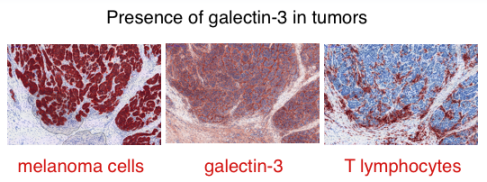
<p>We have observed that human CD8 TIL, in contrast with CD8 blood cells, show impaired IFN-γ secretion upon <italic>ex vivo</italic> re-stimulation. We have attributed the decreased IFN-γ secretion to a reduced mobility of T cell receptors upon trapping in a lattice of glycoproteins clustered by extracellular galectin-3 [<xref ref-type="bibr" rid="b323-cancers-03-02904">323</xref>]. Indeed, we have shown that TIL harbor surface galectin-3 and that treating TIL with N-acetyllactosamine (LacNAc), a galectin ligand, restored this secretion. We have also shown the same phenomenon with CD4 TIL. We will further examine the roles of galectins in the next chapter.</p></sec></sec></sec>
<sec>
<label>7.</label>
<title>Are Galectins Targets for Improving the Clinical Efficacy of Cancer Vaccines?</title>
<sec sec-type="intro">
<label>7.1.</label>
<title>Introduction</title>
<p>Galectins belong to a family of lectins, <italic>i.e.</italic>, sugar- or glycan-binding proteins. Galectins share the ability to bind β-galactosides and contain homologous carbohydrate recognition domains (CRD). Their binding affinity for simple β-galactosides, such as disaccharides or trisaccharides, is relatively weak. However, galectin binding to natural glycoconjugate ligands expressed on cell surfaces or in the extracellular matrix is usually of higher affinity, in the submicromolar range. We will discuss below the role in the tumor microenvironment of the sole galectin-1, -3, and -9. Further reading on galectins can be found in reviews by Rabinovich [<xref ref-type="bibr" rid="b324-cancers-03-02904">324</xref>] and Cummings [<xref ref-type="bibr" rid="b325-cancers-03-02904">325</xref>].</p>
<p>Galectins have been classified in three structural groups: (a) the prototype galectin-1 with a single CRD, which can form homodimers via non-covalent interactions; (b) the chimeric galectin-3 with a single CRD and a large amino-terminal domain, which contributes to self-aggregation into pentamers; and (c) the tandem-repeat galectins with two different CRD and a 5 to 70 amino-acid linker, e.g., galectin-9.</p>
<p>Galectins are found in the cytosol and in the nucleus where they interact with proteins to regulate growth, cycle progression and apoptosis [<xref ref-type="bibr" rid="b326-cancers-03-02904">326</xref>,<xref ref-type="bibr" rid="b327-cancers-03-02904">327</xref>]. Galectins lack a signal peptide but can nevertheless be secreted by an unknown mechanism. Extracellularly, the different roles of extracellular galectins are related to their ability to bind sugar moieties on surface <italic>O</italic>- and <italic>N</italic>-glycoproteins. The interactions of galectins and glycoproteins are complex and cannot be interpreted in terms of interactions between a ligand and a receptor. Several factors contribute to high-affinity binding to natural glycoconjugate ligands: the natural multivalency, the oligomeric state of the galectins and the multivalency of their natural glycoconjugate ligands [<xref ref-type="bibr" rid="b325-cancers-03-02904">325</xref>].</p>
<p>Galectins participate in both glycoprotein clustering and glycoprotein/galectin lattices, and could therefore modify receptor signaling and increase the surface half-life of some glycoproteins [<xref ref-type="bibr" rid="b328-cancers-03-02904">328</xref>]. In tumors, galectin-1, -3, -9 are often secreted by tumor cells and monocyte-derived cells, but can also be secreted by activated B or T cells [<xref ref-type="bibr" rid="b329-cancers-03-02904">329</xref>-<xref ref-type="bibr" rid="b335-cancers-03-02904">335</xref>]. The inhibition of T cell proliferation by CD4<sup>+</sup>CD25<sup>high</sup> cells, possibly Treg cells, was reported to be reversed by an anti-galectin-1 antibody [<xref ref-type="bibr" rid="b336-cancers-03-02904">336</xref>]. T cell proliferation was also inhibited in the presence of mesenchymal stromal cells, which secreted high levels of galectin-1 and galectin-3. T cell proliferation was restored by adding thiodigalactoside, a ligand competitor of both galectins, or by inhibiting galectin-3 expression in mesenchymal stromal cells by RNA interference [<xref ref-type="bibr" rid="b337-cancers-03-02904">337</xref>-<xref ref-type="bibr" rid="b340-cancers-03-02904">340</xref>].</p></sec>
<sec>
<label>7.2.</label>
<title>Galectins as a Prognosis Factor?</title>
<p>Sera of melanoma and colon adenocarcinoma patients were reported to contain more galectin-3 than sera of healthy volunteers [<xref ref-type="bibr" rid="b341-cancers-03-02904">341</xref>,<xref ref-type="bibr" rid="b342-cancers-03-02904">342</xref>]. Melanoma patients with more than 10 ng/mL were reported to have a median survival of less than 5 months, whereas the median survival of patients with less than 8 ng/mL was 60 months [<xref ref-type="bibr" rid="b343-cancers-03-02904">343</xref>]. No correlation was found, however, between tumor regression in melanoma patients vaccinated with tumor antigens and concentration of galectin-3 [<xref ref-type="bibr" rid="b344-cancers-03-02904">344</xref>]. In head and neck squamous cell carcinoma patients, elevated galectin-3 and galectin-1 in serum were also correlated with a worse survival [<xref ref-type="bibr" rid="b345-cancers-03-02904">345</xref>]. Is the presence of galectins a sign of immune suppression and better conditions for metastasis or the mere sign of an advanced disease and high tumor burden?</p></sec>
<sec>
<label>7.3.</label>
<title>Galectins Diminish T Cell Function and Viability</title>
<p>Blood T cells, T cell lines or Jurkat T cells were stimulated in the presence of galectin-1, -3, or -9, usually added in the culture at μM concentrations. Treated cells either entered in apoptosis [<xref ref-type="bibr" rid="b346-cancers-03-02904">346</xref>-<xref ref-type="bibr" rid="b349-cancers-03-02904">349</xref>], proliferated less or secreted more IL-10 [<xref ref-type="bibr" rid="b350-cancers-03-02904">350</xref>]. It was also reported that a Hodgkin lymphoma cell line, which expressed galectin-1, had a negative effect on proliferation of CD4 T cells [<xref ref-type="bibr" rid="b351-cancers-03-02904">351</xref>,<xref ref-type="bibr" rid="b352-cancers-03-02904">352</xref>] and that this effect diminished when the lymphoma cells knocked down for galectin-1 were added to the co-culture. T cell apoptosis mediated by galectins could be a physiological mechanism taking place in the thymus during early development of T cells, as thymic epithelial cells can secrete galectin-1 and <italic>in vitro</italic> exposure to galectin-1 induced apoptosis of subsets of CD4<sup>lo</sup> CD8<sup>lo</sup> thymocytes [<xref ref-type="bibr" rid="b353-cancers-03-02904">353</xref>].</p>
<p>Galectin-1, -3 and -9 added at μM concentrations also induce apoptosis of prostate carcinoma, melanoma, B-lymphoma and leukemia cells, provided they harbor the adequate glycosylation pattern [<xref ref-type="bibr" rid="b346-cancers-03-02904">346</xref>,<xref ref-type="bibr" rid="b354-cancers-03-02904">354</xref>-<xref ref-type="bibr" rid="b357-cancers-03-02904">357</xref>]. We did not observe apoptosis of blood T cells, T cell clones or tumor cell lines when galectin-3 was added at 10 nM, which is the highest concentration of galectin-3 that we measured in carcinoma ascites. It is nevertheless possible that galectins could accumulate in solid tumors in confined microenvironments and reach concentrations in the μM range.</p>
<p>The apoptosis induced by galectin-1 and galectin-3 seems to be mediated by their interactions with highly glycosylated surface molecules, such as CD43 and CD45, as these molecules co-purified with these galectins and were associated in patches at the T cell surface [<xref ref-type="bibr" rid="b329-cancers-03-02904">329</xref>,<xref ref-type="bibr" rid="b358-cancers-03-02904">358</xref>-<xref ref-type="bibr" rid="b360-cancers-03-02904">360</xref>]. Modification of the glycosylation pattern of T cells rendered them resistant to galectin-1-induced apoptosis [<xref ref-type="bibr" rid="b361-cancers-03-02904">361</xref>-<xref ref-type="bibr" rid="b363-cancers-03-02904">363</xref>]. The apoptosis induced by galectin-9 requires its binding to glycan moieties on Tim-3, a negative costimulatory receptor expressed on some activated T cells [<xref ref-type="bibr" rid="b189-cancers-03-02904">189</xref>,<xref ref-type="bibr" rid="b298-cancers-03-02904">298</xref>].</p>
<p>We have reported that treatment of TIL with galectin ligand LacNAc boosted their secretion of cytokines upon stimulation. Why do galectin-3 ligands improve TIL function? Our working hypothesis is that TIL have been stimulated by antigen recently, and that the resulting activation of T cells could modify the expression of enzymes of the N-glycosylation pathway and change the structure of <italic>N</italic>-glycans exposed at the cell surface, as shown for murine T cells [<xref ref-type="bibr" rid="b364-cancers-03-02904">364</xref>]. We surmise that the recently activated TIL, compared to resting T cells, harbor a set of glycans that are either more numerous or better ligands for galectin-3. Galectin-3 is abundant in many solid tumors and carcinomatous ascites, and can thus bind to surface glycoproteins of TIL and form lattices that would thereby reduce mobility of surface receptors implicated in T cell activation. This could explain the impaired function of TIL. The release of galectin-3 by soluble competitor ligands would restore mobility of surface receptors and boost IFN-γ secretion by TIL. We recently strengthened this hypothesis by showing that CD8 TIL treated with an anti-galectin-3 antibody had an increased IFN-γ secretion [<xref ref-type="bibr" rid="b154-cancers-03-02904">154</xref>].</p>
<p><italic>Ex vivo</italic> treatment of TIL with galectin-3 ligand LacNAC boosted their functions [<xref ref-type="bibr" rid="b323-cancers-03-02904">323</xref>]. We have thus searched for galectin-3 ligands available for clinical use. GCS-100<sup>®</sup>, a modified citrus pectin with cytotoxic properties on tumors, was administered by i.v. injection to 24 multiple myeloma patients [<xref ref-type="bibr" rid="b365-cancers-03-02904">365</xref>-<xref ref-type="bibr" rid="b368-cancers-03-02904">368</xref>]. Side effects were minor. <italic>In vitro</italic>, GCS-100 detached galectin-3 from TIL and boosted cytotoxicity and secretion of different cytokines [<xref ref-type="bibr" rid="b154-cancers-03-02904">154</xref>]. Pectasol<sup>®</sup>, another modified citrus pectin, was given orally to 10 prostate cancer patients [<xref ref-type="bibr" rid="b369-cancers-03-02904">369</xref>]. Seven of them experienced an increased doubling time of blood PSA, which suggests a decreased tumor growth.</p>
<p>DAVANAT<sup>®</sup>, a galactomannan derived from guar gum, has been shown to bind to galectin-1 [<xref ref-type="bibr" rid="b277-cancers-03-02904">277</xref>], and to increase the anti-tumor activity of chemotherapy drug 5-fluorouracil in mice. It was injected together with 5-fluorouracil in 25 patients with solid tumors without major side effects [<xref ref-type="bibr" rid="b276-cancers-03-02904">276</xref>]. Short <italic>ex vivo</italic> treatment of TIL with DAVANAT boosted secretion of cytokines and lytic activity (our own unpublished data). We intend to launch a clinical trial with metastatic melanoma patients where MAGE3.A1 and Na17.A2 peptides, which correspond to tumor-specific antigens expressed by various types of tumor, will be administered together with systemic and local injections of DAVANAT.</p></sec></sec>
<sec>
<label>8.</label>
<title>Concluding Remarks</title>
<p>There is now an increasing number of available data on human tumors and TIL to support the scenario of an immunosuppressive tumor microenvironment. The respective contribution of the different immunosuppressive mechanisms remains to be clarified in order to define whether different lymphocyte populations are impaired through different mechanisms, and whether several inhibitory pathways add up in the same cells. Considering the remarkably low toxicity of therapeutic vaccination of cancer patients, provided the target antigen is tumor-specific, every possible effort to improve its efficacy should be done. It was proposed that, in some vaccinated patients, a few anti-vaccine T cells reach metastases, succeed in reversing the immunosuppression, and trigger a broad activation of other anti-tumor T cells that proceed to eliminate the bulk of the tumor cells [<xref ref-type="bibr" rid="b18-cancers-03-02904">18</xref>,<xref ref-type="bibr" rid="b110-cancers-03-02904">110</xref>,<xref ref-type="bibr" rid="b111-cancers-03-02904">111</xref>,<xref ref-type="bibr" rid="b120-cancers-03-02904">120</xref>]. In other words, the anti-vaccine T cells serve only as a “spark” that activates the regression of the tumor. This hypothesis is supported by gene expression profiling of tumor samples resected before vaccination. The gene signatures that are associated with clinical benefit to vaccines reflect an immune response in the tumor present prior to vaccinations [<xref ref-type="bibr" rid="b370-cancers-03-02904">370</xref>-<xref ref-type="bibr" rid="b373-cancers-03-02904">373</xref>].</p>
<p>In the absence of vaccinations, treatments aimed at boosting TIL functions in vaccinated patients could also trigger activation of anti-tumor T cells. The same treatments should also contribute to provide a better tumor microenvironment for the anti-vaccine T cells able to reach the tumor sites.</p>
<p>We should keep in mind that boosting TIL function may result in increased secretion of molecules that indirectly promote tumor progression and that simultaneously blocking several surface inhibitory receptors may increase the severity of side-effects.</p></sec></body>
<back>
<sec sec-type="display-objects">
<title>Tables</title>
<table-wrap id="t1-cancers-03-02904" position="float">
<label>Table 1.</label>
<caption>
<p>Patient survival and presence of tumor-infiltrating lymphocyte (TIL) in primary melanoma.</p></caption>
<table frame="hsides" rules="groups">
<thead>
<tr>
<th align="left" valign="top" rowspan="3"/>
<th align="left" valign="top"><bold>Nb of patients</bold> <xref ref-type="table-fn" rid="tfn1-cancers-03-02904">a</xref></th>
<th align="left" valign="top"><bold>T cell infiltration</bold> <xref ref-type="table-fn" rid="tfn2-cancers-03-02904">b</xref></th>
<th colspan="2" align="left" valign="top"><bold>5-year survival</bold></th>
<th align="left" valign="top"><bold>Sentinel Lymp Node (SLN)</bold> <xref ref-type="table-fn" rid="tfn4-cancers-03-02904">d</xref></th></tr>
<tr>
<th valign="bottom" colspan="5">
<hr/></th></tr>
<tr>
<th align="left" valign="top"/>
<th align="center" valign="top">%</th>
<th align="center" valign="top">Correlation with T cell infiltrate <xref ref-type="table-fn" rid="tfn3-cancers-03-02904">c</xref></th>
<th align="center" valign="top"/></tr></thead>
<tbody>
<tr>
<td align="left" valign="top">Larsen, 1978 [<xref ref-type="bibr" rid="b27-cancers-03-02904">27</xref>]</td>
<td align="center" valign="top">669</td>
<td align="left" valign="top">TIL+</td>
<td align="right" valign="top">78</td>
<td align="center" valign="top"/>
<td align="center" valign="top"/></tr>
<tr>
<td align="left" valign="top"/>
<td align="center" valign="top"/>
<td align="left" valign="top">TIL+++</td>
<td align="right" valign="top">91</td>
<td align="center" valign="top">+</td>
<td align="center" valign="top">-</td></tr>
<tr content-type="background-color:#C0C0C0">
<td align="left" valign="top">Johnson, 1985 [<xref ref-type="bibr" rid="b29-cancers-03-02904">29</xref>]</td>
<td align="center" valign="top">262</td>
<td align="left" valign="top">TIL+</td>
<td align="right" valign="top">48</td>
<td align="center" valign="top"/>
<td align="center" valign="top"/></tr>
<tr content-type="background-color:#C0C0C0">
<td align="left" valign="top"/>
<td align="center" valign="top"/>
<td align="left" valign="top">TIL+++</td>
<td align="right" valign="top">60</td>
<td align="center" valign="top">+</td>
<td align="center" valign="top">-</td></tr>
<tr>
<td align="left" valign="top">Clark, 1989 [<xref ref-type="bibr" rid="b31-cancers-03-02904">31</xref>]</td>
<td align="center" valign="top">386</td>
<td align="left" valign="top">TIL absent</td>
<td align="right" valign="top">59 <xref ref-type="table-fn" rid="tfn5-cancers-03-02904">e</xref></td>
<td align="center" valign="top"/>
<td align="center" valign="top"/></tr>
<tr>
<td align="left" valign="top"/>
<td align="center" valign="top"/>
<td align="left" valign="top">TIL brisk</td>
<td align="right" valign="top">89</td>
<td align="center" valign="top"/>
<td align="center" valign="top"/></tr>
<tr>
<td align="left" valign="top"/>
<td align="center" valign="top"/>
<td align="left" valign="top">TIL non-brisk</td>
<td align="right" valign="top">75</td>
<td align="center" valign="top">+</td>
<td align="center" valign="top">-</td></tr>
<tr content-type="background-color:#C0C0C0">
<td align="left" valign="top">Clemente, 1996 [<xref ref-type="bibr" rid="b35-cancers-03-02904">35</xref>]</td>
<td align="center" valign="top">285</td>
<td align="left" valign="top">TIL absent</td>
<td align="right" valign="top">37</td>
<td align="center" valign="top"/>
<td align="center" valign="top"/></tr>
<tr content-type="background-color:#C0C0C0">
<td align="left" valign="top"/>
<td align="center" valign="top"/>
<td align="left" valign="top">TIL brisk</td>
<td align="right" valign="top">77</td>
<td align="center" valign="top"/>
<td align="center" valign="top"/></tr>
<tr content-type="background-color:#C0C0C0">
<td align="left" valign="top"/>
<td align="center" valign="top"/>
<td align="left" valign="top">TIL non-brisk</td>
<td align="right" valign="top">53</td>
<td align="center" valign="top">+</td>
<td align="center" valign="top">+<xref ref-type="table-fn" rid="tfn6-cancers-03-02904">f</xref></td></tr>
<tr>
<td align="left" valign="top">Tuthill, 2002 [<xref ref-type="bibr" rid="b38-cancers-03-02904">38</xref>]</td>
<td align="center" valign="top">259</td>
<td align="left" valign="top">TIL absent</td>
<td align="right" valign="top">71</td>
<td align="center" valign="top"/>
<td align="center" valign="top"/></tr>
<tr>
<td align="left" valign="top"/>
<td align="center" valign="top"/>
<td align="left" valign="top">TIL brisk</td>
<td align="right" valign="top">100</td>
<td align="center" valign="top"/>
<td align="center" valign="top"/></tr>
<tr>
<td align="left" valign="top"/>
<td align="center" valign="top"/>
<td align="left" valign="top">TIL non-brisk</td>
<td align="right" valign="top">71</td>
<td align="center" valign="top">+</td>
<td align="center" valign="top">-</td></tr>
<tr content-type="background-color:#C0C0C0">
<td align="left" valign="top">Taylor, 2007 [<xref ref-type="bibr" rid="b43-cancers-03-02904">43</xref>]</td>
<td align="center" valign="top">887</td>
<td align="left" valign="top">TIL absent</td>
<td align="right" valign="top">75</td>
<td align="center" valign="top"/>
<td align="center" valign="top"/></tr>
<tr content-type="background-color:#C0C0C0">
<td align="left" valign="top"/>
<td align="center" valign="top"/>
<td align="left" valign="top">TIL brisk + non-brisk</td>
<td align="right" valign="top">76</td>
<td align="center" valign="top">-</td>
<td align="center" valign="top">+</td></tr>
<tr>
<td align="left" valign="top">Mandalà, 2009 [<xref ref-type="bibr" rid="b45-cancers-03-02904">45</xref>]</td>
<td align="center" valign="top">1251</td>
<td align="left" valign="top">TIL absent</td>
<td align="right" valign="top">90</td>
<td align="center" valign="top"/>
<td align="center" valign="top"/></tr>
<tr>
<td align="left" valign="top"/>
<td align="center" valign="top"/>
<td align="left" valign="top">TIL brisk + non-brisk</td>
<td align="right" valign="top">95</td>
<td align="center" valign="top">+ <xref ref-type="table-fn" rid="tfn7-cancers-03-02904">g</xref></td>
<td align="center" valign="top">+</td></tr>
<tr content-type="background-color:#C0C0C0">
<td align="left" valign="top">Barnhill, 1996 [<xref ref-type="bibr" rid="b33-cancers-03-02904">33</xref>]</td>
<td align="center" valign="top">650</td>
<td align="left" valign="top">TIL absent</td>
<td align="right" valign="top">86</td>
<td align="center" valign="top"/>
<td align="center" valign="top"/></tr>
<tr content-type="background-color:#C0C0C0">
<td align="left" valign="top"/>
<td align="center" valign="top"/>
<td align="left" valign="top">TIL present</td>
<td align="right" valign="top">90</td>
<td align="center" valign="top">-</td>
<td align="center" valign="top">-</td></tr></tbody></table>
<table-wrap-foot><fn id="tfn1-cancers-03-02904">
<label>a</label>
<p>Only studies including &gt;180 patients were considered;</p></fn><fn id="tfn2-cancers-03-02904">
<label>b</label>
<p>Number of TIL estimated by immunohistology;</p></fn><fn id="tfn3-cancers-03-02904">
<label>c</label>
<p>Log-rank. “+” means significant;</p></fn><fn id="tfn4-cancers-03-02904">
<label>d</label>
<p>Sentinel Lymph Node (SLN) biopsy procedure included in the analysis;</p></fn><fn id="tfn5-cancers-03-02904">
<label>e</label>
<p>Proportion of patients with 8-year overall survival;</p></fn><fn id="tfn6-cancers-03-02904">
<label>f</label>
<p>SLN<sup>+</sup> excluded from the analysis;</p></fn><fn id="tfn7-cancers-03-02904">
<label>g</label>
<p>Not confirmed by the multivariate Cox proportional hazard model.</p></fn></table-wrap-foot></table-wrap>
<table-wrap id="t2-cancers-03-02904" position="float">
<label>Table 2.</label>
<caption>
<p>Patient survival correlates with the presence of TIL in various tumor types.</p></caption>
<table frame="hsides" rules="none">
<thead>
<tr>
<th align="left" valign="top"/>
<th align="left" valign="top"><bold>Nb of patients</bold> <xref ref-type="table-fn" rid="tfn9-cancers-03-02904">a</xref></th>
<th align="left" valign="top"><bold>T cell infiltration</bold></th>
<th colspan="2" align="left" valign="top"><bold>5-year survival (%)</bold></th></tr></thead>
<tbody>
<tr content-type="background-color:#C0C0C0">
<td align="left" valign="top"><bold>Colon adenocarcinoma</bold></td>
<td align="left" valign="top">276</td>
<td align="left" valign="top">absent</td>
<td align="left" valign="top">30</td>
<td align="left" valign="top"><xref ref-type="table-fn" rid="tfn8-cancers-03-02904">*</xref></td></tr>
<tr content-type="background-color:#C0C0C0">
<td align="left" valign="top">Ropponen, 1997 [<xref ref-type="bibr" rid="b59-cancers-03-02904">59</xref>]</td>
<td align="left" valign="top"/>
<td align="left" valign="top">weak</td>
<td align="left" valign="top">45</td>
<td align="left" valign="top"/></tr>
<tr content-type="background-color:#C0C0C0">
<td align="left" valign="top"/>
<td align="left" valign="top">mild</td>
<td align="left" valign="top">70</td>
<td align="left" valign="top"/></tr>
<tr content-type="background-color:#C0C0C0">
<td align="left" valign="top"/>
<td align="left" valign="top">dense</td>
<td align="left" valign="top">75</td>
<td align="left" valign="top"/></tr>
<tr>
<td align="left" valign="top"><bold>Colon adenocarcinoma</bold></td>
<td align="left" valign="top">371</td>
<td align="left" valign="top">CD8<sup>+</sup> low <xref ref-type="table-fn" rid="tfn10-cancers-03-02904">b</xref></td>
<td align="left" valign="top">50</td>
<td align="left" valign="top"><xref ref-type="table-fn" rid="tfn8-cancers-03-02904">*</xref></td></tr>
<tr>
<td align="left" valign="top">Chiba, 2004 [<xref ref-type="bibr" rid="b52-cancers-03-02904">52</xref>]</td>
<td align="left" valign="top"/>
<td align="left" valign="top">CD8<sup>+</sup> high</td>
<td align="left" valign="top">80</td>
<td align="left" valign="top"/></tr>
<tr content-type="background-color:#C0C0C0">
<td align="left" valign="top"><bold>Colon adenocarcinoma</bold></td>
<td align="left" valign="top">959</td>
<td align="left" valign="top">CD45RO<sup>+</sup> &lt;250/mm<sup>2</sup></td>
<td align="left" valign="top">24</td>
<td align="left" valign="top"/></tr>
<tr content-type="background-color:#C0C0C0">
<td align="left" valign="top">Pagès, 2005 [<xref ref-type="bibr" rid="b53-cancers-03-02904">53</xref>]</td>
<td align="left" valign="top"/>
<td align="left" valign="top">CD45RO<sup>+</sup> &gt;250/mm<sup>2</sup></td>
<td align="left" valign="top">46</td>
<td align="left" valign="top"/></tr>
<tr>
<td align="left" valign="top"><bold>Colon adenocarcinoma</bold></td>
<td align="left" valign="top">286</td>
<td align="left" valign="top">CD3<sup>+</sup> low <xref ref-type="table-fn" rid="tfn10-cancers-03-02904">b</xref></td>
<td align="left" valign="top">85</td>
<td align="left" valign="top"><xref ref-type="table-fn" rid="tfn8-cancers-03-02904">*</xref> <xref ref-type="table-fn" rid="tfn11-cancers-03-02904">c</xref></td></tr>
<tr>
<td align="left" valign="top">Laghi, 2009 [<xref ref-type="bibr" rid="b56-cancers-03-02904">56</xref>]</td>
<td align="left" valign="top"/>
<td align="left" valign="top">CD3<sup>+</sup> high</td>
<td align="left" valign="top">100</td>
<td align="left" valign="top"/></tr>
<tr content-type="background-color:#C0C0C0">
<td align="left" valign="top"><bold>Hepatocellular carcinoma</bold></td>
<td align="left" valign="top">302</td>
<td align="left" valign="top">CD8<sup>+</sup> GrB low <xref ref-type="table-fn" rid="tfn10-cancers-03-02904">b</xref></td>
<td align="left" valign="top">45</td>
<td align="left" valign="top"/></tr>
<tr content-type="background-color:#C0C0C0">
<td align="left" valign="top">Gao, 2007 [<xref ref-type="bibr" rid="b77-cancers-03-02904">77</xref>]</td>
<td align="left" valign="top"/>
<td align="left" valign="top">CD8<sup>+</sup> GrB high</td>
<td align="left" valign="top">60</td>
<td align="left" valign="top"/></tr>
<tr>
<td align="left" valign="top"><bold>Lung neoplasms</bold><xref ref-type="table-fn" rid="tfn12-cancers-03-02904">d</xref></td>
<td align="left" valign="top">1290</td>
<td align="left" valign="top">CD8<sup>+</sup> &lt;20% of all cells</td>
<td align="left" valign="top">30</td>
<td align="left" valign="top"><xref ref-type="table-fn" rid="tfn12-cancers-03-02904">d</xref></td></tr>
<tr>
<td align="left" valign="top">Ruffini, 2009 [<xref ref-type="bibr" rid="b67-cancers-03-02904">67</xref>]</td>
<td align="left" valign="top"/>
<td align="left" valign="top">CD8<sup>+</sup> &gt;20% of all cells</td>
<td align="left" valign="top">40</td>
<td align="left" valign="top"/></tr>
<tr content-type="background-color:#C0C0C0">
<td align="left" valign="top"><bold>Non-small-cell lung cancer</bold></td>
<td align="left" valign="top">219</td>
<td align="left" valign="top">absent</td>
<td align="left" valign="top">36</td>
<td align="left" valign="top"><xref ref-type="table-fn" rid="tfn13-cancers-03-02904">e</xref></td></tr>
<tr content-type="background-color:#C0C0C0">
<td align="left" valign="top">Kilic, 2009 [<xref ref-type="bibr" rid="b66-cancers-03-02904">66</xref>]</td>
<td align="left" valign="top"/>
<td align="left" valign="top">present</td>
<td align="left" valign="top">76</td>
<td align="left" valign="top"/></tr>
<tr>
<td align="left" valign="top"><bold>Endometrial carcinoma</bold></td>
<td align="left" valign="top">368</td>
<td align="left" valign="top">CD8<sup>+</sup> &lt;4/0.3 mm<sup>2</sup></td>
<td align="left" valign="top">60</td>
<td align="left" valign="top"><xref ref-type="table-fn" rid="tfn8-cancers-03-02904">*</xref> <xref ref-type="table-fn" rid="tfn13-cancers-03-02904">e</xref></td></tr>
<tr>
<td align="left" valign="top">de Jong, 2009 [<xref ref-type="bibr" rid="b64-cancers-03-02904">64</xref>]</td>
<td align="left" valign="top"/>
<td align="left" valign="top">CD8<sup>+</sup> &gt;4/0.3 mm<sup>2</sup></td>
<td align="left" valign="top">85</td>
<td align="left" valign="top"/></tr>
<tr content-type="background-color:#C0C0C0">
<td align="left" valign="top"><bold>Prostate carcinoma</bold></td>
<td align="left" valign="top">325</td>
<td align="left" valign="top">rare/absent <xref ref-type="table-fn" rid="tfn14-cancers-03-02904">f</xref></td>
<td align="left" valign="top">30</td>
<td align="left" valign="top"><xref ref-type="table-fn" rid="tfn8-cancers-03-02904">*</xref> <xref ref-type="table-fn" rid="tfn13-cancers-03-02904">e</xref></td></tr>
<tr content-type="background-color:#C0C0C0">
<td align="left" valign="top">Vesalainen, 1994 [<xref ref-type="bibr" rid="b90-cancers-03-02904">90</xref>]</td>
<td align="left" valign="top"/>
<td align="left" valign="top">moderate</td>
<td align="left" valign="top">55</td>
<td align="left" valign="top"/></tr>
<tr content-type="background-color:#C0C0C0">
<td align="left" valign="top"/>
<td align="left" valign="top">dense</td>
<td align="left" valign="top">70</td>
<td align="left" valign="top"/></tr>
<tr>
<td align="left" valign="top"><bold>Renal cell carcinoma</bold></td>
<td align="left" valign="top">221</td>
<td align="left" valign="top">CD8<sup>+</sup> scanty <xref ref-type="table-fn" rid="tfn14-cancers-03-02904">f</xref></td>
<td align="left" valign="top">85</td>
<td align="left" valign="top"/></tr>
<tr>
<td align="left" valign="top">Nakano, 2001 [<xref ref-type="bibr" rid="b93-cancers-03-02904">93</xref>]</td>
<td align="left" valign="top"/>
<td align="left" valign="top">CD8<sup>+</sup> aboundant</td>
<td align="left" valign="top">60</td>
<td align="left" valign="top"/></tr>
<tr content-type="background-color:#C0C0C0">
<td align="left" valign="top"><bold>Ovary Carcinoma</bold></td>
<td align="left" valign="top">186</td>
<td align="left" valign="top">CD3<sup>+</sup> absent</td>
<td align="left" valign="top">5</td>
<td align="left" valign="top"/></tr>
<tr content-type="background-color:#C0C0C0">
<td align="left" valign="top">Zhang, 2003 [<xref ref-type="bibr" rid="b60-cancers-03-02904">60</xref>]</td>
<td align="left" valign="top"/>
<td align="left" valign="top">CD3<sup>+</sup> present</td>
<td align="left" valign="top">38</td>
<td align="left" valign="top"/></tr>
<tr>
<td align="left" valign="top"><bold>Breast Cancer</bold></td>
<td align="left" valign="top">1334</td>
<td align="left" valign="top">CD8<sup>+</sup> absent</td>
<td align="left" valign="top">50</td>
<td align="left" valign="top"><xref ref-type="table-fn" rid="tfn8-cancers-03-02904">*</xref> <xref ref-type="table-fn" rid="tfn15-cancers-03-02904">g</xref></td></tr>
<tr>
<td align="left" valign="top">Mahmoud, 2011 [<xref ref-type="bibr" rid="b89-cancers-03-02904">89</xref>]</td>
<td align="left" valign="top"/>
<td align="left" valign="top">CD8<sup>+</sup> present</td>
<td align="left" valign="top">65</td>
<td align="left" valign="top"/></tr></tbody></table>
<table-wrap-foot><fn id="tfn8-cancers-03-02904">
<label>*</label>
<p>Estimated on survival curves.</p></fn><fn id="tfn9-cancers-03-02904">
<label>a</label>
<p>Only studies including &gt;180 patients were considered.</p></fn><fn id="tfn10-cancers-03-02904">
<label>b</label>
<p>High <italic>versus</italic> low TIL = above or below the median value.</p></fn><fn id="tfn11-cancers-03-02904">
<label>c</label>
<p>Patients with lymph node metastasis were excluded.</p></fn><fn id="tfn12-cancers-03-02904">
<label>d</label>
<p>Correlation between TIL infiltrate and survival observed for adenocarcinoma and squamous cell carcinoma.</p></fn><fn id="tfn13-cancers-03-02904">
<label>e</label>
<p>10-year survival analysis.</p></fn><fn id="tfn14-cancers-03-02904">
<label>f</label>
<p>Number of TIL estimated by immunohistochemistry.</p></fn><fn id="tfn15-cancers-03-02904">
<label>g</label>
<p>20-year survival analysis.</p></fn></table-wrap-foot></table-wrap>
<table-wrap id="t3-cancers-03-02904" position="float">
<label>Table 3.</label>
<caption>
<p>Surface inhibitory receptors expressed by TIL and counteracting strategies.</p></caption>
<table frame="hsides" rules="groups">
<thead>
<tr>
<th colspan="2" align="left" valign="top"><bold>Inhibitory receptor</bold></th>
<th align="left" valign="top"><bold>Ligand</bold></th>
<th align="left" valign="top"><bold>Could be reversed by</bold></th>
<th colspan="2" align="left" valign="top"><bold>Function tested</bold></th></tr></thead>
<tbody>
<tr>
<td colspan="6" align="left" valign="top"><bold><italic>Reversion tested in a clinical trial</italic></bold></td></tr>
<tr>
<td valign="bottom" colspan="6">
<hr/></td></tr>
<tr>
<td align="left" valign="top"><bold>CTLA-4</bold><xref ref-type="table-fn" rid="tfn16-cancers-03-02904">a</xref></td>
<td align="left" valign="top">CD152</td>
<td align="left" valign="top">CD80</td>
<td align="left" valign="top">anti-CTLA-4 antibody</td>
<td align="left" valign="top">proliferation</td>
<td align="left" valign="top">[<xref ref-type="bibr" rid="b161-cancers-03-02904">161</xref>,<xref ref-type="bibr" rid="b166-cancers-03-02904">166</xref>-<xref ref-type="bibr" rid="b173-cancers-03-02904">173</xref>,<xref ref-type="bibr" rid="b175-cancers-03-02904">175</xref>,<xref ref-type="bibr" rid="b194-cancers-03-02904">194</xref>,<xref ref-type="bibr" rid="b195-cancers-03-02904">195</xref>]</td></tr>
<tr>
<td align="left" valign="top"/>
<td align="left" valign="top">CD86</td>
<td align="left" valign="top"/>
<td align="left" valign="top">cytokine secretion</td>
<td align="left" valign="top"/></tr>
<tr>
<td align="left" valign="top"/>
<td align="left" valign="top">lytic activity</td>
<td align="left" valign="top"/></tr>
<tr>
<td align="left" valign="top"><bold>PD1</bold><xref ref-type="table-fn" rid="tfn16-cancers-03-02904">a</xref></td>
<td align="left" valign="top">CD279</td>
<td align="left" valign="top">PD-L1 / -L2</td>
<td align="left" valign="top">anti-PD1 antibody</td>
<td align="left" valign="top">proliferation<xref ref-type="table-fn" rid="tfn17-cancers-03-02904">b</xref></td>
<td align="left" valign="top">[<xref ref-type="bibr" rid="b146-cancers-03-02904">146</xref>,<xref ref-type="bibr" rid="b184-cancers-03-02904">184</xref>-<xref ref-type="bibr" rid="b188-cancers-03-02904">188</xref>,<xref ref-type="bibr" rid="b196-cancers-03-02904">196</xref>-<xref ref-type="bibr" rid="b198-cancers-03-02904">198</xref>]</td></tr>
<tr>
<td align="left" valign="top"/>
<td align="left" valign="top">SHP-1 inhibitor Stibogluconate</td>
<td align="left" valign="top"/>
<td align="left" valign="top"/></tr>
<tr>
<td colspan="6" align="left" valign="top"><bold><italic>Reversion tested in vitro—drug used for other purposes</italic></bold></td></tr>
<tr>
<td valign="bottom" colspan="6">
<hr/></td></tr>
<tr>
<td align="left" valign="top"><bold>KIR2DL1</bold><xref ref-type="table-fn" rid="tfn18-cancers-03-02904">c</xref></td>
<td align="left" valign="top">CD158a</td>
<td align="left" valign="top">HLA Class I</td>
<td align="left" valign="top">Valproïc acid treatment of the tumor cells</td>
<td align="left" valign="top">lytic activity</td>
<td align="left" valign="top">[<xref ref-type="bibr" rid="b199-cancers-03-02904">199</xref>-<xref ref-type="bibr" rid="b201-cancers-03-02904">201</xref>]</td></tr>
<tr>
<td align="left" valign="top"><bold>KIR2DL2/3</bold></td>
<td align="left" valign="top">CD158b</td>
<td align="left" valign="top"/>
<td align="left" valign="top"/></tr>
<tr>
<td align="left" valign="top"><bold>KIR3DL1</bold></td>
<td align="left" valign="top">CD158e</td>
<td align="left" valign="top"/>
<td align="left" valign="top"/></tr>
<tr>
<td align="left" valign="top"><bold>CEACAM1</bold><xref ref-type="table-fn" rid="tfn16-cancers-03-02904">a</xref>, <xref ref-type="table-fn" rid="tfn18-cancers-03-02904">c</xref></td>
<td align="left" valign="top">CD66a</td>
<td align="left" valign="top">CEACAM1</td>
<td align="left" valign="top">vitamin D</td>
<td align="left" valign="top"/>
<td align="left" valign="top">[<xref ref-type="bibr" rid="b202-cancers-03-02904">202</xref>-<xref ref-type="bibr" rid="b204-cancers-03-02904">204</xref>]</td></tr>
<tr>
<td colspan="6" align="left" valign="top"><bold><italic>Reversion tested in vitro—no drug available yet</italic></bold></td></tr>
<tr>
<td valign="bottom" colspan="6">
<hr/></td></tr>
<tr>
<td align="left" valign="top"><bold>BTLA</bold><xref ref-type="table-fn" rid="tfn16-cancers-03-02904">a</xref>, <xref ref-type="table-fn" rid="tfn17-cancers-03-02904">b</xref></td>
<td align="left" valign="top">CD272</td>
<td align="left" valign="top">HVEM</td>
<td align="left" valign="top">anti-BTLA antibody</td>
<td align="left" valign="top">proliferation</td>
<td align="left" valign="top">[<xref ref-type="bibr" rid="b191-cancers-03-02904">191</xref>,<xref ref-type="bibr" rid="b205-cancers-03-02904">205</xref>,<xref ref-type="bibr" rid="b206-cancers-03-02904">206</xref>]</td></tr>
<tr>
<td align="left" valign="top"><bold>BY55</bold></td>
<td align="left" valign="top">CD160</td>
<td align="left" valign="top"/>
<td align="left" valign="top">anti-HVEM antibody</td>
<td align="left" valign="top">cytokine secretion</td>
<td align="left" valign="top"/></tr>
<tr>
<td align="left" valign="top"><bold>Tim-3</bold><xref ref-type="table-fn" rid="tfn16-cancers-03-02904">a</xref></td>
<td align="left" valign="top"/>
<td align="left" valign="top">anti-Tim-3 antibody</td>
<td align="left" valign="top">proliferation</td>
<td align="left" valign="top">[<xref ref-type="bibr" rid="b189-cancers-03-02904">189</xref>,<xref ref-type="bibr" rid="b207-cancers-03-02904">207</xref>-<xref ref-type="bibr" rid="b210-cancers-03-02904">210</xref>]</td></tr>
<tr>
<td align="left" valign="top"/>
<td align="left" valign="top">lytic activity</td>
<td align="left" valign="top"/></tr>
<tr>
<td align="left" valign="top"/>
<td align="left" valign="top">cytokine secretion</td>
<td align="left" valign="top"/></tr>
<tr>
<td align="left" valign="top"><bold>NKG2A</bold> <xref ref-type="table-fn" rid="tfn16-cancers-03-02904">a</xref></td>
<td align="left" valign="top">CD159a</td>
<td align="left" valign="top">HLA-E</td>
<td align="left" valign="top">anti-CD94 or anti-NKG2A antibodies</td>
<td align="left" valign="top">lytic activity</td>
<td align="left" valign="top">[<xref ref-type="bibr" rid="b211-cancers-03-02904">211</xref>-<xref ref-type="bibr" rid="b213-cancers-03-02904">213</xref>]</td></tr>
<tr>
<td align="left" valign="top"><bold>KLRD1</bold></td>
<td align="left" valign="top">CD94</td>
<td align="left" valign="top"/>
<td align="left" valign="top">anti-TGFβ or anti-rIL-15α antibodies</td>
<td align="left" valign="top"/>
<td align="left" valign="top"/></tr>
<tr>
<td align="left" valign="top"><bold>ILT2</bold></td>
<td align="left" valign="top">CD85j</td>
<td align="left" valign="top">HLA-G</td>
<td align="left" valign="top">anti-ILT2 antibody</td>
<td align="left" valign="top">proliferation</td>
<td align="left" valign="top">[<xref ref-type="bibr" rid="b214-cancers-03-02904">214</xref>,<xref ref-type="bibr" rid="b215-cancers-03-02904">215</xref>]</td></tr>
<tr>
<td align="left" valign="top"/>
<td align="left" valign="top">lytic activity</td>
<td align="left" valign="top"/></tr>
<tr>
<td align="left" valign="top"><bold>NKRP1A</bold><xref ref-type="table-fn" rid="tfn18-cancers-03-02904">c</xref></td>
<td align="left" valign="top">CD161</td>
<td align="left" valign="top">LLT1</td>
<td align="left" valign="top">anti-NKRP1A antibody</td>
<td align="left" valign="top">cytokine secretion</td>
<td align="left" valign="top">[<xref ref-type="bibr" rid="b216-cancers-03-02904">216</xref>]</td></tr>
<tr>
<td align="left" valign="top"><bold>Ly-1</bold></td>
<td align="left" valign="top">CD5</td>
<td align="left" valign="top">CD72 / gp150</td>
<td align="left" valign="top">no compound described</td>
<td align="left" valign="top"/>
<td align="left" valign="top">[<xref ref-type="bibr" rid="b217-cancers-03-02904">217</xref>,<xref ref-type="bibr" rid="b218-cancers-03-02904">218</xref>]</td></tr></tbody></table>
<table-wrap-foot><fn id="tfn16-cancers-03-02904">
<label>a</label>
<p>The inhibitory receptor is expressed upon T cell activation.</p></fn><fn id="tfn17-cancers-03-02904">
<label>b</label>
<p>A vaccination protocol was recently proposed in order to avoid expression of inhibitory receptor BTLA on anti-vaccine T cells [<xref ref-type="bibr" rid="b191-cancers-03-02904">191</xref>].</p></fn><fn id="tfn18-cancers-03-02904">
<label>c</label>
<p>This receptor could also have positive co-stimulus properties.</p></fn></table-wrap-foot></table-wrap>
<table-wrap id="t4-cancers-03-02904" position="float">
<label>Table 4.</label>
<caption>
<p>Soluble molecules with a suppressive activity on TIL and counteracting strategies.</p></caption>
<table frame="hsides" rules="groups">
<thead>
<tr>
<th align="left" valign="top"><bold>Inhibitory molecule</bold></th>
<th align="left" valign="top"><bold>Could be reversed by</bold></th>
<th align="left" valign="top"><bold>Function tested</bold></th>
<th align="left" valign="top"/></tr></thead>
<tbody>
<tr>
<td colspan="4" align="left" valign="top"><bold><italic>Reversion tested in a clinical trial</italic></bold></td></tr>
<tr>
<td valign="bottom" colspan="4">
<hr/></td></tr>
<tr>
<td align="left" valign="top"><bold>TGF-β</bold></td>
<td align="left" valign="top">anti-TGF-β antibody</td>
<td align="left" valign="top"/>
<td align="left" valign="top">CT01112293<xref ref-type="table-fn" rid="tfn19-cancers-03-02904">a</xref></td></tr>
<tr>
<td colspan="4" align="left" valign="top"><bold><italic>Reversion tested in vitro—drug used for other purposes</italic></bold></td></tr>
<tr>
<td valign="bottom" colspan="4">
<hr/></td></tr>
<tr>
<td align="left" valign="top"><bold>Galectin-1</bold></td>
<td align="left" valign="top">galactomannan DAVANAT®</td>
<td align="left" valign="top">proliferation</td>
<td align="left" valign="top">[<xref ref-type="bibr" rid="b276-cancers-03-02904">276</xref>,<xref ref-type="bibr" rid="b277-cancers-03-02904">277</xref>]</td></tr>
<tr>
<td align="left" valign="top"/>
<td align="left" valign="top">cytokine secretion</td>
<td align="left" valign="top"/></tr>
<tr>
<td align="left" valign="top"><bold>Galectin-3</bold></td>
<td align="left" valign="top">modified citrus pectin GCS-100®</td>
<td align="left" valign="top">cytokine secretion</td>
<td align="left" valign="top" rowspan="2">[<xref ref-type="bibr" rid="b154-cancers-03-02904">154</xref>] + unpublished data</td></tr>
<tr>
<td align="left" valign="top"/>
<td align="left" valign="top">galactomannan DAVANAT®</td>
<td align="left" valign="top">lytic activity</td></tr>
<tr>
<td align="left" valign="top"><bold>PGE2<xref ref-type="table-fn" rid="tfn20-cancers-03-02904">b</xref></bold></td>
<td align="left" valign="top">COX inhibitors</td>
<td align="left" valign="top">TCR signaling</td>
<td align="left" valign="top">[<xref ref-type="bibr" rid="b265-cancers-03-02904">265</xref>,<xref ref-type="bibr" rid="b278-cancers-03-02904">278</xref>-<xref ref-type="bibr" rid="b281-cancers-03-02904">281</xref>]</td></tr>
<tr>
<td align="left" valign="top"/>
<td align="left" valign="top">proliferation</td>
<td align="left" valign="top"/></tr>
<tr>
<td align="left" valign="top"/>
<td align="left" valign="top">cytokine secretion</td>
<td align="left" valign="top"/></tr>
<tr>
<td colspan="4" align="left" valign="top"><bold><italic>Reversion tested in vitro—no drug available yet</italic></bold></td></tr>
<tr>
<td valign="bottom" colspan="4">
<hr/></td></tr>
<tr>
<td align="left" valign="top"><bold>Arginase / NO synthas</bold></td>
<td align="left" valign="top">NOHA</td>
<td align="left" valign="top">proliferation</td>
<td align="left" valign="top">[<xref ref-type="bibr" rid="b282-cancers-03-02904">282</xref>-<xref ref-type="bibr" rid="b284-cancers-03-02904">284</xref>]</td></tr>
<tr>
<td align="left" valign="top"/>
<td align="left" valign="top">1-NMMA</td>
<td align="left" valign="top"/>
<td align="left" valign="top"/></tr>
<tr>
<td align="left" valign="top"><bold>IDO</bold></td>
<td align="left" valign="top">dextro-1-methyl tryptophane</td>
<td align="left" valign="top">proliferation</td>
<td align="left" valign="top">[<xref ref-type="bibr" rid="b285-cancers-03-02904">285</xref>-<xref ref-type="bibr" rid="b289-cancers-03-02904">289</xref>]</td></tr>
<tr>
<td align="left" valign="top"/>
<td align="left" valign="top">IDO inhibitors</td>
<td align="left" valign="top"/>
<td align="left" valign="top"/></tr>
<tr>
<td align="left" valign="top"><bold>IL-10</bold></td>
<td align="left" valign="top">anti-IL-10 antibody</td>
<td align="left" valign="top">lytic activity</td>
<td align="left" valign="top">[<xref ref-type="bibr" rid="b273-cancers-03-02904">273</xref>,<xref ref-type="bibr" rid="b274-cancers-03-02904">274</xref>,<xref ref-type="bibr" rid="b290-cancers-03-02904">290</xref>-<xref ref-type="bibr" rid="b294-cancers-03-02904">294</xref>]</td></tr>
<tr>
<td align="left" valign="top"/>
<td align="left" valign="top">Anti rIL-10 antibody</td>
<td align="left" valign="top">proliferation</td>
<td align="left" valign="top"/></tr>
<tr>
<td align="left" valign="top"/>
<td align="left" valign="top">cytokine secretion</td>
<td align="left" valign="top"/></tr>
<tr>
<td align="left" valign="top"><bold>Adenosine</bold></td>
<td align="left" valign="top">CD39 inhibitor ARL67156</td>
<td align="left" valign="top">lytic activity</td>
<td align="left" valign="top">[<xref ref-type="bibr" rid="b295-cancers-03-02904">295</xref>-<xref ref-type="bibr" rid="b297-cancers-03-02904">297</xref>]</td></tr>
<tr>
<td align="left" valign="top"/>
<td align="left" valign="top">methylxanthines: caffeine and theophylline</td>
<td align="left" valign="top">cytokine secretion</td>
<td align="left" valign="top"/></tr>
<tr>
<td align="left" valign="top"><bold>Galectin-9</bold></td>
<td align="left" valign="top">no compound described</td>
<td align="left" valign="top"/>
<td align="left" valign="top">[<xref ref-type="bibr" rid="b189-cancers-03-02904">189</xref>,<xref ref-type="bibr" rid="b298-cancers-03-02904">298</xref>]</td></tr></tbody></table>
<table-wrap-foot><fn id="tfn19-cancers-03-02904">
<label>a</label>
<p>Described in <ext-link xlink:href="http://www.clinicaltrials.gov" ext-link-type="uri">http://www.clinicaltrials.gov</ext-link>.</p></fn><fn id="tfn20-cancers-03-02904">
<label>b</label>
<p>Can also induce secretion of pro-inflammatory cytokines.</p></fn></table-wrap-foot></table-wrap></sec>
<ack>
<p>We thank N. Krack for editorial assistance, P. Coulie and J. Carrasco for critical reading. This work was supported by grants from Fondation contre le Cancer (Belgium) and Fonds de la Recherche Scientifique Médicale (Belgium). P. van der Bruggen is a “fellow du fonds Allard-Janssen pour la recherche sur le cancer”. G. Wieërs is supported by a grant from the Fonds National de la Recherche Scientifique (Belgium).</p></ack>
<ref-list>
<title>References</title>
<ref id="b1-cancers-03-02904"><label>1.</label><citation citation-type="journal"><person-group person-group-type="author"><name><surname>Rosenberg</surname><given-names>S.A.</given-names></name><name><surname>Packard</surname><given-names>B.S.</given-names></name><name><surname>Aebersold</surname><given-names>P.M.</given-names></name><name><surname>Solomon</surname><given-names>D.</given-names></name><name><surname>Topalian</surname><given-names>S.L.</given-names></name><name><surname>Toy</surname><given-names>S.T.</given-names></name><name><surname>Simon</surname><given-names>P.</given-names></name><name><surname>Lotze</surname><given-names>M.T.</given-names></name><name><surname>Yang</surname><given-names>J.C.</given-names></name><name><surname>Seipp</surname><given-names>C.A.</given-names></name><name><surname>Simpson</surname><given-names>C.</given-names></name><name><surname>Carter</surname><given-names>C.</given-names></name><name><surname>Bock</surname><given-names>S.</given-names></name><name><surname>Schwartzentruber</surname><given-names>D.</given-names></name><name><surname>Wei</surname><given-names>J.P.</given-names></name><name><surname>White</surname><given-names>D.E.</given-names></name></person-group><article-title>Use of tumor-infiltrating lymphocytes and interleukin-2 in the immunotherapy of patients with metastatic melanoma</article-title><source>N. Engl. J. Med.</source><year>1988</year><volume>319</volume><fpage>1676</fpage><lpage>1680</lpage><pub-id pub-id-type="doi">10.1056/NEJM198812223192527</pub-id><pub-id pub-id-type="pmid">3264384</pub-id></citation></ref>
<ref id="b2-cancers-03-02904"><label>2.</label><citation citation-type="journal"><person-group person-group-type="author"><name><surname>Dréno</surname><given-names>B.</given-names></name><name><surname>Nguyen</surname><given-names>J.M.</given-names></name><name><surname>Khammari</surname><given-names>A.</given-names></name><name><surname>Pandolfino</surname><given-names>M.-C.</given-names></name><name><surname>Tessier</surname><given-names>M.H.</given-names></name><name><surname>Bercegeay</surname><given-names>S.</given-names></name><name><surname>Cassidanus</surname><given-names>A.</given-names></name><name><surname>Lemarre</surname><given-names>P.</given-names></name><name><surname>Billaudel</surname><given-names>S.</given-names></name><name><surname>Labarrière</surname><given-names>N.</given-names></name><name><surname>Jotereau</surname><given-names>F.</given-names></name></person-group><article-title>Randomized trial of adoptive transfer of melanoma tumor-infiltrating lymphocytes as adjuvant therapy for stage III melanoma</article-title><source>Cancer Immunol. Immunother.</source><year>2002</year><volume>51</volume><fpage>539</fpage><lpage>546</lpage><pub-id pub-id-type="doi">10.1007/s00262-002-0315-1</pub-id><pub-id pub-id-type="pmid">12384805</pub-id></citation></ref>
<ref id="b3-cancers-03-02904"><label>3.</label><citation citation-type="journal"><person-group person-group-type="author"><name><surname>Coulie</surname><given-names>P.G.</given-names></name><name><surname>Karanikas</surname><given-names>V.</given-names></name><name><surname>Lurquin</surname><given-names>C.</given-names></name><name><surname>Colau</surname><given-names>D.</given-names></name><name><surname>Connerotte</surname><given-names>T.</given-names></name><name><surname>Hanagiri</surname><given-names>T.</given-names></name><name><surname>Van Pel</surname><given-names>A.</given-names></name><name><surname>Lucas</surname><given-names>S.</given-names></name><name><surname>Godelaine</surname><given-names>D.</given-names></name><name><surname>Lonchay</surname><given-names>C.</given-names></name><name><surname>Marchand</surname><given-names>M.</given-names></name><name><surname>van Baren</surname><given-names>N.</given-names></name><name><surname>Boon</surname><given-names>T.</given-names></name></person-group><article-title>Cytolytic T cell responses of cancer patients vaccinated with a MAGE antigen</article-title><source>Immunol. Rev.</source><year>2002</year><volume>188</volume><fpage>33</fpage><lpage>42</lpage><pub-id pub-id-type="doi">10.1034/j.1600-065X.2002.18804.x</pub-id><pub-id pub-id-type="pmid">12445279</pub-id></citation></ref>
<ref id="b4-cancers-03-02904"><label>4.</label><citation citation-type="journal"><person-group person-group-type="author"><name><surname>Mazzocchi</surname><given-names>A.</given-names></name><name><surname>Belli</surname><given-names>F.</given-names></name><name><surname>Mascheroni</surname><given-names>L.</given-names></name><name><surname>Vegetti</surname><given-names>C.</given-names></name><name><surname>Parmiani</surname><given-names>G.</given-names></name><name><surname>Anichini</surname><given-names>A.</given-names></name></person-group><article-title>Frequency of cytotoxic T lymphocyte precursors (CTLp) interacting with autologous tumor via the T-cell receptor: limiting dilution analysis of specific CTLp in peripheral blood and tumor-invaded lymph nodes of melanoma patients</article-title><source>Int. J. Cancer</source><year>1994</year><volume>58</volume><fpage>330</fpage><lpage>339</lpage><pub-id pub-id-type="doi">10.1002/ijc.2910580304</pub-id><pub-id pub-id-type="pmid">8050813</pub-id></citation></ref>
<ref id="b5-cancers-03-02904"><label>5.</label><citation citation-type="journal"><person-group person-group-type="author"><name><surname>Coulie</surname><given-names>P.G.</given-names></name><name><surname>Somville</surname><given-names>M.</given-names></name><name><surname>Lehmann</surname><given-names>F.</given-names></name><name><surname>Hainaut</surname><given-names>P.</given-names></name><name><surname>Brasseur</surname><given-names>F.</given-names></name><name><surname>Devos</surname><given-names>R.</given-names></name><name><surname>Boon</surname><given-names>T.</given-names></name></person-group><article-title>Precursor frequency analysis of human cytolytic T lymphocytes directed against autologous melanoma cells</article-title><source>Int. J. Cancer</source><year>1992</year><volume>50</volume><fpage>289</fpage><lpage>297</lpage><pub-id pub-id-type="doi">10.1002/ijc.2910500220</pub-id><pub-id pub-id-type="pmid">1730522</pub-id></citation></ref>
<ref id="b6-cancers-03-02904"><label>6.</label><citation citation-type="journal"><person-group person-group-type="author"><name><surname>van der Bruggen</surname><given-names>P.</given-names></name><name><surname>Traversari</surname><given-names>C.</given-names></name><name><surname>Chomez</surname><given-names>P.</given-names></name><name><surname>Lurquin</surname><given-names>C.</given-names></name><name><surname>De Plaen</surname><given-names>E.</given-names></name><name><surname>Van den Eynde</surname><given-names>B.</given-names></name><name><surname>Knuth</surname><given-names>A.</given-names></name><name><surname>Boon</surname><given-names>T.</given-names></name></person-group><article-title>A gene encoding an antigen recognized by cytolytic T lymphocytes on a human melanoma</article-title><source>Science</source><year>1991</year><volume>254</volume><fpage>1643</fpage><lpage>1647</lpage><pub-id pub-id-type="doi">10.1126/science.1840703</pub-id><pub-id pub-id-type="pmid">1840703</pub-id></citation></ref>
<ref id="b7-cancers-03-02904"><label>7.</label><citation citation-type="journal"><person-group person-group-type="author"><name><surname>van der Bruggen</surname><given-names>P.</given-names></name><name><surname>Zhang</surname><given-names>Y.</given-names></name><name><surname>Chaux</surname><given-names>P.</given-names></name><name><surname>Stroobant</surname><given-names>V.</given-names></name><name><surname>Panichelli</surname><given-names>C.</given-names></name><name><surname>Schultz</surname><given-names>E.S.</given-names></name><name><surname>Chapiro</surname><given-names>J.</given-names></name><name><surname>Van den Eynde</surname><given-names>B.J.</given-names></name><name><surname>Brasseur</surname><given-names>F.</given-names></name><name><surname>Boon</surname><given-names>T.</given-names></name></person-group><article-title>Tumor-specific shared antigenic peptides recognized by human T cells</article-title><source>Immunol. Rev.</source><year>2002</year><volume>188</volume><fpage>51</fpage><lpage>64</lpage><pub-id pub-id-type="doi">10.1034/j.1600-065X.2002.18806.x</pub-id><pub-id pub-id-type="pmid">12445281</pub-id></citation></ref>
<ref id="b8-cancers-03-02904"><label>8.</label><citation citation-type="journal"><person-group person-group-type="author"><name><surname>Parmiani</surname><given-names>G.</given-names></name><name><surname>De Filippo</surname><given-names>A.</given-names></name><name><surname>Novellino</surname><given-names>L.</given-names></name><name><surname>Castelli</surname><given-names>C.</given-names></name></person-group><article-title>Unique human tumor antigens: immunobiology and use in clinical trials</article-title><source>J. Immunol.</source><year>2007</year><volume>178</volume><fpage>1975</fpage><lpage>1979</lpage><pub-id pub-id-type="pmid">17277099</pub-id></citation></ref>
<ref id="b9-cancers-03-02904"><label>9.</label><citation citation-type="web"><person-group person-group-type="author"><name><surname>van der Bruggen</surname><given-names>P.</given-names></name><name><surname>Stroobant</surname><given-names>V.</given-names></name><name><surname>Vigneron</surname><given-names>N.</given-names></name><name><surname>Van den Eynde</surname><given-names>B.J.</given-names></name></person-group><article-title>Peptide database of T-cell defined tumor antigens</article-title><source>Cancer Immun.</source><year>2011</year><comment>Updated in 11 January 2011, Available online at: <ext-link xlink:href="http://www.cancerimmunity.org/peptidedatabase/Tcellepitopes.htm" ext-link-type="uri">http://www.cancerimmunity.org/peptidedatabase/Tcellepitopes.htm</ext-link> (accessed on 8 July 2011)</comment></citation></ref>
<ref id="b10-cancers-03-02904"><label>10.</label><citation citation-type="journal"><person-group person-group-type="author"><name><surname>Speiser</surname><given-names>D.E.</given-names></name><name><surname>Liénard</surname><given-names>D.</given-names></name><name><surname>Rufer</surname><given-names>N.</given-names></name><name><surname>Rubio-Godoy</surname><given-names>V.</given-names></name><name><surname>Rimoldi</surname><given-names>D.</given-names></name><name><surname>Lejeune</surname><given-names>F.</given-names></name><name><surname>Krieg</surname><given-names>A.M.</given-names></name><name><surname>Cerottini</surname><given-names>J.C.</given-names></name><name><surname>Romero</surname><given-names>P.</given-names></name></person-group><article-title>Rapid and strong human CD8+ T cell responses to vaccination with peptide, IFA, and CpG oligodeoxynucleotide 7909</article-title><source>J. Clin. Invest.</source><year>2005</year><volume>115</volume><fpage>739</fpage><lpage>746</lpage><pub-id pub-id-type="pmid">15696196</pub-id></citation></ref>
<ref id="b11-cancers-03-02904"><label>11.</label><citation citation-type="journal"><person-group person-group-type="author"><name><surname>Rosenberg</surname><given-names>S.A.</given-names></name><name><surname>Yang</surname><given-names>J.C.</given-names></name><name><surname>Schwartzentruber</surname><given-names>D.J.</given-names></name><name><surname>Hwu</surname><given-names>P.</given-names></name><name><surname>Marincola</surname><given-names>F.M.</given-names></name><name><surname>Topalian</surname><given-names>S.L.</given-names></name><name><surname>Restifo</surname><given-names>N.P.</given-names></name><name><surname>Dudley</surname><given-names>M.E.</given-names></name><name><surname>Schwarz</surname><given-names>S.L.</given-names></name><name><surname>Spiess</surname><given-names>P.J.</given-names></name><name><surname>Wunderlich</surname><given-names>J.P.</given-names></name><name><surname>Parkhurst</surname><given-names>M.R.</given-names></name><name><surname>Kawakami</surname><given-names>Y.</given-names></name><name><surname>Seipp</surname><given-names>C.A.</given-names></name><name><surname>Einhorn</surname><given-names>J.H.</given-names></name><name><surname>White</surname><given-names>D.E.</given-names></name></person-group><article-title>Immunologic and therapeutic evaluation of a synthetic peptide vaccine for the treatment of patients with metastatic melanoma</article-title><source>Nat. Med.</source><year>1998</year><volume>4</volume><fpage>321</fpage><lpage>327</lpage><pub-id pub-id-type="doi">10.1038/nm0398-321</pub-id><pub-id pub-id-type="pmid">9500606</pub-id></citation></ref>
<ref id="b12-cancers-03-02904"><label>12.</label><citation citation-type="journal"><person-group person-group-type="author"><name><surname>Marchand</surname><given-names>M.</given-names></name><name><surname>van Baren</surname><given-names>N.</given-names></name><name><surname>Weynants</surname><given-names>P.</given-names></name><name><surname>Brichard</surname><given-names>V.</given-names></name><name><surname>Dréno</surname><given-names>B.</given-names></name><name><surname>Tessier</surname><given-names>M.-H.</given-names></name><name><surname>Rankin</surname><given-names>E.</given-names></name><name><surname>Parmiani</surname><given-names>G.</given-names></name><name><surname>Arienti</surname><given-names>F.</given-names></name><name><surname>Humblet</surname><given-names>Y.</given-names></name><name><surname>Bourlond</surname><given-names>A.</given-names></name><name><surname>Vanwijck</surname><given-names>R.</given-names></name><name><surname>Liénard</surname><given-names>D.</given-names></name><name><surname>Beaudunin</surname><given-names>M.</given-names></name><name><surname>Dietrich</surname><given-names>P.-Y.</given-names></name><name><surname>Russo</surname><given-names>V.</given-names></name><name><surname>Kerger</surname><given-names>J.</given-names></name><name><surname>Masucci</surname><given-names>G.</given-names></name><name><surname>Jäger</surname><given-names>E.</given-names></name><name><surname>De Greve</surname><given-names>J.</given-names></name><name><surname>Atzpodien</surname><given-names>J.</given-names></name><name><surname>Brasseur</surname><given-names>F.</given-names></name><name><surname>Coulie</surname><given-names>P.G.</given-names></name><name><surname>van der Bruggen</surname><given-names>P.</given-names></name><name><surname>Boon</surname><given-names>T.</given-names></name></person-group><article-title>Tumor regressions observed in patients with metastatic melanoma treated with an antigenic peptide encoded by gen <italic>MAGE-3</italic> and presented by HLA-A1</article-title><source>Int. J. Cancer</source><year>1999</year><volume>80</volume><fpage>219</fpage><lpage>230</lpage><pub-id pub-id-type="pmid">9935203</pub-id></citation></ref>
<ref id="b13-cancers-03-02904"><label>13.</label><citation citation-type="journal"><person-group person-group-type="author"><name><surname>Slingluff</surname><given-names>C.L.</given-names><suffix>Jr.</suffix></name><name><surname>Petroni</surname><given-names>G.R.</given-names></name><name><surname>Yamshchikov</surname><given-names>G.V.</given-names></name><name><surname>Barnd</surname><given-names>D.L.</given-names></name><name><surname>Eastham</surname><given-names>S.</given-names></name><name><surname>Galavotti</surname><given-names>H.</given-names></name><name><surname>Patterson</surname><given-names>J.W.</given-names></name><name><surname>Deacon</surname><given-names>D.H.</given-names></name><name><surname>Hibbitts</surname><given-names>S.</given-names></name><name><surname>Teates</surname><given-names>D.</given-names></name><name><surname>Neese</surname><given-names>P.Y.</given-names></name><name><surname>Grosh</surname><given-names>W.W.</given-names></name><name><surname>Chianese-Bullock</surname><given-names>K.A.</given-names></name><name><surname>Woodson</surname><given-names>E.M.</given-names></name><name><surname>Wiernasz</surname><given-names>C.J.</given-names></name><name><surname>Merrill</surname><given-names>P.</given-names></name><name><surname>Gibson</surname><given-names>J.</given-names></name><name><surname>Ross</surname><given-names>M.</given-names></name><name><surname>Engelhard</surname><given-names>V.H.</given-names></name></person-group><article-title>Clinical and immunologic results of a randomized phase II trial of vaccination using four melanoma peptides either administered in granulocyte-macrophage colony-stimulating factor in adjuvant or pulsed on dendritic cells</article-title><source>J. Clin. Oncol.</source><year>2003</year><volume>21</volume><fpage>4016</fpage><lpage>4026</lpage><pub-id pub-id-type="doi">10.1200/JCO.2003.10.005</pub-id><pub-id pub-id-type="pmid">14581425</pub-id></citation></ref>
<ref id="b14-cancers-03-02904"><label>14.</label><citation citation-type="journal"><person-group person-group-type="author"><name><surname>Kruit</surname><given-names>W.H.</given-names></name><name><surname>van Ojik</surname><given-names>H.H.</given-names></name><name><surname>Brichard</surname><given-names>V.G.</given-names></name><name><surname>Escudier</surname><given-names>B.</given-names></name><name><surname>Dorval</surname><given-names>T.</given-names></name><name><surname>Dréno</surname><given-names>B.</given-names></name><name><surname>Patel</surname><given-names>P.</given-names></name><name><surname>van Baren</surname><given-names>N.</given-names></name><name><surname>Avril</surname><given-names>M.-F.</given-names></name><name><surname>Piperno</surname><given-names>S.</given-names></name><name><surname>Khammari</surname><given-names>A.</given-names></name><name><surname>Stas</surname><given-names>M.</given-names></name><name><surname>Ritter</surname><given-names>G.</given-names></name><name><surname>Lethé</surname><given-names>B.</given-names></name><name><surname>Godelaine</surname><given-names>D.</given-names></name><name><surname>Brasseur</surname><given-names>F.</given-names></name><name><surname>Zhang</surname><given-names>Y.</given-names></name><name><surname>van der Bruggen</surname><given-names>P.</given-names></name><name><surname>Boon</surname><given-names>T.</given-names></name><name><surname>Eggermont</surname><given-names>A.M.</given-names></name><name><surname>Marchand</surname><given-names>M.</given-names></name></person-group><article-title>Phase 1/2 study of subcutaneous and intradermal immunization with a recombinant MAGE-3 protein in patients with detectable metastatic melanoma</article-title><source>Int. J. Cancer</source><year>2005</year><volume>117</volume><fpage>596</fpage><lpage>604</lpage><pub-id pub-id-type="doi">10.1002/ijc.21264</pub-id><pub-id pub-id-type="pmid">15945101</pub-id></citation></ref>
<ref id="b15-cancers-03-02904"><label>15.</label><citation citation-type="journal"><person-group person-group-type="author"><name><surname>van Baren</surname><given-names>N.</given-names></name><name><surname>Bonnet</surname><given-names>M.-C.</given-names></name><name><surname>Dréno</surname><given-names>B.</given-names></name><name><surname>Khammari</surname><given-names>A.</given-names></name><name><surname>Dorval</surname><given-names>T.</given-names></name><name><surname>Piperno-Neumann</surname><given-names>S.</given-names></name><name><surname>Liénard</surname><given-names>D.</given-names></name><name><surname>Speiser</surname><given-names>D.</given-names></name><name><surname>Marchand</surname><given-names>M.</given-names></name><name><surname>Brichard</surname><given-names>V.G.</given-names></name><name><surname>Escudier</surname><given-names>B.</given-names></name><name><surname>Négrier</surname><given-names>S.</given-names></name><name><surname>Dietrich</surname><given-names>P.-Y.</given-names></name><name><surname>Maraninchi</surname><given-names>D.</given-names></name><name><surname>Osanto</surname><given-names>S.</given-names></name><name><surname>Meyer</surname><given-names>R.G.</given-names></name><name><surname>Ritter</surname><given-names>G.</given-names></name><name><surname>Moingeon</surname><given-names>P.</given-names></name><name><surname>Tartaglia</surname><given-names>J.</given-names></name><name><surname>van der Bruggen</surname><given-names>P.</given-names></name><name><surname>Coulie</surname><given-names>P.G.</given-names></name><name><surname>Boon</surname><given-names>T.</given-names></name></person-group><article-title>Tumoral and immunologic response after vaccination of melanoma patients with an ALVAC virus encoding MAGE antigens recognized by T cells</article-title><source>J. Clin. Oncol.</source><year>2005</year><volume>23</volume><fpage>9008</fpage><lpage>9021</lpage><pub-id pub-id-type="doi">10.1200/JCO.2005.08.375</pub-id><pub-id pub-id-type="pmid">16061912</pub-id></citation></ref>
<ref id="b16-cancers-03-02904"><label>16.</label><citation citation-type="journal"><person-group person-group-type="author"><name><surname>Thurner</surname><given-names>B.</given-names></name><name><surname>Haendle</surname><given-names>I.</given-names></name><name><surname>Roder</surname><given-names>C.</given-names></name><name><surname>Dieckmann</surname><given-names>D.</given-names></name><name><surname>Keikavoussi</surname><given-names>P.</given-names></name><name><surname>Jonuleit</surname><given-names>H.</given-names></name><name><surname>Bender</surname><given-names>A.</given-names></name><name><surname>Maczek</surname><given-names>C.</given-names></name><name><surname>Schreiner</surname><given-names>D.</given-names></name><name><surname>von den Driesch</surname><given-names>P.</given-names></name><name><surname>Brocker</surname><given-names>E.B.</given-names></name><name><surname>Steinman</surname><given-names>R.M.</given-names></name><name><surname>Enk</surname><given-names>A.</given-names></name><name><surname>Kampgen</surname><given-names>E.</given-names></name><name><surname>Schuler</surname><given-names>G.</given-names></name></person-group><article-title>Vaccination with MAGE-3A1 peptide-pulsed mature, monocyte-derived dendritic cells expands specific cytotoxic T cells and induces regression of some metastases in advanced stage IV melanoma</article-title><source>J. Exp. Med.</source><year>1999</year><volume>190</volume><fpage>1669</fpage><lpage>1678</lpage><pub-id pub-id-type="doi">10.1084/jem.190.11.1669</pub-id><pub-id pub-id-type="pmid">10587357</pub-id></citation></ref>
<ref id="b17-cancers-03-02904"><label>17.</label><citation citation-type="journal"><person-group person-group-type="author"><name><surname>Banchereau</surname><given-names>J.</given-names></name><name><surname>Palucka</surname><given-names>A.K.</given-names></name><name><surname>Dhodapkar</surname><given-names>M.</given-names></name><name><surname>Burkeholder</surname><given-names>S.</given-names></name><name><surname>Taquet</surname><given-names>N.</given-names></name><name><surname>Rolland</surname><given-names>A.</given-names></name><name><surname>Taquet</surname><given-names>S.</given-names></name><name><surname>Coquery</surname><given-names>S.</given-names></name><name><surname>Wittkowski</surname><given-names>K.M.</given-names></name><name><surname>Bhardwaj</surname><given-names>N.</given-names></name><name><surname>Pineiro</surname><given-names>L.</given-names></name><name><surname>Steinman</surname><given-names>R.</given-names></name><name><surname>Fay</surname><given-names>J.</given-names></name></person-group><article-title>Immune and clinical responses in patients with metastatic melanoma to CD34<sup>+</sup> progenitor-derived dendritic cell vaccine</article-title><source>Cancer Res.</source><year>2001</year><volume>61</volume><fpage>6451</fpage><lpage>6458</lpage><pub-id pub-id-type="pmid">11522640</pub-id></citation></ref>
<ref id="b18-cancers-03-02904"><label>18.</label><citation citation-type="journal"><person-group person-group-type="author"><name><surname>Boon</surname><given-names>T.</given-names></name><name><surname>Coulie</surname><given-names>P.G.</given-names></name><name><surname>Van den Eynde</surname><given-names>B.</given-names></name><name><surname>van der Bruggen</surname><given-names>P.</given-names></name></person-group><article-title>Human T cell responses against melanoma</article-title><source>Annu. Rev. Immunol.</source><year>2006</year><volume>24</volume><fpage>175</fpage><lpage>208</lpage><pub-id pub-id-type="doi">10.1146/annurev.immunol.24.021605.090733</pub-id><pub-id pub-id-type="pmid">16551247</pub-id></citation></ref>
<ref id="b19-cancers-03-02904"><label>19.</label><citation citation-type="journal"><person-group person-group-type="author"><name><surname>Rosenberg</surname><given-names>S.A.</given-names></name><name><surname>Yang</surname><given-names>J.C.</given-names></name><name><surname>Restifo</surname><given-names>N.P.</given-names></name></person-group><article-title>Cancer immunotherapy: moving beyond current vaccines</article-title><source>Nat. Med.</source><year>2004</year><volume>10</volume><fpage>909</fpage><lpage>915</lpage><pub-id pub-id-type="doi">10.1038/nm1100</pub-id><pub-id pub-id-type="pmid">15340416</pub-id></citation></ref>
<ref id="b20-cancers-03-02904"><label>20.</label><citation citation-type="journal"><person-group person-group-type="author"><name><surname>Wang</surname><given-names>R.-F.</given-names></name><name><surname>Appella</surname><given-names>E.</given-names></name><name><surname>Kawakami</surname><given-names>Y.</given-names></name><name><surname>Kang</surname><given-names>X.</given-names></name><name><surname>Rosenberg</surname><given-names>S.A.</given-names></name></person-group><article-title>Identification of TRP-2 as a human tumor antigen recognized by cytotoxic T lymphocytes</article-title><source>J. Exp. Med.</source><year>1996</year><volume>184</volume><fpage>2207</fpage><lpage>2216</lpage><pub-id pub-id-type="doi">10.1084/jem.184.6.2207</pub-id><pub-id pub-id-type="pmid">8976176</pub-id></citation></ref>
<ref id="b21-cancers-03-02904"><label>21.</label><citation citation-type="journal"><person-group person-group-type="author"><name><surname>Mahnke</surname><given-names>Y.D.</given-names></name><name><surname>Speiser</surname><given-names>D.</given-names></name><name><surname>Luescher</surname><given-names>I.F.</given-names></name><name><surname>Cerottini</surname><given-names>J.-C.</given-names></name><name><surname>Romero</surname><given-names>P.</given-names></name></person-group><article-title>Recent advances in tumour antigen-specific therapy: in vivo veritas</article-title><source>Int. J. Cancer</source><year>2005</year><volume>113</volume><fpage>173</fpage><lpage>178</lpage><pub-id pub-id-type="doi">10.1002/ijc.20572</pub-id><pub-id pub-id-type="pmid">15386403</pub-id></citation></ref>
<ref id="b22-cancers-03-02904"><label>22.</label><citation citation-type="journal"><person-group person-group-type="author"><name><surname>Coulie</surname><given-names>P.G.</given-names></name><name><surname>Karanikas</surname><given-names>V.</given-names></name><name><surname>Colau</surname><given-names>D.</given-names></name><name><surname>Lurquin</surname><given-names>C.</given-names></name><name><surname>Landry</surname><given-names>C.</given-names></name><name><surname>Marchand</surname><given-names>M.</given-names></name><name><surname>Dorval</surname><given-names>T.</given-names></name><name><surname>Brichard</surname><given-names>V.</given-names></name><name><surname>Boon</surname><given-names>T.</given-names></name></person-group><article-title>A monoclonal cytolytic T-lymphocyte response observed in a melanoma patient vaccinated with a tumor-specific antigenic peptide encoded by gene MAGE-3</article-title><source>Proc. Natl. Acad. Sci. USA</source><year>2001</year><volume>98</volume><fpage>10290</fpage><lpage>10295</lpage><pub-id pub-id-type="doi">10.1073/pnas.161260098</pub-id><pub-id pub-id-type="pmid">11517302</pub-id></citation></ref>
<ref id="b23-cancers-03-02904"><label>23.</label><citation citation-type="journal"><person-group person-group-type="author"><name><surname>Lonchay</surname><given-names>C.</given-names></name><name><surname>van der Bruggen</surname><given-names>P.</given-names></name><name><surname>Connerotte</surname><given-names>T.</given-names></name><name><surname>Hanagiri</surname><given-names>T.</given-names></name><name><surname>Coulie</surname><given-names>P.</given-names></name><name><surname>Colau</surname><given-names>D.</given-names></name><name><surname>Lucas</surname><given-names>S.</given-names></name><name><surname>Van Pel</surname><given-names>A.</given-names></name><name><surname>Thielemans</surname><given-names>K.</given-names></name><name><surname>van Baren</surname><given-names>N.</given-names></name><name><surname>Boon</surname><given-names>T.</given-names></name></person-group><article-title>Correlation between tumor regression and T cell responses in melanoma patients vaccinated with a MAGE antigen</article-title><source>Proc. Natl. Acad. Sci. USA</source><year>2004</year><volume>101</volume><fpage>14631</fpage><lpage>14638</lpage><pub-id pub-id-type="doi">10.1073/pnas.0405743101</pub-id><pub-id pub-id-type="pmid">15452345</pub-id></citation></ref>
<ref id="b24-cancers-03-02904"><label>24.</label><citation citation-type="journal"><person-group person-group-type="author"><name><surname>de Vries</surname><given-names>I.J.</given-names></name><name><surname>Bernsen</surname><given-names>M.R.</given-names></name><name><surname>Lesterhuis</surname><given-names>W.J.</given-names></name><name><surname>Scharenborg</surname><given-names>N.M.</given-names></name><name><surname>Strijk</surname><given-names>S.P.</given-names></name><name><surname>Gerritsen</surname><given-names>M.J.</given-names></name><name><surname>Ruiter</surname><given-names>D.J.</given-names></name><name><surname>Figdor</surname><given-names>C.G.</given-names></name><name><surname>Punt</surname><given-names>C.J.</given-names></name><name><surname>Adema</surname><given-names>G.J.</given-names></name></person-group><article-title>Immunomonitoring tumor-specific T cells in delayed-type hypersensitivity skin biopsies after dendritic cell vaccination correlates with clinical outcome</article-title><source>J. Clin. Oncol.</source><year>2005</year><volume>23</volume><fpage>5779</fpage><lpage>5787</lpage><pub-id pub-id-type="doi">10.1200/JCO.2005.06.478</pub-id><pub-id pub-id-type="pmid">16110035</pub-id></citation></ref>
<ref id="b25-cancers-03-02904"><label>25.</label><citation citation-type="journal"><person-group person-group-type="author"><name><surname>Terando</surname><given-names>A.M.</given-names></name><name><surname>Faries</surname><given-names>M.B.</given-names></name><name><surname>Morton</surname><given-names>D.L.</given-names></name></person-group><article-title>Vaccine therapy for melanoma: current status and future directions</article-title><source>Vaccine</source><year>2007</year><volume>25</volume><supplement>(Suppl. 2)</supplement><fpage>B4</fpage><lpage>16</lpage><pub-id pub-id-type="doi">10.1016/j.vaccine.2007.06.033</pub-id><pub-id pub-id-type="pmid">17646038</pub-id></citation></ref>
<ref id="b26-cancers-03-02904"><label>26.</label><citation citation-type="journal"><person-group person-group-type="author"><name><surname>Lesterhuis</surname><given-names>W.J.</given-names></name><name><surname>Aarntzen</surname><given-names>E.H.</given-names></name><name><surname>De Vries</surname><given-names>I.J.</given-names></name><name><surname>Schuurhuis</surname><given-names>D.H.</given-names></name><name><surname>Figdor</surname><given-names>C.G.</given-names></name><name><surname>Adema</surname><given-names>G.J.</given-names></name><name><surname>Punt</surname><given-names>C.J.</given-names></name></person-group><article-title>Dendritic cell vaccines in melanoma: from promise to proof</article-title><source>Crit. Rev. Oncol. Hematol.</source><year>2008</year><volume>66</volume><fpage>118</fpage><lpage>134</lpage><pub-id pub-id-type="doi">10.1016/j.critrevonc.2007.12.007</pub-id><pub-id pub-id-type="pmid">18262431</pub-id></citation></ref>
<ref id="b27-cancers-03-02904"><label>27.</label><citation citation-type="journal"><person-group person-group-type="author"><name><surname>Larsen</surname><given-names>T.E.</given-names></name><name><surname>Grude</surname><given-names>T.H.</given-names></name></person-group><article-title>A retrospective histological study of 669 cases of primary cutaneous malignant melanoma in clinical stage I.3. The relation between the tumour-associated lymphocyte infiltration and age and sex, tumour cell type, pigmentation, cellular atypia, mitotic count, depth of invasion, ulceration, tumour type and prognosis</article-title><source>Acta Pathol. Microbiol. Scand. A</source><year>1978</year><volume>86A</volume><fpage>523</fpage><lpage>530</lpage><pub-id pub-id-type="pmid">716913</pub-id></citation></ref>
<ref id="b28-cancers-03-02904"><label>28.</label><citation citation-type="journal"><person-group person-group-type="author"><name><surname>Day</surname><given-names>C.L.</given-names></name><name><surname>Sober</surname><given-names>A.J.</given-names></name><name><surname>Kopf</surname><given-names>A.W.</given-names></name><name><surname>Lew</surname><given-names>R.A.</given-names></name><name><surname>Mihm</surname><given-names>M.C.</given-names></name><name><surname>Hennessey</surname><given-names>P.</given-names></name><name><surname>Golomb</surname><given-names>F.M.</given-names></name><name><surname>Harris</surname><given-names>M.N.</given-names></name><name><surname>Gumport</surname><given-names>S.L.</given-names></name><name><surname>Raker</surname><given-names>J.W.</given-names></name><name><surname>Malt</surname><given-names>R.A.</given-names></name><name><surname>Cosimi</surname><given-names>A.B.</given-names></name><name><surname>Wood</surname><given-names>W.C.</given-names></name><name><surname>Roses</surname><given-names>D.F.</given-names></name><name><surname>Gorstein</surname><given-names>F.</given-names></name><name><surname>Postel</surname><given-names>A.</given-names></name><name><surname>Grier</surname><given-names>W.R.</given-names></name><name><surname>Mintzis</surname><given-names>M.N.</given-names></name><name><surname>Fitzpatrick</surname><given-names>T.B.</given-names></name></person-group><article-title>A prognostic model for clinical stage I melanoma of the upper extremity. The importance of anatomic subsites in predicting recurrent disease</article-title><source>Ann. Surg.</source><year>1981</year><volume>193</volume><fpage>436</fpage><lpage>440</lpage><pub-id pub-id-type="doi">10.1097/00000658-198104000-00007</pub-id><pub-id pub-id-type="pmid">7212806</pub-id></citation></ref>
<ref id="b29-cancers-03-02904"><label>29.</label><citation citation-type="journal"><person-group person-group-type="author"><name><surname>Johnson</surname><given-names>O.K.</given-names></name><name><surname>Emrich</surname><given-names>L.J.</given-names></name><name><surname>Karakousis</surname><given-names>C.P.</given-names></name><name><surname>Rao</surname><given-names>U.</given-names></name><name><surname>Greco</surname><given-names>W.R.</given-names></name></person-group><article-title>Comparison of prognostic factors for survival and recurrence in malignant melanoma of the skin, clinical Stage I</article-title><source>Cancer</source><year>1985</year><volume>55</volume><fpage>1107</fpage><lpage>1117</lpage><pub-id pub-id-type="doi">10.1002/1097-0142(19850301)55:5&lt;1107::AID-CNCR2820550528&gt;3.0.CO;2-C</pub-id><pub-id pub-id-type="pmid">3967194</pub-id></citation></ref>
<ref id="b30-cancers-03-02904"><label>30.</label><citation citation-type="journal"><person-group person-group-type="author"><name><surname>Elder</surname><given-names>D.E.</given-names></name><name><surname>Guerry</surname><given-names>D.</given-names></name><name><surname>VanHorn</surname><given-names>M.</given-names></name><name><surname>Hurwitz</surname><given-names>S.</given-names></name><name><surname>Zehngebot</surname><given-names>L.</given-names></name><name><surname>Goldman</surname><given-names>L.I.</given-names></name><name><surname>LaRossa</surname><given-names>D.</given-names></name><name><surname>Hamilton</surname><given-names>R.</given-names></name><name><surname>Bondi</surname><given-names>E.E.</given-names></name><name><surname>Clark</surname><given-names>W.H.</given-names></name></person-group><article-title>The role of lymph node dissection for clinical stage I malignant melanoma of intermediate thickness (1.51-3.99 mm)</article-title><source>Cancer</source><year>1985</year><volume>56</volume><fpage>413</fpage><lpage>418</lpage><pub-id pub-id-type="doi">10.1002/1097-0142(19850715)56:2&lt;413::AID-CNCR2820560234&gt;3.0.CO;2-T</pub-id><pub-id pub-id-type="pmid">4005806</pub-id></citation></ref>
<ref id="b31-cancers-03-02904"><label>31.</label><citation citation-type="journal"><person-group person-group-type="author"><name><surname>Clark</surname><given-names>W.H.</given-names></name><name><surname>Elder</surname><given-names>D.E.</given-names></name><name><surname>Guerry</surname><given-names>D.</given-names></name><name><surname>Braitman</surname><given-names>L.E.</given-names></name><name><surname>Trock</surname><given-names>B.J.</given-names></name><name><surname>Schultz</surname><given-names>D.</given-names></name><name><surname>Synnestvedt</surname><given-names>M.</given-names></name><name><surname>Halpern</surname><given-names>A.C.</given-names></name></person-group><article-title>Model predicting survival in stage I melanoma based on tumor progression</article-title><source>J. Natl. Cancer Inst.</source><year>1989</year><volume>81</volume><fpage>1893</fpage><lpage>1904</lpage><pub-id pub-id-type="doi">10.1093/jnci/81.24.1893</pub-id><pub-id pub-id-type="pmid">2593166</pub-id></citation></ref>
<ref id="b32-cancers-03-02904"><label>32.</label><citation citation-type="journal"><person-group person-group-type="author"><name><surname>Pastorfide</surname><given-names>G.C.</given-names></name><name><surname>Kibbi</surname><given-names>A.G.</given-names></name><name><surname>de Roa</surname><given-names>A.L.</given-names></name><name><surname>Barnhill</surname><given-names>R.L.</given-names></name><name><surname>Sober</surname><given-names>A.J.</given-names></name><name><surname>Mihm</surname><given-names>M.C.</given-names></name><name><surname>Byers</surname><given-names>H.R.</given-names></name></person-group><article-title>Image analysis of stage 1 melanoma (1.00-2.50 mm): lymphocytic infiltrates related to metastasis and survival</article-title><source>J. Cutan. Pathol.</source><year>1992</year><volume>19</volume><fpage>390</fpage><lpage>397</lpage><pub-id pub-id-type="doi">10.1111/j.1600-0560.1992.tb00611.x</pub-id><pub-id pub-id-type="pmid">1474192</pub-id></citation></ref>
<ref id="b33-cancers-03-02904"><label>33.</label><citation citation-type="journal"><person-group person-group-type="author"><name><surname>Barnhill</surname><given-names>R.L.</given-names></name><name><surname>Fine</surname><given-names>J.A.</given-names></name><name><surname>Roush</surname><given-names>G.C.</given-names></name><name><surname>Berwick</surname><given-names>M.</given-names></name></person-group><article-title>Predicting five-year outcome for patients with cutaneous melanoma in a population-based study</article-title><source>Cancer</source><year>1996</year><volume>78</volume><fpage>427</fpage><lpage>432</lpage><pub-id pub-id-type="doi">10.1002/(SICI)1097-0142(19960801)78:3&lt;427::AID-CNCR8&gt;3.0.CO;2-G</pub-id><pub-id pub-id-type="pmid">8697387</pub-id></citation></ref>
<ref id="b34-cancers-03-02904"><label>34.</label><citation citation-type="journal"><person-group person-group-type="author"><name><surname>Mihm</surname><given-names>M.C.</given-names><suffix>Jr.</suffix></name><name><surname>Clemente</surname><given-names>C.G.</given-names></name><name><surname>Cascinelli</surname><given-names>N.</given-names></name></person-group><article-title>Tumor infiltrating lymphocytes in lymph node melanoma metastases: a histopathologic prognostic indicator and an expression of local immune response</article-title><source>Lab. Invest.</source><year>1996</year><volume>74</volume><fpage>43</fpage><lpage>47</lpage><pub-id pub-id-type="pmid">8569196</pub-id></citation></ref>
<ref id="b35-cancers-03-02904"><label>35.</label><citation citation-type="journal"><person-group person-group-type="author"><name><surname>Clemente</surname><given-names>C.G.</given-names></name><name><surname>Mihm</surname><given-names>M.C.</given-names><suffix>Jr.</suffix></name><name><surname>Bufalino</surname><given-names>R.</given-names></name><name><surname>Zurrida</surname><given-names>S.</given-names></name><name><surname>Collini</surname><given-names>P.</given-names></name><name><surname>Cascinelli</surname><given-names>N.</given-names></name></person-group><article-title>Prognostic value of tumor infiltrating lymphocytes in the vertical growth phase of primary cutaneous melanoma</article-title><source>Cancer</source><year>1996</year><volume>77</volume><fpage>1303</fpage><lpage>1310</lpage><pub-id pub-id-type="doi">10.1002/(SICI)1097-0142(19960401)77:7&lt;1303::AID-CNCR12&gt;3.0.CO;2-5</pub-id><pub-id pub-id-type="pmid">8608507</pub-id></citation></ref>
<ref id="b36-cancers-03-02904"><label>36.</label><citation citation-type="journal"><person-group person-group-type="author"><name><surname>Hernberg</surname><given-names>M.</given-names></name><name><surname>Turunen</surname><given-names>J.P.</given-names></name><name><surname>Muhonen</surname><given-names>T.</given-names></name><name><surname>Pyrhönen</surname><given-names>S.</given-names></name></person-group><article-title>Tumor-infiltrating lymphocytes in patients with metastatic melanoma receiving chemoimmunotherapy</article-title><source>J. Immunother.</source><year>1997</year><volume>20</volume><fpage>488</fpage><lpage>495</lpage><pub-id pub-id-type="doi">10.1097/00002371-199711000-00009</pub-id><pub-id pub-id-type="pmid">9409455</pub-id></citation></ref>
<ref id="b37-cancers-03-02904"><label>37.</label><citation citation-type="journal"><person-group person-group-type="author"><name><surname>Håkansson</surname><given-names>A.</given-names></name><name><surname>Gustafsson</surname><given-names>B.</given-names></name><name><surname>Krysander</surname><given-names>L.</given-names></name><name><surname>Hjelmqvist</surname><given-names>B.</given-names></name><name><surname>Rettrup</surname><given-names>B.</given-names></name><name><surname>Håkansson</surname><given-names>L.</given-names></name></person-group><article-title>Biochemotherapy of metastatic malignant melanoma. Predictive value of tumour-infiltrating lymphocytes</article-title><source>Br. J. Cancer</source><year>2001</year><volume>85</volume><fpage>1871</fpage><lpage>1877</lpage><pub-id pub-id-type="doi">10.1054/bjoc.2001.2169</pub-id><pub-id pub-id-type="pmid">11747328</pub-id></citation></ref>
<ref id="b38-cancers-03-02904"><label>38.</label><citation citation-type="journal"><person-group person-group-type="author"><name><surname>Tuthill</surname><given-names>R.J.</given-names></name><name><surname>Unger</surname><given-names>J.M.</given-names></name><name><surname>Liu</surname><given-names>P.Y.</given-names></name><name><surname>Flaherty</surname><given-names>L.E.</given-names></name><name><surname>Sondak</surname><given-names>V.K.</given-names></name><name><surname>Group</surname><given-names>S.O.</given-names></name></person-group><article-title>Risk assessment in localized primary cutaneous melanoma: a Southwest Oncology Group study evaluating nine factors and a test of the Clark logistic regression prediction model</article-title><source>Am. J. Clin. Pathol.</source><year>2002</year><volume>118</volume><fpage>504</fpage><lpage>511</lpage><pub-id pub-id-type="doi">10.1309/WBF7-N8KH-71KT-RVQ9</pub-id><pub-id pub-id-type="pmid">12375635</pub-id></citation></ref>
<ref id="b39-cancers-03-02904"><label>39.</label><citation citation-type="journal"><person-group person-group-type="author"><name><surname>Ladányi</surname><given-names>A.</given-names></name><name><surname>Somlai</surname><given-names>B.</given-names></name><name><surname>Gilde</surname><given-names>K.</given-names></name><name><surname>Fejös</surname><given-names>Z.</given-names></name><name><surname>Gaudi</surname><given-names>I.</given-names></name><name><surname>Tímár</surname><given-names>J.</given-names></name></person-group><article-title>T-cell activation marker expression on tumor-infiltrating lymphocytes as prognostic factor in cutaneous malignant melanoma</article-title><source>Clin. Cancer Res.</source><year>2004</year><volume>10</volume><fpage>521</fpage><lpage>530</lpage><pub-id pub-id-type="doi">10.1158/1078-0432.CCR-1161-03</pub-id><pub-id pub-id-type="pmid">14760073</pub-id></citation></ref>
<ref id="b40-cancers-03-02904"><label>40.</label><citation citation-type="journal"><person-group person-group-type="author"><name><surname>Piras</surname><given-names>F.</given-names></name><name><surname>Colombari</surname><given-names>R.</given-names></name><name><surname>Minerba</surname><given-names>L.</given-names></name><name><surname>Murtas</surname><given-names>D.</given-names></name><name><surname>Floris</surname><given-names>C.</given-names></name><name><surname>Maxia</surname><given-names>C.</given-names></name><name><surname>Corbu</surname><given-names>A.</given-names></name><name><surname>Perra</surname><given-names>M.T.</given-names></name><name><surname>Sirigu</surname><given-names>P.</given-names></name></person-group><article-title>The predictive value of CD8, CD4, CD68, and human leukocyte antigen-D-related cells in the prognosis of cutaneous malignant melanoma with vertical growth phase</article-title><source>Cancer</source><year>2005</year><volume>104</volume><fpage>1246</fpage><lpage>1254</lpage><pub-id pub-id-type="doi">10.1002/cncr.21283</pub-id><pub-id pub-id-type="pmid">16078259</pub-id></citation></ref>
<ref id="b41-cancers-03-02904"><label>41.</label><citation citation-type="journal"><person-group person-group-type="author"><name><surname>Haanen</surname><given-names>J.B.</given-names></name><name><surname>Baars</surname><given-names>A.</given-names></name><name><surname>Gomez</surname><given-names>R.</given-names></name><name><surname>Weder</surname><given-names>P.</given-names></name><name><surname>Smits</surname><given-names>M.</given-names></name><name><surname>de Gruijl</surname><given-names>T.D.</given-names></name><name><surname>von Blomberg</surname><given-names>B.M.</given-names></name><name><surname>Bloemena</surname><given-names>E.</given-names></name><name><surname>Scheper</surname><given-names>R.J.</given-names></name><name><surname>van Ham</surname><given-names>S.M.</given-names></name><name><surname>Pinedo</surname><given-names>H.M.</given-names></name><name><surname>van den Eertwegh</surname><given-names>A.J.</given-names></name></person-group><article-title>Melanoma-specific tumor-infiltrating lymphocytes but not circulating melanoma-specific T cells may predict survival in resected advanced-stage melanoma patients</article-title><source>Cancer Immunol. Immunother.</source><year>2006</year><volume>55</volume><fpage>451</fpage><lpage>458</lpage><pub-id pub-id-type="doi">10.1007/s00262-005-0018-5</pub-id><pub-id pub-id-type="pmid">16034562</pub-id></citation></ref>
<ref id="b42-cancers-03-02904"><label>42.</label><citation citation-type="journal"><person-group person-group-type="author"><name><surname>Hussein</surname><given-names>M.R.</given-names></name><name><surname>Elsers</surname><given-names>D.A.</given-names></name><name><surname>Fadel</surname><given-names>S.A.</given-names></name><name><surname>Omar</surname><given-names>A.E.</given-names></name></person-group><article-title>Immunohistological characterisation of tumour infiltrating lymphocytes in melanocytic skin lesions</article-title><source>J. Clin. Pathol.</source><year>2006</year><volume>59</volume><fpage>316</fpage><lpage>324</lpage><pub-id pub-id-type="doi">10.1136/jcp.2005.028860</pub-id><pub-id pub-id-type="pmid">16505286</pub-id></citation></ref>
<ref id="b43-cancers-03-02904"><label>43.</label><citation citation-type="journal"><person-group person-group-type="author"><name><surname>Taylor</surname><given-names>R.C.</given-names></name><name><surname>Patel</surname><given-names>A.</given-names></name><name><surname>Panageas</surname><given-names>K.S.</given-names></name><name><surname>Busam</surname><given-names>K.J.</given-names></name><name><surname>Brady</surname><given-names>M.S.</given-names></name></person-group><article-title>Tumor-infiltrating lymphocytes predict sentinel lymph node positivity in patients with cutaneous melanoma</article-title><source>J. Clin. Oncol.</source><year>2007</year><volume>25</volume><fpage>869</fpage><lpage>875</lpage><pub-id pub-id-type="doi">10.1200/JCO.2006.08.9755</pub-id><pub-id pub-id-type="pmid">17327608</pub-id></citation></ref>
<ref id="b44-cancers-03-02904"><label>44.</label><citation citation-type="journal"><person-group person-group-type="author"><name><surname>van Houdt</surname><given-names>I.S.</given-names></name><name><surname>Sluijter</surname><given-names>B.J.</given-names></name><name><surname>Moesbergen</surname><given-names>L.M.</given-names></name><name><surname>Vos</surname><given-names>W.M.</given-names></name><name><surname>de Gruijl</surname><given-names>T.D.</given-names></name><name><surname>Molenkamp</surname><given-names>B.G.</given-names></name><name><surname>van den Eertwegh</surname><given-names>A.J.</given-names></name><name><surname>Hooijberg</surname><given-names>E.</given-names></name><name><surname>van Leeuwen</surname><given-names>P.A.</given-names></name><name><surname>Meijer</surname><given-names>C.J.</given-names></name><name><surname>Oudejans</surname><given-names>J.J.</given-names></name></person-group><article-title>Favorable outcome in clinically stage II melanoma patients is associated with the presence of activated tumor infiltrating T-lymphocytes and preserved MHC class I antigen expression</article-title><source>Int. J. Cancer</source><year>2008</year><volume>123</volume><fpage>609</fpage><lpage>615</lpage><pub-id pub-id-type="doi">10.1002/ijc.23543</pub-id><pub-id pub-id-type="pmid">18498132</pub-id></citation></ref>
<ref id="b45-cancers-03-02904"><label>45.</label><citation citation-type="journal"><person-group person-group-type="author"><name><surname>Mandalà</surname><given-names>M.</given-names></name><name><surname>Imberti</surname><given-names>G.L.</given-names></name><name><surname>Piazzalunga</surname><given-names>D.</given-names></name><name><surname>Belfiglio</surname><given-names>M.</given-names></name><name><surname>Labianca</surname><given-names>R.</given-names></name><name><surname>Barberis</surname><given-names>M.</given-names></name><name><surname>Marchesi</surname><given-names>L.</given-names></name><name><surname>Poletti</surname><given-names>P.</given-names></name><name><surname>Bonomi</surname><given-names>L.</given-names></name><name><surname>Novellino</surname><given-names>L.</given-names></name><name><surname>Di Biagio</surname><given-names>K.</given-names></name><name><surname>Milesi</surname><given-names>A.</given-names></name><name><surname>Guerra</surname><given-names>U.</given-names></name><name><surname>Tondini</surname><given-names>C.</given-names></name></person-group><article-title>Clinical and histopathological risk factors to predict sentinel lymph node positivity, disease-free and overall survival in clinical stages I-II AJCC skin melanoma: outcome analysis from a single-institution prospectively collected database</article-title><source>Eur. J. Cancer</source><year>2009</year><volume>45</volume><fpage>2537</fpage><lpage>2545</lpage><pub-id pub-id-type="doi">10.1016/j.ejca.2009.05.034</pub-id><pub-id pub-id-type="pmid">19553103</pub-id></citation></ref>
<ref id="b46-cancers-03-02904"><label>46.</label><citation citation-type="journal"><person-group person-group-type="author"><name><surname>Bogunovic</surname><given-names>D.</given-names></name><name><surname>O'Neill</surname><given-names>D.W.</given-names></name><name><surname>Belitskaya-Levy</surname><given-names>I.</given-names></name><name><surname>Vacic</surname><given-names>V.</given-names></name><name><surname>Yu</surname><given-names>Y.-L.</given-names></name><name><surname>Adams</surname><given-names>S.</given-names></name><name><surname>Darvishian</surname><given-names>F.</given-names></name><name><surname>Berman</surname><given-names>R.</given-names></name><name><surname>Shapiro</surname><given-names>R.</given-names></name><name><surname>Pavlick</surname><given-names>A.C.</given-names></name><name><surname>Lonardi</surname><given-names>S.</given-names></name><name><surname>Zavadil</surname><given-names>J.</given-names></name><name><surname>Osman</surname><given-names>I.</given-names></name><name><surname>Bhardwaj</surname><given-names>N.</given-names></name></person-group><article-title>Immune profile and mitotic index of metastatic melanoma lesions enhance clinical staging in predicting patient survival</article-title><source>Proc. Natl. Acad. Sci. USA</source><year>2009</year><volume>106</volume><fpage>20429</fpage><lpage>20434</lpage><pub-id pub-id-type="doi">10.1073/pnas.0905139106</pub-id><pub-id pub-id-type="pmid">19915147</pub-id></citation></ref>
<ref id="b47-cancers-03-02904"><label>47.</label><citation citation-type="journal"><person-group person-group-type="author"><name><surname>Rao</surname><given-names>U.N.M.</given-names></name><name><surname>Lee</surname><given-names>S.J.</given-names></name><name><surname>Luo</surname><given-names>W.</given-names></name><name><surname>Mihm</surname><given-names>M.C.</given-names></name><name><surname>Kirkwood</surname><given-names>J.M.</given-names></name></person-group><article-title>Presence of tumor-infiltrating lymphocytes and a dominant nodule within primary melanoma are prognostic factors for relapse-free survival of patients with thick (t4) primary melanoma: pathologic analysis of the e1690 and e1694 intergroup trials</article-title><source>Am. J. Clin. Pathol.</source><year>2010</year><volume>133</volume><fpage>646</fpage><lpage>653</lpage><pub-id pub-id-type="doi">10.1309/AJCPTXMEFOVYWDA6</pub-id><pub-id pub-id-type="pmid">20231618</pub-id></citation></ref>
<ref id="b48-cancers-03-02904"><label>48.</label><citation citation-type="journal"><person-group person-group-type="author"><name><surname>Morton</surname><given-names>D.L.</given-names></name><name><surname>Wen</surname><given-names>D.R.</given-names></name><name><surname>Wong</surname><given-names>J.H.</given-names></name><name><surname>Economou</surname><given-names>J.S.</given-names></name><name><surname>Cagle</surname><given-names>L.A.</given-names></name><name><surname>Storm</surname><given-names>F.K.</given-names></name><name><surname>Foshag</surname><given-names>L.J.</given-names></name><name><surname>Cochran</surname><given-names>A.J.</given-names></name></person-group><article-title>Technical details of intraoperative lymphatic mapping for early stage melanoma</article-title><source>Arch. Surg.</source><year>1992</year><volume>127</volume><fpage>392</fpage><lpage>399</lpage><pub-id pub-id-type="doi">10.1001/archsurg.1992.01420040034005</pub-id><pub-id pub-id-type="pmid">1558490</pub-id></citation></ref>
<ref id="b49-cancers-03-02904"><label>49.</label><citation citation-type="journal"><person-group person-group-type="author"><name><surname>Kruper</surname><given-names>L.L.</given-names></name><name><surname>Spitz</surname><given-names>F.R.</given-names></name><name><surname>Czerniecki</surname><given-names>B.J.</given-names></name><name><surname>Fraker</surname><given-names>D.L.</given-names></name><name><surname>Blackwood-Chirchir</surname><given-names>A.</given-names></name><name><surname>Ming</surname><given-names>M.E.</given-names></name><name><surname>Elder</surname><given-names>D.E.</given-names></name><name><surname>Elenitsas</surname><given-names>R.</given-names></name><name><surname>Guerry</surname><given-names>D.</given-names></name><name><surname>Gimotty</surname><given-names>P.A.</given-names></name></person-group><article-title>Predicting sentinel node status in AJCC stage I/II primary cutaneous melanoma</article-title><source>Cancer</source><year>2006</year><volume>107</volume><fpage>2436</fpage><lpage>2445</lpage><pub-id pub-id-type="doi">10.1002/cncr.22295</pub-id><pub-id pub-id-type="pmid">17058288</pub-id></citation></ref>
<ref id="b50-cancers-03-02904"><label>50.</label><citation citation-type="journal"><person-group person-group-type="author"><name><surname>Naito</surname><given-names>Y.</given-names></name><name><surname>Saito</surname><given-names>K.</given-names></name><name><surname>Shiiba</surname><given-names>K.</given-names></name><name><surname>Ohuchi</surname><given-names>A.</given-names></name><name><surname>Saigenji</surname><given-names>K.</given-names></name><name><surname>Nagura</surname><given-names>H.</given-names></name><name><surname>Ohtani</surname><given-names>H.</given-names></name></person-group><article-title>CD8+ T cells infiltrated within cancer cell nests as a prognostic factor in human colorectal cancer</article-title><source>Cancer Res.</source><year>1998</year><volume>58</volume><fpage>3491</fpage><lpage>3494</lpage><pub-id pub-id-type="pmid">9721846</pub-id></citation></ref>
<ref id="b51-cancers-03-02904"><label>51.</label><citation citation-type="journal"><person-group person-group-type="author"><name><surname>Prall</surname><given-names>F.</given-names></name><name><surname>Dührkop</surname><given-names>T.</given-names></name><name><surname>Weirich</surname><given-names>V.</given-names></name><name><surname>Ostwald</surname><given-names>C.</given-names></name><name><surname>Lenz</surname><given-names>P.</given-names></name><name><surname>Nizze</surname><given-names>H.</given-names></name><name><surname>Barten</surname><given-names>M.</given-names></name></person-group><article-title>Prognostic role of CD8+ tumor-infiltrating lymphocytes in stage III colorectal cancer with and without microsatellite instability</article-title><source>Hum. Pathol.</source><year>2004</year><volume>35</volume><fpage>808</fpage><lpage>816</lpage><pub-id pub-id-type="doi">10.1016/j.humpath.2004.01.022</pub-id><pub-id pub-id-type="pmid">15257543</pub-id></citation></ref>
<ref id="b52-cancers-03-02904"><label>52.</label><citation citation-type="journal"><person-group person-group-type="author"><name><surname>Chiba</surname><given-names>T.</given-names></name><name><surname>Ohtani</surname><given-names>H.</given-names></name><name><surname>Mizoi</surname><given-names>T.</given-names></name><name><surname>Naito</surname><given-names>Y.</given-names></name><name><surname>Sato</surname><given-names>E.</given-names></name><name><surname>Nagura</surname><given-names>H.</given-names></name><name><surname>Ohuchi</surname><given-names>A.</given-names></name><name><surname>Ohuchi</surname><given-names>K.</given-names></name><name><surname>Shiiba</surname><given-names>K.</given-names></name><name><surname>Kurokawa</surname><given-names>Y.</given-names></name><name><surname>Satomi</surname><given-names>S.</given-names></name></person-group><article-title>Intraepithelial CD8+ T-cell-count becomes a prognostic factor after a longer follow-up period in human colorectal carcinoma: possible association with suppression of micrometastasis</article-title><source>Br. J. Cancer</source><year>2004</year><volume>91</volume><fpage>1711</fpage><lpage>1717</lpage><pub-id pub-id-type="pmid">15494715</pub-id></citation></ref>
<ref id="b53-cancers-03-02904"><label>53.</label><citation citation-type="journal"><person-group person-group-type="author"><name><surname>Pages</surname><given-names>F.</given-names></name><name><surname>Berger</surname><given-names>A.</given-names></name><name><surname>Camus</surname><given-names>M.</given-names></name><name><surname>Sanchez-Cabo</surname><given-names>F.</given-names></name><name><surname>Costes</surname><given-names>A.</given-names></name><name><surname>Molidor</surname><given-names>R.</given-names></name><name><surname>Mlecnik</surname><given-names>B.</given-names></name><name><surname>Kirilovsky</surname><given-names>A.</given-names></name><name><surname>Nilsson</surname><given-names>M.</given-names></name><name><surname>Damotte</surname><given-names>D.</given-names></name><name><surname>Meatchi</surname><given-names>T.</given-names></name><name><surname>Bruneval</surname><given-names>P.</given-names></name><name><surname>Cugnenc</surname><given-names>P.H.</given-names></name><name><surname>Trajanoski</surname><given-names>Z.</given-names></name><name><surname>Fridman</surname><given-names>W.H.</given-names></name><name><surname>Galon</surname><given-names>J.</given-names></name></person-group><article-title>Effector memory T cells, early metastasis, and survival in colorectal cancer</article-title><source>N. Engl. J. Med.</source><year>2005</year><volume>353</volume><fpage>2654</fpage><lpage>2666</lpage><pub-id pub-id-type="doi">10.1056/NEJMoa051424</pub-id><pub-id pub-id-type="pmid">16371631</pub-id></citation></ref>
<ref id="b54-cancers-03-02904"><label>54.</label><citation citation-type="journal"><person-group person-group-type="author"><name><surname>Galon</surname><given-names>J.</given-names></name><name><surname>Costes</surname><given-names>A.</given-names></name><name><surname>Sanchez-Cabo</surname><given-names>F.</given-names></name><name><surname>Kirilovsky</surname><given-names>A.</given-names></name><name><surname>Mlecnik</surname><given-names>B.</given-names></name><name><surname>Lagorce-Pages</surname><given-names>C.</given-names></name><name><surname>Tosolini</surname><given-names>M.</given-names></name><name><surname>Camus</surname><given-names>M.</given-names></name><name><surname>Berger</surname><given-names>A.</given-names></name><name><surname>Wind</surname><given-names>P.</given-names></name><name><surname>Zinzindohoue</surname><given-names>F.</given-names></name><name><surname>Bruneval</surname><given-names>P.</given-names></name><name><surname>Cugnenc</surname><given-names>P.H.</given-names></name><name><surname>Trajanoski</surname><given-names>Z.</given-names></name><name><surname>Fridman</surname><given-names>W.H.</given-names></name><name><surname>Pages</surname><given-names>F.</given-names></name></person-group><article-title>Type, density, and location of immune cells within human colorectal tumors predict clinical outcome</article-title><source>Science</source><year>2006</year><volume>313</volume><fpage>1960</fpage><lpage>1964</lpage><pub-id pub-id-type="doi">10.1126/science.1129139</pub-id><pub-id pub-id-type="pmid">17008531</pub-id></citation></ref>
<ref id="b55-cancers-03-02904"><label>55.</label><citation citation-type="journal"><person-group person-group-type="author"><name><surname>Ohtani</surname><given-names>H.</given-names></name></person-group><article-title>Focus on TILs: Prognostic significance of tumor infiltrating lymphocytes in human colorectal cancer</article-title><source>Cancer Immun.</source><year>2007</year><volume>7</volume><fpage>4</fpage><pub-id pub-id-type="pmid">17311363</pub-id></citation></ref>
<ref id="b56-cancers-03-02904"><label>56.</label><citation citation-type="journal"><person-group person-group-type="author"><name><surname>Laghi</surname><given-names>L.</given-names></name><name><surname>Bianchi</surname><given-names>P.</given-names></name><name><surname>Miranda</surname><given-names>E.</given-names></name><name><surname>Balladore</surname><given-names>E.</given-names></name><name><surname>Pacetti</surname><given-names>V.</given-names></name><name><surname>Grizzi</surname><given-names>F.</given-names></name><name><surname>Allavena</surname><given-names>P.</given-names></name><name><surname>Torri</surname><given-names>V.</given-names></name><name><surname>Repici</surname><given-names>A.</given-names></name><name><surname>Santoro</surname><given-names>A.</given-names></name><name><surname>Mantovani</surname><given-names>A.</given-names></name><name><surname>Roncalli</surname><given-names>M.</given-names></name><name><surname>Malesci</surname><given-names>A.</given-names></name></person-group><article-title>CD3+ cells at the invasive margin of deeply invading (pT3-T4) colorectal cancer and risk of post-surgical metastasis: A longitudinal study</article-title><source>Lancet Oncol.</source><year>2009</year><volume>10</volume><fpage>877</fpage><lpage>884</lpage><pub-id pub-id-type="doi">10.1016/S1470-2045(09)70186-X</pub-id><pub-id pub-id-type="pmid">19656725</pub-id></citation></ref>
<ref id="b57-cancers-03-02904"><label>57.</label><citation citation-type="journal"><person-group person-group-type="author"><name><surname>Katz</surname><given-names>S.C.</given-names></name><name><surname>Pillarisetty</surname><given-names>V.</given-names></name><name><surname>Bamboat</surname><given-names>Z.M.</given-names></name><name><surname>Shia</surname><given-names>J.</given-names></name><name><surname>Hedvat</surname><given-names>C.</given-names></name><name><surname>Gonen</surname><given-names>M.</given-names></name><name><surname>Jarnagin</surname><given-names>W.</given-names></name><name><surname>Fong</surname><given-names>Y.</given-names></name><name><surname>Blumgart</surname><given-names>L.</given-names></name><name><surname>D'Angelica</surname><given-names>M.</given-names></name><name><surname>DeMatteo</surname><given-names>R.P.</given-names></name></person-group><article-title>T cell infiltrate predicts long-term survival following resection of colorectal cancer liver metastases</article-title><source>Ann. Surg. Oncol.</source><year>2009</year><volume>16</volume><fpage>2524</fpage><lpage>2530</lpage><pub-id pub-id-type="doi">10.1245/s10434-009-0585-3</pub-id><pub-id pub-id-type="pmid">19568816</pub-id></citation></ref>
<ref id="b58-cancers-03-02904"><label>58.</label><citation citation-type="journal"><person-group person-group-type="author"><name><surname>Mlecnik</surname><given-names>B.</given-names></name><name><surname>Tosolini</surname><given-names>M.</given-names></name><name><surname>Charoentong</surname><given-names>P.</given-names></name><name><surname>Kirilovsky</surname><given-names>A.</given-names></name><name><surname>Bindea</surname><given-names>G.</given-names></name><name><surname>Berger</surname><given-names>A.</given-names></name><name><surname>Camus</surname><given-names>M.</given-names></name><name><surname>Gillard</surname><given-names>M.</given-names></name><name><surname>Bruneval</surname><given-names>P.</given-names></name><name><surname>Fridman</surname><given-names>W.-H.</given-names></name><name><surname>Pagès</surname><given-names>F.</given-names></name><name><surname>Trajanoski</surname><given-names>Z.</given-names></name><name><surname>Galon</surname><given-names>J.</given-names></name></person-group><article-title>Biomolecular network reconstruction identifies T-cell homing factors associated with survival in colorectal cancer</article-title><source>Gastroenterology</source><year>2010</year><volume>138</volume><fpage>1429</fpage><lpage>1440</lpage><pub-id pub-id-type="doi">10.1053/j.gastro.2009.10.057</pub-id><pub-id pub-id-type="pmid">19909745</pub-id></citation></ref>
<ref id="b59-cancers-03-02904"><label>59.</label><citation citation-type="journal"><person-group person-group-type="author"><name><surname>Ropponen</surname><given-names>K.M.</given-names></name><name><surname>Eskelinen</surname><given-names>M.J.</given-names></name><name><surname>Lipponen</surname><given-names>P.K.</given-names></name><name><surname>Alhava</surname><given-names>E.</given-names></name><name><surname>Kosma</surname><given-names>V.M.</given-names></name></person-group><article-title>Prognostic value of tumour-infiltrating lymphocytes (TILs) in colorectal cancer</article-title><source>J. Pathol.</source><year>1997</year><volume>182</volume><fpage>318</fpage><lpage>324</lpage><pub-id pub-id-type="doi">10.1002/(SICI)1096-9896(199707)182:3&lt;318::AID-PATH862&gt;3.0.CO;2-6</pub-id><pub-id pub-id-type="pmid">9349235</pub-id></citation></ref>
<ref id="b60-cancers-03-02904"><label>60.</label><citation citation-type="journal"><person-group person-group-type="author"><name><surname>Zhang</surname><given-names>L.</given-names></name><name><surname>Conejo-Garcia</surname><given-names>J.R.</given-names></name><name><surname>Katsaros</surname><given-names>D.</given-names></name><name><surname>Gimotty</surname><given-names>P.A.</given-names></name><name><surname>Massobrio</surname><given-names>M.</given-names></name><name><surname>Regnani</surname><given-names>G.</given-names></name><name><surname>Makrigiannakis</surname><given-names>A.</given-names></name><name><surname>Gray</surname><given-names>H.</given-names></name><name><surname>Schlienger</surname><given-names>K.</given-names></name><name><surname>Liebman</surname><given-names>M.N.</given-names></name><name><surname>Rubin</surname><given-names>S.C.</given-names></name><name><surname>Coukos</surname><given-names>G.</given-names></name></person-group><article-title>Intratumoral T cells, recurrence, and survival in epithelial ovarian cancer</article-title><source>N. Engl. J. Med.</source><year>2003</year><volume>348</volume><fpage>203</fpage><lpage>213</lpage><pub-id pub-id-type="doi">10.1056/NEJMoa020177</pub-id><pub-id pub-id-type="pmid">12529460</pub-id></citation></ref>
<ref id="b61-cancers-03-02904"><label>61.</label><citation citation-type="journal"><person-group person-group-type="author"><name><surname>Tomsová</surname><given-names>M.</given-names></name><name><surname>Melichar</surname><given-names>B.</given-names></name><name><surname>Sedláková</surname><given-names>I.</given-names></name><name><surname>Steiner</surname><given-names>I.</given-names></name></person-group><article-title>Prognostic significance of CD3+ tumor-infiltrating lymphocytes in ovarian carcinoma</article-title><source>Gynecol. Oncol.</source><year>2008</year><volume>108</volume><fpage>415</fpage><lpage>420</lpage><pub-id pub-id-type="doi">10.1016/j.ygyno.2007.10.016</pub-id><pub-id pub-id-type="pmid">18037158</pub-id></citation></ref>
<ref id="b62-cancers-03-02904"><label>62.</label><citation citation-type="journal"><person-group person-group-type="author"><name><surname>Giuntoli</surname><given-names>R.L.</given-names><suffix>2nd</suffix></name><name><surname>Webb</surname><given-names>T.J.</given-names></name><name><surname>Zoso</surname><given-names>A.</given-names></name><name><surname>Rogers</surname><given-names>O.</given-names></name><name><surname>Diaz-Montes</surname><given-names>T.P.</given-names></name><name><surname>Bristow</surname><given-names>R.E.</given-names></name><name><surname>Oelke</surname><given-names>M.</given-names></name></person-group><article-title>Ovarian cancer-associated ascites demonstrates altered immune environment: implications for antitumor immunity</article-title><source>Anticancer Res.</source><year>2009</year><volume>29</volume><fpage>2875</fpage><lpage>2884</lpage><pub-id pub-id-type="pmid">19661290</pub-id></citation></ref>
<ref id="b63-cancers-03-02904"><label>63.</label><citation citation-type="journal"><person-group person-group-type="author"><name><surname>Stumpf</surname><given-names>M.</given-names></name><name><surname>Hasenburg</surname><given-names>A.</given-names></name><name><surname>Riener</surname><given-names>M.-O.</given-names></name><name><surname>Jütting</surname><given-names>U.</given-names></name><name><surname>Wang</surname><given-names>C.</given-names></name><name><surname>Shen</surname><given-names>Y.</given-names></name><name><surname>Orlowska-Volk</surname><given-names>M.</given-names></name><name><surname>Fisch</surname><given-names>P.</given-names></name><name><surname>Wang</surname><given-names>Z.</given-names></name><name><surname>Gitsch</surname><given-names>G.</given-names></name><name><surname>Werner</surname><given-names>M.</given-names></name><name><surname>Lassmann</surname><given-names>S.</given-names></name></person-group><article-title>Intraepithelial CD8-positive T lymphocytes predict survival for patients with serous stage III ovarian carcinomas: Relevance of clonal selection of T lymphocytes</article-title><source>Br. J. Cancer</source><year>2009</year><volume>101</volume><fpage>1513</fpage><lpage>1521</lpage><pub-id pub-id-type="doi">10.1038/sj.bjc.6605274</pub-id><pub-id pub-id-type="pmid">19861998</pub-id></citation></ref>
<ref id="b64-cancers-03-02904"><label>64.</label><citation citation-type="journal"><person-group person-group-type="author"><name><surname>de Jong</surname><given-names>R.A.</given-names></name><name><surname>Leffers</surname><given-names>N.</given-names></name><name><surname>Boezen</surname><given-names>H.M.</given-names></name><name><surname>ten Hoor</surname><given-names>K.A.</given-names></name><name><surname>van der Zee</surname><given-names>A.G.J.</given-names></name><name><surname>Hollema</surname><given-names>H.</given-names></name><name><surname>Nijman</surname><given-names>H.W.</given-names></name></person-group><article-title>Presence of tumor-infiltrating lymphocytes is an independent prognostic factor in type I and II endometrial cancer</article-title><source>Gynecol. Oncol.</source><year>2009</year><volume>114</volume><fpage>105</fpage><lpage>110</lpage><pub-id pub-id-type="doi">10.1016/j.ygyno.2009.03.022</pub-id><pub-id pub-id-type="pmid">19411095</pub-id></citation></ref>
<ref id="b65-cancers-03-02904"><label>65.</label><citation citation-type="journal"><person-group person-group-type="author"><name><surname>Petersen</surname><given-names>R.P.</given-names></name><name><surname>Campa</surname><given-names>M.J.</given-names></name><name><surname>Sperlazza</surname><given-names>J.</given-names></name><name><surname>Conlon</surname><given-names>D.</given-names></name><name><surname>Joshi</surname><given-names>M.-B.</given-names></name><name><surname>Harpole</surname><given-names>D.H.</given-names></name><name><surname>Patz</surname><given-names>E.F.</given-names></name></person-group><article-title>Tumor infiltrating Foxp3+ regulatory T-cells are associated with recurrence in pathologic stage I NSCLC patients</article-title><source>Cancer</source><year>2006</year><volume>107</volume><fpage>2866</fpage><lpage>2872</lpage><pub-id pub-id-type="doi">10.1002/cncr.22282</pub-id><pub-id pub-id-type="pmid">17099880</pub-id></citation></ref>
<ref id="b66-cancers-03-02904"><label>66.</label><citation citation-type="journal"><person-group person-group-type="author"><name><surname>Kilic</surname><given-names>A.</given-names></name><name><surname>Landreneau</surname><given-names>R.J.</given-names></name><name><surname>Luketich</surname><given-names>J.D.</given-names></name><name><surname>Pennathur</surname><given-names>A.</given-names></name><name><surname>Schuchert</surname><given-names>M.J.</given-names></name></person-group><article-title>Density of tumor-infiltrating lymphocytes correlates with disease recurrence and survival in patients with large non-small-cell lung cancer tumors</article-title><source>J. Surg. Med.</source><year>2011</year><volume>167</volume><fpage>207</fpage><lpage>210</lpage></citation></ref>
<ref id="b67-cancers-03-02904"><label>67.</label><citation citation-type="journal"><person-group person-group-type="author"><name><surname>Ruffini</surname><given-names>E.</given-names></name><name><surname>Asioli</surname><given-names>S.</given-names></name><name><surname>Filosso</surname><given-names>P.L.</given-names></name><name><surname>Lyberis</surname><given-names>P.</given-names></name><name><surname>Bruna</surname><given-names>M.C.</given-names></name><name><surname>Macri</surname><given-names>L.</given-names></name><name><surname>Daniele</surname><given-names>L.</given-names></name><name><surname>Oliaro</surname><given-names>A.</given-names></name></person-group><article-title>Clinical significance of tumor-infiltrating lymphocytes in lung neoplasms</article-title><source>Ann. Thorac. Surg.</source><year>2009</year><volume>87</volume><fpage>365</fpage><lpage>371</lpage><comment>discussion 371-372</comment><pub-id pub-id-type="doi">10.1016/j.athoracsur.2008.10.067</pub-id><pub-id pub-id-type="pmid">19161739</pub-id></citation></ref>
<ref id="b68-cancers-03-02904"><label>68.</label><citation citation-type="journal"><person-group person-group-type="author"><name><surname>Xu</surname><given-names>Y.</given-names></name><name><surname>Kroft</surname><given-names>S.H.</given-names></name><name><surname>McKenna</surname><given-names>R.W.</given-names></name><name><surname>Aquino</surname><given-names>D.B.</given-names></name></person-group><article-title>Prognostic significance of tumour-infiltrating T lymphocytes and T-cell subsets in de novo diffuse large B-cell lymphoma: a multiparameter flow cytometry study</article-title><source>Br. J. Haematol.</source><year>2001</year><volume>112</volume><fpage>945</fpage><lpage>949</lpage><pub-id pub-id-type="doi">10.1046/j.1365-2141.2001.02649.x</pub-id><pub-id pub-id-type="pmid">11298589</pub-id></citation></ref>
<ref id="b69-cancers-03-02904"><label>69.</label><citation citation-type="journal"><person-group person-group-type="author"><name><surname>Dave</surname><given-names>S.S.</given-names></name><name><surname>Wright</surname><given-names>G.</given-names></name><name><surname>Tan</surname><given-names>B.</given-names></name><name><surname>Rosenwald</surname><given-names>A.</given-names></name><name><surname>Gascoyne</surname><given-names>R.D.</given-names></name><name><surname>Chan</surname><given-names>W.C.</given-names></name><name><surname>Fisher</surname><given-names>R.I.</given-names></name><name><surname>Braziel</surname><given-names>R.M.</given-names></name><name><surname>Rimsza</surname><given-names>L.M.</given-names></name><name><surname>Grogan</surname><given-names>T.M.</given-names></name><name><surname>Miller</surname><given-names>T.P.</given-names></name><name><surname>LeBlanc</surname><given-names>M.</given-names></name><name><surname>Greiner</surname><given-names>T.C.</given-names></name><name><surname>Weisenburger</surname><given-names>D.D.</given-names></name><name><surname>Lynch</surname><given-names>J.C.</given-names></name><name><surname>Vose</surname><given-names>J.</given-names></name><name><surname>Armitage</surname><given-names>J.O.</given-names></name><name><surname>Smeland</surname><given-names>E.B.</given-names></name><name><surname>Kvaloy</surname><given-names>S.</given-names></name><name><surname>Holte</surname><given-names>H.</given-names></name><name><surname>Delabie</surname><given-names>J.</given-names></name><name><surname>Connors</surname><given-names>J.M.</given-names></name><name><surname>Lansdorp</surname><given-names>P.M.</given-names></name><name><surname>Ouyang</surname><given-names>Q.</given-names></name><name><surname>Lister</surname><given-names>T.A.</given-names></name><name><surname>Davies</surname><given-names>A.J.</given-names></name><name><surname>Norton</surname><given-names>A.J.</given-names></name><name><surname>Muller-Hermelink</surname><given-names>H.K.</given-names></name><name><surname>Ott</surname><given-names>G.</given-names></name><name><surname>Campo</surname><given-names>E.</given-names></name><name><surname>Montserrat</surname><given-names>E.</given-names></name><name><surname>Wilson</surname><given-names>W.H.</given-names></name><name><surname>Jaffe</surname><given-names>E.S.</given-names></name><name><surname>Simon</surname><given-names>R.</given-names></name><name><surname>Yang</surname><given-names>L.</given-names></name><name><surname>Powell</surname><given-names>J.</given-names></name><name><surname>Zhao</surname><given-names>H.</given-names></name><name><surname>Goldschmidt</surname><given-names>N.</given-names></name><name><surname>Chiorazzi</surname><given-names>M.</given-names></name><name><surname>Staudt</surname><given-names>L.M.</given-names></name></person-group><article-title>Prediction of survival in follicular lymphoma based on molecular features of tumor-infiltrating immune cells</article-title><source>N. Engl. J. Med.</source><year>2004</year><volume>351</volume><fpage>2159</fpage><lpage>2169</lpage><pub-id pub-id-type="doi">10.1056/NEJMoa041869</pub-id><pub-id pub-id-type="pmid">15548776</pub-id></citation></ref>
<ref id="b70-cancers-03-02904"><label>70.</label><citation citation-type="journal"><person-group person-group-type="author"><name><surname>Muris</surname><given-names>J.J.F.</given-names></name><name><surname>Meijer</surname><given-names>C.J.L.M.</given-names></name><name><surname>Cillessen</surname><given-names>S.A.G.M.</given-names></name><name><surname>Vos</surname><given-names>W.</given-names></name><name><surname>Kummer</surname><given-names>J.A.</given-names></name><name><surname>Bladergroen</surname><given-names>B.A.</given-names></name><name><surname>Bogman</surname><given-names>M.J.J.T.</given-names></name><name><surname>MacKenzie</surname><given-names>M.A.</given-names></name><name><surname>Jiwa</surname><given-names>N.M.</given-names></name><name><surname>Siegenbeek van Heukelom</surname><given-names>L.H.</given-names></name><name><surname>Ossenkoppele</surname><given-names>G.J.</given-names></name><name><surname>Oudejans</surname><given-names>J.J.</given-names></name></person-group><article-title>Prognostic significance of activated cytotoxic T-lymphocytes in primary nodal diffuse large B-cell lymphomas</article-title><source>Leukemia</source><year>2004</year><volume>18</volume><fpage>589</fpage><lpage>596</lpage><pub-id pub-id-type="doi">10.1038/sj.leu.2403240</pub-id><pub-id pub-id-type="pmid">14712286</pub-id></citation></ref>
<ref id="b71-cancers-03-02904"><label>71.</label><citation citation-type="journal"><person-group person-group-type="author"><name><surname>Schreck</surname><given-names>S.</given-names></name><name><surname>Friebel</surname><given-names>D.</given-names></name><name><surname>Buettner</surname><given-names>M.</given-names></name><name><surname>Distel</surname><given-names>L.</given-names></name><name><surname>Grabenbauer</surname><given-names>G.</given-names></name><name><surname>Young</surname><given-names>L.S.</given-names></name><name><surname>Niedobitek</surname><given-names>G.</given-names></name></person-group><article-title>Prognostic impact of tumour-infiltrating Th2 and regulatory T cells in classical Hodgkin lymphoma</article-title><source>Hematol. Oncol.</source><year>2009</year><volume>27</volume><fpage>31</fpage><lpage>39</lpage><pub-id pub-id-type="doi">10.1002/hon.878</pub-id><pub-id pub-id-type="pmid">18924115</pub-id></citation></ref>
<ref id="b72-cancers-03-02904"><label>72.</label><citation citation-type="journal"><person-group person-group-type="author"><name><surname>Lipponen</surname><given-names>P.K.</given-names></name><name><surname>Eskelinen</surname><given-names>M.J.</given-names></name><name><surname>Jauhiainen</surname><given-names>K.</given-names></name><name><surname>Harju</surname><given-names>E.</given-names></name><name><surname>Terho</surname><given-names>R.</given-names></name></person-group><article-title>Tumour infiltrating lymphocytes as an independent prognostic factor in transitional cell bladder cancer</article-title><source>Eur. J. Cancer</source><year>1992</year><volume>29A</volume><fpage>69</fpage><lpage>75</lpage><pub-id pub-id-type="pmid">1445749</pub-id></citation></ref>
<ref id="b73-cancers-03-02904"><label>73.</label><citation citation-type="journal"><person-group person-group-type="author"><name><surname>Sharma</surname><given-names>P.</given-names></name><name><surname>Shen</surname><given-names>Y.</given-names></name><name><surname>Wen</surname><given-names>S.</given-names></name><name><surname>Yamada</surname><given-names>S.</given-names></name><name><surname>Jungbluth</surname><given-names>A.A.</given-names></name><name><surname>Gnjatic</surname><given-names>S.</given-names></name><name><surname>Bajorin</surname><given-names>D.F.</given-names></name><name><surname>Reuter</surname><given-names>V.E.</given-names></name><name><surname>Herr</surname><given-names>H.</given-names></name><name><surname>Old</surname><given-names>L.J.</given-names></name><name><surname>Sato</surname><given-names>E.</given-names></name></person-group><article-title>CD8 tumor-infiltrating lymphocytes are predictive of survival in muscle-invasive urothelial carcinoma</article-title><source>Proc. Natl. Acad. Sci. USA</source><year>2007</year><volume>104</volume><fpage>3967</fpage><lpage>3972</lpage><pub-id pub-id-type="doi">10.1073/pnas.0611618104</pub-id><pub-id pub-id-type="pmid">17360461</pub-id></citation></ref>
<ref id="b74-cancers-03-02904"><label>74.</label><citation citation-type="journal"><person-group person-group-type="author"><name><surname>Liakou</surname><given-names>C.I.</given-names></name><name><surname>Narayanan</surname><given-names>S.</given-names></name><name><surname>Ng Tang</surname><given-names>D.</given-names></name><name><surname>Logothetis</surname><given-names>C.J.</given-names></name><name><surname>Sharma</surname><given-names>P.</given-names></name></person-group><article-title>Focus on TILs: Prognostic significance of tumor infiltrating lymphocytes in human bladder cancer</article-title><source>Cancer Immun.</source><year>2007</year><volume>7</volume><fpage>10</fpage><pub-id pub-id-type="pmid">17591743</pub-id></citation></ref>
<ref id="b75-cancers-03-02904"><label>75.</label><citation citation-type="journal"><person-group person-group-type="author"><name><surname>Yasunaga</surname><given-names>M.</given-names></name><name><surname>Tabira</surname><given-names>Y.</given-names></name><name><surname>Nakano</surname><given-names>K.</given-names></name><name><surname>Iida</surname><given-names>S.</given-names></name><name><surname>Ichimaru</surname><given-names>N.</given-names></name><name><surname>Nagamoto</surname><given-names>N.</given-names></name><name><surname>Sakaguchi</surname><given-names>T.</given-names></name></person-group><article-title>Accelerated growth signals and low tumor-infiltrating lymphocyte levels predict poor outcome in T4 esophageal squamous cell carcinoma</article-title><source>Ann. Thorac. Surg.</source><year>2000</year><volume>70</volume><fpage>1634</fpage><lpage>1640</lpage><pub-id pub-id-type="doi">10.1016/S0003-4975(00)01915-9</pub-id><pub-id pub-id-type="pmid">11093500</pub-id></citation></ref>
<ref id="b76-cancers-03-02904"><label>76.</label><citation citation-type="journal"><person-group person-group-type="author"><name><surname>Schumacher</surname><given-names>K.</given-names></name><name><surname>Haensch</surname><given-names>W.</given-names></name><name><surname>Röefzaad</surname><given-names>C.</given-names></name><name><surname>Schlag</surname><given-names>P.M.</given-names></name></person-group><article-title>Prognostic significance of activated CD8(+) T cell infiltrations within esophageal carcinomas</article-title><source>Cancer Med.</source><year>2001</year><volume>61</volume><fpage>3932</fpage><lpage>3936</lpage></citation></ref>
<ref id="b77-cancers-03-02904"><label>77.</label><citation citation-type="journal"><person-group person-group-type="author"><name><surname>Gao</surname><given-names>Q.</given-names></name><name><surname>Qiu</surname><given-names>S.-J.</given-names></name><name><surname>Fan</surname><given-names>J.</given-names></name><name><surname>Zhou</surname><given-names>J.</given-names></name><name><surname>Wang</surname><given-names>X.-Y.</given-names></name><name><surname>Xiao</surname><given-names>Y.-S.</given-names></name><name><surname>Xu</surname><given-names>Y.</given-names></name><name><surname>Li</surname><given-names>Y.-W.</given-names></name><name><surname>Tang</surname><given-names>Z.-Y.</given-names></name></person-group><article-title>Intratumoral balance of regulatory and cytotoxic T cells is associated with prognosis of hepatocellular carcinoma after resection</article-title><source>J. Clin. Oncol.</source><year>2007</year><volume>25</volume><fpage>2586</fpage><lpage>2593</lpage><pub-id pub-id-type="doi">10.1200/JCO.2006.09.4565</pub-id><pub-id pub-id-type="pmid">17577038</pub-id></citation></ref>
<ref id="b78-cancers-03-02904"><label>78.</label><citation citation-type="journal"><person-group person-group-type="author"><name><surname>Chew</surname><given-names>V.</given-names></name><name><surname>Tow</surname><given-names>C.</given-names></name><name><surname>Teo</surname><given-names>M.</given-names></name><name><surname>Wong</surname><given-names>H.L.</given-names></name><name><surname>Chan</surname><given-names>J.</given-names></name><name><surname>Gehring</surname><given-names>A.</given-names></name><name><surname>Loh</surname><given-names>M.</given-names></name><name><surname>Bolze</surname><given-names>A.</given-names></name><name><surname>Quek</surname><given-names>R.</given-names></name><name><surname>Lee</surname><given-names>V.K.M.</given-names></name><name><surname>Lee</surname><given-names>K.H.</given-names></name><name><surname>Abastado</surname><given-names>J.-P.</given-names></name><name><surname>Toh</surname><given-names>H.C.</given-names></name><name><surname>Nardin</surname><given-names>A.</given-names></name></person-group><article-title>Inflammatory tumour microenvironment is associated with superior survival in hepatocellular carcinoma patients</article-title><source>J. Hepatol.</source><year>2010</year><volume>52</volume><fpage>370</fpage><lpage>379</lpage><pub-id pub-id-type="pmid">19720422</pub-id></citation></ref>
<ref id="b79-cancers-03-02904"><label>79.</label><citation citation-type="journal"><person-group person-group-type="author"><name><surname>Brandwein-Gensler</surname><given-names>M.</given-names></name><name><surname>Teixeira</surname><given-names>M.S.</given-names></name><name><surname>Lewis</surname><given-names>C.M.</given-names></name><name><surname>Lee</surname><given-names>B.</given-names></name><name><surname>Rolnitzky</surname><given-names>L.</given-names></name><name><surname>Hille</surname><given-names>J.J.</given-names></name><name><surname>Genden</surname><given-names>E.</given-names></name><name><surname>Urken</surname><given-names>M.L.</given-names></name><name><surname>Wang</surname><given-names>B.Y.</given-names></name></person-group><article-title>Oral squamous cell carcinoma: histologic risk assessment, but not margin status, is strongly predictive of local disease-free and overall survival</article-title><source>Am. J. Surg. Pathol.</source><year>2005</year><volume>29</volume><fpage>167</fpage><lpage>178</lpage><pub-id pub-id-type="doi">10.1097/01.pas.0000149687.90710.21</pub-id><pub-id pub-id-type="pmid">15644773</pub-id></citation></ref>
<ref id="b80-cancers-03-02904"><label>80.</label><citation citation-type="journal"><person-group person-group-type="author"><name><surname>Badoual</surname><given-names>C.</given-names></name><name><surname>Hans</surname><given-names>S.</given-names></name><name><surname>Rodriguez</surname><given-names>J.</given-names></name><name><surname>Peyrard</surname><given-names>S.</given-names></name><name><surname>Klein</surname><given-names>C.</given-names></name><name><surname>Agueznay</surname><given-names>N.E.H.</given-names></name><name><surname>Mosseri</surname><given-names>V.</given-names></name><name><surname>Laccourreye</surname><given-names>O.</given-names></name><name><surname>Bruneval</surname><given-names>P.</given-names></name><name><surname>Fridman</surname><given-names>W.H.</given-names></name><name><surname>Brasnu</surname><given-names>D.F.</given-names></name><name><surname>Tartour</surname><given-names>E.</given-names></name></person-group><article-title>Prognostic value of tumor-infiltrating CD4+ T-cell subpopulations in head and neck cancers</article-title><source>Clin. Cancer Med.</source><year>2006</year><volume>12</volume><fpage>465</fpage><lpage>472</lpage><pub-id pub-id-type="doi">10.1158/1078-0432.CCR-05-1886</pub-id></citation></ref>
<ref id="b81-cancers-03-02904"><label>81.</label><citation citation-type="journal"><person-group person-group-type="author"><name><surname>Watanabe</surname><given-names>Y.</given-names></name><name><surname>Katou</surname><given-names>F.</given-names></name><name><surname>Ohtani</surname><given-names>H.</given-names></name><name><surname>Nakayama</surname><given-names>T.</given-names></name><name><surname>Yoshie</surname><given-names>O.</given-names></name><name><surname>Hashimoto</surname><given-names>K.</given-names></name></person-group><article-title>Tumor-infiltrating lymphocytes, particularly the balance between CD8(+) T cells and CCR4(+) regulatory T cells, affect the survival of patients with oral squamous cell carcinoma</article-title><source>Oral Surg. Oral Med. Oral Pathol. Oral Radiol. Endod.</source><year>2010</year><volume>109</volume><fpage>744</fpage><lpage>752</lpage><pub-id pub-id-type="doi">10.1016/j.tripleo.2009.12.015</pub-id><pub-id pub-id-type="pmid">20303300</pub-id></citation></ref>
<ref id="b82-cancers-03-02904"><label>82.</label><citation citation-type="journal"><person-group person-group-type="author"><name><surname>Uppaluri</surname><given-names>R.</given-names></name><name><surname>Dunn</surname><given-names>G.P.</given-names></name><name><surname>Lewis</surname><given-names>J.S.</given-names></name></person-group><article-title>Focus on TILs: Prognostic significance of tumor infiltrating lymphocytes in head and neck cancers</article-title><source>Cancer Immun.</source><year>2008</year><volume>8</volume><fpage>16</fpage><pub-id pub-id-type="pmid">19053167</pub-id></citation></ref>
<ref id="b83-cancers-03-02904"><label>83.</label><citation citation-type="journal"><person-group person-group-type="author"><name><surname>Pretscher</surname><given-names>D.</given-names></name><name><surname>Distel</surname><given-names>L.V.</given-names></name><name><surname>Grabenbauer</surname><given-names>G.G.</given-names></name><name><surname>Wittlinger</surname><given-names>M.</given-names></name><name><surname>Buettner</surname><given-names>M.</given-names></name><name><surname>Niedobitek</surname><given-names>G.</given-names></name></person-group><article-title>Distribution of immune cells in head and neck cancer: CD8+ T-cells and CD20+ B-cells in metastatic lymph nodes are associated with favourable outcome in patients with oro- and hypopharyngeal carcinoma</article-title><source>BMC Cancer</source><year>2009</year><volume>9</volume><fpage>292</fpage><pub-id pub-id-type="doi">10.1186/1471-2407-9-292</pub-id><pub-id pub-id-type="pmid">19698134</pub-id></citation></ref>
<ref id="b84-cancers-03-02904"><label>84.</label><citation citation-type="journal"><person-group person-group-type="author"><name><surname>Zhang</surname><given-names>Y.-L.</given-names></name><name><surname>Li</surname><given-names>J.</given-names></name><name><surname>Mo</surname><given-names>H.-Y.</given-names></name><name><surname>Qiu</surname><given-names>F.</given-names></name><name><surname>Zheng</surname><given-names>L.-M.</given-names></name><name><surname>Qian</surname><given-names>C.-N.</given-names></name><name><surname>Zeng</surname><given-names>Y.-X.</given-names></name></person-group><article-title>Different subsets of tumor infiltrating lymphocytes correlate with NPC progression in different ways</article-title><source>Mol. Cancer</source><year>2010</year><volume>9</volume><fpage>4</fpage><pub-id pub-id-type="doi">10.1186/1476-4598-9-4</pub-id><pub-id pub-id-type="pmid">20064222</pub-id></citation></ref>
<ref id="b85-cancers-03-02904"><label>85.</label><citation citation-type="journal"><person-group person-group-type="author"><name><surname>Palma</surname><given-names>L.</given-names></name><name><surname>Di Lorenzo</surname><given-names>N.</given-names></name><name><surname>Guidetti</surname><given-names>B.</given-names></name></person-group><article-title>Lymphocytic infiltrates in primary glioblastomas and recidivous gliomas. Incidence, fate, and relevance to prognosis in 228 operated cases</article-title><source>J. NeuroSurg.</source><year>1978</year><volume>49</volume><fpage>854</fpage><lpage>861</lpage><pub-id pub-id-type="doi">10.3171/jns.1978.49.6.0854</pub-id><pub-id pub-id-type="pmid">731302</pub-id></citation></ref>
<ref id="b86-cancers-03-02904"><label>86.</label><citation citation-type="journal"><person-group person-group-type="author"><name><surname>Brooks</surname><given-names>W.H.</given-names></name><name><surname>Markesbery</surname><given-names>W.R.</given-names></name><name><surname>Gupta</surname><given-names>G.D.</given-names></name><name><surname>Roszman</surname><given-names>T.L.</given-names></name></person-group><article-title>Relationship of lymphocyte invasion and survival of brain tumor patients</article-title><source>Ann. Neurol.</source><year>1978</year><volume>4</volume><fpage>219</fpage><lpage>224</lpage><pub-id pub-id-type="doi">10.1002/ana.410040305</pub-id><pub-id pub-id-type="pmid">718133</pub-id></citation></ref>
<ref id="b87-cancers-03-02904"><label>87.</label><citation citation-type="journal"><person-group person-group-type="author"><name><surname>Dunn</surname><given-names>G.P.</given-names></name><name><surname>Dunn</surname><given-names>I.F.</given-names></name><name><surname>Curry</surname><given-names>W.T.</given-names></name></person-group><article-title>Focus on TILs: Prognostic significance of tumor infiltrating lymphocytes in human glioma</article-title><source>Cancer Immun.</source><year>2007</year><volume>7</volume><fpage>12</fpage><pub-id pub-id-type="pmid">17691714</pub-id></citation></ref>
<ref id="b88-cancers-03-02904"><label>88.</label><citation citation-type="journal"><person-group person-group-type="author"><name><surname>Aaltomaa</surname><given-names>S.</given-names></name><name><surname>Lipponen</surname><given-names>P.</given-names></name><name><surname>Eskelinen</surname><given-names>M.</given-names></name><name><surname>Kosma</surname><given-names>V.M.</given-names></name><name><surname>Marin</surname><given-names>S.</given-names></name><name><surname>Alhava</surname><given-names>E.</given-names></name><name><surname>Syrjanen</surname><given-names>K.</given-names></name></person-group><article-title>Lymphocyte infiltrates as a prognostic variable in female breast cancer</article-title><source>Eur. J. Cancer</source><year>1992</year><volume>28A</volume><fpage>859</fpage><lpage>864</lpage><pub-id pub-id-type="pmid">1524909</pub-id></citation></ref>
<ref id="b89-cancers-03-02904"><label>89.</label><citation citation-type="journal"><person-group person-group-type="author"><name><surname>Mahmoud</surname><given-names>S.M.</given-names></name><name><surname>Paish</surname><given-names>E.C.</given-names></name><name><surname>Powe</surname><given-names>D.G.</given-names></name><name><surname>Macmillan</surname><given-names>R.D.</given-names></name><name><surname>Grainge</surname><given-names>M.J.</given-names></name><name><surname>Lee</surname><given-names>A.H.</given-names></name><name><surname>Ellis</surname><given-names>I.O.</given-names></name><name><surname>Green</surname><given-names>A.R.</given-names></name></person-group><article-title>Tumor-Infiltrating CD8+ Lymphocytes Predict Clinical Outcome in Breast Cancer</article-title><source>J. Clin. Oncol.</source><year>2011</year><volume>29</volume><fpage>1949</fpage><lpage>1955</lpage><pub-id pub-id-type="doi">10.1200/JCO.2010.30.5037</pub-id><pub-id pub-id-type="pmid">21483002</pub-id></citation></ref>
<ref id="b90-cancers-03-02904"><label>90.</label><citation citation-type="journal"><person-group person-group-type="author"><name><surname>Vesalainen</surname><given-names>S.</given-names></name><name><surname>Lipponen</surname><given-names>P.</given-names></name><name><surname>Talja</surname><given-names>M.</given-names></name><name><surname>Syrjanen</surname><given-names>K.</given-names></name></person-group><article-title>Histological grade, perineural infiltration, tumour-infiltrating lymphocytes and apoptosis as determinants of long-term prognosis in prostatic adenocarcinoma</article-title><source>Eur. J. Cancer</source><year>1994</year><volume>30A</volume><fpage>1797</fpage><lpage>1803</lpage><pub-id pub-id-type="pmid">7880609</pub-id></citation></ref>
<ref id="b91-cancers-03-02904"><label>91.</label><citation citation-type="journal"><person-group person-group-type="author"><name><surname>Grabenbauer</surname><given-names>G.G.</given-names></name><name><surname>Lahmer</surname><given-names>G.</given-names></name><name><surname>Distel</surname><given-names>L.</given-names></name><name><surname>Niedobitek</surname><given-names>G.</given-names></name></person-group><article-title>Tumor-infiltrating cytotoxic T cells but not regulatory T cells predict outcome in anal squamous cell carcinoma</article-title><source>Clin. Cancer Med.</source><year>2006</year><volume>12</volume><fpage>3355</fpage><lpage>3360</lpage><pub-id pub-id-type="doi">10.1158/1078-0432.CCR-05-2434</pub-id></citation></ref>
<ref id="b92-cancers-03-02904"><label>92.</label><citation citation-type="journal"><person-group person-group-type="author"><name><surname>Kolbeck</surname><given-names>P.C.</given-names></name><name><surname>Kaveggia</surname><given-names>F.F.</given-names></name><name><surname>Johansson</surname><given-names>S.L.</given-names></name><name><surname>Grune</surname><given-names>M.T.</given-names></name><name><surname>Taylor</surname><given-names>R.J.</given-names></name></person-group><article-title>The relationships among tumor-infiltrating lymphocytes, histopathologic findings, and long-term clinical follow-up in renal cell carcinoma</article-title><source>Mod. Pathol.</source><year>1992</year><volume>5</volume><fpage>420</fpage><lpage>425</lpage><pub-id pub-id-type="pmid">1495948</pub-id></citation></ref>
<ref id="b93-cancers-03-02904"><label>93.</label><citation citation-type="journal"><person-group person-group-type="author"><name><surname>Nakano</surname><given-names>O.</given-names></name><name><surname>Sato</surname><given-names>M.</given-names></name><name><surname>Naito</surname><given-names>Y.</given-names></name><name><surname>Suzuki</surname><given-names>K.</given-names></name><name><surname>Orikasa</surname><given-names>S.</given-names></name><name><surname>Aizawa</surname><given-names>M.</given-names></name><name><surname>Suzuki</surname><given-names>Y.</given-names></name><name><surname>Shintaku</surname><given-names>I.</given-names></name><name><surname>Nagura</surname><given-names>H.</given-names></name><name><surname>Ohtani</surname><given-names>H.</given-names></name></person-group><article-title>Proliferative activity of intratumoral CD8(+) T-lymphocytes as a prognostic factor in human renal cell carcinoma: clinicopathologic demonstration of antitumor immunity</article-title><source>Cancer Res.</source><year>2001</year><volume>61</volume><fpage>5132</fpage><lpage>5136</lpage><pub-id pub-id-type="pmid">11431351</pub-id></citation></ref>
<ref id="b94-cancers-03-02904"><label>94.</label><citation citation-type="journal"><person-group person-group-type="author"><name><surname>Pollard</surname><given-names>J.W.</given-names></name></person-group><article-title>Tumour-educated macrophages promote tumour progression and metastasis</article-title><source>Nat. Rev. Cancer</source><year>2004</year><volume>4</volume><fpage>71</fpage><lpage>78</lpage><pub-id pub-id-type="doi">10.1038/nrc1256</pub-id><pub-id pub-id-type="pmid">14708027</pub-id></citation></ref>
<ref id="b95-cancers-03-02904"><label>95.</label><citation citation-type="journal"><person-group person-group-type="author"><name><surname>Arstila</surname><given-names>T.P.</given-names></name><name><surname>Casrouge</surname><given-names>A.</given-names></name><name><surname>Baron</surname><given-names>Y.</given-names></name><name><surname>Even</surname><given-names>J.</given-names></name><name><surname>Kanellopoulos</surname><given-names>J.</given-names></name><name><surname>Kourilsky</surname><given-names>P.</given-names></name></person-group><article-title>A direct estimate of the human αβ T cell receptor diversity</article-title><source>Science</source><year>1999</year><volume>286</volume><fpage>958</fpage><lpage>961</lpage><pub-id pub-id-type="doi">10.1126/science.286.5441.958</pub-id><pub-id pub-id-type="pmid">10542151</pub-id></citation></ref>
<ref id="b96-cancers-03-02904"><label>96.</label><citation citation-type="journal"><person-group person-group-type="author"><name><surname>Mackensen</surname><given-names>A.</given-names></name><name><surname>Carcelain</surname><given-names>G.</given-names></name><name><surname>Viel</surname><given-names>S.</given-names></name><name><surname>Raynal</surname><given-names>M.C.</given-names></name><name><surname>Michalaki</surname><given-names>H.</given-names></name><name><surname>Triebel</surname><given-names>F.</given-names></name><name><surname>Bosq</surname><given-names>J.</given-names></name><name><surname>Hercend</surname><given-names>T.</given-names></name></person-group><article-title>Direct evidence to support the immunosurveillance concept in a human regressive melanoma</article-title><source>J. Clin. Invest.</source><year>1994</year><volume>93</volume><fpage>1397</fpage><lpage>1402</lpage><pub-id pub-id-type="doi">10.1172/JCI117116</pub-id><pub-id pub-id-type="pmid">8163644</pub-id></citation></ref>
<ref id="b97-cancers-03-02904"><label>97.</label><citation citation-type="journal"><person-group person-group-type="author"><name><surname>Puisieux</surname><given-names>I.</given-names></name><name><surname>Even</surname><given-names>J.</given-names></name><name><surname>Pannetier</surname><given-names>C.</given-names></name><name><surname>Jotereau</surname><given-names>F.</given-names></name><name><surname>Favrot</surname><given-names>M.</given-names></name><name><surname>Kourilsky</surname><given-names>P.</given-names></name></person-group><article-title>Oligoclonality of tumor-infiltrating lymphocytes from human melanomas</article-title><source>J. Immunol.</source><year>1994</year><volume>153</volume><fpage>2807</fpage><lpage>2818</lpage><pub-id pub-id-type="pmid">8077684</pub-id></citation></ref>
<ref id="b98-cancers-03-02904"><label>98.</label><citation citation-type="journal"><person-group person-group-type="author"><name><surname>Ferradini</surname><given-names>L.</given-names></name><name><surname>Mackensen</surname><given-names>A.</given-names></name><name><surname>Genevee</surname><given-names>C.</given-names></name><name><surname>Bosq</surname><given-names>J.</given-names></name><name><surname>Duvillard</surname><given-names>P.</given-names></name><name><surname>Avril</surname><given-names>M.F.</given-names></name><name><surname>Hercend</surname><given-names>T.</given-names></name></person-group><article-title>Analysis of T cell receptor variability in tumor-infiltrating lymphocytes from a human regressive melanoma. Evidence for in situ T cell clonal expansion</article-title><source>J. Clin. Invest.</source><year>1993</year><volume>91</volume><fpage>1183</fpage><lpage>1190</lpage><pub-id pub-id-type="doi">10.1172/JCI116278</pub-id><pub-id pub-id-type="pmid">8450047</pub-id></citation></ref>
<ref id="b99-cancers-03-02904"><label>99.</label><citation citation-type="journal"><person-group person-group-type="author"><name><surname>Strohal</surname><given-names>R.</given-names></name><name><surname>Paucz</surname><given-names>L.</given-names></name><name><surname>Pehamberger</surname><given-names>H.</given-names></name><name><surname>Stingl</surname><given-names>G.</given-names></name></person-group><article-title>T-cell receptor repertoire of lymphocytes infiltrating cutaneous melanoma is predominated by V alpha specificities present in T-cells of normal human skin</article-title><source>Cancer Res.</source><year>1994</year><volume>54</volume><fpage>4734</fpage><lpage>4739</lpage><pub-id pub-id-type="pmid">8062272</pub-id></citation></ref>
<ref id="b100-cancers-03-02904"><label>100.</label><citation citation-type="journal"><person-group person-group-type="author"><name><surname>Clemente</surname><given-names>C.</given-names></name><name><surname>Rao</surname><given-names>S.</given-names></name><name><surname>Lupetti</surname><given-names>R.</given-names></name><name><surname>Tragni</surname><given-names>G.</given-names></name><name><surname>Pisarra</surname><given-names>P.</given-names></name><name><surname>Bersani</surname><given-names>I.</given-names></name><name><surname>Parmiani</surname><given-names>G.</given-names></name><name><surname>Mihm</surname><given-names>M.C.</given-names><suffix>Jr.</suffix></name><name><surname>Sensi</surname><given-names>M.</given-names></name></person-group><article-title>Immunohistochemical analysis of the T-cell receptor beta-chain variable regions expressed by T lymphocytes infiltrating primary human melanoma</article-title><source>Lab. Invest.</source><year>1998</year><volume>78</volume><fpage>619</fpage><lpage>627</lpage><pub-id pub-id-type="pmid">9605186</pub-id></citation></ref>
<ref id="b101-cancers-03-02904"><label>101.</label><citation citation-type="journal"><person-group person-group-type="author"><name><surname>Yazdi</surname><given-names>A.S.</given-names></name><name><surname>Morstedt</surname><given-names>K.</given-names></name><name><surname>Puchta</surname><given-names>U.</given-names></name><name><surname>Ghoreschi</surname><given-names>K.</given-names></name><name><surname>Flaig</surname><given-names>M.J.</given-names></name><name><surname>Rocken</surname><given-names>M.</given-names></name><name><surname>Sander</surname><given-names>C.A.</given-names></name></person-group><article-title>Heterogeneity of T-cell clones infiltrating primary malignant melanomas</article-title><source>J. Invest. Dermatol.</source><year>2006</year><volume>126</volume><fpage>393</fpage><lpage>398</lpage><pub-id pub-id-type="doi">10.1038/sj.jid.5700082</pub-id><pub-id pub-id-type="pmid">16374454</pub-id></citation></ref>
<ref id="b102-cancers-03-02904"><label>102.</label><citation citation-type="journal"><person-group person-group-type="author"><name><surname>Thor Straten</surname><given-names>P.</given-names></name><name><surname>Becker</surname><given-names>J.C.</given-names></name><name><surname>Seremet</surname><given-names>T.</given-names></name><name><surname>Brocker</surname><given-names>E.B.</given-names></name><name><surname>Zeuthen</surname><given-names>J.</given-names></name></person-group><article-title>Clonal T cell responses in tumor infiltrating lymphocytes from both regressive and progressive regions of primary human malignant melanoma</article-title><source>J. Clin. Invest.</source><year>1996</year><volume>98</volume><fpage>279</fpage><lpage>284</lpage><pub-id pub-id-type="doi">10.1172/JCI118790</pub-id><pub-id pub-id-type="pmid">8755635</pub-id></citation></ref>
<ref id="b103-cancers-03-02904"><label>103.</label><citation citation-type="journal"><person-group person-group-type="author"><name><surname>Echchakir</surname><given-names>H.</given-names></name><name><surname>Asselin-Paturel</surname><given-names>C.</given-names></name><name><surname>Dorothee</surname><given-names>G.</given-names></name><name><surname>Vergnon</surname><given-names>I.</given-names></name><name><surname>Grunenwald</surname><given-names>D.</given-names></name><name><surname>Chouaib</surname><given-names>S.</given-names></name><name><surname>Mami-Chouaib</surname><given-names>F.</given-names></name></person-group><article-title>Analysis of T-cell-receptor beta-chain-gene usage in peripheral-blood and tumor-infiltrating lymphocytes from human non-small-cell lung carcinomas</article-title><source>Int. J. Cancer</source><year>1999</year><volume>81</volume><fpage>205</fpage><lpage>213</lpage><pub-id pub-id-type="doi">10.1002/(SICI)1097-0215(19990412)81:2&lt;205::AID-IJC7&gt;3.0.CO;2-M</pub-id><pub-id pub-id-type="pmid">10188720</pub-id></citation></ref>
<ref id="b104-cancers-03-02904"><label>104.</label><citation citation-type="journal"><person-group person-group-type="author"><name><surname>Weidmann</surname><given-names>E.</given-names></name><name><surname>Logan</surname><given-names>T.F.</given-names></name><name><surname>Yasumura</surname><given-names>S.</given-names></name><name><surname>Kirkwood</surname><given-names>J.M.</given-names></name><name><surname>Trucco</surname><given-names>M.</given-names></name><name><surname>Whiteside</surname><given-names>T.L.</given-names></name></person-group><article-title>Evidence for oligoclonal T-cell response in a metastasis of renal cell carcinoma responding to vaccination with autologous tumor cells and transfer of in vitro-sensitized vaccine-draining lymph node lymphocytes</article-title><source>Cancer Res.</source><year>1993</year><volume>53</volume><fpage>4745</fpage><lpage>4749</lpage><pub-id pub-id-type="pmid">8402652</pub-id></citation></ref>
<ref id="b105-cancers-03-02904"><label>105.</label><citation citation-type="journal"><person-group person-group-type="author"><name><surname>Weidmann</surname><given-names>E.</given-names></name><name><surname>Whiteside</surname><given-names>T.L.</given-names></name><name><surname>Giorda</surname><given-names>R.</given-names></name><name><surname>Herberman</surname><given-names>R.B.</given-names></name><name><surname>Trucco</surname><given-names>M.</given-names></name></person-group><article-title>The T-cell receptor V beta gene usage in tumor-infiltrating lymphocytes and blood of patients with hepatocellular carcinoma</article-title><source>Cancer Res.</source><year>1992</year><volume>52</volume><fpage>5913</fpage><lpage>5920</lpage><pub-id pub-id-type="pmid">1382847</pub-id></citation></ref>
<ref id="b106-cancers-03-02904"><label>106.</label><citation citation-type="journal"><person-group person-group-type="author"><name><surname>Ebato</surname><given-names>M.</given-names></name><name><surname>Nitta</surname><given-names>T.</given-names></name><name><surname>Yagita</surname><given-names>H.</given-names></name><name><surname>Sato</surname><given-names>K.</given-names></name><name><surname>Okumura</surname><given-names>K.</given-names></name></person-group><article-title>Skewed distribution of TCR V alpha 7-bearing T cells within tumor-infiltrating lymphocytes of HLA-A24(9)-positive patients with malignant glioma</article-title><source>Immunol. Lett.</source><year>1993</year><volume>39</volume><fpage>53</fpage><lpage>64</lpage><pub-id pub-id-type="doi">10.1016/0165-2478(93)90164-W</pub-id><pub-id pub-id-type="pmid">8144191</pub-id></citation></ref>
<ref id="b107-cancers-03-02904"><label>107.</label><citation citation-type="journal"><person-group person-group-type="author"><name><surname>Stephens</surname><given-names>M.</given-names></name><name><surname>Lim</surname><given-names>K.</given-names></name><name><surname>Stephens</surname><given-names>P.</given-names></name><name><surname>Thomas</surname><given-names>D.W.</given-names></name><name><surname>Lim</surname><given-names>S.H.</given-names></name></person-group><article-title>Molecular characterisation of tumour infiltrating lymphocytes in oral squamous cell carcinoma</article-title><source>Cancer Immunol. Immunother.</source><year>1998</year><volume>46</volume><fpage>34</fpage><lpage>40</lpage><pub-id pub-id-type="doi">10.1007/s002620050457</pub-id><pub-id pub-id-type="pmid">9520290</pub-id></citation></ref>
<ref id="b108-cancers-03-02904"><label>108.</label><citation citation-type="journal"><person-group person-group-type="author"><name><surname>Zorn</surname><given-names>E.</given-names></name><name><surname>Hercend</surname><given-names>T.</given-names></name></person-group><article-title>A MAGE-6-encoded peptide is recognized by expanded lymphocytes infiltrating a spontaneously regressing human primary melanoma lesion</article-title><source>Eur. J. Immunol.</source><year>1999</year><volume>29</volume><fpage>602</fpage><lpage>607</lpage><pub-id pub-id-type="doi">10.1002/(SICI)1521-4141(199902)29:02&lt;602::AID-IMMU602&gt;3.0.CO;2-Y</pub-id><pub-id pub-id-type="pmid">10064076</pub-id></citation></ref>
<ref id="b109-cancers-03-02904"><label>109.</label><citation citation-type="journal"><person-group person-group-type="author"><name><surname>Zorn</surname><given-names>E.</given-names></name><name><surname>Hercend</surname><given-names>T.</given-names></name></person-group><article-title>A natural cytotoxic T cell response in a spontaneously regressing human melanoma targets a neoantigen resulting from a somatic point mutation</article-title><source>Eur. J. Immunol.</source><year>1999</year><volume>29</volume><fpage>592</fpage><lpage>601</lpage><pub-id pub-id-type="doi">10.1002/(SICI)1521-4141(199902)29:02&lt;592::AID-IMMU592&gt;3.0.CO;2-2</pub-id><pub-id pub-id-type="pmid">10064075</pub-id></citation></ref>
<ref id="b110-cancers-03-02904"><label>110.</label><citation citation-type="journal"><person-group person-group-type="author"><name><surname>Lurquin</surname><given-names>C.</given-names></name><name><surname>Lethé</surname><given-names>B.</given-names></name><name><surname>Corbière</surname><given-names>V.</given-names></name><name><surname>Théate</surname><given-names>I.</given-names></name><name><surname>van Baren</surname><given-names>N.</given-names></name><name><surname>Coulie</surname><given-names>P.G.</given-names></name><name><surname>Boon</surname><given-names>T.</given-names></name></person-group><article-title>Contrasting frequencies of anti-tumor and anti-vaccine T cells in metastases of a melanoma patient vaccinated with a MAGE tumor antigen</article-title><source>J. Exp. Med.</source><year>2005</year><volume>201</volume><fpage>249</fpage><lpage>257</lpage><pub-id pub-id-type="doi">10.1084/jem.20041378</pub-id><pub-id pub-id-type="pmid">15657294</pub-id></citation></ref>
<ref id="b111-cancers-03-02904"><label>111.</label><citation citation-type="journal"><person-group person-group-type="author"><name><surname>Carrasco</surname><given-names>J.</given-names></name><name><surname>Van Pel</surname><given-names>A.</given-names></name><name><surname>Neyns</surname><given-names>B.</given-names></name><name><surname>Lethé</surname><given-names>B.</given-names></name><name><surname>Brasseur</surname><given-names>F.</given-names></name><name><surname>Renkvist</surname><given-names>N.</given-names></name><name><surname>van der Bruggen</surname><given-names>P.</given-names></name><name><surname>van Baren</surname><given-names>N.</given-names></name><name><surname>Paulus</surname><given-names>R.</given-names></name><name><surname>Thielemans</surname><given-names>K.</given-names></name><name><surname>Boon</surname><given-names>T.</given-names></name><name><surname>Godelaine</surname><given-names>D.</given-names></name></person-group><article-title>Vaccination of a melanoma patient with mature dendritic cells pulsed with MAGE-3 peptides triggers the activity of nonvaccine anti-tumor cells</article-title><source>J. Immunol.</source><year>2008</year><volume>180</volume><fpage>3585</fpage><lpage>3593</lpage><pub-id pub-id-type="pmid">18292586</pub-id></citation></ref>
<ref id="b112-cancers-03-02904"><label>112.</label><citation citation-type="journal"><person-group person-group-type="author"><name><surname>Ma</surname><given-names>W.</given-names></name><name><surname>Germeau</surname><given-names>C.</given-names></name><name><surname>Vigneron</surname><given-names>N.</given-names></name><name><surname>Maernoudt</surname><given-names>A.-S.</given-names></name><name><surname>Morel</surname><given-names>S.</given-names></name><name><surname>Boon</surname><given-names>T.</given-names></name><name><surname>Coulie</surname><given-names>P.G.</given-names></name><name><surname>Van den Eynde</surname><given-names>B.</given-names></name></person-group><article-title>Two new tumor-specific antigenic peptides encoded by gen MAGE-C2 and presented to cytolytic T lymphocytes by HLA-A2</article-title><source>Int. J. Cancer</source><year>2004</year><volume>109</volume><fpage>698</fpage><lpage>702</lpage><pub-id pub-id-type="doi">10.1002/ijc.20038</pub-id><pub-id pub-id-type="pmid">14999777</pub-id></citation></ref>
<ref id="b113-cancers-03-02904"><label>113.</label><citation citation-type="journal"><person-group person-group-type="author"><name><surname>Pages</surname><given-names>F.</given-names></name><name><surname>Galon</surname><given-names>J.</given-names></name><name><surname>Dieu-Nosjean</surname><given-names>M.C.</given-names></name><name><surname>Tartour</surname><given-names>E.</given-names></name><name><surname>Sautes-Fridman</surname><given-names>C.</given-names></name><name><surname>Fridman</surname><given-names>W.H.</given-names></name></person-group><article-title>Immune infiltration in human tumors: a prognostic factor that should not be ignored</article-title><source>Oncogene</source><year>2010</year><volume>29</volume><fpage>1093</fpage><lpage>1102</lpage><pub-id pub-id-type="doi">10.1038/onc.2009.416</pub-id><pub-id pub-id-type="pmid">19946335</pub-id></citation></ref>
<ref id="b114-cancers-03-02904"><label>114.</label><citation citation-type="journal"><person-group person-group-type="author"><name><surname>Dieu-Nosjean</surname><given-names>M.C.</given-names></name><name><surname>Antoine</surname><given-names>M.</given-names></name><name><surname>Danel</surname><given-names>C.</given-names></name><name><surname>Heudes</surname><given-names>D.</given-names></name><name><surname>Wislez</surname><given-names>M.</given-names></name><name><surname>Poulot</surname><given-names>V.</given-names></name><name><surname>Rabbe</surname><given-names>N.</given-names></name><name><surname>Laurans</surname><given-names>L.</given-names></name><name><surname>Tartour</surname><given-names>E.</given-names></name><name><surname>de Chaisemartin</surname><given-names>L.</given-names></name><name><surname>Lebecque</surname><given-names>S.</given-names></name><name><surname>Fridman</surname><given-names>W.H.</given-names></name><name><surname>Cadranel</surname><given-names>J.</given-names></name></person-group><article-title>Long-term survival for patients with non-small-cell lung cancer with intratumoral lymphoid structures</article-title><source>J. Clin. Oncol.</source><year>2008</year><volume>26</volume><fpage>4410</fpage><lpage>4417</lpage><pub-id pub-id-type="doi">10.1200/JCO.2007.15.0284</pub-id><pub-id pub-id-type="pmid">18802153</pub-id></citation></ref>
<ref id="b115-cancers-03-02904"><label>115.</label><citation citation-type="journal"><person-group person-group-type="author"><name><surname>Grabowska</surname><given-names>A.M.</given-names></name><name><surname>Lechner</surname><given-names>F.</given-names></name><name><surname>Klenerman</surname><given-names>P.</given-names></name><name><surname>Tighe</surname><given-names>P.J.</given-names></name><name><surname>Ryder</surname><given-names>S.</given-names></name><name><surname>Ball</surname><given-names>J.K.</given-names></name><name><surname>Thomson</surname><given-names>B.J.</given-names></name><name><surname>Irving</surname><given-names>W.L.</given-names></name><name><surname>Robins</surname><given-names>R.A.</given-names></name></person-group><article-title>Direct ex vivo comparison of the breadth and specificity of the T cells in the liver and peripheral blood of patients with chronic HCV infection</article-title><source>Eur. J. Immunol.</source><year>2001</year><volume>31</volume><fpage>2388</fpage><lpage>2394</lpage><pub-id pub-id-type="doi">10.1002/1521-4141(200108)31:8&lt;2388::AID-IMMU2388&gt;3.0.CO;2-L</pub-id><pub-id pub-id-type="pmid">11500822</pub-id></citation></ref>
<ref id="b116-cancers-03-02904"><label>116.</label><citation citation-type="journal"><person-group person-group-type="author"><name><surname>Anichini</surname><given-names>A.</given-names></name><name><surname>Molla</surname><given-names>A.</given-names></name><name><surname>Mortarini</surname><given-names>R.</given-names></name><name><surname>Tragni</surname><given-names>G.</given-names></name><name><surname>Bersani</surname><given-names>I.</given-names></name><name><surname>Di Nicola</surname><given-names>M.</given-names></name><name><surname>Gianni</surname><given-names>A.M.</given-names></name><name><surname>Pilotti</surname><given-names>S.</given-names></name><name><surname>Dunbar</surname><given-names>R.</given-names></name><name><surname>Cerundolo</surname><given-names>V.</given-names></name><name><surname>Parmiani</surname><given-names>G.</given-names></name></person-group><article-title>An expanded peripheral T cell population to a cytotoxic T lymphocyte (CTL)-defined, melanocyte-specific antigen in metastatic melanoma patients impacts on generation of peptide-specific CTLs but does not overcome tumor escape from immune surveillance in metastatic lesions</article-title><source>J. Exp. Med.</source><year>1999</year><volume>190</volume><fpage>651</fpage><lpage>667</lpage><pub-id pub-id-type="doi">10.1084/jem.190.5.651</pub-id><pub-id pub-id-type="pmid">10477550</pub-id></citation></ref>
<ref id="b117-cancers-03-02904"><label>117.</label><citation citation-type="journal"><person-group person-group-type="author"><name><surname>Valmori</surname><given-names>D.</given-names></name><name><surname>Dutoit</surname><given-names>V.</given-names></name><name><surname>Liénard</surname><given-names>D.</given-names></name><name><surname>Lejeune</surname><given-names>F.</given-names></name><name><surname>Speiser</surname><given-names>D.</given-names></name><name><surname>Rimoldi</surname><given-names>D.</given-names></name><name><surname>Cerundolo</surname><given-names>V.</given-names></name><name><surname>Dietrich</surname><given-names>P.-Y.</given-names></name><name><surname>Cerottini</surname><given-names>J.-C.</given-names></name><name><surname>Romero</surname><given-names>P.</given-names></name></person-group><article-title>Tetramer-guided analysis of TCR beta-chain usage reveals a large repertoire of melan-A-specific CD8+ T cells in melanoma patients</article-title><source>J. Immunol.</source><year>2000</year><volume>165</volume><fpage>533</fpage><lpage>538</lpage><pub-id pub-id-type="pmid">10861093</pub-id></citation></ref>
<ref id="b118-cancers-03-02904"><label>118.</label><citation citation-type="journal"><person-group person-group-type="author"><name><surname>Valmori</surname><given-names>D.</given-names></name><name><surname>Dutoit</surname><given-names>V.</given-names></name><name><surname>Liénard</surname><given-names>D.</given-names></name><name><surname>Rimoldi</surname><given-names>D.</given-names></name><name><surname>Pittet</surname><given-names>M.J.</given-names></name><name><surname>Champagne</surname><given-names>P.</given-names></name><name><surname>Ellefsen</surname><given-names>K.</given-names></name><name><surname>Sahin</surname><given-names>U.</given-names></name><name><surname>Speiser</surname><given-names>D.</given-names></name><name><surname>Lejeune</surname><given-names>F.</given-names></name><name><surname>Cerottini</surname><given-names>J.-C.</given-names></name><name><surname>Romero</surname><given-names>P.</given-names></name></person-group><article-title>Naturally occurring human lymphocyte antigen-A2 restricted CD8<sup>+</sup> T-cell response to the cancer testis antigen NY-ESO-1 in melanoma patients</article-title><source>Cancer Res.</source><year>2000</year><volume>60</volume><fpage>4499</fpage><lpage>4506</lpage><pub-id pub-id-type="pmid">10969798</pub-id></citation></ref>
<ref id="b119-cancers-03-02904"><label>119.</label><citation citation-type="journal"><person-group person-group-type="author"><name><surname>Corbière</surname><given-names>V.</given-names></name><name><surname>Chapiro</surname><given-names>J.</given-names></name><name><surname>Stroobant</surname><given-names>V.</given-names></name><name><surname>Ma</surname><given-names>W.</given-names></name><name><surname>Lurquin</surname><given-names>C.</given-names></name><name><surname>Lethé</surname><given-names>B.</given-names></name><name><surname>van Baren</surname><given-names>N.</given-names></name><name><surname>Van den Eynde</surname><given-names>B.J.</given-names></name><name><surname>Boon</surname><given-names>T.</given-names></name><name><surname>Coulie</surname><given-names>P.G.</given-names></name></person-group><article-title>Antigen spreading contributes to MAGE vaccination-induced regression of melanoma metastases</article-title><source>Cancer Res.</source><year>2011</year><volume>71</volume><fpage>1253</fpage><lpage>1262</lpage><pub-id pub-id-type="doi">10.1158/0008-5472.CAN-10-2693</pub-id><pub-id pub-id-type="pmid">21216894</pub-id></citation></ref>
<ref id="b120-cancers-03-02904"><label>120.</label><citation citation-type="journal"><person-group person-group-type="author"><name><surname>Germeau</surname><given-names>C.</given-names></name><name><surname>Ma</surname><given-names>W.</given-names></name><name><surname>Schiavetti</surname><given-names>F.</given-names></name><name><surname>Lurquin</surname><given-names>C.</given-names></name><name><surname>Henry</surname><given-names>E.</given-names></name><name><surname>Vigneron</surname><given-names>N.</given-names></name><name><surname>Brasseur</surname><given-names>F.</given-names></name><name><surname>Lethé</surname><given-names>B.</given-names></name><name><surname>De Plaen</surname><given-names>E.</given-names></name><name><surname>Velu</surname><given-names>T.</given-names></name><name><surname>Boon</surname><given-names>T.</given-names></name><name><surname>Coulie</surname><given-names>P.G.</given-names></name></person-group><article-title>High frequency of anti-tumor T cells in the blood of melanoma patients before and after vaccination with tumor antigens</article-title><source>J. Exp. Med.</source><year>2005</year><volume>201</volume><fpage>241</fpage><lpage>248</lpage><pub-id pub-id-type="doi">10.1084/jem.20041379</pub-id><pub-id pub-id-type="pmid">15657293</pub-id></citation></ref>
<ref id="b121-cancers-03-02904"><label>121.</label><citation citation-type="journal"><person-group person-group-type="author"><name><surname>Vignard</surname><given-names>V.</given-names></name><name><surname>Lemercier</surname><given-names>B.</given-names></name><name><surname>Lim</surname><given-names>A.</given-names></name><name><surname>Pandolfino</surname><given-names>M.C.</given-names></name><name><surname>Guilloux</surname><given-names>Y.</given-names></name><name><surname>Khammari</surname><given-names>A.</given-names></name><name><surname>Rabu</surname><given-names>C.</given-names></name><name><surname>Echasserieau</surname><given-names>K.</given-names></name><name><surname>Lang</surname><given-names>F.</given-names></name><name><surname>Gougeon</surname><given-names>M.L.</given-names></name><name><surname>Dreno</surname><given-names>B.</given-names></name><name><surname>Jotereau</surname><given-names>F.</given-names></name><name><surname>Labarriere</surname><given-names>N.</given-names></name></person-group><article-title>Adoptive transfer of tumor-reactive Melan-A-specific CTL clones in melanoma patients is followed by increased frequencies of additional Melan-A-specific T cells</article-title><source>J. Immunol.</source><year>2005</year><volume>175</volume><fpage>4797</fpage><lpage>4805</lpage><pub-id pub-id-type="pmid">16177129</pub-id></citation></ref>
<ref id="b122-cancers-03-02904"><label>122.</label><citation citation-type="journal"><person-group person-group-type="author"><name><surname>Santin</surname><given-names>A.D.</given-names></name><name><surname>Hermonat</surname><given-names>P.L.</given-names></name><name><surname>Ravaggi</surname><given-names>A.</given-names></name><name><surname>Bellone</surname><given-names>S.</given-names></name><name><surname>Roman</surname><given-names>J.J.</given-names></name><name><surname>Smith</surname><given-names>C.V.</given-names></name><name><surname>Pecorelli</surname><given-names>S.</given-names></name><name><surname>Radominska-Pandya</surname><given-names>A.</given-names></name><name><surname>Cannon</surname><given-names>M.J.</given-names></name><name><surname>Parham</surname><given-names>G.P.</given-names></name></person-group><article-title>Phenotypic and functional analysis of tumor-infiltrating lymphocytes compared with tumor-associated lymphocytes from ascitic fluid and peripheral blood lymphocytes in patients with advanced ovarian cancer</article-title><source>Gynecol. Obstet. Invest.</source><year>2001</year><volume>51</volume><fpage>254</fpage><lpage>561</lpage><pub-id pub-id-type="doi">10.1159/000058060</pub-id><pub-id pub-id-type="pmid">11408737</pub-id></citation></ref>
<ref id="b123-cancers-03-02904"><label>123.</label><citation citation-type="journal"><person-group person-group-type="author"><name><surname>Gerdes</surname><given-names>J.</given-names></name><name><surname>Schwab</surname><given-names>U.</given-names></name><name><surname>Lemke</surname><given-names>H.</given-names></name><name><surname>Stein</surname><given-names>H.</given-names></name></person-group><article-title>Production of a mouse monoclonal antibody reactive with a human nuclear antigen associated with cell proliferation</article-title><source>Int. J. Cancer</source><year>1983</year><volume>31</volume><fpage>13</fpage><lpage>20</lpage><pub-id pub-id-type="doi">10.1002/ijc.2910310104</pub-id><pub-id pub-id-type="pmid">6339421</pub-id></citation></ref>
<ref id="b124-cancers-03-02904"><label>124.</label><citation citation-type="journal"><person-group person-group-type="author"><name><surname>Yakirevich</surname><given-names>E.</given-names></name><name><surname>Lefel</surname><given-names>O.</given-names></name><name><surname>Sova</surname><given-names>Y.</given-names></name><name><surname>Stein</surname><given-names>A.</given-names></name><name><surname>Cohen</surname><given-names>O.</given-names></name><name><surname>Izhak</surname><given-names>O.B.</given-names></name><name><surname>Resnick</surname><given-names>M.B.</given-names></name></person-group><article-title>Activated status of tumour-infiltrating lymphocytes and apoptosis in testicular seminoma</article-title><source>J. Pathol.</source><year>2002</year><volume>196</volume><fpage>67</fpage><lpage>75</lpage><pub-id pub-id-type="doi">10.1002/path.996</pub-id><pub-id pub-id-type="pmid">11748644</pub-id></citation></ref>
<ref id="b125-cancers-03-02904"><label>125.</label><citation citation-type="journal"><person-group person-group-type="author"><name><surname>Ashwell</surname><given-names>S.</given-names></name><name><surname>Zabludoff</surname><given-names>S.</given-names></name></person-group><article-title>DNA damage detection and repair pathways--recent advances with inhibitors of checkpoint kinases in cancer therapy</article-title><source>Clin. Cancer Res.</source><year>2008</year><volume>14</volume><fpage>4032</fpage><lpage>4037</lpage><pub-id pub-id-type="doi">10.1158/1078-0432.CCR-07-5138</pub-id><pub-id pub-id-type="pmid">18593978</pub-id></citation></ref>
<ref id="b126-cancers-03-02904"><label>126.</label><citation citation-type="journal"><person-group person-group-type="author"><name><surname>Weiss</surname><given-names>E.M.</given-names></name><name><surname>Frey</surname><given-names>B.</given-names></name><name><surname>Rodel</surname><given-names>F.</given-names></name><name><surname>Herrmann</surname><given-names>M.</given-names></name><name><surname>Schlucker</surname><given-names>E.</given-names></name><name><surname>Voll</surname><given-names>R.E.</given-names></name><name><surname>Fietkau</surname><given-names>R.</given-names></name><name><surname>Gaipl</surname><given-names>U.S.</given-names></name></person-group><article-title>Ex vivo- and in vivo-induced dead tumor cells as modulators of antitumor responses</article-title><source>Ann. N. Y. Acad. Sci.</source><year>2010</year><volume>1209</volume><fpage>109</fpage><lpage>117</lpage><pub-id pub-id-type="doi">10.1111/j.1749-6632.2010.05743.x</pub-id><pub-id pub-id-type="pmid">20958323</pub-id></citation></ref>
<ref id="b127-cancers-03-02904"><label>127.</label><citation citation-type="journal"><person-group person-group-type="author"><name><surname>Barcia</surname><given-names>C.</given-names><suffix>Jr.</suffix></name><name><surname>Gomez</surname><given-names>A.</given-names></name><name><surname>Gallego-Sanchez</surname><given-names>J.M.</given-names></name><name><surname>Perez-Valles</surname><given-names>A.</given-names></name><name><surname>Castro</surname><given-names>M.G.</given-names></name><name><surname>Lowenstein</surname><given-names>P.R.</given-names></name><name><surname>Barcia</surname><given-names>C.</given-names><suffix>Sr.</suffix></name><name><surname>Herrero</surname><given-names>M.T.</given-names></name></person-group><article-title>Infiltrating CTLs in human glioblastoma establish immunological synapses with tumorigenic cells</article-title><source>Am. J. Pathol.</source><year>2009</year><volume>175</volume><fpage>786</fpage><lpage>798</lpage><pub-id pub-id-type="doi">10.2353/ajpath.2009.081034</pub-id><pub-id pub-id-type="pmid">19628762</pub-id></citation></ref>
<ref id="b128-cancers-03-02904"><label>128.</label><citation citation-type="journal"><person-group person-group-type="author"><name><surname>André</surname><given-names>N.</given-names></name><name><surname>Roquelaure</surname><given-names>B.</given-names></name><name><surname>Thuret</surname><given-names>I.</given-names></name><name><surname>Ziol</surname><given-names>M.</given-names></name><name><surname>Rieux-Laucat</surname><given-names>F.</given-names></name><name><surname>Le Deist</surname><given-names>F.</given-names></name></person-group><article-title>Expression of Granzyme B in viral hepatitis in patients with ALPS</article-title><source>Hepatology</source><year>2004</year><volume>39</volume><fpage>864</fpage><lpage>865</lpage><pub-id pub-id-type="doi">10.1002/hep.20100</pub-id><pub-id pub-id-type="pmid">14999710</pub-id></citation></ref>
<ref id="b129-cancers-03-02904"><label>129.</label><citation citation-type="journal"><person-group person-group-type="author"><name><surname>Pham</surname><given-names>B.N.</given-names></name><name><surname>Martinot-Peignoux</surname><given-names>M.</given-names></name><name><surname>Valla</surname><given-names>D.</given-names></name><name><surname>Dubois</surname><given-names>S.</given-names></name><name><surname>Degott</surname><given-names>C.</given-names></name><name><surname>Mosnier</surname><given-names>J.F.</given-names></name></person-group><article-title>Differential expression of perforin and granzyme B in the liver of patients with chronic hepatitis C</article-title><source>Hum. Pathol.</source><year>2003</year><volume>34</volume><fpage>770</fpage><lpage>777</lpage><pub-id pub-id-type="doi">10.1016/S0046-8177(03)00244-2</pub-id><pub-id pub-id-type="pmid">14506637</pub-id></citation></ref>
<ref id="b130-cancers-03-02904"><label>130.</label><citation citation-type="web"><person-group person-group-type="author"><name><surname>Le Deist</surname><given-names>F.</given-names></name></person-group><article-title>Autoimmune lymphoproliferative syndrome</article-title><source>Orphanet</source><year>2005</year><comment>Available online: <ext-link xlink:href="http://www.orpha.net/" ext-link-type="uri">http://www.orpha.net/</ext-link> (accessed on 8 July 2011)</comment></citation></ref>
<ref id="b131-cancers-03-02904"><label>131.</label><citation citation-type="journal"><person-group person-group-type="author"><name><surname>Wagner</surname><given-names>P.</given-names></name><name><surname>Koch</surname><given-names>M.</given-names></name><name><surname>Nummer</surname><given-names>D.</given-names></name><name><surname>Palm</surname><given-names>S.</given-names></name><name><surname>Galindo</surname><given-names>L.</given-names></name><name><surname>Autenrieth</surname><given-names>D.</given-names></name><name><surname>Rahbari</surname><given-names>N.</given-names></name><name><surname>Schmitz-Winnenthal</surname><given-names>F.H.</given-names></name><name><surname>Schirrmacher</surname><given-names>V.</given-names></name><name><surname>Buchler</surname><given-names>M.W.</given-names></name><name><surname>Beckhove</surname><given-names>P.</given-names></name><name><surname>Weitz</surname><given-names>J.</given-names></name></person-group><article-title>Detection and functional analysis of tumor infiltrating T-lymphocytes (TIL) in liver metastases from colorectal cancer</article-title><source>Ann. Surg. Oncol.</source><year>2008</year><volume>15</volume><fpage>2310</fpage><lpage>2317</lpage><pub-id pub-id-type="doi">10.1245/s10434-008-9971-5</pub-id><pub-id pub-id-type="pmid">18521684</pub-id></citation></ref>
<ref id="b132-cancers-03-02904"><label>132.</label><citation citation-type="journal"><person-group person-group-type="author"><name><surname>Hadrup</surname><given-names>S.R.</given-names></name><name><surname>Braendstrup</surname><given-names>O.</given-names></name><name><surname>Jacobsen</surname><given-names>G.K.</given-names></name><name><surname>Mortensen</surname><given-names>S.</given-names></name><name><surname>Pedersen</surname><given-names>L.O.</given-names></name><name><surname>Seremet</surname><given-names>T.</given-names></name><name><surname>Andersen</surname><given-names>M.H.</given-names></name><name><surname>Becker</surname><given-names>J.C.</given-names></name><name><surname>Straten</surname><given-names>P.T.</given-names></name></person-group><article-title>Tumor infiltrating lymphocytes in seminoma lesions comprise clonally expanded cytotoxic T cells</article-title><source>Int. J. Cancer</source><year>2006</year><volume>119</volume><fpage>831</fpage><lpage>838</lpage><pub-id pub-id-type="doi">10.1002/ijc.21894</pub-id><pub-id pub-id-type="pmid">16557580</pub-id></citation></ref>
<ref id="b133-cancers-03-02904"><label>133.</label><citation citation-type="journal"><person-group person-group-type="author"><name><surname>Rubio</surname><given-names>V.</given-names></name><name><surname>Stuge</surname><given-names>T.B.</given-names></name><name><surname>Singh</surname><given-names>N.</given-names></name><name><surname>Betts</surname><given-names>M.R.</given-names></name><name><surname>Weber</surname><given-names>J.S.</given-names></name><name><surname>Roederer</surname><given-names>M.</given-names></name><name><surname>Lee</surname><given-names>P.P.</given-names></name></person-group><article-title>Ex vivo identification, isolation and analysis of tumor-cytolytic T cells</article-title><source>Nat. Med.</source><year>2003</year><volume>9</volume><fpage>1377</fpage><lpage>1382</lpage><pub-id pub-id-type="doi">10.1038/nm942</pub-id><pub-id pub-id-type="pmid">14528297</pub-id></citation></ref>
<ref id="b134-cancers-03-02904"><label>134.</label><citation citation-type="journal"><person-group person-group-type="author"><name><surname>Ho</surname><given-names>I.C.</given-names></name><name><surname>Hodge</surname><given-names>M.R.</given-names></name><name><surname>Rooney</surname><given-names>J.W.</given-names></name><name><surname>Glimcher</surname><given-names>L.H.</given-names></name></person-group><article-title>The proto-oncogene c-maf is responsible for tissue-specific expression of interleukin-4</article-title><source>Cell</source><year>1996</year><volume>85</volume><fpage>973</fpage><lpage>983</lpage><pub-id pub-id-type="doi">10.1016/S0092-8674(00)81299-4</pub-id><pub-id pub-id-type="pmid">8674125</pub-id></citation></ref>
<ref id="b135-cancers-03-02904"><label>135.</label><citation citation-type="journal"><person-group person-group-type="author"><name><surname>Kim</surname><given-names>J.I.</given-names></name><name><surname>Ho</surname><given-names>I.C.</given-names></name><name><surname>Grusby</surname><given-names>M.J.</given-names></name><name><surname>Glimcher</surname><given-names>L.H.</given-names></name></person-group><article-title>The transcription factor c-Maf controls the production of interleukin-4 but not other Th2 cytokines</article-title><source>Immunity</source><year>1999</year><volume>10</volume><fpage>745</fpage><lpage>751</lpage><pub-id pub-id-type="doi">10.1016/S1074-7613(00)80073-4</pub-id><pub-id pub-id-type="pmid">10403649</pub-id></citation></ref>
<ref id="b136-cancers-03-02904"><label>136.</label><citation citation-type="journal"><person-group person-group-type="author"><name><surname>De Monte</surname><given-names>L.</given-names></name><name><surname>Reni</surname><given-names>M.</given-names></name><name><surname>Tassi</surname><given-names>E.</given-names></name><name><surname>Clavenna</surname><given-names>D.</given-names></name><name><surname>Papa</surname><given-names>I.</given-names></name><name><surname>Recalde</surname><given-names>H.</given-names></name><name><surname>Braga</surname><given-names>M.</given-names></name><name><surname>Di Carlo</surname><given-names>V.</given-names></name><name><surname>Doglioni</surname><given-names>C.</given-names></name><name><surname>Protti</surname><given-names>M.P.</given-names></name></person-group><article-title>Intratumor T helper type 2 cell infiltrate correlates with cancer-associated fibroblast thymic stromal lymphopoietin production and reduced survival in pancreatic cancer</article-title><source>J. Exp. Med.</source><year>2011</year><volume>208</volume><fpage>469</fpage><lpage>478</lpage><pub-id pub-id-type="doi">10.1084/jem.20101876</pub-id><pub-id pub-id-type="pmid">21339327</pub-id></citation></ref>
<ref id="b137-cancers-03-02904"><label>137.</label><citation citation-type="journal"><person-group person-group-type="author"><name><surname>Bazzoni</surname><given-names>F.</given-names></name><name><surname>Beutler</surname><given-names>B.</given-names></name></person-group><article-title>The tumor necrosis factor ligand and receptor families</article-title><source>N. Engl. J. Med.</source><year>1996</year><volume>334</volume><fpage>1717</fpage><lpage>1725</lpage><pub-id pub-id-type="doi">10.1056/NEJM199606273342607</pub-id><pub-id pub-id-type="pmid">8637518</pub-id></citation></ref>
<ref id="b138-cancers-03-02904"><label>138.</label><citation citation-type="journal"><person-group person-group-type="author"><name><surname>Boldrini</surname><given-names>L.</given-names></name><name><surname>Calcinai</surname><given-names>A.</given-names></name><name><surname>Samaritani</surname><given-names>E.</given-names></name><name><surname>Pistolesi</surname><given-names>F.</given-names></name><name><surname>Mussi</surname><given-names>A.</given-names></name><name><surname>Lucchi</surname><given-names>M.</given-names></name><name><surname>Angeletti</surname><given-names>C.A.</given-names></name><name><surname>Basolo</surname><given-names>F.</given-names></name><name><surname>Fontanini</surname><given-names>G.</given-names></name></person-group><article-title>Tumour necrosis factor-alpha and transforming growth factor-beta are significantly associated with better prognosis in non-small cell lung carcinoma: putative relation with BCL-2-mediated neovascularization</article-title><source>Br. J. Cancer</source><year>2000</year><volume>83</volume><fpage>480</fpage><lpage>486</lpage><pub-id pub-id-type="doi">10.1054/bjoc.2000.1345</pub-id><pub-id pub-id-type="pmid">10945495</pub-id></citation></ref>
<ref id="b139-cancers-03-02904"><label>139.</label><citation citation-type="journal"><person-group person-group-type="author"><name><surname>Barth</surname><given-names>R.J.</given-names><suffix>Jr.</suffix></name><name><surname>Camp</surname><given-names>B.J.</given-names></name><name><surname>Martuscello</surname><given-names>T.A.</given-names></name><name><surname>Dain</surname><given-names>B.J.</given-names></name><name><surname>Memoli</surname><given-names>V.A.</given-names></name></person-group><article-title>The cytokine microenvironment of human colon carcinoma. Lymphocyte expression of tumor necrosis factor-alpha and interleukin-4 predicts improved survival</article-title><source>Cancer</source><year>1996</year><volume>78</volume><fpage>1168</fpage><lpage>1178</lpage><pub-id pub-id-type="doi">10.1002/(SICI)1097-0142(19960915)78:6&lt;1168::AID-CNCR2&gt;3.0.CO;2-6</pub-id><pub-id pub-id-type="pmid">8826937</pub-id></citation></ref>
<ref id="b140-cancers-03-02904"><label>140.</label><citation citation-type="journal"><person-group person-group-type="author"><name><surname>Ubukata</surname><given-names>H.</given-names></name><name><surname>Konishi</surname><given-names>S.</given-names></name><name><surname>Nagata</surname><given-names>H.</given-names></name><name><surname>Kasuga</surname><given-names>N.</given-names></name><name><surname>Watanabe</surname><given-names>Y.</given-names></name><name><surname>Goto</surname><given-names>Y.</given-names></name><name><surname>Nakada</surname><given-names>I.</given-names></name><name><surname>Tabuchi</surname><given-names>T.</given-names></name></person-group><article-title>Significance of preoperative evaluations of tumor necrosis factor-alpha, the granulocyte/lymphocyte ratio and their correlation with regard to outcome in gastric cancer patients</article-title><source>Dig. Surg.</source><year>2010</year><volume>27</volume><fpage>324</fpage><lpage>330</lpage><pub-id pub-id-type="doi">10.1159/000308461</pub-id><pub-id pub-id-type="pmid">20689295</pub-id></citation></ref>
<ref id="b141-cancers-03-02904"><label>141.</label><citation citation-type="journal"><person-group person-group-type="author"><name><surname>Tisdale</surname><given-names>M.J.</given-names></name></person-group><article-title>Biology of cachexia</article-title><source>J. Natl. Cancer Inst.</source><year>1997</year><volume>89</volume><fpage>1763</fpage><lpage>1773</lpage><pub-id pub-id-type="doi">10.1093/jnci/89.23.1763</pub-id><pub-id pub-id-type="pmid">9392617</pub-id></citation></ref>
<ref id="b142-cancers-03-02904"><label>142.</label><citation citation-type="journal"><person-group person-group-type="author"><name><surname>Warzocha</surname><given-names>K.</given-names></name><name><surname>Salles</surname><given-names>G.</given-names></name><name><surname>Bienvenu</surname><given-names>J.</given-names></name><name><surname>Barbier</surname><given-names>Y.</given-names></name><name><surname>Bastion</surname><given-names>Y.</given-names></name><name><surname>Doche</surname><given-names>C.</given-names></name><name><surname>Rieux</surname><given-names>C.</given-names></name><name><surname>Coiffier</surname><given-names>B.</given-names></name></person-group><article-title>Prognostic significance of TNF alpha and its p55 soluble receptor in malignant lymphomas</article-title><source>Leukemia</source><year>1997</year><volume>11</volume><supplement>(Suppl. 3)</supplement><fpage>441</fpage><lpage>443</lpage><pub-id pub-id-type="doi">10.1038/sj.leu.2400571</pub-id><pub-id pub-id-type="pmid">9209418</pub-id></citation></ref>
<ref id="b143-cancers-03-02904"><label>143.</label><citation citation-type="journal"><person-group person-group-type="author"><name><surname>Ferrajoli</surname><given-names>A.</given-names></name><name><surname>Keating</surname><given-names>M.J.</given-names></name><name><surname>Manshouri</surname><given-names>T.</given-names></name><name><surname>Giles</surname><given-names>F.J.</given-names></name><name><surname>Dey</surname><given-names>A.</given-names></name><name><surname>Estrov</surname><given-names>Z.</given-names></name><name><surname>Koller</surname><given-names>C.A.</given-names></name><name><surname>Kurzrock</surname><given-names>R.</given-names></name><name><surname>Thomas</surname><given-names>D.A.</given-names></name><name><surname>Faderl</surname><given-names>S.</given-names></name><name><surname>Lerner</surname><given-names>S.</given-names></name><name><surname>O'Brien</surname><given-names>S.</given-names></name><name><surname>Albitar</surname><given-names>M.</given-names></name></person-group><article-title>The clinical significance of tumor necrosis factor-alpha plasma level in patients having chronic lymphocytic leukemia</article-title><source>Blood</source><year>2002</year><volume>100</volume><fpage>1215</fpage><lpage>1219</lpage><pub-id pub-id-type="pmid">12149200</pub-id></citation></ref>
<ref id="b144-cancers-03-02904"><label>144.</label><citation citation-type="journal"><person-group person-group-type="author"><name><surname>Hewala</surname><given-names>T.I.</given-names></name><name><surname>Abd El-Moneim</surname><given-names>N.A.</given-names></name><name><surname>Ebied</surname><given-names>S.A.</given-names></name><name><surname>Sheta</surname><given-names>M.I.</given-names></name><name><surname>Soliman</surname><given-names>K.</given-names></name><name><surname>Abu-Elenean</surname><given-names>A.</given-names></name></person-group><article-title>Diagnostic and prognostic value of serum nitric oxide, tumor necrosis factor-alpha, basic fibroblast growth factor and copper as angiogenic markers in premenopausal breast cancer patients: a case-control study</article-title><source>Br. J. Biomed. Sci.</source><year>2010</year><volume>67</volume><fpage>167</fpage><lpage>176</lpage><pub-id pub-id-type="pmid">21294443</pub-id></citation></ref>
<ref id="b145-cancers-03-02904"><label>145.</label><citation citation-type="journal"><person-group person-group-type="author"><name><surname>Brailly</surname><given-names>H.</given-names></name><name><surname>Pebusque</surname><given-names>M.J.</given-names></name><name><surname>Tabilio</surname><given-names>A.</given-names></name><name><surname>Mannoni</surname><given-names>P.</given-names></name></person-group><article-title>TNF alpha acts in synergy with GM-CSF to induce proliferation of acute myeloid leukemia cells by up-regulating the GM-CSF receptor and GM-CSF gene expression</article-title><source>Leukemia</source><year>1993</year><volume>7</volume><fpage>1557</fpage><lpage>1563</lpage><pub-id pub-id-type="pmid">8412318</pub-id></citation></ref>
<ref id="b146-cancers-03-02904"><label>146.</label><citation citation-type="journal"><person-group person-group-type="author"><name><surname>Wang</surname><given-names>S.F.</given-names></name><name><surname>Fouquet</surname><given-names>S.</given-names></name><name><surname>Chapon</surname><given-names>M.</given-names></name><name><surname>Salmon</surname><given-names>H.</given-names></name><name><surname>Regnier</surname><given-names>F.</given-names></name><name><surname>Labroquere</surname><given-names>K.</given-names></name><name><surname>Badoual</surname><given-names>C.</given-names></name><name><surname>Damotte</surname><given-names>D.</given-names></name><name><surname>Validire</surname><given-names>P.</given-names></name><name><surname>Maubec</surname><given-names>E.</given-names></name><name><surname>Delongchamps</surname><given-names>N.B.</given-names></name><name><surname>Cazes</surname><given-names>A.</given-names></name><name><surname>Gibault</surname><given-names>L.</given-names></name><name><surname>Garcette</surname><given-names>M.</given-names></name><name><surname>Dieu-Nosjean</surname><given-names>M.C.</given-names></name><name><surname>Zerbib</surname><given-names>M.</given-names></name><name><surname>Avril</surname><given-names>M.F.</given-names></name><name><surname>Prevost-Blondel</surname><given-names>A.</given-names></name><name><surname>Randriamampita</surname><given-names>C.</given-names></name><name><surname>Trautmann</surname><given-names>A.</given-names></name><name><surname>Bercovici</surname><given-names>N.</given-names></name></person-group><article-title>Early T cell signalling is reversibly altered in PD-1 T lymphocytes infiltrating human tumors</article-title><source>PLoS One</source><year>2011</year><volume>6</volume><fpage>e17621</fpage><pub-id pub-id-type="doi">10.1371/journal.pone.0017621</pub-id><pub-id pub-id-type="pmid">21408177</pub-id></citation></ref>
<ref id="b147-cancers-03-02904"><label>147.</label><citation citation-type="journal"><person-group person-group-type="author"><name><surname>Dudley</surname><given-names>M.E.</given-names></name><name><surname>Wunderlich</surname><given-names>J.R.</given-names></name><name><surname>Shelton</surname><given-names>T.E.</given-names></name><name><surname>Even</surname><given-names>J.</given-names></name><name><surname>Rosenberg</surname><given-names>S.A.</given-names></name></person-group><article-title>Generation of tumor-infiltrating lymphocyte cultures for use in adoptive transfer therapy for melanoma patients</article-title><source>J. Immunother.</source><year>2003</year><volume>26</volume><fpage>332</fpage><lpage>342</lpage><pub-id pub-id-type="doi">10.1097/00002371-200307000-00005</pub-id><pub-id pub-id-type="pmid">12843795</pub-id></citation></ref>
<ref id="b148-cancers-03-02904"><label>148.</label><citation citation-type="journal"><person-group person-group-type="author"><name><surname>Zippelius</surname><given-names>A.</given-names></name><name><surname>Batard</surname><given-names>P.</given-names></name><name><surname>Rubio-Godoy</surname><given-names>V.</given-names></name><name><surname>Bioley</surname><given-names>G.</given-names></name><name><surname>Liénard</surname><given-names>D.</given-names></name><name><surname>Lejeune</surname><given-names>F.</given-names></name><name><surname>Rimoldi</surname><given-names>D.</given-names></name><name><surname>Guillaume</surname><given-names>P.</given-names></name><name><surname>Meidenbauer</surname><given-names>N.</given-names></name><name><surname>Mackensen</surname><given-names>A.</given-names></name><name><surname>Rufer</surname><given-names>N.</given-names></name><name><surname>Lubenow</surname><given-names>N.</given-names></name><name><surname>Speiser</surname><given-names>D.</given-names></name><name><surname>Cerottini</surname><given-names>J.-C.</given-names></name><name><surname>Romero</surname><given-names>P.</given-names></name><name><surname>Pittet</surname><given-names>M.J.</given-names></name></person-group><article-title>Effector function of human tumor-specific CD8 T cells in melanoma lesions: a state of local functional tolerance</article-title><source>Cancer Res.</source><year>2004</year><volume>64</volume><fpage>2865</fpage><lpage>2873</lpage><pub-id pub-id-type="doi">10.1158/0008-5472.CAN-03-3066</pub-id><pub-id pub-id-type="pmid">15087405</pub-id></citation></ref>
<ref id="b149-cancers-03-02904"><label>149.</label><citation citation-type="journal"><person-group person-group-type="author"><name><surname>Chen</surname><given-names>Y.M.</given-names></name><name><surname>Yang</surname><given-names>W.K.</given-names></name><name><surname>Whang-Peng</surname><given-names>J.</given-names></name><name><surname>Tsai</surname><given-names>W.Y.</given-names></name><name><surname>Hung</surname><given-names>Y.M.</given-names></name><name><surname>Yang</surname><given-names>D.M.</given-names></name><name><surname>Lin</surname><given-names>W.C.</given-names></name><name><surname>Perng</surname><given-names>R.P.</given-names></name><name><surname>Ting</surname><given-names>C.C.</given-names></name></person-group><article-title>Restoration of the immunocompetence by IL-2 activation and TCR-CD3 engagement of the in vivo anergized tumor-specific CTL from lung cancer patients</article-title><source>J. Immunother.</source><year>1997</year><volume>20</volume><fpage>354</fpage><lpage>364</lpage><pub-id pub-id-type="doi">10.1097/00002371-199709000-00004</pub-id><pub-id pub-id-type="pmid">9336742</pub-id></citation></ref>
<ref id="b150-cancers-03-02904"><label>150.</label><citation citation-type="journal"><person-group person-group-type="author"><name><surname>Ramsay</surname><given-names>A.G.</given-names></name><name><surname>Johnson</surname><given-names>A.J.</given-names></name><name><surname>Lee</surname><given-names>A.M.</given-names></name><name><surname>Gorgun</surname><given-names>G.</given-names></name><name><surname>Le Dieu</surname><given-names>R.</given-names></name><name><surname>Blum</surname><given-names>W.</given-names></name><name><surname>Byrd</surname><given-names>J.C.</given-names></name><name><surname>Gribben</surname><given-names>J.G.</given-names></name></person-group><article-title>Chronic lymphocytic leukemia T cells show impaired immunological synapse formation that can be reversed with an immunomodulating drug</article-title><source>J. Clin. Invest.</source><year>2008</year><volume>118</volume><fpage>2427</fpage><lpage>2437</lpage><pub-id pub-id-type="pmid">18551193</pub-id></citation></ref>
<ref id="b151-cancers-03-02904"><label>151.</label><citation citation-type="journal"><person-group person-group-type="author"><name><surname>Le Dieu</surname><given-names>R.</given-names></name><name><surname>Taussig</surname><given-names>D.C.</given-names></name><name><surname>Ramsay</surname><given-names>A.G.</given-names></name><name><surname>Mitter</surname><given-names>R.</given-names></name><name><surname>Miraki-Moud</surname><given-names>F.</given-names></name><name><surname>Fatah</surname><given-names>R.</given-names></name><name><surname>Lee</surname><given-names>A.M.</given-names></name><name><surname>Lister</surname><given-names>T.A.</given-names></name><name><surname>Gribben</surname><given-names>J.G.</given-names></name></person-group><article-title>Peripheral blood T cells in acute myeloid leukemia (AML) patients at diagnosis have abnormal phenotype and genotype and form defective immune synapses with AML blasts</article-title><source>Blood</source><year>2009</year><volume>114</volume><fpage>3909</fpage><lpage>3916</lpage><pub-id pub-id-type="doi">10.1182/blood-2009-02-206946</pub-id><pub-id pub-id-type="pmid">19710498</pub-id></citation></ref>
<ref id="b152-cancers-03-02904"><label>152.</label><citation citation-type="journal"><person-group person-group-type="author"><name><surname>Ramsay</surname><given-names>A.G.</given-names></name><name><surname>Clear</surname><given-names>A.J.</given-names></name><name><surname>Kelly</surname><given-names>G.</given-names></name><name><surname>Fatah</surname><given-names>R.</given-names></name><name><surname>Matthews</surname><given-names>J.</given-names></name><name><surname>Macdougall</surname><given-names>F.</given-names></name><name><surname>Lister</surname><given-names>T.A.</given-names></name><name><surname>Lee</surname><given-names>A.M.</given-names></name><name><surname>Calaminici</surname><given-names>M.</given-names></name><name><surname>Gribben</surname><given-names>J.G.</given-names></name></person-group><article-title>Follicular lymphoma cells induce T-cell immunologic synapse dysfunction that can be repaired with lenalidomide: implications for the tumor microenvironment and immunotherapy</article-title><source>Blood</source><year>2009</year><volume>114</volume><fpage>4713</fpage><lpage>4720</lpage><pub-id pub-id-type="doi">10.1182/blood-2009-04-217687</pub-id><pub-id pub-id-type="pmid">19786615</pub-id></citation></ref>
<ref id="b153-cancers-03-02904"><label>153.</label><citation citation-type="journal"><person-group person-group-type="author"><name><surname>Harlin</surname><given-names>H.</given-names></name><name><surname>Kuna</surname><given-names>T.V.</given-names></name><name><surname>Peterson</surname><given-names>A.C.</given-names></name><name><surname>Meng</surname><given-names>Y.</given-names></name><name><surname>Gajewski</surname><given-names>T.F.</given-names></name></person-group><article-title>Tumor progression despite massive influx of activated CD8(+) T cells in a patient with malignant melanoma ascites</article-title><source>Cancer Immunol. Immunother.</source><year>2006</year><volume>55</volume><fpage>1185</fpage><lpage>1197</lpage><pub-id pub-id-type="doi">10.1007/s00262-005-0118-2</pub-id><pub-id pub-id-type="pmid">16468035</pub-id></citation></ref>
<ref id="b154-cancers-03-02904"><label>154.</label><citation citation-type="journal"><person-group person-group-type="author"><name><surname>Demotte</surname><given-names>N.</given-names></name><name><surname>Wieërs</surname><given-names>G.</given-names></name><name><surname>Van Der Smissen</surname><given-names>P.</given-names></name><name><surname>Moser</surname><given-names>M.</given-names></name><name><surname>Schmidt</surname><given-names>C.W.</given-names></name><name><surname>Thielemans</surname><given-names>K.</given-names></name><name><surname>Squifflet</surname><given-names>J.-L.</given-names></name><name><surname>Weynand</surname><given-names>B.</given-names></name><name><surname>Carrasco</surname><given-names>J.</given-names></name><name><surname>Lurquin</surname><given-names>C.</given-names></name><name><surname>Courtoy</surname><given-names>P.J.</given-names></name><name><surname>van der Bruggen</surname><given-names>P.</given-names></name></person-group><article-title>A galectin-3 ligand corrects the impaired function of human CD4 and CD8 tumor-infiltrating lymphocytes and favors tumor rejection in mice</article-title><source>Cancer Res.</source><year>2010</year><volume>70</volume><fpage>7476</fpage><lpage>7488</lpage><pub-id pub-id-type="doi">10.1158/0008-5472.CAN-10-0761</pub-id><pub-id pub-id-type="pmid">20719885</pub-id></citation></ref>
<ref id="b155-cancers-03-02904"><label>155.</label><citation citation-type="journal"><person-group person-group-type="author"><name><surname>Van den Hove</surname><given-names>L.E.</given-names></name><name><surname>Van Gool</surname><given-names>S.W.</given-names></name><name><surname>Van Poppel</surname><given-names>H.</given-names></name><name><surname>Baert</surname><given-names>L.</given-names></name><name><surname>Coorevits</surname><given-names>L.</given-names></name><name><surname>Van Damme</surname><given-names>B.</given-names></name><name><surname>Ceuppens</surname><given-names>J.L.</given-names></name></person-group><article-title>Phenotype, cytokine production and cytolytic capacity of fresh (uncultured) tumour-infiltrating T lymphocytes in human renal cell carcinoma</article-title><source>Clin. Exp. Immunol.</source><year>1997</year><volume>109</volume><fpage>501</fpage><lpage>509</lpage><pub-id pub-id-type="doi">10.1046/j.1365-2249.1997.4771375.x</pub-id><pub-id pub-id-type="pmid">9328129</pub-id></citation></ref>
<ref id="b156-cancers-03-02904"><label>156.</label><citation citation-type="journal"><person-group person-group-type="author"><name><surname>Ye</surname><given-names>S.W.</given-names></name><name><surname>Wang</surname><given-names>Y.</given-names></name><name><surname>Valmori</surname><given-names>D.</given-names></name><name><surname>Ayyoub</surname><given-names>M.</given-names></name><name><surname>Han</surname><given-names>Y.</given-names></name><name><surname>Xu</surname><given-names>X.L.</given-names></name><name><surname>Zhao</surname><given-names>A.L.</given-names></name><name><surname>Qu</surname><given-names>L.</given-names></name><name><surname>Gnjatic</surname><given-names>S.</given-names></name><name><surname>Ritter</surname><given-names>G.</given-names></name><name><surname>Old</surname><given-names>L.J.</given-names></name><name><surname>Gu</surname><given-names>J.</given-names></name></person-group><article-title>Ex-vivo analysis of CD8+ T cells infiltrating colorectal tumors identifies a major effector-memory subset with low perforin content</article-title><source>J. Clin. Immunol.</source><year>2006</year><volume>26</volume><fpage>447</fpage><lpage>456</lpage><pub-id pub-id-type="doi">10.1007/s10875-006-9040-4</pub-id><pub-id pub-id-type="pmid">16967323</pub-id></citation></ref>
<ref id="b157-cancers-03-02904"><label>157.</label><citation citation-type="journal"><person-group person-group-type="author"><name><surname>Marincola</surname><given-names>F.</given-names></name><name><surname>Jaffee</surname><given-names>E.M.</given-names></name><name><surname>Hicklin</surname><given-names>D.J.</given-names></name><name><surname>Ferrone</surname><given-names>S.</given-names></name></person-group><article-title>Escape of human solid tumors from T-cell recognition: molecular mechanisms and functional significance</article-title><source>Adv. Immunol.</source><year>2000</year><volume>74</volume><fpage>181</fpage><lpage>273</lpage><pub-id pub-id-type="pmid">10605607</pub-id></citation></ref>
<ref id="b158-cancers-03-02904"><label>158.</label><citation citation-type="journal"><person-group person-group-type="author"><name><surname>Garrido</surname><given-names>F.</given-names></name><name><surname>Cabrera</surname><given-names>T.</given-names></name><name><surname>Aptsiauri</surname><given-names>N.</given-names></name></person-group><article-title>“Hard” and “soft” lesions underlying the HLA class I alterations in cancer cells: implications for immunotherapy</article-title><source>Int. J. Cancer</source><year>2010</year><volume>127</volume><fpage>249</fpage><lpage>256</lpage><pub-id pub-id-type="pmid">20178101</pub-id></citation></ref>
<ref id="b159-cancers-03-02904"><label>159.</label><citation citation-type="journal"><person-group person-group-type="author"><name><surname>Anichini</surname><given-names>A.</given-names></name><name><surname>Mortarini</surname><given-names>R.</given-names></name><name><surname>Nonaka</surname><given-names>D.</given-names></name><name><surname>Molla</surname><given-names>A.</given-names></name><name><surname>Vegetti</surname><given-names>C.</given-names></name><name><surname>Montaldi</surname><given-names>E.</given-names></name><name><surname>Wang</surname><given-names>X.</given-names></name><name><surname>Ferrone</surname><given-names>S.</given-names></name></person-group><article-title>Association of antigen-processing machinery and HLA antigen phenotype of melanoma cells with survival in American Joint Committee on Cancer stage III and IV melanoma patients</article-title><source>Cancer Res.</source><year>2006</year><volume>66</volume><fpage>6405</fpage><lpage>6411</lpage><pub-id pub-id-type="doi">10.1158/0008-5472.CAN-06-0854</pub-id><pub-id pub-id-type="pmid">16778219</pub-id></citation></ref>
<ref id="b160-cancers-03-02904"><label>160.</label><citation citation-type="journal"><person-group person-group-type="author"><name><surname>Yokosuka</surname><given-names>T.</given-names></name><name><surname>Kobayashi</surname><given-names>W.</given-names></name><name><surname>Takamatsu</surname><given-names>M.</given-names></name><name><surname>Sakata-Sogawa</surname><given-names>K.</given-names></name><name><surname>Zeng</surname><given-names>H.</given-names></name><name><surname>Hashimoto-Tane</surname><given-names>A.</given-names></name><name><surname>Yagita</surname><given-names>H.</given-names></name><name><surname>Tokunaga</surname><given-names>M.</given-names></name><name><surname>Saito</surname><given-names>T.</given-names></name></person-group><article-title>Spatiotemporal basis of CTLA-4 costimulatory molecule-mediated negative regulation of T cell activation</article-title><source>Immunity</source><year>2010</year><volume>33</volume><fpage>326</fpage><lpage>339</lpage><pub-id pub-id-type="doi">10.1016/j.immuni.2010.09.006</pub-id><pub-id pub-id-type="pmid">20870175</pub-id></citation></ref>
<ref id="b161-cancers-03-02904"><label>161.</label><citation citation-type="journal"><person-group person-group-type="author"><name><surname>Vandenborre</surname><given-names>K.</given-names></name><name><surname>Van Gool</surname><given-names>S.W.</given-names></name><name><surname>Kasran</surname><given-names>A.</given-names></name><name><surname>Ceuppens</surname><given-names>J.L.</given-names></name><name><surname>Boogaerts</surname><given-names>M.A.</given-names></name><name><surname>Vandenberghe</surname><given-names>P.</given-names></name></person-group><article-title>Interaction of CTLA-4 (CD152) with CD80 or CD86 inhibits human T-cell activation</article-title><source>Immunology</source><year>1999</year><volume>98</volume><fpage>413</fpage><lpage>421</lpage><pub-id pub-id-type="doi">10.1046/j.1365-2567.1999.00888.x</pub-id><pub-id pub-id-type="pmid">10583602</pub-id></citation></ref>
<ref id="b162-cancers-03-02904"><label>162.</label><citation citation-type="journal"><person-group person-group-type="author"><name><surname>Zou</surname><given-names>W.</given-names></name><name><surname>Chen</surname><given-names>L.</given-names></name></person-group><article-title>Inhibitory B7-family molecules in the tumour microenvironment</article-title><source>Nat. Rev. Immunol.</source><year>2008</year><volume>8</volume><fpage>467</fpage><lpage>477</lpage><pub-id pub-id-type="doi">10.1038/nri2326</pub-id><pub-id pub-id-type="pmid">18500231</pub-id></citation></ref>
<ref id="b163-cancers-03-02904"><label>163.</label><citation citation-type="journal"><person-group person-group-type="author"><name><surname>Ahmadzadeh</surname><given-names>M.</given-names></name><name><surname>Johnson</surname><given-names>L.A.</given-names></name><name><surname>Heemskerk</surname><given-names>B.</given-names></name><name><surname>Wunderlich</surname><given-names>J.R.</given-names></name><name><surname>Dudley</surname><given-names>M.E.</given-names></name><name><surname>White</surname><given-names>D.E.</given-names></name><name><surname>Rosenberg</surname><given-names>S.A.</given-names></name></person-group><article-title>Tumor antigen-specific CD8 T cells infiltrating the tumor express high levels of PD-1 and are functionally impaired</article-title><source>Blood</source><year>2009</year><volume>114</volume><fpage>1537</fpage><lpage>1544</lpage><pub-id pub-id-type="doi">10.1182/blood-2008-12-195792</pub-id><pub-id pub-id-type="pmid">19423728</pub-id></citation></ref>
<ref id="b164-cancers-03-02904"><label>164.</label><citation citation-type="journal"><person-group person-group-type="author"><name><surname>Vandenborre</surname><given-names>K.</given-names></name><name><surname>Delabie</surname><given-names>J.</given-names></name><name><surname>Boogaerts</surname><given-names>M.A.</given-names></name><name><surname>De Vos</surname><given-names>R.</given-names></name><name><surname>Lorré</surname><given-names>K.</given-names></name><name><surname>De Wolf-Peeters</surname><given-names>C.</given-names></name><name><surname>Vandenberghe</surname><given-names>P.</given-names></name></person-group><article-title>Human CTLA-4 is expressed in situ on T lymphocytes in germinal centers, in cutaneous graft-versus-host disease, and in Hodgkin's disease</article-title><source>Am. J. Pathol.</source><year>1998</year><volume>152</volume><fpage>963</fpage><lpage>973</lpage><pub-id pub-id-type="pmid">9546357</pub-id></citation></ref>
<ref id="b165-cancers-03-02904"><label>165.</label><citation citation-type="journal"><person-group person-group-type="author"><name><surname>Melichar</surname><given-names>B.</given-names></name><name><surname>Nash</surname><given-names>M.A.</given-names></name><name><surname>Lenzi</surname><given-names>R.</given-names></name><name><surname>Platsoucas</surname><given-names>C.D.</given-names></name><name><surname>Freedman</surname><given-names>R.S.</given-names></name></person-group><article-title>Expression of costimulatory molecules CD80 and CD86 and their receptors CD28, CTLA-4 on malignant ascites CD3+ tumour-infiltrating lymphocytes (TIL) from patients with ovarian and other types of peritoneal carcinomatosis</article-title><source>Clin. Exp. Immunol.</source><year>2000</year><volume>119</volume><fpage>19</fpage><lpage>27</lpage><pub-id pub-id-type="doi">10.1046/j.1365-2249.2000.01105.x</pub-id><pub-id pub-id-type="pmid">10606960</pub-id></citation></ref>
<ref id="b166-cancers-03-02904"><label>166.</label><citation citation-type="journal"><person-group person-group-type="author"><name><surname>Hodi</surname><given-names>F.S.</given-names></name><name><surname>O'Day</surname><given-names>S.J.</given-names></name><name><surname>McDermott</surname><given-names>D.F.</given-names></name><name><surname>Weber</surname><given-names>R.W.</given-names></name><name><surname>Sosman</surname><given-names>J.A.</given-names></name><name><surname>Haanen</surname><given-names>J.B.</given-names></name><name><surname>Gonzalez</surname><given-names>R.</given-names></name><name><surname>Robert</surname><given-names>C.</given-names></name><name><surname>Schadendorf</surname><given-names>D.</given-names></name><name><surname>Hassel</surname><given-names>J.C.</given-names></name><name><surname>Akerley</surname><given-names>W.</given-names></name><name><surname>van den Eertwegh</surname><given-names>A.J.M.</given-names></name><name><surname>Lutzky</surname><given-names>J.</given-names></name><name><surname>Lorigan</surname><given-names>P.</given-names></name><name><surname>Vaubel</surname><given-names>J.M.</given-names></name><name><surname>Linette</surname><given-names>G.P.</given-names></name><name><surname>Hogg</surname><given-names>D.</given-names></name><name><surname>Ottensmeier</surname><given-names>C.H.</given-names></name><name><surname>Lebbé</surname><given-names>C.</given-names></name><name><surname>Peschel</surname><given-names>C.</given-names></name><name><surname>Quirt</surname><given-names>I.</given-names></name><name><surname>Clark</surname><given-names>J.I.</given-names></name><name><surname>Wolchok</surname><given-names>J.D.</given-names></name><name><surname>Weber</surname><given-names>J.S.</given-names></name><name><surname>Tian</surname><given-names>J.</given-names></name><name><surname>Yellin</surname><given-names>M.J.</given-names></name><name><surname>Nichol</surname><given-names>G.M.</given-names></name><name><surname>Hoos</surname><given-names>A.</given-names></name><name><surname>Urba</surname><given-names>W.J.</given-names></name></person-group><article-title>Improved survival with ipilimumab in patients with metastatic melanoma</article-title><source>N. Engl. J. Med.</source><year>2010</year><volume>363</volume><fpage>711</fpage><lpage>723</lpage><pub-id pub-id-type="doi">10.1056/NEJMoa1003466</pub-id><pub-id pub-id-type="pmid">20525992</pub-id></citation></ref>
<ref id="b167-cancers-03-02904"><label>167.</label><citation citation-type="journal"><person-group person-group-type="author"><name><surname>Kirkwood</surname><given-names>J.M.</given-names></name><name><surname>Lorigan</surname><given-names>P.</given-names></name><name><surname>Hersey</surname><given-names>P.</given-names></name><name><surname>Hauschild</surname><given-names>A.</given-names></name><name><surname>Robert</surname><given-names>C.</given-names></name><name><surname>McDermott</surname><given-names>D.</given-names></name><name><surname>Marshall</surname><given-names>M.A.</given-names></name><name><surname>Gomez-Navarro</surname><given-names>J.</given-names></name><name><surname>Liang</surname><given-names>J.Q.</given-names></name><name><surname>Bulanhagui</surname><given-names>C.A.</given-names></name></person-group><article-title>Phase II trial of tremelimumab (CP-675,206) in patients with advanced refractory or relapsed melanoma</article-title><source>Clin. Cancer Res.</source><year>2010</year><volume>16</volume><fpage>1042</fpage><lpage>1048</lpage><pub-id pub-id-type="doi">10.1158/1078-0432.CCR-09-2033</pub-id><pub-id pub-id-type="pmid">20086001</pub-id></citation></ref>
<ref id="b168-cancers-03-02904"><label>168.</label><citation citation-type="journal"><person-group person-group-type="author"><name><surname>Small</surname><given-names>E.J.</given-names></name><name><surname>Tchekmedyian</surname><given-names>N.S.</given-names></name><name><surname>Rini</surname><given-names>B.I.</given-names></name><name><surname>Fong</surname><given-names>L.</given-names></name><name><surname>Lowy</surname><given-names>I.</given-names></name><name><surname>Allison</surname><given-names>J.P.</given-names></name></person-group><article-title>A pilot trial of CTLA-4 blockade with human anti-CTLA-4 in patients with hormone-refractory prostate cancer</article-title><source>Clin. Cancer Res.</source><year>2007</year><volume>13</volume><fpage>1810</fpage><lpage>1815</lpage><pub-id pub-id-type="doi">10.1158/1078-0432.CCR-06-2318</pub-id><pub-id pub-id-type="pmid">17363537</pub-id></citation></ref>
<ref id="b169-cancers-03-02904"><label>169.</label><citation citation-type="journal"><person-group person-group-type="author"><name><surname>O'Mahony</surname><given-names>D.</given-names></name><name><surname>Morris</surname><given-names>J.C.</given-names></name><name><surname>Quinn</surname><given-names>C.</given-names></name><name><surname>Gao</surname><given-names>W.</given-names></name><name><surname>Wilson</surname><given-names>W.H.</given-names></name><name><surname>Gause</surname><given-names>B.</given-names></name><name><surname>Pittaluga</surname><given-names>S.</given-names></name><name><surname>Neelapu</surname><given-names>S.</given-names></name><name><surname>Brown</surname><given-names>M.</given-names></name><name><surname>Fleisher</surname><given-names>T.A.</given-names></name><name><surname>Gulley</surname><given-names>J.L.</given-names></name><name><surname>Schlom</surname><given-names>J.</given-names></name><name><surname>Nussenblatt</surname><given-names>R.</given-names></name><name><surname>Albert</surname><given-names>P.</given-names></name><name><surname>Davis</surname><given-names>T.A.</given-names></name><name><surname>Lowy</surname><given-names>I.</given-names></name><name><surname>Petrus</surname><given-names>M.</given-names></name><name><surname>Waldmann</surname><given-names>T.A.</given-names></name><name><surname>Janik</surname><given-names>J.E.</given-names></name></person-group><article-title>A pilot study of CTLA-4 blockade after cancer vaccine failure in patients with advanced malignancy</article-title><source>Clin. Cancer Res.</source><year>2007</year><volume>13</volume><fpage>958</fpage><lpage>964</lpage><pub-id pub-id-type="doi">10.1158/1078-0432.CCR-06-1974</pub-id><pub-id pub-id-type="pmid">17289891</pub-id></citation></ref>
<ref id="b170-cancers-03-02904"><label>170.</label><citation citation-type="journal"><person-group person-group-type="author"><name><surname>Royal</surname><given-names>R.E.</given-names></name><name><surname>Levy</surname><given-names>C.</given-names></name><name><surname>Turner</surname><given-names>K.</given-names></name><name><surname>Mathur</surname><given-names>A.</given-names></name><name><surname>Hughes</surname><given-names>M.</given-names></name><name><surname>Kammula</surname><given-names>U.S.</given-names></name><name><surname>Sherry</surname><given-names>R.M.</given-names></name><name><surname>Topalian</surname><given-names>S.L.</given-names></name><name><surname>Yang</surname><given-names>J.C.</given-names></name><name><surname>Lowy</surname><given-names>I.</given-names></name><name><surname>Rosenberg</surname><given-names>S.A.</given-names></name></person-group><article-title>Phase 2 trial of single agent Ipilimumab (anti-CTLA-4) for locally advanced or metastatic pancreatic adenocarcinoma</article-title><source>J. Immunother.</source><year>2010</year><volume>33</volume><fpage>828</fpage><lpage>833</lpage><pub-id pub-id-type="doi">10.1097/CJI.0b013e3181eec14c</pub-id><pub-id pub-id-type="pmid">20842054</pub-id></citation></ref>
<ref id="b171-cancers-03-02904"><label>171.</label><citation citation-type="journal"><person-group person-group-type="author"><name><surname>Vonderheide</surname><given-names>R.H.</given-names></name><name><surname>LoRusso</surname><given-names>P.M.</given-names></name><name><surname>Khalil</surname><given-names>M.</given-names></name><name><surname>Gartner</surname><given-names>E.M.</given-names></name><name><surname>Khaira</surname><given-names>D.</given-names></name><name><surname>Soulieres</surname><given-names>D.</given-names></name><name><surname>Dorazio</surname><given-names>P.</given-names></name><name><surname>Trosko</surname><given-names>J.A.</given-names></name><name><surname>Ruter</surname><given-names>J.</given-names></name><name><surname>Mariani</surname><given-names>G.L.</given-names></name><name><surname>Usari</surname><given-names>T.</given-names></name><name><surname>Domchek</surname><given-names>S.M.</given-names></name></person-group><article-title>Tremelimumab in combination with exemestane in patients with advanced breast cancer and treatment-associated modulation of inducible costimulator expression on patient T cells</article-title><source>Clin. Cancer Res.</source><year>2010</year><volume>16</volume><fpage>3485</fpage><lpage>3494</lpage><pub-id pub-id-type="doi">10.1158/1078-0432.CCR-10-0505</pub-id><pub-id pub-id-type="pmid">20479064</pub-id></citation></ref>
<ref id="b172-cancers-03-02904"><label>172.</label><citation citation-type="journal"><person-group person-group-type="author"><name><surname>Chung</surname><given-names>K.Y.</given-names></name><name><surname>Gore</surname><given-names>I.</given-names></name><name><surname>Fong</surname><given-names>L.</given-names></name><name><surname>Venook</surname><given-names>A.</given-names></name><name><surname>Beck</surname><given-names>S.B.</given-names></name><name><surname>Dorazio</surname><given-names>P.</given-names></name><name><surname>Criscitiello</surname><given-names>P.J.</given-names></name><name><surname>Healey</surname><given-names>D.I.</given-names></name><name><surname>Huang</surname><given-names>B.</given-names></name><name><surname>Gomez-Navarro</surname><given-names>J.</given-names></name><name><surname>Saltz</surname><given-names>L.B.</given-names></name></person-group><article-title>Phase II study of the anti-cytotoxic T-lymphocyte-associated antigen 4 monoclonal antibody, tremelimumab, in patients with refractory metastatic colorectal cancer</article-title><source>J. Clin. Oncol.</source><year>2010</year><volume>28</volume><fpage>3485</fpage><lpage>3490</lpage><pub-id pub-id-type="doi">10.1200/JCO.2010.28.3994</pub-id><pub-id pub-id-type="pmid">20498386</pub-id></citation></ref>
<ref id="b173-cancers-03-02904"><label>173.</label><citation citation-type="journal"><person-group person-group-type="author"><name><surname>Phan</surname><given-names>G.Q.</given-names></name><name><surname>Yang</surname><given-names>J.C.</given-names></name><name><surname>Sherry</surname><given-names>R.M.</given-names></name><name><surname>Hwu</surname><given-names>P.</given-names></name><name><surname>Topalian</surname><given-names>S.L.</given-names></name><name><surname>Schwartzentruber</surname><given-names>D.J.</given-names></name><name><surname>Restifo</surname><given-names>N.P.</given-names></name><name><surname>Haworth</surname><given-names>L.R.</given-names></name><name><surname>Seipp</surname><given-names>C.A.</given-names></name><name><surname>Freezer</surname><given-names>L.J.</given-names></name><name><surname>Morton</surname><given-names>K.E.</given-names></name><name><surname>Mavroukakis</surname><given-names>S.A.</given-names></name><name><surname>Duray</surname><given-names>P.H.</given-names></name><name><surname>Steinberg</surname><given-names>S.M.</given-names></name><name><surname>Allison</surname><given-names>J.P.</given-names></name><name><surname>Davis</surname><given-names>T.A.</given-names></name><name><surname>Rosenberg</surname><given-names>S.A.</given-names></name></person-group><article-title>Cancer regression and autoimmunity induced by cytotoxic T lymphocyte-associated antigen 4 blockade in patients with metastatic melanoma</article-title><source>Proc. Natl. Acad. Sci. USA</source><year>2003</year><volume>100</volume><fpage>8372</fpage><lpage>8377</lpage><pub-id pub-id-type="doi">10.1073/pnas.1533209100</pub-id><pub-id pub-id-type="pmid">12826605</pub-id></citation></ref>
<ref id="b174-cancers-03-02904"><label>174.</label><citation citation-type="journal"><person-group person-group-type="author"><name><surname>Hodi</surname><given-names>F.S.</given-names></name><name><surname>Butler</surname><given-names>M.</given-names></name><name><surname>Oble</surname><given-names>D.A.</given-names></name><name><surname>Seiden</surname><given-names>M.V.</given-names></name><name><surname>Haluska</surname><given-names>F.G.</given-names></name><name><surname>Kruse</surname><given-names>A.</given-names></name><name><surname>Macrae</surname><given-names>S.</given-names></name><name><surname>Nelson</surname><given-names>M.</given-names></name><name><surname>Canning</surname><given-names>C.</given-names></name><name><surname>Lowy</surname><given-names>I.</given-names></name><name><surname>Korman</surname><given-names>A.</given-names></name><name><surname>Lautz</surname><given-names>D.</given-names></name><name><surname>Russell</surname><given-names>S.</given-names></name><name><surname>Jaklitsch</surname><given-names>M.T.</given-names></name><name><surname>Ramaiya</surname><given-names>N.</given-names></name><name><surname>Chen</surname><given-names>T.C.</given-names></name><name><surname>Neuberg</surname><given-names>D.</given-names></name><name><surname>Allison</surname><given-names>J.P.</given-names></name><name><surname>Mihm</surname><given-names>M.C.</given-names></name><name><surname>Dranoff</surname><given-names>G.</given-names></name></person-group><article-title>Immunologic and clinical effects of antibody blockade of cytotoxic T lymphocyte-associated antigen 4 in previously vaccinated cancer patients</article-title><source>Proc. Natl. Acad. Sci. USA</source><year>2008</year><volume>105</volume><fpage>3005</fpage><lpage>3010</lpage><pub-id pub-id-type="doi">10.1073/pnas.0712237105</pub-id><pub-id pub-id-type="pmid">18287062</pub-id></citation></ref>
<ref id="b175-cancers-03-02904"><label>175.</label><citation citation-type="journal"><person-group person-group-type="author"><name><surname>Camacho</surname><given-names>L.H.</given-names></name><name><surname>Antonia</surname><given-names>S.</given-names></name><name><surname>Sosman</surname><given-names>J.</given-names></name><name><surname>Kirkwood</surname><given-names>J.M.</given-names></name><name><surname>Gajewski</surname><given-names>T.F.</given-names></name><name><surname>Redman</surname><given-names>B.</given-names></name><name><surname>Pavlov</surname><given-names>D.</given-names></name><name><surname>Bulanhagui</surname><given-names>C.</given-names></name><name><surname>Bozon</surname><given-names>V.A.</given-names></name><name><surname>Gomez-Navarro</surname><given-names>J.</given-names></name><name><surname>Ribas</surname><given-names>A.</given-names></name></person-group><article-title>Phase I/II trial of tremelimumab in patients with metastatic melanoma</article-title><source>J. Clin. Oncol.</source><year>2009</year><volume>27</volume><fpage>1075</fpage><lpage>1081</lpage><pub-id pub-id-type="doi">10.1200/JCO.2008.19.2435</pub-id><pub-id pub-id-type="pmid">19139427</pub-id></citation></ref>
<ref id="b176-cancers-03-02904"><label>176.</label><citation citation-type="journal"><person-group person-group-type="author"><name><surname>Wilgenhof</surname><given-names>S.</given-names></name><name><surname>Neyns</surname><given-names>B.</given-names></name></person-group><article-title>Anti-CTLA-4 antibody-induced Guillain-Barre syndrome in a melanoma patient</article-title><source>Ann. Oncol.</source><year>2011</year><volume>22</volume><fpage>991</fpage><lpage>993</lpage><pub-id pub-id-type="doi">10.1093/annonc/mdr028</pub-id><pub-id pub-id-type="pmid">21357649</pub-id></citation></ref>
<ref id="b177-cancers-03-02904"><label>177.</label><citation citation-type="journal"><person-group person-group-type="author"><name><surname>Callahan</surname><given-names>M.K.</given-names></name><name><surname>Wolchok</surname><given-names>J.D.</given-names></name><name><surname>Allison</surname><given-names>J.P.</given-names></name></person-group><article-title>Anti-CTLA-4 antibody therapy: immune monitoring during clinical development of a novel immunotherapy</article-title><source>Semin. Oncol.</source><year>2010</year><volume>37</volume><fpage>473</fpage><lpage>484</lpage><pub-id pub-id-type="doi">10.1053/j.seminoncol.2010.09.001</pub-id><pub-id pub-id-type="pmid">21074063</pub-id></citation></ref>
<ref id="b178-cancers-03-02904"><label>178.</label><citation citation-type="journal"><person-group person-group-type="author"><name><surname>Chemnitz</surname><given-names>J.M.</given-names></name><name><surname>Parry</surname><given-names>R.V.</given-names></name><name><surname>Nichols</surname><given-names>K.E.</given-names></name><name><surname>June</surname><given-names>C.H.</given-names></name><name><surname>Riley</surname><given-names>J.L.</given-names></name></person-group><article-title>SHP-1 and SHP-2 associate with immunoreceptor tyrosine-based switch motif of programmed death 1 upon primary human T cell stimulation, but only receptor ligation prevents T cell activation</article-title><source>J. Immunol.</source><year>2004</year><volume>173</volume><fpage>945</fpage><lpage>954</lpage><pub-id pub-id-type="pmid">15240681</pub-id></citation></ref>
<ref id="b179-cancers-03-02904"><label>179.</label><citation citation-type="journal"><person-group person-group-type="author"><name><surname>Le Drean</surname><given-names>E.</given-names></name><name><surname>Vely</surname><given-names>F.</given-names></name><name><surname>Olcese</surname><given-names>L.</given-names></name><name><surname>Cambiaggi</surname><given-names>A.</given-names></name><name><surname>Guia</surname><given-names>S.</given-names></name><name><surname>Krystal</surname><given-names>G.</given-names></name><name><surname>Gervois</surname><given-names>N.</given-names></name><name><surname>Moretta</surname><given-names>A.</given-names></name><name><surname>Jotereau</surname><given-names>F.</given-names></name><name><surname>Vivier</surname><given-names>E.</given-names></name></person-group><article-title>Inhibition of antigen-induced T cell response and antibody-induced NK cell cytotoxicity by NKG2A: association of NKG2A with SHP-1 and SHP-2 protein-tyrosine phosphatases</article-title><source>Eur. J. Immunol.</source><year>1998</year><volume>28</volume><fpage>264</fpage><lpage>276</lpage><pub-id pub-id-type="doi">10.1002/(SICI)1521-4141(199801)28:01&lt;264::AID-IMMU264&gt;3.0.CO;2-O</pub-id><pub-id pub-id-type="pmid">9485206</pub-id></citation></ref>
<ref id="b180-cancers-03-02904"><label>180.</label><citation citation-type="journal"><person-group person-group-type="author"><name><surname>Shiroishi</surname><given-names>M.</given-names></name><name><surname>Tsumoto</surname><given-names>K.</given-names></name><name><surname>Amano</surname><given-names>K.</given-names></name><name><surname>Shirakihara</surname><given-names>Y.</given-names></name><name><surname>Colonna</surname><given-names>M.</given-names></name><name><surname>Braud</surname><given-names>V.M.</given-names></name><name><surname>Allan</surname><given-names>D.S.</given-names></name><name><surname>Makadzange</surname><given-names>A.</given-names></name><name><surname>Rowland-Jones</surname><given-names>S.</given-names></name><name><surname>Willcox</surname><given-names>B.</given-names></name><name><surname>Jones</surname><given-names>E.Y.</given-names></name><name><surname>van der Merwe</surname><given-names>P.A.</given-names></name><name><surname>Kumagai</surname><given-names>I.</given-names></name><name><surname>Maenaka</surname><given-names>K.</given-names></name></person-group><article-title>Human inhibitory receptors Ig-like transcript 2 (ILT2) and ILT4 compete with CD8 for MHC class I binding and bind preferentially to HLA-G</article-title><source>Proc. Natl. Acad. Sci. USA</source><year>2003</year><volume>100</volume><fpage>8856</fpage><lpage>8861</lpage><pub-id pub-id-type="doi">10.1073/pnas.1431057100</pub-id><pub-id pub-id-type="pmid">12853576</pub-id></citation></ref>
<ref id="b181-cancers-03-02904"><label>181.</label><citation citation-type="journal"><person-group person-group-type="author"><name><surname>Perez-Villar</surname><given-names>J.J.</given-names></name><name><surname>Whitney</surname><given-names>G.S.</given-names></name><name><surname>Bowen</surname><given-names>M.A.</given-names></name><name><surname>Hewgill</surname><given-names>D.H.</given-names></name><name><surname>Aruffo</surname><given-names>A.A.</given-names></name><name><surname>Kanner</surname><given-names>S.B.</given-names></name></person-group><article-title>CD5 negatively regulates the T-cell antigen receptor signal transduction pathway: involvement of SH2-containing phosphotyrosine phosphatase SHP-1</article-title><source>Mol. Cell. Biol.</source><year>1999</year><volume>19</volume><fpage>2903</fpage><lpage>2912</lpage><pub-id pub-id-type="pmid">10082557</pub-id></citation></ref>
<ref id="b182-cancers-03-02904"><label>182.</label><citation citation-type="journal"><person-group person-group-type="author"><name><surname>Fourmentraux-Neves</surname><given-names>E.</given-names></name><name><surname>Jalil</surname><given-names>A.</given-names></name><name><surname>Da Rocha</surname><given-names>S.</given-names></name><name><surname>Pichon</surname><given-names>C.</given-names></name><name><surname>Chouaib</surname><given-names>S.</given-names></name><name><surname>Bismuth</surname><given-names>G.</given-names></name><name><surname>Caignard</surname><given-names>A.</given-names></name></person-group><article-title>Two opposite signaling outputs are driven by the KIR2DL1 receptor in human CD4+ T cells</article-title><source>Blood</source><year>2008</year><volume>112</volume><fpage>2381</fpage><lpage>2389</lpage><pub-id pub-id-type="doi">10.1182/blood-2007-12-127779</pub-id><pub-id pub-id-type="pmid">18574028</pub-id></citation></ref>
<ref id="b183-cancers-03-02904"><label>183.</label><citation citation-type="journal"><person-group person-group-type="author"><name><surname>Lorenz</surname><given-names>U.</given-names></name></person-group><article-title>SHP-1 and SHP-2 in T cells: two phosphatases functioning at many levels</article-title><source>Immunol. Rev.</source><year>2009</year><volume>228</volume><fpage>342</fpage><lpage>359</lpage><pub-id pub-id-type="doi">10.1111/j.1600-065X.2008.00760.x</pub-id><pub-id pub-id-type="pmid">19290938</pub-id></citation></ref>
<ref id="b184-cancers-03-02904"><label>184.</label><citation citation-type="journal"><person-group person-group-type="author"><name><surname>Wong</surname><given-names>R.M.</given-names></name><name><surname>Scotland</surname><given-names>R.R.</given-names></name><name><surname>Lau</surname><given-names>R.L.</given-names></name><name><surname>Wang</surname><given-names>C.</given-names></name><name><surname>Korman</surname><given-names>A.J.</given-names></name><name><surname>Kast</surname><given-names>W.M.</given-names></name><name><surname>Weber</surname><given-names>J.S.</given-names></name></person-group><article-title>Programmed death-1 blockade enhances expansion and functional capacity of human melanoma antigen-specific CTLs</article-title><source>Int. Immunol.</source><year>2007</year><volume>19</volume><fpage>1223</fpage><lpage>1234</lpage><pub-id pub-id-type="doi">10.1093/intimm/dxm091</pub-id><pub-id pub-id-type="pmid">17898045</pub-id></citation></ref>
<ref id="b185-cancers-03-02904"><label>185.</label><citation citation-type="journal"><person-group person-group-type="author"><name><surname>Dong</surname><given-names>H.</given-names></name><name><surname>Strome</surname><given-names>S.E.</given-names></name><name><surname>Salomao</surname><given-names>D.R.</given-names></name><name><surname>Tamura</surname><given-names>H.</given-names></name><name><surname>Hirano</surname><given-names>F.</given-names></name><name><surname>Flies</surname><given-names>D.B.</given-names></name><name><surname>Roche</surname><given-names>P.C.</given-names></name><name><surname>Lu</surname><given-names>J.</given-names></name><name><surname>Zhu</surname><given-names>G.</given-names></name><name><surname>Tamada</surname><given-names>K.</given-names></name><name><surname>Lennon</surname><given-names>V.A.</given-names></name><name><surname>Celis</surname><given-names>E.</given-names></name><name><surname>Chen</surname><given-names>L.</given-names></name></person-group><article-title>Tumor-associated B7-H1 promotes T-cell apoptosis: a potential mechanism of immune evasion</article-title><source>Nat. Med.</source><year>2002</year><volume>8</volume><fpage>793</fpage><lpage>800</lpage><pub-id pub-id-type="pmid">12091876</pub-id></citation></ref>
<ref id="b186-cancers-03-02904"><label>186.</label><citation citation-type="journal"><person-group person-group-type="author"><name><surname>Fourcade</surname><given-names>J.</given-names></name><name><surname>Kudela</surname><given-names>P.</given-names></name><name><surname>Sun</surname><given-names>Z.</given-names></name><name><surname>Shen</surname><given-names>H.</given-names></name><name><surname>Land</surname><given-names>S.R.</given-names></name><name><surname>Lenzner</surname><given-names>D.</given-names></name><name><surname>Guillaume</surname><given-names>P.</given-names></name><name><surname>Luescher</surname><given-names>I.F.</given-names></name><name><surname>Sander</surname><given-names>C.</given-names></name><name><surname>Ferrone</surname><given-names>S.</given-names></name><name><surname>Kirkwood</surname><given-names>J.M.</given-names></name><name><surname>Zarour</surname><given-names>H.M.</given-names></name></person-group><article-title>PD-1 is a regulator of NY-ESO-1-specific CD8+ T cell expansion in melanoma patients</article-title><source>J. Immunol.</source><year>2009</year><volume>182</volume><fpage>5240</fpage><lpage>5249</lpage><pub-id pub-id-type="doi">10.4049/jimmunol.0803245</pub-id><pub-id pub-id-type="pmid">19380770</pub-id></citation></ref>
<ref id="b187-cancers-03-02904"><label>187.</label><citation citation-type="journal"><person-group person-group-type="author"><name><surname>Berger</surname><given-names>R.</given-names></name><name><surname>Rotem-Yehudar</surname><given-names>R.</given-names></name><name><surname>Slama</surname><given-names>G.</given-names></name><name><surname>Landes</surname><given-names>S.</given-names></name><name><surname>Kneller</surname><given-names>A.</given-names></name><name><surname>Leiba</surname><given-names>M.</given-names></name><name><surname>Koren-Michowitz</surname><given-names>M.</given-names></name><name><surname>Shimoni</surname><given-names>A.</given-names></name><name><surname>Nagler</surname><given-names>A.</given-names></name></person-group><article-title>Phase I safety and pharmacokinetic study of CT-011, a humanized antibody interacting with PD-1, in patients with advanced hematologic malignancies</article-title><source>Clin. Cancer Res.</source><year>2008</year><volume>14</volume><fpage>3044</fpage><lpage>3051</lpage><pub-id pub-id-type="doi">10.1158/1078-0432.CCR-07-4079</pub-id><pub-id pub-id-type="pmid">18483370</pub-id></citation></ref>
<ref id="b188-cancers-03-02904"><label>188.</label><citation citation-type="journal"><person-group person-group-type="author"><name><surname>Brahmer</surname><given-names>J.R.</given-names></name><name><surname>Drake</surname><given-names>C.G.</given-names></name><name><surname>Wollner</surname><given-names>I.</given-names></name><name><surname>Powderly</surname><given-names>J.D.</given-names></name><name><surname>Picus</surname><given-names>J.</given-names></name><name><surname>Sharfman</surname><given-names>W.H.</given-names></name><name><surname>Stankevich</surname><given-names>E.</given-names></name><name><surname>Pons</surname><given-names>A.</given-names></name><name><surname>Salay</surname><given-names>T.M.</given-names></name><name><surname>McMiller</surname><given-names>T.L.</given-names></name><name><surname>Gilson</surname><given-names>M.M.</given-names></name><name><surname>Wang</surname><given-names>C.</given-names></name><name><surname>Selby</surname><given-names>M.</given-names></name><name><surname>Taube</surname><given-names>J.M.</given-names></name><name><surname>Anders</surname><given-names>R.</given-names></name><name><surname>Chen</surname><given-names>L.</given-names></name><name><surname>Korman</surname><given-names>A.J.</given-names></name><name><surname>Pardoll</surname><given-names>D.M.</given-names></name><name><surname>Lowy</surname><given-names>I.</given-names></name><name><surname>Topalian</surname><given-names>S.L.</given-names></name></person-group><article-title>Phase I study of single-agent anti-programmed death-1 (MDX-1106) in refractory solid tumors: safety, clinical activity, pharmacodynamics, and immunologic correlates</article-title><source>J. Clin. Oncol.</source><year>2010</year><volume>28</volume><fpage>3167</fpage><lpage>3175</lpage><pub-id pub-id-type="doi">10.1200/JCO.2009.26.7609</pub-id><pub-id pub-id-type="pmid">20516446</pub-id></citation></ref>
<ref id="b189-cancers-03-02904"><label>189.</label><citation citation-type="journal"><person-group person-group-type="author"><name><surname>Fourcade</surname><given-names>J.</given-names></name><name><surname>Sun</surname><given-names>Z.</given-names></name><name><surname>Benallaoua</surname><given-names>M.</given-names></name><name><surname>Guillaume</surname><given-names>P.</given-names></name><name><surname>Luescher</surname><given-names>I.F.</given-names></name><name><surname>Sander</surname><given-names>C.</given-names></name><name><surname>Kirkwood</surname><given-names>J.M.</given-names></name><name><surname>Kuchroo</surname><given-names>V.</given-names></name><name><surname>Zarour</surname><given-names>H.M.</given-names></name></person-group><article-title>Upregulation of Tim-3 and PD-1 expression is associated with tumor antigen-specific CD8+ T cell dysfunction in melanoma patients</article-title><source>J. Exp. Med.</source><year>2010</year><volume>207</volume><fpage>2175</fpage><lpage>2186</lpage><pub-id pub-id-type="doi">10.1084/jem.20100637</pub-id><pub-id pub-id-type="pmid">20819923</pub-id></citation></ref>
<ref id="b190-cancers-03-02904"><label>190.</label><citation citation-type="journal"><person-group person-group-type="author"><name><surname>Nakamoto</surname><given-names>N.</given-names></name><name><surname>Cho</surname><given-names>H.</given-names></name><name><surname>Shaked</surname><given-names>A.</given-names></name><name><surname>Olthoff</surname><given-names>K.</given-names></name><name><surname>Valiga</surname><given-names>M.E.</given-names></name><name><surname>Kaminski</surname><given-names>M.</given-names></name><name><surname>Gostick</surname><given-names>E.</given-names></name><name><surname>Price</surname><given-names>D.A.</given-names></name><name><surname>Freeman</surname><given-names>G.J.</given-names></name><name><surname>Wherry</surname><given-names>E.J.</given-names></name><name><surname>Chang</surname><given-names>K.M.</given-names></name></person-group><article-title>Synergistic reversal of intrahepatic HCV-specific CD8 T cell exhaustion by combined PD-1/CTLA-4 blockade</article-title><source>PLoS Pathog.</source><year>2009</year><volume>5</volume><fpage>e1000313</fpage><pub-id pub-id-type="doi">10.1371/journal.ppat.1000313</pub-id><pub-id pub-id-type="pmid">19247441</pub-id></citation></ref>
<ref id="b191-cancers-03-02904"><label>191.</label><citation citation-type="journal"><person-group person-group-type="author"><name><surname>Derré</surname><given-names>L.</given-names></name><name><surname>Rivals</surname><given-names>J.-P.</given-names></name><name><surname>Jandus</surname><given-names>C.</given-names></name><name><surname>Pastor</surname><given-names>S.</given-names></name><name><surname>Rimoldi</surname><given-names>D.</given-names></name><name><surname>Romero</surname><given-names>P.</given-names></name><name><surname>Michielin</surname><given-names>O.</given-names></name><name><surname>Olive</surname><given-names>D.</given-names></name><name><surname>Speiser</surname><given-names>D.E.</given-names></name></person-group><article-title>BTLA mediates inhibition of human tumor-specific CD8+ T cells that can be partially reversed by vaccination</article-title><source>J. Clin. Invest.</source><year>2010</year><volume>120</volume><fpage>157</fpage><lpage>167</lpage><pub-id pub-id-type="doi">10.1172/JCI40070</pub-id><pub-id pub-id-type="pmid">20038811</pub-id></citation></ref>
<ref id="b192-cancers-03-02904"><label>192.</label><citation citation-type="journal"><person-group person-group-type="author"><name><surname>Klibi</surname><given-names>J.</given-names></name><name><surname>Niki</surname><given-names>T.</given-names></name><name><surname>Riedel</surname><given-names>A.</given-names></name><name><surname>Pioche-Durieu</surname><given-names>C.</given-names></name><name><surname>Souquere</surname><given-names>S.</given-names></name><name><surname>Rubinstein</surname><given-names>E.</given-names></name><name><surname>Le Moulec</surname><given-names>S.</given-names></name><name><surname>Guigay</surname><given-names>J.</given-names></name><name><surname>Hirashima</surname><given-names>M.</given-names></name><name><surname>Guemira</surname><given-names>F.</given-names></name><name><surname>Adhikary</surname><given-names>D.</given-names></name><name><surname>Mautner</surname><given-names>J.</given-names></name><name><surname>Busson</surname><given-names>P.</given-names></name></person-group><article-title>Blood diffusion and Th1-suppressive effects of galectin-9-containing exosomes released by Epstein-Barr virus-infected nasopharyngeal carcinoma cells</article-title><source>Blood</source><year>2009</year><volume>113</volume><fpage>1957</fpage><lpage>1966</lpage><pub-id pub-id-type="doi">10.1182/blood-2008-02-142596</pub-id><pub-id pub-id-type="pmid">19005181</pub-id></citation></ref>
<ref id="b193-cancers-03-02904"><label>193.</label><citation citation-type="journal"><person-group person-group-type="author"><name><surname>Hirashima</surname><given-names>M.</given-names></name><name><surname>Kashio</surname><given-names>Y.</given-names></name><name><surname>Nishi</surname><given-names>N.</given-names></name><name><surname>Yamauchi</surname><given-names>A.</given-names></name><name><surname>Imaizumi</surname><given-names>T.A.</given-names></name><name><surname>Kageshita</surname><given-names>T.</given-names></name><name><surname>Saita</surname><given-names>N.</given-names></name><name><surname>Nakamura</surname><given-names>T.</given-names></name></person-group><article-title>Galectin-9 in physiological and pathological conditions</article-title><source>Glycoconj. J.</source><year>2004</year><volume>19</volume><fpage>593</fpage><lpage>600</lpage><pub-id pub-id-type="pmid">14758084</pub-id></citation></ref>
<ref id="b194-cancers-03-02904"><label>194.</label><citation citation-type="journal"><person-group person-group-type="author"><name><surname>Saverino</surname><given-names>D.</given-names></name><name><surname>Tenca</surname><given-names>C.</given-names></name><name><surname>Zarcone</surname><given-names>D.</given-names></name><name><surname>Merlo</surname><given-names>A.</given-names></name><name><surname>Megiovanni</surname><given-names>A.M.</given-names></name><name><surname>Valle</surname><given-names>M.T.</given-names></name><name><surname>Manca</surname><given-names>F.</given-names></name><name><surname>Grossi</surname><given-names>C.E.</given-names></name><name><surname>Ciccone</surname><given-names>E.</given-names></name></person-group><article-title>CTLA-4 (CD152) inhibits the specific lysis mediated by human cytolytic T lymphocytes in a clonally distributed fashion</article-title><source>J. Immunol.</source><year>1999</year><volume>162</volume><fpage>651</fpage><lpage>658</lpage><pub-id pub-id-type="pmid">9916682</pub-id></citation></ref>
<ref id="b195-cancers-03-02904"><label>195.</label><citation citation-type="journal"><person-group person-group-type="author"><name><surname>Hodi</surname><given-names>F.S.</given-names></name><name><surname>Mihm</surname><given-names>M.C.</given-names></name><name><surname>Soiffer</surname><given-names>R.J.</given-names></name><name><surname>Haluska</surname><given-names>F.G.</given-names></name><name><surname>Butler</surname><given-names>M.</given-names></name><name><surname>Seiden</surname><given-names>M.V.</given-names></name><name><surname>Davis</surname><given-names>T.</given-names></name><name><surname>Henry-Spires</surname><given-names>R.</given-names></name><name><surname>MacRae</surname><given-names>S.</given-names></name><name><surname>Willman</surname><given-names>A.</given-names></name><name><surname>Padera</surname><given-names>R.</given-names></name><name><surname>Jaklitsch</surname><given-names>M.T.</given-names></name><name><surname>Shankar</surname><given-names>S.</given-names></name><name><surname>Chen</surname><given-names>T.C.</given-names></name><name><surname>Korman</surname><given-names>A.</given-names></name><name><surname>Allison</surname><given-names>J.P.</given-names></name><name><surname>Dranoff</surname><given-names>G.</given-names></name></person-group><article-title>Biologic activity of cytotoxic T lymphocyte-associated antigen 4 antibody blockade in previously vaccinated metastatic melanoma and ovarian carcinoma patients</article-title><source>Proc. Natl. Acad. Sci. USA</source><year>2003</year><volume>100</volume><fpage>4712</fpage><lpage>4717</lpage><pub-id pub-id-type="doi">10.1073/pnas.0830997100</pub-id><pub-id pub-id-type="pmid">12682289</pub-id></citation></ref>
<ref id="b196-cancers-03-02904"><label>196.</label><citation citation-type="journal"><person-group person-group-type="author"><name><surname>Curiel</surname><given-names>T.J.</given-names></name><name><surname>Wei</surname><given-names>S.</given-names></name><name><surname>Dong</surname><given-names>H.</given-names></name><name><surname>Alvarez</surname><given-names>X.</given-names></name><name><surname>Cheng</surname><given-names>P.</given-names></name><name><surname>Mottram</surname><given-names>P.</given-names></name><name><surname>Krzysiek</surname><given-names>R.</given-names></name><name><surname>Knutson</surname><given-names>K.L.</given-names></name><name><surname>Daniel</surname><given-names>B.</given-names></name><name><surname>Zimmermann</surname><given-names>M.C.</given-names></name><name><surname>David</surname><given-names>O.</given-names></name><name><surname>Burow</surname><given-names>M.</given-names></name><name><surname>Gordon</surname><given-names>A.</given-names></name><name><surname>Dhurandhar</surname><given-names>N.</given-names></name><name><surname>Myers</surname><given-names>L.</given-names></name><name><surname>Berggren</surname><given-names>R.</given-names></name><name><surname>Hemminki</surname><given-names>A.</given-names></name><name><surname>Alvarez</surname><given-names>R.D.</given-names></name><name><surname>Emilie</surname><given-names>D.</given-names></name><name><surname>Curiel</surname><given-names>D.T.</given-names></name><name><surname>Chen</surname><given-names>L.</given-names></name><name><surname>Zou</surname><given-names>W.</given-names></name></person-group><article-title>Blockade of B7-H1 improves myeloid dendritic cell-mediated antitumor immunity</article-title><source>Nat. Med.</source><year>2003</year><volume>9</volume><fpage>562</fpage><lpage>567</lpage><pub-id pub-id-type="doi">10.1038/nm863</pub-id><pub-id pub-id-type="pmid">12704383</pub-id></citation></ref>
<ref id="b197-cancers-03-02904"><label>197.</label><citation citation-type="journal"><person-group person-group-type="author"><name><surname>Blank</surname><given-names>C.</given-names></name><name><surname>Kuball</surname><given-names>J.</given-names></name><name><surname>Voelkl</surname><given-names>S.</given-names></name><name><surname>Wiendl</surname><given-names>H.</given-names></name><name><surname>Becker</surname><given-names>B.</given-names></name><name><surname>Walter</surname><given-names>B.</given-names></name><name><surname>Majdic</surname><given-names>O.</given-names></name><name><surname>Gajewski</surname><given-names>T.F.</given-names></name><name><surname>Theobald</surname><given-names>M.</given-names></name><name><surname>Andreesen</surname><given-names>R.</given-names></name><name><surname>Mackensen</surname><given-names>A.</given-names></name></person-group><article-title>Blockade of PD-L1 (B7-H1) augments human tumor-specific T cell responses in vitro</article-title><source>Int. J. Cancer</source><year>2006</year><volume>119</volume><fpage>317</fpage><lpage>327</lpage><pub-id pub-id-type="doi">10.1002/ijc.21775</pub-id><pub-id pub-id-type="pmid">16482562</pub-id></citation></ref>
<ref id="b198-cancers-03-02904"><label>198.</label><citation citation-type="journal"><person-group person-group-type="author"><name><surname>Selenko-Gebauer</surname><given-names>N.</given-names></name><name><surname>Majdic</surname><given-names>O.</given-names></name><name><surname>Szekeres</surname><given-names>A.</given-names></name><name><surname>Höfler</surname><given-names>G.</given-names></name><name><surname>Guthann</surname><given-names>E.</given-names></name><name><surname>Korthäuer</surname><given-names>U.</given-names></name><name><surname>Zlabinger</surname><given-names>G.</given-names></name><name><surname>Steinberger</surname><given-names>P.</given-names></name><name><surname>Pickl</surname><given-names>W.F.</given-names></name><name><surname>Stockinger</surname><given-names>H.</given-names></name><name><surname>Knapp</surname><given-names>W.</given-names></name><name><surname>Stöckl</surname><given-names>J.</given-names></name></person-group><article-title>B7-H1 (programmed death-1 ligand) on dendritic cells is involved in the induction and maintenance of T cell anergy</article-title><source>J. Immunol.</source><year>2003</year><volume>170</volume><fpage>3637</fpage><lpage>3644</lpage><pub-id pub-id-type="pmid">12646628</pub-id></citation></ref>
<ref id="b199-cancers-03-02904"><label>199.</label><citation citation-type="journal"><person-group person-group-type="author"><name><surname>Bakker</surname><given-names>A.B.</given-names></name><name><surname>Phillips</surname><given-names>J.H.</given-names></name><name><surname>Figdor</surname><given-names>C.G.</given-names></name><name><surname>Lanier</surname><given-names>L.L.</given-names></name></person-group><article-title>Killer cell inhibitory receptors for MHC class I molecules regulate lysis of melanoma cells mediated by NK cells, gamma delta T cells, and antigen-specific CTL</article-title><source>J. Immunol.</source><year>1998</year><volume>160</volume><fpage>5239</fpage><lpage>5245</lpage><pub-id pub-id-type="pmid">9605119</pub-id></citation></ref>
<ref id="b200-cancers-03-02904"><label>200.</label><citation citation-type="journal"><person-group person-group-type="author"><name><surname>Mingari</surname><given-names>M.C.</given-names></name><name><surname>Moretta</surname><given-names>A.</given-names></name><name><surname>Moretta</surname><given-names>L.</given-names></name></person-group><article-title>Regulation of KIR expression in human T cells: a safety mechanism that may impair protective T-cell responses</article-title><source>Immunol. Today</source><year>1998</year><volume>19</volume><fpage>153</fpage><lpage>157</lpage><pub-id pub-id-type="doi">10.1016/S0167-5699(97)01236-X</pub-id><pub-id pub-id-type="pmid">9577090</pub-id></citation></ref>
<ref id="b201-cancers-03-02904"><label>201.</label><citation citation-type="journal"><person-group person-group-type="author"><name><surname>Diermayr</surname><given-names>S.</given-names></name><name><surname>Himmelreich</surname><given-names>H.</given-names></name><name><surname>Durovic</surname><given-names>B.</given-names></name><name><surname>Mathys-Schneeberger</surname><given-names>A.</given-names></name><name><surname>Siegler</surname><given-names>U.</given-names></name><name><surname>Langenkamp</surname><given-names>U.</given-names></name><name><surname>Hofsteenge</surname><given-names>J.</given-names></name><name><surname>Gratwohl</surname><given-names>A.</given-names></name><name><surname>Tichelli</surname><given-names>A.</given-names></name><name><surname>Paluszewska</surname><given-names>M.</given-names></name><name><surname>Wiktor-Jedrzejczak</surname><given-names>W.</given-names></name><name><surname>Kalberer</surname><given-names>C.P.</given-names></name><name><surname>Wodnar-Filipowicz</surname><given-names>A.</given-names></name></person-group><article-title>NKG2D ligand expression in AML increases in response to HDAC inhibitor valproic acid and contributes to allorecognition by NK-cell lines with single KIR-HLA class I specificities</article-title><source>Blood</source><year>2008</year><volume>111</volume><fpage>1428</fpage><lpage>1436</lpage><pub-id pub-id-type="pmid">17993609</pub-id></citation></ref>
<ref id="b202-cancers-03-02904"><label>202.</label><citation citation-type="journal"><person-group person-group-type="author"><name><surname>Gray-Owen</surname><given-names>S.D.</given-names></name><name><surname>Blumberg</surname><given-names>R.S.</given-names></name></person-group><article-title>CEACAM1: contact-dependent control of immunity</article-title><source>Nat. Rev. Immunol.</source><year>2006</year><volume>6</volume><fpage>433</fpage><lpage>446</lpage><pub-id pub-id-type="doi">10.1038/nri1864</pub-id><pub-id pub-id-type="pmid">16724098</pub-id></citation></ref>
<ref id="b203-cancers-03-02904"><label>203.</label><citation citation-type="journal"><person-group person-group-type="author"><name><surname>Liu</surname><given-names>W.</given-names></name><name><surname>Guo</surname><given-names>M.</given-names></name><name><surname>Ezzat</surname><given-names>S.</given-names></name><name><surname>Asa</surname><given-names>S.L.</given-names></name></person-group><article-title>Vitamin D inhibits CEACAM1 to promote insulin/IGF-I receptor signaling without compromising anti-proliferative action</article-title><source>Lab. Invest.</source><year>2011</year><volume>91</volume><fpage>147</fpage><lpage>156</lpage><pub-id pub-id-type="doi">10.1038/labinvest.2010.144</pub-id><pub-id pub-id-type="pmid">20714323</pub-id></citation></ref>
<ref id="b204-cancers-03-02904"><label>204.</label><citation citation-type="journal"><person-group person-group-type="author"><name><surname>Markel</surname><given-names>G.</given-names></name><name><surname>Seidman</surname><given-names>R.</given-names></name><name><surname>Stern</surname><given-names>N.</given-names></name><name><surname>Cohen-Sinai</surname><given-names>T.</given-names></name><name><surname>Izhaki</surname><given-names>O.</given-names></name><name><surname>Katz</surname><given-names>G.</given-names></name><name><surname>Besser</surname><given-names>M.</given-names></name><name><surname>Treves</surname><given-names>A.J.</given-names></name><name><surname>Blumberg</surname><given-names>R.S.</given-names></name><name><surname>Loewenthal</surname><given-names>R.</given-names></name><name><surname>Mandelboim</surname><given-names>O.</given-names></name><name><surname>Orenstein</surname><given-names>A.</given-names></name><name><surname>Schachter</surname><given-names>J.</given-names></name></person-group><article-title>Inhibition of human tumor-infiltrating lymphocyte effector functions by the homophilic carcinoembryonic cell adhesion molecule 1 interactions</article-title><source>J. Immunol.</source><year>2006</year><volume>177</volume><fpage>6062</fpage><lpage>6071</lpage><pub-id pub-id-type="pmid">17056532</pub-id></citation></ref>
<ref id="b205-cancers-03-02904"><label>205.</label><citation citation-type="journal"><person-group person-group-type="author"><name><surname>Sedy</surname><given-names>J.R.</given-names></name><name><surname>Gavrieli</surname><given-names>M.</given-names></name><name><surname>Potter</surname><given-names>K.G.</given-names></name><name><surname>Hurchla</surname><given-names>M.A.</given-names></name><name><surname>Lindsley</surname><given-names>R.C.</given-names></name><name><surname>Hildner</surname><given-names>K.</given-names></name><name><surname>Scheu</surname><given-names>S.</given-names></name><name><surname>Pfeffer</surname><given-names>K.</given-names></name><name><surname>Ware</surname><given-names>C.F.</given-names></name><name><surname>Murphy</surname><given-names>T.L.</given-names></name><name><surname>Murphy</surname><given-names>K.M.</given-names></name></person-group><article-title>B and T lymphocyte attenuator regulates T cell activation through interaction with herpesvirus entry mediator</article-title><source>Nat. Immunol.</source><year>2005</year><volume>6</volume><fpage>90</fpage><lpage>98</lpage><pub-id pub-id-type="pmid">15568026</pub-id></citation></ref>
<ref id="b206-cancers-03-02904"><label>206.</label><citation citation-type="journal"><person-group person-group-type="author"><name><surname>Cai</surname><given-names>G.</given-names></name><name><surname>Anumanthan</surname><given-names>A.</given-names></name><name><surname>Brown</surname><given-names>J.A.</given-names></name><name><surname>Greenfield</surname><given-names>E.A.</given-names></name><name><surname>Zhu</surname><given-names>B.</given-names></name><name><surname>Freeman</surname><given-names>G.J.</given-names></name></person-group><article-title>CD160 inhibits activation of human CD4+ T cells through interaction with herpesvirus entry mediator</article-title><source>Nat. Immunol.</source><year>2008</year><volume>9</volume><fpage>176</fpage><lpage>185</lpage><pub-id pub-id-type="doi">10.1038/ni1554</pub-id><pub-id pub-id-type="pmid">18193050</pub-id></citation></ref>
<ref id="b207-cancers-03-02904"><label>207.</label><citation citation-type="journal"><person-group person-group-type="author"><name><surname>Golden-Mason</surname><given-names>L.</given-names></name><name><surname>Palmer</surname><given-names>B.E.</given-names></name><name><surname>Kassam</surname><given-names>N.</given-names></name><name><surname>Townshend-Bulson</surname><given-names>L.</given-names></name><name><surname>Livingston</surname><given-names>S.</given-names></name><name><surname>McMahon</surname><given-names>B.J.</given-names></name><name><surname>Castelblanco</surname><given-names>N.</given-names></name><name><surname>Kuchroo</surname><given-names>V.</given-names></name><name><surname>Gretch</surname><given-names>D.R.</given-names></name><name><surname>Rosen</surname><given-names>H.R.</given-names></name></person-group><article-title>Negative immune regulator Tim-3 is overexpressed on T cells in hepatitis C virus infection and its blockade rescues dysfunctional CD4+ and CD8+ T cells</article-title><source>J. Virol.</source><year>2009</year><volume>83</volume><fpage>9122</fpage><lpage>9130</lpage><pub-id pub-id-type="doi">10.1128/JVI.00639-09</pub-id><pub-id pub-id-type="pmid">19587053</pub-id></citation></ref>
<ref id="b208-cancers-03-02904"><label>208.</label><citation citation-type="journal"><person-group person-group-type="author"><name><surname>Jones</surname><given-names>R.B.</given-names></name><name><surname>Ndhlovu</surname><given-names>L.C.</given-names></name><name><surname>Barbour</surname><given-names>J.D.</given-names></name><name><surname>Sheth</surname><given-names>P.M.</given-names></name><name><surname>Jha</surname><given-names>A.R.</given-names></name><name><surname>Long</surname><given-names>B.R.</given-names></name><name><surname>Wong</surname><given-names>J.C.</given-names></name><name><surname>Satkunarajah</surname><given-names>M.</given-names></name><name><surname>Schweneker</surname><given-names>M.</given-names></name><name><surname>Chapman</surname><given-names>J.M.</given-names></name><name><surname>Gyenes</surname><given-names>G.</given-names></name><name><surname>Vali</surname><given-names>B.</given-names></name><name><surname>Hyrcza</surname><given-names>M.D.</given-names></name><name><surname>Yue</surname><given-names>F.Y.</given-names></name><name><surname>Kovacs</surname><given-names>C.</given-names></name><name><surname>Sassi</surname><given-names>A.</given-names></name><name><surname>Loutfy</surname><given-names>M.</given-names></name><name><surname>Halpenny</surname><given-names>R.</given-names></name><name><surname>Persad</surname><given-names>D.</given-names></name><name><surname>Spotts</surname><given-names>G.</given-names></name><name><surname>Hecht</surname><given-names>F.M.</given-names></name><name><surname>Chun</surname><given-names>T.W.</given-names></name><name><surname>McCune</surname><given-names>J.M.</given-names></name><name><surname>Kaul</surname><given-names>R.</given-names></name><name><surname>Rini</surname><given-names>J.M.</given-names></name><name><surname>Nixon</surname><given-names>D.F.</given-names></name><name><surname>Ostrowski</surname><given-names>M.A.</given-names></name></person-group><article-title>Tim-3 expression defines a novel population of dysfunctional T cells with highly elevated frequencies in progressive HIV-1 infection</article-title><source>J. Exp. Med.</source><year>2008</year><volume>205</volume><fpage>2763</fpage><lpage>2779</lpage><pub-id pub-id-type="doi">10.1084/jem.20081398</pub-id><pub-id pub-id-type="pmid">19001139</pub-id></citation></ref>
<ref id="b209-cancers-03-02904"><label>209.</label><citation citation-type="journal"><person-group person-group-type="author"><name><surname>McMahan</surname><given-names>R.H.</given-names></name><name><surname>Golden-Mason</surname><given-names>L.</given-names></name><name><surname>Nishimura</surname><given-names>M.I.</given-names></name><name><surname>McMahon</surname><given-names>B.J.</given-names></name><name><surname>Kemper</surname><given-names>M.</given-names></name><name><surname>Allen</surname><given-names>T.M.</given-names></name><name><surname>Gretch</surname><given-names>D.R.</given-names></name><name><surname>Rosen</surname><given-names>H.R.</given-names></name></person-group><article-title>Tim-3 expression on PD-1+ HCV-specific human CTLs is associated with viral persistence, and its blockade restores hepatocyte-directed in vitro cytotoxicity</article-title><source>J. Clin. Invest.</source><year>2010</year><volume>120</volume><fpage>4546</fpage><lpage>4557</lpage><pub-id pub-id-type="doi">10.1172/JCI43127</pub-id><pub-id pub-id-type="pmid">21084749</pub-id></citation></ref>
<ref id="b210-cancers-03-02904"><label>210.</label><citation citation-type="journal"><person-group person-group-type="author"><name><surname>Hastings</surname><given-names>W.D.</given-names></name><name><surname>Anderson</surname><given-names>D.E.</given-names></name><name><surname>Kassam</surname><given-names>N.</given-names></name><name><surname>Koguchi</surname><given-names>K.</given-names></name><name><surname>Greenfield</surname><given-names>E.A.</given-names></name><name><surname>Kent</surname><given-names>S.C.</given-names></name><name><surname>Zheng</surname><given-names>X.X.</given-names></name><name><surname>Strom</surname><given-names>T.B.</given-names></name><name><surname>Hafler</surname><given-names>D.A.</given-names></name><name><surname>Kuchroo</surname><given-names>V.K.</given-names></name></person-group><article-title>TIM-3 is expressed on activated human CD4+ T cells and regulates Th1 and Th17 cytokines</article-title><source>Eur. J. Immunol.</source><year>2009</year><volume>39</volume><fpage>2492</fpage><lpage>2501</lpage><pub-id pub-id-type="doi">10.1002/eji.200939274</pub-id><pub-id pub-id-type="pmid">19676072</pub-id></citation></ref>
<ref id="b211-cancers-03-02904"><label>211.</label><citation citation-type="journal"><person-group person-group-type="author"><name><surname>Mingari</surname><given-names>M.C.</given-names></name><name><surname>Ponte</surname><given-names>M.</given-names></name><name><surname>Bertone</surname><given-names>S.</given-names></name><name><surname>Schiavetti</surname><given-names>F.</given-names></name><name><surname>Vitale</surname><given-names>C.</given-names></name><name><surname>Bellomo</surname><given-names>R.</given-names></name><name><surname>Moretta</surname><given-names>A.</given-names></name><name><surname>Moretta</surname><given-names>L.</given-names></name></person-group><article-title>HLA class I-specific inhibitory receptors in human T lymphocytes: interleukin 15-induced expression of CD94/NKG2A in superantigen- or alloantigen-activated CD8+ T cells</article-title><source>Proc. Natl. Acad. Sci. USA</source><year>1998</year><volume>95</volume><fpage>1172</fpage><lpage>1177</lpage><pub-id pub-id-type="doi">10.1073/pnas.95.3.1172</pub-id><pub-id pub-id-type="pmid">9448304</pub-id></citation></ref>
<ref id="b212-cancers-03-02904"><label>212.</label><citation citation-type="journal"><person-group person-group-type="author"><name><surname>Speiser</surname><given-names>D.E.</given-names></name><name><surname>Pittet</surname><given-names>M.J.</given-names></name><name><surname>Valmori</surname><given-names>D.</given-names></name><name><surname>Dunbar</surname><given-names>R.</given-names></name><name><surname>Rimoldi</surname><given-names>D.</given-names></name><name><surname>Lienard</surname><given-names>D.</given-names></name><name><surname>MacDonald</surname><given-names>H.R.</given-names></name><name><surname>Cerottini</surname><given-names>J.C.</given-names></name><name><surname>Cerundolo</surname><given-names>V.</given-names></name><name><surname>Romero</surname><given-names>P.</given-names></name></person-group><article-title>In vivo expression of natural killer cell inhibitory receptors by human melanoma-specific cytolytic T lymphocytes</article-title><source>J. Exp. Med.</source><year>1999</year><volume>190</volume><fpage>775</fpage><lpage>782</lpage><pub-id pub-id-type="doi">10.1084/jem.190.6.775</pub-id><pub-id pub-id-type="pmid">10499916</pub-id></citation></ref>
<ref id="b213-cancers-03-02904"><label>213.</label><citation citation-type="journal"><person-group person-group-type="author"><name><surname>Sheu</surname><given-names>B.C.</given-names></name><name><surname>Chiou</surname><given-names>S.H.</given-names></name><name><surname>Lin</surname><given-names>H.H.</given-names></name><name><surname>Chow</surname><given-names>S.N.</given-names></name><name><surname>Huang</surname><given-names>S.C.</given-names></name><name><surname>Ho</surname><given-names>H.N.</given-names></name><name><surname>Hsu</surname><given-names>S.M.</given-names></name></person-group><article-title>Up-regulation of inhibitory natural killer receptors CD94/NKG2A with suppressed intracellular perforin expression of tumor-infiltrating CD8+ T lymphocytes in human cervical carcinoma</article-title><source>Cancer Res.</source><year>2005</year><volume>65</volume><fpage>2921</fpage><lpage>2929</lpage><pub-id pub-id-type="doi">10.1158/0008-5472.CAN-04-2108</pub-id><pub-id pub-id-type="pmid">15805295</pub-id></citation></ref>
<ref id="b214-cancers-03-02904"><label>214.</label><citation citation-type="journal"><person-group person-group-type="author"><name><surname>Saverino</surname><given-names>D.</given-names></name><name><surname>Merlo</surname><given-names>A.</given-names></name><name><surname>Bruno</surname><given-names>S.</given-names></name><name><surname>Pistoia</surname><given-names>V.</given-names></name><name><surname>Grossi</surname><given-names>C.E.</given-names></name><name><surname>Ciccone</surname><given-names>E.</given-names></name></person-group><article-title>Dual effect of CD85/leukocyte Ig-like receptor-1/Ig-like transcript 2 and CD152 (CTLA-4) on cytokine production by antigen-stimulated human T cells</article-title><source>J. Immunol.</source><year>2002</year><volume>168</volume><fpage>207</fpage><lpage>215</lpage><pub-id pub-id-type="pmid">11751964</pub-id></citation></ref>
<ref id="b215-cancers-03-02904"><label>215.</label><citation citation-type="journal"><person-group person-group-type="author"><name><surname>Ince</surname><given-names>M.N.</given-names></name><name><surname>Harnisch</surname><given-names>B.</given-names></name><name><surname>Xu</surname><given-names>Z.</given-names></name><name><surname>Lee</surname><given-names>S.K.</given-names></name><name><surname>Lange</surname><given-names>C.</given-names></name><name><surname>Moretta</surname><given-names>L.</given-names></name><name><surname>Lederman</surname><given-names>M.</given-names></name><name><surname>Lieberman</surname><given-names>J.</given-names></name></person-group><article-title>Increased expression of the natural killer cell inhibitory receptor CD85j/ILT2 on antigen-specific effector CD8 T cells and its impact on CD8 T-cell function</article-title><source>Immunology</source><year>2004</year><volume>112</volume><fpage>531</fpage><lpage>542</lpage><pub-id pub-id-type="doi">10.1046/j.1365-2567.2004.01907.x</pub-id><pub-id pub-id-type="pmid">15270723</pub-id></citation></ref>
<ref id="b216-cancers-03-02904"><label>216.</label><citation citation-type="journal"><person-group person-group-type="author"><name><surname>Rosen</surname><given-names>D.B.</given-names></name><name><surname>Cao</surname><given-names>W.</given-names></name><name><surname>Avery</surname><given-names>D.T.</given-names></name><name><surname>Tangye</surname><given-names>S.G.</given-names></name><name><surname>Liu</surname><given-names>Y.J.</given-names></name><name><surname>Houchins</surname><given-names>J.P.</given-names></name><name><surname>Lanier</surname><given-names>L.L.</given-names></name></person-group><article-title>Functional consequences of interactions between human NKR-P1A and its ligand LLT1 expressed on activated dendritic cells and B cells</article-title><source>J. Immunol.</source><year>2008</year><volume>180</volume><fpage>6508</fpage><lpage>6517</lpage><pub-id pub-id-type="pmid">18453569</pub-id></citation></ref>
<ref id="b217-cancers-03-02904"><label>217.</label><citation citation-type="journal"><person-group person-group-type="author"><name><surname>Brossard</surname><given-names>C.</given-names></name><name><surname>Semichon</surname><given-names>M.</given-names></name><name><surname>Trautmann</surname><given-names>A.</given-names></name><name><surname>Bismuth</surname><given-names>G.</given-names></name></person-group><article-title>CD5 inhibits signaling at the immunological synapse without impairing its formation</article-title><source>J. Immunol.</source><year>2003</year><volume>170</volume><fpage>4623</fpage><lpage>4629</lpage><pub-id pub-id-type="pmid">12707340</pub-id></citation></ref>
<ref id="b218-cancers-03-02904"><label>218.</label><citation citation-type="journal"><person-group person-group-type="author"><name><surname>Dorothee</surname><given-names>G.</given-names></name><name><surname>Vergnon</surname><given-names>I.</given-names></name><name><surname>El Hage</surname><given-names>F.</given-names></name><name><surname>Le Maux Chansac</surname><given-names>B.</given-names></name><name><surname>Ferrand</surname><given-names>V.</given-names></name><name><surname>Lecluse</surname><given-names>Y.</given-names></name><name><surname>Opolon</surname><given-names>P.</given-names></name><name><surname>Chouaib</surname><given-names>S.</given-names></name><name><surname>Bismuth</surname><given-names>G.</given-names></name><name><surname>Mami-Chouaib</surname><given-names>F.</given-names></name></person-group><article-title>In situ sensory adaptation of tumor-infiltrating T lymphocytes to peptide-MHC levels elicits strong antitumor reactivity</article-title><source>J. Immunol.</source><year>2005</year><volume>174</volume><fpage>6888</fpage><lpage>6897</lpage><pub-id pub-id-type="pmid">15905531</pub-id></citation></ref>
<ref id="b219-cancers-03-02904"><label>219.</label><citation citation-type="journal"><person-group person-group-type="author"><name><surname>François</surname><given-names>V.</given-names></name><name><surname>Ottaviani</surname><given-names>S.</given-names></name><name><surname>Renkvist</surname><given-names>N.</given-names></name><name><surname>Stockis</surname><given-names>J.</given-names></name><name><surname>Schuler</surname><given-names>G.</given-names></name><name><surname>Thielemans</surname><given-names>K.</given-names></name><name><surname>Colau</surname><given-names>D.</given-names></name><name><surname>Marchand</surname><given-names>M.</given-names></name><name><surname>Boon</surname><given-names>T.</given-names></name><name><surname>Lucas</surname><given-names>S.</given-names></name><name><surname>van der Bruggen</surname><given-names>P.</given-names></name></person-group><article-title>The CD4<sup>+</sup> T-Cell Response of Melanoma Patients to a MAGE-A3 Peptide Vaccine Involves Potential Regulatory T Cells</article-title><source>Cancer Res.</source><year>2009</year><volume>69</volume><fpage>4335</fpage><lpage>4345</lpage><pub-id pub-id-type="doi">10.1158/0008-5472.CAN-08-3726</pub-id><pub-id pub-id-type="pmid">19435913</pub-id></citation></ref>
<ref id="b220-cancers-03-02904"><label>220.</label><citation citation-type="journal"><person-group person-group-type="author"><name><surname>Stockis</surname><given-names>J.</given-names></name><name><surname>Fink</surname><given-names>W.</given-names></name><name><surname>François</surname><given-names>V.</given-names></name><name><surname>Connerotte</surname><given-names>T.</given-names></name><name><surname>De Smet</surname><given-names>C.</given-names></name><name><surname>Knoops</surname><given-names>L.</given-names></name><name><surname>van der Bruggen</surname><given-names>P.</given-names></name><name><surname>Boon</surname><given-names>T.</given-names></name><name><surname>Coulie</surname><given-names>P.G.</given-names></name><name><surname>Lucas</surname><given-names>S.</given-names></name></person-group><article-title>Comparison of stable human Treg and Th clones by transcriptional profiling</article-title><source>Eur. J. Immunol.</source><year>2009</year><volume>39</volume><fpage>869</fpage><lpage>882</lpage><pub-id pub-id-type="doi">10.1002/eji.200838807</pub-id><pub-id pub-id-type="pmid">19224638</pub-id></citation></ref>
<ref id="b221-cancers-03-02904"><label>221.</label><citation citation-type="journal"><person-group person-group-type="author"><name><surname>Sakaguchi</surname><given-names>S.</given-names></name><name><surname>Miyara</surname><given-names>M.</given-names></name><name><surname>Costantino</surname><given-names>C.M.</given-names></name><name><surname>Hafler</surname><given-names>D.A.</given-names></name></person-group><article-title>FOXP3+ regulatory T cells in the human immune system</article-title><source>Nat. Rev. Immunol.</source><year>2010</year><volume>10</volume><fpage>490</fpage><lpage>500</lpage><pub-id pub-id-type="doi">10.1038/nri2785</pub-id><pub-id pub-id-type="pmid">20559327</pub-id></citation></ref>
<ref id="b222-cancers-03-02904"><label>222.</label><citation citation-type="journal"><person-group person-group-type="author"><name><surname>Shevach</surname><given-names>E.M.</given-names></name></person-group><article-title>Mechanisms of foxp3+ T regulatory cell-mediated suppression</article-title><source>Immunity</source><year>2009</year><volume>30</volume><fpage>636</fpage><lpage>645</lpage><pub-id pub-id-type="doi">10.1016/j.immuni.2009.04.010</pub-id><pub-id pub-id-type="pmid">19464986</pub-id></citation></ref>
<ref id="b223-cancers-03-02904"><label>223.</label><citation citation-type="journal"><person-group person-group-type="author"><name><surname>Siddiqui</surname><given-names>S.A.</given-names></name><name><surname>Frigola</surname><given-names>X.</given-names></name><name><surname>Bonne-Annee</surname><given-names>S.</given-names></name><name><surname>Mercader</surname><given-names>M.</given-names></name><name><surname>Kuntz</surname><given-names>S.M.</given-names></name><name><surname>Krambeck</surname><given-names>A.E.</given-names></name><name><surname>Sengupta</surname><given-names>S.</given-names></name><name><surname>Dong</surname><given-names>H.</given-names></name><name><surname>Cheville</surname><given-names>J.C.</given-names></name><name><surname>Lohse</surname><given-names>C.M.</given-names></name><name><surname>Krco</surname><given-names>C.J.</given-names></name><name><surname>Webster</surname><given-names>W.S.</given-names></name><name><surname>Leibovich</surname><given-names>B.C.</given-names></name><name><surname>Blute</surname><given-names>M.L.</given-names></name><name><surname>Knutson</surname><given-names>K.L.</given-names></name><name><surname>Kwon</surname><given-names>E.D.</given-names></name></person-group><article-title>Tumor-infiltrating Foxp3-CD4+CD25+ T cells predict poor survival in renal cell carcinoma</article-title><source>Clin. Cancer Res.</source><year>2007</year><volume>13</volume><fpage>2075</fpage><lpage>2081</lpage><pub-id pub-id-type="doi">10.1158/1078-0432.CCR-06-2139</pub-id><pub-id pub-id-type="pmid">17404089</pub-id></citation></ref>
<ref id="b224-cancers-03-02904"><label>224.</label><citation citation-type="journal"><person-group person-group-type="author"><name><surname>Liotta</surname><given-names>F.</given-names></name><name><surname>Gacci</surname><given-names>M.</given-names></name><name><surname>Frosali</surname><given-names>F.</given-names></name><name><surname>Querci</surname><given-names>V.</given-names></name><name><surname>Vittori</surname><given-names>G.</given-names></name><name><surname>Lapini</surname><given-names>A.</given-names></name><name><surname>Santarlasci</surname><given-names>V.</given-names></name><name><surname>Serni</surname><given-names>S.</given-names></name><name><surname>Cosmi</surname><given-names>L.</given-names></name><name><surname>Maggi</surname><given-names>L.</given-names></name><name><surname>Angeli</surname><given-names>R.</given-names></name><name><surname>Mazzinghi</surname><given-names>B.</given-names></name><name><surname>Romagnani</surname><given-names>P.</given-names></name><name><surname>Maggi</surname><given-names>E.</given-names></name><name><surname>Carini</surname><given-names>M.</given-names></name><name><surname>Romagnani</surname><given-names>S.</given-names></name><name><surname>Annunziato</surname><given-names>F.</given-names></name></person-group><article-title>Frequency of regulatory T cells in peripheral blood and in tumour-infiltrating lymphocytes correlates with poor prognosis in renal cell carcinoma</article-title><source>BJU Int.</source><year>2011</year><volume>107</volume><fpage>1500</fpage><lpage>1506</lpage><pub-id pub-id-type="doi">10.1111/j.1464-410X.2010.09555.x</pub-id><pub-id pub-id-type="pmid">20735382</pub-id></citation></ref>
<ref id="b225-cancers-03-02904"><label>225.</label><citation citation-type="journal"><person-group person-group-type="author"><name><surname>Shen</surname><given-names>Z.</given-names></name><name><surname>Zhou</surname><given-names>S.</given-names></name><name><surname>Wang</surname><given-names>Y.</given-names></name><name><surname>Li</surname><given-names>R.-l.</given-names></name><name><surname>Zhong</surname><given-names>C.</given-names></name><name><surname>Liang</surname><given-names>C.</given-names></name><name><surname>Sun</surname><given-names>Y.</given-names></name></person-group><article-title>Higher intratumoral infiltrated Foxp3+ Treg numbers and Foxp3+/CD8+ ratio are associated with adverse prognosis in resectable gastric cancer</article-title><source>J. Cancer Res. Clin. Oncol.</source><year>2010</year><volume>136</volume><fpage>1585</fpage><lpage>1595</lpage><pub-id pub-id-type="doi">10.1007/s00432-010-0816-9</pub-id><pub-id pub-id-type="pmid">20221835</pub-id></citation></ref>
<ref id="b226-cancers-03-02904"><label>226.</label><citation citation-type="journal"><person-group person-group-type="author"><name><surname>Curiel</surname><given-names>T.J.</given-names></name><name><surname>Coukos</surname><given-names>G.</given-names></name><name><surname>Zou</surname><given-names>L.</given-names></name><name><surname>Alvarez</surname><given-names>X.</given-names></name><name><surname>Cheng</surname><given-names>P.</given-names></name><name><surname>Mottram</surname><given-names>P.</given-names></name><name><surname>Evdemon-Hogan</surname><given-names>M.</given-names></name><name><surname>Conejo-Garcia</surname><given-names>J.R.</given-names></name><name><surname>Zhang</surname><given-names>L.</given-names></name><name><surname>Burow</surname><given-names>M.</given-names></name><name><surname>Zhu</surname><given-names>Y.</given-names></name><name><surname>Wei</surname><given-names>S.</given-names></name><name><surname>Kryczek</surname><given-names>I.</given-names></name><name><surname>Daniel</surname><given-names>B.</given-names></name><name><surname>Gordon</surname><given-names>A.</given-names></name><name><surname>Myers</surname><given-names>L.</given-names></name><name><surname>Lackner</surname><given-names>A.</given-names></name><name><surname>Disis</surname><given-names>M.L.</given-names></name><name><surname>Knutson</surname><given-names>K.L.</given-names></name><name><surname>Chen</surname><given-names>L.</given-names></name><name><surname>Zou</surname><given-names>W.</given-names></name></person-group><article-title>Specific recruitment of regulatory T cells in ovarian carcinoma fosters immune privilege and predicts reduced survival</article-title><source>Nat. Med.</source><year>2004</year><volume>10</volume><fpage>942</fpage><lpage>949</lpage><pub-id pub-id-type="doi">10.1038/nm1093</pub-id><pub-id pub-id-type="pmid">15322536</pub-id></citation></ref>
<ref id="b227-cancers-03-02904"><label>227.</label><citation citation-type="journal"><person-group person-group-type="author"><name><surname>Bates</surname><given-names>G.J.</given-names></name><name><surname>Fox</surname><given-names>S.B.</given-names></name><name><surname>Han</surname><given-names>C.</given-names></name><name><surname>Leek</surname><given-names>R.D.</given-names></name><name><surname>Garcia</surname><given-names>J.F.</given-names></name><name><surname>Harris</surname><given-names>A.L.</given-names></name><name><surname>Banham</surname><given-names>A.H.</given-names></name></person-group><article-title>Quantification of regulatory T cells enables the identification of high-risk breast cancer patients and those at risk of late relapse</article-title><source>J. Clin. Oncol.</source><year>2006</year><volume>24</volume><fpage>5373</fpage><lpage>5380</lpage><pub-id pub-id-type="doi">10.1200/JCO.2006.05.9584</pub-id><pub-id pub-id-type="pmid">17135638</pub-id></citation></ref>
<ref id="b228-cancers-03-02904"><label>228.</label><citation citation-type="journal"><person-group person-group-type="author"><name><surname>Mourmouras</surname><given-names>V.</given-names></name><name><surname>Fimiani</surname><given-names>M.</given-names></name><name><surname>Rubegni</surname><given-names>P.</given-names></name><name><surname>Epistolato</surname><given-names>M.C.</given-names></name><name><surname>Malagnino</surname><given-names>V.</given-names></name><name><surname>Cardone</surname><given-names>C.</given-names></name><name><surname>Cosci</surname><given-names>E.</given-names></name><name><surname>Nisi</surname><given-names>M.C.D.</given-names></name><name><surname>Miracco</surname><given-names>C.</given-names></name></person-group><article-title>Evaluation of tumour-infiltrating CD4+CD25+FOXP3+ regulatory T cells in human cutaneous benign and atypical naevi, melanomas and melanoma metastases</article-title><source>Br. J. Dermatol.</source><year>2007</year><volume>157</volume><fpage>531</fpage><lpage>539</lpage><pub-id pub-id-type="doi">10.1111/j.1365-2133.2007.08057.x</pub-id><pub-id pub-id-type="pmid">17596146</pub-id></citation></ref>
<ref id="b229-cancers-03-02904"><label>229.</label><citation citation-type="journal"><person-group person-group-type="author"><name><surname>Miracco</surname><given-names>C.</given-names></name><name><surname>Mourmouras</surname><given-names>V.</given-names></name><name><surname>Biagioli</surname><given-names>M.</given-names></name><name><surname>Rubegni</surname><given-names>P.</given-names></name><name><surname>Mannucci</surname><given-names>S.</given-names></name><name><surname>Monciatti</surname><given-names>I.</given-names></name><name><surname>Cosci</surname><given-names>E.</given-names></name><name><surname>Tosi</surname><given-names>P.</given-names></name><name><surname>Luzi</surname><given-names>P.</given-names></name></person-group><article-title>Utility of tumour-infiltrating CD25+FOXP3+ regulatory T cell evaluation in predicting local recurrence in vertical growth phase cutaneous melanoma</article-title><source>Oncol. Rep.</source><year>2007</year><volume>18</volume><fpage>1115</fpage><lpage>1122</lpage><pub-id pub-id-type="pmid">17914561</pub-id></citation></ref>
<ref id="b230-cancers-03-02904"><label>230.</label><citation citation-type="journal"><person-group person-group-type="author"><name><surname>Sato</surname><given-names>E.</given-names></name><name><surname>Olson</surname><given-names>S.H.</given-names></name><name><surname>Ahn</surname><given-names>J.</given-names></name><name><surname>Bundy</surname><given-names>B.</given-names></name><name><surname>Nishikawa</surname><given-names>H.</given-names></name><name><surname>Qian</surname><given-names>F.</given-names></name><name><surname>Jungbluth</surname><given-names>A.A.</given-names></name><name><surname>Frosina</surname><given-names>D.</given-names></name><name><surname>Gnjatic</surname><given-names>S.</given-names></name><name><surname>Ambrosone</surname><given-names>C.</given-names></name><name><surname>Kepner</surname><given-names>J.</given-names></name><name><surname>Odunsi</surname><given-names>T.</given-names></name><name><surname>Ritter</surname><given-names>G.</given-names></name><name><surname>Lele</surname><given-names>S.</given-names></name><name><surname>Chen</surname><given-names>Y.T.</given-names></name><name><surname>Ohtani</surname><given-names>H.</given-names></name><name><surname>Old</surname><given-names>L.J.</given-names></name><name><surname>Odunsi</surname><given-names>K.</given-names></name></person-group><article-title>Intraepithelial CD8+ tumor-infiltrating lymphocytes and a high CD8+/regulatory T cell ratio are associated with favorable prognosis in ovarian cancer</article-title><source>Proc. Natl. Acad. Sci. USA</source><year>2005</year><volume>102</volume><fpage>18538</fpage><lpage>18543</lpage><pub-id pub-id-type="doi">10.1073/pnas.0509182102</pub-id><pub-id pub-id-type="pmid">16344461</pub-id></citation></ref>
<ref id="b231-cancers-03-02904"><label>231.</label><citation citation-type="journal"><person-group person-group-type="author"><name><surname>Griffiths</surname><given-names>R.W.</given-names></name><name><surname>Elkord</surname><given-names>E.</given-names></name><name><surname>Gilham</surname><given-names>D.E.</given-names></name><name><surname>Ramani</surname><given-names>V.</given-names></name><name><surname>Clarke</surname><given-names>N.</given-names></name><name><surname>Stern</surname><given-names>P.L.</given-names></name><name><surname>Hawkins</surname><given-names>R.E.</given-names></name></person-group><article-title>Frequency of regulatory T cells in renal cell carcinoma patients and investigation of correlation with survival</article-title><source>Cancer Immunol. Immunother.</source><year>2007</year><volume>56</volume><fpage>1743</fpage><lpage>1753</lpage><pub-id pub-id-type="doi">10.1007/s00262-007-0318-z</pub-id><pub-id pub-id-type="pmid">17487490</pub-id></citation></ref>
<ref id="b232-cancers-03-02904"><label>232.</label><citation citation-type="journal"><person-group person-group-type="author"><name><surname>Salama</surname><given-names>P.</given-names></name><name><surname>Phillips</surname><given-names>M.</given-names></name><name><surname>Grieu</surname><given-names>F.</given-names></name><name><surname>Morris</surname><given-names>M.</given-names></name><name><surname>Zeps</surname><given-names>N.</given-names></name><name><surname>Joseph</surname><given-names>D.</given-names></name><name><surname>Platell</surname><given-names>C.</given-names></name><name><surname>Iacopetta</surname><given-names>B.</given-names></name></person-group><article-title>Tumor-infiltrating FOXP3+ T regulatory cells show strong prognostic significance in colorectal cancer</article-title><source>J. Clin. Oncol.</source><year>2009</year><volume>27</volume><fpage>186</fpage><lpage>192</lpage><pub-id pub-id-type="doi">10.1200/JCO.2008.18.7229</pub-id><pub-id pub-id-type="pmid">19064967</pub-id></citation></ref>
<ref id="b233-cancers-03-02904"><label>233.</label><citation citation-type="journal"><person-group person-group-type="author"><name><surname>Lee</surname><given-names>A.M.</given-names></name><name><surname>Clear</surname><given-names>A.J.</given-names></name><name><surname>Calaminici</surname><given-names>M.</given-names></name><name><surname>Davies</surname><given-names>A.J.</given-names></name><name><surname>Jordan</surname><given-names>S.</given-names></name><name><surname>Macdougall</surname><given-names>F.</given-names></name><name><surname>Matthews</surname><given-names>J.</given-names></name><name><surname>Norton</surname><given-names>A.J.</given-names></name><name><surname>Gribben</surname><given-names>J.G.</given-names></name><name><surname>Lister</surname><given-names>T.A.</given-names></name><name><surname>Goff</surname><given-names>L.K.</given-names></name></person-group><article-title>Number of CD4+ cells and location of forkhead box protein P3-positive cells in diagnostic follicular lymphoma tissue microarrays correlates with outcome</article-title><source>J. Clin. Oncol.</source><year>2006</year><volume>24</volume><fpage>5052</fpage><lpage>5059</lpage><pub-id pub-id-type="doi">10.1200/JCO.2006.06.4642</pub-id><pub-id pub-id-type="pmid">17033038</pub-id></citation></ref>
<ref id="b234-cancers-03-02904"><label>234.</label><citation citation-type="journal"><person-group person-group-type="author"><name><surname>Haas</surname><given-names>M.</given-names></name><name><surname>Dimmler</surname><given-names>A.</given-names></name><name><surname>Hohenberger</surname><given-names>W.</given-names></name><name><surname>Grabenbauer</surname><given-names>G.G.</given-names></name><name><surname>Niedobitek</surname><given-names>G.</given-names></name><name><surname>Distel</surname><given-names>L.V.</given-names></name></person-group><article-title>Stromal regulatory T-cells are associated with a favourable prognosis in gastric cancer of the cardia</article-title><source>BMC Gastroenterol.</source><year>2009</year><volume>9</volume><fpage>65</fpage><pub-id pub-id-type="doi">10.1186/1471-230X-9-65</pub-id><pub-id pub-id-type="pmid">19732435</pub-id></citation></ref>
<ref id="b235-cancers-03-02904"><label>235.</label><citation citation-type="journal"><person-group person-group-type="author"><name><surname>Baron</surname><given-names>U.</given-names></name><name><surname>Floess</surname><given-names>S.</given-names></name><name><surname>Wieczorek</surname><given-names>G.</given-names></name><name><surname>Baumann</surname><given-names>K.</given-names></name><name><surname>Grutzkau</surname><given-names>A.</given-names></name><name><surname>Dong</surname><given-names>J.</given-names></name><name><surname>Thiel</surname><given-names>A.</given-names></name><name><surname>Boeld</surname><given-names>T.J.</given-names></name><name><surname>Hoffmann</surname><given-names>P.</given-names></name><name><surname>Edinger</surname><given-names>M.</given-names></name><name><surname>Turbachova</surname><given-names>I.</given-names></name><name><surname>Hamann</surname><given-names>A.</given-names></name><name><surname>Olek</surname><given-names>S.</given-names></name><name><surname>Huehn</surname><given-names>J.</given-names></name></person-group><article-title>DNA demethylation in the human FOXP3 locus discriminates regulatory T cells from activated FOXP3(+) conventional T cells</article-title><source>Eur. J. Immunol.</source><year>2007</year><volume>37</volume><fpage>2378</fpage><lpage>2389</lpage><pub-id pub-id-type="doi">10.1002/eji.200737594</pub-id><pub-id pub-id-type="pmid">17694575</pub-id></citation></ref>
<ref id="b236-cancers-03-02904"><label>236.</label><citation citation-type="journal"><person-group person-group-type="author"><name><surname>Dannull</surname><given-names>J.</given-names></name><name><surname>Su</surname><given-names>Z.</given-names></name><name><surname>Rizzieri</surname><given-names>D.</given-names></name><name><surname>Yang</surname><given-names>B.K.</given-names></name><name><surname>Coleman</surname><given-names>D.</given-names></name><name><surname>Yancey</surname><given-names>D.</given-names></name><name><surname>Zhang</surname><given-names>A.</given-names></name><name><surname>Dahm</surname><given-names>P.</given-names></name><name><surname>Chao</surname><given-names>N.</given-names></name><name><surname>Gilboa</surname><given-names>E.</given-names></name><name><surname>Vieweg</surname><given-names>J.</given-names></name></person-group><article-title>Enhancement of vaccine-mediated antitumor immunity in cancer patients after depletion of regulatory T cells</article-title><source>J. Clin. Invest.</source><year>2005</year><volume>115</volume><fpage>3623</fpage><lpage>3633</lpage><pub-id pub-id-type="doi">10.1172/JCI25947</pub-id><pub-id pub-id-type="pmid">16308572</pub-id></citation></ref>
<ref id="b237-cancers-03-02904"><label>237.</label><citation citation-type="journal"><person-group person-group-type="author"><name><surname>Morse</surname><given-names>M.A.</given-names></name><name><surname>Hobeika</surname><given-names>A.C.</given-names></name><name><surname>Osada</surname><given-names>T.</given-names></name><name><surname>Serra</surname><given-names>D.</given-names></name><name><surname>Niedzwiecki</surname><given-names>D.</given-names></name><name><surname>Lyerly</surname><given-names>H.K.</given-names></name><name><surname>Clay</surname><given-names>T.M.</given-names></name></person-group><article-title>Depletion of human regulatory T cells specifically enhances antigen-specific immune responses to cancer vaccines</article-title><source>Blood</source><year>2008</year><volume>112</volume><fpage>610</fpage><lpage>618</lpage><pub-id pub-id-type="doi">10.1182/blood-2008-01-135319</pub-id><pub-id pub-id-type="pmid">18519811</pub-id></citation></ref>
<ref id="b238-cancers-03-02904"><label>238.</label><citation citation-type="journal"><person-group person-group-type="author"><name><surname>de Vries</surname><given-names>I.J.M.</given-names></name><name><surname>Castelli</surname><given-names>C.</given-names></name><name><surname>Huygens</surname><given-names>C.</given-names></name><name><surname>Jacobs</surname><given-names>J.F.M.</given-names></name><name><surname>Stockis</surname><given-names>J.</given-names></name><name><surname>Schuler-Thurner</surname><given-names>B.</given-names></name><name><surname>Adema</surname><given-names>G.J.</given-names></name><name><surname>Punt</surname><given-names>C.J.A.</given-names></name><name><surname>Rivoltini</surname><given-names>L.</given-names></name><name><surname>Schuler</surname><given-names>G.</given-names></name><name><surname>Coulie</surname><given-names>P.G.</given-names></name><name><surname>Lucas</surname><given-names>S.</given-names></name></person-group><article-title>Frequency of circulating tregs with demethylated FOXP3 intron 1 in melanoma patients receiving tumor vaccines and potentially Treg-depleting agents</article-title><source>Clin. Cancer Res.</source><year>2011</year><volume>17</volume><fpage>841</fpage><lpage>848</lpage><pub-id pub-id-type="doi">10.1158/1078-0432.CCR-10-2227</pub-id><pub-id pub-id-type="pmid">21177412</pub-id></citation></ref>
<ref id="b239-cancers-03-02904"><label>239.</label><citation citation-type="journal"><person-group person-group-type="author"><name><surname>Thistlethwaite</surname><given-names>F.C.</given-names></name><name><surname>Elkord</surname><given-names>E.</given-names></name><name><surname>Griffiths</surname><given-names>R.W.</given-names></name><name><surname>Burt</surname><given-names>D.J.</given-names></name><name><surname>Shablak</surname><given-names>A.M.</given-names></name><name><surname>Campbell</surname><given-names>J.D.</given-names></name><name><surname>Gilham</surname><given-names>D.E.</given-names></name><name><surname>Austin</surname><given-names>E.B.</given-names></name><name><surname>Stern</surname><given-names>P.L.</given-names></name><name><surname>Hawkins</surname><given-names>R.E.</given-names></name></person-group><article-title>Adoptive transfer of T(reg) depleted autologous T cells in advanced renal cell carcinoma</article-title><source>Cancer Immunol. Immunother.</source><year>2008</year><volume>57</volume><fpage>623</fpage><lpage>634</lpage><pub-id pub-id-type="doi">10.1007/s00262-007-0400-6</pub-id><pub-id pub-id-type="pmid">17899077</pub-id></citation></ref>
<ref id="b240-cancers-03-02904"><label>240.</label><citation citation-type="journal"><person-group person-group-type="author"><name><surname>Audia</surname><given-names>S.</given-names></name><name><surname>Nicolas</surname><given-names>A.</given-names></name><name><surname>Cathelin</surname><given-names>D.</given-names></name><name><surname>Larmonier</surname><given-names>N.</given-names></name><name><surname>Ferrand</surname><given-names>C.</given-names></name><name><surname>Foucher</surname><given-names>P.</given-names></name><name><surname>Fanton</surname><given-names>A.</given-names></name><name><surname>Bergoin</surname><given-names>E.</given-names></name><name><surname>Maynadie</surname><given-names>M.</given-names></name><name><surname>Arnould</surname><given-names>L.</given-names></name><name><surname>Bateman</surname><given-names>A.</given-names></name><name><surname>Lorcerie</surname><given-names>B.</given-names></name><name><surname>Solary</surname><given-names>E.</given-names></name><name><surname>Chauffert</surname><given-names>B.</given-names></name><name><surname>Bonnotte</surname><given-names>B.</given-names></name></person-group><article-title>Increase of CD4+ CD25+ regulatory T cells in the peripheral blood of patients with metastatic carcinoma: a Phase I clinical trial using cyclophosphamide and immunotherapy to eliminate CD4+ CD25+ T lymphocytes</article-title><source>Clin. Exp. Immunol.</source><year>2007</year><volume>150</volume><fpage>523</fpage><lpage>530</lpage><pub-id pub-id-type="doi">10.1111/j.1365-2249.2007.03521.x</pub-id><pub-id pub-id-type="pmid">17956583</pub-id></citation></ref>
<ref id="b241-cancers-03-02904"><label>241.</label><citation citation-type="journal"><person-group person-group-type="author"><name><surname>Ghiringhelli</surname><given-names>F.</given-names></name><name><surname>Menard</surname><given-names>C.</given-names></name><name><surname>Puig</surname><given-names>P.E.</given-names></name><name><surname>Ladoire</surname><given-names>S.</given-names></name><name><surname>Roux</surname><given-names>S.</given-names></name><name><surname>Martin</surname><given-names>F.</given-names></name><name><surname>Solary</surname><given-names>E.</given-names></name><name><surname>Le Cesne</surname><given-names>A.</given-names></name><name><surname>Zitvogel</surname><given-names>L.</given-names></name><name><surname>Chauffert</surname><given-names>B.</given-names></name></person-group><article-title>Metronomic cyclophosphamide regimen selectively depletes CD4+CD25+ regulatory T cells and restores T and NK effector functions in end stage cancer patients</article-title><source>Cancer Immunol. Immunother.</source><year>2007</year><volume>56</volume><fpage>641</fpage><lpage>648</lpage><pub-id pub-id-type="doi">10.1007/s00262-006-0225-8</pub-id><pub-id pub-id-type="pmid">16960692</pub-id></citation></ref>
<ref id="b242-cancers-03-02904"><label>242.</label><citation citation-type="journal"><person-group person-group-type="author"><name><surname>Gattinoni</surname><given-names>L.</given-names></name><name><surname>Finkelstein</surname><given-names>S.E.</given-names></name><name><surname>Klebanoff</surname><given-names>C.A.</given-names></name><name><surname>Antony</surname><given-names>P.A.</given-names></name><name><surname>Palmer</surname><given-names>D.C.</given-names></name><name><surname>Spiess</surname><given-names>P.J.</given-names></name><name><surname>Hwang</surname><given-names>L.N.</given-names></name><name><surname>Yu</surname><given-names>Z.</given-names></name><name><surname>Wrzesinski</surname><given-names>C.</given-names></name><name><surname>Heimann</surname><given-names>D.M.</given-names></name><name><surname>Surh</surname><given-names>C.D.</given-names></name><name><surname>Rosenberg</surname><given-names>S.A.</given-names></name><name><surname>Restifo</surname><given-names>N.P.</given-names></name></person-group><article-title>Removal of homeostatic cytokine sinks by lymphodepletion enhances the efficacy of adoptively transferred tumor-specific CD8+ T cells</article-title><source>J. Exp. Med.</source><year>2005</year><volume>202</volume><fpage>907</fpage><lpage>912</lpage><pub-id pub-id-type="doi">10.1084/jem.20050732</pub-id><pub-id pub-id-type="pmid">16203864</pub-id></citation></ref>
<ref id="b243-cancers-03-02904"><label>243.</label><citation citation-type="journal"><person-group person-group-type="author"><name><surname>Dudley</surname><given-names>M.E.</given-names></name><name><surname>Wunderlich</surname><given-names>J.R.</given-names></name><name><surname>Robbins</surname><given-names>P.F.</given-names></name><name><surname>Yang</surname><given-names>J.C.</given-names></name><name><surname>Hwu</surname><given-names>P.</given-names></name><name><surname>Schwartzentruber</surname><given-names>D.J.</given-names></name><name><surname>Topalian</surname><given-names>S.L.</given-names></name><name><surname>Sherry</surname><given-names>R.</given-names></name><name><surname>Restifo</surname><given-names>N.P.</given-names></name><name><surname>Hubicki</surname><given-names>A.M.</given-names></name><name><surname>Robinson</surname><given-names>M.R.</given-names></name><name><surname>Raffeld</surname><given-names>M.</given-names></name><name><surname>Duray</surname><given-names>P.</given-names></name><name><surname>Seipp</surname><given-names>C.A.</given-names></name><name><surname>Rogers-Freezer</surname><given-names>L.</given-names></name><name><surname>Morton</surname><given-names>K.E.</given-names></name><name><surname>Mavroukakis</surname><given-names>S.A.</given-names></name><name><surname>White</surname><given-names>D.E.</given-names></name><name><surname>Rosenberg</surname><given-names>S.A.</given-names></name></person-group><article-title>Cancer regression and autoimmunity in patients after clonal repopulation with antitumor lymphocytes</article-title><source>Science</source><year>2002</year><volume>298</volume><fpage>850</fpage><lpage>854</lpage><pub-id pub-id-type="doi">10.1126/science.1076514</pub-id><pub-id pub-id-type="pmid">12242449</pub-id></citation></ref>
<ref id="b244-cancers-03-02904"><label>244.</label><citation citation-type="journal"><person-group person-group-type="author"><name><surname>Dudley</surname><given-names>M.E.</given-names></name><name><surname>Yang</surname><given-names>J.C.</given-names></name><name><surname>Sherry</surname><given-names>R.</given-names></name><name><surname>Hughes</surname><given-names>M.S.</given-names></name><name><surname>Royal</surname><given-names>R.</given-names></name><name><surname>Kammula</surname><given-names>U.</given-names></name><name><surname>Robbins</surname><given-names>P.F.</given-names></name><name><surname>Huang</surname><given-names>J.</given-names></name><name><surname>Citrin</surname><given-names>D.E.</given-names></name><name><surname>Leitman</surname><given-names>S.F.</given-names></name><name><surname>Wunderlich</surname><given-names>J.</given-names></name><name><surname>Restifo</surname><given-names>N.P.</given-names></name><name><surname>Thomasian</surname><given-names>A.</given-names></name><name><surname>Downey</surname><given-names>S.G.</given-names></name><name><surname>Smith</surname><given-names>F.O.</given-names></name><name><surname>Klapper</surname><given-names>J.</given-names></name><name><surname>Morton</surname><given-names>K.</given-names></name><name><surname>Laurencot</surname><given-names>C.</given-names></name><name><surname>White</surname><given-names>D.E.</given-names></name><name><surname>Rosenberg</surname><given-names>S.A.</given-names></name></person-group><article-title>Adoptive cell therapy for patients with metastatic melanoma: evaluation of intensive myeloablative chemoradiation preparative regimens</article-title><source>J. Clin. Oncol.</source><year>2008</year><volume>26</volume><fpage>5233</fpage><lpage>5239</lpage><pub-id pub-id-type="doi">10.1200/JCO.2008.16.5449</pub-id><pub-id pub-id-type="pmid">18809613</pub-id></citation></ref>
<ref id="b245-cancers-03-02904"><label>245.</label><citation citation-type="journal"><person-group person-group-type="author"><name><surname>Jacobs</surname><given-names>J.F.</given-names></name><name><surname>Punt</surname><given-names>C.J.</given-names></name><name><surname>Lesterhuis</surname><given-names>W.J.</given-names></name><name><surname>Sutmuller</surname><given-names>R.P.</given-names></name><name><surname>Brouwer</surname><given-names>H.M.</given-names></name><name><surname>Scharenborg</surname><given-names>N.M.</given-names></name><name><surname>Klasen</surname><given-names>I.S.</given-names></name><name><surname>Hilbrands</surname><given-names>L.B.</given-names></name><name><surname>Figdor</surname><given-names>C.G.</given-names></name><name><surname>de Vries</surname><given-names>I.J.</given-names></name><name><surname>Adema</surname><given-names>G.J.</given-names></name></person-group><article-title>Dendritic cell vaccination in combination with anti-CD25 monoclonal antibody treatment: a phase I/II study in metastatic melanoma patients</article-title><source>Clin. Cancer Res.</source><year>2010</year><volume>16</volume><fpage>5067</fpage><lpage>5078</lpage><pub-id pub-id-type="doi">10.1158/1078-0432.CCR-10-1757</pub-id><pub-id pub-id-type="pmid">20736326</pub-id></citation></ref>
<ref id="b246-cancers-03-02904"><label>246.</label><citation citation-type="journal"><person-group person-group-type="author"><name><surname>Makitie</surname><given-names>T.</given-names></name><name><surname>Summanen</surname><given-names>P.</given-names></name><name><surname>Tarkkanen</surname><given-names>A.</given-names></name><name><surname>Kivela</surname><given-names>T.</given-names></name></person-group><article-title>Tumor-infiltrating macrophages (CD68(+) cells) and prognosis in malignant uveal melanoma</article-title><source>Invest. Ophthalmol. Vis. Sci.</source><year>2001</year><volume>42</volume><fpage>1414</fpage><lpage>1421</lpage><pub-id pub-id-type="pmid">11381040</pub-id></citation></ref>
<ref id="b247-cancers-03-02904"><label>247.</label><citation citation-type="journal"><person-group person-group-type="author"><name><surname>Lissbrant</surname><given-names>I.F.</given-names></name><name><surname>Stattin</surname><given-names>P.</given-names></name><name><surname>Wikstrom</surname><given-names>P.</given-names></name><name><surname>Damber</surname><given-names>J.E.</given-names></name><name><surname>Egevad</surname><given-names>L.</given-names></name><name><surname>Bergh</surname><given-names>A.</given-names></name></person-group><article-title>Tumor associated macrophages in human prostate cancer: relation to clinicopathological variables and survival</article-title><source>Int. J. Oncol.</source><year>2000</year><volume>17</volume><fpage>445</fpage><lpage>451</lpage><pub-id pub-id-type="pmid">10938382</pub-id></citation></ref>
<ref id="b248-cancers-03-02904"><label>248.</label><citation citation-type="journal"><person-group person-group-type="author"><name><surname>Hamada</surname><given-names>I.</given-names></name><name><surname>Kato</surname><given-names>M.</given-names></name><name><surname>Yamasaki</surname><given-names>T.</given-names></name><name><surname>Iwabuchi</surname><given-names>K.</given-names></name><name><surname>Watanabe</surname><given-names>T.</given-names></name><name><surname>Yamada</surname><given-names>T.</given-names></name><name><surname>Itoyama</surname><given-names>S.</given-names></name><name><surname>Ito</surname><given-names>H.</given-names></name><name><surname>Okada</surname><given-names>K.</given-names></name></person-group><article-title>Clinical effects of tumor-associated macrophages and dendritic cells on renal cell carcinoma</article-title><source>Anticancer Res.</source><year>2002</year><volume>22</volume><fpage>4281</fpage><lpage>4284</lpage><pub-id pub-id-type="pmid">12553070</pub-id></citation></ref>
<ref id="b249-cancers-03-02904"><label>249.</label><citation citation-type="journal"><person-group person-group-type="author"><name><surname>Tsutsui</surname><given-names>S.</given-names></name><name><surname>Yasuda</surname><given-names>K.</given-names></name><name><surname>Suzuki</surname><given-names>K.</given-names></name><name><surname>Tahara</surname><given-names>K.</given-names></name><name><surname>Higashi</surname><given-names>H.</given-names></name><name><surname>Era</surname><given-names>S.</given-names></name></person-group><article-title>Macrophage infiltration and its prognostic implications in breast cancer: the relationship with VEGF expression and microvessel density</article-title><source>Oncol. Rep.</source><year>2005</year><volume>14</volume><fpage>425</fpage><lpage>431</lpage><pub-id pub-id-type="pmid">16012726</pub-id></citation></ref>
<ref id="b250-cancers-03-02904"><label>250.</label><citation citation-type="journal"><person-group person-group-type="author"><name><surname>Ohno</surname><given-names>S.</given-names></name><name><surname>Ohno</surname><given-names>Y.</given-names></name><name><surname>Suzuki</surname><given-names>N.</given-names></name><name><surname>Kamei</surname><given-names>T.</given-names></name><name><surname>Koike</surname><given-names>K.</given-names></name><name><surname>Inagawa</surname><given-names>H.</given-names></name><name><surname>Kohchi</surname><given-names>C.</given-names></name><name><surname>Soma</surname><given-names>G.</given-names></name><name><surname>Inoue</surname><given-names>M.</given-names></name></person-group><article-title>Correlation of histological localization of tumor-associated macrophages with clinicopathological features in endometrial cancer</article-title><source>Anticancer Res.</source><year>2004</year><volume>24</volume><fpage>3335</fpage><lpage>3342</lpage><pub-id pub-id-type="pmid">15515429</pub-id></citation></ref>
<ref id="b251-cancers-03-02904"><label>251.</label><citation citation-type="journal"><person-group person-group-type="author"><name><surname>Koide</surname><given-names>N.</given-names></name><name><surname>Nishio</surname><given-names>A.</given-names></name><name><surname>Sato</surname><given-names>T.</given-names></name><name><surname>Sugiyama</surname><given-names>A.</given-names></name><name><surname>Miyagawa</surname><given-names>S.</given-names></name></person-group><article-title>Significance of macrophage chemoattractant protein-1 expression and macrophage infiltration in squamous cell carcinoma of the esophagus</article-title><source>Am. J. Gastroenterol.</source><year>2004</year><volume>99</volume><fpage>1667</fpage><lpage>1674</lpage><pub-id pub-id-type="doi">10.1111/j.1572-0241.2004.30733.x</pub-id><pub-id pub-id-type="pmid">15330899</pub-id></citation></ref>
<ref id="b252-cancers-03-02904"><label>252.</label><citation citation-type="journal"><person-group person-group-type="author"><name><surname>Leek</surname><given-names>R.D.</given-names></name><name><surname>Landers</surname><given-names>R.J.</given-names></name><name><surname>Harris</surname><given-names>A.L.</given-names></name><name><surname>Lewis</surname><given-names>C.E.</given-names></name></person-group><article-title>Necrosis correlates with high vascular density and focal macrophage infiltration in invasive carcinoma of the breast</article-title><source>Br. J. Cancer</source><year>1999</year><volume>79</volume><fpage>991</fpage><lpage>995</lpage><pub-id pub-id-type="doi">10.1038/sj.bjc.6690158</pub-id><pub-id pub-id-type="pmid">10070902</pub-id></citation></ref>
<ref id="b253-cancers-03-02904"><label>253.</label><citation citation-type="journal"><person-group person-group-type="author"><name><surname>Jadus</surname><given-names>M.R.</given-names></name><name><surname>Irwin</surname><given-names>M.C.</given-names></name><name><surname>Irwin</surname><given-names>M.R.</given-names></name><name><surname>Horansky</surname><given-names>R.D.</given-names></name><name><surname>Sekhon</surname><given-names>S.</given-names></name><name><surname>Pepper</surname><given-names>K.A.</given-names></name><name><surname>Kohn</surname><given-names>D.B.</given-names></name><name><surname>Wepsic</surname><given-names>H.T.</given-names></name></person-group><article-title>Macrophages can recognize and kill tumor cells bearing the membrane isoform of macrophage colony-stimulating factor</article-title><source>Blood</source><year>1996</year><volume>87</volume><fpage>5232</fpage><lpage>5241</lpage><pub-id pub-id-type="pmid">8652838</pub-id></citation></ref>
<ref id="b254-cancers-03-02904"><label>254.</label><citation citation-type="journal"><person-group person-group-type="author"><name><surname>Farinha</surname><given-names>P.</given-names></name><name><surname>Masoudi</surname><given-names>H.</given-names></name><name><surname>Skinnider</surname><given-names>B.F.</given-names></name><name><surname>Shumansky</surname><given-names>K.</given-names></name><name><surname>Spinelli</surname><given-names>J.J.</given-names></name><name><surname>Gill</surname><given-names>K.</given-names></name><name><surname>Klasa</surname><given-names>R.</given-names></name><name><surname>Voss</surname><given-names>N.</given-names></name><name><surname>Connors</surname><given-names>J.M.</given-names></name><name><surname>Gascoyne</surname><given-names>R.D.</given-names></name></person-group><article-title>Analysis of multiple biomarkers shows that lymphoma-associated macrophage (LAM) content is an independent predictor of survival in follicular lymphoma (FL)</article-title><source>Blood</source><year>2005</year><volume>106</volume><fpage>2169</fpage><lpage>2174</lpage><pub-id pub-id-type="doi">10.1182/blood-2005-04-1565</pub-id><pub-id pub-id-type="pmid">15933054</pub-id></citation></ref>
<ref id="b255-cancers-03-02904"><label>255.</label><citation citation-type="journal"><person-group person-group-type="author"><name><surname>Chong</surname><given-names>H.</given-names></name><name><surname>Vodovotz</surname><given-names>Y.</given-names></name><name><surname>Cox</surname><given-names>G.W.</given-names></name><name><surname>Barcellos-Hoff</surname><given-names>M.H.</given-names></name></person-group><article-title>Immunocytochemical localization of latent transforming growth factor-beta1 activation by stimulated macrophages</article-title><source>J. Cell. Physiol.</source><year>1999</year><volume>178</volume><fpage>275</fpage><lpage>283</lpage><pub-id pub-id-type="doi">10.1002/(SICI)1097-4652(199903)178:3&lt;275::AID-JCP1&gt;3.0.CO;2-Q</pub-id><pub-id pub-id-type="pmid">9989773</pub-id></citation></ref>
<ref id="b256-cancers-03-02904"><label>256.</label><citation citation-type="journal"><person-group person-group-type="author"><name><surname>Kryczek</surname><given-names>I.</given-names></name><name><surname>Zou</surname><given-names>L.</given-names></name><name><surname>Rodriguez</surname><given-names>P.</given-names></name><name><surname>Zhu</surname><given-names>G.</given-names></name><name><surname>Wei</surname><given-names>S.</given-names></name><name><surname>Mottram</surname><given-names>P.</given-names></name><name><surname>Brumlik</surname><given-names>M.</given-names></name><name><surname>Cheng</surname><given-names>P.</given-names></name><name><surname>Curiel</surname><given-names>T.</given-names></name><name><surname>Myers</surname><given-names>L.</given-names></name><name><surname>Lackner</surname><given-names>A.</given-names></name><name><surname>Alvarez</surname><given-names>X.</given-names></name><name><surname>Ochoa</surname><given-names>A.</given-names></name><name><surname>Chen</surname><given-names>L.</given-names></name><name><surname>Zou</surname><given-names>W.</given-names></name></person-group><article-title>B7-H4 expression identifies a novel suppressive macrophage population in human ovarian carcinoma</article-title><source>J. Exp. Med.</source><year>2006</year><volume>203</volume><fpage>871</fpage><lpage>881</lpage><pub-id pub-id-type="doi">10.1084/jem.20050930</pub-id><pub-id pub-id-type="pmid">16606666</pub-id></citation></ref>
<ref id="b257-cancers-03-02904"><label>257.</label><citation citation-type="journal"><person-group person-group-type="author"><name><surname>Wink</surname><given-names>D.A.</given-names></name><name><surname>Vodovotz</surname><given-names>Y.</given-names></name><name><surname>Laval</surname><given-names>J.</given-names></name><name><surname>Laval</surname><given-names>F.</given-names></name><name><surname>Dewhirst</surname><given-names>M.W.</given-names></name><name><surname>Mitchell</surname><given-names>J.B.</given-names></name></person-group><article-title>The multifaceted roles of nitric oxide in cancer</article-title><source>Carcinogenesis</source><year>1998</year><volume>19</volume><fpage>711</fpage><lpage>721</lpage><pub-id pub-id-type="doi">10.1093/carcin/19.5.711</pub-id><pub-id pub-id-type="pmid">9635855</pub-id></citation></ref>
<ref id="b258-cancers-03-02904"><label>258.</label><citation citation-type="journal"><person-group person-group-type="author"><name><surname>Massi</surname><given-names>D.</given-names></name><name><surname>Marconi</surname><given-names>C.</given-names></name><name><surname>Franchi</surname><given-names>A.</given-names></name><name><surname>Bianchini</surname><given-names>F.</given-names></name><name><surname>Paglierani</surname><given-names>M.</given-names></name><name><surname>Ketabchi</surname><given-names>S.</given-names></name><name><surname>Miracco</surname><given-names>C.</given-names></name><name><surname>Santucci</surname><given-names>M.</given-names></name><name><surname>Calorini</surname><given-names>L.</given-names></name></person-group><article-title>Arginine metabolism in tumor-associated macrophages in cutaneous malignant melanoma: Evidence from human and experimental tumors</article-title><source>Hum. Pathol.</source><year>2007</year><volume>38</volume><fpage>1516</fpage><lpage>1525</lpage><pub-id pub-id-type="doi">10.1016/j.humpath.2007.02.018</pub-id><pub-id pub-id-type="pmid">17640716</pub-id></citation></ref>
<ref id="b259-cancers-03-02904"><label>259.</label><citation citation-type="journal"><person-group person-group-type="author"><name><surname>MacMicking</surname><given-names>J.</given-names></name><name><surname>Xie</surname><given-names>Q.W.</given-names></name><name><surname>Nathan</surname><given-names>C.</given-names></name></person-group><article-title>Nitric oxide and macrophage function</article-title><source>Annu. Rev. Immunol.</source><year>1997</year><volume>15</volume><fpage>323</fpage><lpage>350</lpage><pub-id pub-id-type="doi">10.1146/annurev.immunol.15.1.323</pub-id><pub-id pub-id-type="pmid">9143691</pub-id></citation></ref>
<ref id="b260-cancers-03-02904"><label>260.</label><citation citation-type="journal"><person-group person-group-type="author"><name><surname>Mrena</surname><given-names>J.</given-names></name><name><surname>Wiksten</surname><given-names>J.P.</given-names></name><name><surname>Thiel</surname><given-names>A.</given-names></name><name><surname>Kokkola</surname><given-names>A.</given-names></name><name><surname>Pohjola</surname><given-names>L.</given-names></name><name><surname>Lundin</surname><given-names>J.</given-names></name><name><surname>Nordling</surname><given-names>S.</given-names></name><name><surname>Ristimaki</surname><given-names>A.</given-names></name><name><surname>Haglund</surname><given-names>C.</given-names></name></person-group><article-title>Cyclooxygenase-2 is an independent prognostic factor in gastric cancer and its expression is regulated by the messenger RNA stability factor HuR</article-title><source>Clin. Cancer Res.</source><year>2005</year><volume>11</volume><fpage>7362</fpage><lpage>7368</lpage><pub-id pub-id-type="doi">10.1158/1078-0432.CCR-05-0764</pub-id><pub-id pub-id-type="pmid">16243808</pub-id></citation></ref>
<ref id="b261-cancers-03-02904"><label>261.</label><citation citation-type="journal"><person-group person-group-type="author"><name><surname>Gasparini</surname><given-names>G.</given-names></name><name><surname>Longo</surname><given-names>R.</given-names></name><name><surname>Sarmiento</surname><given-names>R.</given-names></name><name><surname>Morabito</surname><given-names>A.</given-names></name></person-group><article-title>Inhibitors of cyclo-oxygenase 2: a new class of anticancer agents</article-title><source>Lancet Oncol.</source><year>2003</year><volume>4</volume><fpage>605</fpage><lpage>615</lpage><pub-id pub-id-type="doi">10.1016/S1470-2045(03)01220-8</pub-id><pub-id pub-id-type="pmid">14554238</pub-id></citation></ref>
<ref id="b262-cancers-03-02904"><label>262.</label><citation citation-type="journal"><person-group person-group-type="author"><name><surname>Denkert</surname><given-names>C.</given-names></name><name><surname>Winzer</surname><given-names>K.J.</given-names></name><name><surname>Hauptmann</surname><given-names>S.</given-names></name></person-group><article-title>Prognostic impact of cyclooxygenase-2 in breast cancer</article-title><source>Clin. Breast Cancer</source><year>2004</year><volume>4</volume><fpage>428</fpage><lpage>433</lpage><pub-id pub-id-type="doi">10.3816/CBC.2004.n.006</pub-id><pub-id pub-id-type="pmid">15023244</pub-id></citation></ref>
<ref id="b263-cancers-03-02904"><label>263.</label><citation citation-type="journal"><person-group person-group-type="author"><name><surname>Hasler</surname><given-names>F.</given-names></name><name><surname>Bluestein</surname><given-names>H.G.</given-names></name><name><surname>Zvaifler</surname><given-names>N.J.</given-names></name><name><surname>Epstein</surname><given-names>L.B.</given-names></name></person-group><article-title>Analysis of the defects responsible for the impaired regulation of EBV-induced B cell proliferation by rheumatoid arthritis lymphocytes. II. Role of monocytes and the increased sensitivity of rheumatoid arthritis lymphocytes to prostaglandin E</article-title><source>J. Immunol.</source><year>1983</year><volume>131</volume><fpage>768</fpage><lpage>772</lpage><pub-id pub-id-type="pmid">6306107</pub-id></citation></ref>
<ref id="b264-cancers-03-02904"><label>264.</label><citation citation-type="journal"><person-group person-group-type="author"><name><surname>Goodwin</surname><given-names>J.S.</given-names></name><name><surname>Ceuppens</surname><given-names>J.</given-names></name></person-group><article-title>Regulation of the immune response by prostaglandins</article-title><source>J. Clin. Immunol.</source><year>1983</year><volume>3</volume><fpage>295</fpage><lpage>315</lpage><pub-id pub-id-type="doi">10.1007/BF00915791</pub-id><pub-id pub-id-type="pmid">6140268</pub-id></citation></ref>
<ref id="b265-cancers-03-02904"><label>265.</label><citation citation-type="journal"><person-group person-group-type="author"><name><surname>Betz</surname><given-names>M.</given-names></name><name><surname>Fox</surname><given-names>B.S.</given-names></name></person-group><article-title>Prostaglandin E2 inhibits production of Th1 lymphokines but not of Th2 lymphokines</article-title><source>J. Immunol.</source><year>1991</year><volume>146</volume><fpage>108</fpage><lpage>113</lpage><pub-id pub-id-type="pmid">1845802</pub-id></citation></ref>
<ref id="b266-cancers-03-02904"><label>266.</label><citation citation-type="journal"><person-group person-group-type="author"><name><surname>Rodriguez</surname><given-names>P.C.</given-names></name><name><surname>Hernandez</surname><given-names>C.P.</given-names></name><name><surname>Quiceno</surname><given-names>D.</given-names></name><name><surname>Dubinett</surname><given-names>S.M.</given-names></name><name><surname>Zabaleta</surname><given-names>J.</given-names></name><name><surname>Ochoa</surname><given-names>J.B.</given-names></name><name><surname>Gilbert</surname><given-names>J.</given-names></name><name><surname>Ochoa</surname><given-names>A.C.</given-names></name></person-group><article-title>Arginase I in myeloid suppressor cells is induced by COX-2 in lung carcinoma</article-title><source>J. Exp. Med.</source><year>2005</year><volume>202</volume><fpage>931</fpage><lpage>939</lpage><pub-id pub-id-type="doi">10.1084/jem.20050715</pub-id><pub-id pub-id-type="pmid">16186186</pub-id></citation></ref>
<ref id="b267-cancers-03-02904"><label>267.</label><citation citation-type="journal"><person-group person-group-type="author"><name><surname>Serafini</surname><given-names>P.</given-names></name><name><surname>Meckel</surname><given-names>K.</given-names></name><name><surname>Kelso</surname><given-names>M.</given-names></name><name><surname>Noonan</surname><given-names>K.</given-names></name><name><surname>Califano</surname><given-names>J.</given-names></name><name><surname>Koch</surname><given-names>W.</given-names></name><name><surname>Dolcetti</surname><given-names>L.</given-names></name><name><surname>Bronte</surname><given-names>V.</given-names></name><name><surname>Borrello</surname><given-names>I.</given-names></name></person-group><article-title>Phosphodiesterase-5 inhibition augments endogenous antitumor immunity by reducing myeloid-derived suppressor cell function</article-title><source>J. Exp. Med.</source><year>2006</year><volume>203</volume><fpage>2691</fpage><lpage>2702</lpage><pub-id pub-id-type="doi">10.1084/jem.20061104</pub-id><pub-id pub-id-type="pmid">17101732</pub-id></citation></ref>
<ref id="b268-cancers-03-02904"><label>268.</label><citation citation-type="journal"><person-group person-group-type="author"><name><surname>Ohno</surname><given-names>S.</given-names></name><name><surname>Inagawa</surname><given-names>H.</given-names></name><name><surname>Dhar</surname><given-names>D.K.</given-names></name><name><surname>Fujii</surname><given-names>T.</given-names></name><name><surname>Ueda</surname><given-names>S.</given-names></name><name><surname>Tachibana</surname><given-names>M.</given-names></name><name><surname>Suzuki</surname><given-names>N.</given-names></name><name><surname>Inoue</surname><given-names>M.</given-names></name><name><surname>Soma</surname><given-names>G.</given-names></name><name><surname>Nagasue</surname><given-names>N.</given-names></name></person-group><article-title>The degree of macrophage infiltration into the cancer cell nest is a significant predictor of survival in gastric cancer patients</article-title><source>Anticancer Res.</source><year>2003</year><volume>23</volume><fpage>5015</fpage><lpage>5022</lpage><pub-id pub-id-type="pmid">14981961</pub-id></citation></ref>
<ref id="b269-cancers-03-02904"><label>269.</label><citation citation-type="journal"><person-group person-group-type="author"><name><surname>Funada</surname><given-names>Y.</given-names></name><name><surname>Noguchi</surname><given-names>T.</given-names></name><name><surname>Kikuchi</surname><given-names>R.</given-names></name><name><surname>Takeno</surname><given-names>S.</given-names></name><name><surname>Uchida</surname><given-names>Y.</given-names></name><name><surname>Gabbert</surname><given-names>H.E.</given-names></name></person-group><article-title>Prognostic significance of CD8+ T cell and macrophage peritumoral infiltration in colorectal cancer</article-title><source>Oncol. Rep.</source><year>2003</year><volume>10</volume><fpage>309</fpage><lpage>313</lpage><pub-id pub-id-type="pmid">12579264</pub-id></citation></ref>
<ref id="b270-cancers-03-02904"><label>270.</label><citation citation-type="journal"><person-group person-group-type="author"><name><surname>Letterio</surname><given-names>J.J.</given-names></name><name><surname>Roberts</surname><given-names>A.B.</given-names></name></person-group><article-title>Regulation of immune responses by TGF-beta</article-title><source>Annu. Rev. Immunol.</source><year>1998</year><volume>16</volume><fpage>137</fpage><lpage>161</lpage><pub-id pub-id-type="doi">10.1146/annurev.immunol.16.1.137</pub-id><pub-id pub-id-type="pmid">9597127</pub-id></citation></ref>
<ref id="b271-cancers-03-02904"><label>271.</label><citation citation-type="journal"><person-group person-group-type="author"><name><surname>Blobe</surname><given-names>G.C.</given-names></name><name><surname>Schiemann</surname><given-names>W.P.</given-names></name><name><surname>Lodish</surname><given-names>H.F.</given-names></name></person-group><article-title>Role of transforming growth factor beta in human disease</article-title><source>N. Engl. J. Med.</source><year>2000</year><volume>342</volume><fpage>1350</fpage><lpage>1358</lpage><pub-id pub-id-type="doi">10.1056/NEJM200005043421807</pub-id><pub-id pub-id-type="pmid">10793168</pub-id></citation></ref>
<ref id="b272-cancers-03-02904"><label>272.</label><citation citation-type="journal"><person-group person-group-type="author"><name><surname>Li</surname><given-names>M.O.</given-names></name><name><surname>Wan</surname><given-names>Y.Y.</given-names></name><name><surname>Sanjabi</surname><given-names>S.</given-names></name><name><surname>Robertson</surname><given-names>A.K.</given-names></name><name><surname>Flavell</surname><given-names>R.A.</given-names></name></person-group><article-title>Transforming growth factor-beta regulation of immune responses</article-title><source>Annu. Rev. Immunol.</source><year>2006</year><volume>24</volume><fpage>99</fpage><lpage>146</lpage><pub-id pub-id-type="doi">10.1146/annurev.immunol.24.021605.090737</pub-id><pub-id pub-id-type="pmid">16551245</pub-id></citation></ref>
<ref id="b273-cancers-03-02904"><label>273.</label><citation citation-type="journal"><person-group person-group-type="author"><name><surname>Taga</surname><given-names>K.</given-names></name><name><surname>Mostowski</surname><given-names>H.</given-names></name><name><surname>Tosato</surname><given-names>G.</given-names></name></person-group><article-title>Human interleukin-10 can directly inhibit T-cell growth</article-title><source>Blood</source><year>1993</year><volume>81</volume><fpage>2964</fpage><lpage>2971</lpage><pub-id pub-id-type="pmid">8499633</pub-id></citation></ref>
<ref id="b274-cancers-03-02904"><label>274.</label><citation citation-type="journal"><person-group person-group-type="author"><name><surname>Schandene</surname><given-names>L.</given-names></name><name><surname>Alonso-Vega</surname><given-names>C.</given-names></name><name><surname>Willems</surname><given-names>F.</given-names></name><name><surname>Gerard</surname><given-names>C.</given-names></name><name><surname>Delvaux</surname><given-names>A.</given-names></name><name><surname>Velu</surname><given-names>T.</given-names></name><name><surname>Devos</surname><given-names>R.</given-names></name><name><surname>de Boer</surname><given-names>M.</given-names></name><name><surname>Goldman</surname><given-names>M.</given-names></name></person-group><article-title>B7/CD28-dependent IL-5 production by human resting T cells is inhibited by IL-10</article-title><source>J. Immunol.</source><year>1994</year><volume>152</volume><fpage>4368</fpage><lpage>4374</lpage><pub-id pub-id-type="pmid">7512591</pub-id></citation></ref>
<ref id="b275-cancers-03-02904"><label>275.</label><citation citation-type="journal"><person-group person-group-type="author"><name><surname>Trachtman</surname><given-names>H.</given-names></name><name><surname>Fervenza</surname><given-names>F.C.</given-names></name><name><surname>Gipson</surname><given-names>D.S.</given-names></name><name><surname>Heering</surname><given-names>P.</given-names></name><name><surname>Jayne</surname><given-names>D.R.</given-names></name><name><surname>Peters</surname><given-names>H.</given-names></name><name><surname>Rota</surname><given-names>S.</given-names></name><name><surname>Remuzzi</surname><given-names>G.</given-names></name><name><surname>Rump</surname><given-names>L.C.</given-names></name><name><surname>Sellin</surname><given-names>L.K.</given-names></name><name><surname>Heaton</surname><given-names>J.P.</given-names></name><name><surname>Streisand</surname><given-names>J.B.</given-names></name><name><surname>Hard</surname><given-names>M.L.</given-names></name><name><surname>Ledbetter</surname><given-names>S.R.</given-names></name><name><surname>Vincenti</surname><given-names>F.</given-names></name></person-group><article-title>A phase 1, single-dose study of fresolimumab, an anti-TGF-beta antibody, in treatment-resistant primary focal segmental glomerulosclerosis</article-title><source>Kidney Int.</source><year>2011</year><volume>79</volume><fpage>1236</fpage><lpage>1243</lpage><pub-id pub-id-type="doi">10.1038/ki.2011.33</pub-id><pub-id pub-id-type="pmid">21368745</pub-id></citation></ref>
<ref id="b276-cancers-03-02904"><label>276.</label><citation citation-type="journal"><person-group person-group-type="author"><name><surname>Klyosov</surname><given-names>A.A.</given-names></name><name><surname>Zomer</surname><given-names>E.</given-names></name><name><surname>Platt</surname><given-names>D.</given-names></name></person-group><article-title>DAVANAT® and colon cancer: Preclinical and clinical (phase I) studies</article-title><series>A.C.S. Symposium Series</series><year>2006</year><volume>932</volume><fpage>67</fpage><lpage>104</lpage></citation></ref>
<ref id="b277-cancers-03-02904"><label>277.</label><citation citation-type="journal"><person-group person-group-type="author"><name><surname>Miller</surname><given-names>M.C.</given-names></name><name><surname>Klyosov</surname><given-names>A.</given-names></name><name><surname>Mayo</surname><given-names>K.H.</given-names></name></person-group><article-title>The alpha-galactomannan Davanat binds galectin-1 at a site different from the conventional galectin carbohydrate binding domain</article-title><source>Glycobiology</source><year>2009</year><volume>19</volume><fpage>1034</fpage><lpage>1045</lpage><pub-id pub-id-type="doi">10.1093/glycob/cwp084</pub-id><pub-id pub-id-type="pmid">19541770</pub-id></citation></ref>
<ref id="b278-cancers-03-02904"><label>278.</label><citation citation-type="journal"><person-group person-group-type="author"><name><surname>Chemnitz</surname><given-names>J.M.</given-names></name><name><surname>Driesen</surname><given-names>J.</given-names></name><name><surname>Classen</surname><given-names>S.</given-names></name><name><surname>Riley</surname><given-names>J.L.</given-names></name><name><surname>Debey</surname><given-names>S.</given-names></name><name><surname>Beyer</surname><given-names>M.</given-names></name><name><surname>Popov</surname><given-names>A.</given-names></name><name><surname>Zander</surname><given-names>T.</given-names></name><name><surname>Schultze</surname><given-names>J.L.</given-names></name></person-group><article-title>Prostaglandin E2 impairs CD4+ T cell activation by inhibition of lck: implications in Hodgkin's lymphoma</article-title><source>Cancer Res.</source><year>2006</year><volume>66</volume><fpage>1114</fpage><lpage>1122</lpage><pub-id pub-id-type="doi">10.1158/0008-5472.CAN-05-3252</pub-id><pub-id pub-id-type="pmid">16424048</pub-id></citation></ref>
<ref id="b279-cancers-03-02904"><label>279.</label><citation citation-type="journal"><person-group person-group-type="author"><name><surname>von Bergwelt-Baildon</surname><given-names>M.S.</given-names></name><name><surname>Popov</surname><given-names>A.</given-names></name><name><surname>Saric</surname><given-names>T.</given-names></name><name><surname>Chemnitz</surname><given-names>J.</given-names></name><name><surname>Classen</surname><given-names>S.</given-names></name><name><surname>Stoffel</surname><given-names>M.S.</given-names></name><name><surname>Fiore</surname><given-names>F.</given-names></name><name><surname>Roth</surname><given-names>U.</given-names></name><name><surname>Beyer</surname><given-names>M.</given-names></name><name><surname>Debey</surname><given-names>S.</given-names></name><name><surname>Wickenhauser</surname><given-names>C.</given-names></name><name><surname>Hanisch</surname><given-names>F.G.</given-names></name><name><surname>Schultze</surname><given-names>J.L.</given-names></name></person-group><article-title>CD25 and indoleamine 2,3-dioxygenase are up-regulated by prostaglandin E2 and expressed by tumor-associated dendritic cells in vivo: additional mechanisms of T-cell inhibition</article-title><source>Blood</source><year>2006</year><volume>108</volume><fpage>228</fpage><lpage>237</lpage><pub-id pub-id-type="doi">10.1182/blood-2005-08-3507</pub-id><pub-id pub-id-type="pmid">16522817</pub-id></citation></ref>
<ref id="b280-cancers-03-02904"><label>280.</label><citation citation-type="journal"><person-group person-group-type="author"><name><surname>Lonnroth</surname><given-names>C.</given-names></name><name><surname>Andersson</surname><given-names>M.</given-names></name><name><surname>Arvidsson</surname><given-names>A.</given-names></name><name><surname>Nordgren</surname><given-names>S.</given-names></name><name><surname>Brevinge</surname><given-names>H.</given-names></name><name><surname>Lagerstedt</surname><given-names>K.</given-names></name><name><surname>Lundholm</surname><given-names>K.</given-names></name></person-group><article-title>Preoperative treatment with a non-steroidal anti-inflammatory drug (NSAID) increases tumor tissue infiltration of seemingly activated immune cells in colorectal cancer</article-title><source>Cancer Immun.</source><year>2008</year><volume>8</volume><fpage>5</fpage><pub-id pub-id-type="pmid">18307280</pub-id></citation></ref>
<ref id="b281-cancers-03-02904"><label>281.</label><citation citation-type="journal"><person-group person-group-type="author"><name><surname>Cross</surname><given-names>D.S.</given-names></name><name><surname>Platt</surname><given-names>J.L.</given-names></name><name><surname>Juhn</surname><given-names>S.K.</given-names></name><name><surname>Bach</surname><given-names>F.H.</given-names></name><name><surname>Adams</surname><given-names>G.L.</given-names></name></person-group><article-title>Tumor infiltrating lymphocytes in squamous cell carcinoma of the head and neck: Mechanisms of enhancement using prostaglandin synthetase inhibitors</article-title><source>Adv. Exp. Med. Biol.</source><year>1997</year><volume>400B</volume><fpage>1013</fpage><lpage>1024</lpage><pub-id pub-id-type="pmid">9547657</pub-id></citation></ref>
<ref id="b282-cancers-03-02904"><label>282.</label><citation citation-type="journal"><person-group person-group-type="author"><name><surname>Bronte</surname><given-names>V.</given-names></name><name><surname>Kasic</surname><given-names>T.</given-names></name><name><surname>Gri</surname><given-names>G.</given-names></name><name><surname>Gallana</surname><given-names>K.</given-names></name><name><surname>Borsellino</surname><given-names>G.</given-names></name><name><surname>Marigo</surname><given-names>I.</given-names></name><name><surname>Battistini</surname><given-names>L.</given-names></name><name><surname>Iafrate</surname><given-names>M.</given-names></name><name><surname>Prayer-Galetti</surname><given-names>T.</given-names></name><name><surname>Pagano</surname><given-names>F.</given-names></name><name><surname>Viola</surname><given-names>A.</given-names></name></person-group><article-title>Boosting antitumor responses of T lymphocytes infiltrating human prostate cancers</article-title><source>J. Exp. Med.</source><year>2005</year><volume>201</volume><fpage>1257</fpage><lpage>1268</lpage><pub-id pub-id-type="doi">10.1084/jem.20042028</pub-id><pub-id pub-id-type="pmid">15824085</pub-id></citation></ref>
<ref id="b283-cancers-03-02904"><label>283.</label><citation citation-type="journal"><person-group person-group-type="author"><name><surname>Brito</surname><given-names>C.</given-names></name><name><surname>Naviliat</surname><given-names>M.</given-names></name><name><surname>Tiscornia</surname><given-names>A.C.</given-names></name><name><surname>Vuillier</surname><given-names>F.</given-names></name><name><surname>Gualco</surname><given-names>G.</given-names></name><name><surname>Dighiero</surname><given-names>G.</given-names></name><name><surname>Radi</surname><given-names>R.</given-names></name><name><surname>Cayota</surname><given-names>A.M.</given-names></name></person-group><article-title>Peroxynitrite inhibits T lymphocyte activation and proliferation by promoting impairment of tyrosine phosphorylation and peroxynitrite-driven apoptotic death</article-title><source>J. Immunol.</source><year>1999</year><volume>162</volume><fpage>3356</fpage><lpage>3366</lpage><pub-id pub-id-type="pmid">10092790</pub-id></citation></ref>
<ref id="b284-cancers-03-02904"><label>284.</label><citation citation-type="journal"><person-group person-group-type="author"><name><surname>Rodriguez</surname><given-names>P.C.</given-names></name><name><surname>Zea</surname><given-names>A.H.</given-names></name><name><surname>Culotta</surname><given-names>K.S.</given-names></name><name><surname>Zabaleta</surname><given-names>J.</given-names></name><name><surname>Ochoa</surname><given-names>J.B.</given-names></name><name><surname>Ochoa</surname><given-names>A.C.</given-names></name></person-group><article-title>Regulation of T cell receptor CD3zeta chain expression by L-arginine</article-title><source>J. Biol. Chem.</source><year>2002</year><volume>277</volume><fpage>21123</fpage><lpage>21129</lpage><pub-id pub-id-type="doi">10.1074/jbc.M110675200</pub-id><pub-id pub-id-type="pmid">11950832</pub-id></citation></ref>
<ref id="b285-cancers-03-02904"><label>285.</label><citation citation-type="journal"><person-group person-group-type="author"><name><surname>Uyttenhove</surname><given-names>C.</given-names></name><name><surname>Pilotte</surname><given-names>L.</given-names></name><name><surname>Theate</surname><given-names>I.</given-names></name><name><surname>Stroobant</surname><given-names>V.</given-names></name><name><surname>Colau</surname><given-names>D.</given-names></name><name><surname>Parmentier</surname><given-names>N.</given-names></name><name><surname>Boon</surname><given-names>T.</given-names></name><name><surname>Van den Eynde</surname><given-names>B.J.</given-names></name></person-group><article-title>Evidence for a tumoral immune resistance mechanism based on tryptophan degradation by indoleamine 2,3-dioxygenase</article-title><source>Nat. Med.</source><year>2003</year><volume>9</volume><fpage>1269</fpage><lpage>1274</lpage><pub-id pub-id-type="doi">10.1038/nm934</pub-id><pub-id pub-id-type="pmid">14502282</pub-id></citation></ref>
<ref id="b286-cancers-03-02904"><label>286.</label><citation citation-type="journal"><person-group person-group-type="author"><name><surname>Di Pucchio</surname><given-names>T.</given-names></name><name><surname>Danese</surname><given-names>S.</given-names></name><name><surname>De Cristofaro</surname><given-names>R.</given-names></name><name><surname>Rutella</surname><given-names>S.</given-names></name></person-group><article-title>Inhibitors of indoleamine 2,3-dioxygenase: a review of novel patented lead compounds</article-title><source>Expert Opin. Ther. Pat.</source><year>2010</year><volume>20</volume><fpage>229</fpage><lpage>250</lpage><pub-id pub-id-type="doi">10.1517/13543770903512974</pub-id><pub-id pub-id-type="pmid">20100004</pub-id></citation></ref>
<ref id="b287-cancers-03-02904"><label>287.</label><citation citation-type="journal"><person-group person-group-type="author"><name><surname>Qian</surname><given-names>F.</given-names></name><name><surname>Villella</surname><given-names>J.</given-names></name><name><surname>Wallace</surname><given-names>P.K.</given-names></name><name><surname>Mhawech-Fauceglia</surname><given-names>P.</given-names></name><name><surname>Tario</surname><given-names>J.D.</given-names></name><name><surname>Andrews</surname><given-names>C.</given-names></name><name><surname>Matsuzaki</surname><given-names>J.</given-names></name><name><surname>Valmori</surname><given-names>D.</given-names></name><name><surname>Ayyoub</surname><given-names>M.</given-names></name><name><surname>Frederick</surname><given-names>P.J.</given-names></name><name><surname>Beck</surname><given-names>A.</given-names></name><name><surname>Liao</surname><given-names>J.</given-names></name><name><surname>Cheney</surname><given-names>R.</given-names></name><name><surname>Moysich</surname><given-names>K.</given-names></name><name><surname>Lele</surname><given-names>S.</given-names></name><name><surname>Shrikant</surname><given-names>P.</given-names></name><name><surname>Old</surname><given-names>L.J.</given-names></name><name><surname>Odunsi</surname><given-names>K.</given-names></name></person-group><article-title>Efficacy of levo-1-methyl tryptophan and dextro-1-methyl tryptophan in reversing indoleamine-2,3-dioxygenase-mediated arrest of T-cell proliferation in human epithelial ovarian cancer</article-title><source>Cancer Res.</source><year>2009</year><volume>69</volume><fpage>5498</fpage><lpage>5504</lpage><pub-id pub-id-type="doi">10.1158/0008-5472.CAN-08-2106</pub-id><pub-id pub-id-type="pmid">19491279</pub-id></citation></ref>
<ref id="b288-cancers-03-02904"><label>288.</label><citation citation-type="journal"><person-group person-group-type="author"><name><surname>Yue</surname><given-names>E.W.</given-names></name><name><surname>Douty</surname><given-names>B.</given-names></name><name><surname>Wayland</surname><given-names>B.</given-names></name><name><surname>Bower</surname><given-names>M.</given-names></name><name><surname>Liu</surname><given-names>X.</given-names></name><name><surname>Leffet</surname><given-names>L.</given-names></name><name><surname>Wang</surname><given-names>Q.</given-names></name><name><surname>Bowman</surname><given-names>K.J.</given-names></name><name><surname>Hansbury</surname><given-names>M.J.</given-names></name><name><surname>Liu</surname><given-names>C.</given-names></name><name><surname>Wei</surname><given-names>M.</given-names></name><name><surname>Li</surname><given-names>Y.</given-names></name><name><surname>Wynn</surname><given-names>R.</given-names></name><name><surname>Burn</surname><given-names>T.C.</given-names></name><name><surname>Koblish</surname><given-names>H.K.</given-names></name><name><surname>Fridman</surname><given-names>J.S.</given-names></name><name><surname>Metcalf</surname><given-names>B.</given-names></name><name><surname>Scherle</surname><given-names>P.A.</given-names></name><name><surname>Combs</surname><given-names>A.P.</given-names></name></person-group><article-title>Discovery of potent competitive inhibitors of indoleamine 2,3-dioxygenase with in vivo pharmacodynamic activity and efficacy in a mouse melanoma model</article-title><source>J. Med. Chem.</source><year>2009</year><volume>52</volume><fpage>7364</fpage><lpage>7367</lpage><pub-id pub-id-type="doi">10.1021/jm900518f</pub-id><pub-id pub-id-type="pmid">19507862</pub-id></citation></ref>
<ref id="b289-cancers-03-02904"><label>289.</label><citation citation-type="journal"><person-group person-group-type="author"><name><surname>Röhrig</surname><given-names>U.F.</given-names></name><name><surname>Awad</surname><given-names>L.</given-names></name><name><surname>Grosdidier</surname><given-names>A.</given-names></name><name><surname>Larrieu</surname><given-names>P.</given-names></name><name><surname>Stroobant</surname><given-names>V.</given-names></name><name><surname>Colau</surname><given-names>D.</given-names></name><name><surname>Cerundolo</surname><given-names>V.</given-names></name><name><surname>Simpson</surname><given-names>A.J. G.</given-names></name><name><surname>Vogel</surname><given-names>P.</given-names></name><name><surname>Van den Eynde</surname><given-names>B.J.</given-names></name><name><surname>Zoete</surname><given-names>V.</given-names></name><name><surname>Michielin</surname><given-names>O.</given-names></name></person-group><article-title>Rational design of indoleamine 2,3-dioxygenase inhibitors</article-title><source>J. Med. Chem.</source><year>2010</year><volume>53</volume><fpage>1172</fpage><lpage>1189</lpage><pub-id pub-id-type="doi">10.1021/jm9014718</pub-id><pub-id pub-id-type="pmid">20055453</pub-id></citation></ref>
<ref id="b290-cancers-03-02904"><label>290.</label><citation citation-type="journal"><person-group person-group-type="author"><name><surname>de Waal Malefyt</surname><given-names>R.</given-names></name><name><surname>Haanen</surname><given-names>J.</given-names></name><name><surname>Spits</surname><given-names>H.</given-names></name><name><surname>Roncarolo</surname><given-names>M.G.</given-names></name><name><surname>te Velde</surname><given-names>A.</given-names></name><name><surname>Figdor</surname><given-names>C.</given-names></name><name><surname>Johnson</surname><given-names>K.</given-names></name><name><surname>Kastelein</surname><given-names>R.</given-names></name><name><surname>Yssel</surname><given-names>H.</given-names></name><name><surname>de Vries</surname><given-names>J.E.</given-names></name></person-group><article-title>Interleukin 10 (IL-10) and viral IL-10 strongly reduce antigen-specific human T cell proliferation by diminishing the antigen-presenting capacity of monocytes via downregulation of class II major histocompatibility complex expression</article-title><source>J. Exp. Med.</source><year>1991</year><volume>174</volume><fpage>915</fpage><lpage>924</lpage><pub-id pub-id-type="doi">10.1084/jem.174.4.915</pub-id><pub-id pub-id-type="pmid">1655948</pub-id></citation></ref>
<ref id="b291-cancers-03-02904"><label>291.</label><citation citation-type="journal"><person-group person-group-type="author"><name><surname>de Waal Malefyt</surname><given-names>R.</given-names></name><name><surname>Yssel</surname><given-names>H.</given-names></name><name><surname>de Vries</surname><given-names>J.E.</given-names></name></person-group><article-title>Direct effects of IL-10 on subsets of human CD4+ T cell clones and resting T cells. Specific inhibition of IL-2 production and proliferation</article-title><source>J. Immunol.</source><year>1993</year><volume>150</volume><fpage>4754</fpage><lpage>4765</lpage><pub-id pub-id-type="pmid">7684412</pub-id></citation></ref>
<ref id="b292-cancers-03-02904"><label>292.</label><citation citation-type="journal"><person-group person-group-type="author"><name><surname>Terai</surname><given-names>M.</given-names></name><name><surname>Tamura</surname><given-names>Y.</given-names></name><name><surname>Alexeev</surname><given-names>V.</given-names></name><name><surname>Ohtsuka</surname><given-names>E.</given-names></name><name><surname>Berd</surname><given-names>D.</given-names></name><name><surname>Mastrangelo</surname><given-names>M.J.</given-names></name><name><surname>Sato</surname><given-names>T.</given-names></name></person-group><article-title>Human interleukin 10 receptor 1/IgG1-Fc fusion proteins: immunoadhesins for human IL-10 with therapeutic potential</article-title><source>Cancer Immunol. Immunother.</source><year>2009</year><volume>58</volume><fpage>1307</fpage><lpage>1317</lpage><pub-id pub-id-type="doi">10.1007/s00262-008-0644-9</pub-id><pub-id pub-id-type="pmid">19142637</pub-id></citation></ref>
<ref id="b293-cancers-03-02904"><label>293.</label><citation citation-type="journal"><person-group person-group-type="author"><name><surname>Chhabra</surname><given-names>A.</given-names></name><name><surname>Chakraborty</surname><given-names>N.G.</given-names></name><name><surname>Mukherji</surname><given-names>B.</given-names></name></person-group><article-title>Silencing of endogenous IL-10 in human dendritic cells leads to the generation of an improved CTL response against human melanoma associated antigenic epitope, MART-1 27-35</article-title><source>Clin. Immunol.</source><year>2008</year><volume>126</volume><fpage>251</fpage><lpage>259</lpage><pub-id pub-id-type="doi">10.1016/j.clim.2007.11.011</pub-id><pub-id pub-id-type="pmid">18249038</pub-id></citation></ref>
<ref id="b294-cancers-03-02904"><label>294.</label><citation citation-type="journal"><person-group person-group-type="author"><name><surname>Llorente</surname><given-names>L.</given-names></name><name><surname>Richaud-Patin</surname><given-names>Y.</given-names></name><name><surname>Garcia-Padilla</surname><given-names>C.</given-names></name><name><surname>Claret</surname><given-names>E.</given-names></name><name><surname>Jakez-Ocampo</surname><given-names>J.</given-names></name><name><surname>Cardiel</surname><given-names>M.H.</given-names></name><name><surname>Alcocer-Varela</surname><given-names>J.</given-names></name><name><surname>Grangeot-Keros</surname><given-names>L.</given-names></name><name><surname>Alarcon-Segovia</surname><given-names>D.</given-names></name><name><surname>Wijdenes</surname><given-names>J.</given-names></name><name><surname>Galanaud</surname><given-names>P.</given-names></name><name><surname>Emilie</surname><given-names>D.</given-names></name></person-group><article-title>Clinical and biologic effects of anti-interleukin-10 monoclonal antibody administration in systemic lupus erythematosus</article-title><source>Arthritis Rheum.</source><year>2000</year><volume>43</volume><fpage>1790</fpage><lpage>1800</lpage><pub-id pub-id-type="doi">10.1002/1529-0131(200008)43:8&lt;1790::AID-ANR15&gt;3.0.CO;2-2</pub-id><pub-id pub-id-type="pmid">10943869</pub-id></citation></ref>
<ref id="b295-cancers-03-02904"><label>295.</label><citation citation-type="journal"><person-group person-group-type="author"><name><surname>Raskovalova</surname><given-names>T.</given-names></name><name><surname>Lokshin</surname><given-names>A.</given-names></name><name><surname>Huang</surname><given-names>X.</given-names></name><name><surname>Su</surname><given-names>Y.</given-names></name><name><surname>Mandic</surname><given-names>M.</given-names></name><name><surname>Zarour</surname><given-names>H.M.</given-names></name><name><surname>Jackson</surname><given-names>E.K.</given-names></name><name><surname>Gorelik</surname><given-names>E.</given-names></name></person-group><article-title>Inhibition of cytokine production and cytotoxic activity of human antimelanoma specific CD8+ and CD4+ T lymphocytes by adenosine-protein kinase A type I signaling</article-title><source>Cancer Res.</source><year>2007</year><volume>67</volume><fpage>5949</fpage><lpage>5956</lpage><pub-id pub-id-type="doi">10.1158/0008-5472.CAN-06-4249</pub-id><pub-id pub-id-type="pmid">17575165</pub-id></citation></ref>
<ref id="b296-cancers-03-02904"><label>296.</label><citation citation-type="journal"><person-group person-group-type="author"><name><surname>Hilchey</surname><given-names>S.P.</given-names></name><name><surname>Kobie</surname><given-names>J.J.</given-names></name><name><surname>Cochran</surname><given-names>M.R.</given-names></name><name><surname>Secor-Socha</surname><given-names>S.</given-names></name><name><surname>Wang</surname><given-names>J.C.</given-names></name><name><surname>Hyrien</surname><given-names>O.</given-names></name><name><surname>Burack</surname><given-names>W.R.</given-names></name><name><surname>Mosmann</surname><given-names>T.R.</given-names></name><name><surname>Quataert</surname><given-names>S.A.</given-names></name><name><surname>Bernstein</surname><given-names>S.H.</given-names></name></person-group><article-title>Human follicular lymphoma CD39+-infiltrating T cells contribute to adenosine-mediated T cell hyporesponsiveness</article-title><source>J. Immunol.</source><year>2009</year><volume>183</volume><fpage>6157</fpage><lpage>6166</lpage><pub-id pub-id-type="doi">10.4049/jimmunol.0900475</pub-id><pub-id pub-id-type="pmid">19864600</pub-id></citation></ref>
<ref id="b297-cancers-03-02904"><label>297.</label><citation citation-type="journal"><person-group person-group-type="author"><name><surname>Biaggioni</surname><given-names>I.</given-names></name><name><surname>Paul</surname><given-names>S.</given-names></name><name><surname>Puckett</surname><given-names>A.</given-names></name><name><surname>Arzubiaga</surname><given-names>C.</given-names></name></person-group><article-title>Caffeine and theophylline as adenosine receptor antagonists in humans</article-title><source>J. Pharmacol. Exp. Ther.</source><year>1991</year><volume>258</volume><fpage>588</fpage><lpage>593</lpage><pub-id pub-id-type="pmid">1865359</pub-id></citation></ref>
<ref id="b298-cancers-03-02904"><label>298.</label><citation citation-type="journal"><person-group person-group-type="author"><name><surname>Zhu</surname><given-names>C.</given-names></name><name><surname>Anderson</surname><given-names>A.C.</given-names></name><name><surname>Schubart</surname><given-names>A.</given-names></name><name><surname>Xiong</surname><given-names>H.</given-names></name><name><surname>Imitola</surname><given-names>J.</given-names></name><name><surname>Khoury</surname><given-names>S.J.</given-names></name><name><surname>Zheng</surname><given-names>X.X.</given-names></name><name><surname>Strom</surname><given-names>T.B.</given-names></name><name><surname>Kuchroo</surname><given-names>V.K.</given-names></name></person-group><article-title>The Tim-3 ligand galectin-9 negatively regulates T helper type 1 immunity</article-title><source>Nat. Immunol.</source><year>2005</year><volume>6</volume><fpage>1245</fpage><lpage>1252</lpage><pub-id pub-id-type="doi">10.1038/ni1271</pub-id><pub-id pub-id-type="pmid">16286920</pub-id></citation></ref>
<ref id="b299-cancers-03-02904"><label>299.</label><citation citation-type="journal"><person-group person-group-type="author"><name><surname>Terness</surname><given-names>P.</given-names></name><name><surname>Bauer</surname><given-names>T.M.</given-names></name><name><surname>Röse</surname><given-names>L.</given-names></name><name><surname>Dufter</surname><given-names>C.</given-names></name><name><surname>Watzlik</surname><given-names>A.</given-names></name><name><surname>Simon</surname><given-names>H.</given-names></name><name><surname>Opelz</surname><given-names>G.</given-names></name></person-group><article-title>Inhibition of allogeneic T cell proliferation by indoleamine 2,3-dioxygenase-expressing dendritic cells: mediation of suppression by tryptophan metabolites</article-title><source>J. Exp. Med.</source><year>2002</year><volume>196</volume><fpage>447</fpage><lpage>457</lpage><pub-id pub-id-type="doi">10.1084/jem.20020052</pub-id><pub-id pub-id-type="pmid">12186837</pub-id></citation></ref>
<ref id="b300-cancers-03-02904"><label>300.</label><citation citation-type="journal"><person-group person-group-type="author"><name><surname>Weber</surname><given-names>W.P.</given-names></name><name><surname>Feder-Mengus</surname><given-names>C.</given-names></name><name><surname>Chiarugi</surname><given-names>A.</given-names></name><name><surname>Rosenthal</surname><given-names>R.</given-names></name><name><surname>Reschner</surname><given-names>A.</given-names></name><name><surname>Schumacher</surname><given-names>R.</given-names></name><name><surname>Zajac</surname><given-names>P.</given-names></name><name><surname>Misteli</surname><given-names>H.</given-names></name><name><surname>Frey</surname><given-names>D.M.</given-names></name><name><surname>Oertli</surname><given-names>D.</given-names></name><name><surname>Heberer</surname><given-names>M.</given-names></name><name><surname>Spagnoli</surname><given-names>G.C.</given-names></name></person-group><article-title>Differential effects of the tryptophan metabolite 3-hydroxyanthranilic acid on the proliferation of human CD8+ T cells induced by TCR triggering or homeostatic cytokines</article-title><source>Eur. J. Immunol.</source><year>2006</year><volume>36</volume><fpage>296</fpage><lpage>304</lpage><pub-id pub-id-type="doi">10.1002/eji.200535616</pub-id><pub-id pub-id-type="pmid">16385630</pub-id></citation></ref>
<ref id="b301-cancers-03-02904"><label>301.</label><citation citation-type="journal"><person-group person-group-type="author"><name><surname>Grohmann</surname><given-names>U.</given-names></name><name><surname>Fallarino</surname><given-names>F.</given-names></name><name><surname>Puccetti</surname><given-names>P.</given-names></name></person-group><article-title>Tolerance, DCs and tryptophan: much ado about IDO</article-title><source>Trends Immunol.</source><year>2003</year><volume>24</volume><fpage>242</fpage><lpage>248</lpage><pub-id pub-id-type="doi">10.1016/S1471-4906(03)00072-3</pub-id><pub-id pub-id-type="pmid">12738417</pub-id></citation></ref>
<ref id="b302-cancers-03-02904"><label>302.</label><citation citation-type="journal"><person-group person-group-type="author"><name><surname>Fallarino</surname><given-names>F.</given-names></name><name><surname>Grohmann</surname><given-names>U.</given-names></name></person-group><article-title>Using an ancient tool for igniting and propagating immune tolerance: IDO as an inducer and amplifier of regulatory T cell functions</article-title><source>Curr. Med. Chem.</source><year>2011</year><volume>18</volume><fpage>2215</fpage><lpage>2221</lpage><pub-id pub-id-type="doi">10.2174/092986711795656027</pub-id><pub-id pub-id-type="pmid">21517758</pub-id></citation></ref>
<ref id="b303-cancers-03-02904"><label>303.</label><citation citation-type="journal"><person-group person-group-type="author"><name><surname>Chung</surname><given-names>D.J.</given-names></name><name><surname>Rossi</surname><given-names>M.</given-names></name><name><surname>Romano</surname><given-names>E.</given-names></name><name><surname>Ghith</surname><given-names>J.</given-names></name><name><surname>Yuan</surname><given-names>J.</given-names></name><name><surname>Munn</surname><given-names>D.H.</given-names></name><name><surname>Young</surname><given-names>J.W.</given-names></name></person-group><article-title>Indoleamine 2,3-dioxygenase-expressing mature human monocyte-derived dendritic cells expand potent autologous regulatory T cells</article-title><source>Blood</source><year>2009</year><volume>114</volume><fpage>555</fpage><lpage>563</lpage><pub-id pub-id-type="doi">10.1182/blood-2008-11-191197</pub-id><pub-id pub-id-type="pmid">19465693</pub-id></citation></ref>
<ref id="b304-cancers-03-02904"><label>304.</label><citation citation-type="journal"><person-group person-group-type="author"><name><surname>Brody</surname><given-names>J.R.</given-names></name><name><surname>Costantino</surname><given-names>C.L.</given-names></name><name><surname>Berger</surname><given-names>A.C.</given-names></name><name><surname>Sato</surname><given-names>T.</given-names></name><name><surname>Lisanti</surname><given-names>M.P.</given-names></name><name><surname>Yeo</surname><given-names>C.J.</given-names></name><name><surname>Emmons</surname><given-names>R.V.</given-names></name><name><surname>Witkiewicz</surname><given-names>A.K.</given-names></name></person-group><article-title>Expression of indoleamine 2,3-dioxygenase in metastatic malignant melanoma recruits regulatory T cells to avoid immune detection and affects survival</article-title><source>Cell Cycle</source><year>2009</year><volume>8</volume><fpage>1930</fpage><lpage>1934</lpage><pub-id pub-id-type="doi">10.4161/cc.8.12.8745</pub-id><pub-id pub-id-type="pmid">19448397</pub-id></citation></ref>
<ref id="b305-cancers-03-02904"><label>305.</label><citation citation-type="journal"><person-group person-group-type="author"><name><surname>Inaba</surname><given-names>T.</given-names></name><name><surname>Ino</surname><given-names>K.</given-names></name><name><surname>Kajiyama</surname><given-names>H.</given-names></name><name><surname>Yamamoto</surname><given-names>E.</given-names></name><name><surname>Shibata</surname><given-names>K.</given-names></name><name><surname>Nawa</surname><given-names>A.</given-names></name><name><surname>Nagasaka</surname><given-names>T.</given-names></name><name><surname>Akimoto</surname><given-names>H.</given-names></name><name><surname>Takikawa</surname><given-names>O.</given-names></name><name><surname>Kikkawa</surname><given-names>F.</given-names></name></person-group><article-title>Role of the immunosuppressive enzyme indoleamine 2,3-dioxygenase in the progression of ovarian carcinoma</article-title><source>Gynecol. Oncol.</source><year>2009</year><volume>115</volume><fpage>185</fpage><lpage>192</lpage><pub-id pub-id-type="doi">10.1016/j.ygyno.2009.07.015</pub-id><pub-id pub-id-type="pmid">19665763</pub-id></citation></ref>
<ref id="b306-cancers-03-02904"><label>306.</label><citation citation-type="journal"><person-group person-group-type="author"><name><surname>Gao</surname><given-names>Y.F.</given-names></name><name><surname>Peng</surname><given-names>R.Q.</given-names></name><name><surname>Li</surname><given-names>J.</given-names></name><name><surname>Ding</surname><given-names>Y.</given-names></name><name><surname>Zhang</surname><given-names>X.</given-names></name><name><surname>Wu</surname><given-names>X.J.</given-names></name><name><surname>Pan</surname><given-names>Z.Z.</given-names></name><name><surname>Wan</surname><given-names>D.S.</given-names></name><name><surname>Zeng</surname><given-names>Y.X.</given-names></name><name><surname>Zhang</surname><given-names>X.S.</given-names></name></person-group><article-title>The paradoxical patterns of expression of indoleamine 2,3-dioxygenase in colon cancer</article-title><source>J. Transl. Med.</source><year>2009</year><volume>7</volume><fpage>71</fpage><pub-id pub-id-type="doi">10.1186/1479-5876-7-71</pub-id><pub-id pub-id-type="pmid">19695096</pub-id></citation></ref>
<ref id="b307-cancers-03-02904"><label>307.</label><citation citation-type="journal"><person-group person-group-type="author"><name><surname>Nelson</surname><given-names>B.H.</given-names></name></person-group><article-title>IDO and outcomes in ovarian cancer</article-title><source>Gynecol. Oncol.</source><year>2009</year><volume>115</volume><fpage>179</fpage><lpage>180</lpage><pub-id pub-id-type="doi">10.1016/j.ygyno.2009.09.017</pub-id><pub-id pub-id-type="pmid">19822256</pub-id></citation></ref>
<ref id="b308-cancers-03-02904"><label>308.</label><citation citation-type="journal"><person-group person-group-type="author"><name><surname>Pan</surname><given-names>K.</given-names></name><name><surname>Wang</surname><given-names>H.</given-names></name><name><surname>Chen</surname><given-names>M.S.</given-names></name><name><surname>Zhang</surname><given-names>H.K.</given-names></name><name><surname>Weng</surname><given-names>D.S.</given-names></name><name><surname>Zhou</surname><given-names>J.</given-names></name><name><surname>Huang</surname><given-names>W.</given-names></name><name><surname>Li</surname><given-names>J.J.</given-names></name><name><surname>Song</surname><given-names>H.F.</given-names></name><name><surname>Xia</surname><given-names>J.C.</given-names></name></person-group><article-title>Expression and prognosis role of indoleamine 2,3-dioxygenase in hepatocellular carcinoma</article-title><source>J. Cancer Res. Clin. Oncol.</source><year>2008</year><volume>134</volume><fpage>1247</fpage><lpage>1253</lpage><pub-id pub-id-type="doi">10.1007/s00432-008-0395-1</pub-id><pub-id pub-id-type="pmid">18438685</pub-id></citation></ref>
<ref id="b309-cancers-03-02904"><label>309.</label><citation citation-type="journal"><person-group person-group-type="author"><name><surname>Jacquemier</surname><given-names>J.</given-names></name><name><surname>Bertucci</surname><given-names>F.</given-names></name><name><surname>Finetti</surname><given-names>P.</given-names></name><name><surname>Esterni</surname><given-names>B.</given-names></name><name><surname>Charafe-Jauffret</surname><given-names>E.</given-names></name><name><surname>Thibult</surname><given-names>M.L.</given-names></name><name><surname>Houvenaeghel</surname><given-names>G.</given-names></name><name><surname>Van den Eynde</surname><given-names>B.</given-names></name><name><surname>Birnbaum</surname><given-names>D.</given-names></name><name><surname>Olive</surname><given-names>D.</given-names></name><name><surname>Xerri</surname><given-names>L.</given-names></name></person-group><article-title>High expression of indoleamine 2,3-dioxygenase in the tumour is associated with medullary features and favourable outcome in basal-like breast carcinoma</article-title><source>Int. J. Cancer</source><year>2011</year><comment>advance epub, Feb. 15</comment></citation></ref>
<ref id="b310-cancers-03-02904"><label>310.</label><citation citation-type="journal"><person-group person-group-type="author"><name><surname>Bronte</surname><given-names>V.</given-names></name><name><surname>Zanovello</surname><given-names>P.</given-names></name></person-group><article-title>Regulation of immune responses by L-arginine metabolism</article-title><source>Nat. Rev. Immunol.</source><year>2005</year><volume>5</volume><fpage>641</fpage><lpage>654</lpage><pub-id pub-id-type="doi">10.1038/nri1668</pub-id><pub-id pub-id-type="pmid">16056256</pub-id></citation></ref>
<ref id="b311-cancers-03-02904"><label>311.</label><citation citation-type="journal"><person-group person-group-type="author"><name><surname>Singer</surname><given-names>K.</given-names></name><name><surname>Gottfried</surname><given-names>E.</given-names></name><name><surname>Kreutz</surname><given-names>M.</given-names></name><name><surname>Mackensen</surname><given-names>A.</given-names></name></person-group><article-title>Suppression of T-cell responses by tumor metabolites</article-title><source>Cancer Immunol. Immunother.</source><year>2011</year><volume>60</volume><fpage>425</fpage><lpage>431</lpage><pub-id pub-id-type="doi">10.1007/s00262-010-0967-1</pub-id><pub-id pub-id-type="pmid">21240484</pub-id></citation></ref>
<ref id="b312-cancers-03-02904"><label>312.</label><citation citation-type="journal"><person-group person-group-type="author"><name><surname>Fischer</surname><given-names>K.</given-names></name><name><surname>Hoffmann</surname><given-names>P.</given-names></name><name><surname>Voelkl</surname><given-names>S.</given-names></name><name><surname>Meidenbauer</surname><given-names>N.</given-names></name><name><surname>Ammer</surname><given-names>J.</given-names></name><name><surname>Edinger</surname><given-names>M.</given-names></name><name><surname>Gottfried</surname><given-names>E.</given-names></name><name><surname>Schwarz</surname><given-names>S.</given-names></name><name><surname>Rothe</surname><given-names>G.</given-names></name><name><surname>Hoves</surname><given-names>S.</given-names></name><name><surname>Renner</surname><given-names>K.</given-names></name><name><surname>Timischl</surname><given-names>B.</given-names></name><name><surname>Mackensen</surname><given-names>A.</given-names></name><name><surname>Kunz-Schughart</surname><given-names>L.</given-names></name><name><surname>Andreesen</surname><given-names>R.</given-names></name><name><surname>Krause</surname><given-names>S.W.</given-names></name><name><surname>Kreutz</surname><given-names>M.</given-names></name></person-group><article-title>Inhibitory effect of tumor cell-derived lactic acid on human T cells</article-title><source>Blood</source><year>2007</year><volume>109</volume><fpage>3812</fpage><lpage>3819</lpage><pub-id pub-id-type="doi">10.1182/blood-2006-07-035972</pub-id><pub-id pub-id-type="pmid">17255361</pub-id></citation></ref>
<ref id="b313-cancers-03-02904"><label>313.</label><citation citation-type="journal"><person-group person-group-type="author"><name><surname>Feder-Mengus</surname><given-names>C.</given-names></name><name><surname>Ghosh</surname><given-names>S.</given-names></name><name><surname>Weber</surname><given-names>W.P.</given-names></name><name><surname>Wyler</surname><given-names>S.</given-names></name><name><surname>Zajac</surname><given-names>P.</given-names></name><name><surname>Terracciano</surname><given-names>L.</given-names></name><name><surname>Oertli</surname><given-names>D.</given-names></name><name><surname>Heberer</surname><given-names>M.</given-names></name><name><surname>Martin</surname><given-names>I.</given-names></name><name><surname>Spagnoli</surname><given-names>G.C.</given-names></name><name><surname>Reschner</surname><given-names>A.</given-names></name></person-group><article-title>Multiple mechanisms underlie defective recognition of melanoma cells cultured in three-dimensional architectures by antigen-specific cytotoxic T lymphocytes</article-title><source>Br. J. Cancer</source><year>2007</year><volume>96</volume><fpage>1072</fpage><lpage>1082</lpage><pub-id pub-id-type="doi">10.1038/sj.bjc.6603664</pub-id><pub-id pub-id-type="pmid">17342088</pub-id></citation></ref>
<ref id="b314-cancers-03-02904"><label>314.</label><citation citation-type="journal"><person-group person-group-type="author"><name><surname>Sitkovsky</surname><given-names>M.V.</given-names></name><name><surname>Kjaergaard</surname><given-names>J.</given-names></name><name><surname>Lukashev</surname><given-names>D.</given-names></name><name><surname>Ohta</surname><given-names>A.</given-names></name></person-group><article-title>Hypoxia-adenosinergic immunosuppression: tumor protection by T regulatory cells and cancerous tissue hypoxia</article-title><source>Clin. Cancer Res.</source><year>2008</year><volume>14</volume><fpage>5947</fpage><lpage>5952</lpage><pub-id pub-id-type="doi">10.1158/1078-0432.CCR-08-0229</pub-id><pub-id pub-id-type="pmid">18829471</pub-id></citation></ref>
<ref id="b315-cancers-03-02904"><label>315.</label><citation citation-type="journal"><person-group person-group-type="author"><name><surname>Deaglio</surname><given-names>S.</given-names></name><name><surname>Dwyer</surname><given-names>K.M.</given-names></name><name><surname>Gao</surname><given-names>W.</given-names></name><name><surname>Friedman</surname><given-names>D.</given-names></name><name><surname>Usheva</surname><given-names>A.</given-names></name><name><surname>Erat</surname><given-names>A.</given-names></name><name><surname>Chen</surname><given-names>J.F.</given-names></name><name><surname>Enjyoji</surname><given-names>K.</given-names></name><name><surname>Linden</surname><given-names>J.</given-names></name><name><surname>Oukka</surname><given-names>M.</given-names></name><name><surname>Kuchroo</surname><given-names>V.K.</given-names></name><name><surname>Strom</surname><given-names>T.B.</given-names></name><name><surname>Robson</surname><given-names>S.C.</given-names></name></person-group><article-title>Adenosine generation catalyzed by CD39 and CD73 expressed on regulatory T cells mediates immune suppression</article-title><source>J. Exp. Med.</source><year>2007</year><volume>204</volume><fpage>1257</fpage><lpage>1265</lpage><pub-id pub-id-type="doi">10.1084/jem.20062512</pub-id><pub-id pub-id-type="pmid">17502665</pub-id></citation></ref>
<ref id="b316-cancers-03-02904"><label>316.</label><citation citation-type="journal"><person-group person-group-type="author"><name><surname>Mandapathil</surname><given-names>M.</given-names></name><name><surname>Hilldorfer</surname><given-names>B.</given-names></name><name><surname>Szczepanski</surname><given-names>M.J.</given-names></name><name><surname>Czystowska</surname><given-names>M.</given-names></name><name><surname>Szajnik</surname><given-names>M.</given-names></name><name><surname>Ren</surname><given-names>J.</given-names></name><name><surname>Lang</surname><given-names>S.</given-names></name><name><surname>Jackson</surname><given-names>E.K.</given-names></name><name><surname>Gorelik</surname><given-names>E.</given-names></name><name><surname>Whiteside</surname><given-names>T.L.</given-names></name></person-group><article-title>Generation and accumulation of immunosuppressive adenosine by human CD4+CD25highFOXP3+ regulatory T cells</article-title><source>J. Biol. Chem.</source><year>2010</year><volume>285</volume><fpage>7176</fpage><lpage>7186</lpage><pub-id pub-id-type="doi">10.1074/jbc.M109.047423</pub-id><pub-id pub-id-type="pmid">19858205</pub-id></citation></ref>
<ref id="b317-cancers-03-02904"><label>317.</label><citation citation-type="journal"><person-group person-group-type="author"><name><surname>Blay</surname><given-names>J.</given-names></name><name><surname>White</surname><given-names>T.D.</given-names></name><name><surname>Hoskin</surname><given-names>D.W.</given-names></name></person-group><article-title>The extracellular fluid of solid carcinomas contains immunosuppressive concentrations of adenosine</article-title><source>Cancer Res.</source><year>1997</year><volume>57</volume><fpage>2602</fpage><lpage>2605</lpage><pub-id pub-id-type="pmid">9205063</pub-id></citation></ref>
<ref id="b318-cancers-03-02904"><label>318.</label><citation citation-type="journal"><person-group person-group-type="author"><name><surname>Ambs</surname><given-names>S.</given-names></name><name><surname>Merriam</surname><given-names>W.G.</given-names></name><name><surname>Bennett</surname><given-names>W.P.</given-names></name><name><surname>Felley-Bosco</surname><given-names>E.</given-names></name><name><surname>Ogunfusika</surname><given-names>M.O.</given-names></name><name><surname>Oser</surname><given-names>S.M.</given-names></name><name><surname>Klein</surname><given-names>S.</given-names></name><name><surname>Shields</surname><given-names>P.G.</given-names></name><name><surname>Billiar</surname><given-names>T.R.</given-names></name><name><surname>Harris</surname><given-names>C.C.</given-names></name></person-group><article-title>Frequent nitric oxide synthase-2 expression in human colon adenomas: implication for tumor angiogenesis and colon cancer progression</article-title><source>Cancer Res.</source><year>1998</year><volume>58</volume><fpage>334</fpage><lpage>341</lpage><pub-id pub-id-type="pmid">9443414</pub-id></citation></ref>
<ref id="b319-cancers-03-02904"><label>319.</label><citation citation-type="journal"><person-group person-group-type="author"><name><surname>Nagaraj</surname><given-names>S.</given-names></name><name><surname>Gupta</surname><given-names>K.</given-names></name><name><surname>Pisarev</surname><given-names>V.</given-names></name><name><surname>Kinarsky</surname><given-names>L.</given-names></name><name><surname>Sherman</surname><given-names>S.</given-names></name><name><surname>Kang</surname><given-names>L.</given-names></name><name><surname>Herber</surname><given-names>D.L.</given-names></name><name><surname>Schneck</surname><given-names>J.</given-names></name><name><surname>Gabrilovich</surname><given-names>D.I.</given-names></name></person-group><article-title>Altered recognition of antigen is a mechanism of CD8<sup>+</sup> T cell tolerance in cancer</article-title><source>Nat. Med.</source><year>2007</year><volume>13</volume><fpage>828</fpage><lpage>835</lpage><pub-id pub-id-type="doi">10.1038/nm1609</pub-id><pub-id pub-id-type="pmid">17603493</pub-id></citation></ref>
<ref id="b320-cancers-03-02904"><label>320.</label><citation citation-type="journal"><person-group person-group-type="author"><name><surname>Brandau</surname><given-names>S.</given-names></name><name><surname>Trellakis</surname><given-names>S.</given-names></name><name><surname>Bruderek</surname><given-names>K.</given-names></name><name><surname>Schmaltz</surname><given-names>D.</given-names></name><name><surname>Steller</surname><given-names>G.</given-names></name><name><surname>Elian</surname><given-names>M.</given-names></name><name><surname>Suttmann</surname><given-names>H.</given-names></name><name><surname>Schenck</surname><given-names>M.</given-names></name><name><surname>Welling</surname><given-names>J.</given-names></name><name><surname>Zabel</surname><given-names>P.</given-names></name><name><surname>Lang</surname><given-names>S.</given-names></name></person-group><article-title>Myeloid-derived suppressor cells in the peripheral blood of cancer patients contain a subset of immature neutrophils with impaired migratory properties</article-title><source>J. Leukoc. Biol.</source><year>2011</year><volume>89</volume><fpage>311</fpage><lpage>317</lpage><pub-id pub-id-type="doi">10.1189/jlb.0310162</pub-id><pub-id pub-id-type="pmid">21106641</pub-id></citation></ref>
<ref id="b321-cancers-03-02904"><label>321.</label><citation citation-type="journal"><person-group person-group-type="author"><name><surname>Rodriguez</surname><given-names>P.C.</given-names></name><name><surname>Ernstoff</surname><given-names>M.S.</given-names></name><name><surname>Hernandez</surname><given-names>C.</given-names></name><name><surname>Atkins</surname><given-names>M.</given-names></name><name><surname>Zabaleta</surname><given-names>J.</given-names></name><name><surname>Sierra</surname><given-names>R.</given-names></name><name><surname>Ochoa</surname><given-names>A.C.</given-names></name></person-group><article-title>Arginase I-producing myeloid-derived suppressor cells in renal cell carcinoma are a subpopulation of activated granulocytes</article-title><source>Cancer Res.</source><year>2009</year><volume>69</volume><fpage>1553</fpage><lpage>1560</lpage><pub-id pub-id-type="doi">10.1158/0008-5472.CAN-08-1921</pub-id><pub-id pub-id-type="pmid">19201693</pub-id></citation></ref>
<ref id="b322-cancers-03-02904"><label>322.</label><citation citation-type="journal"><person-group person-group-type="author"><name><surname>Kasic</surname><given-names>T.</given-names></name><name><surname>Colombo</surname><given-names>P.</given-names></name><name><surname>Soldani</surname><given-names>C.</given-names></name><name><surname>Wang</surname><given-names>C.M.</given-names></name><name><surname>Miranda</surname><given-names>E.</given-names></name><name><surname>Roncalli</surname><given-names>M.</given-names></name><name><surname>Bronte</surname><given-names>V.</given-names></name><name><surname>Viola</surname><given-names>A.</given-names></name></person-group><article-title>Modulation of human T cell functions by reactive nitrogen species</article-title><source>Eur. J. Immunol.</source><year>2011</year><comment>in press</comment></citation></ref>
<ref id="b323-cancers-03-02904"><label>323.</label><citation citation-type="journal"><person-group person-group-type="author"><name><surname>Demotte</surname><given-names>N.</given-names></name><name><surname>Stroobant</surname><given-names>V.</given-names></name><name><surname>Courtoy</surname><given-names>P.J.</given-names></name><name><surname>Van Der Smissen</surname><given-names>P.</given-names></name><name><surname>Colau</surname><given-names>D.</given-names></name><name><surname>Luescher</surname><given-names>I.F.</given-names></name><name><surname>Hivroz</surname><given-names>C.</given-names></name><name><surname>Nicaise</surname><given-names>J.</given-names></name><name><surname>Squifflet</surname><given-names>J.L.</given-names></name><name><surname>Mourad</surname><given-names>M.</given-names></name><name><surname>Godelaine</surname><given-names>D.</given-names></name><name><surname>Boon</surname><given-names>T.</given-names></name><name><surname>van der Bruggen</surname><given-names>P.</given-names></name></person-group><article-title>Restoring the association of the T cell receptor with CD8 reverses anergy in human tumor-infiltrating lymphocytes</article-title><source>Immunity</source><year>2008</year><volume>28</volume><fpage>414</fpage><lpage>424</lpage><pub-id pub-id-type="doi">10.1016/j.immuni.2008.01.011</pub-id><pub-id pub-id-type="pmid">18342010</pub-id></citation></ref>
<ref id="b324-cancers-03-02904"><label>324.</label><citation citation-type="journal"><person-group person-group-type="author"><name><surname>Rabinovich</surname><given-names>G.A.</given-names></name><name><surname>Toscano</surname><given-names>M.A.</given-names></name></person-group><article-title>Turning ‘sweet’ on immunity: galectin-glycan interactions in immune tolerance and inflammation</article-title><source>Nat. Rev. Immunol.</source><year>2009</year><volume>9</volume><fpage>338</fpage><lpage>352</lpage><pub-id pub-id-type="doi">10.1038/nri2536</pub-id><pub-id pub-id-type="pmid">19365409</pub-id></citation></ref>
<ref id="b325-cancers-03-02904"><label>325.</label><citation citation-type="book"><person-group person-group-type="author"><name><surname>Cummings</surname><given-names>R.D.</given-names></name><name><surname>Liu</surname><given-names>F.-T.</given-names></name></person-group><article-title>Galectins</article-title><source>Essentials of Glycobiology</source><edition>second ed.</edition><person-group person-group-type="editor"><name><surname>Varki</surname><given-names>A.</given-names></name><name><surname>Cummings</surname><given-names>R.D.</given-names></name><name><surname>Esko</surname><given-names>J.D.</given-names></name><name><surname>Freeze</surname><given-names>H.H.</given-names></name><name><surname>Stanley</surname><given-names>P.</given-names></name><name><surname>Bertozzi</surname><given-names>C.R.</given-names></name><name><surname>Hart</surname><given-names>G.W.</given-names></name><name><surname>Etzler</surname><given-names>M.E.</given-names></name></person-group><publisher-name>Cold Spring Harbor Laboratory Press</publisher-name><publisher-loc>New York, NY, USA</publisher-loc><year>2009</year></citation></ref>
<ref id="b326-cancers-03-02904"><label>326.</label><citation citation-type="journal"><person-group person-group-type="author"><name><surname>Yu</surname><given-names>F.</given-names></name><name><surname>Finley</surname><given-names>R.L.</given-names><suffix>Jr.</suffix></name><name><surname>Raz</surname><suffix>A</suffix></name><name><surname>Kim</surname><given-names>H.R.</given-names></name></person-group><article-title>Galectin-3 translocates to the perinuclear membranes and inhibits cytochrome c release from the mitochondria. A role for synexin in galectin-3 translocation</article-title><source>J. Biol. Chem.</source><year>2002</year><volume>277</volume><fpage>15819</fpage><lpage>15827</lpage><pub-id pub-id-type="doi">10.1074/jbc.M200154200</pub-id><pub-id pub-id-type="pmid">11839755</pub-id></citation></ref>
<ref id="b327-cancers-03-02904"><label>327.</label><citation citation-type="journal"><person-group person-group-type="author"><name><surname>Wang</surname><given-names>J.L.</given-names></name><name><surname>Gray</surname><given-names>R.M.</given-names></name><name><surname>Haudek</surname><given-names>K.C.</given-names></name><name><surname>Patterson</surname><given-names>R.J.</given-names></name></person-group><article-title>Nucleocytoplasmic lectins</article-title><source>Biochim. Biophys. Acta</source><year>2004</year><volume>1673</volume><fpage>75</fpage><lpage>93</lpage><pub-id pub-id-type="doi">10.1016/j.bbagen.2004.03.013</pub-id><pub-id pub-id-type="pmid">15238251</pub-id></citation></ref>
<ref id="b328-cancers-03-02904"><label>328.</label><citation citation-type="journal"><person-group person-group-type="author"><name><surname>Lau</surname><given-names>K.S.</given-names></name><name><surname>Partridge</surname><given-names>E.A.</given-names></name><name><surname>Grigorian</surname><given-names>A.</given-names></name><name><surname>Silvescu</surname><given-names>C.I.</given-names></name><name><surname>Reinhold</surname><given-names>V.N.</given-names></name><name><surname>Demetriou</surname><given-names>M.</given-names></name><name><surname>Dennis</surname><given-names>J.W.</given-names></name></person-group><article-title>Complex N-glycan number and degree of branching cooperate to regulate cell proliferation and differentiation</article-title><source>Cell</source><year>2007</year><volume>129</volume><fpage>123</fpage><lpage>134</lpage><pub-id pub-id-type="doi">10.1016/j.cell.2007.01.049</pub-id><pub-id pub-id-type="pmid">17418791</pub-id></citation></ref>
<ref id="b329-cancers-03-02904"><label>329.</label><citation citation-type="journal"><person-group person-group-type="author"><name><surname>Pace</surname><given-names>K.E.</given-names></name><name><surname>Lee</surname><given-names>C.</given-names></name><name><surname>Stewart</surname><given-names>P.L.</given-names></name><name><surname>Baum</surname><given-names>L.G.</given-names></name></person-group><article-title>Restricted receptor segregation into membrane microdomains occurs on human T cells during apoptosis induced by galectin-1</article-title><source>J. Immunol.</source><year>1999</year><volume>163</volume><fpage>3801</fpage><lpage>3811</lpage><pub-id pub-id-type="pmid">10490978</pub-id></citation></ref>
<ref id="b330-cancers-03-02904"><label>330.</label><citation citation-type="journal"><person-group person-group-type="author"><name><surname>Hughes</surname><given-names>R.C.</given-names></name></person-group><article-title>Secretion of the galectin family of mammalian carbohydrate-binding proteins</article-title><source>Biochim. Biophys. Acta</source><year>1999</year><volume>1473</volume><fpage>172</fpage><lpage>185</lpage><pub-id pub-id-type="doi">10.1016/S0304-4165(99)00177-4</pub-id><pub-id pub-id-type="pmid">10580137</pub-id></citation></ref>
<ref id="b331-cancers-03-02904"><label>331.</label><citation citation-type="journal"><person-group person-group-type="author"><name><surname>van den Brule</surname><given-names>F.</given-names></name><name><surname>Califice</surname><given-names>S.</given-names></name><name><surname>Castronovo</surname><given-names>V.</given-names></name></person-group><article-title>Expression of galectins in cancer: a critical review</article-title><source>Glycoconj. J.</source><year>2004</year><volume>19</volume><fpage>537</fpage><lpage>542</lpage><pub-id pub-id-type="pmid">14758077</pub-id></citation></ref>
<ref id="b332-cancers-03-02904"><label>332.</label><citation citation-type="journal"><person-group person-group-type="author"><name><surname>Demydenko</surname><given-names>D.</given-names></name><name><surname>Berest</surname><given-names>I.</given-names></name></person-group><article-title>Expression of galectin-1 in malignant tumors</article-title><source>Exp. Oncol.</source><year>2009</year><volume>31</volume><fpage>74</fpage><lpage>79</lpage><pub-id pub-id-type="pmid">19550395</pub-id></citation></ref>
<ref id="b333-cancers-03-02904"><label>333.</label><citation citation-type="journal"><person-group person-group-type="author"><name><surname>Greco</surname><given-names>C.</given-names></name><name><surname>Vona</surname><given-names>R.</given-names></name><name><surname>Cosimelli</surname><given-names>M.</given-names></name><name><surname>Matarrese</surname><given-names>P.</given-names></name><name><surname>Straface</surname><given-names>E.</given-names></name><name><surname>Scordati</surname><given-names>P.</given-names></name><name><surname>Giannarelli</surname><given-names>D.</given-names></name><name><surname>Casale</surname><given-names>V.</given-names></name><name><surname>Assisi</surname><given-names>D.</given-names></name><name><surname>Mottolese</surname><given-names>M.</given-names></name><name><surname>Moles</surname><given-names>A.</given-names></name><name><surname>Malorni</surname><given-names>W.</given-names></name></person-group><article-title>Cell surface overexpression of galectin-3 and the presence of its ligand 90k in the blood plasma as determinants in colon neoplastic lesions</article-title><source>Glycobiology</source><year>2004</year><volume>14</volume><fpage>783</fpage><lpage>792</lpage><pub-id pub-id-type="doi">10.1093/glycob/cwh092</pub-id><pub-id pub-id-type="pmid">15140826</pub-id></citation></ref>
<ref id="b334-cancers-03-02904"><label>334.</label><citation citation-type="journal"><person-group person-group-type="author"><name><surname>Liu</surname><given-names>F.T.</given-names></name><name><surname>Hsu</surname><given-names>D.K.</given-names></name><name><surname>Zuberi</surname><given-names>R.I.</given-names></name><name><surname>Kuwabara</surname><given-names>I.</given-names></name><name><surname>Chi</surname><given-names>E.Y.</given-names></name><name><surname>Henderson</surname><given-names>W.R.</given-names><suffix>Jr.</suffix></name></person-group><article-title>Expression and function of galectin-3, a beta-galactoside-binding lectin, in human monocytes and macrophages</article-title><source>Am. J. Pathol.</source><year>1995</year><volume>147</volume><fpage>1016</fpage><lpage>1028</lpage><pub-id pub-id-type="pmid">7573347</pub-id></citation></ref>
<ref id="b335-cancers-03-02904"><label>335.</label><citation citation-type="journal"><person-group person-group-type="author"><name><surname>Hsu</surname><given-names>D.K.</given-names></name><name><surname>Chen</surname><given-names>H.Y.</given-names></name><name><surname>Liu</surname><given-names>F.T.</given-names></name></person-group><article-title>Galectin-3 regulates T-cell functions</article-title><source>Immunol. Rev.</source><year>2009</year><volume>230</volume><fpage>114</fpage><lpage>127</lpage><pub-id pub-id-type="doi">10.1111/j.1600-065X.2009.00798.x</pub-id><pub-id pub-id-type="pmid">19594632</pub-id></citation></ref>
<ref id="b336-cancers-03-02904"><label>336.</label><citation citation-type="journal"><person-group person-group-type="author"><name><surname>Garín</surname><given-names>M.I.</given-names></name><name><surname>Chu</surname><given-names>C.-C.</given-names></name><name><surname>Golshayan</surname><given-names>D.</given-names></name><name><surname>Cernuda-Morollón</surname><given-names>E.</given-names></name><name><surname>Wait</surname><given-names>R.</given-names></name><name><surname>Lechler</surname><given-names>R.I.</given-names></name></person-group><article-title>Galectin-1: a key effector of regulation mediated by CD4+CD25+ T cells</article-title><source>Blood</source><year>2007</year><volume>109</volume><fpage>2058</fpage><lpage>2065</lpage><pub-id pub-id-type="doi">10.1182/blood-2006-04-016451</pub-id><pub-id pub-id-type="pmid">17110462</pub-id></citation></ref>
<ref id="b337-cancers-03-02904"><label>337.</label><citation citation-type="journal"><person-group person-group-type="author"><name><surname>Sioud</surname><given-names>M.</given-names></name><name><surname>Mobergslien</surname><given-names>A.</given-names></name><name><surname>Boudabous</surname><given-names>A.</given-names></name><name><surname>Floisand</surname><given-names>Y.</given-names></name></person-group><article-title>Mesenchymal stem cell-mediated T cell suppression occurs through secreted galectins</article-title><source>Int. J. Oncol.</source><year>2011</year><volume>38</volume><fpage>385</fpage><lpage>390</lpage><pub-id pub-id-type="pmid">21165555</pub-id></citation></ref>
<ref id="b338-cancers-03-02904"><label>338.</label><citation citation-type="journal"><person-group person-group-type="author"><name><surname>Sioud</surname><given-names>M.</given-names></name><name><surname>Mobergslien</surname><given-names>A.</given-names></name><name><surname>Boudabous</surname><given-names>A.</given-names></name><name><surname>Floisand</surname><given-names>Y.</given-names></name></person-group><article-title>Evidence for the involvement of galectin-3 in mesenchymal stem cell suppression of allogeneic T-cell proliferation</article-title><source>Scand. J. Immunol.</source><year>2010</year><volume>71</volume><fpage>267</fpage><lpage>274</lpage><pub-id pub-id-type="doi">10.1111/j.1365-3083.2010.02378.x</pub-id><pub-id pub-id-type="pmid">20384870</pub-id></citation></ref>
<ref id="b339-cancers-03-02904"><label>339.</label><citation citation-type="journal"><person-group person-group-type="author"><name><surname>Sioud</surname><given-names>M.</given-names></name></person-group><article-title>New insights into mesenchymal stromal cell-mediated T-cell suppression through galectins</article-title><source>Scand. J. Immunol.</source><year>2011</year><volume>73</volume><fpage>79</fpage><lpage>84</lpage><pub-id pub-id-type="doi">10.1111/j.1365-3083.2010.02491.x</pub-id><pub-id pub-id-type="pmid">21198747</pub-id></citation></ref>
<ref id="b340-cancers-03-02904"><label>340.</label><citation citation-type="journal"><person-group person-group-type="author"><name><surname>Najar</surname><given-names>M.</given-names></name><name><surname>Raicevic</surname><given-names>G.</given-names></name><name><surname>Id Boufker</surname><given-names>H.</given-names></name><name><surname>Stamatopoulos</surname><given-names>B.</given-names></name><name><surname>De Bruyn</surname><given-names>C.</given-names></name><name><surname>Meuleman</surname><given-names>N.</given-names></name><name><surname>Bron</surname><given-names>D.</given-names></name><name><surname>Toungouz</surname><given-names>M.</given-names></name><name><surname>Lagneaux</surname><given-names>L.</given-names></name></person-group><article-title>Modulated expression of adhesion molecules and galectin-1: role during mesenchymal stromal cell immunoregulatory functions</article-title><source>Exp. Hematol.</source><year>2010</year><volume>38</volume><fpage>922</fpage><lpage>932</lpage><pub-id pub-id-type="doi">10.1016/j.exphem.2010.05.007</pub-id><pub-id pub-id-type="pmid">20570633</pub-id></citation></ref>
<ref id="b341-cancers-03-02904"><label>341.</label><citation citation-type="journal"><person-group person-group-type="author"><name><surname>Vereecken</surname><given-names>P.</given-names></name><name><surname>Debray</surname><given-names>C.</given-names></name><name><surname>Petein</surname><given-names>M.</given-names></name><name><surname>Awada</surname><given-names>A.</given-names></name><name><surname>Lalmand</surname><given-names>M.C.</given-names></name><name><surname>Laporte</surname><given-names>M.</given-names></name><name><surname>Van Den Heule</surname><given-names>B.</given-names></name><name><surname>Verhest</surname><given-names>A.</given-names></name><name><surname>Pochet</surname><given-names>R.</given-names></name><name><surname>Heenen</surname><given-names>M.</given-names></name></person-group><article-title>Expression of galectin-3 in primary and metastatic melanoma: immunohistochemical studies on human lesions and nude mice xenograft tumors</article-title><source>Arch. Dermatol. Res.</source><year>2005</year><volume>296</volume><fpage>353</fpage><lpage>358</lpage><pub-id pub-id-type="doi">10.1007/s00403-004-0536-6</pub-id><pub-id pub-id-type="pmid">15645276</pub-id></citation></ref>
<ref id="b342-cancers-03-02904"><label>342.</label><citation citation-type="journal"><person-group person-group-type="author"><name><surname>Iurisci</surname><given-names>I.</given-names></name><name><surname>Tinari</surname><given-names>N.</given-names></name><name><surname>Natoli</surname><given-names>C.</given-names></name><name><surname>Angelucci</surname><given-names>D.</given-names></name><name><surname>Cianchetti</surname><given-names>E.</given-names></name><name><surname>Iacobelli</surname><given-names>S.</given-names></name></person-group><article-title>Concentrations of galectin-3 in the sera of normal controls and cancer patients</article-title><source>Clin. Cancer Res.</source><year>2000</year><volume>6</volume><fpage>1389</fpage><lpage>1393</lpage><pub-id pub-id-type="pmid">10778968</pub-id></citation></ref>
<ref id="b343-cancers-03-02904"><label>343.</label><citation citation-type="journal"><person-group person-group-type="author"><name><surname>Vereecken</surname><given-names>P.</given-names></name><name><surname>Awada</surname><given-names>A.</given-names></name><name><surname>Suciu</surname><given-names>S.</given-names></name><name><surname>Castro</surname><given-names>G.</given-names></name><name><surname>Morandini</surname><given-names>R.</given-names></name><name><surname>Litynska</surname><given-names>A.</given-names></name><name><surname>Lienard</surname><given-names>D.</given-names></name><name><surname>Ezzedine</surname><given-names>K.</given-names></name><name><surname>Ghanem</surname><given-names>G.</given-names></name><name><surname>Heenen</surname><given-names>M.</given-names></name></person-group><article-title>Evaluation of the prognostic significance of serum galectin-3 in American Joint Committee on Cancer stage III and stage IV melanoma patients</article-title><source>Melanoma Res.</source><year>2009</year><volume>19</volume><fpage>316</fpage><lpage>320</lpage><pub-id pub-id-type="doi">10.1097/CMR.0b013e32832ec001</pub-id><pub-id pub-id-type="pmid">19581819</pub-id></citation></ref>
<ref id="b344-cancers-03-02904"><label>344.</label><citation citation-type="journal"><person-group person-group-type="author"><name><surname>Vereecken</surname><given-names>P.</given-names></name><name><surname>Ghanem</surname><given-names>G.</given-names></name><name><surname>Morandini</surname><given-names>R.</given-names></name><name><surname>Suciu</surname><given-names>S.</given-names></name><name><surname>Van Baren</surname><given-names>N.</given-names></name><name><surname>Heenen</surname><given-names>M.</given-names></name></person-group><article-title>Defining the prognostic value for galectin-3 in cutaneous melanoma</article-title><source>J. Int. Med. Res.</source><year>2007</year><volume>35</volume><fpage>731</fpage><lpage>732</lpage><pub-id pub-id-type="pmid">17900410</pub-id></citation></ref>
<ref id="b345-cancers-03-02904"><label>345.</label><citation citation-type="journal"><person-group person-group-type="author"><name><surname>Saussez</surname><given-names>S.</given-names></name><name><surname>Lorfevre</surname><given-names>F.</given-names></name><name><surname>Lequeux</surname><given-names>T.</given-names></name><name><surname>Laurent</surname><given-names>G.</given-names></name><name><surname>Chantrain</surname><given-names>G.</given-names></name><name><surname>Vertongen</surname><given-names>F.</given-names></name><name><surname>Toubeau</surname><given-names>G.</given-names></name><name><surname>Decaestecker</surname><given-names>C.</given-names></name><name><surname>Kiss</surname><given-names>R.</given-names></name></person-group><article-title>The determination of the levels of circulating galectin-1 and -3 in HNSCC patients could be used to monitor tumor progression and/or responses to therapy</article-title><source>Oral. Oncol.</source><year>2008</year><volume>44</volume><fpage>86</fpage><lpage>93</lpage><pub-id pub-id-type="doi">10.1016/j.oraloncology.2006.12.014</pub-id><pub-id pub-id-type="pmid">17350328</pub-id></citation></ref>
<ref id="b346-cancers-03-02904"><label>346.</label><citation citation-type="journal"><person-group person-group-type="author"><name><surname>Perillo</surname><given-names>N.L.</given-names></name><name><surname>Pace</surname><given-names>K.E.</given-names></name><name><surname>Seilhamer</surname><given-names>J.J.</given-names></name><name><surname>Baum</surname><given-names>L.G.</given-names></name></person-group><article-title>Apoptosis of T cells mediated by galectin-1</article-title><source>Nature</source><year>1995</year><volume>378</volume><fpage>736</fpage><lpage>739</lpage><pub-id pub-id-type="doi">10.1038/378736a0</pub-id><pub-id pub-id-type="pmid">7501023</pub-id></citation></ref>
<ref id="b347-cancers-03-02904"><label>347.</label><citation citation-type="journal"><person-group person-group-type="author"><name><surname>Bi</surname><given-names>S.</given-names></name><name><surname>Earl</surname><given-names>L.A.</given-names></name><name><surname>Jacobs</surname><given-names>L.</given-names></name><name><surname>Baum</surname><given-names>L.G.</given-names></name></person-group><article-title>Structural features of galectin-9 and galectin-1 that determine distinct T cell death pathways</article-title><source>J. Biol. Chem.</source><year>2008</year><volume>283</volume><fpage>12248</fpage><lpage>12258</lpage><pub-id pub-id-type="doi">10.1074/jbc.M800523200</pub-id><pub-id pub-id-type="pmid">18258591</pub-id></citation></ref>
<ref id="b348-cancers-03-02904"><label>348.</label><citation citation-type="journal"><person-group person-group-type="author"><name><surname>Kashio</surname><given-names>Y.</given-names></name><name><surname>Nakamura</surname><given-names>K.</given-names></name><name><surname>Abedin</surname><given-names>M.J.</given-names></name><name><surname>Seki</surname><given-names>M.</given-names></name><name><surname>Nishi</surname><given-names>N.</given-names></name><name><surname>Yoshida</surname><given-names>N.</given-names></name><name><surname>Nakamura</surname><given-names>T.</given-names></name><name><surname>Hirashima</surname><given-names>M.</given-names></name></person-group><article-title>Galectin-9 induces apoptosis through the calcium-calpain-caspase-1 pathway</article-title><source>J. Immunol.</source><year>2003</year><volume>170</volume><fpage>3631</fpage><lpage>3636</lpage><pub-id pub-id-type="pmid">12646627</pub-id></citation></ref>
<ref id="b349-cancers-03-02904"><label>349.</label><citation citation-type="journal"><person-group person-group-type="author"><name><surname>Fukumori</surname><given-names>T.</given-names></name><name><surname>Takenaka</surname><given-names>Y.</given-names></name><name><surname>Yoshii</surname><given-names>T.</given-names></name><name><surname>Kim</surname><given-names>H.R.</given-names></name><name><surname>Hogan</surname><given-names>V.</given-names></name><name><surname>Inohara</surname><given-names>H.</given-names></name><name><surname>Kagawa</surname><given-names>S.</given-names></name><name><surname>Raz</surname><given-names>A.</given-names></name></person-group><article-title>CD29 and CD7 mediate galectin-3-induced type II T-cell apoptosis</article-title><source>Cancer Res.</source><year>2003</year><volume>63</volume><fpage>8302</fpage><lpage>8311</lpage><pub-id pub-id-type="pmid">14678989</pub-id></citation></ref>
<ref id="b350-cancers-03-02904"><label>350.</label><citation citation-type="journal"><person-group person-group-type="author"><name><surname>van der Leij</surname><given-names>J.</given-names></name><name><surname>van den Berg</surname><given-names>A.</given-names></name><name><surname>Harms</surname><given-names>G.</given-names></name><name><surname>Eschbach</surname><given-names>H.</given-names></name><name><surname>Vos</surname><given-names>H.</given-names></name><name><surname>Zwiers</surname><given-names>P.</given-names></name><name><surname>van Weeghel</surname><given-names>R.</given-names></name><name><surname>Groen</surname><given-names>H.</given-names></name><name><surname>Poppema</surname><given-names>S.</given-names></name><name><surname>Visser</surname><given-names>L.</given-names></name></person-group><article-title>Strongly enhanced IL-10 production using stable galectin-1 homodimers</article-title><source>Mol. Immunol.</source><year>2007</year><volume>44</volume><fpage>506</fpage><lpage>513</lpage><pub-id pub-id-type="doi">10.1016/j.molimm.2006.02.011</pub-id><pub-id pub-id-type="pmid">16581128</pub-id></citation></ref>
<ref id="b351-cancers-03-02904"><label>351.</label><citation citation-type="journal"><person-group person-group-type="author"><name><surname>Juszczynski</surname><given-names>P.</given-names></name><name><surname>Ouyang</surname><given-names>J.</given-names></name><name><surname>Monti</surname><given-names>S.</given-names></name><name><surname>Rodig</surname><given-names>S.J.</given-names></name><name><surname>Takeyama</surname><given-names>K.</given-names></name><name><surname>Abramson</surname><given-names>J.</given-names></name><name><surname>Chen</surname><given-names>W.</given-names></name><name><surname>Kutok</surname><given-names>J.L.</given-names></name><name><surname>Rabinovich</surname><given-names>G.A.</given-names></name><name><surname>Shipp</surname><given-names>M.A.</given-names></name></person-group><article-title>The AP1-dependent secretion of galectin-1 by Reed Sternberg cells fosters immune privilege in classical Hodgkin lymphoma</article-title><source>Proc. Natl. Acad. Sci. USA</source><year>2007</year><volume>104</volume><fpage>13134</fpage><lpage>13139</lpage><pub-id pub-id-type="doi">10.1073/pnas.0706017104</pub-id><pub-id pub-id-type="pmid">17670934</pub-id></citation></ref>
<ref id="b352-cancers-03-02904"><label>352.</label><citation citation-type="journal"><person-group person-group-type="author"><name><surname>Gandhi</surname><given-names>M.K.</given-names></name><name><surname>Moll</surname><given-names>G.</given-names></name><name><surname>Smith</surname><given-names>C.</given-names></name><name><surname>Dua</surname><given-names>U.</given-names></name><name><surname>Lambley</surname><given-names>E.</given-names></name><name><surname>Ramuz</surname><given-names>O.</given-names></name><name><surname>Gill</surname><given-names>D.</given-names></name><name><surname>Marlton</surname><given-names>P.</given-names></name><name><surname>Seymour</surname><given-names>J.F.</given-names></name><name><surname>Khanna</surname><given-names>R.</given-names></name></person-group><article-title>Galectin-1 mediated suppression of Epstein-Barr virus specific T-cell immunity in classic Hodgkin lymphoma</article-title><source>Blood</source><year>2007</year><volume>110</volume><fpage>1326</fpage><lpage>1329</lpage><pub-id pub-id-type="doi">10.1182/blood-2007-01-066100</pub-id><pub-id pub-id-type="pmid">17438085</pub-id></citation></ref>
<ref id="b353-cancers-03-02904"><label>353.</label><citation citation-type="journal"><person-group person-group-type="author"><name><surname>Perillo</surname><given-names>N.L.</given-names></name><name><surname>Uittenbogaart</surname><given-names>C.H.</given-names></name><name><surname>Nguyen</surname><given-names>J.T.</given-names></name><name><surname>Baum</surname><given-names>L.G.</given-names></name></person-group><article-title>Galectin-1, an endogenous lectin produced by thymic epithelial cells, induces apoptosis of human thymocytes</article-title><source>J. Exp. Med.</source><year>1997</year><volume>185</volume><fpage>1851</fpage><lpage>1858</lpage><pub-id pub-id-type="doi">10.1084/jem.185.10.1851</pub-id><pub-id pub-id-type="pmid">9151710</pub-id></citation></ref>
<ref id="b354-cancers-03-02904"><label>354.</label><citation citation-type="journal"><person-group person-group-type="author"><name><surname>Valenzuela</surname><given-names>H.F.</given-names></name><name><surname>Pace</surname><given-names>K.E.</given-names></name><name><surname>Cabrera</surname><given-names>P.V.</given-names></name><name><surname>White</surname><given-names>R.</given-names></name><name><surname>Porvari</surname><given-names>K.</given-names></name><name><surname>Kaija</surname><given-names>H.</given-names></name><name><surname>Vihko</surname><given-names>P.</given-names></name><name><surname>Baum</surname><given-names>L.G.</given-names></name></person-group><article-title>O-glycosylation regulates LNCaP prostate cancer cell susceptibility to apoptosis induced by galectin-1</article-title><source>Cancer Res.</source><year>2007</year><volume>67</volume><fpage>6155</fpage><lpage>6162</lpage><pub-id pub-id-type="doi">10.1158/0008-5472.CAN-05-4431</pub-id><pub-id pub-id-type="pmid">17616672</pub-id></citation></ref>
<ref id="b355-cancers-03-02904"><label>355.</label><citation citation-type="journal"><person-group person-group-type="author"><name><surname>Suzuki</surname><given-names>O.</given-names></name><name><surname>Abe</surname><given-names>M.</given-names></name></person-group><article-title>Cell surface N-glycosylation and sialylation regulate galectin-3-induced apoptosis in human diffuse large B cell lymphoma</article-title><source>Oncol. Rep.</source><year>2008</year><volume>19</volume><fpage>743</fpage><lpage>748</lpage><pub-id pub-id-type="pmid">18288410</pub-id></citation></ref>
<ref id="b356-cancers-03-02904"><label>356.</label><citation citation-type="journal"><person-group person-group-type="author"><name><surname>Kageshita</surname><given-names>T.</given-names></name><name><surname>Kashio</surname><given-names>Y.</given-names></name><name><surname>Yamauchi</surname><given-names>A.</given-names></name><name><surname>Seki</surname><given-names>M.</given-names></name><name><surname>Abedin</surname><given-names>M.J.</given-names></name><name><surname>Nishi</surname><given-names>N.</given-names></name><name><surname>Shoji</surname><given-names>H.</given-names></name><name><surname>Nakamura</surname><given-names>T.</given-names></name><name><surname>Ono</surname><given-names>T.</given-names></name><name><surname>Hirashima</surname><given-names>M.</given-names></name></person-group><article-title>Possible role of galectin-9 in cell aggregation and apoptosis of human melanoma cell lines and its clinical significance</article-title><source>Int. J. Cancer</source><year>2002</year><volume>99</volume><fpage>809</fpage><lpage>816</lpage><pub-id pub-id-type="doi">10.1002/ijc.10436</pub-id><pub-id pub-id-type="pmid">12115481</pub-id></citation></ref>
<ref id="b357-cancers-03-02904"><label>357.</label><citation citation-type="journal"><person-group person-group-type="author"><name><surname>He</surname><given-names>J.</given-names></name><name><surname>Baum</surname><given-names>L.G.</given-names></name></person-group><article-title>Presentation of galectin-1 by extracellular matrix triggers T cell death</article-title><source>J. Biol. Chem.</source><year>2004</year><volume>279</volume><fpage>4705</fpage><lpage>4712</lpage><pub-id pub-id-type="pmid">14617626</pub-id></citation></ref>
<ref id="b358-cancers-03-02904"><label>358.</label><citation citation-type="journal"><person-group person-group-type="author"><name><surname>Walzel</surname><given-names>H.</given-names></name><name><surname>Blach</surname><given-names>M.</given-names></name><name><surname>Hirabayashi</surname><given-names>J.</given-names></name><name><surname>Kasai</surname><given-names>K.I.</given-names></name><name><surname>Brock</surname><given-names>J.</given-names></name></person-group><article-title>Involvement of CD2 and CD3 in galectin-1 induced signaling in human Jurkat T-cells</article-title><source>Glycobiology</source><year>2000</year><volume>10</volume><fpage>131</fpage><lpage>140</lpage><pub-id pub-id-type="doi">10.1093/glycob/10.2.131</pub-id><pub-id pub-id-type="pmid">10642604</pub-id></citation></ref>
<ref id="b359-cancers-03-02904"><label>359.</label><citation citation-type="journal"><person-group person-group-type="author"><name><surname>Earl</surname><given-names>L.A.</given-names></name><name><surname>Bi</surname><given-names>S.</given-names></name><name><surname>Baum</surname><given-names>L.G.</given-names></name></person-group><article-title>N- and O-glycans modulate galectin-1 binding, CD45 signaling, and T cell death</article-title><source>J. Biol. Chem.</source><year>2010</year><volume>285</volume><fpage>2232</fpage><lpage>2244</lpage><pub-id pub-id-type="doi">10.1074/jbc.M109.066191</pub-id><pub-id pub-id-type="pmid">19920154</pub-id></citation></ref>
<ref id="b360-cancers-03-02904"><label>360.</label><citation citation-type="journal"><person-group person-group-type="author"><name><surname>Stillman</surname><given-names>B.N.</given-names></name><name><surname>Hsu</surname><given-names>D.K.</given-names></name><name><surname>Pang</surname><given-names>M.</given-names></name><name><surname>Brewer</surname><given-names>C.F.</given-names></name><name><surname>Johnson</surname><given-names>P.</given-names></name><name><surname>Liu</surname><given-names>F.T.</given-names></name><name><surname>Baum</surname><given-names>L.G.</given-names></name></person-group><article-title>Galectin-3 and galectin-1 bind distinct cell surface glycoprotein receptors to induce T cell death</article-title><source>J. Immunol.</source><year>2006</year><volume>176</volume><fpage>778</fpage><lpage>789</lpage><pub-id pub-id-type="pmid">16393961</pub-id></citation></ref>
<ref id="b361-cancers-03-02904"><label>361.</label><citation citation-type="journal"><person-group person-group-type="author"><name><surname>Roberts</surname><given-names>A.A.</given-names></name><name><surname>Amano</surname><given-names>M.</given-names></name><name><surname>Felten</surname><given-names>C.</given-names></name><name><surname>Galvan</surname><given-names>M.</given-names></name><name><surname>Sulur</surname><given-names>G.</given-names></name><name><surname>Pinter-Brown</surname><given-names>L.</given-names></name><name><surname>Dobbeling</surname><given-names>U.</given-names></name><name><surname>Burg</surname><given-names>G.</given-names></name><name><surname>Said</surname><given-names>J.</given-names></name><name><surname>Baum</surname><given-names>L.G.</given-names></name></person-group><article-title>Galectin-1-mediated apoptosis in mycosis fungoides: the roles of CD7 and cell surface glycosylation</article-title><source>Mod. Pathol.</source><year>2003</year><volume>16</volume><fpage>543</fpage><lpage>551</lpage><pub-id pub-id-type="doi">10.1097/01.MP.0000071840.84469.06</pub-id><pub-id pub-id-type="pmid">12808059</pub-id></citation></ref>
<ref id="b362-cancers-03-02904"><label>362.</label><citation citation-type="journal"><person-group person-group-type="author"><name><surname>Nguyen</surname><given-names>J.T.</given-names></name><name><surname>Evans</surname><given-names>D.P.</given-names></name><name><surname>Galvan</surname><given-names>M.</given-names></name><name><surname>Pace</surname><given-names>K.E.</given-names></name><name><surname>Leitenberg</surname><given-names>D.</given-names></name><name><surname>Bui</surname><given-names>T.N.</given-names></name><name><surname>Baum</surname><given-names>L.G.</given-names></name></person-group><article-title>CD45 modulates galectin-1-induced T cell death: regulation by expression of core 2 O-glycans</article-title><source>J. Immunol.</source><year>2001</year><volume>167</volume><fpage>5697</fpage><lpage>5707</lpage><pub-id pub-id-type="pmid">11698442</pub-id></citation></ref>
<ref id="b363-cancers-03-02904"><label>363.</label><citation citation-type="journal"><person-group person-group-type="author"><name><surname>Amano</surname><given-names>M.</given-names></name><name><surname>Galvan</surname><given-names>M.</given-names></name><name><surname>He</surname><given-names>J.</given-names></name><name><surname>Baum</surname><given-names>L.G.</given-names></name></person-group><article-title>The ST6Gal I sialyltransferase selectively modifies N-glycans on CD45 to negatively regulate galectin-1-induced CD45 clustering, phosphatase modulation, and T cell death</article-title><source>J. Biol. Chem.</source><year>2003</year><volume>278</volume><fpage>7469</fpage><lpage>7475</lpage><pub-id pub-id-type="doi">10.1074/jbc.M209595200</pub-id><pub-id pub-id-type="pmid">12499376</pub-id></citation></ref>
<ref id="b364-cancers-03-02904"><label>364.</label><citation citation-type="journal"><person-group person-group-type="author"><name><surname>Comelli</surname><given-names>E.M.</given-names></name><name><surname>Sutton-Smith</surname><given-names>M.</given-names></name><name><surname>Yan</surname><given-names>Q.</given-names></name><name><surname>Amado</surname><given-names>M.</given-names></name><name><surname>Panico</surname><given-names>M.</given-names></name><name><surname>Gilmartin</surname><given-names>T.</given-names></name><name><surname>Whisenant</surname><given-names>T.</given-names></name><name><surname>Lanigan</surname><given-names>C.M.</given-names></name><name><surname>Head</surname><given-names>S.R.</given-names></name><name><surname>Goldberg</surname><given-names>D.</given-names></name><name><surname>Morris</surname><given-names>H.R.</given-names></name><name><surname>Dell</surname><given-names>A.</given-names></name><name><surname>Paulson</surname><given-names>J.C.</given-names></name></person-group><article-title>Activation of murine CD4+ and CD8+ T lymphocytes leads to dramatic remodeling of N-linked glycans</article-title><source>J. Immunol.</source><year>2006</year><volume>177</volume><fpage>2431</fpage><lpage>2440</lpage><pub-id pub-id-type="pmid">16888005</pub-id></citation></ref>
<ref id="b365-cancers-03-02904"><label>365.</label><citation citation-type="journal"><person-group person-group-type="author"><name><surname>Chauhan</surname><given-names>D.</given-names></name><name><surname>Li</surname><given-names>G.</given-names></name><name><surname>Podar</surname><given-names>K.</given-names></name><name><surname>Hideshima</surname><given-names>T.</given-names></name><name><surname>Neri</surname><given-names>P.</given-names></name><name><surname>He</surname><given-names>D.</given-names></name><name><surname>Mitsiades</surname><given-names>N.</given-names></name><name><surname>Richardson</surname><given-names>P.</given-names></name><name><surname>Chang</surname><given-names>Y.</given-names></name><name><surname>Schindler</surname><given-names>J.</given-names></name><name><surname>Carver</surname><given-names>B.</given-names></name><name><surname>Anderson</surname><given-names>K.C.</given-names></name></person-group><article-title>A novel carbohydrate-based therapeutic GCS-100 overcomes bortezomib resistance and enhances dexamethasone-induced apoptosis in multiple myeloma cells</article-title><source>Cancer Res.</source><year>2005</year><volume>65</volume><fpage>8350</fpage><lpage>8358</lpage><pub-id pub-id-type="doi">10.1158/0008-5472.CAN-05-0163</pub-id><pub-id pub-id-type="pmid">16166312</pub-id></citation></ref>
<ref id="b366-cancers-03-02904"><label>366.</label><citation citation-type="journal"><person-group person-group-type="author"><name><surname>Streetly</surname><given-names>M.J.</given-names></name><name><surname>Maharaj</surname><given-names>L.</given-names></name><name><surname>Joel</surname><given-names>S.</given-names></name><name><surname>Schey</surname><given-names>S.A.</given-names></name><name><surname>Gribben</surname><given-names>J.G.</given-names></name><name><surname>Cotter</surname><given-names>F.E.</given-names></name></person-group><article-title>GCS-100, a novel galectin-3 antagonist, modulates MCL-1, NOXA, and cell cycle to induce myeloma cell death</article-title><source>Blood</source><year>2010</year><volume>115</volume><fpage>3939</fpage><lpage>3948</lpage><pub-id pub-id-type="doi">10.1182/blood-2009-10-251660</pub-id><pub-id pub-id-type="pmid">20190189</pub-id></citation></ref>
<ref id="b367-cancers-03-02904"><label>367.</label><citation citation-type="journal"><person-group person-group-type="author"><name><surname>Grous</surname><given-names>J.J.</given-names></name><name><surname>Redfern</surname><given-names>C.H.</given-names></name><name><surname>Mahadevan</surname><given-names>D.</given-names></name><name><surname>Schindler</surname><given-names>J.</given-names></name></person-group><article-title>GCS-100, a galectin-3 antagonist, in refractory solid tumors: A phase I study</article-title><source>J. Clin. Oncol. (Meeting Abstracts)</source><year>2006</year><volume>24</volume><supplement>Suppl.18S</supplement><comment>abstract 13023</comment><pub-id pub-id-type="doi">10.1200/JCO.2006.05.8727</pub-id></citation></ref>
<ref id="b368-cancers-03-02904"><label>368.</label><citation citation-type="journal"><person-group person-group-type="author"><name><surname>Gunning</surname><given-names>A.P.</given-names></name><name><surname>Bongaerts</surname><given-names>R.J.</given-names></name><name><surname>Morris</surname><given-names>V.J.</given-names></name></person-group><article-title>Recognition of galactan components of pectin by galectin-3</article-title><source>Faseb J.</source><year>2009</year><volume>23</volume><fpage>415</fpage><lpage>424</lpage><pub-id pub-id-type="pmid">18832596</pub-id></citation></ref>
<ref id="b369-cancers-03-02904"><label>369.</label><citation citation-type="journal"><person-group person-group-type="author"><name><surname>Guess</surname><given-names>B.W.</given-names></name><name><surname>Scholz</surname><given-names>M.C.</given-names></name><name><surname>Strum</surname><given-names>S.B.</given-names></name><name><surname>Lam</surname><given-names>R.Y.</given-names></name><name><surname>Johnson</surname><given-names>H.J.</given-names></name><name><surname>Jennrich</surname><given-names>R.I.</given-names></name></person-group><article-title>Modified citrus pectin (MCP) increases the prostate-specific antigen doubling time in men with prostate cancer: a phase II pilot study</article-title><source>Prostate Cancer Prostatic Dis.</source><year>2003</year><volume>6</volume><fpage>301</fpage><lpage>304</lpage><pub-id pub-id-type="doi">10.1038/sj.pcan.4500679</pub-id><pub-id pub-id-type="pmid">14663471</pub-id></citation></ref>
<ref id="b370-cancers-03-02904"><label>370.</label><citation citation-type="journal"><person-group person-group-type="author"><name><surname>Gajewski</surname><given-names>T.</given-names></name><name><surname>Zha</surname><given-names>Y.</given-names></name><name><surname>Thurner</surname><given-names>B.</given-names></name><name><surname>Schuler</surname><given-names>G.</given-names></name></person-group><article-title>Association of gene expression profile in metastatic melanoma and survival to a dendritic cell-based vaccine</article-title><source>J. Clin. Oncol. (Meeting abstracts)</source><year>2009</year><volume>27</volume><supplement>suppl.15S</supplement><comment>abstract 9002</comment></citation></ref>
<ref id="b371-cancers-03-02904"><label>371.</label><citation citation-type="journal"><person-group person-group-type="author"><name><surname>Vansteenkiste</surname><given-names>J.</given-names></name><name><surname>Zielinski</surname><given-names>M.</given-names></name><name><surname>Linder</surname><given-names>A.</given-names></name><name><surname>Dahabre</surname><given-names>J.</given-names></name><name><surname>Esteban</surname><given-names>E.</given-names></name><name><surname>Malinowski</surname><given-names>W.</given-names></name><name><surname>Jassem</surname><given-names>J.</given-names></name><name><surname>Passlick</surname><given-names>B.</given-names></name><name><surname>Lehmann</surname><given-names>F.</given-names></name><name><surname>Brichard</surname><given-names>V.G.</given-names></name></person-group><article-title>Final results of a multi-center, double-blind, randomized, placebo-controlled phase II study to assess the efficacy of MAGE-A3 immunotherapeutic as adjuvant therapy in stage IB/II non-small cell lung cancer (NSCLC)</article-title><source>J. Clin. Oncol. (Meeting Astracts)</source><year>2007</year><volume>25</volume><supplement>suppl.18S</supplement><comment>abstract 7554</comment><pub-id pub-id-type="doi">10.1200/JCO.2006.07.4922</pub-id></citation></ref>
<ref id="b372-cancers-03-02904"><label>372.</label><citation citation-type="journal"><person-group person-group-type="author"><name><surname>Louahed</surname><given-names>J.</given-names></name><name><surname>Gruselle</surname><given-names>O.</given-names></name><name><surname>Gaulis</surname><given-names>S.</given-names></name><name><surname>Coche</surname><given-names>T.</given-names></name><name><surname>Eggermont</surname><given-names>A.M.</given-names></name><name><surname>Kruit</surname><given-names>W.</given-names></name><name><surname>Dreno</surname><given-names>B.</given-names></name><name><surname>Chiarion Sileni</surname><given-names>V.</given-names></name><name><surname>Lehmann</surname><given-names>F.</given-names></name><name><surname>Brichard</surname><given-names>V.G.</given-names></name></person-group><article-title>Expression of defined genes identified by pretreatment tumor profiling: Association with clinical responses to the GSK MAGE- A3 immunotherapeutic in metastatic melanoma patients (EORTC 16032-18031)</article-title><source>J. Clin. Oncol. (Meeting abstracts)</source><year>2008</year><volume>26</volume><supplement>suppl.15S</supplement><comment>abstract 9045</comment></citation></ref>
<ref id="b373-cancers-03-02904"><label>373.</label><citation citation-type="journal"><person-group person-group-type="author"><name><surname>Gajewski</surname><given-names>T.F.</given-names></name></person-group><article-title>Molecular profiling of melanoma and the evolution of patient-specific therapy</article-title><source>Semin. Oncol.</source><year>2011</year><volume>38</volume><fpage>236</fpage><lpage>242</lpage><pub-id pub-id-type="doi">10.1053/j.seminoncol.2011.01.004</pub-id><pub-id pub-id-type="pmid">21421113</pub-id></citation></ref></ref-list>
<fn-group><fn id="fn1-cancers-03-02904" fn-type="conflict">
<p><bold>Conflict of interest:</bold> The authors declare no conflict of interest.</p></fn></fn-group></back></article>