


Abstract
Globally, seafood is an important protein source because it is a nutritious food source produced with relative efficiency compared to other proteins. Because of problems related to overfishing and deleterious environmental impacts, over the last decade, non-governmental organizations (NGOs) have increased their focus on seafood sustainability while businesses have incorporated this issue into their corporate social responsibility (CSR) reporting. Sustainability is a concept that can be addressed in terms of scale of issues considered (narrow vs. broad) as well as the scope of how they are measured (undemanding or demanding). Currently, the message of seafood sustainability is becoming complicated in that the journey toward sustainability is being referred to as having achieved a state of sustainability. In addition, companies making a “sustainable” declaration are often at different points in the “scale/scope” arena. As a result, buyers, retailers and consumers have difficulty differentiating between these products. Furthermore, they often assume that a “sustainable” product has no further need for improvement, when in fact this is rarely the case. This change in reference from a continual process (a journey) to a static point (it is sustainable) limits further advances in seafood sustainability and the drive for continual improvement. Herein, the “Law of the Minimum”, growth toward an end goal will occur until one factor becomes limiting, is adopted as an analogy for sustainability. By refocusing the sustainability discussion on a progressive series of challenges to be met, the discussion will return to the journey as the central point. Doing so will help refresh the dialogue around seafood, and to create new opportunities for improvement.
1. Introduction
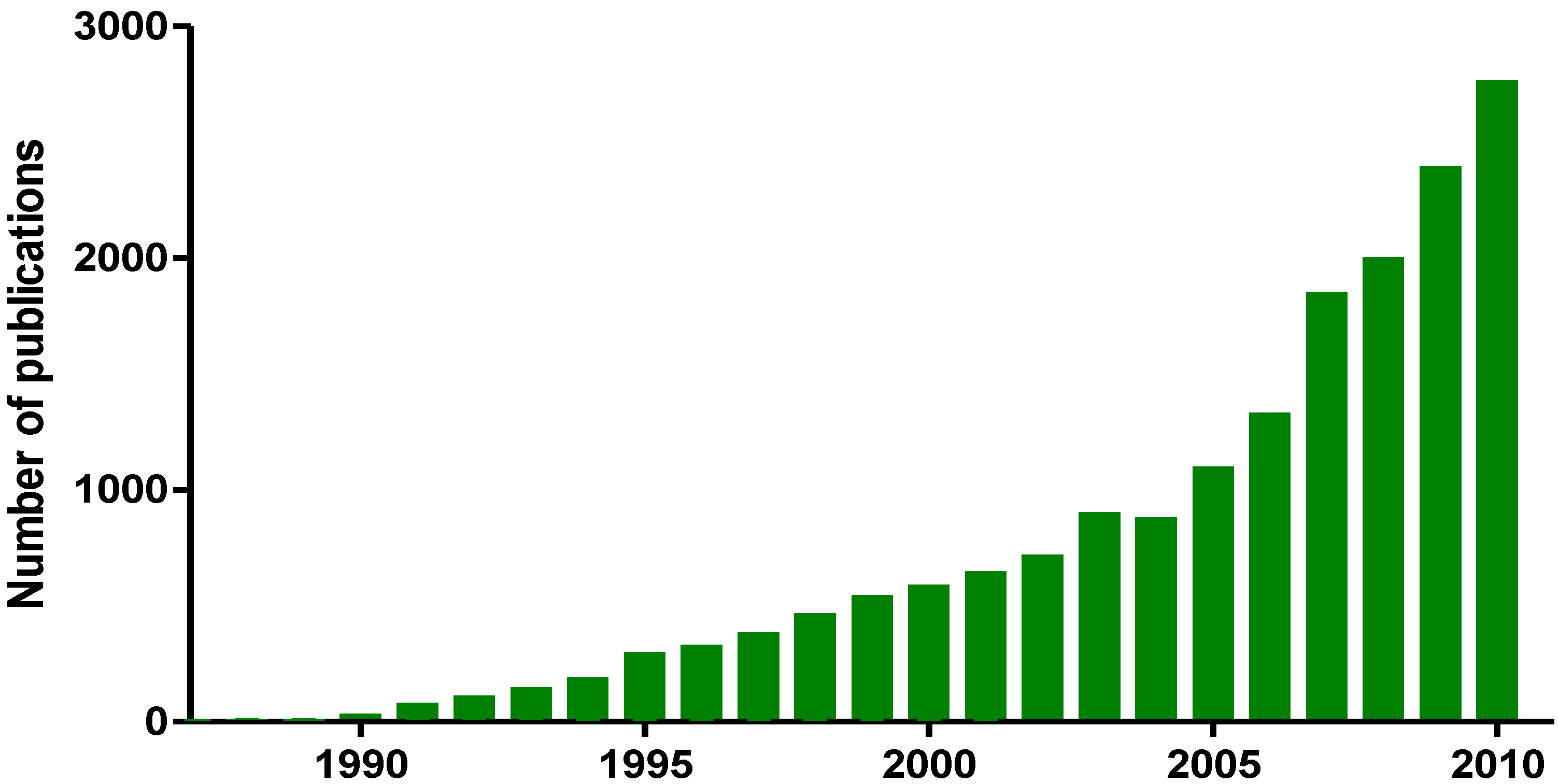
The discussion of sustainability gained traction with the Brundtland Commission in 1987 [1]. This report formalized the idea of sustainable development as that which “meets the needs of the present without compromising the ability of future generations to meet their own needs”. In that document, development was conceptually presented as a journey toward a more sustainable state [2,3]. To emphasize this journey, the Brundtland Commission placed importance on identifying critical environmental trends, and suggested that the determination of best (most sustainable) outcomes would come through a comprehensive understanding of the extant conditions and potential outcome states [2]. Since 1987, the growth of sustainability research and discussion has been meteoric. The number of peer-reviewed publications using the “sustainability” moniker pre-Brundtland Commission was barely noticeable compared to the more than 3000 in 2011 (Figure 1). In a similar vein, the mainstream dialogue concerning the sustainability of seafood had its genesis with the formation of the Marine Stewardship Council (MSC). Now, the word “sustainability” is a commonly used term by producers of both wild-caught and aquaculture products, conservation NGOs, and a large number of major seafood buyers [4].
Figure 1.
The number of publications per year that have the keyword “sustainability”. Certain data included herein are derived from [5].
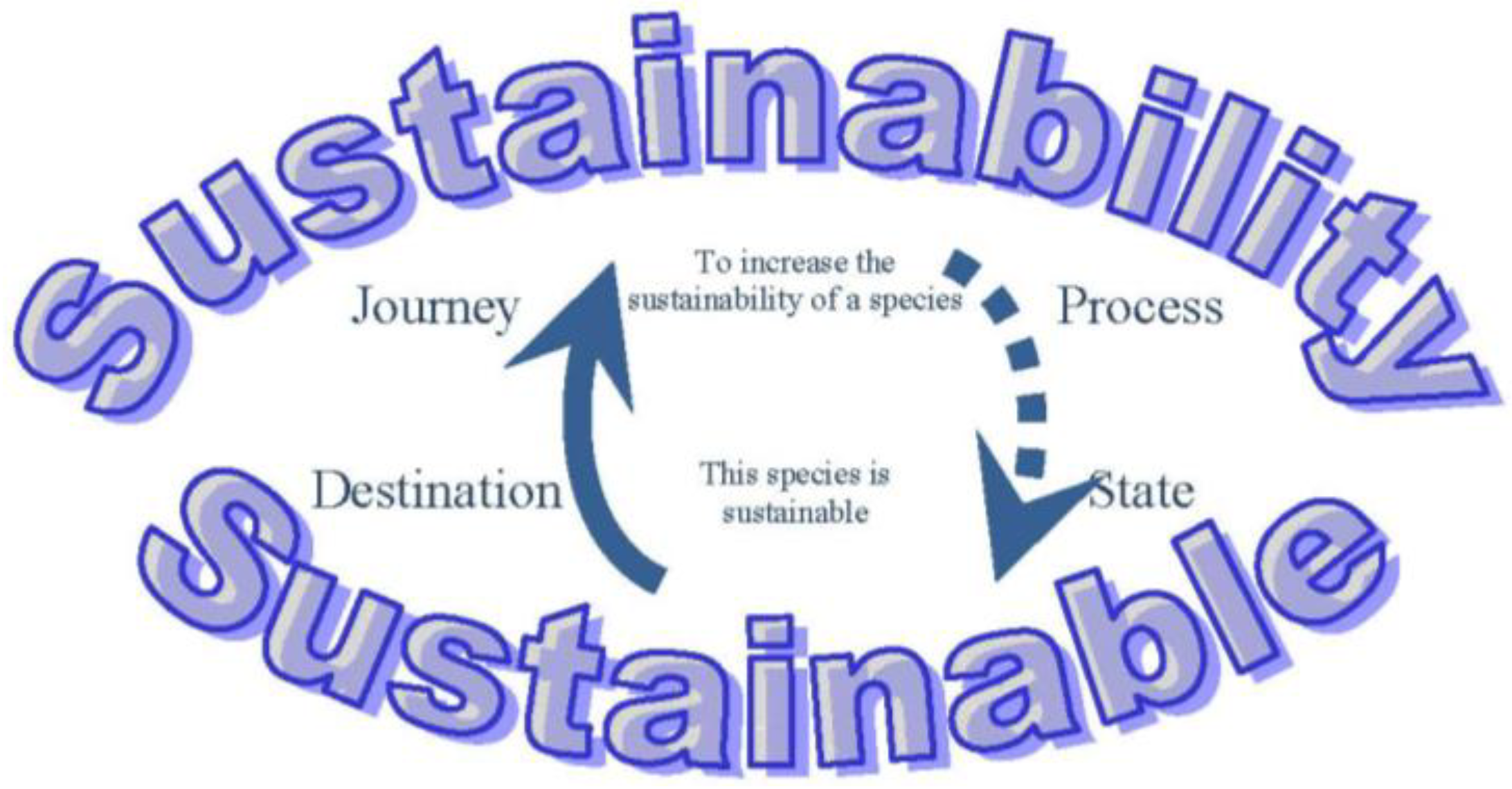
The seafood sustainability field as a whole adopts diverse approaches to finding solutions including consumer campaigns, eco-labels, certification of standards, corporate social responsibility (CSR) reporting, and the advising necessary to meet the CSR commitments (discussed in [6]). Yet, in this quest for seafood sustainability, the discussion has drifted from the initial concept of sustainability as a journey to that of a static end point (Figure 2). This has occurred because of the subtle change from describing initiatives as “increasing the sustainability of seafood” to the declarative statement that certain species/fisheries “are sustainable”. This is not the first time the sustainability dialogue has shifted. The original Brundtland era discussion was framed as the dichotomy of betterment of the human condition when faced with limiting resources. In this case, the environment was considered to have half of the value in this discussion. However, over time, this morphed into the discussion of sustainability being the triad of social, economic, and environmental values [7]. This shift caused lesser importance to be placed on the environment, as it is now one-third instead of its original one-half share [7]. In the case of seafood, herein we discuss how progress in seafood sustainability is limited by focusing on a destination instead of the journey. We then describe how the Law of the Minimum [8] can be used as an analogy to help explain sustainability as a journey. We conclude with offering ways in which refocusing the seafood discussion as a journey as opposed to a destination will advance efforts to improve this important global protein source.
Figure 2.
The difference between sustainability and sustainable. The former is a journey and is a function of process variables. The later is an end point, and is a function of state variables. The shift from process to state is limiting the advancement of seafood sustainability, and efforts need to maintain the discussion of seafood on the journey.
2. The Reduction of the Seafood Sustainability Discussion
The basic definition of sustainable development by the Brundtland Commission [1] is that meeting the needs of the future is not constrained by meeting the needs of the present. While accepted as a general definition, it gives little framework to build consensus about where the journey will lead [2]. It is an ambiguous statement because it is fraught with subjective interpretation as each individual (or distinct group) has their own self-defined construct of “needs” as well as the idea of what the future shall bring. This ambiguity is a result of individual experiences leading to a different interpretation of common events [9], which is referred to as phenomenology [10]. We posit that a similar case exists for sustainability in which prior experiences shape the operational definition.
Seafood has been intensely scrutinized [4] in terms of sustainability because of the reliance on the capture of wild, “public” goods, many of which have been overharvested [11,12]. Aquaculture was developed as an alternative to capture fisheries, but many initial efforts had significant negative environmental impacts, including mangrove loss, waste accumulation, prophylactic use of antibiotics, genetic impacts on native species, and the use of fish meal and oil to make formulated diets (see reviews in [13]). Given the great variety in the species and production methods, seafood production is challenging to conceptually understand, especially compared with other proteins. Fish protein production runs the gamut from extensive, unfed carp farming in Asia, to technology driven tuna fishing in the Pacific Ocean. Any unified sustainability discourse will need to account for this diversity of production. In addition, a broad scope of seafood sustainability should include environmental, social, and economic assessments of the production method, plus assessments relating to how the seafood is processed [14], distributed [15], packaged [16,17], sold [18], and finally consumed [18]. What’s more, the linkages between nodes from producer to consumer need to be transparent to gain the maximum sustainability benefits [19]. In today’s industrial society, life cycle assessments are being developed as the overarching methodology to assess common currencies between the different nodes as a product goes from creation to consumption. This common currency can be used to assess the journey toward a more sustainable state by looking for a node with the greatest impact (the “hotspot”), and then correcting the deficiencies. For sustainable seafood, the node with the greatest potential impacts the production method (fishing and farming, which includes an assessment of inputs) [6].
A sustainable seafood supply is an important part of global food security and a critical component of ecosystem health to be maintained in light of increasing pressure to produce protein [12]. In the provisioning of seafood, all users want assurance that the provisioning can be maintained and does not cause extensive ecological damage. Their specific degree and intent of the sustainability claim depends upon the goal of their group. For the fishers themselves, the goal is to keep fishing, to support families and communities, and to preserve a way of life. Managers need to balance the needs of the fishers against the health of the species that are managed (and the ecosystem in which they reside), while taking into consideration the regional and national interests they represent. The retailers need assurance of the continued supply of species and stocks at a suitable price now and into the future so that their business succeeds. Environmental NGOs want to ensure that species and ecosystems are preserved [6], although the means by which this is accomplished varies (for example, see [20]). Finally, consumers are likely to be different than these other groups, in part driven by ethno-culturally divergent phenomenologies [21]. All of these different views affect the approach of each group to sustainability. One result of these different views and approaches has been the creation of a multitude of ecolabels whose own approaches and declarations of sustainability vary depending on the groups who helped create them, and the purpose and clientele they ultimately serve [6,22,23].
There are many groups working on the singular problem of “sustainable” seafood, and all have the same goal of reaching their desired endpoint which includes some level of adherence to sustainability principles. The users all exist with the dichotomy of the betterment of current lives constrained by the limitations of nature [7], but how they manage these tradeoffs differs. Acknowledging the multiple human views of sustainability provides the capacity to incorporate multiple trajectories or end points into the discussion. Accepting the experiential difference between individuals or groups can be used to clarify the definition and the goals of sustainability [2]. It can also be used to describe the current conditions, and determine the information required to expand the sustainability knowledge base, and ultimately define the indicators needed to assure the goal is reached [2]. However, instead of embracing this variability in the seafood sustainability discussion, it is often ignored or explicitly recognized and denounced as an impediment to some singular sustainability endpoint. There are a myriad of reasons this reduction could occur, and likely range from mere oversight, to the desire to present a simplified message, to greenwashing by overstating the positive traits of a product. Regardless of the reason, the discussion of sustainability is reduced to simplistic phrases; instead of a journey, we are left with a static end point.
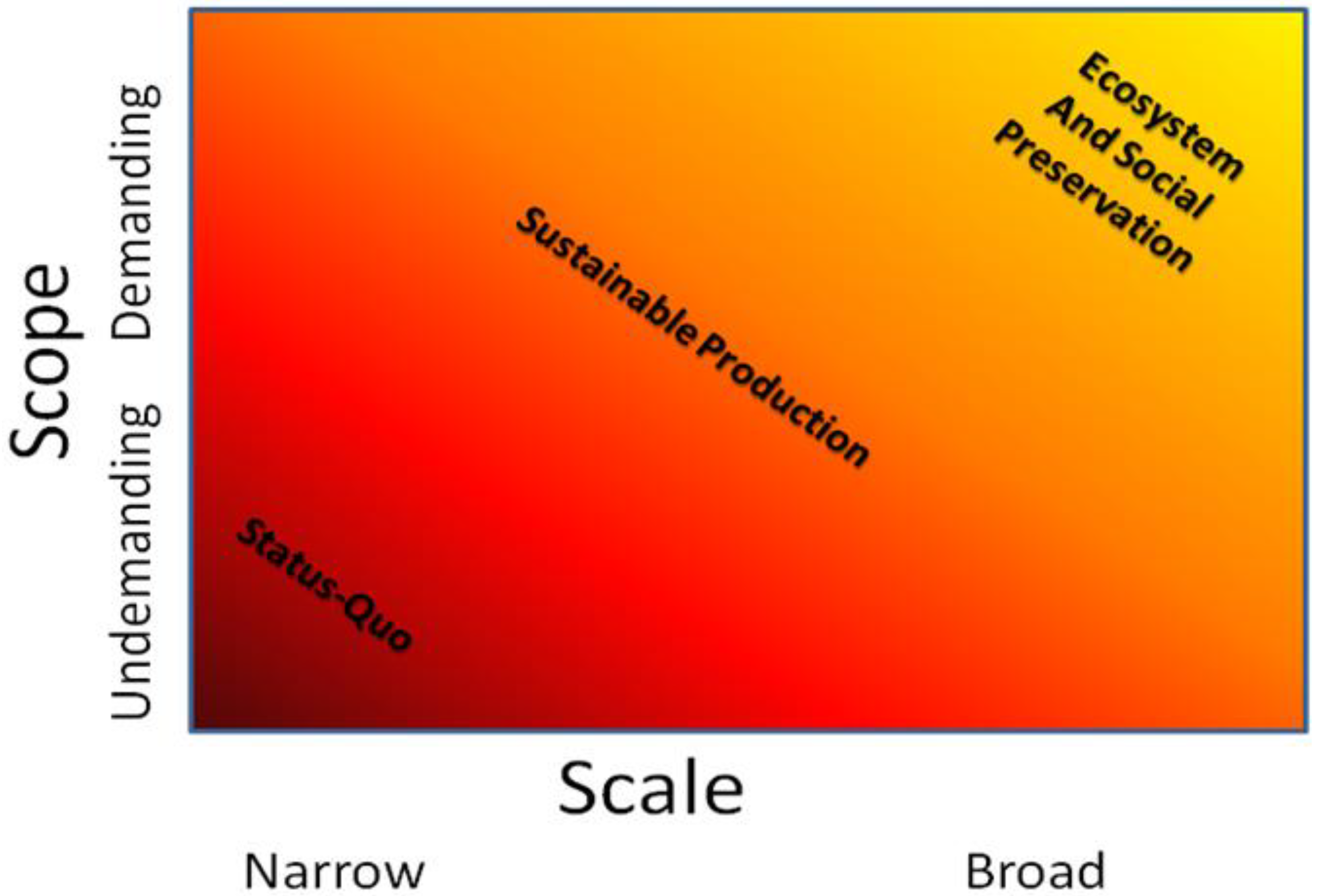
The single reductionist phrase “this fish (or fishery) is sustainable” lacks general meaning because differential experiences result in personal or group specific sustainability trajectories [24], and operational definitions defining end goals. Any operational definition of sustainability can be categorized by two factors, the scale and scope. The scale of sustainability refers to the number of criteria that are addressed, and can range from narrow to broad [25]. Narrow definitions of sustainability assess only one or a small number of factors, while broad definitions include consideration of a more comprehensive suite of variables including but not limited to the three parameters that constitute the triple bottom line: economic, social and environmental [25]. Currently, seafood sustainability tends to be more narrowly defined since broad scale impacts [26]—including broad biophysical metrics [27]—are generally lacking. Broad scale sustainability issues are being incorporated into more comprehensive ideas such as “ecological aquaculture” [28] or ecosystem based management [11,29]. When sustainability is defined narrowly, a “gilded trap” [30] may occur where the economic incentives outweigh social and environmental risks. The focus on the narrow may also cause disharmony between various user groups if the separate groups place importance on the different singular factors. Likewise, disharmony may occur if one group utilizes a narrow sustainability definition while another utilized one that is more broad-based.
The second factor that complicates the discussion of sustainability is the scope with which the suite of factors is measured. In a review of seafood ecolabels, Volpe [31] distinguished the values set by different ecolabels for 10 impact categories. The ecolabels were identified as having one of the following with respect to an index derived for this assessment [31]: (1) no relevant standard; (2) no measurable limit; (3) a conventional level (the in-country industry standard); (4) a quantitative standard (but not translatable to their index); or, (5) a measurable level set by the ecolabel. These five metric levels vary in how demanding each standard is, from undemanding (no relevant standard) to demanding (setting a specific measurable level for the impact factor). This last metric can be further characterized by the level at which it is set (e.g., the most demanding level is when there is zero functional impact) [20,31,32]. This scope will then impact the discussion of sustainability as two different user groups could both measure the same impact category, but could differ in how demanding their metrics were. Thus, these two user groups would experience disharmony even if they look at the same seafood product and measure the same parameters, because one group could conclude that the product met their sustainability principles and was sustainable, while the other group, having different sustainability principles, could reach an opposing conclusion.
Scale and scope create a two-factor space in which all sustainability programs can be defined (Figure 3). A narrow scale and undemanding scope is conceptualized here as the status quo, whereas a broad scale and demanding scope would lead to ecosystem and social preservation (Figure 3). All points in this two dimensional space can statically be defined as being sustainable (a product meets the predefined sustainability criteria). Sustainability as a journey encompasses products that move from the status quo to ecosystem and social preservation (the lower left corner to the upper right). Thus it is important to acknowledge that even for statically defined products, the closer it is to the upper right corner, the “more sustainable” it is. Going back to the example of a group making a claim that “this fish (of fishery) is sustainable”, another group could make the claim that it is not, and this would cause confusion to the end user. However, if their underlying goals differ, then neither would be incorrect. They may have not effectively communicated their definitions, and as such, will see their claims as being in conflict.
Figure 3.
The sustainability arena accounting for differences in the scale and the scope of the definition. Sustainability as a journey works to move products towards the upper right portion of the figure.
In the end, the reductionist step of making a discrete, absolute statement about the continual variable that is sustainability (the down slide from sustainability to sustainable in Figure 2) has important ramifications for those purchasing seafood products (which can include wholesalers, retailers, chefs, and traditional consumers). These consumers can receive multiple sustainability messages, all claiming a specific product is sustainable, when in actuality, the determination of sustainability for each product may have differed in scale and/or scope. Because of the variety of unstated qualifications attached to the static assertion regarding sustainability, the consumer can easily become confused, and may equate all products that make a sustainability claim as equal. In the mind of the consumer, the products are similar, and economic theory suggests that when products are situated closely, a lack of differentiation will occur [33]. The outcome will be that the consumer will not pay more for those products adhering to broader or more demanding criteria [34].
The gravest consequence of claiming seafood “is sustainable” is that, for many buyers, retailers and consumers, this moniker implies there is no additional work to be done along the sustainability trajectory and thus the product requires no further improvement. Sustainability is often, but not always, defined using a metric-based threshold value [31,32]. Metric-based thresholds cannot be set at a theoretical maximum, for if they were, no product would be able to be certified, and the scheme would not exist. Thus, thresholds need to be set at less than the maximum to function in the marketplace. As an example, a score of 80 is necessary to unconditionally pass the Marine Stewardship Council (MSC) performance indicators [35]. Yet this means that even if a fishery is unconditionally certified by the MSC, it still has room to improve until all performance indicator scores are 100. For those farms and fisheries that meet the sustainability criteria, additional improvement should continue to be encouraged, as this is where innovation will occur which can result in significant paradigm shifts [32].
3. The Law of the Minimum
In the case of seafood as described above, broad sustainability takes into account a combination of impacts resulting from inputs, production, processing, distribution, packaging, retail, and behavior of the end user. This is a situation that lends itself well to using the Law of the Minimum [8] as a analogy. The Law of the Minimum was first used in agronomy to explain the growth of plants under conditions of limited nutrients. The plant will grow to the point at which the most limiting nutrient is exhausted. If this nutrient is replenished, the plant will grow again until the next most limiting nutrient becomes exhausted. The Law of the Minimum is often pictured as an oaken rain barrel, with the staves of the barrel cut to different heights. While the goal is to fill the barrel, it can only be filled as deep as the lowest-cut stave (Figure 4). By lengthening the shortest stave, the barrel can then be filled deeper until it becomes limited by the next shortest stave.
Figure 4.
The Law of the Minimum where staves represent nutrients necessary for plant growth. The plant will grow only as much as the limiting nutrient will allow. This is proposed as a metaphor for sustainability, in which the factors of sustainability are the staves. A product can only be as sustainable as determined by the most limiting factor. Image from [36].
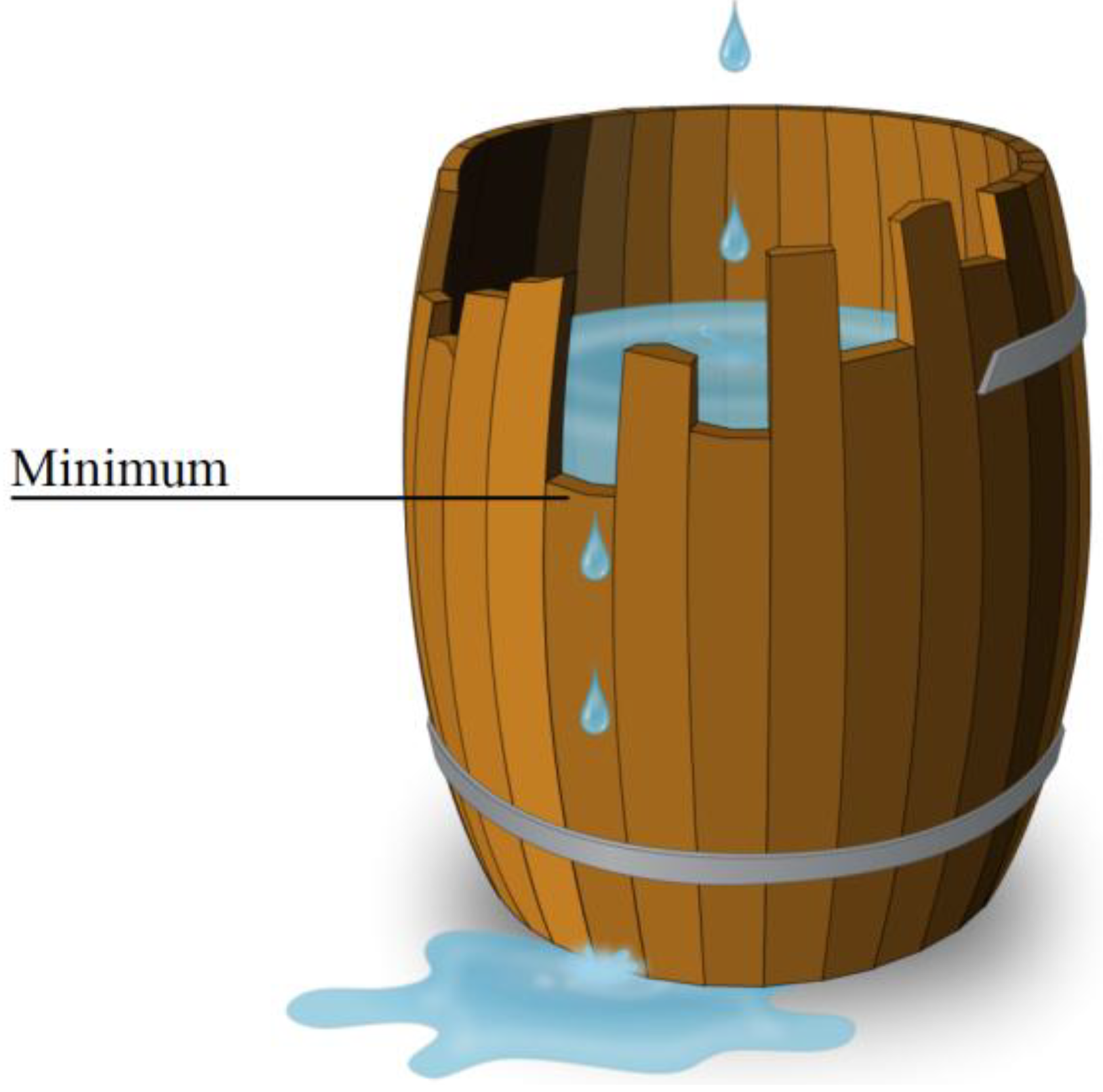
This barrel pictograph can be adapted to the case of sustainability, in which the staves of the barrel are the sustainability components rather than the limiting nutrients. For simplicity of depiction, the barrel is opened so all staves are in a line. There are eight sustainability components, or nodes, of the typical seafood product life cycle: inputs, production, processing, distribution, packaging, retail, end user behavior (including acquisition of product, storage, and cooking), and waste disposal. A narrow scale assessment of sustainability will consider a single node, whereas a broad scale assessment will consider multiple or all nodes. Life cycle assessments of seafood tend to stop at harvest [37], in part because those studies that have considered the analysis through to the end user found production to be the node with the greatest impacts [38,39,40], a case particularly true for seafood (Figure 5, [41]). Thrane [41] conducted a life cycle assessment of a number of fishery products from production through to end user. As the total impacts decrease, the relative contribution of the end user node increases (reanalysis of [41], log-log correlation, df = 6, r2 = 0.90). A similar result was found in assessing the two nodes of production and distribution [15]; as the total impacts decreased, a greater proportion of the impacts were shifted to categories outside of production. In energy intensive fisheries such as lobster, the overall energy use at the end user is still the node with the second greatest level of impacts, but it is far less critical compared to the role of the end user in the overall sustainability of cod (Figure 5). In low energy fisheries such as herring, sustainability issues at the end user level are much more significant, while for mussels and mackerel [41], they are the primary issue (Figure 5).
Figure 5.
Life cycle assessment of energy required for 4 Danish fisheries (data from [41]). Data are presented as an inverse function (∑-x), where the total is the sum value across all life cycle nodes within the production system, and x is the value for that specific node. The lower the bar, the greater the impacts realized by that node. The darker the blue shading, the greater the total energy necessary for the product.
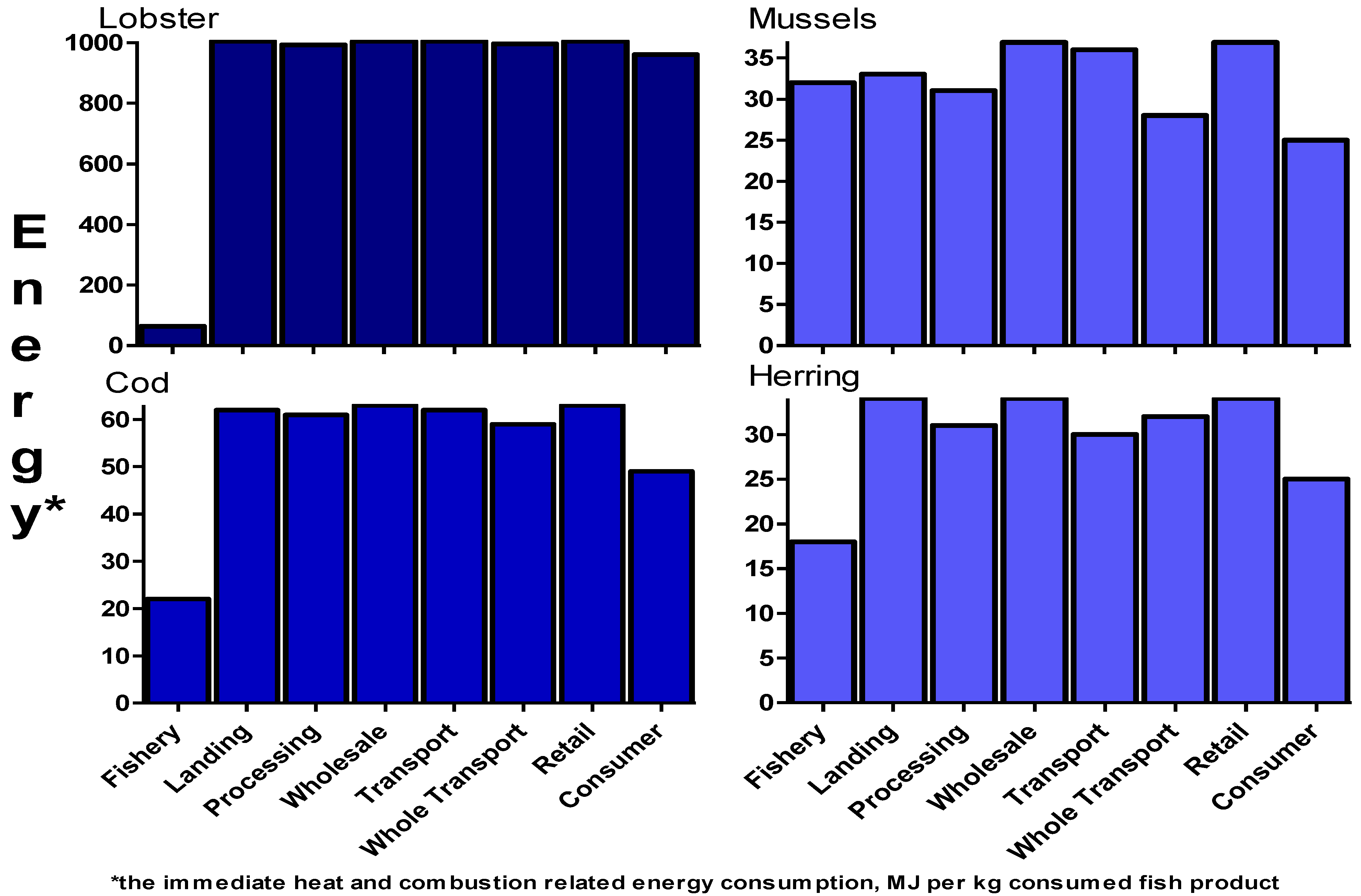
This assessment is not on a specific fish or fishery, but on the system that has given rise to the product. This system can only be as sustainable as the most limiting factor allows it to be. Life cycle assessments define the “hotspots” or the most limiting factor on the barrel, and then ideally an improvement program corrects this deficiency until it is no longer most limiting. A new hotspot will then be defined, and corrected. This is the iterative improvement that defines the continual journey toward sustainability. However, a serious disconnect occurs when hotspots are ignored, and a declaration of a species being sustainable is made based on one of the non-limiting factors. For example, it would be incorrect to call the lobster and cod in Figure 5 sustainable based on the lack of impacts at landing, processing, and wholesale. The significant fishery impacts need to be addressed, and improved upon, and although it is only one of eight factors making up the production system, it is the main factor to define the how far along the sustainability journey it has travelled.
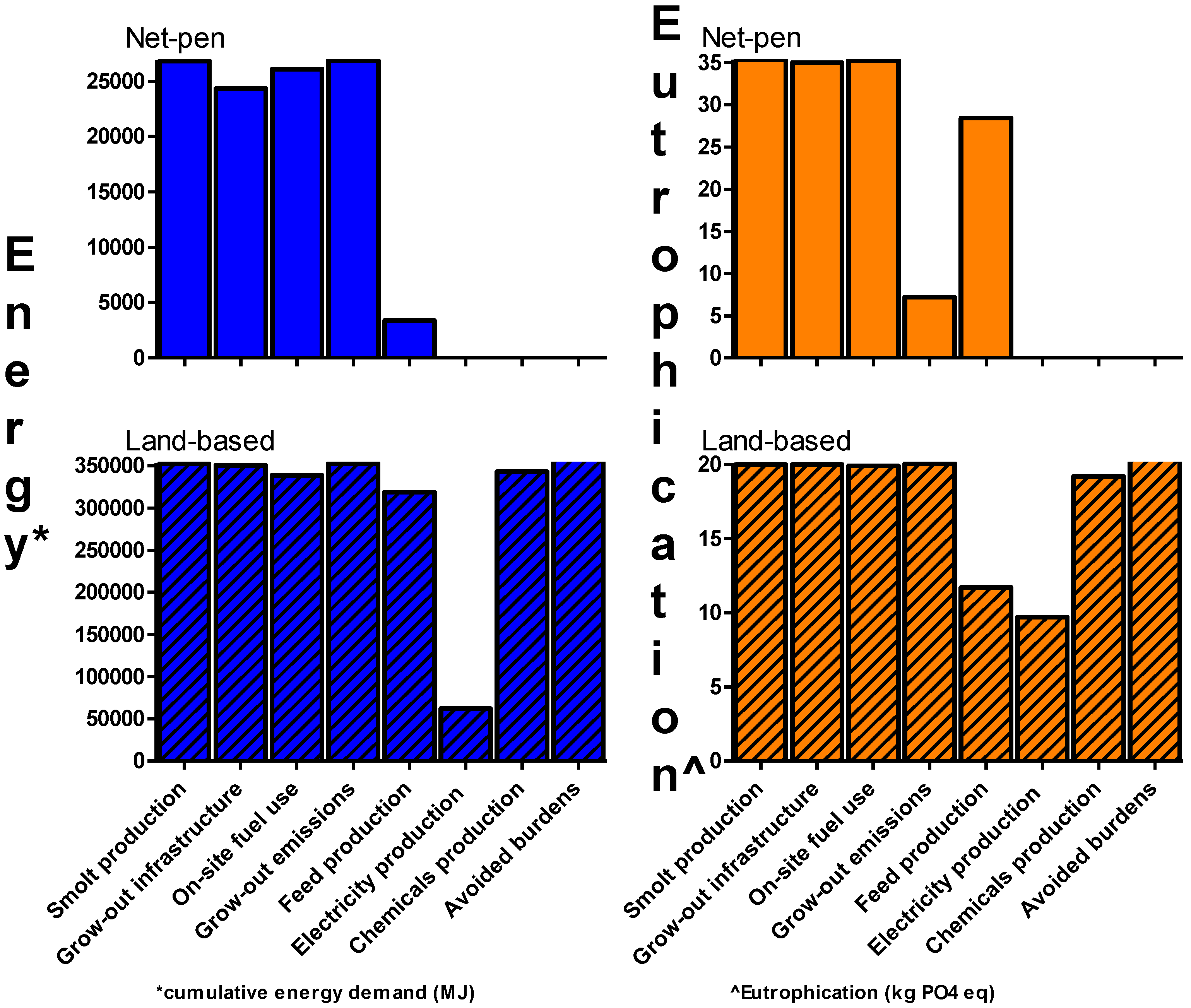
Each one of the staves comprising broad environmental sustainability factors (inputs, production, processing, distribution, packaging, retail, and end user behavior, see Figure 5), can be similarly deconstructed into component parts. Where production is a single stave in Figure 5, it alone can be assessed using a similar barrel analogy. Using the case of a life cycle analysis of net pen and land-based recirculation salmonid aquaculture [42], net pen aquaculture production has 5 staves (Figure 6 top), with feed production being the shortest (indicating it is the most limiting) by a significant amount. Once feed production is on par with the other elements, then grow-out infrastructure is the next issue which needs to be addressed. Land-based recirculation (Figure 6 bottom), on the other hand, has more staves and is deeper. The node with the greatest impacts, represented by the shortest stave is energy production, with feed production being the node with the next most impacts.
The Law of the Minimum provides a useful metaphor for helping to visually understand the complexity of sustainability issues. Yet, where the Law of the Minimum for agronomy resulted in greater plant growth in a deeper barrel, for sustainability, the opposite is true. Here, a deeper barrel indicates more total impacts or resources necessary to produce a unit of food, along with a greater disparity between the nodes. Greater sustainability will occur in a shallower barrel (light blue in Figure 5). Thus, according to the Thrane analysis [41], mussels and herring are further along the sustainability trajectory than are cod, and lobsters have the furthest to go. Within an even narrower scope of assessment (the energy used for aquaculture production [42]), net pen production is farther along the trajectory toward sustainability than is land-based recirculation production. However, this is the case when observing through a lens of energy consumption only. Changing the basis of the analysis to eutrophication potential [42] instead of cumulative energy demand would change the depth of the sustainability barrel. It also changes the perspective of the solution as in this case, land-based salmon aquaculture production is exhibits fewer impacts with respect to eutrophication potential than does net pen production (Figure 5). Ultimately, to engage in a sustainability dialogue, not only do scope and scale need to be fully disclosed, but so do the metrics and the means by which sustainability will be measured.
Figure 6.
A life cycle assessment of Atlantic salmon aquaculture production in Canada. Energy are the left graphs, eutrophication potential are the right; net pen production are the top, and land based recirculation are the bottom. Data are presented as inverse functions (∑-x), where the total is the sum value across all life cycle nodes within the production system, and x is the value for that specific node. The lower the bar, the greater the impacts realized by that node. Net pen production only has 5 nodes, while land-based production has 8 nodes. Data are from [42].
4. Refocusing Seafood on the Journey
Currently, harvests from wild fisheries have reached a plateau [11]. If sustainability is defined as “consistent per capita availability” and measured as the amount of wild fish harvested divided by the global human population, then our wild fisheries are not sustainable given continued global human population growth rate. Conditions will continue to change, and it is important to keep the industry striving towards better options and solutions. This is where seafood is no different than any other production system. Sustainability is a journey, and it is therefore critical that discussions focus not on whether something is sustainable or not, but rather on how it meets a particular scale and scope of sustainability. Addressing these two factors will help provide clarity within the discussion of sustainability. It will allow programs to appropriately distinguish their intent and purpose, and will help purchasers at all levels to differentiate between narrow and broad, or undemanding and demanding claims. This will allow for fair and honest assessment of where a particular product is on the journey to sustainability. It will furthermore reinforce the idea that trip is not completed by the selection of a single product. By refocusing production systems on the journey toward increased sustainability, complacency can be avoided by acknowledging that no matter how well things are done presently, they can be improved upon in the future. The multitude of groups that focus efforts on this system need to acknowledge their interconnectedness and that those that may have a narrower and less demanding goal can serve as stepping stones towards the broader, more demanding systems [32]. Ultimately, refocusing seafood sustainability on the journey will allow all users involved to continue to produce an important protein now and for future generations.
Acknowledgments
Many people and organizations have been involved in the seafood sustainability discussions over the last decade. It is truly a multistakeholder initiative, and we thank all of those that have tirelessly worked to develop the thoughts and ideas that have shaped this field. This manuscript was significantly improved by the comments from two anonymous reviewers.
Conflict of Interest
The authors declare no conflict of interest.
References
- World Commission on Environment and Development (WCED), Our Common Future; Oxford University Press: New York, NY, USA, 1987; p. 400.
- Stefanovic, I. Safeguarding Our Common Future: Rethinking Sustainable Development; State University of New York Press: Albany, NY, USA, 2000; p. 234. [Google Scholar]
- Curran, M.A. Wrapping our brains around sustainability. Sustainability 2009, 1, 5–13. [Google Scholar] [CrossRef]
- Jacquet, J.L.; Pauly, D. The rise of seafood awareness campaigns in an era of collapsing fisheries. Mar. Policy 2007, 31, 308–313. [Google Scholar] [CrossRef]
- Thomson Reuters. Web of Science. Philadelphia, Pennsylvania, 2012. Available online: http://ip-science.thomsonreuters.com (accessed on 15 June 2012).
- Ward, T.J.; Phillips, B.F. Seafood Ecolabelling: Principles and Practice; Wiley-Blackwell: Oxford, UK, 2008; p. 447. [Google Scholar]
- Kuhlman, T.; Farrington, J. What is sustainability? Sustainability 2010, 2, 3436–3448. [Google Scholar] [CrossRef]
- Liebig, J. Organic Chemistry in Its Applications to Agriculture and Physiology; John Owen: Cambridge, UK, 1841; p. 424. [Google Scholar]
- Sera, M.; Smith, L.B. Big and little: “Nominal” and relative uses. Cogn. Dev. 1987, 2, 89–111. [Google Scholar] [CrossRef]
- Smith, D. Phenomenology. The Stanford Encyclopedia of Philosophy, Fall 2011 ed. Zalta, E., Ed.; 2011. Available online: http://www.plato.stanford.edu/archives/fall2011/entries/phenomenology (accessed on 4 March 2012).
- Pauly, D.; Christensen, V.; Guenette, S.; Pitcher, T.J.; Sumaila, U.R.; Walters, C.J.; Watson, R.; Zeller, D. Towards sustainability in world fisheries. Nature 2002, 418, 689–695. [Google Scholar]
- Smith, M.D.; Roheim, C.A.; Crowder, L.B.; Halpern, B.S.; Turnipseed, M.; Anderson, J.L.; Asche, F.; Bourillón, L.; Guttormsen, A.G.; Khan, A.; et al. Sustainability and global seafood. Science 2010, 327, 784–786. [Google Scholar]
- Stickney, R.R.; McVey, J.P. Responsible Marine Aquaculture; CABI: Wallingford, Oxfordshire, UK, 2002; p. 391. [Google Scholar]
- Hall, G. Fish Processing: Sustainability and New Opportunities; Wiley-Blackwell: Oxford, UK, 2010; p. 298. [Google Scholar]
- Tlusty, M.F.; Lagueux, K. Isolines as a new tool to assess the energy costs of the production and distribution of multiple sources of seafood. J. Clean. Product. 2009, 17, 408–415. [Google Scholar] [CrossRef]
- Williams, K.S. Life Cycle Assessment of Bulk Packaging Used to Transport Fresh Fish Products: Case Study. In Fish Processing; Wiley-Blackwell: Oxford, UK, 2010; pp. 266–287. [Google Scholar]
- Blakistone, B.; Sand, C. Using Sustainable Packaging Technologies to Respond to Consumer, Retailer, and Seafood Industry Needs. In International Smoked Seafood Conference Proceedings; University of Alaska Fairbanks, Alaska Sea Grant College Program: Fairbanks, AK, USA, 2002; AK-SG-08-02, pp. 75–79. [Google Scholar]
- Gustavsson, J.; Cederberg, C.; Sonesson, U. Global Food Losses and Food Waste. Save Food Congress, Düsseldorf, Germany, 16 May 2011; Available online: http://www.save-food.org/doc/Praesentation_Sonesson.pdf (accessed on 16 May 2011).
- Alastair, I. Making the seafood industry more sustainable: Creating production chain transparency and accountability. J. Clean. Product. 2007, 15, 577–589. [Google Scholar] [CrossRef]
- Tausig, H.; Tlusty, M.; Bergen, L.; Stone, G.; Szleper, K. New England Aquarium: Supporting Environmentally Responsible Seafood Choices. In Seafood Ecoloabelling: Principles and Practice; Ward, T., Phillips, B., Eds.; Blackwell Publishing Ltd: Oxford, UK, 2008; pp. 322–339. [Google Scholar]
- Rahbar, E.; Wahid, N. Ethno-cultural differences and consumer understanding of eco-labels: An empirical study in Malaysia. J. Sustain. Dev. 2010, 3, 255–262. [Google Scholar]
- Thrane, M.; Ziegler, F.; Sonesson, U. Eco-labelling of wild-caught seafood products. J. Clean. Product. 2009, 17, 416–423. [Google Scholar] [CrossRef]
- Treves, A.; Jones, S.M. Strategic tradeoffs for wildlife-friendly eco-labels. Front. Ecol. Environ. 2009, 8, 491–498. [Google Scholar] [CrossRef]
- Costa-Pierce, B.A. Sustainable ecological aquaculture systems: The need for a new social contract for aquaculture development. Mar. Technol. Soc. J. 2010, 44, 88–112. [Google Scholar] [CrossRef]
- Hueting, R.; Reijnders, L. Broad sustainability contra sustainability: The proper construction of sustainability indicators. Ecol. Econ. 2004, 50, 249–260. [Google Scholar] [CrossRef]
- Pelletier, N.; Ayer, N.; Tyedmers, P.; Kruse, S.; Flysjo, A.; Robillard, G.; Ziegler, F.; Scholz, A.; Sonesson, U. Impact categories for life cycle assessment research of seafood production systems: Review and prospectus. Int. J. Life Cycle Assess. 2007, 12, 414–421. [Google Scholar]
- Pelletier, N.; Tyedmers, P. Life cycle considerations for improving sustainability assessments in seafood awareness campaigns. Environ. Manag. 2008, 42, 918–931. [Google Scholar] [CrossRef]
- Costa-Pierce, B.A. Ecology as the Paradigm for the Future of Aquaculture. In Ecological Aquaculture; Blackwell Science Ltd: Oxford, UK, 2007; pp. 337–372. [Google Scholar]
- Pikitch, E.K.; Santora, C.; Babcock, E.A.; Bakun, A.; Bonfil, R.; Conover, D.O.; Dayton, P.; Doukakis, P.; Fluharty, D.; Heneman, B.; et al. Ecosystem-based fishery management. Science 2004, 305, 346–347. [Google Scholar] [CrossRef]
- Steneck, R.S.; Hughes, T.P.; Cinner, J.E.; Adger, W.N.; Arnold, S.N.; Berkes, F.; Boudreau, S.A.; Brown, K.; Folke, C.; Gunderson, L.; et al. Creation of a gilded trap by the high economic value of the maine lobster fishery. Conserv. Biol. 2011, 25, 904–912. [Google Scholar] [CrossRef]
- Volpe, J.P.; Gee, J.; Beck, M.; Ethier, V. How Green Is Your Eco-Label? Comparing the Environmental Benefits of Marine Aquaculture Standards; University of Victoria: Victoria, BC, Canada, 2011. [Google Scholar]
- Tlusty, M.F. Environmental improvement of seafood through certification and ecolabelling: Theory and analysis. Fish Fish. 2012, 13, 1–13. [Google Scholar] [CrossRef]
- Hotelling, H. Stability in competition. Econ. J. 1929, 39, 41–57. [Google Scholar] [CrossRef]
- Roheim, C.A. The Economics of Ecolabelling. In Seafood Ecoloabelling: Principles and Practice; Ward, T.J., Phillips, B.F., Eds.; Blackwell Publishing Ltd: Oxford, UK, 2008; pp. 38–57. [Google Scholar]
- Marine Stewardship Council (MSC), Marine Stewardship Council Fisheries Certification Methodology; Marine Stewardship Council: London, UK, 2010; p. 46.
- Wikipedia. Liebig’s law of the minimum. Available online: http://www.en.wikipedia.org/wiki/Liebig’s_law_of_the_minimum (accessed on 1 July 2012).
- Henriksson, P.; Guinée, J.; Kleijn, R.; de Snoo, G. Life cycle assessment of aquaculture systems—A review of methodologies. Int. J. Life Cycle Assess. 2012, 17, 304–313. [Google Scholar] [CrossRef]
- Muñoz, I.; Milà i Canals, L.; Fernández-Alba, A. Life cycle assessment of the average Spanish diet including human excretion. Int. J. Life Cycle Assess. 2010, 15, 794–805. [Google Scholar] [CrossRef]
- Mungkung, R.; Udo de Haes, H.; Clift, R. Potentials and limitations of life cycle assessment in setting ecolabelling criteria: A case study of thai shrimp aquaculture product (5 pp). Int. J. Life Cycle Assess. 2006, 11, 55–59. [Google Scholar]
- Thrane, M. LCA of danish fish products. New methods and insights (9 pp). Int. J. Life Cycle Assess. 2006, 11, 66–74. [Google Scholar] [CrossRef]
- Thrane, M. Environmental Impacts from Danish Fish Products: Hot-Spots and Policies; Aalborg University: Aalborg, Denmark, 2004. [Google Scholar]
- Ayer, N.W.; Tyedmers, P.H. Assessing alternative aquaculture technologies: Life cycle assessment of salmonid culture systems in Canada. J. Clean. Product. 2009, 17, 362–373. [Google Scholar] [CrossRef]
© 2012 by the authors; licensee MDPI, Basel, Switzerland. This article is an open-access article distributed under the terms and conditions of the Creative Commons Attribution license (http://creativecommons.org/licenses/by/3.0/).