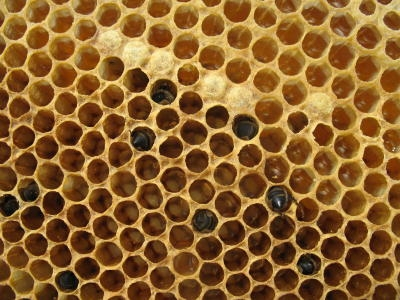
Detection of Pesticides in Active and Depopulated Beehives in Uruguay

Abstract
:1. Introduction
2. Experimental Section
2.1. General
2.1.1. Reagents and Standards
2.2. Equipment
2.2.1. GC Chromatography
2.2.2. Gel Permeation Chromatography
2.2.3. HPLC Chromatography
2.3. Sample Collection
2.4. Methods and Techniques
2.4.1. Determination of Fipronil, Organochlorine and Organophosphorus Pesticides
Bees
Honey
Propolis and Honeycombs
2.4.2. Determination of Imidacloprid
2.5. Recovery Tests, LODs and LOQs
2.6. Data Treatment
3. Results
3.1. Recoveries, LOD, LOQs and Matrix Effects
3.2. Pyrethroids, Fipronil, Organochlorine and Organophosphorus Pesticides
3.3. Imidacloprid
4. Discussion
4.1. Pyrethroids and Organophosphorus Pesticides
4.2. Organochlorine Pesticides and Fipronil
4.3. Imidacloprid
5. Conclusions
Acknowledgements
References and Notes
- Pettis, JS; Delaplane, KS. Coordinated responses to honey bee decline in the USA. Apidologie 2010, 41, 256–263. [Google Scholar]
- Schmuck, R; Schöning, R; Stork, A; Schramel, O. Risk posed to honeybees (Apis mellifera L. Hymenoptera) by an imidacloprid seed dressing of sunflowers. Pest Manag. Sci 2001, 57, 225–238. [Google Scholar]
- Decourtye, A; Lacassie, E; Pham–Delegue, MH. Learning performances of honeybees (Apis mellifera L.) are differentially affected by imidacloprid according to the season. Pest Manag. Sci 2003, 59, 269–278. [Google Scholar]
- Díaz, RM. Despoblamiento de colmenas en Galicia - Espana por acción de los neurotóxicos; Spain, 2006. Available online: http://www.ecoportal.net/content/view/full/63508 accessed on 2 March 2011.
- Bernal, J; Garrido-Bailón, E; Del-Nozal, MJ; González-Porto, AV; Martín-Hernández, R; Diego, JC; Jiménez, JJ; Bernal, JL; Higes, M. Overview of pesticide residues in stored pollen and their potential effect on bee colony (Apis mellifera) losses in Spain. J. Econ. Entomol 2010, 103, 1964–1971. [Google Scholar]
- Sbeghen-Loss, A; Barboza, EGG; Matto, M; Cesio, MV; Frizzo, C; Monteiro de Barros, N; Heinzen, H. Lime wax influences feeding behaviour of cryptothermes brevis and the viability of its foaina sp. symbionts. Sociobiology 2009, 54, 1–14. [Google Scholar]
- Antúnez, K; D’Alessandro, B; Zunino, P. Virus de la parálisis crónica y virus de la parálisis aguda: Detección en Uruguay; Instituto Nacional de Investigación Agropecuaria (INIA): Uruguay, 2005. Available online: http://www.iibce.edu.uy/DIVULGACION/ad_398.pdf accessed on 3 March 2011.
- Mullin, CA; Frazier, M; Frazier, JL; Ashcraft, S; Simonds, R; vanEngelsdorp, D; Pettis, JS. High levels of miticides and agrochemicals in North American apiaries: Implications for honey bee health. PLoS one 2010, 5, e9754. [Google Scholar]
- Colin, ME; Bonmatin, JM; Moineau, I; Gaimon, C; Brun, S; Vermandere, JP. A method to quantify and analyze the foraging activity of honey bees: Relevance to the sublethal effects induced by systemic insecticides. Arch. Environ. Contam. Toxicol 2004, 47, 387–395. [Google Scholar]
- Vandame, R; Melet, M; Colin, ME; Belzunces, L. Alteration of the homing flight in the honey bee Apis mellifera L. exposed to sublethal doses of delthamethrin. Envirom. Toxicol. Chem 1995, 14, 855–860. [Google Scholar]
- Corbella, E; Ramallo, G. Síntomas y factores asociados a la despoblación de colmenas. Algo Sobre Despoblacion de Colmenas; Instituto Nacional de Investigación Agropecuaria: Uruguay, 2005. Available online: http://www.iibce.edu.uy/DIVULGACION/ad_398.pdf accessed on 4 March 2011.
- Decourtye, A; Devillers, J; Cluzeau, S; Charreton, M; Pham–Delégue, M. Effects of imidacloprid and deltamethrin on associative learning in honeybees under semi-field and laboratory conditions. Ecotoxicol. Environ. Saf 2004, 57, 410–419. [Google Scholar]
- Bacandritsos, N; Granato, A; Budge, G; Papanastasiou, I; Roinioti, E; Caldon, M; Falcaro, C; Gallina, A; Mutinelli, F. Sudden deaths and colony population decline in Greek honey bee colonies. J. Invertebr. Pathol 2010, 105, 335–340. [Google Scholar]
- Tomlin, C. The Pesticide Manual, 15th ed; British Crop Protection Council: Farnham, UK, 2009; pp. 500–501. [Google Scholar]
- El Hassani, AK; Dacher, M; Gauthier, M; Armengaud, C. Effects of sublethal doses of fipronil on the behavoir of the honeybee (Apis mellifera). Pharmacol. Biochem. Behav 2005, 82, 30–39. [Google Scholar]
- El Hassani, AK; Dupuis, JP; Gauthier, M; Armengaud, C. Glutamatergic and GABAergic effects of fipronil on olfactory learning and memory in the honeybee. Invert. Neurosci 2009, 9, 91–100. [Google Scholar]
- Wu, JY; Anelli, CM; Sheppard, WS. Sub-Lethal effects of pesticides residues in brood comb on worker honey bee (Apis mellifera) development and longevity. PLoS One 2011, 6, e14720. [Google Scholar]
- Baker, JR; Koenning, SR; van Duyn, JW; York, AC; Toth, SJ. Crop profile for soybeans in North Carolina. 2005. Available online: http://www.ipmcenters.org/CropProfiles/docs/NCsoybeans.html accessed on 4 March 2011.
- Cespedes-Payret, C; Pineiro, G; Achkar, M; Gutierrez, O; Panario, D. The irruption of new agro-industrial technologies in Uruguay and their environmental impacts on soil, water supply and biodiversity: A review. Int. J. Environ. Health 2009, 3, 175–197. [Google Scholar]
- CVUA Stuttgart. Pesticides Online Website. http://www.pesticides-online.com accessed 28 January 2010.
- Ministerio de Ganadería Agricultura y Pesca, División Análisis y Diagnóstico. Prod. Fitosanitarios: Importaciones del ano 2010 según toxicidad. 2010. Available online: http://www.mgap.gub.uy/DGSSAA/DivAnalisisDiagnostico/documentosDAYD/estadisticas/Importacion%20categoria%20toxicologica2010.pdf accessed on 3 May 2011.
- Morzycka, B. Simple method for the determination of trace levels of pesticides in honeybees using matrix solid-phase dispersion and gas chromatography. J. Chromatogr. A 2002, 982, 267–273. [Google Scholar]
- Rissato, SR; Galhiane, MS; de Almeida, MV; Gerenutti, M; Apon, BM. Multiresidue determination of pesticides in honey samples by gas chromatography–mass spectrometry and application in environmental contamination. Food Chem 2007, 101, 1719–1726. [Google Scholar]
- Rossi, S; Dalpero, AP; Ghini, S; Colombo, R; Sabatini, AG; Girotti, S. Multiresidual method for the gas chromatographic analysis of pesticides in honeybees cleaned by gel permeation chromatography. J. Chromatogr. A 2001, 905, 223–232. [Google Scholar]
- Schöning, R. Analytical method for the determination of residues of imidacloprid, NTN 33893–5- hydroxy, and NTN 33893-olefin by HPLC with electrospray MS/MS-Detection in plant- and other materials: Honey, nectar, bees, wax, corn (pollen, leaves), rape (pollen, flowers, leaves), sunflowers (pollen, flowers, leaves), tree (leaves, flowers), horse chestnuts. Planz.-Nachr. Bayer 2001, 54, 413–447. [Google Scholar]
- How much weight can a honey bee lift? Available online: http://wiki.answers.com/Q/How_much_weight_can_a_honey_bee_lift accessed on 16 June 2011.
- Pérez-Parada, A; Colazzo, M; Besil, N; Geis-Asteggiante, L; Rey, F; Heinzen, H. Determination of coumaphos, chlorpyrifos and ethion residues in propolis tinctures by matrix solid-phase dispersion and gas chromatography coupled to flame photometric and mass spectrometric detection. J. Chromatogr. A 2011, 1218, 5852–5857. [Google Scholar]
- Walorczyk, S; Gnusowski, B. Development and validation of a multi-residue method for the determination of pesticides in honeybees using acetonitrile-based extraction and gas chromatography-tandem quadrupole mass spectrometry. J. Chromatogr. A 2009, 1216, 6522–6531. [Google Scholar]
- Ghini, S; Fernández, M; Picó, Y; Marín, R; Fini, F; Mañes, J; Girotti, S. Occurrence and distribution of pesticides in the province of Bologna, Italy, using honeybees as bioindicators. Arch. Environ. Contam. Toxicol 2004, 47, 479–488. [Google Scholar]
- Van Dame, R; Meled, M; Colin, ME; Belzunces, LP. Alteration of the homing-flight in the honey bee Apis mellifera L. exposed to sublethal dose of deltamethrin. Environ. Toxicol. Chem 1995, 14, 855–860. [Google Scholar]
- Dai, PL; Wang, Q; Sun, JH; Liu, F; Wang, X; Wu, YY; Zhou, T. Effects of sublethal concentrations of bifenthrin and deltamethrin on fecundity, growth, and development of the honeybee Apis mellifera ligustica. Environ. Toxicol. Chem 2010, 29, 644–649. [Google Scholar]
- Johnson, RM; Pollock, HS; Berenbaum, MR. Synergistic interactions between in hive miticides in apis mielifera. J. Econ. Entomol 2009, 102, 474–479. [Google Scholar]
- Ministerio de Ganadería Agricultura y Pesca. Resolución 30 julio de 2009; Uruguay. Available online: http://www.mgap.gub.uy/DGSSAA/Normativa/NORMATIVA_ULTIMAS_INCORP.htm accessed on 25 September 2011.
- Guez, D; Suchail, S; Gauthier, M; Maleszka, R; Belzunces, LP. Contrasting effects of imidacloprid on habituation in 7- and 8-day-old honeybees (Apis mellifera). Neurobiol. Learn. Mem 2001, 76, 183–191. [Google Scholar]
- Bonmatin, JM; Moineau, I; Charvet, R; Colin, ME; Fléché, C; Bengsch, ER. Behaviour of Imidacloprid in fields. Toxicity for honey bees. In Environmental Chemistry; Lichtfouse, E, Schwarzbauer, J, Didier, R, Eds.; Springer: Berlin, Germany, 2005; Volume Chapter 44, pp. 483–494. [Google Scholar]
- Medrzycki, P; Montanari, R; Bortolotti, L; Sabatini, AG; Maini, S; Porrini, C. Effects of imidacloprid administered in sub-lethal doses on honey bee behaviour. Bull. Insectol 2003, 56, 63–67. [Google Scholar]
- Bonmatin, JM. Insecticides et pollinisateurs: Une dérive de la chimie? Sciences 2002, 2, 42–46. [Google Scholar]
- Stork, U. Residues of 14C-NTN 33983 (Imidacloprid) in Blossoms of Sunflower (Helianthus annuus) After Seed Dressing; Bayer AG, Crop Protection Development: Leverkusen, Germany, 1999; p. 56. [Google Scholar]
- Bonmatin, JM; Moineau, I; Charvet, R; Colin, ME; Fléché, C; Bengsch, ER. A sensitive LC/APCI/MS/MS method for the analysis of imidacloprid in soils, in plants and in pollens. Anal. Chem 2003, 75, 2027–2033. [Google Scholar]
- Chauzat, MP; Faucon, JP; Martel, AC; Lachaize, J; Cougoule, N; Aubert, M. A survey of pesticide residues in pollen loads collected by honey bees in France. J. Econ. Entomol 2006, 99, 253–262. [Google Scholar]
- Nguyen, BK; Saegerman, C; Pirard, C; Mignon, J; Widart, J; Thirlonet, B; Verheggen, FJ; Berkvens, D; DePauw, E; Haubruge, E. Does imidacloprid seed-treated maize have an impact on honey bee mortality? J. Econ. Entomol 2009, 102, 616–623. [Google Scholar]
- Girolami, V; Mazzon, LA; Squartini, A; Mori, N; Marzaro, M; Bernardo, AD; Greatti, M; Giorio, C; Tapparo, A. Translocation of neonicotinoid insecticides from coated seeds to seedling guttation drops: A novel way of intoxication for bees. J. Econ. Entomol 2010, 102, 1808–1815. [Google Scholar]
- Macías, FA; Torres, A; Galindo, JLG; Varela, RM; Álvarez, JA; Molinillo, JMG. Bioactive terpenoids from sunflower leaves cv. Peredovick®. Phytochemistry 2002, 61, 687–692. [Google Scholar]
- Prats, E; Llamas, MJ; Jorrin, J; Rubiales, D. Constitutive coumarin accumulation on sunflower leaf surface prevents rust germ tube growth and appressorium differentiation. Crop Sci 2007, 47, 1119–1124. [Google Scholar]
- Wu, JY; Anelli, CM; Sheppard, WS. Sub-lethal effects of pesticide residues in brood comb on worker honey bee (Apis mellifera) development and longevity. PLoS One 2011, 6, e14720. [Google Scholar]

| Pesticides Searched | Detection method |
|---|---|
| Aldrin | GC-ECD |
| Bifenthrin | GC-ECD |
| Bromopropylate | GC-ECD |
| λ-Cyhalotrin | GC-ECD |
| Cypermethrin | GC-ECD |
| Chlorfenvinphos (E+Z) | GC-FPD |
| Chlorpyrifos | GC-FPD |
| Coumaphos | GC-FPD |
| p,p′DDE | GC-ECD |
| p,p′DDT | GC-ECD |
| Deltamethrin | GC-ECD |
| Diazinon | GC-FPD |
| Endosulfan α+β | GC-ECD |
| Endosulfan SO4 | GC-ECD |
| Ethion | GC-FPD |
| Fenvalerate | GC-ECD |
| Fipronil | GC-ECD |
| Fipronil sulphide | GC-ECD |
| τ-Fluvalinate | GC-ECD |
| Imidacloprid | LC-DAD |
| Lindane | GC-ECD |
| Malathion | GC-FPD |
| Metidathion | GC-FPD |
| Parathion metyl | GC-FPD |
| Tetradifon | GC-ECD |
| Pesticide | Matrix | %Recovery (%RSD) | LOD (μg/kg) | LOQ (μg/kg) | ME *% |
|---|---|---|---|---|---|
| Chlorpyrifos | Honey | 73.2 (12) | 4 | 15 | 61 |
| Coumaphos | Honey | 79.4 (11) | 12 | 39 | 78 |
| Cypermethrin | Honey | 122.1 (16) | 15 | 50 | −21 |
| α+β Endosulfan | Honey | 59.1 (21) | 15 | 50 | 19 |
| Fipronil | Honey | 88.4 (9) | 8 | 25 | 20 |
| Fipronil | Bees | 92.6 (22) | 6 | 20 | – |
| Chlorpyrifos | Propolis | 123.0 (4) | 9 | 30 | −41 |
| Coumaphos | Propolis | 106.0 (12) | 26 | 88 | 14 |
| Ethion | Propolis | 115.0 (6) | 5 | 15 | −49 |
| Imidacloprid | Propolis | 98.0 (13) | 5 | 15 | – |
| Imidacloprid | Honeycomb | 98.0 (13) | 5 | 15 | – |
| Detected compounds | Chemical class | Beehive Status | Positive honey samples/analyzed samples | Highest level detected (μg/kg) | Lowest level detected (μg/kg) | Average of detected concentration (μg/kg) (SD) | LD50 bees (μg/kg) * |
|---|---|---|---|---|---|---|---|
| Chlorpyrifos | Ops | A | 13/31 | 80 | 30 | 46 (12) | 1333 |
| Coumaphos | Ops | A | 1/31 | 60 | 60 | 51444 | |
| Cypermetrhin | Pys | A | 6/31 | 80 | <LOQ | 61 (14) | 655.6 |
| Fipronil | Phenyl-pyrazole | D | 2/31 | 100 | 40 | 70 | 44.4 |
| α+β Endosulfan | OCs | A | 2/31 | <LOQ | <LOQ | – | 87444 |
| Honeycomb samples | Imidacloprid (μg/kg) | Propolis samples | Imidacloprid (μg/kg) |
|---|---|---|---|
| 1a | N.D. | 1b | N.D. |
| 2a | N.D. | 2b | N.D. |
| 3a | N.D. | 3b | N.D. |
| 4a | 240 | 4b | 100 |
| 5a | 440 | 5b | 20 |
| 6a | 450 |
© 2011 by the authors; licensee MDPI, Basel, Switzerland This article is an open-access article distributed under the terms and conditions of the Creative Commons Attribution license (http://creativecommons.org/licenses/by/3.0/).
Share and Cite
Pareja, L.; Colazzo, M.; Pérez-Parada, A.; Niell, S.; Carrasco-Letelier, L.; Besil, N.; Cesio, M.V.; Heinzen, H. Detection of Pesticides in Active and Depopulated Beehives in Uruguay. Int. J. Environ. Res. Public Health 2011, 8, 3844-3858. https://doi.org/10.3390/ijerph8103844
Pareja L, Colazzo M, Pérez-Parada A, Niell S, Carrasco-Letelier L, Besil N, Cesio MV, Heinzen H. Detection of Pesticides in Active and Depopulated Beehives in Uruguay. International Journal of Environmental Research and Public Health. 2011; 8(10):3844-3858. https://doi.org/10.3390/ijerph8103844
Chicago/Turabian StylePareja, Lucía, Marcos Colazzo, Andrés Pérez-Parada, Silvina Niell, Leonidas Carrasco-Letelier, Natalia Besil, María Verónica Cesio, and Horacio Heinzen. 2011. "Detection of Pesticides in Active and Depopulated Beehives in Uruguay" International Journal of Environmental Research and Public Health 8, no. 10: 3844-3858. https://doi.org/10.3390/ijerph8103844
APA StylePareja, L., Colazzo, M., Pérez-Parada, A., Niell, S., Carrasco-Letelier, L., Besil, N., Cesio, M. V., & Heinzen, H. (2011). Detection of Pesticides in Active and Depopulated Beehives in Uruguay. International Journal of Environmental Research and Public Health, 8(10), 3844-3858. https://doi.org/10.3390/ijerph8103844