Comparison of a Resonant Mirror Biosensor (IAsys) and a Quartz Crystal Microbalance (QCM) for the Study on Interaction between Paeoniae Radix 801 and Endothelin-1

Abstract
:1. Introduction
2. Results and Discussion
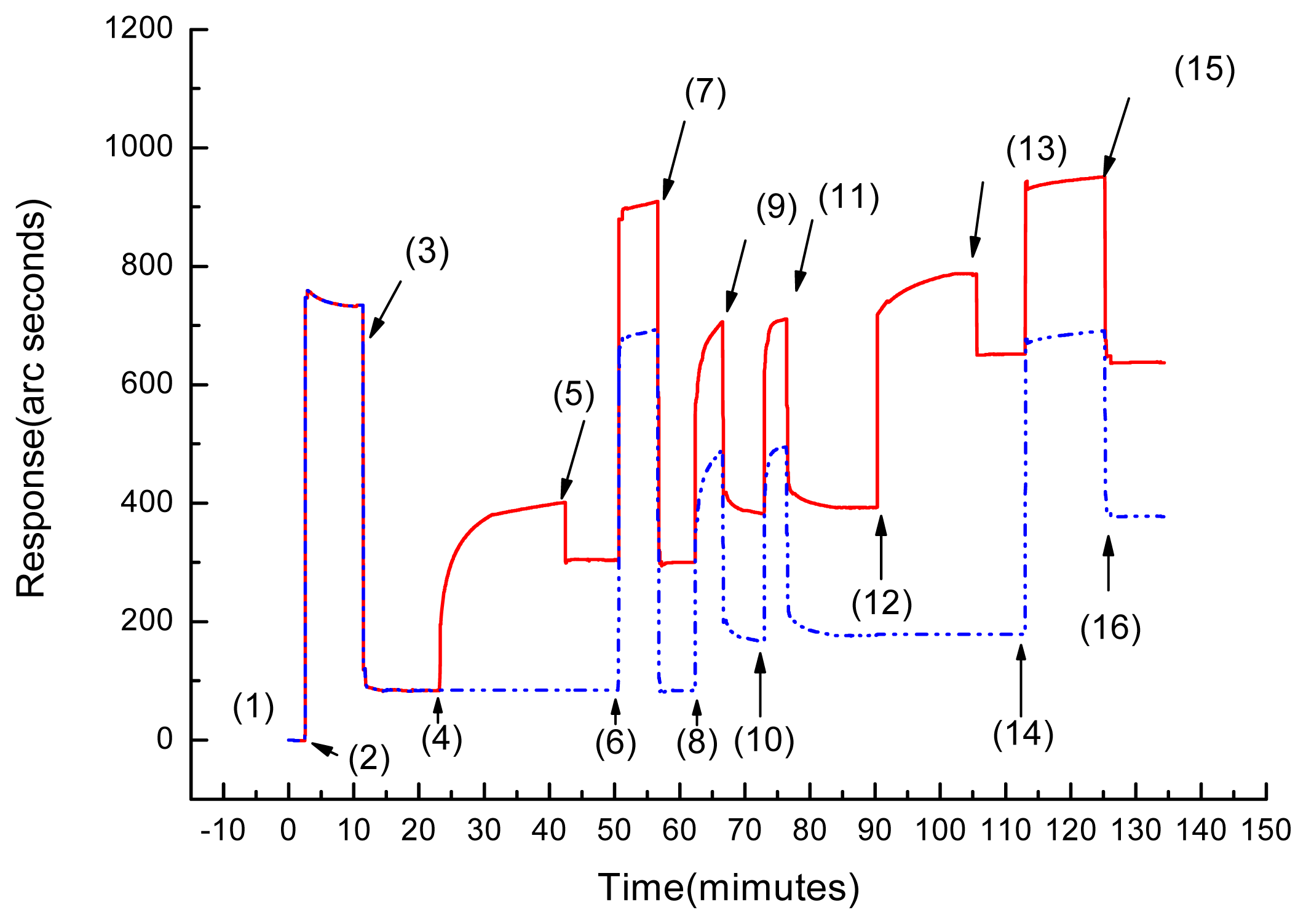
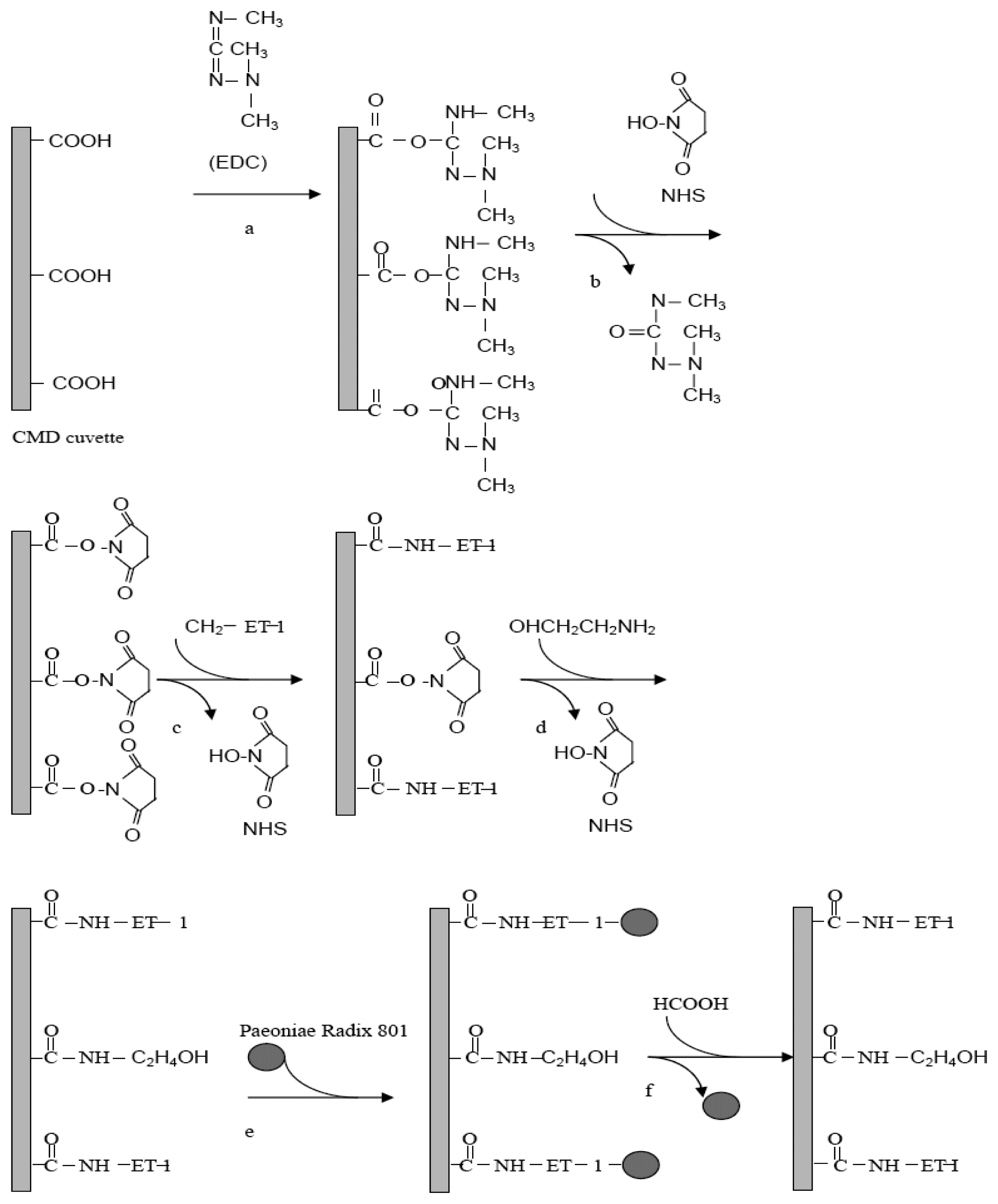
2.1. ET-1 Immobilization on the surface of IAsys cuvettes
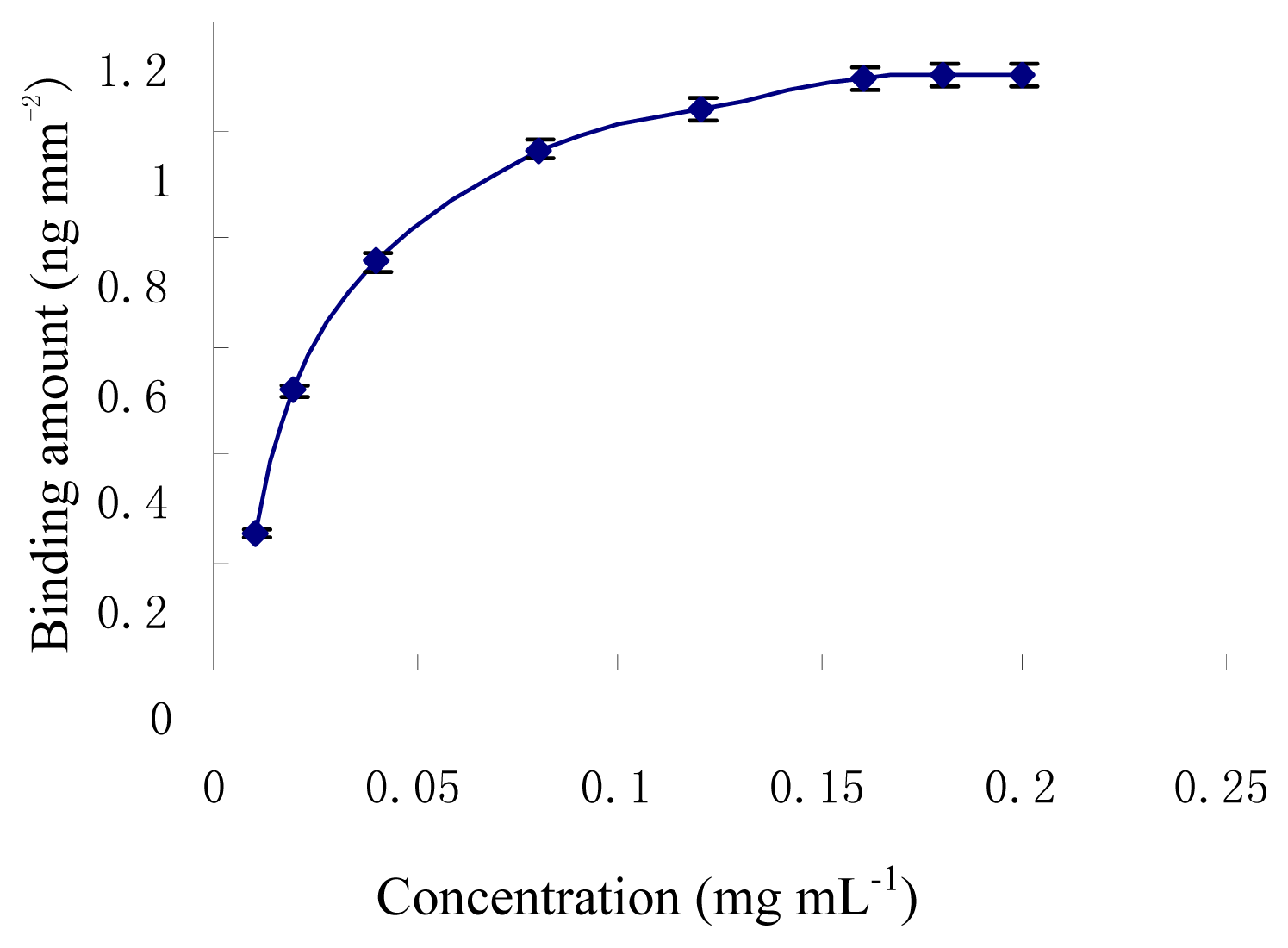
2.2. Detection of the binding between P. radix 801 and ET-1 by IAsys
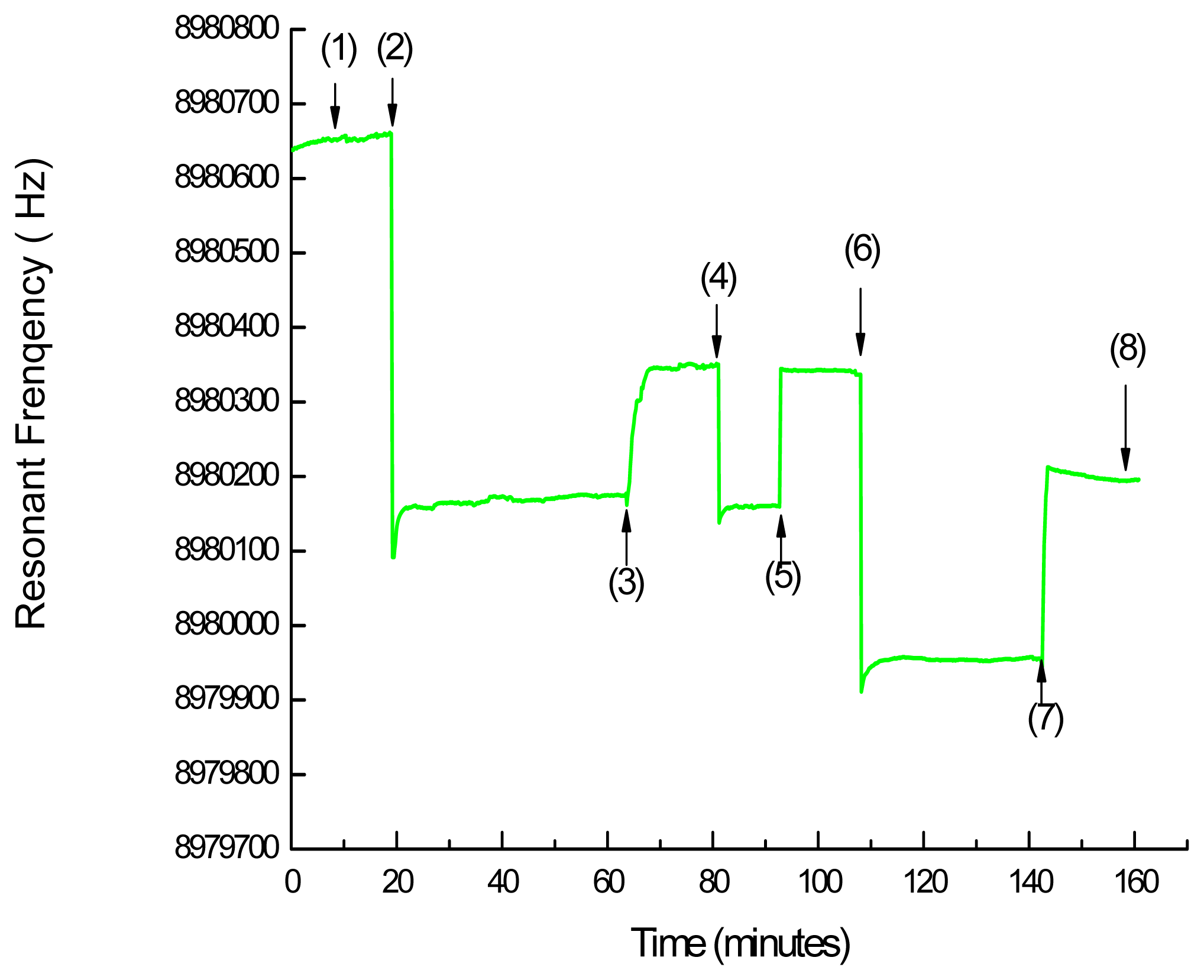
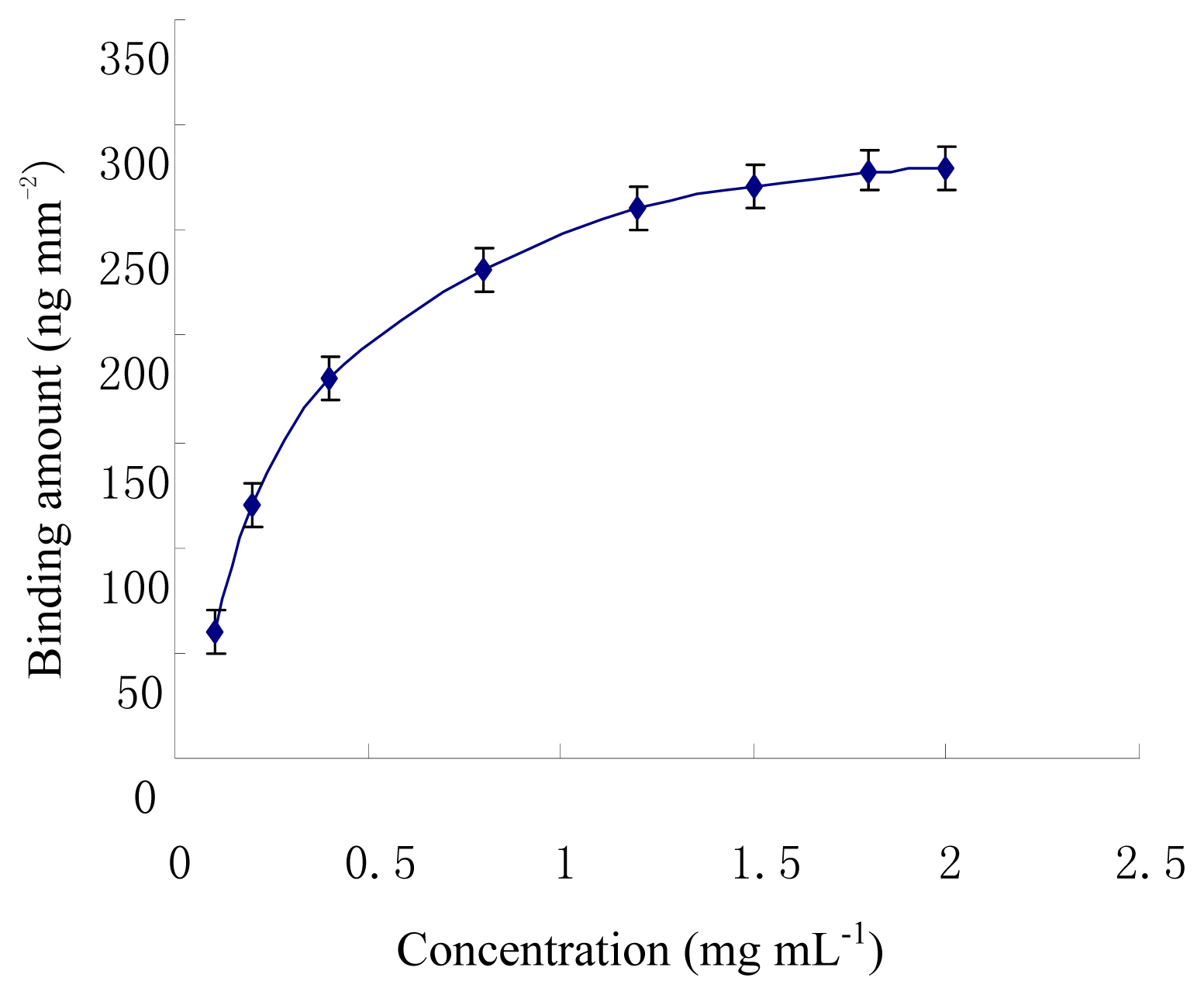
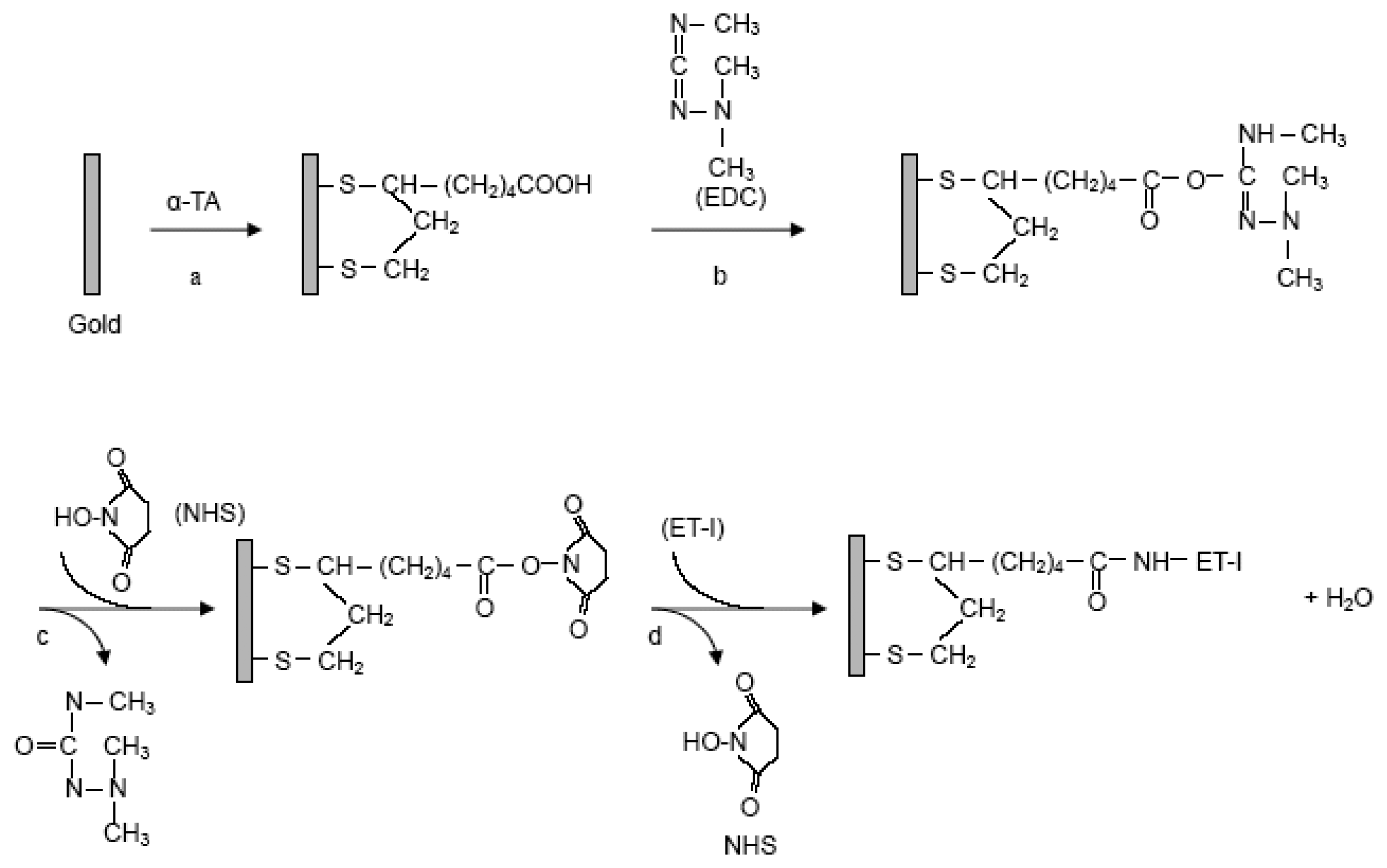
2.3. ET-1 immobilization on the gold substrates of QCM
2.4. Detection of the binding between P. radix 801 and ET-1 by QCM
2.5. Reproducibility and reliability of the IAsys and QCM applied to detect the binding between P. radix 801 and ET-1
2.6. Comparison of IAsys and OCM measurements to ET-1 immobilization and the interaction between ET-1 and P. radix 801
3. Experimental Section
3.1. Reagents
3.2. IAsys device
3.3. QCM device
3.4. IAsys Experiment
3.4.1. Immobilization of ET-1 on the Surface of the Cuvette
3.4.2. Detection of the Binding between ET-1 and P. radix 801
3.5. QCM Experiment
3.5.1. Immobilization of ET-1 on the Surface of the QCM Gold Substrates
3.5.2 Detection of the Binding between ET-1 and P. radix 801
4. Conclusions
Acknowledgments
References and Notes
- Gambari, R. Biospecific Interaction Analysis (BIA) as a Tool for the Design and Development of Gene Transcription Modifiers. Curr. Med. Chem. 2001, 1, 277–291. [Google Scholar]
- Baker, K.N.; Rendall, M.H.; Patel, A.; Boyd, P.; Hoare, M.; Freedman, R.B.; James, D.C. Rapid monitoring of recombinant protein products: a comparison of current technologies. Trends Biotech. 2002, 20, 149–156. [Google Scholar]
- Wilson, W.D. Analyzing biomolecular interactions. Science 2002, 295, 2103–2105. [Google Scholar]
- Buckle, P.E.; Davies, R.J.; Kinning, T.; Yeung, D.; Edwards, P.R.; Pollard-Knight, D. The resonant mirror: a novel optical sensor for direct sensing of biomolecular interactions: Part II. Applications. Biosens. Bioelectron. 1993, 8, 355–368. [Google Scholar]
- Karlsson, R.; Michaelsson, A.; Mattsson, L. Kinetic analysis of monoclonal antibody-antigen interactions with a new biosensor based analytical system. J. Immunol. Methods. 1991, 145, 229–240. [Google Scholar]
- Karlsson, R.; Altschuh, D.; Van Regenmortel, M.H.V. References. In Structure of Antigens; CRC Press: Boca Raton, FL, 1992; Volume 1, pp. 127–148. [Google Scholar]
- Dmitriev, D.A.; Massino, Y.S.; Segal, O.L. Kinetic analysis of interactions between bispecific monoclonal antibodies and immobilized antigens using a resonant mirror biosensor. J. Immunol. Methods. 2003, 280, 183–202. [Google Scholar]
- Davies, R.J.; Edwards, P.R.; Watts, H.J.; Lowe, C.R.; Buckle, P.E.; Yeung, D.; Kinning, T.M.; Pollard-Knight, D.V. References. In Techniques in Protein Chemistry V; Crabb, J.W., Ed.; Academic Press: San Diego, USA, 1994; pp. 285–292. [Google Scholar]
- Shons, A.; Dorman, F.; Najarian, J. An immunospecific microbalance. J. Biomed. Mater. Res. 1972, 6, 565–570. [Google Scholar]
- Leopoldo, L.R.; Roberto, P.R. Comparison between the surface plasmon resonance (SPR) and the quartz crystal microbalance (QCM) method in a structural analysis of human endothelin-1. Biosens. Bioelectron. 2004, 19, 1753–1758. [Google Scholar]
- Ilaria, M.; Maria, M.; Sara, T.; Marco, M. Quartz crystal microbalance (QCM) affinity biosensor for genetically modified organisms (GMOs) detection. Biosens. Bioelectron. 2003, 18, 129–140. [Google Scholar]
- Cavic, B.A.; Hayward, G.L.; Thompson, M. Acoustic waves and the study of biochemical macromolecules and cell at the sensor-liquid interface. Analyst 1999, 124, 1405–1420. [Google Scholar]
- Englebienne, P.; Van Hoonacker, A.; Verhas, M. Surface plasma resonance: principles, methods and applications in biomedical sciences. Spectroscopy 2003, 17, 255–273. [Google Scholar]
- Bertucci, C.; Cimitan, S. Rapid screening of small ligand affinity to human serum albumin by an optical biosensor. J. Pharmaceut. Biomed. 2003, 32, 707–714. [Google Scholar]
- Zhang, C.; Feng, G.; Gao, Z. Development of a new kind of dual modulated QCM biosensor. Biosens. Bioelectron. 1997, 12, 1219–1225. [Google Scholar]
- Kösslinger, C.; Uttenthaler, E.; Drost, S.; Wolf, H.; Brink, G. Comparison of the QCM and the SPR method for surface studies and immunological applications. Sens. Actuat. B, Chem. 1995, 24, 107–112. [Google Scholar]
- Spangler, B.D.; Wilkinson, E.A.; Murphy, J.T.; Tyler, B.J. Comparison of the Spreeta (R) surface plasmon resonance sensor and a quartz crystal microbalance for detection of Escherichia coli heat-labile enterotoxin. Anal. Chim. Acta. 2001, 444, 149–161. [Google Scholar]
- Su, X.; O'Shea, S. Determination of monoenzyme- and bienzyme-stimulated precipitation by a cuvette-based surface plasmon resonance instrument. Anal. Biochem. 2001, 299, 241–247. [Google Scholar]
- Vikinge, T.P.; Hansson, K.M.; Sandström, P.; Liedberg, B.; Lindahl, T.L.; Lundström, I.; Tengvall, P.; Höök, F. Comparison of surface plasma resonance and quartz crystal microbalance in the study of whole blood and plasma coagulation. Biosens Bioelectron. 2000, 15, 605–613. [Google Scholar]
- Liu, X.L.; Tang, R.; Zhang, F.H. Clinical observations and nursing of Paeoniae Radix 801 parenteral solution on treatment for ischemic cardio-cerebral vascular diseases. Hei Long Jiang Med. J. 2000, 24, 55–57. [Google Scholar]
- Liu, Z.; Zhang, G.S. Curative effect observations on thrombotic deep phlebitis by Paeoniae Radix 801. Chin. Country Med. J. 1994, 22, 50–52. [Google Scholar]
- Chen, F. Observation of compatibility of paeoniae radix 801 with 4 transfusions. J. Chin. Physician. 2002, 5, 89–91. [Google Scholar]
- Wang, Y.G.; Chen, Y.L.; Wang, S.F.; Tian, H.D. Curative effect observations of Paeoniae Radix 801 on thrombus deep phlebitis Paeoniae Radix 801. Renshen. Yanjiu. 2001, 13, 45–47. [Google Scholar]
- Zuo, X.L.; Zhuang, H.Y. Clinical observation of propyl gallate in treating coronary arteriosclerotic cardiopathy angina pectoris. J. Qiqihar Med. College 2002, 23, 37–39. [Google Scholar]
- Hazan, S.; Fishov, I.; Zamai, M.; Caiolfa, V.R.; Parola, A.H. Fluorescence polarization assay for endothelin-converting enzymes. Peptides 1995, 16, 833–836. [Google Scholar]
- He, H.J.; Fu, J.; Fu, J.; Liu, H.T.; Xu, M.R.; Chai, X.; Zhang, H.Y. Experimental study of effects of removing stasis on the level of endothelin in blood stasis syndrome. J. Tianjin Coll. Tradit. Chin. Med. 2000, 19, 42–45. [Google Scholar]
- Yuan, L.; Miao, Z.Z.; Zhao, P.; Zhu, C.Z. Effects of puerarin on blood ET- 1, SOD, MDA in the patients with stroke or hypertension. Modern J. Integr. Tradit. West. Med. 2000, 9, 2197–2199. [Google Scholar]
- Zou, Q.; Wang, C.G.; Qiu, Y.Z.; Ma, L.; Wang, P. Clinical observations on treatment for acute paroxysm phase of chronic corpulmonale with integrated traditional Chinese and western medicine. Pract. Clin. Emergency J. Integr. Tradit. Chin. West. Med. 1999, 6, 126–128. [Google Scholar]
- Yeung, D.; Gill, A.; Maule, C.H.; Davies, R.J. Detection and quantification of biomolecular interaction with optical techniques. Trends. Anal. Chem. 1995, 14, 49–56. [Google Scholar]
- Magnus, M.; Robert, K. Biomolecular interaction analysis: affinity biosensor technologies for functional analysis of proteins. Curr. Opin. Chem. Biol. 1997, 1, 378–383. [Google Scholar]
- Altschuh, D.; Dubs, M.C.; Weiss, E.; Zeder-Lutz, G.; Van Regenmortel, M.H.V. Determination of kinetic constants for the interaction between a monoclonal antibody and peptides using surface plasma resonance. Biochemistry. 1992, 31, 6298–6304. [Google Scholar]
- Cush, R.; Cronin, J.M.; Stewart, W.J.; Maule, C.H.; Molloy, J.; Oddard, N.J. The resonant mirror: a novel optical sensor for direct sensing of biomolecular interactions: Part I. Principle of operation and associated instrumentation. Biosens. Bioelectron. 1993, 8, 347–353. [Google Scholar]
- Hall, D. Use of optical biosensors for the study of mechanistically concerted surface adsorption processes. Anal. Biochem. 2001, 288, 109–125. [Google Scholar]
- Damien, R.H.; Donald, J.W. Potential of biosensor technology for the characterization of interactions by quantitative affinity chromatography. J. Chromatogr. B. 1998, 715, 163–181. [Google Scholar]
- IAsys Cuvette System Methods Guide; 1996.
- Sauerbrey, G.Z. Use of quartz crystal vibrator for weighting thin films on a microbalance. Z. Phys. 1959, 155, 206–222. [Google Scholar]
- Bertucci, C.; Cimitan, S.; Menotti, L. Optical biosensor analysis in studying herpes simplex virus glycoprotein D binding to target nectin1 receptor. J. Pharm. Biomed. Anal. 2003, 32, 697–706. [Google Scholar]
- Hengerer, A.; Decker, J.; Prohaska, E.; Hauck, S.; Koßlinger, C.; Wolf, H. Quartz crystal microbalance (QCM) as a device for the screening of phage libraries. Biosens. Bioelectron. 1999, 14, 139–144. [Google Scholar]
- Frostell-Karlsson, A.; Remaeus, A.; Roos, H.; Andersson, K.; Borg, P.; Hamalainen, M.; Karlsson, R. Biosensor analysis of the interaction between immobilized human serum albumin and drug compounds for prediction of human serum albumin binding levels. J. Med. Chem. 2000, 43, 1986–1992. [Google Scholar]
- Rich, R.L.; Day, Y.S.; Morton, T.A.; Myszka, D.G. High-resolution and high-throughput protocols for measuring drug/human serum albumin interactions using BIACORE. Anal. Biochem. 2001, 296, 197–207. [Google Scholar]
- Bain, C.D.; Evall, J.; Whitesides, G.M. Formation of monolayers by the coabsorption of thiols on gold: variations in the head group, tail group, and smlvent. J. Am. Chem. Soc. 1989, 111, 7155–7164. [Google Scholar]
- Höök, F.; Kasemm, B.; Nylander, T.; Fant, C.; Sott, K.; Elwing, H. Variations in coupled water, viscoelaqtic properties, and film thickness of a Mefp-1 protein film during adsorption and cross-linking: a quartz crystal microbalance with dissipation monitoring, ellipsometry, and surface plasmon resonance study. Anal. Chem. 2001, 73, 5796–5804. [Google Scholar]


| Run | Binding mass of ET-1 (ng mm-2) | Binding mass of P. radix 801 (ng mm-2) |
|---|---|---|
| 1 | 1.093 | 1.297 |
| 2 | 1.100 | 1.306 |
| 3 | 1.096 | 1.298 |
| 4 | 1.098 | 1.302 |
| 5 | 1.098 | 1.302 |
| x̅ | 1.097 | 1.301 |
| SD | 0.002 | 0.003 |
| RSD(%) | 0.18 | 0.23 |
| Run | Binding mass of ET-1 (ng cm-2) | Binding mass of P. radix 801 (ng mm-2) |
|---|---|---|
| 1 | 277.376 | 1.303 |
| 2 | 280.293 | 1.317 |
| 3 | 277.262 | 1.300 |
| 4 | 281.149 | 1.324 |
| 5 | 278.321 | 1.310 |
| x̅ | 278.880 | 1.311 |
| SD | 1.571 | 0.876 |
| RSD(%) | 0.56 | 0.67 |
| Item | IAsys | QCM |
|---|---|---|
| Principle | Resonant mirror optical technology | Mechanical thickness |
| Response range | Extending ∼300 nm | (sub) Å to µm |
| Intrinsic sensitivity | 200 arc seconds = 1 ng mm-2 (CMD-cuvette) 600 arc seconds = 1 ng mm-2 (Biotin-cuvette) | 1 Hz = 4.4 ng cm-2 (in air sensitivity for a 10 MHz crystal) |
| Environmental effect | Less sensitive | Sensitive |
| Integration with electrochemical control | Yes | Yes |
| Response speed | Less fast | Fast |
| Limitations | Cuvette volume will be limited for some experiments | Liquid phase frequency response is complicated for thin film thickness measurements |
| Applicability | Concentration determination | Any coating with a viscosity and viscoelasticity contrast with the surrounding medium |
| Molecular recognition, binding patterns, co-operativity | Damping is reflective of the viscoelasticity of a coating | |
| Mapping of multi-molecular interactions, kinetics of association and dissociation | ||
| epitope mapping |
© 2008 by the authors; licensee Molecular Diversity Preservation International, Basel, Switzerland. This article is an open-access article distributed under the terms and conditions of the CreativeCommons Attribution license (http://creativecommons.org/licenses/by/3.0/).
Share and Cite
Huang, J.; Lin, Q.; Yu, J.; Ge, S.; Li, J.; Yu, M.; Zhao, Z.; Wang, X.; Zhang, X.; He, X.; et al. Comparison of a Resonant Mirror Biosensor (IAsys) and a Quartz Crystal Microbalance (QCM) for the Study on Interaction between Paeoniae Radix 801 and Endothelin-1. Sensors 2008, 8, 8275-8290. https://doi.org/10.3390/s8128275
Huang J, Lin Q, Yu J, Ge S, Li J, Yu M, Zhao Z, Wang X, Zhang X, He X, et al. Comparison of a Resonant Mirror Biosensor (IAsys) and a Quartz Crystal Microbalance (QCM) for the Study on Interaction between Paeoniae Radix 801 and Endothelin-1. Sensors. 2008; 8(12):8275-8290. https://doi.org/10.3390/s8128275
Chicago/Turabian StyleHuang, Jiadong, Qing Lin, Jinghua Yu, Shenguang Ge, Jing Li, Min Yu, Zixia Zhao, Xinsheng Wang, Xiuming Zhang, Xiaorui He, and et al. 2008. "Comparison of a Resonant Mirror Biosensor (IAsys) and a Quartz Crystal Microbalance (QCM) for the Study on Interaction between Paeoniae Radix 801 and Endothelin-1" Sensors 8, no. 12: 8275-8290. https://doi.org/10.3390/s8128275