
Nano-Bio-Technology and Sensing Chips: New Systems for Detection in Personalized Therapies and Cell Biology

Abstract
:1. Introduction
2. 2D Nano-Structures Improving DNA-and Immuno-Chip
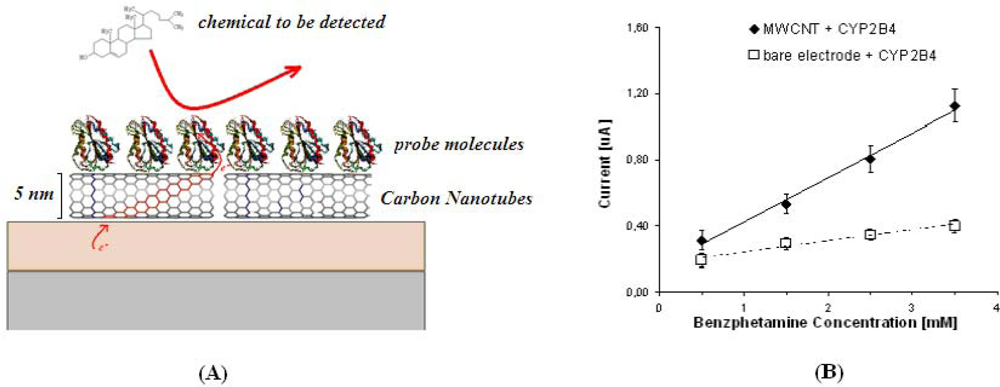
3. 1D Nano-Structures Improving Enzyme-Chips
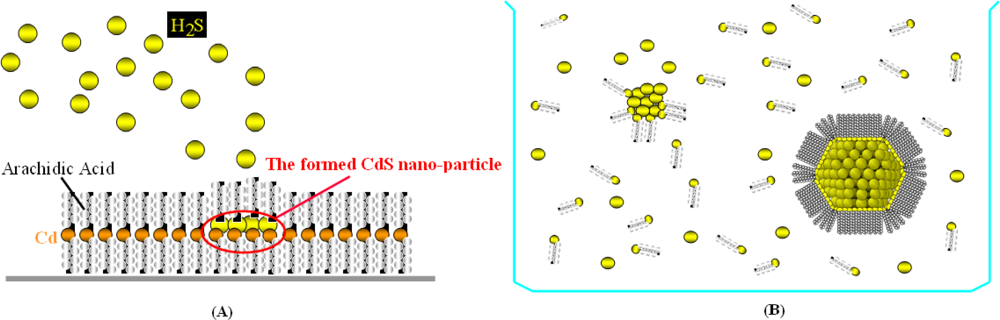
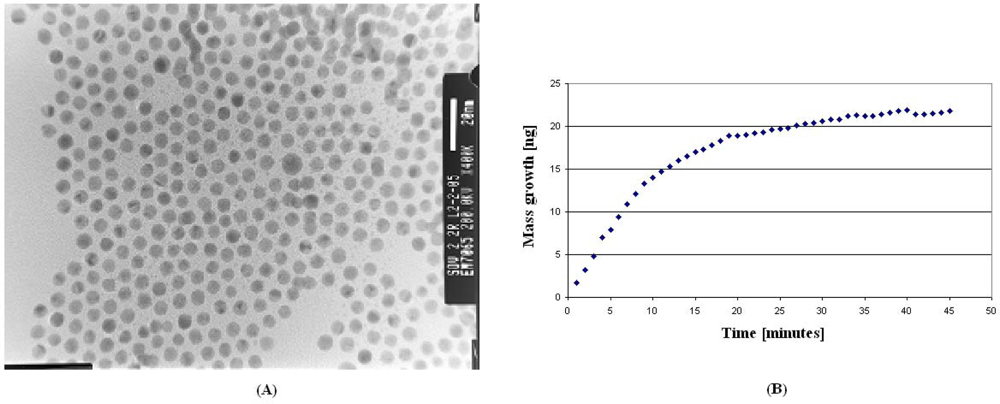
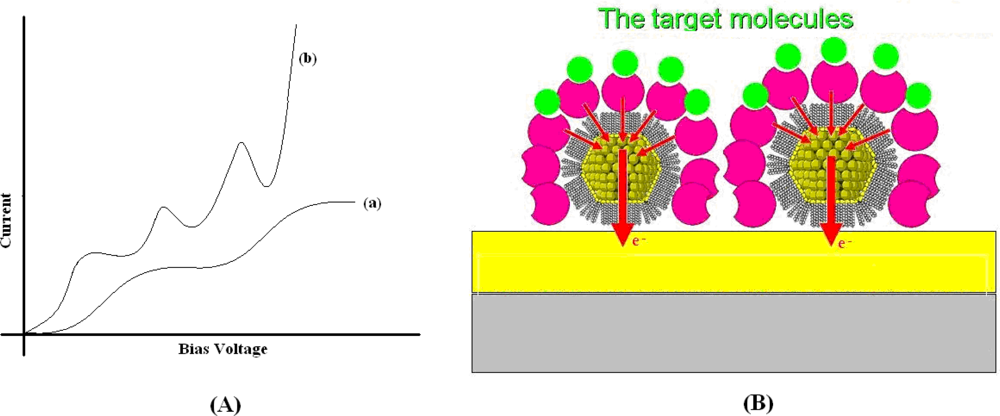
4. 0D Nano-Structures Improving Enzymes-Chip
5. New Electrochemical Systems for Personalized Therapies and Cell Biology
6. Conclusions
Acknowledgments
References and Notes
- Lin, J.H. Pharmacokinetic and pharmacodynamic variability: a daunting challenge in drug therapy. Curr. Drug Metab 2007, 8, 109–136. [Google Scholar]
- Amplichip. Available online: http://www.amplichip.us (accessed on September 27, 2009).
- Lazarou, J.; Pomeranz, B.; Corey, P. Incidence of adverse drug reactions in hospitalized patients a meta-analysis of prospective studies. JAMA 1998, 279, 1200–1205. [Google Scholar]
- Bianco, P.; Robey, P. Stem cells in tissue engineering. Nature 2001, 414, 118–121. [Google Scholar]
- Gorjup, E.; Peter, L.; Wien, S.; von Briesen, H.; Schmitt, D. Automated microscopic quantification of adipogenic differentiation of human gland stem cells. Ann. Anatomy 2009, 191, 13–22. [Google Scholar]
- Ventura, C.; Cantoni, S.; Bianchi, F.; Lionetti, V.; Cavallini, C.; Scarlata, I.; Foroni, L.; Maioli, M.; Bonsi, L.; Alviano, F.; Fossati, V.; Bagnara, G.P.; Pasquinelli, G.; Recchia, F.A.; Perbellini, A. Hyaluronan Mixed esters of butyric and retinoic acid drive cardiac and endothelial fate in term placenta human mesenchymal stem cells and enhance cardiac repair in infarcted rat hearts. J. Biol. Chem 2007, 282, 14243–14252. [Google Scholar]
- Han, H.K. Paramagnetic capture mode magnetophoretic microseparator for high efficiency blood cell separations. Lab Chip 2006, 6, 265–273. [Google Scholar]
- Titushkin, I.; Cho, M. Regulation of cell cytoskeleton and membrane mechanics by electric field: role of linker proteins. Biophys. J 2009, 96, 717–728. [Google Scholar]
- Yu, B.; Long, N.; Moussy, Y.; Moussy, F. A long-term flexible minimally-invasive implantable glucose biosensor based on an epoxy-enhanced polyurethane membrane. Biosens. Bioelectron 2006, 21, 2275–2282. [Google Scholar]
- Stagni, C.; Guiducci, C.; Benini, L.; Ricco, B.; Carrara, S.; Paulus, C.; Schienle, M.; Thewes, R. A fully electronic label-free dna sensor chip. Sensors, IEEE 2007, 7, 577–585. [Google Scholar]
- Samyn, N.; van Haeren, C. On-site testing of saliva and sweat with Drugwipe and determination of concentrations of drugs of abuse in saliva, plasma and urine of suspected users. International J. Legal Med 2000, 113, 150–154. [Google Scholar]
- Pemberton, R.M.; Xu, J.; Pittson, R.; Biddle, N.; Drago, G.A.; Jackson, S.K.; Hart, J.P. Application of screen-printed microband biosensors to end-point measurements of glucose and cell numbers in HepG2 cell culture. Anal. Biochem 2009, 385, 334–341. [Google Scholar]
- Hann, R.; Roberts, G. Langmuir-Blodgett Films; Plenum Press: New York, NY, USA, 1990. [Google Scholar]
- Fendler, J. Self-assembled nanostructured materials. Chem. Mater 1996, 8, 1616–1624. [Google Scholar]
- Erokhin, V.; Carrara, S.; Paternolli, C.; Valkova, L.; Bernstorff, S.; Nicolini, C. X-ray study of structural reorganization in phthalocyanine containing Langmuir-Blodgett heterostructures. Appl. Surf. Sci 2005, 245, 369–375. [Google Scholar]
- Lahiri, J.; Isaacs, L.; Tien, J.; Whitesides, G. A strategy for the generation of surfaces presenting ligands for studies of binding based on an active ester as a common reactive intermediate: a surface plasmon resonance study. Anal. Chem 1999, 71, 777–790. [Google Scholar]
- Mirsky, V.; Riepl, M.; Wolfbeis, O. Capacitive monitoring of protein immobilization and antigen–antibody reactions on monomolecular alkylthiol films on gold electrodes. Biosens. Bioelectron 1997, 12, 977–989. [Google Scholar]
- Berggren, C.; Stalhandske, P.; Brundell, J.; Johansson, G. A feasibility study of a capacitive biosensor for direct detection of DNA hybridization. Electroanal 1999, 11, 156–160. [Google Scholar]
- Berggren, C.; Bjarnason, B.; Johansson, G. An immunological Interleukine-6 capacitive biosensor using perturbation with a potentiostatic step. Biosens. Bioelectron 1998, 13, 1061–1068. [Google Scholar]
- Stagni, C.; Guiducci, C.; Benini, L.; Ricco, B.; Carrara, S.; Samori, B.; Paulus, C.; Schienle, M.; Augustyniak, M.; Thewes, R. CMOS DNA sensor array with integrated A/D conversion based on label-free capacitance measurement. IEEE J Solid-St. Circ 2006, 41, 2956–2964. [Google Scholar]
- Carrara, S.; Bhalla, V.; Stagni, C.; Samorì, B. Nanoscale film structure related to capacitive effects in ethylene-glycol monolayers. Surf. Sci 2009, 603, 75–77. [Google Scholar]
- Carrara, S.; Gürkaynak, F.; Guiducci, C.; Stagni, C.; Benini, L.; Leblebici, Y.; Samorì, B.; De Micheli, G. Interface layering phenomena in capacitance detection of dna with biochips. Sens. Trans. J 2007, 76, 969–977. [Google Scholar]
- Carrara, S.; Cavallini, A.; Leblebici, Y.; Micheli, G.D.; Bhalla, V.; Valle, F.; Samorì, B.; Benini, L.; Riccò, B.; Vikholm-Lundin, I.; Munter, T. New Probe Immobilizations by Lipoate-Diethalonamine or Ethylene-Glycol Molecules for Capacitance DNA Chip; IWASI: Bari, Italy, 2009. [Google Scholar]
- Riepl, M.; Mirsky, V.; Novotny, I.; Tvarozek, V.; Rehacek, V.; Wolfbeis, O. Optimization of capacitive affinity sensors: drift suppression and signal amplification. Anal. Chim. Acta 1999, 392, 77–84. [Google Scholar]
- Carrara, S.; Bhalla, V.; Stagni, C.; Benini, L.; Ferretti, A.; Valle, F.; Gallotta, A.; Riccò, B.; Samorì, B. Label-free cancer markers detection by capacitance biochip. Sensor. Actuat. B-Chem 2009, 136, 163–172. [Google Scholar]
- Carrara, S.; Benini, L.; Bhalla, V.; Stagni, C.; Ferretti, A.; Cavallini, A.; Riccò, B.; Samorì, B. New insights for using self-assembly materials to improve the detection stability in label-free DNA-chip and immuno-sensors. Biosens. Bioelectron 2008, 24, 3425–3429. [Google Scholar]
- Zheng, G.; Patolsky, F.; Cui, Y.; Wang, W.; Lieber, C. Multiplexed electrical detection of cancer markers with nanowire sensor arrays. Nat. Biotechnol 2005, 23, 1294–1301. [Google Scholar]
- Iijima, S. Helical microtubules of graphitic carbon. Nature 1991, 354, 56–58. [Google Scholar]
- Radosavljevi, M.; Lefebvre, J.; Johnson, A. High-field electrical transport and breakdown in bundles of single-wall carbon nanotubes. Phys. Rev. B 2001, 64, 241307. [Google Scholar]
- Hone, J.; Whitney, M.; Piskoti, C.; Zettl, A. Thermal conductivity of single-walled carbon nanotubes. Phys. Rev. B 1999, 59, 2514–2516. [Google Scholar]
- Kim, P.; Shi, L.; Majumdar, A.; McEuen, P. Thermal transport measurements of individual multiwalled nanotubes. Phys. Rev. Lett 2001, 87, 215502. [Google Scholar]
- McEuen, P.; Fuhrer, M.; Park, H. Single-walled carbon nanotube electronics. IEEE T. Nanotechnol 2002, 1, 78–85. [Google Scholar]
- Li, X.; Voss, P.; Sharping, J.; Kumar, P. Optical-fiber source of polarization-entangled photons in the 1550 nm telecom band. Phys. Rev. Lett 2005, 94, 53601. [Google Scholar]
- Chen, Y.; Shaw, D.; Guo, L. Field emission of different oriented carbon nanotubes. Appl. Phys. Lett 2000, 76, 2469. [Google Scholar]
- Qiao, L.; Zheng, W.; Wen, Q.; Jiang, Q. First-principles density-functional investigation of the effect of water on the field emission of carbon nanotubes. Nanotechnology 2007, 18, 155707. [Google Scholar]
- Carrara, S.; Cavallini, A.; Garg, A.; Micheli, G.D. Dynamical spot queries to improve specificity in p450s based multi-drugs monitoring. International Conference on Complex Medical Engineering, Tampe, AZ, USA, 9–11 April, 2009.
- Johnson, D.; Lewis, B.; Elliot, D.; Miners, J.; Martin, L. Electrochemical characterisation of the human cytochrome P450 CYP2C9. Biochem. Pharmacol 2005, 69, 1533–1541. [Google Scholar]
- Joseph, S.; Rusling, J.; Lvov, Y.; Friedberg, T.; Fuhr, U. An amperometric biosensor with human CYP3A4 as a novel drug screening tool. Biochem. Pharmacol 2003, 65, 1817–1826. [Google Scholar]
- Shumyantseva, V.; Deluca, G.; Bulko, T.; Carrara, S.; Nicolini, C.; Usanov, S.; Archakov, A. Cholesterol amperometric biosensor based on cytochrome P450scc. Biosens. Bioelectron 2004, 19, 971–976. [Google Scholar]
- Agematu, H.; Matsumoto, N.; Fujii, Y.; Kabumoto, H.; Doi, S.; Machida, K.; Ishikawa, J.; Arisawa, A. Hydroxylation of testosterone by bacterial cytochromes P450 using the Escherichia coli expression system. Biosci. Biotech. Biochem 2006, 70, 307–311. [Google Scholar]
- Jiang, J.G.; Chen, C.L.; Card, J.W.; Yang, S.; Chen, J.X.; Fu, X.N.; Ning, Y.G.; Xiao, X.; Zeldin, D.C.; Wang, D.W. Cytochrome P450 2J2 promotes the neoplastic phenotype of carcinoma cells and is up-regulated in human tumors. Cancer Res 2005, 65, 4707–4715. [Google Scholar]
- Carrara, S.; Shumyantseva, V.; Archakov, A.; Samorì, B. Screen-printed electrodes based on carbon nanotubes and cytochrome P450scc for highly sensitive cholesterol biosensors. Biosens. Bioelectron 2008, 24, 148–150. [Google Scholar]
- Cui, X.; Li, C.; Zang, J.; Yu, S. Highly sensitive lactate biosensor by engineering chitosan/PVI-Os/CNT/LOD network nanocomposite. Biosens. Bioelectron 2007, 22, 3288–3292. [Google Scholar]
- Rahman, M.; Umar, A.; Sawada, K. Development of amperometric glucose biosensor based on glucose oxidase co-immobilized with multi-walled carbon nanotubes at low potential. Sens. Actuat. B-Chem 2009, 137, 327–333. [Google Scholar]
- Wang, B.; Li, B.; Deng, Q.; Dong, S. Amperometric glucose biosensor based on sol gel organic inorganic hybrid material. Anal. Chem 1998, 70, 3170–3174. [Google Scholar]
- Huang, J.; Song, Z.; Li, J.; Yang, Y.; Shi, H.; Wu, B.; Anzai, J.I.; Osa, T.; Chen, Q. A highly-sensitive l-lactate biosensor based on sol-gel film combined with multi-walled carbon nanotubes (MWCNTs) modified electrode. Mat. Sci. Eng 2007, C 27, 29–34. [Google Scholar]
- Tsai, Y.C.; Chen, S.Y.; Liaw, H.W. Immobilization of lactate dehydrogenase within multiwalled carbon nanotube-chitosan nanocomposite for application to lactate biosensors. Sens. Actuat. B-Chem 2007, 125, 474–481. [Google Scholar]
- Yang, M.; Wang, J.; Li, H.; Zheng, J.; Wu, N. A lactate electrochemical biosensor with a titanate nanotube as direct electron transfer promoter. Nanotechnology 2008, 19, 75502–75502. [Google Scholar]
- Li, J.; Cassell, A.; Delzeit, L.; Han, J.; Meyyappan, M. Novel three-dimensional electrodes: electrochemical properties of carbon nanotube ensembles. J. Phys. Chem. B 2002, 106, 9299–9305. [Google Scholar]
- Boero, C.; Carrara, S.; Micheli, G.D. Sensitivity enhancement by carbon nanotubes: applications to stem cell cultures monitoring. Fifth Conference on PhD Research in Microelectronics and Electronics (PRIME), Cork, Ireland, 17 July 2009.
- Carrara, S.; Bavastrello, V.; Ricci, D.; Stura, E.; Nicolini, C. Improved nanocomposite materials for biosensor applications investigated by electrochemical impedance spectroscopy. Sens. Actuat. B-Chem 2005, 109, 221–226. [Google Scholar]
- Pan, H.; Poh, C.; Feng, Y.; Lin, J. Supercapacitor electrodes from tubes-in-tube carbon nanostructures. Chem. Mater 2007, 19, 6120–6125. [Google Scholar]
- Facci, P.; Erokhin, V.; Tronin, A.; Nicolini, C. Formation of ultrathin semiconductor films by CdS nanostructure aggregation. J. Phys. Chem 1994, 98, 13323–13327. [Google Scholar]
- Erokhin, V.; Feigin, L.; Ivakin, G.; Klechkovskaya, V.; Lvov, Y.; Stiopina, N. Formation and X-ray and electron diffraction study of CdS and PbS particles insidefatty acid matrix. Macromol. Chem., Macromol. Symp 1991, 46, 359–363. [Google Scholar]
- Erokhina, S.; Erokhin, V.; Nicolini, C.; Sbrana, F.; Ricci, D.; di Zitti, E. Microstructure origin of the conductivity differences in aggregated CuS films of different thickness. Langmuir 2003, 19, 766–771. [Google Scholar]
- Shi, W.; Lu, W.; Jiang, L. Fabrication of amphiphilic gold nanoparticles of well-defined size, high concentration and robust colloidal stability. J. Nanosci. Nanotechnol 2009, 9, 5764–5769. [Google Scholar]
- Brust, M.; Kiely, C. Some recent advances in nanostructure preparation from gold and silver particles: a short topical review. Colloid. Surf. A 2002, 202, 175–186. [Google Scholar]
- Lokesh, K.; Shivaraj, Y.; Dayananda, B.; Chandra, S. Synthesis of phthalocyanine stabilized rhodium nanoparticles and their application in biosensing of cytochrome c. Bioelectrochemistry 2009, 75, 104–109. [Google Scholar]
- Yang, J.; Lee, J.; Deivaraj, T.; Too, H. An improved Brust’s procedure for preparing alkylamine stabilized Pt, Ru nanoparticles. Colloid. Surf. A 2004, 240, 131–134. [Google Scholar]
- Hostetler, M.; Wingate, J.; Zhong, C.; Harris, J.; Vachet, R.; Clark, M.; Londono, J.; Green, S.; Stokes, J.; Wignall, G. Alkanethiolate gold cluster molecules with core diameters from 1.5 to 5.2 nm: core and monolayer properties as a function of core size. Langmuir 1998, 14, 17–30. [Google Scholar]
- Brust, M.; Walker, M.; Bethell, D.; Schiffrin, D.; Whyman, R. Synthesis of thiol-derivatised gold nanoparticles in a two-phase liquid–liquid system. J. Chem. Soc., Chem. Commun 1994, 7, 801–802. [Google Scholar]
- Averim, D.V.; Likharev, K.K. Coulomb blockade of single-electron tunnelling, and coherent oscillations in small tunnel junctions. J. Low Temp. Phys 1986, 62, 345–373. [Google Scholar]
- Devoret, M.; Esteve, D.; Urbina, C. Single-electron transfer in metallic nanostructures. Nature 1992, 360, 547–553. [Google Scholar]
- Schönenberger, C.; Van Houten, H.; Donkersloot, H.; Van Der Putten, A.; Fokkink, L. Single-electron tunneling up to room temperature. Phys. Scripta 1992, 45, 289–291. [Google Scholar]
- Erokhin, V.; Facci, P.; Carrara, S.; Nicolini, C. Observation of room temperature mono-electron phenomena on nanometre-sized CdS particles. J. Phys. D Appl. Phys 1995, 28, 2534–2538. [Google Scholar]
- Facci, P.; Erokhin, V.; Carrara, S.; Nicolini, C. Room-temperature single-electron junction. Proc. Natl. Acad. Sci. USA 1996, 93, 10556–10559. [Google Scholar]
- Carrara, S.; Erokhin, V.; Facci, P.; Nicolini, C. On the role of nanoparticle sizes in monoelectron conductivity. Nato Asi 3 High Tech 1996, 18, 497–503. [Google Scholar]
- Shumyantseva, V.; Carrara, S.; Bavastrello, V.; Jason Riley, D.; Bulko, T.; Skryabin, K.; Archakov, A.; Nicolini, C. Direct electron transfer between cytochrome P450scc and gold nanoparticles on screen-printed rhodium-graphite electrodes. Biosens. Bioelectron 2005, 21, 217–222. [Google Scholar]
- Liu, S.; Ju, H. Reagentless glucose biosensor based on direct electron transfer of glucose oxidase immobilized on colloidal gold modified carbon paste electrode. Biosens Bioelectron 2003, 19, 177–183. [Google Scholar]
- Cheng, J.; Di, J.; Hong, J.; Yao, K.; Sun, Y.; Zhuang, J.; Xu, Q.; Zheng, H.; Bi, S. The promotion effect of titania nanoparticles on the direct electrochemistry of lactate dehydrogenase sol–gel modified gold electrode. Talanta 2008, 76, 1065–1069. [Google Scholar]
- Njagi, J.; Andreescu, S. Stable enzyme biosensors based on chemically synthesized Au–polypyrrole nanocomposites. Biosens. Bioelectron 2007, 23, 168–175. [Google Scholar]
- Giannelli, G.; Marinosci, F.; Sgarra, C.; Lupo, L.; Dentico, P.; Antonaci, S. Clinical role of tissue and serum levels of SCCA antigen in hepatocellular carcinoma. Int. J. Cancer 2005, 116, 4. [Google Scholar]
- Wong, I.; Lo, Y.; Lai, P.; Johnson, P. Relationship of p16 methylation status and serum alpha-fetoprotein concentration in hepatocellular carcinoma patients. Clin. Chem 2000, 46, 1420–1422. [Google Scholar]
- Betty, C.; Lal, R.; Sharma, D.; Yakhmi, J.; Mittal, J. Macroporous silicon based capacitive affinity sensor—fabrication and electrochemical studies. Sens. Actuat. B-Chem 2004, 97, 334–343. [Google Scholar]
- Juma, F.; Rogers, H.; Trounce, J. Pharmacokinetics of cyclophosphamide and alkylating activity in man after intravenous and oral administration. Br. J. Clin. Pharmacol 1979, 8, 209–217. [Google Scholar]
- Austin, K.; Mather, L.; Philpot, C.; McDonald, P. Intersubject and dose-related variability after intravenous administration of erythromycin. Brit. J. Clin. Pharmacol 1980, 10, 273. [Google Scholar]
- Friedman, H.; Greenblatt, D.; Burstein, E.; Harmatz, J.; Shader, R. Population study of triazolam pharmacokinetics. Br J Clin. Pharmacol 1986, 22, 639–642. [Google Scholar]
- Ohlman, S.; Lindholm, A.; Hägglund, H.; Säwe, J.; Kahan, B. On the intraindividual variability and chronobiology of cyclosporine pharmacokinetics in renal transplantation. Eur. J. Clin. Pharmacol 1993, 44, 265–269. [Google Scholar]
- Angus, J.; Brazenor, R.; Le Duc, M. Verapamil: a selective antagonist of constrictor substances in dog coronary artery: implications for variant angina. Clin. Exp. Pharmacol 1982, 6, 15. [Google Scholar]
- Bloom, E.; Kupfer, D. Psychopharmacology: the Fourth Generation Of Progress; Lippincott Williams & Wilkins Publisher: New York, NY, USA, 1995. [Google Scholar]
- Vojinovi, V.; Esteves, F.; Cabral, J.; Fonseca, L. Bienzymatic analytical microreactors for glucose, lactate, ethanol, galactose and l-amino acid monitoring in cell culture media. Anal. Chim. Acta 2006, 565, 240–249. [Google Scholar]


©2010 by the authors; licensee Molecular Diversity Preservation International, Basel, Switzerland. This article is an open access article distributed under the terms and conditions of the Creative Commons Attribution license (http://creativecommons.org/licenses/by/3.0/)
Share and Cite
Carrara, S. Nano-Bio-Technology and Sensing Chips: New Systems for Detection in Personalized Therapies and Cell Biology. Sensors 2010, 10, 526-543. https://doi.org/10.3390/s100100526
Carrara S. Nano-Bio-Technology and Sensing Chips: New Systems for Detection in Personalized Therapies and Cell Biology. Sensors. 2010; 10(1):526-543. https://doi.org/10.3390/s100100526
Chicago/Turabian StyleCarrara, Sandro. 2010. "Nano-Bio-Technology and Sensing Chips: New Systems for Detection in Personalized Therapies and Cell Biology" Sensors 10, no. 1: 526-543. https://doi.org/10.3390/s100100526
APA StyleCarrara, S. (2010). Nano-Bio-Technology and Sensing Chips: New Systems for Detection in Personalized Therapies and Cell Biology. Sensors, 10(1), 526-543. https://doi.org/10.3390/s100100526