Evaluation of Antioxidative Activity of Croatian Propolis Samples Using DPPH· and ABTS·+ Stable Free Radical Assays

Abstract
:1. Introduction
2. Results and Discussion
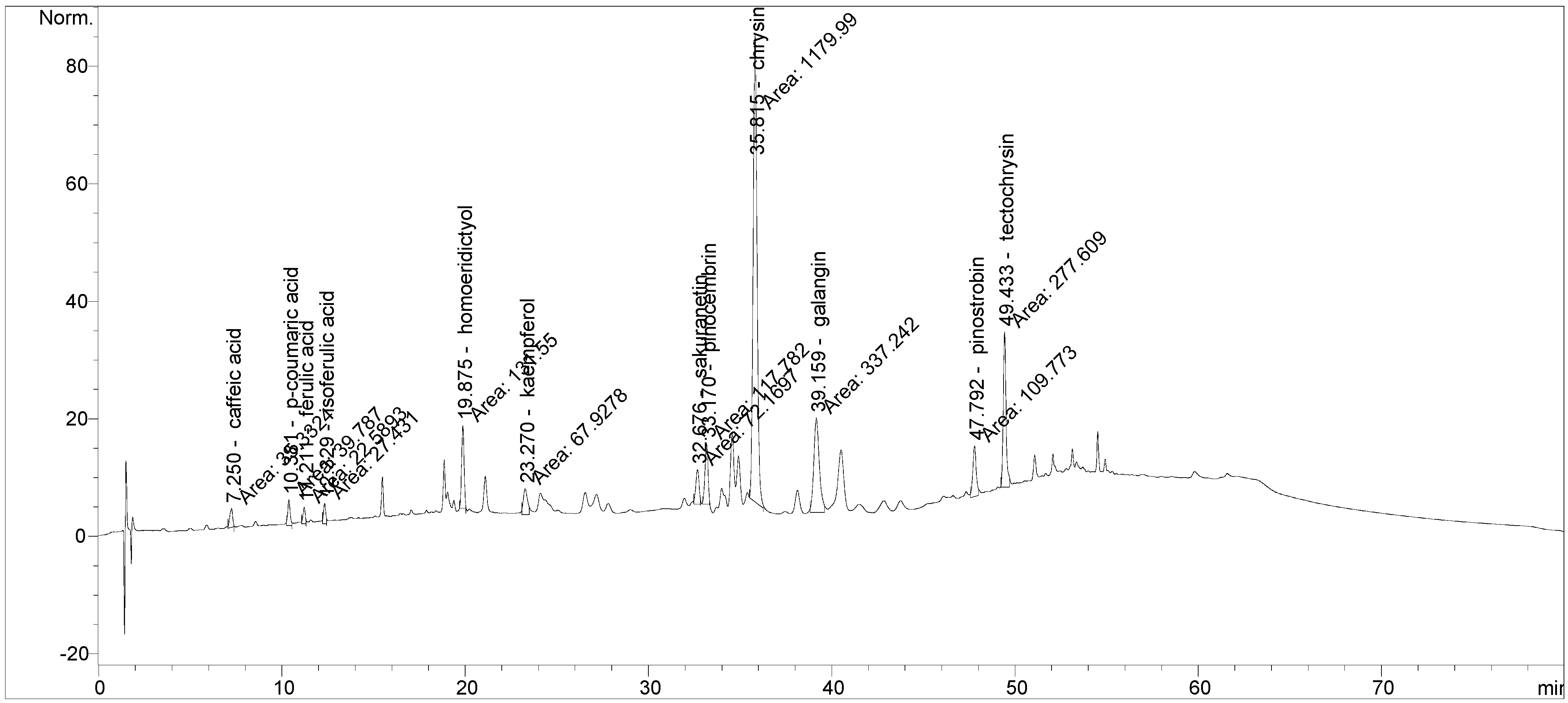
2.1. HPLC analysis

| PROPOLIS SAMPLE c (μg/mL) ± S.D.* | |||||
|---|---|---|---|---|---|
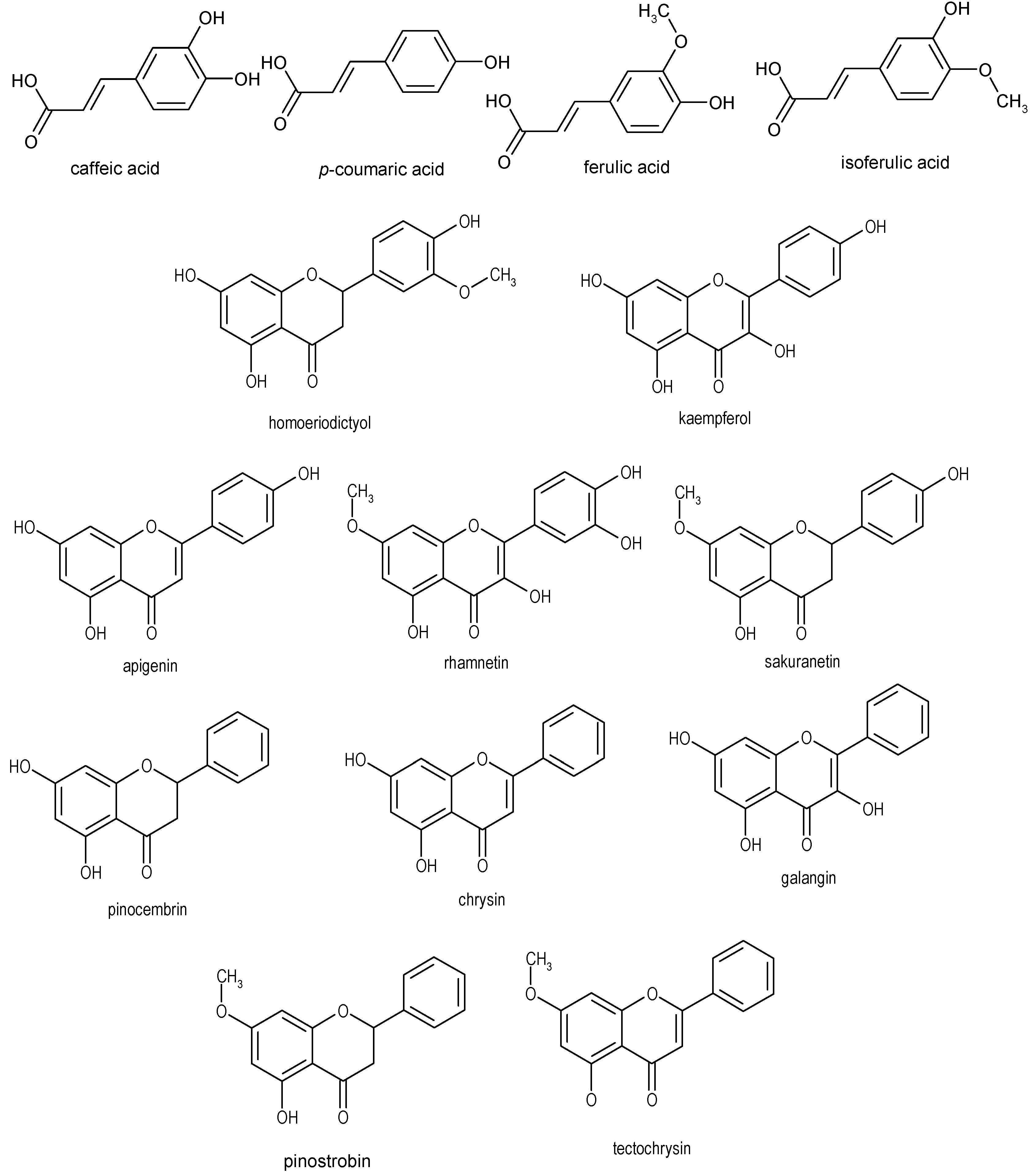
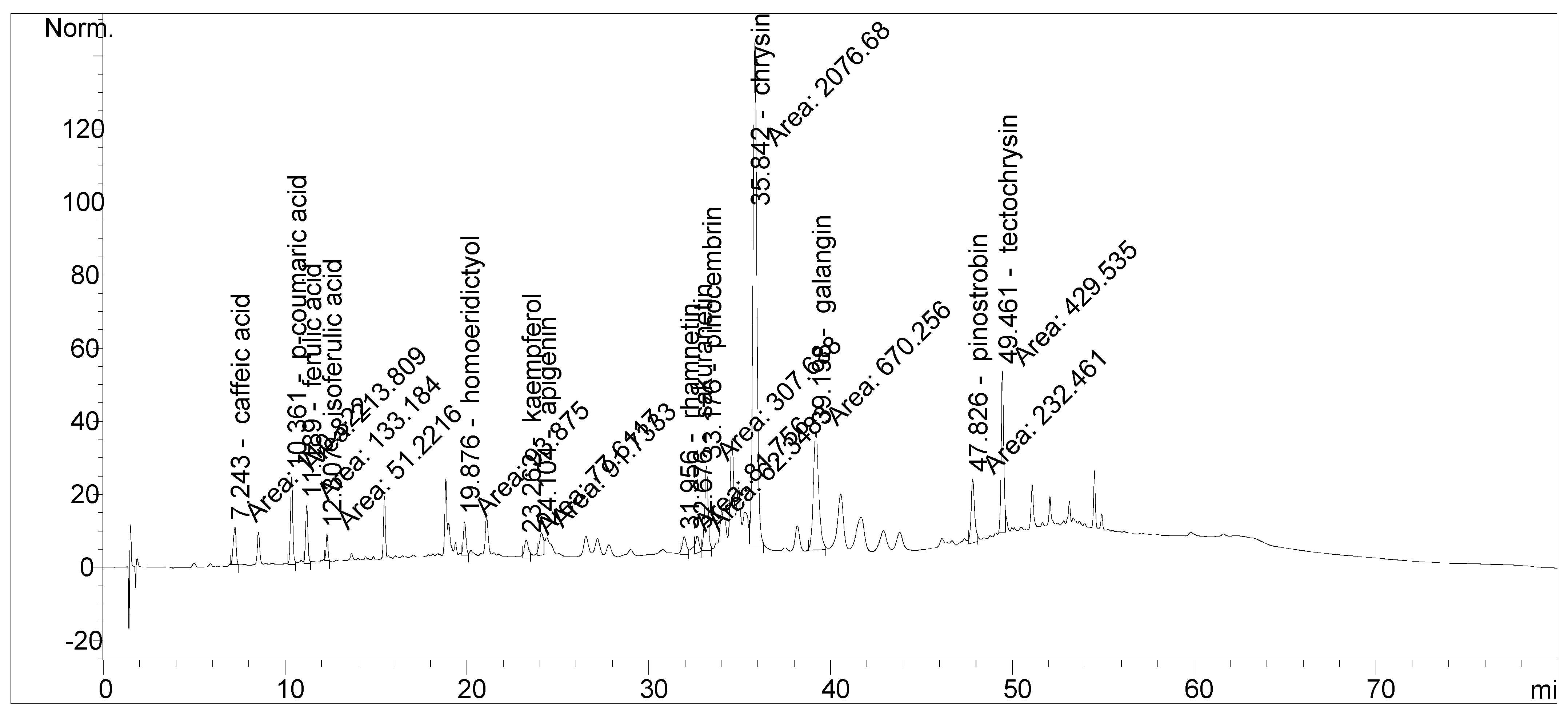
| Standard compound | Metković | Čisla (Omiš) | Pelješac | Vis | Kutina |
| Caffeic acid | 6.45 ± 0.07 | 7.25 ± 0.07 | 7.23 ± 0.07 | 5.69 ± 0.07 | 2.39 ± 0.03 |
| p-Coumaric acid | 4.66 ± 0.04 | 23.91 ± 0.19 | 7.79 ± 0.07 | 18.01 ± 0.11 | 1.29 ± 0.02 |
| Ferulic acid | 1.92 ± 0.02 | 25.28 ± 0.21 | 7.96 ± 0.07 | – | 1.20 ± 0.01 |
| Isoferulic acid | 4.64 ± 0.04 | 3.45 ± 0.03 | 3.35 ± 0.03 | 4.27 ± 0.04 | 1.08 ± 0.01 |
| Homoeridictyol | 10.30 ± 0.11 | 3.14 ± 0.03 | 6.01 ± 0.06 | 2.65 ± 0.02 | 9.81 ± 0.09 |
| Kaempferol | 6.90 ± 0.07 | 4.94 ± 0.05 | 5.40 ± 0.06 | 4.54 ± 0.05 | – |
| Apigenin | 5.39 ± 0.05 | 3.26 ± 0.03 | 2.44 ± 0.02 | 2.71 ± 0.02 | – |
| Rhamnetin | 2.43 ± 0.02 | – | 2.45 ± 0.02 | 1.36 ± 0.02 | – |
| Sakuranetin | 12.51 ± 0.11 | – | 5.72 ± 0.05 | 2.52 ± 0.02 | – |
| Pinocembrin | 25.59 ± 0.22 | 13.36 ± 0.10 | 19.83 ± 0.10 | 13.21 ± 0.11 | 4.52 ± 0.05 |
| Chrysin | 98.13 ± 0.55 | 13.62 ± 0.12 | 71.54 ± 0.07 | 13.31 ± 0.14 | 42.22 ± 0.40 |
| Galangin | 20.42 ± 0.20 | 6.85 ± 0.06 | 16.67 ± 0.17 | 4.76 ± 0.04 | 1.79 ± 0.02 |
| Pinostrobin | 27.50 ± 0.25 | – | 16.30 ± 0.16 | – | 7.18 ± 0.06 |
| Tectochrysin | 31.42 ± 0.30 | – | 18.73 ± 0. 18 | – | 10.96 ± 0.10 |
| Total amount of identified flavonoids (μg/mL) | 240.59 | 45.17 | 165.09 | 45.06 | 76.48 |
| Total amount of identified phenolic acids(μg/mL) | 17.67 | 59.89 | 26.33 | 27.97 | 5.96 |
2.2. Spectrophotometric and thin-layer chromatographic (TLC) assays
2.3. Spectrophotometric DPPH· assay
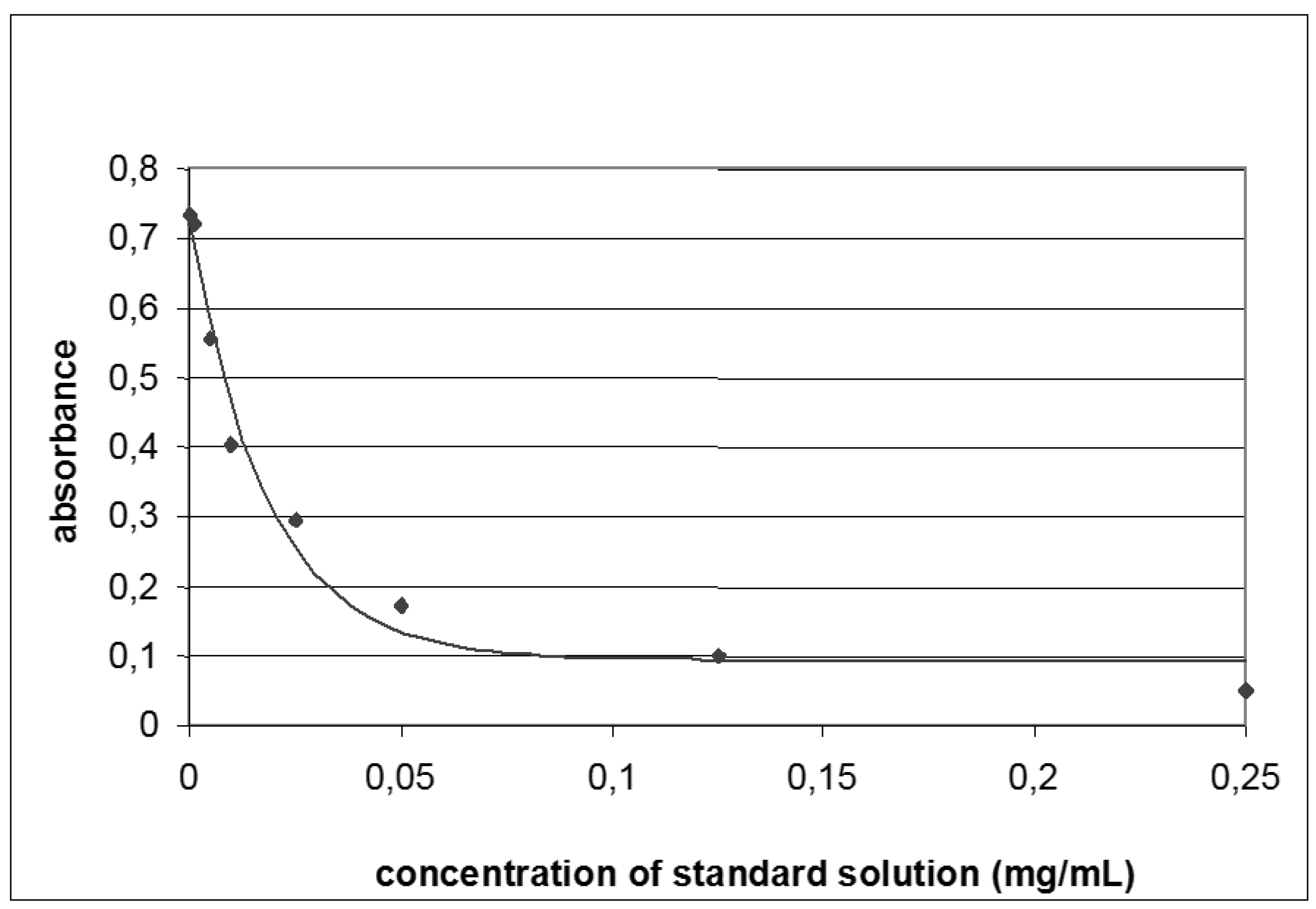

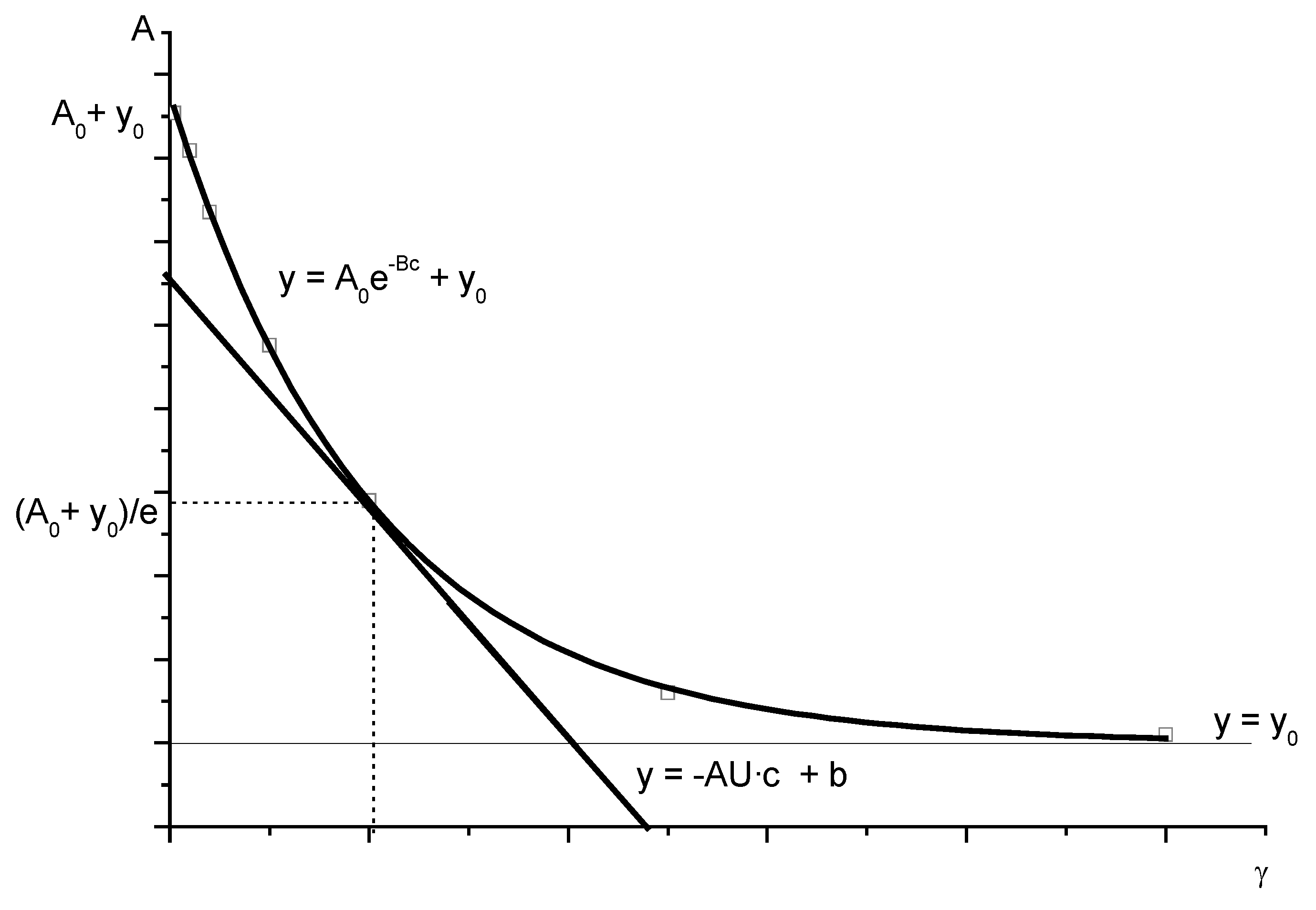
| Propolis sample | Curve equation | Correlation coefficient | Equation of the tangent A = A0 / e | Antioxidative efficiency (AOE) |
|---|---|---|---|---|
| Metković | A = 0.801e−10.955c + 0.075 | r2 = 0.99796 | y = −2.679x + 0.612 | 2.679 |
| Čisla (Omiš) | A = 0.776e−10.480c + 0.075 | r2 = 0.99846 | y = −2.352x + 0.599 | 2.352 |
| Pelješac | A = 0.711e−12.390c + 0.123 | r2 = 0.99766 | y = −2.267x + 0.554 | 2.267 |
| Island Vis | A = 0.744e−12.117c + 0.153 | r2 = 0.99239 | y = −2.164x + 0.586 | 2.164 |
| Kutina | A = 0.87e−2.779c + 0.000 | r2 = 0.97530 | y = −0.880x + 0.639 | 0.880 |
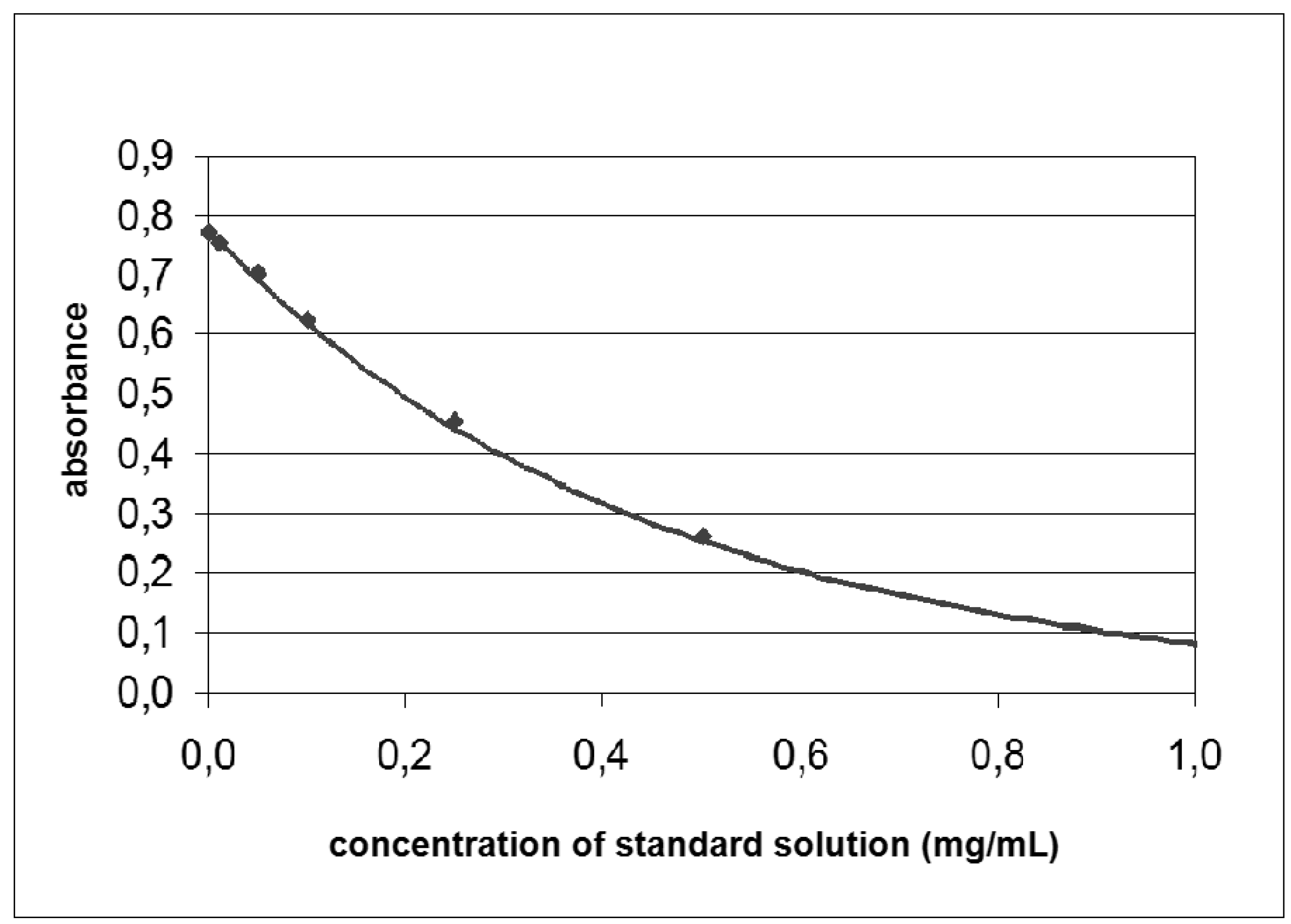
2.4. Spectrophotometric ABTS·+ assay
2.5. Thin-layer chromatography
| Propolis sample | Curve equation | Correlation coefficient | Equation of the tangent A = A0 / e | Antioxidative efficiency (AOE) |
|---|---|---|---|---|
| Island Vis | A = 0.701e−0.582c | r2 = 0.9937 | y = −0.150x + 0.516 | 0.150 |
| Čisla (Omiš) | A = 0.838e−0.417c | r2 = 0.9808 | y = −0.129x + 0.617 | 0.129 |
| Pelješac | A = 0.825e−0.395c | r2 = 0.9949 | y = −0.120x + 0.607 | 0.120 |
| Metković | A = 0.701e−0.407c | r2 = 0.9944 | y = −0.105x + 0.516 | 0.105 |
| Kutina | A = 0.893e−0.101c | r2 = 0.9804 | y = −0.033x + 0.657 | 0.033 |
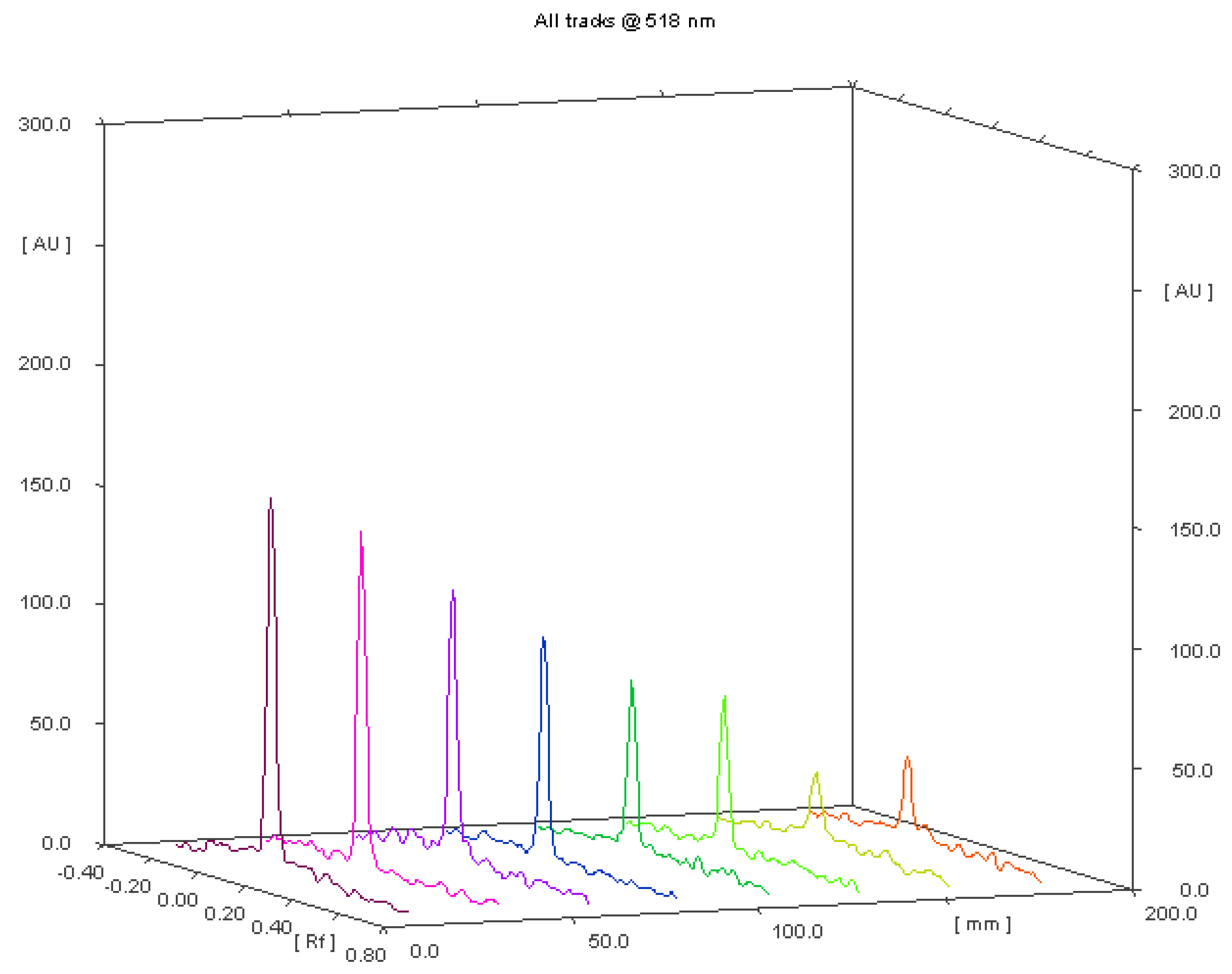
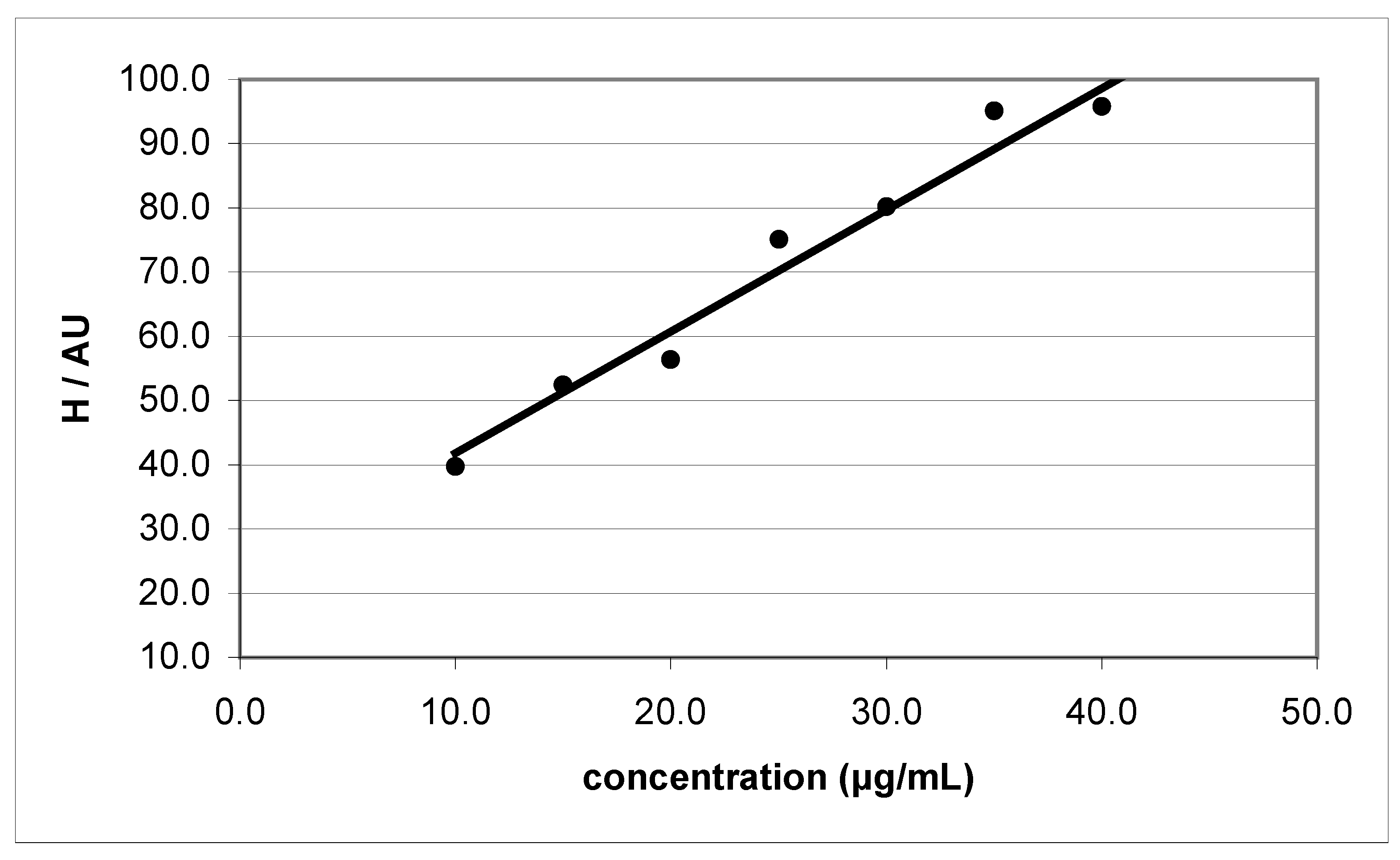
| Propolis sample | Curve equation | Correlation coefficient | Antioxidative efficiency (AOE) |
|---|---|---|---|
| Pelješac | y = 0.452x + 25.441 | r2 = 0.9876 | 0.452 |
| Čisla (Omiš) | y = 0.391x + 23.877 | r2 = 0.9900 | 0.391 |
| Metković | y = 0.389x + 40.464 | r2 = 0.9756 | 0.389 |
| Island Vis | y = 0.327x + 19.249 | r2 = 0.9751 | 0.327 |
| Kutina | y = 0.202x − 2.045 | r2 = 0.9862 | 0.202 |
- for the spectrophotometric DPPH· assay:AOE = 0.5637 + 0.0285 c(phenolic acids) + 0.0063 c(flavonoids)
n = 5, r = 0.878, s = 0.4713, F = 3.3623, - for the spectrophotometric ABTS·+ assay:AOE = 0.0499 + 0.0016 c(phenolic acids) + 0.0001 c(flavonoids)
n = 5, r = 0 .678, s = 0.0465, F = 0.8494 and - for the band-blot DPPH· assay:AOE = 0.1449 + 0.0040 c(phenolic acids) + 0.0009 c(flavonoids)
n = 5, r = 0.885, s = 0.0624, F = 3.6317.
3. Experimental
3.1. Chemicals
3.2. HPLC analysis
3.3. Spectrophotometric and thin-layer chromatographic (TLC) assays
3.3.1. Standard solution and sample preparation
3.3.2. Spectrophotometric assays
3.3.3. Thin-layer chromatography
3.4. Statistical Analysis
Acknowledgments
References
- Bankova, V. S.; De Castro, S. L.; Marucci, M. C. Propolis: Recent Advances in Chemistry and Plant Origin. Apidologie 2000, 31, 3–15. [Google Scholar] [CrossRef]
- Banksnota, A. H.; Tezuka, Y.; Kadota, Sh. Recent Progress in Pharmacological Research of Propolis. Phytother. Res. 2001, 15, 561–571. [Google Scholar] [CrossRef] [PubMed]
- Isla, M. I.; Moreno, M. I. N.; Sampietro, A. R.; Vattuone, M. A. Antioxidant Activity of Argentine Propolis Extracts. J. Ethnopharmacol. 2001, 76, 165–170. [Google Scholar]
- Kumazawa, S.; Hamasaka, T.; Nakayama, T. Antioxidant Activity of Propolis of Various Geographic Origins. Food Chem. 2004, 84, 329–339. [Google Scholar] [CrossRef]
- Russo, A.; Cardile, V.; Sanchez, F.; Troncoso, N.; Vanella, A.; Garabino, J. A. Chilean Propolis: Antioxidant Activity and Antiproliferative Action in Human Tumor Cell Lines. Life Sci. 2004, 76, 545–558. [Google Scholar] [CrossRef] [PubMed]
- Havsteen, B. H. The Biochemistry and Medical Significance of Flavonoids. Pharmacol. Ther. 2002, 96, 67–202. [Google Scholar] [CrossRef] [PubMed]
- Cotelle, N.; Bernier, J. L.; Catteau, J. P.; Pommery, J.; Wallet, J. C.; Gaydou, E. M. Antioxidant Properties of hydroxy-flavones. Free Radical Biol. Med. 1996, 20, 35–43. [Google Scholar]
- Sánchez-Moreno, C.; Larrauri, J. A.; Saura-Calixto, F. A Procedure to Measure the Antiradical Efficiency of Polyphenols. J. Sci. Food Agric. 1998, 76, 270–276. [Google Scholar]
- Mensor, L. L.; Menezes, F. S.; Leitão, G. G.; Reis, A. S.; Santos, T. C.; Coube, C. S.; Leitão, S. G. Screening of Brazilian Plant Extracts for Antioxidant Activity by the Use of DPPH Free Radical Method. Phytother. Res. 2001, 15, 127–130. [Google Scholar] [CrossRef] [PubMed]
- Re, R.; Pellegrini, N.; Proteggente, A.; Pannala, A.; Yang, M.; Rice-Evans, C. Antioxidant Activity Applying an Improved ABTS Radical Cation Decolorization Assay. Free Radical Biol. Med. 1999, 26, 1231–1237. [Google Scholar] [CrossRef]
- Soler-Rivas, C.; Espín, J. C.; Wichers, H. J. An Easy Fast Test to Compare Total Free Radical Scavenger Capacity of Foodstuffs. Phytochem. Anal. 2000, 11, 330–338. [Google Scholar]
- Choi, C. W.; Kim, S. C.; Hwang, S. S.; Choi, B. K.; Ahn, H. J.; Lee, M. Y.; Park, S. H.; Kim, S. K. Antioxidant Activity and Free Radical Scavenging Capacity Between Korean Medicinal Plants and Flavonoids by Assay-Guided Comparison. Plant. Sci. 2002, 163, 1161–1168. [Google Scholar] [CrossRef]
- Miliauskas, G.; Venskutonis, P. R.; van Beek, T. A. Screening of Radical Scavenging Activity of Some Medicinal and Aromatic Plant Extracts. Food Chem. 2004, 85, 231–237. [Google Scholar] [CrossRef]
- Peiwu, L.; Hopia, A.; Jari, S.; Yrjönen, T.; Vuorela, H. TLC Method for Evaluation of Free Radical Scavenging Activity of Rapeseed Meal by Video Scanning Technology. In Proceedings of the 10th International Rapeseed Congress, Canberra, Australia, 1999; Available at http://www.regional.org.au/au/gcirc/1/551.htm (11th March 2003).
- Jasprica, I.; Smolcic-Bubalo, A.; Mornar, A.; Medic-Saric, M. Investigation of the Flavonoids in Croatian Propolis by Thin-Layer Chromatography. J. Planar Chromatogr. 2004, 17, 95–101. [Google Scholar] [CrossRef]
- Medic-Saric, M.; Jasprica, I.; Mornar, A.; Smolcic-Bubalo, A.; Golja, P. Quantitative Analysis of Flavonoids and Phenolic Acids in Propolis by Two-Dimensional Thin Layer Chromatography. J. Planar Chromatogr. 2004, 17, 459–463. [Google Scholar]
- Morrissey, P. A.; O'Brien, N. M. Dietary Antioxidants in Health and Disease. Int. Diary J. 1998, 8, 463–472. [Google Scholar] [CrossRef]
- Maxwell, S. R. J. Anti-oxidant Therapy: does it have a Role in the Treatment of Human Disease? Exp. Opin. Invest. Drugs 1997, 6, 211–236. [Google Scholar] [CrossRef]
- Cvek, J.; Medic-Saric, M.; Jasprica, I.; Zubcic, S.; Vitali, D.; Mornar, A.; Vedrina-Dragojevic, I.; Tomic, S. Optimization of an extraction procedure and chemical characterization of Croatian propolis tinctures. Phytochem. Anal. 2007, (in press). [Google Scholar]
- Sample availability: Available from the authors.
© 2007 by MDPI (http://www.mdpi.org). Reproduction is permitted for noncommercial purposes.
Share and Cite
Jasprica, I.; Bojic, M.; Mornar, A.; Besic, E.; Bucan, K.; Medic-Saric, M. Evaluation of Antioxidative Activity of Croatian Propolis Samples Using DPPH· and ABTS·+ Stable Free Radical Assays. Molecules 2007, 12, 1006-1021. https://doi.org/10.3390/12051006
Jasprica I, Bojic M, Mornar A, Besic E, Bucan K, Medic-Saric M. Evaluation of Antioxidative Activity of Croatian Propolis Samples Using DPPH· and ABTS·+ Stable Free Radical Assays. Molecules. 2007; 12(5):1006-1021. https://doi.org/10.3390/12051006
Chicago/Turabian StyleJasprica, Ivona, Mirza Bojic, Ana Mornar, Erim Besic, Kajo Bucan, and Marica Medic-Saric. 2007. "Evaluation of Antioxidative Activity of Croatian Propolis Samples Using DPPH· and ABTS·+ Stable Free Radical Assays" Molecules 12, no. 5: 1006-1021. https://doi.org/10.3390/12051006