11 pages, 264 KB  
Article
The Health Belief Model Predicts Intention to Receive the COVID-19 Vaccine in Saudi Arabia: Results from a Cross-Sectional Survey
by Ilias Mahmud, Russell Kabir, Muhammad Aziz Rahman, Angi Alradie-Mohamed, Divya Vinnakota and Abdulrahman Al-Mohaimeed
Vaccines 2021, 9(8), 864; https://doi.org/10.3390/vaccines9080864 - 5 Aug 2021
Cited by 62 | Viewed by 8427
Abstract
We examined the intention and predictors of accepting the COVID-19 vaccine in Saudi Arabia. We conducted a nation-wide, cross-sectional online survey between February and March 2021. A total of 1387 people (≥18 years) participated. Only 27.3% adults had a definite and 30.2% had [...] Read more.
We examined the intention and predictors of accepting the COVID-19 vaccine in Saudi Arabia. We conducted a nation-wide, cross-sectional online survey between February and March 2021. A total of 1387 people (≥18 years) participated. Only 27.3% adults had a definite and 30.2% had a probable vaccination intent; 26.8% and 15.6% had a probable and definite negative vaccination intent. Older people (≥50 years) (p < 0.01), healthcare workers/professionals (p < 0.001), and those who received flu vaccine (p < 0.001) were more likely to have a positive intent. People from Riyadh were less likely to receive the vaccine (p < 0.05). Among the health belief model constructs, perceived susceptibility to and severity of COVID-19 (p < 0.001), and perceived benefit of the vaccine (p < 0.001) were positively associated with vaccination intent, whereas perceived barriers had a negative association (p < 0.001). Individuals were more likely to receive the vaccine after obtaining complete information (p < 0.001) and when the vaccine uptake would be more common amongst the public (p < 0.001). Full article
11 pages, 953 KB  
Article
Motivation to COVID-19 Vaccination and Reasons for Hesitancy in Employees of a Czech Tertiary Care Hospital: A Cross-Sectional Survey
by Ladislav Štěpánek, Magdaléna Janošíková, Marie Nakládalová, Lubomír Štěpánek, Alena Boriková and Helena Vildová
Vaccines 2021, 9(8), 863; https://doi.org/10.3390/vaccines9080863 - 5 Aug 2021
Cited by 35 | Viewed by 4892
Abstract
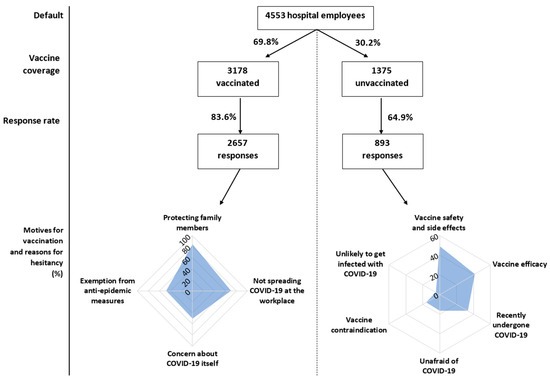
High vaccination coverage among healthcare workers (HCWs) is crucial for managing the COVID-19 pandemic. The aim was to determine the demand for vaccination among all employees (n = 4553) of a tertiary care hospital after several weeks of the vaccine’s availability, and [...] Read more.
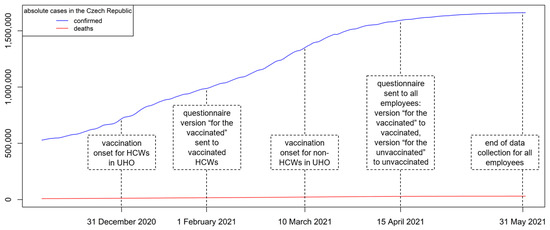
High vaccination coverage among healthcare workers (HCWs) is crucial for managing the COVID-19 pandemic. The aim was to determine the demand for vaccination among all employees (n = 4553) of a tertiary care hospital after several weeks of the vaccine’s availability, and to analyze motives for acceptance and reasons for hesitancy through an anonymous online questionnaire. Upon the completion of data collection, the hospital’s vaccination coverage was at 69.8%. A total of 3550 completed questionnaires were obtained (2657 from vaccinated, 893 from unvaccinated employees). Significant predictors of vaccine acceptance were: age (odds ratio (OR) 1.01, 95% confidence interval (CI) 1.01–1.02), sex (OR (females) 0.58, 95% CI 0.45–0.75), job type (OR (non-physician HCWs) 0.54, 95% CI 0.41–0.72; OR (non-HCWs) 0.51, 95% CI 0.37–0.71), fear of COVID-19 (OR 1.4, 95% CI 1.34–1.46), history of COVID-19 (OR 0.41, 95% CI 0.34–0.49) and of influenza vaccination (OR 2.74, 95% CI 2.12–3.57). The most frequent motive for acceptance was the effort to protect family members (84%), while concerns about vaccine safety and side effects (49.4%), followed by distrust in the vaccine’s efficacy (41.1%) were the top reasons for hesitancy. To increase vaccination coverage among HCWs, it is necessary to raise awareness of vaccine safety and efficacy. Full article
(This article belongs to the Section COVID-19 Vaccines and Vaccination)
Show Figures

Figure 1

13 pages, 775 KB  
Article
Effectiveness of the Adjuvanted Influenza Vaccine in Older Adults at High Risk of Influenza Complications
by Constantina Boikos, Mahrukh Imran, Van Hung Nguyen, Thierry Ducruet, Gregg C. Sylvester and James A. Mansi
Vaccines 2021, 9(8), 862; https://doi.org/10.3390/vaccines9080862 - 5 Aug 2021
Cited by 20 | Viewed by 6092
Abstract
MF59®-adjuvanted trivalent inactivated influenza vaccine (aIIV3) and high-dose trivalent inactivated influenza vaccine (HD-IIV3) elicit an enhanced immune response in older adults compared to standard, quadrivalent inactivated influenza vaccines (IIV4). We sought to determine the relative vaccine effectiveness (rVE) of aIIV3 versus [...] Read more.
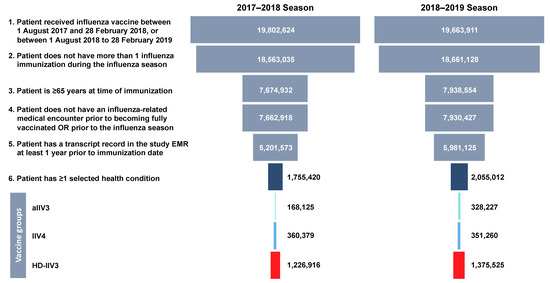
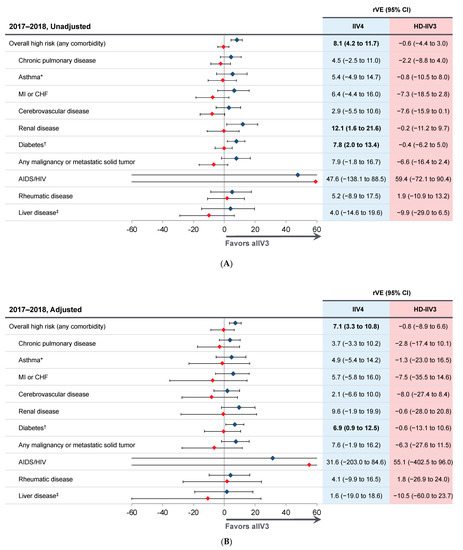
MF59®-adjuvanted trivalent inactivated influenza vaccine (aIIV3) and high-dose trivalent inactivated influenza vaccine (HD-IIV3) elicit an enhanced immune response in older adults compared to standard, quadrivalent inactivated influenza vaccines (IIV4). We sought to determine the relative vaccine effectiveness (rVE) of aIIV3 versus IIV4 and HD-IIV3 in preventing influenza-related medical encounters in this retrospective cohort study involving adults ≥65 years with ≥1 health condition during the 2017–2018 and 2018–2019 influenza seasons. Data were obtained from primary and specialty care electronic medical records linked with pharmacy and medical claims. Adjusted odds ratios (OR) were derived from an inverse probability of treatment-weighted sample adjusted for age, sex, race, ethnicity, geographic region, vaccination week, and health status. rVE was determined using the formula (% rVE = 1 − ORadjusted) × 100. Analysis sets included 1,755,420 individuals for the 2017–2018 season and 2,055,012 for the 2018–2019 season. Compared to IIV4, aIIV3 was 7.1% (95% confidence interval 3.3–10.8) and 20.4% (16.2–24.4) more effective at preventing influenza-related medical encounters in the 2017–2018 and 2018–2019 seasons, respectively. Comparable effectiveness was observed with HD-IIV3 across both seasons. Our results support improved effectiveness of aIIV3 vs IIV4 in a vulnerable population of older adults at high risk of influenza and its complications. Full article
Show Figures

Figure 1

13 pages, 2292 KB  
Article
Analysis of Host Immunological Response of Adenovirus-Based COVID-19 Vaccines
by Suzan Farhang-Sardroodi, Chapin S. Korosec, Samaneh Gholami, Morgan Craig, Iain R. Moyles, Mohammad Sajjad Ghaemi, Hsu Kiang Ooi and Jane M. Heffernan
Vaccines 2021, 9(8), 861; https://doi.org/10.3390/vaccines9080861 - 4 Aug 2021
Cited by 24 | Viewed by 4925
Abstract
During the SARS-CoV-2 global pandemic, several vaccines, including mRNA and adenovirus vector approaches, have received emergency or full approval. However, supply chain logistics have hampered global vaccine delivery, which is impacting mass vaccination strategies. Recent studies have identified different strategies for vaccine dose [...] Read more.
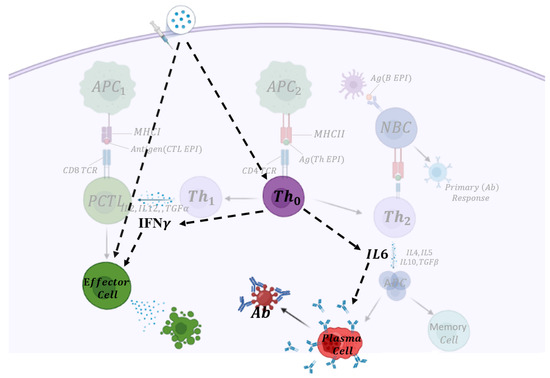
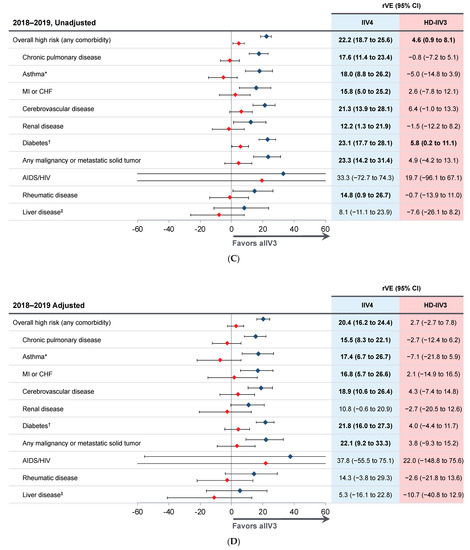
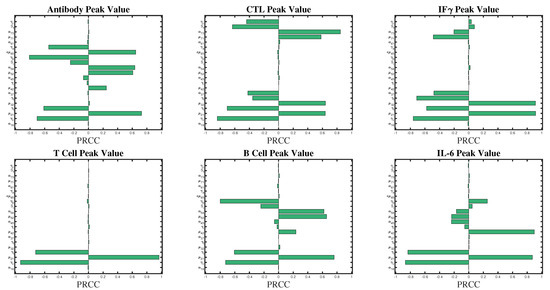
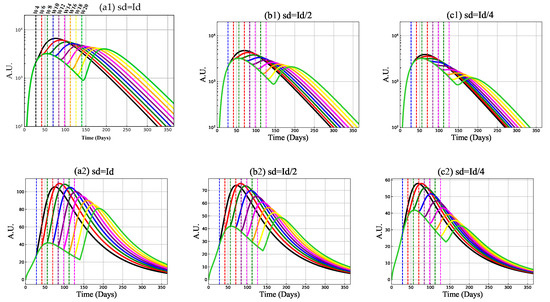
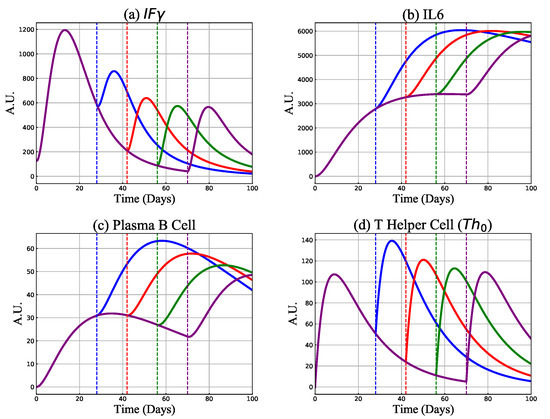
During the SARS-CoV-2 global pandemic, several vaccines, including mRNA and adenovirus vector approaches, have received emergency or full approval. However, supply chain logistics have hampered global vaccine delivery, which is impacting mass vaccination strategies. Recent studies have identified different strategies for vaccine dose administration so that supply constraints issues are diminished. These include increasing the time between consecutive doses in a two-dose vaccine regimen and reducing the dosage of the second dose. We consider both of these strategies in a mathematical modeling study of a non-replicating viral vector adenovirus vaccine in this work. We investigate the impact of different prime-boost strategies by quantifying their effects on immunological outcomes based on simple system of ordinary differential equations. The boost dose is administered either at a standard dose (SD) of 1000 or at a low dose (LD) of 500 or 250 vaccine particles. Results show dose-dependent immune response activity. Our model predictions show that by stretching the prime-boost interval to 18 or 20, in an SD/SD or SD/LD regimen, the minimum promoted antibody (Nab) response will be comparable with the neutralizing antibody level measured in COVID-19 recovered patients. Results also show that the minimum stimulated antibody in SD/SD regimen is identical with the high level observed in clinical trial data. We conclude that an SD/LD regimen may provide protective capacity, which will allow for conservation of vaccine doses. Full article
Show Figures

Figure 1

13 pages, 1348 KB  
Article
Novel Surrogate Neutralizing Assay Supports Parvovirus B19 Vaccine Development for Children with Sickle Cell Disease
by Rhiannon R. Penkert, Sumana Chandramouli, Philip R. Dormitzer, Ethan C. Settembre, Robert E. Sealy, Susan Wong, Neal S. Young, Yilun Sun, Li Tang, Alyssa Cotton, Jola Dowdy, Randall T. Hayden, Jane S. Hankins and Julia L. Hurwitz
Vaccines 2021, 9(8), 860; https://doi.org/10.3390/vaccines9080860 - 4 Aug 2021
Cited by 4 | Viewed by 4153
Abstract
Children with sickle cell disease (SCD) suffer life-threatening transient aplastic crisis (TAC) when infected with parvovirus B19. In utero, infection of healthy fetuses may result in anemia, hydrops, and death. Unfortunately, although promising vaccine candidates exist, no product has yet been licensed. One [...] Read more.
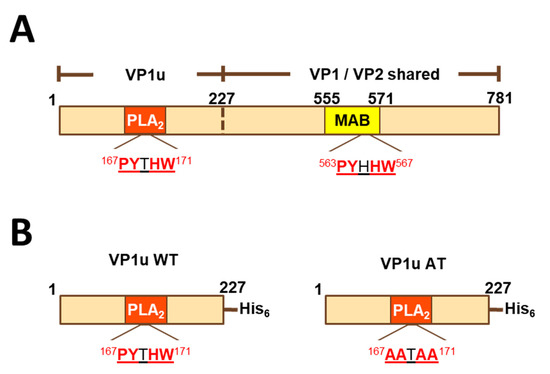
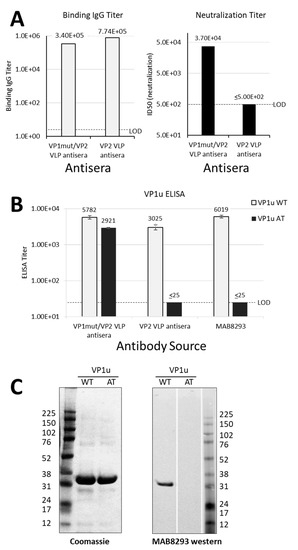
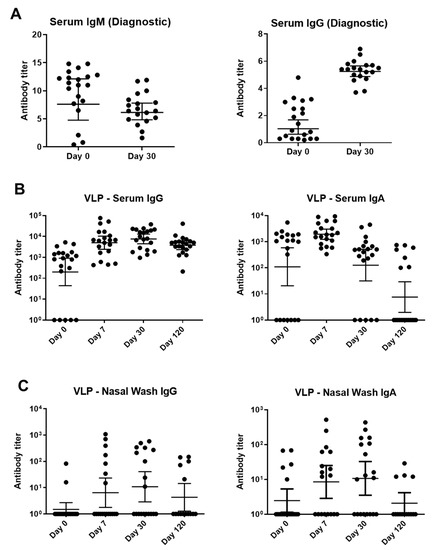
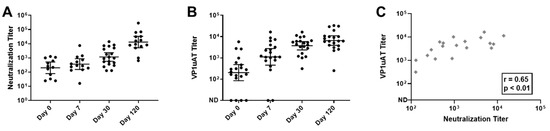
Children with sickle cell disease (SCD) suffer life-threatening transient aplastic crisis (TAC) when infected with parvovirus B19. In utero, infection of healthy fetuses may result in anemia, hydrops, and death. Unfortunately, although promising vaccine candidates exist, no product has yet been licensed. One barrier to vaccine development has been the lack of a cost-effective, standardized parvovirus B19 neutralization assay. To fill this void, we evaluated the unique region of VP1 (VP1u), which contains prominent targets of neutralizing antibodies. We discovered an antigenic cross-reactivity between VP1 and VP2 that, at first, thwarted the development of a surrogate neutralization assay. We overcame the cross-reactivity by designing a mutated VP1u (VP1uAT) fragment. A new VP1uAT ELISA yielded results well correlated with neutralization (Spearman’s correlation coefficient = 0.581; p = 0.001), superior to results from a standard clinical diagnostic ELISA or an ELISA with virus-like particles. Virus-specific antibodies from children with TAC, measured by the VP1uAT and neutralization assays, but not other assays, gradually increased from days 0 to 120 post-hospitalization. We propose that this novel and technically simple VP1uAT ELISA might now serve as a surrogate for the neutralization assay to support rapid development of a parvovirus B19 vaccine. Full article
(This article belongs to the Special Issue Advances in Vaccine Development)
Show Figures

Figure 1

6 pages, 221 KB  
Case Report
An Outbreak of COVID-19 among mRNA-Vaccinated Nursing Home Residents
by Fabrizio Faggiano, Maicol Andrea Rossi, Tiziana Cena, Fulvia Milano, Antonella Barale, Quenya Ristagno and Virginia Silano
Vaccines 2021, 9(8), 859; https://doi.org/10.3390/vaccines9080859 - 4 Aug 2021
Cited by 13 | Viewed by 2901
Abstract
An outbreak was described among the guests of a Long-Term Care Facility in the North of Italy. Among 23 guests, 20 of whom were fully vaccinated with BNT162b2 vaccine, the outbreak led to a final count of 11 positive guests, 9 of whom [...] Read more.
An outbreak was described among the guests of a Long-Term Care Facility in the North of Italy. Among 23 guests, 20 of whom were fully vaccinated with BNT162b2 vaccine, the outbreak led to a final count of 11 positive guests, 9 of whom were vaccinated, and 4 positive healthcare workers, of whom only 1 was vaccinated. Eight of the positive guests (six vaccinated and two unvaccinated) had symptoms that in five cases (three vaccinated and two unvaccinated) led to death. The risk of infection and the risk of death appeared not to be correlated with the health status neither with the serological titer, but only with age. Full article
12 pages, 509 KB  
Article
COVID-19 Vaccine Hesitancy and Uptake among Nursing Staff during an Active Vaccine Rollout
by Lynn M. Baniak, Faith S. Luyster, Claire A. Raible, Ellesha E. McCray and Patrick J. Strollo
Vaccines 2021, 9(8), 858; https://doi.org/10.3390/vaccines9080858 - 4 Aug 2021
Cited by 30 | Viewed by 6930
Abstract
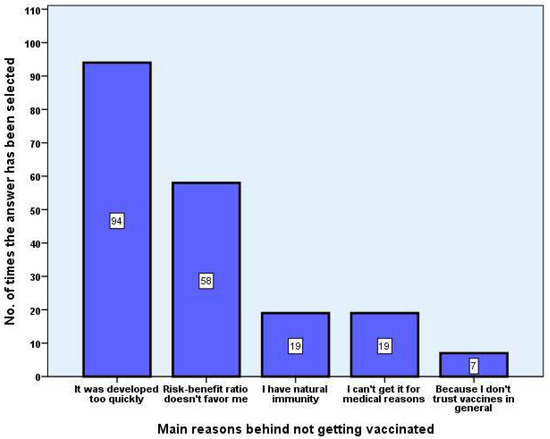
Even with the availability of COVID-19 vaccines, factors associated with vaccine hesitancy and uptake among nurses are unknown. This study evaluated COVID-19 vaccine hesitancy and uptake of nursing staff during one of the first COVID-19 vaccine rollouts in the United States. A cross-sectional [...] Read more.
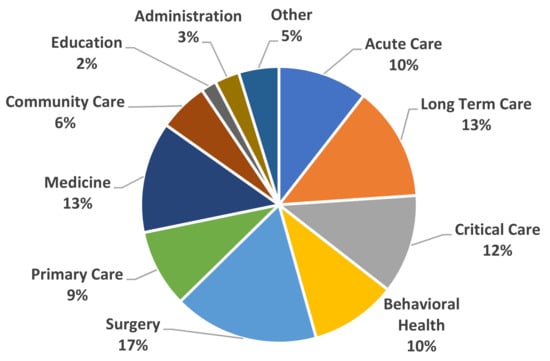
Even with the availability of COVID-19 vaccines, factors associated with vaccine hesitancy and uptake among nurses are unknown. This study evaluated COVID-19 vaccine hesitancy and uptake of nursing staff during one of the first COVID-19 vaccine rollouts in the United States. A cross-sectional survey was conducted during February 2021 among nursing staff working in a large medical center in central United States. There were 276 respondents; 81.9% of participants were willing to receive the vaccine during the initial rollout, 11.2% were hesitant, and only 5.1% were unwilling. The hesitant group was likely to report having inadequate information to make an informed decision about whether to receive the vaccine (45.2%) and about vaccine expectations (32.3%). The majority (83.3%) received at least one dose of the vaccine. Having greater than 10 years’ work experience (OR 3.0, 95% CI 1.16–7.9) and confidence in vaccine safety (OR 7.78, 95% CI 4.49–13.5) were significantly associated with vaccine uptake. While our study indicates higher vaccine uptake among nursing staff during an active vaccine rollout, there remains sustained hesitancy and unwillingness to uptake. For those hesitant to receive the COVID-19 vaccine, public health efforts to provide more data on side effects and efficacy may help increase vaccine uptake. Full article
(This article belongs to the Section COVID-19 Vaccines and Vaccination)
Show Figures

Figure 1

13 pages, 1472 KB  
Article
Heterologous ChAdOx1 nCoV-19/BNT162b2 Prime-Boost Vaccination Induces Strong Humoral Responses among Health Care Workers
by Louise Benning, Maximilian Töllner, Asa Hidmark, Matthias Schaier, Christian Nusshag, Florian Kälble, Paula Reichel, Mirabel Buylaert, Julia Grenz, Gerald Ponath, Katrin Klein, Martin Zeier, Caner Süsal, Paul Schnitzler, Christian Morath and Claudius Speer
Vaccines 2021, 9(8), 857; https://doi.org/10.3390/vaccines9080857 - 4 Aug 2021
Cited by 55 | Viewed by 4937
Abstract
Despite limited data on safety and immunogenicity, heterologous prime-boost vaccination is currently recommended for individuals with ChAdOx1 nCoV-19 prime immunization in certain age groups. In this prospective, single-center study we included 166 health care workers from Heidelberg University Hospital who received either heterologous [...] Read more.
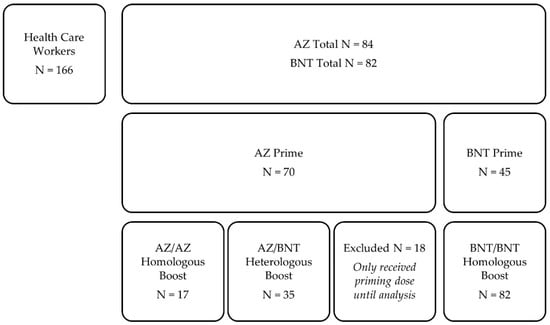
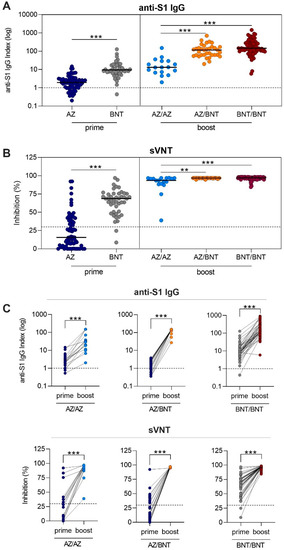
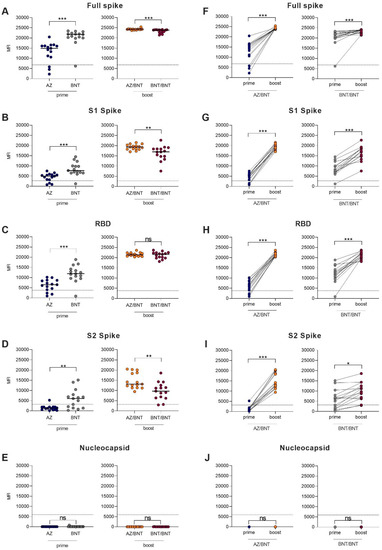
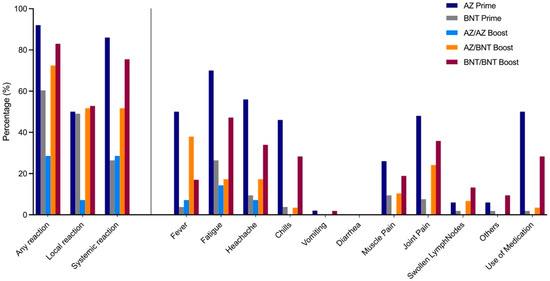
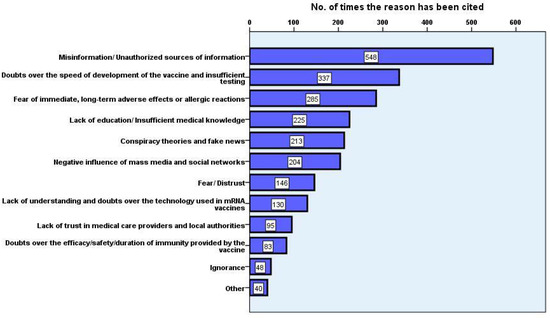
Despite limited data on safety and immunogenicity, heterologous prime-boost vaccination is currently recommended for individuals with ChAdOx1 nCoV-19 prime immunization in certain age groups. In this prospective, single-center study we included 166 health care workers from Heidelberg University Hospital who received either heterologous ChAdOx1 nCoV-19/BNT162b2, homologous BNT162b2 or homologous ChAdOx1 nCoV-19 vaccination between December 2020 and May 2021. We measured anti-S1 IgG, SARS-CoV-2 specific neutralizing antibodies, and antibodies against different SARS-CoV-2 fragments 0–3 days before and 19–21 days after boost vaccination. Before boost, 55/70 (79%) ChAdOx1 nCoV-19-primed compared with 44/45 (98%) BNT162b2-primed individuals showed positive anti-S1 IgG with a median (IQR) anti-S1 IgG index of 1.95 (1.05–2.99) compared to 9.38 (6.26–17.12). SARS-CoV-2 neutralizing antibodies exceeded the threshold in 24/70 (34%) of ChAdOx1 nCoV-19-primed and 43/45 (96%) of BNT162b2-primed individuals. After boosting dose, median (IQR) anti-S1 IgG index in heterologous ChAdOx1 nCoV-19/BNT162b2 vaccinees was 116.2 (61.84–170), compared to 13.09 (7.03–29.02) in homologous ChAdOx1 nCoV-19 and 145.5 (100–291.1) in homologous BNT162b2 vaccinees. All boosted vaccinees exceeded the threshold for neutralization, irrespective of their vaccination scheme. Vaccination was well-tolerated overall. We show that heterologous ChAdOx1 nCoV-19/BNT162b2 vaccination is safe and induces a strong and broad humoral response in healthy individuals. Full article
(This article belongs to the Special Issue Vaccination Strategies for COVID-19)
Show Figures

Figure 1

7 pages, 397 KB  
Article
A Long-Term Observation on the Possible Adverse Effects in Japanese Adolescent Girls after Human Papillomavirus Vaccination
by Akiyo Hineno and Shu-Ichi Ikeda
Vaccines 2021, 9(8), 856; https://doi.org/10.3390/vaccines9080856 - 4 Aug 2021
Cited by 5 | Viewed by 7482
Abstract
In Japan, a significant number of adolescent females noted unusual symptoms after receiving the human papillomavirus (HPV) vaccination, of which the vast majority of them were initially diagnosed with psychiatric illnesses because of the absence of pathologic radiological images and specific abnormalities in [...] Read more.
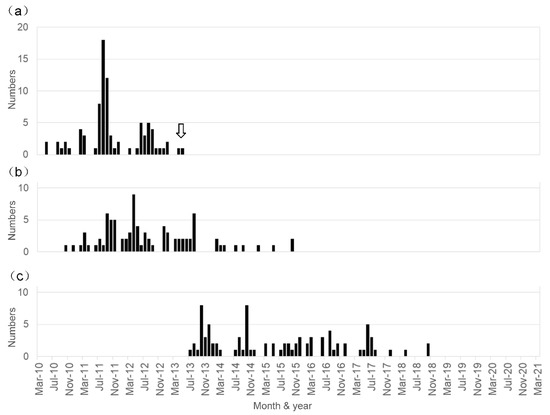
In Japan, a significant number of adolescent females noted unusual symptoms after receiving the human papillomavirus (HPV) vaccination, of which the vast majority of them were initially diagnosed with psychiatric illnesses because of the absence of pathologic radiological images and specific abnormalities in laboratory test results. Later these symptoms were thought to be adverse effects of HPV vaccination. However, a causal link between HPV vaccination and the development of these symptoms has not been demonstrated. Between June 2013 and March 2021, we examined 200 patients who noted various symptoms after HPV vaccination. In total, 87 were diagnosed with HPV vaccination-related symptoms based on our proposed diagnostic criteria. The clinical histories of these 87 patients were analyzed. The age at initial vaccination ranged from 11 to 19 years old (mean ± SD: 13.5 ± 1.5 years old), and the age at the first appearance of symptoms ranged from 12 to 20 years old (mean ± SD: 14.3 ± 1.6 years old). The patients received an initial HPV vaccine injection between May 2010 and May 2013, but the first affected patient developed symptoms in October 2010, and the last affected developed symptoms in October 2015. A cluster of patients with a post-HPV vaccination disorder has not appeared in Japan during the last five years. Our study shows that, in Japan, the period of HPV vaccination considerably overlapped with that of a unique post-HPV vaccination disorder development. This disorder appears as a combination of orthostatic intolerance, chronic regional pain syndrome, and cognitive dysfunction, but its exact pathogenesis remains unclear. Full article
(This article belongs to the Collection HPV-Vaccines)
Show Figures

Figure 1

15 pages, 2764 KB  
Article
Guiding the Immune Response to a Conserved Epitope in MSP2, an Intrinsically Disordered Malaria Vaccine Candidate
by Jeffrey Seow, Sreedam C. Das, Rodrigo A. V. Morales, Ricardo Ataide, Bankala Krishnarjuna, Mitchell Silk, David K. Chalmers, Jack Richards, Robin F. Anders, Christopher A. MacRaild and Raymond S. Norton
Vaccines 2021, 9(8), 855; https://doi.org/10.3390/vaccines9080855 - 4 Aug 2021
Cited by 3 | Viewed by 3493
Abstract
The malaria vaccine candidate merozoite surface protein 2 (MSP2) has shown promise in clinical trials and is in part responsible for a reduction in parasite densities. However, strain-specific reductions in parasitaemia suggested that polymorphic regions of MSP2 are immuno-dominant. One strategy to bypass [...] Read more.
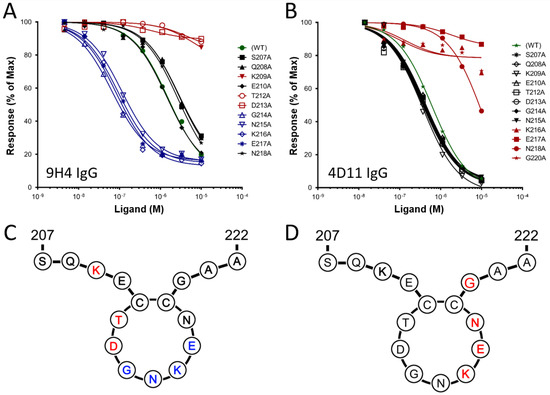
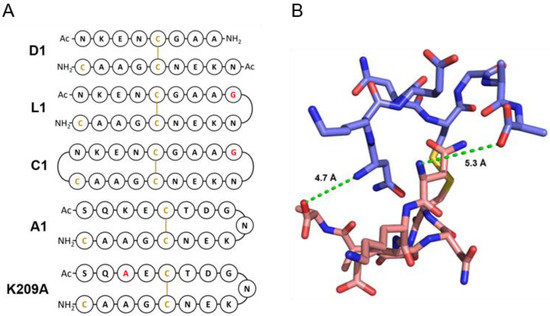
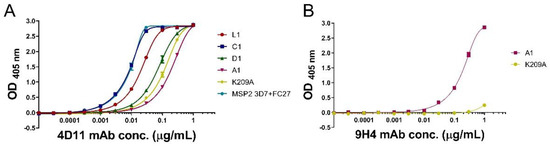
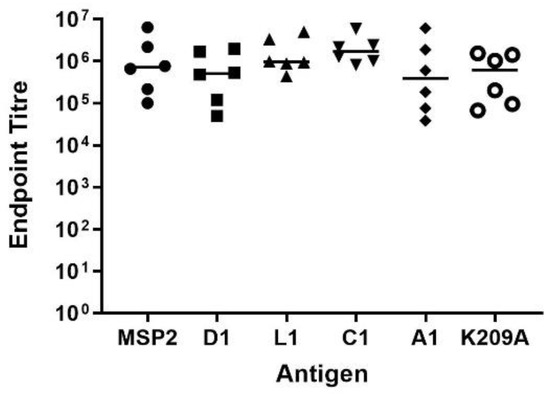
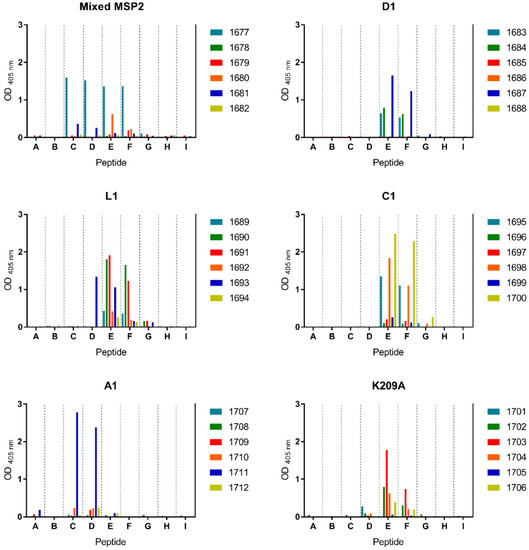
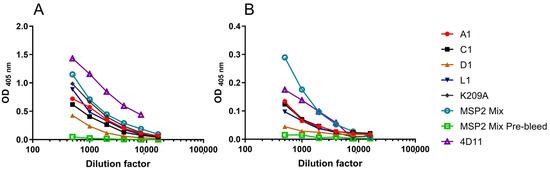
The malaria vaccine candidate merozoite surface protein 2 (MSP2) has shown promise in clinical trials and is in part responsible for a reduction in parasite densities. However, strain-specific reductions in parasitaemia suggested that polymorphic regions of MSP2 are immuno-dominant. One strategy to bypass the hurdle of strain-specificity is to bias the immune response towards the conserved regions. Two mouse monoclonal antibodies, 4D11 and 9H4, recognise the conserved C-terminal region of MSP2. Although they bind overlapping epitopes, 4D11 reacts more strongly with native MSP2, suggesting that its epitope is more accessible on the parasite surface. In this study, a structure-based vaccine design approach was applied to the intrinsically disordered antigen, MSP2, using a crystal structure of 4D11 Fv in complex with its minimal binding epitope. Molecular dynamics simulations and surface plasmon resonance informed the design of a series of constrained peptides that mimicked the 4D11-bound epitope structure. These peptides were conjugated to keyhole limpet hemocyanin and used to immunise mice, with high to moderate antibody titres being generated in all groups. The specificities of antibody responses revealed that a single point mutation can focus the antibody response towards a more favourable epitope. This structure-based approach to peptide vaccine design may be useful not only for MSP2-based malaria vaccines, but also for other intrinsically disordered antigens. Full article
(This article belongs to the Special Issue Vaccines Development in Australia)
Show Figures

Figure 1

12 pages, 739 KB  
Article
Romanian Medical Students’ Attitude towards and Perceived Knowledge on COVID-19 Vaccination
by Ana Bălan, Ioana Bejan, Simona Bonciu, Cristina Elena Eni and Simona Ruță
Vaccines 2021, 9(8), 854; https://doi.org/10.3390/vaccines9080854 - 4 Aug 2021
Cited by 44 | Viewed by 9039
Abstract
In Romania, the first phase of the COVID-19 vaccination campaign prioritized medical personnel, which included healthcare students. This study aimed to assess their knowledge, attitudes towards, and perception of COVID-19 vaccination. An anonymous, single-answer, 42-item online survey was conducted from 12 January until [...] Read more.
In Romania, the first phase of the COVID-19 vaccination campaign prioritized medical personnel, which included healthcare students. This study aimed to assess their knowledge, attitudes towards, and perception of COVID-19 vaccination. An anonymous, single-answer, 42-item online survey was conducted from 12 January until 3 March 2021, in the country’s largest University of Medicine and Pharmacy. Among the 1581 respondents (14.9% response rate), 88.5% were pro-vaccination, 7.8% were undecided, and 3.7% were vaccine resistant. The main reason for vaccine rejection was the perceived speed of vaccine development (strong agreement among the vaccine resistant, moderate agreement among the undecided, p < 0.001). Concern over long-term adverse reaction was present in only 11.5% of the respondents, significantly more frequent in the undecided and vaccine resistant. Perceived knowledge on the vaccines’ safety, efficacy, and technology correlated with a pro-vaccine attitude (p < 0.001). Most respondents had a positive stance towards vaccination in general, influencing their behaviour as future parents (99.3% of the pro-vaccination, 95.1% of the undecided, and 89.1% of the vaccine resistant will vaccinate their children, p < 0.001) and as medical professionals (99.7% of the pro-vaccination, 93.5% of those undecided, and 89.8% of the vaccine resistant would advise parents to vaccinate their children, p < 0.001). Healthcare students can thus serve as important vectors for scientifically sound information, influencing vaccine uptake in the community. Full article
(This article belongs to the Special Issue SARS-CoV-2 (COVID-19) Vaccination and Compliance/Hesitancy)
Show Figures

Figure 1

8 pages, 2151 KB  
Article
COVID-19 Vaccination in Patients with Severe Asthma on Biologic Treatment: Safety, Tolerability, and Impact on Disease Control
by Marco Caminati, Gabriella Guarnieri, Veronica Batani, Elena Scarpieri, Anita Finocchiaro, Fulvia Chieco-Bianchi, Gianenrico Senna and Andrea Vianello
Vaccines 2021, 9(8), 853; https://doi.org/10.3390/vaccines9080853 - 4 Aug 2021
Cited by 25 | Viewed by 6073
Abstract
Background: COVID-19 vaccination has been recommended for severe asthmatics. We aimed to evaluate the safety, tolerability, and impact on disease control and patient’s quality of life of the mRNA SARS-CoV-2/COVID-19 vaccine in severe asthma patients regarding biologic treatment. Methods: Severe asthmatic patients regularly [...] Read more.
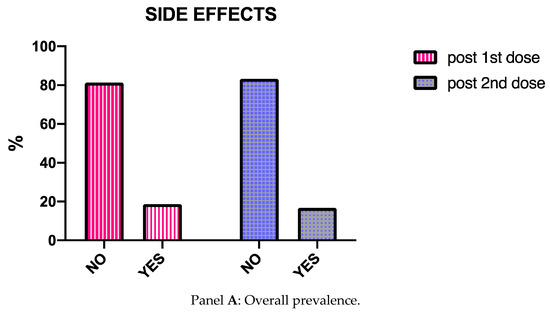
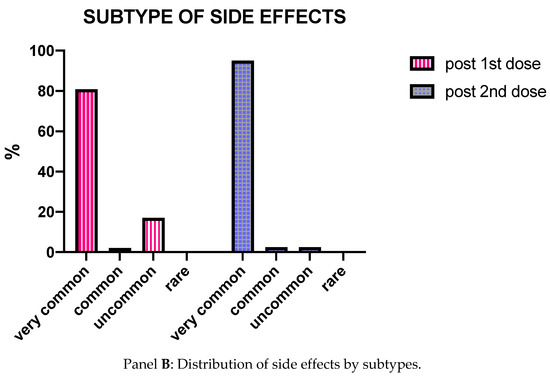
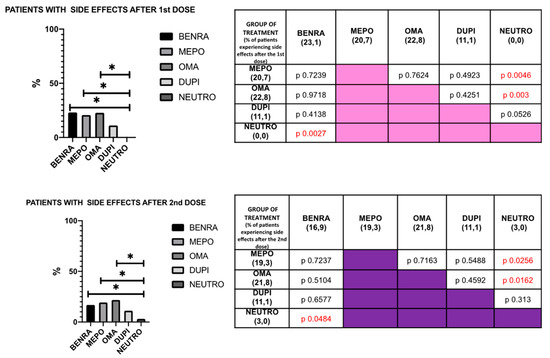
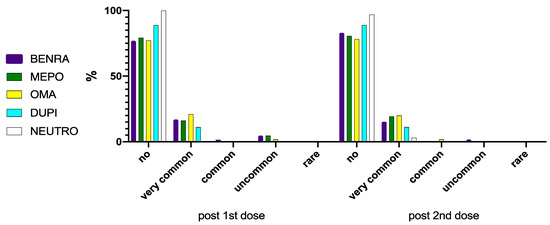
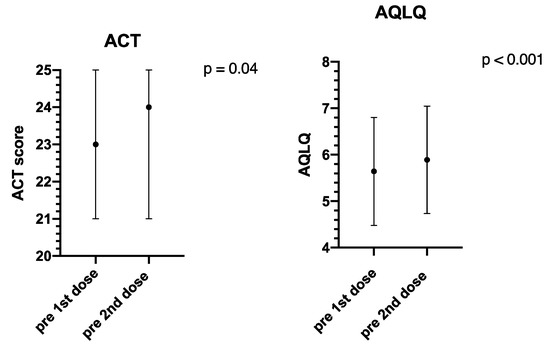
Background: COVID-19 vaccination has been recommended for severe asthmatics. We aimed to evaluate the safety, tolerability, and impact on disease control and patient’s quality of life of the mRNA SARS-CoV-2/COVID-19 vaccine in severe asthma patients regarding biologic treatment. Methods: Severe asthmatic patients regularly managed by two big allergy and respiratory referral centers were offered to undergo Pfizer COVID 19 vaccination at the hospital site. Patients filled in an adverse events questionnaire after the first and second dose, as well as the Asthma Control Test (ACT) and Asthma Quality of Life Questionnaire (AQLQ). Results: Overall, 253 patients were vaccinated; only 16 patients refused. No serious events were detected. Less than 20% of patients reported side effects, most of which were classified as very common side effects. No differences were reported according to the ongoing biologic drug. A significant improvement in both ACT and AQLQ was observed between the first and the second dose administration. Conclusions: Our data confirm the optimal safety and tolerability profile of mRNA SARS- CoV-2/COVID-19 in severe asthma patients on biologic treatment, as well as their positive attitude towards COVID-19 vaccination. The negligible proportion of patients reporting side effects and the absence of asthma exacerbations are relevant to support the COVID-19 vaccination campaign in severe asthma patients worldwide. Full article
Show Figures

Figure 1

12 pages, 1969 KB  
Article
Cellular and Humoral Immunogenicity of a Candidate DNA Vaccine Expressing SARS-CoV-2 Spike Subunit 1
by Khalid A. Alluhaybi, Rahaf H. Alharbi, Rowa Y. Alhabbab, Najwa D. Aljehani, Sawsan S. Alamri, Mohammad Basabrain, Rehaf Alharbi, Wesam H. Abdulaal, Mohamed A. Alfaleh, Levi Tamming, Wanyue Zhang, Mazen Hassanain, Abdullah Algaissi, Adel M. Abuzenadah, Xuguang Li and Anwar M. Hashem
Vaccines 2021, 9(8), 852; https://doi.org/10.3390/vaccines9080852 - 4 Aug 2021
Cited by 15 | Viewed by 7482
Abstract
The urgent need for effective, safe and equitably accessible vaccines to tackle the ongoing spread of COVID-19 led researchers to generate vaccine candidates targeting varieties of immunogens of SARS-CoV-2. Because of its crucial role in mediating binding and entry to host cell and [...] Read more.
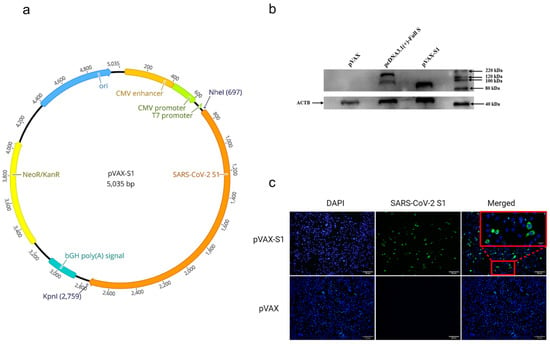
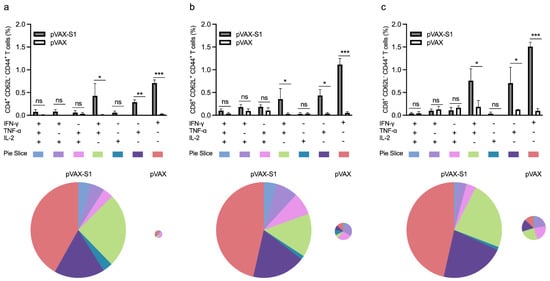
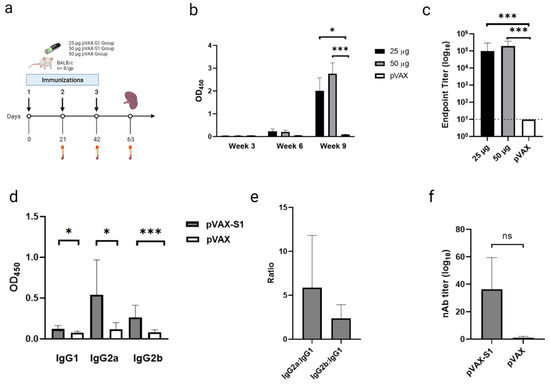
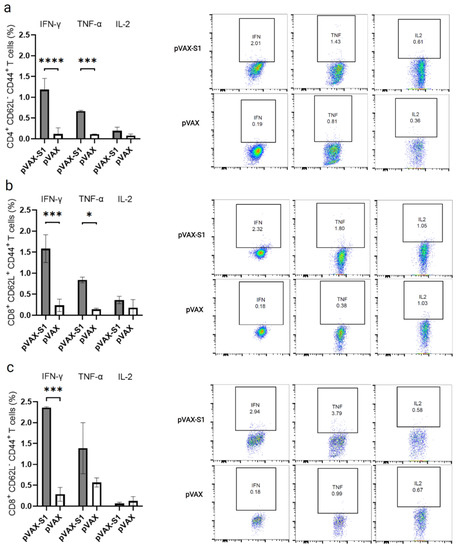
The urgent need for effective, safe and equitably accessible vaccines to tackle the ongoing spread of COVID-19 led researchers to generate vaccine candidates targeting varieties of immunogens of SARS-CoV-2. Because of its crucial role in mediating binding and entry to host cell and its proven safety profile, the subunit 1 (S1) of the spike protein represents an attractive immunogen for vaccine development. Here, we developed and assessed the immunogenicity of a DNA vaccine encoding the SARS-CoV-2 S1. Following in vitro confirmation and characterization, the humoral and cellular immune responses of our vaccine candidate (pVAX-S1) was evaluated in BALB/c mice using two different doses, 25 µg and 50 µg. Our data showed high levels of SARS-CoV-2 specific IgG and neutralizing antibodies in mice immunized with three doses of pVAX-S1. Analysis of the induced IgG subclasses showed a Th1-polarized immune response, as demonstrated by the significant elevation of spike-specific IgG2a and IgG2b, compared to IgG1. Furthermore, we found that the immunization of mice with three doses of 50 µg of pVAX-S1 could elicit significant memory CD4+ and CD8+ T cell responses. Taken together, our data indicate that pVAX-S1 is immunogenic and safe in mice and is worthy of further preclinical and clinical evaluation. Full article
(This article belongs to the Special Issue Vaccination Strategies for COVID-19)
Show Figures

Figure 1

13 pages, 1602 KB  
Article
Efficacy and Safety of a Modified Vaccinia Ankara-NP+M1 Vaccine Combined with QIV in People Aged 65 and Older: A Randomised Controlled Clinical Trial (INVICTUS)
by Chris Butler, Chris Ellis, Pedro M. Folegatti, Hannah Swayze, Julie Allen, Louise Bussey, Duncan Bellamy, Alison Lawrie, Elizabeth Eagling-Vose, Ly-Mee Yu, Milensu Shanyinde, Catherine Mair, Amy Flaxman, Katie Ewer, Sarah Gilbert, Thomas G. Evans and on behalf of the INVICTUS Investigators
Vaccines 2021, 9(8), 851; https://doi.org/10.3390/vaccines9080851 - 3 Aug 2021
Cited by 12 | Viewed by 3747
Abstract
Background: Pre-existing T cell responses to influenza have been correlated with improved clinical outcomes in natural history and human challenge studies. We aimed to determine the efficacy, safety and immunogenicity of a T-cell directed vaccine in older people. Methods: This was a multicentre, [...] Read more.
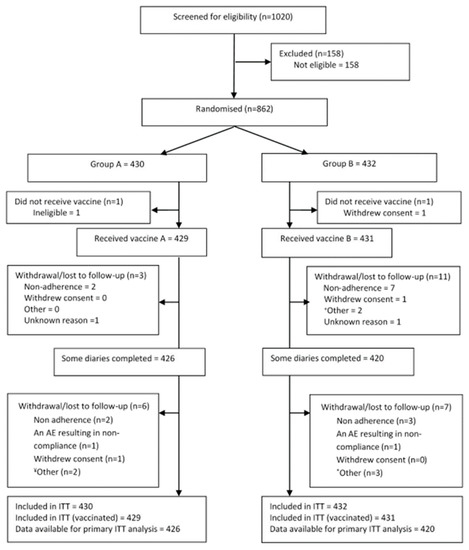
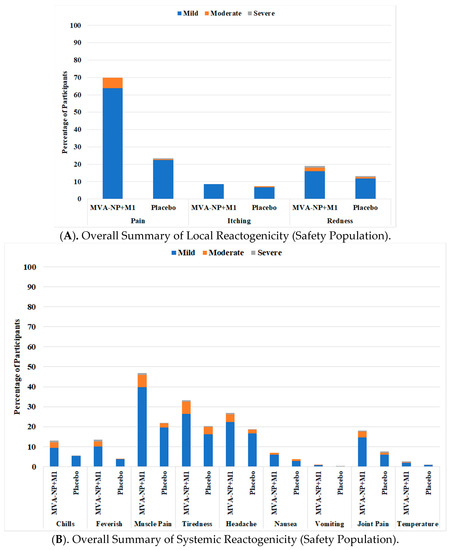
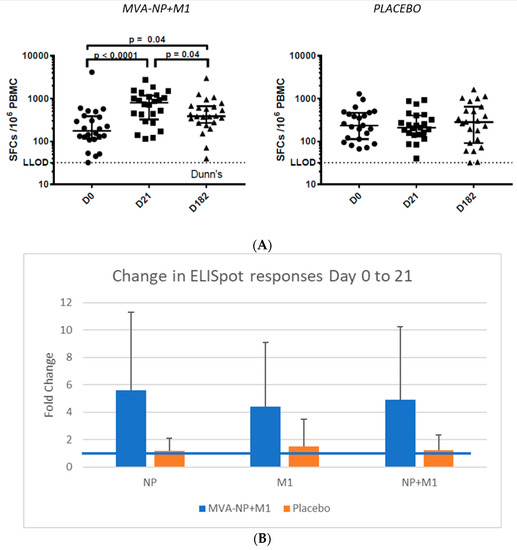
Background: Pre-existing T cell responses to influenza have been correlated with improved clinical outcomes in natural history and human challenge studies. We aimed to determine the efficacy, safety and immunogenicity of a T-cell directed vaccine in older people. Methods: This was a multicentre, participant- and safety assessor-blinded, randomised, placebo-controlled trial of the co-administration of Modified Vaccinia Ankara encoding nucleoprotein and matrix protein 1 (MVA-NP+M1) and annual influenza vaccine in participants ≥ 65. The primary outcome was the number of days with moderate or severe influenza-like symptoms (ILS) during the influenza season. Results: 846 of a planned 2030 participants were recruited in the UK prior to, and throughout, the 2017/18 flu season. There was no evidence of a difference in the reported rates of days of moderate or severe ILS during influenza-like illness episodes (unadjusted OR = 0.95, 95% CI: 0.54–1.69; adjusted OR = 0.91, 95% CI: 0.51–1.65). The trial was stopped after one season due to a change in the recommended annual flu vaccine, for which safety of the new combination had not been established. More participants in the MVA-NP+M1 group had transient moderate or severe pain, redness, and systemic responses in the first seven days. Conclusion: The MVA-NP+M1 vaccine is well tolerated in those aged 65 years and over. Larger trials would be needed to determine potential efficacy. Full article
(This article belongs to the Section Vaccine Design, Development, and Delivery)
Show Figures

Figure 1

15 pages, 29037 KB  
Article
A Single-Cycle Influenza A Virus-Based SARS-CoV-2 Vaccine Elicits Potent Immune Responses in a Mouse Model
by Surapong Koonpaew, Challika Kaewborisuth, Kanjana Srisutthisamphan, Asawin Wanitchang, Theeradej Thaweerattanasinp, Janya Saenboonrueng, Sukontip Poonsuk, Juggragarn Jengarn, Ratchanont Viriyakitkosol, Jarin Kramyu and Anan Jongkaewwattana
Vaccines 2021, 9(8), 850; https://doi.org/10.3390/vaccines9080850 - 3 Aug 2021
Cited by 36 | Viewed by 12139
Abstract
The use of virus-vectored platforms has increasingly gained attention in vaccine development as a means for delivering antigenic genes of interest into target hosts. Here, we describe a single-cycle influenza virus-based SARS-CoV-2 vaccine designated as scPR8-RBD-M2. The vaccine utilizes the chimeric gene encoding [...] Read more.
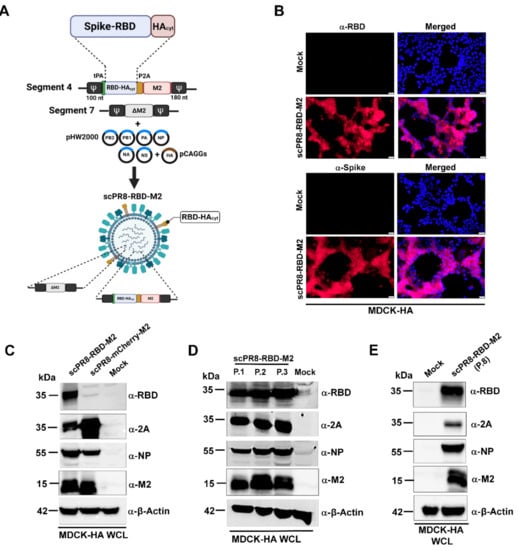
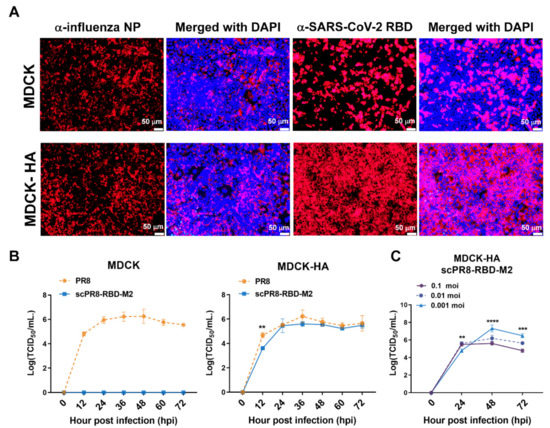
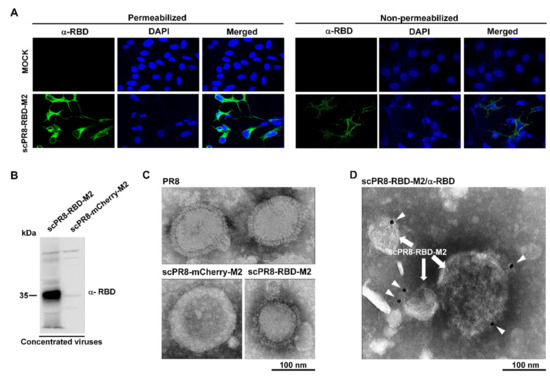
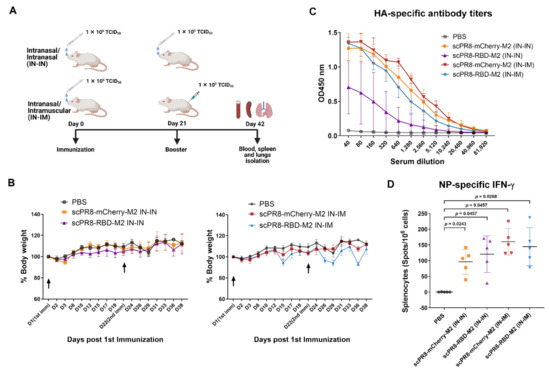
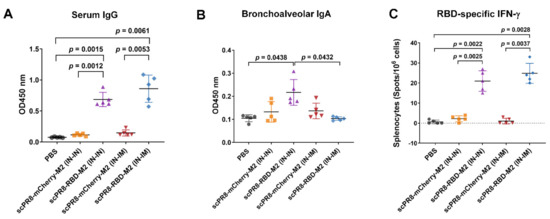
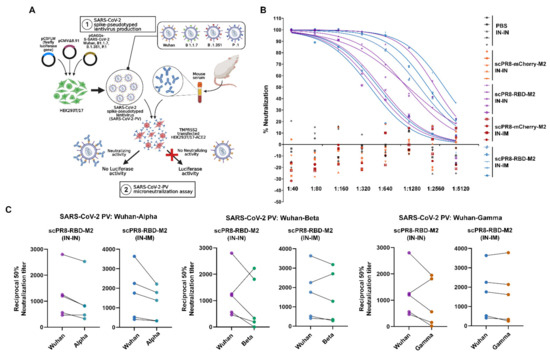
The use of virus-vectored platforms has increasingly gained attention in vaccine development as a means for delivering antigenic genes of interest into target hosts. Here, we describe a single-cycle influenza virus-based SARS-CoV-2 vaccine designated as scPR8-RBD-M2. The vaccine utilizes the chimeric gene encoding 2A peptide-based bicistronic protein cassette of the SARS-CoV-2 receptor-binding domain (RBD) and influenza matrix 2 (M2) protein. The C-terminus of the RBD was designed to link with the cytoplasmic domain of the influenza virus hemagglutinin (HA) to anchor the RBD on the surface of producing cells and virus envelope. The chimeric RBD-M2 gene was incorporated in place of the HA open-reading frame (ORF) between the 3′ and 5′ UTR of HA gene for the virus rescue in MDCK cells stably expressing HA. The virus was also constructed with the disrupted M2 ORF in segment seven to ensure that M2 from the RBD-M2 was utilized. The chimeric gene was intact and strongly expressed in infected cells upon several passages, suggesting that the antigen was stably maintained in the vaccine candidate. Mice inoculated with scPR8-RBD-M2 via two alternative prime-boost regimens (intranasal-intranasal or intranasal-intramuscular routes) elicited robust mucosal and systemic humoral immune responses and cell-mediated immunity. Notably, we demonstrated that immunized mouse sera exhibited neutralizing activity against pseudotyped viruses bearing SARS-CoV-2 spikes from various variants, albeit with varying potency. Our study warrants further development of a replication-deficient influenza virus as a promising SARS-CoV-2 vaccine candidate. Full article
(This article belongs to the Section COVID-19 Vaccines and Vaccination)
Show Figures

Figure 1