Sustainability 2021, 13(19), 11072; https://doi.org/10.3390/su131911072 - 7 Oct 2021
Cited by 16 | Viewed by 6471
Abstract
A circular economy is seen as a potential solution to the overburdening of Earth’s resources in our global economic system. However, implementation of circularity is still in its early stages, which is attributed to a variety of barriers that companies experience. Studies on
[...] Read more.
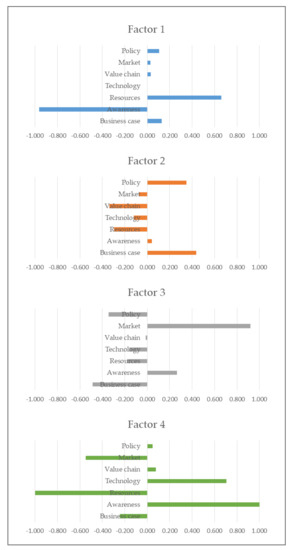
A circular economy is seen as a potential solution to the overburdening of Earth’s resources in our global economic system. However, implementation of circularity is still in its early stages, which is attributed to a variety of barriers that companies experience. Studies on these barriers identified a substantial number of potential barriers, however, these studies did not explore the variety of perceptions of these barriers by different companies. This study therefore explores the variety of barriers to the transition to circularity, as perceived by European furniture companies. Using Q-methodology, and with participation of 30 furniture companies from five EU countries, the study revealed four patterns of the perception of barriers. These four patterns of perception are distinct from each other, with high composite reliabilities and weak correlations between the patterns. Our analysis showed that especially the perception of market and resources categories of barriers make the difference between the identified patterns. The study demonstrated that barriers to circularity are not experienced in a single generalizable way, and provided valuable insight for the development of supporting or stimulation policies for circularity.
Full article
(This article belongs to the Section Sustainable Management)
►
Show Figures
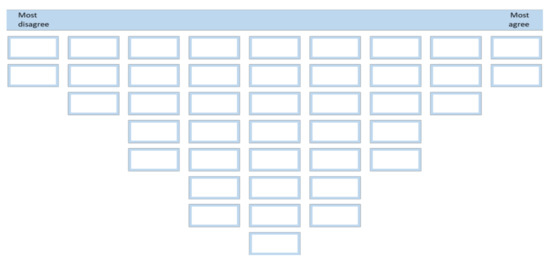
Figure 1