




You are currently on the new version of our website. Access the old version .

Molecules

Molecules is a leading international, peer-reviewed, open access journal of chemistry published semimonthly online by MDPI.
Indexed in PubMed | Quartile Ranking JCR - Q2 (Biochemistry and Molecular Biology | Chemistry, Multidisciplinary)

All Articles (62,761)

Laccases are versatile biocatalysts with broad industrial relevance. Their heterologous expression enables efficient production, purification, and functional optimization. The white-rot fungus Hirschioporus abietinus produces an effective extracellular laccase (Lac2), inspiring the identification and cloning of its encoding gene. To enable high and stable enzyme production, the gene was expressed in Pichia pastoris and the cultivation conditions for the selected variant were optimized to enhance the yield of recombinant laccase. The Lac2 was then purified and its biochemical properties characterized. The high-redox potential laccase Lac2 exhibited strong tolerance to common metal ions and maintained catalytic activity in the presence of a range of organic solvents. Overall, the results suggest that Lac2 possesses properties compatible with small-scale production and effective use in biosensor systems.

28 January 2026
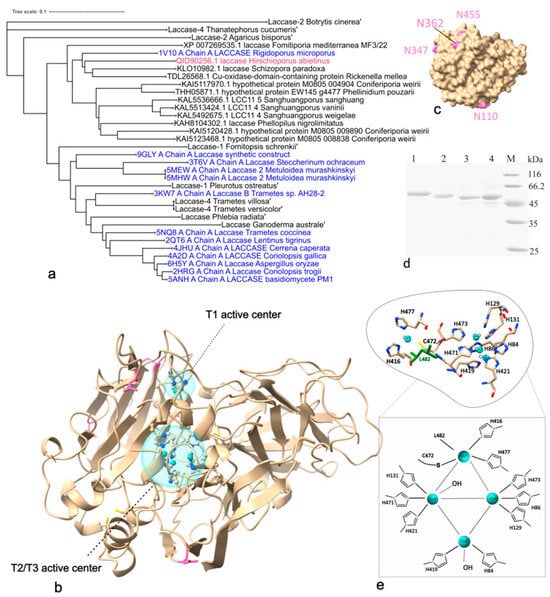
Analysis of Lac2. (a) Phylogenetic analysis. The phylogenetic tree was constructed using the Neighbour-Joining method and MEGA 7.0 software. The bar represents 0.1 substitutions per amino acid site. H. abietinus Lac2 is indicated in magenta; sequences from the PDB are indicated in blue; and sequences from the Swissprot-Uniprot/NCBI NR databases are indicated in black. (b) The AlfaFold2 model of Lac2, showing the active centres in cyan and the hypothetical N-glycosylation sites in magenta. The amino acids involved in the active centre are shown as a ball-and-stick model, and the copper ions are depicted as turquoise spheres. (c) The surface of Lac2 with indicated (magenta) glycosylation sites. (d) Analysis of the glycosylation of Lac2 (1—recombinant Lac2, 2—native Lac2, 3—recombinant Lac2 after treatment with endoglycosidase H, 4—native Lac2 after treatment with endoglycosidase H, and M—molecular weight marker). (e) The enlarged amino acid residues of the laccase active site and the schematic representation of the active site. The amino acids involved in the active site are represented as stick model and the copper ions are shown as turquoise spheres.

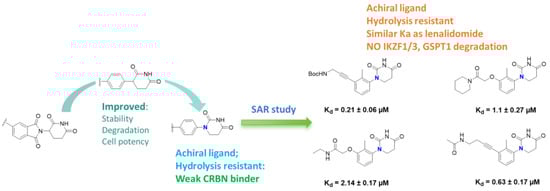
Molecular glue degraders (MGDs) constitute a class of innovative therapeutic agents within the field of targeted protein degradation (TPD). In contrast to proteolysis-targeting chimeras (PROTACs), MGDs induce protein degradation by stabilizing the interaction between an E3 ubiquitin ligase and a target protein. They typically exhibit favorable drug-like characteristics, including lower molecular weight and enhanced bioavailability. Although their discovery was historically serendipitous, recent advances in high-throughput screening, bioinformatics, and artificial intelligence are enabling more systematic identification and optimization. To date, three MGD-based drugs have been approved for clinical use, with numerous candidates under active investigation. This review comprehensively traces the technological progression of MGDs from serendipitous discovery to the current era of rational design. We systematically introduce and critically evaluate strategies for discovering MGDs, accompanied by illustrative examples. Concurrently, we discuss the major challenges hindering the broader application of MGDs and propose potential approaches to address these issues. Finally, we outline prospective research directions in the field. This review aims to provide a holistic framework for understanding the past, present, and future of molecular glue degraders, underscoring their significant potential to reshape the landscape of drug discovery.

28 January 2026

CRBN ligands based on phenyl dihydrouracil derivatives.

The global population faces increasing demands for sustainable initiatives due to industrialized agriculture. To meet the demand for protein-rich foods, innovative practices must be implemented. Conventional agricultural systems face significant challenges, including soil degradation, biodiversity loss, nutrient depletion, air pollution, and degraded water quality. Additionally, conventional agriculture affects the environment due to unsustainable farming practices utilizing chemical fertilizers, pesticides, and herbicides. These practices contribute to the accumulation of greenhouse gases and carbon emissions, which negatively affect air and water quality. Agricultural yield is declining, reducing the availability of foods, and further increasing food insecurity through increased costs. Microalgae, a unicellular organism with adaptive capabilities for carbon sequestration, offers a beneficial shift from conventional agriculture. Microalgae provide low-impact environmental alternatives to the agricultural sector, promote energy conservation, and synthesize health-promoting biomolecules, such as antioxidants, pigments, essential fatty acids, polysaccharides, and protein. This review evaluates the potentials of microalgal biomass for sustainable food applications, highlighting its role in strengthening microalgae as a biorefinery and alleviating the environmental and ecological burdens of traditional farming.

28 January 2026

Flowchart indicating taxing inputs into conventional agriculture systems with yields and outcomes to assess linear relationships.

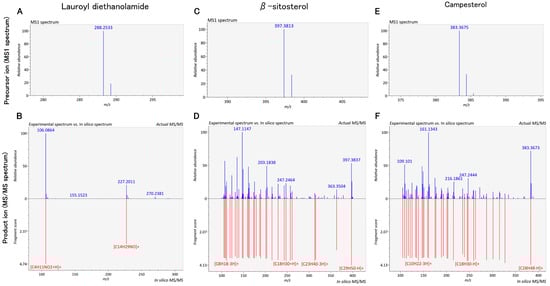
Sweet potatoes (Ipomoea batatas (L.) Lam.) are known for their anti-inflammatory effects, which are attributed to their phytochemical content. Our previous study revealed that ethanol extracts of sweet potato storage roots (SP-EtOH-Ex) inhibit interleukin-6 (IL-6) production in RAW264.7 cells stimulated with lipopolysaccharide (LPS). However, the causative compounds responsible for the anti-inflammatory effect have not yet been identified. This study aims to identify the compounds responsible for the anti-inflammatory effect of SP-EtOH-Ex using liquid chromatography–quadrupole time-of-flight mass spectrometry (LC-Q-TOF-MS). The unknown compounds were measured using the auto MS/MS mode (data-dependent acquisition; DDA) of LC-Q-TOF-MS, and the resulting data were analyzed using MS-DIAL and MS-FINDER and also compared with those of the corresponding reference standards in terms of retention time and fragment ions. As a result, β-sitosterol (2.527–4.850 µg/mL), campesterol (75.74–93.63 ng/mL), and lauroyl diethanolamide (4.568–9.260 ng/mL) were identified and quantified in SP-EtOH-Ex. Moreover, the anti-inflammatory effect of these three compounds against RAW264.7 cells was investigated at varying concentrations of β-sitosterol (1 µg/mL, 5 µg/mL, 10 µg/mL), campesterol (10 ng/mL, 100 ng/mL, 1000 ng/mL), and lauroyl diethanolamide (1 ng/mL, 10 ng/mL, 100 ng/mL). The phytosterols β-sitosterol and campesterol suppressed LPS-induced IL-6 production at concentrations comparable to those present in SP-EtOH-Ex. In contrast, lauroyl diethanolamide did not similarly suppress LPS-induced IL-6 production. These results suggest that β-sitosterol and campesterol in sweet potato storage roots contribute to their anti-inflammatory effects. The lack of activity in lauroyl diethanolamide further supports that phytosterols are the primary anti-inflammatory constituents. The edible portion of sweet potatoes holds promise as a promising raw material with anti-inflammatory properties.

28 January 2026

Precursor ions and product ions of compounds that ranked highly in both MS-FINDER and MassBank. These three compounds correspond to Level 1 according to Schymanski et al.’s criteria, indicating reliable identification. The compounds are annotated as lauroyl diethanolamide (A,B), β-sitosterol (C,D), and campesterol (E,F).

News & Conferences

Issues

Open for Submission

Editor's Choice

Reprints of Collections

Secondary Metabolites from Natural Products
Reprint

Secondary Metabolites from Natural Products

Extraction, Isolation and Biological Activities
Editors: Radosław Kowalski, Tomasz Baj

Get Alerted

Add your email address to receive forthcoming issues of this journal.

XFacebookLinkedIn
Molecules - ISSN 1420-3049