Skip to Content
  • 3.6
    Impact Factor
  • 5.6
    CiteScore
  • 13 days
    Submission to First Decision
  • 3 days
    Acceptance to Publication

Lubricants

Lubricants is an international, peer-reviewed, open access journal on tribology, published monthly online by MDPI.
  • Open Access— free for readers, with article processing charges (APC) paid by authors or their institutions.
  • High Visibility: indexed within Scopus, SCIE (Web of Science), Ei Compendex, Inspec, CAPlus / SciFinder, and other databases.
  • Journal Rank: JCR - Q2 (Engineering, Mechanical) / CiteScore - Q2 (Mechanical Engineering)
  • Rapid Publication: manuscripts are peer-reviewed and a first decision is provided to authors approximately 13 days after submission; acceptance to publication is undertaken in 2.6 days (median values for papers published in this journal in the first half of 2026).
  • Recognition of Reviewers: Reviewers whose reports are timely and of high quality receive an APC discount voucher for a future publication in an MDPI journal. Become a reviewer.
 

Get Alerted

Add your email address to receive forthcoming issues of this journal.

All Articles (2,907)

  • Review
  • Open Access

Additive manufacturing enables ceramic–metal interpenetrating phase composites (IPCs) with designed load paths, but their tribological performance is constrained by coupled infiltration, interfacial damage, and lubrication processes. This review critically evaluates these constraints through an architecture–infiltration–interface–performance framework. Unlike conventional particle-reinforced metal matrix composites, IPCs require both phases to form three-dimensionally continuous networks; successful infiltration additionally requires preservation of the ceramic skeleton, adequate filling of the intended metal channels, and interfaces capable of transferring load. The central mechanical trade-off is between ceramic load support and accommodation of incompatible phase deformation. Thermal-expansion mismatch (Δα) generates residual stresses during post-infiltration cooling, while cyclic frictional heating superimposes spatially nonuniform thermal stresses that can promote interfacial microcracking and delamination. Increasing ceramic content or refining load paths must therefore be assessed against the remaining metal-ligament capacity for plastic accommodation and crack bridging, rather than hardness alone. Lubrication introduces a second trade-off: sufficient lubricant delivery can shift sliding from direct asperity contact toward tribofilm-mediated shear, whereas excessive lubricant content or reservoir porosity can weaken structural continuity and increase wear despite low friction. Sustained protection requires lubricant supply and film formation to offset depletion and removal. Current evidence does not establish universal optimal phase fractions or topology rankings, because direct, matched tribological studies of printed and subsequently infiltrated IPCs remain scarce. Quantitative design therefore requires joint characterization of phase connectivity, infiltration defects, residual and cyclic thermal stresses, interfacial fracture resistance, and tribofilm persistence under specified contact conditions.

Lubricants

7 October 2026

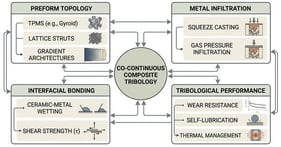
Architecture–infiltration–interface–performance framework for 3D-printed ceramic–metal co-continuous composites.
  • Article
  • Open Access

High-speed train brake pads are safety-critical consumable components whose wear condition affects braking safety, maintenance scheduling, and component life utilization. This study assesses the predictive potential and limitations of sparse life-cycle maintenance records for brake-pad wear-rate estimation when continuous degradation trajectories are unavailable. A dataset of 54 valid brake-pad life-cycle records was constructed, including replacement date, accumulated mileage, wear per 10,000 km, installation position, motor/trailer classification, and train identifier. Linear regression, ridge regression, random forest, Gaussian process regression, and quantile regression were evaluated under leave-one-out cross-validation. Random forest produced the numerically best aggregate LOOCV point-prediction metrics, with a mean absolute error of 0.0823 mm/10,000 km, a root mean square error of 0.1030 mm/10,000 km, and an R2 of 0.6008; relative to the global-mean baseline, MAE and RMSE were reduced by 39.0% and 36.8%, respectively. The P10–P90 quantile interval achieved an empirical coverage of 62.96% and an average width of 0.2165 mm/10,000 km, with 11 observations exceeding the P90 upper bound, indicating undercoverage in the upper tail. Feature-importance analysis showed pronounced temporal stratification. Removing replacement year/month reduced random forest LOOCV R2 from 0.6008 to 0.2440, whereas leave-one-train-ID-out grouped validation yielded R2 = 0.5687; expanding-window chronological validation was materially weaker (R2 = −0.0590 for the full retrospective feature set). These results indicate that the temporal descriptors capture dataset-specific temporal structure and may partly act as statistical proxies for unrecorded time-varying conditions; they should not be interpreted as physical determinants, and prospective temporal transferability remains unverified. As a secondary application of the prediction outputs, the point prediction and upper conditional quantile were linked with current pad thickness, the allowable thickness limit, and planned operating mileage, to illustrate a preliminary maintenance-screening interface. This interface is intended as a preliminary maintenance-screening procedure rather than a validated replacement policy. The results show that sparse maintenance records contain record-level predictive information for brake-pad wear-rate estimation, while temporal dependence, upper-tail undercoverage, and the absence of field decision-outcome validation currently limit direct operational use.

Lubricants

6 October 2026

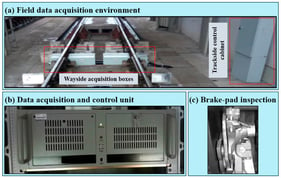
Field data acquisition and brake-pad inspection system: (a) field data acquisition environment; (b) data acquisition and control unit; (c) brake-pad inspection.
  • Article
  • Open Access

To address the inferior lubricity of synthetic cutting fluids compared with oil-based cutting fluids, a strategy is proposed to improve the cutting performance by exploiting the electroosmotic effect to enhance penetrability at the friction interfaces in the cutting zone. The triboelectrification potential and tribo-emission of charged particles were measured at the accessible major flank face–workpiece interface to characterize the electrical behavior of an alumina ceramic–AISI 52100 steel friction pair. Taking the rake face–chip interface as a representative case, the distribution characteristics of the tribo-induced electric field (TIEF) and the electroosmotic flow field of the cutting fluid within an interfacial capillary were analyzed using COMSOL Multiphysics 5.5 simulations, based on the measured electrical boundary conditions and zeta potentials. Turning tests on AISI 52100 steel with alumina ceramic tools were also conducted under the lubrication of cutting fluids with distinct electroosmotic properties. The simulations indicate that the TIEF can drive electroosmotic flow toward the interior of the interface. The experiments show that the electroosmotic performance of the cutting fluid is positively correlated with its cutting performance. The simulated TIEF intensity increases with increasing cutting speed and depth, and the electroosmotic regulation of cutting performance is correspondingly enhanced.

Lubricants

5 October 2026

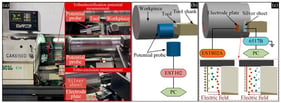
(a) Photograph of the measurement setups for the triboelectrification potential and the tribo-emission of charged particles; (b) schematic of the triboelectrification potential measurement setup; (c) schematic of the tribo-emission measurement setup.
  • Article
  • Open Access

Three two-dimensional Tp-based covalent organic frameworks, namely TpPa-1, TpPa-2, and TpBD, were synthesized and incorporated into Shell Helix H6 lubricating oil (SO) to investigate their potential as lubricant additives in commercial lubricating oils. Tribological tests demonstrated that all three Tp-based frameworks enhanced lubrication performance, with TpPa-1 exhibiting the best overall performance. Under a 5 N load, the coefficient of friction (μ) and wear rate decreased by 35.5% (to 0.091) and 55.9% (to 4.1 × 10⁻⁶ mm3/(N·m)), respectively. Under a 10 N load, μ and wear rate decreased by 38.3% (to 0.095) and 60.9% (to 4.8 × 10⁻⁶ mm3/(N·m)), respectively. The lubrication mechanism was attributed to interlayer sliding of the Tp-based framework nanosheets and the formation of a protective tribofilm containing iron oxides and deposited Tp-based frameworks, which filled wear pits and reduced wear volume.

Lubricants

4 October 2026

Molecular synthesis schemes of (a) TpPa-1, (b) TpPa-2, and (c) TpBD by mechanochemical synthesis, and corresponding color changes in the reactants during grinding for (d) TpPa-2 and (e) TpBD.

Featured Articles of Last Quarter

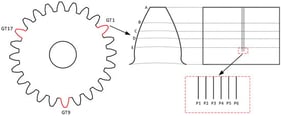
Gear tooth selection and profile measurement strategy.
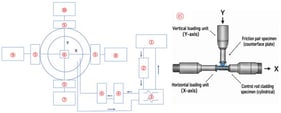
Schematic of the high-temperature and high-pressure biaxial corrosion–wear test system, showing the dynamic water-flow path, the X- and Y-axis loading directions, and the major components.
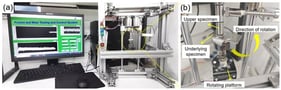
(a) Schematic illustration of the face-to-face friction testing system; (b) magnified view of the contact region.

Highly Accessed Articles

News & Conferences

Latest Issues

Open for Submission

Journal Sections

Tribology for Lightweighting
Reprint

Tribology for Lightweighting

Editors: Montserrat Vilaseca Llosada, Leonardo Pelcastre
Tribology in Vehicles
Reprint

Tribology in Vehicles

Editors: Shuwen Wang, John Williams, David Charles Barton, Chunxing Gu
XFacebookLinkedIn
Lubricants - ISSN 2075-4442