Journal Description
Journal of Risk and Financial Management
is an international, peer-reviewed, open access journal on risk and financial management, published monthly online by MDPI (since Volume 6, Issue 1 - 2013).
- Open Access— free for readers, with article processing charges (APC) paid by authors or their institutions.
- High Visibility: indexed within Scopus, EconBiz, EconLit, RePEc, and other databases.
- Journal Rank: CiteScore - Q1 (Business, Management and Accounting (miscellaneous))
- Rapid Publication: manuscripts are peer-reviewed and a first decision is provided to authors approximately 18.3 days after submission; acceptance to publication is undertaken in 5.6 days (median values for papers published in this journal in the first half of 2026).
- Recognition of Reviewers: Reviewers whose reports are timely and of high quality receive an APC discount voucher for a future publication in an MDPI journal. Become a reviewer.
- Journal Cluster of Economics, Finance and Risk Systems: Commodities, Econometrics, Economies, FinTech, Forecasting, Games, International Journal of Financial Studies, Journal of Risk and Financial Management, Platforms and Risks.
Latest Articles
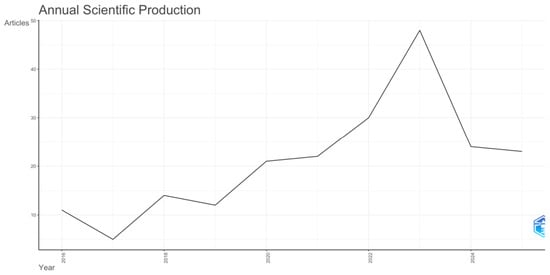
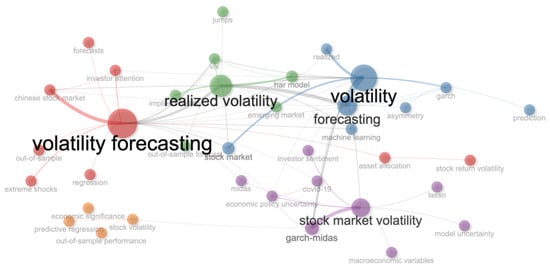
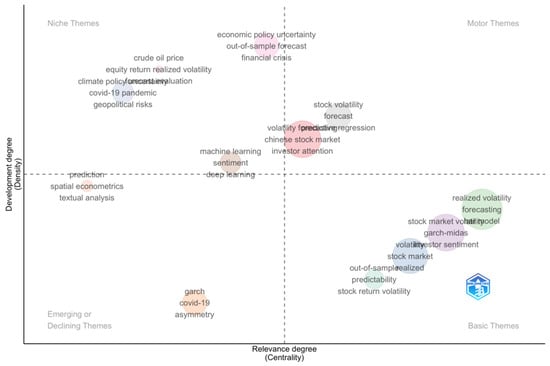
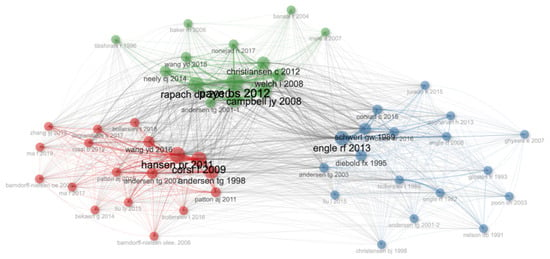
Measurement and Forecasting of Stock Market Volatility: Literature Review (2016–2025)
J. Risk Financ. Manag. 2026, 19(9), 740; https://doi.org/10.3390/jrfm19090740 (registering DOI) - 18 Sep 2026
Abstract
Stock market volatility forecasting is important for risk management, portfolio allocation, and investment decision-making. This study provides a bibliometric and methodological review of stock market volatility measurement and forecasting research published between 2016 and 2025. A model-neutral search of the Web of Science
[...] Read more.
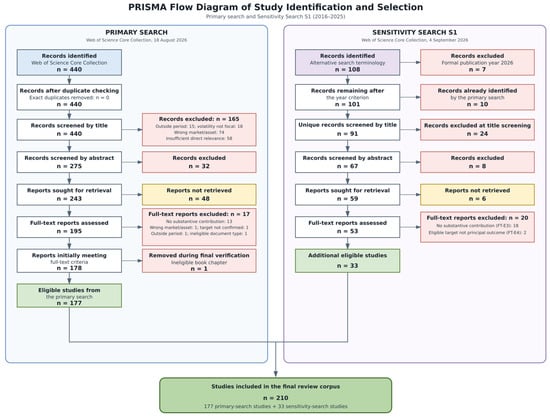
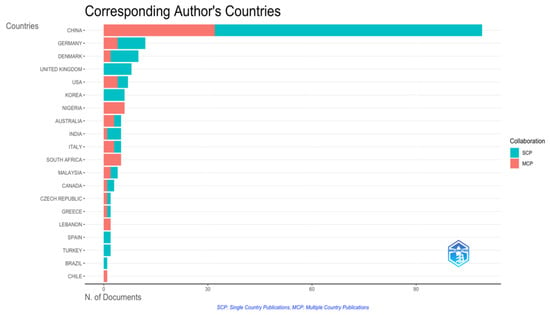
Stock market volatility forecasting is important for risk management, portfolio allocation, and investment decision-making. This study provides a bibliometric and methodological review of stock market volatility measurement and forecasting research published between 2016 and 2025. A model-neutral search of the Web of Science Core Collection, conducted on 18 August 2026, identified 440 records. Following title, abstract, full-text, and document-type screening, 177 eligible journal articles were retained. To assess search-term sensitivity, a supplementary search conducted on 4 September 2026 using alternative volatility terminology identified 33 additional eligible studies, yielding a final corpus of 210 studies. Bibliometrix/Biblioshiny and structured methodological classification were used to examine the field. Econometric approaches remained dominant (168 studies; 80.0%), followed by Machine Learning (25; 11.9%), Deep Learning (8; 3.8%), and Hybrid approaches (9; 4.3%). The evidence reveals substantial methodological diversification beyond conventional GARCH models and increasing use of realized and implied volatility, high-frequency information, sentiment, macroeconomic variables, and uncertainty indicators. No methodological family demonstrates universal forecasting superiority, as performance depends on markets, horizons, information sets, benchmarks, and evaluation criteria. Overall, the literature reflects methodological diversification, information enrichment, and selective integration rather than replacement of econometric models by artificial intelligence. Although the review is limited to the Web of Science Core Collection, the sensitivity analysis demonstrates the importance of alternative terminology in identifying relevant studies.
Full article
(This article belongs to the Section Financial Markets)
►
Show Figures
Open AccessArticle
When Disaster Drives Demand: Evidence on Home Insurance Take-Up in Brazil
by
Marcus Paulo de Oliveira Gonçalves and Philipp Ehrl
J. Risk Financ. Manag. 2026, 19(9), 739; https://doi.org/10.3390/jrfm19090739 - 17 Sep 2026
Abstract
Home insurance plays a key role in mitigating the economic and social impacts of natural disasters. This paper investigates whether the occurrence of a severe natural disaster affected the demand for home insurance in Brazil. We collect weekly sales data from the dominant
[...] Read more.
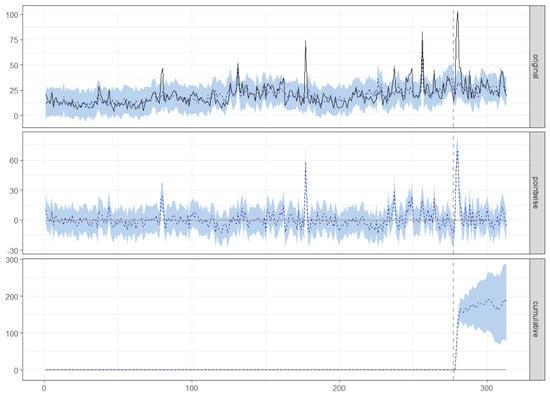
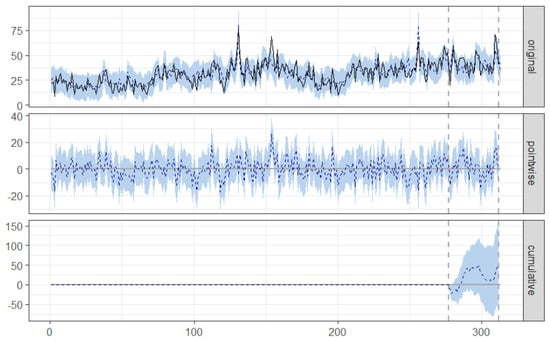
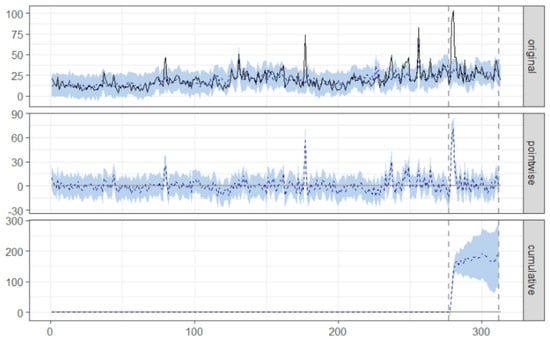
Home insurance plays a key role in mitigating the economic and social impacts of natural disasters. This paper investigates whether the occurrence of a severe natural disaster affected the demand for home insurance in Brazil. We collect weekly sales data from the dominant insurance company with national presence, and exploit the May 2024 flood—the most severe natural disaster in the federal state of Rio Grande do Sul’s recent history—as an exogenous shock which we evaluate using Bayesian structural time-series methods (CausalImpact). We estimate that home insurance sales in Rio Grande do Sul exceeded their counterfactual by roughly 184 policies, or about 95%, over the first eight weeks following the event, while the difference is indistinguishable from zero thereafter; averaged over the full 35-week observation window, the excess is 19.6%. The timing of the response, together with additional evidence on the mechanism, is consistent with a temporary shift in the weight attached to low-probability losses rather than a lasting revision of beliefs.
Full article
(This article belongs to the Section Risk)
►▼
Show Figures

Figure 1

Open AccessArticle
Financing Innovation in Human-Centric Organizations: Perceived Organizational Financial Support, Organizational Climate, and Innovative Work Behavior in the Industry 5.0 Service Economy
by
Vilija Bite Fominiene, Edmundas Jasinskas, Arturas Simanavicius, Antanas Usas and Arturas Rutkevicius
J. Risk Financ. Manag. 2026, 19(9), 738; https://doi.org/10.3390/jrfm19090738 - 16 Sep 2026
Abstract
The transition toward a digital, circular, and human-centric (Industry 5.0) economy is as much a financial and economic transformation as a technological one. Firms that build the innovation capacity to redesign how they create and capture value depend on managers and investors who
[...] Read more.
The transition toward a digital, circular, and human-centric (Industry 5.0) economy is as much a financial and economic transformation as a technological one. Firms that build the innovation capacity to redesign how they create and capture value depend on managers and investors who allocate scarce capital under uncertainty. Yet, whether the financial support that employees perceive actually accompanies innovative behavior, or whether the human and organizational conditions surrounding it matter more, remains underexamined at the firm level, particularly in service industries. This study examines how employees’ perceptions of their organization’s financial capability and willingness to support innovation relate to innovative work behavior (IWB) and how those perceptions operate alongside perceived organizational climate (OC), using the sports economy—a large and innovation-dependent service sector—as a test case. A quantitative cross-sectional survey was conducted among 181 coaches employed in for-profit sports organizations in Lithuania. Data were analyzed using correlation and hierarchical multiple regression with demographic controls, a test of the climate–finance interaction, and diagnostic checks for common-method bias and multicollinearity. OC was positively associated with both IWB and perceived financial support for innovation. Perceived financial capability and willingness correlated with IWB at the bivariate level but added no significant variance once OC and the controls entered the model (ΔR2 = 0.013, p = 0.230). The climate–finance interaction was likewise non-significant. OC remained the strongest correlate, accounting on its own for approximately 24% of the variance in IWB and for an additional 19 percentage points beyond the demographic controls. Because all measures were self-reported at a single point in time, these results are interpreted as associations rather than causal effects, and the pattern is consistent with—though does not establish—an interpretation in which perceived financial support accompanies innovative behavior only where the organizational climate already supports it. The study contributes to research on innovative work behavior, human resource management, and the human-centric premise of Industry 5.0, suggesting to managers and funders that innovation budgets are unlikely to translate into innovative behavior unless paired with motivation, learning opportunities, leadership support, and psychological safety.
Full article
(This article belongs to the Special Issue Financing the Sustainable Digital Economy: Investment, Risk, and Human-Centric Value in the Industry 5.0 Era)
Open AccessArticle
Economic Growth and Carbon Emissions in Croatia and Albania: Evidence from Annual and Medium-Term Decoupling Patterns
by
Mirjana Jeleč Raguž, Elenica Pjero Beqiraj and Ariana Ergović
J. Risk Financ. Manag. 2026, 19(9), 737; https://doi.org/10.3390/jrfm19090737 - 16 Sep 2026
Abstract
This study examines the relationship between economic growth and CO2 emissions in Croatia and Albania from 1995 to 2024, using the EU27 as a benchmark. The analysis combines carbon intensity trends, Mann–Kendall tests, Sen’s slope estimates, Tapio decoupling elasticities, and a supplementary
[...] Read more.
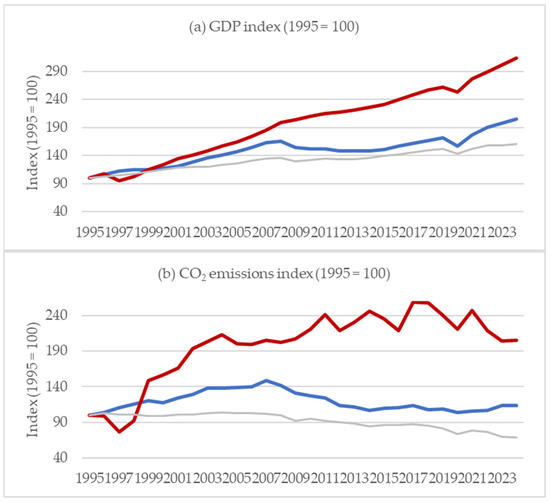
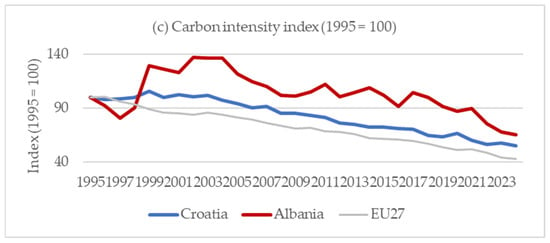
This study examines the relationship between economic growth and CO2 emissions in Croatia and Albania from 1995 to 2024, using the EU27 as a benchmark. The analysis combines carbon intensity trends, Mann–Kendall tests, Sen’s slope estimates, Tapio decoupling elasticities, and a supplementary LMDI decomposition. Contiguous intervals and rolling five-year windows, together with threshold, near-zero GDP, and alternative emissions-source checks, assess temporal consistency and robustness. Carbon intensity declined significantly in all three cases, but decoupling outcomes differed across time horizons. Favorable annual decoupling occurred in 44.8% of observations in Croatia, 55.2% in Albania, and 69.0% in the EU27, while the corresponding descriptive shares across the overlapping five-year windows were 64.0%, 56.0%, and 92.0%. The differences in favorable annual decoupling shares were not statistically significant. The LMDI results indicate that improved energy intensity offset part of the emissions pressure associated with economic activity in Croatia and Albania, while Albania’s carbon-intensity-of-energy effect was close to zero. Annual decoupling results were more sensitive to the emissions source than the medium-term comparison. CBAM-covered products accounted for 14.02% of EU27 imports from Albania in 2024. Overall, the results show that assessments of low-carbon transition progress can differ with the time horizon considered and that domestic decoupling may coexist with trade exposure to carbon regulation.
Full article
(This article belongs to the Section Economics and Finance)
►▼
Show Figures

Figure 1
Open AccessArticle
Integrating Internal Control Parameters into Risk-Adjusted DCF Valuation: A Rating-Based Methodology
by
Thomas Zimmermann García, Manuel Monjas Barroso and Fernando Gallardo Olmedo
J. Risk Financ. Manag. 2026, 19(9), 736; https://doi.org/10.3390/jrfm19090736 - 16 Sep 2026
Abstract
The Discounted Cash Flow (DCF) methodology is widely regarded as one of the most theoretically well-established approaches to firm valuation. The most critical issue within this methodology is the reliable and well-grounded estimation of those cash flows, particularly the systematic incorporation of qualitative
[...] Read more.
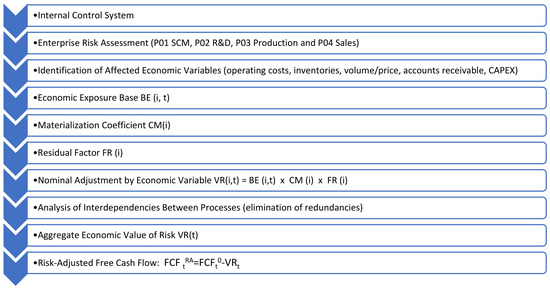
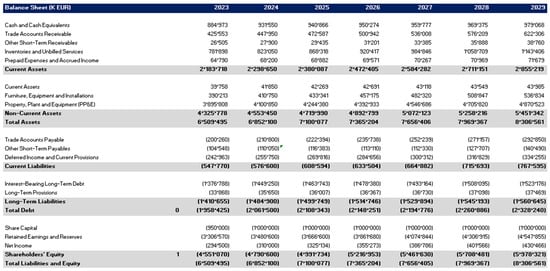
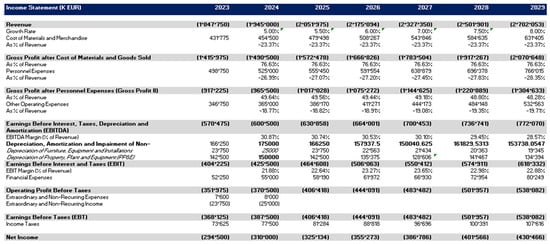
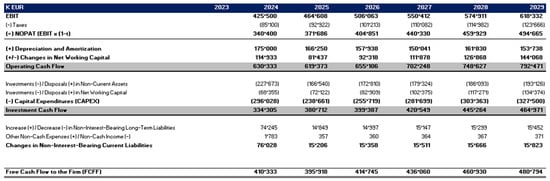
The Discounted Cash Flow (DCF) methodology is widely regarded as one of the most theoretically well-established approaches to firm valuation. The most critical issue within this methodology is the reliable and well-grounded estimation of those cash flows, particularly the systematic incorporation of qualitative enterprise risks into future cash-flow projections. The objective of this study is to develop a systematic and standardized methodology for estimating risk-adjusted cash flows based on a set of parameters derived from the Internal Control System (ICS) of the firm under valuation, operationalized through a rating system focused on the qualitative dimensions of the company. The proposed framework systematically translates qualitative risk assessments into explicit adjustments of the economic drivers underlying projected cash flows, thereby establishing a structured link between Internal Control Systems (ICS), Enterprise Risk Management (ERM), and Discounted Cash Flow (DCF) valuation. The methodology is applied to a baseline financial scenario representing the central financial projection of the firm, which is subsequently adjusted for enterprise risks derived from the Internal Control System. Naturally, quantitative factors must also be considered; however, this issue has already been extensively examined in the literature and is firmly established in corporate finance textbooks. The contribution of this paper lies in providing the academic and professional communities with a systematic framework designed to improve the transparency, consistency, and traceability of firm valuation while supporting a more structured incorporation of qualitative risk factors into projected cash flows. The proposed framework is methodological in nature and is intended to provide a conceptual foundation for future empirical calibration and validation using real-world corporate data.
Full article
(This article belongs to the Section Business and Entrepreneurship)
►▼
Show Figures

Figure 1
Open AccessArticle
Forensic-Auditing Capabilities and Self-Reported Recognition of Suspicious Money-Laundering Indicators Among Accounting Professionals in Peru: A Structural and Explainable Machine-Learning Study
by
Jéssica Karina Saavedra Vásconez, Alexander Fernando Haro Sarango, Eymmy Jimena Grados Lazaro, Estrella Divina Lopez Pantoja, Monica Jhanyra Gamarra Pacaya, Silvia Mabel Cachay Salcedo and Thelma Madian Lazo Pilco
J. Risk Financ. Manag. 2026, 19(9), 735; https://doi.org/10.3390/jrfm19090735 - 16 Sep 2026
Abstract
This study examines how accounting professionals’ self-reported forensic-auditing capabilities relate to their attitudinal readiness to recognize suspicious anti-money-laundering (AML) indicators, using a transparent hybrid design that combines classical psychometrics, structural equation modeling (SEM), and leakage-controlled explainable machine learning (ML). A cross-sectional survey collected
[...] Read more.
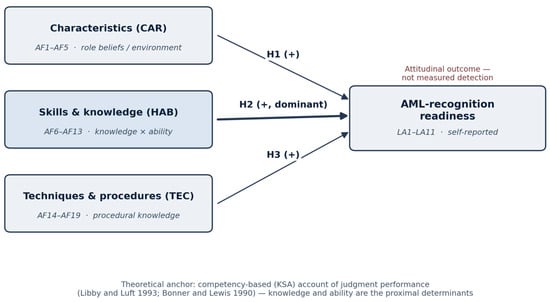
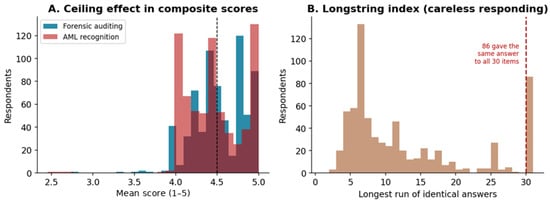
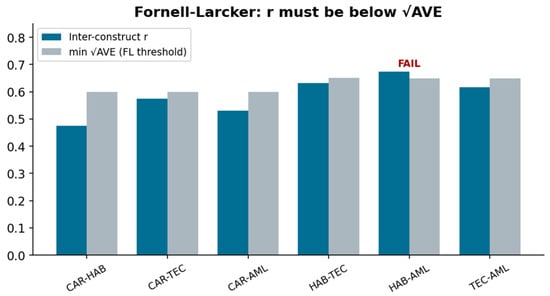
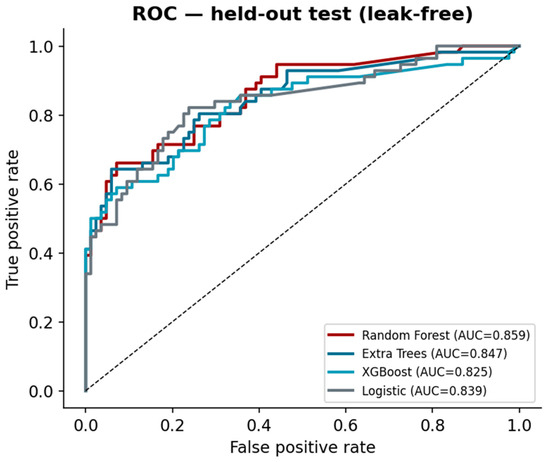
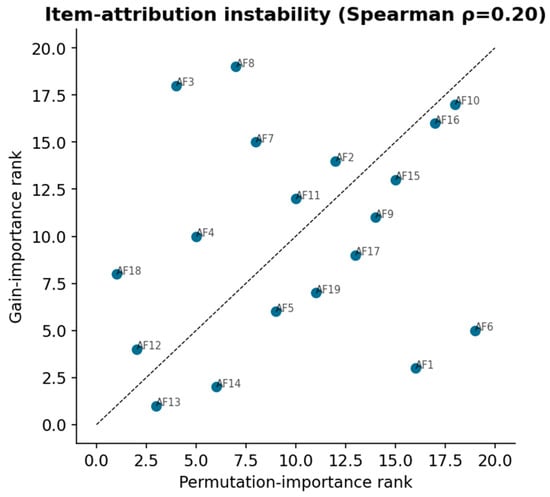
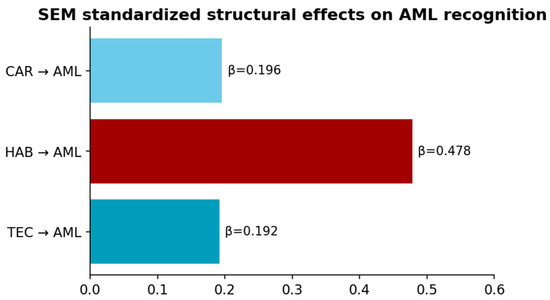
This study examines how accounting professionals’ self-reported forensic-auditing capabilities relate to their attitudinal readiness to recognize suspicious anti-money-laundering (AML) indicators, using a transparent hybrid design that combines classical psychometrics, structural equation modeling (SEM), and leakage-controlled explainable machine learning (ML). A cross-sectional survey collected 700 valid responses from public accountants in Lima, Peru, with a 30-item, five-point Likert instrument (19 forensic-auditing items in three dimensions and 11 AML-recognition items). Reliability was high (Cronbach’s α = 0.935; McDonald’s ω = 0.935), but average variance extracted was below 0.50 in every block (0.329–0.449), and Fornell–Larcker testing showed that skills-and-knowledge and AML recognition were not discriminantly distinct (r = 0.673 > √AVE = 0.651/0.649). Responses showed a pronounced ceiling (51% of answers were the maximum), and 86 respondents (12.3%) answered all 30 items identically; removing them lowered the forensic-auditing–AML association from r = 0.731 to 0.630 and explained variance from 53.8% to 40.3%. Skills-and-knowledge remained the strongest predictor in SEM and HC3-robust regression (β = 0.478 and 0.425). Under a leakage-free protocol, ensemble models reached ROC-AUC ≈ 0.86 on held-out data, but threshold tuning did not improve F1 test, and item-level attributions were unstable (Spearman ρ = 0.28). Forensic-auditing capabilities are positively associated with declared AML-recognition readiness, driven by applied skills and knowledge; the evidence is attitudinal and correlational, and should not be read as real detection capability. Because professional experience, seniority, sector, and prior AML training were not measured, the reported associations may be partly confounded by unobserved professional background, and the dominance of skills-and-knowledge is therefore advanced as tentative, pending resolution of the skills-and-knowledge/AML-recognition discriminant-validity overlap. A second, procedural contribution is that the study reports the data-quality screening, the failed validity tests, and the explanation-stability diagnostics that survey-based forensic-accounting research rarely makes visible.
Full article
(This article belongs to the Special Issue Accounting and Auditing in the Age of Sustainability and AI)
►▼
Show Figures

Figure 1

Open AccessArticle
Institutional Foundations of Digital Financial Inclusion: Governance, Financial Development, and Infrastructure Legacy in 38 OECD Countries, 2000–2022
by
Ahmad A. Alwaked and Anas Alqudah
J. Risk Financ. Manag. 2026, 19(9), 734; https://doi.org/10.3390/jrfm19090734 - 16 Sep 2026
Abstract
Purpose: This paper examines what predicts digital financial inclusion among already high-income, well-governed countries, reversing the usual causal framing that treats inclusion as a driver rather than an outcome of institutional quality, financial sector development, and digital infrastructure legacy. Design/methodology/approach: Using a panel
[...] Read more.
Purpose: This paper examines what predicts digital financial inclusion among already high-income, well-governed countries, reversing the usual causal framing that treats inclusion as a driver rather than an outcome of institutional quality, financial sector development, and digital infrastructure legacy. Design/methodology/approach: Using a panel of 38 OECD countries (2000–2022, 874 country-years), account ownership and digital payment use are modeled as fractional response variables decomposed into within- and between-country components, with Tobit and Worldwide Governance Indicator cross-sectional robustness checks. Findings: Government effectiveness predicts inclusion almost entirely through persistent between-country differences, not within-country governance change. Early broadband rollout and submarine cable proximity independently predict higher digital payment use. This infrastructure-legacy result is weaker for account ownership and, per the actual-survey-year robustness, less robust for digital payment use as well. A conventional two-way fixed-effects specification, which cannot separate within- from between-country variation, finds no institutional relationship at all. Rule of law and regulatory quality carry most of this institutional effect, though political stability is also independently significant; voice and accountability is the weakest and least consistent dimension. Research limitations/implications: The decomposition establishes association, not causation; the governance-dimension check is cross-sectional rather than a full panel. The central institutional-quality result is robust to restricting the panel to actual, non-interpolated Findex survey-wave years (government effectiveness remains significant at p = 0.038 for account ownership and p = 0.011 for digital payment use, versus p = 0.026 and p = 0.001 on the full interpolated panel); however, one secondary infrastructure finding is not. Practical implications: The evidence here, which is associational rather than causal, is consistent with prioritizing digital payment infrastructure over governance reform as a short-run inclusion strategy, while continuing to invest in the rule of law for its longer-run structural payoff. Originality/value: The paper reverses the standard causal framing in the digital financial inclusion literature and combines five data sources within a single OECD panel not previously analyzed together.
Full article
(This article belongs to the Section Banking and Finance)
Open AccessArticle
Robustness of CVaR-Minimizing Dynamic Allocation: Evidence from Multi-Asset Portfolios Through 2025
by
Veraphong Chutipat, Peerapat Wattanasin and Tanpat Kraiwanit
J. Risk Financ. Manag. 2026, 19(9), 733; https://doi.org/10.3390/jrfm19090733 - 16 Sep 2026
Abstract
Traditional risk parity approaches rely largely on volatility measures, which may not fully capture asymmetric risk profiles. This study examines a dynamic allocation approach that minimizes portfolio-level Conditional Value-at-Risk (CVaR). The CVaR-Minimizing Dynamic Allocation (CVaR-DA) approach is intended to manage tail-risk events more
[...] Read more.
Traditional risk parity approaches rely largely on volatility measures, which may not fully capture asymmetric risk profiles. This study examines a dynamic allocation approach that minimizes portfolio-level Conditional Value-at-Risk (CVaR). The CVaR-Minimizing Dynamic Allocation (CVaR-DA) approach is intended to manage tail-risk events more effectively than traditional variance-based methods. We conducted an out-of-sample rolling-window simulation for the dynamically re-estimated strategies, covering different market conditions from 2015 to early 2025. Two investment universes were examined: a concentrated equity–gold portfolio and a multi-asset portfolio comprising global equities, sovereign bonds, commodities, and gold. Variance-based DRP generated higher Sharpe ratios than Static Risk Parity in both universes while maintaining low portfolio turnover. The CVaR-DA approach provided better downside protection, particularly in the multi-asset universe, but produced higher turnover. Bootstrap inference yielded positive mean differences in Sharpe ratios between DRP and Static Risk Parity. However, the confidence intervals included zero, indicating that the differences were not statistically significant at conventional levels. The favorable drawdown results nevertheless suggest that dynamic risk allocation may improve portfolio resilience when risk conditions change. Moving from static, volatility-based allocation toward adaptive strategies that account for tail risk may therefore support capital preservation for institutional investors and fund managers.
Full article
(This article belongs to the Topic Modern Challenges and Innovations in Financial Econometrics)
Open AccessArticle
Fintech, Financial Access, and Financial Literacy: Evidence from Bangladesh
by
Qian Ruby Shen, Rafiqul Bhuyan, Shehzad Ahmed and Kaniz Sakina
J. Risk Financ. Manag. 2026, 19(9), 732; https://doi.org/10.3390/jrfm19090732 - 16 Sep 2026
Abstract
Bangladesh is widely cited as a success story for closing the financial inclusion gender gap through mobile money. We use a November 2021 nationwide survey of 3121 adults, a sample that over-represents men (72.8%) and is, therefore, validated throughout against nationally representative Global
[...] Read more.
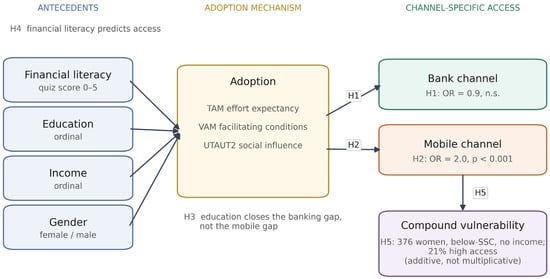
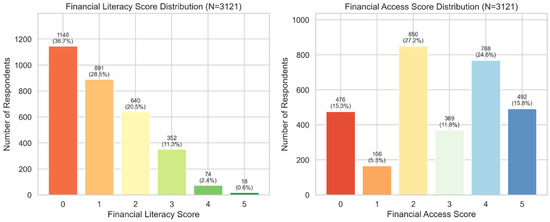
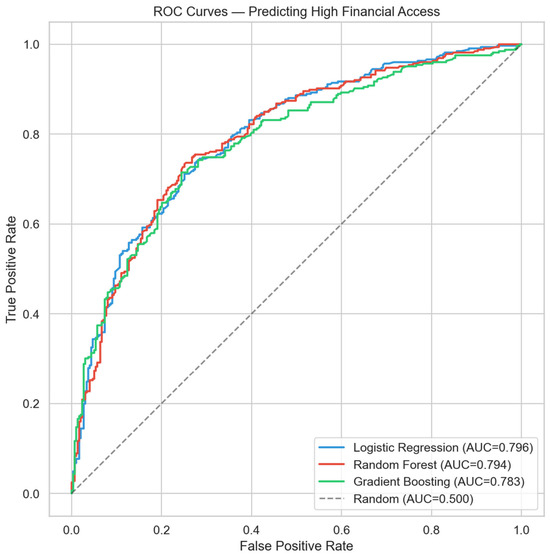
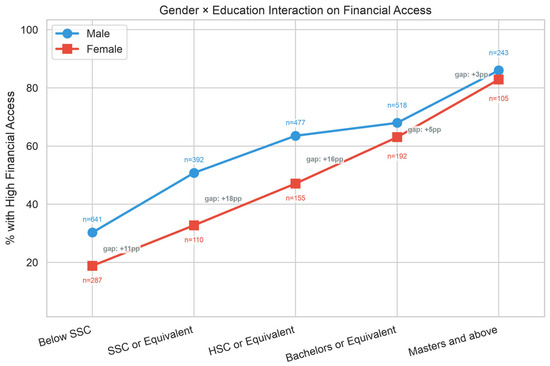
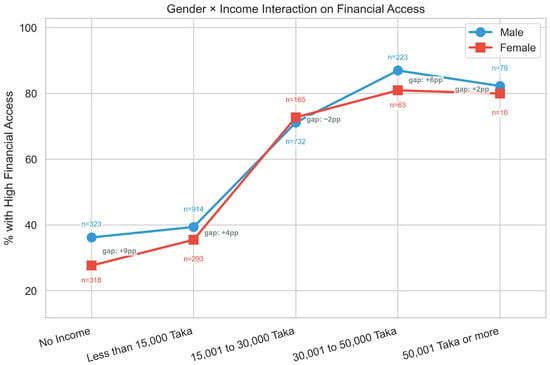
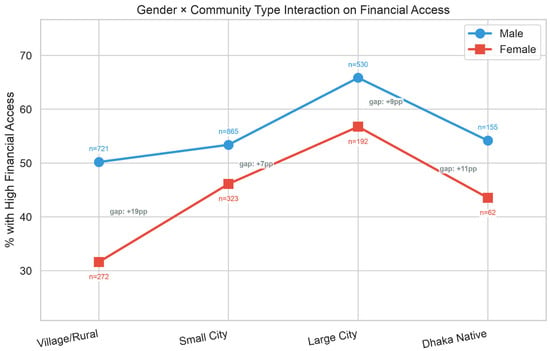
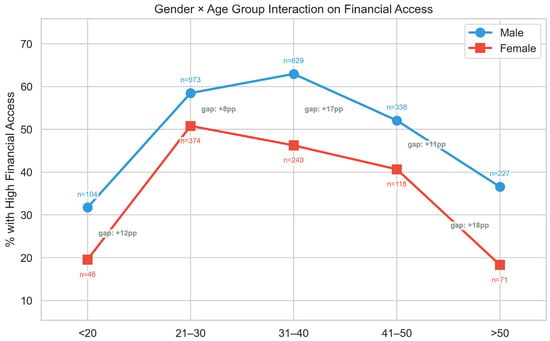
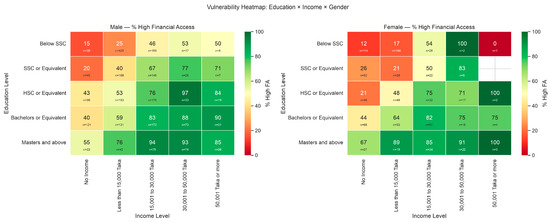
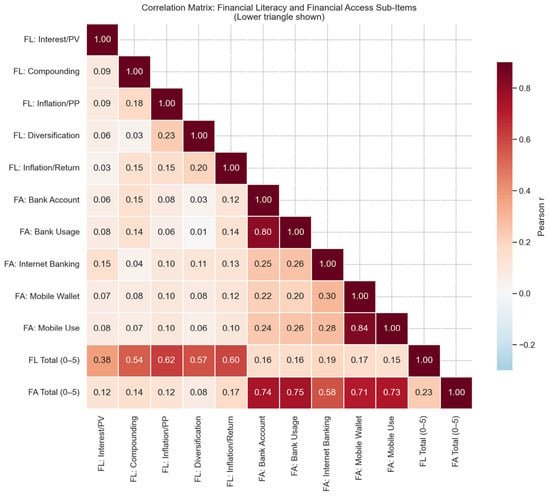
Bangladesh is widely cited as a success story for closing the financial inclusion gender gap through mobile money. We use a November 2021 nationwide survey of 3121 adults, a sample that over-represents men (72.8%) and is, therefore, validated throughout against nationally representative Global Findex microdata, and we combine logistic and ordinal regression, machine learning classification, clustering, and a channel-level decomposition of access. The gender gap in access is almost entirely a mobile money gap. Once education and income are held constant, men and women are equally likely to hold and use formal bank accounts, while men have roughly twice the odds of holding and using a mobile wallet. The pattern replicates in the Findex data, where the mobile money gap holds and the banking gap, present among the least educated, closes with education. A Blinder–Oaxaca decomposition attributes about two-thirds of the composite gap to women’s lower education and income, leaving a residual concentrated in mobile money. Gender appears weak as an aggregate predictor precisely because its effect is channel-specific. Exclusion is sharply concentrated in a segment of women with below-secondary education and no income, but the concentration is additive rather than multiplicative: a main effects model reproduces even the most excluded cell. For policy, closing the gender gap means closing the gap in mobile money adoption, the gap that neither banking-side progress nor education closes.
Full article
(This article belongs to the Special Issue Financial Literacy and Behavioral Finance: Mechanisms, Contexts, and Emerging Technologies)
►▼
Show Figures

Figure 1
Open AccessArticle
Dynamic Connectedness of Geopolitical Risk, Brent Crude Oil Price Changes, Gold Returns, the U.S. Dollar Index Returns, and the Thai Stock Market Returns: Evidence from a Bayesian TVC-VAR Approach
by
Tanattrin Bunnag
J. Risk Financ. Manag. 2026, 19(9), 731; https://doi.org/10.3390/jrfm19090731 - 15 Sep 2026
Abstract
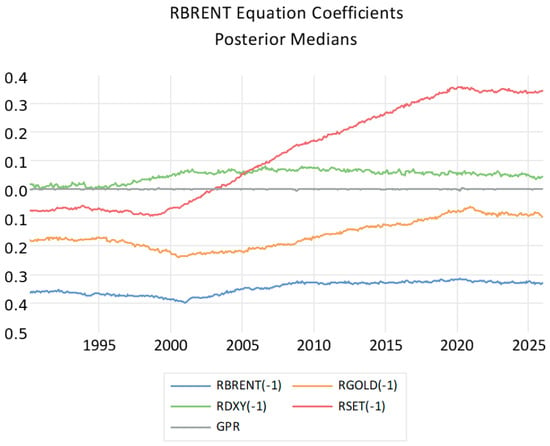
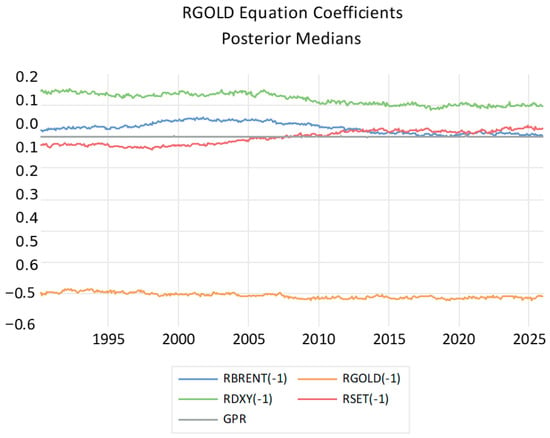
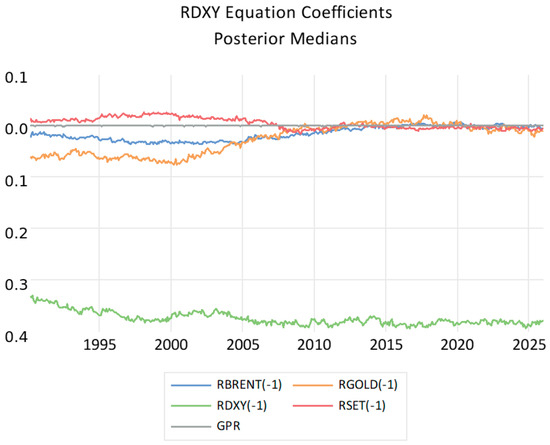
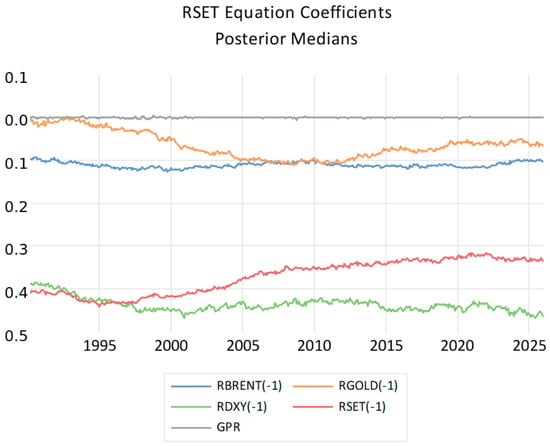
This study examines the dynamic transmission of geopolitical risk across Brent crude oil, gold, the U.S. Dollar Index, and the Thai stock market using a Bayesian time-varying coefficient vector autoregressive (TVC-VAR) framework. Using monthly data from January 1990 to December 2025, the analysis
[...] Read more.
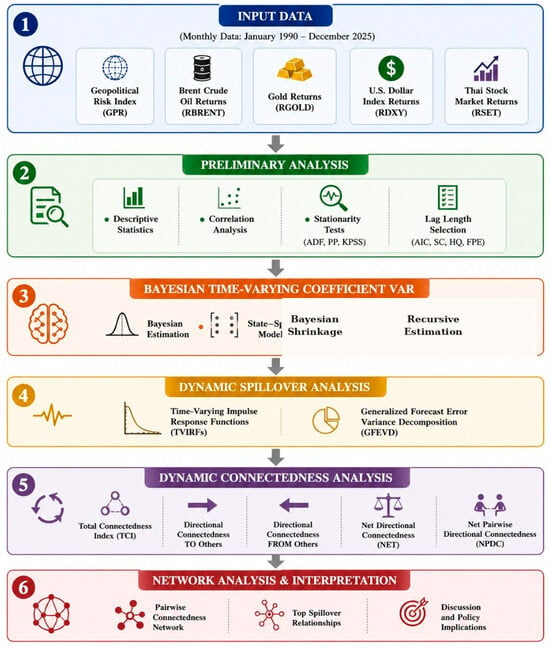
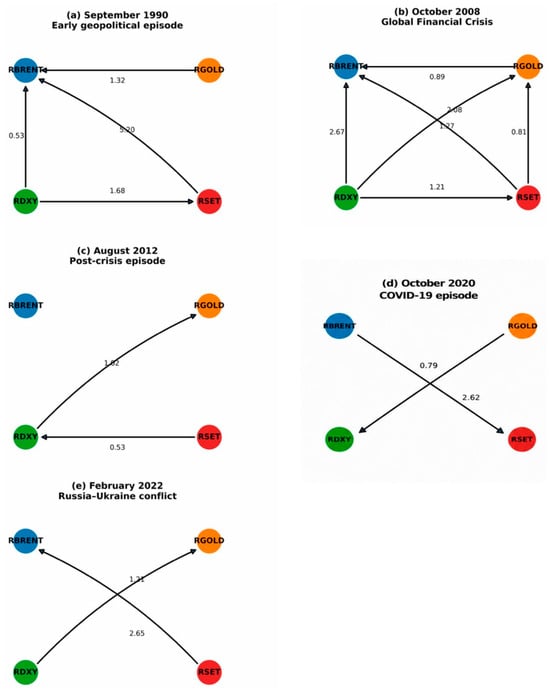
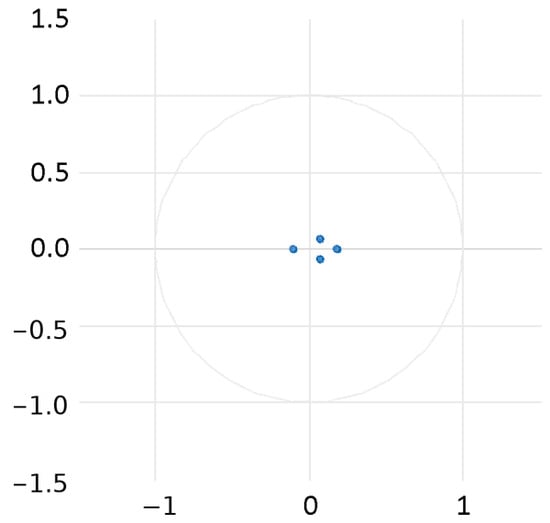
This study examines the dynamic transmission of geopolitical risk across Brent crude oil, gold, the U.S. Dollar Index, and the Thai stock market using a Bayesian time-varying coefficient vector autoregressive (TVC-VAR) framework. Using monthly data from January 1990 to December 2025, the analysis combines time-varying impulse responses, generalized forecast error variance decomposition, dynamic connectedness measures, and network analysis. The results show substantial time variation in spillover intensity and direction. On average, Brent crude oil is the strongest net transmitter, gold has a smaller positive net position, and the U.S. Dollar Index and the Thai stock market are net receivers. Episode-specific point estimates indicate changes in transmitter-receiver roles and bilateral channels, but bootstrap sensitivity analysis shows that several apparent role changes are not statistically distinguishable once uncertainty is considered. The evidence therefore supports a dynamic, reconfigurable connectedness structure while cautioning against causal, safe-haven, or portfolio-performance interpretations that are not directly tested in this study. The findings are relevant to financial-risk monitoring and macro-financial surveillance under changing geopolitical conditions.
Full article
(This article belongs to the Section Financial Markets)
►▼
Show Figures

Figure 1
Open AccessArticle
Green Bond Market Development and Circularity in the EU-27: Material Use and Resource Productivity
by
Biser Krastev and Radosveta Krasteva-Hristova
J. Risk Financ. Manag. 2026, 19(9), 730; https://doi.org/10.3390/jrfm19090730 - 15 Sep 2026
Abstract
This study examines whether the annual green-bond share of relevant corporate and government bond issuance is associated with circular material use and resource productivity in the EU-27. The accounting problem is the traceability gap between labelled issuance, allocated expenditure, and realised material outcomes.
[...] Read more.
This study examines whether the annual green-bond share of relevant corporate and government bond issuance is associated with circular material use and resource productivity in the EU-27. The accounting problem is the traceability gap between labelled issuance, allocated expenditure, and realised material outcomes. A balanced 2014–2024 panel contains 297 country-year observations. Two-way fixed-effects models with six controls use 270, 243, and 216 observations for contemporaneous, one-year-lagged and two-year-lagged specifications, respectively. Inference uses country-clustered standard errors and restricted wild cluster bootstrap-t tests with 9999 repetitions, with Driscoll–Kraay sensitivity estimates. None of the six baseline specifications, 18 additional robustness specifications, or 54 leave-one-country-out re-estimations has a wild-bootstrap p-value below 0.10. Circular material use coefficients are negative but imprecise; resource-productivity coefficients change sign. Neither directional hypothesis is supported. These conditional associations do not identify causal circular finance additionality, instrument ineffectiveness, or reporting failures. Incomplete allocation traceability, issuer composition, and implementation delays are possible mechanisms requiring disaggregated evidence. This study distinguishes issuance penetration from market size and links its findings to the need for comparable allocation reporting and verifiable circular outcomes.
Full article
(This article belongs to the Section Sustainability and Finance)
Open AccessArticle
Multi-Horizon IPO Aftermarket Performance: Evidence from India
by
Manish Kumar Gupta, Kundan M. Patel, Chitra Saruparia and Sangeet Rudra Atwe
J. Risk Financ. Manag. 2026, 19(9), 729; https://doi.org/10.3390/jrfm19090729 - 14 Sep 2026
Abstract
Average IPO returns hide what most investors earn. This study examines 197 Indian main-board IPOs listed between 2016 and 2022, with daily prices to 2026, giving every issue a complete 780-trading-day record. Buy-and-hold abnormal returns are measured against the NIFTY 50 and the
[...] Read more.
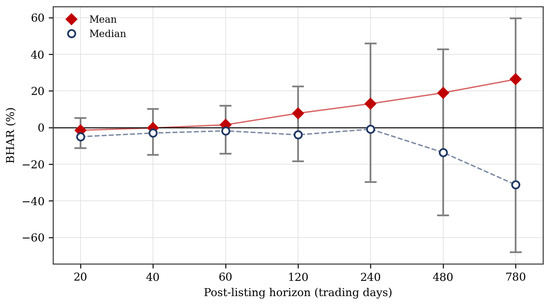
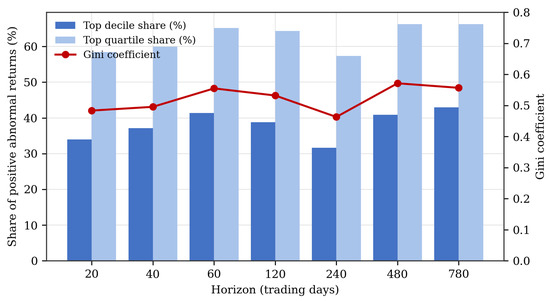
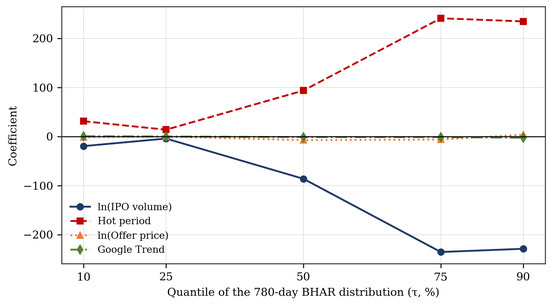
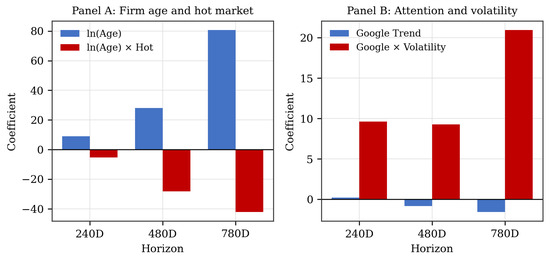
Average IPO returns hide what most investors earn. This study examines 197 Indian main-board IPOs listed between 2016 and 2022, with daily prices to 2026, giving every issue a complete 780-trading-day record. Buy-and-hold abnormal returns are measured against the NIFTY 50 and the NIFTY 500 over seven horizons from 20 to 780 trading days. Mean abnormal return reaches 26.39 per cent at 780 days, and the median over the same window is −31.24 per cent. Only 41.1 per cent of IPOs beat the market. Returns are concentrated, with a Gini coefficient of 0.557, and the top decile of positive performers earn 42.9 per cent of all positive abnormal returns. Removing ten firms from 197 turns the mean negative. Calendar-time portfolios produce no significant alpha at any window, and a placebo test using random start dates yields higher abnormal returns than the actual post-listing windows. Search attention is associated with returns over the first sixty days. IPO volume becomes negatively associated with returns from 240 days onward, and hot-market timing is significant at 20 days and again from 240 days onward. Mean-based evidence overstates what a typical IPO investor earns, and the distribution matters more than the average.
Full article
(This article belongs to the Section Financial Markets)
►▼
Show Figures

Figure 1
Open AccessArticle
Discretionary Provisions as Accounting-Based Capital Buffers: Evidence from Modified Audit Opinions in the Turkish Banking Sector
by
Birsel Sabuncu
J. Risk Financ. Manag. 2026, 19(9), 728; https://doi.org/10.3390/jrfm19090728 - 14 Sep 2026
Abstract
This study investigates the structural characteristics, annual trends, and qualitative rationales underlying modified audit opinions issued within the independent audit reports of Turkish banks between 2022 and 2025. Utilizing a formal content analysis of 248 bank-year independent audit reports based on a complete
[...] Read more.
This study investigates the structural characteristics, annual trends, and qualitative rationales underlying modified audit opinions issued within the independent audit reports of Turkish banks between 2022 and 2025. Utilizing a formal content analysis of 248 bank-year independent audit reports based on a complete census approach, the study evaluates the incidence and persistence of modifications under ISA 705 and IAS 37. The empirical findings reveal a recurring pattern of qualified opinions associated with unmandated discretionary provisioning, with all qualified opinions in the sample issued by Big Four audit firms and recurring across multiple reporting periods. Interpreted through institutional decoupling and signaling perspectives, the findings are consistent with the possibility that these qualifications may reflect interactions between accounting requirements, regulatory conditions, and provisioning practices rather than providing direct evidence of financial distress or managerial intent. The study contributes to the auditing and banking literature by examining the accounting bases and longitudinal patterns underlying modified audit opinions and by discussing their implications within an institutional framework relevant to emerging economies.
Full article
(This article belongs to the Section Banking and Finance)
Open AccessArticle
Income Diversification, Credit Risk, and Bank Stability: Evidence from Vietnamese Commercial Banks
by
Hai Van Tran and Lan Thi Tran
J. Risk Financ. Manag. 2026, 19(9), 727; https://doi.org/10.3390/jrfm19090727 - 14 Sep 2026
Abstract
This study examines the effects of income diversification on the stability of Vietnamese commercial banks, with particular attention to the roles of credit risk, profitability, and capital adequacy. Using panel data from 406 bank-year observations covering the period 2010–2024, the study employs the
[...] Read more.
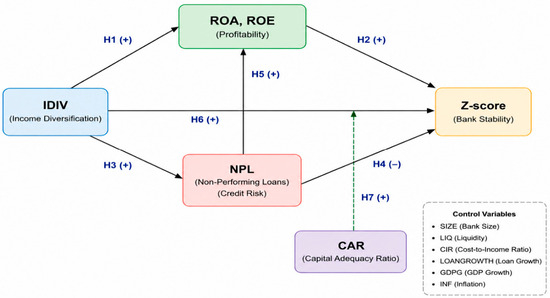
This study examines the effects of income diversification on the stability of Vietnamese commercial banks, with particular attention to the roles of credit risk, profitability, and capital adequacy. Using panel data from 406 bank-year observations covering the period 2010–2024, the study employs the two-step system Generalized Method of Moments (System GMM) estimator to address endogeneity and dynamic effects. The results indicate that income diversification has no significant direct impact on bank stability, credit risk, or profitability. In contrast, capital adequacy exhibits a U-shaped nonlinear relationship with both bank stability and profitability. The findings suggest that the positive effects of capital adequacy emerge only after threshold levels of approximately 7.6% for bank stability and 8.1% for profitability. The interaction between income diversification and capital adequacy is statistically insignificant, indicating no moderating effect. These findings highlight the importance of maintaining adequate capital buffers rather than relying solely on income diversification to enhance banking resilience. The study provides new evidence from an emerging economy and offers practical implications for bank managers and policymakers seeking to strengthen financial stability.
Full article
(This article belongs to the Special Issue Accounting, Finance, Banking in Emerging Economies)
►▼
Show Figures

Figure 1
Open AccessArticle
Prioritizing Financial Resilience Indicators for Banking Stability in Iraqi Banks: An Integrated AHP-TOPSIS Framework
by
Ahmed Hashim Abbas Maliki, Amin Rostami and Alireza Rahrovi Dastjerdi
J. Risk Financ. Manag. 2026, 19(9), 726; https://doi.org/10.3390/jrfm19090726 - 14 Sep 2026
Abstract
This study develops a context-sensitive framework for prioritizing the indicators of financial resilience for banking stability in Iraqi banks operating in a fragile emerging-market environment. Drawing on the financial resilience literature and the institutional, economic, and regulatory characteristics of Iraq, the study identifies
[...] Read more.
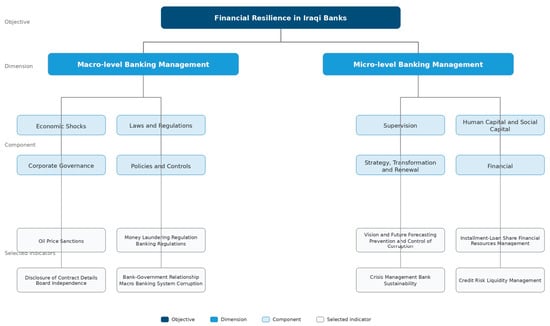
This study develops a context-sensitive framework for prioritizing the indicators of financial resilience for banking stability in Iraqi banks operating in a fragile emerging-market environment. Drawing on the financial resilience literature and the institutional, economic, and regulatory characteristics of Iraq, the study identifies the main dimensions, components, and indicators that shape banks’ capacity to absorb shocks, maintain essential functions, and sustain institutional continuity under financial and operational disruption. Data were collected in 2025 from 33 academic and professional experts in Iraq’s banking sector, including university professors, banking specialists, and senior bank executives. To operationalize the framework, the study employs an integrated multi-criteria decision-making approach, using the Analytic Hierarchy Process (AHP) to determine the relative weights of the main dimensions and components and the Technique for Order Preference by Similarity to Ideal Solution (TOPSIS) to rank the indicators. The expert-based prioritization indicates that micro-level banking management received a higher relative weight than macro-level banking management, with weights of 0.5674 and 0.4326, respectively. Among the components, the financial component receives the highest global priority weight, followed by corporate governance, Supervision, policies and controls, and laws and regulations. At the indicator level, forward-looking supervision and forecasting, anti-money-laundering regulatory compliance, installment-loan share, prevention and control of corruption, credit risk, and liquidity management received the highest global priority weights in the expert-based framework. The study contributes to the literature by providing an integrated and context-sensitive framework for prioritizing resilience-related factors in Iraqi banks and by highlighting the relevance of internal management capacity, governance quality, regulatory discipline, and risk control for resilience assessment and improvement in fragile institutional settings. The findings also offer practical implications for bank managers, regulators, and policymakers seeking to enhance the continuity, resilience, and stability of financial institutions in emerging economies. The reported weights represent expert-informed priorities for resilience assessment and improvement; they do not constitute direct estimates of realized bank-level resilience or causal effects on banking stability.
Full article
(This article belongs to the Special Issue Banking Stability and Management of Financial Institutions)
►▼
Show Figures

Figure 1
Open AccessArticle
Beyond ESG Ratings: Informational Value of Specific ESG Factors for Corporate Carbon Management
by
Sheng-Yuan Wang and San-Pui Lam
J. Risk Financ. Manag. 2026, 19(9), 725; https://doi.org/10.3390/jrfm19090725 - 14 Sep 2026
Abstract
As ESG disclosure and climate governance requirements become increasingly institutionalized, understanding how firms respond to external sustainability pressures through specific governance mechanisms and how these responses relate to carbon performance has become an important research issue. Moving beyond aggregate ESG ratings, this study
[...] Read more.
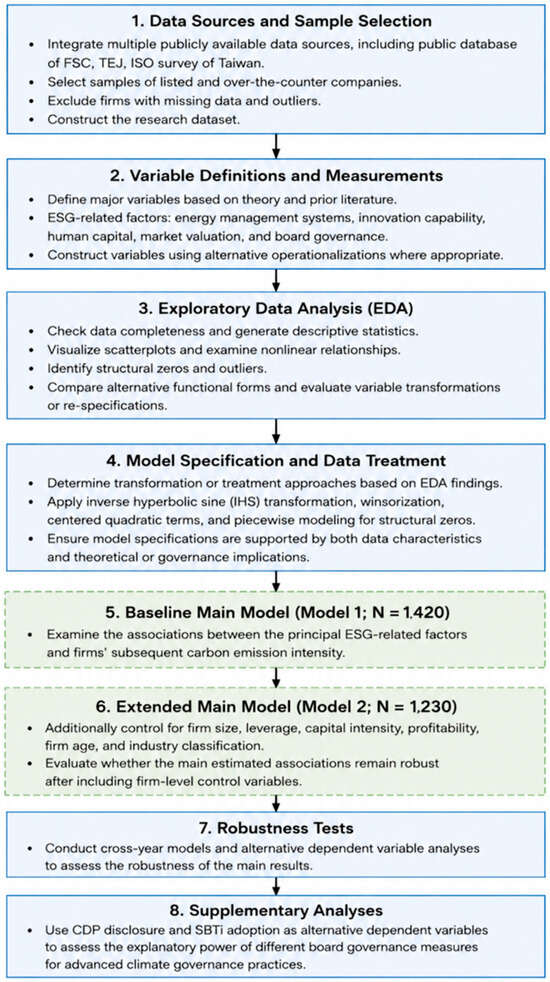
As ESG disclosure and climate governance requirements become increasingly institutionalized, understanding how firms respond to external sustainability pressures through specific governance mechanisms and how these responses relate to carbon performance has become an important research issue. Moving beyond aggregate ESG ratings, this study examines the informational value of specific ESG-related factors for corporate carbon management, including energy management systems, innovation capability, human capital, market valuation, and board governance. Using data on Taiwanese listed and over-the-counter companies from the ESG database of the Financial Supervisory Commission, the Taiwan Economic Journal, and the Leadership ISO Survey, this study employs a time-lagged design linking 2023 firm characteristics to 2024 carbon emission intensity. Multiple regression analysis is the primary method, with firm size, leverage, capital intensity, profitability, and firm age included as firm-level controls in extended models; exploratory data analysis (EDA) serves as a supplementary diagnostic for data distribution, nonlinearity, and variable operationalization. Cross-year, alternative dependent-variable, and supplementary analyses are used to assess the stability of the estimates. The results show that ISO 50001 certification is positively associated with subsequent carbon emission intensity, whereas the structural characteristics of R&D investment and independent director governance show more stable negative associations. Average salary, female director representation, and Tobin’s Q yield inconsistent results. Proportion-based board measures outperform director-count and threshold-based measures, but no clear critical-mass threshold is supported. Results also vary under alternative carbon-performance measures, suggesting that carbon intensity and absolute emissions capture different dimensions of environmental performance. These findings indicate conditional statistical associations rather than causal effects.
Full article
(This article belongs to the Special Issue Carbon Accounting, Climate Reporting, and Sustainable Finance)
►▼
Show Figures

Figure 1
Open AccessArticle
Green Fiscal Instruments and the Circular Economy Transition in the EU-27: Does the Structure of Environmental Taxation Matter?
by
Vanya Georgieva and Nadezhda Blagoeva
J. Risk Financ. Manag. 2026, 19(9), 724; https://doi.org/10.3390/jrfm19090724 - 14 Sep 2026
Abstract
The European Union aims to double circular material use by 2030, yet the rate reached only 12.2% in 2024, and environmental tax revenue remains dominated by energy taxes. This article examines whether the composition and timing of environmental taxation and agricultural specialisation are
[...] Read more.
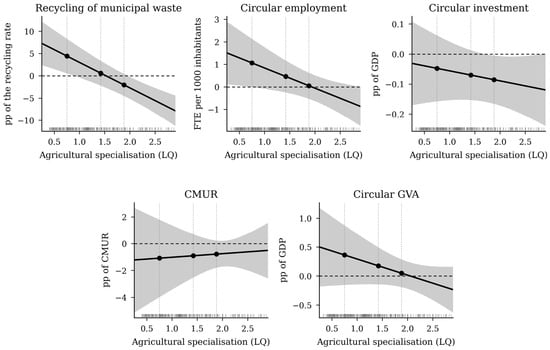
The European Union aims to double circular material use by 2030, yet the rate reached only 12.2% in 2024, and environmental tax revenue remains dominated by energy taxes. This article examines whether the composition and timing of environmental taxation and agricultural specialisation are associated with the circular transition. Using an unbalanced EU-27 panel for 2010–2024 (CMUR and recycling) and 2005–2023 (economic indicators), this study estimates two-way fixed-effects lagged and interaction models with Eurostat data. The aggregate environmental tax revenue share shows no systematic association with the five circular outcomes. Disaggregated results show that energy tax revenue is associated with lower private investment in circular sectors, transport tax revenue with higher municipal waste recycling, and pollution tax revenue with a weak increase in circular sector gross value added. Resource tax coefficients are statistically insignificant and imprecisely estimated. Lagged models reveal different patterns across outcomes but no common transmission horizon. The associations of the aggregate tax revenue share with recycling and circular employment weaken as agricultural specialisation increases. However, the associations lose statistical significance when country-specific linear trends are included. The findings suggest that tax composition and economic context are more informative than the aggregate tax burden, while the observational design and sensitivity of the results require cautious policy interpretation.
Full article
(This article belongs to the Special Issue New Perspectives in Public Finance)
►▼
Show Figures

Figure 1
Open AccessArticle
A Machine Learning Framework for Predicting Tax Payment Arrears: Comparative Model Evaluation and Shapley-Value Interpretability
by
Malak Khreis, Hadi Harb and Soha Dia
J. Risk Financ. Manag. 2026, 19(9), 723; https://doi.org/10.3390/jrfm19090723 - 13 Sep 2026
Abstract
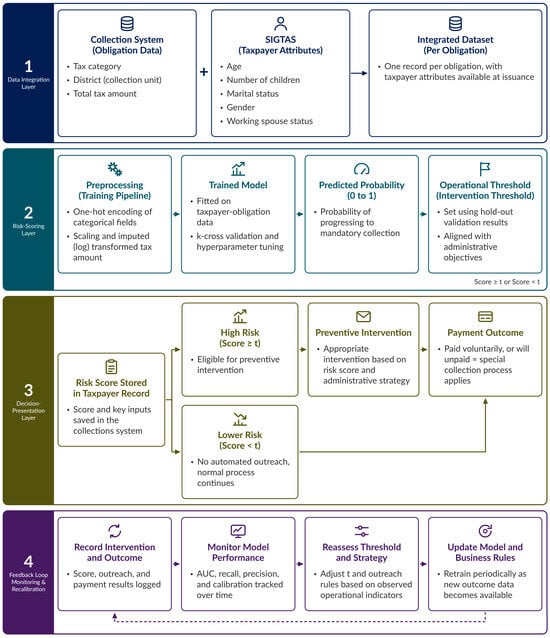
Tax administrations increasingly use data-driven risk models to prioritize collection resources, yet machine learning applications to personal income tax (PIT) arrears remain limited. This study introduces TaxMind (v1.0), an interpretable risk management framework for predicting whether PIT obligations will progress to mandatory collection
[...] Read more.
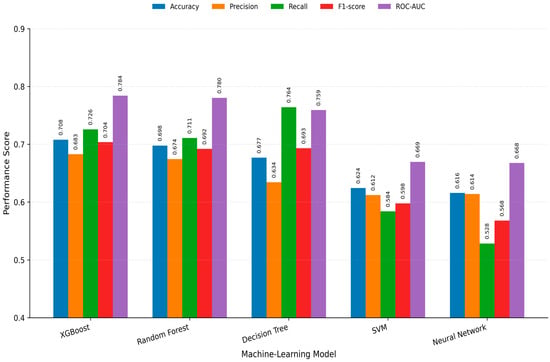
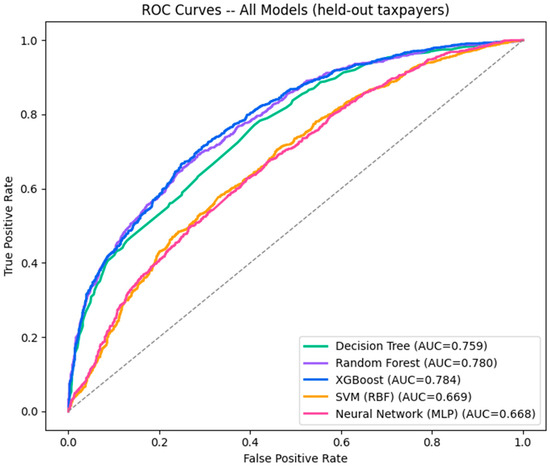
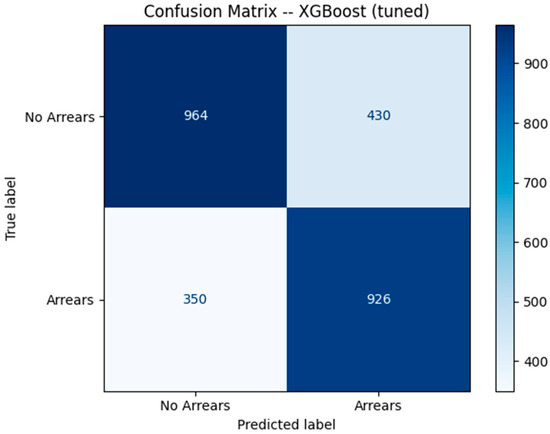
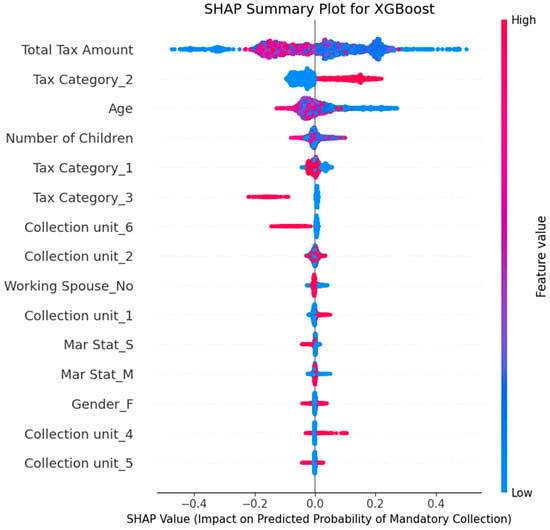
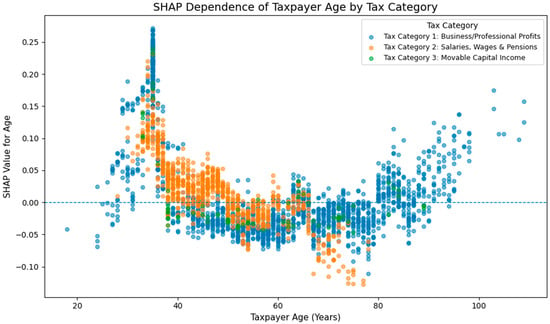
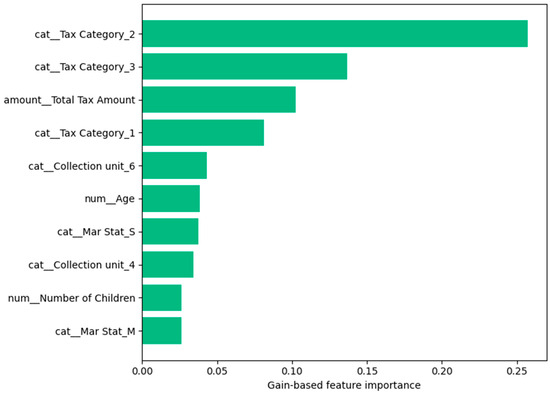
Tax administrations increasingly use data-driven risk models to prioritize collection resources, yet machine learning applications to personal income tax (PIT) arrears remain limited. This study introduces TaxMind (v1.0), an interpretable risk management framework for predicting whether PIT obligations will progress to mandatory collection and for integrating debtor- and debt-related information into risk-based segmentation. Administrative records from the Lebanese Tax Administration were analyzed; after removing 5385 exact duplicates from 16,010 records, the final dataset contained 10,625 obligations across 9264 taxpayers. Five tuned classifiers were evaluated using a taxpayer-grouped train/test design, with SHAP used for model interpretation. XGBoost achieved the highest observed discrimination (ROC-AUC = 0.784; accuracy = 0.708; F1-score = 0.704), closely followed by Random Forest (ROC-AUC = 0.780); the leading tree-based models substantially outperformed logistic regression benchmarks. SHAP identified Total Tax Amount, Tax Category 2, and Age as the three leading individual encoded features, while the Age contribution was nonlinear and varied across Tax Categories. The principal SHAP ranking was highly consistent under Random Forest. Top-decile ranking by predicted probability captured only 0.4% of the monetary exposure of realized mandatory collection cases, versus 92.7% under probability-weighted exposure ranking. These findings show that debt-related information remains central, but selected debtor characteristics add predictive value, supporting TaxMind as a model-agnostic early-warning framework for preventive tax debt management.
Full article
(This article belongs to the Section Applied Economics and Finance)
►▼
Show Figures

Figure 1
Open AccessArticle
Management Accounting Digitalization in Emerging Economies: A Mixed-Methods Investigation of AI and Data Quality as Serial Mediators of Financial Performance
by
Mohamed Bal, Mohamed Benadi and Abdellah Ait Oufkir
J. Risk Financ. Manag. 2026, 19(9), 722; https://doi.org/10.3390/jrfm19090722 - 13 Sep 2026
Abstract
Digital transformation is reshaping management accounting practices worldwide, yet empirical evidence on how digitalization translates into improved financial performance, particularly in emerging economies, remains fragmented and contested. Drawing on institutional theory, dynamic capabilities theory and contingency theory, this study investigates whether the digitalization
[...] Read more.
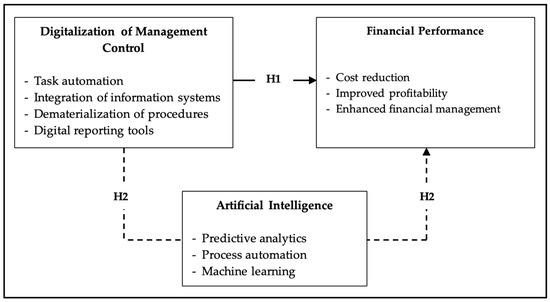
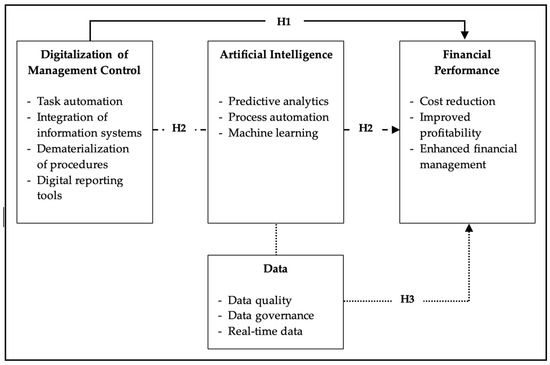
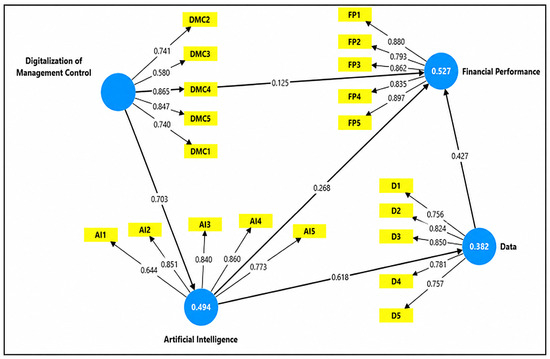
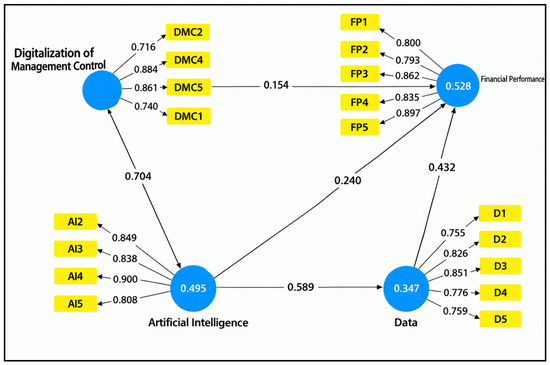
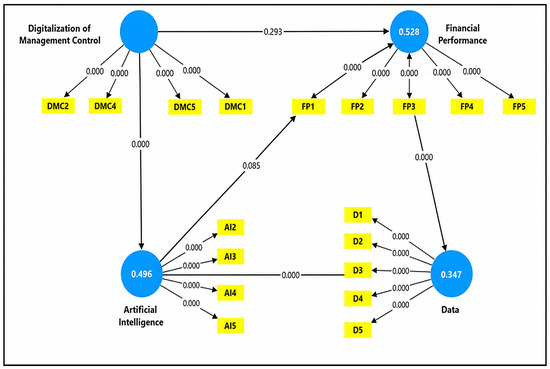
Digital transformation is reshaping management accounting practices worldwide, yet empirical evidence on how digitalization translates into improved financial performance, particularly in emerging economies, remains fragmented and contested. Drawing on institutional theory, dynamic capabilities theory and contingency theory, this study investigates whether the digitalization of management control processes directly improves financial performance and whether artificial intelligence (AI) and data quality sequentially mediate this relationship. A sequential mixed-methods design was employed: an exploratory qualitative phase involving semi-structured interviews with 18 management controllers and finance professionals in the Souss-Massa region of Morocco (analyzed via NVivo 15) was followed by a confirmatory quantitative phase administering a structured questionnaire to 68 professionals, analyzed using partial least squares structural equation modeling (PLS-SEM, SmartPLS 4). Results reveal that digitalization alone does not significantly improve financial performance (H1 rejected; β = 0.154, p = 0.293), and AI in isolation does not sufficiently mediate this relationship (H2 rejected; β = 0.169, p = 0.100). However, the complete serial mediation chain, digitalization to AI to data quality to financial performance, is statistically significant and robust (H3 confirmed; β = 0.179, p = 0.020). These findings challenge naive technological determinism in management accounting transformation and demonstrate that AI-driven performance gains are conditional on coherent data governance.
Full article
(This article belongs to the Special Issue Innovations and Challenges in Management Accounting)
►▼
Show Figures

Figure 1
Open AccessArticle
Volatility Management in Factor Investing: Evidence from the United States, Europe and Developed Markets
by
Nuno J. P. Rodrigues, Ricardo J. P. Campelos and Francisco Santos
J. Risk Financ. Manag. 2026, 19(9), 721; https://doi.org/10.3390/jrfm19090721 - 12 Sep 2026
Abstract
This paper examines whether volatility management enhances the risk-return profile of factor investing strategies based on the momentum factor and the five-factor model across major developed equity markets. The study uses daily and monthly data from the Kenneth R. French database for the
[...] Read more.
This paper examines whether volatility management enhances the risk-return profile of factor investing strategies based on the momentum factor and the five-factor model across major developed equity markets. The study uses daily and monthly data from the Kenneth R. French database for the United States, Europe, and Developed Markets, covering long samples through December 2023. Volatility-managed factor returns are constructed by scaling original factor returns by functions of their realised volatility and are then evaluated against the corresponding unmanaged series. Performance is assessed by changes in average returns, volatility, and the Sharpe ratio, comparing volatility-managed factors with their unmanaged counterparts across regions and volatility-estimation horizons. The analysis evaluates whether the effectiveness of volatility management is consistent across factors, markets and estimation windows. Results show that volatility management can materially improve risk-adjusted performance for some factors and regions, particularly for momentum and profitability, although benefits are not uniform across all factors or geographies. These findings provide updated evidence on volatility management in factor investing and offer insights into the behaviour of volatility-managed factor strategies, although implementation costs and trading frictions are not incorporated in the reported results.
Full article
(This article belongs to the Special Issue Algorithmic Trading, Forecasting, and Market Liquidity)
Journal Menu
► ▼ Journal Menu-
- JRFM Home
- Aims & Scope
- Editorial Board
- Reviewer Board
- Topical Advisory Panel
- Early Career Editorial Board
- Instructions for Authors
- Special Issues
- Topics
- Sections & Collections
- Article Processing Charge
- Indexing & Archiving
- Editor’s Choice Articles
- Most Cited & Viewed
- Journal Statistics
- Journal History
- Journal Awards
- Conferences
- Editorial Office
Journal Browser
► ▼ Journal BrowserHighly Accessed Articles
Latest Books
E-Mail Alert
News
Topics
Topic in
Economies, IJFS, Sustainability, Businesses, JRFM
Sustainable and Green Finance
Topic Editors: Otilia Manta, Maria PalazzoDeadline: 31 October 2026
Topic in
Clean Technol., Economies, FinTech, JRFM, Sustainability
Green Technology Innovation and Economic Growth
Topic Editors: David (Xuefeng) Shao, Miaomiao Tao, Selena ShengDeadline: 31 December 2026
Topic in
IJFS, JRFM, Risks, Sustainability, FinTech, Platforms
Innovations of Digital Finance, Green Finance, Climate Finance and Financial Risk in the AI Era
Topic Editors: Qian Li, Canzhong YaoDeadline: 1 February 2027
Topic in
Businesses, Economies, FinTech, JRFM, Sustainability, Information, AI, Technologies, Applied Sciences, Encyclopedia
AI-Driven Information Governance for Sustainable Decision Making and Innovation
Topic Editors: Won Sang Lee, Yonghan JuDeadline: 30 April 2027
Conferences
2 November 2026–4 November 2036
The 2nd International Online Conference on Risk and Financial Management: Revisiting AI and Machine Learning Techniques in Finance and Economics (IOCRF2026)
Special Issues
Special Issue in
JRFM
Artificial Intelligence, Corporate Governance, and Sustainable Value Creation
Guest Editors: Sana Ben Abdallah, Dhafer SaïdaneDeadline: 30 September 2026
Special Issue in
JRFM
Behavioral Influences on Financial Decisions
Guest Editor: Michael TangDeadline: 30 September 2026
Special Issue in
JRFM
Financial and Governance Models for Cultural Heritage
Guest Editor: Xiangfeng JiDeadline: 30 September 2026
Special Issue in
JRFM
Family Firm Investment and Innovation
Guest Editor: Norma JumaDeadline: 30 September 2026
Topical Collections
Topical Collection in
JRFM
Quantitative Advances and Risks in Asian Financial Markets
Collection Editors: Svetlozar (Zari) Rachev, Shigeyuki Hamori, Yasushi Hamao, Shuangzhe Liu, Ali Jaffri
Topical Collection in
JRFM
Transformative Corporate Finance and Governance
Collection Editor: Ştefan Cristian Gherghina
Topical Collection in
JRFM
AI and Data-Driven Quantitative Finance
Collection Editors: Svetlozar (Zari) Rachev, Shuangzhe Liu