<?xml version="1.0" encoding="UTF-8"?>
<!DOCTYPE article PUBLIC "-//NLM//DTD Journal Publishing DTD v2.3 20070202//EN" "journalpublishing.dtd">
<article xmlns:mml="http://www.w3.org/1998/Math/MathML" xmlns:xlink="http://www.w3.org/1999/xlink" xml:lang="en" article-type="research-article">
  <front>
    <journal-meta>
      <journal-id journal-id-type="publisher-id">toxins</journal-id>
      <journal-title>Toxins</journal-title>
      <abbrev-journal-title abbrev-type="publisher">Toxins</abbrev-journal-title>
      <abbrev-journal-title abbrev-type="pubmed">Toxins</abbrev-journal-title>
      <issn pub-type="epub">2072-6651</issn>
      <publisher>
        <publisher-name>MDPI</publisher-name>
      </publisher>
    </journal-meta>
    <article-meta>
      <article-id pub-id-type="doi">10.3390/toxins4121427</article-id>
      <article-id pub-id-type="publisher-id">toxins-04-01427</article-id>
      <article-categories>
        <subj-group>
          <subject>Article</subject>
        </subj-group>
      </article-categories>
      <title-group>
        <article-title>Interleukin-17 (IL-17) Expression Is Reduced during Acute Myocardial Infarction: Role on Chemokine Receptor Expression in Monocytes and Their <italic>in Vitro</italic> Chemotaxis towards Chemokines</article-title>
      </title-group>
      
      <contrib-group>
        <contrib contrib-type="author">
          <name>
            <surname>Troitskaya</surname>
            <given-names>Maria</given-names>
          </name>
          <xref rid="af1-toxins-04-01427" ref-type="aff">1</xref>
          <xref rid="af2-toxins-04-01427" ref-type="aff">2</xref>
        </contrib>
        <contrib contrib-type="author">
          <name>
            <surname>Baysa</surname>
            <given-names>Anton</given-names>
          </name>
          <xref rid="af1-toxins-04-01427" ref-type="aff">1</xref>
          <xref rid="af2-toxins-04-01427" ref-type="aff">2</xref>
        </contrib>
        <contrib contrib-type="author">
          <name>
            <surname>Vaage</surname>
            <given-names>Jarle</given-names>
          </name>
          <xref rid="af3-toxins-04-01427" ref-type="aff">3</xref>
        </contrib>
        <contrib contrib-type="author">
          <name>
            <surname>Sand</surname>
            <given-names>Kristin L.</given-names>
          </name>
          <xref rid="af1-toxins-04-01427" ref-type="aff">1</xref>
        </contrib>
        <contrib contrib-type="author">
          <name>
            <surname>Maghazachi</surname>
            <given-names>Azzam A.</given-names>
          </name>
          <xref rid="af1-toxins-04-01427" ref-type="aff">1</xref>
          <xref rid="c1-toxins-04-01427" ref-type="corresp">*</xref>
        </contrib>
        <contrib contrib-type="author">
          <name>
            <surname>Valen</surname>
            <given-names>Guro</given-names>
          </name>
          <xref rid="af1-toxins-04-01427" ref-type="aff">1</xref>
          <xref rid="af2-toxins-04-01427" ref-type="aff">2</xref>
          <xref rid="c1-toxins-04-01427" ref-type="corresp">*</xref>
        </contrib>
      </contrib-group>
      <aff id="af1-toxins-04-01427"><label>1 </label>Department of Physiology, Institute of Basic Medical Sciences, University of Oslo, Oslo N-0317, Norway; Email: <email>maria_nemo@mail.ru</email> (M.T.); <email>anton.baysa@medisin.uio.no</email> (A.B.); <email>k.l.sand@medisin.uio.no</email> (K.L.S.)</aff>
      <aff id="af2-toxins-04-01427"><label>2 </label>Center for Heart Failure Research, University of Oslo, Oslo N-0317, Norway </aff>
      <aff id="af3-toxins-04-01427"><label>3 </label>Department of Emergency and Intensive Care at the Institute of Clinical Medicine, Oslo University Hospital, Oslo N-0424, Norway; Email: <email>i.j.vaage@medisin.uio.no</email></aff>
      <author-notes>
        <corresp id="c1-toxins-04-01427"><label>*</label> Authors to whom correspondence should be addressed; Email: <email>azzam.maghazachi@medisin.uio.no</email> (A.A.M.); <email>guro.valen@medisin.uio.no</email> (G.V.); Tel.: +47-2285-1203 (A.A.M.); +47-2285-1153 (G.V.); Fax: + 47-2285-1249.</corresp>
      </author-notes>
      <pub-date pub-type="epub">
        <day>30</day>
        <month>11</month>
        <year>2012</year>
      </pub-date>
      <pub-date pub-type="collection"><month>12</month>
        <year>2012</year>
      </pub-date>
      <volume>4</volume>
      <issue>12</issue>
      <fpage>1427</fpage>
      <lpage>1439</lpage>
      <history>
        <date date-type="received">
          <day>15</day>
          <month>11</month>
          <year>2012</year>
        </date>
        <date date-type="rev-recd">
          <day>27</day>
          <month>11</month>
          <year>2012</year>
        </date>
        <date date-type="accepted">
          <day>28</day>
          <month>11</month>
          <year>2012</year>
        </date>
      </history>
      <permissions>
        <copyright-statement>©  2012 by the authors; licensee MDPI, Basel, Switzerland.</copyright-statement>
        <copyright-year>2012</copyright-year>
        <license xmlns:xlink="http://www.w3.org/1999/xlink" license-type="open-access" xlink:href="http://creativecommons.org/licenses/by/3.0/">
          <p>This article is an open-access article distributed under the terms and conditions of the Creative Commons Attribution license (http://creativecommons.org/licenses/by/3.0/).</p>
        </license>
      </permissions>
      <abstract>
        <p>The roles of immune cells and their soluble products during myocardial infarction (MI) are not completely understood. Here, we observed that the percentages of IL-17, but not IL-22, producing cells are reduced in mice splenocytes after developing MI. To correlate this finding with the functional activity of IL-17, we sought to determine its effect on monocytes. In particular, we presumed that this cytokine might affect the chemotaxis of monocytes important for cardiac inflammation and remodeling. We observed that IL-17 tends to reduce the expression of two major chemokine receptors involved in monocyte chemotaxis, namely CCR2 and CXCR4. Further analysis showed that monocytes pretreated with IL-17 have reduced <italic>in vitro</italic> chemotaxis towards the ligand for CCR2, <italic>i.e.</italic>, MCP-1/CCL2, and the ligand for CXCR4, <italic>i.e.</italic>, SDF-1α/CXCL12. Our results support the possibility that IL-17 may be beneficial in MI, and this could be due to its ability to inhibit the migration of monocytes.</p>
      </abstract>
      <kwd-group>
        <kwd>myocardial infarction</kwd>
        <kwd>IL-17</kwd>
        <kwd>monocytes</kwd>
        <kwd>chemokines</kwd>
        <kwd>chemokine receptors</kwd>
      </kwd-group>
    </article-meta>
  </front>
  <body>
    <sec sec-type="intro">
      <title>1. Introduction</title>
      <p>In acute myocardial ischemia, aseptic inflammation is induced in the heart [<xref ref-type="bibr" rid="B1-toxins-04-01427">1</xref>]. Moreover, acute myocardial infarction is associated with systemic inflammation. Patients or experimental animals with acute infarction have increased levels of circulating cytokines, increased count of peripheral blood cells and increased <italic>ex vivo</italic> activation of monocytes and polymorphonuclear granulocytes [<xref ref-type="bibr" rid="B2-toxins-04-01427">2</xref>,<xref ref-type="bibr" rid="B3-toxins-04-01427">3</xref>]. Atherosclerosis, <italic>per se</italic>, is considered an autoimmune disease with activation of both innate and adaptive immunity [<xref ref-type="bibr" rid="B4-toxins-04-01427">4</xref>,<xref ref-type="bibr" rid="B5-toxins-04-01427">5</xref>]. The transition between atherosclerosis and acute infarction in many patients involves unstable angina, a process in which the inflammation observed during atherosclerosis is enhanced [<xref ref-type="bibr" rid="B4-toxins-04-01427">4</xref>,<xref ref-type="bibr" rid="B6-toxins-04-01427">6</xref>]. However, in all the three clinical conditions of atherosclerosis, unstable angina and acute infarction, it remains an open question if the systemic inflammation is a consequence of the local events in the vessel wall, a cause of the injurious process or an attempt of tissue repair upon organ injury. </p>
      <p>Interleukin-17 (IL-17) and interleukin-22 (IL-22) are leukocyte-derived cytokines with impact especially on epithelial cells in various tissues [<xref ref-type="bibr" rid="B7-toxins-04-01427">7</xref>]. A broad variety of human T-cells secrete IL-17 and IL-22, as recently reviewed elsewhere [<xref ref-type="bibr" rid="B7-toxins-04-01427">7</xref>]. While Th17 cells may possibly secrete both IL-17 and IL-22, the major source of IL-22 are Th22 cells [<xref ref-type="bibr" rid="B8-toxins-04-01427">8</xref>]. The biological role of the cytokines is largely unknown; it is speculated that IL-17 exerts pro-inflammatory effects and is involved in the pathogenesis of several auto-inflammatory diseases, while IL-22 may have protective/regenerative effects [<xref ref-type="bibr" rid="B7-toxins-04-01427">7</xref>]. In a recent study on 981 patients with acute myocardial infarction, low serum levels of IL-17 combined with high serum levels of the leukocyte adhesion molecule vascular cell adhesion molecule 1 (VCAM-1) was associated with a higher risk of major cardiovascular events, while patients with high IL-17 and low VCAM-1 had better outcomes [<xref ref-type="bibr" rid="B9-toxins-04-01427">9</xref>]. In rats with induced myocardial infarction, cardiac IL-17 and target genes were upregulated post infarct, while blocking IL-17 signaling reduced apoptotic cell death post- myocardial infarct [<xref ref-type="bibr" rid="B10-toxins-04-01427">10</xref>]. However, in neither of those studies was the major source of IL-17 production, <italic>i.e.</italic>, circulating Th17 cells, studied.</p>
      <p>The purpose of the present study was to investigate the expression of IL-17 and IL-22 receptors on the cell surface of spleen cells after myocardial infarction. Furthermore, the effects of IL-17 and IL-22 on monocyte chemotaxis were investigated. </p>
    </sec>
    <sec sec-type="results">
      <title>2. Results</title>
      <sec>
        <title>2.1. Percentages of IL-17-Producing Cells Are Reduced in Non-activated Splenocytes of Myocardial Infarcted Mice</title>
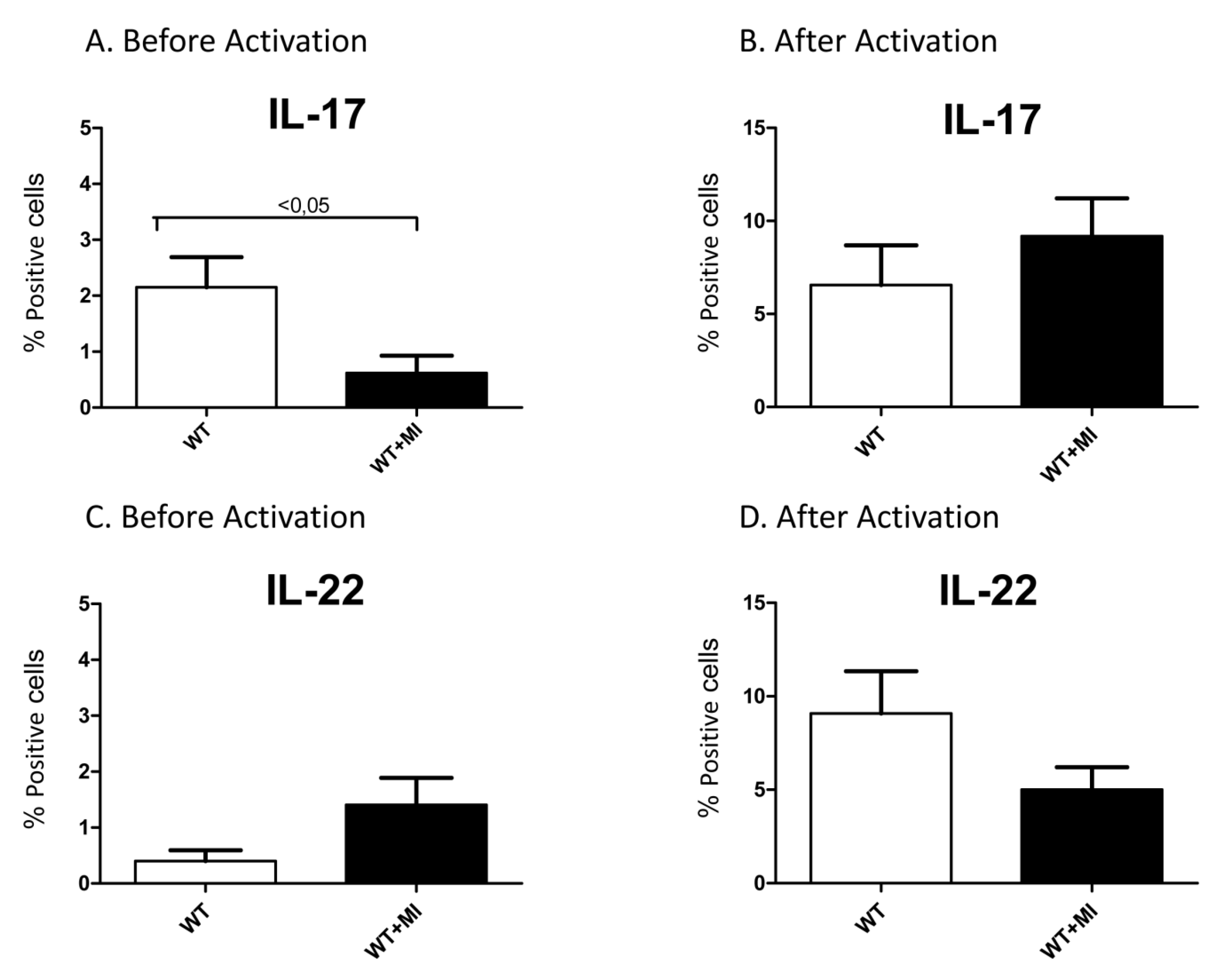
        <p>Spleen cells were isolated from mice subjected to permanent left coronary artery ligation three days earlier and compared with those of sham-operated mice. Intracellular staining of IL-17-producing cells show that mice suffering from myocardial infarctions (MI) had significantly less IL-17-producing cells in their spleens than non-infarcted mice (<italic>p </italic>&lt; 0.05; <xref ref-type="fig" rid="toxins-04-01427-f001">Figure 1</xref>A). This difference disappeared upon activating splenocytes with phorbol myristate acetate “PMA” + ionomycin (<xref ref-type="fig" rid="toxins-04-01427-f001">Figure 1</xref>B). On the other hand, there was no statistical differences in the percentage of IL-22 producing splenocytes collected from infarcted and non-infarcted mice, regardless whether spleen cells were non-activated (<xref ref-type="fig" rid="toxins-04-01427-f001">Figure 1</xref>C) or activated with PMA + ionomycin (<xref ref-type="fig" rid="toxins-04-01427-f001">Figure 1</xref>D).</p>
        <fig id="toxins-04-01427-f001" position="float">
          <label>Figure 1</label>
          <caption>
            <p>A and B. Percentages of positive splenocytes isolated from either sham-operated wild-type mice (WT) or WT with myocardial infarction induced through left coronary artery ligation three days earlier (WT + MI). Intracellular labeling with antibodies against IL-17 was performed on intact splenocytes (<bold>A</bold>) or splenocytes activated with PMA plus ionomycin for 4 h before labeling (<bold>B</bold>). C and D. Percentages of positive cells labeled intracellularly with anti-IL-22 antibodies. The cells were either unstimulated (<bold>C</bold>) or were activated with PMA plus ionomycin for 4 h before labeling (<bold>D</bold>). Mean ± SEM of 5 experiments are shown.</p>
          </caption>
          <graphic xmlns:xlink="http://www.w3.org/1999/xlink" xlink:href="toxins-04-01427-g001.tif"/>
        </fig>
      </sec>
      <sec>
        <title>2.2. Immune Cells Express IL-17 Receptors and Not IL-22 Receptors</title>
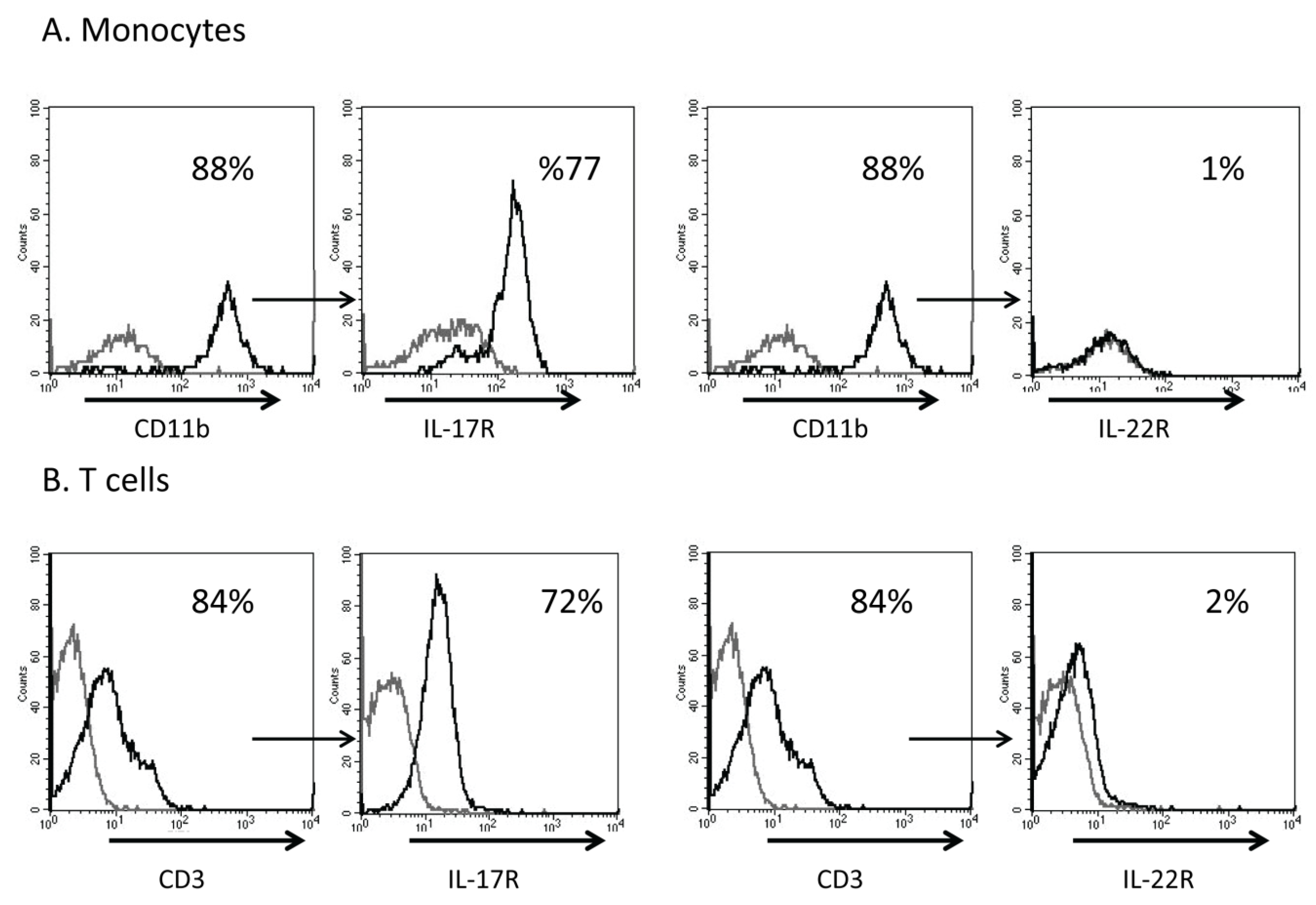
        <p>Because IL-17, and possibly IL-22, secreted from inflammatory cells might affect cells of the immune system, we examined the expression of IL-17R and IL-22R on T cells and monocytes, cells presumably activated during myocardial infarction. About 80% of monocytes isolated based on the expression of CD11b also expressed IL-17R, but not IL-22R (<xref ref-type="fig" rid="toxins-04-01427-f002">Figure 2</xref>A). Similarly, T cells, which were isolated based on the expression of CD3, also expressed IL-17R, but not the IL-22R (<xref ref-type="fig" rid="toxins-04-01427-f002">Figure 2</xref>B). </p>
        <fig id="toxins-04-01427-f002" position="float">
          <label>Figure 2</label>
          <caption>
            <p>(<bold>A</bold>) Monocytes were isolated by monocyte enrichment kit and were labeled with anti-CD11b. About 88% of monocytes were labeled with this antibody. This population was then stained with either anti-IL-17R or anti-IL-22R; (<bold>B</bold>) T cells were isolated using a T cell enrichment kit, labeled with anti-CD3 and then with anti-IL-17R or anti-IL-22R. One representative experiment indicating the percentages of positive cells is shown.</p>
          </caption>
          <graphic xmlns:xlink="http://www.w3.org/1999/xlink" xlink:href="toxins-04-01427-g002.tif"/>
        </fig>
      </sec>
      <sec>
        <title>2.3. Effect of IL-17 on Chemokine Receptor Expression</title>
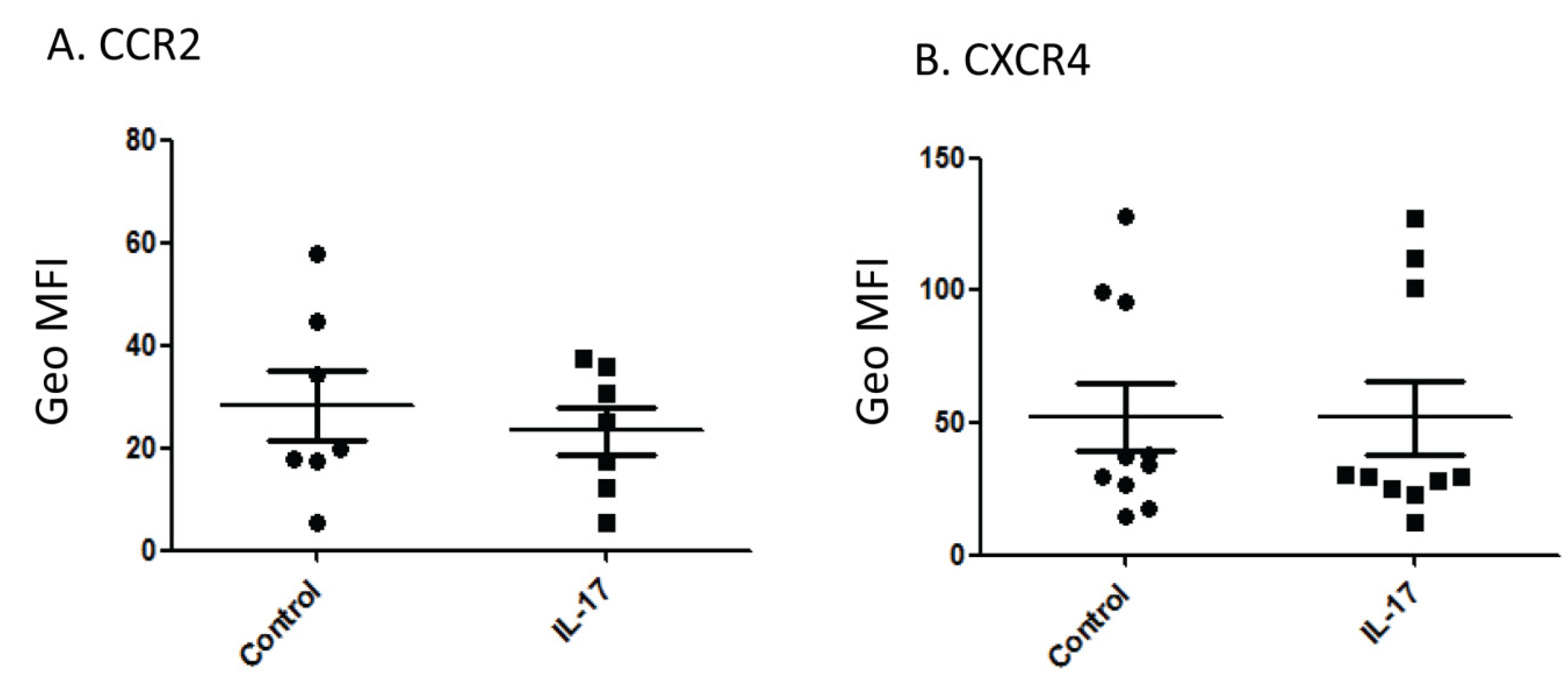
        <p>As monocytes expressed the IL-17R, and not the IL-22R, we pursued investigating the effect of IL-17 on these cells, which are known to transmigrate into ischemic myocardial tissue after infarction. First we investigated whether IL-17 affects the expression of chemokine receptors on monocytes. From the chemokine receptors examined (CCR2, CCR5, CCR6, CCR7, CXCR3 and CXCR4), we noticed a tendency towards reduced expression of CCR2 and CXCR4 on the surface of monocytes, although this was not statistically significant (<xref ref-type="fig" rid="toxins-04-01427-f003">Figure 3</xref>A,B).</p>
        <fig id="toxins-04-01427-f003" position="float">
          <label>Figure 3</label>
          <caption>
            <p>IL-17 may reduce the expression of CCR2 and CXCR4 on the surface of monocytes. Monocytes (1 × 10<sup>6</sup>) were either left intact (Control) or were pretreated with 250 ng/mL of IL-17 overnight<italic>. </italic>They were washed and then examined for the expression of CCR2 (<bold>A</bold>) or CXCR4 (<bold>B</bold>). The geometric mean of fluorescence intensity (Geo MFI) is shown. Each dot represents one independent experiment. </p>
          </caption>
          <graphic xmlns:xlink="http://www.w3.org/1999/xlink" xlink:href="toxins-04-01427-g003.tif"/>
        </fig>
        <fig id="toxins-04-01427-f004" position="float">
          <label>Figure 4</label>
          <caption>
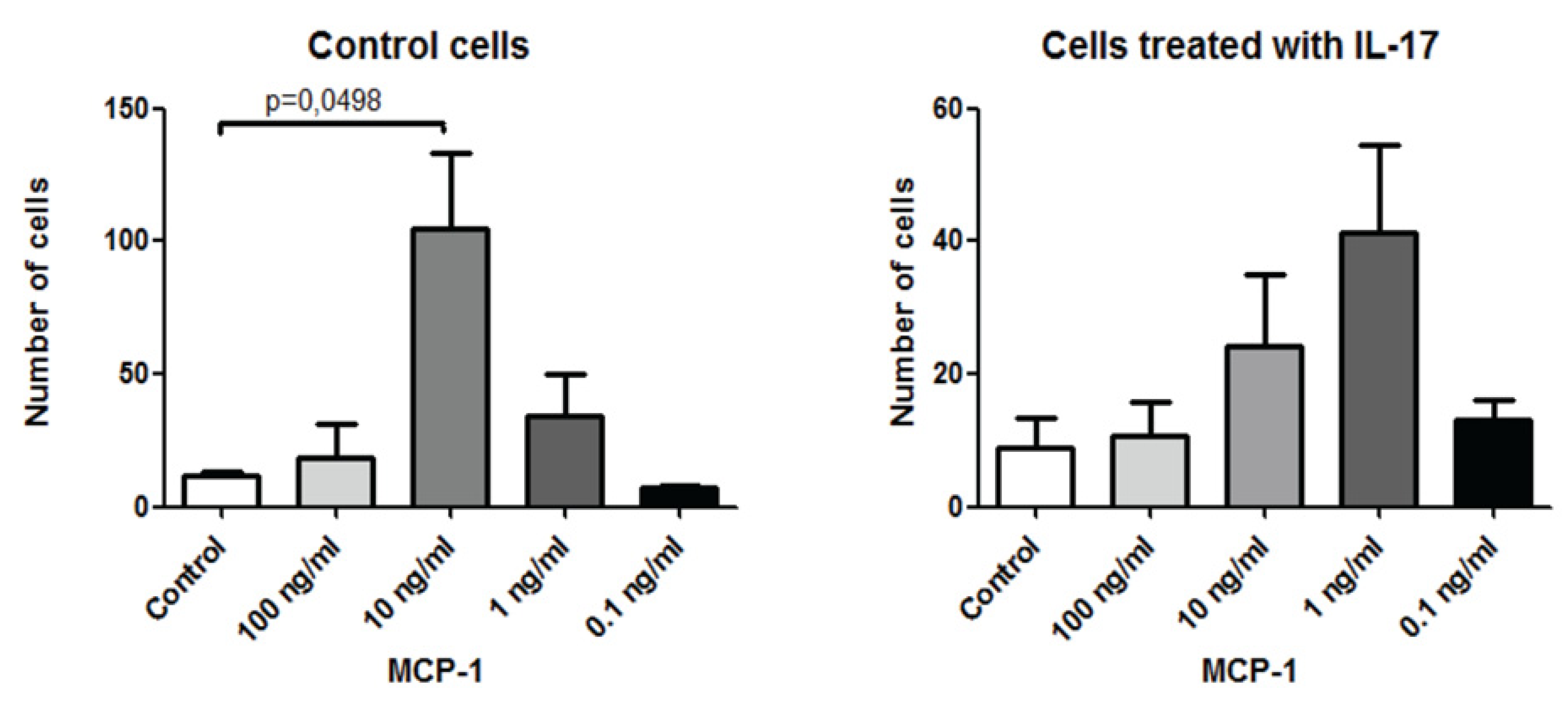
            <p>IL-17 inhibits monocytes chemotaxis towards MCP-1/CCL2. Monocytes were either untreated (control cells) or pretreated with 250 ng/mL of murine recombinant IL-17 overnight. The cells were washed, labeled with calcein-AM and then examined for migration towards different concentrations of MCP-1/CCL2. Two hours later, calcein-AM-labeled cells were collected and counted in the flow cytometer. Mean ± SEM of two experiments are shown.</p>
          </caption>
          <graphic xmlns:xlink="http://www.w3.org/1999/xlink" xlink:href="toxins-04-01427-g004.tif"/>
        </fig>
      </sec>
      <sec>
        <title>2.4. IL-17 Affects the<italic> in Vitro</italic> Chemotaxis of Monocytes towards MCP-1/CCL2</title>
        <p>Based on the above findings, we sought to examine the effect of this cytokine on chemokine-induced monocyte chemotaxis. For this, we used the ligands for CCR2 and CXCR4, namely MCP-1/CCL2 and SDFα-1/CXCL12, respectively. Results in <xref ref-type="fig" rid="toxins-04-01427-f004">Figure 4</xref>A demonstrate that 10 ng/mL of MCP-1/CCL2 significantly induced the chemotaxis of monocytes as compared to the control, where media was used instead of the chemokine (<italic>p </italic>&lt; 0.05; <xref ref-type="fig" rid="toxins-04-01427-f004">Figure 4</xref>A). This increase in chemotaxis disappeared upon pretreatment with IL-17 (<xref ref-type="fig" rid="toxins-04-01427-f004">Figure 4</xref>B). </p>
        
      </sec>
      <sec>
        <title>2.5. IL-17 Affects the <italic>in Vitro</italic> Chemotaxis of Monocytes towards SDF-1α/CXCL12</title>
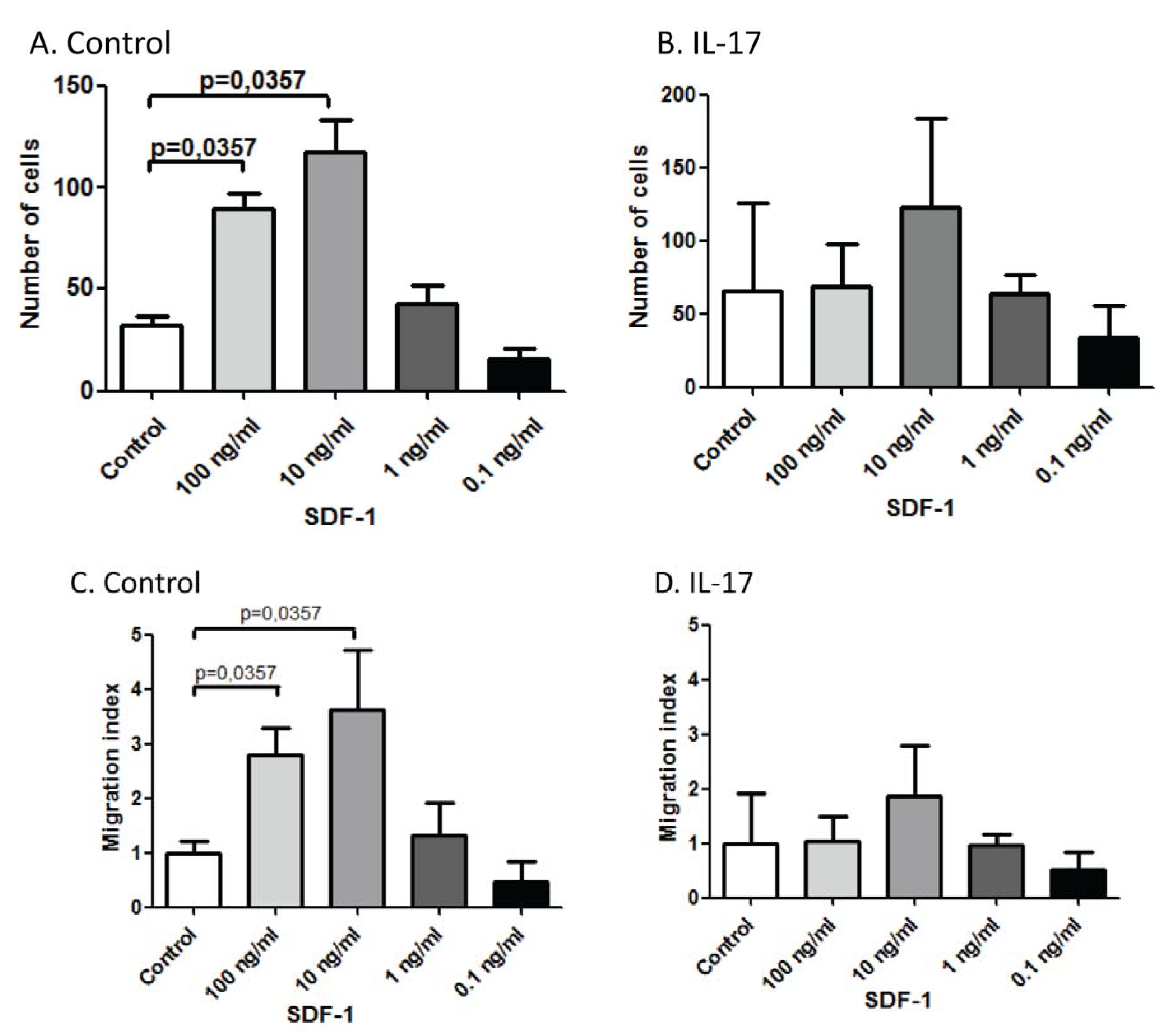
        <p>Next, we examined the effect of SDF-1α/CXCL12, which binds CXCR4, and observed that 10 and 100 ng/mL concentrations of this chemokine significantly induced the chemotaxis of monocytes (<italic>p</italic> &lt; 0.04; <xref ref-type="fig" rid="toxins-04-01427-f005">Figure 5</xref>A). Similar to its effect on MCP-1/CCL2-induced chemotaxis, IL-17 pretreatment abolished the chemotaxis induced by SDF-1α/CXCL12 (<xref ref-type="fig" rid="toxins-04-01427-f005">Figure 5</xref>B). Chemotaxis towards SDF-1α/CXCL12 was repeated by measuring the migration index rather than counting the numbers of calcein-AM-labeled cells into the lower wells. Exactly similar results were observed, <italic>i.e.</italic>, 10 and 100 ng/mL of CXCL12 induced the chemotaxis of monocytes into the lower wells of the chemotaxis chamber (<xref ref-type="fig" rid="toxins-04-01427-f005">Figure 5</xref>C), and this effect disappeared upon pretreating these cells with IL-17 (<xref ref-type="fig" rid="toxins-04-01427-f005">Figure 5</xref>D). </p>
        <fig id="toxins-04-01427-f005" position="float">
          <label>Figure 5</label>
          <caption>
            <p>IL-17 inhibits the chemotaxis of monocytes towards SDF-1α/CXCL12. (<bold>A</bold>) and (<bold>B</bold>) Monocytes were either untreated (control cells) or pretreated with 250 ng/mL IL-17 overnight. The cells were washed, labeled with calcein-AM and then examined for migration towards various concentrations of SDF-1α/CXCL12; (<bold>C</bold>) and (<bold>D</bold>) Migration index was calculated by measuring the numbers of migrating cells into the lower filters of the chemotaxis chambers. Mean ± SEM of two experiments are shown.</p>
          </caption>
          <graphic xmlns:xlink="http://www.w3.org/1999/xlink" xlink:href="toxins-04-01427-g005.tif"/>
        </fig>
      </sec>
    </sec>
    <sec sec-type="discussion">
      <title>3. Discussion</title>
      <p>The roles of immune cells and their soluble factors in atherosclerosis and acute myocardial infarction (MI) are not clearly defined. Here we report that the percentages of IL-17, but not IL-22, producing cells are reduced in spleen cells of mice with MI. IL-17 is released from Th17 cells [<xref ref-type="bibr" rid="B11-toxins-04-01427">11</xref>] or NK17/NK1 cells [<xref ref-type="bibr" rid="B12-toxins-04-01427">12</xref>], whereas the related cytokine IL-22 is released from either Th-22 [<xref ref-type="bibr" rid="B8-toxins-04-01427">8</xref>] or NK-22 cells [<xref ref-type="bibr" rid="B13-toxins-04-01427">13</xref>]. IL-17 is considered an inflammatory molecule, as it induces the production of IL-8/CXCL8 [<xref ref-type="bibr" rid="B14-toxins-04-01427">14</xref>], which recruits neutrophils. IL-17 also stimulates the production of matrix metalloproteinase-2, 3, 9 and 13 [<xref ref-type="bibr" rid="B15-toxins-04-01427">15</xref>], and facilitates the proliferation of endothelial cells [<xref ref-type="bibr" rid="B16-toxins-04-01427">16</xref>]. Consequently, IL-17 or cells that secrete it, such as Th17, are considered culprits in autoimmune diseases, including multiple sclerosis [<xref ref-type="bibr" rid="B17-toxins-04-01427">17</xref>], rheumatoid arthritis [<xref ref-type="bibr" rid="B18-toxins-04-01427">18</xref>], psoriasis [<xref ref-type="bibr" rid="B19-toxins-04-01427">19</xref>] and asthma [<xref ref-type="bibr" rid="B20-toxins-04-01427">20</xref>]. However, the role of IL-17 in MI is controversial. Barry <italic>et al.</italic> [<xref ref-type="bibr" rid="B10-toxins-04-01427">10</xref>] reported that IL-17 and its receptors are increased during MI in rats. This study does not contradict the present findings, as we measured splenocytes for IL-17 expression three days post MI in mice, while they measured gene and protein expression of IL-17 in left ventricles of rats 24 h after MI induction. IL-17 may be involved in reducing inflammation after ischemia-reperfusion injury to the kidney, evident by modified infiltration of neutrophil granulocytes in acutely injured kidneys of mice deficient of IL-17 [<xref ref-type="bibr" rid="B21-toxins-04-01427">21</xref>]. Mice treated with the bacterium <italic>Porphyromonas gingivalis</italic> had induced myocarditis and/or MI, accompanied by increased levels of IL-17 [<xref ref-type="bibr" rid="B22-toxins-04-01427">22</xref>]. IL-17 knockout mice had reduced infiltration of monocytes and neutrophil granulocytes in myocardial tissue, suggesting that IL-17 may play an important role after injury. Further, IL-17 induced the expression of CXCL1 mRNA levels, which may recruit neutrophils into the myocardium [<xref ref-type="bibr" rid="B10-toxins-04-01427">10</xref>,<xref ref-type="bibr" rid="B21-toxins-04-01427">21</xref>]. In order to understand whether IL-17 may influence inflammation related to MI, we sought to investigate whether IL-17 might affect the recruitment of monocytes, cells that are involved in atherosclerosis and MI [<xref ref-type="bibr" rid="B23-toxins-04-01427">23</xref>]. We observed that IL-17 tends to reduce the expression of CCR2 and CXCR4 on the surface of monocytes. To corroborate this finding with the recruitment of monocytes, we performed <italic>in vitro</italic> chemotaxis assay and observed that pretreatment of monocytes with IL-17 results in reduced chemotaxis. In particular, we observed that IL-17-pretreated monocytes have reduced chemotaxis towards the ligands for CCR2, <italic>i.e.</italic>, MCP-1/CCL2, and CXCR4, <italic>i.e.</italic>, SDF-1α/CXCL12. Both these chemokines are involved in MI. </p>
      <p>The administration of CXCR4 antagonist AMD3100 resulted in reduced scar formation, corroborated with improved cardiac contractility after MI [<xref ref-type="bibr" rid="B24-toxins-04-01427">24</xref>]. Further, deficiency of CXCR4 limits infarct size, which could be due to reduced infiltration of monocytes after development of MI [<xref ref-type="bibr" rid="B25-toxins-04-01427">25</xref>]. In the present study, we used spleen cells as a model of circulating inflammatory cells, as in mice the cells in the spleen are representative of those in the circulation. We speculate that our observations may be relevant to the known recruitment of monocytes from the circulation into infarcted myocardium <italic>in vivo</italic>. It is possible that cardiac outcome after MI may be influenced by the release of IL-17, which may limit the recruitment of inflammatory monocytes into sites of injury. This speculation and the present results are supported by the findings of Taleb <italic>et al.</italic> [<xref ref-type="bibr" rid="B26-toxins-04-01427">26</xref>], who reported that IL-17 down-regulates the expression of VCAM on mouse endothelial cells. The same authors reported that IL-17 inhibits the adherence of mononuclear cells to pre-activated human umbilical vein endothelial cells [<xref ref-type="bibr" rid="B9-toxins-04-01427">9</xref>]. Hence, IL-17 should not only be looked at as an inflammatory molecule that damages the injured tissues. This is in line with another study showing that IL-17 may be beneficial for inflammatory colitis disease [<xref ref-type="bibr" rid="B27-toxins-04-01427">27</xref>]. In this study, it was observed that Th17 cells inhibit the development of Th1 cells and, consequently, the release of IFN-γ. Hence, in the absence of Th17/IL-17, Th1 cells induce strong colitis disease. Finally, the observation that patients with higher IL-17 levels had reduced risk of major cardiovascular events [<xref ref-type="bibr" rid="B9-toxins-04-01427">9</xref>] may provide further evidence of a beneficial role of IL-17.</p>
    </sec>
    <sec>
      <title>4. Experimental Section</title>
      <sec>
        <title>4.1. Animals</title>
        <p>Male C57Bl/6 mice 24–28 days old (NOVA-SCB, Nittedal, Norway) were used in this study. All animals were allowed at least five-to-seven days of acclimatization after shipment to the animal stable before the actual experiments. The mice had conventional microbial status and were kept under regulated temperature 22–23 °C and relative humidity 55% ± 5%, with an alternating light: dark cycle (12:12). Animals had free access to water and chow. The experiments were approved by the Norwegian Animal Health Authority and were performed under the principles of laboratory animal care (Guide for the Care and Use of Laboratory Animals published by the United States National Institute of Health, NIH Publication no. 85-23, revised 1996).</p>
      </sec>
      <sec>
        <title>4.2. Antibodies</title>
        <p>PE-conjugated monoclonal rat anti-mouse CCR2, PE-conjugated monoclonal rat anti-mouse CCR6, PE-conjugated monoclonal rat anti-mouse CCR7, PE-conjugated monoclonal rat anti-mouse CXCR3, PE-conjugated monoclonal rat anti-mouse CXCR4, PE-conjugated monoclonal rat anti-mouse IL-22Rα, CXCR4 PE-conjugated IgG2A isotype control and PE-conjugated IgG2B isotype control were purchased from R&amp;D Systems (R&amp;D Systems Europe Ltd., Abingdon, UK). PE-conjugated monoclonal rat anti-mouse CCR5 (CD 195) and PE-conjugated IgG2c isotype control were purchased from BD Biosciences. PE-conjugated monoclonal rat anti-mouse IL-17RA (CD 217) was purchased from eBioscience. FITC-conjugated monoclonal rat anti-mouse CD 11b, FITC-conjugated monoclonal rat anti-mouse CD 14 and FITC-conjugated kappa monoclonal mouse IgG2A were purchased from Abcam (Cambridgeshire, UK). FITC-conjugated monoclonal rat anti-mouse CD3 was purchased from Termo Scientific.</p>
      </sec>
      <sec>
        <title>4.3. Coronary Artery Ligation</title>
        <p>Mice were anesthetized with isofluran and intubated with the maintenance of isofluran 1.5% mixed with pure oxygen. Mechanical ventilation (Model 874 092, B. Braun) was used to keep a respiratory rate of 133 per min. For induction of myocardial infarction, <italic>in vivo</italic> permanent occlusion of the left anterior descending coronary artery was performed after a left-sided thoracotomy, as previously described in detail [<xref ref-type="bibr" rid="B28-toxins-04-01427">28</xref>]. The body temperature was kept at 37 °C during surgery with a heating plate. After ligation, the thoracic cavity was closed and skin and muscle was reattached. For the sham operation, all these steps were performed with the exception of coronary artery ligation. Sodium saline (0.5 mL) and Temgesic (0.1 mg/kg) were administered subcutaneously for rehydration and analgesia after the operation. Mice were extubated when spontaneous respiration occurred and kept in a “mini intensive care unit” with 100% humidity and 30 °C during the first postoperative day. Temgesic was administered postoperatively by the veterinarian any time pain-associated behavior of the mice was observed.</p>
        <p>In the first series of experiments, wild-type C57BL/6 mice were subjected to either <italic>in vivo </italic>coronary artery occlusion (<italic>n</italic> = 5) or sham operation (<italic>n</italic> = 5). Spleens were harvested for cell isolation three days later from isofluran anesthetized mice and compared with spleens from sham operated mice. In subsequent experiments, spleens were harvested from C57Bl/6 after cervical dislocation for the end-points of flow cytometry analysis or chemotaxis and migration, as described below. </p>
      </sec>
      <sec>
        <title>4.4. Preparation of Spleen Cells</title>
        <p>Spleen cells harvested from mice with coronary artery ligation or sham-operation were subjected to flow cytometry analysis after stimulation with phorbol myristate acetate (PMA, 20 ng/mL) combined with ionomycin (2 µM) for 22–24 h, and compared with non-treated cells collected the same day as the spleens were sampled. Spleens were extracted, placed in culture medium and homogenized under sterile conditions. The culture medium consisted of RPMI-1640 supplemented with 10% FCS, 100 U/mL penicillin, 100 µg/mL streptomycin, 2 mM L-glutamine, 1% nonessential amino acids (Gibco BRL Life Technologies, the Netherlands) and 50 µM β-mercaptoethanol (Sigma-Aldrich, Oslo, Norway). After histopaque (Sigma-Aldrich, Oslo, Norway) separation, the monocyte population was purified using either adherence or a Mouse Monocyte Enrichment negative selection kit (StemCell Technologies SARL, Grenoble, France). T-cells were positively selected using a Monocyte Enrichment negative selection kit (StemCell Technologies SARL, Grenoble, France). After isolation, cells (1 × 10<sup>6</sup>/mL) were divided in two groups, incubated with culture medium and with or without recombinant murine IL-17A (250 ng/mL, PeproTech) overnight at 37 °C in a 5% CO<sub>2</sub> incubator. </p>
      </sec>
      <sec>
        <title>4.5. Flow Cytometry Analysis</title>
        <p>Cells incubated with or without IL-17 were resuspended in PBS containing 0.1% sodium azide and labeled with 1 µg/mL PE-conjugated monoclonal rat anti-mouse CCR2, CCR5, CCR6, CCR7, CXCR3, CXCR4 (R&amp;D Systems Europe Ltd., Abingdon, UK), IL-17RA (eBioscience, San Diego, CA, USA), IL-22Rα (R&amp;D Systems) or FITC-conjugated monoclonal rat anti-mouse CD3, CD11b and CD14 for 45 min at 4 °C. As a control, cells were incubated with isotype control antibodies. The cells were washed twice and examined in flow cytometer (FACSCalibur, Becton Dickinson Biosciences, San Jose, CA, USA). Gating was performed according to the isotype control. To investigate if the spleen cells express IL-17 or IL-22 receptors (IL-17R and IL-22R), spleen cells were incubated with antibodies against CD3 (T-cell marker), CD-11b (monocyte marker) together with antibodies against IL-17R and IL-22R and sorted by flow cytometric analysis. As spleen cells contained the receptor for IL-17, but not IL-22, spleen cells were isolated and incubated with recombinant murine 250 ng/mL IL-17A (PeproTech EC Ltd., England) over night, compared with unstimulated cells, and sorted by FACS to evaluate the expression of CCR2, CCR4, CCR5,CCR6, CCR7, CXCR3 and CXCR4.</p>
      </sec>
      <sec>
        <title>4.6. <italic>In Vitro</italic> Chemotaxis Assay</title>
        <p>To evaluate a possible role of IL-17 on chemotaxis, monocytes were incubated in the presence or absence of 250 ng/mL recombinant murine IL-17 overnight. Chemotaxis assay was done using Nuclepore blind well chemotaxis chambers with a lower well volume of 200 µL used. A maximum volume of 200 µL medium containing RPMI plus 0.1% BSA was placed in the lower wells in the presence or absence of 0.1–100 ng/mL of MCP-1/CCL2 or SDF-1α/CXCL12 chemokines (PeproTech, England). Cells (5 × 10<sup>5</sup>) were placed in the upper compartments and incubated for three hours at 37 °C in a 5% CO<sub>2</sub> incubator. The filters were removed, dehydrated, cells were fixed with methanol, stained with 15% modified Giemsa for 10 min and then mounted on glass slides. Cells in 10 high-power fields were counted and averaged for each sample. Migration index (MI) was calculated as the number of cells migrating toward the concentration gradients of chemokines divided by the number of cells migrating toward medium only. In the second protocol, cells (1 × 10<sup>6</sup>/mL) were incubated with 10 µg Calcein-AM and incubated for 45 min at 37 °C in 24 well plates. The cells were spun down at 500 rpm for 5 min, washed and collected. Calcein-AM labeled cells (5 × 10<sup>5</sup>) were incubated in the chemotaxis chambers, as described above for 3 h. After this time, cell suspensions were collected from the lower wells and fluorescence intensity of the calcein AM-loaded cells was measured in a BioTek FLX TBI plate reader using 485/528 nm fluorescence filters.</p>
      </sec>
      <sec>
        <title>4.7. Statistical Analysis</title>
        <p>A <italic>t</italic>-test was used when data were evenly distributed, while a Mann-Whitney test was used for data with a non-gaussian distribution. <italic>p </italic>&lt; 0.05 was considered significant.</p>
      </sec>
    </sec>
    <sec sec-type="conclusions">
      <title>5. Conclusions</title>
      <p>We provide novel evidence showing that the inflammatory cytokine IL-17 may have beneficial effects in mice with myocardial infarction. This molecule inhibits the <italic>in vitro</italic> chemotaxis of monocytes towards MCP-1/CCL2 and SDF-1α/CXCL12. This activity may be related to the IL-17 effect on the expression of CCR2 and CXCR4 on the cell surface of these monocytes, although other mechanisms might also be important, such as modulating the affinity of the receptors for their chemokine ligands. Consequently, IL-17 may potentially be used therapeutically for treating MI, considering that it may ameliorate, rather than exacerbate, the disease. </p>
    </sec>
   
  </body>
  <back>
   <notes>
      <title>Conflict of Interest</title>
      <p>The authors declare no conflict of interest.</p>
    </notes>
    <ack>
      <title>Acknowledgements</title>
      <p>MT was recipient of a scholarship from the President of the Russian Federation. Further financial support was provided by the Anders Jahres Foundation, the Nansen Foundation and the University of Oslo.</p>
    </ack>
    <ref-list>
      <title>References</title>
      <ref id="B1-toxins-04-01427">
        <label>1.</label>
        <citation citation-type="journal">
          <person-group person-group-type="author">
            <name>
              <surname>Valen</surname>
              <given-names>G.</given-names>
            </name>
            <name>
              <surname>Yan</surname>
              <given-names>Z.-Q.</given-names>
            </name>
            <name>
              <surname>Hansson</surname>
              <given-names>G.K.</given-names>
            </name>
          </person-group>
          <article-title>Nuclear factor κ-B and the heart</article-title>
          <source>J. Am. Coll. Cardiol.</source>
          <year>2001</year>
          <volume>38</volume>
          <fpage>307</fpage>
          <lpage>314</lpage>
          <pub-id pub-id-type="doi">10.1016/S0735-1097(01)01377-8</pub-id>
        </citation>
      </ref>
      <ref id="B2-toxins-04-01427">
        <label>2.</label>
        <citation citation-type="journal">
          <person-group person-group-type="author">
            <name>
              <surname>Maugeri</surname>
              <given-names>N.</given-names>
            </name>
            <name>
              <surname>Rovere-Querini</surname>
              <given-names>P.</given-names>
            </name>
            <name>
              <surname>Evangelista</surname>
              <given-names>V.</given-names>
            </name>
            <name>
              <surname>Godino</surname>
              <given-names>C.</given-names>
            </name>
            <name>
              <surname>Demetrio</surname>
              <given-names>M.</given-names>
            </name>
            <name>
              <surname>Baldini</surname>
              <given-names>M.</given-names>
            </name>
            <name>
              <surname>Figini</surname>
              <given-names>F.</given-names>
            </name>
            <name>
              <surname>Coppi</surname>
              <given-names>G.</given-names>
            </name>
            <name>
              <surname>Slavich</surname>
              <given-names>M.</given-names>
            </name>
            <name>
              <surname>Camera</surname>
              <given-names>M.</given-names>
            </name>
            <etal/>
          </person-group>
          <article-title>An intense and short-lasting burst of neutrophil activation differentiates early acute myocardial infarction from systemic inflammatory syndromes</article-title>
          <source>PLoS One</source>
          <year>2012</year>
          <volume>7</volume>
          <fpage>e39484</fpage>
        <pub-id pub-id-type="doi">10.1371/journal.pone.0039484</pub-id><pub-id pub-id-type="pmid">22761804</pub-id></citation>
      </ref>
      <ref id="B3-toxins-04-01427">
        <label>3.</label>
        <citation citation-type="journal">
          <person-group person-group-type="author">
            <name>
              <surname>Klingenberg</surname>
              <given-names>R.</given-names>
            </name>
            <name>
              <surname>Luscher</surname>
              <given-names>T.F.</given-names>
            </name>
          </person-group>
          <article-title>Inflammation in coronary artery disease and acute myocardial infarction—Is the stage set for novel therapies?</article-title>
          <source>Curr. Pharm. Des.</source>
          <year>2012</year>
          <volume>18</volume>
          <fpage>4358</fpage>
          <lpage>4369</lpage>
          <pub-id pub-id-type="doi">10.2174/138161212802481219</pub-id>
        </citation>
      </ref>
      <ref id="B4-toxins-04-01427">
        <label>4.</label>
        <citation citation-type="journal">
          <person-group person-group-type="author">
            <name>
              <surname>Hansson</surname>
              <given-names>G.K.</given-names>
            </name>
            <name>
              <surname>Klareskog</surname>
              <given-names>L.</given-names>
            </name>
          </person-group>
          <article-title>Pulling down the plug on atherosclerosis: Cooling down the inflammasome</article-title>
          <source>Nat. Med.</source>
          <year>2011</year>
          <volume>17</volume>
          <fpage>790</fpage>
          <lpage>791</lpage>
          <pub-id pub-id-type="doi">10.1038/nm0711-790</pub-id>
        </citation>
      </ref>
      <ref id="B5-toxins-04-01427">
        <label>5.</label>
        <citation citation-type="journal">
          <person-group person-group-type="author">
            <name>
              <surname>Imanishi</surname>
              <given-names>T.</given-names>
            </name>
            <name>
              <surname>kasaka</surname>
              <given-names>T.</given-names>
            </name>
          </person-group>
          <article-title>Biomarkers associated with vulnerable atheromatous plaque</article-title>
          <source>Curr. Med. Chem.</source>
          <year>2012</year>
          <volume>19</volume>
          <fpage>2588</fpage>
          <lpage>2596</lpage>
        <pub-id pub-id-type="doi">10.2174/092986712800492922</pub-id><pub-id pub-id-type="pmid">22489722</pub-id></citation>
      </ref>
      <ref id="B6-toxins-04-01427">
        <label>6.</label>
        <citation citation-type="journal">
          <person-group person-group-type="author">
            <name>
              <surname>Breland</surname>
              <given-names>U.M.</given-names>
            </name>
            <name>
              <surname>Hollan</surname>
              <given-names>I.</given-names>
            </name>
            <name>
              <surname>Saatvedt</surname>
              <given-names>K.</given-names>
            </name>
            <name>
              <surname>Almdahl</surname>
              <given-names>S.M.</given-names>
            </name>
            <name>
              <surname>Damås</surname>
              <given-names>J.K.</given-names>
            </name>
            <name>
              <surname>Yndestad</surname>
              <given-names>A.</given-names>
            </name>
            <name>
              <surname>Mikkelsen</surname>
              <given-names>K.</given-names>
            </name>
            <name>
              <surname>Førre</surname>
              <given-names>O.T.</given-names>
            </name>
            <name>
              <surname>Aukrust</surname>
              <given-names>P.</given-names>
            </name>
            <name>
              <surname>Ueland</surname>
              <given-names>T.</given-names>
            </name>
          </person-group>
          <article-title>Inflammatory markers in patients with coronary artery disease with and without inflammatory rheumatic disease</article-title>
          <source>Rheumatology</source>
          <year>2010</year>
          <volume>49</volume>
          <fpage>1118</fpage>
          <lpage>1127</lpage>
          <pub-id pub-id-type="doi">10.1093/rheumatology/keq005</pub-id>
        </citation>
      </ref>
      <ref id="B7-toxins-04-01427">
        <label>7.</label>
        <citation citation-type="journal">
          <person-group person-group-type="author">
            <name>
              <surname>Eyerich</surname>
              <given-names>S.</given-names>
            </name>
            <name>
              <surname>Eyerich</surname>
              <given-names>K.</given-names>
            </name>
            <name>
              <surname>Cavani</surname>
              <given-names>A.</given-names>
            </name>
            <name>
              <surname>Schmidt-Weber</surname>
              <given-names>C.</given-names>
            </name>
          </person-group>
          <article-title>IL-17 and IL-22: Siblings, not twins</article-title>
          <source>Trends Immunol.</source>
          <year>2010</year>
          <volume>31</volume>
          <fpage>354</fpage>
          <lpage>361</lpage>
        <pub-id pub-id-type="doi">10.1016/j.it.2010.06.004</pub-id><pub-id pub-id-type="pmid">20691634</pub-id></citation>
      </ref>
      <ref id="B8-toxins-04-01427">
        <label>8.</label>
        <citation citation-type="journal">
          <person-group person-group-type="author">
            <name>
              <surname>Duhen</surname>
              <given-names>T.</given-names>
            </name>
            <name>
              <surname>Geiger</surname>
              <given-names>R.</given-names>
            </name>
            <name>
              <surname>Jarrossay</surname>
              <given-names>D.</given-names>
            </name>
            <name>
              <surname>Lanzavecchia</surname>
              <given-names>A.</given-names>
            </name>
            <name>
              <surname>Sallusto</surname>
              <given-names>F.</given-names>
            </name>
          </person-group>
          <article-title>Production of interleukin 22 but not interleukin 17 by a subset of human skin-homing memory T cells</article-title>
          <source>Nat. Immunol.</source>
          <year>2009</year>
          <volume>10</volume>
          <fpage>857</fpage>
          <lpage>863</lpage>
          <pub-id pub-id-type="doi">10.1038/ni.1767</pub-id>
        </citation>
      </ref>
      <ref id="B9-toxins-04-01427">
        <label>9.</label>
        <citation citation-type="journal">
          <person-group person-group-type="author">
            <name>
              <surname>Simon</surname>
              <given-names>T.</given-names>
            </name>
            <name>
              <surname>Taleb</surname>
              <given-names>S.</given-names>
            </name>
            <name>
              <surname>Danchin</surname>
              <given-names>N.</given-names>
            </name>
            <name>
              <surname>Laurans</surname>
              <given-names>L.</given-names>
            </name>
            <name>
              <surname>Rousseau</surname>
              <given-names>B.</given-names>
            </name>
            <name>
              <surname>Cattan</surname>
              <given-names>S.</given-names>
            </name>
            <name>
              <surname>Montely</surname>
              <given-names>J.M.</given-names>
            </name>
            <name>
              <surname>Dubourg</surname>
              <given-names>O.</given-names>
            </name>
            <name>
              <surname>Tedgui</surname>
              <given-names>A.</given-names>
            </name>
            <name>
              <surname>Kotti</surname>
              <given-names>S.</given-names>
            </name>
            <name>
              <surname>Mallat</surname>
              <given-names>Z.</given-names>
            </name>
          </person-group>
          <article-title>Circulating levels of interleukin-17 and cardiovascular outcomes in patients with acute myocardial infarction</article-title>
          <source>Eur. Heart J.</source>
          <year>2012</year>
          <pub-id pub-id-type="doi">10.1093/eurheartj/ehs263</pub-id>
        </citation>
      </ref>
      <ref id="B10-toxins-04-01427">
        <label>10.</label>
        <citation citation-type="journal">
          <person-group person-group-type="author">
            <name>
              <surname>Barry</surname>
              <given-names>S.P.</given-names>
            </name>
            <name>
              <surname>Ounzain</surname>
              <given-names>S.</given-names>
            </name>
            <name>
              <surname>McGormick</surname>
              <given-names>J.</given-names>
            </name>
            <name>
              <surname>Scarabelli</surname>
              <given-names>T.M.</given-names>
            </name>
            <name>
              <surname>Chen-Scarabelli</surname>
              <given-names>C.</given-names>
            </name>
            <name>
              <surname>Saravolatz</surname>
              <given-names>L.</given-names>
            </name>
            <name>
              <surname>Faggian</surname>
              <given-names>G.</given-names>
            </name>
            <name>
              <surname>Mazzucco</surname>
              <given-names>A.</given-names>
            </name>
            <name>
              <surname>Suzuki</surname>
              <given-names>H.</given-names>
            </name>
            <name>
              <surname>Thiemermenn</surname>
              <given-names>C.</given-names>
            </name>
            <etal/>
          </person-group>
          <article-title>Enhanced IL-17 signaling following myocardial ischemia-reperfusion</article-title>
          <source>Int. J. Cardiol.</source>
          <year>2011</year>
          <pub-id pub-id-type="doi">10.1016/j.ijcard.2011.08.849</pub-id>
        </citation>
        
      </ref>
      <ref id="B11-toxins-04-01427">
        <label>11.</label>
        <citation citation-type="journal">
          <person-group person-group-type="author">
            <name>
              <surname>Annunziato</surname>
              <given-names>F.</given-names>
            </name>
            <name>
              <surname>Cosmi</surname>
              <given-names>L.</given-names>
            </name>
            <name>
              <surname>Liotta</surname>
              <given-names>F.</given-names>
            </name>
            <name>
              <surname>Maggi</surname>
              <given-names>E.</given-names>
            </name>
            <name>
              <surname>Romagnani</surname>
              <given-names>S.</given-names>
            </name>
          </person-group>
          <article-title>The phenotype of human Th17 cells and their precursors, the cytokines that mediate their differentiation and the role of Th17 cells in inflammation</article-title>
          <source>Int. Immunol.</source>
          <year>2008</year>
          <volume>20</volume>
          <fpage>1361</fpage>
          <lpage>1368</lpage>
          <pub-id pub-id-type="doi">10.1093/intimm/dxn106</pub-id>
        </citation>
      </ref>
      <ref id="B12-toxins-04-01427">
        <label>12.</label>
        <citation citation-type="journal">
          <person-group person-group-type="author">
            <name>
              <surname>Pandya</surname>
              <given-names>A.D.</given-names>
            </name>
            <name>
              <surname>Al-Jaderi</surname>
              <given-names>Z.</given-names>
            </name>
            <name>
              <surname>Høglund</surname>
              <given-names>R.A.</given-names>
            </name>
            <name>
              <surname>Holmøy</surname>
              <given-names>T.</given-names>
            </name>
            <name>
              <surname>Harbo</surname>
              <given-names>H.F.</given-names>
            </name>
            <name>
              <surname>Norgauer</surname>
              <given-names>J.</given-names>
            </name>
            <name>
              <surname>Maghazachi</surname>
              <given-names>A.A.</given-names>
            </name>
          </person-group>
          <article-title>Identification of human NK17/NK1 cells</article-title>
          <source>PLoS One</source>
          <year>2011</year>
          <volume>6</volume>
          <fpage>e26780</fpage>
        <pub-id pub-id-type="doi">10.1371/journal.pone.0026780</pub-id><pub-id pub-id-type="pmid">22039549</pub-id></citation>
      </ref>
      <ref id="B13-toxins-04-01427">
        <label>13.</label>
        <citation citation-type="journal">
          <person-group person-group-type="author">
            <name>
              <surname>Cella</surname>
              <given-names>M.</given-names>
            </name>
            <name>
              <surname>Fuchs</surname>
              <given-names>A.</given-names>
            </name>
            <name>
              <surname>Vermi</surname>
              <given-names>W.</given-names>
            </name>
            <name>
              <surname>Facchetti</surname>
              <given-names>F.</given-names>
            </name>
            <name>
              <surname>Otero</surname>
              <given-names>K.</given-names>
            </name>
            <name>
              <surname>Lennerz</surname>
              <given-names>J.K.</given-names>
            </name>
            <name>
              <surname>Doherty</surname>
              <given-names>J.M.</given-names>
            </name>
            <name>
              <surname>Mills</surname>
              <given-names>J.C.</given-names>
            </name>
            <name>
              <surname>Colonna</surname>
              <given-names>M.</given-names>
            </name>
          </person-group>
          <article-title>A human natural killer cell subset provides an innate source of IL-22 for mucosal immunity</article-title>
          <source>Nature</source>
          <year>2009</year>
          <volume>457</volume>
          <fpage>722</fpage>
          <lpage>725</lpage>
        <pub-id pub-id-type="doi">10.1038/nature07537</pub-id><pub-id pub-id-type="pmid">18978771</pub-id></citation>
      </ref>
      <ref id="B14-toxins-04-01427">
        <label>14.</label>
        <citation citation-type="journal">
          <person-group person-group-type="author">
            <name>
              <surname>Hwang</surname>
              <given-names>S.Y.</given-names>
            </name>
            <name>
              <surname>Kim</surname>
              <given-names>J.Y.</given-names>
            </name>
            <name>
              <surname>Kim</surname>
              <given-names>K.W.</given-names>
            </name>
            <name>
              <surname>Park</surname>
              <given-names>M.K.</given-names>
            </name>
            <name>
              <surname>Moon</surname>
              <given-names>Y.</given-names>
            </name>
            <name>
              <surname>Kim</surname>
              <given-names>W.U.</given-names>
            </name>
            <name>
              <surname>Kim</surname>
              <given-names>H.Y.</given-names>
            </name>
          </person-group>
          <article-title>IL-17 induces production of IL-6 and IL-8 in rheumatoid arthritis synovial fibroblasts via NF-κB- and PI3-kinase/Akt-dependent pathways</article-title>
          <source>Arthritis Res. Ther.</source>
          <year>2004</year>
          <volume>6</volume>
          <fpage>R120</fpage>
          <lpage>R128</lpage>
          <pub-id pub-id-type="doi">10.1186/ar1038</pub-id>
        </citation>
      </ref>
      <ref id="B15-toxins-04-01427">
        <label>15.</label>
        <citation citation-type="journal">
          <person-group person-group-type="author">
            <name>
              <surname>Sylvester</surname>
              <given-names>J.</given-names>
            </name>
            <name>
              <surname>Liacini</surname>
              <given-names>A.</given-names>
            </name>
            <name>
              <surname>Li</surname>
              <given-names>W.Q.</given-names>
            </name>
            <name>
              <surname>Zafarullah</surname>
              <given-names>M.</given-names>
            </name>
          </person-group>
          <article-title>Interleukin-17 signal transduction pathways implicated in inducing matrix metalloproteinase-3, -13 and aggrecanase-1 genes in articular chondrocytes</article-title>
          <source>Cell. Signal.</source>
          <year>2004</year>
          <volume>16</volume>
          <fpage>469</fpage>
          <lpage>476</lpage>
          <pub-id pub-id-type="doi">10.1016/j.cellsig.2003.09.008</pub-id>
        </citation>
      </ref>
      <ref id="B16-toxins-04-01427">
        <label>16.</label>
        <citation citation-type="journal">
          <person-group person-group-type="author">
            <name>
              <surname>Honorati</surname>
              <given-names>M.C.</given-names>
            </name>
            <name>
              <surname>Neri</surname>
              <given-names>S.</given-names>
            </name>
            <name>
              <surname>Cattini</surname>
              <given-names>L.</given-names>
            </name>
            <name>
              <surname>Facchini</surname>
              <given-names>A.</given-names>
            </name>
          </person-group>
          <article-title>Interleukin-17 a regulator of angiogenic factor release by synovial fibroblasts</article-title>
          <source>Osteoarthritis Cartilage</source>
          <year>2006</year>
          <volume>14</volume>
          <fpage>345</fpage>
          <lpage>352</lpage>
          <pub-id pub-id-type="doi">10.1016/j.joca.2005.10.004</pub-id>
        </citation>
      </ref>
      <ref id="B17-toxins-04-01427">
        <label>17.</label>
        <citation citation-type="journal">
          <person-group person-group-type="author">
            <name>
              <surname>Komiyama</surname>
              <given-names>Y.</given-names>
            </name>
            <name>
              <surname>Nakae</surname>
              <given-names>S.</given-names>
            </name>
            <name>
              <surname>Matsuki</surname>
              <given-names>T.</given-names>
            </name>
            <name>
              <surname>Nambu</surname>
              <given-names>A.</given-names>
            </name>
            <name>
              <surname>Ishigame</surname>
              <given-names>H.</given-names>
            </name>
            <name>
              <surname>Kakuta</surname>
              <given-names>S.</given-names>
            </name>
            <name>
              <surname>Sudo</surname>
              <given-names>K.</given-names>
            </name>
            <name>
              <surname>Iwakura</surname>
              <given-names>Y.</given-names>
            </name>
          </person-group>
          <article-title>IL-17 plays an important role in the development of experimental autoimmune encephalomyelitis</article-title>
          <source>J. Immunol.</source>
          <year>2006</year>
          <volume>177</volume>
          <fpage>566</fpage>
          <lpage>573</lpage>
        <pub-id pub-id-type="pmid">16785554</pub-id></citation>
      </ref>
      <ref id="B18-toxins-04-01427">
        <label>18.</label>
        <citation citation-type="journal">
          <person-group person-group-type="author">
            <name>
              <surname>Lubberts</surname>
              <given-names>E.</given-names>
            </name>
            <name>
              <surname>Koenders</surname>
              <given-names>M.I.</given-names>
            </name>
            <name>
              <surname>Oppers-Walgreen</surname>
              <given-names>B.</given-names>
            </name>
            <name>
              <surname>van den Bersselaar</surname>
              <given-names>L.</given-names>
            </name>
            <name>
              <surname>Coenen-de Roo</surname>
              <given-names>C.J.</given-names>
            </name>
            <name>
              <surname>Joosten</surname>
              <given-names>L.A.</given-names>
            </name>
            <name>
              <surname>van den Berg</surname>
              <given-names>W.B.</given-names>
            </name>
          </person-group>
          <article-title>Treatment with a neutralizing anti-murine interleukin-17 antibody after the onset of collagen-induced arthritis reduces joint inflammation, cartilage destruction, and bone erosion</article-title>
          <source>Arthritis Rheum.</source>
          <year>2004</year>
          <volume>50</volume>
          <fpage>650</fpage>
          <lpage>659</lpage>
          <pub-id pub-id-type="doi">10.1002/art.20001</pub-id>
        </citation>
      </ref>
      <ref id="B19-toxins-04-01427">
        <label>19.</label>
        <citation citation-type="journal">
          <person-group person-group-type="author">
            <name>
              <surname>van der Fits</surname>
              <given-names>L.</given-names>
            </name>
            <name>
              <surname>Mourits</surname>
              <given-names>S.</given-names>
            </name>
            <name>
              <surname>Voerman</surname>
              <given-names>J.S.</given-names>
            </name>
            <name>
              <surname>Kant</surname>
              <given-names>M.</given-names>
            </name>
            <name>
              <surname>Boon</surname>
              <given-names>L.</given-names>
            </name>
            <name>
              <surname>Laman</surname>
              <given-names>J.D.</given-names>
            </name>
            <name>
              <surname>Cornelissen</surname>
              <given-names>F.</given-names>
            </name>
            <name>
              <surname>Mus</surname>
              <given-names>A.M.</given-names>
            </name>
            <name>
              <surname>Florencia</surname>
              <given-names>E.</given-names>
            </name>
            <name>
              <surname>Prens</surname>
              <given-names>E.P.</given-names>
            </name>
            <name>
              <surname>Lubberts</surname>
              <given-names>E.</given-names>
            </name>
          </person-group>
          <article-title>Imiquimod-induced psoriasis-like skin inflammation in mice is mediated via the IL-23/IL-17 axis</article-title>
          <source>J. Immunol.</source>
          <year>2009</year>
          <volume>182</volume>
          <fpage>5836</fpage>
          <lpage>5845</lpage>
        <pub-id pub-id-type="doi">10.4049/jimmunol.0802999</pub-id><pub-id pub-id-type="pmid">19380832</pub-id></citation>
      </ref>
      <ref id="B20-toxins-04-01427">
        <label>20.</label>
        <citation citation-type="journal">
          <person-group person-group-type="author">
            <name>
              <surname>Silverpil</surname>
              <given-names>E.</given-names>
            </name>
            <name>
              <surname>Linden</surname>
              <given-names>A.</given-names>
            </name>
          </person-group>
          <article-title>IL-17 in human asthma</article-title>
          <source>Expert Rev. Respir. Med.</source>
          <year>2012</year>
          <volume>6</volume>
          <fpage>173</fpage>
          <lpage>186</lpage>
          <pub-id pub-id-type="doi">10.1586/ers.12.12</pub-id>
        </citation>
      </ref>
      <ref id="B21-toxins-04-01427">
        <label>21.</label>
        <citation citation-type="journal">
          <person-group person-group-type="author">
            <name>
              <surname>Li</surname>
              <given-names>L.</given-names>
            </name>
            <name>
              <surname>Huang</surname>
              <given-names>L.</given-names>
            </name>
            <name>
              <surname>Vergis</surname>
              <given-names>A.L.</given-names>
            </name>
            <name>
              <surname>Ye</surname>
              <given-names>H.</given-names>
            </name>
            <name>
              <surname>Bajwa</surname>
              <given-names>A.</given-names>
            </name>
            <name>
              <surname>Narayan</surname>
              <given-names>V.</given-names>
            </name>
            <name>
              <surname>Strieter</surname>
              <given-names>R.M.</given-names>
            </name>
            <name>
              <surname>Rosin</surname>
              <given-names>D.L.</given-names>
            </name>
            <name>
              <surname>Okusa</surname>
              <given-names>M.D.</given-names>
            </name>
          </person-group>
          <article-title>IL-17 produced by neutrophils regulates IFN-gamma-mediated neutrophil migration in mouse kidney ischemia-reperfusion injury</article-title>
          <source>J. Clin. Invest.</source>
          <year>2010</year>
          <volume>120</volume>
          <fpage>331</fpage>
          <lpage>342</lpage>
          <pub-id pub-id-type="doi">10.1172/JCI38702</pub-id>
        </citation>
      </ref>
      <ref id="B22-toxins-04-01427">
        <label>22.</label>
        <citation citation-type="journal">
          <person-group person-group-type="author">
            <name>
              <surname>Akamatsu</surname>
              <given-names>Y.</given-names>
            </name>
            <name>
              <surname>Yamamoto</surname>
              <given-names>T.</given-names>
            </name>
            <name>
              <surname>Yamamoto</surname>
              <given-names>K.</given-names>
            </name>
            <name>
              <surname>Oseko</surname>
              <given-names>F.</given-names>
            </name>
            <name>
              <surname>Kanamura</surname>
              <given-names>N.</given-names>
            </name>
            <name>
              <surname>Imanishi</surname>
              <given-names>J.</given-names>
            </name>
            <name>
              <surname>Kita</surname>
              <given-names>M.</given-names>
            </name>
          </person-group>
          <article-title>Porphyromonas gingivalis induces myocarditis and/or myocardial infarction in mice and IL-17A is involved in pathogenesis of these diseases</article-title>
          <source>Arch. Oral Biol.</source>
          <year>2011</year>
          <volume>56</volume>
          <fpage>1290</fpage>
          <lpage>1298</lpage>
        <pub-id pub-id-type="doi">10.1016/j.archoralbio.2011.05.012</pub-id><pub-id pub-id-type="pmid">21683342</pub-id></citation>
      </ref>
      <ref id="B23-toxins-04-01427">
        <label>23.</label>
        <citation citation-type="journal">
          <person-group person-group-type="author">
            <name>
              <surname>Lusis</surname>
              <given-names>A.J.</given-names>
            </name>
          </person-group>
          <article-title>Atherosclerosis</article-title>
          <source>Nature</source>
          <year>2000</year>
          <volume>407</volume>
          <fpage>233</fpage>
          <lpage>241</lpage>
          <pub-id pub-id-type="doi">10.1038/35025203</pub-id>
        </citation>
      </ref>
      <ref id="B24-toxins-04-01427">
        <label>24.</label>
        <citation citation-type="journal">
          <person-group person-group-type="author">
            <name>
              <surname>Proulx</surname>
              <given-names>C.</given-names>
            </name>
            <name>
              <surname>El-Helou</surname>
              <given-names>V.</given-names>
            </name>
            <name>
              <surname>Gosselin</surname>
              <given-names>H.</given-names>
            </name>
            <name>
              <surname>Clement</surname>
              <given-names>R.</given-names>
            </name>
            <name>
              <surname>Gillis</surname>
              <given-names>M.A.</given-names>
            </name>
            <name>
              <surname>Villeneuve</surname>
              <given-names>L.</given-names>
            </name>
            <name>
              <surname>Calderone</surname>
              <given-names>A.</given-names>
            </name>
          </person-group>
          <article-title>Antagonism of stromal cell-derived factor-1α reduces infarct size and improves ventricular function after myocardial infarction</article-title>
          <source>Pflugers Arch.</source>
          <year>2007</year>
          <volume>455</volume>
          <fpage>241</fpage>
          <lpage>250</lpage>
        <pub-id pub-id-type="doi">10.1007/s00424-007-0284-5</pub-id><pub-id pub-id-type="pmid">17520275</pub-id></citation>
      </ref>
      <ref id="B25-toxins-04-01427">
        <label>25.</label>
        <citation citation-type="journal">
          <person-group person-group-type="author">
            <name>
              <surname>Liehn</surname>
              <given-names>E.A.</given-names>
            </name>
            <name>
              <surname>Tuchscheerer</surname>
              <given-names>N.</given-names>
            </name>
            <name>
              <surname>Kanzler</surname>
              <given-names>I.</given-names>
            </name>
            <name>
              <surname>Drechsler</surname>
              <given-names>M.</given-names>
            </name>
            <name>
              <surname>Fraemohs</surname>
              <given-names>L.</given-names>
            </name>
            <name>
              <surname>Schuh</surname>
              <given-names>A.</given-names>
            </name>
            <name>
              <surname>Koenen</surname>
              <given-names>R.R.</given-names>
            </name>
            <name>
              <surname>Zander</surname>
              <given-names>S.</given-names>
            </name>
            <name>
              <surname>Soehnlein</surname>
              <given-names>O.</given-names>
            </name>
            <name>
              <surname>Hristov</surname>
              <given-names>M.</given-names>
            </name>
            <etal/>
          </person-group>
          <article-title>Double-edged role of the CXCL12/CXCR4 axis in experimental myocardial infarction</article-title>
          <source>J. Am. Coll. Cardiol.</source>
          <year>2011</year>
          <volume>58</volume>
          <fpage>2415</fpage>
          <lpage>2423</lpage>
        <pub-id pub-id-type="doi">10.1016/j.jacc.2011.08.033</pub-id><pub-id pub-id-type="pmid">22115649</pub-id></citation>
      </ref>
      <ref id="B26-toxins-04-01427">
        <label>26.</label>
        <citation citation-type="journal">
          <person-group person-group-type="author">
            <name>
              <surname>Taleb</surname>
              <given-names>S.</given-names>
            </name>
            <name>
              <surname>Romain</surname>
              <given-names>M.</given-names>
            </name>
            <name>
              <surname>Ramkhelawon</surname>
              <given-names>B.</given-names>
            </name>
            <name>
              <surname>Uyttenhove</surname>
              <given-names>C.</given-names>
            </name>
            <name>
              <surname>Pasterkamp</surname>
              <given-names>G.</given-names>
            </name>
            <name>
              <surname>Herbin</surname>
              <given-names>O.</given-names>
            </name>
            <name>
              <surname>Esposito</surname>
              <given-names>B.</given-names>
            </name>
            <name>
              <surname>Perez</surname>
              <given-names>N.</given-names>
            </name>
            <name>
              <surname>Yasukawa</surname>
              <given-names>H.</given-names>
            </name>
            <name>
              <surname>van Snick</surname>
              <given-names>J.</given-names>
            </name>
            <etal/>
          </person-group>
          <article-title>Loss of SOCS3 expression in T cells reveals a regulatory role for interleukin-17 in atherosclerosis</article-title>
          <source>J. Exp. Med.</source>
          <year>2009</year>
          <volume>206</volume>
          <fpage>2067</fpage>
          <lpage>2077</lpage>
          <pub-id pub-id-type="doi">10.1084/jem.20090545</pub-id>
        </citation>
      </ref>
      <ref id="B27-toxins-04-01427">
        <label>27.</label>
        <citation citation-type="journal">
          <person-group person-group-type="author">
            <name>
              <surname>O’Connor</surname>
              <given-names>W.</given-names>
            </name>
            <name>
              <surname>Kamanaka</surname>
              <given-names>M.</given-names>
            </name>
            <name>
              <surname>Booth</surname>
              <given-names>C.J.</given-names>
            </name>
            <name>
              <surname>Town</surname>
              <given-names>T.</given-names>
            </name>
            <name>
              <surname>Nakae</surname>
              <given-names>S.</given-names>
            </name>
            <name>
              <surname>Iwakura</surname>
              <given-names>Y.</given-names>
            </name>
            <name>
              <surname>Kolls</surname>
              <given-names>J.K.</given-names>
            </name>
            <name>
              <surname>Flavell</surname>
              <given-names>R.A.</given-names>
            </name>
          </person-group>
          <article-title>A protective function for interleukin 17A in T cell-mediated intestinal inflammation</article-title>
          <source>Nat. Immunol.</source>
          <year>2009</year>
          <volume>10</volume>
          <fpage>603</fpage>
          <lpage>609</lpage>
          <pub-id pub-id-type="doi">10.1038/ni.1736</pub-id>
        </citation>
      </ref>
      <ref id="B28-toxins-04-01427">
        <label>28.</label>
        <citation citation-type="journal">
          <person-group person-group-type="author">
            <name>
              <surname>Czibik</surname>
              <given-names>G.</given-names>
            </name>
            <name>
              <surname>Gravning</surname>
              <given-names>J.</given-names>
            </name>
            <name>
              <surname>Martinov</surname>
              <given-names>V.</given-names>
            </name>
            <name>
              <surname>Ishaq</surname>
              <given-names>B.</given-names>
            </name>
            <name>
              <surname>Attramadal</surname>
              <given-names>H.</given-names>
            </name>
            <name>
              <surname>Valen</surname>
              <given-names>G.</given-names>
            </name>
          </person-group>
          <article-title>Remote delivery of DNA encoding for hypoxia-inducible factor 1 alpha is protective against <italic>in vivo</italic> myocardial ischemia-reperfusion injury</article-title>
          <source>Life Sci.</source>
          <year>2011</year>
          <volume>16</volume>
          <fpage>71</fpage>
          <lpage>78</lpage>
        </citation>
      </ref>
    </ref-list>
  </back>
</article>