
<?xml version="1.0" encoding="UTF-8"?>
<!DOCTYPE article PUBLIC "-//NLM//DTD Journal Publishing DTD v2.3 20070202//EN" "journalpublishing.dtd">
<article xmlns:mml="http://www.w3.org/1998/Math/MathML" xmlns:xlink="http://www.w3.org/1999/xlink" xml:lang="en" article-type="review-article">
  <front>
    <journal-meta>
      <journal-id journal-id-type="publisher-id">toxins</journal-id>
      <journal-title>Toxins</journal-title>
      <abbrev-journal-title abbrev-type="publisher">Toxins</abbrev-journal-title>
      <abbrev-journal-title abbrev-type="pubmed">Toxins</abbrev-journal-title>
      <issn pub-type="epub">2072-6651</issn>
      <publisher>
        <publisher-name>MDPI</publisher-name>
      </publisher>
    </journal-meta>
    <article-meta>
      <article-id pub-id-type="doi">10.3390/toxins4111301</article-id>
      <article-id pub-id-type="publisher-id">toxins-04-01301</article-id>
      <article-categories>
        <subj-group>
          <subject>Review</subject>
        </subj-group>
      </article-categories>
      <title-group>
        <article-title>Glucan–Resveratrol–Vitamin C Combination Offers Protection against Toxic Agents </article-title>
      </title-group>
     
      <contrib-group>
        <contrib contrib-type="author">
          <name>
            <surname>Vetvicka</surname>
            <given-names>Vaclav</given-names>
          </name>
          <xref rid="c1-toxins-04-01301" ref-type="corresp">*</xref>
        </contrib>
        <contrib contrib-type="author">
          <name>
            <surname>Vetvickova</surname>
            <given-names>Jana</given-names>
          </name>
        </contrib>
      </contrib-group>
     <aff id="af1-toxins-04-01301">Department of Pathology, University of Louisville, 511 S. Floyd, MDR Bldg., Rm. 224, Louisville, KY 40292, USA; Email: <email>jana.vetvickova@louisville.edu</email></aff>
      <author-notes>
        <corresp id="c1-toxins-04-01301"><label>*</label> Author to whom correspondence should be addressed; Email: <email>vaclav.vetvicka@louisville.edu</email>; Tel.: +1-502-852-1612; Fax: +1-502-852-1177.</corresp>
      </author-notes>
      <pub-date pub-type="epub">
        <day>09</day>
        <month>11</month>
        <year>2012</year>
      </pub-date>
      <pub-date pub-type="collection"><month>11</month>
        <year>2012</year>
      </pub-date>
      <volume>4</volume>
      <issue>11</issue>
      <fpage>1301</fpage>
      <lpage>1308</lpage>
      <history>
        <date date-type="received">
          <day>17</day>
          <month>08</month>
          <year>2012</year>
        </date>
        <date date-type="rev-recd">
          <day>26</day>
          <month>09</month>
          <year>2012</year>
        </date>
        <date date-type="accepted">
          <day>19</day>
          <month>10</month>
          <year>2012</year>
        </date>
      </history>
      <permissions>
        <copyright-statement>©  2012 by the authors; licensee MDPI, Basel, Switzerland.</copyright-statement>
        <copyright-year>2012</copyright-year>
        <license xmlns:xlink="http://www.w3.org/1999/xlink" license-type="open-access" xlink:href="http://creativecommons.org/licenses/by/3.0/">
          <p>This article is an open-access article distributed under the terms and conditions of the Creative Commons Attribution license (http://creativecommons.org/licenses/by/3.0/).</p>
        </license>
      </permissions>
      <abstract>
        <p>Biological immunomodulators are routinely evaluated as a natural source of molecules with profound effects on the immune system. They belong to a group of physiologically active compounds, collectively termed biological response modifiers. Most of the studies were focused on immune system stimulation. Recently, they have become the focus of studies seeking molecules that are able to overcome negative effects of various immunotoxins. This paper concentrates on the effects of a glucan/resveratrol/vitamin C combination on immunosuppressive effects of mercury and perfluorinated hydrocarbons. Effects described in this review have strong clinical potential, as environmental contaminants have adverse effects on all aspects of the immune system and represent a serious threat to the health of both humans and animals.</p>
      </abstract>
      <kwd-group>
        <kwd>glucan</kwd>
        <kwd>resveratrol</kwd>
        <kwd>vitamin C</kwd>
        <kwd>mercury</kwd>
        <kwd>PFOS</kwd>
        <kwd>PFOA</kwd>
      </kwd-group>
    </article-meta>
  </front>
  <body>
    <sec sec-type="intro">
      <title>1. Introduction</title>
      <p>Environmental contaminants having adverse effects on organs and tissues of the immune system represent a serious threat to the health of both humans and animals. It is well documented that such toxins increase host susceptibility to infections, compromise immunosurveillance and increase the chance of autoimmune diseases. These problems have led to efforts to identify sets of immunologically relevant end points and large epidemiologic studies [<xref ref-type="bibr" rid="B1-toxins-04-01301">1</xref>]. </p>
      <p>Thimerosal has been used as a wound disinfectant and a preservative in vaccines for quite some time [<xref ref-type="bibr" rid="B2-toxins-04-01301">2</xref>]. However, studies performed during the past several decades clearly established the immunosuppressive effects of various types of mercury [<xref ref-type="bibr" rid="B3-toxins-04-01301">3</xref>,<xref ref-type="bibr" rid="B4-toxins-04-01301">4</xref>]. Immunodepression was originally connected with primarily organic methyl mercury (for review see [<xref ref-type="bibr" rid="B5-toxins-04-01301">5</xref>]). Since the scare of the possible effects of thimerosal in vaccines, mercury remains one of the most closely examined immunotoxins. Additional immunotoxins involve altrazine [<xref ref-type="bibr" rid="B6-toxins-04-01301">6</xref>], bilirubin [<xref ref-type="bibr" rid="B7-toxins-04-01301">7</xref>,<xref ref-type="bibr" rid="B8-toxins-04-01301">8</xref>] or nickel [<xref ref-type="bibr" rid="B9-toxins-04-01301">9</xref>]; however, the list of all potential immunotoxic agents is almost endless.</p>
      <p>To identify the potentially immunotoxic compounds and to regulate their use and/or accumulation represents an important approach. Of similar importance is the need to find ways to overcome these negative effects on animal and human health. Moreover, with the ongoing steady rise of health care costs, the benefits of an inexpensive and natural compound would be enormous. With regard to mercury poisoning, most of the effort is traditionally oriented towards acute poisoning. Common treatments consist mostly of chelation therapy, which can be hazardous if administered incorrectly. In the case of perfluorinated carboxylates, the treatment consists of a series of steps that include gastric lavage, endoscopy and antidote. Again, much less attention is focused on low-dose poisoning. </p>
      <p>The purpose of this review is to provide new insight into our current knowledge of biological and immunological activities of a glucan–resveratrol–vitamin C combination and how these compounds might overcome the immunotixic effects of several known toxins. Thus far, no natural immunomodulator has been used in the treatment of low-dose effects of immunotoxins.</p>
      <p>β1,3 glucans are structurally complex homopolymers of glucose, usually isolated from yeast and fungi. β1,3-glucan’s role as a biologically active immunomodulator has been well documented for over 45 years. Interest in the immunomodulatory properties of polysaccharides was initially raised after experiments indicated that a crude yeast cell preparation stimulated macrophages via activation of the complement system [<xref ref-type="bibr" rid="B10-toxins-04-01301">10</xref>]. After extensive research, stimulative effects of glucans on cancer, infection, cholesterol level, and blood sugar levels have been demonstrated (for review see [<xref ref-type="bibr" rid="B11-toxins-04-01301">11</xref>,<xref ref-type="bibr" rid="B12-toxins-04-01301">12</xref>]). </p>
      <p>However, despite the clear and well-established biological effects of glucan, the search for even better results continues. Lately, more and more manufacturers have been experimenting with the preparation of various cocktails or mixtures of potentially bioactive powders. Recently, new studies appeared demonstrating that some molecules have synergistic effects when combined with glucan. Initial scientific studies have shown beneficial effects on both nonspecific and specific immunity when glucan was given in combination with vitamin C [<xref ref-type="bibr" rid="B13-toxins-04-01301">13</xref>,<xref ref-type="bibr" rid="B14-toxins-04-01301">14</xref>]. Additional work reported strong synergy between glucan and humic acid [<xref ref-type="bibr" rid="B15-toxins-04-01301">15</xref>] and glucan and resveratrol [<xref ref-type="bibr" rid="B16-toxins-04-01301">16</xref>]. Based on these data, we later focused on an evaluation of biological effects of a glucan–resveratrol–vitamin C combination and showed that this combination has superior immunological effects compared to individual components in cellular, humoral and anticancer immunity [<xref ref-type="bibr" rid="B17-toxins-04-01301">17</xref>]. </p>
    </sec>
    <sec>
      <title>2. Effects on Mercury</title>
      <p>For evaluations of the possible effects on mercury poisoning, we chose a treatment with a two-week daily dose of thimerosal corresponding to approximately 200 μg of mercury/kg. This treatment induced a systemic suppression of all tested reactions—from cellular (phagocytosis, NK cell activity, mitogen-induced proliferation and expression of CD markers) to humoral immunity (antibody formation and secretion of IL-6, IL-12 and IFN-γ) [<xref ref-type="bibr" rid="B18-toxins-04-01301">18</xref>]. </p>
      <p>Originally, we tried to determine if glucan alone, as the immunologically most potent part of the combination, can change the direct toxicity of mercury. Studies of the simultaneous administration of mercury compounds and glucans began with changes in direct toxicity of mercury. In both cases, glucans significantly lowered the toxicity. As the direct toxic effects of mercury compounds are hypothesized to be caused by apoptosis, well-known inhibition of apoptosis caused by glucan might be the explanation. </p>
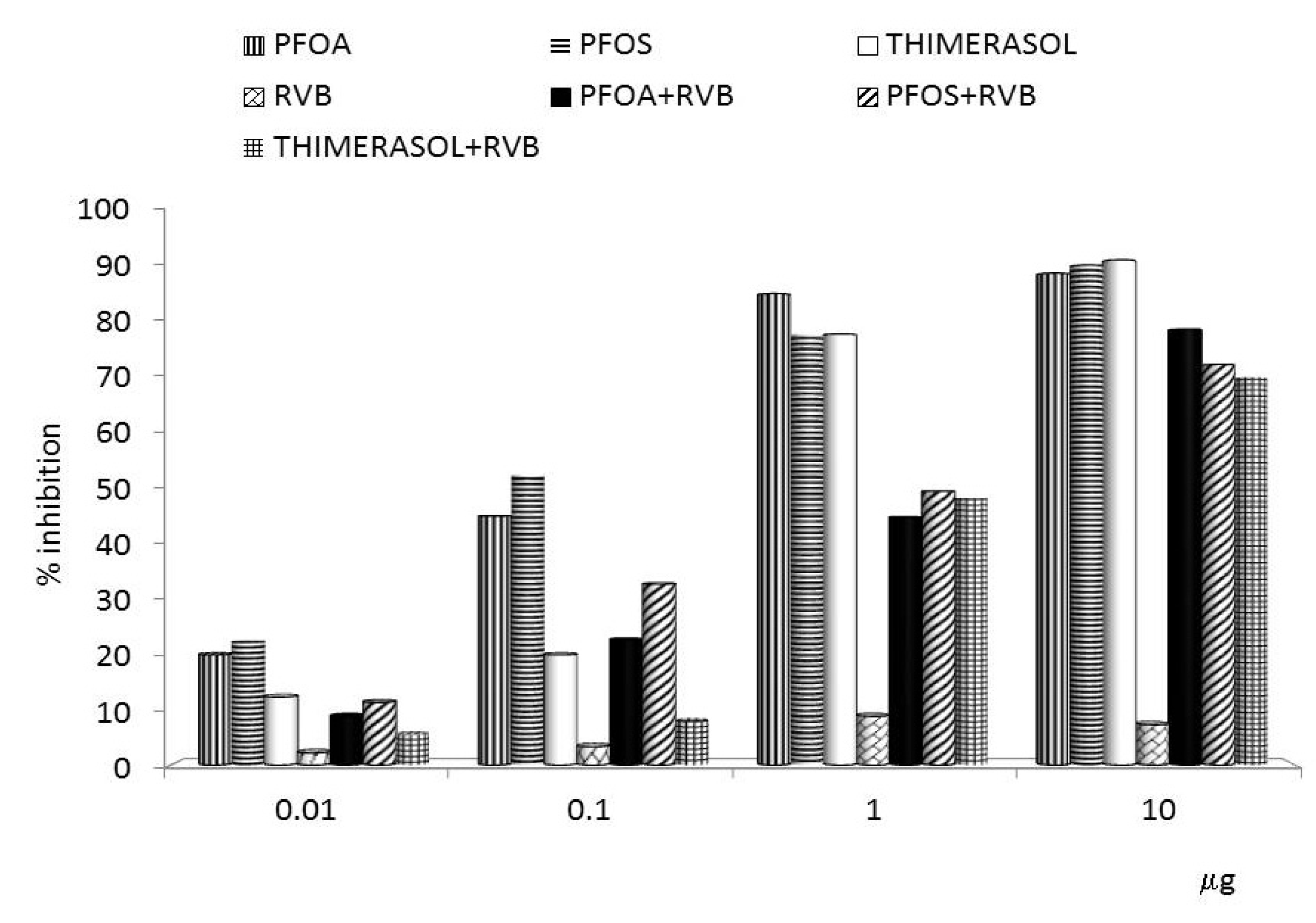
      <p>In all our tests, glucan significantly lowered the toxicity of not only thimerosal, but also mercury acetate [<xref ref-type="bibr" rid="B18-toxins-04-01301">18</xref>]. It is important to note that even if glucan managed to partially block the cytotoxic effects of mercury, it is possible that with long glucan application the level of immune reactions might be normalized. The broad range of affected reactions covering both branches of the defense reactions suggests strong and systemic restoration caused by glucan administration (<xref ref-type="fig" rid="toxins-04-01301-f001">Figure 1</xref>).</p>
      <fig id="toxins-04-01301-f001" position="anchor">
        <label>Figure 1</label>
        <caption>
          <p>Effects of the glucan/resveratrol/vitamin C combination on proliferation of human monocyte cell line U937. PFOA—perfluoroctanic acid; PFOS—perfluooctane sulphonic acid; RVB—resveratrol/vitamin C/glucan combination.</p>
        </caption>
        <graphic xmlns:xlink="http://www.w3.org/1999/xlink" xlink:href="toxins-04-01301-g001.tif"/>
      </fig>
      <p>The exact mechanisms of this action are not known, despite extensive research on the immunological effects of glucan [<xref ref-type="bibr" rid="B11-toxins-04-01301">11</xref>,<xref ref-type="bibr" rid="B19-toxins-04-01301">19</xref>]. Since the direct toxic effects of mercury compounds were repeatedly suggested to be caused by apoptosis [<xref ref-type="bibr" rid="B3-toxins-04-01301">3</xref>], inhibition of apoptosis caused by glucan [<xref ref-type="bibr" rid="B20-toxins-04-01301">20</xref>] could be the explanation. In addition to direct stimulation of cells via Dectin-1 and CR3 (complement receptor 3) receptors (for review see [<xref ref-type="bibr" rid="B12-toxins-04-01301">12</xref>,<xref ref-type="bibr" rid="B21-toxins-04-01301">21</xref>]), glucans are known to alter some important genes and their transcription factors [<xref ref-type="bibr" rid="B22-toxins-04-01301">22</xref>]. Furthermore, since mercury is known to cause inflammation and oxidative stress [<xref ref-type="bibr" rid="B23-toxins-04-01301">23</xref>], intracellular mechanisms that involve antioxidant processes where glucan plays an important role [<xref ref-type="bibr" rid="B24-toxins-04-01301">24</xref>] might be assumed as well [<xref ref-type="bibr" rid="B25-toxins-04-01301">25</xref>]. </p>
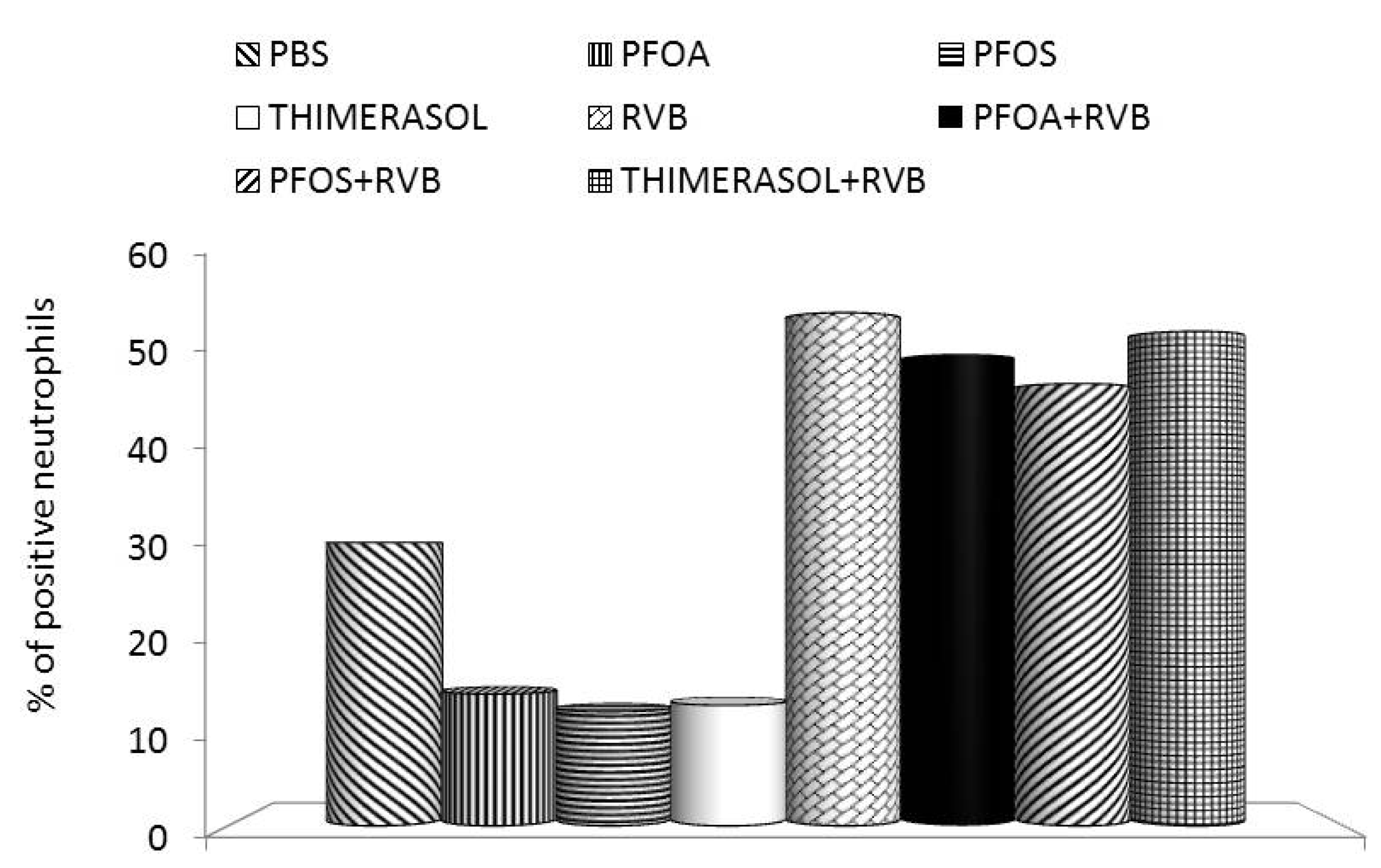
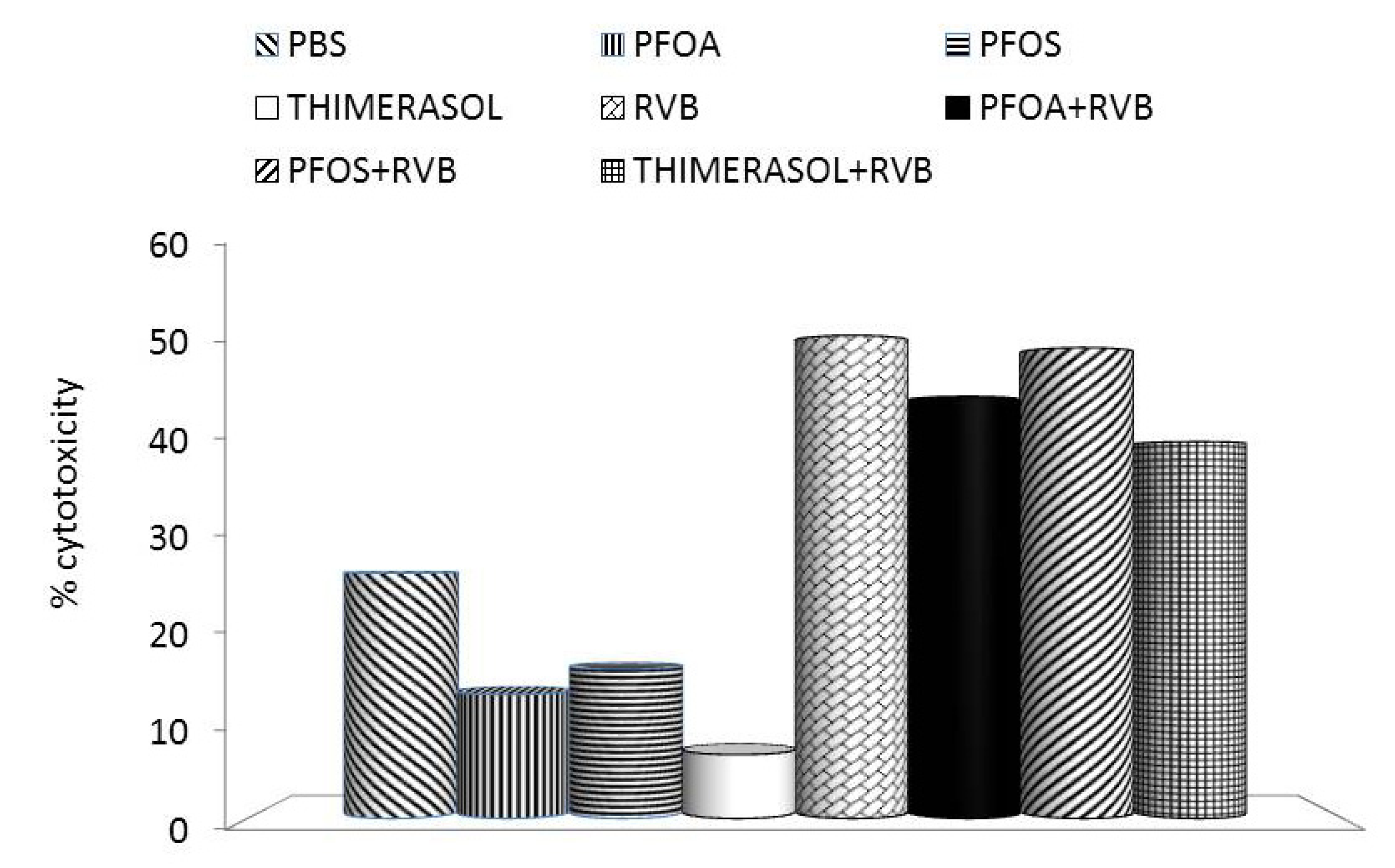
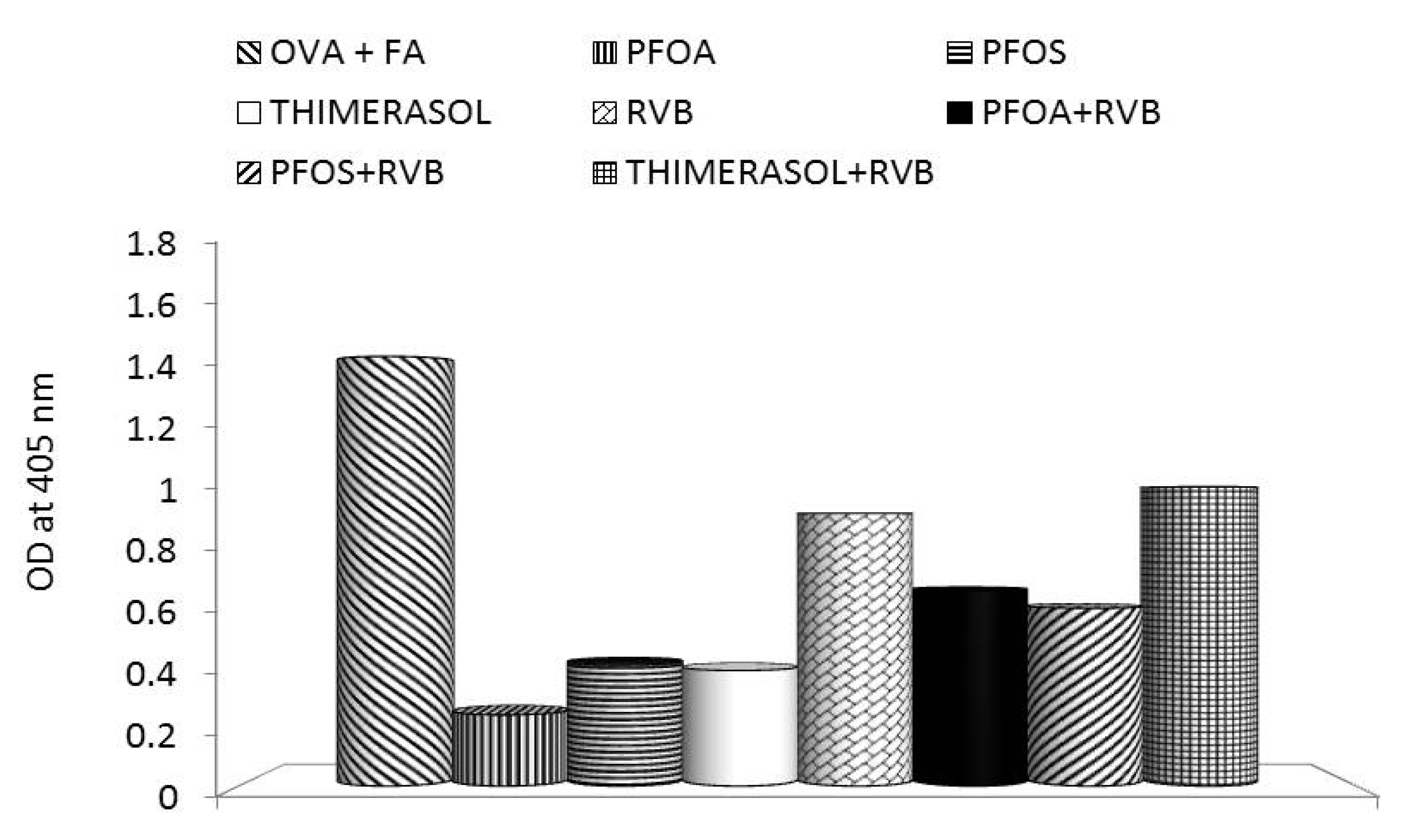
      <p>Our results showed that thimerasol strongly inhibited the proliferation of human monocyte cell line U937. Simultaneous treatment with thimerasol and RVB 300 (resveratrol/vitamin C/glucan) decreased this suppression up to 50% in doses ranging from 0.01 to 1 μg/well (<xref ref-type="fig" rid="toxins-04-01301-f001">Figure 1</xref>). Thimerasol had direct effects on cell viability, but also on cellular immunity. When we tested the phagocytosis of synthetic microspheres by peripheral blood neutrophils, we found that thimerasol showed 58% inhibition of this function. When used simultaneously with RVB 300, only 3.7% inhibition was found (<xref ref-type="fig" rid="toxins-04-01301-f002">Figure 2</xref>). Similar results were found in NK (natural killer) cell activity (<xref ref-type="fig" rid="toxins-04-01301-f003">Figure 3</xref>). However, thimerasol extended its suppressive effects on humoral immunity as well. <xref ref-type="fig" rid="toxins-04-01301-f004">Figure 4</xref> showed that thimerasol can also suppress humoral immunity and once again the addition of RVB 300 returned the antibody response to level of RVB 300.</p>
      <fig id="toxins-04-01301-f002" position="anchor">
        <label>Figure 2</label>
        <caption>
          <p>Effects of the glucan/resveratrol/vitamin C combination on phagocytosis of synthetic particles by mouse peripheral blood neutrophils. PFOA—perfluoroctanic acid; PFOS—perfluooctane sulphonic acid; RVB—resveratrol/vitamin C/glucan combination.</p>
        </caption>
        <graphic xmlns:xlink="http://www.w3.org/1999/xlink" xlink:href="toxins-04-01301-g002.tif"/>
      </fig>
      <fig id="toxins-04-01301-f003" position="anchor">
        <label>Figure 3</label>
        <caption>
          <p>Effects of the glucan/resveratrol/vitamin C combination on NK cell activity of mouse splenocytes. PFOA—perfluoroctanic acid; PFOS—perfluooctane sulphonic acid; RVB—resveratrol/vitamin C/glucan combination.</p>
        </caption>
        <graphic xmlns:xlink="http://www.w3.org/1999/xlink" xlink:href="toxins-04-01301-g003.tif"/>
      </fig>
      <fig id="toxins-04-01301-f004" position="anchor">
        <label>Figure 4</label>
        <caption>
          <p>Effects of the glucan/resveratrol/vitamin C combination on <italic>in vivo</italic> antibody response to challenge with ovalbumin. PFOA—perfluoroctanic acid; PFOS—perfluooctane sulphonic acid; RVB—resveratrol/vitamin C/glucan combination.</p>
        </caption>
        <graphic xmlns:xlink="http://www.w3.org/1999/xlink" xlink:href="toxins-04-01301-g004.tif"/>
      </fig>
    </sec>
    <sec>
      <title>3. Effects of PFCs</title>
      <p>Perfluorinated hydrocarbons are currently used in thousands of different products. Two major classes of these compounds are perfluorinated carboxylates, such as perfluoroctanic acid (PFOA), and perfluoroctane sulfonates, such as perfluooctane sulphonic acid (PFOS). They have an extremely long lifetime in the environment and are detectable in the blood of both animals and humans [<xref ref-type="bibr" rid="B26-toxins-04-01301">26</xref>]. Numerous studies showed that exposure to these compounds caused suppression of lymphocyte proliferative and NK cell activity [<xref ref-type="bibr" rid="B27-toxins-04-01301">27</xref>], neutrophenia [<xref ref-type="bibr" rid="B28-toxins-04-01301">28</xref>] and decreased production of some cytokines [<xref ref-type="bibr" rid="B29-toxins-04-01301">29</xref>]. Readers seeking more information on immunosuppressive effects of these compounds are encouraged to read the comprehensive review [<xref ref-type="bibr" rid="B30-toxins-04-01301">30</xref>]. Recently, Grandjean <italic>et al.</italic> reported reduced humoral response to immunization in children exposed to PFCs [<xref ref-type="bibr" rid="B31-toxins-04-01301">31</xref>].</p>
      <p>Polyfluoroalkyl chemicals have been used since the 1950s in numerous commercial applications and the exposure of the general U.S. population to PFCs is widespread. In this population, PFOS and PFOA serum concentrations were measurable in each demographic group studied [<xref ref-type="bibr" rid="B32-toxins-04-01301">32</xref>]. The reductions in concentrations of PFOS and PFOA observed lately are most likely related to the discontinuation of industrial production by of some of the PFOS-related perfluorooctanesulfonyl fluoride compounds. Both PFOA and PFOS are frequently present in water-resistant textiles and sprays conferring water resistant properties. However, despite clear demonstration of the immunosuppressive effects of perfluorinated hydrocarbons, attention is focused entirely on methods to eliminate these compounds from their use. Our laboratory applied the data of glucan-derived protection <italic>versus</italic> mercury poisoning and tested the possible effects on immunosuppression caused by perfluorinated hydrocarbons.</p>
      <p>Our studies showed that the strong suppression of proliferation of human monocyte cell line U937 caused by both PFOS and PFOA can be significantly reduced by simultaneous addition of RVB 300 (<xref ref-type="fig" rid="toxins-04-01301-f001">Figure 1</xref>). Similarly, phagocytic activity of blood neutrophils was significantly decreased, but the addition of RVB 300 returned the phagocytic activity to levels achieved with RVB 300 alone (<xref ref-type="fig" rid="toxins-04-01301-f002">Figure 2</xref>). Fifty percent NK activity reduction was fully restored by RVB 300 (<xref ref-type="fig" rid="toxins-04-01301-f003">Figure 3</xref>). In the final experiments, RVB 300 managed to partially overcome suppression of antibody formation caused by PFOS or PFOA exposure (65% and 71%, respectively, <xref ref-type="fig" rid="toxins-04-01301-f004">Figure 4</xref>).</p>
    </sec>
    <sec sec-type="conclusions">
      <title>4. Conclusions</title>
      <p>Previous reports indicating that the addition of glucan resulted in significantly lower immunotoxic effects of mercury suggested that glucans can be successfully used as a natural remedy of low level exposure to immunotoxins [<xref ref-type="bibr" rid="B18-toxins-04-01301">18</xref>]. Some of the glucan effects were profound even when used prophylactically [<xref ref-type="bibr" rid="B33-toxins-04-01301">33</xref>]. It was later determined that simultaneous use of resveratrol and glucan showed stronger immunological effects on phagocytosis, faster restoration of spleen cellularity after experimentally induced leucopenia, and inhibition cancer growth <italic>in vivo </italic>[<xref ref-type="bibr" rid="B17-toxins-04-01301">17</xref>,<xref ref-type="bibr" rid="B33-toxins-04-01301">33</xref>]. Glucan use, in addition to humic acids, was verified by similar data. [<xref ref-type="bibr" rid="B15-toxins-04-01301">15</xref>]. In addition, beneficial effects of glucan with vitamin C were also described [<xref ref-type="bibr" rid="B34-toxins-04-01301">34</xref>]. Based on these results, we evaluated the immunological effects of a glucan/resveratrol/vitamin C combination and showed that this has the strongest impact of all commercially used natural compound combinations [<xref ref-type="bibr" rid="B35-toxins-04-01301">35</xref>]. The mechanisms by which this combination improves the immunosuppressive effects of various toxins are yet to be determined. However, one possibility is the known protective effects on bone marrow, leading to increased production of immunocytes [<xref ref-type="bibr" rid="B36-toxins-04-01301">36</xref>]. Another hypothesis suggested that as glucan directly increased several types of both humoral and cellular reactions, the glucan-stimulated cells would simply return the immune reactions to the previous levels. Data showing that in mice treated with the toxins and glucan/resveratrol/vitamin C, some reactions reached the same level as with the combination alone. These data, however, do not support this possibility.</p>
      <p>All these data strongly suggest that natural immunomodulators such as glucan and some of glucan-based combinations represent an interesting and potentially clinically important way of blocking or at least partly restoring the immunosuppression of toxins such as mercury or perfluorinated hydrocarbons. From these observations, one can imagine that glucan-based modulators can be used for prophylactics in some cases of chronic immunopoisoning, strongly suggesting the need for further studies.</p>
    </sec>
    
  </body>
  <back>
  <notes>
      <title>Conflict of Interest</title>
      <p>The authors declare no conflict of interest.</p>
    </notes>
    <ref-list>
      <title>References</title>
      <ref id="B1-toxins-04-01301">
        <label>1.</label>
        <citation citation-type="journal">
          <person-group person-group-type="author">
            <name>
              <surname>Tryphonas</surname>
              <given-names>H.</given-names>
            </name>
          </person-group>
          <article-title>Approaches to detecting immunotoxic effects of environmental contaminants in humans</article-title>
          <source>Environ. Health Perspect.</source>
          <year>2001</year>
          <volume>109</volume>
          <fpage>877</fpage>
          <lpage>884</lpage>
        <pub-id pub-id-type="pmid">11744506</pub-id></citation>
      </ref>
      <ref id="B2-toxins-04-01301">
        <label>2.</label>
        <citation citation-type="journal">
          <person-group person-group-type="author">
            <name>
              <surname>Magos</surname>
              <given-names>L.</given-names>
            </name>
          </person-group>
          <article-title>Review of the toxicity of ethylmercury, including its presence as a preservative in biological and pharmaceutical products</article-title>
          <source>J. Appl. Toxicol.</source>
          <year>2001</year>
          <volume>21</volume>
          <fpage>1</fpage>
          <lpage>5</lpage>
        <pub-id pub-id-type="doi">10.1002/jat.721</pub-id><pub-id pub-id-type="pmid">11180274</pub-id></citation>
      </ref>
      <ref id="B3-toxins-04-01301">
        <label>3.</label>
        <citation citation-type="journal">
          <person-group person-group-type="author">
            <name>
              <surname>Yole</surname>
              <given-names>M.</given-names>
            </name>
            <name>
              <surname>Wickstrom</surname>
              <given-names>M.</given-names>
            </name>
            <name>
              <surname>Blakley</surname>
              <given-names>B.</given-names>
            </name>
          </person-group>
          <article-title>Cell death and cytotoxic effects in YAC-1 lymphome cells following exposure to variosu forms of mercury</article-title>
          <source>Toxicol. J.</source>
          <year>2007</year>
          <volume>231</volume>
          <fpage>40</fpage>
          <lpage>57</lpage>
          <pub-id pub-id-type="doi">10.1016/j.tox.2006.11.062</pub-id>
        </citation>
      </ref>
      <ref id="B4-toxins-04-01301">
        <label>4.</label>
        <citation citation-type="journal">
          <person-group person-group-type="author">
            <name>
              <surname>Santarelli</surname>
              <given-names>L.</given-names>
            </name>
            <name>
              <surname>Bracii</surname>
              <given-names>M.</given-names>
            </name>
            <name>
              <surname>Mocchyeegiani</surname>
              <given-names>E.</given-names>
            </name>
          </person-group>
          <article-title><italic>In vitro</italic> and <italic>in vivo</italic> effects of mercuric chloride on thymic endocrine activity, NK and NKT cell cytotoxicity, cytokine profiles (IL-2, INF-g, IL-6): Role of the nitric oxide-<sc>L</sc>-arginine pathway</article-title>
          <source>Int. Immunopathol.</source>
          <year>2006</year>
          <volume>6</volume>
          <fpage>376</fpage>
          <lpage>389</lpage>
        </citation>
      </ref>
      <ref id="B5-toxins-04-01301">
        <label>5.</label>
        <citation citation-type="book">
          <person-group person-group-type="author">
            <name>
              <surname>Descotes</surname>
              <given-names>J.</given-names>
            </name>
          </person-group>
          <source>Immunotoxicity of Drugs and Chemicals: An Experimental and Clinical Approach</source>
          <publisher-name>Elsevier</publisher-name>
          <publisher-loc>Amsterdam, The netherlands</publisher-loc>
          <year>2004</year>
        </citation>
      </ref>
      <ref id="B6-toxins-04-01301">
        <label>6.</label>
        <citation citation-type="journal">
          <person-group person-group-type="author">
            <name>
              <surname>Fillipov</surname>
              <given-names>N.M.</given-names>
            </name>
            <name>
              <surname>Pinchuk</surname>
              <given-names>L.M.</given-names>
            </name>
            <name>
              <surname>Boyd</surname>
              <given-names>B.L.</given-names>
            </name>
            <name>
              <surname>Crittenden</surname>
              <given-names>P.L.</given-names>
            </name>
          </person-group>
          <article-title>Immunotoxic effects of short-term atrazine exposure in young male C57BL/6 mice</article-title>
          <source>Toxicol. Sci.</source>
          <year>2005</year>
          <volume>86</volume>
          <fpage>324</fpage>
          <lpage>332</lpage>
        <pub-id pub-id-type="doi">10.1093/toxsci/kfi188</pub-id><pub-id pub-id-type="pmid">15888671</pub-id></citation>
      </ref>
      <ref id="B7-toxins-04-01301">
        <label>7.</label>
        <citation citation-type="journal">
          <person-group person-group-type="author">
            <name>
              <surname>Khan</surname>
              <given-names>N.M.</given-names>
            </name>
            <name>
              <surname>Poduval</surname>
              <given-names>T.B.</given-names>
            </name>
          </person-group>
          <article-title>Immunomodulatory and immunotoxic effects of bilirubin: Molecular mechanisms</article-title>
          <source>J. Leukoc. Biol.</source>
          <year>2011</year>
          <volume>90</volume>
          <fpage>997</fpage>
          <lpage>1015</lpage>
          <pub-id pub-id-type="doi">10.1189/jlb.0211070</pub-id>
        </citation>
      </ref>
      <ref id="B8-toxins-04-01301">
        <label>8.</label>
        <citation citation-type="journal">
          <person-group person-group-type="author">
            <name>
              <surname>Vetvicka</surname>
              <given-names>V.</given-names>
            </name>
            <name>
              <surname>Fornusek</surname>
              <given-names>L.</given-names>
            </name>
            <name>
              <surname>Sima</surname>
              <given-names>P.</given-names>
            </name>
            <name>
              <surname>Bilej</surname>
              <given-names>M.</given-names>
            </name>
            <name>
              <surname>Táborsky</surname>
              <given-names>L.</given-names>
            </name>
            <name>
              <surname>Rihova</surname>
              <given-names>B.</given-names>
            </name>
            <name>
              <surname>Simeckova</surname>
              <given-names>J.</given-names>
            </name>
            <name>
              <surname>Miler</surname>
              <given-names>I.</given-names>
            </name>
          </person-group>
          <article-title>Effects of bilirubin on murine peritoneal and spleen cells</article-title>
          <source>Acta Pathol. Microbiol. Immunol. Scand.</source>
          <year>1988</year>
          <volume>96</volume>
          <fpage>671</fpage>
          <lpage>675</lpage>
        </citation>
      </ref>
      <ref id="B9-toxins-04-01301">
        <label>9.</label>
        <citation citation-type="journal">
          <person-group person-group-type="author">
            <name>
              <surname>Dass</surname>
              <given-names>K.K.</given-names>
            </name>
            <name>
              <surname>Das</surname>
              <given-names>S.N.</given-names>
            </name>
            <name>
              <surname>Dhundasi</surname>
              <given-names>S.A.</given-names>
            </name>
          </person-group>
          <article-title>Nickel, its adverse health effects &amp; oxidative stress</article-title>
          <source>Indian J. Med. Res.</source>
          <year>2008</year>
          <volume>128</volume>
          <fpage>412</fpage>
          <lpage>425</lpage>
        <pub-id pub-id-type="pmid">19106437</pub-id></citation>
      </ref>
      <ref id="B10-toxins-04-01301">
        <label>10.</label>
        <citation citation-type="journal">
          <person-group person-group-type="author">
            <name>
              <surname>Benacerraf</surname>
              <given-names>B.</given-names>
            </name>
            <name>
              <surname>Sebestyen</surname>
              <given-names>M.M.</given-names>
            </name>
          </person-group>
          <article-title>Effect of bacterial endotoxins on the reticuloendothelial system</article-title>
          <source>Fed. Proc.</source>
          <year>1957</year>
          <volume>16</volume>
          <fpage>860</fpage>
          <lpage>867</lpage>
        <pub-id pub-id-type="pmid">13480376</pub-id></citation>
      </ref>
      <ref id="B11-toxins-04-01301">
        <label>11.</label>
        <citation citation-type="book">
          <person-group person-group-type="author">
            <name>
              <surname>Vetvicka</surname>
              <given-names>V.</given-names>
            </name>
            <name>
              <surname>Novak</surname>
              <given-names>M.</given-names>
            </name>
          </person-group>
          <article-title>Biological Action of β-glucan</article-title>
          <source>Biology and Chemistry of Beta Glucan</source>
          <person-group person-group-type="editor">
            <name>
              <surname>Vetvicka</surname>
              <given-names>V.</given-names>
            </name>
            <name>
              <surname>Novak</surname>
              <given-names>M.</given-names>
            </name>
          </person-group>
          <publisher-name>Bentham Science Publishers</publisher-name>
          <publisher-loc>Oak Park, IL, USA</publisher-loc>
          <year>2011</year>
          <fpage>10</fpage>
          <lpage>18</lpage>
        </citation>
      </ref>
      <ref id="B12-toxins-04-01301">
        <label>12.</label>
        <citation citation-type="journal">
          <person-group person-group-type="author">
            <name>
              <surname>Novak</surname>
              <given-names>M.</given-names>
            </name>
            <name>
              <surname>Vetvicka</surname>
              <given-names>V.</given-names>
            </name>
          </person-group>
          <article-title>Glucans as biological response modifiers</article-title>
          <source>Endocr. Metab. Immune Disord. Drug Targets</source>
          <year>2009</year>
          <volume>9</volume>
          <fpage>67</fpage>
          <lpage>75</lpage>
        <pub-id pub-id-type="pmid">19275682</pub-id><pub-id pub-id-type="doi">10.2174/187153009787582423</pub-id></citation>
      </ref>
      <ref id="B13-toxins-04-01301">
        <label>13.</label>
        <citation citation-type="journal">
          <person-group person-group-type="author">
            <name>
              <surname>Ditteova</surname>
              <given-names>G.</given-names>
            </name>
            <name>
              <surname>Velebny</surname>
              <given-names>S.</given-names>
            </name>
            <name>
              <surname>Hrckova</surname>
              <given-names>G.</given-names>
            </name>
          </person-group>
          <article-title>Modulation of liver fibrosis and pathophysiological changes in mice infected with <italic>Mesocestoides corti </italic>(<italic>M. vogae</italic>) after administration of glucan and liposomized glucan in combination with vitamin C</article-title>
          <source>J. Helminthol.</source>
          <year>2003</year>
          <volume>77</volume>
          <fpage>219</fpage>
          <lpage>226</lpage>
         <pub-id pub-id-type="doi">10.1079/JOH2002161</pub-id><pub-id pub-id-type="pmid">12895280</pub-id></citation>
      </ref>
      <ref id="B14-toxins-04-01301">
        <label>14.</label>
        <citation citation-type="journal">
          <person-group person-group-type="author">
            <name>
              <surname>Verlhac</surname>
              <given-names>V.</given-names>
            </name>
            <name>
              <surname>Gabaudan</surname>
              <given-names>J.</given-names>
            </name>
            <name>
              <surname>Obach</surname>
              <given-names>A.</given-names>
            </name>
            <name>
              <surname>Schuep</surname>
              <given-names>W.</given-names>
            </name>
            <name>
              <surname>Hole</surname>
              <given-names>R.</given-names>
            </name>
          </person-group>
          <article-title>Influence of dietary glucan and vitamin C on non-specifc and specific immune responses of rainbow trout (<italic>Onchorhynchus mykiss</italic>)</article-title>
          <source>Aquaculture</source>
          <year>1996</year>
          <volume>143</volume>
          <fpage>123</fpage>
          <lpage>133</lpage>
          <pub-id pub-id-type="doi">10.1016/0044-8486(95)01238-9</pub-id>
        </citation>
      </ref>
      <ref id="B15-toxins-04-01301">
        <label>15.</label>
        <citation citation-type="journal">
          <person-group person-group-type="author">
            <name>
              <surname>Vetvicka</surname>
              <given-names>V.</given-names>
            </name>
            <name>
              <surname>Baigorri</surname>
              <given-names>R.</given-names>
            </name>
            <name>
              <surname>Zamarreno</surname>
              <given-names>A.M.</given-names>
            </name>
            <name>
              <surname>Garcia-Minam</surname>
              <given-names>J.M.</given-names>
            </name>
            <name>
              <surname>Yvin</surname>
              <given-names>J.C.</given-names>
            </name>
          </person-group>
          <article-title>Glucan and humic acids: Synergistic effects on the immune system</article-title>
          <source>J. Med. Food</source>
          <year>2010</year>
          <volume>13</volume>
          <fpage>863</fpage>
          <lpage>869</lpage>
          <pub-id pub-id-type="doi">10.1089/jmf.2009.0178</pub-id>
        </citation>
      </ref>
      <ref id="B16-toxins-04-01301">
        <label>16.</label>
        <citation citation-type="journal">
          <person-group person-group-type="author">
            <name>
              <surname>Vetvicka</surname>
              <given-names>V.</given-names>
            </name>
            <name>
              <surname>Volny</surname>
              <given-names>T.</given-names>
            </name>
            <name>
              <surname>Saraswat-Ohri</surname>
              <given-names>S.</given-names>
            </name>
            <name>
              <surname>Vashishta</surname>
              <given-names>A.</given-names>
            </name>
            <name>
              <surname>Vancikova</surname>
              <given-names>Z.</given-names>
            </name>
            <name>
              <surname>Vetvickova</surname>
              <given-names>J.</given-names>
            </name>
          </person-group>
          <article-title>Glucan and resveratrol complex—Possible synergistic effects on immune system</article-title>
          <source>Biomed. Pap. Med. Fac. Univ. Palacky</source>
          <year>2007</year>
          <volume>151</volume>
          <fpage>41</fpage>
          <lpage>46</lpage>
        <pub-id pub-id-type="doi">10.5507/bp.2007.007</pub-id></citation>
      </ref>
      <ref id="B17-toxins-04-01301">
        <label>17.</label>
        <citation citation-type="journal">
          <person-group person-group-type="author">
            <name>
              <surname>Vetvicka</surname>
              <given-names>V.</given-names>
            </name>
            <name>
              <surname>Vetvickova</surname>
              <given-names>J.</given-names>
            </name>
          </person-group>
          <article-title>Combination of glucan, resveratrol and vitamin C demonstrates strong anti-tumor potential</article-title>
          <source>Anticancer Res.</source>
          <year>2012</year>
          <volume>32</volume>
          <fpage>81</fpage>
          <lpage>88</lpage>
        <pub-id pub-id-type="pmid">22213291</pub-id></citation>
      </ref>
      <ref id="B18-toxins-04-01301">
        <label>18.</label>
        <citation citation-type="journal">
          <person-group person-group-type="author">
            <name>
              <surname>Vetvicka</surname>
              <given-names>V.</given-names>
            </name>
            <name>
              <surname>Vetvickova</surname>
              <given-names>J.</given-names>
            </name>
          </person-group>
          <article-title>Effects of glucan on immunosuppressive action of mercury</article-title>
          <source>J. Med. Food</source>
          <year>2009</year>
          <volume>12</volume>
          <fpage>1098</fpage>
          <lpage>1104</lpage>
          <pub-id pub-id-type="doi">10.1089/jmf.2008.0273</pub-id>
        </citation>
      </ref>
      <ref id="B19-toxins-04-01301">
        <label>19.</label>
        <citation citation-type="journal">
          <person-group person-group-type="author">
            <name>
              <surname>Vetvicka</surname>
              <given-names>V.</given-names>
            </name>
          </person-group>
          <article-title>β-Glucans as immunomodulators</article-title>
          <source>JANA</source>
          <year>2001</year>
          <volume>3</volume>
          <fpage>31</fpage>
          <lpage>34</lpage>
        </citation>
      </ref>
      <ref id="B20-toxins-04-01301">
        <label>20.</label>
        <citation citation-type="journal">
          <person-group person-group-type="author">
            <name>
              <surname>Vetvicka</surname>
              <given-names>V.</given-names>
            </name>
            <name>
              <surname>Dvorak</surname>
              <given-names>B.</given-names>
            </name>
            <name>
              <surname>Vetvickova</surname>
              <given-names>J.</given-names>
            </name>
            <name>
              <surname>Richter</surname>
              <given-names>J.</given-names>
            </name>
            <name>
              <surname>Krizan</surname>
              <given-names>J.</given-names>
            </name>
            <name>
              <surname>Sima</surname>
              <given-names>P.</given-names>
            </name>
            <name>
              <surname>Yvin</surname>
              <given-names>J.C.</given-names>
            </name>
          </person-group>
          <article-title>Orally administered marine (1→3)-β-<sc>D</sc>-glucan Phycarine stimulates both humoral and cellular immunity</article-title>
          <source>Int. J. Biol. Macromol.</source>
          <year>2007</year>
          <volume>40</volume>
          <fpage>291</fpage>
          <lpage>298</lpage>
          <pub-id pub-id-type="doi">10.1016/j.ijbiomac.2006.08.009</pub-id>
        </citation>
      </ref>
      <ref id="B21-toxins-04-01301">
        <label>21.</label>
        <citation citation-type="book">
          <person-group person-group-type="author">
            <name>
              <surname>Novak</surname>
              <given-names>M.</given-names>
            </name>
            <name>
              <surname>Vetvicka</surname>
              <given-names>V.</given-names>
            </name>
          </person-group>
          <article-title>Development of Views on β-Glucan Composition and Structure</article-title>
          <source>Biology and Chemistry of Beta Glucan</source>
          <person-group person-group-type="editor">
            <name>
              <surname>Vetvicka</surname>
              <given-names>V.</given-names>
            </name>
            <name>
              <surname>Novak</surname>
              <given-names>M.</given-names>
            </name>
          </person-group>
          <publisher-name>Bentham Science Publishers</publisher-name>
          <publisher-loc>Oak Park, IL, USA</publisher-loc>
          <year>2011</year>
          <fpage>1</fpage>
          <lpage>9</lpage>
        </citation>
      </ref>
      <ref id="B22-toxins-04-01301">
        <label>22.</label>
        <citation citation-type="journal">
          <person-group person-group-type="author">
            <name>
              <surname>Vetvicka</surname>
              <given-names>V.</given-names>
            </name>
            <name>
              <surname>Vashishta</surname>
              <given-names>A.</given-names>
            </name>
            <name>
              <surname>Saraswat-Ohri</surname>
              <given-names>S.</given-names>
            </name>
            <name>
              <surname>Vetvickova</surname>
              <given-names>J.</given-names>
            </name>
          </person-group>
          <article-title>Immunological effects of yeast- and mushroom-derived beta-glucans</article-title>
          <source>J. Med. Food</source>
          <year>2008</year>
          <volume>11</volume>
          <fpage>615</fpage>
          <lpage>622</lpage>
          <pub-id pub-id-type="doi">10.1089/jmf.2007.0588</pub-id>
        </citation>
      </ref>
      <ref id="B23-toxins-04-01301">
        <label>23.</label>
        <citation citation-type="journal">
          <person-group person-group-type="author">
            <name>
              <surname>Sarafian</surname>
              <given-names>T.A.</given-names>
            </name>
          </person-group>
          <article-title>Methylmercury-induced generatrion of free radicals: biological implications</article-title>
          <source>Met. Ions Biol. Syst.</source>
          <year>1996</year>
          <volume>36</volume>
          <fpage>415</fpage>
          <lpage>444</lpage>
        </citation>
      </ref>
      <ref id="B24-toxins-04-01301">
        <label>24.</label>
        <citation citation-type="journal">
          <person-group person-group-type="author">
            <name>
              <surname>Vetvicka</surname>
              <given-names>V.</given-names>
            </name>
            <name>
              <surname>Vetvickova</surname>
              <given-names>J.</given-names>
            </name>
          </person-group>
          <article-title>β-1,3-Glucan: Silver bullet or hot air?</article-title>
          <source>Open Glycosci.</source>
          <year>2010</year>
          <volume>3</volume>
          <fpage>1</fpage>
          <lpage>6</lpage>
        </citation>
      </ref>
      <ref id="B25-toxins-04-01301">
        <label>25.</label>
        <citation citation-type="journal">
          <person-group person-group-type="author">
            <name>
              <surname>Quig</surname>
              <given-names>D.</given-names>
            </name>
          </person-group>
          <article-title>Cysteine metabolism and metal toxicity</article-title>
          <source>Altern. Med. Rev.</source>
          <year>1998</year>
          <volume>3</volume>
          <fpage>262</fpage>
          <lpage>270</lpage>
        <pub-id pub-id-type="pmid">9727078</pub-id></citation>
      </ref>
      <ref id="B26-toxins-04-01301">
        <label>26.</label>
        <citation citation-type="journal">
          <person-group person-group-type="author">
            <name>
              <surname>Lau</surname>
              <given-names>C.</given-names>
            </name>
            <name>
              <surname>Anitole</surname>
              <given-names>K.</given-names>
            </name>
            <name>
              <surname>Hodes</surname>
              <given-names>C.</given-names>
            </name>
            <name>
              <surname>Lai</surname>
              <given-names>D.</given-names>
            </name>
            <name>
              <surname>Pfahles-Hutchens</surname>
              <given-names>A.</given-names>
            </name>
            <name>
              <surname>Seed</surname>
              <given-names>J.</given-names>
            </name>
          </person-group>
          <article-title>Perfluoroalkyl acids: A review of monitoring and toxicological findings</article-title>
          <source>Toxicol. Sci.</source>
          <year>2007</year>
          <volume>99</volume>
          <fpage>66</fpage>
          <lpage>94</lpage>
        </citation>
      </ref>
      <ref id="B27-toxins-04-01301">
        <label>27.</label>
        <citation citation-type="journal">
          <person-group person-group-type="author">
            <name>
              <surname>Dong</surname>
              <given-names>G.H.</given-names>
            </name>
            <name>
              <surname>Zhang</surname>
              <given-names>Y.H.</given-names>
            </name>
            <name>
              <surname>Zheng</surname>
              <given-names>L.</given-names>
            </name>
            <name>
              <surname>Liu</surname>
              <given-names>W.</given-names>
            </name>
            <name>
              <surname>Jin</surname>
              <given-names>Y.H.</given-names>
            </name>
            <name>
              <surname>He</surname>
              <given-names>Q.C.</given-names>
            </name>
          </person-group>
          <article-title>Chronic effects of perfluorooctanesulfonate exposure on immunotoxicity in adult male C57BL/6 mice</article-title>
          <source>Arch. Toxicol.</source>
          <year>2009</year>
          <volume>83</volume>
          <fpage>805</fpage>
          <lpage>815</lpage>
          <pub-id pub-id-type="doi">10.1007/s00204-009-0424-0</pub-id>
        </citation>
      </ref>
      <ref id="B28-toxins-04-01301">
        <label>28.</label>
        <citation citation-type="journal">
          <person-group person-group-type="author">
            <name>
              <surname>Qazi</surname>
              <given-names>M.R.</given-names>
            </name>
            <name>
              <surname>Bogdanska</surname>
              <given-names>J.</given-names>
            </name>
            <name>
              <surname>Butenhoff</surname>
              <given-names>J.L.</given-names>
            </name>
            <name>
              <surname>Nelson</surname>
              <given-names>B.D.</given-names>
            </name>
            <name>
              <surname>DePierre</surname>
              <given-names>J.W.</given-names>
            </name>
            <name>
              <surname>Bedi-Valugerdi</surname>
              <given-names>M.</given-names>
            </name>
          </person-group>
          <article-title>High-dose, short-term exposure of mice to perfluorooctanesulfonate (PFOS) or perfluorooctanoate (PFOA) affects the number of circulating neutrophils differently, but enhances the inflammatory responses of macrophages to lipopolysaccharide (LPS) in a similar fashion</article-title>
          <source>Toxicol. J.</source>
          <year>2009</year>
          <volume>262</volume>
          <fpage>207</fpage>
          <lpage>214</lpage>
          <pub-id pub-id-type="doi">10.1016/j.tox.2009.06.010</pub-id>
        </citation>
      </ref>
      <ref id="B29-toxins-04-01301">
        <label>29.</label>
        <citation citation-type="journal">
          <person-group person-group-type="author">
            <name>
              <surname>Corsini</surname>
              <given-names>E.</given-names>
            </name>
            <name>
              <surname>Sangiovanni</surname>
              <given-names>E.</given-names>
            </name>
            <name>
              <surname>Avogadro</surname>
              <given-names>A.</given-names>
            </name>
            <name>
              <surname>Galbiati</surname>
              <given-names>V.</given-names>
            </name>
            <name>
              <surname>Viviani</surname>
              <given-names>B.</given-names>
            </name>
            <name>
              <surname>Marinovich</surname>
              <given-names>M.</given-names>
            </name>
            <name>
              <surname>Galli</surname>
              <given-names>C.L.</given-names>
            </name>
            <name>
              <surname>Dell’Agli</surname>
              <given-names>M.</given-names>
            </name>
            <name>
              <surname>Germolec</surname>
              <given-names>D.R.</given-names>
            </name>
          </person-group>
          <article-title><italic>In vitro</italic> characterization of the immunotoxic potential of several perfluorinated compounds (PFCs)</article-title>
          <source>Toxicol. Appl. Pharmacol.</source>
          <year>2012</year>
          <volume>258</volume>
          <fpage>248</fpage>
          <lpage>255</lpage>
          <pub-id pub-id-type="doi">10.1016/j.taap.2011.11.004</pub-id>
        </citation>
      </ref>
      <ref id="B30-toxins-04-01301">
        <label>30.</label>
        <citation citation-type="journal">
          <person-group person-group-type="author">
            <name>
              <surname>DeWitt</surname>
              <given-names>J.C.</given-names>
            </name>
            <name>
              <surname>Peden-Adams</surname>
              <given-names>M.M.</given-names>
            </name>
            <name>
              <surname>Keller</surname>
              <given-names>J.M.</given-names>
            </name>
            <name>
              <surname>Germolec</surname>
              <given-names>D.R.</given-names>
            </name>
          </person-group>
          <article-title>Immunotoxicity of perfluorinated compounds: Recent developments</article-title>
          <source>Toxicol. Pathol.</source>
          <year>2012</year>
          <volume>40</volume>
          <fpage>300</fpage>
          <lpage>311</lpage>
        <pub-id pub-id-type="doi">10.1177/0192623311428473</pub-id><pub-id pub-id-type="pmid">22109712</pub-id></citation>
      </ref>
      <ref id="B31-toxins-04-01301">
        <label>31.</label>
        <citation citation-type="journal">
          <person-group person-group-type="author">
            <name>
              <surname>Grandjean</surname>
              <given-names>P.</given-names>
            </name>
            <name>
              <surname>Andersen</surname>
              <given-names>E.W.</given-names>
            </name>
            <name>
              <surname>Budtz-Jorgensen</surname>
              <given-names>E.</given-names>
            </name>
            <name>
              <surname>Nielsen</surname>
              <given-names>F.</given-names>
            </name>
            <name>
              <surname>Molbak</surname>
              <given-names>K.</given-names>
            </name>
            <name>
              <surname>Weihe</surname>
              <given-names>P.</given-names>
            </name>
            <name>
              <surname>Heilmann</surname>
              <given-names>C.</given-names>
            </name>
          </person-group>
          <article-title>Serum vaccine antibody concentrations in children exposed to perfluorinated compounds</article-title>
          <source>J. Am. Med. Assoc.</source>
          <year>2012</year>
          <volume>307</volume>
          <fpage>391</fpage>
          <lpage>397</lpage>
        <pub-id pub-id-type="doi">10.1001/jama.2011.2034</pub-id></citation>
      </ref>
      <ref id="B32-toxins-04-01301">
        <label>32.</label>
        <citation citation-type="journal">
          <person-group person-group-type="author">
            <name>
              <surname>Calafat</surname>
              <given-names>A.N.</given-names>
            </name>
            <name>
              <surname>Wong</surname>
              <given-names>L.Y.</given-names>
            </name>
            <name>
              <surname>Kuklenyik</surname>
              <given-names>Z.</given-names>
            </name>
            <name>
              <surname>Reidy</surname>
              <given-names>J.A.</given-names>
            </name>
            <name>
              <surname>Needham</surname>
              <given-names>L.L.</given-names>
            </name>
          </person-group>
          <article-title>Polyfluoroalkyl chemicals in the U.S. population: Data from the national health and nutrition examination survey (NHANES) 2003–2004 and comparison with NHANES 1999–2000</article-title>
          <source>Environ. Health Perspect.</source>
          <year>2007</year>
          <volume>115</volume>
          <fpage>1596</fpage>
          <lpage>1602</lpage>
          <pub-id pub-id-type="doi">10.1289/ehp.10598</pub-id>
        </citation>
      </ref>
      <ref id="B33-toxins-04-01301">
        <label>33.</label>
        <citation citation-type="journal">
          <person-group person-group-type="author">
            <name>
              <surname>Vetvicka</surname>
              <given-names>V.</given-names>
            </name>
            <name>
              <surname>Vetvickova</surname>
              <given-names>J.</given-names>
            </name>
          </person-group>
          <article-title>An evaluation of the immunological activities of commercially available β1,3-glucans</article-title>
          <source>JANA</source>
          <year>2007</year>
          <volume>10</volume>
          <fpage>25</fpage>
          <lpage>31</lpage>
        </citation>
      </ref>
      <ref id="B34-toxins-04-01301">
        <label>34.</label>
        <citation citation-type="journal">
          <person-group person-group-type="author">
            <name>
              <surname>Eicher</surname>
              <given-names>S.D.</given-names>
            </name>
            <name>
              <surname>McKee</surname>
              <given-names>C.A.</given-names>
            </name>
            <name>
              <surname>Carroll</surname>
              <given-names>J.A.</given-names>
            </name>
            <name>
              <surname>Pajor</surname>
              <given-names>E.A.</given-names>
            </name>
          </person-group>
          <article-title>Supplemental vitamin C and yeast cell wall beta-glucan as growth enhancers in newborn pigs and as immunomodulators after an endotoxin challenge after weaning</article-title>
          <source>J. Anim. Sci.</source>
          <year>2006</year>
          <volume>84</volume>
          <fpage>2352</fpage>
          <lpage>2360</lpage>
          <pub-id pub-id-type="doi">10.2527/jas.2005-770</pub-id>
        </citation>
      </ref>
      <ref id="B35-toxins-04-01301">
        <label>35.</label>
        <citation citation-type="journal">
          <person-group person-group-type="author">
            <name>
              <surname>Vetvicka</surname>
              <given-names>V.</given-names>
            </name>
            <name>
              <surname>Vetvickova</surname>
              <given-names>J.</given-names>
            </name>
          </person-group>
          <article-title>Comparison of immunological properties of various bioactive combinations</article-title>
          <source>Biomed. Pap. Med. Fac. Univ. Palacky</source>
          <year>2012</year>
          <comment>in press.</comment>
        </citation>
      </ref>
      <ref id="B36-toxins-04-01301">
        <label>36.</label>
        <citation citation-type="journal">
          <person-group person-group-type="author">
            <name>
              <surname>Bowers</surname>
              <given-names>G.J.</given-names>
            </name>
            <name>
              <surname>Patchen</surname>
              <given-names>M.L.</given-names>
            </name>
            <name>
              <surname>MacVittie</surname>
              <given-names>T.J.</given-names>
            </name>
            <name>
              <surname>Hirsch</surname>
              <given-names>E.F.</given-names>
            </name>
            <name>
              <surname>Fink</surname>
              <given-names>M.P.</given-names>
            </name>
          </person-group>
          <article-title>A comparative evaluation of particulate and soluble glucan in an endotoxin model</article-title>
          <source>Int. J. Immunopharmacol.</source>
          <year>1986</year>
          <volume>8</volume>
          <fpage>313</fpage>
          <lpage>321</lpage>
        <pub-id pub-id-type="doi">10.1016/0192-0561(86)90113-X</pub-id><pub-id pub-id-type="pmid">3525432</pub-id></citation>
      </ref>
    </ref-list>
  </back>
</article>