


Abstract
Dendritic cells initiate and sustain immune responses by migrating to sites of pathogenic insult, transporting antigens to lymphoid tissues and signaling immune specific activation of T cells through the formation of the immunological synapse. Dendritic cells can also transfer intact, infectious HIV-1 to CD4 T cells through an analogous structure, the infectious synapse. This replication independent mode of HIV-1 transmission, known as trans-infection, greatly increases T cell infection in vitro and is thought to contribute to viral dissemination in vivo. This review outlines the recent data defining the mechanisms of trans-infection and provides a context for the potential contribution of trans-infection in HIV-1 disease.
1. Dendritic cells and immune control
Dendritic cells (DCs) comprise a diverse family of cell types whose primary function is to coordinate innate and adaptive immune responses. Classical DCs, commonly referred to as myeloid DCs (mDC), are essential antigen presenting cells that patrol submucosal surfaces in search of pathogenic organisms and their antigens, which they bind and internalize using a variety of surface receptors. The DCs carry the intact pathogens and antigens to draining lymphoid tissues and degrade them into antigenic peptides that are loaded onto HLA Class II molecules for presentation to CD4+ T cells [1]. In this capacity, mDCs act as a conduit between the periphery and lymphoid tissues to initiate immune control of mucosal infections. Langerhans cells (LC), also of the myeloid lineage, similarly act as sentinels of epidermal and mucosal epithelia, however they are largely confined to local sites of infection within the epithelial layer where they sustain innate and adaptive immune responses. The third major subtype of circulating DCs, plasmacytoid DCs (pDCs), are thought to derive from the lymphoid lineage and are particularly effective at initiating early responses to viral infections. pDCs secrete large amounts of type-I interferons and pro-inflammatory cytokines, signaling the recruitment of DCs and other immune effectors to the site of pathogen invasion. While all three DC subsets play important roles in immune control and pathogenesis in HIV-1 infection, this review will focus on the myeloid subset of DCs because of their peculiar ability to both initiate immunity to HIV-1 and to exacerbate HIV-1 infection by passing the intact virus to the very T cells responding to the insult. The origins and functions of dendritic cells is reviewed in great detail elsewhere, most notably by Geissmann [2] and Steinman [3].
When mDCs encounter and engulf pathogens at the site of infection, they undergo a series of maturation events and emigrate to local lymph nodes. Maturation is accompanied by activation of antigen degradation and presentation, up-regulation of T cell co-stimulatory molecules, and near complete shutdown of macropinocytosis and phagocytosis [4]. Once in the lymph node, the DCs present antigen/MHC Class-II complexes to CD4+ T cells to initiate adaptive immune responses to the pathogens they have carried from the periphery. Maturation freezes the expression of stabilized peptide/MHC-II complexes on the cell surface, prolonging presentation of peptides from antigens processed at the time of pathogen exposure, a model that has been termed the freeze-frame hypothesis. Because endocytosis is shut down, newly acquired antigens are not trafficked into the lysosomal degradative pathway for presentation, resulting in preferential presentation of antigens acquired at the site of peripheral tissue challenge [5,6,7].
When a CD4+ T cell encounters a DC in the lymph node, adhesion molecules such as LFA-1 and ICAM-1 cause the cell to arrest its movement and probe the DC surface. If the DC presents the correct antigen peptide/MHC-II complexes, the T cell will respond by concentrating T cell receptors, CD4 and numerous other adhesive and signaling molecules to form a structure known as the immunological synapse [8,9]. Antigen recognition by the T cell receptor stabilizes DC-T cell contacts that can last for several hours, providing sustained signals to the T cell to induce activation and proliferation [10]. In the absence of antigen recognition, incomplete immunological synapses are formed that generate weak signals thought to sustain T cell viability without activating the cells. In this capacity, DCs can help maintain naïve and memory T cells prior to antigenic challenge [11].
In addition to presentation of processed peptide antigens, DCs can transfer intact proteins and pathogens to other cells. In this capacity, DCs can transport antigens from sites of peripheral infection to lymphoid tissues, where they can pass them on to other antigen presenting cells and thereby enhance the breadth of immune responses [12]. DCs can also present intact antigens to B cells in lymphoid tissues to stimulate antigen specific proliferation and antibody secretion [13]. Both of these processes are mediated by endocytic uptake of antigens and accumulation into late endosomal structures known as multivesicular bodies or endosomes (MVB/MVE). MVBs are formed by inward budding of endosomes to the limiting membrane, resulting in the accumulation of “inside-out” endosomes approximately 50 nm in diameter called exosomes. After antigen uptake, MVBs can either traffic into the degradative lysosomal system to feed the antigen processing pathway or they can be routed back to the surface, where they deliver surface receptors back to the plasma membrane and excrete exosomes out of the cell (reviewed in [14,15]).
3. HIV-1 trans-infection at the infectious synapse
Initial studies using in vitro cultured monocytes-derived dendritic cells (MDDCs) and cell lines expressing DC-SIGN demonstrated that DCs could sequester infectious HIV-1 for several days after uptake, leading to the hypothesis that DCs might initiate primary infections by carrying HIV-1 from mucosal sites of exposure to lymphoid tissues and transferring infection to CD4 T cells in the lymph node [29]. Moreover, the virus appeared to be sequestered within a protease resistant, endosomal compartment and trafficked back out of the cell prior to trans-infection [36], suggesting that HIV-1 could hide from the extracellular milieu within the DC and re-emerge on encounter with a target cell, a model referred to as the “Trojan horse” hypothesis. Direct visualization using GFP-tagged HIV-1 revealed that DCs trans-infect HIV-1 by binding and concentrating the intact virus at the cellular interface and at the same time induce recruitment of HIV-1 receptors CD4, CXCR4 and CCR5 on the T cell, forming a structure analogous to the immunological synapse and therefore called the infectious synapse [37]. A subsequent study demonstrated that infected T cells can transfer HIV-1 to other CD4 T cells by forming a similar structure, the virological synapse [38]. An important distinction between these two forms of contact mediated transmission is that virological synapse formation requires interaction of HIV-1 envelope glycoprotein on the infected cell surface with CD4 on the target, whereas DC trans-infection relies on adhesion molecules utilized during natural immune interactions [38,39,40]. DCs can be infected in vitro, albeit with very low efficiency, in which case HIV-1 gp120 dependent virological synapse formation results in cis-infection of T cells [41,42]. HIV-1 transmission in cis- and trans- appear to utilize similar but distinct pathways in DCs [43,44], an important consideration when evaluating experimental results that do not distinguish the two possibilities.
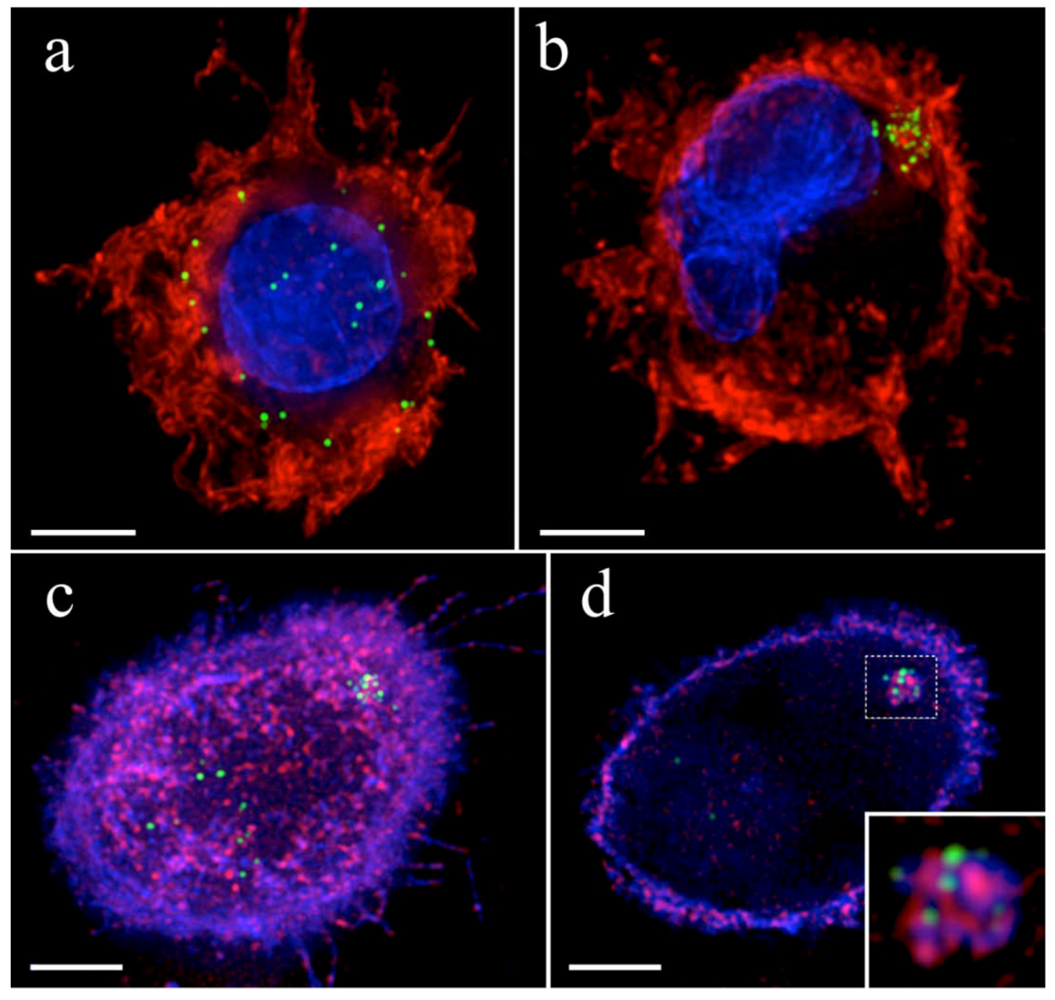
Early studies demonstrated that prior maturation of the DCs with lipopolysaccharide (LPS) and other activators markedly enhances infectious synapse formation and concomitant trans-infection [37,45]. Indeed, immature DCs rapidly endocytose and degrade HIV-1 and may not harbor intact virus long enough to carry it to lymphatic tissues, as originally hypothesized [41,46]. Immature DCs efficiently present processed HIV-1 antigens to CD4+ T cells, indicating that HIV-1 does not subvert the Class II processing pathway in dendritic cells [47]. DC-SIGN and other scavenger receptors, therefore, appear to be primarily involved in virus uptake, endocytosis and degradation in immature DCs, and trans-infection may be a byproduct of incomplete internalization. LPS matured DCs, on the other hand, have greatly diminished capacity to degrade and present newly bound HIV-1 due to down-modulation of the endo-lysosomal system. Instead, mature DCs concentrate HIV-1 into a single compartment originally identified as an unconventional endocytic compartment rich in the tetraspanin CD81, a marker of multivesicular endosomes/MVBs, and lacking lysosomal/degradative markers such as CD63 and LAMP-1 [48]. A number of studies supported the notion that mature DCs sequester intact HIV-1 within an intracellular, MVB-like endosome that is protected from the extracellular mileau, and delivery to T cells at the infectious synapse is routed through the MVB/exocytosis pathway [49,50,51,52] (Figure 1). A conflicting study, however, suggested that HIV-1 contained within endosomes could not participate in trans-infection. Warner Greene’s group convincingly demonstrated that trans-infected HIV-1 was fully sensitive to surface-applied soluble CD4 (sCD4) even after the virus was sequestered within the DCs [53]. While it was already known that fusion inhibitors could block trans-infection when present during co-culture, this study showed that the virus was inactivated even when sCD4 was applied after HIV-1 binding and sequestration and washed away before co-culture. The inhibitors were added at 4 °C to prevent endocytosis, and therefore membrane impermeable inhibitors like sCD4 could not access endocytic compartments and should not be able to inhibit the sequestered HIV-1. Nevertheless, trans-infection was completely blocked, leading the authors to conclude that only surface-bound virions participated in trans-infection. Surface inhibition was demonstrated over a large range of input virus in trans-infection mediated by either immature or mature DCs. Intriguingly, a small amount of surface sCD4-resistant trans-infection occurred when antigen recognition was mimicked using Staphylococcus enterotoxin, however even under those conditions greater than 90% of virus transfer was inhibited. The authors concluded, therefore, that trans-infected HIV-1 was primarily derived from surface-bound virions, and that the sequestered, internalized HIV-1 was “dead-end” virus bound for degradation [53].
This was a surprising conclusion that conflicted with the fluorescent imaging data, and so we undertook a careful re-examination of trans-infection by mature DCs in light of these results [54]. Using time-lapse microscopy, we showed that the sequestered HIV-1 was rapidly recruited to sites of T cell contact, and individual particles trafficked out of the HIV-1 containing compartment and entered the T cell at the infectious synapse. Importantly, after transmission the virus rapidly fused into the T cell cytoplasm, directly demonstrating that HIV-1 delivery from intracellular stores resulted in productive entry of the viral particles at the infectious synapse. Remarkably, we found that although the sequestered HIV-1 appeared to be contained within intracellular compartments in the DCs, the structure remained contiguous with the cell surface and distinct from endocytic vesicles. Using several different membrane impermeable protein and lectin probes, we demonstrated that the HIV-1 residing within the DCs remained accessible to surface-applied ligands and that the compartment appeared to be comprised of invaginated plasma membrane folds. Therefore when inhibitors like sCD4 were added to the DCs it accessed the sequestered, “intracellular” HIV-1 and inactivated it. Importantly, if the DCs were fixed prior to application of the probes, the sequestered HIV-1 became inaccessible unless cellular membranes were first removed with detergent, suggesting that formaldehyde fixation “closed” the access to the surface-applied probes and that the connection to the surface was restricted in size. This is likely the reason we and others had concluded that the sequestered virus was contained within intracellular, endosomal compartments. Our results showed that the HIV-1 was in fact transferred from an internalized, endosome-like structure, however the structure remained connected to the cell surface, rendering the virus susceptible to surface-applied inhibitors [54]. Langerhans dendritic cells (LCs) appear to trans-infect HIV-1 through similar surface-exposed structures [53,55], however there is some conflicting evidence suggesting that LCs are protected from infection by expression of the CLR Langerin [21].
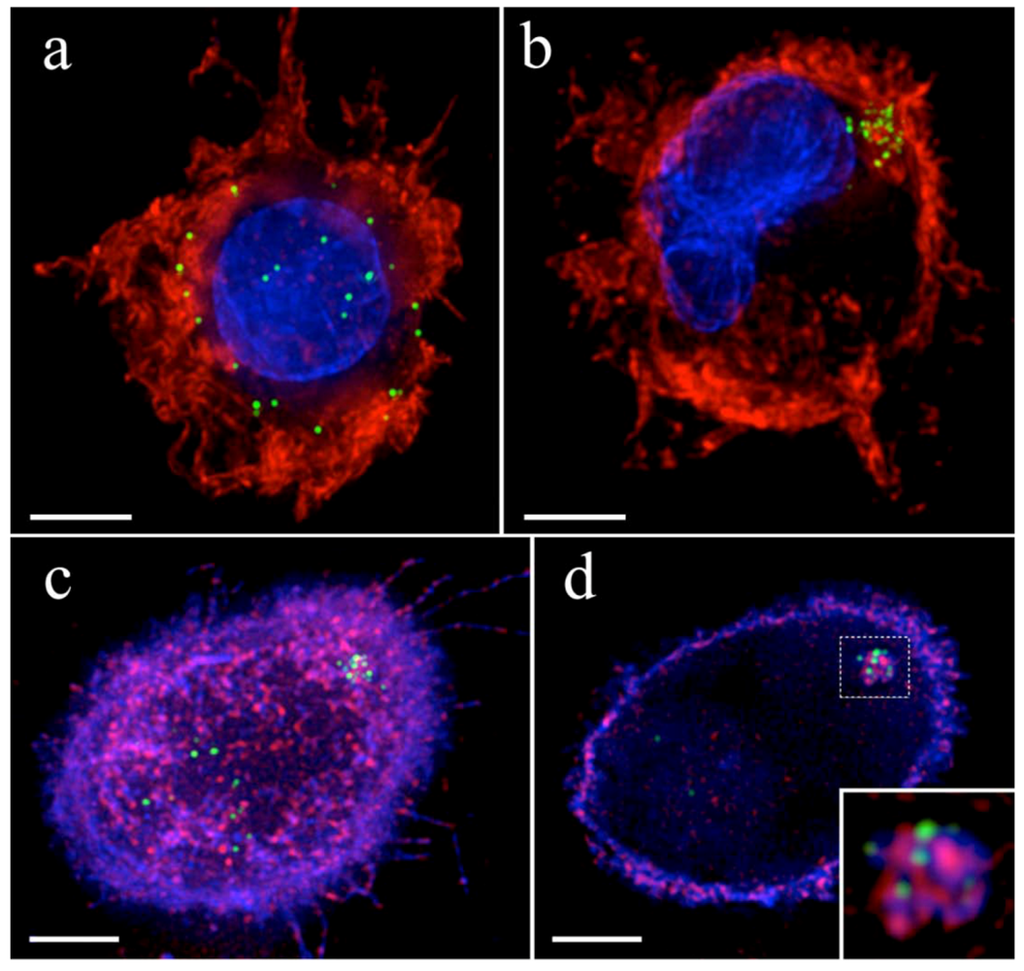
Figure 1.
HIV-1 is sequestered into a distinct subcellular compartment in mature dendritic cells. A-B. Distribution of HIV-1 (green) in immature (a) and LPS matured (b) MDDCs. Images are whole cell volume rendered z-stacks, actin cytoskeleton (red) nuclear DNA (blue). C-D. Fluorescent 3D (c) and single z-plane (d) images of a mature DC harboring HIV-1 (green) stained for MHC-II (blue) and CD86 (red). Inset (d) shows magnified HIV-1 compartment. Bars, 5 µm.
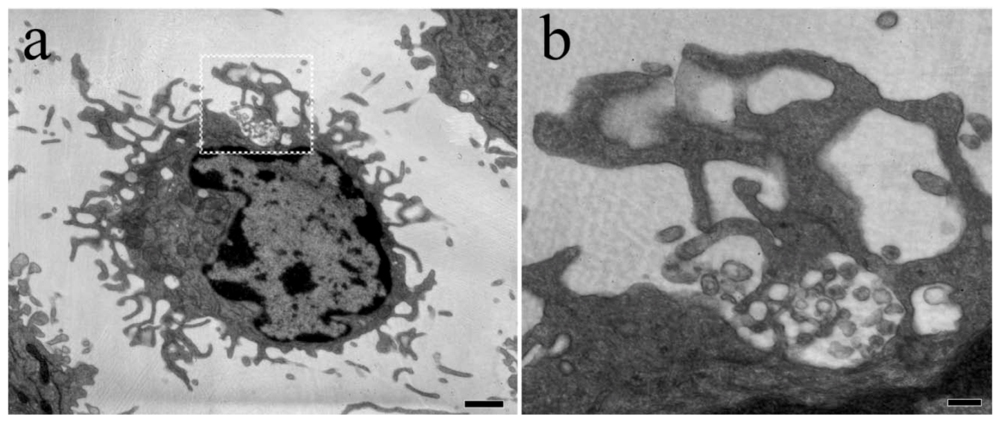
Similar structures have been described in productively infected macrophages, which concentrate HIV-1 in CD81-positive compartments originally identified as late endosome/MVBs [56]. EM analysis revealed that the HIV-1-containing compartments in macrophages consist of a network of invaginated structures contiguous with the plasma membrane and accessible by surface applied, membrane impermeant probes [57,58]. Three dimensional reconstruction of serial EM sections showed that the virus was contained within surface-derived membrane folds [59] that appear surprisingly similar to structures that can be observed in mature DCs (Figure 2). Interestingly, sequestered HIV-1 is rapidly translocated to the virological synapse formed between infected macrophages and uninfected T cells [60], further suggesting commonality between macrophage and DC mediated HIV-1 transmission.
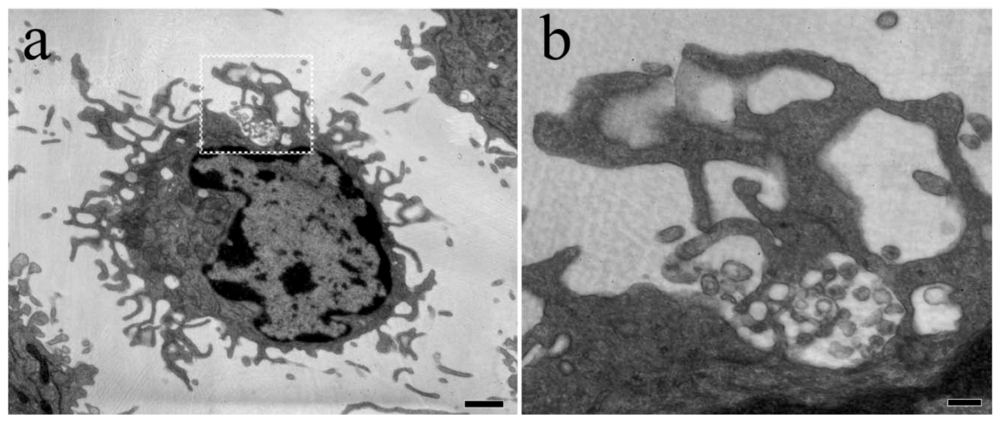
Figure 2.
HIV-1 is trapped within surface-accessible membrane invaginations. a. Thin section transmission electron micrograph of a mature DC with HIV-1 particles trapped within apparent membrane folds. Cells were pulsed with HIV-1LAI, fixed, prepared and sectioned for TEM. b. Magnified view of boxed area in a. Bars, 1 µm (a), .2 µm (b).
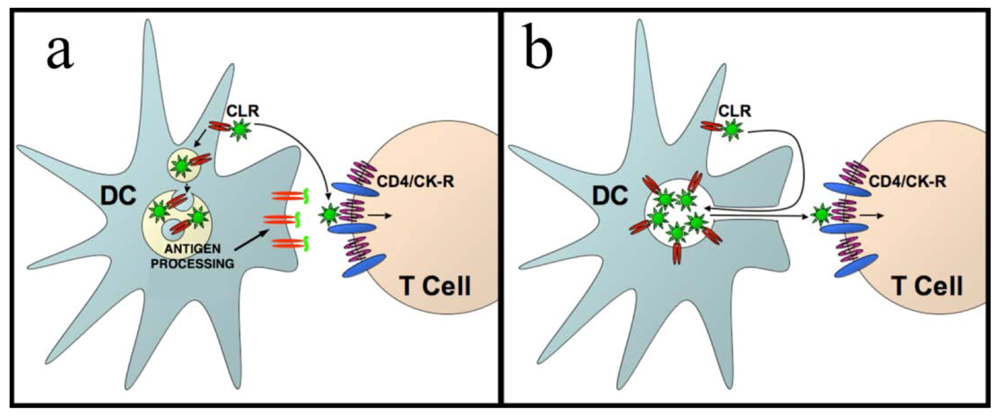
Taken together, these data suggest that immature dendritic cells efficiently endocytose, degrade and present HIV-1 antigens, and that trans-infection by immature DCs is a consequence of residual virus that remains on the cell surface. Mature DCs, on the other hand, have diminished capacity to endocytose the virus and instead form pocket-like compartment in DCs in order to remove infectious virions from the cell surface and to maintain them in an intact form during transport and delivery to other antigen presenting cells in lymphoid tissues. As a consequence, infectious HIV-1 can be delivered to CD4 T cells during immune presentation, resulting in inadvertent dissemination by the DCs (Figure 3). Intriguingly, our high-resolution imaging of DC-T cell conjugates suggests that the T cells may participate in trans-infection by extending membrane protrusions into the virus-containing pocket. Moreover, while both CD8 and CD4 T cells can extend these protrusions, virus particles transferred only into the CD4 cells, suggesting that HIV-1 can engage CD4 on the T cell protrusions to emerge from the pocket, consistent with the observation that contact with CD4 T cells facilitates the release of HIV from DCs at the infectious synapse whereas CD8 T cells does not [61]. These results could explain why HIV-1 egress from the pocket structure is relatively inefficient, however once it leaves the pocket the virus rapidly fuses into the T cell. The interacting T cells may play an important role in fishing the virus out of the pocket, and CD4 engagement of HIV-1 gp120 on the virion could favor trafficking along the T cell protrusions. HIV-1 uses the actin/myosin machinery to move on similar structures, referred to as cytonemes or nanotubes, during transmission from infected cells, [62,63], further suggesting there may be a common link between the virological and infectious synapses.
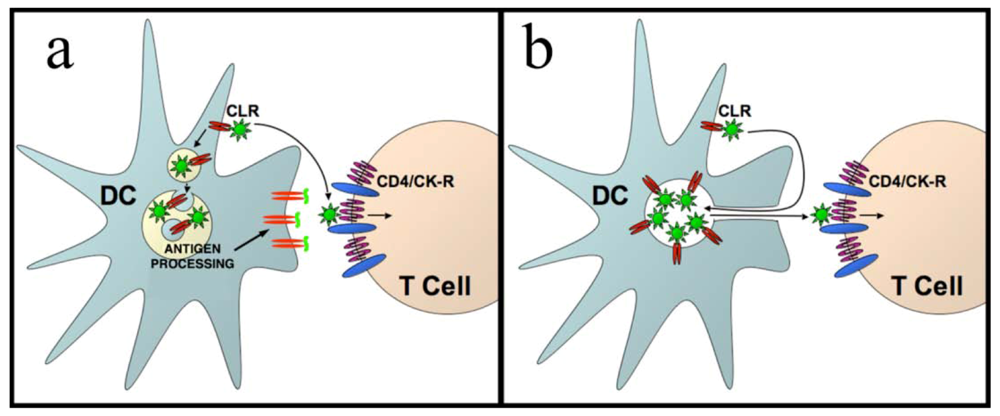
Figure 3.
Models of immature and mature DC mediated trans-infection. a. The majority of HIV-1 bound by immature DCs is endocytosed, processed and presented as MHC-II/peptide complexes. HIV-1 remaining on the DC surface can be transmitted at the infectious synapse. b. Mature DCs concentrate viral particles within membrane folds. HIV-1 can emerge from the pocket structure after engaging CD4 on interacting T cells. CLR, C-type lectin receptor; CK-R, Chemokine receptor. Adapted from [54].
4. HIV-1 dissemination in lymphoid tissues
In recent years there has been a paradigm shift in our understanding of HIV pathogenesis, stemming from the recognition that the earliest targets of infection are mucosal memory CD4+ T cells. Simian models of HIV infection demonstrated that the virus establishes its initial reservoirs of infection in resting T cells of the gut associated lymphoid tissue (GALT), and subsequent immune activation due to damage to the gut establishes rampant infection and depletion of CD4+ T cells [64,65,66]. Similar massive T cell loss can be observed in biopsies of gut tissue from HIV-1-infected individuals [67]. In the SIV/macaque model, the earliest detectable targets of infection during vaginal transmission appear to be resting CD4 T cells in the lamina propria underlying the genital mucosa [64]. Plasmacytoid DCs (pDCs) appear to be the first cells that respond to infection in the lamina propria, and abrogating their recruitment can be protective to vaginal challenge [22]. Moreover, innate responses mediated primarily by pDCs distinguishes pathogenic and nonpathogenic SIV infections [23]. A potent immune response to primary infection therefore does not result in clearance of HIV-1 infection, but rather provides an ideal environment for establishing chronic infection, which in turn drives mucosal dendritic cells into lymphoid tissues and provides additional stimulus for viral amplification [68]. Activated DCs can amplify HIV-1 infection within lymphoid tissues by continually picking up and trans-infecting HIV-1 during the ongoing immune battle, and preferential infection of HIV-1 specific CD4 T cells may be a consequence of stabilized DC-T cell immune synapse formation leading to increased opportunity to pass on HIV-1 infection, resulting in their accelerated depletion and consequent failure to control infection [69,70].
5. Conclusions
DCs play a critical role in the establishment and persistence of viral infection in HIV disease. Because of their pivotal role in initiating immune responses, DC based immune therapies have been widely studied as potential therapeutic and vaccine vectors. Before DC therapies can be applied, however, it is essential to fully appreciate the role they play in HIV-1 dissemination. Clearly, trans-infection is an undesirable byproduct of viral clearance by DCs.
Chronic immune activation is a hallmark of HIV-1 infection, ultimately resulting in immune collapse and failure to control opportunistic infections. During the course of disease, the human immune system engages in a pitched battle with the virus, however the potent CD4+ T cell responses that are elicited are the very thing that provides the fuel for HIV-1 infection. The resultant downward spiral of CD4+ T cells ultimately leads to collapse of T cell populations and complete immune system failure. Strategies to boost immune control of HIV-1, therefore, must be directed at intervention of viral spread in the responding T cells, giving them a fighting chance to control viremia. In the course of a single day, one DC can interact with dozens of T cells in a lymph node, providing ample opportunity to transmit HIV-1 to either antigen-activated or quiescent T cells. Therefore, DCs can act as a replication-independent viral reservoir that is protected from attack both by current anti-viral drug regimens and by the host defense systems. There appears to be a dynamic balance between antigen processing and trans-infection in DCs, and putting the brakes on trans-infection may be one way to shift the balance to favor immune control of HIV-1 disease.
References
- Banchereau, J.; Briere, F.; Caux, C.; Davoust, J.; Lebecque, S.; Liu, Y.J.; Pulendran, B.; Palucka, K. Immunobiology of dendritic cells. Annu. Rev. Immunol. 2000, 18, 767–811. [Google Scholar] [CrossRef] [PubMed]
- Geissmann, F.; Manz, M.G.; Jung, S.; Sieweke, M.H.; Merad, M.; Ley, K. Development of monocytes, macrophages, and dendritic cells. Science 2010, 327, 656–661. [Google Scholar] [CrossRef] [PubMed]
- Steinman, R.M.; Idoyaga, J. Features of the dendritic cell lineage. Immunol. Rev. 2010, 234, 5–17. [Google Scholar] [CrossRef]
- Garrett, W.S.; Chen, L.M.; Kroschewski, R.; Ebersold, M.; Turley, S.; Trombetta, S.; Galan, J. E.; Mellman, I. Developmental control of endocytosis in dendritic cells by Cdc42. Cell 2000, 102, 325–334. [Google Scholar] [CrossRef] [PubMed]
- Cella, M.; Engering, A.; Pinet, V.; Pieters, J.; Lanzavecchia, A. Inflammatory stimuli induce accumulation of MHC class II complexes on dendritic cells. Nature 1997, 388, 782–787. [Google Scholar] [CrossRef] [PubMed]
- Askew, D.; Chu, R.S.; Krieg, A.M.; Harding, C.V. CpG DNA induces maturation of dendritic cells with distinct effects on nascent and recycling MHC-II antigen-processing mechanisms. J. Immunol. 2000, 165, 6889–6895. [Google Scholar] [PubMed]
- Pai, R.K.; Askew, D.; Boom, W.H.; Harding, C.V. Regulation of class II MHC expression in APCs: roles of types I, III, and IV class II transactivator. J. Immunol. 2002, 169, 1326–1333. [Google Scholar] [PubMed]
- Monks, C.R.; Freiberg, B.A.; Kupfer, H.; Sciaky, N.; Kupfer, A. Three-dimensional segregation of supramolecular activation clusters in T cells. Nature 1998, 395, 82–86. [Google Scholar] [CrossRef] [PubMed]
- Grakoui, A.; Bromley, S.K.; Sumen, C.; Davis, M.M.; Shaw, A.S.; Allen, P.M.; Dustin, M.L. The immunological synapse: a molecular machine controlling T cell activation. Science 1999, 285, 221–227. [Google Scholar] [CrossRef] [PubMed]
- Sumen, C.; Mempel, T.R.; Mazo, I. B.; von Andrian, U.H. Intravital Microscopy: Visualizing Immunity in Context. Immunity 2004, 21, 315–329. [Google Scholar] [PubMed]
- Revy, P.; Sospedra, M.; Barbour, B.; Trautmann, A. Functional antigen-independent synapses formed between T cells and dendritic cells. Nat. Immunol. 2001, 2, 925–931. [Google Scholar] [CrossRef]
- Denzer, K.; van Eijk, M.; Kleijmeer, M.J.; Jakobson, E.; de Groot, C.; Geuze, H.J. Follicular dendritic cells carry MHC class II-expressing microvesicles at their surface. J. Immunol. 2000, 165, 1259–1265. [Google Scholar] [PubMed]
- Qi, H.; Egen, J.G.; Huang, A.Y.; Germain, R.N. Extrafollicular activation of lymph node B cells by antigen-bearing dendritic cells. Science 2006, 312, 1672–1676. [Google Scholar] [CrossRef] [PubMed]
- Denzer, K.; Kleijmeer, M.J.; Heijnen, H.F.; Stoorvogel, W.; Geuze, H. J. Exosome: from internal vesicle of the multivesicular body to intercellular signaling device . J. Cell. Sci. 2000, 113 Pt 19, 3365–3374. [Google Scholar] [PubMed]
- Thery, C.; Zitvogel, L.; Amigorena, S. Exosomes: composition, biogenesis and function. Nat. Rev. Immunol. 2002, 2, 569–579. [Google Scholar] [PubMed]
- Courreges, M.C.; Burzyn, D.; Nepomnaschy, I.; Piazzon, I.; Ross, S.R. Critical role of dendritic cells in mouse mammary tumor virus in vivo infection. J. Virol. 2007, 81, 3769–3777. [Google Scholar] [CrossRef] [PubMed]
- Ross, S.R. MMTV Infectious Cycle and the Contribution of Virus-encoded Proteins to Transformation of Mammary Tissue. J. Mammary Gland Biol. Neoplasia 2008, 13, 299–307. [Google Scholar] [CrossRef] [PubMed]
- Golde, W.T.; Nfon, C.K.; Toka, F.N. Immune evasion during foot-and-mouth disease virus infection of swine. Immunol. Rev. 2008, 225, 85–95. [Google Scholar] [CrossRef] [PubMed]
- Blauvelt, A.; Glushakova, S.; Margolis, L.B. HIV-infected human Langerhans cells transmit infection to human lymphoid tissue ex vivo. Aids 2000, 14, 647–651. [Google Scholar] [CrossRef] [PubMed]
- Sugaya, M.; Lore, K.; Koup, R.A.; Douek, D.C.; Blauvelt, A. HIV-infected Langerhans cells preferentially transmit virus to proliferating autologous CD4+ memory T cells located within Langerhans cell-T cell clusters. J. Immunol. 2004, 172, 2219–2224. [Google Scholar] [PubMed]
- de Witte, L.; Nabatov, A.; Pion, M.; Fluitsma, D.; de Jong, M.A.; de Gruijl, T.; Piguet, V.; van Kooyk, Y.; Geijtenbeek, T.B. Langerin is a natural barrier to HIV-1 transmission by Langerhans cells. Nat. Med. 2007, 13, 367–371. [Google Scholar] [CrossRef] [PubMed]
- Li, Q.; Estes, J.D.; Schlievert, P.M.; Duan, L.; Brosnahan, A.J.; Southern, P.J.; Reilly, C.S.; Peterson, M.L.; Schultz-Darken, N.; Brunner, K.G.; Nephew, K.R.; Pambuccian, S.; Lifson, J. D.; Carlis, J.V.; Haase, A.T. Glycerol monolaurate prevents mucosal SIV transmission. Nature 2009, 458, 1034–1038. [Google Scholar] [CrossRef] [PubMed]
- Mandl, J.N.; Barry, A.P.; Vanderford, T.H.; Kozyr, N.; Chavan, R.; Klucking, S.; Barrat, F.J.; Coffman, R.L.; Staprans, S.I.; Feinberg, M.B. Divergent TLR7 and TLR9 signaling and type I interferon production distinguish pathogenic and nonpathogenic AIDS virus infections. Nat. Med. 2008, 14, 1077–1087. [Google Scholar] [CrossRef] [PubMed]
- Pion, M.; Granelli-Piperno, A.; Mangeat, B.; Stalder, R.; Correa, R.; Steinman, R.M.; Piguet, V. APOBEC3G/3F mediates intrinsic resistance of monocyte-derived dendritic cells to HIV-1 infection. J. Exp. Med. 2006, 203, 2887–2893. [Google Scholar] [CrossRef] [PubMed]
- Goujon, C.; Arfi, V.; Pertel, T.; Luban, J.; Lienard, J.; Rigal, D.; Darlix, J.L.; Cimarelli, A. Characterization of simian immunodeficiency virus SIVSM/human immunodeficiency virus type 2 Vpx function in human myeloid cells. J. Virol. 2008, 82, 12335–12345. [Google Scholar] [CrossRef] [PubMed]
- Goujon, C.; Riviere, L.; Jarrosson-Wuilleme, L.; Bernaud, J.; Rigal, D.; Darlix, J.L.; Cimarelli, A. SIVSM/HIV-2 Vpx proteins promote retroviral escape from a proteasome-dependent restriction pathway present in human dendritic cells. Retrovirology 2007, 4, 2. [Google Scholar] [CrossRef]
- Cameron, P.U.; Freudenthal, P.S.; Barker, J.M.; Gezelter, S.; Inaba, K.; Steinman, R.M. Dendritic cells exposed to human immunodeficiency virus type-1 transmit a vigorous cytopathic infection to CD4+ T cells. Science 1992, 257, 383–387. [Google Scholar] [PubMed]
- Pope, M.; Betjes, M.G.; Romani, N.; Hirmand, H.; Cameron, P.U.; Hoffman, L.; Gezelter, S.; Schuler, G.; Steinman, R.M. Conjugates of dendritic cells and memory T lymphocytes from skin facilitate productive infection with HIV-1. Cell 1994, 78, 389–398. [Google Scholar] [CrossRef] [PubMed]
- Geijtenbeek, T.B.; Kwon, D.S.; Torensma, R.; van Vliet, S.J.; van Duijnhoven, G.C.; Middel, J.; Cornelissen, I.L.; Nottet, H.S.; KewalRamani, V.N.; Littman, D.R.; Figdor, C.G.; van Kooyk, Y. DC-SIGN, a dendritic cell-specific HIV-1-binding protein that enhances trans-infection of T cells. Cell 2000, 100, 587–597. [Google Scholar] [CrossRef] [PubMed]
- Geijtenbeek, T.B.; Engering, A.; Van Kooyk, Y. DC-SIGN, a C-type lectin on dendritic cells that unveils many aspects of dendritic cell biology. J. Leukoc. Biol. 2002, 71, 921–931. [Google Scholar] [PubMed]
- Geijtenbeek, T.B.; Torensma, R.; van Vliet, S.J.; van Duijnhoven, G.C.; Adema, G.J.; van Kooyk, Y.; Figdor, C.G. Identification of DC-SIGN, a novel dendritic cell-specific ICAM-3 receptor that supports primary immune responses. Cell 2000, 100, 575–585. [Google Scholar] [CrossRef] [PubMed]
- Turville, S.G.; Arthos, J.; Donald, K.M.; Lynch, G.; Naif, H.; Clark, G.; Hart, D.; Cunningham, A.L. HIV gp120 receptors on human dendritic cells. Blood 2001, 98, 2482–2488. [Google Scholar] [CrossRef] [PubMed]
- Lambert, A.A.; Gilbert, C.; Richard, M.; Beaulieu, A.D.; Tremblay, M.J. The C-type lectin surface receptor DCIR acts as a new attachment factor for HIV-1 in dendritic cells and contributes to trans- and cis-infection pathways. Blood 2008, 112, 1299–1307. [Google Scholar] [CrossRef] [PubMed]
- de Witte, L.; Bobardt, M.; Chatterji, U.; Degeest, G.; David, G.; Geijtenbeek, T. B.; Gallay, P. Syndecan-3 is a dendritic cell-specific attachment receptor for HIV-1. Proc. Natl. Acad. Sci. U. S. A. 2007, 104, 19464–19469. [Google Scholar] [CrossRef] [PubMed]
- Hatch, S.C.; Archer, J.; Gummuluru, S. Glycosphingolipid composition of human immunodeficiency virus type 1 (HIV-1) particles is a crucial determinant for dendritic cell-mediated HIV-1 trans-infection. J. Virol. 2009, 83, 3496–3506. [Google Scholar] [CrossRef] [PubMed]
- Kwon, D.S.; Gregorio, G.; Bitton, N.; Hendrickson, W.A.; Littman, D.R. DC-SIGN-mediated internalization of HIV is required for trans- enhancement of T cell infection. Immunity 2002, 16, 135–144. [Google Scholar] [CrossRef] [PubMed]
- McDonald, D.; Wu, L.; Bohks, S.M.; KewalRamani, V.N.; Unutmaz, D.; Hope, T.J. Recruitment of HIV and its receptors to dendritic cell-T cell junctions. Science 2003, 300, 1295–1297. [Google Scholar] [CrossRef] [PubMed]
- Jolly, C.; Kashefi, K.; Hollinshead, M.; Sattentau, Q.J. HIV-1 cell to cell transfer across an Env-induced, actin-dependent synapse. J. Exp. Med. 2004, 199, 283–293. [Google Scholar] [CrossRef] [PubMed]
- Puigdomenech, I.; Massanella, M.; Izquierdo-Useros, N.; Ruiz-Hernandez, R.; Curriu, M.; Bofill, M.; Martinez-Picado, J.; Juan, M.; Clotet, B.; Blanco, J. HIV transfer between CD4 T cells does not require LFA-1 binding to ICAM-1 and is governed by the interaction of HIV envelope glycoprotein with CD4. Retrovirology 2008, 5, 32. [Google Scholar] [CrossRef] [PubMed]
- Wang, J.H.; Kwas, C.; Wu, L. Intercellular adhesion molecule 1 (ICAM-1), but not ICAM-2 and -3, is important for dendritic cell-mediated human immunodeficiency virus type 1 transmission. J. Virol. 2009, 83, 4195–4204. [Google Scholar] [CrossRef] [PubMed]
- Turville, S.G.; Santos, J.J.; Frank, I.; Cameron, P.U.; Wilkinson, J.; Miranda-Saksena, M.; Dable, J.; Stossel, H.; Romani, N.; Piatak Jr., M.; Lifson, J.D.; Pope, M.; Cunningham, A.L. Immunodeficiency virus uptake, turnover, and 2-phase transfer in human dendritic cells. Blood 2004, 103, 2170–2179. [Google Scholar] [CrossRef] [PubMed]
- Nobile, C.; Petit, C.; Moris, A.; Skrabal, K.; Abastado, J.P.; Mammano, F.; Schwartz, O. Covert human immunodeficiency virus replication in dendritic cells and in DC-SIGN-expressing cells promotes long-term transmission to lymphocytes. J. Virol. 2005, 79, 5386–5399. [Google Scholar] [CrossRef] [PubMed]
- Garcia, E.; Nikolic, D.S.; Piguet, V. HIV-1 replication in dendritic cells occurs through a tetraspanin-containing compartment enriched in AP-3. Traffic 2008, 9, 200–214. [Google Scholar] [CrossRef]
- Turville, S.G.; Aravantinou, M.; Stossel, H.; Romani, N.; Robbiani, M. Resolution of de novo HIV production and trafficking in immature dendritic cells. Nat. Methods 2008, 5, 75–85. [Google Scholar] [CrossRef] [PubMed]
- Sanders, R.W.; De Jong, E.C.; Baldwin, C.E.; Schuitemaker, J.H.; Kapsenberg, M.L.; Berkhout, B. Differential transmission of human immunodeficiency virus type 1 by distinct subsets of effector dendritic cells. J. Virol. 2002, 76, 7812–7821. [Google Scholar] [CrossRef] [PubMed]
- Moris, A.; Nobile, C.; Buseyne, F.; Porrot, F.; Abastado, J.P.; Schwartz, O. DC-SIGN promotes exogenous MHC-I-restricted HIV-1 antigen presentation. Blood 2004, 103, 2648–2654. [Google Scholar] [CrossRef] [PubMed]
- Jones, L.; McDonald, D.; Canaday, D.H. Rapid MHC-II antigen presentation of HIV type 1 by human dendritic cells. AIDS Res. Hum. Retroviruses. 2007, 23, 812–816. [Google Scholar] [CrossRef] [PubMed]
- Garcia, E.; Pion, M.; Pelchen-Matthews, A.; Collinson, L.; Arrighi, J.F.; Blot, G.; Leuba, F.; Escola, J.M.; Demaurex, N.; Marsh, M.; Piguet, V. HIV-1 trafficking to the dendritic cell-T-cell infectious synapse uses a pathway of tetraspanin sorting to the immunological synapse. Traffic 2005, 6, 488–501. [Google Scholar] [CrossRef] [PubMed]
- Wiley, R.D.; Gummuluru, S. Immature dendritic cell-derived exosomes can mediate HIV-1 trans infection. Proc. Natl. Acad. Sci. U. S. A. 2006, 103, 738–743. [Google Scholar] [CrossRef] [PubMed]
- Izquierdo-Useros, N.; Blanco, J.; Erkizia, I.; Fernandez-Figueras, M.T.; Borras, F.E.; Naranjo-Gomez, M.; Bofill, M.; Ruiz, L.; Clotet, B.; Martinez-Picado, J. Maturation of blood-derived dendritic cells enhances human immunodeficiency virus type 1 capture and transmission. J. Virol. 2007, 81, 7559–7570. [Google Scholar] [CrossRef] [PubMed]
- Izquierdo-Useros, N.; Naranjo-Gomez, M.; Archer, J.; Hatch, S.C.; Erkizia, I.; Blanco, J.; Borras, F.E.; Puertas, M.C.; Connor, J.H.; Fernandez-Figueras, M.T.; Moore, L.; Clotet, B.; Gummuluru, S.; Martinez-Picado, J. Capture and transfer of HIV-1 particles by mature dendritic cells converges with the exosome-dissemination pathway. Blood 2009, 113, 2732–2741. [Google Scholar] [CrossRef] [PubMed]
- Wang, J.H.; Janas, A.M.; Olson, W.J.; KewalRamani, V.N.; Wu, L. CD4 coexpression regulates DC-SIGN-mediated transmission of human immunodeficiency virus type 1. J. Virol. 2007, 81, 2497–2507. [Google Scholar] [CrossRef] [PubMed]
- Cavrois, M.; Neidleman, J.; Kreisberg, J.F.; Greene, W.C. In vitro derived dendritic cells trans-infect CD4 T cells primarily with surface-bound HIV-1 virions. PloS Pathog. 2007, 3, e4. [Google Scholar] [CrossRef] [PubMed]
- Yu, H.J.; Reuter, M.A.; McDonald, D. HIV traffics through a specialized, surface-accessible intracellular compartment during trans-infection of T cells by mature dendritic cells. PloS Pathog. 2008, 4, e1000134. [Google Scholar] [CrossRef] [PubMed]
- Fahrbach, K.M.; Barry, S.M.; Ayehunie, S.; Lamore, S.; Klausner, M.; Hope, T.J. Activated CD34-derived Langerhans cells mediate transinfection with human immunodeficiency virus. J. Virol. 2007, 81, 6858–6868. [Google Scholar] [CrossRef] [PubMed]
- Pelchen-Matthews, A.; Kramer, B.; Marsh, M. Infectious HIV-1 assembles in late endosomes in primary macrophages. J. Cell. Biol. 2003, 162, 443–455. [Google Scholar] [CrossRef] [PubMed]
- Deneka, M.; Pelchen-Matthews, A.; Byland, R.; Ruiz-Mateos, E.; Marsh, M. In macrophages, HIV-1 assembles into an intracellular plasma membrane domain containing the tetraspanins CD81, CD9, and CD53. J. Cell. Biol. 2007, 177, 329–341. [Google Scholar] [CrossRef] [PubMed]
- Welsch, S.; Keppler, O.T.; Habermann, A.; Allespach, I.; Krijnse-Locker, J.; Krausslich, H.G. HIV-1 Buds Predominantly at the Plasma Membrane of Primary Human Macrophages. PLoS Pathog. 2007, 3, e36. [Google Scholar] [CrossRef] [PubMed]
- Bennett, A.E.; Narayan, K.; Shi, D.; Hartnell, L.M.; Gousset, K.; He, H.; Lowekamp, B.C.; Yoo, T.S.; Bliss, D.; Freed, E.O.; Subramaniam, S. Ion-abrasion scanning electron microscopy reveals surface-connected tubular conduits in HIV-infected macrophages. PLoS Pathog. 2009, 5, e1000591. [Google Scholar] [CrossRef] [PubMed]
- Gousset, K.; Ablan, S.D.; Coren, L.V.; Ono, A.; Soheilian, F.; Nagashima, K.; Ott, D.E.; Freed, E.O. Real-time visualization of HIV-1 GAG trafficking in infected macrophages. PLoS Pathog. 2008, 4, e1000015. [Google Scholar] [CrossRef] [PubMed]
- Frank, I.; Stossel, H.; Gettie, A.; Turville, S.G.; Bess Jr., J.W.; Lifson, J.D.; Sivin, I.; Romani, N.; Robbiani, M. A fusion inhibitor prevents spread of immunodeficiency viruses, but not activation of virus-specific T cells, by dendritic cells. J. Virol. 2008, 82, 5329–5339. [Google Scholar] [CrossRef] [PubMed]
- Sherer, N.M.; Lehmann, M.J.; Jimenez-Soto, L.F.; Horensavitz, C.; Pypaert, M.; Mothes, W. Retroviruses can establish filopodial bridges for efficient cell-to-cell transmission. Nat. Cell Biol. 2007, 9, 310–315. [Google Scholar] [CrossRef] [PubMed]
- Sowinski, S.; Jolly, C.; Berninghausen, O.; Purbhoo, M.A.; Chauveau, A.; Kohler, K.; Oddos, S.; Eissmann, P.; Brodsky, F.M.; Hopkins, C.; Onfelt, B.; Sattentau, Q.; Davis, D.M. Membrane nanotubes physically connect T cells over long distances presenting a novel route for HIV-1 transmission. Nat. Cell Biol. 2008, 10, 211–219. [Google Scholar] [CrossRef] [PubMed]
- Li, Q.; Duan, L.; Estes, J.D.; Ma, Z.M.; Rourke, T.; Wang, Y.; Reilly, C.; Carlis, J.; Miller, C.J.; Haase, A.T. Peak SIV replication in resting memory CD4+ T cells depletes gut lamina propria CD4+ T cells. Nature 2005, 434, 1148–1152. [Google Scholar] [PubMed]
- Mattapallil, J.J.; Douek, D.C.; Hill, B.; Nishimura, Y.; Martin, M.; Roederer, M. Massive infection and loss of memory CD4+ T cells in multiple tissues during acute SIV infection. Nature 2005, 434, 1093–1097. [Google Scholar] [CrossRef] [PubMed]
- Veazey, R.S.; DeMaria, M.; Chalifoux, L.V.; Shvetz, D.E.; Pauley, D.R.; Knight, H.L.; Rosenzweig, M.; Johnson, R.P.; Desrosiers, R.C.; Lackner, A.A. Gastrointestinal tract as a major site of CD4+ T cell depletion and viral replication in SIV infection. Science 1998, 280, 427–431. [Google Scholar] [CrossRef] [PubMed]
- Brenchley, J.M.; Schacker, T.W.; Ruff, L.E.; Price, D.A.; Taylor, J.H.; Beilman, G.J.; Nguyen, P.L.; Khoruts, A.; Larson, M.; Haase, A.T.; Douek, D.C. CD4+ T cell depletion during all stages of HIV disease occurs predominantly in the gastrointestinal tract. J. Exp. Med. 2004, 200, 749–759. [Google Scholar] [CrossRef] [PubMed]
- Dillon, S.M.; Robertson, K.B.; Pan, S.C.; Mawhinney, S.; Meditz, A.L.; Folkvord, J.M.; Connick, E.; McCarter, M.D.; Wilson, C.C. Plasmacytoid and myeloid dendritic cells with a partial activation phenotype accumulate in lymphoid tissue during asymptomatic chronic HIV-1 infection. J. Acquir. Immune Defic. Syndr. 2008, 48, 1–12. [Google Scholar] [CrossRef]
- Douek, D.C.; Brenchley, J.M.; Betts, M.R.; Ambrozak, D.R.; Hill, B.J.; Okamoto, Y.; Casazza, J.P.; Kuruppu, J.; Kunstman, K.; Wolinsky, S.; Grossman, Z.; Dybul, M.; Oxenius, A.; Price, D. A.; Connors, M.; Koup, R.A. HIV preferentially infects HIV-specific CD4+ T cells. Nature 2002, 417, 95–98. [Google Scholar] [CrossRef] [PubMed]
- Brenchley, J.M.; Ruff, L.E.; Casazza, J.P.; Koup, R.A.; Price, D.A.; Douek, D.C. Preferential infection shortens the life span of human immunodeficiency virus-specific CD4+ T cells in vivo. J. Virol. 2006, 80, 6801–6809. [Google Scholar] [CrossRef] [PubMed]
- 64. Brenchley, J.M.; Ruff, L.E.; Casazza, J.P.; Koup, R.A.; Price, D.A.; Douek, D.C. Preferential infection shortens the life span of human immunodeficiency virus-specific CD4+ T cells in vivo. J. Virol. 2006, 80, 6801–6809. [Google Scholar] [CrossRef] [PubMed]
© 2010 by the authors; licensee MDPI, Basel, Switzerland This is an open-access article distributed under the terms of the Creative Commons Attribution License, which permits unrestricted use, distribution, and reproduction in any medium, provided the original work is properly cited.