


Abstract
Macroinvertebrates identification and enumeration may be used as a simple and affordable alternative to chemical analysis in water pollution monitoring. However, the ecological responses of various taxa to pollution are poorly known in resources-limited tropical countries. While freshwater macroinvertebrates have been used in the assessment of water quality in Europe and the Americas, investigations in Africa have mainly focused on snail hosts of human parasites. There is a need for sampling methods that can be used to assess both snails and other macroinvertebrates. The present study was designed to evaluate the usefulness of the freshwater snail dip scoop method in the study of macroinvertebrates for the assessment of the SOSUCAM sugar mill effluents pollution. Standard snail dip scoop samples were collected upstream and downstream of the factory effluent inputs, on the Mokona and Mengoala rivers. The analysis of the macroinvertebrate communities revealed the absence of Ephemeroptera and Trichoptera, and the thriving of Syrphidae in the sections of the rivers under high effluent load. The Shannon & Weaver diversity index was lower in these areas. The dip scoop sampling protocol was found to be a useful method for macroinvertebrates collection. Hence, this method is recommended as a simple, cost-effective and efficient tool for the bio-assessment of freshwater pollution in developing countries with limited research resources.
Introduction
In order to stimulate industrial development and economic growth, many African countries have relaxed their anti-pollution regulation where it existed and environmental laws are rarely a constraint [1]. The consequence is industrial pollution problems. The detection of agro industrial pollution is urgent in Africa to insure the protection of water resources against organic, inorganic pollutants and pesticides which are released in freshwater ecosystems [2]. Methods for the detection of water pollution are chemical and biological. Chemical analyses do not detect punctual pollutions, are costly and not sustainable for third world countries. Several organisms are used as water quality indicators. These include bacteria, ciliates, diatoms and macroinvertebrates. Macroinvertebrates are potential markers of water pollution as some members are sensitive to different levels of pollution [3-4]. The abundance of these organisms, their wide distribution, the ease with which they are identified, and their sedentarity have contributed to their utilization in water pollution assessment [5]. Most reports of the use of macroinvertebrates in freshwater pollution monitoring are from Europe, North America and Asia [6- 7]. These data are rare in Africa which is biogeographically different [8-9]. Studies of freshwater organisms for public health purposes have mainly focused on medically important snails. The development of sampling technique which can bring both molluscs and others macroinvertebrates is necessary in the biological evaluation of freshwater pollution [10]. The present work was aimed to evaluate the usefulness of the dip scoop sampling method for the study of macroinvertebrates in the detection of pollution by sugar mill wastes in a tropical environment.
Materials and Methods
Study Areas
Mbandjock is located 110 kilometres from Yaounde, the capital city of Cameroon, on the Yaounde-Nanga Eboko-Bertoua road. The climate is of the transitional tropical and equatorial type with four seasons. The long dry season goes from mid-October to mid-April, the small rainy season from mid-April to June, the small dry season from July to August, and the long rainy season from August to the mid-October.
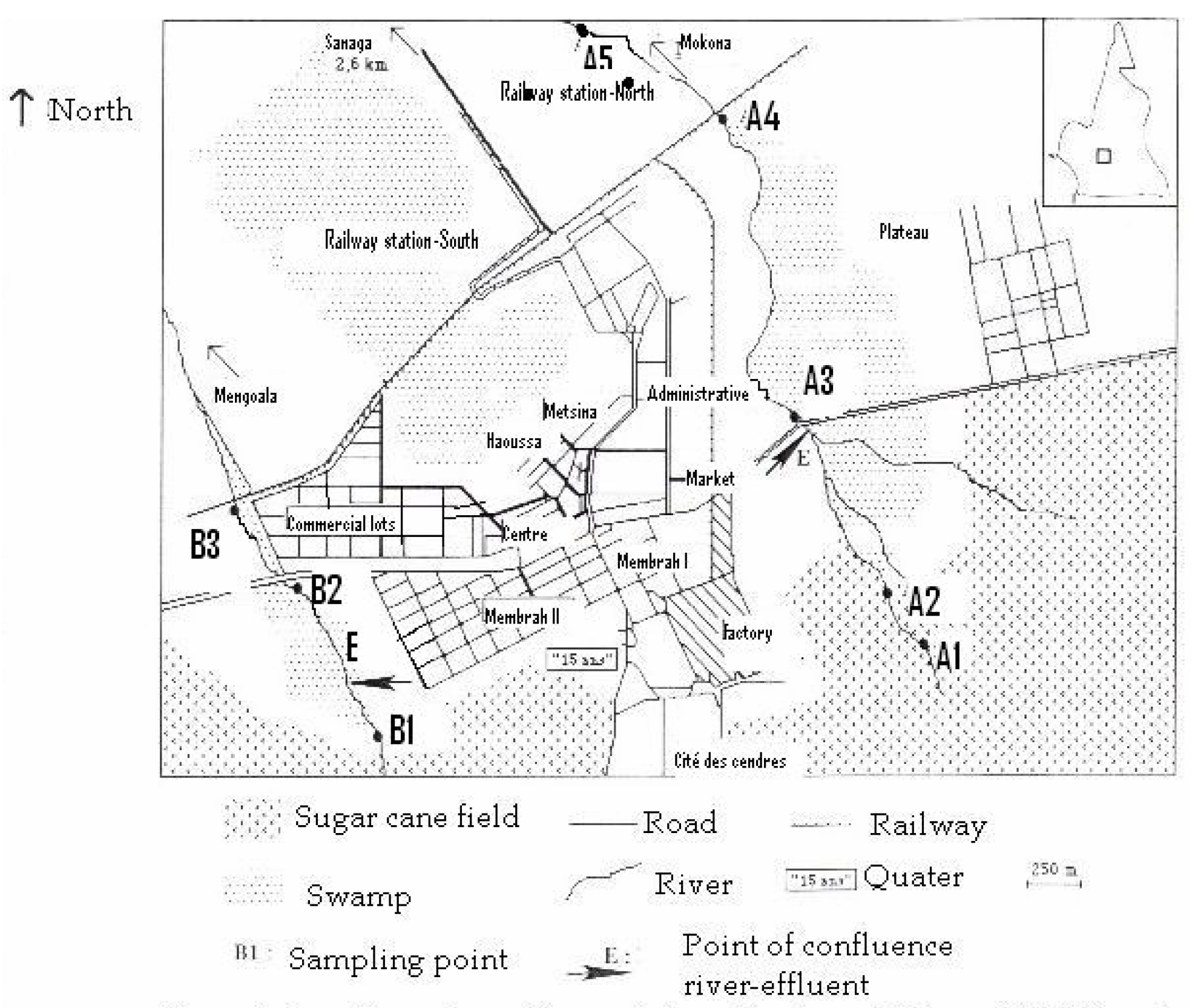
Mokona and Mengoala rivers border the Mbandjock town and receive waste waters from the sugar mill SOSUCAM (Sugar Producing Company) before joining river Sanaga (Fig. 1). The SOSUCAM factory is in activity from mid-November to mid-June. During the activity phase of the factory, effluents are loaded with residual water coming from the manufacture of sugar (fermented organic materials, chemicals additives, fat, etc.). When the factory is non functional, the effluents contain low organic matters and detergent used in cleaning the machines [11].
Figure 1.
: Location of sampling points on Rivers Mokona (A1-A5) and Mengoala (B1-B3) in Mbangjock, Cameroun
Selection of Sampling Sites
The choice of sampling sites was based on the accessibility and the location of the confluence sites between the effluents and the rivers. Five sampling sites were selected on the river Mokona (A1 to A5) and three on Mengoala (B1 to B3). Sites A1, A2 and B1 were situated upstream; A4, A5, B2 and B3 downstream of the sites of confluence. As the course of the effluent was modified during the study period, site A3 was downstream during the first sampling episode (P1) and upstream in the second sampling (P2). Sites A1 and A2 were situated upstream at approximately 1500 m and 1400 m respectively from the site of confluence, while A3, A4 and A5 were situated downstream at 50 m, 1600 m and 1900 m respectively. On Mengoala river, B1 was at 400 m upstream, while B2 and B3 were downstream at 750 m and 1250 m from the confluence site.
Study Method
The length of the study area measures 3450 m for Mokona and 1650 m for Mengoala. At each of the sampling sites, water velocity was determined using a floating object, a measuring tape and a stop clock. The collection of macroinvertebrates was carried out in calm water sites using a dip scoop [10]. Two sampling periods were identified, one in September 1991, rainy season, factory not functional (P1), and another in April 1992, dry season, factory in activity (P2). At each of the collection sites, ten scoops (0.5 mm mesh) were collected around the submerged substrates. The content of each scoop was transferred to a 5 L bucket provided with a lid, washed and fixed in 10 % formaldehyde. The samples were carried to the laboratory where macroinvertebrates were identified according to standard protocol, and counted [12].
The Shannon & Weaver diversity (H) index was determined for each sampling site. The statistical significance of the macroinvertebrate population was assessed by comparing faunal composition and the diversity index, the source of variation being the location of the sampling site in comparison to effluent-rivers confluence and the operational status of factory activity.
Results
The Mokona river is larger (mean width= 10 m) than Mengoala river (mean width= 4.5 m).The periaquatic flora is represented mainly by Pennisetum purpureum, which was found at all study sites (Table 1). The velocity of effluents on Mengoala was smaller than that of Mokona (Table 2).
Spatial Variation of the Fauna
During the first sampling period (P1), Trichoptera were present at A1 and A2, and Decapoda were found at A1 and A5 (Table 3). The number of taxa upstream at P1 did not differ significantly to that obtained downstream of either Mokona or Mengoala rivers (P>0.05). On the Mengoala river, Plecoptera and Plannipenna were found at B3 (P1). Basommatophora and Odonata were present at B1 and B3 at P1, but not at P2 (Table 4).
Table 1.
Aquatic and periaquatic plants of Mokona (A1-
A5) and Mengoala (B1-B3) rivers in Mbandjock,
Cameroon (September 1991 and April 1992)
Table 2.
Water velocity (in m3/s) of Mokona, Mengoala
rivers and the effluents of the SOSUCAM sugar factory in
Mbandjock, Cameroon (P1: September 1991; P2: April
1992).
The velocity was measured at A2 point (upstream) and at A5 point (downstream) for Mokona river, B1 (upstream) and B2 (downstream) for Mengoala river.
Temporal Variation of the Fauna
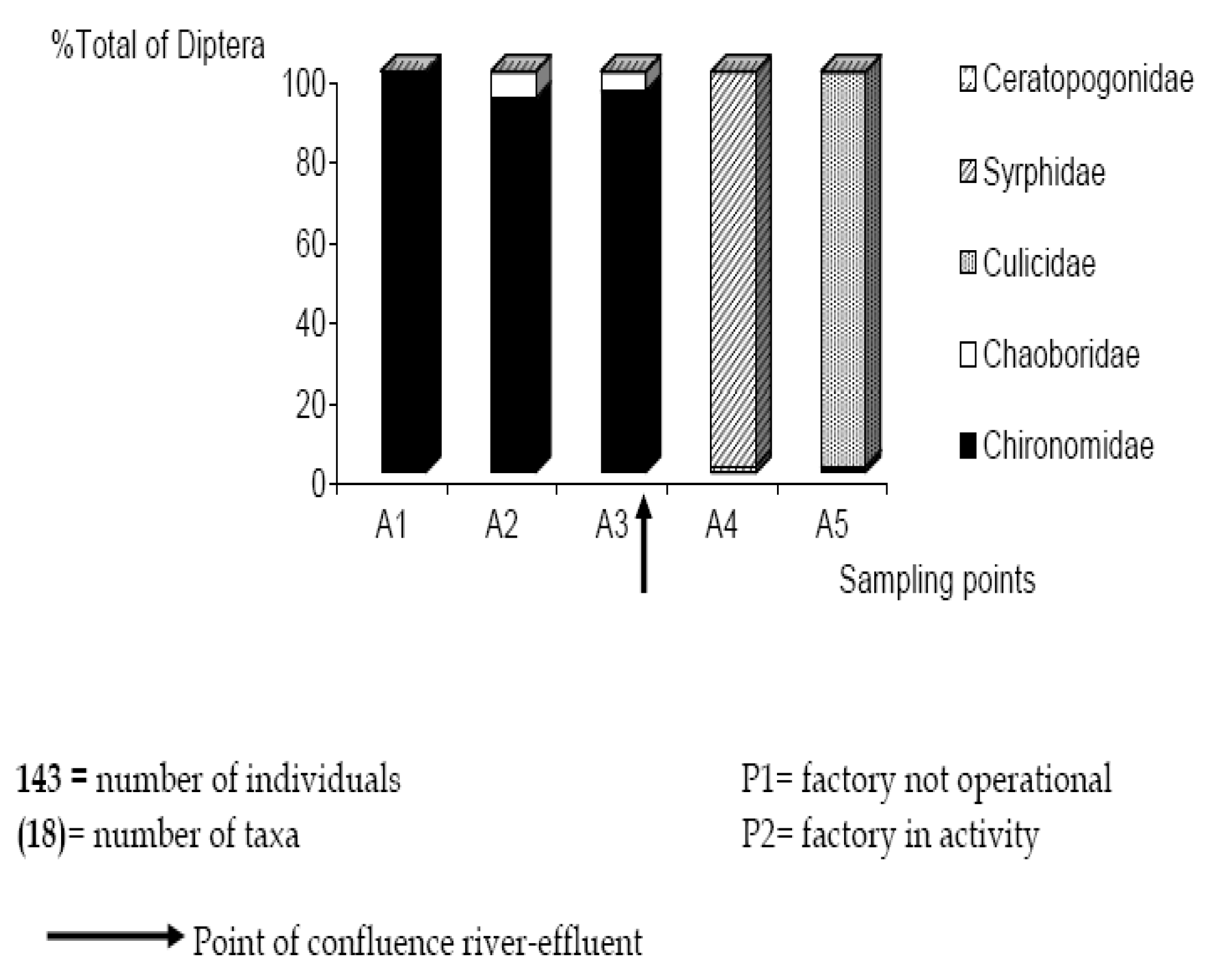
At sites A1 and A2, the number of taxa did not differ significantly between P1 and P2 (p = 0.14). Trichoptera represented 21.77 % of the population at A2 (Fig. 2). Chironomidae dominated the population of Diptera (Fig. 3). At A3 when the factory was not operational (P1), Diptera represented 45.17 % of the macroinvertebrate population (Fig. 2). The sample collected during the period of activity (P2) showed no significant alteration (p= 0.08). At site A4 when the factory was not operational (P1), Diptera were less numerous and represented by Chironomidae only. During the activity period, Syrphidae thrived and a regression of Chironomidae was noted (Fig. 3). A significant reduction in the number of taxa was observed compared to A2 (P< 0.05).
A proliferation of Culicidae (Diptera) was observed at site A5 (P2), where they represented 65% of the population. Ephemeroptera, Sphlonuridae, Heptageniidae, Caenidae and Heteroptera which were present at P1, were absent. Diptera syrphidae were sampled on the effluents at both P1 and P2 (Table 3).
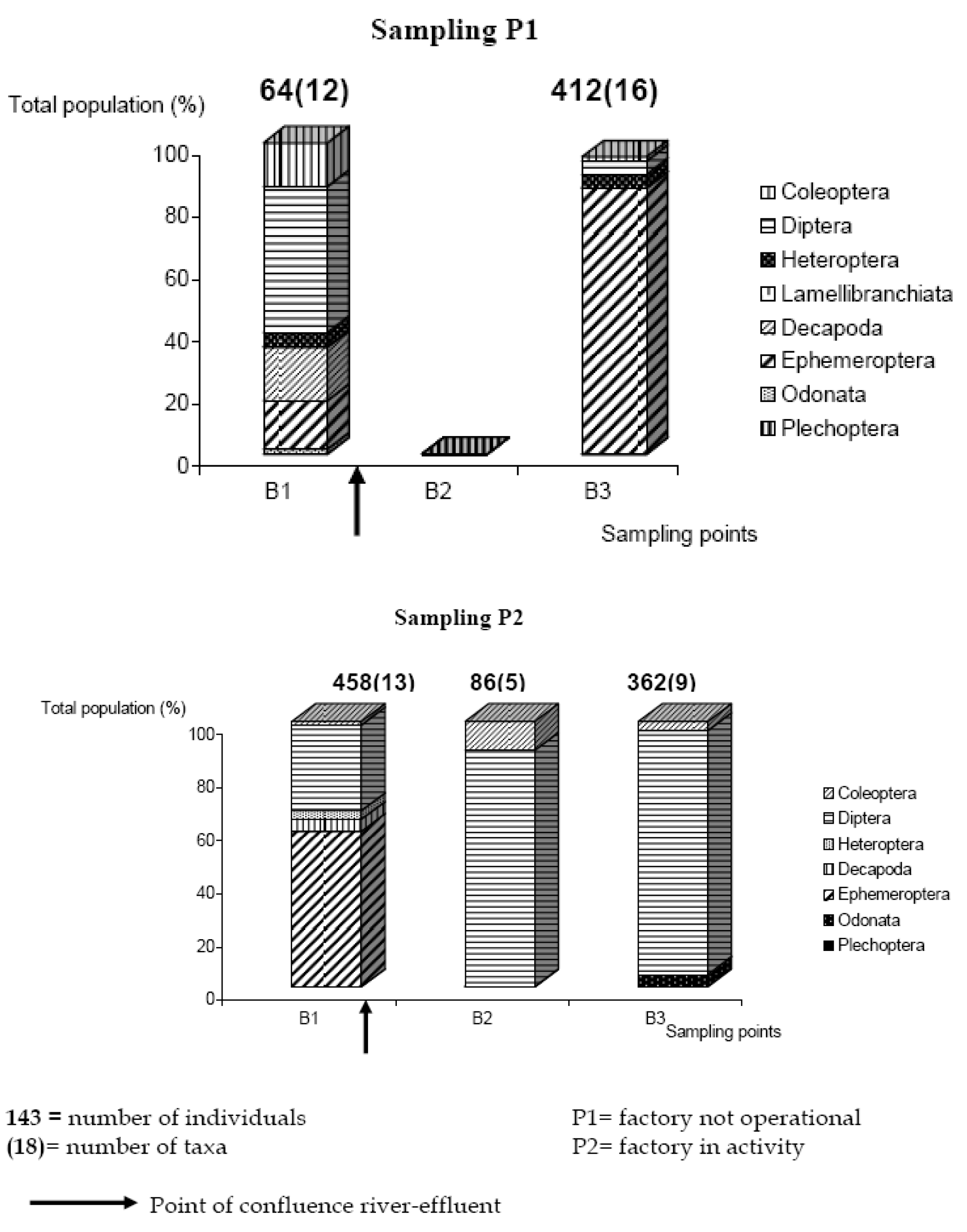
On the Mengoala river at B1, Ephemeroptera Baetidae and Diptera Chiromidae constituted the essential of the population at sampling periods P1 and P2 (Fig. 4). B2 was characterized at P2 by the dominance of Diptera Syrphidae. Similarly, Syrphidae represented 93.64 % of the population at site B3 when the factory was operational. Chironomidae and Ephemeroptera Siphlonuridae which constituted the essential of the fauna at P1 were absent (Table 4).
Table 3.
Macroinvertebrates count (per 10 dip scoops) in the Mokona (A1-A5) river in Mbandjock, Cameroon by factory
activity status: P1-non operational (September 1991); P2- operational (April 1992)
Table 4.
Macroinvertebrates count (per 10 dip scoops) in the Mengoala (B1-B3) river in Mbandjock (Cameroon) by factory
activity status: P1-non operational (September 1991); P2- operational (April 1992)
Figure 2.
: Effects of a sugar mill effluent on the longitudinal distribution of macroinvertebrates in the Mokona (A1-A5) River in Mbandjock (Cameroun)
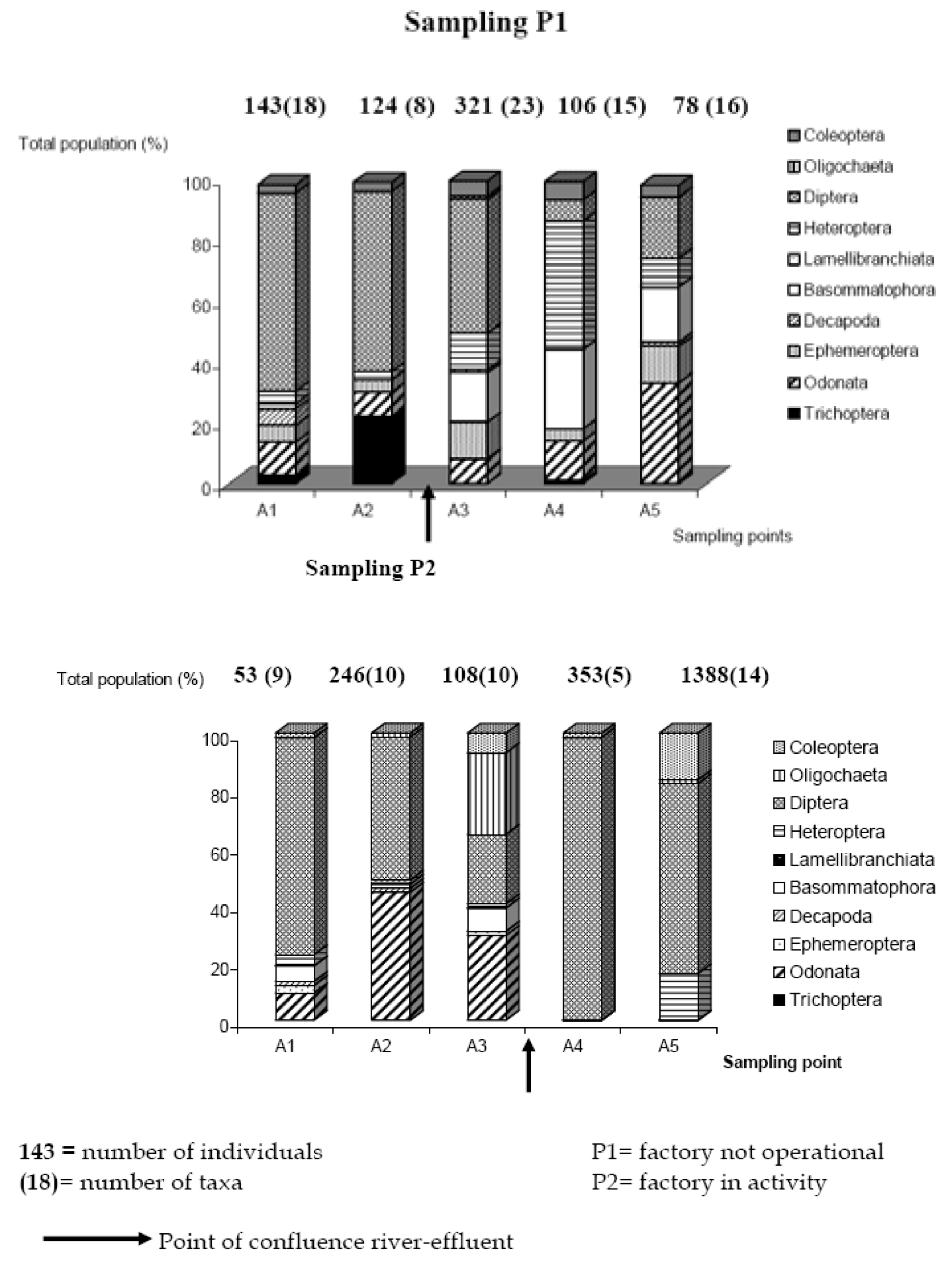
Figure 3.
: Effect of a sugar mill effluent on the
longitudinal distribution of Diptera on the Mokona (A1-
A5) river in Mbandjock, Cameroon.
Diversity Index
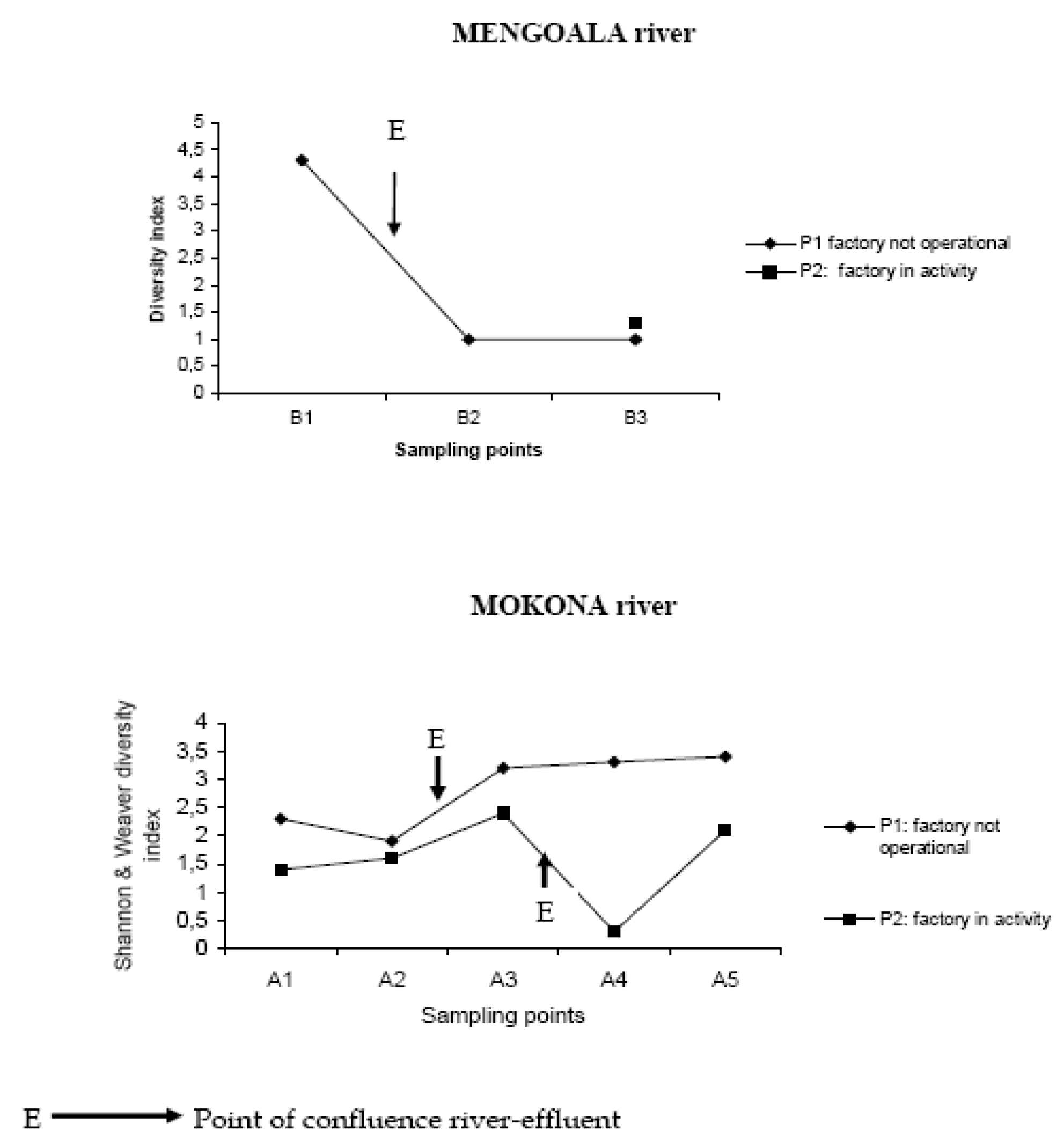
The diversity index for sites upstream from the site of confluence did not show any significant difference whether the factory was operational or not (p= 0.24). The variation in the diversity index became significant downstream from the site of confluence when the factory was operational.
Figure 4.
: Effect of the Mbandjock sugar mill operational status on the longitudinal distribution of macroinvertebrates on the Mengoala (B1-B3) river
Discussion
A rich macroinvertebrates fauna was observed upstream and downstream of the Mokona and Mengoala rivers when the SOSUCAM sugar mill was not operational. Changes in the macroinvertebrate community and diversity became significant when the factory was operational. Concurrent investigation revealed that the period of activity was characterized by a heavy load of organic matter discharged into receiving rivers [12]. Under such conditions, only pollutant-tolerant saprophiles such as Diptera Syrphidae and Culicidae survive and thrive. The presence of Trichoptera Hydroptilidae and Ecnomidae upstream indicates that water of these areas have acceptable quality [13-14]. The deterioration of the water quality of these rivers is confirmed by the diversity index which decreased downstream when the factory is operational. The relatively low value of the diversity index at site A1 (P1) could be the consequence of water impoundment which was observed at this site. Downstream, the increased values of the diversity index illustrate a moderate organic pollution and auto-epuration. This reconstitution benefits from the combined action of some Diptera which degraded organic materials and the oxygenation by aquatic and periaquatic plants. The rapid recovery observed here is a characteristic of African streams which often harbour abundant flora [8].
In studies conducted in temperate zones (North America and Europe), organic industrial pollution leads to enrichment of the aquatic fauna in Diptera Chironomidae, Chaoboridae, and in Oligocheata Tubificidae [14-15]. In a river receiving the effluents of a corn factory, Foree [16] noted the absence of macroinvertebrates. Chuter [17], studying the pollution by effluents of dairy farming in a tropical environment, reported a proliferation of Tubificidae, Ancylidae and Chironomidae. He noted that, effluents are harmful to Ephemeroptera, Ostracoda, Hydropsychida and Simulida. None of these studies noted the proliferation of Syrphidae, nor the presence of Culicidae observed in the present study. Methods of collecting aquatic macroinvertebrates for the evaluation of the pollution of current water use the Surber, the Petersen and Eckman dredge and artificial substrates [18]. These methods rarely collect snail hosts of human parasites. The modifications observed in the macro invertebrates population structure and the Shannon & Weaver diversity index (Figure 5) corroborate those of other authors [19- 20]. The dip scoop which is the standard method for the collection of snail hosts of schistosomes could equally be used for the macroinvertebrates biomonitoring of freshwater industrial pollution in tropical environments. The method could be used by community-based workers with minimal training for macroinvertebrates identification in resource limited areas (21).
Figure 5.
: Effect of effluents of SOSUCAM sugar mill effluents on the Shannon & Weaver diversity index of macroinvertebrates in the Mengoala (B1-B3) and Mokona (A1-A5) rivers in Mbandjock, Cameroon.
Conclusion
The discharge of wastes from the sugar factory SOSUCAM into the Mokona and Mengoala rivers contributes to the deterioration of the biological quality of their waters. The pollution resulted in the reduction of thenumber and diversity of taxa. Syrphidae were the main taxa found downstream of the sites of confluence. The standard dip scoop method which is used to sample freshwater snails can also be used for freshwater pollution biomonitoring in tropical environments with limited research resources. The value of Syrphidae as indicator of sugar mill effluent pollution requires further investigations.
Acknowledgement
The present study was funded by the French Ministry of Research and Technology, and received the logistic support of the French Institute for Scientific Research for the Development and Corporation (ORSTOM-Grand Programme Eau et Santé). We thank Mr. Wabo Poné Josué from the Foundation for Health Research & Development for his assistance.
References
- La Dou, J. Transfert de technologie «à risquer» vers les pays en développement. Cahiers santé, 1992, 2, 153–160. [Google Scholar]
- Yaméogo, L.; Resh, V. H.; Molyneux D., H. Control of river blindness in West Africa: Case history of biodiversity in a disease control program. Eco. Health, 2004, 1, 172–183. [Google Scholar]
- Moor, J. W. Diversity and indicator species as measures of water pollution in a sub arctic lake. Hydrobiologia, 1979, 66 (1), 73–80. [Google Scholar]
- Ramade, F.; Cosson, R.; Echaubard, M.; Le bras, S.; Moreteau, J. C.; Thybaud, E. Détection de la pollution des eaux en milieu agricole. Bull. Ecol, 1984, 15 (1), 21–37. [Google Scholar]
- Metcalfe, J. L. Biological water quality assessment of running status in Europe. Environ. Pollu, 1989, 60, 101–139. [Google Scholar]
- Resh V., H. Use of freshwater benthic macroinvertebrates and rapid assessment procedures in developing and newly industrialized countries. In: Biological Assessment and criteria: Tools for water resources planning and decision-making. Davis, W. S., Simon, T. P. (Eds). Boca Raton, FL: Lewis Publishers, 1995; pp. 161-177.
- Solimini, A.G.; Gulia, P.; Monfrinoti, M.; Carchini, G. :Performance of different biotic indices and sampling methods in assessing water quality in the lowland stretch of the Tiber River. Hydrobiologia, 2000, 423, 197–208. [Google Scholar]
- Dejoux, C. La pollution d’origine industrielle. In “la pollution des eaux continentals africaines”. ORSTOM (Ed.) Paris, 1988; pp. 289-330.
- Yaméogo, L., Crosa, G., Sammon, Nabé, K., Tholley, D.; Calamari, D.: Long-term assessment of insecticide treatments in West Africa: Aquatic Entomofauna. Chemosphere, 2001, 44, 1759-1773.
- Brown, D. S. Methods. In “Freshwater Snails of Africa and their Medical Importance”. Taylor and Francis (Ed.), London, 1980; pp. 435-450.
- Tchounwou, P. B.; Lantum, D. M.; Monkiedje, A.; Takougang, I.; Barbazan, P. The urgent need for environmental sanitation and safe drinking water supply in Mbandjock, Cameroon. Archives of Environmental Contamination and Toxicology, 1997, 33, 17-22.
- Durand, J. R. Lévêque, C. Faune et aquatique de l’afrique soudano-sahélienne. Tomes I et II. ORSTOM (Ed). Paris, 1980 ; P. 873.
- Takougang, I.; Tchounwou, P. B.; Barbazan, P. Impact des effluents d’un complexe agroindustriel sucrier sur la distribution des mollusques dulçaquicoles à Mbandjock (Cameroun). Cahier Santé, 1993, 3(3), 178–182. [Google Scholar]
- Sladecek, V. System of water quality from the biological point of view. Arch. Hydrobiol, 1973, 7, 1–218. [Google Scholar]
- Mattingly, R. L.; Cummins, K. W.; King, R. H. The chironomid. Hydrobiology, 1981, 77, 161–165. [Google Scholar] [CrossRef]
- Anonymous: Les rivières de Haute-Normandie vues par les invertébrés. Direction Régionale de l’Environnement de Haute-Normandie, 1999.
- Foree, E. G. Industrial wastes. Fermentation industries-pharmaceutical, corn and sugar. J. wat. Poll. Cont. Fed., 1975; 47(6), 1398–1402. [Google Scholar]
- Chutter, F. M. An empirical biotic index of the quality of water in South African streams and rivers. Water Research, 1972, 6, 19–30. [Google Scholar]
- APHA: Standard Methods for the examination of water and wastewater. 17th Edition, American Public Health Association, AWWA, WPGF, Washington DC, USA, 1990.
- Heister, R. D. The biotic index as a measure of organic pollution in steams. Amer. Biol. Teach., 1972, 2, 79–83. [Google Scholar]
- Fore, L. S.; Paulsen, K.; O’Laughlin, K. Assessing the performance of volunteers in monitoring streams. Freshwater Biology, 2001, 46(1), 109-123. [Google Scholar]
Publisher’s Note: MDPI stays neutral with regard to jurisdictional claims in published maps and institutional affiliations. |
© 2008 by the authors. Licensee MDPI, Basel, Switzerland. This article is an open access article distributed under the terms and conditions of the Creative Commons Attribution (CC BY) license (https://creativecommons.org/licenses/by/4.0/).