<?xml version="1.0" encoding="UTF-8"?>
<!DOCTYPE article PUBLIC "-//NLM//DTD Journal Publishing DTD v2.3 20070202//EN" "journalpublishing.dtd">
<article xmlns:mml="http://www.w3.org/1998/Math/MathML" xmlns:xlink="http://www.w3.org/1999/xlink" xml:lang="en" article-type="review-article">
  <front>
    <journal-meta>
      <journal-id journal-id-type="publisher-id">pharmaceuticals</journal-id>
      <journal-title>Pharmaceuticals</journal-title>
      <abbrev-journal-title abbrev-type="publisher">Pharmaceuticals</abbrev-journal-title>
      <abbrev-journal-title abbrev-type="pubmed">Pharmaceuticals</abbrev-journal-title>
      <issn pub-type="epub">1424-8247</issn>
      <publisher>
        <publisher-name>MDPI</publisher-name>
      </publisher>
    </journal-meta>
    <article-meta>
      <article-id pub-id-type="doi">10.3390/ph5091021</article-id>
      <article-id pub-id-type="publisher-id">pharmaceuticals-05-01021</article-id>
      <article-categories>
        <subj-group>
          <subject>Review</subject>
        </subj-group>
      </article-categories>
      <title-group>
        <article-title>Why and How the Old Neuroleptic Thioridazine Cures the XDR-TB Patient</article-title>
      </title-group>
	  <contrib-group>
        <contrib contrib-type="author">
          <name>
            <surname>Amaral</surname>
            <given-names>Leonard</given-names>
          </name>
          <xref rid="af1-pharmaceuticals-05-01021" ref-type="aff">1</xref>
          <xref rid="c1-pharmaceuticals-05-01021" ref-type="corresp">*</xref>
        </contrib>
        <contrib contrib-type="author">
          <name>
            <surname>Molnar</surname>
            <given-names>Joseph</given-names>
          </name>
          <xref rid="af2-pharmaceuticals-05-01021" ref-type="aff">2</xref>
        </contrib>
      </contrib-group>
      
      <aff id="af1-pharmaceuticals-05-01021"><label>1 </label>Grupo de Micobacterias, Unidade de Microbacteriologia, Centro de Malaria e outras Doenças Tropicais (CMDT), Institute of Hygiene and Tropical Medicine, Universidade Nova de Lisboa, Rua Junqueira 100, 1349-008 Lisbon, Portugal</aff>
      <aff id="af2-pharmaceuticals-05-01021"><label>2 </label>Department of Medical Microbiology and Immunobiology, University of Szeged, Dóm tér 10, 6720 Szeged, Hungary; Email: <email>molnar.jozsef@med.u-szeged.hu</email></aff>
      <author-notes>
        <corresp id="c1-pharmaceuticals-05-01021"><label>*</label> Author to whom correspondence should be addressed; Email: <email>lamaral@ihmt.unl.pt</email>.</corresp>
      </author-notes>
      <pub-date pub-type="epub">
        <day>17</day>
        <month>09</month>
        <year>2012</year>
      </pub-date>
      <pub-date pub-type="collection">
	  <month>09</month>
        <year>2012</year>
      </pub-date>
      <volume>5</volume>
      <issue>9</issue>
      <fpage>1021</fpage>
      <lpage>1031</lpage>
      <history>
        <date date-type="received">
          <day>13</day>
          <month>08</month>
          <year>2012</year>
        </date>
        <date date-type="rev-recd">
          <day>10</day>
          <month>09</month>
          <year>2012</year>
        </date>
        <date date-type="accepted">
          <day>11</day>
          <month>09</month>
          <year>2012</year>
        </date>
      </history>
      <permissions>
        <copyright-statement>©  2012 by the authors; licensee MDPI, Basel, Switzerland.</copyright-statement>
        <copyright-year>2012</copyright-year>
        <license xmlns:xlink="http://www.w3.org/1999/xlink" license-type="open-access" xlink:href="http://creativecommons.org/licenses/by/3.0/">
          <p>This article is an open-access article distributed under the terms and conditions of the Creative Commons Attribution license (<uri>http://creativecommons.org/licenses/by/3.0/</uri>).</p>
        </license>
      </permissions>
      <abstract>
        <p>This mini-review provides the entire experimental history of the development of the old neuroleptic thioridazine (TZ) for therapy of antibiotic resistant pulmonary tuberculosis infections. TZ is effective when used in combination with antibiotics to which the initial <italic>Mycobacterium tuberculosis</italic> was resistant. Under proper cardiac evaluation procedures, the use of TZ is safe and does not produce known cardiopathy such as prolongation of QT interval. Because TZ is cheap, it should be considered for therapy of XDR and TDR-Mtb patients in economically disadvantaged countries.</p>
      </abstract>
      <kwd-group>
        <kwd>pulmonary tuberculosis</kwd>
        <kwd>thioridazine</kwd>
        <kwd><italic>in vitro</italic> activity</kwd>
        <kwd><italic>ex vivo</italic> activity</kwd>
        <kwd>cures the mouse of MDR-Mtb infections</kwd>
        <kwd>XDR-TB</kwd>
        <kwd>TDR-TB</kwd>
        <kwd>cures the human of an XDR-TB infection</kwd>
        <kwd>mechanisms of action</kwd>
        <kwd>inhibitor of efflux pumps</kwd>
        <kwd>enhances killing of intracellular Mtb</kwd>
      </kwd-group>
    </article-meta>
  </front>
  <body>
    <sec sec-type="intro">
      <title>1. Introduction</title>
      <p>Tuberculosis is mainly an intracellular infection of the macrophage that is part of the alveolar unit of the lung. The infection is caused by <italic>Mycobacterium tuberculosis</italic> (Mtb) which is a steadfast human pathogen. As per the World Health Organisation (WHO), two billion of the World’s inhabitants are infected by Mtb [<xref ref-type="bibr" rid="B1-pharmaceuticals-05-01021">1</xref>]. However, active TB which is the progression of the intracellular infection to an extracellular status (organism breaks out of its intracellular prison) and is the infectious phase of the disease, takes place in roughly 5 to 10% of the globally infected. Unfortunately, the vast majority of active TB cases occur in India [<xref ref-type="bibr" rid="B2-pharmaceuticals-05-01021">2</xref>], China [<xref ref-type="bibr" rid="B3-pharmaceuticals-05-01021">3</xref>], and other low income areas of the globe; with some exceptions (for example Portugal [<xref ref-type="bibr" rid="B4-pharmaceuticals-05-01021">4</xref>] and Latvia [<xref ref-type="bibr" rid="B5-pharmaceuticals-05-01021">5</xref>]), active disease is far less common in Western Europe and the USA [<xref ref-type="bibr" rid="B6-pharmaceuticals-05-01021">6</xref>]. The frequency of progression of a TB infection to active TB status is markedly increased with co-infection with HIV or presentation of AIDS [<xref ref-type="bibr" rid="B7-pharmaceuticals-05-01021">7</xref>], and in the absence of major pathology, advanced age that is accompanied by a decrease of immunocompetence accounts for about 5% of all active TB. The mortality that TB exerts world-wide was in excess of 2 million for 2012 and is expected to rise. [<xref ref-type="bibr" rid="B1-pharmaceuticals-05-01021">1</xref>]. Nevertheless, given that epidemics of influenza kill as many as 10 million in a given year [<xref ref-type="bibr" rid="B8-pharmaceuticals-05-01021">8</xref>], TB is not a major killer and need not be a killer at all if the infection caused by antibiotic susceptible strains of Mtb is treated effectively with the two most effective antibiotics isoniazid (INH) and rifampicin (Rif) [<xref ref-type="bibr" rid="B9-pharmaceuticals-05-01021">9</xref>]. However, as elegantly pointed out by Zarir Udwadia [<xref ref-type="bibr" rid="B10-pharmaceuticals-05-01021">10</xref>], the development of multi-drug resistance (MDR) (resistance to INH and Rif) and its progression to more antibiotic resistant infections such as extensively drug resistant TB (XDR-TB) and now totally drug resistant TB (TDR-TB) is mainly due to incompetent therapy, but not all drug resistant infections are due to incompetent therapy, but rather to the very long period of therapy, often exceeding 15 continuous months and during this time, the normal rates of spontaneous mutations of targets of INH and Rif result in the accumulation of mutations [<xref ref-type="bibr" rid="B11-pharmaceuticals-05-01021">11</xref>] which render the infection immune to INH and Rif, and to other antibiotics as well as is the case for XDR-TB (resistance to INH, Rif, any fluoroquinolone and of the injectable TB drugs streptomycin, kanamycin and amikacin [<xref ref-type="bibr" rid="B12-pharmaceuticals-05-01021">12</xref>]. However, it must also be stated that not all drug resistance is due to mutations but rather to the over-expression of efflux pumps that extrude drugs before they reach their intended targets [<xref ref-type="bibr" rid="B13-pharmaceuticals-05-01021">13</xref>] or to the down-regulation of porins which limit the amount of drug that penetrates the cell envelope of the Mtb strain [<xref ref-type="bibr" rid="B14-pharmaceuticals-05-01021">14</xref>].</p>
      <p>Therapy of antibiotic susceptible TB infections is effective when administered correctly, especially when it is associated with Directly Observed Treatments (DOTS) programmes [<xref ref-type="bibr" rid="B15-pharmaceuticals-05-01021">15</xref>]. However, therapy of the MDR-TB patient is problematic and extols high mortality, especially when the patient is co-infected with HIV or presents with AIDS [<xref ref-type="bibr" rid="B7-pharmaceuticals-05-01021">7</xref>]. Therapy of XDR-TB is very problematic with major mortality rates [<xref ref-type="bibr" rid="B16-pharmaceuticals-05-01021">16</xref>] and therapy TDR-TB, as defined by its name, almost always results in death [<xref ref-type="bibr" rid="B17-pharmaceuticals-05-01021">17</xref>].</p>
      <p>At the present time, with the exception of adjunct use of the old neuroleptic thioridazine [<xref ref-type="bibr" rid="B18-pharmaceuticals-05-01021">18</xref>,<xref ref-type="bibr" rid="B19-pharmaceuticals-05-01021">19</xref>], there are no safe and effective drugs for therapy of the XDR and TDR-TB patient. It is the purpose of this mini-review to present the whole story of how thioridazine (TZ) was developed for the therapy of MDR-TB infections and why it is an effective drug for adjunct use with antibiotics to which the offending organism was initially resistant. Because of the dual mechanisms of action described in this mini review, any mutational response by the offending organism is irrelevant as would be the case for any drug that is to directly affect the survival of the organism. </p>
    </sec>
    <sec>
      <title>2. Phenothiazines</title>
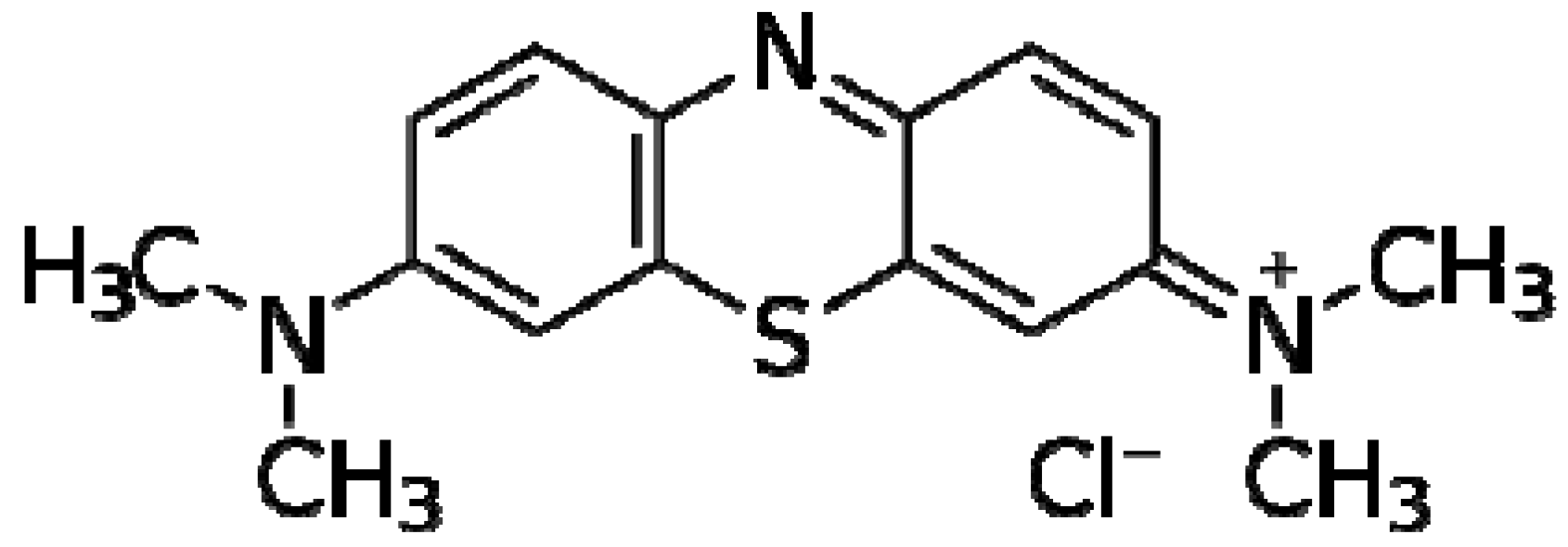
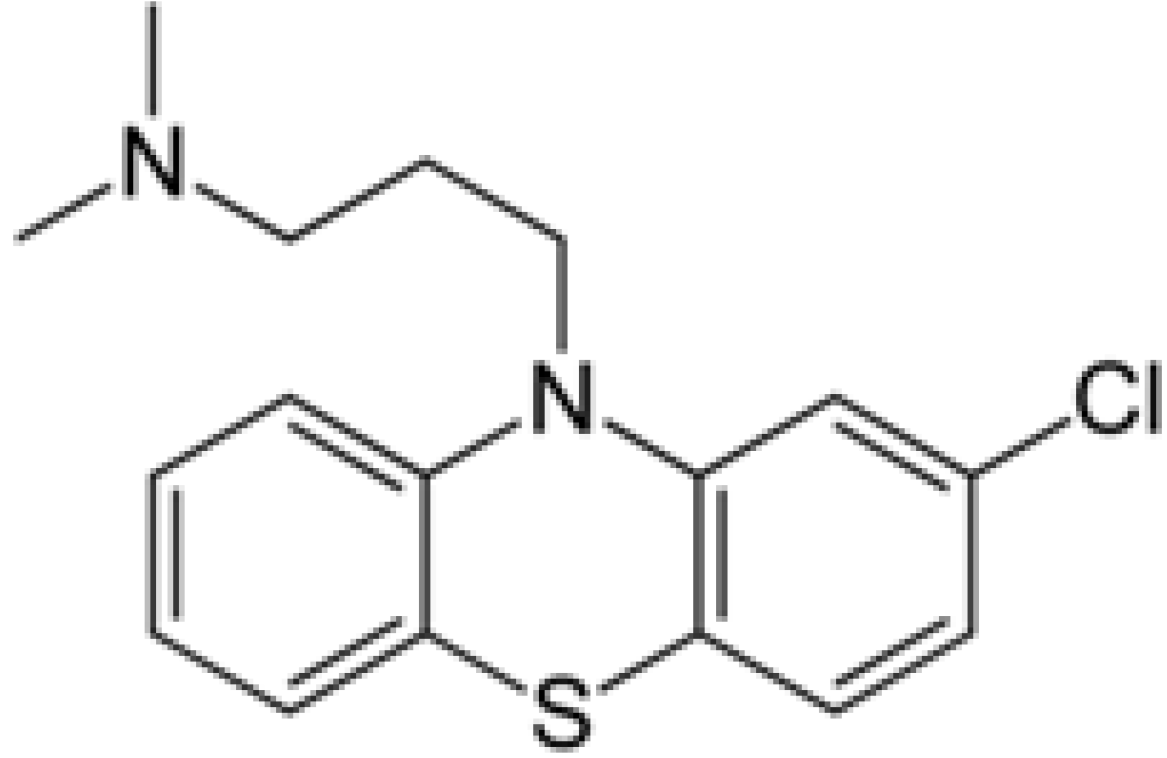
      <p>Phenothiazines are heterocyclic compounds whose structure is best exemplified by the dye methylene blue (MB, <xref ref-type="fig" rid="pharmaceuticals-05-01021-f001">Figure 1</xref>). MB was studied intensively by the German physician-chemist Paul Erhlich in the 1890s and shown to have anti-malarial and antibacterial properties [<xref ref-type="bibr" rid="B20-pharmaceuticals-05-01021">20</xref>]. However, after the demonstration by Bodoni that when the dye was given to humans or other mammals, it would calm them [<xref ref-type="bibr" rid="B21-pharmaceuticals-05-01021">21</xref>], interest in the dye as a potential lead compound for the synthesis of a true neuroleptic took precedence over its antimicrobial properties. Nevertheless, it took half a century for the synthesis of the first commercially available colourless neuroleptic chlorpromazine (CPZ, <xref ref-type="fig" rid="pharmaceuticals-05-01021-f002">Figure 2</xref>) by the French chemist Charpentier [<xref ref-type="bibr" rid="B22-pharmaceuticals-05-01021">22</xref>] and soon after its release as Largactil by Rhone Poulenc Inc. in the middle 1950s, it was used world-wide for the control of psychosis. As a consequence of this extensive use, the activity of CPZ against a wide gamut of microorganisms was studied [<xref ref-type="bibr" rid="B23-pharmaceuticals-05-01021">23</xref>]. Moreover, because of the plethora of negative side effects it produced, the study of the biological effects CPZ has generated almost 20,000 published studies listed by PubMed, second only to aspirin (over 50,000). Among the important biological properties of CPZ are its <italic>in vitro</italic> and <italic>in vivo</italic> inhibition of intracellular pathogens such as leishmania [<xref ref-type="bibr" rid="B24-pharmaceuticals-05-01021">24</xref>,<xref ref-type="bibr" rid="B25-pharmaceuticals-05-01021">25</xref>], trypanosomes [<xref ref-type="bibr" rid="B26-pharmaceuticals-05-01021">26</xref>,<xref ref-type="bibr" rid="B27-pharmaceuticals-05-01021">27</xref>], amoebae [<xref ref-type="bibr" rid="B28-pharmaceuticals-05-01021">28</xref>,<xref ref-type="bibr" rid="B29-pharmaceuticals-05-01021">29</xref>,<xref ref-type="bibr" rid="B30-pharmaceuticals-05-01021">30</xref>,<xref ref-type="bibr" rid="B31-pharmaceuticals-05-01021">31</xref>], <italic>in vitro</italic> inhibition of cancer cells [<xref ref-type="bibr" rid="B32-pharmaceuticals-05-01021">32</xref>,<xref ref-type="bibr" rid="B33-pharmaceuticals-05-01021">33</xref>], induces of apoptosis of cancer cells [<xref ref-type="bibr" rid="B34-pharmaceuticals-05-01021">34</xref>,<xref ref-type="bibr" rid="B35-pharmaceuticals-05-01021">35</xref>], inhibits efflux pumps of multi-drug resistant bacteria [<xref ref-type="bibr" rid="B36-pharmaceuticals-05-01021">36</xref>,<xref ref-type="bibr" rid="B37-pharmaceuticals-05-01021">37</xref>], causes the elimination of plasmids that carry antibiotic resistant genes from important pathogenic bacteria [<xref ref-type="bibr" rid="B38-pharmaceuticals-05-01021">38</xref>,<xref ref-type="bibr" rid="B39-pharmaceuticals-05-01021">39</xref>,<xref ref-type="bibr" rid="B40-pharmaceuticals-05-01021">40</xref>], inhibits enzymes when studied [<xref ref-type="bibr" rid="B41-pharmaceuticals-05-01021">41</xref>], and many other cellular activities that are too numerous to mention. Nevertheless, as recently reviewed [<xref ref-type="bibr" rid="B23-pharmaceuticals-05-01021">23</xref>], the activities noted for CPZ lie in the side chains of the molecule [<xref ref-type="bibr" rid="B23-pharmaceuticals-05-01021">23</xref>] and have guided the evolution of this phenothiazine as an antimalarial agent [<xref ref-type="bibr" rid="B42-pharmaceuticals-05-01021">42</xref>].</p>
      <fig id="pharmaceuticals-05-01021-f001" position="anchor">
        <label>Figure 1</label>
        <caption>
          <p>Structure of methylene blue (MB).</p>
        </caption>
        <graphic xmlns:xlink="http://www.w3.org/1999/xlink" xlink:href="pharmaceuticals-05-01021-g001.tif"/>
      </fig>
      <fig id="pharmaceuticals-05-01021-f002" position="anchor">
        <label>Figure 2</label>
        <caption>
          <p>Structure of chlorpromazine (CPZ).</p>
        </caption>
        <graphic xmlns:xlink="http://www.w3.org/1999/xlink" xlink:href="pharmaceuticals-05-01021-g002.tif"/>
      </fig>
      <p>The activities of CPZ, relevant to the theme of this mini review, lie in their anti-microbial properties and these are discussed and traced in the development of thioridazine as an anti-tubercular drug in the sections that follow.</p>
    </sec>
    <sec>
      <title>3. Anti-Tubercular Activity of CPZ and Other Phenothiazines</title>
      <p>Within a year after the introduction of CPZ for therapy of psychosis, CPZ [<xref ref-type="bibr" rid="B43-pharmaceuticals-05-01021">43</xref>] and other phenothiazine derivatives [<xref ref-type="bibr" rid="B44-pharmaceuticals-05-01021">44</xref>] were observed to improve therapy of pulmonary tuberculosis. These reports were followed with many demonstrations that indeed CPZ could be used as an adjunct for rapidly curing the TB patient [<xref ref-type="bibr" rid="B45-pharmaceuticals-05-01021">45</xref>,<xref ref-type="bibr" rid="B46-pharmaceuticals-05-01021">46</xref>,<xref ref-type="bibr" rid="B47-pharmaceuticals-05-01021">47</xref>,<xref ref-type="bibr" rid="B48-pharmaceuticals-05-01021">48</xref>]. However, these studies took place at the time that INH and rifampicin had been introduced as effective therapeutic agents for management of tuberculosis. Moreover, the side effects from CPZ were numerous and significant [<xref ref-type="bibr" rid="B49-pharmaceuticals-05-01021">49</xref>], hence, why use it if other less noxious compounds were presently available. Nevertheless, interest in CPZ as an anti-tubercular agent remained as evident from <italic>in vitro</italic> studies conducted during the next three decades [<xref ref-type="bibr" rid="B50-pharmaceuticals-05-01021">50</xref>]. However, the concentrations that produced <italic>in vitro</italic> inhibition of replication of Mtb were extremely high (ranged from 15 to 25 mg/L) [<xref ref-type="bibr" rid="B51-pharmaceuticals-05-01021">51</xref>,<xref ref-type="bibr" rid="B52-pharmaceuticals-05-01021">52</xref>,<xref ref-type="bibr" rid="B53-pharmaceuticals-05-01021">53</xref>] and well beyond the maximum safe serum level (0.5 mg/L) achieved with chronic therapy of the psychotic patient. The demonstration that a concentration of CPZ in the medium that was within clinical reach could effectively kill intracellular Mtb by non killing human macrophages [<xref ref-type="bibr" rid="B54-pharmaceuticals-05-01021">54</xref>], sparked interest in the potential that CPZ offered for therapy of tuberculosis; especially multi-drug resistant infections. Moreover it explained why therapeutic doses of CPZ could effectively cure tuberculosis infections noted during the first decade of CPZ use world-wide. </p>
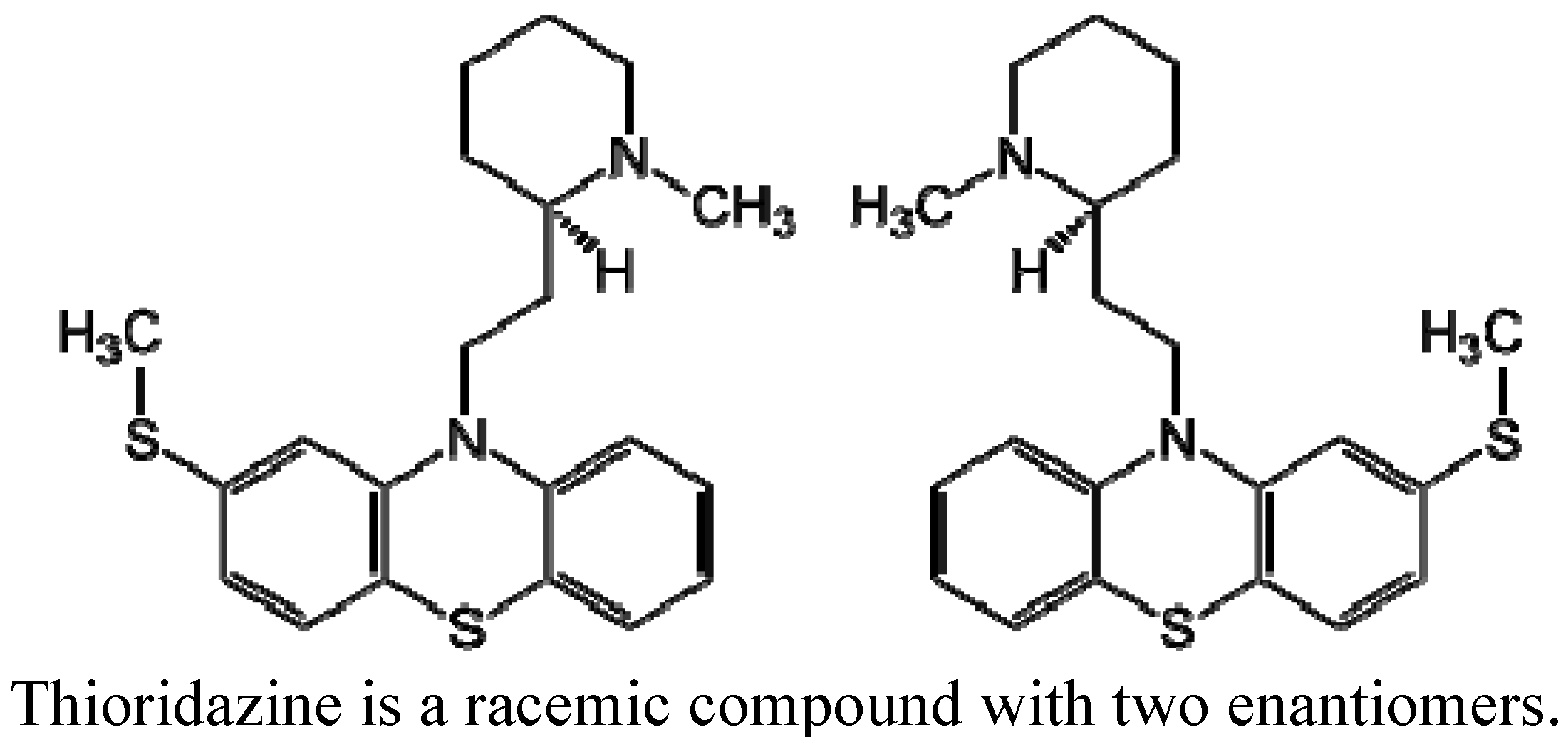
      <p>During the 1980s New York City experienced a quadrupling of the new cases of active TB infections with more than half of these presenting with an MDR phenotype [<xref ref-type="bibr" rid="B55-pharmaceuticals-05-01021">55</xref>]. The need for effective anti-tubercular drugs was urgent, but none were in the pipeline due to little interest of pharmaceutical companies. Moreover, the problems that CPZ posed were still insurmountable. However, because thioridazine (TZ, <xref ref-type="fig" rid="pharmaceuticals-05-01021-f003">Figure 3</xref>) is an effective neuroleptic with fewer significant negative side effects, the <italic>in vitro</italic> activity of TZ against a panel of Mtb strains that were resistant to as many as five antibiotics was examined and the phenothiazine was shown to be as effective in the inhibition of replication of Mtb as CPZ [<xref ref-type="bibr" rid="B56-pharmaceuticals-05-01021">56</xref>]. Nevertheless, the concentration of TZ needed to inhibit replication was of the order of 30 mg/L and therefore, clinically irrelevant. The demonstration that a concentration of TZ in the medium (0.1 mg/L) which was lower than that used for chronic therapy of the psychotic patient caused the killing of intracellular Mtb by non-killing macrophages [<xref ref-type="bibr" rid="B57-pharmaceuticals-05-01021">57</xref>], was soon followed by studies that showed that TZ could cure the mouse infected with antibiotic susceptible Mtb [<xref ref-type="bibr" rid="B58-pharmaceuticals-05-01021">58</xref>] as well as by an MDR Mtb strain [<xref ref-type="bibr" rid="B59-pharmaceuticals-05-01021">59</xref>]. The latter study also showed, as was previously demonstrated <italic>in vitro</italic> [<xref ref-type="bibr" rid="B60-pharmaceuticals-05-01021">60</xref>], that TZ could enhance the <italic>in vivo</italic> effectiveness of INH and Rif when used as therapy of the MDR Mtb infected mouse [<xref ref-type="bibr" rid="B59-pharmaceuticals-05-01021">59</xref>]. Proof in support that TZ cures extensively resistant TB infections was recently presented [<xref ref-type="bibr" rid="B61-pharmaceuticals-05-01021">61</xref>]. This latter retrospective study was performed on 17 non-AIDS pulmonary adult patients with XDR-TB admitted to a referral treatment centre for infectious diseases in Buenos Aires, Argentina from 2,002 through 2,008. A combination of linezolid, moxifloxacin and thioridazine was applied in the treatment of 12 patients. Thioridazine was initially administered at a daily dose of 25 mg for two weeks, thereafter the dose was increased to 25 mg weekly until it reached 200 mg/day under strict cardiac monitoring in order to survey for eventual cardiac adverse events. Eleven patients met the recovery criteria with more than two years of follow-up after treatment completion. Thioridazine was discontinued in one patient with pancytopenia and in another with allergic dermatitis. Although cardiac adverse effects have been reported previously, no prolongation of QT interval or any other heart complication was observed. Another recent study showed that employing a similar dose schedule, but limiting the final dose to 75 mg/day, improved the quality of life of XDR TB patients, <italic>i.e.</italic>,patients regained their appetite, put on weight, night sweats were reduced or obviated, the anxiety produced by the infection was obviated, <italic>etc</italic>. [<xref ref-type="bibr" rid="B62-pharmaceuticals-05-01021">62</xref>] and these authors have therefore recommended that TZ be considered as a salvage drug for therapy of antibiotic non-responsive XDR TB patients whose prognosis is serious [<xref ref-type="bibr" rid="B62-pharmaceuticals-05-01021">62</xref>]. This study, as was the case with the Abbate <italic>et al.</italic> study [<xref ref-type="bibr" rid="B61-pharmaceuticals-05-01021">61</xref>] also showed that none of the patients presented with any evidence of prolonged QTc intervals or with any other cardiopathy [<xref ref-type="bibr" rid="B62-pharmaceuticals-05-01021">62</xref>]. Clearly, TZ merits serious consideration as an adjunct for therapy of pulmonary TB infections that do not respond to available drugs.</p>
      <fig id="pharmaceuticals-05-01021-f003" position="anchor">
        <label>Figure 3</label>
        <caption>
          <p>Structure of thioridazine (TZ).</p>
        </caption>
        <graphic xmlns:xlink="http://www.w3.org/1999/xlink" xlink:href="pharmaceuticals-05-01021-g003.tif"/>
      </fig>
      
    </sec>
    <sec>
      <title>4. How Does TZ Cure Drug Resistant Pulmonary Infections Such As XDR-TB and Probably TDR-TB?</title>
      <sec>
        <title>4.1. The Role of TZ as an Inhibitor of Mtb Efflux Pumps</title>
        <p>Multi-drug resistance of Mtb can be due to accumulated mutations of antibiotic targets, to down-regulation of porins [<xref ref-type="bibr" rid="B14-pharmaceuticals-05-01021">14</xref>] and to over-expression of efflux pumps that excrete two or more unrelated classes of antibiotics [<xref ref-type="bibr" rid="B13-pharmaceuticals-05-01021">13</xref>]. Although the degree that efflux pumps contribute to the multi-drug phenotype of MDR, XDR and TDR Mtb strains is not known, if we can extrapolate from other studies, it is certain that a major fraction of multi-drug resistance is due the over-expression of its efflux pumps [<xref ref-type="bibr" rid="B13-pharmaceuticals-05-01021">13</xref>,<xref ref-type="bibr" rid="B14-pharmaceuticals-05-01021">14</xref>,<xref ref-type="bibr" rid="B63-pharmaceuticals-05-01021">63</xref>,<xref ref-type="bibr" rid="B64-pharmaceuticals-05-01021">64</xref>]. Among the efflux pump genes that respond to INH exposure by over-expressing their total mRNA, are <italic>mmpL7</italic>, <italic>p55</italic>, <italic>efpA</italic>, <italic>mmr</italic>, <italic>Rv1258c</italic> and <italic>Rv2459</italic> [<xref ref-type="bibr" rid="B13-pharmaceuticals-05-01021">13</xref>]. The activity of each of these genes is reduced by exposure to TZ [<xref ref-type="bibr" rid="B13-pharmaceuticals-05-01021">13</xref>]. TZ also inhibits the products of each of these genes, and these inhibitions render the MDR Mtb strain susceptible to antibiotics to which it was initially resistant [<xref ref-type="bibr" rid="B13-pharmaceuticals-05-01021">13</xref>,<xref ref-type="bibr" rid="B14-pharmaceuticals-05-01021">14</xref>,<xref ref-type="bibr" rid="B63-pharmaceuticals-05-01021">63</xref>,<xref ref-type="bibr" rid="B64-pharmaceuticals-05-01021">64</xref>]. Moreover, TZ has been shown to inhibit the expression of many essential genes of Mtb [<xref ref-type="bibr" rid="B65-pharmaceuticals-05-01021">65</xref>,<xref ref-type="bibr" rid="B66-pharmaceuticals-05-01021">66</xref>] and can also kill dormant Mtb [<xref ref-type="bibr" rid="B67-pharmaceuticals-05-01021">67</xref>,<xref ref-type="bibr" rid="B68-pharmaceuticals-05-01021">68</xref>]. Although not yet proven, it is quite certain that since TZ is concentrated by lysosomes [<xref ref-type="bibr" rid="B69-pharmaceuticals-05-01021">69</xref>,<xref ref-type="bibr" rid="B70-pharmaceuticals-05-01021">70</xref>,<xref ref-type="bibr" rid="B71-pharmaceuticals-05-01021">71</xref>], the <italic>in vivo</italic> activity of TZ that leads, at least in part, to the cure of the Mtb infected mouse [<xref ref-type="bibr" rid="B58-pharmaceuticals-05-01021">58</xref>,<xref ref-type="bibr" rid="B59-pharmaceuticals-05-01021">59</xref>], must be due to the concentrated effect of the compound within the phagolysosome that has entrapped the bacterium, as previously supported by prior studies [<xref ref-type="bibr" rid="B71-pharmaceuticals-05-01021">71</xref>]. Moreover, the activity of thioridazine has also been shown to enhance the killing of intracellular antibiotic susceptible and MDR-Mtb [<xref ref-type="bibr" rid="B57-pharmaceuticals-05-01021">57</xref>] and XDR-Mtb [<xref ref-type="bibr" rid="B72-pharmaceuticals-05-01021">72</xref>,<xref ref-type="bibr" rid="B73-pharmaceuticals-05-01021">73</xref>,<xref ref-type="bibr" rid="B74-pharmaceuticals-05-01021">74</xref>,<xref ref-type="bibr" rid="B75-pharmaceuticals-05-01021">75</xref>,<xref ref-type="bibr" rid="B76-pharmaceuticals-05-01021">76</xref>,<xref ref-type="bibr" rid="B77-pharmaceuticals-05-01021">77</xref>] by non-killing human macrophages.</p>
      </sec>
      <sec>
        <title>4.2. The Mechanism by Which TZ Enhances the Killing of Intracellular Mtb</title>
        <p>The pulmonary macrophage, unlike other macrophages such as the neutrophil, has little killing activity of its own. Consequently, the entrapped Mtb within the phagolysosome vacuole remains viable for many decades. The mechanism by which TZ enhances killing of intracellular Mtb has been postulated to be due to the TZ inhibition of potassium ions from the phagolysosomal vacuole [<xref ref-type="bibr" rid="B72-pharmaceuticals-05-01021">72</xref>,<xref ref-type="bibr" rid="B73-pharmaceuticals-05-01021">73</xref>,<xref ref-type="bibr" rid="B74-pharmaceuticals-05-01021">74</xref>,<xref ref-type="bibr" rid="B75-pharmaceuticals-05-01021">75</xref>,<xref ref-type="bibr" rid="B76-pharmaceuticals-05-01021">76</xref>]. The retention of potassium ions promotes the acidification of the phagolysosomal vacuole which in turn activates the inert hydrolases resulting in the degradation of the entrapped Mtb organism [<xref ref-type="bibr" rid="B72-pharmaceuticals-05-01021">72</xref>,<xref ref-type="bibr" rid="B73-pharmaceuticals-05-01021">73</xref>,<xref ref-type="bibr" rid="B74-pharmaceuticals-05-01021">74</xref>,<xref ref-type="bibr" rid="B75-pharmaceuticals-05-01021">75</xref>,<xref ref-type="bibr" rid="B76-pharmaceuticals-05-01021">76</xref>]. This enhanced killing by non-killing macrophages results in a totally new concept for the therapy of pulmonary TB as well as other intracellular infections mentioned in this review. This new concept rather than targeting the intracellular organism, targets the inert hydrolytic system of the macrophage. Consequently, this effect by-passes any mutational response of the entrapped Mtb as would be the case for other drugs that target the organism itself.</p>
      </sec>
    </sec>
    <sec sec-type="conclusions">
      <title>5. Conclusions</title>
      <p>TZ has been shown and confirmed to have <italic>in vitro</italic>, <italic>ex vivo</italic> and <italic>in vivo</italic> activity against all encountered strains of Mtb. TZ has been shown to cure the XDR-TB patient when used in combination with antibiotics to which the strain was initially resistant. TZ has also been shown to vastly improve the quality of life of the XDR-TB patient. The application of TZ for therapy of the XDR TB patient when proper evaluation of cardiac function is undertaken, produces no cardiopathy. TZ is cheap and certainly affordable by low income countries. Consequently, TZ is recommended for therapy of antibiotic unresponsive XDR-TB patients. Moreover, because of the dual mechanism of action, TZ is expected to produce similar cures in the TDR-TB patient. For countries such as India, it must be considered now. Nevertheless, because the concentration of thioridazine needed to inhibit the extracellular <italic>Mycobacterium tuberculosis</italic> infection exceeds the safe limits of its clinical use, so it cannot be used to treat a tuberculosis infection that is extracellular or in the process of dissemination to other sites of the body.</p>
    </sec>
  </body>
  <back>
    <ack>
      <title>Acknowledgement</title>
      <p>L. Amaral was supported by BCC grant SFRH/BCC/51099/2010 provided by the Fundacao para a Ciencia e aTecnologia (FCT) of Portugal. J Molnar supported by the Cancer Society of Szeged, Hungary.</p>
    </ack>
    <ref-list>
      <title>References</title>
      <ref id="B1-pharmaceuticals-05-01021">
        <label>1.</label>
        <citation citation-type="web">
          <article-title>World Health Organization 2010/2011 Tuberculosis Global Facts</article-title>
          <access-date>(accessed on 14 September 2012)</access-date>
          <comment>Available online:<ext-link xmlns:xlink="http://www.w3.org/1999/xlink" xlink:href="http://www.who.int/tb/publications/2010/factsheet_tb_2010.pdf" ext-link-type="uri">http://www.who.int/tb/publications/2010/factsheet_tb_2010.pdf</ext-link></comment>
        </citation>
      </ref>
      <ref id="B2-pharmaceuticals-05-01021">
        <label>2.</label>
        <citation citation-type="journal">
          <person-group person-group-type="author">
            <name>
              <surname>Udwadia</surname>
              <given-names>Z.F.</given-names>
            </name>
            <name>
              <surname>Amale</surname>
              <given-names>R.A.</given-names>
            </name>
            <name>
              <surname>Ajbani</surname>
              <given-names>K.K.</given-names>
            </name>
            <name>
              <surname>Rodrigues</surname>
              <given-names>C.</given-names>
            </name>
          </person-group>
          <article-title>Totally drug-resistant tuberculosis in India</article-title>
          <source>Clin. Infect. Dis.</source>
          <year>2012</year>
          <volume>54</volume>
          <fpage>579</fpage>
          <lpage>581</lpage>
          <pub-id pub-id-type="doi">10.1093/cid/cir889</pub-id>
        </citation>
      </ref>
      <ref id="B3-pharmaceuticals-05-01021">
        <label>3.</label>
        <citation citation-type="journal">
          <person-group person-group-type="author">
            <name>
              <surname>Wang</surname>
              <given-names>W.</given-names>
            </name>
            <name>
              <surname>Hu</surname>
              <given-names>Y.</given-names>
            </name>
            <name>
              <surname>Mathema</surname>
              <given-names>B.</given-names>
            </name>
            <name>
              <surname>Jiang</surname>
              <given-names>W.</given-names>
            </name>
            <name>
              <surname>Kreiswirth</surname>
              <given-names>B.</given-names>
            </name>
            <name>
              <surname>Xu</surname>
              <given-names>B.</given-names>
            </name>
          </person-group>
          <article-title>Recent transmission of W-Beijing family <italic>Mycobacterium tuberculosis</italic> in rural eastern China</article-title>
          <source>Int. J. Tuberc. Lung. Dis.</source>
          <year>2012</year>
          <volume>16</volume>
          <fpage>306</fpage>
          <lpage>311</lpage>
          <pub-id pub-id-type="doi">10.5588/ijtld.11.0304</pub-id>
        </citation>
      </ref>
      <ref id="B4-pharmaceuticals-05-01021">
        <label>4.</label>
        <citation citation-type="journal">
          <person-group person-group-type="author">
            <name>
              <surname>Costa</surname>
              <given-names>J.C.</given-names>
            </name>
            <name>
              <surname>Silva</surname>
              <given-names>R.</given-names>
            </name>
            <name>
              <surname>Ferreira</surname>
              <given-names>J.</given-names>
            </name>
            <name>
              <surname>Nienhaus</surname>
              <given-names>A.</given-names>
            </name>
          </person-group>
          <article-title>Active tuberculosis among health care workers in Portugal</article-title>
          <source>J. Bras. Pneumol.</source>
          <year>2011</year>
          <volume>37</volume>
          <fpage>636</fpage>
          <lpage>645</lpage>
        <pub-id pub-id-type="pmid">22042396</pub-id></citation>
      </ref>
      <ref id="B5-pharmaceuticals-05-01021">
        <label>5.</label>
        <citation citation-type="journal">
          <person-group person-group-type="author">
            <name>
              <surname>Zignol</surname>
              <given-names>M.</given-names>
            </name>
            <name>
              <surname>van Gemert</surname>
              <given-names>W.</given-names>
            </name>
            <name>
              <surname>Falzon</surname>
              <given-names>D.</given-names>
            </name>
            <name>
              <surname>Sismanidis</surname>
              <given-names>C.</given-names>
            </name>
            <name>
              <surname>Glaziou</surname>
              <given-names>P.</given-names>
            </name>
            <name>
              <surname>Floyd</surname>
              <given-names>K.</given-names>
            </name>
            <name>
              <surname>Raviglione</surname>
              <given-names>M.</given-names>
            </name>
          </person-group>
          <article-title>Surveillance of anti-tuberculosis drug resistance in the world: An updated analysis, 2007-2010</article-title>
          <source>Bull. World Health Organ.</source>
          <year>2012</year>
          <volume>90</volume>
          <fpage>111D</fpage>
          <lpage>119D</lpage>
          <pub-id pub-id-type="doi">10.2471/BLT.11.092585</pub-id>
        </citation>
      </ref>
      <ref id="B6-pharmaceuticals-05-01021">
        <label>6.</label>
        <citation citation-type="journal">
          <person-group person-group-type="author">
            <name>
              <surname>Oren</surname>
              <given-names>E.</given-names>
            </name>
            <name>
              <surname>Koepsell</surname>
              <given-names>T.</given-names>
            </name>
            <name>
              <surname>Leroux</surname>
              <given-names>B.G.</given-names>
            </name>
            <name>
              <surname>Mayer</surname>
              <given-names>J.</given-names>
            </name>
          </person-group>
          <article-title>Area-based socio-economic disadvantage and tuberculosis incidence</article-title>
          <source>Int. J. Tuberc. Lung. Dis.</source>
          <year>2012</year>
          <volume>16</volume>
          <fpage>880</fpage>
          <lpage>885</lpage>
          <pub-id pub-id-type="doi">10.5588/ijtld.11.0700</pub-id>
        </citation>
      </ref>
      <ref id="B7-pharmaceuticals-05-01021">
        <label>7.</label>
        <citation citation-type="journal">
          <person-group person-group-type="author">
            <name>
              <surname>Geldmacher</surname>
              <given-names>C.</given-names>
            </name>
            <name>
              <surname>Zumla</surname>
              <given-names>A.</given-names>
            </name>
            <name>
              <surname>Hoelscher</surname>
              <given-names>M.</given-names>
            </name>
          </person-group>
          <article-title>Interaction between HIV and <italic>Mycobacterium tuberculosis</italic>: HIV-1-induced CD4 T-cell depletion and the development of active tuberculosis</article-title>
          <source>Curr. Opin. HIV AIDS</source>
          <year>2012</year>
          <volume>7</volume>
          <fpage>268</fpage>
          <lpage>275</lpage>
        <pub-id pub-id-type="pmid">22495739</pub-id></citation>
      </ref>
      <ref id="B8-pharmaceuticals-05-01021">
        <label>8.</label>
        <citation citation-type="journal">
          <person-group person-group-type="author">
            <name>
              <surname>Gupta</surname>
              <given-names>V.</given-names>
            </name>
            <name>
              <surname>Singla</surname>
              <given-names>N.</given-names>
            </name>
          </person-group>
          <article-title>Avian influenza: Current scenario</article-title>
          <source>J. Commun. Dis.</source>
          <year>2008</year>
          <volume>40</volume>
          <fpage>233</fpage>
          <lpage>241</lpage>
        <pub-id pub-id-type="pmid">19579714</pub-id></citation>
      </ref>
      <ref id="B9-pharmaceuticals-05-01021">
        <label>9.</label>
        <citation citation-type="journal">
          <person-group person-group-type="author">
            <name>
              <surname>Oxlade</surname>
              <given-names>O.</given-names>
            </name>
            <name>
              <surname>Falzon</surname>
              <given-names>D.</given-names>
            </name>
            <name>
              <surname>Menzies</surname>
              <given-names>D.</given-names>
            </name>
          </person-group>
          <article-title>The impact and cost-effectiveness of strategies to detect drug-resistant tuberculosis</article-title>
          <source>Eur. Respir. J.</source>
          <year>2012</year>
          <volume>39</volume>
          <fpage>626</fpage>
          <lpage>634</lpage>
          <pub-id pub-id-type="doi">10.1183/09031936.00065311</pub-id>
        </citation>
      </ref>
      <ref id="B10-pharmaceuticals-05-01021">
        <label>10.</label>
        <citation citation-type="journal">
          <person-group person-group-type="author">
            <name>
              <surname>Udwadia</surname>
              <given-names>Z.F.</given-names>
            </name>
          </person-group>
          <article-title>Totally drug-resistant tuberculosis in India: Who let the djinn out?</article-title>
          <source>Respirology</source>
          <year>2012</year>
          <volume>17</volume>
          <fpage>741</fpage>
          <lpage>742</lpage>
          <pub-id pub-id-type="doi">10.1111/j.1440-1843.2012.02192.x</pub-id>
        </citation>
      </ref>
      <ref id="B11-pharmaceuticals-05-01021">
        <label>11.</label>
        <citation citation-type="journal">
          <person-group person-group-type="author">
            <name>
              <surname>Veziris</surname>
              <given-names>N.</given-names>
            </name>
            <name>
              <surname>Aubry</surname>
              <given-names>A.</given-names>
            </name>
            <name>
              <surname>Truffot-Pernot</surname>
              <given-names>C.</given-names>
            </name>
          </person-group>
          <article-title>Trends in tuberculosis treatment duration</article-title>
          <source>Presse Med.</source>
          <year>2006</year>
          <volume>35</volume>
          <fpage>1758</fpage>
          <lpage>1764</lpage>
          <pub-id pub-id-type="doi">10.1016/S0755-4982(06)74895-3</pub-id>
        </citation>
      </ref>
      <ref id="B12-pharmaceuticals-05-01021">
        <label>12.</label>
        <citation citation-type="journal">
          <person-group person-group-type="author">
            <name>
              <surname>Ajbani</surname>
              <given-names>K.</given-names>
            </name>
            <name>
              <surname>Shetty</surname>
              <given-names>A.</given-names>
            </name>
            <name>
              <surname>Mehta</surname>
              <given-names>A.</given-names>
            </name>
            <name>
              <surname>Rodrigues</surname>
              <given-names>C.</given-names>
            </name>
          </person-group>
          <article-title>Rapid diagnosis of extensively drug-resistant tuberculosis by use of a reverse line blot hybridization assay</article-title>
          <source>J. Clin. Microbiol.</source>
          <year>2011</year>
          <volume>49</volume>
          <fpage>2546</fpage>
          <lpage>2551</lpage>
          <pub-id pub-id-type="doi">10.1128/JCM.02511-10</pub-id>
        </citation>
      </ref>
      <ref id="B13-pharmaceuticals-05-01021">
        <label>13.</label>
        <citation citation-type="journal">
          <person-group person-group-type="author">
            <name>
              <surname>Machado</surname>
              <given-names>D.</given-names>
            </name>
            <name>
              <surname>Couto</surname>
              <given-names>I.</given-names>
            </name>
            <name>
              <surname>Perdigão</surname>
              <given-names>J.</given-names>
            </name>
            <name>
              <surname>Rodrigues</surname>
              <given-names>L.</given-names>
            </name>
            <name>
              <surname>Portugal</surname>
              <given-names>I.</given-names>
            </name>
            <name>
              <surname>Baptista</surname>
              <given-names>P.</given-names>
            </name>
            <name>
              <surname>Veigas</surname>
              <given-names>B.</given-names>
            </name>
            <name>
              <surname>Amaral</surname>
              <given-names>L.</given-names>
            </name>
            <name>
              <surname>Viveiros</surname>
              <given-names>M.</given-names>
            </name>
          </person-group>
          <article-title>Contribution of efflux to the emergence of isoniazid and multidrug resistance in <italic>Mycobacterium tuberculosis</italic></article-title>
          <source>PLoS One</source>
          <year>2012</year>
          <volume>7</volume>
          <fpage>e34538</fpage>
        <pub-id pub-id-type="doi">10.1371/journal.pone.0034538</pub-id><pub-id pub-id-type="pmid">22493700</pub-id></citation>
      </ref>
      <ref id="B14-pharmaceuticals-05-01021">
        <label>14.</label>
        <citation citation-type="journal">
          <person-group person-group-type="author">
            <name>
              <surname>Rodrigues</surname>
              <given-names>L.</given-names>
            </name>
            <name>
              <surname>Ramos</surname>
              <given-names>J.</given-names>
            </name>
            <name>
              <surname>Couto</surname>
              <given-names>I.</given-names>
            </name>
            <name>
              <surname>Amaral</surname>
              <given-names>L.</given-names>
            </name>
            <name>
              <surname>Viveiros</surname>
              <given-names>M.</given-names>
            </name>
          </person-group>
          <article-title>Ethidium bromide transport across Mycobacterium smegmatis cell-wall: Correlation with antibiotic resistance</article-title>
          <source>BMC Microbiol.</source>
          <year>2011</year>
          <volume>11</volume>
          <fpage>35</fpage>
          <pub-id pub-id-type="doi">10.1186/1471-2180-11-35</pub-id>
        </citation>
      </ref>
      <ref id="B15-pharmaceuticals-05-01021">
        <label>15.</label>
        <citation citation-type="journal">
          <person-group person-group-type="author">
            <name>
              <surname>Yew</surname>
              <given-names>W.W.</given-names>
            </name>
          </person-group>
          <article-title>Management of multidrug-resistant tuberculosis and extensively drug-resistant tuberculosis: current status and future prospects</article-title>
          <source>Kekkaku</source>
          <year>2011</year>
          <volume>86</volume>
          <fpage>9</fpage>
          <lpage>16</lpage>
        <pub-id pub-id-type="pmid">21401001</pub-id></citation>
      </ref>
      <ref id="B16-pharmaceuticals-05-01021">
        <label>16.</label>
        <citation citation-type="journal">
          <person-group person-group-type="author">
            <name>
              <surname>Chhabria</surname>
              <given-names>M.</given-names>
            </name>
            <name>
              <surname>Jani</surname>
              <given-names>M.</given-names>
            </name>
            <name>
              <surname>Patel</surname>
              <given-names>S.</given-names>
            </name>
          </person-group>
          <article-title>New frontiers in the therapy of tuberculosis: Fighting with the global menace</article-title>
          <source>Mini Rev. Med. Chem.</source>
          <year>2009</year>
          <volume>9</volume>
          <fpage>401</fpage>
          <lpage>430</lpage>
          <pub-id pub-id-type="doi">10.2174/138955709787847949</pub-id>
        </citation>
      </ref>
      <ref id="B17-pharmaceuticals-05-01021">
        <label>17.</label>
        <citation citation-type="journal">
          <person-group person-group-type="author">
            <name>
              <surname>von Groote-Bidlingmaier</surname>
              <given-names>F.</given-names>
            </name>
            <name>
              <surname>Diacon</surname>
              <given-names>A.H.</given-names>
            </name>
          </person-group>
          <article-title>Medical treatment of tuberculosis update 2011</article-title>
          <source>Ther. Umsch.</source>
          <year>2011</year>
          <volume>68</volume>
          <fpage>395</fpage>
          <lpage>401</lpage>
        <pub-id pub-id-type="pmid">21728158</pub-id></citation>
      </ref>
      <ref id="B18-pharmaceuticals-05-01021">
        <label>18.</label>
        <citation citation-type="journal">
          <person-group person-group-type="author">
            <name>
              <surname>Amaral</surname>
              <given-names>L.</given-names>
            </name>
            <name>
              <surname>Viveiros</surname>
              <given-names>M.</given-names>
            </name>
          </person-group>
          <article-title>Why thioridazine in combination with antibiotics cures extensively drug-resistant <italic>Mycobacterium tuberculosis</italic> infections</article-title>
          <source>Int. J. Antimicrob. Agents</source>
          <year>2012</year>
          <volume>39</volume>
          <fpage>376</fpage>
          <lpage>380</lpage>
          <pub-id pub-id-type="doi">10.1016/j.ijantimicag.2012.01.012</pub-id>
        </citation>
      </ref>
      <ref id="B19-pharmaceuticals-05-01021">
        <label>19.</label>
        <citation citation-type="journal">
          <person-group person-group-type="author">
            <name>
              <surname>Amaral</surname>
              <given-names>L.</given-names>
            </name>
            <name>
              <surname>Molnar</surname>
              <given-names>J.</given-names>
            </name>
          </person-group>
          <article-title>Potential therapy of multidrug-resistant and extremely drug-resistant tuberculosis with thioridazine</article-title>
          <source>In Vivo</source>
          <year>2012</year>
          <volume>26</volume>
          <fpage>231</fpage>
          <lpage>236</lpage>
        <pub-id pub-id-type="pmid">22351663</pub-id></citation>
      </ref>
      <ref id="B20-pharmaceuticals-05-01021">
        <label>20.</label>
        <citation citation-type="book">
          <person-group person-group-type="author">
            <name>
              <surname>Ehrlich</surname>
              <given-names>P.</given-names>
            </name>
          </person-group>
          <source>The Collected Papers of Paul Erhlich</source>
          <person-group person-group-type="editor">
            <name>
              <surname>Himmelweit</surname>
              <given-names>F.</given-names>
            </name>
            <name>
              <surname>Marquart</surname>
              <given-names>M.</given-names>
            </name>
            <name>
              <surname>Dale</surname>
              <given-names>H.</given-names>
            </name>
          </person-group>
          <publisher-name>Pergamon Press</publisher-name>
          <publisher-loc>London, UK</publisher-loc>
          <year>1956</year>
          <fpage>500</fpage>
          <lpage>508</lpage>
        </citation>
      </ref>
      <ref id="B21-pharmaceuticals-05-01021">
        <label>21.</label>
        <citation citation-type="journal">
          <person-group person-group-type="author">
            <name>
              <surname>Bodoni</surname>
              <given-names>M.</given-names>
            </name>
          </person-group>
          <article-title>La bleu de methylene comme calmant chez les alienes (in French)</article-title>
          <source>Sem. Med.</source>
          <year>1899</year>
          <volume>7</volume>
          <fpage>56</fpage>
        </citation>
      </ref>
      <ref id="B22-pharmaceuticals-05-01021">
        <label>22.</label>
        <citation citation-type="journal">
          <person-group person-group-type="author">
            <name>
              <surname>Charpentier</surname>
              <given-names>P.</given-names>
            </name>
            <name>
              <surname>Gaillot</surname>
              <given-names>P.</given-names>
            </name>
            <name>
              <surname>Jacob</surname>
              <given-names>R.</given-names>
            </name>
            <name>
              <surname>Gaudechon</surname>
              <given-names>J.</given-names>
            </name>
            <name>
              <surname>Buisson</surname>
              <given-names>P.</given-names>
            </name>
          </person-group>
          <article-title>Recherches sur les dimethylaminopropyl <italic>N</italic>-phenothiazines</article-title>
          <source>C. R. Aux Acad. Sci.</source>
          <year>1952</year>
          <volume>235</volume>
          <fpage>59</fpage>
          <lpage>60</lpage>
        </citation>
      </ref>
      <ref id="B23-pharmaceuticals-05-01021">
        <label>23.</label>
        <citation citation-type="journal">
          <person-group person-group-type="author">
            <name>
              <surname>Wainwright</surname>
              <given-names>M.</given-names>
            </name>
            <name>
              <surname>Amaral</surname>
              <given-names>L.</given-names>
            </name>
            <name>
              <surname>Kristiansen</surname>
              <given-names>J.E.</given-names>
            </name>
          </person-group>
          <article-title>The Evolution of antimycobacterial agents from non-antibiotics</article-title>
          <source>Open J. Pharmacol.</source>
          <year>2012</year>
          <volume>2</volume>
          <fpage>1</fpage>
        </citation>
      </ref>
      <ref id="B24-pharmaceuticals-05-01021">
        <label>24.</label>
        <citation citation-type="journal">
          <person-group person-group-type="author">
            <name>
              <surname>el-On</surname>
              <given-names>J.</given-names>
            </name>
            <name>
              <surname>Rubinstein</surname>
              <given-names>N.</given-names>
            </name>
            <name>
              <surname>Kernbaum</surname>
              <given-names>S.</given-names>
            </name>
            <name>
              <surname>Schnur</surname>
              <given-names>L.F.</given-names>
            </name>
          </person-group>
          <article-title><italic>In vitro</italic> and <italic>in vivo</italic> anti-leishmanial activity of chlorpromazine alone and combined with <italic>N</italic>-meglumine antimonate</article-title>
          <source>Ann. Trop. Med. Parasitol.</source>
          <year>1986</year>
          <volume>80</volume>
          <fpage>509</fpage>
          <lpage>517</lpage>
        <pub-id pub-id-type="pmid">3632098</pub-id></citation>
      </ref>
      <ref id="B25-pharmaceuticals-05-01021">
        <label>25.</label>
        <citation citation-type="journal">
          <person-group person-group-type="author">
            <name>
              <surname>Leandro</surname>
              <given-names>C.</given-names>
            </name>
            <name>
              <surname>Campino</surname>
              <given-names>L.</given-names>
            </name>
          </person-group>
          <article-title>Leishmaniasis: Efflux pumps and chemoresistance</article-title>
          <source>Int. J. Antimicrob. Agents</source>
          <year>2003</year>
          <volume>22</volume>
          <fpage>352</fpage>
          <lpage>357</lpage>
          <pub-id pub-id-type="doi">10.1016/S0924-8579(03)00211-5</pub-id>
        </citation>
      </ref>
      <ref id="B26-pharmaceuticals-05-01021">
        <label>26.</label>
        <citation citation-type="journal">
          <person-group person-group-type="author">
            <name>
              <surname>Yakubu</surname>
              <given-names>M.A.</given-names>
            </name>
            <name>
              <surname>Majumder</surname>
              <given-names>S.</given-names>
            </name>
            <name>
              <surname>Kierszenbaum</surname>
              <given-names>F.</given-names>
            </name>
          </person-group>
          <article-title>Changes in Trypanosoma cruzi infectivity by treatments that affect calcium ion levels</article-title>
          <source>Mol. Biochem. Parasitol.</source>
          <year>1994</year>
          <volume>66</volume>
          <fpage>119</fpage>
          <lpage>125</lpage>
          <pub-id pub-id-type="doi">10.1016/0166-6851(94)90042-6</pub-id>
        </citation>
      </ref>
      <ref id="B27-pharmaceuticals-05-01021">
        <label>27.</label>
        <citation citation-type="journal">
          <person-group person-group-type="author">
            <name>
              <surname>Barr</surname>
              <given-names>R.</given-names>
            </name>
            <name>
              <surname>Branstetter</surname>
              <given-names>B.A.</given-names>
            </name>
            <name>
              <surname>Rajnicek</surname>
              <given-names>A.</given-names>
            </name>
            <name>
              <surname>Crane</surname>
              <given-names>F.L.</given-names>
            </name>
            <name>
              <surname>Löw</surname>
              <given-names>H.</given-names>
            </name>
          </person-group>
          <article-title>Chloroquine-sensitive transplasmalemma electron transport in <italic>Tetrahymena pyriformis</italic>: A hypothesis for control of parasite protozoa through transmembrane redox</article-title>
          <source>Biochim. Biophys. Acta</source>
          <year>1991</year>
          <volume>1058</volume>
          <fpage>261</fpage>
          <lpage>268</lpage>
        <pub-id pub-id-type="doi">10.1016/S0005-2728(05)80246-4</pub-id><pub-id pub-id-type="pmid">1904770</pub-id></citation>
      </ref>
      <ref id="B28-pharmaceuticals-05-01021">
        <label>28.</label>
        <citation citation-type="journal">
          <person-group person-group-type="author">
            <name>
              <surname>Schuster</surname>
              <given-names>F.L.</given-names>
            </name>
            <name>
              <surname>Visvesvara</surname>
              <given-names>G.S.</given-names>
            </name>
          </person-group>
          <article-title>Efficacy of novel antimicrobials against clinical isolates of opportunistic amebas</article-title>
          <source>J. Eukaryot. Microbiol.</source>
          <year>1998</year>
          <volume>45</volume>
          <fpage>612</fpage>
          <lpage>618</lpage>
        <pub-id pub-id-type="doi">10.1111/j.1550-7408.1998.tb04557.x</pub-id><pub-id pub-id-type="pmid">9864851</pub-id></citation>
      </ref>
      <ref id="B29-pharmaceuticals-05-01021">
        <label>29.</label>
        <citation citation-type="journal">
          <person-group person-group-type="author">
            <name>
              <surname>Ockert</surname>
              <given-names>G.</given-names>
            </name>
          </person-group>
          <article-title>Protozoacidal effect of chlorpromazine</article-title>
          <source>Angew. Parasitol.</source>
          <year>1984</year>
          <volume>25</volume>
          <fpage>163</fpage>
          <lpage>167</lpage>
        <pub-id pub-id-type="pmid">6497043</pub-id></citation>
      </ref>
      <ref id="B30-pharmaceuticals-05-01021">
        <label>30.</label>
        <citation citation-type="journal">
          <person-group person-group-type="author">
            <name>
              <surname>Schuster</surname>
              <given-names>F.L.</given-names>
            </name>
            <name>
              <surname>Mandel</surname>
              <given-names>N.</given-names>
            </name>
          </person-group>
          <article-title>Phenothiazine compounds inhibit <italic>in vitro</italic> growth of pathogenic free-living amoebae</article-title>
          <source>Antimicrob. Agents Chemother.</source>
          <year>1984</year>
          <volume>25</volume>
          <fpage>109</fpage>
          <lpage>112</lpage>
          <pub-id pub-id-type="doi">10.1128/AAC.25.1.109</pub-id>
        </citation>
      </ref>
      <ref id="B31-pharmaceuticals-05-01021">
        <label>31.</label>
        <citation citation-type="journal">
          <person-group person-group-type="author">
            <name>
              <surname>Kim</surname>
              <given-names>J.H.</given-names>
            </name>
            <name>
              <surname>Jung</surname>
              <given-names>S.Y.</given-names>
            </name>
            <name>
              <surname>Lee</surname>
              <given-names>Y.J.</given-names>
            </name>
            <name>
              <surname>Song</surname>
              <given-names>K.J.</given-names>
            </name>
            <name>
              <surname>Kwon</surname>
              <given-names>D.</given-names>
            </name>
            <name>
              <surname>Kim</surname>
              <given-names>K.</given-names>
            </name>
            <name>
              <surname>Park</surname>
              <given-names>S</given-names>
            </name>
            <name>
              <surname>Im</surname>
              <given-names>K.I.</given-names>
            </name>
            <name>
              <surname>Shin</surname>
              <given-names>H.J. </given-names>
            </name>
          </person-group>
          <article-title>Effect of therapeutic chemical agents <italic>in vitro</italic> and on experimental meningoencephalitis due to Naegleria fowleri</article-title>
          <source>Antimicrob. Agents Chemother.</source>
          <year>2008</year>
          <volume>52</volume>
          <fpage>4010</fpage>
          <lpage>4016</lpage>
        <pub-id pub-id-type="doi">10.1128/AAC.00197-08</pub-id><pub-id pub-id-type="pmid">18765686</pub-id></citation>
      </ref>
      <ref id="B32-pharmaceuticals-05-01021">
        <label>32.</label>
        <citation citation-type="journal">
          <person-group person-group-type="author">
            <name>
              <surname>Amaral</surname>
              <given-names>L.</given-names>
            </name>
            <name>
              <surname>Spengler</surname>
              <given-names>G.</given-names>
            </name>
            <name>
              <surname>Martins</surname>
              <given-names>A.</given-names>
            </name>
            <name>
              <surname>Armada</surname>
              <given-names>A.</given-names>
            </name>
            <name>
              <surname>Handzlik</surname>
              <given-names>J.</given-names>
            </name>
            <name>
              <surname>Kiec-Kononowicz</surname>
              <given-names>K.</given-names>
            </name>
            <name>
              <surname>Molnar</surname>
              <given-names>J.</given-names>
            </name>
          </person-group>
          <article-title>Inhibitors of bacterial efflux pumps that also inhibit efflux pumps of cancer cells</article-title>
          <source>Anticancer Res.</source>
          <year>2012</year>
          <volume>32</volume>
          <fpage>2947</fpage>
          <lpage>2957</lpage>
        <pub-id pub-id-type="pmid">22753759</pub-id></citation>
      </ref>
      <ref id="B33-pharmaceuticals-05-01021">
        <label>33.</label>
        <citation citation-type="journal">
          <person-group person-group-type="author">
            <name>
              <surname>Amaral</surname>
              <given-names>L.</given-names>
            </name>
            <name>
              <surname>Engi</surname>
              <given-names>H.</given-names>
            </name>
            <name>
              <surname>Viveiros</surname>
              <given-names>M.</given-names>
            </name>
            <name>
              <surname>Molnar</surname>
              <given-names>J.</given-names>
            </name>
          </person-group>
          <article-title>Comparison of multidrug resistant efflux pumps of cancer and bacterial cells with respect to the same inhibitory agents</article-title>
          <source>In Vivo</source>
          <year>2007</year>
          <volume>21</volume>
          <fpage>237</fpage>
          <lpage>244</lpage>
        <pub-id pub-id-type="pmid">17436571</pub-id></citation>
      </ref>
      <ref id="B34-pharmaceuticals-05-01021">
        <label>34.</label>
        <citation citation-type="journal">
          <person-group person-group-type="author">
            <name>
              <surname>Gil-Ad</surname>
              <given-names>I.</given-names>
            </name>
            <name>
              <surname>Shtaif</surname>
              <given-names>B.</given-names>
            </name>
            <name>
              <surname>Levkovitz</surname>
              <given-names>Y.</given-names>
            </name>
            <name>
              <surname>Nordenberg</surname>
              <given-names>J.</given-names>
            </name>
            <name>
              <surname>Taler</surname>
              <given-names>M.</given-names>
            </name>
            <name>
              <surname>Korov</surname>
              <given-names>I.</given-names>
            </name>
            <name>
              <surname>Weizman</surname>
              <given-names>A.</given-names>
            </name>
          </person-group>
          <article-title>Phenothiazines induce apoptosis in a B16 mouse melanoma cell line and attenuate <italic>in vivo</italic> melanoma tumor growth</article-title>
          <source>Oncol. Rep.</source>
          <year>2006</year>
          <volume>15</volume>
          <fpage>107</fpage>
          <lpage>112</lpage>
        <pub-id pub-id-type="pmid">16328041</pub-id></citation>
      </ref>
      <ref id="B35-pharmaceuticals-05-01021">
        <label>35.</label>
        <citation citation-type="journal">
          <person-group person-group-type="author">
            <name>
              <surname>Zhelev</surname>
              <given-names>Z.</given-names>
            </name>
            <name>
              <surname>Ohba</surname>
              <given-names>H.</given-names>
            </name>
            <name>
              <surname>Bakalova</surname>
              <given-names>R.</given-names>
            </name>
            <name>
              <surname>Hadjimitova</surname>
              <given-names>V.</given-names>
            </name>
            <name>
              <surname>Ishikawa</surname>
              <given-names>M.</given-names>
            </name>
            <name>
              <surname>Shinohara</surname>
              <given-names>Y.</given-names>
            </name>
            <name>
              <surname>Baba</surname>
              <given-names>Y.</given-names>
            </name>
          </person-group>
          <article-title>Phenothiazines suppress proliferation and induce apoptosis in cultured leukemic cells without any influence on the viability of normal lymphocytes</article-title>
          <source>Cancer Chemother. Pharmacol.</source>
          <year>2004</year>
          <volume>53</volume>
          <fpage>267</fpage>
          <lpage>275</lpage>
          <pub-id pub-id-type="doi">10.1007/s00280-003-0738-1</pub-id>
        </citation>
      </ref>
      <ref id="B36-pharmaceuticals-05-01021">
        <label>36.</label>
        <citation citation-type="journal">
          <person-group person-group-type="author">
            <name>
              <surname>Kristiansen</surname>
              <given-names>J.E.</given-names>
            </name>
            <name>
              <surname>Thomsen</surname>
              <given-names>V.F.</given-names>
            </name>
            <name>
              <surname>Martins</surname>
              <given-names>A.</given-names>
            </name>
            <name>
              <surname>Viveiros</surname>
              <given-names>M.</given-names>
            </name>
            <name>
              <surname>Amaral</surname>
              <given-names>L.</given-names>
            </name>
          </person-group>
          <article-title>Non-antibiotics reverse resistance of bacteria to antibiotics</article-title>
          <source>In Vivo</source>
          <year>2010</year>
          <volume>24</volume>
          <fpage>751</fpage>
          <lpage>754</lpage>
        <pub-id pub-id-type="pmid">20952744</pub-id></citation>
      </ref>
      <ref id="B37-pharmaceuticals-05-01021">
        <label>37.</label>
        <citation citation-type="journal">
          <person-group person-group-type="author">
            <name>
              <surname>Molnár</surname>
              <given-names>J.</given-names>
            </name>
            <name>
              <surname>Hevér</surname>
              <given-names>A.</given-names>
            </name>
            <name>
              <surname>Fakla</surname>
              <given-names>I.</given-names>
            </name>
            <name>
              <surname>Fischer</surname>
              <given-names>J.</given-names>
            </name>
            <name>
              <surname>Ocsovski</surname>
              <given-names>I.</given-names>
            </name>
            <name>
              <surname>Aszalós</surname>
              <given-names>A.</given-names>
            </name>
          </person-group>
          <article-title>Inhibition of the transport function of membrane proteins by some substituted phenothiazines in E. coli and multidrug resistant tumor cells</article-title>
          <source>Anticancer Res.</source>
          <year>1997</year>
          <volume>17</volume>
          <fpage>481</fpage>
          <lpage>486</lpage>
        <pub-id pub-id-type="pmid">9066699</pub-id></citation>
      </ref>
      <ref id="B38-pharmaceuticals-05-01021">
        <label>38.</label>
        <citation citation-type="journal">
          <person-group person-group-type="author">
            <name>
              <surname>Costa</surname>
              <given-names>S.S.</given-names>
            </name>
            <name>
              <surname>Falcão</surname>
              <given-names>C.</given-names>
            </name>
            <name>
              <surname>Viveiros</surname>
              <given-names>M.</given-names>
            </name>
            <name>
              <surname>Machado</surname>
              <given-names>D.</given-names>
            </name>
            <name>
              <surname>Martins</surname>
              <given-names>M.</given-names>
            </name>
            <name>
              <surname>Melo-Cristino</surname>
              <given-names>J.</given-names>
            </name>
            <name>
              <surname>Amaral</surname>
              <given-names>L.</given-names>
            </name>
            <name>
              <surname>Couto</surname>
              <given-names>I.</given-names>
            </name>
          </person-group>
          <article-title>Exploring the contribution of efflux on the resistance to fluoroquinolones in clinical isolates of <italic>Staphylococcus aureus</italic></article-title>
          <source>BMC Microbiol.</source>
          <year>2011</year>
        </citation>
      </ref>
      <ref id="B39-pharmaceuticals-05-01021">
        <label>39.</label>
        <citation citation-type="journal">
          <person-group person-group-type="author">
            <name>
              <surname>Molnár</surname>
              <given-names>J.</given-names>
            </name>
          </person-group>
          <article-title>Antiplasmid activity of tricyclic compounds</article-title>
          <source>Methods Find. Exp. Clin. Pharmacol.</source>
          <year>1988</year>
          <volume>10</volume>
          <fpage>467</fpage>
          <lpage>474</lpage>
        <pub-id pub-id-type="pmid">3047509</pub-id></citation>
      </ref>
      <ref id="B40-pharmaceuticals-05-01021">
        <label>40.</label>
        <citation citation-type="journal">
          <person-group person-group-type="author">
            <name>
              <surname>Molnár</surname>
              <given-names>J.</given-names>
            </name>
            <name>
              <surname>Schneider</surname>
              <given-names>B.</given-names>
            </name>
            <name>
              <surname>Mándi</surname>
              <given-names>Y.</given-names>
            </name>
            <name>
              <surname>Farkas</surname>
              <given-names>S.</given-names>
            </name>
            <name>
              <surname>Holland</surname>
              <given-names>I.B.</given-names>
            </name>
          </person-group>
          <article-title>New mechanism of plasmid curing by psychotropic drugs</article-title>
          <source>Acta Microbiol. Acad. Sci. Hung.</source>
          <year>1980</year>
          <volume>27</volume>
          <fpage>309</fpage>
          <lpage>315</lpage>
        <pub-id pub-id-type="pmid">7008510</pub-id></citation>
      </ref>
      <ref id="B41-pharmaceuticals-05-01021">
        <label>41.</label>
        <citation citation-type="journal">
          <person-group person-group-type="author">
            <name>
              <surname>Spina</surname>
              <given-names>E.</given-names>
            </name>
            <name>
              <surname>Perucca</surname>
              <given-names>E.</given-names>
            </name>
          </person-group>
          <article-title>Clinical significance of pharmacokinetic interactions between antiepileptic and psychotropic drugs</article-title>
          <source>Epilepsia</source>
          <year>2002</year>
          <volume>43</volume>
          <fpage>37</fpage>
          <lpage>44</lpage>
          <pub-id pub-id-type="doi">10.1046/j.1528-1157.2002.043s2037.x</pub-id>
        </citation>
      </ref>
      <ref id="B42-pharmaceuticals-05-01021">
        <label>42.</label>
        <citation citation-type="journal">
          <person-group person-group-type="author">
            <name>
              <surname>Wainwright</surname>
              <given-names>M.</given-names>
            </name>
            <name>
              <surname>Amaral</surname>
              <given-names>L.</given-names>
            </name>
          </person-group>
          <article-title>The phenothiazinium chromophore and the evolution of antimalarial drugs</article-title>
          <source>Trop. Med. Int. Health</source>
          <year>2005</year>
          <volume>10</volume>
          <fpage>501</fpage>
          <lpage>511</lpage>
          <pub-id pub-id-type="doi">10.1111/j.1365-3156.2005.01417.x</pub-id>
        </citation>
      </ref>
      <ref id="B43-pharmaceuticals-05-01021">
        <label>43.</label>
        <citation citation-type="journal">
          <person-group person-group-type="author">
            <name>
              <surname>Aguet</surname>
              <given-names>F.</given-names>
            </name>
            <name>
              <surname>Bossy</surname>
              <given-names>A.</given-names>
            </name>
            <name>
              <surname>Ducommun</surname>
              <given-names>P.</given-names>
            </name>
            <name>
              <surname>Favez</surname>
              <given-names>G.</given-names>
            </name>
          </person-group>
          <article-title>Non-specific therapeutic stimulation in evolutive pulmonary tuberculosis. I. Properties of chlorpromazine and phenylsemicarbazide</article-title>
          <source>Schweiz. Med. Wochenschr.</source>
          <year>1956</year>
          <volume>86</volume>
          <fpage>1239</fpage>
          <lpage>1245</lpage>
        <pub-id pub-id-type="pmid">13390852</pub-id></citation>
      </ref>
      <ref id="B44-pharmaceuticals-05-01021">
        <label>44.</label>
        <citation citation-type="journal">
          <person-group person-group-type="author">
            <name>
              <surname>Marchand</surname>
              <given-names>H.</given-names>
            </name>
            <name>
              <surname>Reuter</surname>
              <given-names>C.</given-names>
            </name>
          </person-group>
          <article-title>Phenothiazine derivatives in treatment of pulmonary tuberculosis</article-title>
          <source>Tuberkulosearzt</source>
          <year>1957</year>
          <volume>11</volume>
          <fpage>19</fpage>
          <lpage>27</lpage>
        <pub-id pub-id-type="pmid">13409602</pub-id></citation>
      </ref>
      <ref id="B45-pharmaceuticals-05-01021">
        <label>45.</label>
        <citation citation-type="journal">
          <person-group person-group-type="author">
            <name>
              <surname>Shubin</surname>
              <given-names>H.</given-names>
            </name>
            <name>
              <surname>Heikien</surname>
              <given-names>C.A.</given-names>
            </name>
            <name>
              <surname>Glaskin</surname>
              <given-names>A.</given-names>
            </name>
            <name>
              <surname>Pennes</surname>
              <given-names>E.</given-names>
            </name>
            <name>
              <surname>Arsenian</surname>
              <given-names>J.</given-names>
            </name>
          </person-group>
          <article-title>Chlorpromazine as an adjunct in managing tuberculous patients</article-title>
          <source>Int. Rec. Med. Gen. Pract. Clin.</source>
          <year>1957</year>
          <volume>170</volume>
          <fpage>369</fpage>
          <lpage>373</lpage>
        <pub-id pub-id-type="pmid">13491147</pub-id></citation>
      </ref>
      <ref id="B46-pharmaceuticals-05-01021">
        <label>46.</label>
        <citation citation-type="journal">
          <person-group person-group-type="author">
            <name>
              <surname>Hollister</surname>
              <given-names>L.E.</given-names>
            </name>
            <name>
              <surname>Eikenberry</surname>
              <given-names>D.T.</given-names>
            </name>
            <name>
              <surname>Raffels</surname>
              <given-names>S.</given-names>
            </name>
          </person-group>
          <article-title>Chlorpromazine in nonpsychotic patients with pulmonary tuberculosis</article-title>
          <source>Am. Rev. Respir. Dis.</source>
          <year>1960</year>
          <volume>81</volume>
          <fpage>562</fpage>
          <lpage>566</lpage>
        <pub-id pub-id-type="pmid">14402701</pub-id></citation>
      </ref>
      <ref id="B47-pharmaceuticals-05-01021">
        <label>47.</label>
        <citation citation-type="journal">
          <person-group person-group-type="author">
            <name>
              <surname>Filippov</surname>
              <given-names>M.I.</given-names>
            </name>
          </person-group>
          <article-title>Aminazin therapy of active forms of tuberculosis in mental patients. (Preliminary communication)</article-title>
          <source>Zh. Nevropatol. Psikhiatr. Im. S S Korsakova</source>
          <year>1960</year>
          <volume>60</volume>
          <fpage>1024</fpage>
          <lpage>1026</lpage>
        <pub-id pub-id-type="pmid">13699489</pub-id></citation>
      </ref>
      <ref id="B48-pharmaceuticals-05-01021">
        <label>48.</label>
        <citation citation-type="journal">
          <person-group person-group-type="author">
            <name>
              <surname>Santopadre</surname>
              <given-names>I.</given-names>
            </name>
            <name>
              <surname>Silanos</surname>
              <given-names>G.</given-names>
            </name>
          </person-group>
          <article-title>Neuroplegics as a therapeutic aid in treatment of tuberculous meningitis</article-title>
          <source>Clin. Pediatr. (Bologna)</source>
          <year>1959</year>
          <volume>41</volume>
          <fpage>925</fpage>
          <lpage>936</lpage>
        </citation>
      </ref>
      <ref id="B49-pharmaceuticals-05-01021">
        <label>49.</label>
        <citation citation-type="journal">
          <person-group person-group-type="author">
            <name>
              <surname>Reuter</surname>
              <given-names>C.</given-names>
            </name>
          </person-group>
          <article-title>Complications in tuberculosis treatment with phenothiazine derivatives</article-title>
          <source>Dtsch. Gesundheitsw.</source>
          <year>1958</year>
          <volume>13</volume>
          <fpage>332</fpage>
          <lpage>334</lpage>
        <pub-id pub-id-type="pmid">13537645</pub-id></citation>
      </ref>
      <ref id="B50-pharmaceuticals-05-01021">
        <label>50.</label>
        <citation citation-type="journal">
          <person-group person-group-type="author">
            <name>
              <surname>Amaral</surname>
              <given-names>L.</given-names>
            </name>
            <name>
              <surname>Kristiansen</surname>
              <given-names>J.E.</given-names>
            </name>
            <name>
              <surname>Viveiros</surname>
              <given-names>M.</given-names>
            </name>
            <name>
              <surname>Atouguia</surname>
              <given-names>J.</given-names>
            </name>
          </person-group>
          <article-title>Activity of phenothiazines against antibiotic-resistant <italic>Mycobacterium tuberculosis</italic>: A review supporting further studies that may elucidate the potential use of thioridazine as anti-tuberculosis therapy</article-title>
          <source>J. Antimicrob. Chemother.</source>
          <year>2001</year>
          <volume>47</volume>
          <fpage>505</fpage>
          <lpage>511</lpage>
          <pub-id pub-id-type="doi">10.1093/jac/47.5.505</pub-id>
        </citation>
      </ref>
      <ref id="B51-pharmaceuticals-05-01021">
        <label>51.</label>
        <citation citation-type="journal">
          <person-group person-group-type="author">
            <name>
              <surname>Raffel</surname>
              <given-names>S.</given-names>
            </name>
            <name>
              <surname>Kochan</surname>
              <given-names>I.</given-names>
            </name>
            <name>
              <surname>Poland</surname>
              <given-names>N.</given-names>
            </name>
            <name>
              <surname>Hollister</surname>
              <given-names>L.E.</given-names>
            </name>
          </person-group>
          <article-title>The action of chlorpromazine upon <italic>Mycobacterium tuberculosis</italic></article-title>
          <source>Am. Rev. Respir. Dis.</source>
          <year>1960</year>
          <volume>81</volume>
          <fpage>555</fpage>
          <lpage>561</lpage>
        <pub-id pub-id-type="pmid">14435812</pub-id></citation>
      </ref>
      <ref id="B52-pharmaceuticals-05-01021">
        <label>52.</label>
        <citation citation-type="journal">
          <person-group person-group-type="author">
            <name>
              <surname>Libenson</surname>
              <given-names>V.S.</given-names>
            </name>
            <name>
              <surname>Braude</surname>
              <given-names>V.I.</given-names>
            </name>
          </person-group>
          <article-title>The antitubercular effect of aminazin</article-title>
          <source>Biull. Eksp. Biol. Med.</source>
          <year>1967</year>
          <volume>63</volume>
          <fpage>61</fpage>
          <lpage>63</lpage>
        <pub-id pub-id-type="pmid">5615584</pub-id></citation>
      </ref>
      <ref id="B53-pharmaceuticals-05-01021">
        <label>53.</label>
        <citation citation-type="journal">
          <person-group person-group-type="author">
            <name>
              <surname>Molnár</surname>
              <given-names>J.</given-names>
            </name>
            <name>
              <surname>Béládi</surname>
              <given-names>I.</given-names>
            </name>
            <name>
              <surname>Földes</surname>
              <given-names>I.</given-names>
            </name>
          </person-group>
          <article-title>Studies on antituberculotic action of some phenothiazine derivatives <italic>in vitro</italic></article-title>
          <source>Zentralbl. Bakteriol. Orig. A</source>
          <year>1977</year>
          <volume>239</volume>
          <fpage>521</fpage>
          <lpage>526</lpage>
        <pub-id pub-id-type="pmid">24964</pub-id></citation>
      </ref>
      <ref id="B54-pharmaceuticals-05-01021">
        <label>54.</label>
        <citation citation-type="journal">
          <person-group person-group-type="author">
            <name>
              <surname>Crowle</surname>
              <given-names>A.J.</given-names>
            </name>
            <name>
              <surname>Douvas</surname>
              <given-names>G.S.</given-names>
            </name>
            <name>
              <surname>May</surname>
              <given-names>M.H.</given-names>
            </name>
          </person-group>
          <article-title>Chlorpromazine: A drug potentially useful for treating mycobacterial infections</article-title>
          <source>Chemotherapy</source>
          <year>1992</year>
          <volume>38</volume>
          <fpage>410</fpage>
          <lpage>419</lpage>
          <pub-id pub-id-type="doi">10.1159/000239036</pub-id>
        </citation>
      </ref>
      <ref id="B55-pharmaceuticals-05-01021">
        <label>55.</label>
        <citation citation-type="journal">
          <person-group person-group-type="author">
            <name>
              <surname>Moss</surname>
              <given-names>A.R.</given-names>
            </name>
            <name>
              <surname>Alland</surname>
              <given-names>D.</given-names>
            </name>
            <name>
              <surname>Telzak</surname>
              <given-names>E.</given-names>
            </name>
            <name>
              <surname>Hewlett</surname>
              <given-names>D. Jr</given-names>
            </name>
            <name>
              <surname>Sharp</surname>
              <given-names>V.</given-names>
            </name>
            <name>
              <surname>Chiliade</surname>
              <given-names>P.</given-names>
            </name>
            <name>
              <surname>LaBombardi</surname>
              <given-names>V.</given-names>
            </name>
            <name>
              <surname>Kabus</surname>
              <given-names>D.</given-names>
            </name>
            <name>
              <surname>Hanna</surname>
              <given-names>B.</given-names>
            </name>
            <name>
              <surname>Palumbo</surname>
              <given-names>L.</given-names>
            </name>
            <etal/>
          </person-group>
          <article-title>A city-wide outbreak of a multiple-drug-resistant strain of <italic>Mycobacterium tuberculosis</italic> in New York</article-title>
          <source>Int. J. Tuberc. Lung Dis.</source>
          <year>1997</year>
          <volume>1</volume>
          <fpage>115</fpage>
          <lpage>121</lpage>
        <pub-id pub-id-type="pmid">9441074</pub-id></citation>
      </ref>
      <ref id="B56-pharmaceuticals-05-01021">
        <label>56.</label>
        <citation citation-type="journal">
          <person-group person-group-type="author">
            <name>
              <surname>Amaral</surname>
              <given-names>L.</given-names>
            </name>
            <name>
              <surname>Kristiansen</surname>
              <given-names>J.E.</given-names>
            </name>
            <name>
              <surname>Abebe</surname>
              <given-names>L.S.</given-names>
            </name>
            <name>
              <surname>Millet</surname>
              <given-names>W.</given-names>
            </name>
          </person-group>
          <article-title>Inhibition of the respiration of multi-drug resistant clinical isolates of <italic>Mycobacterium tuberculosis</italic> by Thioridazine: Potential use for the initial therapy of freshly diagnosed tuberculosis</article-title>
          <source>J. Antimicrob. Chemother.</source>
          <year>1996</year>
          <volume>38</volume>
          <fpage>1049</fpage>
          <lpage>1053</lpage>
          <pub-id pub-id-type="doi">10.1093/jac/38.6.1049</pub-id>
        </citation>
      </ref>
      <ref id="B57-pharmaceuticals-05-01021">
        <label>57.</label>
        <citation citation-type="journal">
          <person-group person-group-type="author">
            <name>
              <surname>Ordway</surname>
              <given-names>D.</given-names>
            </name>
            <name>
              <surname>Viveiros</surname>
              <given-names>M.</given-names>
            </name>
            <name>
              <surname>Leandro</surname>
              <given-names>C.</given-names>
            </name>
            <name>
              <surname>Amaral</surname>
              <given-names>L.</given-names>
            </name>
          </person-group>
          <article-title>Clinical concentrations of Thioridazine kill intracellular Multi-drug resistant <italic>Mycobacterium tuberculosis</italic></article-title>
          <source>Antimicrob. Agents Chemother.</source>
          <year>2003</year>
          <volume>47</volume>
          <fpage>917</fpage>
          <lpage>922</lpage>
        <pub-id pub-id-type="doi">10.1128/AAC.47.3.917-922.2003</pub-id><pub-id pub-id-type="pmid">12604522</pub-id></citation>
      </ref>
      <ref id="B58-pharmaceuticals-05-01021">
        <label>58.</label>
        <citation citation-type="journal">
          <person-group person-group-type="author">
            <name>
              <surname>Martins</surname>
              <given-names>M.</given-names>
            </name>
            <name>
              <surname>Viveiros</surname>
              <given-names>M.</given-names>
            </name>
            <name>
              <surname>Amaral</surname>
              <given-names>L.</given-names>
            </name>
          </person-group>
          <article-title>The curative activity of thioridazine on mice infected With <italic>Mycobacterium tuberculosis</italic></article-title>
          <source>In Vivo</source>
          <year>2007</year>
          <volume>21</volume>
          <fpage>771</fpage>
          <lpage>776</lpage>
        <pub-id pub-id-type="pmid">18019410</pub-id></citation>
      </ref>
      <ref id="B59-pharmaceuticals-05-01021">
        <label>59.</label>
        <citation citation-type="journal">
          <person-group person-group-type="author">
            <name>
              <surname>van Soolingen</surname>
              <given-names>D.</given-names>
            </name>
            <name>
              <surname>Pando</surname>
              <given-names>R.H.</given-names>
            </name>
            <name>
              <surname>Orozco</surname>
              <given-names>H.</given-names>
            </name>
            <name>
              <surname>Aguilar</surname>
              <given-names>D.</given-names>
            </name>
            <name>
              <surname>Magis</surname>
              <given-names>C.</given-names>
            </name>
            <name>
              <surname>van Ingen</surname>
              <given-names>J.</given-names>
            </name>
            <name>
              <surname>Amaral</surname>
              <given-names>L.</given-names>
            </name>
            <name>
              <surname>Boeree</surname>
              <given-names>M.</given-names>
            </name>
          </person-group>
          <article-title>Thioridazine shows promising activity in a murine model of multi-drug resistant tuberculosis</article-title>
          <source>PLoS One</source>
          <year>2010</year>
          <volume>5</volume>
          <fpage>e12640</fpage>
        <pub-id pub-id-type="doi">10.1371/journal.pone.0012640</pub-id><pub-id pub-id-type="pmid">20844587</pub-id></citation>
      </ref>
      <ref id="B60-pharmaceuticals-05-01021">
        <label>60.</label>
        <citation citation-type="journal">
          <person-group person-group-type="author">
            <name>
              <surname>Viveiros</surname>
              <given-names>M.</given-names>
            </name>
            <name>
              <surname>Amaral</surname>
              <given-names>L.</given-names>
            </name>
          </person-group>
          <article-title>Enhancement of antibiotic activity against poly-drug resistant <italic>Mycobacterium tuberculosis</italic> by phenothiazines</article-title>
          <source>Int. J. Antimicrob. Agents</source>
          <year>2001</year>
          <volume>17</volume>
          <fpage>225</fpage>
          <lpage>228</lpage>
          <pub-id pub-id-type="doi">10.1016/S0924-8579(00)00343-5</pub-id>
        </citation>
      </ref>
      <ref id="B61-pharmaceuticals-05-01021">
        <label>61.</label>
        <citation citation-type="journal">
          <person-group person-group-type="author">
            <name>
              <surname>Abbate</surname>
              <given-names>E.</given-names>
            </name>
            <name>
              <surname>Vescovo</surname>
              <given-names>M.</given-names>
            </name>
            <name>
              <surname>Natiello</surname>
              <given-names>M.</given-names>
            </name>
            <name>
              <surname>Cufré</surname>
              <given-names>M.</given-names>
            </name>
            <name>
              <surname>García</surname>
              <given-names>A.</given-names>
            </name>
            <name>
              <surname>Montaner</surname>
              <given-names>P.G.</given-names>
            </name>
            <name>
              <surname>Ambroggi</surname>
              <given-names>M.</given-names>
            </name>
            <name>
              <surname>Ritacco</surname>
              <given-names>V.</given-names>
            </name>
            <name>
              <surname>van Soolingen</surname>
              <given-names>D.</given-names>
            </name>
          </person-group>
          <article-title>Successful alternative treatment of extensively drug-resistant tuberculosis in Argentina with a combination of linezolid, moxifloxacin and thioridazine</article-title>
          <source>J. Antimicrob. Chemother.</source>
          <year>2012</year>
          <volume>67</volume>
          <fpage>473</fpage>
          <lpage>477</lpage>
          <pub-id pub-id-type="doi">10.1093/jac/dkr500</pub-id>
        </citation>
      </ref>
      <ref id="B62-pharmaceuticals-05-01021">
        <label>62.</label>
        <citation citation-type="journal">
          <person-group person-group-type="author">
            <name>
              <surname>Udwadia</surname>
              <given-names>Z.F.</given-names>
            </name>
            <name>
              <surname>Sen</surname>
              <given-names>T.</given-names>
            </name>
            <name>
              <surname>Pinto</surname>
              <given-names>L.M.</given-names>
            </name>
          </person-group>
          <article-title>Safety and efficacy of thioridazine as salvagetherapy in Indian patients with XDR-TB</article-title>
          <source>Recent Pat. Antiinfect. Drug Discov.</source>
          <year>2011</year>
          <volume>6</volume>
          <fpage>88</fpage>
          <lpage>91</lpage>
          <pub-id pub-id-type="doi">10.2174/157489111796064614</pub-id>
        </citation>
      </ref>
      <ref id="B63-pharmaceuticals-05-01021">
        <label>63.</label>
        <citation citation-type="journal">
          <person-group person-group-type="author">
            <name>
              <surname>Rodrigues</surname>
              <given-names>L.</given-names>
            </name>
            <name>
              <surname>Machado</surname>
              <given-names>D.</given-names>
            </name>
            <name>
              <surname>Couto</surname>
              <given-names>I.</given-names>
            </name>
            <name>
              <surname>Amaral</surname>
              <given-names>L.</given-names>
            </name>
            <name>
              <surname>Viveiros</surname>
              <given-names>M.</given-names>
            </name>
          </person-group>
          <article-title>Contribution of efflux activity to isoniazid resistance in the <italic>Mycobacterium tuberculosis</italic> complex</article-title>
          <source>Infect. Genet. Evol.</source>
          <year>2012</year>
          <volume>12</volume>
          <fpage>695</fpage>
          <lpage>700</lpage>
          <pub-id pub-id-type="doi">10.1016/j.meegid.2011.08.009</pub-id>
        </citation>
      </ref>
      <ref id="B64-pharmaceuticals-05-01021">
        <label>64.</label>
        <citation citation-type="journal">
          <person-group person-group-type="author">
            <name>
              <surname>Viveiros</surname>
              <given-names>M.</given-names>
            </name>
            <name>
              <surname>Portugal</surname>
              <given-names>I.</given-names>
            </name>
            <name>
              <surname>Bettencourt</surname>
              <given-names>R.</given-names>
            </name>
            <name>
              <surname>Victor</surname>
              <given-names>T.C.</given-names>
            </name>
            <name>
              <surname>Jordaan</surname>
              <given-names>A.M.</given-names>
            </name>
            <name>
              <surname>Leandro</surname>
              <given-names>C.</given-names>
            </name>
            <name>
              <surname>Ordway</surname>
              <given-names>D.</given-names>
            </name>
            <name>
              <surname>Amaral</surname>
              <given-names>L.</given-names>
            </name>
          </person-group>
          <article-title>Isoniazid-induced transient high-level resistance in <italic>Mycobacterium tuberculosis</italic></article-title>
          <source>Antimicrob. Agents Chemother.</source>
          <year>2002</year>
          <volume>46</volume>
          <fpage>2804</fpage>
          <lpage>2810</lpage>
          <pub-id pub-id-type="doi">10.1128/AAC.46.9.2804-2810.2002</pub-id>
        </citation>
      </ref>
      <ref id="B65-pharmaceuticals-05-01021">
        <label>65.</label>
        <citation citation-type="journal">
          <person-group person-group-type="author">
            <name>
              <surname>Dutta</surname>
              <given-names>N.K.</given-names>
            </name>
            <name>
              <surname>Mazumdar</surname>
              <given-names>K.</given-names>
            </name>
            <name>
              <surname>Dastidar</surname>
              <given-names>S.G.</given-names>
            </name>
            <name>
              <surname>Karakousis</surname>
              <given-names>P.C.</given-names>
            </name>
            <name>
              <surname>Amaral</surname>
              <given-names>L.</given-names>
            </name>
          </person-group>
          <article-title>New patentable use of an old neuroleptic compound thioridazine to combat tuberculosis: A gene regulation perspective</article-title>
          <source>Recent Pat. Antiinfect. Drug Discov.</source>
          <year>2011</year>
          <volume>6</volume>
          <fpage>128</fpage>
          <lpage>138</lpage>
          <pub-id pub-id-type="doi">10.2174/157489111796064597</pub-id>
        </citation>
      </ref>
      <ref id="B66-pharmaceuticals-05-01021">
        <label>66.</label>
        <citation citation-type="journal">
          <person-group person-group-type="author">
            <name>
              <surname>Dutta</surname>
              <given-names>N.K.</given-names>
            </name>
            <name>
              <surname>Mehra</surname>
              <given-names>S.</given-names>
            </name>
            <name>
              <surname>Kaushal</surname>
              <given-names>D.</given-names>
            </name>
          </person-group>
          <article-title>A <italic>Mycobacterium tuberculosis</italic> sigma factor network responds to cell-envelope damage by the promising anti-mycobacterial thioridazine</article-title>
          <source>PLoS One</source>
          <year>2010</year>
          <volume>5</volume>
          <fpage>e10069</fpage>
          <pub-id pub-id-type="doi">10.1371/journal.pone.0010069</pub-id>
        </citation>
      </ref>
      <ref id="B67-pharmaceuticals-05-01021">
        <label>67.</label>
        <citation citation-type="journal">
          <person-group person-group-type="author">
            <name>
              <surname>Sohaskey</surname>
              <given-names>C.</given-names>
            </name>
          </person-group>
          <article-title>Latent tuberculosis: Is there a role for thioridazine?</article-title>
          <source>Recent Pat. Antiinfect. Drug Discov.</source>
          <year>2011</year>
          <volume>6</volume>
          <fpage>139</fpage>
          <lpage>146</lpage>
          <pub-id pub-id-type="doi">10.2174/157489111796064551</pub-id>
        </citation>
      </ref>
      <ref id="B68-pharmaceuticals-05-01021">
        <label>68.</label>
        <citation citation-type="journal">
          <person-group person-group-type="author">
            <name>
              <surname>Sohaskey</surname>
              <given-names>C.D.</given-names>
            </name>
          </person-group>
          <article-title>Nitrate enhances the survival of <italic>Mycobacterium tuberculosis</italic> during inhibition of respiration</article-title>
          <source>J. Bacteriol.</source>
          <year>2008</year>
          <volume>190</volume>
          <fpage>2981</fpage>
          <lpage>2986</lpage>
          <pub-id pub-id-type="doi">10.1128/JB.01857-07</pub-id>
        </citation>
      </ref>
      <ref id="B69-pharmaceuticals-05-01021">
        <label>69.</label>
        <citation citation-type="journal">
          <person-group person-group-type="author">
            <name>
              <surname>Amaral</surname>
              <given-names>L.</given-names>
            </name>
            <name>
              <surname>Martins</surname>
              <given-names>A.</given-names>
            </name>
            <name>
              <surname>Molnar</surname>
              <given-names>J.</given-names>
            </name>
            <name>
              <surname>Kristiansen</surname>
              <given-names>J.E.</given-names>
            </name>
            <name>
              <surname>Martins</surname>
              <given-names>M.</given-names>
            </name>
            <name>
              <surname>Viveiros</surname>
              <given-names>M.</given-names>
            </name>
            <name>
              <surname>Rodrigues</surname>
              <given-names>L.</given-names>
            </name>
            <name>
              <surname>Spengler</surname>
              <given-names>G.</given-names>
            </name>
            <name>
              <surname>Couto</surname>
              <given-names>I.</given-names>
            </name>
            <name>
              <surname>Ramos</surname>
              <given-names>J.</given-names>
            </name>
            <etal/>
          </person-group>
          <article-title>Phenothiazines, bacterial efflux pumps and targeting the macrophage for enhanced killing of intracellular XDRTB</article-title>
          <source>In Vivo</source>
          <year>2010</year>
          <volume>24</volume>
          <fpage>409</fpage>
          <lpage>424</lpage>
        <pub-id pub-id-type="pmid">20668307</pub-id></citation>
      </ref>
      <ref id="B70-pharmaceuticals-05-01021">
        <label>70.</label>
        <citation citation-type="journal">
          <person-group person-group-type="author">
            <name>
              <surname>Martins</surname>
              <given-names>M.</given-names>
            </name>
            <name>
              <surname>Bleiss</surname>
              <given-names>W.</given-names>
            </name>
            <name>
              <surname>Marko</surname>
              <given-names>A.</given-names>
            </name>
            <name>
              <surname>Ordway</surname>
              <given-names>D.</given-names>
            </name>
            <name>
              <surname>Viveiros</surname>
              <given-names>M.</given-names>
            </name>
            <name>
              <surname>Leandro</surname>
              <given-names>C.</given-names>
            </name>
            <name>
              <surname>Pacheco</surname>
              <given-names>T.</given-names>
            </name>
            <name>
              <surname>Molnar</surname>
              <given-names>J.</given-names>
            </name>
            <name>
              <surname>Kristiansen</surname>
              <given-names>J.E.</given-names>
            </name>
            <name>
              <surname>Amaral</surname>
              <given-names>L.</given-names>
            </name>
          </person-group>
          <article-title>Clinical concentrations of thioridazine enhance the killing of intracellular methicillin-resistant <italic>Staphylococcus aureus</italic>: An <italic>in vivo</italic>, <italic>ex vivo</italic> and electron microscopy study</article-title>
          <source>In Vivo</source>
          <year>2004</year>
          <volume>18</volume>
          <fpage>787</fpage>
          <lpage>794</lpage>
        <pub-id pub-id-type="pmid">15646821</pub-id></citation>
      </ref>
      <ref id="B71-pharmaceuticals-05-01021">
        <label>71.</label>
        <citation citation-type="journal">
          <person-group person-group-type="author">
            <name>
              <surname>Ordway</surname>
              <given-names>D.</given-names>
            </name>
            <name>
              <surname>Viveiros</surname>
              <given-names>M.</given-names>
            </name>
            <name>
              <surname>Leandro</surname>
              <given-names>C.</given-names>
            </name>
            <name>
              <surname>Arroz</surname>
              <given-names>M.J.</given-names>
            </name>
            <name>
              <surname>Molnar</surname>
              <given-names>J.</given-names>
            </name>
            <name>
              <surname>Kristiansen</surname>
              <given-names>J.E.</given-names>
            </name>
            <name>
              <surname>Amaral</surname>
              <given-names>L.</given-names>
            </name>
          </person-group>
          <article-title>Chlorpromazine has intracellular killing activity against phagocytosed <italic>Staphylococcus aureus</italic> at clinical concentrations</article-title>
          <source>J. Infect. Chemother.</source>
          <year>2002</year>
          <volume>8</volume>
          <fpage>227</fpage>
          <lpage>231</lpage>
          <pub-id pub-id-type="doi">10.1007/s10156-002-0188-4</pub-id>
        </citation>
      </ref>
      <ref id="B72-pharmaceuticals-05-01021">
        <label>72.</label>
        <citation citation-type="journal">
          <person-group person-group-type="author">
            <name>
              <surname>Martins</surname>
              <given-names>M.</given-names>
            </name>
            <name>
              <surname>Viveiros</surname>
              <given-names>M.</given-names>
            </name>
            <name>
              <surname>Couto</surname>
              <given-names>I.</given-names>
            </name>
            <name>
              <surname>Amaral</surname>
              <given-names>L.</given-names>
            </name>
          </person-group>
          <article-title>Targeting human macrophages for enhanced killing of intracellular XDR-TB and MDR-TB</article-title>
          <source>Int. J. Tuberc. Lung Dis.</source>
          <year>2009</year>
          <volume>13</volume>
          <fpage>569</fpage>
          <lpage>573</lpage>
        <pub-id pub-id-type="pmid">19383188</pub-id></citation>
      </ref>
      <ref id="B73-pharmaceuticals-05-01021">
        <label>73.</label>
        <citation citation-type="journal">
          <person-group person-group-type="author">
            <name>
              <surname>Martins</surname>
              <given-names>M.</given-names>
            </name>
            <name>
              <surname>Viveiros</surname>
              <given-names>M.</given-names>
            </name>
            <name>
              <surname>Amaral</surname>
              <given-names>L.</given-names>
            </name>
          </person-group>
          <article-title>Inhibitors of Ca<sup>2+</sup> and K<sup>+</sup> transport enhance intracellular killing of <italic>M. tuberculosis</italic> by non-killing macrophages</article-title>
          <source>In Vivo</source>
          <year>2008</year>
          <volume>22</volume>
          <fpage>69</fpage>
          <lpage>75</lpage>
        <pub-id pub-id-type="pmid">18396785</pub-id></citation>
      </ref>
      <ref id="B74-pharmaceuticals-05-01021">
        <label>74.</label>
        <citation citation-type="journal">
          <person-group person-group-type="author">
            <name>
              <surname>Martins</surname>
              <given-names>M.</given-names>
            </name>
            <name>
              <surname>Viveiros</surname>
              <given-names>M.</given-names>
            </name>
            <name>
              <surname>Amaral</surname>
              <given-names>L.</given-names>
            </name>
          </person-group>
          <article-title>The TB laboratory of the future:macrophage-based selection of XDR-TB therapeutics</article-title>
          <source>Future Microbiol.</source>
          <year>2008</year>
          <volume>3</volume>
          <fpage>135</fpage>
          <lpage>144</lpage>
        <pub-id pub-id-type="doi">10.2217/17460913.3.2.135</pub-id><pub-id pub-id-type="pmid">18366334</pub-id></citation>
      </ref>
      <ref id="B75-pharmaceuticals-05-01021">
        <label>75.</label>
        <citation citation-type="journal">
          <person-group person-group-type="author">
            <name>
              <surname>Martins</surname>
              <given-names>M.</given-names>
            </name>
            <name>
              <surname>Schelz</surname>
              <given-names>Z.</given-names>
            </name>
            <name>
              <surname>Martins</surname>
              <given-names>A.</given-names>
            </name>
            <name>
              <surname>Molnar</surname>
              <given-names>J.</given-names>
            </name>
            <name>
              <surname>Hajös</surname>
              <given-names>G.</given-names>
            </name>
            <name>
              <surname>Riedl</surname>
              <given-names>Z.</given-names>
            </name>
            <name>
              <surname>Viveiros</surname>
              <given-names>M.</given-names>
            </name>
            <name>
              <surname>Yalcin</surname>
              <given-names>I.</given-names>
            </name>
            <name>
              <surname>Aki-Sener</surname>
              <given-names>E.</given-names>
            </name>
            <name>
              <surname>Amaral</surname>
              <given-names>L.</given-names>
            </name>
          </person-group>
          <article-title><italic>In vitro</italic> and <italic>ex vivo</italic> activity of thioridazine derivatives against <italic>Mycobacterium tuberculosis</italic></article-title>
          <source>Int. J. Antimicrob. Agents</source>
          <year>2007</year>
          <volume>29</volume>
          <fpage>338</fpage>
          <lpage>340</lpage>
        <pub-id pub-id-type="doi">10.1016/j.ijantimicag.2006.10.013</pub-id><pub-id pub-id-type="pmid">17239569</pub-id></citation>
      </ref>
      <ref id="B76-pharmaceuticals-05-01021">
        <label>76.</label>
        <citation citation-type="journal">
          <person-group person-group-type="author">
            <name>
              <surname>Amaral</surname>
              <given-names>L.</given-names>
            </name>
            <name>
              <surname>Martins</surname>
              <given-names>M.</given-names>
            </name>
            <name>
              <surname>Viveiros</surname>
              <given-names>M.</given-names>
            </name>
          </person-group>
          <article-title>Enhanced killing of intracellular multidrug-resistant <italic>Mycobacterium tuberculosis</italic> by compounds that affect the activity of efflux pumps</article-title>
          <source>J. Antimicrob. Chemother.</source>
          <year>2007</year>
          <volume>59</volume>
          <fpage>1237</fpage>
          <lpage>1246</lpage>
          <pub-id pub-id-type="doi">10.1093/jac/dkl500</pub-id>
        </citation>
      </ref>
      <ref id="B77-pharmaceuticals-05-01021">
        <label>77.</label>
        <citation citation-type="journal">
          <person-group person-group-type="author">
            <name>
              <surname>Martins</surname>
              <given-names>M.</given-names>
            </name>
            <name>
              <surname>Viveiros</surname>
              <given-names>M.</given-names>
            </name>
            <name>
              <surname>Amaral</surname>
              <given-names>L.</given-names>
            </name>
          </person-group>
          <article-title>Sila Compound 421, an Inhibitor of efflux pumps of cancer cells, enhances the killing of intracellular XDRTB</article-title>
          <source>Int. J. Antimicrobial. Agents</source>
          <year>2008</year>
          <volume>33</volume>
          <fpage>479</fpage>
          <lpage>482</lpage>
        </citation>
      </ref>
    </ref-list>
  </back>
</article>