
Mobile Devices for Community-Based REDD+ Monitoring: A Case Study for Central Vietnam


 ,
,
Abstract
:1. Introduction
- Mobile devices support mobility i.e., supporting community participants to immediately record the measurement in a digital system;
- The implementation of mobile based schemes is becoming cost-effective and sustainable because of the low cost of the devices;
- Mobile devices have the potential to signal recent forest changes, including area of change and type of disturbance in near real time.
2. Materials and Methods
2.1. System Requirement
- Multi-language support;
- Multi-user for simultaneous use;
- Applicability in remote location;
- Voice recording as desired functionality;
- Local data storage facilities.
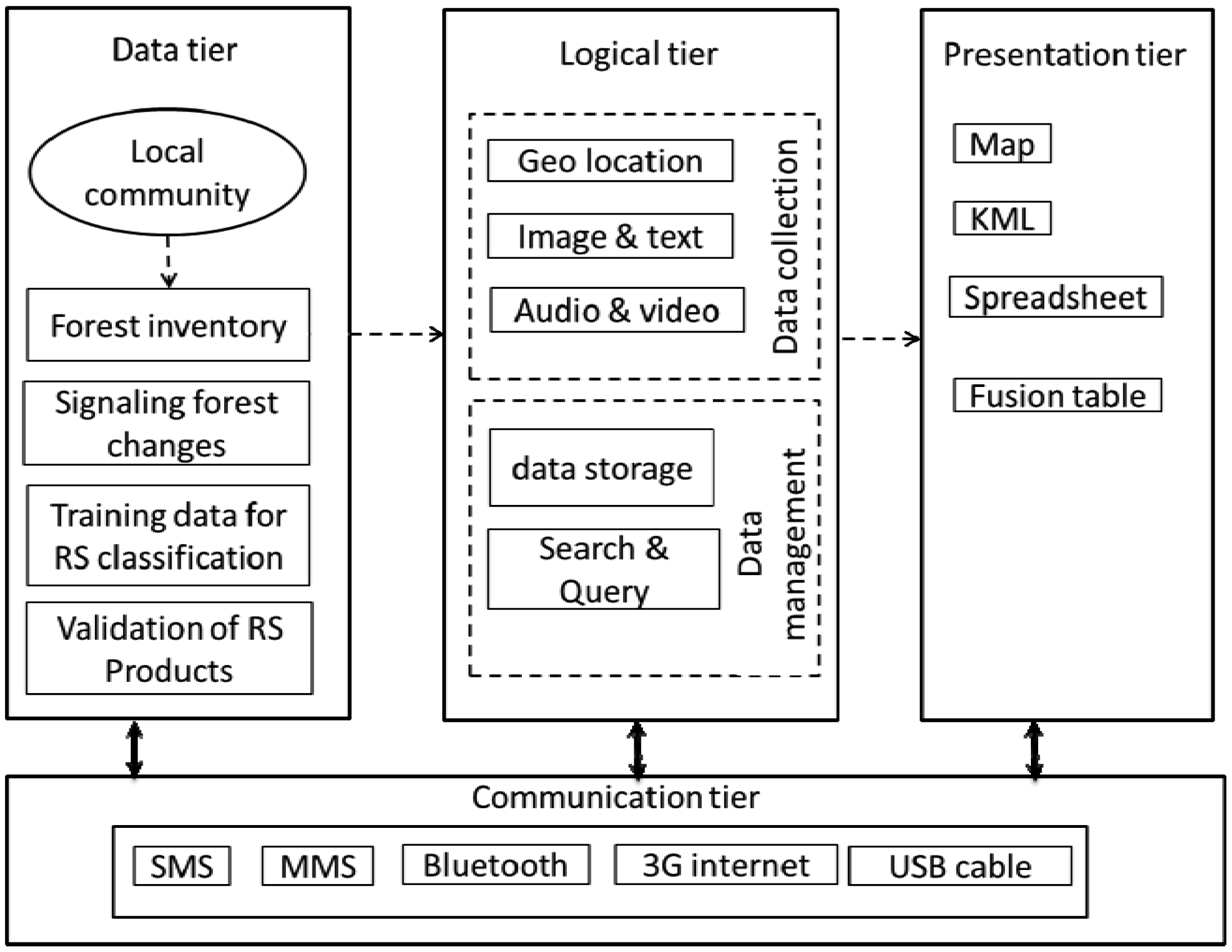
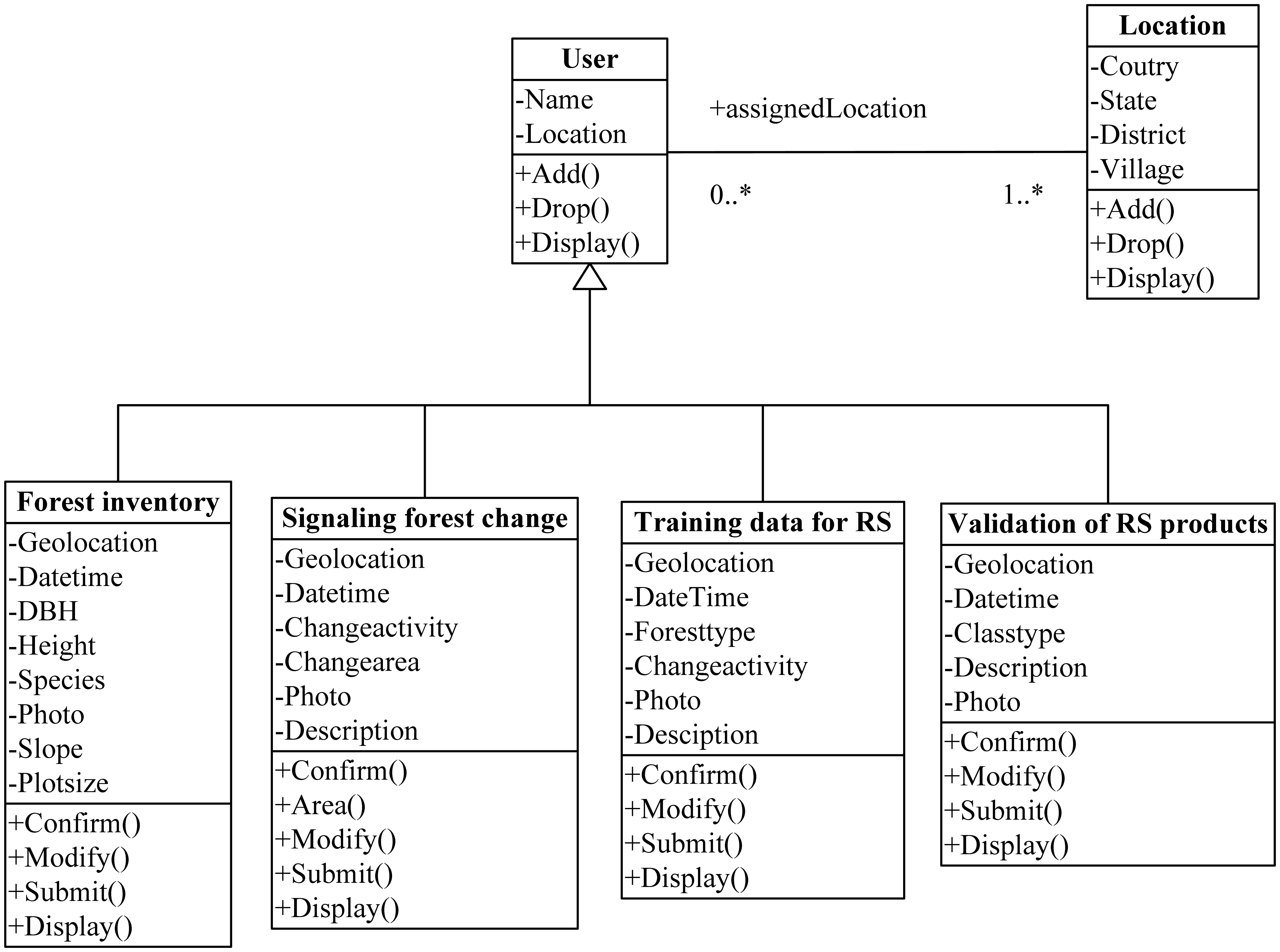
2.2. System Design
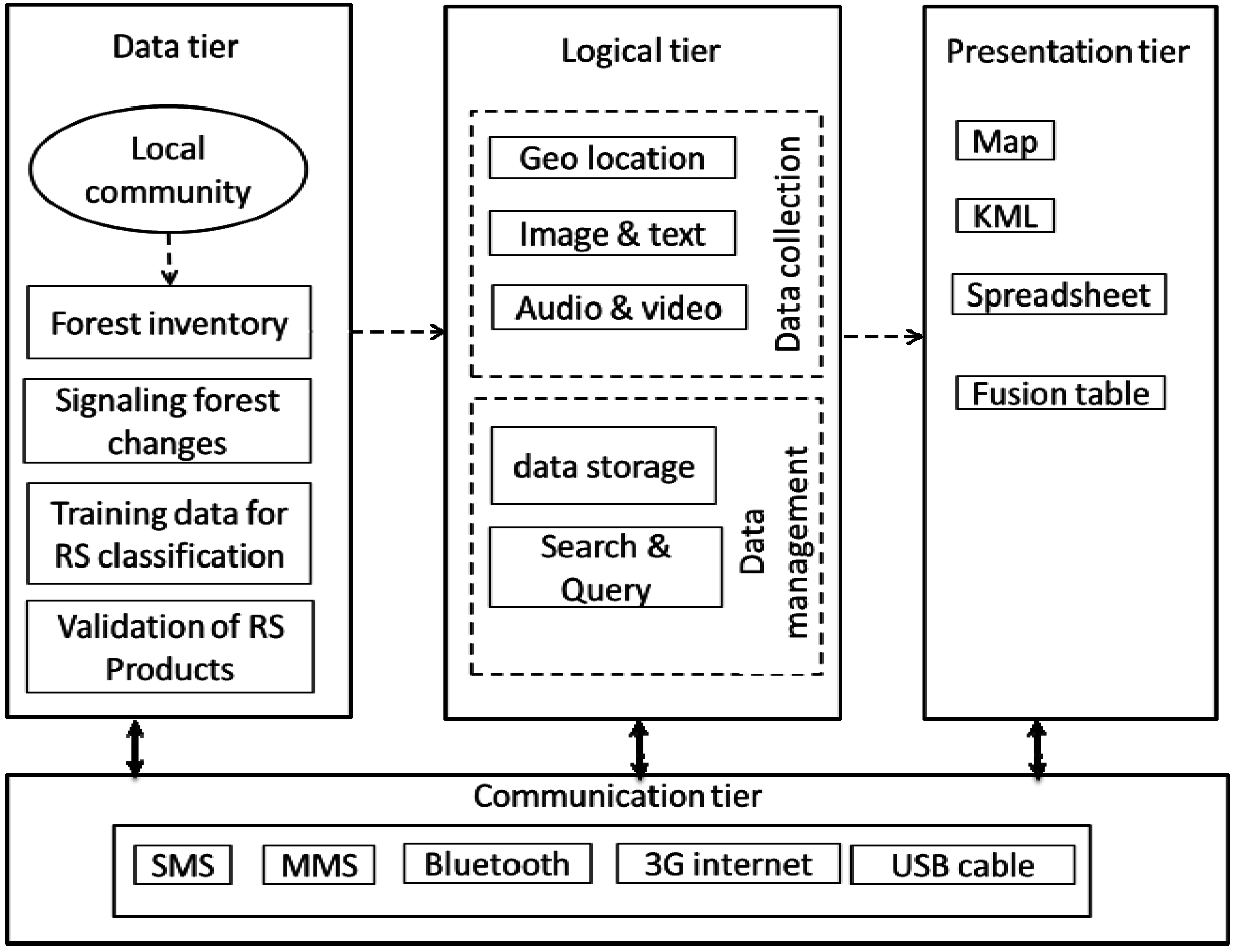
(a) Data Tier
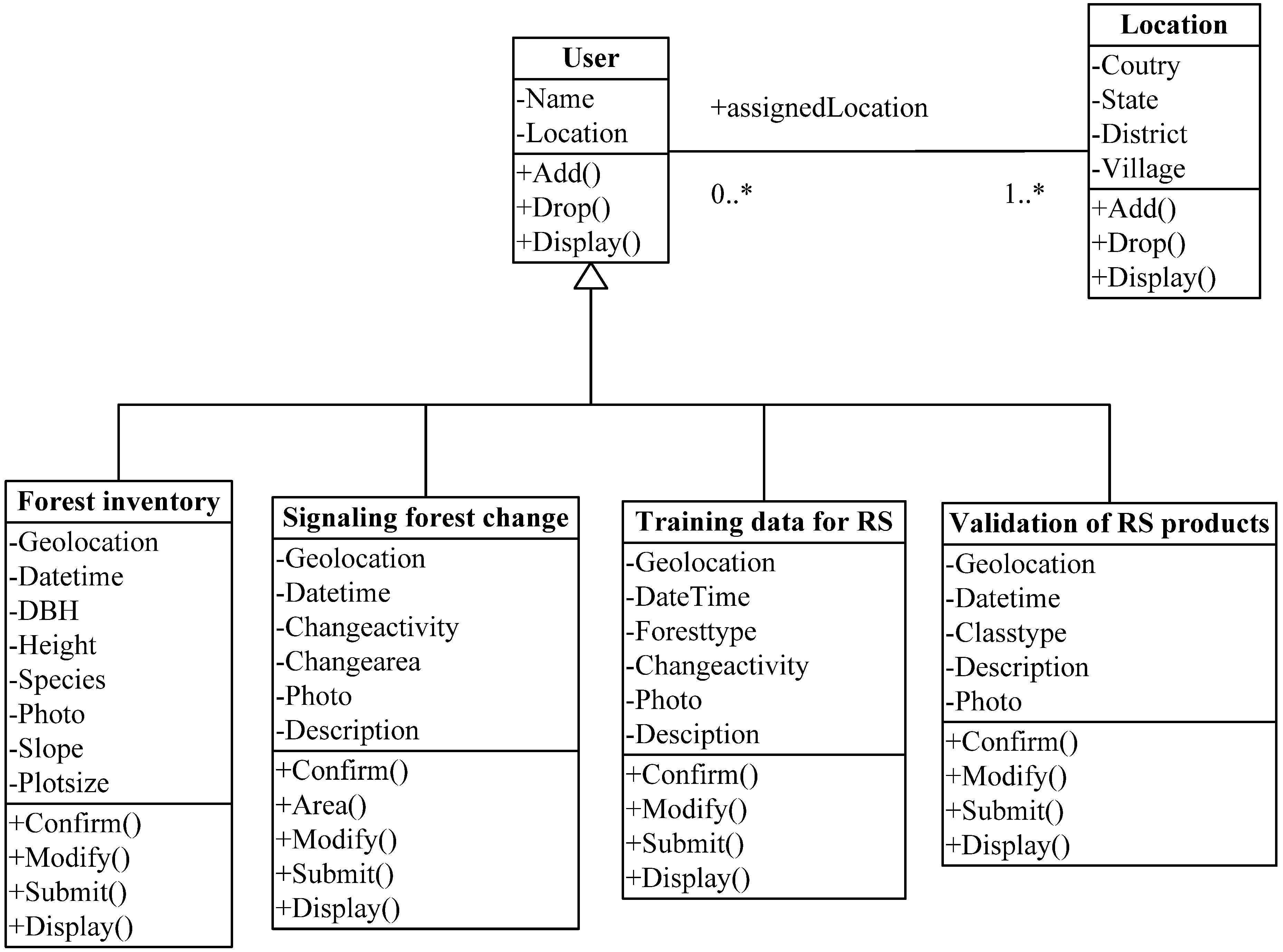
(b) Logical Tier
(c) Communication Tier
(d) Presentation Tier
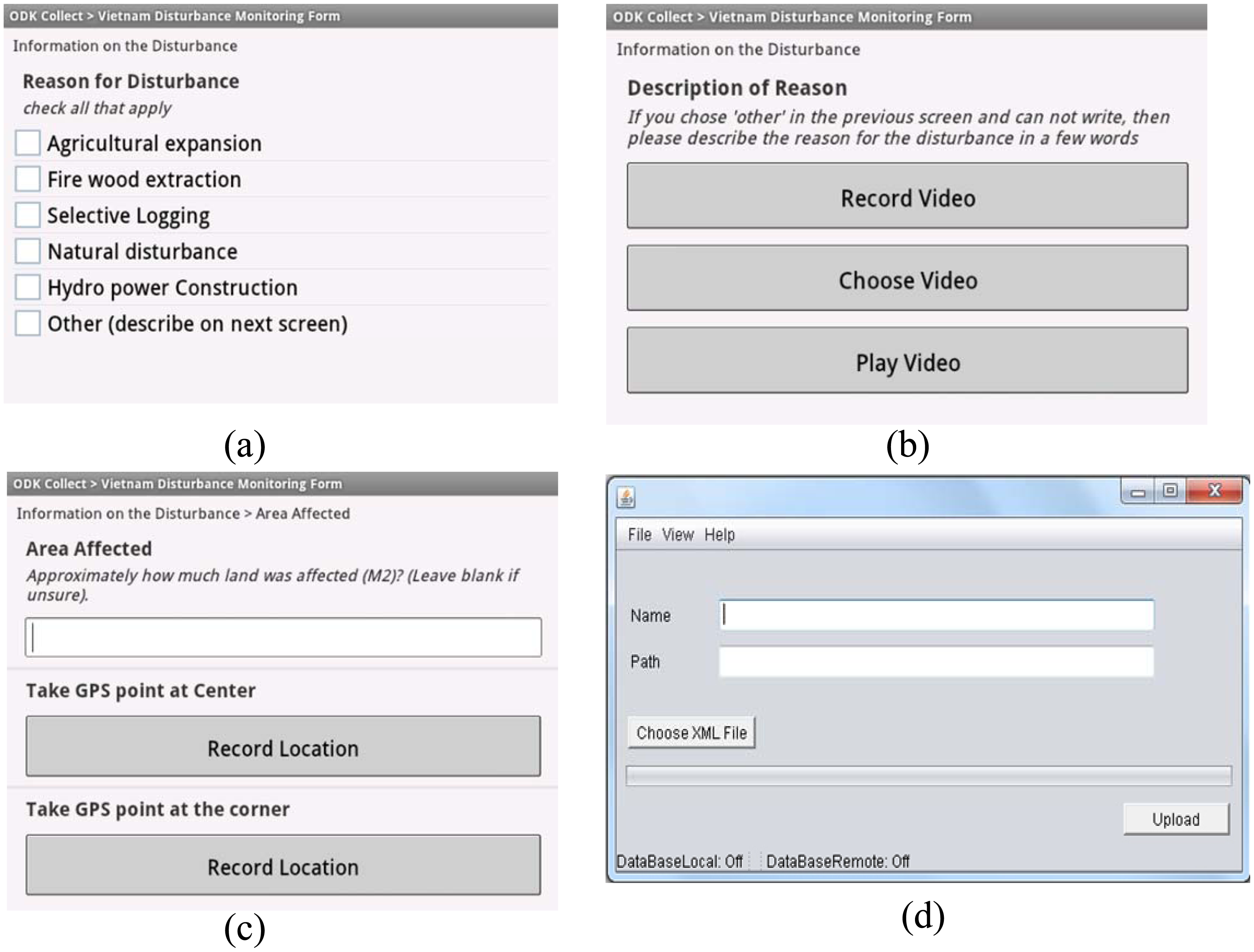
2.3. System Implementation
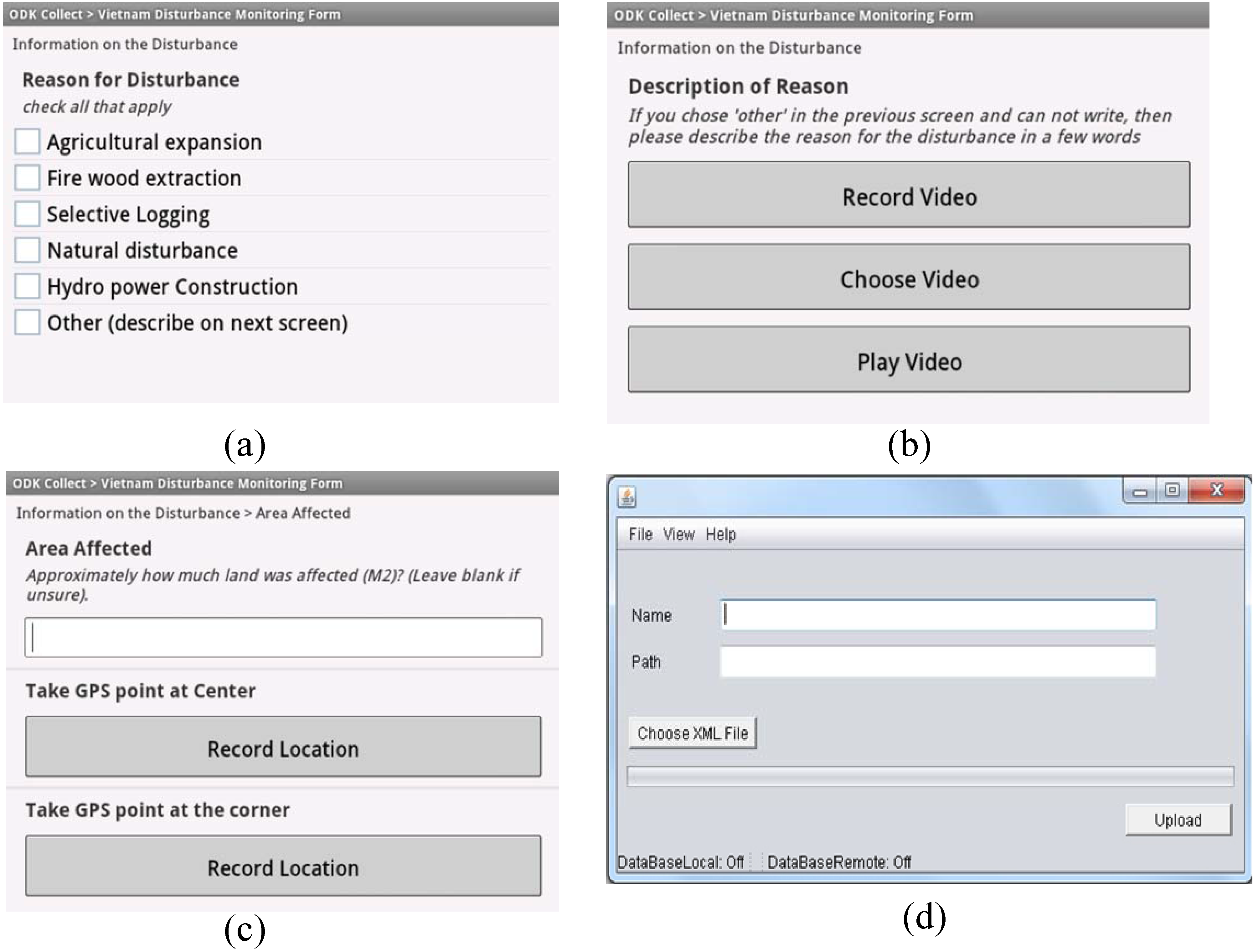
2.4. System Evaluation in the Case Study of Central Vietnam
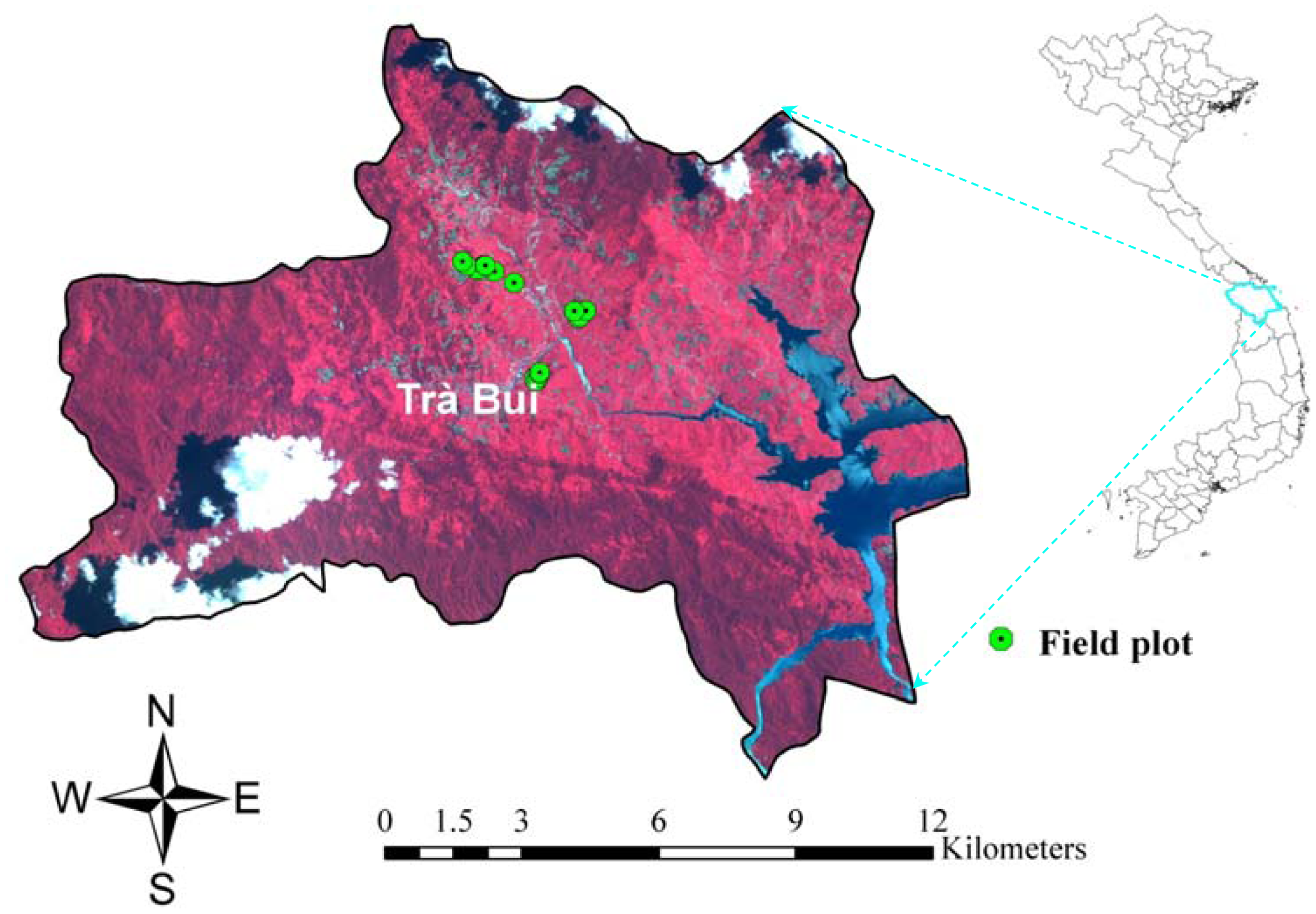
2.4.1. Field Setup
- Initially, the questionnaires were designed based on the indicator required to assess the technical capacity of the community members. The questionnaires were used for the collection of data with the techniques of household surveys, interviewing commune leaders, and a participatory workshop based on Participatory Rural Appraisal (PRA) [35] smethods. More than 80 people were consulted during this process. In the meantime potential organizations were contacted for the collection of necessary documents for the research such as 3G coverage over the study area and the electricity supply time table.
- User friendly training materials were produced in a local language for the developed technology and methods for acquisitions of data. Community training was conducted before implementation of the program. The training was meant to enhance the capacity of the community and to envision approaches and strategies for program implementation.
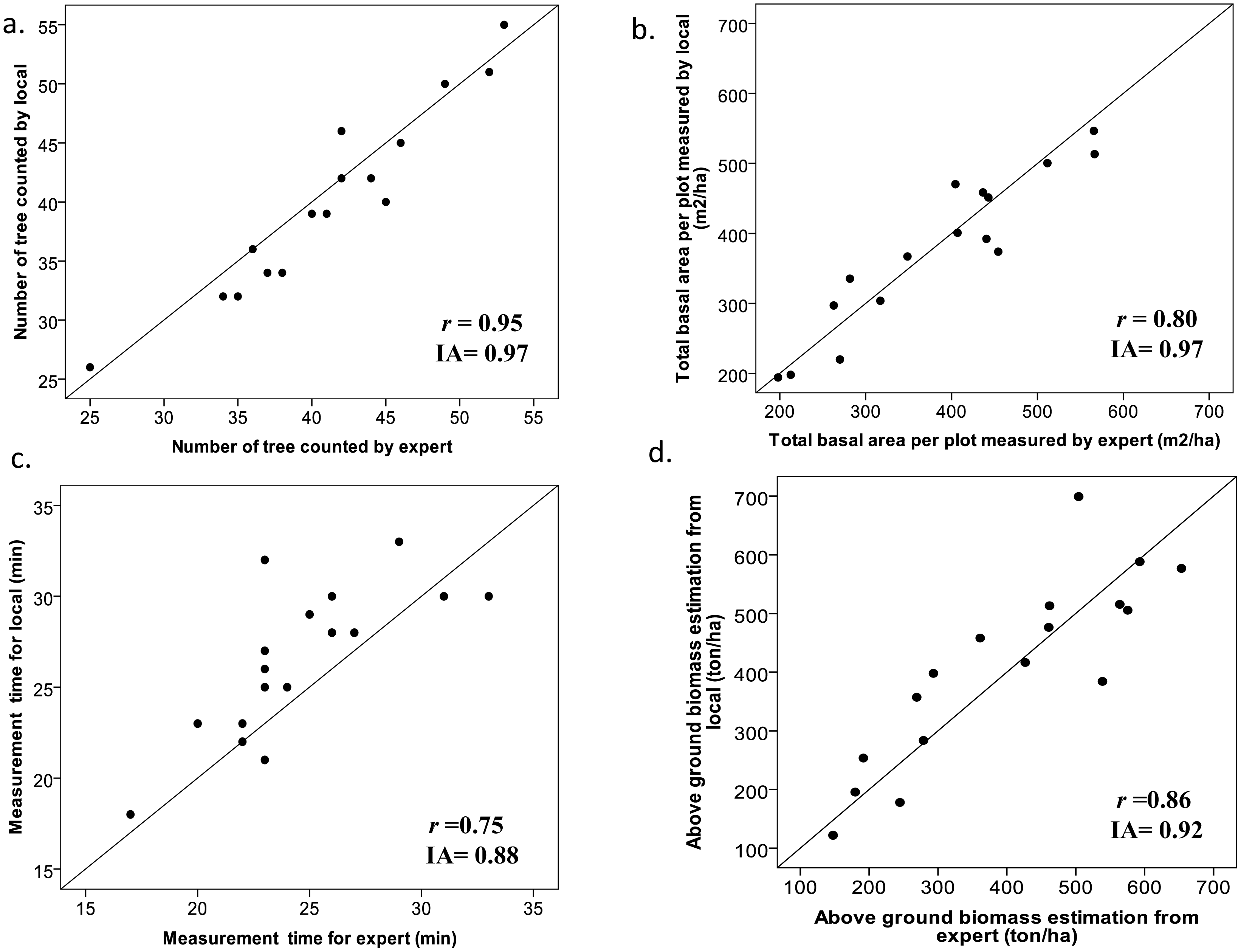
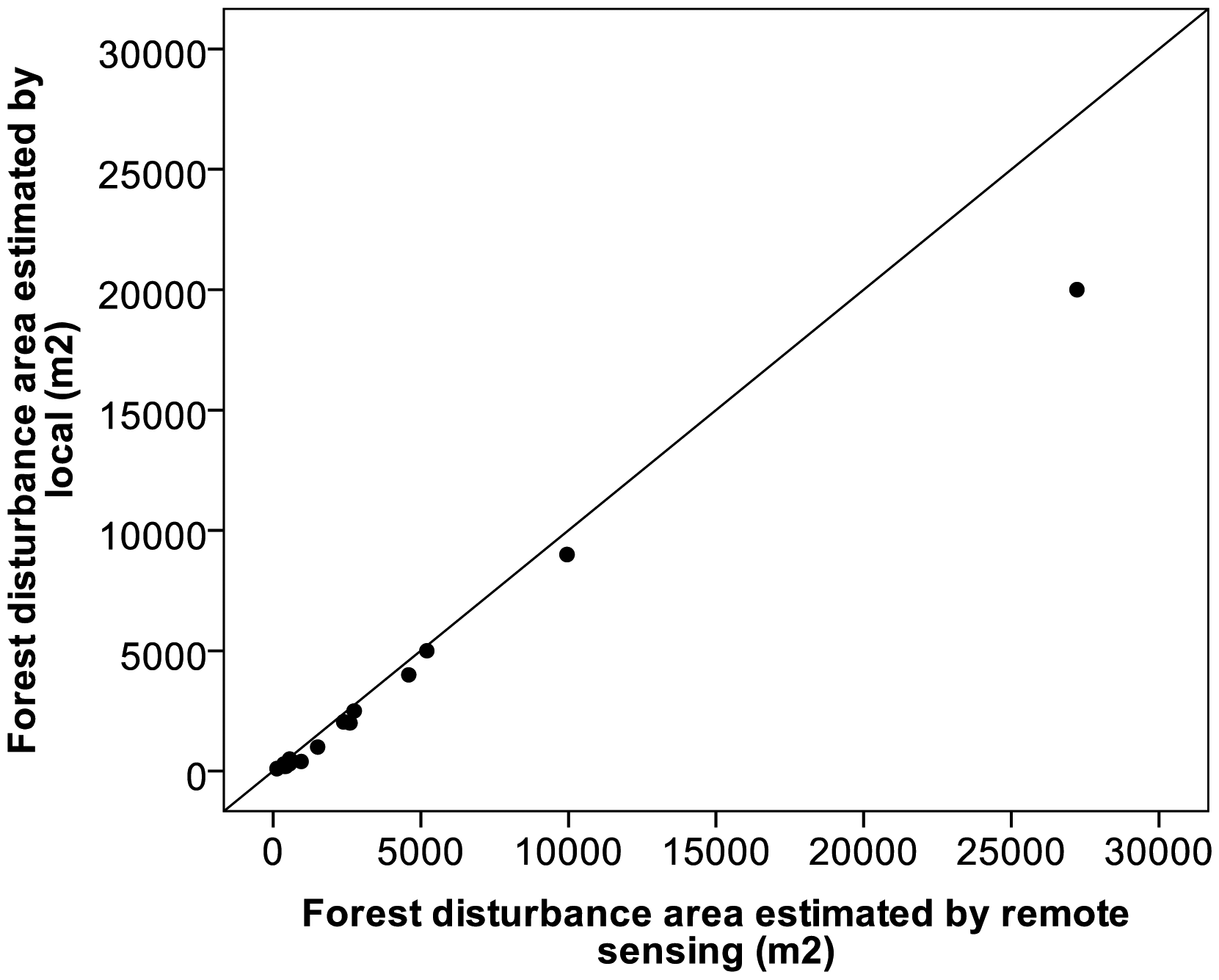
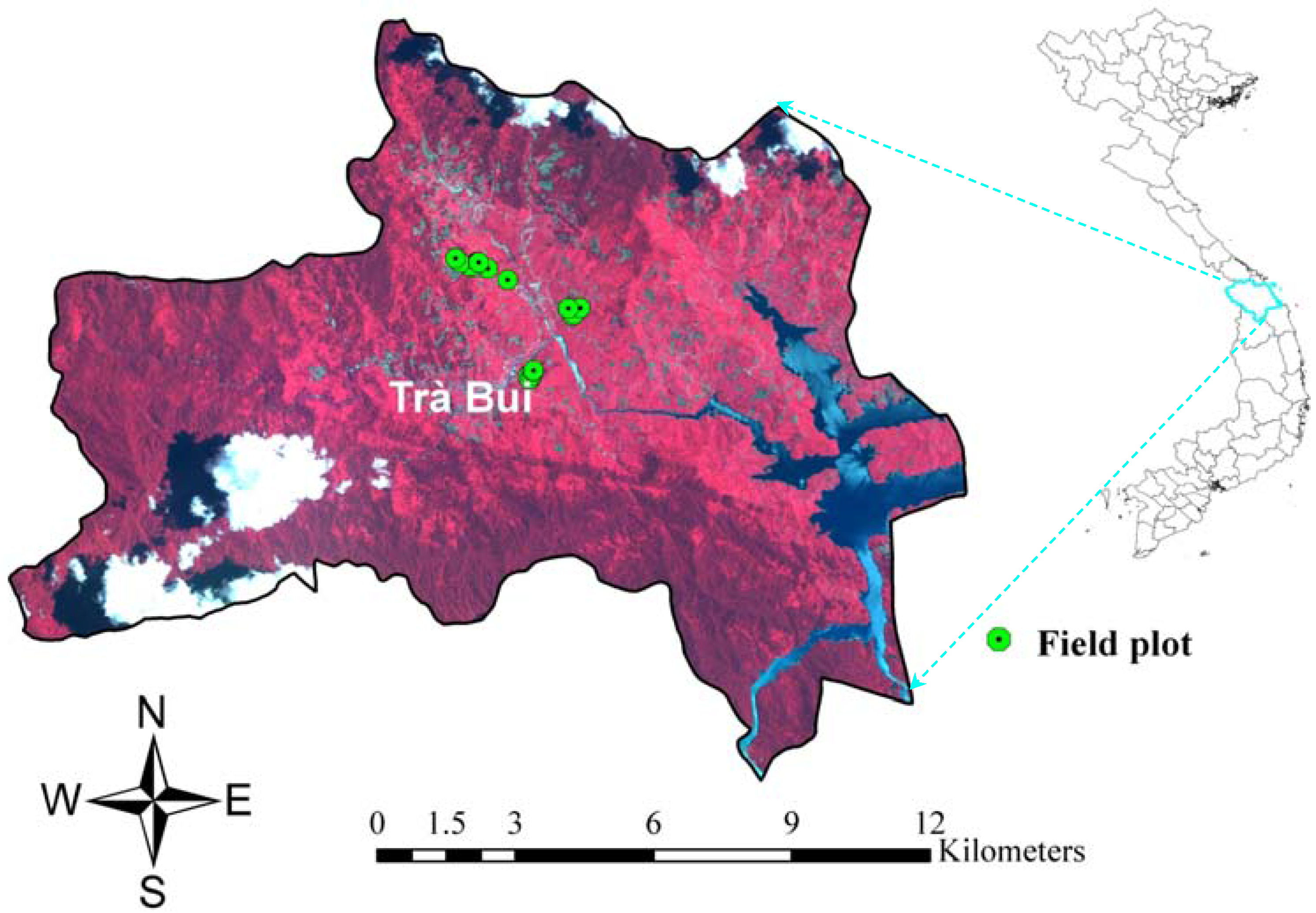
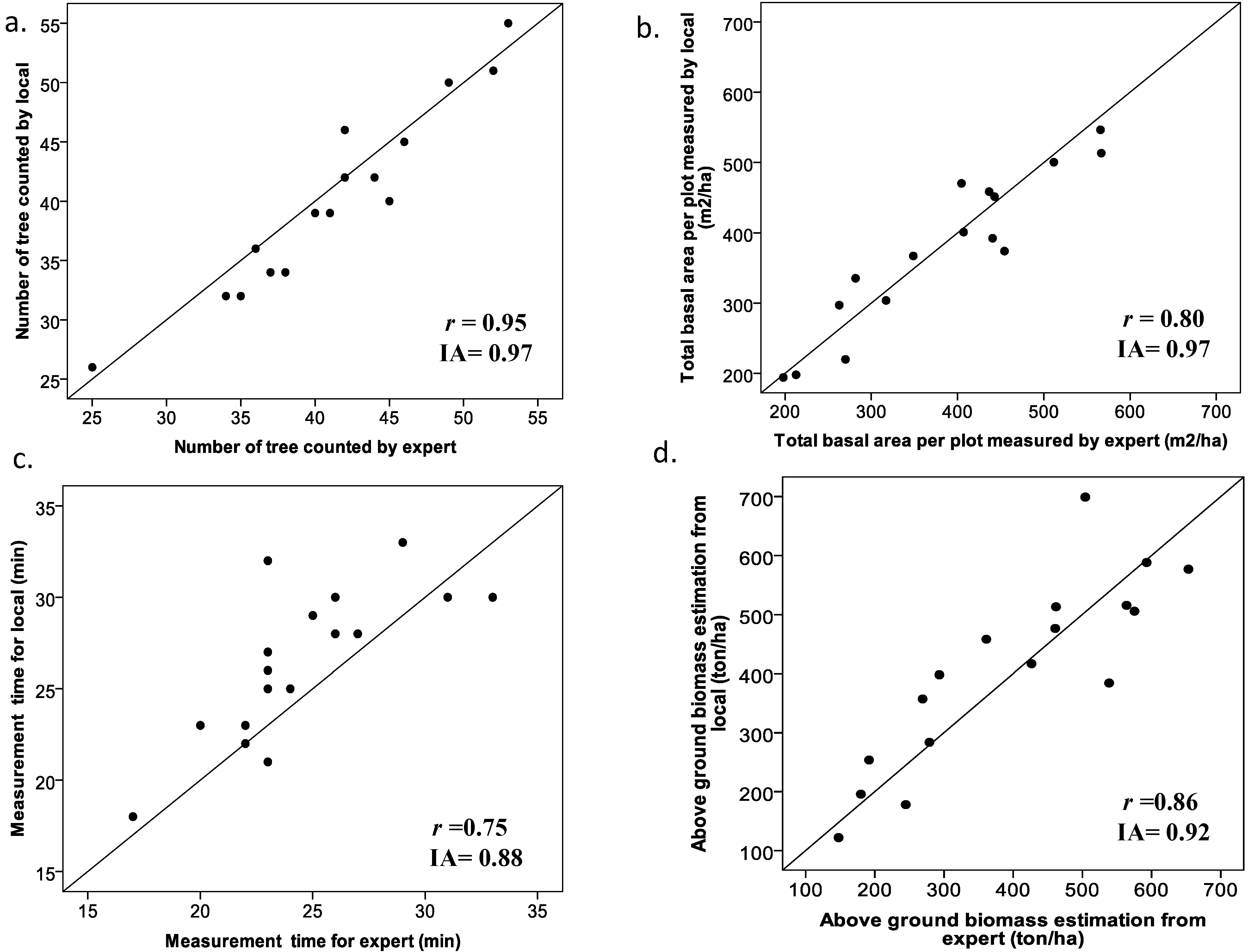
- A purposive sampling design was used to evaluate the intellectual interaction of the system with the local community within a limited time [36]. Specific types of local knowledge such as accessibility and indicated forest change areas were used as sampling information. Circular biomass plot with 10 m radius were designed in a homogeneous forest area. Diameter at Breast Height (DBH) and tree species of all trees inside the plot were measured. Also, time required to enter the data was recorded. Similarly, forest disturbances were recorded around the disturbed area. A Samsung Galaxy tab 7.0 mobile device, a diameter tape and clinometer were used as measuring equipment.
- During the implementation, paper based forms were also used in each location to enter the data. Data entry of each participant was compared to the paper based data entry. Furthermore, structured interviews were conducted with individual users to receive feedback regarding the data entry interface and overall performance of the system. In total 80 people were interviewed during this process.
2.4.2. Comparisons
2.5. Statistical Analyses
3. Results and Discussion
3.1. Technical Capacity of the Local Community
3.2. System Performance
3.3. System Evaluation in Terms of REDD+ Implementation
4. Discussion
4.1. Opportunity from a National REDD+ Perspective
4.2. Advantage of the Mobile-Device System
4.3. Limitations of the Mobile-Device System
5. Conclusions and Future Outlook
Acknowledgments
References
- Achard, F.; DeFries, R.; Herold, M.; Mollicone, D.; Pandey, D.; de Souza, C. Guidance on Monitoring of Gross Changes in Forest Area. In GOFC-GOLD A Sourcebook of Methods and Procedures for Monitoring and Reporting Anthropogenic Greenhouse Gas Emissions and Removals caused by Deforestation, Gains and Losses of Carbon Stocks in Forest Remaining Forests, and Forestation, In GOFC-GOLD Report version COP18-1; GOFC-GOLD Land Cover Project Office: Wageningen University, Wageningen, The Netherlands, 2012. [Google Scholar]
- Gullison, R.E.; Frumhoff, P.C.; Canadell, J.G.; Field, C.B.; Nepstad, D.C.; Hayhoe, K.; Avissar, R.; Curran, L.M.; Friedlingstein, P.; Jones, C.D. Tropical forests and climate policy. Science 2007, 316, 985–986. [Google Scholar]
- Eggleston, S.; Buendia, L.; Miwa, K.; Ngara, T.; Tanabe, K. IPCC Guidelines for National Greenhouse Gas Inventories; Institute for Global Environmental Strategies: Hayama, Japan, 2006. [Google Scholar]
- Skutsch, M. Rural Development through carbon finance: Forestry projects under the clean development mechanism of the kyoto protocol. Clim. Dev. 2010, 2, 75–76. [Google Scholar]
- UNFCCC, 4/CP.15 Methodological Guidance for Activities Relating to Reducing Emissions from Deforestation and Forest Degradation and the Role of Conservation, Sustainable Management of Forests and Enhancement of Forest Carbon Stocks in Developing Countries; United Nations Framework for Climate Change Convention: Copenhagen, Denmark, 2009.
- Herold, M.; Skutsch, M. Monitoring, reporting and verification for national REDD+ programmes: Two proposals. Environ. Res. Lett. 2011. [Google Scholar] [CrossRef]
- Danielsen, F.; Skutsch, M.; Burgess, N.D.; Jensen, P.M.; Andrianandrasana, H.; Karky, B.; Lewis, R.; Lovett, J.C.; Massao, J.; Ngaga, Y.; et al. At the heart of REDD+: A role for local people in monitoring forests? Conserv. Lett. 2011, 4, 158–167. [Google Scholar]
- Gupta, J. Glocal forest and REDD+ governance: Win-Win or lose-lose? Curr. Opin. Environ. Sustain. 2012, 4, 620–627. [Google Scholar]
- Karsenty, A. The architecture of proposed REDD schemes after bali: Facing critical choices. Int. For. Rev. 2008, 10, 443–457. [Google Scholar]
- Herold, M.; Johns, T. Linking requirements with capabilities for deforestation monitoring in the context of the UNFCCC-REDD process. Environ. Res. Lett. 2007. [Google Scholar] [CrossRef]
- Herold, M.; Skutsch, M. Measurement, Reporting and Verification for REDD. In Realising REDD+: National Strategy and Policy Options; CIFOR: Bogor, Indonesia, 2009. [Google Scholar]
- Pratihast, A.K.; Herold, M.; Sy, V.D.; Murdisyarso, D.; Skutsch, M. Linking community-based and national REDD+ monitoring: A review of the potential. Carbon Manag. 2013, in press. [Google Scholar]
- Angelsen, A. How do We Set the Reference Levels for REDD Payments. In Moving Ahead with REDD: Issues, Options and Implications; CIFOR: Bogor, Indonesia, 2008. [Google Scholar]
- Phelps, J.; Webb, E.L.; Agrawal, A. Does REDD+ threaten to recentralize forest governance? Science 2010, 328, 312–313. [Google Scholar]
- Burgess, N.D.; Bahane, B.; Clairs, T.; Danielsen, F.; Dalsgaard, S.; Funder, M.; Hagelberg, N.; Harrison, P.; Haule, C.; Kabalimu, K. Getting ready for REDD+ in tanzania: A case study of progress and challenges. ORYX 2010, 44, 339–351. [Google Scholar]
- Bowler, D.E.; Buyung-Ali, L.M.; Healey, J.R.; Jones, J.P.G.; Knight, T.M.; Pullin, A.S. Does community forest management provide global environmental benefits and improve local welfare? Front. Ecol. Environ. 2011, 10, 29–36. [Google Scholar]
- Skutsch, M.; Solis, S. How Much Carbon does Community Forestry Save? In Community Forest Monitoring for the Carbon Market: Opportunities under REDD; Skutsch, M., Ed.; Earthscan: London, UK, 2011. [Google Scholar]
- Noriko, H.; Martin, H.; De Veronique, S.; Ruth, S.D.F.; Maria, B.; Louis, V.; Arild, A.; Erika, R. An assessment of deforestation and forest degradation drivers in developing countries. Environ. Res. Lett. 2012. [Google Scholar] [CrossRef]
- GOFC-GOLD. A Sourcebook of Methods and Procedures for Monitoring and Reporting Anthropogenic Greenhouse Gas Emissions and Removals caused by Deforestation, Gains and Losses of Carbon Stocks in Forest Remaining Forests, and Forestation, In GOFC-GOLD Report version COP18-1; GOFC-GOLD Land Cover Project Office: Wageningen University, Wageningen, The Netherlands, 2012. [Google Scholar]
- Fry, B. Community forest monitoring in REDD+: The ‘M’ in MRV? Environ. Sci. Policy 2011, 14, 181–187. [Google Scholar]
- Kyoto: Think Global, Act Local (KTGAL). In A Field Guide for Assessing and Monitoring Reduced Forest Degradation and Carbon Sequestration by Local Communities; Verplanke, E.; Zahabu, E. (Eds.) University of Twente: Enschede, The Netherlands, 2009.
- Ruesch, A.; Gibbs, H. New IPCC Tier-1 Global Biomass Carbon Map For the Year 2000; Carbon Dioxide Information Analysis Center: Oak Ridge National Laboratory, Oak Ridge, TN, USA, 2008. [Google Scholar]
- Wakholi, P.; Chen, W.; Klungsøyr, J. Workflow support for mobile data collection. Lect. Notes Bus. Inf. Process. 2011, 81, 299–313. [Google Scholar]
- Bravo, J.; Villarreal, V.; Hervás, R.; Urzaiz, G. Using a communication model to collect measurement data through mobile devices. Sensors 2012, 12, 9253–9272. [Google Scholar]
- Orfali, R.; Harkey, D.; Edwards, J. Client/Server Survival Guide; Wiley India Pvt. Ltd.: New Delhi, India, 2007. [Google Scholar]
- Parr, C.S.; Jones, T.; Songer, N.B. CyberTracker in BioKIDS: Customization of a PDA-Based Scientific Data Collection Application for Inquiry Learning. Proceedings of Keeping Learning Complex: The Proceedings of the Fifth International Conference of Learning Sciences (ICLS), Seattle, WA, USA, 23–26 October 2002; pp. 574–575.
- Bruin, S.D.; Bregt, A.; van de Ven, M. Assessing fitness for use: The expected value of spatial data sets. Int. J. Geogr. Inf. Sci. 2001, 15, 457–471. [Google Scholar]
- Aanensen, D.M.; Huntley, D.M.; Feil, E.J.; Al-Own, F.; Spratt, B.G. EpiCollect: Linking smartphones to web applications for epidemiology, ecology and community data collection. PLoS One 2009, 4, e6968. [Google Scholar]
- Hartung, C.; Anokwa, Y.; Brunette, W.; Lerer, A.; Tseng, C.; Borriello, G. Open Data Kit: Tools to Build Information Services for Developing Regions; ICTD2010: Surrey, UK, 2010. [Google Scholar]
- XForms1.1. Available online: http://www.w3.org/TR/xforms (accessed on 17 December 2012).
- Skutsch, M.; Torres, A.; Mwampamba, T.; Ghilardi, A.; Herold, M. Dealing with locally-driven degradation: A quick start option under REDD+. Carbon Balance Manag. 2011. [Google Scholar] [CrossRef]
- Bose, A.; Shin, K.G. On Mobile Viruses Exploiting Messaging and Bluetooth Services. Proceedings of the Securecomm and Workshops, Baltimore, MD, USA, 28 August 2006–1 September 2006; pp. 1–10.
- Verkasalo, H.; Hämmäinen, H. A handset-based platform for measuring mobile service usage. Info 2007, 9, 80–96. [Google Scholar]
- Gonzalez, H.; Halevy, A.Y.; Jensen, C.S.; Langen, A.; Madhavan, J.; Shapley, R.; Shen, W.; Goldberg-Kidon, J. Google Fusion Tables: Web-Centered Data Management and Collaboration. Proceedings of the International Conference on Management of Data, Indianapolis, IN, USA, 6–11 June 2010; pp. 1061–1066.
- Chambers, R. Participatory rural appraisal (PRA): Analysis of experience. World Develop. 1994, 22, 1253–1268. [Google Scholar]
- Gibbs, H.K. Olson's Major World Ecosytem Complexes Ranked by Carbon in Live Vegetation: An Updated Database Using the GLC2000 Land Cover Product; Carbon Dioxide Information Analysis Center: Oak Ridge National Laboratory, Oak Ridge, TN, USA, 2006. [Google Scholar]
- Brown, S. Estimating Biomass and Biomass Change of Tropical Forests: A Primer; Food and Agriculture Organization of the United Nations: Rome, Italy, 1997. [Google Scholar]
- Planetaction Planet Action Website. Available online: http://www.planet-action.org/web/85-project-detail.php?projectID=7818 (accessed on 17 December 2012).
- Baccini, A.; Laporte, N.; Goetz, S.; Sun, M.; Dong, H. A first map of tropical Africa's above-ground biomass derived from satellite imagery. Environ. Res. Lett. 2008. [Google Scholar] [CrossRef]
- Willmott, C.J. On the validation of models. Phys. Geog. 1981, 2, 184–194. [Google Scholar]
- Skutsch, M.; Solis, S. How Much Carbon does Community Forest Management Save? In Community Forest Monitoring for the Carbon Market; Earthscan: London, UK, 2011. [Google Scholar]
- Avitabile, V.; Herold, M.; Henry, M.; Schmullius, C. Mapping biomass with remote sensing: A comparison of methods for the case study of Uganda. Carbon Balance Manag. 2011. [Google Scholar] [CrossRef]
- DeFries, R.; Achard, F.; Brown, S.; Herold, M.; Murdiyarso, D.; Schlamadinger, B.; De Souza, C. Earth observations for estimating greenhouse gas emissions from deforestation in developing countries. Environ. Sci. Policy 2007, 10, 385–394. [Google Scholar]
- Brashares, J.S.; Sam, M.K. How much is enough? Estimating the minimum sampling required for effective monitoring of African reserves. Biodivers. Conserv. 2005, 14, 2709–2722. [Google Scholar]
- Uychiaoco, A.J.; Arceo, H.O.; Green, S.J.; Cruz, M.T.D.L.; Gaite, P.A.; Alino, P.M. Monitoring and evaluation of reef protected areas by local fishers in the Philippines: Tightening the adaptive management cycle. Biodivers. Conserv. 2005, 14, 2775–2794. [Google Scholar]
- Ahrends, A.; Burgess, N.D.; Milledge, S.A.H.; Bulling, M.T.; Fisher, B.; Smart, J.C.R.; Clarke, G.P.; Mhoro, B.E.; Lewis, S.L. Predictable waves of sequential forest degradation and biodiversity loss spreading from an African city. PNAS 2010, 107, 14556–14561. [Google Scholar]

| Mode of data transfer | Data types | Data volume | Cost | ||
|---|---|---|---|---|---|
| Number | Text | Multimedia | |||
| SMS | Yes | Yes | No | Low | Low |
| MMS | Yes | Yes | Yes | Low | Medium |
| Bluetooth | Yes | Yes | Yes | Medium | Free |
| 3G internet | Yes | Yes | Yes | High | Medium |
| USB cable | Yes | Yes | Yes | High | Free |
| Bands | Spectral ranges | Ground resolution |
|---|---|---|
| Green | 0.50–0.59 μm | 2.5 m |
| Red | 0.61–0.68 μm | 2.5 m |
| Near infrared | 0.78–0.89 μm | 2.5 m |
| User type | Educational Level | Time for training (Hours) | Accuracy of data entries (%) | Cost of data acquisition ($ per ha) | ||
|---|---|---|---|---|---|---|
| Text/Number (Manual entry) | Capturing Multimedia | Text/Number (Selection option) | ||||
| Local community | Pre-secondary | 4 | 72 | 89 | 100 | 1.20 |
| Local expert | Secondary-University | 4 | 82 | 95 | 100 | 3.20 |
| National expert | University | 4 | 93 | 100 | 100 | 6.40 |
| Forest disturbance signal captured by SPOT | ||||
|---|---|---|---|---|
| Forest disturbance captured by local communities | Date | Detected on same year | Delayed detected (up to 2 year) | Not detected |
| 2007 | 16% | 48% | 36% | |
| 2008 | 33% | 53% | 14% | |
| 2009 | 33% | 47% | 20% | |
| 2010 | 65% | 20% | 15% | |
© 2013 by the authors; licensee MDPI, Basel, Switzerland. This article is an open access article distributed under the terms and conditions of the Creative Commons Attribution license (http://creativecommons.org/licenses/by/3.0/).
Share and Cite
Pratihast, A.K.; Herold, M.; Avitabile, V.; De Bruin, S.; Bartholomeus, H.; Jr., C.M.S.; Ribbe, L. Mobile Devices for Community-Based REDD+ Monitoring: A Case Study for Central Vietnam. Sensors 2013, 13, 21-38. https://doi.org/10.3390/s130100021
Pratihast AK, Herold M, Avitabile V, De Bruin S, Bartholomeus H, Jr. CMS, Ribbe L. Mobile Devices for Community-Based REDD+ Monitoring: A Case Study for Central Vietnam. Sensors. 2013; 13(1):21-38. https://doi.org/10.3390/s130100021
Chicago/Turabian StylePratihast, Arun Kumar, Martin Herold, Valerio Avitabile, Sytze De Bruin, Harm Bartholomeus, Carlos M. Souza Jr., and Lars Ribbe. 2013. "Mobile Devices for Community-Based REDD+ Monitoring: A Case Study for Central Vietnam" Sensors 13, no. 1: 21-38. https://doi.org/10.3390/s130100021
APA StylePratihast, A. K., Herold, M., Avitabile, V., De Bruin, S., Bartholomeus, H., Jr., C. M. S., & Ribbe, L. (2013). Mobile Devices for Community-Based REDD+ Monitoring: A Case Study for Central Vietnam. Sensors, 13(1), 21-38. https://doi.org/10.3390/s130100021