<?xml version="1.0" encoding="UTF-8"?>
<!DOCTYPE article PUBLIC "-//NLM//DTD Journal Publishing DTD v2.3 20070202//EN" "journalpublishing.dtd">
<article xmlns:xlink="http://www.w3.org/1999/xlink" xml:lang="en" article-type="research-article">
<front>
<journal-meta>
<journal-id journal-id-type="nlm-ta">Sensors</journal-id>
<journal-title>Sensors</journal-title>
<issn pub-type="epub">1424-8220</issn>
<publisher>
<publisher-name>Molecular Diversity Preservation International (MDPI)</publisher-name></publisher></journal-meta>
<article-meta>
<article-id pub-id-type="doi">10.3390/s121013058</article-id>
<article-id pub-id-type="publisher-id">sensors-12-13058</article-id>
<article-categories>
<subj-group>
<subject>Article</subject></subj-group></article-categories>
<title-group>
<article-title>Yeast Sensors for Novel Drugs: Chloroquine and Others Revealed</article-title></title-group>
<contrib-group>
<contrib contrib-type="author">
<name><surname>Swart</surname><given-names>Chantel</given-names></name><xref ref-type="aff" rid="af1-sensors-12-13058"><sup>1</sup></xref></contrib>
<contrib contrib-type="author">
<name><surname>Olivier</surname><given-names>Andries</given-names></name><xref ref-type="aff" rid="af1-sensors-12-13058"><sup>1</sup></xref></contrib>
<contrib contrib-type="author">
<name><surname>Dithebe</surname><given-names>Khumisho</given-names></name><xref ref-type="aff" rid="af1-sensors-12-13058"><sup>1</sup></xref></contrib>
<contrib contrib-type="author">
<name><surname>Pohl</surname><given-names>Carolina</given-names></name><xref ref-type="aff" rid="af1-sensors-12-13058"><sup>1</sup></xref></contrib>
<contrib contrib-type="author">
<name><surname>van Wyk</surname><given-names>Pieter</given-names></name><xref ref-type="aff" rid="af2-sensors-12-13058"><sup>2</sup></xref></contrib>
<contrib contrib-type="author">
<name><surname>Swart</surname><given-names>Hendrik</given-names></name><xref ref-type="aff" rid="af3-sensors-12-13058"><sup>3</sup></xref></contrib>
<contrib contrib-type="author">
<name><surname>Coetsee</surname><given-names>Elizabeth</given-names></name><xref ref-type="aff" rid="af3-sensors-12-13058"><sup>3</sup></xref></contrib>
<contrib contrib-type="author">
<name><surname>Kock</surname><given-names>Lodewyk</given-names></name><xref ref-type="aff" rid="af1-sensors-12-13058"><sup>1</sup></xref><xref ref-type="corresp" rid="c1-sensors-12-13058"><sup>*</sup></xref></contrib></contrib-group>
<aff id="af1-sensors-12-13058">
<label>1</label> UNESCO MIRCEN: Microbial, Biochemical and Food Biotechnology, University of the Free State, P.O. Box 339, Bloemfontein 9300, South Africa; E-Mails: <email>swartcw@ufs.ac.za</email> (C.S.); <email>olivieraps@ufs.ac.za</email> (A.O.); <email>dithebek@ufs.ac.za</email> (K.D.); <email>pohlch@ufs.ac.za</email> (C.P.)</aff>
<aff id="af2-sensors-12-13058">
<label>2</label> Centre for Microscopy, University of the Free State, P.O. Box 339, Bloemfontein 9300, South Africa; E-Mail: <email>vanwykpw@ufs.ac.za</email></aff>
<aff id="af3-sensors-12-13058">
<label>3</label> Department of Physics, University of the Free State, P.O. Box 339, Bloemfontein 9300, South Africa; E-Mails: <email>swarthc@ufs.ac.za</email> (H.S.); <email>coetseee@ufs.ac.za</email> (E.C.)</aff>
<author-notes>
<corresp id="c1-sensors-12-13058">
<label>*</label> Author to whom correspondence should be addressed; E-Mail: <email>kockjl@ufs.ac.za</email>; Tel.: +27-51-401-2249; Fax: +27-51-401-9376.</corresp></author-notes>
<pub-date pub-type="collection">
<year>2012</year></pub-date>
<pub-date pub-type="epub">
<day>26</day>
<month>09</month>
<year>2012</year></pub-date>
<volume>12</volume>
<issue>10</issue>
<fpage>13058</fpage>
<lpage>13074</lpage>
<history>
<date date-type="received">
<day>17</day>
<month>07</month>
<year>2012</year></date>
<date date-type="rev-recd">
<day>05</day>
<month>09</month>
<year>2012</year></date>
<date date-type="accepted">
<day>05</day>
<month>09</month>
<year>2012</year></date></history>
<permissions>
<copyright-statement>© 2012 by the authors; licensee MDPI, Basel, Switzerland.</copyright-statement>
<copyright-year>2012</copyright-year>
<license>
<p>This article is an open access article distributed under the terms and conditions of the Creative Commons Attribution license (http://creativecommons.org/licenses/by/3.0/).</p></license></permissions>
<abstract>
<p>In this study the mitochondrion is regarded as a target to reveal compounds that may be used to combat various diseases. Consequently, the sexual structures of yeasts (with high mitochondrial activity) were identified as sensors to screen for various anti-mitochondrial drugs that may be toxic to humans and that are directed, amongst others, against fungal diseases and cancer. Strikingly, these sensors indicated that chloroquine is a potent pro-mitochondrial drug which stimulated yeast sexual reproduction. In addition, these sensors also showed that some Non-Steroidal Anti-Inflammatory drugs (NSAIDs), anti-malarial drugs, antifungal and anticancer drugs are anti-mitochondrial. These yeast sensor bio-assays may fast track studies aimed at discovering new drugs as well as their mechanisms and should now be further evaluated for selectivity towards anti-/ pro-mitochondrials, fertility drugs and contraceptives, using <italic>in vitro</italic>, <italic>in vivo</italic>, <italic>in silico</italic> and omics research.</p></abstract>
<kwd-group>
<kwd>anticancer</kwd>
<kwd>anti-malarial</kwd>
<kwd>anti-mitochondrial</kwd>
<kwd>chloroquine</kwd>
<kwd><italic>Lipomyces</italic></kwd>
<kwd>NanoSAM</kwd>
<kwd>preservation</kwd>
<kwd>pro-mitochondrial</kwd>
<kwd>sensors</kwd>
<kwd>yeasts</kwd></kwd-group></article-meta></front>
<body>
<sec sec-type="intro">
<label>1.</label>
<title>Introduction</title>
<p>Novel targets and drugs are constantly being sought to effectively combat fungal infections and diseases such as cancer. In this study, we regard the mitochondrion as such a target. Yeast bio-assays, with the sexual structures (asci and ascospores) serving as sensors, have been developed to select new anti-mitochondrial antifungal and anticancer drugs as well as drugs that may adversely affect human mitochondria and consequently health [<xref ref-type="bibr" rid="b1-sensors-12-13058">1</xref>–<xref ref-type="bibr" rid="b4-sensors-12-13058">4</xref>]. These bio-assays are derived from the so-called Anti-mitochondrial Antifungal Hypothesis. This hypothesis was formulated by Kock and co-workers in 2007 [<xref ref-type="bibr" rid="b1-sensors-12-13058">1</xref>] and established a link between: (i) yeast sexual reproduction, (ii) the production of 3-hydroxy (3-OH) oxylipins (via mitochondrial β-oxidation), (iii) mitochondrial activity and (iv) sensitivity towards anti-mitochondrial drugs. For a synopsis of the development of this field of research, which includes yeast sensor smart mechanics linked to Auger nanotechnology, the reader is referred to the video lectures presented by the authors in <italic>e</italic>-conference format [<xref ref-type="bibr" rid="b5-sensors-12-13058">5</xref>,<xref ref-type="bibr" rid="b6-sensors-12-13058">6</xref>].</p>
<p>According to the Anti-mitochondrial Antifungal Hypothesis, yeasts are divided into two groups: (i) strictly aerobically respiring fungi and (ii) fungi that can obtain energy through aerobic respiration as well as fermentation. As the concentration of anti-mitochondrial drugs added to the yeasts increases, a decrease in the mitochondrial activity and 3-OH oxylipin production in both groups of organisms are expected. The aerobically respiring yeasts should be more susceptible to high anti-mitochondrial drug concentrations than the group that can make use of fermentation as well. The hypothesis also indicates that the sexual stages of both groups of yeasts should be more sensitive towards anti-mitochondrial drugs than the asexual stages. Furthermore, decreased levels of 3-OH oxylipins as well as mitochondrial activity are suggested in asexual cells when compared to sexual cells in both groups.</p>
<p>This hypothesis was visualized by the establishment of yeast bio-assays using the sensing yeasts <italic>Eremothecium ashbyi</italic> and <italic>Nadsonia fulvescens</italic>, mimicking the effects expected from the hypothesis [<xref ref-type="bibr" rid="b4-sensors-12-13058">4</xref>]. These yeasts can both ferment and aerobically respire and should therefore be less sensitive to anti-mitochondrial drugs compared to yeasts that can only aerobically respire. Consequently, these bio-assays may not be sensitive enough to detect anti-mitochondrial compounds with low activity, especially since only relatively high drug concentrations could be detected by these bio-assays [<xref ref-type="bibr" rid="b4-sensors-12-13058">4</xref>,<xref ref-type="bibr" rid="b5-sensors-12-13058">5</xref>].</p>
<p>Therefore the main aims of this study were: (i) to develop a more sensitive anti-mitochondrial yeast bio-assay by using a freshly isolated <italic>Lipomyces</italic> strain that can only respire aerobically; (ii) to screen various compounds as well as preservation by sub-culturing and oxygen limitation with this new bio-assay, (iii) to compare screening results obtained from the <italic>Lipomyces</italic> bio-assay with that of <italic>Eremothecium</italic> and <italic>Nadsonia</italic> and (iv) to also include the well-studied non-fermenting, aerobically respiring yeast <italic>Dipodascopsis</italic> [<xref ref-type="bibr" rid="b1-sensors-12-13058">1</xref>,<xref ref-type="bibr" rid="b5-sensors-12-13058">5</xref>] as a bio-assay to sense the mitochondrial activity of the anti-malarial drug, chloroquine.</p>
<p>This method of drug screening is a holistic approach that is advantageous compared to specialised <italic>in vitro</italic> screening methods since it takes the cell as a whole (from an intra-omics perspective) into consideration. Yeast mitochondria are similar to mammalian mitochondria and can therefore act as a mirror for the effect of drugs on mammalian mitochondria (especially mitochondrial liabilities posed by new drugs that are occasionally not detected in clinical trials [<xref ref-type="bibr" rid="b4-sensors-12-13058">4</xref>]).</p></sec>
<sec>
<label>2.</label>
<title>Experimental Section</title>
<p>Experiments were performed at least in triplicate.</p>
<sec>
<label>2.1.</label>
<title>Lipomyces: Strain Used, Cultivation and Preservation</title>
<p><italic>Lipomyces yamadae</italic> (UOFS Y-2824), preserved in the UNESCO MIRCEN culture collection at the University of the Free State, South Africa, was used in this study. Directly after isolation and again after one year of preservation through continuous sub-culturing (every three months) at 25 °C on yeast malt (YM) agar slants [<xref ref-type="bibr" rid="b7-sensors-12-13058">7</xref>], <italic>L. yamadae</italic> was streaked out on YM agar plates and incubated at 25 °C to obtain growth for bio-assay experiments.</p></sec>
<sec>
<label>2.2.</label>
<title>Lipomyces: Bio-Assay Preparation</title>
<p><italic>Lipomyces yamadae</italic> was suspended in sterile distilled water (dH<sub>2</sub>O), whereafter 200 μL of the suspension was spread out on YM agar plates. Central wells were made in the plates with sterile Pasteur pipettes. To these wells 46 μL of either 4% or 8% (m/v) acetylsalicylic acid (ASA; Sigma-Aldrich, Steinheim, Germany) dissolved in 96% ethanol (EtOH; Merck, Darmstadt, Germany) were added. An EtOH control was included [<xref ref-type="bibr" rid="b2-sensors-12-13058">2</xref>]. All plates were incubated for 11 days at 25 °C. The same technique was used to prepare the <italic>L. yamadae</italic> bio-assay after one year of preservation.</p></sec>
<sec>
<label>2.3.</label>
<title>Lipomyces: Confocal Laser Scanning Microscopy (CLSM)</title>
<p>To evaluate whether the sensors of the yeast <italic>L. yamadae</italic> are associated with increased mitochondrial transmembrane potential (Δψ<sub>m</sub>), cells of this organism (grown for 11 days at 25 °C on YM agar plates), were washed with Phosphate Buffered Saline (PBS; Oxoid, Hampshire, England) and treated with 31 μL of the mitochondrial stain Rhodamine 123 (Rh123; Molecular Probes, Invitrogen Detection Technologies, Eugene, OR, USA). These were incubated for 1 h in the dark at 21 °C, washed with PBS and subsequently fixed in Dabco (Sigma-Aldrich) on microscope slides. The cells were then viewed with CLSM (Nikon TE 2000, Tokyo, Japan) to visualize Δψ<sub>m</sub> [<xref ref-type="bibr" rid="b8-sensors-12-13058">8</xref>]. Green fluorescence indicates areas of increased Δψ<sub>m</sub> and therefore mitochondrial activity.</p></sec>
<sec>
<label>2.4.</label>
<title>Lipomyces: Effect of Preservation and Chloroquine on Sensor Development</title>
<p>The protocol included the preparation of bio-assay plates treated with EtOH alone (Control) and chloroquine dissolved in EtOH respectively, all prepared according to Section 2.2. Here ASA was replaced with 8% (m/v) Chloroquine diphosphate (Sigma-Aldrich) in EtOH. After incubation, samples were drawn from two areas of each plate. Each area was sampled at five different points spaced equally across the specific area tested on the plates. Each experiment was performed on separate bio-assay plates in triplicate. A total of 10 fields (40× magnification) was analyzed per sample point and the percentage sensors (<italic>i.e</italic>., asci with ascospores) relative to the total number of asexual cells plus sensors of <italic>L. yamadae</italic> was calculated using a Light Microscope (Axioplan, Zeiss, Göttingen, Germany) coupled to a Colourview Soft Digital Imaging System (Münster, Germany). Therefore, a total of 1 (area) × 5 (sample points in each area) × 10 (fields per sample point) × 3 (triplicate) = 150 fields were analysed per area to obtain a representative relative sensor count. This experiment was repeated after one year of preservation to determine the effects of storage and sub-culturing on sensor development.</p></sec>
<sec>
<label>2.5.</label>
<title>Lipomyces: Scanning Electron Microscopy (SEM)</title>
<p>Scanning Electron Microscopy was performed according to the method of Swart and co-workers [<xref ref-type="bibr" rid="b9-sensors-12-13058">9</xref>]. Cells from different zones of the plate were chemically fixed with 3% (v/v) glutardialdehyde (Merck) in a sodium phosphate buffer for 3 h. The suspension was rinsed with buffer followed by fixation with 1% (m/v) osmium tetroxide (Merck), also in sodium phosphate buffer for 90 min. The suspension was again washed with buffer and dehydrated in a graded series of EtOH: 30%, 50%, 70% and 90% for 30 min each, with centrifugation between each step, and 2 × 100% EtOH for 90 min each, with centrifugation between each step. The dehydrated yeast cells were submitted to critical point drying, mounted on stubs and coated with a layer of gold—making it electrically conductive. These preparations were viewed with SEM (Shimadzu SSX-550 Superscan, Tokyo, Japan).</p></sec>
<sec>
<label>2.6.</label>
<title>Lipomyces: Nano Scanning Auger Microscopy (NanoSAM) and Argon (Ar<sup>+</sup>) Etching</title>
<p>This was performed according to the method of Swart and co-workers [<xref ref-type="bibr" rid="b9-sensors-12-13058">9</xref>]. Cells from the dark brown zone of the <italic>Lipomyces</italic> bio-assay were first prepared for SEM observation according to the protocol in Section 2.5 and then subjected to NanoSAM Ar<sup>+</sup> etching. Here, a PHI 700 Nanoprobe (Chigasaki, Japan) with SAM and SEM facilities was used. The field emission electron gun employed for SEM and SAM analyses was set at 2.45 A filament current, 4 kV extractor voltage and 238.1 μA extractor current, thereby obtaining a 20 kV, 10 nA electron beam for the Auger analyses and SEM imaging. The diameter of the electron beam was 12 nm. The electron gun unit's upper pressure was 8.8E-10 Torr and that in the main chamber was 2.29E-10 Torr. All measurements were performed using aperture A. An 8 μm Field of View (FOV) was used for SEM and the number of frames used was 4. The Auger point analyses were acquired by using 10 cycles per survey, 1 eV per step and 20 ms per step. The Nanoprobe was equipped with an Ar<sup>+</sup> ion sputtering gun that operated at a beam voltage of 2 kV, an ion beam current of 2 μA and a raster area of 1 × 1 mm. This gave a sputter rate of about 27 nm/min. The ion emission current operated at 15 mA. Finally, an alternating sputter mode with 1 min sputter intervals and 2 min sputter time was used with no rotation.</p></sec>
<sec>
<label>2.7.</label>
<title>Lipomyces: Screening of Compounds (<xref ref-type="table" rid="t1-sensors-12-13058">Table 1</xref>)</title>
<p>Bio-assays were prepared as described in Section 2.2. The disappearance of pigmentation on bio-assay plates was regarded as a positive hit, <italic>i.e.</italic>, selective inhibition of sensor development. This was verified by Light Microscope observation. Various compounds were screened for anti-mitochondrial activity (<xref ref-type="table" rid="t1-sensors-12-13058">Table 1</xref>). These included Non-Steroidal Anti-Inflammatory drugs (NSAIDs) [46 μL of an 8% (m/v) solution dissolved in 96% EtOH] (Sigma-Aldrich), anti-malarial drugs [46 μL of an 8% (m/v) solution dissolved in 96% EtOH] (Sigma-Aldrich), antifungal drugs (added as E-Test strips) (Davies Diagnostics, Randburg, South Africa), anticancer drugs [46 μL of an 8% (m/v) solution dissolved in 96% EtOH] (Sigma-Aldrich) and three classic respiratory inhibitors (Sigma-Aldrich). The effect of oxygen limitation was also investigated according to the method of Ncango and co-workers [<xref ref-type="bibr" rid="b10-sensors-12-13058">10</xref>].</p></sec>
<sec>
<label>2.8.</label>
<title>Eremothecium: Strain Used and Cultivation</title>
<p><italic>Eremothecium ashbyi</italic> (UOFS Y-630), preserved in the UNESCO MIRCEN culture collection at the University of the Free State, South Africa, was cultivated as described in Section 2.1.</p></sec>
<sec>
<label>2.9.</label>
<title>Eremothecium: Bio-assay Preparation and Screening of Compounds</title>
<p>The same protocol described in Section 2.2 was used to construct the <italic>Eremothecium</italic> bio-assay [<xref ref-type="bibr" rid="b11-sensors-12-13058">11</xref>]. Only an 8% (m/v) in EtOH solution [not 4 % (m/v) EtOH solution as in <italic>Lipomyces</italic>] of the tested compounds was added while the plates were incubated under continuous inspection for pigmentation for 48 h at 25 °C. The screening of compounds was according to <xref ref-type="table" rid="t1-sensors-12-13058">Table 1</xref>. Results for oxygen limitation and other compounds indicated by an asterisk in <xref ref-type="table" rid="t1-sensors-12-13058">Table 1</xref> were obtained from [<xref ref-type="bibr" rid="b2-sensors-12-13058">2</xref>,<xref ref-type="bibr" rid="b5-sensors-12-13058">5</xref>].</p></sec>
<sec>
<label>2.10.</label>
<title>Eremothecium: Confocal Laser Scanning Microscopy (CLSM) and Light Microscopy (LM)</title>
<p><italic>CLSM:</italic> Cells from the yellow zone were mounted on a microscope slide whereafter one drop of Calcofluor White Stain (Fluka, Buchs, Switzerland) and one drop of 10% potassium hydroxide (Merck) were added. The specimen was covered with a cover slip and after 1 min the slide was examined with CLSM (Nikon TE 2000) using ultraviolet (UV) light at 407 nm.</p>
<p><italic>LM:</italic> The same cells as above were studied using a Light Microscope (Axioplan, Zeiss, Göttingen, Germany) coupled to a Colourview Soft Digital Imaging System (Münster, Germany).</p></sec>
<sec>
<label>2.11.</label>
<title>Eremothecium: Scanning Electron Microscopy (SEM) and Nano Scanning Auger Microscopy (NanoSAM)</title>
<p><italic>SEM:</italic> This was performed as described in Section 2.5 on yeast cells from different zones of the plate.</p>
<p><italic>NanoSAM:</italic> Cells, including ascospores from the yellow zone of the <italic>Eremothecium</italic> bio-assay were first prepared for SEM observation according to the protocol in Section 2.5 and then subjected to NanoSAM Ar<sup>+</sup> etching as described in Section 2.6.</p></sec>
<sec>
<label>2.12.</label>
<title>Dipodascopsis: Strain Used and Cultivation</title>
<p><italic>Dipodascopsis uninucleata</italic> var. <italic>uninucleata</italic> (UOFS Y-0128), preserved in the UNESCO MIRCEN culture collection at the University of the Free State, South Africa, was cultivated as described in Section 2.1.</p></sec>
<sec>
<label>2.13.</label>
<title>Dipodascopsis: Bio-Assay Preparation and Effect of Chloroquine on Sexual Stage</title>
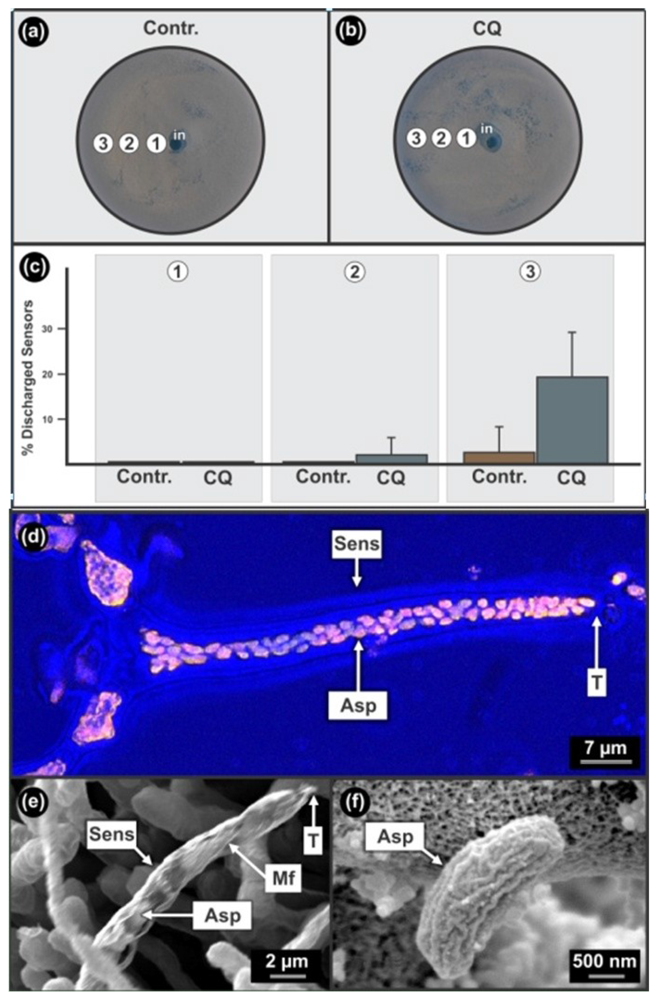
<p>The same protocol used to construct the bio-assay of <italic>L. yamadae</italic> (Section 2.2) was used except that only an 8% (m/v) solution of chloroquine in EtOH was added and compared to an EtOH control. The bio-assay plates were incubated for 72 h at 25 °C. After incubation, samples were drawn from three areas (1-3) of each plate as depicted in <xref ref-type="fig" rid="f4-sensors-12-13058">Figure 4(a,b)</xref>. Each area was sampled at three points spaced equally across the specific area tested on the plate. Experiments were performed in triplicate on EtOH (Control = Contr.) and chloroquine in EtOH (CQ) bio-assays. A total of 25 fields in each area point were analyzed by using a haemacytometer (40 × magnification) and Light Microscope (Axioplan, Zeiss) coupled to a Colourview Soft Digital Imaging System. This was performed by counting the number of empty sensors (ascospores discharged) as well as sensors filled with ascospores. Therefore, a total of 1 (area) × 3 (sample points in each area) × 25 (fields per sample point) × 3 (triplicate) = 225 fields were analysed per area to obtain a representative relative empty sensor count that depicts percentage discharged sensors.</p></sec>
<sec>
<label>2.14.</label>
<title>Dipodascopsis: Confocal Laser Scanning Microscopy (CLSM) of Ascospore Filled Sensor</title>
<p>One drop of a 1% (m/v) Orange G (Molecular Probes) was added to cells with ascospore filled sensors mounted on a microscope slide and incubated for 5 min at 21 °C to allow the stain to penetrate the cells. The stained cells were then examined using a Nikon TE 2000 CLSM.</p></sec>
<sec>
<label>2.15.</label>
<title>Dipodascopsis: Nano Scanning Auger Microscopy (NanoSAM) and Ar<sup>+</sup> Etching</title>
<p>Cells, including ascospores from zone 3 of the <italic>Dipodascopsis</italic> bio-assay were first prepared for SEM observation according to the protocol in Section 2.5 and then subjected to NanoSAM Ar<sup>+</sup> etching as described in Section 2.6.</p></sec>
<sec>
<label>2.16.</label>
<title>Nadsonia fulvescens: Strain Used and Cultivation</title>
<p><italic>Nadsonia fulvescens</italic> (UOFS Y-0705), preserved in the UNESCO MIRCEN culture collection at the University of the Free State, South Africa, was cultivated as mentioned in Section 2.1 except that the incubation temperature was 21 °C.</p></sec>
<sec>
<label>2.17.</label>
<title>Nadsonia fulvescens: Bio-assay Preparation and Screening of Compounds</title>
<p>The same protocols for bio-assay construction and screening described in Sections 2.2 and 2.7 respectively, were followed except that only an 8% m/v in EtOH solution of the tested compounds was added. The compounds screened are listed in <xref ref-type="table" rid="t1-sensors-12-13058">Table 1</xref>. The plates were incubated for 7 days at 21 °C to observe sensor response. Results for compounds indicated by a double asterisk in <xref ref-type="table" rid="t1-sensors-12-13058">Table 1</xref> were obtained from [<xref ref-type="bibr" rid="b8-sensors-12-13058">8</xref>].</p></sec></sec>
<sec sec-type="results|discussion">
<label>3.</label>
<title>Results and Discussion</title>
<sec>
<label>3.1.</label>
<title>Yeasts Sensing Anti-Mitochondrial Drugs</title>
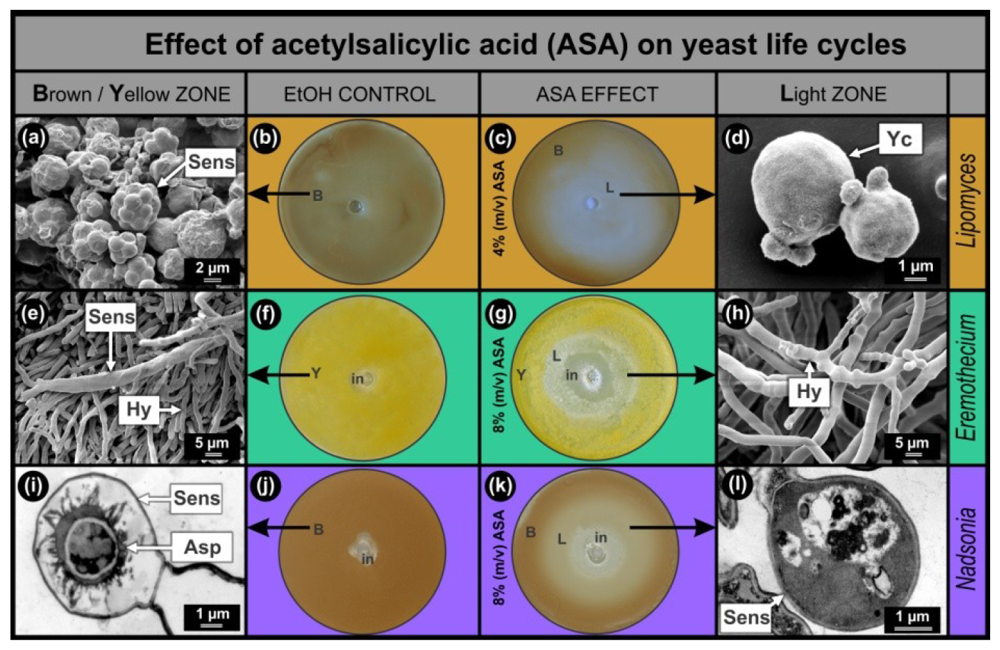
<p>Results of the anti-mitochondrial drug ASA, obtained with the <italic>Lipomyces</italic>, <italic>Eremothecium</italic> and <italic>Nadsonia</italic> bio-assays were compared (<xref ref-type="fig" rid="f1-sensors-12-13058">Figure 1</xref>). In all cases, the bio-assay sensors are pigmented which facilitates screening of compounds that stimulate (increase in colour intensity) or inhibit (decrease in colour intensity) sensor development. As was expected from the hypothesis, increased mitochondrial activity was observed in sensors of <italic>Lipomyces</italic> as well as <italic>Eremothecium</italic> [<xref ref-type="bibr" rid="b2-sensors-12-13058">2</xref>] and <italic>Nadsonia</italic> [<xref ref-type="bibr" rid="b8-sensors-12-13058">8</xref>] (<xref ref-type="fig" rid="f2-sensors-12-13058">Figure 2(d)</xref>). This increase was mainly associated with the ascospores inside the sensors. In all bio-assays studied, the EtOH controls developed homogeneously pigmented lawns, <italic>Lipomyces</italic>–brown (<xref ref-type="fig" rid="f1-sensors-12-13058">Figure 1(b)</xref>); <italic>Eremothecium</italic>–yellow (<xref ref-type="fig" rid="f1-sensors-12-13058">Figure 1(f)</xref>) and <italic>Nadsonia</italic>–brown (<xref ref-type="fig" rid="f1-sensors-12-13058">Figure 1(j)</xref>). These lawns contained matured pigmented sensors (<xref ref-type="fig" rid="f1-sensors-12-13058">Figure 1(a,e,i)</xref>) as observed by SEM (<xref ref-type="fig" rid="f1-sensors-12-13058">Figure 1(a,e)</xref>) and Transmission Electron Microscopy (TEM) (<xref ref-type="fig" rid="f1-sensors-12-13058">Figure 1(i)</xref>). When the anti-mitochondrial ASA was added, all bio-assays developed light zones (L) where pigmentation and hence sensor development were inhibited (<xref ref-type="fig" rid="f1-sensors-12-13058">Figure 1(c,g,k)</xref>). Ultra-structural imaging showed that sensors were absent or malformed in these zones (<xref ref-type="fig" rid="f1-sensors-12-13058">Figure 1(d,h,l)</xref>) and that ASA selectively inhibited these sensors at sub-lethal concentrations (<xref ref-type="fig" rid="f1-sensors-12-13058">Figure 1(g,k)</xref>).</p>
<p>As expected, we found that the <italic>Lipomyces</italic> bio-assay was more than twice as sensitive to ASA compared to the other two bio-assays. A larger sensor inhibition zone (<xref ref-type="fig" rid="f1-sensors-12-13058">Figure 1(c)</xref>) in the <italic>Lipomyces</italic> assay was observed, when 4% (m/v) ASA solution was added compared to when an 8% (m/v) ASA solution was added to the other two fermenting yeasts. This was to be expected since <italic>Lipomyces</italic> can only obtain energy from an aerobic respiratory metabolism and not from fermentation as well [<xref ref-type="bibr" rid="b5-sensors-12-13058">5</xref>]. It is interesting to note that when <italic>Lipomyces</italic> was grown on 8% (m/v) ASA, still no growth inhibition was observed (results not shown). This means that the asexual cells of <italic>L. yamadae</italic> are more resistant towards this anti-mitochondrial drug compared to <italic>E. ashbyi</italic> and <italic>N. fulvescens</italic>. This cannot be explained at present.</p>
<p>Various compounds with known and unknown anti-mitochondrial activities were screened with the <italic>Lipomyces</italic>, <italic>Eremothecium</italic> and <italic>Nadsonia</italic> bio-assays and compared with reports from the Food and Drug Administration (FDA) on drugs posing mitochondrial liabilities [<xref ref-type="bibr" rid="b4-sensors-12-13058">4</xref>,<xref ref-type="bibr" rid="b12-sensors-12-13058">12</xref>] (<xref ref-type="table" rid="t1-sensors-12-13058">Table 1</xref>). No discrepancies between screening results of the three yeast bio-assays could be found.</p>
<p>Compounds posing mitochondrial liabilities according to FDA Black Box Warnings as well as those that gave positive hits in all three bio-assays include diclofenac, ibuprofen and indomethacin. Compounds that tested positive for Black Box Warnings as well as <italic>Lipomyces</italic> and <italic>Eremothecium</italic> bio-assays include naproxen, peroxicam and sulindac. However, diflunisal and fenoprofen tested negative with Black Box Warnings but positive with the bio-assays. Interestingly, these NSAIDs were also reported to be anti-mitochondrial in literature [<xref ref-type="bibr" rid="b2-sensors-12-13058">2</xref>,<xref ref-type="bibr" rid="b12-sensors-12-13058">12</xref>,<xref ref-type="bibr" rid="b13-sensors-12-13058">13</xref>]. The NSAIDs, ASA and salicylic acid tested positive for all three the bio-assays. These results also corroborate previous mammalian and plant studies suggesting that the NSAIDs, ASA, ibuprofen, indomethacin and salicylic acid also have anti-mitochondrial activity [<xref ref-type="bibr" rid="b14-sensors-12-13058">14</xref>–<xref ref-type="bibr" rid="b17-sensors-12-13058">17</xref>]. The anti-malarial drug quinine tested negative for both <italic>Lipomyces</italic> and <italic>Eremothecium</italic> bio-assays, while chloroquine tested negative for all bio-assays. Artemisinin gave a positive hit when tested with the <italic>Eremothecium</italic> bio-assay. This was to be expected since the anti-mitochondrial activity of this important anti-malarial drug is well reported in yeasts [<xref ref-type="bibr" rid="b18-sensors-12-13058">18</xref>]. Thapsigargin, capable of collapsing membrane potential of mitochondria in the malaria parasite [<xref ref-type="bibr" rid="b19-sensors-12-13058">19</xref>] also gave a positive hit with the <italic>Eremothecium</italic> bio-assay. In addition, all antifungal agents submitted to the bio-assays tested positive with all three yeast bio-assays (<xref ref-type="table" rid="t1-sensors-12-13058">Table 1</xref>).</p>
<p>The anti-mitochondrial anticancer drug lonidamine [<xref ref-type="bibr" rid="b20-sensors-12-13058">20</xref>] tested positive with the <italic>Lipomyces</italic> and <italic>Eremothecium</italic> bio-assays. In addition, CD 437 and betulinic acid also tested positive with the <italic>Lipomyces</italic> bio-assay. Both of these anticancer drugs are known to have anti-mitochondrial activity [<xref ref-type="bibr" rid="b21-sensors-12-13058">21</xref>,<xref ref-type="bibr" rid="b22-sensors-12-13058">22</xref>].</p>
<p>The effect of three classic respiratory inhibitors was also investigated in order to serve as benchmark for the efficacy of these bio-assays. All three bio-assays were sensitive to antimycin A and oxygen limitation, while rotenone also tested positive with the <italic>Lipomyces</italic> bio-assay.</p></sec>
<sec>
<label>3.2.</label>
<title>Yeasts Sensing Pro-Mitochondrial Drugs</title>
<sec>
<label>3.2.1.</label>
<title>Lipomyces yamadae</title>
<sec>
<title>Sensor Bio-Assay</title>
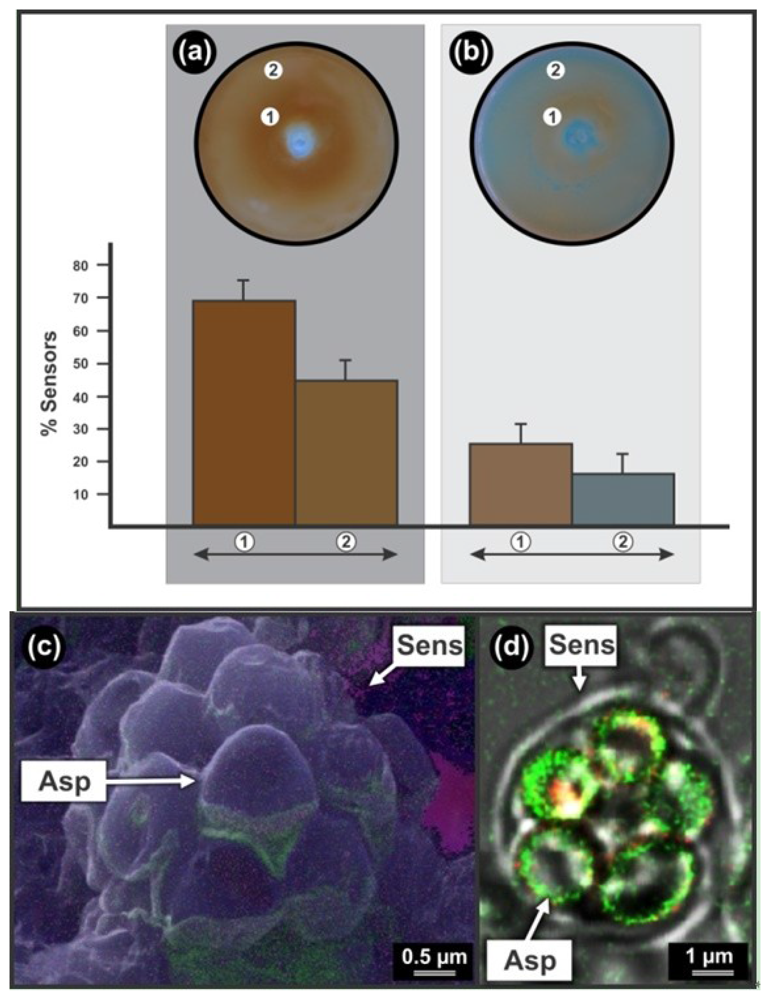
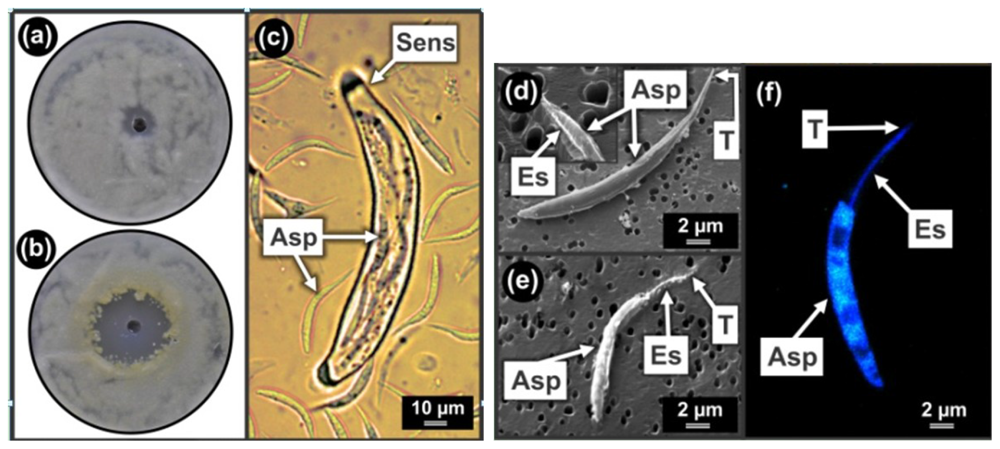
<p><italic>Chloroquine effect:</italic> The anti-malarial drug chloroquine had a stimulatory effect on the sensor development in the <italic>Lipomyces</italic> bio-assay (<xref ref-type="fig" rid="f2-sensors-12-13058">Figure 2(a,b)</xref>). With increase in drug concentration (from periphery towards centre, <italic>i.e.</italic>, sub-lethal zone) a drastic increase (P &lt; 0.05; Two tailed t-Test) from 44.3% ± 10.0% (<xref ref-type="fig" rid="f2-sensors-12-13058">Figure 2(a)-2</xref>) to 69.8% ± 9.8% (<xref ref-type="fig" rid="f2-sensors-12-13058">Figure 2(a)-1</xref>) in sensor development was observed. This is visualised by the development of a concomitant darker brown zone closer to the well.</p>
<p>After one year of preservation, a similar trend was experienced. Here, the percentage sensors in the darker brown zone was 25.6% ± 7.6% (<xref ref-type="fig" rid="f2-sensors-12-13058">Figure 2(b)-1</xref>), while the percentage sensors in the lighter brown zone was 16.6% ± 9.1% (<xref ref-type="fig" rid="f2-sensors-12-13058">Figure 2(b)-2</xref>), indicating again a significant (P &lt; 0.05; Two tailed t-Test) stimulatory effect of chloroquine on the sensor development and expected mitochondrial activity after preservation. Strikingly, this stimulatory effect has also been reported in the literature where sub-lethal doses of chloroquine elevate the levels of <italic>Plasmodium</italic> gametocytes (<italic>i.e.</italic>, start of sexual phase) in the host's blood by favoring asexual merozoite transition to sexual gametocytes, thereby ensuring more effective transmission of the parasite via the mosquito to the host. This effect has also been shown to be enhanced in resistant <italic>Plasmodium</italic> strains [<xref ref-type="bibr" rid="b23-sensors-12-13058">23</xref>]. It is interesting to note that chloroquine also influences mitochondrial activity by stimulating respiration in bovine spermatozoa [<xref ref-type="bibr" rid="b24-sensors-12-13058">24</xref>].</p>
<p><italic>Preservation effect:</italic> When comparing bio-assays before and after one year of preservation by continuous sub-culturing, it is clear that this preservation method inhibited sensor development (<xref ref-type="fig" rid="f2-sensors-12-13058">Figure 2(a,b)</xref>). The results indicate a 2.7 times significant decrease (from 69.8% ± 9.8% to 25.6% ± 7.6%; P &lt; 0.05; Two tailed t-Test) in the ability to produce sensors in response to chloroquine at sub-lethal concentration over one year of preservation (compare <xref ref-type="fig" rid="f2-sensors-12-13058">Figure 2(a)-1</xref> to <xref ref-type="fig" rid="f2-sensors-12-13058">Figure 2(b)-1</xref>). Strikingly, the same level of decrease was observed at lower concentrations of chloroquine (compare <xref ref-type="fig" rid="f2-sensors-12-13058">Figure 2(a)-2</xref> to <xref ref-type="fig" rid="f2-sensors-12-13058">Figure 2(b)-2</xref>) with again a 2.7 times significant decrease in the ability to produce sensors (from 44.3% ± 10.0% to 16.6% ± 9.1%; P &lt; 0.05, Two tailed t-Test). This is also visualised by the concomitant decrease in sensor associated pigmentation. Similar levels of sensor development were recorded when comparing sensor development at lower chloroquine concentrations at the periphery of respective plates (<xref ref-type="fig" rid="f2-sensors-12-13058">Figure 2(a)-2 and 2(b)-2)</xref>) with the periphery of control plates, <italic>i.e.</italic>, when only EtOH was added to bio-assays before and after one year of preservation (results not shown).</p>
<p>The above results suggest that preservation through sub-culturing is also anti-mitochondrial. Interestingly, according to literature [<xref ref-type="bibr" rid="b25-sensors-12-13058">25</xref>] sub-culturing over a long period may have mutagenic effects on yeasts leading to changes in morphological characteristics and loss in the ability to sporulate.</p>
<p>This may explain the decrease in pigmented sensor development in the strictly respiring <italic>Lipomyces</italic> over one year of this type of preservation. Preservation by sub-culturing over extended periods can therefore be considered anti-mitochondrial where the sexual structures (<italic>i.e</italic>., sporulation) of yeasts, that can only obtain energy from aerobic respiration, should be the most sensitive.</p></sec>
<sec>
<title>Sensor Structure</title>
<p>Sensors are characterised by various smooth spherical ascospores of about 2 μm in diameter all enveloped by a cell wall (<xref ref-type="fig" rid="f2-sensors-12-13058">Figure 2(c,d)</xref>). This is exposed by sensor disassembly using Ar<sup>+</sup> etching and NanoSAM in SEM mode (<xref ref-type="fig" rid="f2-sensors-12-13058">Figure 2(c)</xref>). Here Auger nano-probing shows remnants of gold (in green) on sensor wall (from gold sputtering during NanoSAM preparation) as well as element composition of ascospores (<italic>i.e.</italic>, carbon in blue and oxygen in pink). As expected [<xref ref-type="bibr" rid="b4-sensors-12-13058">4</xref>] these sensors have increased mitochondrial activity indicated by increased fluorescence associated with ascospores (<xref ref-type="fig" rid="f2-sensors-12-13058">Figure 2(d)</xref>). Here no smart mechanics, as is evident in the other sensing yeasts, were observed.</p></sec></sec>
<sec>
<label>3.2.2.</label>
<title>Eremothecium ashbyi</title>
<sec>
<title>Sensor Bio-Assay</title>
<p>Similarly to <italic>L. yamadae</italic>, chloroquine also stimulated pigmented sensor development in the <italic>Eremothecium</italic> bio-assay (<xref ref-type="fig" rid="f3-sensors-12-13058">Figure 3(a,b)</xref>). At sub-lethal concentrations of the drug, yellow pigmentation started to develop next to the inhibition zone (<xref ref-type="fig" rid="f3-sensors-12-13058">Figure 3(b)</xref>). This was not visible in the EtOH control (<xref ref-type="fig" rid="f3-sensors-12-13058">Figure 3(a)</xref>). This is indicative of increased sensor development as well as increased mitochondrial activity [<xref ref-type="bibr" rid="b2-sensors-12-13058">2</xref>]. It is important to note that the yellow zone appeared within 24 h after which the whole plate coloured yellow. Therefore, if the plate was inspected after 24 h, no effect of chloroquine would have been observed as was reported in [<xref ref-type="bibr" rid="b5-sensors-12-13058">5</xref>].</p></sec>
<sec>
<title>Sensor Structure and Smart Mechanics</title>
<p>In this study, the moving parts of the sensor (<italic>i.e.</italic>, ascospores) were disassembled and further imaged by applying CLSM on Calcofluor treated samples as well as NanoSAM linked to Ar<sup>+</sup> etching. On the basis of our results, we conclude that each sickle shaped ascospore (<xref ref-type="fig" rid="f3-sensors-12-13058">Figure 3(c)</xref>) contains a chitinous endoskeleton (<xref ref-type="fig" rid="f3-sensors-12-13058">Figure 3(f)</xref>) that stretches across its length (<xref ref-type="fig" rid="f3-sensors-12-13058">Figure 3(d,e)</xref>) thereby probably reinforcing its structure to eventually pierce through the sensor upon release from the ascus. This is the first report of an endoskeleton in yeast.</p>
<p>Smart mechanics inside the sensor is made possible by water movement across V-shaped fins situated on the blunt end of the ascospore. These fins are covered with anti-mitochondrial sensitive, beta-oxidation produced 3-OH oxylipins. However, these fins may be scraped off during release through tight fitting sensor cell walls as depicted in <xref ref-type="fig" rid="f3-sensors-12-13058">Figure 3(d)</xref> [<xref ref-type="bibr" rid="b5-sensors-12-13058">5</xref>,<xref ref-type="bibr" rid="b26-sensors-12-13058">26</xref>]. Sensor-ascospore smart mechanics can be viewed as a movie in video lecture format published by the Kock-group [<xref ref-type="bibr" rid="b5-sensors-12-13058">5</xref>].</p></sec></sec>
<sec>
<label>3.2.3.</label>
<title>Dipodascopsis uninucleata</title>
<sec>
<title>Sensor Bio-Assay</title>
<p>When chloroquine was added to the bio-assay of <italic>D. uninucleata</italic> (<xref ref-type="fig" rid="f4-sensors-12-13058">Figure 4(a,b)</xref>), we found an inhibition of ascospore discharge from sensors at sub-lethal concentration (<xref ref-type="fig" rid="f4-sensors-12-13058">Figure 4(c)-1CQ)</xref>). However, since the same phenomenon was observed in the EtOH control, this is probably an EtOH effect (<xref ref-type="fig" rid="f4-sensors-12-13058">Figure 4(a)-1Contr.)</xref>). At lower concentrations (<xref ref-type="fig" rid="f4-sensors-12-13058">Figure 4(c)-2CQ)</xref>), this drug enhanced ascospore release compared to samples from a similar position on the control plate (<xref ref-type="fig" rid="f4-sensors-12-13058">Figure 4(c)-2Contr.)</xref>) resulting in increased discharged empty sensors from 0.0% to 2.4% ± 3.8%. When comparing the EtOH control (<xref ref-type="fig" rid="f4-sensors-12-13058">Figure 4(c)-3Contr.)</xref>) to experiments where chloroquine dissolved in EtOH was added (<xref ref-type="fig" rid="f4-sensors-12-13058">Figure 4(c)-3CQ.)</xref>), we found that a significant increase (P &lt; 0.05; Two tailed t-Test) in ascospore discharge from sensors occurred at the periphery of the plates <italic>i.e.</italic>, from 2.9% ± 5.7% to 19.6% ± 9.7%. It is interesting to note that a decrease in the concentration of EtOH in the absence of chloroquine (<xref ref-type="fig" rid="f4-sensors-12-13058">Figure 4(c)-1 to 3)</xref>), also enhanced ascospore release but at a significant lower level compared to when chloroquine was added (P &lt; 0.05; Two tailed t-Test). Unfortunately these sensors are not pigmented and yeast sensing had to be followed by means of time consuming microscopic investigations.</p></sec>
<sec>
<title>Sensor Structure and Smart Mechanics</title>
<p>These sensors are bottle-shaped structures containing coiled micro-fibrils, each with a narrow opening at the tip, allowing the release of only one ascospore at a time, and a broader base containing many ascospores (<xref ref-type="fig" rid="f4-sensors-12-13058">Figure 4(d,e)</xref>). Discharged sensors are formed when elongated grooved ascospores of about 1 μm in diameter (<xref ref-type="fig" rid="f4-sensors-12-13058">Figure 4(f)</xref>) are individually released from sensors (<xref ref-type="fig" rid="f4-sensors-12-13058">Figure 4(e)</xref>) through tight fitting narrow sensor openings of about 1–2 μm in diameter (<xref ref-type="fig" rid="f4-sensors-12-13058">Figure 4(d)</xref>). Ascospore release occurs by smart ascospore rotation mechanics affected by micro-fibril coiled rifling and lubrication by anti-mitochondrial drug sensitive, β-oxidation products such as 3-OH oxylipins [<xref ref-type="bibr" rid="b1-sensors-12-13058">1</xref>]. These smart sensor mechanics can be viewed as a movie in video lecture format [<xref ref-type="bibr" rid="b5-sensors-12-13058">5</xref>,<xref ref-type="bibr" rid="b6-sensors-12-13058">6</xref>,<xref ref-type="bibr" rid="b26-sensors-12-13058">26</xref>]. We conclude that since chloroquine had an enhancing effect on ascospore discharge from sensors, it should be pro-mitochondrial, probably also enhancing beta-oxidation at lower concentrations—especially since blocked sensors that were filled with well developed, unreleased ascospores, were formed at higher concentrations of this drug (results not shown). Whether chloroquine has a direct or indirect effect on mitochondrial activity should now be investigated.</p></sec></sec></sec></sec>
<sec sec-type="conclusions">
<label>4.</label>
<title>Conclusions</title>
<p>In this study, various compounds including well known mitochondrial inhibitors as well as physical conditions such as preservation by sub-culturing and oxygen limitation, gave positive hits when subjected to the anti-mitochondrial yeast bio-assays. Here mitochondrial activity is probably needed to provide sufficient energy for the complex processes necessary for sensor development. Inhibition of mitochondrial activity may lead to insufficient energy production needed for proper development and pigmentation. Care should however be taken when interpreting these results. Drugs and physical effects that inhibit sensor development may not necessarily influence mitochondrial activity directly. They may, amongst many others, influence parts of the complex synthesis processes involved in sensor development such as meiosis, the formation of secretory vesicles, septin, dityrosine layers, membranes and cell walls as well as pigment production. This may then indirectly lead to the termination of mitochondrial biogenesis and function. It is therefore important that a positive hit obtained with these yeast bio-assays be followed up by further <italic>in vitro</italic>, <italic>in vivo</italic>, <italic>in silico</italic> and omics research to elucidate the inhibitory action of these drugs and physical effects at molecular level [<xref ref-type="bibr" rid="b4-sensors-12-13058">4</xref>]. For instance, when a positive hit is encountered, more <italic>in vitro</italic> mechanistic studies can be applied to study the effects of drugs/physical effects on oxidative phosphorylation, permeability transition, ΔΨ<sub>m</sub> status and other anti-mitochondrial drug targets. This may then be followed up by different tests, using amongst others NanoSAM imaging, enzyme-linked assays of the different respiratory complexes, different histochemical and immuno-histochemical methods as well as animal models to finally predict clinical outcome [<xref ref-type="bibr" rid="b4-sensors-12-13058">4</xref>]. We suggest that these bio-assays may find application as a preliminary screening method during lead selection, especially by taking advantage of associated sensor pigmentation.</p>
<p>Of particular interest will be research concerned with the application of NSAIDs and mitocans (anticancer drugs targeting mitochondria of cancer cells) as new anti- mitochondrial anti-fungal drugs and <italic>vice versa</italic>. This approach may even give new careers to conventional drugs used today to treat specific diseases. During the screening for anti-mitochondrial drugs, we unexpectedly uncovered that the anti-malarial drug chloroquine gave opposite results, <italic>i.e.</italic>, stimulating sensor development in bio-assays of <italic>Eremothecium</italic>, <italic>Lipomyces</italic> as well as <italic>Dipodascopsis</italic>. This implicates a pro-mitochondrial action. This finding is of great importance to the field of malarial research and invigoration (increase mitochondrial activity) of cells. This should be followed up with urgency. For many years, chloroquine has been considered the gold standard for treatment of malaria. However resistance build-up by the infective parasite hampers its application. This drug not only targets the asexual stage of the parasite, it also induces gametocytogenesis in the host, a prelude to sexual reproduction occurring in the mosquito vector and a process that renders the vector infective. Chloroquine can therefore also favor malaria infection, an aspect that needs urgent attention [<xref ref-type="bibr" rid="b23-sensors-12-13058">23</xref>]. Furthermore, it was reported that chloroquine also increased birth weight during first pregnancy [<xref ref-type="bibr" rid="b27-sensors-12-13058">27</xref>]. Here we report yeast bio-sensors that mimics activities of chloroquine in the human host. We found that this anti-malarial drug drastically enhanced the sexual cycle of the yeast <italic>Lipomyces</italic> by more than 63% at sub-lethal concentrations when compared to controls, implicating a strong pro-mitochondrial action.</p>
<p>We conclude that these assays may be used as models to fast track basic studies involved in screening and understanding the mechanism of action of new anti-mitochondrial drugs and possibly even drugs with contraceptive and fertility-promoting action. These sensors may also be used to study physical effects on mitochondrial activity and sexual reproduction such as oxygen limitation as well as preservation.</p></sec></body>
<back>
<ack>
<p>The authors would like to thank the Claude Leon Foundation Postdoctoral Fellowship and National Research Foundation for financial support. The authors would also like to thank Marleen Maartens for her assistance with certain experimental procedures.</p></ack>
<ref-list>
<title>References</title>
<ref id="b1-sensors-12-13058"><label>1.</label><citation citation-type="journal"><person-group person-group-type="author"><name><surname>Kock</surname><given-names>J.L.F.</given-names></name><name><surname>Sebolai</surname><given-names>O.M.</given-names></name><name><surname>Pohl</surname><given-names>C.H.</given-names></name><name><surname>Van Wyk</surname><given-names>P.W.J.</given-names></name><name><surname>Lodolo</surname><given-names>E.J.</given-names></name></person-group><article-title>Oxylipin studies expose aspirin as antifungal</article-title><source>FEMS Yeast Res.</source><year>2007</year><volume>7</volume><fpage>1207</fpage><lpage>1217</lpage><pub-id pub-id-type="doi">10.1111/j.1567-1364.2007.00273.x</pub-id><pub-id pub-id-type="pmid">17623031</pub-id></citation></ref>
<ref id="b2-sensors-12-13058"><label>2.</label><citation citation-type="journal"><person-group person-group-type="author"><name><surname>Kock</surname><given-names>J.L.F.</given-names></name><name><surname>Swart</surname><given-names>C.W.</given-names></name><name><surname>Ncango</surname><given-names>D.M.</given-names></name><name><surname>Kock</surname><given-names>J.L.F.</given-names><suffix>Jr.</suffix></name><name><surname>Munnik</surname><given-names>I.A.</given-names></name><name><surname>Maartens</surname><given-names>M.M.J.</given-names></name><name><surname>Pohl</surname><given-names>C.H.</given-names></name><name><surname>Van Wyk</surname><given-names>P.W.J.</given-names></name></person-group><article-title>Development of a yeast bio-assay to screen anti-mitochondrial drugs</article-title><source>Curr. Drug Discov. Tech.</source><year>2009</year><volume>6</volume><fpage>186</fpage><lpage>191</lpage><pub-id pub-id-type="doi">10.2174/157016309789054960</pub-id></citation></ref>
<ref id="b3-sensors-12-13058"><label>3.</label><citation citation-type="journal"><person-group person-group-type="author"><name><surname>Maartens</surname><given-names>M.M.J.</given-names></name><name><surname>Swart</surname><given-names>C.W.</given-names></name><name><surname>Pohl</surname><given-names>C.H.</given-names></name><name><surname>Kock</surname><given-names>J.L.F.</given-names></name></person-group><article-title>Antimicrobials, chemotherapeutics or antibiotics?</article-title><source>Sci. Res. Essays</source><year>2011</year><volume>6</volume><fpage>3927</fpage><lpage>3929</lpage></citation></ref>
<ref id="b4-sensors-12-13058"><label>4.</label><citation citation-type="journal"><person-group person-group-type="author"><name><surname>Kock</surname><given-names>J.L.F.</given-names></name><name><surname>Swart</surname><given-names>C.W.</given-names></name><name><surname>Pohl</surname><given-names>C.H.</given-names></name></person-group><article-title>The anti-mitochondrial antifungal assay for the discovery and development of new drugs</article-title><source>Expert Opin. Drug Discov.</source><year>2011</year><volume>6</volume><fpage>671</fpage><lpage>681</lpage><pub-id pub-id-type="doi">10.1517/17460441.2011.575358</pub-id><pub-id pub-id-type="pmid">22646155</pub-id></citation></ref>
<ref id="b5-sensors-12-13058"><label>5.</label><citation citation-type="web"><person-group person-group-type="author"><name><surname>Kock</surname><given-names>J.L.F.</given-names></name><name><surname>Swart</surname><given-names>C.W.</given-names></name><name><surname>Ncango</surname><given-names>D.M.</given-names></name><name><surname>Pohl</surname><given-names>C.H.</given-names></name></person-group><article-title>Yeast Contraceptives Also New Drugs</article-title><source>TBM Invited Video Lecture</source><year>2011</year><comment>Available online: <ext-link xlink:href="http://vimeo.com/24167863" ext-link-type="uri">http://vimeo.com/24167863</ext-link> (accessed on 7 September 2012)</comment></citation></ref>
<ref id="b6-sensors-12-13058"><label>6.</label><citation citation-type="web"><person-group person-group-type="author"><name><surname>Kock</surname><given-names>J.L.F.</given-names></name><name><surname>Swart</surname><given-names>C.W.</given-names></name></person-group><article-title>A new nanotechnology for Translational Medicine</article-title><source>TBM invited Video Lecture</source><year>2011</year><comment><ext-link xlink:href="http://vimeo.com/21056636" ext-link-type="uri">http://vimeo.com/21056636</ext-link> (accessed on 7 September 2012)</comment></citation></ref>
<ref id="b7-sensors-12-13058"><label>7.</label><citation citation-type="journal"><person-group person-group-type="author"><name><surname>Morakile</surname><given-names>G.I.</given-names></name><name><surname>Pretorius</surname><given-names>E.E.</given-names></name><name><surname>Pohl</surname><given-names>C.H.</given-names></name><name><surname>Kock</surname><given-names>J.L.F.</given-names></name></person-group><article-title>Maintenance of brewing inocula through cryopreservation</article-title><source>SA J. Sci.</source><year>1999</year><volume>95</volume><fpage>557</fpage><lpage>558</lpage></citation></ref>
<ref id="b8-sensors-12-13058"><label>8.</label><citation citation-type="journal"><person-group person-group-type="author"><name><surname>Swart</surname><given-names>C.W.</given-names></name><name><surname>Van Wyk</surname><given-names>P.W.J.</given-names></name><name><surname>Pohl</surname><given-names>C.H.</given-names></name><name><surname>Kock</surname><given-names>J.L.F.</given-names></name></person-group><article-title>Variation in mitochondrial activity over the life cycle of <italic>Nadsonia fulvescens</italic></article-title><source>AJMR</source><year>2010</year><volume>4</volume><fpage>1727</fpage><lpage>1732</lpage></citation></ref>
<ref id="b9-sensors-12-13058"><label>9.</label><citation citation-type="journal"><person-group person-group-type="author"><name><surname>Swart</surname><given-names>C.W.</given-names></name><name><surname>Swart</surname><given-names>H.C.</given-names></name><name><surname>Coetsee</surname><given-names>E.</given-names></name><name><surname>Pohl</surname><given-names>C.H.</given-names></name><name><surname>Van Wyk</surname><given-names>P.W.J.</given-names></name><name><surname>Kock</surname><given-names>J.L.F.</given-names></name></person-group><article-title>3-D architecture and elemental composition of fluconazole treated yeast asci</article-title><source>Sci. Res. Essays</source><year>2010</year><volume>5</volume><fpage>3411</fpage><lpage>3417</lpage></citation></ref>
<ref id="b10-sensors-12-13058"><label>10.</label><citation citation-type="journal"><person-group person-group-type="author"><name><surname>Ncango</surname><given-names>D.M.</given-names></name><name><surname>Swart</surname><given-names>C.W.</given-names></name><name><surname>Pohl</surname><given-names>C.H.</given-names></name><name><surname>Van Wyk</surname><given-names>P.W.J.</given-names></name><name><surname>Kock</surname><given-names>J.L.F.</given-names></name></person-group><article-title>Mitochondrion activity and dispersal of <italic>Aspergillus fumigatus</italic> and <italic>Rhizopus oryzae</italic></article-title><source>AJMR</source><year>2010</year><volume>4</volume><fpage>830</fpage><lpage>835</lpage></citation></ref>
<ref id="b11-sensors-12-13058"><label>11.</label><citation citation-type="thesis"><person-group person-group-type="author"><name><surname>Ncango</surname><given-names>D.M.</given-names></name></person-group><article-title>The Influence of Mitochondrial Inhibitors on Fungal Life Cycles</article-title><source>Ph.D. Thesis</source><publisher-name>University of the Free State</publisher-name><publisher-loc>Bloemfontein, South Africa</publisher-loc><year>2011</year></citation></ref>
<ref id="b12-sensors-12-13058"><label>12.</label><citation citation-type="journal"><person-group person-group-type="author"><name><surname>Dykens</surname><given-names>J.A.</given-names></name><name><surname>Will</surname><given-names>Y.</given-names></name></person-group><article-title>The significance of mitochondrial toxicity testing in drug development</article-title><source>Drug Discov. Today</source><year>2007</year><volume>12</volume><fpage>777</fpage><lpage>785</lpage><pub-id pub-id-type="doi">10.1016/j.drudis.2007.07.013</pub-id><pub-id pub-id-type="pmid">17826691</pub-id></citation></ref>
<ref id="b13-sensors-12-13058"><label>13.</label><citation citation-type="journal"><person-group person-group-type="author"><name><surname>Chan</surname><given-names>K.</given-names></name><name><surname>Truong</surname><given-names>D.</given-names></name><name><surname>Shangari</surname><given-names>N.</given-names></name><name><surname>O'Brien</surname><given-names>P.J.</given-names></name></person-group><article-title>Drug-induced mitochondrial toxicity</article-title><source>Expert Opin Drug Metab Toxicol.</source><year>2005</year><volume>1</volume><fpage>655</fpage><lpage>669</lpage><pub-id pub-id-type="doi">10.1517/17425255.1.4.655</pub-id><pub-id pub-id-type="pmid">16863431</pub-id></citation></ref>
<ref id="b14-sensors-12-13058"><label>14.</label><citation citation-type="journal"><person-group person-group-type="author"><name><surname>Al-Nasser</surname><given-names>I.A.</given-names></name></person-group><article-title>Ibuprofen-induced liver mitochondrial permeability transition</article-title><source>Toxicol. Lett.</source><year>2000</year><volume>111</volume><fpage>213</fpage><lpage>218</lpage><pub-id pub-id-type="doi">10.1016/S0378-4274(99)00180-0</pub-id><pub-id pub-id-type="pmid">10643865</pub-id></citation></ref>
<ref id="b15-sensors-12-13058"><label>15.</label><citation citation-type="journal"><person-group person-group-type="author"><name><surname>Somasundaram</surname><given-names>S.</given-names></name><name><surname>Sigthorsson</surname><given-names>G.</given-names></name><name><surname>Simpson</surname><given-names>R.J.</given-names></name><name><surname>Watts</surname><given-names>J.</given-names></name><name><surname>Jacob</surname><given-names>M.</given-names></name><name><surname>Tavares</surname><given-names>I.A.</given-names></name><name><surname>Rafi</surname><given-names>S.</given-names></name><name><surname>Roseth</surname><given-names>A.</given-names></name><name><surname>Foster</surname><given-names>R.</given-names></name><name><surname>Price</surname><given-names>A.B.</given-names></name><etal/></person-group><article-title>Uncoupling of intestinal mitochondrial oxidative phosphorylation and inhibition of cyclooxygenase are required for the development of NSAID-enteropathy in the rat</article-title><source>Aliment. Pharmacol. Ther.</source><year>2000</year><volume>14</volume><fpage>639</fpage><lpage>650</lpage><pub-id pub-id-type="doi">10.1046/j.1365-2036.2000.00723.x</pub-id><pub-id pub-id-type="pmid">10792129</pub-id></citation></ref>
<ref id="b16-sensors-12-13058"><label>16.</label><citation citation-type="journal"><person-group person-group-type="author"><name><surname>Norman</surname><given-names>C.</given-names></name><name><surname>Howell</surname><given-names>K.A.</given-names></name><name><surname>Millar</surname><given-names>A.H.</given-names></name><name><surname>Whelan</surname><given-names>J.M.</given-names></name><name><surname>Day</surname><given-names>D.A.</given-names></name></person-group><article-title>Salicylic acid is an uncoupler and inhibitor of mitochondrial electron transport</article-title><source>Plant Physiol.</source><year>2004</year><volume>134</volume><fpage>492</fpage><lpage>501</lpage><pub-id pub-id-type="doi">10.1104/pp.103.031039</pub-id><pub-id pub-id-type="pmid">14684840</pub-id></citation></ref>
<ref id="b17-sensors-12-13058"><label>17.</label><citation citation-type="journal"><person-group person-group-type="author"><name><surname>Tanaka</surname><given-names>K.</given-names></name><name><surname>Tomisato</surname><given-names>W.</given-names></name><name><surname>Hoshino</surname><given-names>T.</given-names></name><name><surname>Ishihara</surname><given-names>T.</given-names></name><name><surname>Namba</surname><given-names>T.</given-names></name><name><surname>Aburaya</surname><given-names>M.</given-names></name></person-group><article-title>Involvement of intracellular Ca<sup>2+</sup> levels in non-steroidal anti-inflammatory drug-induced apoptosis</article-title><source>J. Biol. Chem.</source><year>2005</year><volume>280</volume><fpage>31059</fpage><lpage>31067</lpage><pub-id pub-id-type="doi">10.1074/jbc.M502956200</pub-id><pub-id pub-id-type="pmid">15987693</pub-id></citation></ref>
<ref id="b18-sensors-12-13058"><label>18.</label><citation citation-type="journal"><person-group person-group-type="author"><name><surname>Li</surname><given-names>W.</given-names></name><name><surname>Mo</surname><given-names>W.</given-names></name><name><surname>Shen</surname><given-names>D.</given-names></name><name><surname>Sun</surname><given-names>L.</given-names></name><name><surname>Wang</surname><given-names>J.</given-names></name><name><surname>Lu</surname><given-names>S.</given-names></name><name><surname>Gitschier</surname><given-names>J.M.</given-names></name><name><surname>Zhou</surname><given-names>B.</given-names></name></person-group><article-title>Yeast model uncovers dual roles of mitochondria in the action of artemisinin</article-title><source>PLoS Genet.</source><year>2005</year><volume>1</volume><fpage>e36</fpage><pub-id pub-id-type="doi">10.1371/journal.pgen.0010036</pub-id><pub-id pub-id-type="pmid">16170412</pub-id></citation></ref>
<ref id="b19-sensors-12-13058"><label>19.</label><citation citation-type="journal"><person-group person-group-type="author"><name><surname>Vercesi</surname><given-names>A.E.</given-names></name><name><surname>Moreno</surname><given-names>S.N.J.</given-names></name><name><surname>Bernardes</surname><given-names>C.F.</given-names></name><name><surname>Meinicke</surname><given-names>A.R.</given-names></name><name><surname>Fernandes</surname><given-names>E.C.</given-names></name><name><surname>Docampo</surname><given-names>R.</given-names></name></person-group><article-title>Thapsigargin causes Ca<sup>2+</sup> release and collapse of the membrane potential of <italic>Trypanosoma brucei</italic> mitochondria <italic>in situ</italic> and of isolated rat liver mitochondria</article-title><source>J. Biol. Chem.</source><year>1993</year><volume>268</volume><fpage>8564</fpage><lpage>8568</lpage><pub-id pub-id-type="pmid">8473301</pub-id></citation></ref>
<ref id="b20-sensors-12-13058"><label>20.</label><citation citation-type="journal"><person-group person-group-type="author"><name><surname>Constantini</surname><given-names>P.</given-names></name><name><surname>Jacotot</surname><given-names>E.</given-names></name><name><surname>Decaudin</surname><given-names>D.</given-names></name><name><surname>Kroemer</surname><given-names>G.</given-names></name></person-group><article-title>Mitochondrion as a novel target of anticancer chemotherapy</article-title><source>J. Natl. Cancer Inst.</source><year>2000</year><volume>92</volume><fpage>1042</fpage><lpage>1053</lpage><pub-id pub-id-type="doi">10.1093/jnci/92.13.1042</pub-id><pub-id pub-id-type="pmid">10880547</pub-id></citation></ref>
<ref id="b21-sensors-12-13058"><label>21.</label><citation citation-type="journal"><person-group person-group-type="author"><name><surname>Fulda</surname><given-names>S.</given-names></name><name><surname>Scaffidi</surname><given-names>C.</given-names></name><name><surname>Susin</surname><given-names>S.A.</given-names></name><name><surname>Krammer</surname><given-names>P.H.</given-names></name><name><surname>Kroemer</surname><given-names>G.</given-names></name><name><surname>Peter</surname><given-names>M.E.</given-names></name><name><surname>Debatin</surname><given-names>K.M.</given-names></name></person-group><article-title>Activation of mitochondria and release of mitochondrial apoptogenic factors by betulinic acid</article-title><source>J. Biol. Chem.</source><year>1998</year><volume>273</volume><fpage>33942</fpage><lpage>33948</lpage><pub-id pub-id-type="doi">10.1074/jbc.273.51.33942</pub-id><pub-id pub-id-type="pmid">9852046</pub-id></citation></ref>
<ref id="b22-sensors-12-13058"><label>22.</label><citation citation-type="journal"><person-group person-group-type="author"><name><surname>Gonda</surname><given-names>K.</given-names></name><name><surname>Tsuchiya</surname><given-names>H.</given-names></name><name><surname>Sakabe</surname><given-names>T.</given-names></name><name><surname>Akechi</surname><given-names>Y.</given-names></name><name><surname>Ikeda</surname><given-names>R.</given-names></name><name><surname>Nishio</surname><given-names>R.</given-names></name><name><surname>Terabavashi</surname><given-names>K.</given-names></name><name><surname>Ishii</surname><given-names>K.</given-names></name><name><surname>Matsumi</surname><given-names>Y.</given-names></name><name><surname>Ashla</surname><given-names>A.A.</given-names></name><etal/></person-group><article-title>Synthetic retinoid CD437 induces mitochondria-mediated apoptosis in hepatocellular carcinoma cells</article-title><source>Biochem. Biophys. Res. Commun.</source><year>2008</year><volume>370</volume><fpage>629</fpage><lpage>633</lpage><pub-id pub-id-type="doi">10.1016/j.bbrc.2008.04.008</pub-id><pub-id pub-id-type="pmid">18406343</pub-id></citation></ref>
<ref id="b23-sensors-12-13058"><label>23.</label><citation citation-type="journal"><person-group person-group-type="author"><name><surname>Talman</surname><given-names>A.M.</given-names></name><name><surname>Domarle</surname><given-names>O.</given-names></name><name><surname>McKenzie</surname><given-names>F.E.</given-names></name><name><surname>Ariey</surname><given-names>F.</given-names></name><name><surname>Robert</surname><given-names>V.</given-names></name></person-group><article-title>Gametocytogenesis: The puberty of <italic>Plasmodium falciparum</italic></article-title><source>Malar. J.</source><year>2004</year><volume>3</volume><fpage>24</fpage><pub-id pub-id-type="doi">10.1186/1475-2875-3-24</pub-id><pub-id pub-id-type="pmid">15253774</pub-id></citation></ref>
<ref id="b24-sensors-12-13058"><label>24.</label><citation citation-type="journal"><person-group person-group-type="author"><name><surname>Norman</surname><given-names>C.</given-names></name><name><surname>Gombe</surname><given-names>S.</given-names></name></person-group><article-title>Stimulatory effect of the lysosomal stabilizer, chloroquine, on the respiration and motility of fresh and aged bovine spermatozoa</article-title><source>J. Reprod. Fertil.</source><year>1975</year><volume>44</volume><fpage>481</fpage><lpage>486</lpage><pub-id pub-id-type="doi">10.1530/jrf.0.0440481</pub-id><pub-id pub-id-type="pmid">1181415</pub-id></citation></ref>
<ref id="b25-sensors-12-13058"><label>25.</label><citation citation-type="journal"><person-group person-group-type="author"><name><surname>Freitas</surname><given-names>R.S.</given-names></name><name><surname>Dantas</surname><given-names>K.C.</given-names></name><name><surname>Pereira</surname><given-names>C.N.</given-names></name><name><surname>Levi</surname><given-names>J.E.</given-names></name><name><surname>Martins</surname><given-names>J.E.C.</given-names></name></person-group><article-title>Preservation methods of fungi in 35 years old stock culture storages: A comparative study</article-title><source>AJMR</source><year>2011</year><volume>5</volume><fpage>555</fpage><lpage>561</lpage></citation></ref>
<ref id="b26-sensors-12-13058"><label>26.</label><citation citation-type="journal"><person-group person-group-type="author"><name><surname>Kock</surname><given-names>J.L.F.</given-names></name><name><surname>Strauss</surname><given-names>C.J.</given-names></name><name><surname>Pretorius</surname><given-names>E.E.</given-names></name><name><surname>Pohl</surname><given-names>C.H.</given-names></name><name><surname>Bareetseng</surname><given-names>A.S.</given-names></name><name><surname>Botes</surname><given-names>P.J.</given-names></name><name><surname>Van Wyk</surname><given-names>P.W.J.</given-names></name><name><surname>Schoombie</surname><given-names>S.W.</given-names></name><name><surname>Nigam</surname><given-names>S.</given-names></name></person-group><article-title>Revealing yeast spore movement in confined space</article-title><source>SA J. Sci.</source><year>2004</year><volume>100</volume><fpage>237</fpage><lpage>240</lpage></citation></ref>
<ref id="b27-sensors-12-13058"><label>27.</label><citation citation-type="journal"><person-group person-group-type="author"><name><surname>Cot</surname><given-names>M.</given-names></name><name><surname>Le Hesran</surname><given-names>J.Y.</given-names></name><name><surname>Miailhes</surname><given-names>P.</given-names></name><name><surname>Esveld</surname><given-names>M.</given-names></name><name><surname>Etya'ale</surname><given-names>D.</given-names></name><name><surname>Breart</surname><given-names>G.</given-names></name></person-group><article-title>Increase of birth weight following chloroquine chemoprophylaxis during the first pregnancy: Results of a randomized trial in Cameroon</article-title><source>Am. J. Trop. Med. Hyg.</source><year>1995</year><volume>53</volume><fpage>581</fpage><lpage>585</lpage><pub-id pub-id-type="pmid">8561257</pub-id></citation></ref></ref-list>
<sec sec-type="display-objects">
<title>Figures and Table</title>
<fig id="f1-sensors-12-13058" position="float">
<label>Figure 1.</label>
<caption>
<p>Colour sensors of <italic>Lipomyces yamadae, Eremothecium ashbyi</italic> and <italic>Nadsonia fulvescens</italic> sensing ASA. (<bold>a</bold>) SEM micrograph of sensors with ascospores of <italic>L. yamadae</italic> from brown zone in (b). Brown zone in (c) yielded similar results. (<bold>b</bold>) Control agar plate with brown lawn (due to melanin formation) [<xref ref-type="bibr" rid="b5-sensors-12-13058">5</xref>]. The same amount of EtOH added as in (c). (<bold>c</bold>) Bio-assay showing inhibitory effect of ASA on brown pigmented sensor formation (L). (<bold>d</bold>) SEM micrograph of yeasts without sensors in L zone showing selective inhibition of sensors. (<bold>e</bold>) SEM micrograph of yellow sensors of <italic>E. ashbyi</italic> obtained from yellow lawn in (f). Yellow zone in (g) yielded similar results. (<bold>f</bold>) Control agar plate with yellow lawn (due to Riboflavin) [<xref ref-type="bibr" rid="b5-sensors-12-13058">5</xref>]. Same amount of EtOH added as in (g). (<bold>g</bold>) Bio-assay showing inhibitory effect of ASA on sensor formation (L). (<bold>h</bold>) SEM micrograph of hyphae without sensors in L zone showing selective inhibition of sensors. (<bold>i</bold>) TEM micrograph showing sensor structure and ascospore of <italic>N. fulvescens</italic> observed in brown zone in (j). Brown zone in (k) yielded similar results. (<bold>j</bold>) Control bio-assay with brown lawn (due to melanin) [<xref ref-type="bibr" rid="b5-sensors-12-13058">5</xref>,<xref ref-type="bibr" rid="b6-sensors-12-13058">6</xref>]. The same amount of EtOH added as in (k). (<bold>k</bold>) Bio-assay showing inhibitory effect of ASA on sensor formation (Light zone-L). (<bold>l</bold>) TEM micrograph of sensor containing a malformed ascospore in L zone showing selective inhibition. Images of <italic>Nadsonia</italic> (i,l) were taken with permission from [<xref ref-type="bibr" rid="b8-sensors-12-13058">8</xref>,<xref ref-type="bibr" rid="b9-sensors-12-13058">9</xref>]. Parts of this figure are available as a video lecture [<xref ref-type="bibr" rid="b5-sensors-12-13058">5</xref>]. ASA, Acetylsalicylic acid; Asp, ascospore; B, brown zone; Hy, hyphae; in, inhibition zone; L, light zone; Sens, sensor; Y, yellow zone; Yc, yeast cell.</p></caption>
<graphic xlink:href="sensors-12-13058f1.gif"/></fig>
<fig id="f2-sensors-12-13058" position="float">
<label>Figure 2.</label>
<caption>
<p>Colour sensors of <italic>Lipomyces yamadae</italic> sensing Chloroquine and the effect of preservation. (<bold>a</bold>) Bio-assay preparation without prior preservation of indicator yeast. Column 1 represents the percentage sensors relative to asexual cells counted in the darker brown zone (indicated as 1). Column 2 indicates the percentage sensors obtained in the lighter brown zone (indicated as 2). (<bold>b</bold>) Bio-assay preparation after one year of preservation. Column 1 indicates the percentage sensors relative to asexual cells counted in the darker brown zone (indicated as 1). Column 2 represents the percentage sensors in the lighter brown zone (indicated as 2). Values are the averages of a least three independent experiments and the bars indicate the standard deviation. (<bold>c</bold>) Sensor disassembly by Argon (Ar<sup>+</sup>) etching visualized by Nano Scanning Auger Microscopy (NanoSAM). Green, gold; Blue, carbon; Pink, oxygen. (<bold>d</bold>) Increased fluorescence (green) surrounding ascospores inside sensor as observed by Confocal Laser Scanning Microscopy (CLSM). Parts of this figure (a,c) are available in a video lecture posted on the website of Translational Biomedicine and are reproduced with permission [<xref ref-type="bibr" rid="b5-sensors-12-13058">5</xref>].</p></caption>
<graphic xlink:href="sensors-12-13058f2.gif"/></fig>
<fig id="f3-sensors-12-13058" position="float">
<label>Figure 3.</label>
<caption>
<p>Colour sensors of <italic>Eremothecium ashbyi</italic> sensing Chloroquine. (<bold>a</bold>) Ethanol (EtOH) control plate showing no yellow pigmentation and thus no stimulation of sensor development. (<bold>b</bold>) Bio-assay plate treated with chloroquine dissolved in EtOH showing yellow pigmentation at sub-lethal concentrations that is indicative of sensor development and pro-mitochondrial activity. (<bold>c</bold>) Light Microscope micrograph of a sensor comprised of an ascus filled with sickle shaped ascospores. (<bold>d</bold>) Nano Scanning Auger Microscopy (NanoSAM) in Scanning Electron Microscopy (SEM) mode showing ultra-structure of ascospore. Insert: The endoskeleton exposed inside part of ascospore by nano etching using Argon (Ar<sup>+</sup>) linked to NanoSAM in SEM mode. (<bold>e</bold>) Ar<sup>+</sup> etched ascospore tip exposing endoskeleton. (<bold>f</bold>) Confocal Laser Scanning Microscopy (CLSM) micrograph showing a chitinous endoskeleton (in blue) inside a sickle shaped ascospore. Asp, ascospore; Es, endoskeleton; Sens, sensor; T, ascospore tip.</p></caption>
<graphic xlink:href="sensors-12-13058f3.gif"/></fig>
<fig id="f4-sensors-12-13058" position="float">
<label>Figure 4.</label>
<caption>
<p>Sensors of <italic>Dipodascopsis uninucleata</italic> sensing Chloroquine by ascospore discharge. (<bold>a</bold>) Control: Bio-assay plate showing three areas (1,2,3) that coincide with a concomitant decrease in concentration of ethanol (EtOH) alone. (<bold>b</bold>) CQ: Bio-assay plate showing three areas (1,2,3) that coincide with a concomitant decrease in the concentration of chloroquine in combination with EtOH. (<bold>c</bold>) A graph showing changes in percentage discharged sensors over a decreasing gradient (from 1 to 3) of EtOH alone (Contr.) and EtOH in combination with chloroquine (CQ). (<bold>d</bold>) A Confocal Laser Scanning Microscope (CLSM) micrograph of an Orange G treated fluorescing sensor of <italic>D. uninucleata.</italic> (<bold>e</bold>) Disassembly of the sensor by Argon (Ar<sup>+</sup>) etching and visualised with Nano Scanning Auger Microscopy (NanoSAM) in SEM mode showing micro-fibrils coiled around the sensor. (<bold>f</bold>) SEM micrograph of an ascospore showing ascospore longitudinal grooves necessary for smart sensor mechanics. Asp, ascospore; Contr., control; CQ, Chloroquine in EtOH solution; Mf, micro-fibrils, Sens, sensor; T, tip of sensor; 1,2,3, zones on bio-assay plates. Part of this figure (<italic>i.e.</italic>, (e)) is available in a video lecture posted on the website of Translational Biomedicine and are reproduced with permission [<xref ref-type="bibr" rid="b5-sensors-12-13058">5</xref>].</p></caption>
<graphic xlink:href="sensors-12-13058f4.gif"/></fig>
<table-wrap id="t1-sensors-12-13058" position="float">
<label>Table 1.</label>
<caption>
<p>Compounds screened with the colour sensors of <italic>Lipomyces</italic>, <italic>Eremothecium</italic> and <italic>Nadsonia</italic>, and compared to the Food and Drug Administration (FDA) Black Box Warnings for mitochondrial liabilities of drugs in use today.</p></caption>
<table frame="hsides" rules="groups">
<thead>
<tr>
<th align="center" valign="middle" rowspan="3"><bold>Compound Tested</bold></th>
<th colspan="3" align="center" valign="bottom"><bold>Selective Inhibition of Sensors</bold></th>
<th align="center" valign="top" rowspan="3"><bold>Black Box</bold></th></tr>
<tr>
<th valign="bottom" colspan="3">
<hr/></th></tr>
<tr>
<th align="center" valign="bottom"><italic>Lipomyces</italic></th>
<th align="center" valign="bottom"><italic>Eremothecium</italic></th>
<th align="center" valign="bottom"><italic>Nadsonia</italic></th></tr></thead>
<tbody>
<tr>
<td colspan="5" align="left" valign="top"><bold>NSAIDs</bold></td></tr>
<tr>
<td align="left" valign="top">ASA</td>
<td align="center" valign="top">+</td>
<td align="center" valign="top">+ <xref ref-type="table-fn" rid="tfn2-sensors-12-13058">*</xref></td>
<td align="center" valign="top">+ <xref ref-type="table-fn" rid="tfn3-sensors-12-13058">**</xref></td>
<td align="center" valign="top"/></tr>
<tr>
<td align="left" valign="top">Diflunisal</td>
<td align="center" valign="top">+</td>
<td align="center" valign="top">−</td></tr>
<tr>
<td align="left" valign="top">Diclofenac</td>
<td align="center" valign="top">+</td>
<td align="center" valign="top">+</td></tr>
<tr>
<td align="left" valign="top">Fenoprofen</td>
<td align="center" valign="top">+</td>
<td align="center" valign="top">Nt</td>
<td align="center" valign="top">−</td></tr>
<tr>
<td align="left" valign="top">Ibuprofen</td>
<td align="center" valign="top">+</td>
<td align="center" valign="top">+ <xref ref-type="table-fn" rid="tfn2-sensors-12-13058">*</xref></td>
<td align="center" valign="top">+ <xref ref-type="table-fn" rid="tfn3-sensors-12-13058">**</xref></td>
<td align="center" valign="top">+</td></tr>
<tr>
<td align="left" valign="top">Indomethacin</td>
<td align="center" valign="top">+</td>
<td align="center" valign="top">+ <xref ref-type="table-fn" rid="tfn2-sensors-12-13058">*</xref></td>
<td align="center" valign="top">+</td>
<td align="center" valign="top">+</td></tr>
<tr>
<td align="left" valign="top">Naproxen</td>
<td align="center" valign="top">+</td>
<td align="center" valign="top">Nt</td>
<td align="center" valign="top">+</td></tr>
<tr>
<td align="left" valign="top">Peroxicam</td>
<td align="center" valign="top">+</td>
<td align="center" valign="top">Nt</td>
<td align="center" valign="top">+</td></tr>
<tr>
<td align="left" valign="top">Salicylic acid</td>
<td align="center" valign="top">+</td>
<td align="center" valign="top">+ <xref ref-type="table-fn" rid="tfn2-sensors-12-13058">*</xref></td>
<td align="center" valign="top">+ <xref ref-type="table-fn" rid="tfn3-sensors-12-13058">**</xref></td>
<td align="center" valign="top"/></tr>
<tr>
<td align="left" valign="top">Sulindac</td>
<td align="center" valign="top">+</td>
<td align="center" valign="top">Nt</td>
<td align="center" valign="top">+</td></tr>
<tr>
<td colspan="5" align="left" valign="top"><bold>ANTI-MALARIAL DRUGS</bold></td></tr>
<tr>
<td align="left" valign="top">Artemisinin</td>
<td align="center" valign="top">Nt</td>
<td align="center" valign="top">+</td>
<td align="center" valign="top">Nt</td>
<td align="center" valign="top"/></tr>
<tr>
<td align="left" valign="top">Chloroquine</td>
<td align="center" valign="top">-</td>
<td align="center" valign="top">−</td>
<td align="center" valign="top"/></tr>
<tr>
<td align="left" valign="top">Quinine</td>
<td align="center" valign="top">-</td>
<td align="center" valign="top">−</td>
<td align="center" valign="top">Nt</td>
<td align="center" valign="top"/></tr>
<tr>
<td align="left" valign="top">Thapsigargin</td>
<td align="center" valign="top">Nt</td>
<td align="center" valign="top">+</td>
<td align="center" valign="top">Nt</td>
<td align="center" valign="top"/></tr>
<tr>
<td colspan="5" align="left" valign="top"><bold>ANTIFUNGAL DRUGS</bold></td></tr>
<tr>
<td align="left" valign="top">Caspofungin</td>
<td align="center" valign="top">+</td>
<td align="center" valign="top"/></tr>
<tr>
<td align="left" valign="top">Fluconazole</td>
<td align="center" valign="top">+</td>
<td align="center" valign="top">+ <xref ref-type="table-fn" rid="tfn3-sensors-12-13058">**</xref></td>
<td align="center" valign="top"/></tr>
<tr>
<td align="left" valign="top">Itraconazole</td>
<td align="center" valign="top">+</td>
<td align="center" valign="top"/></tr>
<tr>
<td align="left" valign="top">Ketoconazole</td>
<td align="center" valign="top">+</td>
<td align="center" valign="top"/></tr>
<tr>
<td align="left" valign="top">Posaconazole</td>
<td align="center" valign="top">+</td>
<td align="center" valign="top"/></tr>
<tr>
<td align="left" valign="top">Voriconazole</td>
<td align="center" valign="top">+</td>
<td align="center" valign="top"/></tr>
<tr>
<td colspan="5" align="left" valign="top"><bold>ANTICANCER DRUGS</bold></td></tr>
<tr>
<td align="left" valign="top">Lonidamine</td>
<td align="center" valign="top">+</td>
<td align="center" valign="top">+ <xref ref-type="table-fn" rid="tfn2-sensors-12-13058">*</xref></td>
<td align="center" valign="top">Nt</td>
<td align="center" valign="top"/></tr>
<tr>
<td align="left" valign="top">CD 437</td>
<td align="center" valign="top">+</td>
<td align="center" valign="top">Nt</td>
<td align="center" valign="top"/></tr>
<tr>
<td align="left" valign="top">Betulinic acid</td>
<td align="center" valign="top">+</td>
<td align="center" valign="top">Nt</td>
<td align="center" valign="top"/></tr>
<tr>
<td colspan="5" align="left" valign="top"><bold>CLASSIC RESPIRATORY INHIBITORS</bold></td></tr>
<tr>
<td align="left" valign="top">Antimycin A</td>
<td align="center" valign="top">+</td>
<td align="center" valign="top"/></tr>
<tr>
<td align="left" valign="top">Oxygen limitation</td>
<td align="center" valign="top">+</td>
<td align="center" valign="top">+ <xref ref-type="table-fn" rid="tfn2-sensors-12-13058">*</xref></td>
<td align="center" valign="top">+</td>
<td align="center" valign="top"/></tr>
<tr>
<td align="left" valign="top">Rotenone</td>
<td align="center" valign="top">+</td>
<td align="center" valign="top">Nt</td>
<td align="center" valign="top"/></tr></tbody></table>
<table-wrap-foot><fn id="tfn1-sensors-12-13058">
<p>+ = inhibitory; − = no inhibitory effect; Nt = not tested;</p></fn><fn id="tfn2-sensors-12-13058">
<label>*</label>
<p>= data taken from [<xref ref-type="bibr" rid="b2-sensors-12-13058">2</xref>];</p></fn><fn id="tfn3-sensors-12-13058">
<label>**</label>
<p>= data taken from [<xref ref-type="bibr" rid="b8-sensors-12-13058">8</xref>]; Black Box Warnings = data taken from [<xref ref-type="bibr" rid="b12-sensors-12-13058">12</xref>]. Data taken with permission from a video lecture presented by authors in <italic>e</italic>-conference format [<xref ref-type="bibr" rid="b5-sensors-12-13058">5</xref>].</p></fn></table-wrap-foot></table-wrap></sec></back></article>