<?xml version="1.0" encoding="UTF-8"?>
<!DOCTYPE article PUBLIC "-//NLM//DTD Journal Publishing DTD v2.3 20070202//EN" "journalpublishing.dtd">
<article xmlns:mml="http://www.w3.org/1998/Math/MathML" xmlns:xlink="http://www.w3.org/1999/xlink" xml:lang="en" article-type="research-article">
<front>
<journal-meta>
<journal-id journal-id-type="nlm-ta">Sensors</journal-id>
<journal-title>Sensors</journal-title>
<issn pub-type="epub">1424-8220</issn>
<publisher>
<publisher-name>Molecular Diversity Preservation International (MDPI)</publisher-name></publisher></journal-meta>
<article-meta>
<article-id pub-id-type="doi">10.3390/s100403824</article-id>
<article-id pub-id-type="publisher-id">sensors-10-03824</article-id>
<article-categories>
<subj-group>
<subject>Article</subject></subj-group></article-categories>
<title-group>
<article-title>On BER Performance of EBPSK-MODEM in AWGN Channel</article-title></title-group>
<contrib-group>
<contrib contrib-type="author">
<name><surname>Wu</surname><given-names>Lenan</given-names></name></contrib>
<contrib contrib-type="author">
<name><surname>Feng</surname><given-names>Man</given-names></name><xref ref-type="corresp" rid="c1-sensors-10-03824">*</xref></contrib>
<aff id="af1-sensors-10-03824">Institute of Information Science and Engineering, Southeast University, Nanjing 210096, China; E-Mails: <email>wuln@seu.edu.cn</email></aff></contrib-group>
<author-notes>
<corresp id="c1-sensors-10-03824">
<label>*</label> Author to whom correspondence should be addressed; E-Mail: <email>seu_fengman@hotmail.com</email>; Tel.: +86-13776600839.</corresp></author-notes>
<pub-date pub-type="collection">
<year>2010</year></pub-date>
<pub-date pub-type="epub">
<day>14</day>
<month>4</month>
<year>2010</year></pub-date>
<volume>10</volume>
<issue>4</issue>
<fpage>3824</fpage>
<lpage>3834</lpage>
<history>
<date date-type="received">
<day>25</day>
<month>2</month>
<year>2010</year></date>
<date date-type="rev-recd">
<day>30</day>
<month>3</month>
<year>2010</year></date>
<date date-type="accepted">
<day>1</day>
<month>4</month>
<year>2010</year></date></history>
<permissions>
<copyright-statement>© 2010 by the authors; licensee Molecular Diversity Preservation International, Basel, Switzerland.</copyright-statement>
<copyright-year>2010</copyright-year>
<license>
<p>This article is an open-access article distributed under the terms and conditions of the Creative Commons Attribution license (<ext-link xlink:href="http://creativecommons.org/licenses/by/3.0/" ext-link-type="uri">http://creativecommons.org/licenses/by/3.0/</ext-link>).</p></license></permissions>
<abstract>
<p>In order to satisfy the higher and higher demand for communication systems, an Extended Binary Phase Shift Keying (EBPSK) system with very high spectra efficiency has been proposed. During the research, a special kind of filters was found, which can amplify the signal characteristics and remove utmost noise, <italic>i.e.</italic>, at the point of the phase jumping corresponding to code “1”, produce the amplitude impulse much higher than code “0”, therefore, the aim of our study was to analyze the BER performance of the impacting filter assisted EBPSK-MODEM. Considering the receiver filtered “0” and “1”signal with Rice amplitude distribution, just having different mean values, so the BER performance of EBPSK is deduced based on the classic detection theory, and compared with the traditional BPSK modulation both in spectra efficiency and in BER performance, which lays the theoretical foundation for the feasibility of Ultra Narrow Band communications based on EBPSK modulation.</p></abstract>
<kwd-group>
<kwd>Ultra Narrow Band (UNB)</kwd>
<kwd>Extended Binary Phase Shift Keying (EBPSK)</kwd>
<kwd>Rice distribution</kwd>
<kwd>Bit Error Rate (BER)</kwd></kwd-group></article-meta></front>
<body>
<sec sec-type="intro">
<label>1.</label>
<title>Introduction</title>
<p>With the development of the information society, there is higher and higher demand for communication systems. Therefore, how to transmit the information faster and better has become very important. Recently, high efficiency modulation technologies are receiving the attention by many researchers, especially Ultra Narrow Band (UNB) [<xref ref-type="bibr" rid="b1-sensors-10-03824">1</xref>,<xref ref-type="bibr" rid="b2-sensors-10-03824">2</xref>] communication with its outstanding transmission ability in the wireless communication field. The concept of UNB communication, first proposed by H. R. Walker, can obtain very high data rates and high spectra efficiency, even higher than traditional channel capacity. Consequently, many researchers begin to pay more attention to this “break” performance, and the extension to Shannon’s channel capacity equation has been proposed [<xref ref-type="bibr" rid="b3-sensors-10-03824">3</xref>].</p>
<p>In wireless sensor networks [<xref ref-type="bibr" rid="b4-sensors-10-03824">4</xref>], sensor nodes are typically powered by batteries with a limited lifetime, and even though energy-scavenging mechanisms can be adopted to recharge batteries through solar panels, piezo-electric or acoustic transducers, energy is still a limited resource and must be used judiciously, so efficient use of the sensor node battery’s energy is an important aspect of sensor networks. Therefore, many researchers have paid attention to this problem and proposed many energy management schemes [<xref ref-type="bibr" rid="b5-sensors-10-03824">5</xref>–<xref ref-type="bibr" rid="b7-sensors-10-03824">7</xref>].</p>
<p>During the research, we found that as a kind of UNB system, the Extended Binary Phase Shift Keying (EBPSK) [<xref ref-type="bibr" rid="b8-sensors-10-03824">8</xref>] modulation, proposed by Wu <italic>et al</italic>., has better bandwidth efficiency [<xref ref-type="bibr" rid="b9-sensors-10-03824">9</xref>], high data rates, attractive energy efficiency [<xref ref-type="bibr" rid="b10-sensors-10-03824">10</xref>], and can greatly save energy for sensor nodes. However, the research on its BER performance just remains in the simulation stage and has no detailed theoretical derivations. So this paper will discuss this problem, which will provide the theoretical support for simulation results, and lay the foundation for the feasibility and rationality of UNB system.</p>
<p>The rest of this paper is organized as follows. In Section 2, a scheme for EBPSK- MODEM is introduced, of which the detailed derivation of BER performance is given, and also the SNR improvement performance is analyzed in Section 3. Then, Section 4 collects some simulation results, and conclusions are given in Section 5.</p></sec>
<sec>
<label>2.</label>
<title>EBPSK Modulation and Demodulation</title>
<sec>
<label>2.1.</label>
<title>The Definition of EBPSK Modulation</title>
<p>EBPSK modulation [<xref ref-type="bibr" rid="b8-sensors-10-03824">8</xref>] is defined as follows:
<disp-formula id="FD1">
<label>(1)</label>
<mml:math display="block">
<mml:mtable columnalign="left">
<mml:mtr>
<mml:mtd>
<mml:msub>
<mml:mrow>
<mml:mi>g</mml:mi></mml:mrow>
<mml:mn>0</mml:mn></mml:msub>
<mml:mo stretchy="false">(</mml:mo>
<mml:mi>t</mml:mi>
<mml:mo stretchy="false">)</mml:mo>
<mml:mo>=</mml:mo>
<mml:mi>A</mml:mi>
<mml:mo> </mml:mo>
<mml:mtext>sin</mml:mtext>
<mml:mo> </mml:mo>
<mml:msub>
<mml:mrow>
<mml:mi>w</mml:mi></mml:mrow>
<mml:mi>c</mml:mi></mml:msub>
<mml:mi>t</mml:mi>
<mml:mo>,</mml:mo>
<mml:mn>0</mml:mn>
<mml:mo>≤</mml:mo>
<mml:mi>t</mml:mi>
<mml:mo>&lt;</mml:mo>
<mml:mi>T</mml:mi></mml:mtd></mml:mtr>
<mml:mtr>
<mml:mtd>
<mml:msub>
<mml:mrow>
<mml:mi>g</mml:mi></mml:mrow>
<mml:mn>1</mml:mn></mml:msub>
<mml:mo stretchy="false">(</mml:mo>
<mml:mi>t</mml:mi>
<mml:mo stretchy="false">)</mml:mo>
<mml:mo>=</mml:mo>
<mml:mrow>
<mml:mo>{</mml:mo>
<mml:mrow>
<mml:mtable>
<mml:mtr>
<mml:mtd>
<mml:mrow>
<mml:mi>A</mml:mi>
<mml:mo> </mml:mo>
<mml:mtext>sin</mml:mtext>
<mml:mo stretchy="false">(</mml:mo>
<mml:msub>
<mml:mrow>
<mml:mi>w</mml:mi></mml:mrow>
<mml:mi>c</mml:mi></mml:msub>
<mml:mi>t</mml:mi>
<mml:mo>+</mml:mo>
<mml:mi>θ</mml:mi>
<mml:mo stretchy="false">)</mml:mo>
<mml:mo>,</mml:mo></mml:mrow></mml:mtd>
<mml:mtd>
<mml:mrow>
<mml:mn>0</mml:mn>
<mml:mo>≤</mml:mo>
<mml:mi>t</mml:mi>
<mml:mo>&lt;</mml:mo>
<mml:mi>τ</mml:mi>
<mml:mo>,</mml:mo>
<mml:mn>0</mml:mn>
<mml:mo>≤</mml:mo>
<mml:mi>θ</mml:mi>
<mml:mo>≤</mml:mo>
<mml:mi>π</mml:mi>
<mml:mo>,</mml:mo></mml:mrow></mml:mtd></mml:mtr>
<mml:mtr>
<mml:mtd>
<mml:mrow>
<mml:mi>A</mml:mi>
<mml:mo> </mml:mo>
<mml:mtext>sin</mml:mtext>
<mml:mo> </mml:mo>
<mml:msub>
<mml:mrow>
<mml:mi>w</mml:mi></mml:mrow>
<mml:mi>c</mml:mi></mml:msub>
<mml:mi>t</mml:mi>
<mml:mo>,</mml:mo></mml:mrow></mml:mtd>
<mml:mtd>
<mml:mrow>
<mml:mn>0</mml:mn>
<mml:mo>≤</mml:mo>
<mml:mi>τ</mml:mi>
<mml:mo>≤</mml:mo>
<mml:mi>t</mml:mi>
<mml:mo>&lt;</mml:mo>
<mml:mi>T</mml:mi>
<mml:mo>,</mml:mo></mml:mrow></mml:mtd></mml:mtr></mml:mtable></mml:mrow></mml:mrow></mml:mtd></mml:mtr></mml:mtable></mml:math></disp-formula>where <italic>g</italic><sub>0</sub>(<italic>t</italic>) and <italic>g</italic><sub>1</sub>(<italic>t</italic>) is modulation waveform corresponding to bit “0” and bit “1”, respectively, <italic>T</italic> is the bit duration, <italic>τ</italic> is the phase modulation duration, and <italic>θ</italic> is the modulating angle. Obviously, if <italic>τ</italic> = <italic>T</italic> and <italic>θ</italic> = <italic>π</italic>, <xref ref-type="disp-formula" rid="FD1">Eq.(1)</xref> degenerates to:
<disp-formula id="FD2">
<label>(2)</label>
<mml:math display="block">
<mml:mrow>
<mml:msub>
<mml:mrow>
<mml:mi>g</mml:mi></mml:mrow>
<mml:mn>0</mml:mn></mml:msub>
<mml:mo stretchy="false">(</mml:mo>
<mml:mi>t</mml:mi>
<mml:mo stretchy="false">)</mml:mo>
<mml:mo>=</mml:mo>
<mml:mi>A</mml:mi>
<mml:mo> </mml:mo>
<mml:mtext>sin</mml:mtext>
<mml:mo> </mml:mo>
<mml:msub>
<mml:mrow>
<mml:mi>w</mml:mi></mml:mrow>
<mml:mi>c</mml:mi></mml:msub>
<mml:mi>t</mml:mi>
<mml:mo>,</mml:mo>
<mml:mo> </mml:mo>
<mml:mo> </mml:mo>
<mml:mo> </mml:mo>
<mml:mo> </mml:mo>
<mml:msub>
<mml:mrow>
<mml:mi>g</mml:mi></mml:mrow>
<mml:mn>1</mml:mn></mml:msub>
<mml:mo stretchy="false">(</mml:mo>
<mml:mi>t</mml:mi>
<mml:mo stretchy="false">)</mml:mo>
<mml:mo>=</mml:mo>
<mml:mo>−</mml:mo>
<mml:mi>A</mml:mi>
<mml:mo> </mml:mo>
<mml:mtext>sin</mml:mtext>
<mml:mo> </mml:mo>
<mml:msub>
<mml:mrow>
<mml:mi>w</mml:mi></mml:mrow>
<mml:mi>c</mml:mi></mml:msub>
<mml:mi>t</mml:mi>
<mml:mo>,</mml:mo>
<mml:mo> </mml:mo>
<mml:mo> </mml:mo>
<mml:mo> </mml:mo>
<mml:mo> </mml:mo>
<mml:mn>0</mml:mn>
<mml:mo>≤</mml:mo>
<mml:mi>t</mml:mi>
<mml:mo>&lt;</mml:mo>
<mml:mi>T</mml:mi></mml:mrow></mml:math></disp-formula></p>
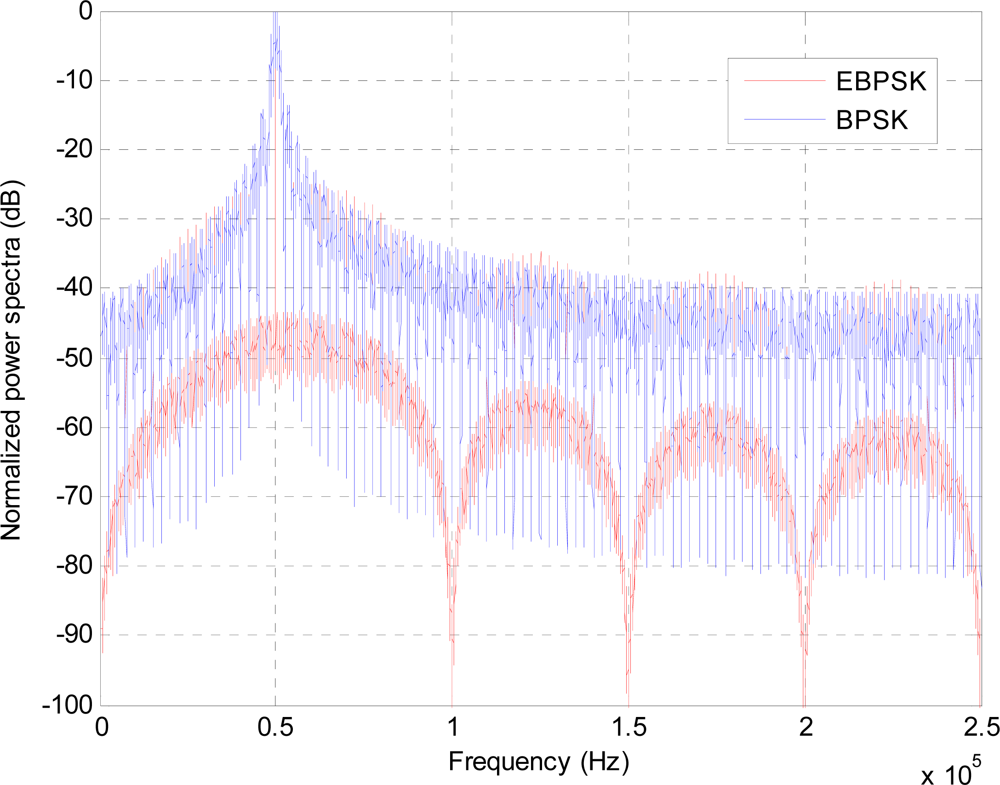
<p>It is just the classical Binary Phase Shift Keying (BPSK) modulation, so is named as the Extended BPSK. <xref ref-type="fig" rid="f1-sensors-10-03824">Figure 1</xref> depicts the normalized the power spectral density (PSD) of the typical BPSK of <xref ref-type="disp-formula" rid="FD2">(2)</xref> and the EBPSK of <xref ref-type="disp-formula" rid="FD1">(1)</xref> at the same bit rate <italic>R</italic>, where bit duration <italic>T</italic> = 20<italic>T<sub>c</sub></italic> = 20*2<italic>π</italic> / <italic>w<sub>c</sub></italic>, the phase modulation duration <italic>τ</italic> for EBPSK modulation lasts one period of carrier, <italic>i.e.</italic>, <italic>τ</italic> = <italic>T<sub>c</sub></italic> = 2<italic>π</italic> / <italic>w<sub>c</sub></italic>, the modulation angle <italic>θ</italic> = <italic>π</italic>, the amplitude <italic>A</italic> = 1, and the carrier frequency <italic>f<sub>c</sub></italic> = <italic>w<sub>c</sub></italic> / 2<italic>π</italic> = 50<italic>KHz</italic>,</p></sec>
<sec>
<label>2.2.</label>
<title>The Demodulation of EBPSK Signals</title>
<p>As we know, if 
<inline-formula>
<mml:math>
<mml:mrow>
<mml:mi>A</mml:mi>
<mml:mo>=</mml:mo>
<mml:msqrt>
<mml:mrow>
<mml:mfrac>
<mml:mrow>
<mml:mn>2</mml:mn>
<mml:msub>
<mml:mrow>
<mml:mi>E</mml:mi></mml:mrow>
<mml:mi>b</mml:mi></mml:msub></mml:mrow>
<mml:mi>T</mml:mi></mml:mfrac></mml:mrow></mml:msqrt></mml:mrow></mml:math></inline-formula>, the bit error ratio (BER) of the optimal BPSK receiver is calculated by:
<disp-formula id="FD3">
<label>(3)</label>
<mml:math display="block">
<mml:mrow>
<mml:msub>
<mml:mi>P</mml:mi>
<mml:mrow>
<mml:mi>e</mml:mi>
<mml:mo>−</mml:mo>
<mml:mi mathvariant="italic">BPSK</mml:mi></mml:mrow></mml:msub>
<mml:mo>=</mml:mo>
<mml:mi>Q</mml:mi>
<mml:mrow>
<mml:mo>(</mml:mo>
<mml:mrow>
<mml:msqrt>
<mml:mrow>
<mml:mfrac>
<mml:mrow>
<mml:mn>2</mml:mn>
<mml:msub>
<mml:mrow>
<mml:mi>E</mml:mi></mml:mrow>
<mml:mi>b</mml:mi></mml:msub></mml:mrow>
<mml:mrow>
<mml:msub>
<mml:mrow>
<mml:mi>N</mml:mi></mml:mrow>
<mml:mn>0</mml:mn></mml:msub></mml:mrow></mml:mfrac></mml:mrow></mml:msqrt></mml:mrow>
<mml:mo>)</mml:mo></mml:mrow>
<mml:mo>=</mml:mo>
<mml:mfrac>
<mml:mn>1</mml:mn>
<mml:mrow>
<mml:msqrt>
<mml:mrow>
<mml:mn>2</mml:mn>
<mml:mi>π</mml:mi></mml:mrow></mml:msqrt></mml:mrow></mml:mfrac>
<mml:mrow>
<mml:msubsup>
<mml:mo>∫</mml:mo>
<mml:mrow>
<mml:msqrt>
<mml:mrow>
<mml:mfrac>
<mml:mrow>
<mml:mn>2</mml:mn>
<mml:msub>
<mml:mrow>
<mml:mi>E</mml:mi></mml:mrow>
<mml:mi>b</mml:mi></mml:msub></mml:mrow>
<mml:mrow>
<mml:msub>
<mml:mrow>
<mml:mi>N</mml:mi></mml:mrow>
<mml:mn>0</mml:mn></mml:msub></mml:mrow></mml:mfrac></mml:mrow></mml:msqrt></mml:mrow>
<mml:mo>∞</mml:mo></mml:msubsup>
<mml:mrow>
<mml:mtext>exp</mml:mtext>
<mml:mrow>
<mml:mo>(</mml:mo>
<mml:mrow>
<mml:mo>−</mml:mo>
<mml:mfrac>
<mml:mrow>
<mml:msup>
<mml:mrow>
<mml:mi>u</mml:mi></mml:mrow>
<mml:mn>2</mml:mn></mml:msup></mml:mrow>
<mml:mn>2</mml:mn></mml:mfrac></mml:mrow>
<mml:mo>)</mml:mo></mml:mrow>
<mml:mi mathvariant="italic">du</mml:mi></mml:mrow></mml:mrow></mml:mrow></mml:math></disp-formula>where <italic>E<sub>b</sub></italic> is the signal energy used for transmitting one bit, and <italic>N</italic><sub>0</sub> is the <bold><italic>PSD</italic></bold> of Addition Gaussian White Noise (AWGN).</p>
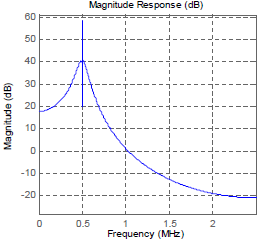
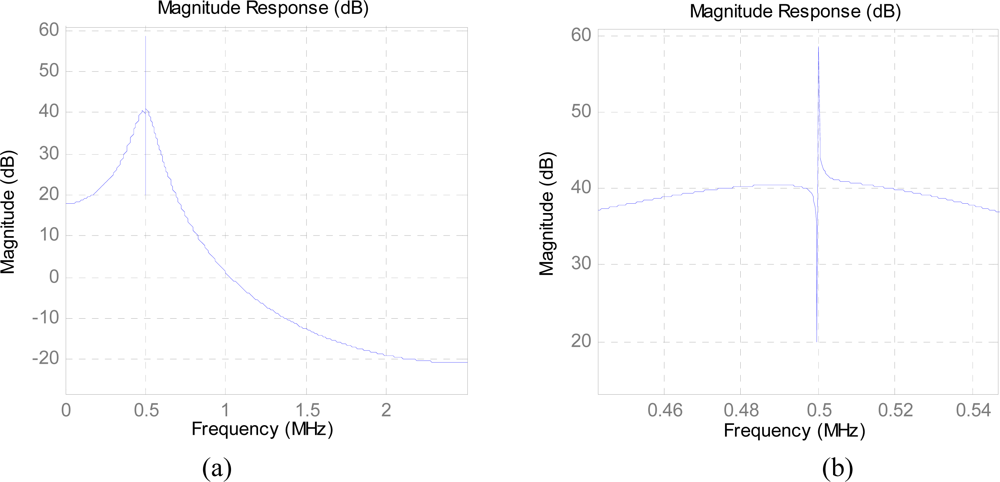
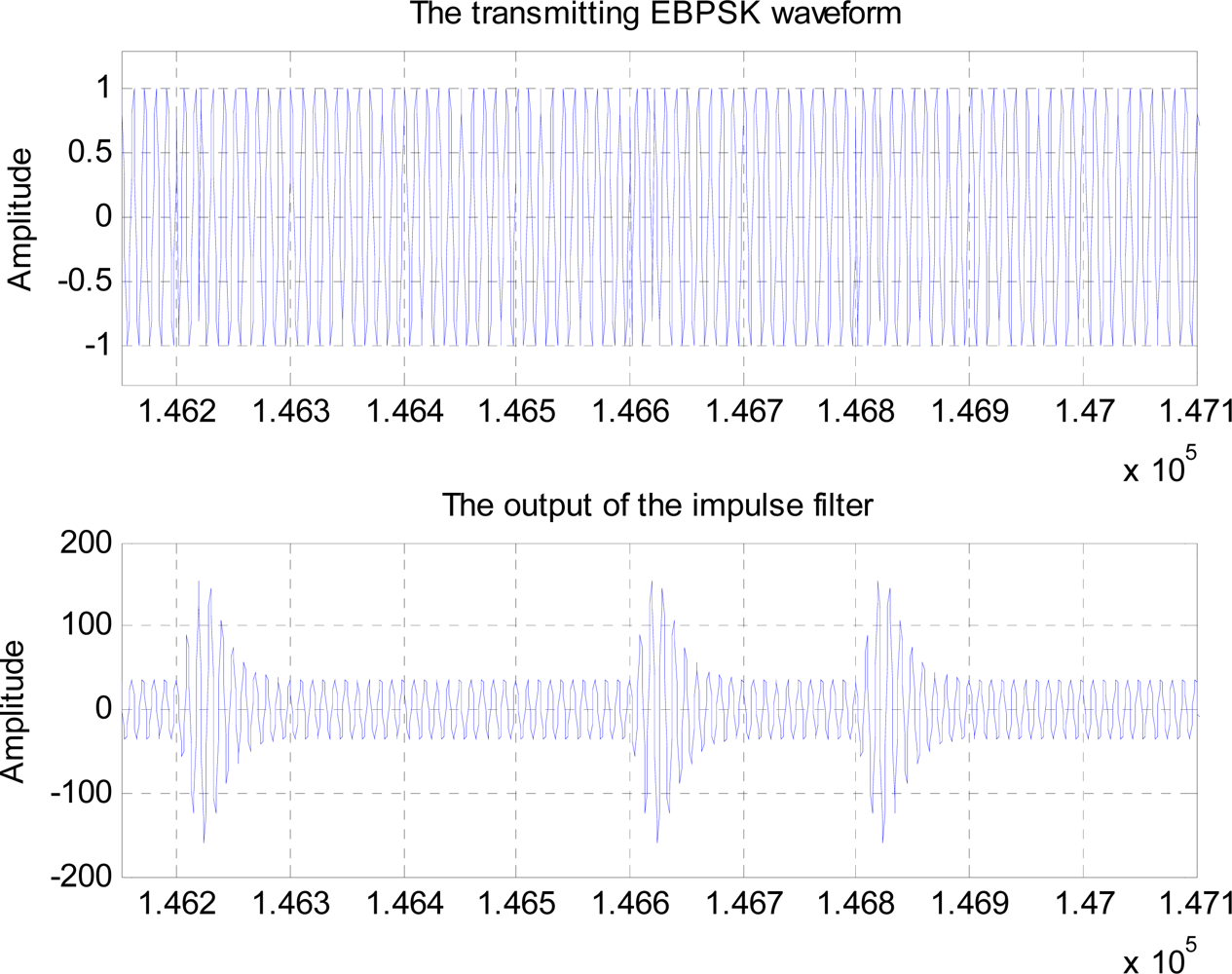
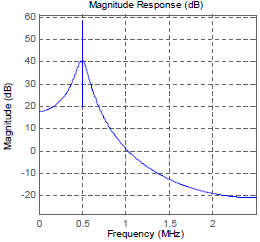
<p>However, if the same optimal BPSK receiver using traditional matched filter was utilized as the EBPSK demodulator, the BER performance would be much poorer since the difference in EBPSK modulated waveforms corresponding to “0” and “1” is very tiny and hard to detect, although in <xref ref-type="fig" rid="f1-sensors-10-03824">Figure 1</xref> more centralized PSD of the EBPSK appears. Therefore a special infinite impulse response (IIR) filter as given in <xref ref-type="fig" rid="f2-sensors-10-03824">Figure 2</xref> is used in EBPSK receiver to produce high impulse at the phase jumping points <italic>τ</italic> of bit 1s, so as to transform phase modulation into amplitude changes [<xref ref-type="bibr" rid="b10-sensors-10-03824">10</xref>]. And by this way it amplifies the signal characters as much as possible and removes utmost noise. <xref ref-type="fig" rid="f3-sensors-10-03824">Figure 3</xref> depicts the response of this filter to EBPSK modulated signals. Obviously, a simple amplitude detector followed would perform the demodulation of EBPSK signals because of the existence of high impulse in coded 1 s. Therefore, we gave this kind of filter the name of “impacting filter” [<xref ref-type="bibr" rid="b10-sensors-10-03824">10</xref>].</p></sec></sec>
<sec>
<label>3.</label>
<title>BER Performance of EBPSK Receivers</title>
<sec>
<label>3.1.</label>
<title>The Derivation of a BER Expression</title>
<p>In this section, the BER performance of the impacting filter based EBPSK receiver is analyzed in an AWGN channel.</p>
<p>The EBPSK modulated waveform corresponding to “0” is a pure sine wave, after passing the AWGN channel and the special impacting filter at the receiver, then the envelope <italic>r</italic><sub>0</sub> of the filter output is with Rice distribution [<xref ref-type="bibr" rid="b11-sensors-10-03824">11</xref>], whose probability density function (pdf) [<xref ref-type="bibr" rid="b12-sensors-10-03824">12</xref>] is as follows:
<disp-formula id="FD4">
<label>(4)</label>
<mml:math display="block">
<mml:mrow>
<mml:mi>p</mml:mi>
<mml:mo stretchy="false">(</mml:mo>
<mml:msub>
<mml:mrow>
<mml:mi>r</mml:mi></mml:mrow>
<mml:mn>0</mml:mn></mml:msub>
<mml:mo stretchy="false">)</mml:mo>
<mml:mo>=</mml:mo>
<mml:mfrac>
<mml:mrow>
<mml:msub>
<mml:mrow>
<mml:mi>r</mml:mi></mml:mrow>
<mml:mn>0</mml:mn></mml:msub></mml:mrow>
<mml:mrow>
<mml:msup>
<mml:mrow>
<mml:mi>σ</mml:mi></mml:mrow>
<mml:mn>2</mml:mn></mml:msup></mml:mrow></mml:mfrac>
<mml:mtext>exp</mml:mtext>
<mml:mrow>
<mml:mo>(</mml:mo>
<mml:mrow>
<mml:mo>−</mml:mo>
<mml:mfrac>
<mml:mrow>
<mml:msubsup>
<mml:mrow>
<mml:mi>r</mml:mi></mml:mrow>
<mml:mn>0</mml:mn>
<mml:mn>2</mml:mn></mml:msubsup>
<mml:mo>+</mml:mo>
<mml:msubsup>
<mml:mrow>
<mml:mi>A</mml:mi></mml:mrow>
<mml:mn>0</mml:mn>
<mml:mn>2</mml:mn></mml:msubsup></mml:mrow>
<mml:mrow>
<mml:mn>2</mml:mn>
<mml:msup>
<mml:mrow>
<mml:mi>σ</mml:mi></mml:mrow>
<mml:mn>2</mml:mn></mml:msup></mml:mrow></mml:mfrac></mml:mrow>
<mml:mo>)</mml:mo></mml:mrow>
<mml:mo>·</mml:mo>
<mml:msub>
<mml:mrow>
<mml:mi>I</mml:mi></mml:mrow>
<mml:mn>0</mml:mn></mml:msub>
<mml:mrow>
<mml:mo>(</mml:mo>
<mml:mrow>
<mml:mfrac>
<mml:mrow>
<mml:msub>
<mml:mrow>
<mml:mi>r</mml:mi></mml:mrow>
<mml:mn>0</mml:mn></mml:msub>
<mml:msub>
<mml:mrow>
<mml:mi>A</mml:mi></mml:mrow>
<mml:mn>0</mml:mn></mml:msub></mml:mrow>
<mml:mrow>
<mml:msup>
<mml:mrow>
<mml:mi>σ</mml:mi></mml:mrow>
<mml:mn>2</mml:mn></mml:msup></mml:mrow></mml:mfrac></mml:mrow>
<mml:mo>)</mml:mo></mml:mrow></mml:mrow></mml:math></disp-formula>where <italic>A</italic><sub>0</sub> is the amplitude of the filter output, <italic>σ</italic><sup>2</sup> the noise variance, and <italic>I</italic><sub>0</sub>(<italic>z</italic>) the zero-order modified Bessel function, defined as follows:
<disp-formula id="FD5">
<label>(5)</label>
<mml:math display="block">
<mml:mrow>
<mml:msub>
<mml:mrow>
<mml:mi>I</mml:mi></mml:mrow>
<mml:mn>0</mml:mn></mml:msub>
<mml:mo stretchy="false">(</mml:mo>
<mml:mi>z</mml:mi>
<mml:mo stretchy="false">)</mml:mo>
<mml:mo>=</mml:mo>
<mml:munderover>
<mml:mo>∑</mml:mo>
<mml:mrow>
<mml:mi>n</mml:mi>
<mml:mo>=</mml:mo>
<mml:mn>0</mml:mn></mml:mrow>
<mml:mo>∞</mml:mo></mml:munderover>
<mml:mrow>
<mml:mfrac>
<mml:mrow>
<mml:msup>
<mml:mrow>
<mml:mi>z</mml:mi></mml:mrow>
<mml:mrow>
<mml:mn>2</mml:mn>
<mml:mi>n</mml:mi></mml:mrow></mml:msup></mml:mrow>
<mml:mrow>
<mml:msup>
<mml:mrow>
<mml:mn>2</mml:mn></mml:mrow>
<mml:mrow>
<mml:mn>2</mml:mn>
<mml:mi>n</mml:mi></mml:mrow></mml:msup>
<mml:mo>·</mml:mo>
<mml:mi>n</mml:mi>
<mml:mo>!</mml:mo>
<mml:mo>·</mml:mo>
<mml:mi>n</mml:mi>
<mml:mo>!</mml:mo></mml:mrow></mml:mfrac></mml:mrow></mml:mrow></mml:math></disp-formula></p>
<p>A similar analysis can also be done aiming at code “1”. If we only consider those periods with phase jumping during <italic>τ</italic>, the jumping information can be transformed into parasitic amplitude information after receiving filter, <italic>i.e.</italic>, producing the higher amplitude impulse. At this time, its envelope <italic>r</italic><sub>1</sub> still is Rice distribution, the corresponding pdf is:
<disp-formula id="FD6">
<label>(6)</label>
<mml:math display="block">
<mml:mrow>
<mml:mi>p</mml:mi>
<mml:mo stretchy="false">(</mml:mo>
<mml:msub>
<mml:mrow>
<mml:mi>r</mml:mi></mml:mrow>
<mml:mn>1</mml:mn></mml:msub>
<mml:mo stretchy="false">)</mml:mo>
<mml:mo>=</mml:mo>
<mml:mfrac>
<mml:mrow>
<mml:msub>
<mml:mrow>
<mml:mi>r</mml:mi></mml:mrow>
<mml:mn>1</mml:mn></mml:msub></mml:mrow>
<mml:mrow>
<mml:msup>
<mml:mrow>
<mml:mi>σ</mml:mi></mml:mrow>
<mml:mn>2</mml:mn></mml:msup></mml:mrow></mml:mfrac>
<mml:mtext>exp</mml:mtext>
<mml:mrow>
<mml:mo>(</mml:mo>
<mml:mrow>
<mml:mo>−</mml:mo>
<mml:mfrac>
<mml:mrow>
<mml:msubsup>
<mml:mrow>
<mml:mi>r</mml:mi></mml:mrow>
<mml:mn>1</mml:mn>
<mml:mn>2</mml:mn></mml:msubsup>
<mml:mo>+</mml:mo>
<mml:msubsup>
<mml:mrow>
<mml:mi>A</mml:mi></mml:mrow>
<mml:mn>1</mml:mn>
<mml:mn>2</mml:mn></mml:msubsup></mml:mrow>
<mml:mrow>
<mml:mn>2</mml:mn>
<mml:msup>
<mml:mrow>
<mml:mi>σ</mml:mi></mml:mrow>
<mml:mn>2</mml:mn></mml:msup></mml:mrow></mml:mfrac></mml:mrow>
<mml:mo>)</mml:mo></mml:mrow>
<mml:mo>·</mml:mo>
<mml:msub>
<mml:mrow>
<mml:mi>I</mml:mi></mml:mrow>
<mml:mn>0</mml:mn></mml:msub>
<mml:mrow>
<mml:mo>(</mml:mo>
<mml:mrow>
<mml:mfrac>
<mml:mrow>
<mml:msub>
<mml:mrow>
<mml:mi>r</mml:mi></mml:mrow>
<mml:mn>1</mml:mn></mml:msub>
<mml:msub>
<mml:mrow>
<mml:mi>A</mml:mi></mml:mrow>
<mml:mn>1</mml:mn></mml:msub></mml:mrow>
<mml:mrow>
<mml:msup>
<mml:mrow>
<mml:mi>σ</mml:mi></mml:mrow>
<mml:mn>2</mml:mn></mml:msup></mml:mrow></mml:mfrac></mml:mrow>
<mml:mo>)</mml:mo></mml:mrow></mml:mrow></mml:math></disp-formula></p>
<p>This derivation of the BER is based on the special and linear impacting filter as given in <xref ref-type="fig" rid="f2-sensors-10-03824">Figure 2</xref>, which can produce the amplitude impulse at the point of the phase jumping corresponding to code “1” that is much higher than the background of code “0”, <italic>i.e.</italic>, <italic>A</italic><sub>1</sub> &gt; <italic>A</italic><sub>0</sub>. Let <italic>A</italic><sub>1</sub> = <italic>A</italic><sub>0</sub> + Δ<italic>A</italic> = <italic>A</italic><sub>0</sub> + <italic>kA</italic><sub>0</sub> and <italic>k</italic> &gt; 0</p>
<p>Therefore, assuming that code “0” and “1” be transmitted with equal probability and the decision threshold be <italic>U<sub>T</sub></italic>, then the BER of the EBPSK system should be:
<disp-formula id="FD7">
<label>(7)</label>
<mml:math display="block">
<mml:mtable columnalign="left">
<mml:mtr>
<mml:mtd>
<mml:msub>
<mml:mrow>
<mml:mi>P</mml:mi></mml:mrow>
<mml:mrow>
<mml:mi mathvariant="italic">e-EBPSK</mml:mi></mml:mrow></mml:msub></mml:mtd>
<mml:mtd>
<mml:mo>=</mml:mo>
<mml:mfrac>
<mml:mn>1</mml:mn>
<mml:mn>2</mml:mn></mml:mfrac>
<mml:mo stretchy="false">[</mml:mo>
<mml:mi>P</mml:mi>
<mml:mo stretchy="false">(</mml:mo>
<mml:mn>1</mml:mn>
<mml:mo stretchy="false">|</mml:mo>
<mml:mn>0</mml:mn>
<mml:mo stretchy="false">)</mml:mo>
<mml:mo>+</mml:mo>
<mml:mi>P</mml:mi>
<mml:mo stretchy="false">(</mml:mo>
<mml:mn>0</mml:mn>
<mml:mo stretchy="false">|</mml:mo>
<mml:mn>1</mml:mn>
<mml:mo stretchy="false">)</mml:mo>
<mml:mo stretchy="false">]</mml:mo></mml:mtd></mml:mtr>
<mml:mtr>
<mml:mtd>
<mml:mrow/></mml:mtd>
<mml:mtd>
<mml:mo>=</mml:mo>
<mml:mfrac>
<mml:mn>1</mml:mn>
<mml:mn>2</mml:mn></mml:mfrac>
<mml:mrow>
<mml:mo>[</mml:mo>
<mml:mrow>
<mml:mrow>
<mml:msubsup>
<mml:mo>∫</mml:mo>
<mml:mrow>
<mml:msub>
<mml:mrow>
<mml:mi>U</mml:mi></mml:mrow>
<mml:mi>T</mml:mi></mml:msub></mml:mrow>
<mml:mo>∞</mml:mo></mml:msubsup>
<mml:mo> </mml:mo>
<mml:mrow>
<mml:mi>p</mml:mi>
<mml:mo stretchy="false">(</mml:mo>
<mml:msub>
<mml:mrow>
<mml:mi>r</mml:mi></mml:mrow>
<mml:mn>0</mml:mn></mml:msub>
<mml:mo stretchy="false">)</mml:mo>
<mml:msub>
<mml:mrow>
<mml:mi mathvariant="italic">dr</mml:mi></mml:mrow>
<mml:mn>0</mml:mn></mml:msub></mml:mrow></mml:mrow>
<mml:mo>+</mml:mo>
<mml:mrow>
<mml:msubsup>
<mml:mo>∫</mml:mo>
<mml:mrow>
<mml:mo>−</mml:mo>
<mml:mo>∞</mml:mo></mml:mrow>
<mml:mrow>
<mml:msub>
<mml:mrow>
<mml:mi>U</mml:mi></mml:mrow>
<mml:mi>T</mml:mi></mml:msub></mml:mrow></mml:msubsup>
<mml:mo> </mml:mo>
<mml:mrow>
<mml:mi>p</mml:mi>
<mml:mo stretchy="false">(</mml:mo>
<mml:msub>
<mml:mrow>
<mml:mi>r</mml:mi></mml:mrow>
<mml:mn>1</mml:mn></mml:msub>
<mml:mo stretchy="false">)</mml:mo>
<mml:msub>
<mml:mi mathvariant="italic">dr</mml:mi>
<mml:mn>1</mml:mn></mml:msub></mml:mrow></mml:mrow></mml:mrow>
<mml:mo>]</mml:mo></mml:mrow></mml:mtd></mml:mtr>
<mml:mtr>
<mml:mtd>
<mml:mrow/></mml:mtd>
<mml:mtd>
<mml:mo>=</mml:mo>
<mml:mfrac>
<mml:mn>1</mml:mn>
<mml:mn>2</mml:mn></mml:mfrac>
<mml:mrow>
<mml:mo>[</mml:mo>
<mml:mrow>
<mml:mrow>
<mml:msubsup>
<mml:mo>∫</mml:mo>
<mml:mrow>
<mml:msub>
<mml:mrow>
<mml:mi>U</mml:mi></mml:mrow>
<mml:mi>T</mml:mi></mml:msub></mml:mrow>
<mml:mo>∞</mml:mo></mml:msubsup>
<mml:mrow>
<mml:mfrac>
<mml:mrow>
<mml:msub>
<mml:mrow>
<mml:mi>r</mml:mi></mml:mrow>
<mml:mn>0</mml:mn></mml:msub></mml:mrow>
<mml:mrow>
<mml:msup>
<mml:mrow>
<mml:mi>σ</mml:mi></mml:mrow>
<mml:mn>2</mml:mn></mml:msup></mml:mrow></mml:mfrac>
<mml:mtext>exp</mml:mtext>
<mml:mrow>
<mml:mo>(</mml:mo>
<mml:mrow>
<mml:mo>−</mml:mo>
<mml:mfrac>
<mml:mrow>
<mml:msubsup>
<mml:mrow>
<mml:mi>r</mml:mi></mml:mrow>
<mml:mn>0</mml:mn>
<mml:mn>2</mml:mn></mml:msubsup>
<mml:mo>+</mml:mo>
<mml:msubsup>
<mml:mrow>
<mml:mi>A</mml:mi></mml:mrow>
<mml:mn>0</mml:mn>
<mml:mn>2</mml:mn></mml:msubsup></mml:mrow>
<mml:mrow>
<mml:mn>2</mml:mn>
<mml:msup>
<mml:mrow>
<mml:mi>σ</mml:mi></mml:mrow>
<mml:mn>2</mml:mn></mml:msup></mml:mrow></mml:mfrac></mml:mrow>
<mml:mo>)</mml:mo></mml:mrow>
<mml:mo>·</mml:mo>
<mml:msub>
<mml:mrow>
<mml:mi>I</mml:mi></mml:mrow>
<mml:mn>0</mml:mn></mml:msub>
<mml:mrow>
<mml:mo>(</mml:mo>
<mml:mrow>
<mml:mfrac>
<mml:mrow>
<mml:msub>
<mml:mrow>
<mml:mi>r</mml:mi></mml:mrow>
<mml:mn>0</mml:mn></mml:msub>
<mml:msub>
<mml:mrow>
<mml:mi>A</mml:mi></mml:mrow>
<mml:mn>0</mml:mn></mml:msub></mml:mrow>
<mml:mrow>
<mml:msup>
<mml:mrow>
<mml:mi>σ</mml:mi></mml:mrow>
<mml:mn>2</mml:mn></mml:msup></mml:mrow></mml:mfrac></mml:mrow>
<mml:mo>)</mml:mo></mml:mrow>
<mml:msub>
<mml:mrow>
<mml:mi mathvariant="italic">dr</mml:mi></mml:mrow>
<mml:mn>0</mml:mn></mml:msub></mml:mrow></mml:mrow>
<mml:mo>+</mml:mo>
<mml:mrow>
<mml:msubsup>
<mml:mo>∫</mml:mo>
<mml:mrow>
<mml:mo>−</mml:mo>
<mml:mo>∞</mml:mo></mml:mrow>
<mml:mrow>
<mml:msub>
<mml:mrow>
<mml:mi>U</mml:mi></mml:mrow>
<mml:mi>T</mml:mi></mml:msub></mml:mrow></mml:msubsup>
<mml:mrow>
<mml:mfrac>
<mml:mrow>
<mml:msub>
<mml:mrow>
<mml:mi>r</mml:mi></mml:mrow>
<mml:mn>1</mml:mn></mml:msub></mml:mrow>
<mml:mrow>
<mml:msup>
<mml:mrow>
<mml:mi>σ</mml:mi></mml:mrow>
<mml:mn>2</mml:mn></mml:msup></mml:mrow></mml:mfrac>
<mml:mtext>exp</mml:mtext>
<mml:mrow>
<mml:mo>(</mml:mo>
<mml:mrow>
<mml:mo>−</mml:mo>
<mml:mfrac>
<mml:mrow>
<mml:msubsup>
<mml:mrow>
<mml:mi>r</mml:mi></mml:mrow>
<mml:mn>1</mml:mn>
<mml:mn>2</mml:mn></mml:msubsup>
<mml:mo>+</mml:mo>
<mml:msubsup>
<mml:mrow>
<mml:mi>A</mml:mi></mml:mrow>
<mml:mn>1</mml:mn>
<mml:mn>2</mml:mn></mml:msubsup></mml:mrow>
<mml:mrow>
<mml:mn>2</mml:mn>
<mml:msup>
<mml:mrow>
<mml:mi>σ</mml:mi></mml:mrow>
<mml:mn>2</mml:mn></mml:msup></mml:mrow></mml:mfrac></mml:mrow>
<mml:mo>)</mml:mo></mml:mrow>
<mml:mo>·</mml:mo>
<mml:msub>
<mml:mrow>
<mml:mi>I</mml:mi></mml:mrow>
<mml:mn>0</mml:mn></mml:msub>
<mml:mrow>
<mml:mo>(</mml:mo>
<mml:mrow>
<mml:mfrac>
<mml:mrow>
<mml:msub>
<mml:mrow>
<mml:mi>r</mml:mi></mml:mrow>
<mml:mn>1</mml:mn></mml:msub>
<mml:msub>
<mml:mrow>
<mml:mi>A</mml:mi></mml:mrow>
<mml:mn>1</mml:mn></mml:msub></mml:mrow>
<mml:mrow>
<mml:msup>
<mml:mrow>
<mml:mi>σ</mml:mi></mml:mrow>
<mml:mn>2</mml:mn></mml:msup></mml:mrow></mml:mfrac></mml:mrow>
<mml:mo>)</mml:mo></mml:mrow>
<mml:msub>
<mml:mrow>
<mml:mi mathvariant="italic">dr</mml:mi></mml:mrow>
<mml:mn>1</mml:mn></mml:msub></mml:mrow></mml:mrow></mml:mrow>
<mml:mo>]</mml:mo></mml:mrow></mml:mtd></mml:mtr>
<mml:mtr>
<mml:mtd>
<mml:mrow/></mml:mtd>
<mml:mtd>
<mml:mo>=</mml:mo>
<mml:mfrac>
<mml:mn>1</mml:mn>
<mml:mn>2</mml:mn></mml:mfrac>
<mml:mo stretchy="false">[</mml:mo>
<mml:mn>1</mml:mn>
<mml:mo>−</mml:mo>
<mml:msub>
<mml:mrow>
<mml:mi>F</mml:mi></mml:mrow>
<mml:mn>0</mml:mn></mml:msub>
<mml:mo stretchy="false">(</mml:mo>
<mml:msub>
<mml:mrow>
<mml:mi>u</mml:mi></mml:mrow>
<mml:mi>T</mml:mi></mml:msub>
<mml:mo stretchy="false">)</mml:mo>
<mml:mo>+</mml:mo>
<mml:msub>
<mml:mrow>
<mml:mi>F</mml:mi></mml:mrow>
<mml:mn>1</mml:mn></mml:msub>
<mml:mo stretchy="false">(</mml:mo>
<mml:msub>
<mml:mrow>
<mml:mi>u</mml:mi></mml:mrow>
<mml:mi>T</mml:mi></mml:msub>
<mml:mo stretchy="false">)</mml:mo>
<mml:mo stretchy="false">]</mml:mo></mml:mtd></mml:mtr>
<mml:mtr>
<mml:mtd>
<mml:mrow/></mml:mtd>
<mml:mtd>
<mml:mo>=</mml:mo>
<mml:mfrac>
<mml:mn>1</mml:mn>
<mml:mn>2</mml:mn></mml:mfrac>
<mml:mrow>
<mml:mo>[</mml:mo>
<mml:mrow>
<mml:mn>1</mml:mn>
<mml:mo>+</mml:mo>
<mml:msub>
<mml:mrow>
<mml:mi>Q</mml:mi></mml:mrow>
<mml:mn>1</mml:mn></mml:msub>
<mml:mrow>
<mml:mo>(</mml:mo>
<mml:mrow>
<mml:mfrac>
<mml:mrow>
<mml:msub>
<mml:mrow>
<mml:mi>A</mml:mi></mml:mrow>
<mml:mn>0</mml:mn></mml:msub></mml:mrow>
<mml:mi>σ</mml:mi></mml:mfrac>
<mml:mo>,</mml:mo>
<mml:mfrac>
<mml:mrow>
<mml:msub>
<mml:mrow>
<mml:mi>U</mml:mi></mml:mrow>
<mml:mi>T</mml:mi></mml:msub></mml:mrow>
<mml:mi>σ</mml:mi></mml:mfrac></mml:mrow>
<mml:mo>)</mml:mo></mml:mrow>
<mml:mo>−</mml:mo>
<mml:msub>
<mml:mrow>
<mml:mi>Q</mml:mi></mml:mrow>
<mml:mn>1</mml:mn></mml:msub>
<mml:mrow>
<mml:mo>(</mml:mo>
<mml:mrow>
<mml:mfrac>
<mml:mrow>
<mml:mo stretchy="false">(</mml:mo>
<mml:mn>1</mml:mn>
<mml:mo>+</mml:mo>
<mml:mi>k</mml:mi>
<mml:mo stretchy="false">)</mml:mo>
<mml:msub>
<mml:mrow>
<mml:mi>A</mml:mi></mml:mrow>
<mml:mn>0</mml:mn></mml:msub></mml:mrow>
<mml:mi>σ</mml:mi></mml:mfrac>
<mml:mo>,</mml:mo>
<mml:mfrac>
<mml:mrow>
<mml:msub>
<mml:mrow>
<mml:mi>U</mml:mi></mml:mrow>
<mml:mi>T</mml:mi></mml:msub></mml:mrow>
<mml:mi>σ</mml:mi></mml:mfrac></mml:mrow>
<mml:mo>)</mml:mo></mml:mrow></mml:mrow>
<mml:mo>]</mml:mo></mml:mrow></mml:mtd></mml:mtr></mml:mtable></mml:math></disp-formula>where <italic>F</italic><sub>0</sub>(<italic>x</italic>) and <italic>F</italic><sub>1</sub>(<italic>x</italic>) is cumulative distribution function of Ricean random variable <italic>r</italic><sub>0</sub> and <italic>r</italic><sub>1</sub>, respectively, and <italic>Q</italic><sub>1</sub>(<italic>a,b</italic>) is Marcum’s fuction, defined as follows:
<disp-formula id="FD8">
<label>(8)</label>
<mml:math display="block">
<mml:mrow>
<mml:msub>
<mml:mrow>
<mml:mi>Q</mml:mi></mml:mrow>
<mml:mn>1</mml:mn></mml:msub>
<mml:mo stretchy="false">(</mml:mo>
<mml:mi>a</mml:mi>
<mml:mo>,</mml:mo>
<mml:mi>b</mml:mi>
<mml:mo stretchy="false">)</mml:mo>
<mml:mo>=</mml:mo>
<mml:msup>
<mml:mrow>
<mml:mi>e</mml:mi></mml:mrow>
<mml:mrow>
<mml:mo>−</mml:mo>
<mml:mo stretchy="false">(</mml:mo>
<mml:msup>
<mml:mrow>
<mml:mi>a</mml:mi></mml:mrow>
<mml:mn>2</mml:mn></mml:msup>
<mml:mo>+</mml:mo>
<mml:msup>
<mml:mrow>
<mml:mi>b</mml:mi></mml:mrow>
<mml:mn>2</mml:mn></mml:msup>
<mml:mo stretchy="false">)</mml:mo>
<mml:mo>/</mml:mo>
<mml:mn>2</mml:mn></mml:mrow></mml:msup>
<mml:munderover>
<mml:mo>∑</mml:mo>
<mml:mrow>
<mml:mi>k</mml:mi>
<mml:mo>=</mml:mo>
<mml:mn>0</mml:mn></mml:mrow>
<mml:mo>∞</mml:mo></mml:munderover>
<mml:mrow>
<mml:msup>
<mml:mrow>
<mml:mrow>
<mml:mrow>
<mml:mo>(</mml:mo>
<mml:mrow>
<mml:mfrac>
<mml:mi>a</mml:mi>
<mml:mi>b</mml:mi></mml:mfrac></mml:mrow>
<mml:mo>)</mml:mo></mml:mrow></mml:mrow></mml:mrow>
<mml:mi>k</mml:mi></mml:msup>
<mml:mo> </mml:mo>
<mml:msub>
<mml:mrow>
<mml:mi>I</mml:mi></mml:mrow>
<mml:mi>k</mml:mi></mml:msub>
<mml:mo stretchy="false">(</mml:mo>
<mml:mi mathvariant="italic">ab</mml:mi>
<mml:mo stretchy="false">)</mml:mo></mml:mrow></mml:mrow></mml:math></disp-formula></p></sec>
<sec>
<label>3.2.</label>
<title>Calculation of the Parameters in the BER Formula</title>
<p>We will now discuss in detail how to ascertain the parameters <italic>A</italic><sub>0</sub>, <italic>k</italic>, <italic>σ</italic><sup>2</sup> and <italic>U<sub>T</sub></italic> in the BER formula <xref ref-type="disp-formula" rid="FD7">(7)</xref> in this subsection.</p>
<p>(1) The amplitude <italic>A</italic><sub>0</sub> is evaluated as follows:</p>
<p>In EBPSK modulation and via Fourier transform:
<disp-formula id="FD9">
<label>(9)</label>
<mml:math display="block">
<mml:mrow>
<mml:msub>
<mml:mrow>
<mml:mi>g</mml:mi></mml:mrow>
<mml:mn>0</mml:mn></mml:msub>
<mml:mo stretchy="false">(</mml:mo>
<mml:mi>t</mml:mi>
<mml:mo stretchy="false">)</mml:mo>
<mml:mo>=</mml:mo>
<mml:mi>A</mml:mi>
<mml:mo> </mml:mo>
<mml:mtext>sin</mml:mtext>
<mml:mo> </mml:mo>
<mml:msub>
<mml:mrow>
<mml:mi>w</mml:mi></mml:mrow>
<mml:mi>c</mml:mi></mml:msub>
<mml:mi>t</mml:mi>
<mml:mover>
<mml:mo stretchy="true">↔</mml:mo>
<mml:mi>F</mml:mi></mml:mover>
<mml:msub>
<mml:mrow>
<mml:mi>G</mml:mi></mml:mrow>
<mml:mn>0</mml:mn></mml:msub>
<mml:mo stretchy="false">(</mml:mo>
<mml:mi>w</mml:mi>
<mml:mo stretchy="false">)</mml:mo>
<mml:mo>=</mml:mo>
<mml:mi>A</mml:mi>
<mml:mfrac>
<mml:mi>π</mml:mi>
<mml:mi>j</mml:mi></mml:mfrac>
<mml:mo stretchy="false">[</mml:mo>
<mml:mi>δ</mml:mi>
<mml:mo stretchy="false">(</mml:mo>
<mml:mi>w</mml:mi>
<mml:mo>−</mml:mo>
<mml:msub>
<mml:mrow>
<mml:mi>w</mml:mi></mml:mrow>
<mml:mi>c</mml:mi></mml:msub>
<mml:mo stretchy="false">)</mml:mo>
<mml:mo>−</mml:mo>
<mml:mi>δ</mml:mi>
<mml:mo stretchy="false">(</mml:mo>
<mml:mi>w</mml:mi>
<mml:mo>+</mml:mo>
<mml:msub>
<mml:mrow>
<mml:mi>w</mml:mi></mml:mrow>
<mml:mi>c</mml:mi></mml:msub>
<mml:mo stretchy="false">)</mml:mo>
<mml:mo stretchy="false">]</mml:mo></mml:mrow></mml:math></disp-formula></p>
<p>Let the frequency response of the filter be <italic>H</italic>(<italic>w</italic>), then the signal filtered in frequency domain can be written as:
<disp-formula id="FD10">
<label>(10)</label>
<mml:math display="block">
<mml:mtable columnalign="left">
<mml:mtr>
<mml:mtd>
<mml:msub>
<mml:mrow>
<mml:mi>Y</mml:mi></mml:mrow>
<mml:mn>0</mml:mn></mml:msub>
<mml:mo stretchy="false">(</mml:mo>
<mml:mi>w</mml:mi>
<mml:mo stretchy="false">)</mml:mo></mml:mtd>
<mml:mtd>
<mml:mo>=</mml:mo>
<mml:msub>
<mml:mrow>
<mml:mi>G</mml:mi></mml:mrow>
<mml:mn>0</mml:mn></mml:msub>
<mml:mo stretchy="false">(</mml:mo>
<mml:mi>w</mml:mi>
<mml:mo stretchy="false">)</mml:mo>
<mml:mo>·</mml:mo>
<mml:mi>H</mml:mi>
<mml:mo stretchy="false">(</mml:mo>
<mml:mi>w</mml:mi>
<mml:mo stretchy="false">)</mml:mo>
<mml:mo>=</mml:mo>
<mml:mi>A</mml:mi>
<mml:mfrac>
<mml:mi>π</mml:mi>
<mml:mi>j</mml:mi></mml:mfrac>
<mml:mo stretchy="false">[</mml:mo>
<mml:mi>δ</mml:mi>
<mml:mo stretchy="false">(</mml:mo>
<mml:mi>w</mml:mi>
<mml:mo>−</mml:mo>
<mml:msub>
<mml:mrow>
<mml:mi>w</mml:mi></mml:mrow>
<mml:mi>c</mml:mi></mml:msub>
<mml:mo stretchy="false">)</mml:mo>
<mml:mo>−</mml:mo>
<mml:mi>δ</mml:mi>
<mml:mo stretchy="false">(</mml:mo>
<mml:mi>w</mml:mi>
<mml:mo>+</mml:mo>
<mml:msub>
<mml:mrow>
<mml:mi>w</mml:mi></mml:mrow>
<mml:mi>c</mml:mi></mml:msub>
<mml:mo stretchy="false">)</mml:mo>
<mml:mo stretchy="false">]</mml:mo>
<mml:mo>·</mml:mo>
<mml:mi>H</mml:mi>
<mml:mo stretchy="false">(</mml:mo>
<mml:mi>w</mml:mi>
<mml:mo stretchy="false">)</mml:mo></mml:mtd></mml:mtr>
<mml:mtr>
<mml:mtd>
<mml:mrow/></mml:mtd>
<mml:mtd>
<mml:mo>=</mml:mo>
<mml:mi>A</mml:mi>
<mml:mfrac>
<mml:mi>π</mml:mi>
<mml:mi>j</mml:mi></mml:mfrac>
<mml:mo>·</mml:mo>
<mml:mi>H</mml:mi>
<mml:mo stretchy="false">(</mml:mo>
<mml:msub>
<mml:mrow>
<mml:mi>w</mml:mi></mml:mrow>
<mml:mi>c</mml:mi></mml:msub>
<mml:mo stretchy="false">)</mml:mo>
<mml:mo>·</mml:mo>
<mml:mi>δ</mml:mi>
<mml:mo stretchy="false">(</mml:mo>
<mml:mi>w</mml:mi>
<mml:mo>−</mml:mo>
<mml:msub>
<mml:mrow>
<mml:mi>w</mml:mi></mml:mrow>
<mml:mi>c</mml:mi></mml:msub>
<mml:mo stretchy="false">)</mml:mo>
<mml:mo>−</mml:mo>
<mml:mi>A</mml:mi>
<mml:mfrac>
<mml:mi>π</mml:mi>
<mml:mi>j</mml:mi></mml:mfrac>
<mml:mo>·</mml:mo>
<mml:mi>H</mml:mi>
<mml:mo stretchy="false">(</mml:mo>
<mml:mo>−</mml:mo>
<mml:msub>
<mml:mrow>
<mml:mi>w</mml:mi></mml:mrow>
<mml:mi>c</mml:mi></mml:msub>
<mml:mo stretchy="false">)</mml:mo>
<mml:mo>·</mml:mo>
<mml:mi>δ</mml:mi>
<mml:mo stretchy="false">(</mml:mo>
<mml:mi>w</mml:mi>
<mml:mo>+</mml:mo>
<mml:msub>
<mml:mrow>
<mml:mi>w</mml:mi></mml:mrow>
<mml:mi>c</mml:mi></mml:msub>
<mml:mo stretchy="false">)</mml:mo></mml:mtd></mml:mtr></mml:mtable></mml:math></disp-formula></p>
<p>So the waveform in time domain is:
<disp-formula id="FD11">
<label>(11)</label>
<mml:math display="block">
<mml:mtable columnalign="left">
<mml:mtr>
<mml:mtd>
<mml:msub>
<mml:mrow>
<mml:mi>y</mml:mi></mml:mrow>
<mml:mn>0</mml:mn></mml:msub>
<mml:mo stretchy="false">(</mml:mo>
<mml:mi>t</mml:mi>
<mml:mo stretchy="false">)</mml:mo></mml:mtd>
<mml:mtd>
<mml:mo>=</mml:mo>
<mml:msup>
<mml:mrow>
<mml:mi>F</mml:mi></mml:mrow>
<mml:mrow>
<mml:mo>−</mml:mo>
<mml:mn>1</mml:mn></mml:mrow></mml:msup>
<mml:mo stretchy="false">[</mml:mo>
<mml:msub>
<mml:mrow>
<mml:mi>Y</mml:mi></mml:mrow>
<mml:mn>0</mml:mn></mml:msub>
<mml:mo stretchy="false">(</mml:mo>
<mml:mi>w</mml:mi>
<mml:mo stretchy="false">)</mml:mo>
<mml:mo stretchy="false">]</mml:mo>
<mml:mo>=</mml:mo>
<mml:mfrac>
<mml:mi>A</mml:mi>
<mml:mrow>
<mml:mn>2</mml:mn>
<mml:mi>j</mml:mi></mml:mrow></mml:mfrac>
<mml:mrow>
<mml:mo>[</mml:mo>
<mml:mrow>
<mml:mi>H</mml:mi>
<mml:mo stretchy="false">(</mml:mo>
<mml:msub>
<mml:mrow>
<mml:mi>w</mml:mi></mml:mrow>
<mml:mi>c</mml:mi></mml:msub>
<mml:mo stretchy="false">)</mml:mo>
<mml:mo>·</mml:mo>
<mml:msup>
<mml:mrow>
<mml:mi>e</mml:mi></mml:mrow>
<mml:mrow>
<mml:msub>
<mml:mrow>
<mml:mi mathvariant="italic">jw</mml:mi></mml:mrow>
<mml:mi>c</mml:mi></mml:msub>
<mml:mi>t</mml:mi></mml:mrow></mml:msup>
<mml:mo>−</mml:mo>
<mml:mi>H</mml:mi>
<mml:mo stretchy="false">(</mml:mo>
<mml:mo>−</mml:mo>
<mml:msub>
<mml:mrow>
<mml:mi>w</mml:mi></mml:mrow>
<mml:mi>c</mml:mi></mml:msub>
<mml:mo stretchy="false">)</mml:mo>
<mml:mo>·</mml:mo>
<mml:msup>
<mml:mrow>
<mml:mi>e</mml:mi></mml:mrow>
<mml:mrow>
<mml:mo>−</mml:mo>
<mml:msub>
<mml:mrow>
<mml:mi mathvariant="italic">jw</mml:mi></mml:mrow>
<mml:mi>c</mml:mi></mml:msub>
<mml:mi>t</mml:mi></mml:mrow></mml:msup></mml:mrow>
<mml:mo>]</mml:mo></mml:mrow></mml:mtd></mml:mtr>
<mml:mtr>
<mml:mtd>
<mml:mrow/></mml:mtd>
<mml:mtd>
<mml:mo>=</mml:mo>
<mml:mfrac>
<mml:mi>A</mml:mi>
<mml:mrow>
<mml:mn>2</mml:mn>
<mml:mi>j</mml:mi></mml:mrow></mml:mfrac>
<mml:mrow>
<mml:mo>[</mml:mo>
<mml:mrow>
<mml:mo stretchy="false">|</mml:mo>
<mml:mi>H</mml:mi>
<mml:mo stretchy="false">(</mml:mo>
<mml:msub>
<mml:mrow>
<mml:mi>w</mml:mi></mml:mrow>
<mml:mi>c</mml:mi></mml:msub>
<mml:mo stretchy="false">)</mml:mo>
<mml:mo stretchy="false">|</mml:mo>
<mml:mo>·</mml:mo>
<mml:msup>
<mml:mrow>
<mml:mi>e</mml:mi></mml:mrow>
<mml:mrow>
<mml:mi>j</mml:mi>
<mml:mo stretchy="false">(</mml:mo>
<mml:msub>
<mml:mrow>
<mml:mi>w</mml:mi></mml:mrow>
<mml:mi>c</mml:mi></mml:msub>
<mml:mi>t</mml:mi>
<mml:mo>+</mml:mo>
<mml:msub>
<mml:mrow>
<mml:mi>φ</mml:mi></mml:mrow>
<mml:mn>1</mml:mn></mml:msub>
<mml:mo stretchy="false">)</mml:mo></mml:mrow></mml:msup>
<mml:mo>−</mml:mo>
<mml:mo stretchy="false">|</mml:mo>
<mml:mi>H</mml:mi>
<mml:mo stretchy="false">(</mml:mo>
<mml:mo>−</mml:mo>
<mml:msub>
<mml:mrow>
<mml:mi>w</mml:mi></mml:mrow>
<mml:mi>c</mml:mi></mml:msub>
<mml:mo stretchy="false">)</mml:mo>
<mml:mo stretchy="false">|</mml:mo>
<mml:mo>·</mml:mo>
<mml:msup>
<mml:mrow>
<mml:mi>e</mml:mi></mml:mrow>
<mml:mrow>
<mml:mo>−</mml:mo>
<mml:mi>j</mml:mi>
<mml:mo stretchy="false">(</mml:mo>
<mml:msub>
<mml:mrow>
<mml:mi>w</mml:mi></mml:mrow>
<mml:mi>c</mml:mi></mml:msub>
<mml:mi>t</mml:mi>
<mml:mo>−</mml:mo>
<mml:msub>
<mml:mrow>
<mml:mi>φ</mml:mi></mml:mrow>
<mml:mn>2</mml:mn></mml:msub>
<mml:mo stretchy="false">)</mml:mo></mml:mrow></mml:msup></mml:mrow>
<mml:mo>]</mml:mo></mml:mrow></mml:mtd></mml:mtr></mml:mtable></mml:math></disp-formula>where <italic>φ</italic><sub>1</sub> = ∠<italic>H</italic>(<italic>w<sub>c</sub></italic>), <italic>φ</italic><sub>2</sub> = ∠<italic>H</italic>(−<italic>w<sub>c</sub></italic>). The impacting filter has conjugate zero points and poles, so <italic>φ</italic><sub>1</sub> = −<italic>φ</italic><sub>2</sub>, and |<italic>H</italic>(<italic>w<sub>c</sub></italic>)| = |<italic>H</italic>(−<italic>w<sub>c</sub></italic>)|, then the received signal after filter is as follows:
<disp-formula id="FD12">
<label>(12)</label>
<mml:math display="block">
<mml:mrow>
<mml:msub>
<mml:mrow>
<mml:mi>y</mml:mi></mml:mrow>
<mml:mn>0</mml:mn></mml:msub>
<mml:mo stretchy="false">(</mml:mo>
<mml:mi>t</mml:mi>
<mml:mo stretchy="false">)</mml:mo>
<mml:mo>=</mml:mo>
<mml:mo>|</mml:mo>
<mml:mi>H</mml:mi>
<mml:mo stretchy="false">(</mml:mo>
<mml:msub>
<mml:mrow>
<mml:mi>w</mml:mi></mml:mrow>
<mml:mi>c</mml:mi></mml:msub>
<mml:mo stretchy="false">)</mml:mo>
<mml:mo>|</mml:mo>
<mml:mo>·</mml:mo>
<mml:mi>A</mml:mi>
<mml:mo> </mml:mo>
<mml:mtext>sin</mml:mtext>
<mml:mo> </mml:mo>
<mml:mo stretchy="false">(</mml:mo>
<mml:msub>
<mml:mrow>
<mml:mi>w</mml:mi></mml:mrow>
<mml:mi>c</mml:mi></mml:msub>
<mml:mi>t</mml:mi>
<mml:mo>+</mml:mo>
<mml:msub>
<mml:mrow>
<mml:mi>φ</mml:mi></mml:mrow>
<mml:mn>1</mml:mn></mml:msub>
<mml:mo stretchy="false">)</mml:mo></mml:mrow></mml:math></disp-formula></p>
<p>So <italic>A</italic><sub>0</sub> = <italic>A</italic> · |<italic>H</italic>(<italic>w<sub>c</sub></italic>)|, <italic>A</italic><sub>1</sub> = (1+<italic>k</italic>) · <italic>A</italic> · |<italic>H</italic>(<italic>w<sub>c</sub></italic>)|, and in accordance with <xref ref-type="disp-formula" rid="FD3">Eq.(3)</xref>, let 
<inline-formula>
<mml:math>
<mml:mrow>
<mml:mi>A</mml:mi>
<mml:mo>=</mml:mo>
<mml:msqrt>
<mml:mrow>
<mml:mfrac>
<mml:mrow>
<mml:mn>2</mml:mn>
<mml:msub>
<mml:mrow>
<mml:mi>E</mml:mi></mml:mrow>
<mml:mi>b</mml:mi></mml:msub></mml:mrow>
<mml:mi>T</mml:mi></mml:mfrac></mml:mrow></mml:msqrt></mml:mrow></mml:math></inline-formula>. Finally we get:
<disp-formula id="FD13">
<label>(13)</label>
<mml:math>
<mml:mrow>
<mml:msub>
<mml:mrow>
<mml:mi>A</mml:mi></mml:mrow>
<mml:mn>0</mml:mn></mml:msub>
<mml:mo>=</mml:mo>
<mml:mo> </mml:mo>
<mml:mo stretchy="false">|</mml:mo>
<mml:mi>H</mml:mi>
<mml:mo stretchy="false">(</mml:mo>
<mml:msub>
<mml:mrow>
<mml:mi>w</mml:mi></mml:mrow>
<mml:mi>c</mml:mi></mml:msub>
<mml:mo stretchy="false">)</mml:mo>
<mml:mo stretchy="false">|</mml:mo>
<mml:mo>·</mml:mo>
<mml:msqrt>
<mml:mrow>
<mml:mfrac>
<mml:mrow>
<mml:mn>2</mml:mn>
<mml:msub>
<mml:mrow>
<mml:mi>E</mml:mi></mml:mrow>
<mml:mi>b</mml:mi></mml:msub></mml:mrow>
<mml:mi>T</mml:mi></mml:mfrac></mml:mrow></mml:msqrt></mml:mrow></mml:math></disp-formula></p>
<p>(2) The variance <italic>σ</italic><sup>2</sup> is evaluated as follows:</p>
<p>Let the <bold><italic>PSD</italic></bold> of the input AWGN be <italic>N</italic><sub>0</sub> / 2, measured in <bold><italic>Watt/Hz</italic></bold>, then the variance <italic>σ</italic><sup>2</sup> at the output of the filter should be:
<disp-formula id="FD14">
<label>(14)</label>
<mml:math display="block">
<mml:mrow>
<mml:msup>
<mml:mrow>
<mml:mi>σ</mml:mi></mml:mrow>
<mml:mn>2</mml:mn></mml:msup>
<mml:mo>=</mml:mo>
<mml:mfrac>
<mml:mrow>
<mml:msub>
<mml:mrow>
<mml:mi>N</mml:mi></mml:mrow>
<mml:mn>0</mml:mn></mml:msub></mml:mrow>
<mml:mrow>
<mml:mn>2</mml:mn>
<mml:mi>π</mml:mi></mml:mrow></mml:mfrac>
<mml:mrow>
<mml:msubsup>
<mml:mo>∫</mml:mo>
<mml:mn>0</mml:mn>
<mml:mo>∞</mml:mo></mml:msubsup>
<mml:msup>
<mml:mrow>
<mml:mo>|</mml:mo>
<mml:mi>H</mml:mi>
<mml:mo stretchy="false">(</mml:mo>
<mml:mi>w</mml:mi>
<mml:mo stretchy="false">)</mml:mo>
<mml:mo>|</mml:mo></mml:mrow>
<mml:mn>2</mml:mn></mml:msup>
<mml:mi mathvariant="italic">dw</mml:mi></mml:mrow></mml:mrow>
<mml:mo>=</mml:mo>
<mml:msub>
<mml:mrow>
<mml:mi>N</mml:mi></mml:mrow>
<mml:mn>0</mml:mn></mml:msub>
<mml:mrow>
<mml:msubsup>
<mml:mo>∫</mml:mo>
<mml:mn>0</mml:mn>
<mml:mo>∞</mml:mo></mml:msubsup>
<mml:msup>
<mml:mrow>
<mml:mo>|</mml:mo>
<mml:mi>H</mml:mi>
<mml:mo stretchy="false">(</mml:mo>
<mml:mi>f</mml:mi>
<mml:mo stretchy="false">)</mml:mo>
<mml:mo>|</mml:mo></mml:mrow>
<mml:mn>2</mml:mn></mml:msup>
<mml:mi mathvariant="italic">df</mml:mi></mml:mrow></mml:math></disp-formula></p>
<p>(3) The threshold <italic>U<sub>T</sub></italic> is evaluated as follows.</p>
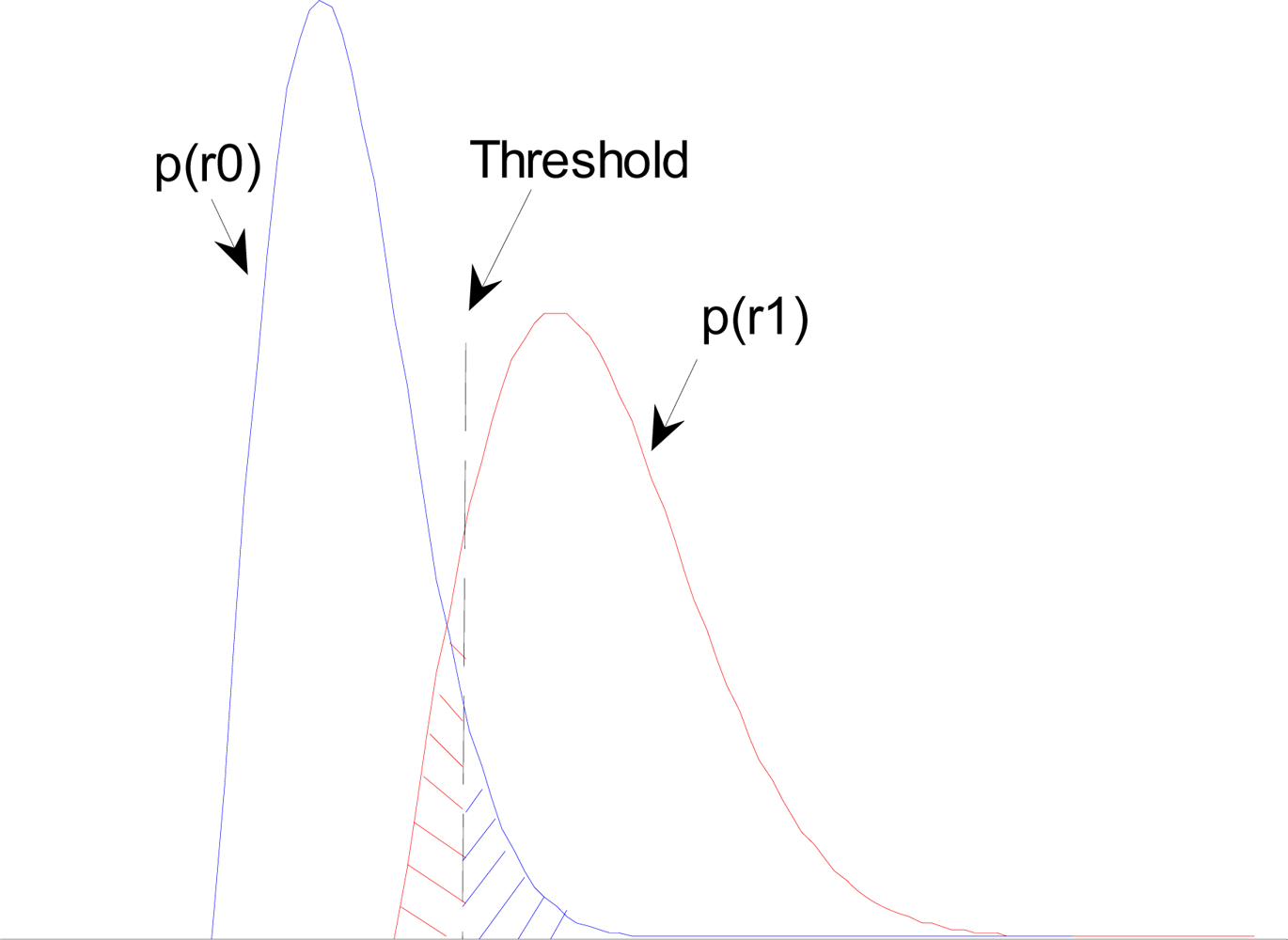
<p>Based on the binary detection model, the sketch map of the detection performance illustrated by pdf is shown in <xref ref-type="fig" rid="f4-sensors-10-03824">Figure 4</xref>, where shaded area indicates the BER. <italic>P</italic>(1|0) and <italic>P</italic>(0|1) represent shaded area at the right and left of the threshold, respectively. Obviously, when threshold increases, <italic>P</italic>(1|0) will decrease, while <italic>P</italic>(0|1) will increase, and <italic>vice versa</italic>. Therefore, in order to obtain a minimum BER, the optimal decision threshold <italic>U<sub>T</sub></italic> should be located at the intersection point of curve <italic>p</italic>(<italic>r</italic><sub>0</sub>) and <italic>p</italic>(<italic>r</italic><sub>1</sub>), <italic>i.e.</italic>, the theoretical minimum BER should be equal to half of the area in the intersection part of curve <italic>p</italic>(<italic>r</italic><sub>0</sub>) and <italic>p</italic>(<italic>r</italic><sub>1</sub>).</p>
<p>(4) The parameter <italic>k</italic> is evaluated as follows:</p>
<p>According to <xref ref-type="fig" rid="f4-sensors-10-03824">Figure 4</xref>, the larger is the parameter k, the further is the distance of the curve <italic>p</italic>(<italic>r</italic><sub>0</sub>) and <italic>p</italic>(<italic>r</italic><sub>1</sub>), <italic>i.e.</italic>, the smaller is the area of the shaded part, <italic>i.e.</italic>, the smaller is the system BER. Therefore, we hope to choose the larger k value in order to improve BER performance.</p>
<p>Among all the parameters discussed above, how to select <italic>k</italic>, the increment in amplitude at the beginning of bit “1” after filtering, needs improving:</p>
<p>Conceptually, the maximum of <italic>kA</italic><sub>0</sub> could reach the peak, say ±20<italic>dB</italic>, which is formed by a very narrow frequency selector and trap locating at the center of impacting filter as shown in <xref ref-type="fig" rid="f2-sensors-10-03824">Figure 2</xref>. In practice, the peak of <italic>kA</italic><sub>0</sub> might be limited by filter design and waveform selection (such as <italic>τ</italic>, <italic>T</italic> and <italic>θ</italic>), or even the status of channel, which still needs revealing. In fact, as an example given in <xref ref-type="fig" rid="f3-sensors-10-03824">Figure 3</xref>, where the peak of <italic>kA</italic><sub>0</sub> is about two times of its background, so at this situation, we may roughly get the estimation as <italic>k</italic> = 2.</p></sec>
<sec>
<label>3.3.</label>
<title>Calculation of SNRs</title>
<p>In this subsection we will calculate the various signal to noise ratios (SNRs) so as to evaluate the EBPSK-MODEM.</p>
<p>(1) <italic>SNR</italic> at the input of the impacting filter</p>
<p>Similar as <xref ref-type="disp-formula" rid="FD14">Eq.(14)</xref>, let the <bold><italic>PSD</italic></bold> of the input AWGN be <italic>N</italic><sub>0</sub> / 2, then from the autocorrelation function 
<inline-formula>
<mml:math>
<mml:mrow>
<mml:mi>R</mml:mi>
<mml:mrow>
<mml:mo>(</mml:mo>
<mml:mi>τ</mml:mi>
<mml:mo>)</mml:mo></mml:mrow>
<mml:mo>=</mml:mo>
<mml:mfrac>
<mml:mrow>
<mml:msub>
<mml:mrow>
<mml:mi>N</mml:mi></mml:mrow>
<mml:mn>0</mml:mn></mml:msub></mml:mrow>
<mml:mn>2</mml:mn></mml:mfrac>
<mml:mo>⋅</mml:mo>
<mml:mi>δ</mml:mi>
<mml:mrow>
<mml:mo>(</mml:mo>
<mml:mi>τ</mml:mi>
<mml:mo>)</mml:mo></mml:mrow></mml:mrow></mml:math></inline-formula> we get its variance as following:
<disp-formula id="FD15">
<label>(15)</label>
<mml:math display="block">
<mml:mrow>
<mml:msup>
<mml:mrow>
<mml:mi>ɛ</mml:mi></mml:mrow>
<mml:mn>2</mml:mn></mml:msup>
<mml:mo>=</mml:mo>
<mml:mi>R</mml:mi>
<mml:mo stretchy="false">(</mml:mo>
<mml:mn>0</mml:mn>
<mml:mo stretchy="false">)</mml:mo>
<mml:mover>
<mml:mo stretchy="true">↔</mml:mo>
<mml:mi>F</mml:mi></mml:mover>
<mml:mfrac>
<mml:mn>1</mml:mn>
<mml:mrow>
<mml:mn>2</mml:mn>
<mml:mi>π</mml:mi></mml:mrow></mml:mfrac>
<mml:mrow>
<mml:msubsup>
<mml:mo>∫</mml:mo>
<mml:mrow>
<mml:mo>−</mml:mo>
<mml:mo>∞</mml:mo></mml:mrow>
<mml:mo>∞</mml:mo></mml:msubsup>
<mml:mrow>
<mml:mfrac>
<mml:mrow>
<mml:msub>
<mml:mrow>
<mml:mi>N</mml:mi></mml:mrow>
<mml:mn>0</mml:mn></mml:msub></mml:mrow>
<mml:mn>2</mml:mn></mml:mfrac>
<mml:mo>·</mml:mo>
<mml:mi>δ</mml:mi>
<mml:mo stretchy="false">(</mml:mo>
<mml:mn>0</mml:mn>
<mml:mo stretchy="false">)</mml:mo>
<mml:mo>·</mml:mo>
<mml:msup>
<mml:mrow>
<mml:mi>e</mml:mi></mml:mrow>
<mml:mrow>
<mml:mi mathvariant="italic">jwt</mml:mi></mml:mrow></mml:msup>
<mml:mi mathvariant="italic">dw</mml:mi></mml:mrow></mml:mrow>
<mml:mo>=</mml:mo>
<mml:mfrac>
<mml:mrow>
<mml:msub>
<mml:mrow>
<mml:mi>N</mml:mi></mml:mrow>
<mml:mn>0</mml:mn></mml:msub></mml:mrow>
<mml:mn>2</mml:mn></mml:mfrac></mml:mrow></mml:math></disp-formula>where the <italic>N</italic><sub>0</sub> / 2 is measured in <bold><italic>Watt</italic></bold> since it is the average <bold><italic>power</italic></bold> of the input noise, although in numerical value it is the same as its <bold><italic>PSD</italic></bold>.</p>
<p>Let 
<inline-formula>
<mml:math>
<mml:mrow>
<mml:mi>A</mml:mi>
<mml:mo>=</mml:mo>
<mml:msqrt>
<mml:mrow>
<mml:mfrac>
<mml:mrow>
<mml:mn>2</mml:mn>
<mml:msub>
<mml:mrow>
<mml:mi>E</mml:mi></mml:mrow>
<mml:mi>b</mml:mi></mml:msub></mml:mrow>
<mml:mi>T</mml:mi></mml:mfrac></mml:mrow></mml:msqrt></mml:mrow></mml:math></inline-formula> again, the average power of the signal at the input of the impacting filter is:
<disp-formula id="FD16">
<label>(16)</label>
<mml:math display="block">
<mml:mrow>
<mml:mfrac>
<mml:mrow>
<mml:msup>
<mml:mrow>
<mml:mi>A</mml:mi></mml:mrow>
<mml:mn>2</mml:mn></mml:msup></mml:mrow>
<mml:mn>2</mml:mn></mml:mfrac>
<mml:mo>=</mml:mo>
<mml:mfrac>
<mml:mrow>
<mml:msub>
<mml:mrow>
<mml:mi>E</mml:mi></mml:mrow>
<mml:mi>b</mml:mi></mml:msub></mml:mrow>
<mml:mi>T</mml:mi></mml:mfrac>
<mml:mo>=</mml:mo>
<mml:msub>
<mml:mrow>
<mml:mi>E</mml:mi></mml:mrow>
<mml:mi>b</mml:mi></mml:msub>
<mml:mo>·</mml:mo>
<mml:msub>
<mml:mrow>
<mml:mi>R</mml:mi></mml:mrow>
<mml:mi>b</mml:mi></mml:msub></mml:mrow></mml:math></disp-formula>which results in the <italic>SNR</italic> calculation at the input of the impacting filter as below:
<disp-formula id="FD17">
<label>(17)</label>
<mml:math display="block">
<mml:mrow>
<mml:msub>
<mml:mrow>
<mml:mi mathvariant="italic">SNR</mml:mi></mml:mrow>
<mml:mrow>
<mml:mi mathvariant="italic">in</mml:mi></mml:mrow></mml:msub>
<mml:mo>=</mml:mo>
<mml:mfrac>
<mml:mrow>
<mml:msup>
<mml:mrow>
<mml:mi>A</mml:mi></mml:mrow>
<mml:mn>2</mml:mn></mml:msup></mml:mrow>
<mml:mrow>
<mml:mn>2</mml:mn>
<mml:mo>·</mml:mo>
<mml:msup>
<mml:mrow>
<mml:mi>ε</mml:mi></mml:mrow>
<mml:mn>2</mml:mn></mml:msup></mml:mrow></mml:mfrac>
<mml:mo>=</mml:mo>
<mml:mfrac>
<mml:mrow>
<mml:msub>
<mml:mrow>
<mml:mi>E</mml:mi></mml:mrow>
<mml:mi>b</mml:mi></mml:msub>
<mml:mo>·</mml:mo>
<mml:msub>
<mml:mrow>
<mml:mi>R</mml:mi></mml:mrow>
<mml:mi>b</mml:mi></mml:msub></mml:mrow>
<mml:mrow>
<mml:msub>
<mml:mrow>
<mml:mi>N</mml:mi></mml:mrow>
<mml:mn>0</mml:mn></mml:msub>
<mml:mo>/</mml:mo>
<mml:mn>2</mml:mn></mml:mrow></mml:mfrac></mml:mrow></mml:math></disp-formula>where <italic>N</italic><sub>0</sub> / 2 is the average <bold><italic>power</italic></bold> of input noise.</p>
<p>(2) SNR at the output of the impacting filter</p>
<p>The average SNR at the output of the impacting filter for bit “0” during <italic>T</italic> (and in theory for bit “1” during <italic>T</italic> − <italic>τ</italic> also) is:
<disp-formula id="FD18">
<label>(18)</label>
<mml:math display="block">
<mml:mrow>
<mml:msub>
<mml:mi mathvariant="italic">SNR</mml:mi>
<mml:mn>0</mml:mn></mml:msub>
<mml:mo>=</mml:mo>
<mml:mfrac>
<mml:mn>1</mml:mn>
<mml:mn>2</mml:mn></mml:mfrac>
<mml:msubsup>
<mml:mi>A</mml:mi>
<mml:mn>0</mml:mn>
<mml:mn>2</mml:mn></mml:msubsup>
<mml:mo stretchy="false">/</mml:mo>
<mml:msup>
<mml:mi>σ</mml:mi>
<mml:mn>2</mml:mn></mml:msup>
<mml:mo>=</mml:mo>
<mml:mfrac>
<mml:mrow>
<mml:msub>
<mml:mi>E</mml:mi>
<mml:mi>b</mml:mi></mml:msub></mml:mrow>
<mml:mrow>
<mml:msub>
<mml:mi>N</mml:mi>
<mml:mn>0</mml:mn></mml:msub>
<mml:mi>T</mml:mi></mml:mrow></mml:mfrac>
<mml:mo>·</mml:mo>
<mml:mfrac>
<mml:mrow>
<mml:msup>
<mml:mrow>
<mml:mrow>
<mml:mo>|</mml:mo>
<mml:mrow>
<mml:mi>H</mml:mi>
<mml:mo stretchy="false">(</mml:mo>
<mml:msub>
<mml:mi>w</mml:mi>
<mml:mi>c</mml:mi></mml:msub>
<mml:mo stretchy="false">)</mml:mo></mml:mrow>
<mml:mo>|</mml:mo></mml:mrow></mml:mrow>
<mml:mn>2</mml:mn></mml:msup></mml:mrow>
<mml:mrow>
<mml:msubsup>
<mml:mo>∫</mml:mo>
<mml:mn>0</mml:mn>
<mml:mi>∞</mml:mi></mml:msubsup>
<mml:mrow>
<mml:msup>
<mml:mrow>
<mml:mrow>
<mml:mo>|</mml:mo>
<mml:mrow>
<mml:mi>H</mml:mi>
<mml:mo stretchy="false">(</mml:mo>
<mml:mi>f</mml:mi>
<mml:mo stretchy="false">)</mml:mo></mml:mrow>
<mml:mo>|</mml:mo></mml:mrow></mml:mrow>
<mml:mn>2</mml:mn></mml:msup>
<mml:mi mathvariant="italic">df</mml:mi></mml:mrow></mml:mrow></mml:mfrac>
<mml:mo>=</mml:mo>
<mml:msub>
<mml:mi>R</mml:mi>
<mml:mi>b</mml:mi></mml:msub>
<mml:mo>·</mml:mo>
<mml:mfrac>
<mml:mrow>
<mml:msub>
<mml:mi>E</mml:mi>
<mml:mi>b</mml:mi></mml:msub></mml:mrow>
<mml:mrow>
<mml:msub>
<mml:mi>N</mml:mi>
<mml:mn>0</mml:mn></mml:msub></mml:mrow></mml:mfrac>
<mml:mo>·</mml:mo>
<mml:mfrac>
<mml:mrow>
<mml:msup>
<mml:mrow>
<mml:mrow>
<mml:mo>|</mml:mo>
<mml:mrow>
<mml:mi>H</mml:mi>
<mml:mo stretchy="false">(</mml:mo>
<mml:msub>
<mml:mi>f</mml:mi>
<mml:mi>c</mml:mi></mml:msub>
<mml:mo stretchy="false">)</mml:mo></mml:mrow>
<mml:mo>|</mml:mo></mml:mrow></mml:mrow>
<mml:mn>2</mml:mn></mml:msup></mml:mrow>
<mml:mrow>
<mml:msubsup>
<mml:mo>∫</mml:mo>
<mml:mn>0</mml:mn>
<mml:mi>∞</mml:mi></mml:msubsup>
<mml:mrow>
<mml:msup>
<mml:mrow>
<mml:mrow>
<mml:mo>|</mml:mo>
<mml:mrow>
<mml:mi>H</mml:mi>
<mml:mo stretchy="false">(</mml:mo>
<mml:mi>f</mml:mi>
<mml:mo stretchy="false">)</mml:mo></mml:mrow>
<mml:mo>|</mml:mo></mml:mrow></mml:mrow>
<mml:mn>2</mml:mn></mml:msup>
<mml:mi mathvariant="italic">df</mml:mi></mml:mrow></mml:mrow></mml:mfrac>
<mml:mo>=</mml:mo>
<mml:mfrac>
<mml:mrow>
<mml:msub>
<mml:mi>E</mml:mi>
<mml:mi>b</mml:mi></mml:msub>
<mml:mo>·</mml:mo>
<mml:msub>
<mml:mi>R</mml:mi>
<mml:mi>b</mml:mi></mml:msub></mml:mrow>
<mml:mrow>
<mml:msub>
<mml:mi>N</mml:mi>
<mml:mn>0</mml:mn></mml:msub>
<mml:mo>·</mml:mo>
<mml:msub>
<mml:mi>B</mml:mi>
<mml:mrow>
<mml:mi mathvariant="italic">neq</mml:mi></mml:mrow></mml:msub></mml:mrow></mml:mfrac></mml:mrow></mml:math></disp-formula>where <italic>f<sub>c</sub></italic> is the carrier frequency, <italic>E<sub>b</sub></italic> is the average energy for transmission of one bit, <italic>R<sub>b</sub></italic> = 1/<italic>T</italic> is the bit rate because both the BPSK and the EBPSK is binary modulation, so <italic>R<sub>b</sub></italic> · <italic>E<sub>b</sub></italic> is the average signal power transmitted, <italic>N</italic><sub>0</sub> / 2 is still the <bold><italic>PSD</italic></bold>, and:
<disp-formula id="FD19">
<label>(19)</label>
<mml:math display="block">
<mml:mrow>
<mml:msub>
<mml:mi>B</mml:mi>
<mml:mi mathvariant="italic">neq</mml:mi></mml:msub>
<mml:mo>=</mml:mo>
<mml:mrow>
<mml:msubsup>
<mml:mo>∫</mml:mo>
<mml:mn>0</mml:mn>
<mml:mo>∞</mml:mo></mml:msubsup>
<mml:mrow>
<mml:mo stretchy="false">|</mml:mo>
<mml:mi>H</mml:mi>
<mml:mo stretchy="false">(</mml:mo>
<mml:mi>f</mml:mi>
<mml:mo stretchy="false">)</mml:mo>
<mml:msup>
<mml:mrow>
<mml:mo stretchy="false">|</mml:mo></mml:mrow>
<mml:mn>2</mml:mn></mml:msup>
<mml:mi mathvariant="italic">df</mml:mi>
<mml:mo>/</mml:mo>
<mml:msup>
<mml:mrow>
<mml:mo stretchy="false">|</mml:mo>
<mml:mi>H</mml:mi>
<mml:mo stretchy="false">(</mml:mo>
<mml:msub>
<mml:mi>f</mml:mi>
<mml:mi>c</mml:mi></mml:msub>
<mml:mo stretchy="false">)</mml:mo>
<mml:mo stretchy="false">|</mml:mo></mml:mrow>
<mml:mn>2</mml:mn></mml:msup></mml:mrow></mml:mrow></mml:mrow></mml:math></disp-formula>is the noise equivalent bandwidth of filters [<xref ref-type="bibr" rid="b13-sensors-10-03824">13</xref>].</p>
<p>Therefore, the gain in <italic>SNR</italic> of impacting filter for bit “0” should be:
<disp-formula id="FD20">
<label>(20)</label>
<mml:math display="block">
<mml:mrow>
<mml:msub>
<mml:mi>G</mml:mi>
<mml:mn>0</mml:mn></mml:msub>
<mml:mo>=</mml:mo>
<mml:mfrac>
<mml:mrow>
<mml:msub>
<mml:mi mathvariant="italic">SNR</mml:mi>
<mml:mn>0</mml:mn></mml:msub></mml:mrow>
<mml:mrow>
<mml:msub>
<mml:mi mathvariant="italic">SNR</mml:mi>
<mml:mi mathvariant="italic">in</mml:mi></mml:msub></mml:mrow></mml:mfrac>
<mml:mo>=</mml:mo>
<mml:mfrac>
<mml:mrow>
<mml:msub>
<mml:mi>E</mml:mi>
<mml:mi>b</mml:mi></mml:msub>
<mml:mo>·</mml:mo>
<mml:msub>
<mml:mi>R</mml:mi>
<mml:mi>b</mml:mi></mml:msub></mml:mrow>
<mml:mrow>
<mml:msub>
<mml:mi>N</mml:mi>
<mml:mn>0</mml:mn></mml:msub>
<mml:mo>·</mml:mo>
<mml:msub>
<mml:mi>B</mml:mi>
<mml:mi mathvariant="italic">neq</mml:mi></mml:msub></mml:mrow></mml:mfrac>
<mml:mo stretchy="true">/</mml:mo>
<mml:mfrac>
<mml:mrow>
<mml:msub>
<mml:mi>E</mml:mi>
<mml:mi>b</mml:mi></mml:msub>
<mml:mo>·</mml:mo>
<mml:msub>
<mml:mi>R</mml:mi>
<mml:mi>b</mml:mi></mml:msub></mml:mrow>
<mml:mrow>
<mml:msub>
<mml:mi>N</mml:mi>
<mml:mn>0</mml:mn></mml:msub>
<mml:mo stretchy="false">/</mml:mo>
<mml:mn>2</mml:mn></mml:mrow></mml:mfrac>
<mml:mo>=</mml:mo>
<mml:mfrac>
<mml:mn>1</mml:mn>
<mml:mrow>
<mml:mn>2</mml:mn>
<mml:msub>
<mml:mi>B</mml:mi>
<mml:mi mathvariant="italic">neq</mml:mi></mml:msub></mml:mrow></mml:mfrac></mml:mrow></mml:math></disp-formula></p>
<p>From <xref ref-type="disp-formula" rid="FD20">Eq. (20)</xref> it is clear that <italic>B<sub>neq</sub></italic> is the SNR “controlling factor” for bit “0” determined by the shape of frequency response of the impacting filter used.</p>
<p>Similarly as <xref ref-type="disp-formula" rid="FD18">Eq.(18)</xref>, the <bold><italic>peak</italic></bold> SNR at the output of the impacting filter for bit “1” during its beginning is given as follows:
<disp-formula id="FD21">
<label>(21)</label>
<mml:math display="block">
<mml:mrow>
<mml:msub>
<mml:mi mathvariant="italic">SNR</mml:mi>
<mml:mn>1</mml:mn></mml:msub>
<mml:mo>=</mml:mo>
<mml:mfrac>
<mml:mrow>
<mml:msubsup>
<mml:mi>A</mml:mi>
<mml:mn>1</mml:mn>
<mml:mn>2</mml:mn></mml:msubsup></mml:mrow>
<mml:mrow>
<mml:msup>
<mml:mi>σ</mml:mi>
<mml:mn>2</mml:mn></mml:msup></mml:mrow></mml:mfrac>
<mml:mo>=</mml:mo>
<mml:mfrac>
<mml:mrow>
<mml:msubsup>
<mml:mi>A</mml:mi>
<mml:mn>0</mml:mn>
<mml:mn>2</mml:mn></mml:msubsup>
<mml:mo>·</mml:mo>
<mml:msup>
<mml:mrow>
<mml:mrow>
<mml:mo stretchy="false">(</mml:mo>
<mml:mn>1</mml:mn>
<mml:mo>+</mml:mo>
<mml:mi>k</mml:mi>
<mml:mo stretchy="false">)</mml:mo></mml:mrow></mml:mrow>
<mml:mn>2</mml:mn></mml:msup></mml:mrow>
<mml:mrow>
<mml:msup>
<mml:mi>σ</mml:mi>
<mml:mn>2</mml:mn></mml:msup></mml:mrow></mml:mfrac>
<mml:mo>=</mml:mo>
<mml:mn>2</mml:mn>
<mml:msub>
<mml:mi mathvariant="italic">SNR</mml:mi>
<mml:mn>0</mml:mn></mml:msub>
<mml:mo>+</mml:mo>
<mml:mfrac>
<mml:mrow>
<mml:msubsup>
<mml:mi>A</mml:mi>
<mml:mn>0</mml:mn>
<mml:mn>2</mml:mn></mml:msubsup>
<mml:mo>·</mml:mo>
<mml:mo stretchy="false">(</mml:mo>
<mml:mn>2</mml:mn>
<mml:mi>k</mml:mi>
<mml:mo>+</mml:mo>
<mml:msup>
<mml:mi>k</mml:mi>
<mml:mn>2</mml:mn></mml:msup>
<mml:mo stretchy="false">)</mml:mo></mml:mrow>
<mml:mrow>
<mml:msup>
<mml:mi>σ</mml:mi>
<mml:mn>2</mml:mn></mml:msup></mml:mrow></mml:mfrac>
<mml:mo>&gt;</mml:mo>
<mml:msub>
<mml:mi mathvariant="italic">SNR</mml:mi>
<mml:mn>0</mml:mn></mml:msub></mml:mrow></mml:math></disp-formula></p>
<p>And the gain in <italic>SNR</italic> of impacting filter for bit “1” should be:
<disp-formula id="FD22">
<label>(22)</label>
<mml:math display="block">
<mml:mrow>
<mml:msub>
<mml:mi>G</mml:mi>
<mml:mn>1</mml:mn></mml:msub>
<mml:mo>=</mml:mo>
<mml:mfrac>
<mml:mrow>
<mml:msub>
<mml:mi mathvariant="italic">SNR</mml:mi>
<mml:mn>1</mml:mn></mml:msub></mml:mrow>
<mml:mrow>
<mml:msub>
<mml:mi mathvariant="italic">SNR</mml:mi>
<mml:mi mathvariant="italic">in</mml:mi></mml:msub></mml:mrow></mml:mfrac>
<mml:mo>=</mml:mo>
<mml:mfrac>
<mml:mn>1</mml:mn>
<mml:mrow>
<mml:msub>
<mml:mi>B</mml:mi>
<mml:mi mathvariant="italic">neq</mml:mi></mml:msub></mml:mrow></mml:mfrac>
<mml:mo>+</mml:mo>
<mml:mfrac>
<mml:mrow>
<mml:msubsup>
<mml:mi>A</mml:mi>
<mml:mn>0</mml:mn>
<mml:mn>2</mml:mn></mml:msubsup>
<mml:mo>·</mml:mo>
<mml:mo stretchy="false">(</mml:mo>
<mml:mn>2</mml:mn>
<mml:mi>k</mml:mi>
<mml:mo>+</mml:mo>
<mml:msup>
<mml:mi>k</mml:mi>
<mml:mn>2</mml:mn></mml:msup>
<mml:mo stretchy="false">)</mml:mo></mml:mrow>
<mml:mrow>
<mml:mn>2</mml:mn>
<mml:msub>
<mml:mi>E</mml:mi>
<mml:mi>b</mml:mi></mml:msub>
<mml:msub>
<mml:mi>R</mml:mi>
<mml:mi>b</mml:mi></mml:msub>
<mml:mo>·</mml:mo>
<mml:msubsup>
<mml:mo>∫</mml:mo>
<mml:mn>0</mml:mn>
<mml:mo>∞</mml:mo></mml:msubsup>
<mml:msup>
<mml:mrow>
<mml:mo>|</mml:mo>
<mml:mi>H</mml:mi>
<mml:mo stretchy="false">(</mml:mo>
<mml:mi>f</mml:mi>
<mml:mo stretchy="false">)</mml:mo>
<mml:mo>|</mml:mo></mml:mrow>
<mml:mn>2</mml:mn></mml:msup>
<mml:mi mathvariant="italic">df</mml:mi></mml:mrow></mml:mfrac></mml:mrow></mml:math></disp-formula></p></sec></sec>
<sec>
<label>4.</label>
<title>Simulation</title>
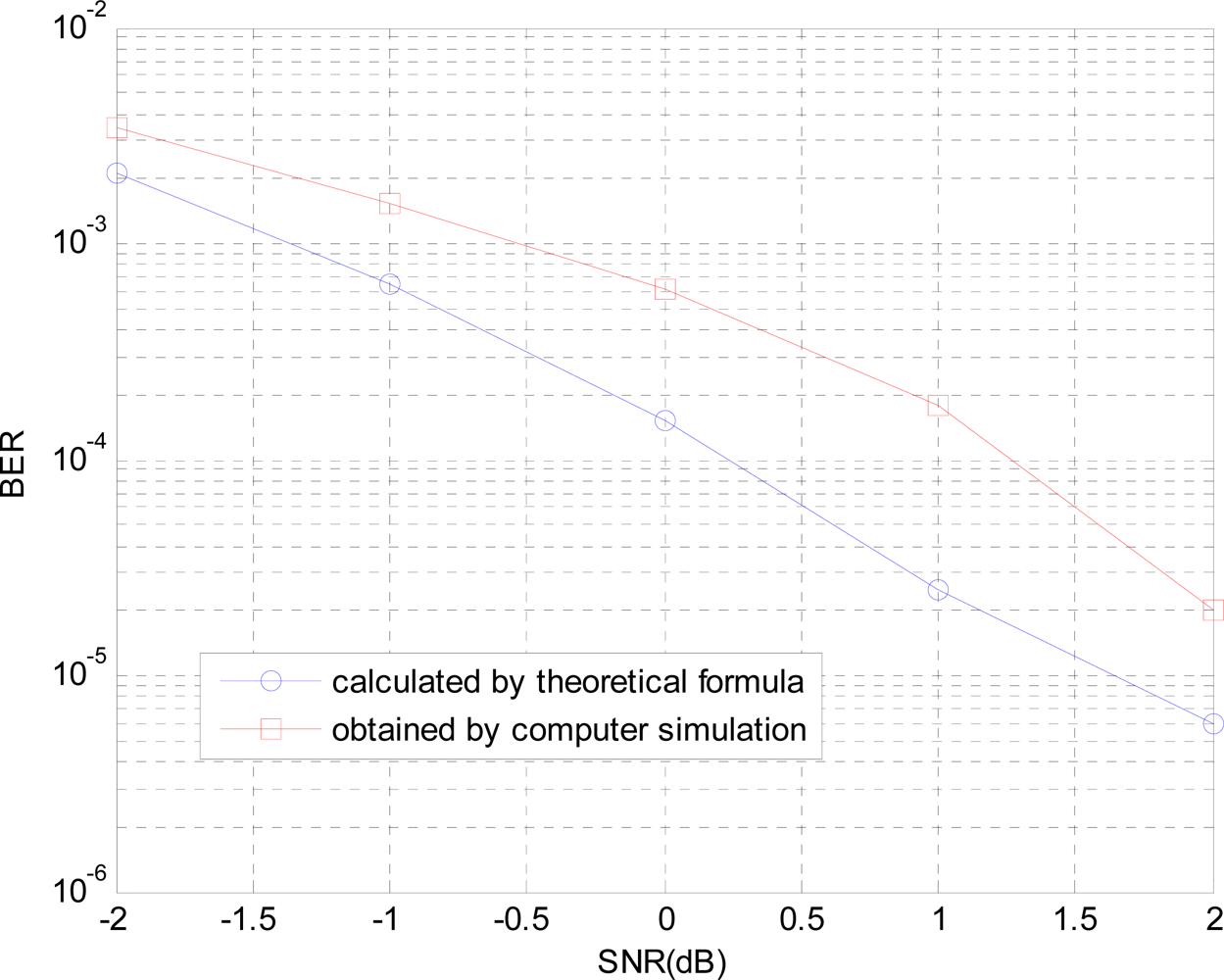
<p>In this section, in order to verify the correctness of theoretical analysis, we compare the BER results calculated by the theoretical formula with one obtained by computer simulation, as in <xref ref-type="fig" rid="f5-sensors-10-03824">Figure 5</xref>, where system parameters in simulation are selected as: <italic>f<sub>c</sub></italic> = 930<italic>KHz</italic>, <italic>N</italic> = 20, <italic>K</italic> = 2, <italic>A</italic> = <italic>B</italic> = 1, and <italic>θ</italic> = <italic>π</italic>. The paper chooses the receiver filter having three conjugate poles and one zero point, where the detail filter parameters is as ref. [<xref ref-type="bibr" rid="b10-sensors-10-03824">10</xref>].</p>
<p>According to the above results, the theoretical result and simulation result just have 1 dB difference in order to obtain the same BER performance, which is caused by the detection method and the choosing of the decision threshold in the simulation.</p></sec>
<sec>
<label>5.</label>
<title>Discussion and Conclusions</title>
<p>(1) The <italic>P<sub>e−BPSK</sub></italic> given in <xref ref-type="disp-formula" rid="FD3">(3)</xref> is an ideal and optimum value already, while the <italic>P<sub>e−EBPSK</sub></italic> given in <xref ref-type="disp-formula" rid="FD7">(7)</xref> is far from giving an optimal EBPSK receiver and still depends on the filter design. In other words, it leaves potential for EBPSK receivers to improve. For example, from the <xref ref-type="fig" rid="f4-sensors-10-03824">Figure 4</xref> we can imagine:
<list list-type="alpha-lower">
<list-item>
<p>With the increasing of <italic>k</italic>, the peak distance of <italic>p</italic>(<italic>r</italic><sub>0</sub>) and <italic>p</italic>(<italic>r</italic><sub>1</sub>) becomes large, so the shaded area decreases, <italic>i.e.</italic>, the minimum BER decreases.</p></list-item>
<list-item>
<p>With the decrease of <italic>σ</italic><sup>2</sup>, although the peak distance of <italic>p</italic>(<italic>r</italic><sub>0</sub>) and <italic>p</italic>(<italic>r</italic><sub>1</sub>) remains unchanged, their shapes are narrowing, so the shaded area, or the minimum BER, decreases also.</p></list-item></list></p>
<p>Therefore, under certain conditions, the BER performance of the EBPSK modulation will outperform or be inferior to that of the BPSK modulation, and the spectral efficiency of the EBPSK system is much higher than BPSK.</p>
<p>(2) Substituting <italic>k</italic> = 2 into <xref ref-type="disp-formula" rid="FD21">(21)</xref> we obtain an astonishing estimation as <italic>SNR</italic><sub>1</sub> = 18<italic>SNR</italic><sub>0</sub>, which implies that as long as we can obtain larger value of <italic>k</italic> by optimizing the impacting feature of the filter, the BER performance of the EBPSK system can be further improved.</p>
<p>To sum up, aimed at a UNB system, the EBPSK-MODEM, this paper has discussed the importance of the special impacting filter, deduced the BER formula of EBPSK system, analyzed the SNR improvement performance of impacting filter, discussed the choice of optimum decision threshold, and analyzed the reason or possibility for EBPSK to outperform BPSK both in spectral efficiency and in BER performance. Research on these special filters is underway, and a detailed introduction will be given in forthcoming papers.</p></sec></body>
<back>
<ack>
<p>The authors would like to thank the National Foundation of China (60872075), the Natural Science Foundation of Jiangsu Province (BK2007103), China Postdoctoral Science Foundation (20080441015), Jiangsu Planned Projects for Postdoctoral Research Funds (0802005B) and Southeast University Planned Projects for Postdoctoral Key Research Funds.</p></ack>
<ref-list>
<title>References and Notes</title>
<ref id="b1-sensors-10-03824"><label>1.</label><citation citation-type="web"><person-group person-group-type="author"><name><surname>Walker</surname><given-names>H.R.</given-names></name></person-group><source>Ultra Narrow Band Modulation Textbook</source><comment>Available Online: <ext-link xlink:href="http://www.vmsk.org/" ext-link-type="uri">http://www.vmsk.org/</ext-link> (accessed on 23 July 2008).</comment></citation></ref>
<ref id="b2-sensors-10-03824"><label>2.</label><citation citation-type="journal"><person-group person-group-type="author"><name><surname>Wu</surname><given-names>L.N.</given-names></name></person-group><article-title>Advance in UNB high speed communications</article-title><source>Prog. Nat. Sci. (in Chinese)</source><year>2007</year><volume>17</volume><fpage>143</fpage><lpage>149</lpage></citation></ref>
<ref id="b3-sensors-10-03824"><label>3.</label><citation citation-type="journal"><person-group person-group-type="author"><name><surname>Feng</surname><given-names>M.</given-names></name><name><surname>Wu</surname><given-names>L.N.</given-names></name></person-group><article-title>Special non-linear filter and extension to Shannon's channel capacity</article-title><source>Digital Signal Proc.</source><year>2009</year><volume>19</volume><fpage>861</fpage><lpage>873</lpage><pub-id pub-id-type="doi">10.1016/j.dsp.2009.03.003</pub-id></citation></ref>
<ref id="b4-sensors-10-03824"><label>4.</label><citation citation-type="journal"><person-group person-group-type="author"><name><surname>Akiyldiz</surname><given-names>I.</given-names></name><name><surname>Su</surname><given-names>W.</given-names></name><name><surname>Sankarasubramaniam</surname><given-names>Y.</given-names></name><name><surname>Cayirci</surname><given-names>E.</given-names></name></person-group><article-title>A survey on sensor networks</article-title><source>IEEE Commun. Mag.</source><year>2002</year><volume>40</volume><fpage>102</fpage><lpage>114</lpage></citation></ref>
<ref id="b5-sensors-10-03824"><label>5.</label><citation citation-type="journal"><person-group person-group-type="author"><name><surname>Suhinthan</surname><given-names>M.</given-names></name><name><surname>Saman</surname><given-names>H</given-names></name><name><surname>Malin</surname><given-names>P.</given-names></name></person-group><article-title>Energy efficient sensor scheduling with a mobile sink node for the target tracking application</article-title><source>Sensors</source><year>2009</year><volume>9</volume><fpage>696</fpage><lpage>716</lpage><pub-id pub-id-type="doi">10.3390/s90100696</pub-id><pub-id pub-id-type="pmid">22399934</pub-id></citation></ref>
<ref id="b6-sensors-10-03824"><label>6.</label><citation citation-type="journal"><person-group person-group-type="author"><name><surname>Alippi</surname><given-names>C.</given-names></name><name><surname>Anastasi</surname><given-names>G.</given-names></name><name><surname>Di Francesco</surname><given-names>M.</given-names></name><name><surname>Roveri</surname><given-names>M.</given-names></name></person-group><article-title>An adaptive sampling algorithm for effective energy management in wireless sensor networks with energy-hungry sensors</article-title><source>IEEE Instrum. Meas. Mag.</source><year>2010</year><volume>59</volume><fpage>335</fpage><lpage>344</lpage><pub-id pub-id-type="doi">10.1109/TIM.2009.2023818</pub-id></citation></ref>
<ref id="b7-sensors-10-03824"><label>7.</label><citation citation-type="journal"><person-group person-group-type="author"><name><surname>Anastasi</surname><given-names>G.</given-names></name><name><surname>Conti</surname><given-names>M.</given-names></name><name><surname>Francesco</surname><given-names>M.</given-names></name><name><surname>Passarella</surname><given-names>A.</given-names></name></person-group><article-title>Energy conservation in wireless sensor networks</article-title><source>Ad Hoc Netw</source><year>2009</year><volume>7</volume><fpage>537</fpage><lpage>568</lpage><pub-id pub-id-type="doi">10.1016/j.adhoc.2008.06.003</pub-id></citation></ref>
<ref id="b8-sensors-10-03824"><label>8.</label><citation citation-type="journal"><person-group person-group-type="author"><name><surname>Wu</surname><given-names>L.N.</given-names></name></person-group><article-title>UNB modulation in high speed space communications</article-title><source>Proc. SPIE</source><year>2007</year><volume>6795</volume><fpage>679510-1</fpage><lpage>679510-6</lpage></citation></ref>
<ref id="b9-sensors-10-03824"><label>9.</label><citation citation-type="journal"><person-group person-group-type="author"><name><surname>Feng</surname><given-names>M.</given-names></name><name><surname>Wu</surname><given-names>L.N.</given-names></name><name><surname>Qi</surname><given-names>C.H.</given-names></name></person-group><article-title>Analysis and optimization of power spectrum on EBPSK modulation in throughput-efficient wireless system</article-title><source>J. Southeast Univ</source><year>2008</year><volume>24</volume><fpage>143</fpage><lpage>148</lpage></citation></ref>
<ref id="b10-sensors-10-03824"><label>10.</label><citation citation-type="journal"><person-group person-group-type="author"><name><surname>Wu</surname><given-names>L.N.</given-names></name><name><surname>Feng</surname><given-names>M.</given-names></name><name><surname>Gao</surname><given-names>P.</given-names></name></person-group><article-title>An impulse filter method used in ABSK signal</article-title><source>Chinese Patent</source><comment>CN10029875.3,</comment><year>2009</year></citation></ref>
<ref id="b11-sensors-10-03824"><label>11.</label><citation citation-type="book"><person-group person-group-type="author"><name><surname>Proakis</surname><given-names>J.G.</given-names></name></person-group><source>Digital Communications</source><edition>4th ed.</edition><publisher-name>McGraw-Hill Book Company, Inc.</publisher-name><publisher-loc>Columbus, OH, USA</publisher-loc><year>2001</year></citation></ref>
<ref id="b12-sensors-10-03824"><label>12.</label><citation citation-type="book"><person-group person-group-type="author"><name><surname>Oppenheim</surname><given-names>A.V.</given-names></name><name><surname>Willsky</surname><given-names>A.S.</given-names></name></person-group><source>Signals and Systems</source><edition>2nd ed.</edition><publisher-name>Publishing House of Electronics Industry</publisher-name><publisher-loc>Beijing, China</publisher-loc><year>2009</year></citation></ref>
<ref id="b13-sensors-10-03824"><label>13.</label><citation citation-type="book"><person-group person-group-type="author"><name><surname>Proakis</surname><given-names>J.G.</given-names></name><name><surname>Salehi</surname><given-names>M.</given-names></name></person-group><source>Communication System Engineering</source><edition>2nd ed.</edition><publisher-name>Prentice Hall</publisher-name><publisher-loc>Bergen County, NJ, USA</publisher-loc><year>2002</year></citation></ref></ref-list>
<sec sec-type="display-objects">
<title>Figures</title>
<fig id="f1-sensors-10-03824" position="float">
<label>Figure 1.</label>
<caption>
<p>PSD of the BPSK and EBPSK modulations, all carrier peaks are normalized at 0dB.</p></caption>
<graphic xlink:href="sensors-10-03824f1.gif"/></fig>
<fig id="f2-sensors-10-03824" position="float">
<label>Figure 2.</label>
<caption>
<p>(a) The amplitude-frequency response of an “impacting filter”. (b) The zoomed figure of (a).</p></caption>
<graphic xlink:href="sensors-10-03824f2.gif"/></fig>
<fig id="f3-sensors-10-03824" position="float">
<label>Figure 3.</label>
<caption>
<p>The output of the impacting filter to the EBPSK modulated input.</p></caption>
<graphic xlink:href="sensors-10-03824f3.gif"/></fig>
<fig id="f4-sensors-10-03824" position="float">
<label>Figure 4.</label>
<caption>
<p>The sketch map of the detection performance by pdf.</p></caption>
<graphic xlink:href="sensors-10-03824f4.gif"/></fig>
<fig id="f5-sensors-10-03824" position="float">
<label>Figure 5.</label>
<caption>
<p>The BERs comparison between calculated by theoretical formula and obtained by computer simulation.</p></caption>
<graphic xlink:href="sensors-10-03824f5.gif"/></fig></sec></back></article>