<?xml version="1.0" encoding="UTF-8"?>
<!DOCTYPE article PUBLIC "-//NLM//DTD Journal Publishing DTD v2.3 20070202//EN" "journalpublishing.dtd">
<article xmlns:xlink="http://www.w3.org/1999/xlink" xml:lang="en" article-type="research-article">
<front>
<journal-meta>
<journal-id journal-id-type="publisher-id">ijms</journal-id>
<journal-title>International Journal of Molecular Sciences</journal-title>
<abbrev-journal-title>Int. J. Mol. Sci.</abbrev-journal-title>
<issn pub-type="epub">1422-0067</issn>
<publisher>
<publisher-name>Molecular Diversity Preservation International (MDPI)</publisher-name></publisher></journal-meta>
<article-meta>
<article-id pub-id-type="doi">10.3390/ijms13078722</article-id>
<article-id pub-id-type="publisher-id">ijms-13-08722</article-id>
<article-categories>
<subj-group>
<subject>Article</subject></subj-group></article-categories>
<title-group>
<article-title>Mitochondrial Dysfunction and Oxidative Stress Promote Apoptotic Cell Death in the Striatum via Cytochrome c/Caspase-3 Signaling Cascade Following Chronic Rotenone Intoxication in Rats</article-title></title-group>
<contrib-group>
<contrib contrib-type="author">
<name><surname>Lin</surname><given-names>Tsu-Kung</given-names></name><xref ref-type="aff" rid="af1-ijms-13-08722">1</xref><xref ref-type="aff" rid="af2-ijms-13-08722">2</xref><xref ref-type="corresp" rid="c1-ijms-13-08722">*</xref></contrib>
<contrib contrib-type="author">
<name><surname>Cheng</surname><given-names>Ching-Hsiao</given-names></name><xref ref-type="aff" rid="af3-ijms-13-08722">3</xref></contrib>
<contrib contrib-type="author">
<name><surname>Chen</surname><given-names>Shang-Der</given-names></name><xref ref-type="aff" rid="af1-ijms-13-08722">1</xref><xref ref-type="aff" rid="af2-ijms-13-08722">2</xref><xref ref-type="aff" rid="af4-ijms-13-08722">4</xref></contrib>
<contrib contrib-type="author">
<name><surname>Liou</surname><given-names>Chia-Wei</given-names></name><xref ref-type="aff" rid="af1-ijms-13-08722">1</xref><xref ref-type="aff" rid="af2-ijms-13-08722">2</xref></contrib>
<contrib contrib-type="author">
<name><surname>Huang</surname><given-names>Chi-Ren</given-names></name><xref ref-type="aff" rid="af1-ijms-13-08722">1</xref></contrib>
<contrib contrib-type="author">
<name><surname>Chuang</surname><given-names>Yao-Chung</given-names></name><xref ref-type="aff" rid="af1-ijms-13-08722">1</xref><xref ref-type="aff" rid="af2-ijms-13-08722">2</xref><xref ref-type="aff" rid="af3-ijms-13-08722">3</xref><xref ref-type="aff" rid="af5-ijms-13-08722">5</xref><xref ref-type="corresp" rid="c1-ijms-13-08722">*</xref></contrib></contrib-group>
<aff id="af1-ijms-13-08722">
<label>1</label>Department of Neurology, Kaohsiung Chang Gung Memorial Hospital and Chang Gung University College of Medicine, Kaohsiung 833, Taiwan; E-Mails: <email>chensd@adm.cgmh.org.tw</email> (S.-D.C.); <email>cwliou@ms22.hinet.net</email> (C.-W.L.); <email>kcn68@ms22.hinet.net</email> (C.-R.H.)</aff>
<aff id="af2-ijms-13-08722">
<label>2</label>Center for Parkinson’s Disease, Kaohsiung Chang Gung Memorial Hospital and Chang Gung University College of Medicine, Kaohsiung 833, Taiwan</aff>
<aff id="af3-ijms-13-08722">
<label>3</label>Neurosurgery, Kaohsiung Chang Gung Memorial Hospital and Chang Gung University College of Medicine, Kaohsiung 833, Taiwan; E-Mail: <email>ma4200@adm.cgmh.org.tw</email></aff>
<aff id="af4-ijms-13-08722">
<label>4</label>Center for Translational Research in Biomedical Sciences, Kaohsiung Chang Gung Memorial Hospital and Chang Gung University College of Medicine, Kaohsiung 833, Taiwan</aff>
<aff id="af5-ijms-13-08722">
<label>5</label>Department of Biological Science, National Sun Yet-Sen University, Kaohsiung 804, Taiwan</aff>
<author-notes>
<corresp id="c1-ijms-13-08722">
<label>*</label>Authors to whom correspondence should be addressed; E-Mails: <email>tklin@adm.cgmh.org.tw</email> (T.-K.L.); <email>ycchuang@adm.cgmh.org.tw</email> (Y.-C.C.); Tel.: +886-7-7317123 (T.-K.L.) (Y.-C.C.); Fax: +886-7-7318762 (T.-K.L.) (Y.-C.C.).</corresp></author-notes>
<pub-date pub-type="collection">
<year>2012</year></pub-date>
<pub-date pub-type="epub">
<day>13</day>
<month>07</month>
<year>2012</year></pub-date>
<volume>13</volume>
<issue>7</issue>
<fpage>8722</fpage>
<lpage>8739</lpage>
<history>
<date date-type="received">
<day>27</day>
<month>04</month>
<year>2012</year></date>
<date date-type="rev-recd">
<day>04</day>
<month>07</month>
<year>2012</year></date>
<date date-type="accepted">
<day>05</day>
<month>07</month>
<year>2012</year></date></history>
<permissions>
<copyright-statement>© 2012 by the authors; licensee Molecular Diversity Preservation International, Basel, Switzerland.</copyright-statement>
<copyright-year>2012</copyright-year>
<license license-type="open-access" xlink:href="http://creativecommons.org/licenses/by/3.0">
<p>This article is an open-access article distributed under the terms and conditions of the Creative Commons Attribution license (http://creativecommons.org/licenses/by/3.0/).</p></license></permissions>
<abstract>
<p>Parkinson’s disease (PD) is a progressive neurological disorder marked by nigrostriatal dopaminergic degeneration. Evidence suggests that mitochondrial dysfunction may be linked to PD through a variety of different pathways, including free-radical generation and dysfunction of the mitochondrial Complex I activity. In Lewis rats, chronic systemic administration of a specific mitochondrial Complex I inhibitor, rotenone (3 mg/kg/day) produced parkinsonism-like symptoms. Increased oxidized proteins and peroxynitrite, and mitochondrial or cytosol translocation of Bim, Bax or cytochrome c in the striatum was observed after 2–4 weeks of rotenone infusion. After 28 days of systemic rotenone exposure, imunohistochemical staining for tyrosine hydroxylase indicated nigrostriatal dopaminergic neuronal cell degeneration. Characteristic histochemical (TUNEL or activated caspase-3 staining) or ultrastructural (electron microscopy) features of apoptotic cell death were present in the striatal neuronal cell after chronic rotenone intoxication. We conclude that chronic rotenone intoxication may enhance oxidative and nitrosative stress that induces mitochondrial dysfunction and ultrastructural damage, resulting in translocation of Bim and Bax from cytosol to mitochondria that contributes to apoptotic cell death in the striatum via cytochrome c/caspase-3 signaling cascade.</p></abstract>
<kwd-group>
<kwd>rotenone</kwd>
<kwd>Parkinson’s disease</kwd>
<kwd>mitochondria</kwd>
<kwd>complex I</kwd>
<kwd>apoptotic cell death</kwd>
<kwd>striatum</kwd></kwd-group></article-meta></front>
<body>
<sec sec-type="intro">
<title>1. Introduction</title>
<p>Parkinson’s disease (PD) is the second most common neurodegenerative disease in the world, affecting about 1% of adults older than 60 years [<xref ref-type="bibr" rid="b1-ijms-13-08722">1</xref>]. PD is a chronic, progressive disease caused by degeneration of specific neuronal population in the brain, notably the dopaminergic neurons of the substantia nigra pas compacta [<xref ref-type="bibr" rid="b1-ijms-13-08722">1</xref>,<xref ref-type="bibr" rid="b2-ijms-13-08722">2</xref>]. With the increasing age of the general population, the prevalence of PD will rise steadily in the future [<xref ref-type="bibr" rid="b1-ijms-13-08722">1</xref>]. The impact of this disease indicates that PD patients have a two to five-fold higher risk of mortality than the general population [<xref ref-type="bibr" rid="b3-ijms-13-08722">3</xref>,<xref ref-type="bibr" rid="b4-ijms-13-08722">4</xref>].</p>
<p>Increasing evidence suggests that mitochondrial dysfunction may be linked to PD through a variety of pathways, including free-radical generation, inflammation, deficiency of the activity of mitochondrial respiratory chain enzyme Complex I [<xref ref-type="bibr" rid="b5-ijms-13-08722">5</xref>–<xref ref-type="bibr" rid="b7-ijms-13-08722">7</xref>]. Evidence showed that mitochondrial Complex I dysfunction and oxidative stress play a crucial role in the pathogenesis of PD [<xref ref-type="bibr" rid="b5-ijms-13-08722">5</xref>–<xref ref-type="bibr" rid="b9-ijms-13-08722">9</xref>]. This is also supported by the fact that in patients with PD have a 30% to 40% decrease in mitochondrial Complex I activity in the substantia nigra pars compacta [<xref ref-type="bibr" rid="b10-ijms-13-08722">10</xref>,<xref ref-type="bibr" rid="b11-ijms-13-08722">11</xref>]. This dysfunction of mitochondrial respiratory chain can eventually lead to both apoptotic and necrotic neuronal cell death [<xref ref-type="bibr" rid="b12-ijms-13-08722">12</xref>–<xref ref-type="bibr" rid="b14-ijms-13-08722">14</xref>].</p>
<p>Activation of mitochondrion-dependent apoptotic cell death pathways is instrumental to the demise of substantia nigra pars compacta dopaminergic neurons in experimental mouse models of PD [<xref ref-type="bibr" rid="b12-ijms-13-08722">12</xref>–<xref ref-type="bibr" rid="b14-ijms-13-08722">14</xref>]. Mitochondrial Complex I toxins, such as rotenone can induce dopaminergic cell death and produce a parkinsonian state in experimental animals [<xref ref-type="bibr" rid="b6-ijms-13-08722">6</xref>,<xref ref-type="bibr" rid="b15-ijms-13-08722">15</xref>–<xref ref-type="bibr" rid="b17-ijms-13-08722">17</xref>]. Rotenone is a commonly used, naturally occurring, organic pesticide, and also a classical, high affinity inhibitor of mitochondrial Complex I [<xref ref-type="bibr" rid="b6-ijms-13-08722">6</xref>,<xref ref-type="bibr" rid="b15-ijms-13-08722">15</xref>,<xref ref-type="bibr" rid="b16-ijms-13-08722">16</xref>]. Again, with extreme lipophilicity, it crosses biological membranes easily and gets into the brain rapidly. As such, it is well-suited for inducing a systemic inhibition of Complex I in experimental animal model of PD [<xref ref-type="bibr" rid="b17-ijms-13-08722">17</xref>–<xref ref-type="bibr" rid="b20-ijms-13-08722">20</xref>]. It has been shown that chronic systemic Complex I inhibition caused by rotenone exposure induces parkinsonism features in rats, including selective nigrostriatal dopaminergic degeneration and formation of ubiquitin- and alpha-synuclein-positive inclusions [<xref ref-type="bibr" rid="b21-ijms-13-08722">21</xref>]. Besides degeneration of substantia nigra pars compacta, evidence also showed degeneration in other brain areas under chronic systemic rotenone exposure, such as the striatum and prefrontal cortex [<xref ref-type="bibr" rid="b18-ijms-13-08722">18</xref>,<xref ref-type="bibr" rid="b22-ijms-13-08722">22</xref>]. However, there is still a lack of understanding of the exact mechanism of striatal dopamine neuronal cell death in the animal model of PD induced by rotenone. Therefore, the present study carried on the rat model that under chronic systemic exposure of rotenone which has been proved to be able to induce a parkinsonian state [<xref ref-type="bibr" rid="b17-ijms-13-08722">17</xref>,<xref ref-type="bibr" rid="b23-ijms-13-08722">23</xref>,<xref ref-type="bibr" rid="b24-ijms-13-08722">24</xref>] for recapitulate the mechanism of mitochondrial related cell death pathway in the striatum under chronic systemic rotenone intoxication.</p></sec>
<sec sec-type="results|discussion">
<title>2. Results and Discussion</title>
<sec>
<title>2.1. Behavior, Body Weight and Mortality Following Chronic Rotenone Intoxication</title>
<p>Behaviorally, 47% of rotenone-infused rats exhibited Parkinsonism-like symptoms that included reduced mobility, flexed posture and rigidity. We routinely selected the symptomatic rats in this study; otherwise, the asymptomatic animals were not included. Compared with sham controls, significantly reduced body weight gain was observed in animals with chronic rotenone intoxication. The body weight gain was 13.2% less than sham control rats on day 7, 12.5% on day 14, 10.9% on day 21 and 9.6% on day 28. The mortality rate in the rotenone treated rats was 25%.</p></sec>
<sec>
<title>2.2. Increase of Oxidative and Nitrosative Stress in the Striatum under the Chronic Rotenone Intoxication</title>
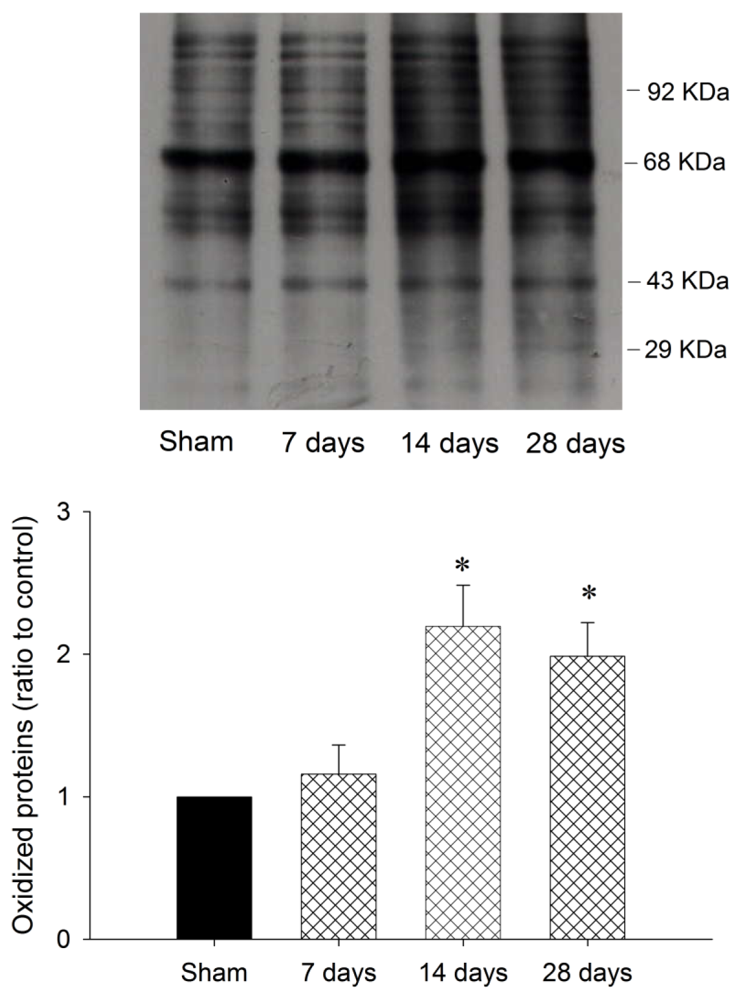
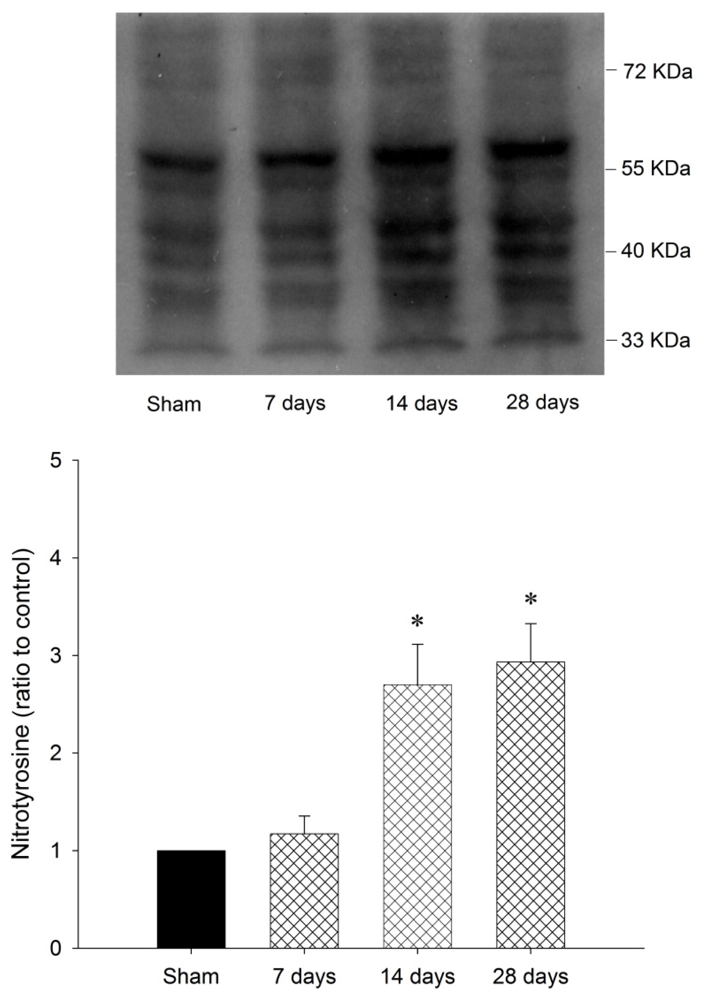
<p>Our first series of experiments established that oxidative and nitrosative stress damage occurred in the striatal cells under the chronic rotenone intoxication. We observed a significantly heightened content of oxidized proteins (<xref ref-type="fig" rid="f1-ijms-13-08722">Figure 1</xref>) and nitrotyrosine (<xref ref-type="fig" rid="f2-ijms-13-08722">Figure 2</xref>) in the samples obtained from striatum 14 to 28 days under systemic rotenone (3 mg/kg/day) infusion.</p></sec>
<sec>
<title>2.3. Temporal Course of Bim, Bax, Bid and Cytochrome c Translocation in the Striatum during Chronic Rotenone Intoxication</title>
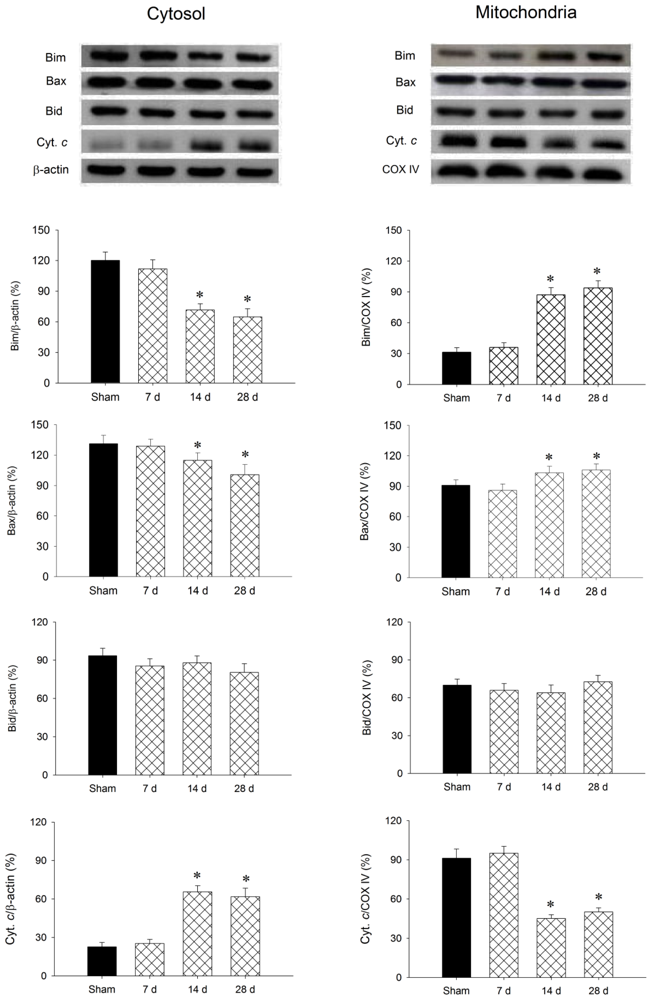
<p>Our second series of experiments investigated whether the Bim, Bax, Bid and cytochrome c signaling cascades are associated with chronic mitochondrial Complex I inhibition in the striatum following rotenone treatment. Western blot analysis revealed that Bid was not discernible as having altered in either the mitochondrial or cytosolic fraction of samples obtained from the striatum. However, there was a significant decrease of Bim and Bax level and increase of cytochrome c level in the cytosolic fraction (<xref ref-type="fig" rid="f3-ijms-13-08722">Figure 3A</xref>) of samples from the striatum after 2–4 weeks of systemic infusion of rotenone (3 mg/kg/day), accompanied by a corresponding increase of Bim and Bax level and decrease of cytochrome c level in the mitochondrial fraction (<xref ref-type="fig" rid="f3-ijms-13-08722">Figure 3B</xref>).</p></sec>
<sec>
<title>2.4. Neurons with Ultrastructural Features of Apoptosis and Mitochondria Damage in the Striatum Following Chronic Rotenone Intoxication</title>
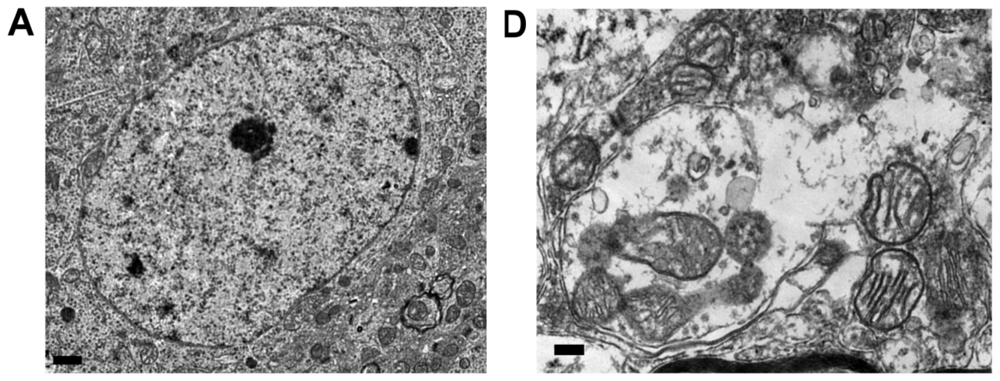
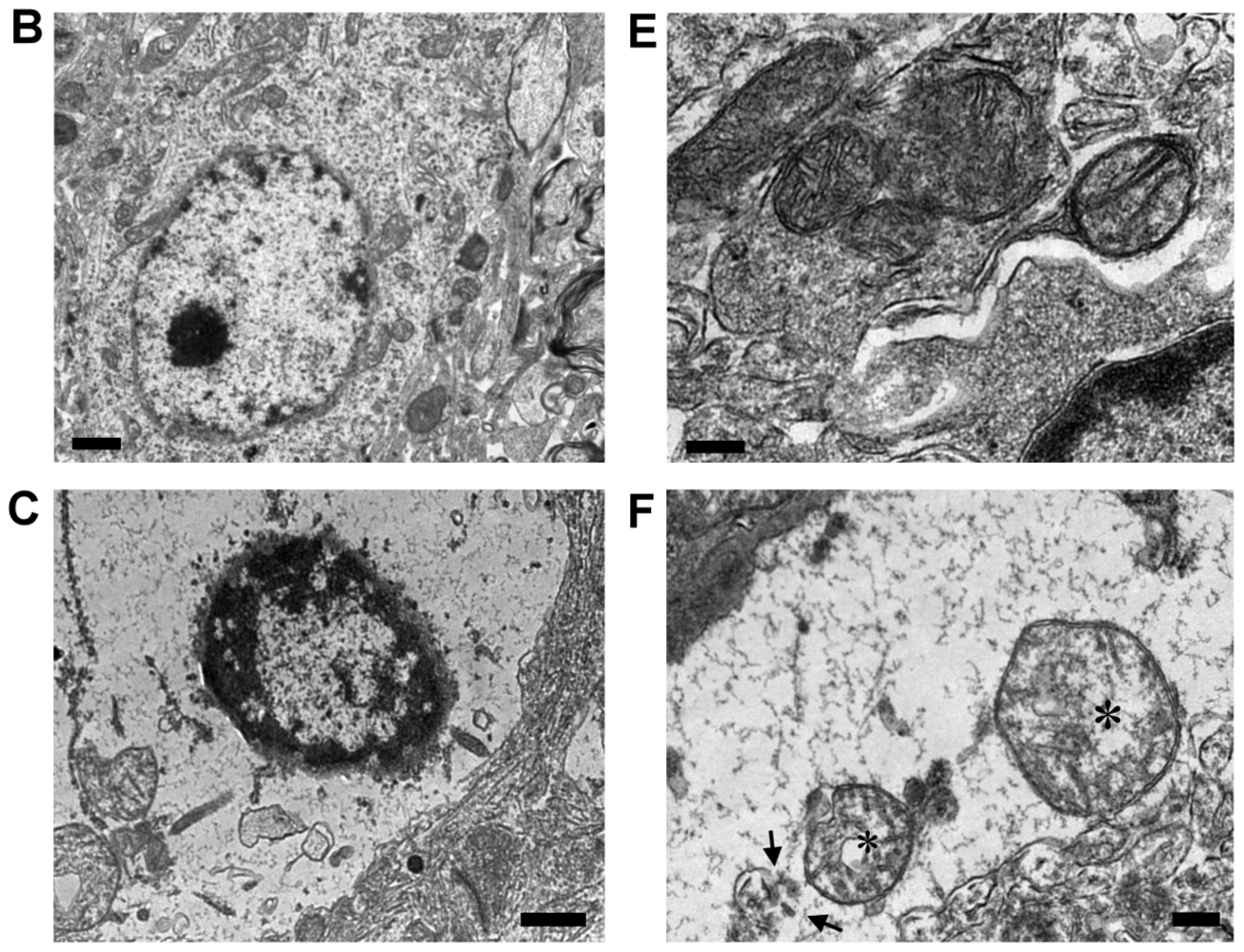
<p>Our third series of experiments determined whether the integrity of the mitochondria was damaged in the striatal neurons that exhibited the ultrastructural features of apoptosis under rotenone intoxication. As exemplified by a neuron in the striatum (<xref ref-type="fig" rid="f4-ijms-13-08722">Figure 4A</xref>), electron microscopy showed oval nuclear morphology, prominent nucleolus, normal cytoplasmic density and normal cytoplasmic organelles, particularly intact utrastracture of mitochondria (<xref ref-type="fig" rid="f4-ijms-13-08722">Figure 4D</xref>) in the striatal neurons in sham control rats. On the other hand, neurons with ultrastructural features of apoptotic cell death were identified in the striatum under systemic rotenone intoxication. After 14 days of rotenone intoxication (3 mg/kg/day), the striatal neurons manifested an early stage of apoptotic changes (<xref ref-type="fig" rid="f4-ijms-13-08722">Figure 4B</xref>). The nucleus was reduced in size but surrounded by an intact membrane. The chromatin was heterochromatic in appearance, with mild margination. Intriguingly, relatively intact mitochondria (<xref ref-type="fig" rid="f4-ijms-13-08722">Figure 4E</xref>) were clearly recognizable in the cytoplasm of striatal neurons that exhibited early apoptotic cell death feature. After 28 days of systemic rotenone intoxication, striatal neurons presented with advanced degree of apoptotic features (<xref ref-type="fig" rid="f4-ijms-13-08722">Figure 4C</xref>) that exhibited a shrinkage appearance of its markedly reduced cell body, alongside increased cytoplasmic electron density and high condensation and margination of chromatin in the much-diminished nucleus. Mitochondrial ultrastructural damage was noted after 28 days of systemic rotenone intoxication that was associated with significant swelling of all mitochondrial spaces, including cristae, and in the advanced cases, mitochondrial swelling was accompanied by a disruption in membrane integrity (<xref ref-type="fig" rid="f4-ijms-13-08722">Figure 4F</xref>).</p></sec>
<sec>
<title>2.5. Dopaminergic Neuronal Cell Loss and Apoptotic Cell Death in the Striatum and Substantia Nigra Following Chronic Rotenone Intoxication</title>
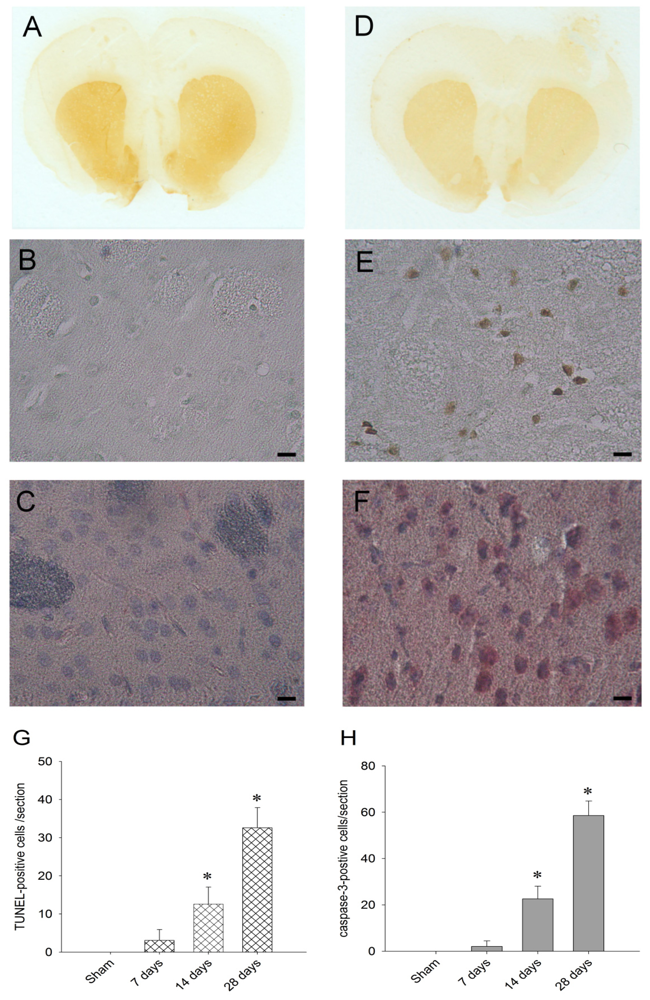
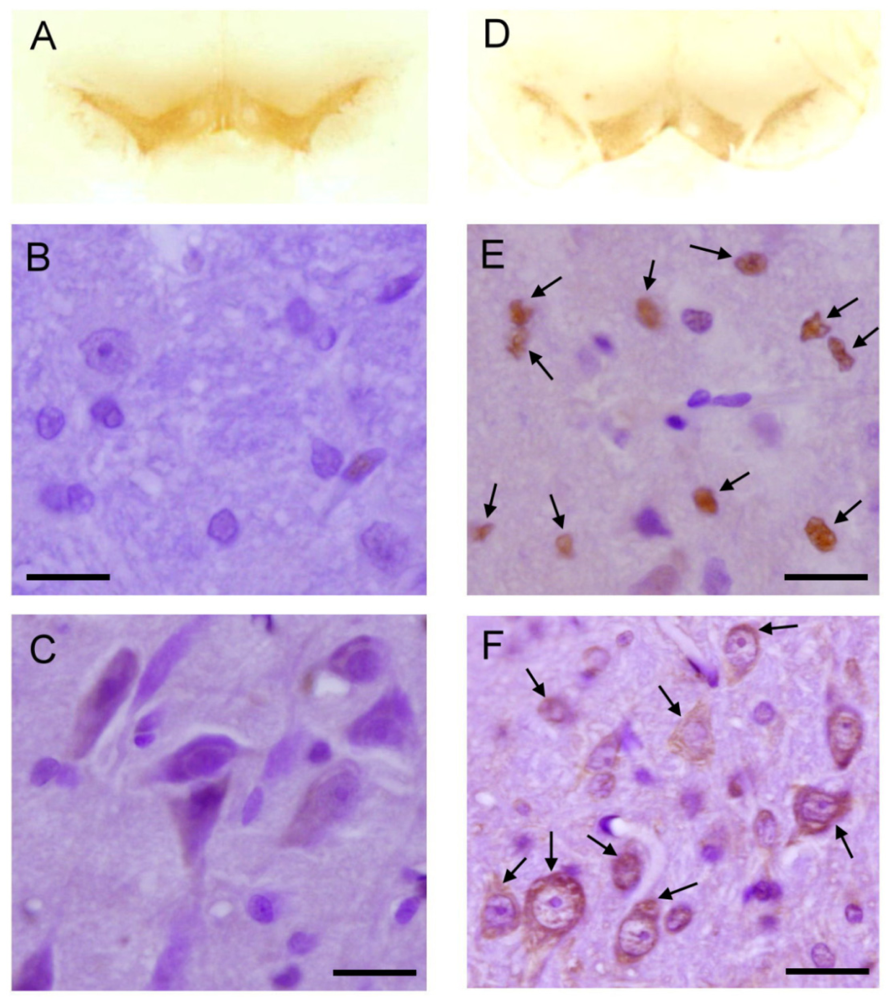
<p>After 28 days of rotenone (3 mg/kg/day) exposure, imunohistochemical staining for tyrosine hydroxylase showed reduced tyrosine hydroxylase-positive cells in the substantia nigra (<xref ref-type="fig" rid="f5-ijms-13-08722">Figure 5D</xref>) and striatum (<xref ref-type="fig" rid="f6-ijms-13-08722">Figure 6D</xref>), indicating that chronic rotenone intoxication resulted in nigrostriatal dopaminergic neuronal cell degeneration. However, the tyrosine hydroxylase staining in the stratum were relatively normal in sham-control animals (<xref ref-type="fig" rid="f5-ijms-13-08722">Figures 5A</xref>,<xref ref-type="fig" rid="f6-ijms-13-08722">6A</xref>). Moreover, TUNEL and caspase-3 staining were employed to confirm the neuronal nature of the apoptotic cells in the substantia nigra and striatum after chronic rotenone intoxication. TUNEL-positive cells (<xref ref-type="fig" rid="f5-ijms-13-08722">Figures 5E</xref>,<xref ref-type="fig" rid="f6-ijms-13-08722">6E</xref>) and caspase-3-postive cells (<xref ref-type="fig" rid="f5-ijms-13-08722">Figures 5F</xref>,<xref ref-type="fig" rid="f6-ijms-13-08722">6F</xref>) appeared on day 28 in the substantia nigra and striatum after systemic infusion of rotenone. On the other hand, TUNEL-positive and caspase-3-postive cells were essentially absent in the substantia nigra (<xref ref-type="fig" rid="f5-ijms-13-08722">Figure 5B,C</xref>) and striatum (<xref ref-type="fig" rid="f6-ijms-13-08722">Figure 6B,C</xref>) in the sham control animals. For quantitative assessment of neuronal cell death, striatal tissues were collected 7, 14, or 28 days after rotenone intoxication, and TUNEL-positive cells and caspase-3-postive cells were counted. Significant amounts of TUNEL-positive cells (<xref ref-type="fig" rid="f6-ijms-13-08722">Figure 6G</xref>) and caspase-3-postive cells (<xref ref-type="fig" rid="f6-ijms-13-08722">Figure 6H</xref>) appeared on day 14 and 28 in the striatum after systemic infusion of rotenone. The apoptotic neuronal cells were identified by morphology and size.</p></sec>
<sec sec-type="discussion">
<title>2.6. Discussion</title>
<p>The present study took advantage of an animal model of chronic systemic rotenone intoxication that closely resembles PD. Based on this animal model, the present study revealed that the repertoire of cellular events after inhibition of mitochondrial respiratory chain enzyme Complex I activity with chronic systemic rotenone infusion caused degeneration of the striatal neurons. Chronic rotenone intoxication entails inhibition of Complex I activity, followed by an excessive production of reactive oxygen species (ROS) and nitric oxide (NO) that induces mitochondrial dysfunction and ultrastructural damage, resulting in translocation of Bim and Bax from cytosol to mitochondria, release of mitochondrial cytochrome c to the cytosol that activates the caspase-3 cascade, leading to apoptotic cell death in the striatum.</p>
<p>Several biochemical abnormalities that were thought to be relevant to the pathogenesis were found in the brain of patients with PD [<xref ref-type="bibr" rid="b25-ijms-13-08722">25</xref>]. Emerging evidence has suggested that mitochondrial dysfunction, increased oxidative stress, excitotoxicity, inflammatory changes and dysfunction of the ubiquitin-proteasome system may be involved in alpha-synuclein aggregation, Lewy body formation and neurodegeneration [<xref ref-type="bibr" rid="b21-ijms-13-08722">21</xref>,<xref ref-type="bibr" rid="b25-ijms-13-08722">25</xref>]. Mitochondrial dysfunction, particularly selective loss of Complex I activity and oxidative metabolism are critical components of most current theories of nigrostriatal degeneration in PD [<xref ref-type="bibr" rid="b5-ijms-13-08722">5</xref>–<xref ref-type="bibr" rid="b7-ijms-13-08722">7</xref>,<xref ref-type="bibr" rid="b25-ijms-13-08722">25</xref>]. 1-methyl-4-phenyl-1,2,3,6-tetrahydropyridine (MPTP), a potent neurotoxin inadvertently used by heroin addicts results in inhibition of NADH-ubiquinone reductase activity which causes energy failure and neuron death in the substantia nigra and results in clinical symptoms of idiopathic PD suggested that mitochondrial dysfunction is responsible for the death of these dopaminergic neurons [<xref ref-type="bibr" rid="b26-ijms-13-08722">26</xref>,<xref ref-type="bibr" rid="b27-ijms-13-08722">27</xref>]. Since Complex I dysfunction plays a crucial role in the pathogenesis of PD, in the present study, we selected a specific mitochondrial Complex I inhibitor, rotenone, to induce dopaminergic cell death in the striatum and produce parkinsonian-like symptoms in the rats.</p>
<p>Rotenone is capable of destroying dopaminergic neurons. Findings from chronic, intravenous, or subcutaneous infusion of rotenone were reported to reproduce the major pathological and behavioral hallmarks of Parkinson’s disease, including selective degeneration of substantia nigra dopaminergic neurons, appearance of cytoplasmic inclusions reminiscent of Lewy bodies in degenerating neurons, and motor and postural deficits [<xref ref-type="bibr" rid="b17-ijms-13-08722">17</xref>,<xref ref-type="bibr" rid="b19-ijms-13-08722">19</xref>,<xref ref-type="bibr" rid="b20-ijms-13-08722">20</xref>,<xref ref-type="bibr" rid="b28-ijms-13-08722">28</xref>]. It has been reported that the neurodegeneration caused by continuous rotenone infusion is not restricted to substantia nigra dopaminergic neurons [<xref ref-type="bibr" rid="b18-ijms-13-08722">18</xref>,<xref ref-type="bibr" rid="b22-ijms-13-08722">22</xref>]. A high interindividual variability in the effectiveness of rotenone exposure to cause striatal degeneration in rats has also been suggested [<xref ref-type="bibr" rid="b22-ijms-13-08722">22</xref>]. In a rotenone-treated animal model, neuron degeneration in the striatum and prefrontal cortex has been found [<xref ref-type="bibr" rid="b18-ijms-13-08722">18</xref>]. In our present study, only those rats with evident motor symptoms were chosen to do the histology and biochemistry studies. Based on the immunohistochemical staining, we noted that a loss of dopaminergic neuronal cells both in the substantia nigra and striatum and some neurons exhibited TUNEL and caspase-3 positive staining. Therefore, we suggested that degeneration of nigrostriatal dopaminergic neuronal cells were significantly evident not only in the substantia nigra, but also in the striatum under chronic systemic rotenone exposure.</p>
<p>From its role as the cellular powerhouse, the mitochondrion is emerging as a key participant in cell death because of its association with an ever-growing list of apoptosis-related proteins [<xref ref-type="bibr" rid="b29-ijms-13-08722">29</xref>,<xref ref-type="bibr" rid="b30-ijms-13-08722">30</xref>]. Complex I is markedly more susceptible to oxidative stress and glutathionylation than other respiratory chain complexes [<xref ref-type="bibr" rid="b31-ijms-13-08722">31</xref>]. As a major source of superoxide, it is a candidate for increasing mitochondrial reactive oxygen species (ROS) production and redox signaling [<xref ref-type="bibr" rid="b31-ijms-13-08722">31</xref>,<xref ref-type="bibr" rid="b32-ijms-13-08722">32</xref>]. There are also suggestions [<xref ref-type="bibr" rid="b33-ijms-13-08722">33</xref>] that Complex I is involved in NO physiology, induction of the mitochondrial permeability transition, and regulation of apoptosis. In the present study, chronic systemic treatment of rats with rotenone, a well-established mitochondrial Complex I inhibitor, induces many key features of PD. These findings support the hypothesis of mitochondrial Complex I inhibition in the pathogenesis of PD. Furthermore, our study also showed the levels of oxidized proteins and nitrotyrosine were increased in the striatum following chronic systemic rotenone intoxication. Thus, inhibited activity of Complex I may increase production of ROS and peroxynitrite that can damage all cell structures, including lipids, proteins, DNA and mitochondrial membrane structure, leading to the striatal neuronal apoptosis [<xref ref-type="bibr" rid="b32-ijms-13-08722">32</xref>–<xref ref-type="bibr" rid="b34-ijms-13-08722">34</xref>].</p>
<p>Our electron microscopic examination of mitochondrial ultrastructure in the striatal neurons, which showed swelling and disruption of mitochondrial membrane that correlated temporally with chronic inhibition of mitochondrial respiratory chain enzyme Complex I function, offers further mechanistic insights on PD. Thus, both functional impairment and ultrastructural damage of mitochondria and increase of oxidative and nitrosative stress in the striatum may be a key to the pathogenesis of striatal neuronal cell death in this animal model of chronic rotenone intoxication. As inhibition of mitochondrial respiratory chain results in excess free radical production, and free radicals themselves are direct inhibitors of the mitochondrial respiratory chain, this can result in a vicious cycle that leads to oxidative cell damage [<xref ref-type="bibr" rid="b32-ijms-13-08722">32</xref>,<xref ref-type="bibr" rid="b34-ijms-13-08722">34</xref>].</p>
<p>One of the decisive steps of the apoptotic cascade is permeabilization of the outer mitochondrial membrane [<xref ref-type="bibr" rid="b35-ijms-13-08722">35</xref>], which leads to the release of cytochrome c from the intermediate space, followed by the activation of caspase-dependent cascade of apoptotic signaling. Excessive NO and ROS affects oxidative phosphorylation by inhibiting the mitochondrial respiratory enzymes, and the resultant mitochondrial dysfunction induces apoptosis [<xref ref-type="bibr" rid="b32-ijms-13-08722">32</xref>,<xref ref-type="bibr" rid="b34-ijms-13-08722">34</xref>,<xref ref-type="bibr" rid="b36-ijms-13-08722">36</xref>]. Complementary results from our biochemical analyses indicated that chronic systemic rotenone intoxication involved in the cytochrome c/caspase-3 apoptotic signaling cascade in the striatum.</p>
<p>It is generally contended that the anti-apoptotic members of Bcl-2 family work to prevent cytochrome c release by stabilizing the mitochondrial membrane barrier function and the pro-apoptotic members tend to induce cytochrome c release by permeabilizing the mitochondrial membrane [<xref ref-type="bibr" rid="b35-ijms-13-08722">35</xref>]. Translocation of Bax from the cytosol to mitochondria is induced during apoptosis [<xref ref-type="bibr" rid="b35-ijms-13-08722">35</xref>,<xref ref-type="bibr" rid="b37-ijms-13-08722">37</xref>]. The evidence of Bcl-2 family involvement in Parkinson-linked genes and toxins induced striatal neuronal cell death has been demonstrated in recent studies, and both pro-apoptotic and anti-apoptotic Bcl-2 family proteins were found to be activated [<xref ref-type="bibr" rid="b38-ijms-13-08722">38</xref>–<xref ref-type="bibr" rid="b45-ijms-13-08722">45</xref>]. Oxidative stress or mitochondrial dysfunction induced by the neurotoxins MPTP, paraquat, maneb, and rotenone may cause cell death through members of the Bcl-2 family [<xref ref-type="bibr" rid="b39-ijms-13-08722">39</xref>,<xref ref-type="bibr" rid="b41-ijms-13-08722">41</xref>,<xref ref-type="bibr" rid="b44-ijms-13-08722">44</xref>]. Sufficient activation of Bax facilitates mitochondrial outer-membrane permeabilization, which releases death-inducing factors that cause apoptotic and nonapoptotic programmed cell death [<xref ref-type="bibr" rid="b44-ijms-13-08722">44</xref>]. In an experimental model of epileptic seizures, the proapoptotic factor Bim was upregulated by seizure activity that triggers Bax activation and translocation in the hippocampus [<xref ref-type="bibr" rid="b46-ijms-13-08722">46</xref>]. In the present study, we observed the progressive translocations of cytosolic Bim and Bax to the mitochondria, alongside an increase in cytosolic presence of cytochrome c, suggesting that the Bim and Bax pathway had a key role in rotenone-induced apoptotic cell death via cytochrome c/caspase-3 signaling cascade in the striatum.</p>
<p>Based on histopathological analysis, we noted reduced tyrosine hydroxylase-positive cell in the striatum, which indicated that chronic rotenone intoxication resulted in nigrostriatal dopaminergic neuronal cell degeneration. Also, apoptotic cell death was detected in the striatal neurons after 28 days of systemic infusion of rotenone. It follows that prolonged exposure of neurons to rotenone toxicity may cause mitochondrial functional impairment and damages and increase of oxidative and nitrosative stress, leading eventually to apoptotic neuronal cell death in vulnerable regions of the striatum.</p>
<p>All experimental procedures were carried out in compliance with the guidelines for the care and use of experimental animals endorsed by our institutional animal care committee. All efforts were made to reduce the number of animals used and to minimize animal suffering during the experiment.</p></sec></sec>
<sec sec-type="materials|methods">
<title>3. Materials and Methods</title>
<sec>
<title>3.1. Animals</title>
<p>Experiments were carried out in specific pathogen-free adult male Lewis rats (300–350 g) that were obtained from the Experimental Animal Center of the National Science Council, Taiwan. They were housed in an animal room under temperature control (24–25 °C) and 12-h light-dark (08:00–20:00) cycle. Standard laboratory rat chow and tap water were available <italic>ad libitum</italic>.</p></sec>
<sec>
<title>3.2. Experimental Model of Parkinson’s Disease</title>
<p>An experimental animal model of PD that was induced by subcutaneously administration of a specific mitochondrial Complex I inhibitor rotenone was used [<xref ref-type="bibr" rid="b17-ijms-13-08722">17</xref>]. This model entails a 2 mL of mini-osmotic pump (2ML4, ALZET, Cupertino, CA, U.S.A.) that was filled with rotenone (3 mg/kg/day) dissolved in dimethylsulfoxide (DMSO) and polyethylene glycol (PEG), which allows to slowly deliver rotenone for 28 days and generate chronic intoxication. The mini-osmotic pumps were placed in sterile 0.9% saline at 37 °C for at least 4 h before use. Osmotic mini pumps were subcutaneously implanted under the skin on the back after ketamine (75 mg/kg) and rompum (10 mg/kg) were given intramuscularly to induce anesthesia, and the rest of the body was placed on a heating pad to maintain body temperature at 37 °C. The wound was then closed in layers, and sodium penicillin (10,000 IU; YF Chemical Corporation, Taipei, Taiwan) was given intramuscularly to prevent postoperative infection. Animals were returned to the animal room for recovery in individual cages. Rats that implanted mini pumps with 2 mL of DMSO and PEG (<italic>v</italic>/<italic>v</italic> = 1:1) subcutaneously served as sham-controls. Rats were monitored for behavior, weight and overall health every day.</p></sec>
<sec>
<title>3.3. Collection of Tissue Samples from the Striatum</title>
<p>At pre-determined time-intervals (7, 14 or 28 days) after systemic infusion of rotenone by mini-osmotic pumps, rats were anesthetized with overdose pentobarbital (100 mg/kg, i.p.) and were perfused intracardially with 50 mL of warm (37 °C) saline that contains heparin (100 U/mL). The brain was rapidly removed under visual inspection and placed on a piece of gauze moistened with ice-cold 0.9% saline and the striata was routinely collected. The concentration of total proteins extracted from tissue samples was determined by the BCA Protein Assay (Pierce, Rockford, IL, USA). In selected experiments, proteins from the mitochondrial or cytosolic fraction of the striatal samples were extracted by a commercial kit (Active Motif, Carlsbad, CA, USA).</p></sec>
<sec sec-type="methods">
<title>3.4. Western Blot Analysis</title>
<p>Western blot analysis for nitrotyrosine, an experimental index for peroxynitrite (Radi <italic>et al.</italic>, 2001), Bim, Bid, Bax, cytochrome c, nitrotyrosine or β-actin was carried out on proteins extracted from mitochondrial or cytosolic fractions of striatal samples [<xref ref-type="bibr" rid="b47-ijms-13-08722">47</xref>–<xref ref-type="bibr" rid="b49-ijms-13-08722">49</xref>]. The purity of the mitochondrial fraction was verified by the selective expression of the mitochondrial inner membrane specific protein, cytochrome c oxidase subunit IV (COX IV). Protein concentration was determined by the BCA Protein Assay (Pierce). The primary antisera used included rabbit polyclonal antiserum against Bim, Bid, Bax and COX IV (Cell Signaling, Danvers, MA, USA), mouse monoclonal antiserum against cytochrome c (Santa Cruz Biotechnology, Santa Cruz, CA, USA) and nitrotyrosine (Upstate, Lake Placid, NY, USA). The secondary antisera used included horseradish peroxidase-conjugated sheep anti-mouse IgG (Amersham Biosciences, Little Chalfont, UK) for cytochrome c, nitrotyrosine and β-actin, or donkey anti-rabbit IgG (Amersham Biosciences) for Bim, Bid, Bax, and COX IV. Specific antibody-antigen complex was detected by an enhanced chemiluminescence western blot detection system (NEN, Boston, MA, USA). The amount of protein was quantified by the ImageMaster software (Amersham Pharmacia Biotech, Piscataway, NJ, USA), and was expressed as the ratio relative to β-actin protein (for analysis of total protein or proteins in cytosolic fraction) or COX IV (for analysis of proteins in mitochondrial fraction).</p></sec>
<sec>
<title>3.5. Detection of Oxidized Proteins</title>
<p>Oxidized protein was detected by using a protein oxidation detection kit (OxyBlot, Chemicon, Temecula, CA, USA) [<xref ref-type="bibr" rid="b50-ijms-13-08722">50</xref>]. This kit provides reagents for sensitive immunodetection of carbonyl group, which is a hallmark of the oxidation status of proteins [<xref ref-type="bibr" rid="b51-ijms-13-08722">51</xref>]. Total proteins extracted from the striatal area at various time points after exposure to rotenone were reacted with 2,4-dinitrophenylhydrazine and derivatized to 2,4-dinitrophenylhydrazone (DNP-hydrazone) [<xref ref-type="bibr" rid="b52-ijms-13-08722">52</xref>]. The DNP-derivatized protein samples were separated on a 15% SDS-polyacrylamide gel followed by western blotting. The blot was incubated with a primary antibody with rabbit anti-DNP antibody and followed by incubation with a horseradish peroxidase-conjugated goat anti-rabbit IgG secondary antibody according to manufacturers’ instructions.</p></sec>
<sec>
<title>3.6. Electron Microscopy</title>
<p>After 28 days of rotenone intoxication, striatum was removed and processed for electron microscopy. Tissue samples were diced and submerged in 4% glutaraldehyde (0.1 M sodium cacodylate buffer, pH 7.2). Tissues were postfixed with osmium, and en bloc stained with uranyl acetate. After dehydration, each specimen was embedded by infiltration in Spurr’s medium. Following trimming of the tissue blocks, sections were cut to a thickness of 90 nm, post-stained with uranyl acetate and lead citrate, and viewed on 300 mesh-coated grids using a JEOL JEM-1230 (Tokyo, Japan) electron microscope [<xref ref-type="bibr" rid="b50-ijms-13-08722">50</xref>,<xref ref-type="bibr" rid="b53-ijms-13-08722">53</xref>,<xref ref-type="bibr" rid="b54-ijms-13-08722">54</xref>].</p></sec>
<sec>
<title>3.7. Immunohistochemical Staining</title>
<p>To evaluate the dopaminergic neuronal loss in the striatum and substantia nigra following chronic rotenone intoxication, imunohistochemical staining for tyrosine hydroxylase was performed. The rats were overdosed with pentobarbital (100 mg/kg, i.p.) after 28 days of the chronic rotenone intoxication for immunostaining. Intra-cardiac perfusion was performed with 50 mL of warm (37 °C) saline that contains heparin (100 U/mL), followed by 400 mL of 4% paraformaldehyde in 0.1 M PBS for tissue fixation. The forebrains were carefully dissected, and a segment containing the striatum were blocked and fixed for additional 2 h in the same fixatives, and transferred to a solution containing 30% sucrose in 0.1 M PBS. The brain sections were then embedded in tissue freezing medium (Sakura Finetek, Torrance, CA, USA), serially sectioned in the coronal plane throughout the rostral-caudal extent at 7-μm interval on a cryostat, and mounted on Superfrost/plus slides (Fisher Scientific, Pittsburgh, PA, USA). Before incubation with primary antibodies, the sections were permeabilized with 0.3% Triton X-100 and 10% horse serum in 0.01 M PBS for 20 min. A monoclonal mouse antibody against tyrosine hydroxylase (Chemicon, Temecula, CA, USA) was applied to the sections overnight at 4 °C. The following day the brain sections were incubated with a secondary biotinylated goat anti-mouse immunoglobulin G (IgG) (Vector Laboratories, Burlingame, CA, USA).</p>
<p>As histochemical markers for apoptotic cell death, animals were processed for terminal deoxynucleotidyl transferase-mediated dUTP-biotin nick end labeling (TUNEL) and caspase-3 staining to examine the apoptotic cell death in the striatum and substantia nigra following experimental animal model of Parkinson’s disease. Paraffin-embedded sections of the striatum were also processed for TUNEL and staining using an <italic>in situ</italic> apoptosis detection kit (ApopTag, Intergen Company, Purchase, NY, USA) and a rabbit polyclonal antiserum against activated caspase-3 (Cell Signaling) after 28 days of rotenone intoxication. The tyrosine hydroxylase-positive, TUNEL-positive or caspase-3-positive cells on each section were viewed under an Olympus AX70 microscope [<xref ref-type="bibr" rid="b48-ijms-13-08722">48</xref>,<xref ref-type="bibr" rid="b54-ijms-13-08722">54</xref>]. TUNEL-positive or caspase-3-positive cells were counted in a double-blind manner in the middle region of the striatum.</p></sec>
<sec sec-type="methods">
<title>3.8. Statistical Analysis</title>
<p>All values are expressed as mean ± SEM. One-way analysis of variance (ANOVA) was used, as appropriate, to assess group means, followed by the Scheffé multiple-range test for post hoc assessment of individual means. <italic>p</italic> &lt; 0.05 was taken to indicate statistical significance.</p></sec></sec>
<sec sec-type="conclusions">
<title>4. Conclusions</title>
<p>The present study demonstrated that chronic inhibition of Complex I activity by systemic infusion of rotenone may cause an excessive production of ROS and NO that induces mitochondrial dysfunction and ultrastructural damage, resulting in translocation of Bim and Bax from cytosol to mitochondria that triggers mitochondrial cytochrome c release to the cytosol and initiates caspase-3-dependent apoptotic cell death in the striatum. Therefore, to understand the mechanism of neuronal death in the vulnerable neurons during the process of PD, this study might offer novel prospects for therapy based on targeted neuroprotection.</p></sec></body>
<back>
<ack>
<title>Acknowledgements</title>
<p>This study was supported in part by research grants NSC 95-2314-B-182A-068 and 99-2314-B-182A-066-MY2 to T.K.L. from the National Science Council, and CMRPG891101 to T.K.L. from Chang Gung Memorial Hospital-Kaohsiung, Taiwan.</p></ack>
<ref-list>
<title>References</title>
<ref id="b1-ijms-13-08722"><label>1</label><citation citation-type="journal"><person-group person-group-type="author"><name><surname>Samii</surname><given-names>A.</given-names></name><name><surname>Nutt</surname><given-names>J.G.</given-names></name><name><surname>Ransom</surname><given-names>B.R.</given-names></name></person-group><article-title>Parkinson’s disease</article-title><source>Lancet</source><year>2004</year><volume>363</volume><fpage>1783</fpage><lpage>1793</lpage><pub-id pub-id-type="doi">10.1016/S0140-6736(04)16305-8</pub-id><pub-id pub-id-type="pmid">15172778</pub-id></citation></ref>
<ref id="b2-ijms-13-08722"><label>2</label><citation citation-type="journal"><person-group person-group-type="author"><name><surname>Sherer</surname><given-names>T.B.</given-names></name><name><surname>Betarbet</surname><given-names>R.</given-names></name><name><surname>Greenamyre</surname><given-names>J.T.</given-names></name></person-group><article-title>Pathogenesis of Parkinson’s disease</article-title><source>Curr. Opin. Investig. Drugs</source><year>2001</year><volume>2</volume><fpage>657</fpage><lpage>662</lpage><pub-id pub-id-type="pmid">11569943</pub-id></citation></ref>
<ref id="b3-ijms-13-08722"><label>3</label><citation citation-type="journal"><person-group person-group-type="author"><name><surname>Posada</surname><given-names>I.J.</given-names></name><name><surname>Benito-Leon</surname><given-names>J.</given-names></name><name><surname>Louis</surname><given-names>E.D.</given-names></name><name><surname>Trincado</surname><given-names>R.</given-names></name><name><surname>Villarejo</surname><given-names>A.</given-names></name><name><surname>Medrano</surname><given-names>M.J.</given-names></name><name><surname>Bermejo-Pareja</surname><given-names>F.</given-names></name></person-group><article-title>Mortality from Parkinson’s disease: A population-based prospective study (NEDICES)</article-title><source>Mov. Disord</source><year>2011</year><volume>26</volume><fpage>2522</fpage><lpage>2529</lpage><pub-id pub-id-type="doi">10.1002/mds.23921</pub-id><pub-id pub-id-type="pmid">21915906</pub-id></citation></ref>
<ref id="b4-ijms-13-08722"><label>4</label><citation citation-type="journal"><person-group person-group-type="author"><name><surname>Minami</surname><given-names>Y.</given-names></name><name><surname>Yamamoto</surname><given-names>R.</given-names></name><name><surname>Nishikouri</surname><given-names>M.</given-names></name><name><surname>Fukao</surname><given-names>A.</given-names></name><name><surname>Hisamichi</surname><given-names>S.</given-names></name></person-group><article-title>Mortality and cancer incidence in patients with Parkinson’s disease</article-title><source>J. Neurol</source><year>2000</year><volume>247</volume><fpage>429</fpage><lpage>434</lpage><pub-id pub-id-type="doi">10.1007/s004150070171</pub-id><pub-id pub-id-type="pmid">10929271</pub-id></citation></ref>
<ref id="b5-ijms-13-08722"><label>5</label><citation citation-type="journal"><person-group person-group-type="author"><name><surname>Beal</surname><given-names>M.F.</given-names></name></person-group><article-title>Mitochondria, oxidative damage, and inflammation in Parkinson’s disease</article-title><source>Ann. N. Y. Acad. Sci</source><year>2003</year><volume>991</volume><fpage>120</fpage><lpage>131</lpage><pub-id pub-id-type="pmid">12846981</pub-id></citation></ref>
<ref id="b6-ijms-13-08722"><label>6</label><citation citation-type="journal"><person-group person-group-type="author"><name><surname>Greenamyre</surname><given-names>J.T.</given-names></name><name><surname>Sherer</surname><given-names>T.B.</given-names></name><name><surname>Betarbet</surname><given-names>R.</given-names></name><name><surname>Panov</surname><given-names>A.V.</given-names></name></person-group><article-title>Complex I and Parkinson’s disease</article-title><source>IUBMB Life</source><year>2001</year><volume>52</volume><fpage>135</fpage><lpage>141</lpage><pub-id pub-id-type="doi">10.1080/15216540152845939</pub-id><pub-id pub-id-type="pmid">11798025</pub-id></citation></ref>
<ref id="b7-ijms-13-08722"><label>7</label><citation citation-type="journal"><person-group person-group-type="author"><name><surname>Winklhofer</surname><given-names>K.F.</given-names></name><name><surname>Haass</surname><given-names>C.</given-names></name></person-group><article-title>Mitochondrial dysfunction in Parkinson’s disease</article-title><source>Biochim. Biophys. Acta</source><year>2010</year><volume>1802</volume><fpage>29</fpage><lpage>44</lpage><pub-id pub-id-type="doi">10.1016/j.bbadis.2009.08.013</pub-id><pub-id pub-id-type="pmid">19733240</pub-id></citation></ref>
<ref id="b8-ijms-13-08722"><label>8</label><citation citation-type="journal"><person-group person-group-type="author"><name><surname>Schapira</surname><given-names>A.H.</given-names></name><name><surname>Cooper</surname><given-names>J.M.</given-names></name><name><surname>Dexter</surname><given-names>D.</given-names></name><name><surname>Jenner</surname><given-names>P.</given-names></name><name><surname>Clark</surname><given-names>J.B.</given-names></name><name><surname>Marsden</surname><given-names>C.D.</given-names></name></person-group><article-title>Mitochondrial complex I deficiency in Parkinson’s disease</article-title><source>Lancet</source><year>1989</year><volume>1</volume><fpage>1269</fpage><pub-id pub-id-type="pmid">2566813</pub-id></citation></ref>
<ref id="b9-ijms-13-08722"><label>9</label><citation citation-type="journal"><person-group person-group-type="author"><name><surname>Choi</surname><given-names>W.S.</given-names></name><name><surname>Palmiter</surname><given-names>R.D.</given-names></name><name><surname>Xia</surname><given-names>Z.</given-names></name></person-group><article-title>Loss of mitochondrial complex I activity potentiates dopamine neuron death induced by microtubule dysfunction in a Parkinson’s disease model</article-title><source>J. Cell Biol</source><year>2011</year><volume>192</volume><fpage>873</fpage><lpage>882</lpage><pub-id pub-id-type="doi">10.1083/jcb.201009132</pub-id><pub-id pub-id-type="pmid">21383081</pub-id></citation></ref>
<ref id="b10-ijms-13-08722"><label>10</label><citation citation-type="journal"><person-group person-group-type="author"><name><surname>Schapira</surname><given-names>A.H.</given-names></name><name><surname>Cooper</surname><given-names>J.M.</given-names></name><name><surname>Dexter</surname><given-names>D.</given-names></name><name><surname>Clark</surname><given-names>J.B.</given-names></name><name><surname>Jenner</surname><given-names>P.</given-names></name><name><surname>Marsden</surname><given-names>C.D.</given-names></name></person-group><article-title>Mitochondrial complex I deficiency in Parkinson’s disease</article-title><source>J. Neurochem</source><year>1990</year><volume>54</volume><fpage>823</fpage><lpage>827</lpage><pub-id pub-id-type="doi">10.1111/j.1471-4159.1990.tb02325.x</pub-id><pub-id pub-id-type="pmid">2154550</pub-id></citation></ref>
<ref id="b11-ijms-13-08722"><label>11</label><citation citation-type="journal"><person-group person-group-type="author"><name><surname>Schapira</surname><given-names>A.H.</given-names></name><name><surname>Mann</surname><given-names>V.M.</given-names></name><name><surname>Cooper</surname><given-names>J.M.</given-names></name><name><surname>Krige</surname><given-names>D.</given-names></name><name><surname>Jenner</surname><given-names>P.J.</given-names></name><name><surname>Marsden</surname><given-names>C.D.</given-names></name></person-group><article-title>Mitochondrial function in Parkinson’s disease. The Royal Kings and Queens Parkinson’s Disease Research Group</article-title><source>Ann. Neurol</source><year>1992</year><volume>32</volume><issue>Suppl</issue><fpage>S116</fpage><lpage>124</lpage><pub-id pub-id-type="pmid">1510369</pub-id></citation></ref>
<ref id="b12-ijms-13-08722"><label>12</label><citation citation-type="journal"><person-group person-group-type="author"><name><surname>Perier</surname><given-names>C.</given-names></name><name><surname>Bove</surname><given-names>J.</given-names></name><name><surname>Vila</surname><given-names>M.</given-names></name></person-group><article-title>Mitochondria and programmed cell death in Parkinson’s disease: Apoptosis and beyond</article-title><source>Antioxid. Redox. Signal</source><year>2012</year><volume>16</volume><fpage>883</fpage><lpage>895</lpage><pub-id pub-id-type="pmid">21619488</pub-id></citation></ref>
<ref id="b13-ijms-13-08722"><label>13</label><citation citation-type="journal"><person-group person-group-type="author"><name><surname>Bueler</surname><given-names>H.</given-names></name></person-group><article-title>Mitochondrial dynamics, cell death and the pathogenesis of Parkinson’s disease</article-title><source>Apoptosis</source><year>2010</year><volume>15</volume><fpage>1336</fpage><lpage>1353</lpage><pub-id pub-id-type="pmid">20131004</pub-id></citation></ref>
<ref id="b14-ijms-13-08722"><label>14</label><citation citation-type="journal"><person-group person-group-type="author"><name><surname>Yao</surname><given-names>Z.</given-names></name><name><surname>Wood</surname><given-names>N.W.</given-names></name></person-group><article-title>Cell death pathways in Parkinson’s disease: Role of mitochondria</article-title><source>Antioxid. Redox. Signal</source><year>2009</year><volume>11</volume><fpage>2135</fpage><lpage>2149</lpage><pub-id pub-id-type="pmid">19422283</pub-id></citation></ref>
<ref id="b15-ijms-13-08722"><label>15</label><citation citation-type="journal"><person-group person-group-type="author"><name><surname>Tanner</surname><given-names>C.M.</given-names></name><name><surname>Kamel</surname><given-names>F.</given-names></name><name><surname>Ross</surname><given-names>G.W.</given-names></name><name><surname>Hoppin</surname><given-names>J.A.</given-names></name><name><surname>Goldman</surname><given-names>S.M.</given-names></name><name><surname>Korell</surname><given-names>M.</given-names></name><name><surname>Marras</surname><given-names>C.</given-names></name><name><surname>Bhudhikanok</surname><given-names>G.S.</given-names></name><name><surname>Kasten</surname><given-names>M.</given-names></name><name><surname>Chade</surname><given-names>A.R.</given-names></name><etal/></person-group><article-title>Rotenone, paraquat, and Parkinson’s disease</article-title><source>Environ. Health Perspect</source><year>2011</year><volume>119</volume><fpage>866</fpage><lpage>872</lpage><pub-id pub-id-type="pmid">21269927</pub-id></citation></ref>
<ref id="b16-ijms-13-08722"><label>16</label><citation citation-type="journal"><person-group person-group-type="author"><name><surname>Cannon</surname><given-names>J.R.</given-names></name><name><surname>Greenamyre</surname><given-names>J.T.</given-names></name></person-group><article-title>Neurotoxic <italic>in vivo</italic> models of Parkinson’s disease recent advances</article-title><source>Prog. Brain Res</source><year>2010</year><volume>184</volume><fpage>17</fpage><lpage>33</lpage><pub-id pub-id-type="pmid">20887868</pub-id></citation></ref>
<ref id="b17-ijms-13-08722"><label>17</label><citation citation-type="journal"><person-group person-group-type="author"><name><surname>Betarbet</surname><given-names>R.</given-names></name><name><surname>Sherer</surname><given-names>T.B.</given-names></name><name><surname>MacKenzie</surname><given-names>G.</given-names></name><name><surname>Garcia-Osuna</surname><given-names>M.</given-names></name><name><surname>Panov</surname><given-names>A.V.</given-names></name><name><surname>Greenamyre</surname><given-names>J.T.</given-names></name></person-group><article-title>Chronic systemic pesticide exposure reproduces features of Parkinson’s disease</article-title><source>Nat. Neurosci</source><year>2000</year><volume>3</volume><fpage>1301</fpage><lpage>1306</lpage><pub-id pub-id-type="pmid">11100151</pub-id></citation></ref>
<ref id="b18-ijms-13-08722"><label>18</label><citation citation-type="journal"><person-group person-group-type="author"><name><surname>Alam</surname><given-names>M.</given-names></name><name><surname>Schmidt</surname><given-names>W.J.</given-names></name></person-group><article-title>Rotenone destroys dopaminergic neurons and induces parkinsonian symptoms in rats</article-title><source>Behav. Brain Res</source><year>2002</year><volume>136</volume><fpage>317</fpage><lpage>324</lpage><pub-id pub-id-type="pmid">12385818</pub-id></citation></ref>
<ref id="b19-ijms-13-08722"><label>19</label><citation citation-type="journal"><person-group person-group-type="author"><name><surname>Sherer</surname><given-names>T.B.</given-names></name><name><surname>Betarbet</surname><given-names>R.</given-names></name><name><surname>Testa</surname><given-names>C.M.</given-names></name><name><surname>Seo</surname><given-names>B.B.</given-names></name><name><surname>Richardson</surname><given-names>J.R.</given-names></name><name><surname>Kim</surname><given-names>J.H.</given-names></name><name><surname>Miller</surname><given-names>G.W.</given-names></name><name><surname>Yagi</surname><given-names>T.</given-names></name><name><surname>Matsuno-Yagi</surname><given-names>A.</given-names></name><name><surname>Greenamyre</surname><given-names>J.T.</given-names></name></person-group><article-title>Mechanism of toxicity in rotenone models of Parkinson’s disease</article-title><source>J. Neurosci</source><year>2003</year><volume>23</volume><fpage>10756</fpage><lpage>10764</lpage><pub-id pub-id-type="pmid">14645467</pub-id></citation></ref>
<ref id="b20-ijms-13-08722"><label>20</label><citation citation-type="journal"><person-group person-group-type="author"><name><surname>Hoglinger</surname><given-names>G.U.</given-names></name><name><surname>Feger</surname><given-names>J.</given-names></name><name><surname>Prigent</surname><given-names>A.</given-names></name><name><surname>Michel</surname><given-names>P.P.</given-names></name><name><surname>Parain</surname><given-names>K.</given-names></name><name><surname>Champy</surname><given-names>P.</given-names></name><name><surname>Ruberg</surname><given-names>M.</given-names></name><name><surname>Oertel</surname><given-names>W.H.</given-names></name><name><surname>Hirsch</surname><given-names>E.C.</given-names></name></person-group><article-title>Chronic systemic complex I inhibition induces a hypokinetic multisystem degeneration in rats</article-title><source>J. Neurochem</source><year>2003</year><volume>84</volume><fpage>491</fpage><lpage>502</lpage><pub-id pub-id-type="pmid">12558969</pub-id></citation></ref>
<ref id="b21-ijms-13-08722"><label>21</label><citation citation-type="journal"><person-group person-group-type="author"><name><surname>Emborg</surname><given-names>M.E.</given-names></name></person-group><article-title>Evaluation of animal models of Parkinson’s disease for neuroprotective strategies</article-title><source>J. Neurosci. Methods</source><year>2004</year><volume>139</volume><fpage>121</fpage><lpage>143</lpage><pub-id pub-id-type="pmid">15488225</pub-id></citation></ref>
<ref id="b22-ijms-13-08722"><label>22</label><citation citation-type="journal"><person-group person-group-type="author"><name><surname>Milusheva</surname><given-names>E.</given-names></name><name><surname>Baranyi</surname><given-names>M.</given-names></name><name><surname>Kittel</surname><given-names>A.</given-names></name><name><surname>Sperlagh</surname><given-names>B.</given-names></name><name><surname>Vizi</surname><given-names>E.S.</given-names></name></person-group><article-title>Increased sensitivity of striatal dopamine release to H2O2 upon chronic rotenone treatment</article-title><source>Free Radic. Biol. Med</source><year>2005</year><volume>39</volume><fpage>133</fpage><lpage>142</lpage><pub-id pub-id-type="pmid">15925285</pub-id></citation></ref>
<ref id="b23-ijms-13-08722"><label>23</label><citation citation-type="journal"><person-group person-group-type="author"><name><surname>Sherer</surname><given-names>T.B.</given-names></name><name><surname>Betarbet</surname><given-names>R.</given-names></name><name><surname>Kim</surname><given-names>J.H.</given-names></name><name><surname>Greenamyre</surname><given-names>J.T.</given-names></name></person-group><article-title>Selective microglial activation in the rat rotenone model of Parkinson’s disease</article-title><source>Neurosci. Lett</source><year>2003</year><volume>341</volume><fpage>87</fpage><lpage>90</lpage><pub-id pub-id-type="pmid">12686372</pub-id></citation></ref>
<ref id="b24-ijms-13-08722"><label>24</label><citation citation-type="journal"><person-group person-group-type="author"><name><surname>Pan-Montojo</surname><given-names>F.</given-names></name><name><surname>Anichtchik</surname><given-names>O.</given-names></name><name><surname>Dening</surname><given-names>Y.</given-names></name><name><surname>Knels</surname><given-names>L.</given-names></name><name><surname>Pursche</surname><given-names>S.</given-names></name><name><surname>Jung</surname><given-names>R.</given-names></name><name><surname>Jackson</surname><given-names>S.</given-names></name><name><surname>Gille</surname><given-names>G.</given-names></name><name><surname>Spillantini</surname><given-names>M.G.</given-names></name><name><surname>Reichmann</surname><given-names>H.</given-names></name><etal/></person-group><article-title>Progression of Parkinson’s disease pathology is reproduced by intragastric administration of rotenone in mice</article-title><source>PLoS One</source><year>2010</year><volume>5</volume><fpage>e8762</fpage><pub-id pub-id-type="pmid">20098733</pub-id></citation></ref>
<ref id="b25-ijms-13-08722"><label>25</label><citation citation-type="journal"><person-group person-group-type="author"><name><surname>Schapira</surname><given-names>A.H.</given-names></name></person-group><article-title>Mitochondria in the aetiology and pathogenesis of Parkinson’s disease</article-title><source>Lancet Neurol</source><year>2008</year><volume>7</volume><fpage>97</fpage><lpage>109</lpage><pub-id pub-id-type="pmid">18093566</pub-id></citation></ref>
<ref id="b26-ijms-13-08722"><label>26</label><citation citation-type="journal"><person-group person-group-type="author"><name><surname>Davis</surname><given-names>G.C.</given-names></name><name><surname>Williams</surname><given-names>A.C.</given-names></name><name><surname>Markey</surname><given-names>S.P.</given-names></name><name><surname>Ebert</surname><given-names>M.H.</given-names></name><name><surname>Caine</surname><given-names>E.D.</given-names></name><name><surname>Reichert</surname><given-names>C.M.</given-names></name><name><surname>Kopin</surname><given-names>I.J.</given-names></name></person-group><article-title>Chronic Parkinsonism secondary to intravenous injection of meperidine analogues</article-title><source>Psychiatry Res</source><year>1979</year><volume>1</volume><fpage>249</fpage><lpage>254</lpage><pub-id pub-id-type="pmid">298352</pub-id></citation></ref>
<ref id="b27-ijms-13-08722"><label>27</label><citation citation-type="journal"><person-group person-group-type="author"><name><surname>Langston</surname><given-names>J.W.</given-names></name><name><surname>Langston</surname><given-names>E.B.</given-names></name><name><surname>Irwin</surname><given-names>I.</given-names></name></person-group><article-title>MPTP-induced parkinsonism in human and non-human primates—clinical and experimental aspects</article-title><source>Acta Neurol. Scand. Suppl</source><year>1984</year><volume>100</volume><fpage>49</fpage><lpage>54</lpage><pub-id pub-id-type="pmid">6333134</pub-id></citation></ref>
<ref id="b28-ijms-13-08722"><label>28</label><citation citation-type="journal"><person-group person-group-type="author"><name><surname>Sherer</surname><given-names>T.B.</given-names></name><name><surname>Kim</surname><given-names>J.H.</given-names></name><name><surname>Betarbet</surname><given-names>R.</given-names></name><name><surname>Greenamyre</surname><given-names>J.T.</given-names></name></person-group><article-title>Subcutaneous rotenone exposure causes highly selective dopaminergic degeneration and alpha-synuclein aggregation</article-title><source>Exp. Neurol</source><year>2003</year><volume>179</volume><fpage>9</fpage><lpage>16</lpage><pub-id pub-id-type="pmid">12504863</pub-id></citation></ref>
<ref id="b29-ijms-13-08722"><label>29</label><citation citation-type="journal"><person-group person-group-type="author"><name><surname>Kroemer</surname><given-names>G.</given-names></name></person-group><article-title>Mitochondrial control of apoptosis: An overview</article-title><source>Biochem. Soc. Symp</source><year>1999</year><volume>66</volume><fpage>1</fpage><lpage>15</lpage><pub-id pub-id-type="pmid">10989652</pub-id></citation></ref>
<ref id="b30-ijms-13-08722"><label>30</label><citation citation-type="journal"><person-group person-group-type="author"><name><surname>Daugas</surname><given-names>E.</given-names></name><name><surname>Nochy</surname><given-names>D.</given-names></name><name><surname>Ravagnan</surname><given-names>L.</given-names></name><name><surname>Loeffler</surname><given-names>M.</given-names></name><name><surname>Susin</surname><given-names>S.A.</given-names></name><name><surname>Zamzami</surname><given-names>N.</given-names></name><name><surname>Kroemer</surname><given-names>G.</given-names></name></person-group><article-title>Apoptosis-inducing factor (AIF): A ubiquitous mitochondrial oxidoreductase involved in apoptosis</article-title><source>FEBS Lett</source><year>2000</year><volume>476</volume><fpage>118</fpage><lpage>123</lpage><pub-id pub-id-type="pmid">10913597</pub-id></citation></ref>
<ref id="b31-ijms-13-08722"><label>31</label><citation citation-type="journal"><person-group person-group-type="author"><name><surname>Taylor</surname><given-names>E.R.</given-names></name><name><surname>Hurrell</surname><given-names>F.</given-names></name><name><surname>Shannon</surname><given-names>R.J.</given-names></name><name><surname>Lin</surname><given-names>T.K.</given-names></name><name><surname>Hirst</surname><given-names>J.</given-names></name><name><surname>Murphy</surname><given-names>M.P.</given-names></name></person-group><article-title>Reversible glutathionylation of complex I increases mitochondrial superoxide formation</article-title><source>J. Biol. Chem</source><year>2003</year><volume>278</volume><fpage>19603</fpage><lpage>19610</lpage><pub-id pub-id-type="pmid">12649289</pub-id></citation></ref>
<ref id="b32-ijms-13-08722"><label>32</label><citation citation-type="journal"><person-group person-group-type="author"><name><surname>Cadenas</surname><given-names>E.</given-names></name><name><surname>Davies</surname><given-names>K.J.</given-names></name></person-group><article-title>Mitochondrial free radical generation, oxidative stress, and aging</article-title><source>Free Radic. Biol. Med</source><year>2000</year><volume>29</volume><fpage>222</fpage><lpage>230</lpage><pub-id pub-id-type="pmid">11035250</pub-id></citation></ref>
<ref id="b33-ijms-13-08722"><label>33</label><citation citation-type="journal"><person-group person-group-type="author"><name><surname>Moncada</surname><given-names>S.</given-names></name><name><surname>Erusalimsky</surname><given-names>J.D.</given-names></name></person-group><article-title>Does nitric oxide modulate mitochondrial energy generation and apoptosis?</article-title><source>Nat. Rev. Mol. Cell. Biol</source><year>2002</year><volume>3</volume><fpage>214</fpage><lpage>220</lpage><pub-id pub-id-type="pmid">11994742</pub-id></citation></ref>
<ref id="b34-ijms-13-08722"><label>34</label><citation citation-type="journal"><person-group person-group-type="author"><name><surname>Lee</surname><given-names>J.</given-names></name><name><surname>Giordano</surname><given-names>S.</given-names></name><name><surname>Zhang</surname><given-names>J.</given-names></name></person-group><article-title>Autophagy, mitochondria and oxidative stress: Cross-talk and redox signalling</article-title><source>Biochem. J</source><year>2012</year><volume>441</volume><fpage>523</fpage><lpage>540</lpage><pub-id pub-id-type="pmid">22187934</pub-id></citation></ref>
<ref id="b35-ijms-13-08722"><label>35</label><citation citation-type="journal"><person-group person-group-type="author"><name><surname>Crompton</surname><given-names>M</given-names></name></person-group><article-title>Mitochondrial intermembrane junctional complexes and their role in cell death</article-title><source>J. Physiol</source><year>2000</year><volume>529</volume><issue>Pt1</issue><fpage>11</fpage><lpage>21</lpage><pub-id pub-id-type="pmid">11080247</pub-id></citation></ref>
<ref id="b36-ijms-13-08722"><label>36</label><citation citation-type="journal"><person-group person-group-type="author"><name><surname>Carreras</surname><given-names>M.C.</given-names></name><name><surname>Franco</surname><given-names>M.C.</given-names></name><name><surname>Peralta</surname><given-names>J.G.</given-names></name><name><surname>Poderoso</surname><given-names>J.J.</given-names></name></person-group><article-title>Nitric oxide, complex I, and the modulation of mitochondrial reactive species in biology and disease</article-title><source>Mol. Aspects Med</source><year>2004</year><volume>25</volume><fpage>125</fpage><lpage>139</lpage><pub-id pub-id-type="pmid">15051322</pub-id></citation></ref>
<ref id="b37-ijms-13-08722"><label>37</label><citation citation-type="journal"><person-group person-group-type="author"><name><surname>Hou</surname><given-names>Q.</given-names></name><name><surname>Hsu</surname><given-names>Y.T.</given-names></name></person-group><article-title>Bax translocates from cytosol to mitochondria in cardiac cells during apoptosis: Development of a GFP-Bax-stable H9c2 cell line for apoptosis analysis</article-title><source>Am. J. Physiol. Heart Circ. Physiol</source><year>2005</year><volume>289</volume><fpage>H477</fpage><lpage>H487</lpage><pub-id pub-id-type="pmid">15961378</pub-id></citation></ref>
<ref id="b38-ijms-13-08722"><label>38</label><citation citation-type="journal"><person-group person-group-type="author"><name><surname>Youdim</surname><given-names>M.B.</given-names></name><name><surname>Arraf</surname><given-names>Z.</given-names></name></person-group><article-title>Prevention of MPTP (<italic>N</italic>-methyl-4-phenyl-1,2,3,6-tetrahydropyridine) dopaminergic neurotoxicity in mice by chronic lithium: Involvements of Bcl-2 and Bax</article-title><source>Neuropharmacology</source><year>2004</year><volume>46</volume><fpage>1130</fpage><lpage>1140</lpage><pub-id pub-id-type="pmid">15111020</pub-id></citation></ref>
<ref id="b39-ijms-13-08722"><label>39</label><citation citation-type="journal"><person-group person-group-type="author"><name><surname>Tortosa</surname><given-names>A.</given-names></name><name><surname>Lopez</surname><given-names>E.</given-names></name><name><surname>Ferrer</surname><given-names>I.</given-names></name></person-group><article-title>Bcl-2 and Bax proteins in Lewy bodies from patients with Parkinson’s disease and Diffuse Lewy body disease</article-title><source>Neurosci. Lett</source><year>1997</year><volume>238</volume><fpage>78</fpage><lpage>80</lpage><pub-id pub-id-type="pmid">9464659</pub-id></citation></ref>
<ref id="b40-ijms-13-08722"><label>40</label><citation citation-type="journal"><person-group person-group-type="author"><name><surname>Vyas</surname><given-names>S.</given-names></name><name><surname>Javoy-Agid</surname><given-names>F.</given-names></name><name><surname>Herrero</surname><given-names>M.T.</given-names></name><name><surname>Strada</surname><given-names>O.</given-names></name><name><surname>Boissiere</surname><given-names>F.</given-names></name><name><surname>Hibner</surname><given-names>U.</given-names></name><name><surname>Agid</surname><given-names>Y.</given-names></name></person-group><article-title>Expression of Bcl-2 in adult human brain regions with special reference to neurodegenerative disorders</article-title><source>J. Neurochem</source><year>1997</year><volume>69</volume><fpage>223</fpage><lpage>231</lpage><pub-id pub-id-type="pmid">9202314</pub-id></citation></ref>
<ref id="b41-ijms-13-08722"><label>41</label><citation citation-type="journal"><person-group person-group-type="author"><name><surname>Mogi</surname><given-names>M.</given-names></name><name><surname>Harada</surname><given-names>M.</given-names></name><name><surname>Kondo</surname><given-names>T.</given-names></name><name><surname>Mizuno</surname><given-names>Y.</given-names></name><name><surname>Narabayashi</surname><given-names>H.</given-names></name><name><surname>Riederer</surname><given-names>P.</given-names></name><name><surname>Nagatsu</surname><given-names>T.</given-names></name></person-group><article-title>bcl-2 protein is increased in the brain from parkinsonian patients</article-title><source>Neurosci. Lett</source><year>1996</year><volume>215</volume><fpage>137</fpage><lpage>139</lpage><pub-id pub-id-type="pmid">8888015</pub-id></citation></ref>
<ref id="b42-ijms-13-08722"><label>42</label><citation citation-type="journal"><person-group person-group-type="author"><name><surname>Kim</surname><given-names>T.W.</given-names></name><name><surname>Moon</surname><given-names>Y.</given-names></name><name><surname>Kim</surname><given-names>K.</given-names></name><name><surname>Lee</surname><given-names>J.E.</given-names></name><name><surname>Koh</surname><given-names>H.C.</given-names></name><name><surname>Rhyu</surname><given-names>I.J.</given-names></name><name><surname>Kim</surname><given-names>H.</given-names></name><name><surname>Sun</surname><given-names>W.</given-names></name></person-group><article-title>Dissociation of progressive dopaminergic neuronal death and behavioral impairments by Bax deletion in a mouse model of Parkinson’s diseases</article-title><source>PLoS One</source><year>2011</year><volume>6</volume><fpage>e25346</fpage><pub-id pub-id-type="pmid">22043283</pub-id></citation></ref>
<ref id="b43-ijms-13-08722"><label>43</label><citation citation-type="journal"><person-group person-group-type="author"><name><surname>Horowitz</surname><given-names>J.M.</given-names></name><name><surname>Pastor</surname><given-names>D.M.</given-names></name><name><surname>Goyal</surname><given-names>A.</given-names></name><name><surname>Kar</surname><given-names>S.</given-names></name><name><surname>Ramdeen</surname><given-names>N.</given-names></name><name><surname>Hallas</surname><given-names>B.H.</given-names></name><name><surname>Torres</surname><given-names>G.</given-names></name></person-group><article-title>BAX protein-immunoreactivity in midbrain neurons of Parkinson’s disease patients</article-title><source>Brain Res. Bull</source><year>2003</year><volume>62</volume><fpage>55</fpage><lpage>61</lpage><pub-id pub-id-type="pmid">14596892</pub-id></citation></ref>
<ref id="b44-ijms-13-08722"><label>44</label><citation citation-type="journal"><person-group person-group-type="author"><name><surname>Ethell</surname><given-names>D.W.</given-names></name><name><surname>Fei</surname><given-names>Q.</given-names></name></person-group><article-title>Parkinson-linked genes and toxins that affect neuronal cell death through the Bcl-2 family</article-title><source>Antioxid. Redox. Signal</source><year>2009</year><volume>11</volume><fpage>529</fpage><lpage>540</lpage><pub-id pub-id-type="pmid">18715146</pub-id></citation></ref>
<ref id="b45-ijms-13-08722"><label>45</label><citation citation-type="journal"><person-group person-group-type="author"><name><surname>Slone</surname><given-names>S.R.</given-names></name><name><surname>Lesort</surname><given-names>M.</given-names></name><name><surname>Yacoubian</surname><given-names>T.A.</given-names></name></person-group><article-title>14–3–3theta protects against neurotoxicity in a cellular Parkinson’s disease model through inhibition of the apoptotic factor Bax</article-title><source>PLoS One</source><year>2011</year><volume>6</volume><fpage>e21720</fpage><pub-id pub-id-type="pmid">21799745</pub-id></citation></ref>
<ref id="b46-ijms-13-08722"><label>46</label><citation citation-type="journal"><person-group person-group-type="author"><name><surname>Shinoda</surname><given-names>S.</given-names></name><name><surname>Schindler</surname><given-names>C.K.</given-names></name><name><surname>Meller</surname><given-names>R.</given-names></name><name><surname>So</surname><given-names>N.K.</given-names></name><name><surname>Araki</surname><given-names>T.</given-names></name><name><surname>Yamamoto</surname><given-names>A.</given-names></name><name><surname>Lan</surname><given-names>J.Q.</given-names></name><name><surname>Taki</surname><given-names>W.</given-names></name><name><surname>Simon</surname><given-names>R.P.</given-names></name><name><surname>Henshall</surname><given-names>D.C.</given-names></name></person-group><article-title>Bim regulation may determine hippocampal vulnerability after injurious seizures and in temporal lobe epilepsy</article-title><source>J. Clin. Invest</source><year>2004</year><volume>113</volume><fpage>1059</fpage><lpage>1068</lpage><pub-id pub-id-type="pmid">15057313</pub-id></citation></ref>
<ref id="b47-ijms-13-08722"><label>47</label><citation citation-type="journal"><person-group person-group-type="author"><name><surname>Chuang</surname><given-names>Y.C.</given-names></name><name><surname>Chen</surname><given-names>S.D.</given-names></name><name><surname>Lin</surname><given-names>T.K.</given-names></name><name><surname>Chang</surname><given-names>W.N.</given-names></name><name><surname>Lu</surname><given-names>C.H.</given-names></name><name><surname>Liou</surname><given-names>C.W.</given-names></name><name><surname>Chan</surname><given-names>S.H.H.</given-names></name><name><surname>Chang</surname><given-names>A.Y.W.</given-names></name></person-group><article-title>Transcriptional upregulation of nitric oxide synthase II by nuclear factor-kappaB promotes apoptotic neuronal cell death in the hippocampus following experimental status epilepticus</article-title><source>J. Neurosci. Res</source><year>2010</year><volume>88</volume><fpage>1898</fpage><lpage>1907</lpage><pub-id pub-id-type="pmid">20155797</pub-id></citation></ref>
<ref id="b48-ijms-13-08722"><label>48</label><citation citation-type="journal"><person-group person-group-type="author"><name><surname>Chuang</surname><given-names>Y.C.</given-names></name><name><surname>Chen</surname><given-names>S.D.</given-names></name><name><surname>Liou</surname><given-names>C.W.</given-names></name><name><surname>Lin</surname><given-names>T.K.</given-names></name><name><surname>Chang</surname><given-names>W.N.</given-names></name><name><surname>Chan</surname><given-names>S.H.H.</given-names></name><name><surname>Chang</surname><given-names>A.Y.W.</given-names></name></person-group><article-title>Contribution of nitric oxide, superoxide anion, and peroxynitrite to activation of mitochondrial apoptotic signaling in hippocampal CA3 subfield following experimental temporal lobe status epilepticus</article-title><source>Epilepsia</source><year>2009</year><volume>50</volume><fpage>731</fpage><lpage>746</lpage><pub-id pub-id-type="pmid">19178557</pub-id></citation></ref>
<ref id="b49-ijms-13-08722"><label>49</label><citation citation-type="journal"><person-group person-group-type="author"><name><surname>Chuang</surname><given-names>Y.C.</given-names></name><name><surname>Chen</surname><given-names>S.D.</given-names></name><name><surname>Lin</surname><given-names>T.K.</given-names></name><name><surname>Liou</surname><given-names>C.W.</given-names></name><name><surname>Chang</surname><given-names>W.N.</given-names></name><name><surname>Chan</surname><given-names>S.H.H.</given-names></name><name><surname>Chang</surname><given-names>A.Y.W.</given-names></name></person-group><article-title>Upregulation of nitric oxide synthase II contributes to apoptotic cell death in the hippocampal CA3 subfield via a cytochrome c/caspase-3 signaling cascade following induction of experimental temporal lobe status epilepticus in the rat</article-title><source>Neuropharmacology</source><year>2007</year><volume>52</volume><fpage>1263</fpage><lpage>1273</lpage><pub-id pub-id-type="pmid">17336342</pub-id></citation></ref>
<ref id="b50-ijms-13-08722"><label>50</label><citation citation-type="journal"><person-group person-group-type="author"><name><surname>Chen</surname><given-names>S.D.</given-names></name><name><surname>Lin</surname><given-names>T.K.</given-names></name><name><surname>Lin</surname><given-names>J.W.</given-names></name><name><surname>Yang</surname><given-names>D.I.</given-names></name><name><surname>Lee</surname><given-names>S.Y.</given-names></name><name><surname>Shaw</surname><given-names>F.Z.</given-names></name><name><surname>Liou</surname><given-names>C.W.</given-names></name><name><surname>Chuang</surname><given-names>Y.C.</given-names></name></person-group><article-title>Activation of calcium/calmodulin-dependent protein kinase IV and peroxisome proliferator-activated receptor γ coactivator-1α signaling pathway protects against neuronal injury and promotes mitochondrial biogenesis in the hippocampal CA1 subfield after transient global ischemia</article-title><source>J. Neurosci. Res</source><year>2010</year><volume>88</volume><fpage>3144</fpage><lpage>3154</lpage><pub-id pub-id-type="pmid">20799369</pub-id></citation></ref>
<ref id="b51-ijms-13-08722"><label>51</label><citation citation-type="journal"><person-group person-group-type="author"><name><surname>Singhal</surname><given-names>A.B.</given-names></name><name><surname>Wang</surname><given-names>X.</given-names></name><name><surname>Sumii</surname><given-names>T.</given-names></name><name><surname>Mori</surname><given-names>T.</given-names></name><name><surname>Lo</surname><given-names>E.H.</given-names></name></person-group><article-title>Effects of normobaric hyperoxia in a rat model of focal cerebral ischemia-reperfusion</article-title><source>J. Cereb. Blood Flow Metab</source><year>2002</year><volume>22</volume><fpage>861</fpage><lpage>868</lpage><pub-id pub-id-type="pmid">12142571</pub-id></citation></ref>
<ref id="b52-ijms-13-08722"><label>52</label><citation citation-type="journal"><person-group person-group-type="author"><name><surname>Smith</surname><given-names>C.D.</given-names></name><name><surname>Carney</surname><given-names>J.M.</given-names></name><name><surname>Starke-Reed</surname><given-names>P.E.</given-names></name><name><surname>Oliver</surname><given-names>C.N.</given-names></name><name><surname>Stadtman</surname><given-names>E.R.</given-names></name><name><surname>Floyd</surname><given-names>R.A.</given-names></name><name><surname>Markesbery</surname><given-names>W.R.</given-names></name></person-group><article-title>Excess brain protein oxidation and enzyme dysfunction in normal aging and in Alzheimer disease</article-title><source>Proc. Natl. Acad. Sci. USA</source><year>1991</year><volume>88</volume><fpage>10540</fpage><lpage>10543</lpage><pub-id pub-id-type="pmid">1683703</pub-id></citation></ref>
<ref id="b53-ijms-13-08722"><label>53</label><citation citation-type="journal"><person-group person-group-type="author"><name><surname>Chuang</surname><given-names>Y.C.</given-names></name><name><surname>Chang</surname><given-names>A.Y.W.</given-names></name><name><surname>Lin</surname><given-names>J.W.</given-names></name><name><surname>Hsu</surname><given-names>S.P.</given-names></name><name><surname>Chan</surname><given-names>S.H.H.</given-names></name></person-group><article-title>Mitochondrial dysfunction and ultrastructural damage in the hippocampus during kainic acid-induced status epilepticus in the rat</article-title><source>Epilepsia</source><year>2004</year><volume>45</volume><fpage>1202</fpage><lpage>1209</lpage><pub-id pub-id-type="pmid">15461674</pub-id></citation></ref>
<ref id="b54-ijms-13-08722"><label>54</label><citation citation-type="journal"><person-group person-group-type="author"><name><surname>Chuang</surname><given-names>Y.C.</given-names></name><name><surname>Lin</surname><given-names>J.W.</given-names></name><name><surname>Chen</surname><given-names>S.D.</given-names></name><name><surname>Lin</surname><given-names>T.K.</given-names></name><name><surname>Liou</surname><given-names>C.W.</given-names></name><name><surname>Lu</surname><given-names>C.H.</given-names></name><name><surname>Chang</surname><given-names>W.N.</given-names></name></person-group><article-title>Preservation of mitochondrial integrity and energy metabolism during experimental status epilepticus leads to neuronal apoptotic cell death in the hippocampus of the rat</article-title><source>Seizure</source><year>2009</year><volume>18</volume><fpage>420</fpage><lpage>428</lpage><pub-id pub-id-type="pmid">19375359</pub-id></citation></ref></ref-list>
<sec sec-type="display-objects">
<title>Figures</title>
<fig id="f1-ijms-13-08722" position="float">
<label>Figure 1</label>
<caption>
<p>Representative gels (inset) or temporal changes of protein oxidation detected in samples collected from the striatum 7, 14, and 28 days after systemic infusion of rotenone (3 mg/kg/day). Total proteins were extracted from striatum at indicted times or from sham-operated controls followed by immunoblot analysis for the extent of protein oxidation. Values in the lower panel are fold changes with reference to sham-control (S) and are mean ± SEM of four animals per experimental group. * <italic>p</italic> &lt; 0.05 <italic>versus</italic> sham-control group in the Scheffé multiple-range test.</p></caption>
<graphic xlink:href="ijms-13-08722f1.gif"/></fig>
<fig id="f2-ijms-13-08722" position="float">
<label>Figure 2</label>
<caption>
<p>Representative temporal changes in nitrotyrosine (NT) relative to β-actin protein, detected in samples collected from the striatum 7, 14, and 28 days after systemic infusion of rotenone (3 mg/kg/day). Values are mean ± SEM of quadruplicate analyses from 4 to 6 animals per experimental group. * <italic>p</italic> &lt; 0.05 <italic>versus</italic> sham-control group in the Scheffé multiple-range test.</p></caption>
<graphic xlink:href="ijms-13-08722f2.gif"/></fig>
<fig id="f3-ijms-13-08722" position="float">
<label>Figure 3</label>
<caption>
<p>Representative gels (inset) or temporal changes in Bim, Bax, Bid or cytochrome <italic>c</italic> relative to β-actin protein detected in the cytosolic or relative to cytochrome c oxidase subunit IV (COX-IV) in the mitochondrial fraction of samples collected from the striatum 7, 14, and 28 days after systemic infusion of rotenone (3 mg/day/kg). Values are mean ± SEM of quadruplicate analyses from six animals per experimental group. * <italic>p</italic> &lt; 0.05 <italic>versus</italic> sham-control group in the Scheffé multiple-range test.</p></caption>
<graphic xlink:href="ijms-13-08722f3.gif"/></fig>
<fig id="f4-ijms-13-08722" position="float">
<label>Figure 4</label>
<caption>
<p>Representative electron photomicrographs of mitochondrial ultrastructure in striatum. (<bold>A</bold>) A pyramidal neuron with intact ultrastructural features in sham-control group; Ultrastructural features of early (<bold>B</bold>) or severe (<bold>C</bold>) apoptotic cell death 14 or 28 days after systemic infusion of rotenone (3 mg/kg/day); (<bold>D</bold>) and (<bold>E</bold>) Higher magnification showed normal mitochondria in in sham-control group and early apoptotic neurons; (<bold>F</bold>) Severe mitochondrial damage was noted 28 days after systemic infusion of rotenone (3 mg/kg/day). Swelling of all mitochondrial spaces, particular in cristae (asterisk). (<bold>F</bold>) Note severe mitochondrial swelling accompanied by a disruption in membrane integrity (arrows). Scale bar: 1 μm in (<bold>A</bold>), (<bold>B</bold>) and (<bold>C</bold>) and 0.5 μm in (<bold>D</bold>), (<bold>E</bold>) and (<bold>F</bold>).</p></caption>
<graphic xlink:href="ijms-13-08722f4a.gif"/>
<graphic xlink:href="ijms-13-08722f4b.gif"/></fig>
<fig id="f5-ijms-13-08722" position="float">
<label>Figure 5</label>
<caption>
<p>Tyrosine hydroxylase (<bold>A</bold>, <bold>D</bold>), TUNEL (<bold>B</bold>, <bold>E</bold>), and caspase-3 (<bold>C</bold>, <bold>F</bold>) staining of the substantia nigra in sham controls or 28 days of rotenone (3 mg/kg/day) infusion. Tyrosine hydroxylase staining showed reduced tyrosine hydroxylase-positive cell in the substantia nigra (<bold>D</bold>). Note that TUNEL-positive neurons display brown color and were denoted by arrows (<bold>E</bold>) and caspase-3-positive neurons display brown color and were denoted by arrows (<bold>F</bold>). Scale bar, 50 μm.</p></caption>
<graphic xlink:href="ijms-13-08722f5.gif"/></fig>
<fig id="f6-ijms-13-08722" position="float">
<label>Figure 6</label>
<caption>
<p>Tyrosine hydroxylase (<bold>A</bold>, <bold>D</bold>), terminal deoxynucleotidyl transferase-mediated dUTP-biotin nick end labeling (TUNEL) (<bold>B</bold>, <bold>E</bold>), and caspase-3 (<bold>C</bold>, <bold>F</bold>)-staining of the striatum in sham controls or 28 days of rotenone (3 mg/kg/day) infusion. Tyrosine hydroxylase staining showed reduced tyrosine hydroxylase-positive cell in the striatum (<bold>D</bold>). Note that TUNEL-positive neurons display brown color (<bold>E</bold>) and caspase-3-positive neurons display red color (<bold>F</bold>). Scale bar, 50 μm. Under quantitative assessment of neuronal cell death, TUNEL-positive cells (<bold>G</bold>) and caspase-3-postive cells (<bold>H</bold>) were counted. Values in (<bold>G</bold>, <bold>H</bold>) are mean ± SEM from 4 animals per experimental group. * <italic>p</italic> &lt; 0.05 <italic>versus</italic> sham-control group.</p></caption>
<graphic xlink:href="ijms-13-08722f6.gif"/></fig></sec></back></article>