<?xml version="1.0" encoding="UTF-8"?>
<!DOCTYPE article PUBLIC "-//NLM//DTD Journal Publishing DTD v2.3 20070202//EN" "journalpublishing.dtd">
<article xmlns:xlink="http://www.w3.org/1999/xlink" xml:lang="en" article-type="research-article">
<front>
<journal-meta>
<journal-id journal-id-type="publisher-id">ijms</journal-id>
<journal-title>International Journal of Molecular Sciences</journal-title>
<abbrev-journal-title>Int. J. Mol. Sci.</abbrev-journal-title>
<issn pub-type="epub">1422-0067</issn>
<publisher>
<publisher-name>Molecular Diversity Preservation International (MDPI)</publisher-name></publisher></journal-meta>
<article-meta>
<article-id pub-id-type="doi">10.3390/ijms13010286</article-id>
<article-id pub-id-type="publisher-id">ijms-13-00286</article-id>
<article-categories>
<subj-group>
<subject>Article</subject></subj-group></article-categories>
<title-group>
<article-title>Chemical Composition, Starch Digestibility and Antioxidant Capacity of Tortilla Made with a Blend of Quality Protein Maize and Black Bean</article-title></title-group>
<contrib-group>
<contrib contrib-type="author">
<name><surname>Grajales-García</surname><given-names>Eva M.</given-names></name><xref ref-type="aff" rid="af1-ijms-13-00286">1</xref></contrib>
<contrib contrib-type="author">
<name><surname>Osorio-Díaz</surname><given-names>Perla</given-names></name><xref ref-type="aff" rid="af1-ijms-13-00286">1</xref><xref ref-type="corresp" rid="c1-ijms-13-00286">*</xref></contrib>
<contrib contrib-type="author">
<name><surname>Goñi</surname><given-names>Isabel</given-names></name><xref ref-type="aff" rid="af2-ijms-13-00286">2</xref></contrib>
<contrib contrib-type="author">
<name><surname>Hervert-Hernández</surname><given-names>Deisy</given-names></name><xref ref-type="aff" rid="af2-ijms-13-00286">2</xref></contrib>
<contrib contrib-type="author">
<name><surname>Guzmán-Maldonado</surname><given-names>Salvador H.</given-names></name><xref ref-type="aff" rid="af3-ijms-13-00286">3</xref></contrib>
<contrib contrib-type="author">
<name><surname>Bello-Pérez</surname><given-names>Luis A.</given-names></name><xref ref-type="aff" rid="af1-ijms-13-00286">1</xref></contrib></contrib-group>
<aff id="af1-ijms-13-00286">
<label>1</label>Centro de Desarrollo de Productos Bióticos del IPN, Km 8.5 carr, Yautepec-Jojutla, Colonia San Isidro, Apartado postal 24, Yautepec, Morelos 62731, Mexico; E-Mails: <email>evamariagg05@hotmail.com</email> (E.M.G.-G.); <email>labellop@ipn.mx</email> (L.A.B.-P.)</aff>
<aff id="af2-ijms-13-00286">
<label>2</label>Departamento de Nutrición, Facultad de Farmacia, Universidad Complutense de Madrid, Ciudad Universitaria, Madrid 28040, Spain; E-Mails: <email>igonic@farm.ucm.es</email> (I.G.); <email>deisy_hervert@hotmail.com</email> (D.H.-H.)</aff>
<aff id="af3-ijms-13-00286">
<label>3</label>Unidad de Biotecnología del Campo Experimental Bajío (INIFAP), Km 6.5 Celaya, San Miguel de Allende S/N, Celaya, Guanajuato 38110, Mexico; E-Mail: <email>guzman.horacio@inifap.gob.mx</email></aff>
<author-notes>
<corresp id="c1-ijms-13-00286">
<label>*</label>Author to whom correspondence should be addressed; E-Mail: <email>posorio@ipn.mx</email>; Tel.: +52-735-3942020; Fax: +52-735-3941896.</corresp></author-notes>
<pub-date pub-type="collection">
<year>2012</year></pub-date>
<pub-date pub-type="epub">
<day>27</day>
<month>12</month>
<year>2011</year></pub-date>
<volume>13</volume>
<issue>1</issue>
<fpage>286</fpage>
<lpage>301</lpage>
<history>
<date date-type="received">
<day>06</day>
<month>10</month>
<year>2011</year></date>
<date date-type="rev-recd">
<day>04</day>
<month>12</month>
<year>2011</year></date>
<date date-type="accepted">
<day>14</day>
<month>12</month>
<year>2011</year></date></history>
<permissions>
<copyright-statement>© 2012 by the authors; licensee Molecular Diversity Preservation International, Basel, Switzerland.</copyright-statement>
<copyright-year>2012</copyright-year>
<license license-type="open-access" xlink:href="http://creativecommons.org/licenses/by/3.0">
<p>This article is an open-access article distributed under the terms and conditions of the Creative Commons Attribution license (http://creativecommons.org/licenses/by/3.0/).</p></license></permissions>
<abstract>
<p>Tortilla and beans are the basic components in the diet of people in the urban and rural areas of Mexico. Quality protein maize is suggested for tortilla preparation because it presents an increase in lysine and tryptophan levels. Beans contain important amounts of dietary fiber. The objective of this study was to prepare tortilla with bean and assesses the chemical composition, starch digestibility and antioxidant capacity using a quality protein maize variety. Tortilla with bean had higher protein, ash, dietary fiber and resistant starch content, and lower digestible starch than control tortilla. The hydrolysis rate (60 to 50%) and the predicted glycemic index (88 to 80) of tortilla decreased with the addition of bean in the blend. Extractable polyphenols and proanthocyanidins were higher in the tortilla with bean than control tortilla. This pattern produced higher antioxidant capacity of tortilla with bean (17.6 μmol Trolox eq/g) than control tortilla (7.8 μmol Trolox eq/g). The addition of bean to tortilla modified the starch digestibility and antioxidant characteristics of tortilla, obtaining a product with nutraceutical characteristics.</p></abstract>
<kwd-group>
<kwd>tortilla</kwd>
<kwd>bean</kwd>
<kwd>starch digestibility</kwd>
<kwd>antioxidant capacity</kwd>
<kwd>chemical composition</kwd></kwd-group></article-meta></front>
<body>
<sec sec-type="intro">
<title>1. Introduction</title>
<p>Maize (<italic>Zea mays</italic> L.) is used in the production of tortilla, which is the principal staple food in the Mexican diet [<xref ref-type="bibr" rid="b1-ijms-13-00286">1</xref>,<xref ref-type="bibr" rid="b2-ijms-13-00286">2</xref>]. In the rural areas of Mexico, tortilla <italic>per capita</italic> consumption is higher than 120 kg/year, which is equivalent to 328 g/day [<xref ref-type="bibr" rid="b3-ijms-13-00286">3</xref>]. It is known that maize is deficient in lysine and tryptophan, two essential amino acids. Quality protein maize (QPM) can be an alternative to improve the nutritional quality of tortilla, which was developed from opaque2 maize. QPM shows higher lysine (3.4–6.0 g/100 g of protein) and tryptophan (0.8–1.2 g/100 g of protein) content than regular maize [<xref ref-type="bibr" rid="b4-ijms-13-00286">4</xref>].</p>
<p>The common bean (<italic>Phaseolus</italic> v<italic>ulgaris</italic> L.) has an important place among the legumes of major production and consumption in Africa, India, Latin America, and Mexico [<xref ref-type="bibr" rid="b5-ijms-13-00286">5</xref>–<xref ref-type="bibr" rid="b7-ijms-13-00286">7</xref>]. In the rural areas of Mexico, consumption of beans represents 15% of a normal diet [<xref ref-type="bibr" rid="b8-ijms-13-00286">8</xref>]. In consequence, common bean and maize represent the main food source for more than 25 million Mexican people who live in rural areas, as well as for 30 million people who live in marginal urban areas [<xref ref-type="bibr" rid="b9-ijms-13-00286">9</xref>]. Beans are a rich and inexpensive source of proteins (20–25 g/100 g) and carbohydrates (50–60 g/100 g) [<xref ref-type="bibr" rid="b10-ijms-13-00286">10</xref>] and they are beneficial for health, with a low glycemic index [<xref ref-type="bibr" rid="b11-ijms-13-00286">11</xref>]. Recently, our group reported the antioxidant capacity of three legumes consumed in Mexico. It was found that black bean had the greatest concentration of proanthocyanidins (an outstanding antioxidant) [<xref ref-type="bibr" rid="b12-ijms-13-00286">12</xref>].</p>
<p>Traditionally, people in the rural areas of Mexico and Central America consume a mixture of tortilla, beans, and chili, often named “taco” [<xref ref-type="bibr" rid="b13-ijms-13-00286">13</xref>]. It is well-known that such a mixture improves some of the nutritional characteristics of the individual items, especially on the nutritionally relevant features of the polysaccharides present in this composite food [<xref ref-type="bibr" rid="b13-ijms-13-00286">13</xref>]. Results from our group suggested that most of the beneficial “slow release carbohydrate” features of black beans are retained by the mixed bean-tortilla meal, an observation that may provide basis for new dietary uses of these traditional foods [<xref ref-type="bibr" rid="b14-ijms-13-00286">14</xref>].</p>
<p>However, the blend “masa” and cooked bean flour, for thereafter-made tortilla has not been studied in its starch digestibility and antioxidant capacity. Mora-Avilés <italic>et al.</italic> [<xref ref-type="bibr" rid="b15-ijms-13-00286">15</xref>] prepared tortilla with the blend QPM and bean, and evaluated the amino acids and mineral changes that occur during nixtamalization and the chemical and nutritional characteristics of regular, commercial and QPM-bean tortilla.</p>
<p>Therefore, the objective of the present work was to assess the chemical composition, digestibility of starch and antioxidant capacity in tortilla prepared with the blend QPM-black bean compared to that of individual ingredients.</p></sec>
<sec sec-type="results|discussion">
<title>2. Results and Discussion</title>
<sec>
<title>2.1. Chemical Composition</title>
<p>Chemical composition of raw materials and tortillas is shown in <xref ref-type="table" rid="t1-ijms-13-00286">Table 1</xref>. When QPM is nixtmalized to produce “masa” and tortilla, the protein does not change appreciably. An increase of 37% in protein content in QPM-black bean tortilla was found compared to that of QPM tortilla. Our results for the protein content of QPM-black bean tortilla were higher compared to those previously reported by Hernández-Salazar <italic>et al.</italic> [<xref ref-type="bibr" rid="b16-ijms-13-00286">16</xref>], who indicated that a tortilla prepared with maize-bean showed 10.5 g/100 g; however, they did not declare the maize-bean blend used. Black dry bean characterized by high protein content, shows between 18.9 and 24.2 g/100 g [<xref ref-type="bibr" rid="b17-ijms-13-00286">17</xref>]. The presence of black bean in tortilla reported in this work was responsible for increments in protein. On the other hand, maize shows lower protein level than beans. Diverse hybrids and varieties of maize harvested in México had protein content between 8.3 and 11.3 g/100 g, with higher amount in dent and semident type grains than in crystalline and semicrystalline grains [<xref ref-type="bibr" rid="b18-ijms-13-00286">18</xref>]. When maize is nixtamalized to produce “masa” (8.7 g/100 g) and tortilla (7.5 g/100 g), the protein does not change appreciably compare with raw maize [<xref ref-type="bibr" rid="b19-ijms-13-00286">19</xref>]. Maize shows higher fat (6.6 g/100 g) content [<xref ref-type="bibr" rid="b19-ijms-13-00286">19</xref>] than dry beans (1.3 and 2.8 g/100 g) [<xref ref-type="bibr" rid="b17-ijms-13-00286">17</xref>] due to germ of the former (<xref ref-type="table" rid="t1-ijms-13-00286">Table 1</xref>). Meanwhile, “masa” showed 3.1 g/100 g and tortilla of 2.5 g/100 g of fat content due to that during nixtamalization fat was eliminated in the “nejayote” [<xref ref-type="bibr" rid="b19-ijms-13-00286">19</xref>]. Fat content in “masa” an tortilla reported previously was lower to those reported here [<xref ref-type="bibr" rid="b19-ijms-13-00286">19</xref>]. The maize utilized here can play an important role in our results; hybrids and varieties of maize [<xref ref-type="bibr" rid="b18-ijms-13-00286">18</xref>] had fat content between 4 and 7 g/100 g, and commercial white tortilla had a fat content of 3 g/100 g [<xref ref-type="bibr" rid="b16-ijms-13-00286">16</xref>]. Initially, the expression of the opaque2 gene increased the content of essential amino acids in maize but was also associated with lower per-acre yields, increased susceptibility to pests and diseases, and a soft endosperm, which made it unacceptable to many potential users. Currently, QPM which is high-yielding, disease- and parasite-resistant, and has a brittle endosperm but retains the superior amino acid balance of opaque2, was achieved through the introduction of gene modifiers. These characteristics can be bred into traditional, locally adapted varieties anywhere that maize is grown [<xref ref-type="bibr" rid="b20-ijms-13-00286">20</xref>], so, as well as in common maize varieties, the differences in fat content of QPM varieties can be depending on the variety [<xref ref-type="bibr" rid="b18-ijms-13-00286">18</xref>,<xref ref-type="bibr" rid="b20-ijms-13-00286">20</xref>], and in tortillas, the differences in fat content may be also attributable to maize variety and conditions prevailing during nixtamalization process [<xref ref-type="bibr" rid="b21-ijms-13-00286">21</xref>]. QPM-black bean tortilla reported here had similar fat content than tortilla, this pattern is due to that in the blend the amount of maize is higher and no dilution effect was found.</p>
<p>Ash content in black bean was higher than in “masa” and tortillas (<xref ref-type="table" rid="t1-ijms-13-00286">Table 1</xref>). In general, legumes are characterized by high minerals levels, which depend on the species, cultivar, and agronomic characteristics (soil type). Black bean [<xref ref-type="bibr" rid="b22-ijms-13-00286">22</xref>] had an ash content of 5.4 g/100 g and different varieties of black bean harvested in Mexico ranged between 3.6 to 5.2 g/100 g [<xref ref-type="bibr" rid="b17-ijms-13-00286">17</xref>]. Maize has low ash content as was reported in diverse hybrids and cultivars (1.1–1.7 g/100 g) [<xref ref-type="bibr" rid="b18-ijms-13-00286">18</xref>]. Tortilla prepared in our laboratory shows an ash content of 1.6 g/100 g [<xref ref-type="bibr" rid="b19-ijms-13-00286">19</xref>], meanwhile commercial white tortilla showed 1.9 g/100 g [<xref ref-type="bibr" rid="b16-ijms-13-00286">16</xref>]. However, the QPM-black bean tortilla increased its ash contents (2.58 g/100 g) due to the contribution of the bean. Similar pattern was reported in tortilla prepared with white maize flour (1.88 g/100 g) and maize-bean flour (2.95 g/100 g) [<xref ref-type="bibr" rid="b16-ijms-13-00286">16</xref>].</p>
<p>Total dietary fiber (TDF) content was higher in QPM-black bean tortilla compared to that of QPM masa and QPM tortilla (<xref ref-type="table" rid="t1-ijms-13-00286">Table 1</xref>). Black bean showed the highest TDF level. Beans are characterized by a high content of this component. In two different beans (Navy and Red) the TDF contents were 36.2 and 36.8 g/100 g, respectively [<xref ref-type="bibr" rid="b23-ijms-13-00286">23</xref>]. Reynoso-Camacho <italic>et al.</italic> [<xref ref-type="bibr" rid="b24-ijms-13-00286">24</xref>] reported that the addition of common bean in the diets reduced colon cancer in Sprage-Dawley rats, and this pattern was influenced by the dietary fiber content. There were no differences between content of TDF of QPM “masa” and QPM tortilla; meanwhile, QPM-black bean tortilla showed higher value than QPM tortilla. The addition of bean in the blend increases this nutritional component in tortilla in 57%, an important issue due to that black bean tortilla could be considered as a functional food.</p></sec>
<sec>
<title>2.2. Starch Digestibility</title>
<p>Black bean showed the lowest, and “masa” and tortilla the highest total starch (TS) levels (<xref ref-type="table" rid="t2-ijms-13-00286">Table 2</xref>). Black bean varieties harvested in Mexico shows TS between 33.6 and 36.7 g/100 g [<xref ref-type="bibr" rid="b17-ijms-13-00286">17</xref>]; in another study, cooked black bean showed a TS content of 53.8 g/100 g [<xref ref-type="bibr" rid="b22-ijms-13-00286">22</xref>], which was higher than those assessed here, the bean variety can be responsible of this difference. On the other hand, total starch level in masa and tortilla was similar. It has been reported that tortillas elaborated with commercial dry masa flour shows TS content between 76.2 and 79.0 g/100 g [<xref ref-type="bibr" rid="b25-ijms-13-00286">25</xref>], and those elaborated with commercial masa between 74.8 and 79.7 g/100 g [<xref ref-type="bibr" rid="b21-ijms-13-00286">21</xref>], values similar to those reported in this study. Black bean tortilla had lower TS content than tortilla, this effect is due to dilution produced by addition of black bean with lower TS content. Similar TS content (65.6 g/100 g) was determined in commercial maize-bean tortilla [<xref ref-type="bibr" rid="b16-ijms-13-00286">16</xref>].</p>
<p>TS content is in tune with digestible starch (DS) amount recorded in the samples analyzed (<xref ref-type="table" rid="t2-ijms-13-00286">Table 2</xref>). Low DS content, as was assessed in different cooked dry bean varieties harvested in Mexico, with values ranged between 21.7 and 32.2 g/100 g [<xref ref-type="bibr" rid="b26-ijms-13-00286">26</xref>]. However, it has been reported a higher range of DS values in cooked beans (27.88–39.21 g/100 g) [<xref ref-type="bibr" rid="b27-ijms-13-00286">27</xref>], suggesting that the cooking method, the storage and perhaps the dry bean variety play an important role in DS content, a value within this range was determined here. QPM “masa” shows the highest DS content, decreasing in QPM tortilla (<xref ref-type="table" rid="t2-ijms-13-00286">Table 2</xref>). This decrease could be due to the fact that the starch of masa was partially gelatinized and part of this was retrograded when the tortilla was cooling down. The formation of retrograded starch requires dehydration of the gelatinized sample [<xref ref-type="bibr" rid="b28-ijms-13-00286">28</xref>,<xref ref-type="bibr" rid="b29-ijms-13-00286">29</xref>], a phenomenon that is likely to take place when tortillas are baked at ≈ 250 °C and cooled. Rendon-Villalobos <italic>et al.</italic> [<xref ref-type="bibr" rid="b19-ijms-13-00286">19</xref>] reported a similar pattern, with higher DS value in “masa” (79.6 g/100 g) than tortilla (72.9 g/100 g). In addition, a similar value of DS for tortilla made with commercial “masas” was reported (70.1–76.0 g/100 g) [<xref ref-type="bibr" rid="b21-ijms-13-00286">21</xref>], and those made with commercial dry masa flour (70.6–74.9 g/100 g) [<xref ref-type="bibr" rid="b25-ijms-13-00286">25</xref>]. Tortilla prepared with commercial white maize flour (63.5 g/100 g) [<xref ref-type="bibr" rid="b16-ijms-13-00286">16</xref>] and commercial tortilla (65.2 g/100 g) [<xref ref-type="bibr" rid="b13-ijms-13-00286">13</xref>] had lower DS content. The addition of bean to tortilla decreased DS content in approximately 15.6%, this pattern due to the amount of bean added and the lower DS level in this legume. Mexican “taco” [<xref ref-type="bibr" rid="b13-ijms-13-00286">13</xref>] (a mixture of tortilla and bean 60:40) was studied in its DS content, showing a DS content of 52.6 g/100 g; the ratio maiz:bean and the method utilized for the preparation of the samples could explain such differences. In commercial maize-bean tortilla DS content of 60.3 g/100 g was reported, but the ratio maize-bean is not declared [<xref ref-type="bibr" rid="b16-ijms-13-00286">16</xref>].</p>
<p>Black bean showed the highest resistant starch (RS) content and was similar to that of QPM-black bean tortilla. RS contents between 3.5 and 5.1 g/100 g were reported in five Mexican varieties of black bean [<xref ref-type="bibr" rid="b26-ijms-13-00286">26</xref>], other common bean varieties shows RS level of 5.4 g/100 g (Peruano) [<xref ref-type="bibr" rid="b30-ijms-13-00286">30</xref>], 5.3 g/100 g (Cotaxtla) [<xref ref-type="bibr" rid="b13-ijms-13-00286">13</xref>] and 0.64 g/100 g (Mayocoba) [<xref ref-type="bibr" rid="b31-ijms-13-00286">31</xref>]. QPM masa showed the lowest RS content, and an increase was obtained in tortilla (<xref ref-type="table" rid="t2-ijms-13-00286">Table 2</xref>). Rendon-Villalobos <italic>et al.</italic> [<xref ref-type="bibr" rid="b19-ijms-13-00286">19</xref>] reported similar pattern, with lower RS value in masa (2.05 g/100 g) than tortilla (3.12 g/100 g). The RS content of the QPM tortilla is higher than those reported in tortilla made with commercial dry masa flour (1.20–2.46 g/100 g) [<xref ref-type="bibr" rid="b25-ijms-13-00286">25</xref>], tortilla made with commercial masas (1.36–3.05 g/100 g) [<xref ref-type="bibr" rid="b21-ijms-13-00286">21</xref>], commercial tortilla (2.14 g/100 g) [<xref ref-type="bibr" rid="b13-ijms-13-00286">13</xref>] and tortilla made with commercial white maize flour (2.55 g/100 g) [<xref ref-type="bibr" rid="b16-ijms-13-00286">16</xref>]. The QPM variety could be responsible of this high RS content in tortilla, because until today there are not reports dealing with RS content in this kind of tortilla. The addition of bean to maize produced a small increase in RS amount in tortilla because the value of QPM tortilla was high. Sáyago-Ayerdi <italic>et al.</italic> [<xref ref-type="bibr" rid="b13-ijms-13-00286">13</xref>] reported in a Mexican “taco” (a mixture of tortilla and bean 60:40) a RS content of 3.93 g/100 g, and Hernández-Salazar <italic>et al.</italic> [<xref ref-type="bibr" rid="b16-ijms-13-00286">16</xref>] in a commercial maize-bean tortilla a RS amount of 2.99 g/100 g. QPM-black bean tortilla has this characteristic that is important in health because recently has been considered the RS a functional ingredient to battle obesity [<xref ref-type="bibr" rid="b32-ijms-13-00286">32</xref>].</p></sec>
<sec>
<title>2.3. <italic>In Vitro</italic> Kinetic of Starch Digestion</title>
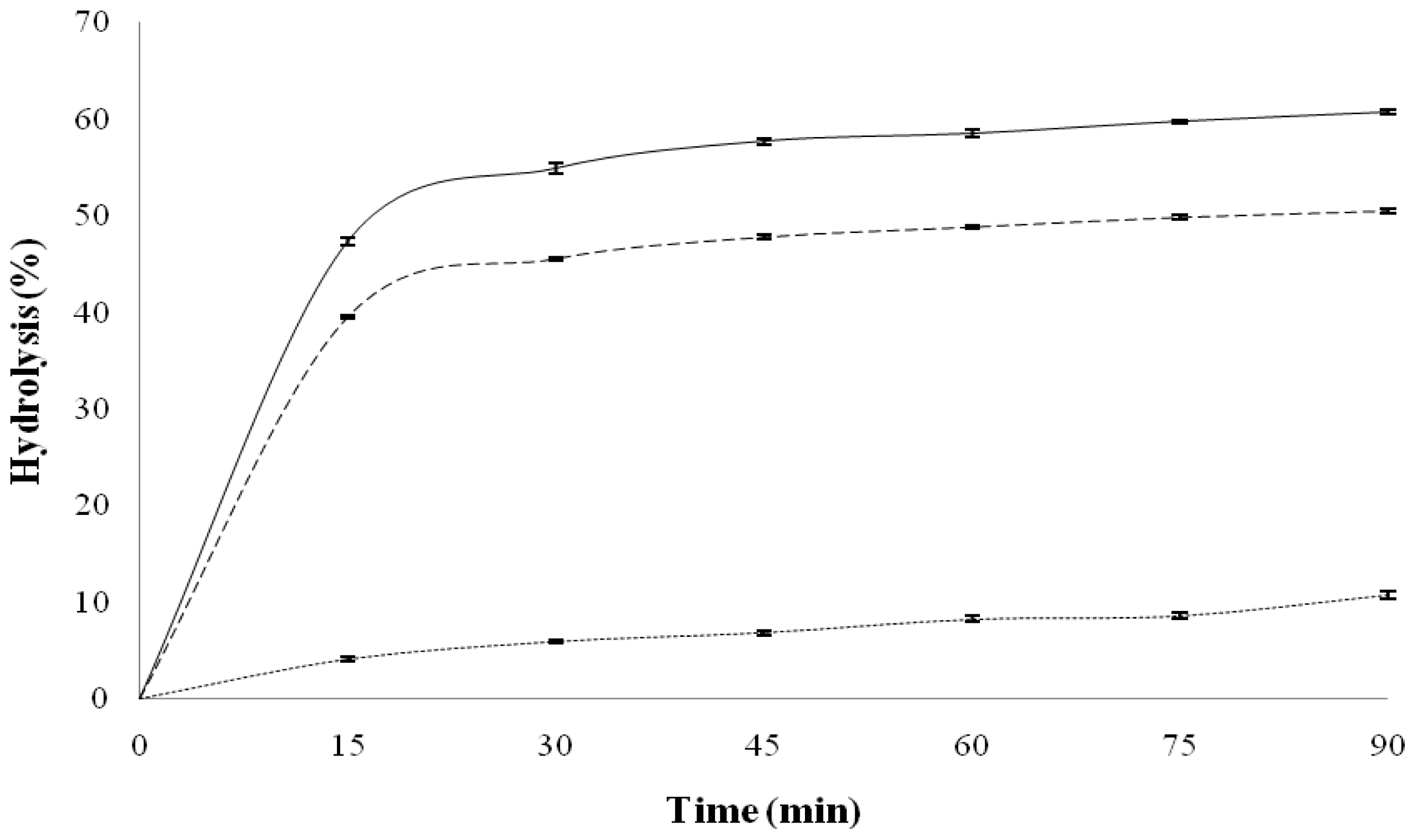
<p><xref ref-type="fig" rid="f1-ijms-13-00286">Figure 1</xref> shows <italic>in vitro</italic> starch hydrolysis of QPM-black bean and QPM tortillas. QPM tortilla exhibited the highest hydrolysis percentage during the assay; its amylolysis level increased quickly (inside the first 15 min), and thereafter the increase was slowest reaching approximately 55% after 30 min and did not increase at longer reaction times. Tortillas made with diverse commercial dry “masa” flours had similar pattern, but their levels of hydrolysis by the end of the assay had between 70–80% [<xref ref-type="bibr" rid="b25-ijms-13-00286">25</xref>], and for tortillas made with diverse commercial “masas” the hydrolysis percentage were between 70–75% after 30 min of the assay and did not increase thereafter [<xref ref-type="bibr" rid="b21-ijms-13-00286">21</xref>]. The lowest hydrolysis percentage in QPM tortilla can be due to that introduction of QPM character in maize modifies some structural characteristics of starch. A similar pattern to that of tortilla in the hydrolysis assay was found for QPM-black bean tortilla, but the hydrolysis percentage were lower, reaching at approximately 45% of hydrolysis after 30 min. The addition of the bean to maize decrease the hydrolysis rate of starch present in the blend due to that bean had the lowest hydrolysis values, reaching to hydrolysis percentage at 90 min of approximately 11%. Vargas-Torres <italic>et al.</italic> [<xref ref-type="bibr" rid="b26-ijms-13-00286">26</xref>] reported hydrolysis percentage (90 min) for diverse cooked black bean varieties harvested in Mexico between 17 and 28%. Tovar <italic>et al.</italic> [<xref ref-type="bibr" rid="b33-ijms-13-00286">33</xref>] reported that several factors are involved in the reduced bioavailability of legume starches. The presence of intact tissue/cell structures enclosing starch granules hinders the swelling and solubilization of starch resulting in reduced <italic>in vitro</italic> digestion rate.</p>
<p>Predicted glycemic indices (pGI) were calculated from the 90 min degree of hydrolysis values of the samples (<xref ref-type="table" rid="t3-ijms-13-00286">Table 3</xref>) [<xref ref-type="bibr" rid="b34-ijms-13-00286">34</xref>]. QPM tortilla had the highest pGI compared to the rest of samples analyzed; however, this value is lower than those determined different tortillas, where the values ranged between 102 and 108 [<xref ref-type="bibr" rid="b35-ijms-13-00286">35</xref>], and commercial tortilla was 97.5 [<xref ref-type="bibr" rid="b36-ijms-13-00286">36</xref>]. QPM tortilla has been shown starch digestibility parameters lower than those determined in tortillas made with commercial dry masa flours, commercial masas and commercial tortillas, the use of QPM can be important to produce tortilla with low caloric response. Cooked black bean had the lowest pGI (47.9), but using other method (chewing/dialysis test) cooked black bean had lower pGI (27) [<xref ref-type="bibr" rid="b13-ijms-13-00286">13</xref>], and using canned black bean with chewing/dialysis method the pGI value was 44 [<xref ref-type="bibr" rid="b14-ijms-13-00286">14</xref>]. The addition of bean decreased the pGI value of tortilla (79.8) that was higher than those determined by the chewing/dialysis method in Mexican “taco” (a mixture of tortilla and bean 60:40), using different tortilla and bean, with value of 48 (tortilla and canned black bean) [<xref ref-type="bibr" rid="b14-ijms-13-00286">14</xref>] and 51 (tortilla and cooked black bean) [<xref ref-type="bibr" rid="b13-ijms-13-00286">13</xref>].</p></sec>
<sec>
<title>2.4. Polyphenols Content</title>
<p>Polyphenols content of raw materials and tortillas is shown in <xref ref-type="table" rid="t4-ijms-13-00286">Table 4</xref>. Black bean presented the highest extractable polyphenols (EP) level. Two black bean varieties showed a phenolic content of 3.37 and 6.99 mg/g, differences that can be attributed to the bean variety [<xref ref-type="bibr" rid="b37-ijms-13-00286">37</xref>], a value within this range was determined here. EP value in tortilla was similar to those reported for yellow maize [<xref ref-type="bibr" rid="b38-ijms-13-00286">38</xref>] with a free phenol content of 1.04 mg/g and cereals with a EP content of 1.07 mg/g [<xref ref-type="bibr" rid="b39-ijms-13-00286">39</xref>]. The addition of bean to the blend increased the EP content in the tortilla in 107%.</p>
<p>Non extractable polyphenols (proanthocyanidins and hydrolysable polyphenols) in all samples showed higher value than extractable polyphenols, which is consistent with the results reported by Saura-Calixto <italic>et al.</italic> [<xref ref-type="bibr" rid="b39-ijms-13-00286">39</xref>] for legumes and cereals.</p>
<p>It has been reported a wide range of proanthocyanidins (PA) content values in different bean varieties (16.8–38.1 mg/g [<xref ref-type="bibr" rid="b40-ijms-13-00286">40</xref>]; 6.9–32.4 mg/g [<xref ref-type="bibr" rid="b41-ijms-13-00286">41</xref>], the differences of PA content in beans depend on the variety and the locality [<xref ref-type="bibr" rid="b40-ijms-13-00286">40</xref>], a value within these ranges was determined here. The PA in tortilla was not detected, as was reported by Pérez-Jiménez and Saura-Calixto [<xref ref-type="bibr" rid="b42-ijms-13-00286">42</xref>] and Saura-Calixto <italic>et al.</italic> [<xref ref-type="bibr" rid="b39-ijms-13-00286">39</xref>] for cereals. The PA was detected in tortilla added with bean; this behaviour indicates that the legume portion in tortilla plays an important role in the content of this kind of nutraceutical compounds.</p>
<p>Hydrolysable polyphenols (HP) comprise hydrolysable tannins, phenolic acids, and hydroxycinnamic acids that are released from the food matrix by strong acid hydrolysis, no proanthocyanidins or flavonoids are detected in the hydrolysates of hydrolysable polyphenols analysis [<xref ref-type="bibr" rid="b39-ijms-13-00286">39</xref>]. Saura-Calixto <italic>et al.</italic> [<xref ref-type="bibr" rid="b39-ijms-13-00286">39</xref>] reported a HP content of 5.93 mg/g for legumes (35% chickpeas, 31% beans and 34% lentils), a value lower than that assessed here for black bean, this difference can be due to that different cultivar was studied. HP content of QPM tortilla was higher that those reported in yellow maize (4.47 mg/g) [<xref ref-type="bibr" rid="b38-ijms-13-00286">38</xref>], the maize variety can be responsible of this difference, the value determined here is also higher that those reported in cereals (rice and wheat products) (4.72 mg/g) [<xref ref-type="bibr" rid="b39-ijms-13-00286">39</xref>]. No difference in HP content was found between tortilla and black bean tortilla. Double cooking of bean could be responsible for this pattern, it has been reported that HP can be degraded by thermal action at high temperatures [<xref ref-type="bibr" rid="b43-ijms-13-00286">43</xref>].</p>
<p>In general, total phenolic content (extractable and non-extractable polyphenols) in black bean tortilla was higher than the phenolic content of foods considered rich in polyphenols such as pepper (13.45 mg/g), broccoli (12.04 mg/g) and spinach (12.75 mg/g) [<xref ref-type="bibr" rid="b44-ijms-13-00286">44</xref>].</p></sec>
<sec>
<title>2.5. Antioxidant Capacity</title>
<p>The antioxidant capacity (AC) of raw materials and tortillas is shown in <xref ref-type="table" rid="t5-ijms-13-00286">Table 5</xref>. Extractable polyphenols of bean presented the highest AC level. Two black bean varieties showed an AC of 48.91 and 92.73 μmol Trolox eq/g, the bean variety is responsible of this difference [<xref ref-type="bibr" rid="b37-ijms-13-00286">37</xref>]. The AC of EP of tortilla was similar to those reported for vegetables (6.7 μmol Trolox eq/g) [<xref ref-type="bibr" rid="b45-ijms-13-00286">45</xref>]. An increase of 80.5% in antioxidant capacity of EP in black bean tortilla was found compared with tortilla. The AC of EP of black bean tortilla was similar to those reported for products with high AC such as red wine (12.14 μmol Trolox eq/ mL) [<xref ref-type="bibr" rid="b46-ijms-13-00286">46</xref>].</p>
<p>The PA content in black bean was higher than EP content; however, the PA showed a lower antioxidant capacity, which could be due to differences in the chemical structures. The PA can be esterified with glucoside units in position C3 [<xref ref-type="bibr" rid="b47-ijms-13-00286">47</xref>]. It has been observed that glycosylated flavonoids have minor antioxidant capacity [<xref ref-type="bibr" rid="b48-ijms-13-00286">48</xref>]. Cooked black bean showed an antioxidant capacity of proanthocyanidins of 13.2 μmol Trolox eq/g [<xref ref-type="bibr" rid="b12-ijms-13-00286">12</xref>], a value higher than that assessed here, the variety of the bean and the method of determination can be responsible of this difference. The AC of PA was not detected in tortilla. A similar result was reported by Pérez-Jiménez and Saura-Calixto [<xref ref-type="bibr" rid="b42-ijms-13-00286">42</xref>] for cereals. In black bean tortilla, the AC of PA was detected, this is due to a dilution effect when the bean was mixed with maize, the value was similar that those reported for asparagus (3.92 μmol Trolox eq/g) and swiss chard stalk (3.53 μmol Trolox eq/g), the consumption of vegetables has been inversely associated with mortality from degenerative diseases [<xref ref-type="bibr" rid="b46-ijms-13-00286">46</xref>].</p>
<p>No difference in AC of HP was found in tortilla and black bean tortilla. This pattern could be because HP in bean was degraded by thermal action in the second cooking [<xref ref-type="bibr" rid="b43-ijms-13-00286">43</xref>].</p>
<p>In general, AC of total phenolic content (extractable and non-extractable polyphenols) in black bean tortilla was 17.61 μmol Trolox eq/g; if tortilla consumption is 328 g/day [<xref ref-type="bibr" rid="b3-ijms-13-00286">3</xref>], the AC provided by black bean tortilla is equivalent to 3.56 mmol Trolox eq/day. Green tea is considered an important source of AC, and the AC of green tea is 6.01 mmol Trolox eq/L [<xref ref-type="bibr" rid="b46-ijms-13-00286">46</xref>]. To reduce the risk to develop hypertension consumption of 120 mL/day of green tea (equivalent to 0.72 mmol Trolox eq/day) is suggested [<xref ref-type="bibr" rid="b49-ijms-13-00286">49</xref>]. Consumption of 10 cups/day (150 mL/cup, 9.02 mmol Trolox eq/day) is linked with a decreased relative risk of death from cardiovascular disease [<xref ref-type="bibr" rid="b50-ijms-13-00286">50</xref>]. It has been reported that polyphenols have anticancer [<xref ref-type="bibr" rid="b51-ijms-13-00286">51</xref>] and antiproliferative [<xref ref-type="bibr" rid="b52-ijms-13-00286">52</xref>] and antimutagenic activity [<xref ref-type="bibr" rid="b53-ijms-13-00286">53</xref>].</p></sec></sec>
<sec>
<title>3. Experimental Section</title>
<sec>
<title>3.1. Sample Preparation</title>
<p>Black common bean seeds, cv. Negro 8025, were harvested in 2008 at the Bajio Experimental Station of the National Research Institute for Forestry, Agriculture and Livestock (INIFAP), located in Celaya, Guanajuato, Mexico. Seeds of cv. Ancho QPM maize were harvested in 2009 at the INIFAP, located in Iguala, Guerrero, Mexico. After dry bean Negro 8025 were cooked in water with NaCl (10 g/Kg bean) for 85 min at 97 °C, the grains and the cooking broth were lyophilized and then ground using a commercial grinder (Mapisa Internacional S.A. de C.V., Mexico, D.F.) to pass a US No. 50 sieve to produce the black bean flour. QPM maize grains were cooked in water (1:3, w/v) for 30 min at 97 °C at alkaline pH using lime (10 g/Kg grain), followed by cooling and soaking for 12 h. After soaking, QPM grains were washed three times with water, and grounded to make “masa” (QPM “masa”). Tortillas without cooked dry bean (QPM Tortilla) were produced with QPM “masa”. QPM “masa” was blended with black bean flour to produce a 70:30 ratio (w/w, dry matter) followed by addition of water to form “masa” with the consistency to made tortillas (QPM-black bean tortilla). The relationship masa:black bean was obtained of previous studies [<xref ref-type="bibr" rid="b13-ijms-13-00286">13</xref>–<xref ref-type="bibr" rid="b15-ijms-13-00286">15</xref>]. “Masa” was molded by pressure and extruded in commercial tortilladora MOT-G model (Tortilladoras González, Naucalpan, México) into thin circles to obtain 2 mm thick tortillas. Tortillas were cooked on a hot griddle for 1 min per side at an approximate temperature of 250 ± 5 °C. QPM “masa”, QPM tortilla and QPM-black bean tortilla were lyophilized and ground using a commercial grinder Universal model (Mapisa Internacional S.A. de C.V., Mexico, D.F.) to pass a US No. 50 sieve. The samples were stored at 10 °C until analysis.</p></sec>
<sec sec-type="methods">
<title>3.2. Chemical Analysis</title>
<p>Ash, protein (N × 6.25) and fat were assessed according to AACC methods 08–01, 46–13 and 30–25, respectively [<xref ref-type="bibr" rid="b54-ijms-13-00286">54</xref>,<xref ref-type="bibr" rid="b55-ijms-13-00286">55</xref>]. Total dietary fiber was determined following the AOAC method 985.29 [<xref ref-type="bibr" rid="b55-ijms-13-00286">55</xref>]. All analyses were performed in triplicate.</p></sec>
<sec>
<title>3.3. Total Starch</title>
<p>Total starch (TS) was determined by the method of Goñi <italic>et al.</italic> [<xref ref-type="bibr" rid="b34-ijms-13-00286">34</xref>] with minor modifications; in brief, 50 mg of sample were dispersed in 2M KOH (60 min) to disperse all starch fractions, then samples were incubated with amyloglucosidase (No. 10 102857 001, Roche Diagnostics GmbH, Mannheim, Germany) at 60 °C and pH 4.75 for 90 min; glucose was determined using the glucose oxidase assay GOD-POD. TS were calculated as released glucose (mg) × 0.9.</p></sec>
<sec>
<title>3.4. Resistant Starch</title>
<p>Resistant starch (RS), including RS1 and RS2 fractions, was measured by Goñi <italic>et al.</italic> [<xref ref-type="bibr" rid="b56-ijms-13-00286">56</xref>] in brief, protein and digestible starch were removal with pepsin (P-7000, Sigma Chemical Co., St. Louis, MO, USA) incubation (40 °C, pH 1.5, 1 h) and α-amylase (A-3176, Sigma Chemical Co.) incubation (37 °C, pH 6.9, 16 h). The residue was treated with 2 M KOH (30 min) and then incubated with amyloglucosidase (No. 10 102857 001, Roche Diagnostics GmbH) at 60 °C and pH 4.75 for 45 min. Glucose was determined using glucose oxidase/peroxidase assay (GPSL-0507, Elitech Clinical Systems). RS was calculated as glucose (mg) × 0.9. Digestible starch was calculated by difference between TS and RS.</p></sec>
<sec>
<title>3.5. <italic>In Vitro</italic> Kinetic of Starch Digestion</title>
<p>The <italic>in vitro</italic> rate of hydrolysis was measured using hog pancreatic α-amylase according to Holm <italic>et al.</italic> [<xref ref-type="bibr" rid="b57-ijms-13-00286">57</xref>] with minor modifications. A 50 mL of phosphate buffer (pH 6.9) were added to a portion of each sample containing 500 mg of available starch. Samples were incubated a 37 °C in a shaking water bath. In the first 5 min before the addition of enzyme aliquots of 0.2 mL of each sample were taken to mark as time zero. After an interval of 1 min, 1 mL of a solution containing 40 mg of porcine pancreatic α-amylase (A-3176, Sigma Chemical Co.) in 1 mL of phosphate buffer was added to each sample. Samples (0.2 mL) were withdrawn after 15 min and every 15 min for 90 min. These samples were added to tubes than containing 0.8 mL distilled water and 1 mL of 3,5 dinitrosalicylic acid (DNS). Samples were incubated at 100 °C in water bath for 10 min. Then 15 mL of distilled water was added to each tube and mixed well. The reducing sugars released were measured at 530 nm in parallel with a standard curve of maltose. The rate of hydrolysis was expressed as the percentage of starch hydrolyzed with respect to dry matter at different times.</p>
<p>The predicted glycemic index (pGI) was calculated from percentage of starch hydrolyzed at 90 min (H<sub>90</sub>) values using the formula proposed by Goñi <italic>et al.</italic> [<xref ref-type="bibr" rid="b34-ijms-13-00286">34</xref>]: pGI = 39.21 + 0.803 (H<sub>90</sub>) (<italic>r</italic> = 0.909, <italic>p</italic> ≤ 0.05).</p></sec>
<sec>
<title>3.6. Determination of Polyphenols Content</title>
<sec>
<title>3.6.1. Extractable Polyphenols</title>
<p>Samples (0.5 g) were extracted by constant shaking at room temperature with methanol:water acidified with HCl (50:50 v/v, pH 2, 50 mL/g sample, 60 min) and acetone:water (70:30 v/v, 50 mL/g sample, 60 min). After each extraction step, samples were centrifuged (15 min, 25 °C, 3000 g) and supernatants were combined and used to determine extractable polyphenols content by the Folin-Ciocalteau procedure [<xref ref-type="bibr" rid="b58-ijms-13-00286">58</xref>]. The results were expressed as gallic acid equivalents.</p></sec>
<sec>
<title>3.6.2. Non Extractable Polyphenols</title>
<sec>
<title>3.6.2.1. Proanthocyanidins</title>
<p>Residues from the methanol/acetone/water extraction were treated with 5 mL/L HCl in butanol for 3 h at 100 °C for proanthocyanidins determination [<xref ref-type="bibr" rid="b59-ijms-13-00286">59</xref>]. Proanthocyanidins were calculated from the absorbance at 550 nm of the anthocyanidin solutions. Proanthocyanidins from Mediterranean carob pod (<italic>Ceratonia siliqua</italic> L.) supplied by Nestlé S.A. were treated under the same conditions to obtain standard curves.</p></sec>
<sec>
<title>3.6.2.2. Hydrolysable Polyphenols</title>
<p>Hydrolysable polyphenols were determined by a methanol/H<sub>2</sub>SO<sub>4</sub> 90:10 (v/v) hydrolysis at 85 °C for 20 h on the residues of the methanol/acetone/water extraction [<xref ref-type="bibr" rid="b60-ijms-13-00286">60</xref>]. After centrifugation (15 min, 25 °C, 3000 g) supernatants were used to determine hydrolysable polyphenols by the Folin-Ciocalteau procedure [<xref ref-type="bibr" rid="b58-ijms-13-00286">58</xref>]. The results were expressed as gallic acid equivalents.</p></sec></sec></sec>
<sec>
<title>3.7. Free Radical-Scavenging Assay (ABTS)</title>
<p>The antioxidant capacity of extractable polyphenols, proanthocyanidins, and hydrolysable polyphenols extracted from samples were estimated in terms of radical-scavenging activity following the procedure described elsewhere [<xref ref-type="bibr" rid="b61-ijms-13-00286">61</xref>] with some modification [<xref ref-type="bibr" rid="b62-ijms-13-00286">62</xref>]. Briefly, ABTS [2,2′-azinobis-(3-ethyl-benzothiazoline-6-sulfonic acid)] radical cation (ABTS<sup>+•</sup>) was produced by reacting 7 mM ABTS stock solution with 2.45 mM potassium persulphate in the dark at room temperature for 12–16 h before use. The ABTS<sup>+•</sup> solution was diluted with methanol to an absorbance of 0.70 ± 0.02 at 730 nm. After addition of 0.1 mL of extract to 3.9 mL of diluted ABTS<sup>+•</sup> solution, absorbance readings were taken every 20 s using a UV-1800 UV-vis spectrophotometer (Shimadzu Europe GmbH, Duisburg, Germany). The reaction was monitored for 6 min. Inhibition of absorbance versus time was plotted, and the area below the curve (0–6 min) was calculated. Results were expressed as μmol of Trolox equivalents per g of dry matter.</p></sec>
<sec sec-type="methods">
<title>3.8. Statistical Analysis</title>
<p>Results are presented as mean ± SEM (standard error of mean) of three separate determinations. A commercial software program (SigmaPlot for Windows version 11.0, San Jose, CA, USA) was used to evaluate, by one-way analysis of variance, significant differences in the means of measured parameters. Statistically significant differences (<italic>p &lt;</italic> 0.05) amongst means were evaluated using the Tukey multiple comparison procedure.</p></sec></sec>
<sec sec-type="conclusions">
<title>4. Conclusions</title>
<p>The addition of bean to tortilla made with quality protein maize improved the protein, ash and dietary fiber content. The starch digestibility rate of tortilla with bean decreased and, in consequence, produced lower predicted glycemic index. QPM Tortilla with black dry bean showed higher antioxidant capacity than QPM tortilla. The tortilla with bean can be an alternative for people with particular nutritional or metabolic requirements.</p></sec></body>
<back>
<ack>
<title>Acknowledgments</title>
<p>We appreciate the financial support from SIP-IPN, COFAA-IPN and EDI-IPN. One of the authors (E.M.G.-G.) also acknowledges the scholarship from CONACYT-México.</p></ack>
<ref-list>
<title>References</title>
<ref id="b1-ijms-13-00286"><label>1</label><citation citation-type="journal"><person-group person-group-type="author"><name><surname>Paredes-López</surname><given-names>O.</given-names></name><name><surname>Saharopulos-Paredes</surname><given-names>M.E.</given-names></name></person-group><article-title>A review of tortilla production technology</article-title><source>Bakers Dig</source><year>1983</year><volume>13</volume><fpage>16</fpage><lpage>25</lpage></citation></ref>
<ref id="b2-ijms-13-00286"><label>2</label><citation citation-type="journal"><person-group person-group-type="author"><name><surname>Robles</surname><given-names>R.R.</given-names></name><name><surname>Murray</surname><given-names>E.D.</given-names></name><name><surname>Paredes-López</surname><given-names>O.</given-names></name></person-group><article-title>Physicochemical changes of maize starch during the lime-heat treatment for tortilla making</article-title><source>Int. J. Food Sci. Technol</source><year>1988</year><volume>23</volume><fpage>91</fpage><lpage>98</lpage></citation></ref>
<ref id="b3-ijms-13-00286"><label>3</label><citation citation-type="journal"><person-group person-group-type="author"><name><surname>Amaya-Guerra</surname><given-names>C.A.</given-names></name><name><surname>Alanis-Guzman</surname><given-names>M.G.</given-names></name><name><surname>Serna-Saldívar</surname><given-names>S.O.</given-names></name></person-group><article-title>Effects of soybean fortification on protein quality of tortilla-based diets produced from regular and quality protein maize</article-title><source>Plant Foods Hum. Nutr</source><year>2004</year><volume>59</volume><fpage>45</fpage><lpage>50</lpage><pub-id pub-id-type="doi">10.1007/s11130-004-0030-5</pub-id><pub-id pub-id-type="pmid">15678750</pub-id></citation></ref>
<ref id="b4-ijms-13-00286"><label>4</label><citation citation-type="confproc"><person-group person-group-type="author"><name><surname>Serna-Saldívar</surname><given-names>S.O.</given-names></name><name><surname>Rooney</surname><given-names>L.W.</given-names></name></person-group><article-title>Quality protein maize processing and perspectives for industrial utilization</article-title><conf-name>Proceedings of the International Symposium on Quality Protein Maize</conf-name><conf-loc>Sete Lagoas, MG, Brazil</conf-loc><conf-date>1–3 December 1994</conf-date></citation></ref>
<ref id="b5-ijms-13-00286"><label>5</label><citation citation-type="journal"><person-group person-group-type="author"><name><surname>Sathe</surname><given-names>S.R.</given-names></name><name><surname>Rangnekar</surname><given-names>P.D.</given-names></name><name><surname>Deshpande</surname><given-names>S.S.</given-names></name><name><surname>Salunkhe</surname><given-names>D.K.</given-names></name></person-group><article-title>Isolation and partial characterization of black gram (<italic>Phaseolus mungo</italic> L.) starch</article-title><source>J. Food Sci</source><year>1982</year><volume>47</volume><fpage>1524</fpage><lpage>1538</lpage><pub-id pub-id-type="doi">10.1111/j.1365-2621.1982.tb04974.x</pub-id></citation></ref>
<ref id="b6-ijms-13-00286"><label>6</label><citation citation-type="journal"><person-group person-group-type="author"><name><surname>Bourges</surname><given-names>R.H.</given-names></name></person-group><article-title>Las leguminosas en la alimentación. II Parte</article-title><source>Cuad. Nutr</source><year>1987</year><volume>10</volume><fpage>22</fpage><lpage>30</lpage></citation></ref>
<ref id="b7-ijms-13-00286"><label>7</label><citation citation-type="journal"><person-group person-group-type="author"><name><surname>Reyes-Moreno</surname><given-names>C.</given-names></name><name><surname>Paredes-López</surname><given-names>O.</given-names></name></person-group><article-title>Hard to cook phenomenon in common beans—A review</article-title><source>Crit. Rev. Food Sci. Nutr</source><year>1993</year><volume>33</volume><fpage>227</fpage><lpage>286</lpage><pub-id pub-id-type="doi">10.1080/10408399309527621</pub-id><pub-id pub-id-type="pmid">8484867</pub-id></citation></ref>
<ref id="b8-ijms-13-00286"><label>8</label><citation citation-type="book"><person-group person-group-type="author"><name><surname>Paredes-López</surname><given-names>O.</given-names></name><name><surname>Guzmán-Maldonado</surname><given-names>S.H.</given-names></name><name><surname>Serna-Saldívar</surname><given-names>S.O.</given-names></name></person-group><source>Los alimentos Mágicos de las Culturas Indígenas de México-El Caso de la Tortilla</source><publisher-name>Colegio de Sinaloa</publisher-name><publisher-loc>Culiacán, Sinaloa, México</publisher-loc><year>2000</year></citation></ref>
<ref id="b9-ijms-13-00286"><label>9</label><citation citation-type="journal"><person-group person-group-type="author"><name><surname>Rosado</surname><given-names>J.L.</given-names></name><name><surname>López</surname><given-names>P.</given-names></name><name><surname>Morales</surname><given-names>M.</given-names></name><name><surname>Muñoz</surname><given-names>E.</given-names></name><name><surname>Allen</surname><given-names>L.H.</given-names></name></person-group><article-title>Bioavailability of energy, nitrogen, fat, zinc, iron and calcium from rural and urban Mexican diets</article-title><source>Br. J. Nutr</source><year>1992</year><volume>68</volume><fpage>45</fpage><lpage>58</lpage><pub-id pub-id-type="doi">10.1079/BJN19920065</pub-id><pub-id pub-id-type="pmid">1390616</pub-id></citation></ref>
<ref id="b10-ijms-13-00286"><label>10</label><citation citation-type="journal"><person-group person-group-type="author"><name><surname>Rehman</surname><given-names>Z.</given-names></name><name><surname>Salariya</surname><given-names>A.M.</given-names></name><name><surname>Zafar</surname><given-names>S.I.</given-names></name></person-group><article-title>Effect of processing on available carbohydrate content and starch digestibility of kidney beans (<italic>Phaseolus vulgaris</italic> L.)</article-title><source>Food Chem</source><year>2001</year><volume>73</volume><fpage>351</fpage><lpage>355</lpage><pub-id pub-id-type="doi">10.1016/S0308-8146(00)00311-3</pub-id></citation></ref>
<ref id="b11-ijms-13-00286"><label>11</label><citation citation-type="journal"><person-group person-group-type="author"><name><surname>Foster-Powell</surname><given-names>K.</given-names></name><name><surname>Brand-Miller</surname><given-names>J.</given-names></name></person-group><article-title>International tables of glycemic index</article-title><source>Am. J. Clin. Nutr</source><year>1995</year><volume>62</volume><fpage>871S</fpage><lpage>893S</lpage><pub-id pub-id-type="pmid">7572722</pub-id></citation></ref>
<ref id="b12-ijms-13-00286"><label>12</label><citation citation-type="journal"><person-group person-group-type="author"><name><surname>Hernández-Salazar</surname><given-names>M.</given-names></name><name><surname>Osorio-Diaz</surname><given-names>P.</given-names></name><name><surname>Loarca-Piña</surname><given-names>G.</given-names></name><name><surname>Reynoso-Camacho</surname><given-names>R.</given-names></name><name><surname>Tovar</surname><given-names>J.</given-names></name><name><surname>Bello-Pérez</surname><given-names>L.A.</given-names></name></person-group><article-title><italic>In vitro</italic> fermentability and antioxidant capacity of the indigestible fraction of cooked black beans (<italic>Phaseolus vulgaris</italic> L.), lentils (<italic>Lens culinaris</italic> L.) and chickpeas (<italic>Cicer arietinum</italic> L.)</article-title><source>J. Sci. Food Agric</source><year>2010</year><volume>90</volume><fpage>1417</fpage><lpage>1422</lpage><pub-id pub-id-type="doi">10.1002/jsfa.3954</pub-id><pub-id pub-id-type="pmid">20549791</pub-id></citation></ref>
<ref id="b13-ijms-13-00286"><label>13</label><citation citation-type="journal"><person-group person-group-type="author"><name><surname>Sáyago-Ayerdi</surname><given-names>S.G.</given-names></name><name><surname>Tovar</surname><given-names>J.</given-names></name><name><surname>Osorio-Diaz</surname><given-names>P.</given-names></name><name><surname>Paredes-López</surname><given-names>O.</given-names></name><name><surname>Bello-Pérez</surname><given-names>L.A.</given-names></name></person-group><article-title><italic>In vitro</italic> starch digestibility and predicted glycemic index of corn tortilla, black beans, and tortilla-bean mixture: Effect of cold storage</article-title><source>J. Agric. Food Chem</source><year>2005</year><volume>53</volume><fpage>1281</fpage><lpage>1285</lpage><pub-id pub-id-type="doi">10.1021/jf048652k</pub-id><pub-id pub-id-type="pmid">15713053</pub-id></citation></ref>
<ref id="b14-ijms-13-00286"><label>14</label><citation citation-type="journal"><person-group person-group-type="author"><name><surname>Tovar</surname><given-names>J.</given-names></name><name><surname>Sáyago-Ayerdi</surname><given-names>S.G.</given-names></name><name><surname>Peñalver</surname><given-names>C.</given-names></name><name><surname>Paredes-López</surname><given-names>O.</given-names></name><name><surname>Bello-Pérez</surname><given-names>L.A.</given-names></name></person-group><article-title><italic>In vitro</italic> starch hydrolysis index and predicted glycemic index of corn tortilla, black beans (<italic>Phaseolus vulgaris</italic> L.), and Mexican “taco”</article-title><source>Cereal Chem</source><year>2003</year><volume>80</volume><fpage>533</fpage><lpage>535</lpage><pub-id pub-id-type="doi">10.1094/CCHEM.2003.80.5.533</pub-id></citation></ref>
<ref id="b15-ijms-13-00286"><label>15</label><citation citation-type="journal"><person-group person-group-type="author"><name><surname>Mora-Avilés</surname><given-names>A.</given-names></name><name><surname>Lemus-Flores</surname><given-names>B.</given-names></name><name><surname>Miranda-López</surname><given-names>R.</given-names></name><name><surname>Hernández-López</surname><given-names>D.</given-names></name><name><surname>Pons-Hernández</surname><given-names>J.L.</given-names></name><name><surname>Acosta-Gallegos</surname><given-names>J.A.</given-names></name><name><surname>Guzmán-Maldonado</surname><given-names>S.H.</given-names></name></person-group><article-title>Effects of common bean enrichment on nutritional quality of tortillas produced from nixtamalized regular and quality protein maize flours</article-title><source>J. Sci. Food Agric</source><year>2007</year><volume>87</volume><fpage>880</fpage><lpage>886</lpage><pub-id pub-id-type="doi">10.1002/jsfa.2801</pub-id></citation></ref>
<ref id="b16-ijms-13-00286"><label>16</label><citation citation-type="journal"><person-group person-group-type="author"><name><surname>Hernández-Salazar</surname><given-names>M.</given-names></name><name><surname>Agama-Acevedo</surname><given-names>E.</given-names></name><name><surname>Sáyago-Ayerdi</surname><given-names>S.G.</given-names></name><name><surname>Tovar</surname><given-names>J.</given-names></name><name><surname>Bello-Pérez</surname><given-names>L.A.</given-names></name></person-group><article-title>Chemical composition and starch digestibility of tortillas prepared with non-conventional comercial nixtamalized maize flours</article-title><source>Int. J. Food Sci. Nutr</source><year>2006</year><volume>57</volume><fpage>143</fpage><lpage>150</lpage><pub-id pub-id-type="doi">10.1080/09637480600659136</pub-id><pub-id pub-id-type="pmid">16849122</pub-id></citation></ref>
<ref id="b17-ijms-13-00286"><label>17</label><citation citation-type="journal"><person-group person-group-type="author"><name><surname>Vargas-Torres</surname><given-names>A.</given-names></name><name><surname>Osorio-Díaz</surname><given-names>P.</given-names></name><name><surname>Tovar</surname><given-names>J.</given-names></name><name><surname>Paredes-López</surname><given-names>O.</given-names></name><name><surname>Ruales</surname><given-names>J.</given-names></name><name><surname>Bello-Pérez</surname><given-names>L.A.</given-names></name></person-group><article-title>Chemical composition, starch bioavailability and indigestible fraction of common beans (<italic>Phaseolus vulgaris</italic> L.)</article-title><source>Starch Stärke</source><year>2004</year><volume>56</volume><fpage>74</fpage><lpage>78</lpage><pub-id pub-id-type="doi">10.1002/star.200300205</pub-id></citation></ref>
<ref id="b18-ijms-13-00286"><label>18</label><citation citation-type="journal"><person-group person-group-type="author"><name><surname>Méndez-Montealvo</surname><given-names>G.</given-names></name><name><surname>Solorza-Feria</surname><given-names>J.</given-names></name><name><surname>Velázquez</surname><given-names>V.M.</given-names></name><name><surname>Gómez-Montiel</surname><given-names>N.</given-names></name><name><surname>Paredes-López</surname><given-names>O.</given-names></name><name><surname>Bello-Pérez</surname><given-names>L.A.</given-names></name></person-group><article-title>Composición química y caracterización calorimétrica de híbridos y variedades de maíz cultivadas en México</article-title><source>Agrociencia</source><year>2005</year><volume>39</volume><fpage>267</fpage><lpage>274</lpage></citation></ref>
<ref id="b19-ijms-13-00286"><label>19</label><citation citation-type="journal"><person-group person-group-type="author"><name><surname>Rendón-Villalobos</surname><given-names>R.</given-names></name><name><surname>Bello-Pérez</surname><given-names>L.A.</given-names></name><name><surname>Osorio-Díaz</surname><given-names>P.</given-names></name><name><surname>Tovar</surname><given-names>J.</given-names></name><name><surname>Paredes-López</surname><given-names>O.</given-names></name></person-group><article-title>Effect of storage time on <italic>in vitro</italic> digestibility and resistant starch content of nixtamal, masa, and tortilla</article-title><source>Cereal Chem</source><year>2002</year><volume>79</volume><fpage>340</fpage><lpage>344</lpage><pub-id pub-id-type="doi">10.1094/CCHEM.2002.79.3.340</pub-id></citation></ref>
<ref id="b20-ijms-13-00286"><label>20</label><citation citation-type="journal"><person-group person-group-type="author"><name><surname>Graham</surname><given-names>G.G.</given-names></name></person-group><article-title>Quality-protein maize with a high fat content as a weaning food</article-title><source>J. Pediatr. Gastroenterol. Nutr</source><year>1993</year><volume>17</volume><fpage>139</fpage><lpage>144</lpage><pub-id pub-id-type="doi">10.1097/00005176-199308000-00003</pub-id><pub-id pub-id-type="pmid">8229540</pub-id></citation></ref>
<ref id="b21-ijms-13-00286"><label>21</label><citation citation-type="journal"><person-group person-group-type="author"><name><surname>Agama-Acevedo</surname><given-names>E.</given-names></name><name><surname>Rendón-Villalobos</surname><given-names>R.</given-names></name><name><surname>Tovar</surname><given-names>J.</given-names></name><name><surname>Trejo-Estrada</surname><given-names>S.R.</given-names></name><name><surname>Bello-Pérez</surname><given-names>L.A.</given-names></name></person-group><article-title>Effect of storage time on <italic>in vitro</italic> digestion rate and resistant starch content of tortillas elaborated from commercial corn masas</article-title><source>Arch. Latinoam. Nutr</source><year>2005</year><volume>55</volume><fpage>86</fpage><lpage>92</lpage><pub-id pub-id-type="pmid">16187683</pub-id></citation></ref>
<ref id="b22-ijms-13-00286"><label>22</label><citation citation-type="journal"><person-group person-group-type="author"><name><surname>Silva-Cristobal</surname><given-names>L.</given-names></name><name><surname>Osorio-Díaz</surname><given-names>P.</given-names></name><name><surname>Tovar</surname><given-names>J.</given-names></name><name><surname>Bello-Pérez</surname><given-names>L.A.</given-names></name></person-group><article-title>Chemical composition, carbohydrate digestibility, and antioxidant capacity of cooked black bean, chickpea, and lentil Mexican varieties</article-title><source>CyTA J. Food</source><year>2010</year><volume>8</volume><fpage>7</fpage><lpage>14</lpage><pub-id pub-id-type="doi">10.1080/19476330903119218</pub-id></citation></ref>
<ref id="b23-ijms-13-00286"><label>23</label><citation citation-type="journal"><person-group person-group-type="author"><name><surname>Bednar</surname><given-names>G.E.</given-names></name><name><surname>Patil</surname><given-names>A.R.</given-names></name><name><surname>Murray</surname><given-names>S.M.</given-names></name><name><surname>Grieshop</surname><given-names>C.M.</given-names></name><name><surname>Merchen</surname><given-names>N.R.</given-names></name><name><surname>Fahey</surname><given-names>G.C.</given-names><suffix>Jr</suffix></name></person-group><article-title>Starch and fiber fractions in selected food and feed ingredients affect their small intestinal digestibility and fermentability and their large bowel fermentability<italic>in vitro</italic>in a canine model</article-title><source>J. Nutr</source><year>2001</year><volume>131</volume><fpage>276</fpage><lpage>286</lpage><pub-id pub-id-type="pmid">11160546</pub-id></citation></ref>
<ref id="b24-ijms-13-00286"><label>24</label><citation citation-type="journal"><person-group person-group-type="author"><name><surname>Reynoso-Camacho</surname><given-names>R.</given-names></name><name><surname>Ríos-Ugalde</surname><given-names>M.C.</given-names></name><name><surname>Torres-Pacheco</surname><given-names>I.</given-names></name><name><surname>Acosta-Gallegos</surname><given-names>J.A.</given-names></name><name><surname>Palomino-Salinas</surname><given-names>A.C.</given-names></name><name><surname>Ramos-Gómez</surname><given-names>M.</given-names></name><name><surname>González-Jasso</surname><given-names>E.</given-names></name><name><surname>Guzmán-Maldonado</surname><given-names>S.H.</given-names></name></person-group><article-title>El consumo de frijol común (<italic>Phaseolus vulgaris</italic> L.) y su efecto sobre el cáncer de colon en ratas Sprague-Dawley</article-title><source>Agric. Téc. Méx</source><year>2007</year><volume>33</volume><fpage>43</fpage><lpage>52</lpage></citation></ref>
<ref id="b25-ijms-13-00286"><label>25</label><citation citation-type="journal"><person-group person-group-type="author"><name><surname>Agama-Acevedo</surname><given-names>E.</given-names></name><name><surname>Rendón-Villalobos</surname><given-names>R.</given-names></name><name><surname>Tovar</surname><given-names>J.</given-names></name><name><surname>Paredes-López</surname><given-names>O.</given-names></name><name><surname>Islas-Hernández</surname><given-names>J.J.</given-names></name><name><surname>Bello-Pérez</surname><given-names>L.A.</given-names></name></person-group><article-title><italic>In vitro</italic> starch digestibility changes during storage of maize flour tortillas</article-title><source>Nahrung</source><year>2004</year><volume>48</volume><fpage>38</fpage><lpage>42</lpage><pub-id pub-id-type="doi">10.1002/food.200300352</pub-id><pub-id pub-id-type="pmid">15053349</pub-id></citation></ref>
<ref id="b26-ijms-13-00286"><label>26</label><citation citation-type="journal"><person-group person-group-type="author"><name><surname>Vargas-Torres</surname><given-names>A.</given-names></name><name><surname>Osorio-Díaz</surname><given-names>P.</given-names></name><name><surname>Islas-Hernández</surname><given-names>J.J.</given-names></name><name><surname>Tovar</surname><given-names>J.</given-names></name><name><surname>Paredes-López</surname><given-names>O.</given-names></name><name><surname>Bello-Pérez</surname><given-names>L.A.</given-names></name></person-group><article-title>Starch digestibility of five cooked black bean (<italic>Phaseolus vulgaris</italic> L.) varieties</article-title><source>J. Food Compos. Anal</source><year>2004</year><volume>17</volume><fpage>605</fpage><lpage>612</lpage><pub-id pub-id-type="doi">10.1016/j.jfca.2003.09.008</pub-id></citation></ref>
<ref id="b27-ijms-13-00286"><label>27</label><citation citation-type="journal"><person-group person-group-type="author"><name><surname>Osorio-Díaz</surname><given-names>P.</given-names></name><name><surname>Méndez-Montealvo</surname><given-names>G.</given-names></name><name><surname>Agama-Acevedo</surname><given-names>E.</given-names></name><name><surname>Islas-Hernández</surname><given-names>J.J.</given-names></name><name><surname>Sánchez-Muñoz</surname><given-names>J.</given-names></name><name><surname>Bello-Pérez</surname><given-names>L.A.</given-names></name></person-group><article-title>Biodisponibilidad del almidón en dos variedades comerciales de frijol (<italic>Phaseolus vulgaris</italic> L.) y en frijoles industrializados</article-title><source>Agrociencia</source><year>2003</year><volume>37</volume><fpage>565</fpage><lpage>573</lpage></citation></ref>
<ref id="b28-ijms-13-00286"><label>28</label><citation citation-type="journal"><person-group person-group-type="author"><name><surname>Björck</surname><given-names>I.</given-names></name><name><surname>Granfeldt</surname><given-names>Y.</given-names></name><name><surname>Liljeberg</surname><given-names>H.</given-names></name><name><surname>Tovar</surname><given-names>J.</given-names></name><name><surname>Asp</surname><given-names>N.G.</given-names></name></person-group><article-title>Food properties affecting the digestion and absortion of carbohydrates</article-title><source>Am. J. Clin. Nutr</source><year>1994</year><volume>59</volume><fpage>699S</fpage><lpage>705S</lpage><pub-id pub-id-type="pmid">8116553</pub-id></citation></ref>
<ref id="b29-ijms-13-00286"><label>29</label><citation citation-type="journal"><person-group person-group-type="author"><name><surname>Fredriksson</surname><given-names>H.</given-names></name><name><surname>Björck</surname><given-names>I.</given-names></name><name><surname>Andersson</surname><given-names>R.</given-names></name><name><surname>Liljeberg</surname><given-names>H.</given-names></name><name><surname>Silverio</surname><given-names>J.</given-names></name><name><surname>Eliasson</surname><given-names>A.C.</given-names></name><name><surname>Aman</surname><given-names>P.</given-names></name></person-group><article-title>Studies on α-amylase degradation of retrograded starch gels from waxy maize and high-amylopectin potato</article-title><source>Carbohydr. Polym</source><year>2000</year><volume>43</volume><fpage>81</fpage><lpage>87</lpage><pub-id pub-id-type="doi">10.1016/S0144-8617(99)00205-2</pub-id></citation></ref>
<ref id="b30-ijms-13-00286"><label>30</label><citation citation-type="journal"><person-group person-group-type="author"><name><surname>Landa-Habana</surname><given-names>L.</given-names></name><name><surname>Piña-Hernández</surname><given-names>A.</given-names></name><name><surname>Agama-Acevedo</surname><given-names>E.</given-names></name><name><surname>Tovar</surname><given-names>J.</given-names></name><name><surname>Bello-Pérez</surname><given-names>L.A.</given-names></name></person-group><article-title>Effect of cooking procedures and storage on starch bioavailability in common beans (<italic>Phaseolus vulgaris</italic> L.)</article-title><source>Plant Foods Hum. Nutr</source><year>2004</year><volume>59</volume><fpage>133</fpage><lpage>136</lpage><pub-id pub-id-type="doi">10.1007/s11130-004-4307-5</pub-id><pub-id pub-id-type="pmid">15678720</pub-id></citation></ref>
<ref id="b31-ijms-13-00286"><label>31</label><citation citation-type="journal"><person-group person-group-type="author"><name><surname>Osorio-Díaz</surname><given-names>P.</given-names></name><name><surname>Tovar</surname><given-names>J.</given-names></name><name><surname>Paredes-López</surname><given-names>O.</given-names></name><name><surname>Acosta-Gallegos</surname><given-names>J.A.</given-names></name><name><surname>Bello-Pérez</surname><given-names>L.A.</given-names></name></person-group><article-title>Chemical composition and <italic>in vitro</italic> starch bioavailability of <italic>Phaseolus vulgaris</italic> (L) cv Mayocoba</article-title><source>J. Sci. Food Agric</source><year>2005</year><volume>85</volume><fpage>499</fpage><lpage>504</lpage><pub-id pub-id-type="doi">10.1002/jsfa.2012</pub-id></citation></ref>
<ref id="b32-ijms-13-00286"><label>32</label><citation citation-type="journal"><person-group person-group-type="author"><name><surname>Hendrich</surname><given-names>S.</given-names></name></person-group><article-title>Battling obesity with resistant starch</article-title><source>Food Technol</source><year>2010</year><volume>64</volume><fpage>22</fpage><lpage>30</lpage></citation></ref>
<ref id="b33-ijms-13-00286"><label>33</label><citation citation-type="journal"><person-group person-group-type="author"><name><surname>Tovar</surname><given-names>J.</given-names></name><name><surname>Björck</surname><given-names>I.M.</given-names></name><name><surname>Asp</surname><given-names>N.G.</given-names></name></person-group><article-title>Starch content and α-amylolysis rate in precooked legume flours</article-title><source>J. Agric. Food Chem</source><year>1990</year><volume>38</volume><fpage>1818</fpage><lpage>1823</lpage><pub-id pub-id-type="doi">10.1021/jf00099a007</pub-id></citation></ref>
<ref id="b34-ijms-13-00286"><label>34</label><citation citation-type="journal"><person-group person-group-type="author"><name><surname>Goñi</surname><given-names>I.</given-names></name><name><surname>Garcia-Alonso</surname><given-names>A.</given-names></name><name><surname>Saura-Calixto</surname><given-names>F.</given-names></name></person-group><article-title>A starch hydrolysis procedure to estimate glycemic index</article-title><source>Nutr. Res</source><year>1997</year><volume>17</volume><fpage>427</fpage><lpage>437</lpage><pub-id pub-id-type="doi">10.1016/S0271-5317(97)00010-9</pub-id></citation></ref>
<ref id="b35-ijms-13-00286"><label>35</label><citation citation-type="journal"><person-group person-group-type="author"><name><surname>Bello-Pérez</surname><given-names>L.A.</given-names></name><name><surname>Rendón-Villalobos</surname><given-names>J.R.</given-names></name><name><surname>Agama-Acevedo</surname><given-names>E.</given-names></name><name><surname>Islas-Hernández</surname><given-names>J.J.</given-names></name></person-group><article-title><italic>In vitro</italic> starch digestibility of tortillas elaborated by different masa preparation procedures</article-title><source>Cereal Chem</source><year>2006</year><volume>83</volume><fpage>188</fpage><lpage>193</lpage><pub-id pub-id-type="doi">10.1094/CC-83-0188</pub-id></citation></ref>
<ref id="b36-ijms-13-00286"><label>36</label><citation citation-type="journal"><person-group person-group-type="author"><name><surname>Hernández-Uribe</surname><given-names>J.P.</given-names></name><name><surname>Agama-Acevedo</surname><given-names>E.</given-names></name><name><surname>Islas-Hernández</surname><given-names>J.J.</given-names></name><name><surname>Tovar</surname><given-names>J.</given-names></name><name><surname>Bello-Pérez</surname><given-names>L.A.</given-names></name></person-group><article-title>Chemical composition and <italic>in vitro</italic> starch digestibility of pigmented corn tortilla</article-title><source>J. Sci. Food Agric</source><year>2007</year><volume>87</volume><fpage>2482</fpage><lpage>2487</lpage><pub-id pub-id-type="doi">10.1002/jsfa.3008</pub-id></citation></ref>
<ref id="b37-ijms-13-00286"><label>37</label><citation citation-type="journal"><person-group person-group-type="author"><name><surname>Xu</surname><given-names>B.J.</given-names></name><name><surname>Yuan</surname><given-names>S.H.</given-names></name><name><surname>Chang</surname><given-names>S.K.C.</given-names></name></person-group><article-title>Comparative analyses of phenolic composition, antioxidant capacity, and color of cool season legumes and other selected food legumes</article-title><source>J. Food Sci</source><year>2007</year><volume>72</volume><fpage>S167</fpage><lpage>S177</lpage><pub-id pub-id-type="doi">10.1111/j.1750-3841.2006.00261.x</pub-id><pub-id pub-id-type="pmid">17995859</pub-id></citation></ref>
<ref id="b38-ijms-13-00286"><label>38</label><citation citation-type="journal"><person-group person-group-type="author"><name><surname>Lopez-Martinez</surname><given-names>L.X.</given-names></name><name><surname>Oliart-Ros</surname><given-names>R.M.</given-names></name><name><surname>Valerio-Alfaro</surname><given-names>G.</given-names></name><name><surname>Lee</surname><given-names>C.-H.</given-names></name><name><surname>Parkin</surname><given-names>K.L.</given-names></name><name><surname>Garcia</surname><given-names>H.S.</given-names></name></person-group><article-title>Antioxidant activity, phenolic compounds and anthocyanins content of eighteen strains of Mexican maize</article-title><source>LWT Food Sci. Technol</source><year>2009</year><volume>42</volume><fpage>1187</fpage><lpage>1192</lpage><pub-id pub-id-type="doi">10.1016/j.lwt.2008.10.010</pub-id></citation></ref>
<ref id="b39-ijms-13-00286"><label>39</label><citation citation-type="journal"><person-group person-group-type="author"><name><surname>Saura-Calixto</surname><given-names>F.</given-names></name><name><surname>Serrano</surname><given-names>J.</given-names></name><name><surname>Goñi</surname><given-names>I.</given-names></name></person-group><article-title>Intake and bioaccessibility of total polyphenols in a whole diet</article-title><source>Food Chem</source><year>2007</year><volume>101</volume><fpage>492</fpage><lpage>501</lpage><pub-id pub-id-type="doi">10.1016/j.foodchem.2006.02.006</pub-id></citation></ref>
<ref id="b40-ijms-13-00286"><label>40</label><citation citation-type="journal"><person-group person-group-type="author"><name><surname>De Mejia</surname><given-names>E.G.</given-names></name><name><surname>Guzmán-Maldonado</surname><given-names>S.H.</given-names></name><name><surname>Acosta-Gallegos</surname><given-names>J.A.</given-names></name><name><surname>Reynoso-Camacho</surname><given-names>R.</given-names></name><name><surname>Ramírez-Rodríguez</surname><given-names>E.</given-names></name><name><surname>Pons-Hernández</surname><given-names>J.L.</given-names></name><name><surname>González-Chavira</surname><given-names>M.M.</given-names></name><name><surname>Castellanos</surname><given-names>J.Z.</given-names></name><name><surname>Kelly</surname><given-names>J.D.</given-names></name></person-group><article-title>Effect of cultivar and growing location on the trypsin inhibitors, tannins, and lectins of common beans (<italic>Phaseolus vulgaris</italic> L.) grown in the semiarid highlands of Mexico</article-title><source>J. Agric. Food Chem</source><year>2003</year><volume>51</volume><fpage>5962</fpage><lpage>5966</lpage><pub-id pub-id-type="doi">10.1021/jf030046m</pub-id><pub-id pub-id-type="pmid">13129302</pub-id></citation></ref>
<ref id="b41-ijms-13-00286"><label>41</label><citation citation-type="journal"><person-group person-group-type="author"><name><surname>Guzmán-Maldonado</surname><given-names>H.S.</given-names></name><name><surname>Castellanos</surname><given-names>J.</given-names></name><name><surname>González</surname><given-names>M.E.</given-names></name></person-group><article-title>Relationship between theoretical and experimentally detected tannin content of common beans (<italic>Phaseolus vulgaris</italic> L.)</article-title><source>Food Chem</source><year>1996</year><volume>55</volume><fpage>333</fpage><lpage>335</lpage><pub-id pub-id-type="doi">10.1016/0308-8146(95)00106-9</pub-id></citation></ref>
<ref id="b42-ijms-13-00286"><label>42</label><citation citation-type="journal"><person-group person-group-type="author"><name><surname>Pérez-Jiménez</surname><given-names>J.</given-names></name><name><surname>Saura-Calixto</surname><given-names>F.</given-names></name></person-group><article-title>Literature data may underestimate the actual antioxidant capacity of cereals</article-title><source>J. Agric. Food Chem</source><year>2005</year><volume>53</volume><fpage>5036</fpage><lpage>5040</lpage><pub-id pub-id-type="doi">10.1021/jf050049u</pub-id><pub-id pub-id-type="pmid">15941353</pub-id></citation></ref>
<ref id="b43-ijms-13-00286"><label>43</label><citation citation-type="journal"><person-group person-group-type="author"><name><surname>Maillard</surname><given-names>M.-N.</given-names></name><name><surname>Berset</surname><given-names>C.</given-names></name></person-group><article-title>Evolution of antioxidant activity during kilning: Role of insoluble bound phenolic acids of barley and malt</article-title><source>J. Agric. Food Chem</source><year>1995</year><volume>43</volume><fpage>1789</fpage><lpage>1793</lpage><pub-id pub-id-type="doi">10.1021/jf00055a008</pub-id></citation></ref>
<ref id="b44-ijms-13-00286"><label>44</label><citation citation-type="journal"><person-group person-group-type="author"><name><surname>Turkmen</surname><given-names>N.</given-names></name><name><surname>Sari</surname><given-names>F.</given-names></name><name><surname>Velioglu</surname><given-names>Y.S.</given-names></name></person-group><article-title>The effect of cooking methods on total phenolics and antioxidant activity of selected green vegetables</article-title><source>Food Chem</source><year>2005</year><volume>93</volume><fpage>713</fpage><lpage>718</lpage><pub-id pub-id-type="doi">10.1016/j.foodchem.2004.12.038</pub-id></citation></ref>
<ref id="b45-ijms-13-00286"><label>45</label><citation citation-type="journal"><person-group person-group-type="author"><name><surname>Saura-Calixto</surname><given-names>F.</given-names></name><name><surname>Goñi</surname><given-names>I.</given-names></name></person-group><article-title>Antioxidant capacity of the spanish mediterranean diet</article-title><source>Food Chem</source><year>2006</year><volume>94</volume><fpage>442</fpage><lpage>447</lpage><pub-id pub-id-type="doi">10.1016/j.foodchem.2004.11.033</pub-id></citation></ref>
<ref id="b46-ijms-13-00286"><label>46</label><citation citation-type="journal"><person-group person-group-type="author"><name><surname>Pellegrini</surname><given-names>N.</given-names></name><name><surname>Serafini</surname><given-names>M.</given-names></name><name><surname>Colombi</surname><given-names>B.</given-names></name><name><surname>Del Rio</surname><given-names>D.</given-names></name><name><surname>Salvatore</surname><given-names>S.</given-names></name><name><surname>Bianchi</surname><given-names>M.</given-names></name><name><surname>Brighenti</surname><given-names>F.</given-names></name></person-group><article-title>Total antioxidant capacity of plant foods, beverages and oils consumed in Italy assessed by three different <italic>in vitro</italic> assays</article-title><source>J. Nutr</source><year>2003</year><volume>133</volume><fpage>2812</fpage><lpage>2819</lpage><pub-id pub-id-type="pmid">12949370</pub-id></citation></ref>
<ref id="b47-ijms-13-00286"><label>47</label><citation citation-type="journal"><person-group person-group-type="author"><name><surname>Dueñas</surname><given-names>M.</given-names></name><name><surname>Sun</surname><given-names>B.</given-names></name><name><surname>Hernández</surname><given-names>T.</given-names></name><name><surname>Estrella</surname><given-names>I.</given-names></name><name><surname>Spranger</surname><given-names>M.I.</given-names></name></person-group><article-title>Proanthocyanidin composition in the seed coat of lentils (<italic>Lens culinaris</italic> L.)</article-title><source>J. Agric. Food Chem</source><year>2003</year><volume>51</volume><fpage>7999</fpage><lpage>8004</lpage><pub-id pub-id-type="doi">10.1021/jf0303215</pub-id><pub-id pub-id-type="pmid">14690386</pub-id></citation></ref>
<ref id="b48-ijms-13-00286"><label>48</label><citation citation-type="journal"><person-group person-group-type="author"><name><surname>Plumb</surname><given-names>G.W.</given-names></name><name><surname>Prince</surname><given-names>K.R.</given-names></name><name><surname>Williamson</surname><given-names>G.</given-names></name></person-group><article-title>Antioxidant properties of flavonol glucosides from tea</article-title><source>Redox Report</source><year>1999</year><volume>4</volume><fpage>13</fpage><lpage>16</lpage><pub-id pub-id-type="doi">10.1179/135100099101534684</pub-id><pub-id pub-id-type="pmid">10714270</pub-id></citation></ref>
<ref id="b49-ijms-13-00286"><label>49</label><citation citation-type="journal"><person-group person-group-type="author"><name><surname>Yang</surname><given-names>Y.-C.</given-names></name><name><surname>Lu</surname><given-names>F.-H.</given-names></name><name><surname>Wu</surname><given-names>J.-S.</given-names></name><name><surname>Wu</surname><given-names>C.-H.</given-names></name><name><surname>Chang</surname><given-names>C.-J.</given-names></name></person-group><article-title>The protective effect of habitual tea consumption on hypertension</article-title><source>Arch. Intern. Med</source><year>2004</year><volume>164</volume><fpage>1534</fpage><lpage>1540</lpage><pub-id pub-id-type="doi">10.1001/archinte.164.14.1534</pub-id><pub-id pub-id-type="pmid">15277285</pub-id></citation></ref>
<ref id="b50-ijms-13-00286"><label>50</label><citation citation-type="journal"><person-group person-group-type="author"><name><surname>Nakachi</surname><given-names>K.</given-names></name><name><surname>Matsuyama</surname><given-names>S.</given-names></name><name><surname>Miyake</surname><given-names>S.</given-names></name><name><surname>Suganuma</surname><given-names>M.</given-names></name><name><surname>Imai</surname><given-names>K.</given-names></name></person-group><article-title>Preventive effects of drinking green tea on cancer and cardiovascular disease: Epidemiological evidence for multiple targeting prevention</article-title><source>BioFactors</source><year>2000</year><volume>13</volume><fpage>49</fpage><lpage>54</lpage><pub-id pub-id-type="doi">10.1002/biof.5520130109</pub-id><pub-id pub-id-type="pmid">11237198</pub-id></citation></ref>
<ref id="b51-ijms-13-00286"><label>51</label><citation citation-type="journal"><person-group person-group-type="author"><name><surname>Jankun</surname><given-names>J.</given-names></name><name><surname>Selman</surname><given-names>S.H.</given-names></name><name><surname>Swiercz</surname><given-names>R.</given-names></name><name><surname>Skrzypczak-Jankun</surname><given-names>E.</given-names></name></person-group><article-title>Why drinking green tea could prevent cancer</article-title><source>Nature</source><year>1997</year><volume>387</volume><fpage>561</fpage><pub-id pub-id-type="doi">10.1038/42381</pub-id><pub-id pub-id-type="pmid">9177339</pub-id></citation></ref>
<ref id="b52-ijms-13-00286"><label>52</label><citation citation-type="journal"><person-group person-group-type="author"><name><surname>Seeram</surname><given-names>N.P.</given-names></name><name><surname>Adams</surname><given-names>L.S.</given-names></name><name><surname>Hardy</surname><given-names>M.L.</given-names></name><name><surname>Heber</surname><given-names>D.</given-names></name></person-group><article-title>Total cranberry extract <italic>versus</italic> its phytochemical constituents: Antiproliferative and synergistic effects against human tumor cell lines</article-title><source>J. Agric. Food Chem</source><year>2004</year><volume>52</volume><fpage>2512</fpage><lpage>2517</lpage><pub-id pub-id-type="doi">10.1021/jf0352778</pub-id><pub-id pub-id-type="pmid">15113149</pub-id></citation></ref>
<ref id="b53-ijms-13-00286"><label>53</label><citation citation-type="journal"><person-group person-group-type="author"><name><surname>Aparicio-Fernández</surname><given-names>X.</given-names></name><name><surname>Manzo-Bonilla</surname><given-names>L.</given-names></name><name><surname>Loarca-Piña</surname><given-names>G.F.</given-names></name></person-group><article-title>Comparison of antimutagenic activity of phenolic compounds in newly harvested and stored common beans <italic>phaseolus vulgaris</italic> against aflatoxin B<sub>1</sub></article-title><source>J. Food Sci</source><year>2005</year><volume>70</volume><fpage>S73</fpage><lpage>S78</lpage><pub-id pub-id-type="doi">10.1111/j.1365-2621.2005.tb09068.x</pub-id></citation></ref>
<ref id="b54-ijms-13-00286"><label>54</label><citation citation-type="book"><collab>AACC International Methods</collab><source>Approved Methods of the American Association of Cereal Chemists</source><edition>10th ed</edition><publisher-name>International Press</publisher-name><publisher-loc>St. Paul, MN, USA</publisher-loc><year>2000</year></citation></ref>
<ref id="b55-ijms-13-00286"><label>55</label><citation citation-type="book"><source>Official Methods of Analysis</source><edition>16th ed</edition><publisher-name>AOAC International</publisher-name><publisher-loc>Gaithersburg, MD, USA</publisher-loc><year>1997</year></citation></ref>
<ref id="b56-ijms-13-00286"><label>56</label><citation citation-type="journal"><person-group person-group-type="author"><name><surname>Goñi</surname><given-names>I.</given-names></name><name><surname>García-Diz</surname><given-names>L.</given-names></name><name><surname>Mañas</surname><given-names>E.</given-names></name><name><surname>Saura-Calixto</surname><given-names>F.</given-names></name></person-group><article-title>Analysis of resistant starch: A method for foods and food products</article-title><source>Food Chem</source><year>1996</year><volume>56</volume><fpage>445</fpage><lpage>449</lpage><pub-id pub-id-type="doi">10.1016/0308-8146(95)00222-7</pub-id></citation></ref>
<ref id="b57-ijms-13-00286"><label>57</label><citation citation-type="journal"><person-group person-group-type="author"><name><surname>Holm</surname><given-names>J.</given-names></name><name><surname>Björck</surname><given-names>I.</given-names></name><name><surname>Asp</surname><given-names>N.G.</given-names></name><name><surname>Sjoberg</surname><given-names>L.B.</given-names></name><name><surname>Lundquist</surname><given-names>I.</given-names></name></person-group><article-title>Starch availability <italic>in vitro</italic> and <italic>in vivo</italic> after flaking, steam-cooking and popping of wheat</article-title><source>J. Cereal Sci</source><year>1985</year><volume>3</volume><fpage>193</fpage><lpage>200</lpage><pub-id pub-id-type="doi">10.1016/S0733-5210(85)80013-8</pub-id></citation></ref>
<ref id="b58-ijms-13-00286"><label>58</label><citation citation-type="journal"><person-group person-group-type="author"><name><surname>Singleton</surname><given-names>V.L.</given-names></name><name><surname>Orthofer</surname><given-names>R.</given-names></name><name><surname>Lamuela-Raventós</surname><given-names>R.M.</given-names></name></person-group><article-title>Analysis of total phenols and other oxidation substrates and antioxidants by means of Folin-Ciocalteu reagent</article-title><source>Methods Enzymol</source><year>1999</year><volume>299</volume><fpage>152</fpage><lpage>178</lpage></citation></ref>
<ref id="b59-ijms-13-00286"><label>59</label><citation citation-type="journal"><person-group person-group-type="author"><name><surname>Reed</surname><given-names>J.D.</given-names></name><name><surname>Mcdowell</surname><given-names>R.E.</given-names></name><name><surname>van Soest</surname><given-names>P.J.</given-names></name><name><surname>Horvath</surname><given-names>P.J.</given-names></name></person-group><article-title>Condensed tannins: A factor limiting the use of cassava forage</article-title><source>J. Sci. Food Agric</source><year>1982</year><volume>33</volume><fpage>213</fpage><lpage>220</lpage><pub-id pub-id-type="doi">10.1002/jsfa.2740330302</pub-id></citation></ref>
<ref id="b60-ijms-13-00286"><label>60</label><citation citation-type="journal"><person-group person-group-type="author"><name><surname>Hartzfeld</surname><given-names>P.W.</given-names></name><name><surname>Forkner</surname><given-names>R.</given-names></name><name><surname>Hunter</surname><given-names>M.D.</given-names></name><name><surname>Hagerman</surname><given-names>A.E.</given-names></name></person-group><article-title>Determination of hydrolizable tannins (gallotannins and ellagitanins) after reaction with potassium iodate</article-title><source>J. Agric. Food Chem</source><year>2002</year><volume>50</volume><fpage>1785</fpage><lpage>1790</lpage><pub-id pub-id-type="doi">10.1021/jf0111155</pub-id><pub-id pub-id-type="pmid">11902913</pub-id></citation></ref>
<ref id="b61-ijms-13-00286"><label>61</label><citation citation-type="journal"><person-group person-group-type="author"><name><surname>Re</surname><given-names>R.</given-names></name><name><surname>Pellegrini</surname><given-names>N.</given-names></name><name><surname>Proteggente</surname><given-names>A.</given-names></name><name><surname>Pannala</surname><given-names>A.</given-names></name><name><surname>Yang</surname><given-names>M.</given-names></name><name><surname>Rice-Evans</surname><given-names>C.</given-names></name></person-group><article-title>Antioxidant activity applying an improved ABTS radical cation decolorization assay</article-title><source>Free Radic. Biol. Med</source><year>1999</year><volume>26</volume><fpage>1231</fpage><lpage>1237</lpage><pub-id pub-id-type="doi">10.1016/S0891-5849(98)00315-3</pub-id><pub-id pub-id-type="pmid">10381194</pub-id></citation></ref>
<ref id="b62-ijms-13-00286"><label>62</label><citation citation-type="journal"><person-group person-group-type="author"><name><surname>Pulido</surname><given-names>R.</given-names></name><name><surname>Hernández-García</surname><given-names>M.</given-names></name><name><surname>Saura-Calixto</surname><given-names>F.</given-names></name></person-group><article-title>Contribution of beverages to the intake of lipophilic and hydrophilic antioxidants in the Spanish diet</article-title><source>Eur. J. Clin. Nutr</source><year>2003</year><volume>57</volume><fpage>1275</fpage><lpage>1282</lpage><pub-id pub-id-type="doi">10.1038/sj.ejcn.1601685</pub-id><pub-id pub-id-type="pmid">14506489</pub-id></citation></ref></ref-list>
<sec sec-type="display-objects">
<title>Figure and Tables</title>
<fig id="f1-ijms-13-00286" position="float">
<label>Figure 1</label>
<caption>
<p>Average <italic>in vitro</italic> starch hydrolysis curves of black bean flour (··), quality protein maize (QPM) tortilla (—) and QPM-black bean tortilla (– –). Bars represent SEM.</p></caption>
<graphic xlink:href="ijms-13-00286f1.gif"/></fig>
<table-wrap id="t1-ijms-13-00286" position="float">
<label>Table 1</label>
<caption>
<p>Chemical composition of black bean flour, quality protein maize (QPM) masa, QPM tortilla and QPM-black bean tortilla (g/100 g).</p></caption>
<table frame="hsides" rules="groups">
<thead>
<tr>
<th align="center" valign="bottom">Sample</th>
<th align="center" valign="bottom">Protein <xref ref-type="table-fn" rid="tfn2-ijms-13-00286">*</xref></th>
<th align="center" valign="bottom">Fat</th>
<th align="center" valign="bottom">Ash</th>
<th align="center" valign="bottom">TDF</th></tr></thead>
<tbody>
<tr>
<td align="center" valign="top">Black bean flour</td>
<td align="center" valign="top">21.45 ± 0.36 a</td>
<td align="center" valign="top">1.24 ± 0.03 a</td>
<td align="center" valign="top">4.66 ± 0.02 a</td>
<td align="center" valign="top">36.24 ± 0.70 a</td></tr>
<tr>
<td align="center" valign="top">QPM masa</td>
<td align="center" valign="top">7.89 ± 0.11 b</td>
<td align="center" valign="top">5.03 ± 0.22 b</td>
<td align="center" valign="top">1.61 ± 0.02 b</td>
<td align="center" valign="top">8.55 ± 0.41 b</td></tr>
<tr>
<td align="center" valign="top">QPM tortilla</td>
<td align="center" valign="top">8.78 ± 0.06 b</td>
<td align="center" valign="top">4.37 ± 0.23 bc</td>
<td align="center" valign="top">1.67 ± 0.00 b</td>
<td align="center" valign="top">9.36 ± 0.27 b</td></tr>
<tr>
<td align="center" valign="top">QPM-black bean tortilla</td>
<td align="center" valign="top">12.04 ± 0.43 c</td>
<td align="center" valign="top">3.89 ± 0.25 c</td>
<td align="center" valign="top">2.58 ± 0.01 c</td>
<td align="center" valign="top">14.72 ± 0.30 c</td></tr></tbody></table>
<table-wrap-foot><fn id="tfn1-ijms-13-00286">
<p>Values are mean ± SEM, n = 3, dry matter. Means in the same column with different letter are significantly different (p &lt; 0.05). TDF: Total dietary fiber.</p></fn><fn id="tfn2-ijms-13-00286">
<label>*</label>
<p>N × 6.25.</p></fn></table-wrap-foot></table-wrap>
<table-wrap id="t2-ijms-13-00286" position="float">
<label>Table 2</label>
<caption>
<p>Total starch, digestible starch and resistant starch in black bean flour, quality protein maize (QPM) masa, QPM tortilla and QPM-black bean tortilla (g/100 g).</p></caption>
<table frame="hsides" rules="groups">
<thead>
<tr>
<th align="center" valign="bottom">Sample</th>
<th align="center" valign="bottom">Total starch</th>
<th align="center" valign="bottom">Digestible starch<xref ref-type="table-fn" rid="tfn4-ijms-13-00286">*</xref></th>
<th align="center" valign="bottom">Resistant starch</th></tr></thead>
<tbody>
<tr>
<td align="center" valign="top">Black bean flour</td>
<td align="center" valign="top">44.36 ± 0.52 a</td>
<td align="center" valign="top">37.92 ± 0.55 a</td>
<td align="center" valign="top">6.44 ± 0.07 a</td></tr>
<tr>
<td align="center" valign="top">QPM masa</td>
<td align="center" valign="top">77.68 ± 0.20 b</td>
<td align="center" valign="top">74.50 ± 0.20 b</td>
<td align="center" valign="top">3.17 ± 0.01 b</td></tr>
<tr>
<td align="center" valign="top">QPM tortilla</td>
<td align="center" valign="top">76.69 ± 0.82 b</td>
<td align="center" valign="top">71.65 ± 0.80 c</td>
<td align="center" valign="top">5.04 ± 0.05 c</td></tr>
<tr>
<td align="center" valign="top">QPM-black bean tortilla</td>
<td align="center" valign="top">66.75 ± 0.47 c</td>
<td align="center" valign="top">60.45 ± 0.48 d</td>
<td align="center" valign="top">6.30 ± 0.08 a</td></tr></tbody></table>
<table-wrap-foot><fn id="tfn3-ijms-13-00286">
<p>Values are mean ± SEM, n = 3, dry matter. Means in the same column with different letter are significantly different (p &lt; 0.05).</p></fn><fn id="tfn4-ijms-13-00286">
<label>*</label>
<p>Values calculated as the difference between total starch and resistant starch.</p></fn></table-wrap-foot></table-wrap>
<table-wrap id="t3-ijms-13-00286" position="float">
<label>Table 3</label>
<caption>
<p>Predicted glycemic index (pGI) of black bean flour, quality protein maize (QPM) tortilla and QPM-bVlack bean tortilla.</p></caption>
<table frame="hsides" rules="groups">
<thead>
<tr>
<th align="center" valign="bottom">Sample</th>
<th align="center" valign="bottom">Hydrolysis at 90 min (%)</th>
<th align="center" valign="bottom">pGI <xref ref-type="table-fn" rid="tfn6-ijms-13-00286">*</xref></th></tr></thead>
<tbody>
<tr>
<td align="center" valign="top">Black bean flour</td>
<td align="center" valign="top">10.77 ± 0.35 a</td>
<td align="center" valign="top">47.92 ± 0.27 a</td></tr>
<tr>
<td align="center" valign="top">QPM tortilla</td>
<td align="center" valign="top">60.72 ± 0.27 b</td>
<td align="center" valign="top">87.97 ± 0.22 b</td></tr>
<tr>
<td align="center" valign="top">QPM-black bean tortilla</td>
<td align="center" valign="top">50.50 ± 0.23 c</td>
<td align="center" valign="top">79.76 ± 0.18 c</td></tr></tbody></table>
<table-wrap-foot><fn id="tfn5-ijms-13-00286">
<p>Values are mean ± SEM, n = 3, dry matter. Means in the same column with different letter are significantly different (p &lt; 0.05).</p></fn><fn id="tfn6-ijms-13-00286">
<label>*</label>
<p>Predicted glycemic index (pGI) = 39.21 + 0.803(H<sub>90</sub>) [<xref ref-type="bibr" rid="b34-ijms-13-00286">34</xref>].</p></fn></table-wrap-foot></table-wrap>
<table-wrap id="t4-ijms-13-00286" position="float">
<label>Table 4</label>
<caption>
<p>Polyphenols content of black bean flour, quality protein maize (QPM) tortilla and QPM-black bean tortilla.</p></caption>
<table frame="hsides" rules="groups">
<thead>
<tr>
<th align="center" valign="middle" rowspan="3">Sample</th>
<th colspan="3" align="center" valign="bottom">Polyphenols content (mg/g)</th></tr>
<tr>
<th colspan="3" align="left" valign="bottom">
<hr/></th></tr>
<tr>
<th align="center" valign="bottom">EP</th>
<th align="center" valign="bottom">PA</th>
<th align="center" valign="bottom">HP</th></tr></thead>
<tbody>
<tr>
<td align="center" valign="top">Black bean flour</td>
<td align="center" valign="top">5.55 ± 0.08a</td>
<td align="center" valign="top">22.94 ± 2.12a</td>
<td align="center" valign="top">12.13 ± 0.23a</td></tr>
<tr>
<td align="center" valign="top">QPM tortilla</td>
<td align="center" valign="top">0.96 ± 0.05b</td>
<td align="center" valign="top">N.d.</td>
<td align="center" valign="top">5.70 ± 0.13b</td></tr>
<tr>
<td align="center" valign="top">QPM-black bean tortilla</td>
<td align="center" valign="top">1.99 ± 0.08c</td>
<td align="center" valign="top">8.68 ± 1.28b</td>
<td align="center" valign="top">6.17 ± 0.18b</td></tr></tbody></table>
<table-wrap-foot><fn id="tfn7-ijms-13-00286">
<p>Values are mean ± SEM, n = 3, dry matter. Means in the same column with different letter are significantly different (p &lt; 0.05). EP: Extractable polyphenols; PA: Proanthocyanidins; HP: Hydrolysable polyphenols; N.d.: Not detected.</p></fn></table-wrap-foot></table-wrap>
<table-wrap id="t5-ijms-13-00286" position="float">
<label>Table 5</label>
<caption>
<p>Antioxidant capacity of black bean flour, quality protein maize (QPM) tortilla and QPM-black bean tortilla.</p></caption>
<table frame="hsides" rules="groups">
<thead>
<tr>
<th align="center" valign="middle" rowspan="3">Sample</th>
<th colspan="3" align="center" valign="bottom">Antioxidant capacity (ABTS method) (μmol Trolox eq/g)</th></tr>
<tr>
<th colspan="3" align="left" valign="bottom">
<hr/></th></tr>
<tr>
<th align="center" valign="bottom">EP</th>
<th align="center" valign="bottom">PA</th>
<th align="center" valign="bottom">HP</th></tr></thead>
<tbody>
<tr>
<td align="center" valign="top">Black bean flour</td>
<td align="center" valign="top">57.58 ± 0.18 a</td>
<td align="center" valign="top">11.27 ± 0.65 a</td>
<td align="center" valign="top">14.54 ± 0.24 a</td></tr>
<tr>
<td align="center" valign="top">QPM tortilla</td>
<td align="center" valign="top">6.95 ± 0.49 b</td>
<td align="center" valign="top">N.d.</td>
<td align="center" valign="top">0.87 ± 0.46 b</td></tr>
<tr>
<td align="center" valign="top">QPM-black bean tortilla</td>
<td align="center" valign="top">12.55 ± 0.42 c</td>
<td align="center" valign="top">3.62 ± 0.23 b</td>
<td align="center" valign="top">1.44 ± 0.35 b</td></tr></tbody></table>
<table-wrap-foot><fn id="tfn8-ijms-13-00286">
<p>Values are mean ± SEM, n = 3, dry matter. Means in the same column with different letter are significantly different (p &lt; 0.05). EP: Extractable polyphenols; PA: Proanthocyanidins; HP: Hydrolysable polyphenols; N.d.: Not detected.</p></fn></table-wrap-foot></table-wrap></sec></back></article>