Review

An Overview of Stress-Induced Resveratrol Synthesis in Grapes: Perspectives for Resveratrol-Enriched Grape Products


Department of Biotechnology, Yeungnam University, Gyeongsan 38541, Korea
*
Author to whom correspondence should be addressed.
Molecules 2017, 22(2), 294; https://doi.org/10.3390/molecules22020294

Submission received: 15 December 2016 / Accepted: 9 February 2017 / Published: 14 February 2017
(This article belongs to the Section Natural Products Chemistry)

Abstract

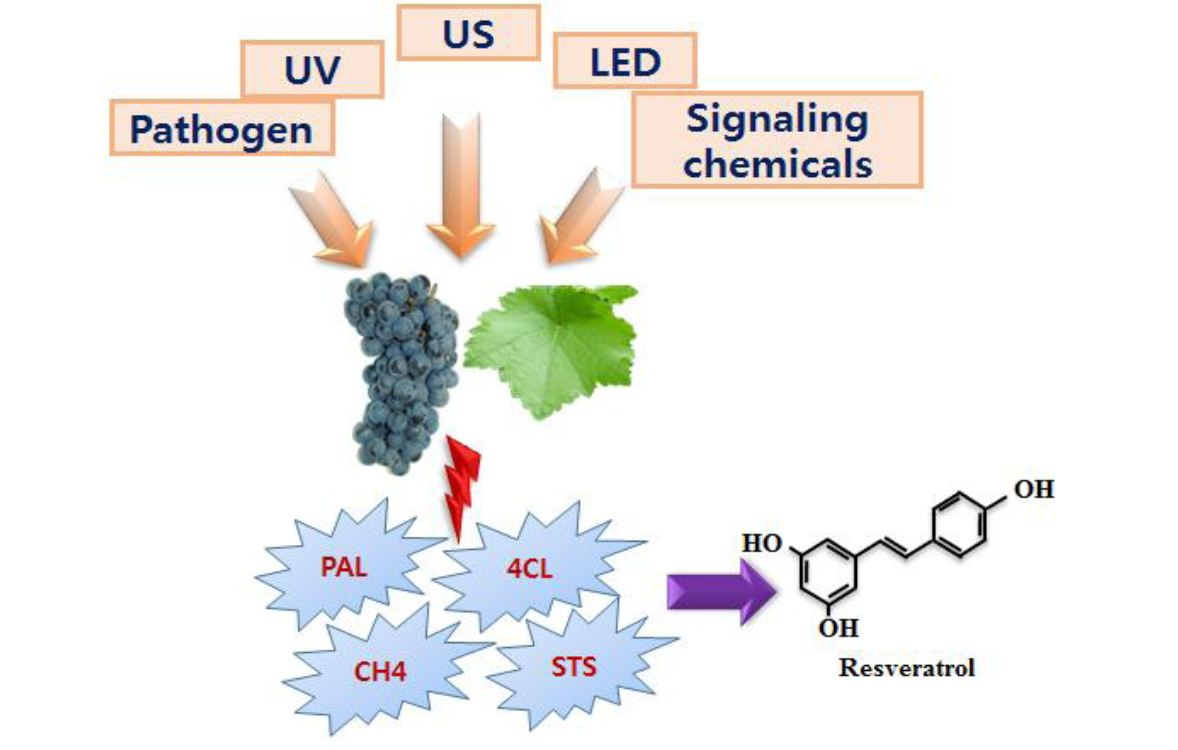
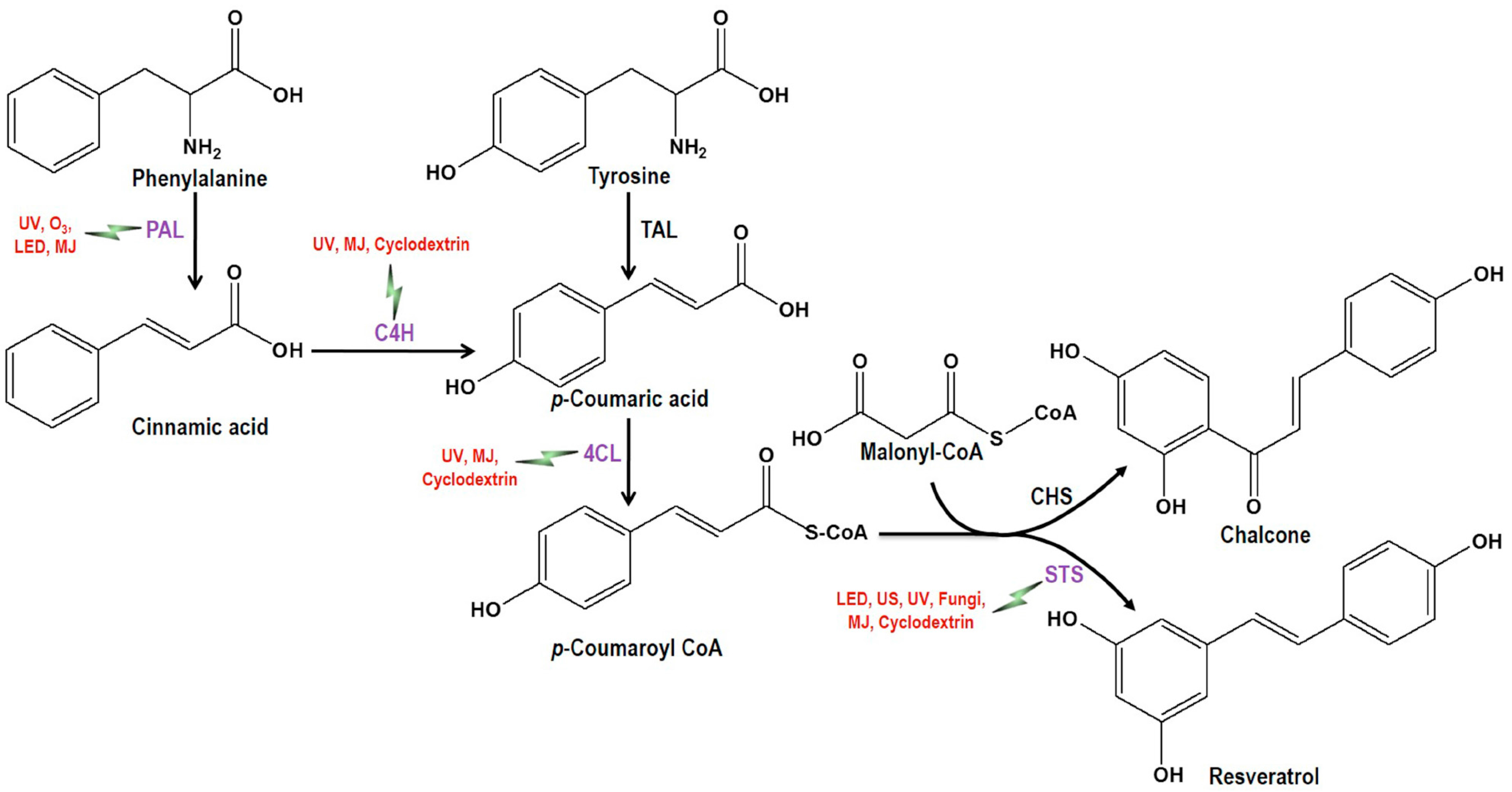
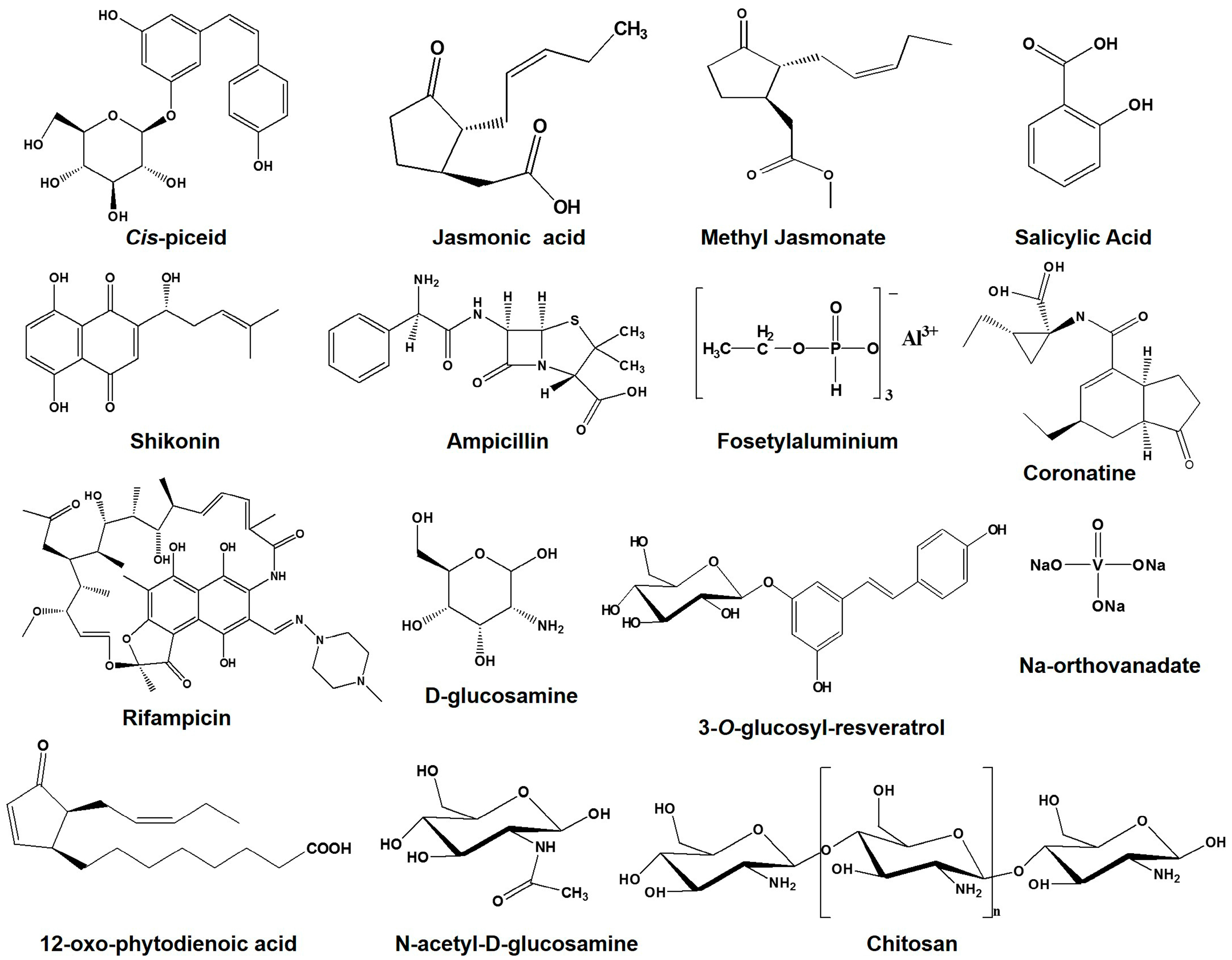
Resveratrol is the most important stilbene phytoalexin synthesized naturally or induced in plants, as a part of their defense mechanism. Grapes and their derivative products, including juice and wine, are the most important natural sources of resveratrol, consisting of notably higher amounts than other natural sources like peanuts. Consumption of red wine with its presence of resveratrol explained the “French Paradox”. Hence, the demand of resveratrol from grapes is increasing. Moreover, as a natural source of resveratrol, grapes became very important in the nutraceutical industry for their benefits to human health. The accumulation of resveratrol in grape skin, juice, and wine has been found to be induced by the external stimuli: microbial infection, ultrasonication (US) treatment, light-emitting diode (LED), ultra violet (UV) irradiation, elicitors or signaling compounds, macronutrients, and fungicides. Phenylalanine ammonia lyase, cinnamate-4-hydroxylase, coumaroyl-CoA ligase, and stilbene synthase play a key role in the synthesis of resveratrol. The up-regulation of those genes have the positive relationship with the elicited accumulation of resveratrol. In this review, we encapsulate the effect of different external stimuli (biotic and abiotic stresses or signaling compounds) in order to obtain the maximum accumulation of resveratrol in grape skin, leaves, juice, wine, and cell cultures.
Keywords: resveratrol; grape; juice; wine; external stimuli; elicitation; nutraceutical resveratrol; grape; juice; wine; external stimuli; elicitation; nutraceutical
Graphical Abstract