


Abstract
The title compound was prepared via a cross-coupling reaction and its crystal structure has been determined. It crystallized in the triclinic space group P-1 with cell parameters: a = 8.552(2) Å, b = 11.310(2) Å, c = 16.150(3) Å, α = 109.55(3)°, β = 91.45(3)°, γ = 91.28(3)°, V = 1470.6(5) Å3, Z = 2 at 296 K. There is one molecule in the asymmetric unit. In the crystal structure, the neighboring molecules from dimers by weak intermolecular π···π interactions between the pyrrole and tetrathiafulvalene units. The dimers are further linked through C-H···π interactions to generate one-dimensional chains along the [100] direction. The arrangement of the molecules corresponds to an overlap between the HOMO and LUMO.
1. Introduction
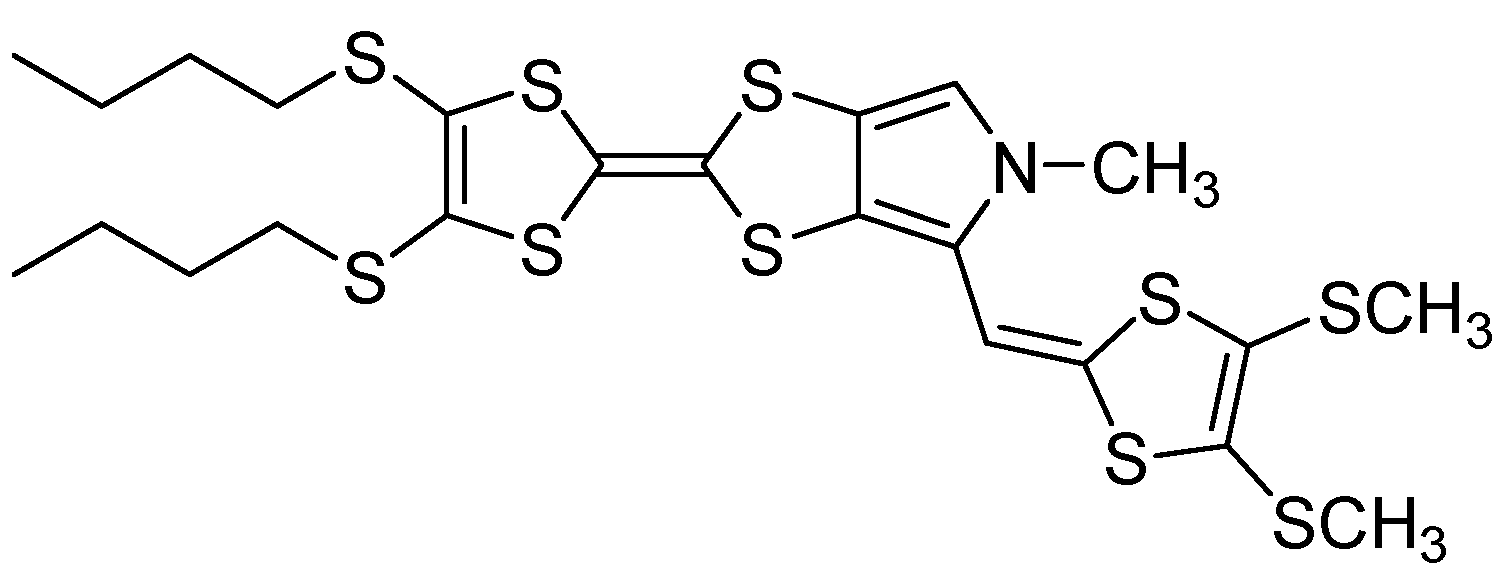
Tetrathiafulvalene (TTF) derivatives have played a pivotal role in the development of organic materials with optoelectronic applications because of their excellent electron-donating properties [1,2,3]. The TTF framework has been extensively modified over the past three decades to favor enhanced dimensionality in the related charge-transfer salts. Among those modifications, in heterocyclic-fused TTF donors a variety of molecules have been synthesized in which the TTF core is annelated to furan [4], dithiafulvene [5], thiophene [6] or selenophene [7] units. All of these compounds have oxidation potentials appreciably higher than that of TTF itself. Furthermore, there has been increased interest in incorporating the TTF moiety into supramolecular structures [8,9,10,11,12]. Becher and co-workers have presented a detailed study of pyrrolo-TTF and its N-alkylated derivatives [13]. The pyrrolo-annelated TTFs have extended π-surfaces, which can influence the physical properties of these heterocycles in both the solid state and in solution. Herein we report the molecular and crystal structure of a novel ex-TTF based on an electroactive monopyrrolo-TTF (1) and a 2-methylene-4,5-bis(methylthio)-1,3-dithiole (Figure 1). The crystal structure and electrochemical behavior are discussed.
Figure 1.
Extended MPTTF derivative 3.
2. Results and Discussion
2.1. Synthesis of Target Compound 3
The novel extended MPTTF was synthesized as outlined in Scheme 1. Compound 1 was obtained according to reference [14]. The cross-coupling reaction of 1 with two equivalents of 4,5-bis(methyl-thio)-1,3-dithiole-2-thione (2) was carried out in toluene and triethyl phosphite at reflux to give the target molecule 3 in 36% yield [15]. It was characterized by 1H-NMR and 13C-NMR spectroscopy and mass spectrometry as listed in the Experimental section.
Scheme 1.
Synthesis of the extended MPTTF derivative 3.

2.2. X-ray Structural Analysis of 3
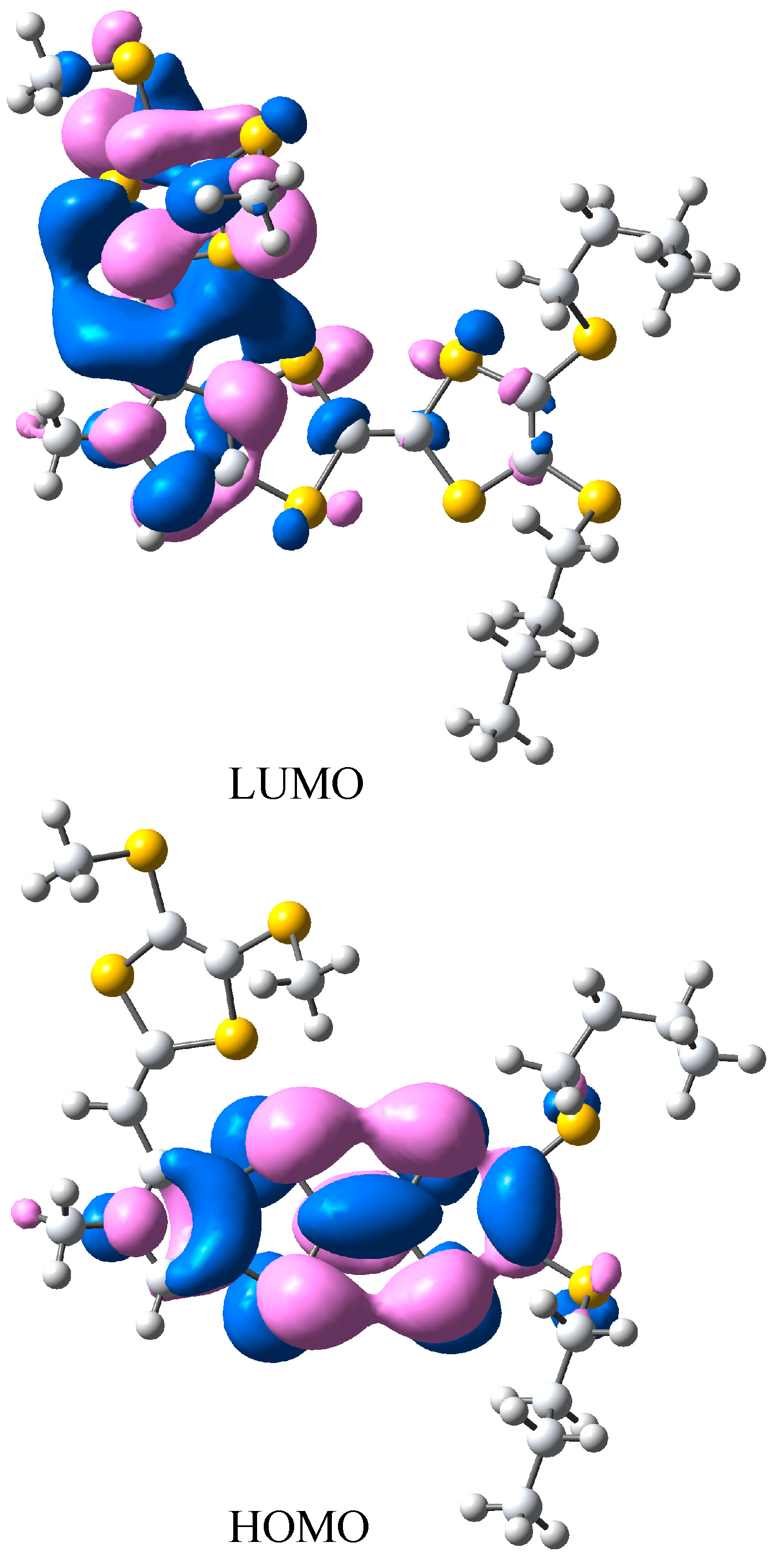
The title compound 3 crystallizes in the triclinic space group P-1. As shown in Figure 2, there is one molecule in the asymmetric unit, and the bond lengths and angles are within normal ranges [16]. Two C atoms (C21 and C22) of one butyl exhibit disorder with occupancy ratio of 0.55:0.45. In the crystal structure, the pyrrolotetrathiafulvalene moiety and its attached methyl carbon atom (C8) lie on the same plane with an r.m.s. deviation of 0.0278 Å. At either end of the pyrrolotetrathiafulvalene ring, there are two TTF moieties with different alkyl chains which have a similar configuration. The first TTF moiety has two butyl groups, and the TTF ring and the neighboring two S atoms (formed by S1 to S4 and C1 to C3) can be divided into three parts based on their planarity: the dihedral angle between plane 1 (averaged from C1, C2, S1 and S2) and plane 2 (averaged from C1, C2, S3 and S4) is 5.3(3)°, which shows they are almost coplanar. The angle between between plane 2 and plane 3 (formed from C3, S3 and S4) however, is 22.6(4)°, which is an obvious deviation from co-planarity. The second TTF moiety with methyl groups possesses the similar conformation with the dihedral angels of 6.1(3)° (between the averaged planes of C12, C13, S9, S10 and C12, C13, S7, S8) and 19.4(4)° (between the averaged planes of C12, C13, S7, S8 and C11, S7, S8). These configurations of TTF moieties are similar to previous reports [17]. In the crystal structure of compound 3, the weak intermolecular π-π interactions between pyrrole and TTF of neighboring molecules form a dimer with a centroid to centroid distance of 3.743(2) Å, as shown in Figure 3. The dimers are further linked through the intermolecular C-H···π interactions with a hydrogen to centroid distance of 3.873(1) Å into one-dimensional chains along [100] direction, as shown in Figure 4. The packing view of compound 3 shows a sheet structure, as is shown in Figure 5. The arrangement of the molecules corresponds to the overlap of HOMO and LUMO for 3, as shown in Figure 6.
Figure 2.
Molecular structure of compound 3. Thermal ellipsoids are drawn at the 30% level. Hydrogen atoms are omitted for clarity.
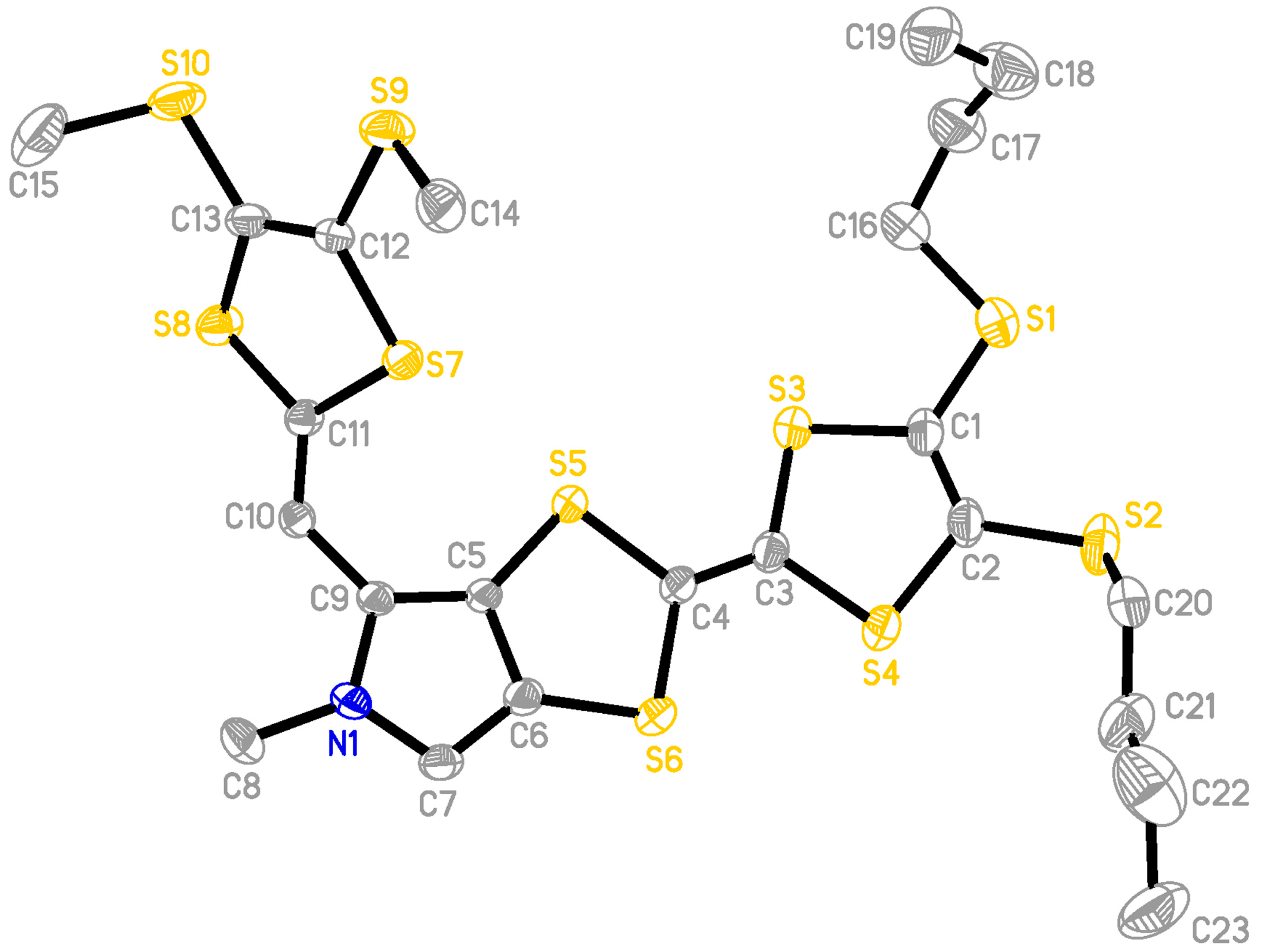
Figure 3.
A ball-and-stick representation of compound 3, showing the intermolecular π···π interactions in the dimer.
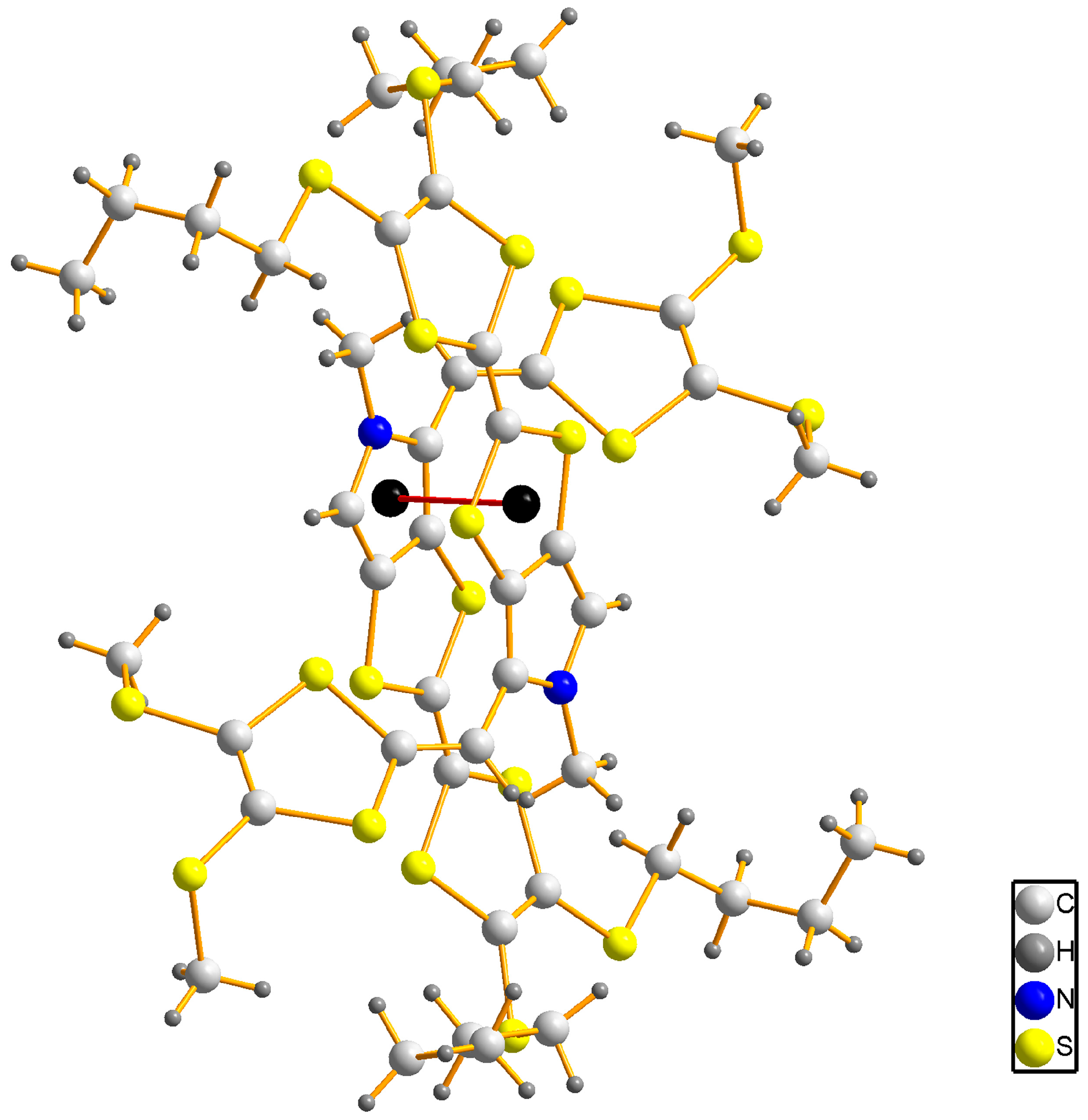
Figure 4.
A ball-and-stick representation of compound 3, indicating the intermolecular C-H···π interactions between two dimers.
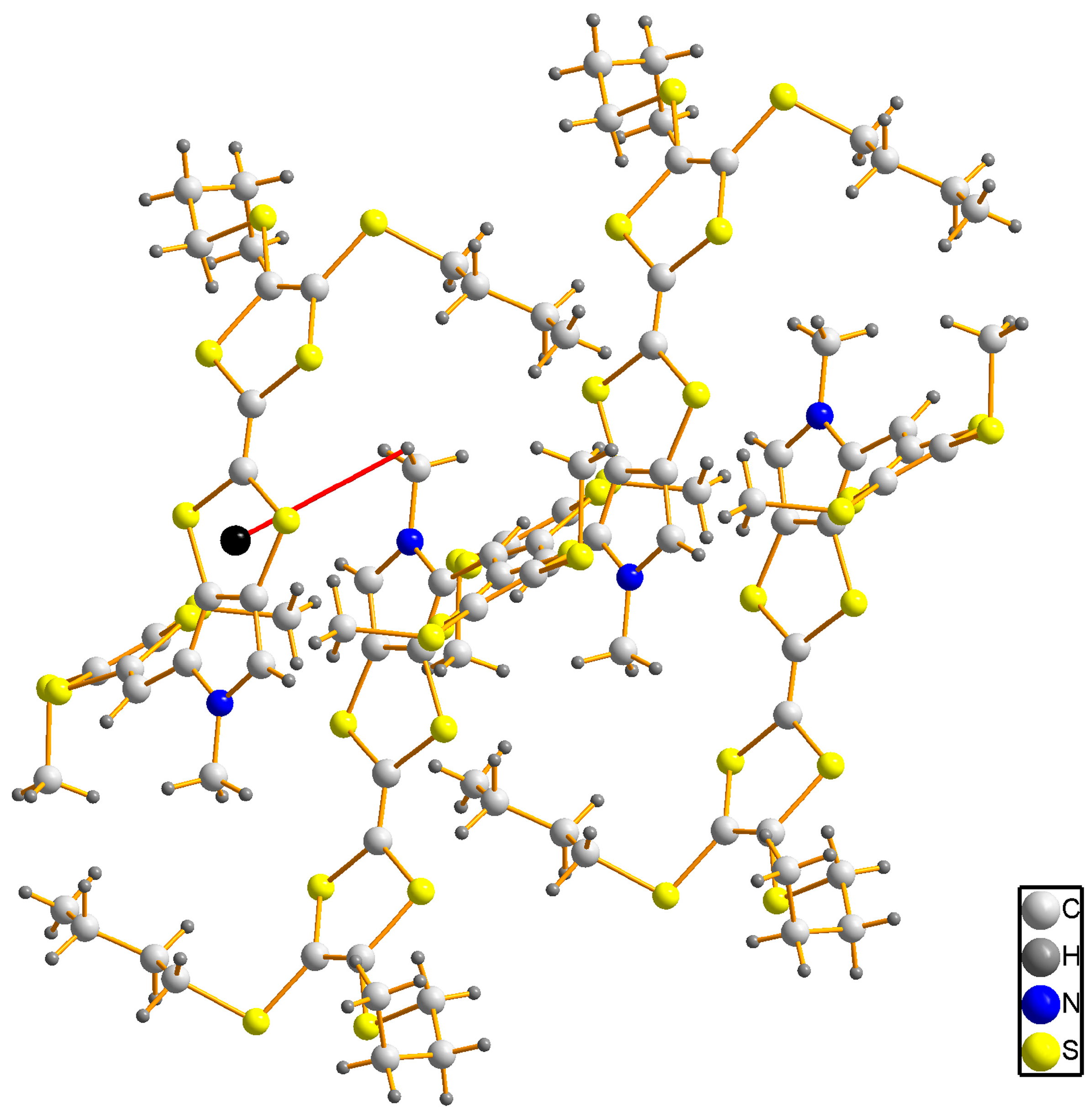
Figure 5.
View of crystal packing of compound 3 along the a axis.
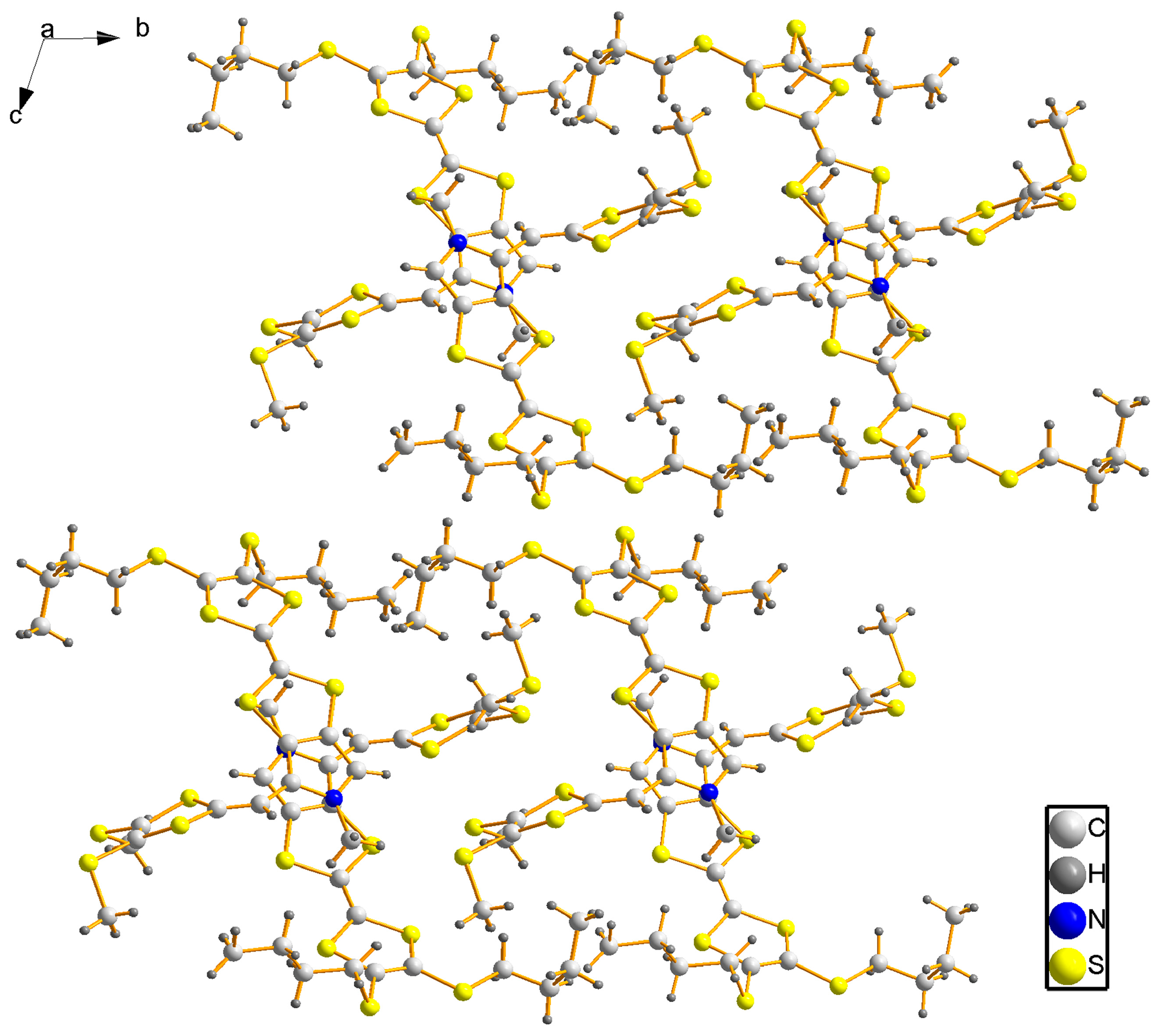
Figure 6.
The HOMO and LUMO of compound 3, calculated by single point B3LYP/6-31g(d) calculations.
2.3. Electrochemistry
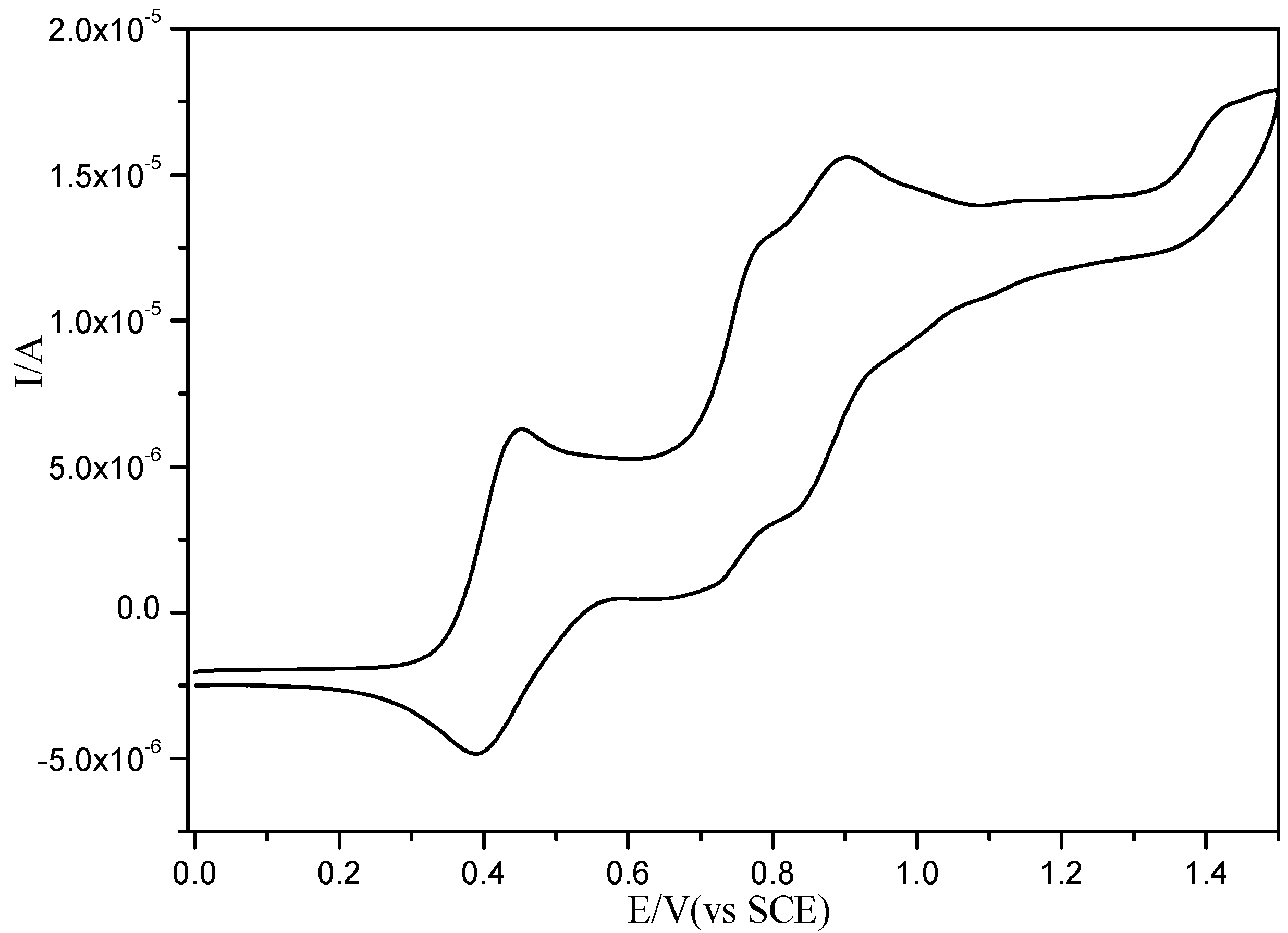
The electrochemical characterisation of the compound 3 was carried out using cyclic voltammetry under standard conditions. For comparison purposes we also investigated the electrochemical behaviour of the formyl-MPTTF 1 under similar conditions. The results were listed in Table 1. It showed two reversible, monoelectronic oxidation processes, which were associated with the successive oxidation of the TTF unit to TTF+ and TTF2+, respectively [15]. In contrast, CV analysis of 3 displayed a complicated cyclic voltammogram as shown in Figure 7, the first process was fully reversible and corresponded to the concomitant oxidation of both neutral MPTTF into the cation radical species while the second process was not fully reversible and showed split second redox couples, with E1/22 at 0.75 V and 0869 V, which probably was caused by adsorption phenomena on the electrode while the third process was fully irreversible in the positive direction and the listed oxidation potentials were only approximate, with Eox3 at ~1.422 V [5,18,19].
Table 1.
Half-wave (E1/2) and Oxidation (Eox) potentials for compounds 1, 3.
Figure 7.
Cyclic voltammograms (CV) of compound 3 in CH2Cl2/CH3CN (4:1, v/v) containing 0.1 M Bu4PF6.
2.4. Electronic Absorption Spectroscopy
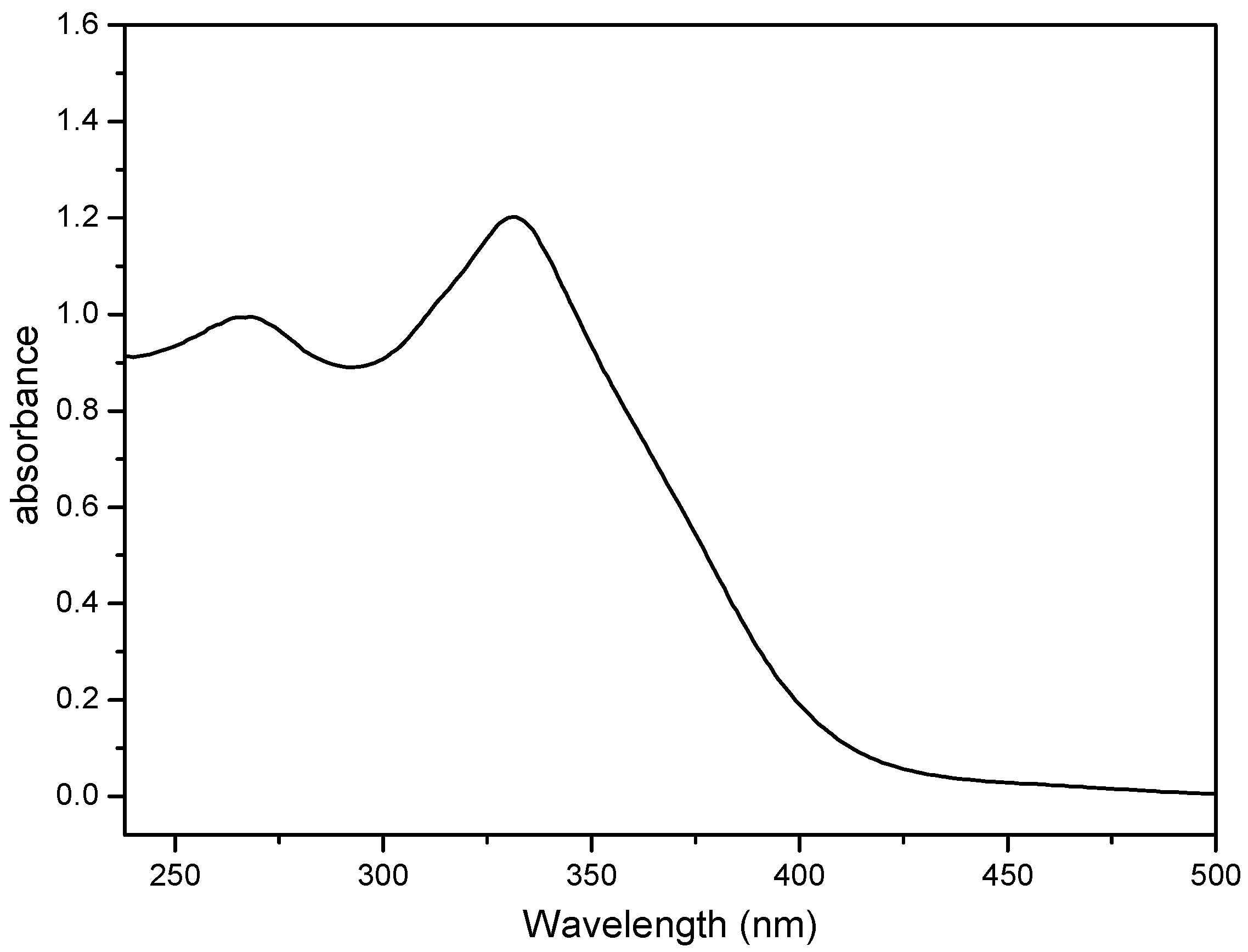
The photophysical properties have been studied in air-equilibrated CH2Cl2 solutions at room temperature. The electronic UV–Vis spectrum for 3 is displayed in Figure 8. It transpires that compound 3 and exhibit very broad absorption bands at 269 nm (ε 22849 M−1·cm−1) and 331 nm (ε 28817·M−1·cm−1), respectively.
Figure 8.
UV–Vis spectrum of compound 3 recorded in CH2Cl2 (4 × 10⁻⁵ mol/L) at room temperature.
3. Experimental Section
3.1. General Information
All solvents were purified or dried by standard methods. All reagents used were obtained from ACROS (Geel, Belgium) and used without purification. The silica gel used was 100–200 mesh from Qing Dao Hai Yang Chemical Factory (Qing Dao, china). NMR spectra were recorded in CDCl3 with an AV-300 spectrometer Bruker (Bruker, Karlsruhe, Germany). Chemical shifts are given relative to tetramethylsilane (δH/δC = 0 ppm). MALDI-TOF MS data were obtained with an AXIMA-CFRTM plus mass spectrometer (Shimadzu, Tokyo, Japan) using a 1,8,9-anthracenetriol (DITH) matrix. The crystal data were measured with a SCX mini-diffractometer (Rigaku, Tokyo, Japan) with Mo-Kα radiation (λ = 0.71073 Å) in ω scan mode at 296(2) K. Cyclic voltammetric studies were carried out on a 273 A Potentiostat/Galvanostat instrument (company, Potsdam, Germany) in CH2Cl2/CH3CN (4:1, c = 1 × 10⁻³ M) and 0.1 MBu4PF6 as the supporting electrolyte and scan rate is 20 mV·S−1. Counter and Working electrodes were made of Pt and Glass-Carbon, respectively, and the reference electrode was calomel electrode (SCE). Compound 1 was synthesized according to literature methods [14].
3.2. Synthesis of N-Methyl-4-[4,5-Bis(Metylthio)-l,3-Dithiol-2-Yliden]-2-[4,5-Bis-(1-Butyithio)-l,3-Dithio1-2-Yli-Den]-(1,3)-Dithiolo[4,5-c]Pyrrole (3)
To solution of 1 (0.0752 g, 0.1629 mmol) and 4,5-bis(methylthio)-1,3-dithiole-2-thione (0.0737g, 0.3257 mmol) in dry toluene (15 mL) was added P(OEt)3 (2 mL) under Ar. The reaction mixture was stirred 5 h at 120 °C. The solvent was evaporated under vacuum. The solid was purified by column chromatography (silica gel, CH2C12/PE = 1:2, Rf = 0.2) to give 3. Recrystallization from CH2C12/PE gave 0.0375 g yellow-brown needles (36%). mp 112–113 °C, 1H-NMR(CDCl3/TMS): δ 0.94 (t, J = 7.3 Hz, 6 H), 1.41–1.49 (m, 4 H), 1.56–1.66 (m, 4 H), 2.44 (s, 3 H), 2.46 (s, 3 H), 2.83 (t, J = 7.2 Hz, 4 H), 3.50 (s, 3 H), 6.17(s, 1 H), 6.46(s, 1 H); 13C-NMR(CDCl3): 13.57, 18.93, 21.61, 31.75, 35.12, 35.90, 110.39, 118.06, 122.96, 125.22, 126.98, 127.09, 127.55; MALDI-TOF-MS, found: m/z 638.96.
3.3. X-ray Crystallography
Diffraction data were collected on a RAPID-AUTO diffractometer fitted with a CCD type area detector, and a full sphere of data were collected using graphite-monochromated Mo Kα radiation (λ = 0.71073 Å). The data frames were integrated using SAINT and merged to give a unique data set for structure determination. The structures were solved by direct methods and refined by the full-matrix least-squares method on all F2 data using the SHELEX program (Bruker Analytical X-ray System). Empirical absorption corrections by SADABS were carried out. Non-hydrogen atoms were refined with anisotropic thermal parameters. Hydrogen atoms were included in calculated positions and refined with isotropic thermal parameters riding on those of the parent atoms. Crystal data and refinement details are summarized in Table 2.
Table 2.
Crystal data and refinement details for 3.
CCDC 978639 contains the supplementary crystallographic data for this paper. These data can be obtained free of charge via website [20], by e-mailing data_request@ccdc.cam.ac.uk or by contacting The Cambridge Crystallographic Data Centre, 12, Union Road, Cambridge CB2 1EZ, UK; fax: +44-1223-336033.
3.4. Theoretical Calculations
The molecular orbital shapes of HOMO and LUMO of compound 3 were evaluated in single point 6-31G(d) [21] calculations using the crystallographic geometry of 3 with Gaussian 09 [22].
4. Conclusions
We have determined the crystal structure of an extended monopyrrolotetrathiafulvalene derivative 3 by X-ray diffraction. Compound 3 crystallized in the triclinic space group P-1 with one molecule in the asymmetric unit. The packing view of 3 shows it adopts a sheet structure. The dimers, linked between pyrrole and TTF of neighboring molecule by π-π interactions, are connected into 1D chains along the [100] direction by C-H···π interactions.
Acknowledgments
This work was supported by the National Science Foundation of China (No. 21442004), the National Natural Science Foundation of Jilin Province (grant No. 20101548).
Author Contributions
RH and DL conceived and designed the study; YX and RH performed the experiments and analyzed the data; BL carried out X-ray part; XS carried out computational studies; RH wrote the manuscript. All the authors read and approved the final manuscript.
Conflicts of Interest
The authors declare no conflict of interest.
References
- Segura, J.L.; Martín, N. New concepts in tetrathiafulvalene chemistry. Angew. Chem. Int. Ed. 2001, 40, 1372–1409. [Google Scholar] [CrossRef]
- Bryce, M.R. Recent progress on conducting organic charge-transfer salts. Chem. Soc. Rev. 1991, 20, 355–390. [Google Scholar] [CrossRef]
- Bryce, M.R. Current trends in tetrathiafulvalene chemistry: Towards increased dimensionality. J. Mater. Chem. 1995, 5, 1481–1496. [Google Scholar] [CrossRef]
- Siquot, Y.; Frère, P.; Nozdryn, T.; Cousseau, J.; Sallé, M.; Jubault, M.; Orduna, J.; Garıín, J.; Gorgues, A. Synthesis and electrochemical properties of fused [3,4]Furano-tetrathiafulvalenes. Tetrahedron Lett. 1997, 38, 1919–1922. [Google Scholar] [CrossRef]
- Terkia-Derdra, N.; Andreu, R.; Sallé, M.; Levillain, E.; Orduna, J.; Garín, J.; Ortí, E.; Viruela, R.; Pou-Amérigo, R.; Sahraoui, B.; et al. π Conjugation across the tetrathiafulvalene core: Synthesis of extended tetrathiafulvalene derivatives and theoretical analysis of their unusual electrochemical properties. Chem. Eur. J. 2000, 6, 1199–1213. [Google Scholar]
- Shu, P.; Chiang, L.; Emge, T.; Holt, D.; Kistenmacher, T.; Lee, M.; Stokes, J.; Poehler, T.; Bloch, A.; Cowan, D. Synthesis of Δ2,2'-bithieno[3,4-d]-1,3-dithiole (DTTTF) and some of its charge-transfer salts. J. Chem. Soc. Chem. Commun. 1981, 920–921. [Google Scholar] [CrossRef]
- Ketcham, R.; Hornfeldt, A.B.; Gronowitch, S. Synthesis of tetrathiafulvalene doubly fused to the 3,4-position of selenophene. J. Org. Chem. 1984, 9, 1117–1119. [Google Scholar] [CrossRef]
- Danila, I.; Pop, F.; Escudero, C.; Feldborg, L.N.; Puigmartí-Luis, J.; Riobé, F.; Avarvari, N.; Amabilino, D.B. Twists and turns in the hierarchical self-assembly pathways of a non-amphiphilic chiral supramolecular material. Chem. Commun. 2012, 48, 4552–4554. [Google Scholar] [CrossRef]
- Cao, D.; Wang, C.; Giesener, M.A.; Liu, Z.; Stoddart, J.F. A rigid donor–acceptor daisy chain dimer. Chem. Commun. 2012, 48, 6791–6793. [Google Scholar] [CrossRef]
- Kim, D.; Lynch, V.M.; Park, J.S.; Sessler, J.L. Three distinct equilibrium states via self-assembly: Simple access to a supramolecular ion-controlled NAND logic gate. J. Am. Chem. Soc. 2013, 135, 14889–14894. [Google Scholar] [CrossRef]
- Mulla, K.; Shaik, H.; Thompson, D.W.; Zhao, Y. TTFV-based molecular tweezers and macrocycles as receptors for fullerenes. Org. Lett. 2013, 15, 4532–4535. [Google Scholar] [CrossRef]
- Avellini, T.; Li, H.; Coskun, A.; Barin, G.; Trabolsi, A.; Basuray, A.N.; Dey, S.K.; Credi, A.; Silvi, S.; Stoddart, J.F.; et al. Photoinduced Memory Effect in a Redox Controllable Bistable Mechanical Molecular Switch. Angew. Chem. Int. Ed. 2012, 51, 1611–1615. [Google Scholar] [CrossRef]
- Jeppesen, J.O.; Takimiya, K.; Jensen, F.; Brimert, T.; Nielsen, K.; Thorup, N.; Becher, J. Pyrrolo-annelated tetrathiafulvalenes: The parent systems. J. Org. Chem. 2000, 65, 5794–5805. [Google Scholar] [CrossRef]
- Becher, J.; Brimert, T.; Jeppesen, J.O.; Pedersen, J.; Zubarev, R.; Bjørnholm, T.; Reitzel, N.; Jensen, T.; Kjaer, K.; Levillain, E. Tetrathiafulvaleno-annelated porphyrins. Angew. Chem. Int. Ed. 2001, 40, 2497–2500. [Google Scholar] [CrossRef]
- Hansen, J.A.; Becher, J.; Jeppesen, J.O.; Levillain, E.; Nielsen, M.B.; Petersen, B.M.; Petersenc, J.C.; Şahin, Y. Synthesis and non-linear optical properties of mono-pyrrolotetrathiafulvalene derived donor-π-acceptor dyads. J. Mater. Chem. 2004, 14, 179–184. [Google Scholar] [CrossRef]
- Hou, R.; Li, B.; Chen, T.; Yin, B.; Wu, L. 2,3-[(3,6-Dioxaoctane-1,8-diyl)bis(sulfanediyl-methylene)]-6,7-bis(methylsulfanyl)-1,4,5,8-tetrathiafulvalene. Acta Crystallogr. 2009, E65, o2783. [Google Scholar]
- Zheng, N.; Li, B.; Ma, C.; Chen, T.; Kan, Y.; Yin, B. The pyridazineetetrathiafulvalene conjugates: Synthesis, photophysical, and electrochemical properties. Tetrahedron 2012, 68, 1782–1789. [Google Scholar] [CrossRef]
- Jeppesen, J.O.; Takimiya, K.; Jensen, F.; Becher, J. Pyrrolo Annelated Tetrathiafulvalenes: The Parent Systems. Org. Lett. 1999, 1, 1291–1294. [Google Scholar] [CrossRef]
- Guerro, M.; Dam, T.U.; Bakhta, S.; Kolli, B.; Roisnel, T.; Lorcy, D. Tetrathiafulvalene hydrazone an efficient precursor of various chelating electroactive ligands. Tetrahedron 2011, 67, 3427–3433. [Google Scholar] [CrossRef]
- CCDC CIF Depository Request Form. Available online: http://www.ccdc.cam.ac.uk/data_request/cif (accessed on 27 November 2014).
- Hariharan, P.C.; Pople, J.A. Accuracy of AHn equilibrium geometries by single determinant molecular orbital theory. Mol. Phys. 1974, 27, 209–214. [Google Scholar] [CrossRef]
- Frisch, M.J.; Trucks, G.W.; Schlegel, H.B.; Scuseria, G.E.; Robb, M.A.; Cheeseman, J.R.; Scalmani, G.; Barone, V.; Mennucci, B.; Petersson, G.A.; et al. Gaussian 09; Revision B.01; Gaussian, Inc.: Wallingford, CT, USA, 2010. [Google Scholar]
- Sample Availability: Samples of the compounds 1–3 are available from the authors.
© 2014 by the authors. Licensee MDPI, Basel, Switzerland. This article is an open access article distributed under the terms and conditions of the Creative Commons Attribution license ( http://creativecommons.org/licenses/by/4.0/).